
.svg)



Elevating business class travel with personal connection
Redesigning the long-haul travel experience through the relationship between attendant and passenger.
The key to winning the competition in high-end business class air travel lies in the level of service. Legacy European carrier Lufthansa approached IDEO to help redesign its long-haul, business-class service experience into one that’s thoroughly modern, distinctly Lufthansa, and centered on the new needs of today’s discerning passengers.
After putting themselves in the shoes of both travelers and flight attendants on a variety of different airlines, the IDEO design team found that what matters, above champagne and fancy food, is a personal connection between crew and passenger. They used this insight to focus on a new goal: Flight crew consider themselves to be travelers’ trusted, knowing hosts.
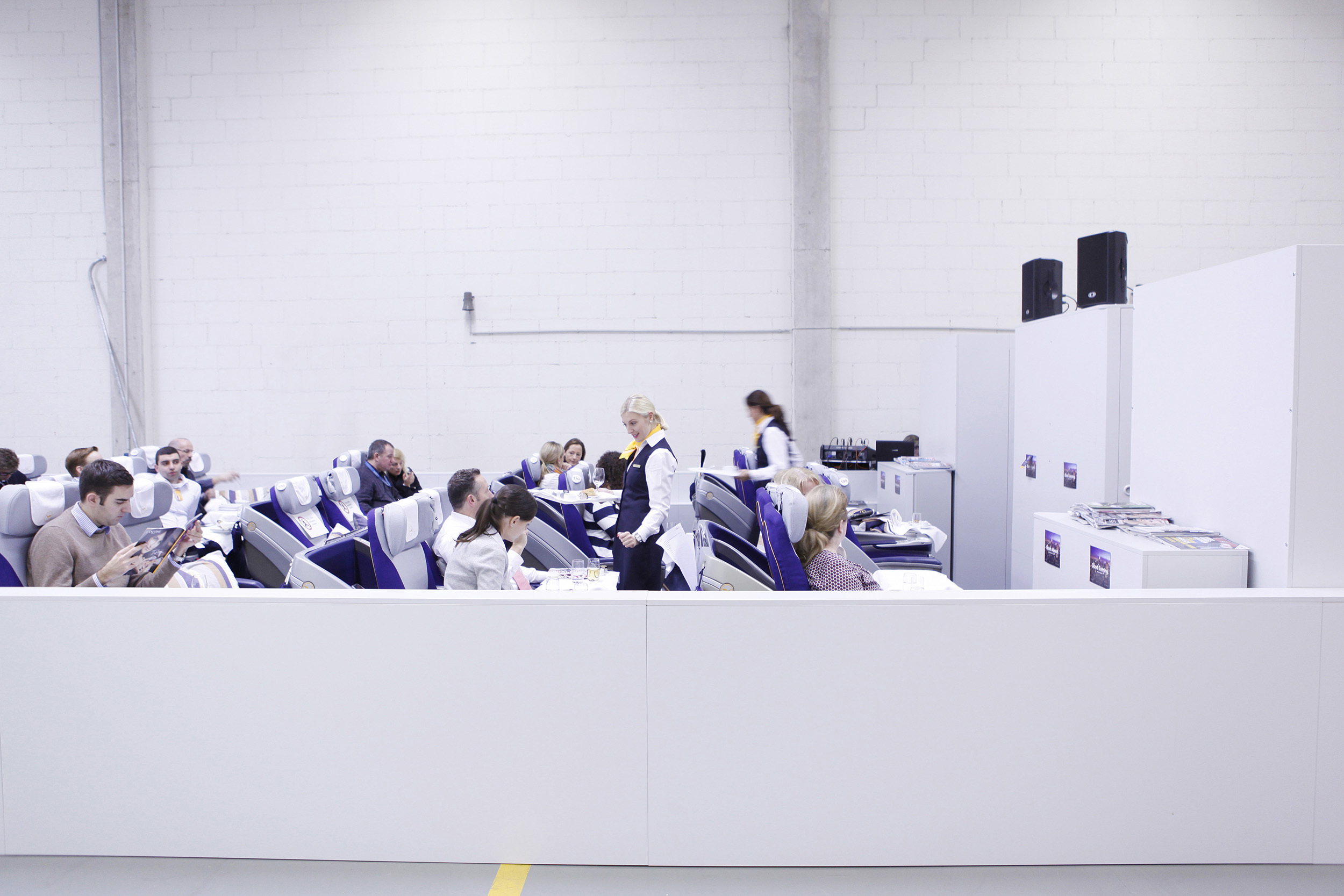
To achieve the goal, the design team focused on improving service in six key travel moments, then built a cardboard 1:1 scale mockup of different parts of an airplane to see what they’d need. Designers tested the service in a full section of an Airbus A380 at the airline’s Raunheim, Germany, facility, with real passengers and crew. This prototyping process was crucial, as executives witnessed firsthand how big an impact the new service would have across the organization, which includes 18,000 flight attendants.
Rolling out across the fleet, Lufthansa’s hospitable new service is already getting a good reception among crew. “Pampering passengers like this—individually and personally—was the reason why I started flying for Lufthansa 25 years ago,” said Sabine Schwarz-Odewald, senior flight attendant.
Designing the future kitchen
How we will cook, eat, and socialize at home.
Of all the rooms in our homes, the kitchen is the center of energy, activity, comfort, and creativity—the beating heart of any dwelling. In the coming decade, as our environments and habits change, the kitchen as we know it will evolve drastically. More people will move into cities, and our living spaces will become smaller. Natural resources will become more scarce, food more expensive, and waste an increasingly urgent issue. Near-instant grocery delivery will alter how we shop for and store food, and technology will be embedded in every part of our homes.
What will the kitchen of the future look like, and, more important, what will it feel like to cook, eat, and socialize there?
For IKEA, the world’s biggest furniture store, the time to start designing the kitchen of 2025 is now. So IKEA asked IDEO London and a group of students from Lund and Eindhoven universities to explore the social, technological, and demographic forces that will impact how we behave around food in 2025. The students spent months researching people’s attitudes and ideas about cooking and eating, and IDEO designers guided them as they built concept kitchen products.
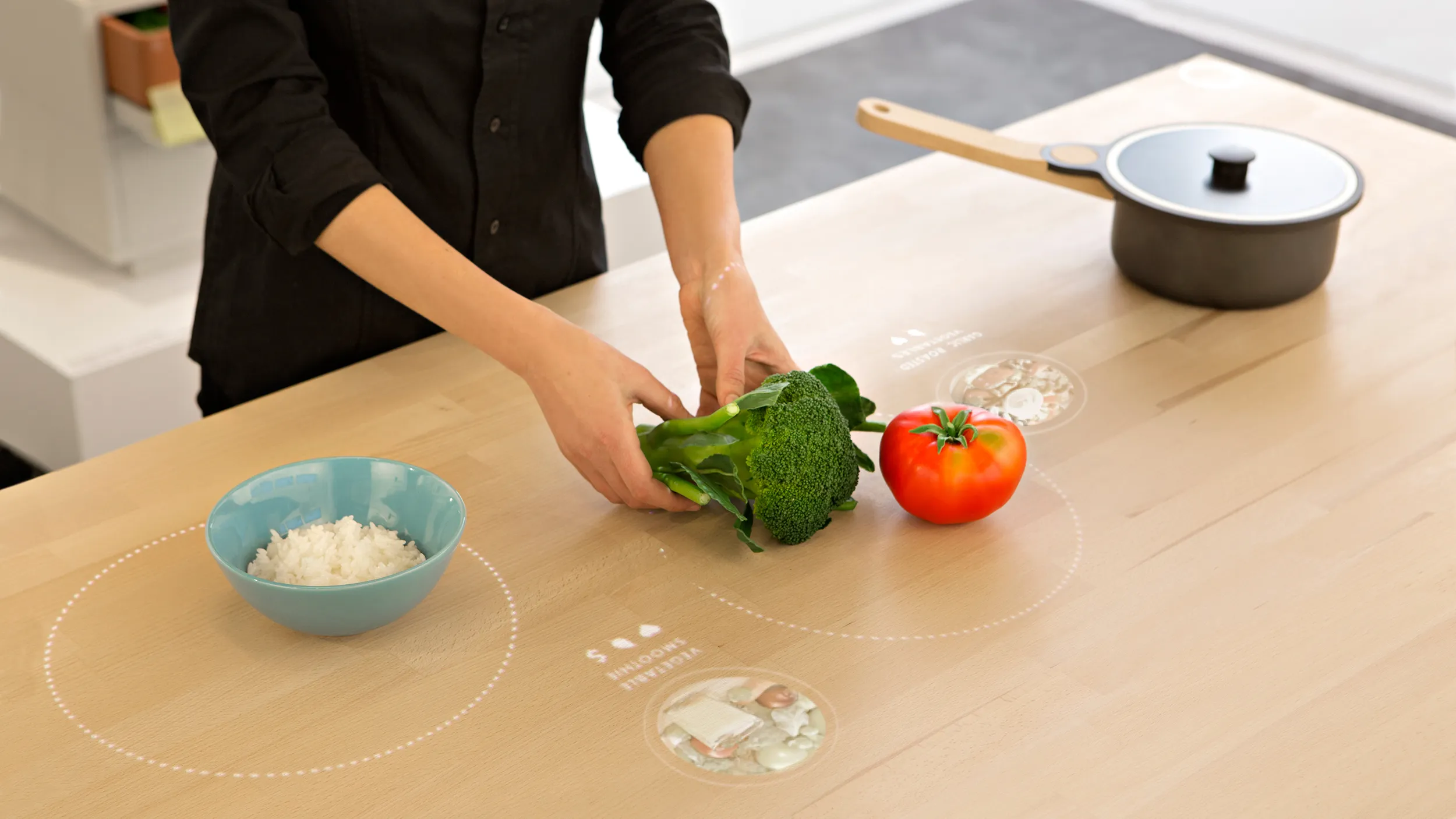
To bring these future concepts to the present day, IKEA asked IDEO to design and build a full-size concept kitchen for 250,000 visitors to test out during the Salone Del Mobile in Milan and a six-month stint at EXPO Milano.
Mindful design
Crucial to the success of the project was preserving the tactile creative pleasure of the kitchen. Technology could easily make the space feel robotic and sterile, but this project was guided by the need to use tech to enhance the kitchen’s warmth.
The Concept Kitchen 2025 doesn’t automate away personal choices, but rather facilitates mindfulness with embedded cues throughout the kitchen that subtly guide people toward being conscious of their actions and making informed decisions. In designing the prototypes, the following few concepts emerged.
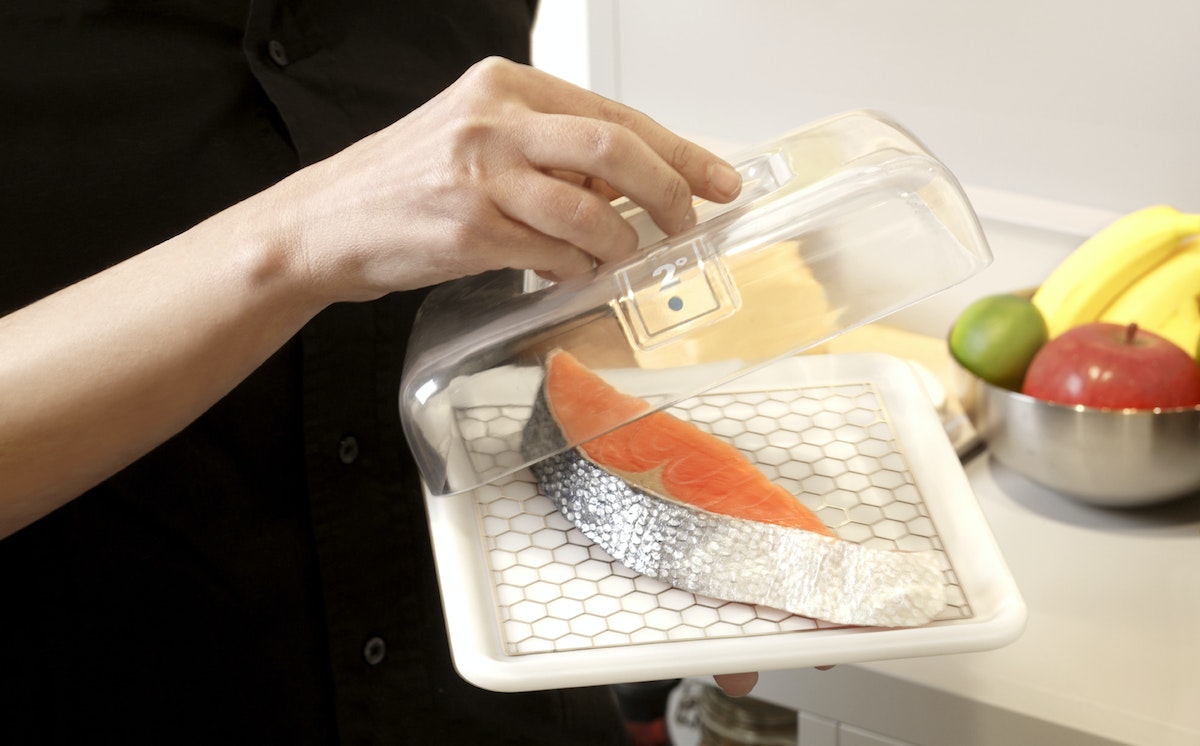
The Modern Pantry encourages us to have a closer relationship with what we eat by storing food in transparent individual containers on open shelves rather than hiding it at the back of the fridge. The design makes it easy to be inspired by what’s on hand rather than going out to buy more, and it also saves energy: Induction-cooling technology embedded into the shelves responds to RFID stickers on the food’s packaging in order to keep the containers at just the right temperature.
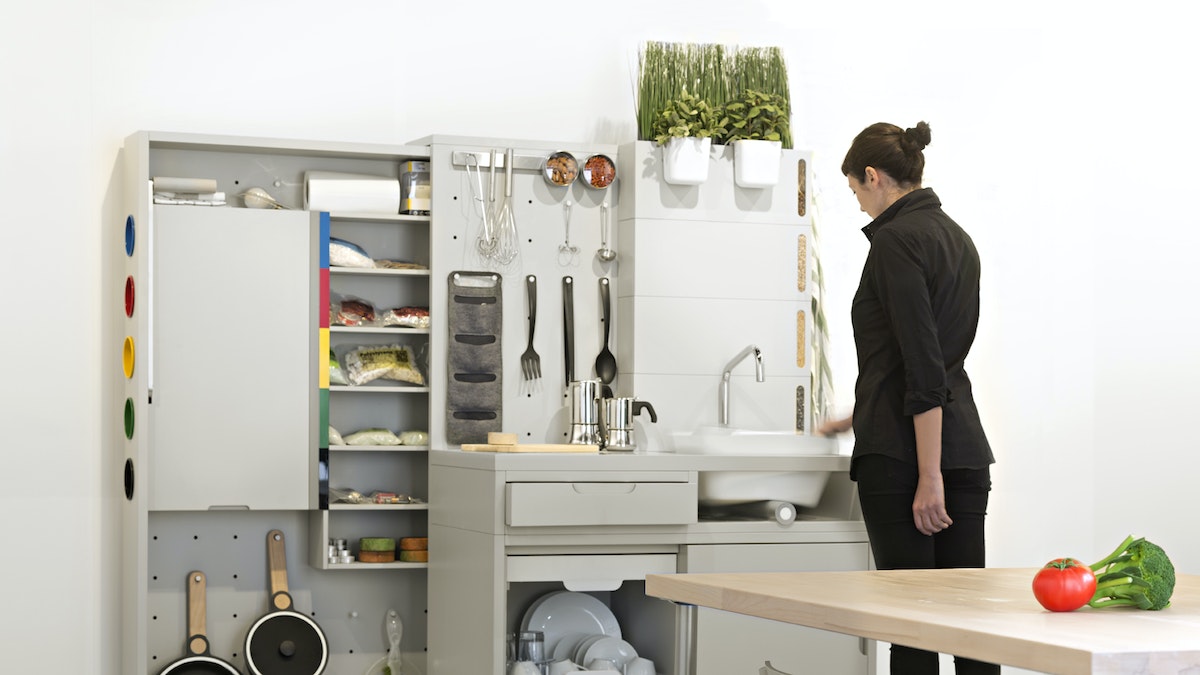
The Table for Living is designed to inspire people to be more creative with food and throw away less. At a loss for what to do with that leftover broccoli? Just place it on the table and a camera recognizes it and projects recipes, cooking instructions, and a timer directly onto the table's surface. Set the timer for how long you want to spend preparing the meal, and the table suggests recipes that can be completed in the window you have available. The table is a nifty solution for a smaller urban dwelling because it’s multimodal: Hidden induction coils instantly cool the surface when not in use, so it’s adjustable for working, cooking, or eating.
The Modern Sink pushes us to be more conscious of our water consumption with a pivoting basin. It must be tipped to one side to drain toxic, or “black,” water, and to the other for safe “gray” water, which is not drinkable but can be filtered and used in a dishwasher or as nourishment for the cooking herbs that grow above the sink.
The Thoughtful Disposal system is a response to the overuse of landfills, and reminds us of exactly what we’re throwing away. Users manually sort recycling from rubbish, and recyclables are then crushed, vacuum-packed, and labeled for pick-up, earning credits for the conscientious (and debits for the wasteful).
IKEA’s kitchen and dining range manager, Gerry Dufresne, explained that the Concept Kitchen 2025 is not really a functional kitchen, but rather “a tangible communication of what the behaviors of the future will be.” It’s just the start of IKEA’s journey toward understanding how those behaviors will shape the company’s future, and Dufresne says the findings will be carried forward into future product development.
Designing the audience experience
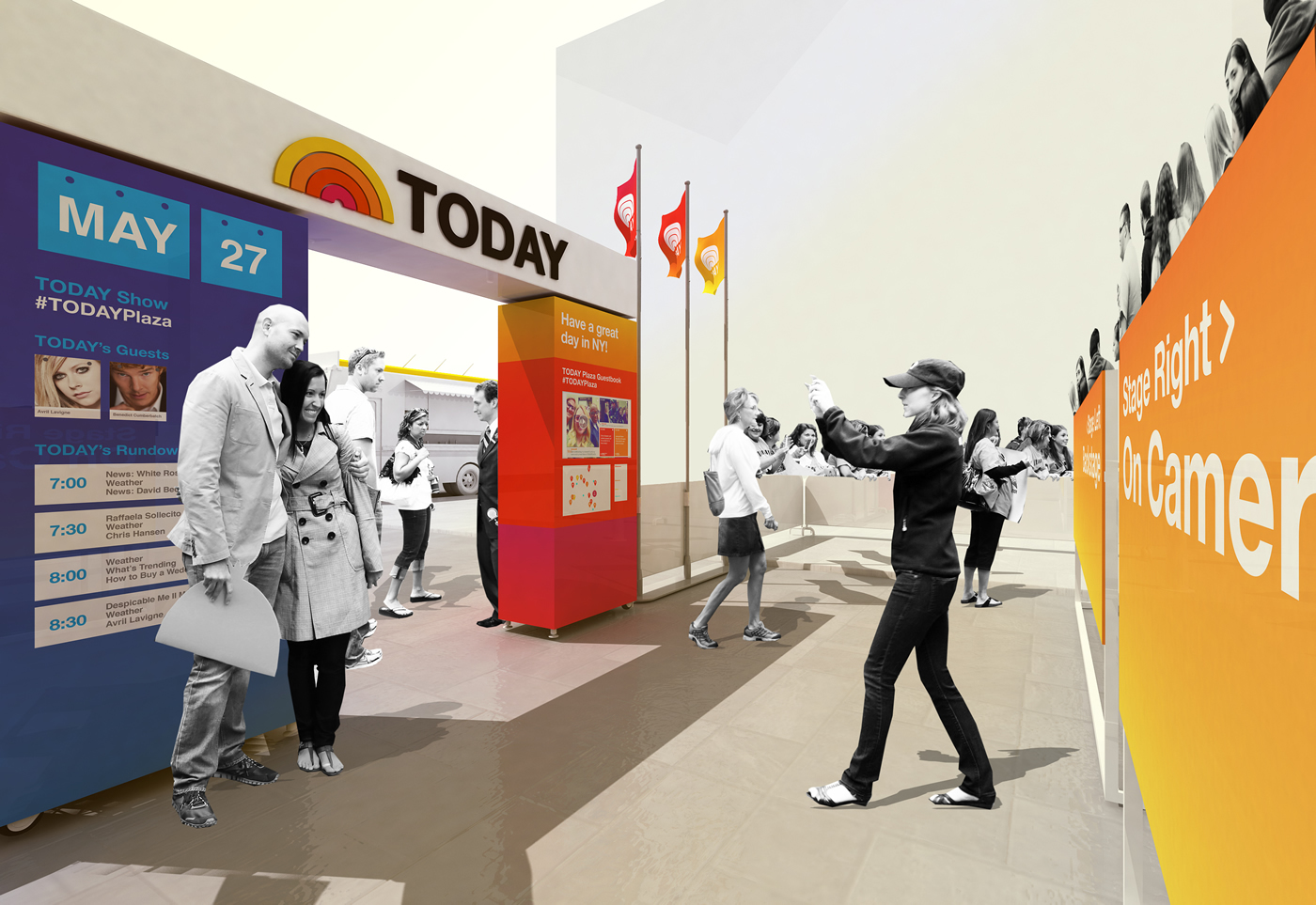
At NBC's TODAY Show, visiting audiences benefit from a welcoming place to cheer.
Long before Tina Fey’s hit show 30 Rock made it a household name, Rockefeller Center was among Manhattan’s most popular destinations. Not least because NBC’s TODAY show starts every morning by filming its gaggle of fans gathered at Rockefeller Plaza.
When TODAY asked IDEO to help design the experience of their guest audiences before, during, and after the show, IDEO's team joined the fray—standing behind the barricades from 7 to 9 a.m. alongside the show’s visitors.
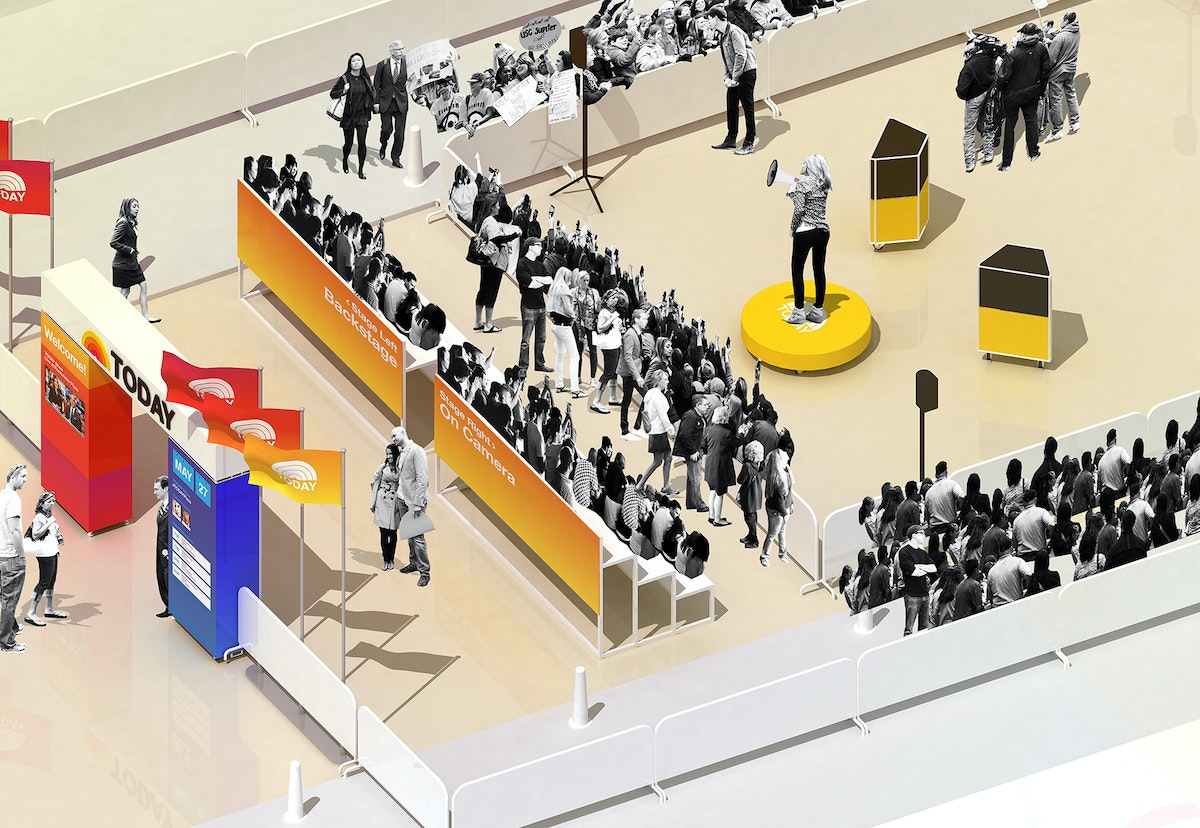
We gathered feedback and learned what was most important to this dedicated audience: to feel a human connection to the people they had shared their mornings with—every day, for years, sometimes for decades. Visitors wanted a celebration, an event they could document and remember, and of course a clear sense of where to go and what to expect once they arrived.
TODAY’s morning time slot offered an additional challenge: The visitor experience would need to be assembled and fully dismantled every morning, leaving Rockefeller Center in its pristine historic state immediately after the cameras stopped rolling.
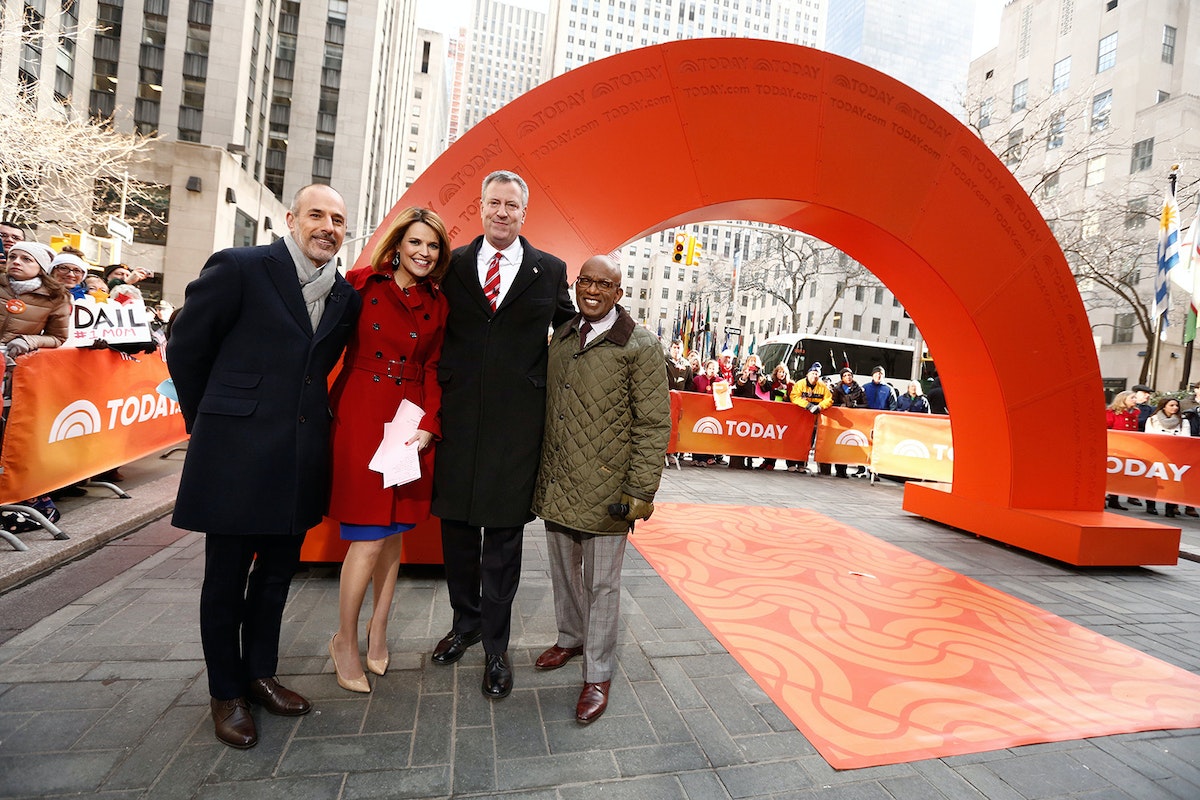
To ensure a solution that would be both satisfying to visitors and viable for the show, IDEO engaged audiences, anchors, and crew in a series of live prototypes that incorporated feedback from all sides and designed a warmer, more human-centered experience for everyone involved.
Visitors to the show can now RSVP at TODAY.com/visit beforehand. When they arrive at the new iconic archway on 49th Street, they are given clear directions by dedicated plaza staff on what to expect during their visit. The audience can also craft posters to display in the crowd, receive commemorative Birthday, Bucket List, or Super Fan buttons that recognize special occasions during their visit, and watch live video and audio feeds to build excitement and momentum when the anchors head into the studio.
From the moment visitors decide to visit TODAY at Rockefeller Center to the weeks after when they share memories with friends, the revamped plaza experience ensures visitors feel cared for and appreciated. They now leave feeling that they’re more than just spectators—they’re the heartbeat of TODAY.
Designing a workspace that inspires
Headquarters that reflect a brand's warmth and transparency.
Brands don’t take bank holidays. A successful company doesn’t just find solutions during strict nine-to-five office hours—the strength of its relationship with its customers is based on openness to good ideas and flexibility around the unpredictable ways that real people live and work.
Over a five-year relationship with GS Shop, a multichannel commerce company based in Korea, IDEO helped the company develop a brand that reflected an emphasis on openness, transparency, enthusiasm, participation, personalization, and distinction.
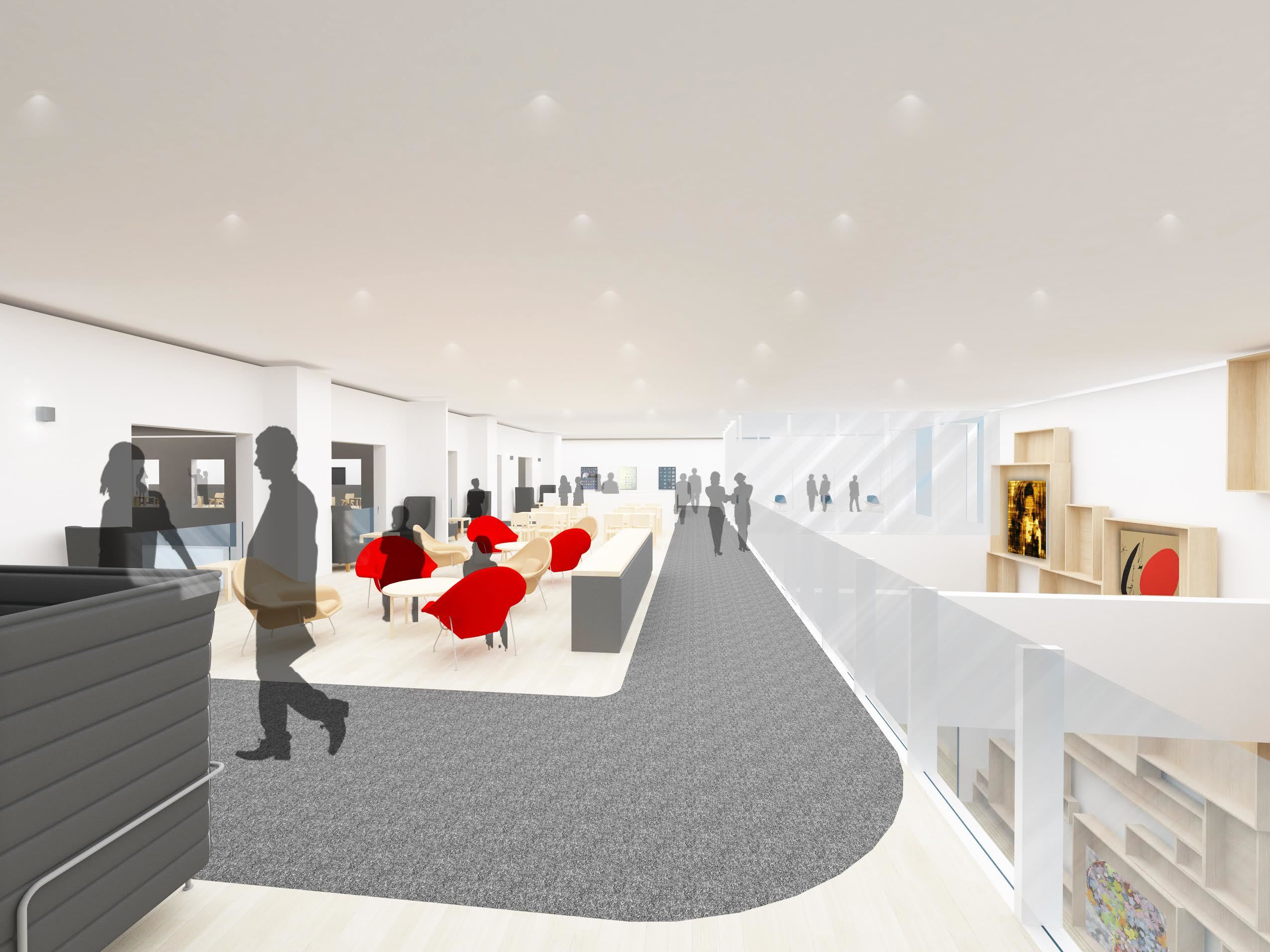
When it was time for GS Shop to build a new headquarters, it wanted these ideals to be baked right into the structure of the new building, inspiring the interactions and work styles that would define the company’s future. The team started by looking at one of the most fundamental factors in their employees’ day-to-day experience, the physical spaces where they did their work.
The designers broke down all the elements of the space, including everything from flexible wall configurations to nature-inspired fabric choices that brought the outside in. At the core of their decision-making was the intersection of environment and behavior: How could a certain configuration of desks help new ideas to bubble up? How might the transparency of the boardroom walls encourage executives to make more collaborative decisions?
Traditional Korean business culture places a strong emphasis on hierarchy, but IDEO found that teams worked better when they arranged seating areas in ways that decentralized the boss. Coworkers had felt isolated from those in other business units, so the designers created room for impromptu gatherings outside common meeting spaces. Everything from functional needs, like toothbrush storage, to features that encouraged cross-pollination of ideas, like a set of shelves where departments could share examples of their work with other units, was taken into account.
The result was both an entirely new headquarters and a reimagining of the company’s existing building, each closely mirroring the renderings and recommendations provided by IDEO. GS Shop employees are now working in the new spaces, ready to field new ideas wherever—and whenever—inspiration strikes.

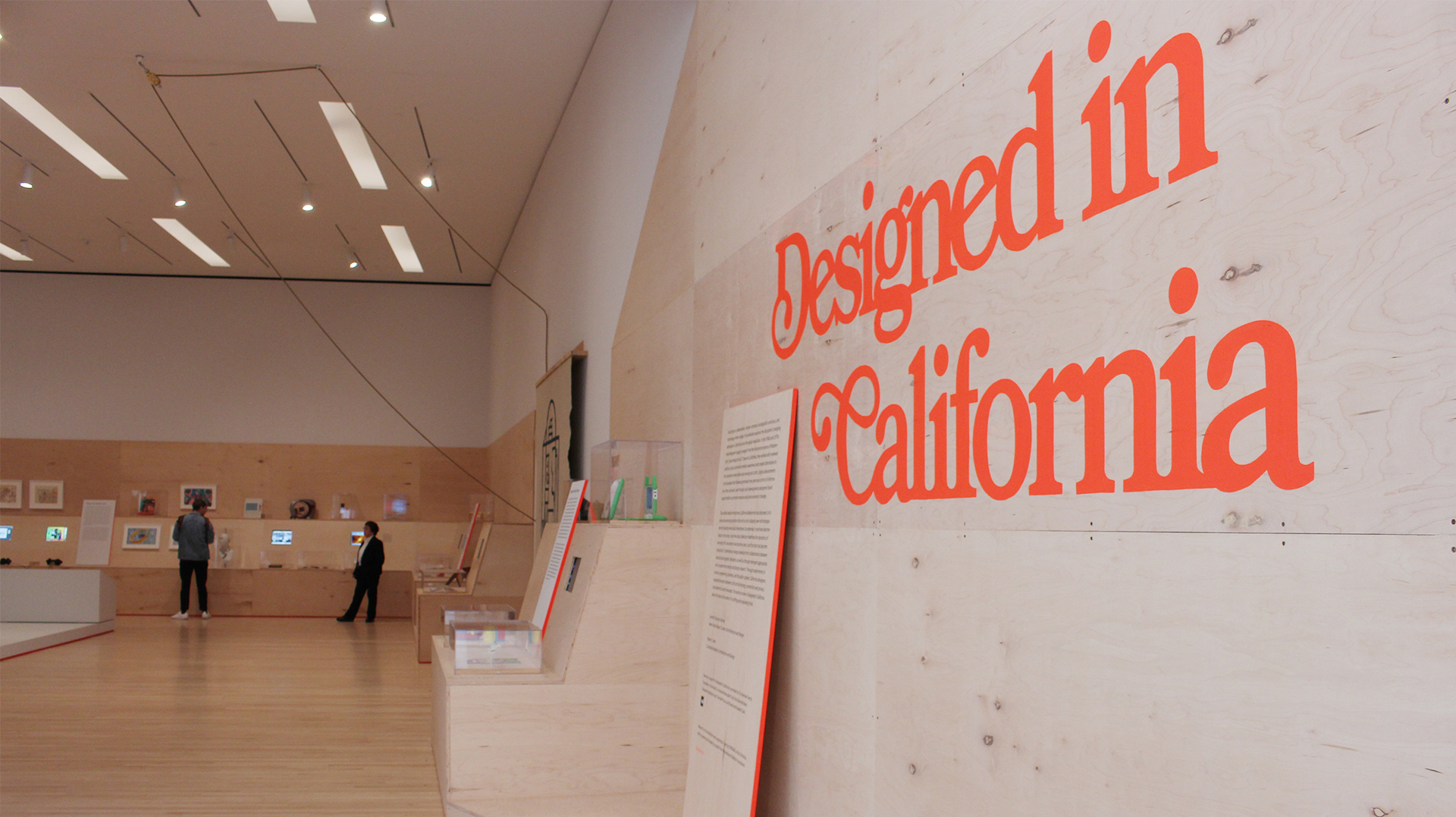
The Human-Centered Heart of California Design
SFMOMA's "Designed in California" celebrates the legacy of the Left Coast
Smartly curated by Jennifer Dunlop Fletcher, the show features objects dating back to the late 1950s, from the Eames Office to the first iPod to a home CRISPR kit.
I've now seen the show twice. Here's what’s stuck with me:
So much of what comes out of Silicon Valley today has its roots in the DIY utopianism of the Whole Earth Catalog. Founded in the late 60s by Stewart Brand and a bunch of Stanford longhairs, the Catalog promised “access to tools" that would equip us to break free from our hidebound culture.
The title was inspired by Brand’s 1966 campaign to have NASA release a satellite photo of the Earth as seen from space—the first image we’d see of the "whole Earth." That picture, he believed, would unite humans in our belief in a shared destiny and encourage more peaceful, ecological, and holistic thinking.
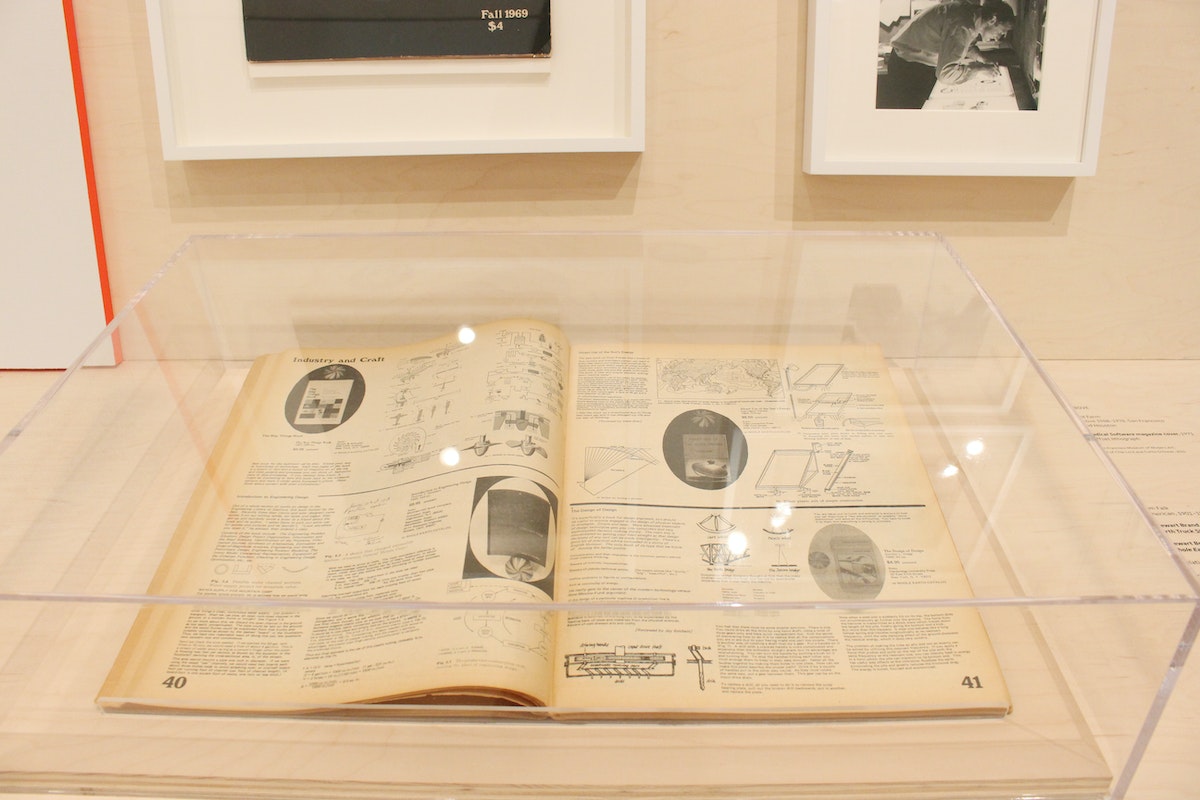
When I was in my 20s, the Whole Earth Catalog spurred me to start my own DIY design magazine, ReadyMade, in the back of a used furniture warehouse in Berkeley. Whole Earth made designing a life on one's own terms seem within reach.
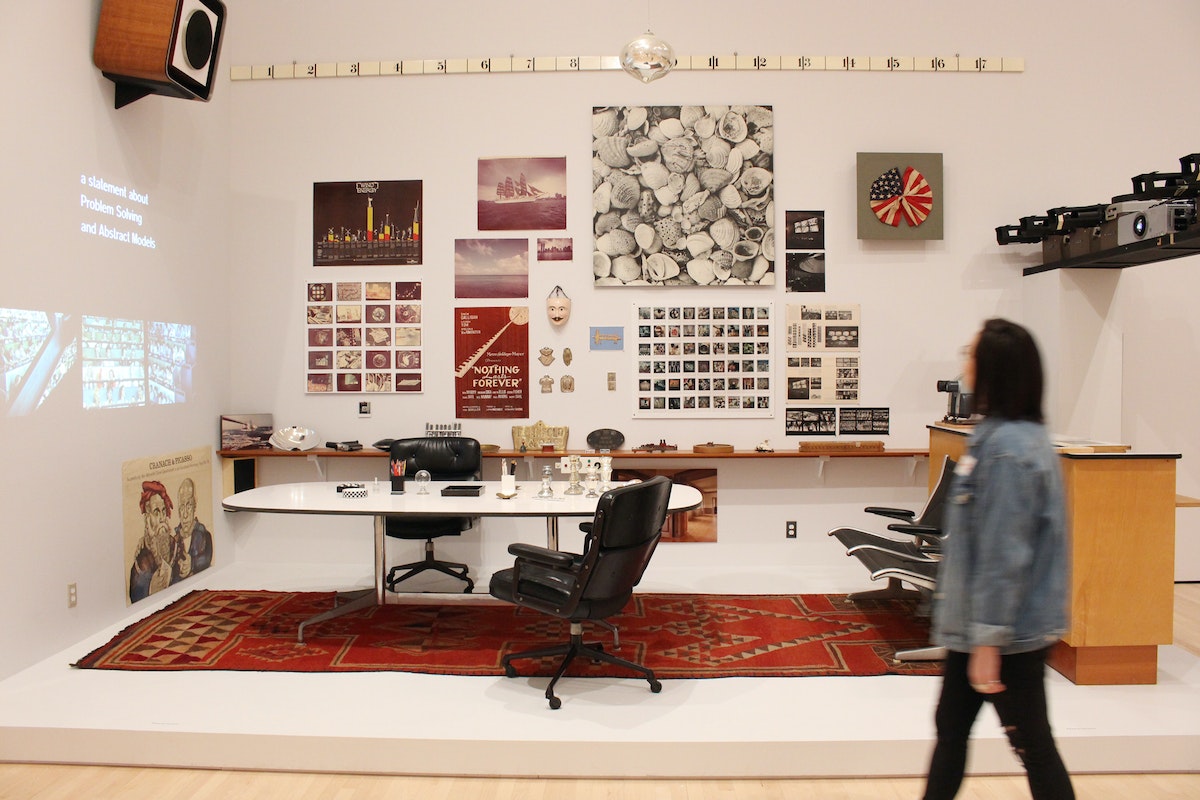
That spirit shines through in another standout of the exhibit: the recreated office of Charles and Ray Eames, down to the posters on the wall, the kilim rug, and a looping projection of their film for the World’s Fair (a serenade to industry and systems design). Everything they laid their mid-century paws on exudes a kind of singing-nun joy. Two things I love most about them: their philosophy that “Eventually everything connects—people, ideas, objects,” and that they employed the people they were designing for—Los Angeles locals, war veterans, and housewives.
There’s also the agitprop hijinks of Ant Farm; the stained leather scrappiness and propaganda of Marin’s craft guilds; and Heath Ceramics—the tableware preferred by my avocado toast.
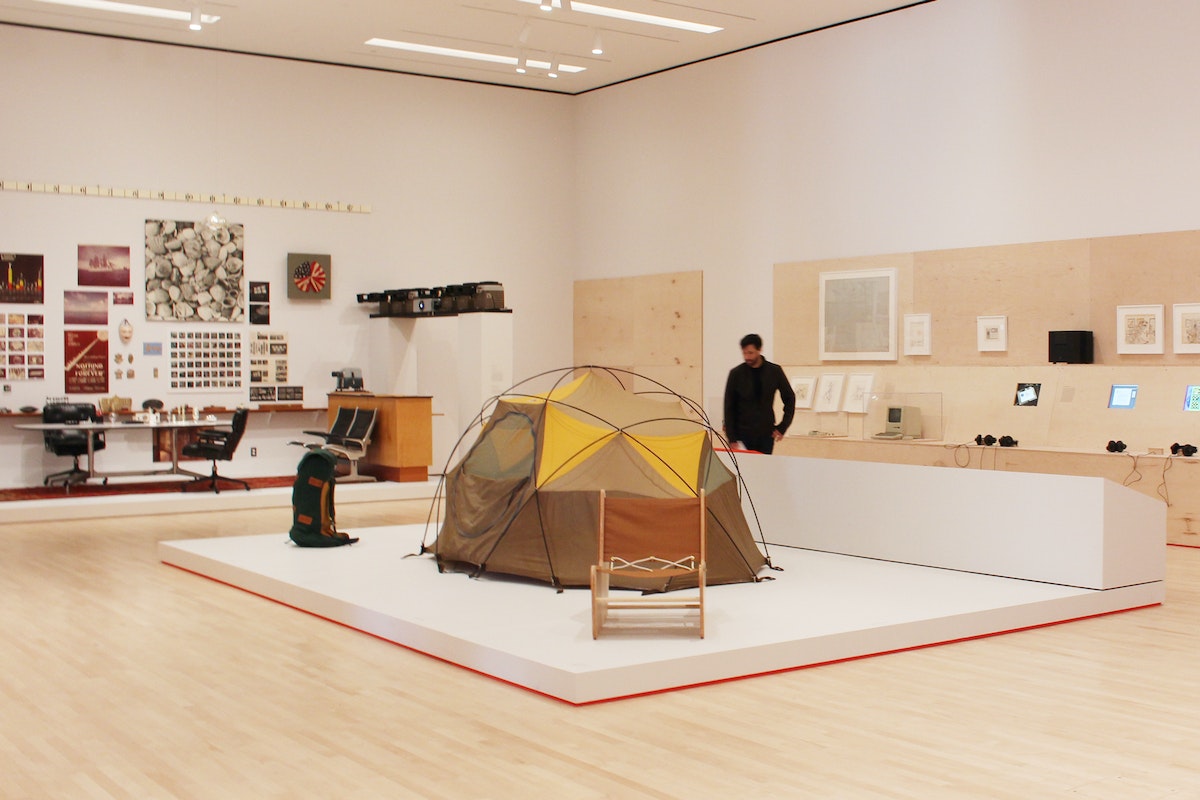
And for us outdoorsy types, the centerpiece of the exhibit is a Bucky Fuller-inspired North Face tent, pitched alongside radically new 1970s climbing equipment made by Yvon Chouinard, the founder of Patagonia.
I had a feeling the iconic "one laptop per child" by fuseproject would be on hand (check!), and was excited to see my friend Eric's (of Stamen Design) dazzling data visualizations.
Having done a tour of duty at WIRED in its third year of publication (1995), it was great to see their eye-popping cyberpunk spreads on display, and I'm always happy to learn of companies like D-Rev that care enough about social impact to design an $80 high-performance knee (80 percent of the world's amputees have no access to modern prosthetics).
California design got swept up in the digital tsunami that WIRED was chronicling and all those "new tools" for connected living now look quaint. The first Apple desktop computer and Handspring Visor sitting under vitrines look like beige relics from a technocrypt.
IDEO’s Dennis Boyle, who led the Handspring Visor design team, told me that its eye module accessory is credited as being the first digital camera on a handheld electronic PDA. "It’s the precursor to today's cell phone cameras," he said.
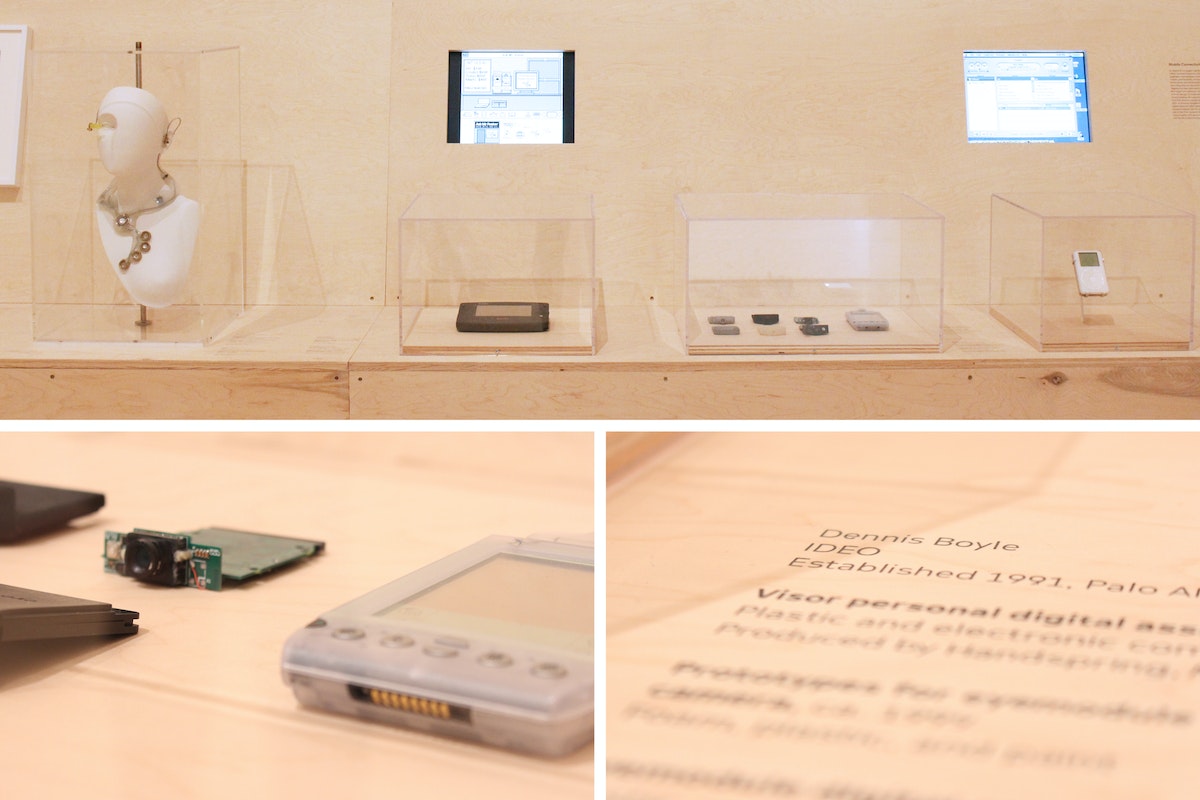
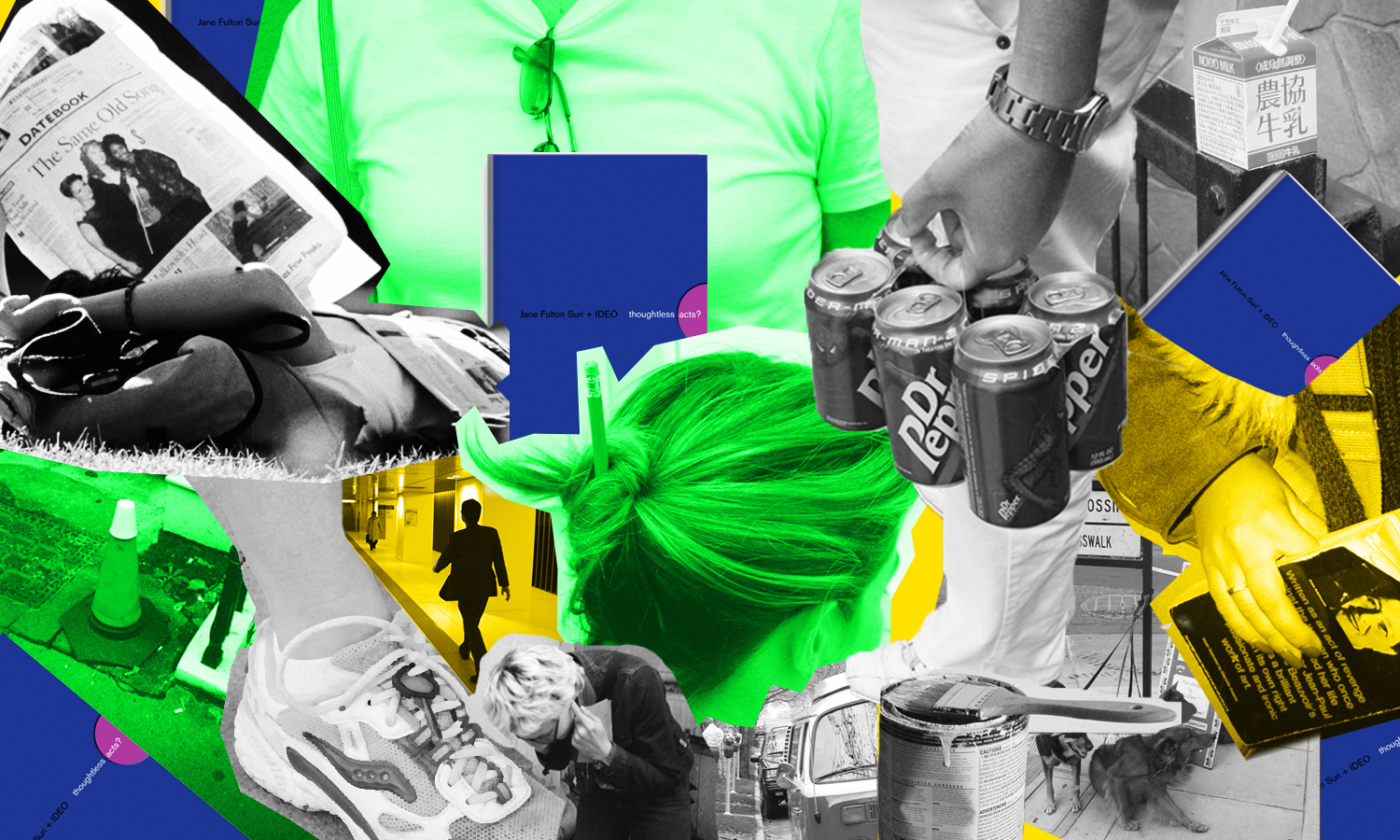
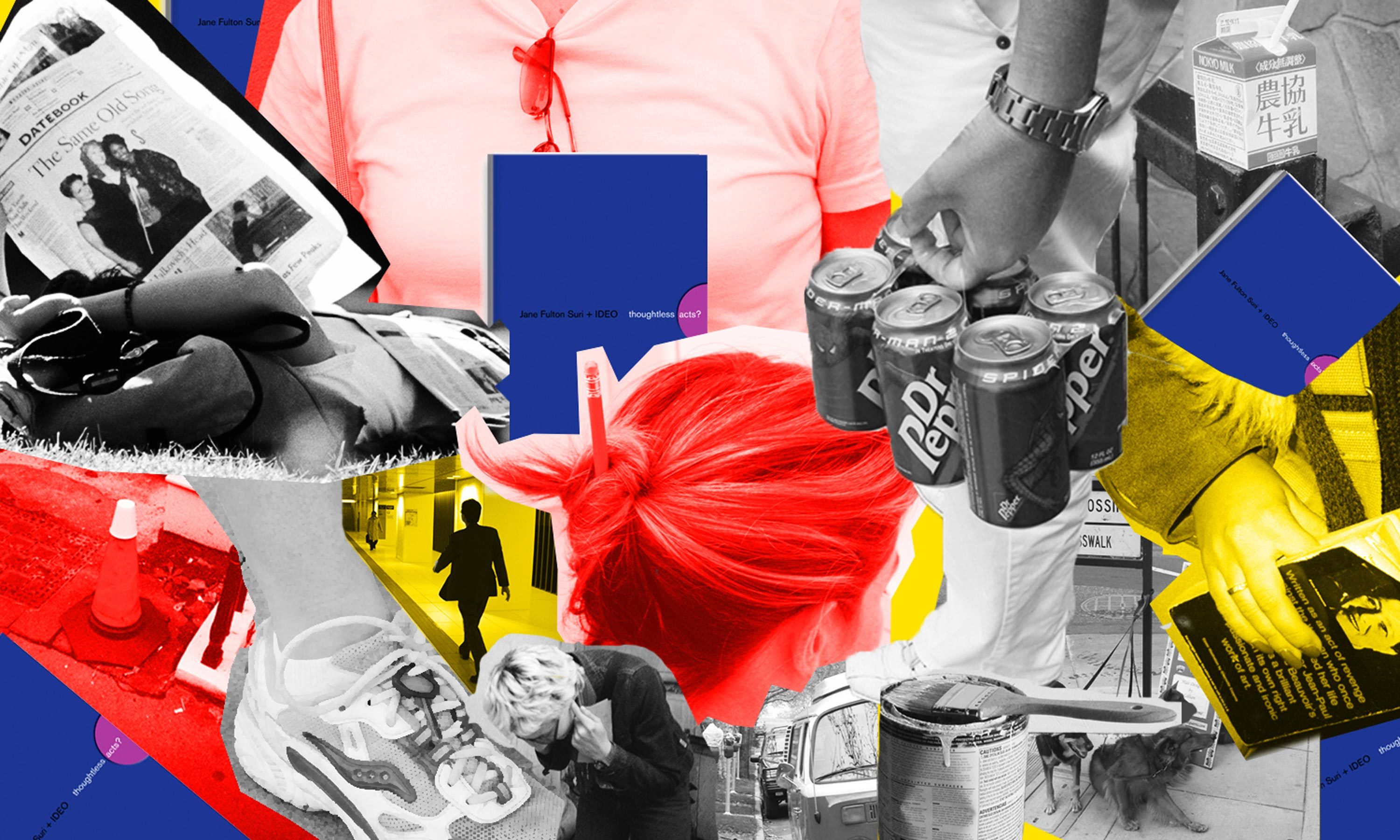
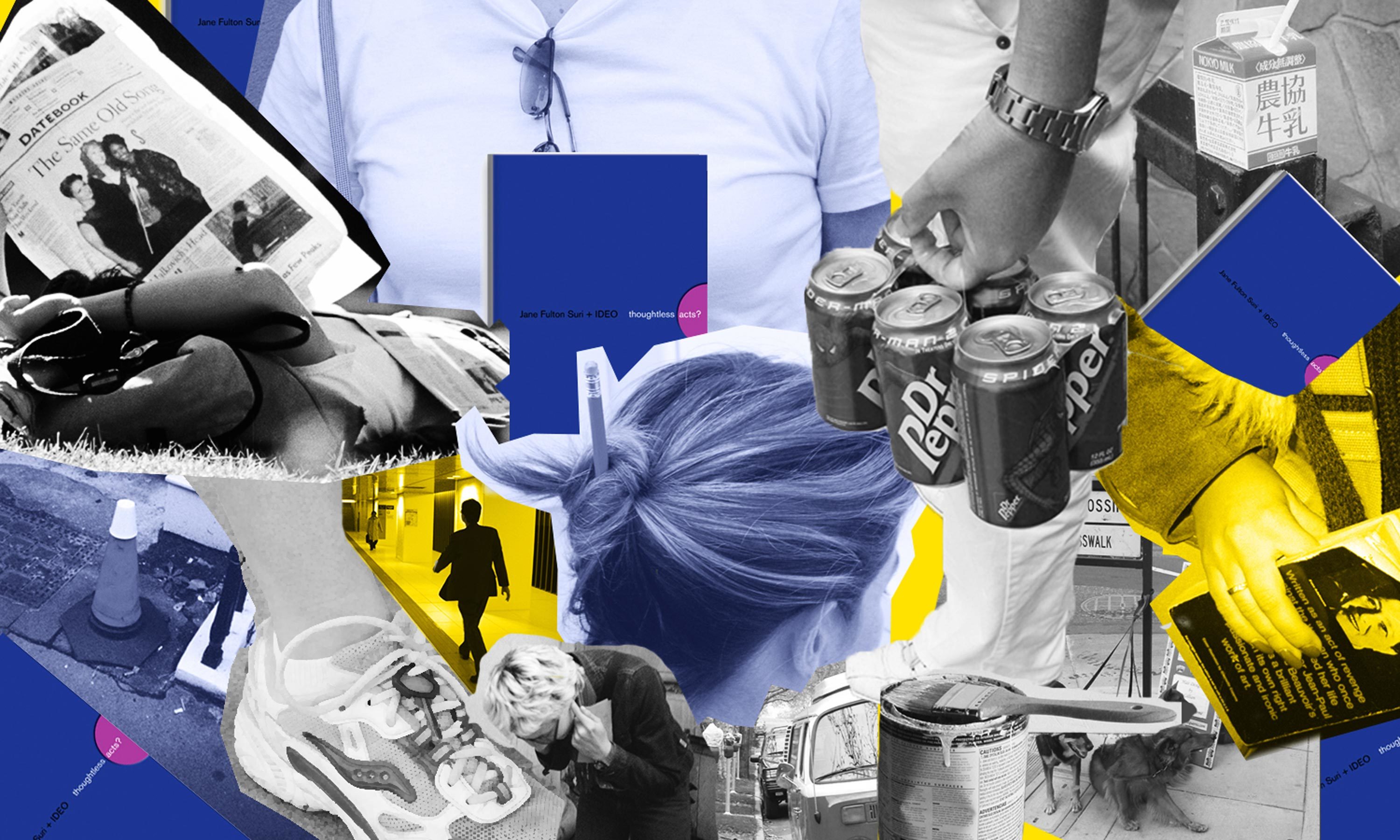
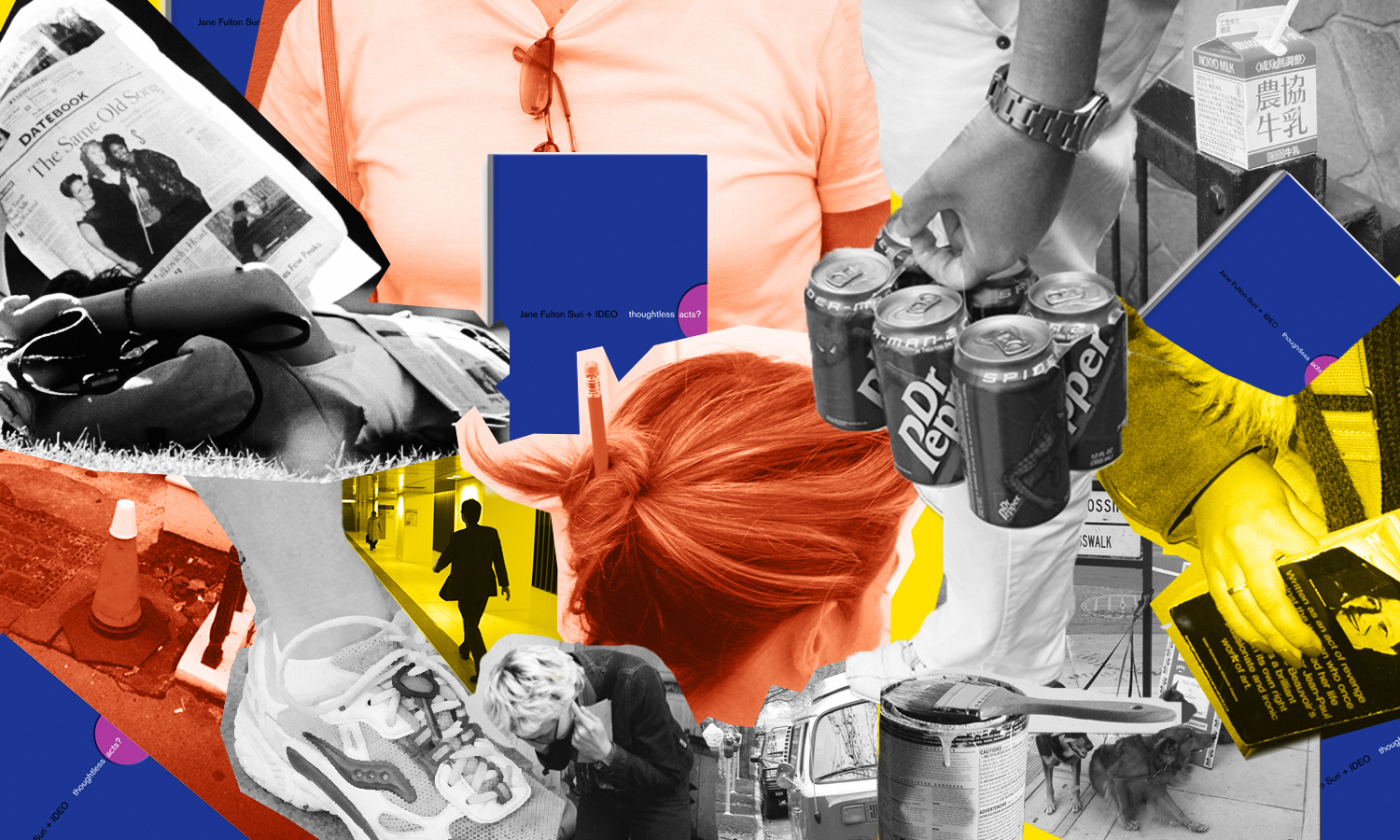
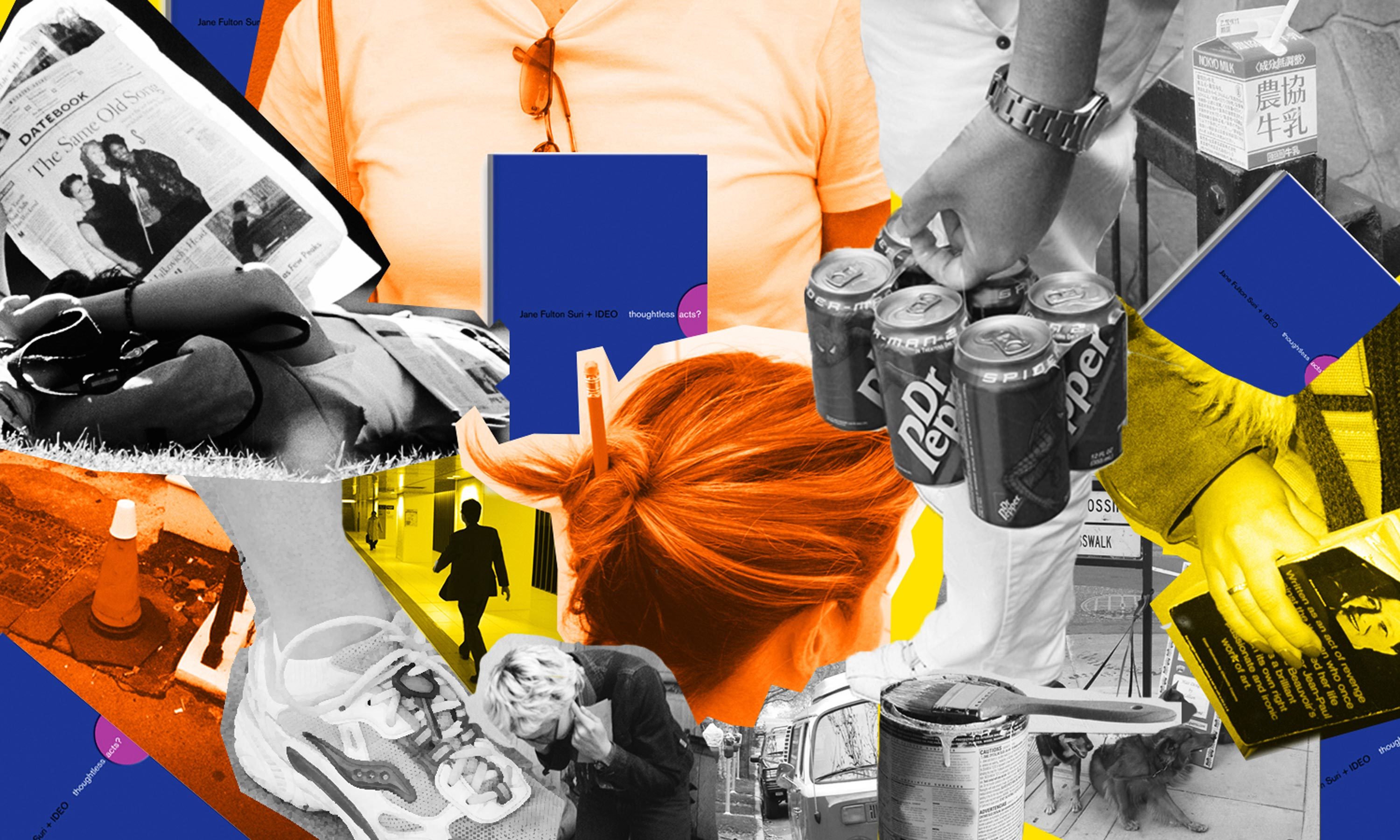
I'm drunk on Kool-Aid, no doubt, but I walked away from this show marveling at how IDEO appears to be the aortic valve of California design. There are no less than five examples of our work on display: The prototype for the first Apple mouse, Thoughtless Acts? and Method Cards, the Handspring Visor, and the prototype for the Q Concept workstation, designed by David Kelley and Jim Yurchenco, Jane Fulton Suri, Dennis Boyle, and Martin Bone, respectively.
Yurchenco, who repurposed a butter dish and a roll-on deodorant ball procured at a local Palo Alto drugstore to make the earliest mouse, is struck by the crude tools designers had at their disposal back in the day:
“It was done using old techniques: a pencil and paper on a drawing board instead of 3D solid CAD to design the parts; manually machined injection molding tools and pieced together check models instead of 3D printed models. Of course, everything designed at that time was done the same way.”
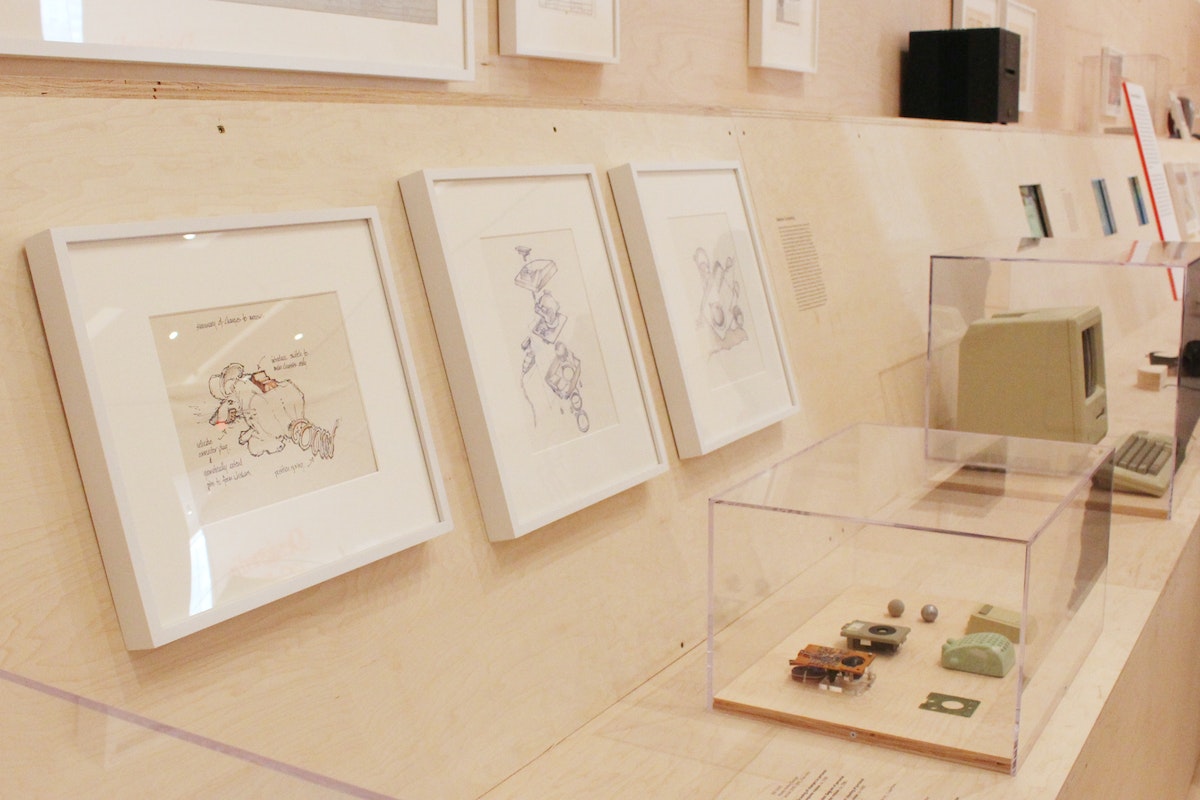
Though it seemed impossible to design a mouse for less than $10 when Steve Jobs first proposed it, IDEO founder David Kelley and Yurchenco alighted upon a crucial insight:
“The most surprising thing that happened during the process was we were able to make [the mouse] low-cost by realizing it didn't have to be as precise as we first thought," Kelley says. "Because the user's human brain would intuitively move the mouse to exactly the right spot."
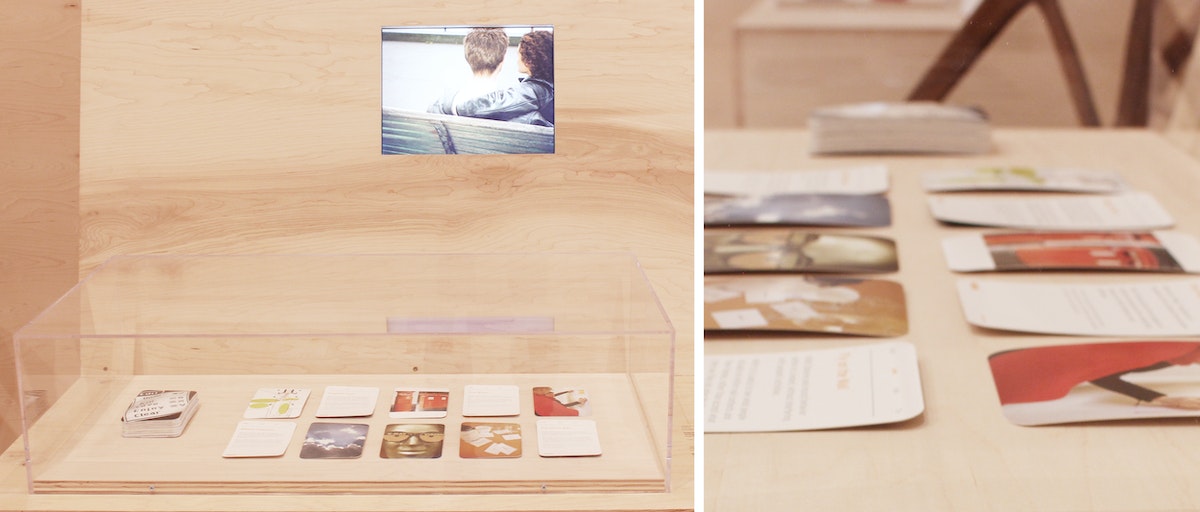
Jane Fulton Suri still expresses surprise that a simple deck of cards (Method Cards), which were published in 2003, became the foundation for IDEO's design approach:
“At the time it wasn’t obvious that sharing information about our approach and sensibilities would be a powerful way for IDEO to lead the way. It's now core to IDEO's strategy to create design tools and empower others in the world at large.”
Three of the four designers quoted above still work at IDEO. And that reminds me of another thing I love about California designers:
They never stop trying to make things better by making better things.
Next up: Nick Pajerski interviews "Designed in California" curator Jennifer Dunlop Fletcher.
If my heart were a painting, it would be on permanent loan to California. I love its shaggy optimists who turn drained swimming pools into skate parks. Its fog and fearless politics. Its pioneers and garage inventors and beat poets who came in search of a Golden State. I'm a big believer in the design that was born here, too, which is on display at the SFMOMA’s "Designed in California" exhibit through May 27, 2018.

Feeling Stuck at Work? Switch to “Play Mode”
Jake Knapp shares how a change in mindset can unlock creativity
My friend Stefan suggested I try a different mindset. Instead of trying to get things right, I should put myself in “play mode.” From his email:
Right then, I was working on an illustration for part of my book where some early readers got confused. But I wanted to get it right, so I’d been putting it off. "Okay," I thought. "I can afford to waste an hour on this."
I tried play mode. I told myself the next hour didn’t matter—I was just goofing around and having fun. I set a timer. I made about 15 rough sketches. Then the hour was up. And I hadn’t gotten it right. But I’d broken the ice, and I was in the zone, so I kept working. Thirty minutes later, I had an illustration I was happy with. And the whole thing was fun rather than stressful. Play mode worked!
I’m writing this post to remind myself of the value of play mode. Next time you talk to me and I say, "I’m stuck," tell me to flip the switch.
This post was originally published on Jake Knapp's blog.
I get stuck a lot. I get stuck writing, editing, making slides, designing, replying to email. I get stuck anytime I want to get something right.
Why Gesture is the Next Big Thing in Design
With new cameras, sensors, and AI, it's time for design to get physical
But there are limitations to voice-enabled interactions. They’re slow, embarrassing when other humans are around, and require awkward trigger phrases like “Okay, Google” or “Hey, Siri.”
Thankfully, though, talking into midair is no longer our only—or best—option.
The new iPhone introduced a camera that can perceive three dimensions and record a depth for every pixel, and home devices like the Nest IQ and Amazon's Echo Look now have cameras of their own. Combined with neural nets that learn and improve with more training data, these new cameras create a point cloud or depth map of the people in a scene, how they are posing, and how they are moving. The nets can be trained to recognize specific people, classify their activities, and respond to gestures from afar. Together, neural nets and better cameras open up an entirely new space for gestural design and gesture-based interaction models.
These new options beg the question: Of the existing interaction modalities—haptics (touch), sound (voice), and vision (gesture)—which is better to use when, and why?
The use case points toward an answer. When you’re SCUBA diving, or water skiing, or directing traffic on the deck of an aircraft carrier, the auditory channel isn’t available, so gesture or touch become essential.
In an operating room, a surgeon’s hands are sterile; she can’t flip through radiology scans—only speech and gesture are available. If you’re conducting an orchestra or on a military raid you can’t call out commands, so we’re back with gesture.
WATCH: From Charlie Chaplin to Cricket, there are a wide range of sources to inspire us as we design for gestural communication.
To dig into it further, our team at the Cambridge studio snagged a camera like the one in the new iPhone and performed a series of experiments to figure out when gesture might be the best choice.
First, we gave pairs of people an idea, then we asked them to make a four-handed pose to express that idea.
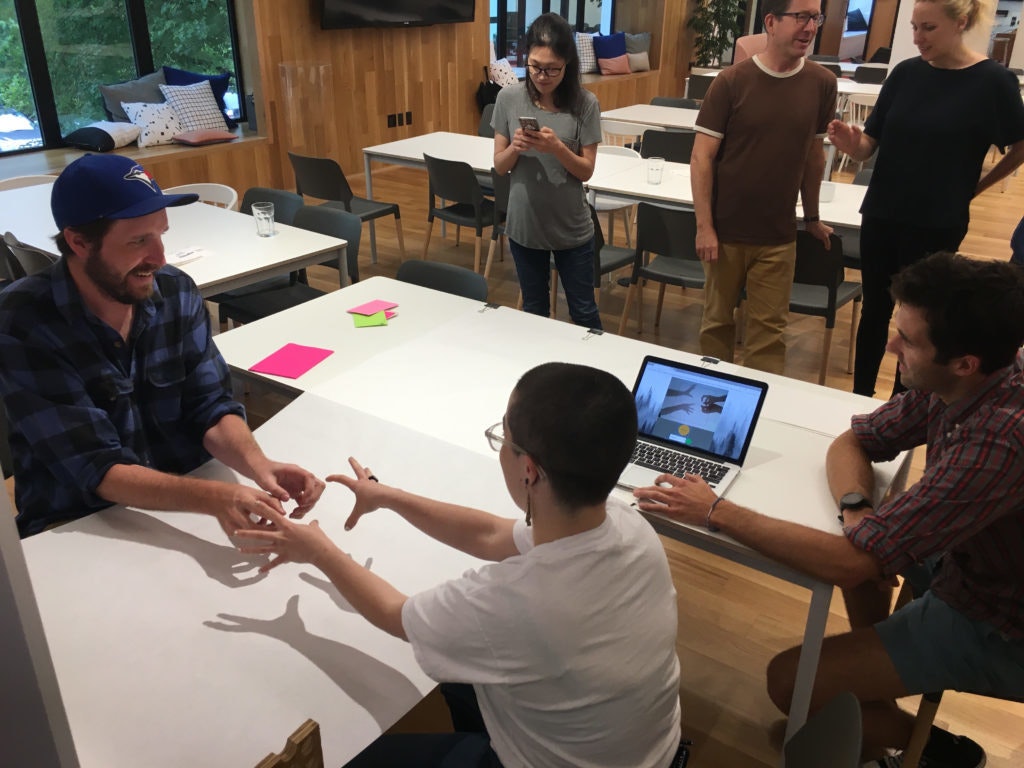
Then we recorded stories and tracked people’s hands using computer vision to study when we naturally deploy gestures to amplify emotion or explain a concept.
WATCH: Tracking how we gesticulate to bring stories to life.
WATCH: Ask a group of people to perform an action or request and you get some variation. The trick is finding gestures that are as universal as possible.
Lastly, we trained a neural network to recognize a small set of gestures, and used these to control a Philips HUE light set and a Spotify station to create an installation for the office.
WATCH: Using a set of gestures, we trained a few devices in our office to respond to our cues and adjust the lights and music.
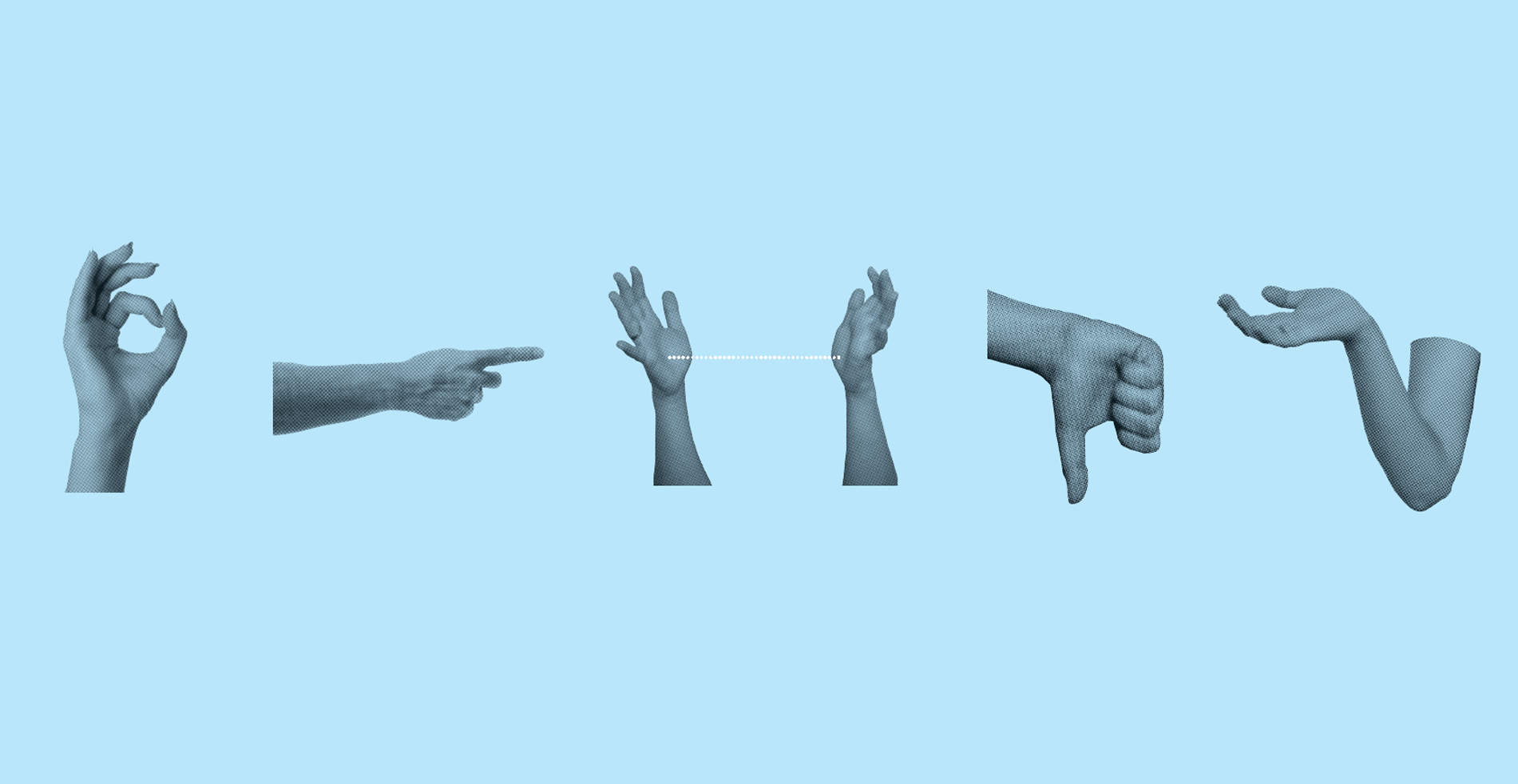
In messing around with these exercises, we discovered that gestures need to be either sequential, like a sentence—noun then verb, object plus operation. For example, for “speaker, on,” one hand designates the noun, and the other the verb: You point to speaker with left hand and turn the volume up by raising right hand.
Another surprising insight: Gestures are generation-specific.
When asked to signal turning up the volume, a few people twisted an invisible knob, but most of the under 30s lifted a palm or made a pinching gesture with their fingers.
After analyzing our results, we boiled our thoughts down to four reasons to opt for gesture over voice or touch:
- Speed: If it needs to be fast, gestures are much quicker than speaking sentences.
- Distance: If you need to communicate from across the room, gesture is easier than dealing with volume.
- Limited lexicon: If you don't have a thousand things to say, gestures work well. The smaller the gesture set for a given context, the easier it is to remember. (Thumbs-up/thumbs-down, for example.)
- Expressiveness over precision: Gestures are well-suited to expressing emotional salience. A musical conductor communicates a downbeat and tempo, but also so much more: dolco, marcato, confidence, sadness, longing, and more.
It's exciting to imagine a whole new category of products that will take advantage of gesture’s subtlety, expressiveness, and speed.
How might we use gesture in unexpected ways? I’d love to hear your thoughts.
Many thanks to the rest of the team: Lisa Tacoronte, Todd Vanderlin, Jason Robinson, Danny DeRuntz, Brian Standeford, Eric Chan, and Ari Adler.
Since Siri was introduced in 2010, the world has been increasingly enamored with voice interfaces. When we need to adjust the thermostat, we ask Alexa. If we want to put on a movie, we ask the remote to search for it. According to some estimates, some 33 million voice-enabled devices reported for duty in American homes by the end of 2017.
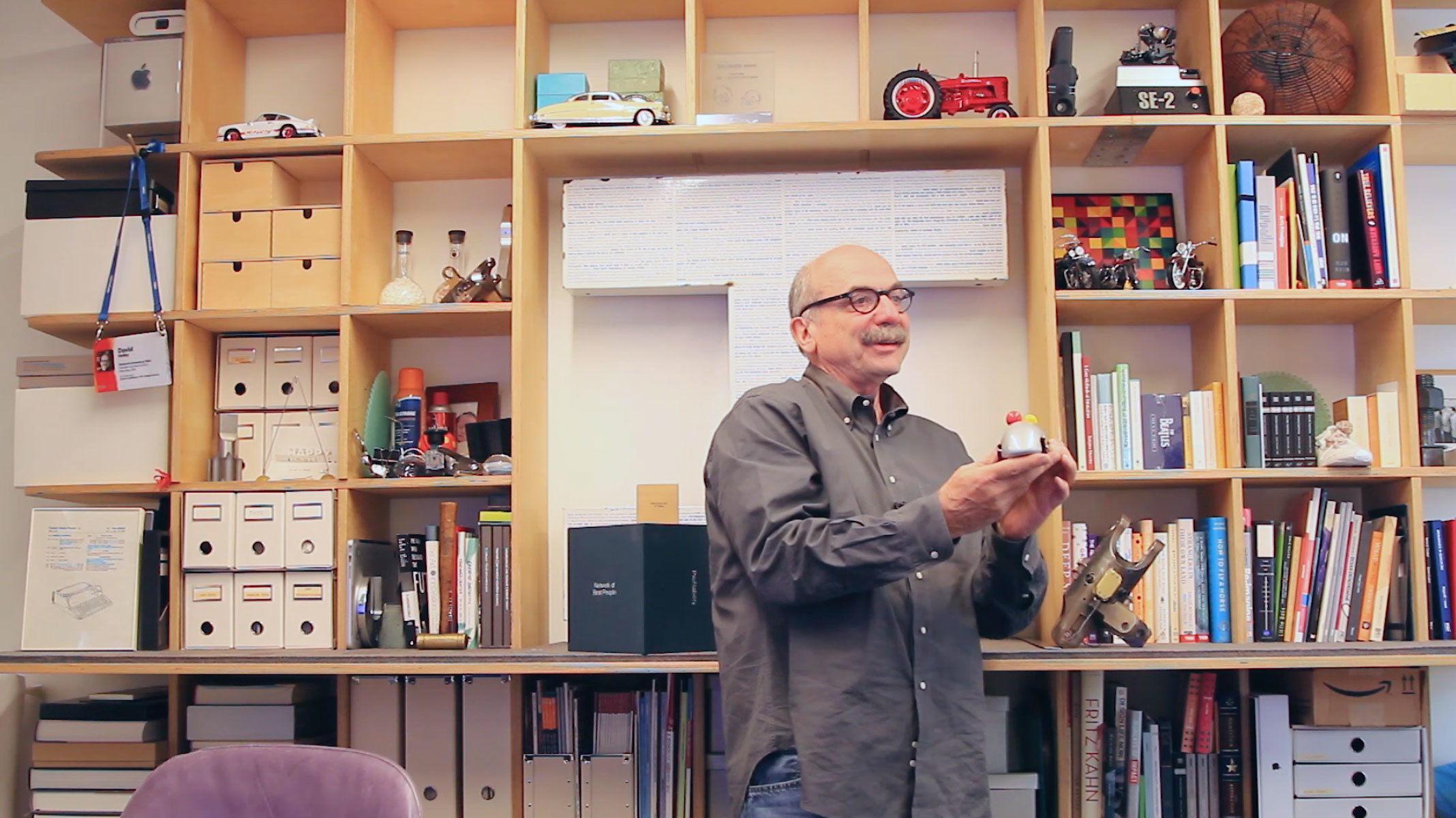
The Life of David Kelley, According to His Shelves
The first Apple mouse, the Jaminator, and other gems from the personal collection of IDEO's founder
“I don’t think of myself as a collector, I just keep the stuff that happens in my life," Kelley says. And what happens over the course of a life in design adds up.
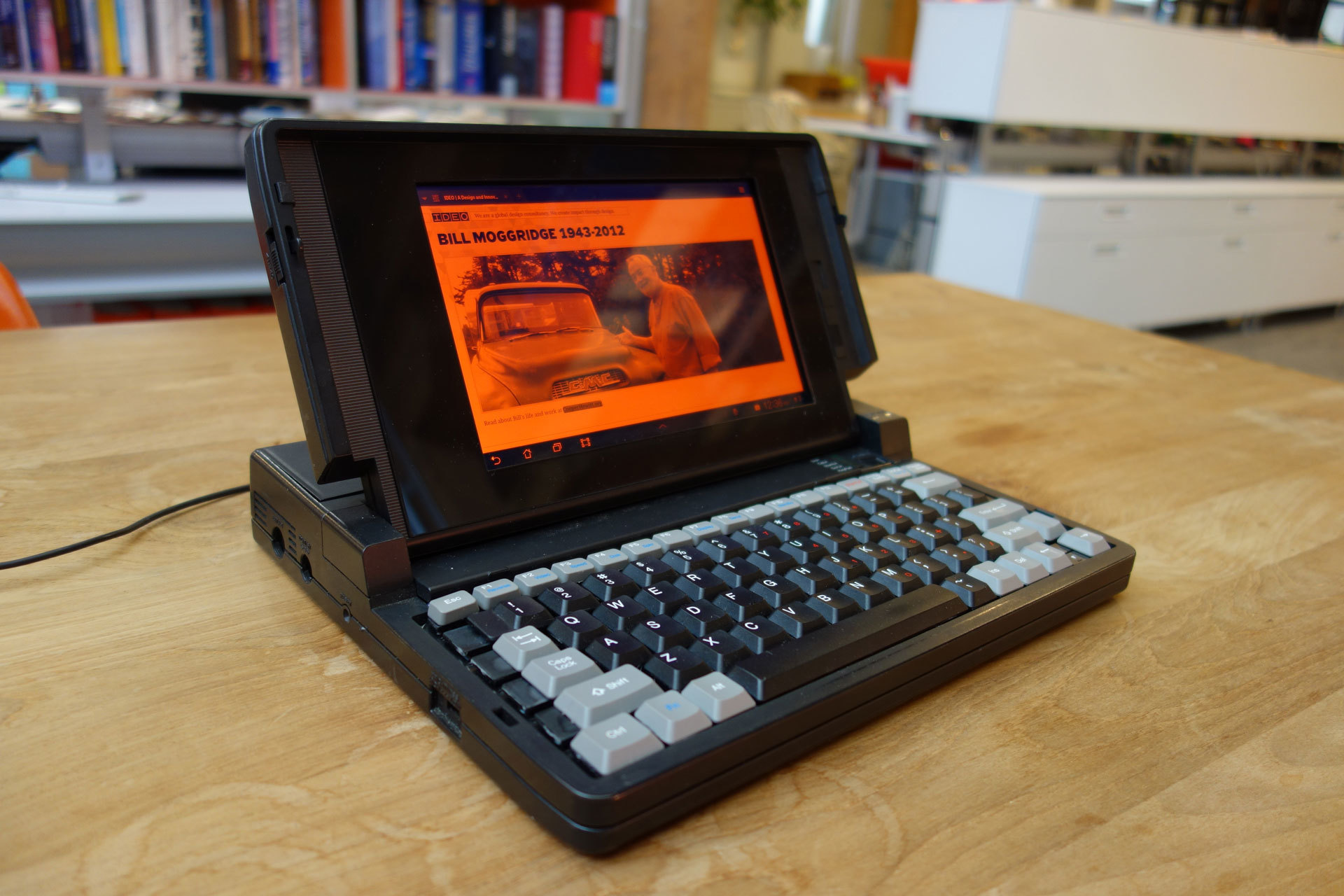
Kelley, who founded IDEO 40 years ago and went on to launch Stanford's d.school, has a lot of stories to tell, and most of them are connected to stuff—stuff IDEO made, stuff given to him by other designers and architects like Ettore Sottsass (who also designed Kelley's house), stuff that unlocks memories and, not infrequently, gets him choked up. (SPOILER ALERT: skip to 1:54 where he points out a picture from his wedding. One of the guests is IDEO cofounder Bill Moggridge, the father of interaction design, who died in 2012.)
Take a tour of David Kelley's office shelves
The wall of wooden cubbies in Kelley's small Palo Alto office is crowded with prototypes, model automobiles (Kelley is also a car buff who owns about 20 vehicles, including a 1954 Chevy pickup), and other curios like a giant "I" that lights up and is inscribed with his life's story. His coworkers fabricated it for him in the company shop for his 50th birthday.
In fact, Kelley has a small museum of birthday keepsakes that IDEO designers have given him over the years: a giant spotlight, an old motorcycle, and one of those mechanical horses that costs a dime to ride, purchased from a grocery store.
Inspiration and materials for those gifts often came from University Art, the Palo Alto supply store down the street from the studio. "There was a guy named Jim, lovely white haired guy," Kelley says. Jim was the store manager, and when Kelley told him he was starting a new company down the street and would like to open an account, Jim replied that they'd have to charge $50 a month to qualify. Kelley admitted he didn't know if they'd be able to do that. "Fast forward a few years, Jim was still there and we had about 350 employees and we were charging $50 a minute. Jim would always remind me of that story..."
Kelley's collecting gene runs in his family. His mother used to call it "shopping in the basement." She'd go down to the first floor of the house and dig up something from Kelley's past and send it to him for his birthday.
"Things would show up in the mail: My leather pouch that I would keep my marbles in when I was a little boy; my boy scout uniform. I'm kind of in that same vein as my mother. I'm keeping things that are meaningful. When I am sitting around, I can look at the model we made of the first mouse or the Christmas card we made in 1993 and I just think, it's pleasurable now; it's going to be even more pleasurable as I get older."
Though IDEO still makes stuff, much of what we design, along with what we consume, has become less tangible. And it's a good thing—there's not much more room on Kelley's shelves.
It's not everyday that you see the first ever example of something you love. So, when David Kelley invited us into his office and pulled an early prototype of the Apple Mouse off his shelf, I let out an audible gasp.

Lindsey Turner
I’m passionate about building brands, products, and experiences that help organizations show up with meaning and momentum.
I help organizations cut through complexity by shaping how they show up, through brand strategy, identity, and storytelling.
Working at the intersection of brand and business, I bring an editorial eye and a bias toward making—turning ideas into tangible experiences that people can understand, trust, and believe in.
My work spans government, healthcare, financial services, media, and consumer goods, from launching Gen Z-focused ventures to building innovation labs and reimagining legacy brands. I relish moments of ambiguity and enjoy translating across teams, perspectives, and priorities to move ideas forward.
I started my career in editorial and digital design, shaping cross-platform experiences and identity systems in publishing and agency environments. That foundation still shapes how I work today: I’m detail-oriented, collaborative, and overreliant on the Oxford comma. I hold a BFA in Visual Communication from the School of the Art Institute of Chicago.

Rachel Young
My work helps organizations see who their products aren't working for—and build the will and the tools to do something about it
For 25 years, I've asked the same question: Who does this design exclude—and what are we going to do about it?
My work spans human-centered strategy, inclusive design, and qualitative research, with clients ranging from Microsoft, Google, and Verizon to the National Science Foundation, and San Francisco Unified School District.
Before IDEO, I taught elementary school in East Palo Alto and spent a decade doing design work with social service organizations—where I learned firsthand what it costs people when systems are built without them in mind.
I am currently writing User Error, a nonfiction book about digital access and the design decisions behind it. I live in Oakland, California.

Brian Pelsoh
I lead with craft, ensuring our work is creatively excellent: rooted in deep human insight and imagination, while also grounded in the realities of business and technology.
My expertise spans brand, communication, and product design across tech, education, the arts, and social impact.
I believe great work demands both high-level vision and obsessive attention to detail, and only happens through collaboration.
I bring an inclusive, hands-on approach and a deep understanding of business, which enables me to consistently deliver excellence while always asking why.
Before joining IDEO, I worked at the brand firms Pentagram and VSA Partners. I began my career as a designer, leading teams at the School of the Art Institute of Chicago and the Milwaukee Art Museum. I hold an MFA in graphic design from Maryland Institute College of Art and a BFA in communication design from the Milwaukee Institute of Art & Design, and have taught at some of the best design schools in the US.

Tony Wong
I am responsible for IDEO’s long-term success in China and working with clients to use design as a tool to enable growth.
I am responsible for IDEO’s long-term success in China and working with clients to use design as a tool to enable growth. Specifically, I have helped Chinese companies design holistic brand solutions through the development of their products, communication, services, and innovation teams, and I have helped multinationals expand their presence and influence in China.
I advise global leaders on developing China-led innovation and capabilities.
In over 15 years in IDEO Shanghai, I have worked on projects that use design to elevate the quality of the experience of healthcare products and services, streamline processes that increase productivity, create spaces and programs that promote and enable inclusive communities, and build next generation mobility solutions that are planet-positive.
Before joining IDEO, I worked at Philips Electronics and the Electrolux Group in Italy, the Netherlands, and Singapore on a number of breakthrough commercial products. I am a member of the Young President Organization in Shanghai.

How to use AI as an editor, not a writer
Ed White shares how he uses AI as an editor—not a writer—to sharpen storytelling, rehearse ideas, and preserve the productive friction that makes creative work better.
Ed White has a rule he's tested on his own writing: hold yourself as the writer, and let AI be your editor. Ed is a Senior Design Director at IDEO's London studio, where he co-leads the firm's AI portfolio across Europe. Before IDEO, he spent 12 years as a writer and editor at the Financial Times, Wired, and Contagious. So when he talks about when to use AI for storytelling and when not to, it comes from two decades of crafting his storytelling skills.
In this episode, Mina Seetharaman talks with Ed about two specific tools he uses to keep AI in an editor's seat: a "roasting agent" prompted to critique his drafts without any sugarcoating, and a simulated audience he rehearses pitches on before the real thing. They also get into what Ed is hearing from design leaders at Anthropic, Lovable, Shopify, and Google Creative Lab about how creative work is changing, and why he thinks the friction of writing something yourself is worth protecting rather than automating away.

Building a personal AI for the messiness of life: Sida Li
Becca Carroll talks with Cue co-founder Sida Li about designing a personal AI for the messiness of everyday life—not just work. They explore how Sida stays anchored to human needs while navigating fast-changing technology, product tradeoffs, business-model experimentation, and the realities of building an AI company today.
Most AI products today are built for work—a space with clear problems and established systems. One founder noticed a gap: personal life is messier, harder to systematize, and mostly left behind by the AI boom. So she built Cue, a personal AI that lives inside iMessage and group chats, to go where the other tools haven't.
In this episode, Becca Carroll, IDEO's Chief Strategy Officer, talks with Sida Li, co-founder and CEO of Shared Context Lab, about staying anchored to a human need while the technology around her keeps changing shape, why she treats her business model with the same rigor she'd bring to a product, and what it feels like to build a company at this particular, disorienting moment in AI.
The conversation also gets into how Sida makes design decisions: the language Cue uses to describe itself, the tradeoffs behind building inside iMessage instead of a new app, and a real story about a business idea that didn’t pan out.
This is the second in a two-part series profiling founders from IDEO's Startups-in-Residence program. The first conversation is with Johannes Seemann, founder of Sooner, on designing GenAI for the emotional side of money.

Designing GenAI for the emotional side of money: Johannes Seemann
Designing financial tools around the feelings that shape money decisions.
Most personal financial tools are built to run the numbers and optimize towards a budget. While that works for some, most people experience money as a lived relationship that does not neatly fit into a spreadsheet. Johannes Seemann and Becca Carroll discuss why money is emotional before it is mathematical, and what a human-centered approach to building a generative AI financial product looks like in practice.

The curious leader's edge in uncertainty: Scott Shigeoka
How genuine curiosity helps leaders navigate uncertainty with greater confidence.
Mina Seetharaman talks with Scott Shigeoka, author of Seek and Head of Curiosity Cultivation at the Eames Institute, about what distinguishes genuinely curious leadership from performative curiosity, how power dynamics shape curiosity, and why practicing curiosity can restore energy rather than drain it.
Looks like you might be in search of something very specific?
Or reset the filters above and try another angle.
Here’s some random inspiration

Podcasts about creative leadership

Articles about the power of prototyping

























.webp)