
.svg)



Elevating business class travel with personal connection
Redesigning the long-haul travel experience through the relationship between attendant and passenger.
The key to winning the competition in high-end business class air travel lies in the level of service. Legacy European carrier Lufthansa approached IDEO to help redesign its long-haul, business-class service experience into one that’s thoroughly modern, distinctly Lufthansa, and centered on the new needs of today’s discerning passengers.
After putting themselves in the shoes of both travelers and flight attendants on a variety of different airlines, the IDEO design team found that what matters, above champagne and fancy food, is a personal connection between crew and passenger. They used this insight to focus on a new goal: Flight crew consider themselves to be travelers’ trusted, knowing hosts.
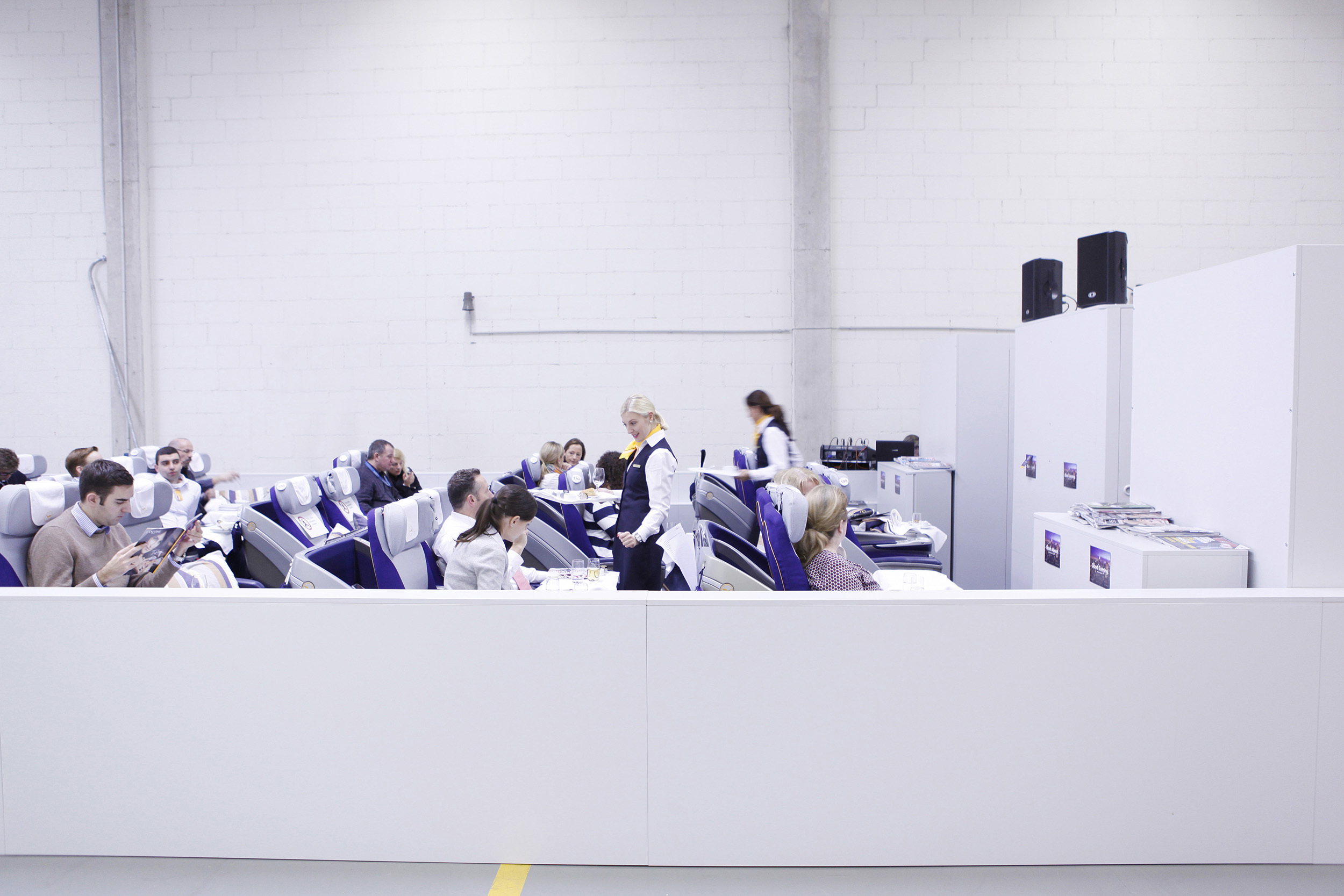
To achieve the goal, the design team focused on improving service in six key travel moments, then built a cardboard 1:1 scale mockup of different parts of an airplane to see what they’d need. Designers tested the service in a full section of an Airbus A380 at the airline’s Raunheim, Germany, facility, with real passengers and crew. This prototyping process was crucial, as executives witnessed firsthand how big an impact the new service would have across the organization, which includes 18,000 flight attendants.
Rolling out across the fleet, Lufthansa’s hospitable new service is already getting a good reception among crew. “Pampering passengers like this—individually and personally—was the reason why I started flying for Lufthansa 25 years ago,” said Sabine Schwarz-Odewald, senior flight attendant.
Designing the future kitchen
How we will cook, eat, and socialize at home.
Of all the rooms in our homes, the kitchen is the center of energy, activity, comfort, and creativity—the beating heart of any dwelling. In the coming decade, as our environments and habits change, the kitchen as we know it will evolve drastically. More people will move into cities, and our living spaces will become smaller. Natural resources will become more scarce, food more expensive, and waste an increasingly urgent issue. Near-instant grocery delivery will alter how we shop for and store food, and technology will be embedded in every part of our homes.
What will the kitchen of the future look like, and, more important, what will it feel like to cook, eat, and socialize there?
For IKEA, the world’s biggest furniture store, the time to start designing the kitchen of 2025 is now. So IKEA asked IDEO London and a group of students from Lund and Eindhoven universities to explore the social, technological, and demographic forces that will impact how we behave around food in 2025. The students spent months researching people’s attitudes and ideas about cooking and eating, and IDEO designers guided them as they built concept kitchen products.
To bring these future concepts to the present day, IKEA asked IDEO to design and build a full-size concept kitchen for 250,000 visitors to test out during the Salone Del Mobile in Milan and a six-month stint at EXPO Milano.
Mindful design
Crucial to the success of the project was preserving the tactile creative pleasure of the kitchen. Technology could easily make the space feel robotic and sterile, but this project was guided by the need to use tech to enhance the kitchen’s warmth.
The Concept Kitchen 2025 doesn’t automate away personal choices, but rather facilitates mindfulness with embedded cues throughout the kitchen that subtly guide people toward being conscious of their actions and making informed decisions. In designing the prototypes, the following few concepts emerged.
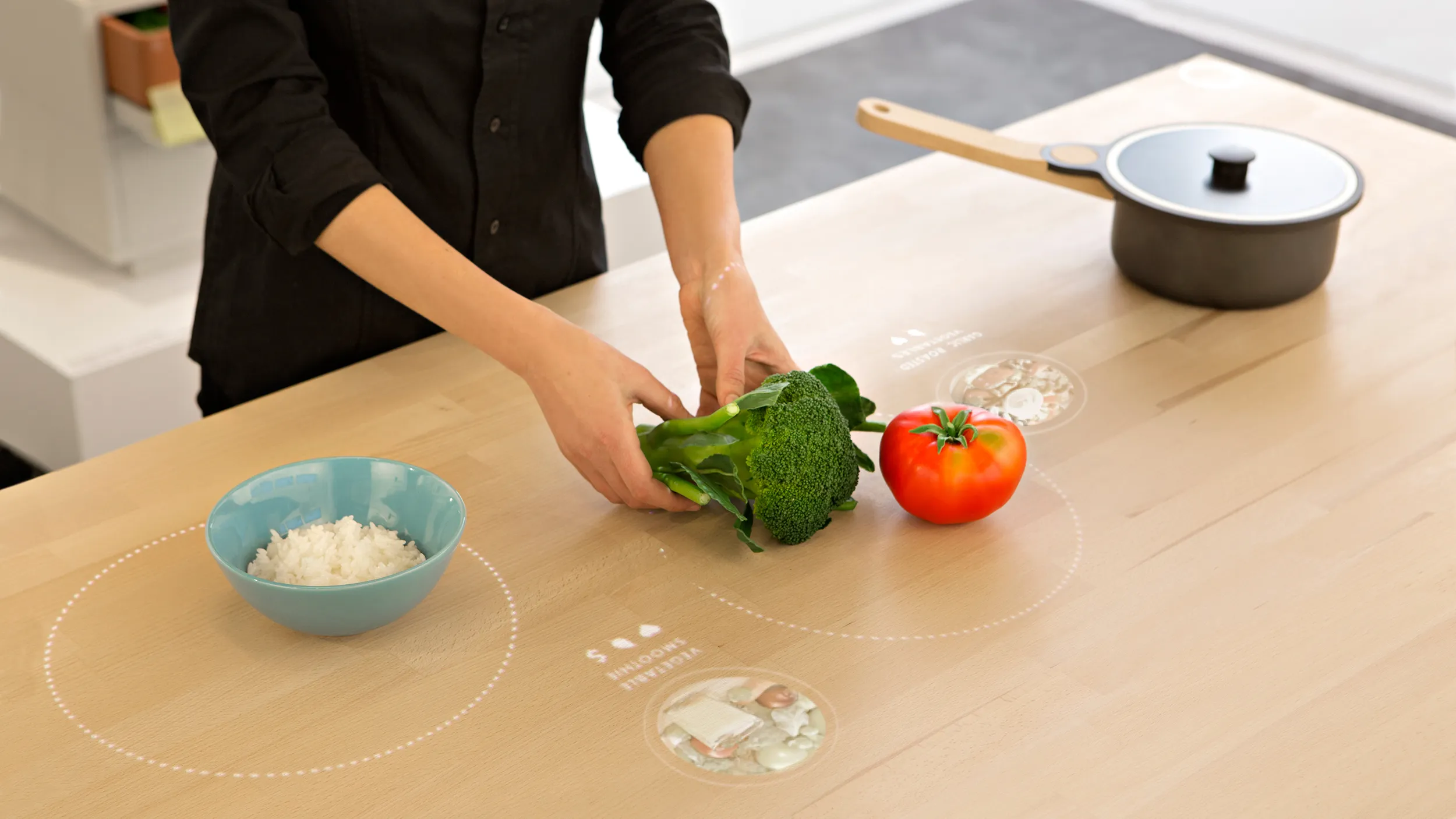
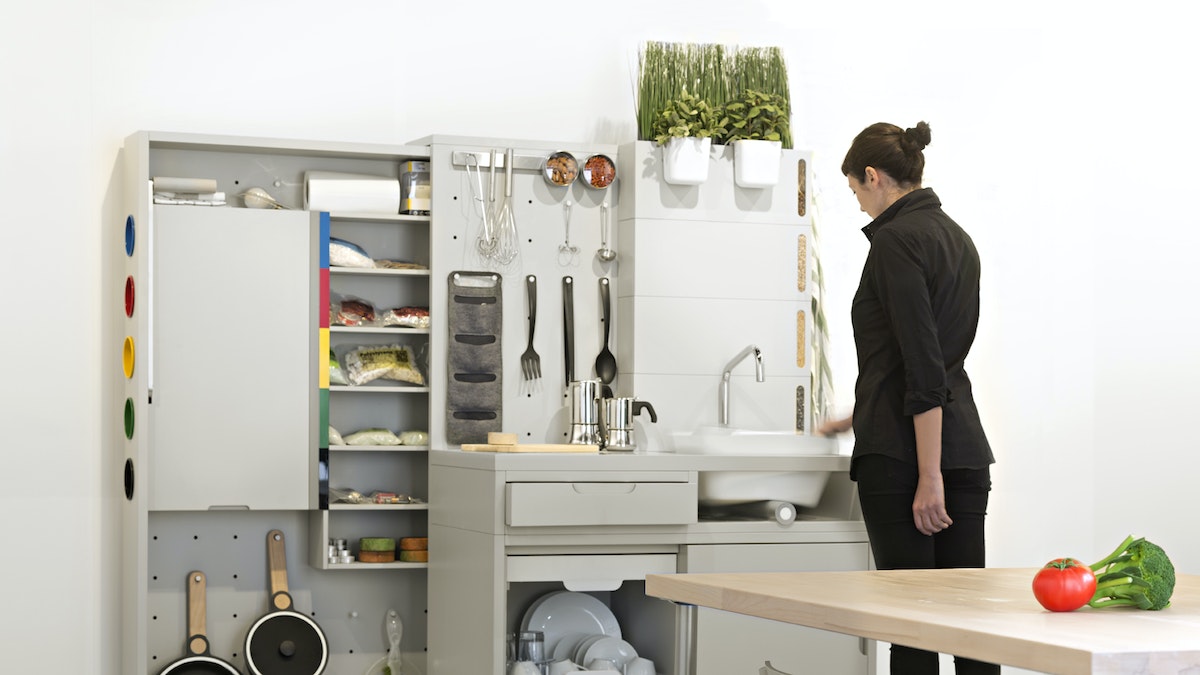
The Modern Pantry encourages us to have a closer relationship with what we eat by storing food in transparent individual containers on open shelves rather than hiding it at the back of the fridge. The design makes it easy to be inspired by what’s on hand rather than going out to buy more, and it also saves energy: Induction-cooling technology embedded into the shelves responds to RFID stickers on the food’s packaging in order to keep the containers at just the right temperature.
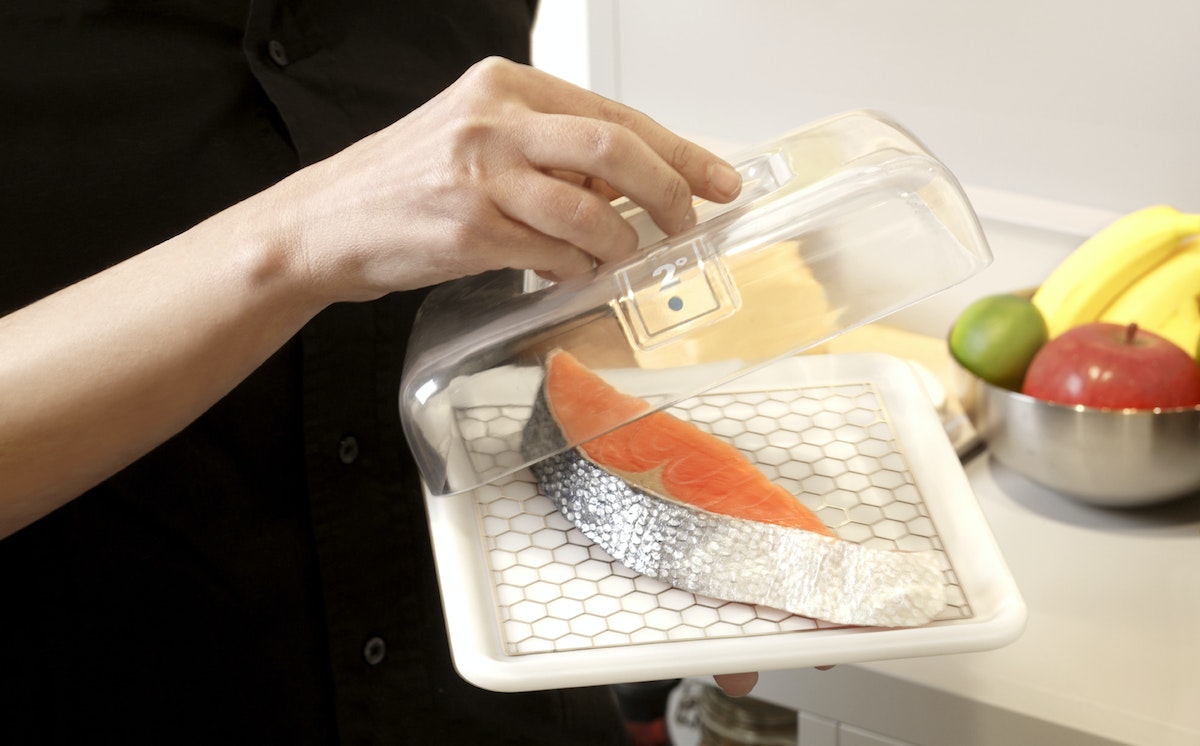
The Table for Living is designed to inspire people to be more creative with food and throw away less. At a loss for what to do with that leftover broccoli? Just place it on the table and a camera recognizes it and projects recipes, cooking instructions, and a timer directly onto the table's surface. Set the timer for how long you want to spend preparing the meal, and the table suggests recipes that can be completed in the window you have available. The table is a nifty solution for a smaller urban dwelling because it’s multimodal: Hidden induction coils instantly cool the surface when not in use, so it’s adjustable for working, cooking, or eating.
The Modern Sink pushes us to be more conscious of our water consumption with a pivoting basin. It must be tipped to one side to drain toxic, or “black,” water, and to the other for safe “gray” water, which is not drinkable but can be filtered and used in a dishwasher or as nourishment for the cooking herbs that grow above the sink.
The Thoughtful Disposal system is a response to the overuse of landfills, and reminds us of exactly what we’re throwing away. Users manually sort recycling from rubbish, and recyclables are then crushed, vacuum-packed, and labeled for pick-up, earning credits for the conscientious (and debits for the wasteful).
IKEA’s kitchen and dining range manager, Gerry Dufresne, explained that the Concept Kitchen 2025 is not really a functional kitchen, but rather “a tangible communication of what the behaviors of the future will be.” It’s just the start of IKEA’s journey toward understanding how those behaviors will shape the company’s future, and Dufresne says the findings will be carried forward into future product development.
Designing the audience experience
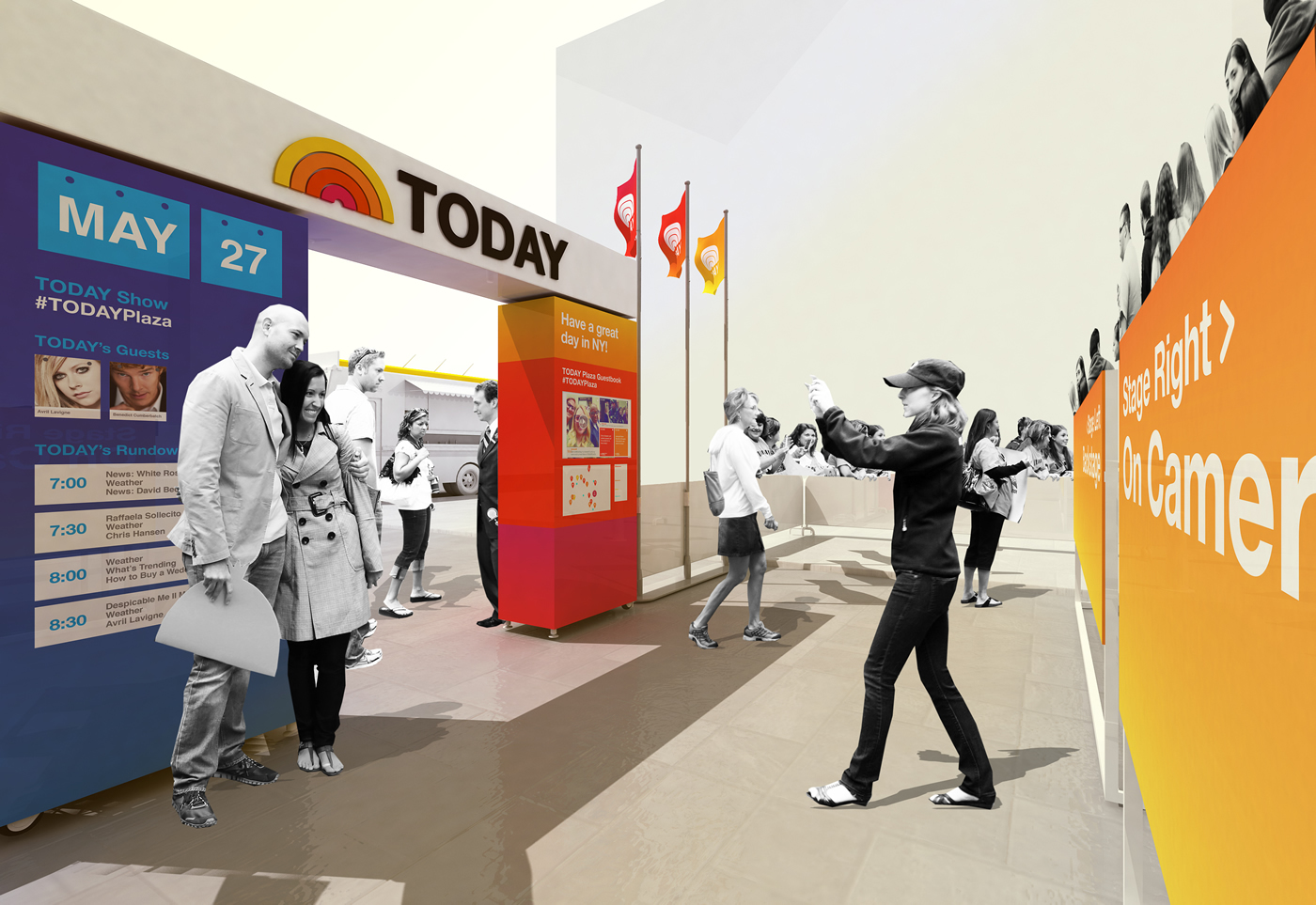
At NBC's TODAY Show, visiting audiences benefit from a welcoming place to cheer.
Long before Tina Fey’s hit show 30 Rock made it a household name, Rockefeller Center was among Manhattan’s most popular destinations. Not least because NBC’s TODAY show starts every morning by filming its gaggle of fans gathered at Rockefeller Plaza.
When TODAY asked IDEO to help design the experience of their guest audiences before, during, and after the show, IDEO's team joined the fray—standing behind the barricades from 7 to 9 a.m. alongside the show’s visitors.
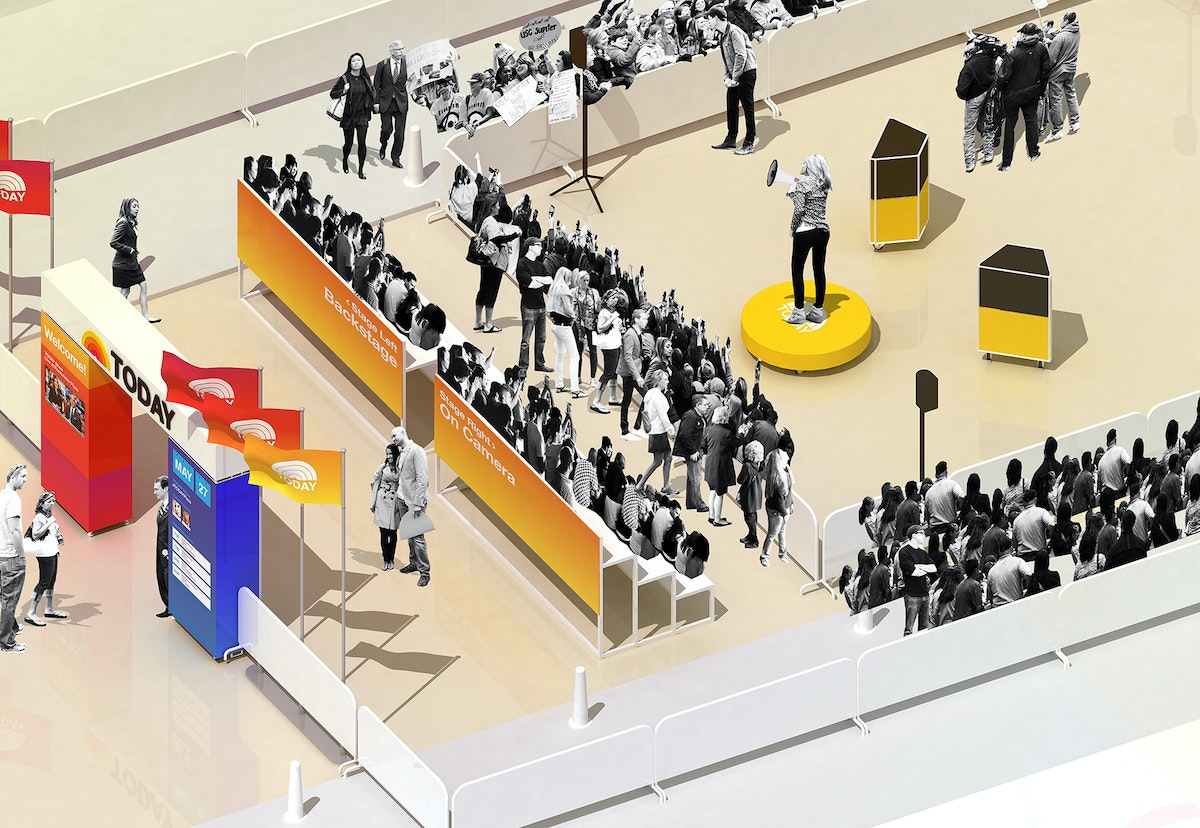
We gathered feedback and learned what was most important to this dedicated audience: to feel a human connection to the people they had shared their mornings with—every day, for years, sometimes for decades. Visitors wanted a celebration, an event they could document and remember, and of course a clear sense of where to go and what to expect once they arrived.
TODAY’s morning time slot offered an additional challenge: The visitor experience would need to be assembled and fully dismantled every morning, leaving Rockefeller Center in its pristine historic state immediately after the cameras stopped rolling.
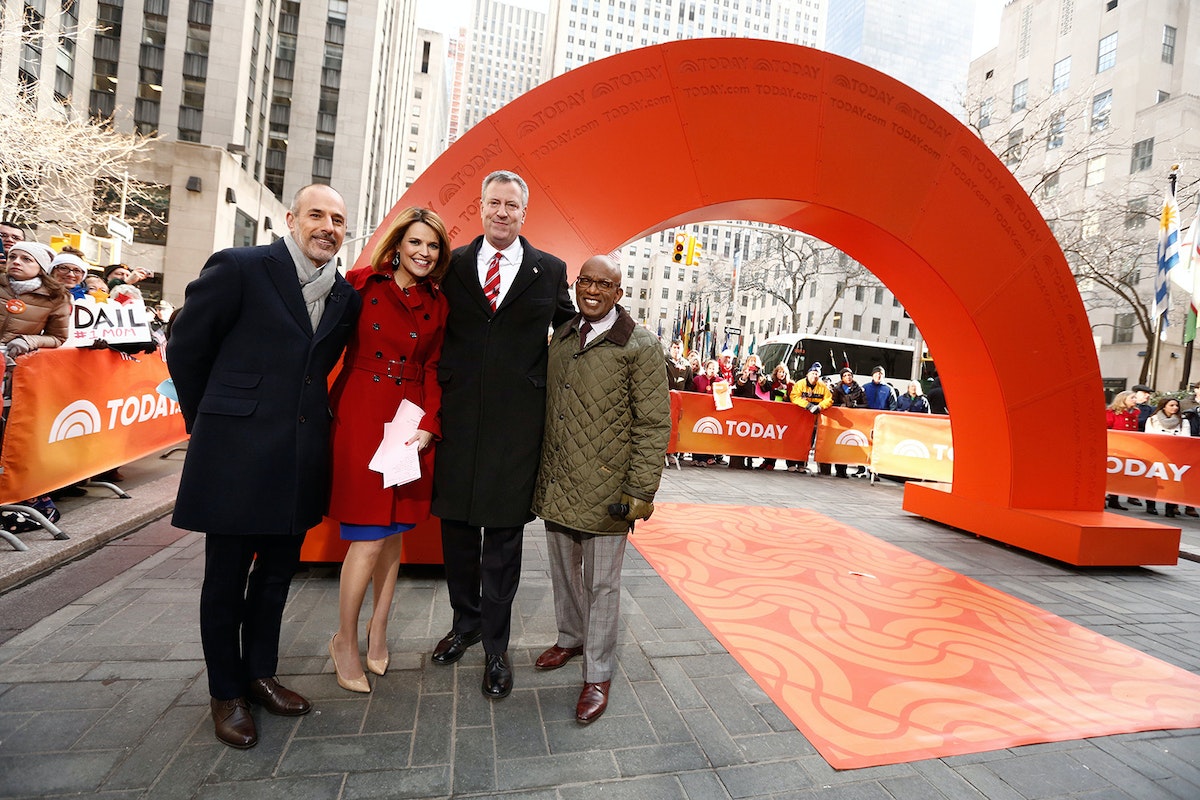
To ensure a solution that would be both satisfying to visitors and viable for the show, IDEO engaged audiences, anchors, and crew in a series of live prototypes that incorporated feedback from all sides and designed a warmer, more human-centered experience for everyone involved.
Visitors to the show can now RSVP at TODAY.com/visit beforehand. When they arrive at the new iconic archway on 49th Street, they are given clear directions by dedicated plaza staff on what to expect during their visit. The audience can also craft posters to display in the crowd, receive commemorative Birthday, Bucket List, or Super Fan buttons that recognize special occasions during their visit, and watch live video and audio feeds to build excitement and momentum when the anchors head into the studio.
From the moment visitors decide to visit TODAY at Rockefeller Center to the weeks after when they share memories with friends, the revamped plaza experience ensures visitors feel cared for and appreciated. They now leave feeling that they’re more than just spectators—they’re the heartbeat of TODAY.
Designing a workspace that inspires
Headquarters that reflect a brand's warmth and transparency.
Brands don’t take bank holidays. A successful company doesn’t just find solutions during strict nine-to-five office hours—the strength of its relationship with its customers is based on openness to good ideas and flexibility around the unpredictable ways that real people live and work.
Over a five-year relationship with GS Shop, a multichannel commerce company based in Korea, IDEO helped the company develop a brand that reflected an emphasis on openness, transparency, enthusiasm, participation, personalization, and distinction.
When it was time for GS Shop to build a new headquarters, it wanted these ideals to be baked right into the structure of the new building, inspiring the interactions and work styles that would define the company’s future. The team started by looking at one of the most fundamental factors in their employees’ day-to-day experience, the physical spaces where they did their work.
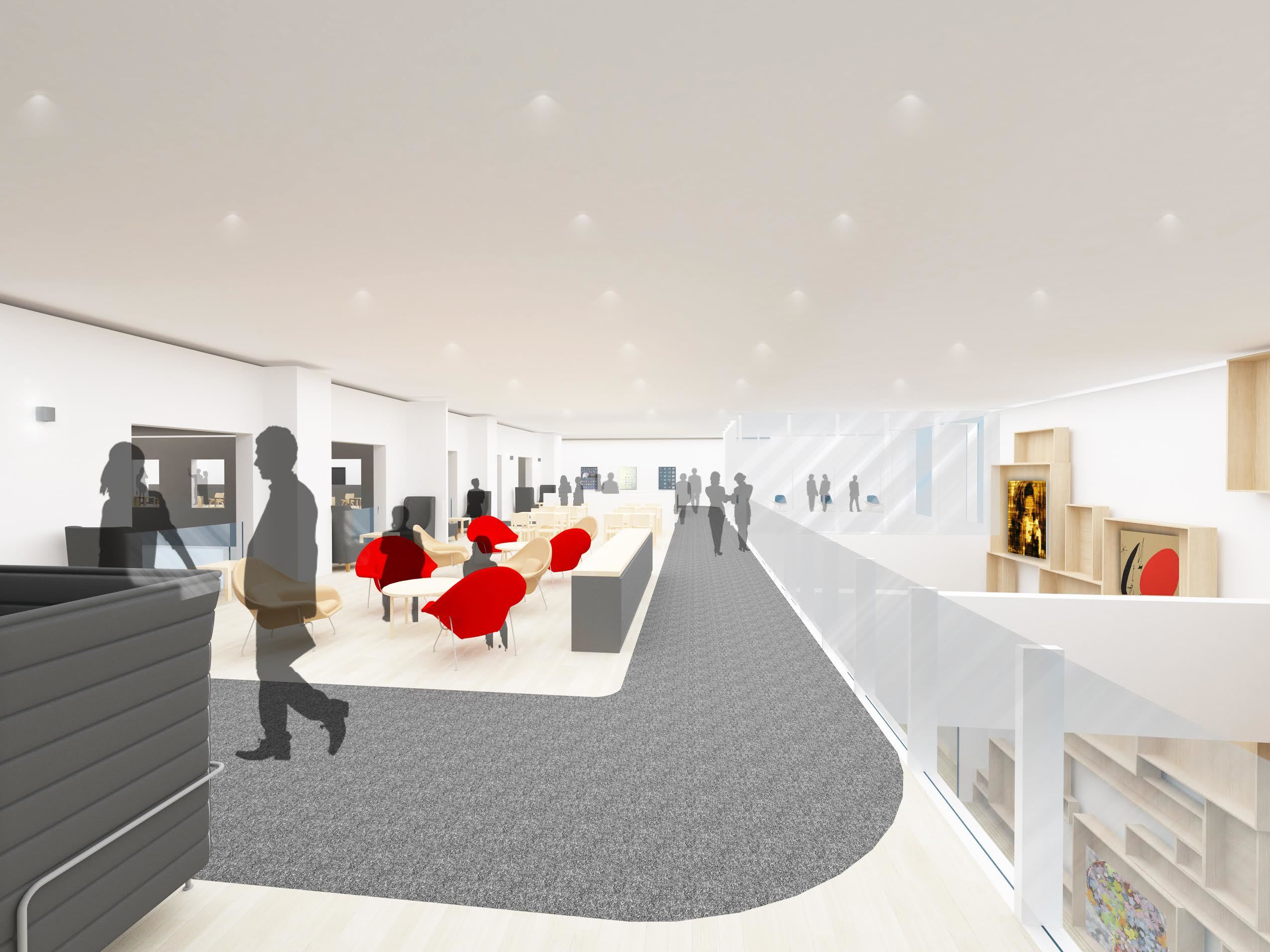
The designers broke down all the elements of the space, including everything from flexible wall configurations to nature-inspired fabric choices that brought the outside in. At the core of their decision-making was the intersection of environment and behavior: How could a certain configuration of desks help new ideas to bubble up? How might the transparency of the boardroom walls encourage executives to make more collaborative decisions?
Traditional Korean business culture places a strong emphasis on hierarchy, but IDEO found that teams worked better when they arranged seating areas in ways that decentralized the boss. Coworkers had felt isolated from those in other business units, so the designers created room for impromptu gatherings outside common meeting spaces. Everything from functional needs, like toothbrush storage, to features that encouraged cross-pollination of ideas, like a set of shelves where departments could share examples of their work with other units, was taken into account.
The result was both an entirely new headquarters and a reimagining of the company’s existing building, each closely mirroring the renderings and recommendations provided by IDEO. GS Shop employees are now working in the new spaces, ready to field new ideas wherever—and whenever—inspiration strikes.


Inside our effort to make design careers more accessible
Introducing IDEO and RepresentEd's Color by Design fellowship.
“While I had done a good deal of research and was familiar with evidence-based design in an academic setting, I had little knowledge about design-related career paths,” she explains, a scenario she sees as typical for a lot of BIPOC (Black, Indigenous, people of color) students. “I think there are only certain paths presented to you as viable,” she says, “which is unfortunate because I think a lot of the systems and things that need redesigning disproportionally affect people of color.” And yet less than three years later, the public health and sociology major would find herself working on an IDEO design-research team.
She got there viaColor by Design (CxD), RepresentEd’s newest fellowship designed for BIPOC in partnership with IDEO. The first cohort of design-research fellows will finish the program in June, and the experience has been groundbreaking: for IDEO and, we think, for the fellows, fewer than five of whom came to the fellowship with any previous design experience. That’s, well, by design.
“The program is about increasing access to design—not just to IDEO but the design industry as a whole,” says RepresentED CEO and founder Rashida Hanif. “CxD has served as a proof of concept that someone can go from zero design knowledge to designer and bring value from day one.”
After completing a three-month part-time professional training course that ran from September through November 2021, the 14 fellows have been integrated as full members of the IDEO community during their six-month fellowship. They’ve been working alongside IDEO employees on key client projects, among them engagements with a major tech company, projects around access to abortion, and the reimagining of the student experience at colleges like NYU.
They’re a month away from wrapping up, and IDEO had planned to keep the ball rolling by launching the application process for the next round of fellows this month. But we’ve decided to take a beat and will be postponing the next cohort until 2023. It’s not hesitation, it’s preparation. Together with RepresentED, we have a shared eagerness to keep growing and expanding, but that’s paired with a shared commitment to scale the program in a thoughtful way.
So many rich learnings have emerged since September. Rather than try to synthesize them and make adjustments in real time, we want to spend more time with our questions and give ourselves space to put our insights to work.
One of the biggest ones is that the fellows only participated in design research. We want to expand and scale CxD to other disciplines—perhaps communications design and experience design—and other divisions of IDEO have made it clear that they’d love to welcome fellows of their own. The opportunity is there, but it’ll take some additional work to put the pieces in place.
We’d also like to finesse the bootcamp aspect, the three months of training that precede the paid, full-time fellowship. As it stands, the bootcamp is largely focused on design thinking as a whole, with modules about design research, methodology, etc. We realized some of our fellows need deeper design research support, and we’d like to get ahead of that earlier in the bootcamp.
Getting the foundation right is important, and we are glad to be able to provide it. One fellow in this cohort was a freelance graphic designer who worked as a bartender. He told me CxD has changed the trajectory of his career and his life—and that’s a real gain for the industry. The fellows may not have deep design backgrounds, but they bring rich and varied experience to the table. Another worked as a doula and felt ready for a career change. Yet another worked on the White House’s National Economic Council. Others did content marketing for international fragrance companies, spearheaded community initiatives to inspire change, and co-founded creative agencies.
The reality is that if not for a program like this, IDEO would have probably overlooked their applications. There are so many barriers to entry within the design industry, and Sasha puts it so well: “It’s not that the fellows don't have experience that would make us successful designers, but that what is seen as relevant experience is often so narrow.” RepresentED has an uncommon ability to take a wide view, which has in turn allowed us to welcome folks whose perspective is missing.
The design industry has long been a homogeneous one (IDEO is no exception, with a U.S. community that is still only 5 percent Black, less than 1 percent Indigenous, and less than 7 percent Hispanic/Latinx.) We needed to expand access, and RepresentED excels in recruiting non-traditional candidates and among communities of color.
“Our sweet spot is people who studied the social sciences and humanities, the ones always told, ‘What are you going to do with that major?’ The ones who are told they have to get a graduate degree, or go into academia,” says Rashida. “They often aren’t aware of how vast their options are and how to present their skills to the job market as viable candidates. English students are incredible writers. Anthropologists understand people and culture. Transfer students bring an amazing life context to the table. We teach them how to use human-centered design to their advantage.”
She thinks of these candidates in a striking and insightful way: “I often feel like we live in a society where we like to throw away the beautiful things. I see them as this collage of beauty. There’s more of that than there is of the status quo.”
And CxD is proving to be a viable way to shift that status quo. It has also shifted things in IDEO’s internal structure. The program touches so many different parts of IDEO—the marketing team; team building, which oversees project teaming and staffing; IDEO’s Research and Insights cohort; and IDEO U, IDEO’s online learning platform. In the process of building up the program we’re learning how to create more equitable structures and thinking about how we onboard employees differently, too.
The fellows very intentionally have a strong network of support. In addition to their interactions with the CxD leadership team, each is assigned a manager and a craft mentor as well as a steward, an IDEO designer who holds a non-evaluative role and creates a safe space for the fellow to take any challenges to. As Sasha puts it, “It helped with building creative confidence. The attitude is, ‘You’re supposed to be here, but if you have a question you know where to go.’”
As for Sasha, she spent 14 weeks on the IDEO design research team that partnered with a major baby retailer to reimagine the registry experience. “The video of a Zoom interview I led with a parent—the first interview I had led—was used continually throughout the project,” she recalls. “That always felt like a rewarding moment: being reminded that those were insights I helped to uncover and the affirmation it provided that I had done a good job.” She moves to a new project this week.
“I’ve developed confidence in myself as a designer. I’ve been equipped with this toolbelt of skills that will be useful no matter where I end up,” Orewa says of her experience. “Last week I had a call with someone who saw I was a part of CxD but had a background in public health and reached out on LinkedIn to ask questions. That makes me excited, that there are people like me who are learning that the opportunities are out there. It’s the ripple effect.”
The next CxD cohort will launch by the end of 2023. We will share updates as we get closer to the recruitment season. If you have any questions, please contact info@representedleadership.org.
By the time Sasha Orewa graduated college in 2019, she had been exposed to plenty of things. Design research wasn’t one of them. Ditto UX, interaction design, or experience design.

The secret power of prototyping
How we’re building the future of mobility with cardboard and duct tape.
What should a passenger’s experience feel like? How much space should be allocated to each passenger? What were the tradeoffs? The folks in marketing had one idea, while the folks in engineering had another. Spreadsheets were involved, but we weren’t making much progress.
Our project team didn’t have all of the answers either, but we thought of one way that we could help. We took over a section of our San Francisco studio and spent a week building a full-scale shell of a plane out of wood, foam core, and cardboard. Our intention was to create a dynamic space for physical and digital experimentation. We then invited our clients to host their next meeting inside the “plane.”
Once inside, the trade-offs were clearer. The team could picture what different seat configurations might feel like; they could move things around as they visualized various options. Prototyping revealed a level of granularity and specificity the team simply couldn’t access over Zoom or through conversation. What started out as a series of abstract questions suddenly became tangible.
When you work in the mobility space, the projects you work on are big—literally. It’s not just the size of a car, but the size of a train, an airport, even a city. While creating low-fidelity prototypes of products and systems of this magnitude might seem impossible, prototypes are a tried-and-true tool for learning about your customers and refining your product design. They are also equally valuable for learning, aligning, and collaborating as an organization. When it comes to larger-than-life challenges in the mobility space, here are three ways prototyping can help.
Prototyping breaks down barriers
Many established mobility companies have spent decades developing processes that have allowed them to build safe, high-quality products at scale. But those methods don’t always work when adapting to a rapidly shifting market. When it came time for our team to work with a leading automaker to rethink the future of the commercial van, we all knew it would demand new ways of working. Together with their team, we built a new collaboration space in the heart of their engineering building to shake people out of their usual workflow. The walls were covered with pictures of vans in action, quotes from potential users, and in-progress work. In the middle of the space sat “the rig,” a purposefully unfinished prototype van made from modular aluminum and hand-cut cardboard parts. This was far from the polished models of car shows.
Instead of putting this space under lock and key, the team put up posters throughout the engineering building inviting folks to join them. When that effort didn’t get much traction, a member of the team proposed an idea. He simply wedged the door open and posted a sign that declared: “open door policy.” The message was simple. We wanted people to build with us. And the people, and the ideas, followed.
Unfamiliar faces started to pop into the space and populate the prototype van with new mirrors, door handles, and smart sensors while other groups debated strategy across the room. What started with a single project space grew, eventually morphing into a dedicated innovation lab that is collaborating across the organization to tackle the future of mobility.
Prototyping challenges assumptions
Several years ago, IDEO worked with Toronto Pearson International Airport to revitalize the airport’s operations from the passenger experience to the baggage handling process. Baggage handling operations are particularly important, as they’re a key metric for measuring airport efficiency, service quality, and performance. They’re also very complicated. Baggage handling involves multiple organizations, thousands of contract workers, and even more suitcases, moving between planes and carousels all around the world.
As contractors, baggage handlers aren’t often brought into the process to help redesign operations. But their perspective is invaluable. So together, IDEO and Toronto Pearson decided to hold a “baggage olympics” for operations employees, passengers, and baggage handlers to test, build, and improve prototypes of early baggage handling ideas. They landed on a simple but effective solution: color-coded signs, clear iconography, and guidance on where baggage should be placed. Not only did the exercise streamline airport operations, but it also changed everyone’s idea of how different groups of people could work together and how operations should work in the future.
As Darin Juby, Director of Baggage Services, told IDEO: “The work to reimagine baggage handling taught us how to prototype and collaborate—it reprogrammed us with a new mindset and way of working. When the pandemic hit two years later, because we had laid the groundwork, we were able to pivot quickly and cost-effectively in the midst of an unforeseen crisis."

Prototyping reveals unexpected needs
Bringing in potential customers to test out prototypes is a pretty common practice among design teams. But often in the automotive space, users do not have a chance to interact with prototypes until much later in the design process. Even then, they are often restricted to testing out highly refined models in tightly controlled sessions.
It’s far more rare to bring parents and children into your design space and invite a range of stakeholders with different perspectives, hypotheses, and critical questions to watch them play in an early prototype firsthand. But that’s exactly what we did with our partners at one of the world’s largest automobile manufacturers.
While we had been talking about bringing people into the lab, it wasn’t until families were engaging with our designs that we realized just how eye-opening it was. In one session, we watched alongside marketing, design, strategy, and product development leaders as a family played a game in the front of the car. Halfway through the game, a child pulled her mom to the back for some one-on-one time, pretending they were looking out at stars.That seemingly simple interaction inspired our team.
The team renamed the prototype Stargazer, and it helped changed the conversation about these vehicles. Decision-makers for this vehicle portfolio were bringing an empathy for the lives of these users into meetings, and talking more about how to foster quality family time than vehicle features and functions. Seeing our prototype in action extended customer empathy and understanding beyond marketing execs, ensuring that teams across the multinational organization were considering user needs from the outset.

Prototyping unlocks possibilities
Throughout my work on mobility projects at IDEO, prototyping has been the best tool for shaking up entrenched thoughts about how teams should work together. It not only provides teams with an opportunity to test assumptions and generate radically new ideas, but it also helps spark alignment and build confidence across disparate stakeholders. In some projects, embracing prototyping has even led to the development of new ways of working and labs that live on far beyond the launch of a product.
For those tackling challenges within the mobility space, and are eager to experiment with prototyping, start small. Take over a conference room, invite different voices in, construct a cardboard model, and watch your organization transform.
Late last year, we sat on a Zoom call with executives at an organization redefining commercial aviation. They had some critical decisions to make about their first commercial aircraft.
Lessons on innovation from teachers
When the pandemic hit, teachers were faced with an impossible challenge.
“You had to build serious cred with them for them to give a sh*t at all, because there’s no consequence,” she says.
Her solution: Making lessons less about the curriculum, and more about engaging kids in the scary, quickly-evolving events shaping our lives. “I’d show some slides and ask if anyone had heard about [the event] and what their questions were. We’d talk about the facts of the situation,” she shared. “I tried to get them excited about their knowledge of [current events].”
In 2020, America’s students and teachers experienced a full-blown disaster, and teachers were the front-line responders. As they and their students were reduced to rectangles on a screen, they had no choice but to lean into innovation, coming up with solutions like having students create hype videos about their favorite books to encourage classmates to read them, leveraging home kitchens to create lab lessons, and using data to evaluate how their students are doing with learning from afar. Under the worst possible circumstances, they came up with solutions that will improve education for the better, in this moment, and for the future.
IDEO and PowerSchool were so inspired by their work that we partnered to research the way teachers hacked, persisted, and made do to uncover clues to innovation. Last year, we interviewed teachers, administrators, teacher coaches, and education experts to get a close up look at how teachers innovated in 2020 and 2021, and how we as designers and makers might learn from their work.
Breaking down silos in the name of collaboration
When this crisis thrust even first graders out of their classrooms and stuck them in front of computers with varying degrees of Wifi—and supervision—teachers had to throw out the rule book. Both expert and mentor teachers alike were caught on their heels, and their only option was to innovate.
To meet this extraordinary demand for real-time innovation, they turned to one another—peers in their buildings as well as online learning communities. Teachers were no longer experts, they were almost “lead learners”—humbly fostering collaboration with one another and pushing forward to develop an entirely new way of working in real time. "The pandemic has enabled so much more collaboration than before,” explained Christine, an elementary school art teacher in Massachusetts. “I've seen techniques done in new ways, skills taught in ways I never would have thought to teach them. This is an opportunity to see how each other teaches!" What’s more, when even seasoned teachers were getting used to an entirely new context, mentor/mentee relationships began to shift, as everyone had ideas to share with each other. A new teacher manager in a district in California told us that “there were a number of examples where the mentor was certainly a more experienced educator, but not nearly as experienced or fast at learning technology, so there was an exchange of skills.”
Teachers were forced into this situation, but their reaction is one that makers and designers should learn from. You might ask yourself—who is it absolutely nuts that I don’t already work with? Who would you call for help if everything fell apart? It might be a person you think of as a friendly competitor. Or it could be someone whose work context just seemed too different—maybe they are more junior, or work in a non-profit setting. At this point, what humanity really needs is connection with one another. To create it, we must break down the silos we’re keeping up. It’s time to rethink the divisions we have between departments, companies, and even sectors to speed up our collective innovation.
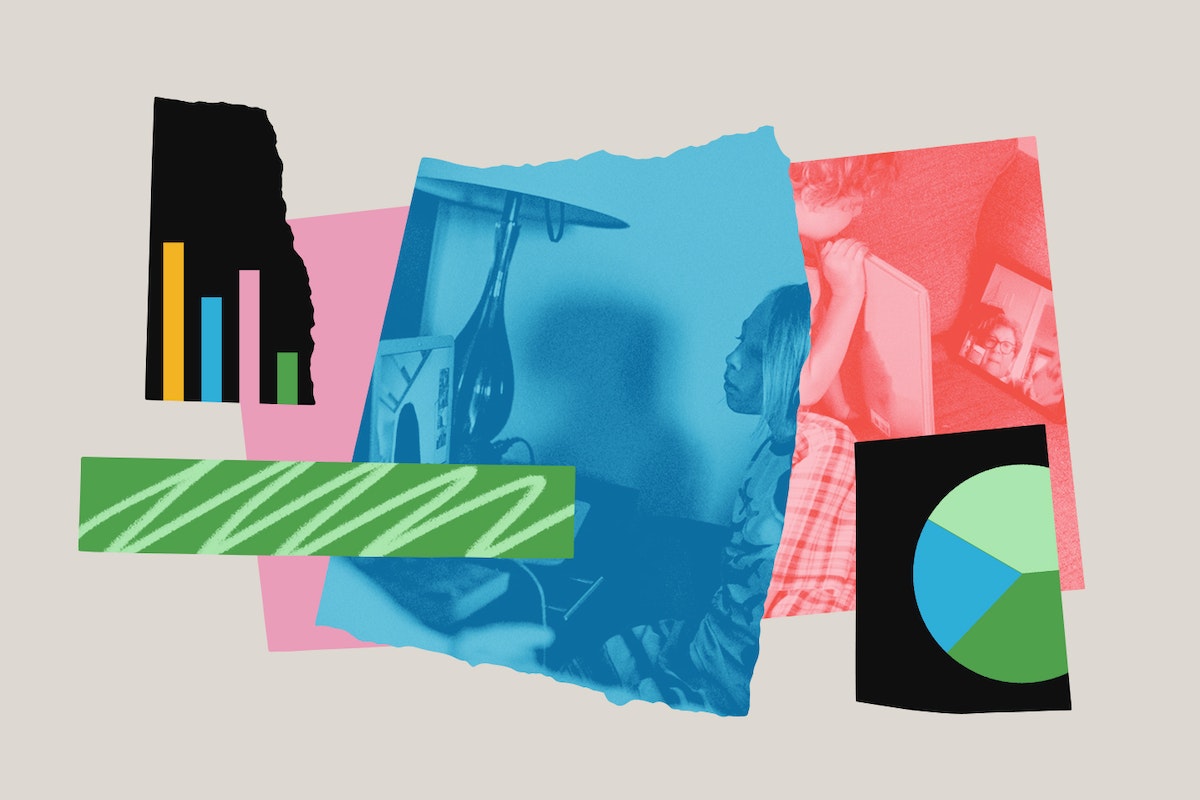
Building tighter learning loops
One of the biggest challenges that teachers faced in experimenting with so many new tools was determining what was actually working. After all, rapid prototyping is only as useful as the learning you can apply to the next prototype. Teachers couldn’t afford to wait until grading periods to analyze how it was all working out.
The remote setting opened up the opportunity to work more closely with individual students one-on-one and to personalize learning experiences and methods to meet their needs. Technology also helped them better understand each student’s progress, enabling them to tailor their instruction the next day. More teachers began leveraging instant feedback tools, even as they faced more variability in student knowledge and skills.
Hannah, a secondary math teacher, dove into new apps and services she started using to track student progress to make instruction more personalized, explaining that rather than going on gut feel, “I can genuinely say I know which kids aren’t making the right progress.” When students and families could see educators iterate on lesson plans each week, and make feedback immediately actionable, everyone was able to take a collective breath and feel the progress. Even if the changes were relatively small, they knew that they were being listened to. Teachers built new processes and improved trust.
Maybe you already do rapid prototyping in your work and have formed tight learning loops. Consider how you might use them as a means of not just learning, but showing your users that you’re learning. Internally, we all could be using technology to do daily micro-check moments with our teams and collaborators, and get even more serious and actionable after receiving real time feedback. Imagine a working world where the last five minutes of every meeting or collaboration were dedicated to asking ourselves how did that go? What could we do better next time?
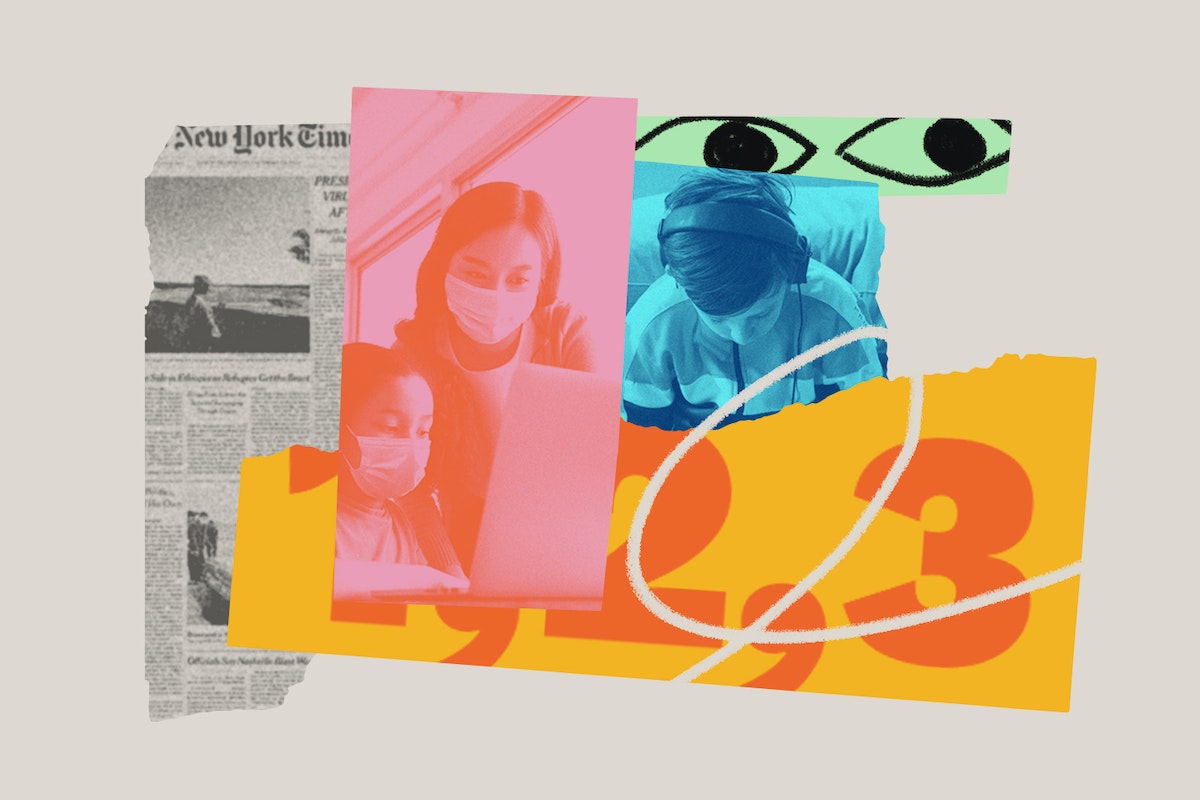
Maintaining a laser focus on what’s most relevant
In some ways, students had their own form of a “Great Resignation” in 2020. They had previously been held captive in school rooms that weren’t catering to them, and their new at-home context meant teachers had to rethink how they were reaching students. “We’re messing around with our schedule,” explained Evan, a middle school principal. “We’re trying to create more space for more things that we say we value.”
Teachers had been operating under a 180-day school year for decades and have optimized their content to fit standard school hours—maybe you’ve been doing the same with your five day work week. During distance learning, teachers had no idea how much time they would actually get with students on any given day, leading them to simplify their content and get strategic about making every minute count.
In an essay from 2003, Jim Collins, the author of Good to Great, stresses the importance of “subtracting.” “A great piece of art is composed not just of what is in the final piece, but equally important, what is not. It is the discipline to discard what does not fit.” It isn’t just about prioritizing what’s most important; it’s about not holding on to the parts that don’t serve us anymore, even if they have already cost us years of effort. We need to consider how to do more with less, and how to subtract what’s not serving us and those around us.
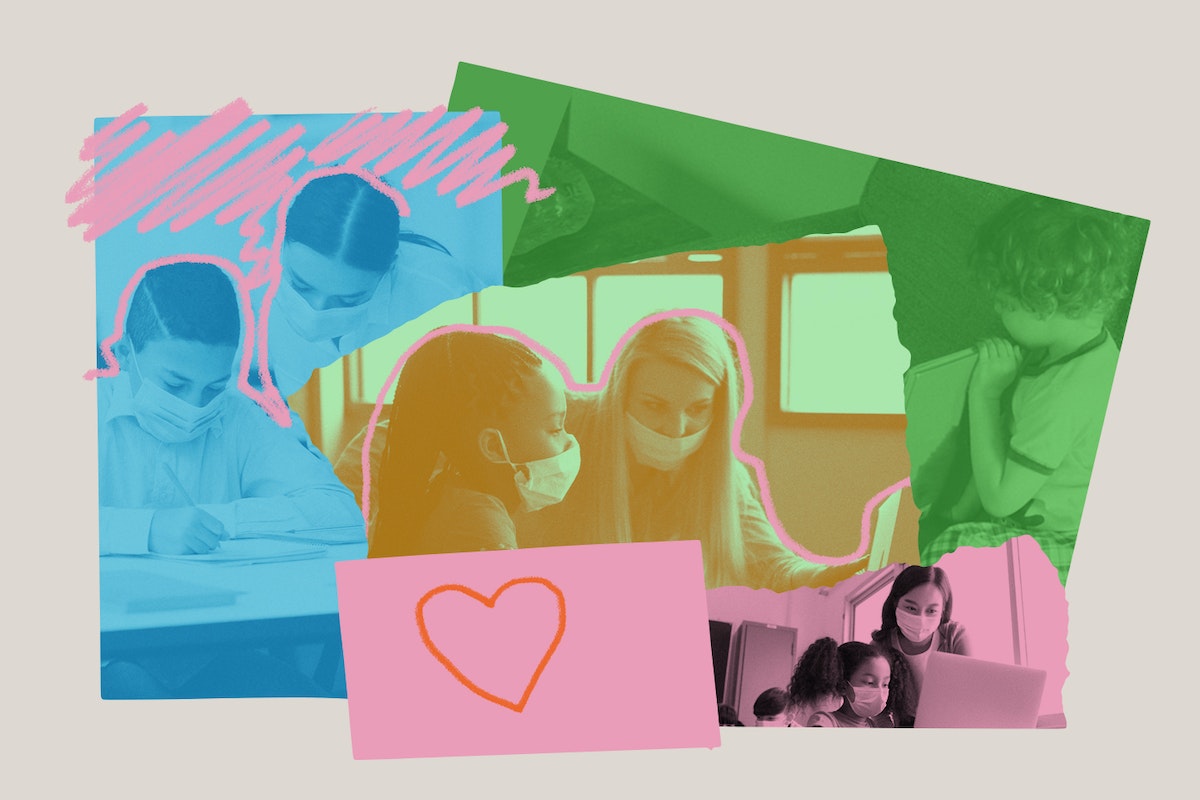
Be human first
Teachers have always been concerned about their students, but the pandemic brought that concern to a new level. (You, too, might have experienced more personal stories, tears, and vulnerability at work!) We saw teachers get creative about meeting students’ emotional needs—trying things like swapping out detention for meditation, or having a weekly “campfire” in class to circle up and share how everyone was doing. They extended deadlines, accepted late work, and allowed students to retake exams. Teachers brought more of themselves to school, showing up as humans first and foremost and prioritizing care before content.
As Jennie, a high school teacher in Ohio explained, “I just have more grace for everyone. Are you lying to me about homework? Maybe. Do you have a reason to be lying? Maybe. I think it’s made me a better teacher. I’m more compassionate. Life’s hard."
As innovators, we too need to build in flexibility for the fallibility that comes with being human, and find ways to bring more humanness to our leadership. We must find ways to prioritize the health and wellness of the people we work with above everything else.
—
At both of our organizations, and hopefully at yours, teachers are inspiring us to break down arbitrary siloes, cut the fluff, show we’re listening, and be more human. But they’re not the only innovators we should be watching right now. The heroic, hard-working, dynamic first responders of the pandemic—nurses, social workers, librarians, counselors—are also on the front lines of innovation. They are adapting, growing, testing, and changing at a rapid pace in a way that all business leaders could be taking lessons from.
Read the full Teaching in Flux report, authored by Jen Halls, Ridima Ramesh, and Brian Standeford.
When COVID-19 lockdowns were in full effect, Amanda, then a reading coach in a California school system, was faced with an impossible challenge: figuring out how to get kids, home alone, to log into Zoom for lessons, when no one would be there to make them do it.

The next chapter of IDEO’s climate commitments
There is still so much more to do—and time is of the essence.
In the first phase of our work, we tackled what some might consider “low hanging fruit” in the work toward Net Zero: we estimated our carbon footprint, offset our greenhouse gas emissions, switched to renewable energy, experimented with a modest carbon tax, and improved our responsible retirement investment options.
While these strides are significant, there is still so much more to do—and time is of the essence. There are countless ways forward, but we’re eager to share four next steps we have in mind.
1. Track and manage emissions (Part 2)
Building on our previous exploration, we’re ready to tackle phase two of emissions accounting. At the top of our priority list is identifying a comprehensive emissions accounting solution to track and manage down our Scope 3 emissions. It’s difficult to imagine how we will empower IDEOers to make sustainable decisions without giving them access to data about the environmental impact of those choices. Afterall, what’s the point of managing down your emissions if you don’t get credit for working with Clean Co. over Dirty Co.? Investing in an emissions accounting platform will help get us one step closer to estimating IDEO’s carbon footprint and identifying viable climate-friendly alternatives at scale. From there, we hope to experiment with things like internal carbon taxes or incentives for individuals and teams to manage their carbon footprint.

2. Embed sustainability throughout the project cycle
Despite the increase in climate-forward projects IDEO has taken on, we are still not fully set up to account for the downstream implications of our work. With that in mind, we’re exploring what it would look like to introduce sustainability at every touchpoint of the project lifecycle—from initial client conversations to final deliverables. In practice, this might look like sustainability design reviews with external experts or developing design principles and toolkits like The Circular Design Guide to support climate-conscious work. Ultimately, we hope to foster a culture where teams feel equipped to explore and develop best practices around sustainable work. Regardless of what form this takes, we need to develop a way to track the downstream impact of our projects and deliverables. Ideally, that system would plug into our emissions accounting platform—neither of which we have today.

3. Balance what’s impactful with what’s visible
In order to meaningfully reduce IDEO’s global emissions, we prioritized action that tends to be impactful for our carbon footprint, but invisible to everyday IDEOers and our clients. For example, while switching to renewable energy did not trigger obvious changes to the everyday experience at IDEO, it reduced our global carbon footprint by 4%. These changes can seem at odds with changes that are highly visible yet are often less impactful (e.g., eliminating single use plastics across IDEO). In order to ensure our everyday experience at IDEO does not undermine the climate commitments we have made, we need to balance what is impactful and what is highly visible. This might look like developing frameworks to help project teams weigh the tradeoffs between client travel and environmental impact, holding inter-studio competitions to switch to sustainable food vendors, or identifying a broad set of replacement suppliers for more sustainable goods throughout our studios.

4. Reset industry norms
Let’s face it. If a competitor is willing to get on a plane, we almost certainly will do the same and vice versa. To create the conditions for IDEO to thrive while meeting its climate commitments, we need to reset industry norms and work alongside other creative consulting firms to reimagine the ways of doing business in the 2020s and beyond. This may look like joining or starting a creative climate pledge for companies operating in a climate-forward way, or inviting direct competitors to join our kyu climate action learning group.
As we make progress toward IDEO’s climate commitments, we will continue to experiment, iterate, and learn. Most importantly, we’re eager to learn alongside you. Time is precious and we all need to collectively accelerate toward our respective commitments. In the spirit of co-creating a more sustainable future, we invite you to continue the conversation with us by contacting our team. We’re eager to learn about the steps you are taking, the lessons you’ve learned, and what’s next.
Over the past year, IDEO has been working toward meeting a series of wide-ranging climate commitments.

Lindsey Turner
I’m passionate about building brands, products, and experiences that help organizations show up with meaning and momentum.
I help organizations cut through complexity by shaping how they show up, through brand strategy, identity, and storytelling.
Working at the intersection of brand and business, I bring an editorial eye and a bias toward making—turning ideas into tangible experiences that people can understand, trust, and believe in.
My work spans government, healthcare, financial services, media, and consumer goods, from launching Gen Z-focused ventures to building innovation labs and reimagining legacy brands. I relish moments of ambiguity and enjoy translating across teams, perspectives, and priorities to move ideas forward.
I started my career in editorial and digital design, shaping cross-platform experiences and identity systems in publishing and agency environments. That foundation still shapes how I work today: I’m detail-oriented, collaborative, and overreliant on the Oxford comma. I hold a BFA in Visual Communication from the School of the Art Institute of Chicago.

Rachel Young
My work helps organizations see who their products aren't working for—and build the will and the tools to do something about it
For 25 years, I've asked the same question: Who does this design exclude—and what are we going to do about it?
My work spans human-centered strategy, inclusive design, and qualitative research, with clients ranging from Microsoft, Google, and Verizon to the National Science Foundation, and San Francisco Unified School District.
Before IDEO, I taught elementary school in East Palo Alto and spent a decade doing design work with social service organizations—where I learned firsthand what it costs people when systems are built without them in mind.
I am currently writing User Error, a nonfiction book about digital access and the design decisions behind it. I live in Oakland, California.

Brian Pelsoh
I lead with craft, ensuring our work is creatively excellent: rooted in deep human insight and imagination, while also grounded in the realities of business and technology.
My expertise spans brand, communication, and product design across tech, education, the arts, and social impact.
I believe great work demands both high-level vision and obsessive attention to detail, and only happens through collaboration.
I bring an inclusive, hands-on approach and a deep understanding of business, which enables me to consistently deliver excellence while always asking why.
Before joining IDEO, I worked at the brand firms Pentagram and VSA Partners. I began my career as a designer, leading teams at the School of the Art Institute of Chicago and the Milwaukee Art Museum. I hold an MFA in graphic design from Maryland Institute College of Art and a BFA in communication design from the Milwaukee Institute of Art & Design, and have taught at some of the best design schools in the US.

Tony Wong
I am responsible for IDEO’s long-term success in China and working with clients to use design as a tool to enable growth.
I am responsible for IDEO’s long-term success in China and working with clients to use design as a tool to enable growth. Specifically, I have helped Chinese companies design holistic brand solutions through the development of their products, communication, services, and innovation teams, and I have helped multinationals expand their presence and influence in China.
I advise global leaders on developing China-led innovation and capabilities.
In over 15 years in IDEO Shanghai, I have worked on projects that use design to elevate the quality of the experience of healthcare products and services, streamline processes that increase productivity, create spaces and programs that promote and enable inclusive communities, and build next generation mobility solutions that are planet-positive.
Before joining IDEO, I worked at Philips Electronics and the Electrolux Group in Italy, the Netherlands, and Singapore on a number of breakthrough commercial products. I am a member of the Young President Organization in Shanghai.

How to use AI as an editor, not a writer
Ed White shares how he uses AI as an editor—not a writer—to sharpen storytelling, rehearse ideas, and preserve the productive friction that makes creative work better.
Ed White has a rule he's tested on his own writing: hold yourself as the writer, and let AI be your editor. Ed is a Senior Design Director at IDEO's London studio, where he co-leads the firm's AI portfolio across Europe. Before IDEO, he spent 12 years as a writer and editor at the Financial Times, Wired, and Contagious. So when he talks about when to use AI for storytelling and when not to, it comes from two decades of crafting his storytelling skills.
In this episode, Mina Seetharaman talks with Ed about two specific tools he uses to keep AI in an editor's seat: a "roasting agent" prompted to critique his drafts without any sugarcoating, and a simulated audience he rehearses pitches on before the real thing. They also get into what Ed is hearing from design leaders at Anthropic, Lovable, Shopify, and Google Creative Lab about how creative work is changing, and why he thinks the friction of writing something yourself is worth protecting rather than automating away.

Building a personal AI for the messiness of life: Sida Li
Becca Carroll talks with Cue co-founder Sida Li about designing a personal AI for the messiness of everyday life—not just work. They explore how Sida stays anchored to human needs while navigating fast-changing technology, product tradeoffs, business-model experimentation, and the realities of building an AI company today.
Most AI products today are built for work—a space with clear problems and established systems. One founder noticed a gap: personal life is messier, harder to systematize, and mostly left behind by the AI boom. So she built Cue, a personal AI that lives inside iMessage and group chats, to go where the other tools haven't.
In this episode, Becca Carroll, IDEO's Chief Strategy Officer, talks with Sida Li, co-founder and CEO of Shared Context Lab, about staying anchored to a human need while the technology around her keeps changing shape, why she treats her business model with the same rigor she'd bring to a product, and what it feels like to build a company at this particular, disorienting moment in AI.
The conversation also gets into how Sida makes design decisions: the language Cue uses to describe itself, the tradeoffs behind building inside iMessage instead of a new app, and a real story about a business idea that didn’t pan out.
This is the second in a two-part series profiling founders from IDEO's Startups-in-Residence program. The first conversation is with Johannes Seemann, founder of Sooner, on designing GenAI for the emotional side of money.

Designing GenAI for the emotional side of money: Johannes Seemann
Designing financial tools around the feelings that shape money decisions.
Most personal financial tools are built to run the numbers and optimize towards a budget. While that works for some, most people experience money as a lived relationship that does not neatly fit into a spreadsheet. Johannes Seemann and Becca Carroll discuss why money is emotional before it is mathematical, and what a human-centered approach to building a generative AI financial product looks like in practice.

The curious leader's edge in uncertainty: Scott Shigeoka
How genuine curiosity helps leaders navigate uncertainty with greater confidence.
Mina Seetharaman talks with Scott Shigeoka, author of Seek and Head of Curiosity Cultivation at the Eames Institute, about what distinguishes genuinely curious leadership from performative curiosity, how power dynamics shape curiosity, and why practicing curiosity can restore energy rather than drain it.
Looks like you might be in search of something very specific?
Or reset the filters above and try another angle.
Here’s some random inspiration

Podcasts about creative leadership

Articles about the power of prototyping

























.webp)