
.svg)


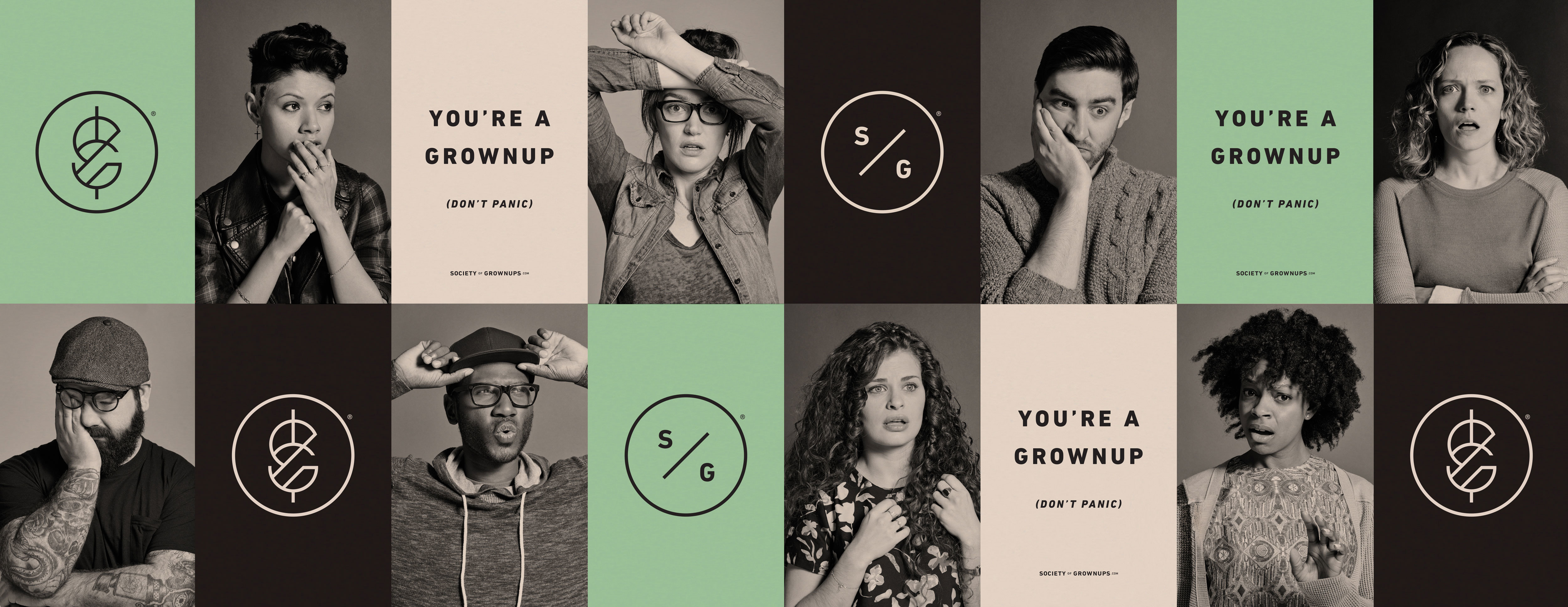

Helping young adults make smart money decisions
Society of Grownups offers financial advice to those who need it most.
When you’re under 40, buying a life insurance policy may seem about as practical as buying a Humvee. That makes insurance a tough sell for a 165-year-old company like MassMutual. To find a way to become relevant to this generation, MassMutual partnered with IDEO with a mission to get young people interested in their own spending habits.
Over the course of two years, the teams set out to learn about how people across the US spend and save their money, and they uncovered a simple theory: you either have a smart money mindset or you don’t. When it comes to being mature about financial issues—chipping away debt, saving to buy a car—it doesn’t always come naturally. If anything, many feel disconnected from money-related matters, even if it’s in their best interest to know more.
"I hate going to a bank and not really knowing what I am doing when it comes to money," said Simon Bowers, a 31-year-old who works in public relations, featured in an article in Fast Company about the MassMutual-IDEO collaboration. "They don’t seem to take into account that this might be scary for us."
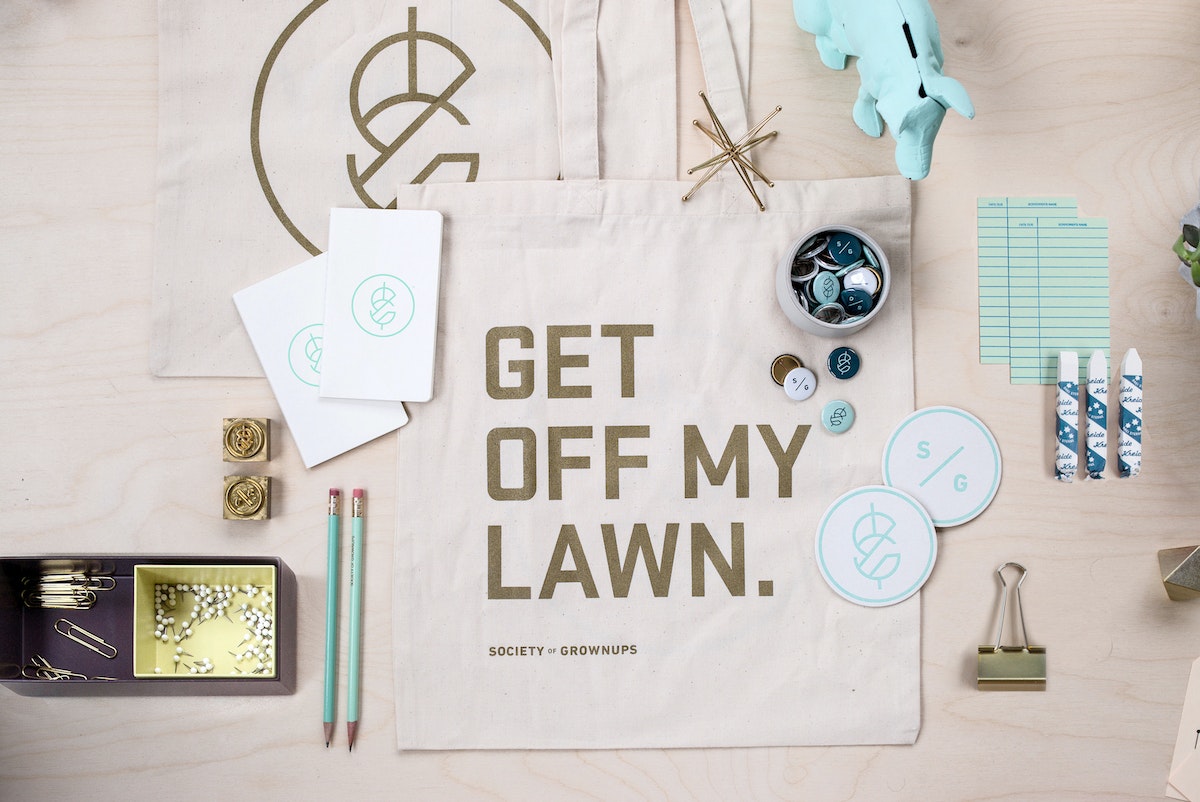
So how to invite this wary demographic to the table? Design an accessible way to meet them wherever they are: online and on their phones. IDEO helped build the new venture from the ground up—designing a brand identity and experience focused on transparency, meeting users where they are, and helping people navigate complicated financial situations so they can live life on their own terms. It’s called Society of Grownups, and you can think of it as a sort of master’s program for adulthood. Each piece of the program builds on a common vision that continues to iterate every day.
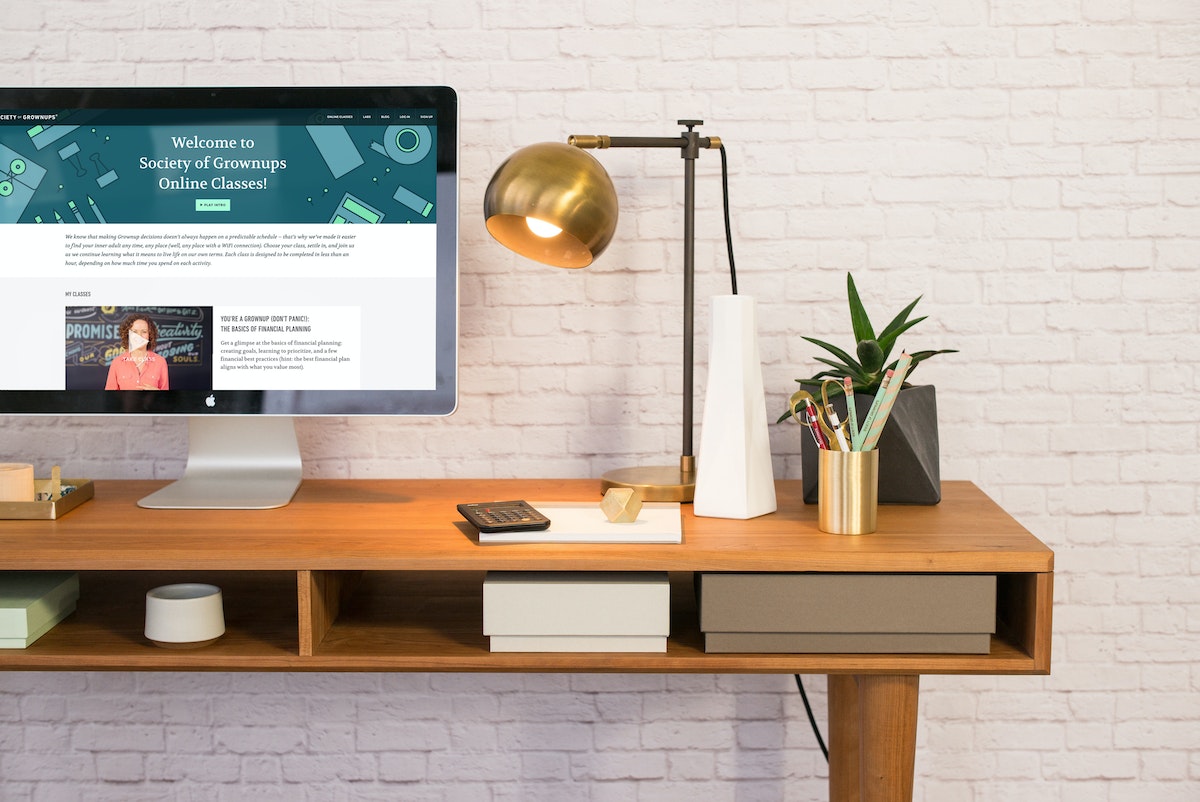
After building and testing full-scale, live prototypes, the brick-and-mortar Boston location opened in 2014 and operated much like a supper club—a warm, inviting space where young people could hang out, feast on delicious meals, attend talks, and learn about things like 401Ks, living on a budget, and how to pick good, cheap wine. After two years of continued prototyping, MassMutual recognized that the digital channel has the most potential to grow and closed the brick-and-mortar location to focus their investment in building out the bespoke online financial tools to reach more people across the nation.

Helping a digital healthcare startup to scale up
A redesign, a rebrand, and a new focus.
From leeches to gene therapy, how we treat sickness has changed beyond recognition over the centuries. But one question asked by ancient healers and modern doctors alike remains the same: “How are you feeling?”
“We’ve had the ‘quantified self’ for a number of years—sensors that measure steps, weight, blood pressure,” said Bruce Hellman, cofounder of UK-based digital health startup uMotif. “But by only focusing on the quantitative, we miss the whole picture of a person.”
Hellman cofounded uMotif in 2012, inspired by the self-awareness he gained when tracking his sleep after his baby was born. uMotif gives people the tools to record and track their mood, sleep, and clinically relevant symptoms like dizziness or breathlessness on their mobile phone app, and share the resulting data with their doctor and care team to better inform appointments, and treatment plans.
Named as one of 50 UK "scale-ups" that could grow to over £100m in revenue by not-for-profit organization Silicon Valley Comes to the UK, uMotif’s software and apps have been deployed in dozens of hospitals, and profiled in The Guardian, The Daily Telegraph, and The London Times. With a view to scaling strategically, Hellman applied to IDEO Europe’s first Startup in Residence, a three-month-long program to accelerate companies through design thinking. “We brought the whole of uMotif to IDEO: product, organization, branding, approach, and business model,” said Hellman. “We were keen to re-consider just about everything.”
During the residency, the uMotif team embedded with IDEO’s London studio to work closely with an eclectic team of interaction, business, and communication designers, and design researchers, to explore every aspect of the business.
The team found that although uMotif’s organic growth had reflected the rapidly expanding digital health market, the offer was somewhat fragmented as a result. In response, uMotif decided to tighten its sales focus from 14 branches of medicine to just two: oncology and cardiology (with mental health as an R&D area).
In-depth interviews with patients, nurses, doctors, and executives revealed a clear opportunity: “simple symptom tracking for people going through an acute or serious period in their health, to activate and extend the patient-care team relationship,” Hellman says. The focus switched from the Quantified Self to the Qualified Self, coined by the team to reference uMotif’s unique approach to measuring how people feel.
Designers set about reconfiguring and prototyping aspects of the brand, product, business, and organizational model for delivery. Whereas the original uMotif product had been designed with a single clinician in mind, the team designed a new dashboard catering for the reality of modern healthcare—multiple caregivers.
Ultimately, uMotif’s offer is not just about helping patients understand their own health; it’s about providing meaningful insights that enable them to have richer conversations with their care teams—allowing them to work together to improve care plans and outcomes.
“We are a much more focused, confident, and clear organization, truly prepared to scale sales, delivery and clinical impact,” says Hellman, referring to the impact of their participation in the Startup in Residence program. Now back in its own headquarters, the team takes with it a toolkit of IDEO systems and processes with which to run their business and to apply to new projects, products, and services.
“Health systems around the world are quickly adopting digital channels,” he said. “We aim to be at the forefront of this inevitable shift, using design thinking to put people at the centre of their care, improving quality of life, treatment outcomes, and healthcare experience.”
WATCH: uMotif: Sam's Story.
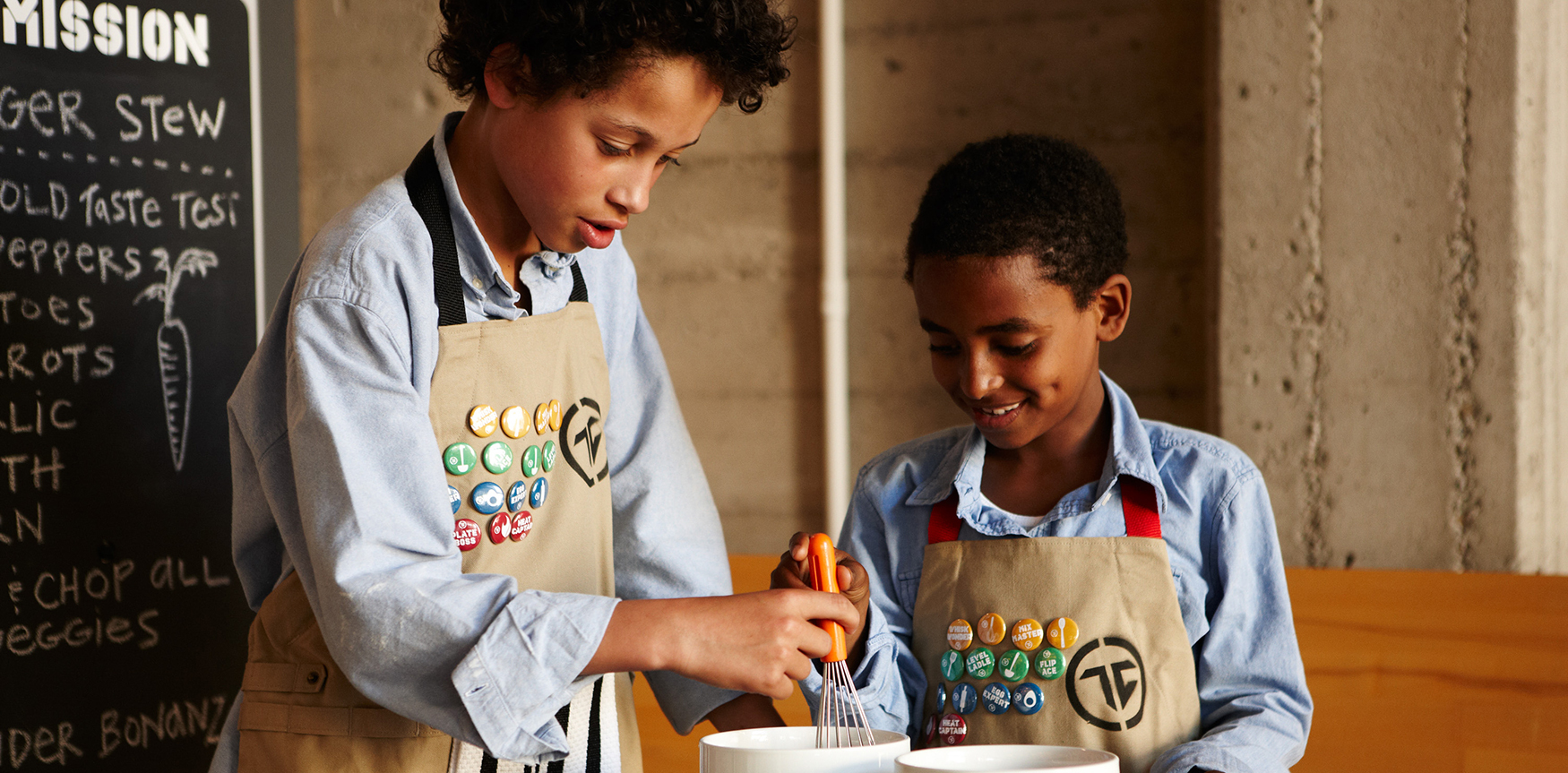
Helping kids make healthy choices
Three design concepts that help kids make healthier choices around food and exercise.
IDEO designers wanted to take on a challenge: How might we help kids make better decisions around food and being active?
Designers moved forward with three concepts that addressed this challenge from three completely different directions:
- Top Chops, a hands-on cooking adventure that builds kids’ confidence in the kitchen by working toward becoming a Top Chop “master chef.”
- Daredevils, a wearable device that measures the intensity of energy exerted, but doesn’t prescribe the activity, which kids can use to dare each other to reach activity goals.
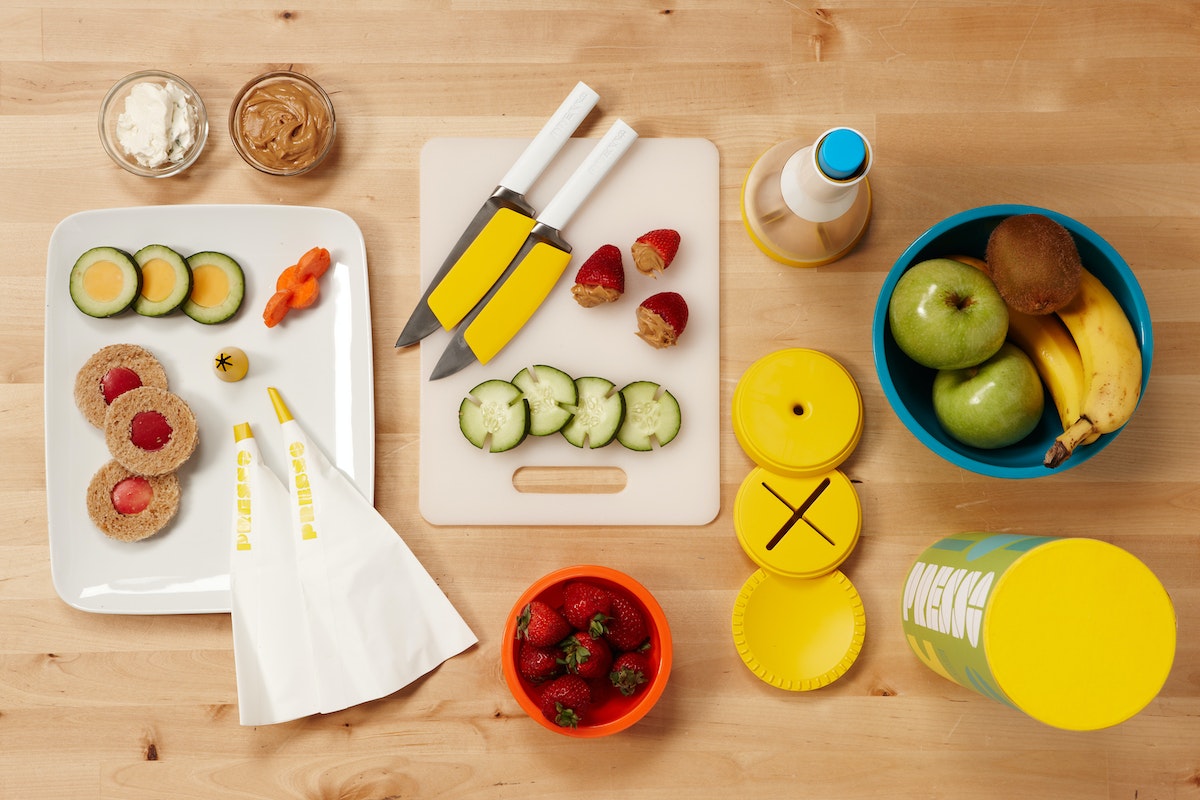
- Presso, a set of child-size kitchen tools that slice and dice fresh food in imaginative ways, making cooking fun and helping kids feel they have a role in making their own healthy food.
The design team behind this work was featured on 60 Minutes, and some of the resulting concepts were featured on CBS This Morning.

Handheld organizer becomes a sleek accessory
Redesigning a utilitarian tool to set it apart from imitators.
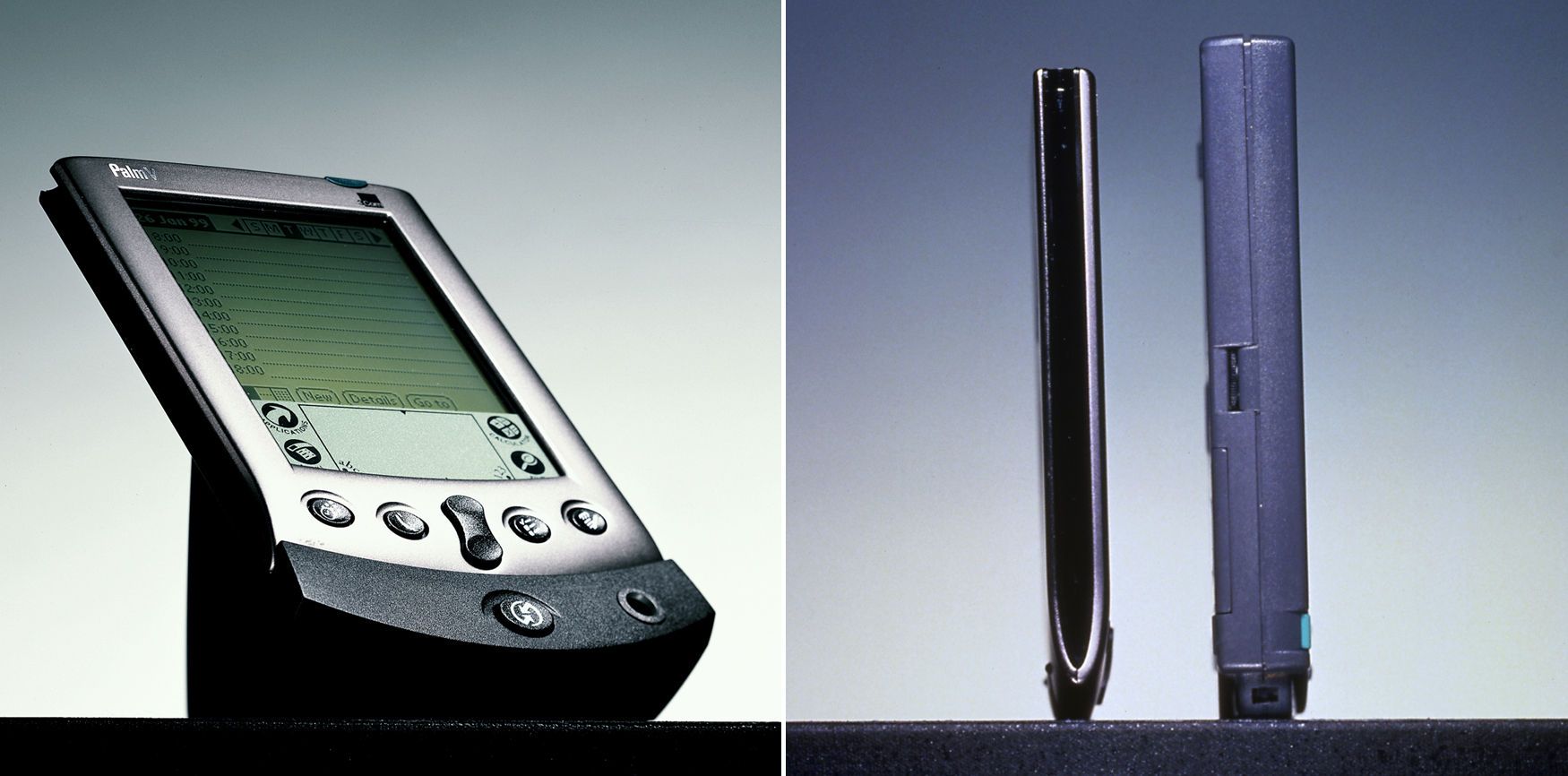
In updating the popular and industry-defining PalmPilot, Palm Computing wanted to reposition the next-generation Palm V as a high-design accessory to set it apart from its many imitators.
Together with IDEO, it crafted a sleek, elegant device, half the thickness of the original in an anodized aluminum housing. Incorporating an internal lithium-ion battery that recharges in the dock, the side rails act as an open architecture to provide attachment for a variety of styluses, cases, and other add-ons.
Designing the Siris and Alexas of the World
We shape our devices, and thereafter our devices shape us *with apologies Marshall McLuhan
We have become accustomed to relating to these interfaces, and increasingly they are able to relate to us—taking in the world around them, talking to their users, and even inferring our emotions from how our faces change shape. I call this layer an Affective User Interface (AUI), a term borrowed from the field of Affective Computing.
Affective Computing is a field of computer science that develops technology that we might consider intelligent and emotionally aware. These new interfaces present a slew of opportunities and challenges, because as Dr. Cynthia Breazeal of the MIT Media Lab points out in her book Designing Sociable Robots, when a technology “behaves in a socially competent manner” our evolutionary hardwiring causes us to interact with it as if it were human.
And once we enter into that relationship, the personas we design for these bots affect our behavior, too. I’ve heard many people say that unassertive bots often bring out the worst in kids. When there are no social checks on rudeness—bots don’t tattle, after all—children tend to be more blunt, and can even become abusive.
That lack of assertiveness also affects adults. Reporter Leah Fessler researched how female-gendered bots respond to sexual harassment. It turns out that the assistants’ permissive personas can reinforce some disturbing stereotypes about women, and allow the user free reign to degrade them at will.
If bots can have a gender, I started to wonder whether they might also have a cultural or even racial identity. Considering the fact that these products allow us to choose between various accents, it would seem that designers have created nationalities for our bots.
I'm certainly not the first person to surface these issues. This New York Times piece by AI Now's Kate Crawford about "Artificial Intelligence’s White Guy Problem" comes to mind. And there are many people here at IDEO who are thinking through what it means to be inclusive human-centered designers as we work on Augmented Intelligence projects.
To explore this further, I decided to conduct an experiment to surface the personality of these bots by interviewing them.
The key was to ask soft questions: Where are you from? How old are you? Do you have any kids? What do you look like? Even, Tell me a story.
These interactions were not actionable queries, and thus triggered purely conversational responses that revealed the “personality” that the bots’ creators had designed.
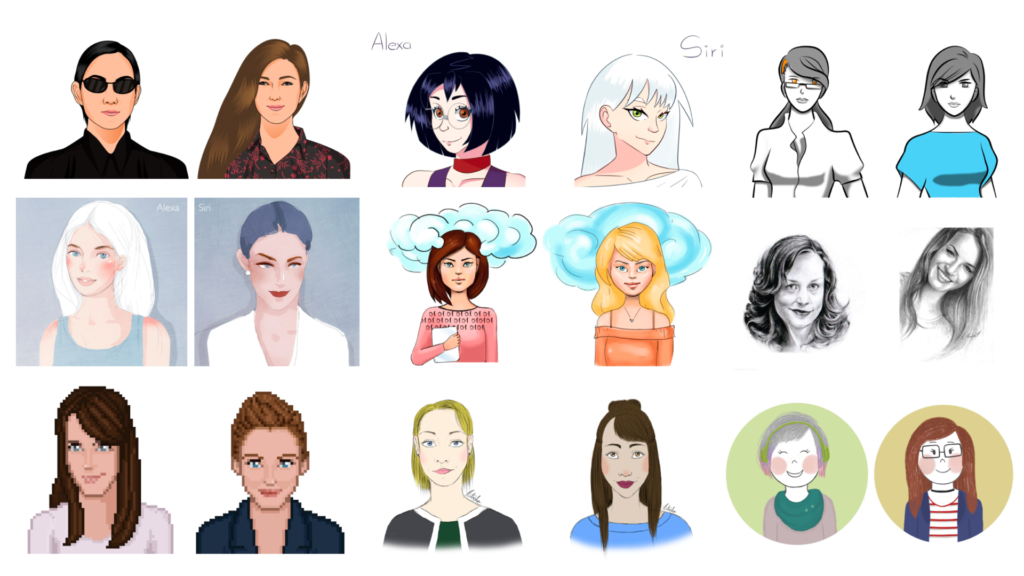
I recorded a video interview with each voice assistant and handed these over to a number of illustrators commissioned via the social gig site Fiverr. While a few of the artists had previous exposure to the bots, I was able to source English-speaking international artists in markets where Alexa and/or Siri were not available. Countries of origin included Indonesia, Pakistan, Ukraine, Venezuela, the Philippines, and the U.S. For many of them, my videos were their first meaningful exposure.
Here are the images that came back:
Drawings representing Alexa and Siri based on video interviews I'd done by illustrators who had little to no previous exposure to the assistants.
Gender came through clearly, but I would also argue that none of the illustrations depict a person of color. Whether they were intentionally designed that way is not the issue. If users perceive the bots this way, what kind of cultural pressures are they carrying into the home?
It’s something I think about a lot as a first-generation American who has worked in and around tech throughout my career. On my father’s side, I’m the second U.S.-born family member, and on my mom’s side, I’m the first. I grew up in a diverse community, and the tapestry of cultures I experienced was simply normal, everyday life.
I was aware of code-switching pretty early on; many of my friends and family had their normal voice and their “professional” voice, and they chose which to use in different environments.
Looking back, I first learned about it when my mom gave a wedding speech.
My brother was shocked; he didn’t recognize the voice that he heard. I had to explain to him this was my mother’s work voice. Code switching isn’t inherently bad—we all do it to some degree—but if we’re to design Affective User Interfaces that are truly human-centered, then we must consider that for some, the switch requires more effort.
Inclusivity is not just an issue at the bleeding edge of tech. We’re seeing a growing body of evidence that those who speak outside of mainstream vernaculars have a harder time being properly recognized by affective systems.
This represents an accessibility challenge, but one that is resultant from a cultural rather than physical challenge. In a tech industry that is known to be monocultural, we must take steps to ensure our affective systems are not just designed to be useful to their creators, but inclusive of the full spectrum of people their products will serve.
Because ultimately what’s at stake is trust. Studies have shown that when brands lose trust, they lose customers.
As designers, it’s our job to expand the usability of our affective devices to ensure they serve the rich tapestry of people, cultures, and vernaculars they will encounter.
Beyond being good design, it’s good for business, because in our affective future the products that win will be the ones that users trust.
Behind every interface, there's a designer. More like a team of them. And those designers have a lot to consider: What should Siri sound like? What kinds of things will people ask Alexa to do? How will users expect the Kuri robot to respond when they crack a joke?

Beat-Boxing Our Way to a Better World
One way to give refugees a voice
It all started when we partnered with the American Refugee Committee (ARC), an organization that provides services to 3.5 million refugees across Africa and the Middle East. We teamed up to imagine a future where refugees have a voice in shaping the services provided to them, and are able to hold humanitarian organizations accountable for the services they receive.
The result was Kuja Kuja, a platform that has the potential to fundamentally shift the way humanitarian organizations serve refugees.
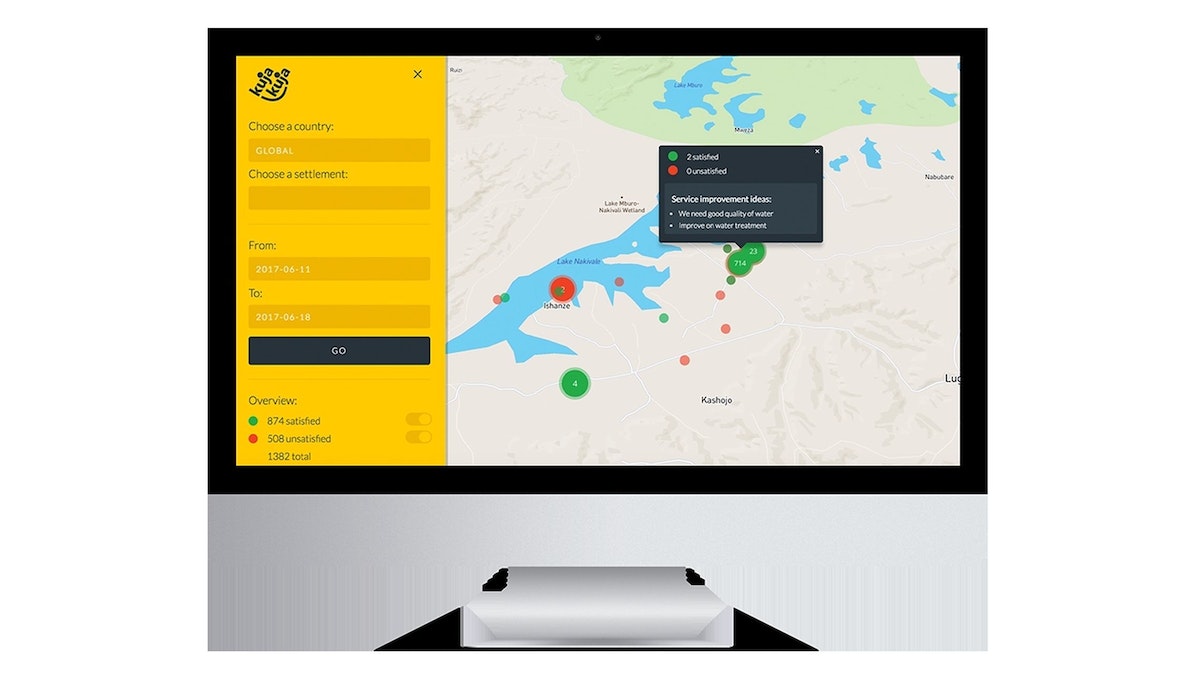
Kuja Kuja, a visual platform for tracking refugee feedback.
In a deep and humbling way, the friendships we made during those two weeks reminded us of how refugees, who are typically lumped together as a faceless, nameless group of displaced people, are smart, educated, optimistic human beings who've been brutally ripped from their homes by war and the vagaries of governance.
There are more than 65 million refugees and displaced people around the world today. That’s nearly 1 out of every 100 people on the planet. These people are no different from you or me in their need for safety, shelter, work—the most basic human rights.
On our last day in the settlement, at the end of the workday, we went to play ping-pong at a community center.
It was raining on and off, and there were a lot of people packed inside. There was a group of Congolese refugees breakdancing and practicing for a hip-hop dance competition. One of the dudes was beatboxing while his friends pop-n-locked and windmilled.
I started to beatbox with him and soon we had all kinds of people busting into our jam-circle to throw down raps in multiple languages—French, Swahili. It was the best example of getting close to the people you're designing for I could ever imagine.
I will certainly never forget that day. I glimpsed a world in which, if we were were all trapped in a room together, and broke out in song and dance, there would be no more war, no more displacement, no more refugees.
Back in August 2017, I was embedded at the Nakivale refugee settlement in Southwest Uganda for two weeks. I was there with Nathalie Collins from IDEO.org, to build a web application that collects refugee feedback and then visualizes that data in meaningful ways. Those two weeks could have been two months—Nathalie and I developed deep friendships with many of the refugees on the team. I'd been vocal-jamming earlier in the week with a pentalingual Burundian refugee and Kuja Kuja team member, and someone started videotaping...
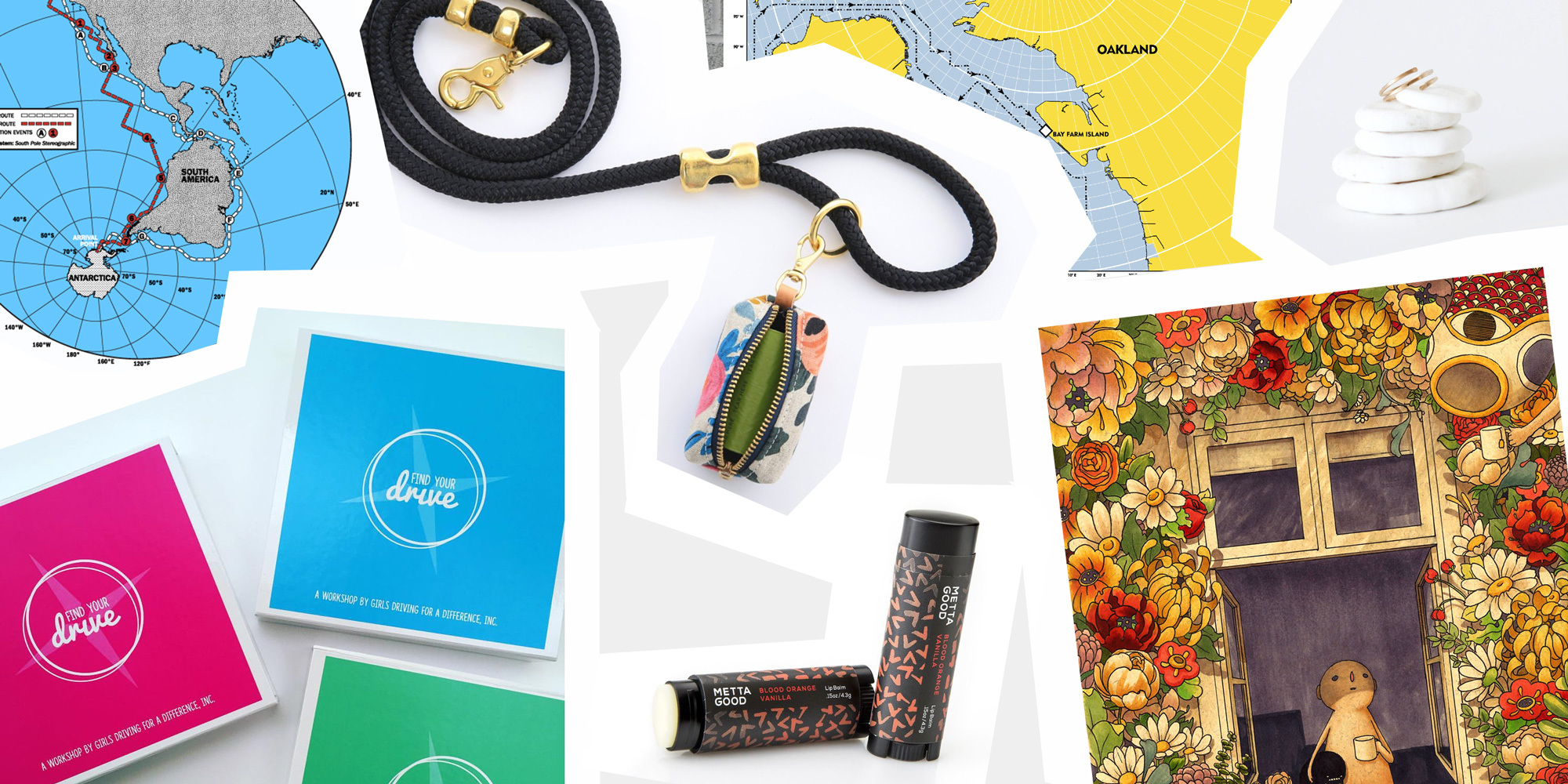
The IDEO Gift Guide for Creative Types
Crowd-pleasers for those who don’t follow the crowd
More than 60 food, clothing, jewelry, and art vendors—including 25 IDEO designers—are stocked up to serve, while also raising money for the non-profit La Cocina. There's a little something for everybody, even...
1. The DIY Gardener
Plant your own succulent garden in a glass terrarium, or stock your home bar with cocktail mixers, artisan bitters, and local honey, courtesy of Radish.

2. The Girl Who Has Everything (She doesn’t have this.)
Jessica Hannah makes small-batch perfumes inspired by Hollywood classics and even the smell of worked leather. She also hosts regular workshops to help people craft custom scents from plant essences.
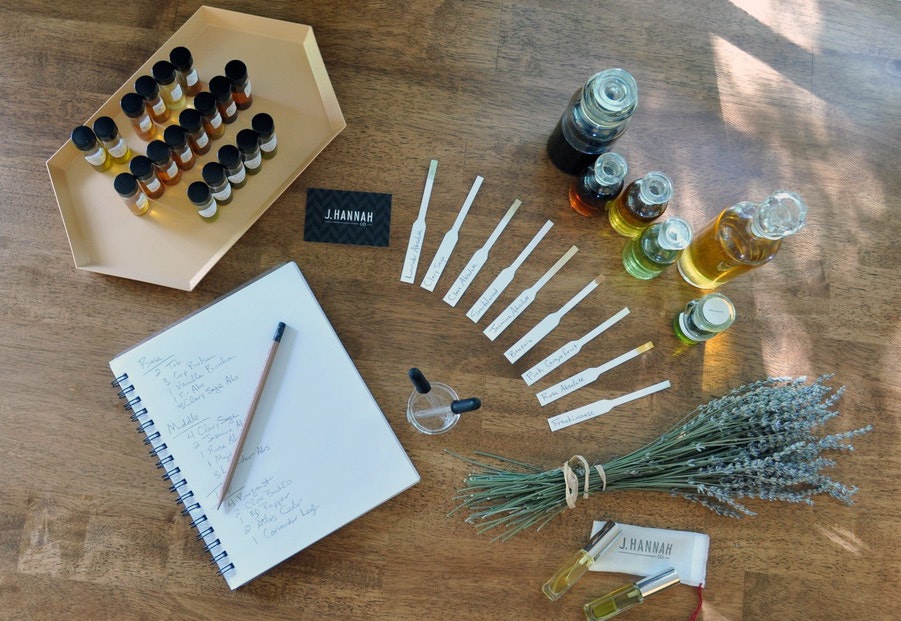
3. The Craft Brew Obsessive
You’ve tried microbrew, but not like this. IDEO designer Sean Hewens combines homebrewing with making fantastical maps—charting a fictional submarine race across the San Francisco Bay, for example—to create Bean Brew. Lucky drinkers (just 16 per micro-batch) answer a survey about the map on their Bean Brew bottles, and Sean turns the results into a one-of-a-kind poster.
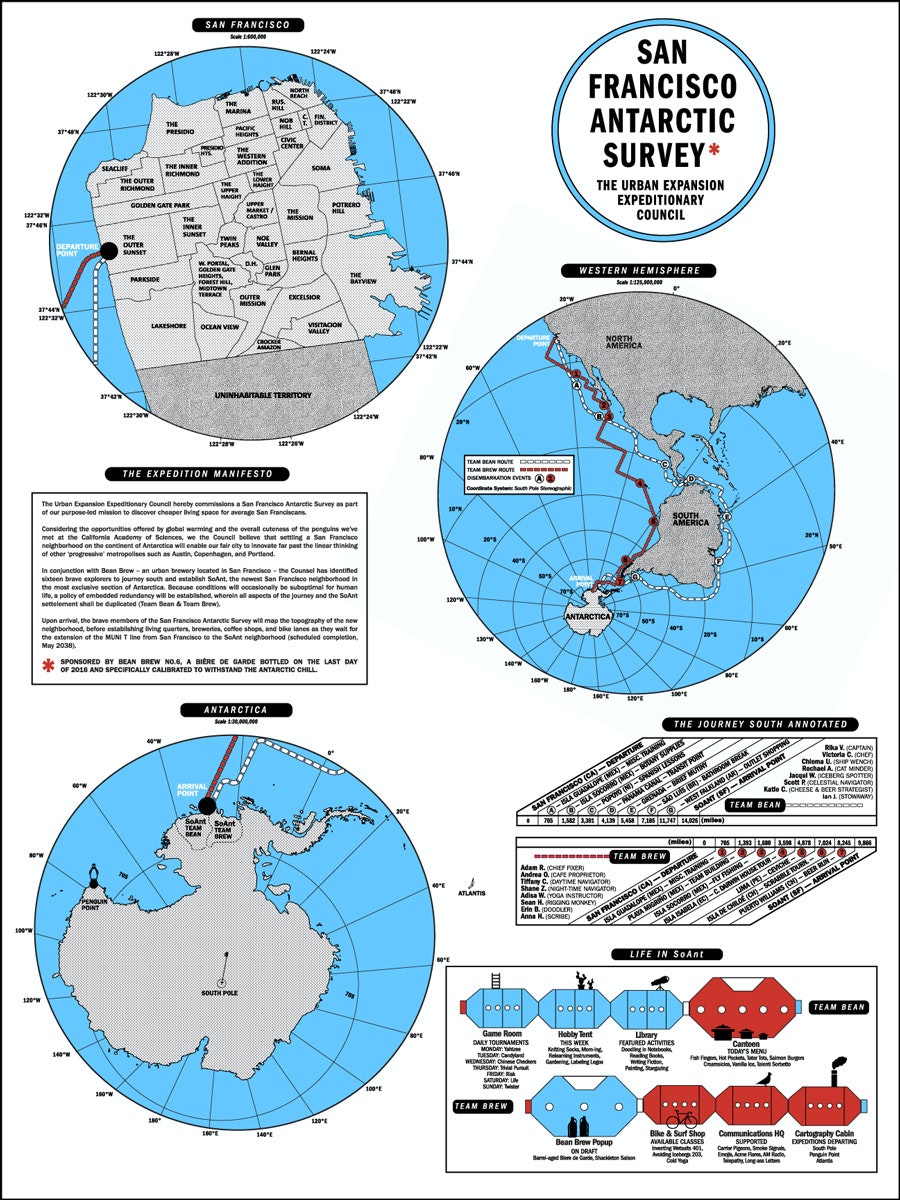
4. The Jewelry Minimalist
Angular and understated, the gold-filled trinkets from Batsu Maru might be right for the best-dressed woman in your life.

5. The Upcycler
Waste not, want not. So says The Consistency Project, which sells vintage and customized clothing that’s been given a second chance.

6. The Recent Transplant
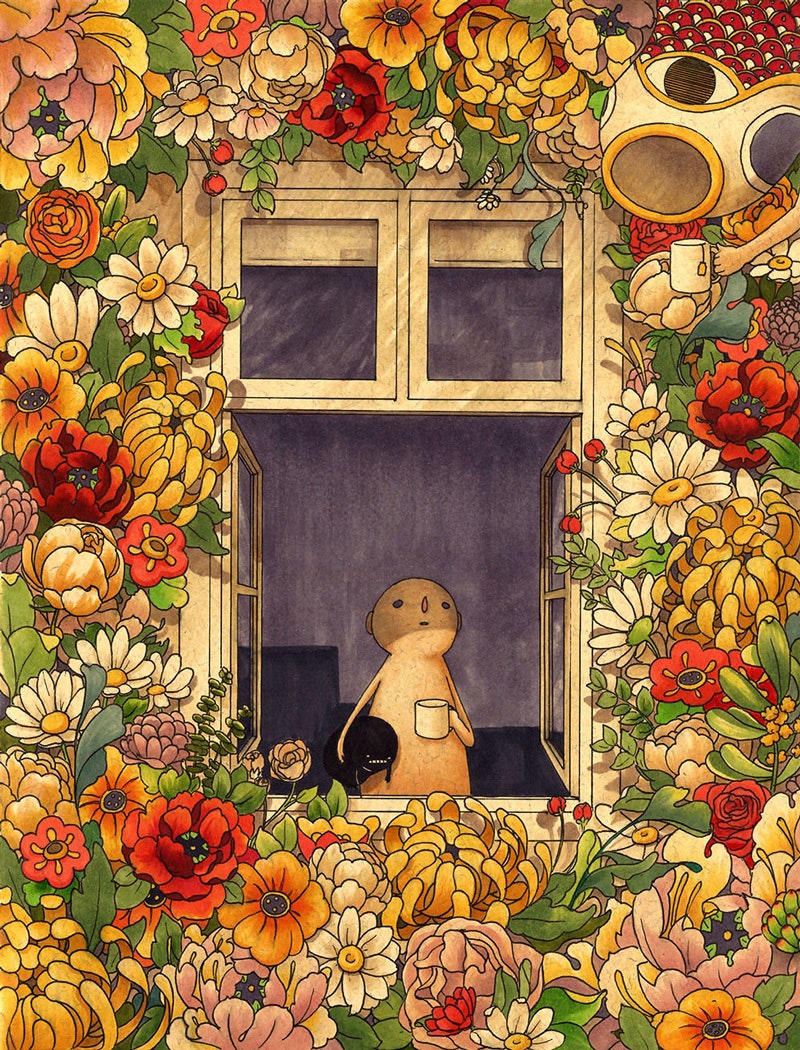
Bare walls? Why not fill them with whimsical, colorful, and soulful art from IDEO designer Felicia Chiao and illustrator Yoshi Yoshitani. Prints, postcards, art books, and coloring books are more than enough to liven up your space.
7. The Makeup Maven
Blood orange vanilla. Rose cardamom. Peppermint Eucalyptus. These aren’t flavors of bon-bon; they’re lip balms from METTA GOOD. The balms are made from beeswax and jojoba, coconut, and avocado oils, and METTA donates one percent of its proceeds to nonprofits.

8. The Pet Pamperer
Make your pooch look as posh as you do with colorful bandanas, bowties, and leash bags from The Foggy Dog.

9. The Happy Homebody
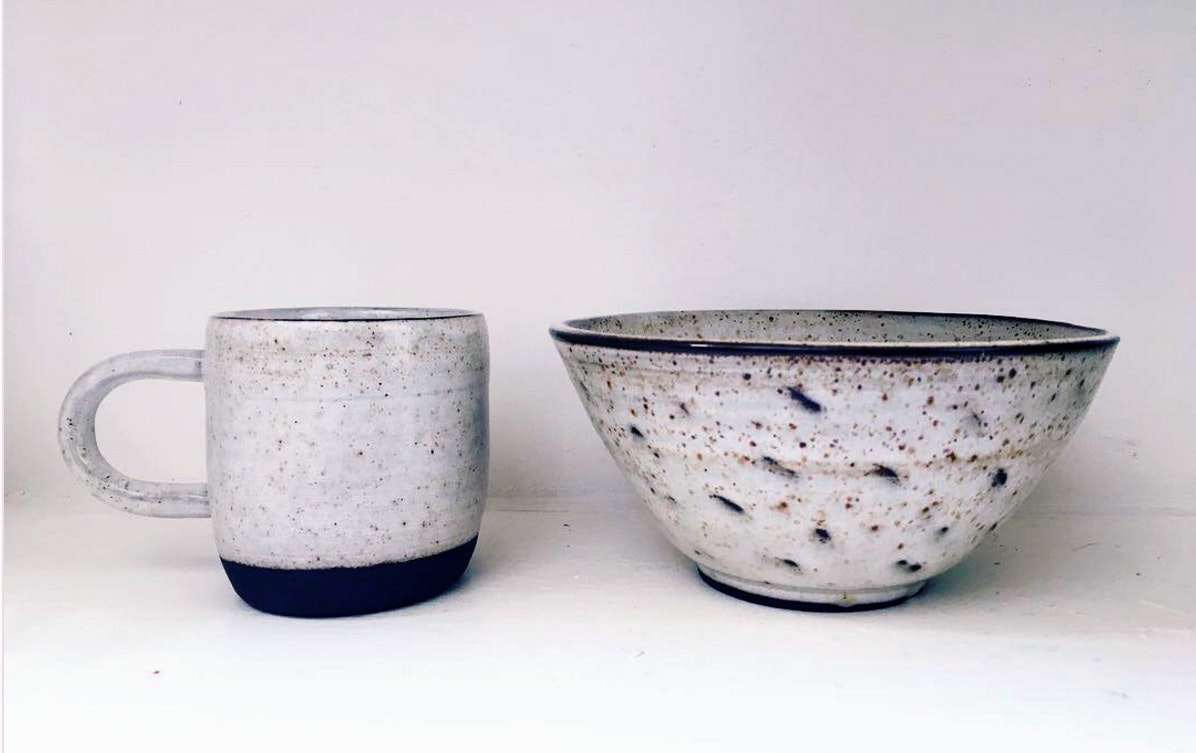
In her free time, IDEO.org senior designer Nicole Kraieski loves to throw down on her pottery wheel. She describes her tasteful tableware as, “ceramics made of clay by the Bay” in San Francisco.
10. The Eco-Chic Toddler
Apila Designs crafts organic cotton clothing—from beanies to onesies to leggings—for fashionistas ages zero to six. The screen-printed pieces are made in and inspired by Northern California.

11. The Avocado Lover
Pretty prints with a hint of snark—such are the whimsical greeting cards from Coffee n Cream Press.

12. The “Nasty Woman”
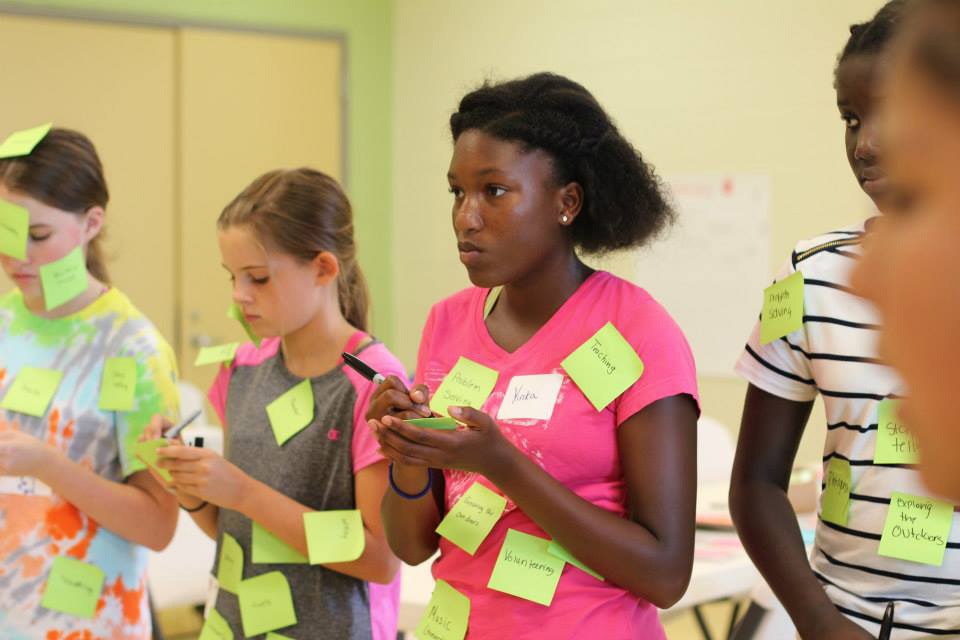
Give young women the gift of leadership by hosting a workshop with Girls Driving for a Difference. IDEO’s Katie Kirsch co-founded Girls Driving for a Difference in 2015 with the goal of helping middle- and high-school girls use design thinking to boost their self-confidence and improve their communities. The group offers a “workshop in a box” to get you started.
And remember, if you can't find anything off the shelf, there's still plenty of time to make your own gifts. Here's an impassioned plea for doing just that.
Design snobs are hard to shop for. But don't despair: We wrangled our favorite craftspeople for Wunderfaire, our annual winter celebration. The party is sold out, so we're sharing a sneak peek of gifts you can nab online.
The Designer’s Toolkit for Tackling Tough Problems
Bite-sized tools to spark creativity in the face of daunting design challenges
The constraints and complexity of working on those challenges can be overwhelming. To help us all push through, we developed a few simple tools to keep in your back pocket. Here are three of them, drawn from the Design Kit Travel Pack, a new deck of bite-sized exercises we’re working on to help social impact organizations and busy professionals unlock their own creative genius.

1. Write a postcard from the future
In the social sector, the language we use is all about fixing things that are broken. We talk about reducing unintended pregnancies or increasing the number of people with access to financial services. It’s important work, but not always framed in the most inspiring way. Before you kick off a new project or initiative, take the time to paint a more audacious vision. Close your eyes, picture a time 20 years in the future, and imagine your work has been a resounding success. What does the world look like? How are people’s lives different? Be as specific as possible. Then, write a newspaper headline for a New York Times story capturing this impact and sketch an image to go with it. Share your vision with your team, and use it as your North Star as the creative process becomes more murky and new challenges emerge.

2. Take an inspiration tour
When we’re designing in conditions with tight constraints—like a tightly-packed informal settlement outside of Nairobi or a rural village in India—it’s vital that we understand and work within the local context. But to unlock fresh solutions, we also need to look elsewhere and gather inspiration from other (sometimes unlikely) places. To design your own inspiration tour, start by naming three adjectives you want your product, service, or experience to embody. For example, maybe we want the new health clinic we’re designing to feel safe, fun, and community-affirming. Then, quickly brainstorm 10 places, businesses, or brands that do this well in your city. (Examples: a sports team’s locker room, a Bible study group, a Weight Watchers meeting, a co-working space, or a comic convention.) Choose a couple of places that are most interesting to you and take a day to visit them in person. Note down your observations as you go, take photos, and look for clues about what might inspire your project. By casting off the constraints of the context you’re working in, you’ll start to see new possibilities.
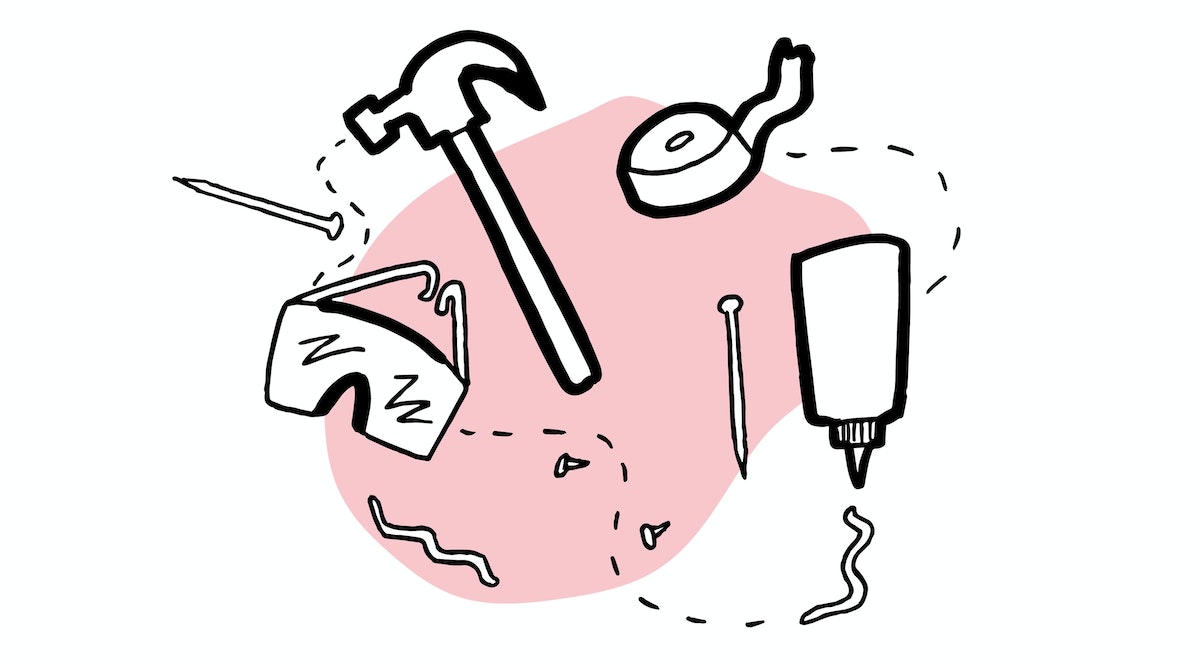
3. Make time for retail therapy
When you’re feeling stuck and not sure which direction your project should take, try getting tangible (even before you might feel ready). One fun way to do this is a trip to your local hardware or container store. Give everyone on your team 15 minutes to explore the store and create their own scrappy set-up of the product or service you’re designing. Then, one at a time, walk each other through the prototypes you created. Forcing yourselves to use materials available in the store and using a timer helps narrow the scope of what you’re working on from a big, nebulous problem to an immediate and concrete one, often unlocking fresh thinking in the process.
Visit designkit.org to download a free PDF, or get your own hard copy.
When we launched IDEO.org six years ago, we knew we had a lot of work ahead of us. The organizations we partner with are tackling some of the world’s toughest problems, like access to clean water, reproductive health, and the global refugee crisis—big, systemic challenges that have been around for decades.

Lindsey Turner
I’m passionate about building brands, products, and experiences that help organizations show up with meaning and momentum.
I help organizations cut through complexity by shaping how they show up, through brand strategy, identity, and storytelling.
Working at the intersection of brand and business, I bring an editorial eye and a bias toward making—turning ideas into tangible experiences that people can understand, trust, and believe in.
My work spans government, healthcare, financial services, media, and consumer goods, from launching Gen Z-focused ventures to building innovation labs and reimagining legacy brands. I relish moments of ambiguity and enjoy translating across teams, perspectives, and priorities to move ideas forward.
I started my career in editorial and digital design, shaping cross-platform experiences and identity systems in publishing and agency environments. That foundation still shapes how I work today: I’m detail-oriented, collaborative, and overreliant on the Oxford comma. I hold a BFA in Visual Communication from the School of the Art Institute of Chicago.

Rachel Young
My work helps organizations see who their products aren't working for—and build the will and the tools to do something about it
For 25 years, I've asked the same question: Who does this design exclude—and what are we going to do about it?
My work spans human-centered strategy, inclusive design, and qualitative research, with clients ranging from Microsoft, Google, and Verizon to the National Science Foundation, and San Francisco Unified School District.
Before IDEO, I taught elementary school in East Palo Alto and spent a decade doing design work with social service organizations—where I learned firsthand what it costs people when systems are built without them in mind.
I am currently writing User Error, a nonfiction book about digital access and the design decisions behind it. I live in Oakland, California.

Brian Pelsoh
I lead with craft, ensuring our work is creatively excellent: rooted in deep human insight and imagination, while also grounded in the realities of business and technology.
My expertise spans brand, communication, and product design across tech, education, the arts, and social impact.
I believe great work demands both high-level vision and obsessive attention to detail, and only happens through collaboration.
I bring an inclusive, hands-on approach and a deep understanding of business, which enables me to consistently deliver excellence while always asking why.
Before joining IDEO, I worked at the brand firms Pentagram and VSA Partners. I began my career as a designer, leading teams at the School of the Art Institute of Chicago and the Milwaukee Art Museum. I hold an MFA in graphic design from Maryland Institute College of Art and a BFA in communication design from the Milwaukee Institute of Art & Design, and have taught at some of the best design schools in the US.

Tony Wong
I am responsible for IDEO’s long-term success in China and working with clients to use design as a tool to enable growth.
I am responsible for IDEO’s long-term success in China and working with clients to use design as a tool to enable growth. Specifically, I have helped Chinese companies design holistic brand solutions through the development of their products, communication, services, and innovation teams, and I have helped multinationals expand their presence and influence in China.
I advise global leaders on developing China-led innovation and capabilities.
In over 15 years in IDEO Shanghai, I have worked on projects that use design to elevate the quality of the experience of healthcare products and services, streamline processes that increase productivity, create spaces and programs that promote and enable inclusive communities, and build next generation mobility solutions that are planet-positive.
Before joining IDEO, I worked at Philips Electronics and the Electrolux Group in Italy, the Netherlands, and Singapore on a number of breakthrough commercial products. I am a member of the Young President Organization in Shanghai.

How to use AI as an editor, not a writer
Ed White shares how he uses AI as an editor—not a writer—to sharpen storytelling, rehearse ideas, and preserve the productive friction that makes creative work better.
Ed White has a rule he's tested on his own writing: hold yourself as the writer, and let AI be your editor. Ed is a Senior Design Director at IDEO's London studio, where he co-leads the firm's AI portfolio across Europe. Before IDEO, he spent 12 years as a writer and editor at the Financial Times, Wired, and Contagious. So when he talks about when to use AI for storytelling and when not to, it comes from two decades of crafting his storytelling skills.
In this episode, Mina Seetharaman talks with Ed about two specific tools he uses to keep AI in an editor's seat: a "roasting agent" prompted to critique his drafts without any sugarcoating, and a simulated audience he rehearses pitches on before the real thing. They also get into what Ed is hearing from design leaders at Anthropic, Lovable, Shopify, and Google Creative Lab about how creative work is changing, and why he thinks the friction of writing something yourself is worth protecting rather than automating away.

Building a personal AI for the messiness of life: Sida Li
Becca Carroll talks with Cue co-founder Sida Li about designing a personal AI for the messiness of everyday life—not just work. They explore how Sida stays anchored to human needs while navigating fast-changing technology, product tradeoffs, business-model experimentation, and the realities of building an AI company today.
Most AI products today are built for work—a space with clear problems and established systems. One founder noticed a gap: personal life is messier, harder to systematize, and mostly left behind by the AI boom. So she built Cue, a personal AI that lives inside iMessage and group chats, to go where the other tools haven't.
In this episode, Becca Carroll, IDEO's Chief Strategy Officer, talks with Sida Li, co-founder and CEO of Shared Context Lab, about staying anchored to a human need while the technology around her keeps changing shape, why she treats her business model with the same rigor she'd bring to a product, and what it feels like to build a company at this particular, disorienting moment in AI.
The conversation also gets into how Sida makes design decisions: the language Cue uses to describe itself, the tradeoffs behind building inside iMessage instead of a new app, and a real story about a business idea that didn’t pan out.
This is the second in a two-part series profiling founders from IDEO's Startups-in-Residence program. The first conversation is with Johannes Seemann, founder of Sooner, on designing GenAI for the emotional side of money.

Designing GenAI for the emotional side of money: Johannes Seemann
Designing financial tools around the feelings that shape money decisions.
Most personal financial tools are built to run the numbers and optimize towards a budget. While that works for some, most people experience money as a lived relationship that does not neatly fit into a spreadsheet. Johannes Seemann and Becca Carroll discuss why money is emotional before it is mathematical, and what a human-centered approach to building a generative AI financial product looks like in practice.

The curious leader's edge in uncertainty: Scott Shigeoka
How genuine curiosity helps leaders navigate uncertainty with greater confidence.
Mina Seetharaman talks with Scott Shigeoka, author of Seek and Head of Curiosity Cultivation at the Eames Institute, about what distinguishes genuinely curious leadership from performative curiosity, how power dynamics shape curiosity, and why practicing curiosity can restore energy rather than drain it.
Looks like you might be in search of something very specific?
Or reset the filters above and try another angle.
Here’s some random inspiration

Podcasts about creative leadership

Articles about the power of prototyping










































.webp)