
.svg)




Finding hidden talent
A social enterprise rewires America’s labor market through inclusive design.
American businesses are on notice: To be competitive in today’s market, you must diversify your workforce.
One way to widen the talent pool is to pay closer attention to people who have acquired their skills through alternative routes. Millions of Americans learn on the job, in community colleges, at boot camps, or through life experience. According to Opportunity@Work, more than 70 million Americans are overlooked because of degree requirements. Despite their abilities, these “STARs” (those who are skilled through alternative routes) find themselves stuck in jobs for which they’re overqualified and underpaid.
Opportunity@Work, an innovative social enterprise, reached out to IDEO to help collaborate with companies, talent developers, and STARs seeking career growth. To make this overlooked talent pool more visible, we created a campaign and video to rally companies. We also designed a data dashboard to help regional employer networks identify qualified talent and potential partnerships with skill-building programs. And to provide STARs with direct support, we scaffolded the job-seeking experience, focusing on key moments like the interview process.
It’s time for businesses searching for talent to open their eyes, look to the STARs, and see what they’re missing.
83% of HR professionals said they had difficulty finding suitable candidates in the past 12 months.
62% of Black people, 55% of Hispanic people, and 50% of non-Hispanic white people have become skilled through alternative routes, such as community college, workforce training, boot camps, certification programs, military service, or job experience.
Over the past 40 years, inflation-adjusted wages have increased 8% for college graduates with a bachelor’s degree while decreasing by 15% for people with only a high school degree.
Thousands
of state jobs in Maryland no longer require a four-year college degree
skills-based
The White House is adjusting educational requirements for I.T. professionals in favor of a skills-based approach
Experts on the front lines
Recognizing the power and creativity of essential workers.
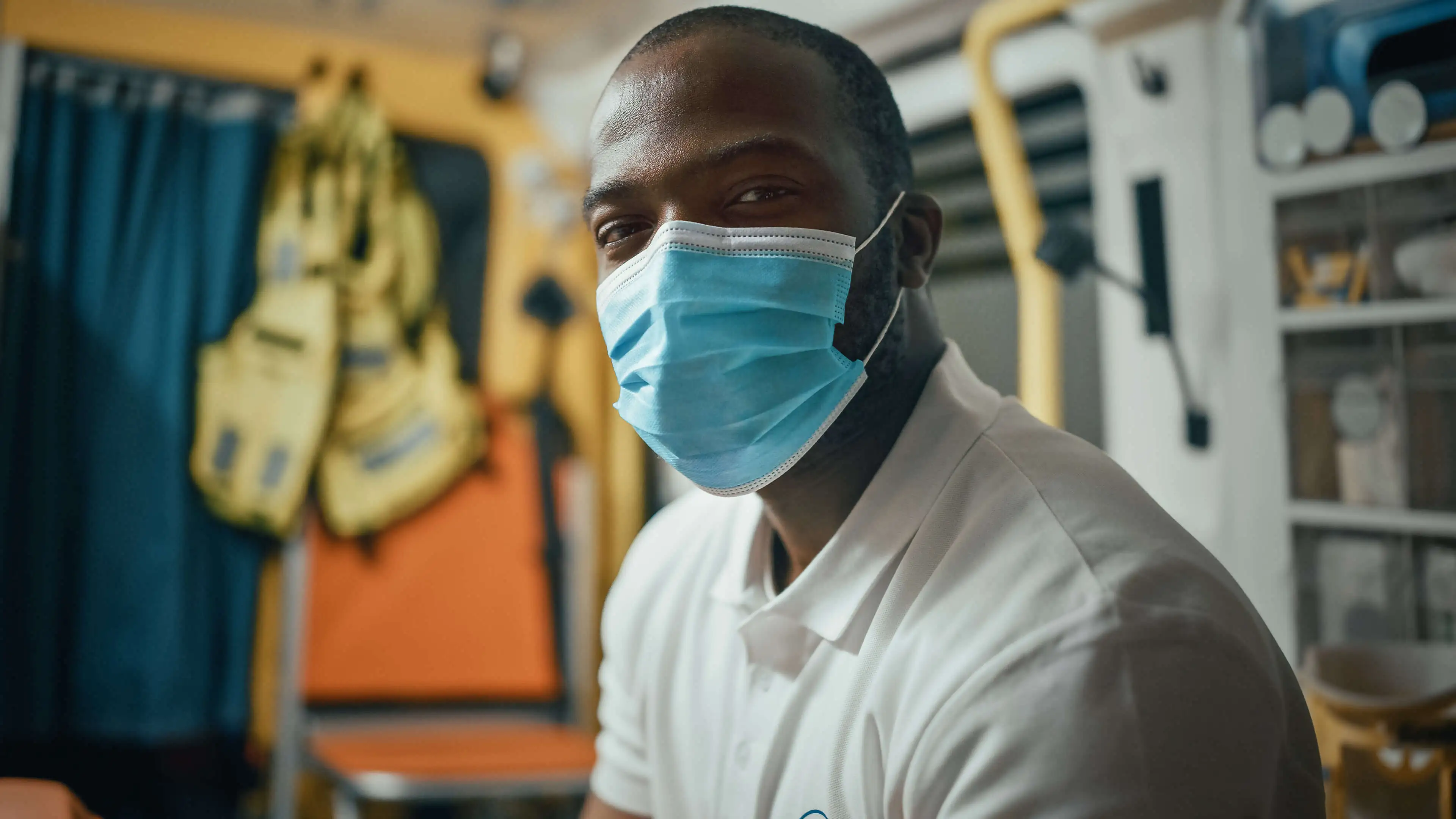
For many organizations, frontline workers like grocery store clerks, nurses, hospitality workers, and transit employees are an essential part of doing business.
So much so that they continued to show up at the office throughout the COVID-19 pandemic even as everyone else went remote. As the point of contact with customers and key systems, these workers often know exactly when, where, and why things don’t work, and they come up with powerful hacks and workarounds to make things better. Yet these insights and innovations rarely make it to the corporate office. And that’s a problem: large organizations often hire design and innovation consulting firms while not taking advantage of a latent source of deep, in-house expertise. It’s equally discouraging to workers who would gladly share their ideas if they were only asked. No surprise, then, that frontline workers are quitting their jobs in droves.
What could companies learn by listening?
IDEO partnered with the Ford Foundation to create the Worker Voice Design Lab, where leaders from a port authority, an airline, and a health care provider worked alongside frontline workers. That led to the planting of a seed of innovation in each organization, with interventions designed with and by workers implemented operationally at the core of the business. In one case, a group of workers zeroed in on specific problems with such clarity that they were quickly able to develop a digital prototype for testing. No one was less surprised than the workers themselves, who simply said: Well, nobody ever asked us before. Sometimes the most innovative idea a leader can have is to listen, learn, and act on their employee’s smart ideas.
A large portion of the job churn since March 2020 has been concentrated in frontline services such as accommodation, food services, and retail.
Lack of career growth is the number one reason people leave their jobs according to more than 18,000 frontline workers across 150 companies.
2 pilot initiatives
being led by frontline workers in 2022

Customer powered
How Ford transformed itself to take on the future of mobility.
The climate era demands new offers and new ways of working.
Would you like to be able to plug your jigsaw into your truck? How about taking a fully reclined snooze after a long day of fishing? Questions like these led to quick prototypes that ended up in Ford’s new, electrified F-150 truck, which has more outlets than the average apartment and can power your entire home. This was no small update. The way Ford reimagined the truck experience from powertrain to power nap is emblematic of how much customer-centricity is now embedded in Ford’s culture.
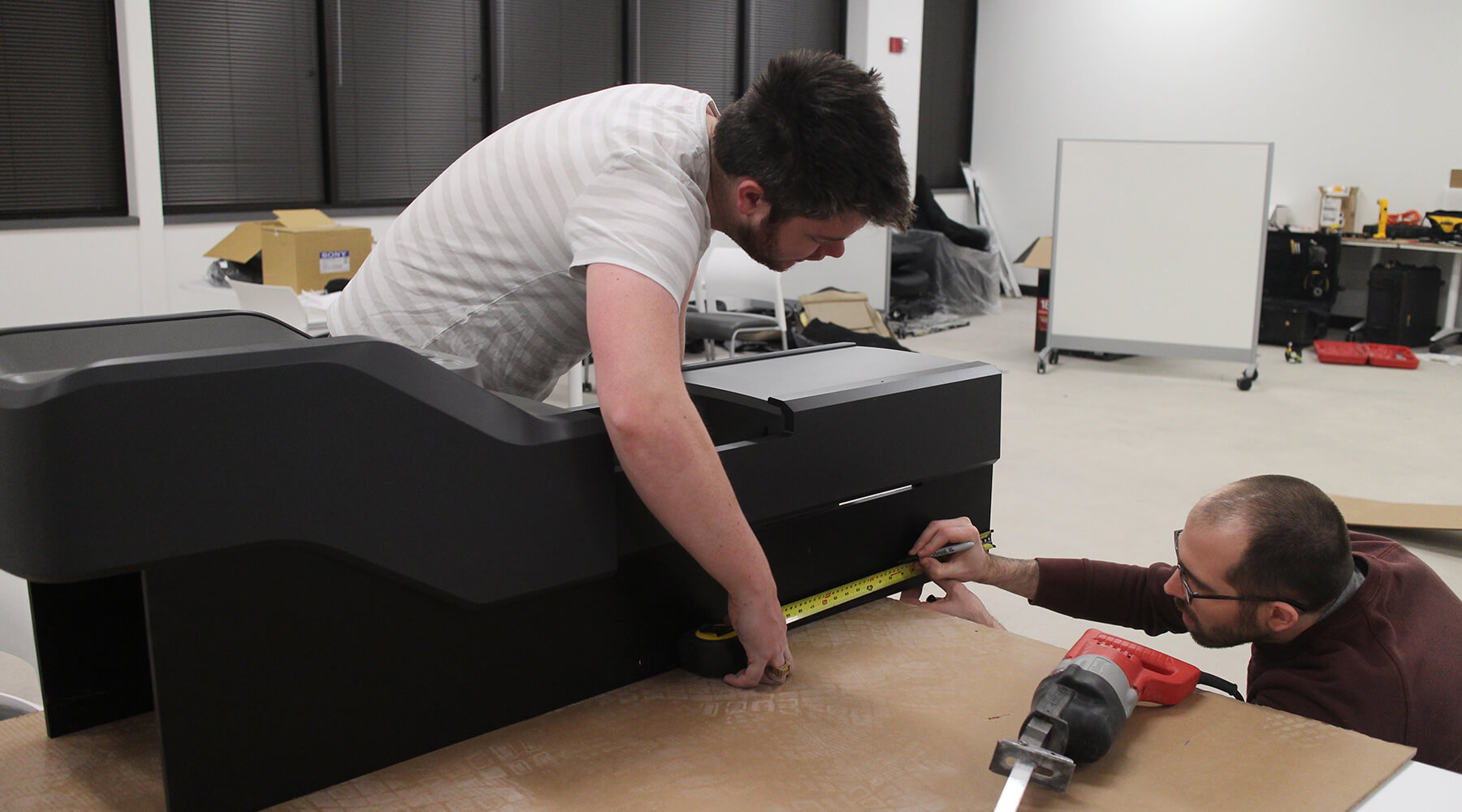
For well over a decade, we’ve partnered with Ford in the U.S., the EU, and China to help the organization bring to life a shared vision of the future of mobility. Together we scaled new capabilities throughout the company by running proof-of-concept “beacon” projects and, to embed this new customer-centric mindset, built a human-centered-design hub called D-Ford. This organization within the organization has become a magnet for talent and is spread across six global locations: London, Shanghai, Melbourne, São Paulo, Palo Alto, and Detroit. Ford’s commitment to serving the needs of people and the planet is what propelled the rethink of the F-150, the best-selling vehicle in the U.S. for over 40 years. It was a high-stakes move, and one that represents a major turning point for the automaker: For the first time, its primary profit source would be electric. The new Lightning is still built Ford tough, but also built for the future.
Passenger vehicles produced 41% of carbon dioxide emissions worldwide in 2020.
One in every 20 passenger vehicles sold in the United States is a Ford F-150.
Before going electric, the Ford F-150 emitted about 100 tons of CO2 over a 200,000-mile lifespan.
200,000
pre-orders of the electric F-150 truck, named one of Time's Best Inventions of 2021
Most Innovative Design Company of 2022
according to Fast Company
Beyond the bag
A coalition of retail leaders join forces to address single-use plastic-bag waste.
America’s leading retailers share a common goal—doing less harm to the planet.
The systemic challenges standing in the way require a bold new approach, and no single company can solve them alone. So Closed Loop Partners convened a group consisting of founding partners CVS Health, Target, and Walmart, along with 12 other leading retailers. As the innovation partner, IDEO helped launch a global search for breakthrough sustainable ideas that yielded more than 450 submissions from startups and entrepreneurs to reinvent the single-use plastic retail bag, with nine finalists entering a six-month accelerator.
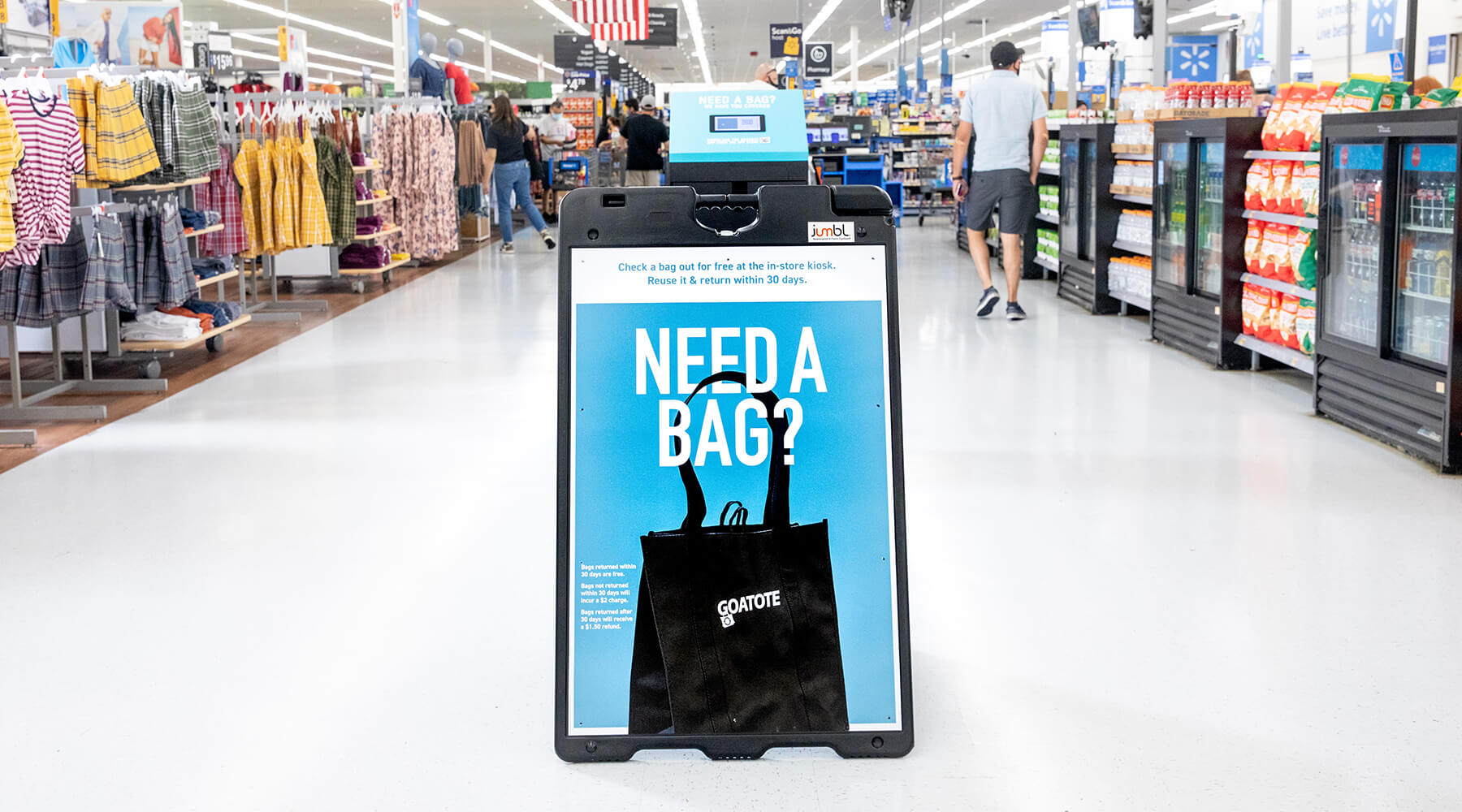
New alternatives ranged from biodegradable solutions to systems that kept reusable bags in rotation. IDEO teams not only facilitated collaboration between startups and sustainability leads from partner retailers, but also provided a boost of additional expertise from industrial, data, and business designers. In a matter of months, teams were able to launch prototypes in select CVS Health, Target, and Walmart stores in California and New Jersey.
Everyone involved in the consortium knew that replacing single-use plastic retail bags is a problem that won’t be solved quickly or easily. But the Beyond the Bag challenge helped them learn that designing for the policy and infrastructure of tomorrow requires tangible steps, taken together, today.
A hundred billion plastic bags are used in the US every year, and less than 10% of them are recycled.
Every year, plastic retail bags are among the top ten items found on beaches and waterways worldwide.
9
stores tested solutions across Northern California
Millions of dollars
raised by two startups
2
startups acknowledged by Fast Company's World Changing Ideas Awards
To improve the NHS, we must look beyond it
4 ways design can help unburden the service that means so much to us.
Over the past decade, particularly through two pregnancies and deliveries, I have learned to navigate and deeply appreciate the complex network of healthcare providers and services that comprise the NHS.
I am far from alone in that deep appreciation. In England, the NHS is a national obsession. It determines election campaigns, shapes the budget, and perhaps most importantly, colors how we think about and act on our health. But alongside that feeling of national pride is an understanding that the institution is under far too much strain. There are currently 6.34 million people waiting for NHS treatment. Cutting waiting lists by making better use of the private sector is front and center of the Prime Minister’s latest NHS proposals. It is a top priority for the government as it looks to deliver on a promise to ensure that 92 percent of patients in England wait no longer than 18 weeks for treatment.
Over dinner recently, a close friend asked me: “You’re a designer. If you were going to fix the NHS, where would you start?”
My answer: “Anywhere but the NHS.”
The NHS is a world-class problem fixer. An emergency and acute care service that kicks into gear when we need it most. However, the NHS cannot purify the air we breathe, encourage us to move more, improve our relationships with others, help us develop healthy working patterns, or change the food we eat. To preserve our health, we need to address the causes of preventable lifestyle diseases like obesity, diabetes, and heart disease at their source.
That means turning to the spaces where our health must be built, maintained, and nurtured. Our workplaces, our schools, our communities, our supermarkets. That’s why the best way to improve the NHS actually lies outside of it.
Rethinking the way we generate health in the UK might sound ambitious, but for a designer who has focused on health for 20 years, it is very clearly the right brief.
So, where might we start?
1. Paint a new picture of health
My mentor, IDEO founder David Kelley, used to say, “Paint a picture of the future with your idea in it.” This is where design excels. We need to imagine a future where health thrives outside of healthcare settings, a future where preventable illnesses are dramatically reduced, and people live longer, healthier lives.
Imagine a future where waiting lists for heart surgery are a thing of the past, not because the NHS has magically become more efficient, but because fewer people need surgery in the first place. Or where at-home cancer screening frees up time for healthcare workers, and gives patients more control over their own health. One of our clients, Teal Health, partnered with us to create safe and accurate cervical cancer screenings that would allow patients to collect their own samples at home, giving them more agency over their own health.
Or consider mental health. Across the UK and the US, children and young people are in crisis. In California alone, more than 284,000 youth cope with major depression. Sixty-six percent of kids with depression do not receive treatment. Between 2019 and 2020, the suicide rate for kids ages 10-18 increased by 20 percent. These numbers are shocking. Imagine a future where children, their families, and schools had easy access to tools designed to combat those mental health challenges. This was the vision driving IDEO’s collaboration with Kooth, the State of California, and cohorts of young Californians to create Soluna, a digital mental health resource kids could access anywhere, anytime.
To drive a step change in the state of our health in the UK, we must allow ourselves to rethink the ways in which we keep ourselves and our families healthy. The National Health Service cannot be our sole partner in this endeavor.
2. Break taboos and engage in hard conversations
Taking health beyond the hospital will require us to confront awkward topics—conversations which we have become used to leaving at the door of the doctor’s office. We need to learn how to talk about menstruation, aging, mental health, and—dare I say it —poo, out in the open.
By normalizing these discussions and listening with empathy, we can begin to uncover the human challenges that impact our health, opening up opportunities for new products and services that improve health and drive economic growth.
Menopause is a great example. In our work with QVC, we learned that nearly 40 percent of menopausal women are being prescribed antidepressants to help manage their symptoms, despite four out of five describing the treatment as “inappropriate.” We also heard that nine out of 10 British menopausal women feel society and brands overlook them. Recognizing that its customer demographic makes QVC uniquely positioned to surface conversations and provide support to those dealing with menopause, the video commerce retailer partnered with IDEO to determine how it could not only meet customer needs but also flip the conversation about midlife, reframing it as a time of vibrancy and exploration.
3. Fix incentives to combat health pollution
The true financial cost to society of excessive sugar, saturated fats, and pollution is largely hidden. The sticker price is nothing compared to the cost of lost productivity, medicines, procedures, and NHS waiting lists they create.
Policy makers need to inspire innovative new alternatives and reward manufacturers who can create attractive products that do not come at the expense of our health.
In the US, an organization called Eat Real is working to scale access to nutritious, sustainable foods through healthier meal programs in public schools. Almost 30 million children in the US rely on public school lunches for more than 50 percent of their daily caloric intake, but these meals are often comprised of ultra-processed, unsustainable foods. IDEO collaborated with Eat Real to develop its branding and messaging in order to reach a new set of food philanthropists and scale their impact.
4. Be radically collaborative
Once we relinquish the notion that the healthcare system is solely responsible for our health, we are free to design a new system of collaborative forces to promote, maintain, and foster good health. What opportunities might we unlock if we brought together food producers, educators, employers, city planners, tech leaders, and content creators to co-design a new approach to health with policymakers? Already, some public/private partnerships have led to change. A few years ago, IDEO partnered with the NHS’s health tech unit and a company called Public Digital to create a suite of digital resources that enabled organizations across the NHS to transform their own services, allowing them to provide mental health support for the most vulnerable children and young people.
The opportunities extend far beyond the NHS
A healthier society is more productive and pays more taxes. It requires less healthcare funding and is less poverty-stricken. It can help us all to live happier, more fulfilling lives.
The tensions getting in our way—the short-term incentives to sell unhealthy products, reduce environmental regulations, and the challenge of breaking unhealthy habits—do not necessarily require a revolution in medical technology or vast sums of money to resolve.
They require a designer’s toolkit. A willingness to imagine a different approach to health in the public and private sectors, the courage to talk about health in the open, a realignment of incentives, and the willingness to experiment.
They also present a huge opportunity for any organization interested in building a business centered on improved health outcomes.
It’s time to take our health out of the hospital.
When I relocated from the US to the UK ten years ago, one of the biggest differences I experienced was my sudden access to the publicly funded National Health Service (NHS).
“What is AI doing to us?”
And 5 other spicy takeaways from Signals of TEDAI San Francisco.
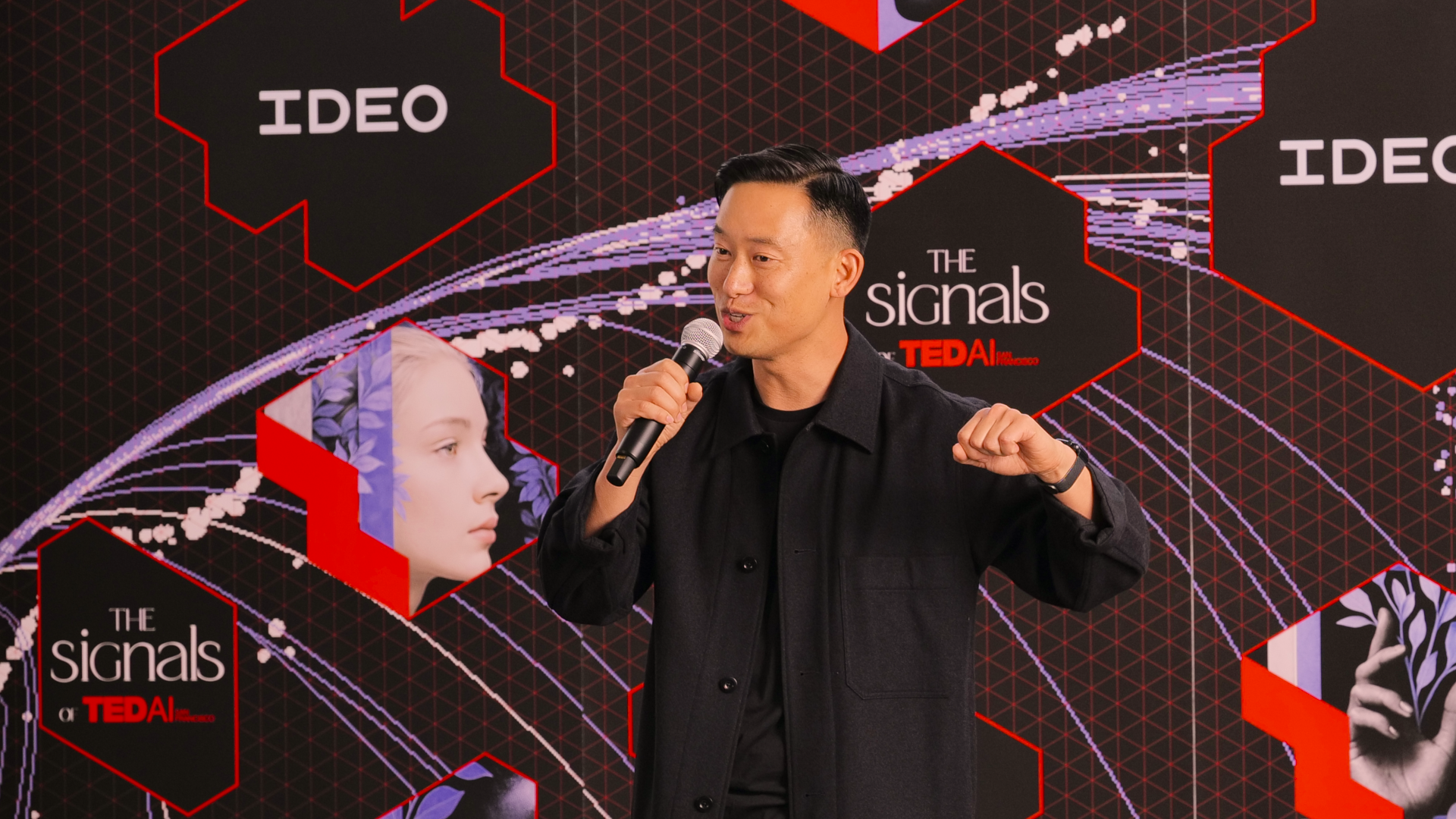
But in the middle of last week’s Signals of TEDAI event at IDEO’s San Francisco studio, where we explored the worth and value of AI in the future workplace and what corporations can learn about leveraging IP from battles currently playing out in the art world, Pat Pataranutaporn, technologist and researcher at the MIT Media Lab, surprised the panel he was on with a far more critical question: “What is AI doing to us?”
Focus on physical, in-person experiences, because that is what people will value.
As technology becomes easier to manipulate through deepfakes, AI-generated content, and misinformation, it will become increasingly difficult to distinguish what is real—and what is not. In that world, Tim Chang, a Venture Partner at Mayfield, argued that human connection may become our most reliable source of truth—and our only form of authentic experience. “Within a year or two, anything digitally created and transmitted will not be fundamentally trustable,” he said. “The only thing I count on is when I see you in person.” In a future where digital content can no longer be taken at face value, people may once again become the most trusted interface.
So, how can these two worlds stop competing and start to enhance one another? Authentic experiences and intelligent technology. Human intimacy and boundless connectivity. The next generation of social networks may not be entirely analog, but neither will they exist solely on our screens.
Why do tech companies get to change the rules?
Speakers like Ed Newton-Rex, founder of Fairly Trained, a non-profit certifying generative AI companies for fairer training data practices, and Amy Karle, an artist and futurist, critiqued the corporate appropriation of artists’ work under the guise of “fair use,” calling out the tech industry’s tendency to shift foundational norms (like copyright protections) without democratic consent. Newton-Rex pointed out that for years, “No AI companies trained their commercial models on copyrighted work without asking permission, because everyone knew it was illegal.” But now that several high-profile companies are doing it anyway, and reaping financial rewards, others are rushing to do the same. “We're doing a very, very bad job of holding those companies to account,” he said.
But we all know tech companies have been undervaluing artists for decades. Spotify pays artists between $0.003 and $0.005 per stream, meaning an artist needs approximately 250 streams to earn just one dollar. In 2015, Google won a 10-year battle with the Authors Guild to display excerpts of works without compensating the creators. The current AI conversation pours gasoline on these precedents. And unless we want to upheave society and consider more radical concepts like universal basic income for artists, as Alvin Wang Graylin posited, tech companies need to change the way they value art and artists; not just because it’s the right thing to do, but because creatives have always helped design the future of technology. We can't have great tech without creatives, and creativity won’t evolve without great tech. There should be mutual benefits for both parties involved in the process.
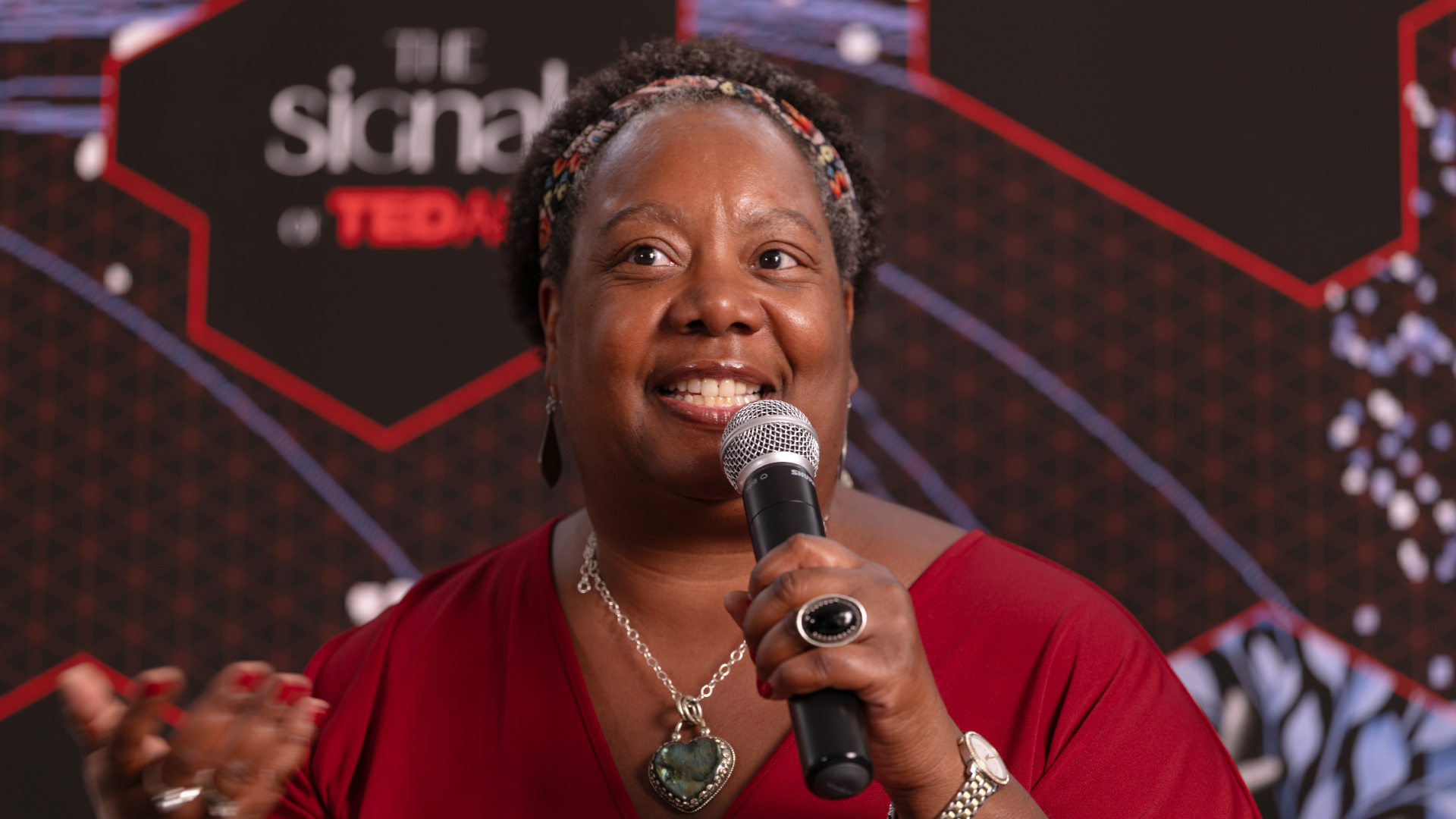
“Artificial intelligence is not artificial and it’s not intelligent.”
Ovetta Sampson, founder and owner of Right AI, reminded us that AI is only as strong as the people who shape it—and in many cases, they are the marginalized people behind the scenes who are exploited to moderate, clean, and categorize the training data. It’s something we explored back in 2020, when we were working with Mozilla on the consequences of the Surveillance Economy. Back then, we found that “invisible practices enable invisible human exploitation” via the role of mechanical turks. Current LLM practices are similar; that labor is not artificial.
As responsible designers seeking a less biased and more equitable model, we must find ways to shed light on those exploited communities and educate users and organizations on the importance of diversity and transparency in the system.
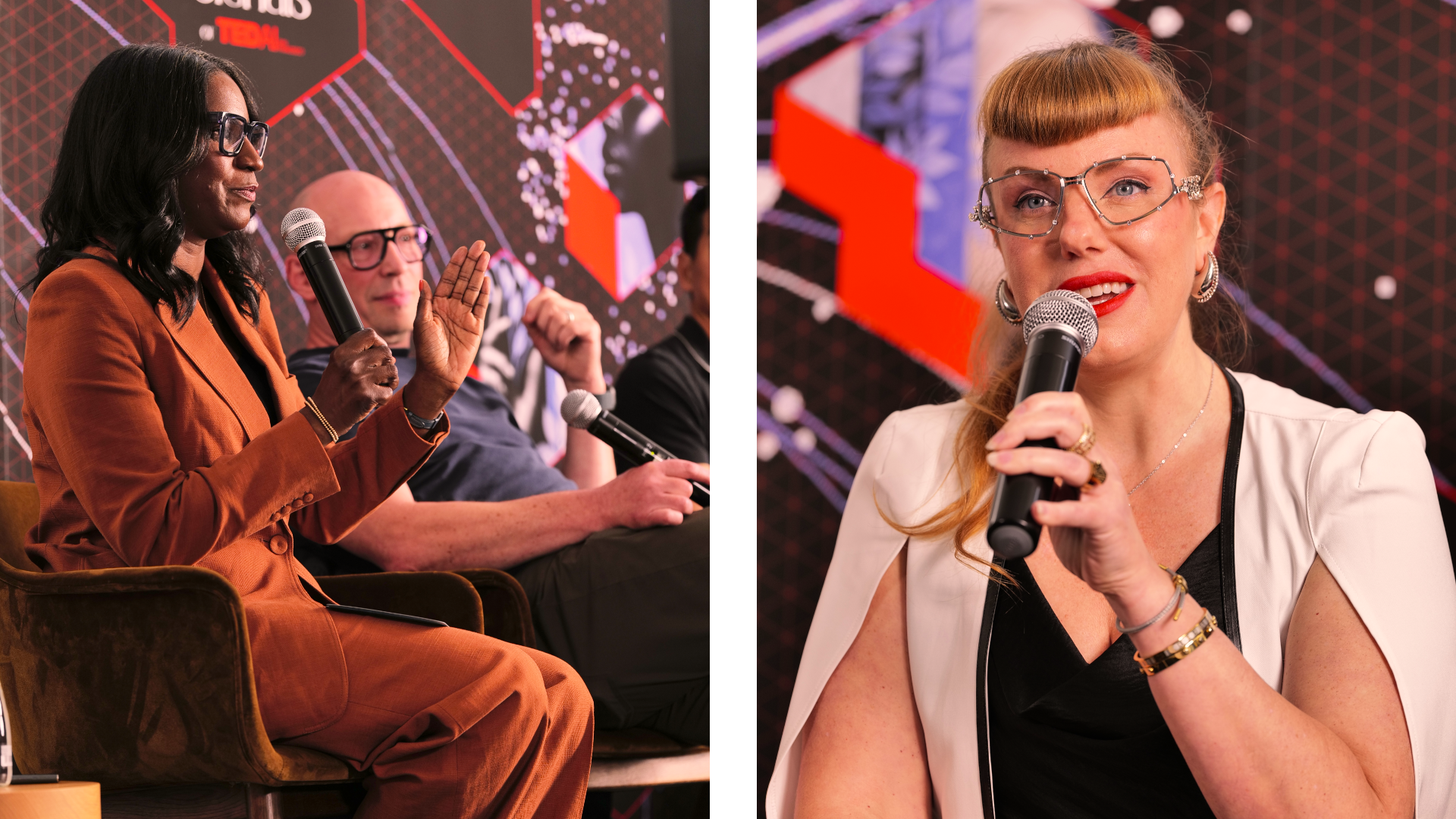
“Who are the designers?”
Over and over, panelists emphasized that designers must get AI right and create products and systems that meet real human needs while minimizing damaging consequences. Then Rashida Hanif, Founding CEO of RepresentEd, asked a seemingly simple yet fundamental question: “Who are the designers?”
If we consider the scale of impact that “design” will have in this space, then we need to dial up the importance of some of design’s most talked-about shortcomings: diversity, equity, and inclusion. Another interesting moment arose when Chang and Hanif pointed out that too often, the consternation over a lack of female-owned startups overlooks the lack of investment in female founders—not to mention gaps in education and support systems that exist before they even reach that stage. This gender chasm is just the tip of one iceberg. But we need to learn from our past and remember that, “if you invite someone to the table, it’s too late… because you’ve already built the table.” As a design community, we need to do better.
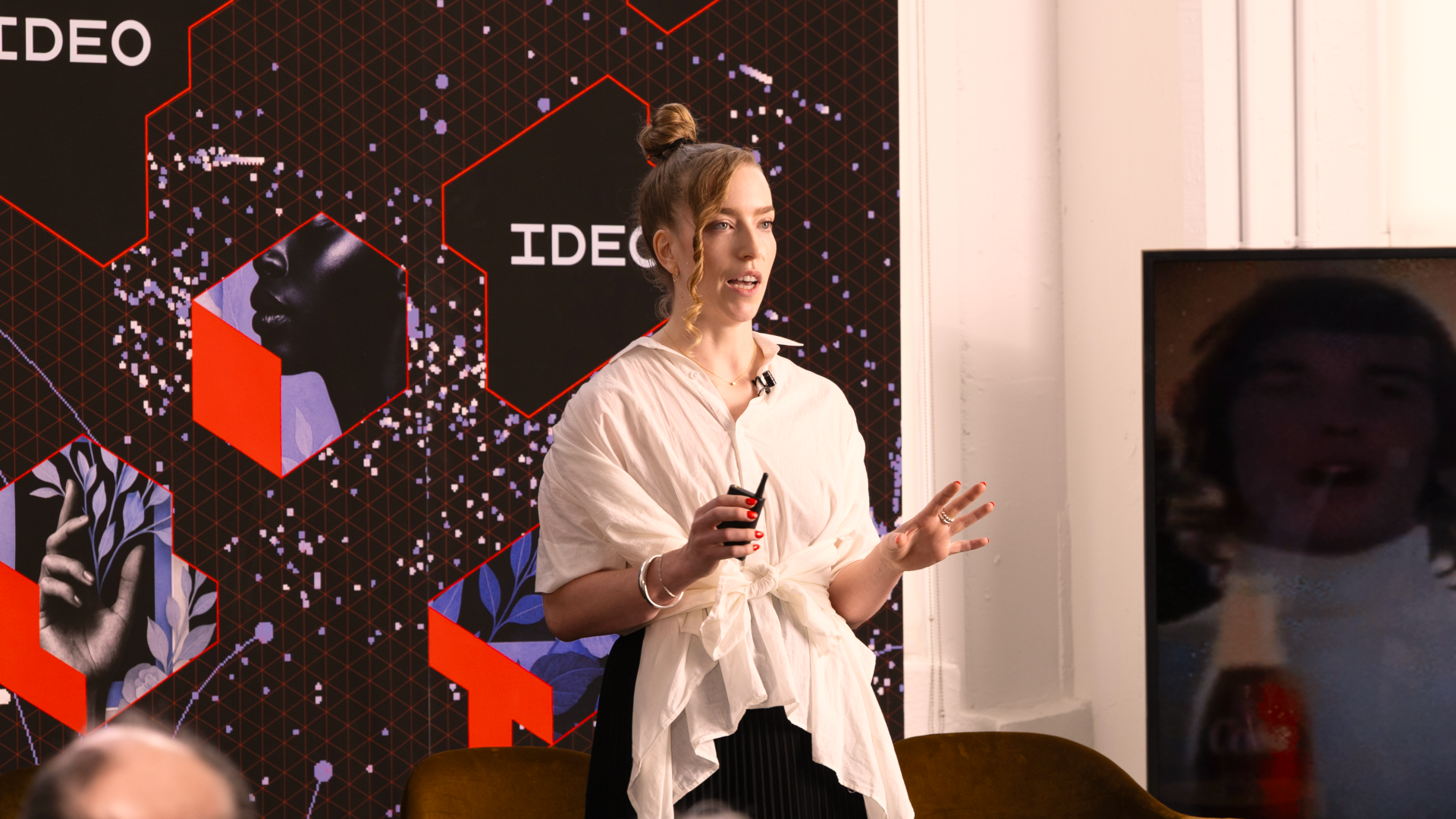
“The revolution has to start, and it has to start with you.”
Sampson reminded us of the most important point of all. It’s easy to say, “the designers need to…” But we all have a say in making this future. “We really need to participate in the AI revolution and not accept the narrative that is given to us by the tech bros,” she said. “We have the resources and the access, and it’s up to us to make the future we’re asking for.”
For us, that’s a future that understands there is no choice between human creativity and technology; and it’s a refrain we’re hearing over and over. We heard it at Figma's AI-heavy Config conference, we've explored it with clients like Ethiqly, and it was clearly resounding in this conversation, for technologists, artists, and business folks alike. AI is going to be able to do a lot, and yes, of course, it will replace jobs and upend entire industries. But its intelligence will only be truly valuable when it’s paired with human creativity to create meaningful human experiences.
So many people are putting so much work (and money) into figuring out what we are going to do with AI.
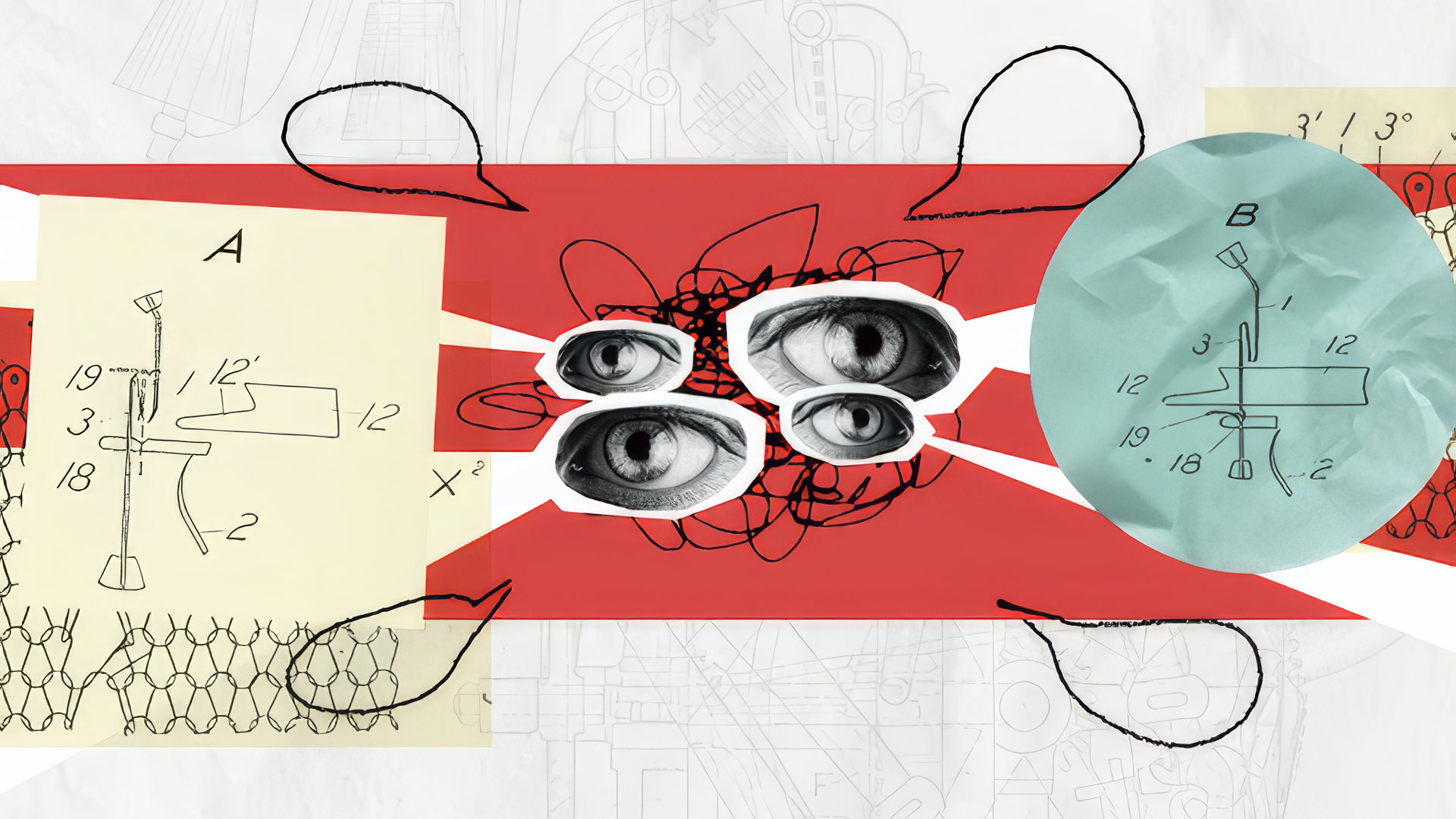
Breaking down silos with human-centered design
How our Shanghai hub helped unite client teams around one goal.
Leaders dream of teams working together seamlessly, like a dragon boat crew rowing in unison. But in big companies, people often struggle to understand one another because of differences in roles, expertise, and motivations. This lack of mutual understanding can hinder consensus-building and make collaboration difficult.
Because navigating these internal dynamics is challenging, organizations often default to one of two extremes: either ignoring the disconnect and continuing with business as usual, or opting for drastic, disruptive change. We believe there’s a middle ground—a more thoughtful, human approach that can enable better communication and collaboration across teams.
Over the years, our work with large organizations has reinforced the value of applying human-centered design not only to uncover consumer behaviors but also to enhance ways of working within companies.
Here's one story of how we applied design thinking methodologies to find the middle ground and bridge the gap between leadership and product design departments in a prominent consumer products company.
“The design feels soulless”
Initially, our project appeared to be a straightforward product development assignment.
Our client, a well-known consumer productscompany, wanted to upgrade its high-end product line. The goal was to unify the aesthetic and experience, ultimately encouraging consumers to buy a complete set rather than individual pieces.
With the launch date set, it seemed to be a typical race against the clock to complete development and production.
But an initial round of internal interviews revealed a deeper layer of complexity.
Two separate teams managed the product suite, each overseeing its own independent product line while juggling daily responsibilities. Before IDEO came on board, the teams had tried to collaborate but fell short of meeting the expectations of Mr. Zhang, the project sponsor. His verdict: “The design feels soulless.”
Mr. Zhang wanted the teams to align and deliver a truly cohesive experience. But even with these directives, the teams interpreted his expectations differently, resulting in misaligned efforts.
By the time the IDEO team joined the project, it had stalled.
The soul-searching “why”
Mr. Zhang was a well-respected senior executive. His strategic oversight spanned multiple core product lines, leaving him far removed from day-to-day design details. While his teams admired him, an inevitable gap had formed between management levels.
To move past his “soulless” critique, we needed to get to the root of Mr. Zhang’s expectations.
What did he mean by “soul,” and why was it missing?
Instead of reliving the same conversation, we invited him to adopt a designer’s perspective. By stepping into a different role, we hoped to spark fresh insights and unlock honest dialogue.
We brought a designer’s favorite tool into his office: an oversized mood board filled with product details, material samples, and structural diagrams.
“Today, we’d like you to think like a designer,” we said. “Take a look at this board and choose the materials, textures, and structures you feel best represent the future of this product suite. Go with your gut—you don’t need to overthink it.”
The visual prompts quickly shifted his mindset, transforming a strategic discussion into a candid conversation. He shared his doubts about some concepts, his curiosity about others, and his alignment with certain ideas.
Breaking the ice in this way facilitated a sincere dialogue—one between people, not job titles.
As the session drew to a close, he asked pointedly: “Did the product leads also do this exercise? Let me guess—they probably each pushed you to prioritize designs that would make their own product line shine, didn’t they?” he said, laughing.
His intuition was spot on. They were each focused on their own wish lists for their product lines, rather than working together to create a cohesive narrative that would make the product suite appeal to customers, the “soul” he was looking for. That narrative was not only critical to the product suite’s success but also to the company’s broader strategic goals.
At that moment, we felt the shift from external consultants to trusted collaborators.
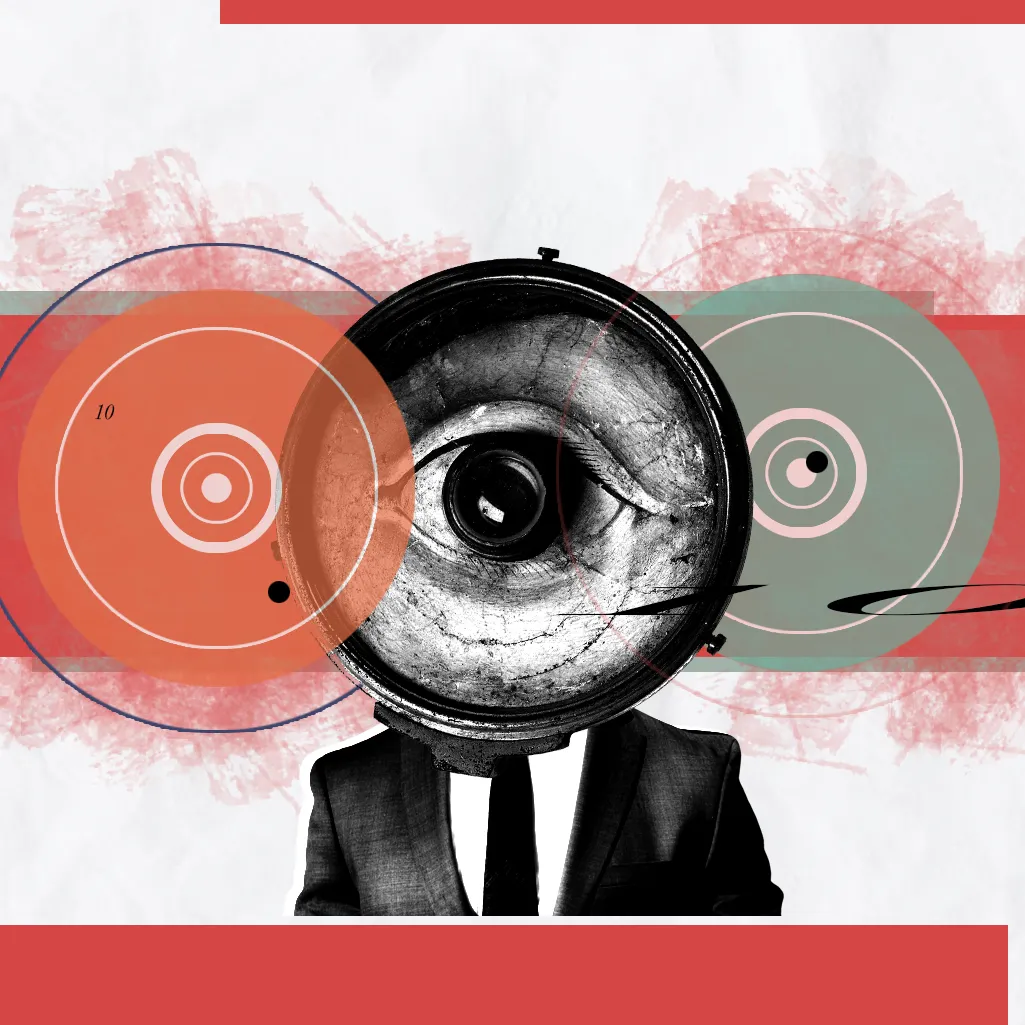
Mr. Zhang also shared more about why it mattered to him. With the market shifting from growth to saturation and consumer demand waning, the stakes were high. A compelling product suite could sustain growth in a challenging landscape, while fostering cross-functional collaboration would strengthen the organization for future innovation.
Connecting strategy and products through real consumer needs
In many large organizations, concerns and perspectives often fail to connect across roles.
In this project, Mr. Zhang was focused on long-term survival strategies, while the individual product teams were consumed by immediate development pressures. Swapping perspectives wasn’t realistic, but the shifting macroeconomic landscape demanded a solution.
Our immediate question became: How can we anchor the project in shared goals to propel it forward?
The answer: Focus on the product and its users.
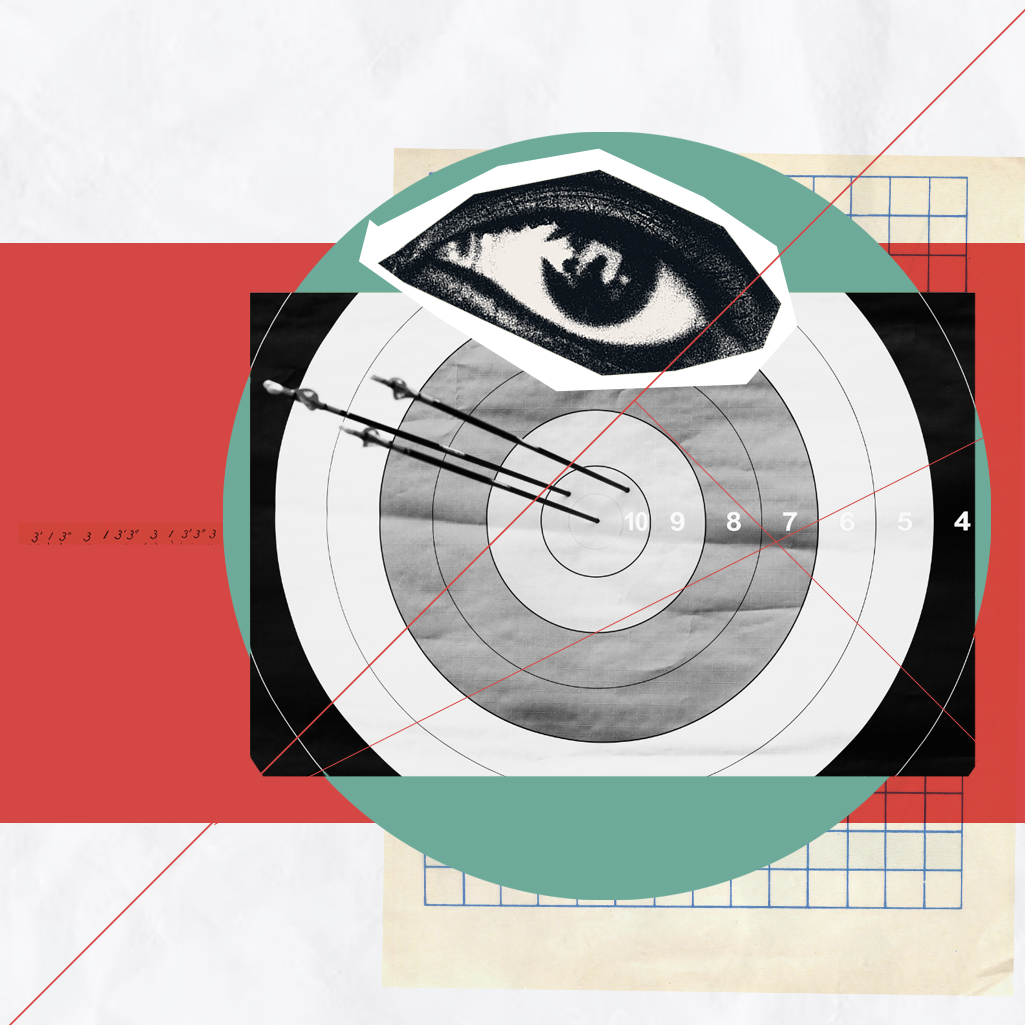
We visited potential consumers in their homes to observe their interior design preferences and see how they combined various products.
One clear insight emerged: consumers see their homes as extensions of their identity. Coordinated home collections help them express themselves and create signature moments they’re proud of when hosting guests.
They weren’t just looking for beautiful, functional objects. They wanted a cohesive narrative—a product suite that would harmonize with their space, align with their lifestyle, and reflect their individuality.
When a collection comes together to create something more than the sum of its parts, we discovered, consumers are far more likely to buy into the entire suite.
These consumer insights resonated with the executive’s strategic vision and served as a unifying force for the teams. Quickly, “1+1>2.”
Finally, the formerly stalled project had new momentum.
Innovating beyond the traditional “Made in China” model
In an increasingly competitive landscape, many business leaders recognize the need to break out of existing frameworks to drive innovation. Yet the organizations they lead are often large and rigid, with complex hierarchies and functions that were originally structured around single-category production and sales goals under the ‘Made in China’ model. These very structures have now become major obstacles to innovation.
Design, by nature, is inclusive, open, and egalitarian. It has the power to transcend organizational silos and hierarchies, communicating effectively through a shared language that everyone can understand. By doing so, it creates a more open, collaborative platform for all participants in the innovation process—enabling tangible results and carving out new space for innovation within even the most entrenched organizational systems.
“The Making of...” is a series of behind-the-scenes articles written by IDEO Shanghai designers about our innovation methods and work with major clients across industries in China.
As businesses scale and grow, the emergence of internal silos often seems inevitable.

The news is under more pressure than ever
Here’s how to design for it.
“If you look at TikTok and Insta, it’s fluffy ‘me’ content…that’s what people are watching,” he said. That tension—between commercial pressure and editorial purpose—was palpable. The organization needed to evolve without losing the very principles that make news valuable.
The news industry isn’t just undergoing a crisis—it’s grappling with existential freefall. News is increasingly commodified and polarized, with rampant misinformation and blunt-force efforts to blur the boundaries between propaganda and fact. Technology—and AI specifically—are cracking open how we experience news and how content is created. Algorithms are growing ever more ambitious in their quest to deliver information tailored to our every whim. At the same time, the zeitgeist pulls the strings, pushing news consumption toward shorter, snappier, more visual experiences, leaving readers with less incentive to pay for it. All while subscription fatigue deepens.
But it’s not all catastrophe! News organizations can rebuild trust and resilience by leading with core differentiators and using technology to deepen impact rather than chase trends. IDEO has worked with many outlets—from national newspapers to niche publications—and we’ve come away with some hard-won lessons for designing for what matters: trusted, viable publications that support the craft of journalism and the readers and listeners they serve.
Trust is earned, not engineered
The more crowded the landscape, the greater the demand for reliable information, and the more critical the integrity of those who deliver it. Successful brands build trust by owning what makes them unique, whether that’s a stalwart reputation for journalistic excellence or a tailored offer to a niche audience. That clarity builds loyalty. News outlets need to avoid trying to be everything to everyone and anchor in what only they can offer: trust, delivered with integrity and intention.
Humanity matters, too. Readers are more likely to engage with content when they feel a sense of connection—when it’s clear there’s a real person behind the words. That’s part of the appeal of platforms like Substack and Medium, which offer personalized, niche content alongside direct access to individual writers. In our work with a national news outlet, one reader shared that he often reached out to journalists, not expecting a response, but just wanting to connect. When he did hear back, the unexpected thrill deepened his loyalty to the publication. News organizations looking to build trust can design for those connections by creating new elements like newsletters from particular reporters or live digital events where readers can engage directly with their favorite writers.
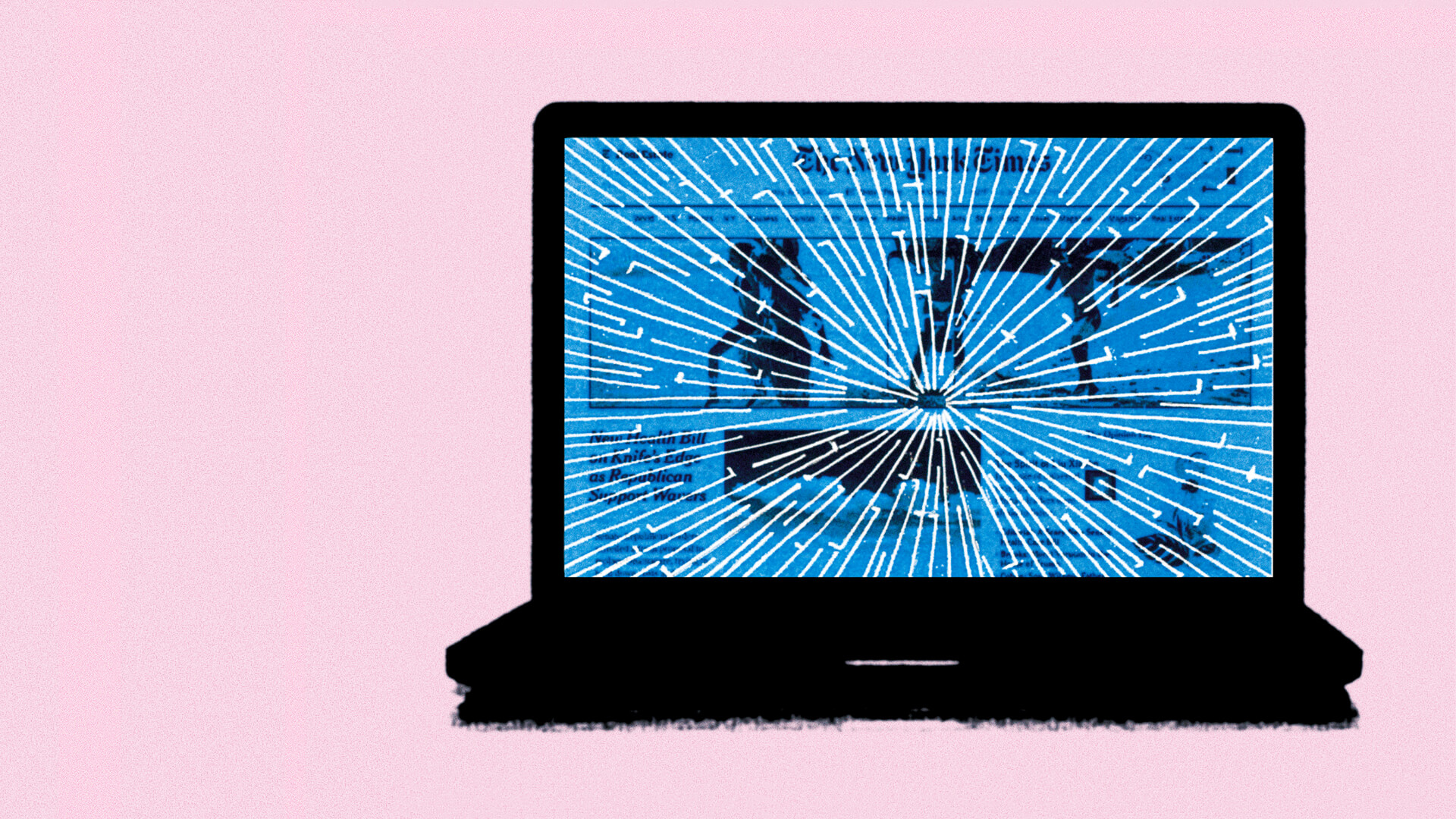
AI is not a strategy
Despite the doomsday proclamations about AI becoming the death of journalism, it may be one of the most promising tools for keeping it alive. Deployed correctly, it’s an accelerant rather than a replacement—a powerful means to help journalists offset menial tasks like transcriptions and copyediting. It brings additional data-driven objectivity to content without adding to reporter workloads. The technology that supposedly threatens to replace us may free us to do the work only humans can do: investigate the facts and elevate what matters.
On a recent project, we were exploring how AI could unlock deeper, more layered storytelling by mining the client’s vast content archive. We imagined a digital experience where a story doesn’t just relay the facts of an event, but also shows how it unfolded over time, maps where it happened, surfaces the key players, and connects the dots to similar stories from the past. Some folks in the newsroom were admittedly skeptical, both in terms of maintaining editorial integrity and fear of overburdening busy reporters with new tasks. So we built a custom ChatGPT-based prototype: no third-party data, just their own archives, stitched together into a dynamic proof-of-concept. We won over our client by showing that the technology could augment their excellent reporting while streamlining the editorial review process.
But AI isn’t the solution to every problem. As we were prototyping, we created a custom chatbot that allowed readers to “talk to” an article, riffing on the rise of voice-to-text interfaces and conversational AI. It seemed promising, but it fell flat. Users found the interaction awkward and unnatural—even those comfortable with Siri or Alexa said it felt off in a news setting. On the editorial side, it felt like a poor replacement for journalist Q&As. Readers made it clear that even if a ChatGPT-powered AI can synthesize articles with dazzling coherence, it doesn’t beat a feeling of connection with real human reporters.
Don't shrink perspectives—expand them.
Everyone talks about personalization like it’s the panacea for all things digital. But personalization is often just an exercise in subtraction—editing things out until only the familiar remains. The result is a tighter feed, but usually a narrower perspective. In our many projects with news organizations, we heard again and again from readers and listeners that they come to the news because they want to learn something new, to broaden their horizons, and to have smart things to say to their friends and colleagues.
On a project with a U.S.-based media organization, readers told us that editorial curation was key; if they were only fed news that catered to their own interests, they were afraid they’d miss out on important stories. This sentiment was especially true for readers paying for news. They were willing to invest money because they trusted the outlet to tell them what they needed to know, not just what they wanted to know. One research participant told us that one of his favorite series chronicled the drama behind the acquisition of an elevator company. And yet, “if they’d asked me if that’s one of my topics of interest, I’d have said ‘no.’” Another noted they would generally choose to skip sports coverage, but didn’t want to miss big moments like Simone Biles performing at the Olympics. Many readers are wary of filter bubbles and want to be aware of what’s happening in the world.

Less feed, more focus.
Personalization isn’t just about which stories you get, but also about how you access them. News products must offer flexibility in format, shifting seamlessly from mobile to desktop, from text to audio, from immersive deep dives to quick AI-powered summaries. For a UK-based client, we identified three user modes—Skimming & Dipping, Exploring, and Chilling—and designed different ways to engage with different formats at key moments in the day. The goal was thoughtful curation that feels like discovery, not a narrowing of options.
Volume is also important. A few years ago, we worked with The Times of London as it struggled to stay relevant in a 24/7 news cycle. Our research revealed readers didn’t want more breaking news—they wanted perspective. They wanted The Times to be the adult in the room, not another endless feed. So we designed a product anchored in four daily drops—carefully curated digital editions that refreshed throughout the day. This decision freed up tremendous resources, allowing the newsroom to focus on big stories. By moving away from the churn and toward intentionality, The Times saw a 19 percent year-over-year increase in digital subscriptions.
The approach also fulfilled a need we heard about across these projects. People don’t want to doom scroll; they want to get informed, then get to the end of the news. Unlike social media, where personalization means serving more of what users already like, news algorithms need a different intention.
Silos are the enemy of innovation
Creating a great digital news experience requires untangling the messy process of how that news is made and delivered.
That starts with creating an ownable product vision that teams can rally around, and a strategy that’s authentic to the current organization and aspirational for the future. When we worked with a PBS member station, we developed a vision anchored in a shared sense of place that centered local voices, reflected the region’s cultural richness, and positioned the organization as a neighborhood pillar and a global voice. Their CEO called the work “a vision we can achieve,” noting that it was both inspirational and actionable, designed to galvanize the entire organization, not just leadership, toward renewed purpose, greater trust, and lasting impact.
It’s also essential to break down the silos that separate editorial, product, and tech teams, making it easier to communicate across departments, so people feel invited to bring their unique lens to major product updates. This is not an invitation to design by committee! Creating space for people to surface ideas and red flags early helps with product innovation (the best ideas can come from unexpected places) and organizational buy-in (as people are more inclined to support what they help create). One of our clients started a cross-functional design council to bring new voices to the table. As we worked with another client to build a new editorial product, IDEO led critiques with teams across its newsroom, subscriptions, advertising, and brand departments, and also hosted demo hours to let a larger group of stakeholders in on the creative process.
Once teams are united around a shared vision and working cross-functionally, they need a place to de-risk ideas. In such an evolving industry, it’s critical to learn what works (and what doesn’t) fast, putting ideas in front of the end user early and often. An experimentation sandbox allows teams to test new ideas in the wild. One of our clients built a beta app to test feature updates and rolled it out to the entire newsroom and a small panel of subscribers. By shipping and iterating quickly, the team got the app into the hands of readers fast and updated it in real time, building confidence in useful features and avoiding investment in the ones that weren’t working.
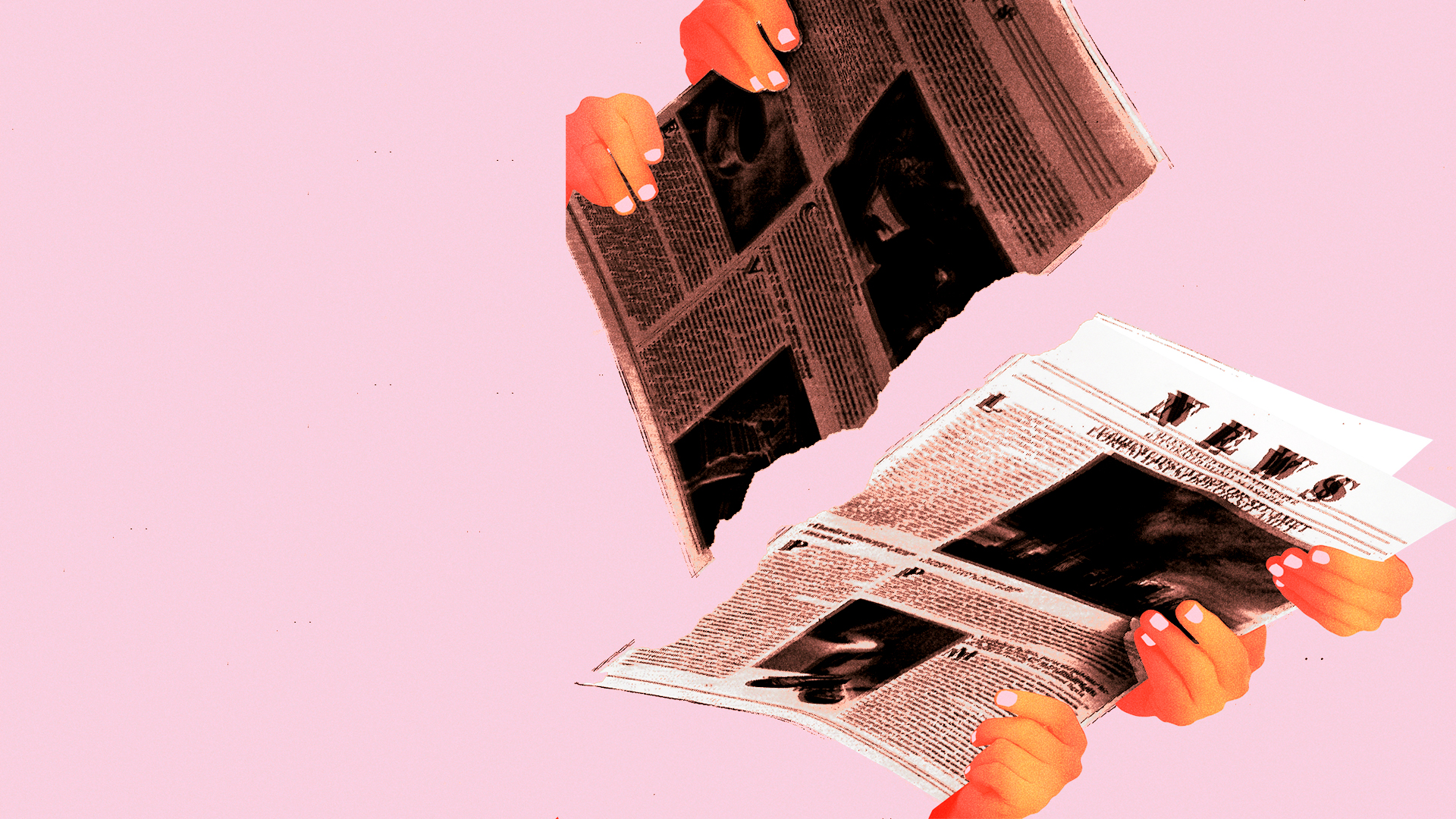
A more human future for journalism
The promise of news has always been to teach us something new—to expand our sense of the world and how we fit into it. At its best, it challenges our assumptions, sharpens our thinking, and gives us new reasons to engage with one another.
But that promise only works if we trust the process and the organizations behind it. If we believe the stories are the product of care, curiosity, and intention. That’s why how the news is delivered matters just as much as what it says. The best digital experiences don’t just inform; they reflect an understanding of who we are—our needs, our frustrations, and our desire for something that feels both technologically sophisticated and unmistakably human.
In one of our first workshops with a veteran public media organization, an editor told us they needed ways to bring in new viewers while maintaining their credibility.

Lindsey Turner
I’m passionate about building brands, products, and experiences that help organizations show up with meaning and momentum.
I help organizations cut through complexity by shaping how they show up, through brand strategy, identity, and storytelling.
Working at the intersection of brand and business, I bring an editorial eye and a bias toward making—turning ideas into tangible experiences that people can understand, trust, and believe in.
My work spans government, healthcare, financial services, media, and consumer goods, from launching Gen Z-focused ventures to building innovation labs and reimagining legacy brands. I relish moments of ambiguity and enjoy translating across teams, perspectives, and priorities to move ideas forward.
I started my career in editorial and digital design, shaping cross-platform experiences and identity systems in publishing and agency environments. That foundation still shapes how I work today: I’m detail-oriented, collaborative, and overreliant on the Oxford comma. I hold a BFA in Visual Communication from the School of the Art Institute of Chicago.

Rachel Young
My work helps organizations see who their products aren't working for—and build the will and the tools to do something about it
For 25 years, I've asked the same question: Who does this design exclude—and what are we going to do about it?
My work spans human-centered strategy, inclusive design, and qualitative research, with clients ranging from Microsoft, Google, and Verizon to the National Science Foundation, and San Francisco Unified School District.
Before IDEO, I taught elementary school in East Palo Alto and spent a decade doing design work with social service organizations—where I learned firsthand what it costs people when systems are built without them in mind.
I am currently writing User Error, a nonfiction book about digital access and the design decisions behind it. I live in Oakland, California.

Brian Pelsoh
I lead with craft, ensuring our work is creatively excellent: rooted in deep human insight and imagination, while also grounded in the realities of business and technology.
My expertise spans brand, communication, and product design across tech, education, the arts, and social impact.
I believe great work demands both high-level vision and obsessive attention to detail, and only happens through collaboration.
I bring an inclusive, hands-on approach and a deep understanding of business, which enables me to consistently deliver excellence while always asking why.
Before joining IDEO, I worked at the brand firms Pentagram and VSA Partners. I began my career as a designer, leading teams at the School of the Art Institute of Chicago and the Milwaukee Art Museum. I hold an MFA in graphic design from Maryland Institute College of Art and a BFA in communication design from the Milwaukee Institute of Art & Design, and have taught at some of the best design schools in the US.

Tony Wong
I am responsible for IDEO’s long-term success in China and working with clients to use design as a tool to enable growth.
I am responsible for IDEO’s long-term success in China and working with clients to use design as a tool to enable growth. Specifically, I have helped Chinese companies design holistic brand solutions through the development of their products, communication, services, and innovation teams, and I have helped multinationals expand their presence and influence in China.
I advise global leaders on developing China-led innovation and capabilities.
In over 15 years in IDEO Shanghai, I have worked on projects that use design to elevate the quality of the experience of healthcare products and services, streamline processes that increase productivity, create spaces and programs that promote and enable inclusive communities, and build next generation mobility solutions that are planet-positive.
Before joining IDEO, I worked at Philips Electronics and the Electrolux Group in Italy, the Netherlands, and Singapore on a number of breakthrough commercial products. I am a member of the Young President Organization in Shanghai.

How to use AI as an editor, not a writer
Ed White shares how he uses AI as an editor—not a writer—to sharpen storytelling, rehearse ideas, and preserve the productive friction that makes creative work better.
Ed White has a rule he's tested on his own writing: hold yourself as the writer, and let AI be your editor. Ed is a Senior Design Director at IDEO's London studio, where he co-leads the firm's AI portfolio across Europe. Before IDEO, he spent 12 years as a writer and editor at the Financial Times, Wired, and Contagious. So when he talks about when to use AI for storytelling and when not to, it comes from two decades of crafting his storytelling skills.
In this episode, Mina Seetharaman talks with Ed about two specific tools he uses to keep AI in an editor's seat: a "roasting agent" prompted to critique his drafts without any sugarcoating, and a simulated audience he rehearses pitches on before the real thing. They also get into what Ed is hearing from design leaders at Anthropic, Lovable, Shopify, and Google Creative Lab about how creative work is changing, and why he thinks the friction of writing something yourself is worth protecting rather than automating away.

Building a personal AI for the messiness of life: Sida Li
Becca Carroll talks with Cue co-founder Sida Li about designing a personal AI for the messiness of everyday life—not just work. They explore how Sida stays anchored to human needs while navigating fast-changing technology, product tradeoffs, business-model experimentation, and the realities of building an AI company today.
Most AI products today are built for work—a space with clear problems and established systems. One founder noticed a gap: personal life is messier, harder to systematize, and mostly left behind by the AI boom. So she built Cue, a personal AI that lives inside iMessage and group chats, to go where the other tools haven't.
In this episode, Becca Carroll, IDEO's Chief Strategy Officer, talks with Sida Li, co-founder and CEO of Shared Context Lab, about staying anchored to a human need while the technology around her keeps changing shape, why she treats her business model with the same rigor she'd bring to a product, and what it feels like to build a company at this particular, disorienting moment in AI.
The conversation also gets into how Sida makes design decisions: the language Cue uses to describe itself, the tradeoffs behind building inside iMessage instead of a new app, and a real story about a business idea that didn’t pan out.
This is the second in a two-part series profiling founders from IDEO's Startups-in-Residence program. The first conversation is with Johannes Seemann, founder of Sooner, on designing GenAI for the emotional side of money.

Designing GenAI for the emotional side of money: Johannes Seemann
Designing financial tools around the feelings that shape money decisions.
Most personal financial tools are built to run the numbers and optimize towards a budget. While that works for some, most people experience money as a lived relationship that does not neatly fit into a spreadsheet. Johannes Seemann and Becca Carroll discuss why money is emotional before it is mathematical, and what a human-centered approach to building a generative AI financial product looks like in practice.

The curious leader's edge in uncertainty: Scott Shigeoka
How genuine curiosity helps leaders navigate uncertainty with greater confidence.
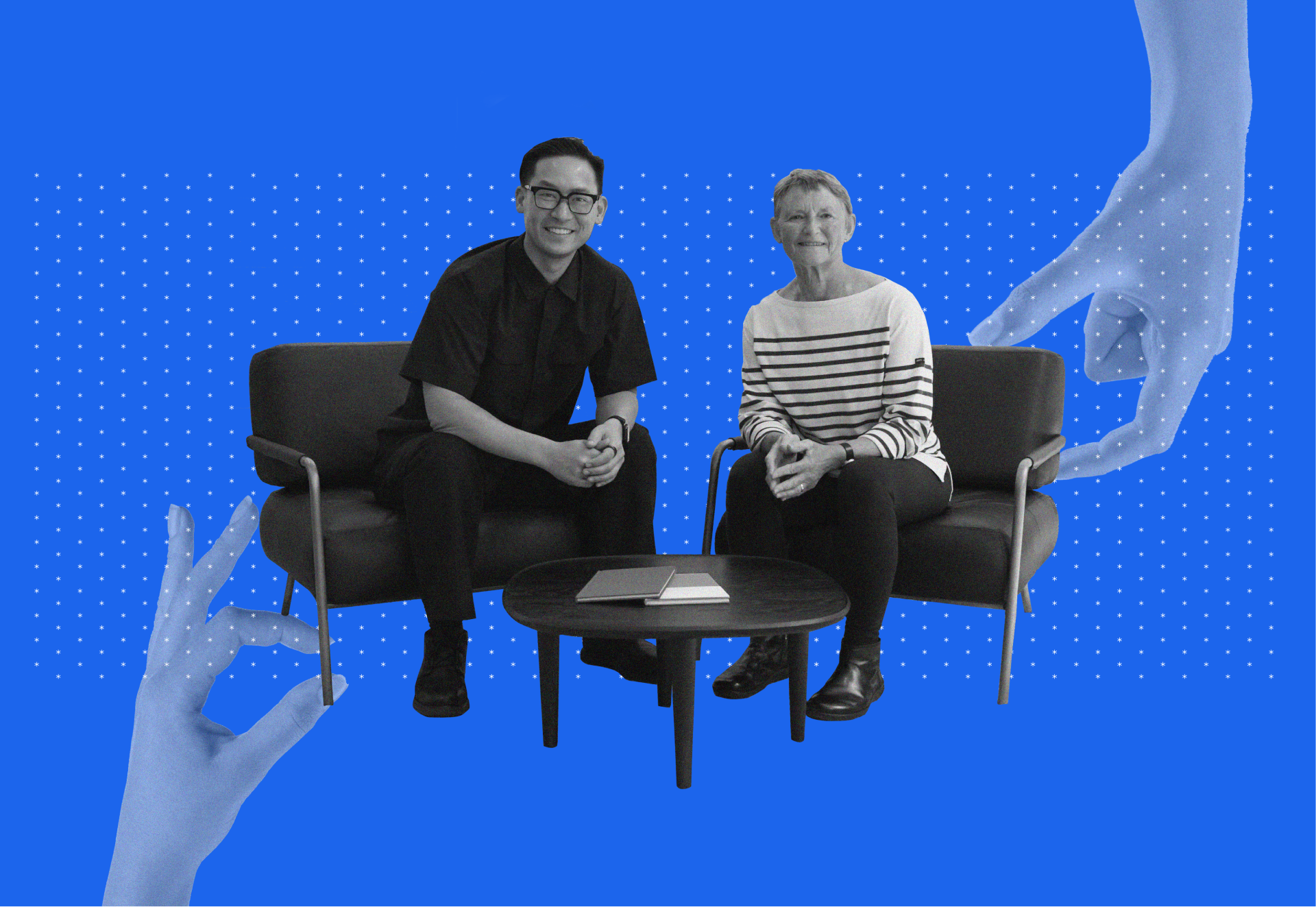
Mina Seetharaman talks with Scott Shigeoka, author of Seek and Head of Curiosity Cultivation at the Eames Institute, about what distinguishes genuinely curious leadership from performative curiosity, how power dynamics shape curiosity, and why practicing curiosity can restore energy rather than drain it.
Looks like you might be in search of something very specific?
Or reset the filters above and try another angle.
Here’s some random inspiration

Podcasts about creative leadership

Articles about the power of prototyping











































.webp)