
Designing a new vision for women’s healthcare
Introducing the Cottage Women’s Health
Systemic transformation is not new to Cottage Health. Founded in 1888 by 50 forward-thinking women in Santa Barbara who wanted a hospital for their growing community, Cottage Health has since expanded to 3 hospitals and is quickly growing its outpatient services as well.
To understand the current Cottage Health experience, IDEO conducted dozens of in-depth interviews with patients, providers, caregivers, and staff. They also ran multi-week diary studies, engaged in inspirational research activities, and held events to hear from local women.
The qualitative research surfaced that women often carry the mental burden of repeatedly remembering, explaining, and advocating for themselves. Women’s pain is often minimized, which causes new providers to inherit mistrust from previous experiences, without having the tools to rebuild it. During significant life transitions, such as pregnancy or menopause, women may receive conflicting advice from health providers and seek additional outside support from informal networks. Access to quality care can sometimes depend on insider knowledge, private resources, or providers willing to go far beyond their job descriptions. And while providers make referrals, women must handle the time-consuming coordination required to make everything work, instead of focusing on healing. The bottom line: what women wanted most was to be seen, heard, believed, and supported in knowing what to do next.
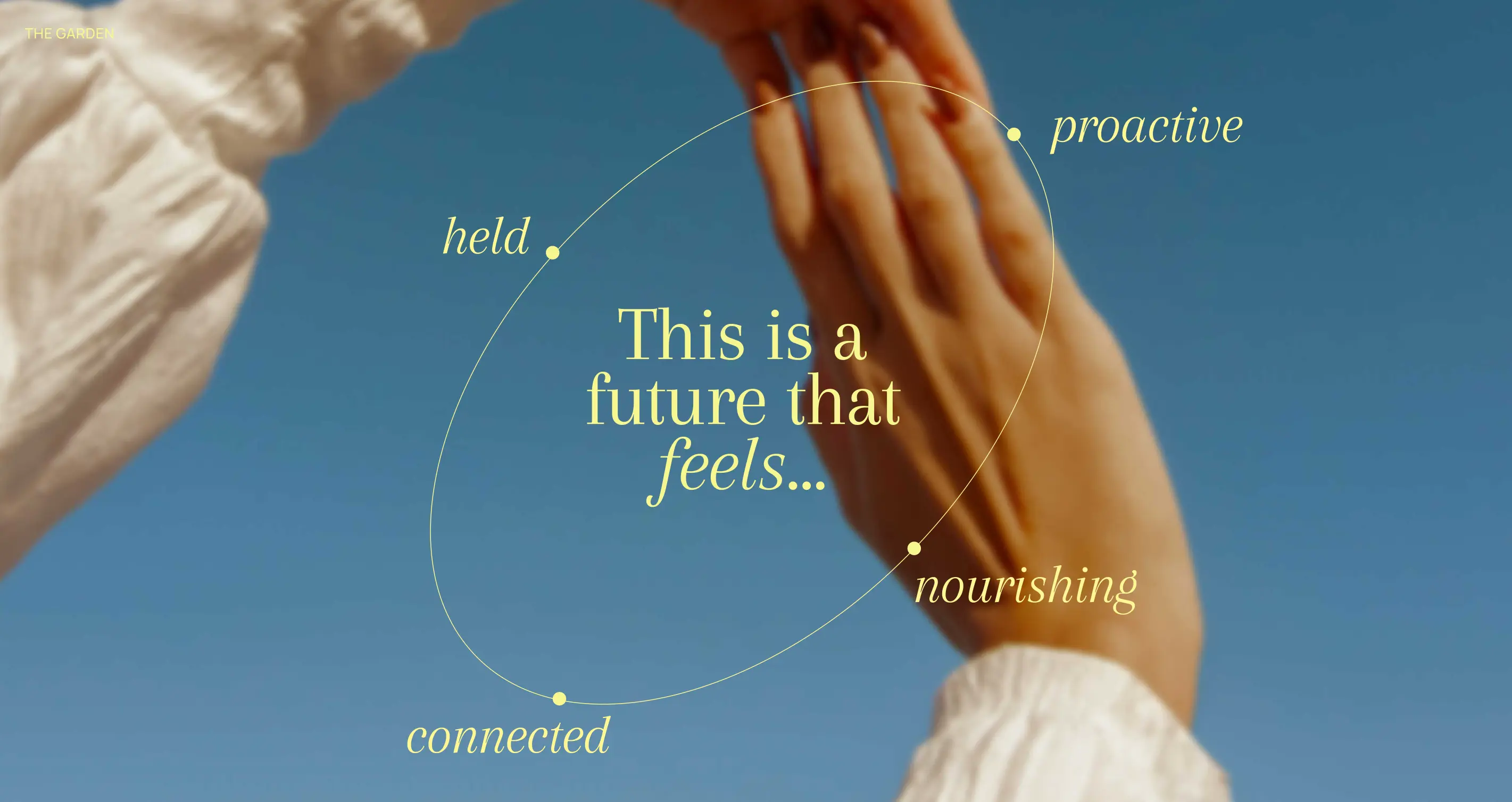
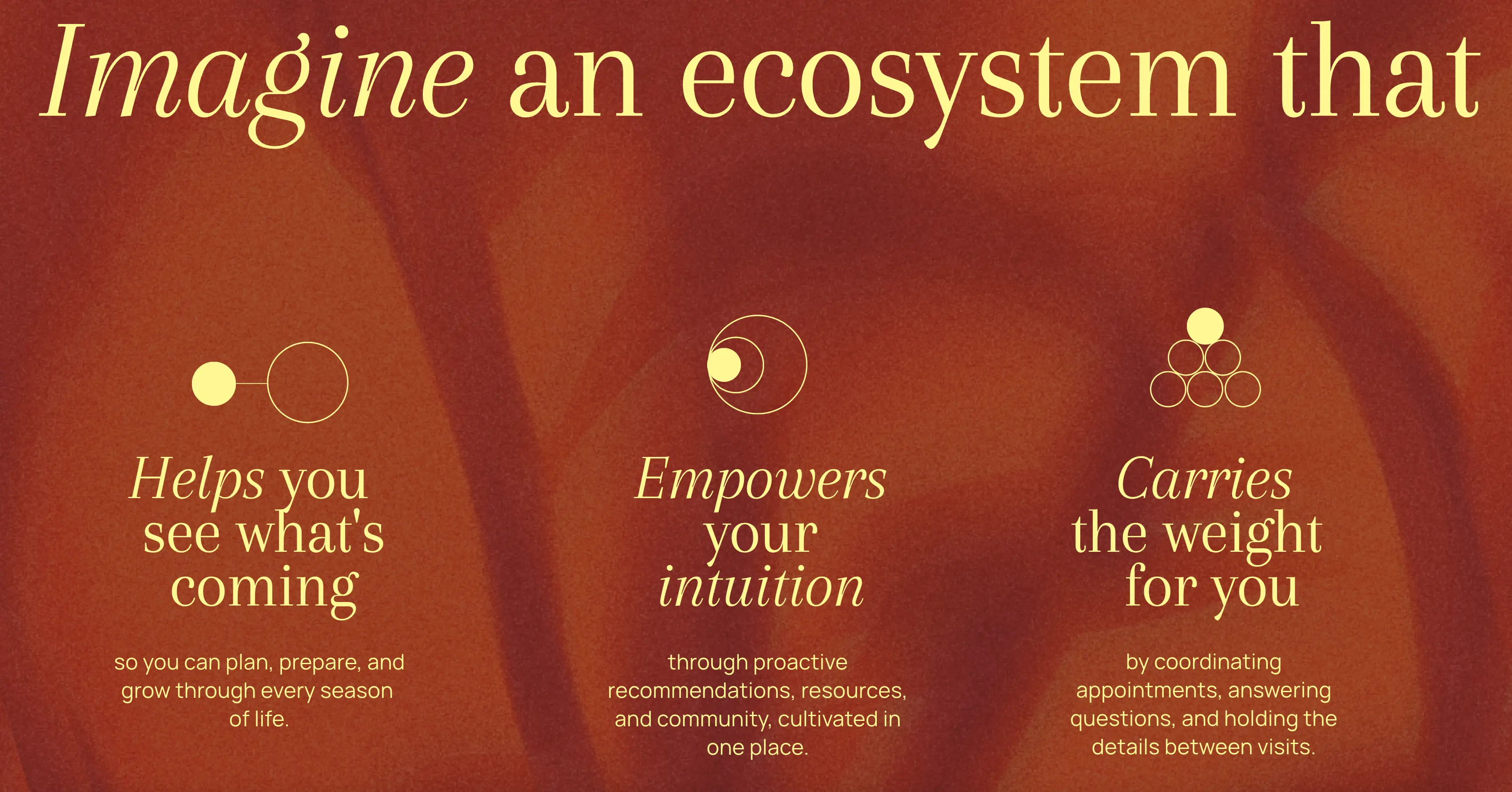
In order to address these challenges, IDEO proposed a new vision for women’s health, alongside design principles and concrete service shifts to guide future decision-making. Every interaction with Cottage Health should build on the information patients have already shared, demonstrating the system is listening. They should also guide women through life transitions by anticipating needs in future life phases, not just what’s happening now. Much like a community gathering, the Cottage Health experience should feel like a village, fostering belonging and shared care through warm, connected, human touchpoints.
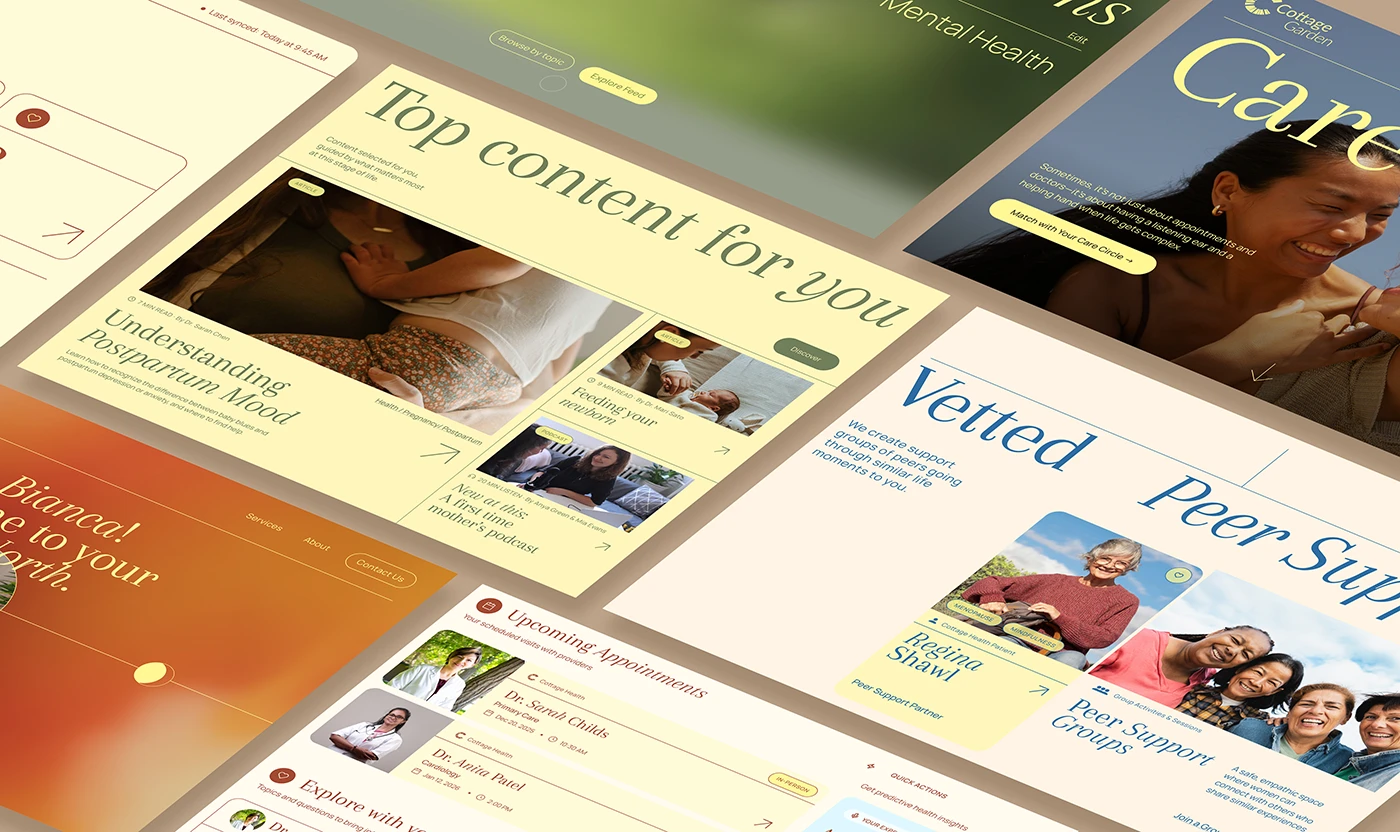
Building on these design principles, IDEO developed three exploratory service concepts that represented potential pathways for future development, rather than finalized offerings: True North, Wellness Commons, and Care Circle.
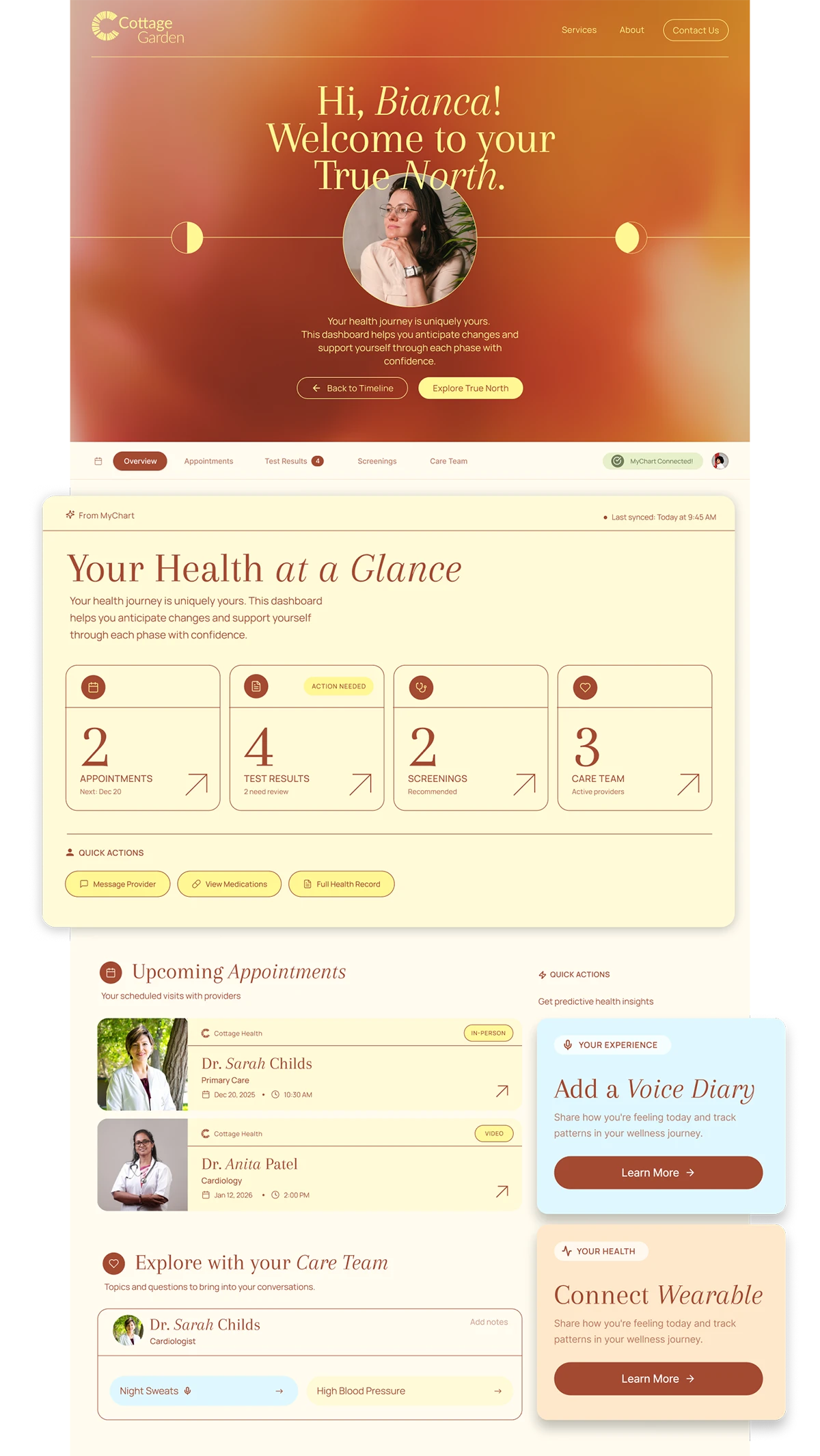
True North is a patient-facing tool that helps women see the long view of their health journey by integrating personal data, health goals, and reflections into a dynamic timeline they can share with their healthcare providers.
Wellness Commons serves as a digital front door, offering curated resources, including community events, discounted wellness programs, fitness classes, and trusted referrals, that help women navigate their well-being with clarity and agency.
Care Circle connects women to an extended support network inside and outside Cottage’s walls, including a hotline, health coaches, peer group support, and nurse navigators who can help patients manage complex care needs.
IDEO also provided Cottage Health with a multi-year roadmap building out the women’s health experience alongside continued pilot and implementation advisory. The roadmap included a comprehensive series of launch-to-learn pilots designed to test assumptions, reduce risks, and learn quickly, with IDEO stewarding the process. These pilots ranged from digital mockups and a curated community referral directory to a support line, a new nurse navigator role, and peer coaching services, among other experiments.
In July 2026, Cottage Health announced it was expanding its focus through a new Cottage Women’s Health Campus in Santa Barbara. Led by Dr. Jane Varner, Cottage Women's Health is projected to open in early 2028. It will encompass women’s health services across the lifespan, from puberty to menopause and beyond, including OB-GYN, pelvic floor health, women’s heart health, a menopause clinic, and a breast care center of excellence. It will also include supportive services, including trained nurse navigators to coordinate patients’ care journeys, giving women a single, trusted entry point for integrated care at every life stage. Cottage Women's Health is also exploring a new digital support system inspired by IDEO’s Wellness Commons concept.
Cottage Health had ambitious goals to expand its women’s health services and needed a partner to help it understand what women truly wanted from their healthcare and bring it to life.
7 months
from end of project to the announced launch of Cottage Women’s Health
From incremental change to breakthrough innovation
How Master Kong reinvented the instant noodle, from the inside out.
Looking to understand the role of instant noodles in middle-class Chinese life, the IDEO team conducted in-home research with consumers across a range of life stages and levels of attachment to noodle culture and convenience foods. The first finding was reassuring: Everyone kept instant noodles at home. The category still had a place in middle-class kitchens. But beneath that was a more complicated, emotional story—and an unmet need for convenience and quality to coexist in a single product.
The team discovered that instant noodles are more than just a quick, on-the-go meal; they are a nostalgic comfort food that evokes fond memories. But since their heyday, their role in daily life has evolved. Once a complete meal in itself, instant noodles now often function as a versatile flavor base or culinary accent in other dishes. Because they don’t align with the healthier, higher-quality, and more novel food choices that middle-class consumers aspire to, noodle shops, delivery noodles, or fresh-cooked instant options often win out. Yet, even these alternatives come with trade-offs. Delivered noodles lose texture during transport. Sit-down noodle shops preserve quality but offer limited flavors. Cooking from scratch meets the bar for both texture and flavor, but requires a significant time investment. As one young mother said, “If I could get the texture of fresh-cooked noodles without turning on the stove, I’d buy that instant noodle for sure.”
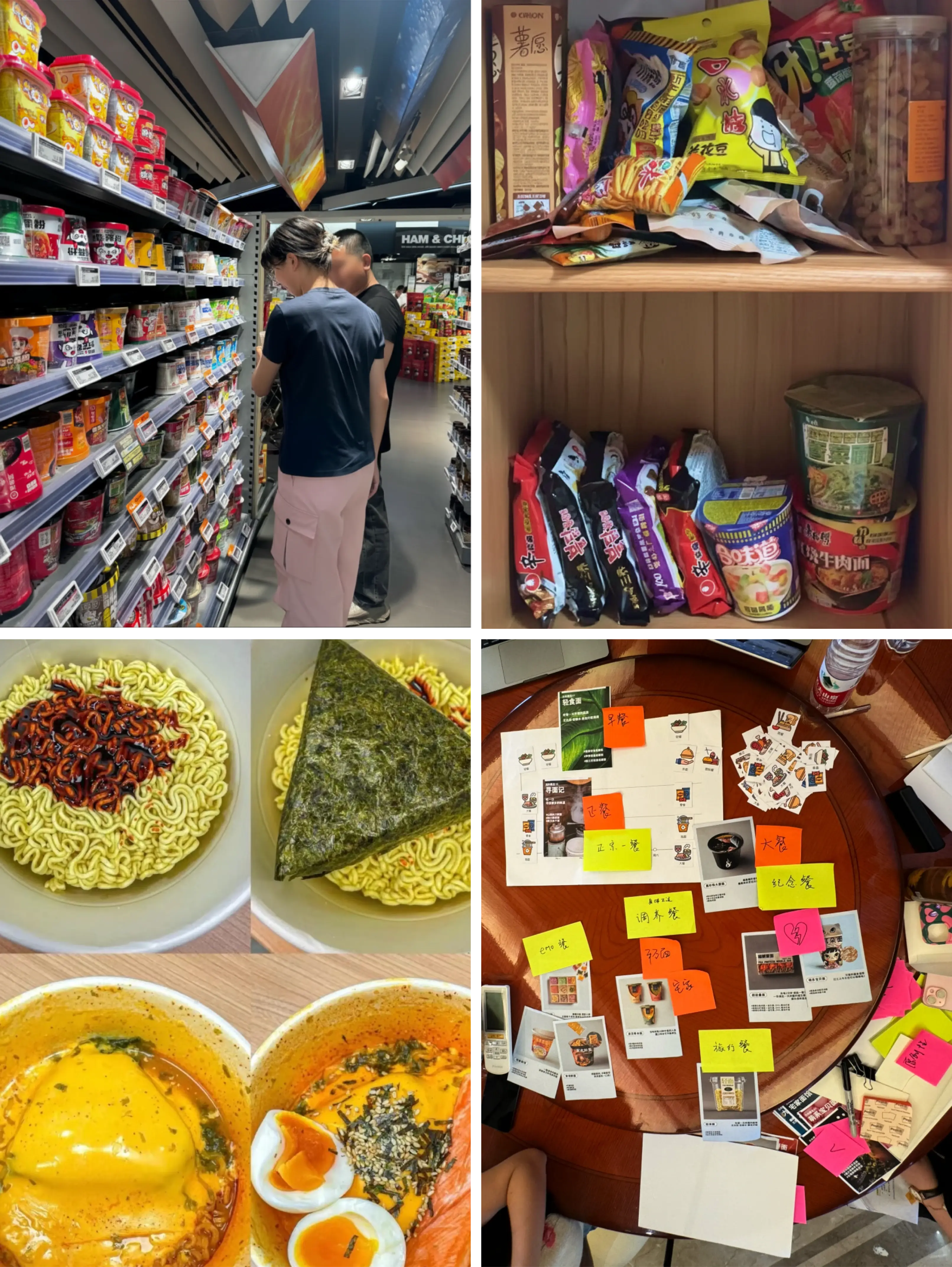
The research inspired the creation of a new category, which the team termed “fresh-brewed noodles.” More than just a noodle or broth upgrade, Master Kong’s fresh-brewed noodles would offer the speed of instant noodles with the quality of freshly cooked options, plus flavors not found in traditional noodle shops. The strategic positioning was clear. Executing it by making fresh-brewed noodles mass-producible, affordable, and eventually profitable presented a category-innovation challenge. To get there, IDEO designed a series of dual-track co-creation workshops with the Master Kong team and consumers.
One track focused on prototyping the core product experience: noodles, broth, and toppings. IDEO and Master Kong’s R&D team began by studying the traditional craft of Chinese noodle-making, starting in Shanxi, a region renowned for its noodles. Through successive rounds of prototyping and consumer tasting, the team identified a critical insight: for “fresh-brewed noodles” to be convincing, the innovation had to be centered on the noodles themselves.
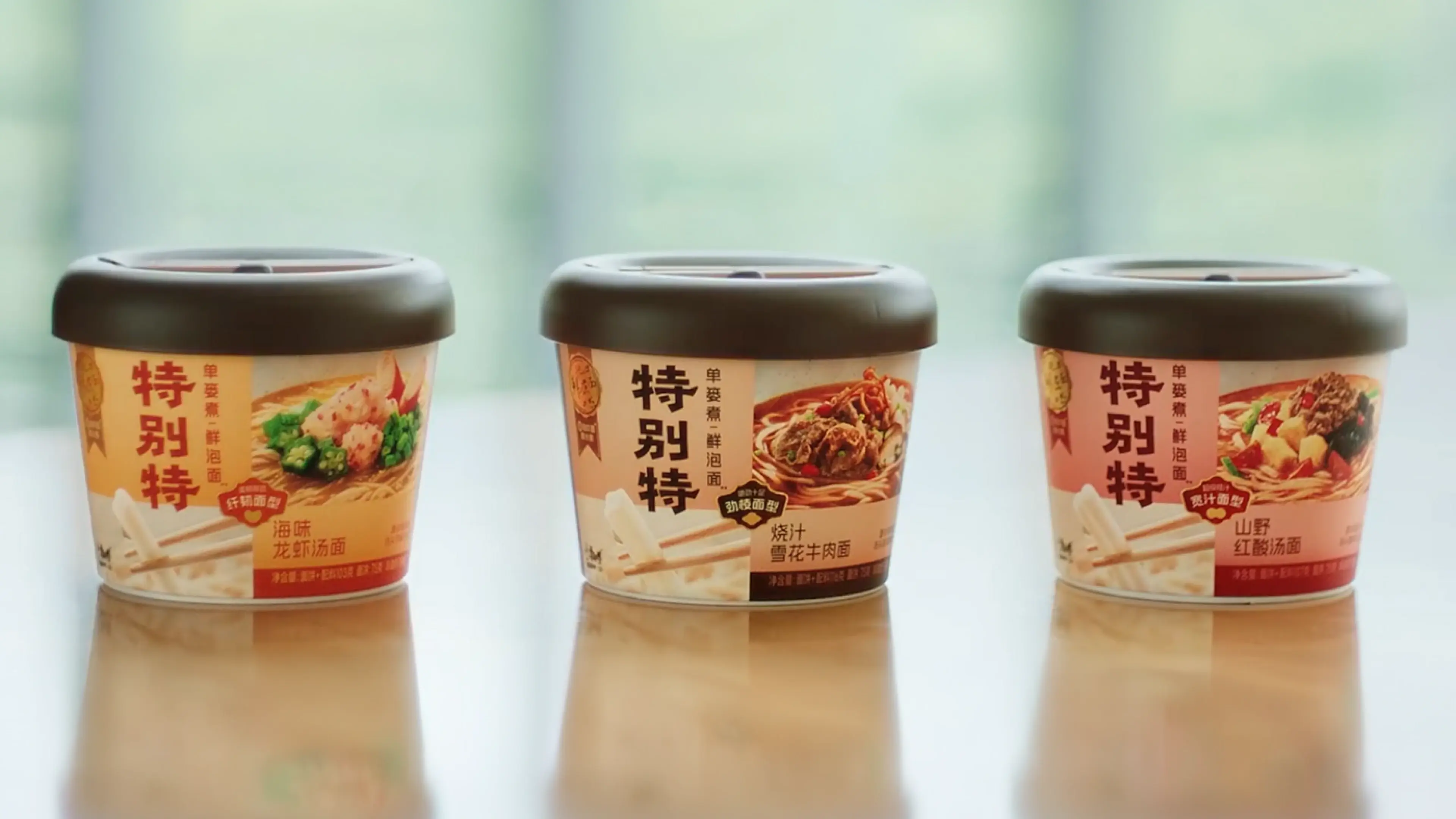
Texture alone was not enough. Consumers needed to see a meaningful difference before they tasted the product. IDEO translated this insight into a distinctive noodle profile: irregular, dimensional shapes designed to remain springy, hold sauce and broth, and mimic the resilience of freshly cooked noodles using only hot water. Because this visible shape represented the product’s core value proposition, it became a hero feature on the packaging. The graphic design made a bold visual statement about the noodle form, turning a technical R&D breakthrough into an immediately legible consumer promise: these are not ordinary instant noodles.
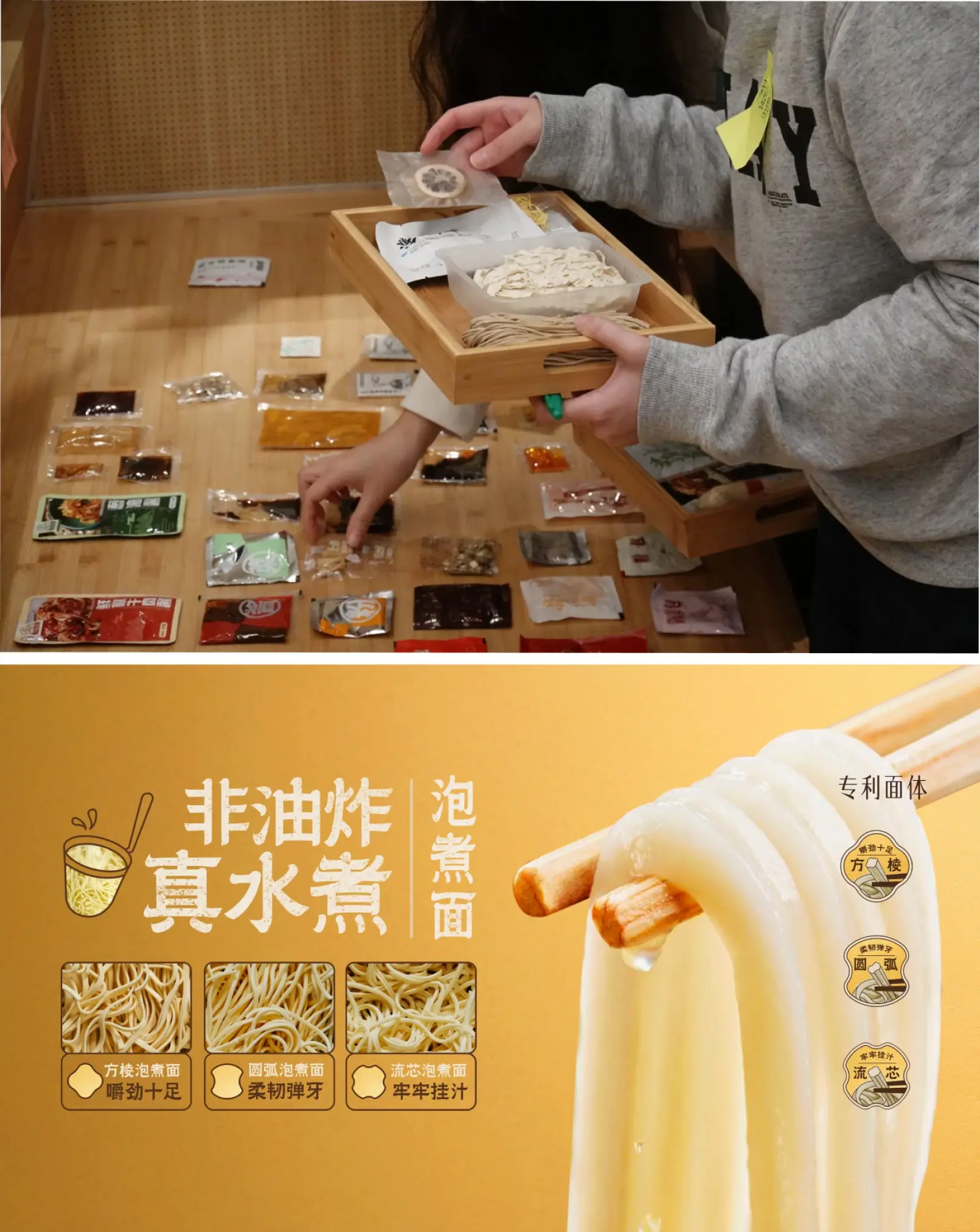
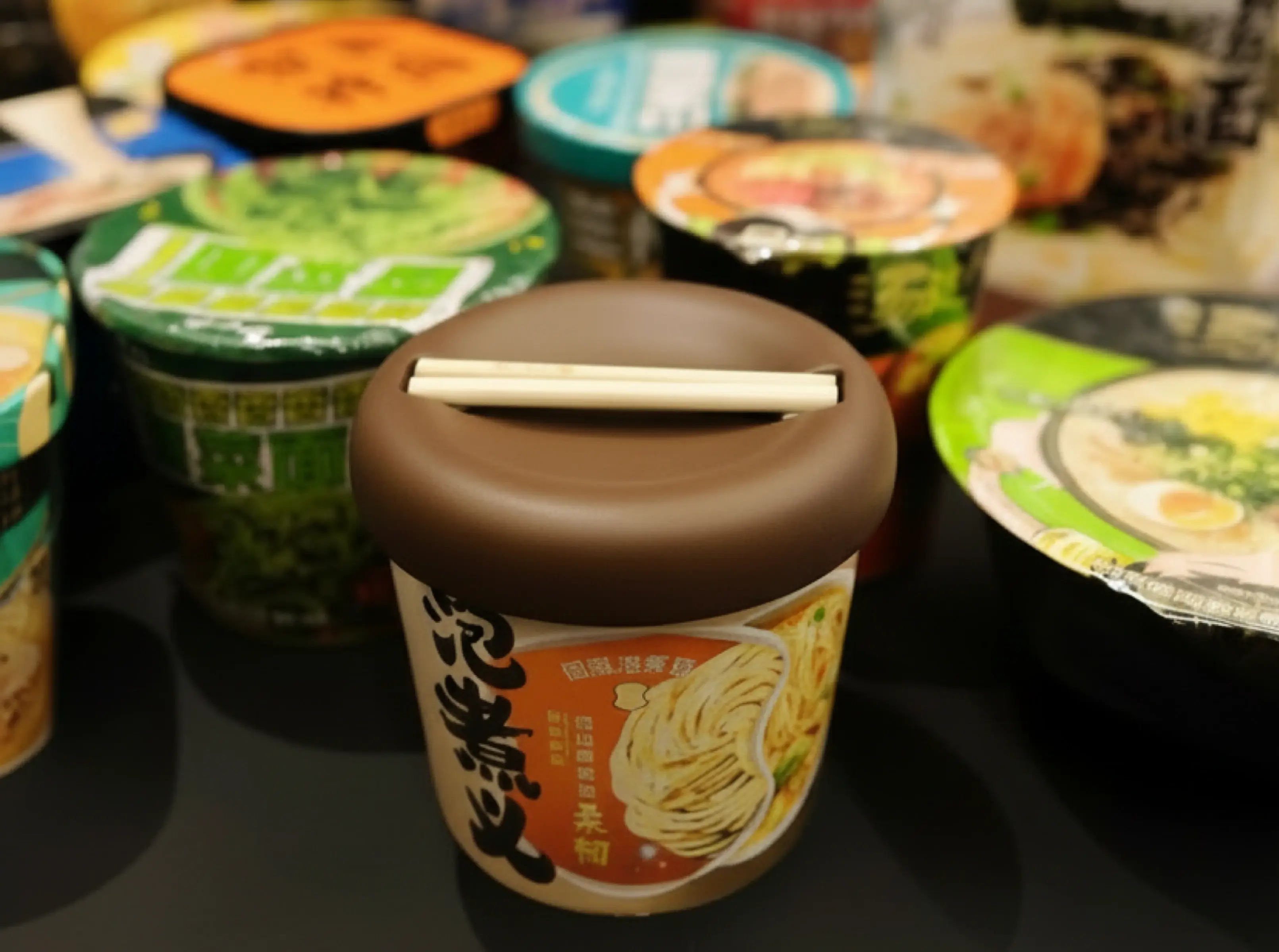
A parallel track explored the broader commercial experience: trend-forward and reimagined classic flavor profiles, light yet deeply satisfying broths, carefully selected toppings, and packaging that signals a new level of quality on store shelves. One key insight was that utensils carry meaning. Conventional instant noodles are often associated with disposable plastic forks, while higher-quality noodles are eaten with chopsticks. IDEO translated this cultural cue into the design of the bowl’s lid.
Instead of treating utensils as an afterthought, the team designed a solid, rounded, heat-retaining lid that embeds a pair of small wooden chopsticks. The gesture creates a small ritual of anticipation and reframes the product—not just a convenient instant meal, but a more considered noodle experience. Once opened, the product fulfills that promise with satisfyingly bouncy noodles, a rich liquid broth pouch that replaces the traditional oil-and-powder packet, and a vegetable packet reformulated with more premium whole ingredients.
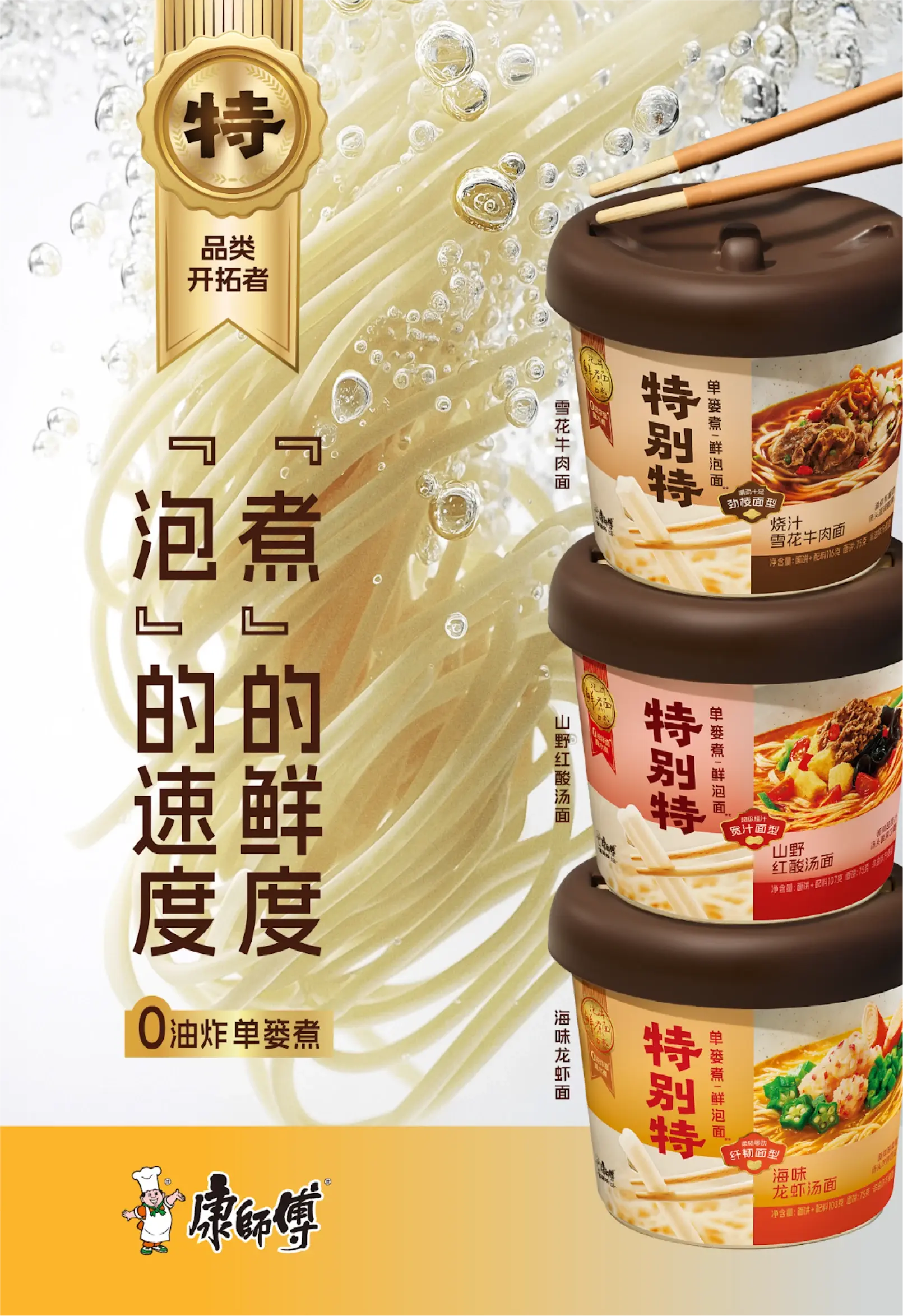
The first batch of “Te Bie Te” Fresh-Brewed Noodles—Chinese wordplay that emphasizes “special”—launched in August 2025 with three trendy and tried-and-true flavors. Within just three days, sales exceeded 100,000 bowls. Within a week, “Te Bie Te” topped the instant noodle category sales ranking on Douyin, China’s domestic counterpart to TikTok. The outcome was bigger than a product launch—it served as proof that a mature, declining category could be fundamentally reinvented to meet consumers’ real needs. For Master Kong, the project became a North Star and a model for internal category innovation in beverages, ready-to-eat foods, and beyond.
Once a popular, affordable staple, the instant noodle category in China has been declining rapidly due to shifting demographics, rising food delivery options, and increasing customer demand for healthier, more nutritious meals.
According to the World Instant Noodles Association, between 2020 and 2023, China’s instant noodle consumption fell by 4 billion packs.
100,000+
“Te Bie Te” bowls sold in the first 3 days on the market
#1
on Douyin’s instant noodle category ranking within one week of launch
Making international education future-fit & affordable
Lexel brings world-class learning to Malaysia’s middle class.
Taylor’s legacy began in 1969 with the founding of Taylor’s College and soon expanded to include Taylor’s University, one of Southeast Asia’s top private universities, as well as many other institutions that serve 35,000 students per year. The family-owned group also operates Taylor’s International Schools, Garden International School, and Nexus International School for students ages 4 to 18. In Kuala Lumpur, Malaysia’s capital city, annual tuition at premium private schools like these ranges from about $10,000 to $25,000 USD. Taylor’s wanted to do something different: provide the same level of academic rigor and immersive learning experiences at one-third the cost.
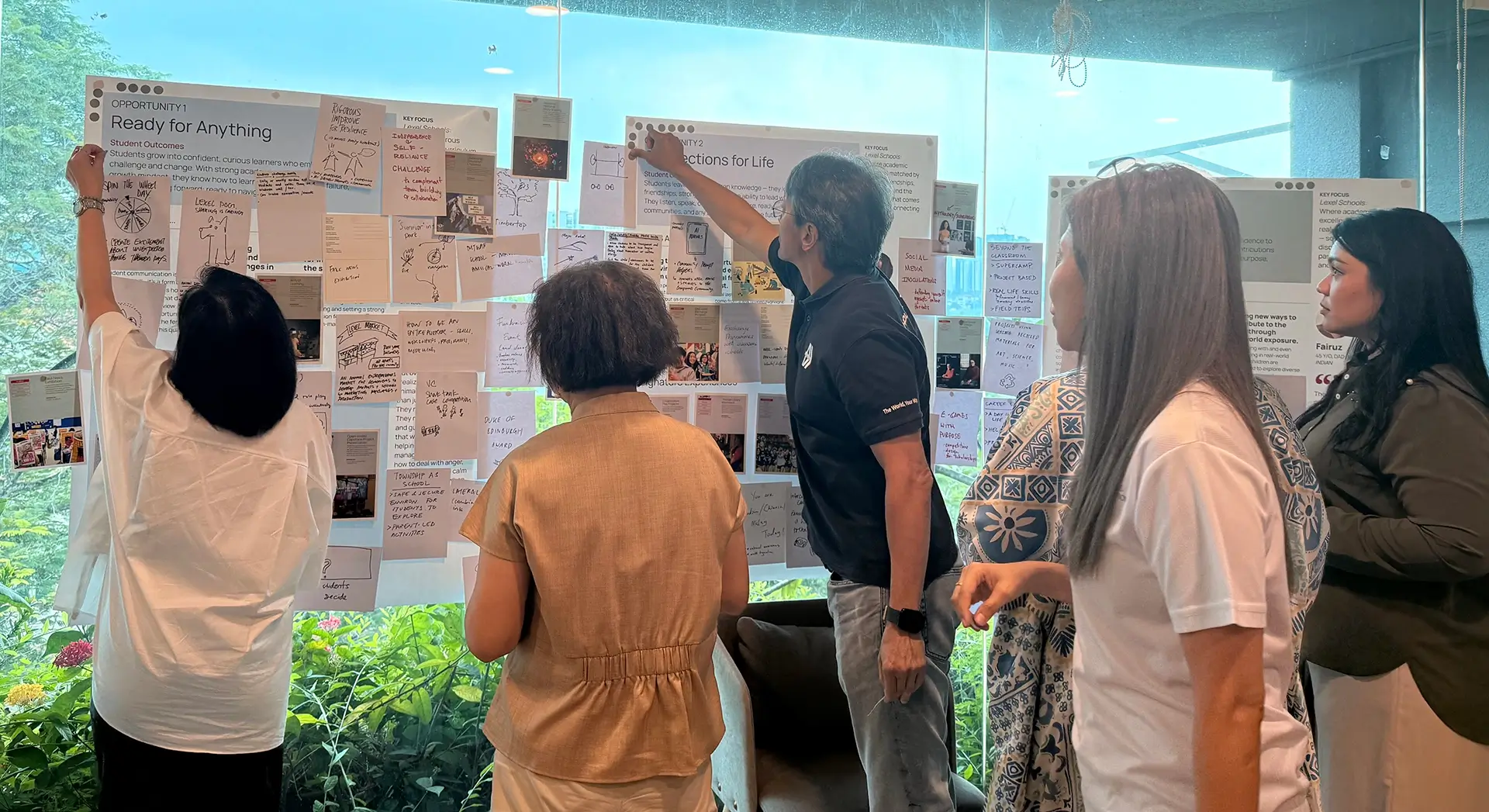
IDEO began by speaking with over three dozen students, parents, teachers, and experts across the capital to understand what was working, what wasn’t, and what was missing from such moderately priced international schools.
A few themes quickly emerged. Families, students, and teachers were worried about the stability of these new private schools, which tended to have higher-than-normal teacher turnover rates and were plagued by financial instability, negatively impacting talent attraction and retention, as well as student learning. Parents appreciated that the schools offered holistic learning experiences, such as field trips to rural areas, including jungles, but wished they were more consistently part of the curriculum. And now, the looming challenge of AI—how to use it, how to teach it, and how to teach with it—was in the background, a persistent cause for concern. The big unmet need? Reassurance that Taylor’s was thinking long-term and systematically about developing the skills, knowledge, and mindsets that would prepare students for an ever-changing world. Parents wanted a school that measured growth in academic, social, and character terms over generations, not just school semesters.
With these insights in hand, IDEO began developing a design Playbook for Taylor’s new brand—Lexel International Schools. A combination of “lexicon” and “excellence,” Lexel’s mission is “building what lasts, learning for life.”

The schools are centered around three key differentiators:
- Always Ahead: Lexel schools commit to staying current with the topics and subject matter they teach, as well as the tools they provide to students, parents, and teachers.s.
- Learning That Builds for Life: The schools ensure programmatic, systemic, and consistent learning experiences from Pre-K to Year 11. Interested students can even continue their post-secondary journey in partnership with Taylor’s University and other higher education institutions within the Taylor’s ecosystem.
- Educators for the Long Run: These schools commit to ongoing investments in professional growth opportunities for teachers and stable learning environments for students.
Four Lexel Literacies—AI, Digital, Financial, and Nutrition—integrated into the Cambridge Curriculum bring the school’s vision and mission to life.
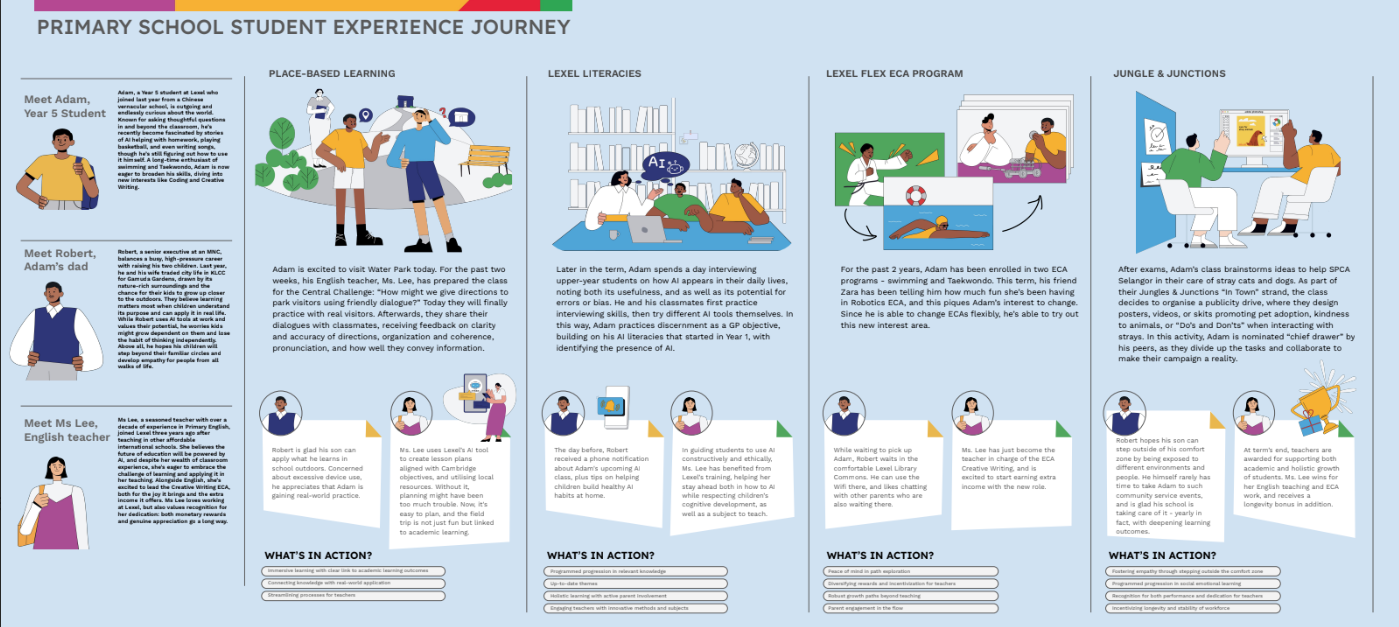
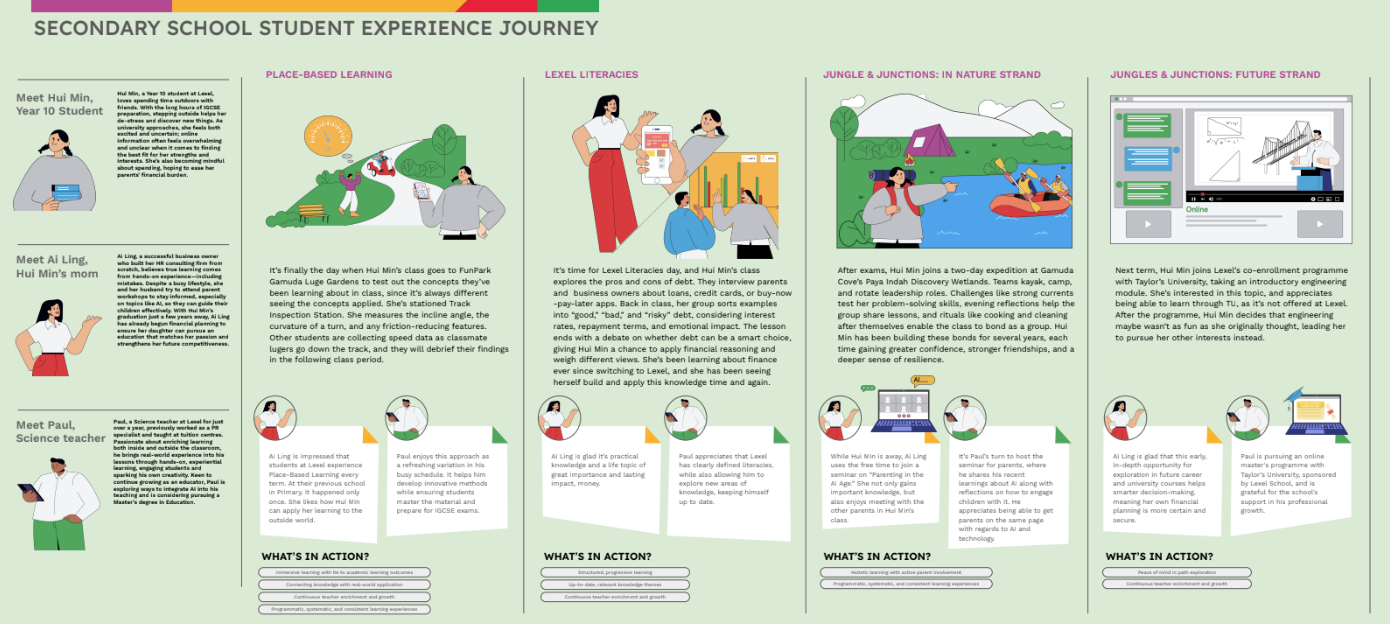
By systematically integrating AI literacy into its spiral education framework, in particular, an approach where major topics are revisited multiple times through a curriculum to build fluency over time, Lexel ensures parents that the school is thinking a decade ahead from Day One, setting the school apart. In addition to enhancing AI fluency, Lexel offers unique end-of-term experiences called Jungles & Junctions.
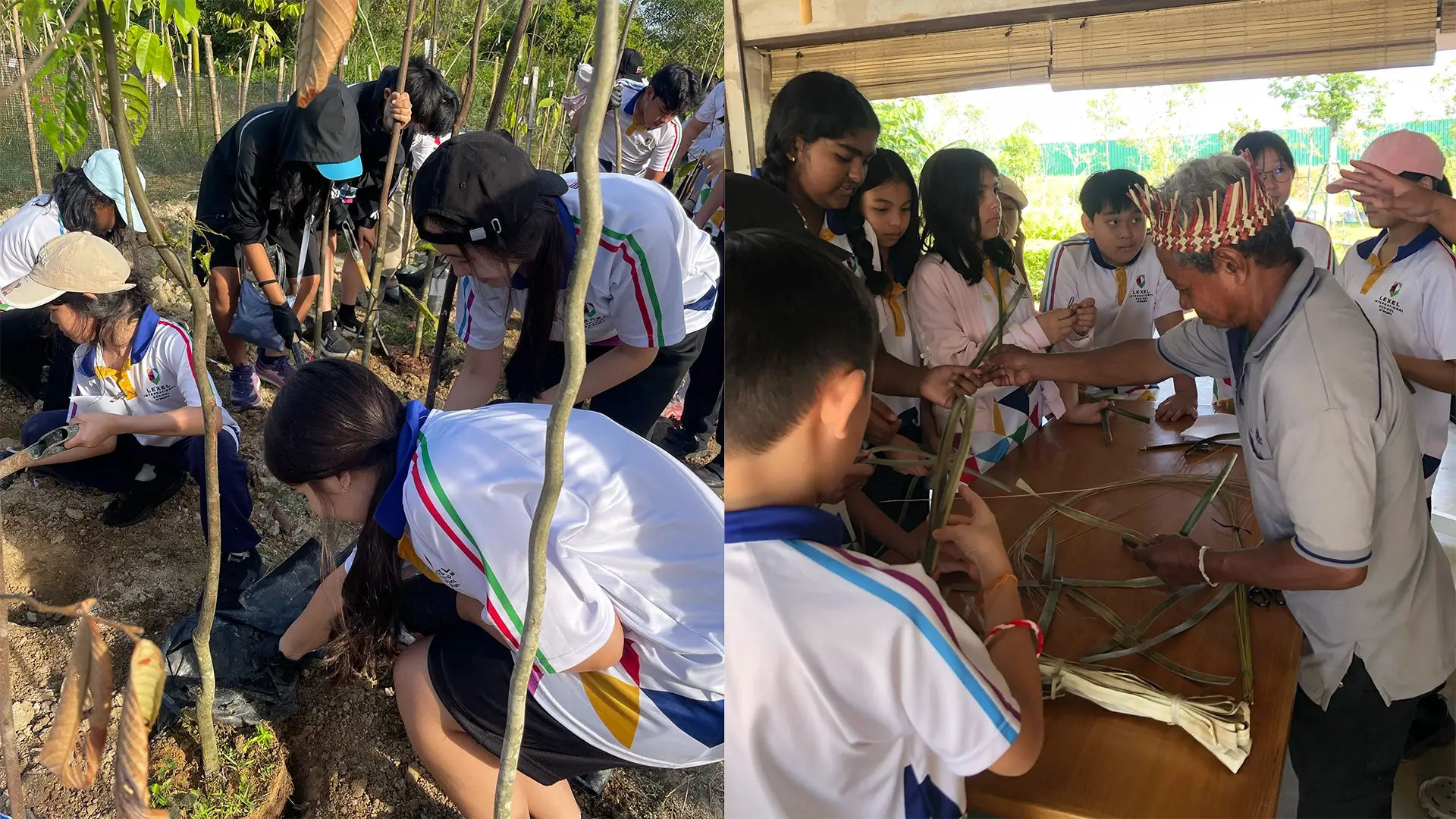
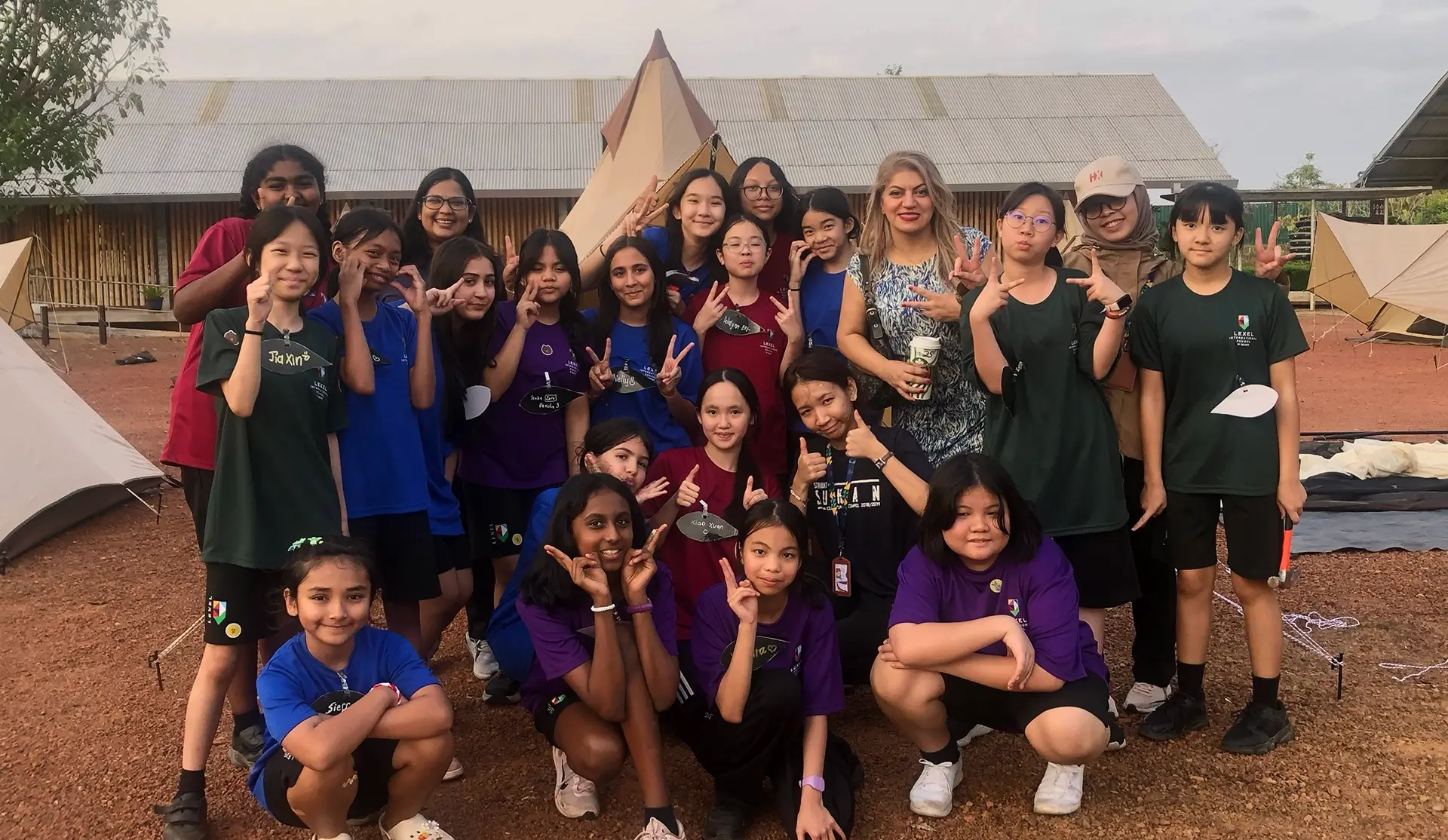
Combining three important strands of learning—community engagement, nature-based personal and interpersonal development, and career and university exploration—Jungles & Junctions leverages Taylor’s extended educational network and Lexel’s strategic founding campus within the Gamuda Gardens development in Selangor. Surrounded by tropical rainforests, the township’s residential neighborhoods, theme park, and various sports facilities, including an Olympic-length swimming pool, are transformed into an extended Lexel campus, with a GenAI-driven planner to help teachers streamline the organization of class outings. “The Township is Your Campus” became the tagline for this approach.
In September 2025, just months after IDEO’s collaboration ended, Taylor’s began classes at its first Lexel International School. By mid-year, the new school had achieved 115% of its year-one student enrollment target, with significant inbound demand for Year 2 already demonstrating the school’s market resonance.
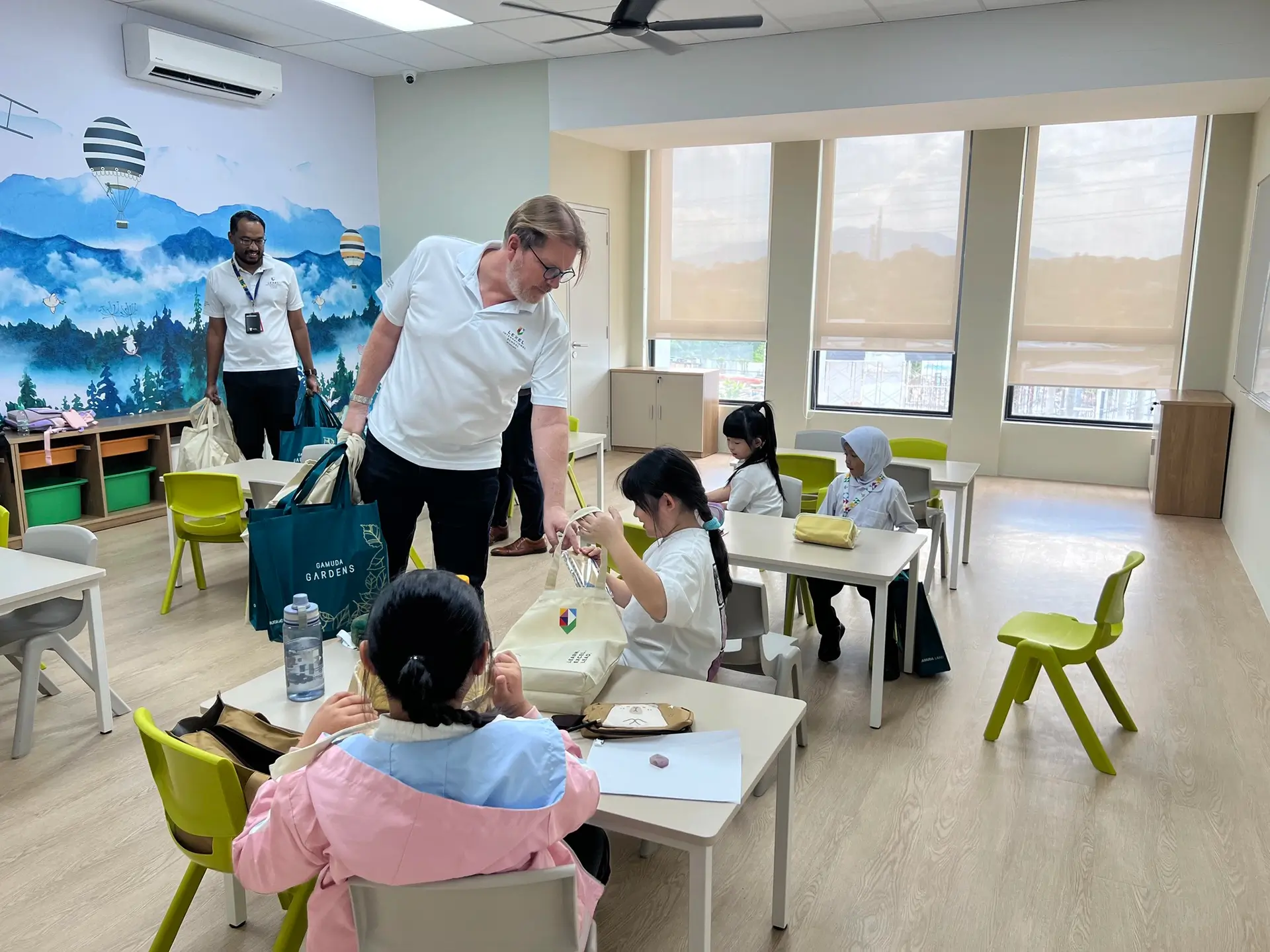
The modern campus features spacious classrooms, science and technology labs, a library, a multipurpose hall, and a canteen. Annual tuition ranges from about $2,800 USD for pre-K students to about $6,100 USD for secondary students.

Most importantly, by combining Taylor’s deep academic expertise, Gamuda Land’s development prowess, and IDEO’s innovative design Playbook, Lexel brings quality, affordable international education closer to home for Malaysian families. According to one parent, “My daughter looks forward to going to school every day … and has a lot of opportunities to express herself. On a scale of 1 to 10, I give [Lexel] an 11.” Based on the IDEO Playbook, a second flagship campus in the Southern Klang Valley, which is scheduled to open in September 2026, has already exceeded its year-one target enrollment expectations, with plans to continue extending the Lexel network to other parts of Malaysia and the wider Southeast Asian region in the near future.
Malaysia’s private international school sector has grown significantly as parents seek quality English-language education. However, high tuition fees and limited access to reputable schools are continual challenges for those in the emerging middle class.
115%
of Lexel’s student enrollment target reached during the launch year of its first campus
Year 1 enrollment target exceeded
at Lexel's second campus several months ahead of classes commencing
Delivering an unbiased news experience
Straight Arrow News transforms fact-based news consumption.
The American news industry has long been a competitive and saturated market. This has only intensified with the emergence of social media outlets and AI-generated news. Even so, SAN’s rigorously unbiased, fact-based reporting style and rich video storytelling had enabled the ambitious startup to rise above the media fray in just three short years.
With a strong foundation to build on, IDEO sought to further differentiate SAN’s cutting-edge news product and build deeper engagement with a wider audience through a new user experience.

Collaborating closely, IDEO and SAN began by delving deeply into media consumption habits. They met with early SAN superfans, news consumers who spent hours a day absorbing content from traditional outlets like Fox and USA Today, and those who looked to their Ring doorbell app or Reddit for news. The takeaways? People were tired of clickbait and clunky interfaces. They sought clear, factual news that was easily accessible, with additional context to help them interpret events and understand their significance. They craved more than one perspective on important topics, so stories felt balanced rather than polarized. They also valued having control over how they consumed news, so making it easy to switch between text, video, and audio formats was crucial.
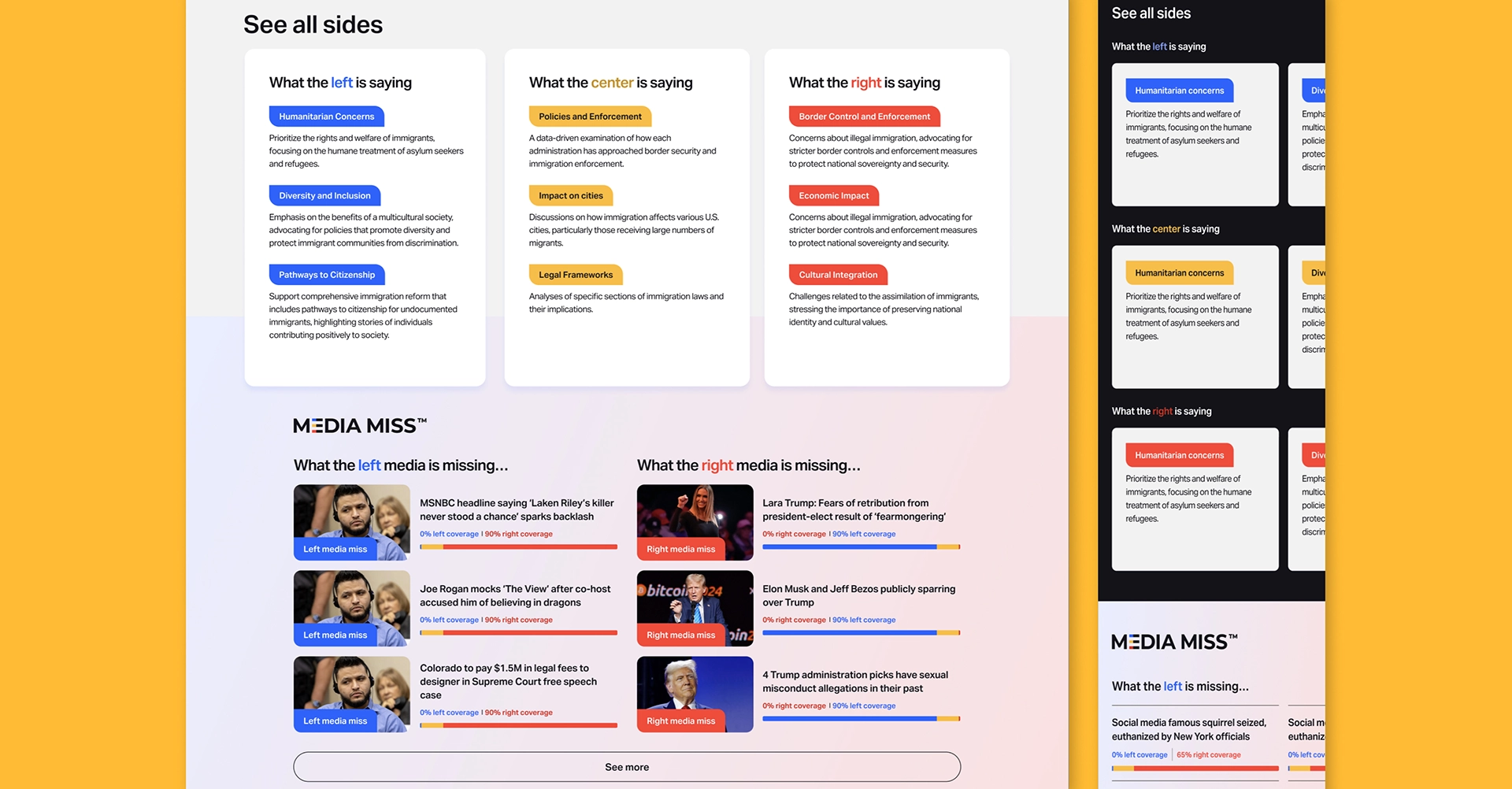
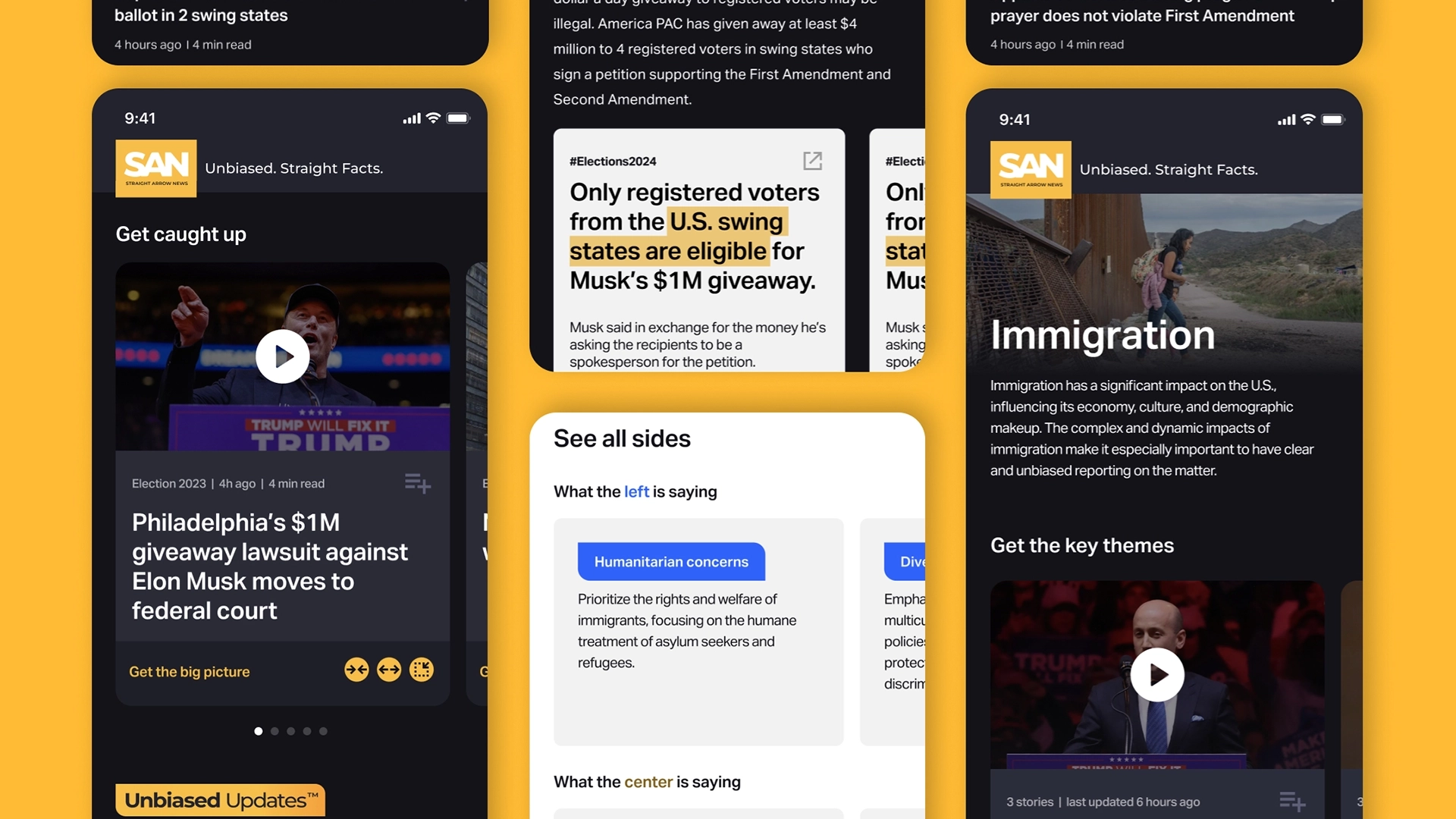
Together, IDEO and SAN created features across SAN’s website and app that put facts, trust, and transparency at the core of the product experience. Fact Cards distill key data points into clear, shareable units, while the Sources feature allows readers to trace information directly back to its original source. To make complex stories easier to grasp, Big Picture insights drill down into why events matter, surfacing underlying themes, historical parallels, differences in reporting, and common ground. The Why This Story Matters section provides readers with clear framing and sets the story within a broader context, while the Timeline illustrates how events unfold over days, months, or even years. An antidote to news polarization, See All Sides presents left, right, and center narratives for key topics side-by-side, and Media Landscape visualizations reveal how coverage varies across outlets. Finally, to ensure SAN fits seamlessly into readers’ daily lives, the redesigned Today Page is organized into three highly scannable sections: Latest News, Top Stories, and SAN Originals. The combined features create a balanced, clear, and non-polarizing news experience, making it easy for readers to delve deeper into the sources of their news.
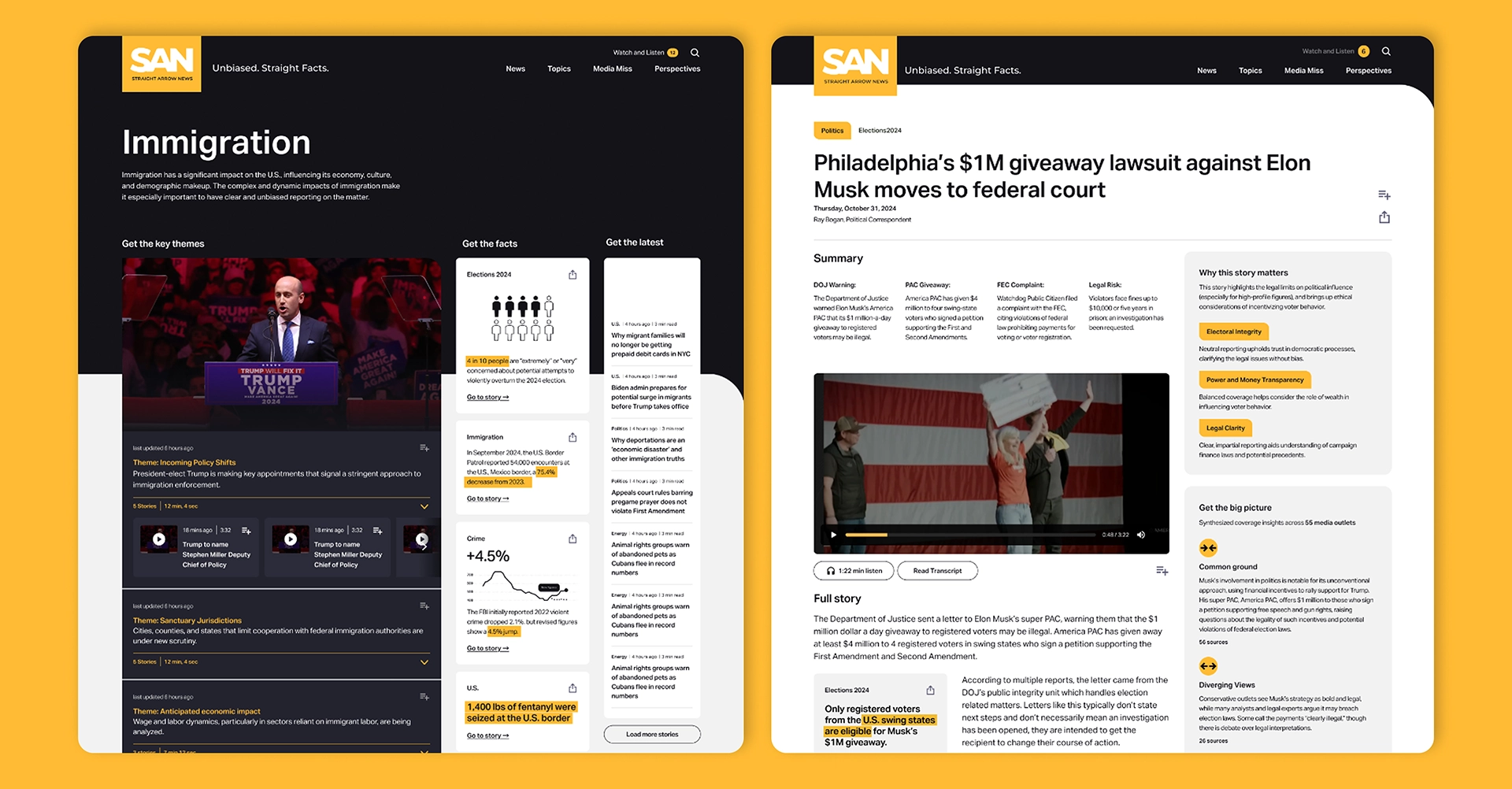
SAN now delivers a news experience as modern, dynamic, and trustworthy as its journalism. A month after its debut, the SAN app’s page views increased 1,170 percent year over year compared to June 2024, while active users rose 700 percent. Readers also give the updated mobile experience a 4.8 rating on the Apple App Store. “Our team is delivering reporting that’s both deeply factual and accessible,” said Derek Mead, SAN’s Chief Content Officer. “This redesign is pivotal to the direction journalism needs to take and the leadership role Straight Arrow News is taking on as we help guide the news industry into a brighter future.”
SAN built a loyal readership and gained recognition for its unbiased reporting. To expand and stand out from legacy media, SAN wanted a redesigned user experience that reflected its commitment to fact-based journalism.
1,170%
increase in app page views YoY
700%
increase in active users
4.8 rating
on the Apple App Store
Beachsand and the Talking Bell
Our experiment with cheap, tiny, wireless sensor networks brings inanimate objects to life
Our bell’s impressive literacy is the result of an experiment in creating cheap, simple, and easy-to-use networks of wireless sensors.
Miha Feus, the interaction designer at the helm of the project, points out that Internet-connected things are set to reshape our lives in ways we can’t even imagine. But while the technology isn’t particularly complicated, setting up and connecting the necessary sensors and receivers is difficult and expensive with the solutions currently available, and the battery life in these systems is terrible. Because of this, Miha says, experimentation by would-be makers is being stymied.
Miha’s solution is a system called Beachsand that aims to make wireless sensor networks, in his words, “as numerous, cheap, disposable, and user-friendly as grains of sand on a beach.” Beachsand is made up of a postage-stamp-sized smart transmitter called a SenseGrain and an Arduino-based receiver he’s dubbed the SandCastle.
You can plug any analogue sensor, button, or switch into a SenseGrain, measuring light, temperature, motion… anything you like. The SenseGrain then gathers data from those sensors and sends it to the SandCastle, and from there, you can use the information as you choose.
Miha explains that Beachsand isn’t really a product in and of itself, but rather a tool to help people cheaply and easily prototype new products, services, and data experiments. He and fellow interaction designer Siri Johansson have already prototyped one use case: the studio’s kitchen bell.
I caught up with Miha and Siri to find out more.


What exactly is a SenseGrain, and how does it work?
Miha: A SenseGrain is an ATtiny85 microcontroller, which is basically a very stripped-down version of an Arduino, plus a transmitter circuit and a coin cell battery.
You plug in any analogue sensor or switch and set how often you want it to send data. The device then goes to sleep and waits until it receives whatever type of input you’re measuring (in this case, until someone rings the bell). The SenseGrain sends data from the sensor to a receiver, which, at the moment, is an Arduino, where you can access, use, and manipulate the data.
What’s so good about it?
Miha: It doesn’t require any soldering or programming, so it's easy to set up and requires no maintenance at all. I programmed the microcontroller so that it’s very energy-efficient—on standby, it can last up to 30 years on a single coin cell battery (theoretically, at least). And it’s cheap! Each SenseGrain costs $2-3 to make.
Because they’re so inexpensive, you could put them anywhere—in a trash can, for example, to monitor when it’s being opened. Or if you don’t want to check your mailbox, you could put a SenseGrain in there and Beachsand could just let you know when you have post.
Currently, anyone with an RF receiver on the same frequency is able to receive data the sensor is sending, and I would like to keep it that way. Keeping sensor data open gives more people the opportunity to build something with that data.
Can you explain your experiment with the bell?
Miha: It's our Kitchen Bell 2.0. It brings an ordinary object into the age of the Internet of Things, where every physical object has a digital layer.
Beachsand makes our bell more than a static object, limited by its location and the reach of its sound, and gives it the ability to transcend space and time to be “heard” anywhere in the world.
How did you build it?
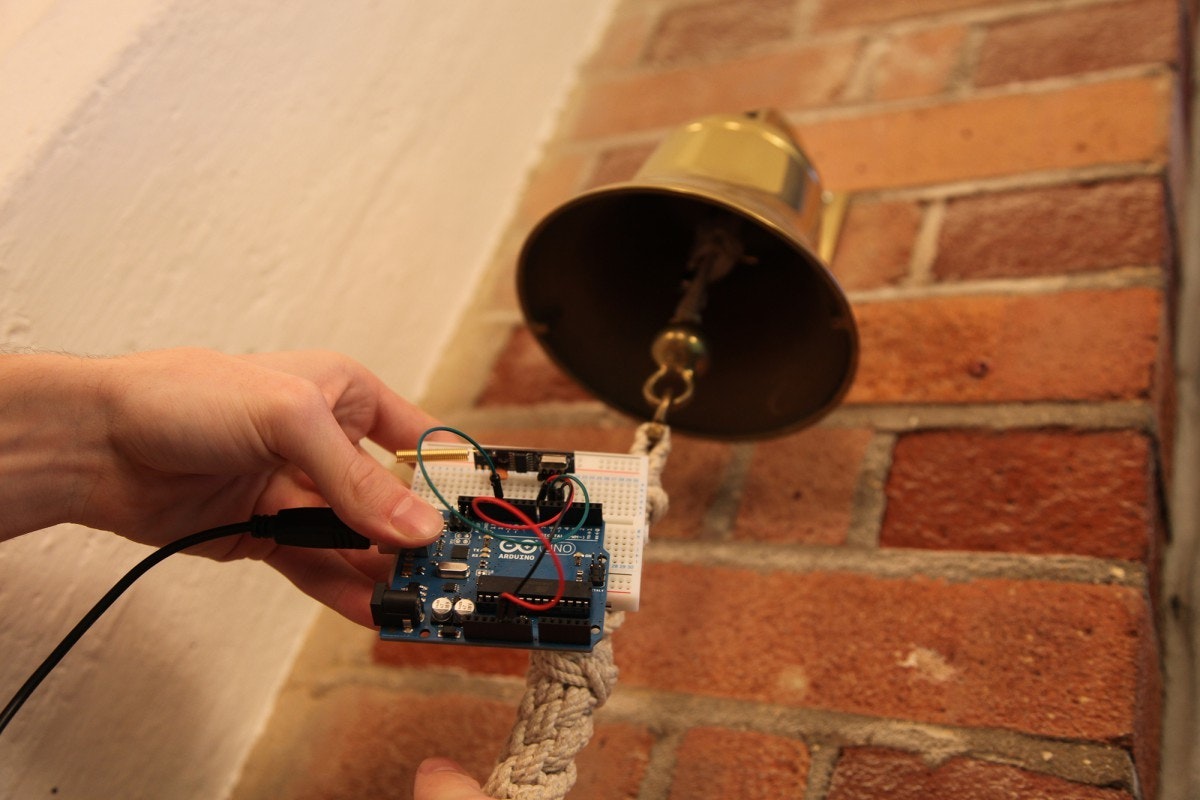
Miha: First we had to pick the right sensor to detect when the bell is being rung. The simplest one in this case was a tilt switch. We plugged the switch into the RF transmitter and taped everything on the clapper of the bell.
The second part was about receiving the message from the sensor and sending out an email. For that, we used an Arduino and an RF receiver connected to a laptop, which talks to a program called Processing. In Processing, we used some existing code for sending out emails, which we modified for our needs.
What did you learn building the Kitchen Bell?
Siri: It makes you think about what the right tone of voice and personality is for a specific object. We wrote a few drafts of the bell’s email to the studio. It should be light and funny, but also demanding—it’s a bell, after all.

What inspired you from outside IDEO?
Siri: There's an interesting ongoing discussion on the narratives told by smart objects. Hello Lamp Post is a really nice example of giving a voice and personality to inanimate objects, and a lot of effort was spent to define the right tone of voice.
This way of working with sensors and actuators has interesting potential applications in both directions: physical to digital or vice versa. A couple of examples that work in the digital-to-physical direction are the UID cookie box, which rewards tweets with cookies, and Tableau, which quietly prints stuff it “sees” in its Twitter feed.


What are you planning next?
Miha: Our colleague Alistair Norris is working on another application for the front door, to measure traffic in and out of the studio. We plugged a roller switch into a SenseGrain, which triggers every time the door opens, and added an Ethernet shield to the Arduino.
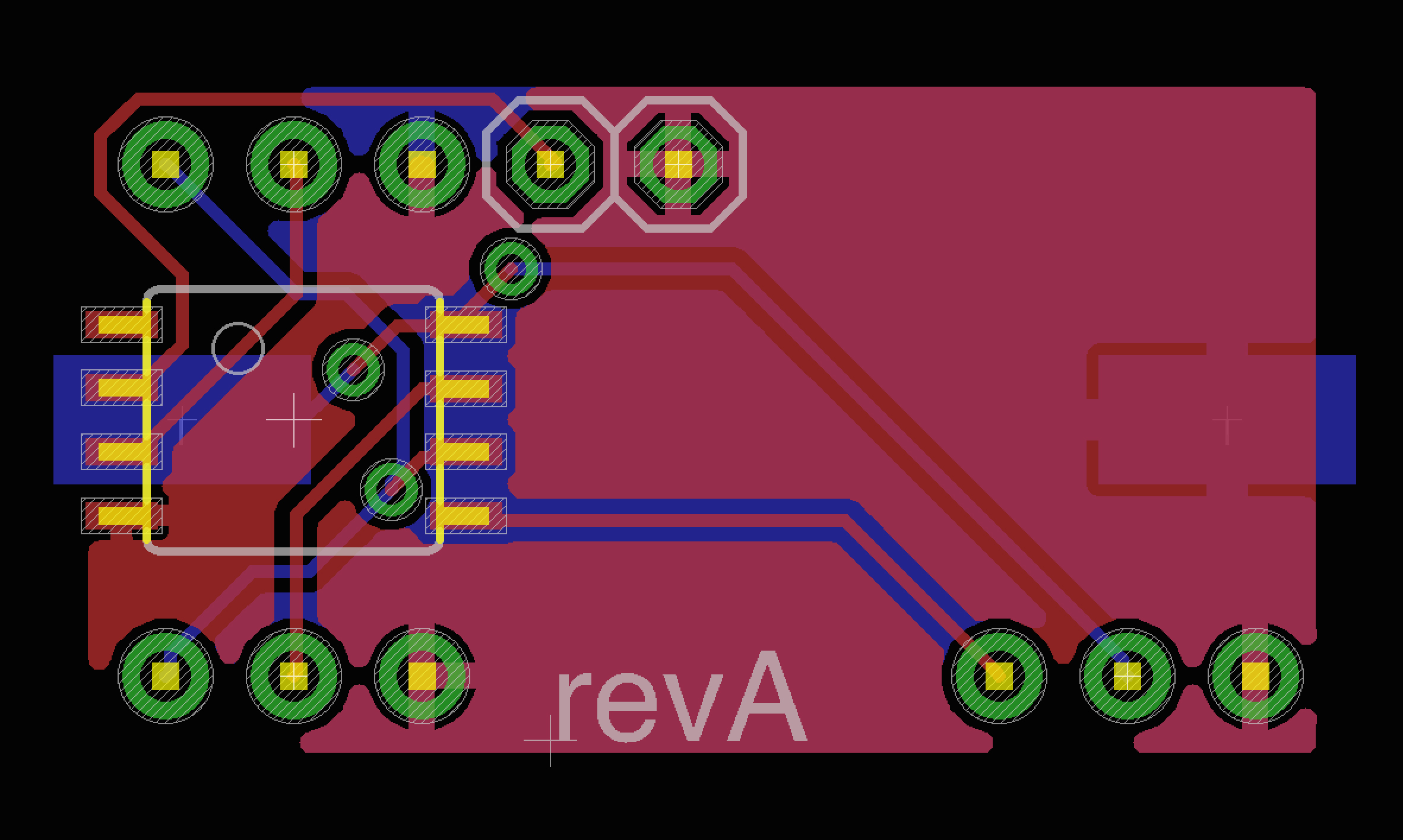
Beachsand is really still a work in progress. The next step is getting PCBs (printed circuit boards) done, so that I won't have to build every sensor transmitter by hand, which can take anywhere from one to four hours. With a PCB it will take just two to three minutes. PCBs are also less prone to malfunction.
Hopefully I’ll make a version with everything on board, including a littleBits connector. Then I’d like to build actuators, or “ActGrains,” to work with the SenseGrains and the SandCastle.

We’ll let you know more about Beachsand as we prototype more applications for it in the studio—or you might just get an update directly from our trash can, our front door, or the kitchen bell itself! You can find the code here in the meantime.
The bell that rings in the kitchen at IDEO London sounds rather more sophisticated than the analogue clang you might expect to hear when meals and snacks are ready. Our bell prefers to send articulate email messages, like this recent missive: “I summon you all to the kitchen table for a Beer-n-Nuts with [Arduino co-founder] Massimo Banzi. Come join us. Cheers, your Kitchen Bell.”

A Programming Language That Speaks to Designers
How learning code can pave the way for a new style of thinking
Scott Murray is an assistant professor of design at the University of San Francisco, code artist, D3 expert, and contributor to the Processing language.
Scott is endlessly excited about using code as a tool for visual explorations of all kinds, from fine art to interactive data visualizations, but his students aren’t always quite so jazzed about the idea of programming. “They’re used to Photoshop and Illustrator, chopping up pictures and vectors,” he says. “Coding moves them into a totally different working environment.”
It’s Murray’s job to pry open students’ minds to not only the languages of code but also to a new way of thinking—a developer’s approach to solving problems and building things. To this end, he’s helping to continue the development of Processing language, which is tailored specifically to the task of teaching designers and artists to code. “There are pedagogical tools embedded in the language itself,” he says, like the use of familiar terms such as “stroke” and “fill” as well as processes that help students think like developers when approaching the craft of design. “For me, design is all about systems—not creating an image, but a system that, when applied, results in an effective solution,” Murray says. “Processing, as a teaching tool, forces students to think beyond the output or image they want to create and describe the system they’re making and what it needs to do.”
Processing gives designers new tools and expands their design thinking. It’s free, open source, and available to all at processing.org.
Keyfleas (2013) by Miles Hiroo Peyton
To get a sense of what beginners can do with the language, visit openprocessing.org and browse through the sketches.
If you’re itching to get your hands dirty, go straight to this collection of short, prototypical online programs that explore the basics of programming with Processing.
Check out the complete version of Scott Murray's New Year greeting card pictured in the header to this post here.
Every Thursday in Palo Alto, IDEO’s Digital Shop hosts an informal lunchtime presentation by someone who is using code to create something surprising, useful, or generally awesome. Colleagues from all around IDEO gather for a meal and leave with a week's worth of ideas to chew on. We’ve asked some recent speakers to highlight a quick insight or tool they’d like to share.

What’s in my Moleskine: Dave Russell
Dave Russell's doodles have a life of their own
IDEO: Tell us about your drawings
Dave Russell: A few months ago I committed myself to drawing a comic a day for one month. I’ve never consciously drawn comics before, but I’ve always admired the narrative skill of artists like Chris Ware and Adrian Tomine, so I thought it would be fun to experiment with the format. While both these artists employ a semi-realistic style to tell human stories, I’m equally inspired by the strange and absurd worlds created by the likes of David OReilly and Pendleton Ward.
When do you find the time?
For me, drawing can be a way of escaping the everyday and exploring imagined worlds. Doodling is like my meditation—it clears my mind and helps me to focus. I try to keep these scribblings to a minimum in face-to-face meetings, but when I’m on the phone my drawing hand has a mind of its own. I’m often surprised by what ends up on the page.
What are your favorite tools?
My go-to, everyday weapon is the Muji Gel Pen. It’s versatile—thin enough to write with and a great weight for small sketches. It’s got to be black and it’s got to be 0.5mm. No exceptions. I recently started using a Pentel Sign Pen to draw with, too. It’s super smooth and the nib feels quite dynamic. It also bleeds less than Sharpies, the ubiquitous IDEO design tool.
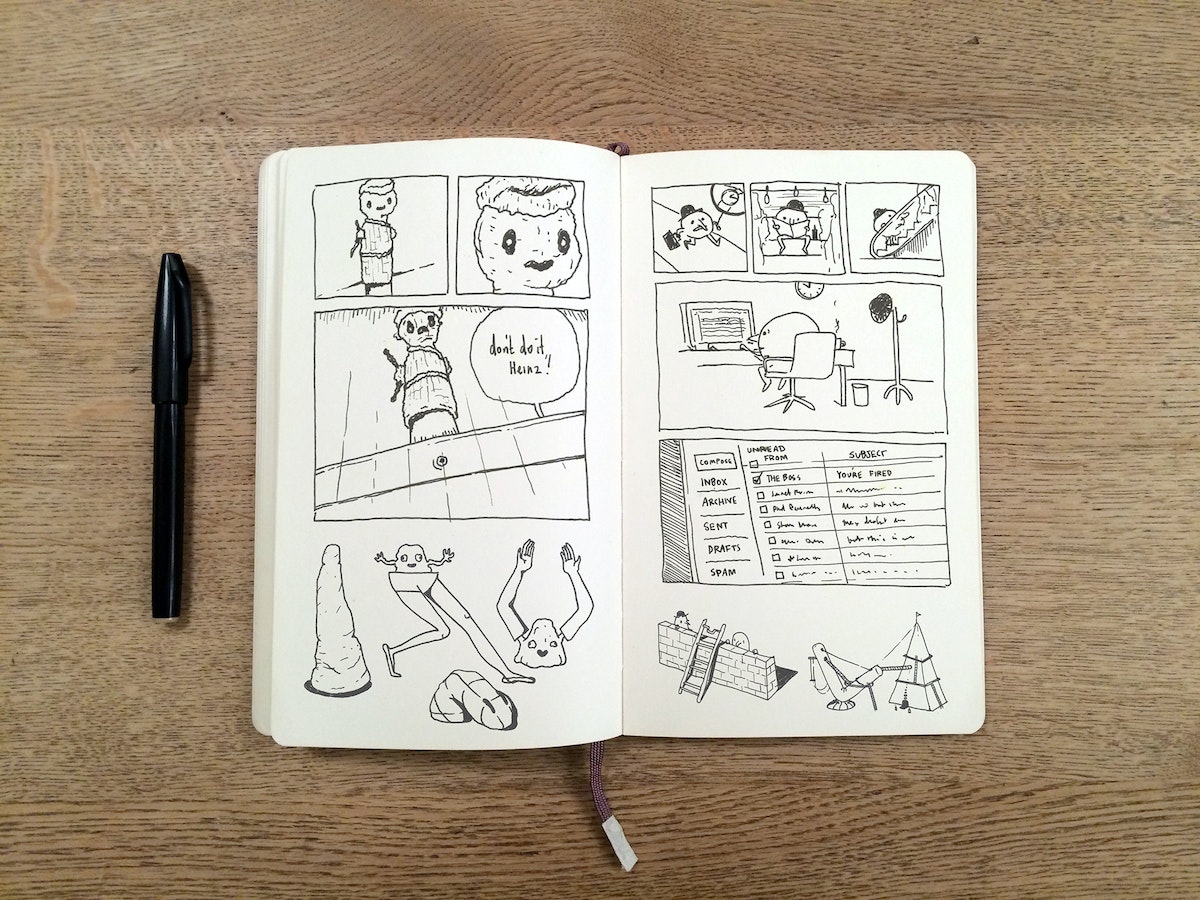
Welcome to the What's in My Moleskine series, a periodic peek inside the notebook of an IDEO designer. Fast Company recently did the same with IDEO's Joe Brown, who had a lot to say about the all-powerful Muji thread-bound A6 notebook.
In this installment we hear from Dave Russell, a communications designer based in our London studio.

Just Skeu It
Translating physical objects to the digital realm through skeuomorphism
I have to find out if I can pull off a successful translation.
I found my most recent skeuomorphic inspiration in Tokyo’s Nezu museum, one of the best traditional Japanese art museums in the country. Nezu was hosting an exhibit on sensu fans. Originally invented in China, sensu fans were popularized in Japan by artists and calligraphers, who used them as a medium for their work.
Taking in the fans, I immediately appreciated the fantastic woodblock artwork and beautiful brush strokes, but what really struck me was their construction and mechanics: the hand-held fans open with the flick of a wrist. I couldn’t get them out of my mind. How did they open and close so efficiently? How did the bamboo supports slide smoothly over one another? Did the creators consciously build them to open with a simple hand gesture? And what was the point of making them retractable in the first place?
I began to realize that the only way to satiate my curiosity was to make a digital re-creation of the sensu fan. Translating the fan’s physical systems to the digital world would test my skills as a designer and help me to understand its essential systems.
Observable systems
In any skeuomorphic project, the question I usually start with is: What elements capture the essence of the subject? Is it its purpose? Or is it characterized by its design, its construction, its movement, or its interaction? To find the answer, I need to look beyond the face of the object and break it down into the shapes, motions, and systems that define it.
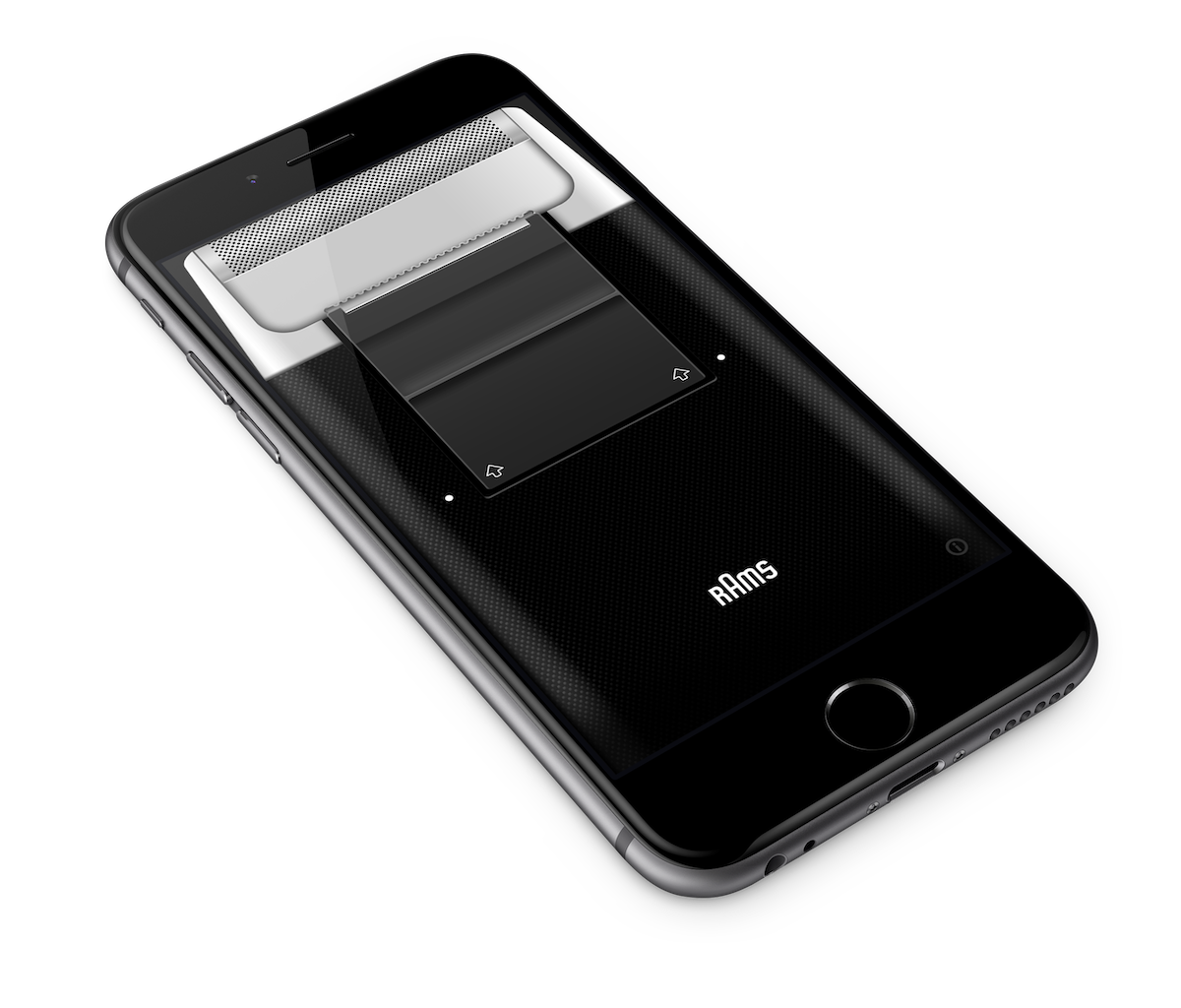
The first app I ever created was a tribute to an electric razor from the late 70s designed by Dieter Rams. I can remember watching my father run that razor over his face every morning. Though I didn't know it at the time, it was the first well-designed product I ever came in contact with. I can still hear the click of the slide-up power button and the sound of the vibration that it made as it glided over my dad’s stubble. When I built an app version of the razor, I realized that the sound and the micro-movements were the two key aspects of the design that I had to translate to make a satisfying digital interpretation.
I used a combination of animation, vibration, and sound (tilting the phone toward your face makes the phone play a beard-cutting sound) to bring the razor to life. The result was a super-tangible app that made the device feel so much like a real razor that you could almost forget it was a phone. Unfortunately, Apple didn’t quite get it—they claimed it was “too useless” for the app store—but for me, it was a ticket back to my childhood.
Considering design
Far from useless, skeumorphic explorations make me a better designer. The challenge of breaking down a real-world object into a set of Photoshop layer styles is my idea of time well spent. I strive for efficiency: Whether it’s lines of code or the number of layer effects, minimization is the key to honing my design skills.
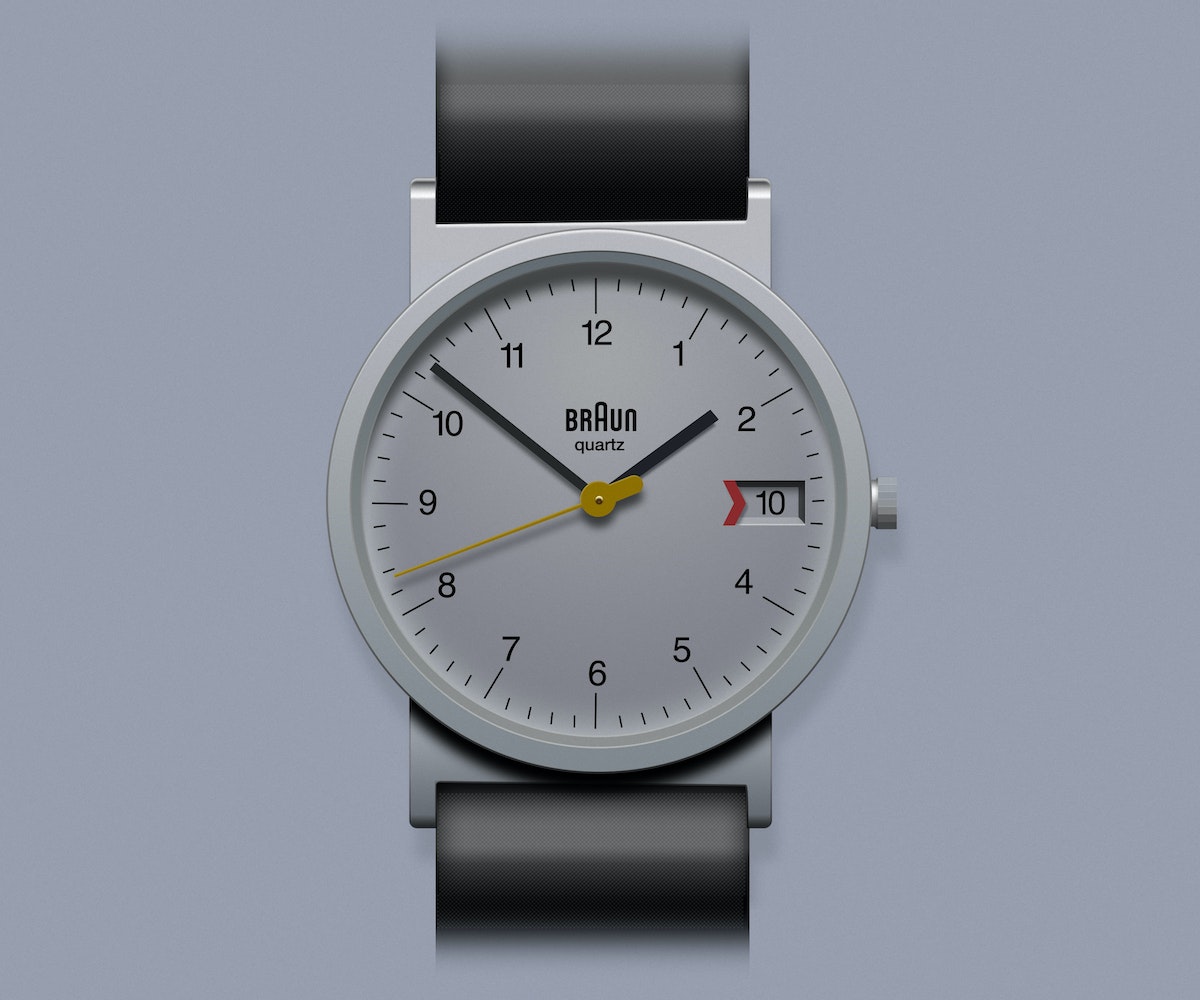
When I did a translation of my Braun AW-20 watch, I managed to perfectly capture the essence of the watch in 27 layers with one to three styles each. I plan on returning to it one day to bring it life in code.
Bringing it to life
When I began my skeumorphic translation of the sensu fan, I felt it was critical to capture the physics of the opening and closing motion. This meant that I wasn’t working with Photoshop layers, but with code. At IDEO, I tend to design with code as much as I do with Photoshop or Sketch. Having a good grasp on code allows me to think deeper about physical-to-digital translations, and real-world systems are better expressed and executed in certain programming languages than others. My first attempts at recreating the fan were standalone applications in openFrameworks—a set of C++ libraries packaged together for creative programming. I started playing with the Box2D add-on for openFrameworks, which was put together by my colleague Todd Vanderlin from our Cambridge office. While the add-on worked perfectly, the digital replication of the fan’s real-world physics just didn’t capture the magic of the construction and movement.
Because the stand-alone nature of openFrameworks limited the reach of the project, I moved on to exploring more accessible web technologies like CSS3 and JavaScript. I had to compromise slightly on the real-world look of the fan, but the final expression really embodies the movement and interaction that fascinated me when I encountered the Sensu fans at the museum. What’s more, users can manipulate jQuery parameters to change the fan's size, color, and decoration—a digital version of what traditional Japanese artists have done with the fans throughout history.
By creating these translations and exploring the life of the subject, I end up discovering something deeper about the object's design and meaning in the world. Likewise, by creating these challenges, I end up discovering something about myself and my skills as well.
A few times a year, I’ll come across something—maybe an object or system; maybe just an idea—and I’m overwhelmed with a burning urge to translate it into code and design. It’s a practice usually referred to as skeuomorphism, and once a project captures my imagination, there's no going back.

Lindsey Turner
I’m passionate about building brands, products, and experiences that help organizations show up with meaning and momentum.
I help organizations cut through complexity by shaping how they show up, through brand strategy, identity, and storytelling.
Working at the intersection of brand and business, I bring an editorial eye and a bias toward making—turning ideas into tangible experiences that people can understand, trust, and believe in.
My work spans government, healthcare, financial services, media, and consumer goods, from launching Gen Z-focused ventures to building innovation labs and reimagining legacy brands. I relish moments of ambiguity and enjoy translating across teams, perspectives, and priorities to move ideas forward.
I started my career in editorial and digital design, shaping cross-platform experiences and identity systems in publishing and agency environments. That foundation still shapes how I work today: I’m detail-oriented, collaborative, and overreliant on the Oxford comma. I hold a BFA in Visual Communication from the School of the Art Institute of Chicago.

Rachel Young
My work helps organizations see who their products aren't working for—and build the will and the tools to do something about it
For 25 years, I've asked the same question: Who does this design exclude—and what are we going to do about it?
My work spans human-centered strategy, inclusive design, and qualitative research, with clients ranging from Microsoft, Google, and Verizon to the National Science Foundation, and San Francisco Unified School District.
Before IDEO, I taught elementary school in East Palo Alto and spent a decade doing design work with social service organizations—where I learned firsthand what it costs people when systems are built without them in mind.
I am currently writing User Error, a nonfiction book about digital access and the design decisions behind it. I live in Oakland, California.

Brian Pelsoh
I lead with craft, ensuring our work is creatively excellent: rooted in deep human insight and imagination, while also grounded in the realities of business and technology.
My expertise spans brand, communication, and product design across tech, education, the arts, and social impact.
I believe great work demands both high-level vision and obsessive attention to detail, and only happens through collaboration.
I bring an inclusive, hands-on approach and a deep understanding of business, which enables me to consistently deliver excellence while always asking why.
Before joining IDEO, I worked at the brand firms Pentagram and VSA Partners. I began my career as a designer, leading teams at the School of the Art Institute of Chicago and the Milwaukee Art Museum. I hold an MFA in graphic design from Maryland Institute College of Art and a BFA in communication design from the Milwaukee Institute of Art & Design, and have taught at some of the best design schools in the US.

Tony Wong
I am responsible for IDEO’s long-term success in China and working with clients to use design as a tool to enable growth.
I am responsible for IDEO’s long-term success in China and working with clients to use design as a tool to enable growth. Specifically, I have helped Chinese companies design holistic brand solutions through the development of their products, communication, services, and innovation teams, and I have helped multinationals expand their presence and influence in China.
I advise global leaders on developing China-led innovation and capabilities.
In over 15 years in IDEO Shanghai, I have worked on projects that use design to elevate the quality of the experience of healthcare products and services, streamline processes that increase productivity, create spaces and programs that promote and enable inclusive communities, and build next generation mobility solutions that are planet-positive.
Before joining IDEO, I worked at Philips Electronics and the Electrolux Group in Italy, the Netherlands, and Singapore on a number of breakthrough commercial products. I am a member of the Young President Organization in Shanghai.

How to think like a futurist: Jennifer Lo
Simple ways to spot change early and imagine more useful futures.
What does it mean to think like a futurist—and why should every leader learn how? In this episode of the Creative Confidence Podcast, Jennifer Lo, Senior Director of Design Futures at IDEO, shares how futuring can help leaders navigate uncertainty, build resilient strategies, and shape the future they want to see. Learn how to spot signals, expand your strategic horizon, and use storytelling and artifacts to make long-term thinking feel actionable today.
Asked & Answered: Catherine Connors on storytelling for leaders, scale, and the future of narrative
How leaders can use story to create clarity, connection, and change.
In this bonus episode of the Creative Confidence Podcast, storyteller and strategist Catherine Connors returns to answer top questions from our IDEO U community. We explore what it really means to lead with story—beyond frameworks and formats—and how storytelling can be used to build culture, scale ideas, and drive meaningful change. Catherine shares her take on how to build storytelling capacity inside teams, how AI is reshaping the narrative landscape, and why co-authorship is the future of leadership storytelling.

Creative collaboration with IDEO CEO Mike Peng (replay)
What it takes to lead creative collaboration across diverse perspectives.
In this conversation, IDEO CEO Mike Peng shares what it really takes to foster creative collaboration on teams. From designing for trust and tension to navigating ambiguity and divergent thinking, Mike offers a clear-eyed look at how leaders can create the conditions for breakthrough ideas. Originally aired on August 8, 2019, this episode is full of timeless guidance for today’s fast-moving, complex world.

Storytelling for change with a former Disney exec: Catherine Connors
Using story to make ambitious change feel meaningful and possible.
What makes a story powerful enough to shift culture? In this episode of the Creative Confidence Podcast, Catherine Connors—former Head of Content at Disney Interactive and founder of storytelling consultancy StoryQuo—shares five key shifts that can help leaders use story as a tool for transformation. From rethinking traditional formats to embracing play and shared authorship, Catherine challenges conventional ideas about storytelling and invites us to create stories that people want to carry forward.
Looks like you might be in search of something very specific?
Or reset the filters above and try another angle.
Here’s some random inspiration
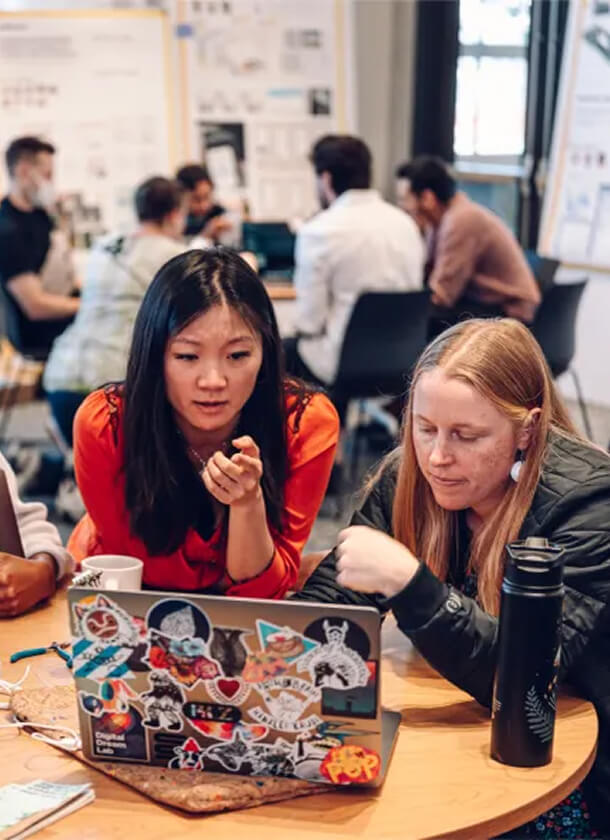
Podcasts about creative leadership
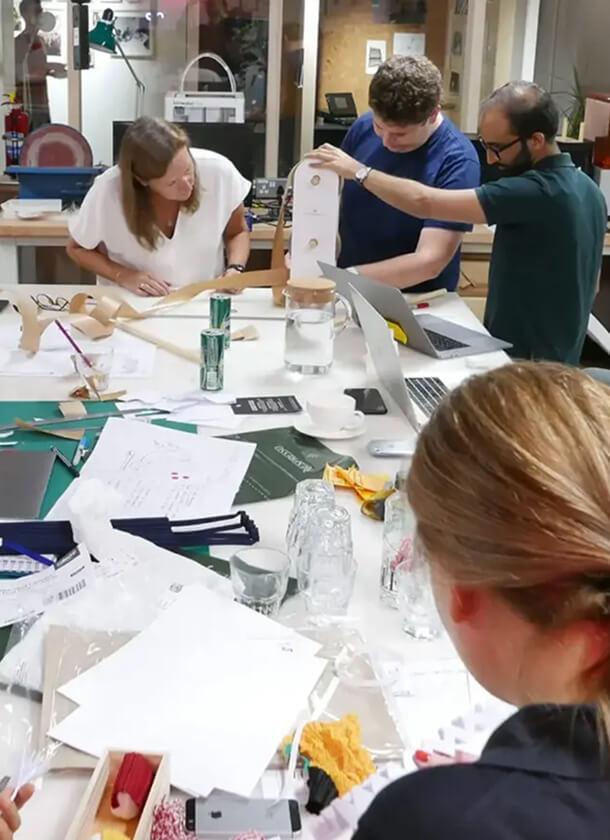
Articles about the power of prototyping