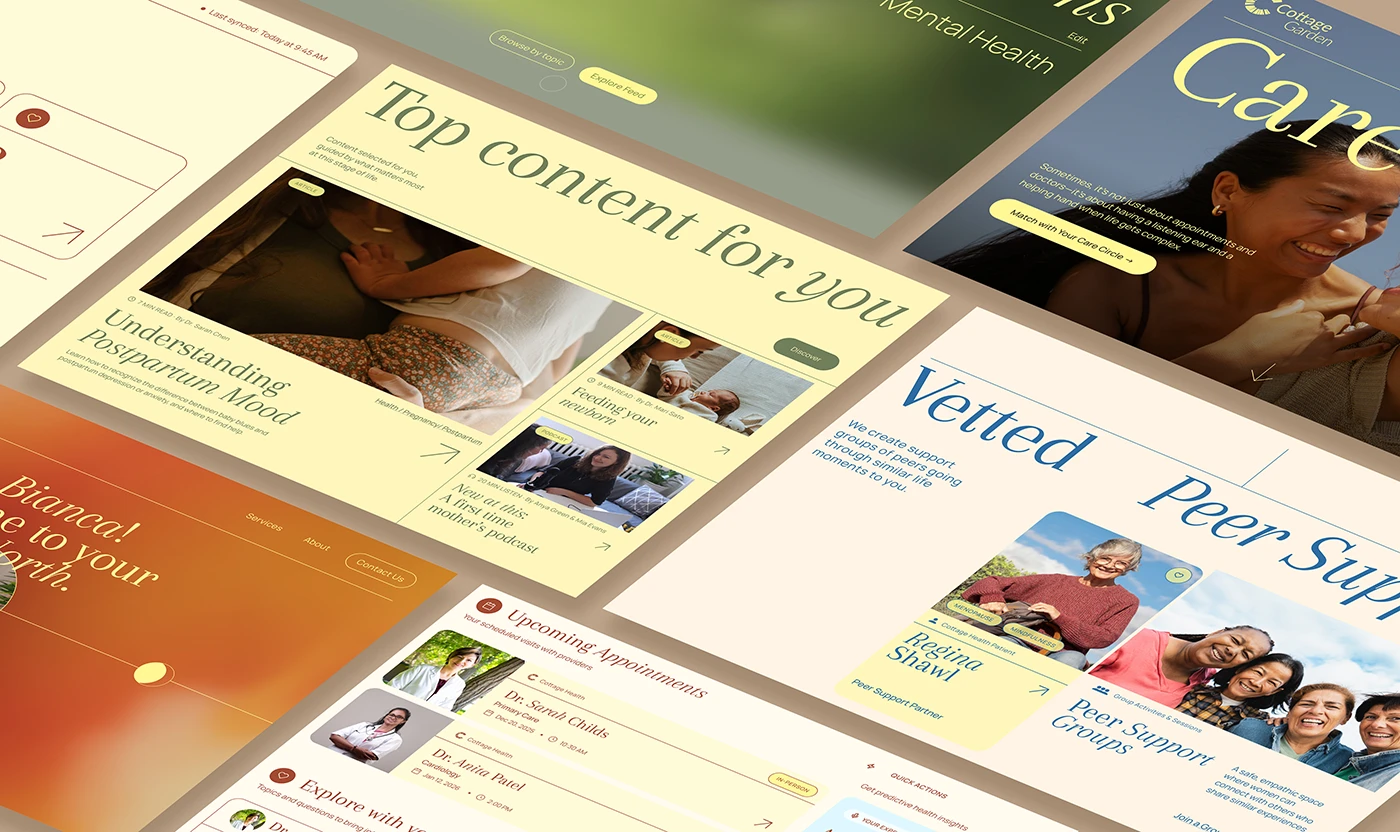

Designing a new vision for women’s healthcare
Introducing Cottage Women’s Health
Systemic transformation is not new to Cottage Health. Founded in 1888 by 50 forward-thinking women in Santa Barbara who wanted a hospital for their growing community, Cottage Health has since expanded to 3 hospitals and is quickly growing its outpatient services as well.
To understand the current Cottage Health experience, IDEO conducted dozens of in-depth interviews with patients, providers, caregivers, and staff. They also ran multi-week diary studies, engaged in inspirational research activities, and held events to hear from local women.
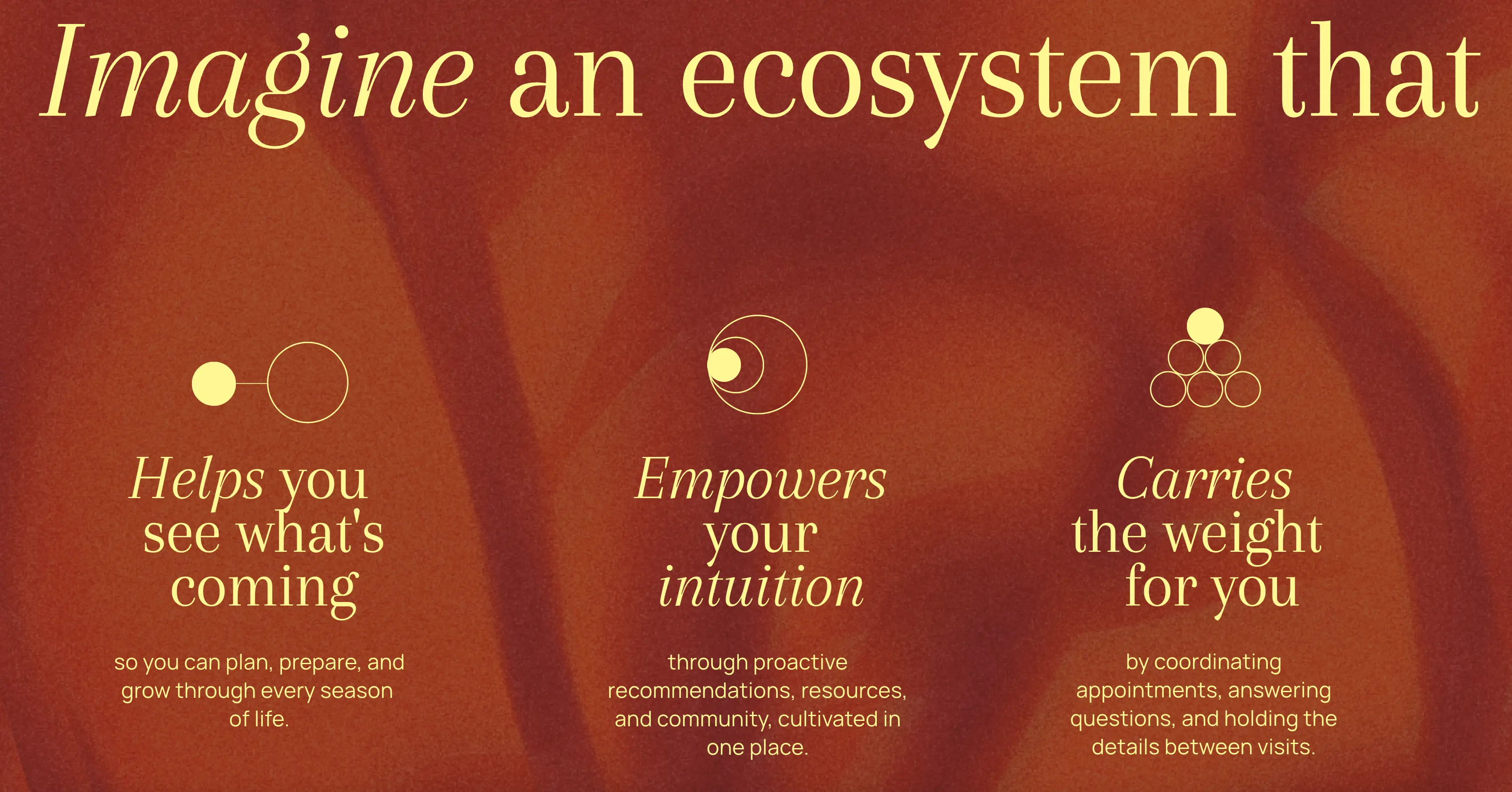
The qualitative research surfaced that women often carry the mental burden of repeatedly remembering, explaining, and advocating for themselves. Women’s pain is often minimized, which causes new providers to inherit mistrust from previous experiences, without having the tools to rebuild it. During significant life transitions, such as pregnancy or menopause, women may receive conflicting advice from health providers and seek additional outside support from informal networks. Access to quality care can sometimes depend on insider knowledge, private resources, or providers willing to go far beyond their job descriptions. And while providers make referrals, women must handle the time-consuming coordination required to make everything work, instead of focusing on healing. The bottom line: what women wanted most was to be seen, heard, believed, and supported in knowing what to do next.
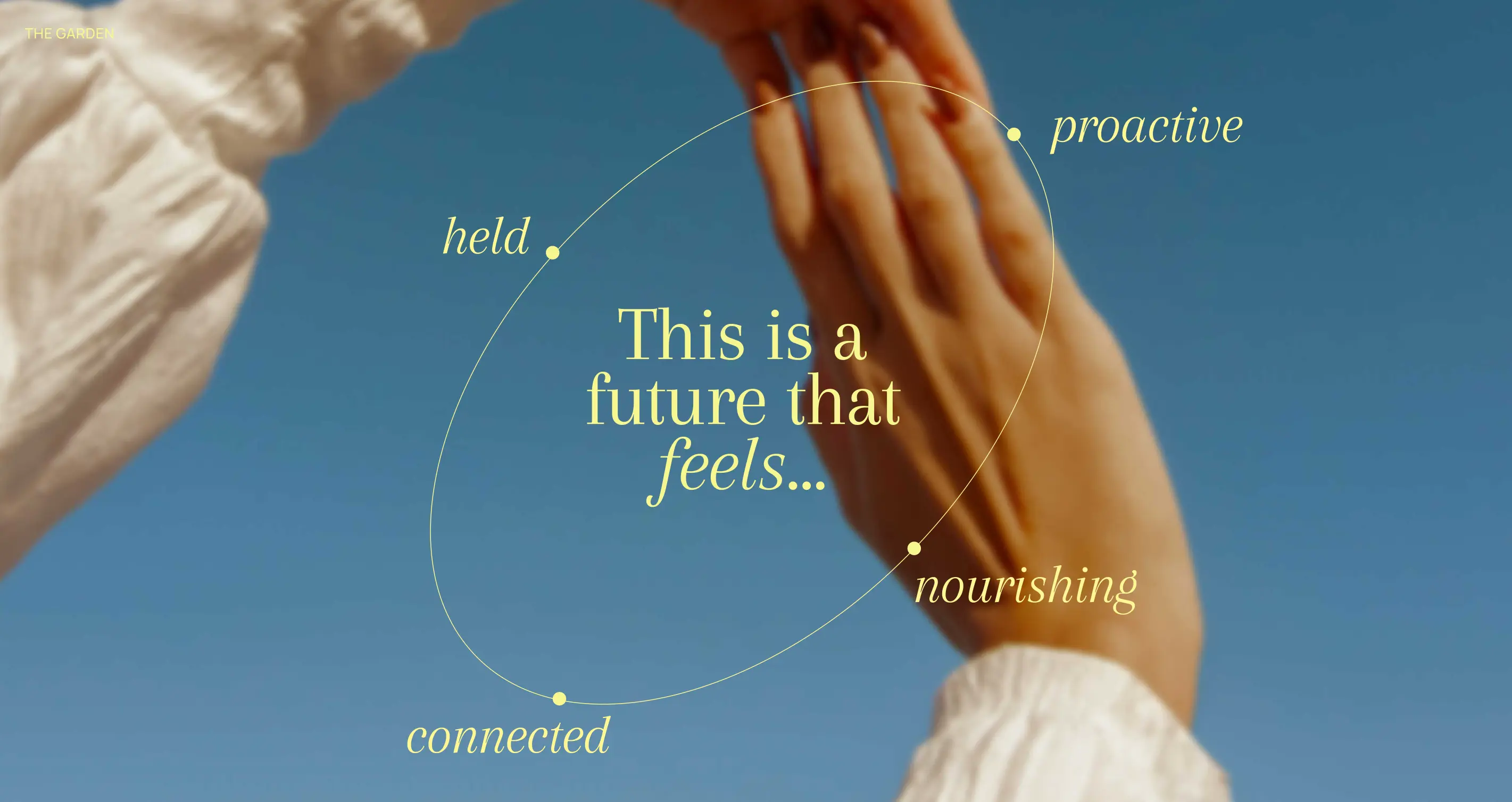
In order to address these challenges, IDEO proposed a new vision for women’s health, alongside design principles and concrete service shifts to guide future decision-making. Every interaction with Cottage Health should build on the information patients have already shared, demonstrating the system is listening. They should also guide women through life transitions by anticipating needs in future life phases, not just what’s happening now. Much like a community gathering, the Cottage Health experience should feel like a village, fostering belonging and shared care through warm, connected, human touchpoints.
Building on these design principles, IDEO developed three exploratory service concepts that represented potential pathways for future development, rather than finalized offerings: True North, Wellness Commons, and Care Circle.
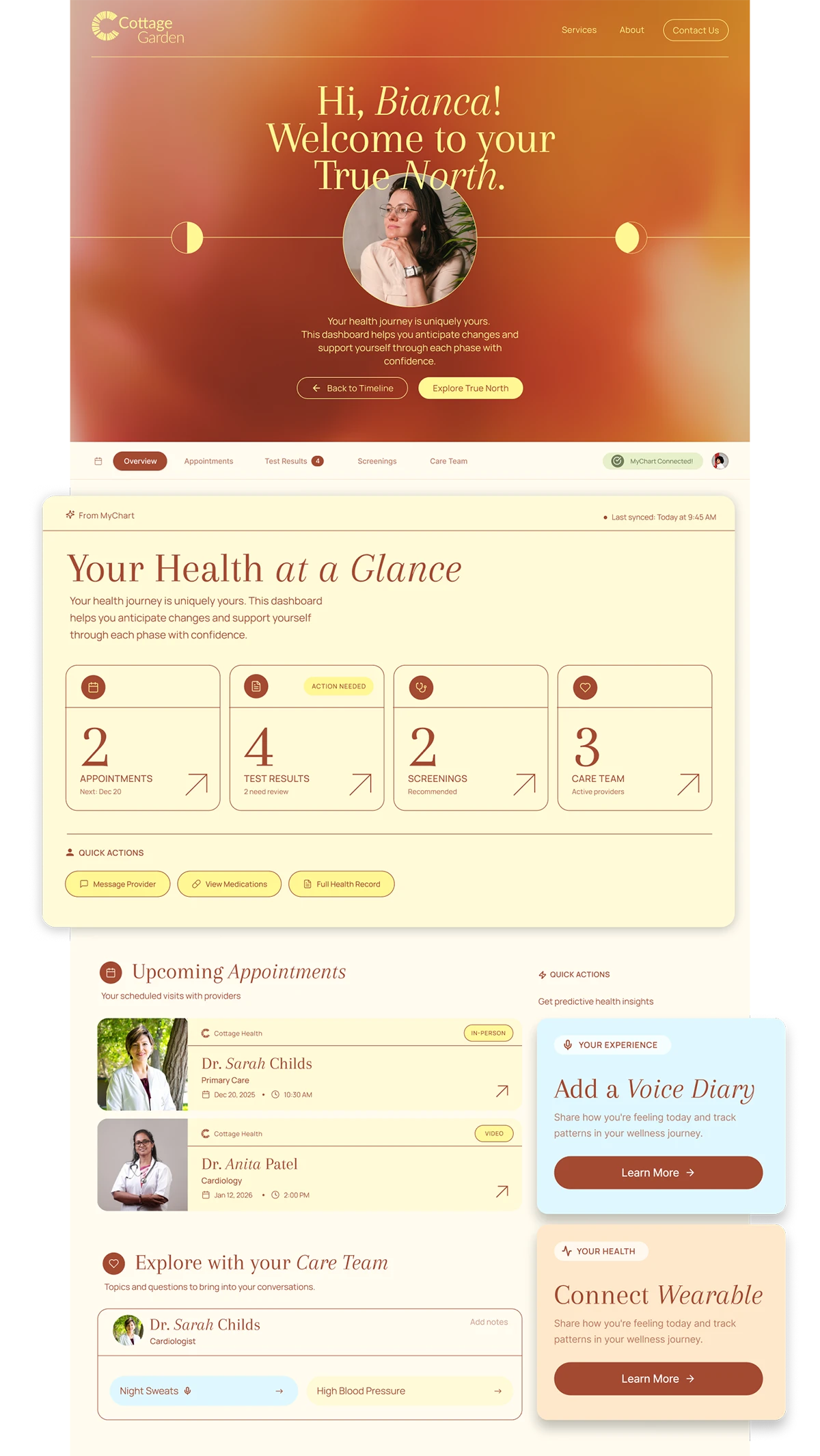
True North is a patient-facing tool that helps women see the long view of their health journey by integrating personal data, health goals, and reflections into a dynamic timeline they can share with their healthcare providers.
Wellness Commons serves as a digital front door, offering curated resources, including community events, discounted wellness programs, fitness classes, and trusted referrals, that help women navigate their well-being with clarity and agency.
Care Circle connects women to an extended support network inside and outside Cottage’s walls, including a hotline, health coaches, peer group support, and nurse navigators who can help patients manage complex care needs.
IDEO also provided Cottage Health with a multi-year roadmap building out the women’s health experience alongside continued pilot and implementation advisory. The roadmap included a comprehensive series of launch-to-learn pilots designed to test assumptions, reduce risks, and learn quickly, with IDEO stewarding the process. These pilots ranged from digital mockups and a curated community referral directory to a support line, a new nurse navigator role, and peer coaching services, among other experiments.
In July 2026, Cottage Health announced it was expanding its focus through a new Cottage Women’s Health Campus in Santa Barbara. Led by Dr. Jane Varner, Cottage Women's Health is projected to open in early 2028. It will encompass women’s health services across the lifespan, from puberty to menopause and beyond, including OB-GYN, pelvic floor health, women’s heart health, a menopause clinic, and a breast care center of excellence. It will also include supportive services, including trained nurse navigators to coordinate patients’ care journeys, giving women a single, trusted entry point for integrated care at every life stage. Cottage Women's Health is also exploring a new digital support system inspired by IDEO’s Wellness Commons concept.
Cottage Health had ambitious goals to expand its women’s health services and needed a partner to help it understand what women truly wanted from their healthcare and bring it to life.
7 months
from end of project to the announced launch of Cottage Women’s Health
From incremental change to breakthrough innovation
How Master Kong reinvented the instant noodle, from the inside out.
Looking to understand the role of instant noodles in middle-class Chinese life, the IDEO team conducted in-home research with consumers across a range of life stages and levels of attachment to noodle culture and convenience foods. The first finding was reassuring: Everyone kept instant noodles at home. The category still had a place in middle-class kitchens. But beneath that was a more complicated, emotional story—and an unmet need for convenience and quality to coexist in a single product.
The team discovered that instant noodles are more than just a quick, on-the-go meal; they are a nostalgic comfort food that evokes fond memories. But since their heyday, their role in daily life has evolved. Once a complete meal in itself, instant noodles now often function as a versatile flavor base or culinary accent in other dishes. Because they don’t align with the healthier, higher-quality, and more novel food choices that middle-class consumers aspire to, noodle shops, delivery noodles, or fresh-cooked instant options often win out. Yet, even these alternatives come with trade-offs. Delivered noodles lose texture during transport. Sit-down noodle shops preserve quality but offer limited flavors. Cooking from scratch meets the bar for both texture and flavor, but requires a significant time investment. As one young mother said, “If I could get the texture of fresh-cooked noodles without turning on the stove, I’d buy that instant noodle for sure.”
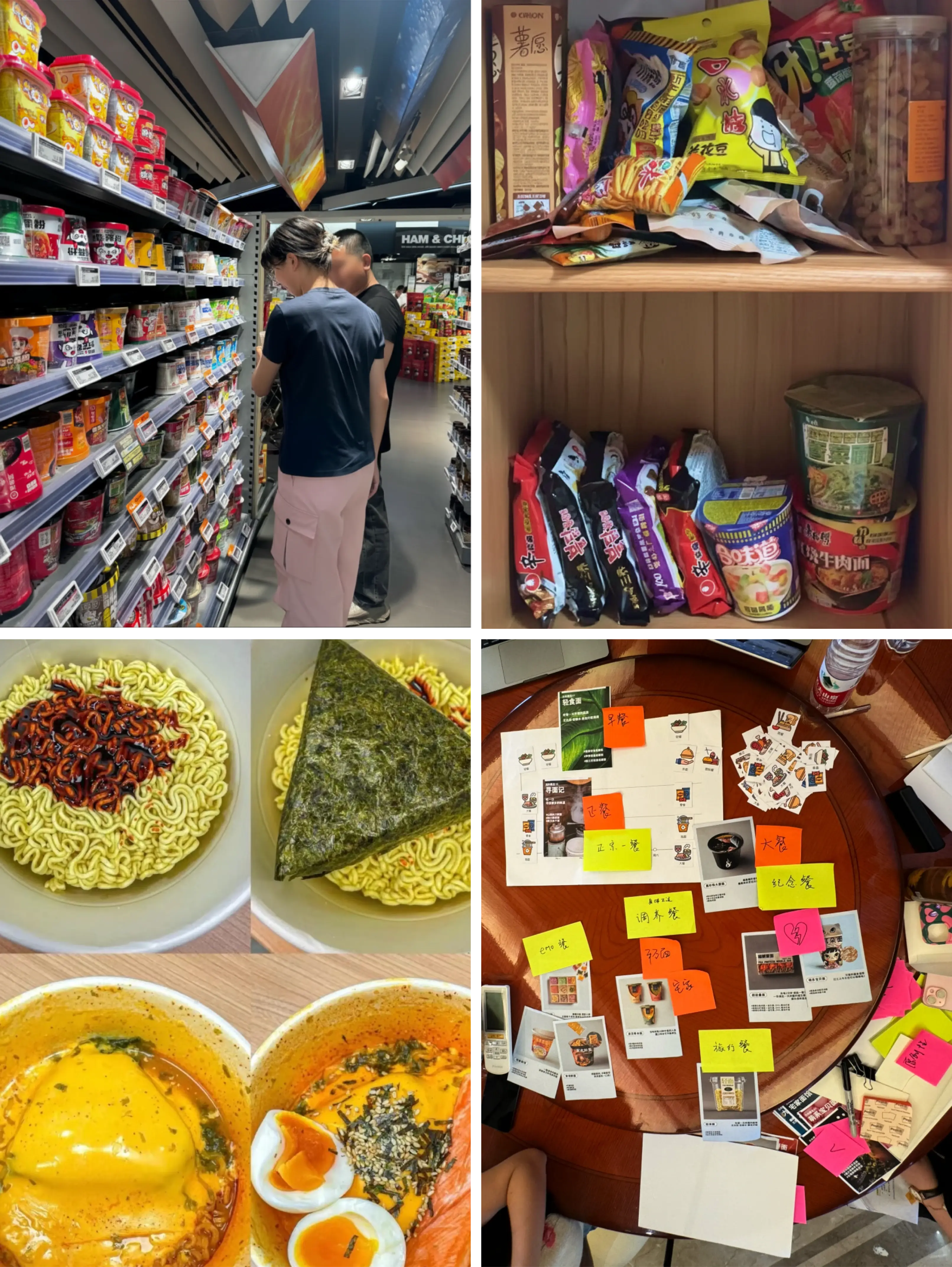
The research inspired the creation of a new category, which the team termed “fresh-brewed noodles.” More than just a noodle or broth upgrade, Master Kong’s fresh-brewed noodles would offer the speed of instant noodles with the quality of freshly cooked options, plus flavors not found in traditional noodle shops. The strategic positioning was clear. Executing it by making fresh-brewed noodles mass-producible, affordable, and eventually profitable presented a category-innovation challenge. To get there, IDEO designed a series of dual-track co-creation workshops with the Master Kong team and consumers.
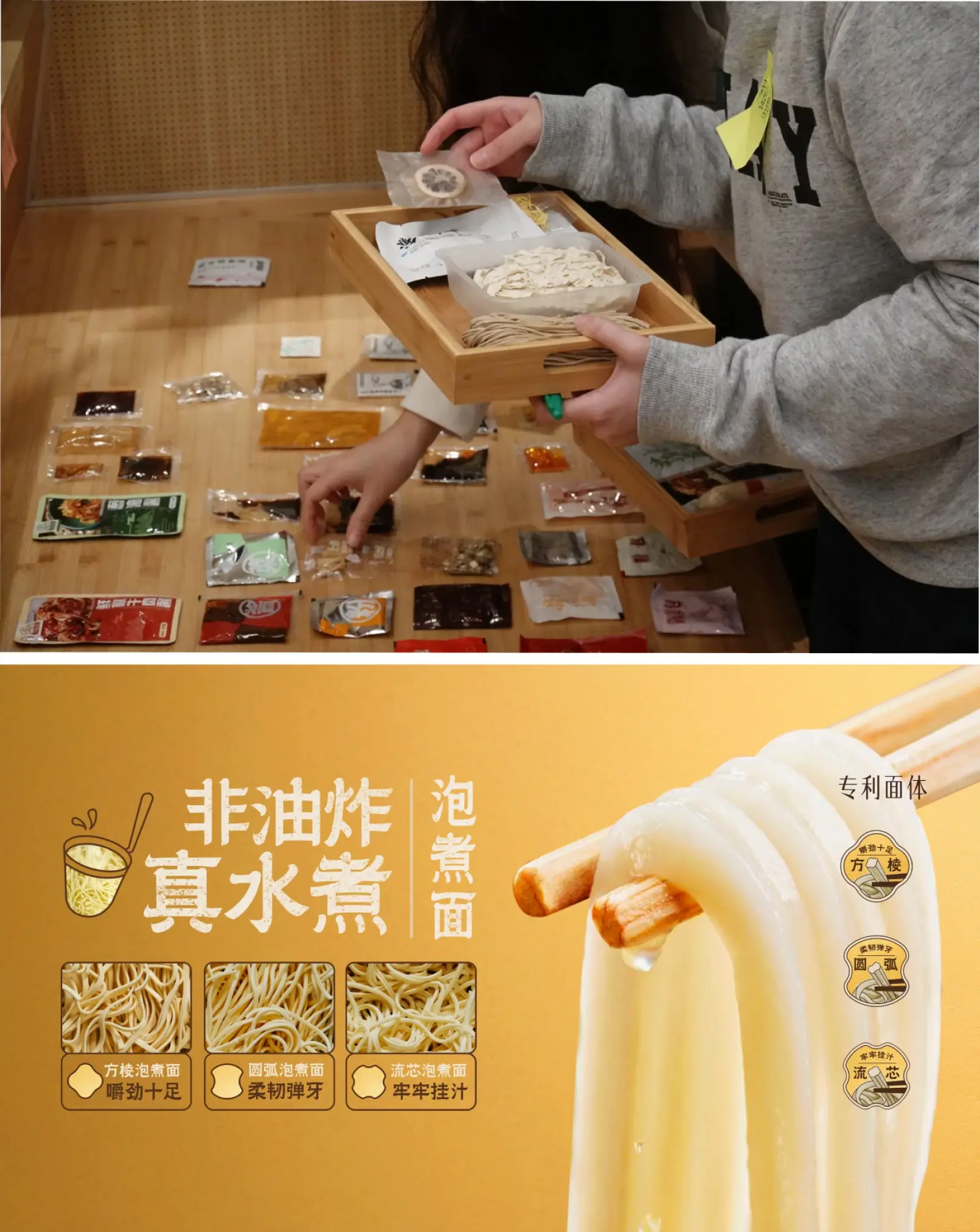
One track focused on prototyping the core product experience: noodles, broth, and toppings. IDEO and Master Kong’s R&D team began by studying the traditional craft of Chinese noodle-making, starting in Shanxi, a region renowned for its noodles. Through successive rounds of prototyping and consumer tasting, the team identified a critical insight: for “fresh-brewed noodles” to be convincing, the innovation had to be centered on the noodles themselves.
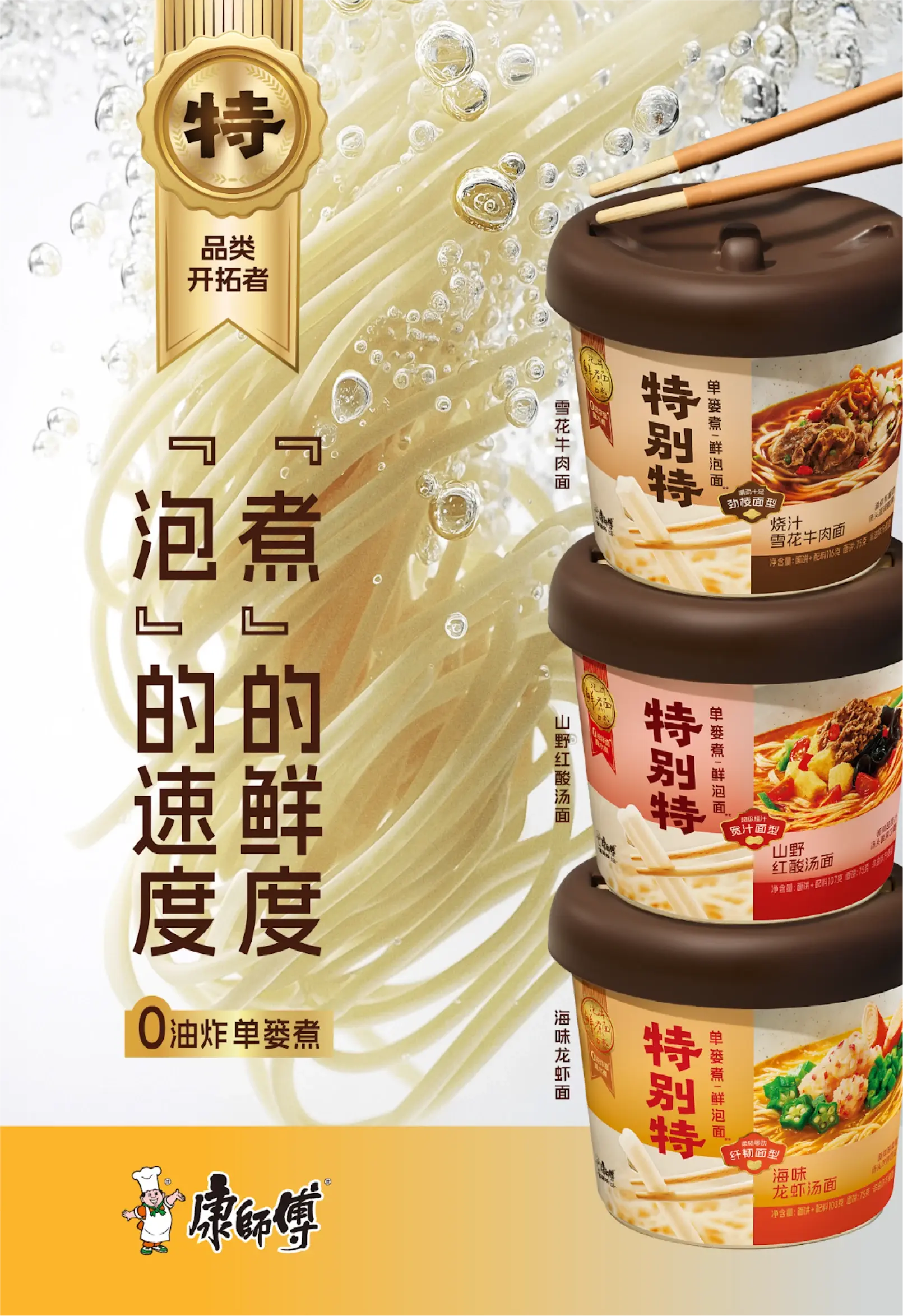
Texture alone was not enough. Consumers needed to see a meaningful difference before they tasted the product. IDEO translated this insight into a distinctive noodle profile: irregular, dimensional shapes designed to remain springy, hold sauce and broth, and mimic the resilience of freshly cooked noodles using only hot water. Because this visible shape represented the product’s core value proposition, it became a hero feature on the packaging. The graphic design made a bold visual statement about the noodle form, turning a technical R&D breakthrough into an immediately legible consumer promise: these are not ordinary instant noodles.
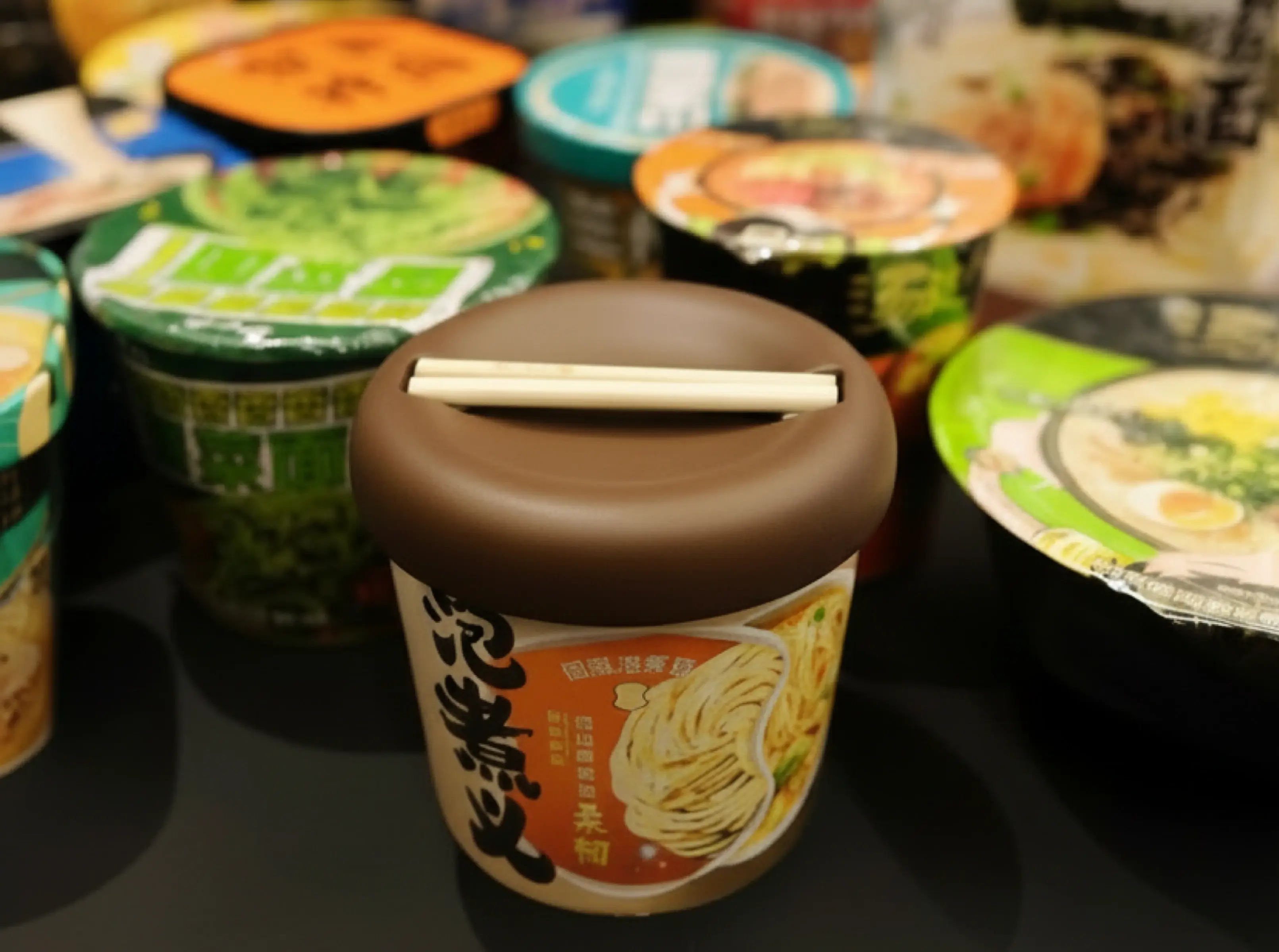
A parallel track explored the broader commercial experience: trend-forward and reimagined classic flavor profiles, light yet deeply satisfying broths, carefully selected toppings, and packaging that signals a new level of quality on store shelves. One key insight was that utensils carry meaning. Conventional instant noodles are often associated with disposable plastic forks, while higher-quality noodles are eaten with chopsticks. IDEO translated this cultural cue into the design of the bowl’s lid.
Instead of treating utensils as an afterthought, the team designed a solid, rounded, heat-retaining lid that embeds a pair of small wooden chopsticks. The gesture creates a small ritual of anticipation and reframes the product—not just a convenient instant meal, but a more considered noodle experience. Once opened, the product fulfills that promise with satisfyingly bouncy noodles, a rich liquid broth pouch that replaces the traditional oil-and-powder packet, and a vegetable packet reformulated with more premium whole ingredients.
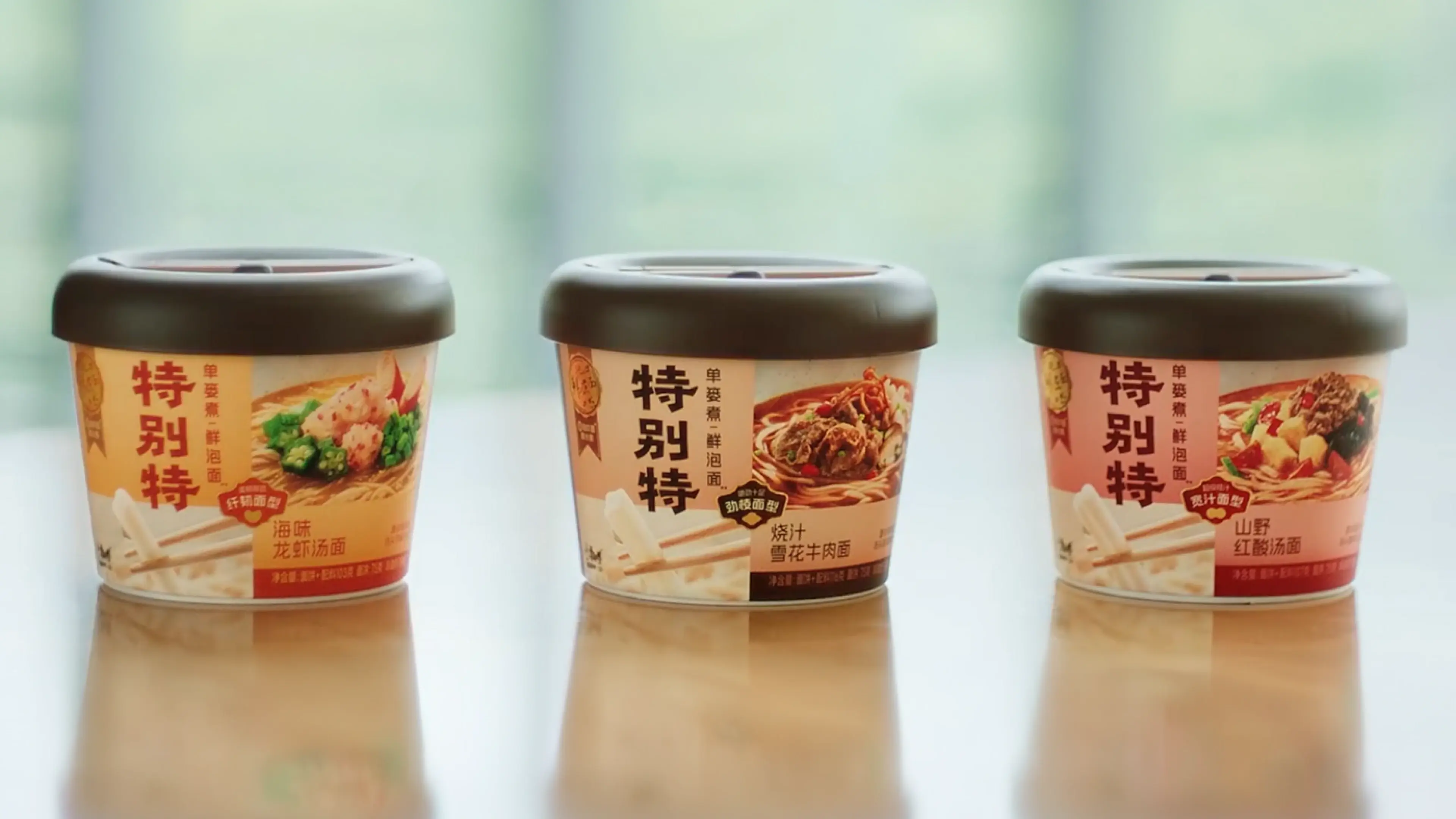
The first batch of “Te Bie Te” Fresh-Brewed Noodles—Chinese wordplay that emphasizes “special”—launched in August 2025 with three trendy and tried-and-true flavors. Within just three days, sales exceeded 100,000 bowls. Within a week, “Te Bie Te” topped the instant noodle category sales ranking on Douyin, China’s domestic counterpart to TikTok. The outcome was bigger than a product launch—it served as proof that a mature, declining category could be fundamentally reinvented to meet consumers’ real needs. For Master Kong, the project became a North Star and a model for internal category innovation in beverages, ready-to-eat foods, and beyond.
Once a popular, affordable staple, the instant noodle category in China has been declining rapidly due to shifting demographics, rising food delivery options, and increasing customer demand for healthier, more nutritious meals.
According to the World Instant Noodles Association, between 2020 and 2023, China’s instant noodle consumption fell by 4 billion packs.
100,000+
“Te Bie Te” bowls sold in the first 3 days on the market
#1
on Douyin’s instant noodle category ranking within one week of launch
Making international education future-fit & affordable
Lexel brings world-class learning to Malaysia’s middle class.
Taylor’s legacy began in 1969 with the founding of Taylor’s College and soon expanded to include Taylor’s University, one of Southeast Asia’s top private universities, as well as many other institutions that serve 35,000 students per year. The family-owned group also operates Taylor’s International Schools, Garden International School, and Nexus International School for students ages 4 to 18. In Kuala Lumpur, Malaysia’s capital city, annual tuition at premium private schools like these ranges from about $10,000 to $25,000 USD. Taylor’s wanted to do something different: provide the same level of academic rigor and immersive learning experiences at one-third the cost.
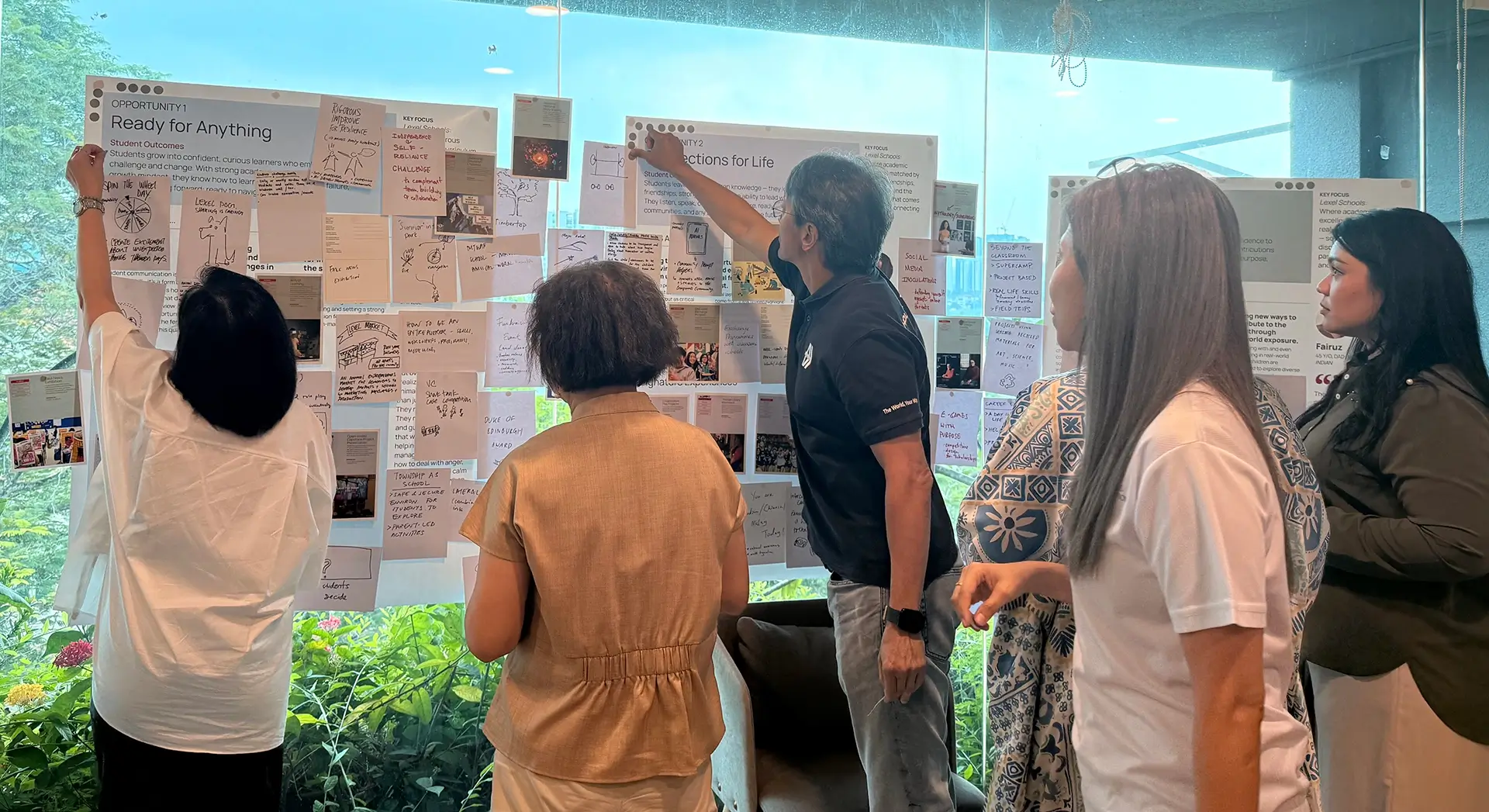
IDEO began by speaking with over three dozen students, parents, teachers, and experts across the capital to understand what was working, what wasn’t, and what was missing from such moderately priced international schools.
A few themes quickly emerged. Families, students, and teachers were worried about the stability of these new private schools, which tended to have higher-than-normal teacher turnover rates and were plagued by financial instability, negatively impacting talent attraction and retention, as well as student learning. Parents appreciated that the schools offered holistic learning experiences, such as field trips to rural areas, including jungles, but wished they were more consistently part of the curriculum. And now, the looming challenge of AI—how to use it, how to teach it, and how to teach with it—was in the background, a persistent cause for concern. The big unmet need? Reassurance that Taylor’s was thinking long-term and systematically about developing the skills, knowledge, and mindsets that would prepare students for an ever-changing world. Parents wanted a school that measured growth in academic, social, and character terms over generations, not just school semesters.
With these insights in hand, IDEO began developing a design Playbook for Taylor’s new brand—Lexel International Schools. A combination of “lexicon” and “excellence,” Lexel’s mission is “building what lasts, learning for life.”

The schools are centered around three key differentiators:
- Always Ahead: Lexel schools commit to staying current with the topics and subject matter they teach, as well as the tools they provide to students, parents, and teachers.s.
- Learning That Builds for Life: The schools ensure programmatic, systemic, and consistent learning experiences from Pre-K to Year 11. Interested students can even continue their post-secondary journey in partnership with Taylor’s University and other higher education institutions within the Taylor’s ecosystem.
- Educators for the Long Run: These schools commit to ongoing investments in professional growth opportunities for teachers and stable learning environments for students.
Four Lexel Literacies—AI, Digital, Financial, and Nutrition—integrated into the Cambridge Curriculum bring the school’s vision and mission to life.
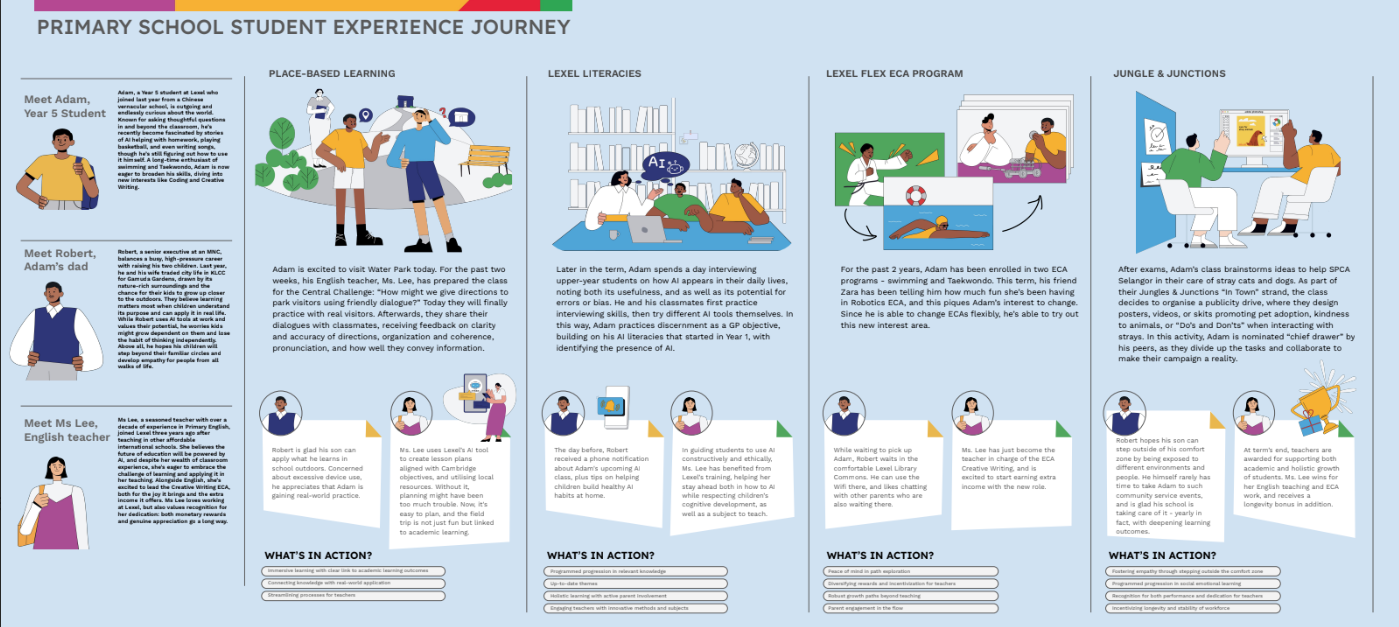
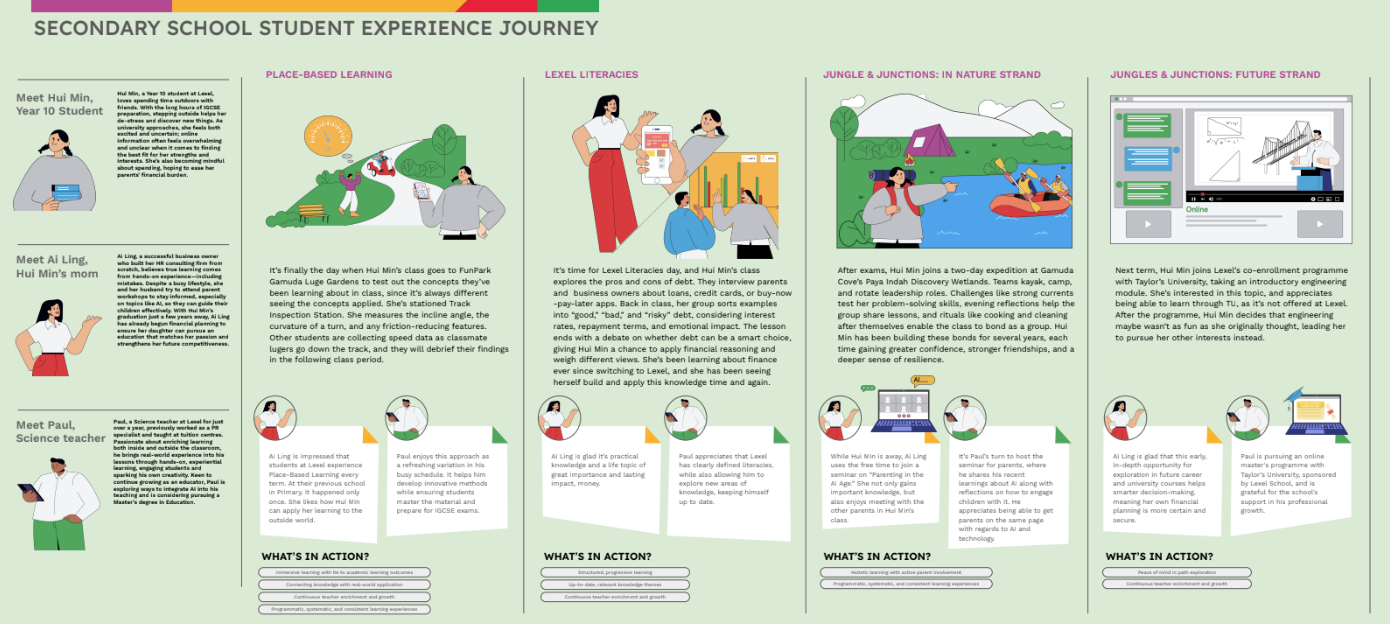
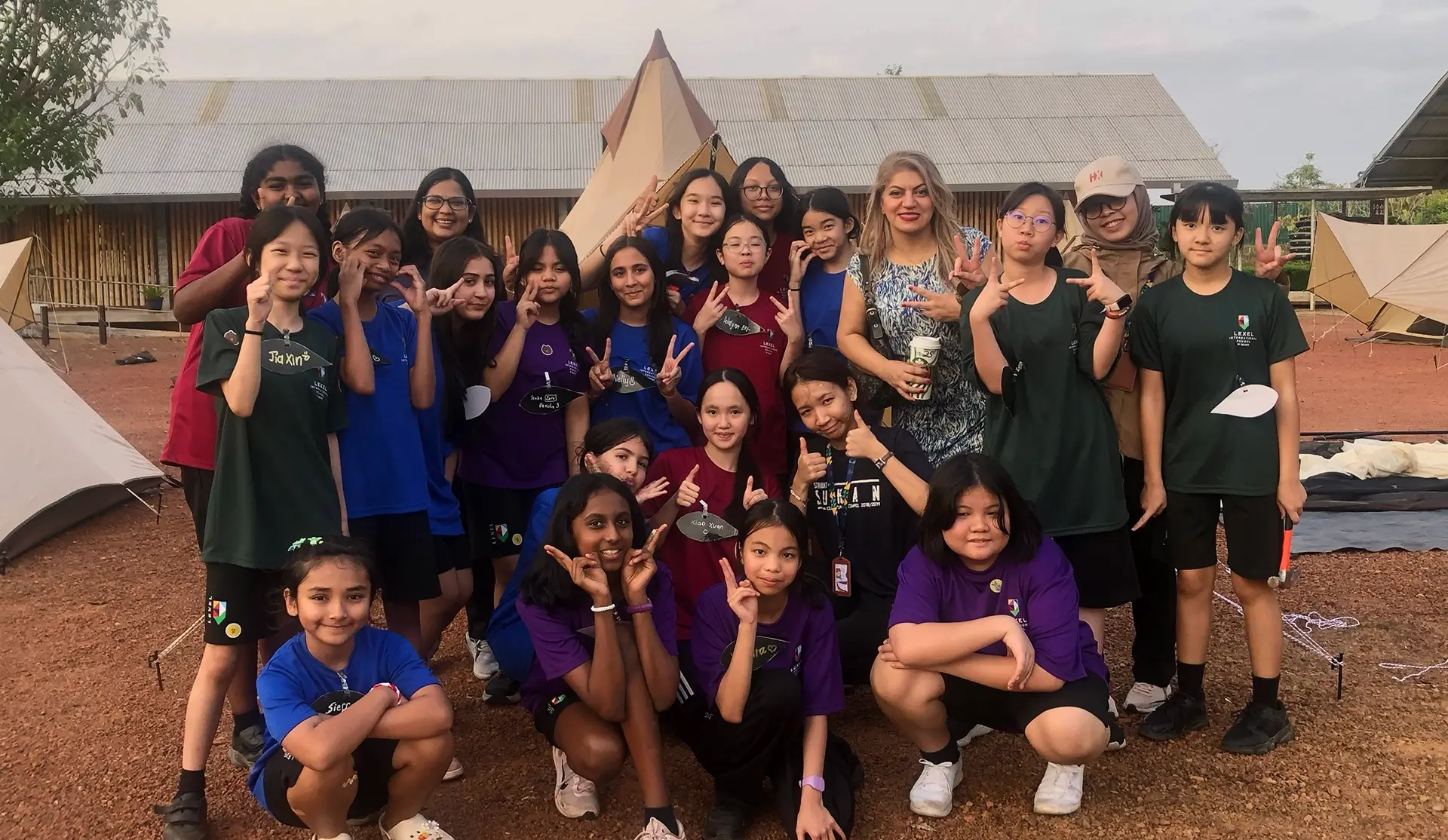
By systematically integrating AI literacy into its spiral education framework, in particular, an approach where major topics are revisited multiple times through a curriculum to build fluency over time, Lexel ensures parents that the school is thinking a decade ahead from Day One, setting the school apart. In addition to enhancing AI fluency, Lexel offers unique end-of-term experiences called Jungles & Junctions.
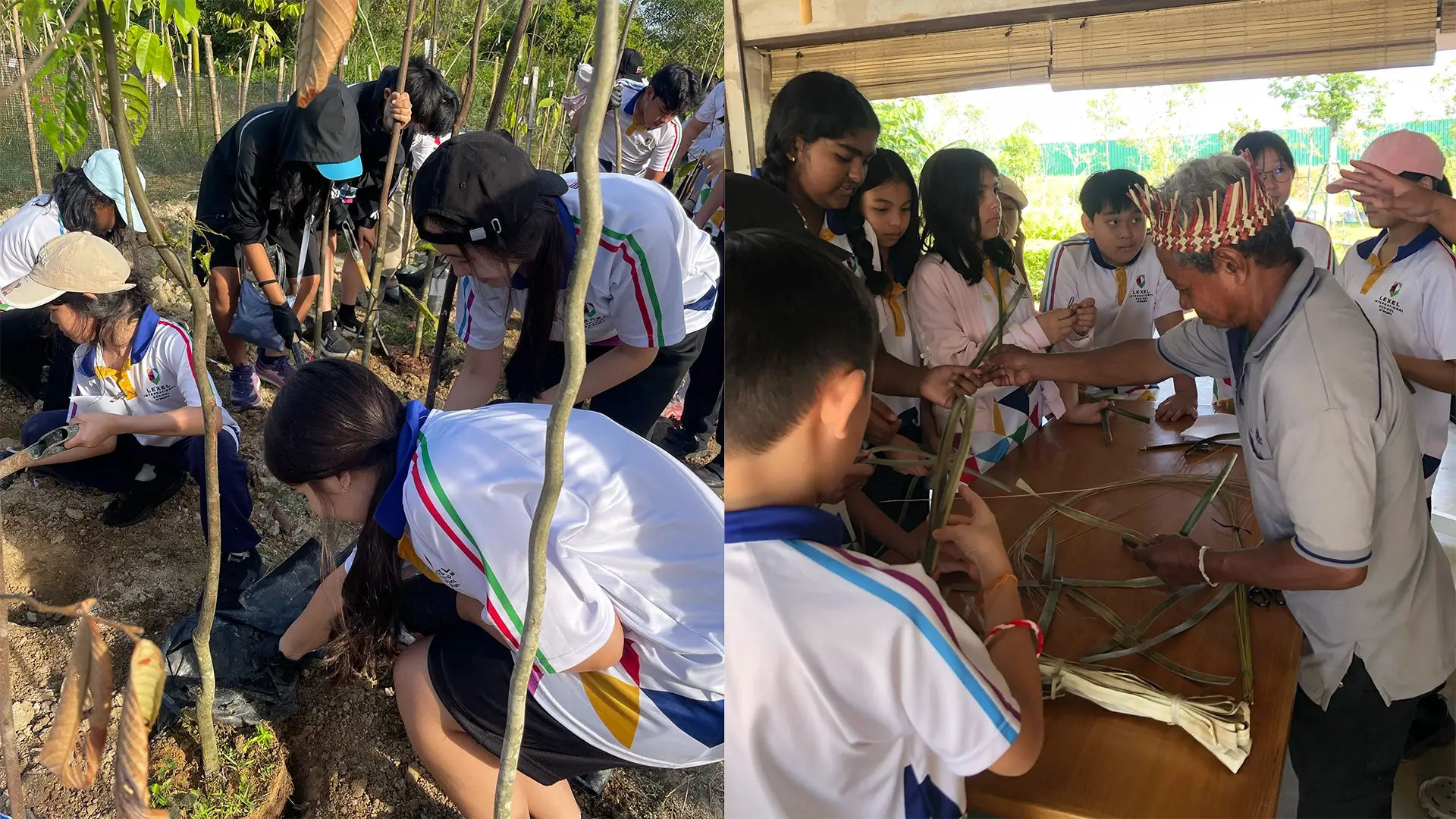
Combining three important strands of learning—community engagement, nature-based personal and interpersonal development, and career and university exploration—Jungles & Junctions leverages Taylor’s extended educational network and Lexel’s strategic founding campus within the Gamuda Gardens development in Selangor. Surrounded by tropical rainforests, the township’s residential neighborhoods, theme park, and various sports facilities, including an Olympic-length swimming pool, are transformed into an extended Lexel campus, with a GenAI-driven planner to help teachers streamline the organization of class outings. “The Township is Your Campus” became the tagline for this approach.
In September 2025, just months after IDEO’s collaboration ended, Taylor’s began classes at its first Lexel International School. By mid-year, the new school had achieved 115% of its year-one student enrollment target, with significant inbound demand for Year 2 already demonstrating the school’s market resonance.
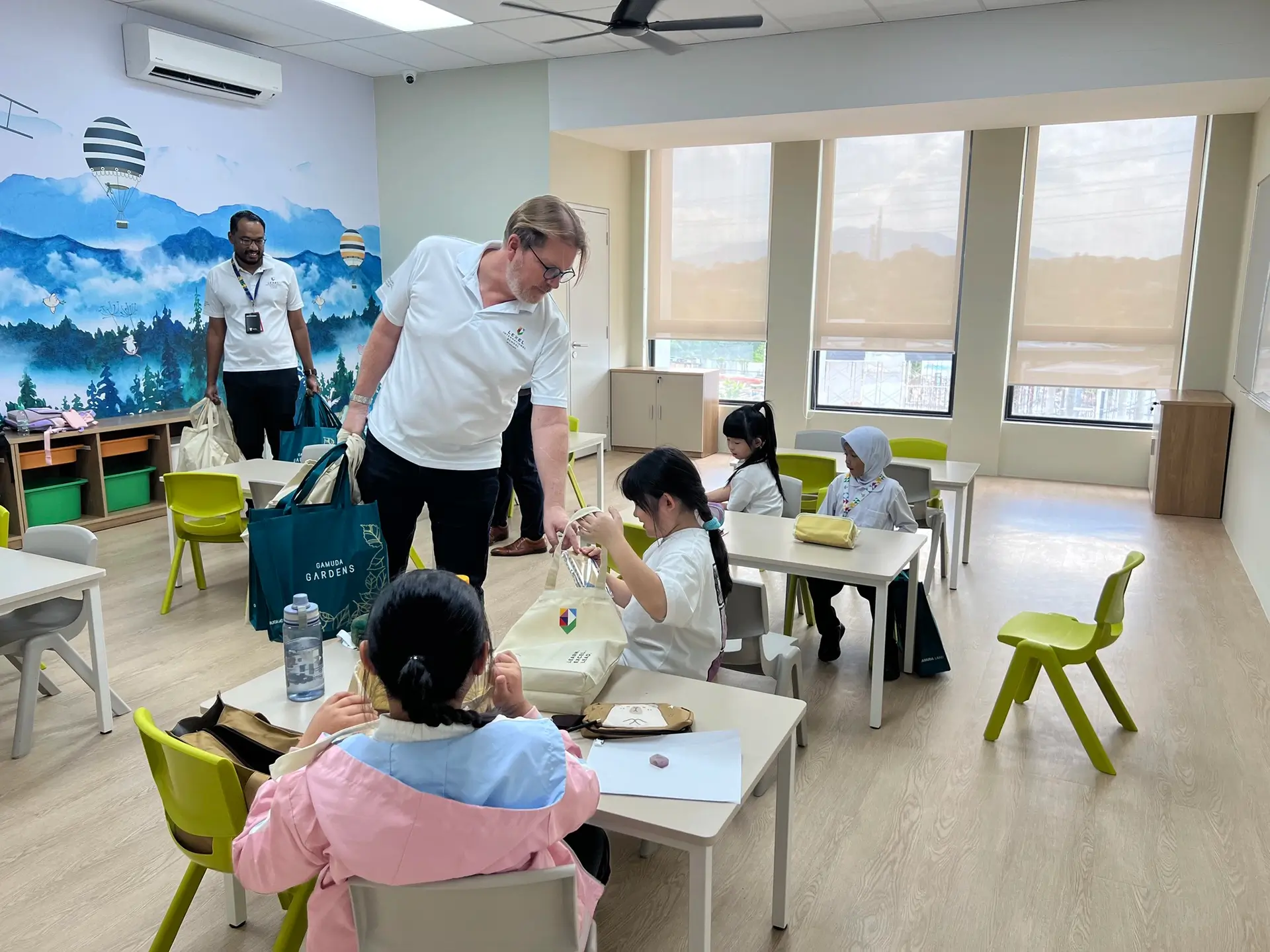
The modern campus features spacious classrooms, science and technology labs, a library, a multipurpose hall, and a canteen. Annual tuition ranges from about $2,800 USD for pre-K students to about $6,100 USD for secondary students.

Most importantly, by combining Taylor’s deep academic expertise, Gamuda Land’s development prowess, and IDEO’s innovative design Playbook, Lexel brings quality, affordable international education closer to home for Malaysian families. According to one parent, “My daughter looks forward to going to school every day … and has a lot of opportunities to express herself. On a scale of 1 to 10, I give [Lexel] an 11.” Based on the IDEO Playbook, a second flagship campus in the Southern Klang Valley, which is scheduled to open in September 2026, has already exceeded its year-one target enrollment expectations, with plans to continue extending the Lexel network to other parts of Malaysia and the wider Southeast Asian region in the near future.
Malaysia’s private international school sector has grown significantly as parents seek quality English-language education. However, high tuition fees and limited access to reputable schools are continual challenges for those in the emerging middle class.
115%
of Lexel’s student enrollment target reached during the launch year of its first campus
Year 1 enrollment target exceeded
at Lexel's second campus several months ahead of classes commencing
Delivering an unbiased news experience
Straight Arrow News transforms fact-based news consumption.
The American news industry has long been a competitive and saturated market. This has only intensified with the emergence of social media outlets and AI-generated news. Even so, SAN’s rigorously unbiased, fact-based reporting style and rich video storytelling had enabled the ambitious startup to rise above the media fray in just three short years.
With a strong foundation to build on, IDEO sought to further differentiate SAN’s cutting-edge news product and build deeper engagement with a wider audience through a new user experience.

Collaborating closely, IDEO and SAN began by delving deeply into media consumption habits. They met with early SAN superfans, news consumers who spent hours a day absorbing content from traditional outlets like Fox and USA Today, and those who looked to their Ring doorbell app or Reddit for news. The takeaways? People were tired of clickbait and clunky interfaces. They sought clear, factual news that was easily accessible, with additional context to help them interpret events and understand their significance. They craved more than one perspective on important topics, so stories felt balanced rather than polarized. They also valued having control over how they consumed news, so making it easy to switch between text, video, and audio formats was crucial.
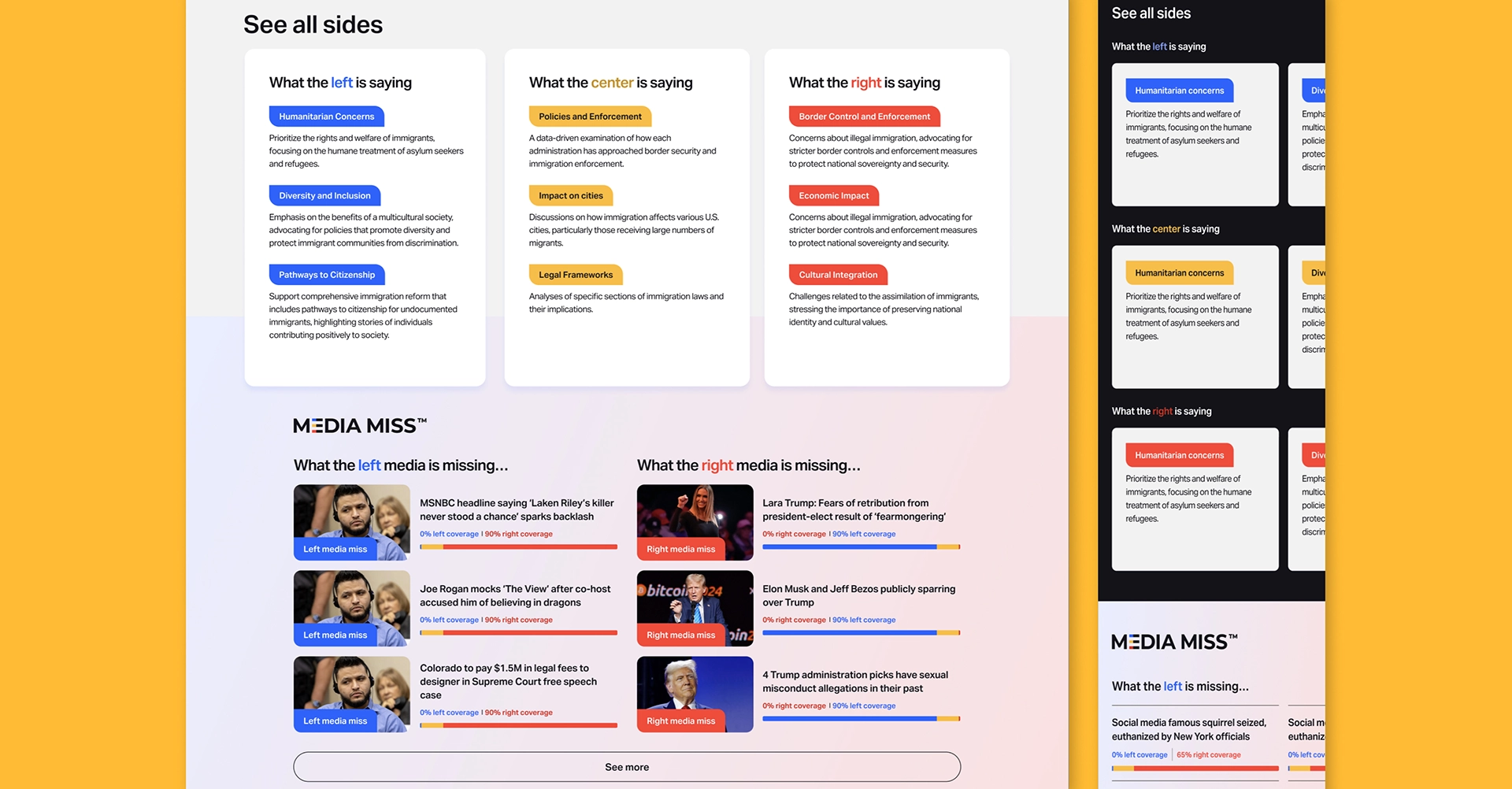
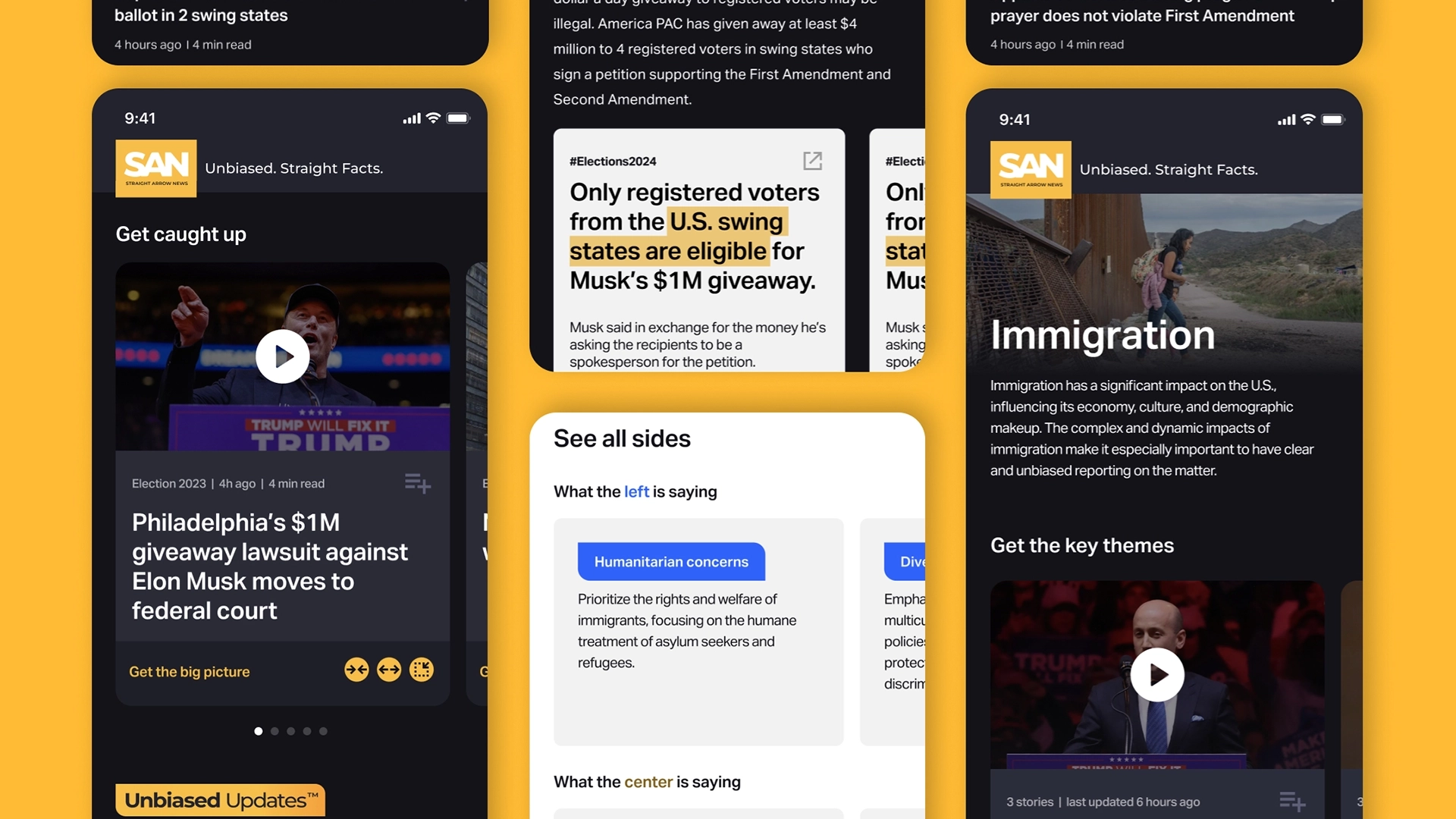
Together, IDEO and SAN created features across SAN’s website and app that put facts, trust, and transparency at the core of the product experience. Fact Cards distill key data points into clear, shareable units, while the Sources feature allows readers to trace information directly back to its original source. To make complex stories easier to grasp, Big Picture insights drill down into why events matter, surfacing underlying themes, historical parallels, differences in reporting, and common ground. The Why This Story Matters section provides readers with clear framing and sets the story within a broader context, while the Timeline illustrates how events unfold over days, months, or even years. An antidote to news polarization, See All Sides presents left, right, and center narratives for key topics side-by-side, and Media Landscape visualizations reveal how coverage varies across outlets. Finally, to ensure SAN fits seamlessly into readers’ daily lives, the redesigned Today Page is organized into three highly scannable sections: Latest News, Top Stories, and SAN Originals. The combined features create a balanced, clear, and non-polarizing news experience, making it easy for readers to delve deeper into the sources of their news.
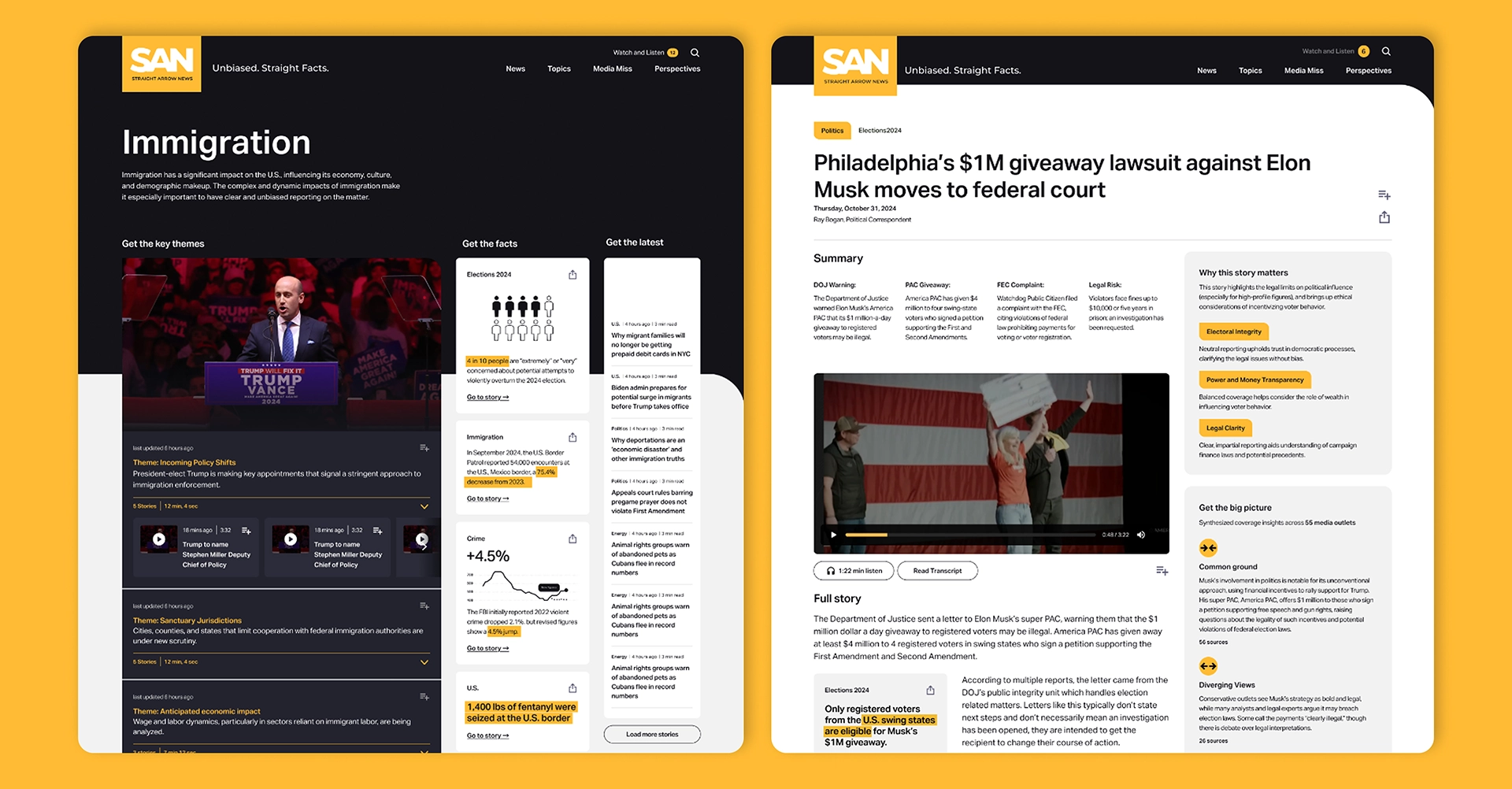
SAN now delivers a news experience as modern, dynamic, and trustworthy as its journalism. A month after its debut, the SAN app’s page views increased 1,170 percent year over year compared to June 2024, while active users rose 700 percent. Readers also give the updated mobile experience a 4.8 rating on the Apple App Store. “Our team is delivering reporting that’s both deeply factual and accessible,” said Derek Mead, SAN’s Chief Content Officer. “This redesign is pivotal to the direction journalism needs to take and the leadership role Straight Arrow News is taking on as we help guide the news industry into a brighter future.”
SAN built a loyal readership and gained recognition for its unbiased reporting. To expand and stand out from legacy media, SAN wanted a redesigned user experience that reflected its commitment to fact-based journalism.
1,170%
increase in app page views YoY
700%
increase in active users
4.8 rating
on the Apple App Store
Thoughtless Acts: Saved by the Trash
Thoughtless Acts: Showing Off Shades. The intuitive ways we adapt and react to things in our environments
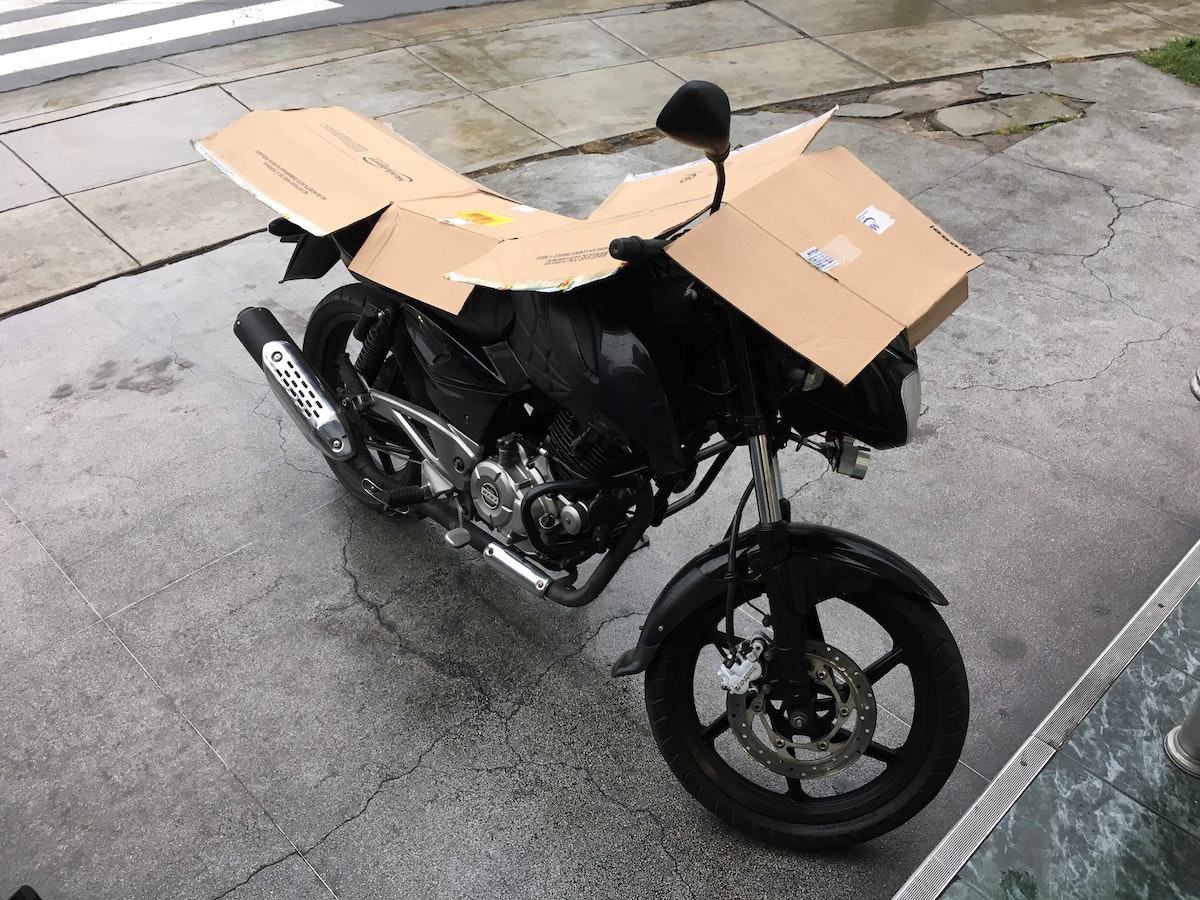
I took this picture in Lima, Perú. A delivery guy used the cardboard to protect his motorcycle from the rain while picking up orders in the store.
Lima is often gray and cloudy: the locals refer to this weather as “panza de burro" — the "underbelly of the donkey.” However it doesn’t actually rain much. The lack of rain is something of a joke (for example, there’s a theatre play called "Nunca llueve en Lima” — “It never rains in Lima"). So the need to cover your possessions from rain is one that only comes up infrequently.
The owner of this motorcycle was able to improvize, in part because the attitude towards trash is somewhat different. In the West, discarded objects tend to be hidden away and inaccessible. Here, there are more shades of gray: trash is more available and may find more utility before it's discarded for the last time.
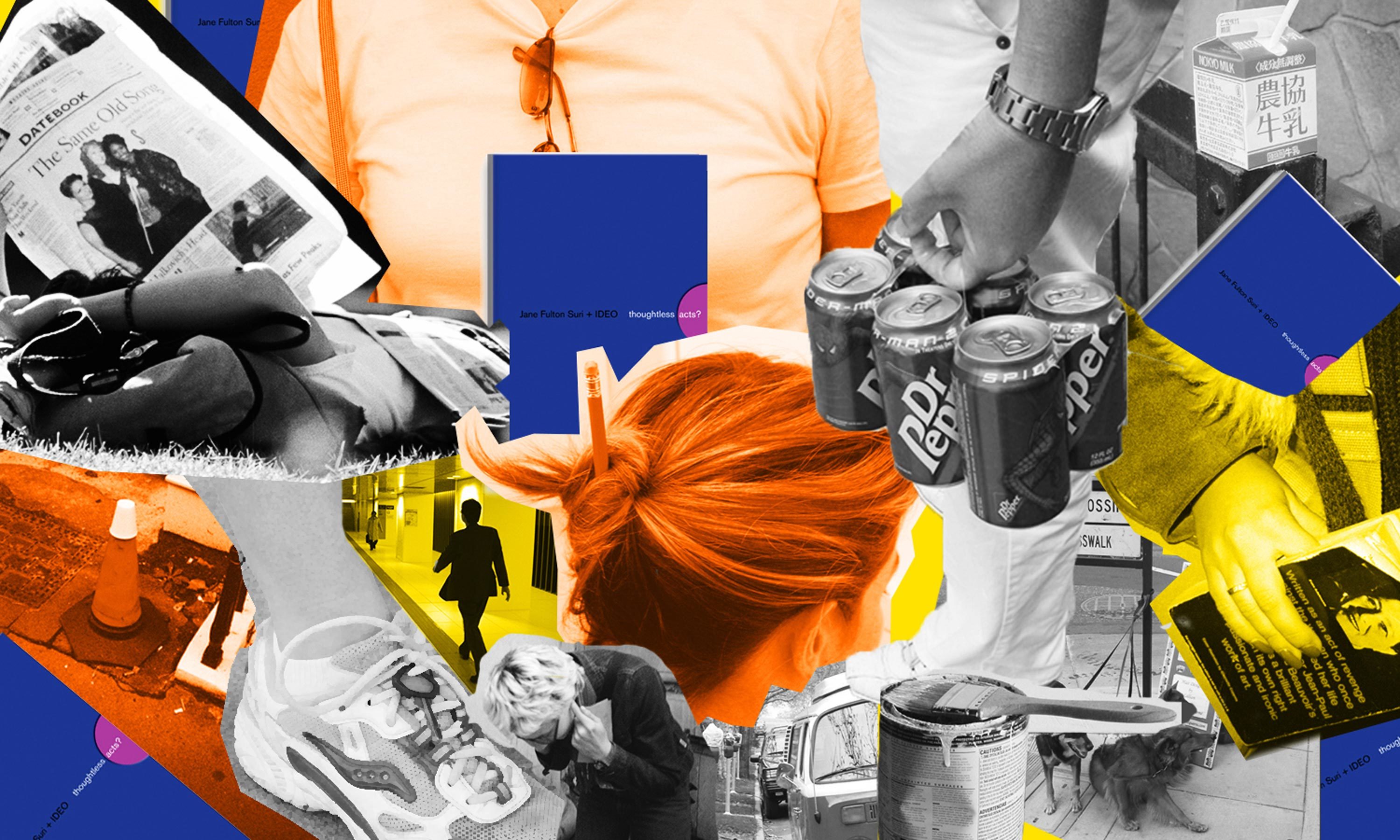
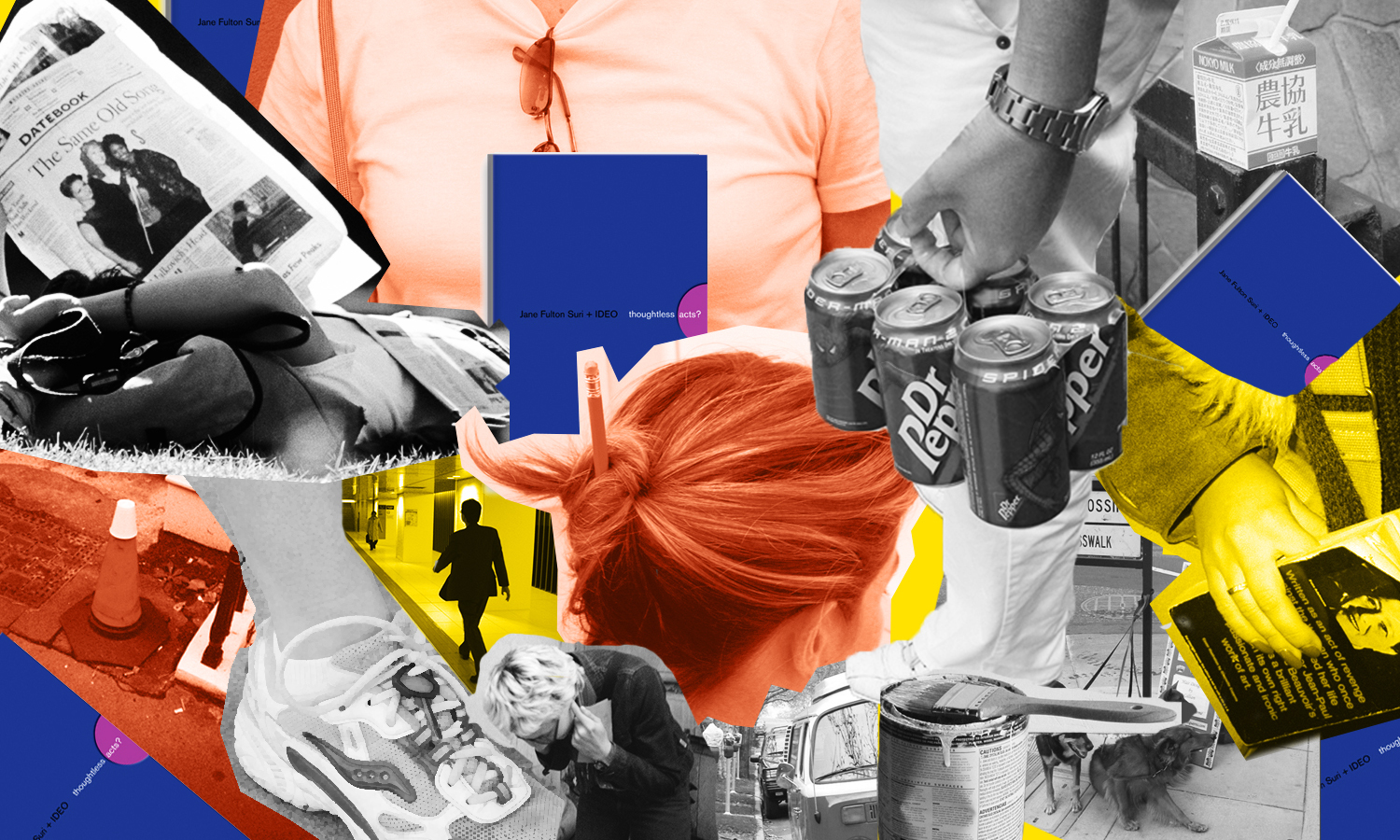
Human-centered design requires us to observe human behavior with beginner's eyes, so that we can spot the innate ways people interact with the world around them. We call these intuitive and unconscious reactions thoughtless acts, and IDEO designers collect photos of them to inspire the invention of new products, services, and experiences.
Prototyping VR Games with Team Future
How we went from a hackathon to the Oculus store
Here’s how we went from a hacked-together prototype to a popular game.
Idea Seed
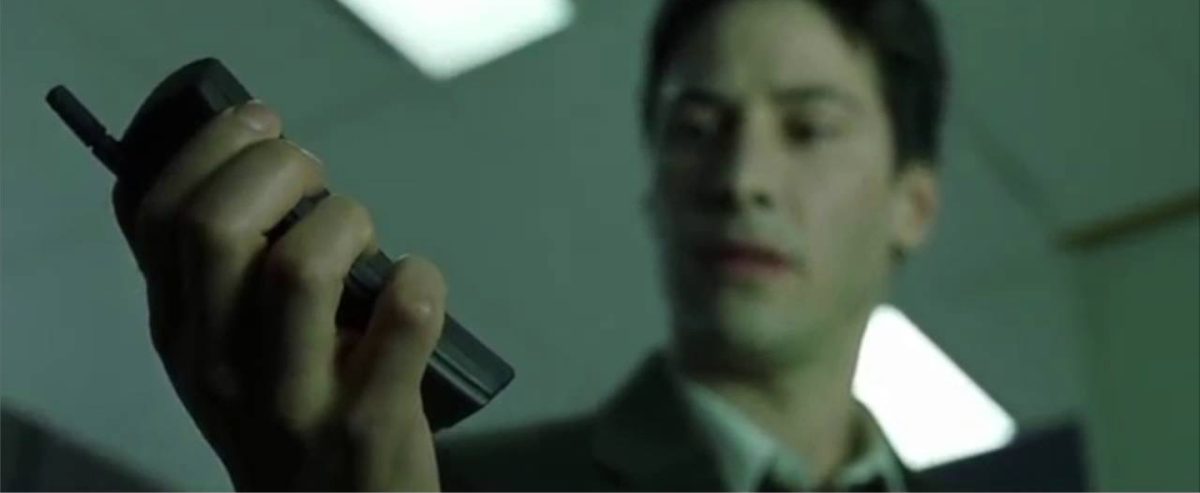
Our initial inspiration for the game came from “The Matrix.” There’s a scene in the beginning of the movie where the hero, Neo, gets a call from a mysterious stranger. “They're coming for you, Neo, and I don't know what they're going to do.” It’s Morpheus, who warns Neo that there are dangerous agents who are hunting him down. He then gives Neo directions to help him escape.
Our game works the same way. Player one runs around in a 3D VR maze, and player two sees a map and types out instructions for player one to follow. By making the communication of asymmetric experiences our key game mechanic, people can enjoy the experience together. This is important because VR is an immersive medium, but it can be socially isolating.
Refining the Game
Since each of the players sees a different screen (one in 3D and one in 2D), we tried my best to play to the strengths of each medium. VR is great at immersive and suspenseful experiences, so the VR player is the player of action, sneaking around to get treasure and running like hell to escape from enemy agents. A screen is great at showing flat data, and the player who sees it has access to a keyboard. So the hacker player sees a very detailed map and types to control everything.
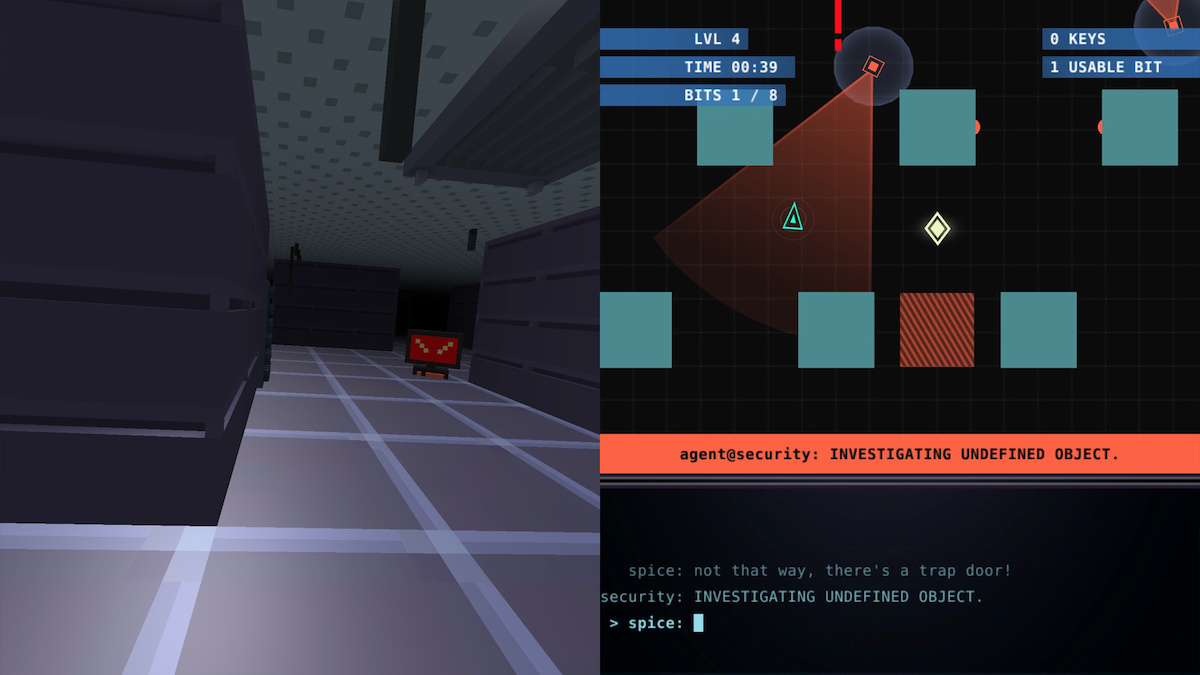
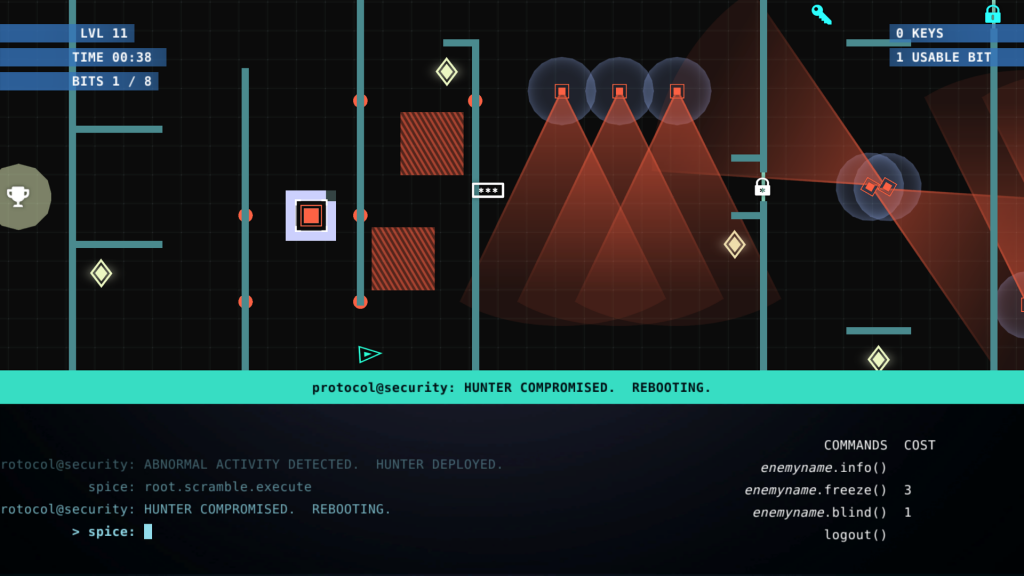
Cooperation is critical to this game. We designed it be impossible to win by yourself—unless you cheat by looking at both screens. The VR player determines where the game goes, but there are agents around the corner that only the hacker can see, as well as hidden trap doors and lasers. On the screen below, the VR player is blocked by a door. But there’s a password that they can give the hacker player to unlock it.
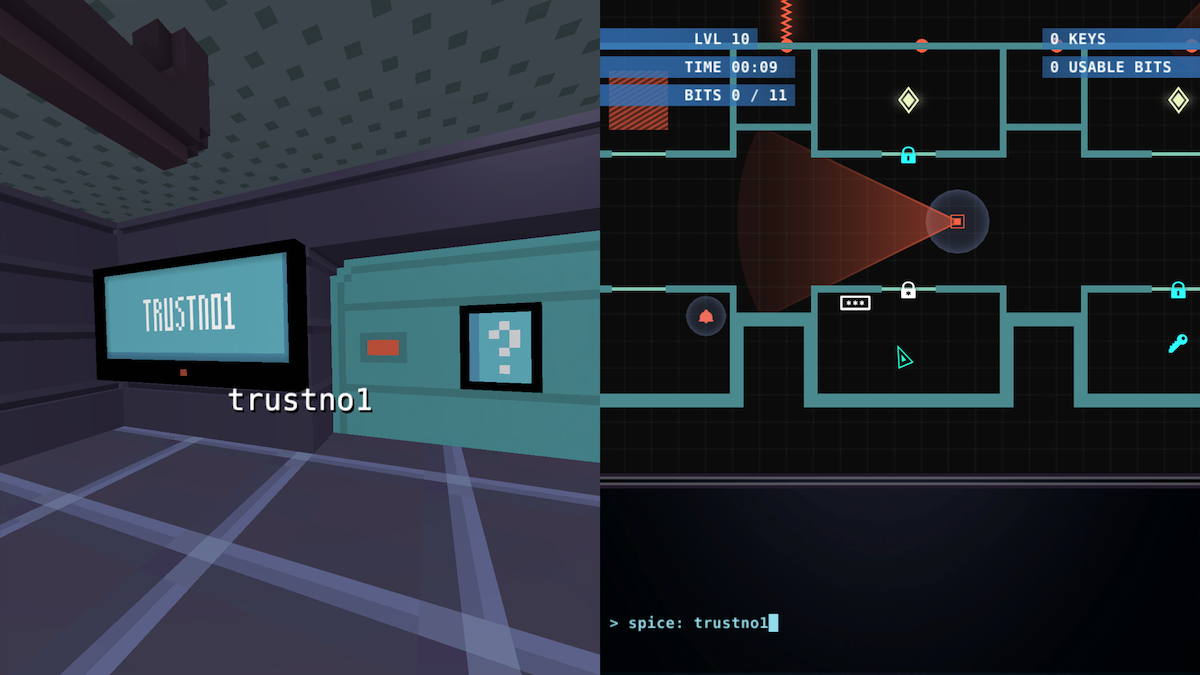
There’s also a mechanic for the VR player to scan enemies and gather “bits,” the diamond-looking things, which are used to purchase bonus abilities like freezing or blinding enemies. This spices things up, so they have more agency in the game.

Design Tools
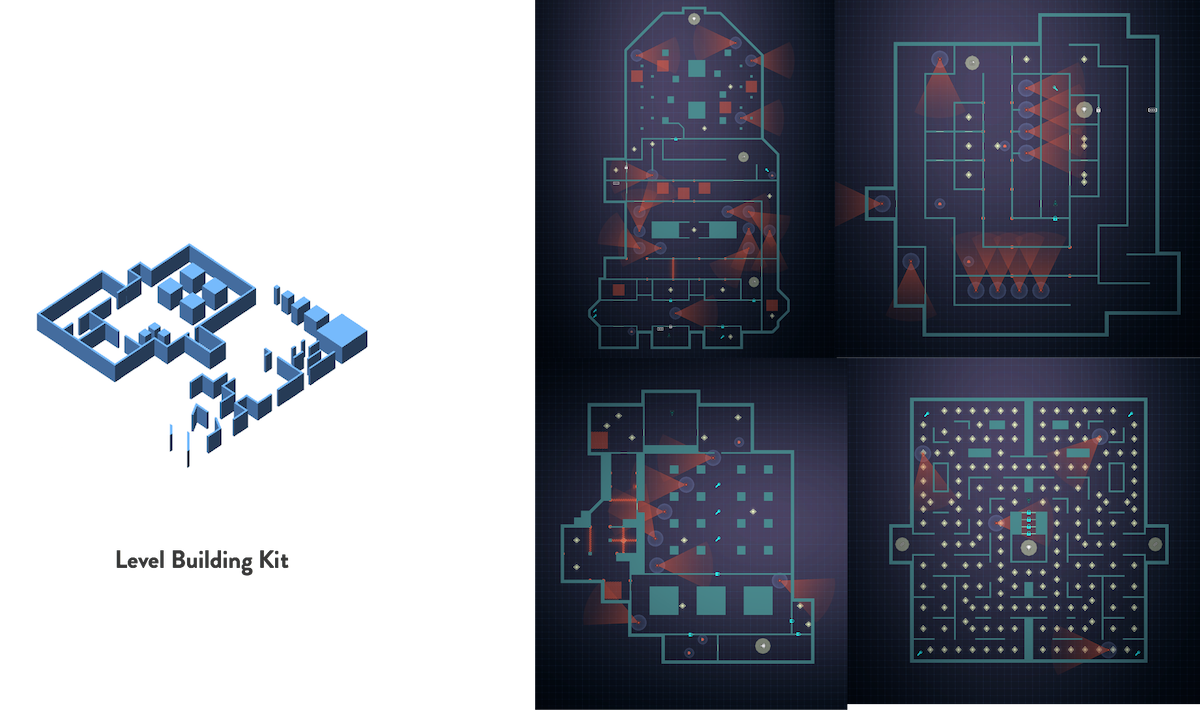
Part of designing something well is also designing how you work. With a team of four, we didn’t have the time to carefully craft every aspect of the game. So Mark, the developer, and I made a modular level building kit in Unity that allows people to build a level in just a few minutes. Everyone on the team could pitch in to create VR content. We’re in the process of preparing these tools for Steam Workshop, a website that allows developers to release game creation tools to the greater gaming community.
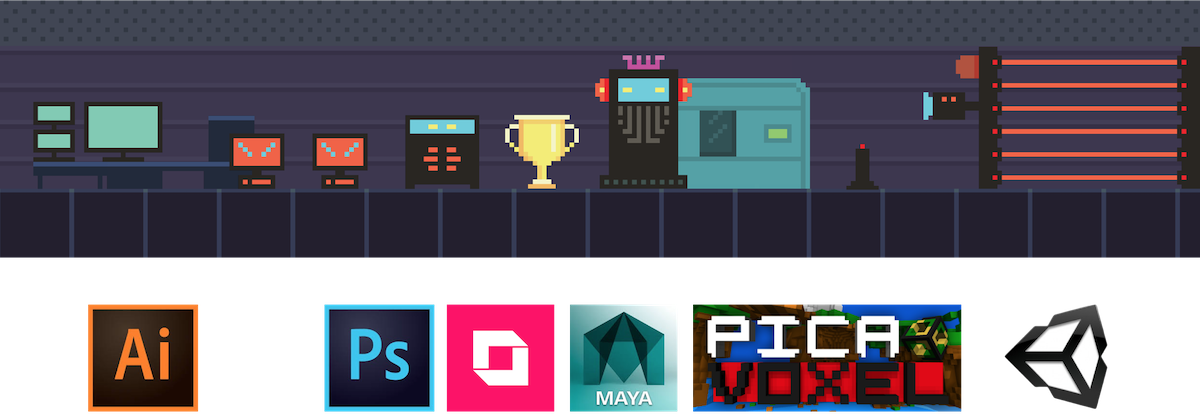
Our art pipeline got pretty crazy. I made the 2D assets in Illustrator so that I could avoid fussing with the resolution. For 3D assets, I made pixel sketches in Photoshop, turned them into 3D voxel art using Qubicle, played with the textures in Maya, and transferred models to Unity using Picavoxel. Finally, I set up prefabs in Unity so that I could easily swap the art in and out. The process allowed me to quickly pump out consistent and professional art, and instantly test it out in VR—a huge help for a solo artist.
Key Tips for Would-Be VR Designers
This process wasn’t always easy. Here are some important things to keep in mind as you work on your own games.
- VR is not 2D. Or even 3D. I’ve done a ton of 2D and 3D design before, but VR is nothing like it. I had to develop entirely new design processes, and it was critical to test the game over and over again inside VR to get things just right.
- Details matter, even for a baseline experience. If 2D UI just a little bit off, it looks funny. Misplace VR UI and people throw up. Getting everything right—from careful sizing of the environment to UI placement to 3D audio cues—is critical.
- Offer alternative control schemes. This was a tough lesson. When we initially launched, we had a firestorm of complaints because we only had the default control scheme. We had to scramble to create a snap turn comfort mode and a teleportation mode.
- Test in VR. Some of our biggest missteps happened because we had ideas that we didn’t test quickly enough.I foolishly made the controls more complicated than they needed to be. Since players have VR headsets covering their eyes, we had to constantly remind them about controller locations because they couldn’t see them.
- Allow the audience to engage. VR can become an amazing social experience when you let your players share the game.
Launching the Game
We’re pretty thrilled with we managed to put together. Here’s a quick video to show what it feels like in action.
In June, we finally launched the game on the Oculus Store and Steam. Over the past 5 months, we’ve sold more than 2300 units. We’re the fourth highest ranked game on the Oculus store. Give it a try—I’d love to hear what you think.
Around the time Oculus Rift completed its Kickstarter, I brought my virtual reality headset to a weekend hackathon called the Global Game Jam. Over 48 hours, my team and I built a game prototype where one player navigates his way through a maze, while a second player types instructions to him. The prototype was pretty simple—thrown together in 48 hours, after all—but people had a blast playing it. So a few friends and I decided to build it into something bigger. Over the past three years, we’ve worked nights and weekends to create Black Hat Cooperative, a multiplayer stealth game. We just launched this June on Oculus and Steam, and today our game is one of the highest rated experiences on the Oculus Store.

Pursuit of the Cold
Wim Hof's freezing method isn't fun, but it unlocks superhuman potential
Then, about a year ago, I heard of Wim Hof. Hof holds world records for running barefoot marathons above the Arctic circle, for swimming under solid ice, and for climbing Mt Kilimanjaro in shorts. My small question became an obsession.
At IDEO, we look to extreme users to inspire the things we design, and Wim Hof seemed like the ultimate extreme user. I joined one of his workshops in the Pyrenees, Spain, and met folks from all over the world, who had come to find answers for their mental health, physical health, or athletic performance.

Hof is the cold fairy. He gives you permission to go into the cold, to enjoy it, to seek it. Cold has been his teacher, and breath-work his toolkit. He is happy to share his methods, and create the conditions for others to push their boundaries. Under his guidance, I took a 10 minute ice bath and did not shiver, during or after. I saw many new friends make breakthroughs that week. The cold was teaching us that we were in control and the decider of our own experiences: we could overcome pure pain.
Stanford Neuroscience Professor Andrew Huberman was invited by Hof to join our workshop, and we spoke about how to apply his Method, and about bringing Hof to California.
I began teaching my distillation of the Wim Hof Method to fellow IDEOers in Palo Alto, and to my surprise, over a third of our studio expressed interest in a mini-course. We got ready. We talked about how we stay warm—from shivering, to insulation, to mitochondrial chemical energy. We breathed, and observed the adrenaline-high cortisol-low effects of deep breath cycles with retentions.
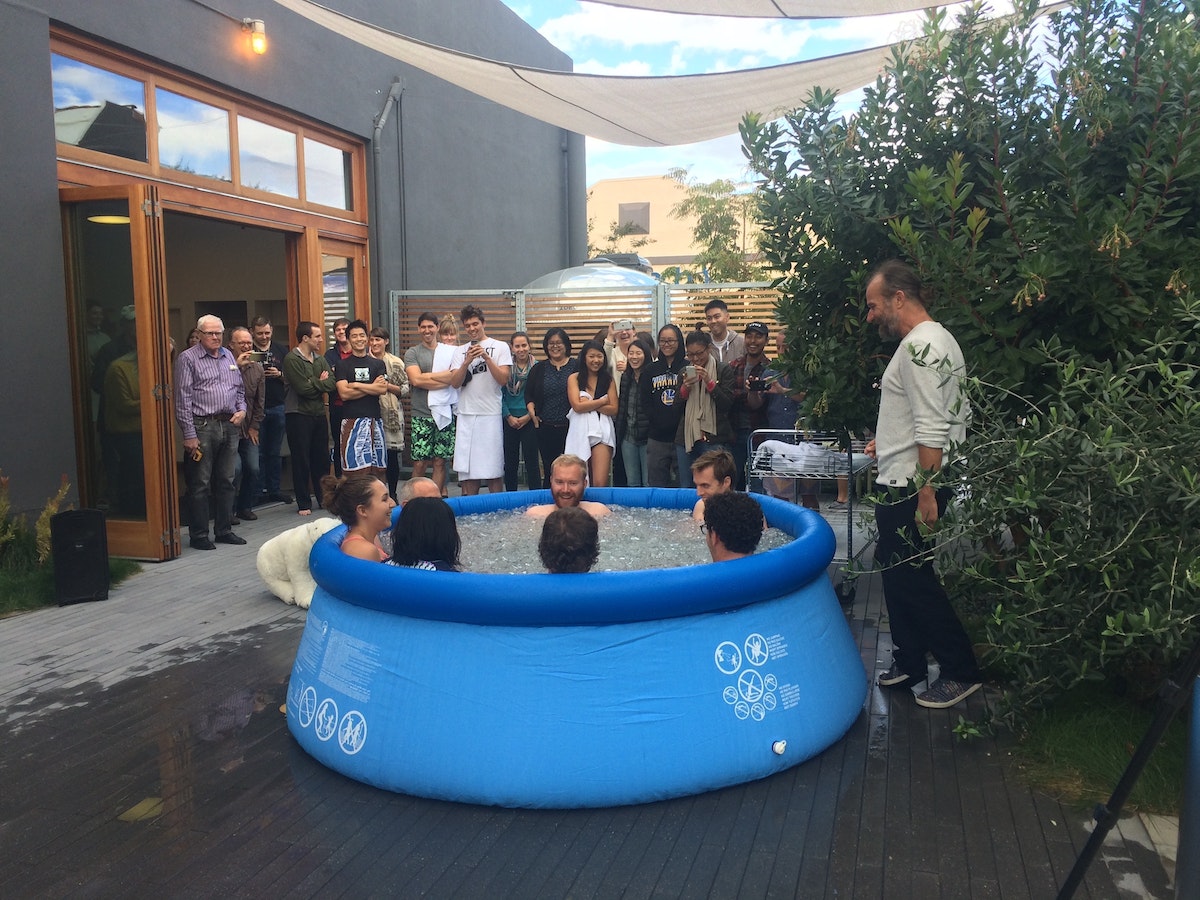
Then Wim Hof and Prof. Huberman joined us in person for an afternoon of ice baths and to present their talk, “The Mind Made Visible”. This led to a great discussion on the inner workings of the Hof Method, and about the science behind his approach. Scientists are intrigued by this case of the “extreme user” who can teach his methods to other people and show results immediately—in contrast with a pranayama guru who requires 20 years of study. A groundbreaking study has shown that participants trained in the Method can control their autonomic nervous systems and suppress immune response to an endotoxin injection (the introduction of bacteria, which can trigger many adverse physiological reactions in humans).
The Method involves several minutes of deep inhalation-driven breathing, followed by holding the breath on a full exhalation for as long as is comfortable. Beginners can hold their breath for a remarkable 1- 2 minutes. After extended practice people can reach 4+ minutes. During this process, the blood pH becomes alkaline and prevents you from passing out, while also serving to restore balance in the endocrine and immune systems. At around the 90 second mark, an adrenaline release is triggered. Unlike when adrenaline is pumped out if your life is in peril, low cortisol levels ensure that you remain calm, focused, and able to direct the superhuman power boost.
The cold and breath work go hand-in-hand—the breathing fortifies you for the cold, and the release of cold-shock proteins from sustained ice-water immersion amplifies the effects of the breathing. The practice, Hof says, resets insomnia/jet lag, reduces chronic pain, heads off depression, improves memory, and increases longevity. (Note: the breathing Method should be performed in advance of, not during, cold water immersion).

For me, the Method has been most helpful while mountaineering. By controlling my body's reactions to cold and over-indexing on oxygen, I stay comfortable in extreme conditions and acclimatize more effectively. After meeting Hof, I'm no longer asking, why are we afraid of the cold? But instead, how might we harness the cold to unlock our own potential?
In the New Hampshire winter of 2005, I gave up use of all jackets, sweaters, and warm layers for the season. Crossing between high school campus buildings in a t-shirt during snow and freezing rain, I received appalled looks from my peers and teachers, but felt invigorated and unconstrained. I began asking, why are we afraid of the cold? I later reverted to social norms, and by college, I was a lover of warmth. But the question stayed with me.
Why You Should Start a Foodstagram
It looks good, it smells good… and it gets a lot of likes
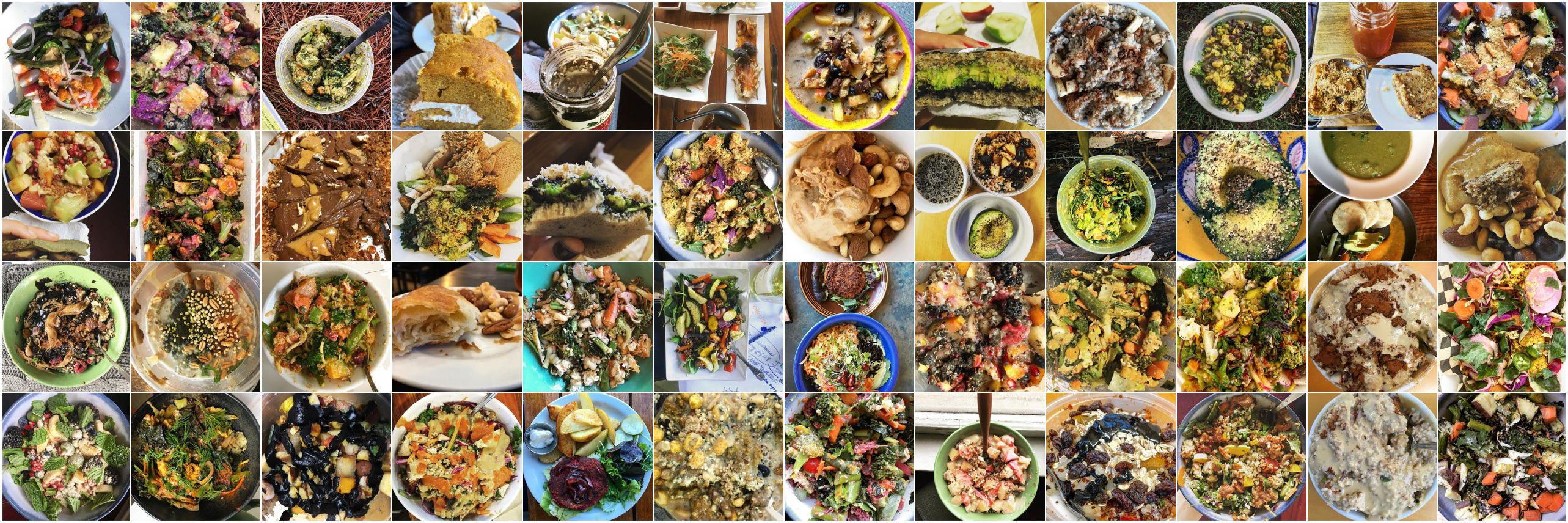
I don't snap pics of my lunch @plantbowls to brag about what I’ve made or ordered. I do it to take stock of what I’m about to eat, to appreciate it, and to build community around it—something I’m in the habit of doing as a coordinator for IDEO U.
Four years ago, I shifted to a plant-based diet. Going vegan turned out to be an easy move with the help of Instagram. Because I made it a habit to capture food in the best light, it started to look gorgeous. Focusing on plants might seem bland, or limited, but documenting them made me realize the glory of spices, vegetables, fruits, beans—the sheer variety of it all! I began to revere colorful jewels of fruit, to inhale the aroma of a tahini sauce before I dug in. I really noticed what was on my plate. I would take an extra beat to slice an avocado onto a bowl of veggies or drizzle nut butter on top of steaming oatmeal, both to make them look more appealing and add to their deliciousness.

Not long after I started foodstagramming, I read an article that explained why. It turns out that by taking pictures and waiting a little longer before we pick up our forks, we delay gratification, which makes the food seem more delectable. By holding off on eating for a beat or two, I was actually making it taste better.
And when I posted these dishes on Instagram later, I got to experience them again while trying to think up a clever caption or hashtag. Initially, it was just about sharing a beautiful image. But seeing others be surprised by the diversity of plant-based foods, and having them ask about recipes meant a lot to me. Maybe they'd get inspired to shift to a healthier diet, too.
We eat at least three times a day. Why not bring more joy to a basic necessity? It feels good, it smells good, it looks good… and it gets a lot of likes.
Here are some accounts I follow to get inspired:
- instagram.com/healthiecook
- instagram.com/panaceas_pantry
- instagram.com/feastingonfruit
- instagram.com/nathaliesader
- instagram.com/thefeedfeed.vegan
And here’s mine: instagram.com/plantbowls
It's easy to roll your eyes at the guy at the table next to you lurking over his food, phone in hand. I once considered foodstagramming to be a cliché, and certainly think spending much of our time with our faces planted in our phones is not a great evolutionary turn. Then I started my own foodstagram.

Lindsey Turner
I’m passionate about building brands, products, and experiences that help organizations show up with meaning and momentum.
I help organizations cut through complexity by shaping how they show up, through brand strategy, identity, and storytelling.
Working at the intersection of brand and business, I bring an editorial eye and a bias toward making—turning ideas into tangible experiences that people can understand, trust, and believe in.
My work spans government, healthcare, financial services, media, and consumer goods, from launching Gen Z-focused ventures to building innovation labs and reimagining legacy brands. I relish moments of ambiguity and enjoy translating across teams, perspectives, and priorities to move ideas forward.
I started my career in editorial and digital design, shaping cross-platform experiences and identity systems in publishing and agency environments. That foundation still shapes how I work today: I’m detail-oriented, collaborative, and overreliant on the Oxford comma. I hold a BFA in Visual Communication from the School of the Art Institute of Chicago.

Rachel Young
My work helps organizations see who their products aren't working for—and build the will and the tools to do something about it
For 25 years, I've asked the same question: Who does this design exclude—and what are we going to do about it?
My work spans human-centered strategy, inclusive design, and qualitative research, with clients ranging from Microsoft, Google, and Verizon to the National Science Foundation, and San Francisco Unified School District.
Before IDEO, I taught elementary school in East Palo Alto and spent a decade doing design work with social service organizations—where I learned firsthand what it costs people when systems are built without them in mind.
I am currently writing User Error, a nonfiction book about digital access and the design decisions behind it. I live in Oakland, California.

Brian Pelsoh
I lead with craft, ensuring our work is creatively excellent: rooted in deep human insight and imagination, while also grounded in the realities of business and technology.
My expertise spans brand, communication, and product design across tech, education, the arts, and social impact.
I believe great work demands both high-level vision and obsessive attention to detail, and only happens through collaboration.
I bring an inclusive, hands-on approach and a deep understanding of business, which enables me to consistently deliver excellence while always asking why.
Before joining IDEO, I worked at the brand firms Pentagram and VSA Partners. I began my career as a designer, leading teams at the School of the Art Institute of Chicago and the Milwaukee Art Museum. I hold an MFA in graphic design from Maryland Institute College of Art and a BFA in communication design from the Milwaukee Institute of Art & Design, and have taught at some of the best design schools in the US.
Tony Wong
I am responsible for IDEO’s long-term success in China and working with clients to use design as a tool to enable growth.
I am responsible for IDEO’s long-term success in China and working with clients to use design as a tool to enable growth. Specifically, I have helped Chinese companies design holistic brand solutions through the development of their products, communication, services, and innovation teams, and I have helped multinationals expand their presence and influence in China.
I advise global leaders on developing China-led innovation and capabilities.
In over 15 years in IDEO Shanghai, I have worked on projects that use design to elevate the quality of the experience of healthcare products and services, streamline processes that increase productivity, create spaces and programs that promote and enable inclusive communities, and build next generation mobility solutions that are planet-positive.
Before joining IDEO, I worked at Philips Electronics and the Electrolux Group in Italy, the Netherlands, and Singapore on a number of breakthrough commercial products. I am a member of the Young President Organization in Shanghai.

Mom-led innovation and entrepreneurship: Kate Torgersen
How lived experience can reveal overlooked needs and inspire new ventures.
Starting a business from scratch is already an admirable undertaking. Now, try starting a business while breastfeeding 7-month-old twins, raising a toddler, and traveling for a full-time job. That’s exactly what Kate Torgersen did when she founded Milk Stork, the first breast milk travel solution for working moms. Now six years old, Milk Stork has helped thousands of working moms get their "liquid gold" home safely from business trips and is offered as an employee benefit by many large companies.

Mindsets of resilient entrepreneurs: Alexandre Lazarow
The mindsets founders need to adapt, persist, and grow through uncertainty.
What can we learn in this moment from global entrepreneurs who are embracing constraints to build resilient, impactful businesses? Alexandre Lazarow, author of the new book Out-Innovate: How Global Entrepreneurs—from Delhi to Detroit—Are Rewriting the Rules of Silicon Valley, joined us to discuss the ways entrepreneurs around the world are shifting their mindsets around business innovation and what you can take away from their approach. View the full recap at

Design thinking AMA with Suz & Coe
Practical answers to common questions about applying design thinking well.
What is design thinking? Why does it work? How do I get started with it? Our community had so many great questions on the power and potential of design thinking that we hosted an Ask Me Anything session on the topic with IDEO partners and IDEO U leaders Suzanne Gibbs Howard and Coe Leta Stafford. View the full recap at

Looks like you might be in search of something very specific?
Or reset the filters above and try another angle.
Here’s some random inspiration
Podcasts about creative leadership
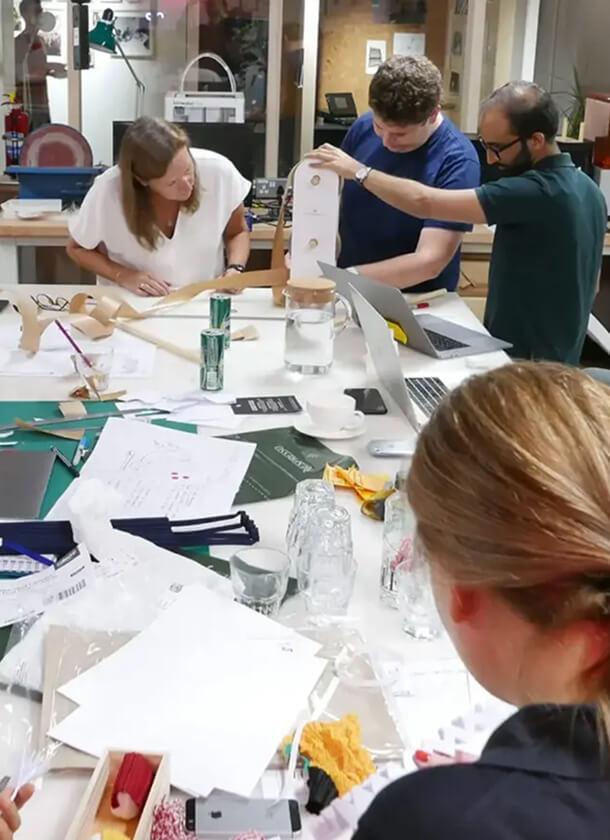
Articles about the power of prototyping