
Designing a new vision for women’s healthcare
Introducing Cottage Women’s Health
Systemic transformation is not new to Cottage Health. Founded in 1888 by 50 forward-thinking women in Santa Barbara who wanted a hospital for their growing community, Cottage Health has since expanded to 3 hospitals and is quickly growing its outpatient services as well.
To understand the current Cottage Health experience, IDEO conducted dozens of in-depth interviews with patients, providers, caregivers, and staff. They also ran multi-week diary studies, engaged in inspirational research activities, and held events to hear from local women.
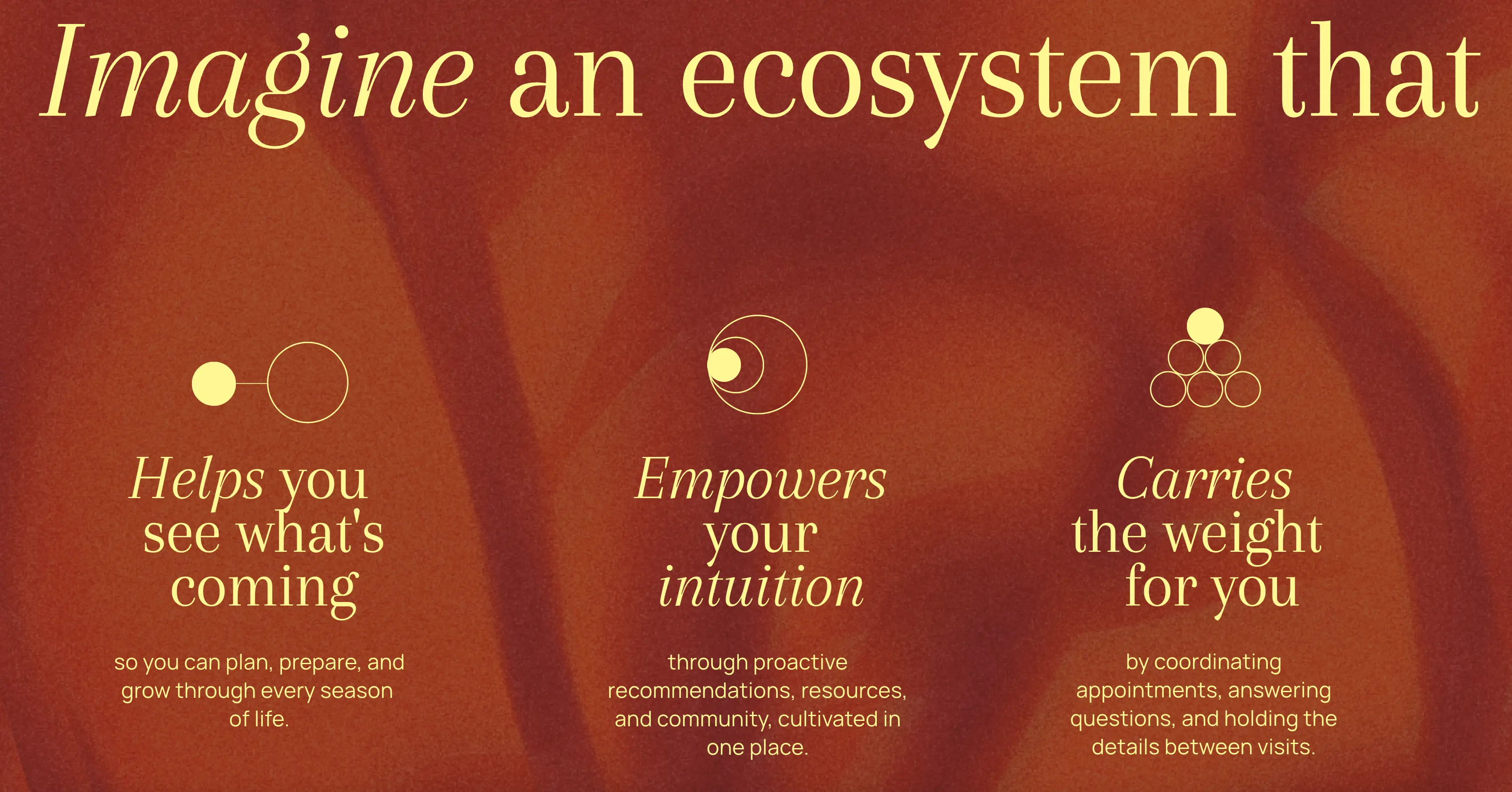
The qualitative research surfaced that women often carry the mental burden of repeatedly remembering, explaining, and advocating for themselves. Women’s pain is often minimized, which causes new providers to inherit mistrust from previous experiences, without having the tools to rebuild it. During significant life transitions, such as pregnancy or menopause, women may receive conflicting advice from health providers and seek additional outside support from informal networks. Access to quality care can sometimes depend on insider knowledge, private resources, or providers willing to go far beyond their job descriptions. And while providers make referrals, women must handle the time-consuming coordination required to make everything work, instead of focusing on healing. The bottom line: what women wanted most was to be seen, heard, believed, and supported in knowing what to do next.
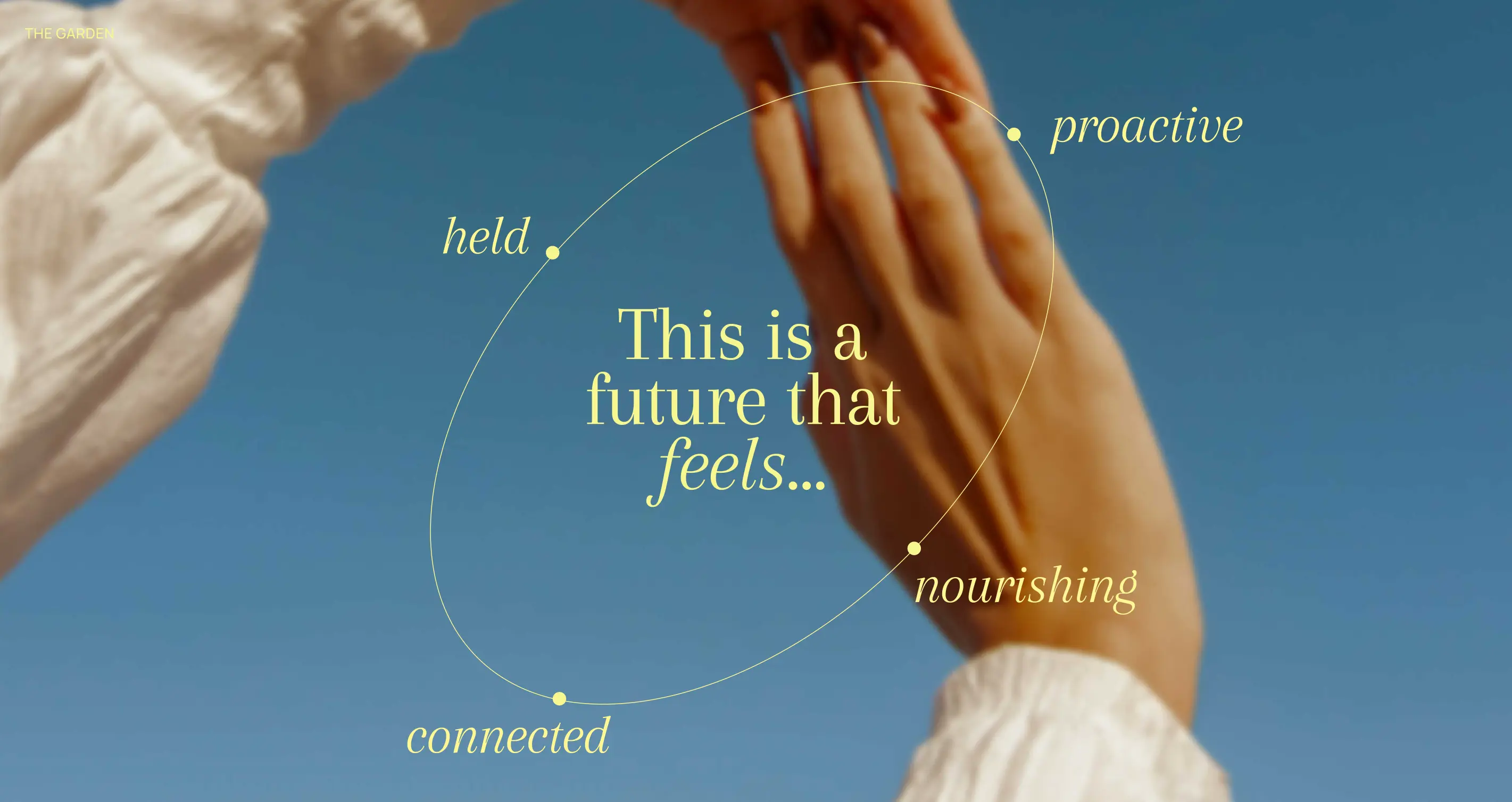
In order to address these challenges, IDEO proposed a new vision for women’s health, alongside design principles and concrete service shifts to guide future decision-making. Every interaction with Cottage Health should build on the information patients have already shared, demonstrating the system is listening. They should also guide women through life transitions by anticipating needs in future life phases, not just what’s happening now. Much like a community gathering, the Cottage Health experience should feel like a village, fostering belonging and shared care through warm, connected, human touchpoints.
Building on these design principles, IDEO developed three exploratory service concepts that represented potential pathways for future development, rather than finalized offerings: True North, Wellness Commons, and Care Circle.
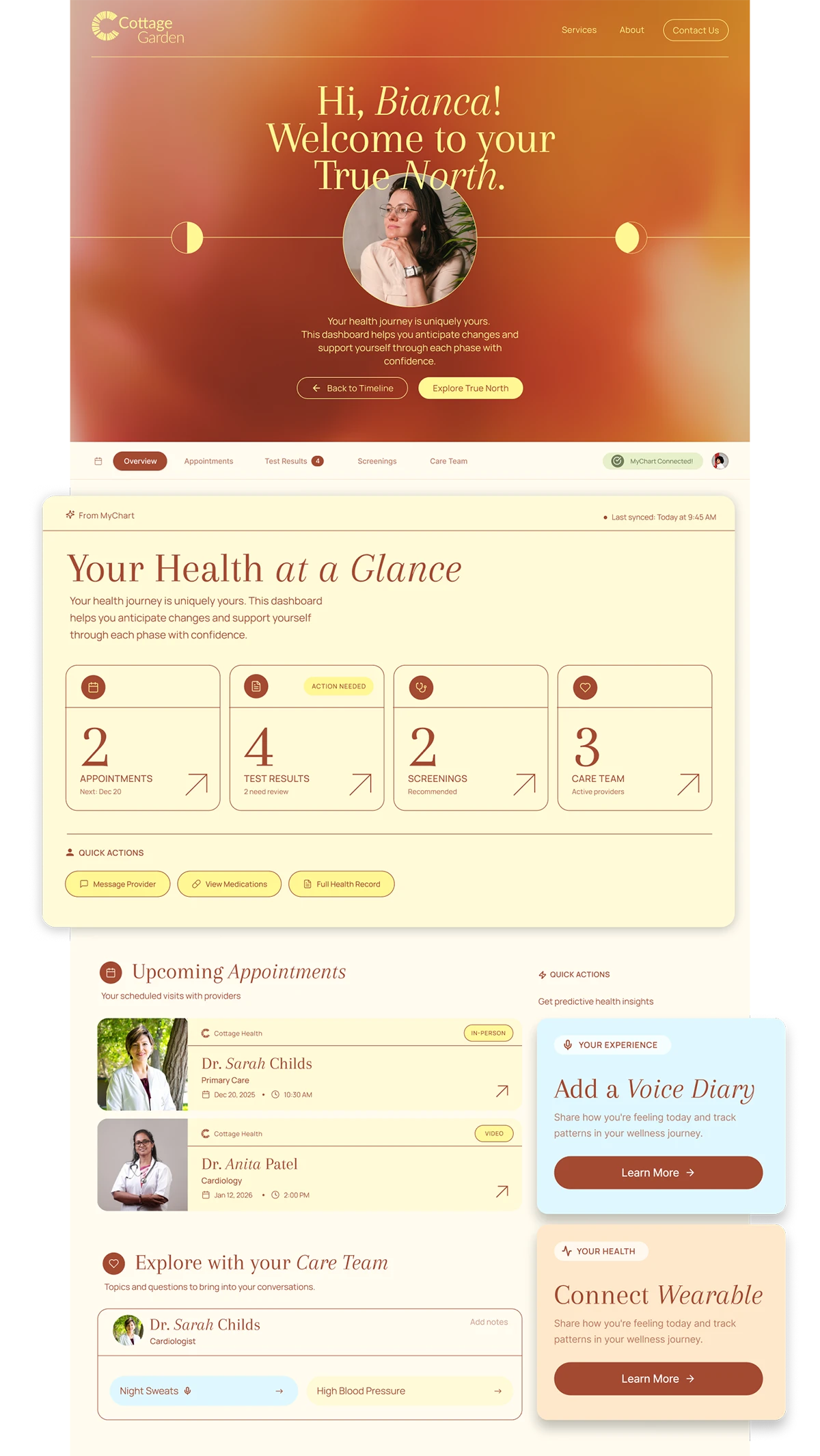
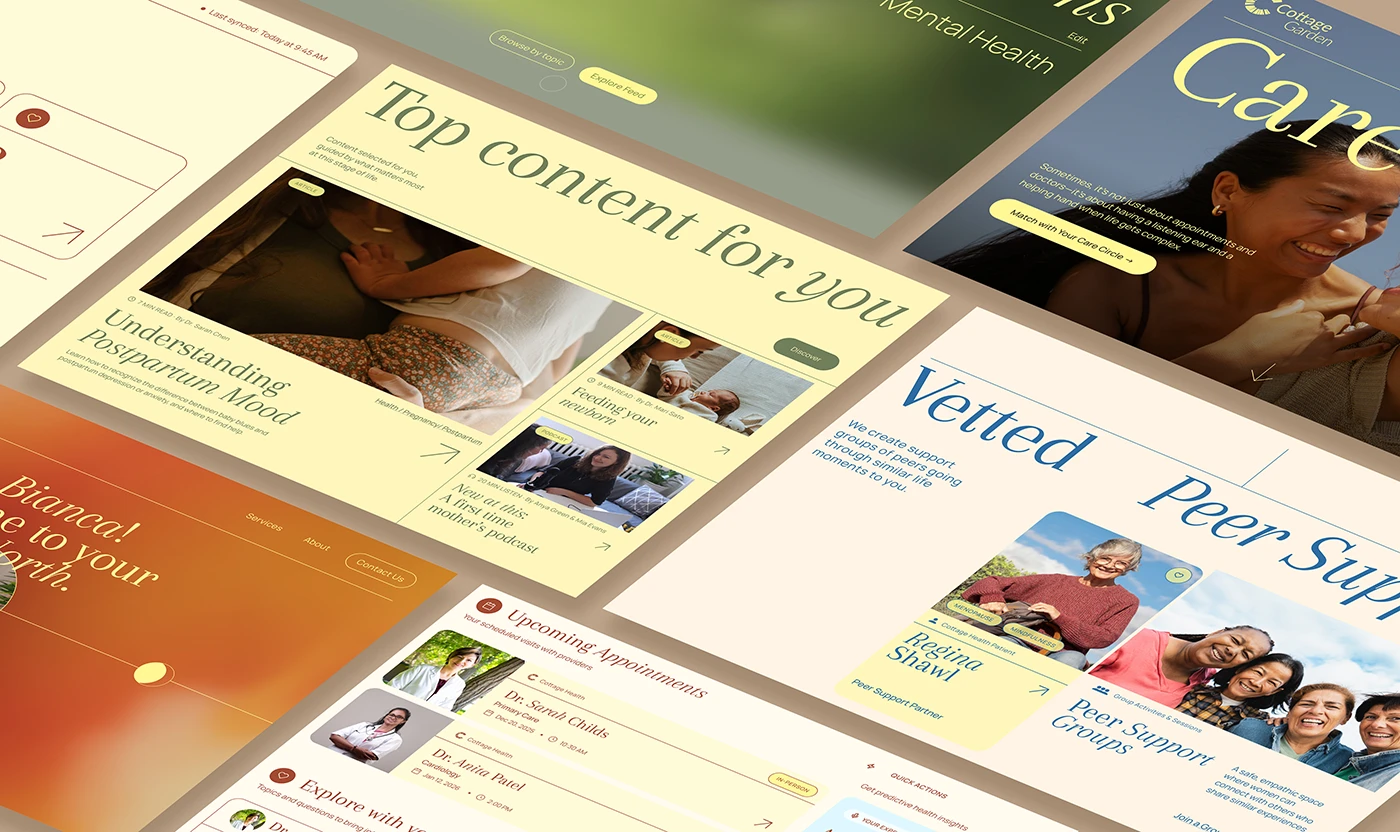
True North is a patient-facing tool that helps women see the long view of their health journey by integrating personal data, health goals, and reflections into a dynamic timeline they can share with their healthcare providers.
Wellness Commons serves as a digital front door, offering curated resources, including community events, discounted wellness programs, fitness classes, and trusted referrals, that help women navigate their well-being with clarity and agency.
Care Circle connects women to an extended support network inside and outside Cottage’s walls, including a hotline, health coaches, peer group support, and nurse navigators who can help patients manage complex care needs.
IDEO also provided Cottage Health with a multi-year roadmap building out the women’s health experience alongside continued pilot and implementation advisory. The roadmap included a comprehensive series of launch-to-learn pilots designed to test assumptions, reduce risks, and learn quickly, with IDEO stewarding the process. These pilots ranged from digital mockups and a curated community referral directory to a support line, a new nurse navigator role, and peer coaching services, among other experiments.
In July 2026, Cottage Health announced it was expanding its focus through a new Cottage Women’s Health Campus in Santa Barbara. Led by Dr. Jane Varner, Cottage Women's Health is projected to open in early 2028. It will encompass women’s health services across the lifespan, from puberty to menopause and beyond, including OB-GYN, pelvic floor health, women’s heart health, a menopause clinic, and a breast care center of excellence. It will also include supportive services, including trained nurse navigators to coordinate patients’ care journeys, giving women a single, trusted entry point for integrated care at every life stage. Cottage Women's Health is also exploring a new digital support system inspired by IDEO’s Wellness Commons concept.
Cottage Health had ambitious goals to expand its women’s health services and needed a partner to help it understand what women truly wanted from their healthcare and bring it to life.
7 months
from end of project to the announced launch of Cottage Women’s Health
From incremental change to breakthrough innovation
How Master Kong reinvented the instant noodle, from the inside out.
Looking to understand the role of instant noodles in middle-class Chinese life, the IDEO team conducted in-home research with consumers across a range of life stages and levels of attachment to noodle culture and convenience foods. The first finding was reassuring: Everyone kept instant noodles at home. The category still had a place in middle-class kitchens. But beneath that was a more complicated, emotional story—and an unmet need for convenience and quality to coexist in a single product.
The team discovered that instant noodles are more than just a quick, on-the-go meal; they are a nostalgic comfort food that evokes fond memories. But since their heyday, their role in daily life has evolved. Once a complete meal in itself, instant noodles now often function as a versatile flavor base or culinary accent in other dishes. Because they don’t align with the healthier, higher-quality, and more novel food choices that middle-class consumers aspire to, noodle shops, delivery noodles, or fresh-cooked instant options often win out. Yet, even these alternatives come with trade-offs. Delivered noodles lose texture during transport. Sit-down noodle shops preserve quality but offer limited flavors. Cooking from scratch meets the bar for both texture and flavor, but requires a significant time investment. As one young mother said, “If I could get the texture of fresh-cooked noodles without turning on the stove, I’d buy that instant noodle for sure.”
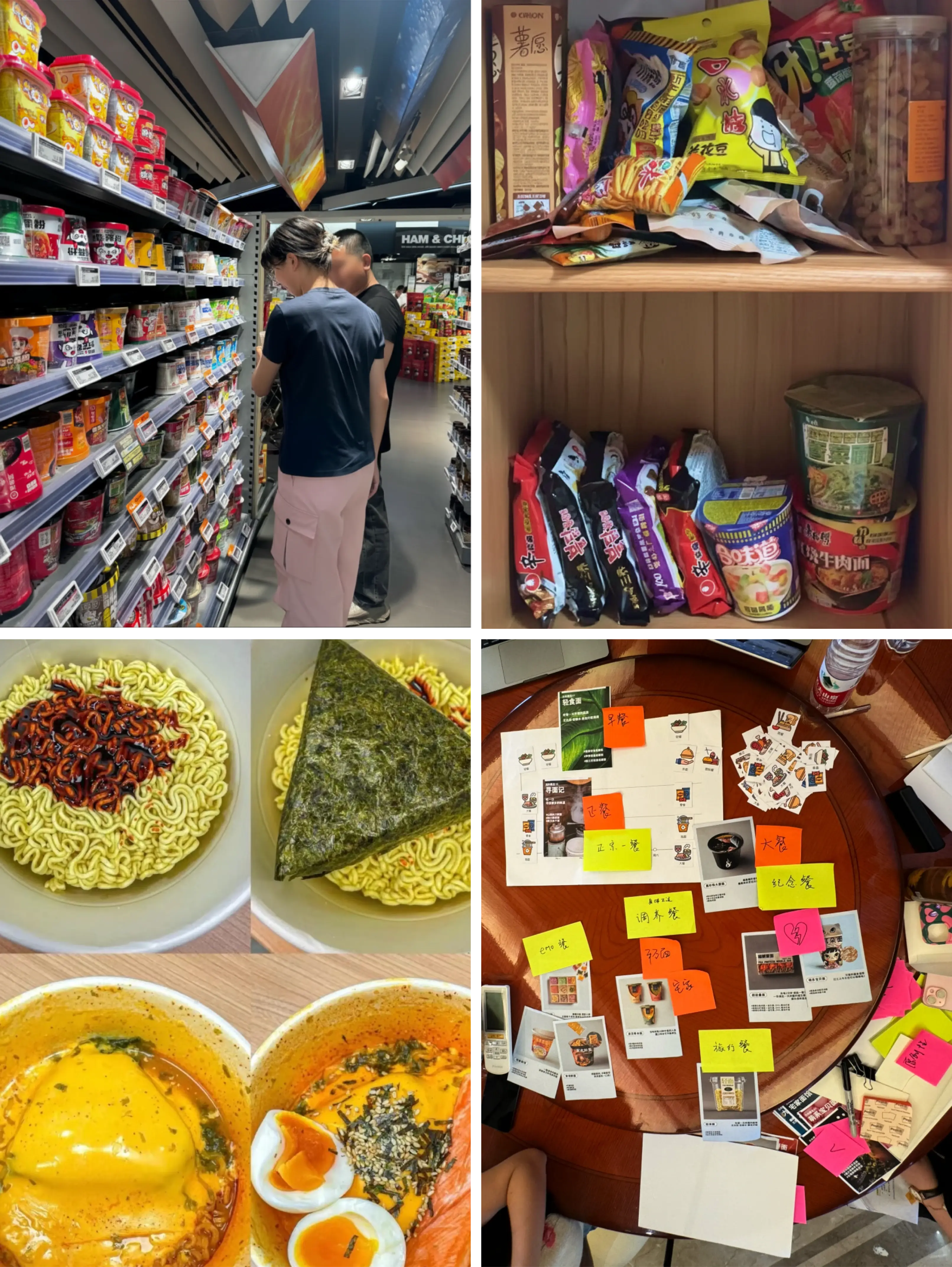
The research inspired the creation of a new category, which the team termed “fresh-brewed noodles.” More than just a noodle or broth upgrade, Master Kong’s fresh-brewed noodles would offer the speed of instant noodles with the quality of freshly cooked options, plus flavors not found in traditional noodle shops. The strategic positioning was clear. Executing it by making fresh-brewed noodles mass-producible, affordable, and eventually profitable presented a category-innovation challenge. To get there, IDEO designed a series of dual-track co-creation workshops with the Master Kong team and consumers.
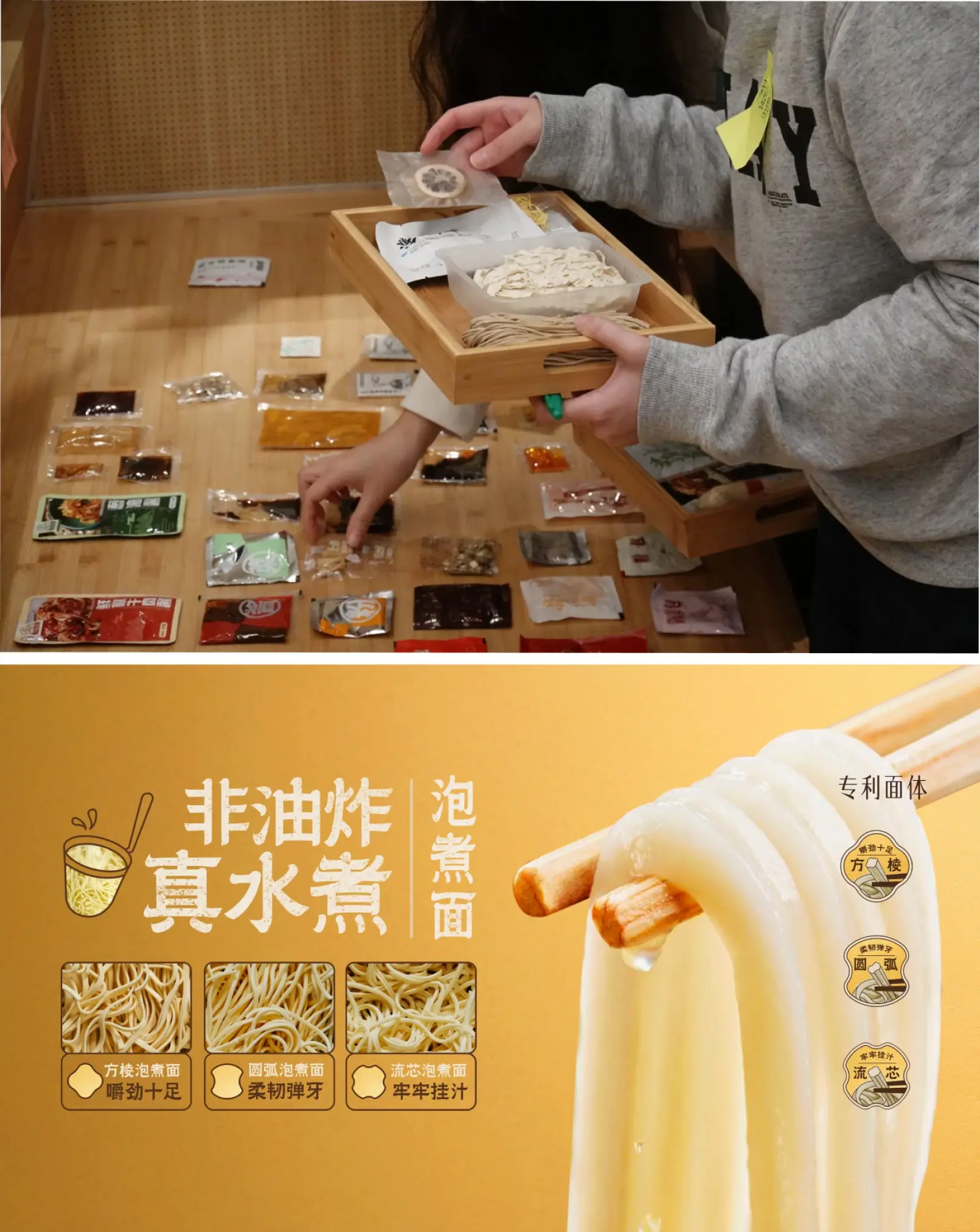
One track focused on prototyping the core product experience: noodles, broth, and toppings. IDEO and Master Kong’s R&D team began by studying the traditional craft of Chinese noodle-making, starting in Shanxi, a region renowned for its noodles. Through successive rounds of prototyping and consumer tasting, the team identified a critical insight: for “fresh-brewed noodles” to be convincing, the innovation had to be centered on the noodles themselves.
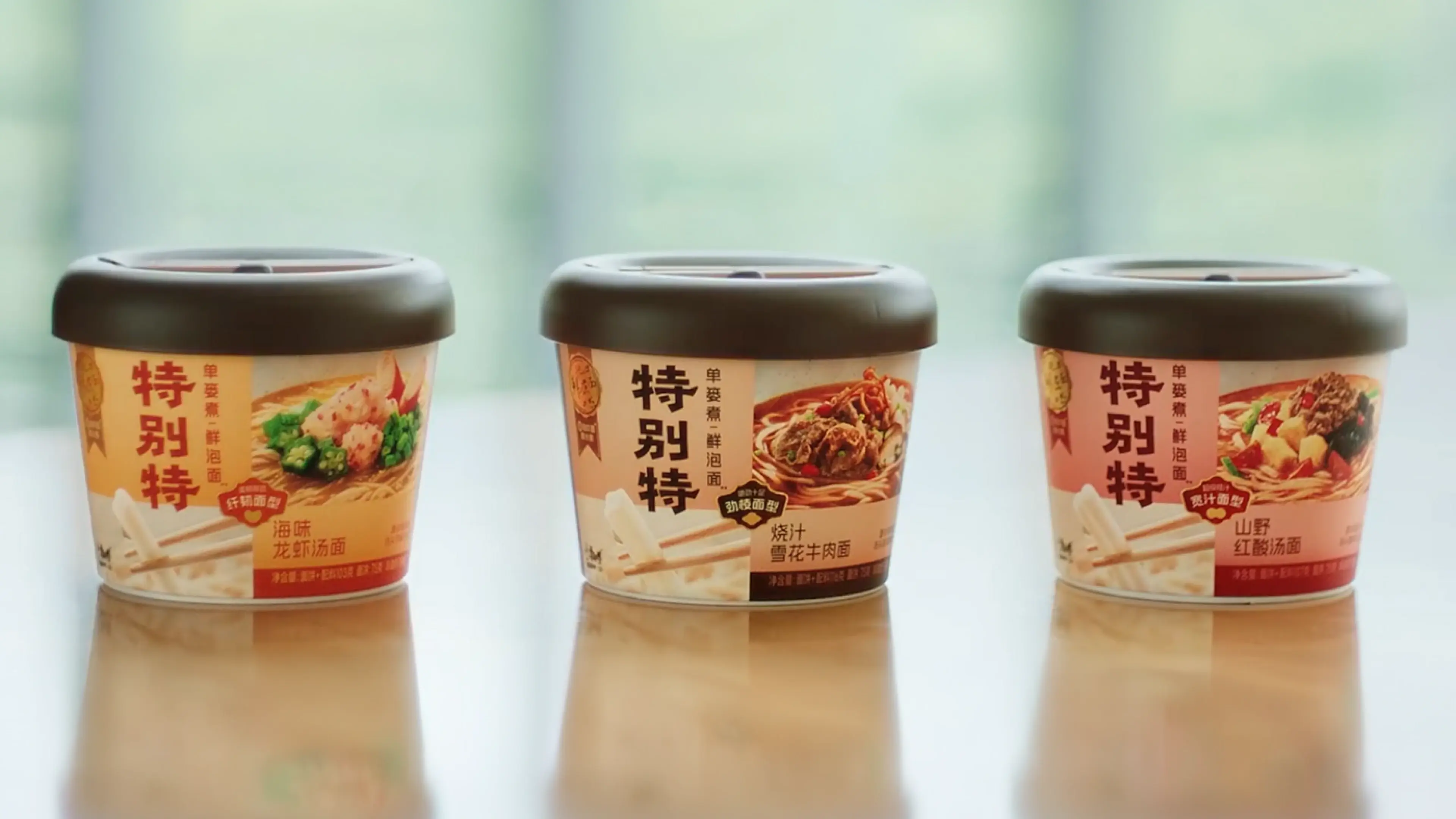
Texture alone was not enough. Consumers needed to see a meaningful difference before they tasted the product. IDEO translated this insight into a distinctive noodle profile: irregular, dimensional shapes designed to remain springy, hold sauce and broth, and mimic the resilience of freshly cooked noodles using only hot water. Because this visible shape represented the product’s core value proposition, it became a hero feature on the packaging. The graphic design made a bold visual statement about the noodle form, turning a technical R&D breakthrough into an immediately legible consumer promise: these are not ordinary instant noodles.
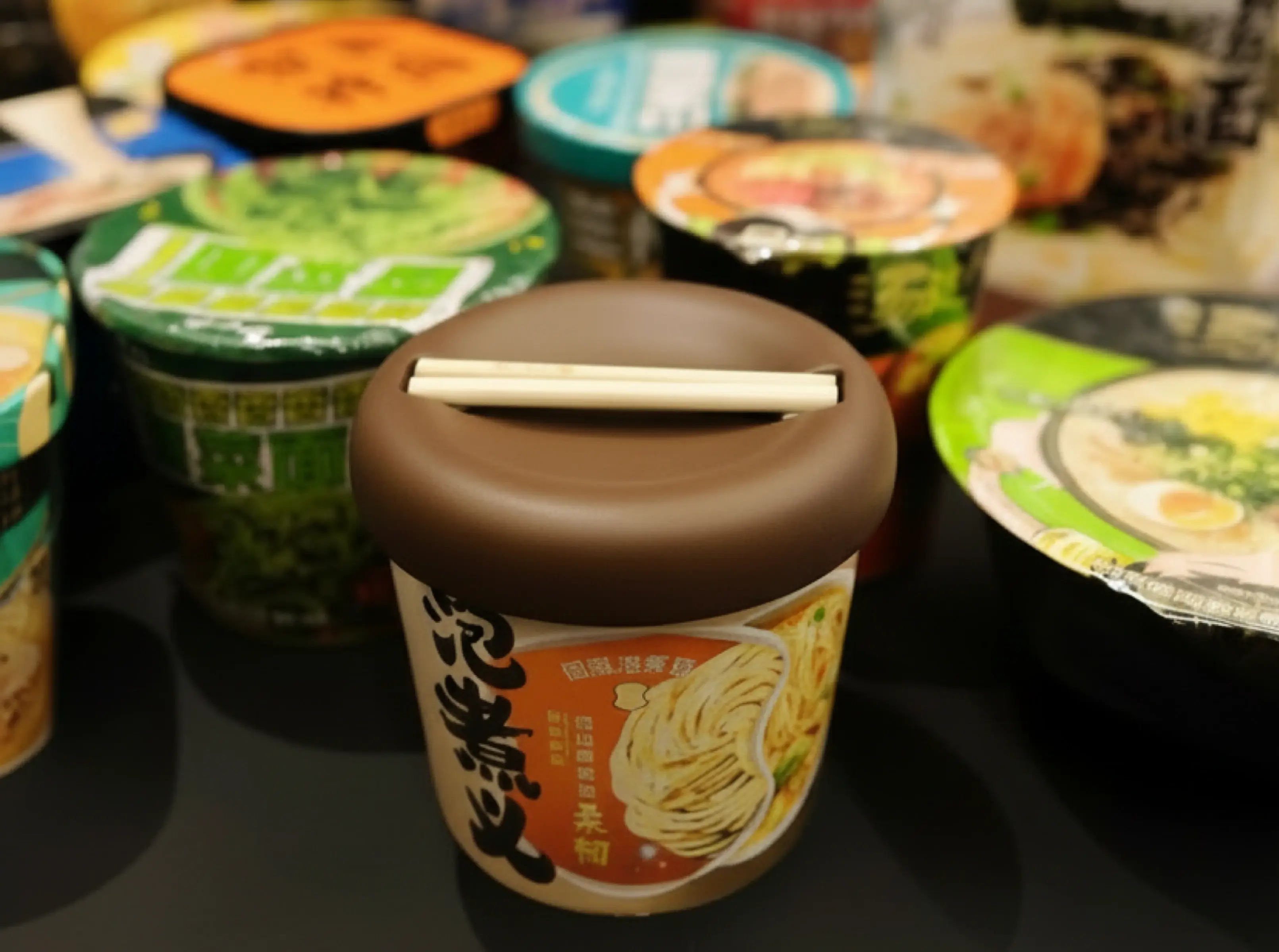
A parallel track explored the broader commercial experience: trend-forward and reimagined classic flavor profiles, light yet deeply satisfying broths, carefully selected toppings, and packaging that signals a new level of quality on store shelves. One key insight was that utensils carry meaning. Conventional instant noodles are often associated with disposable plastic forks, while higher-quality noodles are eaten with chopsticks. IDEO translated this cultural cue into the design of the bowl’s lid.
Instead of treating utensils as an afterthought, the team designed a solid, rounded, heat-retaining lid that embeds a pair of small wooden chopsticks. The gesture creates a small ritual of anticipation and reframes the product—not just a convenient instant meal, but a more considered noodle experience. Once opened, the product fulfills that promise with satisfyingly bouncy noodles, a rich liquid broth pouch that replaces the traditional oil-and-powder packet, and a vegetable packet reformulated with more premium whole ingredients.
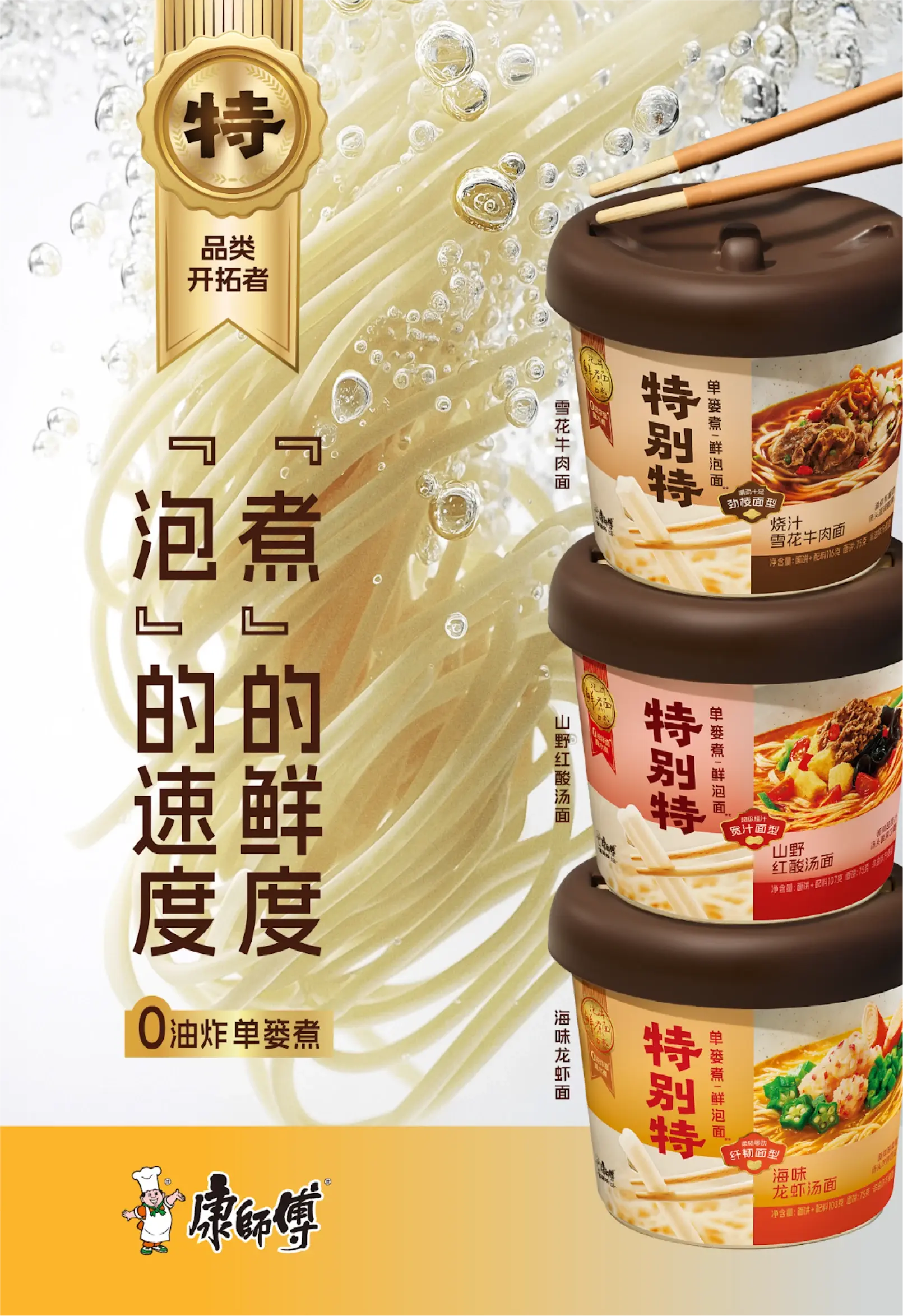
The first batch of “Te Bie Te” Fresh-Brewed Noodles—Chinese wordplay that emphasizes “special”—launched in August 2025 with three trendy and tried-and-true flavors. Within just three days, sales exceeded 100,000 bowls. Within a week, “Te Bie Te” topped the instant noodle category sales ranking on Douyin, China’s domestic counterpart to TikTok. The outcome was bigger than a product launch—it served as proof that a mature, declining category could be fundamentally reinvented to meet consumers’ real needs. For Master Kong, the project became a North Star and a model for internal category innovation in beverages, ready-to-eat foods, and beyond.
Once a popular, affordable staple, the instant noodle category in China has been declining rapidly due to shifting demographics, rising food delivery options, and increasing customer demand for healthier, more nutritious meals.
According to the World Instant Noodles Association, between 2020 and 2023, China’s instant noodle consumption fell by 4 billion packs.
100,000+
“Te Bie Te” bowls sold in the first 3 days on the market
#1
on Douyin’s instant noodle category ranking within one week of launch
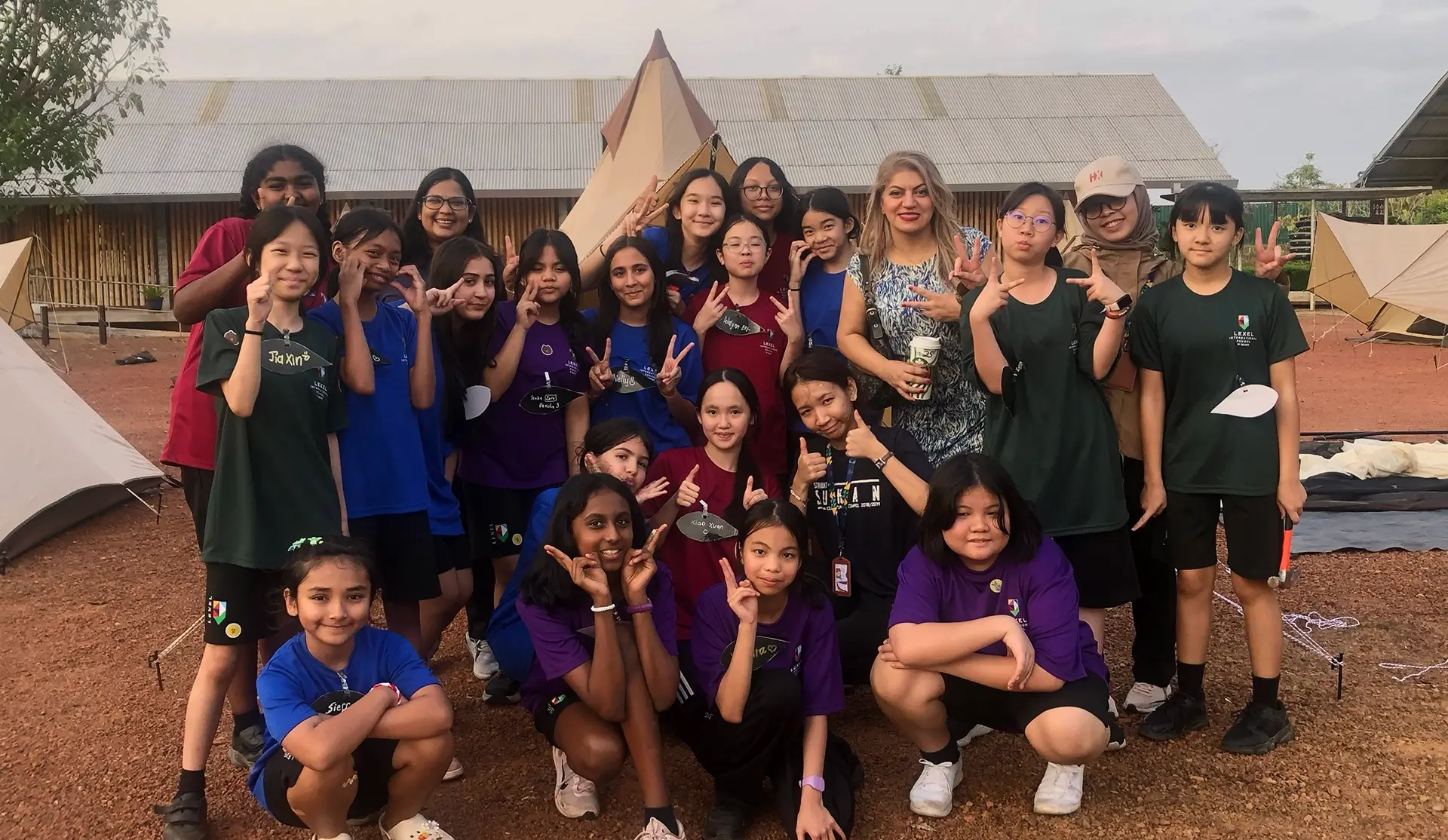
Making international education future-fit & affordable
Lexel brings world-class learning to Malaysia’s middle class.
Taylor’s legacy began in 1969 with the founding of Taylor’s College and soon expanded to include Taylor’s University, one of Southeast Asia’s top private universities, as well as many other institutions that serve 35,000 students per year. The family-owned group also operates Taylor’s International Schools, Garden International School, and Nexus International School for students ages 4 to 18. In Kuala Lumpur, Malaysia’s capital city, annual tuition at premium private schools like these ranges from about $10,000 to $25,000 USD. Taylor’s wanted to do something different: provide the same level of academic rigor and immersive learning experiences at one-third the cost.
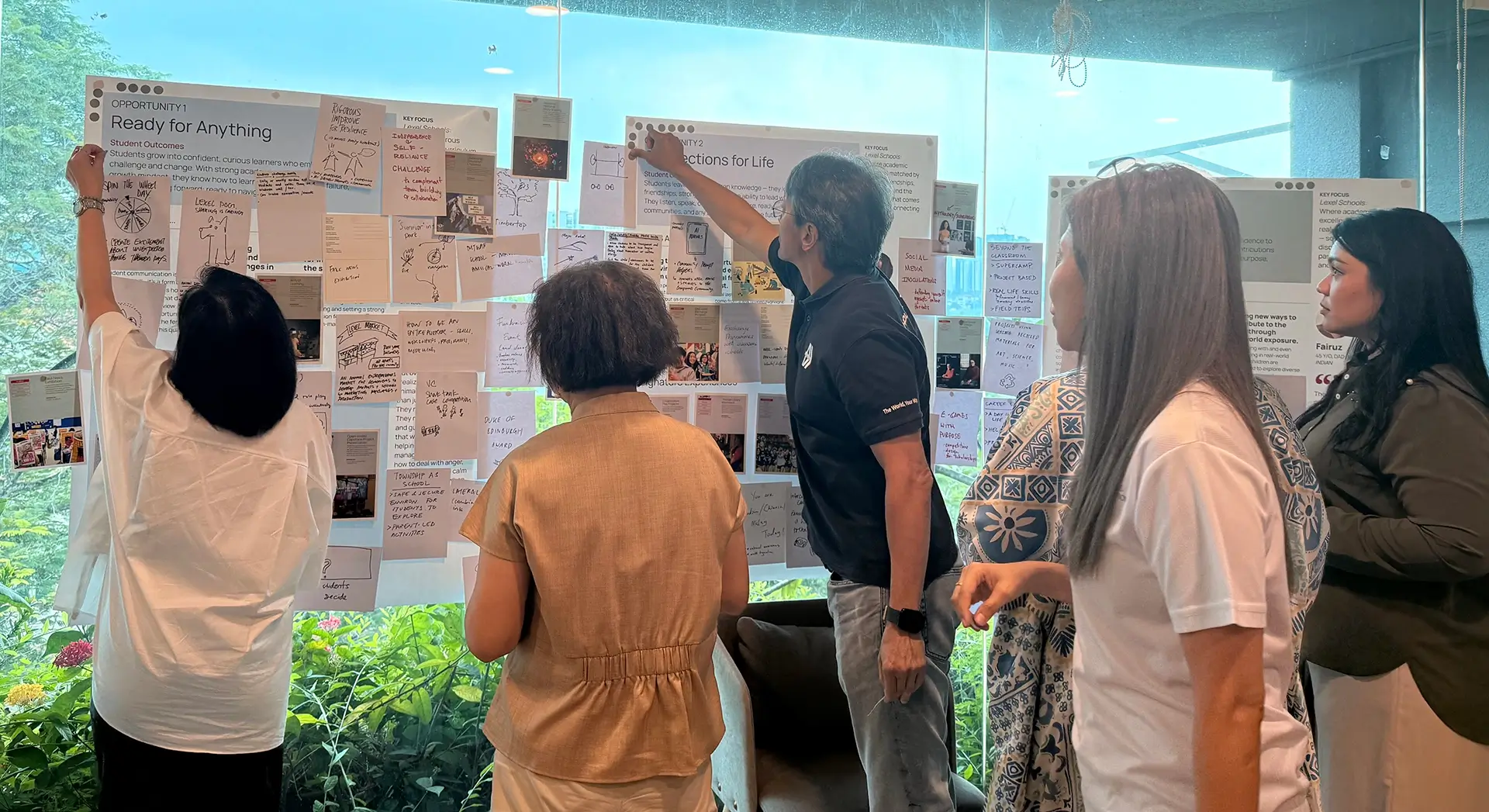
IDEO began by speaking with over three dozen students, parents, teachers, and experts across the capital to understand what was working, what wasn’t, and what was missing from such moderately priced international schools.
A few themes quickly emerged. Families, students, and teachers were worried about the stability of these new private schools, which tended to have higher-than-normal teacher turnover rates and were plagued by financial instability, negatively impacting talent attraction and retention, as well as student learning. Parents appreciated that the schools offered holistic learning experiences, such as field trips to rural areas, including jungles, but wished they were more consistently part of the curriculum. And now, the looming challenge of AI—how to use it, how to teach it, and how to teach with it—was in the background, a persistent cause for concern. The big unmet need? Reassurance that Taylor’s was thinking long-term and systematically about developing the skills, knowledge, and mindsets that would prepare students for an ever-changing world. Parents wanted a school that measured growth in academic, social, and character terms over generations, not just school semesters.
With these insights in hand, IDEO began developing a design Playbook for Taylor’s new brand—Lexel International Schools. A combination of “lexicon” and “excellence,” Lexel’s mission is “building what lasts, learning for life.”

The schools are centered around three key differentiators:
- Always Ahead: Lexel schools commit to staying current with the topics and subject matter they teach, as well as the tools they provide to students, parents, and teachers.s.
- Learning That Builds for Life: The schools ensure programmatic, systemic, and consistent learning experiences from Pre-K to Year 11. Interested students can even continue their post-secondary journey in partnership with Taylor’s University and other higher education institutions within the Taylor’s ecosystem.
- Educators for the Long Run: These schools commit to ongoing investments in professional growth opportunities for teachers and stable learning environments for students.
Four Lexel Literacies—AI, Digital, Financial, and Nutrition—integrated into the Cambridge Curriculum bring the school’s vision and mission to life.
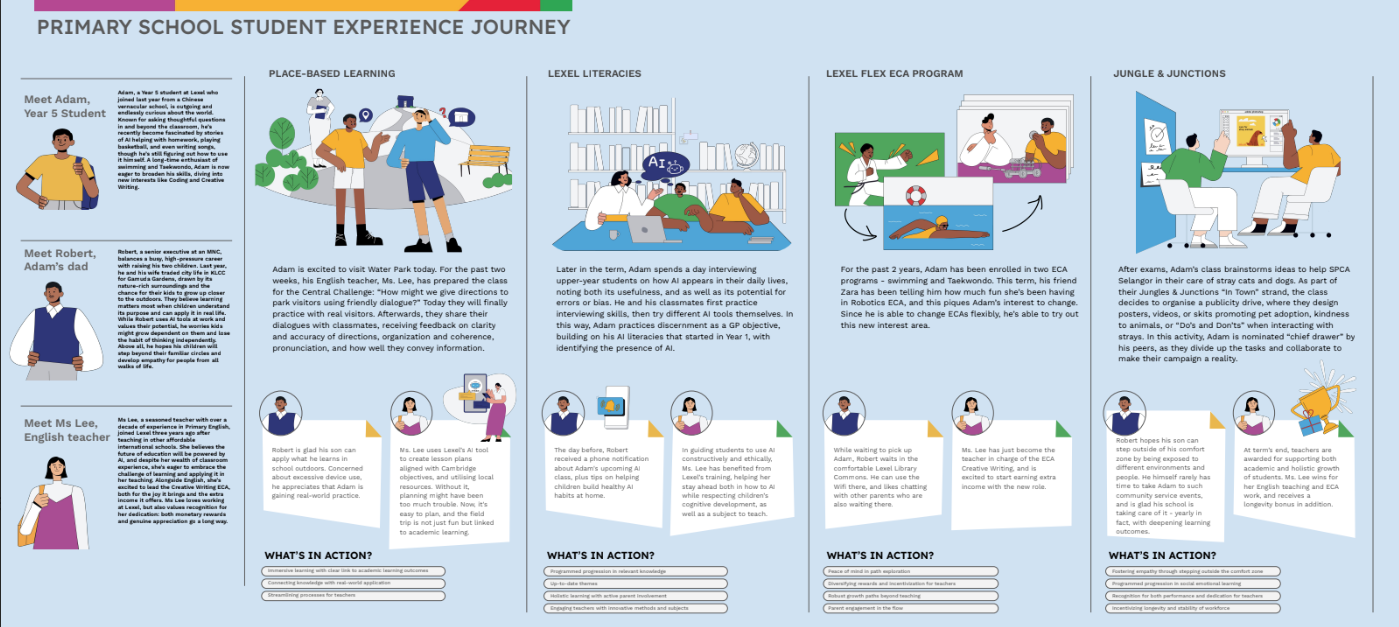
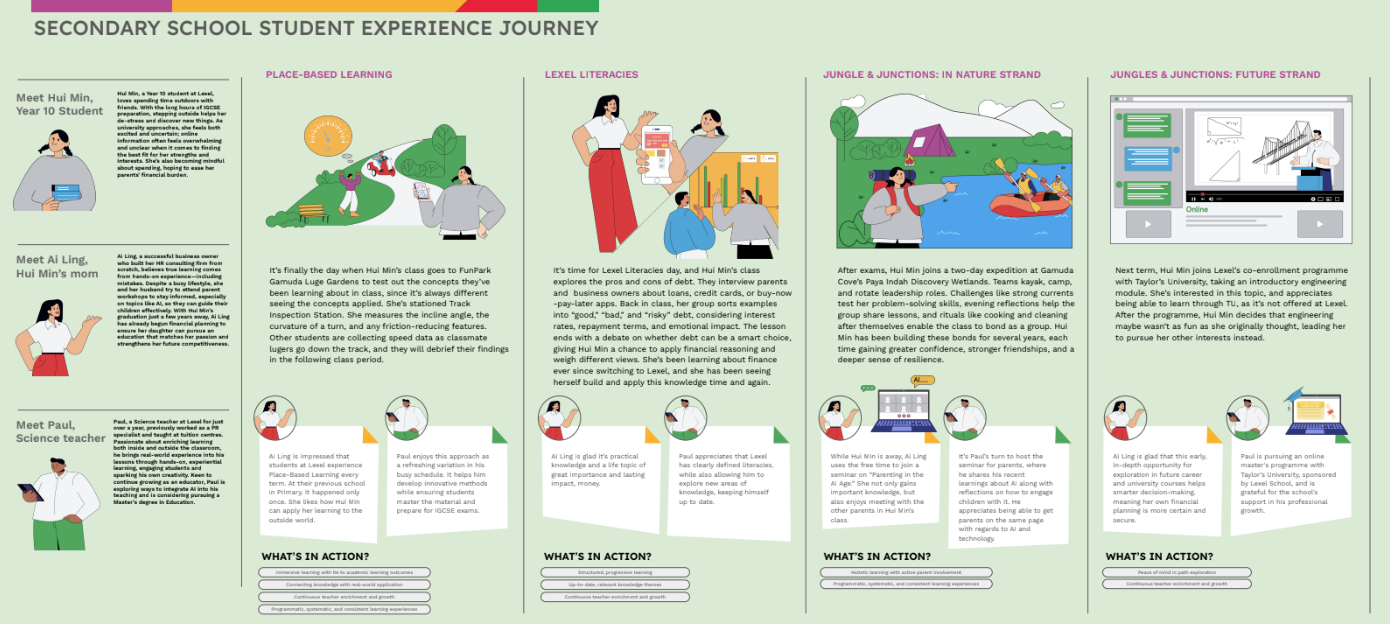
By systematically integrating AI literacy into its spiral education framework, in particular, an approach where major topics are revisited multiple times through a curriculum to build fluency over time, Lexel ensures parents that the school is thinking a decade ahead from Day One, setting the school apart. In addition to enhancing AI fluency, Lexel offers unique end-of-term experiences called Jungles & Junctions.
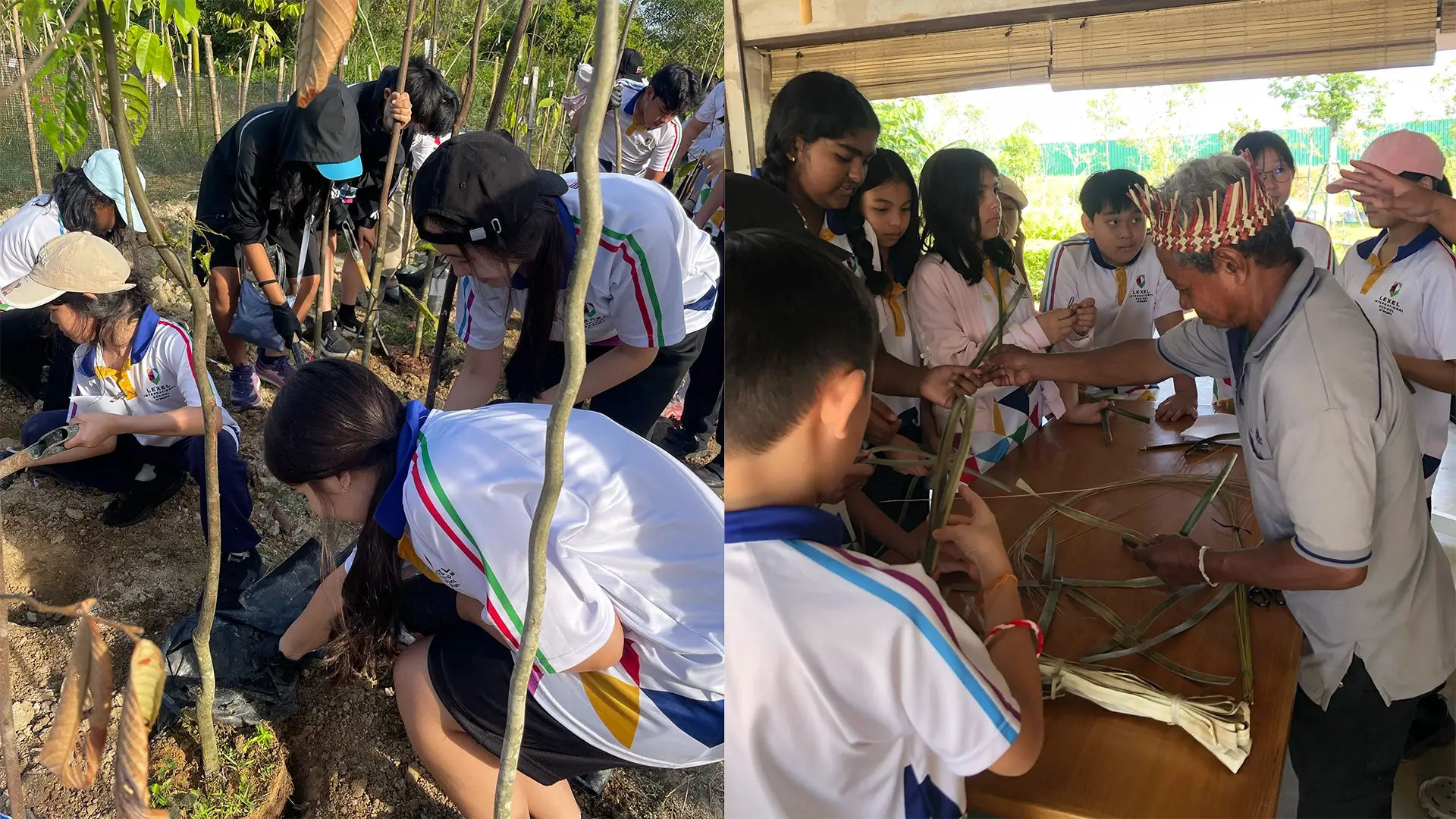
Combining three important strands of learning—community engagement, nature-based personal and interpersonal development, and career and university exploration—Jungles & Junctions leverages Taylor’s extended educational network and Lexel’s strategic founding campus within the Gamuda Gardens development in Selangor. Surrounded by tropical rainforests, the township’s residential neighborhoods, theme park, and various sports facilities, including an Olympic-length swimming pool, are transformed into an extended Lexel campus, with a GenAI-driven planner to help teachers streamline the organization of class outings. “The Township is Your Campus” became the tagline for this approach.
In September 2025, just months after IDEO’s collaboration ended, Taylor’s began classes at its first Lexel International School. By mid-year, the new school had achieved 115% of its year-one student enrollment target, with significant inbound demand for Year 2 already demonstrating the school’s market resonance.
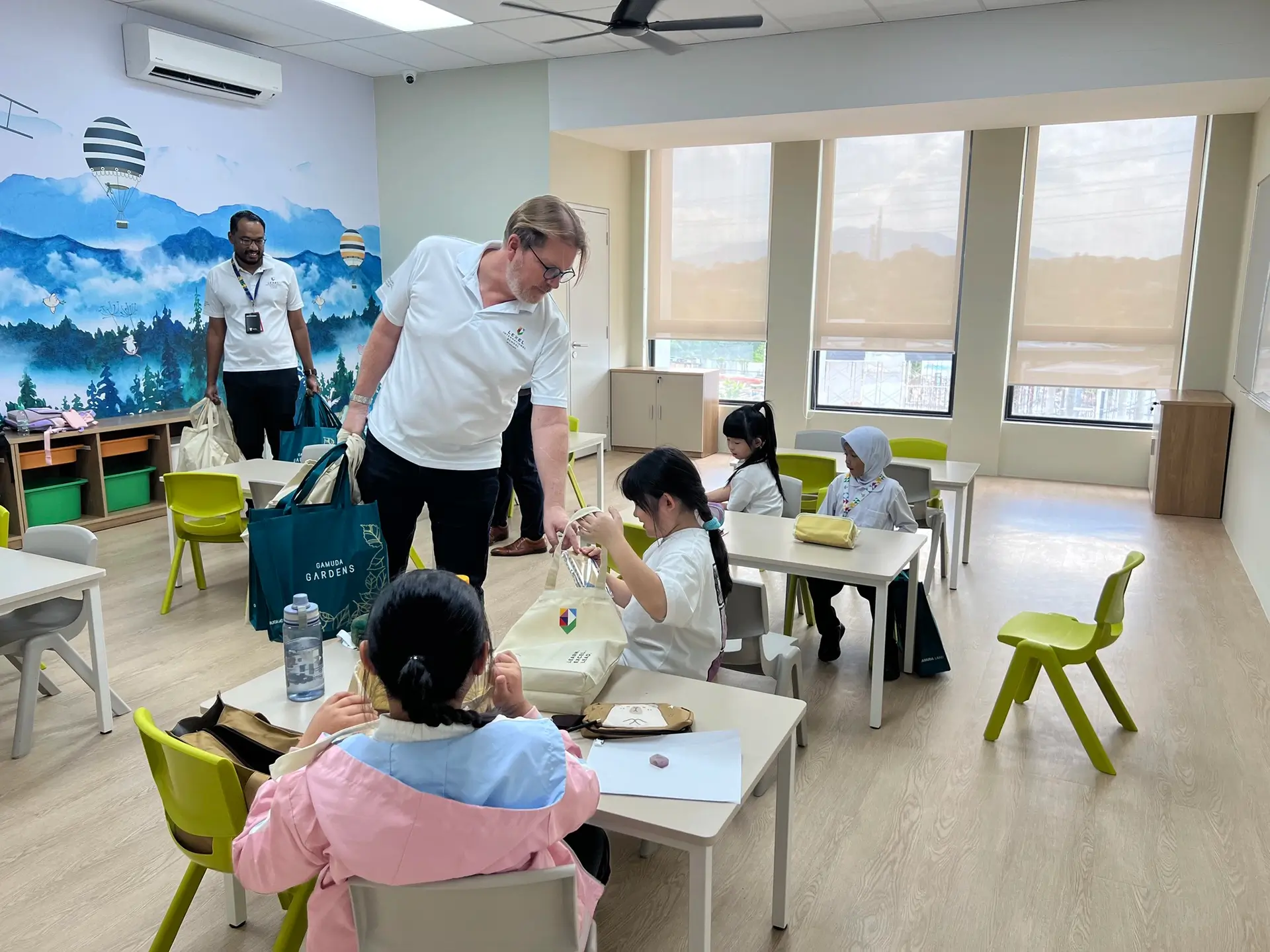
The modern campus features spacious classrooms, science and technology labs, a library, a multipurpose hall, and a canteen. Annual tuition ranges from about $2,800 USD for pre-K students to about $6,100 USD for secondary students.

Most importantly, by combining Taylor’s deep academic expertise, Gamuda Land’s development prowess, and IDEO’s innovative design Playbook, Lexel brings quality, affordable international education closer to home for Malaysian families. According to one parent, “My daughter looks forward to going to school every day … and has a lot of opportunities to express herself. On a scale of 1 to 10, I give [Lexel] an 11.” Based on the IDEO Playbook, a second flagship campus in the Southern Klang Valley, which is scheduled to open in September 2026, has already exceeded its year-one target enrollment expectations, with plans to continue extending the Lexel network to other parts of Malaysia and the wider Southeast Asian region in the near future.
Malaysia’s private international school sector has grown significantly as parents seek quality English-language education. However, high tuition fees and limited access to reputable schools are continual challenges for those in the emerging middle class.
115%
of Lexel’s student enrollment target reached during the launch year of its first campus
Year 1 enrollment target exceeded
at Lexel's second campus several months ahead of classes commencing
Delivering an unbiased news experience
Straight Arrow News transforms fact-based news consumption.
The American news industry has long been a competitive and saturated market. This has only intensified with the emergence of social media outlets and AI-generated news. Even so, SAN’s rigorously unbiased, fact-based reporting style and rich video storytelling had enabled the ambitious startup to rise above the media fray in just three short years.
With a strong foundation to build on, IDEO sought to further differentiate SAN’s cutting-edge news product and build deeper engagement with a wider audience through a new user experience.

Collaborating closely, IDEO and SAN began by delving deeply into media consumption habits. They met with early SAN superfans, news consumers who spent hours a day absorbing content from traditional outlets like Fox and USA Today, and those who looked to their Ring doorbell app or Reddit for news. The takeaways? People were tired of clickbait and clunky interfaces. They sought clear, factual news that was easily accessible, with additional context to help them interpret events and understand their significance. They craved more than one perspective on important topics, so stories felt balanced rather than polarized. They also valued having control over how they consumed news, so making it easy to switch between text, video, and audio formats was crucial.
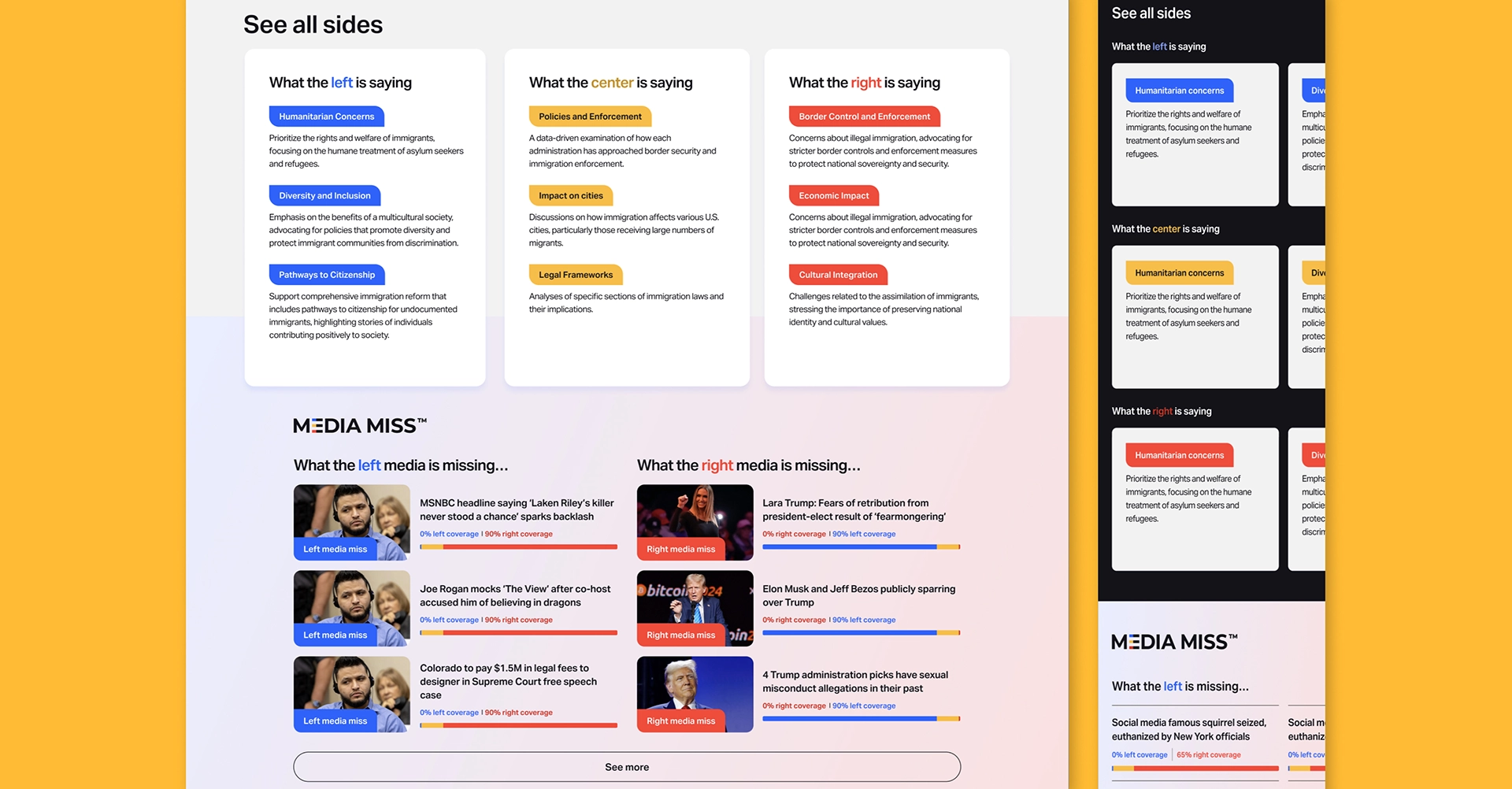
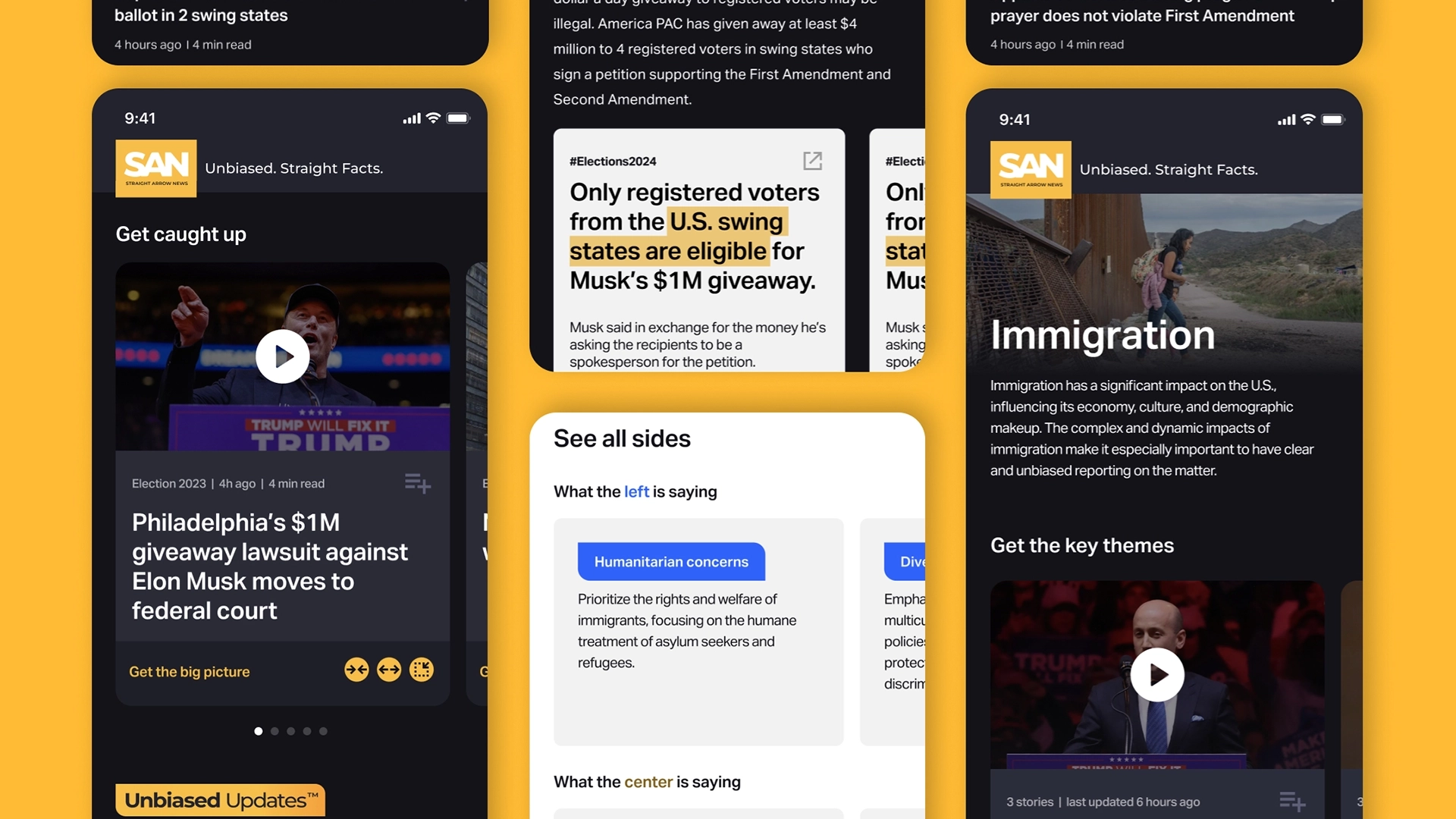
Together, IDEO and SAN created features across SAN’s website and app that put facts, trust, and transparency at the core of the product experience. Fact Cards distill key data points into clear, shareable units, while the Sources feature allows readers to trace information directly back to its original source. To make complex stories easier to grasp, Big Picture insights drill down into why events matter, surfacing underlying themes, historical parallels, differences in reporting, and common ground. The Why This Story Matters section provides readers with clear framing and sets the story within a broader context, while the Timeline illustrates how events unfold over days, months, or even years. An antidote to news polarization, See All Sides presents left, right, and center narratives for key topics side-by-side, and Media Landscape visualizations reveal how coverage varies across outlets. Finally, to ensure SAN fits seamlessly into readers’ daily lives, the redesigned Today Page is organized into three highly scannable sections: Latest News, Top Stories, and SAN Originals. The combined features create a balanced, clear, and non-polarizing news experience, making it easy for readers to delve deeper into the sources of their news.
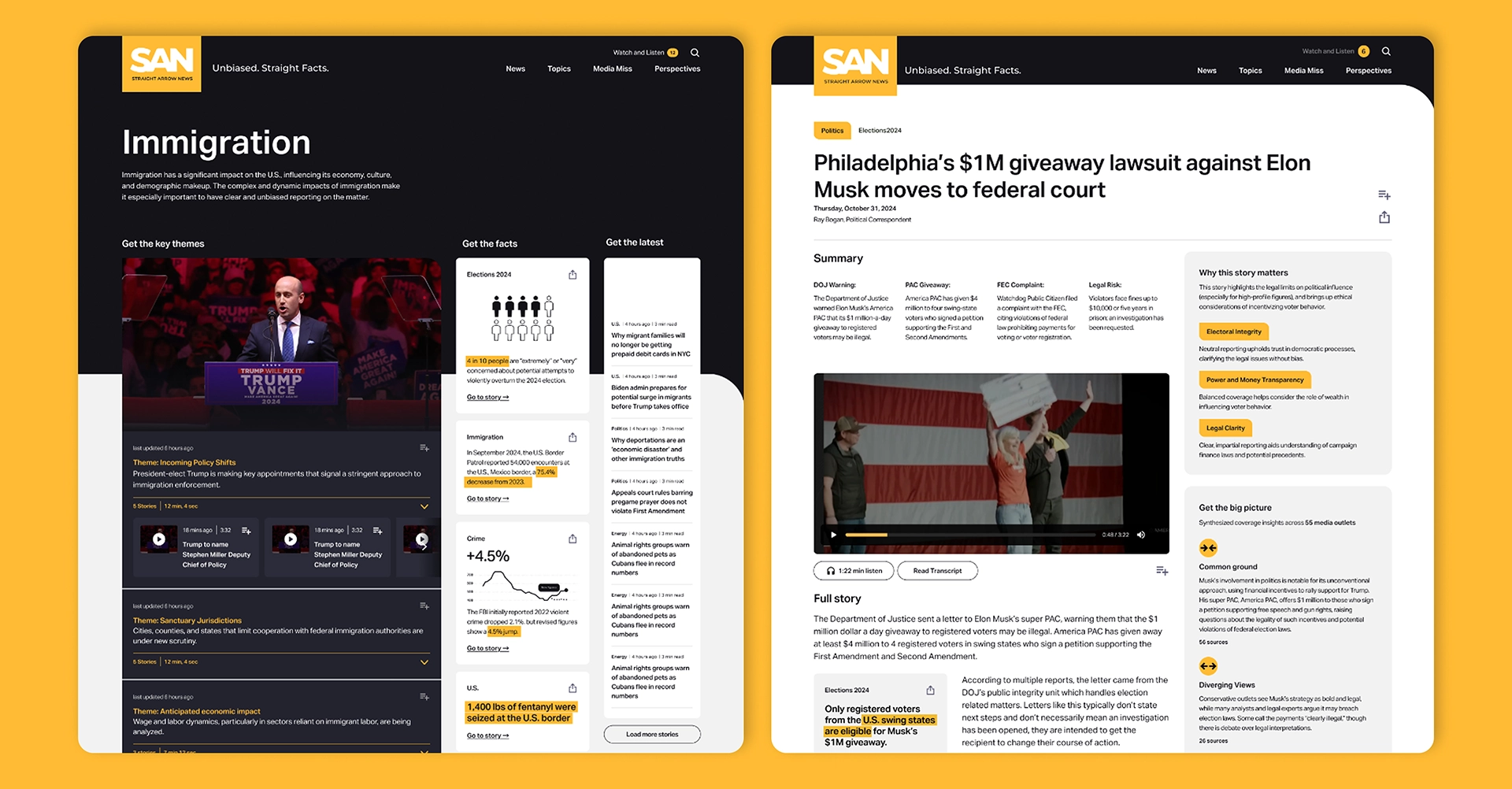
SAN now delivers a news experience as modern, dynamic, and trustworthy as its journalism. A month after its debut, the SAN app’s page views increased 1,170 percent year over year compared to June 2024, while active users rose 700 percent. Readers also give the updated mobile experience a 4.8 rating on the Apple App Store. “Our team is delivering reporting that’s both deeply factual and accessible,” said Derek Mead, SAN’s Chief Content Officer. “This redesign is pivotal to the direction journalism needs to take and the leadership role Straight Arrow News is taking on as we help guide the news industry into a brighter future.”
SAN built a loyal readership and gained recognition for its unbiased reporting. To expand and stand out from legacy media, SAN wanted a redesigned user experience that reflected its commitment to fact-based journalism.
1,170%
increase in app page views YoY
700%
increase in active users
4.8 rating
on the Apple App Store
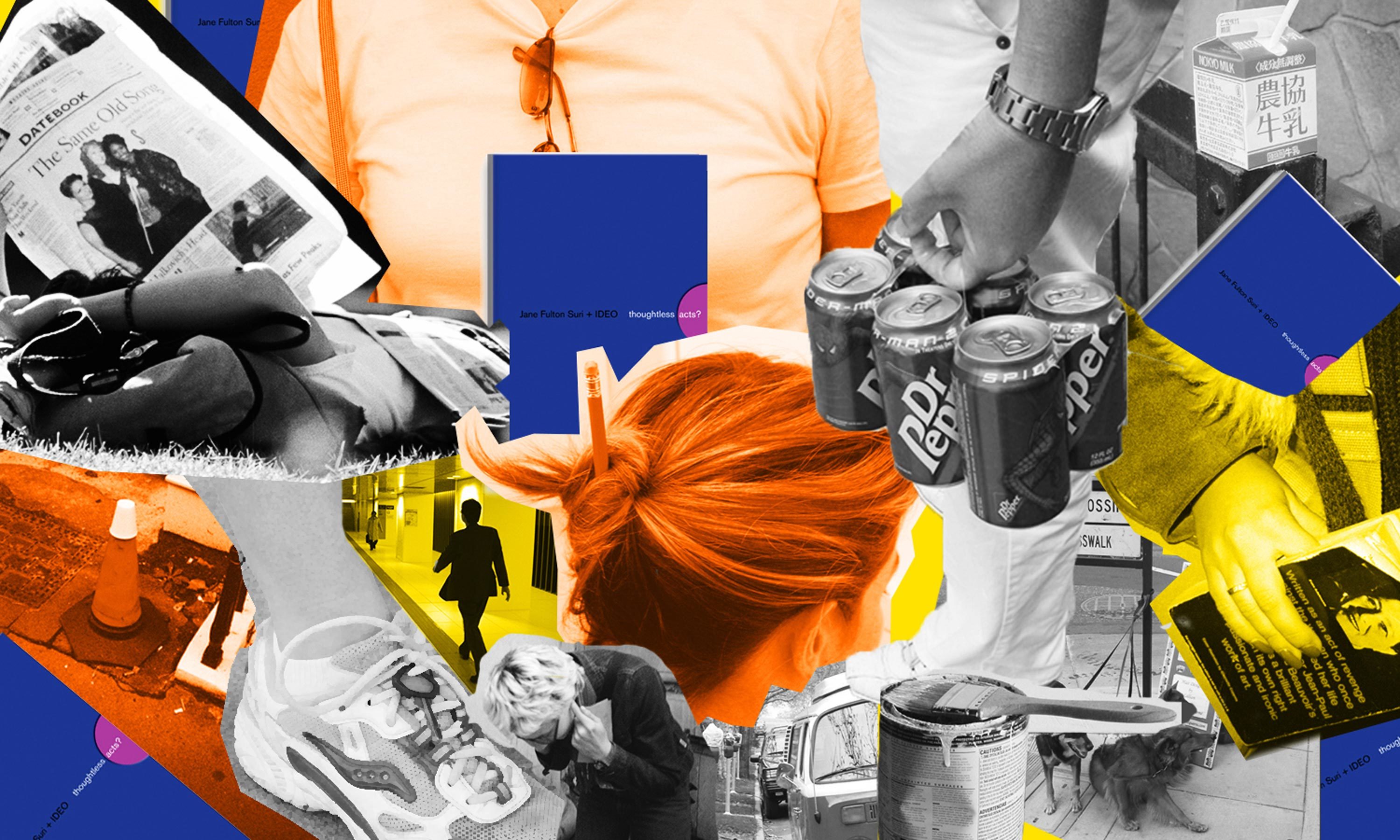
Thoughtless Acts: For a Rainy Day
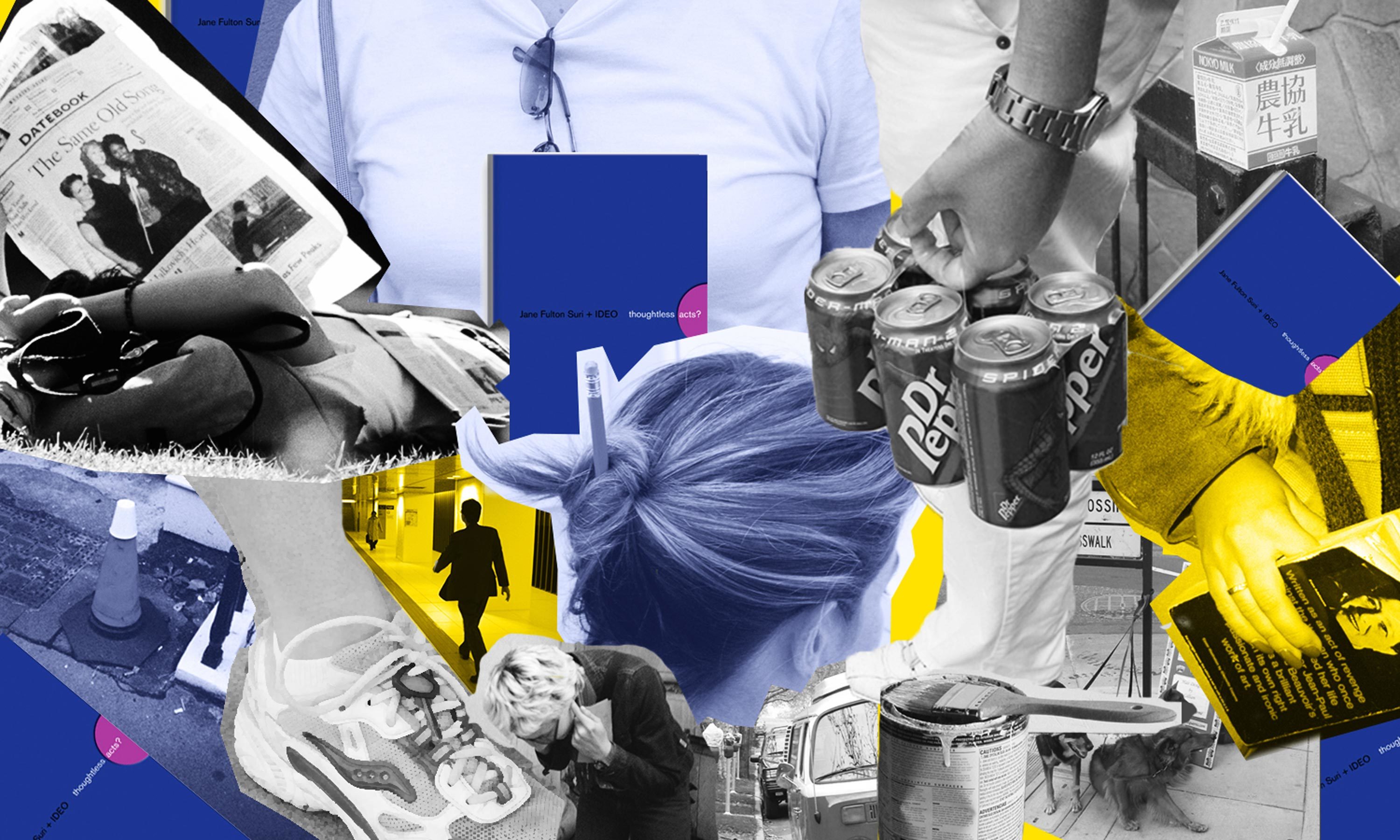
Thoughtless Acts: For a Rainy Day. The intuitive ways we adapt and react to things in our environment

I took this picture during my morning ferry commute along the Thames. As you can see, it's raining. (It rains in London a lot.)
I'm standing where the passengers get off the boat. The ferry was designed with a drainpipe to funnel rainwater off of the boat, but the water lands on passengers as they disembark. I guess the designers were thinking more about the boat than the people on it.
Conveniently, there is also a Costa coffee shop on the boat. So someone removed the base of a paper coffee cup, and stuck the cup on the pipe. This small fix extended the drainpipe, keeping the passengers dry. Brilliant.
Human-centered design requires us to observe human behavior with beginner's eyes, so that we can spot the innate ways people interact with the world around them. We call these intuitive and unconscious reactions thoughtless acts, and IDEO designers collect photos of them to inspire the invention of new products, services, and experiences.
Can Cartoons Cure Cancer?
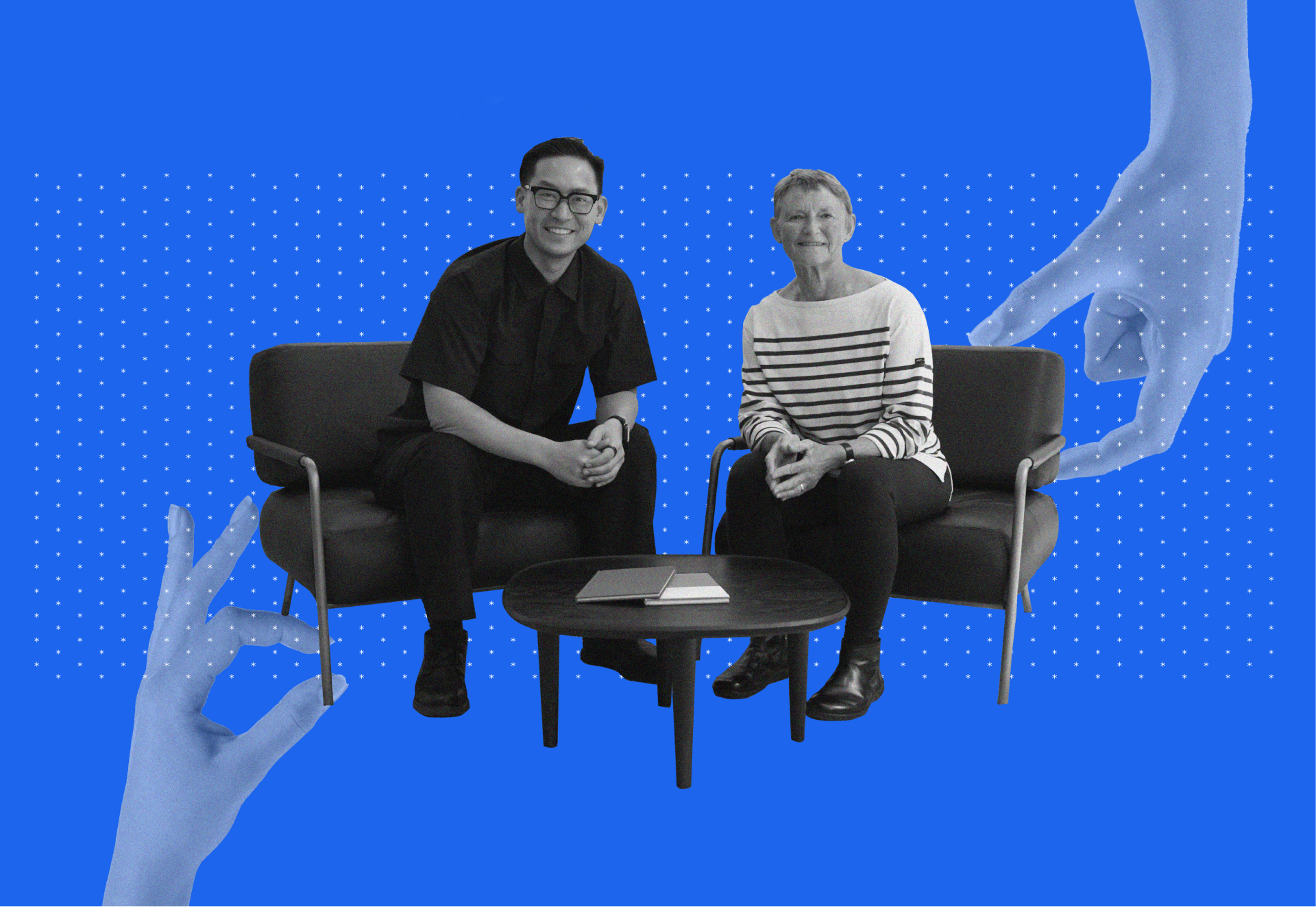
An interview with cartoonist and cancer killer Laura Park
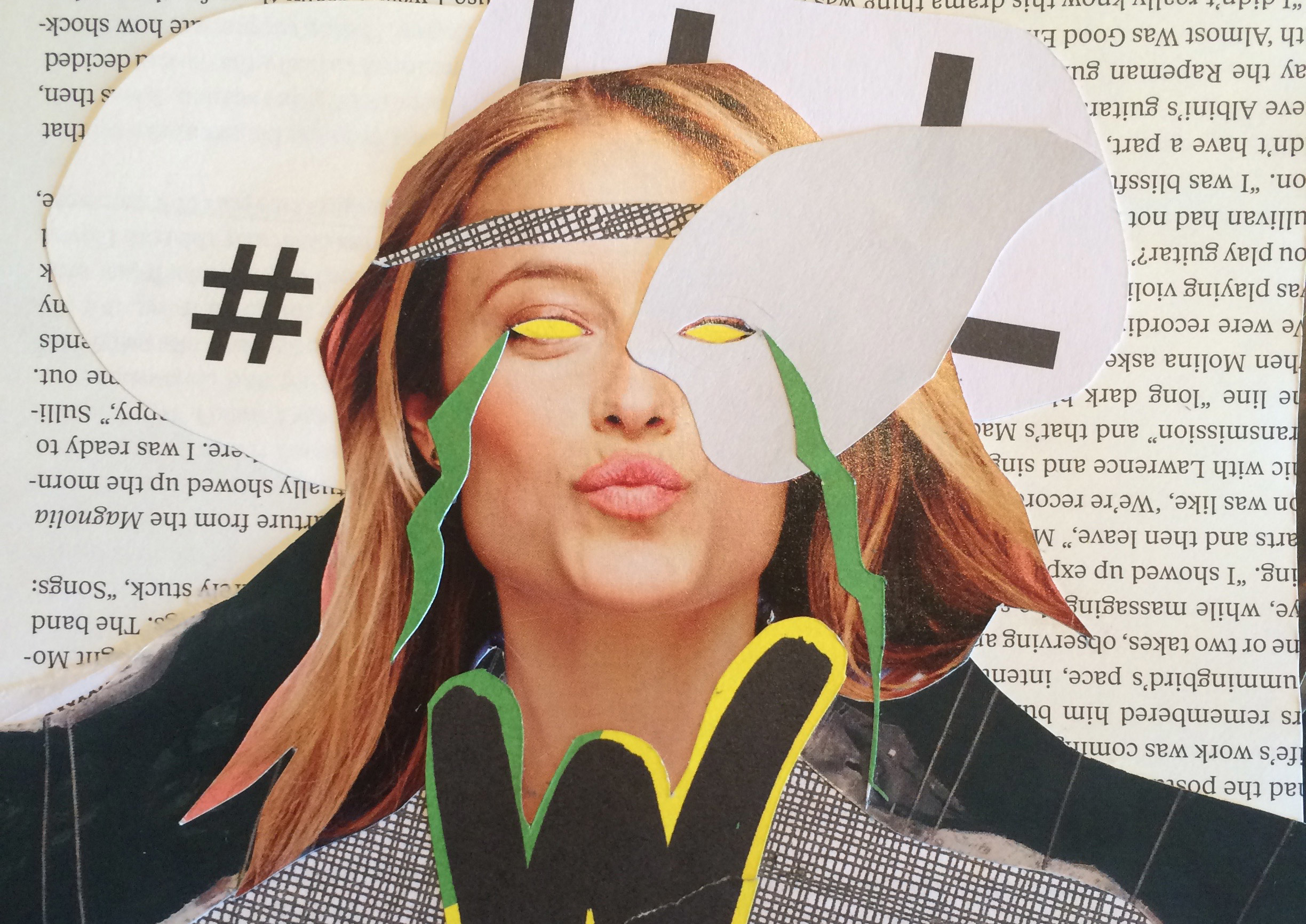
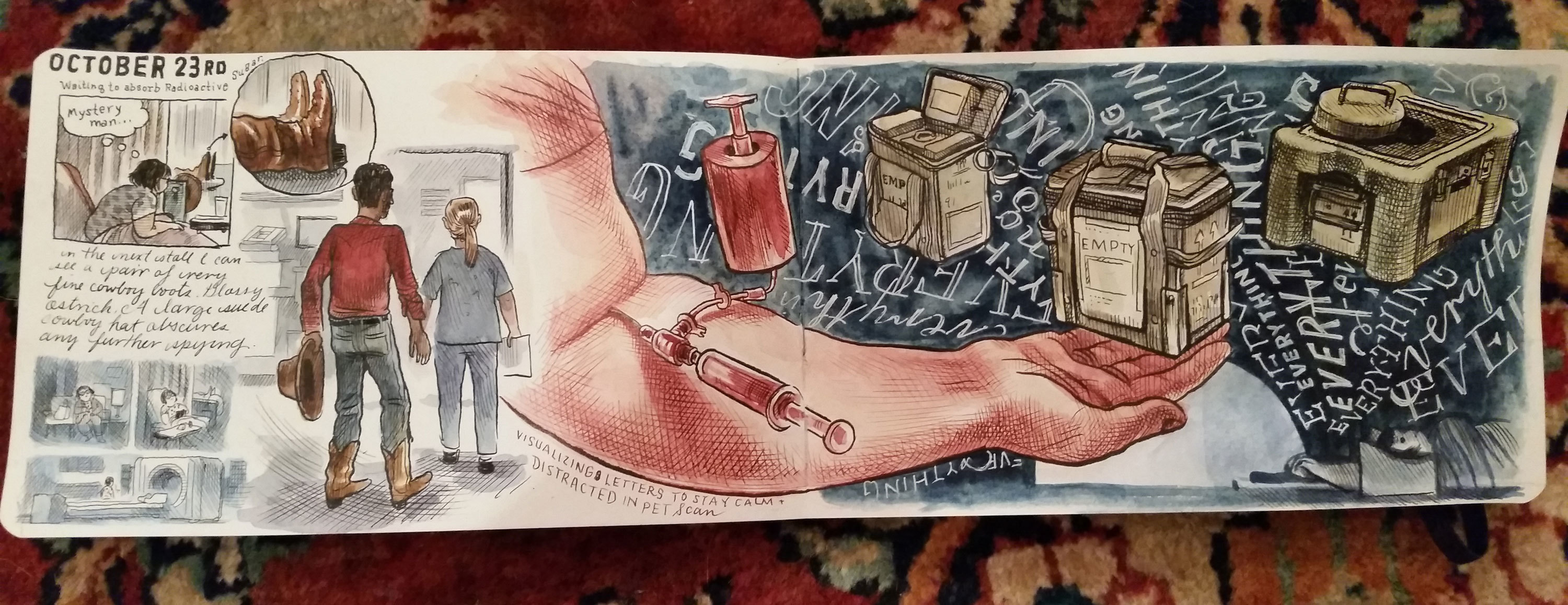
But this afternoon, we're not here to talk about all things Frenchie, we’re here to talk about the “c-word”—cancer—but, also, comics and catharsis. See, in a few weeks, Laura is having surgery to repair her tear ducts, collateral damage from aggressive thyroid cancer treatment four years ago, when she was in her early 30s. The cartoons she drew during that nerve-wracking time are just like her: quirky, brave, weirdly hilarious, and unapologetically honest. They’re the equivalent of indie-rock visual therapy.
Wearing her trademark black-and-white French sailor shirt and vintage cat-eye glasses, Laura takes a few quick, surreptitious puffs off her e-cigarette and we start chatting.
IDEO: What were you like as a child? Did you always make art?
Laura Park: My family moved around a lot as a child. My mom immigrated from Korea to Southern California and raised my brother and me by herself. I always drew as a kid. As the perpetual new kid, I wasn’t very popular, but the fact that I could draw meant I had some value. I’d sell kids greeting cards or drawings of their moms for Mother’s Day. I hung out at the food court at the mall where my mom worked and drew portraits of strangers. I’d go up to them, show them my drawing, and try to sell them to them. It was my side hustle. I was a very under-supervised, under-parented child. I had a lot of freedom. I eventually got a scholarship to the Art Institute of Chicago and fell into the illustration/comic book community here.
What was your first big break?
I was working as an illustrator for educational software company when I started doing drawings for indie record label Asthmatic Kitty Records on the side.

I also drew magazine ads for Sufjan Stevens’ 2005 Illinois record, plus did some t-shirts and posters for his record label and illustrated an issue of Vice magazine. My other big break was illustrating two big book series for author James Patterson—Middle School and I Funny. They were #1 New York Times Bestsellers. I illustrated two a year until last year. They gave me enough money to do other projects and gave my mom something to brag about.

You mainly do autobiographical comics, why is that?
They’re how I process information. They’re my second stomach, how I “Rumpelstiltskin” my depression and sickness. I draw about things that cause me both extreme stress and extreme joy because both are distortions of time. I’m either locked in an anxiety-ridden hellscape or I’m celebrating the awesomeness of my dog.

In high school, I loved the Riot Grrrl movement and made my own zines because I didn’t see myself reflected in other comics. It’s a very powerful thing to make your own media and not wait for others to validate your experience.
I love it when other weirdos say to me, “I recognize myself in your comics!” Everyone thinks they’re singular and alone. It’s comforting to know that’s not true.
Can you tell me what happened when you were diagnosed with cancer?
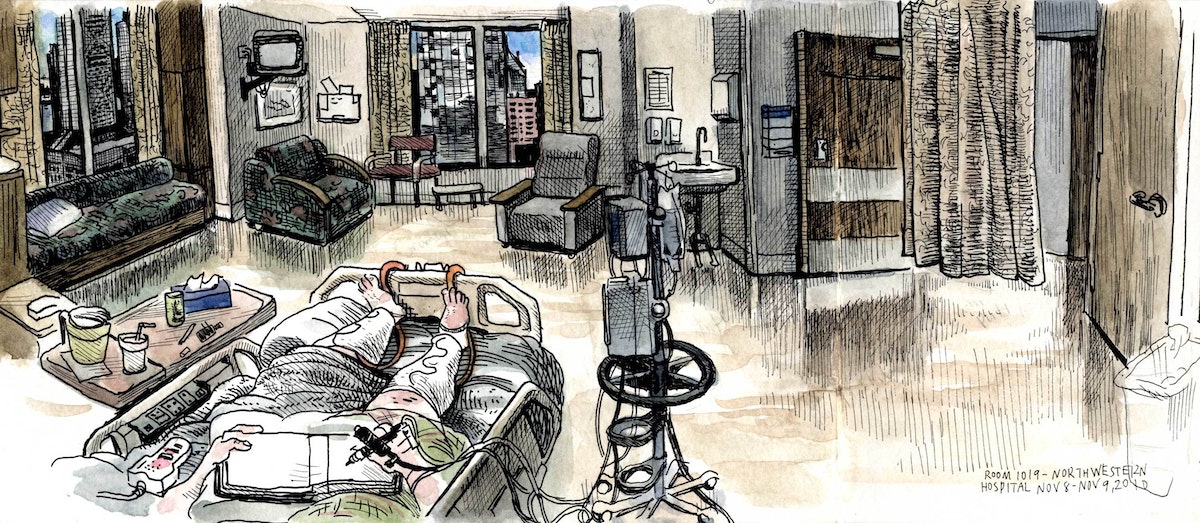
It was 2012 and I was 32 and uninsured at the time. I lived for six months with a big lump on my neck. I avoided it. I knew it was bad when my doctor didn’t make me wait after getting the results back. It was thyroid cancer and it had spread to lymph nodes in my neck. I had a nine-hour surgery to take everything out, but the tumor had grown around my vocal nerve. The next day in hospital room, I woke up with a paralyzed vocal nerve. I went from someone who was always very loud, to someone who didn’t have a voice. It was very weird. I had to drink radioactive iodine as part of my therapy, which is nasty and why I’m having surgery to repair my tear ducts.

Comics are how I process information. They’re my second stomach, how I 'Rumpelstiltskin' my depression and sickness.
I processed my cancer in terms of narrative. I asked, Who is my character? What is her arc? I did a better job of telling the story of my cancer in my comics than I did telling people in person. What really resonated with my fans was how expensive my medical bills are. They were hundreds of thousands of dollars and destroyed my savings.
Enough of this depressing cancer stuff! What are some things you’re excited about?
I just won an Emmy for some storyboarding work on the Cartoon Network miniseries Over the Garden Wall! I have the certificate on my fridge. I also just signed a contract to do a graphic novel adaptation of immigrant stories for StoryCorps and have a collection of early work and new stories for Drawn & Quarterly that's forthcoming. My biggest accomplishment, though, was figuring out a way to have Walt appear in as a cameo character in Over the Garden Wall. I’m pretty proud of that.
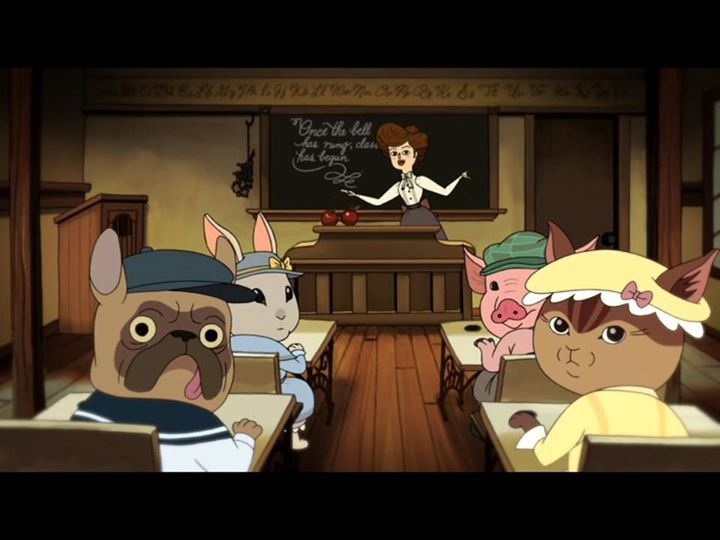
*Post script: A few weeks after our interview, Laura did, indeed, have surgery to repair her tear ducts. She’s recovering well and, of course, fearlessly documenting the entire process along the way.

A ridiculously photogenic French bulldog is why I'm sitting across from Laura Park, a humbly prolific Chicago cartoonist, in a trendy Wicker Park cafe one grey November Sunday. I started stalking Walter Wallet on social media a couple years ago. Turns out, his owner was pretty cool, too. Laura's the author and main character of the darkly funny comic series, Do Not Disturb My Waking Dream, among many, many, many other noteworthy, cool things that she hates to talk about. Lucky for me, soon we—and our dogs—were friends in real life.

Why We Make What We Make
In praise of white space time
For the better part of my career, I had been conditioned to believe that employees are either adding value to an organization by working in immediate service of its bottom line, or they are not, and should subsequently be disciplined. I was terrified I was in the latter camp. Over time, though, I began to take more deliberate notice of how my IDEO colleagues spent their “white space” time between projects.
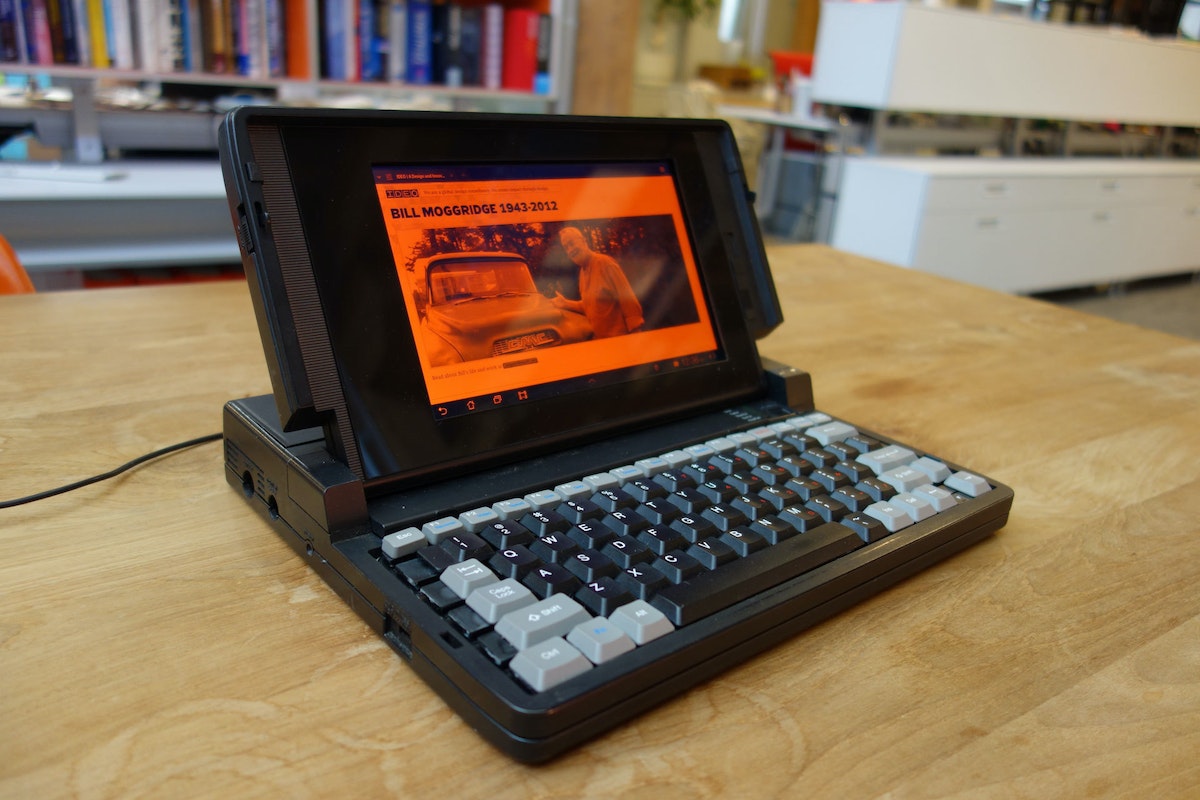
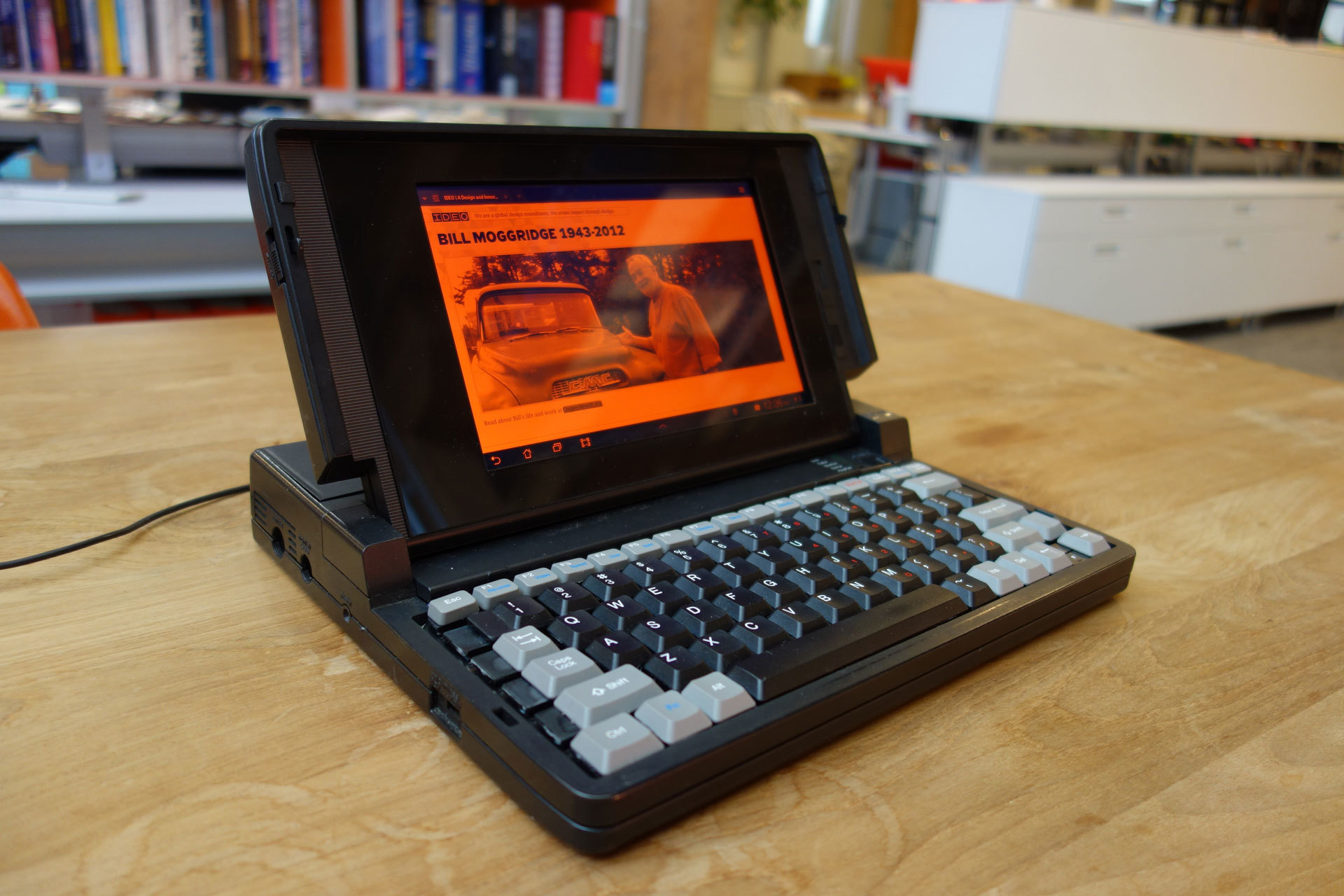
My friend, Dave hacked an Android tablet into the housing of a 1980s GRiD laptop to celebrate the life of IDEO cofounder Bill Moggridge. Three IDEO Chicago colleagues made an LED-powered, floating cloud installation that communicates current weather conditions by changing color. And a pair of engineers created an automated, Arduino-powered, steampunk-themed shandy machine to keep colleagues hydrated during summer parties on the Chicago studio's roof deck.
With my Pavlovian conditioning coming undone, I dove head first into the fray. During a few hours of project downtime, a teammate and I outfitted an old Mac Classic with an iPad for its screen. Was I reprimanded for using company equipment for a side project during work hours? Quite the opposite. I was told to post an image of our creation to the IDEO Instagram account.
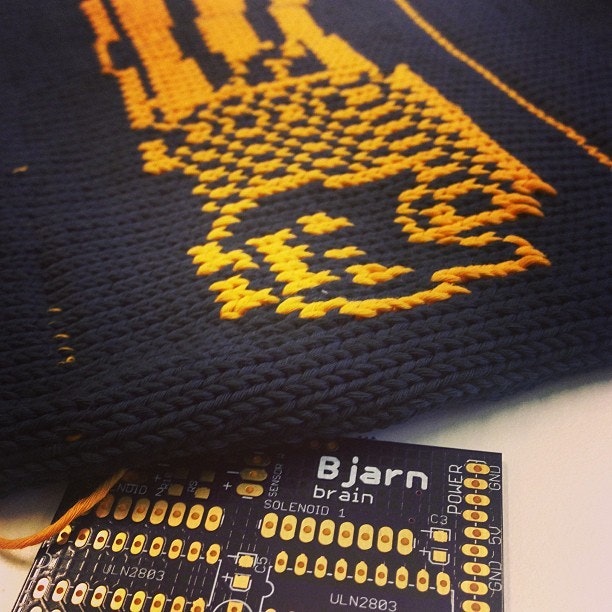
Since then, I have experimented with pumpkin carving via laser cutter; flown toy cars from rooftop ramps into frothy mugs of beer; teamed up with a friend to explore and film fluid dynamics studies using a syringe and typewriter ink; 'printed' Nyan Cat out of yarn via a hacked, decades-old electronic knitting machine; and twice stencil-graffitied IDEO’s San Francisco headquarters—once with moss and once with superhydrophobic solution.
So, why do we create these things? Because even before we’re designers, we’re makers. And taking a few moments away from our day-to-day work for unorthodox and inspiring creations often fulfills our need to make. When we bring this energy back to our teammates, we work better together, and we do better work.
Creating stuff makes us happy. And doing it together makes us better designers. This is why we make.
There is little more terrifying than having non-billable time at work. The first few weeks of my employment at IDEO were a nervous time for me. I was intermittently assisting a few project teams, but it would be an excruciating few weeks before I was staffed full time to a client project.

Design Lover’s Gift Guide
Something for the Helvetican on your list
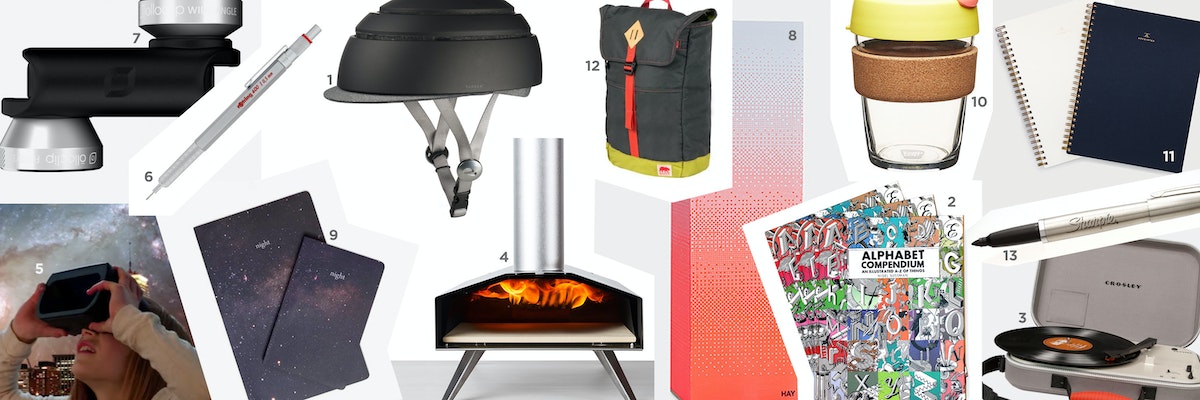
1. Closca Fuga Foldable Helmet, 2. Alphabet Compendium, 3. Crosley Messenger Turntable, 4. Uuni 2s Portable Pizza Oven, 5. Universe2go, 6. Roting 600 Drafting Pencil, 7. Olloclip 4-IN-1 Lens, 8. HAY Tower Block Notepad, 9. Night Notebook, 10. Keep Cup, 11. Appointed Workbook, 12. Alite West Bluff Pack, 13. Sharpie Stainless Steel Permanent Marker
Closca Fuga Foldable Helmet
Helmets are a total necessity, but carrying them around is a pain. The Closca foldable bike helmet solves that problem, collapsing down to half of its size (about 2.4 inches tall), making it possible to hide away in a backpack or purse. The 2015 Red Dot award winner is also certified to global safety standards, so all you have to worry about is picking the right color.
$140

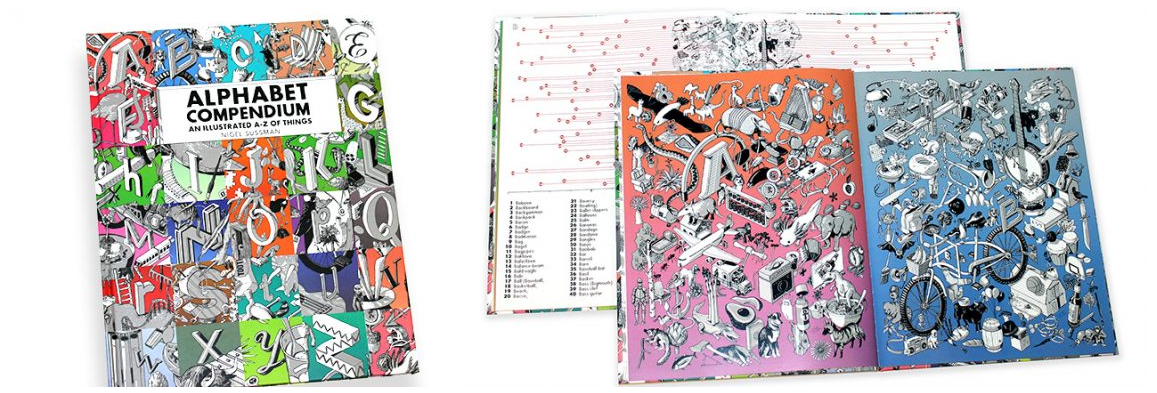
Alphabet Compendium: An Illustrated A-Z of Things
Isometric mural illustrator Nigel Sussman has poured the same style he's used to decorate the walls of tech companies like Google and eBay into his first book, Alphabet Compendium. His hyper-detailed drawings cover everything from the aardvarks to the zucchinis.
$29.95
http://alphabetcompendium.com/
Crosley Messenger Turntable
The Crosley Messenger Turntable lets you spin records anytime, anywhere, thanks to its messenger-bag style design. With built-in speakers and a headphone jack, you can share the music, or go it solo.
$90
crosleyradio.com/
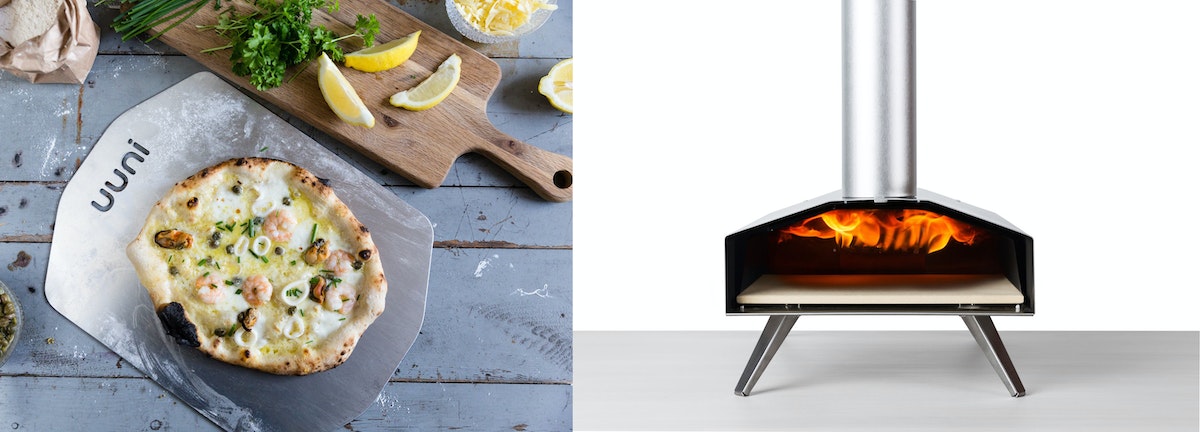
Uuni 2s Portable Pizza Oven
Have a pizza lover in your life? This wood-burning oven goes from ambient temp to 932˚F in just ten minutes. Stainless steel construction means it can handle life in the great outdoors, and Uuni's wood pellets are sustainably sourced, so you don't have to feel guilty. They'll even plant a tree for every bag of pellets sold.
$299
Universe2go: My Personal Planetarium
This star viewer and app combo give you a closer look at the real night sky, not the dome of a planetarium. Take a guided tour of the stars above you—it will illustrate constellations, help you discover planets, and even point out moving objects like comets and satellites.
$99
Roting 600 Drafting Pencil
This is one serious pencil. The iconic, metal design has a comforting heft to it, and its hexagonal base makes it easier to hold in your hand. Better yet, it won't roll off your table. Choose between .5 or .7 lead.
$37
4-IN-1 Lens
Help your loved ones kick up their iPhone photography game with four quick-change lenses (fisheye, wide-angle, macro 10x and 15x) that fit right on top of the iPhone. Panoramas and extreme close ups are made easy with the 4-IN-1 Lens, which is small enough to fit in a pocket. It's a selfie-lovers' dream.
$80
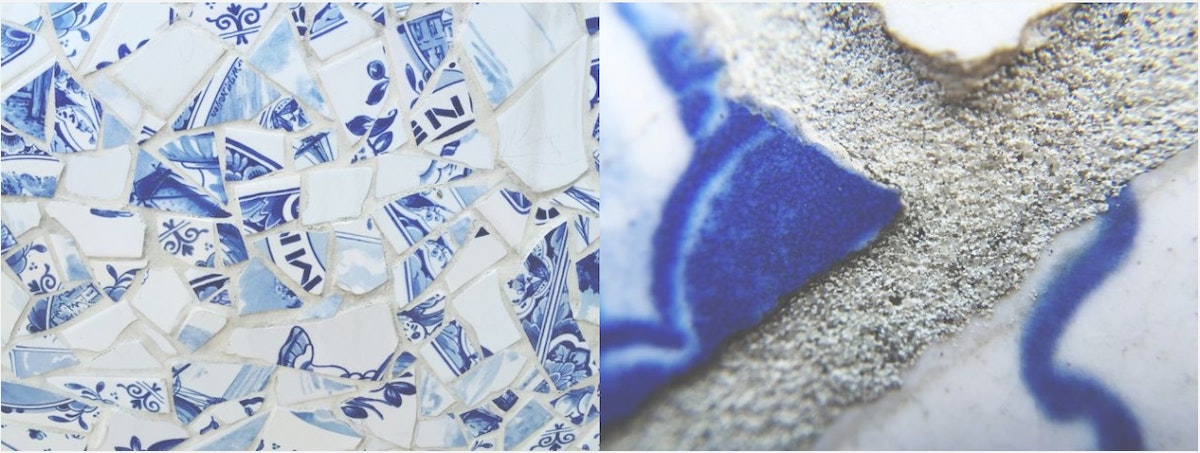
With the Macro 15x lens on the right. Without on the left.
HAY Tower Block Notepad
A beautiful, ombré tower of notes just waiting to be sketched on. Available in fade coral and fade orange. Drool.
$25.00
Night Notebook
Spare, beautiful, and conveniently on sale, this blank Poketo notebook is perfect for capturing your thoughts. And thanks to Smyth Sewn binding, it lies totally flat, making doodling in your notebook easier than ever.
$6

Morning, Day, Evening, and Night Notebooks
Keep Cup
These eco-friendly cups out of Australia are made using waste product from the manufacture of wine corks. Their designs include everything from basic colors to characters from the Star Wars universe. Now you just have to decide between the resistance and the evil empire.
$24
Appointed Workbook
A spare, utilitarian design with a durable cover, this notebook can handle the abuse of every day. Choose between classic navy or white.
$24
Alite West Bluff Pack
A backpack rugged enough for the outdoors, but designed with commuters in mind, the West Bluff pack has an interior laptop sleeve and a padded back built for comfort. It's perfect for the urban explorer in your life.
$48.99

Stainless Steel Permanent Marker
Add some cred to your brainstorms with this stainless steel Sharpie.
$9.50
Struggling to find ideas for the designers on your list? Browse our most coveted tools and trinkets, from notebooks to fine nibs to the perfect traveler's mug for your fixie pannier sidebag. Just beware: it's pretty tempting to pick up something for yourself.

Lindsey Turner
I’m passionate about building brands, products, and experiences that help organizations show up with meaning and momentum.
I help organizations cut through complexity by shaping how they show up, through brand strategy, identity, and storytelling.
Working at the intersection of brand and business, I bring an editorial eye and a bias toward making—turning ideas into tangible experiences that people can understand, trust, and believe in.
My work spans government, healthcare, financial services, media, and consumer goods, from launching Gen Z-focused ventures to building innovation labs and reimagining legacy brands. I relish moments of ambiguity and enjoy translating across teams, perspectives, and priorities to move ideas forward.
I started my career in editorial and digital design, shaping cross-platform experiences and identity systems in publishing and agency environments. That foundation still shapes how I work today: I’m detail-oriented, collaborative, and overreliant on the Oxford comma. I hold a BFA in Visual Communication from the School of the Art Institute of Chicago.

Rachel Young
My work helps organizations see who their products aren't working for—and build the will and the tools to do something about it
For 25 years, I've asked the same question: Who does this design exclude—and what are we going to do about it?
My work spans human-centered strategy, inclusive design, and qualitative research, with clients ranging from Microsoft, Google, and Verizon to the National Science Foundation, and San Francisco Unified School District.
Before IDEO, I taught elementary school in East Palo Alto and spent a decade doing design work with social service organizations—where I learned firsthand what it costs people when systems are built without them in mind.
I am currently writing User Error, a nonfiction book about digital access and the design decisions behind it. I live in Oakland, California.

Brian Pelsoh
I lead with craft, ensuring our work is creatively excellent: rooted in deep human insight and imagination, while also grounded in the realities of business and technology.
My expertise spans brand, communication, and product design across tech, education, the arts, and social impact.
I believe great work demands both high-level vision and obsessive attention to detail, and only happens through collaboration.
I bring an inclusive, hands-on approach and a deep understanding of business, which enables me to consistently deliver excellence while always asking why.
Before joining IDEO, I worked at the brand firms Pentagram and VSA Partners. I began my career as a designer, leading teams at the School of the Art Institute of Chicago and the Milwaukee Art Museum. I hold an MFA in graphic design from Maryland Institute College of Art and a BFA in communication design from the Milwaukee Institute of Art & Design, and have taught at some of the best design schools in the US.
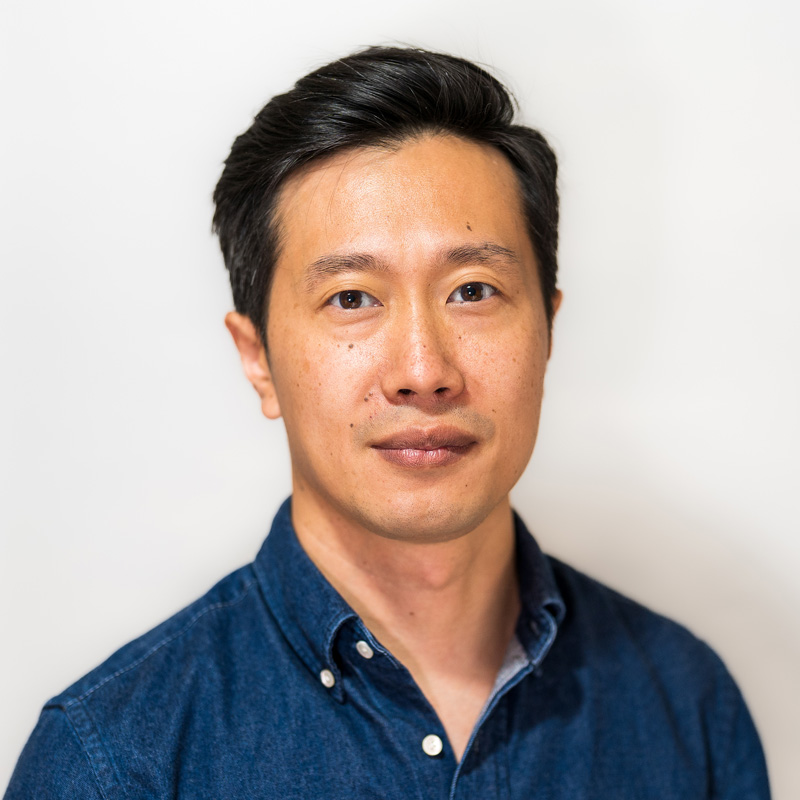
Tony Wong
I am responsible for IDEO’s long-term success in China and working with clients to use design as a tool to enable growth.
I am responsible for IDEO’s long-term success in China and working with clients to use design as a tool to enable growth. Specifically, I have helped Chinese companies design holistic brand solutions through the development of their products, communication, services, and innovation teams, and I have helped multinationals expand their presence and influence in China.
I advise global leaders on developing China-led innovation and capabilities.
In over 15 years in IDEO Shanghai, I have worked on projects that use design to elevate the quality of the experience of healthcare products and services, streamline processes that increase productivity, create spaces and programs that promote and enable inclusive communities, and build next generation mobility solutions that are planet-positive.
Before joining IDEO, I worked at Philips Electronics and the Electrolux Group in Italy, the Netherlands, and Singapore on a number of breakthrough commercial products. I am a member of the Young President Organization in Shanghai.

Adopting a musical mindset: Michael Hendrix
What improvisation, listening, and rhythm can teach us about collaboration.
An IDEO partner and global director of design, he’s also a lifelong musician and associate professor at the Berklee College of Music. He’s spent many years studying the shared mindsets of musicians and designers and is in the midst of writing a book on the subject to come out next year. He joined us on the Creative Confidence Series to share more about what the business world can learn from the musical one.

Scaling a business with heart: Sheryl O'Loughlin
Growing a company without losing empathy, purpose, or personal conviction.
Suz chats with Sheryl O’Loughlin who says there’s a dark side to entrepreneurship, but it’s possible to run a startup in a healthy, joyful way. In this conversation, we dive into Sheryl’s vast experience as a CEO, founder, mentor, and advisor to pull out key lessons she’s learned at critical moments in her career. Walk away with tips for launching and growing a successful business while maintaining a fulfilled life.

What leaders need to thrive in uncertainty: Tim Brown
The mindsets leaders need when the path forward is unclear.
Tim Brown, IDEO Chair and former CEO of IDEO for 19 years, shares his perspective on the qualities necessary for creative leaders in today’s unpredictable business and economic conditions. He discusses what we can do to find the opportunity in ambiguity and design and build better systems to meet the needs of the future.

How to create winning strategies: Roger Martin
Making integrated choices that create advantage and guide action.
Roger Martin is a bit of a legend in the strategy world. His book Playing to Win, written with former Procter & Gamble CEO A.G. Lafley, is a favorite in business schools. And decades of work consulting with some of the world’s most recognizable companies have cemented his place as one of today’s leading business thinkers. In this conversation, get an inside look at Roger’s approach to business strategy and hear about our newest course, Designing Strategy:
Looks like you might be in search of something very specific?
Or reset the filters above and try another angle.
Here’s some random inspiration
Podcasts about creative leadership
Articles about the power of prototyping