
.svg)



In Mexico, redefining retail
FEMSA creates a digital ecosystem to increase customer value at its network of OXXO stores.
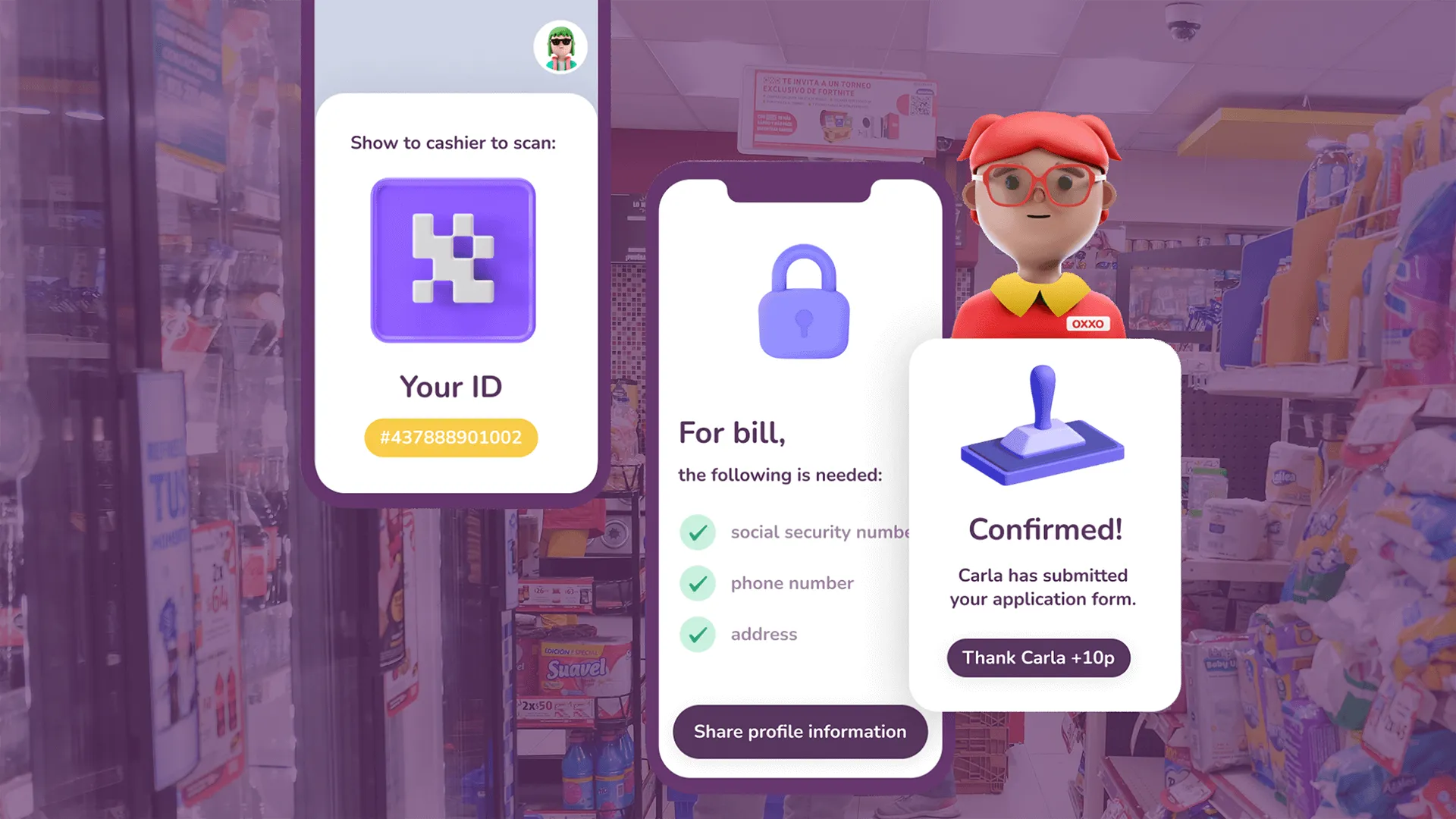
The IDEO team quickly discovered that the challenge of designing a Digital@FEMSA super app for tens of millions of customers was matched only by the operational complexity of bringing together different teams that had already created various apps with separate value propositions. Not to mention the 22,000 stores specifically tailored to local communities.
To kick off the project, the IDEO team built on FEMSA’s already deep understanding of its customers by meeting them in their homes and communities. The team discovered that users didn't care about long-term rewards; instead, they wanted everyday help to thrive long-term. Connecting omnichannel rewards to regular spending would allow them to save time and money—something they said was particularly important. Along with market research, insights like these directly informed the app's design, ensuring that it was compatible with users' everyday habits and preferences.
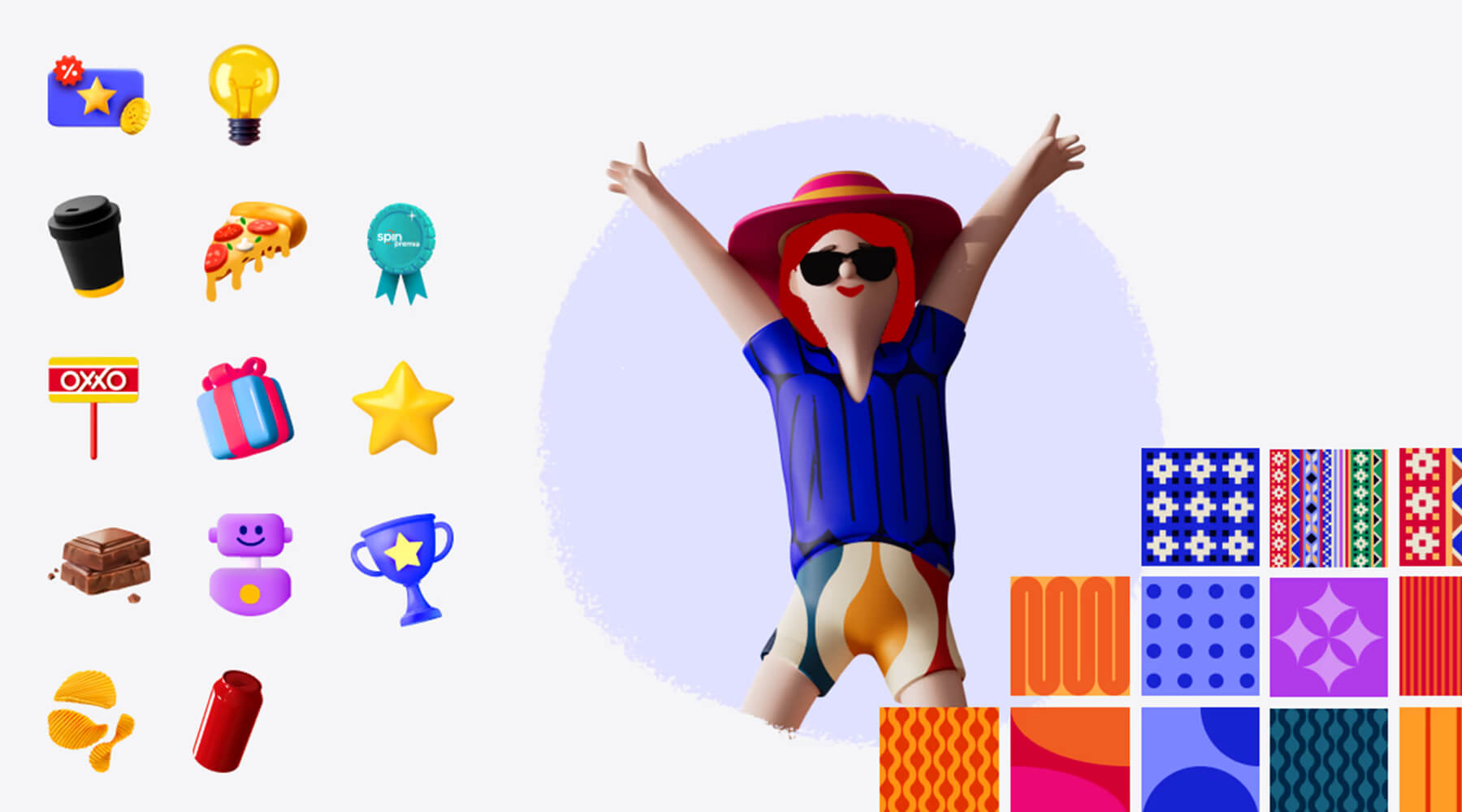
Meanwhile, the project team also worked to ensure the app fit the priorities of the various teams inside Digital@FEMSA, designing a comprehensive process for testing joint value propositions. Together, the team created a new design system, iconography, and set of unifying principles. IDEO also worked closely with the Digital@FEMSA teams to ensure that the app's design was in line with their strategic goals and technical capabilities, and built the app's initial information architecture. They incorporated secure transactions, effortless coupon redemption, personalized offers, and a cohesive loyalty program.
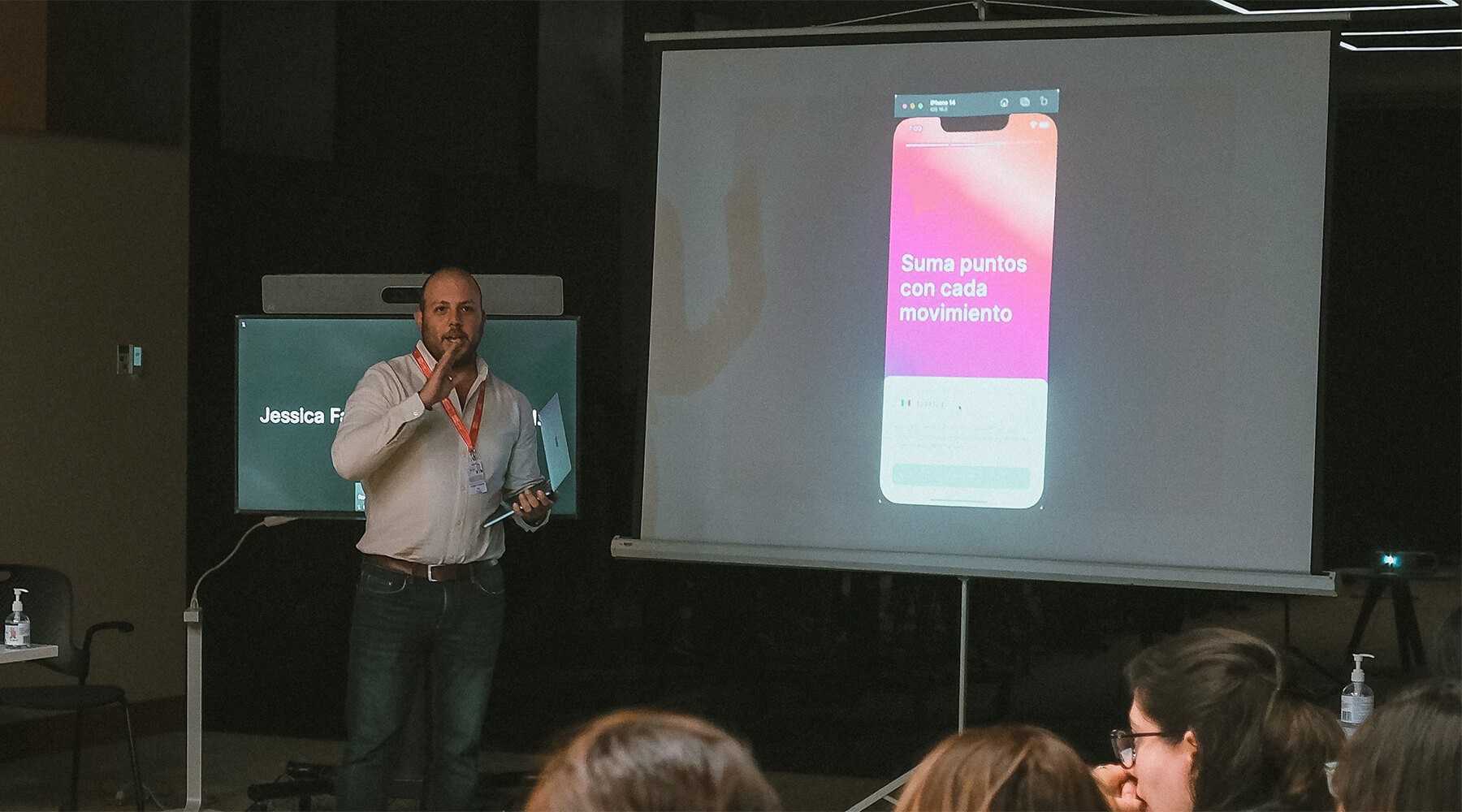
From there, the IDEO and Digital@FEMSA teams quickly transitioned into the design and development phase, producing prototypes of the new app, dubbed Spin Premia. With the help of user testing, they were able to continuously iterate to improve the app's features and functionalities, creating a user experience that was both seamless and intuitive. In just 10 months, they went from a small digital team with an ambitious idea, to a 150+ people product organization and an MVP launched in one region. And thanks to a tight partnership, the teams were able to seamlessly integrate Spin Premia into Digital@FEMSA's existing systems, resulting in a scalable implementation nationwide just a few months later.
The introduction of Spin Premia was a milestone in FEMSA's digital transformation path. Following a true ship and iterate model, just a few months into the project, the company released a smaller, focused version of the app in just one city in Mexico to quickly learn from customer experience before expanding to new regions. Since then, the Spin Premia app has quickly gained popularity, offering a safe and user-friendly platform that millions of Mexican consumers have embraced. It has also allowed FEMSA to broaden its digital portfolio and extend its customer base throughout Mexico, elevating customer satisfaction and fueling business expansion.
13 million Mexicans visit FEMSA’s OXXO convenience stores every day. But the company had ambitions to leverage digital experiences to increase customer engagement.
To get there, Digital@FEMSA needed to deliver exceptional digital products with the agility to serve an entire population.
4.7 stars
Spin Premia’s app store rating
22.8 million
active Spin Premia program users
A hotel brand for new travel paradigms
IHG introduces Garner, a midsize brand elevated by thoughtful design.
Midscale hotel brands are the fastest-growing hotel segment in the US, attractive to both travelers and hotel owners. But often, their messaging feels repetitive, and travelers have a tough time differentiating between them. With a warm, thoughtfully designed midscale brand, IHG had an enormous opportunity to distinguish itself in a crowded market.
IHG’s goal was to deliver a guest experience that felt genuinely unique and resonant—and quickly. With costs on the rise, many owners were motivated to turn toward conversion brands, which allow them to refurbish hotels under a new brand rather than invest in construction, a way to grow their portfolio in a tight financing market. Meanwhile, IHG’s competitors were set to introduce new conversion brands of their own. The company was looking for a partner that could work swiftly and iteratively to deliver a distinct brand.
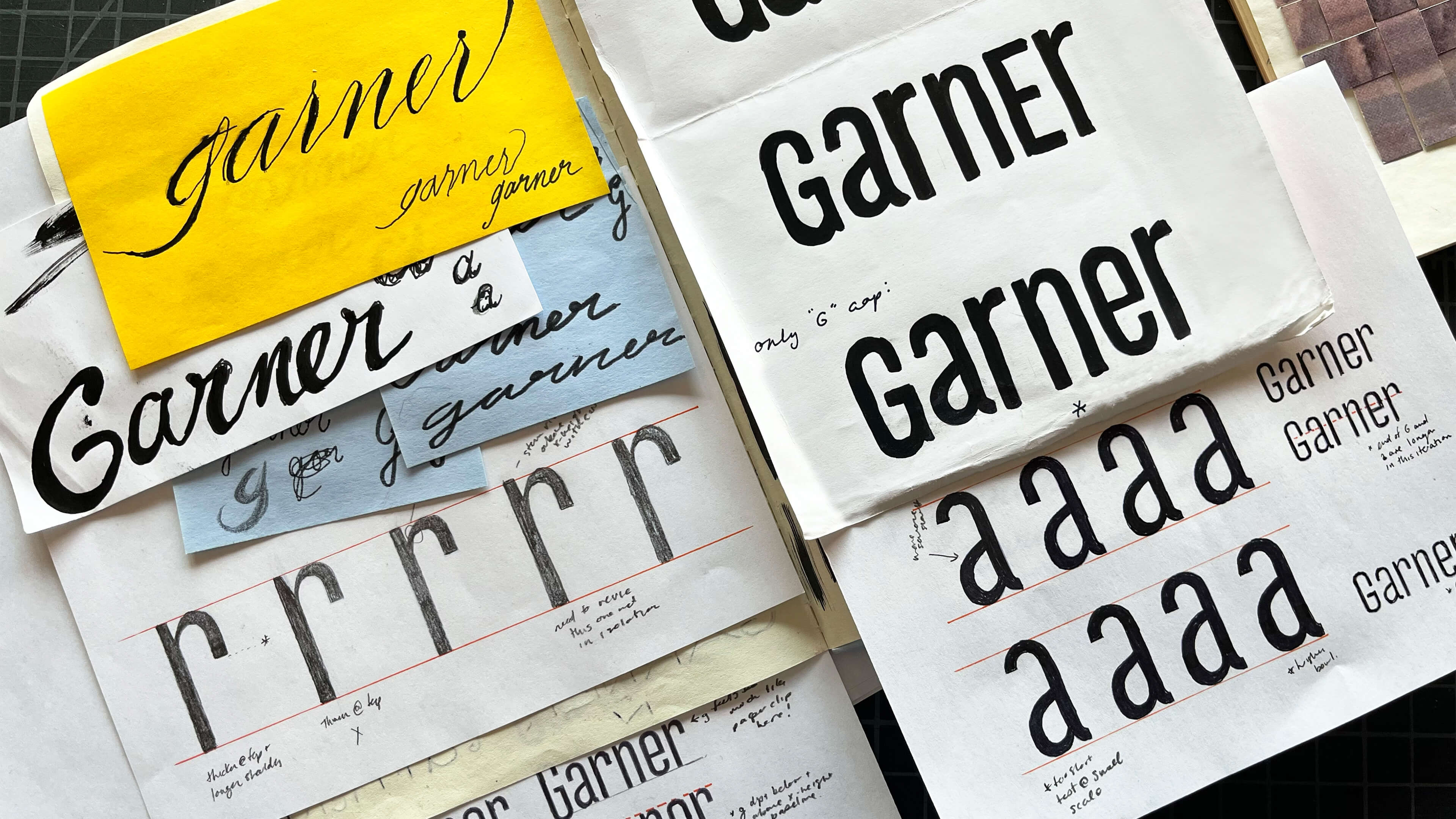
For the IDEO team, the answer lay in communicating the brand’s value, starting with a custom logo rendered by hand. Inspired by vintage sign painting and modernist typography, the team sketched different versions of the letterforms, reviewing them with IHG until they had a set that brought to life the generosity and sense of invitation associated with the hotel’s spaces. They also worked to ensure the wordmark was visually balanced and would translate well across a variety range of scales. From there, they built an expansive brand world, including bespoke navigation icons, a full interior and exterior signage system, and a video to support the Garner launch.
The result is a hotel brand that stands apart in its category for both travelers and owners: thoughtful and well-designed yet affordable. As competition in the midscale segment continues to increase, Garner has been central to IHG’s growth strategy. Launched in the fall of 2023, Garner opened 100 hotels worldwide in just 16 months, making it the fastest-ever IHG brand to scale globally. The brand’s increasing popularity among owners and developers is driven by the growing demand for conversion properties, which accounted for 52% of IHG’s room openings in 2025. Garner plans to continue its rapid expansion with nearly 80 additional hotels in 12 key markets, including the US, Mexico, Italy, and Japan.
Conversions account for 12% of the global hotel pipeline, enabling hotels to switch brands and refurbish, boosting revenue without expensive construction.
The US midscale hotel segment, valued at $14B, is expected to reach $18B by 2030.
100 new Garner Hotels
in less than 3 years—the fastest-scaling brand in IHG's history
500 Garner Hotels
planned in the next 10 years; 1,000 over the next 20

Moving dementia care forward
Together Senior Health provides digital solutions to combat cognitive decline.
Alzheimer’s and dementia are notoriously difficult to treat—and scientists estimate that some 50 percent of people who have dementia are undiagnosed. Recognition of symptoms and early intervention are key. Together and IDEO set out to conduct user research to inspire new products that would help patients with cognitive decline take charge of their brain health.
The first priority was to expand the reach of the Moving Together program, which combines group movement exercises with mindfulness techniques, led by a trained group instructor. The IDEO team conducted remote and in-person interviews in Florida, where one in five residents is age 65 and older, and rates of Alzheimer’s and dementia are among the highest in the country. One of the key insights the team discovered was that many older adults didn’t understand how behaviors like smoking, exercise, and diet can be risk factors for cognitive decline. Their input inspired a new design principle for the program: “No naked feedback.” Any time participants received health coaching advice about modifying their lifestyle, they would also be given resources on why and how to do it, so they would have a pathway to boosting their brain health.
The IDEO team folded insights like this one into the design for four new product offerings, including personalized brain health education, new online community engagement tools, partnership programs, and health coaching services, as well as a new user interface to illustrate them. Along with Together they also developed an implementation roadmap of next steps to bring the new digital product offerings to market, such as hiring a brain health coach and creating a new course curriculum. Now, Together has enrolled 165 people in the Boost Your Brain Health Clinical Trial, which is looking at outcomes such as reduced risk of Alzheimer's and maintenance of cognitive function for the Brain Health Together program. With trial completion in Q3 2024 and product launch in early 2025, growing numbers of people with MCI will have access to this exciting program. Together incorporated almost all of the elements from the IDEO roadmap into the final curriculum, and the team often refers back to insights the team gathered as guiding design principles.

Fighting barriers to diagnosis
With its online program growing, Together wanted to take on an even bigger problem: dementia underdiagnosis. Co-founder Dr. Deborah Barnes had recently developed an algorithm that uses patients’ health records to calculate their risk of undiagnosed dementia, called the electronic health record Risk of Alzheimer's and Dementia Assessment Rule (eRADAR). Together was looking to find creative ways to equip and empower providers to use risk scores like eRADAR in primary care settings.
One piece of the puzzle? Many primary care doctors are unaware that better management of Alzheimer’s disease and dementia can have a positive impact on other chronic health issues—like diabetes, hypertension, and depression. So by encouraging providers to prioritize dementia care, they can help support the overall health of older adults with cognitive decline. The IDEO team recommended a curriculum for continuing education courses for doctors that make that link clear—another step toward increasing dementia diagnosis and improving overall health.
Better help, sooner
To understand the patient experience, Together and IDEO decided to work directly with patients and caregivers to uncover what was stopping them from asking for dementia screening. The IDEO team quickly learned many patients were afraid of facing a diagnosis that signified a loss of agency and control, especially when they didn’t believe there were good treatment options. Often, they were unaware that there were things they could do to improve their brain health. They needed to know what steps to take after a diagnosis, and who could provide actionable advice. In response, the IDEO team designed a digital activity toolkit and physical booklet to guide patient families through the early stages of a dementia diagnosis, including recognizing the signs and symptoms, having better conversations with their doctor, and getting connected to support groups and programs like Moving Together.
Solving the problem of dementia underdiagnosis involves complex systems-level thinking and designing for the entire health ecosystem of patients, providers, and insurance payers, and solutions for Alzheimer’s and dementia care are still in their infancy. But already, this work is empowering patients and doctors to prioritize brain health and get screened sooner, and Together, which has since been acquired by Linus Health, is still working to move dementia care forward.
Approximately 12-18% of people aged 60 or older live with mild cognitive impairment, while memory loss, Alzheimer's and dementia affect more than 50 million people around the world.
An estimated 50% of people living with dementia are undiagnosed.
165 enrolled
in the Boost Your Brain Health Clinical Trial
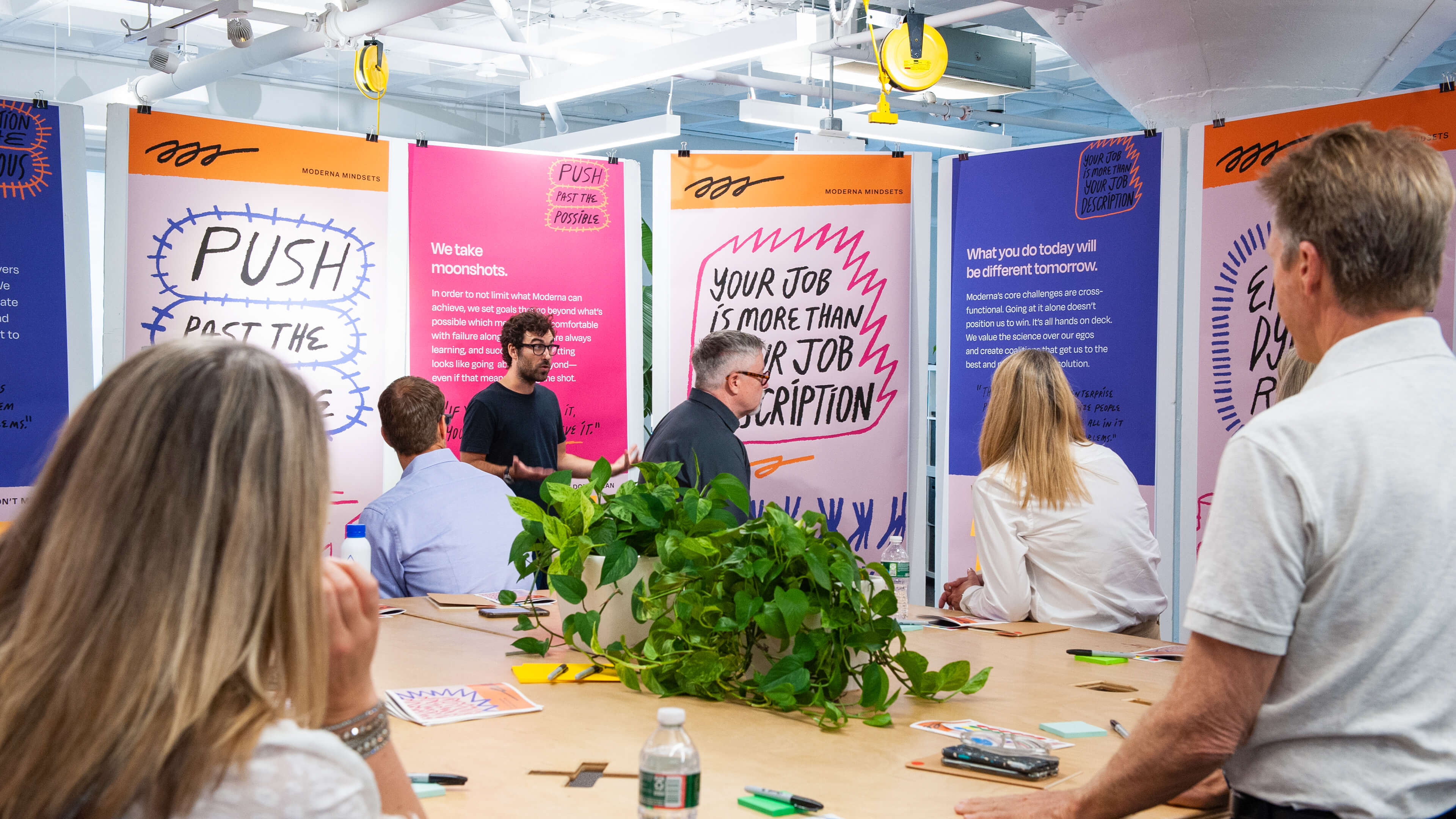
Culture as catalyst
Moderna defines its Mindsets to preserve its future.
Many companies view culture-building initiatives as nice-to-haves. At Moderna, Mindsets are a business imperative, crucial to its plans to develop breakthrough products quickly.
For companies working on solutions as vital as a COVID-19 vaccine, delays and mistakes don’t just mean missing a product launch date—they’re life-or-death, and on a large scale. Moderna had to ensure that its employees knew how to make the right decisions, evaluate risk, and move quickly—even if they came from organizations with more bureaucracy and less risk tolerance. In 2021, IDEO sat down with longtime Moderna veterans to hear stories about moments that exemplify the company's culture, like the day a critical piece of equipment arrived but was too big to fit through the door. Taking it apart would have added days to their timeline. So employees took sledgehammers to a wall instead. Stories like this one fed into the crafting of the list of Mindsets, such as “Act with urgency: Action today compounds the lives saved tomorrow” and “We behave like owners: The solutions we’re building go beyond any job description.”

To gather feedback, the team shared the draft Mindsets with a diverse set of employees—new hires, veterans, folks already closely aligned with the culture, folks for whom it wasn’t the most natural fit, and a plethora of employee resource groups. CEO Stéphane Bancel and the leadership team took crafting and iterating on the Mindsets very seriously, wordsmithing and tweaking them with the team until they were ready to share them officially. Now, new hires learn about the company’s Mindsets in Moderna ONE, an onboarding process that IDEO helped revamp, while existing employees attend a workshop to ensure everyone at the company knows not only what to do but also how to do it effectively. In a matter of weeks, IDEO helped Moderna codify its culture for employees and set the company up for continued success. Moderna continues to embed these Mindsets across the entire employee lifecycle to systematically scale its culture.
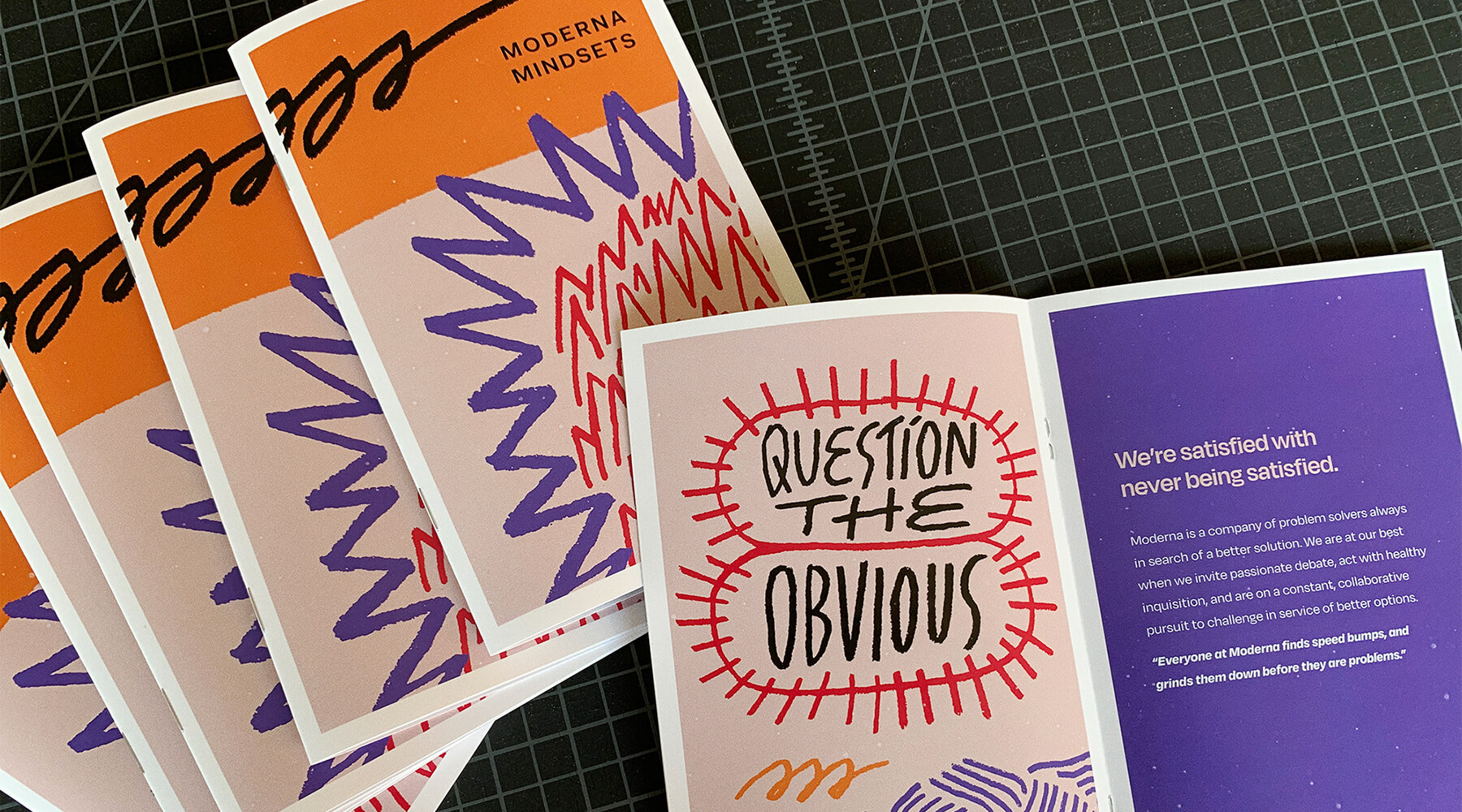
For employees new and old, the clarity of the Mindsets has made it easier to understand expectations and to understand the company itself. Long-term veterans responded with comments like, "These really help explain why we're working this way,” while one newbie said, "It feels like a homecoming to hear the culture that we’re trying to bring through.” But more than just solving a cultural issue, the new Mindsets have fulfilled a business imperative: Holding on to the secret sauce that made Moderna successful to begin with, setting the stage for its next five years of breakthroughs.
When the World Health Organization (WHO) declared the COVID-19 health crisis a pandemic in March of 2020, Moderna had fewer than 1,000 employees. Four years later, it’s more than five times the size.
Ranked #1
BioSpace Best Place to Work, large company in 2024
Ranked #6
Boston Consulting Group’s 50 Most Innovative Report in 2023
Ranked #4
Deloitte’s Technology Fast 500 List in 2023

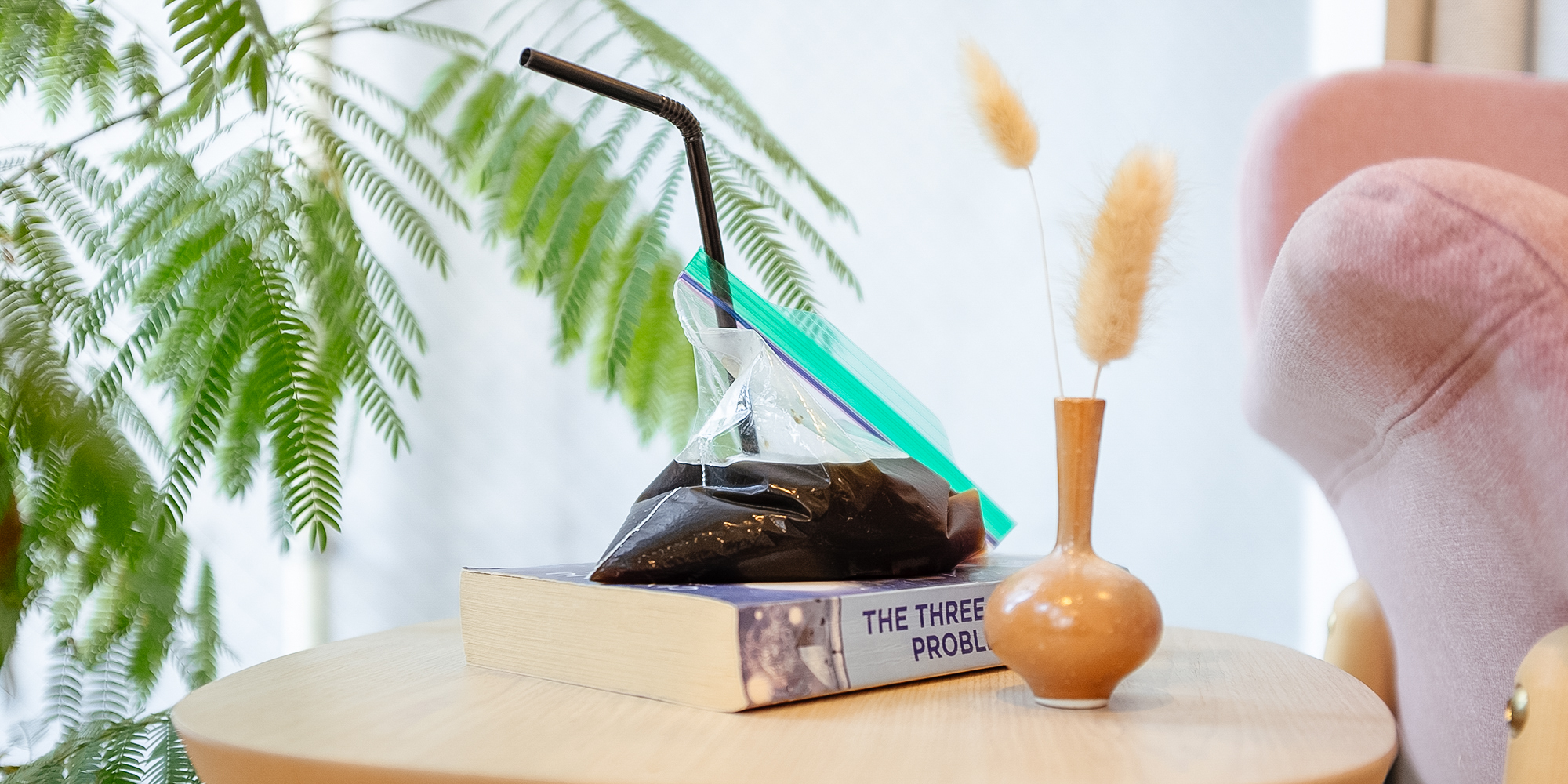
コーヒーカップが教えてくれた、宇宙旅行とデザインの未来
もちろん、これには理由がある。飲料がパックに入っていれば、液体が飛び散って宇宙船内の電子機器に付着することを防げるからだ。しかし、コーヒーを飲むという行為は単なる水分補給ではない。多くの人々にとって、朝のコーヒーは頭のスイッチを入れるための大切な儀式でもある。
この朝の習慣を宇宙でも再現したいと強く思ったのは、2008年に国際宇宙ステーション(ISS)に滞在したNASAの宇宙飛行士、ドン・ペティだ。ドンはISSで迎えたある朝、とうとうストローでコーヒーを飲むことに飽きてしまった。熱々のコーヒーの香りを楽しみ、啜って目を覚ます『体験』が恋しくなったのだ。
そこでドンは船内で見つけた透明フィルムを材料に、宇宙でも使えるカップの試作に取りかかった。無重力下での液体の動きを利用して、コーヒーが壁を登ってカップの縁に達するようにちょうど良い角度でフィルムを折り曲げた。そうして誕生したのが、涙型の「ゼログラビティ・カップ」だ。この発明によって、ISSに滞在するすべての宇宙飛行士は、コーヒーに限らずお好みのドリンクをカップに注ぎ、乾杯をし、地球を眺めながら味わえるようになった。
これまで各国の宇宙機関が重視してきたのは、宇宙飛行士の安全性を最大限に高め、コストを最小限に抑えることだった。その観点は今後も変わらず重要であり続けるが、この「おいしいコーヒーを飲みたい」というドンの素朴な願いは、これから宇宙旅行ビジネスが発展する上で考慮しなければならない数多くの欲求のひとつだ。一般人が宇宙に行くようになると、旅行者が宇宙でも人間らしく、より快適に過ごせるための体験をデザインすることが大切になる。
快適な宇宙旅行体験を目指して
ISSへの3日間の宇宙旅行のチケットが当たったと想像して欲しい。宇宙での生活なんてスターウォーズやスタートレックのようなハリウッド映画でしか観たことがないあなたは、抑えきれない不安とワクワクを胸に当日を迎えるだろう。
出発の日の朝、用意されたファッショナブルな宇宙服を身に纏い、宇宙船に乗り込む。そしてカウントダウンの合図とともに、地面が割れるような振動が全身を揺さぶり、体が座席に張り付く。すると数分後、急な静けさに包まれたと思ったら腕がふんわりと浮かびあがる。シートベルト解除のサインを確認したあなたは、他の乗客と一緒にフワフワと窓際に近寄り、自分の目前に浮かぶ地球の姿に思わず息を呑む。すぐに写真を撮り、インスタグラムに「#地球は本当に青かった」と投稿する。数時間後にISSに到着し、待望の3日間が始まるのだ。
しかし無重力環境になかなか慣れないあなたは、船内の電子機器やほかの旅行客にぶつかり、最初は笑い飛ばすが、徐々に気まずくなっていく。そしてポーチに入った食事を取り、チューブ型のトイレで用を足しながら残りの数日間を過ごす。初日の感動も時間とともに薄れ、最終日には人生最高の旅行がまるで試練のように思えるかもしれない。
このようなことが本当に起こると、せっかくの宇宙旅行が台無しになってしまう。そこで、ドンの遊び心に溢れた好奇心に感銘を受けたIDEOの有志が集まり、宇宙での滞在をより快適で楽しくする方法を模索し始めた。
1. 「遊び」で導く

無重力というと聞こえはいいが(そして科学的には微小重力なのだが)、私たち地球人にとっては身体的負荷が多い環境でもある。例えば、振り向くという単純な動作でも、今までとは全く違う身体の使い方が求められる。短い滞在期間を最大限に楽しむためには、できるだけ早く体の使い方を学び直す必要があるだろう。
ディズニーランドがテーマパークにおける「待ち時間」を「楽しい体験」に変えたように、身体的に辛くなりがちな無重力に慣れるための時間を、より楽しい旅のひとつの体験として再設計することは可能だ。遊びを通して、人々が無重力環境でより快適に過ごすための体の使い方を学ぶ手助けができるだろう。
私たちは幼い頃、好奇心と創造力に任せて日常の未知を探検し、視界に入るあらゆるものから刺激を受け、すべてを「遊び」に変えてきた。床をマグマに見立てて、椅子やクッションの上を飛び跳ねながらバランス力を鍛えたり。お互いの影を踏む遊びをしながら、時間と影の長さの関係について学んだり。この無邪気な世界の捉え方を、宇宙旅行にも応用できないだろうか?
2. 打ち上げから帰還までが宇宙旅行

宇宙旅行のクライマックスは、意外にも軌道上にたどり着いた最初の瞬間かもしれない。それは同時に、滞在中に徐々に興奮が冷めていく可能性も暗示している。
私たちは大人になるにつれて、場所から場所への最適な道のりを探すことに集中するあまり、道のりそのものを楽しむことを忘れがちだ。宇宙旅行も例外ではない。ISSに到着すれば、90分ごとに昇る日の出、宇宙から眺めるオーロラ、まるで電車からのぞく景色のように目の前を過ぎ去っていく大陸など、宇宙ならではの体験がたくさん待っている。さらに、地球の大気圏に再突入しながら窓の外が赤く光る光景、そして地上に着陸する瞬間の衝撃も貴重な体験の一部だ。その一つ一つの体験をつなぎ合わせて興奮のボルテージを徐々に上げて、テンションマックスの気分で旅の終わりを迎えられるような体験が望ましい。
どのようにすれば、打ち上げから帰還まで、宇宙ならではのユニークな瞬間が、グランドフィナーレまで続くような宇宙旅行プログラムをデザインできるだろうか?
3. 誰もが楽しめる体験デザイン

SpaceX社のクルー・ドラゴンによる世界初の民間宇宙飛行士ミッションには、骨肉腫サバイバーで、金属製のロッドを左足に入れているヘイリー・アルセノーが搭乗する。宇宙飛行士の選抜では身体面を含めた厳しい条件をクリアする必要があるが、民間宇宙飛行の基準は異なる。
ヘイリーの選抜は、宇宙に行ける人の定義が変わってきていることを象徴している。近い将来、さまざまな身体障がいを持つ人々が宇宙を訪れるようになるだろう。さらに、耳の聞こえない人は宇宙酔いに強い傾向があるなど、地上での不自由が宇宙では有利に働くケースもあることが証明されている。重力に縛られない世界では、障がいという概念さえも覆される。
地球上では健常者であっても、宇宙で生活すれば思わぬ事故は起きるだろうし、新たな障がいが出てくることも予想される。宇宙ジャーナリストのミリアム・クレイマーがAxiosに寄稿した記事で述べたように、「身体障がい者のために宇宙船を設計すれば、すべての宇宙飛行士の生活がより快適になる」のだ。
例えば、無重力環境は視力の低下を引き起こすことが知られている。そこで、視覚障がいを持つ人も宇宙旅行を楽しめるように、状況の変化を音や感触で伝えることはできないだろうか?五感を刺激する体験や船内構造をデザインすることで、誰にとっても快適で楽しい宇宙旅行を実現できるはずだ。
宇宙旅行の台頭は、人々の地球に対する意識を大きく変えるきっかけになるだろう。そのきっかけを最大限活かすためにも、最高に快適な旅行体験をデザインすることが重要になる。
もちろん、最初に宇宙に行けるのは裕福な人たちばかりだ。しかし、そのようなアーリーアダプターにとって最高の滞在を提供することが産業の発展を加速させる。やがて、より多くの人々が宇宙旅行を通して地球とより良い関係性を育むチャンスを与えてくれるだろう。
そして、無重力環境ではあらゆる常識が覆される。音楽バンドの「OK GO」の言葉を借りれば、「Gravity is just a habit (重力はただの癖)」だ。その体に染み付いた癖を一旦忘れることで、日常に隠れた人間らしさについて考え直し、あらゆるモノやコトを一からデザインできる。重力に縛られない世界では、誰もが子供のように未知と遊びながら日常を捉え直すことができるのだ。
次回はこれらの考え方を体現した、宇宙旅行をより快適で楽しくするコンセプトをいくつか紹介していく。それまで、みなさんのアイデアを是非聞かせてもらいたい。
この記事を読む前に、まずコーヒーを淹れよう。とっておきのコーヒーができたら、ジップロックバッグの中に注ぎ込んで、ストローで飲んでもらいたい。これが宇宙での飲料の飲み方だ。お世辞にも美味しそうとは言えない。
English here
僕たちが中高生にデザインの力を本気で伝えたい理由
IDEOには、学校や企業向けの研修を積極的に行っていたり、創業者デイヴィッド・ケリーを始めとする多くのメンバーが教育機関で教鞭をとっていたりと、ド直球の教育的な取り組みも沢山ある。だが実は、そもそもIDEOが本業として行っているクライアントワーク自体がかなり教育的要素が強いのだ。
もちろん、どの案件も最終的にはデザイン会社として、プロダクトなりサービスなり空間設計なりのデザインに落とし込み納品するのだが、そのプロセス自体も同等な納品物として捉えており、我々が日々行っているデザイン思考をベースに制作の過程を少しでもクライアントチームに体験・理解してもらいたいという想いが非常に強い。
そのため、クライアントのコアチームにはなるべくデザイン・リサーチやブレストに参加してもらうし、エンジニアリングチームを持つクライアントであれば、プロトタイピングも僕達と一緒になって、まるで競い合うかのようにスピード感を持って作ることもある。結果そうした方が、プロジェクト終了後にクライアントチームがしっかりとそのプロジェクトを引き継げる、また組織内のプロジェクトへの理解が浸透しやすい、といったコンサルティングとしての意図も当然ある。だが、それにしてもやり過ぎなのでは、と思うくらい、クライアントチームを巻き込むことへの努力とコストを惜しまないのである。
特に我々東京スタジオにおいては、これが顕著である。つまり、デザインを納品することと、そのデザインに行き着く制作過程にどっぷり浸ってもらうことが、同等の価値を持つと考えられている。まるでモノ作りを行うデザイナーとしての自分と、デザイン思考を伝える教育者としての自分、その両者を常にどのプロジェクトでも求められているような感じだ。
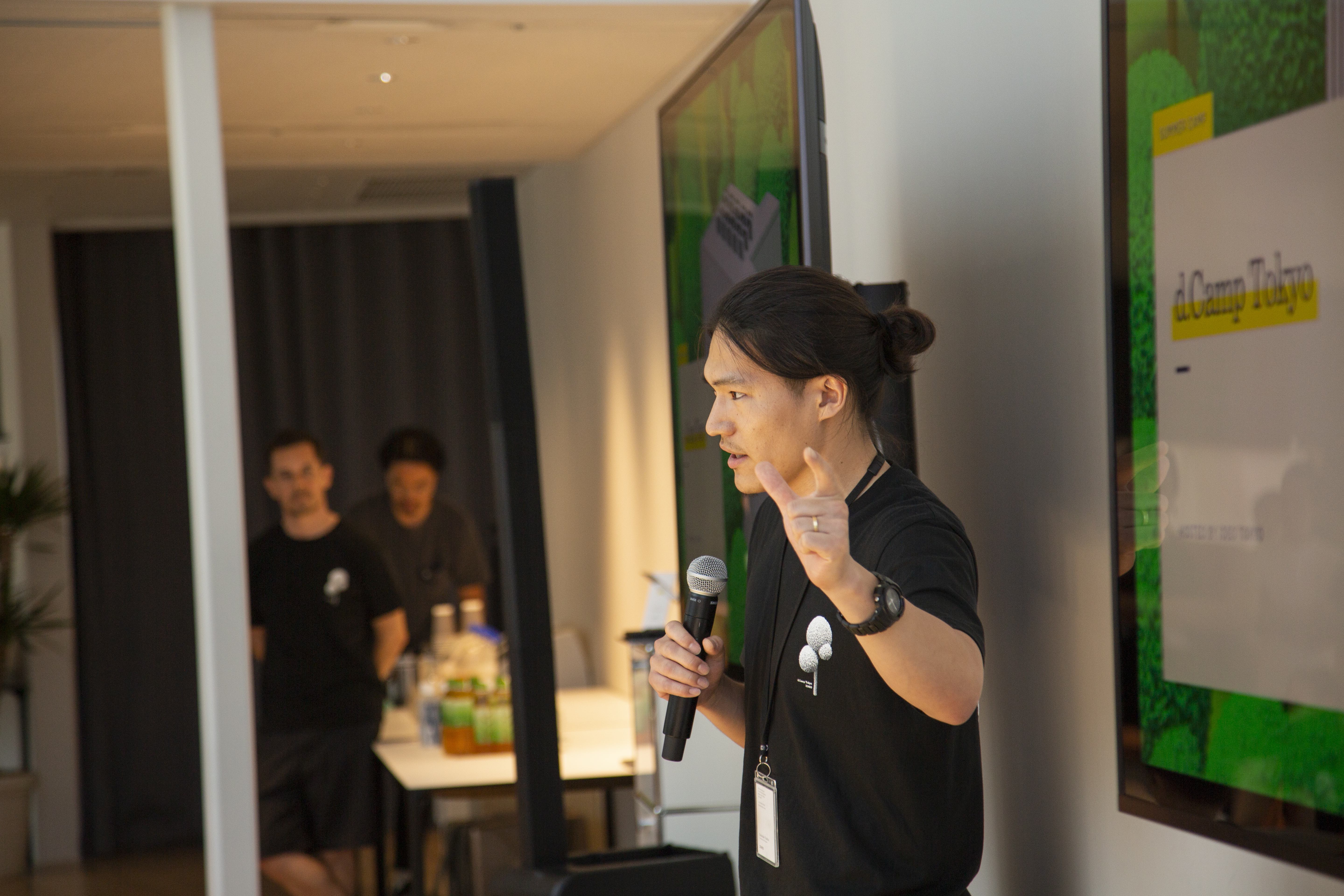
かくいう私も、何かを作ることと同じくらい(もしくはそれ以上に)、作る楽しさとその社会的意義を少しでも多くの人に広めたいという想いを持ってIDEOに転職してきたので、こうした文化が組織の隅々まで浸透していることを誇らしくなったことが何度もある。(そもそも、最終面接で最後に僕から「皆さんの理想のプロジェクトは?」と聞いた際に、同席していた3名のデザイナーがが口を揃えて「学校をつくりたい」と言っていたことが入社の決定打となったので、当たり前といえば当たり前なのかもしれないが。)そして、そんなIDEOのデザインと教育の両者への想いの交差点に鎮座しているのが、d.campである。
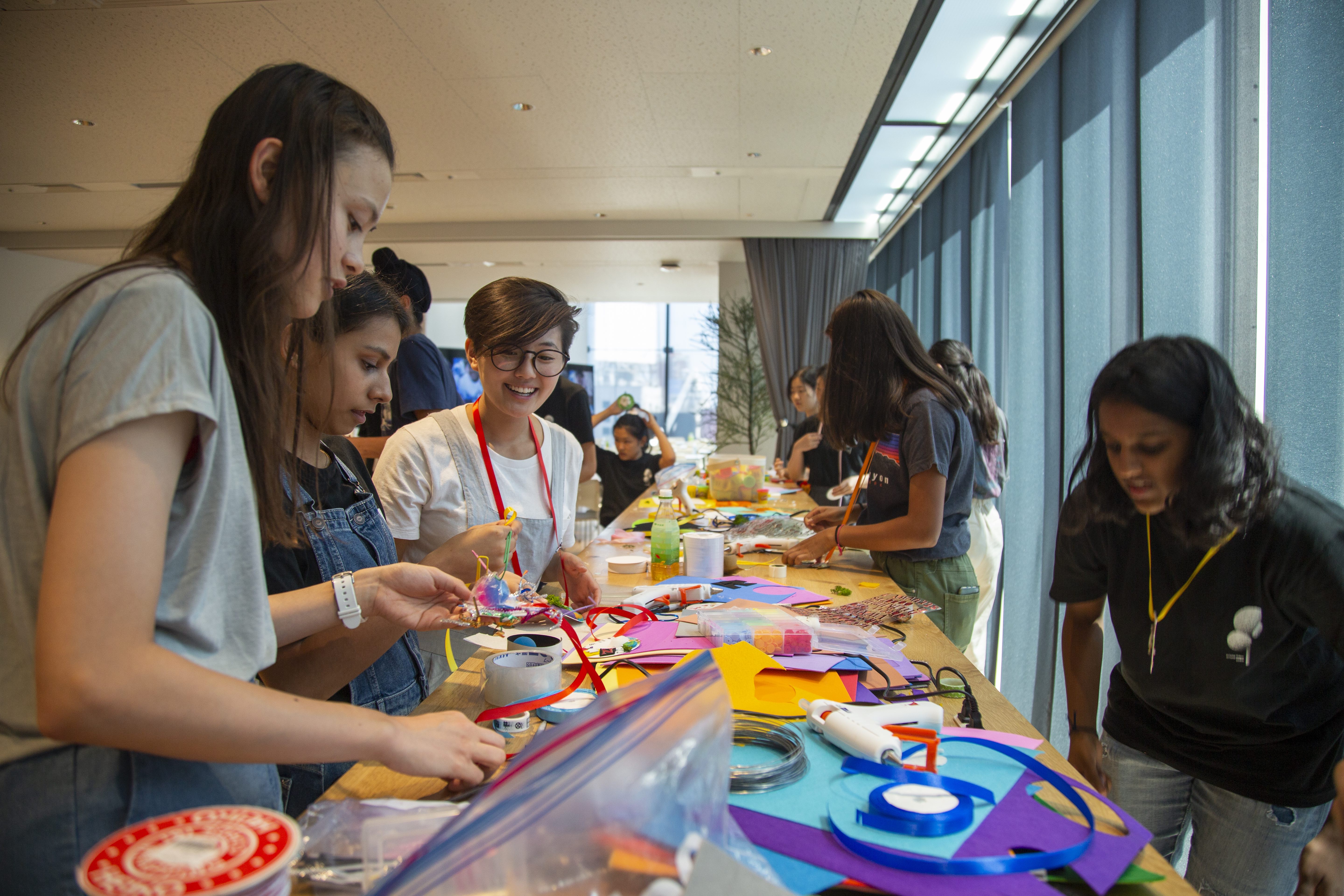
d.campとは、もともとシリコンバレーの創業スタジオで始まった取り組みで、中高生を相手にデザイン思考を体験してもらうサマーキャンプである。3年前から東京スタジオでも実施されるようになり、去年と今年はコロナウイルスの影響で完全オンラインで行った。スタジオによってオペレーションは異なり、有料で開催しているところもあれば、東京スタジオのように今の所無料で実施しているところもあるが、概ね5日間のサマーキャンプ形式である点は統一されている。
国内の中高でもデザイン思考が登場することは増えてきたが、微分積分やフレミングの法則と同じような感覚で「単元」として捉えられてる節がある。そうではなく、己の手で作り上げたもので周囲の誰かを少しでも幸せにする「体験」としてデザインを体感してもらうことが、より一層不確実性を増す今後の社会を生き抜く世代に不可欠なように思う。
デザイナーがデザインを教える
東京スタジオのd.campでは、毎朝ちょっと変わったエクササイズから始まる。即興演劇を行ったり、ひたすら落書きをしてみたり、といったいわゆるアイスブレイクのようなものから、実際に一片15cmの氷の立方体を「アイス・ブレイク」してみたり、Google Slideを使ってチームでZoom背景を共同で作ってみたり、といったクリエイティブなアクティビティもある。それが終わると、IDEOの数多のデザイナーが自分の専門分野についての簡単なワークショップを行う、「クラフト・モジュール」が行われる。午後は、5日間を通してデザイン思考を使って挑んでいく 、「デザイン・チャレンジ」を進める時間だ。リサーチ、シンセシス、問い立て、アイディア出し、プロトタイピング、ユーザーフィードバック、といったプロセスを、行ったり来たりしながら、チームで進めていく。その途中で、現役のIDEOのデザイナーたちと少人数でのコーヒーブレイクがあったり、共同経営者のトム・ケリーによる人生相談タイムがあったりもする。
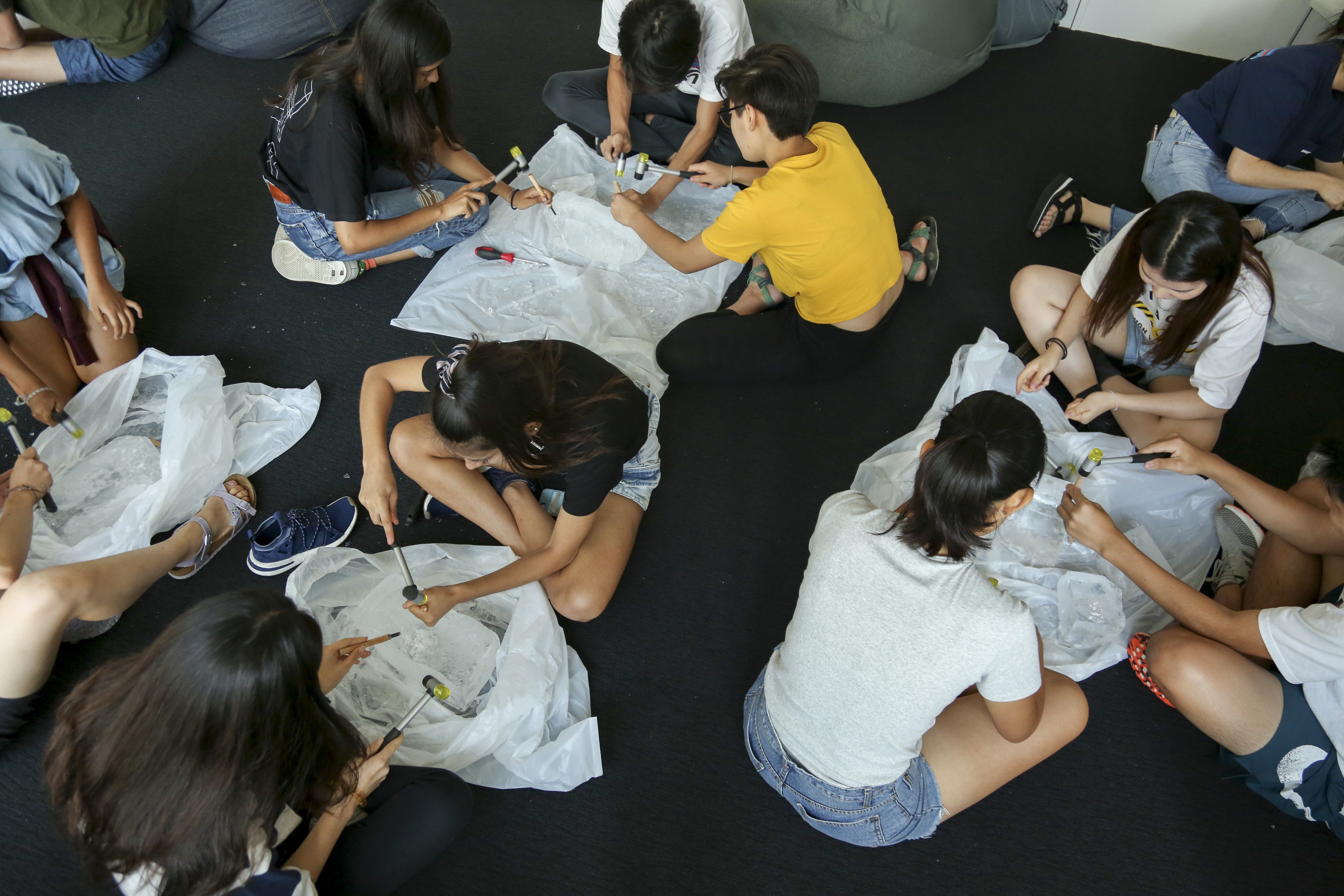
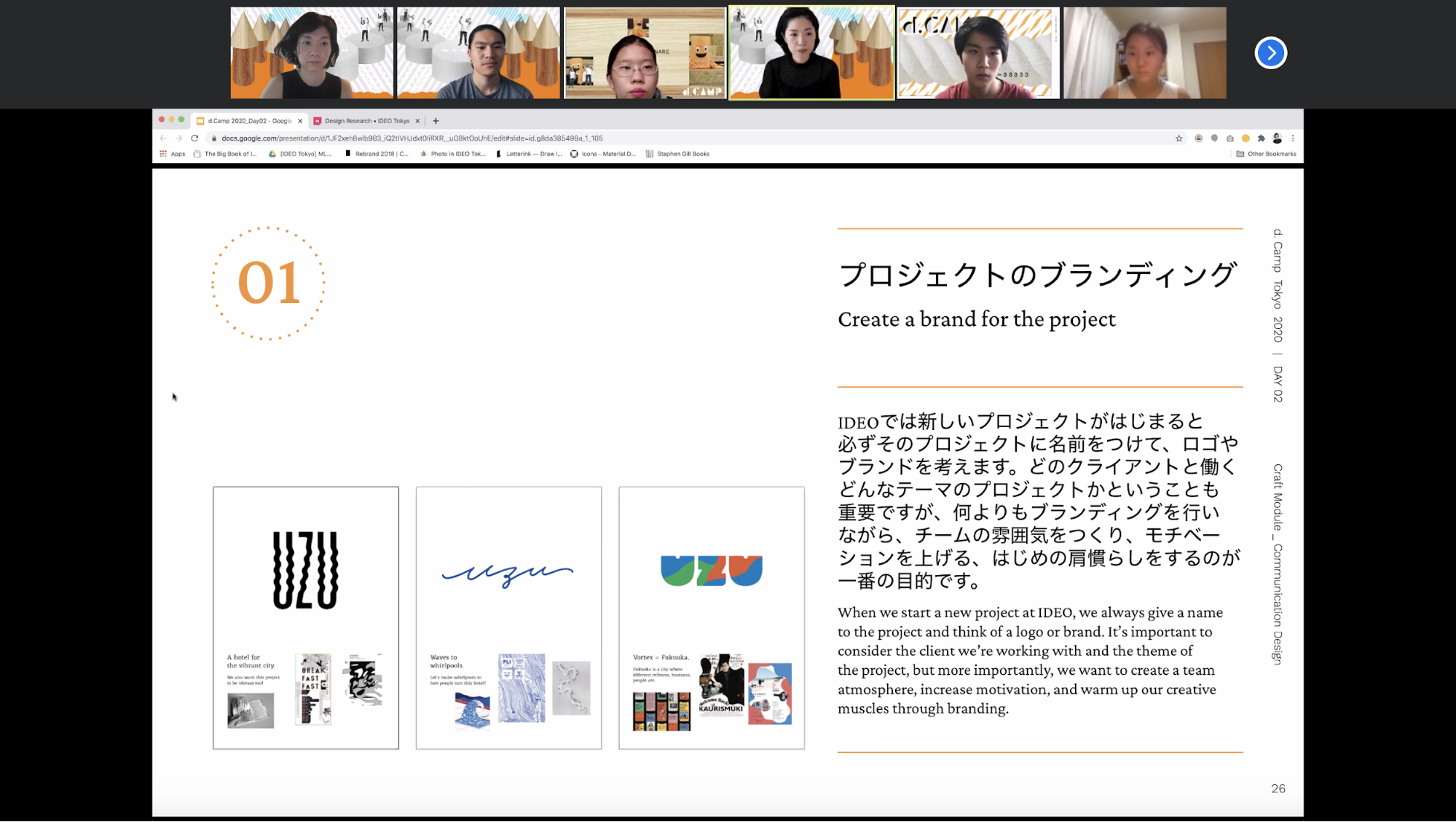
盛り沢山なコンテンツで、一日中頭をいろんな方向に切り替えるように設計してあるが、根底として絶対にブレないのは、デザイナーがデザインを教える、という構図である。当たり前なようで、意外と珍しいことでもあるのだが、各分野のプロがその分野について教えることが、d.campの大事な価値の一つだ。最近作っているものの紹介や、実際にプロジェクトで苦労したこと、それを乗り越えて出てきたプロトタイプ等、プロフェッショナルが試行錯誤した実例はとてつもなく贅沢であり、信ぴょう性がある。
更には、ビジュアル・コミュニケーション・デザイン担当のデザイナーが実はその年のd.camp自体のブランディングを行っていたり、それまでキャンプで使っていたツールが実はインタラクション・デザイン担当のデザイナーが自作したものであったことを知らされたりすることで、制作物と製作者の距離がぐっと近付く。
そして何よりも、「これなら自分でもできるかも」、と思ってもらえる。言うまでもなく、デザイナー一人ひとりも普通のいち人間であり、悩むこともあれば、つまずくこともある。そして、培ってきたスキルも、これまで経験してきたことの積み重ねにすぎない。そうしたIDEOメンバーの人間くさい思考や実験を知り、体験してもらうことで、「何かを作り出すという行為は、思っていたほど遠いものではないのかもしれない」と知ってもらいたい。そもそも、日常的に無自覚にデザインを行っている人たちは沢山いる。現CEOのサンディ・スパイカーは「既に自分達は日々デザインを行っていたのだと気付いてもらうことが大事だ」と言っているが、まさに自覚するだけで、自分のクリエイティビティに対する理解と自信が強化され、より自由に毎日が過ごせるようになる。
デザインする力は、スーパーパワーである
なぜそこまでデザインする力を身近に感じてもらいたいかというと、デザインする力は、スーパーパワーであるからだ。まず、何かを作れるようになると、その必然的な結果として、世界のあらゆるものごとに対して、「自分だったらこう作るのに」と考えるようになる。
そうした「目」で世界を見れるようになるだけで、いかに世の中が完璧からは程遠いかということに気付き、その改善案を常に頭の中で模索し続けるようになる。
どうしてこの家はここに段差を作ってしまったのだろうか、どうしてこの機械はこんなところにボタンを配置したのだろうか。
数あるスティーブ・ジョブスの名言の中でも、 ”Life can be much broader once you discover one simple fact. And that is: Everything around you that you call life was made up by people that were no smarter than you.” (とある事実に気付いた時、人生の可能性は更に開ける。その事実とは、あなたが世界と呼んでるものが、あなたより賢いわけではない同じような人々が作り上げたものである、ということだ。) という言葉があるが、まさにこの「目」(モノやコトは自分の手で変えられる、作れるという捉え方) についてのことだ。
少なくとも僕は、デザインを学び、自分でアイディアを考え、プロトタイプし、木工、鉄工、電子工作、プログラミング等をするようになってから、この事実にハッと気付くことができた。そしてそれに気付いてからは、”you’ll never be the same again (もう元には戻れない)”。
もう一つのデザインのスーパーパワーが、それを周りの大切な人たちへと還元できることである。IDEOのメンバーの多くは、何か新しいモノやツールが必要になったときに、まず最初に、自分でどう作れるだろう?と考える。
かくいう僕も、家にキッチンカウンターが必要だったので作ったし、コロナの手洗いがしんどくなってきたのでそれを楽しくするべくGoogle Assistant用の手洗いDJアプリ(手洗いをしている20秒間に当てはまる曲を自動で選曲してくれる)を作ったし、オンラインで行うワークショップにどうにかして手触り感を戻したく、遠隔ハイタッチシステムを作った。何かを作り出せるようになると、自分や、自分の大切な人たちの困りごとが、自分の手によって少しだけでも良い方向に変化を起こせるかもしれない、という希望に変わる。かくして、デザインという力を手に入れた人は、スーパーパワーを手に入れるのである。
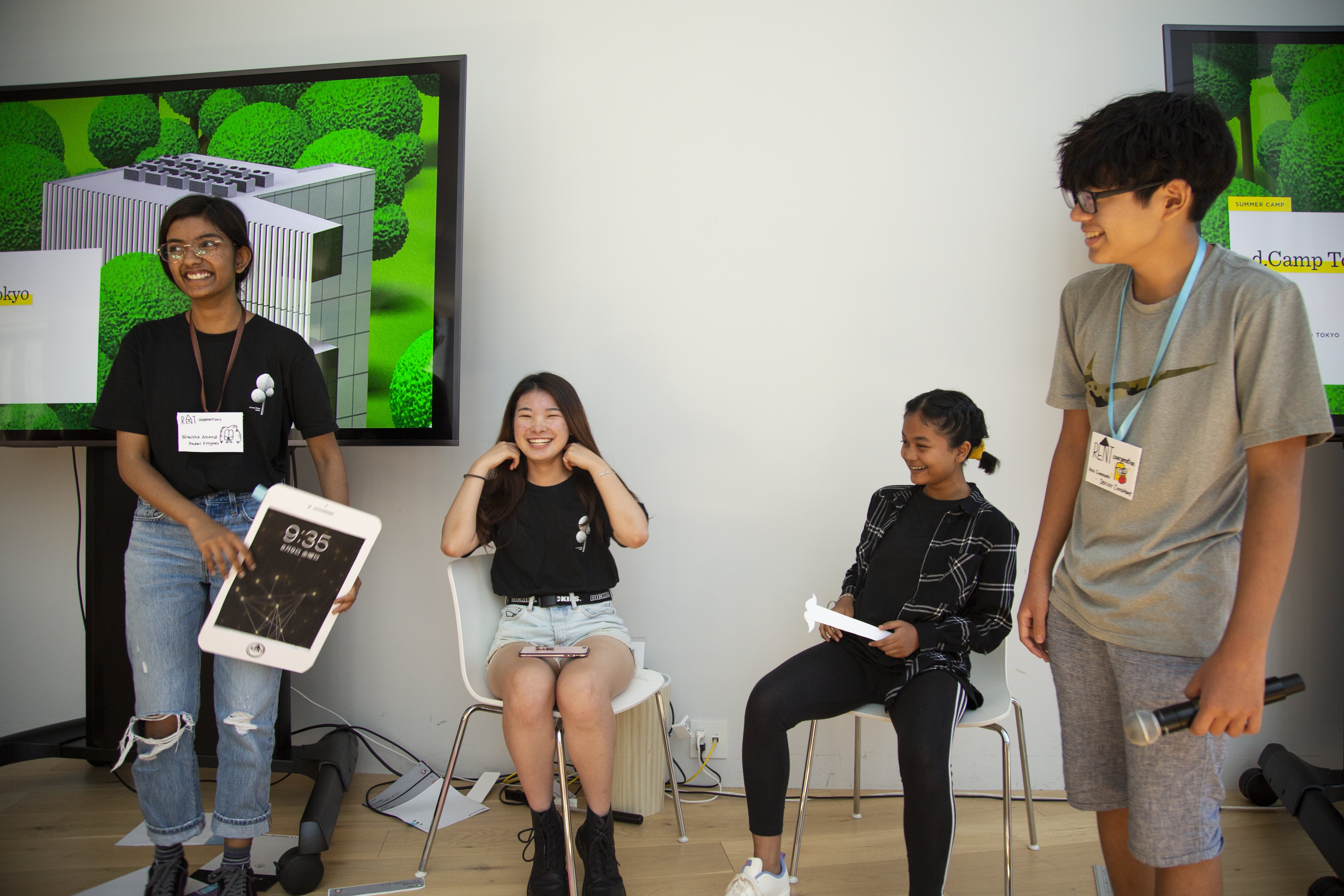
総クリエイティブ・コンフィデンス時代を目指して
このスーパーパワーは、心理学の用語ではSelf Efficacy(自己効力感)であり、それをデイヴィッド&トム・ケリー 兄弟がIDEO流に翻訳した結果が、クリエイティブ・コンフィデンス(創造性に対する自信)である。おそらくIDEOに限らず、モノづくりに携わる全ての人たちが、このクリエイティブ・コンフィデンスを自覚した瞬間があるはずだ。そして、僕たち自身も、まだこのクリエイティブ・コンフィデンスを拡張していく長い旅路の真っ只中にあるように思う。
自分の周囲10mの範囲内の困りごとに対して何かポジティブな変化を起こせると気付いた人は、次に周囲100m、1km、100kmと、自分が変化を起こす範囲を少しずつ広げていくことができる。その過程で、一人でできることの限界を知り、今度は仲間と一緒に、より大きな課題へとぶつかっていくようになる。結果として、新しい電化製品、自転車、医療器具、学校、政策など、より規模の大きいデザインを行っていくことができる。
d.campにこれまで参加したキャンパーたちは、(知ってか知らずか)この果てしないクリエイティブ・コンフィデンスの旅路の一歩目を踏んでもらっているのである。
VUCAと呼ばれるこの時代、更にはパンデミックの先行きが未だに見えない中では、このクリエイティブ・コンフィデンスを華麗に使いこなし、主体的に動ける人たちが一人でも多く必要である。その一歩目を踏み出すことをサポートし、かつそれがいかに楽しくて素晴らしいことであるかを知ってもらうことが、d.campの目的であり、ひいてはIDEOという組織の隠れミッションであるように思う。
僕がIDEOに入って驚いたことは沢山ある。みんなが17時にはあっという間に帰宅してしまうことや、ワインを片手に作業することなど、いわゆる外資の洗礼みたいなことも多い中で、特に驚いたのが、IDEOという会社が教育にかける想いの強さである。
Six qualities of a great data scientist
And how to cultivate them.
Some of these you may know, but others may surprise you. These six hard and soft skills are not just things to look for in a data science hire, but are also things to cultivate in yourself to prepare for a successful and fulfilling career in data science. We made this list to help identify ideal students for our data science bootcamp, people who will make great students and great hires.
1. Statistical thinking
Data scientists are professionals who turn data into information, so statistical know-how is at the forefront of our toolkit. Knowing your algorithms and how and when to apply them is arguably the central task to a data scientist's work. However, to do this well can be an art and a science.
A good data scientist can model any data he is given and implement a toolbox full of algorithms to make statistically-informed predictions and recommendations. A great data scientist can smell something 'fishy' in the results she gets, senses that he needs to ask the client or stakeholder a few more questions before retreating to the code cave, and can make the difference between a game-changing insight and an expensive blind hunch.
Cultivating statistical thinking: Quantitative thinking sinks in the fastest when it is relevant to you. At Datascope, we keep our statistical thinking sharp by calling each other out on our bold claims, sometimes making friendly bets, and figuring out how to resolve it with statistics. For example, here’s one you can try on your friends: how many wikipedia articles contain the word “the”? All of them? Nearly all of them? We put the over-under at 90%, wrote a script to calculate the wikipedia document frequency of the word “the”, and shocked ourselves to find out the word “the” only appears in 85% of wikipedia articles.
2. Technical acumen
Data scientists write code and work with teams to produce tools, pipelines, packages, modules, features, dashboards, websites, and more. We write code on the back end and the front end. We do structured and unstructured. We sift through unfamiliar formats and legacy code, and "roll our own" tools when we can't find the solution we need.
A great data scientist has a hacker's spirit. Technical flexibility is as important as experience, because in this field the gold standards change with an alarming rate. Data scientists work together, love open source, and share our knowledge and experience to make sure that we can move at the speed of demand. If your data scientist is a quick study, you've made a sound investment beyond the current trend cycle.
Cultivating technical acumen: Write code, every day if possible. Learn about the tools you want to use, but don’t just read about them, try them. Follow a tutorial. Change it and see what happens. Break it. Check out someone’s projects that are written in a language you don’t know. If you read about a new tool or service that interests you, start by just making a “hello, world”. Work in small bites.
3. Multi-modal communication skills
When the analysis is finished running, most of the time the results aren't pretty. That's not to say they are unhelpful, but they are often trapped in opaque readouts, or in plots that are sensical to the expert's eye but hieroglyphics to the rest of the team and stakeholders. Algorithmic output has to be interpreted and communicated to make the leap out of the data science team and into the hands of the rest of the company to be put to service in alignment with their usefulness.
A great data scientist can contextualize and translate a problem and its solution to interested parties of wildly varying backgrounds using common ground, metaphor, skillful listening, and storytelling. This includes the written communication that goes into a statement of work or a report, visual communication for clear and intuitive plots and visualization, and spoken communication for presentations, project specifications, check-in meetings, and iterative design. If your data scientist can stop a meeting when it's clear that not everyone is on the same page, draw a sketch on the whiteboard and elicit consensus from a diverse team, you have a deeply valuable person on your team.
Cultivating multi-modal communication: Practice writing and talking about your technical projects to “normal” people. Edit yourself down to the important parts. Learning to edit yourself is key. Practice visual communication with “crayon wireframes”—we use these all the time, and they help us to think visually and iterate quickly. Sketches are also a great way to gut check if everyone is on the same page. If the words you’re saying seem to match each other, but the pictures don’t jive, you may have nipped some future problems in the bud.
4. Curiosity
So your data scientist is a technical and statistical whiz who can explain a Markov chain to a supermarket checker. What else separates the elite? The first of our trio of invaluable soft skills is curiosity. Many who are drawn to data science find most alluring the opportunity to work on a constant stream of new and challenging puzzles. They are people who have been asking "why" and "how" since their mouths could form the words.
A good data scientist will take a request, implement it, and deliver the prediction or analysis with confidence. A great data scientist will come back asking for access to more data, or to interview users, or to try something new in the next iteration, because something he did triggered that curious itch. Curious data scientists might have a disdain for machine learning competitions because they can't access all of the levers and choice points to ask questions and dig deeper. Masters of curiosity are quick to question their own assumptions.
Cultivating curiosity: Are there stupid questions? Actually, probably… yes. But who cares? In our experience they are largely indistinguishable from really great questions that no one has bothered to ask yet. So we don’t discriminate, and we ask many many questions that may or may not be stupid. Ask enough stupid questions and eventually you’ll land on something brilliant. Seek out people different than you to talk through ideas. Let your mind wander. Raise your hand and ask questions. And never assume that the experts see everything that you do -- don’t ignore that inner voice when it’s telling you something isn’t adding up. You might ask a stupid question (and learn), or you might ask a brilliant one (and discover).
5. Creativity
Creativity goes far beyond the obvious applications in communication and project design. Of course, a data scientist who can create an attractive and easy-to-grasp report or visual out of results that would take a couple of master's degrees to fully understand is a skill with enormous returns. Creativity provides the fuel for skillful communication, and that is not a hard sell.
Beyond aesthetics and communication, however, the best data scientists are creative problem solvers and have a peculiar relationship with the word "no." Your data scientist really wants to include those user-level data sets in the algorithm, but they are locked down in another silo within the company? She figures out a way to model their effects from the population statistics, or she generates a simulated report using dummy data to convince the c-suite that building a bridge between departments is well worth the risk or effort. The client wants to know how much foot traffic their potential new outlets will see, next Friday, and those data don't exist or aren't available? He uses publicly available transit data to build informed estimates and proposes a small and inexpensive sample-gathering project to build a turnstile-count-to-total-pedestrians conversion heuristic.
Great data scientists get annoyed by “no,” so annoyed that they find a way to get around it, over it, or through it, or they back up and take another path altogether. Design constraints are infuriating and intoxicating. A data scientist who says "no," followed quickly by "wait, hold on… let me think," just might be a great creative thinker.
Cultivating creativity: When you have an idea, do it, and let go of judgment. Foster an environment that invites questioning, thinking outside the box, and a “yes, but” conversational atmosphere. Creativity is ingrained in culture: give people around you the safety to “fail,” without judgement or criticism, and they’ll likely grant you the same. When you’re surrounded by people thinking and working creatively, you’ll find your own creativity flourishing, too.
6. Grit
In all of the characteristics and skills above, we've talked about technologies that appear, demand attention, and fade faster than songs on the top forty, messy data that should but don't quite fit into the model the client had in mind, dead ends, wrong turns, roadblocks, and red tape, teams full of mixed agendas and personalities; budgets, deadlines, clients, teams, and contractors; and the unicorn-magician-programmer-statistician who is supposed to bring it all together. Those who survive have a healthy inner store of grit.
All of these challenges and roadblocks could drive a reasonable person to an unplanned leave of absence. Grit is that inner drive that pulls us over obstacles, recasts setbacks as design constraints, propels us through fear of failure, keeps us walking through actual failure, helps us to resist the impulse to take things personally, and brushes that dirt off our shoulders. When grit is working, we’re less competitive so we can encourage and learn from each other. We get the taste for tackling the new and the unknown.
Cultivating grit: Let go of perfectionism. We encourage ourselves to think of quick and dirty ways we can resolve problems or test solutions. We share our early efforts and listen to the feedback we get. Keep in mind that every expert has to start as a beginner, and a beginner trying to masquerade as an expert fools no one but himself. Don’t be afraid to let your warts show—what seems like a weakness, handled properly, is a powerful tool for leadership and growth.
What does it take to be a great data scientist? We thought long and hard about this while we were designing a data science bootcamp for Metis.
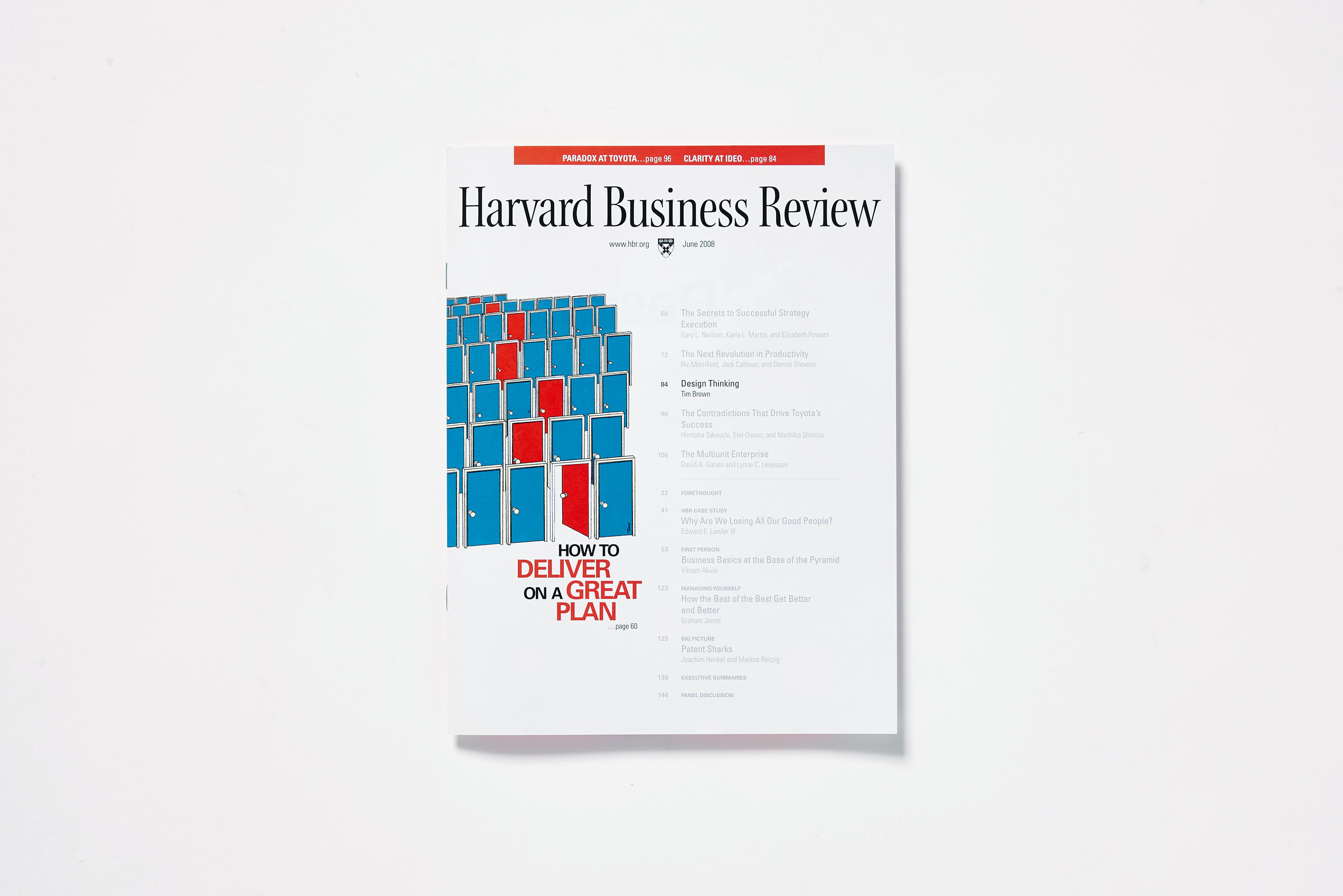
Design Thinking in Harvard Business Review
Tim Brown writes about how thinking like a designer can transform the way we do business.
Read the article online at Harvard Business Review.
Leaders now look to innovation as a principal source of differentiation and competitive advantage; they would do well to incorporate design thinking into all phases of the process.
~Tim Brown
Want to dive deeper? Learn more about design thinking with IDEO U.
In an article for Harvard Business Review, IDEO CEO Tim Brown shows how thinking like a designer can transform the way we develop products, services, processes—and even strategy.

Lindsey Turner
I’m passionate about building brands, products, and experiences that help organizations show up with meaning and momentum.
I help organizations cut through complexity by shaping how they show up, through brand strategy, identity, and storytelling.
Working at the intersection of brand and business, I bring an editorial eye and a bias toward making—turning ideas into tangible experiences that people can understand, trust, and believe in.
My work spans government, healthcare, financial services, media, and consumer goods, from launching Gen Z-focused ventures to building innovation labs and reimagining legacy brands. I relish moments of ambiguity and enjoy translating across teams, perspectives, and priorities to move ideas forward.
I started my career in editorial and digital design, shaping cross-platform experiences and identity systems in publishing and agency environments. That foundation still shapes how I work today: I’m detail-oriented, collaborative, and overreliant on the Oxford comma. I hold a BFA in Visual Communication from the School of the Art Institute of Chicago.

Rachel Young
My work helps organizations see who their products aren't working for—and build the will and the tools to do something about it
For 25 years, I've asked the same question: Who does this design exclude—and what are we going to do about it?
My work spans human-centered strategy, inclusive design, and qualitative research, with clients ranging from Microsoft, Google, and Verizon to the National Science Foundation, and San Francisco Unified School District.
Before IDEO, I taught elementary school in East Palo Alto and spent a decade doing design work with social service organizations—where I learned firsthand what it costs people when systems are built without them in mind.
I am currently writing User Error, a nonfiction book about digital access and the design decisions behind it. I live in Oakland, California.

Brian Pelsoh
I lead with craft, ensuring our work is creatively excellent: rooted in deep human insight and imagination, while also grounded in the realities of business and technology.
My expertise spans brand, communication, and product design across tech, education, the arts, and social impact.
I believe great work demands both high-level vision and obsessive attention to detail, and only happens through collaboration.
I bring an inclusive, hands-on approach and a deep understanding of business, which enables me to consistently deliver excellence while always asking why.
Before joining IDEO, I worked at the brand firms Pentagram and VSA Partners. I began my career as a designer, leading teams at the School of the Art Institute of Chicago and the Milwaukee Art Museum. I hold an MFA in graphic design from Maryland Institute College of Art and a BFA in communication design from the Milwaukee Institute of Art & Design, and have taught at some of the best design schools in the US.

Tony Wong
I am responsible for IDEO’s long-term success in China and working with clients to use design as a tool to enable growth.
I am responsible for IDEO’s long-term success in China and working with clients to use design as a tool to enable growth. Specifically, I have helped Chinese companies design holistic brand solutions through the development of their products, communication, services, and innovation teams, and I have helped multinationals expand their presence and influence in China.
I advise global leaders on developing China-led innovation and capabilities.
In over 15 years in IDEO Shanghai, I have worked on projects that use design to elevate the quality of the experience of healthcare products and services, streamline processes that increase productivity, create spaces and programs that promote and enable inclusive communities, and build next generation mobility solutions that are planet-positive.
Before joining IDEO, I worked at Philips Electronics and the Electrolux Group in Italy, the Netherlands, and Singapore on a number of breakthrough commercial products. I am a member of the Young President Organization in Shanghai.

How to use AI as an editor, not a writer
Ed White shares how he uses AI as an editor—not a writer—to sharpen storytelling, rehearse ideas, and preserve the productive friction that makes creative work better.
Ed White has a rule he's tested on his own writing: hold yourself as the writer, and let AI be your editor. Ed is a Senior Design Director at IDEO's London studio, where he co-leads the firm's AI portfolio across Europe. Before IDEO, he spent 12 years as a writer and editor at the Financial Times, Wired, and Contagious. So when he talks about when to use AI for storytelling and when not to, it comes from two decades of crafting his storytelling skills.
In this episode, Mina Seetharaman talks with Ed about two specific tools he uses to keep AI in an editor's seat: a "roasting agent" prompted to critique his drafts without any sugarcoating, and a simulated audience he rehearses pitches on before the real thing. They also get into what Ed is hearing from design leaders at Anthropic, Lovable, Shopify, and Google Creative Lab about how creative work is changing, and why he thinks the friction of writing something yourself is worth protecting rather than automating away.

Building a personal AI for the messiness of life: Sida Li
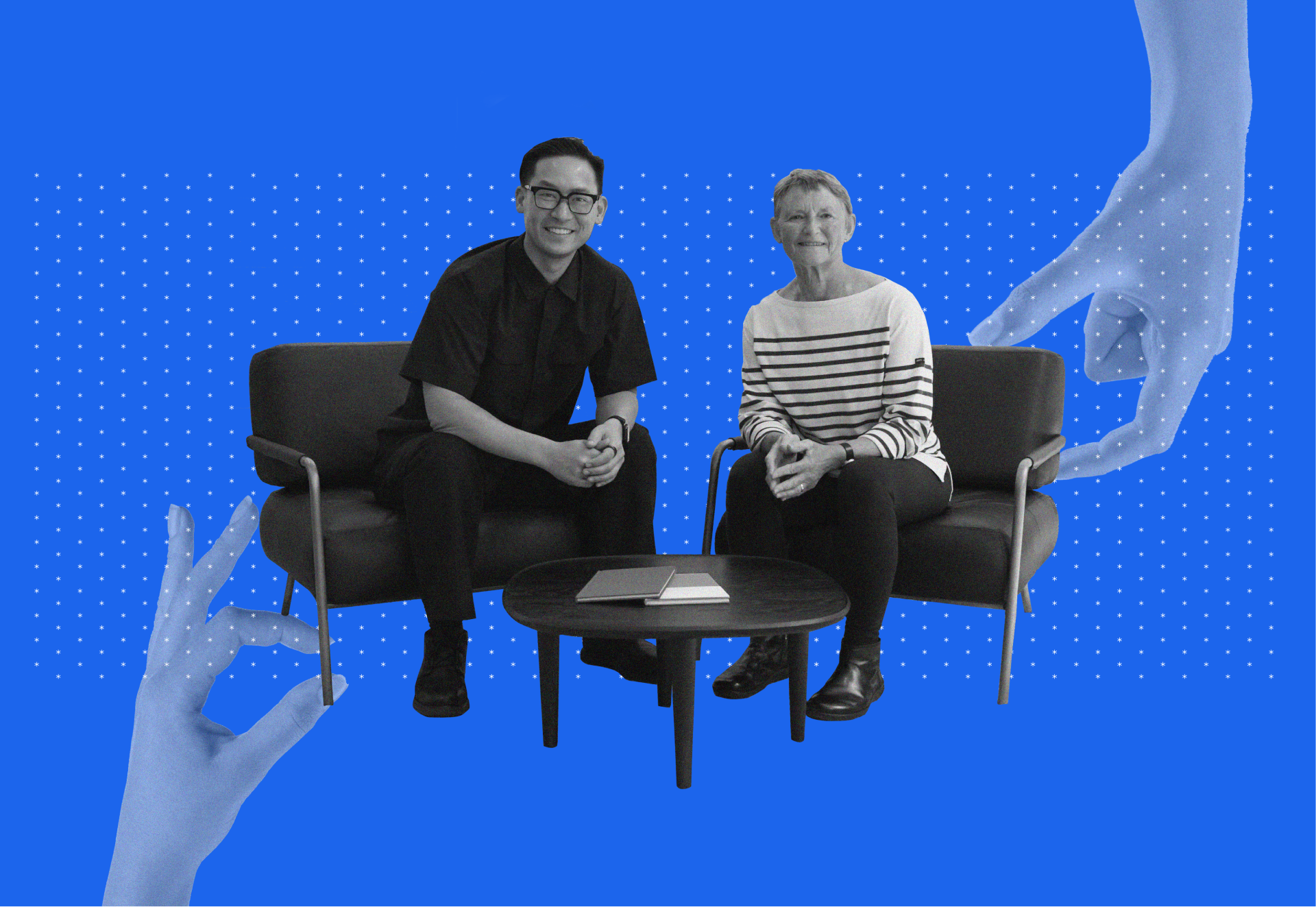
Becca Carroll talks with Cue co-founder Sida Li about designing a personal AI for the messiness of everyday life—not just work. They explore how Sida stays anchored to human needs while navigating fast-changing technology, product tradeoffs, business-model experimentation, and the realities of building an AI company today.
Most AI products today are built for work—a space with clear problems and established systems. One founder noticed a gap: personal life is messier, harder to systematize, and mostly left behind by the AI boom. So she built Cue, a personal AI that lives inside iMessage and group chats, to go where the other tools haven't.
In this episode, Becca Carroll, IDEO's Chief Strategy Officer, talks with Sida Li, co-founder and CEO of Shared Context Lab, about staying anchored to a human need while the technology around her keeps changing shape, why she treats her business model with the same rigor she'd bring to a product, and what it feels like to build a company at this particular, disorienting moment in AI.
The conversation also gets into how Sida makes design decisions: the language Cue uses to describe itself, the tradeoffs behind building inside iMessage instead of a new app, and a real story about a business idea that didn’t pan out.
This is the second in a two-part series profiling founders from IDEO's Startups-in-Residence program. The first conversation is with Johannes Seemann, founder of Sooner, on designing GenAI for the emotional side of money.

Designing GenAI for the emotional side of money: Johannes Seemann
Designing financial tools around the feelings that shape money decisions.
Most personal financial tools are built to run the numbers and optimize towards a budget. While that works for some, most people experience money as a lived relationship that does not neatly fit into a spreadsheet. Johannes Seemann and Becca Carroll discuss why money is emotional before it is mathematical, and what a human-centered approach to building a generative AI financial product looks like in practice.

The curious leader's edge in uncertainty: Scott Shigeoka
How genuine curiosity helps leaders navigate uncertainty with greater confidence.
Mina Seetharaman talks with Scott Shigeoka, author of Seek and Head of Curiosity Cultivation at the Eames Institute, about what distinguishes genuinely curious leadership from performative curiosity, how power dynamics shape curiosity, and why practicing curiosity can restore energy rather than drain it.
Looks like you might be in search of something very specific?
Or reset the filters above and try another angle.
Here’s some random inspiration

Podcasts about creative leadership

Articles about the power of prototyping










































.webp)