
.svg)




A return to simplicity with a bottled tea brand
Bringing the grounding and authenticity of tea culture into the rhythm of modern life.
Master Kong (known internationally as Tingyi Holding Corporation) is number one in market share in both instant noodles and ready-to-drink teas, with over $10 billion USD in annual revenue. While China has a rich tea culture, most sugar-free bottled tea on store shelves markets itself as “healthy” and “tasty.” Wanting to set itself apart from the competition by uncovering new consumer needs, Master Kong reached out to IDEO. Together, Master Kong and IDEO immersed themselves in modern Chinese tea culture and built a new, premium, sugar-free bottled tea brand that resonates deeply with contemporary tea drinkers.
During research, the combined IDEO/Master Kong team took a two-pronged approach to uncovering new opportunities: industry exploration and consumer research. The team visited various tea-related businesses, from traditional tea houses to modern beverage shops, as well as “third place” tea spaces outside of home or work. They also conducted in-depth, in-home interviews with consumers with various levels of interest in tea, delving deeply into their daily routines to better understand their lifestyles and any emotional or functional needs related to tea.
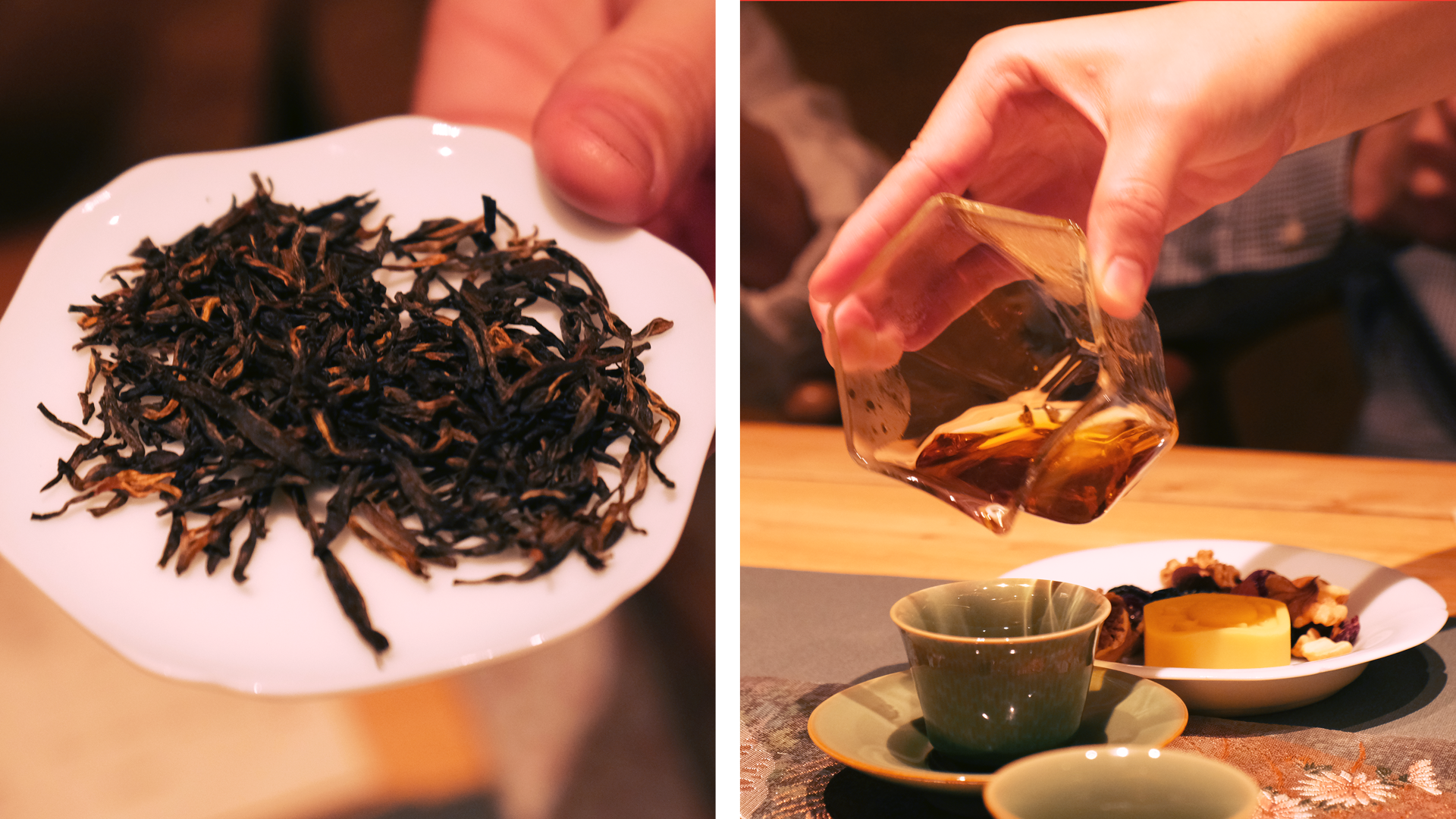
The team discovered that the essence of Chinese tea culture resonated with contemporary consumers’ longing for authenticity, simplicity, and physical rejuvenation in their fast-paced lives. This insight presented a unique opportunity for Master Kong. Instead of positioning its new sugar-free tea brand as merely a “healthy alternative” to other beverages, it could spark a meaningful connection to tea culture, seamlessly integrating into various moments of modern life.
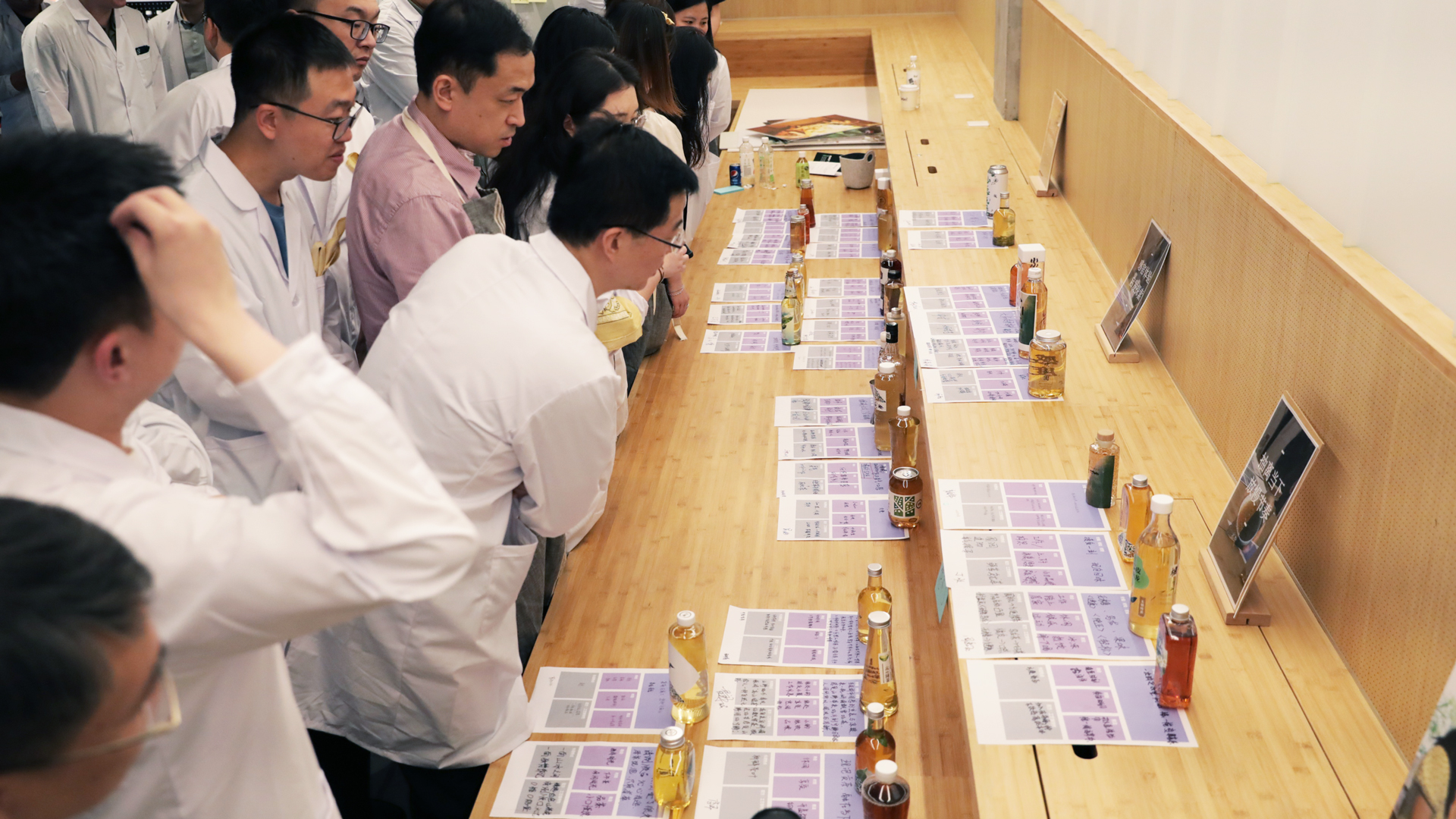
Armed with this insight, IDEO designers and dozens of Master Kong beverage team members participated in a series of immersive, hands-on tea innovation workshops. Teams of experts from R&D, marketing, supply chain, and other company departments temporarily set aside their job titles to explore, iterate, and refine dozens of new tea concepts that were commercially viable, feasible for mass production, and aligned with consumer needs. The cross-departmental collaboration allowed for a broad mix of perspectives, experiences, and expertise, enriching the innovation process.

The co-creation sessions led to a new sugar-free tea product and flagship brand called Cha De Chuan Ren (“Descendants of the Tea”), which celebrates fine, origin-sourced tea and the passion and dedication of tea farmers. The novel concept resonated strongly with consumers and was validated during subsequent rounds of quantitative market testing, ensuring its relevance and market potential.
Cha De Chuan Ren launched with two signature flavors: Tieguanyin (green tea) from Fujian and Pu’er (black tea) from Yunnan. The unique mottled bottle design pays tribute to traditional handcrafted glass containers and the handiwork of tea farmers. The tactile paper label, which features Jia Ma-inspired woodblock illustrations of local tea fields and tea farmers’ hands, nods to the artisanal craft of tea making and the source of the tea inside.
“Descendants of the Tea” debuted on Tmall in April 2024. It claimed the top spot on the commerce site’s Tea Beverage V-List in August and September. Offline, it launched in FamilyMart convenience stores in May and has since expanded nationwide. The new brand received a 2024 Red Dot Award for “Brands & Communication Design.”
“We are honored to collaborate with IDEO, a global leader in innovation, as our strategic partner. ‘Descendants of the Tea’ is not just an exceptional product but also a tribute to the rich heritage of tea culture. Only by continuously integrating culinary traditions with innovation can we sustainably meet consumers’ true needs.”
Richard Chen
CEO, Master Kong (Tingyi Holding Corporation)
“Innovation is incredibly fragile. If even one leader is unsupportive or hesitant, the culture of innovation can collapse. I always encourage my team to take risks, as long as they’re not high stakes. After all, what’s the worst that can happen? At the very least, we’ll have a fair chance at creating something new.”
Wei Hong-Chen
Chairman of Master Kong Beverage Holdings Co., Ltd.
Sugary bottled teas were once very popular in China. Today, rising consumer demand for healthier beverage options has expanded the market for sugar-free tea.
#1
on Tmall’s Tea Beverage V-List, August- September 2024
2024 Red Dot Award Winner
for Brands & Communication Design
A luxury water bottle takes precision engineering to the extreme
Elevating the everyday with next-level design.
Twenty years ago, carrying a single-use plastic water bottle was a status symbol—no more. Growing awareness of the negative environmental impact of plastic pollution, combined with the adoption of healthier lifestyles and social media influencer trends, has made reusable water bottles “it” accessories for on-the-go consumers. While brands such as Stanley, Yeti, S’well, and Hydro Flask own the under-$100 market, fashion brands such as Louis Vuitton, Chanel, Dior, and Prada have etched out a new and growing market for high-end bottles that appeal to discerning, trend-conscious young people looking to perfect their hydration habits.
Spotting an opportunity to disrupt the predominantly utilitarian water bottle market, Steinmann partnered closely with IDEO, tasking the team with developing an industrial design that perfected the tactile and sensory user experience, from drinking and carrying to disassembling and cleaning thoroughly. The collaboration deepened over time, with Steinmann and IDEO working together to develop the high-level engineering concept, the OKAPA logo mark, and packaging ideas.
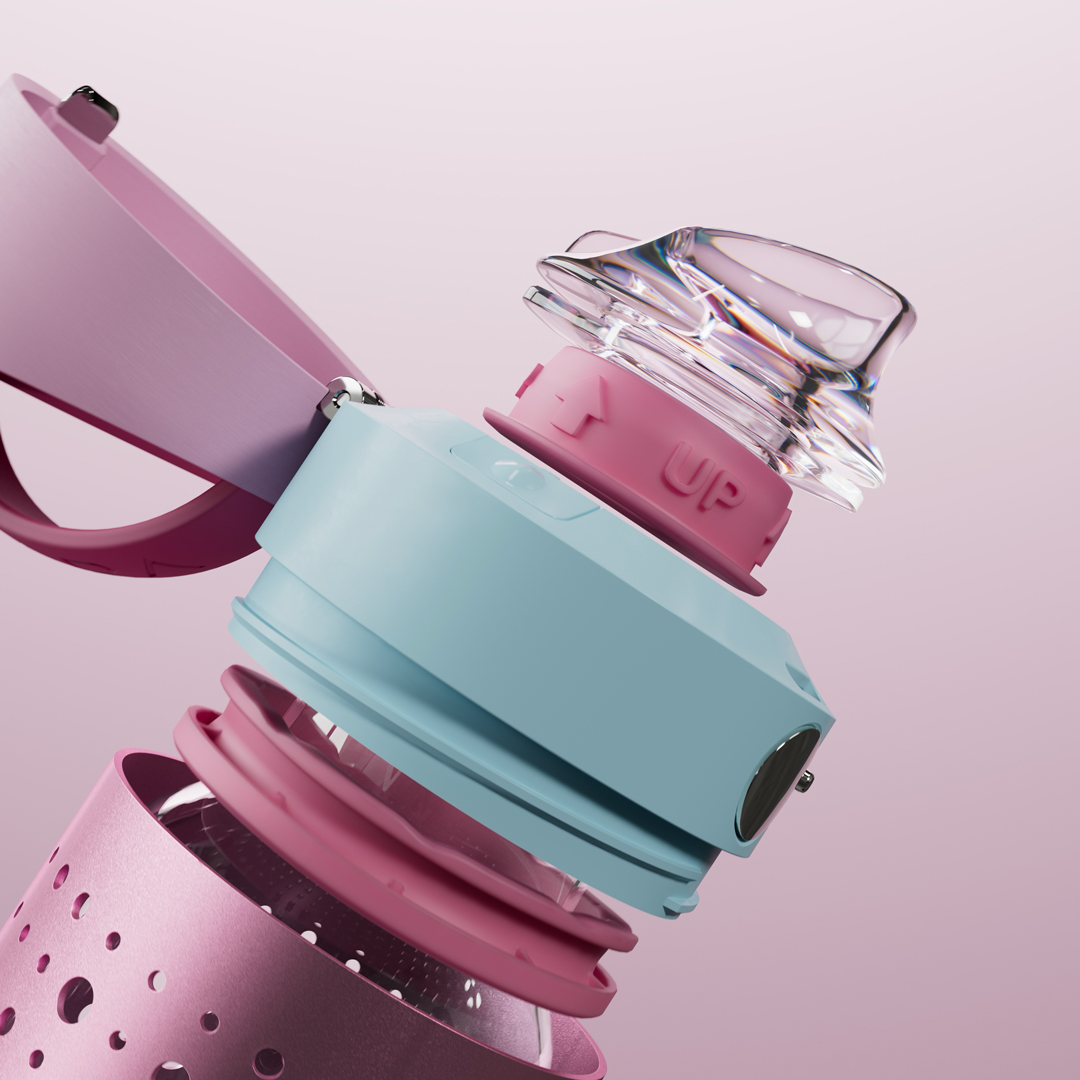
Key user-centered features of the OKAPA bottle include a medical-grade German borosilicate glass interior for superior taste of hot or cold beverages with no lingering odors; a Swiss-engineered thermoplastic lockable and leak-proof tilt cap that can be easily operated with one hand when driving or doing other activities; and an ergonomically shaped mouthpiece for a pleasurable drinking experience. Precision-engineered for maximum longevity, the inner glass bottle is suspended via a shock-absorbing system inside a bead-blasted, extruded, and anodized aluminum outer shell. Eight modular parts come apart easily for either a quick or thorough cleaning.
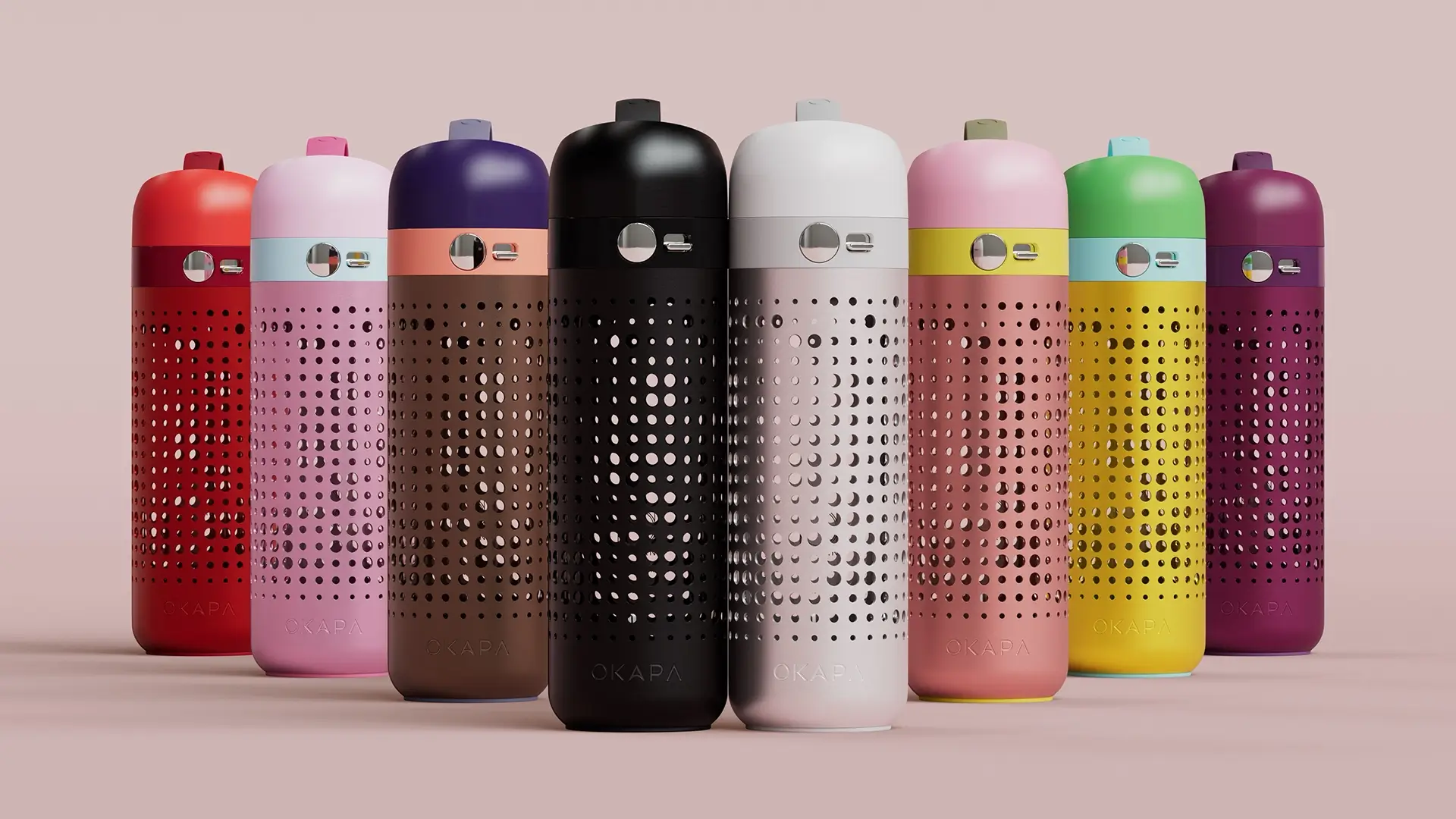
At its core, the OKAPA bottle elevates an everyday ritual through meticulous design and uncompromising engineering. Launched in January 2025, the new bottles are available in eight contemporary colorways curated by renowned color and materials specialist Beatrice Santiccioli (BSD), including Misti Pinku, Goldie Samba, and Fetishe Noir, among others.
In the US, the reusable water bottle market is estimated to increase from $10.2B in 2024 to $14.1B by 2031, with 69 percent of Gen Zers owning at least one. Customization trends, such as personalized design and branding, are anticipated to boost the market, ripe territory for disruptive startups such as OKAPA. (Persistence Market Research)
Once a practical accessory for hikers and outdoor enthusiasts, reusable water bottles have gone mainstream. Yet none check all the boxes in terms of purity of taste, hygiene, durability, functionality, and beauty.
8
modular pieces ensure hygienic cleaning is quick and easy
100%
recyclable materials in each bottle
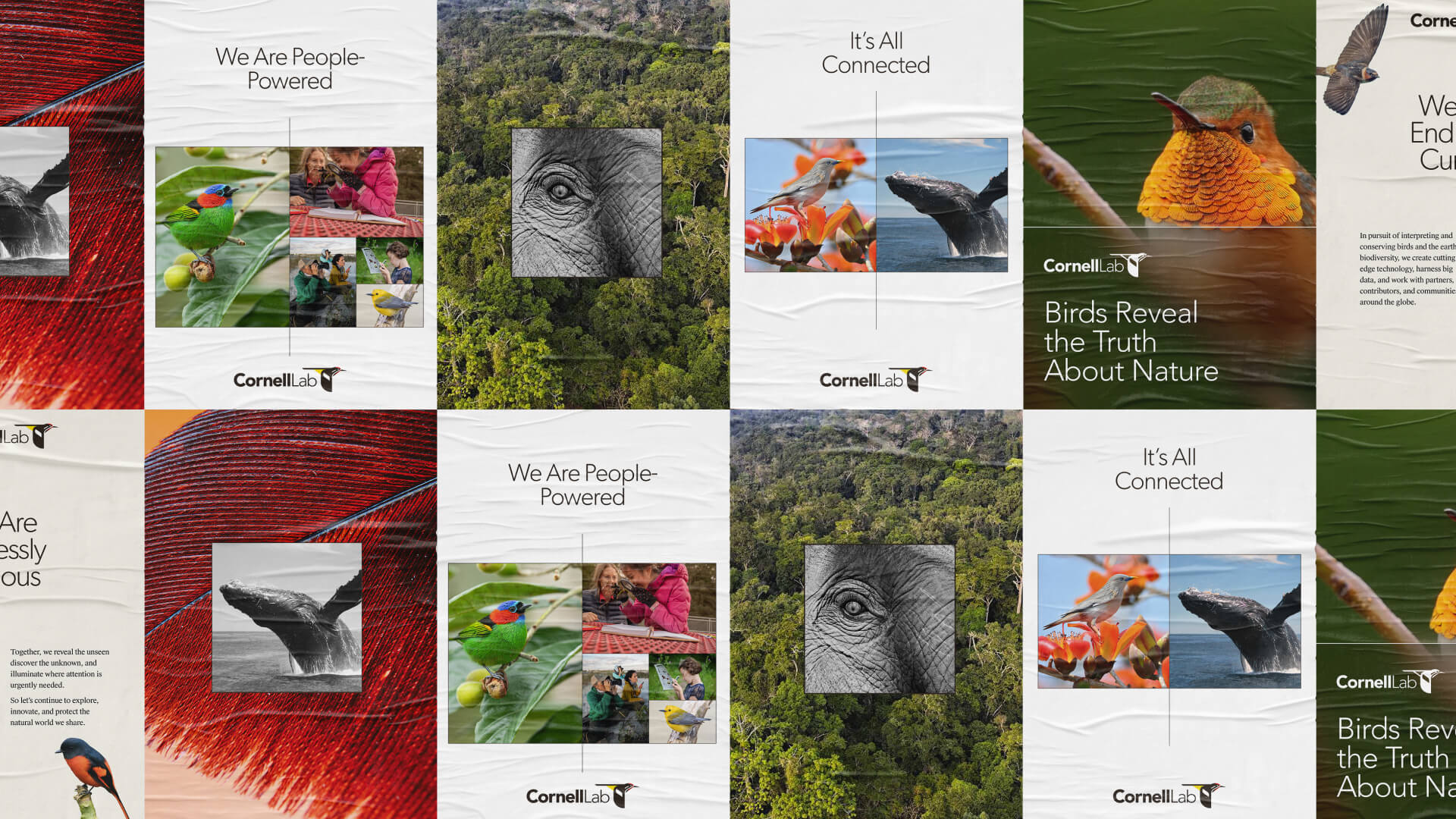
Brand as a conservation strategy
The Cornell Lab of Ornithology unites as “One Lab,” galvanizing a conservation movement.
The Cornell Lab of Ornithology’s mission is to interpret and conserve the earth’s biological diversity through research, education, and citizen science. Over its 110-plus-year history, its offerings grew to include everything from a quarterly magazine, popular websites and apps with millions of users (Merlin, eBird), partnerships with outside organizations, and the world’s largest database of photographs and audio recordings of birds. This abundance is a testament to the passionate enthusiasm of its employees. Still, it confused potential members and led to siloed internal efforts, preventing the Lab from advancing its urgent collective vision. “Birds and biodiversity are in peril,” said Executive Director Dr. Ian Owens. “We must take radical action with a coherent vision, united voice, and purpose.”
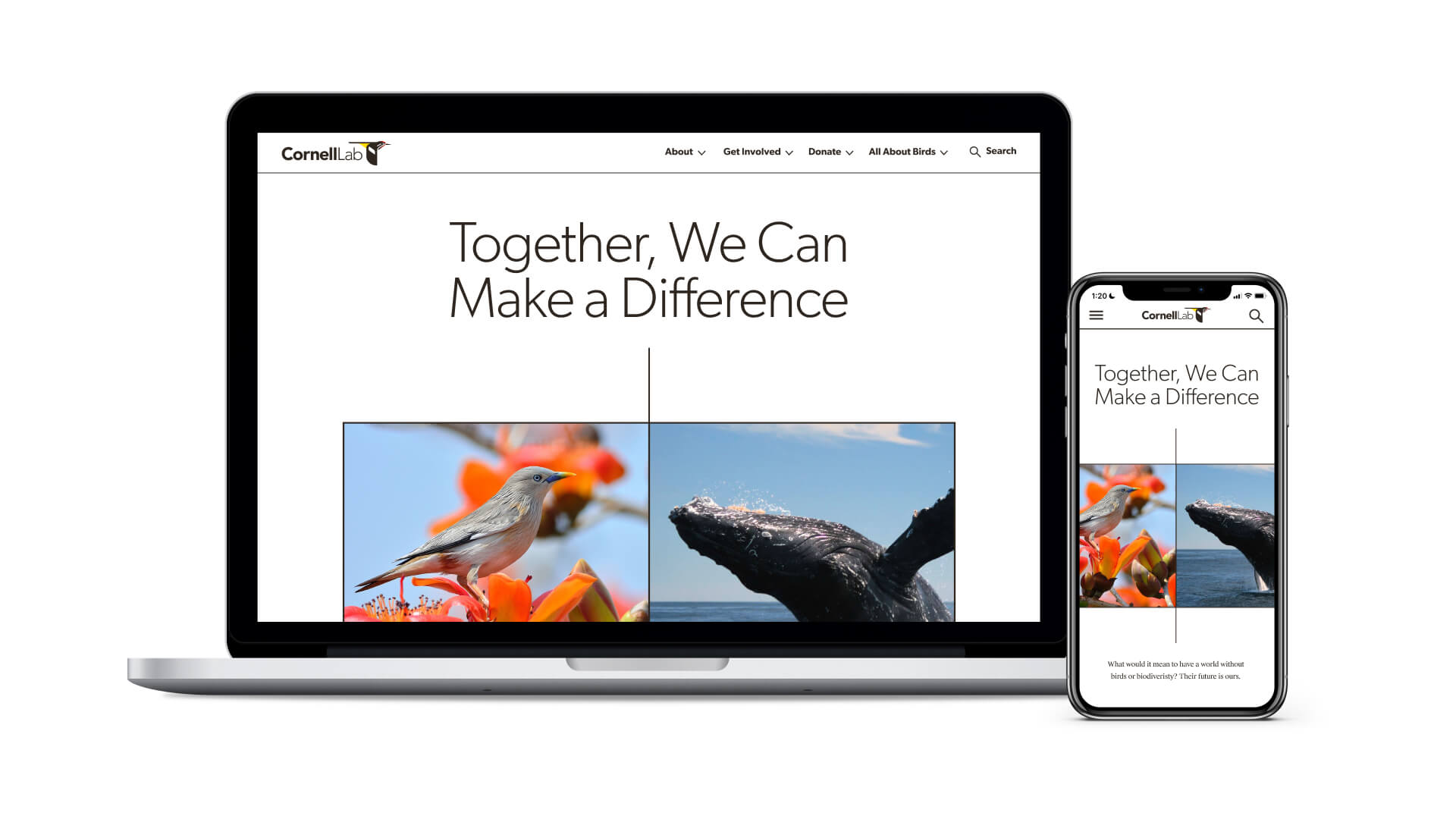
IDEO began by helping the Lab better define its audience. While primarily composed of people passionate about birds, IDEO discovered its larger audience was nature lovers interested in biodiversity, bioacoustics, conservation, and science. From there, IDEO created a brand strategy and architecture focused on helping the Lab streamline its efforts under the “One Lab” brand. The brand architecture visually articulated the relationship between Cornell University, the Cornell Lab of Ornithology, and the Lab’s many products and offerings. IDEO designed a comprehensive brand identity system to work across mediums, including a simplified logo system, new colors, type, graphic language, voice and tone, and key messaging.
When the Lab’s design team began implementing the new branding elements across its website and many digital products, it became clear that the organization also needed IDEO’s help in creating tools to facilitate cross-department collaboration. To better understand the day-to-day nuances of the organization, IDEO designers worked out of the Lab, co-creating a brand activation playbook. The playbook, launched in 2023, contains recommendations for new cross-functional working groups (partnerships, visual identity, and brand voice), as well as exercises and interactive tools designed to build trusting relationships, gain alignment, foster collaboration, and manage change at scale.
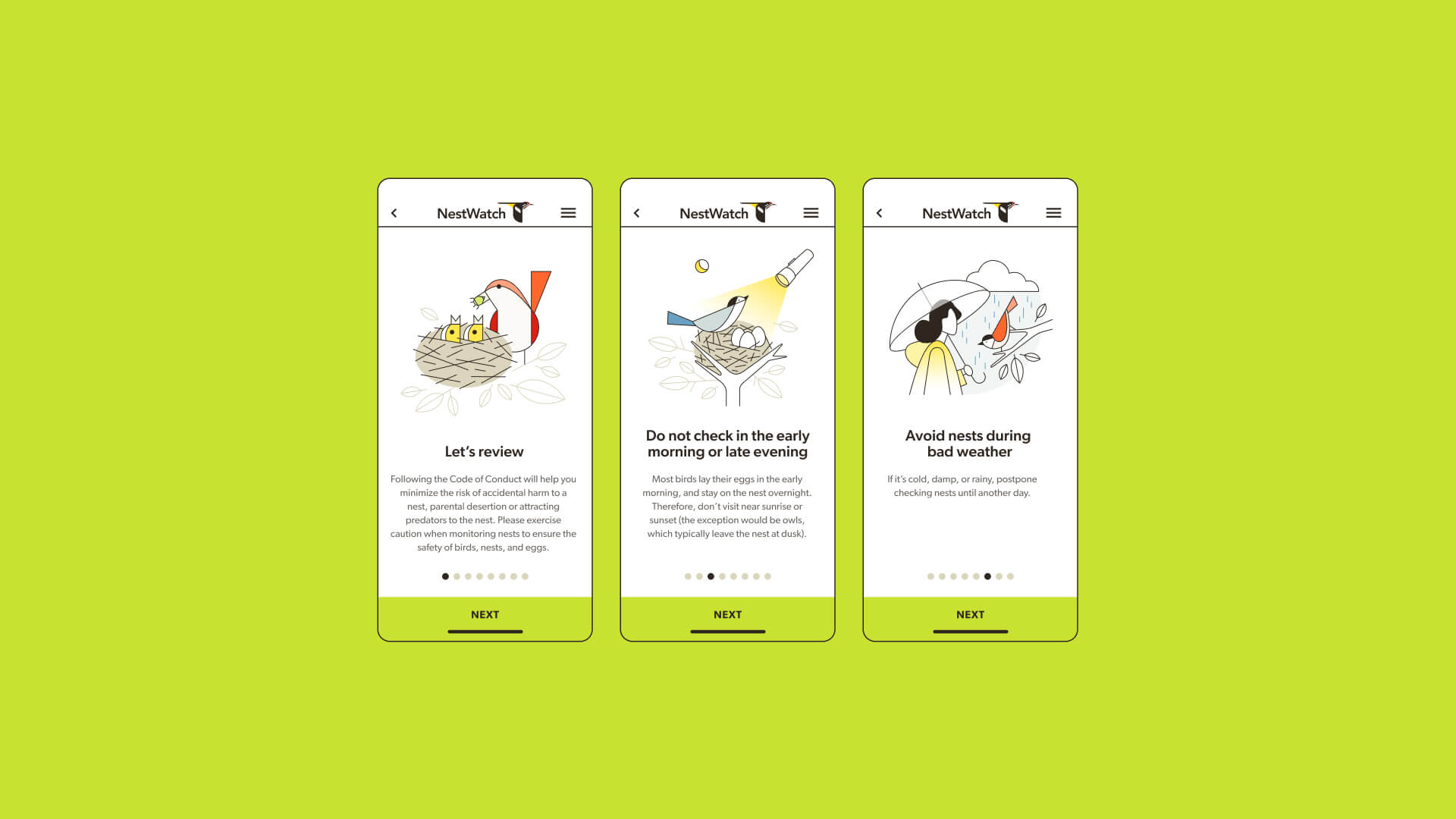
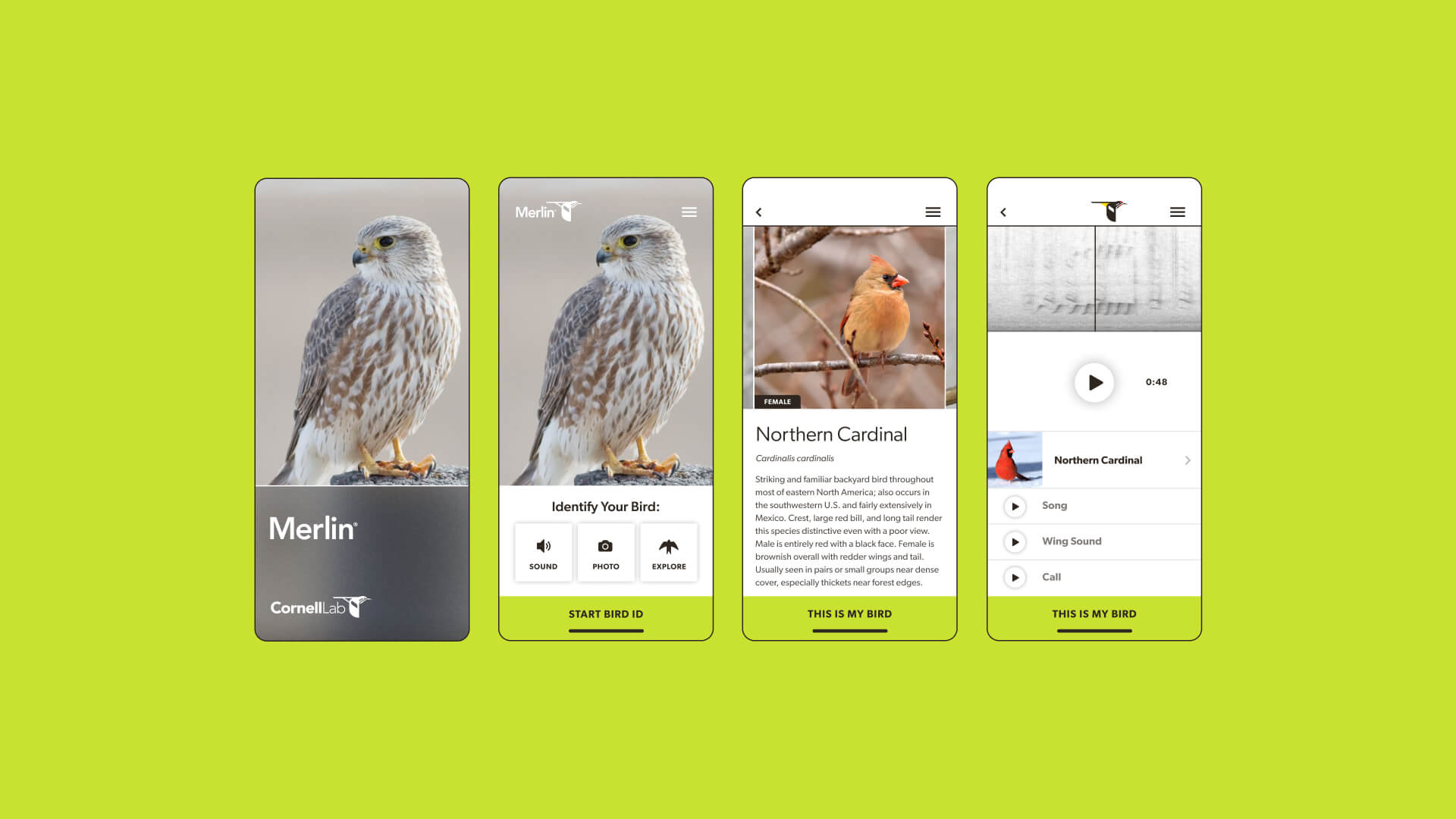
Post-collaboration, the Lab has applied the new brand across its website, apps including Merlin and eBird, Living Bird magazine, email and newsletter templates, and its line of merchandise. A new internal brand guidelines site has become central to employee onboarding, while new working groups are helping to bring down barriers between teams and spur collective action. Like a flock of birds, the Lab now sings one collective song.
The Cornell Lab’s 300+ scientists, professors, staff, and students were passionately dedicated to their individual team’s unique conservation projects, but segmented internal systems could stymie their collective impact.
1 brand
unifying 300+ employees and 8 departments

Charting a bold educational future
Ascend Public Charter Schools designs a “grown-up” vision for its young educational network.
Founded in 2008, Ascend Public Charter Network prides itself on providing “rich, joyful learning experiences that unlock lives of boundless choice” for its students, 93 percent of whom identify as Black or Latinx. The organization is also proud of being Black-led: 78 percent of staff and 80 percent of the executive team are people of color. Using co-design and joy, IDEO held a mirror up to Ascend’s core optimistic spirit during a moment of anxiety and change, helping its new CEO, staff, students, and parents reflect a dynamic, collectively imagined vision.
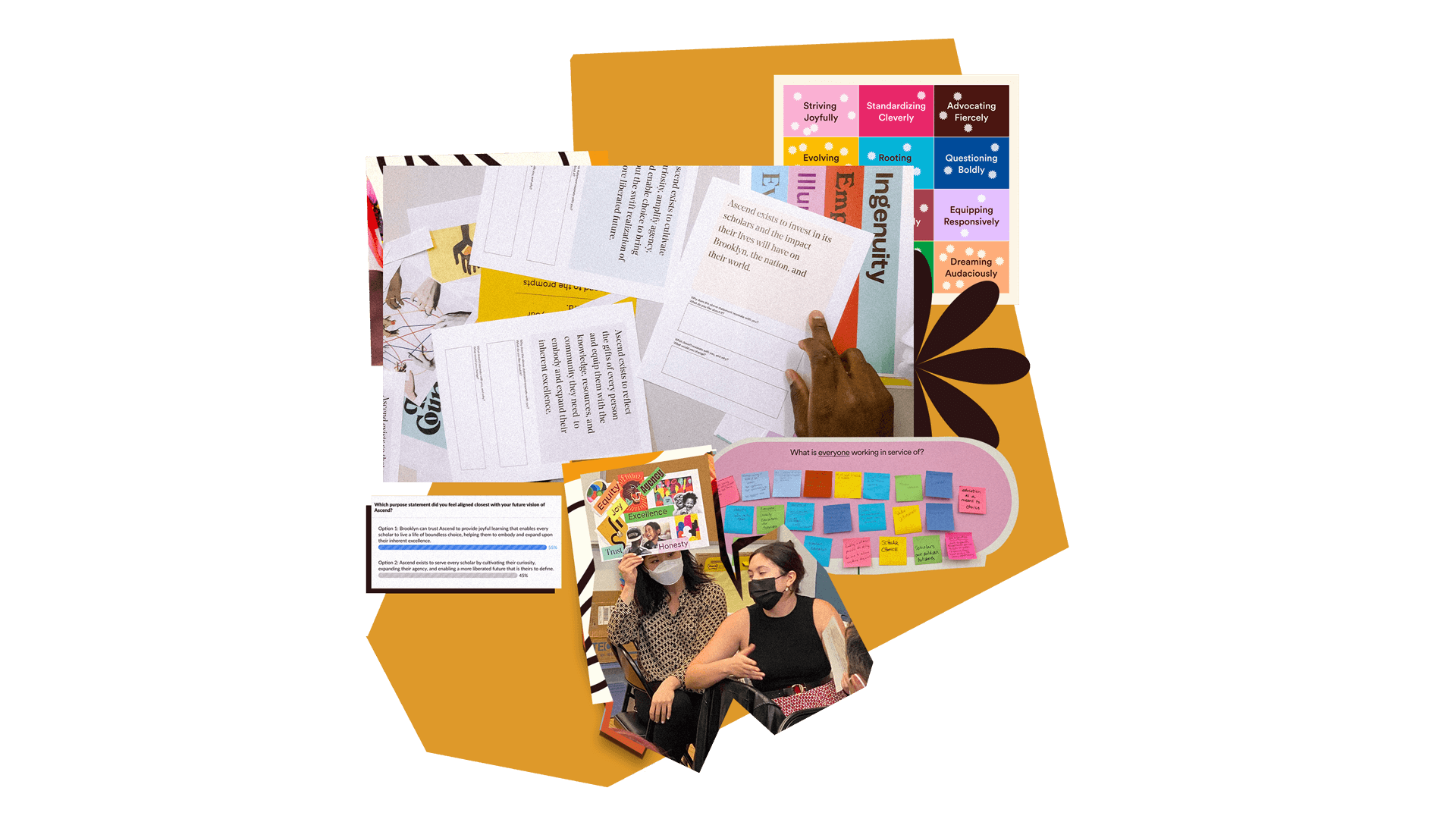
While the project’s goal was serious, the combined team centered the collaboration on bringing back fun, beauty, and imagination to those who could use it most: educators. Through engaging interactive activities, the IDEO team invited principals, PTA members, student council representatives, and board members to join “organizationally sanctioned play” moments like creating collaged vision boards and writing poems about Ascend’s impact. These interventions helped burned-out educators escape the day-to-day tasks of running schools and dream expansively about Ascend’s future. The team also solicited written, visual, and audio stories, asking community members to describe Ascend at its very best.
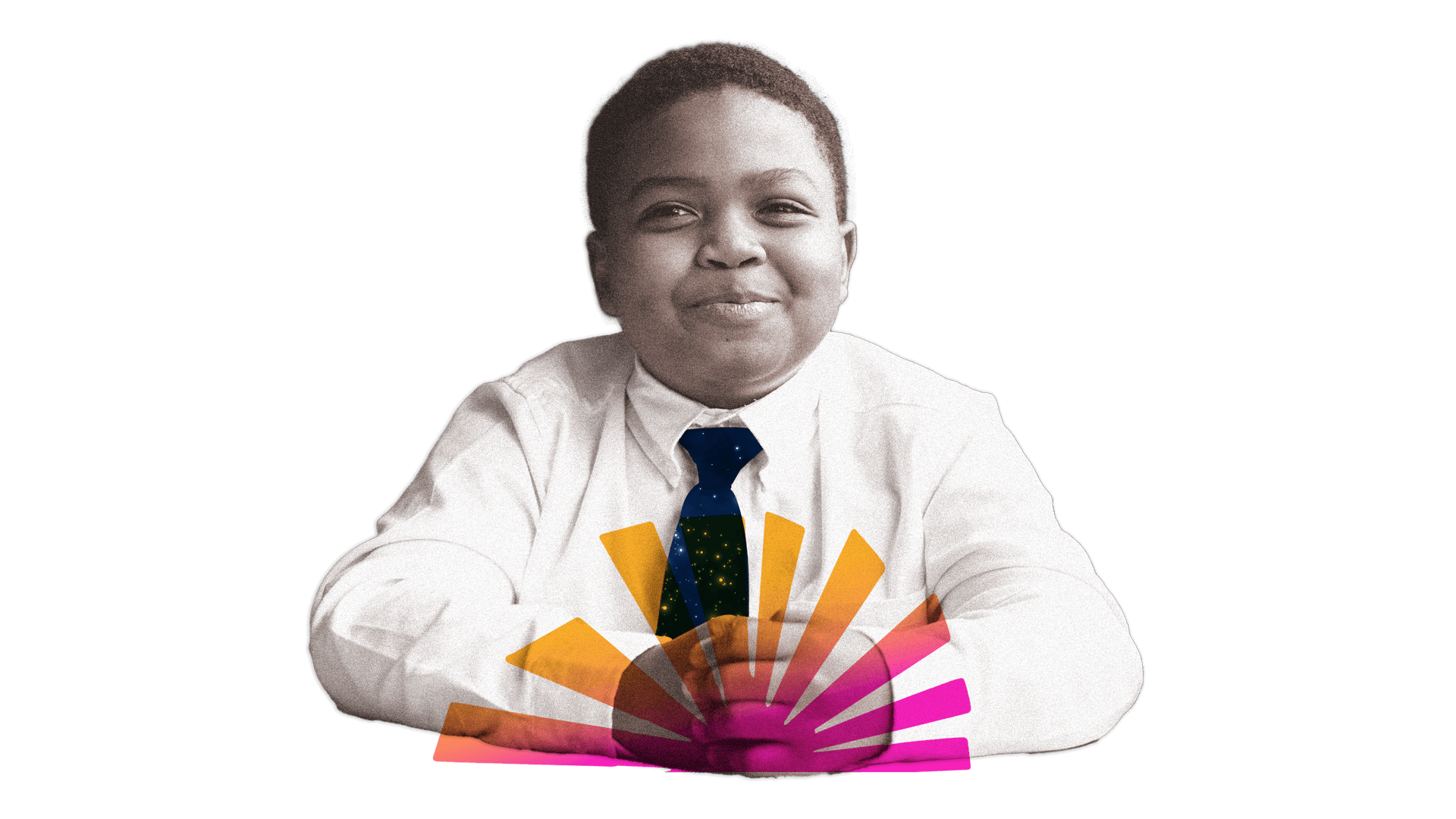
Stitching together submissions from 551 students, 75 parents, and 16 staff members, the co-design sessions resulted in a powerful new purpose, mission, and values, as well as a vibrant visual language and activation tools to bring Ascend’s vision of a “dope,” “unapologetically Brooklyn” charter network to life. The joyful, eye-catching visuals are embedded throughout its 17 Brooklyn schools, staff recruiting and training materials, and digital presence.
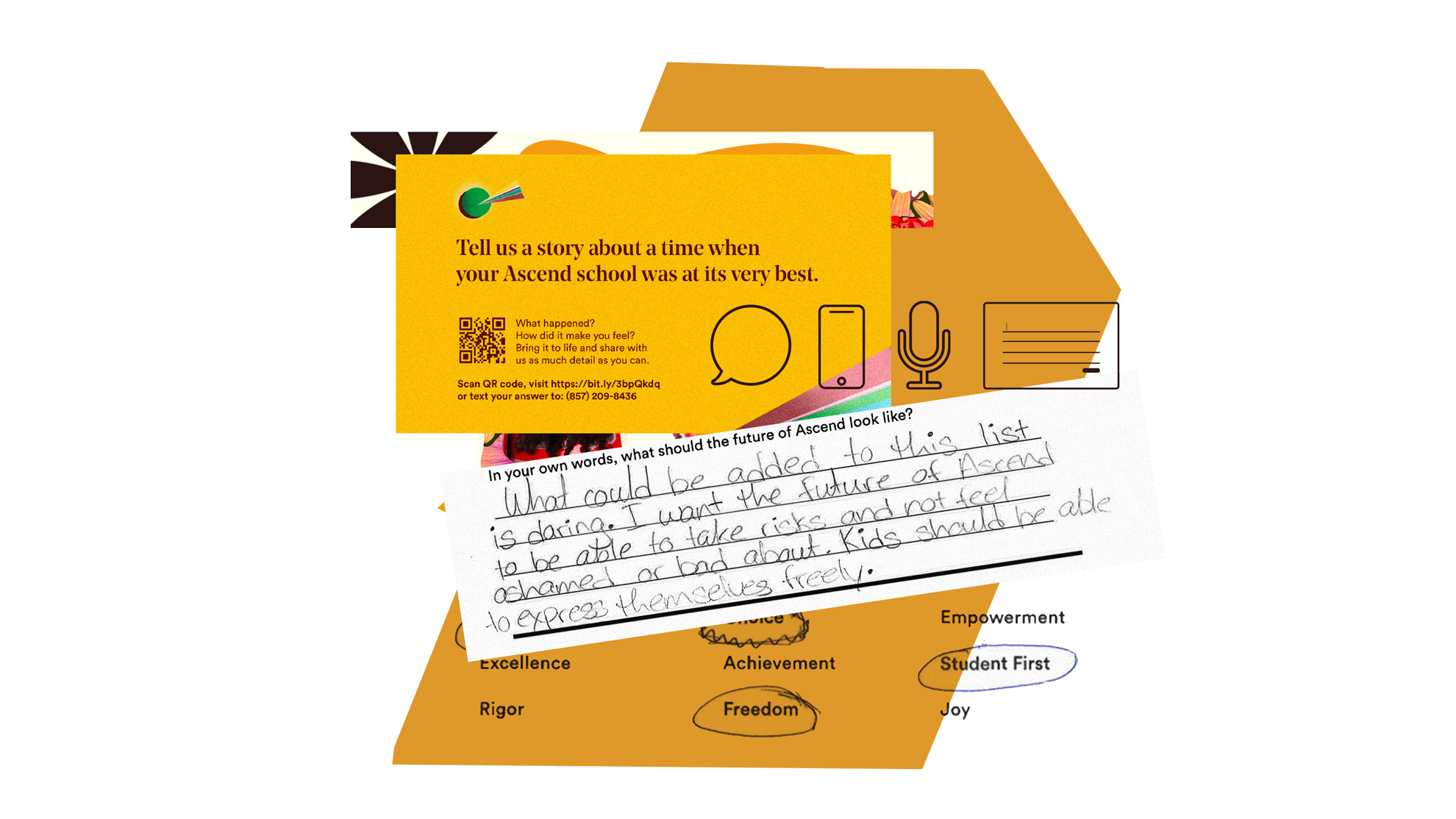
Shortly after the collaboration with IDEO, Ascend received an unsolicited $11 million donation from MacKenzie Scott's foundation, Yield Giving, the most significant gift the then-14-year-old institution had ever received. The pivotal funding will allow the organization, with its bold new “grown-up” vision, to focus on becoming the school of choice in Brooklyn by 2027.
In the summer of 2021, one in four K-12 teachers was ready to quit. Pandemic stressors and increased curriculum scrutiny were to blame, according to a 2021 Rand Survey.
In 2022, 44% of K-12 workers reported burnout, the most of any US professions the time, according to a Gallup Poll.
Pandemic exhaustion and leadership turnover left Ascend’s new CEO eager to align staff around an exciting new vision.
$11M grant
Ascend received an $11M grant from the MacKenzie Scott Foundation a few months after the collaboration
1 collective vision
to guide a network of 17 schools
.webp)
Is Gen Z ready to embrace AI? It’s complicated.
Lessons from young people on AI’s thin line between productivity and interference.
It wouldn’t be a stretch to assume, then, that those between the ages of 12 and 25 would glom onto everything generative AI.
But that’s not what we found.
IDEO embarked on a data-driven approach paired with qualitative research with a group of Gen Zs, asking them what they think about the AI that so many companies are rushing to fold into new and existing products. The findings immediately challenged many of the prevailing assumptions about Gen Z.
As companies begin to leverage AI to power everything from art and music generators to dating apps, and even personal companions, it’s imperative that we understand how people will respond. This is a group that has already weathered the consequences of untested technology thrust upon them during their formative years (hello, social media), and it’s only fair that they have a say in shaping the next generation of technology and determining what aligns with their needs, and what disrupts their core values.
“I love being deeply connected to my intuition,” one 19-year-old told us. “And I feel like this technology can truly interfere with that and be super invasive to our natural rhythm and flow and trusting ourselves.”
To uncover ways we can responsibly design and innovate for their needs, we launched a stream of research into how to design AI for future generations.
Our interdisciplinary team—which includes members of this cohort—began with a quantitative approach, following conversations on AI on TikTok, meticulously analyzing hashtags, video topics, and comments.
What emerged was a strong consensus—AI is a helpful tool for boosting productivity and efficiency, particularly for school (help with homework), career development (writing a resume or cover letter), and daily routines (workouts or meal plans).
But we also discovered a profound ambivalence and much debate regarding the role AI should play in three specific domains: creative expression, human relationships, and mental wellbeing. What was striking is that these pillars are fundamental to identity formation and self-perception—integral parts of the coming-of-age experience that have already been significantly shaped by social media and the pandemic.
To dig deeper into this dichotomy, we created six sacrificial concepts—hypothetical AI products and services of the future.
- AI Venture Accelerator: A creative co-founder that helps you bring your idea to life
- AI Passion Coach: A guide that identifies your skills and makes suggestions for how and where to apply them
- AI Muse: An generator of inspirational ideas that accelerate your creative pursuits
- Our AI Friend: A bot that helps your friend group interact and connect
- New AI, New Me: An avatar trained on your preferences that has experiences for you
- Build a FrAInd: Your ideal bestie come to life, based on celebs and influencers you love
We presented the concepts to 12 young people, aged 13 to 21, encompassing varied life experiences and levels of familiarity with AI. Together, we delved into what really matters to them, unearthing their desires and concerns about the technology that will influence their future.
The insights we gleaned made us check our assumptions. The participants expressed a yearning for opportunities to learn through relationships, to try new things, and to embrace failure as part of their growth. They voiced concern about how AI companions might influence their expectations of genuine and complicated humans.
“You might start comparing your simulated friend with your real friends,” said one 20-year-old student. “And then start noticing all the flaws in your real friends, which might start damaging your relationships.”
Another participant pondered the consequences of a tool that eradicated mistakes or smoothed over challenges, as it would create an all-too-perfect reality. They viewed these experiences as essential components of life itself, stressing, “Let us figure out our challenges, let us work through things and have those emotions. Give us tools that could aid us along the way, or work on it, but let us have that experience because I think we need it.”
“Let us figure out our challenges, let us work through things and have those emotions.”
The lessons imparted by this cohort defy the prevailing technology-centric mindset and challenge the stereotypes slapped onto Gen Z.
As builders of AI products, we believe we must always return to people. We're not suggesting we press pause on exploring novel ways to integrate emerging technologies into our systems. But let's check our assumptions, consider the unintended consequences, and design AI for future generations with care and intention. Failing to do so risks making costly bets on products, services, and experiences that will fail outright. Or worse, creating new problems.
Look out for the second part of this series, where we’ll share innovation principles for AI that will help organizations leverage the power of design to learn, understand, and build not just for young people, but with them.
Screenagers. Digital natives. The TikTok generation. It's hard to find an epithet for those born between the mid 1990s and early 2010s—aka Gen Z—that doesn’t call out a dependency on technology.

ペン、紙、コード:プログラミングをグラフィックデザインに取り入れる
(Read the English version here)
私がプログラミングに興味を持ったのは、大学院でグラフィックデザインを学んだときでした。ある授業で「ジェネラティブデザイン」という、コードを使って視覚的なアウトプットを生み出すデザインの考え方を学んだのです。この考え方は、私が以前フォトジャーナリストとして働いていたときにカメラで行っていたこととすぐに共鳴しました。デジタルカメラでは、レンズを通して世界を観察し、シャッタースピード、絞り、フォーカス、構図を操作して、最終的な結果を作り出していました。そして、出来上がった写真を確認し、必要に応じて設定を変更し、また納得のいく写真が撮れるまで何度も撮り直します。プログラミングでも同じように、プログラムを走らせ、生み出されたビジュアル観察し、自分が望む結果になるまでコードを操作する、というプロセスを経験しました。

大学院での自由な時間を利用して、私はプログラミングについて独学で学び、Processingのような視覚表現に適したプログラミング環境を使って、グラフィックデザインを作る実験を始めました。修士課程では、プログラミング、ジャーナリズム、グラフィックデザインの3つの分野の交点に重点を置きました。
卒業後、プログラミングの実験を続ける機会はほとんどありませんでした。IDEOで働くようになってからは、グラフィックデザインを試す時間が増えましたが、プログラミングとデザインに対する情熱を再発見したのは、育児休暇に入ったとき。育児休暇中、自分に使える時間はオムツ替えや授乳、お風呂といった子どもの世話の合間のわずかな時間。この貴重な時間をどのように過ごしたいか、子育ての経験が改めて考えるきっかけをくれました。コンピュータの前に座り、なまった頭でPythonで数行プログラムを書くことを通じて、コードを使ってグラフィックデザインをすることの素晴らしさを改めて実感したのです。
プログラミングは創造ツールの一つ
グラフィックデザイナーは、新しい技術を自分の仕事に取り入れる機会に飛びつくことが多いですが、私にとってプログラミングは、デザイナーが長年にわたって使ってきた他のたくさんのツールと何ら変わらないものでした。コンピュータが普及し始めた頃、デザイナーはスクリーン印刷機を補完するためにPhotoshopやIllustratorなどのツールを学びましたし、コピー機やリゾグラフは昔から実験的な視覚的な表現に使われてきました。
私自身、ビジュアルを作るための新しいテクニックを試すことを常に求めています。ポスターやブランディングのためのイメージを作るのに、3Dモデリングやレンダリングなどのツールを使うことが多いのですが、初めてプログラミングを学んだとき、従来のグラフィックデザインの成果物で使われるようなイメージを作る上での新たなツールになる可能性をすぐに感じたのです。
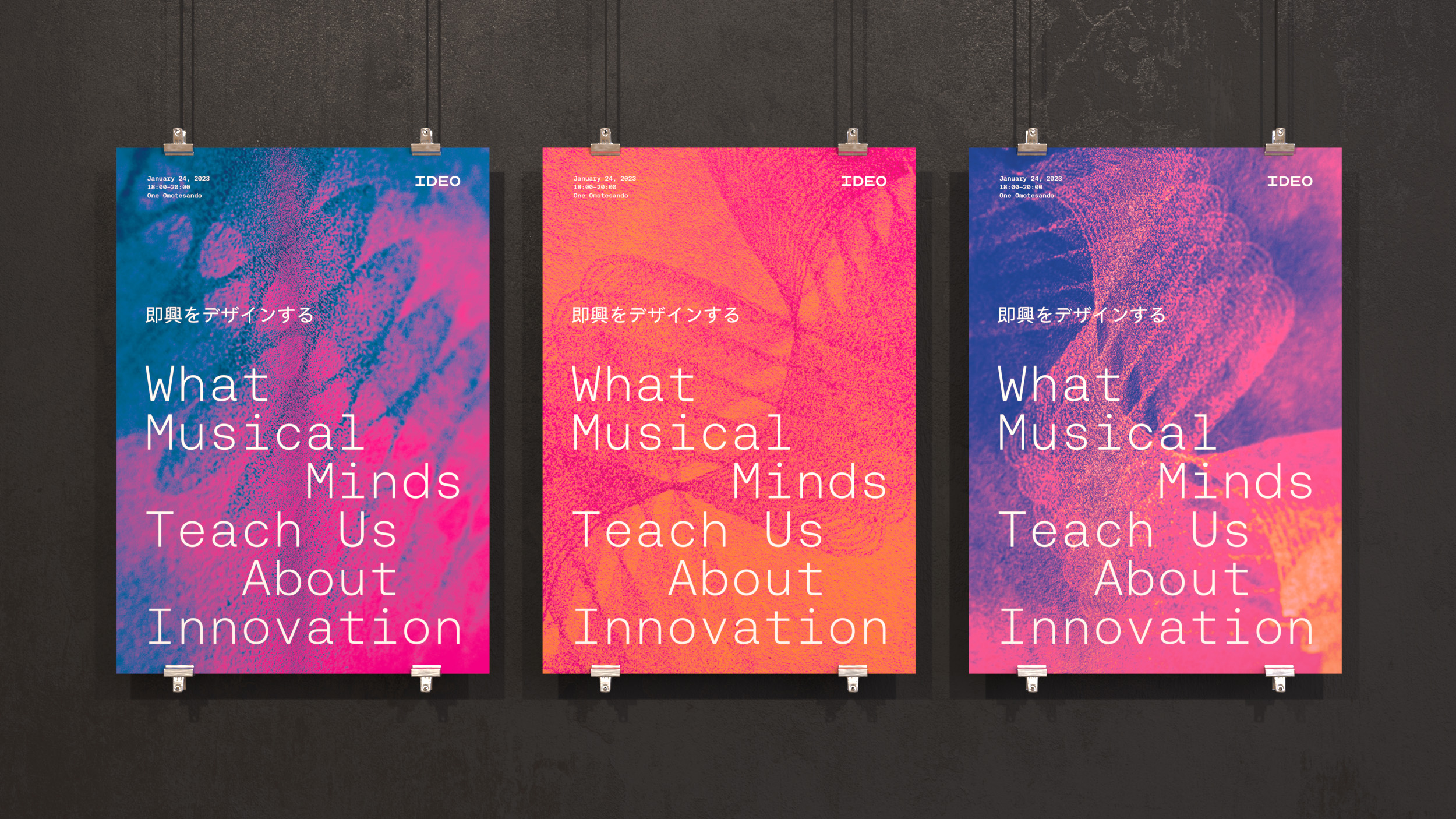
IDEOのパートナーであるマイケル・ヘンドリックスの音楽をテーマにしたイベントのために作ったポスターとブランディングも、従来のグラフィックデザインをサポートするようなプログラミングの活用のひとつです。ポスターのデザインでは、楽器のシンセサイザーに使われている波形のアイデアと、マイケルの著書Two Beats Ahead のテーマである「ありえない組み合わせでデザインのインスピレーションを得る」ということを参考にしました。「シンセサイザー風の波形と紙」という、ありそうでなかった組み合わせで、イベントのビジュアルを作ることにしたのです。
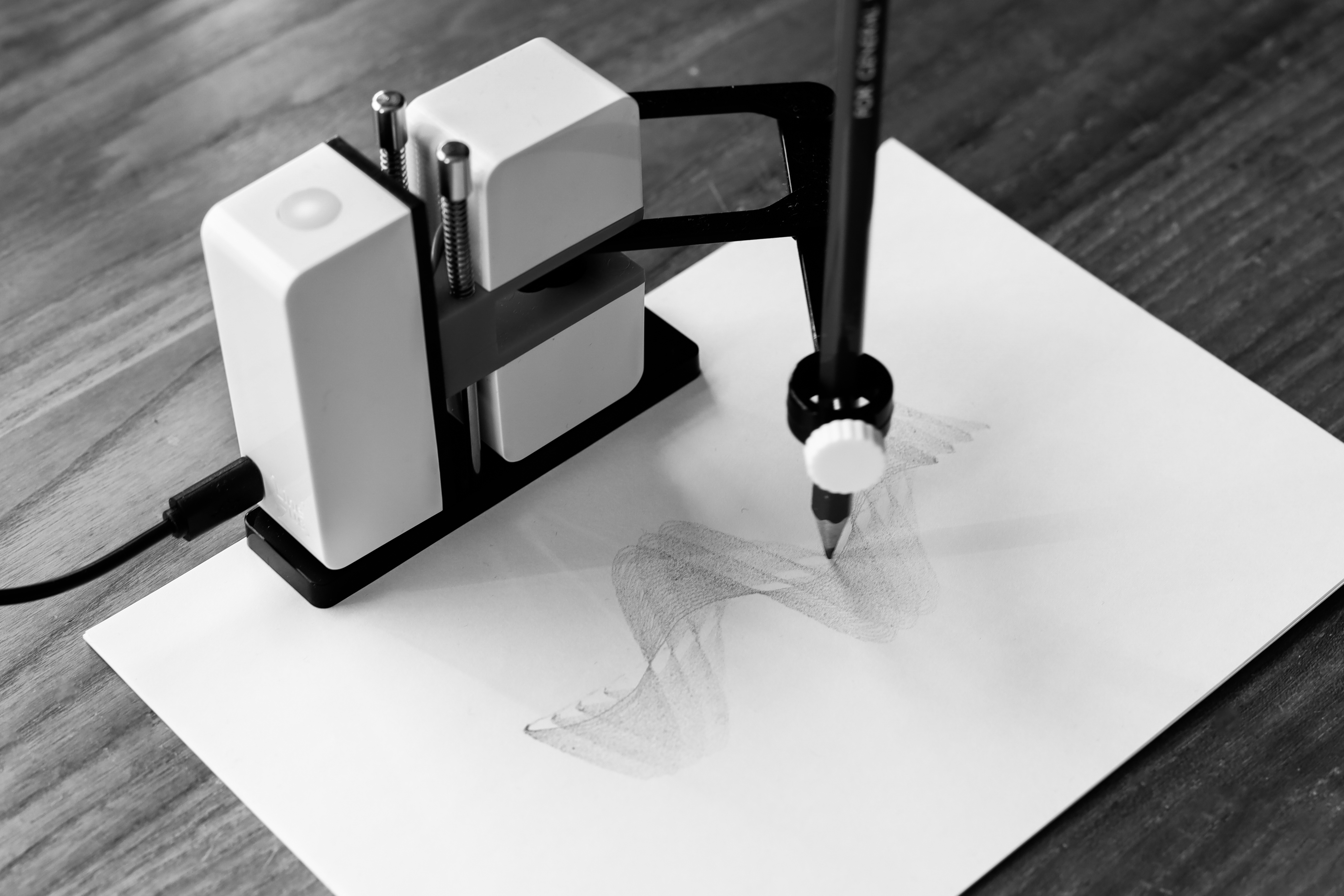
ポスターの背景は、Line-Usというロボットアームをプログラミングして、鉛筆で音楽の正弦波を紙に描き続けることで作成しました。その絵を撮影し、色を変えてから最終的なポスターのデザインに落とし込みました。
プログラミングで波形を描くことで、手描きでは難しい、繰り返される波の数学的な正確さと美しさを視覚化することができました。一方で鉛筆で描くことで、波そのものがラフな質感を持ち、音楽制作の有機的なプロセスも表現することができました。
クリエイティブパートナーとしてのプログラミング
プログラミングは、単なる創造のためのツールという枠を超え、驚きや喜びを通じて私たちにインスピレーションを与えてくれるような素晴らしいクリエイティブパートナーにもなり得ます。ChatGPTやDALL-EのようなAIベースのツールの台頭により、このようなクリエイティブな活動の中でこうした機械を試す人が増えています。実際私もIDEOのデザイナーが、行き詰っている問題についてAIチャットボットに質問しているのを見たことがあります。デザイナーはチャットボットに、"どうすればデジタルシステムをより人間らしい形に拡張できるだろうか?"などと質問できるのです。通常、AIの回答はそれだけでは素晴らしい解決策にはなりませんが、「文脈を考慮しましょう」といった回答は、デザイナーを新しいアイデアやプロトタイプに向けて刺激するのに十分な後押しになるかもしれません。
プログラミングも同じように、特に予期せぬ結果で私を鼓舞してくれることに気付きました。初期のプログラミングでは、あらかじめ定義された文法構造にランダムな単語を挿入することで、ソーシャルメディアへの投稿を自動生成するシンプルなアルゴリズムを書きました。このプログラムは、"24 Especially Terrible Wedding Animals Every Film Lover Needs("全てのシネフィルが必要な特段ひどい結婚式動物24選”)のようなランダムに生成されるフレーズで笑いと驚きをもたらしてくれました。
生成されたフレーズが思いがけず不条理なユーモアに満ちていたことから、このプロジェクトを「ソーシャルメディアの投稿」から、「風刺的なフェイクニュースの見出しの作成」へとシフトさせることにしました。ネットで得られる情報の質が時に怪しくなることへの批判として、投稿生成プログラムを活用し、フェイクニュースの見出しを無限に自動で書き出すようにしたのです。

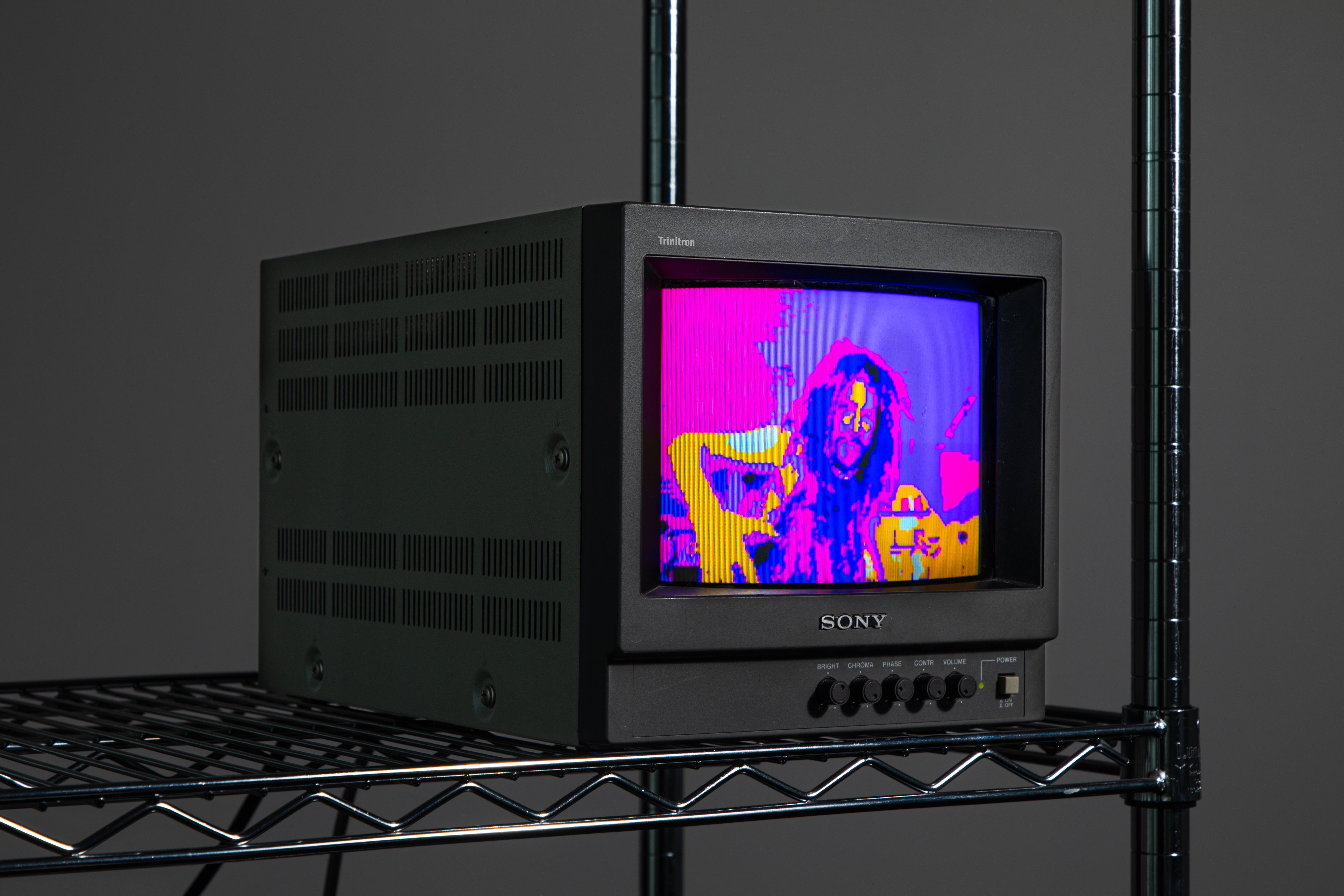
このプロジェクトの最新版である「AI News Network」は、1時間ごとに実際のニュースの見出しを自動的にダウンロードし、見出しの単語を形容詞や名詞などの品詞に分類し、ランダムに新しいフェイクニュースの見出しとして組み立てます。ヴィンテージのブラウン管画面には、私が作成した偽のブランド名が表示され、無限に続くヘッドラインが表示されます。私が書いたプログラムは、プロジェクトの内容を自動的に生成するクリエイティブパートナーとしての役割を果たしてくれます。見出しの作成は、プログラムに任せているので、うっかり信じてしまいそうになるような、でもやっぱり荒唐無稽なコンテンツに、私自身驚くことがあります。「インドネシア、ボブ・ディランを非難」のような偽の見出しを見ると、ボブ・ディランがインドネシアを怒らせるようなことをしたのだろうかと思うし、「サル男、ジョー・バイデンからの支持を撤回」のような無意味な見出しにはただ苦笑してしまいます。
2つの世界の間で踊るプログラミング
実用性は低いですが、私がプログラミングに最も惹かれるのは、プログラミングが持つ感覚ゆえかもしれません。グラフィックデザインのようなクリエイティブな活動では、明確な正解はありません。どのグラフィックも、他よりも正しいと証明できるわけではありません。それでもある特定のグラフィック表現が正しいように感じることがあります。私たちはデザイナーとして、直感的に良い結果を得たと判断することができるのです。論理的に正解を示すことはできなくても、直感的に「これはいい!」と感じることがあります。スタンリー・キューブリック監督は、「物事の真実は、考えることではなく、感じることにある」と述べています。
しかし、プログラミングの場合、コードそのものについて自分がどう感じるかは関係ありません。プログラムには、ある結果を出すためのさまざまなアプローチがありますが、コードを一つでも間違えれば、エラーになり何もできなくなります。プログラミングの世界は残酷なまでに論理的で、精密さがなければ機能しません。しかし、その論理と直感のコントラストにこそ、私はスリルを感じるのです。ビジュアルを表現するためにコードを書くとき、私の脳は論理と感覚の2つの世界の間で踊ることができるのです。
最近のプロジェクトでは、IDEO Tokyoのスタジオに、小型カメラでレトロなピクセル画像を撮影し、古いブラウン管スクリーンに表示する「フォトブース」のようなものをつくりました。このプロジェクトのプログラミングでは、論理と直感の世界を行き来することができました。画像データを格納する数学的な配列を作成してからプログラムを実行すると、カラフルなブロックから私の顔の写真がゆっくりと出来上がっていくのを見ることができました。コーディングはロジックですが、ビジュアルを見る瞬間は、純粋に直感的な疑問でいっぱいです。ピクセルが大きければレトロ感があるけれど、被写体は識別できるのか?画像の不思議さを楽しんでもらいつつも、飽きさせないような描画速度になっているか?色彩はクールか?何か違和感があれば、再びプログラムの世界に飛び込み、コードの行をいじり、バグを修正し、データ構造を入れ替える。そして、再びプログラムを走らせ、どう変わったかを確認するのです。「うん、これはいい感じ。でも、この1行を変えたらどうなるんだろう......」。このように、私の脳の論理的側面と直感的側面を常に行き来することは、刺激的で中毒性があります。片方が休んでいる間、もう片方は遊んでいるのです。
あなたの意外な組み合わせ
プログラミングをツールとして、またパートナーとして使うことで、グラフィックデザインの新しいアプローチを発見し、驚きと興奮を得ることができます。皆さんも、プログラミングが好きというわけではないかもしれませんが、一見異なるコンセプトがどのように組み合わされ、新しい驚きをもたらしてくれるのか、ぜひ探索してみてください。新しいアプローチに出会ったとき、そのアプローチが自分の情熱を思い起こさせるかどうか、そしてその新しいアプローチと今の仕事を組み合わせる機会はあるか、探してみましょう。その中に意外な発見があるかもしれません。
IDEOの多くのコミュニケーション・デザイナーと同様に、私もグラフィックデザインのバックグラウンドを持っています。「グラフィックデザイン」と聞くと、いわゆるビジュアルを作る仕事が思い浮かぶかもしれません。新しいブランドの価値を視覚的に伝えるために、ロゴをスケッチしたり、カラーパレットを選んだりするデザイナーを想像する人もいるでしょう。あるいは書籍やプレゼン資料のレイアウトを作成し、書体をじっくり選び、画像やテキストを配置して、ダイナミックなページを作る仕事も思い浮かべる人もいるかもしれません。
実際私もこうしたいわゆるグラフィックデザインを日々の仕事として行ってますが、最近はそれ以外の活動にも時間を割くことが増えています。それは「プログラミング」です。
The messy business of coming up with new ideas
Every opportunity starts with a prototype.
There’s also a hint of our Chief Creative Officer’s perfume wafting in the air, “no.1173, the Last Almonds of November,” and “no. 79, Crisp Snow on Granite,” diplomatic offerings intended to remind politicians of scents that we may lose due to climate change—and what they still might protect.
To my left, a business strategist and industrial designer heatedly debate the financial and social benefits of a “hand-me-down, doodle-me-up” backpack program to enable creative reuse in key lifestage moments across childhood. At the other end of the table, a designer prototypes an underground music genre using sound libraries sampled from hybrid species. This moment is so very weird, so very thoughtful, and so very much where dreaming up new and disruptive ideas begins.
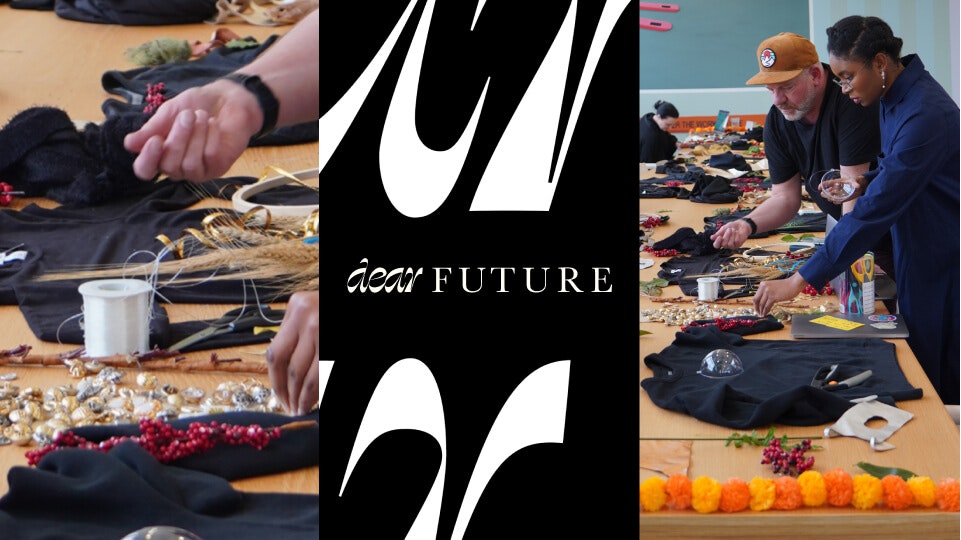
When IDEO speculates about the future, we often start by gathering around a table and giving ourselves the creative oxygen and open space to explore the questions of tomorrow—What will we need to thrive in the climate era? How can we humanize technology?—with gluesticks and glitter, not just whiteboards and whitepapers. It is a practice of imagining with our hands, building to think, and blending strategic hunches with wild cognitive leaps. We’re following the wisdom of our PlayLab, who have long argued that intentional play helps liberate thinking, slipping past the rational mind and inviting all the senses to be part of the conversation. This afternoon’s makeathon was only the beginning of IDEO's larger efforts to reimagine tomorrow. Tomorrow we diagram. But tonight we dance.
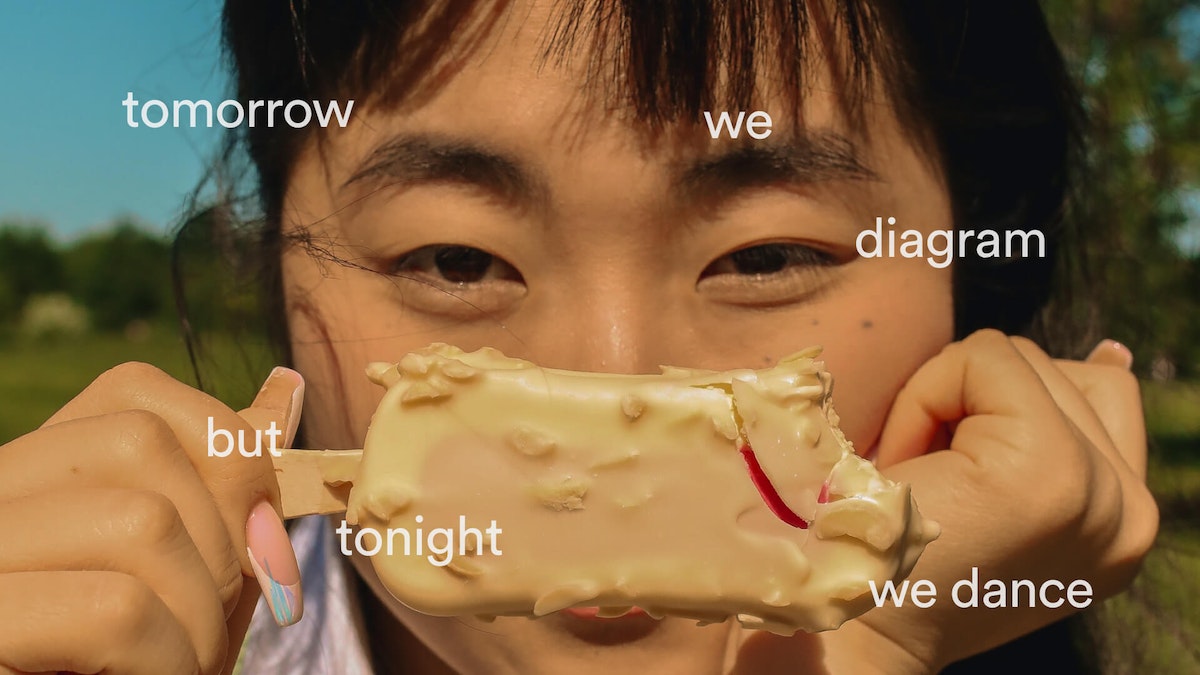
Some call it ideation. I call it rebellion. A re-wilding of imagination. As a pink-haired hacker kid in the 90s, squirreled behind my CRT in the early days of digital, I was intoxicated by the electricity of possibility crackling in the air. Digital was going to change everything. Cut to today, and it’s easy to feel that same kinetic energy all around us.
Design invites us to escape the gravity of the present in pursuit of the possible.
As we move through the Climate Era, organizations and individuals are beginning to recognize that, as the French writer and filmmaker Chris Marker put it, “Rarely has reality needed so much to be reimagined.” Design helps conjure new possibilities from the air, bringing them down from the cloud of heady theory, up from the soil of day-to-day aspirations, and into the hands of people. When done well, design fundamentally redistributes the balance of power, changing both who is at the table, and what is created. It connects the street to the skyscrapers, the mothers to the policymakers, the ethically opinionated 12-year-old to the corporation, the makers to the strategists. When we shake off these divisions and imagine together, we all become magicians, conjurers, rebels. Together, we refuse to simply accept the world as is, and instead help collectively reimagine it as it could be.
For decades, IDEO has imagined what it would feel like to inhabit the future. As our timeline for implementing climate solutions and contending with emergent technologies grows shorter, we are recommitting to that practice—creating compelling, tangible visions for how we will live, work, create, and relate to one another, the planet, and to the world around us.
Dear future, we’ve got your back. Biodegradable glitter and all.
The Day’s Agenda
Our speculation about what opportunities will arise as we do business in the Climate Era kicked off with an in-person makeathon.
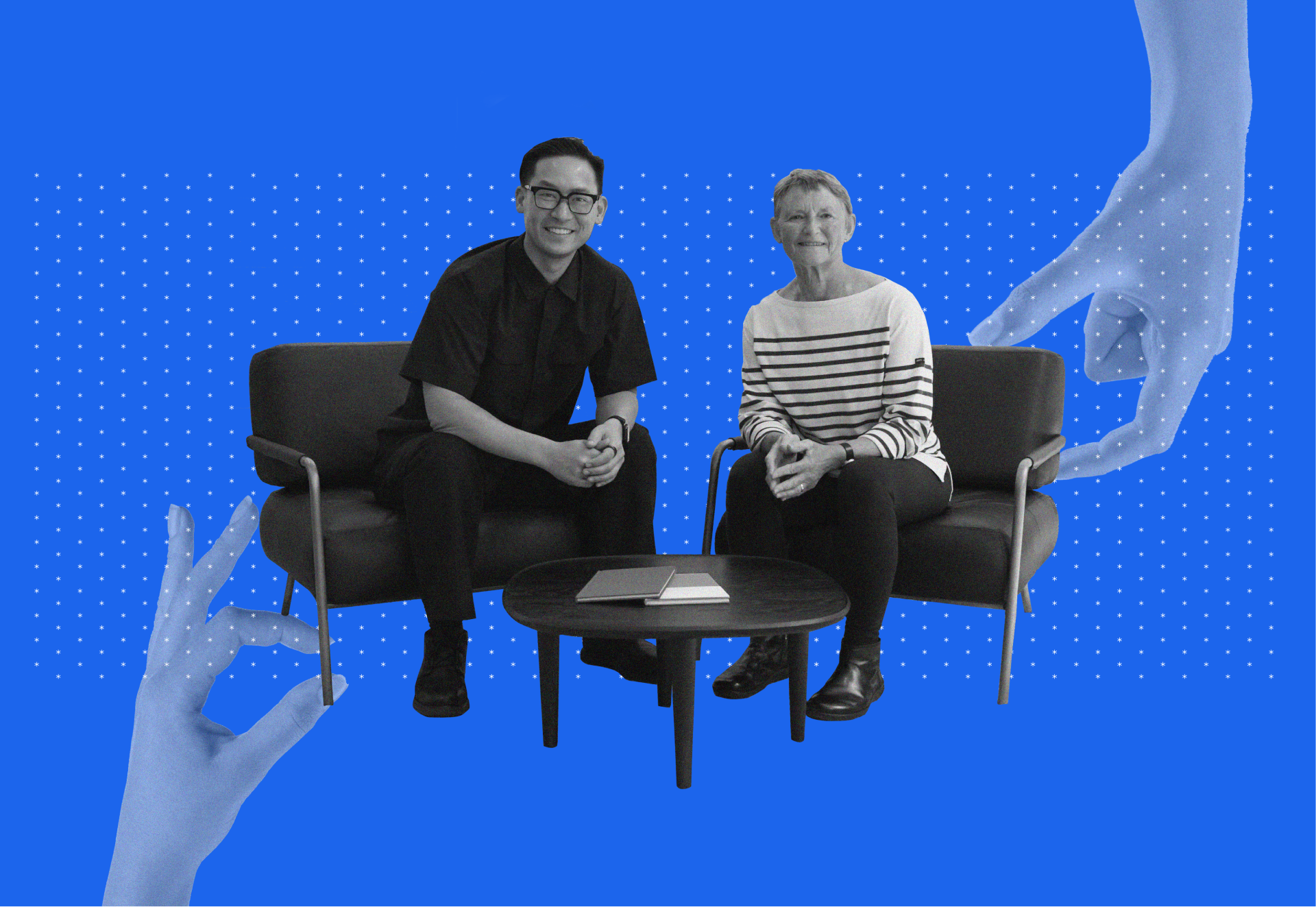
To set the scene, we hosted a conversation in our San Francisco office between Alexander Rose, Executive Director of the Long Now Foundation, and IDEOer Tanja Dzambazova. Since 1997, Rose, Danny Hillis and The Long Now team have led a range of efforts encouraging imagination at the timescale of civilization—the next and last 10000 years—including a monumental, all mechanical 10,000 Year Clock. It was an excellent primer on long-term thinking.
Flush with inspiration, we gathered around a long table littered with raw materials: leather and felt scraps, leaves and twigs, markers, and glue guns. We gave each team a brief and an hour to rapidly prototype speculative products, services, and experiences for a potential client. The point in a makeathon isn’t to come up with a perfectly viable concept, it’s to slip beyond a rigid, legacy mindset and enter a more flexible, generative mode where you can come up with new-to-the-world ideas.
OUR BRIEFS
- Electrify Everything
How might we live differently in a world that is running off of renewable energy? What is unlocked in a world where all industrial machines, homes, neighborhoods, and appliances are intelligent, efficient, connected, and powered by renewables? - Waste-Less Living
What might everyday life look like if the products we use, clothes we wear, and industry standards and systems are waste-less, adaptable, and regenerative? What could more intentional “design for immortality” look like? - Frontline Futures
How might we design new experiences, products, and services for those on the frontline of climate impacts? What new mitigation, prevention, and adaptation opportunities can we surface through a human-centered lens rooted in the experience of those most at risk? - Carbon Transparency
How might we live differently in a world where carbon transparency (scope 1,2 & particularly 3) is fully complete? What is unlocked in a world where consistent measurement and blockchain logging produces a live carbon score for any object or activity on earth? - New Nature Rites
How might a globally viral belief system responsive to climate change create new rituals, symbols, events, holidays, and social narratives?
With those prompts in hand, teams split off and started making. Here’s some of the output.
Remember, these aren’t meant to be realizable ideas. They are jumping off points—kernels of business opportunities that we’d like to explore further:
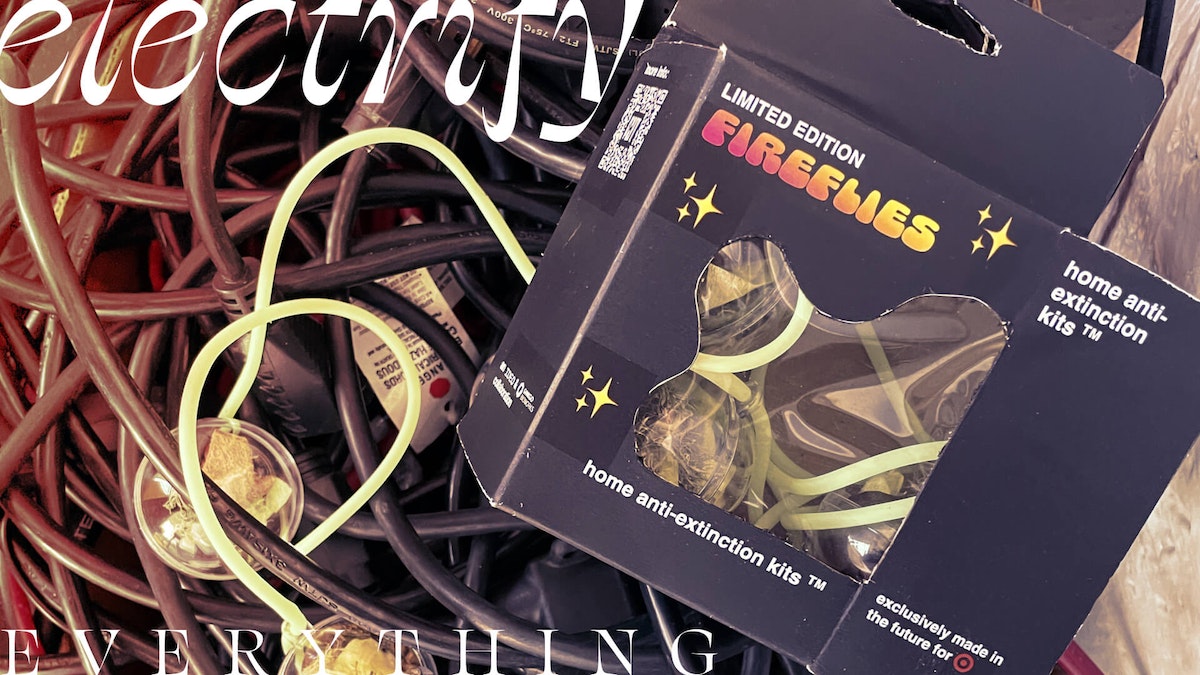
Client: Target
Theme: Electrify Everything
Design Concept: “Anti-Extinction Kit: Fireflies Edition”
A set of globe lights powered by fireflies is one in a series of kits to help re-nature our backyards and cultivate anti-extinction habitats. As climate change starts to affect food sources and safe places for firefly larvae dwindle, these backyard accessories are safe havens for fireflies to fuel up, lay their eggs, and lend their glow to light up a backyard. Also comes in glowing fungal and pond editions.
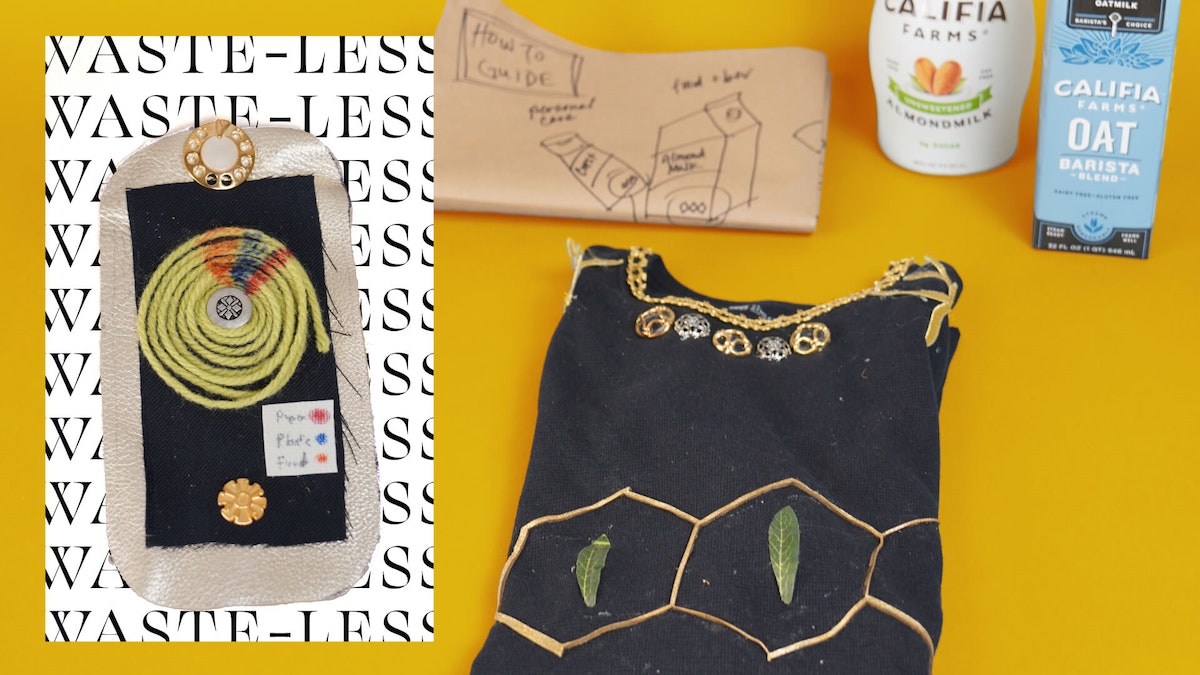
Client: Amazon
Theme: Waste-less Living
Design Concept: “Trash Rabbit: A rewards based packaging system”
An on-demand service that comes to your home and breaks down your trash—preserving valuable metals and other raw materials, disposing toxic elements, and processing recyclable elements. Users earn rewards and cash back when they purchase simpler, mono-material products.
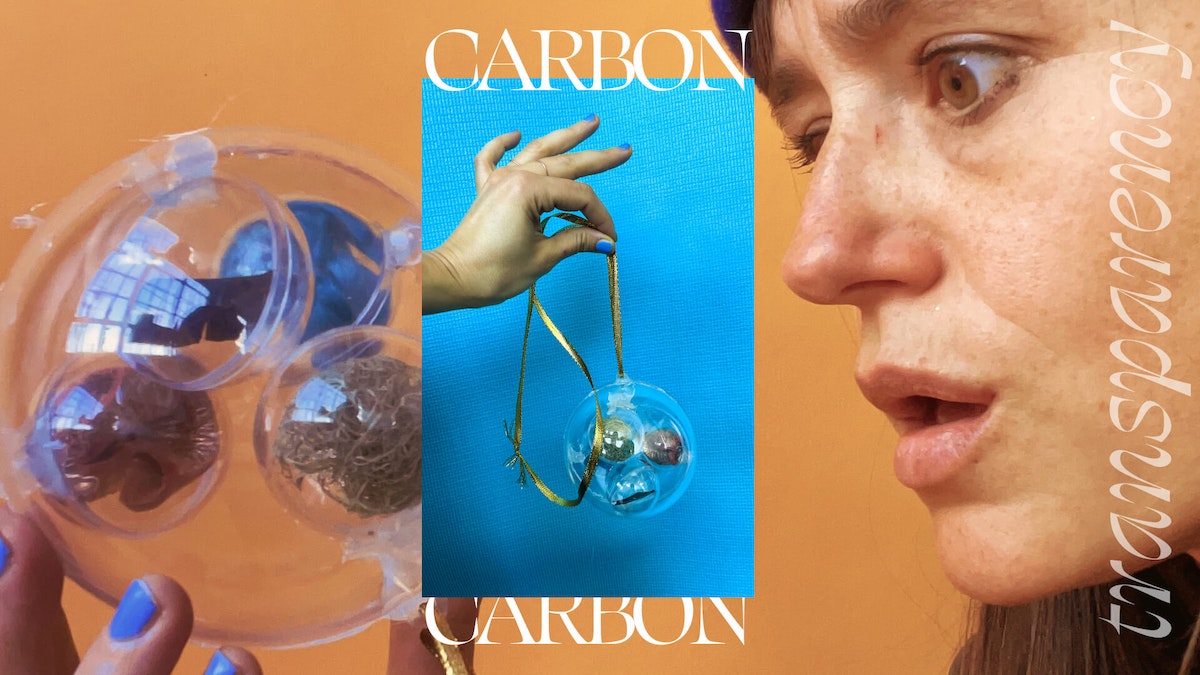
Client: Ford
Theme: Carbon Transparency
Design Concept:
A globe you wear as a necklace, like a Magic 8 ball. When shaken, it displays the most efficient, carbon-neutral way to get from point A to B, offering options that require tradeoffs and offsets. An intuitive sensory companion helps you make hard choices.
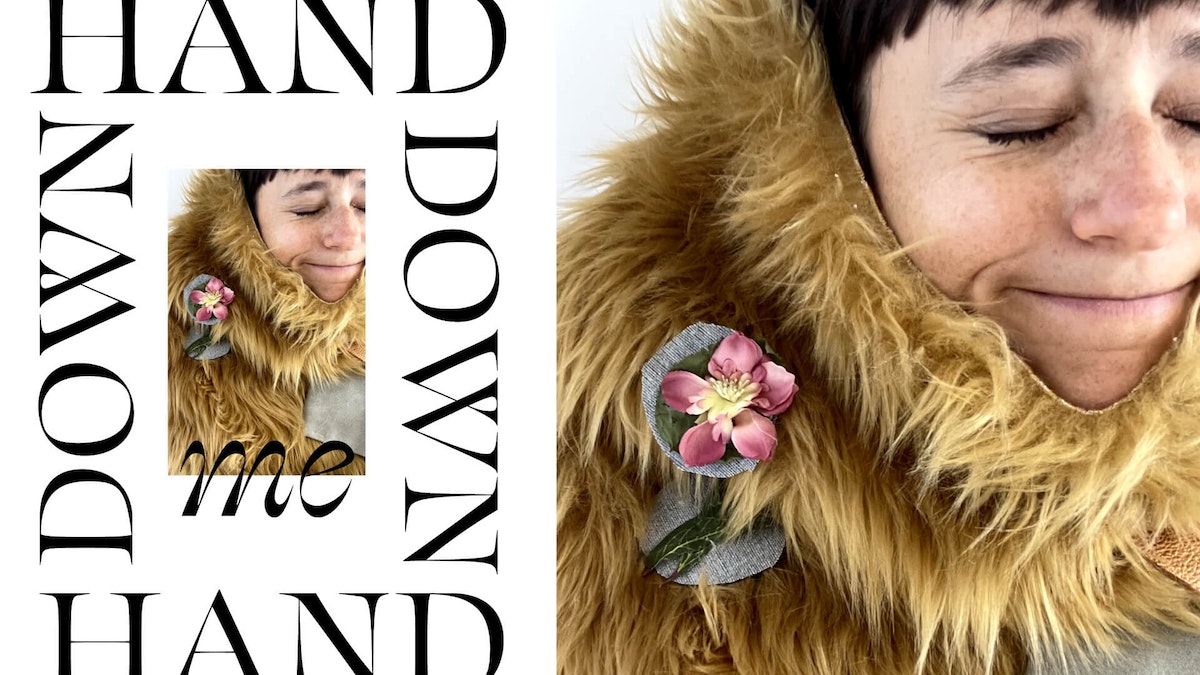
Client: REI, Patagonia
Theme: Nature Rites
Design Concept: “Intergenerational rites of passage”
A program in which gear is intentionally designed as a blank canvas to be passed down from generation to generation with a hand-me-down or yearbook element: You customize the backpack, sleeping bag, jacket, and other products with badges and add-ons to celebrate rites of passage like a first camping trip.
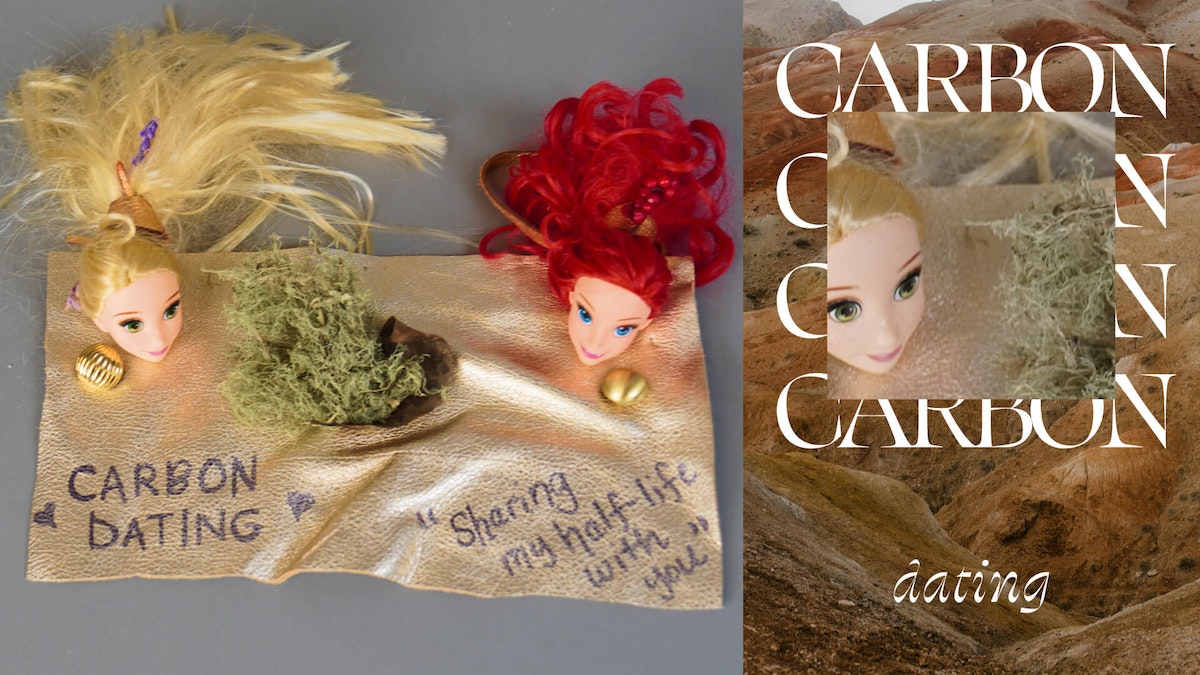
Client: Dating apps
Theme: Carbon Transparency
Design Concept: “Carbon Dating”
Matchmaking service based on shared environmental goals and behaviors. This is a time in which your carbon score makes you more desirable. Benefits include having similar habits and values—making moving in together a lot easier. Unintended consequences include creating an elitist competitive set where having the lowest score becomes more important than other human qualities.
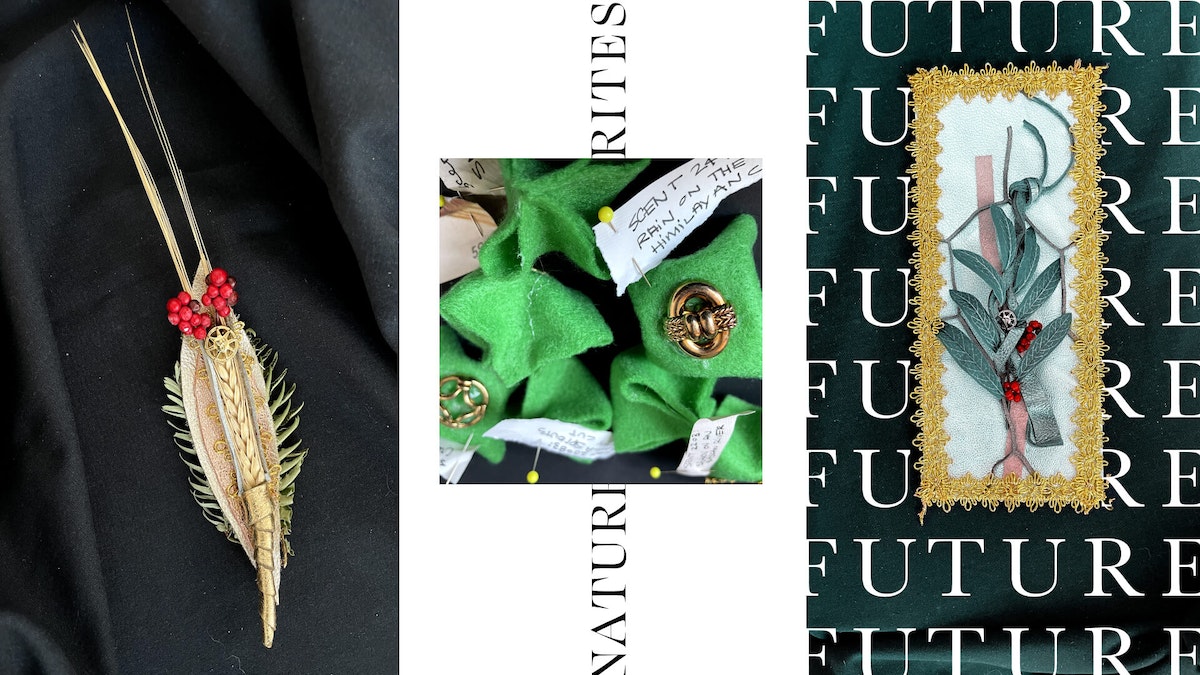
Client: United Nations
Theme: New Nature Rites
Wheat Pins Alliance
Made with the last piece of non-GMO wheat on earth, it’s our new cross-national symbolic pic worn to show allegiance to the earth. Due to monoculture farming practices, a future fungus wiped out the world’s wheat supply including GMO and non-GMO strains that weren’t strong enough to fight it
Lingering Scent Library
Last of their kind scents that were collected and stored in anticipation of climate change—the smell of snow on granite, an aroma of crushed almonds—that are offered to diplomats to remind them of what has been lost and what is still to be protected.
The New Earth Flag
Emblazoned with the shapes and colors of our last remaining shrubs, it represents Earth’s ecotone as it becomes increasingly desertified.
Will we see these ideas come to fruition? Probably not. But like any thought experiment that asks “what if…” they can lead to new ways of thinking and future business opportunities. The organizations that can anticipate what people will want and need in the next 10 years are the ones who will thrive in the Climate Era. What will technology make possible? What will dwindling resources make scarce? What will it take for humans to adopt planet-friendly solutions at scale?
Design’s role is to consider all of those factors and lovingly break, shape, and remake. To escape the gravity of the present in pursuit of the possible. And that starts by making a giant mess.
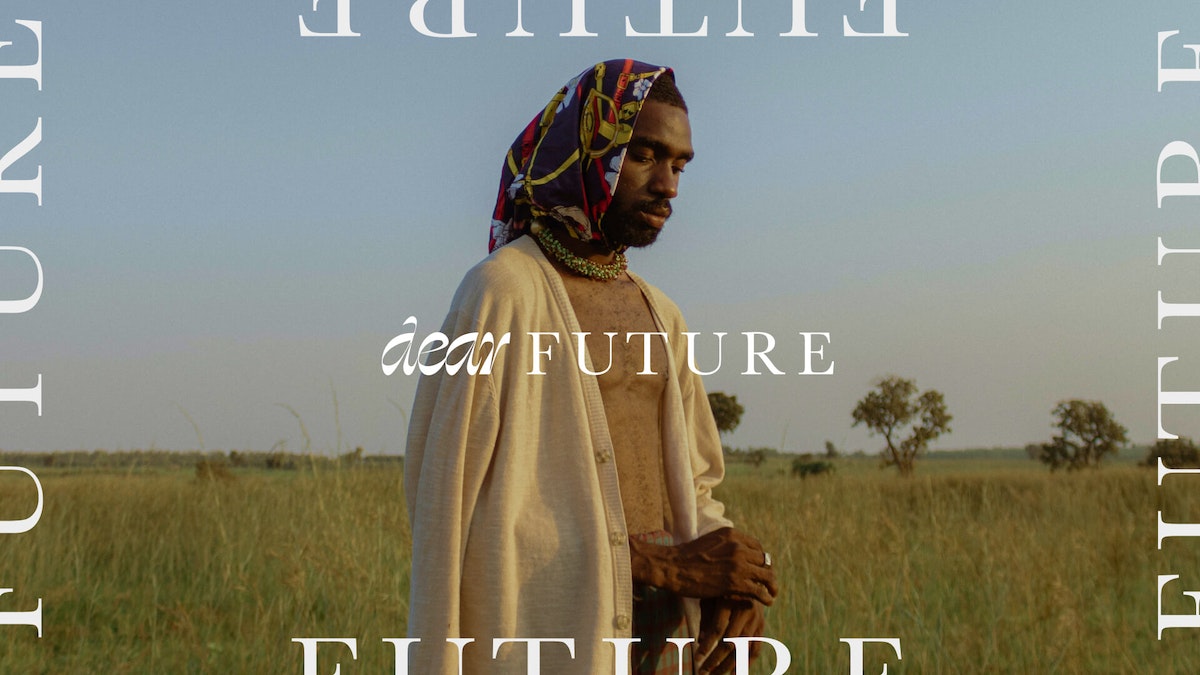
Dear future,
Can you smell this? It’s the scent of a melting doll’s head being gently pressed into a dayglo flowerbed.
.jpeg)
5 ways we're using AI at work
Artificial Intelligence is our new office mate. Here’s how we're teaming up.
For anyone whose day job involves creating things—proposals or presentations that require fact-finding, writing, imagery, and video—it's changing how we make stuff. Love it or fear it, generative AI may be our new co-worker. And to ensure this co-worker is ethical, friendly, and aligned with our intentions, we must first explore it.
This phase of the AI revolution feels personal. Many IDEO designers are artists or writers—crafts that generative AI is uniquely suited to disrupt. So, we’re getting ahead of it and embracing these tools to explore how our creative process might coevolve with AI.
As we would do with any new colleague, we hope to learn how to have constructive relationships with these technologies, understand them better, and collaborate.
Way back in 2019—before generative AI was everywhere—we created a deck of AI Ethics cards, which you can download here. It was a good start, but there is much work yet to be done on creating an ethical human-AI ecosystem that endures long after the hype cycle ends.
Here are a few of the ways we’ve been experimenting so far:
1. Research Synthesis
The classic image of design thinking is people huddled around a Post-It–littered foam core board. During the pandemic, this process shifted to digital tools like Miro, Reduct, and Figjam.
Interaction Designer Takashi Wickes is using generative AI to further streamline the synthesis process—a method of organizing and interpreting research data in order to identify patterns, themes, and insights that can be used to inform the design of a product or service or experience. Using Reduct to transcribe his interviews, he highlights stand-out quotes. He then runs the quotes through Notion AI with a prompt like “What are the top 10 key takeaways from this conversation?”
Knowing that the AI doesn’t have the larger context of the project at hand, Takashi and his teammates use Notion AI’s output as supplemental input. Treating Notion AI’s output as a base to build on, they combine AI and human intelligence to go deeper, faster.
And, we’re already seeing startups form around this type of process: check out Vowel.
2. Concepting & Ideation
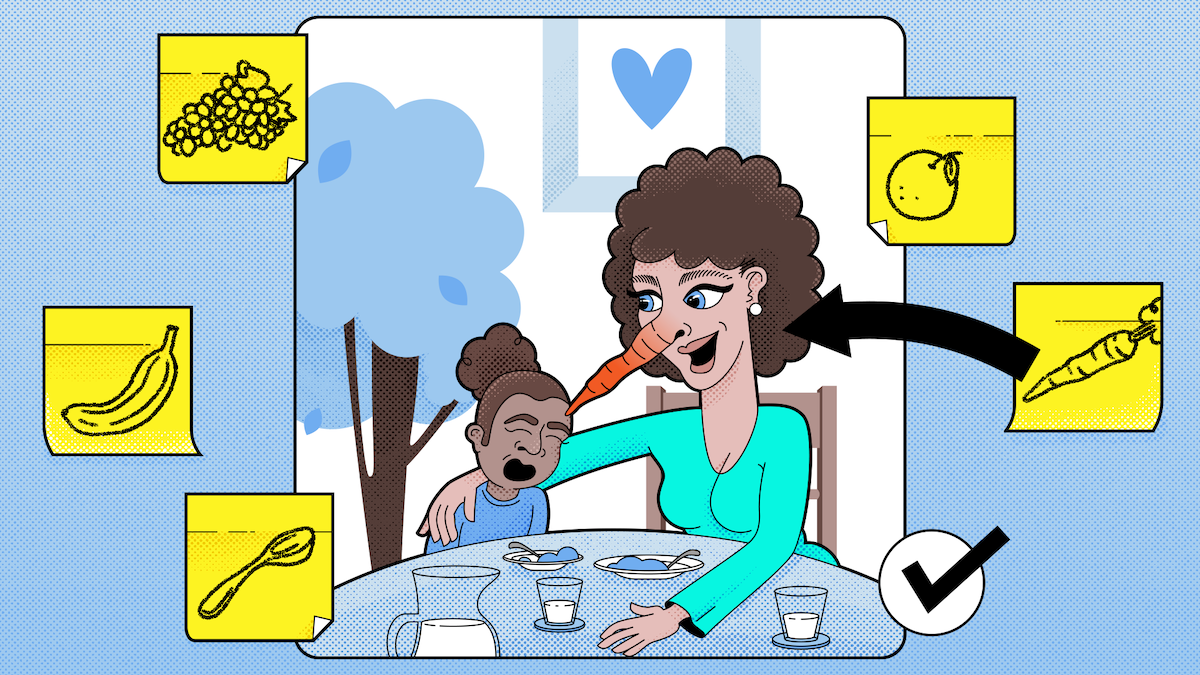
Designers come up with a lot of ideas. A typical ideation session begins with a prompt, something like: In a world oversaturated with screens, how might we support parents and children in connecting over the dinner table through games? We scratch our heads, think it over, and begin sketching out sacrificial concepts.
Recently, we’ve been experimenting with flipping this process on its head. Rather than coming up with an idea straight away, we use AI-based image generators like DALL-E or Midjourney for inspiration.
For a project on new dinnertime games, we fed DALL-E the prompt: “a family playing with their food during dinner.” The images rendered spark new directions that we might not have come to on our own. Mom with a carrot as a nose? Why didn’t we think of that? When you’re all at the table, why not use food as costumes in gameplay? Magical game design is all about turning expectations on their head. Now, we start to wonder… What other foods would make fun play pieces?
And of course, there are a cohort of new companies who are formalizing this process into a consumer tool: check out Fermat.
3. Critique
One thing we’re always exploring in our very riffy culture is how to get better at critique. There’s always this one thing to pick on: Weak insights. Insights at IDEO are concise statements that reflect our understanding about the current state of affairs in a given challenge and the way they are framed can be foundational to how we design solutions.
A few years back, before AI tools were everywhere, we made an insight analyzer chatbot. It looked for overused terms and poor word choice and would essentially chew you out. It was just an NLP bot that used natural language processing to match user chats with a set of known statements. The interface was a physical telephone (hotline). A funny gimmick with a simple learning: bots can get away with being mean.
Late last year, a team of brand and interaction designers started packaging up our favorite simple methods of critique and revisited the old insights hotline. Anne Graziano and I fed simple prompts such as “Give a brutally honest critique of the following insight: Meet people where they are at” to ChatGPT, and as might be expected, if you talk to an AI modeled after what’s said on the internet it’s going to be very good at criticizing things.
We tried the OpenAI api (GPT3_davinci-003) and got decent results, so we wired it up to an emoji reaction in a Slack channel. When you add a “crit” emoji to an insight, it replies with a critique. The original prompt was harsh and getting a bit obstinate, so our group adjusted to the prompt “Give constructive feedback on the following insight:” which changed the tone and made it more creative and fun.
Our colleague Takashi figured out that the AI was pleased to critique quotes from classic movies and romcoms, which Takashi sourced from ChatGPT (prompt: “Give me the 10 cheesiest famous lines from movies”). He then fed the AI old chestnuts like, "Life is not measured by the number of breaths we take, but by the moments that take our breath away." (Hitch, 2005).
4. Marketing Copy
As community builders at IDEO, we host a lot of events. Recently, when writing up the copy for an internal informational session about the fundamentals and history of generative AI, I turned to ChatGPT to write the marketing copy. The output was pretty spot-on, and ended up informing both the content of the event and the copy we used to pitch it. We built on it, of course—inserting things that we thought were especially important for our community to learn—but it was a true collaboration.
5. Slide Decks
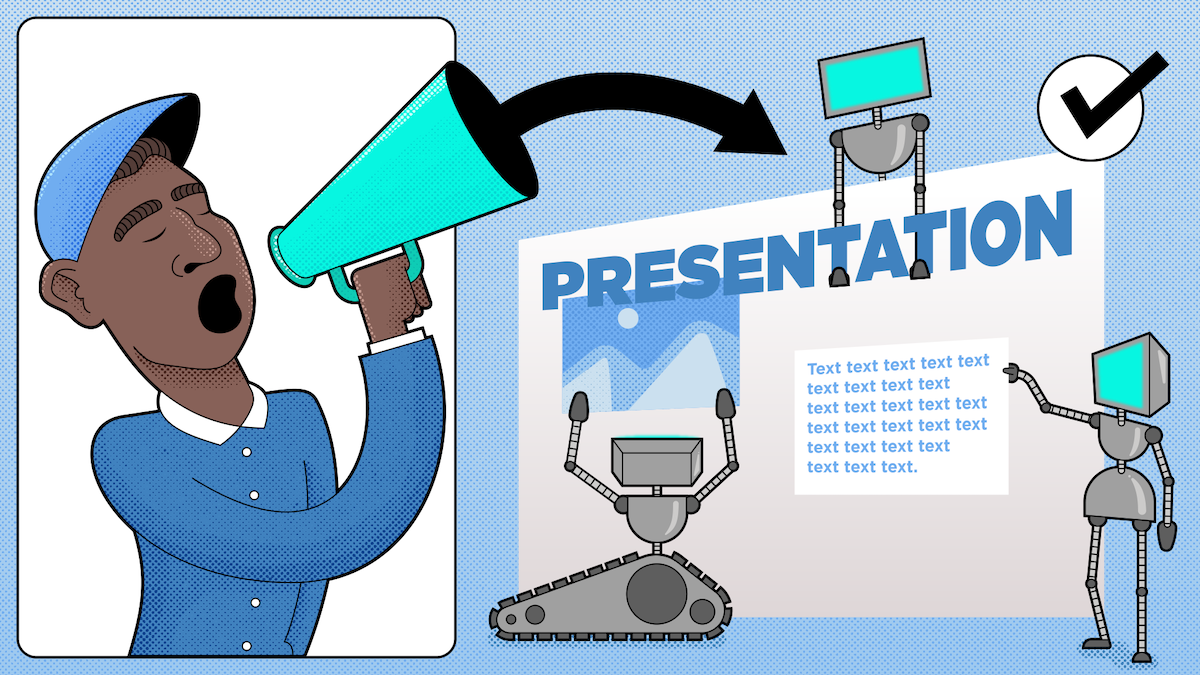
Google Slides are a staple of IDEO’s creative process. We use slides for project deliverables, ideation, business proposals, and internal events. We've found Tome.app, which creates AI-generated slides, to be a helpful springboard. Business designers are experimenting with the technology to refine their communications, interaction designers use it to think through how a new product might look, act, and feel, and our Play Lab is using it to explore new rules and play styles for games that do not yet exist.
Companies are forming around key parts of our creative process—capabilities which humans (and a few animals) once claimed as their sole domain.
In a 1948 documentary about U.S. agriculture called "The Land" the disruptive force of large-scale mechanization is described in a way that feels like it could be about this AI moment:
"These miraculous machines!
Do we shape them
Or do they shape us?
Or reshape us from our decent, far designs?
But we are learning.
We are learning to build for the future
From the ground up."
We’re curious: How are you using generative AI tools at work? We’d love to hear from you! Send us a note: Savannah Kunovsky & Danny Deruntz
Are you using ChatGPT yet? If the answer is no, keep reading.

Lindsey Turner
I’m passionate about building brands, products, and experiences that help organizations show up with meaning and momentum.
I help organizations cut through complexity by shaping how they show up, through brand strategy, identity, and storytelling.
Working at the intersection of brand and business, I bring an editorial eye and a bias toward making—turning ideas into tangible experiences that people can understand, trust, and believe in.
My work spans government, healthcare, financial services, media, and consumer goods, from launching Gen Z-focused ventures to building innovation labs and reimagining legacy brands. I relish moments of ambiguity and enjoy translating across teams, perspectives, and priorities to move ideas forward.
I started my career in editorial and digital design, shaping cross-platform experiences and identity systems in publishing and agency environments. That foundation still shapes how I work today: I’m detail-oriented, collaborative, and overreliant on the Oxford comma. I hold a BFA in Visual Communication from the School of the Art Institute of Chicago.

Rachel Young
My work helps organizations see who their products aren't working for—and build the will and the tools to do something about it
For 25 years, I've asked the same question: Who does this design exclude—and what are we going to do about it?
My work spans human-centered strategy, inclusive design, and qualitative research, with clients ranging from Microsoft, Google, and Verizon to the National Science Foundation, and San Francisco Unified School District.
Before IDEO, I taught elementary school in East Palo Alto and spent a decade doing design work with social service organizations—where I learned firsthand what it costs people when systems are built without them in mind.
I am currently writing User Error, a nonfiction book about digital access and the design decisions behind it. I live in Oakland, California.

Brian Pelsoh
I lead with craft, ensuring our work is creatively excellent: rooted in deep human insight and imagination, while also grounded in the realities of business and technology.
My expertise spans brand, communication, and product design across tech, education, the arts, and social impact.
I believe great work demands both high-level vision and obsessive attention to detail, and only happens through collaboration.
I bring an inclusive, hands-on approach and a deep understanding of business, which enables me to consistently deliver excellence while always asking why.
Before joining IDEO, I worked at the brand firms Pentagram and VSA Partners. I began my career as a designer, leading teams at the School of the Art Institute of Chicago and the Milwaukee Art Museum. I hold an MFA in graphic design from Maryland Institute College of Art and a BFA in communication design from the Milwaukee Institute of Art & Design, and have taught at some of the best design schools in the US.

Tony Wong
I am responsible for IDEO’s long-term success in China and working with clients to use design as a tool to enable growth.
I am responsible for IDEO’s long-term success in China and working with clients to use design as a tool to enable growth. Specifically, I have helped Chinese companies design holistic brand solutions through the development of their products, communication, services, and innovation teams, and I have helped multinationals expand their presence and influence in China.
I advise global leaders on developing China-led innovation and capabilities.
In over 15 years in IDEO Shanghai, I have worked on projects that use design to elevate the quality of the experience of healthcare products and services, streamline processes that increase productivity, create spaces and programs that promote and enable inclusive communities, and build next generation mobility solutions that are planet-positive.
Before joining IDEO, I worked at Philips Electronics and the Electrolux Group in Italy, the Netherlands, and Singapore on a number of breakthrough commercial products. I am a member of the Young President Organization in Shanghai.

How to use AI as an editor, not a writer
Ed White shares how he uses AI as an editor—not a writer—to sharpen storytelling, rehearse ideas, and preserve the productive friction that makes creative work better.
Ed White has a rule he's tested on his own writing: hold yourself as the writer, and let AI be your editor. Ed is a Senior Design Director at IDEO's London studio, where he co-leads the firm's AI portfolio across Europe. Before IDEO, he spent 12 years as a writer and editor at the Financial Times, Wired, and Contagious. So when he talks about when to use AI for storytelling and when not to, it comes from two decades of crafting his storytelling skills.
In this episode, Mina Seetharaman talks with Ed about two specific tools he uses to keep AI in an editor's seat: a "roasting agent" prompted to critique his drafts without any sugarcoating, and a simulated audience he rehearses pitches on before the real thing. They also get into what Ed is hearing from design leaders at Anthropic, Lovable, Shopify, and Google Creative Lab about how creative work is changing, and why he thinks the friction of writing something yourself is worth protecting rather than automating away.

Building a personal AI for the messiness of life: Sida Li
Becca Carroll talks with Cue co-founder Sida Li about designing a personal AI for the messiness of everyday life—not just work. They explore how Sida stays anchored to human needs while navigating fast-changing technology, product tradeoffs, business-model experimentation, and the realities of building an AI company today.
Most AI products today are built for work—a space with clear problems and established systems. One founder noticed a gap: personal life is messier, harder to systematize, and mostly left behind by the AI boom. So she built Cue, a personal AI that lives inside iMessage and group chats, to go where the other tools haven't.
In this episode, Becca Carroll, IDEO's Chief Strategy Officer, talks with Sida Li, co-founder and CEO of Shared Context Lab, about staying anchored to a human need while the technology around her keeps changing shape, why she treats her business model with the same rigor she'd bring to a product, and what it feels like to build a company at this particular, disorienting moment in AI.
The conversation also gets into how Sida makes design decisions: the language Cue uses to describe itself, the tradeoffs behind building inside iMessage instead of a new app, and a real story about a business idea that didn’t pan out.
This is the second in a two-part series profiling founders from IDEO's Startups-in-Residence program. The first conversation is with Johannes Seemann, founder of Sooner, on designing GenAI for the emotional side of money.

Designing GenAI for the emotional side of money: Johannes Seemann
Designing financial tools around the feelings that shape money decisions.
Most personal financial tools are built to run the numbers and optimize towards a budget. While that works for some, most people experience money as a lived relationship that does not neatly fit into a spreadsheet. Johannes Seemann and Becca Carroll discuss why money is emotional before it is mathematical, and what a human-centered approach to building a generative AI financial product looks like in practice.

The curious leader's edge in uncertainty: Scott Shigeoka
How genuine curiosity helps leaders navigate uncertainty with greater confidence.
Mina Seetharaman talks with Scott Shigeoka, author of Seek and Head of Curiosity Cultivation at the Eames Institute, about what distinguishes genuinely curious leadership from performative curiosity, how power dynamics shape curiosity, and why practicing curiosity can restore energy rather than drain it.
Looks like you might be in search of something very specific?
Or reset the filters above and try another angle.
Here’s some random inspiration

Podcasts about creative leadership

Articles about the power of prototyping















.webp)