
.svg)


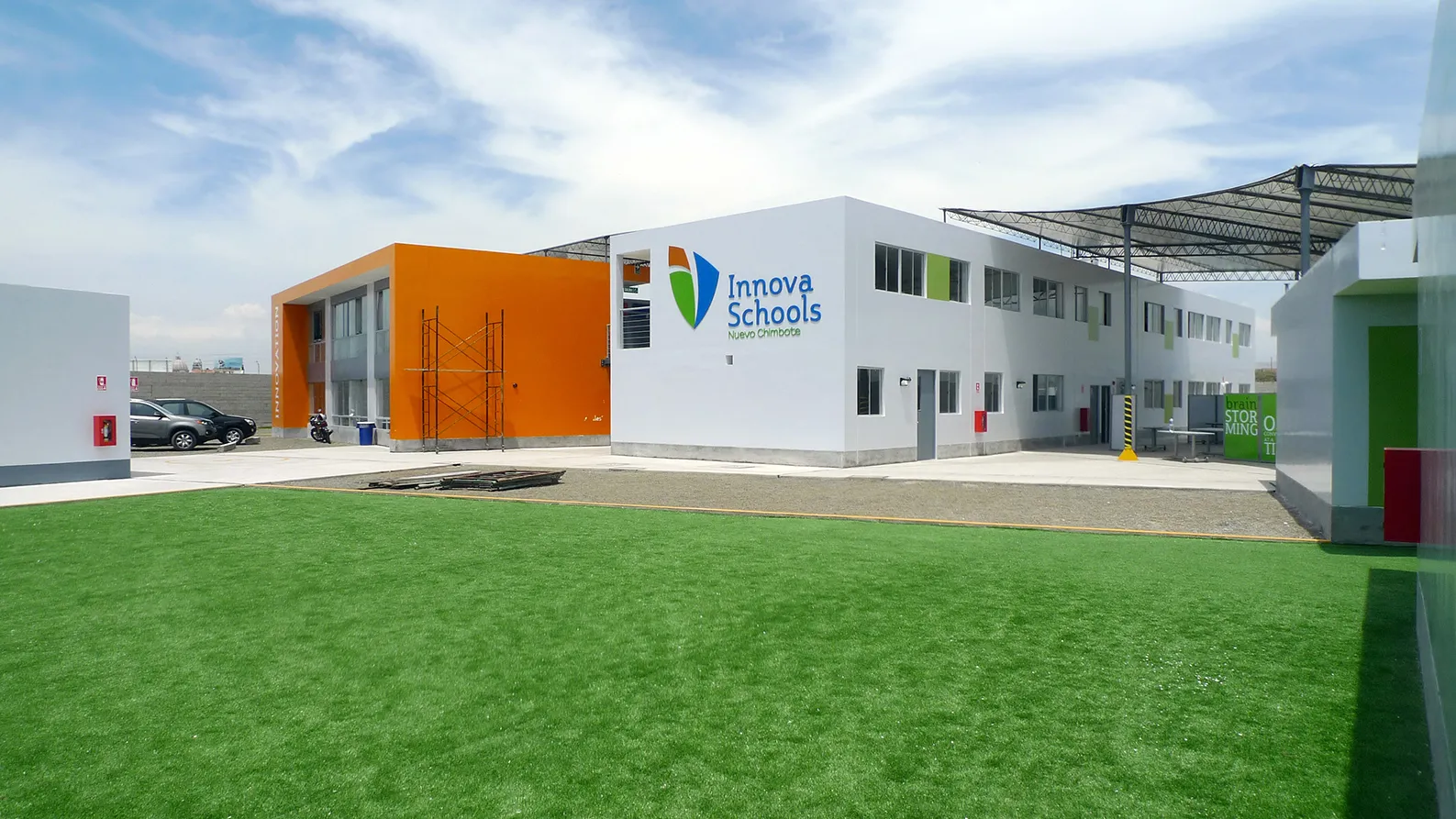

Designing a school system from the ground up
Scaling an entire network of schools for the growing Peruvian middle class.
How do you lift up the middle class in a developing country?
That was the challenge facing Peruvian entrepreneur Carlos Rodriguez-Pastor, who hired IDEO to build an entire network of schools powered by a progressive new learning model. IDEO’s mandate: to redesign Innova’s entire K–12 learning experience, from the curriculum to the teacher training to the school buildings, with an eye toward expansion and a goal to provide international-quality education at an affordable price—about $100 a month.
Innova Schools is a part of Intercorp, a family of 35 businesses that span everything from banks to retail stores and added schools to its portfolio. In 2010, the company had five existing schools but realized that its existing model could not grow. The shortage of well-trained, high-quality teachers in Peru, combined with rising land costs, meant the schools would need to radically change course to succeed.
To learn about scalable school models around the world, IDEO researchers visited inspirational schools and learning programs, and looked to analogous systems like retail, hospitality, and health care to understand their approaches to scale. Throughout the project, they collaborated with teachers, students, and the Innova Schools team in co-designing the work itself.
Together, Innova Schools and IDEO developed the curriculum, teaching strategies, buildings, operational plans, and underlying financial model to run the network of schools.
"I was blown away by Innova Schools," said Salman Khan, founder of Khan Academy. "It's inspiring to see such an affordable school deliver a quality of education that would rival schools in the richest countries."
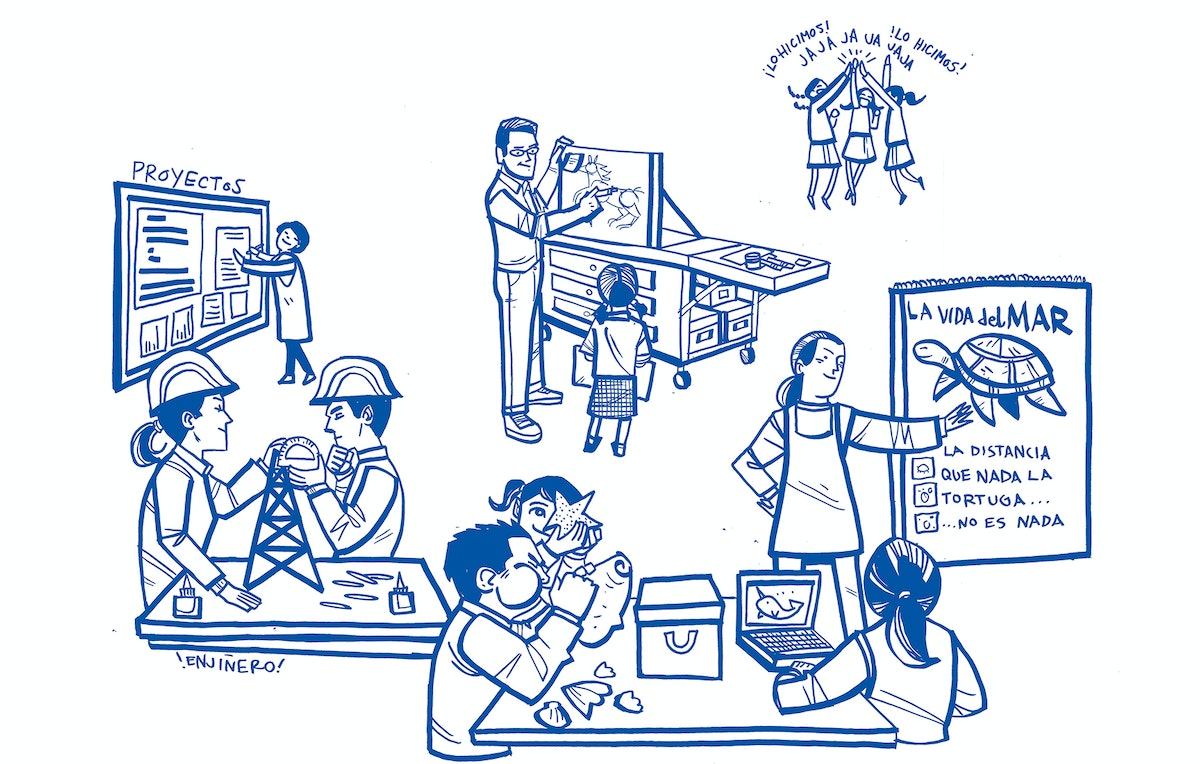
The new Innova Schools combine teacher-led, project-based learning in small groups with self-directed time using digital learning tools. Teachers monitor students’ work online and offer personalized guidance. Parents can view their children’s progress online as well.
Dynamic learning environments include community spaces, media labs, rooftop study areas, amphitheaters, and cafés that are optimized for flexibility: furniture on wheels, movable walls, and efficient uses of space to allow for different modes of learning.
An online Teacher Resource Center includes a database of more than 18,000 custom lesson plans based on a progressive new teaching approach. The center helps teachers learn their craft and gives them a chance to connect across the network.
The business model of Innova Schools was developed at the same time as the school experience. Designers leveraged the economies of scale that come from building a network of schools and centralized tools, such as data systems that allow all the schools to learn together.
The project has allowed Innova to open more schools at an affordable cost to families, ultimately giving more of Peru’s youth the chance to compete in the global economy. This comprehensive approach to system design ranks as one of Latin America’s most ambitious privately funded educational projects, and is on track to become the largest private school network in the region. To date, Innova has opened 63 schools in Peru that are serving more than 50,000 students.

A good system design doesn’t end with strategy. The work on Innova Schools also had a huge influence on the company, according to Rodriguez-Pastor. Through the creation of new roles and an aligned set of values, Innova’s central office has become a much more nimble and creative organization. They’re constantly scanning the world for inspiration in how to best educate their students, while building out the new innovations. They realize that design thinking can become an integrated part of their daily management of this growing network of schools.
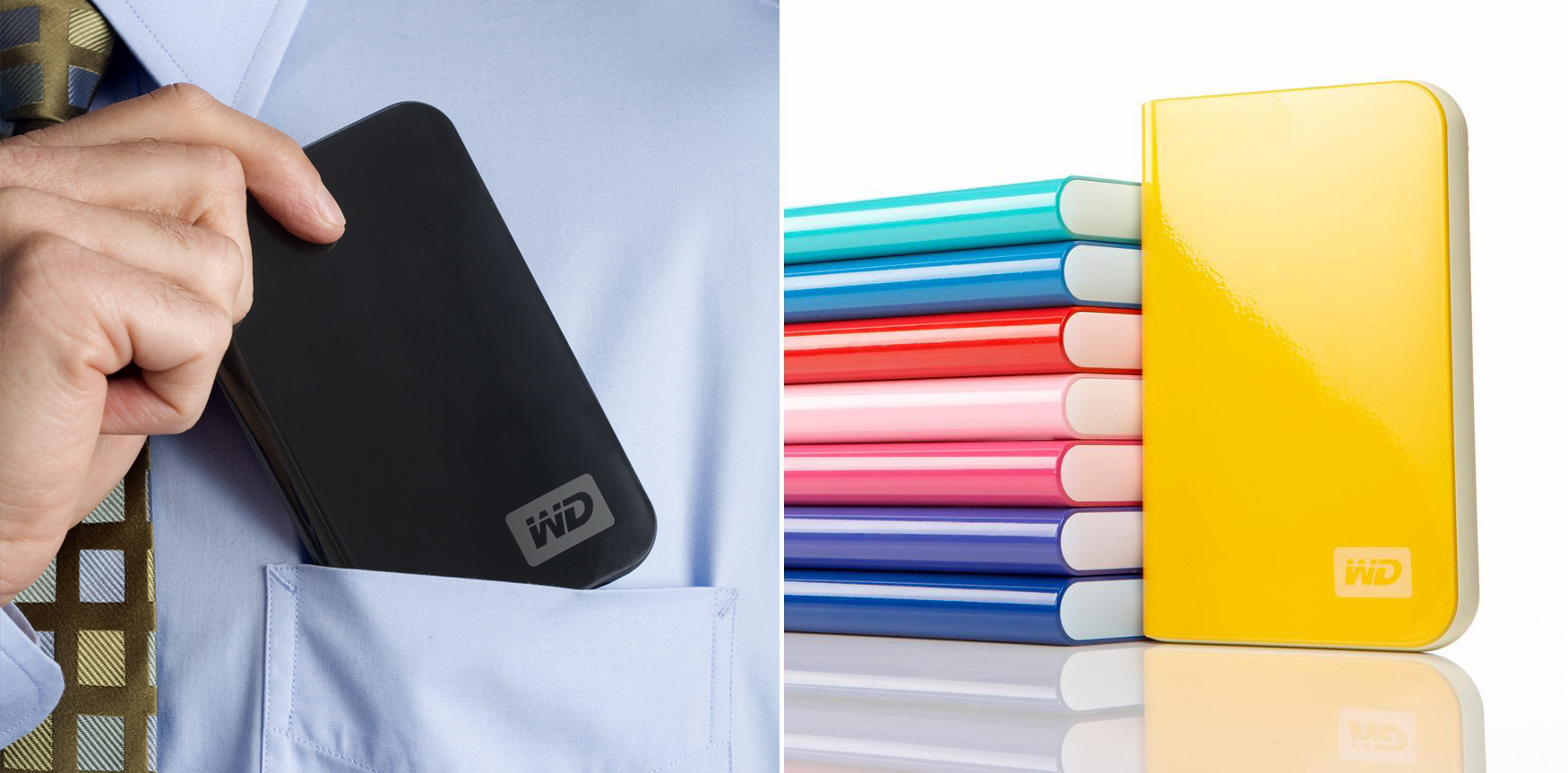
Designing a top-selling hard drive
Through a long-term collaboration, Western Digital and IDEO have created one of the world’s best-selling hard drives.
Western Digital, the leading provider of external digital-storage solutions and a pioneer in the field, and IDEO collaborated on a number of products that produced reliable, secure, high-performance hard drives for personal and professional use and have won numerous design awards.
The projects include:
- MyBook external hard drive: IDEO and Western collaborated to find a new design language for their external hard drive MyBook. In just six months, MyBook became the number-one hard drive in the Americas, and grew US market share by more than 50 percent.
- MyBook II: Looking to regain MyBook’s original number-one position in the hard drive market, IDEO and Western came together again to refresh the original design, finding ways to further differentiate the product and the brand, and winning a 2008 Spark Bronze Award.
- MyPassport: Western and IDEO designed the 320GB, ultra-portable USB-powered hard drive that appeals to the mobile user, which won both the 2008 IDEA Bronze Award from IDSA and BusinessWeek, and the 2009 iF Award.
- MyBook and MyPassport 3.0: Again, IDEO and Western collaborated on bringing the popular MyBook external hard drive to the next level in the hardware, the software, and the packaging. IDEO also created in-store merchandising, the graphics and information featured on product packaging (and the “out-of-box experience”).

Designing a city emergency plan
Helping cities prepare for emergencies with a resourceful toolkit.
The city of San Francisco wanted to help its people become better prepared in case of emergency. While no one feels totally prepared for a natural disaster, people who are most connected within a local network fare better in an emergency.
So the San Francisco Department of Emergency Management (SF DEM) and IDEO teamed up to create SF72, a revolutionary platform that helps to reach people where they are. In times of emergency, the city will need citizens to be self-supporting for 72 hours (or longer) before local services or outside help kicks in. With that in mind, IDEO developed an accessible platform to help people prepare for those 72 hours in simple ways that fit into their daily lives.
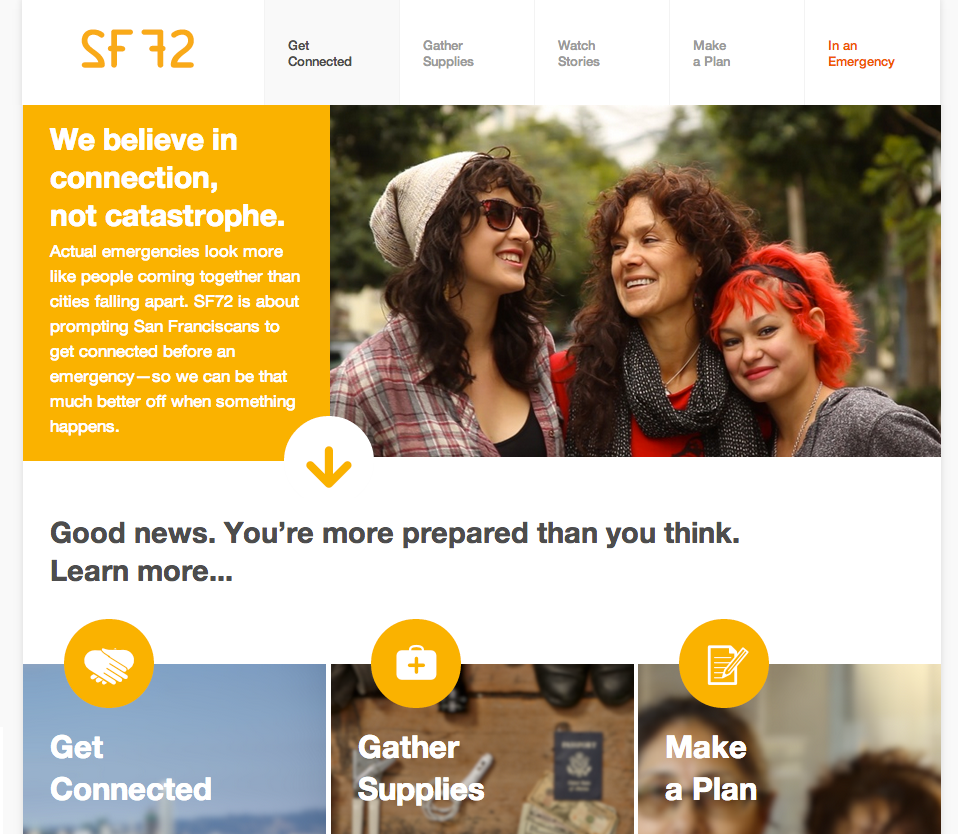
The SF72 website helps people with five important tasks: Get connected, gather supplies, watch stories, make a plan, and have access to an updated Google map. SF72’s content is hyperlocal, but IDEO and SF DEM also created an open-source toolkit for cities worldwide. From San Jose to Denver, other locales are using the simple toolkit to create a City72 platform of their own. Most recently, the city of Oakland collaborated with Code for America to develop its own platform. The City72 Toolkit enables SF72’s ethos of social connection for resilience to scale and grow—city by city.

Designing a global plan for disaster response
Creating a network that connects veterans across continents.
Team Rubicon, formed in 2010 as a response to the devastating earthquake in Haiti, is made up of former military veterans who swoop into help in times of disaster. The organization started with six vets in the US who were eager to transfer their battlefield readiness in to frontline relief efforts, and has grown to more than 28,000 volunteers across the world.
To explore its growing global effort and to shape the future of the organization’s venture, Team Rubicon approached IDEO for help. After an 11-week collaboration with government, military, and veteran groups, a vision for Team Rubicon Global emerged. Inspired by sources as diverse as TED and The Hell’s Angels, the three-tier model consisted of an anchor network to share best practices across the organization and two supporting platforms designed to help countries with varying capacity and needs.
Team Rubicon Global coordinated its first deployment in April 2015, when a quake struck Nepal, sending US and UK teams to double down on the rescue effort. According to Vince Moffit, Team Rubicon USA Incident Commander, that incident alone validated the network effect of IDEO’s work. “We couldn’t have done this without Team Rubicon UK,” he said.
And for the veterans who are part of Team Rubicon, the shared desire to serve—applying skills ideally suited for disaster response—creates a renewed sense of purpose, community, and leadership that helps reintegration to civilian life.

How to Stop Eating Free Office Food
Eat with your eyeballs, not your mouth
If you’re not careful, that is. If you have tendencies toward indulgence. If you’re running on four hours' sleep thanks to an incredibly wakeful baby who recently exited your womb and moved into your house. If you like food.
It’s not that the food is unhealthy, it’s that it’s so plentiful. A nicely stocked office fridge and pantry is one thing; day after day of roasted brussels sprouts, kale and beet quinoa, and lemon chicken thighs left over from catered meetings is another. Not to mention the green tea Kit Kats brought back from research trips to Japan, the home-baked butter biscuits whipped up by well-meaning office mates, the bottomless bins of chocolate-covered almonds and cheddar bunnies taunting you behind those cabinet doors. All right, maybe the food’s not the healthiest.
I needed a plan, a tool of some kind to wield wooden-cross-style in the face of so much vampiric deliciousness.
For most people the food at my workplace is a dream come true, but for me it quickly becomes a nightmare of unchecked indulgence. When I came back from maternity leave, I knew I needed help. I needed a plan, a tool of some kind to wield wooden-cross-style in the face of so much vampiric deliciousness. I found that tool in my iPhone camera and a Tumblr feed.
I Didn’t Eat This is a blog of all the food at IDEO I’ve managed not to eat.
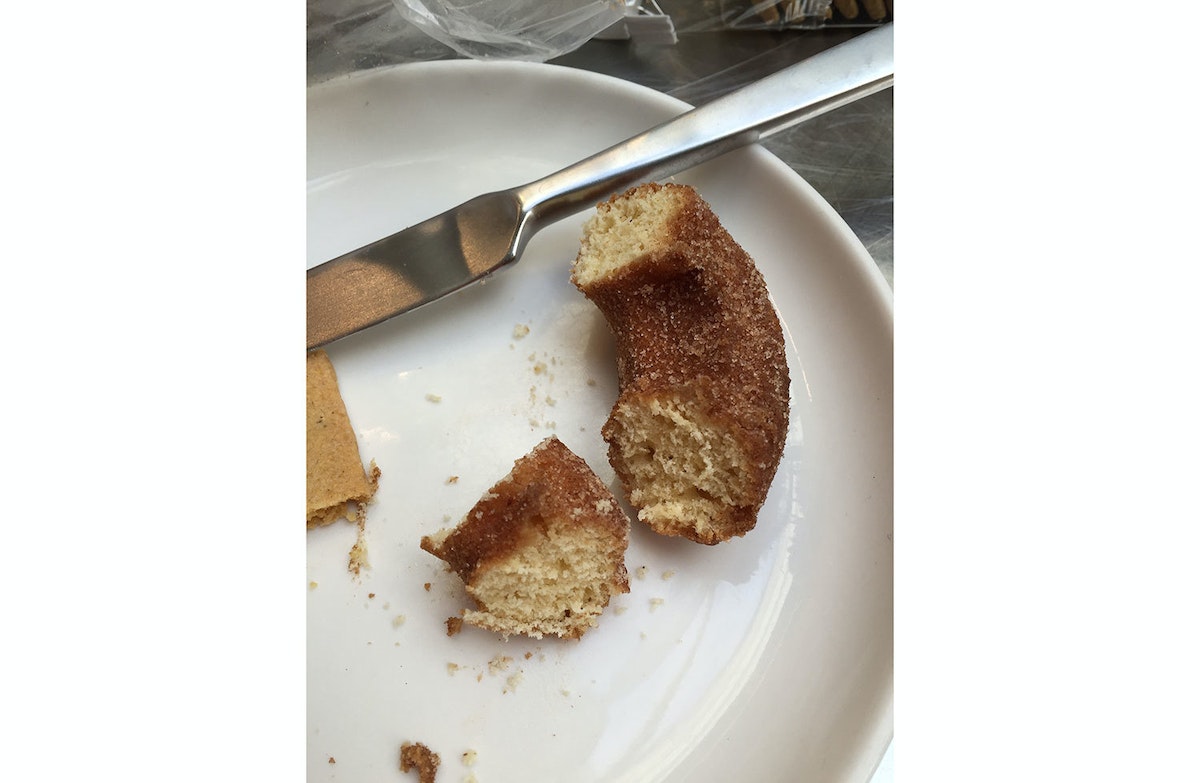
Photographing treats gave me a different way to consume them. I still got to have my moment with that cookie. While framing it up on my phone, I could savor its delectableness and availability—its sultry, loose, wanton availability, just sitting there on that napkin all alone—but then, instead of popping it in my mouth, I'd just hit a button and move on. I’d leave satisfied, yet the cookie would remain. One of my coworkers remarked that when I snapped a pic, I was capturing the cookie’s soul.
Sharing the blog became important, too. Word got around the office that I was using I Didn’t Eat This as tool for behavior change. The accountability helped. With every post, someone would joke that they had, in fact, eaten it—all the spiced carrot cake with orange-scented frosting that somebody brought from home—and I told them that was great. The blog wasn’t about shame or guilt. It celebrated food. And it celebrated my growing ability to say no to it.
One of my coworkers remarked that when I snapped a pic, I was capturing the cookie’s soul.
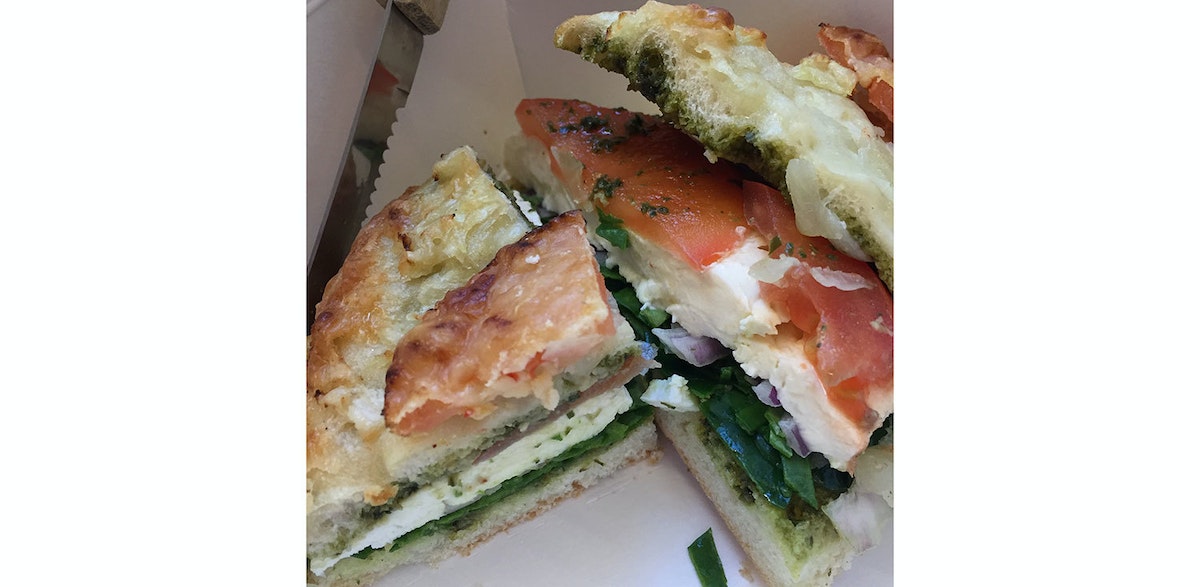
And, amazingly, it started to work. I replaced one behavior with another and the pounds began to drop. True, my new habit kept the cupcakes out of my piehole, but its real power was that it made me mindful. I now experienced a moment of choice — of personal agency — when I spied something yummy in the kitchen. Did I want to eat that yumminess or take its picture? Taste the food or just toast to it?
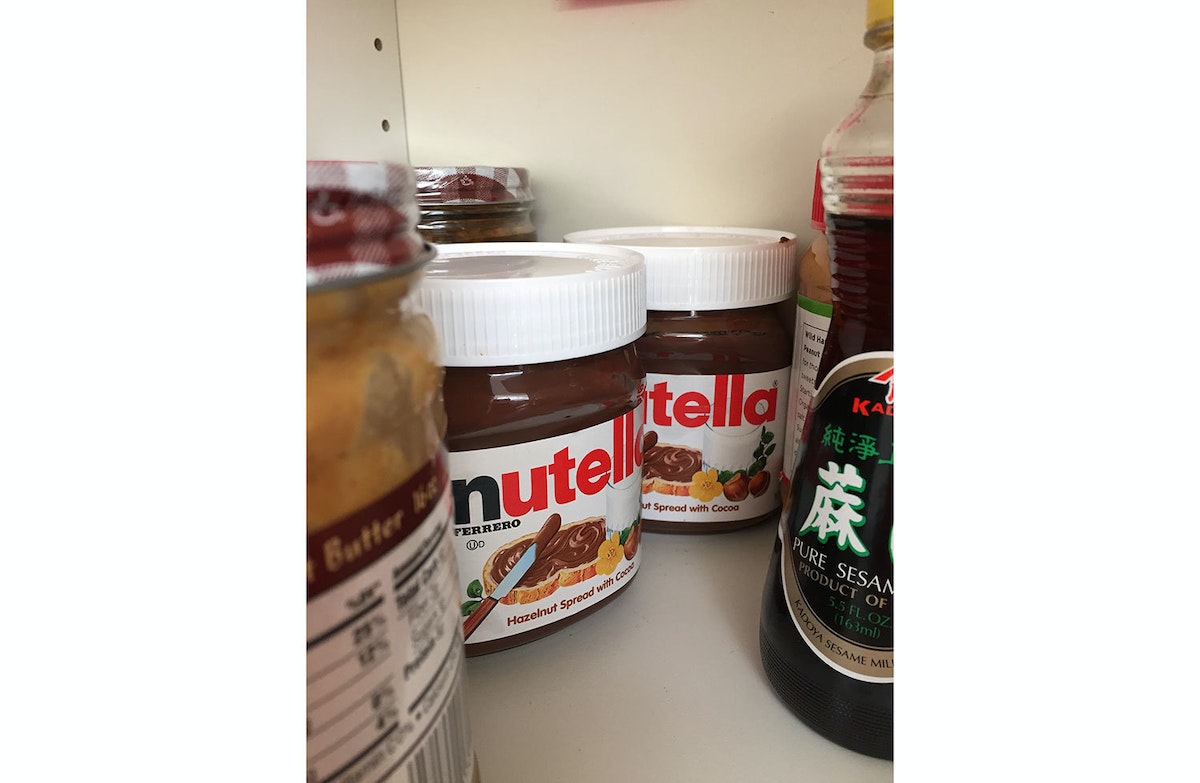
I’m now about eleven months into this experiment and I wish I could say that sticky brioche french toast bites no longer hold my mind prisoner, but nothing is ever that easy. I will say, though, that the moments of agency build on one another. It feels good to be in control. Soon after I started the blog, I found myself dusting off the old food-tracker app, drinking more water, and eventually working out.
It’s rare that I stick with any behavior for more than a few months at a time, but whenever one slips out of reach, another is there to rise and take its place, like an endless supply of chocolate-covered almonds. Or another slice of spiced carrot cake with orange-scented frosting. Or a cheddar-cheese arepa with chipotle aioli, all cozied up in a handy to-go wrapper.
Maybe I better go free up some space on my iPhone.
Here’s what they won’t tell you about IDEO, or for that matter any company where you might happen to work: It will make you fat.
Here’s what they won’t tell you about IDEO, or for that matter any company where you might happen to work: It will make you fat.

4 Ways to Get Smarter About Money
Resources for clueless designers
1. Daily Worth (website & newsletter): A daily dose of financial news offering advice tailored specifically to women. It separates your financial life into four major buckets: Plan, Earn, Spend, and Live. Articles are easily digestible and engaging. Topics range from “Running your business like Beyonce” to “Increasing your willpower.”
2. Smart Couples Finish Rich by David Bach: Reading this changed how my husband and I manage our money. It intends to get you and your partner on the same page financially and moving forward as a team. Which can be good for your bank account, and your relationship.
3. How to Worry Less About Money by John Armstrong: Taking a unique approach, this book addresses our relationship with money rather than advising us on how to make more or spend less. It asks you to define your “money worries” and their origins as opposed to, say, dithering over “money troubles.” It made me realize that all relationships take introspection, nurturing, and work. Including my relationship with money.
4. Society of Grownups (Boston-based brick & mortar and online platform): Our friends at the Society of Grownups are a vast resource for fiscal education and advice. They are helping to normalize financial planning as a component of our daily conversations. In fact, my conversation with the young woman that kicked off this whole affair was one of many that inspired the creation of the Society of Grownups—a project that deeply inspired each individual team member to make fundamental shifts in their relationship with money.
Smart designers really do finish rich.
Two years ago, I interviewed a young woman about money. Sitting in her living room in Southern California, I was struck by two things: One, I realized she was completely clueless about the role finances played in her life, and two, I realized that I was, too. So I set out to school myself. Here is a selection of my go-to money resources:
When Chickens Tweet and Nerds Rule the Earth!
Musings on the future of the Midwest
Detroit's auto industry is slowly speeding toward recovery. Kansas City's fierce foodie culture is helping it reclaim its status as "Paris of the Plains." And inspiring Chicago artists/urban-renewal impresarios like Theaster Gates are breathing new life into long-neglected neighborhoods.
As IDEO's official Midwest outpost, designers in our Chicago studio wanted to mark this "it moment" in the region's history with a series of talks exploring its past, present, and—as we see it—very bright future. We humbly call these prognostications about automobility, food, urban infrastructure, agri-tech, water, data, and more, "The Future of the Midwest."
As Midwesterners, we're said to be plainspoken pragmatists. But as designers, we can't help but be outspoken optimists.
But don't just take my word for it, hear what my fellow "ChIDEO" designers have to say.
WATCH: A series of provocations and prognostications on our beloved Midwest by IDEO Chicago.
What do Twinkies, skyscrapers, House music, and the Model T have in common? These (in)famous cultural phenomena all hail from the Midwest. At one time, the region was disregarded as "flyover country" by jetting-setting East and West Coast-types, but these days, the nation's Heartland is regarding itself with a new sense of pride.
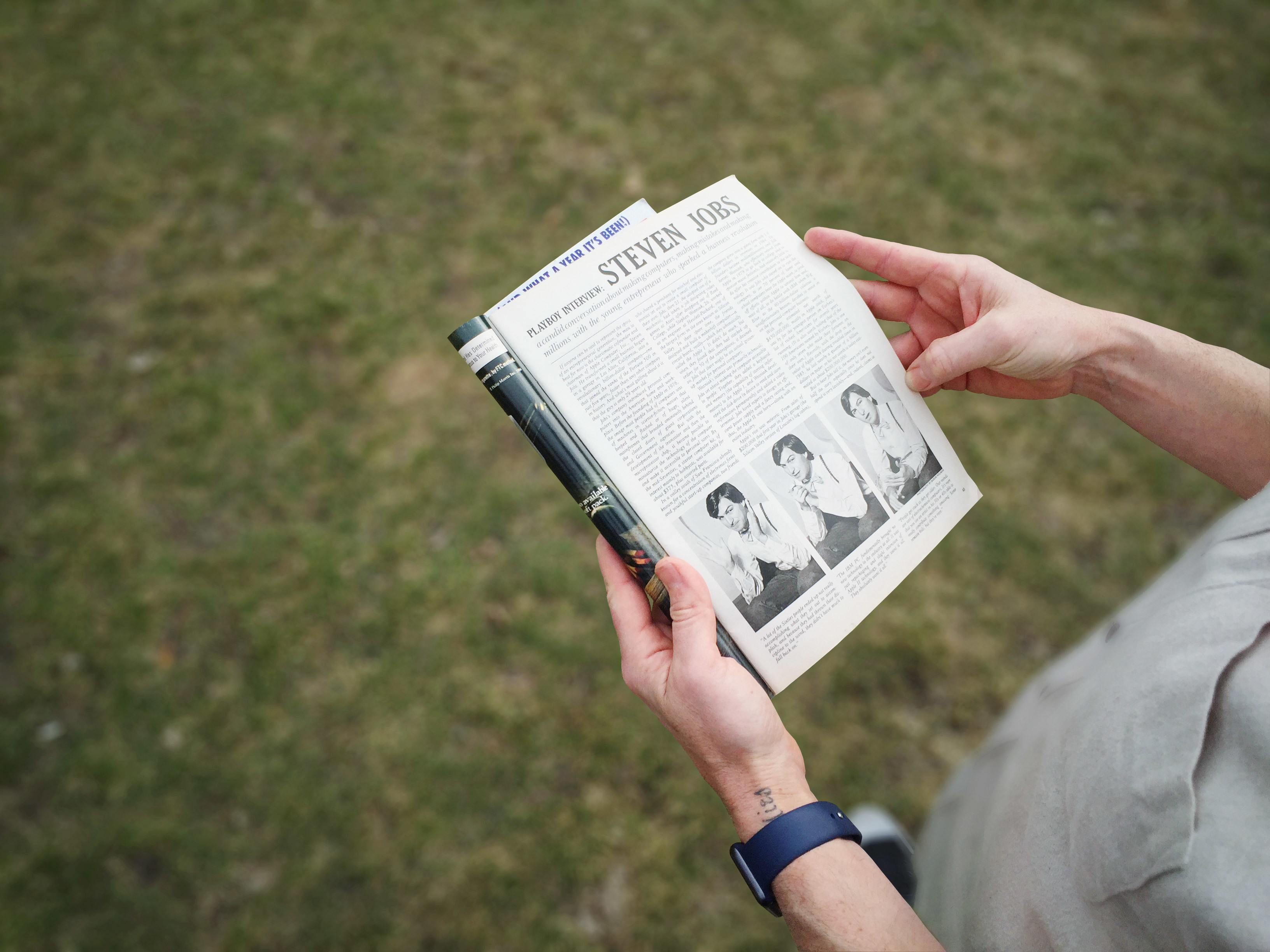
Putting a Dent in the Universe
Steve Jobs, creativity & death
It’s not just the squirrel that is looking at me. A cemetery employee purrs past in a golf cart, giving me the once-over. I am an intruder. The etiquette of cemeteries is strange. You come here for funerals, at which you’re allowed to be sad and to contemplate mortality. The rest of the time, you’re supposed to be getting on with your life.
I look up at the oak trees again. I recognize them from a video posted on YouTube by an Italian man. Like me, he was here looking for the grave of Steve Jobs.
Steve Jobs died in 2011, of complications arising from pancreatic cancer. Now he’s somewhere around here, just a couple of miles from his house, in an unmarked grave in the Alta Mesa cemetery.
I remember watching The Daily Show on the day his death was announced.
“For him to die young seems so strange,” said Jon Stewart. “With other people of his magnitude, like Henry Ford and Thomas Edison, you feel like we wrung everything out of them. They were old when they died. With Steve Jobs, you really got the sense… we’re not done with you yet.”
Looking at Alta Mesa’s barren grassy field, broken only by tarnished plaques and a couple of windswept bouquets, I wonder if Jobs would have ever got around to redesigning the death experience...
Looking for the rest of Neil's post? Please continue reading on Medium.
I’m in a graveyard in Palo Alto, California. The sky overhead is cornflower blue. Wind rustles through surrounding oak trees. A squirrel trots out onto a tree branch and squints at me. It’s like nature is doing everything it can to emphasize the contrast between its own glorious aliveness and the utter deadness of the humans underfoot.

Lindsey Turner
I’m passionate about building brands, products, and experiences that help organizations show up with meaning and momentum.
I help organizations cut through complexity by shaping how they show up, through brand strategy, identity, and storytelling.
Working at the intersection of brand and business, I bring an editorial eye and a bias toward making—turning ideas into tangible experiences that people can understand, trust, and believe in.
My work spans government, healthcare, financial services, media, and consumer goods, from launching Gen Z-focused ventures to building innovation labs and reimagining legacy brands. I relish moments of ambiguity and enjoy translating across teams, perspectives, and priorities to move ideas forward.
I started my career in editorial and digital design, shaping cross-platform experiences and identity systems in publishing and agency environments. That foundation still shapes how I work today: I’m detail-oriented, collaborative, and overreliant on the Oxford comma. I hold a BFA in Visual Communication from the School of the Art Institute of Chicago.

Rachel Young
My work helps organizations see who their products aren't working for—and build the will and the tools to do something about it
For 25 years, I've asked the same question: Who does this design exclude—and what are we going to do about it?
My work spans human-centered strategy, inclusive design, and qualitative research, with clients ranging from Microsoft, Google, and Verizon to the National Science Foundation, and San Francisco Unified School District.
Before IDEO, I taught elementary school in East Palo Alto and spent a decade doing design work with social service organizations—where I learned firsthand what it costs people when systems are built without them in mind.
I am currently writing User Error, a nonfiction book about digital access and the design decisions behind it. I live in Oakland, California.

Brian Pelsoh
I lead with craft, ensuring our work is creatively excellent: rooted in deep human insight and imagination, while also grounded in the realities of business and technology.
My expertise spans brand, communication, and product design across tech, education, the arts, and social impact.
I believe great work demands both high-level vision and obsessive attention to detail, and only happens through collaboration.
I bring an inclusive, hands-on approach and a deep understanding of business, which enables me to consistently deliver excellence while always asking why.
Before joining IDEO, I worked at the brand firms Pentagram and VSA Partners. I began my career as a designer, leading teams at the School of the Art Institute of Chicago and the Milwaukee Art Museum. I hold an MFA in graphic design from Maryland Institute College of Art and a BFA in communication design from the Milwaukee Institute of Art & Design, and have taught at some of the best design schools in the US.

Tony Wong
I am responsible for IDEO’s long-term success in China and working with clients to use design as a tool to enable growth.
I am responsible for IDEO’s long-term success in China and working with clients to use design as a tool to enable growth. Specifically, I have helped Chinese companies design holistic brand solutions through the development of their products, communication, services, and innovation teams, and I have helped multinationals expand their presence and influence in China.
I advise global leaders on developing China-led innovation and capabilities.
In over 15 years in IDEO Shanghai, I have worked on projects that use design to elevate the quality of the experience of healthcare products and services, streamline processes that increase productivity, create spaces and programs that promote and enable inclusive communities, and build next generation mobility solutions that are planet-positive.
Before joining IDEO, I worked at Philips Electronics and the Electrolux Group in Italy, the Netherlands, and Singapore on a number of breakthrough commercial products. I am a member of the Young President Organization in Shanghai.

How to use AI as an editor, not a writer
Ed White shares how he uses AI as an editor—not a writer—to sharpen storytelling, rehearse ideas, and preserve the productive friction that makes creative work better.
Ed White has a rule he's tested on his own writing: hold yourself as the writer, and let AI be your editor. Ed is a Senior Design Director at IDEO's London studio, where he co-leads the firm's AI portfolio across Europe. Before IDEO, he spent 12 years as a writer and editor at the Financial Times, Wired, and Contagious. So when he talks about when to use AI for storytelling and when not to, it comes from two decades of crafting his storytelling skills.
In this episode, Mina Seetharaman talks with Ed about two specific tools he uses to keep AI in an editor's seat: a "roasting agent" prompted to critique his drafts without any sugarcoating, and a simulated audience he rehearses pitches on before the real thing. They also get into what Ed is hearing from design leaders at Anthropic, Lovable, Shopify, and Google Creative Lab about how creative work is changing, and why he thinks the friction of writing something yourself is worth protecting rather than automating away.

Building a personal AI for the messiness of life: Sida Li
Becca Carroll talks with Cue co-founder Sida Li about designing a personal AI for the messiness of everyday life—not just work. They explore how Sida stays anchored to human needs while navigating fast-changing technology, product tradeoffs, business-model experimentation, and the realities of building an AI company today.
Most AI products today are built for work—a space with clear problems and established systems. One founder noticed a gap: personal life is messier, harder to systematize, and mostly left behind by the AI boom. So she built Cue, a personal AI that lives inside iMessage and group chats, to go where the other tools haven't.
In this episode, Becca Carroll, IDEO's Chief Strategy Officer, talks with Sida Li, co-founder and CEO of Shared Context Lab, about staying anchored to a human need while the technology around her keeps changing shape, why she treats her business model with the same rigor she'd bring to a product, and what it feels like to build a company at this particular, disorienting moment in AI.
The conversation also gets into how Sida makes design decisions: the language Cue uses to describe itself, the tradeoffs behind building inside iMessage instead of a new app, and a real story about a business idea that didn’t pan out.
This is the second in a two-part series profiling founders from IDEO's Startups-in-Residence program. The first conversation is with Johannes Seemann, founder of Sooner, on designing GenAI for the emotional side of money.

Designing GenAI for the emotional side of money: Johannes Seemann
Designing financial tools around the feelings that shape money decisions.
Most personal financial tools are built to run the numbers and optimize towards a budget. While that works for some, most people experience money as a lived relationship that does not neatly fit into a spreadsheet. Johannes Seemann and Becca Carroll discuss why money is emotional before it is mathematical, and what a human-centered approach to building a generative AI financial product looks like in practice.

The curious leader's edge in uncertainty: Scott Shigeoka
How genuine curiosity helps leaders navigate uncertainty with greater confidence.
Mina Seetharaman talks with Scott Shigeoka, author of Seek and Head of Curiosity Cultivation at the Eames Institute, about what distinguishes genuinely curious leadership from performative curiosity, how power dynamics shape curiosity, and why practicing curiosity can restore energy rather than drain it.
Looks like you might be in search of something very specific?
Or reset the filters above and try another angle.
Here’s some random inspiration

Podcasts about creative leadership

Articles about the power of prototyping










































.webp)