
.svg)


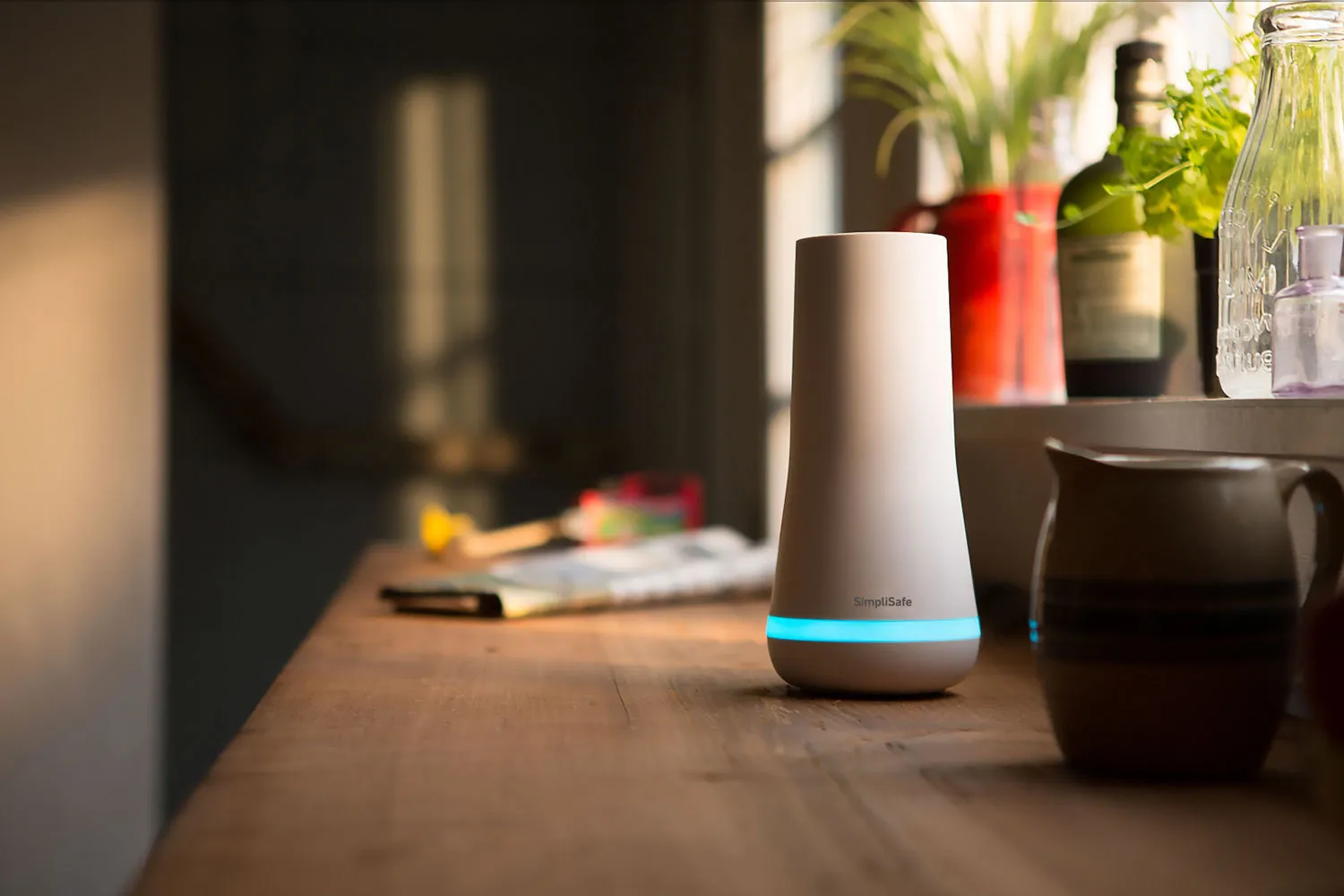

Designing for peace of mind with a leader in home security
Rethinking the hardware, experience, and interaction of connected products designed to protect you.
Only 20 percent of American homes are protected by security systems, and most of these systems are installed after a break-in.
Home security veteran SimpliSafe hoped to convince the other 80 percent of home-dwellers to invest in preventative technology so the break-in never happens. The company approached IDEO to refresh and simplify the look and feel of its connected products to reach this wider audience and help them feel safe.
Interviews with potential customers revealed insights that informed the new design. Families told the researchers that existing security systems are expensive, bulky, and hard to install and use. Instead, systems should be unobtrusive, but responsive to your needs. They should react appropriately in emergencies, while also protecting your privacy.
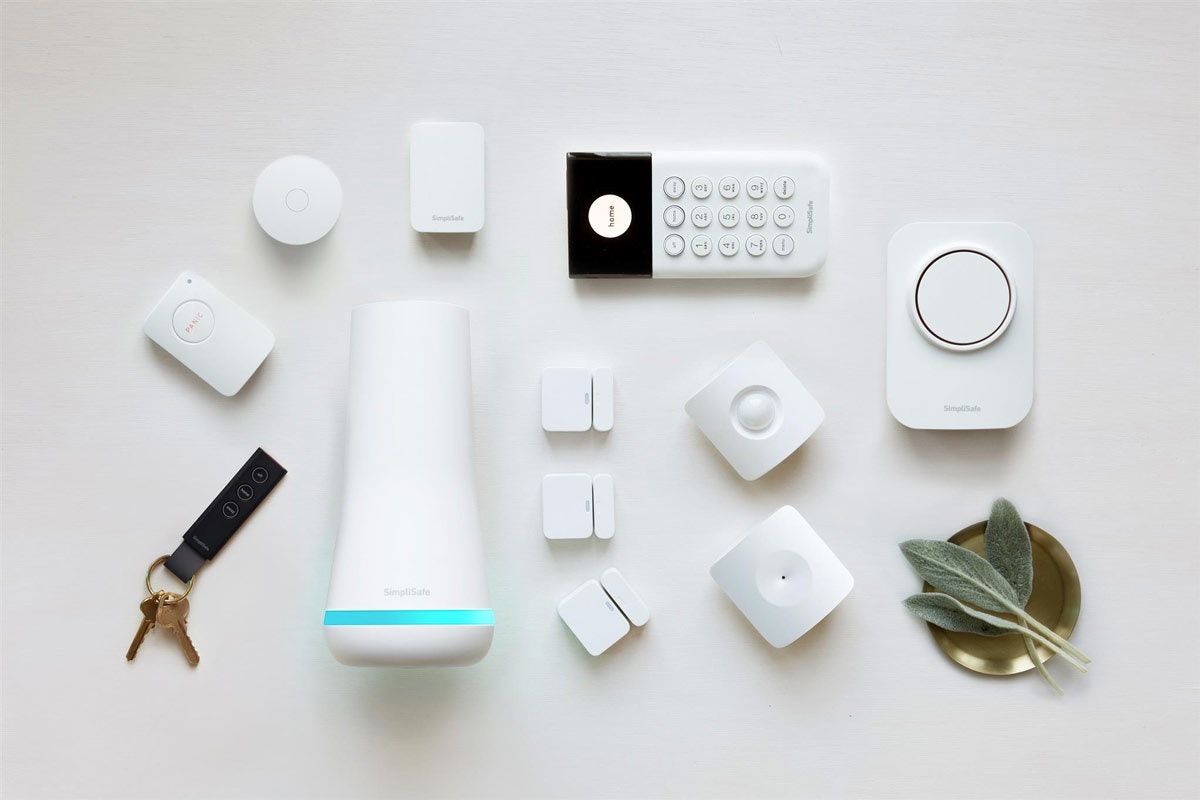
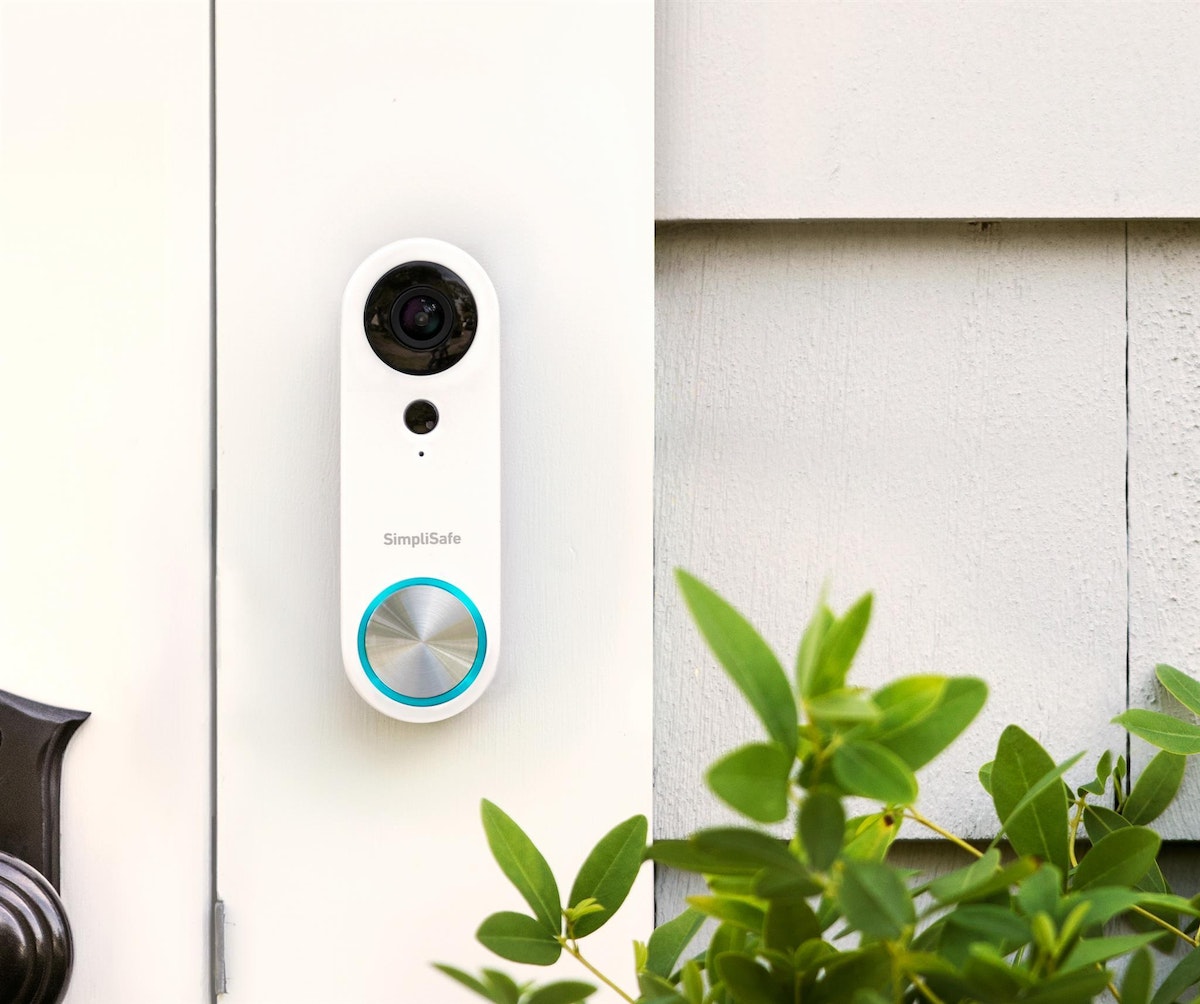
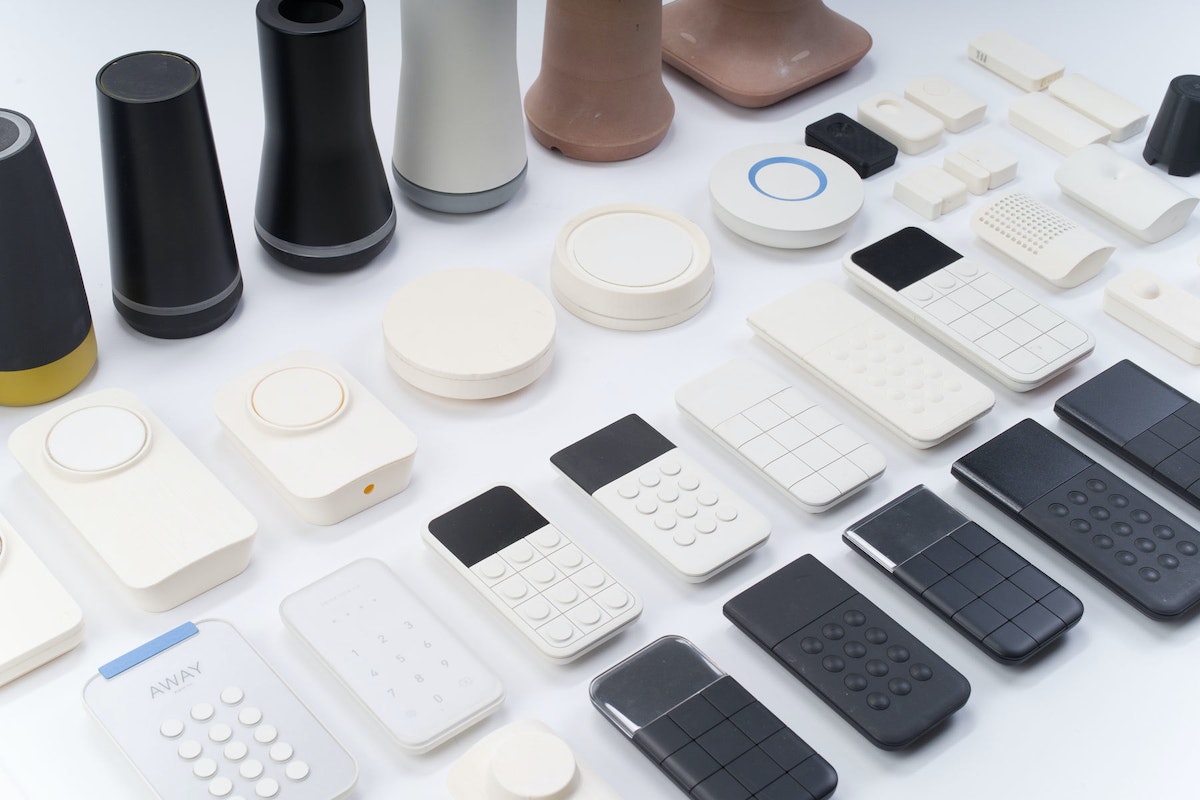
Responding to those requests, IDEO overhauled the design and interaction of more than a dozen SimpliSafe products, including a wireless, touch-to-wake keypad; easy to install sensors; and a smart home base that acts as the brains of the system. Additionally, IDEO designed SimpliSafe's first step outside of the home—a video doorbell that can be used in tandem with the namesake home security system or on its own. Making the system enjoyable and intuitive to use means families are more likely to use it consistently—and correctly.
The team developed a consistent design language across SimpliSafe’s physical products, user interface, and digital presence. That clear visual language lets you know what each component does right out of the box; for example, the glass break sensor looks like a human eardrum that might actually hear a window shattering. The design also reduced the size of entry sensors by four times, while improving their range and battery life. Tapered backs and swept-front surfaces for all of these sensors help them blend into your home. The new system’s clean, understated appearance instills confidence without stoking fear of what could happen.
SimpliSafe’s keypad and base station guide you through setting up the system with voice feedback, while gentle LED lights and sound cues let you know at a glance that the system is armed correctly and you’re in safe hands. The system is also equipped with multiple layers of backup, so you don’t have to worry if the power or Internet goes down.
And the system responds intelligently, tailoring the way it reacts to match different scenarios. For instance, it sends a gentle reminder if a window is left open but a police response if a window is broken in. The design team also incorporated a first-of-its-kind privacy shutter on the system’s security camera so families can opt out of being recorded at home.
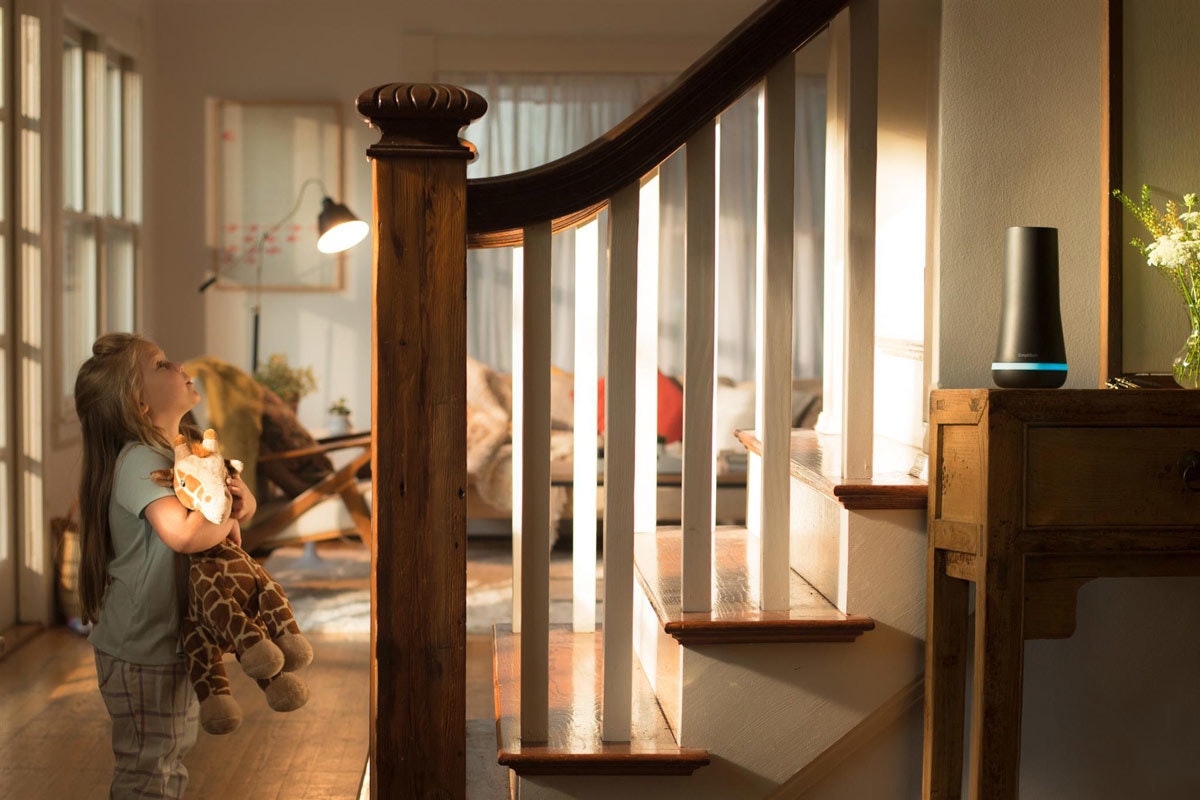
SimpliSafe launched its redesigned security system in early 2018, replacing the company’s two previous generations of products at the same price point. Already, the revamped system has cut the number of support calls from new customers.
In June 2018, venture fund and private equity firm Hellman & Friedman acquired SimpliSafe in a deal that valued the company at about $1 billion.

Rethinking college admissions
Designing a more efficient and inclusive way to read applications.
With a record number of applicants, stiff competition for top students, and a desire to make classes more diverse, college admissions teams are feeling the strain. Bowdoin College in Maine, one of the top liberal arts schools in the U.S., received more applications for the class of 2022 than for any other in its 224-year history.
Whitney Soule, Bowdoin’s Dean of Admissions and Student Aid, saw her staff at risk of burning out. On the advice of Bowdoin’s president, Clayton Rose, she invited IDEO to embed at the college and help design a new way of working. The IDEO team studied Bowdoin’s workflow and zeroed in on the application process as an area ripe for redesign.
By observing how Bowdoin counselors read applications, IDEO learned what drove their decisions. Mindful of how their choices could impact young people’s lives, counselors prioritized a meticulous reading of each application. But this thorough approach meant they often engaged in redundant work or delayed making final decisions.
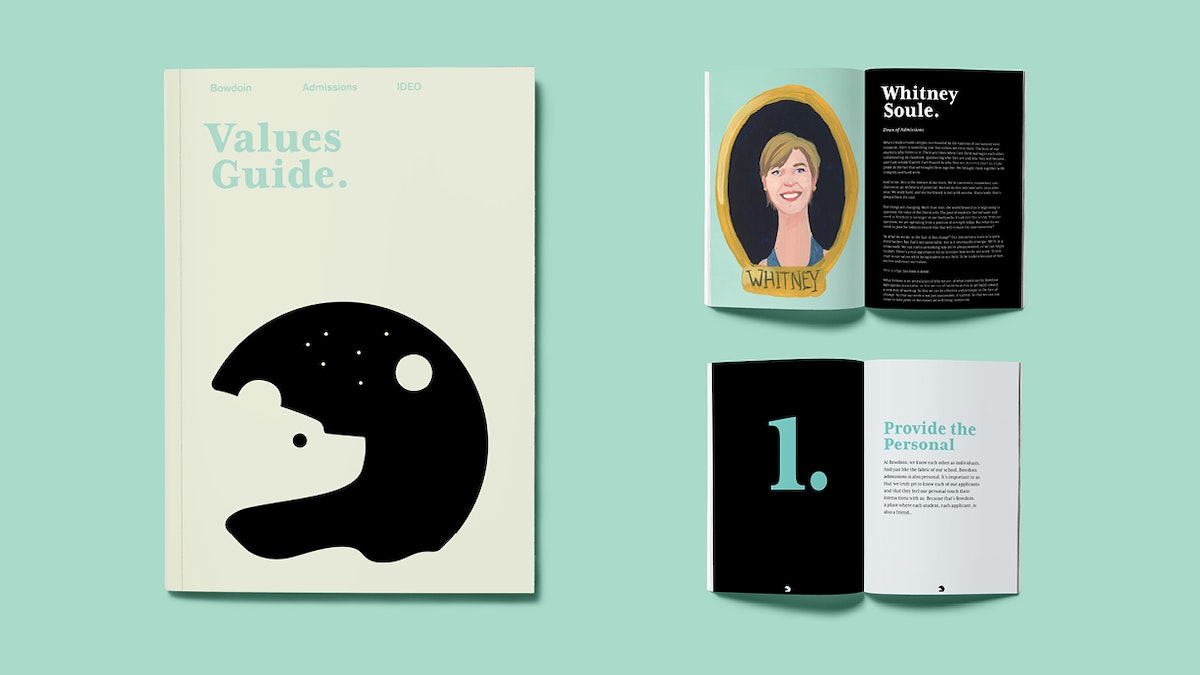
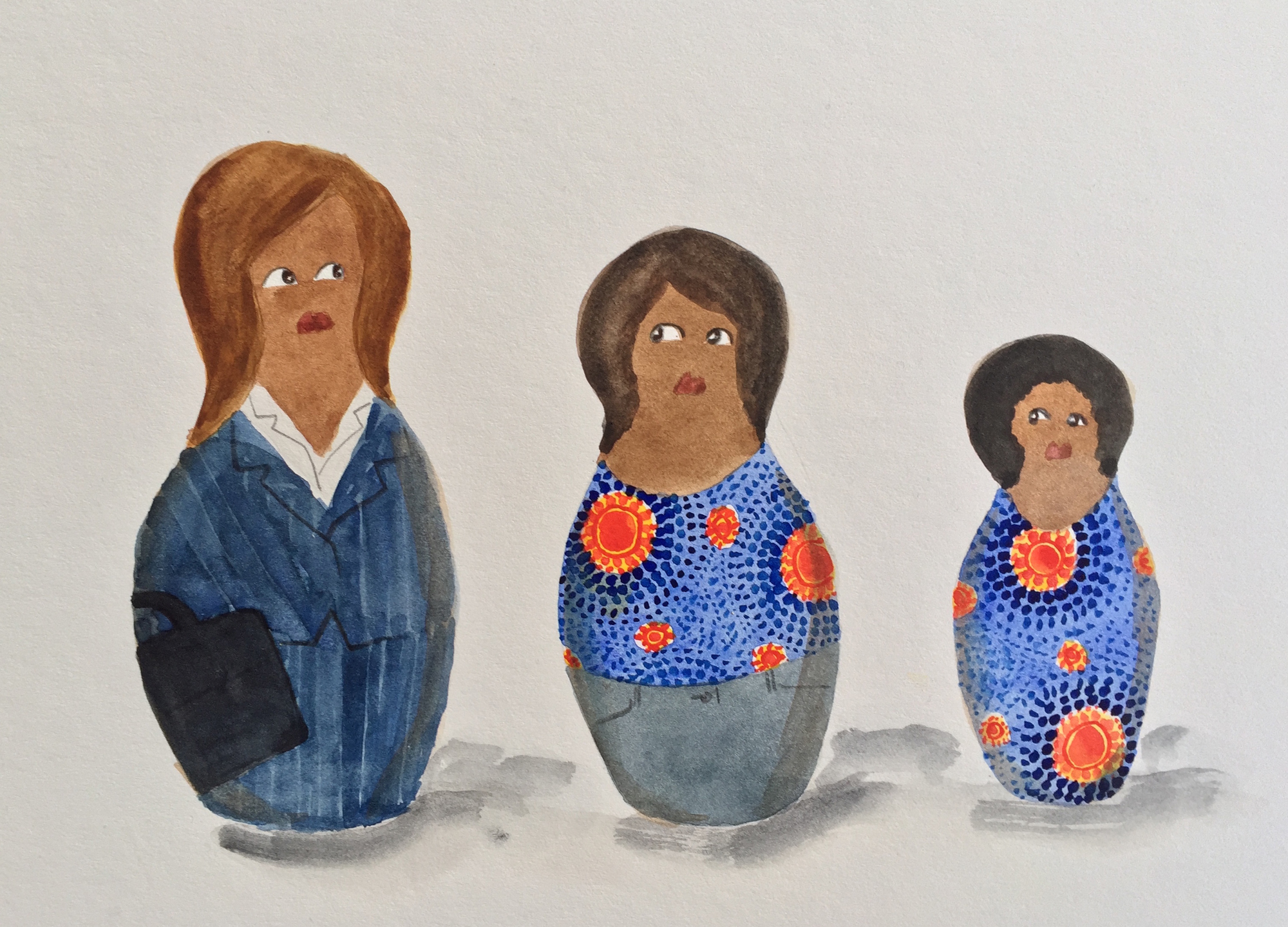
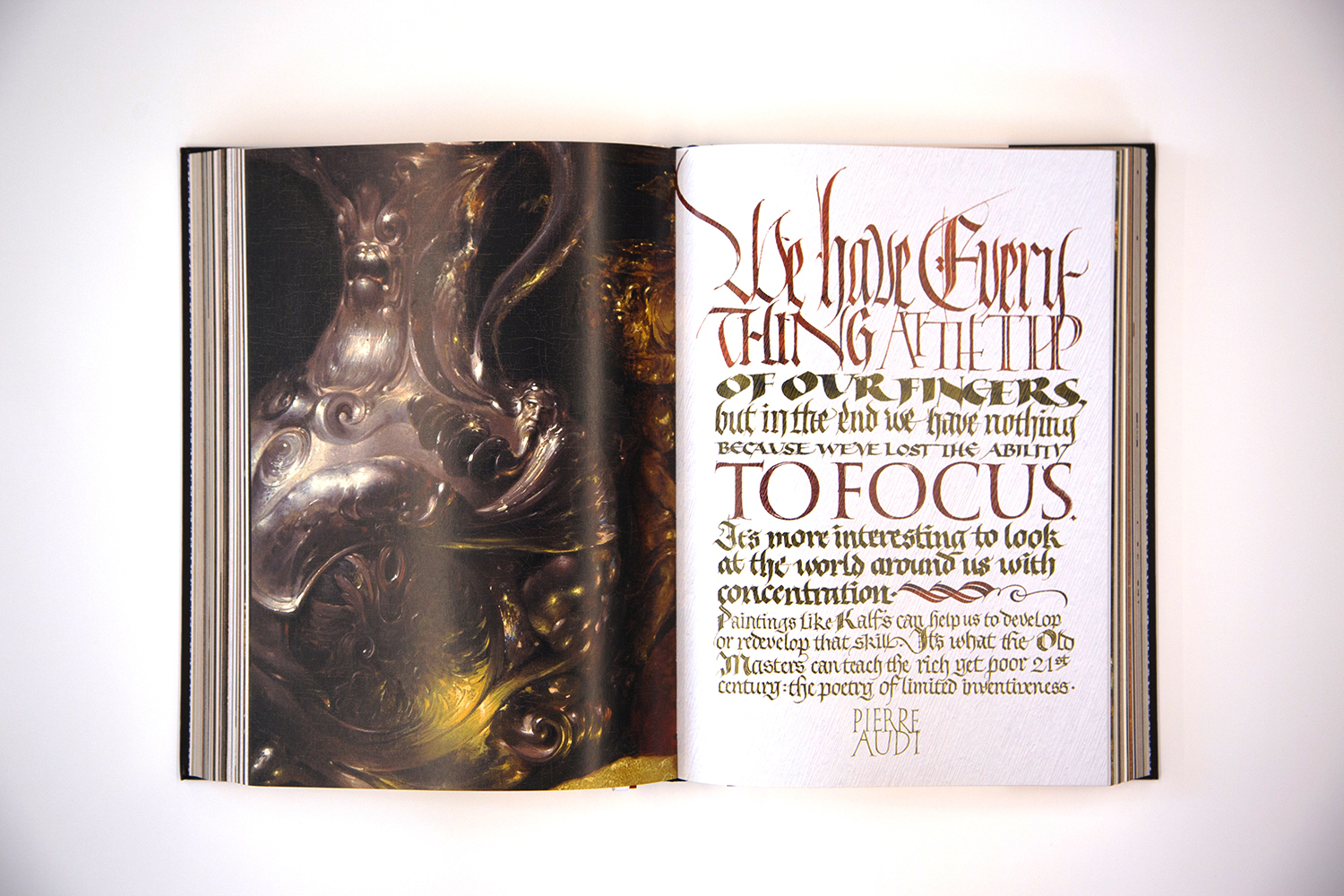
IDEO designers translated their insights into a book for staff, featuring watercolor portraits of the admissions team and a clear articulation of their values—from integrity to inclusion. The book was IDEO’s promise that introducing a new reading process wouldn’t mean sacrificing Bowdoin’s personal touch.
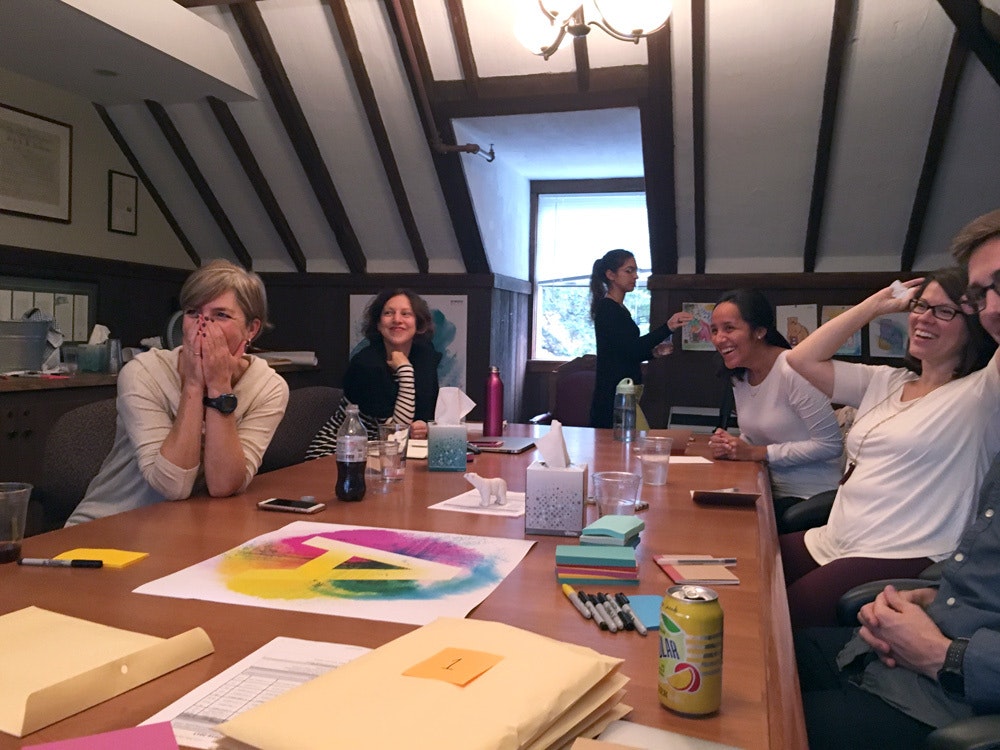
Then, the designers and counselors ran A/B tests using real applications from past years, unwinding long-held beliefs about how they “should” be read. Soule and her team experimented by adjusting timelines and other factors that determine when and how applications move from a first read to a second read to a committee discussion.
Soule gave her team explicit permission to toss their typical playbook. Seeing their own process with fresh eyes, counselors realized they could be more confident in their expertise and tweak their workflow to meet changing demands.
A/B testing proved that some variables had little effect on the team’s final admissions decisions. With that in mind, IDEO redesigned the reading process and included a system called “magic sort,” which helps parse groups of applications based on a new set of counselor assessments in order to route each to its next round of reviews more efficiently.
The IDEO-Bowdoin team put the revised technique to work right away, processing 300 new applications from the annual QuestBridge program for low-income students. Counselors found they were able to make equally valid decisions while cutting the amount of overlapping work they faced by 40 percent, compared to years past.
Working with IDEO challenged us to change the way we work together—and we learned a new method of problem solving that we continue to use. We are better equipped to elicit creativity, then channel it into the practical implementation of new solutions. It’s been transformative!
WHITNEY SOULE, DEAN OF ADMISSIONS AND STUDENT AID, BOWDOIN COLLEGE
The new reading method let staff cope with a growing volume of applications, while balancing the need to evaluate individual students with the need to think holistically about the makeup of Bowdoin’s student body. Counselors adapted the technique to the rest of the year’s admissions cycle, including early-decision, regular decision, and transfer applications.
To extend what her team learned to other departments, Soule has led several design thinking workshops across campus. Her success as a leader has mirrored the growth of her team and the college; by empowering staff with new tools and the freedom to experiment, Soule and Bowdoin are leading by example in the evolving world of higher education.

Reinventing the chandelier
Designing an elegant, modern lighting experience for an iconic brand.
For half a century, Swarovski has crafted iconic chandeliers dripping with the brand’s signature crystals. With the rise of new interface technology, the company came to IDEO for help to design the chandelier of the future.
IDEO designers set out to create beautiful, emotional experiences by layering technology onto Swarovski’s lighting offerings. Whether it’s setting the tone for a sophisticated retail experience, creating subtle ambiance at a romantic dinner for two, or providing true quality light to read a book, the team considered how a chandelier can enrich personal moments throughout the day.
Swarovski and IDEO assembled a multidisciplinary group, including industrial and UX designers, brand experts, and engineers to quickly vet, build, test, and refine their ideas.
Designers from IDEO and Swarovski worked together to completely reimagine the crystal chandelier.
Together, the team designed a new tech-infused chandelier and family of other light fixtures. At first glance, the chandelier resembles a simple, sleek metal disc. But when you turn it on and peer inside, an endless number of crystals swirl far into the distance—an Infinite Aura.
The Infinite Aura collection also includes pendant and wall lights. The team developed a mobile app that proactively modifies light settings based on the time of day, and also lets users customize their experience—including adjusting brightness and color to set a personal mood, or “Aura.”
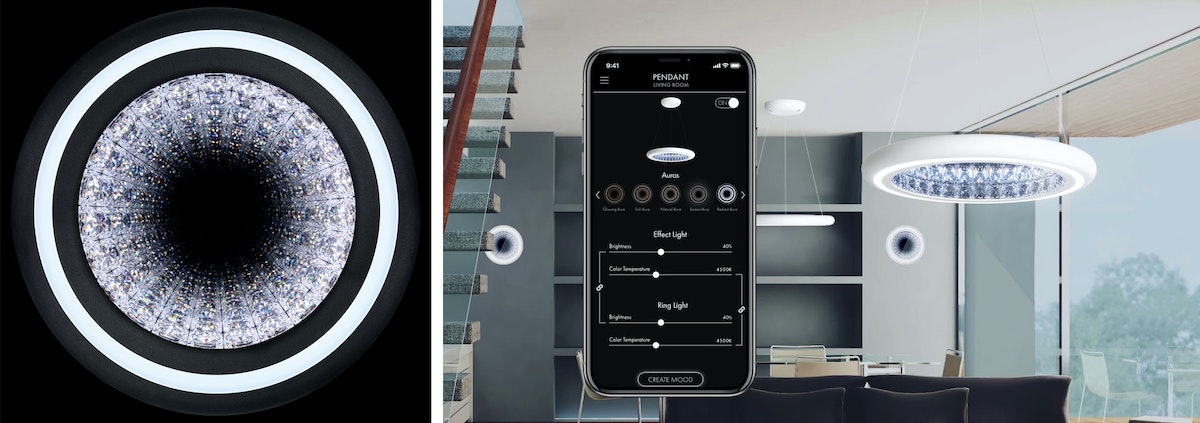
Unlike most fixtures, Infinite Aura doesn’t just give off ambient light; families can also benefit from high-quality functional light, directed downward to help them focus on a task or diffused upward and downward to create a subtle ambiance. In a similar way, the chandelier can expertly illuminate a library, hotel lobby, or concert hall.
The new lighting line adds greater functionality and emotional resonance to today’s smart buildings, while retaining Swarovski’s timeless elegance. Infinite Aura debuted in Frankfurt, Germany in March and will be available internationally in fall 2018.


A new employment venture to increase customer engagement and financial security
Introducing Moonrise, a digital platform that helps companies hire untapped talent and workers make ends meet.
More than half of Americans don’t have the cash to cover a $400 emergency expense like a car repair or trip to the hospital. Taking that reality to heart, American Family Insurance, a Fortune 500 company that offers auto, home, business, and life insurance, was seeking a way to make an impact by helping people earn and protect—not just insure—the things they value.
American Family approached IDEO with an ambitious goal: to innovate in a way that would help working families—many of them existing American Family customers—who need a financial cushion in case of the unexpected. This new mission fell in line with American Family’s overall orientation toward increased social responsibility, including committing to a liveable wage for all employees, helping with student loans, and providing college scholarships and tuition reimbursement for employees’ children.
In early discussions, American Family thought people might need budgeting tools, but from the very first research interview, a different urgent need emerged: people needed a way to shore up their savings enough to protect against unforeseen needs. This same story came from numerous places. In Tennessee, the IDEO design team sat in the kitchen of a working single mom of four, who explained how her lifestyle was built around her extremely constrained budget. She couldn’t afford childcare, so she’d organized her home to allow her 11-year-old to watch the younger kids: partitioned snacks, timers on the TV, chore charts on the fridge. She managed her budget meticulously, it was clear, and she didn’t need new financial tools. What she really needed, she said, was extra income cushions so a surprise expense like a doctor’s visit or stretch investment like a kid’s basketball uniform wouldn't derail her plans. Like many of the people the team visited across the country, she didn't want to take on debt; she wanted extra work and the dignity and peace of mind that comes with it.
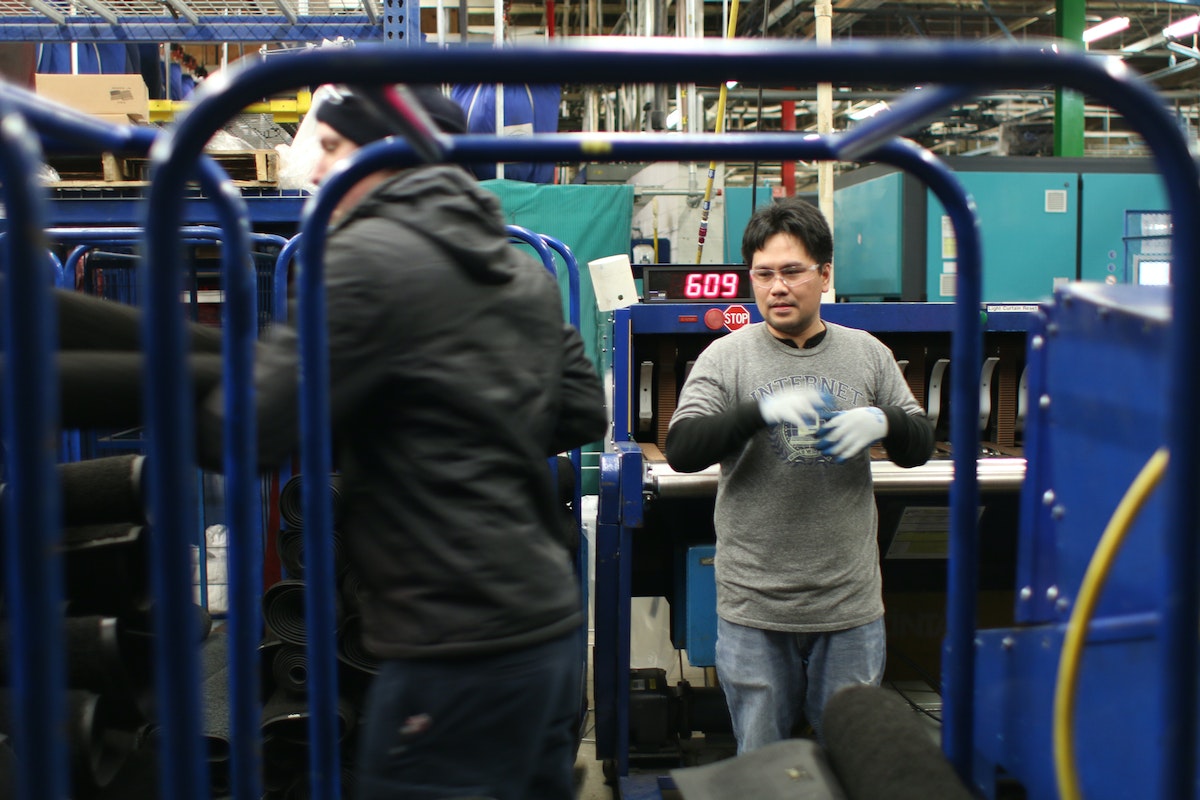
Could we, the team wondered, offer people who already have jobs the extra hours and income they need in a way that reduces, rather than exacerbates, the stress they already face? Would employers get on board?
The short answer was yes. Today’s businesses depend on on-demand work, including seasonal warehouse and retail shifts. Typically, companies look to temp agencies whose model is built on staffing with the goal of permanent placement. Moonrise enables companies to tap into a workforce that's already employed, allowing them the benefits of passive recruiting (reliability, consistency), but for short term work.
Knowing innovation was the path to growth, American Family took a chance by embracing a radically new brief: Create a service to help families living on the edge bridge the gap between the size of their paychecks and the size of their dreams. The result was a new business venture called Moonrise.
When customers told us that having an easy way to earn extra money could improve their lives, we were compelled to pursue a solution. Moonrise is a business with a human-centered mission. We’re proud it’s part of our American Family.
Jack Salzwedel, Chairman & CEO, American Family Insurance
The Moonrise platform lets workers sign up for shifts with partner organizations through a simple text message interface, and get paid as soon as their shifts are done. Employers who sign up to partner with Moonrise can list open shifts on the platform.
“Moonrisers” are W-2 employees of Moonrise, not contractors, so they don’t have to pay self-employment taxes. They also get personalized business and comment cards to take to job sites, making their interactions with employers feel more professional. In this way, Moonrise helps workers not only build a buffer against unexpected bills, but also explore new positions and fields—and perhaps even land new full-time work with Moonrise partners.
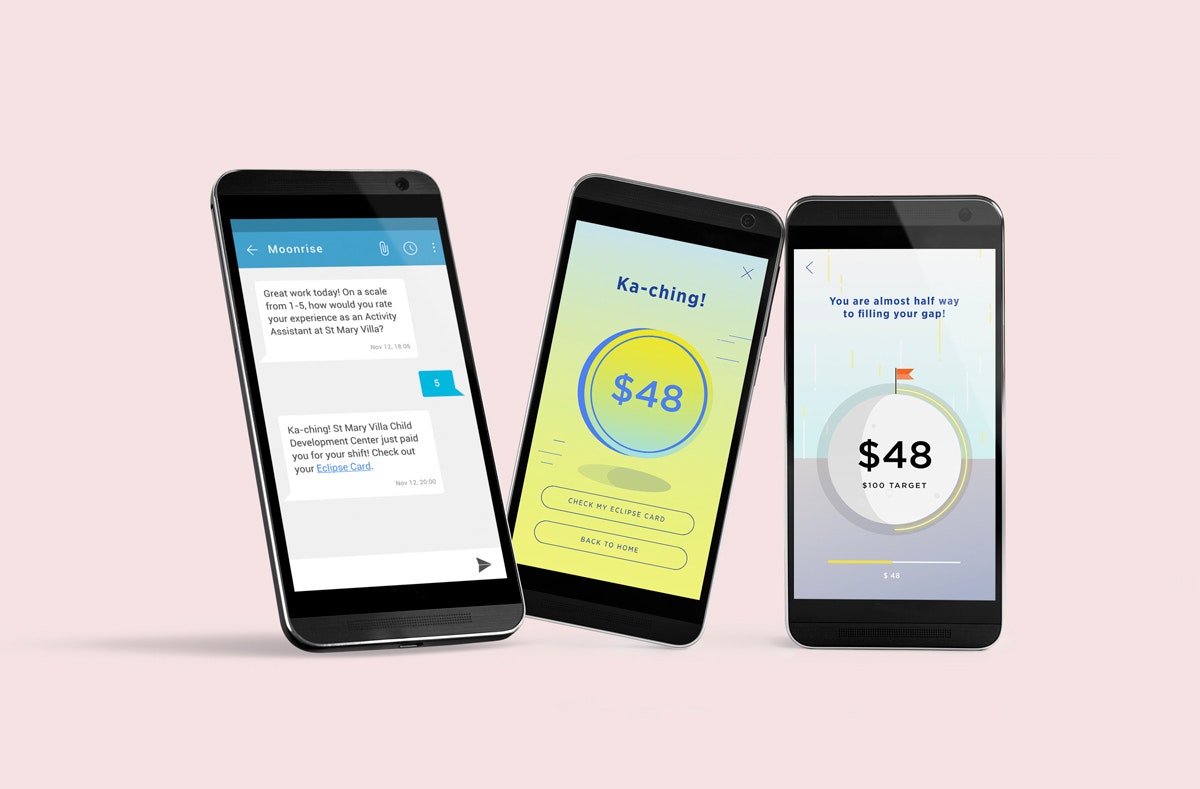
To test the program in real time, IDEO and American Family assembled 11 Moonrisers, six employers, and a team of designers and programmers to work out kinks in the platform. During a one-week live pilot in Wisconsin, Moonrisers finished a combined 28 work shifts, earning an average of $121 each, while IDEO designers worked behind the scenes to keep the process running smoothly.
Based on the success of the pilot, American Family created a new startup company called Moonrise, which became a wholly owned subsidiary of American Family. Moonrise launched to the public in the Chicago area in 2018, with plans for an eventual nationwide rollout. Moonrise signed Enterprise Rent-A-Car as its first employer and actively matches workers in Chicago with shifts, while continuing to build more corporate partnerships.
Since launching in 2018, over 7,000 people have applied to become Moonrisers, more than 7,000 shifts have been fulfilled, and over $500,000 has been put into the pockets of hardworking Moonrisers. Additionally, Moonrise will be expanding into 3 additional states in 2019.
IDEO and American Family Insurance interviewed customers of The General—a division of American Family—about how they budget to make ends meet. In this conversation, customer Chandra told designers how $62 could be the difference between breaking down and breaking even for her family.
It’s not always easy for established companies to innovate, especially outside their core business. But innovation is a high priority for American Family. Creating an employee -centered startup like Moonrise solves an urgent problem and distinguishes them from their competition. Together, American Family and IDEO identified a pressing human need and built a program from the ground up to meet it.

From Fungal Networks to Connected Businesses
What nature can teach us about collaboration
The podcast talks about how mycelium and mycorrhiza give plants a natural network for absorbing and sharing nutrients in soil. The fungi create connections with the rootlets of individual trees and grow further out to connect with the root networks of other plants. These networks create an “underground economy” by which trees can trade and share nutrients.

This method of sharing is a good lesson for business: A lack of connections can create inefficiencies and tensions between potential collaborators. Looking at these networks raised a question for us: How can we facilitate connections between real-world businesses that would allow them to share resources?
We got so excited about the idea we jumped right into building something: a prototype called Myko, a smart scale and sensors that create a mesh network allowing two businesses to share streaming data that benefits both parties. We took the opportunity to build with Nomad, an open source streaming protocol Reid Williams and Gavin McDermott have been developing at the CoLab.
Nomad works as a decentralized messaging system, an open source protocol to discover, publish, and remix live data streams from anyone, anywhere. Nomad is built on IPFS, a distributed network, engineered as universal infrastructure to be open, scalable, and durable.
The Nomad API is based on a publish and subscribe system. When someone creates a node, it can either publish data to peers on the network, or subscribe to other peer nodes on the network. Publishing nodes are called “atomic” nodes, while subscribing nodes are called “composite” nodes. When someone creates a node on the network, it’s given a unique ID. For a composite node to receive data from an atomic node, all that’s needed is this ID. From then on, any data that the atomic node publishes is delivered to the composite node in real time.
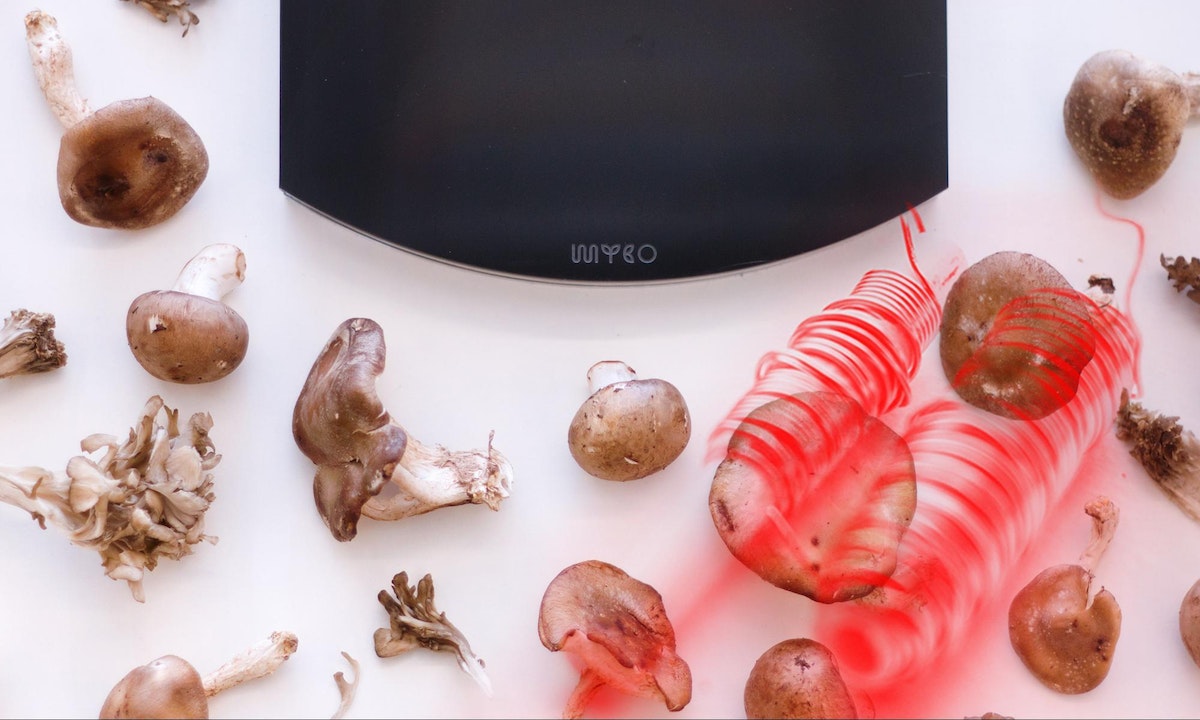
Warning, nerd paragraph:
Using a couple Particle Photons and force-sensitive resistors, we quickly set up two atomic nomad nodes capable of broadcasting real-time data from two connected objects. I used the particle event stream API to output data in a JSON format, so I could easily parse event objects just like I would with any REST API.
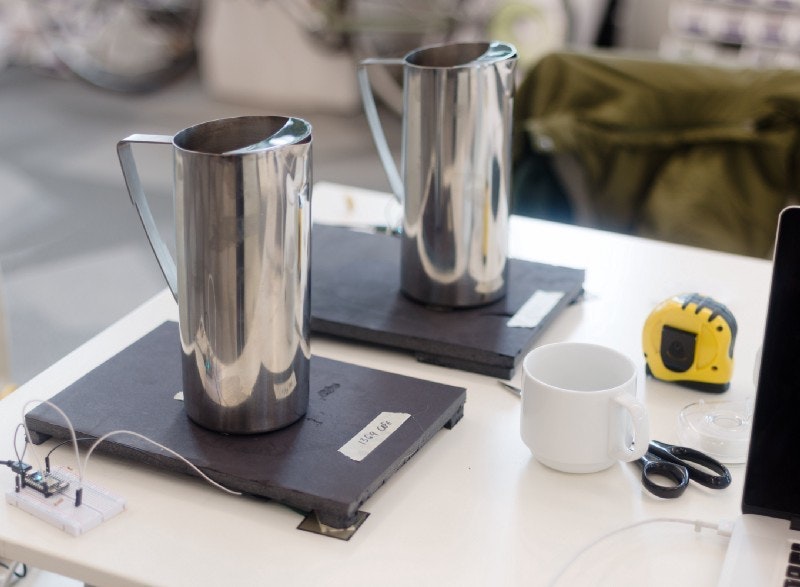
Since the Photons can broadcast anywhere with wifi and a power source, these nodes will always be running, providing a constant stream of data no matter how far apart they are.

In this prototype, we built two connected weight-sensing plinths for coffee pots to rest on. The weight data from the plinths allowed us to determine when new coffee was brewed, how old it was, how many cups had been poured, and how much was left (we could even see the cups being poured in real time). One pot sat in our office at the CoLab, and the other sat in a nearby coffee shop.
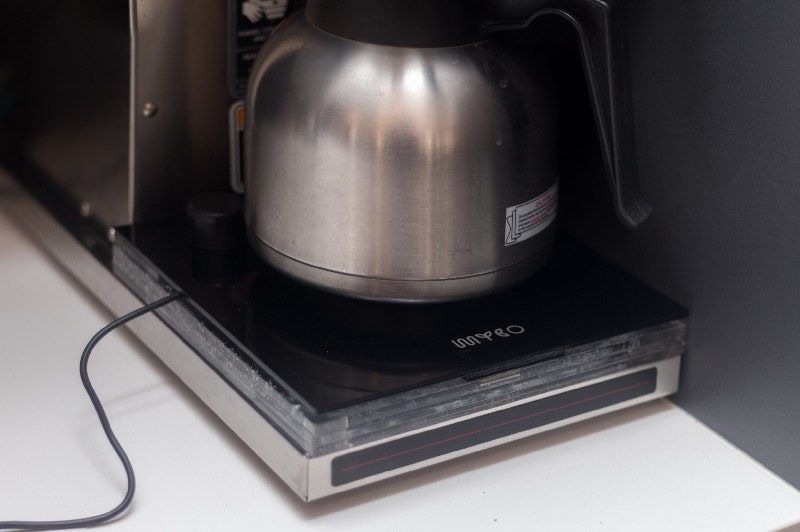
When the CoLab pot was old or out of coffee, and when the cafe’s pot was fresh or about to be emptied (which happens every 45 minutes at our local cafe — they’re serious about freshness!), a signal on the plinth at CoLab was activated to tell would-be coffee drinkers to head to the cafe for a walk outside and a fresh coffee. At the same time, a signal was activated on the cafe’s pot, letting them know that IDEOers were being sent over.
The partnership possibilities created by this workflow are endless. For example, what if CoLab diverted some of its monthly studio coffee budget to create a steady income stream for the cafe? Could the cafe institute dynamic pricing on its coffee to reduce food waste? What about baked goods that go stale the next day? Could neighboring cafes use infrared sensors to share their current occupancy to load-balance their wait times in line or their occupied seats?
These questions sparked a lot more ideas and another experiment, in which we used Nomad to reduce coffee and food waste at the cafe. When a barista brewed a fresh pot of coffee, they simply pressed a button to send a notification to customers with the app. After 15 minutes, the price of a cup of coffee dropped by 10%. After 20 minutes, it dropped by 45%, and so on. Since we knew the cafe threw out its coffee after 45 minutes, we could set a timer to reset the price to normal levels when a fresh pot was ready.
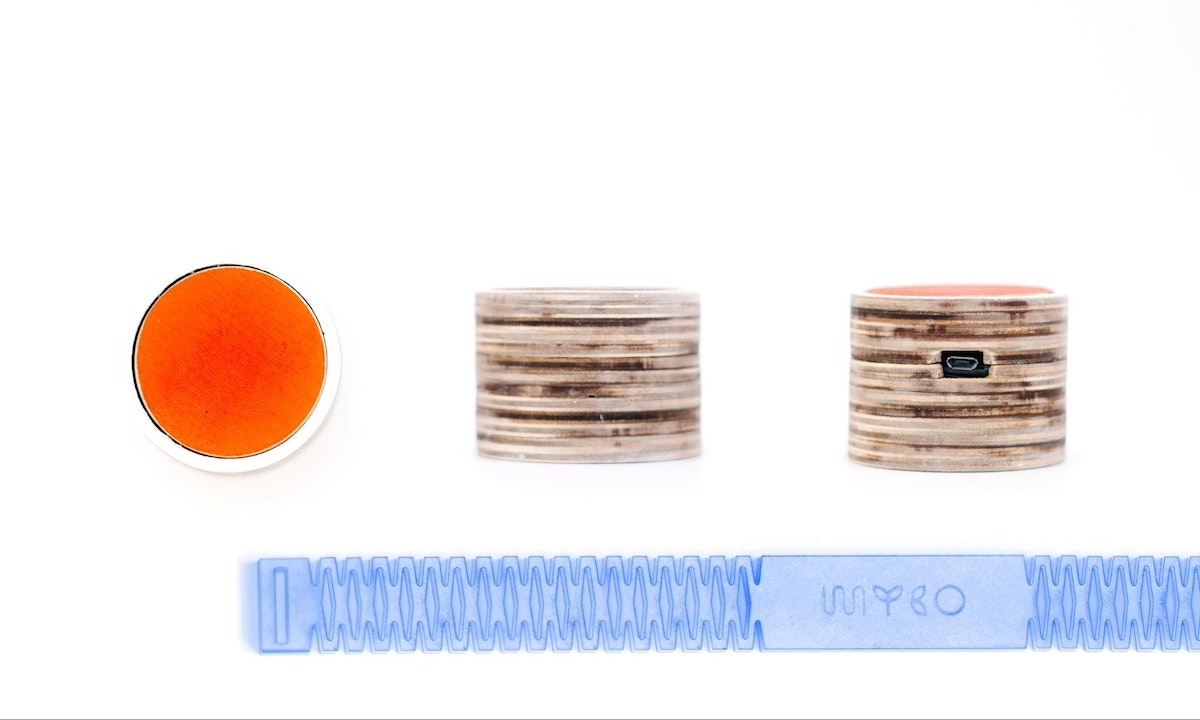
In our prototype, coffee drinkers could see dynamic pricing via an app. This website was a small nomad web app powered by data from the Myko button in the cafe.
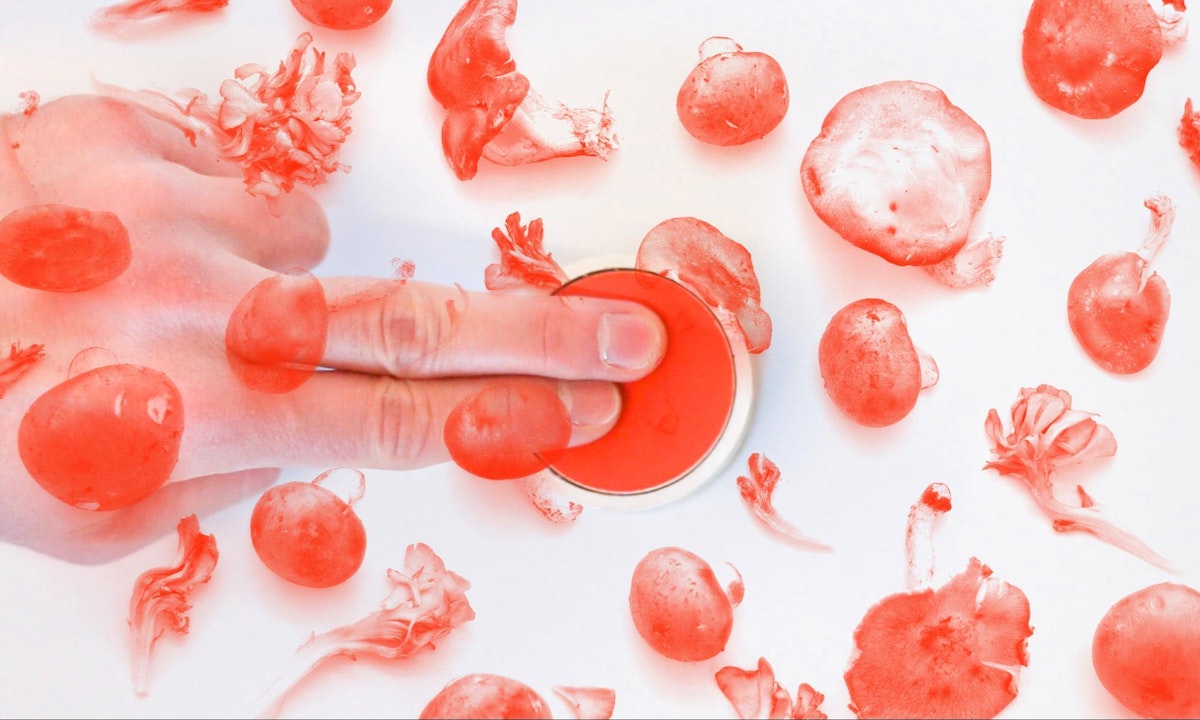
Whenever the user viewed the app, it displayed the current price of the coffee and a “buy now” button that used Stripe to create a purchase. When a user purchased a coffee, they received a unique code to redeem for the cup they purchased at the shop. The app operated off of a simple set of events whose time and content could be customized.
Something I didn’t have time to implement in the experiment was customization. Ideally, a cafe owner would be able to create new events themselves, adjusting elapsed time, content, and price with just a few taps. While this example isn’t a perfect design, we’re inspired by the live connections it can form between the cafe and its patrons.
Coffee isn’t a life-changing mechanism, but these prototypes represent a developing form of communication between objects and organizations. As we create digital twins of real world objects, our world becomes a living, breathing network, driven by data that we generate by going about our daily lives. Will smart cities be able to divert traffic through different routes based on live congestion data? Can a group of sensor-outfitted machines in a factory automatically organize a group-buy of replacement parts at a discount to the facility owner? These are questions that I’m hoping to answer through these digital fungal relationships.
Adapted from IDEO CoLab’s post on decentralizing chat here.
At IDEO CoLab, we love thinking about what nature can teach us about emerging technology. Recently, we revisited an old podcast from a source we adore: Radiolab. Their episode From Tree to Shining Tree inspired us when we were thinking about naturally-occurring mesh networks.

The Jam Session That Spanned Three Continents
Eight designers, five cities, three countries, one song
Since 2008, when I officially started making music under the name Crunchybird, I’ve learned a fair amount about recording and playing. One of the biggest lessons has been how awfully lonely being a one-man band can be—not just socially, but creatively. There's no pushing and pulling, no building on each other's ideas.
So I asked myself: How could I pull in some of my friends from around the globe to make music with me?
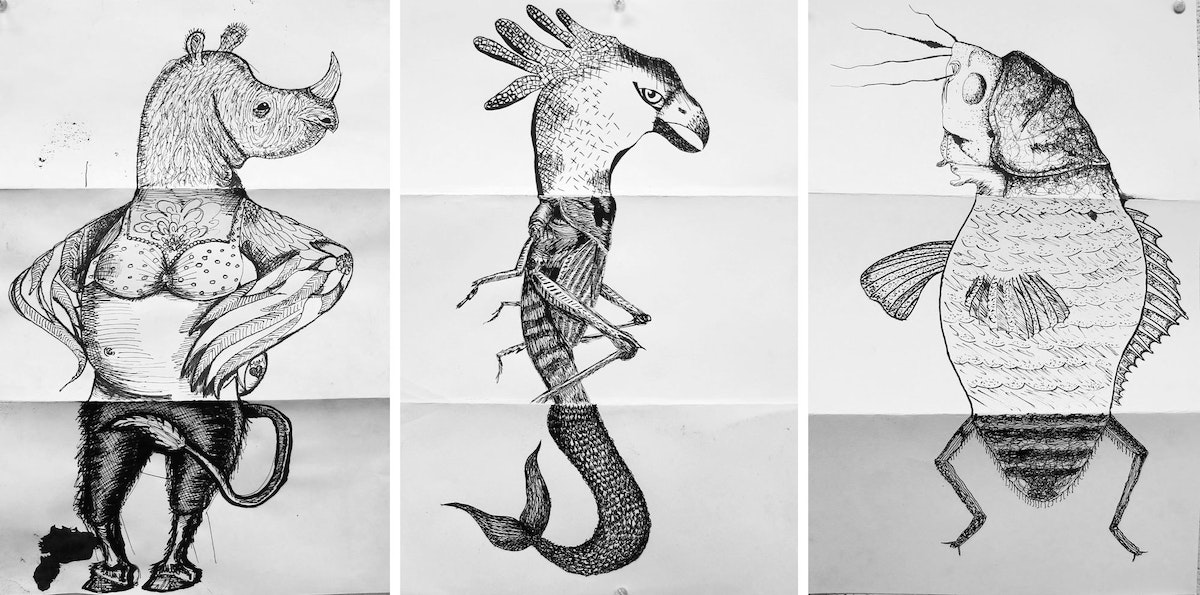
I’ve always loved the concept of Exquisite Corpse, the Surrealist parlor game where someone starts a drawing and passes it on to others to continue. The final artwork is always unexpected, occasionally horrifying, and unavoidably original. Could we pull off a musical version? I was curious to see where it could go, so I threw the challenge to a motley crew of musically-minded colleagues around the world.
The rules were simple: Start something and pass it to someone else, somewhere else. That person spends a day adding to it, then sends the track to the next collaborator. And so on. We called the project "Exquisite Chords."
I learned a lot from the process. Before I walk you through the track my friends and I built together, here are some design principles to get you going.
3 tips for creative collaboration
- Start small and let go. When you collaborate with others, it’s tempting to set up a very detailed structure with a lot of constraints. For this project, it was fun to start with something more basic and give people the room to interpret it and shape it their own way. Don’t overthink it. Just let everyone throw something into the mix.
- Make each other successful. It can be really cool to see how participants take each other's work and improve on it. It's the musical version of the classic improv response "Yes, And…" Take what’s awesome and make it more awesome.
- Guide the vision. Creative collaboration can be terrifying. You have no clue how something will turn out, and it can be a disaster—the phrase "too many creatives in the kitchen” comes to mind. But as the leader, you have the opportunity to influence the end result. It’s important to respect people’s contributions, but to also know when to take the wheel and shape the outcome.
Exquisite Chords, step by step
Here's how our musical experiment started: One night, while sitting on the couch on our tiny apartment in Tokyo, with my wife and kid sleeping in the next room, I recorded a one-bar bass line over a simple beat on my Mac. What you’ll hear is an insomniac trying to make some sound very quietly:
I tossed the track over to my friend George Joseph, a communications designer at IDEO San Francisco, and an actual musician. He laid down some sweet, dynamic goodness atop my track in just a couple of minutes because he is, as noted above, an actual bassist. He also recorded an awesome vocal take. The lyrics are still a mystery to me:
George then shared the track with our friend Simon Heather, a business designer at IDEO New York, who we had heard has some shreddy chops on the electric guitar. It was true:
Simon passed the ball to Nick Dupey, a design director at IDEO Cambridge. Nick has a toddler named Julian Rose, who he recorded making toddler sounds:
Nick punted it to merry Munich, where design directors Franz Blach and Trent Huon took the whole affair to another level. Franz busted out a cornucopia of manipulated acoustic guitar sounds. He then arranged the pieces into a more dramatic song structure—verse, chorus, bridge, and outro included:
Trent added a touch of madness, crooning about the changing of the seasons on top of the new arrangement, improving the melody George had created:
And then it went back to San Francisco, where interaction designer Zubin Pastakia tacked on some angelic synths to round out the crescendoing finale:
Once the track was back in my hands in Japan, I realized the bass line that started it all would work better on the piano, so I re-recorded the melody and added a few parts to fill in the new arrangement. The piano complemented Franz’s acoustic guitar, which unfurled into a nice little wandering outro that could probably go on to be another song.
Finally, I worked with my producer friend Hamacide (a.k.a. Yusuke Hama) here in Tokyo to help tuck everything in, smooth it out, and make some final mixing and mastering adjustments to bring it all up to the next level.
Here's the final track, “Leaving Light”:
Our first collaboration as Exquisite Chords was indeed unexpected (and not too horrifying, I hope). What started as quiet plucking on a sleepless Tokyo night had blossomed into a trip-hop adventure for eight people from five cities in three countries. We never spoke to one another—it all happened over email and Dropbox.
It may not be perfect, or even be for everyone, but it's ours.
Want to join our digital jam sesh? Download the tracks above, add your own layer of sound, and tag your new mix with #ExquisiteChords.
I’m not a trained musician. But music is my favorite way to carve things out creatively. That is to say, I tinker with instruments to make noises that sound good together until I am smiling a lot. I'm not spitting out perfect tracks, but I'm having fun.
7 Tips for Seamless, Sexy Typography
For more friends and fewer misunderstandings
1. Keep a steady rhythm with ideal line lengths
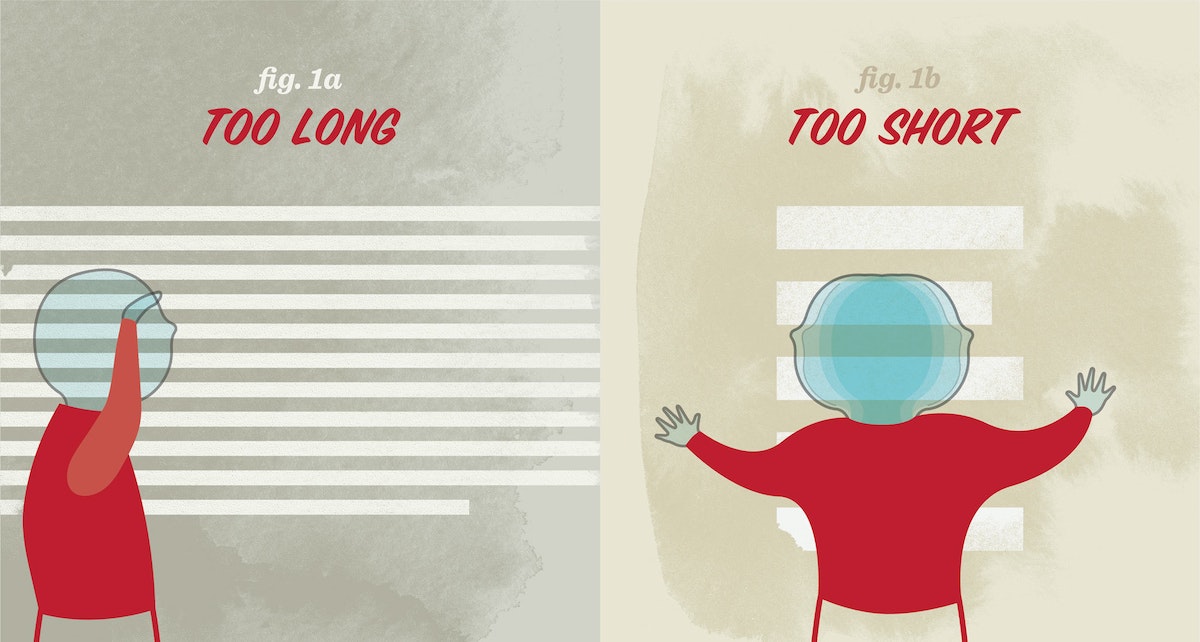
The length of a line determines how much distance the reader’s eyes must cover to read it from left to right. Long line lengths make the text seem never-ending. Short line lengths make the reading experience erratic, and can cause the reader to miss important words. An ideal line length is 66 characters (including letters and spaces). For one column of text, aim for 45–75 characters per line; for two columns of text, 40–50 characters per line.
2. Use the right kind of dash
Dashes, such as hyphens, vary in length depending on the typeface.
The em dash (—) is a long dash, the length of the uppercase “M.” It can be used as an alternate for commas, parentheses, or colons, and is an incredibly versatile way to create emphasis in your writing. When used in multiples, the em dash also indicates missing portions of a word (s——t).
The en dash (–) is half the length of the upper case “M”—shorter than the em dash, but longer than the hyphen. It is used to separate a range or span of numbers, and is sometimes used to connect a prefix to a proper noun.
Keyboard Shortcuts
Em dash (—): shift + option + hyphen
En dash (–): option + hyphen
3. Don't put hyphenation in auto-drive
In the digital age, we often take hyphenation for granted, opting to use the “auto-hyphenate” setting, but there are some best practices to keep in mind when typesetting with hyphens.
If you are breaking a word between two lines, keep at least two characters in the first line and at least three characters on the second line. Try not to hyphenate consecutive lines. To “un-break” a word between lines, use a soft return (shift + return) at the beginning of the word to force it onto the second line.
4. Know the difference between smart quotes and prime marks
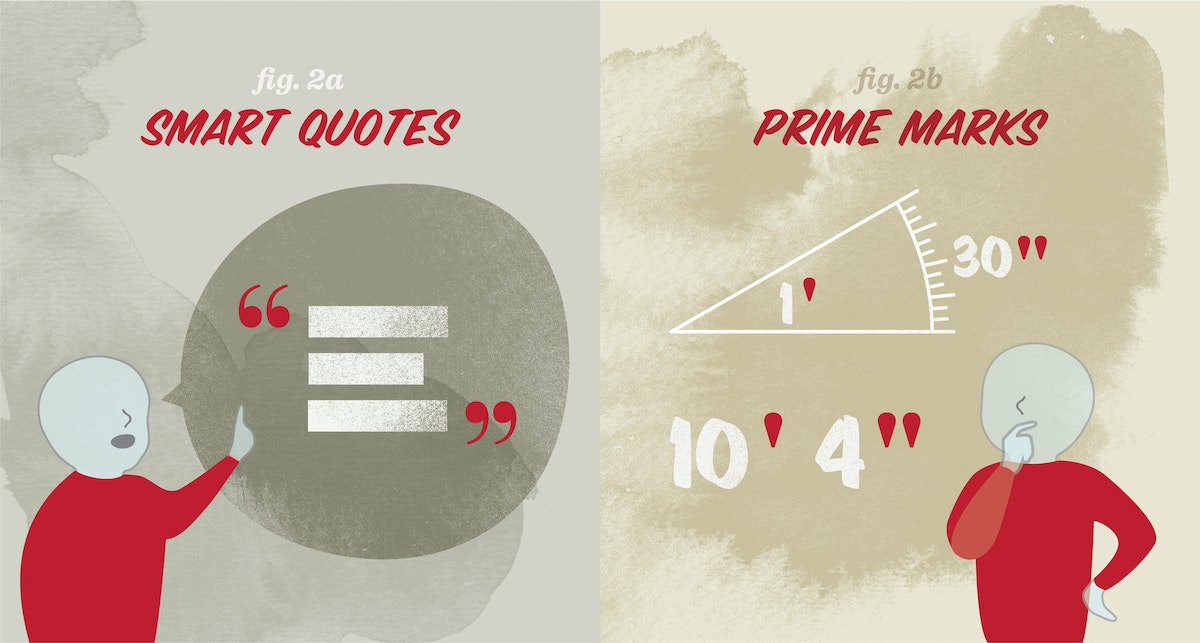
Prime marks ( ' ), also known as straight quotes or dumb quotes, are often accidentally used in place of smart quotes ( ‘ ), also known as curly quotes. Prime marks are a remnant of the typewriter, which only had prime marks to save space on the keyboard. So what’s the difference? Prime marks are used for units of measure (feet, inches, seconds, and minutes); smart quotes are used to indicate something someone has said.
Keyboard shortcuts
Left single quote ( ‘ ): option + ]
Right single quote ( ’ ): shift + option + ]
Left double quote ( “ ): option + [
Right double quote ( ” ): shift + option + [
5. Maintain a strong vertical axis
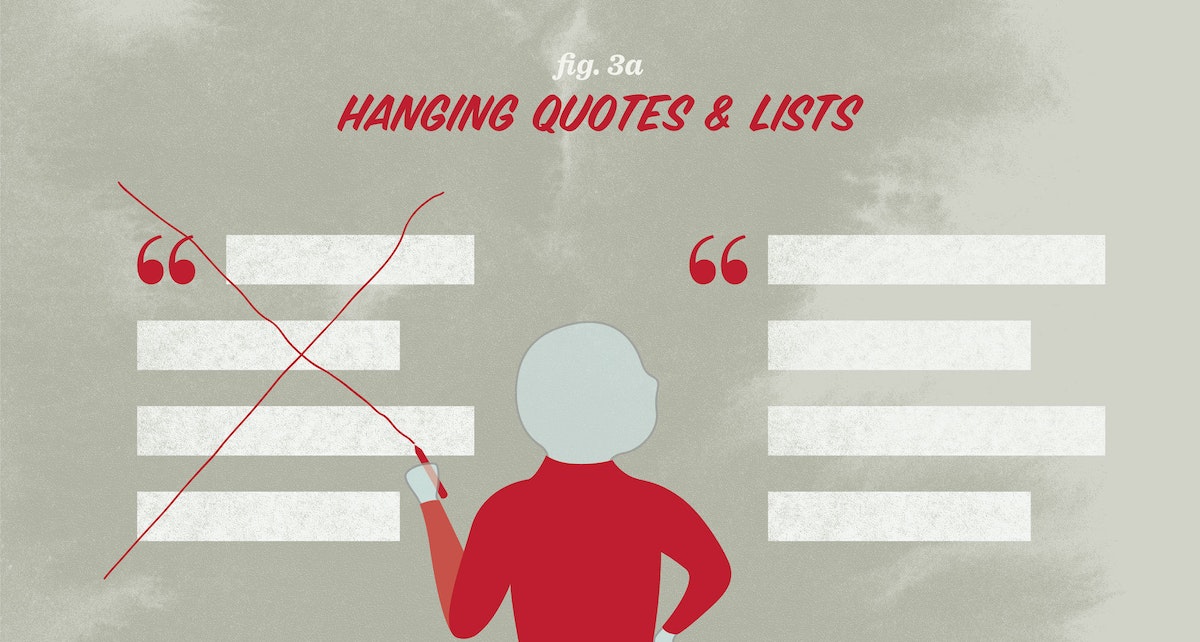
Hanging text, or outdenting, means moving typographic elements into the left margin. You do this to create a consistent vertical axis along the left end of the text. Quotes, bullets, and dashes do not take up as much visual space as a letter, so a list or quote that has not been hung, or outdented, can sometimes be mistaken for a new paragraph and cause unintended breaks in the reading rhythm.
6. Be on the lookout for widows and orphans
Try to avoid widows and orphans in your text. Widows and orphans are one or two words at the end of a sentence that are pushed to a new column or page; widows are at the end of a column, orphans are at the top of a page. They create very short lines and gaping holes of white space that can be visually disruptive for the reader. Maintain the flow of each sentence by using a soft return to eliminate stray words.
7. Track out all-caps text and use all-caps sparingly
When designing fonts, typographers must determine the amount of space around each letter so that letters of different sizes appear evenly spaced. The spacing around uppercase letters is often a little tighter, so that they can sit closer to the lowercase letters in a mixed-case word. When you typeset a word in all-caps, the letters will appear very close together. Remedy this by tracking out, or letter-spacing, all-caps words by about 10% of the point size height. For more details and examples on tracking (and how it’s different from kerning), take a look at Ellen Lupton’s book Thinking with Type, also available digitally here.
If your writing uses a lot of acronyms, consider selecting a typeface with a small caps font. Small caps are all-caps fonts designed within a typeface so that each letterform is only slightly taller than a lowercase letter. Small caps are automatically letter-spaced, and should not need any additional tracking.
Hungry for more on typesetting? Below are a couple of my favorite tried-and-true typesetting references:
A Type Primer by John Kane
The Elements of Typographic Style by Robert Bringhurst
Practical Typography by Matthew Butterick
Typography can be expressive, informational, or abstract. But sometimes it just wants to be invisible, allowing the content to take center stage. In this first installment of our Type Talks series—where IDEO designers nerd out about all things typographical—we offer tips for seamless, sexy typesetting (that you hardly notice).

These Eye-Popping Videos Capture the Madness of Cities
An interview with nomadic filmmaker Brandon Li

In one sentence, who are you?
I'm a nomadic filmmaker.
How did you learn to do it?
I travel the world and make short films about the places I visit. While I did go to film school, I'd say I learned most of my skills on the road, by trial and error.
WATCH: Hong Kong Strong. A film about the madness and beauty of this seemingly impossible city in the days leading up to Chinese New Year.
What are your three favorite possessions?
1. Good boots
2. My phone with Google Maps
3. My camera gimbal
What does a typical work session look like for you?
Shooting for about 12 hours a day, in the thick of a crazy festival in a foreign country. Then spending another 12 hours editing the footage and hiding from society.
WATCH: Nomads of Mongolia. Training eagles to hunt, herding yaks, and racing camels are just a few of the daily activities of the nomadic Kazakh people.
How do you get over creative block?
Travel to a new place.
WATCH: Tokyo Roar. Tokyo saturates the senses. This is my impression of the city's many personalities.
How do you see the world in 2078?
I see a mix of environmental catastrophe and remarkable human innovation. As the seas rise, we'll meet the challenge with ingenuity and eventually become fully sustainable, because it's the only way to survive.
Who are you (creative) crushing on lately?
Tokyo-born filmmaker Hiro Murai.
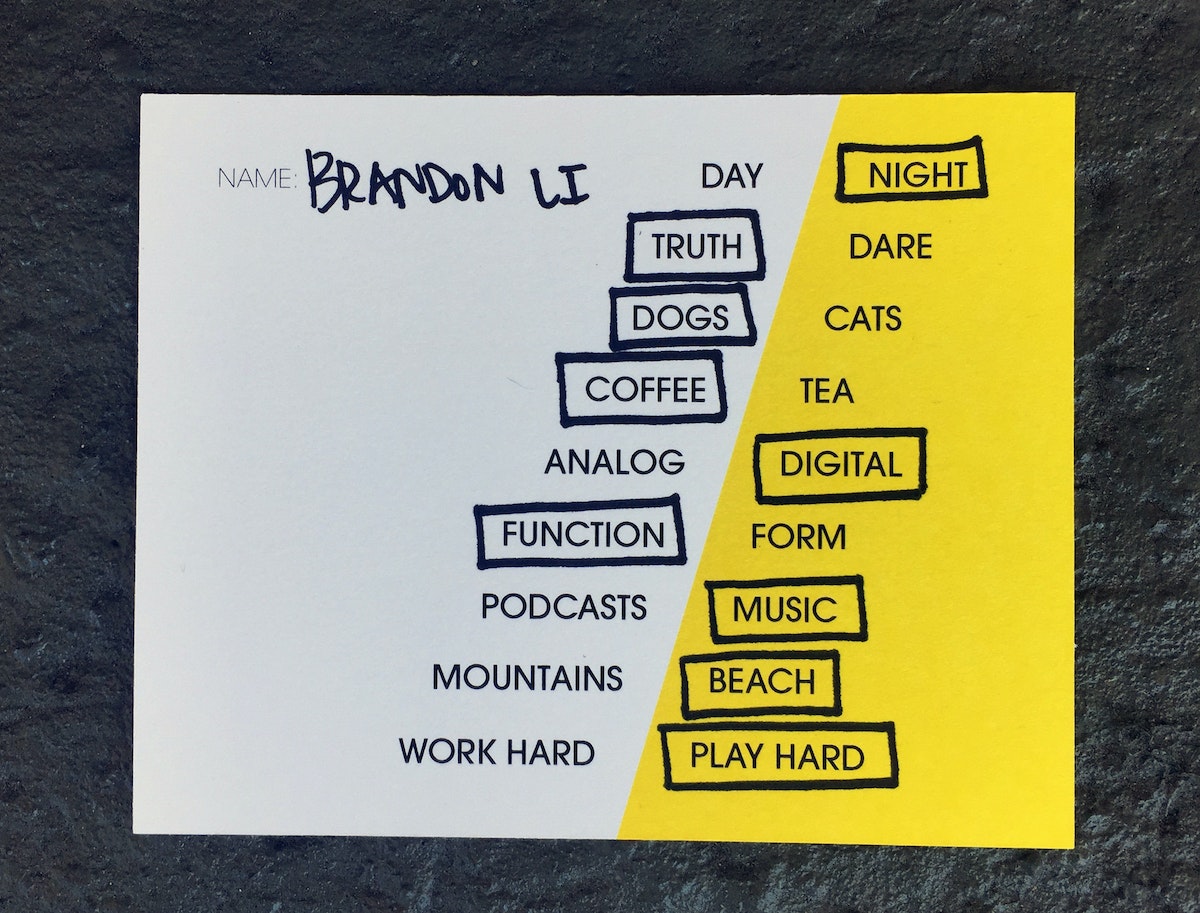
Getting the energy of a place on film is not an easy thing to do. Especially a transient place like Hong Kong. The city is both familiar and foreign to me. I was born there, and though I moved away at age 12, work has brought back many times over the years. On one of these trips, I was introduced to Brandon Li’s short film Hong Kong Strong (chosen by Vimeo as one of the best of staff picks in May 2016). In swooping, panoramic shots, it puts the beautiful madness of urban life and ordinary people on display. As a designer, I was instantly taken by Li's approach, as we, too, set about taking snapshots of daily life for inspiration. In this installment of Creative Crushes, I caught up with Brandon to find out more about his work.

Lindsey Turner
I’m passionate about building brands, products, and experiences that help organizations show up with meaning and momentum.
I help organizations cut through complexity by shaping how they show up, through brand strategy, identity, and storytelling.
Working at the intersection of brand and business, I bring an editorial eye and a bias toward making—turning ideas into tangible experiences that people can understand, trust, and believe in.
My work spans government, healthcare, financial services, media, and consumer goods, from launching Gen Z-focused ventures to building innovation labs and reimagining legacy brands. I relish moments of ambiguity and enjoy translating across teams, perspectives, and priorities to move ideas forward.
I started my career in editorial and digital design, shaping cross-platform experiences and identity systems in publishing and agency environments. That foundation still shapes how I work today: I’m detail-oriented, collaborative, and overreliant on the Oxford comma. I hold a BFA in Visual Communication from the School of the Art Institute of Chicago.

Rachel Young
My work helps organizations see who their products aren't working for—and build the will and the tools to do something about it
For 25 years, I've asked the same question: Who does this design exclude—and what are we going to do about it?
My work spans human-centered strategy, inclusive design, and qualitative research, with clients ranging from Microsoft, Google, and Verizon to the National Science Foundation, and San Francisco Unified School District.
Before IDEO, I taught elementary school in East Palo Alto and spent a decade doing design work with social service organizations—where I learned firsthand what it costs people when systems are built without them in mind.
I am currently writing User Error, a nonfiction book about digital access and the design decisions behind it. I live in Oakland, California.

Brian Pelsoh
I lead with craft, ensuring our work is creatively excellent: rooted in deep human insight and imagination, while also grounded in the realities of business and technology.
My expertise spans brand, communication, and product design across tech, education, the arts, and social impact.
I believe great work demands both high-level vision and obsessive attention to detail, and only happens through collaboration.
I bring an inclusive, hands-on approach and a deep understanding of business, which enables me to consistently deliver excellence while always asking why.
Before joining IDEO, I worked at the brand firms Pentagram and VSA Partners. I began my career as a designer, leading teams at the School of the Art Institute of Chicago and the Milwaukee Art Museum. I hold an MFA in graphic design from Maryland Institute College of Art and a BFA in communication design from the Milwaukee Institute of Art & Design, and have taught at some of the best design schools in the US.

Tony Wong
I am responsible for IDEO’s long-term success in China and working with clients to use design as a tool to enable growth.
I am responsible for IDEO’s long-term success in China and working with clients to use design as a tool to enable growth. Specifically, I have helped Chinese companies design holistic brand solutions through the development of their products, communication, services, and innovation teams, and I have helped multinationals expand their presence and influence in China.
I advise global leaders on developing China-led innovation and capabilities.
In over 15 years in IDEO Shanghai, I have worked on projects that use design to elevate the quality of the experience of healthcare products and services, streamline processes that increase productivity, create spaces and programs that promote and enable inclusive communities, and build next generation mobility solutions that are planet-positive.
Before joining IDEO, I worked at Philips Electronics and the Electrolux Group in Italy, the Netherlands, and Singapore on a number of breakthrough commercial products. I am a member of the Young President Organization in Shanghai.

How to use AI as an editor, not a writer
Ed White shares how he uses AI as an editor—not a writer—to sharpen storytelling, rehearse ideas, and preserve the productive friction that makes creative work better.
Ed White has a rule he's tested on his own writing: hold yourself as the writer, and let AI be your editor. Ed is a Senior Design Director at IDEO's London studio, where he co-leads the firm's AI portfolio across Europe. Before IDEO, he spent 12 years as a writer and editor at the Financial Times, Wired, and Contagious. So when he talks about when to use AI for storytelling and when not to, it comes from two decades of crafting his storytelling skills.
In this episode, Mina Seetharaman talks with Ed about two specific tools he uses to keep AI in an editor's seat: a "roasting agent" prompted to critique his drafts without any sugarcoating, and a simulated audience he rehearses pitches on before the real thing. They also get into what Ed is hearing from design leaders at Anthropic, Lovable, Shopify, and Google Creative Lab about how creative work is changing, and why he thinks the friction of writing something yourself is worth protecting rather than automating away.

Building a personal AI for the messiness of life: Sida Li
Becca Carroll talks with Cue co-founder Sida Li about designing a personal AI for the messiness of everyday life—not just work. They explore how Sida stays anchored to human needs while navigating fast-changing technology, product tradeoffs, business-model experimentation, and the realities of building an AI company today.
Most AI products today are built for work—a space with clear problems and established systems. One founder noticed a gap: personal life is messier, harder to systematize, and mostly left behind by the AI boom. So she built Cue, a personal AI that lives inside iMessage and group chats, to go where the other tools haven't.
In this episode, Becca Carroll, IDEO's Chief Strategy Officer, talks with Sida Li, co-founder and CEO of Shared Context Lab, about staying anchored to a human need while the technology around her keeps changing shape, why she treats her business model with the same rigor she'd bring to a product, and what it feels like to build a company at this particular, disorienting moment in AI.
The conversation also gets into how Sida makes design decisions: the language Cue uses to describe itself, the tradeoffs behind building inside iMessage instead of a new app, and a real story about a business idea that didn’t pan out.
This is the second in a two-part series profiling founders from IDEO's Startups-in-Residence program. The first conversation is with Johannes Seemann, founder of Sooner, on designing GenAI for the emotional side of money.

Designing GenAI for the emotional side of money: Johannes Seemann
Designing financial tools around the feelings that shape money decisions.
Most personal financial tools are built to run the numbers and optimize towards a budget. While that works for some, most people experience money as a lived relationship that does not neatly fit into a spreadsheet. Johannes Seemann and Becca Carroll discuss why money is emotional before it is mathematical, and what a human-centered approach to building a generative AI financial product looks like in practice.

The curious leader's edge in uncertainty: Scott Shigeoka
How genuine curiosity helps leaders navigate uncertainty with greater confidence.
Mina Seetharaman talks with Scott Shigeoka, author of Seek and Head of Curiosity Cultivation at the Eames Institute, about what distinguishes genuinely curious leadership from performative curiosity, how power dynamics shape curiosity, and why practicing curiosity can restore energy rather than drain it.
Looks like you might be in search of something very specific?
Or reset the filters above and try another angle.
Here’s some random inspiration

Podcasts about creative leadership

Articles about the power of prototyping
























.webp)