Creating an out-of-this-world STEM learning experience
Aboard the Verizon Explorer Lab, students can travel to Mars and learn engineering basics along the way.
When Mr. Gordon told his fifth grade students they were taking a field trip on a bus, many of them envisioned the city bus that they ride each day to school. But when they saw the Verizon Explorer Lab pull into the school parking lot, they realized a unique experience awaited them. Painted in bright colors, this bus promised something very different from their daily commute.
“Climb aboard, explorers!” says the Lead Explorer. The students walk through the bus’ sliding doors and inside, where instead of rows of seats, they find a sleek research lab. Suddenly, the lights dim. The bus makes a rumbling noise as though it’s about to lift off. And on a large screen, a vision of Earth from space appears. The students listen and point as the video narrator briefs them on NASA’s ongoing search for life in space.
Science education isn’t always this fun. Some kids have a chance to learn through interactive games, immersive experiences, or engaging field trips; but many lack access to rich educational experiences in science, technology, engineering, and math (STEM). As a result, they can be less likely to pursue careers in STEM, though many future jobs will demand mastery of these subjects. This not only impacts a student’s potential and future, but reduces the diversity and number of qualified STEM job applicants.
In under-resourced schools, students are often limited to the scarce tools available for STEM learning in their classrooms. Many kids rarely have a chance to leave their neighborhoods. For these kids, mobile learning experiences that come to their school offer unparalleled exposure to cutting-edge, technologically advanced, and—most importantly—inspiring gateways into these critical academic subjects.
As part of its focus on digital inclusion, Verizon partnered with IDEO to share the excitement of STEM learning with middle schoolers. To facilitate access and discovery of STEM, the team designed a learning experience that takes place on a coach bus and can be scaled to reach kids across the nation.
The team set out to transform the bus into the Verizon Explorer Lab: a futuristic research lab that transports kids to new environments, from outer space to under the sea. As part of the larger Verizon Innovative Learning program, the Verizon Explorer Lab offers delightful and rigorous content that meets national science standards.
A multidisciplinary team comprised of designers across interaction, communication, environments, games, and software partnered with Verizon to bring the Verizon Explorer Lab to life.
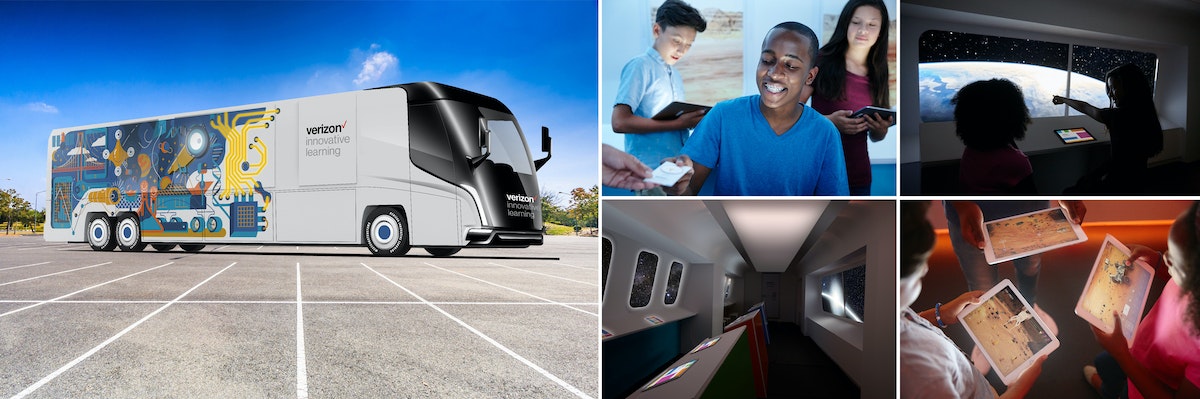
To keep the student at the center of the experience, the team designed alongside kids. Their gravitation toward play, interaction, and technology inspired the digital game that students play onboard the bus. When developing the game’s narrative, the designers turned to popular kids’ books and movies. What began as a card game prototype eventually became a 360-degree video and virtual reality expedition to Mars—complete with a custom musical score—that introduces middle schoolers to engineering basics.
After stepping through the bus doors and taking a tour of the solar system, Mr. Gordon’s students receive an emergency call from NASA: They must rescue the missing Curiosity rover, which is dedicated to collecting evidence of life on Mars. Eager to save Curiosity, the students become immersed in the adventure at hand. And through the adventure, they become immersed in science.
Students use tablets to design their own Mars rover. Each rover appears on a large screen and traverses the planet’s extreme terrain. The goal is to collect data that suggests life on Mars, including ice deposits, photos, and more. Students iterate on their rover’s design—wheels, power sources, and sensors—to test if it can stand up against dust storms and craters. The team consulted a NASA planetary scientist to ensure accuracy, as well as educators to establish cohesion with classroom curricula.
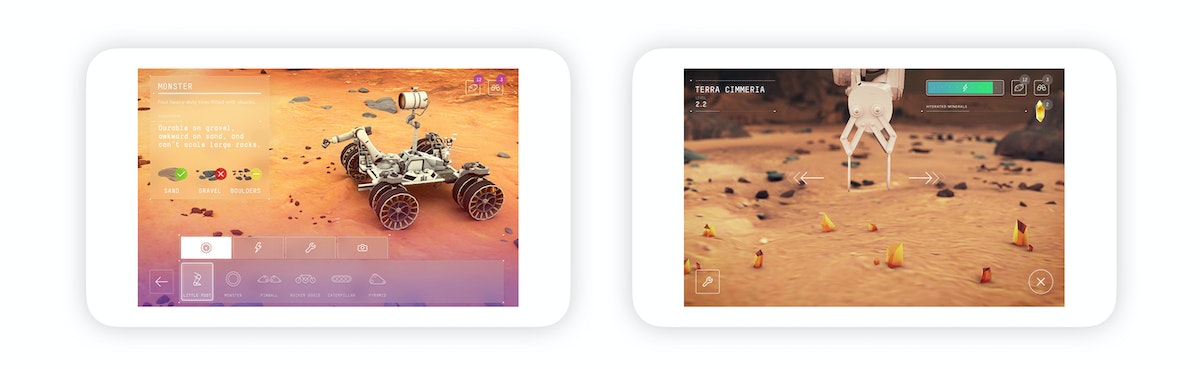
During the game, students are encouraged to compare designs and learn from each other: One rover may be able to travel long distances and take various photos, while another can carry large quantities of ice and sediment samples but can’t go far because of its size. At the end of the mission, the group finds Curiosity and sends all of the evidence they’ve collectively gathered back to NASA to aid the search for life beyond Earth. Before departing the bus, students watch an animated video that explains various jobs in STEM and encourages kids to pursue one of these careers.
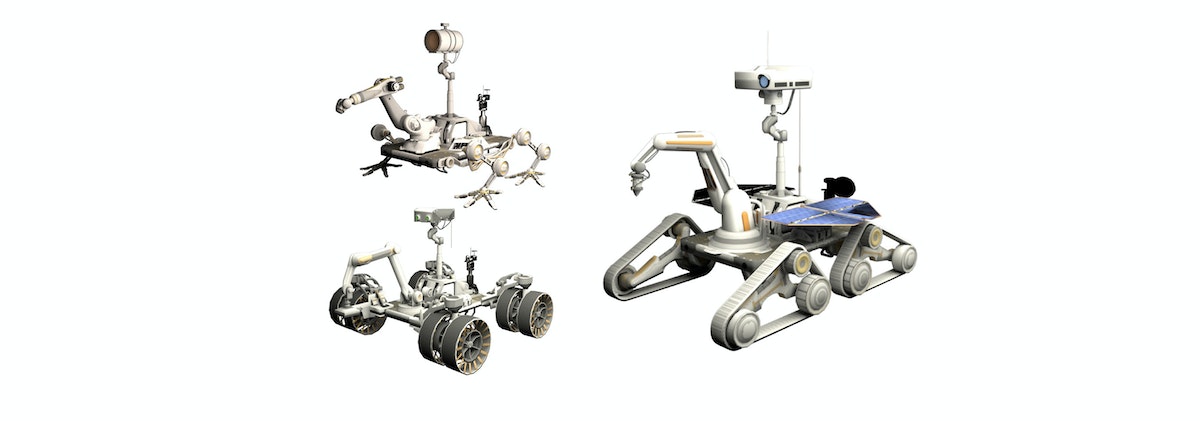
The Verizon Explorer Lab teaches students the engineering design loop, the value of collaboration and teamwork, and what a career in STEM might look like. The mission to Mars game is just one of many potential STEM learning opportunities for students and integrated, customizable learning modules for teachers.
Since launch, the Verizon Explorer Lab has traveled to various parts of the United States and reached thousands of kids. It continues to be managed by Learning Undefeated, Verizon’s nonprofit partner. By designing for and with students, it’s possible to create educational experiences that facilitate meaningful learning and genuine fun. The Verizon Explorer Lab represents progress towards a more inclusive future for employers and the STEM field.
A leading food company’s human-centered transformation spurs rapid growth
How The J.M. Smucker Company embraced customer centricity to build a culture of innovation.
Over more than a century of leadership in the food and beverage industry, The J.M Smucker Company has expanded its range of products to maintain its relevance and address market demand. Today, the company leads numerous categories, with beloved products like Jif, Milk-Bone, and Folgers, which are the top choices of millions of Americans. By growing and diversifying their brands over the decades, Smucker has successfully weathered major shifts in consumer habits and technology. Today, though, CPG companies are experiencing unprecedented disruption, and leaders at Smucker understand that the escalating pace of change will require more than just new products.
Geoff Tanner, Senior Vice President, Growth & Consumer Engagement at The J.M. Smucker Company recognized the need to identify new market opportunities and establish practices that put innovation and growth at the heart of their business. And he saw the potential to bring those goals to life through his relationship with IDEO.
WATCH: Balancing innovation and efficiency through design has helped Geoff Tanner, Senior Vice President, Growth & Consumer Engagement at The J.M. Smucker Company, brave the unfamiliar, transform organizations, and ultimately bring game-changing ideas to market faster.
Geoff has stewarded a close partnership with IDEO for over a decade and throughout roles at numerous organizations. Together, Geoff and IDEO have worked on 25 projects, beginning while Geoff was VP of Marketing at Big Heart Pet Brands, and continuing on throughout his career at The J.M. Smucker Company. By working with IDEO to adopt a design thinking approach, Geoff has enabled collaboration across teams and empowered his organizations to find new ways of working that result in measurable business impact. For The J.M. Smucker Company, the partnership has brought creativity and human-centered design to the forefront of its operations, strengthening its ability to bring new products and brands to market and create a pipeline of growth.
WATCH: The J.M. Smucker Company has shifted to embrace growth and innovation as a mindset throughout the organization to bring more consistency to the innovation process.
Looking to the past to creatively connect with the future
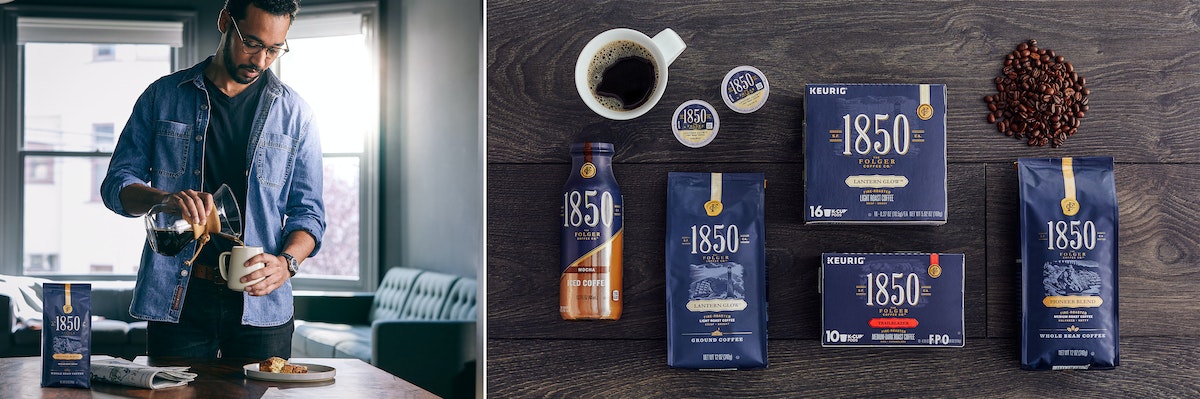
As an example of this, Geoff and The J.M. Smucker Company suggested to IDEO that they explore how Folgers, America’s leading at-home coffee brand, might resonate more deeply with a millennial audience. Design research revealed that the mindset of today’s millennial coffee drinkers aligned with Folgers entrepreneurial brand roots. The teams collaborated to create a new concept: a brand called 1850 and an end-to-end, go-to-market product experience, including packaging, retail, and merchandise. 1850 hit shelves in 2018 and has since been reported by IRI Advantage as the top launch in the Coffee Category for 2019.
Frankly, I don’t think innovation gets any easier. You just get a little more comfortable with the discomfort, and that’s when the work starts to get consistently better.
Geoff Tanner, Senior Vice President, Growth & Consumer Engagement, The J.M. Smucker Company
Creating an innovation pipeline that’s inspired by consumers’ needs
With 1850 underway, Geoff and The J.M. Smucker Company continued to invest in human-centered design to drive new offerings. The next collaboration with IDEO explored how Jif, the iconic peanut butter brand, could extend beyond the jar and become more readily accessible and appealing to busy parents who want to feel confident about the snacks they give their kids.
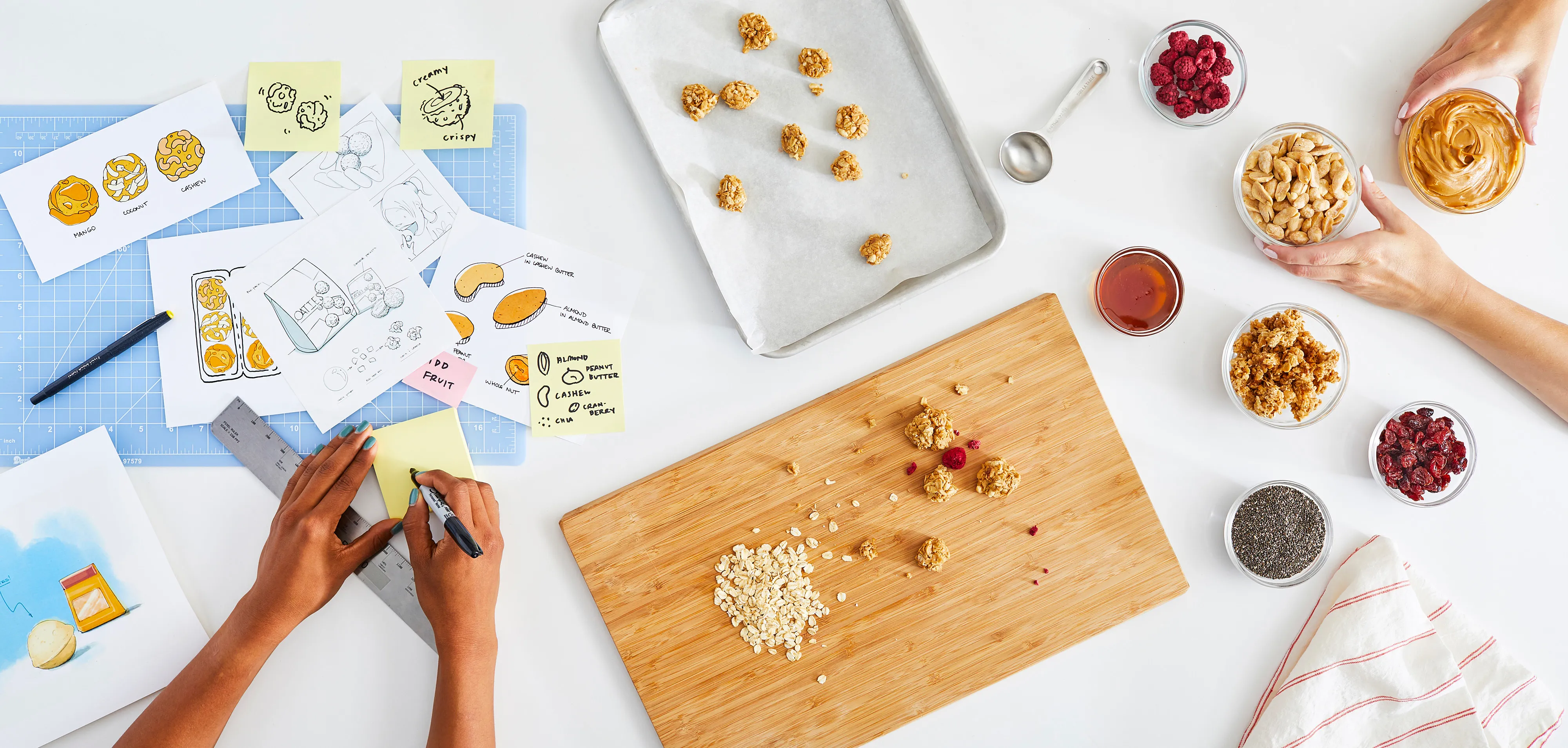
The design team was moved by the challenges that parents face: They want the best for their kids, but struggle to choose between what’s wholesome and what’s convenient on a daily basis. The ideal foods are filling, nutritious, and energizing, but often take more time to prepare and aren’t backpack or carpool-friendly. On the other hand, more convenient options tend to be full of empty carbs. Based on this insight, IDEO and Jif decided to tackle the snack-time parenting struggle. The IDEO and Jif teams worked side-by-side to prototype multiple product ideas and formats and tested them with on-the-go families to ultimately create Power Ups.
Available at over 200 retailers worldwide and online at Amazon, Jif Power Ups make wholesome, delicious grab-and-go snacking possible for kids and parents alike, across products ranging from Soft Baked Bars to Creamy Clusters, which are filled with peanut butter and rolled in whole grain oats. All are made with peanuts as the first ingredient and contain no high fructose corn syrup. Since going to market in 2018, Jif Power Ups has been named the top innovation launch in the Snack Bars category by IRI Market Advantage.

Design thinking underpins everything we do.
Geoff Tanner, Senior Vice President & Corporate Officer, Growth & Consumer Engagement, The J.M. Smucker Company
WATCH: The J.M. Smucker Company is on a transformational journey, committed to three pillars of growth: Lead in the best categories, build brands consumers love, and be everywhere.
The J.M. Smucker Company has experienced accelerated growth and speed to market by testing bold new ideas and evolving the role of innovation at the company. Design thinking and consumer empathy have permeated the organization’s new product development process, making it easier to uncover sharp, human-centered insights that lead to thoughtful and uniquely differentiated brands in a competitive, ever-shifting, and overcrowded industry. The work has fueled Geoff’s vision to inspire a culture of innovation at the company so that it can move at the speed of consumers and remain a best-in-class family of brands for future generations.
Creating a fresh, modern take on the Indian culinary experience
Designing a scalable restaurant, retail, and packaging experience that highlights the diversity of regional Indian foods.
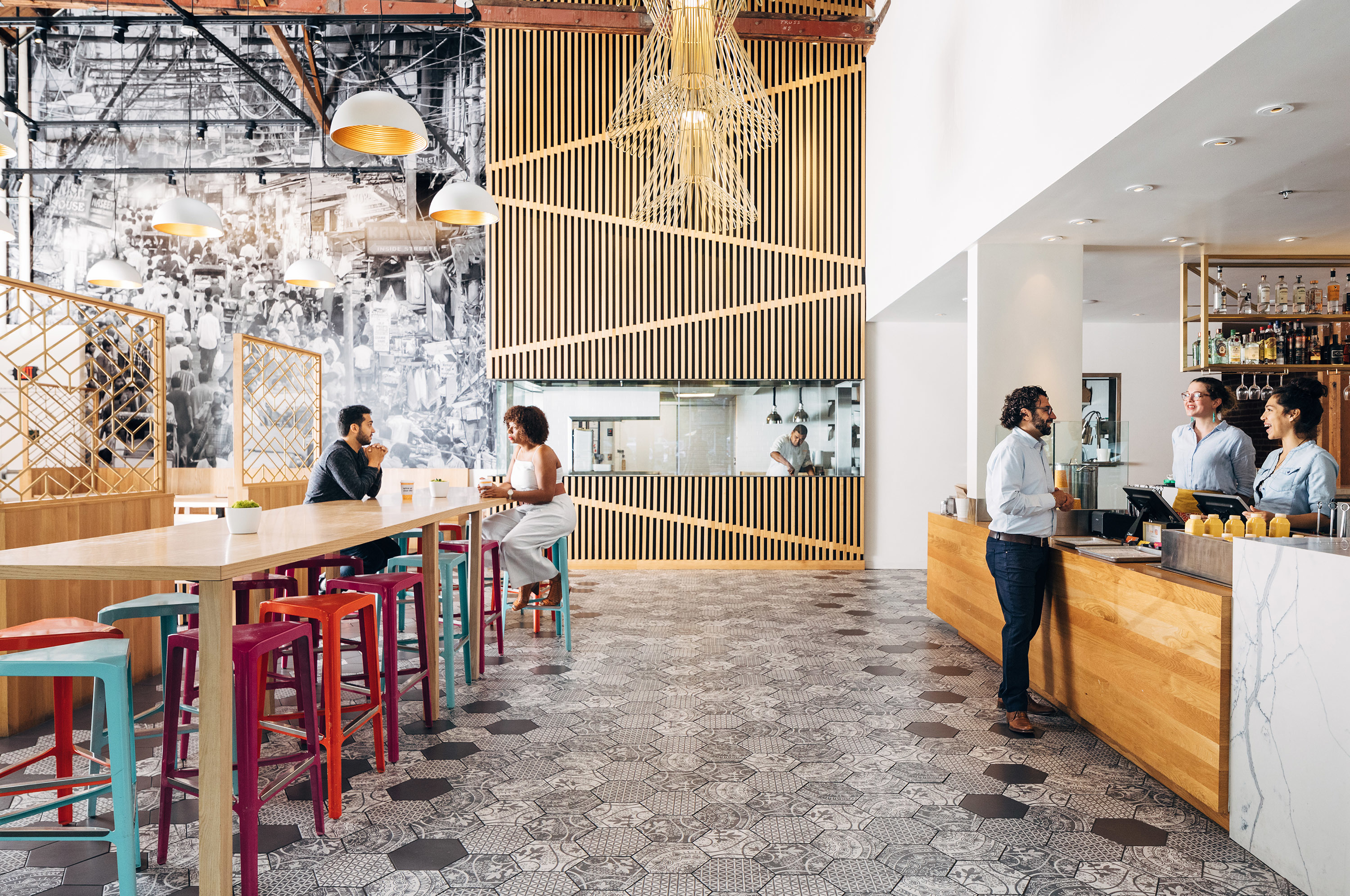
It’s a Thursday afternoon in Oakland, California. A line of lunchtime diners snakes out the door of dosa by DOSA. Upon entering, eaters are greeted by the smell of tangy dosa—a large paper-thin crepe made from a fermented batter of rice and lentils—and sweet, spicy chai. Turquoise chairs pop against a floor-to-ceiling mural by Oakland artist Namita Kapoor that transports diners to Chandni Chowk, one of the busiest markets in Old Delhi, as if enjoying their food at a local vendor.
In 2003, Emily and Anjan Mitra spent their honeymoon in India, savoring the street food of Anjan’s childhood in Mumbai (often still called Bombay). After returning to San Francisco, they found themselves longing for those distinctive flavors and dishes. Realizing that most Bay Area diners had never seen nor tasted these foods, Emily and Anjan founded DOSA, an upscale, full-service restaurant that introduced the Bay Area to Southern Indian cuisine. Locals came to try the unique, plant-forward dishes, and left with satisfied bellies and a broader understanding of Indian culture.
The entrepreneurs envisioned a brand extension of DOSA: a counter-service restaurant that could scale nationally. The hospitality venture, called dosa by DOSA, would offer healthful Indian street food made from local and seasonal ingredients. Emily and Anjan also set out to expand their existing product line-up—including cold lassi beverages, simmering sauces, and grab-and-go-meals—to national grocers and retailers and needed launch-ready packaging that was convenient, eye-catching, and environmentally-friendly. The new expression would enable consumers to experience dosa by DOSA and Southern India in a variety of forms and places. Emily and Anjan partnered with IDEO to establish a cohesive and consistent brand experience, from the restaurant and to-go meals to retail stores and mobile delivery.
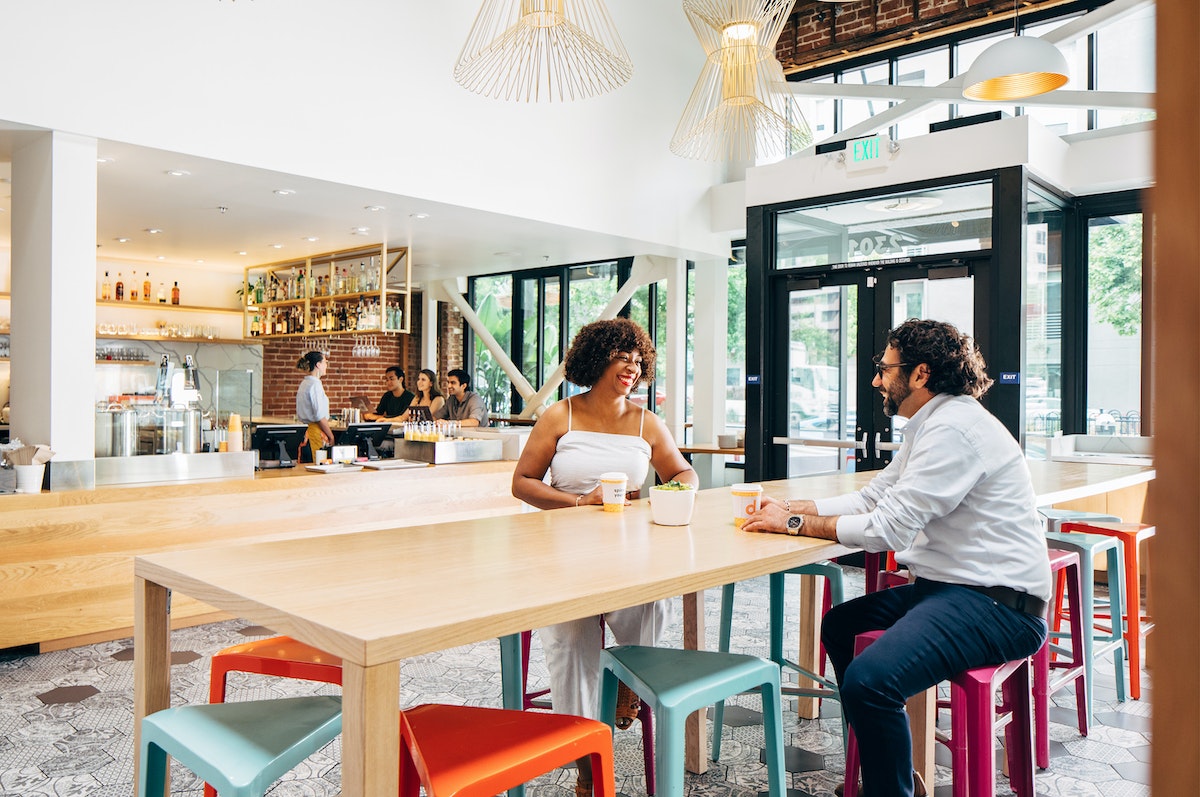
In close partnership with the founders, their staff, Feldman Architecture and MPADA, IDEO set out to bring dosa by DOSA to life and help it scale through brand, environment, and experience design. This included creating everything from the logo and packaging to the menu and operations strategy, with each element tying back to the founders’ vision of sharing Indian heritage and traditions through cuisine.
The group began by seeking cultural inspiration for dosa by DOSA’s brand identity system—the logo, colors, values, fonts, and messaging—to guide future designs. They were inspired by Indian truck drivers who decorate their trucks with garlands, signs, or flags that engage other drivers or bring luck. The dosa by DOSA logo design and its wood-cut typeface are inspired by the dimensionality of this homespun art form, while the vibrant, eclectic colors reflect the streets and textures of urban Mumbai.
The goal of opening people’s minds to Indian cooking and culture extends to the packaging, which meets customers’ needs and playfully educates them. The food containers—made from recycled and compostable material—feature brightly patterned labels reminiscent of the trucks. Some have built-in compartments suited to multiple dipping chutneys, making it convenient to sample a variety of Indian flavors. Paper tray covers resembling Mumbai newspapers offer eating tips like “Be civilized. Eat with your hands,” encouraging diners to experience an Indian custom.
The vibrant brand comes to life across an array of packaging, including cold cups printed with the phrase “thanda thanda pani”—meaning “cold cold water”—which comes from a popular Indian parody of the Vanilla Ice song "Ice Ice Baby."
To design the diner experience and restaurant environment in a way that invites curiosity about the culture and cuisine, the team started with diners: They identified key moments in their experience like entering, waiting in line, and paying. The floor plan, furniture, lighting, signage, and menu were designed around these touchpoints. For example, while customers wait in line, they can watch dosa being prepared, as if they’re eager and hungry travelers awaiting street food.
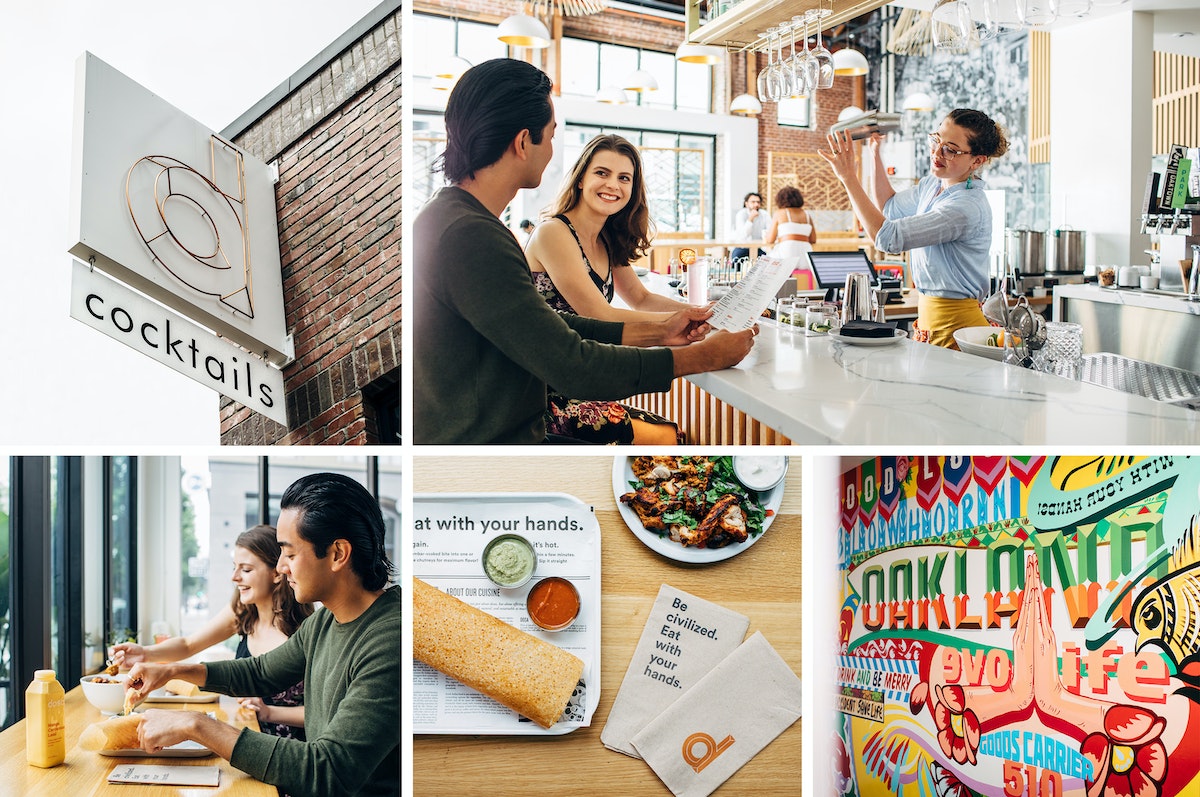
The dosa by DOSA menu includes distinctive items like coconut kale mung bean salad and hot masala chai made with caramelized milk—the way Anjan’s mother prepared it. To help the restaurant scale, the team created a preliminary furniture, fixtures, and equipment (FF&E) budget, 3D renderings of the space, and an operations strategy for the founders and their employees.
The dosa by DOSA flagship launched in January 2018 in Oakland, California. The IDEO brand guidelines have enabled the dosa by DOSA team to independently and easily shepherd new product lines to market, including salads, wraps, curry bowls, samosas, and simmer sauces. The brand’s packaged food launched in over 200 natural food stores in 24 months—including over 100 Whole Foods locations—as well as online retailers and delivery services like Good Eggs and Caviar. These items and the restaurant have helped Emily and Anjan realize their vision of bringing the flavor and spirit of Southern Indian cuisine to new communities around the world.
Revitalizing Japan’s food industry through design and software
Redefining the “middleman” role of produce wholesalers in Japan.
In recent years, due to shifts in Japan’s demographics, the food industry has faced challenges such as a decrease in market size and a shrinking number of producers. As a result, social impact opportunities abound in this field.
When Japanese software company NJC (Nippon Jimuki Co. Ltd.) approached IDEO seeking to identify new business opportunities that would build on the company’s core strengths, the food and agriculture industry rose up as a promising area of focus.
NJC is a well-established software company that has spent over 50 years helping to build backend business systems for small to medium enterprises. NJC works across healthcare, retail, and food and beverage, computerizing core processes to support and improve operations.
In partnership with IDEO, NJC explored its strengths and potential as an organization, as well as the ideas and visions of the employees, and emerged with the goal of using their capabilities to address large-scale issues facing regional farmers.
During research across Japan, local growers described challenges with multi-layered supply chains and analog systems, which led to “overwork for minimal profit,” as well as a gap between supply and demand. Because agricultural wholesalers lacked clear information in advance on the status of crops or the volume to be harvested, they struggled to negotiate with buyers, which led to wasted food On the other hand, the farmers who grow the crops are engaged in manual labor, and do not always have the energy to focus on business aspects such as efficiency or the pursuit of increased profitability, which leads to a diminished interest in farming among young people.
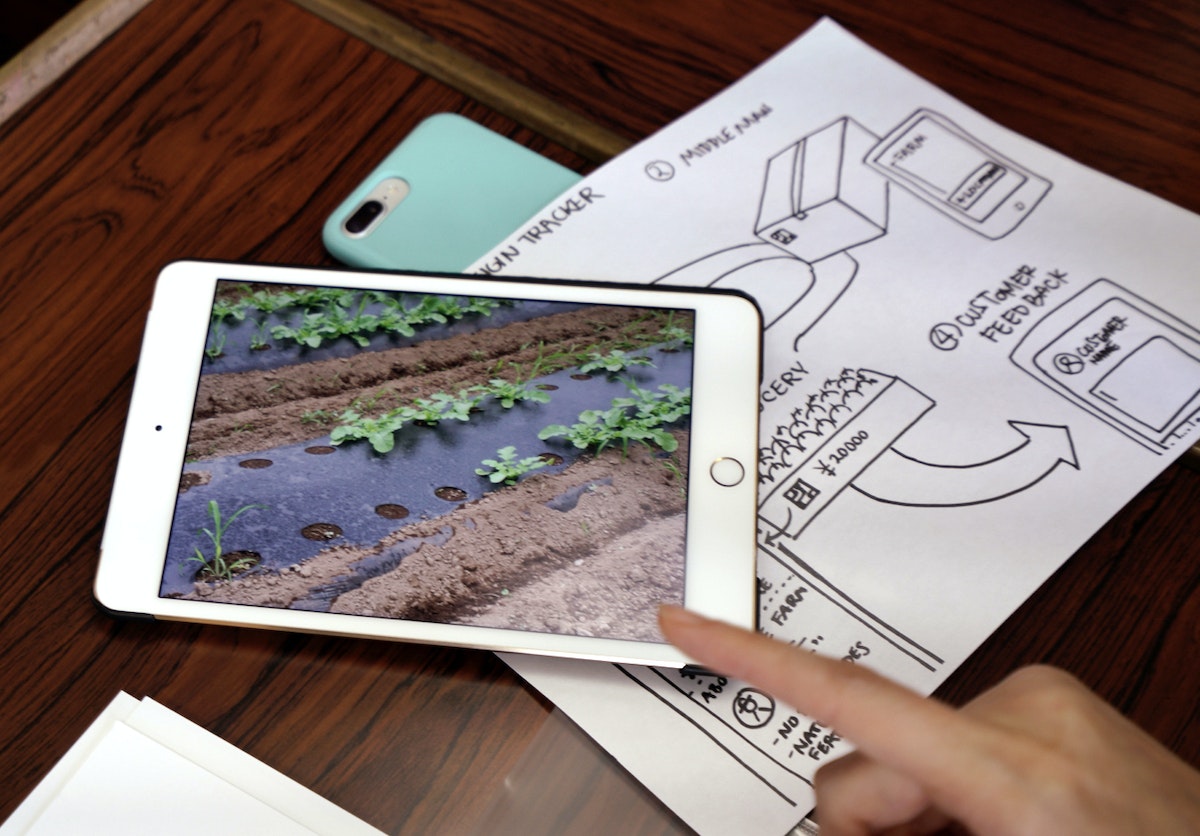
One question that emerged through research was why agricultural producers weren’t utilizing IT. This evolved into “How can profitability be improved for all stakeholders?” and, “How might we create a system that will provide useful data without creating a burden for either farmers or agricultural wholesalers?”
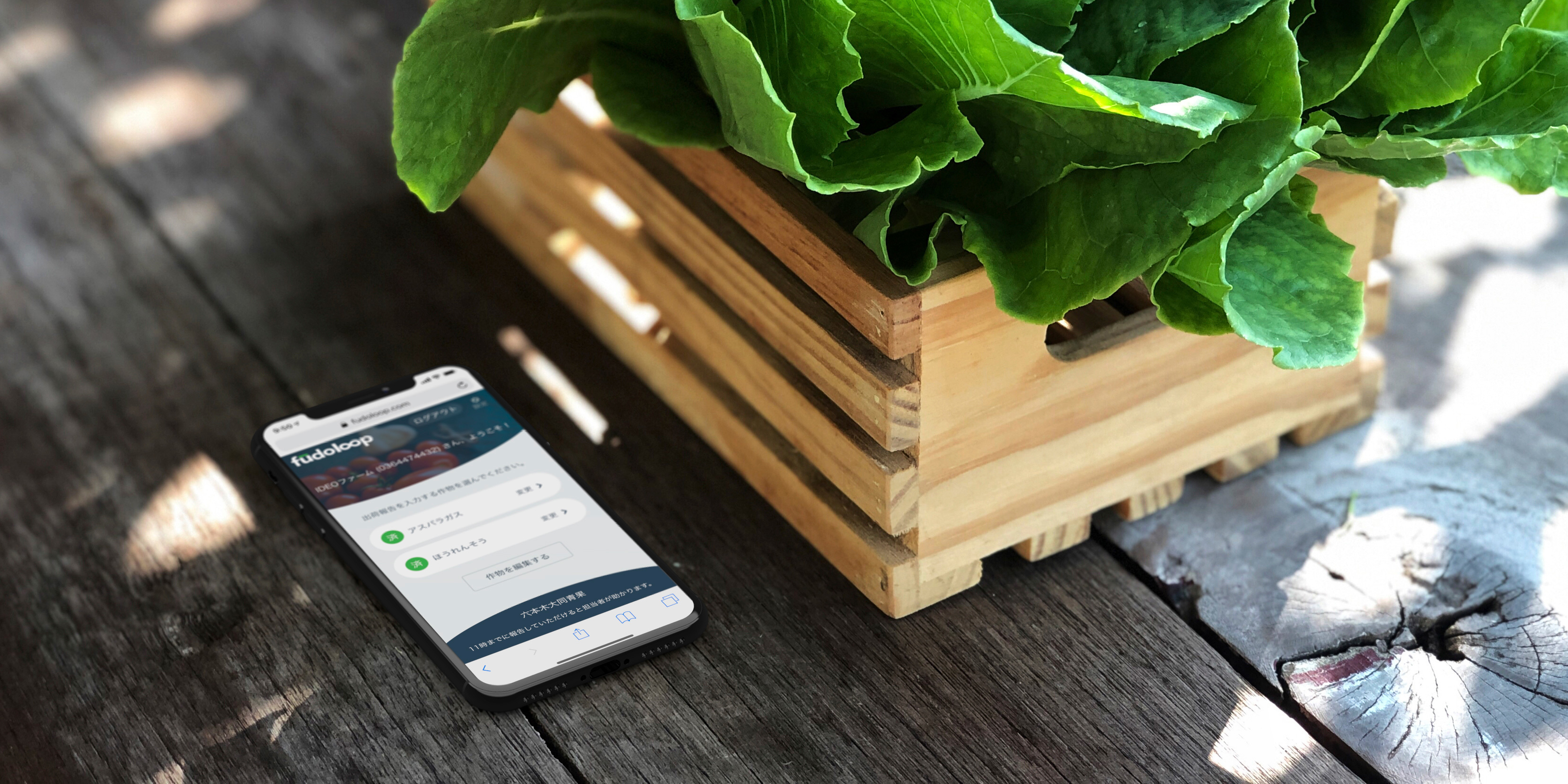
The result was fudoloop.
fudoloop is an app that enables farmers and wholesalers to conduct business more profitably by bringing transparency to the fluctuating produce market. Through fudoloop, wholesalers receive information from farmers a day in advance, and can coordinate the various requests of buyers, such as order size, production location and other special requests. As a result, wholesalers can function as “community managers,” doing business with both producers and buyers at a more appropriate price point.
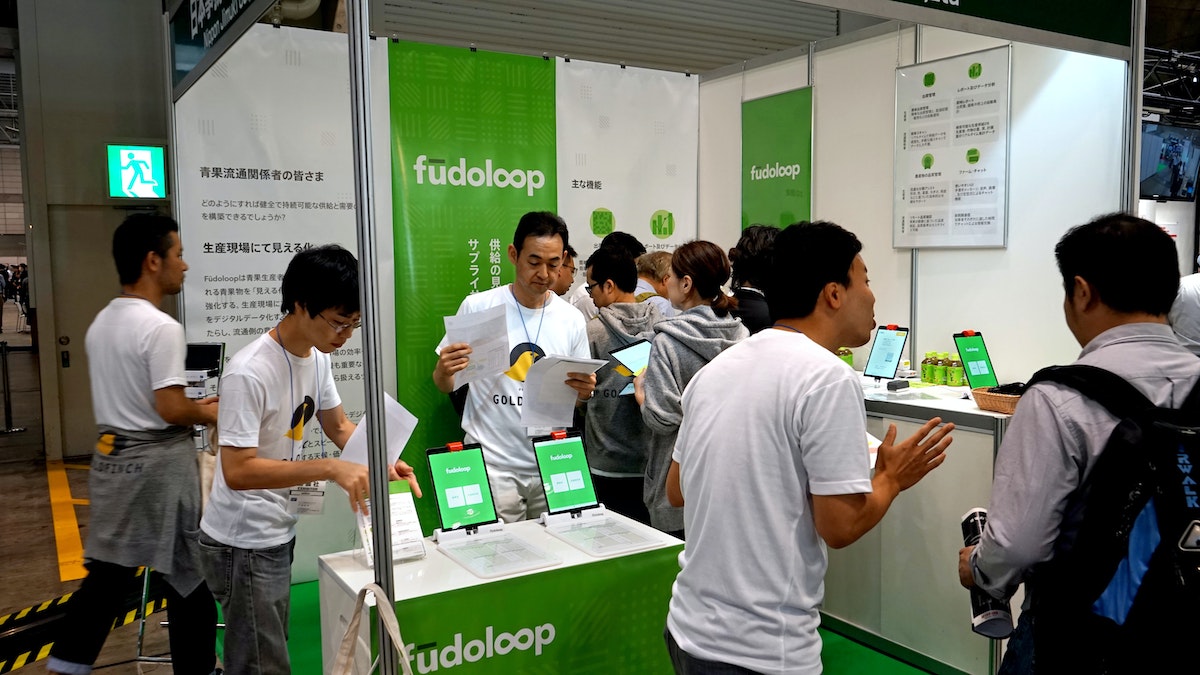
NJC aims for fudoloop to be the first step in a cycle that brings value to all stakeholders, from farmers to wholesalers, retailers and even customers, by redefining the “middleman” role of produce wholesalers.
Welcome to The Octopus
The story behind the title, and a preview of what's to come
Laughter erupted. Who in their right mind names their blog after an invertebrate?
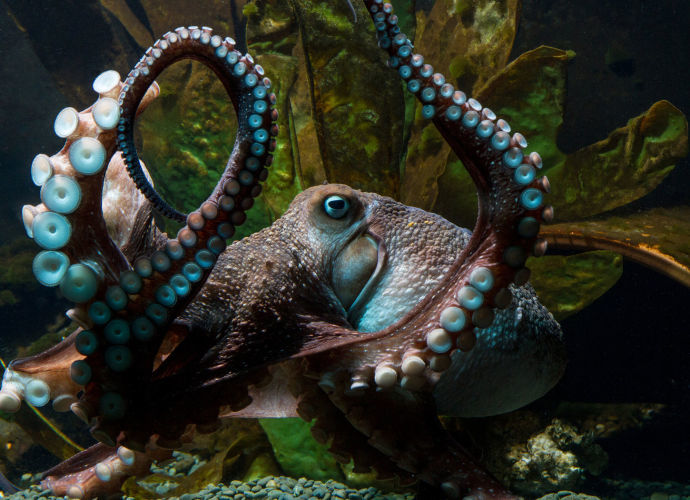
A few days later: Headlines pour in about a spunky boneless creature, affectionately named Inky, who’d popped the lid of his tank in the National Aquarium of New Zealand and escaped down a drain hole to the Pacific Ocean. The soccer-ball-sized cephalopod was instantly exalted by the Internets for his smarts, curiosity, and, it must be said, insistence on being free. One commenter crowned him the “world's greatest hero.” Inky now has 280 followers on Twitter.
Upon further investigation, it turns out that octopuses are the designers of the deep sea. They collect coconut shells as mobile homes, assemble the perfect number of rocks to narrow the opening to their dens, and use their water jets to clean their lairs, like 8-legged Marie Kondos.
Indeed, they’ve been observed doing all the things we prize here at IDEO: "Octopuses engage in play, the deliberate, repeated, outwardly useless activity through which smarter animals explore their world and refine their skills...." They’re supremely multidisciplinary, big-brained and emotional, and they may even be possessed of a soul.
A mollusc that designs its environs, can change color and shape, and sprays ink like an old-fashioned pen? What more suitable mascot for IDEO’s blog, we thought. And so we let Inky take over our masthead forevermore.
The Octopus is intended to be a drive-thru for quick hits of inspiration. Our designers will share their thoughts on craft—how that shows up in their Moleskines and Instagrams and blogs and fonts and posters. They’ll offer how-tos and hot tips and other occupational obsessions.
Last week's obsession was Inky, so we had Greg, a designer in our Tokyo office, draw him, and Derek, a developer in our Chicago office, set him afloat (watch this space—Inky will be reimagined by guest artists).
“He is such a curious boy,” Rob Yarrell, the manager of New Zealand's national aquarium told the Guardian. “He would want to know what’s happening on the outside. That’s just his personality.” We want to know what’s happening on the outside, too. And we hope you’ll follow along as we squiggle out of our tank, pour our baggy bodies into a narrow opening, and seek out a better-designed world.
Header image courtesy of National Aquarium of New Zealand
Our blog needed a name. Like millions who’ve started blogs before us, we sat around a table and tossed around ideas, most with “design” tacked on, like a fake mustache. Exasperated after many false starts, someone blurted, “Let’s just call it The Octopus.”
How to Stop Eating Free Office Food
Eat with your eyeballs, not your mouth
If you’re not careful, that is. If you have tendencies toward indulgence. If you’re running on four hours' sleep thanks to an incredibly wakeful baby who recently exited your womb and moved into your house. If you like food.
It’s not that the food is unhealthy, it’s that it’s so plentiful. A nicely stocked office fridge and pantry is one thing; day after day of roasted brussels sprouts, kale and beet quinoa, and lemon chicken thighs left over from catered meetings is another. Not to mention the green tea Kit Kats brought back from research trips to Japan, the home-baked butter biscuits whipped up by well-meaning office mates, the bottomless bins of chocolate-covered almonds and cheddar bunnies taunting you behind those cabinet doors. All right, maybe the food’s not the healthiest.
I needed a plan, a tool of some kind to wield wooden-cross-style in the face of so much vampiric deliciousness.
For most people the food at my workplace is a dream come true, but for me it quickly becomes a nightmare of unchecked indulgence. When I came back from maternity leave, I knew I needed help. I needed a plan, a tool of some kind to wield wooden-cross-style in the face of so much vampiric deliciousness. I found that tool in my iPhone camera and a Tumblr feed.
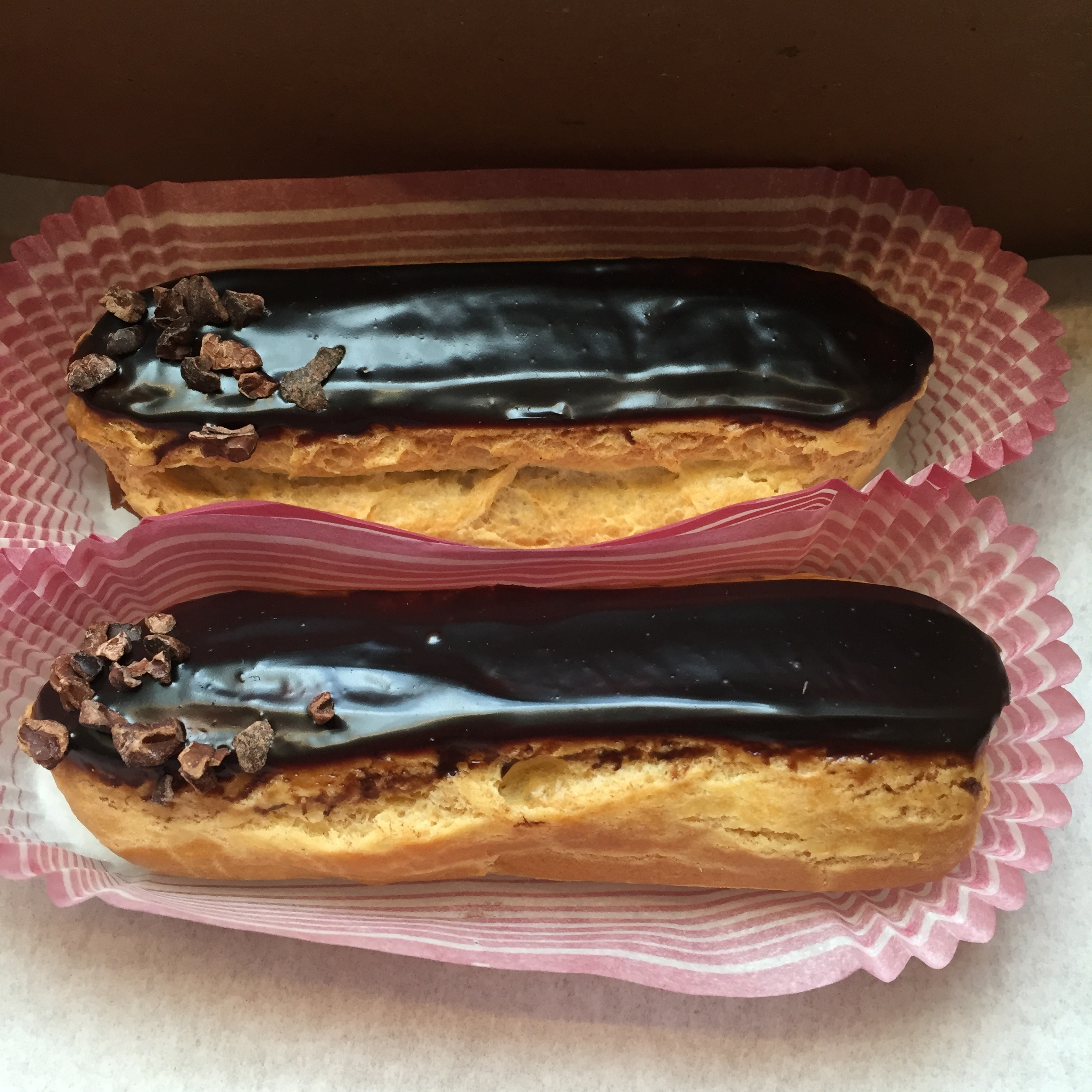
I Didn’t Eat This is a blog of all the food at IDEO I’ve managed not to eat.
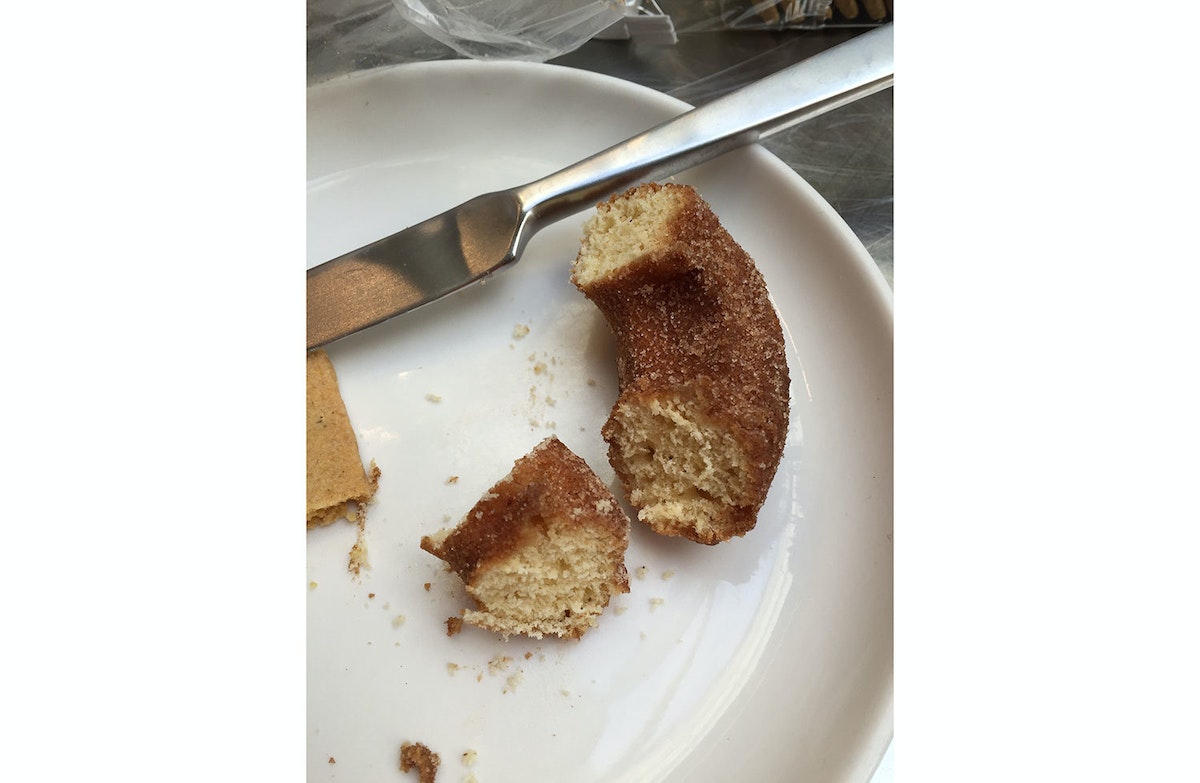
Photographing treats gave me a different way to consume them. I still got to have my moment with that cookie. While framing it up on my phone, I could savor its delectableness and availability—its sultry, loose, wanton availability, just sitting there on that napkin all alone—but then, instead of popping it in my mouth, I'd just hit a button and move on. I’d leave satisfied, yet the cookie would remain. One of my coworkers remarked that when I snapped a pic, I was capturing the cookie’s soul.
Sharing the blog became important, too. Word got around the office that I was using I Didn’t Eat This as tool for behavior change. The accountability helped. With every post, someone would joke that they had, in fact, eaten it—all the spiced carrot cake with orange-scented frosting that somebody brought from home—and I told them that was great. The blog wasn’t about shame or guilt. It celebrated food. And it celebrated my growing ability to say no to it.
One of my coworkers remarked that when I snapped a pic, I was capturing the cookie’s soul.
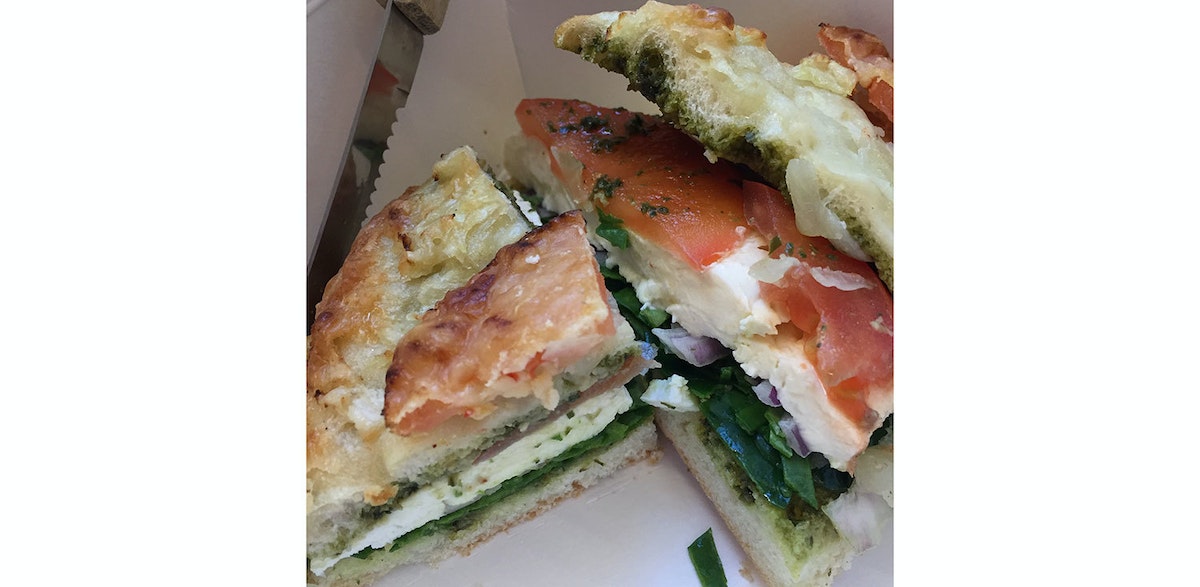
And, amazingly, it started to work. I replaced one behavior with another and the pounds began to drop. True, my new habit kept the cupcakes out of my piehole, but its real power was that it made me mindful. I now experienced a moment of choice — of personal agency — when I spied something yummy in the kitchen. Did I want to eat that yumminess or take its picture? Taste the food or just toast to it?
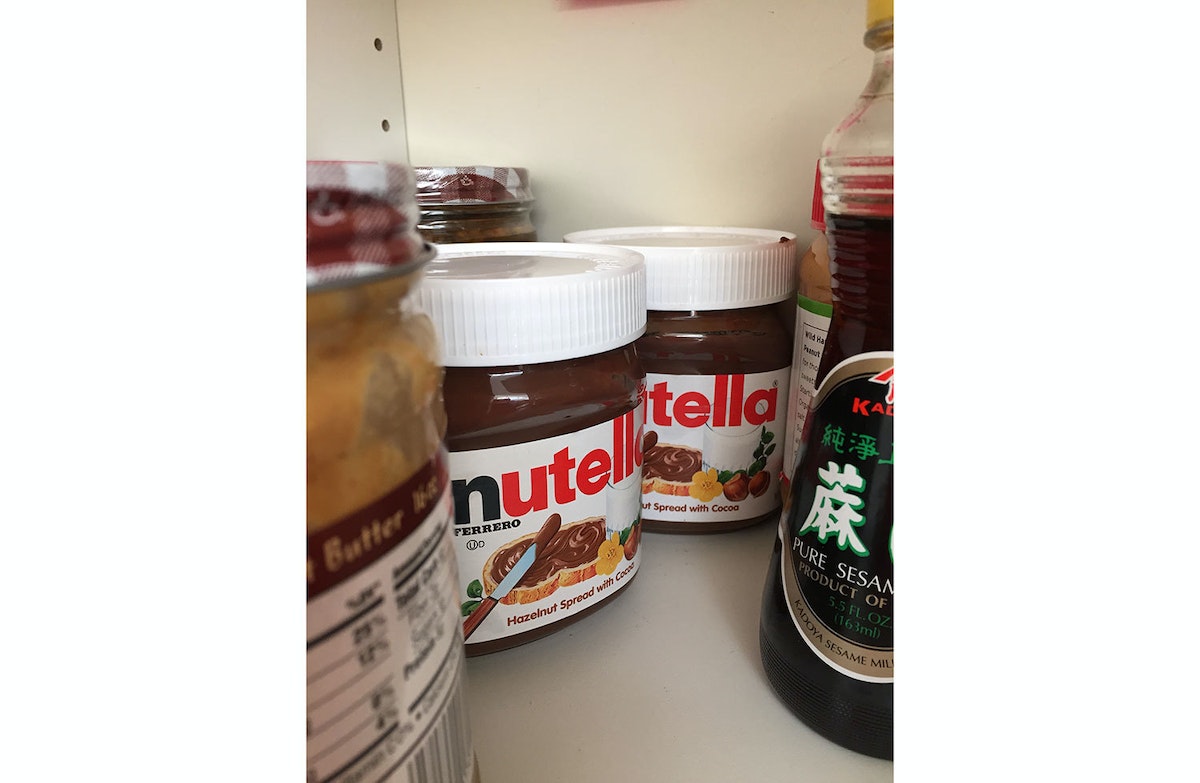
I’m now about eleven months into this experiment and I wish I could say that sticky brioche french toast bites no longer hold my mind prisoner, but nothing is ever that easy. I will say, though, that the moments of agency build on one another. It feels good to be in control. Soon after I started the blog, I found myself dusting off the old food-tracker app, drinking more water, and eventually working out.
It’s rare that I stick with any behavior for more than a few months at a time, but whenever one slips out of reach, another is there to rise and take its place, like an endless supply of chocolate-covered almonds. Or another slice of spiced carrot cake with orange-scented frosting. Or a cheddar-cheese arepa with chipotle aioli, all cozied up in a handy to-go wrapper.
Maybe I better go free up some space on my iPhone.
Here’s what they won’t tell you about IDEO, or for that matter any company where you might happen to work: It will make you fat.
Here’s what they won’t tell you about IDEO, or for that matter any company where you might happen to work: It will make you fat.

4 Ways to Get Smarter About Money
Resources for clueless designers
1. Daily Worth (website & newsletter): A daily dose of financial news offering advice tailored specifically to women. It separates your financial life into four major buckets: Plan, Earn, Spend, and Live. Articles are easily digestible and engaging. Topics range from “Running your business like Beyonce” to “Increasing your willpower.”
2. Smart Couples Finish Rich by David Bach: Reading this changed how my husband and I manage our money. It intends to get you and your partner on the same page financially and moving forward as a team. Which can be good for your bank account, and your relationship.
3. How to Worry Less About Money by John Armstrong: Taking a unique approach, this book addresses our relationship with money rather than advising us on how to make more or spend less. It asks you to define your “money worries” and their origins as opposed to, say, dithering over “money troubles.” It made me realize that all relationships take introspection, nurturing, and work. Including my relationship with money.
4. Society of Grownups (Boston-based brick & mortar and online platform): Our friends at the Society of Grownups are a vast resource for fiscal education and advice. They are helping to normalize financial planning as a component of our daily conversations. In fact, my conversation with the young woman that kicked off this whole affair was one of many that inspired the creation of the Society of Grownups—a project that deeply inspired each individual team member to make fundamental shifts in their relationship with money.
Smart designers really do finish rich.
Two years ago, I interviewed a young woman about money. Sitting in her living room in Southern California, I was struck by two things: One, I realized she was completely clueless about the role finances played in her life, and two, I realized that I was, too. So I set out to school myself. Here is a selection of my go-to money resources:
When Chickens Tweet and Nerds Rule the Earth!
Musings on the future of the Midwest
Detroit's auto industry is slowly speeding toward recovery. Kansas City's fierce foodie culture is helping it reclaim its status as "Paris of the Plains." And inspiring Chicago artists/urban-renewal impresarios like Theaster Gates are breathing new life into long-neglected neighborhoods.
As IDEO's official Midwest outpost, designers in our Chicago studio wanted to mark this "it moment" in the region's history with a series of talks exploring its past, present, and—as we see it—very bright future. We humbly call these prognostications about automobility, food, urban infrastructure, agri-tech, water, data, and more, "The Future of the Midwest."
As Midwesterners, we're said to be plainspoken pragmatists. But as designers, we can't help but be outspoken optimists.
But don't just take my word for it, hear what my fellow "ChIDEO" designers have to say.
WATCH: A series of provocations and prognostications on our beloved Midwest by IDEO Chicago.
What do Twinkies, skyscrapers, House music, and the Model T have in common? These (in)famous cultural phenomena all hail from the Midwest. At one time, the region was disregarded as "flyover country" by jetting-setting East and West Coast-types, but these days, the nation's Heartland is regarding itself with a new sense of pride.

Lindsey Turner
I’m passionate about building brands, products, and experiences that help organizations show up with meaning and momentum.
I help organizations cut through complexity by shaping how they show up, through brand strategy, identity, and storytelling.
Working at the intersection of brand and business, I bring an editorial eye and a bias toward making—turning ideas into tangible experiences that people can understand, trust, and believe in.
My work spans government, healthcare, financial services, media, and consumer goods, from launching Gen Z-focused ventures to building innovation labs and reimagining legacy brands. I relish moments of ambiguity and enjoy translating across teams, perspectives, and priorities to move ideas forward.
I started my career in editorial and digital design, shaping cross-platform experiences and identity systems in publishing and agency environments. That foundation still shapes how I work today: I’m detail-oriented, collaborative, and overreliant on the Oxford comma. I hold a BFA in Visual Communication from the School of the Art Institute of Chicago.

Rachel Young
My work helps organizations see who their products aren't working for—and build the will and the tools to do something about it
For 25 years, I've asked the same question: Who does this design exclude—and what are we going to do about it?
My work spans human-centered strategy, inclusive design, and qualitative research, with clients ranging from Microsoft, Google, and Verizon to the National Science Foundation, and San Francisco Unified School District.
Before IDEO, I taught elementary school in East Palo Alto and spent a decade doing design work with social service organizations—where I learned firsthand what it costs people when systems are built without them in mind.
I am currently writing User Error, a nonfiction book about digital access and the design decisions behind it. I live in Oakland, California.

Brian Pelsoh
I lead with craft, ensuring our work is creatively excellent: rooted in deep human insight and imagination, while also grounded in the realities of business and technology.
My expertise spans brand, communication, and product design across tech, education, the arts, and social impact.
I believe great work demands both high-level vision and obsessive attention to detail, and only happens through collaboration.
I bring an inclusive, hands-on approach and a deep understanding of business, which enables me to consistently deliver excellence while always asking why.
Before joining IDEO, I worked at the brand firms Pentagram and VSA Partners. I began my career as a designer, leading teams at the School of the Art Institute of Chicago and the Milwaukee Art Museum. I hold an MFA in graphic design from Maryland Institute College of Art and a BFA in communication design from the Milwaukee Institute of Art & Design, and have taught at some of the best design schools in the US.

Tony Wong
I am responsible for IDEO’s long-term success in China and working with clients to use design as a tool to enable growth.
I am responsible for IDEO’s long-term success in China and working with clients to use design as a tool to enable growth. Specifically, I have helped Chinese companies design holistic brand solutions through the development of their products, communication, services, and innovation teams, and I have helped multinationals expand their presence and influence in China.
I advise global leaders on developing China-led innovation and capabilities.
In over 15 years in IDEO Shanghai, I have worked on projects that use design to elevate the quality of the experience of healthcare products and services, streamline processes that increase productivity, create spaces and programs that promote and enable inclusive communities, and build next generation mobility solutions that are planet-positive.
Before joining IDEO, I worked at Philips Electronics and the Electrolux Group in Italy, the Netherlands, and Singapore on a number of breakthrough commercial products. I am a member of the Young President Organization in Shanghai.

How to use AI as an editor, not a writer
Ed White shares how he uses AI as an editor—not a writer—to sharpen storytelling, rehearse ideas, and preserve the productive friction that makes creative work better.
Ed White has a rule he's tested on his own writing: hold yourself as the writer, and let AI be your editor. Ed is a Senior Design Director at IDEO's London studio, where he co-leads the firm's AI portfolio across Europe. Before IDEO, he spent 12 years as a writer and editor at the Financial Times, Wired, and Contagious. So when he talks about when to use AI for storytelling and when not to, it comes from two decades of crafting his storytelling skills.
In this episode, Mina Seetharaman talks with Ed about two specific tools he uses to keep AI in an editor's seat: a "roasting agent" prompted to critique his drafts without any sugarcoating, and a simulated audience he rehearses pitches on before the real thing. They also get into what Ed is hearing from design leaders at Anthropic, Lovable, Shopify, and Google Creative Lab about how creative work is changing, and why he thinks the friction of writing something yourself is worth protecting rather than automating away.

Building a personal AI for the messiness of life: Sida Li
Becca Carroll talks with Cue co-founder Sida Li about designing a personal AI for the messiness of everyday life—not just work. They explore how Sida stays anchored to human needs while navigating fast-changing technology, product tradeoffs, business-model experimentation, and the realities of building an AI company today.
Most AI products today are built for work—a space with clear problems and established systems. One founder noticed a gap: personal life is messier, harder to systematize, and mostly left behind by the AI boom. So she built Cue, a personal AI that lives inside iMessage and group chats, to go where the other tools haven't.
In this episode, Becca Carroll, IDEO's Chief Strategy Officer, talks with Sida Li, co-founder and CEO of Shared Context Lab, about staying anchored to a human need while the technology around her keeps changing shape, why she treats her business model with the same rigor she'd bring to a product, and what it feels like to build a company at this particular, disorienting moment in AI.
The conversation also gets into how Sida makes design decisions: the language Cue uses to describe itself, the tradeoffs behind building inside iMessage instead of a new app, and a real story about a business idea that didn’t pan out.
This is the second in a two-part series profiling founders from IDEO's Startups-in-Residence program. The first conversation is with Johannes Seemann, founder of Sooner, on designing GenAI for the emotional side of money.

Designing GenAI for the emotional side of money: Johannes Seemann
Designing financial tools around the feelings that shape money decisions.
Most personal financial tools are built to run the numbers and optimize towards a budget. While that works for some, most people experience money as a lived relationship that does not neatly fit into a spreadsheet. Johannes Seemann and Becca Carroll discuss why money is emotional before it is mathematical, and what a human-centered approach to building a generative AI financial product looks like in practice.

The curious leader's edge in uncertainty: Scott Shigeoka
How genuine curiosity helps leaders navigate uncertainty with greater confidence.
Mina Seetharaman talks with Scott Shigeoka, author of Seek and Head of Curiosity Cultivation at the Eames Institute, about what distinguishes genuinely curious leadership from performative curiosity, how power dynamics shape curiosity, and why practicing curiosity can restore energy rather than drain it.
Looks like you might be in search of something very specific?
Or reset the filters above and try another angle.
Here’s some random inspiration
Podcasts about creative leadership
Articles about the power of prototyping