
.svg)



Teaching robots to dance
What if technology were designed to make our lives more poetic?
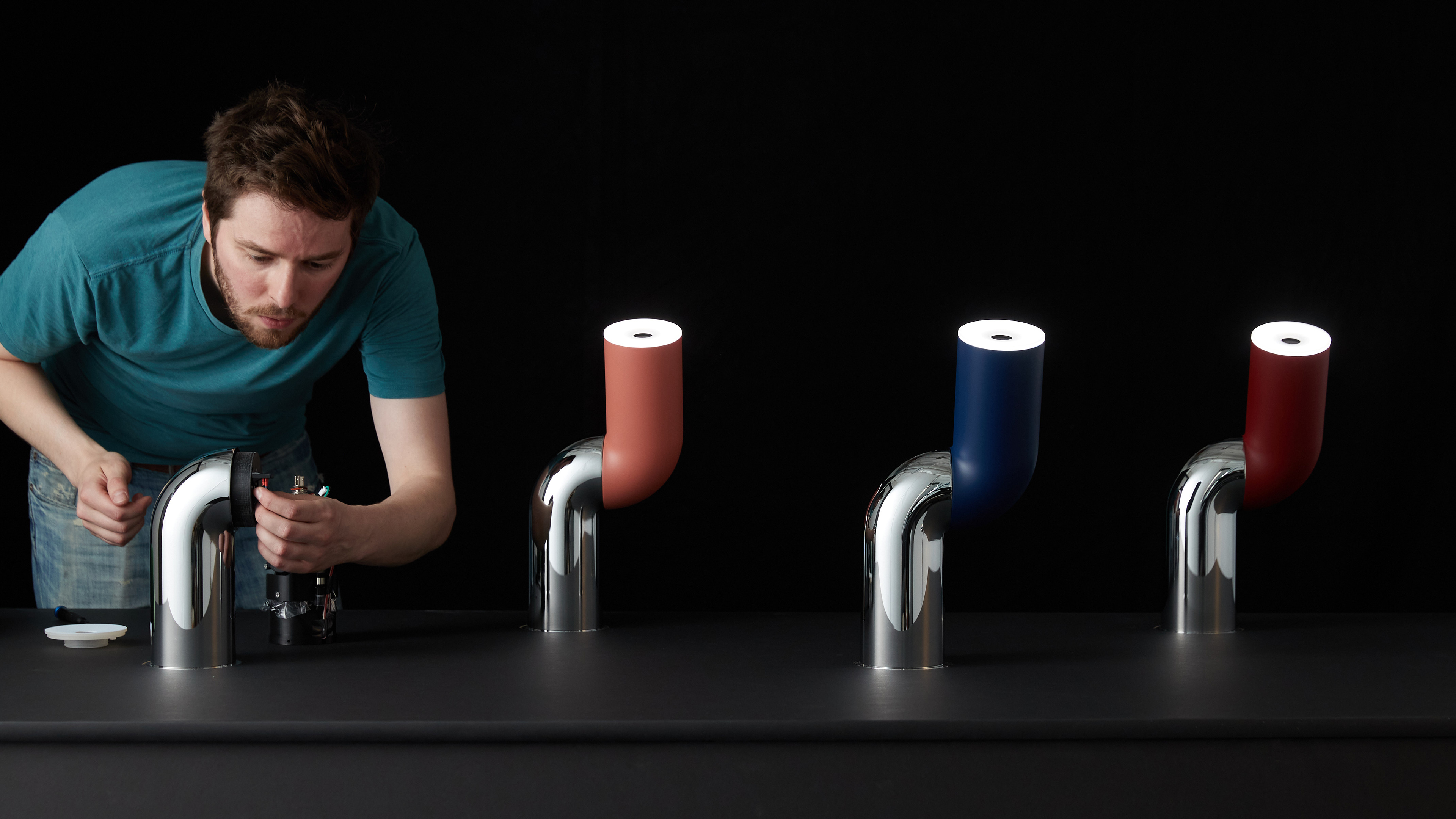
As the curtain parted on moooi’s 2022 exhibit, the audience was treated to a multi-sensory performance unlike any other: four synchronized robot scent diffusers telling a story through dance. As the robots—called Piro—swayed and dipped to the beats of a custom-designed soundscape, it was easy to forget the performers were made by a team of industrial designers and engineers in San Francisco.
The work expressed a future vision for what it means to humanize technology. Rather than design technology to make our lives more efficient, what if instead we designed technology to make life more beautiful?
For twenty years, moooi has seduced the world with bold, imaginative design. The firm, named after the Dutch word for beautiful, made its name by designing furniture and home goods that appeal to an interest in pushing the edges of form as much as function. Moooi came to IDEO looking to create an exhibit for the largest furniture fair in the world that might provoke the audience to imagine a world where design’s primary function was to inspire joy.
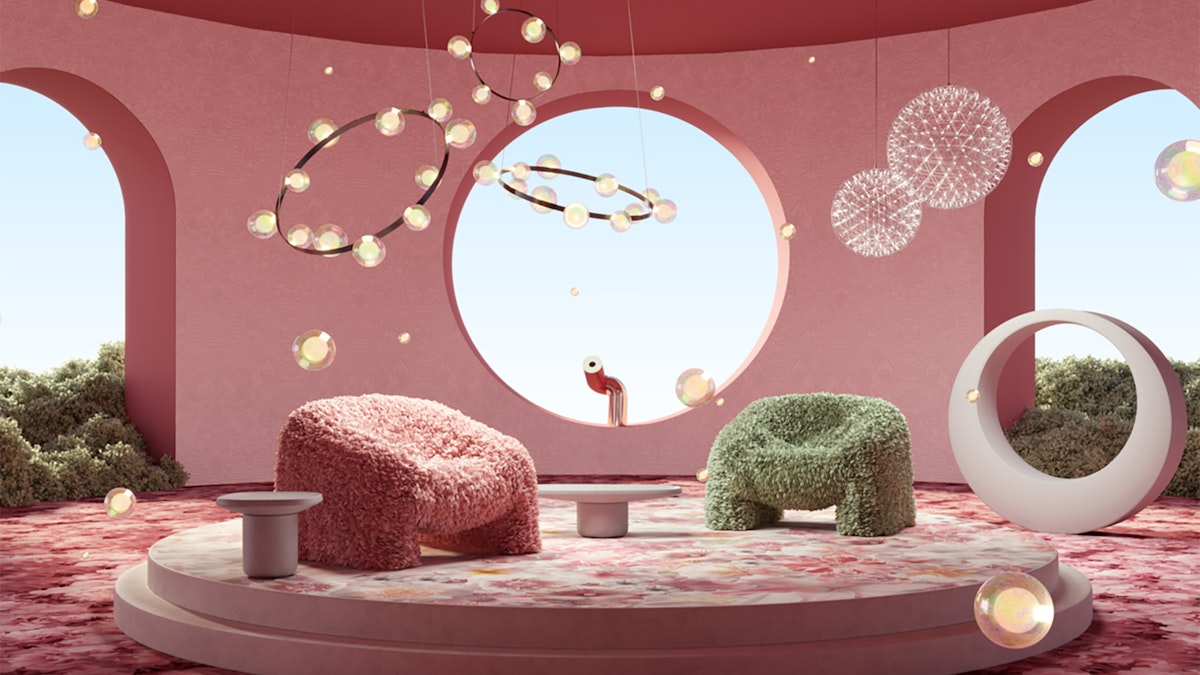
“Defy Gravity”: one of several experiential “worlds” moooi created for the 2022 Salone del Mobile. Each room had its own scent, soundscape, color, and digital experience.
Our process started by going wide. We presented 20 potential conceptual designs to the team, one of which moooi founder Marcel Wanders lovingly referred to as the “farting pet,” a robot scent diffuser that could walk around the home.
A scented smoke ring lingers in the air after Piro’s final crescendo.
From there, a team of IDEO designers enlisted the support of Catie Cuan, a choreographer who specializes in human-robot interaction, and Dutch sound design firm KLOAQ, to refine the concept into a four-minute performance piece.
Piro learned to mimic balletic human gestures.
The final result was technically involved: four robots moved independently, controlled by custom electronics and software designed to mimic the movements and grace of ballerinas. But in the performance itself, the complex mechanics disappeared, allowing the audience to experience not just what technology can do, but how it can make us feel.
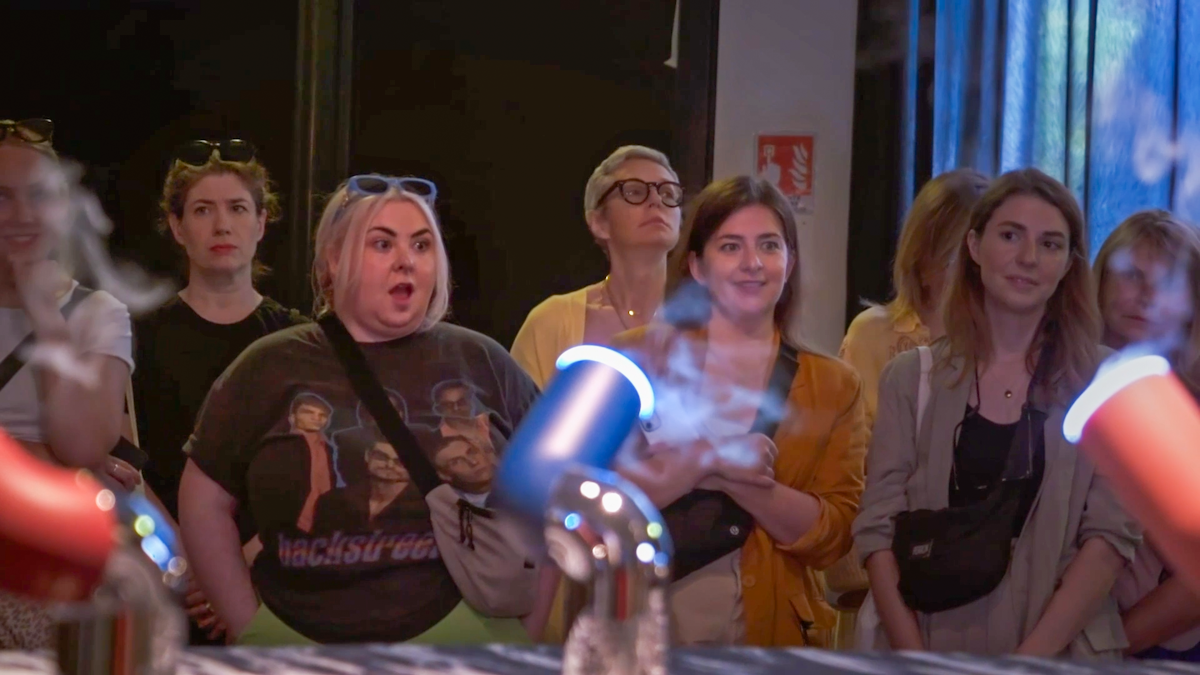
What happens when a designer and a classically-trained choreographer collaborate? Attendees of Salone del Mobile.Milano, the largest furniture fair in the world, got to see for themselves.

Empowering frontline communities
CSAA Insurance Group leads a global call for climate resiliency solutions.
To build a climate-resilient future, we need an all-hands-on-deck approach across industries and organizations, as well as the leadership and collaboration of frontline communities themselves.
To that end, IDEO and CSAA Insurance Group worked together to unite nine partner organizations, including Aon and the Environmental Defense Fund, to launch an open call for solutions to help communities prevent, prepare for, and recover from climate-related disasters. The goal of the Challenge was to surface actionable and scalable ideas that experiment with new technologies, models, and partnerships, then provide innovators with the support and funding they need to get their ideas off the ground and into the hands of frontline communities.
IDEO set these entrepreneurs up for success throughout the submission process, holding one-on-one conversations with participants, sharing constructive feedback on potential solutions, and developing their ideas and skill sets. The team also hosted workshop and panel sessions to grow community bonds and provide expertise on critical topics, including assessing climate risk and storytelling for impact. Hundreds of ideas came in from around the world, ranging from harnessing the power of AI, to building resilient infrastructures, to democratizing access to climate data, and more.
Once all of the ideas were in, a cohort of judges with a wide diversity of work and lived experience screened for concepts that were relevant, impactful, novel, community-informed, and equitable. At the end of the Challenge, the team chose 13 winning concepts with high potential for impact and partnerships, including Reef Rocket, which seeks to fabricate natural biocement reefs that reduce coastal flooding and erosion, and BurnBot, which is working to prevent wildfires by conducting controlled burns at scale.
For these winning entrepreneurs, the end of the Challenge is just the beginning. Now, they are equipped with critical early funding, as well as a cohort of climate entrepreneurs, along with mentorship from IDEO, CSAA, and the other organizations. It’s a big step forward as they introduce new forms of equitable and transparent data, promote the voices of BIPOC communities, and bring to market new technologies that will protect and support frontline communities through this ongoing crisis.
In the US alone, climate-related disasters cause $120 billion in damages annually. That figure is five times greater than 50 years ago, and projections are $2 trillion by the end of the century.
Nearly 90% of counties in the US declared a natural disaster over the last decade.
418
submissions
13
winners
$1M
in prizes
Faster science
How the NSF leveraged design to unite multidisciplinary teams.
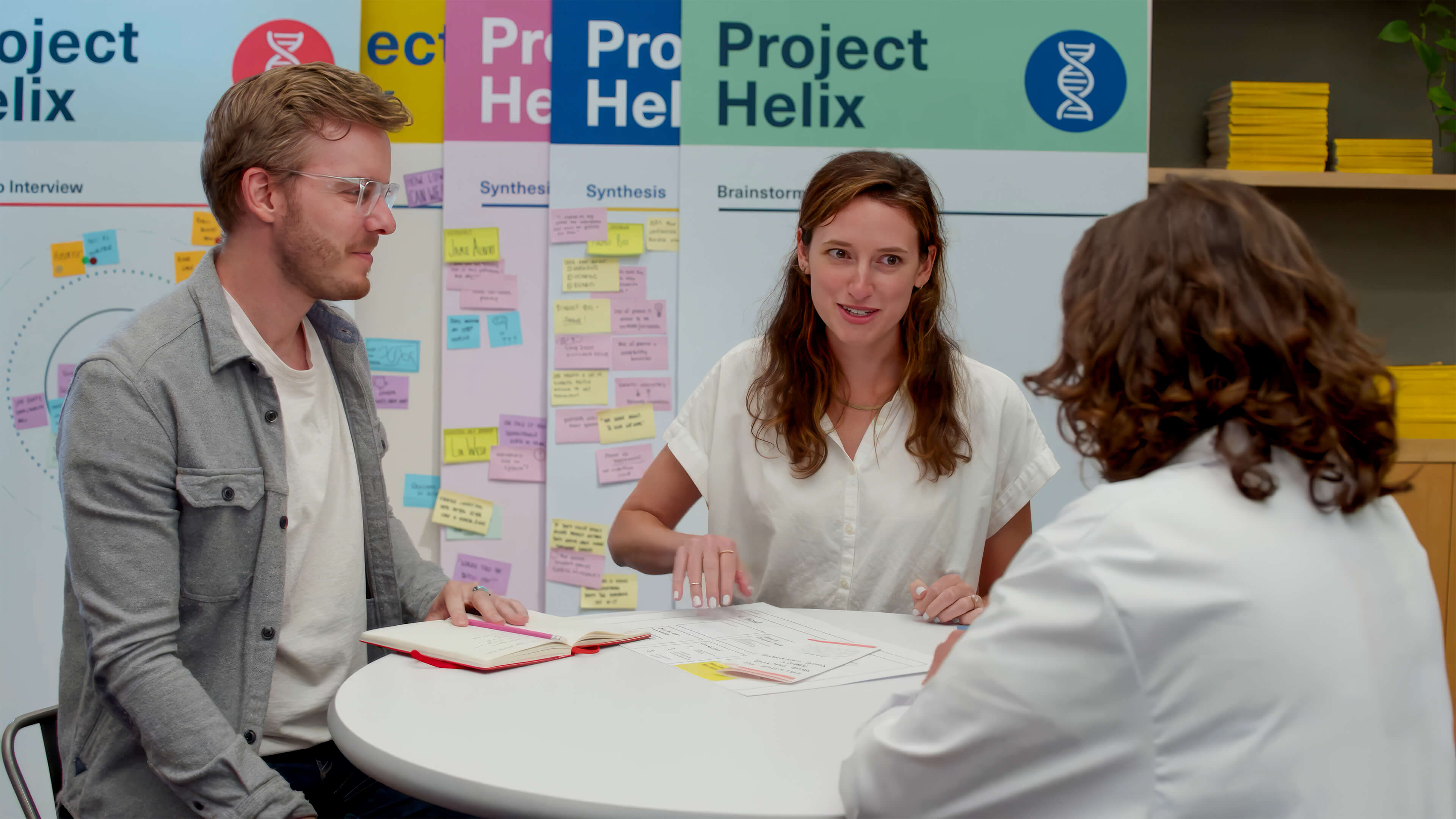
Every year, the NSF provides around 30 teams with up to $750,000 and a year’s worth of coaching, training, and collaboration to develop solutions for research areas like sustainable ocean use or combating fake news. Over the course of nine months, the teams learn how to uncover insights about human needs and design durable solutions for end users. But many of the scientists and experts in the program felt stretched by the idea of putting the needs of end users in the mix with their scientific testing—something few of them have been trained to do in their previous work.
To make that process feel more achievable, the teams built out prototypes and received guidance on refining and pitching their ideas along the way. IDEO joined the project as an innovation partner, facilitating hands-on workshops and creating “Science TV” episodes that could help the program reach a broader audience, deepening its impact now and in the future.

To help grantees get vulnerable, and evolve their ways of working, IDEO sent grantees to improv training so that they could learn to build off each other. The team also took them to magic shows and on ghost tours in downtown San Francisco to learn the value of compelling storytelling in their work. The fun was part of the plan—gelling as a team and building relationships meant participants could make mistakes in front of one another. Being wrong doesn’t come naturally to academics, but it’s a key part of the design process, and a crucial part of solving complex problems .
Each year, a select group of teams move onto the next phase of the “coop-etition,” receiving up to $5 million in additional funding. And all of the participants leave with valuable new skills they can use to break out of their own silos and create human-centered, ground-breaking solutions for the rest of their careers.
When the NSF launched the Convergence Accelerator and made the radical move of bringing together teams from different disciplines, these academics, scientists, and industry partners didn’t have a shared language to move their ideas forward, and needed a structured approach to coming up with new solutions.
164
trained research teams
$200M
in federal support granted to AI-driven innovation, quantum technology, food security, sustainable materials, opportunities for people with disabilities, and more
Climate captains
An innovation accelerator bolsters the impact of climate startups.
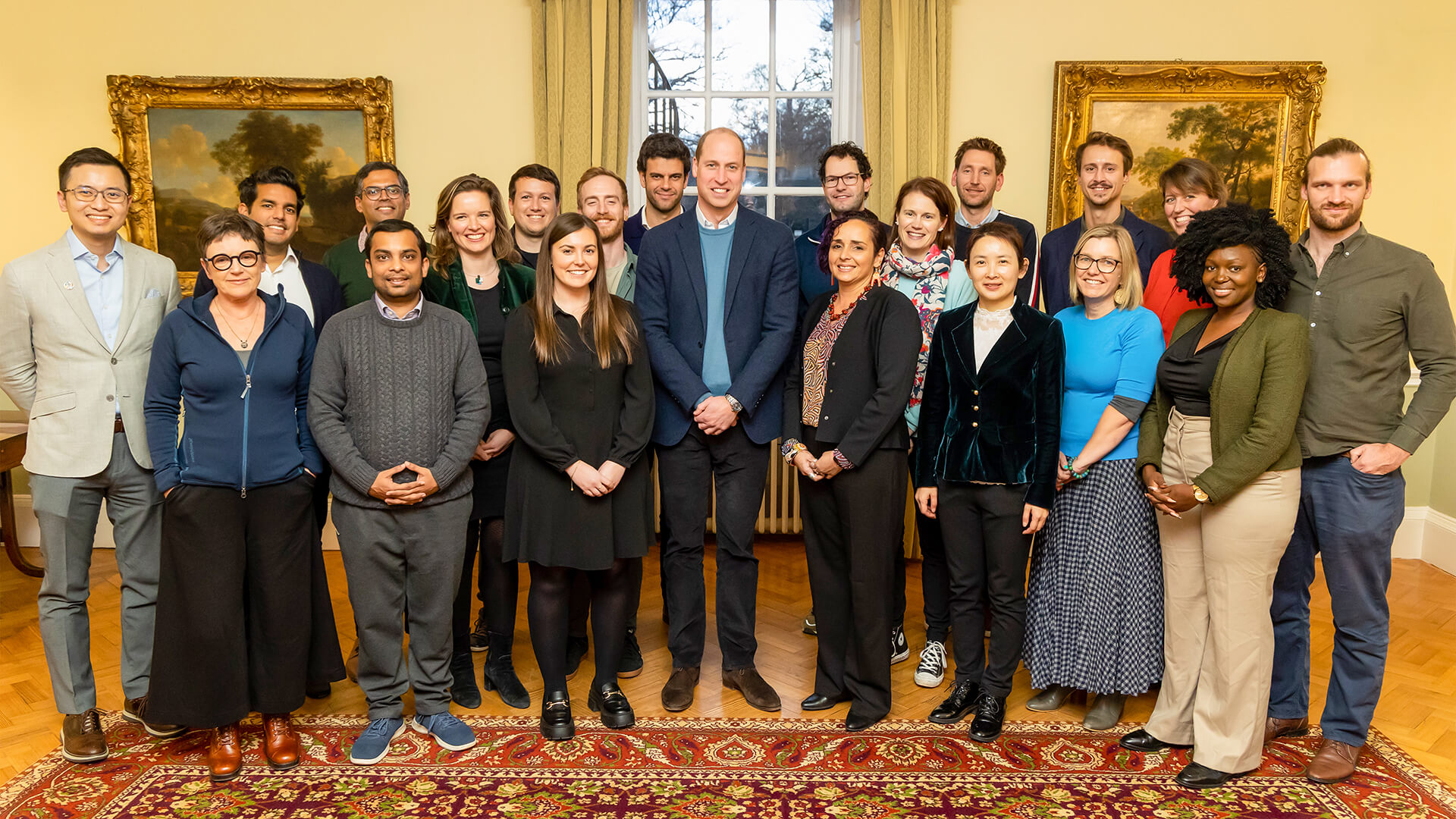
IDEO and The Earthshot Prize built a nine-month Fellowship program and a five-day, in-person retreat to give Finalists the best shot at reaching the Prize’s ultimate goal: to scale the solutions that will repair our planet this decade.
To build out the new Fellowship, IDEO took a deep dive with the previous year’s Finalists to uncover where they needed critical support. This research revealed that the Finalists needed more ways to leverage the Earthshot platform, connect with potential partners to help scale their ideas, and build community with each other. The IDEO team then used those insights to create a set of recommendations The Earthshot Prize team could implement to create a more supportive and structured experience. Ideas they took forward included assigning a designated “Leap Advisor” who could provide guidance and assistance for each Finalist, as well as an advisor from the Prize’s Global Alliance Network who could partner on specific growth initiatives, like scaling product design, or policy change.
Next up: the design of the retreat itself. Together, IDEO and the Earthshot team had three goals for the cohort’s week together in Windsor: focus on new forms of leadership and movement building, spur action through storytelling, and foster community.
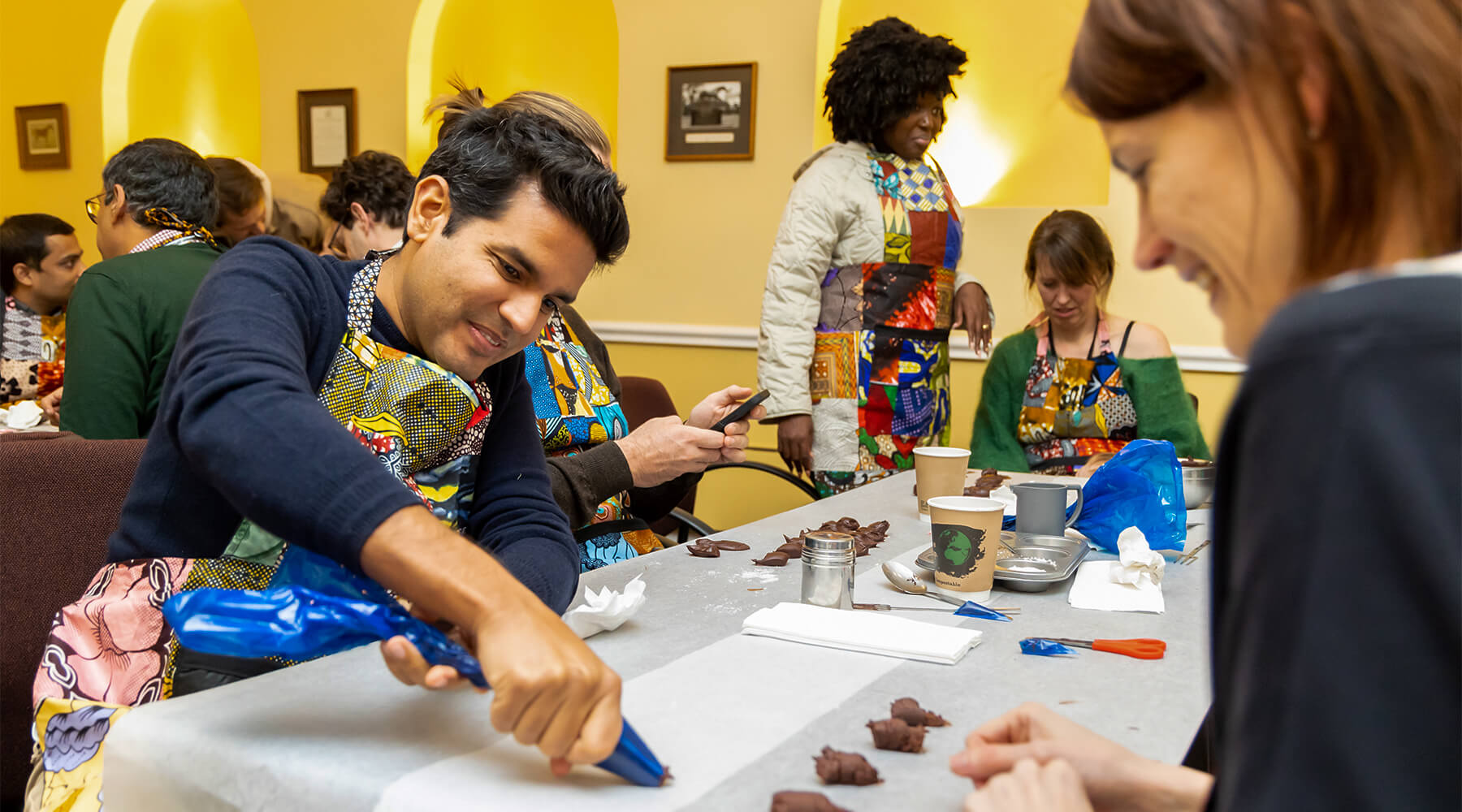
The team developed the curriculum with leaders from Google X and Speed & Scale, alongside startups like UPSIDE Foods. They designed moments to build community, like paired walks and a chocolate-making workshop where Finalists could get to know each other away from the noise of meetings.
Photographers captured the event to create assets for Finalists to use when pitching their ideas, and Finalists honed their storytelling skills. But what most remember is the magical moments of coming together as a cohort of next generation climate leaders who will help each other make an impact on the problems facing our planet, long after The Earthshot Prize has concluded.
The problems facing our planet are enormous, spanning industries, borders, currencies, and regulatory environments. Meaningful solutions will require leaders who can work across those lines.
30
climate solutions accelerated in first two years

AI is changing women’s health
Let’s work together to make sure it’s for the better.
For decades, women’s health has been underfunded, overlooked, and too often reduced to reproductive care. Medical research has been built around male bodies, while the complexity of women’s biology and lived experiences has been treated as a problem to simplify rather than an opportunity to understand.
Now, AI could change that. Designed intentionally, AI could unlock new kinds of evidence that close historical data gaps and inform better care. But if we aren’t careful, we could be scaling systems that were never designed for women and build the next generation of healthcare on the same broken foundations as the past.
The stakes are high. The opportunity is massive. This is where design matters most.
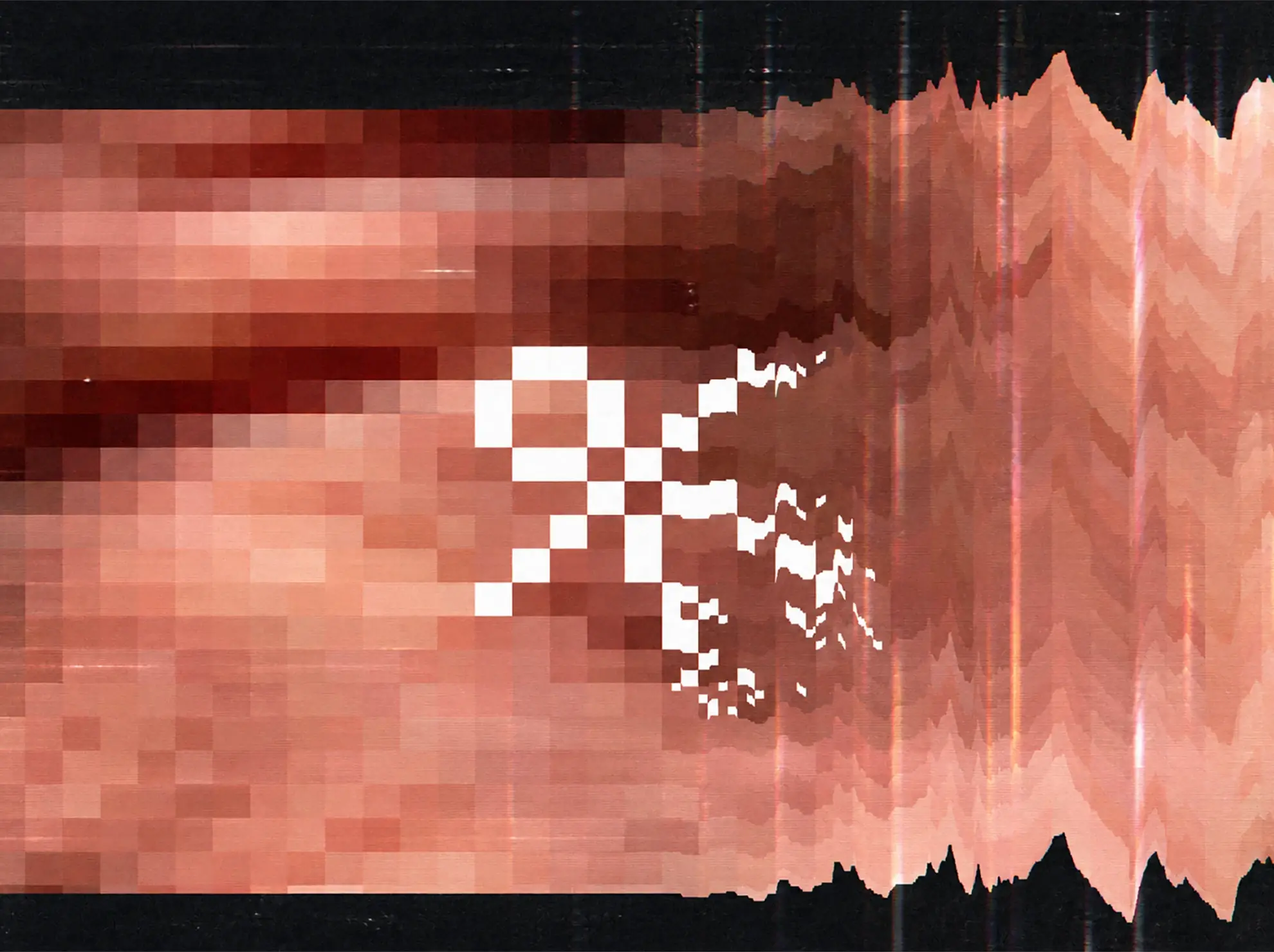
Introducing the Women’s Health × AI Exchange
We believe design can help us embrace AI’s healthcare possibilities while recognizing and mitigating its risks. And we believe the most promising futures are shaped collaboratively, by bringing different perspectives into conversation and making those possibilities tangible.
That’s why we’ve launched the Women’s Health * AI Exchange, an open, design-led exploration of one important question: How might AI meaningfully transform women’s health, and what would it take to ensure that it does?
To frame this exploration, we crafted six provocations about possible futures at the intersection of women’s health and AI. Futures where AI could:
- Reframe women’s biological complexity from a healthcare liability to a scientific asset and create new pathways for better care.
- Transform the relationship between healthcare professionals and patients, translating qualitative data into clinically actionable evidence.
- Connect the dots across a woman’s health journey to enable more proactive, preventive, and life-stage-specific care.
- Drive innovation in women’s longevity, helping researchers understand what most influences how women age.
- Flip the economics of clinical research, incentivizing exploration at the deprioritized edges and intersections.
- Put data back in women’s hands to help them find their own insights around issues where institutional research has not been prioritized.
Imagining what AI could do is only half the work. We also need to consider the shifts required to make these futures possible. And so, each of these provocations ends with the same challenge: What would it take to make them real?
We’re inviting you into this conversation to help us collectively sharpen a point of view and co-design a landscape of opportunities. Here’s how to join.
Go to the Women’s Health x AI Exchange and choose a provocation that resonates with you. An AI facilitator will ask thoughtful follow-up questions to help you frame your point of view and articulate what you believe needs to change. Your thoughts will be posted anonymously. As more people participate, their contributions will help reveal where perspectives align, where tensions remain, and what new opportunities are emerging.

Turning tension into possibility
This conversation is just the beginning. We’ll synthesize themes and share emergent opportunities. We’ll bring together people across healthcare, research, technology, investment, and design to help us prioritize opportunities for further exploration. And we’ll translate the most compelling ideas into tangible prototypes that help people see, experience, and shape what desirable, viable, feasible, and responsible AI-enabled healthcare could look like.
We’re approaching this as an investigation in motion, not a finished thesis. Our intention is to work openly so the perspectives, provocations, and possibilities we generate can inspire and inform the people already working to move women’s health forward.
And while women’s health is at the center of this exploration, the conversation we want to have is even bigger. It is a conversation about the future of healthcare data and power. A conversation about how AI might help close the gaps that decades of underfunding have left behind, and what we can all do to ensure it does.
Whether you’re a clinician, researcher, technologist, entrepreneur, investor, designer, or simply someone who cares about the future of healthcare, we invite you to help us reimagine what healthcare could be, for everyone.
Explore the Women’s Health * AI Exchange and add your perspective.
AI is transforming healthcare at a remarkable pace. But our understanding of women’s health has a lot of catching up to do.
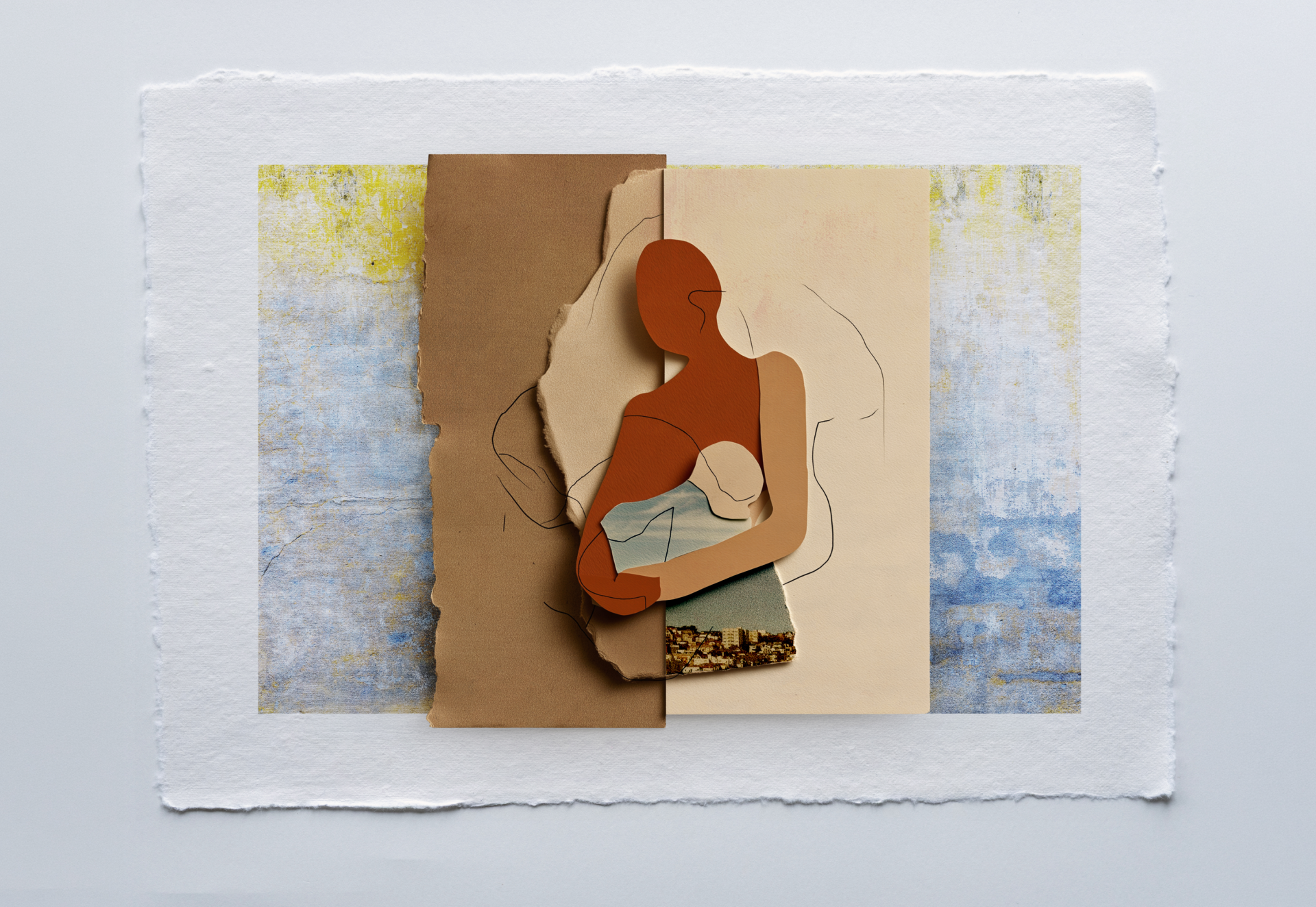
Patient expectations are evolving faster than ever
Four ways pharma companies can adapt as GLP-1s reshape experiences.
During a recent meeting with a pharma client, we played a YouTube video of GLP-1 users that left the team slack-jawed. Sitting around a conference table, they watched people crack open an auto-injector and pour the contents into a vial so they could titrate out a more precise dose of the drug themselves. They heard several patients admit to using a family member’s prescription because they didn’t have their own. Others lamented that they weren’t in range for their preferred direct-to-consumer delivery platform. The realization was stark: patients knew what they wanted from their GLP-1s, and if the manufacturer didn’t provide it, they would find a way to make it themselves. In that moment, this particular pharma company understood it was not at all prepared for a future where patient expectations would remake the drug market.
The introduction of Ozempic and new access models for GLP-1s like Lilly Direct and Hims & Hers have fundamentally shifted the pharmaceutical industry in the last five years, unleashing more self-directed therapy journeys and a new kind of healthcare consumer. Patient expectations about what pharma companies can do—and the experiences available to them in a healthcare setting—have been completely rewritten. This revolution is making traditional pharma commercialization processes that push patients and providers through a few preferred channels a thing of the past. Especially as consumer-facing startups come for their market share—and create an even larger pie.
If pharma companies are going to meet this new wave of consumer expectations for everything from GLP-1s to hair loss and erectile dysfunction medicines, supplements to fertility drugs, they need to prioritize designing exceptional experiences that come along with their therapies. That requires building an entirely new set of skills and behaviors that can support product pipelines. Here are four crucial steps to get there.
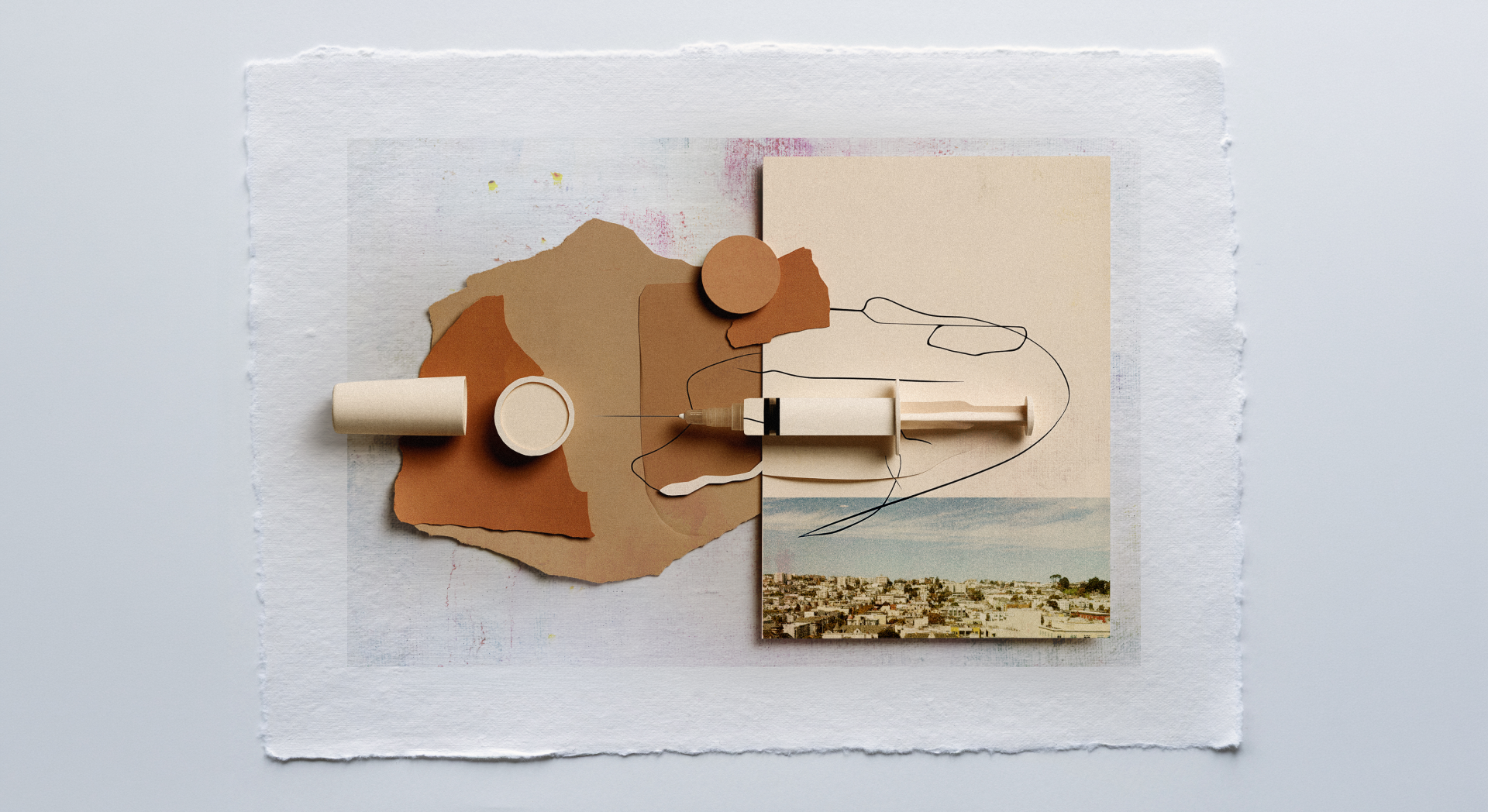
1. Uncover the needs patients want pharmaceuticals to meet
Pharma companies need to do research with real patients to get a clear view of the full therapy journey—from diagnosis to long-term use. In that process, they can identify the highest-risk moments, like confusion over instructions, frustration over delivery methods, and potential misuse, and prioritize opportunities to improve real-world adoption and adherence.
Lilly understood this early on. In the 1990s and early 2000s, the pharma company had several new, life-changing medications and two big challenges: Its primary drug—insulin—had to be self-injected, which patients were hesitant to do. And its drug-delivery device platform lagged behind the needs of insulin users.
Lilly approached us to design the next-generation auto-injector platform. Early in the partnership, a team of IDEO designers and Lilly leaders met with diabetes patients around the globe to better understand how they lived with the disease. They quickly realized there was a need for a device that met the needs of a broad range of dexterity-challenged and injection site-specific patient populations (including rheumatoid arthritis and psoriasis patients). As the development of multiple candidate molecules was still underway, the team focused on creating an injection experience that would work for these more challenging patient populations, knowing that a design that worked for them would also deliver a better experience for a broader swath of future users.
While we carefully considered every feature of the autoinjector itself (from grippy labels and a stable, twist-off base to large, clear unlock tabs and injection buttons), we also designed packaging that fit in a standard-sized refrigerator, created a set of highly visual instructions, and took into account the involvement and support of family members and caregivers.
Fast forward to 2026, and Lilly is still leveraging the design we made together to not only support pre-diabetes treatments like Trulicity, but also psoriasis therapies like Taltz, migraine therapies like Emgaility, and GLP-1 molecules like Mounjaro and Zepbound. The latter accounted for the majority of the company’s annual revenue in 2025. Taking the time to create a comprehensive drug delivery experience has yielded an invaluable delivery toolkit that Lilly and the patients they serve still benefit from today.
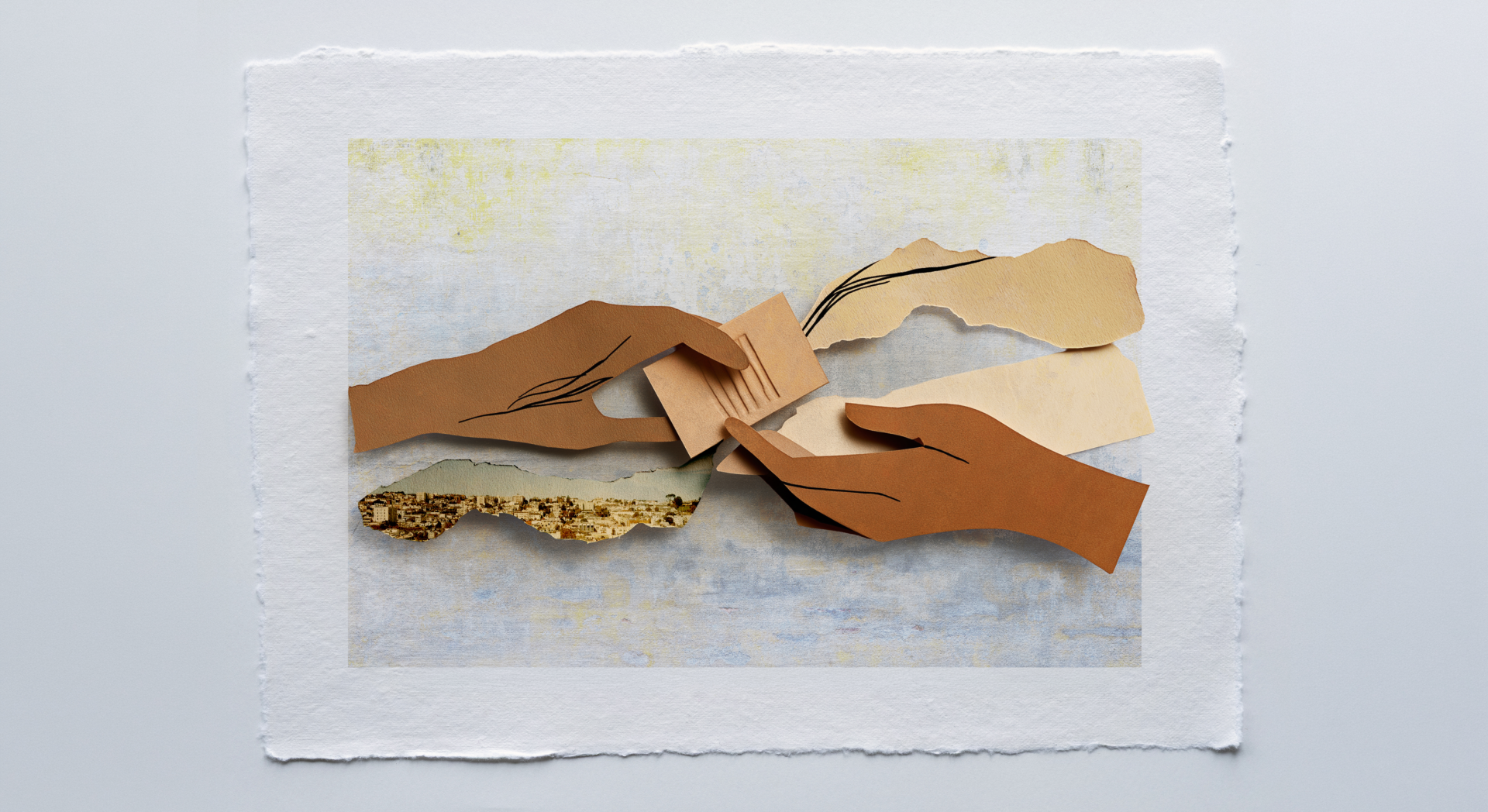
2. Design the experience around the therapy
As more and more pharma companies create consumer-style experiences, it’s crucial they build services and tools that support onboarding, adherence, and ongoing use. Standing out is no longer just about drug efficacy. It’s about how well patients with all kinds of needs and circumstances can access and adhere to the therapy—and how well pharma companies can deliver against their competitors.
When Sanofi launched Beyfortus, the first-ever RSV immunization for newborns, in 2024, it was a milestone in the fight against the virus, which had resulted in the death of 445,000 babies worldwide in 2019 alone. But the company knew that growing anti-vaccine sentiment might prevent parents from giving their children the potentially life-saving immunization.
Together, we conducted research with parents, caregivers, healthcare professionals, and healthcare administrators in Germany, Spain, China, and the US to identify barriers to adoption across cultures. The team quickly discovered that no single approach would work across Sanofi’s 20-plus international markets. Training for medical professionals needed to be flexible and customizable. They also discovered that discussing immunizations right after a baby was born was too stressful for new parents.
Ultimately, the team created an accessible global communication toolkit with straightforward language, metaphors, and illustrations to support informed conversations between providers and parents before and after a child is born. Then they held a series of market-fit co-design workshops to make the tools more resonant with regional customers and ensure compliance with local regulations.
In its first year on the market, Beyfortus became a $1.8 billion therapy, and more than six million babies have been immunized.
With a growing funnel of information about drugs, therapies, and even supplements, pharma companies must cut through the noise to support patient understanding and adherence.
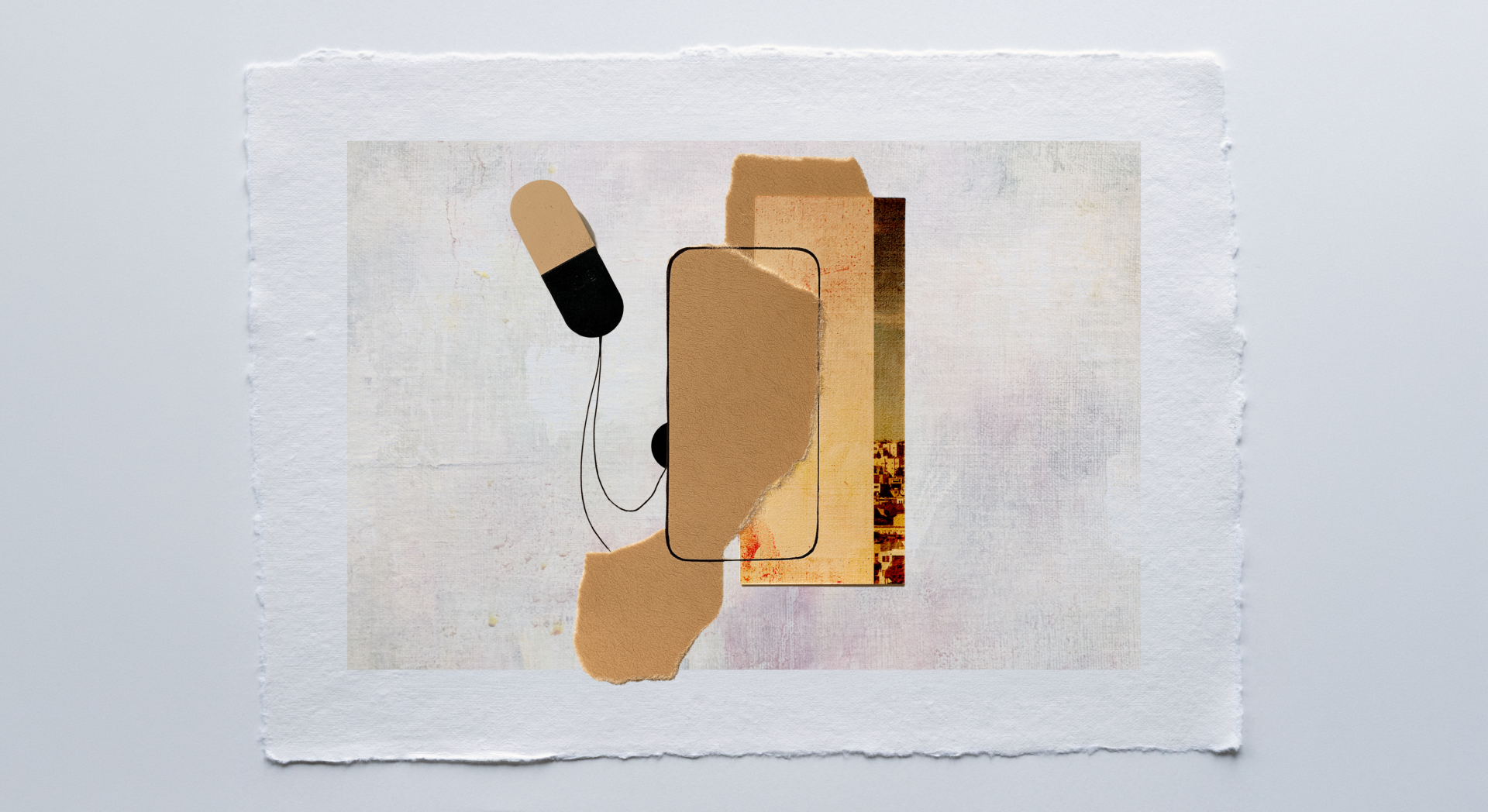
3. Define how you show up beyond the drug
To have an even greater impact on patient outcomes, pharmaceutical companies should explore new roles, partnerships, and models. That could mean creating new offerings that combine a given therapy with support and services, building partnerships with payers, employers, or platforms to extend reach, or creating models that tie therapies to long-term outcomes and value.
Japanese pharmaceutical company Otsuka is perhaps one of the most diversified pharma organizations in the industry, focusing on above-molecule interventions including companion diagnostics, digital technologies, and other tools that enhance the effectiveness of chemical or biological treatments. With a business that spans traditional drug development and manufacturing, digital solutions, and even consumer products such as Pocari Sweat, an electrolyte drink, Otsuka has bet that diversity and go-to-market pathways will lead to better experiences for patients. Not to mention these touchpoints also provide deep insights into the needs of the people Otsuka serves.
In 2018, Otsuka joined forces with Click Therapeutics to develop digital health services to accompany one of its leading medications, aripiprazole. The antipsychotic is used to treat schizophrenia, bipolar disorder, and major depressive disorder (MDD). By 2024, the company had developed an app featuring activities aimed at treating MDD. The partners chose a challenging but potentially impactful area for their pilot program: four primary care sites within the National Health Service (NHS) in the UK with a high caseload of MDD patients, where a digital solution combined with antidepressants could significantly reduce the burden on these sites.
Depression is widespread across the UK, and the treatment demands on the NHS are considerable. However, the system lacks the resources to provide every patient with the necessary services to treat their conditions. This digital companion to antidepressant medication aims to improve treatment effectiveness, and if the pilot is successful, it could significantly ease strain on the NHS while helping patients achieve better outcomes.
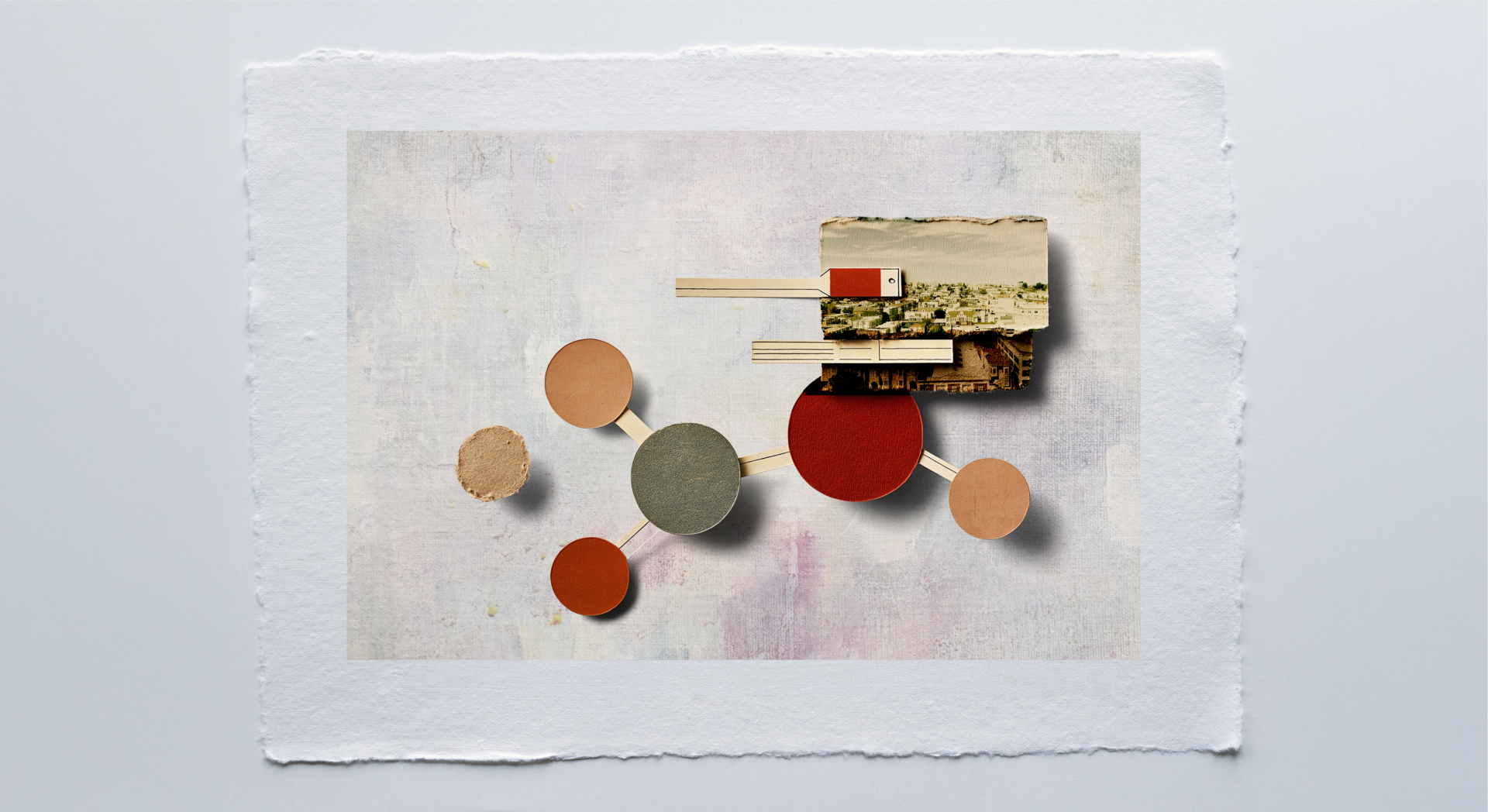
4. Create a human-centered R&D pipeline
Creating more human-centered packaging or instructions to help people better understand a drug is an effective step forward, but exploring new internal capabilities that make your innovation pipeline more future-fit and human-centered can be transformative.
That work can take many forms: building a beacon project that upskills product and team leadership on methods to better understand the decisions consumers are making today and in the future, introducing futures-thinking to help your team look beyond the next five years, or reinforcing purpose and culture to empower employees to make patient-centered decisions.
In 2020, as Moderna raced to deliver a COVID-19 vaccine during the pandemic, the company needed to grow exponentially—and rapidly. However, by hiring employees from traditional pharma giants, it risked losing the unique entrepreneurial culture that made it successful in the first place—one that embraced speed and accepted risk. This shift could have limited its future ambitions of developing breakthrough products to combat other viruses and diseases, and even cancer.
Together, we worked to codify the company’s culture and values into a set of Mindsets that would empower employees to move quickly, evaluate risk, and make the right decisions. The team met with Moderna veterans to gather stories about key cultural moments, like when a crucial piece of equipment didn’t fit in the door, and employees knocked down the wall to keep vaccine production moving. Insights from these stories became Mindsets, like “Act with urgency: Action today compounds the lives saved tomorrow” and “We behave like owners: The solutions we’re building go beyond any job description,” that were then tested with new hires, employee resource groups, and others across the company.
The Mindsets were more than a tagline: they set the stage for continued progress and future breakthroughs. Today, Moderna is working with Merck on a cancer vaccine that just completed a successful Phase 3 clinical trial.
This sea change in consumer expectations for medicines and therapies can feel disorienting for traditional pharma companies—but it also offers enormous opportunities for those that think outside tried-and-true drug delivery channels and embrace human-centered design. By truly understanding patient needs, finding new and inventive ways to support them, and building the capabilities to empower your people to create a human-centered R&D pipeline, organizations can distinguish themselves in the market. These behaviors can not only drive the market, but more importantly, radically improve patient outcomes.
“This sea change in consumer expectations for medicines and therapies can feel disorienting for traditional pharma companies—but it also offers enormous opportunities for those that think outside tried-and-true drug delivery channels and embrace human-centered design."
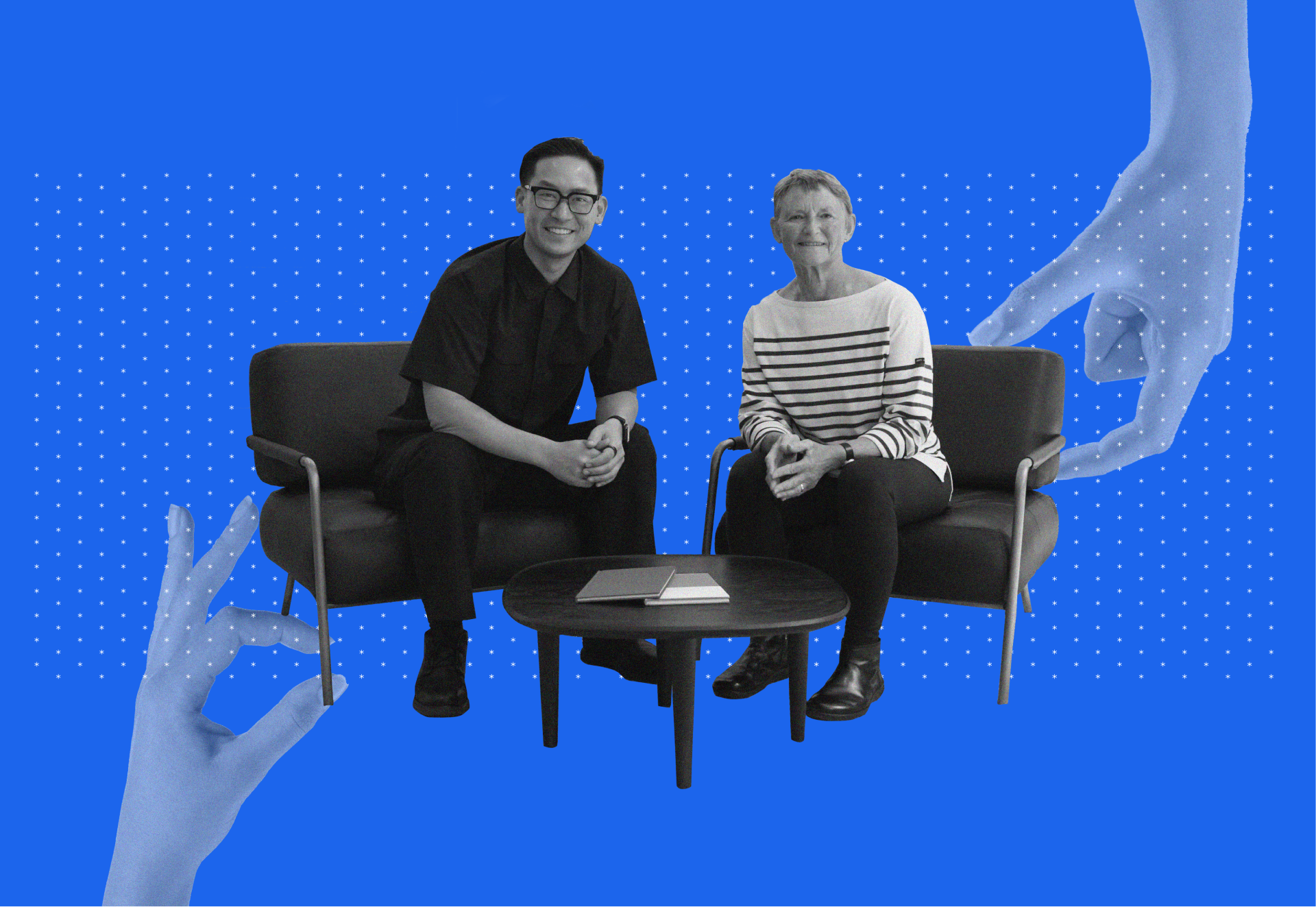
What real insights feel like, and other notes from a design legend
A Q&A between CEO Mike Peng and Jane Fulton Suri, former CCO.
A pioneer of human-centered design at IDEO, Jane Fulton Suri joined one of IDEO's predecessor firms, ID Two, in 1987. With a background in psychology and architecture, she gained early experience as a researcher at the renowned former Institute for Consumer Ergonomics at Loughborough University of Technology. At ID Two, and later at IDEO, Suri introduced social science principles to the design industry, which had not yet fully embraced them. Her contributions would go on to reshape the field.
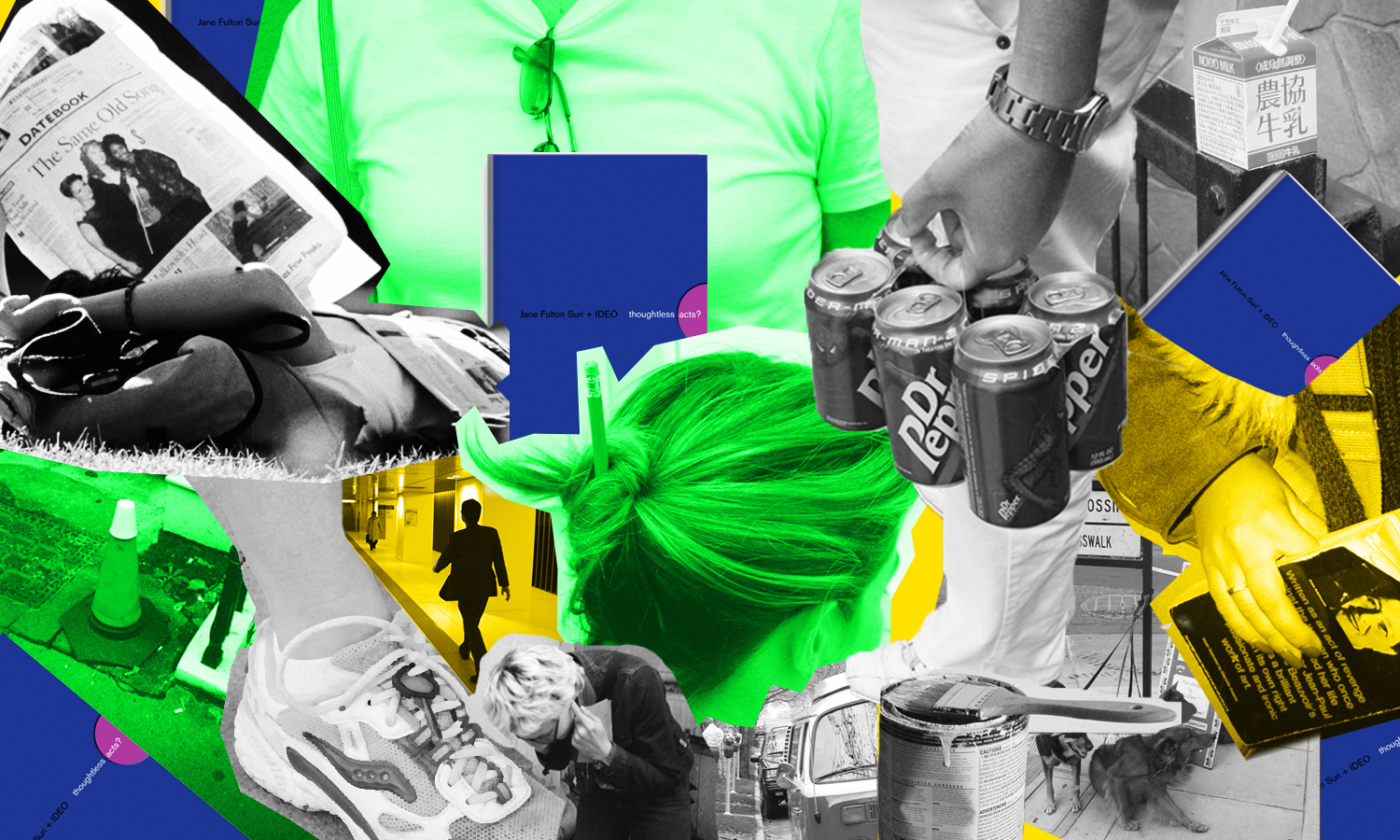
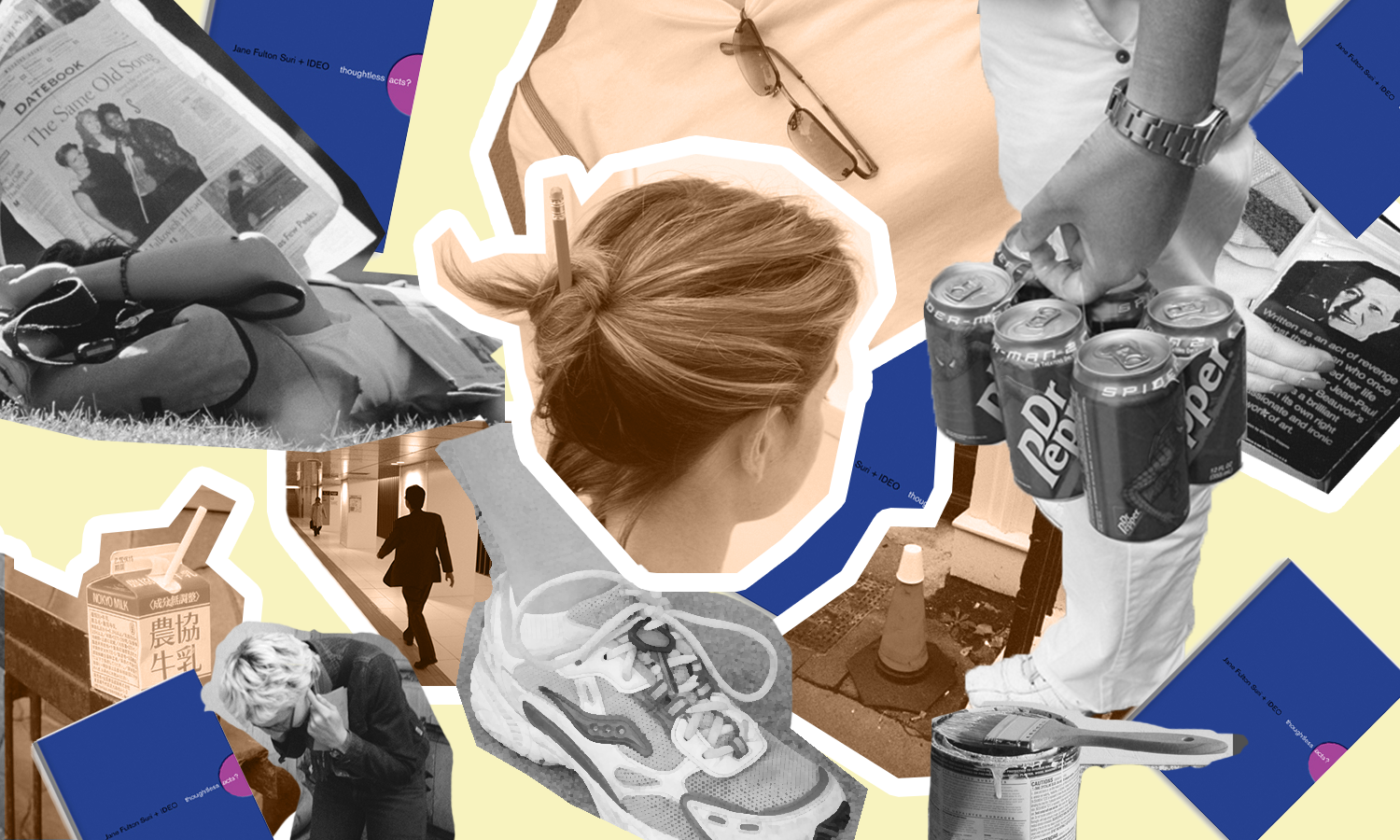
Suri’s influential 2005 book, Thoughtless Acts?: Observations on Intuitive Design, features a collection of snapshots that highlight the subtle, instinctual ways people interact with the everyday world. It’s a love letter to observation as a design discipline with real-world impact. Her work in human factors at IDEO has influenced products people use every day, from rubber grips on Oral-B toothbrushes to redesigned Evenflo strollers. In recent years, she’s expanded her focus beyond human-centered design to explore how patterns found in nature and living systems can inspire more sustainable solutions—what she calls life-centered design.
Now a Partner Emerita, we were so glad to welcome Jane back to IDEO earlier this year for a conversation with our design community.
Mike Peng (MP): If you don’t mind, Jane, tell us about your origin story and how you came to IDEO.
Jane Fulton Suri (JFS): I started out in psychology because I was really interested in people. And then I got really interested in people in the everyday world. I brought that mindset into design: Let’s get out there and see what people really do.
I found myself working with manufacturers to help them understand why people didn’t do what they expected them to with power tools, motorcycles, and other dangerous things. A lot of my work was mitigating disaster. And I thought, this is crazy. Why aren’t these conversations happening while things are being designed? Problems are easier to remedy at the design stage than when they’re on the market.
Then I met Bill Moggridge, one of IDEO’s three cofounders, because a friend of mine was his client. He was a myth and a legend. After our conversation, he asked me, “What do you want to do now?” And I said, “I’d like you to offer me a job!”—which was very, very uncharacteristic of me. I had no clue what I was getting into.
I quickly realized I needed to understand what my teammates were doing and value that, then add ideas about going out, meeting people, and watching what they do.
So instead of having the answer, I realized the point was about discovering together how to make the design brief better. That became the practice—getting away from the desk. And now that means teams getting away from their screens and going into the world together.
MP: Now user research and ethnography are common practice in design. What were the early days like?
JFS: When we started out, we had no budget for anything I wanted to do. I had to convince my colleagues it would be exciting and interesting, and that we’d have good stories to tell our clients. Then it became a bit of a sales story about why it might take an extra week or two, or even a month, to do the project.
What we were doing was more like exploration; we didn’t know what we'd find, and afterward, we would probably want to do something different from what we’d promised when we wrote our proposal.
MP: If you had to sum up a few of your most memorable projects while you were at IDEO, what are some of the ones that really stood out to you?
JFS: Early on, Supercuts invited us to bid on an innovation-focused job. At the time, we were essentially a product design company. David Kelley, Tom Kelley, and others weren’t sure what we might do for a company like Supercuts.
So with one of the other early human factors researchers, we went out and got haircuts. Then we went around the city just looking at different hair stylists’ establishments. We started putting together a story of how customers make decisions from the moment they think about wanting a haircut to deciding where to go, making their first appointment, then all the behaviors that follow, like primping a bit before you leave the shop.
We had a lot of fun engineering this great crazy clipper. But I always believed our best ideas were these little moments throughout the experience, like getting a cape that made you look good, or a mirror that said “Supercuts” so you’d remember where you were. That was our first customer journey map.
MP: Are there other memorable moments that really stick out to you?
JFS: One of the most moving ones for me was at IDEO Chicago, years and years and years ago, when colleagues of mine were working on the LifePort Kidney Transporter. The project was all about how precious a kidney is. The team described their experience in the operating theater, seeing the surgeon take this living element and cup it so gently, like a baby bird, as he transferred it to where he needed to place it. That recalibrated the team’s thinking about designing the carrying system, because we’d just been thinking about it functionally and mechanically. But it also let them tap into what it really means to design for a living passenger.

MP: Let’s dive into the craft of design research. How do you know when a research insight is truly great?
JFS: Insight, for me, is a change of state in our understanding. There's an epiphany of sorts, a new recognition. You get an insight by being a sensory human being, observant and absorbent through all your senses…and then discovering you are excited about something new. Design and innovation take a lot of personal energy. That human emotion has to come from you.
And that’s what happens when clients get really drawn into ideas, too—they feel you’re changing the way they see things.
MP: What fundamentals do we need to continue to embrace to do research well?
JFS: Nothing beats being an aware, sensory human being who is curious about other people, places, and things. Research doesn’t have to be expensive. Even a conversation with one interesting person, or exposure to an unfamiliar place, will do.
Sometimes we're reluctant to put something in front of the client that we think is a really cool idea, but nobody has said they wanted it. Perhaps the research didn’t show that it was a really good idea yet. But sometimes we have to have conviction about our own perspectives and the confidence to share innovative ideas, even without hard evidence. I’ve always felt that.
MP: One of the most important phases of IDEO’s design-thinking process is synthesis—taking the messy materials we’ve gathered during research and making sense of them. How do you approach synthesis?
JFS: I once wrote a piece about how what happens in the design process isn't the same as how we formally describe it. One story stands out. I call it “the black shoes.”
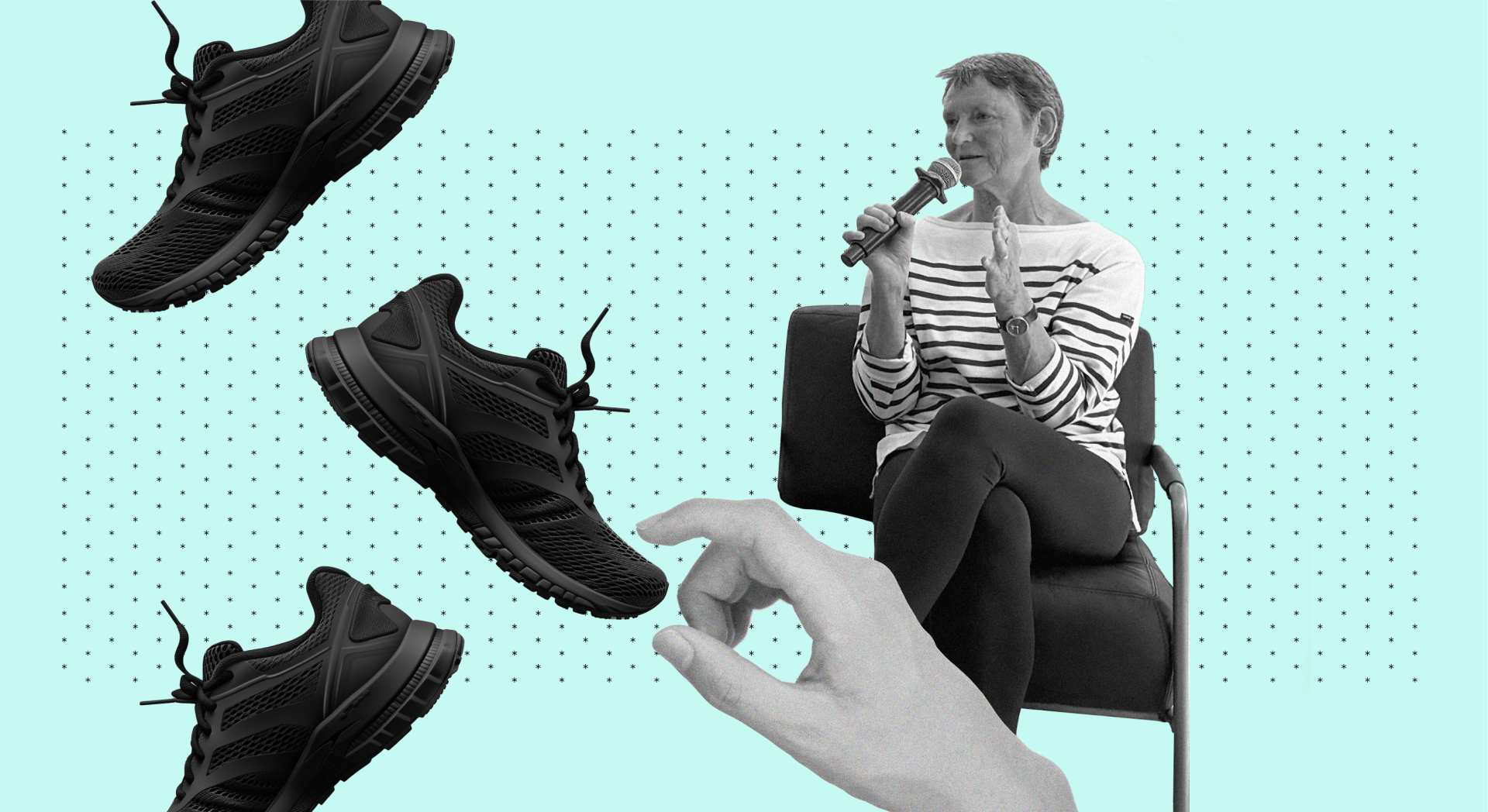
Annette Diefenthaler, now Professor and Executive Director of the Munich Design Institute, was an IDEO researcher working with a global bank trying to set up a presence in Russia. The team had done loads and loads of interviews with people about banks. Late one night, on the way back to their hotel, Annette saw a big shopping center. She asked the driver to stop, because she realized they'd had no time, other than doing their interviews, to absorb much about the culture.
So she went into this big mall, and Annette was stunned by how simply the department store had arranged its products. One wall was just black shoes all lined up, all the different kinds of black shoes you could have. It was all really obvious and not very exciting because there were only black shoes—no glitz at all.
What she took from that was: this is a culture where trust is built by showing what there is. It was so honest and direct. And here we were, talking to all these people about banks and trying to understand how to build trust in an alien brand. She had a flash of insight that suddenly made sense of what the team had been hearing. The bank needed to be so much more straightforward and transparent about its services. “Black shoes” became a mantra for that project and shaped how they designed the bank’s interior and described its offer.
This insight came from a moment that was completely off script. I love that. You can’t always get to an insight by staring at your interview notes. You get it because it’s somehow gotten into your viscera.
MP: Are there any moments where you found creative ways to present research to clients to help them make decisions?
JFS: Instead of personas and customer descriptions, a team once created a series of packed suitcases that represented the different types of travelers they interviewed. The client loved that one.
MP: How do you find the courage to decide to deliver an installation of suitcases instead of a more traditional research deliverable, like a presentation?
JFS: You need to tune in to what your client needs to absorb and what you want to communicate, and be ready to experiment with how you do that. You need to get good at failing. You try things, fail, and learn how to gauge what might work better the next time.
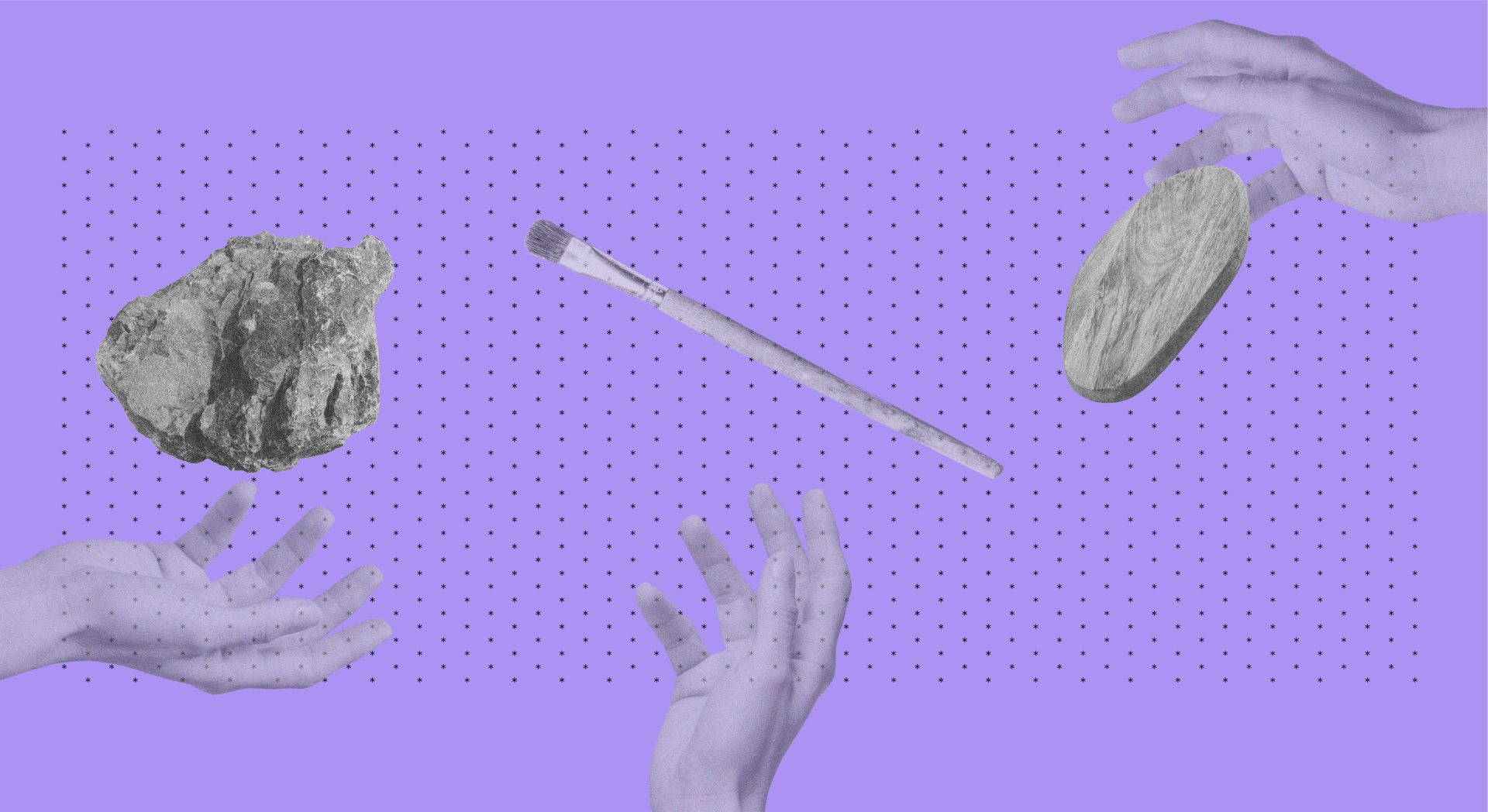
MP: You’re an incredible artist—I’ve seen your woodblock prints. You’re also an amazing rock climber and swimmer. I’m curious how these activities helped you develop your craft as a researcher and a designer.
JFS: There’s something very elemental about all of them—they’re direct experiences of the world. You give your weight over to the rock. You trust the water. Even with woodblock printing, what I love is how material it is. I use sharp knives and gouges to carve the wood, then I learn how much water and ink to use and how the brushes work.
That’s the thing I find really exciting. The fact that human beings have evolved to make beautiful things, that connection of making and place is a crucial motivator.
MP: You are one of the authors of the first edition of The Little Book of Design Research Ethics. I’d love to hear your perspective on the ethics of the discipline, and what we should keep in mind as we increasingly rely on technology.
JFS: I have a problem with the term research, partly because I think it connotes things like clipboards and taking notes—that we’re documenting other people’s lives. I’m happier when it all feels more like co-discovery, exploring together. We are together, engaged in this space, noticing things about your behavior as well as what I’m thinking about your behavior. And it's more collaborative.
Co-discovering with other humans is a much nicer place to be.
MP: Looking back, knowing what you know, what advice would you give young Jane?
JFS: I think I had imposter syndrome for about five years or so. I could have moved along a lot faster if I’d had a little bit more confidence and maybe a few more people telling me that it was okay.
MP: Are there any insights from your human factors work that you apply to the broader scope of life-centered design, and how we can learn from that?
JFS: A human being is a living thing in a living system of other living things. Observation and curiosity are key—we should keep asking the same kinds of questions about the inherent behavior of those systems, as we would ask about people: what they really do, what motivates them, and how we can gain insights from them. This goes back to your question about how rock climbing, swimming, and art come into it, in the sense that we can think more broadly about the elements that matter to people. There’s a whole living world out there with great examples of elegant systems we can learn from.
This Q&A has been edited for length and clarity.
“Insight, for me, is a change of state in our understanding. There's an epiphany of sorts, a new recognition. You get an insight by being a sensory human being, observant and absorbent through all your senses."
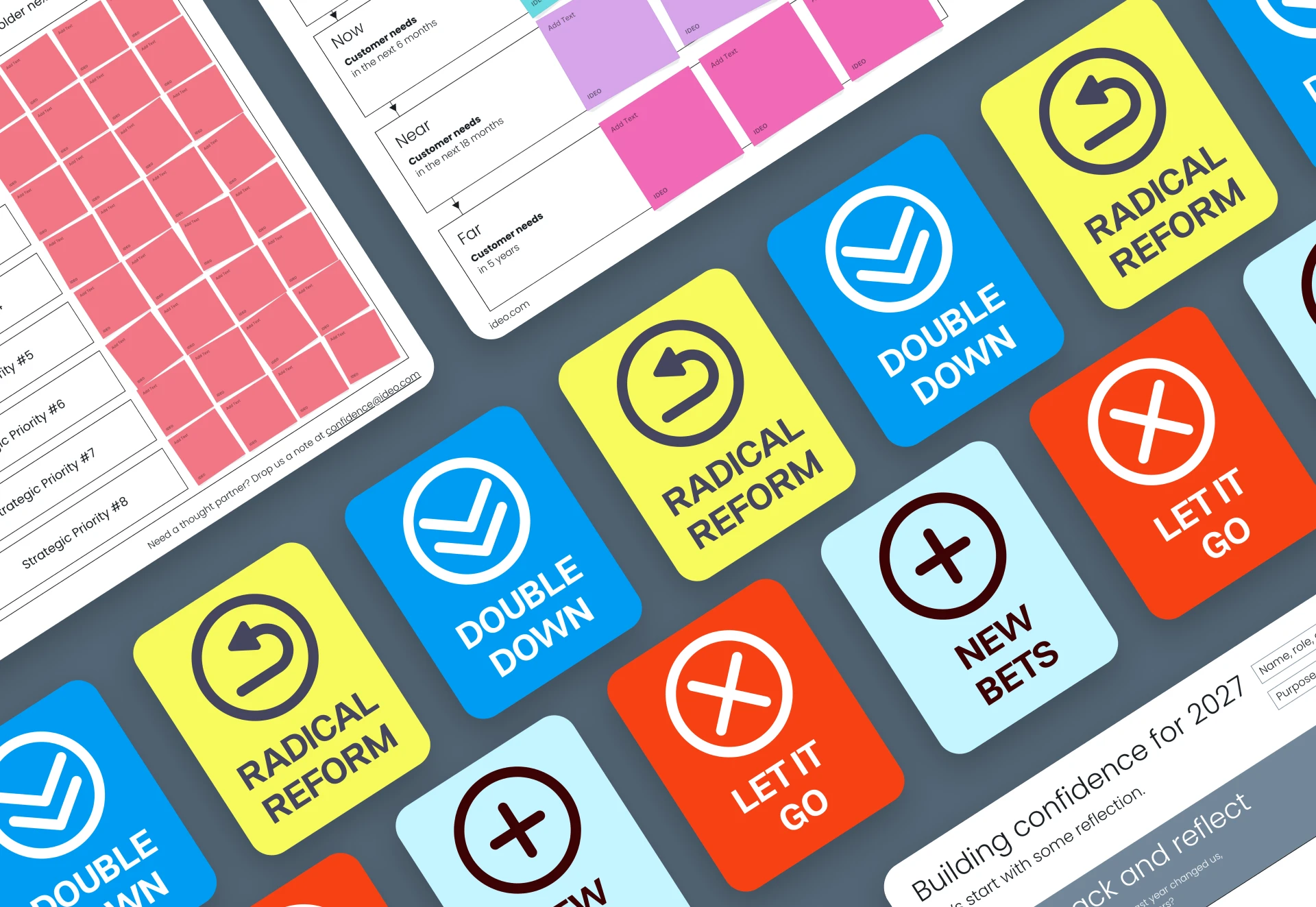
Building confidence for 2027
Create a plan for impact in three steps.
When category-defining challenges like disruption, the accelerating pace of change, and the need to rethink how organizations work are on the table, looking back on the current year and fighting for the same budget won't work. That's why many of the leaders we partner with are massively rethinking their priorities and where to best focus their resources.
It’s a lot to balance, but the process doesn’t have to feel like guesswork. For several years, we’ve been using a tool we call the Planning Canvas, which provides a clear, strategic, and uncomplicated way to reflect on what has changed, what you’ve learned, and what matters now before planning for the coming year. It’s a simple way to help you evaluate where you are, and what levers you might pull to get your organization where you want it to be.
Download the Canvas
Our 2027 Planning Canvas walks you through three effective steps:
1. Reflect on what’s changed
2. Imagine the impact you want to have in the near future
3. Decide what to double down on, reform, let go of or pursue as a new bet

We recommend using it for individual reflection ahead of annual planning, before team sessions and leadership decision meetings begin. It will help you arrive with a clear point of view on what has changed, what matters now, and the choices worth putting on the table. At the same time, don’t hesitate to adapt it to your needs. If facilitating a collaborative conversation across your team aligns better with your organization's culture, this tool can help with that, too.
The goal isn’t to predict the year ahead perfectly. It’s to enter planning conversations with a sharper point of view and the confidence to make impactful choices together. We hope you find it useful.
Looking for more help with strategic challenges? Get in touch. We’d love to connect.
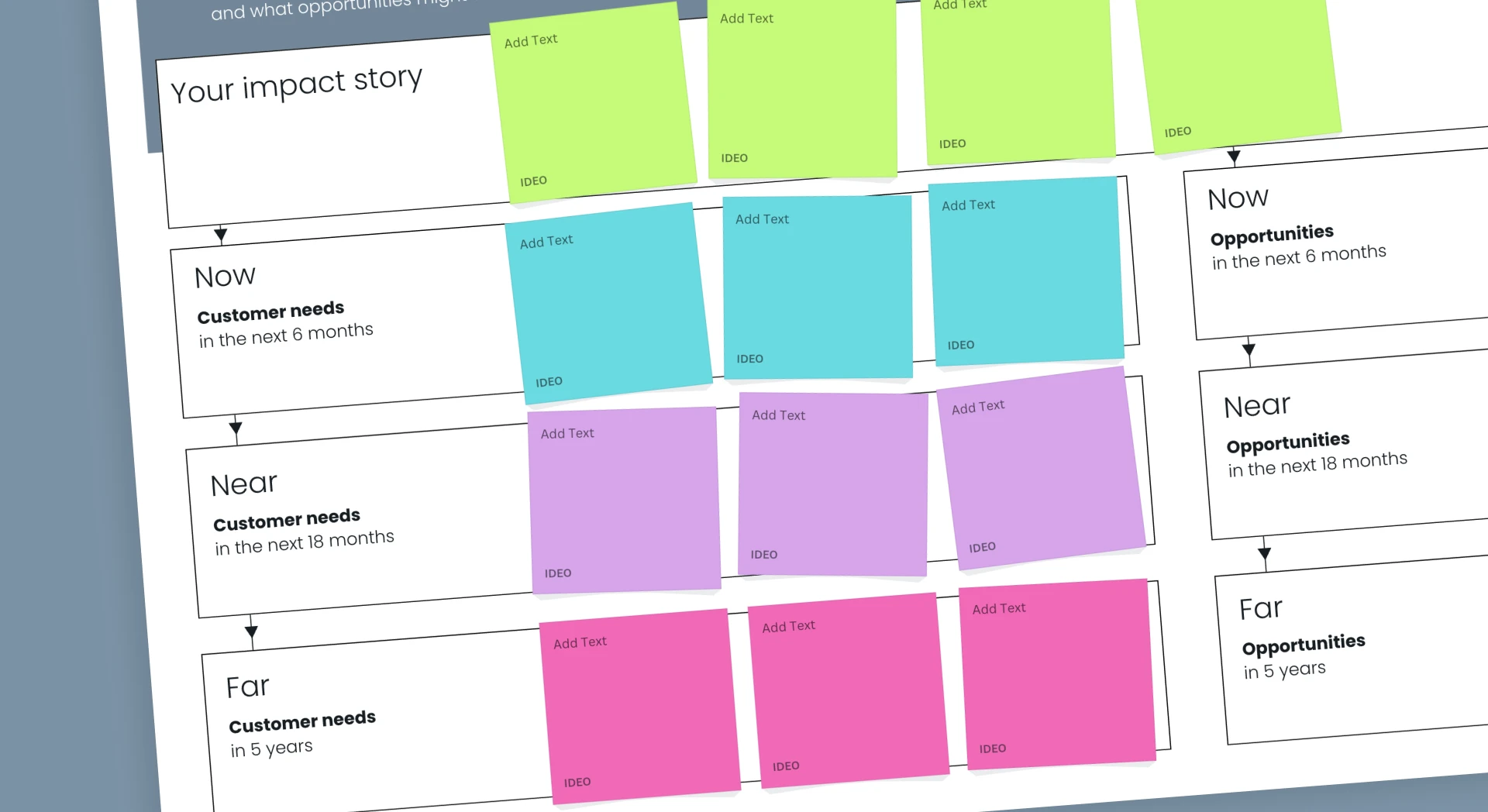
At a time when uncertainty feels like a constant, leaders across categories can find it tough to make confident planning decisions for the year ahead.
Juho Parviainen
My passion is creating transformative products, experiences and businesses that accelerate the change we want to see in the world.
My passion is creating transformative products, experiences and businesses that accelerate the change we want to see in the world. My craft is rooted in interaction design—specifically at the intersection of people and emerging technologies, resulting in more delightful and useful everyday products and services.
My craft is rooted in interaction design—specifically at the intersection of people and emerging technologies.
Over the past two decades at IDEO, I’ve helped lead IDEO Europe, Product Design in North America, and worked across everything from retail to gaming, telecommunications, media, and health. My time at IDEO was punctuated by two years on the IKEA global strategic communications team, building communications and brand strategy, launching new products, and helping the business become more innovative and customer focused.
In addition to fostering IDEO’s design community, I have taught human-centered design courses at Hyper Island, where I studied digital media and creative technology and mentored startups at Seedcamp. I frequently lecture about the power of design at various schools and organizations.

Heather Boesch
I build trusted partnerships and high-performing, inspired teams to imagine new futures.
I lead our Consumer Products & Retail portfolio, building more beautiful, seamless, and sustainable futures for the things we buy—and the ways that we buy them.
My expertise is in helping organizations effectively evolve to meet today’s seismic cultural, generational, and technological shifts through customer-centered, digitally-enabled innovation. I build trusted partnerships and high-performing, inspired teams to imagine new futures for everything from supersonic flight to global beauty, enabling organizations to transform their offers, organizations, and industries in line with the rapidly-evolving values, behaviors, and expectations of global consumers.
My work has led to the creation of one of the most utilized digital services on the internet and three unicorn startups.
Trained as an architect and economist at Harvard, I advise startups, universities, and governments on innovation and entrepreneurship, teach design innovation at Harvard, built the spatial analytics practice at McKinsey, and co-founded two international logistics businesses serving some of the most remote and dangerous locations on Earth.

Dan Read
I oversee all the ways IDEO shows up in the world for our partners and our people.
I oversee IDEO’s presence, positioning, storytelling, and engagement around the world. Thanks to years working on the consulting side of our business, I have an in-depth understanding of the value we bring, as well as the needs of our clients, our designers, and everyone at the company.
I’m able to make sure that everyone in our ecosystem feels deeply connected and empowered by everything IDEO stands for.
I bring nearly 20 years of experience designing and making all kinds of things—from multi-billion dollar platforms for blue chip tech clients to invisible museum installations curated in augmented reality, and Instagram videos that sell beer. My career has spanned studios and agencies large and small. My roots as a graphic designer in the newly developing world of “interaction design” set me on a path that would cover user experience and interface design, experiential marketing, 360 marketing campaigns, brand design, and growth and innovation strategy.

Ari Adler
I spend my time helping clients and teams grow and bring innovative things to the world.
As a Partner in the Cambridge studio, I spend my time helping clients and teams grow and bring innovative products, services, and experiences to the world.
I am particularly interested in how emerging technologies help us reimagine everyday human experiences and fundamentally change how we relate to each other and to the world around us.
I started at IDEO in 2000 as an engineer and project leader in Palo Alto. After moving to Cambridge in 2005, I helped establish our Health practice, build our product design portfolio, and led the studio as a Managing Director.
I have contributed to the creation of dozens of new products and services for clients across industries, and am named on over 20 patents.
I hold a BS in Physics and Mathematics from Brandeis University, and an MS in Mechanical Engineering from MIT, where I was a researcher at the Media Lab in the Responsive Environments group. I continue to work as IDEO’s liaison to the Media Lab, collaborating and connecting our work and ideas across organizations and networks.

How to use AI as an editor, not a writer
Ed White shares how he uses AI as an editor—not a writer—to sharpen storytelling, rehearse ideas, and preserve the productive friction that makes creative work better.
Ed White has a rule he's tested on his own writing: hold yourself as the writer, and let AI be your editor. Ed is a Senior Design Director at IDEO's London studio, where he co-leads the firm's AI portfolio across Europe. Before IDEO, he spent 12 years as a writer and editor at the Financial Times, Wired, and Contagious. So when he talks about when to use AI for storytelling and when not to, it comes from two decades of crafting his storytelling skills.
In this episode, Mina Seetharaman talks with Ed about two specific tools he uses to keep AI in an editor's seat: a "roasting agent" prompted to critique his drafts without any sugarcoating, and a simulated audience he rehearses pitches on before the real thing. They also get into what Ed is hearing from design leaders at Anthropic, Lovable, Shopify, and Google Creative Lab about how creative work is changing, and why he thinks the friction of writing something yourself is worth protecting rather than automating away.

Building a personal AI for the messiness of life: Sida Li
Becca Carroll talks with Cue co-founder Sida Li about designing a personal AI for the messiness of everyday life—not just work. They explore how Sida stays anchored to human needs while navigating fast-changing technology, product tradeoffs, business-model experimentation, and the realities of building an AI company today.
Most AI products today are built for work—a space with clear problems and established systems. One founder noticed a gap: personal life is messier, harder to systematize, and mostly left behind by the AI boom. So she built Cue, a personal AI that lives inside iMessage and group chats, to go where the other tools haven't.
In this episode, Becca Carroll, IDEO's Chief Strategy Officer, talks with Sida Li, co-founder and CEO of Shared Context Lab, about staying anchored to a human need while the technology around her keeps changing shape, why she treats her business model with the same rigor she'd bring to a product, and what it feels like to build a company at this particular, disorienting moment in AI.
The conversation also gets into how Sida makes design decisions: the language Cue uses to describe itself, the tradeoffs behind building inside iMessage instead of a new app, and a real story about a business idea that didn’t pan out.
This is the second in a two-part series profiling founders from IDEO's Startups-in-Residence program. The first conversation is with Johannes Seemann, founder of Sooner, on designing GenAI for the emotional side of money.

Designing GenAI for the emotional side of money: Johannes Seemann
Designing financial tools around the feelings that shape money decisions.
Most personal financial tools are built to run the numbers and optimize towards a budget. While that works for some, most people experience money as a lived relationship that does not neatly fit into a spreadsheet. Johannes Seemann and Becca Carroll discuss why money is emotional before it is mathematical, and what a human-centered approach to building a generative AI financial product looks like in practice.

The curious leader's edge in uncertainty: Scott Shigeoka
How genuine curiosity helps leaders navigate uncertainty with greater confidence.
Mina Seetharaman talks with Scott Shigeoka, author of Seek and Head of Curiosity Cultivation at the Eames Institute, about what distinguishes genuinely curious leadership from performative curiosity, how power dynamics shape curiosity, and why practicing curiosity can restore energy rather than drain it.
Looks like you might be in search of something very specific?
Or reset the filters above and try another angle.
Here’s some random inspiration

Podcasts about creative leadership

Articles about the power of prototyping



































.webp)