
.svg)



Teaching robots to dance
What if technology were designed to make our lives more poetic?
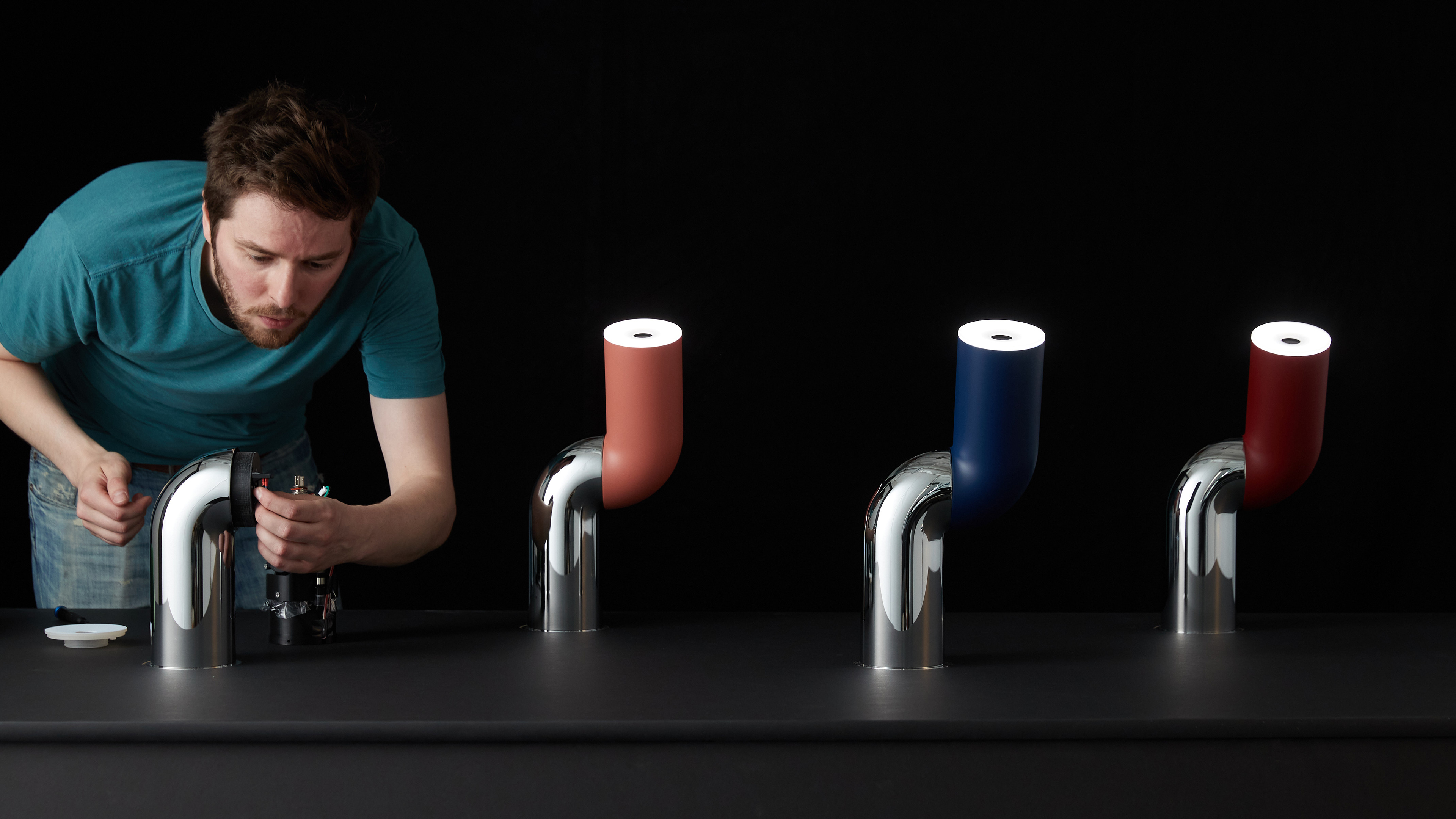
As the curtain parted on moooi’s 2022 exhibit, the audience was treated to a multi-sensory performance unlike any other: four synchronized robot scent diffusers telling a story through dance. As the robots—called Piro—swayed and dipped to the beats of a custom-designed soundscape, it was easy to forget the performers were made by a team of industrial designers and engineers in San Francisco.
The work expressed a future vision for what it means to humanize technology. Rather than design technology to make our lives more efficient, what if instead we designed technology to make life more beautiful?
For twenty years, moooi has seduced the world with bold, imaginative design. The firm, named after the Dutch word for beautiful, made its name by designing furniture and home goods that appeal to an interest in pushing the edges of form as much as function. Moooi came to IDEO looking to create an exhibit for the largest furniture fair in the world that might provoke the audience to imagine a world where design’s primary function was to inspire joy.
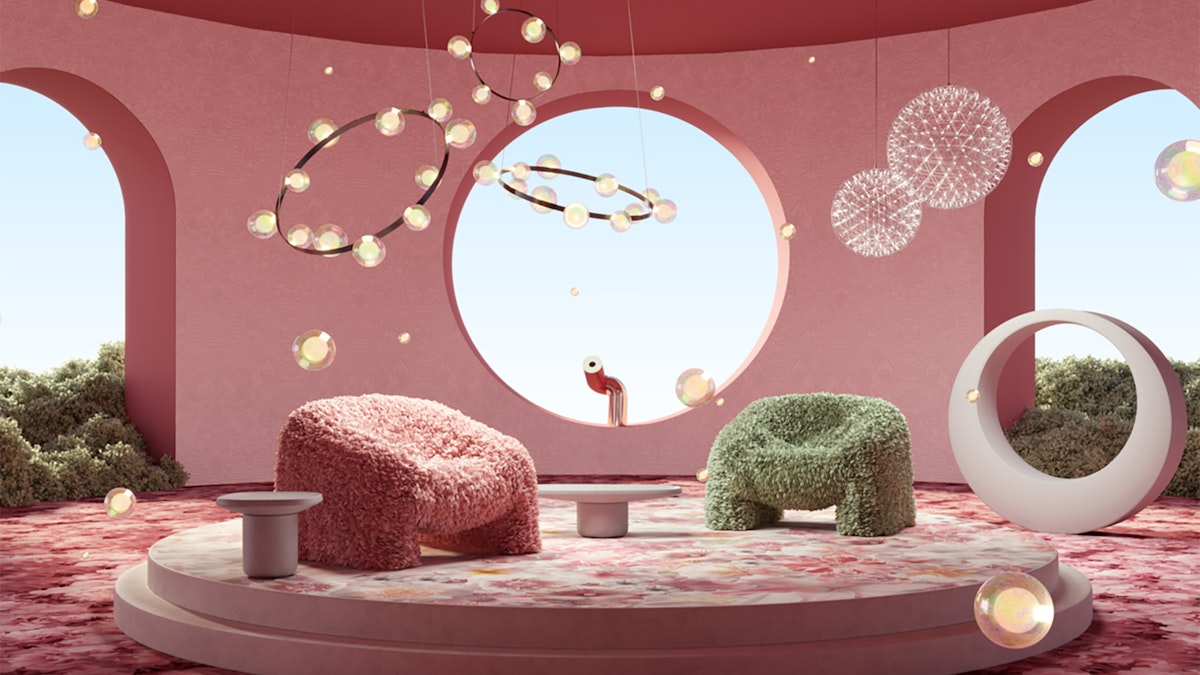
“Defy Gravity”: one of several experiential “worlds” moooi created for the 2022 Salone del Mobile. Each room had its own scent, soundscape, color, and digital experience.
Our process started by going wide. We presented 20 potential conceptual designs to the team, one of which moooi founder Marcel Wanders lovingly referred to as the “farting pet,” a robot scent diffuser that could walk around the home.
A scented smoke ring lingers in the air after Piro’s final crescendo.
From there, a team of IDEO designers enlisted the support of Catie Cuan, a choreographer who specializes in human-robot interaction, and Dutch sound design firm KLOAQ, to refine the concept into a four-minute performance piece.
Piro learned to mimic balletic human gestures.
The final result was technically involved: four robots moved independently, controlled by custom electronics and software designed to mimic the movements and grace of ballerinas. But in the performance itself, the complex mechanics disappeared, allowing the audience to experience not just what technology can do, but how it can make us feel.
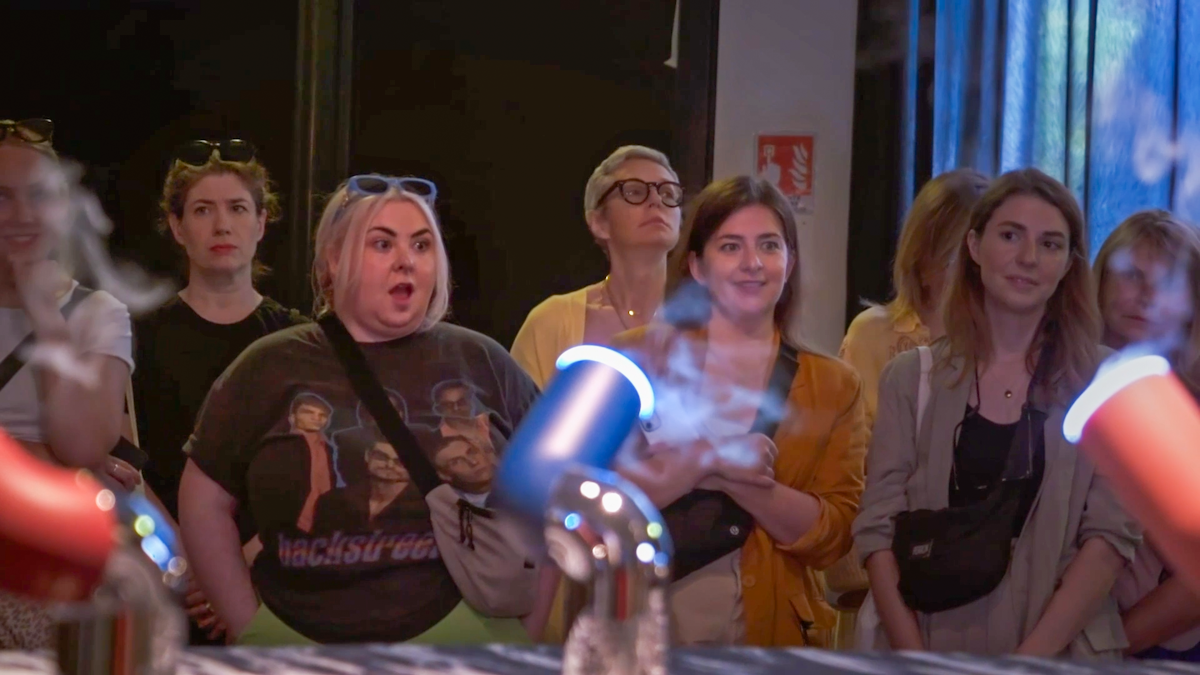
What happens when a designer and a classically-trained choreographer collaborate? Attendees of Salone del Mobile.Milano, the largest furniture fair in the world, got to see for themselves.
Empowering frontline communities
CSAA Insurance Group leads a global call for climate resiliency solutions.
To build a climate-resilient future, we need an all-hands-on-deck approach across industries and organizations, as well as the leadership and collaboration of frontline communities themselves.
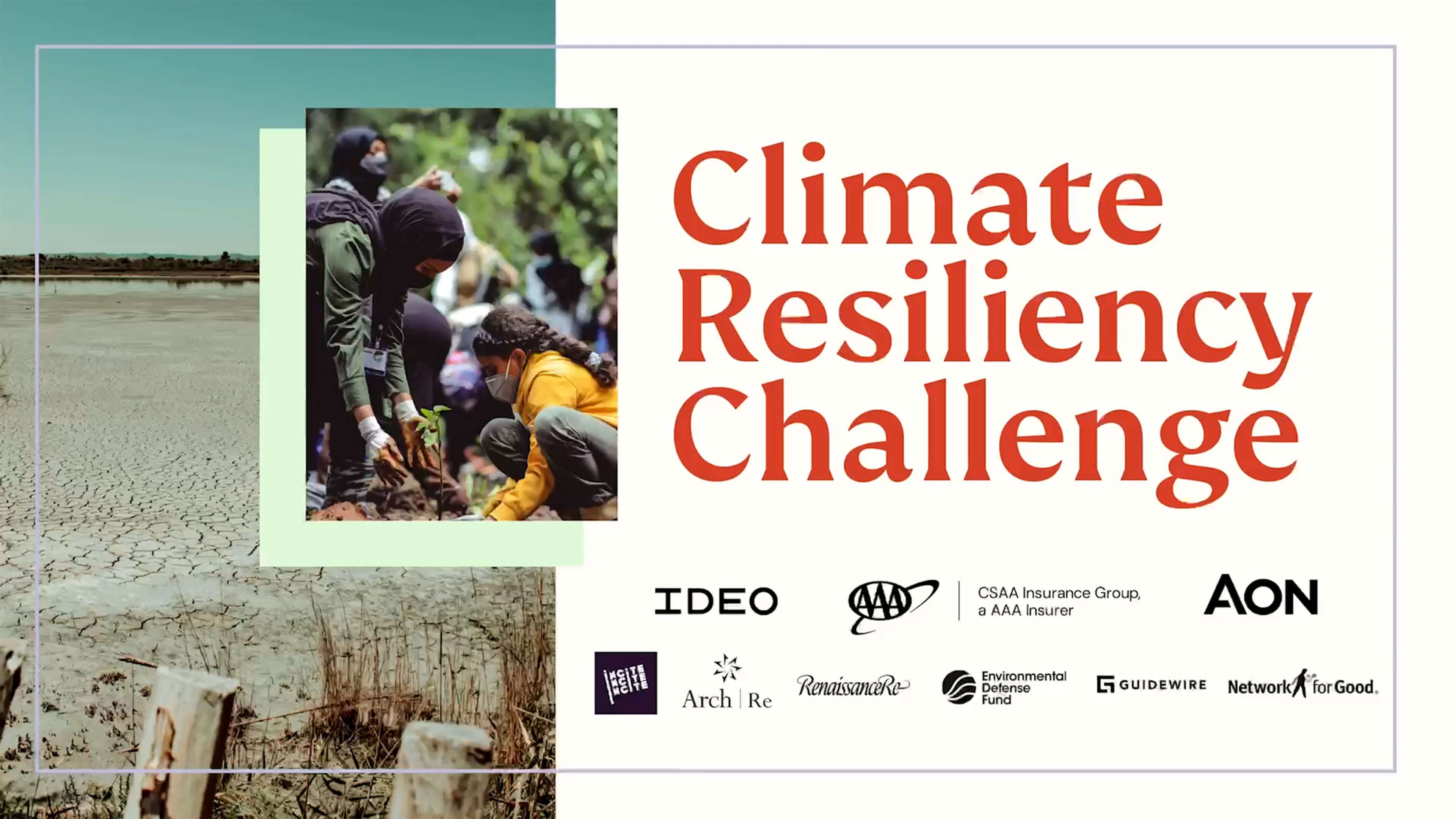
To that end, IDEO and CSAA Insurance Group worked together to unite nine partner organizations, including Aon and the Environmental Defense Fund, to launch an open call for solutions to help communities prevent, prepare for, and recover from climate-related disasters. The goal of the Challenge was to surface actionable and scalable ideas that experiment with new technologies, models, and partnerships, then provide innovators with the support and funding they need to get their ideas off the ground and into the hands of frontline communities.
IDEO set these entrepreneurs up for success throughout the submission process, holding one-on-one conversations with participants, sharing constructive feedback on potential solutions, and developing their ideas and skill sets. The team also hosted workshop and panel sessions to grow community bonds and provide expertise on critical topics, including assessing climate risk and storytelling for impact. Hundreds of ideas came in from around the world, ranging from harnessing the power of AI, to building resilient infrastructures, to democratizing access to climate data, and more.
Once all of the ideas were in, a cohort of judges with a wide diversity of work and lived experience screened for concepts that were relevant, impactful, novel, community-informed, and equitable. At the end of the Challenge, the team chose 13 winning concepts with high potential for impact and partnerships, including Reef Rocket, which seeks to fabricate natural biocement reefs that reduce coastal flooding and erosion, and BurnBot, which is working to prevent wildfires by conducting controlled burns at scale.
For these winning entrepreneurs, the end of the Challenge is just the beginning. Now, they are equipped with critical early funding, as well as a cohort of climate entrepreneurs, along with mentorship from IDEO, CSAA, and the other organizations. It’s a big step forward as they introduce new forms of equitable and transparent data, promote the voices of BIPOC communities, and bring to market new technologies that will protect and support frontline communities through this ongoing crisis.
In the US alone, climate-related disasters cause $120 billion in damages annually. That figure is five times greater than 50 years ago, and projections are $2 trillion by the end of the century.
Nearly 90% of counties in the US declared a natural disaster over the last decade.
418
submissions
13
winners
$1M
in prizes
Faster science
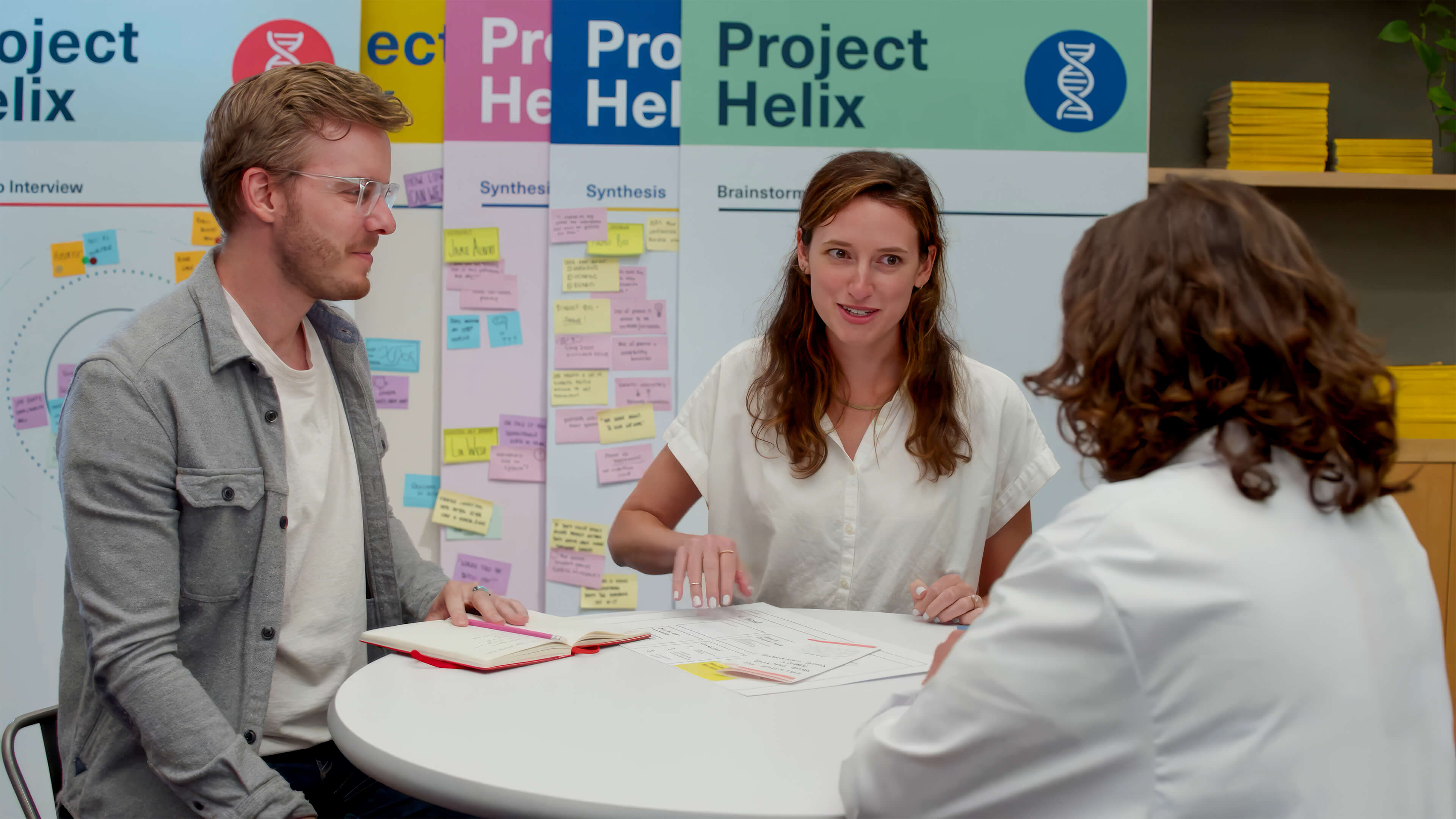
How the NSF leveraged design to unite multidisciplinary teams.
Every year, the NSF provides around 30 teams with up to $750,000 and a year’s worth of coaching, training, and collaboration to develop solutions for research areas like sustainable ocean use or combating fake news. Over the course of nine months, the teams learn how to uncover insights about human needs and design durable solutions for end users. But many of the scientists and experts in the program felt stretched by the idea of putting the needs of end users in the mix with their scientific testing—something few of them have been trained to do in their previous work.
To make that process feel more achievable, the teams built out prototypes and received guidance on refining and pitching their ideas along the way. IDEO joined the project as an innovation partner, facilitating hands-on workshops and creating “Science TV” episodes that could help the program reach a broader audience, deepening its impact now and in the future.

To help grantees get vulnerable, and evolve their ways of working, IDEO sent grantees to improv training so that they could learn to build off each other. The team also took them to magic shows and on ghost tours in downtown San Francisco to learn the value of compelling storytelling in their work. The fun was part of the plan—gelling as a team and building relationships meant participants could make mistakes in front of one another. Being wrong doesn’t come naturally to academics, but it’s a key part of the design process, and a crucial part of solving complex problems .
Each year, a select group of teams move onto the next phase of the “coop-etition,” receiving up to $5 million in additional funding. And all of the participants leave with valuable new skills they can use to break out of their own silos and create human-centered, ground-breaking solutions for the rest of their careers.
When the NSF launched the Convergence Accelerator and made the radical move of bringing together teams from different disciplines, these academics, scientists, and industry partners didn’t have a shared language to move their ideas forward, and needed a structured approach to coming up with new solutions.
164
trained research teams
$200M
in federal support granted to AI-driven innovation, quantum technology, food security, sustainable materials, opportunities for people with disabilities, and more
Climate captains
An innovation accelerator bolsters the impact of climate startups.
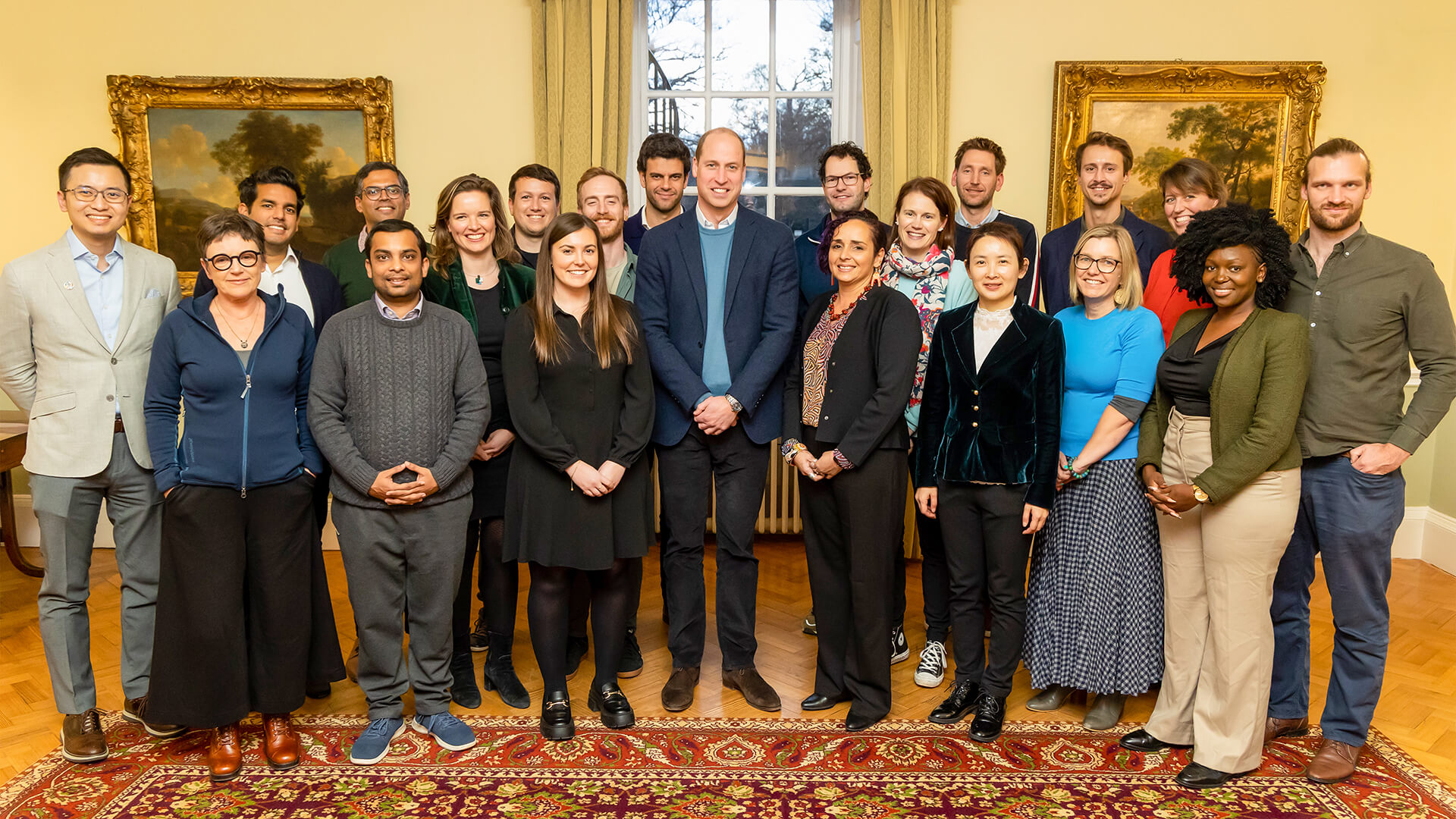
IDEO and The Earthshot Prize built a nine-month Fellowship program and a five-day, in-person retreat to give Finalists the best shot at reaching the Prize’s ultimate goal: to scale the solutions that will repair our planet this decade.
To build out the new Fellowship, IDEO took a deep dive with the previous year’s Finalists to uncover where they needed critical support. This research revealed that the Finalists needed more ways to leverage the Earthshot platform, connect with potential partners to help scale their ideas, and build community with each other. The IDEO team then used those insights to create a set of recommendations The Earthshot Prize team could implement to create a more supportive and structured experience. Ideas they took forward included assigning a designated “Leap Advisor” who could provide guidance and assistance for each Finalist, as well as an advisor from the Prize’s Global Alliance Network who could partner on specific growth initiatives, like scaling product design, or policy change.
Next up: the design of the retreat itself. Together, IDEO and the Earthshot team had three goals for the cohort’s week together in Windsor: focus on new forms of leadership and movement building, spur action through storytelling, and foster community.
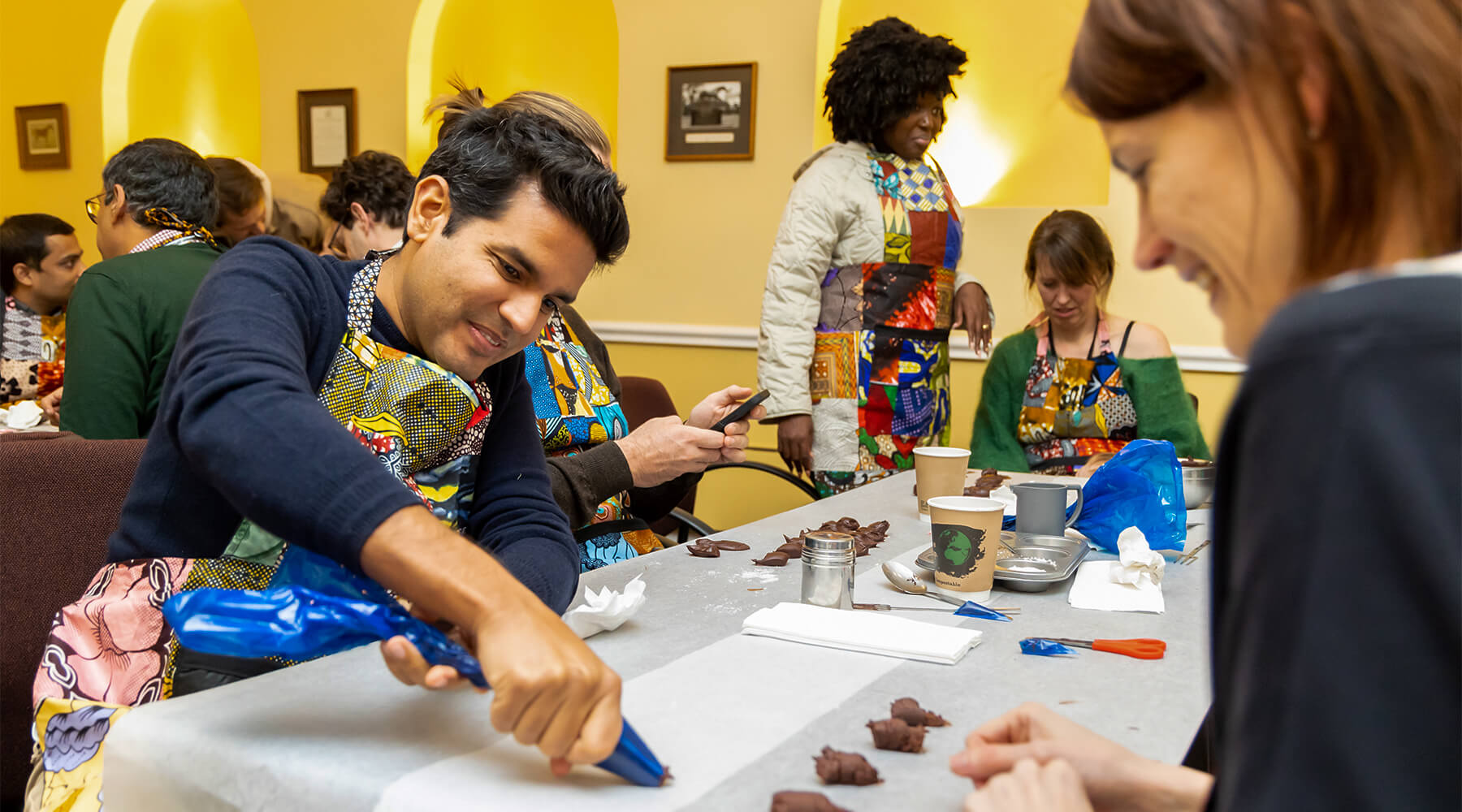
The team developed the curriculum with leaders from Google X and Speed & Scale, alongside startups like UPSIDE Foods. They designed moments to build community, like paired walks and a chocolate-making workshop where Finalists could get to know each other away from the noise of meetings.
Photographers captured the event to create assets for Finalists to use when pitching their ideas, and Finalists honed their storytelling skills. But what most remember is the magical moments of coming together as a cohort of next generation climate leaders who will help each other make an impact on the problems facing our planet, long after The Earthshot Prize has concluded.
The problems facing our planet are enormous, spanning industries, borders, currencies, and regulatory environments. Meaningful solutions will require leaders who can work across those lines.
30
climate solutions accelerated in first two years
Fortify your digital platform’s early success
How Bendable fosters lifelong learning with meaningful metrics.
For more than two years, with the help of a group of designers from IDEO, we and our colleagues from the Drucker Institute had been planning and developing Bendable, a lifelong learning system that would allow the 100,000 residents of South Bend, Indiana—regardless of their age or background—to acquire new knowledge and skills through online courses as well as in-person classes. The goal was to foster a significant increase in better jobs, civic participation, and overall well-being for the community.
In June 2020, we finally unveiled the system. And month by month, backed by an aggressive marketing campaign, we watched the tally of unique local visitors to the Bendable digital platform steadily climb: from 2,161 to 5,160 to 8,040. Our plan to tackle the first order of business—bringing eyeballs to Bendable—was working. By mid-November, we’d crossed the 10,000 mark.
But as we headed into 2021, we began to notice a different trend taking hold: Growth was slowing.
This wasn’t totally surprising. We’d launched Bendable in the midst of the Coronavirus pandemic, rendering a nonstarter our elaborate plans to supplement the online learning with a slew of face-to-face events. But Covid-19 couldn’t explain everything. In this way, we found ourselves in the same situation that many organizations do when they bring a new digital product into the world: a meteoric start that quickly fades. To try to reverse the slide, we needed to look in the mirror. And that meant getting more serious about how we’d leverage the metrics we were collecting.
Over the past nine months, we have implemented what we call a 4-D approach to continuous improvement: data → decision-making → design → deployment. Now, our team from the Drucker Institute and the St. Joseph County Public Library—our key partner in South Bend and the home of Bendable in the community—gets together every four weeks or so to dig into the metrics, discuss what they mean, figure out what we should do about it, and assign a champion to be accountable and follow through.
To be sure, the numbers alone can’t give us a fully rounded picture; we always temper the quantitative data with what we are observing and hearing from Bendable stakeholders on the ground across the city. But the stats have become the place to start, giving our team a common way to frame whatever situation we are sizing up. We have used the data to shape our strategy for attracting new users, as well as for making Bendable stickier for those who've checked out the platform—goals that every digital product team can relate to.
Tracking the right data
Before we could take full advantage of the data, we had to make sure we were scrutinizing the right stuff.
Our first instinct—and likely the one many teams lean into—was to pull in all of the data that we could from Google Analytics and our own platform. What we ended up with was a mountain of metrics, but not a lot of meaning.
It didn’t take long before we realized that a better place to start was to sharpen our objectives for the program and then find the specific metrics that would shed light on whether we were getting there. We eventually landed on four overarching goals for Bendable in South Bend: to activate learning, drive a depth of learning, cultivate in people a habit of learning, and ensure that Bendable is inclusive of the whole community.
Today, we track statistics across 13 different areas (through Google, along with a few add-ons put together by our own software developer and key performance indicators passed on by our content providers). Each is organized under one of our four main goals.
These include things like the number of South Bend residents coming to Bendable both for the first time (activating learning) and returning (cultivating the habit of learning). We pay close attention to how much progress they are making through content providers’ courses, as well as through Bendable Career Collections—employer-backed learning pathways intended to prepare people for some of the most in-demand jobs in South Bend.
We also analyze the range of resources that people are clicking on. One of our theories is that if people are able to rely on Bendable to unearth all sorts of content, it will help instill in them the habit of learning. And so we assess how many South Bend residents want new work skills and how many are looking to enhance other aspects of their lives (by finding a class on, say, personal finance) or fulfilling a passion (like music or art).
We also pull information from our account sign-ups and parse which zip codes Bendable learners are from, which helps us make sure we’re reaching traditionally underserved areas.
Turning insight into action
From the data, we’ve learned that marketing matters—a lot. When the library lets up on its social media posts about Bendable, traffic to the platform falls, sometimes precipitously. When it leans into social media, traffic swells.
This is a crucial lesson: You have to sell a social innovation not unlike the way you would sell toothpaste; just because something meets a genuine need doesn’t mean that interest in it will magically materialize. It takes a real push.
As we delved into the data with the library, we discovered that to have the greatest impact, Bendable must be timely, which caused us to adjust our plans. One way we do this is by highlighting various Community Collections—personal learning playlists put together by local residents on a wide variety of topics. For instance, in the wake of the January 6 insurrection at the Capitol in Washington, the library promoted a Community Collection titled “Discerning fact from misinformation online.” More than 100 residents clicked on it that week, nearly nine times more than the next-most-opened Collection. As the weather started to warm this spring in South Bend, the library put the spotlight on a Community Collection called “Getting started as a gardener,” and it became the most popular.
Thanks in part to this insight, we have started to see our unique visitor growth pick back up, rising from its nadir of 481 in March.
“It’s the combination of pushing trusted learning content along with its relevance to our community's day-to-day life that brings more value to our patrons and translates to more engagement," says Norah Alwalan, who oversees the library’s Bendable outreach.
Turning visitors into regular users
The data also turned our attention to another challenge: getting people to sign up for a Bendable account. To date, about 1,500 have done so—just 10 percent of the nearly 15,300 unique local visitors who have now come to the platform.
Account sign-ups are tricky terrain for many digital products. You want to give a certain amount of freedom so that users can get a taste without potentially alienating them by coming on too strong and asking for their personal information. But you need that information to follow up with them and maximize their experience.
In the case of Bendable, this tension is especially pronounced. We want people to have friction-free access to much of the content on the platform so they can jump right in and begin learning. And yet if they don’t sign up for an account, we can’t communicate with them through email or text, making it difficult for us to support their efforts. What’s more, without an account, Bendable users can’t obtain course seats that have been pre-paid with philanthropic dollars, including a lot of the meatiest content that can help them advance in their careers.
So, how can we inspire more people to sign up for a Bendable account?
Thus far, we’ve tried several tactics, including an email blast to library patrons, urging them to make an account. In March, we added a welcome video to the top of the Bendable homepage, helping onboard new users to the platform and encouraging them to create an account from the get-go.
The pace of account sign-ups has shot up since April. But we know that we need to do much more.
Getting out into the community
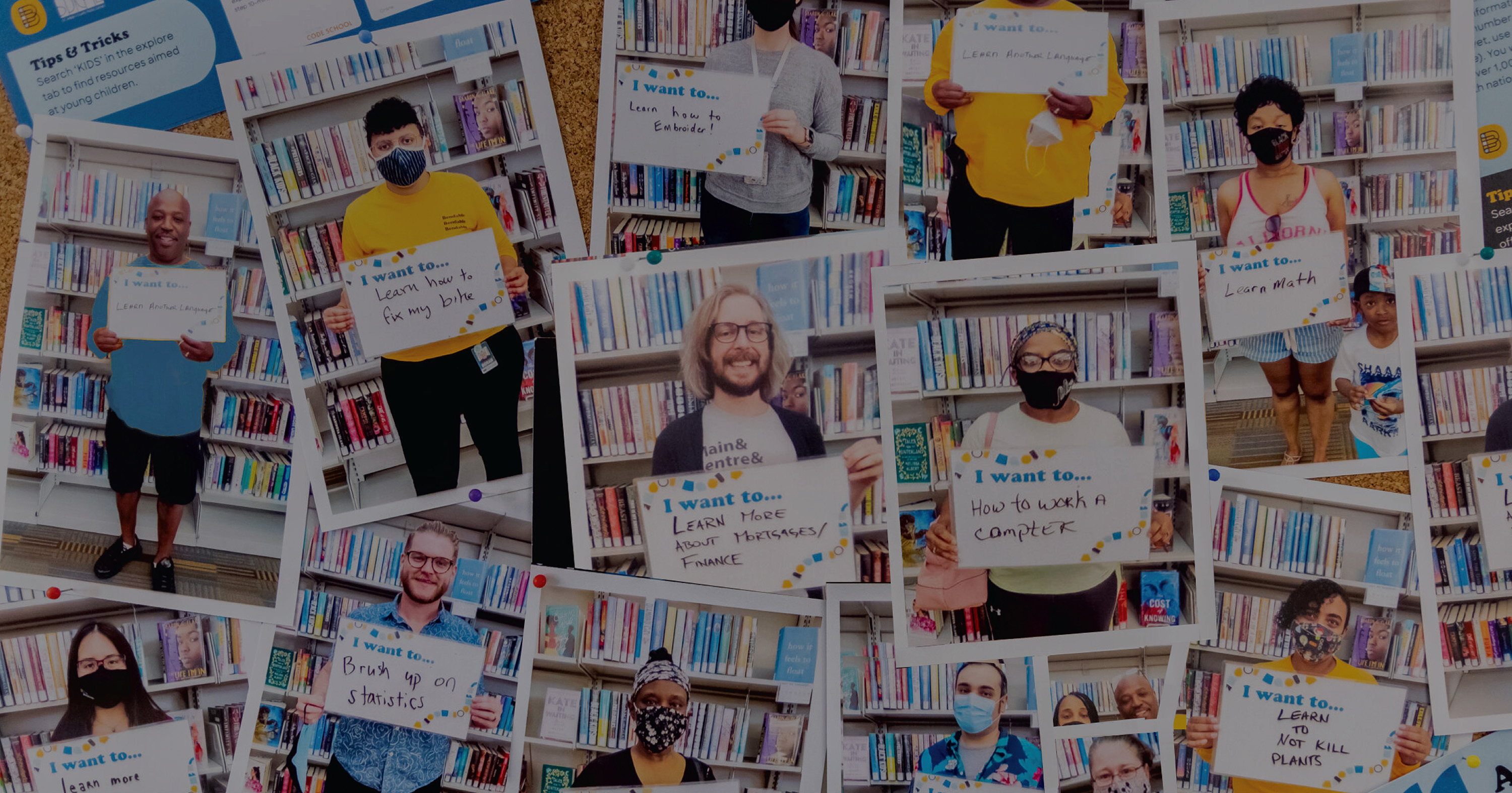
As South Bend residents have gotten vaccinated and things have started to open back up, we have been working with librarians to get those walking into the 10 branches around the city excited about Bendable. We ask these people about their learning dreams, and then put their aspirations up on the branch wall, along with each person’s photo. (At the LaSalle Branch recently, we heard from men and women who were eager to re-learn math, become proficient in Photoshop, start a business, see their houseplants flourish, and more.) We then ask them to sign up for a Bendable account and give them guidance on how they can use the system.
Of course, we know that the toughest thing for many of these learners and any others who use Bendable will be persistence.
It’s not that Bendable users aren’t committed to learning. According to several of our content providers, including GCFGlobal and LRNG, those coming from Bendable.com consistently spend about twice as much time on their sites as do those who find their way there through a general search engine.
But it’s a different story for the courses that require hours of dedication to get all the way through, including those offered by Penn Foster, edX, and others that can lead to industry-recognized credentials or college credit. Of the 340 or so of these classes that have been started, fewer than 20 percent have been completed.
If the data has proven one thing above all, it’s that learning is hard.
On some level, we knew this going in. Adult learners face myriad barriers, including juggling work and family responsibilities; anxiety about being back in “school,” even if they are now in an alternative learning environment; and struggling with childcare and transportation.
But seeing the numbers has reinforced the fact that to drive a depth of learning—one of our four strategic goals—we need to get beyond the digital platform and equip the community to support Bendable learners. It’s a good reminder that the most important thing that a piece of technology can do is connect people in a meaningful way.
And so, we are now collaborating with stakeholders across South Bend—employers such as Beacon Health, the big hospital system in town; nonprofit organizations like Goodwill; government agencies, including a summer youth jobs program run by the city parks department; educational institutions, including the public schools; and others.
With our help, these partners are weaving Bendable into their everyday activities, seeking to further their own missions by assigning specific courses on the platform to their employees, clients, students, and so forth. To help these cohorts of learners get through the material successfully, we are now running a bunch of experiments that have been designed with input from a social science researcher. Among them: sending out text messages to nudge learning along; making available online coaching; using local university students as in-person coaches; and sharing data so that organizational leaders have visibility into learner progress.
In the end, building a better Bendable—as with any initiative trying to have a deep social impact—will be neither fast nor easy. We anticipate that it will take five years or more before we have a good sense of whether we’re getting anywhere toward our paramount goal: making South Bend more resilient by building a true community of lifelong learning.
Meanwhile, we will also be expanding Bendable through a partnership with the Maine State Library. Although Bendable will be hyper-localized for the people of Maine, with content and features that meet their particular wants and needs, our long-term aim remains the same: boosting the resilience of residents throughout the state.
Which is why we will, once again, rigorously track the most pertinent data. “The idea of resilience can be nebulous,” says Lex Dennis, the Drucker Institute’s director of lifelong learning. “That’s why focusing on the metrics as we go along is so critical.”
From the outset we monitored the numbers—and, at least at first, it was hard not to feel kind of giddy.
.jpeg)
What wandering can teach us about designing new spaces
5 design lessons from studying the intentional unpredictability of wandering.
The winding streets in the medieval city fabric, the long lunches with wine followed by a nap, and all the built-in transitional time and spaces choreograph a unique quality and pace of life that defy our usual sense of urgency. The city forces its inhabitants to slow down, creating opportunities for the unplanned to unfold.
It’s this intangible quality that has drawn and inspired generations of artists and scholars, and what motivated my partner and I to apply for fellowships to study the act of wandering in Rome early in 2020. Curious about the truth behind the city’s lore, and believing it’s only possible to study wandering by wandering ourselves, we spent three months thinking not too hard about the things that make a place great for wandering and conducive to moments of serendipity.
Our days of wandering concluded when Rome locked down for the pandemic, and our lives shifted from the physical city to virtual space. Most of us have discovered benefits to this new way of working and living, and many elements are likely to remain. But in the rush to replicate the functional aspect of daily life online, we’ve also lost a bit of the spontaneity and chances of encountering the unexpected. Through this project, we want to champion the irreplaceability of physical spaces, and articulate a few design principles that take us beyond the typical pursuit of productivity and efficiency, and toward making environments that encourage and reward wandering.
1. Meta orientation
Rome is built on seven hills. Each day, we would wander from our apartment at the British School on the eastern edge of the city, up and down a hill, across a river, and up another hill to our studio at the American Academy on the west side. Setting out in the morning, we would often arrive just in time for lunch, and take the whole afternoon getting back just in time for dinner.
Curiously, after only a cursory glance at the map upon arrival, we were able to make the trip every day via constantly evolving routes. In the medieval city, the slight inclination of streets offered a meta sense of direction, allowing us to know roughly which way to go even when venturing into previously unexplored areas. In fact, many streets follow old streams; a local rule-of-thumb for when you’re lost is to pour water on the street and follow it down to the banks of the River Tiber.
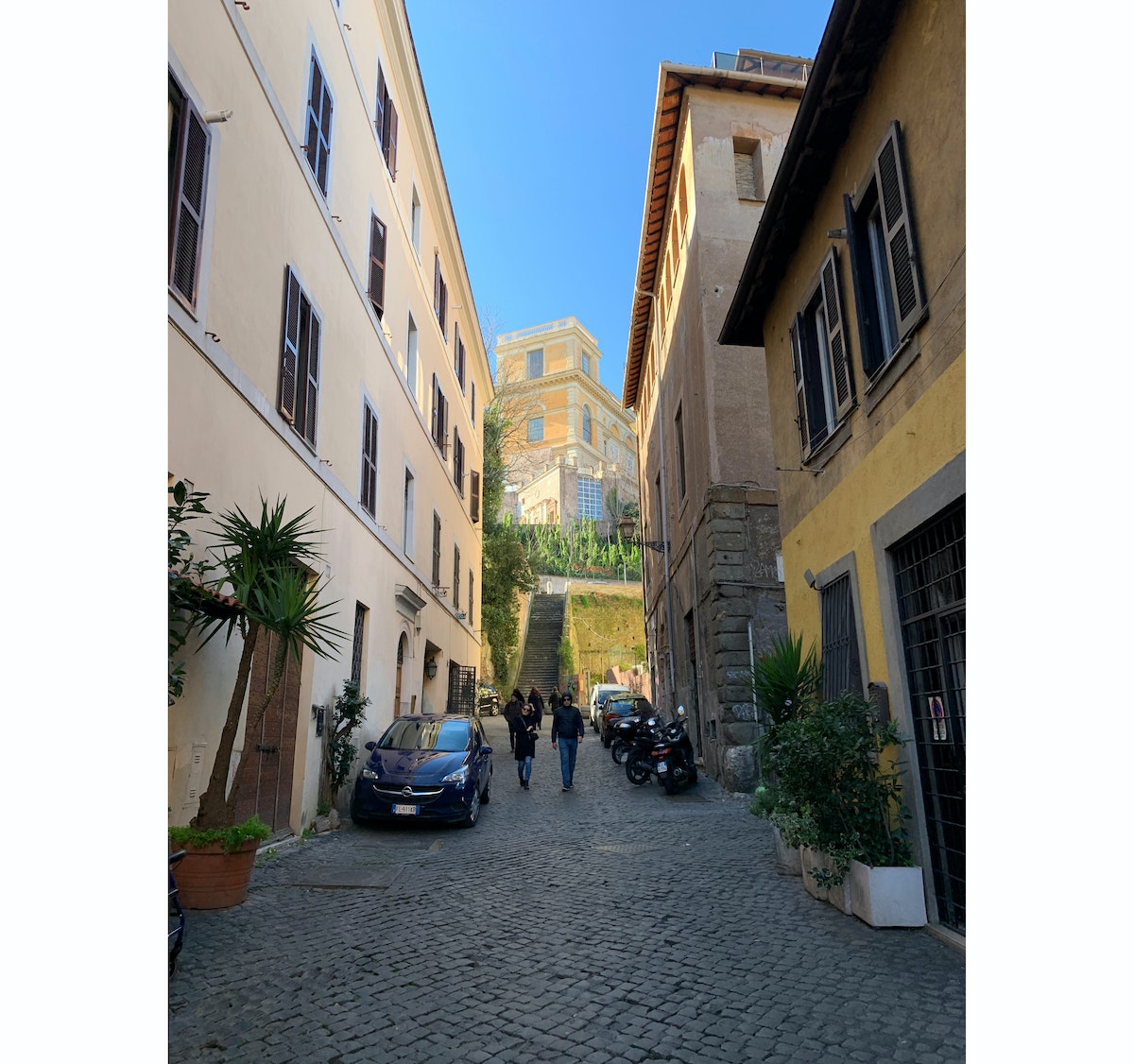
The joy of wandering comes from its unpredictability, which is always delicately balanced against the fear of being completely lost. Subtle spatial cues such as the street sloping up or down, or glimpses of a monument when you’re crossing an axial boulevard, can offer a meta sense of orientation while preserving the excitement of choosing different paths to explore.
2. Built-in intermissions
At the risk of perpetuating stereotypes (both about Rome and about designers), our days were often strung together by coffee breaks, whether a quick pick-me-up before an appointment or to while away an afternoon. To our surprise, the same cup of coffee in a Roman cafe has two different prices depending on whether you are drinking it standing at the bar (about one Euro), or sitting down at a table (about six Euros). It’s perhaps the clearest evidence that coffee is not only a drink, but also a duration of time—the cheaper option gets you a short respite standing at the counter, while the more expensive option gets you an afternoon watching passers-by sitting at a street-side table.
The caffeinated intermissions provide in-between time to remember what we have just seen, and anticipate what we are about to see. It shifts our experience from distinctive blocks of activity to a gradated spectrum that fades in and out, creating opportunities for different ideas to overlap. The bitterness and heat of the coffee, pleasurable to sip but difficult to gulp, establishes a minimum amount of time between things, allowing our thoughts to wander without the need to be somewhere.
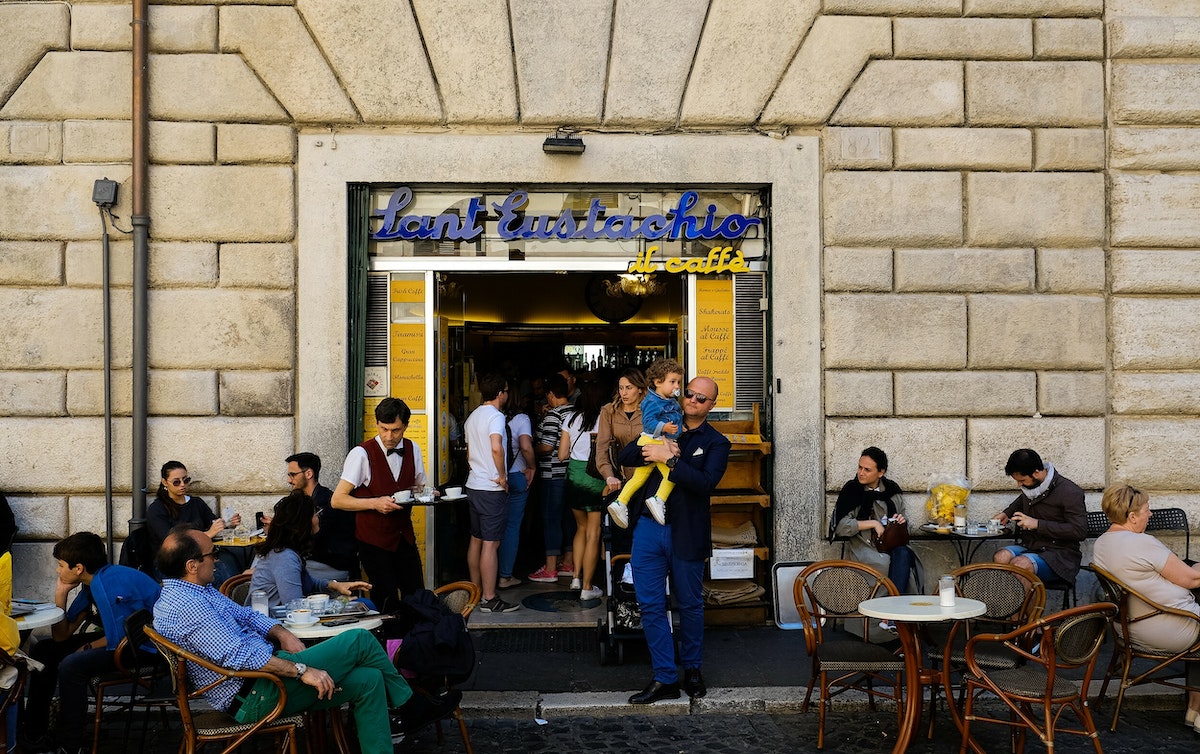
Perhaps what the physical environment can better offer and should be designed for is the gentle spacing between things: a short walk to lunch, a stroll from home to work, or some distance between the desk and fridge. That’s often when inspiration strikes.
3. Anchoring ambiance
Visitors to Rome often note the distinctive quality of the city’s light. With its dry and arid Mediterranean climate, the bright and sharp light plays off the solid architecture of stone and concrete to create deep contrasts and shadows. It dictates and changes what we can and cannot see at different times, often revealing only a small fragment of the overall picture.
A quirk of the human mind is its tendency to sprawl. We are overwhelmed when exposed to too much information and bored with too little. What holds our attention best is a partially-revealed picture that anchors parts of our imagination while allowing the rest to hover freely to fill in the voids. The ambiance of a place is often defined by what is concealed—a noisy cafe shifts our focus to the sight and smell, while a dimly lit street might foreground the sound and chill.
The physical space can offer an anchoring ambiance. Instead of the floor-to-ceiling glass walls favored by luxury developments, perhaps a few well-placed windows may allow us to see the outside more closely. By editing what our mind can see and perceive, we leave space for our imagination to roam and wander.

4. Loosely-defined uses
For a city famous for its walkability and public spaces, Rome has an unusual lack of public benches. But there’s always a place to rest, whether you’re sharing a podium with a Roman God, or leaning against the inclination of a once-impenetrable fortress. People intuitively adapt, exploit, and react to the spaces around them as they navigate and occupy the city.
Most modern buildings and spaces are designed for specific functions—a meeting room for meetings and a classroom for classes. Some are even designed to discourage unintended uses, such as segmented benches that prevent people from lying down. In a historical city like Rome, with its accumulated layers of architecture, landscapes, and urban form, few things are used for their original functions, and nothing fits precisely.
While the dictum of form follows function has an alluring logical clarity, it’s also a self-fulfilling prophecy, with the function constrained by the tight-fitting form. When we design our spaces to loosely fit their intended uses, we naturally invite exploration and appropriation. As any parent knows, a snowy slope entertains a child for longer and in more ways than a purpose-designed playground slide.

5. Intentional collage
A Roman walks into a bar, holds up two fingers, and says “Five beers please!” The joke works by connecting two previously separate frames of reference: two fingers for two, and V for the Roman numeral five. Inspiration works in a similar way, by revealing a previously unnoticed relationship. We never quite know which two things will resonate, so one of the best ways to generate inspiration is to be constantly exposed to new collages of things and ideas.
Rome is in many ways the perfect collage-generating machine, where the ancient coexists nonchalantly inside, around, above, under, and next to the cutting-edge. Walk past a classical facade marked by graffiti, and you might notice the original Latin inscriptions under the latest tag, both created by the same human impulses. Experiences like these recalibrate our sense of perspective in the vastness of history, while at the same time affirms the universality of our human instincts.
Despite the urge to categorize and organize, we could allow some messiness of life to spill through. In our spaces, instead of insisting on a uniformed look where all the furniture must conform to a color or style, a diverse collection accumulated over time often inspires more stories.

My partner and I have always been drawn to certain spaces with a special spark—places where we feel relaxed, inspired, and curious, and can wander freely. While an anecdote from Rome or other exotic locations often serves as a shorthand for this spark, this project is our attempt to pin down this elusive and intangible quality, so that we may discuss and design for it more intentionally and precisely.
Now, as we emerge from the pandemic, we are presented with the rare opportunity to re-examine the value of our physical spaces. Perhaps we can draw on some of these principles to design future environments, not only as something to be optimized for productivity and efficiency, but as pleasant and inspiring spaces to be in, wander around, and maybe encounter the unexpected.
As a city, Rome is measurably inefficient; the concept of finding the quickest route between points A and B is almost non-existent.
How workplace rituals can strengthen connection in a virtual community
Embracing constraints and designing for serendipity can create the conditions for innovation, trust, and collaboration.
At their core, rituals are intentional actions that follow a particular repeatable pattern. Certain words or phrases, symbolic props, and patterned movements are used to elevate everyday moments into meaningful and memorable experiences. Rituals have a unique ability to make intangible values and beliefs concrete because they bridge the mind and the body, the two ways humans process and make sense of the world. We use them all the time in religion, politics, and sports to help groups navigate change, form a shared sense of identity and purpose, and enhance performance—but we forget they can also be incredibly powerful at work.
In the past year, we’ve had a lot of time to learn about rituals for the virtual world. Some of IDEO Chicago’s favorites are featured in a new book by Stanford’s Ritual Design Lab called “Rituals for Virtual Meetings: Creative Ways to Engage People and Strengthen Relationships.” The book highlights remote rituals from companies around the world that help with focus, connection, flow, and more. Here are some of our favorites.
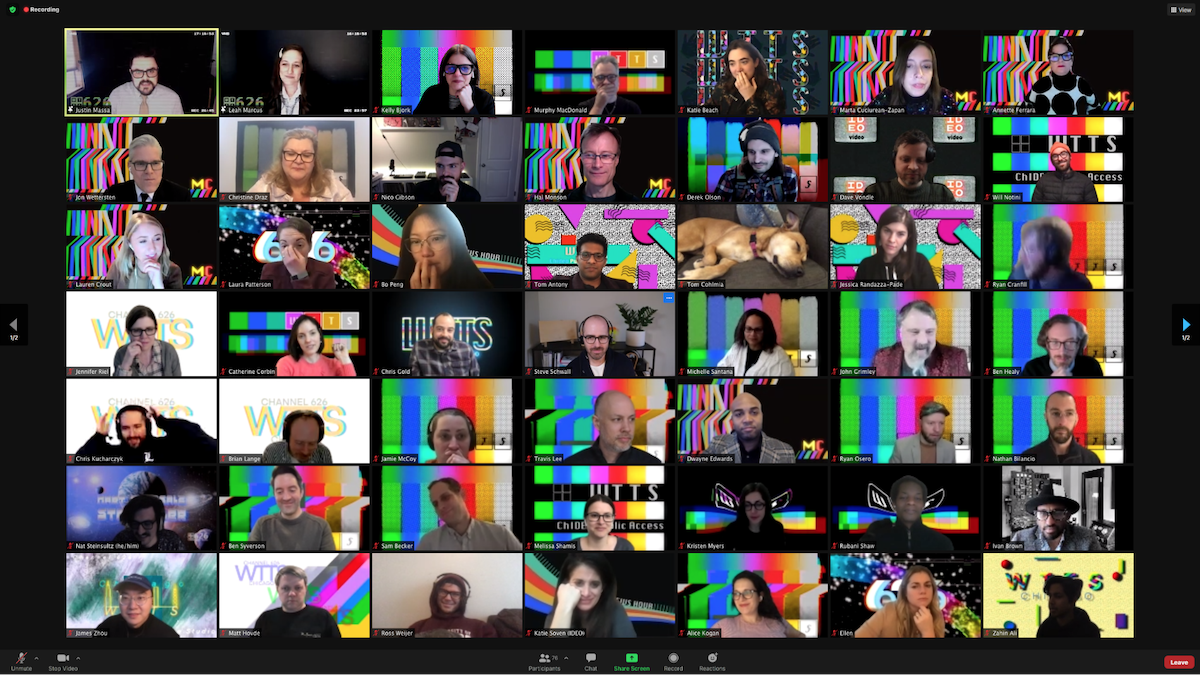
Embrace the cacophony
For years, all-hands Monday Lunch Meetings (MLMs) have been an important weekly ritual for sharing inspiration, information, and project work over a meal at IDEO studios across the globe. When we first entered round-the-clock remote life, presenters were faced with an intimidating, feedback-free void. It felt cold and awkward, and nothing at all like the MLMs we knew and loved.
To fix that, we identified that the MLM routine itself wasn’t enough—we needed to design moments of consistent virtual connection to revive the feeling of the shared experience. So we sped up the pace of shares, encouraged side conversations in chat, added sound effects like air horns through a creative hack using DJ software, and fully leaned into the awkward audio latency tendencies of video calls with our monthly singing of “Happy Birthday.” By embracing the cacophony, we subverted the silence and saved each other from being isolated in the void, retaining some semblance of consistency and communal spirit during an otherwise unpredictable and lonely time.
Find serendipity through structure
When we were together in our studio, we could rely on the walls and furniture to create safe boundaries and immersive experiences. But in a video room, space can feel infinite and spontaneous conversation challenging. We realized we needed to design specifically for serendipitous encounters.
One of the first events we created was the ChIDEO Variety Hour. An event inspired by improvisational, slapstick variety shows (think The Muppet Show and old telethons), it’s meant to showcase the range of talent and work being done in the studio. It feels spontaneous and whimsical thanks to two constraining factors: First, presenters sign up in advance for “on-screen time”—from as little as one minute to as long as 30. Second, two hosts write a script for the show and get robust “back of house” support from a team that monitors live technical aspects like time keeping or moderating chat.
At the first Variety Hour we had a research share from recent project work, an intermission dance party, and one minute of screaming, to name a few examples. It was the most participatory virtual event we had ever had, and Variety Hour has since become a beloved monthly ritual in our digital studio.
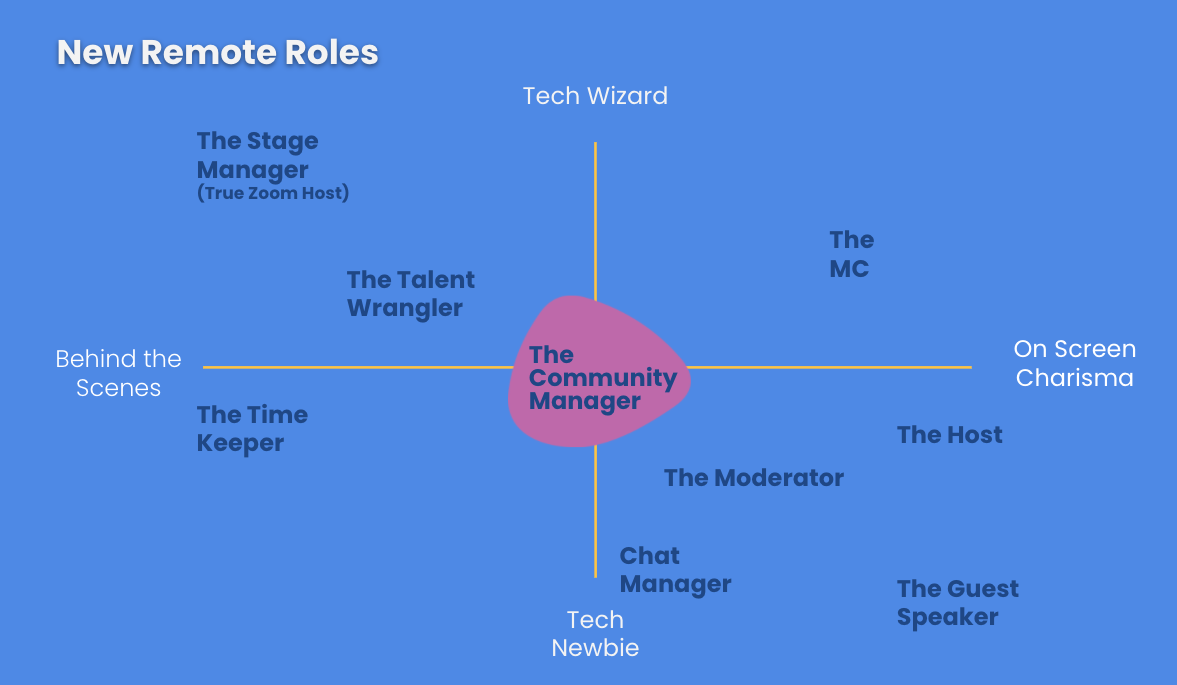
Make the most of digital tools
When everyone works remotely, the physical distance becomes compounded with digital invisibility. The right ritual can manufacture proximity, rebuild trust and connection, and mimic the ebb and flow of a good house party. This is where digital tools can shine.
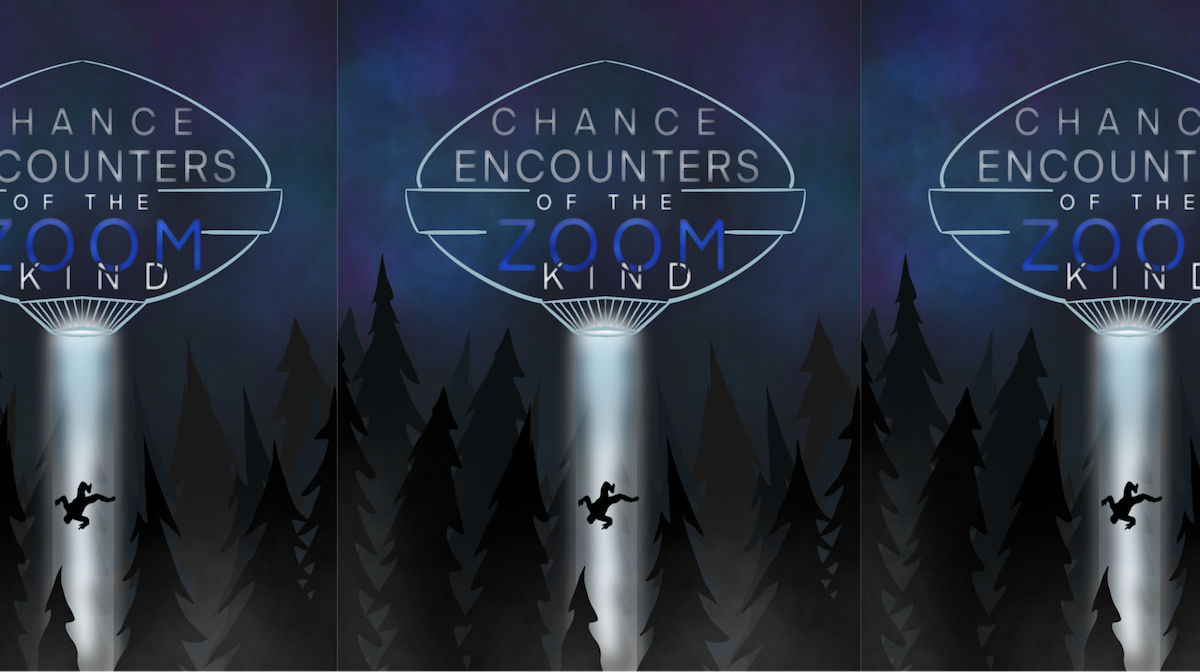
The Breakout Room function is meant for subdividing large webinar audiences, but we asked, what if it was used for something like speed dating? Breakout Rooms can be randomized, sized in different ways, and attendees can even move between them on their own. We harness these features for an icebreaker game called “Chance Encounters of the Zoom Kind.” By randomly placing participants in different breakout rooms together, keeping the duration a surprise, and providing thought-provoking conversation prompts to break the ice, we recreated casual collisions for the digital office. In some cases, it was the first time people had seen each other since the lockdown began, and it provided much needed reconnection, randomness, and joy.
Developing your own rituals
If you’re looking to decrease the stress that accompanies change, create conditions that kickstart innovation, inspire greater trust and collaboration among coworkers, or turn the mundane into the memorable, consider creating your own workplace rituals from scratch—or turn to the dozens outlined in Rituals from Virtual Meetings for inspiration.
When COVID first sent office workers remote, many companies struggled with the decentralization and loneliness of virtual work. Thankfully, at the IDEO Chicago studio we had a secret weapon we knew would help us bring serendipity, joy, and creativity into the uncharted landscape of perpetual videoland: rituals.
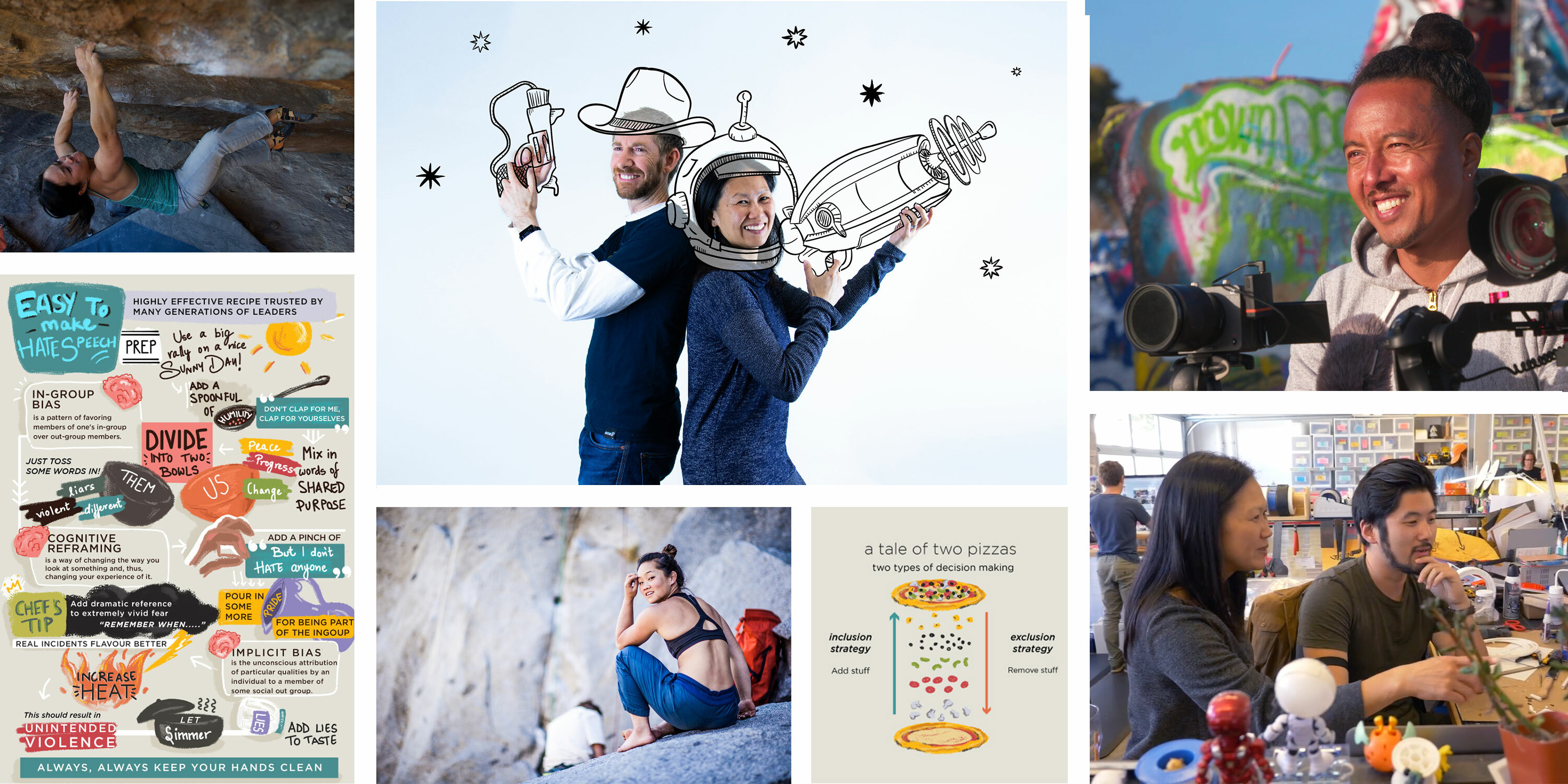
Creative visions from Asian and Pacific Islander Americans we admire
In celebration of Asian Pacific American Heritage Month in the U.S., we're sharing reflections from some of the incredible creatives who continue to inspire us.
Our personalities and outlooks, where we grew up, and all of the experiences we’ve ever gone through in life get filtered and expressed through the things we create. And—perhaps even more importantly—our identities impact why we create, helping us find meaning and purpose in our creative work.
In celebration of Asian Pacific American Heritage Month (APAHM), we're sharing reflections from some of the incredible creatives who continue to inspire us. Here, they share insight on what drives them and their goals for the future—bound to, centered in, and empowered by their unique identities.
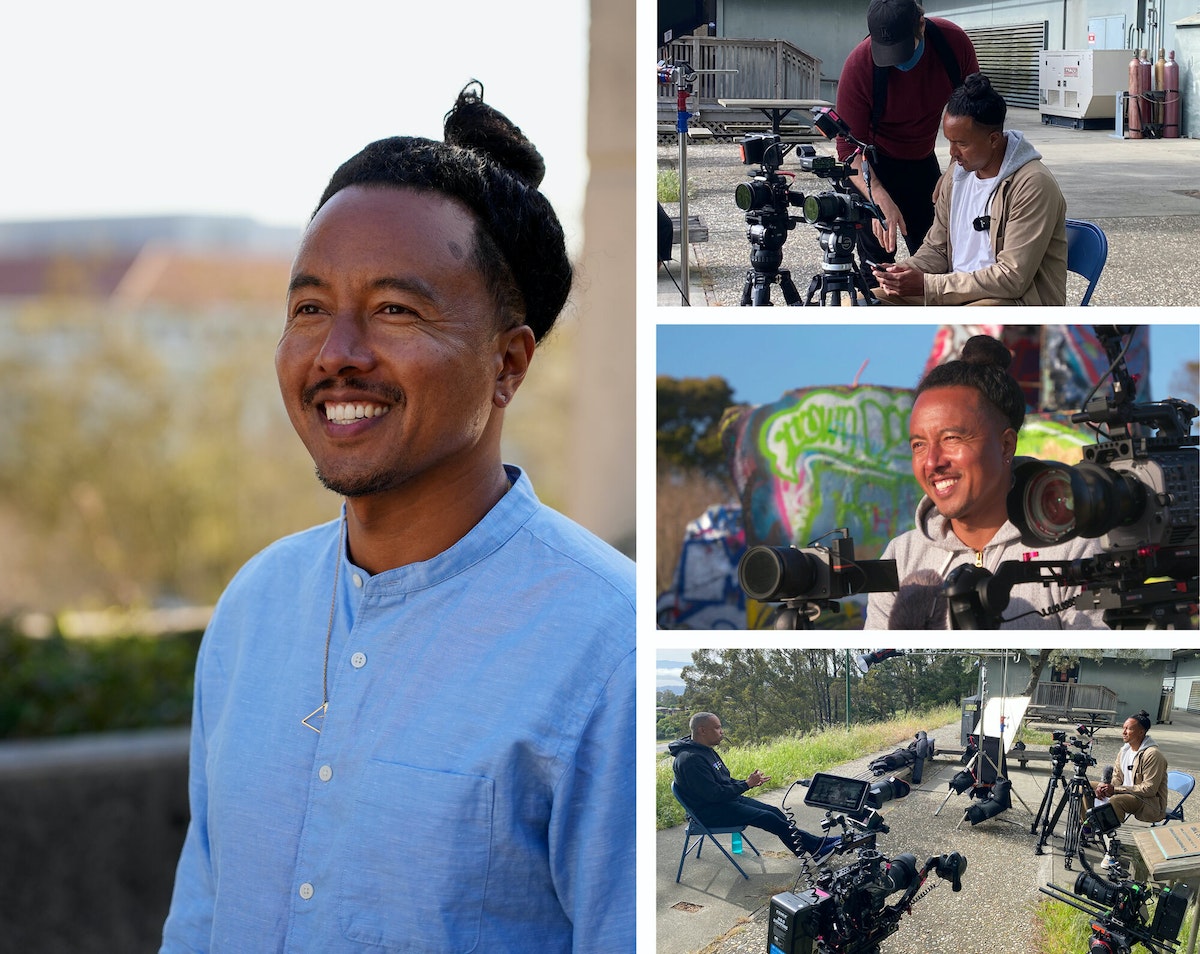
Adamu Chan, Writer, Filmmaker, and Community Organizer
Adamu Chan is a formerly incarcerated writer and filmmaker whose work is shaped by his connections to community. He’s written for Slate about the impact of COVID-19 on prisons, and has published a short film from within San Quentin. He sees his role as a catalyst to drive change in society.
“Culture and history are our collective memory, and history is usually shaped by dominant groups. Art has historically been one of the only avenues for marginalized peoples to participate in dominant discourses, and so I believe it is the job of artists to produce cultural projects that propel political and social transformation. I would like to be remembered as someone who helped move our world towards being more equitable, just, and inclusive.
If we are committed to transforming ourselves and our society, it is important to hear the stories of those who have always lived at the margins, because they hold the answers to what is broken, and in their stories of survival are the solutions we are seeking.”
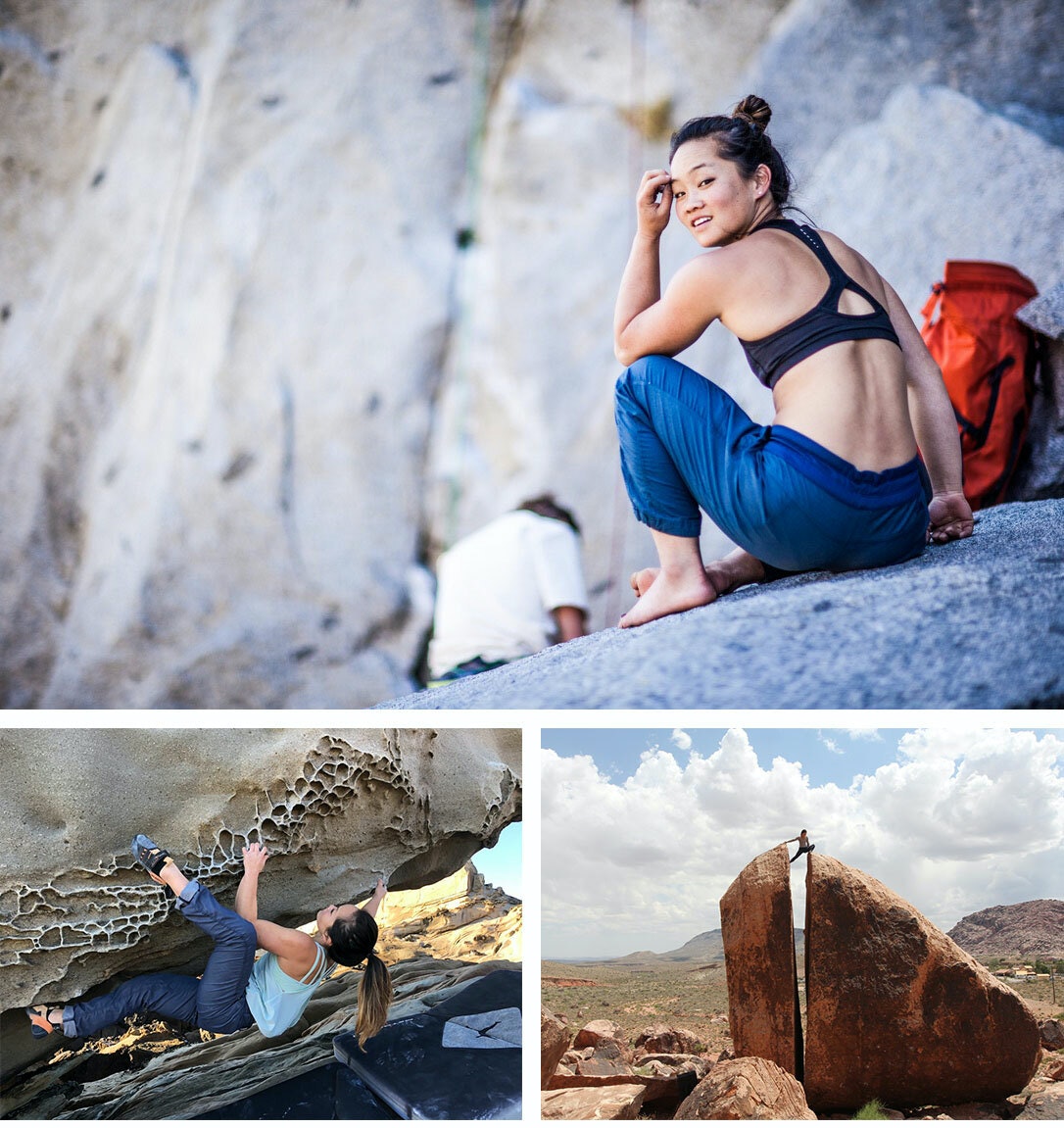
Kimberly Ang, CEO and founder of of KAYA
Kimberly Ang is the founder and CEO of KAYA, an app that connects climbers and helps them track and get insights from their workouts. Prior to that, she led IDEO’s Design for Health portfolio. Today, Kimberly is focused on forging a path so that others like her feel welcome within the climbing community.
“Looking ahead, there are three changes we’re focused on: 1) Democratize access to the insights and coaching people need to learn how to climb and climb well 2) Celebrate a much more diverse range of climbers to show everyone they can be included in this community and 3) Take care of our public lands and ensure we grow sustainably.
I hope to be remembered as leading with heart and being myself, and creating space for others to do the same.”
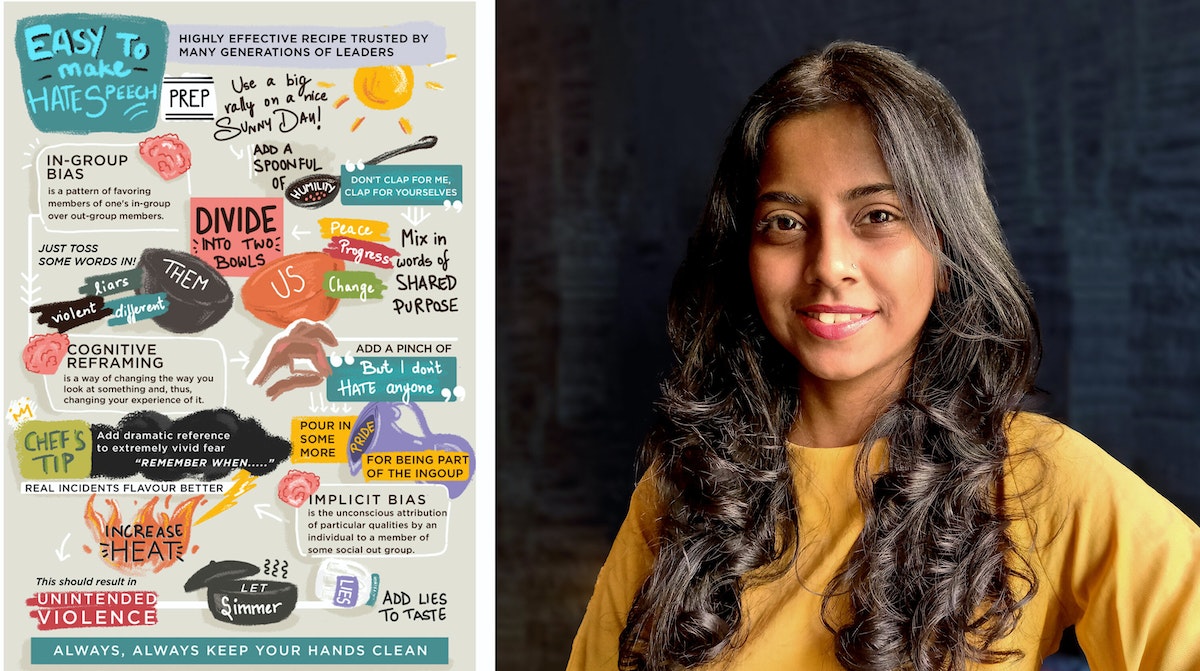
Anupama Rao, Communications Designer and Behavioral Science Practitioner
Anupama Rao is the creator behind BrainGoo, a library of visual storytelling sequences (often in the form of Instagram posts and stories) that explain complex words and make observations about the world. In her day job, she’s a Design Researcher at Qure.ai. Her work is fueled by a desire to make healthcare access more equitable and compassionate.
“I work in the intersection between the future of design and behavioral science so that I get the chance to tackle wicked problems, especially those focused on women’s rights and healthcare, via small incremental changes. I’m fueled by my experience as my mother’s primary caregiver from a young age. The idea is to work towards inclusive design by consciously accounting for representation, systemic inequalities, social biases, and lack of access.
Currently, as a designer at Qure.ai, I work with experts to create AI products that make healthcare affordable and accessible, which is equal parts challenging, overwhelming, and rewarding. I love seeing how design can play a role. For example, can designing this report differently save a healthcare professional 10 seconds? What factors influence a crowded ER when a patient is having a stroke? How can I make this relevant to a low-resource, sparsely populated village?
I want the legacy of my work to be its empathy for the context it lives in, and its ability to create sustainable and positive behavior change.”
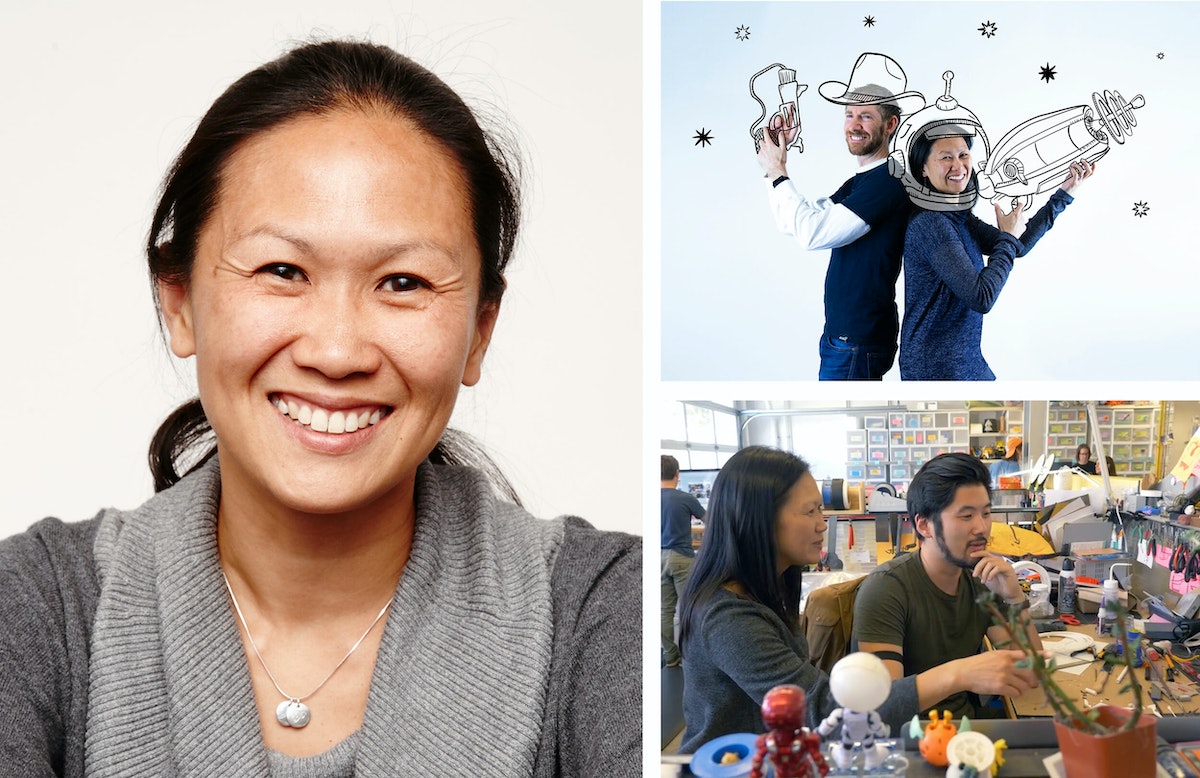
Michelle Lee, Managing Director, Design For Play at IDEO
Michelle Lee leads the Design for Play studio at IDEO, where she designs actual toys—but also finds ways to bring games and play into other unexpected industries, like education and health.
“My initial career in toy design taught me that play has potential far beyond the world of kids and toys. Through play, we stretch our imaginations, conquer our fears, realize new possibilities and take on challenges with optimism and confidence. It enables us to find meaning and happiness in the world. At IDEO, I lead a team that harnesses this power of play to ensure that aging is joyful, education is engaging and environmental action is inspiring.
I see the future in bringing play to tackle some of society’s biggest challenges—helping people thrive mentally and physically, building inclusive communities and helping to elevate voices that are often unheard. Driving lasting change by aligning these important issues with what brings people joy.”
Want to learn more, and get inspired by other Asian and Pacific Islander creatives? Follow the #AsianCreativeNetwork tag on social media, and check out our Asian Pacific American Heritage Month series on Instagram.
What you make is who you are. For many designers, creativity is rooted in identity.

Lindsey Turner
I’m passionate about building brands, products, and experiences that help organizations show up with meaning and momentum.
I help organizations cut through complexity by shaping how they show up, through brand strategy, identity, and storytelling.
Working at the intersection of brand and business, I bring an editorial eye and a bias toward making—turning ideas into tangible experiences that people can understand, trust, and believe in.
My work spans government, healthcare, financial services, media, and consumer goods, from launching Gen Z-focused ventures to building innovation labs and reimagining legacy brands. I relish moments of ambiguity and enjoy translating across teams, perspectives, and priorities to move ideas forward.
I started my career in editorial and digital design, shaping cross-platform experiences and identity systems in publishing and agency environments. That foundation still shapes how I work today: I’m detail-oriented, collaborative, and overreliant on the Oxford comma. I hold a BFA in Visual Communication from the School of the Art Institute of Chicago.

Rachel Young
My work helps organizations see who their products aren't working for—and build the will and the tools to do something about it
For 25 years, I've asked the same question: Who does this design exclude—and what are we going to do about it?
My work spans human-centered strategy, inclusive design, and qualitative research, with clients ranging from Microsoft, Google, and Verizon to the National Science Foundation, and San Francisco Unified School District.
Before IDEO, I taught elementary school in East Palo Alto and spent a decade doing design work with social service organizations—where I learned firsthand what it costs people when systems are built without them in mind.
I am currently writing User Error, a nonfiction book about digital access and the design decisions behind it. I live in Oakland, California.

Brian Pelsoh
I lead with craft, ensuring our work is creatively excellent: rooted in deep human insight and imagination, while also grounded in the realities of business and technology.
My expertise spans brand, communication, and product design across tech, education, the arts, and social impact.
I believe great work demands both high-level vision and obsessive attention to detail, and only happens through collaboration.
I bring an inclusive, hands-on approach and a deep understanding of business, which enables me to consistently deliver excellence while always asking why.
Before joining IDEO, I worked at the brand firms Pentagram and VSA Partners. I began my career as a designer, leading teams at the School of the Art Institute of Chicago and the Milwaukee Art Museum. I hold an MFA in graphic design from Maryland Institute College of Art and a BFA in communication design from the Milwaukee Institute of Art & Design, and have taught at some of the best design schools in the US.

Tony Wong
I am responsible for IDEO’s long-term success in China and working with clients to use design as a tool to enable growth.
I am responsible for IDEO’s long-term success in China and working with clients to use design as a tool to enable growth. Specifically, I have helped Chinese companies design holistic brand solutions through the development of their products, communication, services, and innovation teams, and I have helped multinationals expand their presence and influence in China.
I advise global leaders on developing China-led innovation and capabilities.
In over 15 years in IDEO Shanghai, I have worked on projects that use design to elevate the quality of the experience of healthcare products and services, streamline processes that increase productivity, create spaces and programs that promote and enable inclusive communities, and build next generation mobility solutions that are planet-positive.
Before joining IDEO, I worked at Philips Electronics and the Electrolux Group in Italy, the Netherlands, and Singapore on a number of breakthrough commercial products. I am a member of the Young President Organization in Shanghai.

How to use AI as an editor, not a writer
Ed White shares how he uses AI as an editor—not a writer—to sharpen storytelling, rehearse ideas, and preserve the productive friction that makes creative work better.
Ed White has a rule he's tested on his own writing: hold yourself as the writer, and let AI be your editor. Ed is a Senior Design Director at IDEO's London studio, where he co-leads the firm's AI portfolio across Europe. Before IDEO, he spent 12 years as a writer and editor at the Financial Times, Wired, and Contagious. So when he talks about when to use AI for storytelling and when not to, it comes from two decades of crafting his storytelling skills.
In this episode, Mina Seetharaman talks with Ed about two specific tools he uses to keep AI in an editor's seat: a "roasting agent" prompted to critique his drafts without any sugarcoating, and a simulated audience he rehearses pitches on before the real thing. They also get into what Ed is hearing from design leaders at Anthropic, Lovable, Shopify, and Google Creative Lab about how creative work is changing, and why he thinks the friction of writing something yourself is worth protecting rather than automating away.

Building a personal AI for the messiness of life: Sida Li
Becca Carroll talks with Cue co-founder Sida Li about designing a personal AI for the messiness of everyday life—not just work. They explore how Sida stays anchored to human needs while navigating fast-changing technology, product tradeoffs, business-model experimentation, and the realities of building an AI company today.
Most AI products today are built for work—a space with clear problems and established systems. One founder noticed a gap: personal life is messier, harder to systematize, and mostly left behind by the AI boom. So she built Cue, a personal AI that lives inside iMessage and group chats, to go where the other tools haven't.
In this episode, Becca Carroll, IDEO's Chief Strategy Officer, talks with Sida Li, co-founder and CEO of Shared Context Lab, about staying anchored to a human need while the technology around her keeps changing shape, why she treats her business model with the same rigor she'd bring to a product, and what it feels like to build a company at this particular, disorienting moment in AI.
The conversation also gets into how Sida makes design decisions: the language Cue uses to describe itself, the tradeoffs behind building inside iMessage instead of a new app, and a real story about a business idea that didn’t pan out.
This is the second in a two-part series profiling founders from IDEO's Startups-in-Residence program. The first conversation is with Johannes Seemann, founder of Sooner, on designing GenAI for the emotional side of money.

Designing GenAI for the emotional side of money: Johannes Seemann
Designing financial tools around the feelings that shape money decisions.
Most personal financial tools are built to run the numbers and optimize towards a budget. While that works for some, most people experience money as a lived relationship that does not neatly fit into a spreadsheet. Johannes Seemann and Becca Carroll discuss why money is emotional before it is mathematical, and what a human-centered approach to building a generative AI financial product looks like in practice.

The curious leader's edge in uncertainty: Scott Shigeoka
How genuine curiosity helps leaders navigate uncertainty with greater confidence.
Mina Seetharaman talks with Scott Shigeoka, author of Seek and Head of Curiosity Cultivation at the Eames Institute, about what distinguishes genuinely curious leadership from performative curiosity, how power dynamics shape curiosity, and why practicing curiosity can restore energy rather than drain it.
Looks like you might be in search of something very specific?
Or reset the filters above and try another angle.
Here’s some random inspiration

Podcasts about creative leadership

Articles about the power of prototyping



















.webp)