
Designing a park for generations to come
Frisco, Texas, imagines an ambitious city park for an evolving community.
Designing a piece of a city, like a park, doesn’t start with a blank slate. There are always traces of the past and the present, and the lived history of its residents.
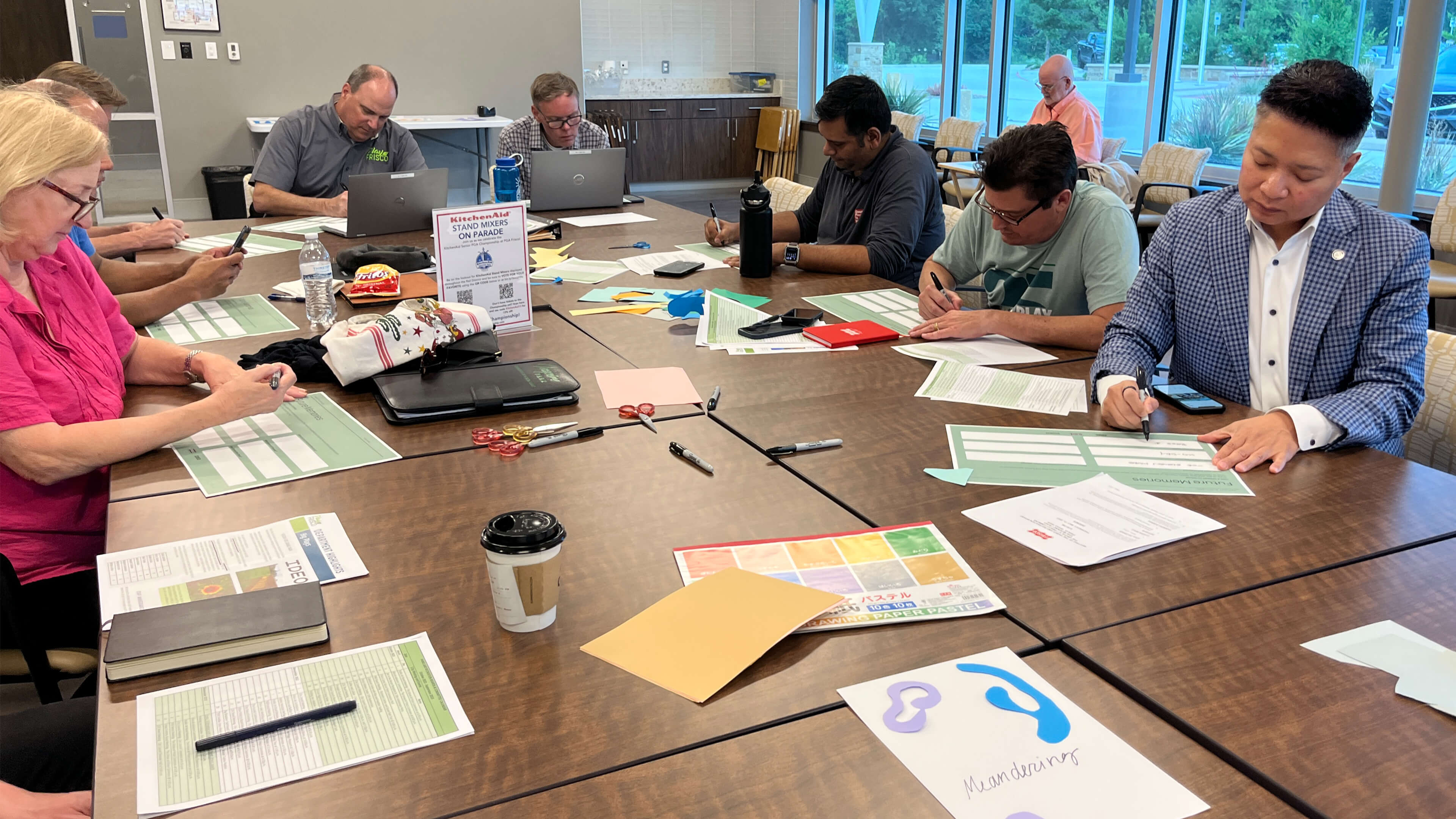
To create a full picture of that story, the IDEO team built workshops for the community centered around questions about the unique experiences of living in Frisco. They invited them to reflect on the communities they grew up in, the city of today, and the public spaces that have played formative roles for them.
From their answers, a common value emerged: heritage. Frisco is a rapidly growing city, with residents whose families have lived there for centuries living side-by-side with more recent neighbors from diverse cultures and ethnic groups. Participants shared a vision of Grand Park as a unifying, shared space, a backdrop where many families can form foundational memories in Frisco.
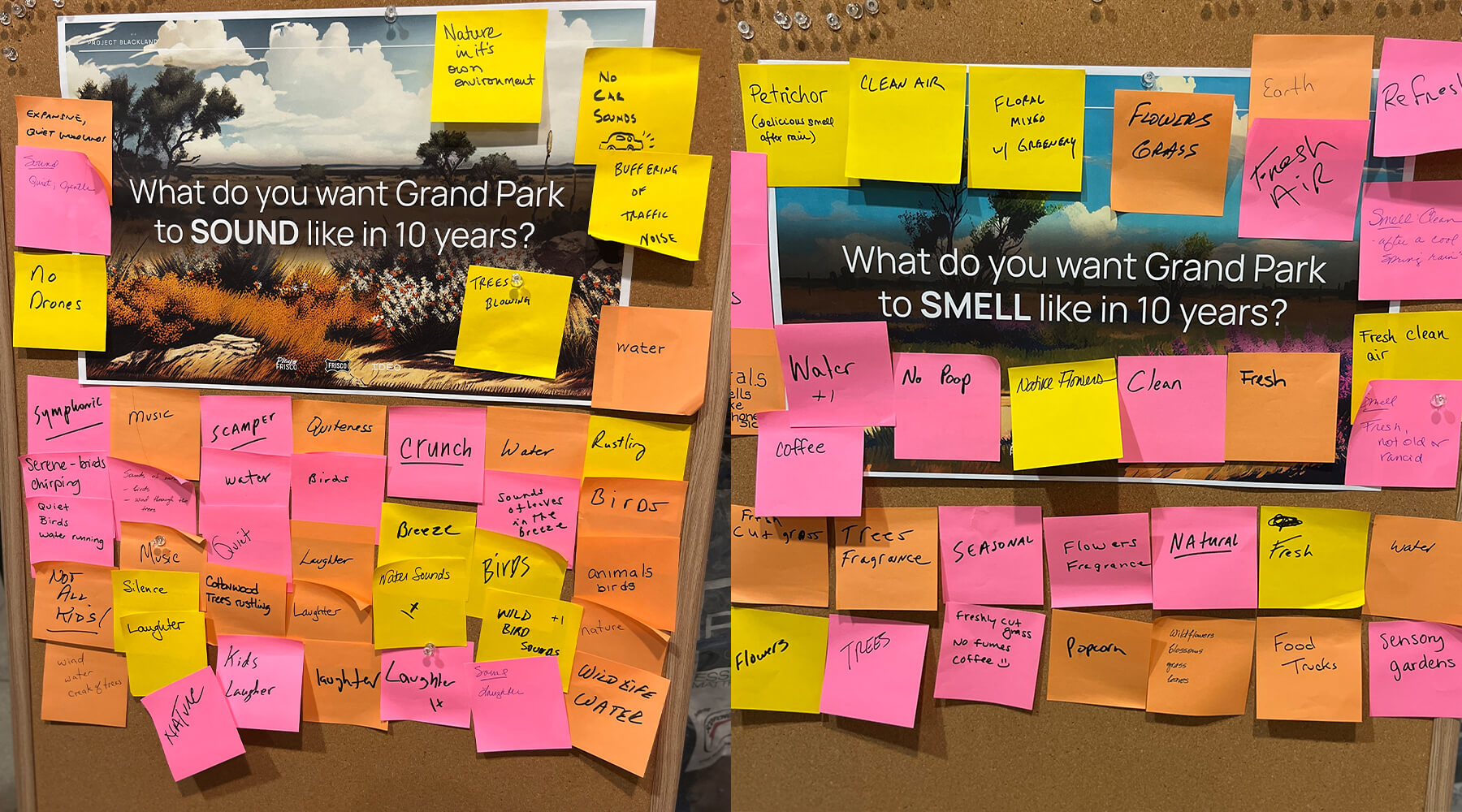
Next, IDEO brought in multisensory design prompts to help participants further conceptualize the park. How did they want it to feel, sound, and smell? In the built-up, suburban city of Frisco, residents imagined a space that was less planned, enabling guided wandering and exploration. They also hoped that the park would inspire loved ones and descendants to feel a sense of curiosity and wonder.
At the end of workshops and sessions with community groups, the IDEO team took Polaroids of participants, asking, “What’s one word you want to describe Grand Park in the future?” Those words informed the collective vision that IDEO delivered to the city of Frisco, which included spatial concepts, user journeys, and branding for the park, all designed to showcase its unique landscapes. In January 2024, Frisco City Council approved the vision statement, and officials expect to break ground in the second half of 2025.
The population of Frisco is growing rapidly; its population is up 516% since the year 2000.
At more than 1,000 acres, Grand Park in Frisco is even larger than Central Park in New York City.
Less than 1% of Blackland Prairie soil remains in the region, and some of it is in Grand Park.
94
Frisco residents were engaged in the process, from City Council members to high school students
200+
respondents shared anonymous feedback on what they imagined the park should be
In Mexico, redefining retail
FEMSA creates a digital ecosystem to increase customer value at its network of OXXO stores.
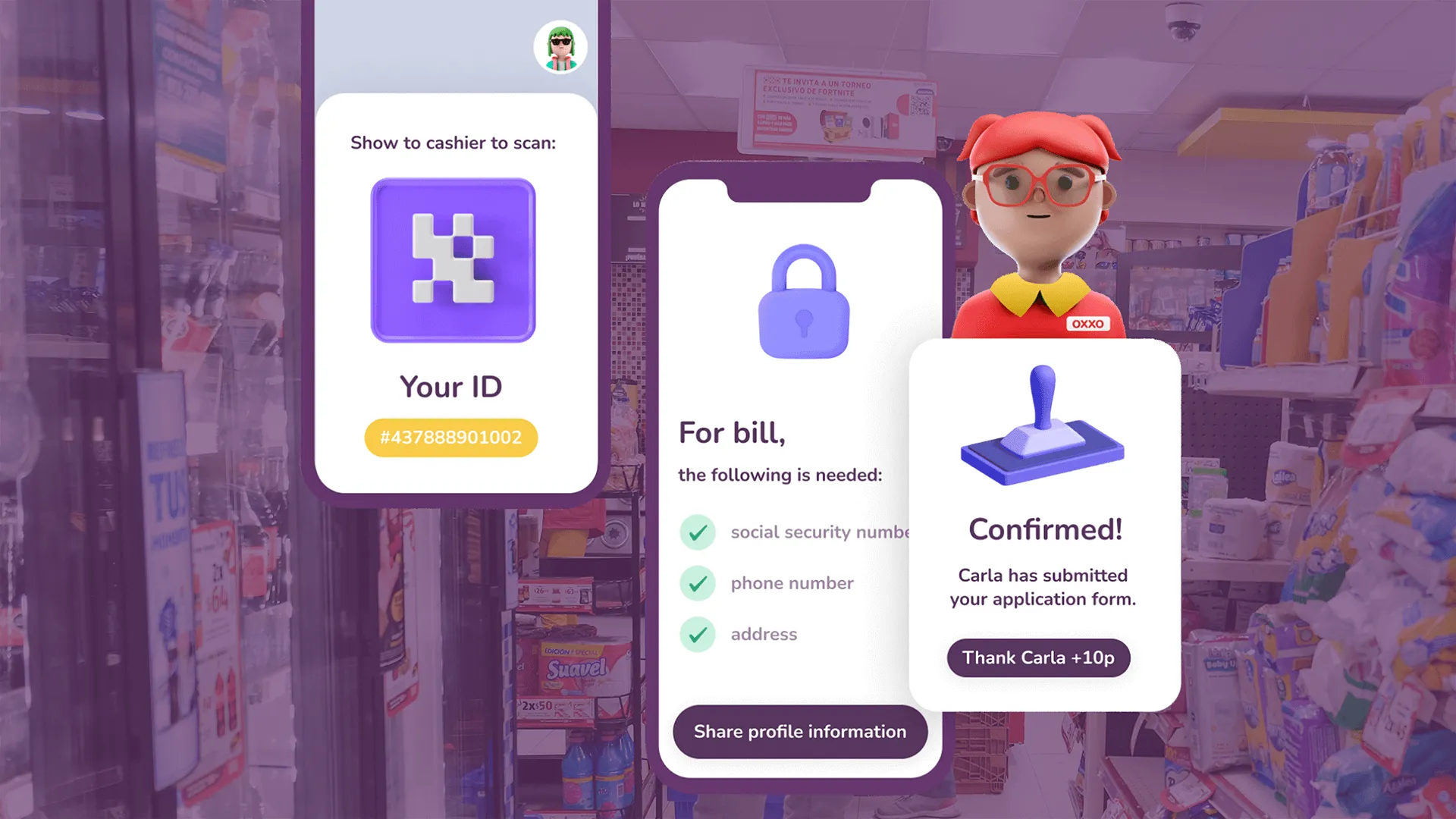
The IDEO team quickly discovered that the challenge of designing a Digital@FEMSA super app for tens of millions of customers was matched only by the operational complexity of bringing together different teams that had already created various apps with separate value propositions. Not to mention the 22,000 stores specifically tailored to local communities.
To kick off the project, the IDEO team built on FEMSA’s already deep understanding of its customers by meeting them in their homes and communities. The team discovered that users didn't care about long-term rewards; instead, they wanted everyday help to thrive long-term. Connecting omnichannel rewards to regular spending would allow them to save time and money—something they said was particularly important. Along with market research, insights like these directly informed the app's design, ensuring that it was compatible with users' everyday habits and preferences.
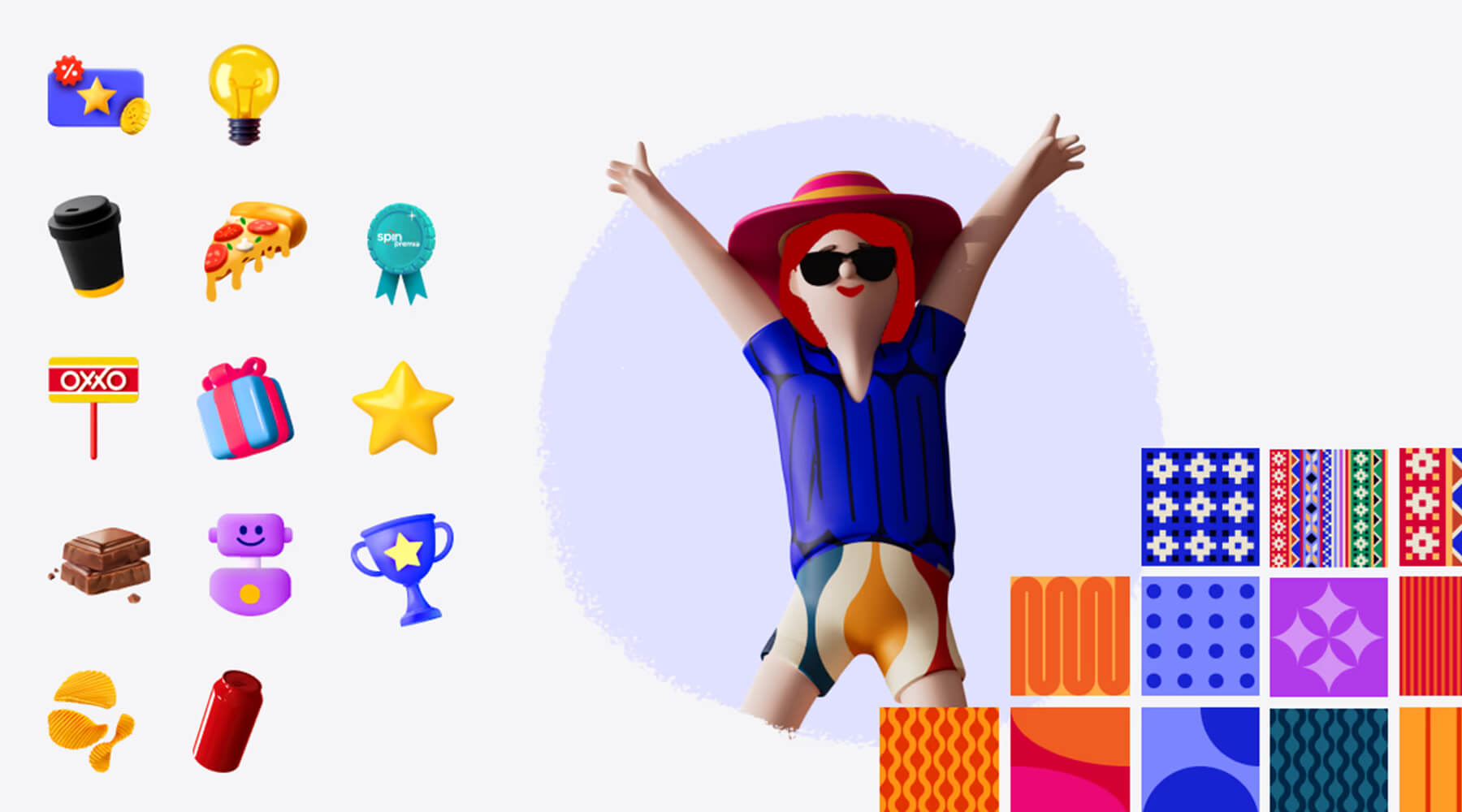
Meanwhile, the project team also worked to ensure the app fit the priorities of the various teams inside Digital@FEMSA, designing a comprehensive process for testing joint value propositions. Together, the team created a new design system, iconography, and set of unifying principles. IDEO also worked closely with the Digital@FEMSA teams to ensure that the app's design was in line with their strategic goals and technical capabilities, and built the app's initial information architecture. They incorporated secure transactions, effortless coupon redemption, personalized offers, and a cohesive loyalty program.
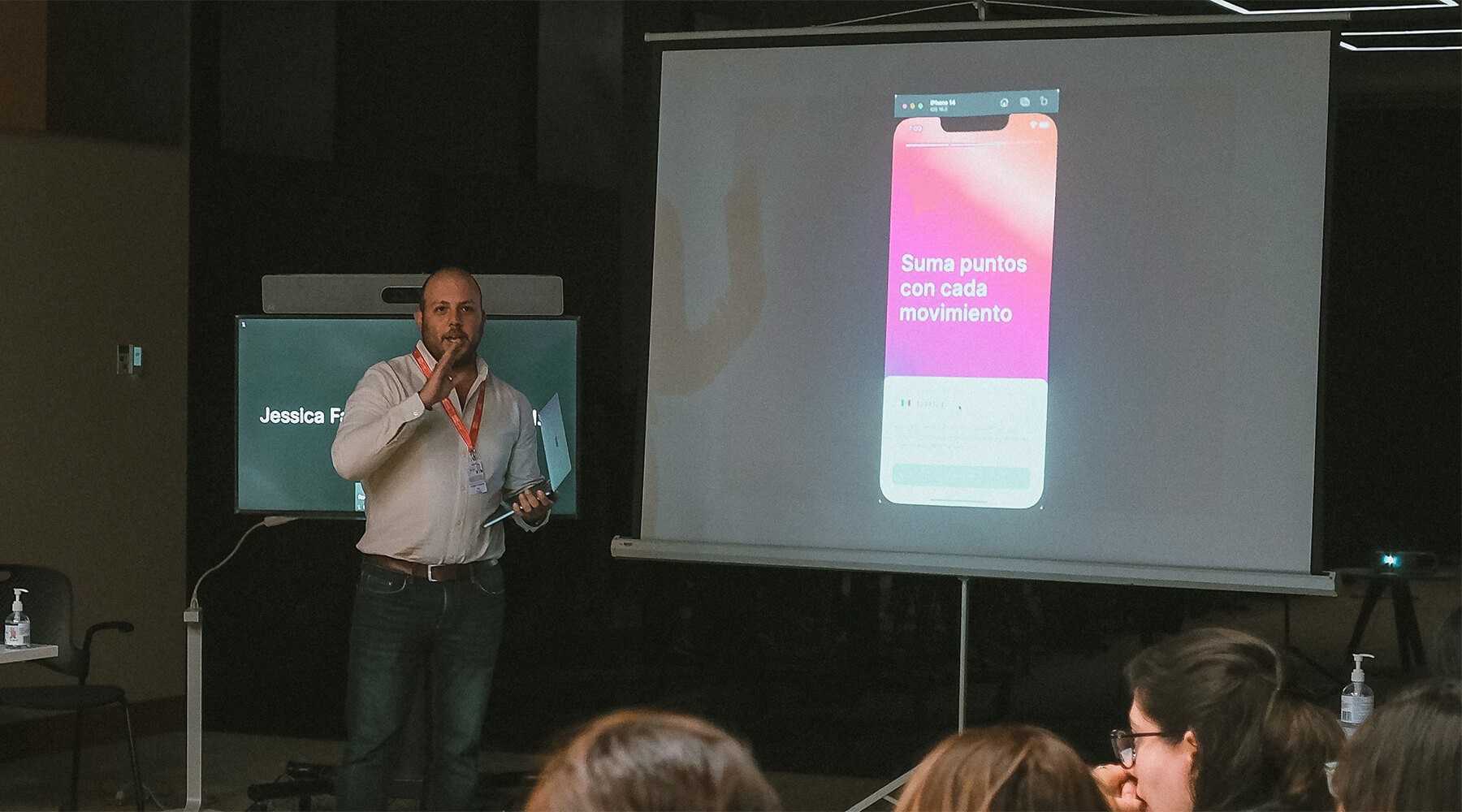
From there, the IDEO and Digital@FEMSA teams quickly transitioned into the design and development phase, producing prototypes of the new app, dubbed Spin Premia. With the help of user testing, they were able to continuously iterate to improve the app's features and functionalities, creating a user experience that was both seamless and intuitive. In just 10 months, they went from a small digital team with an ambitious idea, to a 150+ people product organization and an MVP launched in one region. And thanks to a tight partnership, the teams were able to seamlessly integrate Spin Premia into Digital@FEMSA's existing systems, resulting in a scalable implementation nationwide just a few months later.
The introduction of Spin Premia was a milestone in FEMSA's digital transformation path. Following a true ship and iterate model, just a few months into the project, the company released a smaller, focused version of the app in just one city in Mexico to quickly learn from customer experience before expanding to new regions. Since then, the Spin Premia app has quickly gained popularity, offering a safe and user-friendly platform that millions of Mexican consumers have embraced. It has also allowed FEMSA to broaden its digital portfolio and extend its customer base throughout Mexico, elevating customer satisfaction and fueling business expansion.
13 million Mexicans visit FEMSA’s OXXO convenience stores every day. But the company had ambitions to leverage digital experiences to increase customer engagement.
To get there, Digital@FEMSA needed to deliver exceptional digital products with the agility to serve an entire population.
4.7 stars
Spin Premia’s app store rating
22.8 million
active Spin Premia program users
A hotel brand for new travel paradigms
IHG introduces Garner, a midsize brand elevated by thoughtful design.
Midscale hotel brands are the fastest-growing hotel segment in the US, attractive to both travelers and hotel owners. But often, their messaging feels repetitive, and travelers have a tough time differentiating between them. With a warm, thoughtfully designed midscale brand, IHG had an enormous opportunity to distinguish itself in a crowded market.
IHG’s goal was to deliver a guest experience that felt genuinely unique and resonant—and quickly. With costs on the rise, many owners were motivated to turn toward conversion brands, which allow them to refurbish hotels under a new brand rather than invest in construction, a way to grow their portfolio in a tight financing market. Meanwhile, IHG’s competitors were set to introduce new conversion brands of their own. The company was looking for a partner that could work swiftly and iteratively to deliver a distinct brand.
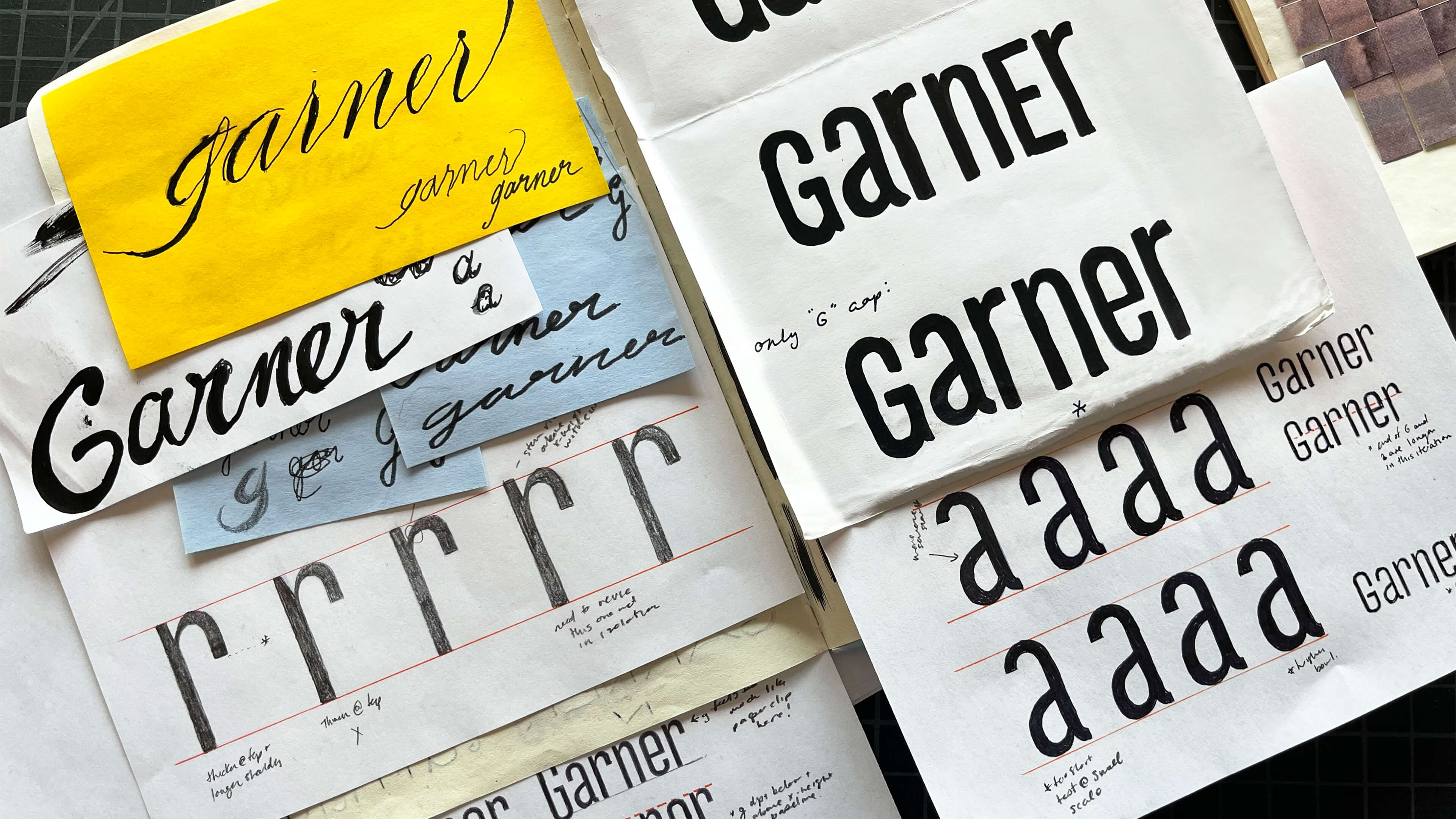
For the IDEO team, the answer lay in communicating the brand’s value, starting with a custom logo rendered by hand. Inspired by vintage sign painting and modernist typography, the team sketched different versions of the letterforms, reviewing them with IHG until they had a set that brought to life the generosity and sense of invitation associated with the hotel’s spaces. They also worked to ensure the wordmark was visually balanced and would translate well across a variety range of scales. From there, they built an expansive brand world, including bespoke navigation icons, a full interior and exterior signage system, and a video to support the Garner launch.
The result is a hotel brand that stands apart in its category for both travelers and owners: thoughtful and well-designed yet affordable. As competition in the midscale segment continues to increase, Garner has been central to IHG’s growth strategy. Launched in the fall of 2023, Garner opened 100 hotels worldwide in just 16 months, making it the fastest-ever IHG brand to scale globally. The brand’s increasing popularity among owners and developers is driven by the growing demand for conversion properties, which accounted for 52% of IHG’s room openings in 2025. Garner plans to continue its rapid expansion with nearly 80 additional hotels in 12 key markets, including the US, Mexico, Italy, and Japan.
Conversions account for 12% of the global hotel pipeline, enabling hotels to switch brands and refurbish, boosting revenue without expensive construction.
The US midscale hotel segment, valued at $14B, is expected to reach $18B by 2030.
100 new Garner Hotels
in less than 3 years—the fastest-scaling brand in IHG's history
500 Garner Hotels
planned in the next 10 years; 1,000 over the next 20

Moving dementia care forward
Together Senior Health provides digital solutions to combat cognitive decline.
Alzheimer’s and dementia are notoriously difficult to treat—and scientists estimate that some 50 percent of people who have dementia are undiagnosed. Recognition of symptoms and early intervention are key. Together and IDEO set out to conduct user research to inspire new products that would help patients with cognitive decline take charge of their brain health.
The first priority was to expand the reach of the Moving Together program, which combines group movement exercises with mindfulness techniques, led by a trained group instructor. The IDEO team conducted remote and in-person interviews in Florida, where one in five residents is age 65 and older, and rates of Alzheimer’s and dementia are among the highest in the country. One of the key insights the team discovered was that many older adults didn’t understand how behaviors like smoking, exercise, and diet can be risk factors for cognitive decline. Their input inspired a new design principle for the program: “No naked feedback.” Any time participants received health coaching advice about modifying their lifestyle, they would also be given resources on why and how to do it, so they would have a pathway to boosting their brain health.
The IDEO team folded insights like this one into the design for four new product offerings, including personalized brain health education, new online community engagement tools, partnership programs, and health coaching services, as well as a new user interface to illustrate them. Along with Together they also developed an implementation roadmap of next steps to bring the new digital product offerings to market, such as hiring a brain health coach and creating a new course curriculum. Now, Together has enrolled 165 people in the Boost Your Brain Health Clinical Trial, which is looking at outcomes such as reduced risk of Alzheimer's and maintenance of cognitive function for the Brain Health Together program. With trial completion in Q3 2024 and product launch in early 2025, growing numbers of people with MCI will have access to this exciting program. Together incorporated almost all of the elements from the IDEO roadmap into the final curriculum, and the team often refers back to insights the team gathered as guiding design principles.

Fighting barriers to diagnosis
With its online program growing, Together wanted to take on an even bigger problem: dementia underdiagnosis. Co-founder Dr. Deborah Barnes had recently developed an algorithm that uses patients’ health records to calculate their risk of undiagnosed dementia, called the electronic health record Risk of Alzheimer's and Dementia Assessment Rule (eRADAR). Together was looking to find creative ways to equip and empower providers to use risk scores like eRADAR in primary care settings.
One piece of the puzzle? Many primary care doctors are unaware that better management of Alzheimer’s disease and dementia can have a positive impact on other chronic health issues—like diabetes, hypertension, and depression. So by encouraging providers to prioritize dementia care, they can help support the overall health of older adults with cognitive decline. The IDEO team recommended a curriculum for continuing education courses for doctors that make that link clear—another step toward increasing dementia diagnosis and improving overall health.
Better help, sooner
To understand the patient experience, Together and IDEO decided to work directly with patients and caregivers to uncover what was stopping them from asking for dementia screening. The IDEO team quickly learned many patients were afraid of facing a diagnosis that signified a loss of agency and control, especially when they didn’t believe there were good treatment options. Often, they were unaware that there were things they could do to improve their brain health. They needed to know what steps to take after a diagnosis, and who could provide actionable advice. In response, the IDEO team designed a digital activity toolkit and physical booklet to guide patient families through the early stages of a dementia diagnosis, including recognizing the signs and symptoms, having better conversations with their doctor, and getting connected to support groups and programs like Moving Together.
Solving the problem of dementia underdiagnosis involves complex systems-level thinking and designing for the entire health ecosystem of patients, providers, and insurance payers, and solutions for Alzheimer’s and dementia care are still in their infancy. But already, this work is empowering patients and doctors to prioritize brain health and get screened sooner, and Together, which has since been acquired by Linus Health, is still working to move dementia care forward.
Approximately 12-18% of people aged 60 or older live with mild cognitive impairment, while memory loss, Alzheimer's and dementia affect more than 50 million people around the world.
An estimated 50% of people living with dementia are undiagnosed.
165 enrolled
in the Boost Your Brain Health Clinical Trial

Reimagining the Shopping Cart
Designing a better shopping cart to illuminate IDEO's design process.
To demonstrate our process for innovation for a 1999 episode of ABC’s late-night news show Nightline, IDEO created a new shopping cart concept, considering issues such as maneuverability, shopping behavior, child safety, and maintenance cost. The show concentrated on IDEO’s design process, recording as a multidisciplinary team brainstormed, researched, prototyped, and gathered user feedback on a design that went from idea to a working appearance model in four days.
The nestable steel frame lacks sides and a bottom to deter theft, and holds removable plastic baskets to increase shopper flexibility, help protect goods and provide a method to promote brand awareness. A dual child seat uses a swing-up tray for a play surface, and a hole provides a secure spot for a cup of coffee or a bunch of carnations. One of the unique — and potentially patentable — features of the cart is the design of its steerable back wheels. Normally fixed straight for stability and familiarity, an easy sideways effort allows the wheels to turn left or right. Pushing the cart forward puts the wheels straight again.
Note: The footage of the Nightline episode featuring the shopping cart is owned by ABC. They've made it available for purchase to stream, or as a DVD, here.

Lindsey Turner
I’m passionate about building brands, products, and experiences that help organizations show up with meaning and momentum.
I help organizations cut through complexity by shaping how they show up, through brand strategy, identity, and storytelling.
Working at the intersection of brand and business, I bring an editorial eye and a bias toward making—turning ideas into tangible experiences that people can understand, trust, and believe in.
My work spans government, healthcare, financial services, media, and consumer goods, from launching Gen Z-focused ventures to building innovation labs and reimagining legacy brands. I relish moments of ambiguity and enjoy translating across teams, perspectives, and priorities to move ideas forward.
I started my career in editorial and digital design, shaping cross-platform experiences and identity systems in publishing and agency environments. That foundation still shapes how I work today: I’m detail-oriented, collaborative, and overreliant on the Oxford comma. I hold a BFA in Visual Communication from the School of the Art Institute of Chicago.

Rachel Young
My work helps organizations see who their products aren't working for—and build the will and the tools to do something about it
For 25 years, I've asked the same question: Who does this design exclude—and what are we going to do about it?
My work spans human-centered strategy, inclusive design, and qualitative research, with clients ranging from Microsoft, Google, and Verizon to the National Science Foundation, and San Francisco Unified School District.
Before IDEO, I taught elementary school in East Palo Alto and spent a decade doing design work with social service organizations—where I learned firsthand what it costs people when systems are built without them in mind.
I am currently writing User Error, a nonfiction book about digital access and the design decisions behind it. I live in Oakland, California.

Brian Pelsoh
I lead with craft, ensuring our work is creatively excellent: rooted in deep human insight and imagination, while also grounded in the realities of business and technology.
My expertise spans brand, communication, and product design across tech, education, the arts, and social impact.
I believe great work demands both high-level vision and obsessive attention to detail, and only happens through collaboration.
I bring an inclusive, hands-on approach and a deep understanding of business, which enables me to consistently deliver excellence while always asking why.
Before joining IDEO, I worked at the brand firms Pentagram and VSA Partners. I began my career as a designer, leading teams at the School of the Art Institute of Chicago and the Milwaukee Art Museum. I hold an MFA in graphic design from Maryland Institute College of Art and a BFA in communication design from the Milwaukee Institute of Art & Design, and have taught at some of the best design schools in the US.
Tony Wong
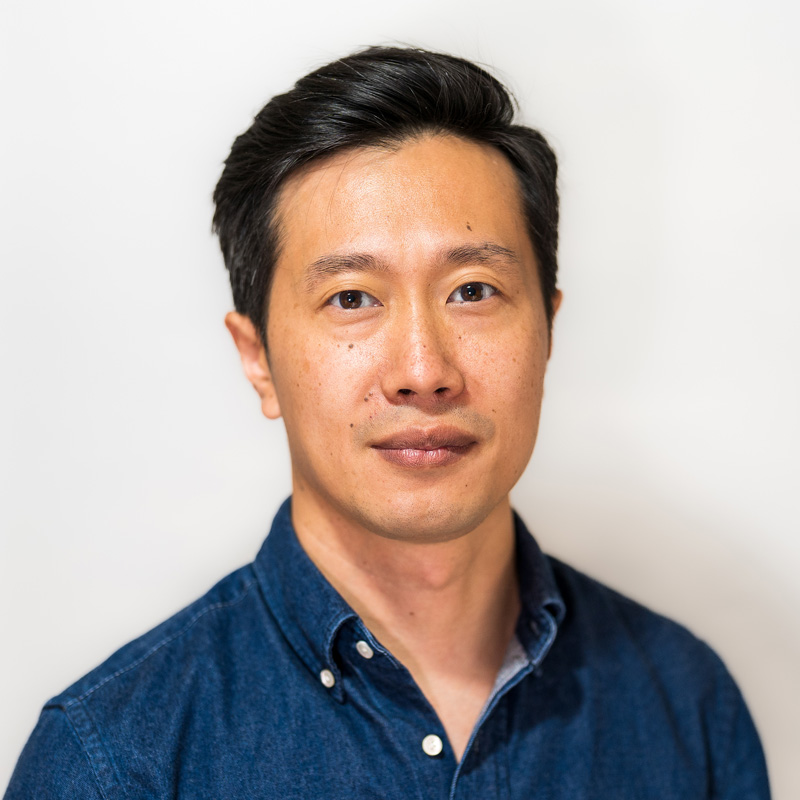
I am responsible for IDEO’s long-term success in China and working with clients to use design as a tool to enable growth.
I am responsible for IDEO’s long-term success in China and working with clients to use design as a tool to enable growth. Specifically, I have helped Chinese companies design holistic brand solutions through the development of their products, communication, services, and innovation teams, and I have helped multinationals expand their presence and influence in China.
I advise global leaders on developing China-led innovation and capabilities.
In over 15 years in IDEO Shanghai, I have worked on projects that use design to elevate the quality of the experience of healthcare products and services, streamline processes that increase productivity, create spaces and programs that promote and enable inclusive communities, and build next generation mobility solutions that are planet-positive.
Before joining IDEO, I worked at Philips Electronics and the Electrolux Group in Italy, the Netherlands, and Singapore on a number of breakthrough commercial products. I am a member of the Young President Organization in Shanghai.
How to use AI as an editor, not a writer
Ed White shares how he uses AI as an editor—not a writer—to sharpen storytelling, rehearse ideas, and preserve the productive friction that makes creative work better.
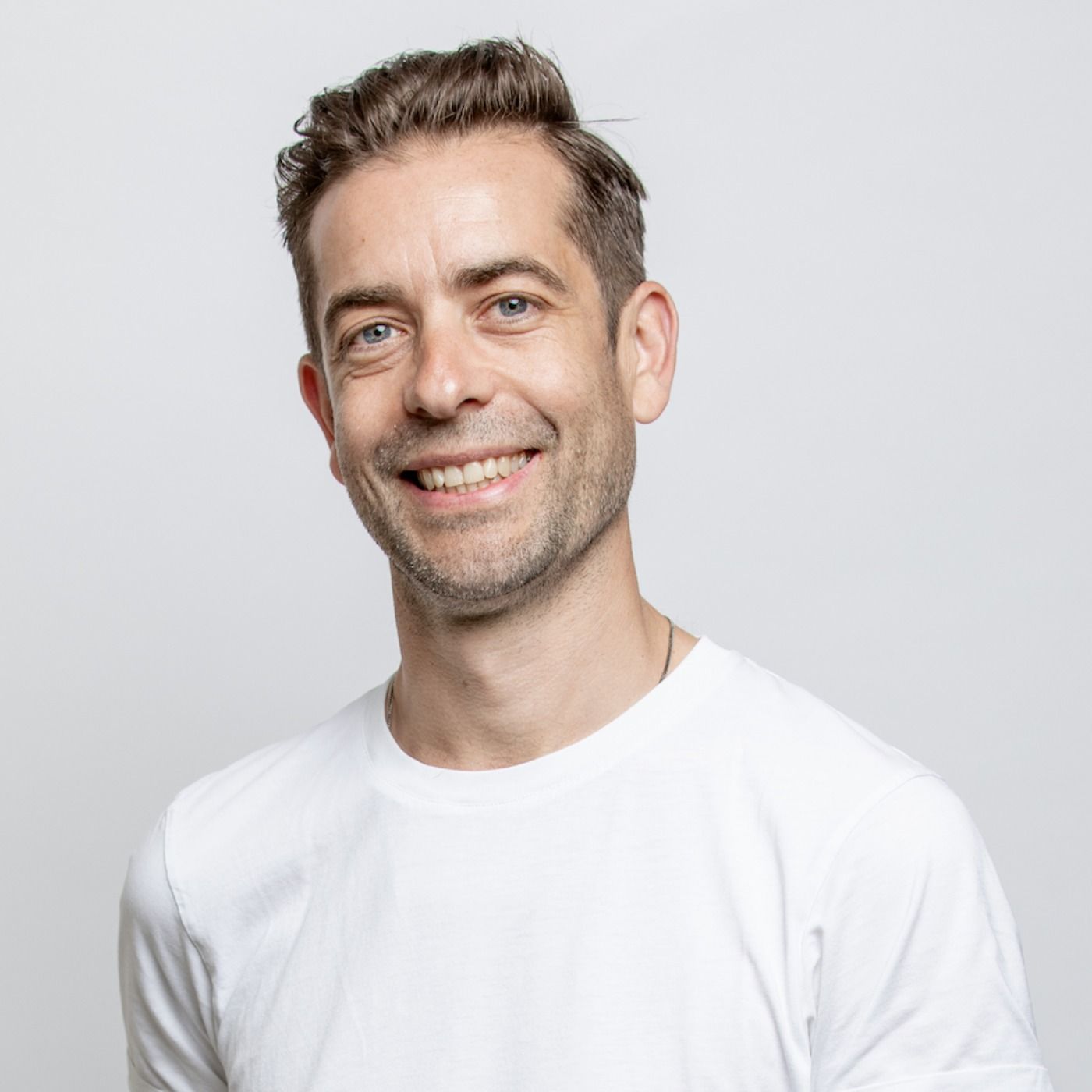
Ed White has a rule he's tested on his own writing: hold yourself as the writer, and let AI be your editor. Ed is a Senior Design Director at IDEO's London studio, where he co-leads the firm's AI portfolio across Europe. Before IDEO, he spent 12 years as a writer and editor at the Financial Times, Wired, and Contagious. So when he talks about when to use AI for storytelling and when not to, it comes from two decades of crafting his storytelling skills.
In this episode, Mina Seetharaman talks with Ed about two specific tools he uses to keep AI in an editor's seat: a "roasting agent" prompted to critique his drafts without any sugarcoating, and a simulated audience he rehearses pitches on before the real thing. They also get into what Ed is hearing from design leaders at Anthropic, Lovable, Shopify, and Google Creative Lab about how creative work is changing, and why he thinks the friction of writing something yourself is worth protecting rather than automating away.

Building a personal AI for the messiness of life: Sida Li
Becca Carroll talks with Cue co-founder Sida Li about designing a personal AI for the messiness of everyday life—not just work. They explore how Sida stays anchored to human needs while navigating fast-changing technology, product tradeoffs, business-model experimentation, and the realities of building an AI company today.
Most AI products today are built for work—a space with clear problems and established systems. One founder noticed a gap: personal life is messier, harder to systematize, and mostly left behind by the AI boom. So she built Cue, a personal AI that lives inside iMessage and group chats, to go where the other tools haven't.
In this episode, Becca Carroll, IDEO's Chief Strategy Officer, talks with Sida Li, co-founder and CEO of Shared Context Lab, about staying anchored to a human need while the technology around her keeps changing shape, why she treats her business model with the same rigor she'd bring to a product, and what it feels like to build a company at this particular, disorienting moment in AI.
The conversation also gets into how Sida makes design decisions: the language Cue uses to describe itself, the tradeoffs behind building inside iMessage instead of a new app, and a real story about a business idea that didn’t pan out.
This is the second in a two-part series profiling founders from IDEO's Startups-in-Residence program. The first conversation is with Johannes Seemann, founder of Sooner, on designing GenAI for the emotional side of money.
Designing GenAI for the emotional side of money: Johannes Seemann
Designing financial tools around the feelings that shape money decisions.
Most personal financial tools are built to run the numbers and optimize towards a budget. While that works for some, most people experience money as a lived relationship that does not neatly fit into a spreadsheet. Johannes Seemann and Becca Carroll discuss why money is emotional before it is mathematical, and what a human-centered approach to building a generative AI financial product looks like in practice.
The curious leader's edge in uncertainty: Scott Shigeoka
How genuine curiosity helps leaders navigate uncertainty with greater confidence.
Mina Seetharaman talks with Scott Shigeoka, author of Seek and Head of Curiosity Cultivation at the Eames Institute, about what distinguishes genuinely curious leadership from performative curiosity, how power dynamics shape curiosity, and why practicing curiosity can restore energy rather than drain it.
Looks like you might be in search of something very specific?
Or reset the filters above and try another angle.
Here’s some random inspiration
Podcasts about creative leadership
Articles about the power of prototyping