
.svg)


Boston's new citizen-centered site
Designing a welcoming, intuitive platform for Bostonians.
More than 7 million people each year came to the Boston.gov site to tap into all sorts of city services: reporting a pothole, learning the assessed value of their property, paying a parking ticket, checking recycling schedules.
Boston wanted to create a beautiful platform that would make the process of finding and navigating information easy and intuitive, one that prioritized the needs of its people.
The Boston.gov site had outgrown its existing structure and needed an overhaul. The user experience was mired by the fact that Boston City Hall has nearly 50 different departments, each with its own microsite, navigation and content standards that feed into a centralized site.
So the City of Boston hired IDEO to design its new digital home, Boston.gov. IDEO designers worked with the major stakeholders—department heads, employees, and Boston residents, with a focus on those in underserved communities and those with varying levels of technical proficiency—to gather insights into what users needed.
The objective was to design something that would simplify how people navigate the site, to make it easier for residents to find answers to common questions, and, in the process, serve as a community facilitator—an up-to-date, reliable resource that makes life in the city more manageable.
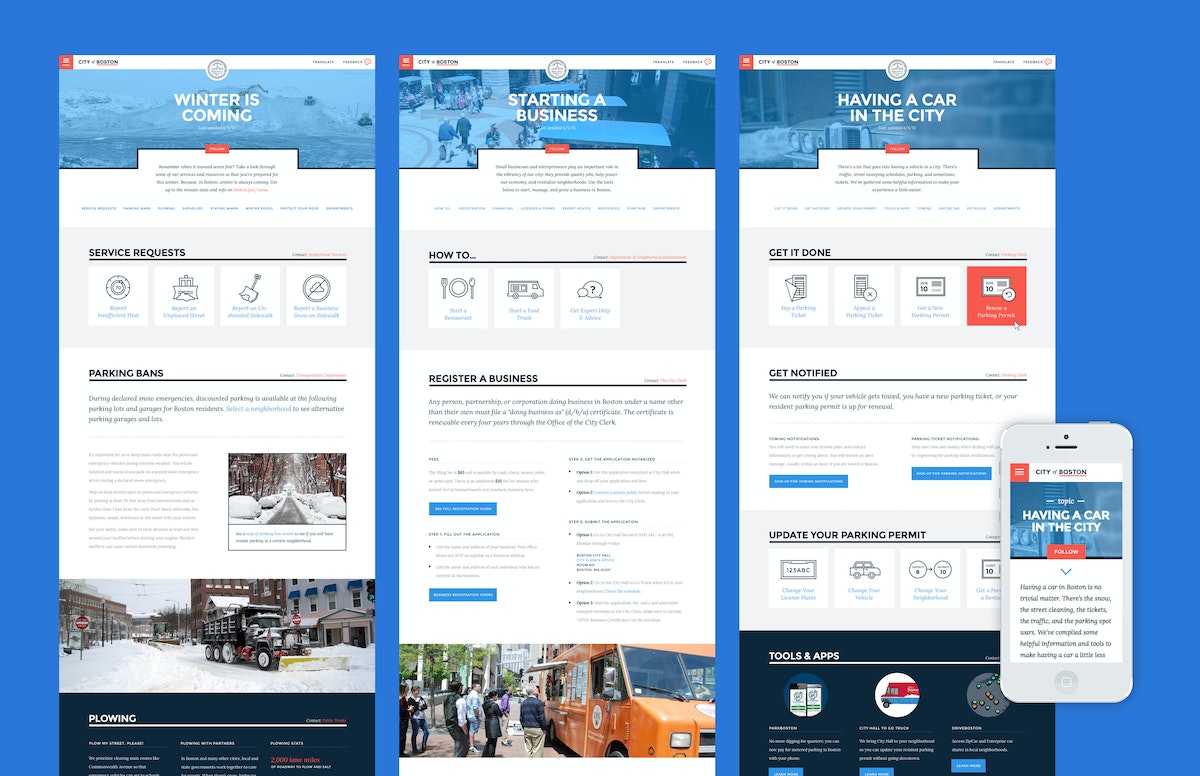
Rather than organize the site by the city’s departments, the design solution was rooted in illuminating relevant content by topics—people’s life moments—many of which overlapped through different branches of government. Owning a car in the city, for example, is closely related to preparing for winter, so bridging those common threads allowed for a more intuitive organizing principle.
In the process of the site redesign, IDEO also helped to create a visual identity system that underscores Boston’s strengths: the city’s confidence, humility, personality, and optimism.
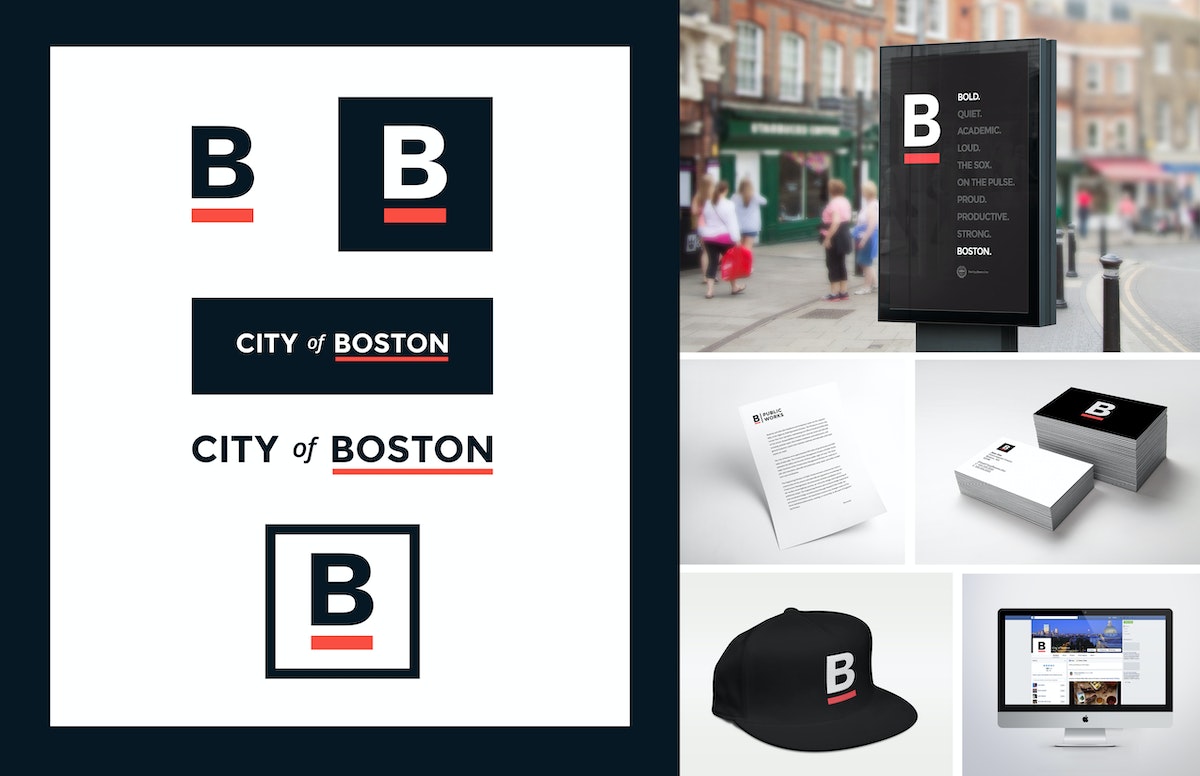
In addition to the web architecture and redesign, IDEO also produced a comprehensive style guide to help maintain design consistency, so departments can add content without compromising the overall integrity of the site, as well as a brand look that the city has decided to adopt across nearly all of its consumer-facing media. Now you’ll see the famous underlined B on T-shirts, banners, and even snow shovels.
Holding true to its mission to include Boston residents and all site users in its design process, the new Boston.gov site was piloted for six months, and the process document on the city’s blog (including the IDEO designed brand guide), before a full launch was rolled out in July 2016.
“The website should act like a helpful human. This is one of the big differences between the old site and the new site,” said Jascha Franklin-Hodge, the city’s chief of information technology in a Boston Globe article. “Oftentimes, when you looked at something on the old site, it would feel like you were interacting with some sort of lawyer-robot that was speaking to you in government-speak, using very formal language. We are trying to move away from that so your experience is akin to a person.”
The City of Boston was in need of a new digital home—one that emphasized a shift to a more welcoming tone and commitment to its citizens.

Growing an American brand in China
How an outdoor retail company found a new audience through digital and physical shops.
In the Western Hemisphere, The North Face brand has long represented an active, sporty lifestyle that’s filled with challenges and adventures. But appreciating “the great outdoors” in China is less about extreme sports and more about connecting with nature in a communal, spiritual way. This research-based insight led the team to identify new opportunities for The North Face to better target its messaging.

Designers found a key opportunity: Encourage Chinese consumers to escape the pressures of hectic city life by enjoying the freedom and renewal that comes with spending time outdoors.
Today, as people find less time to enjoy the benefits that lie just beyond China’s large cities, there’s a tangible desire to return to the outdoors to refresh, reassess, and renew oneself. The North Face aims to help consumers do exactly that.
To create a compelling new brand vision for The North Face in China, the team’s design research tapped into Chinese ways of spending time outdoors. IDEO’s insights and creative brief provided the essential brand story for The North Face in China and informed the tagline of the company’s current marketing campaign, “Go Wild” (去野). The North Face brand’s new messaging links “old nature” and “new outdoors” through a combination of digital, retail, and interactive community channels.
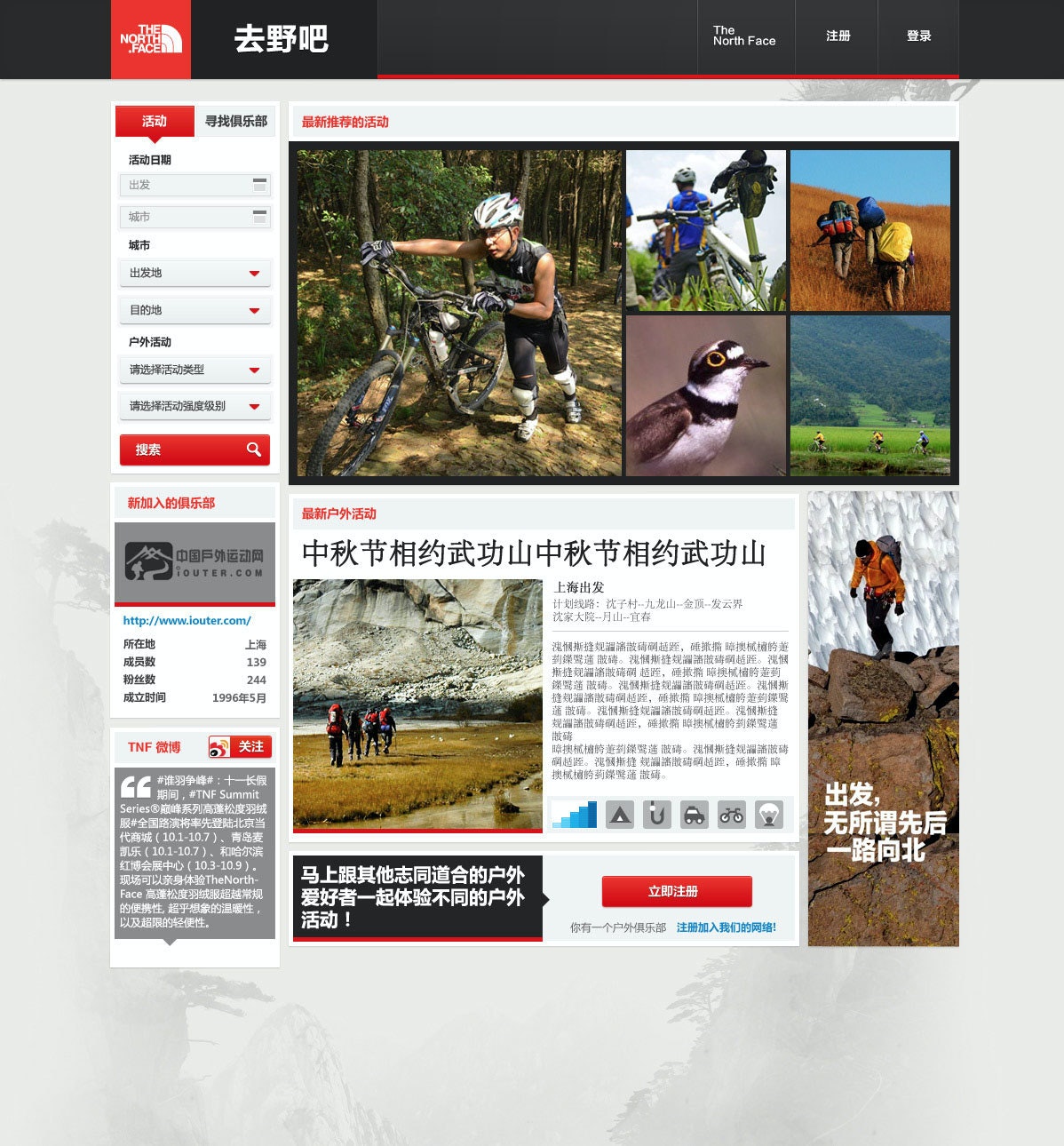
IDEO also collaborated with the company on designs and prototypes for a new digital platform and an updated store-within-a-store merchandising display. The digital community aims to attract newcomers and connect them with more experienced outdoors enthusiasts and clubs. As the platform evolves, it will help aspiring adventurers plan trips, learn skills, and share their experiences through photos.
The retail community space aims to integrate this digital community with in-store shoppers and an effort to turn the “buy-a-product moment” into a “join-the-outdoors moment.” Both will be integrated to provide a holistic brand experience in China centered on nature and community.
In the West, The North Face, with its decades-long history, has long symbolized an adventurous, active lifestyle. In China, however, the outdoor market only began accelerating in the early 21st century.
Success in this growing market depends on building strong and deep connections with Chinese consumers.
20% sales growth in China
from 2012 to 2013—the year the project was completed—propelling the brand from sixth place to a market-leading position
Nearly 40 years of designing pharmaceutical excellence
How a decades-long collaboration with Eli Lilly has transformed patients' lives and health outcomes.
Over the last 36 years, IDEO and Lilly, along with the pharmaceutical giant’s other design, development, and manufacturing partners, have collaborated on more than 250 projects. During this time, Lilly has not only honed its engineering-focused internal device-development team but also transformed into a human-centered organization with extensive, robust in-house innovation capabilities.
Early in the relationship, a team of IDEO designers and Eli Lilly leaders traveled the world to understand how people with diabetes live with the disease. Their findings led to the design of a series of award-winning insulin injection pens like SAVVIO. Portable, aesthetically pleasing, and discreet, the pens are suitable for use in both medical and personal settings. Combined with Lilly’s technical design prowess, this human-centered focus allows the devices to seamlessly integrate into patients’ lives and routines, making a challenging disease like diabetes feel more manageable.
Fast forward to today, Lilly’s innovative, easy-to-use auto-injectors are not only continuing to provide life-saving treatments to people with diabetes but also enabling the adoption of the popular GLP-1 weight-loss drugs Mounjaro and Zepbound, which together accounted for the majority of the company’s annual revenue in 2025. Perhaps most importantly, patients consistently rate the experience of using Lilly’s auto-injectors as relatively pain-free, easy to use, and preferable to competitors’ brands, improving adherence, satisfaction, and health outcomes.
This unwavering focus on driving innovation through a patient-first mindset is evident in some of the most impactful projects Lilly and IDEO collaborated on over the years:
GLP Auto-injectors
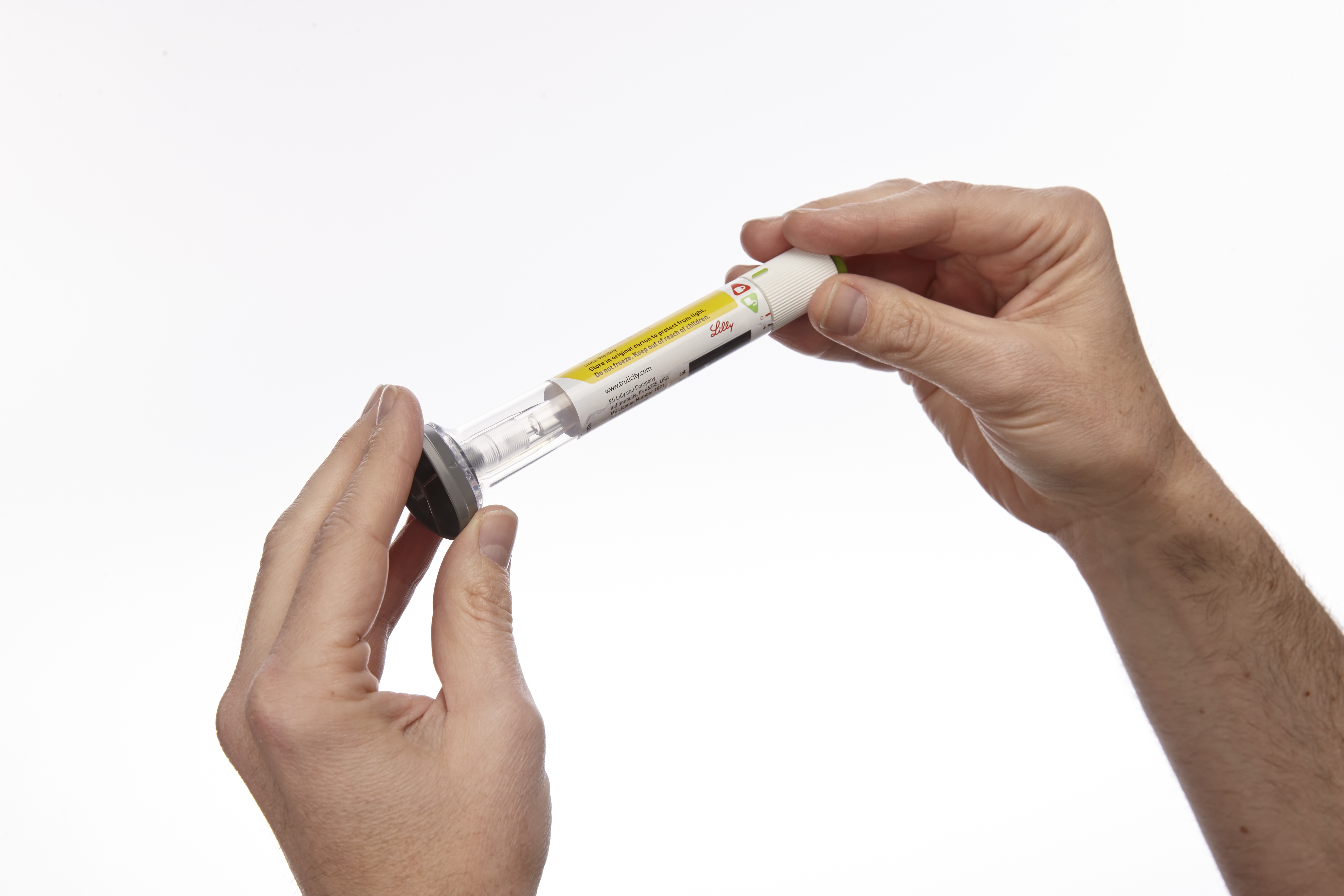
Convenient and cutting-edge, the first Trulicity injection device was originally designed to deliver the GLP-1 drug to treat type 2 diabetes. Today, it has been adapted for use with other GLP-1s, Mounjaro and Zepbound, which are increasingly popular weight-loss drugs and are also administered once weekly via fixed-dose injections. A wide base enables the pen to be held securely against the injection site, and the device automatically regulates the dose and needle depth.
Taltz Injectors
For most patients, living with severe plaque psoriasis means being your own medical technician—metering your drug dosage each time, and attaching and removing needles by hand. Taltz provides patients with clear visual and auditory feedback throughout the injection process through simple icons, bright colors, a translucent material, and clicking sounds. The devices are available in both autoinjector and prefilled-syringe formats and are adapted for Emgality, a preventive monthly migraine treatment, and Ebglyss, which helps treat eczema or atopic dermatitis.
HumaPen SAVVIO Injection Pen
Key insights informed the design of SAVVIO, including patients’ preference for insulin pens that look less like medical devices and more like everyday objects you’d find in a backpack or purse. The sleek, colorful device was created to help patients feel comfortable and confident about fitting mealtime injections into their everyday lives.
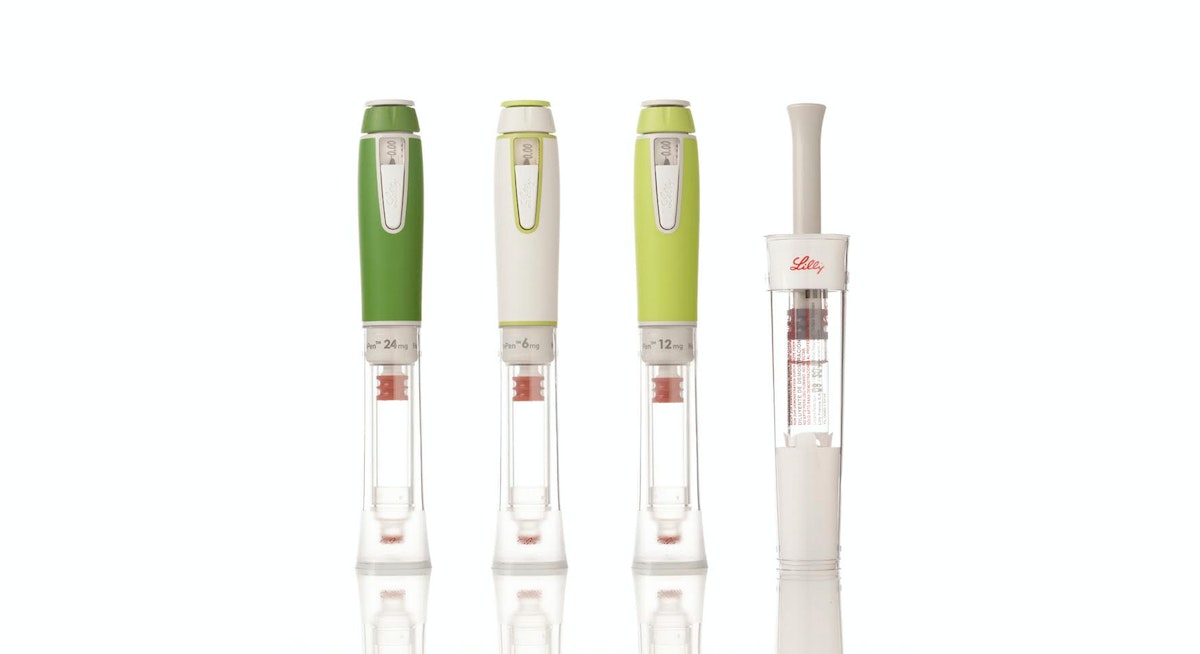
Refillable Human Growth Hormone (HGH) Injector and Reconstitution Device
Designed to be kid-friendly, the Refillable HGH Injector leverages insights into pediatric treatment adherence to create a more integrated, systematic approach to treatment, while the Reconstitution Device makes mixing Lilly’s powder-and-liquid drug easier and less intimidating for parents and healthcare professionals alike.
KwikPen Insulin Pen
KwikPen is a next-generation, prefilled insulin injection pen that builds on the success of two previous designs, reducing its size to 5.7 inches and enhancing ease of use for patients.
HumaPen(R) Luxura™ Insulin Pen
HumaPen Luxura combines several innovations into a robust yet elegant pen that can be carried and used anywhere—an insulin pen solution that improves dosing accuracy, dose setting, and injection force.
In addition to designing products to meet the needs of people with diabetes, IDEO and Lilly have developed innovations in areas of oncology, autoimmunity, and men’s health. The results of this collaboration and expansion have won numerous design awards and produced one of the longest and most fruitful innovation relationships in IDEO’s history.
In the 1990s and early 2000s, Eli Lilly had a number of new, life-changing medications and two big challenges: Most of its drugs were self-injectables, not pills, so patients were hesitant to take them. And its drug-delivery device platform lagged behind its drug pipeline.
99%
of Trulicity users reported the auto-injector was “easy” to “very easy” to use in a JDST study
$36.5B
of Lilly’s $65.2B 2025 revenue came from sales of its auto-injectable GLP-1s, Mounjaro and Zepbound, a 45% increase from 2024

Reimagining San Quentin
Bringing together many voices for a report for the Governor of California.
“…the Advisory Council will recommend transformational programmatic, cultural, and physical change to San Quentin that can serve as a practical model that can be replicated and scaled to other institutions.”
Source: Office of Governor Gavin Newsom: Governor Newsom Names Leading Criminal Justice and Public Safety Experts to San Quentin Transformation Advisory Council, May 05, 2023 https://www.gov.ca.gov/2023/05/05/san-quentin-transformation-advisory-council/
The Advisory Council included the expertise of established criminal justice, public safety, healthcare, academic, reentry, and rehabilitation professionals, along with system-impacted/formerly incarcerated community leaders, and representatives of crime victims/survivors. The premise of IDEO’s involvement is to augment the Advisory Council Co-Chairs’ and members’ expertise in evidence-based best practices and lived experience living and working in prisons, with expertise in collaborative design, synthesis, visualization, storytelling and bringing visions to life.
Specifically, IDEO was brought in to facilitate input-gathering, and assist with incorporating the many viewpoints into a single, cohesive report of recommendations to the Governor. This included meeting the challenge of bringing together the viewpoints of 21 people on the Council (17 members, three Co-Chairs and an advisor to the Governor); incorporating the views of people who are most impacted (those incarcerated at San Quentin, San Quentin staff, community-based organizations, victim/survivor groups, among others); and formatting and designing the final report.

IDEO’s facilitation included workshops with the full Advisory Council, individual interviews and check-ins with Council members to gather their input to inform the recommendations. Each Advisory Council member was asked to speak with, and record feedback from, no fewer than five people at San Quentin or in affected communities and to share this feedback with IDEO. IDEO integrated this information and feedback into this report.
Research activities included visits to San Quentin to speak with and facilitate conversations with:
- San Quentin residents (100+) including the Citizens/Inmate Advisory Council, focus groups with Spanish-speaking residents, former gang members, ACT (LGBTQIA+), Voices Heal, People in Blue, San Quentin Citizens Advisory Council.
- San Quentin staff (100+) including interviews with numerous officers.
- San Quentin staff and residents together.
- Current participants and staff at Amistad (MCRP) and Beacon (former lifer) campuses (many who were previously incarcerated at San Quentin).
IDEO also organized listening, information sharing and feedback sessions, both at San Quentin and in the community, between Co-Chair representatives and various stakeholder groups, including victim/survivor groups, labor unions, and advocacy organizations. These perspectives were also brought into the report.
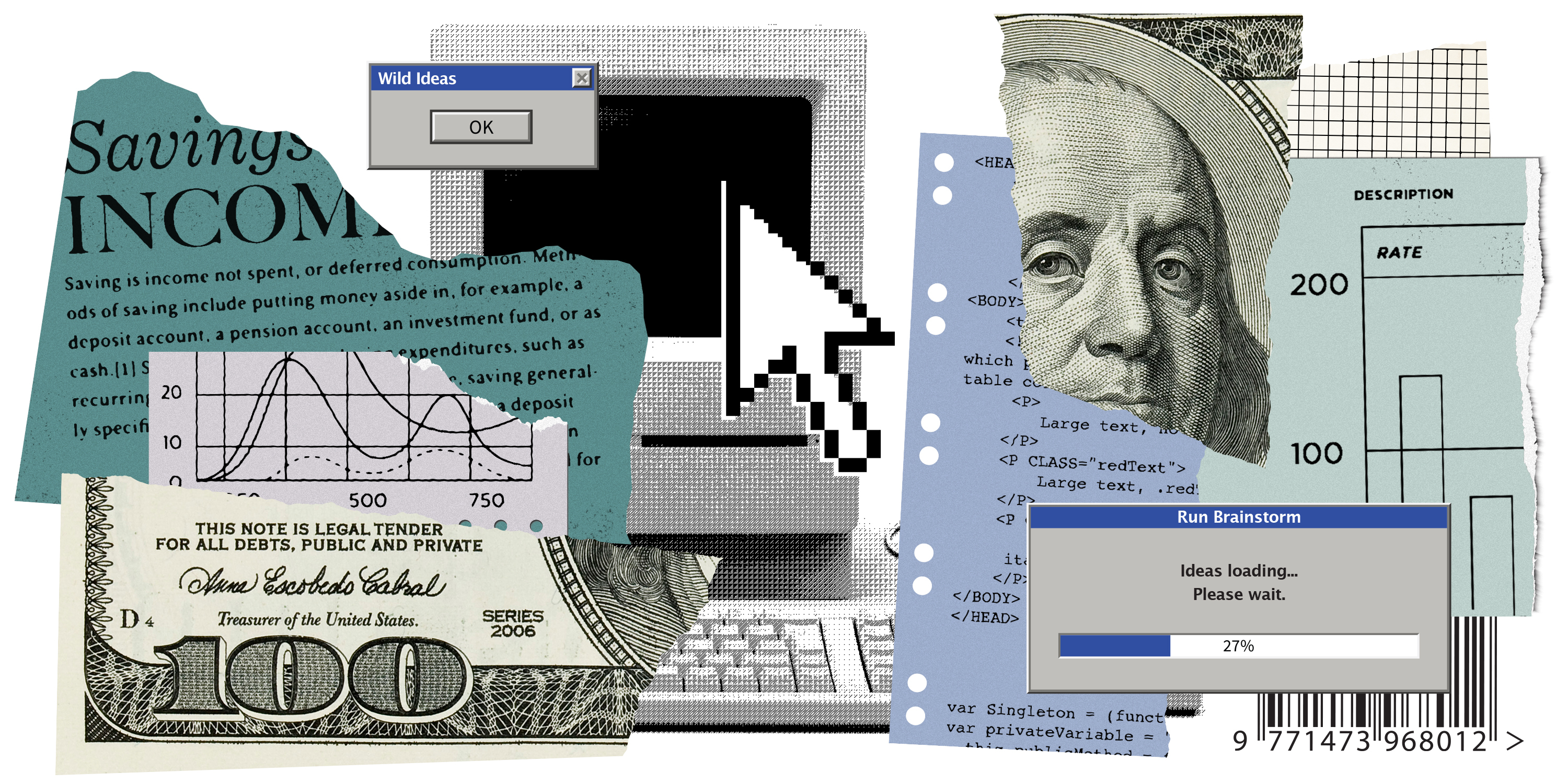
The Rules of Brainstorming Change When Artificial Intelligence Gets Involved. Here’s How.
Recent advances in machine learning have created a new catalyst for design
My “partner” that day was a technology called GPT-3 from OpenAI. You may have heard of it already; if not, you can think of GPT-3 as a really good autocomplete. Like, shockingly good. Once I shared some of the output of my brainstorm with others on Slack, there were plenty of 🤯reactions—and honestly, our minds are still blown. But clients and design teams will need to tread carefully and watch their ethical compass as they imagine inspiring, human-centered applications for this new tool. As with any new technology, there are new risks to account for. Here's how I started my experimentation.
How to run a virtual brainstorm
In order to work with a so-called “transformer model” such as GPT-3, you feed it a pre-written prompt, then the model uses everything it's seen before (in this case, a substantial portion of the internet) to guess what should come next.
I wrote some context: This is an IDEO brainstorm, which follows our 7 Rules of Brainstorming, including “encourage wild ideas.” I gave GPT-3 a real client challenge from a past project: The team is developing a new app for a bank to encourage millennials to better utilize savings accounts. Then I wrote a brainstorm prompt: How might we help young people turn saving money into a lifelong habit?—and fed it five example ideas.
As soon as I pressed submit, the model began churning out new ideas. Not all of them were gold, but many were perfectly good brainstorm concepts. After all, the rules also tell us to “defer judgment” and “go for quantity.” Without cherry-picking too much, here's a sample of some of the ideas it generated:
- Allow the user to share their saving goals with friends and have a community of people who will cheer them on or challenge them if necessary
- Reward the user with real money if they don't spend money at all in a month
- Allow the user to set up “fun budgets” (aka “triggers”) to save more money, e.g. whenever they go to Target, they'd get a pop-up asking if they'd like to put $5 towards savings
- Similar to the Future View idea, show how much more could be saved if the user decides to forgo a coffee every day or splurge on new sneakers instead of taking an extra vacation
In the last example, you can even see the model “build on the ideas of others”—another rule of brainstorming—by riffing on an idea called Future View that I had given in the prompt.
This stuff is on par or better than some of what I've seen from humans. Some [of it] is worse, too. But that anything is better is wild.
An IDEO Director on GPT-3's brainstorming output. Watch out, humans.
Another colleague suggested we tweak the prompt we gave GPT-3 to encourage it to use analogous inspiration, which primed the model to produce some truly wild ideas:
- Have “clowns” jump out of ATM's, making it less fun to withdraw money
- Create a virtual reality experience where users are in an arena full of savings monsters, and need to slay them by depositing money into savings
- Create a “Savings Monster” similar to those featured on Chinese lottery shows where viewers have to guess the amount saved in order to win money
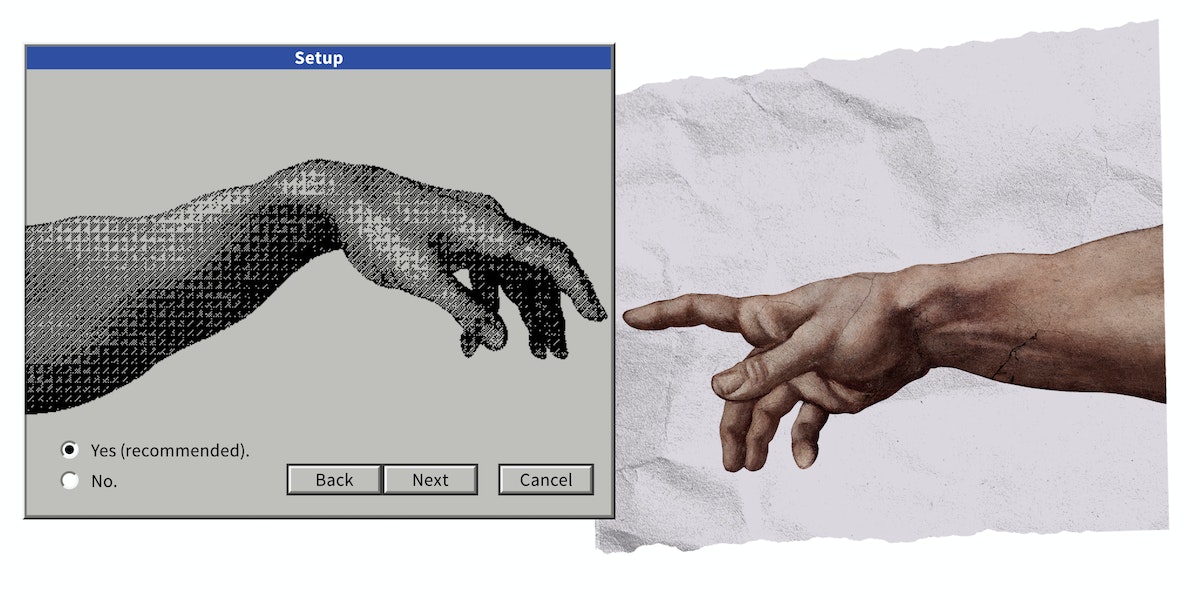
“I'd love to know what a Savings Monster is,” I mused on Slack, and a colleague responded, “Why don't you ask it?” Of course! After the brainstorm, I started a Q&A session with the model (my prompt is in bold):
Q: Quick question: What exactly is a savings monster? You mentioned it twice.
A: I'm glad you asked! This was just an idea that emerged from the brainstorm. A savings monster is a physical manifestation of your savings goal. For example, let's say I want to save $500 by the end of next year. If I deposit $10 every day, that will get me pretty close to my goal at the end of the year, but what happens if one day I don't have $10? Now my savings monster is underfed, and he starts to throw a tantrum (eg. negative cash flow notification).
A: Yes, this is an idea inspired by Chinese lottery shows (and World War Z). We thought it might be fun for users to have a physical manifestation of their goals that they could feed (ie. save more money) when they meet their goals, and starve (ie. spend more money) when they fall short. In order for this idea to work however, the savings monster would have to be very cute, and a bit terrifying.
As it turns out, the model doesn't skip a beat when you change up the input’s format. So I decided to try my luck: In my next prompt, I asked GPT-3 to choose its favorite idea from the brainstorm and create a script for a promo video. Thankfully my virtual brainstorm partner selected the Savings Monster concept. The resulting script was so good that I found an animator to bring it to life.
So what is this good for?
As exciting as this technology is, GPT-3 is not Artificial General Intelligence, and it was interesting to find the edges of its abilities. For example, this model can easily summarize a news article, or turn it into a fairy tale. But it's surprisingly difficult to get it to remove references to a specific person, or change the subject of a certain paragraph.
To put this in human-centered design terms, these large transformers are an extremely valuable way to augment the team during divergent moments in a project, when we're creating choices. The tech struggles, however, in convergent moments, when we're making choices. Thankfully, humans are still required to synthesize massive amounts of information about human needs into concrete human-centered design decisions.


Gotchas
There are two other issues we have to confront when considering transformer models for our prototypes and design recommendations: toxicity and bias. These models are trained on big chunks of the internet, and optimized to produce output that looks like the input. The result is that the model can reproduce the language of a scientific paper just as easily as it can mimic an internet troll. You get the good with the bad.
My experiments sparked a conversation with Jess Freaner, an IDEO Data Scientist with a special interest in ethics and AI. “Though the rules governing how it all works might not be explicitly written on the wall,” Jess told me, “being a product of our world as it exists now and in our past (the internet is an excellent, incomplete archive) we need to consider what GPT-3 reinforces and when it can reveal what needs to be subverted about society.”
Problems with toxicity and bias are not unique to GPT-3. OpenAI is working on both—they have built-in tools to manually and automatically flag output as toxic. They’re also working on the issue of bias, but it’s a thornier problem. These models literally encode a snapshot in time, and are inherently biased to reproduce the status quo. Companies and designers will need to question and problematize the output of these models with the same rigor that we are learning to bring to our human interactions.
Future possibilities
Despite the challenges, it's clear that in the past 12 months, natural language models have crossed an invisible threshold of usefulness, in the same way that speech recognition was frustratingly terrible for decades—until one day it wasn't. Early proof of concept prototypes demonstrate how this type of model can transform a description of an interface into functional UI code. Talk about “declarative programming.” Imagine a future in which the job of a UI designer is to write a description of the interface rather than laying out each button and label by hand. The same description might result in totally different visual expressions or interactions depending on the individual user's needs, interests, or current context.
As transformer models improve, I'm inspired by a future where people are literally in conversation with their software. Users might be able to easily adapt the same app to become a widget in their AR glasses, a quirky voice assistant, or an animated character. Because who knows: for some people, the perfect solution just might be a Savings Monster.
Illustrations by Katie Kirk
Back in early August, I opened my laptop and kicked off a remote brainstorm. Immediately, my partner started generating a huge number of ideas—a perfect blend of wild, hilarious ideas and pragmatic solutions. That's not unusual at IDEO, but what made it remarkable is that my partner wasn't just remote—it wasn’t human at all.
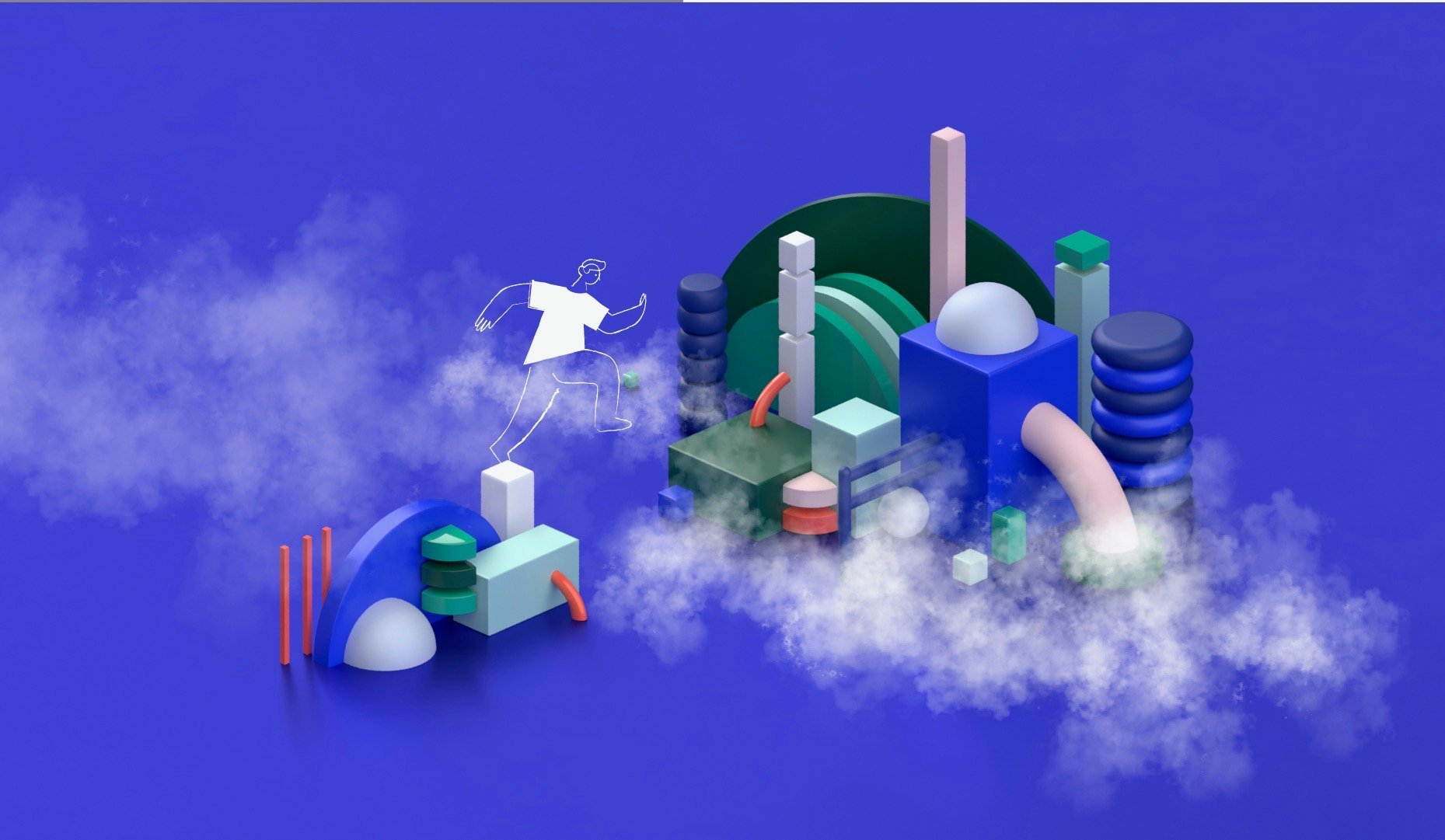
2020 Didn’t Go as Planned, but 2021 Is Coming Anyway
Here’s a tool to bring imagination to your annual planning process
In 2020, everything has been turned upside-down, and all budgets are starting from scratch. Planning for the coming year will be more ambiguous and uncertain than ever. It’s time to ditch the carry-over mindset, which can’t solve the complex and often competing challenges faced by business leaders today. What we need now is to broaden our perspectives and use imagination to project into the future.
Back in the spring, when it became clear that coronavirus would reshape the entire world in short order, we began tracking principles to help us focus on understanding context as it evolves, having a clear vision for successful recovery, rebuilding for resilience, and designing through collaboration.
As we spoke to clients and business leaders within and outside of IDEO, we saw the opportunity to develop a tool that would help leaders plan with imagination for the tumultuous road ahead. We were inspired by the Early Recovery principles used by the United Nations to respond to crises or natural disasters. Early Recovery helps people and societies "build resilience and establish a sustainable process of recovery from crisis."
We’ve adapted this concept into a framework for organizations to use in planning the coming 12 months. The Build Back Bolder canvas offers a simple template for reflection, and a series of short exercises designed to help set strategic priorities and initiatives, and to uncover opportunities for growth and impact in the midst of fluctuating conditions. Build Back Bolder is a straightforward, two-page tool that business leaders can run alongside their own planning processes. It can help leaders and teams make sense of the present, get out of analysis-paralysis, and move towards action. Simply put, the Build Back Bolder canvas helps you think, and that helps you plan.
Circumstances don’t get much more ambiguous and uncertain than the ones we’re living through now. In moments of crisis, when markets are redefined, imagination rarely leads the day. But this instability calls for a more varied and experimental suite of tools. Change is inevitable, but using imagination is not. By choosing an imaginative approach, we can plan for a more resilient, bold, and sustainable 2021.
Download the Building Back a Bolder 2021 tool here.
Illustration by Charlota Blunarova
In typical years, there’s a continuity to the annual planning process. Changes are incremental. Many budgets that were approved the previous year are simply carried over. Not so this year.

Capitalism Needs a Redesign, but Where Do We Start?
Leaders share what they're doing to address systemic challenges
To fix big, systemic problems like inequality and climate change, many called for rethinking how companies generate value and who they generate it for—from shareholders, employees, and customers to partners and the planet itself. This wasn’t just a moral argument that business ought to “do the right thing.” The movement was anchored in an existential understanding that radical forces are changing not just the rules of the game for business, but the game itself.
The multilayered crises we face today offer a powerful moment of reckoning for purpose-led businesses and leaders: will we make good on this rallying cry for a reimagined capitalism or not? The pandemic put stakeholder capitalism to the test: a report funded by the Ford Foundation found that companies that had signed on to the “Statement on the Purpose of a Corporation” fared no better than other top companies in prioritizing worker rights. Though there is clearly the opportunity and will to rethink the purpose of business to address systemic problems, the way forward is often less apparent. Understanding where to begin can help us realize the more equitable promise of stakeholder capitalism.
I’ve long been curious about how forward-looking companies have jumped over this hurdle, so I’ve spent this year learning from dozens of movers and shakers already in the thick of tackling systemic changes, from professors and CEOs to founders and non-profit presidents working across sectors and industries. They’ve shared with me the first steps that helped them break the initial inertia of business-as-usual—and, importantly, the mindsets they’ve adopted to sustain new kinds of activity. I hope their wisdom will be as inspiring for you as it has been for me.

First steps
Set bold targets and innovate your way to reaching them
Even if they don’t know where to start, the changemakers I’ve talked with have put a stake in the ground and set bold targets. But they don’t rely on a big PR splash and then move on: alongside these bold goals is a commitment to a process of brave experimentation and innovation.
The Swedish furniture retailer IKEA, for example, has committed to becoming a fully circular company—one that is restorative and regenerative by design—by 2030. To make good on this future, they’ve invested in a range of experiments, prototyping smaller-format shops in city centers that rely on fewer resources, electric vehicles for home delivery, new products like home solar systems, and buyback and rental programs to reduce waste, among others. Taken together, these many activities are moving IKEA closer to their ambitious goal. But they’ve also enabled fast learning and iteration, so that when the company chooses to scale any of these solutions they have the greatest impact for their investment.
From this example and others, a common method is emerging for how companies can use their scale to unlock change at a systems level: commit boldly to an outcome, design a number of experiments, learn and iterate quickly, and scale what works. Spoiler alert: It’s not going to be one thing.

Create a coalition of partners around a tipping-point problem
From homelessness to climate injustice, our challenges demand unprecedented collaboration across sectors. The UN Sustainable Development Goals provide a powerful framework to rally around, but there are other emerging partnership models that leverage the capital investment, innovation muscle, and ability to scale that corporate partners often uniquely bring to the table.
Take the NextGen Consortium, for example. Managed by Closed Loop Partners and powered by OpenIDEO, some of the most powerful food and beverage companies (including Starbucks, McDonald’s, Wendy’s, the Coca-Cola Company, Yum! Brands, Nestlé, and WWF) are collaborating to create a new cup that will curb the 250 billion fiber cups piling up in landfills each year. The approach of this coalition has been to enable many breakthrough solutions, working directly with founders and stakeholders in the system, to take root in the market.
There are many other examples of convenings—whether official or unofficial—and the power of rallying partners around a shared challenge. Founded by Sam Polk, Everytable is on a mission to bring healthy, affordable food to communities that do not have readily available options. Polk grew Everytable to eight locations and delivered 160,000 meals just a few weeks after launching. Through a philanthropic initiative led by the California government, Everytable partnered with a hotel offering shelter and protection to the homeless during COVID to provide food, eventually facilitating additional partnerships with elder care homes. Everytable is now on track to deliver a million and a half meals, and they’ve added jobs along the way. As Jacqueline Novogratz, CEO of Acumen, shared with me, this is an example of business, government, philanthropy, and individual volunteers, leaders, and donors uniting and busting siloes to address hunger.

Define key performance indicators (KPIs) for stakeholder groups
Despite its recent buzziness, the stakeholder perspective—a fundamental commitment to all stakeholders, including customers, employees, suppliers, communities, and shareholders—is not a new idea. Many companies already consider multiple stakeholder interests in their decision-making. But the problem with stakeholder capitalism as it exists today is that it doesn’t offer a clear compass for how to make decisions in complex scenarios where win-win outcomes for all parties are rarely possible. This brings us to the elephant in the room: not all stakeholders are created equal. Leaders are often forced to pick favorites, and at the end of the day, we know who will always win.
To address this, companies like Airbnb are beginning to hold themselves accountable to new stakeholder-centric metrics. Airbnb sees their stakeholder community as made up of guests, hosts, communities, shareholders, and employees. Their design challenge—Rob Chestnut, Airbnb’s Chief Ethics Officer, told me—was to create a company that measures itself against the value it creates for each. Airbnb began by listening to these groups, establishing principles and metrics reflecting the needs of each. For example, they have committed to treating hosts like partners, and measure their delivery of this through survey data evaluating hosts’ satisfaction and earnings over time, among other things. Airbnb reports their progress and continues to update their corporate governance and compensation to reflect delivery against these KPIs.
This approach isn’t perfect. But doing the work of measuring the value you create with and for stakeholders and institutionalizing accountabilities for delivering that value is certainly a step in the right direction.

New mindsets
Allies over heroes
When it comes to business’ role in the big problems society faces, they are often cast as either heroes or villains. Some see capitalism as society’s savior, especially when governments have seemingly abdicated their responsibility to serve citizens’ best interests. Others see capitalism as society’s villain, the cause of many of its major problems like climate change and inequality.
The leaders I’ve interviewed reframe the discourse entirely. They know that systems change requires bringing together key actors—local communities, nonprofits, governments, businesses, donors, and others—to address unjust systems and solve social problems at scale. So, they see their organizations as meaningful allies in the work of change-making, adopting a partnership-as-leadership approach to their engagement in these issues.
“Greyston’s founder Bernie literally started pulling people off the streets to work for a small cake-baking business he had started to address the problems he saw in Southwest Yonkers...Just as the bakery started growing, [Greyston’s founder] Bernie met two guys named Ben and Jerry. Our relationship with Ben & Jerry’s started out as a serendipitous one, but it’s held steadfast as a strong partnership over the years and has enabled us to employ more folks who would normally be deemed excludable, non-employable.”
—Joseph Kenner, President and CEO, Greyston Bakery
“Cooperation among investors is a key to this progress. More than a third of the world’s invested capital—about $19 trillion—is controlled by the world’s hundred largest asset owners…In principle these investors have enormous power to move the entire economy in more sustainable directions. All they have to do is find a way to cooperate...The rumor is that they look at each other and say, “You go first.”
—Rebecca Henderson, Professor, Harvard Business School and author of Reimagining Capitalism in a World on Fire

Gardeners over architects
As the pandemic unevenly distributes pain and suffering across our society, it’s ever more clear: true systemic change requires a shift in power. That means that a top-down approach to change just won’t work to produce the equitable outcomes we need. We need new voices with new ideas to reimagine our economic system. Personally, I’m inspired by the small business owners who have reimagined the role businesses might play in neighborhoods through creative pivoting—like restaurants now offering CSA boxes and large family meals while their dining rooms are closed. Or Black communities that were forced to develop regenerative economic strategies decades ago, long before these concepts penetrated white-dominated corporate worlds.
These are the imagineers of a more resilient, inclusive, and sustainable society for everyone, and the leaders I’ve learned from believe this, too. Their job, as they see it, is to find the seeds of ideas and nurture them. They play the role of gardener, but instead of a green thumb they have a green ear, tuned to listen and learn.
“We were open to new ideas from anywhere and created new mechanisms to source them. Part of our mantra was the conviction that all the good thinking doesn't come only from people sitting on Fifth Avenue in New York City. We ran competitions, we did global innovation challenges, and we learned a lot from what was going on on the ground.”
—Judith Rodin, Former President, The Rockefeller Foundation
“Purpose is obviously about how a company acts, but it’s also about how they listen.”
—Maryam Banikarim, Chief Marketing Officer, Nextdoor
“And so it's going to be up to the rest of us in the conversation to hold those people’s feet to the fire—to make sure that as we are reimagining capitalism we are reimagining it to actually work for all. And part of that is by creating systems that are actually inclusive and equitable and regenerative because only those things will dismantle a version of capitalism that is just for the elite.”
—Andrew Kassoy, Co-founder and Global CEO, B Lab

An audacious question over an assumption about the answer
Rather than start with an assumption about the right solution, these leaders begin with an audacious question. What, for example, would it look like to be a fully carbon neutral company by 2030, asks IKEA? Melinda Gates’ Pivotal Ventures asks what would a future look like if women’s power and influence was equal to that of men?
By starting with a question instead of an answer, these individuals are searching for far more imaginative solutions. This is how radical breakthroughs happen.
“Business has a huge role to play in designing our future. They can do this by first, stepping back and asking, what are the problems that need to be solved? And how can we make that the purpose of our business? Start with that problem. Then, look at the different stakeholders you engage with and rethink how we might come together around that problem...This is moral imagination—the humility to see the world as it is and the audacity to imagine what it could be.”
—Jacqueline Novogratz, Acumen’s CEO
“For the big briefs we face, we need questions that open up new possibility. We don't need the obvious questions — we’ve got plenty of those. We need questions that reframe how we think about some of these systems, ones that change our perspective.”
—Tim Brown, Chair and former CEO, IDEO

The work of changing systems is hard. Taking any of these first steps might require you to flex new muscles, fit yourself into a mold that isn’t quite perfect, or develop new collaborations that might not go seamlessly. Likewise, adopting any of these mindsets might clash with your business-as-usual culture and process. It’s not for the faint of heart. And yet, we can’t move forward—on equity, on the environment, on social cohesion—unless we roll up our sleeves, start redesigning our organizations, and make room for the voices most affected by these systems. So let’s take some first steps, and prototype them together to help push this work forward.
Before the coronavirus pandemic, the promise of a reimagined purpose for business—one that serves a diverse set of stakeholders and society more broadly—had bubbled into mainstream industry discourse. From boardrooms to business schools, a growing chorus argued that our economic system is not only unable to respond to the world’s most urgent challenges, but has excluded many people from the prosperity capitalism promises.
The 3 Unexpected Secrets for Finding Common Ground Between Strangers
Looking to make a new friend? Try not telling them your name.
Well, not complete strangers. They had shared an unusual experience, designed by IDEO, over the previous five weeks: The Department of Super Secrets.
When COVID-19 shut down elementary school buildings, it shut down opportunities for young students to build soft skills like empathy. It also severed personal contact between seniors and other human beings, leaving many confined and lonely.
Alongside teachers and students at Mineola Union Free School District in Mineola, New York, IDEO took on a project to design a program that would help 4th graders build empathy by connecting idle students with isolated seniors. We thought it would be a simple, playful opportunity, but in the end, we found a powerful tool for connection that might be scaled to bridge any number of social divides.
What’s the key? Well, that’s a secret.
Connections grown in isolation
The IDEO team decided that instead of trying to compensate for the limitations of quarantine, we would embrace those constraints and make them the centerpiece of the experience.
People can’t meet face-to-face? Perfect. We’ll beat quarantine at its own game. Neither partner will know anything about the other. No names, no ages. They’d have no clue about the other’s most basic biographical information, like age, race, gender; instead, this would simply be two human beings building a connection by sharing stories of their hopes and fears. A relationship built on meaning rather than appearance.

Thus, the Department of Super Secrets was born—an IDEO twist on the pen-pal relationship. Our heroes picked secret super aliases and we paired them up: one student with one senior citizen. Over five weeks, the partners were prompted to share five specific secrets designed to be low stakes, but highly personal, carefully crafted to spotlight character, values, and feelings. This was a delicate tightrope walk, asking them to offer up something meaningful without being invasive or uncomfortable. We designed the prompts to build on each other, gently establishing a bond through vulnerability and reflection.
Every secret was shared in two ways, with words and images. We wanted the partners to spend energy reflecting on their own lives so they could benefit as much from the telling as the receiving.
You know what was so wonderful about it—I had been cheated all these years not remembering that image of my brother and I playing under the table. I wouldn’t have [remembered it] if we didn’t do this.
MARVELOUS MUSEUM MAVEN, SUPER SECRET SENIOR
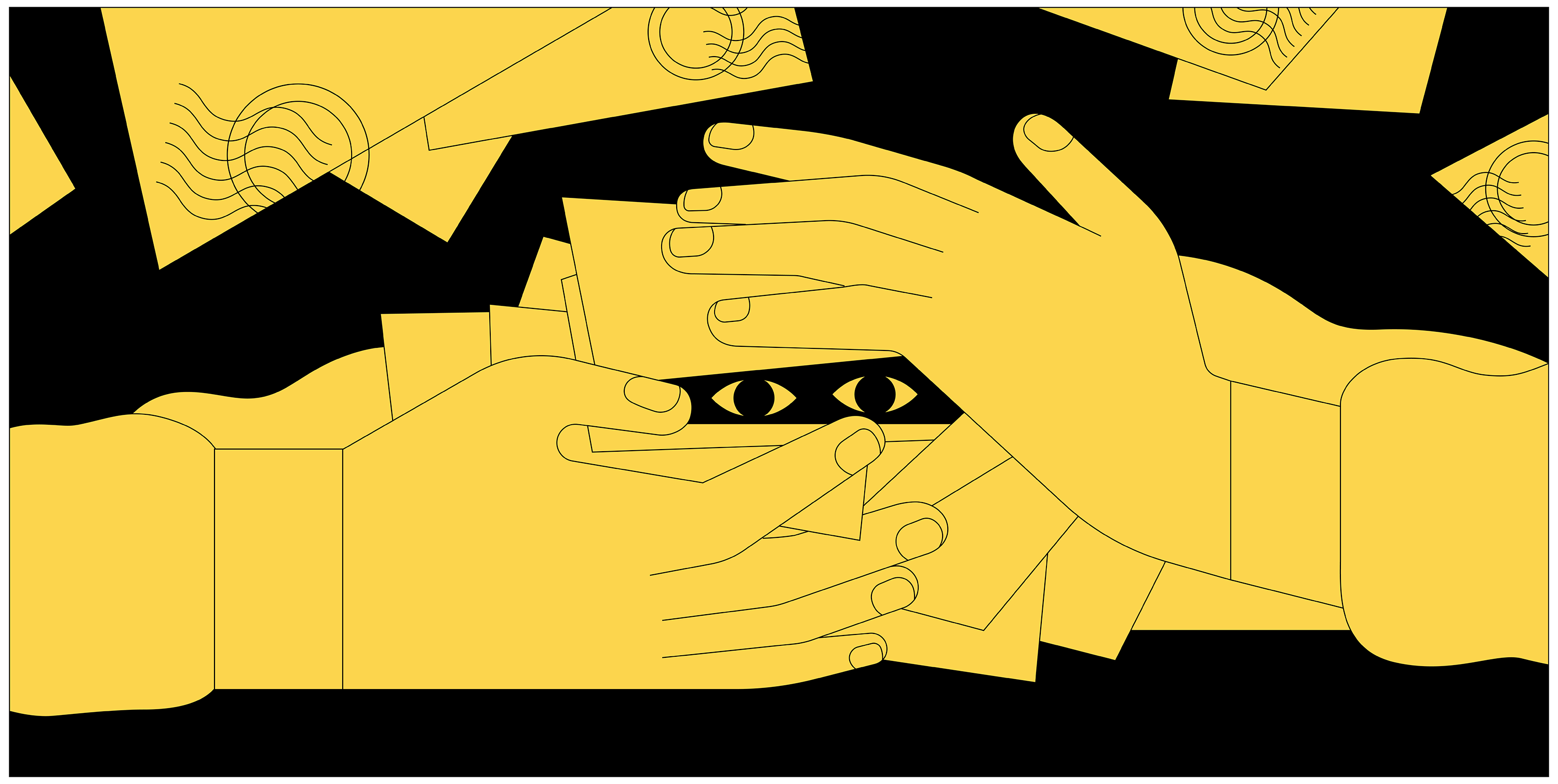
The secrets were exchanged through actual mail, not email. This slower method gave the partners time to explore their memories, express themselves deliberately, and—in a situation where days begin to blend—gave them something to look forward to. The tactility of cards filled with handwritten words and pictures turned them into a gift; it made the receiver a caretaker, safeguarding moments of someone else’s life.
Friendship across distance and decades
We wanted our participants to build a connection, not just exchange information. This was not about grown-ups humoring kids, or kids humoring grown-ups—this was about two experiences at either end of a spectrum, sharing a window into their point of view.

As part of the final exchange, each partner used what they’d learned about the other to create and send a gift to their anonymous pal: a superhero mask based on the shared secrets. And then the Department of Super Secrets hosted a reveal party. Partners came together on a video call, each wearing their newly gifted masks. Although they had been exchanging stories for weeks, this was the first time they saw the face behind the feelings. This was the first time Super Potato met Fantastic Fixer, and it was lovely.
Visit the Department of Super Secrets to meet the 4th graders and senior citizens behind the masks
Before and after their experience, we asked the partners to answer a few questions meant to gauge their empathy. Turns out the numbers support the anecdotes: Their time with the Department of Super Secrets seems to have genuinely increased their empathy scores, especially their ability to put themselves in someone else’s shoes.
So what went right? We built the Department of Super Secrets by combining three key elements:
1. Anonymity: character vs. characteristics
No one in the world is more perfect for you than the mysterious stranger sitting alone in the coffee shop. The less we know about someone, the easier it is to dress them up and see them exactly as we wish. That’s why we sidestepped the introductions, the descriptions of hair color, and the family history. We wanted each side to begin by speaking across the mysterious absence created by anonymity to someone they assumed was a kindred spirit, ready and excited to connect.
We’ve all seen enough awkward hugs and pinched cheeks between kids and elderly relatives to know these two groups don’t always dance to the same beat. If the relationship began with the mental shorthand of “old” and “young,” there would be silent assumptions on both sides. Confirmation bias would run wild.
We used the freedom of anonymity to create rapport so partners would speak their truth honestly without tailoring it to their audience.
2. Story: introductions from the inside out
My name Is Ben. I once had my heart broken.
Which of those two offerings is more likely to create a bond between us? Ironically, the things that shape us most distinctly—our stories—are also the things most of us have in common. At the very core, we all share the same stories, but told in our own unique ways. Your parents may not have named you Ben, but you probably know what it is to cry into your pillow.
We used story as a sneaky back door to help Super Secret partners appreciate each other's identities once we dropped the anonymity. By the reveal party, they had connected enough through the shared stories that when they discovered each other’s identity, it enriched their idea of who a young or old person could be.
3. Play: lighten the mood, deepen the conversation
As I’ve written elsewhere, play is powerful. It lowers the bar for self-judgment; it can function like oven mitts for handling sensitive subjects; it can encourage us to stretch our everyday thinking and see possibilities we might have otherwise missed. Fun is a fuel.
We could have said, Hey, this is a school project to build empathy. Bo-ring. Instead, we led with the language of secrets, superheroes, and surprise to elevate it to something memorable, meaningful, magical.

Play allowed the partners to share vulnerable stories in a safe way. One prompt—"Share the secret of your most embarrassing moment"—became a funny way of sharing values, fears, and anxieties. Because underneath the slipped bathing suits or milk-spewing nose is the nature of what you find embarrassing, and that tells a lot about a person. Is it failure? Public or individual? Loss of control? Misunderstanding? Fear itself?
Sharing a moment you wish had never happened is an act of trust and bravery. Receiving someone else’s story is a way to remember you are not alone in the world as a flawed human being.
Play allows you to do both with a smile.
The next adventure…?
While this began as a way to enrich the lives of kids and seniors, it turned out to be a powerful way of sneaking behind the unrecognized biases, the mental shortcuts that are the unacknowledged guardrails of our day-to-day thinking. What if we expanded the experience to bridge other divergent points of view related to politics, race, economics, gender, geography, or religion?
We’d love to find situations to use the Department of Super Secrets to help people hear each other in a new way. Our hope is that this combination of anonymity, story, and play can help any two strangers find common ground whether they be superdelegates or super potatoes.
*Names and details have been changed to protect secret identities
When Super Potato* met Fantastic Fixer* for the first time, she asked if Fantastic Fixer’s puppy was feeling better. Fantastic Fixer wanted to know about Super Potato’s recent birthday. There were no awkward silences, despite the fact that Super Potato was nine and Fantastic Fixer was closer to 79 and they were, until this very moment, strangers.

Lindsey Turner
I’m passionate about building brands, products, and experiences that help organizations show up with meaning and momentum.
I help organizations cut through complexity by shaping how they show up, through brand strategy, identity, and storytelling.
Working at the intersection of brand and business, I bring an editorial eye and a bias toward making—turning ideas into tangible experiences that people can understand, trust, and believe in.
My work spans government, healthcare, financial services, media, and consumer goods, from launching Gen Z-focused ventures to building innovation labs and reimagining legacy brands. I relish moments of ambiguity and enjoy translating across teams, perspectives, and priorities to move ideas forward.
I started my career in editorial and digital design, shaping cross-platform experiences and identity systems in publishing and agency environments. That foundation still shapes how I work today: I’m detail-oriented, collaborative, and overreliant on the Oxford comma. I hold a BFA in Visual Communication from the School of the Art Institute of Chicago.

Rachel Young
My work helps organizations see who their products aren't working for—and build the will and the tools to do something about it
For 25 years, I've asked the same question: Who does this design exclude—and what are we going to do about it?
My work spans human-centered strategy, inclusive design, and qualitative research, with clients ranging from Microsoft, Google, and Verizon to the National Science Foundation, and San Francisco Unified School District.
Before IDEO, I taught elementary school in East Palo Alto and spent a decade doing design work with social service organizations—where I learned firsthand what it costs people when systems are built without them in mind.
I am currently writing User Error, a nonfiction book about digital access and the design decisions behind it. I live in Oakland, California.

Brian Pelsoh
I lead with craft, ensuring our work is creatively excellent: rooted in deep human insight and imagination, while also grounded in the realities of business and technology.
My expertise spans brand, communication, and product design across tech, education, the arts, and social impact.
I believe great work demands both high-level vision and obsessive attention to detail, and only happens through collaboration.
I bring an inclusive, hands-on approach and a deep understanding of business, which enables me to consistently deliver excellence while always asking why.
Before joining IDEO, I worked at the brand firms Pentagram and VSA Partners. I began my career as a designer, leading teams at the School of the Art Institute of Chicago and the Milwaukee Art Museum. I hold an MFA in graphic design from Maryland Institute College of Art and a BFA in communication design from the Milwaukee Institute of Art & Design, and have taught at some of the best design schools in the US.

Tony Wong
I am responsible for IDEO’s long-term success in China and working with clients to use design as a tool to enable growth.
I am responsible for IDEO’s long-term success in China and working with clients to use design as a tool to enable growth. Specifically, I have helped Chinese companies design holistic brand solutions through the development of their products, communication, services, and innovation teams, and I have helped multinationals expand their presence and influence in China.
I advise global leaders on developing China-led innovation and capabilities.
In over 15 years in IDEO Shanghai, I have worked on projects that use design to elevate the quality of the experience of healthcare products and services, streamline processes that increase productivity, create spaces and programs that promote and enable inclusive communities, and build next generation mobility solutions that are planet-positive.
Before joining IDEO, I worked at Philips Electronics and the Electrolux Group in Italy, the Netherlands, and Singapore on a number of breakthrough commercial products. I am a member of the Young President Organization in Shanghai.

How to use AI as an editor, not a writer
Ed White shares how he uses AI as an editor—not a writer—to sharpen storytelling, rehearse ideas, and preserve the productive friction that makes creative work better.
Ed White has a rule he's tested on his own writing: hold yourself as the writer, and let AI be your editor. Ed is a Senior Design Director at IDEO's London studio, where he co-leads the firm's AI portfolio across Europe. Before IDEO, he spent 12 years as a writer and editor at the Financial Times, Wired, and Contagious. So when he talks about when to use AI for storytelling and when not to, it comes from two decades of crafting his storytelling skills.
In this episode, Mina Seetharaman talks with Ed about two specific tools he uses to keep AI in an editor's seat: a "roasting agent" prompted to critique his drafts without any sugarcoating, and a simulated audience he rehearses pitches on before the real thing. They also get into what Ed is hearing from design leaders at Anthropic, Lovable, Shopify, and Google Creative Lab about how creative work is changing, and why he thinks the friction of writing something yourself is worth protecting rather than automating away.

Building a personal AI for the messiness of life: Sida Li
Becca Carroll talks with Cue co-founder Sida Li about designing a personal AI for the messiness of everyday life—not just work. They explore how Sida stays anchored to human needs while navigating fast-changing technology, product tradeoffs, business-model experimentation, and the realities of building an AI company today.
Most AI products today are built for work—a space with clear problems and established systems. One founder noticed a gap: personal life is messier, harder to systematize, and mostly left behind by the AI boom. So she built Cue, a personal AI that lives inside iMessage and group chats, to go where the other tools haven't.
In this episode, Becca Carroll, IDEO's Chief Strategy Officer, talks with Sida Li, co-founder and CEO of Shared Context Lab, about staying anchored to a human need while the technology around her keeps changing shape, why she treats her business model with the same rigor she'd bring to a product, and what it feels like to build a company at this particular, disorienting moment in AI.
The conversation also gets into how Sida makes design decisions: the language Cue uses to describe itself, the tradeoffs behind building inside iMessage instead of a new app, and a real story about a business idea that didn’t pan out.
This is the second in a two-part series profiling founders from IDEO's Startups-in-Residence program. The first conversation is with Johannes Seemann, founder of Sooner, on designing GenAI for the emotional side of money.

Designing GenAI for the emotional side of money: Johannes Seemann
Designing financial tools around the feelings that shape money decisions.
Most personal financial tools are built to run the numbers and optimize towards a budget. While that works for some, most people experience money as a lived relationship that does not neatly fit into a spreadsheet. Johannes Seemann and Becca Carroll discuss why money is emotional before it is mathematical, and what a human-centered approach to building a generative AI financial product looks like in practice.

The curious leader's edge in uncertainty: Scott Shigeoka
How genuine curiosity helps leaders navigate uncertainty with greater confidence.
Mina Seetharaman talks with Scott Shigeoka, author of Seek and Head of Curiosity Cultivation at the Eames Institute, about what distinguishes genuinely curious leadership from performative curiosity, how power dynamics shape curiosity, and why practicing curiosity can restore energy rather than drain it.
Looks like you might be in search of something very specific?
Or reset the filters above and try another angle.
Here’s some random inspiration

Podcasts about creative leadership

Articles about the power of prototyping









































.webp)