
.svg)


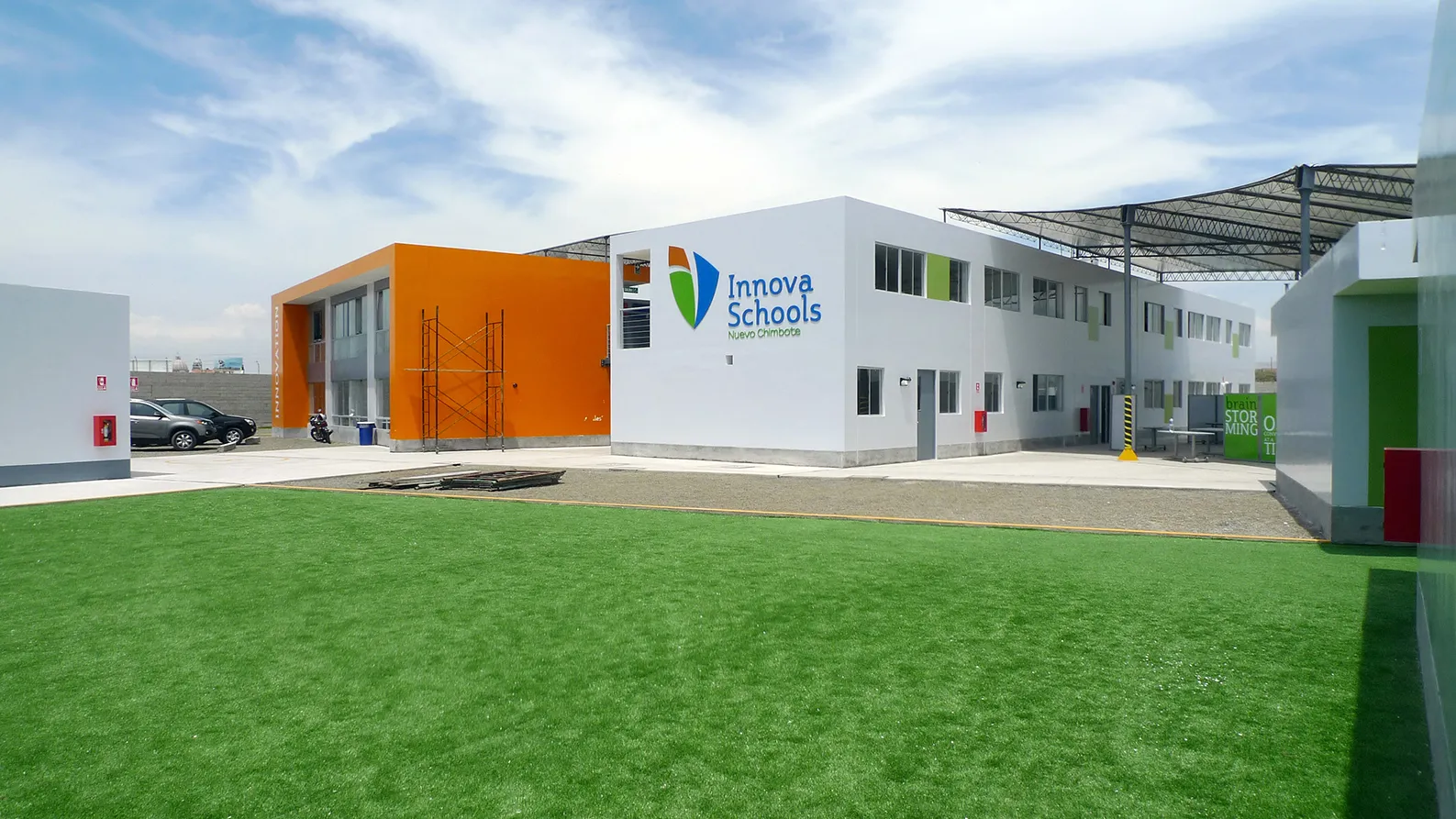

Designing a school system from the ground up
Scaling an entire network of schools for the growing Peruvian middle class.
How do you lift up the middle class in a developing country?
That was the challenge facing Peruvian entrepreneur Carlos Rodriguez-Pastor, who hired IDEO to build an entire network of schools powered by a progressive new learning model. IDEO’s mandate: to redesign Innova’s entire K–12 learning experience, from the curriculum to the teacher training to the school buildings, with an eye toward expansion and a goal to provide international-quality education at an affordable price—about $100 a month.
Innova Schools is a part of Intercorp, a family of 35 businesses that span everything from banks to retail stores and added schools to its portfolio. In 2010, the company had five existing schools but realized that its existing model could not grow. The shortage of well-trained, high-quality teachers in Peru, combined with rising land costs, meant the schools would need to radically change course to succeed.
To learn about scalable school models around the world, IDEO researchers visited inspirational schools and learning programs, and looked to analogous systems like retail, hospitality, and health care to understand their approaches to scale. Throughout the project, they collaborated with teachers, students, and the Innova Schools team in co-designing the work itself.
Together, Innova Schools and IDEO developed the curriculum, teaching strategies, buildings, operational plans, and underlying financial model to run the network of schools.
"I was blown away by Innova Schools," said Salman Khan, founder of Khan Academy. "It's inspiring to see such an affordable school deliver a quality of education that would rival schools in the richest countries."
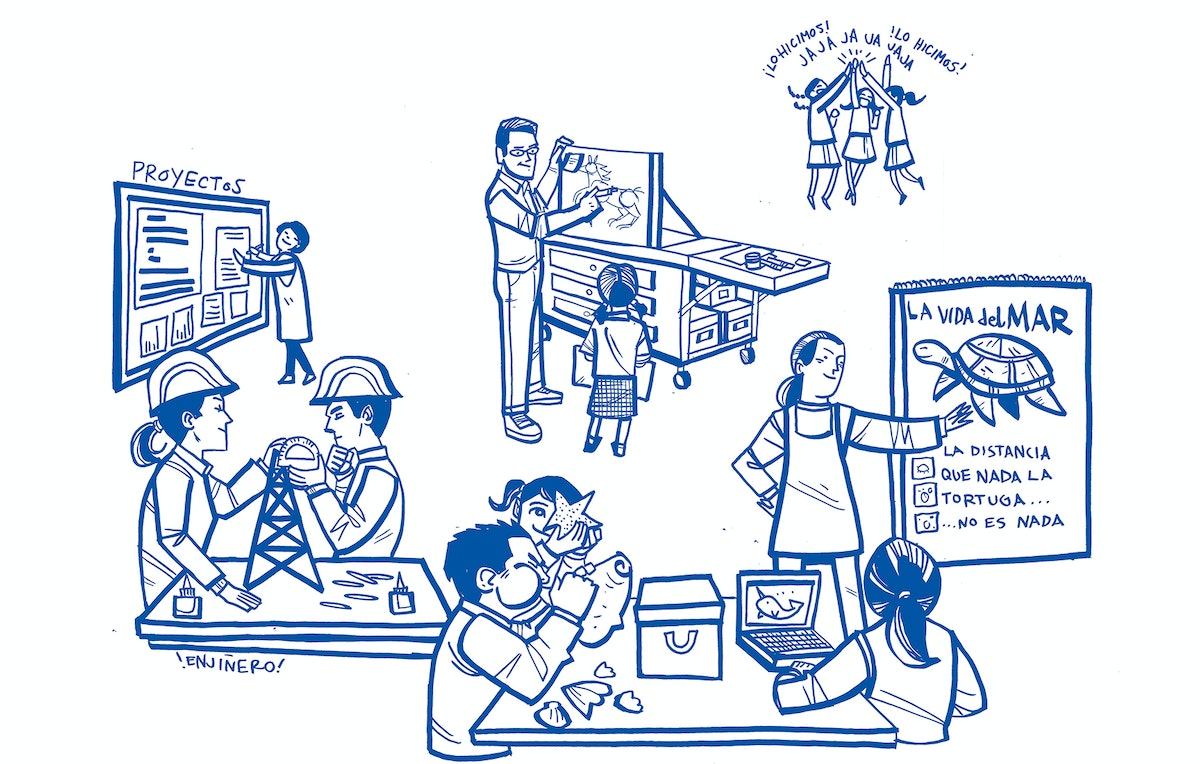
The new Innova Schools combine teacher-led, project-based learning in small groups with self-directed time using digital learning tools. Teachers monitor students’ work online and offer personalized guidance. Parents can view their children’s progress online as well.
Dynamic learning environments include community spaces, media labs, rooftop study areas, amphitheaters, and cafés that are optimized for flexibility: furniture on wheels, movable walls, and efficient uses of space to allow for different modes of learning.
An online Teacher Resource Center includes a database of more than 18,000 custom lesson plans based on a progressive new teaching approach. The center helps teachers learn their craft and gives them a chance to connect across the network.
The business model of Innova Schools was developed at the same time as the school experience. Designers leveraged the economies of scale that come from building a network of schools and centralized tools, such as data systems that allow all the schools to learn together.
The project has allowed Innova to open more schools at an affordable cost to families, ultimately giving more of Peru’s youth the chance to compete in the global economy. This comprehensive approach to system design ranks as one of Latin America’s most ambitious privately funded educational projects, and is on track to become the largest private school network in the region. To date, Innova has opened 63 schools in Peru that are serving more than 50,000 students.

A good system design doesn’t end with strategy. The work on Innova Schools also had a huge influence on the company, according to Rodriguez-Pastor. Through the creation of new roles and an aligned set of values, Innova’s central office has become a much more nimble and creative organization. They’re constantly scanning the world for inspiration in how to best educate their students, while building out the new innovations. They realize that design thinking can become an integrated part of their daily management of this growing network of schools.
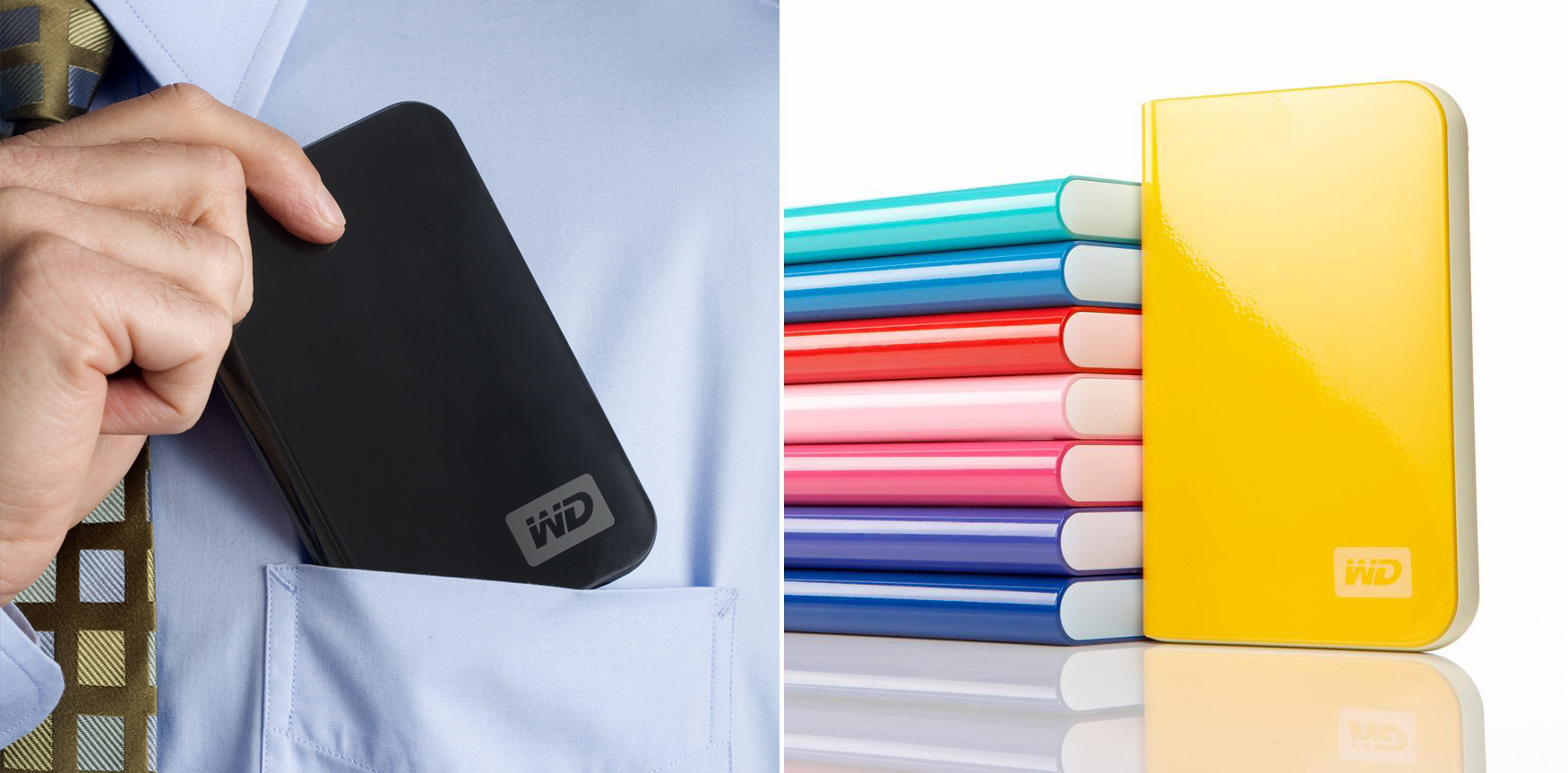
Designing a top-selling hard drive
Through a long-term collaboration, Western Digital and IDEO have created one of the world’s best-selling hard drives.
Western Digital, the leading provider of external digital-storage solutions and a pioneer in the field, and IDEO collaborated on a number of products that produced reliable, secure, high-performance hard drives for personal and professional use and have won numerous design awards.
The projects include:
- MyBook external hard drive: IDEO and Western collaborated to find a new design language for their external hard drive MyBook. In just six months, MyBook became the number-one hard drive in the Americas, and grew US market share by more than 50 percent.
- MyBook II: Looking to regain MyBook’s original number-one position in the hard drive market, IDEO and Western came together again to refresh the original design, finding ways to further differentiate the product and the brand, and winning a 2008 Spark Bronze Award.
- MyPassport: Western and IDEO designed the 320GB, ultra-portable USB-powered hard drive that appeals to the mobile user, which won both the 2008 IDEA Bronze Award from IDSA and BusinessWeek, and the 2009 iF Award.
- MyBook and MyPassport 3.0: Again, IDEO and Western collaborated on bringing the popular MyBook external hard drive to the next level in the hardware, the software, and the packaging. IDEO also created in-store merchandising, the graphics and information featured on product packaging (and the “out-of-box experience”).

Designing a city emergency plan
Helping cities prepare for emergencies with a resourceful toolkit.
The city of San Francisco wanted to help its people become better prepared in case of emergency. While no one feels totally prepared for a natural disaster, people who are most connected within a local network fare better in an emergency.
So the San Francisco Department of Emergency Management (SF DEM) and IDEO teamed up to create SF72, a revolutionary platform that helps to reach people where they are. In times of emergency, the city will need citizens to be self-supporting for 72 hours (or longer) before local services or outside help kicks in. With that in mind, IDEO developed an accessible platform to help people prepare for those 72 hours in simple ways that fit into their daily lives.
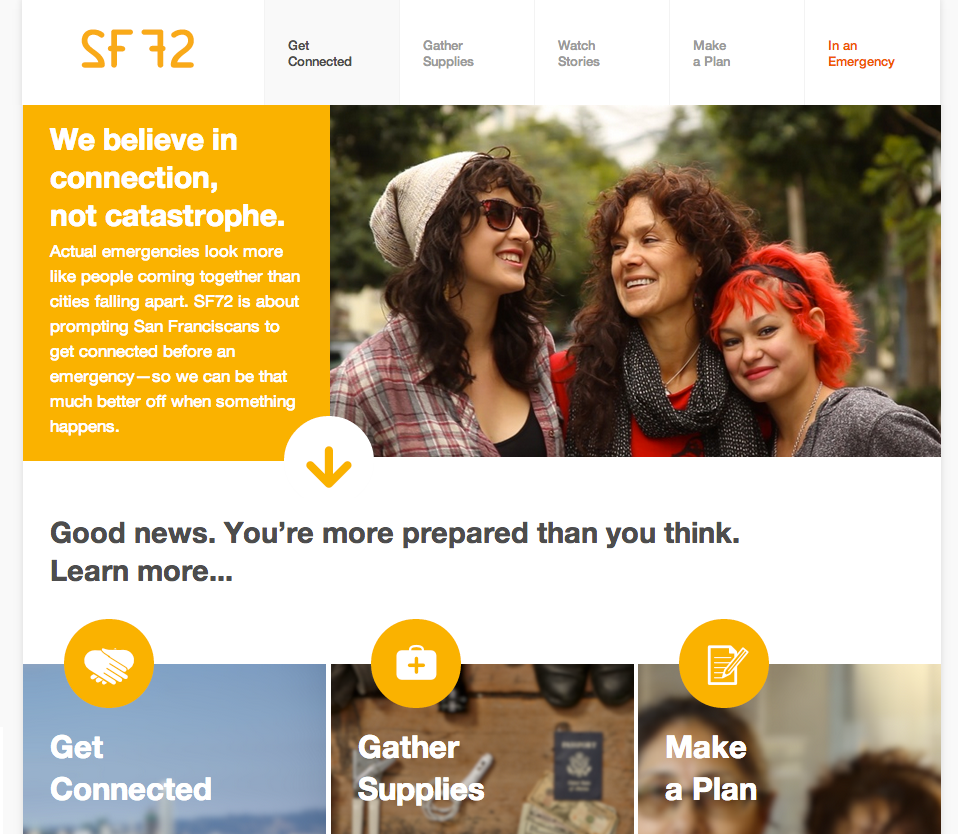
The SF72 website helps people with five important tasks: Get connected, gather supplies, watch stories, make a plan, and have access to an updated Google map. SF72’s content is hyperlocal, but IDEO and SF DEM also created an open-source toolkit for cities worldwide. From San Jose to Denver, other locales are using the simple toolkit to create a City72 platform of their own. Most recently, the city of Oakland collaborated with Code for America to develop its own platform. The City72 Toolkit enables SF72’s ethos of social connection for resilience to scale and grow—city by city.

Designing a global plan for disaster response
Creating a network that connects veterans across continents.
Team Rubicon, formed in 2010 as a response to the devastating earthquake in Haiti, is made up of former military veterans who swoop into help in times of disaster. The organization started with six vets in the US who were eager to transfer their battlefield readiness in to frontline relief efforts, and has grown to more than 28,000 volunteers across the world.
To explore its growing global effort and to shape the future of the organization’s venture, Team Rubicon approached IDEO for help. After an 11-week collaboration with government, military, and veteran groups, a vision for Team Rubicon Global emerged. Inspired by sources as diverse as TED and The Hell’s Angels, the three-tier model consisted of an anchor network to share best practices across the organization and two supporting platforms designed to help countries with varying capacity and needs.
Team Rubicon Global coordinated its first deployment in April 2015, when a quake struck Nepal, sending US and UK teams to double down on the rescue effort. According to Vince Moffit, Team Rubicon USA Incident Commander, that incident alone validated the network effect of IDEO’s work. “We couldn’t have done this without Team Rubicon UK,” he said.
And for the veterans who are part of Team Rubicon, the shared desire to serve—applying skills ideally suited for disaster response—creates a renewed sense of purpose, community, and leadership that helps reintegration to civilian life.
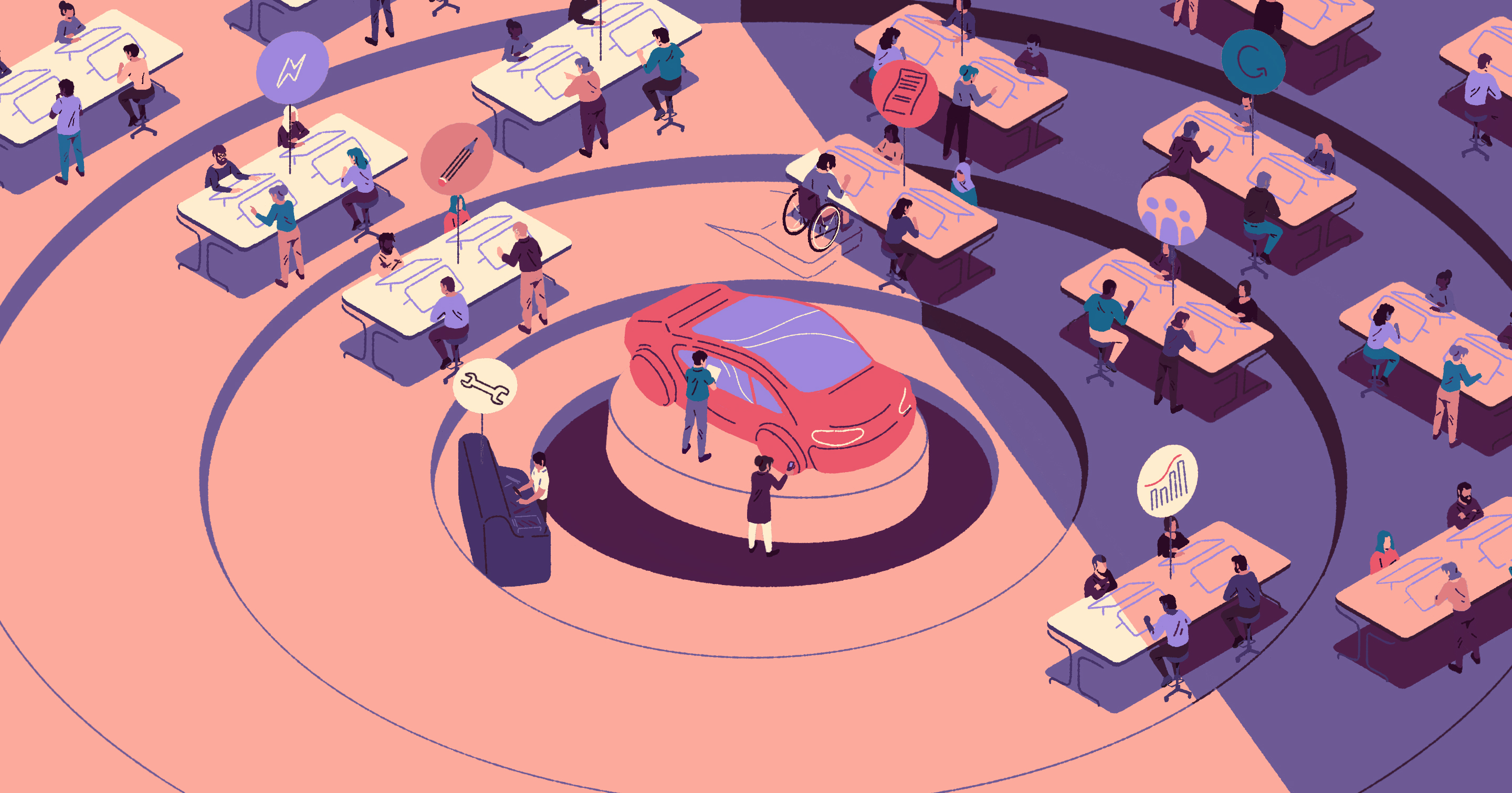
How design is driving Ford to reimagine what a car company can be
One of the world's earliest automakers is designing the future of transportation
On that day, they pulled us into a room that resembled a basketball court. Wide, open decks were marked by signs and little flags identifying team workspaces: Purchasing Boulevard, Operations Corridor, and Design Central. The walls of the space were adorned with customers stories, insights, and frameworks that had been collected during design research and now pointed toward new opportunities. At the center of the room sat a new kind of prototype of a vehicle, which had been the focus of a startup-style development team made up of members of purchasing, HR, legal, design, accounting and more. The process of creating the low-fidelity prototype had been entirely new for this cross-functional team—defined by collaboration and experimentation—but the prototype that now appeared before us proved the value of their approach.
This was just one of dozens of war-rooms now filling the buildings of Ford's Dearborn campus, and also in Ford’s campuses around the world. This new kind of problem solving and rapid prototyping were new to the greater Ford team. And while the IDEO team had been alongside Ford through many projects, we had not touched this prototype.
When developing a new vehicle, defining the concept is a significant investment in time and resources. Using this approach, the team achieved a massive reduction in design development time, in turn reducing cost to the company and accelerating the time to market. It was a light-bulb moment for us. We suddenly saw that a comprehensive organizational change was in motion here—design thinking now lived in Ford’s DNA and they were taking it forward.
Over many years of deep collaboration with designers at Ford, we’ve worked primarily on specific projects or initiatives, all the while broadening our points of connection within the company. Early on, the IDEO team functioned like a pirate brigade on the edge of the business, with a mandate to run fast and break the rules—but you can’t scale that up.
Where scale has been achieved is in the aggregate, as numerous individual projects have exposed more and more members of Ford to the power of human-centered design. Although we did not do the work to create some of the vehicle prototypes we viewed that spring day, our deep collaboration with Ford over many years has helped enable the organization to shift its way of working, and that may be the greatest and most lasting success of our partnership. Together, we’ve moved with Ford toward the precipice of becoming a new kind of company, suited to lead not just auto manufacturing, but a radical revolution in mobility.
Mapping the entire span of our time with Ford, it’s clear that the way we’ve been working is its own kind of strategy. Design thinking has been permeating the organization system-wide, often spearheaded by inspired employees eager to explore new ways of working. At its best, design enables people to tackle complex, systemic challenges. Within a large organization, the work isn’t so much about applying a process, but helping the company itself improve its resilience and uptake of new ideas. We can push the edge by asking tough questions about what people—the customers or users of their products and services—really want, and figuring out what needs to change in order to fulfill those desires.
That unifying anchor point during this shift has been Jim Hackett, who took over as Ford’s CEO in 2017. Hackett came from Steelcase, a world-class furniture company that has been instrumental in applying design to shape the future of work. It was at Steelcase where Hackett first worked with IDEO, and through that collaboration cultivated an approach to business that put the customer at the center, evolving the company from simply a furniture manufacturer to a hub of leadership in the changing workplace landscape. When he came to Ford, he brought this human-centered approach with him.
The whole purpose of a business, ultimately, is to meet a customer’s need. Many legacy businesses that have been operating decades or centuries find themselves with very established business models. They know how to make money through those methods. But the consequence of entrenched models is that everything drives toward efficiencies and returns. If you live in that mode, you lose your customer. It’s easy to say legacy companies need to change the lens through which they’re viewing and operating their business; it is everything to get it done well.
During his tenure, Hackett has built an ecosystem that enables design to spread from the core innovation teams out to all corners of the more than 190,000-person organization. Creating change is about convincing networks of people to make different choices, which means unconvincing them of their current behaviors and helping seed the potential of doing things differently. By helping them align in new ways around ideas, they gain the bravery to make choices that may not be supported by their corporate or cultural DNA.
In an effort to be more intentional and comprehensive with this diffusion of ideas, Ford is moving forward with two primary initiatives: First, a global design lab network called D-Ford, with teams around the world focusing not on products, but on customers. And second, a robust, enterprise-wide learning program to give everyone at Ford access to the design tools and skill sets that the collaborative team of Ford and IDEO spent years refining together. With these two efforts in operation, design thinking can be disseminated from the inside out, spreading throughout the organization.
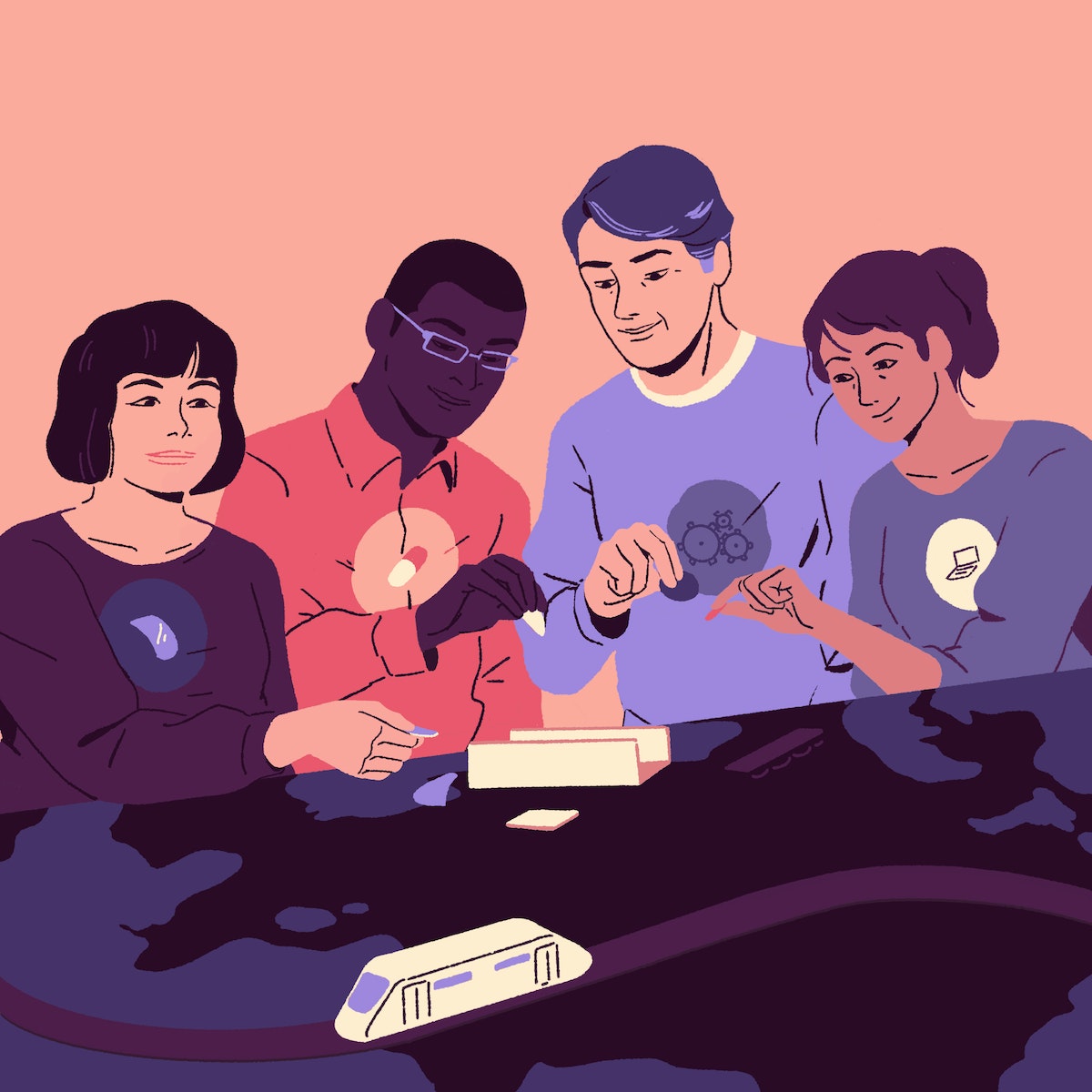
Ford’s global innovation labs represent the design-intensive core of the company. The D-Ford studios are housed in Detroit, London, Palo Alto, and Shanghai. In each, a nimble group of design practitioners gets their hands dirty iterating, fixing, and prototyping possibilities for the next era of mobility.
To be human-centered doesn’t just mean to put humans at the center of the design problem, but to put humans at the center of the design solution and empower them in different ways. The D-Ford Labs, and the associated learning program, are creating a radically new way of working that is accelerating Ford's evolution. It's not IDEO, it's not Ford, it's a third way.
Outside of these hands-on labs, the uptake of design thinking is more variable and sometimes controversial. Thousands of employees cross paths with the small group of radical experimenters so transformation happens more slowly. Communicating the value of design in this broad population requires moving from provocation to persuasion and proof, demonstrating how much leverage design can provide in solving problems that have seemed intractable through more conventional approaches.
Design requires being on the ground with the people who will use and experience any new offerings from Ford, but it also means reaching across aisles and opening dialogues where previously deep, daily collaboration has been unheard of.
This never would have happened had they not felt invited into the room to help with the design. Having cross-functional teams from engineering, design, purchasing and more, has been a breakthrough, because they gain empathy and respect for each other’s practices and work together, rather than sitting in silos that tend to block each other’s effort.
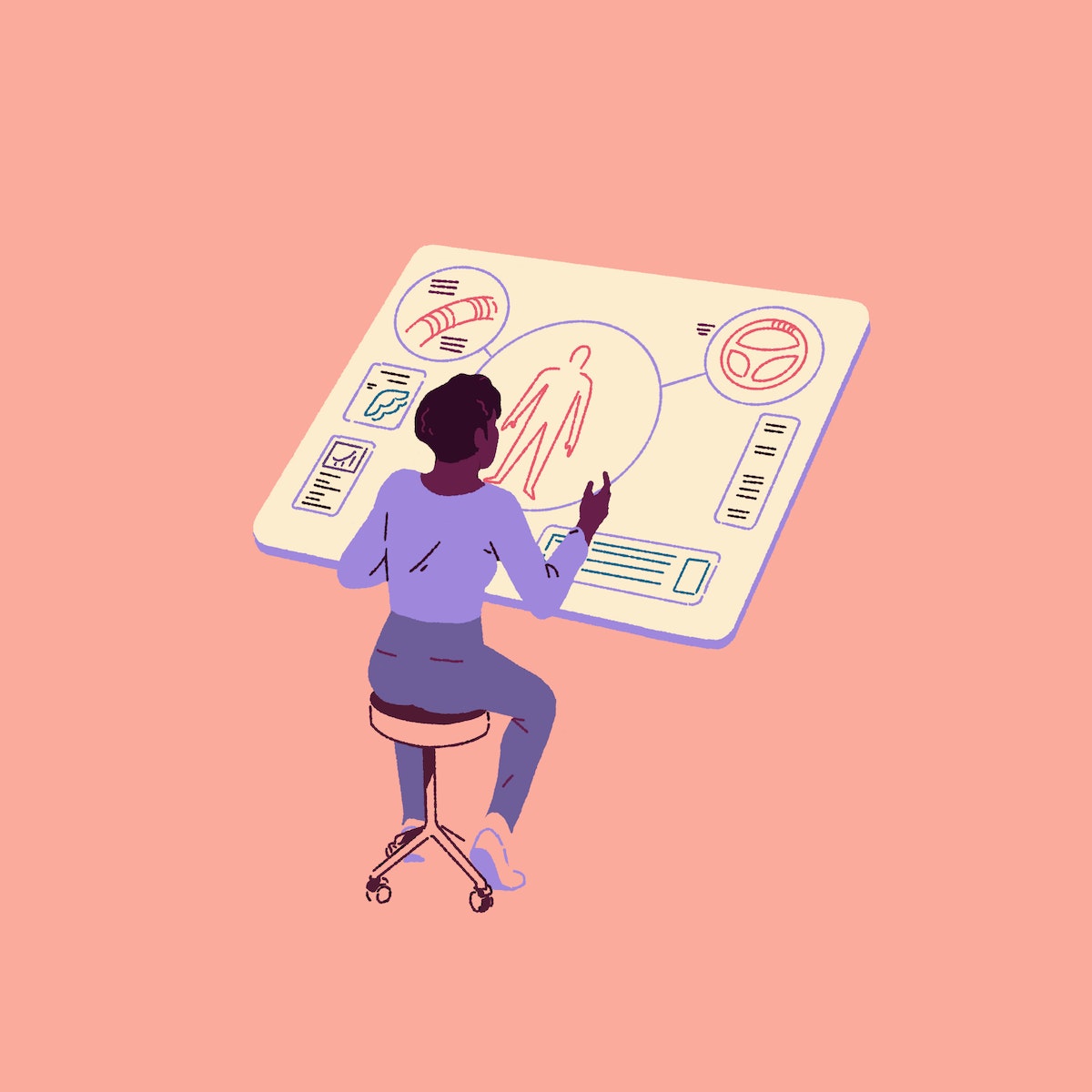
Perhaps one of the clearest proof points for Ford’s new way of working is the groundbreaking, all-electric SUV Mustang Mach-E, which was unveiled in Los Angeles late last month. The Mustang Mach-E came to life just a few blocks away from Henry Ford’s first factory in Detroit, through a development process grounded in human-centered design, concentrated entirely on customer needs and desires.
The development team, called Team Edison, was made up of broad expertise, including members leading the design, charging strategy, infotainment, and marketing of electric vehicles. Thanks to the company-wide shift toward human-centered design, Team Edison was truly able to exercise creative license and operate in a different way. The Mustang Mach-E represents change not only within Ford, but worldwide. Customer outlooks and desires are evolving, and by listening to what’s true for their user, the team created a vehicle that aligns with the changing world.
While this new mindset is thriving within the walls of the labs, it’s a feat to communicate the nuance and potential of human-centered design to parts of Ford where design itself isn’t necessarily top of mind. Across every level and department, the principles can apply, but putting them in context matters. In order to activate that deeper saturation, Ford has developed an internal learning program that guides employees through the different phases of design thinking. From teams assembling child safety seats in Nanjing, to a Dearborn group researching the nighttime patterns of taxi drivers, to sales representatives in London, Design Thinking at Ford unifies people across the organization around the mission of putting humans at the center of their work.
The learning tools and experience are available to anyone at Ford who wants to better understand design. Practical tools include methods cards that can be applied at intervals in the development process, and videos illustrating how design thinking has come to life at Ford in the past.
Ford believes that all of its employees will benefit from a human-centered perspective, and is making progress in its enterprise-wide effort to create a unique, design-led creative culture.
One of the most exciting aspects of the early learning about design is realizing just how many areas it encompasses. From making autonomous rideshare vehicles to designing an ecosystem of connected services around sustainable transit, human-centered design in particular enables individuals to rethink how they go about their lives and how they look at the world around them.
As a designer, I was always taught it’s valuable to be able to say, I designed that—it’s on a shelf somewhere. Now we’re getting to a moment when it’s more valuable to create impact and influence rather than an object in space. We’re beginning to see new ways to measure impact, and better ways to affect change.
If you teach people to question what they do, and to collaborate and take cues from others with diverse skills, they will learn to change on their own, and the company will follow suit. This is how large-scale transformation happens. This radically different approach is what will determine the future of Ford.
Illustrations by Johan Papin
On a warm spring day in Dearborn, Michigan, where Ford Motor Company has its world headquarters, our team met up with some of Ford’s senior leadership. It’s a visit we’ve made regularly during the 15 years IDEO has worked with the century-old carmaker.

4 Reasons Warm-Ups Will Fundamentally Change Your Work
Because warm-ups are so much more than awkward icebreakers
Did you just cringe? Perhaps your nostrils flared in suspicion. I’m at the far end of the extroverted spectrum and even I have on that grimace.
I’m here to talk to you about creative warm-ups, and to once and for all distinguish them from their brash, single-toned—that tone being forced, high-energy social interaction—cousin: the dreaded icebreaker.
But first, a brief interlude for sports. If you have played or watched any sport on the planet, you know that athletes do not run straight onto the field, into the pool, or out on the court. (If they did that, their game would be garbage and they'd likely pull a hammy.)
Athletes always warm up, and I’d argue that if you were to take one thing from the world of sports to use in your everyday work, it’s this: warm-ups are the thing that can radically change your game.
But if they’re not uncomfortable team cheers or cringe-worthy partner games, what are they?
Warm-ups are a critical part of the collaborative design process. They're a strategic way to set individuals, the team, and the work up for success. And if you do them consistently, you'll build your team’s awareness muscles. You'll become more self-reflective, tuned-in, empathetic, and intentional about the work you are setting out to do.
Here are 4 reasons I believe every collaborative work session needs one.
1. They build psychological safety
Warm-ups can create space to show our humanity. Instead of diving straight into the work, take three minutes to go around the room and check-in with the question: “On a scale of 1-5, how is everyone doing today?” In doing this, we acknowledge that we are not business-people-robots, but are instead complex humans with emotions. Moments of vulnerability help build a foundation of trust, especially when modeled by those with seniority.

Though it may seem trivial, asking people to start off a session by sketching, then sharing a place they loved to play as a child invites everyone to put their voice into the room in a way untethered to expertise or authority. A first contribution is often the hardest, particularly for people farther down the power hierarchy. If you actually want everyone there to collaborate, create a safe invitation for them to participate.
Small moments where you make space for people to bring their real and unique selves to work add up. They build a sense of safety that will allow your team to take risks, challenge the status quo, and propose new ideas.
2. They help you get into the specific mindset the work needs
Ever had someone walk into your meeting in a crappy mood and subsequently prevent your entire team from getting down to business? Everyone is coming from someplace different, whether that’s a stressful one-on-one, a heads-down working session, or a two-hour European lunch.
Take the time to design a transition into the new mindset your work requires. It could be as simple as giving people two minutes to write the to-do list that’s clogging up their brainspace, then putting those Post-its outside the room. Mode switching is hard!

Don't forget to consider not just where people are coming from, but where you want them to go to. The mental place your team needs to be in for a synthesis session (perhaps pattern-finding or decision-making) is totally different than for an ideation jam (maybe pattern-breaking or generating). Think critically about what specific mindsets the work you are embarking on needs.
If you need folks to compromise and build together, have everyone draw an ambiguous squiggle on a Post-it, then pass their drawing to the right; turn that new squiggle into something, then pass each squiggle once more; and have the final person give the squiggle a provocative title and share it with the group.
Getting the right muscles firing up front will grease the gears, and you’ll find your team will be able to go farther faster.
3. They help you practice critical skills
Warm-ups are also a means for you to tangibly grow the core skills you need for your work. When you start a meeting with a three-minute brainstorm on the slimiest, bumpiest, or most laughter-inducing things you can think of, you’re creating a place for people to practice diverging in a low-risk way. If you try having everyone stand at the same spot at the window, each pointing out something they have never noticed before, you’re having them flex the skill of looking at something familiar with fresh eyes.
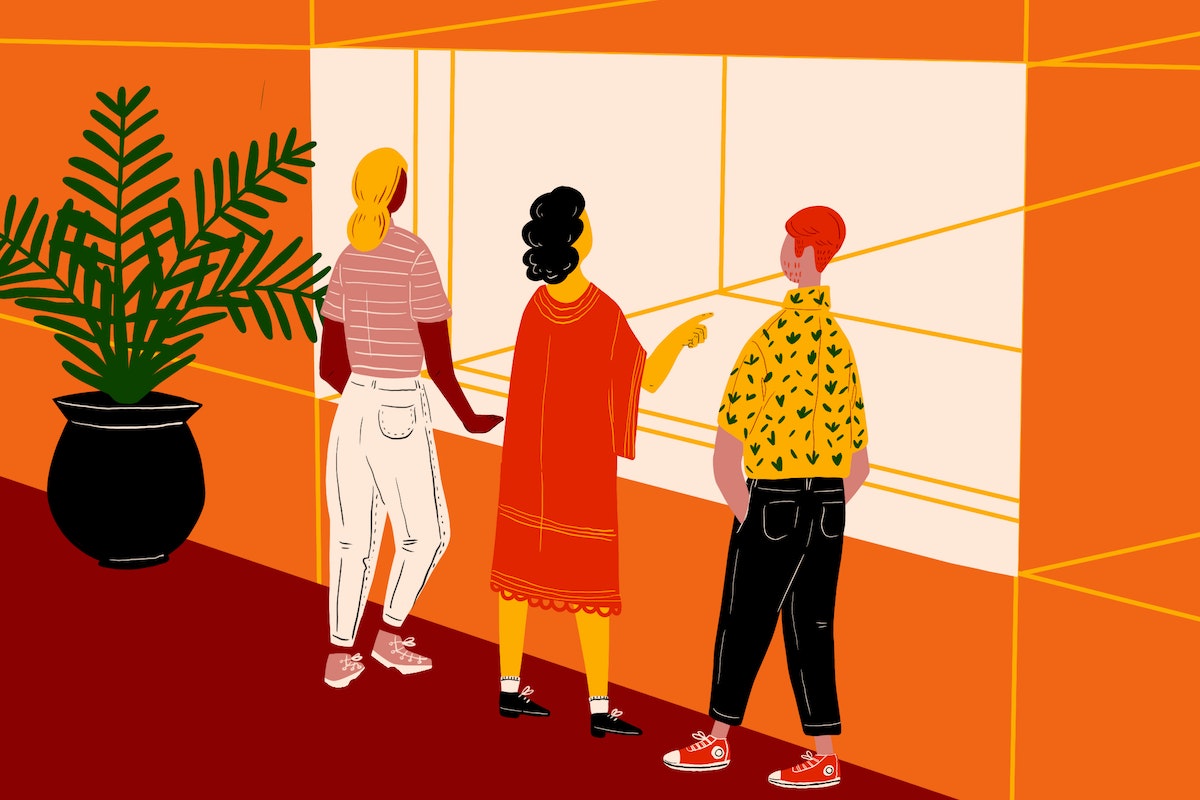
Working on these skills in a context not tethered directly to business outcomes builds creative confidence. It makes space for folks to grow through trying, flailing, or failing without pressure. When the time comes for them to apply these skills to the work at hand, they will have already built the muscle memory.
4. There's power in starting from a shared experience
The start of a meeting is mission-critical. As an experience designer, I know that it’s impossible (and not actually worth it) to design every moment to perfection. Rather, I focus on the few that really matter, like the beginning.
A warm-up is a way for your team to all start on the same page. If you set off on the wrong foot—or don’t set off at all, leaving everyone wandering whatever alternate plane they were on before your meeting started—you’re not going to get far.
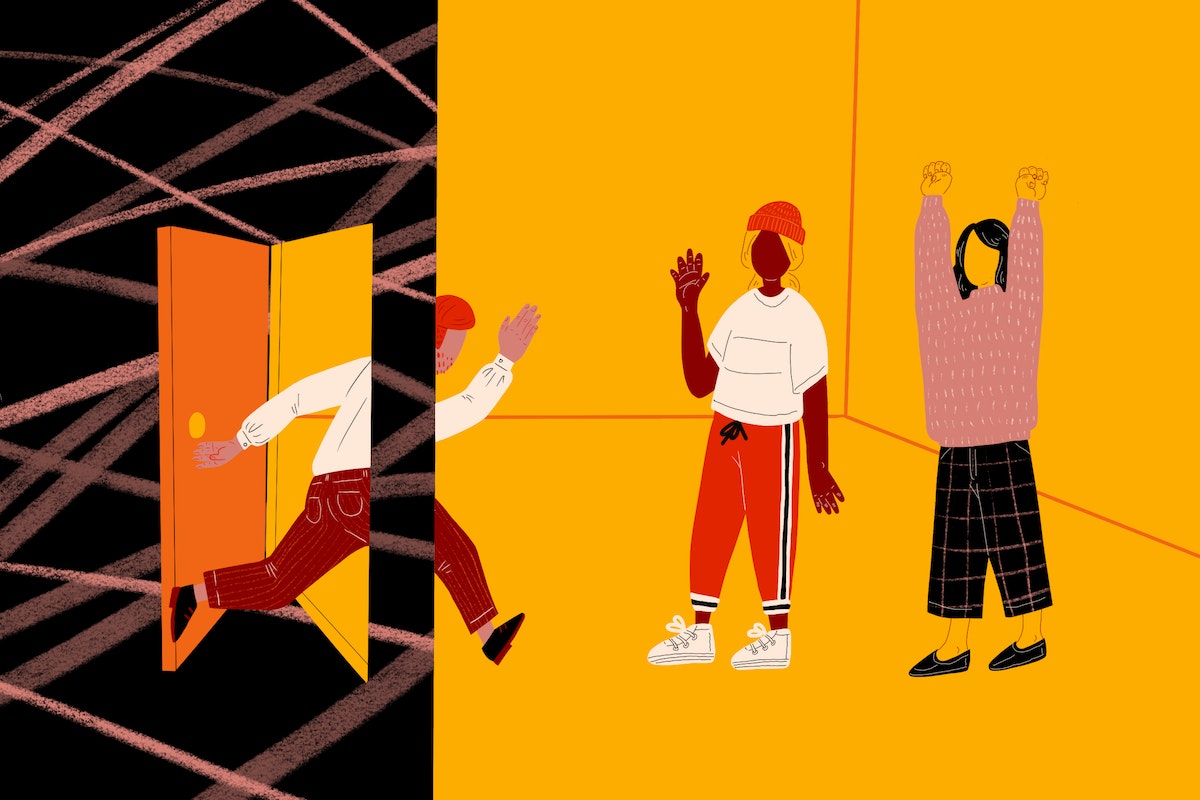
This is especially true for a team where there is currently tension. Designing a human moment that everyone can share will help people start the work at hand with a common understanding. Having each person describe one thing that brought them joy this week can shift the dynamic and set the team up to think collaboratively rather than combatively.
Warm-ups are a breath—a moment to pause in days spent running continuously from list to thing to email. They help us create the necessary space to check-in with ourselves and each other, leave the unnecessary outside the door, and invite in the things we actually want.
Can warm-ups really do all these things? Yes, they can. But they're not a one-size-fits-all solution. You have to be intentional in how you use them.
Let's go back to sports. What can we learn? You have to warm up slowly—jog before you sprint. You have to warm up specific muscle groups—shot putters and synchronized swimmers don’t warm up the same way. And lastly, you warm up together as a team.
When you make it a ritual that every meeting starts with a warm-up, your team will come to expect one, start to feel like they need one, and eventually take shared ownership in leading them. All because they have built the habit of asking what they, as individuals and a collective, need in order to shine.
Stay tuned for upcoming blog posts on warm-ups for all your needs (like when anxieties are high, the 3pm slump hits, your team needs a laugh, or you are diving into convergence).
Imagine yourself at a conference, team-building event, or bar mitzvah. The person at the front of the room claps their hands gleefully and announces they’re going to lead an icebreaker.

Resilience in Uncertain Times: Insights From Global Leaders
We asked global leaders what keeps them up at night. This is what they said.
IDEO’s global client and partner network gives us a unique view into how organizations are responding to rapid change. Recently, we decided to ask our clients what problems are keeping them up at night, and what promising solutions keep them leading with optimism.
We reached out to 55 global business leaders spanning 25 cities and 18+ industries. What we heard is that while uncertainty isn’t new, there have never been so many compounding causes for concern. A decade ago, it was easy to see what triggered the recession. Now, volatility surrounds us—in politics, markets, regulations, the environment, and society at large.
Leaders cited increasingly complex consumer expectations and interactions. They pointed out tension between fueling growth and tightening belts, and pressure to sustain their core businesses while spinning up new growth horizons. And they noted growing difficulty attracting and retaining the right talent.
Leaders agree that growth is still the primary business objective, but increasingly understand that the methods and mindsets to achieve growth have changed. In particular, it’s becoming more important and impactful to consider people—customers, employees, shareholders, and stakeholders—when making business decisions. A human-centered approach to strategy and innovation makes it possible to turn obstacles into opportunities.
How do leaders become more human-centered? By looking both inward and outward to identify the needs and conditions that drive innovation. Inwardly, it’s about evolving leadership qualities to encompass a combination of creativity, strategy, technology, and soft skills. Outwardly, it means testing tangible solutions with customers to inform execution and scale.
These shifts can unlock trapped value, fuel growth, and build trust and loyalty.
Our research identified six key tensions leaders face now. While tension can create stress, it can also—when approached thoughtfully—enable sustained balance between opposing priorities. In our client network, we see numerous examples of inspirational leaders and organizations learning to strike that balance, and in turn finding a new way forward that leads to profitable business growth.
1. Improving efficiencies while exploring new growth opportunities
In 2014, The Times and The Sunday Times worked with IDEO to define and design a new digital publishing strategy. The decision to move to four editions a day—and stop competing with round-the-clock breaking news—freed up tremendous resources to focus on big stories, and balance efficiencies with growth. Since moving to online editions in 2016, subscriptions are up 15% (April 2018) in a market where most content is free.
2. Balancing the needs of shareholders and stakeholders
Intercorp is a Peruvian conglomerate whose strategy focuses on providing Peru’s growing middle class with high quality and accessible healthcare services, competitive education, and financial service offers. In 2010, IDEO started working with Intercorp to design and launch Innova, a low-cost, for-profit education model built on the needs of families and aiming to make Peru an education leader in Latin America. Innova has become a successful business that investors are confident to back and scale. Innova has opened 63 schools in Peru, which will serve 52,000 students by 2020. They also recently opened the first Innova school in Mexico, welcoming 1100 students, and plan to open three more schools in 2020.
3. Rethinking data collection to unlock actionable insight
Ascensia Diabetes Care, a global healthcare company, has been a leader in diabetes treatment for over 70 years. In 2017, Ascensia set its sights on moving the company beyond producing blood glucose metering devices, to become a comprehensive health support provider for people living with diabetes. IDEO’s team worked with Ascensia to leverage real-time data from people with diabetes to identify behavior patterns, then share that information on demand with certified diabetes educators (CDEs). The team used the insights from the data to prototype various ways of connecting those health educators to people with diabetes, ultimately enabling a different kind of patient-provider interaction through live remote support and a suite of digital tools.
4. Approaching talent acquisition as a strategic venture
In order to future-proof its business, Mitsui & Co., one of Japan’s largest investment and trading firms, believes that they need to build greater internal capabilities to start and launch new businesses of their own, instead of relying purely on their trading investments. To that end, they have partnered with IDEO to create Moon Creative Lab, an innovation hub aiming not only to launch new ventures but also to develop entrepreneurial talent and capabilities as a strategic asset for Mitsui’s future. IDEO is working with Mitsui to attract, hire, and onboard new talent with skills and backgrounds radically different from that of the parent organization.
5. Investing in culture to build purpose and values
Leaders at Europe’s largest online fashion retailer, Zalando, recognized that staying competitive would not just require new offers, but new ways of working internally. IDEO partnered with Zalando to rally teams around a renewed corporate purpose, to deliver a best-in-class fashion experience, generating a greater sense of engagement and pride in the company culture. Zalando has since become a European success story that has sustained a high level of growth. The number of active customers grew by more than 15% year over year as of August 2019.
6. Refocusing leadership from individual experts to collaborative teams
Ford has spent nearly 15 years steering its global enterprise toward design-led innovation. By integrating teams to include diverse expertise and setting up dedicated innovation labs, the company has reduced both time and money spent on new product development while becoming a leading player in future mobility solutions.
Outside of the corporate context, there is a need for learning and development programs that can teach these new leadership approaches. IDEO and Tsinghua University, an esteemed Chinese academic institution, have created a year-long program to guide and support executives who aspire to transform China’s economy. The goal is to cultivate a generation of collaborative, creative, and purpose-driven leaders, enabling the country’s transformation from “Made in China” to “Created in China.”
Special thanks to a global team of IDEO collaborators including Charles Hayes (Shanghai), Michael Hendrix (Cambridge), and Madison Mount (San Francisco).
Illustration by Tynan Collins
With so many global challenges converging at once, businesses face unprecedented tension between present demands and future goals. Smart business leaders are formulating responses that will fortify their resilience and sustain growth. But many are also losing sleep over the monumental task of navigating through ambiguity in order to successfully adapt and thrive.

3 Rules for Making a Government Site Work for the People
The state of Georgia proves it can be done
Inspired by the recent overhauls of government sites like gov.uk and boston.gov, Georgia tapped IDEO to explore how it could give more than 80 state agencies flexibility in the look and feel of their websites, while also preserving a uniform branding experience that residents could recognize and trust.
To get acquainted with the state, we took a road trip, wandering around the historic streets of Savannah, getting to know the resilient spirit of Macon, and soaking up the innovative energy of Atlanta. We learned a lot about what Georgians would like from their government, and took a strong look at how the look, feel, and content of a digital experience might impact delivery of services. But we also learned a lot about the difficulties of accessing—and providing—government services. Soon, we realized that this project could be more than just an identity exercise.
The state of Georgia’s population has grown 25 percent over the past decade while the size of its government has decreased by 25 percent. These diverging trends have put a strain on government staff, adding even more pressure to the promises of efficiency that come with civic tech. The transition to digital delivery is not easy, and governments around the world are working to define digital best practices. Because the work is still in progress, service delivery is a serious challenge. Our project wasn’t just about identity, but about how changes in CSS, information, and color schemes could fix the concerns residents had about trust and access to information and services.
During our journey through Georgia, residents told us they felt that government was removed from their lives, monolithic, opaque, and solemn. While it plays a necessary and—in some cases—critical role in their lives, their relationship to it was transactional. Armed with that feedback, our goal was to leverage Georgia.gov to make that relationship feel more collaborative from both a functional and emotional perspective. Thanks to conversations with many people from the great state of Georgia, we synthesized the shortcomings of government websites, explored the needs of the people, and came up with a list of three rules for anyone looking to create a better digital link between a government and its people.
1. Empower users to make an impact
When there are limits to what government can do, give constituents a clear role in how they can work with government to solve problems together. In our research, we chatted with civic technology expert Cliff Lampe, a professor at the University of Michigan School of Information Studies. In one project, Professor Lampe and his students developed a technology that allowed residents to flag the presence of rats in their neighborhoods. Though the technology empowered residents to report health and safety issues, the staff in Ferndale, Michigan didn’t actually have the capacity to keep up with them. They started replying to requests for support with information about what residents could do to help mitigate the rat population, like getting rid of clutter in the backyard or keeping pet food inside. Instead of ignoring work it couldn’t get to, the government brought the people into a collaborative relationship, so that they could fight the rodent population together.
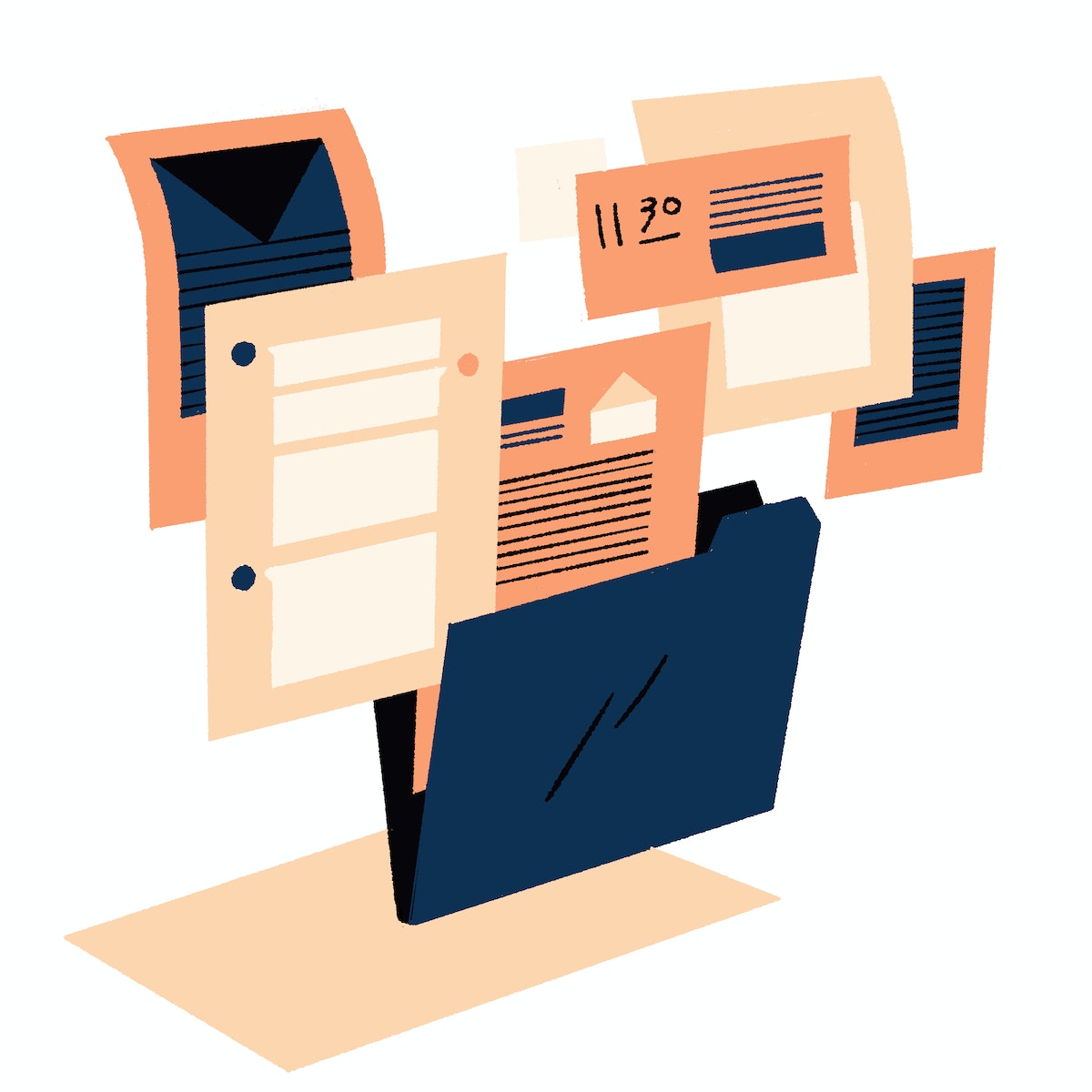
2. Leverage UI to let residents know that government is on their side
People on both sides of the conversation called interacting with the government “a necessary pain.” Government staff recognize that if you’re coming to a website to pay taxes, you’re probably not in the greatest mood. Residents often mentioned that the look and feel of the websites didn’t give them the sense that they were welcome to reach out and call agency staff for help.
Our testing of early prototypes revealed that shifts in language and color schemes could change how both government staff and residents felt about their experiences. When we changed the color scheme from a traditional red, white, and blue to more approachable and ownable peaches and greens, residents used words like “warm” and “welcoming” to describe the look and feel. Adding language that invites people to call if they needed help also lead to a much better reception.
One resident told us that these changes gave her the feeling that the government services actually wanted to help her, rather than giving a feeling of what in the past felt like reluctant support.
3. Give constituents insider knowledge
When we visited Atlanta, we spoke to Tara, a program manager at a nonprofit that connects low-income individuals to state financial and educational resources. As an intermediary, Tara knows that state workers are stretched thin, so she advises her clients to do what they can to help move the process along. To this end, she has developed a series of strategies that make the process a little bit easier for everyone involved. Tara, like other superuser intermediaries we spoke to, relies on these strategies to empower herself in her work, helping to move the process along more efficiently.
Sharing tips on how to best navigate the application process brings residents into a collaborative relationship with agency staff, helping them understand obstacles and needs. Some of the tips that Tara shares with her clients include scheduling periodic check-in times to get updates on applications, keeping a file on previous conversations, and having key information on hand before making a call. Following her example, we provided step-by-step application instructions as well as advice from agency staff. Articulating these strategies on the agency website allows constituents to have smoother and more efficient conversations with agency staff without doing a deep dive overhaul of the service model.
Supporting collaboration between government and constituents doesn’t have to mean an overhaul of services. You can make things better with seemingly surface-level changes, like changes to tone, color schemes, and the way information is shared. Though they may appear to be band-aid fixes compared to solving larger systemic challenges, they really can change the way people see and experience their relationship with the government.
Special thanks to the residents of Georgia who shared their experiences with us, and to the IDEO design team of Tom Kershaw, Lindsey Turner, and Emma Baker that shared in this journey. See the state of Georgia's new website at pilot.georgia.gov.
Illustrations by Matteo Berton
There’s a reason government sites don’t have a reputation for great user experiences. They rarely have the budget or staffing even for digital updates, much less innovation. But the state of Georgia wanted to change that.

Lindsey Turner
I’m passionate about building brands, products, and experiences that help organizations show up with meaning and momentum.
I help organizations cut through complexity by shaping how they show up, through brand strategy, identity, and storytelling.
Working at the intersection of brand and business, I bring an editorial eye and a bias toward making—turning ideas into tangible experiences that people can understand, trust, and believe in.
My work spans government, healthcare, financial services, media, and consumer goods, from launching Gen Z-focused ventures to building innovation labs and reimagining legacy brands. I relish moments of ambiguity and enjoy translating across teams, perspectives, and priorities to move ideas forward.
I started my career in editorial and digital design, shaping cross-platform experiences and identity systems in publishing and agency environments. That foundation still shapes how I work today: I’m detail-oriented, collaborative, and overreliant on the Oxford comma. I hold a BFA in Visual Communication from the School of the Art Institute of Chicago.

Rachel Young
My work helps organizations see who their products aren't working for—and build the will and the tools to do something about it
For 25 years, I've asked the same question: Who does this design exclude—and what are we going to do about it?
My work spans human-centered strategy, inclusive design, and qualitative research, with clients ranging from Microsoft, Google, and Verizon to the National Science Foundation, and San Francisco Unified School District.
Before IDEO, I taught elementary school in East Palo Alto and spent a decade doing design work with social service organizations—where I learned firsthand what it costs people when systems are built without them in mind.
I am currently writing User Error, a nonfiction book about digital access and the design decisions behind it. I live in Oakland, California.

Brian Pelsoh
I lead with craft, ensuring our work is creatively excellent: rooted in deep human insight and imagination, while also grounded in the realities of business and technology.
My expertise spans brand, communication, and product design across tech, education, the arts, and social impact.
I believe great work demands both high-level vision and obsessive attention to detail, and only happens through collaboration.
I bring an inclusive, hands-on approach and a deep understanding of business, which enables me to consistently deliver excellence while always asking why.
Before joining IDEO, I worked at the brand firms Pentagram and VSA Partners. I began my career as a designer, leading teams at the School of the Art Institute of Chicago and the Milwaukee Art Museum. I hold an MFA in graphic design from Maryland Institute College of Art and a BFA in communication design from the Milwaukee Institute of Art & Design, and have taught at some of the best design schools in the US.

Tony Wong
I am responsible for IDEO’s long-term success in China and working with clients to use design as a tool to enable growth.
I am responsible for IDEO’s long-term success in China and working with clients to use design as a tool to enable growth. Specifically, I have helped Chinese companies design holistic brand solutions through the development of their products, communication, services, and innovation teams, and I have helped multinationals expand their presence and influence in China.
I advise global leaders on developing China-led innovation and capabilities.
In over 15 years in IDEO Shanghai, I have worked on projects that use design to elevate the quality of the experience of healthcare products and services, streamline processes that increase productivity, create spaces and programs that promote and enable inclusive communities, and build next generation mobility solutions that are planet-positive.
Before joining IDEO, I worked at Philips Electronics and the Electrolux Group in Italy, the Netherlands, and Singapore on a number of breakthrough commercial products. I am a member of the Young President Organization in Shanghai.

How to use AI as an editor, not a writer
Ed White shares how he uses AI as an editor—not a writer—to sharpen storytelling, rehearse ideas, and preserve the productive friction that makes creative work better.
Ed White has a rule he's tested on his own writing: hold yourself as the writer, and let AI be your editor. Ed is a Senior Design Director at IDEO's London studio, where he co-leads the firm's AI portfolio across Europe. Before IDEO, he spent 12 years as a writer and editor at the Financial Times, Wired, and Contagious. So when he talks about when to use AI for storytelling and when not to, it comes from two decades of crafting his storytelling skills.
In this episode, Mina Seetharaman talks with Ed about two specific tools he uses to keep AI in an editor's seat: a "roasting agent" prompted to critique his drafts without any sugarcoating, and a simulated audience he rehearses pitches on before the real thing. They also get into what Ed is hearing from design leaders at Anthropic, Lovable, Shopify, and Google Creative Lab about how creative work is changing, and why he thinks the friction of writing something yourself is worth protecting rather than automating away.

Building a personal AI for the messiness of life: Sida Li
Becca Carroll talks with Cue co-founder Sida Li about designing a personal AI for the messiness of everyday life—not just work. They explore how Sida stays anchored to human needs while navigating fast-changing technology, product tradeoffs, business-model experimentation, and the realities of building an AI company today.
Most AI products today are built for work—a space with clear problems and established systems. One founder noticed a gap: personal life is messier, harder to systematize, and mostly left behind by the AI boom. So she built Cue, a personal AI that lives inside iMessage and group chats, to go where the other tools haven't.
In this episode, Becca Carroll, IDEO's Chief Strategy Officer, talks with Sida Li, co-founder and CEO of Shared Context Lab, about staying anchored to a human need while the technology around her keeps changing shape, why she treats her business model with the same rigor she'd bring to a product, and what it feels like to build a company at this particular, disorienting moment in AI.
The conversation also gets into how Sida makes design decisions: the language Cue uses to describe itself, the tradeoffs behind building inside iMessage instead of a new app, and a real story about a business idea that didn’t pan out.
This is the second in a two-part series profiling founders from IDEO's Startups-in-Residence program. The first conversation is with Johannes Seemann, founder of Sooner, on designing GenAI for the emotional side of money.

Designing GenAI for the emotional side of money: Johannes Seemann
Designing financial tools around the feelings that shape money decisions.
Most personal financial tools are built to run the numbers and optimize towards a budget. While that works for some, most people experience money as a lived relationship that does not neatly fit into a spreadsheet. Johannes Seemann and Becca Carroll discuss why money is emotional before it is mathematical, and what a human-centered approach to building a generative AI financial product looks like in practice.

The curious leader's edge in uncertainty: Scott Shigeoka
How genuine curiosity helps leaders navigate uncertainty with greater confidence.
Mina Seetharaman talks with Scott Shigeoka, author of Seek and Head of Curiosity Cultivation at the Eames Institute, about what distinguishes genuinely curious leadership from performative curiosity, how power dynamics shape curiosity, and why practicing curiosity can restore energy rather than drain it.
Looks like you might be in search of something very specific?
Or reset the filters above and try another angle.
Here’s some random inspiration

Podcasts about creative leadership

Articles about the power of prototyping










































.webp)