
.svg)


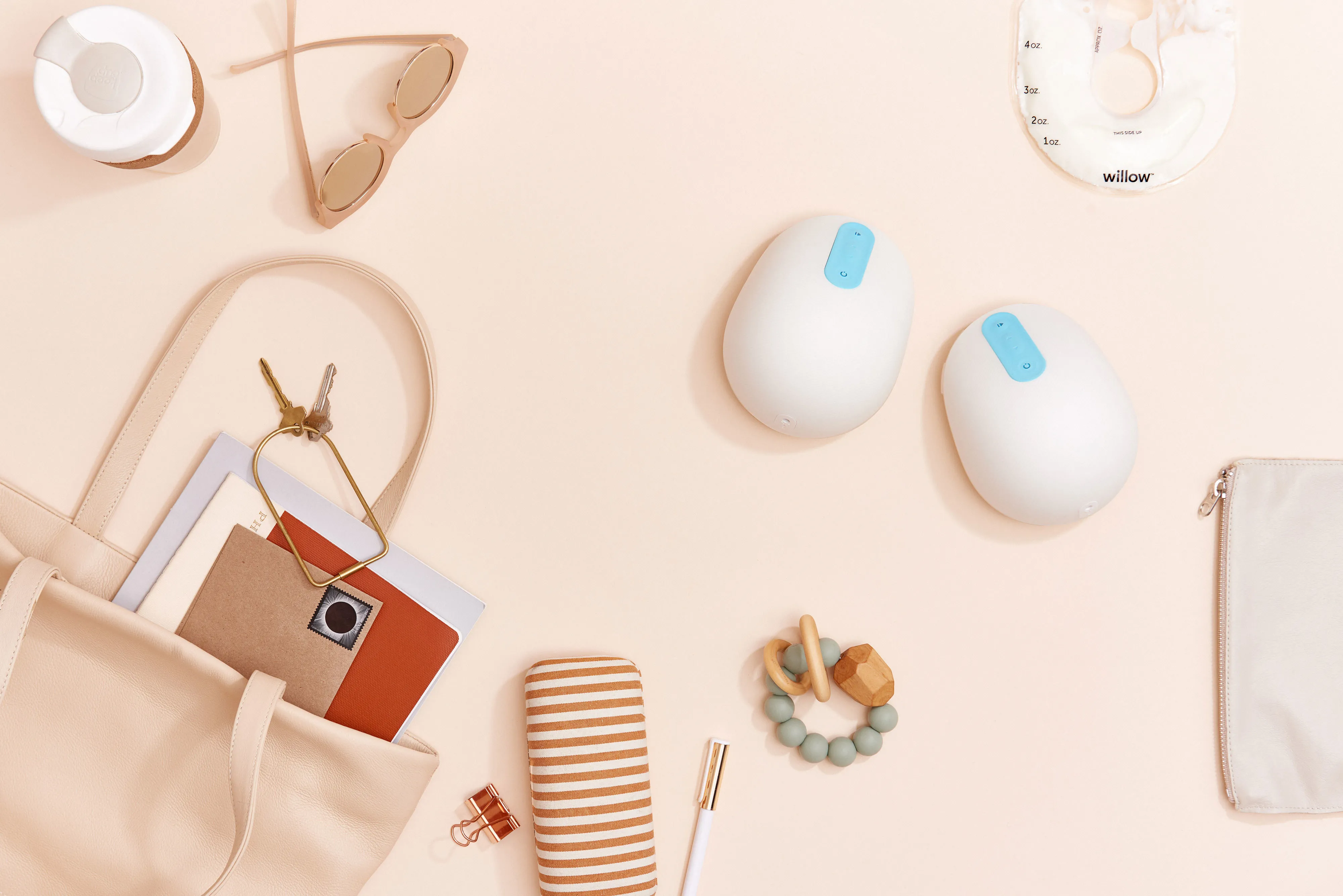

Designing the first all-in-one, wearable breast pump
Collaborating with the startup team at Willow that reimagined the breast pumping experience.
All moms want to give their babies the best start in life, and for many, that means nourishing their babies with breastmilk. However, breast pumping is often inconvenient and uncomfortable. Tethered to the wall, undressed, and surrounded by cords and dangling bottles, most mothers who pump are interacting with technology that hasn’t fundamentally changed in more than 25 years.
Passionate about solving this challenge, the startup Willow set out to completely re-imagine the breast pumping experience. The team at Willow envisioned a “dream pump” that would deliver what moms want most: mobility and discretion.
The Willow team approached IDEO to be a close partner in bringing their product to life. As a cross-disciplinary team of researchers, industrial designers, and mechanical engineers, IDEO, Willow, and Function Engineering worked together seamlessly to identify mothers’ unmet needs and resolve engineering complexities with a simple and elegant design.
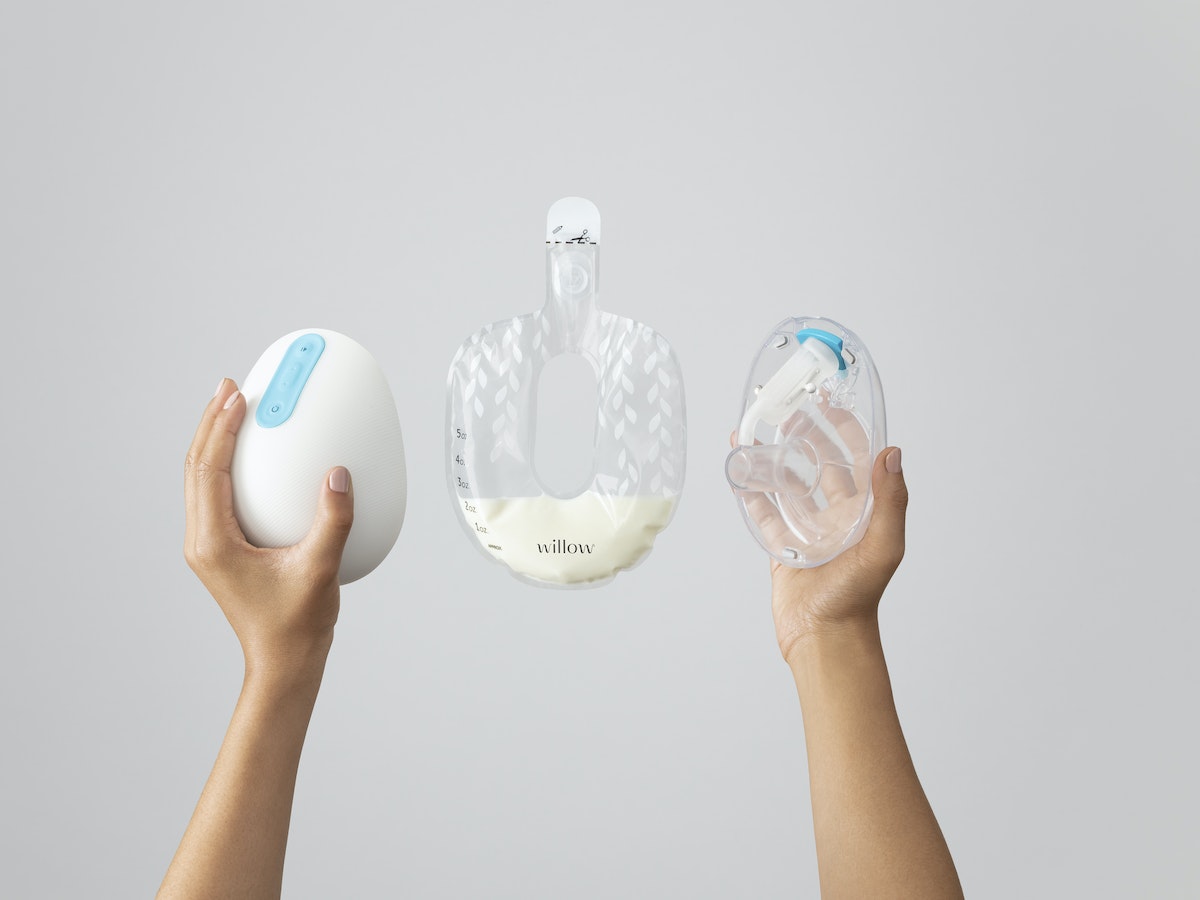
The resulting product, Willow, is the first all-in-one, wearable breast pump that cuts the cords, ditches the mess of bottles, and fits easily inside a bra. Mobile, discreet, and hands-free, Willow allows women to achieve their breastfeeding goals without pressing pause on their own lives.

The final design of Willow was informed by research and in-person interviews with dozens of mothers, ranging from first-time to experienced pumpers. Insights about their personal routines, challenges, and workarounds guided the design team as they built more than 60 physical prototypes to understand how Willow could best fit into mothers’ lives. Learnings from those prototypes helped the team to define the size, shape, color, and materials of Willow, as well as each step in the pumping process.
One key design element that emerged from this iterative process was the simplicity of Willow’s architecture, which makes the pump easy to use, assemble, and clean. The pump contains just a few basic parts that snap together, and only two parts that need to be cleaned (both are dishwasher-safe).
Considering how personal the breast pumping experience is, the team aimed to help the pump feel less like a stark, mechanical device and more like a considered, modern, and personal accessory—a goal ultimately achieved through the pump’s colors, texture, and finish.
Because of Willow, mothers no longer need to plan their lives around pumping—it can happen anywhere, at anytime. Willow gives moms back their time and freedom and gives them choice; now moms can play with an older child, work, or enjoy precious relaxation time at home. With Willow, pumping breastmilk finally fits seamlessly into women’s active everyday lives.
Improving quality of life for young adults with schizophrenia
Designing a digital platform that continually motivates and engages patients.
More than 50 million people worldwide suffer from schizophrenia, yet only half receive psychiatric treatment. When they do, it usually involves medication and one-on-one therapy to treat the most visible symptoms, including hallucinations and paranoia. But the disease can also cause debilitating symptoms that medication can’t easily treat, such as social anxiety and isolation, lack of motivation, and memory deficits.
For people living with these symptoms, what might seem like simple activities—socializing, spending time outdoors, exercising—can sometimes feel overwhelming. And if patients aren’t given effective care, they can become even more isolated, and their physical health and quality of life suffer. They’re far more likely to let the rest of their treatment regimen slip, skipping medication or therapy sessions.
To help address these challenges, a digital health research group at the University of California, San Francisco (UCSF) approached IDEO with an idea to supplement the longstanding medication-and-therapy model with a tool to alleviate hard-to-treat symptoms, and more importantly, improve patients’ quality of life. It would require identifying unmet needs among patients and determining which kinds of interactions could have the greatest impact on young people with mental illness.
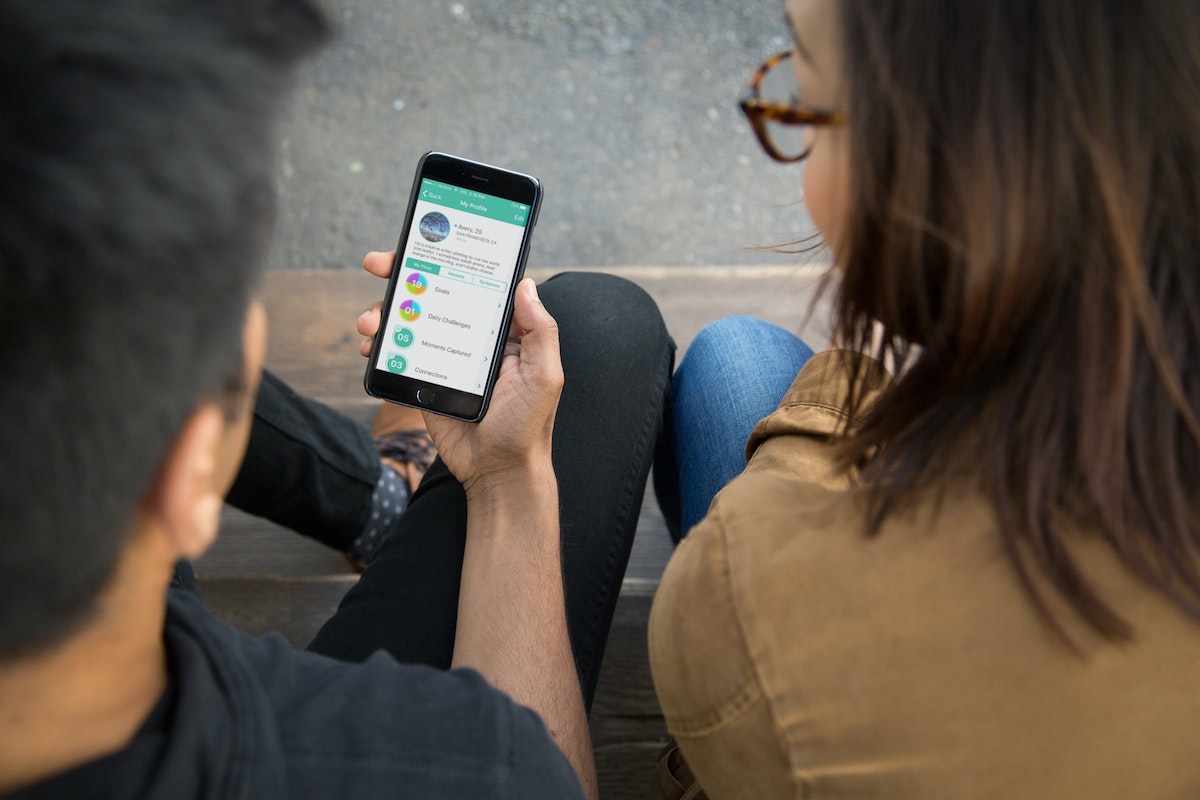
The outcome of that collaboration is PRIME, or Personalized Real-time Intervention for Motivational Enhancement, a digital platform that empowers young people with schizophrenia with the tools, motivation, and community of support they need to achieve their goals.
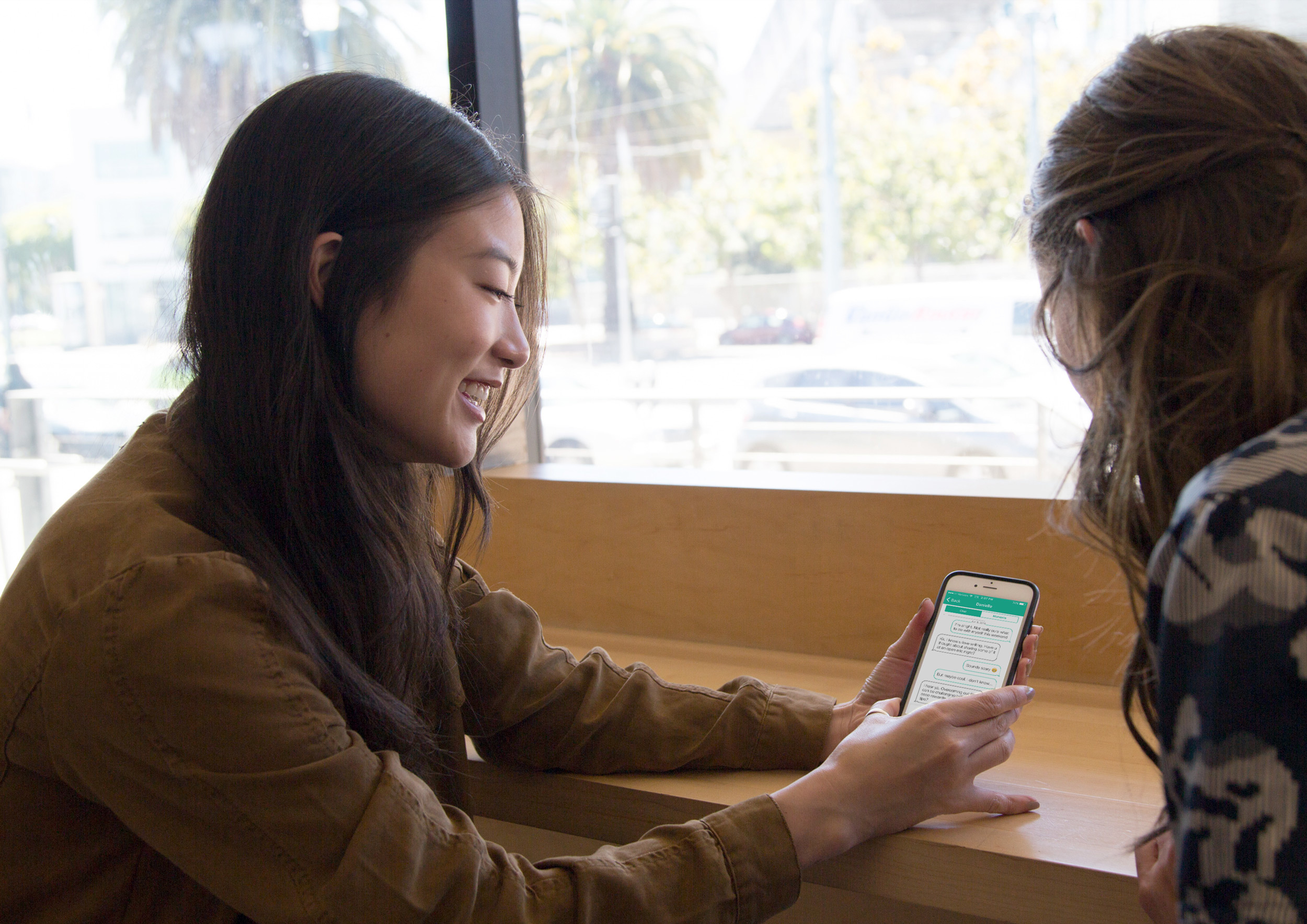
The simplicity of PRIME belies its deep functionality. The easy-to-use mobile app helps patients stay motivated to stick with behaviors that boost their health, social skills, and productivity, and it provides motivational coaching from trusted professionals and social connections with other patients.
How It Works
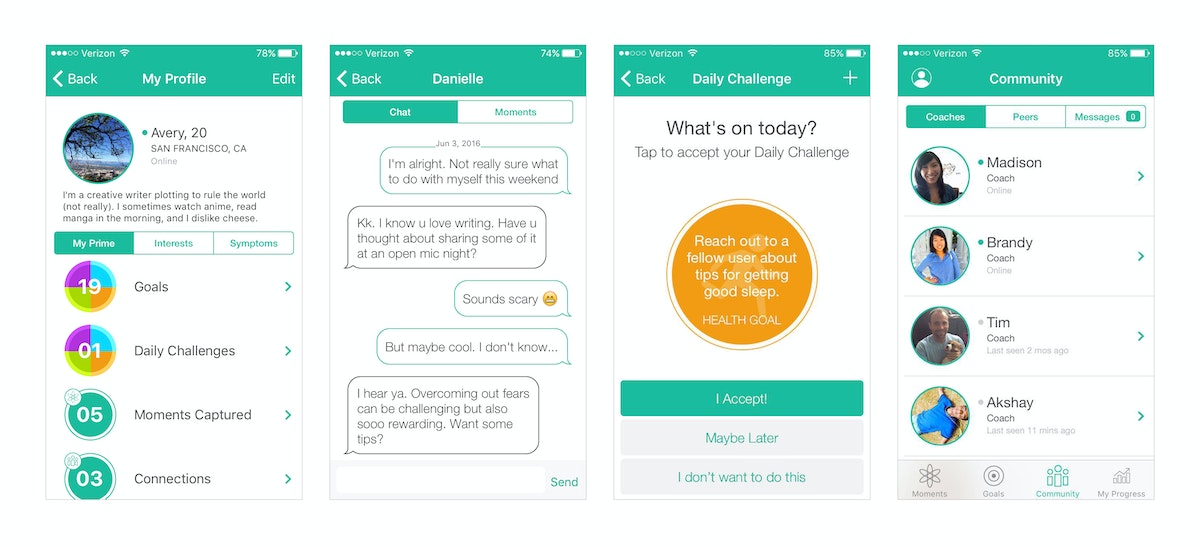
The PRIME app lets users set daily goals based on their particular needs. There are more than 500 small challenges to try—from inviting a friend to play basketball to spending time with a family member—and users can see their progress tracked through incremental successes over time.
Whenever users need help, trained motivational coaches are on hand to provide cognitive behavioral therapy coaching, encourage patients to achieve their goals (and to push beyond their comfort zones), and support their interactions with other users.
Tapping into its vibrant social network to help patients feel less isolated, PRIME prompts users to snap photos of happy moments, highlight important events in their lives, and share challenges they’re proud to have accomplished. Unlike Facebook, which can be overwhelming for some patients with schizophrenia, PRIME is a closed community where users can talk freely about their challenges with others who are just like them.
Click above to hear our audio story, or listen on SoundCloud.
To measure the efficacy of PRIME, UCSF and IDEO combined traditional metrics, such as Patient Health Questionnaire scores and time spent in the app, with new metrics evaluating patients’ quality of life. For example, they studied the pictures of things that made users happy before and while using the app, and measured the frequency, depth, and quality of patients’ social interactions in the app based on word choice and punctuation.
Learnings from these human-centered metrics helped the team iterate further on PRIME’s design, so that the platform would generate even higher levels of engagement and stronger improvements in patients’ motivation and social functioning. In this 2016 peer-reviewed, clinical study, 80 percent of patients with schizophrenia achieved their daily goals, and users logged into the app an average of 4.5 times a week, far more than the expected rate of once a week.
PRIME has also made an impact on patients and their families on a personal level. The mother of one research participant was thrilled with the results. She told IDEO, “I wish you could have witnessed my daughter’s first response to seeing the faces and profiles on her phone. She looked at me, smiled, and said, ‘Everyone looks normal. Everyone looks like people you see every day.’ It was as if she looked into a mirror that reflected possibility and hope.”
Human-Centered Design
The PRIME platform is an example of how the human-centered design process can lead to first-of-its-kind innovations in the field of mental health care. PRIME designers conducted comprehensive interviews that led to a deep understanding of patients as whole people, not just conditions or sets of symptoms.
For Dr. Danielle Schlosser, lead researcher on the PRIME project at UCSF, collaborating with IDEO and applying design thinking to her research on mental health was illuminating. "[It] showed us that in order to engage our users, we needed to provide a safe and supportive community that directly catered to their needs. The insights we gained enabled us to create an experience that inspires patients to improve their quality of life by emphasizing their strengths. Working with IDEO helped us make powerful, creative leaps in our process, and build a digital health platform that’s already deeply impacting patients’ lives.”
The success of PRIME in treating schizophrenia has led to additional federal research funding, and the platform is now being expanded to treat a wider range of mental health conditions.
For example, in this recent, peer-reviewed study, PRIME helped patients with moderately severe depression experience a 50 percent reduction in symptoms, with a noticeable difference in just two weeks—far faster than the average of four to six weeks it takes for traditional medication and therapy to yield improvements. By the end of the depression study, 90 percent of participants said they had achieved their treatment goals, such as to “become happier” or to “feel less lonely.”
Numerous patients with schizophrenia and depression have already benefitted from PRIME’s unique offering, and the team is exploring ways to commercialize and scale PRIME to reach more people with mental health conditions.

Preparing New Yorkers for future flooding
Helping homeowners understand how to protect their future amid shifting flood zone policy and climate change.
New Yorkers are a tough lot, but damaging coastal storms will continue to test their resilience. More than 400,000 people live within the city’s floodplain and are at physical and economic risk. In the face of both natural and manmade challenges—from superstorms to confusing insurance regulations—many New Yorkers are not aware of their flood risk, or even that they should be thinking about it at all.
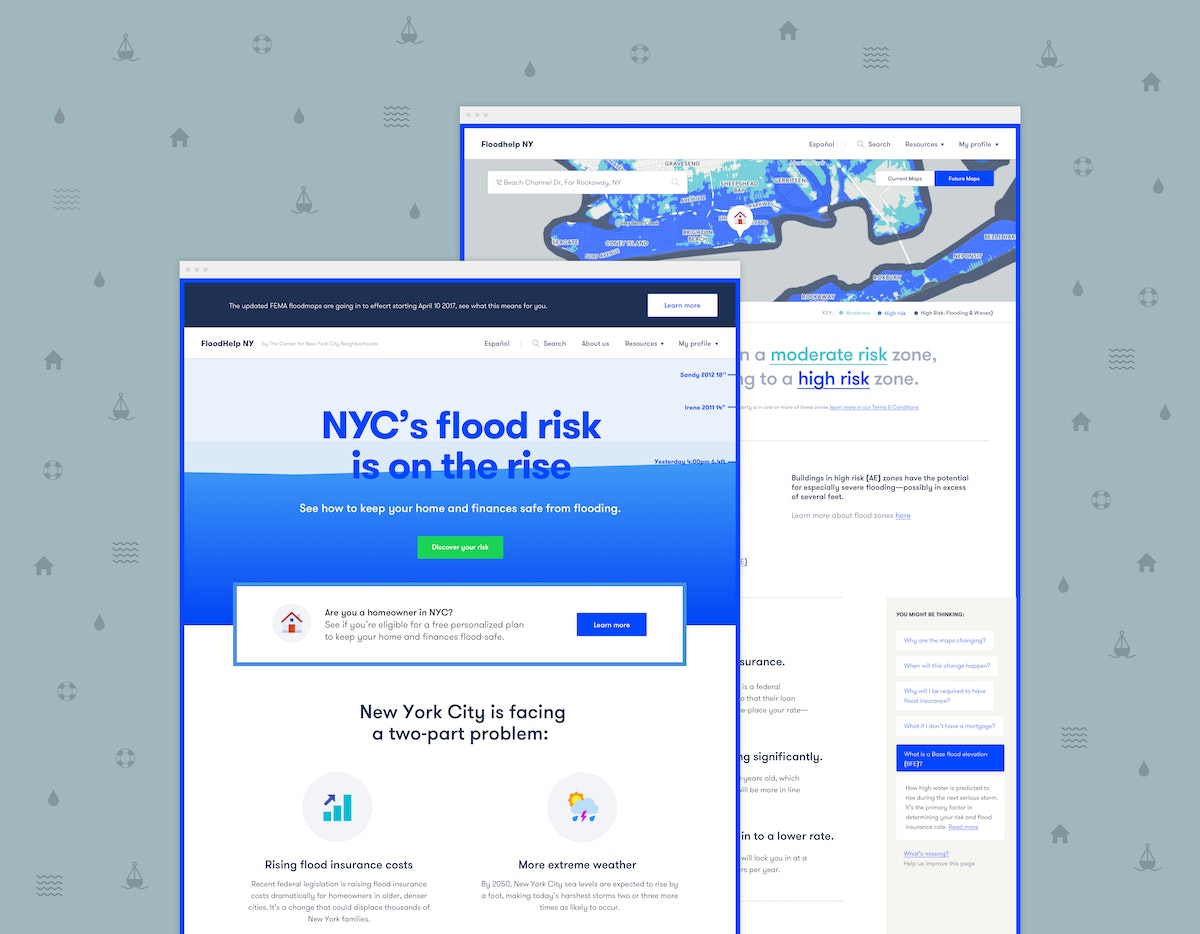
The Center for NYC Neighborhoods‚ a nonprofit that champions affordable homeownership for middle- and working-class families and communities, engaged IDEO to create a resource that could help New Yorkers keep their homes and finances safe. Launched in September 2016 with funding from New York State's Governor's Office of Storm Recovery, FloodHelpNY is an expansive platform that dismantles the complexity surrounding flood insurance and gives homeowners clear and simple guidance for assessing their flood risk and taking action toward resiliency.
Facing the complexities of insurance policy, shifting flood regulations, climate change, and citizen engagement, the design team began by engaging two vastly different groups of New Yorkers—those who had been battered by past storms and those not yet affected. Homeowners in the first camp were angry and frustrated by a system that had let them down after Superstorm Sandy. Homeowners in the second camp were simply unaware of their risk and had little idea of what might happen. The right design solution needed to encourage both groups to take action and learn about flood risk and insurance regulations, while also addressing divergent levels of need and preparedness.
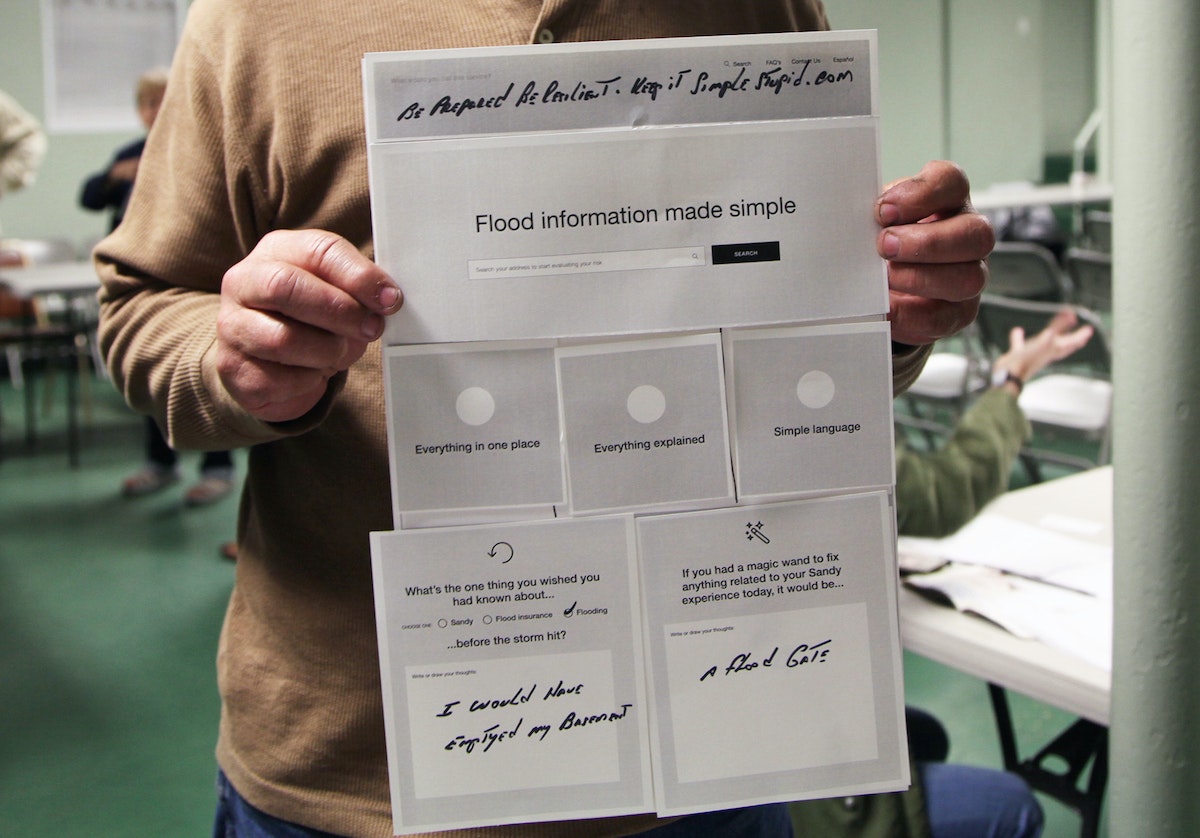
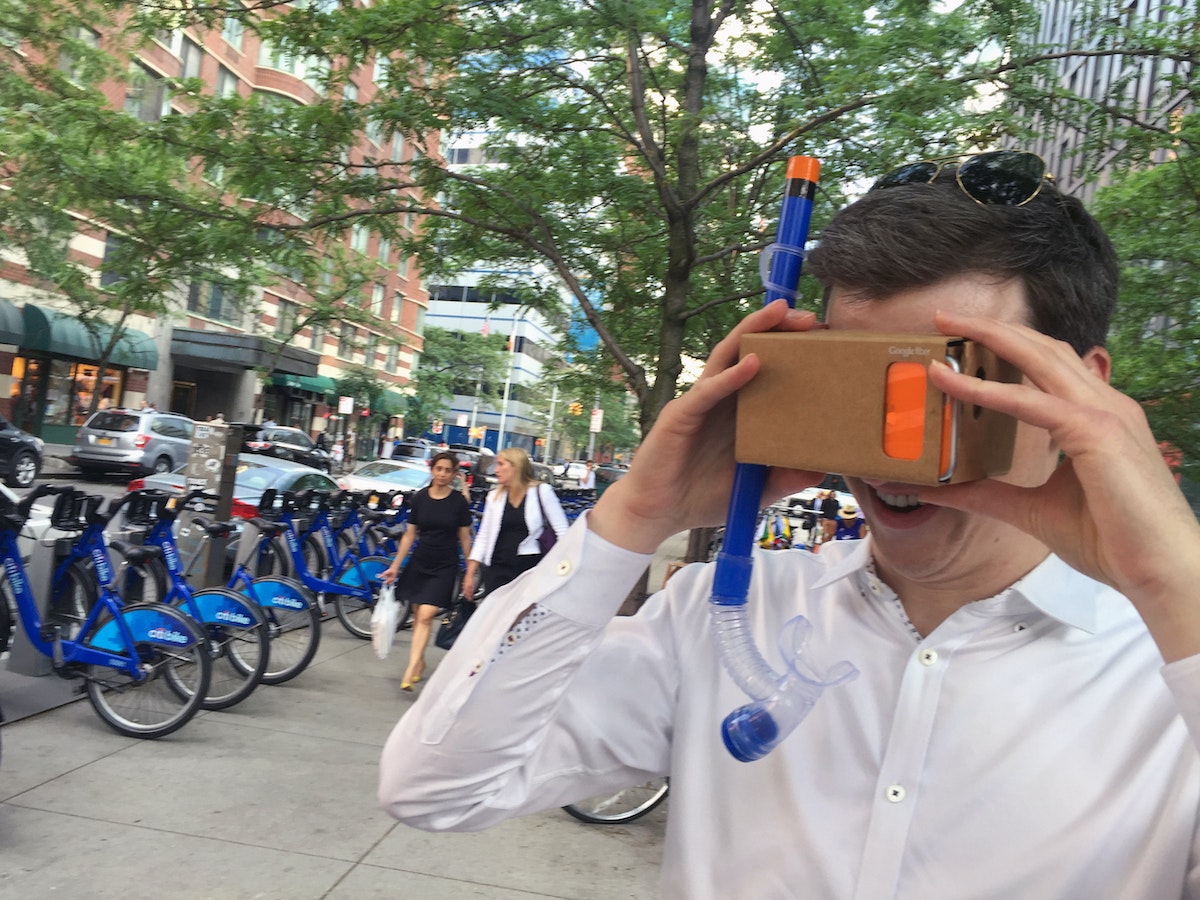
To co-design solutions with homeowners, IDEO set up pop-up stations at neighborhood meetings in Canarsie, Red Hook, and Gerritsen Beach, and had flood-affected residents create paper prototypes of the resources they wanted in place the next time a storm hit. The team learned how residents contextualized their individual risk, which information they prioritized, and how their frustration could inform a better outcome. In Lower Manhattan, where residents are less aware of flood risk, the team set up a pop-up station with virtual reality viewers that simulated water rushing into the surrounding streets, a visceral wake up call that got them talking about flood recovery.
Less than a month after launch, FEMA began promoting FloodHelpNY as a key resource for building flood resilience. The platform helps all New Yorkers learn what flood zone they’re in, or will be in, how that affects their insurance rates, and what steps they can take to mitigate their risk. It features a first-of-its-kind flood insurance rate calculator that can help homeowners get a rough idea of the costs they could face as insurance prices go up. It is also the main conduit to apply for the Home Resiliency Audit, a New York State-funded program that equips at-risk homeowners with vital documentation valued at over $800 that confirms their actual elevation and insurance costs—all with the personalized assistance of an engineer and housing counselor team. In the coming months, FloodHelpNY will expand further to offer homeowners free backflow valves that reduce the chance of sewers backing up during flooding, as well as access to more existing benefits for resiliency.
The New York City floodplain, which is expected to grow as tides continue to rise, threatens neighborhoods that are among New York’s oldest and most historic. The people who live there make the city work: teachers, police officers, subway operators. Many of these homeowners will watch their flood insurance premiums surge, year over year. It’s a troubling future, but one that FloodHelpNY is designed to help New Yorkers face, by guiding them toward greater resilience and assuring them that they aren’t alone.
A game-changing approach to sleep for athletes
Helping Rise Science, a sleep analytics startup, optimize its customer experience and scale the business.
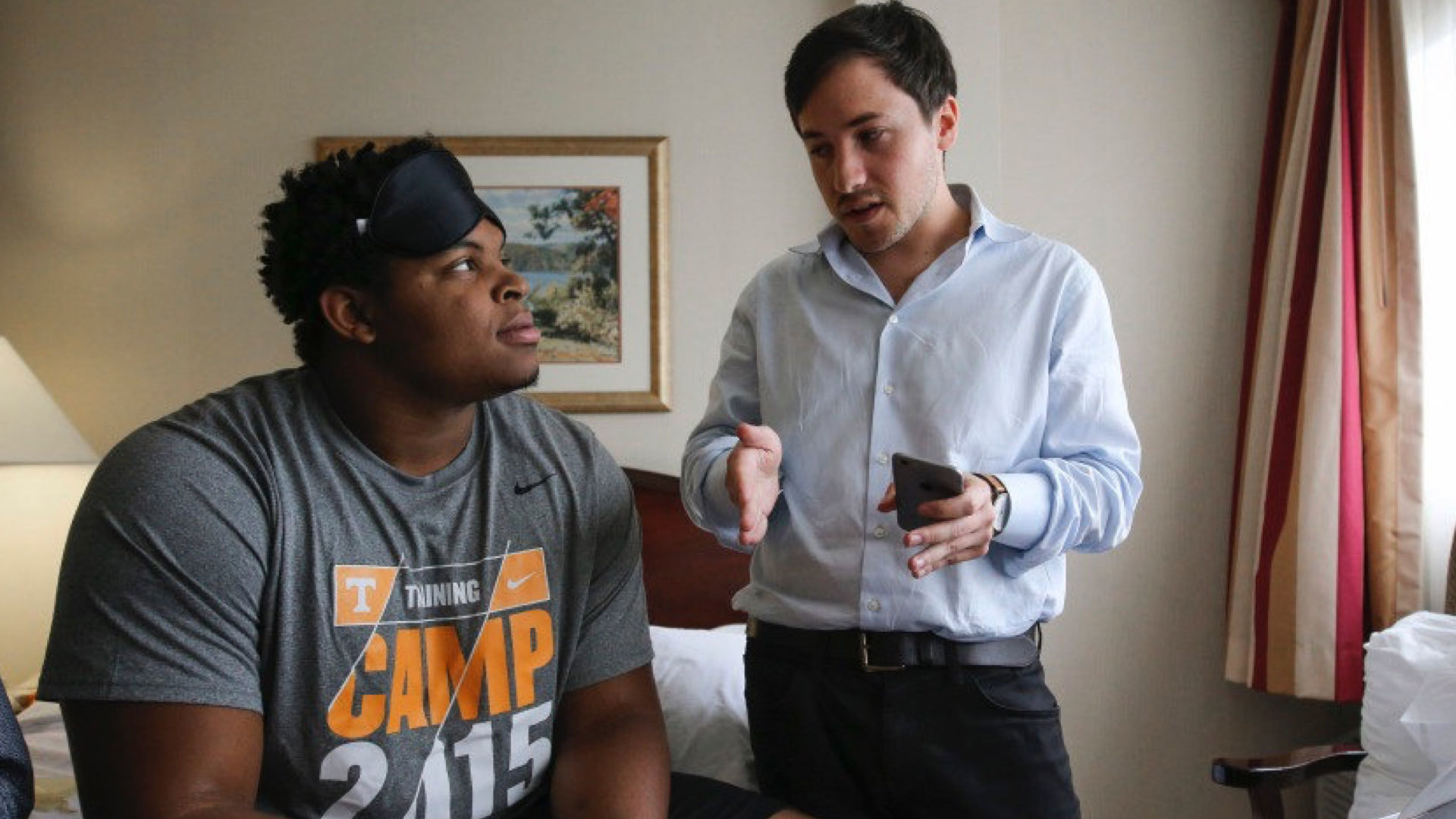
Athletes looking to score big on game day could hit the gym, but they’d probably be better off hitting the sheets instead, according to Rise Science, a sleep analytics startup. Harnessing the latest sleep science, Rise helps players significantly improve reaction time and decrease false starts, lapses, and injuries, among other benefits.
While attending Northwestern University, the co-founders of Rise Science created a simple sleep app and light-touch coaching service, which they prototyped on the school’s Big Ten football team with positive results. They came to IDEO to optimize their customer experience and scale the business, and joined IDEO’s Startup in Residence program.
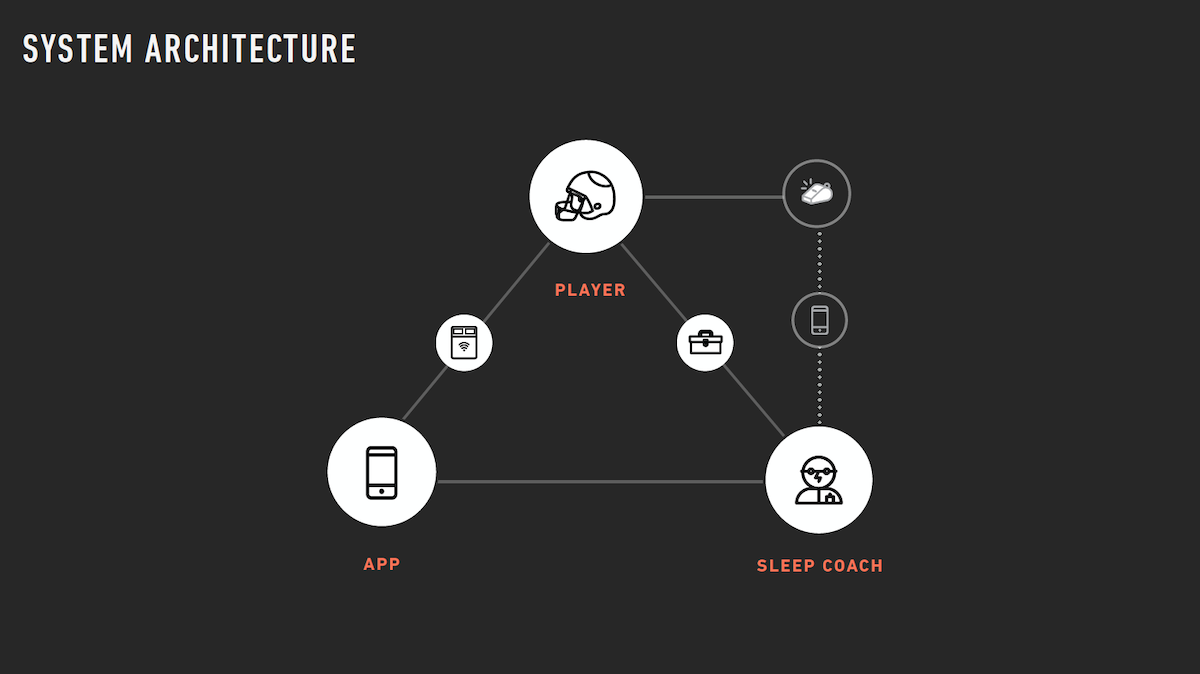
While observing coaches and players using Rise, IDEO saw the opportunity to better integrate the digital and hardware experiences and design a more robust, intuitive, and service-heavy on-boarding experience during the first few weeks using the system, when breaking old habits and incorporating new ones are most challenging.
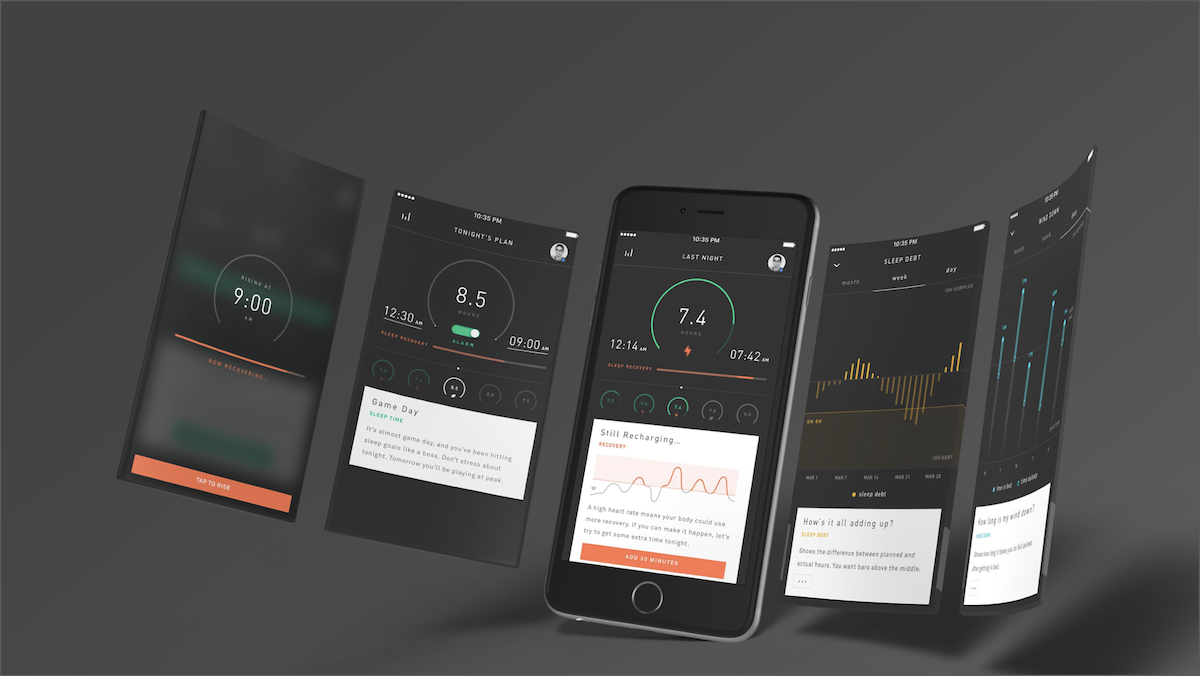
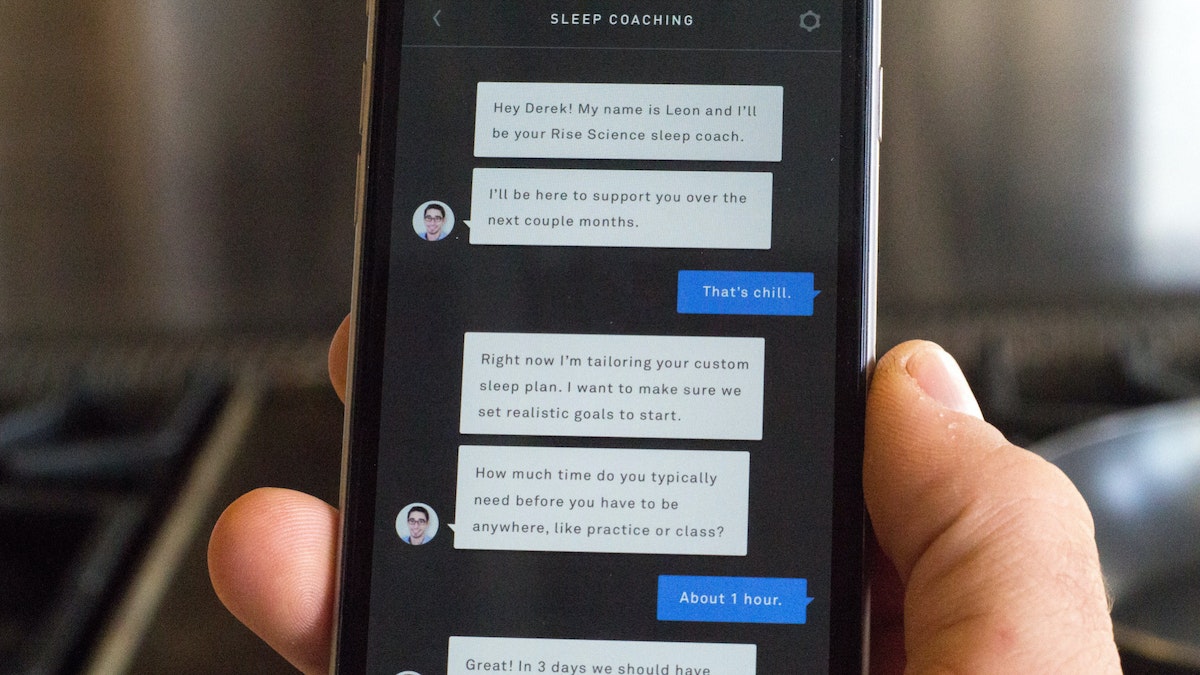
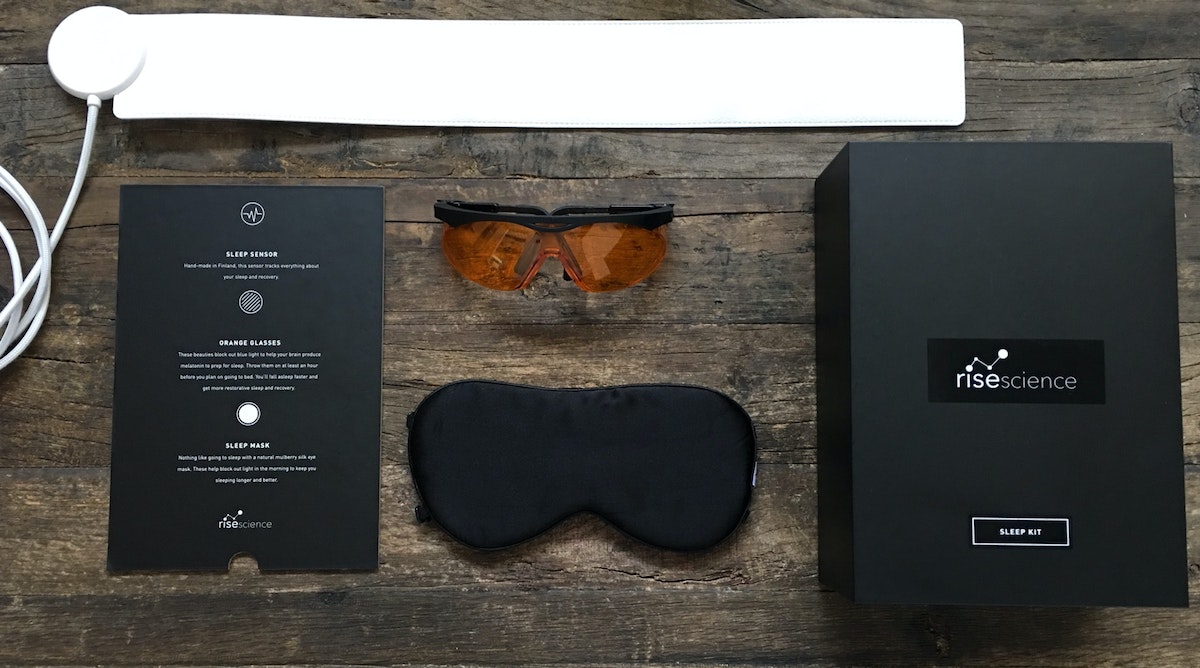
At the end of the residence program, Rise left IDEO with a rebranded and optimized sleep training system. Here’s how it works: Players and coaches receive a short, in-person introduction to sleep coaching by a Rise employee. Players who opt in to the service receive a sleep-training kit that includes the Rise Coaching App; adaptive sleep plans tailored to their chronotype, age, game schedule, and training load; a part-human, part-machine sleep coach that continuously supports each player, monitors progress, and gives timely feedback; in-context education that provides daily and weekly sleep insights; and products like UV glasses, sleep mask, and bed sensor. In just a week of using Rise’s full sleep program, 97 percent of players report getting 54 more restorative minutes of sleep per night.
Recently, Rise Science added the Chicago Bulls, Miami Dolphins, and the University of West Virginia to their sleep-training roster, enhancing their performance, one good night’s sleep at a time.
“Coming into IDEO, we knew our service was letting customers down. When we left, we had the blueprint for the next version of Rise. We were able to solve and optimize sleep at a much larger scale,” said Jeff Kahn, co-founder and CEO of Rise Science.

4 Strategies to Chart a Path Forward When There is No Map
When there is no precedent, ambiguity can be the mother of innovation
The biggest challenge to businesses right now isn't uncertainty, but ambiguity—a condition in which the future is unclear, the past is no help, and we don't even know what we don't know. There's no predicting when the pandemic will end, nor what “business as usual” will look like when it does.
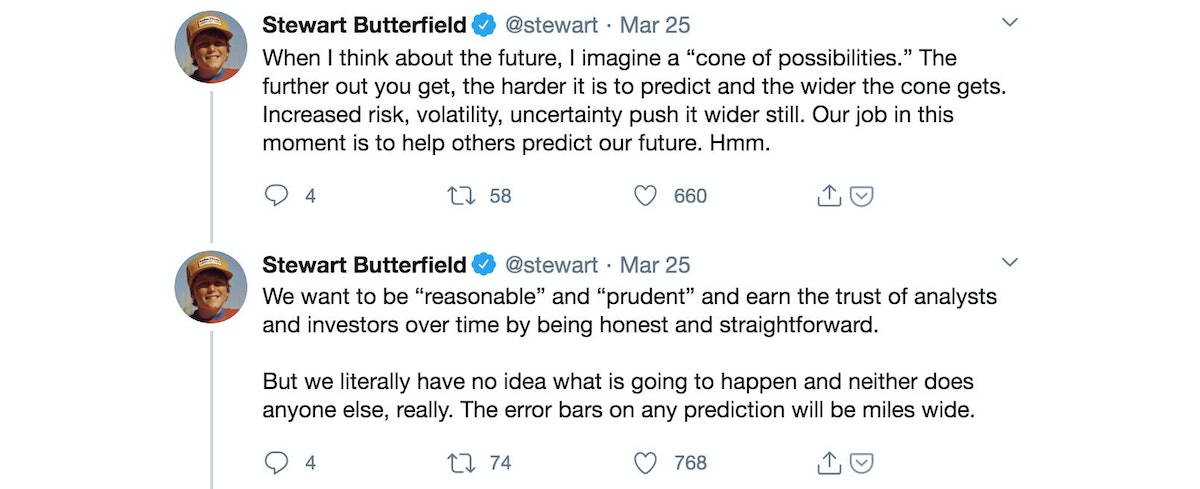
Late last month, Stewart Butterfield, the CEO of Slack, acknowledged the unparalleled challenge leaders face trying to buoy their organizations in the absence of any familiar strategies. Though Slack is one of a handful of companies experiencing massive growth right now, Butterfield and his team are still struggling to predict the future. Other companies are not this fortunate, and have had to halt operations, let go of employees, and make other painful decisions.
Understanding that organizations are facing a broad range of challenges and have varying capacities, the question becomes, how might businesses create new ways to push ahead intelligently? Human-centered design can offer leaders an alternate set of mindsets and methods for navigating ambiguity. Here are four ways forward, along with inspiring examples and questions to drive action.
Lead with people and the business will follow
Perhaps the most well-known design thinking model suggests that innovation occurs at the intersection of consumer desirability, business viability, and technical feasibility. Many leaders are currently mired in thinking about what’s possible in this new world (technical feasibility) and what the economic impact of COVID-19 might be (business viability). While a business model pivot or reapplication of technology may be critical for some businesses to stay afloat, it’s important not to forget to lead with people (consumer desirability).
Focusing on customers’ needs is a way to rally a company and employees around a purposeful cause. It also offers focus and clarity operationally and strategically, and points to a clear path forward that can deliver value.
Restaurants were one of the industries immediately and dramatically affected by the pandemic. Many dining establishments have had to lay off employees or shut down entirely. Canlis, a fine-dining restaurant in Seattle, chose early on to shift their business in a way that leads with customers. Throwing out the rule book, Canlis turned their restaurant into three distinct offers: large family meals, CSA boxes, and to-go cocktails and wine. These options make it easy and efficient for customers to get what they need, while keeping many of their employees working. Restaurants around the world are now taking similar actions, driven by real attention to people’s current needs.
Questions to inspire action:
- How are our core customers’ needs changing right now? How can we deliver on those needs during the pandemic?
- Who can we learn from in our organization that is closest to the needs of our people, partners, and consumers? Better yet, how might we engage with our people, partners, and consumers directly to learn from them?
Forge unexpected partnerships to meaningfully pivot
Part of what makes the current changes so complex is their scale. In travel and hospitality, for example, metrics like trips and bookings are unmoored: What will travel mean in the wake of a pandemic that doesn’t have a known endpoint? CPG companies have been hit with destabilizing shocks to demand that not only put pressure on supply chains, but raise existential questions about what people will value after the crisis. The meaning of “essential” across products, services, jobs, and needs is evolving in real time. We must simultaneously grapple with the abstract and tactical, and the immediate and the indefinite.
It’s inspiring to see examples of companies redirecting their capabilities toward urgent needs—distilleries using their alcohol to produce hand sanitizer, automakers shifting to produce ventilators and respirators. But this kind of quick adaptation isn’t simple and the opportunity isn’t always clear. Stepping outside of our own domains and even our companies to connect can help.
Coronavirus has sparked rare collaboration between some of the world’s biggest business rivals. Apple and Google recently joined forces to enable the use of Bluetooth technology to help governments and health agencies reduce the spread of the virus, and pharmaceutical giants GlaxoSmithKline and Sanofi are teaming up to develop a COVID-19 vaccine.
Pivoting in this moment calls for collective processing aided by viewpoints from different departments and types of thinkers. Some companies are relying on open innovation, which can be used internally to break down silos, or externally to find new partners to bring ideas to life. IDEO’s open innovation portfolio recently launched the COVID-19 Business Pivot Challenge to help organizations wrangle the present complexity and adapt at various scales through collaboration. The Challenge is open to anyone involved in business adaptation, from C-level executives to business students, and startups to global corporations. Participants are working together to find partners, develop new offerings, and secure funding.
Questions to inspire action:
- What points of view are we missing on our team and how might they help us uncover opportunities and identify blind spots?
- Who can we partner with right now to deliver something unique or previously impossible to our teams, business, or society?
Experiment today to strengthen the business for tomorrow
The time has never been better to experiment. This means considering fundamental changes in business and operating models out of necessity, while also prototyping new channels, offerings, pricing structures, and value propositions.
The pandemic has caused some organizations to challenge the status quo of legacy industries, questioning fundamental beliefs and paradigms that have long been held sacred. Film studios, for example, have historically resisted releasing movies straight to online platforms, in the interest of preserving their relationships with movie theaters and maximizing everyone's financial gain in the film ecosystem. But with theaters shut down, many studios have been forced to either delay blockbusters or experiment with online releases, putting pressure on the previously sacred release window. Paramount’s The Lovebirds was set to release in theatres on April 3, but will now debut on Netflix. And Disney released Frozen II on Disney+ three months ahead of schedule, giving many parents a much-needed break.
Experimenting doesn’t have to result in a full-scale business model transformation or a polished new offering. This is a moment of extreme leniency: Customers will forgive scrappiness and even mistakes, and they’ll appreciate effort and vulnerability from organizations who try. Moreover, experimenting in low-fidelity ways allows teams to quickly iterate, minimize costs, and preserve optionality. In other words, there’s little investment required for potentially high return.
Airbnb, like all travel and hospitality businesses, has been hit hard by COVID-19. But they have worked to respond quickly: First, they mobilized their rental marketplace to offer units free of charge or at subsidized rates to healthcare providers in need, waiving their own fees in the process. In the meantime, Airbnb has launched online experiences that provide new things for customers to do while stuck at home and an alternative source of income for hosts. Their email announcing the offer read, “Let’s try something new together.” Airbnb transparently recognizes that this won’t replace the travel experiences that customers wish they could be doing, but we can try to make the situation a bit better, together.
Whether through major shifts or small trials, experimentation not only serves as a response to the current times, but can also pave the way for future strategy. While some companies are testing by necessity, organizations with the means to do so can consider how prototyping today might strengthen their value propositions and capabilities tomorrow.
Questions to inspire action:
- If we’re in an all-hands-on-deck moment, is there a group of employees that can start to think about how we might operate differently during COVID-19? What are simple experiments we could run in the next few days?
- If we’re able to dedicate time and resources, how might we use this moment to challenge the fundamental assumptions of our business and industry? What are simple experiments we could run in the next few weeks?
Leverage scarcity and constraints
It’s understandable to feel an overall sense of scarcity right now. Organizations are inundated with legal, health, social, and operating constraints. It may seem counterintuitive, but these perceived limitations often create generative circumstances for growth and innovation. A recent study on innovation in crisis found that during the Great Depression, while the total number of patents decreased, the average level of quality increased, mitigating the quantitative decline with more innovative impact overall. In many ways, today, we are witnessing this same jump-start in business innovation in light of COVID-19.
OpenTable, a company that allows diners to make restaurant reservations, is using today’s constraints to find new opportunities. Since many restaurants are no longer allowing customers to dine in, OpenTable’s core offering is no longer relevant. But rather than become obsolete, they used this constraint to make a quick shift and repurpose their platform. The team developed a new tool that leverages their core offering by partnering with grocery stores, allowing customers to select shopping times at supermarkets and to avoid overcrowding.
History has shown us that scarcity can be the mother of invention. Take the beloved hazelnut spread Nutella. The product was created due to a cocoa shortage during World War II. Italian confectioner Pietro Ferrero decided to make a new paste using hazelnuts, sugar, and a smaller amount of cocoa. The rest is sweet-tooth history.
Questions to inspire action:
- How might we turn these new constraints into the cornerstones of our business?
- What is the core promise or value we provide to customers? How might we repurpose the assets that we still have to keep delivering on this promise or value?
We are in challenging times. Leaders are being called to make difficult decisions around their business’ strategy, operations, and people. As we continue to navigate these uncharted waters, we can find ways for ambiguity to be an aid, rather than an impediment, to progress. Design-led mindsets like empathy, collaboration, experimentation, and even scarcity can be guiding lights along the way.
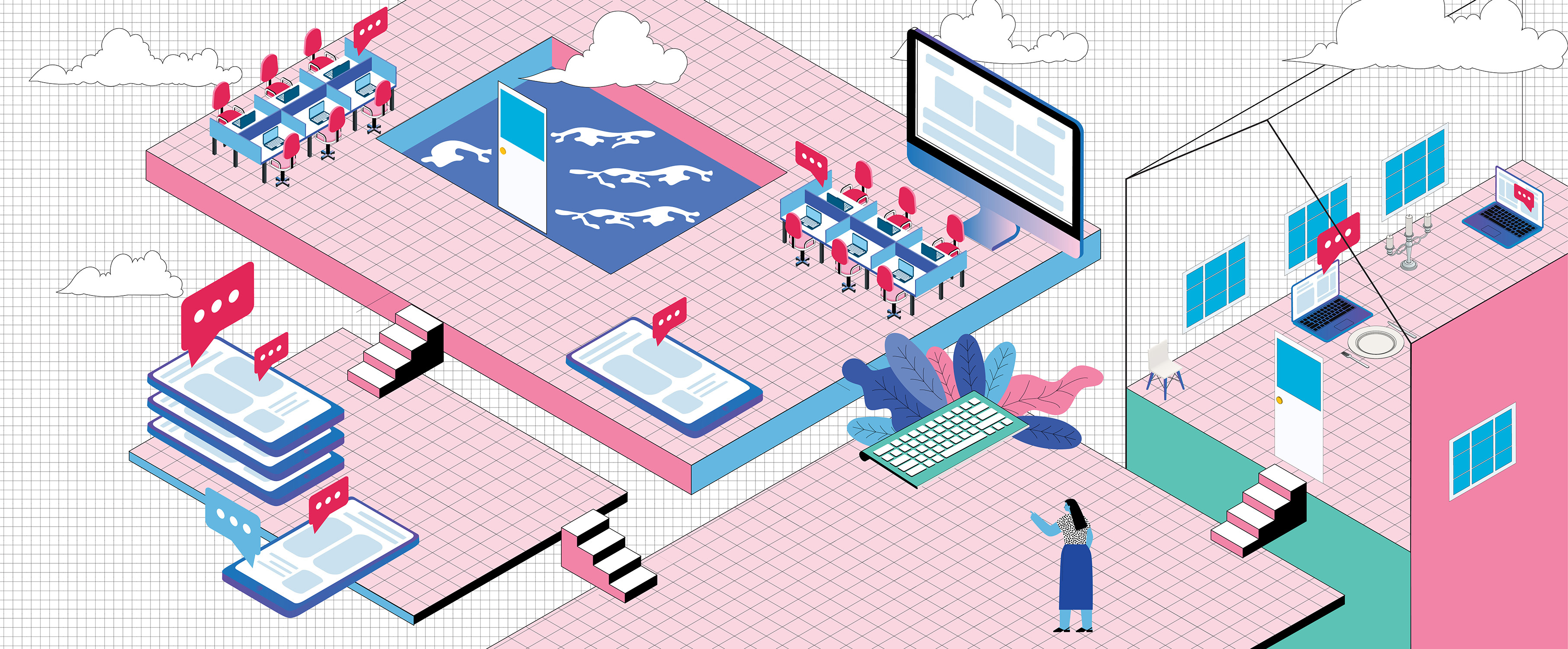
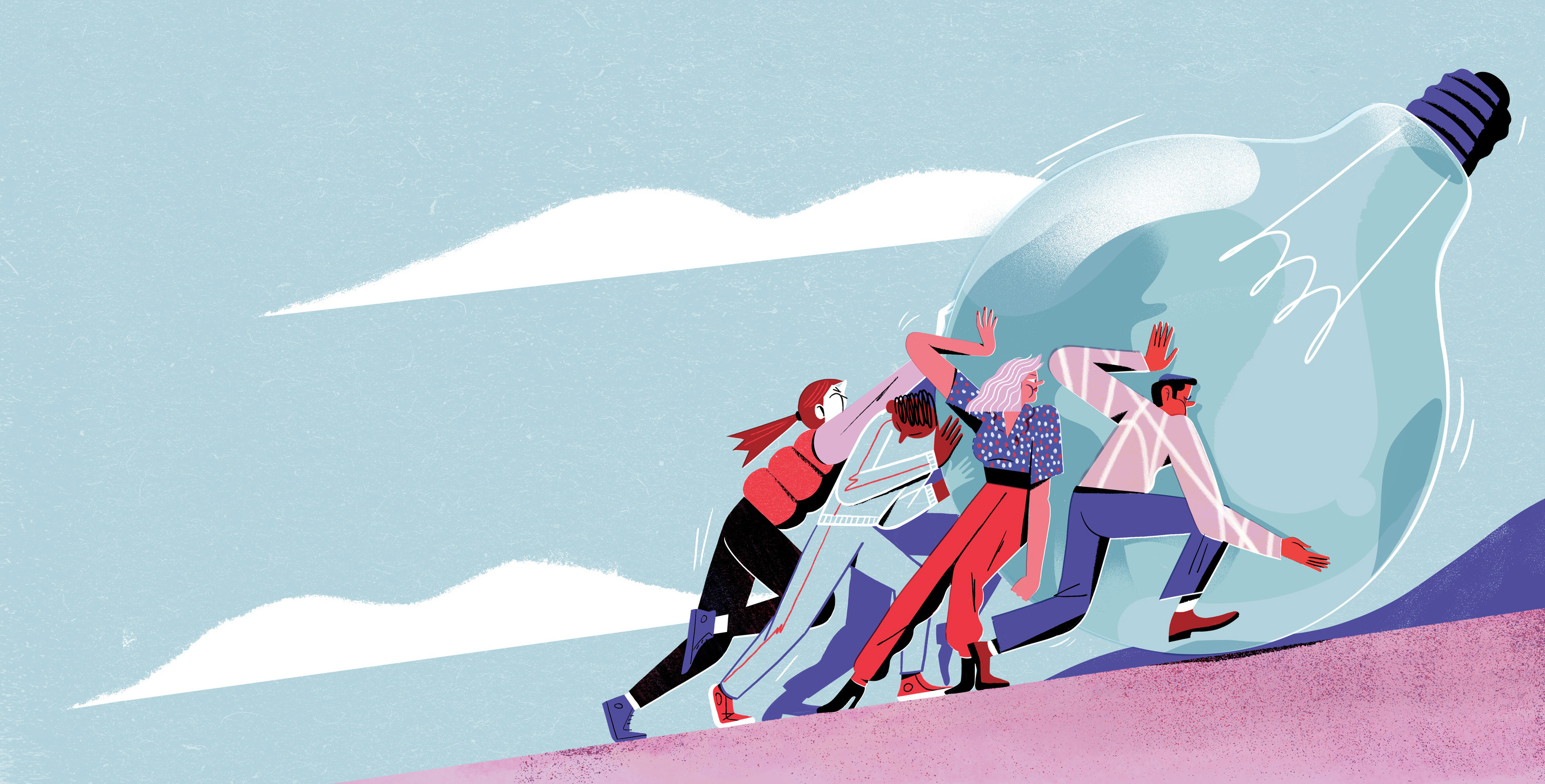
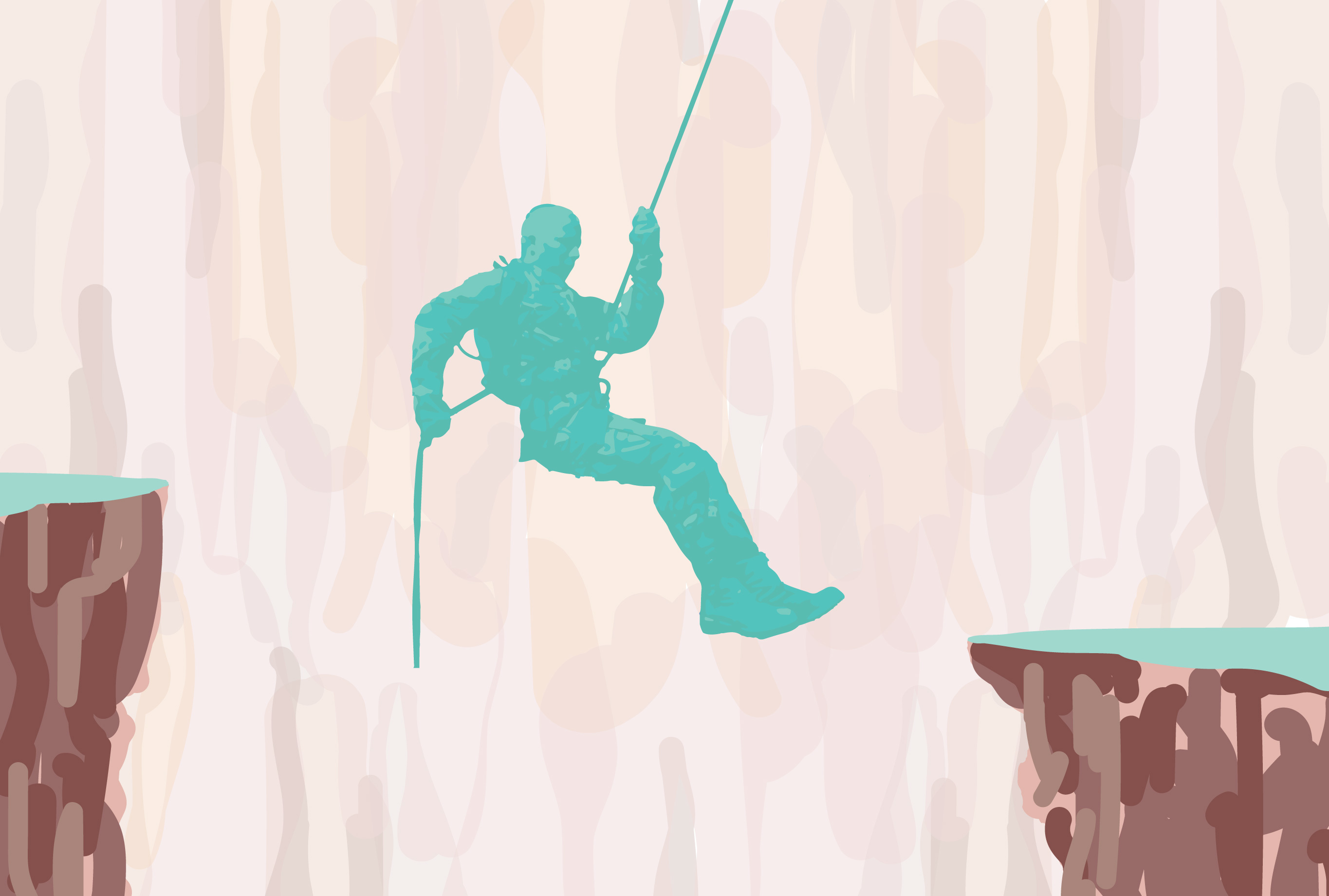
Illustration by Kateryna Romanova
The coronavirus pandemic has generated tremendous uncertainty for businesses. But while the scale of the crisis is new, uncertainty itself is not—it's a natural condition of doing business, and numerous tools exist to quantify and mitigate it. Most strategies rely on accumulated knowledge from the past—there's a precedent on which to make sense of unknowns. COVID-19 breaks all that. There is no precedent for how to respond to this moment, much less steer ahead.

How to Think About Long-Term Strategy When You Can Barely See Past Tomorrow
This is the moment for businesses to redefine what it means to win
The primary question in this moment should be: How might we each play our part in bringing this pandemic to an end? But it's a moment, too, for reflection on the future. Who do we want to be when we emerge from the worst of this? What do we want our organizations to stand for? These are questions of strategy—of what it means to win.
How does your organization define winning? What is that challenging shared goal that gets your people out of bed each day, excited to play their part? If your organization is like most I’ve worked with, you may struggle to answer that question. Despite all the time and resources poured into strategy work each year, few organizations have a widely understood definition of winning that goes beyond making money for shareholders.
Fifty years ago, in The Social Responsibility of Business is to Increase its Profits, economist Milton Friedman argued that the purpose of a business is to serve its owners. The leader’s role, he wrote, is “to conduct the business in accordance with their [owners’] desires, which generally will be to make as much money as possible while conforming to their basic rules of the society.” This notion, which is the foundation of the doctrine of shareholder value maximization, is now pervasive. But it’s showing considerable signs of wear and tear as we become more aware of the negative consequences of putting profits ahead of people.
Solely prioritizing short-run outcomes for shareholders does little to bring meaning to our work; it stymies innovation; it reduces our business fitness; and it makes much, much harder the real work of strategy. Meaning comes from creating real value in the world, which means we need to think broadly in terms of who we’re winning with (and for). Innovation requires a long-term perspective, so we need to think about winning beyond this quarter or even this year. Business fitness (the financial and strategic resilience of a company over time) depends on being attuned to things that shareholders may not see. To ensure our viability, we need to seek out signals as to what customers, employees, and societies care about. Strategy is about building a firm that can win both now and in the future, so we need to be more holistic in our approach to making choices.
If it is time to move past shareholder value, how might we define winning in a more useful way, that spurs rather than stops innovation? How might we set aspirations that don’t suggest a win-lose frame? How might we seek instead to create value for customers, for employees, and for investors?
Find the right language
In the process of developing a strategy for kyu, the collective of organizations that includes IDEO and SYPartners, some leaders rejected the notion of “winning” entirely, recoiling at a word that felt tied to a scarcity mindset. If we’re winning, they asked, who is losing?
Tim Brown and Susan Schuman, the kyu vice chairs who co-led the strategy discussions, thought hard about how to navigate that challenge. As Brown notes, they came to see that “we’re really creating a community at kyu—a collective that aims to unleash creativity and to help people flourish.” He goes on: “What we realized is that communities don’t win or lose, they thrive or falter.” The kyu strategy focuses on what it would mean to create a community that can truly thrive over time. Thriving may not be the term that resonates with your organization, but language matters. To redefine winning to be more inclusive, work with your team to find a mental model for winning that works for you, then build shared definitions of the models you choose.
Shift the timeline
Another way to push on current, unsustainable definitions of winning is to publicly shift the time horizon so that sustainability, both economical and ecological, can be integrated into our aspirations. Unless we look further out, we will continue to plunder the future to fund the present and to degrade the planet to drive profit. For inspiration on what is possible, look to Paul Polman, former CEO of Unilever.
In an interview for my book Creating Great Choices, Polman explained how he set out to change the time horizon at Unilever: “One of the things I had to do was to move the business to a longer-term plan,” he said. “We had become victims of chasing our own tail, cutting our internal spending in capital, R&D, or IT to reach the market expectations. We were developing our brand spends on a quarterly basis and not doing the right things...We were catering to the shorter-term shareholders.”
Polman decreed that the company would stop quarterly reporting and stop giving guidance. He embarked on a far-reaching environmental sustainability effort, and he reinvested in R&D, talent development, and brand building.
Polman believed that shareholders whose interests were aligned with Unilever (i.e. long-run profitability and environmental sustainability) would eventually buy into his plan. Taking a long-term perspective on winning not only let Unilever invest in innovation for customers and in development for its people, it let leadership focus on the fundamentals of the business rather than managing short-run expectations. As a result, it created lots of shareholder value too. In the decade Polman headed Unilever, its stock price increased 170 percent, creating more value for shareholders than most companies in the FTSE 100. This is a win-win-win solution, and it was powered by a willingness to show up differently in the world.
Define your purpose
A third way to redefine winning productively is to connect our aspirations to a larger purpose. Think of purpose as the human “why” that explains the reason a company exists. The best purpose statements are very human: they connect the work of the organization to real people, to real needs, and to real problems to be solved. By defining a meaningful purpose, companies can demonstrate to employees and customers what they stand for and why. The purpose can then set the context for the strategy; we can define what winning means in service of our overall purpose.
One company that demonstrates the power of connecting purpose to strategy is Orbia. Until 2019, Orbia was called Mexichem and it was mainly known as a chemical company. Last year, along with a new brand, Orbia unveiled a new purpose: To “advance life around the world,” tackling some of humanity’s biggest shared challenges, like food security, water scarcity, and livable cities.
Had it continued to define itself as a chemical company, Mexichem could have followed a path to near-inevitable commoditization. Instead, CEO Daniel Martinez-Valle and Orbia’s leadership team worked with IDEO to define a higher bar with a bold new purpose. Now the team is working to connect its strategic choices, its resource allocations and its employee incentives to that larger purpose. Doing that means reorganizing the structure of the company into five business groups, each aimed at addressing a unique global challenge, defining meaningful sustainability targets for each business, and investing in innovation in significant new ways. That’s really the power of purpose: it can align the organization, motivate employees, and promise customers something they can believe in. No wonder purpose-led companies tend to have higher employee engagement, happier customers, and better overall performance. They win on multiple dimensions.
Winning isn’t easy. It’s tempting to define winning narrowly, to make the task seem easier: winning means increasing the stock price this quarter. But as the last few months have demonstrated, a shareholder-led definition of winning is not only hollow, it can leave organizations with nothing to fall back on in a time of crisis. We need a far richer, more aspirational understanding of what it can really mean to win. To get there, ask how we could define a winning aspiration, using language that fits our organization, push out on the time horizon, connect strategic goals to a larger sense of purpose and give ourselves room to dream big.
In a moment of crisis, it can be difficult to think beyond the next hour, the next day, the next week. The global COVID-19 pandemic has been difficult for each of us, as we grapple with our duty of care to our employees, to our communities, to each other, to ourselves. The unprecedented disruption created by this crisis should be seen first and foremost in humanitarian terms, connecting to the very real personal toll of this disease—serious illness and lives lost, isolation and fear, worsening unemployment and economic precarity.
4 Ways to Work Together When We Can’t Be Together
How we’re adapting for an age where digital collaboration is the norm
Like most organizations, we’re reckoning with how COVID-19 will change how we do business. And as we do, we’re learning a lot from our community—our colleagues living and working under complex, difficult circumstances; our clients whose businesses depend on global transportation; and the people we design for and with on a daily basis.
"Constraints can breed a lot of innovation,” says Charles Hayes, a managing director of IDEO’s studios in Asia. “As designers, how do we design our way through this?"
Here are a few tips based on what we’re learning:
1. Create a virtual meeting survival kit
How many tabs do you have open right now? We equate multiple screens with fractured attention. But just because a meeting is being conducted virtually doesn’t mean it can’t be designed for presence. An IDEO team recently had to find an alternative way to run a 20-person workshop for a foundation in Seattle. They asked themselves: How might we still approximate the level of engagement of an in-person meeting? Better still: how might we make sure this virtual workshop delivers on our client’s needs—focus, alignment, and a set of actionable next steps—while keeping things interesting?
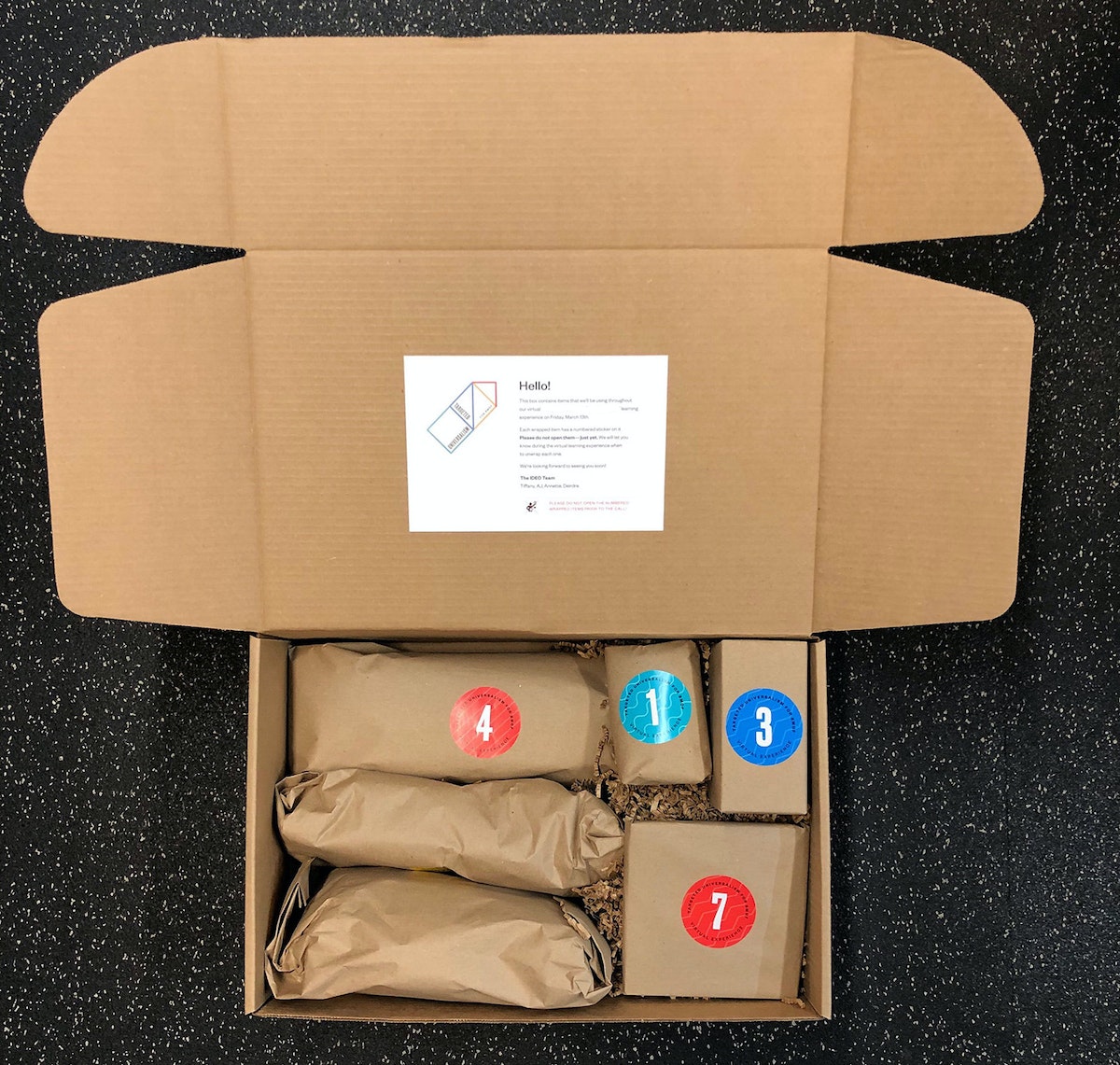
Before the meeting, the team mailed a virtual workshop survival kit, complete with “sleeping bags” for cell phones, mini-whiteboards for people to prototype ideas, and physical takeaways to help the presentation resonate off-screen.
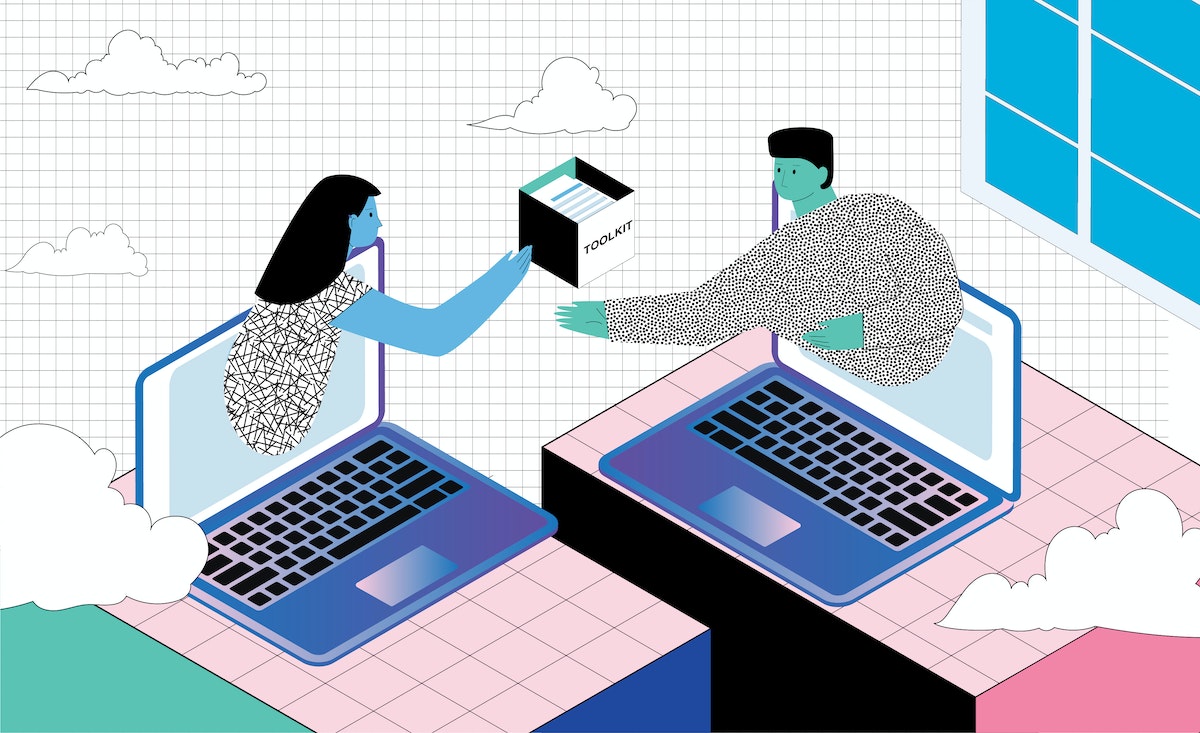
Over the course of the meeting, participants excitedly unwrapped items one by one. It was a way for the IDEO team to show up in the room when they couldn’t actually show up in the room.
2. Design rituals around tools
There are thousands of tools to facilitate remote collaboration—video conferencing! brainstorming tools! task-management software!—but perhaps more important than the specific tool are the processes teams put in place around them. After all, a tool is only as good as its ability to deliver on what the team needs.
Take video conferencing, for example. A reliable video chat box can be a Swiss Army knife to combat the woes of remote collaboration. But spending an entire day jumping from one serious video chat to another is a recipe for bleary eyes. IDEO teams around the world have been running experiments in how video conferencing can be a tool to build culture and connectedness in addition to getting work done.
For one, teams have been continuously changing their virtual video backgrounds—everything from a football game to a family vacation photo—to spark discussion and keep meetings fresh. Regular rituals like daily meditation or morning coffee chats have been ported over to video. And teams are using creative warmups—like a 10-second dance break or a quick show-and-tell of an artifact from the home office—to kick-off meetings.
3. Empower local communities
When travel is off the table, IDEOers have had to find alternative ways to learn from the communities for whom they’re designing. One approach that has become particularly relevant in the wake of COVID-19 is Equity Centered Community Design (ECCD). ECCD is a process of designing with—as opposed to designing for—a community.
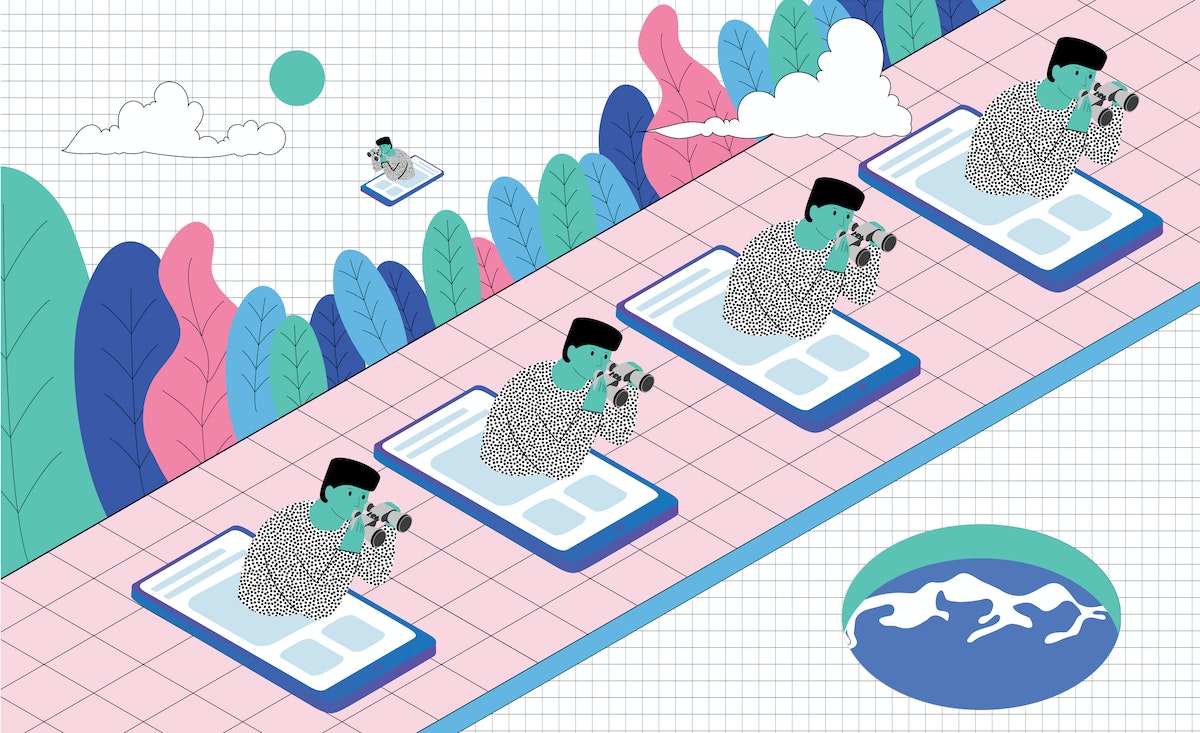
For example, IDEO recently worked on a project to design a new lifelong learning program for the city of South Bend, Indiana. Rather than rely on traveling to South Bend to conduct research, the IDEO team hired local “community connectors” and a researcher in South Bend to conduct interviews, share prototypes, and co-design with the IDEO team remotely. Now that many cities are sheltering in place, even local communities will have to work remotely. That makes it all the more important to enlist those with hyperlocal context and lines of sight, ensuring there is sensitivity and flexibility around immediate needs. By designing themselves out of the room, the IDEO team received a level of honest feedback they may not have been privy to if they’d been physically present. This method isn’t new, but as movement becomes constrained, it’s even more important to engage local networks to be the eyes and ears on the ground.
4. When you can't do, learn
How long have you been putting off learning that skill? Cleaning up that code base? Building that website? When one door closes, listen for the creak of another opening. Travel constraints can be an opportunity to take a deep breath, hunker down, and try something new. Across IDEO, designers have been using these extenuating circumstances as an opportunity to gather digitally and learn. “We have experimented with a number of things,” says Brian Chien, a director in our Shanghai studio. “Some worked well, and some definitely didn’t.”
Whether it’s prototyping a remote brainstorm, trying out a new tool, or building something by hand, the disruption of your normal routine can be an opportunity to learn something. And if you already have the skills, teach! Designers in our Tokyo office are webcasting tutorials for young design students, sharing skills with those who aren’t able to attend an in-person workshop. What if, when it’s inadvisable to move from place to place, organizations took what they’re saving in travel expenses and invested it into L&D?
At IDEO, we will always believe in the alchemy of creative minds bouncing off one another in a shared space. But COVID-19 has pushed us to get even more comfortable with digital. And while we know necessity is the mother of invention, we still have much to learn—especially from other companies who have been at the forefront of remote collaboration for years.
Of this we’re certain, says Arlin Tao, a senior director in our Shanghai studio: virus aside, remote collaboration is the way of the future. “I think the only thing that most people agree on is when things go back to normal, it's not going to be the normal that we were used to before.”
It's not uncommon for IDEOers to make house calls. Friendly, in-person conversations are one of our most cherished tools—that kind of design research helps us learn what people collect and eat and carry in their backpacks. Social interactions fuel the insights we use to do our design work. What happens, then, when social interaction is not good for us?

Why One Artist Challenged Herself to Learn 366 Different Knots
Windy Chien spent a year learning how to turn rope into art
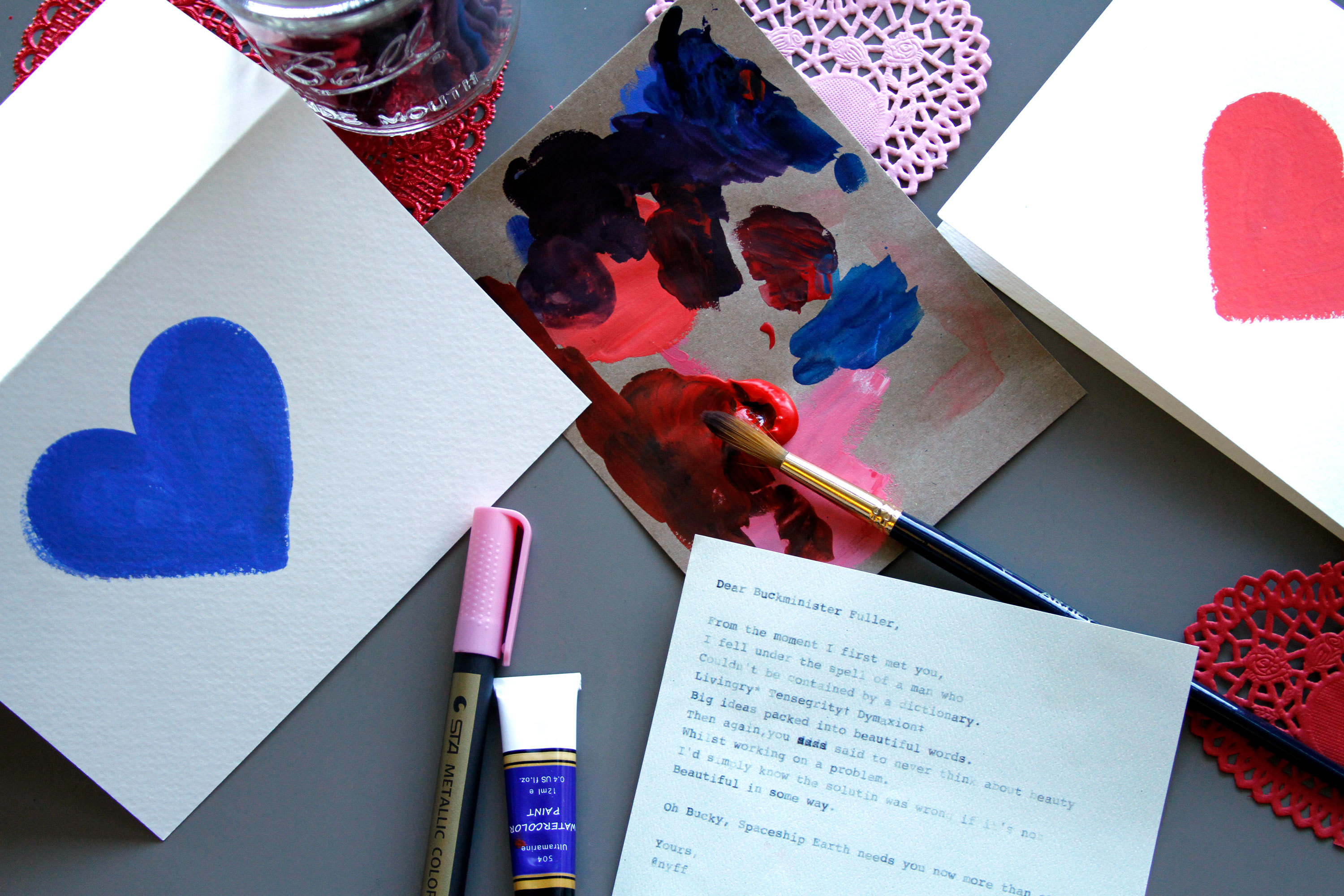
While we tied, she shared the story of leaving her corporate career in design to pursue a year diving deep into the world of knots, teaching herself a new knot every single day. With explorations traversing the historical and functional—from gathering inspiration from sailor’s knots to the future-forward and abstract—her knots have become massive installations, offering an alternative translation for structures like the circuit board and New York City subway system. I left her session deeply inspired by the simple power of dedicating ourselves to daily acts of making and craft—let’s all try it.
In one sentence, who are you?
I make sculpture and installations that elevate the vernacular and inspire awe and understanding; in the context of knots, I work at the intersection of function, design, history, and aesthetics to illuminate what’s most fascinating about knots: the journey of the line.
What do you do? How did you learn it?
I developed fluency in the language of knots—and found my artist voice in the process—by learning one new knot every day of the calendar year in 2016 (which was 366 total knots because of the leap year).

How do you get over creative block?
You know, I never have creative block. I have a list as long as my arm of investigations I’m dying to explore and large installation concepts that are awaiting a home.
What was the last item on your to-do list?
I’m currently hiring, so today I'm posting a listing for a studio manager position, ordering custom-made cordage for a hotel project in the Maldives, and later on, I'm heading to Gensler San Francisco for the opening reception for a show I’m having there.
What’s your dream installation site?
An airport. I’m obsessed with the notion of the journey of the line, which is evident in my work. The rich metaphors that arise from journeying and traveling are particularly well suited to airports.
What’s your number one bucket list item?
I really want to see my work in an airport... and then a TED Talk.

What’s the weirdest or coolest knot you’ve learned? Why?
The five-strand star knot. During my Year of Knots, I tried for over an hour to learn it, only to end up frustrated and in tears. It's complex and the old-timely sailors knotting books were cryptic. But then I mastered it, and now it is my favorite knot to make.
What are you most curious about right now?
People often call me a "fiber artist," but I don’t restrict myself in that way. I’m interested in the journey of the line. So while it’s wonderful to render a line in rope, because rope allows for creating shapes in space without weight, almost anything can be a line. I’m curious about exploring other materials—glass, tubing, metal, and more. I’m still looking for the project that will want me to tie knots out of ethernet cable.

Who are you creative crushin’ on lately?
Always and forever: artist Janet Echelman, who makes sculpture on the scale of city blocks that respond to wind, weather, and light. I met and befriended her last year and we spent a day in Paris looking at art. Janet is lovely and her art absolutely takes my breath away. She has a permanent installation in Terminal 2 at the San Francisco Airport that is so beautiful, when I have a flight to catch, I will go to the airport early just to gaze at it. Endless respect to Janet Echelman.
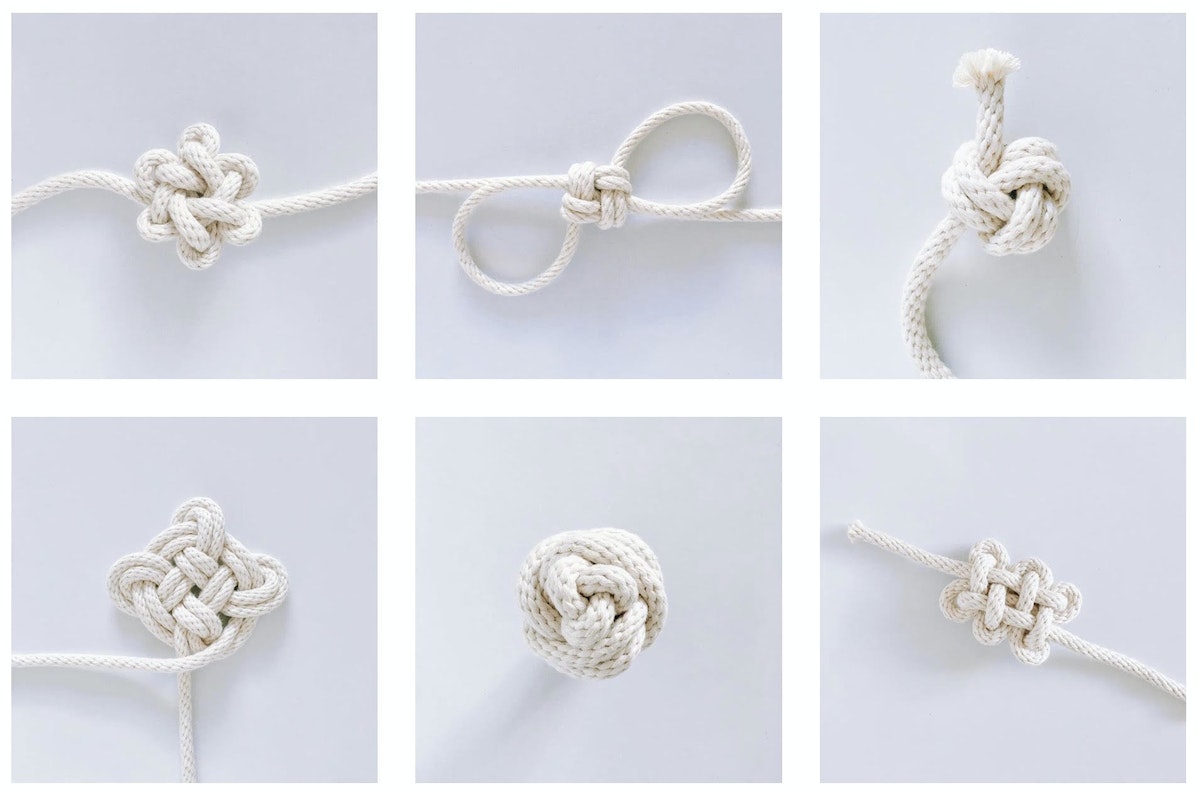
Learn more about Windy's craft in her book, The Year of Knots.
I was feeling a bit sleepy at a design conference this past spring when, upon entering the auditorium for the next talk, I was handed a simple length of rope. My ears perked up with anticipation and curiosity. Enter Windy Chien: ingenious fiber artist who would coach the entire room of conference-goers in learning how to tie a donut knot (it’s adorable and makes for an amazing necklace).

Lindsey Turner
I’m passionate about building brands, products, and experiences that help organizations show up with meaning and momentum.
I help organizations cut through complexity by shaping how they show up, through brand strategy, identity, and storytelling.
Working at the intersection of brand and business, I bring an editorial eye and a bias toward making—turning ideas into tangible experiences that people can understand, trust, and believe in.
My work spans government, healthcare, financial services, media, and consumer goods, from launching Gen Z-focused ventures to building innovation labs and reimagining legacy brands. I relish moments of ambiguity and enjoy translating across teams, perspectives, and priorities to move ideas forward.
I started my career in editorial and digital design, shaping cross-platform experiences and identity systems in publishing and agency environments. That foundation still shapes how I work today: I’m detail-oriented, collaborative, and overreliant on the Oxford comma. I hold a BFA in Visual Communication from the School of the Art Institute of Chicago.

Rachel Young
My work helps organizations see who their products aren't working for—and build the will and the tools to do something about it
For 25 years, I've asked the same question: Who does this design exclude—and what are we going to do about it?
My work spans human-centered strategy, inclusive design, and qualitative research, with clients ranging from Microsoft, Google, and Verizon to the National Science Foundation, and San Francisco Unified School District.
Before IDEO, I taught elementary school in East Palo Alto and spent a decade doing design work with social service organizations—where I learned firsthand what it costs people when systems are built without them in mind.
I am currently writing User Error, a nonfiction book about digital access and the design decisions behind it. I live in Oakland, California.

Brian Pelsoh
I lead with craft, ensuring our work is creatively excellent: rooted in deep human insight and imagination, while also grounded in the realities of business and technology.
My expertise spans brand, communication, and product design across tech, education, the arts, and social impact.
I believe great work demands both high-level vision and obsessive attention to detail, and only happens through collaboration.
I bring an inclusive, hands-on approach and a deep understanding of business, which enables me to consistently deliver excellence while always asking why.
Before joining IDEO, I worked at the brand firms Pentagram and VSA Partners. I began my career as a designer, leading teams at the School of the Art Institute of Chicago and the Milwaukee Art Museum. I hold an MFA in graphic design from Maryland Institute College of Art and a BFA in communication design from the Milwaukee Institute of Art & Design, and have taught at some of the best design schools in the US.

Tony Wong
I am responsible for IDEO’s long-term success in China and working with clients to use design as a tool to enable growth.
I am responsible for IDEO’s long-term success in China and working with clients to use design as a tool to enable growth. Specifically, I have helped Chinese companies design holistic brand solutions through the development of their products, communication, services, and innovation teams, and I have helped multinationals expand their presence and influence in China.
I advise global leaders on developing China-led innovation and capabilities.
In over 15 years in IDEO Shanghai, I have worked on projects that use design to elevate the quality of the experience of healthcare products and services, streamline processes that increase productivity, create spaces and programs that promote and enable inclusive communities, and build next generation mobility solutions that are planet-positive.
Before joining IDEO, I worked at Philips Electronics and the Electrolux Group in Italy, the Netherlands, and Singapore on a number of breakthrough commercial products. I am a member of the Young President Organization in Shanghai.

How to use AI as an editor, not a writer
Ed White shares how he uses AI as an editor—not a writer—to sharpen storytelling, rehearse ideas, and preserve the productive friction that makes creative work better.
Ed White has a rule he's tested on his own writing: hold yourself as the writer, and let AI be your editor. Ed is a Senior Design Director at IDEO's London studio, where he co-leads the firm's AI portfolio across Europe. Before IDEO, he spent 12 years as a writer and editor at the Financial Times, Wired, and Contagious. So when he talks about when to use AI for storytelling and when not to, it comes from two decades of crafting his storytelling skills.
In this episode, Mina Seetharaman talks with Ed about two specific tools he uses to keep AI in an editor's seat: a "roasting agent" prompted to critique his drafts without any sugarcoating, and a simulated audience he rehearses pitches on before the real thing. They also get into what Ed is hearing from design leaders at Anthropic, Lovable, Shopify, and Google Creative Lab about how creative work is changing, and why he thinks the friction of writing something yourself is worth protecting rather than automating away.

Building a personal AI for the messiness of life: Sida Li
Becca Carroll talks with Cue co-founder Sida Li about designing a personal AI for the messiness of everyday life—not just work. They explore how Sida stays anchored to human needs while navigating fast-changing technology, product tradeoffs, business-model experimentation, and the realities of building an AI company today.
Most AI products today are built for work—a space with clear problems and established systems. One founder noticed a gap: personal life is messier, harder to systematize, and mostly left behind by the AI boom. So she built Cue, a personal AI that lives inside iMessage and group chats, to go where the other tools haven't.
In this episode, Becca Carroll, IDEO's Chief Strategy Officer, talks with Sida Li, co-founder and CEO of Shared Context Lab, about staying anchored to a human need while the technology around her keeps changing shape, why she treats her business model with the same rigor she'd bring to a product, and what it feels like to build a company at this particular, disorienting moment in AI.
The conversation also gets into how Sida makes design decisions: the language Cue uses to describe itself, the tradeoffs behind building inside iMessage instead of a new app, and a real story about a business idea that didn’t pan out.
This is the second in a two-part series profiling founders from IDEO's Startups-in-Residence program. The first conversation is with Johannes Seemann, founder of Sooner, on designing GenAI for the emotional side of money.

Designing GenAI for the emotional side of money: Johannes Seemann
Designing financial tools around the feelings that shape money decisions.
Most personal financial tools are built to run the numbers and optimize towards a budget. While that works for some, most people experience money as a lived relationship that does not neatly fit into a spreadsheet. Johannes Seemann and Becca Carroll discuss why money is emotional before it is mathematical, and what a human-centered approach to building a generative AI financial product looks like in practice.

The curious leader's edge in uncertainty: Scott Shigeoka
How genuine curiosity helps leaders navigate uncertainty with greater confidence.
Mina Seetharaman talks with Scott Shigeoka, author of Seek and Head of Curiosity Cultivation at the Eames Institute, about what distinguishes genuinely curious leadership from performative curiosity, how power dynamics shape curiosity, and why practicing curiosity can restore energy rather than drain it.
Looks like you might be in search of something very specific?
Or reset the filters above and try another angle.
Here’s some random inspiration

Podcasts about creative leadership

Articles about the power of prototyping











.webp)