
.svg)


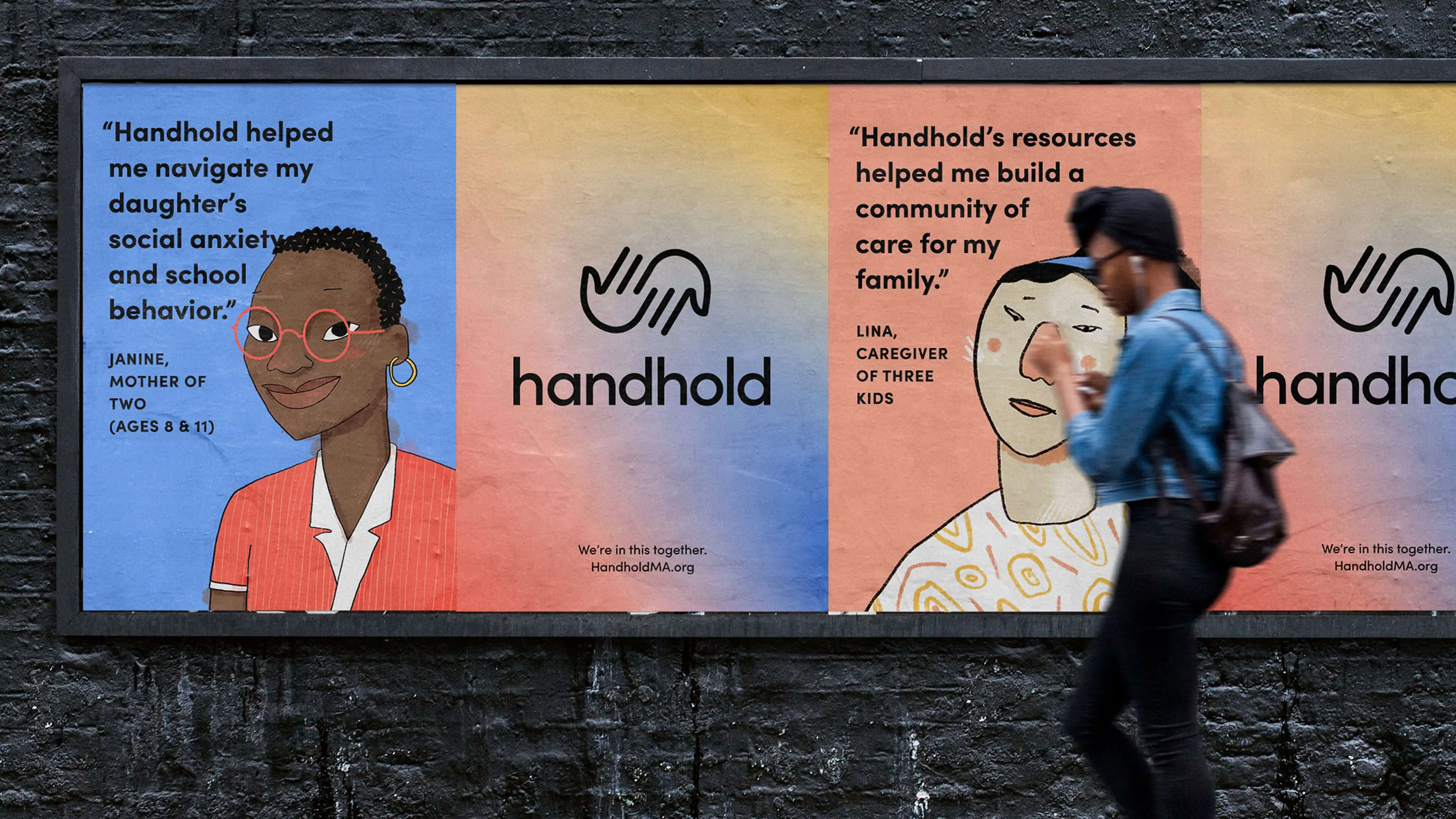

A helping hand
Massachusetts puts families at the heart of mental health.
The urgency of attending to our children’s mental health cannot be overstated.
Concern about their well-being was already on the rise in the decade prior to the pandemic. Alongside social inequity, the COVID era has seen soaring rates of depression, anxiety, trauma, loneliness, and suicidal thoughts. Knowing that mental health is influenced by numerous systemic factors, we met with families of all income levels and heard from practitioners throughout Massachusetts. In some communities, mental health is candidly discussed, in others it remains a taboo subject. Through these conversations, we learned that mental health requires both individuals and their families to be educated, supported, and empowered.
HandholdMA.org helps families find services that work for them and gives them easy access to information on a range of mental health topics. It allows parents to learn from and support one another as they navigate the landscape of mental health together. We took special care to make resources feel approachable for those in communities of color, and curated new resources for everyone from preschoolers to teens—because mental health challenges do not discriminate.
In 2020, a coalition of the nation’s leading experts in pediatric health issued an urgent warning that the mental health crisis among children had become a national emergency.
The percentage of emergency department visits for mental health crises rose by 24% for children between the ages of 5 and 11, and 31% for those 12 to 17, compared with 2019.
87,000
site visits to to HandholdMA.org since launch
223,000
people reached in bilingual social media campaign
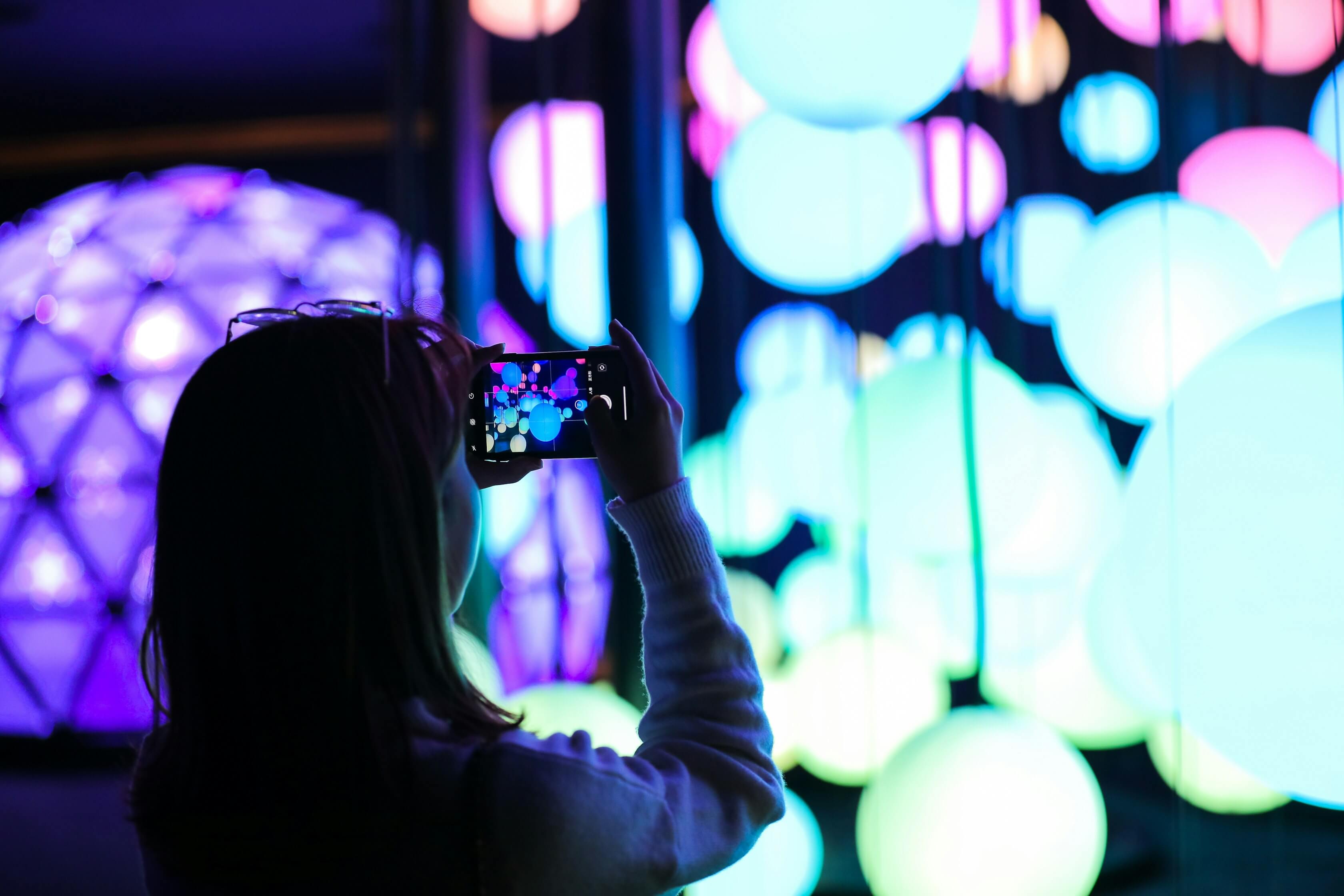
Evolving to meet young consumers
Accelerating vivo’s transformation journey to connect with China’s young consumer.
To help shift vivo’s thinking from a focus on products to a focus on brand-building, IDEO set out to help the company understand how young consumers experience fun—a core tenet of the vivo brand. The new concept store needed to convey joy and fun in a meaningful and memorable way. The project was about more than just designing the space; it was also about piloting into vivo’s future brand systems.
To kick off the project, the IDEO team conducted user research in four different cities in China, then shared the stories of young Chinese consumers with the vivo team. Their interviews revealed that young people value experiences that enrich their lives and create a feeling of positive personal transformation. They seek opportunities to discover new experiences, express themselves in different ways, expand and deepen their social connections, and build knowledge and skills. By leaning on this definition of “enjoyment,” IDEO helped vivo identify the value proposition of the concept store, helping consumers express themselves in new and different ways. The store would allow every visitor to see something unique and find a fresh perspective.
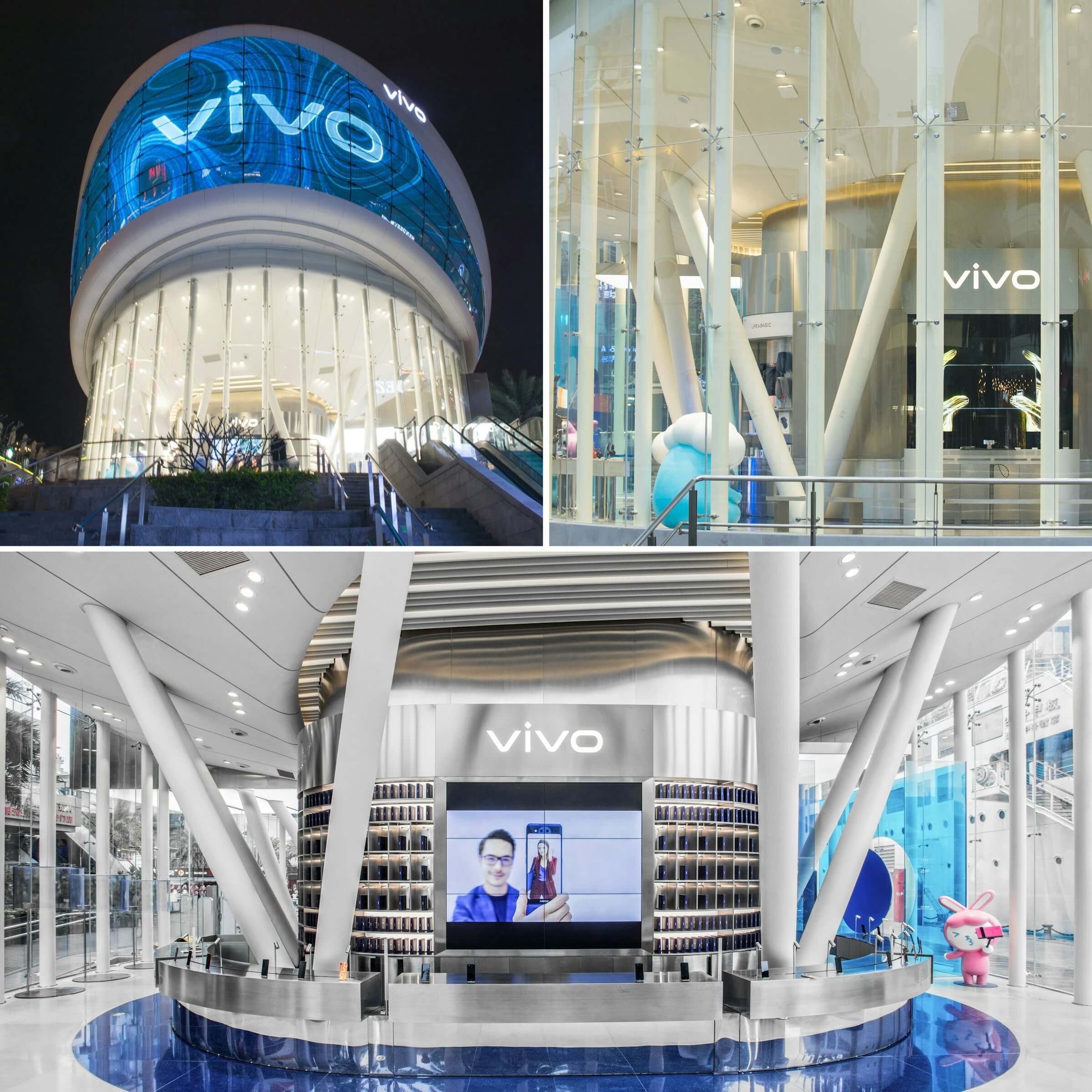
The vivo team took that value proposition into a design brief and later built out the space and interactive experiences. The second floor of the store is dedicated entirely to interactive experiences using photo booths, sound recording, and lighting technology, designed to provide consumers with the kind of enjoyment they seek. vivo launched the concept store in Shenzhen on March 22, 2019, marking an important milestone in vivo’s transformation from a smartphone maker to a consumer brand.
China consumes roughly 30% of the world’s smartphones—which presents a tremendous market opportunity for brands looking to capture young consumers’ loyalty.
Top 1
in China's smartphone market, topping both shipments (sale-in) and retail sales (sale-out), in the first half of 2024
260M active users
within two years of vivo Lab's official opening, with 70% of them young users
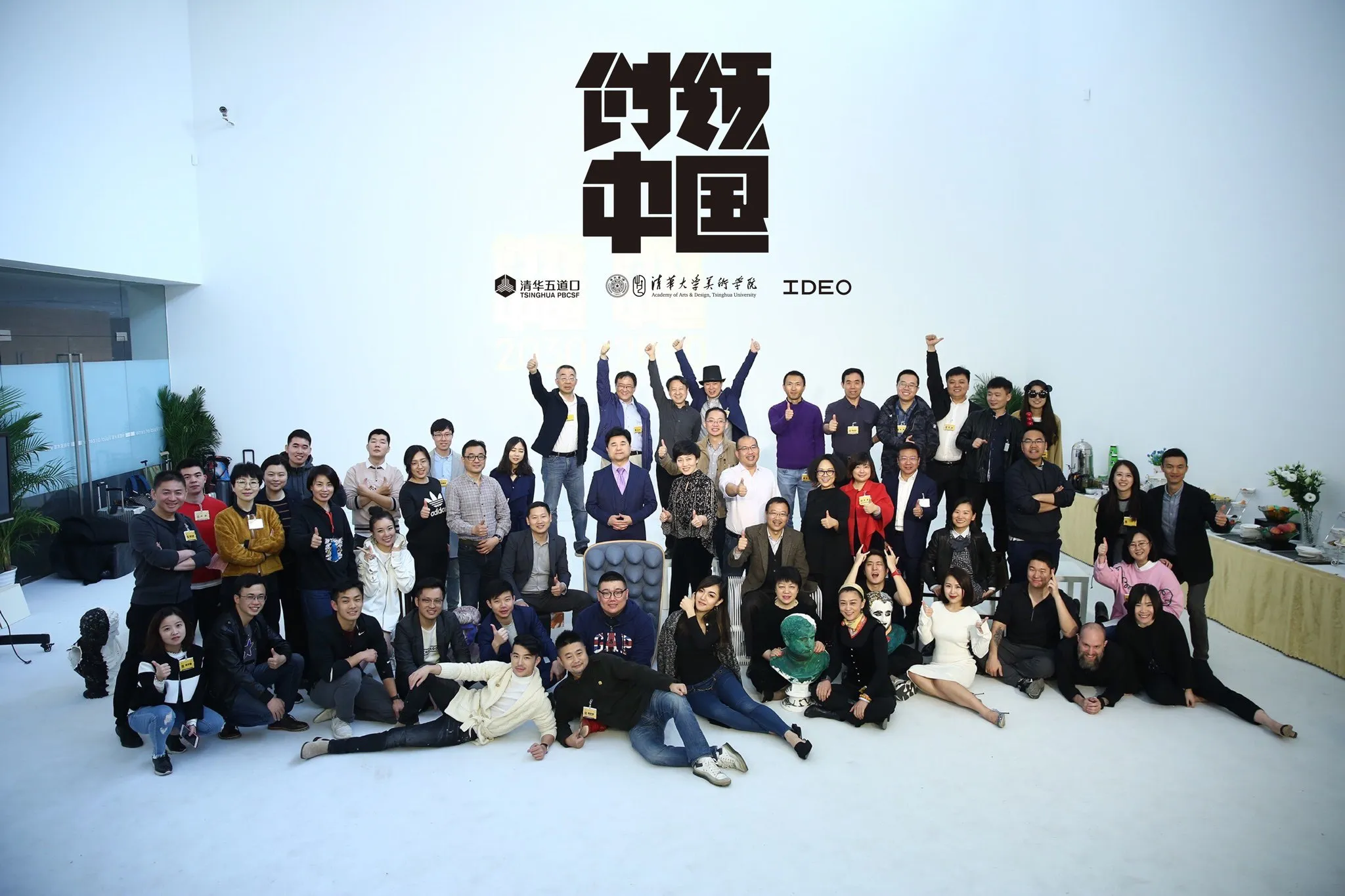
Transformation through creative leadership
Tsinghua University launches China’s first leadership course focused on design thinking.
The program Tsinghua and IDEO created together consisted of six modules focused on creative leadership: Rediscover Design, Build Design as a Core Competency, Creating the Conditions for Creativity, The Financial Levers for Innovation, Designing for the Fourth Industrial Revolution, and Leading for Tomorrow. 73 Chinese and foreign experts helped teach the modules, including former Forbidden City Palace Museum director Shan Jixiang, the father of Japanese industrial design, Masayuki Kurokawa, and Jake Knapp, author of the book Sprint.
The program’s first cohort included more than 30 entrepreneurs from 20 different industries across nine cities. Participants completed the courses throughout the year, taking full advantage of holistic, interactive teaching and the opportunity to share their own practical experiences. Their feedback consistently demonstrated how the course had given them fresh approaches to problems their companies faced, whether improving internal communication or helping them see the clients they serve from a new perspective.
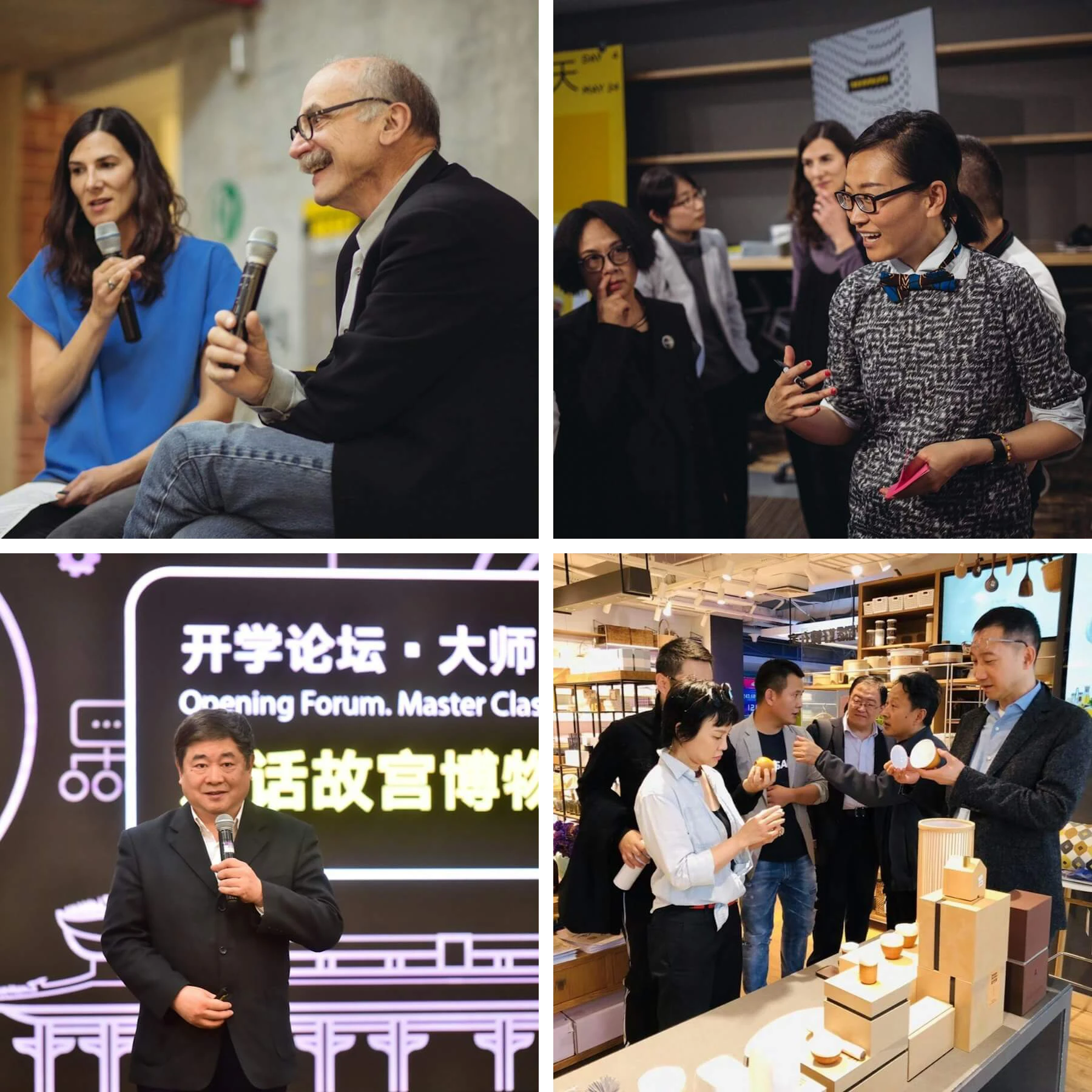
Liu Feng, the founder of a fast growing tourism development company, was particularly inspired by the Creating the Conditions for Creativity module’s six pillars of corporate transformation concept. Using these pillars, he not only refined the mission and value of his company, but also launched a series of measures to improve all aspects of its operations, from customer service to annual company gatherings. With a newly empowered team, he significantly increased the agility of the organization.
Ting Zhihong, the chairwoman of China’s leading logistics technology company, managed to double its profit during the course. She said her biggest takeaway from the course was how important it is to empower the team. Her company has now set up several platforms that give employees more room to experiment, create, and take part in frontline decision-making, bringing them closer to the company’s management.
Hu Chao, founder and CEO of China’s largest e-commerce platform for childcare goods, found that while other executive courses simply teach knowledge, Lead a Creative China taught him the importance of placing people at the center of what his company is doing.
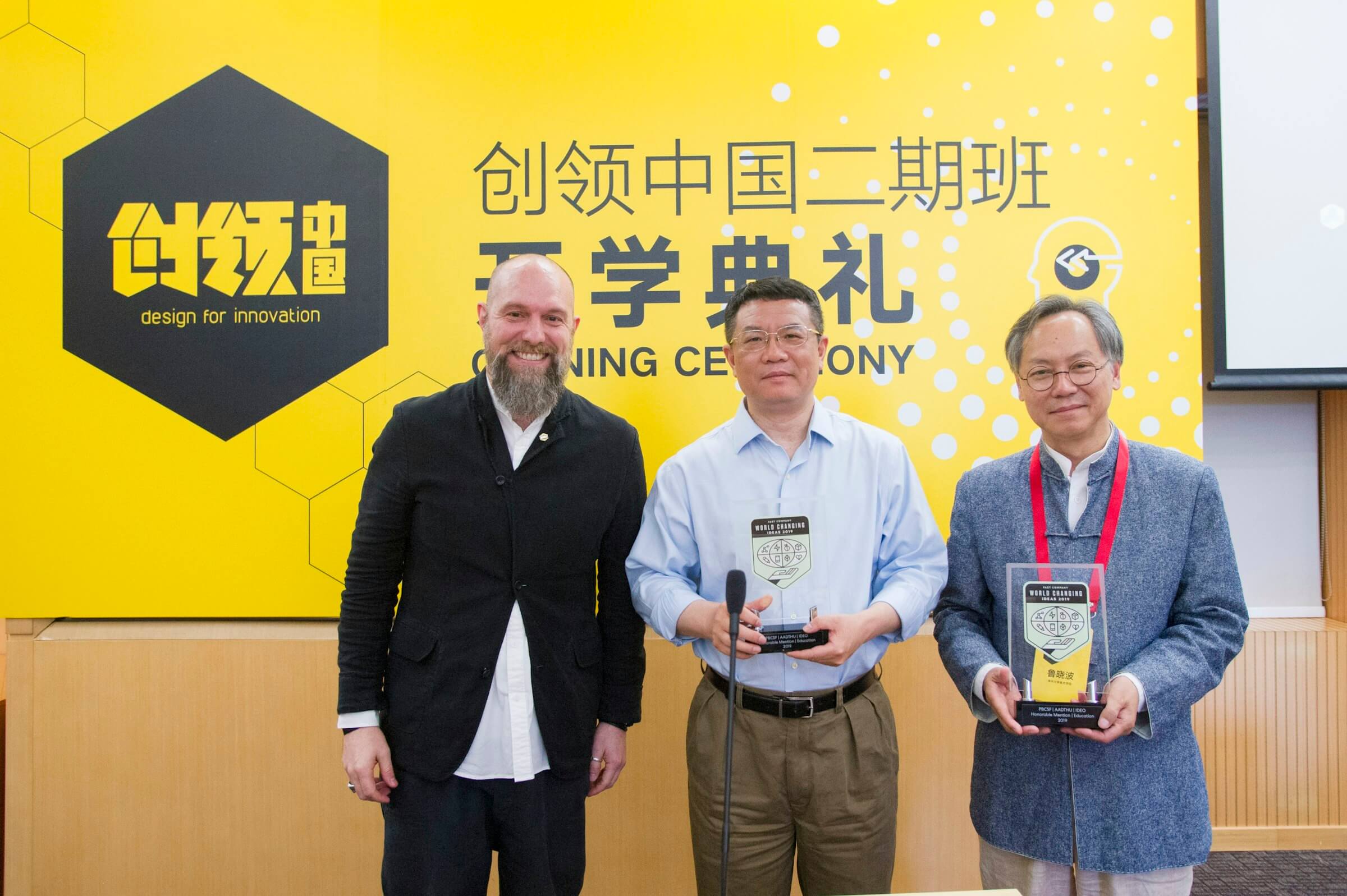
The first cohort of the program graduated in December 2018. On April 8th, 2019, the Lead a Creative China program received an honorable mention in the education category as part of Fast Company’s 2019 World Changing Ideas Awards, becoming the only award-winning Chinese project in the category.
After 40 years of rapid change, China has reached a pivotal point in its growth trajectory. Across the globe, traditional drivers of economic growth have slowed down, creating opportunity define the new economy.
The Chinese government has laid out a wide range of ambitious policy plans to ensure that China successfully manages this transition, and that the country continues to grow and lead.
Honorable Mention
education category, Fast Company’s 2019 World Changing Ideas Awards
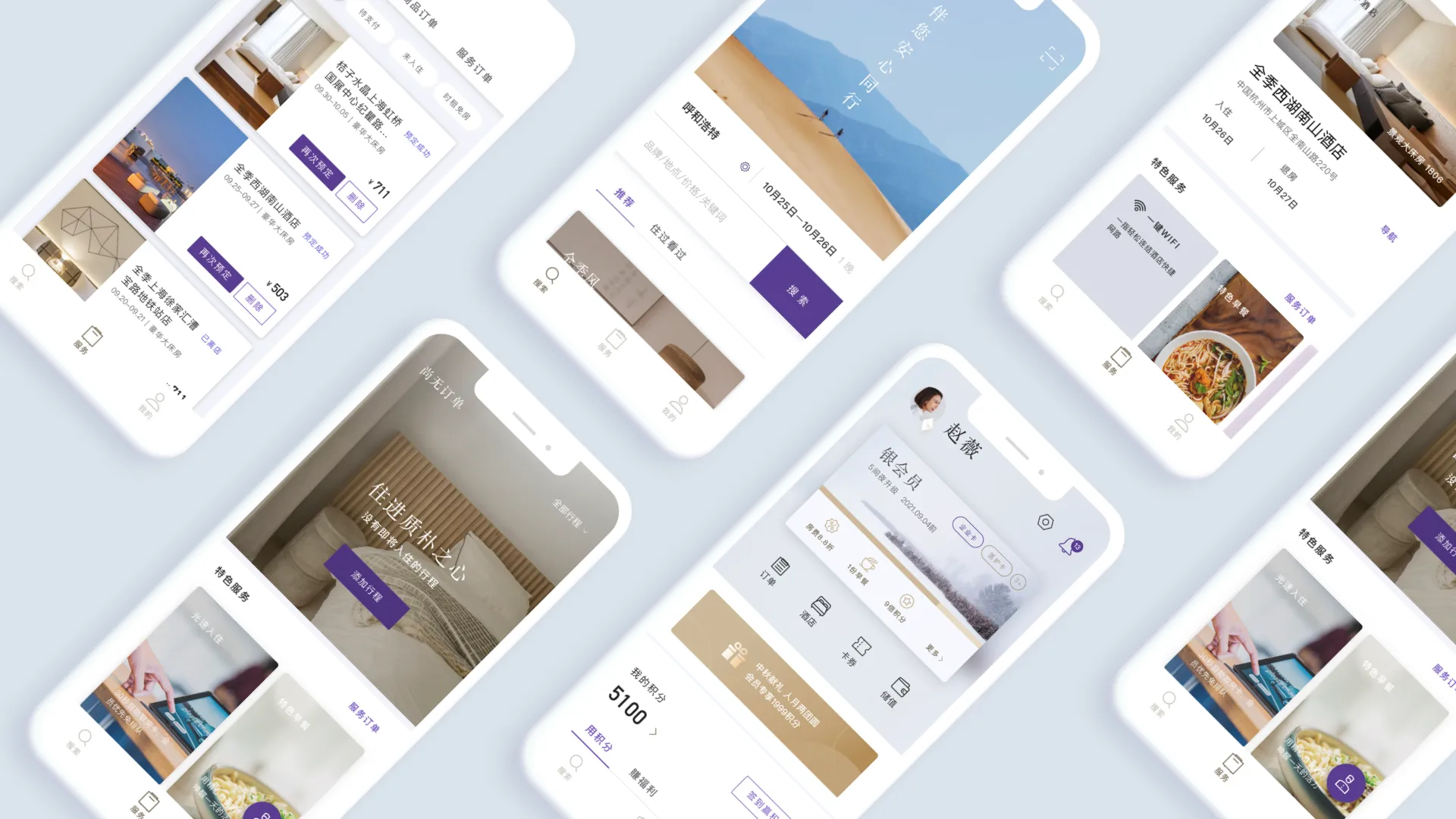
Human-centered hospitality via a tech-forward app
Huazhu Hotels Group translates its renowned hospitality brand into a seamless digital ecosystem for guests.
China’s digital landscape is dominated by highly integrated mobile apps like WeChat and Alipay that seamlessly combine messaging, shopping, bill payment, and finance management. This shift toward digital-first interactions that are hyper-convenient, personalized, and intuitive has significantly shaped consumer expectations for experiences like finding, booking, and staying in a hotel. To stay competitive and meet—or exceed—young guests’ expectations, Huazhu needed to redesign its Membership App 3.0 to prioritize guest needs across all touchpoints of the hotel journey.
Through in-depth research and member feedback, IDEO discovered the true pain point the Huazhu membership app needed to address: seamlessly integrating the hotel brand’s online and offline experiences. The Huazhu Membership App 3.0 adopted “simple, stable, and real” design principles, simplifying user operations, optimizing the interface, fixing lingering experience issues, maximizing page load speed, and reducing crash rates.

The IDEO team discovered users have different functional needs. Sometimes, users want to search for hotel information quickly. Other times, they prefer to explore and browse content slowly. To meet both needs, the app needed to be optimized for efficiency and exploration. So, the IDEO team upgraded the interface of the Huazhu Membership App, adding quick operation modules and information blocks on the main page, as well as a downward scrolling interface that gradually slows the experience, offering channels for detailed exploration.
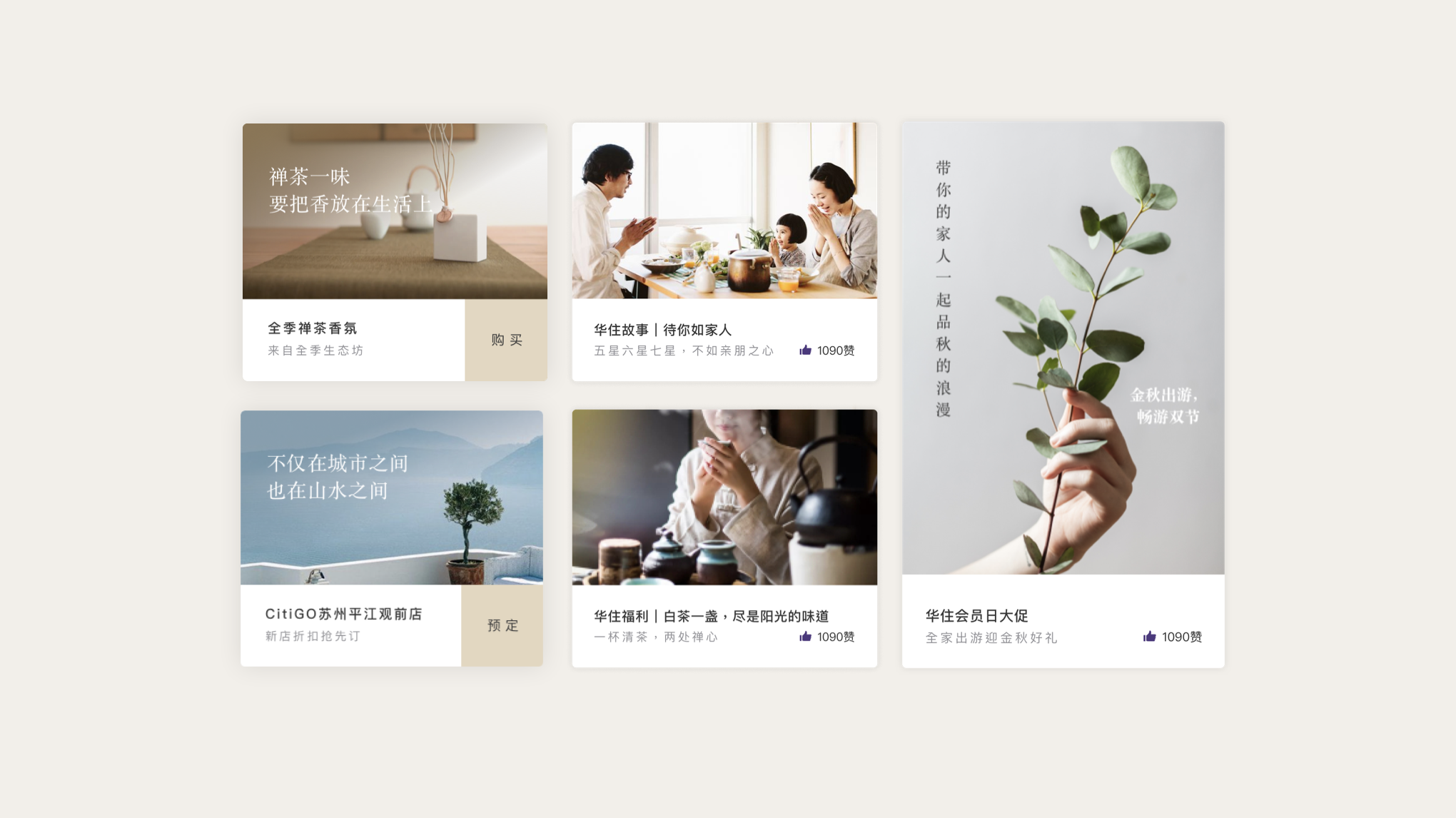
Customers also had different needs at different points in their travel journey: before, during, and after their stays. IDEO designed the language and user interface to provide personalized service information for each stage, from booking to post-stay. The app’s content adapts to the user’s travel phase, showing the most relevant service experiences at each point. The content displayed on the app also changes based on user habits, helping the app flex to meet their needs. The design aligns with the Huazhu Hotels Group’s mission to provide personalized service to a diverse clientele.

The team also worked to inject Huazhu’s brand characteristics by offering an upgraded experience in booking, stay, dining, and member benefits and adding features like a 30-second, automatic check-in experience. These thoughtful, personalized updates integrate Huazhu Hotels Group’s meticulous service philosophy, providing customers with a welcoming, human-centered hospitality experience. The updated Huazhu Membership App 3.0 is now available in major app stores, shaping a new generation of user experiences for Huazhu Hotels Group.
Young travelers in China expect the first touchpoint with a hotel brand to be digital.
5% increase
in monthly active users after the launch of the App's 2.0 version in 2021
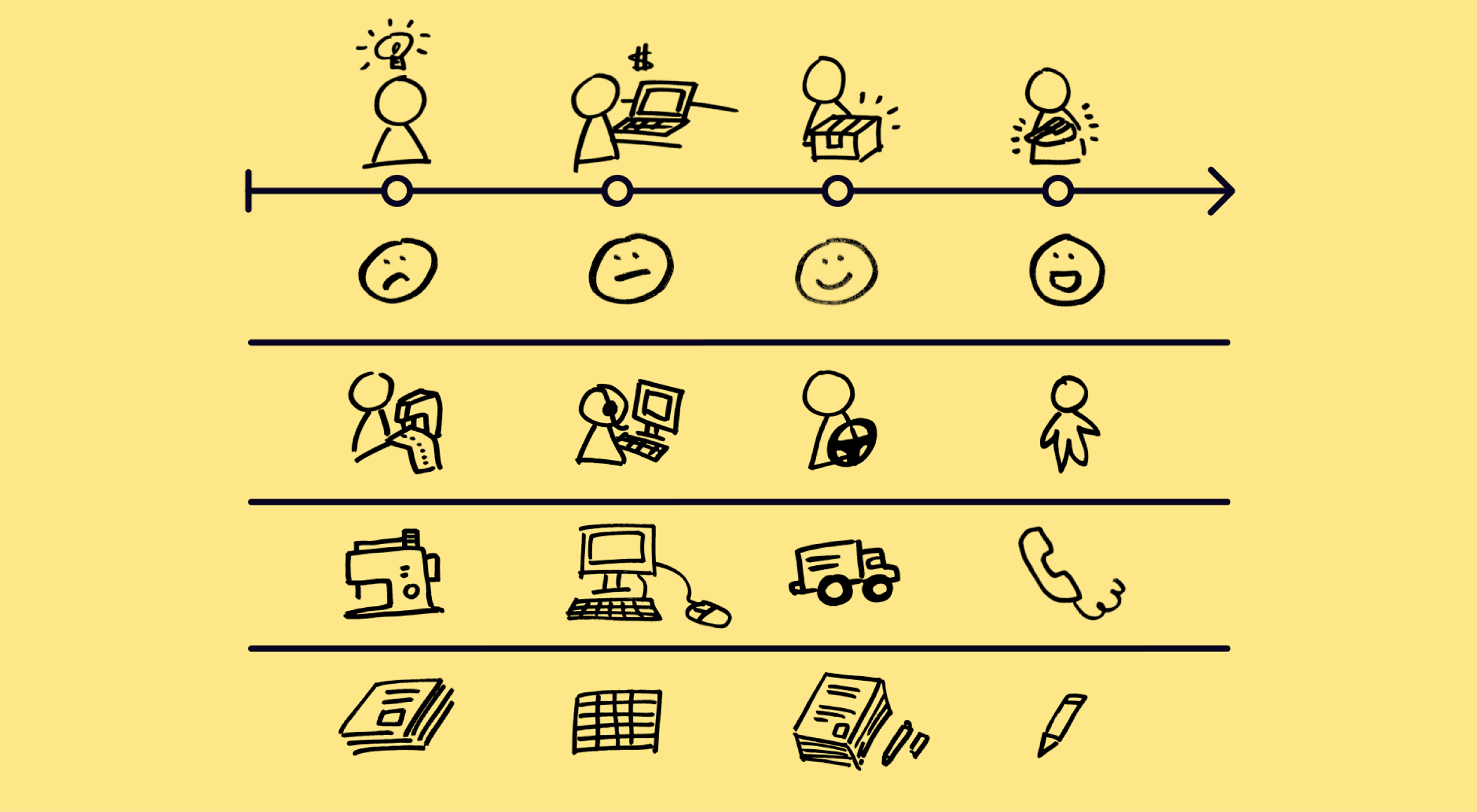
3 tips to help you prototype a service
Prototyping is an integral part of design, but what does the process look like for experiences and human interactions?
A prototype of a physical product is easy to imagine, but the process of leaving the hospital after giving birth, or having a new kind of conversation between a traveler and a flight attendant, is not easily built out of cardboard and foam core.
In my years at IDEO—and at companies like LeapFrog and Virgin Entertainment Group—I’ve seen service prototypes come in many shapes and sizes, but I’ve found the most successful ones are based on real customer needs and co-created with the people responsible for delivering the service. Whether you’re building storyboards and sketches, simulated interactions, or mocked-up physical spaces, these three tips should give you a little inspiration to help you create your own.
1. Design only the details that matter
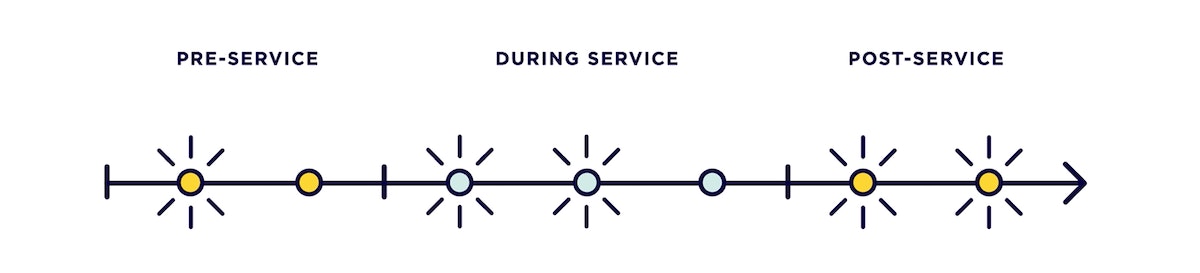
Keep in mind that with any prototype—service design included—you’re looking to spend a little (effort and money) to learn a lot. This is especially relevant in service prototypes, which can change over time, and often involve components like people, space, and physical and digital objects. Figure out what elements of your service are necessary to show potential users what their experience would actually feel like, and eliminate the rest. For instance, if you want people to feel welcomed to an experience, you might spend more time designing the human-to-human interactions, and less time figuring out the design of the space where the interactions take place. If you want people to feel efficiently handled during a check-in moment, you might spend more time designing the digital interface for the process, and less time designing the artifacts and documents that are sprinkled throughout.
In a project with Kaiser, we created a visual checklist that nurses could use to help parents understand all the steps that needed to happen before they could take their babies home. To make sure that the new tool wouldn’t add to parents’ confusion, we hung paper prototypes in some rooms, and had nurses mark the number of calls they got from each patient. It turned out, parents who had a prototype had 60 percent fewer questions than parents who didn’t. And we were able to pick up all those insights without even worrying about what the space looked like—just a simple prototype.
2. Factor in the before and after
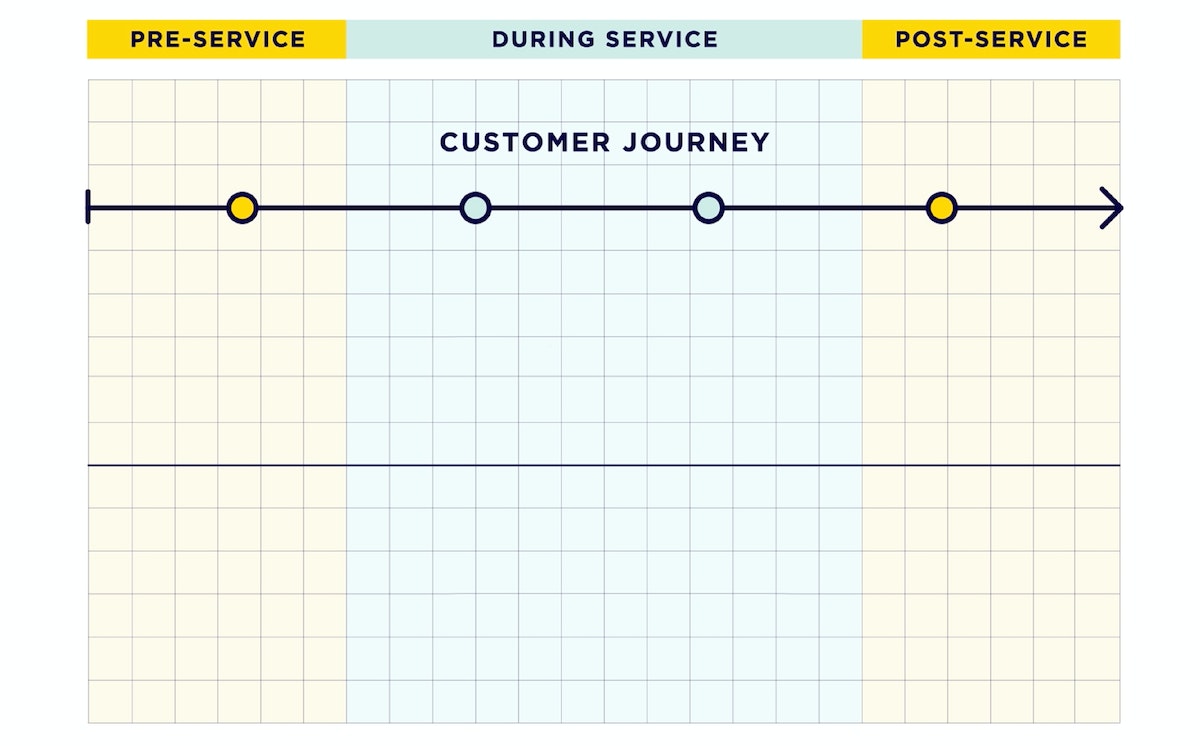
When designing a service moment, consider the user experience not just during the moment, but also before and after. Think about a simple moment, for example checking into a hotel. What happens before? Are guests arriving travel weary and jetlagged? Are they coming to celebrate their honeymoon? As a service provider, it’s important to remember that you’re not the only thing on the user’s mind, they’re processing this moment along with everything else going on in their day. After check in, could they easily find their room and was it clean? Were they able to quickly transition into desired activities whether to celebrate, get pampered, and relax, or get to an event like a conference?
In a project with the hotel chain Crowne Plaza, our goal was to design a lobby space that would work for all business travelers. We created a concept that would include spaces for heads-down time, places for group work, a grab-and-go menu of healthy items, and a staff member who could help with business needs. To test it, we set up a network of sensors and cameras to track traffic flow through the different spaces, and which were used most, and when. With these metrics, and interview answers from guests before and after seeing the prototypes, we were able to gauge how well we were meeting traveler needs at every stage of their journey.
3. Involve users and employees
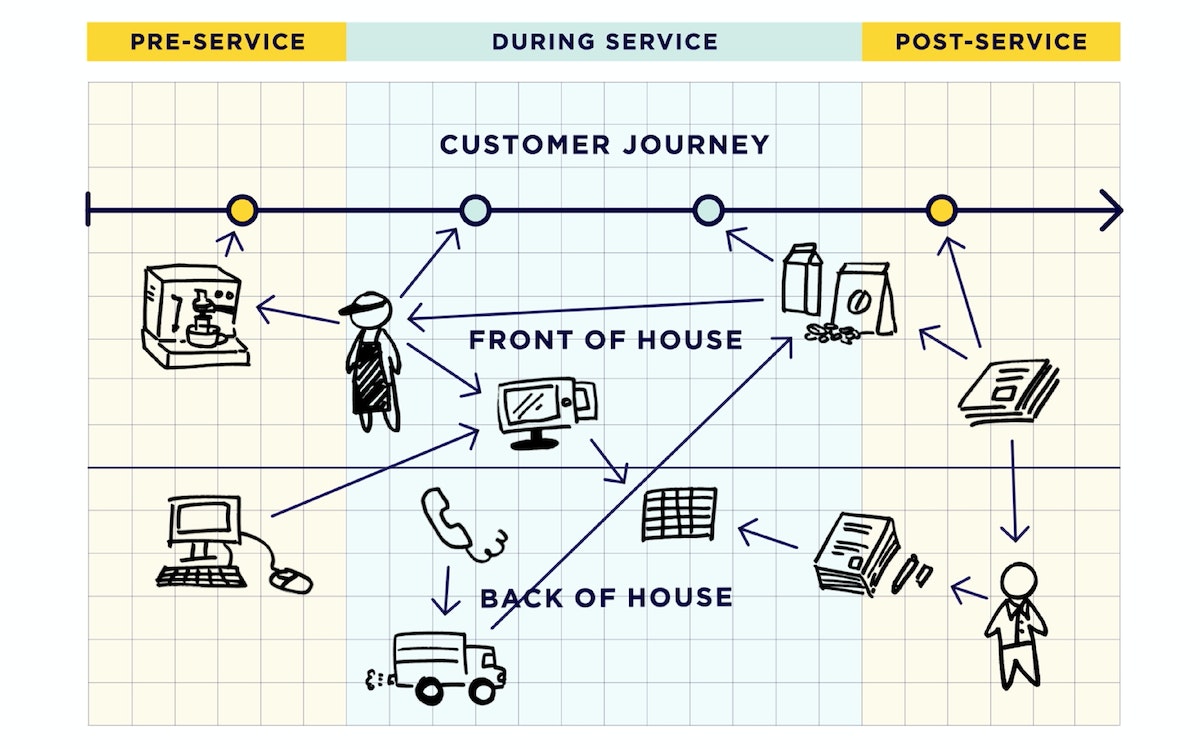
Prototyping helps us pick apart our assumptions, see where we’ve made progress, and where we’ve failed. Designing services is a process that must be done collaboratively, particularly with those who are ultimately responsible for delivering the service to customers. That ensures that you have the right experience and depth to inform new ideas. And it helps you get crucial buy-in when you’re promoting the future vision of your service.
So who should you invite to create and test your prototypes? Think about employees, end users, even people moving around behind the scenes, and figure out how they should show up in your prototypes. Do you need a real nurse chatting with a real patient? An actual bellman who can try out a new check in process with a million-miler business traveler? What about the executive who is ultimately in charge of the project?
In a project with Lufthansa, we were looking to redesign business class to keep up with modern travelers. Once we homed in on the experience we wanted to create, we built a 1:1 scale mockup of a plane with some foam core and business class seats, then invited real travelers and crew to test it out. Not only could they report on the experience from both sides, execs could check out the experience, too, and sign off on our new ideas.
The best advice for service design prototyping, though, is the same as any other kind of design work: Do it early, do it often, and keep iterating toward the right solution.
Prototyping is an integral part of design, but when it comes to experiences and human interaction, it can be hard to figure out exactly how to do it.

15 podcasts playing in IDEO ears right now
Podcasts we're currently listening to and loving
For listeners, the panoply of podcasts seems to grow daily; and for creators, there’s an exponentially growing audience, which means even the most obscure subject matter is bound to find eager ears.
In 2016, we posted 15 inspiring podcast recommendations from IDEO designers, and exactly two years later, we’ve built a whole new list. This time, we put the call out to all of IDEO, inviting recommendations for all types of programming—whatever our teammates are currently listening to and loving. Hopefully many on this list will be new to you, and will help freshen and diversify your own audio queues.
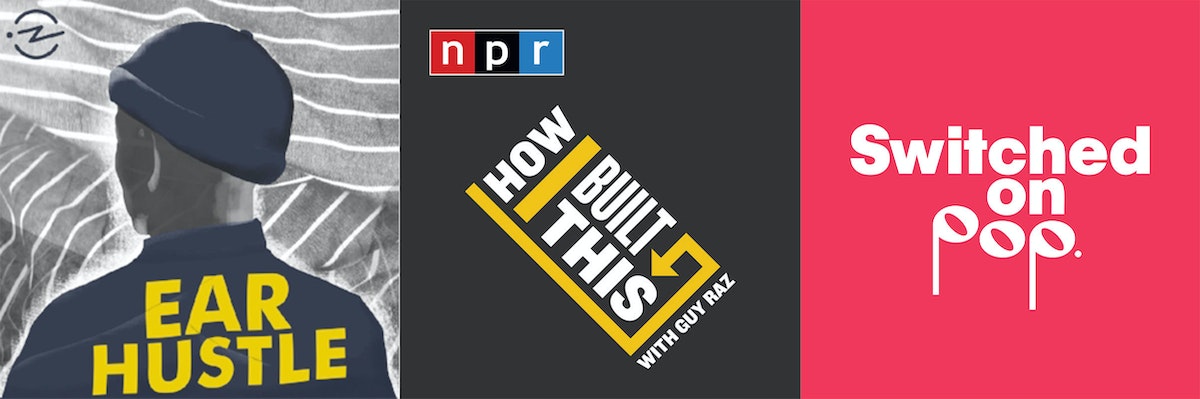
1. Ear Hustle
Ear Hustle takes an honest look into the lives of people within the confines of the American prison system, and it invokes both laughs and tears. Nigel Poor, a Bay Area-based artist, teams up with Earlonne Woods and Antwan Williams, both current prisoners at San Quentin, which is California’s oldest prison and houses the greatest number of death row inmates in the nation. The three hosts produce stories at the facility’s media lab, where they explore topics as light as how “cellies”—or roommates—are assigned, and as dark as the gut-wrenching effects of the three strikes law. Regardless of the topic, each episode is eye-opening and humanizing, allowing listeners to understand the realities of living behind bars. —Sue-Jean Sung
2. How I Built This
How I Built This takes listeners on a “behind the scenes” tour of how driven entrepreneurs turned innovative ideas into world-changing companies. The stories are full of passion, challenges, successes, and failure...how couldn't you get hooked on this podcast!? Most compelling is the overwhelming humanity that comes through in each founder’s story. Without question a feel-good podcast that will get your creative juices flowing! —Andrew Evans
3. Switched on Pop
I love Switched on Pop because I love music, and pop music tends to get a bad rap or get brushed off as sugary, over-simplified sound, which is just not the case. This podcast is run by a musicologist and a pop songwriter. They deconstruct songs sonically and lyrically to help give some insight into what the song is doing, and how it achieves its goals. The musicology perspective is fascinating to me and helps me deconstruct other songs that I hear. —Meg Rice
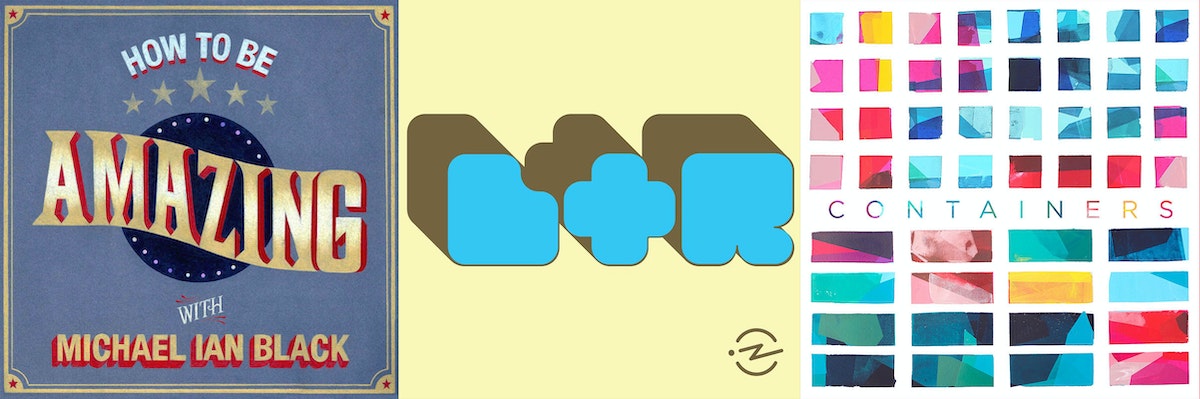
4. How to Be Amazing
How to Be Amazing is an in-depth interview show hosted by comedian, author and actor Michael Ian Black. I love this podcast because Michael Ian Black as a host is simultaneously witty, vulnerable and empathetic. Thus, the conversations move fluidly between banter and deep revelations. The guests are creative types: artists, authors, chefs, musicians. Black's focus is on how each guest manages to find creativity and persevere in his or her field. Every episode ends with an “Amazing 5” recommendation segment, in which the guests recommend a book, music, food, TV, and miscellaneous item. My favorite episodes: David Sedaris, Elizabeth Gilbert, Maira Kalman, and Judd Apatow. —Mollie West Duffy
5. Love + Radio
I love Love + Radio! It has amazing non-fiction, long-form stories. Each one is unique and totally unexpected. Every time I listen to this podcast, I find myself transported to another world. It's truly magical. One episode in particular that stands out is a series of interviews with a man who is dating a life-sized doll, but [spoiler alert!] you don't realize his girlfriend is a doll until the very end. It’s incredible! You really learn how to feel empathy for people whose lives are worlds away from your own. There's also a three-part series about a woman in Colombia who realizes that the family she's just married into are drug lords. The series follows her story as she moves to the US and later is forced into hiding in the Witness Security Program, after providing information to the US government. Another story I loved was from a woman who had an out-of-body experience while undergoing surgery. —Ali Cottong
6. Containers
I got really into the Containers podcast. I never thought I would geek out so hard on this seemingly mundane part of the global supply chain. As a designer at IDEO, I work with a lot companies on their journeys to become “future fit.” One way companies are becoming future fit is by making the bold shift from a increasingly strained linear economy (take, make, waste) to a more prosperous, circular one (one that is regenerative and keeps materials and resources in flow at their highest use for as long as possible, creating new value along the way).
One huge part of redesigning a future economy is understanding how our economy today is designed. This podcast tells the story of containers, something so seemingly banal and ubiquitous. It colorfully illuminates how they came to be and the role they’ve had in transforming not only our economy but so many facets of our modern society in such a short amount of time.
As we design and prototype new tools, platforms, products, services and ventures in the circular economy, Containers inspired me to see the transformative power that a single, simple, and elegant innovation can have when it allows people to do something they couldn’t do before, at a tremendous scale. —Rhys Thom

7. Death of 1000 Cuts
I’m listening to Season 1 of Death of 1000 Cuts. It’s actually an 8-week writing course given by a poet, Tim Clare. The 15-minute podcast gives advice and a structured 10-minute writing exercise every day for 8 weeks. It helps with stagnant writer’s block, writing confidence, writing fatigue and helps exercise the writing muscles for people to feel empowered to write and to dedicate the time to creativity. I love it because while I’m an (IDEO) lawyer by day, it means I get to do the creative flex thing by night. —Rebecca Wint
8. My Favorite Murder
My Favorite Murder is a true crime comedy podcast—not a combination you'd expect, but the hosts, Karen and Georgia, make it go down like chocolate and peanut butter. It’s not at all about glorifying the crimes, but rather, looking into the darkest parts of the human experience and finding a way to laugh. MFM (as fans call it) has also inspired a feminist movement with a massive fan base. There's even an IDEO Slack channel devoted to the podcast. —Jennifer Maer
9. NPR's Hidden Brain
Hidden Brain features amazing storytelling on why we do and think the ways that we do (backed with experts in the field!). Why are people in multi-cultural relationships more creative? Why did a competitive luxury brand gift Snookie a rival Gucci handbag? Why does wearing bright red sneakers make other people feel you're more influential? Why should marriages be more like Pinot than Cabernet? All these questions answered (and more) through the Hidden Brain. —Mike Peng
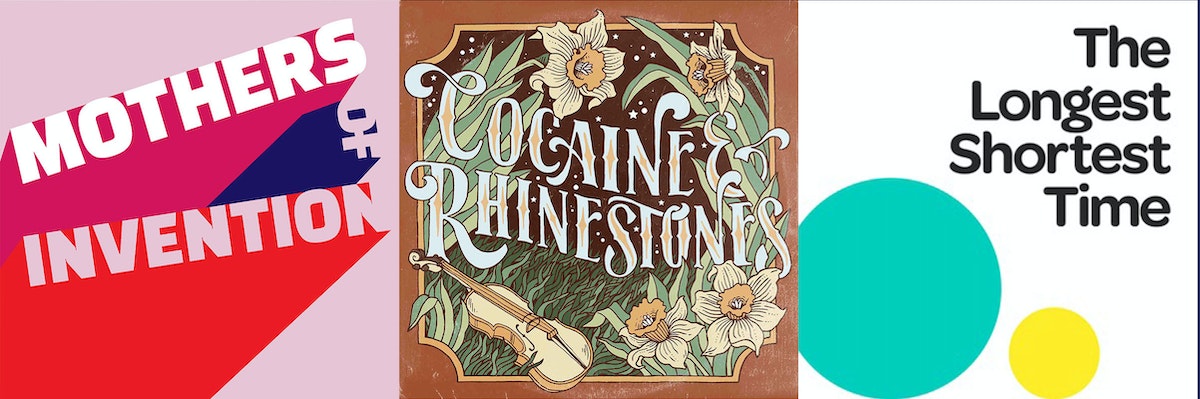
10. Mothers of Invention
Mothers of Invention is about climate change, how it's a feminist problem, and has a feminist solution. It's hosted by Maeve Higgins, an awesome comedian and storyteller; and Mary Robinson, the former president of Ireland (!). It's the first thing I've listened to on climate change that has made me feel something like hope. —Ashley Holtgraver
11. Cocaine and Rhinestones
Cocaine & Rhinestones is an in-depth look at some of the wildest stories of 20th century country music. I suppose I love it because I love old country music and was raised in an environment where Hank Williams was God. But these stories go much deeper than fading memories of hearing steel guitar over a busted truck radio. It's so well researched I might compare it to a Ken Burns documentary. Yes, it's dark, and that's why you'll love it. Murder...check. Alcoholism and adultery...check. People behaving in intolerable ways...check. But all of the negativity and carnage are balanced by unflinching tributes to a truly unique American musical creation. It's incredibly respectful of those who wrote and performed the music. Irony is uncool now anyway. This feels real. —Zach Hobbs
12. The Longest Shortest Time
The Longest Shortest Time is a parenting show. I like to think about someday becoming a parent, but even as someone without children, the way they talk developmental theory makes the whole concept of parenting feel more diverse and accessible. I don't have kids yet, so I listen in to see what my future could look like, and to learn more about youth today. —Stuart Getty

13. Getting Curious with Jonathan Van Ness
I love Getting Curious with Jonathan Van Ness because, well, Queer Eye is my new obsession, and he just absolutely delights me. He's so smart and yet somewhat hides it to remain more "curious," and he really explores every topic under the sun, from Saudi Arabia to abstinence in addiction therapy. —Madeline Armstrong
14. Change Agent from The New York Times
I've been surprised by how much the stories told on Change Agent stick with me, and how powerful analogous inspiration can be in helping us change our behavior. —Em Havens
15. Racist Sandwich
Racist Sandwich is a podcast about food, race, gender, and class. It's a refreshing, honest, and deeply human look at what happens at that intersection. I really like the podcast because they tell different stories from points of view that are rarely highlighted by traditional media channels. I am a latecomer to the show, but I found their episodes "Tasting Something other than Shame" and "Detroiters are Fighters" to be particularly inspiring. —Sandeep Pahuja
Now that we consume most of our information through screens, audio programming is a breath of fresh air. Podcasts enable us to get up and out, liberating us from the tether of phones and computers.

6 ways to hack your workspace and find more joy at work
Transform your work environment to increase joy and bring out your most productive, collaborative, creative self
That’s a shame, because research shows that feeling joy at work not only increases our wellbeing, but also our performance across the spectrum. Joy increases our working memory and cognitive flexibility, which in turn leads to better problem-solving. Take doctors, for example: Those who have been primed to feel joyful make a correct diagnosis earlier than those in a neutral mindset. Joyful businesspeople consider a wider range of scenarios and make more accurate decisions. Joyful negotiators are more likely to achieve win-win agreements. And it turns out it’s infectious: Joyful leaders spread positivity to their teams, increasing rates of effort and cooperation; and when salespeople exhibit joy, customers respond by spending more time in a store, giving higher satisfaction ratings, and expressing a greater likelihood to return.
Have I convinced you yet? Ok, then. Here are six ways you can transform your work environment to increase joy, and bring out your most productive, collaborative, and creative self.

1. Add a pop of color and light
Research with nearly a thousand office workers across four continents shows that people in more colorful workspaces are more joyful and alert than those in drab spaces. They’re also more confident and friendly. Bright colors reflect more light, which acts like a stimulant, a shot of caffeine for the eyes. If you can’t paint your whole office, try adding an item with a strong pop of color to your desk, like a vibrant piece of art or a yellow mug, to brighten up your space—and your spirits!
For even more joyful energy at work, go toward the light. There’s a reason most people prefer a desk near a sunny window. Light helps regulate our Circadian rhythms, leading to higher energy levels and mood. Research shows that workers who get more light exposure in their offices are more physically active during the day and sleep better at night. Among nurses working on acute care wards, more sunlight exposure correlates to an increase in spontaneous laughter. If you are slow to get going in the morning, see if you can find a spot near a window. Or fight the afternoon slump by taking your meetings outside.
2. Buy a plant
When you’re working in a high pressure situation, make sure to introduce some greenery to your workspace. Exposure to nature helps restore our attention and can mitigate the effects of stress on our bodies and minds—making it less likely that we’ll snap at our teammates. Psychologists believe that looking at nature refreshes our ability to concentrate because it is passive, but also stimulating. In many offices, nature views are a perk reserved for management. But the good news is that studies show even a few plants can improve attention, reduce blood pressure, and even prompt more generous behavior toward others.
3. Keep it cute
One of my most memorable days at IDEO was when one of my coworkers surprised us by arranging for fifteen puppies to visit our office. As people moved from one meeting to another, they couldn’t resist spending a few minutes sitting on the floor cooing and cuddling. It might sound like a distraction, but researchers in Japan have found that looking at pictures of cute things, such as baby animals, may actually help increase concentration. One theory is that cuteness elicits a nurturing impulse that requires focus and care, priming the mind to zoom in and tune out distractions. So, go ahead, share the latest otter video on Slack, peep the We Rate Dogs Twitter feed on your lunch break, and keep those photos of your adorable nieces and nephews on your wall. These joyful bursts of cuteness might just help you when you’re doing work that requires careful thought and attention to detail.
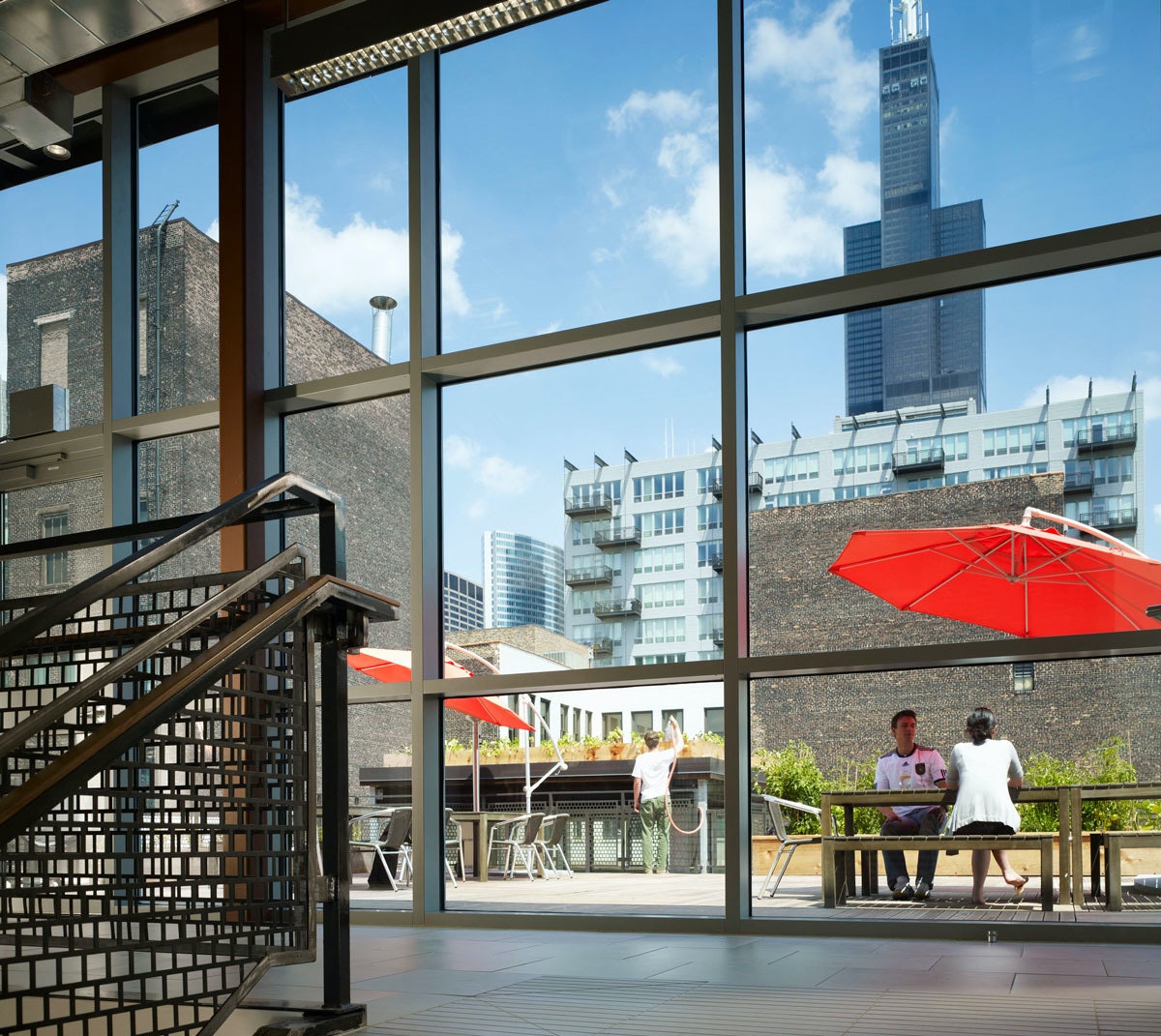
4. Get some air
When you need to zoom out and get perspective on a work challenge, seek out the joy of elevation. Our emotions often seem to lie along a vertical axis: we’re in high spirits or light-hearted when happy, we feel low or heavy-hearted when sad. By moving ourselves physically upward in space—ascending to a roof deck or even just climbing a set of stairs, we not only find a joyful lightness, but also a shift to more big-picture thinking. Psychologists have tested this by intercepting people who have just walked up or down a flight of stairs and asking them to think about people’s behavior. When participants are told that someone is painting a room, those who have just walked down a flight of stairs are more likely to think about the specific actions involved (“applying brush strokes,”) while those who have just walked up the stairs are more likely to think about the broader purpose behind the actions (“making the room look fresh”). Ever have a flash of insight on an airplane? When we need to make big decisions or solve intractable problems, elevation can help us literally “see the forest for the trees” and avoid getting caught in the weeds.
5. Keep the ball rolling
To cultivate a creative mindset, keep a ball or frisbee at your desk. Research shows the kinds of fluid, curving motions we make when we play can help unlock a more flexible thought pattern, which in turn heightens creativity. In one study, participants who made curving motions with their arms came up with more ideas for uses of a newspaper than those who made angular motions. And the ideas they came up with were more original. This might explain why you often find ping pong tables at startups, and suggests that taking time to play might be the perfect warmup for creative work.
6. Turn up the tunes
When you want to help your team find its groove, give them an actual groove. That can produce a phenomenon that scientists call synchrony—when we sing or move in the same rhythm with others. When people experience synchrony, either by tapping out a beat or a rocking in chairs at the same tempo, they display greater generosity and perform better on a cooperative task. Some researchers have speculated that this may have originated when humans first began to coordinate their efforts to achieve complex goals. By noticing the rhythms created through repetitive manual tasks, people could better synchronize their efforts, and perhaps this led to an unconscious sense of unity. If it’s not too distracting, one way to harness this effect may be to play music with a strong beat in your workspace. People will naturally begin to tap or nod along with the music, creating a synchronicity that helps you find your flow.
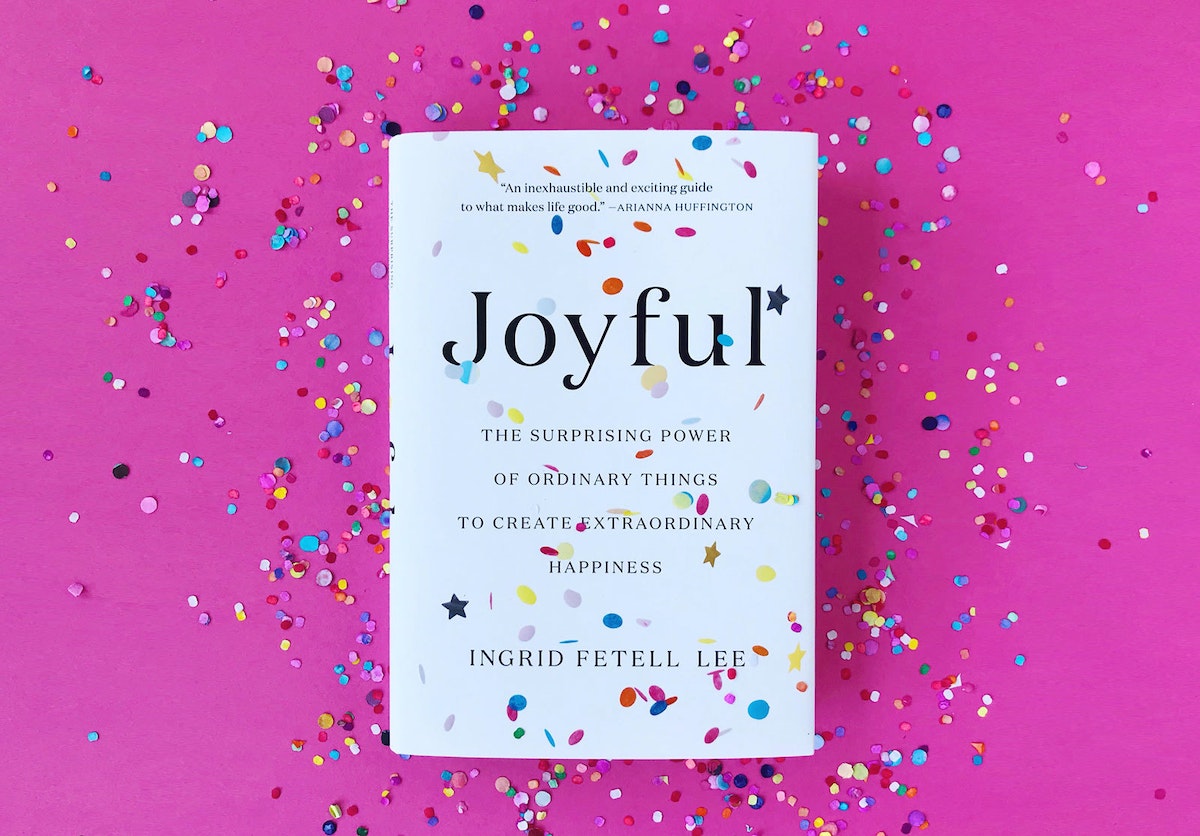
To learn more about Ingrid’s research on how to design for joy, check out her new book Joyful.
As a designer who studies joy for a living, one of the questions I am asked most frequently is: How can I find more joy at work? We spend at least a third of our waking hours at the office, and some of us much more than that. Yet most workspaces, with their beige carpets and rows of cubicles, aren’t exactly designed to delight.
Build your creative confidence: 15 seconds of brilliance
Everyone is creative. This belief runs through everything we do at IDEO
Creative Confidence has inspired thousands of people to adopt a creative mindset and apply it to the diverse real-world challenges they face. In this series, we’ll share some exercises from the book that can help you approach your challenges from a new perspective.
Creativity Challenge # 2: Increase your creative output
Anyone who studies dreams will tell you that if you want to remember your dreams, you need a dream journal right beside the bed. The moment you wake up—whether it’s the middle of the night or in the morning—you should capture those dreams before they fade away. The same holds true with your waking “dreams,” your partially or fully formed ideas, your glimpses of possible futures. If you want to maximize your creative output, don’t rely on short-term memory.
Even if you never get to experience Andy Warhol’s fifteen minutes of fame, you’re likely to have your own moments of brilliance once in a while. When that happens, make an effort to capture those ideas right away, because your short-team memory only holds a thought for fifteen to thirty seconds. One simple way to have more ideas in your arsenal is to start keeping track of them as they occur.
Tool: 15 Seconds of Brilliance
Participants: This is a solo activity
Time: 10 minutes per day
Supplies: Paper and pen, or a digital means of keeping notes
Instructions
When you have an idea or observe something intriguing, take note of it. The actual means of capturing the idea doesn’t matter as much as having it with you at all times. Choose a method or a technology that fits with your lifestyle and your personality:
- Digital tools are great, but paper still works exceptionally well. I always have a pen and a simple folded piece of paper in my back pocket. I also keeps a small pad of paper on my bedside table, with a lighted pen that I can use to jot down an idea while reading or in the middle of the night without fear of waking up my wife.
- My brother David has a whiteboard marker in his shower, so he can write a passing idea before it disappears.
- IDEO partner Brendan Boyle has experimented with various forms of “idea wallets” designed specifically to record his thoughts.
- Mobile voice assistants will let you dictate a quick mental note.
- Your laptop or tablet has all kinds of notepad applications. But we think you’ll get more functionality out of purpose-built programs like Evernote, specifically designed to store such ideas.
So increase your odds in the war against lost ideas. You’ll be amazed at how many good ideas you end up with when you make an effort to jot down those sudden moments of insight. Our brains are constantly making connections and associations with other people, things, and ideas we come in contact with. Don’t let those serendipitous insights go to waste.
This post is the second in a series of exercises taken from Chapter 7 of Creative Confidence. Purchase the book for more on how to use creativity to solve problems. Read part one here.
Everyone is creative. This belief runs through everything we do at IDEO, and in 2013, it led my brother David and me to write a book that would help others—even those who don’t think of themselves as “creative types”—to unleash their creative potential.

Lindsey Turner
I’m passionate about building brands, products, and experiences that help organizations show up with meaning and momentum.
I help organizations cut through complexity by shaping how they show up, through brand strategy, identity, and storytelling.
Working at the intersection of brand and business, I bring an editorial eye and a bias toward making—turning ideas into tangible experiences that people can understand, trust, and believe in.
My work spans government, healthcare, financial services, media, and consumer goods, from launching Gen Z-focused ventures to building innovation labs and reimagining legacy brands. I relish moments of ambiguity and enjoy translating across teams, perspectives, and priorities to move ideas forward.
I started my career in editorial and digital design, shaping cross-platform experiences and identity systems in publishing and agency environments. That foundation still shapes how I work today: I’m detail-oriented, collaborative, and overreliant on the Oxford comma. I hold a BFA in Visual Communication from the School of the Art Institute of Chicago.

Rachel Young
My work helps organizations see who their products aren't working for—and build the will and the tools to do something about it
For 25 years, I've asked the same question: Who does this design exclude—and what are we going to do about it?
My work spans human-centered strategy, inclusive design, and qualitative research, with clients ranging from Microsoft, Google, and Verizon to the National Science Foundation, and San Francisco Unified School District.
Before IDEO, I taught elementary school in East Palo Alto and spent a decade doing design work with social service organizations—where I learned firsthand what it costs people when systems are built without them in mind.
I am currently writing User Error, a nonfiction book about digital access and the design decisions behind it. I live in Oakland, California.

Brian Pelsoh
I lead with craft, ensuring our work is creatively excellent: rooted in deep human insight and imagination, while also grounded in the realities of business and technology.
My expertise spans brand, communication, and product design across tech, education, the arts, and social impact.
I believe great work demands both high-level vision and obsessive attention to detail, and only happens through collaboration.
I bring an inclusive, hands-on approach and a deep understanding of business, which enables me to consistently deliver excellence while always asking why.
Before joining IDEO, I worked at the brand firms Pentagram and VSA Partners. I began my career as a designer, leading teams at the School of the Art Institute of Chicago and the Milwaukee Art Museum. I hold an MFA in graphic design from Maryland Institute College of Art and a BFA in communication design from the Milwaukee Institute of Art & Design, and have taught at some of the best design schools in the US.

Tony Wong
I am responsible for IDEO’s long-term success in China and working with clients to use design as a tool to enable growth.
I am responsible for IDEO’s long-term success in China and working with clients to use design as a tool to enable growth. Specifically, I have helped Chinese companies design holistic brand solutions through the development of their products, communication, services, and innovation teams, and I have helped multinationals expand their presence and influence in China.
I advise global leaders on developing China-led innovation and capabilities.
In over 15 years in IDEO Shanghai, I have worked on projects that use design to elevate the quality of the experience of healthcare products and services, streamline processes that increase productivity, create spaces and programs that promote and enable inclusive communities, and build next generation mobility solutions that are planet-positive.
Before joining IDEO, I worked at Philips Electronics and the Electrolux Group in Italy, the Netherlands, and Singapore on a number of breakthrough commercial products. I am a member of the Young President Organization in Shanghai.

How to use AI as an editor, not a writer
Ed White shares how he uses AI as an editor—not a writer—to sharpen storytelling, rehearse ideas, and preserve the productive friction that makes creative work better.
Ed White has a rule he's tested on his own writing: hold yourself as the writer, and let AI be your editor. Ed is a Senior Design Director at IDEO's London studio, where he co-leads the firm's AI portfolio across Europe. Before IDEO, he spent 12 years as a writer and editor at the Financial Times, Wired, and Contagious. So when he talks about when to use AI for storytelling and when not to, it comes from two decades of crafting his storytelling skills.
In this episode, Mina Seetharaman talks with Ed about two specific tools he uses to keep AI in an editor's seat: a "roasting agent" prompted to critique his drafts without any sugarcoating, and a simulated audience he rehearses pitches on before the real thing. They also get into what Ed is hearing from design leaders at Anthropic, Lovable, Shopify, and Google Creative Lab about how creative work is changing, and why he thinks the friction of writing something yourself is worth protecting rather than automating away.

Building a personal AI for the messiness of life: Sida Li
Becca Carroll talks with Cue co-founder Sida Li about designing a personal AI for the messiness of everyday life—not just work. They explore how Sida stays anchored to human needs while navigating fast-changing technology, product tradeoffs, business-model experimentation, and the realities of building an AI company today.
Most AI products today are built for work—a space with clear problems and established systems. One founder noticed a gap: personal life is messier, harder to systematize, and mostly left behind by the AI boom. So she built Cue, a personal AI that lives inside iMessage and group chats, to go where the other tools haven't.
In this episode, Becca Carroll, IDEO's Chief Strategy Officer, talks with Sida Li, co-founder and CEO of Shared Context Lab, about staying anchored to a human need while the technology around her keeps changing shape, why she treats her business model with the same rigor she'd bring to a product, and what it feels like to build a company at this particular, disorienting moment in AI.
The conversation also gets into how Sida makes design decisions: the language Cue uses to describe itself, the tradeoffs behind building inside iMessage instead of a new app, and a real story about a business idea that didn’t pan out.
This is the second in a two-part series profiling founders from IDEO's Startups-in-Residence program. The first conversation is with Johannes Seemann, founder of Sooner, on designing GenAI for the emotional side of money.

Designing GenAI for the emotional side of money: Johannes Seemann
Designing financial tools around the feelings that shape money decisions.
Most personal financial tools are built to run the numbers and optimize towards a budget. While that works for some, most people experience money as a lived relationship that does not neatly fit into a spreadsheet. Johannes Seemann and Becca Carroll discuss why money is emotional before it is mathematical, and what a human-centered approach to building a generative AI financial product looks like in practice.

The curious leader's edge in uncertainty: Scott Shigeoka
How genuine curiosity helps leaders navigate uncertainty with greater confidence.
Mina Seetharaman talks with Scott Shigeoka, author of Seek and Head of Curiosity Cultivation at the Eames Institute, about what distinguishes genuinely curious leadership from performative curiosity, how power dynamics shape curiosity, and why practicing curiosity can restore energy rather than drain it.
Looks like you might be in search of something very specific?
Or reset the filters above and try another angle.
Here’s some random inspiration

Podcasts about creative leadership

Articles about the power of prototyping
































.webp)