
.svg)


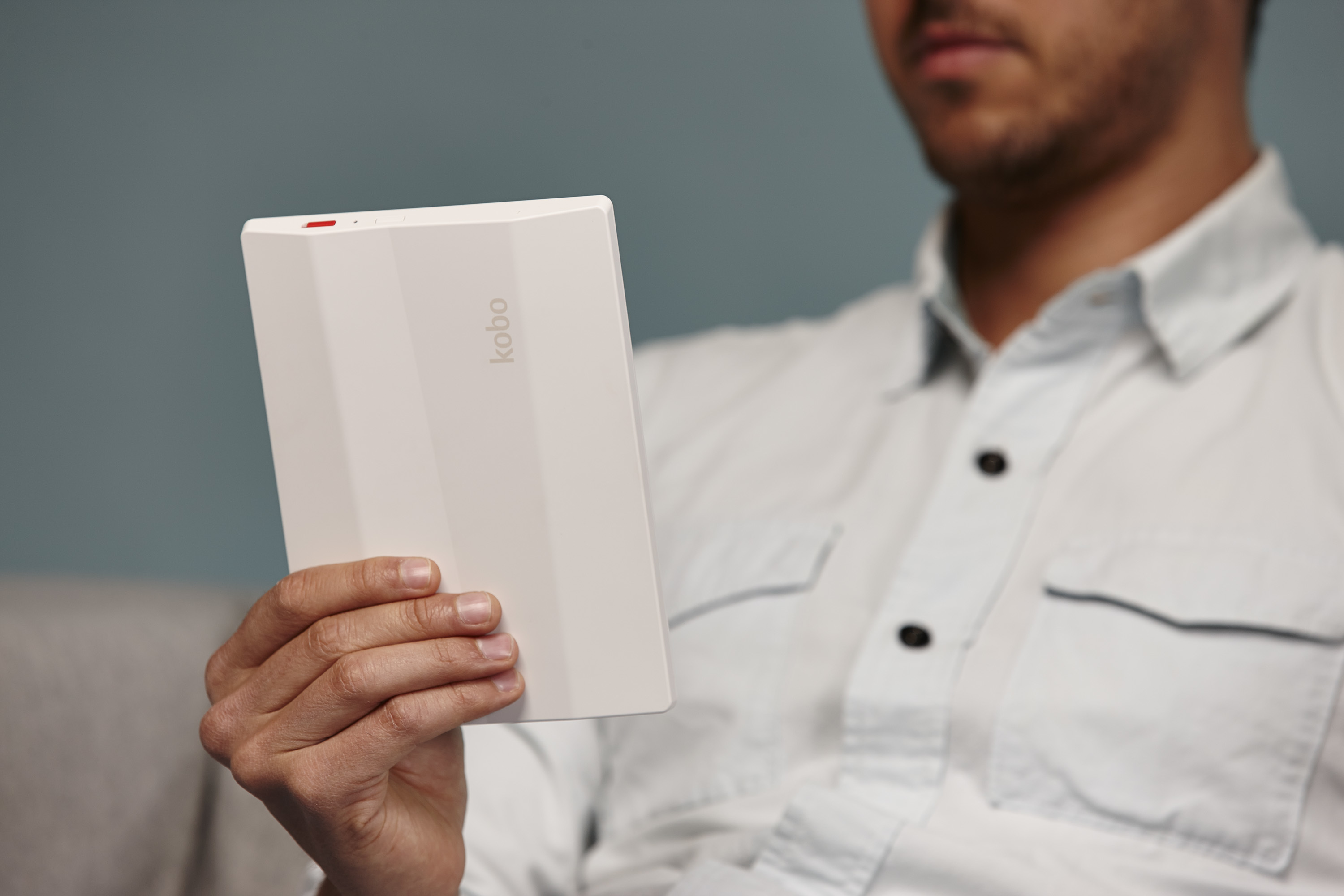

A friendlier, more tactile e-reader experience
Creating a digital reader that embodies the best aspects of paperback books.
International e-reading service Kobo, Inc., with more than 2.5 million digital book, magazine, and newspaper titles, approached IDEO to gain a strong foothold in the shifting publishing landscape. The design challenge was to create a new suite of advanced reading devices with the best aspects of paperback books—tangibility, portability, and a small footprint.
To make digital reading devices feel approachable, personal, and sophisticated, designers focused on the intersection of physical and digital interface design. The teams created a family of affordable e-readers with clearly differentiated feature sets, and the resulting design provides a reading experience that approximates holding and reading a paperback book. No larger than a novel, the front of the e-reader is designed for the reader’s eyes, while the back features a signature “quilted” back shell designed to create a pleasurable, tactile memory for the hands.
The Kobo family includes the Kobo WiFi, with a 6-inch glare-free E-Ink screen; the smaller Kobo Touch, with infrared touch-screen interface, E-Ink Pearl screen, and faster processor; and the Kobo Vox, a 7-inch Android tablet model with social and digital sharing options.
Kobo saw record sales of its digital reading devices during the 2011 holiday season, and was named “Editor’s Pick for Best e-reader” by Wired magazine.
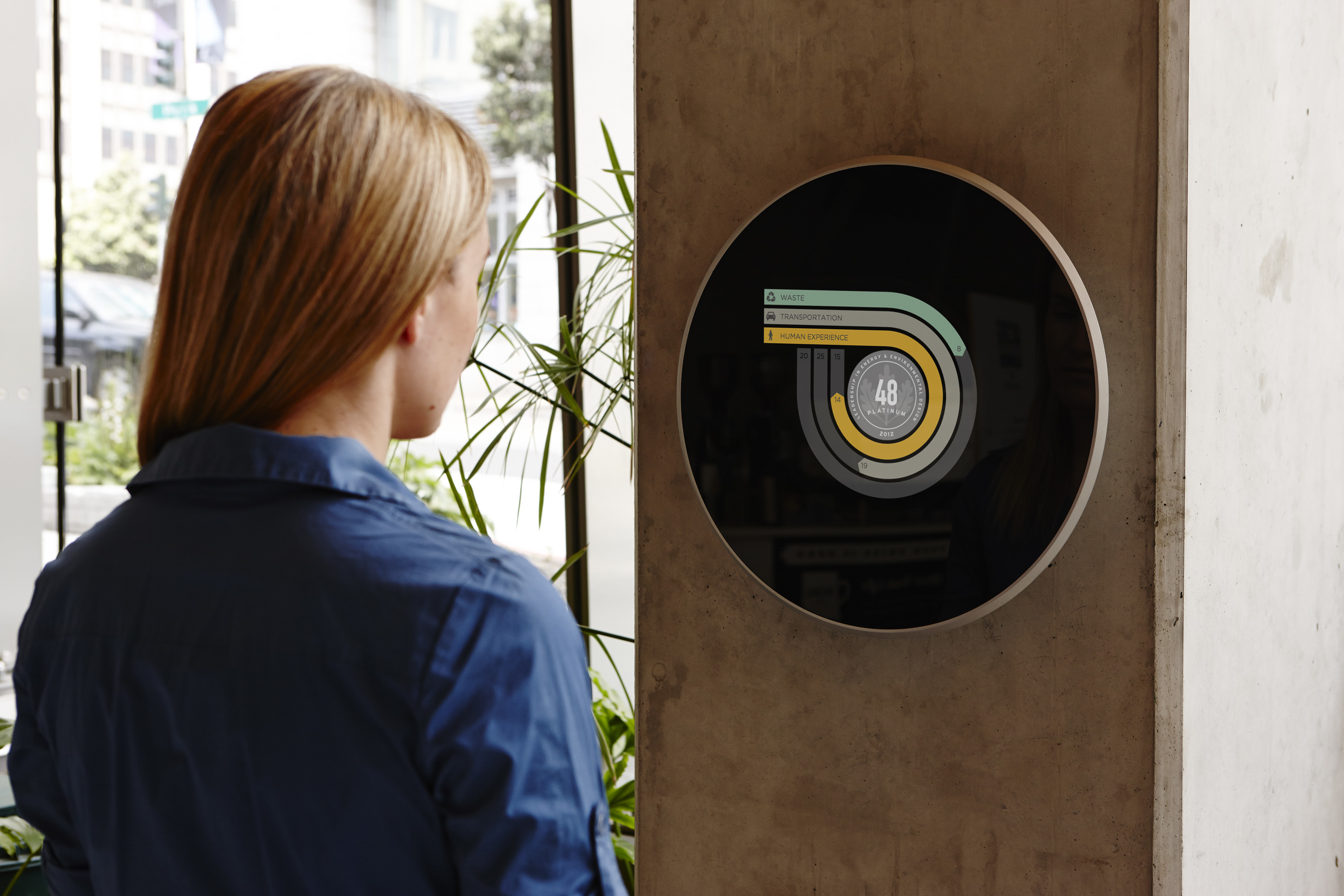
A digital display to measure energy use
Communicating environmental performance with an interactive plaque.
The U.S. Green Building Council asked IDEO to help visualize how buildings might communicate environmental performance. Together they came up with the LEED Dynamic Plaque, an elegant public declaration of a building’s environmental efforts.
Located in a lobby or other common space, the plaque displays real-time measurements about a building’s resource use—from energy to waste disposal. IDEO designed and built the physical plaque, and the IDEO Digital Shop created an online interface that allows USGBC’s software to interact with it, enabling people to enter data, analyze details, and make personal decisions that influence a building’s performance.
WATCH: "LEED Dynamic Plaque" video
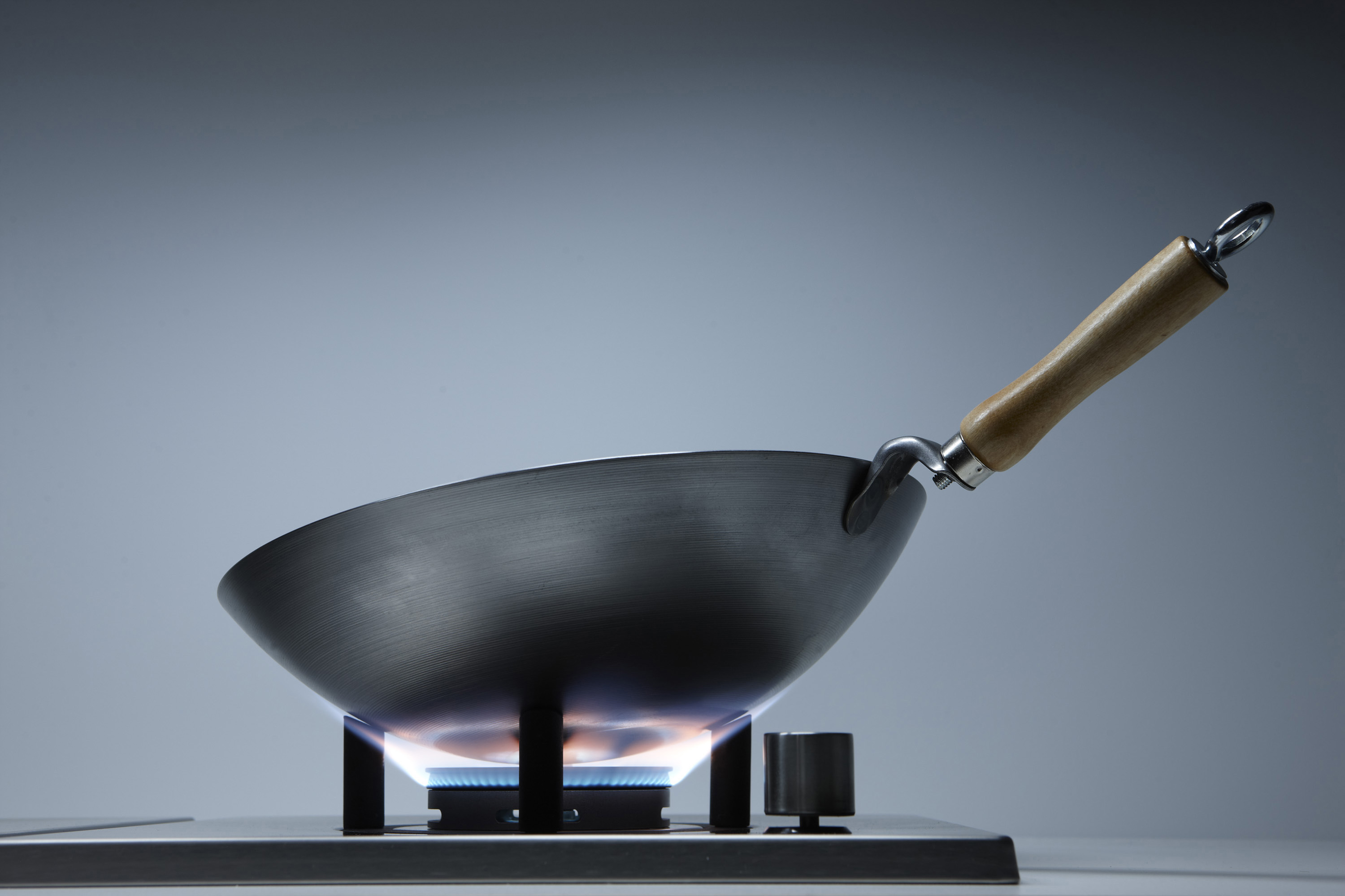
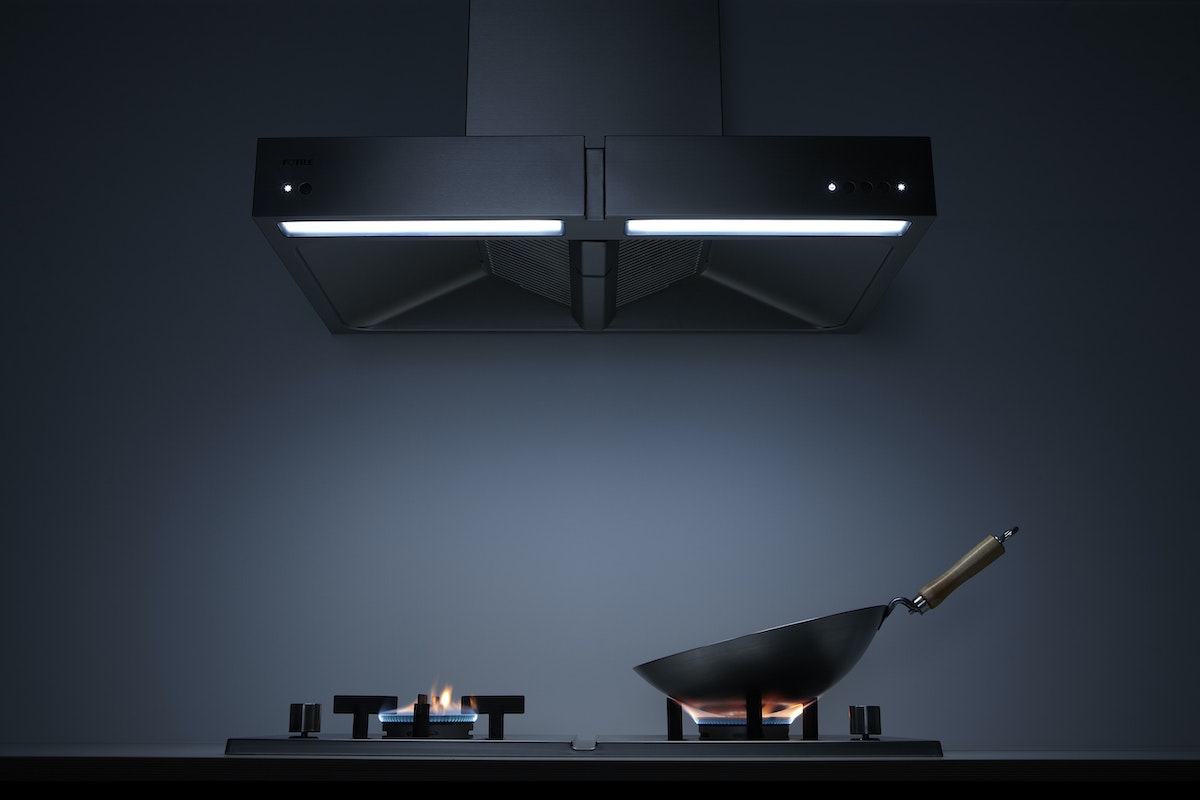
A cook top designed for a wok
Culturally relevant kitchen appliances for a Chinese market.
In China, most kitchen appliances available on the market are rooted in Western cooking practices. High-end kitchen appliance company Fotile, based in Ningbo, China, was looking to design a new cook top and range hood that would satisfy the unique needs of Chinese cooking culture.
The new appliances designed by Fotile and IDEO support a key need of Chinese cooking: the dual-cooking center. This two-burner range eliminates unnecessary burners, instead dedicating one side to the wok, the primary tool in Chinese cooking, and the other side to a flat-bottom pan. The wok burner has a special stand with angled posts to hold steady a round-bottom wok (typical in China) and ease the rigorous, constant “tossing” movement that is prevalent in Chinese cooking. The Fotile cook top and range hood have become popular with Chinese consumers since market launch.
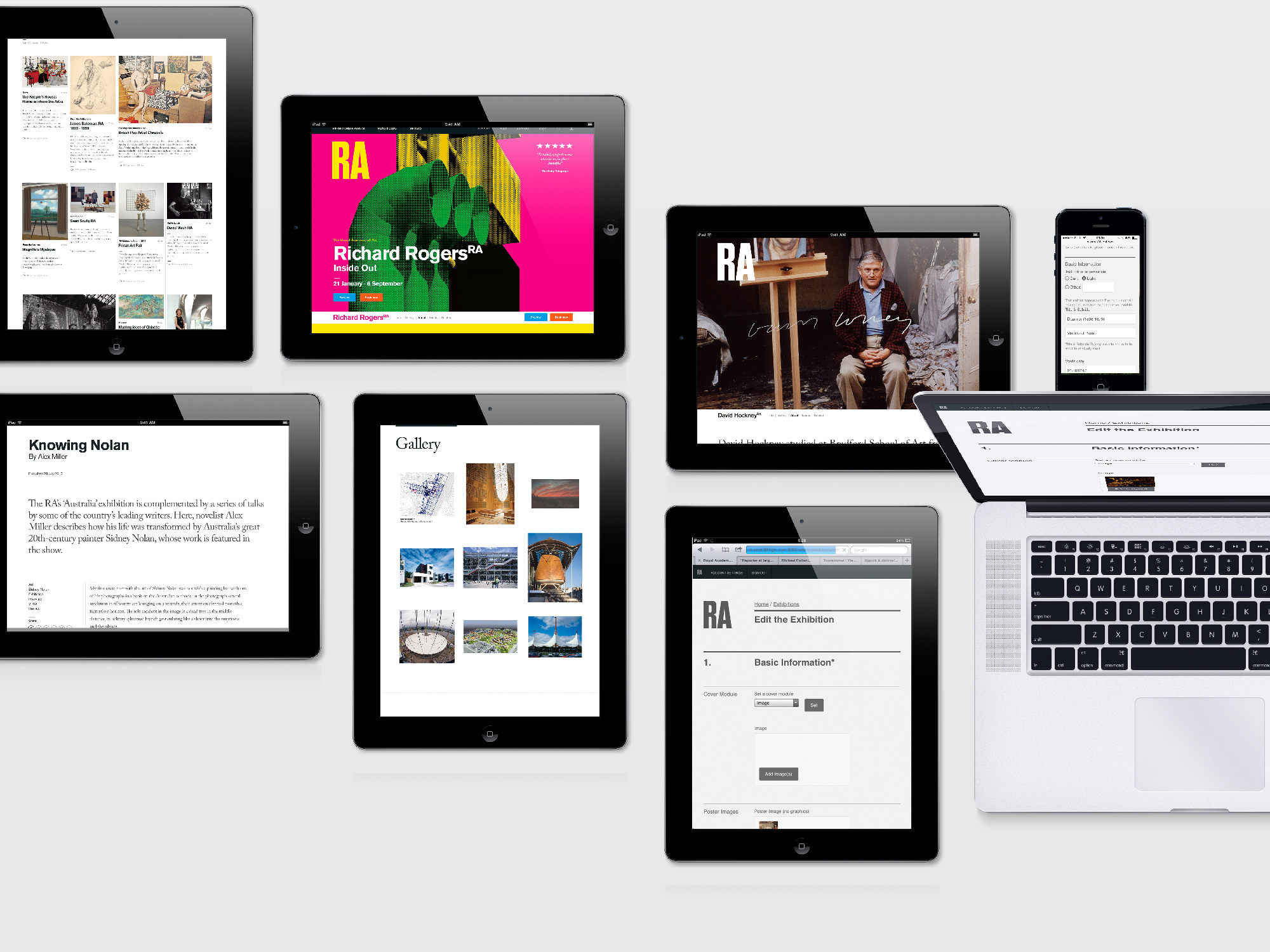
A digital identity for the Royal Academy of Arts
Building new audiences and opportunities for a 250-year-old institution.
Great art requires great openness, a space large enough to contain all the tragedy and comedy of the human experience.
The limestone walls and Palladian arches of the Royal Academy of Arts (RA) hold such a space. The institution’s building in Mayfair contains galleries where a wanderer can appreciate the everyday miracle of a Caravaggio or amble through the former home of Academicians, a group led by some of the most eminent artists in the world, from Anish Kapoor to Sir Norman Foster. This revered site has also been home to the Summer Exhibition for 246 years, an event open to submissions from any living artist.
As the RA approached its 250th anniversary, the institution came to IDEO to help create a digital strategy that would open new doors to these resources, reveal hidden avenues to new experiences, and offer broad vistas of the collection.

After rounds of research with artists, staff members, and visitors, our designers immediately started building and testing. They ran workshops to refine digital tools, watched as patrons scribbled notes about things they wanted to know more about, and built pop-up design studios in RA’s galleries where they could generate insights on the fly.
The result is a rich, immersive site for different audiences. Art lovers can view stunning images of the works, artists can learn more about RA schools, and RA staff can share surprising stories about some of the most prized pieces.
Based around human needs rather than organizational structure, the new digital space allows audiences to wander freely in this immense storehouse of inspiration and awe. And perhaps most important, the RA organization has benefitted from a human-centered paradigm shift that will enable the institution to forge boldly into its next quarter millennium.
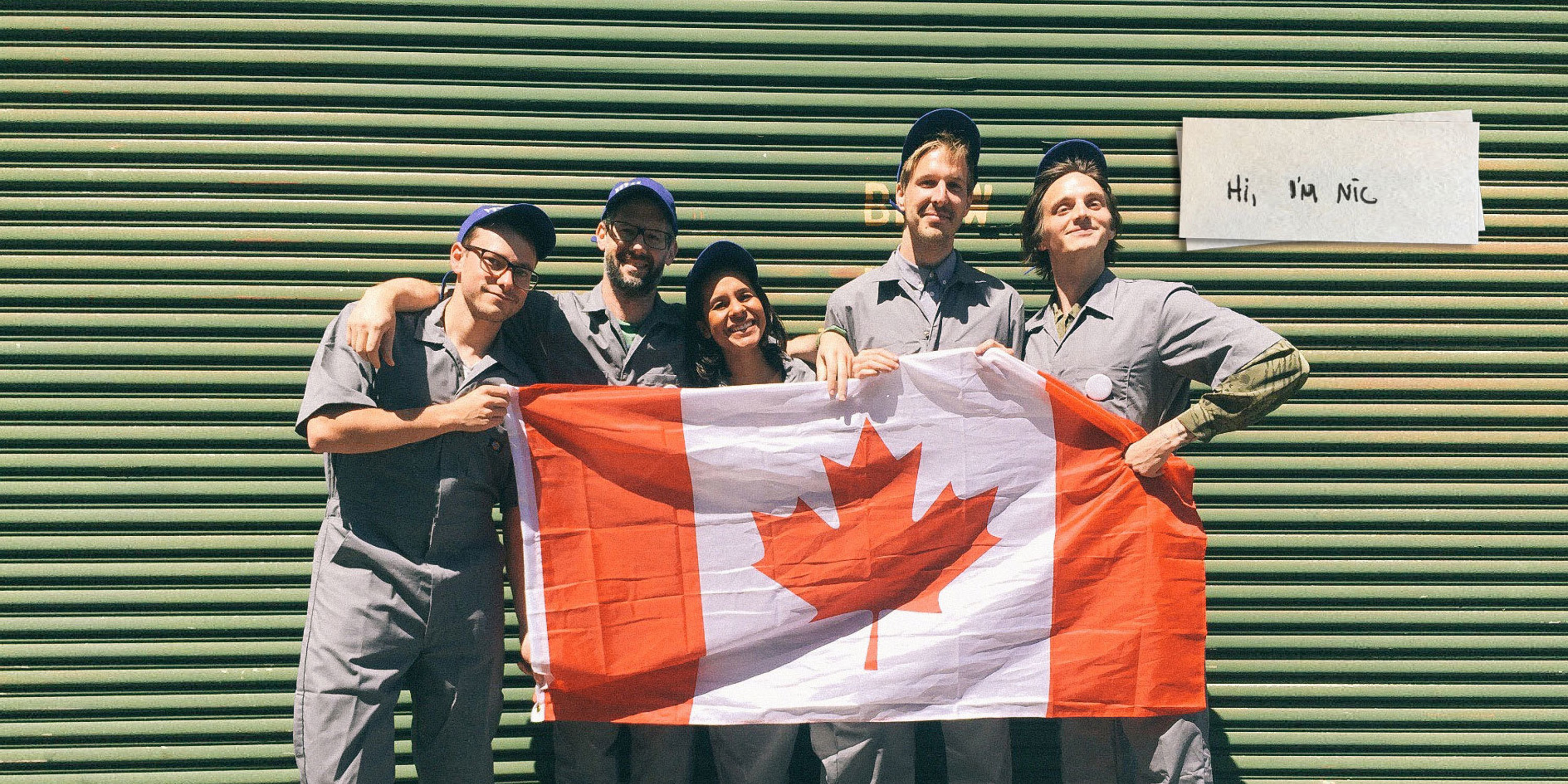
A Day in the Life of an Environments Designer
Ever wondered what an environments designer does all day?
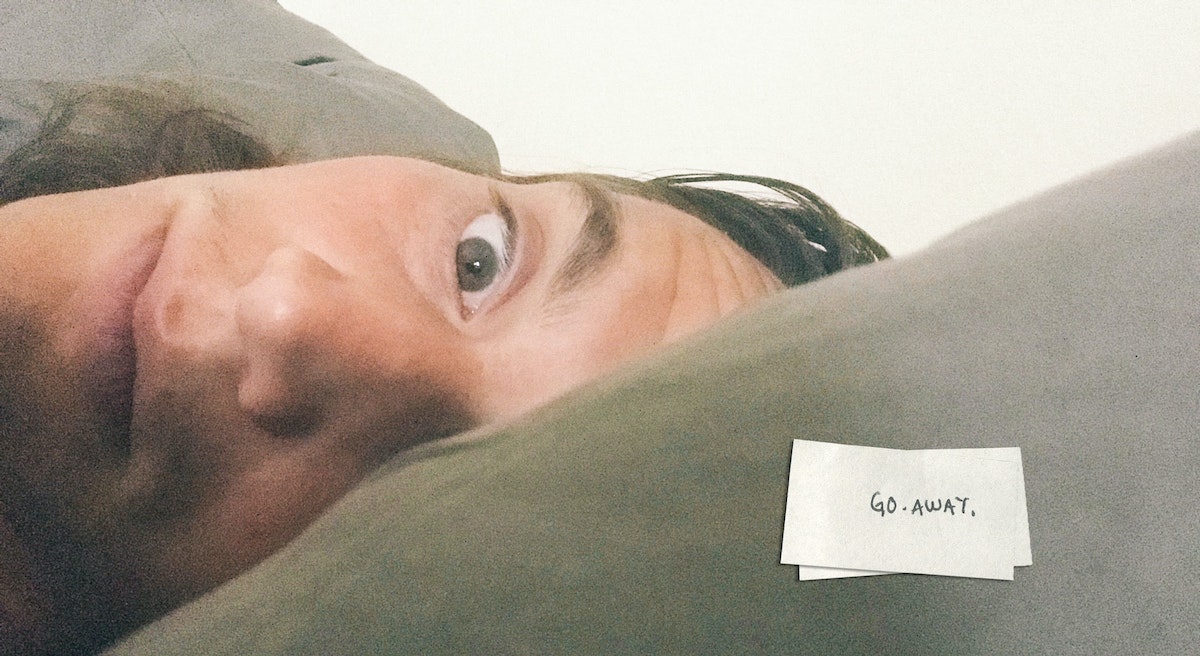
6:20 AM: Snooze
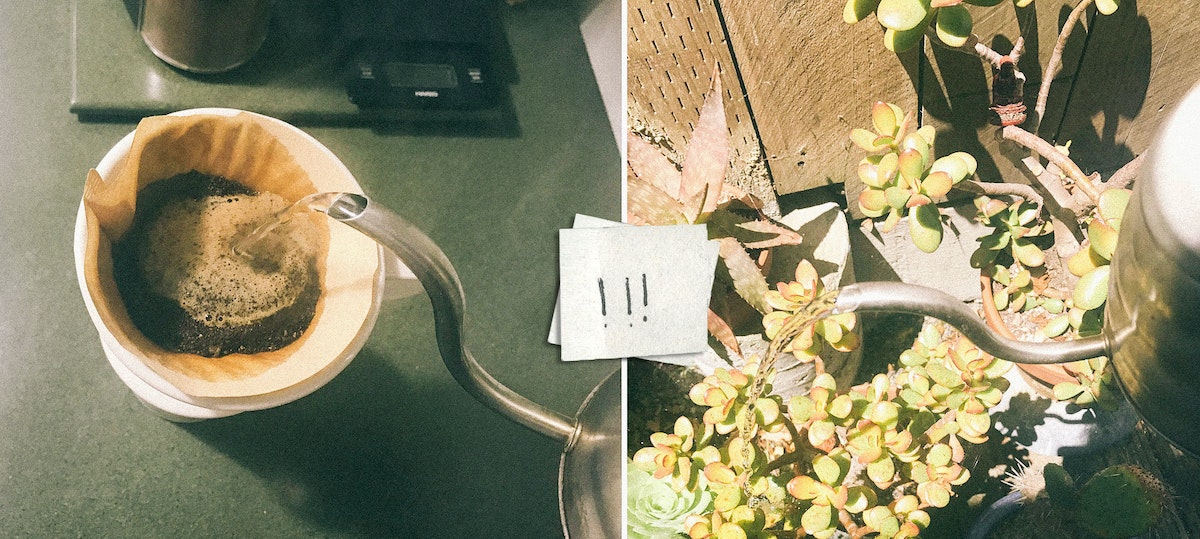
6:30 AM: Sweep
Sweep. Make the coffee, water the succulents, check out a few new product curation apps and services the team has been talking about. While riding the bus across the Bay, I read about immigration patterns and how they affect consumers in North America. Staying inspired is part of our job, so I try to start each day with a healthy dose.
9:00 AM: Birthday shenanigans
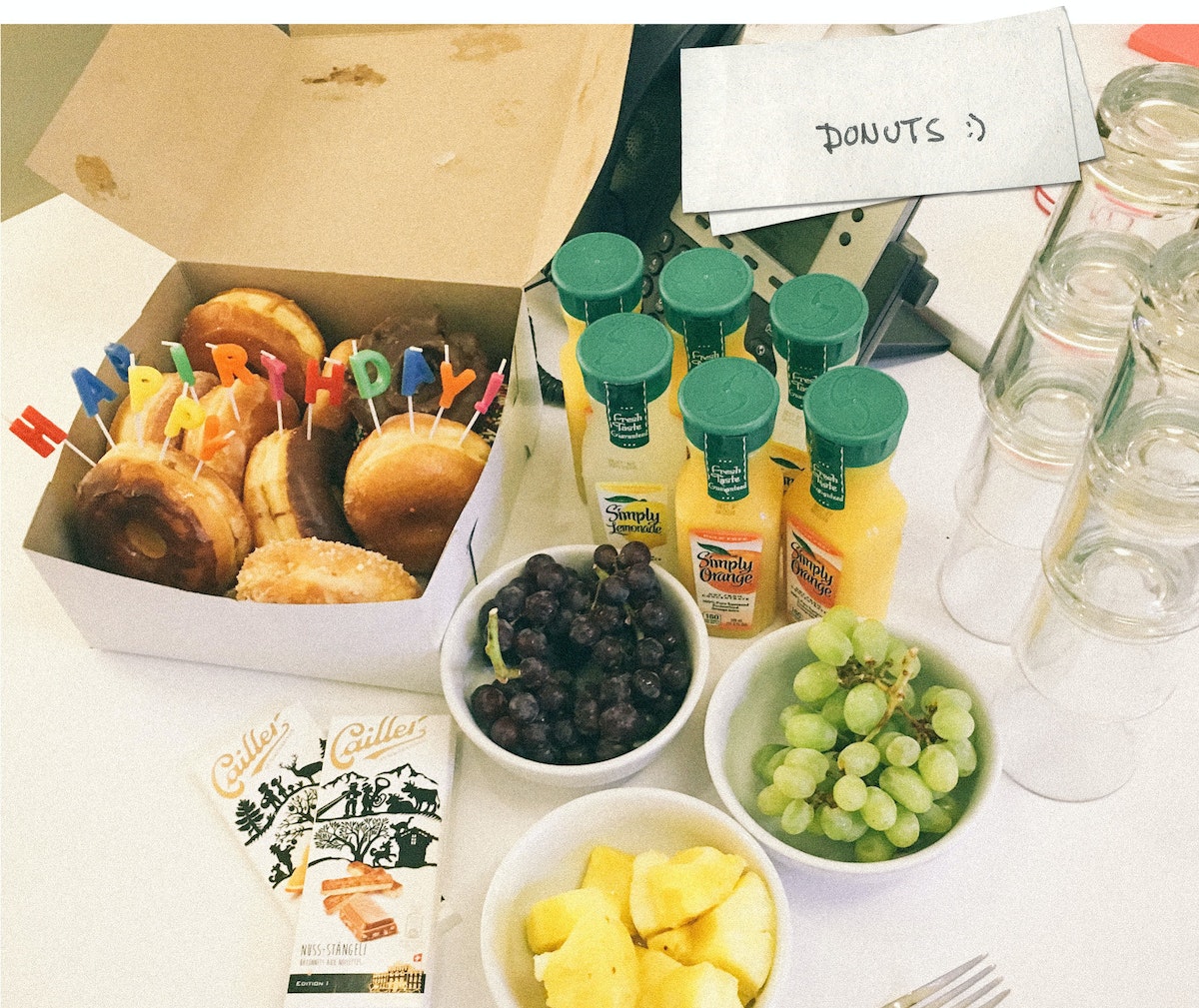
Today is my teammate Julian’s birthday, so we surprised him with donuts and orange juice—his morning elixir of choice!
9:30 AM: Sketching and 3D modeling
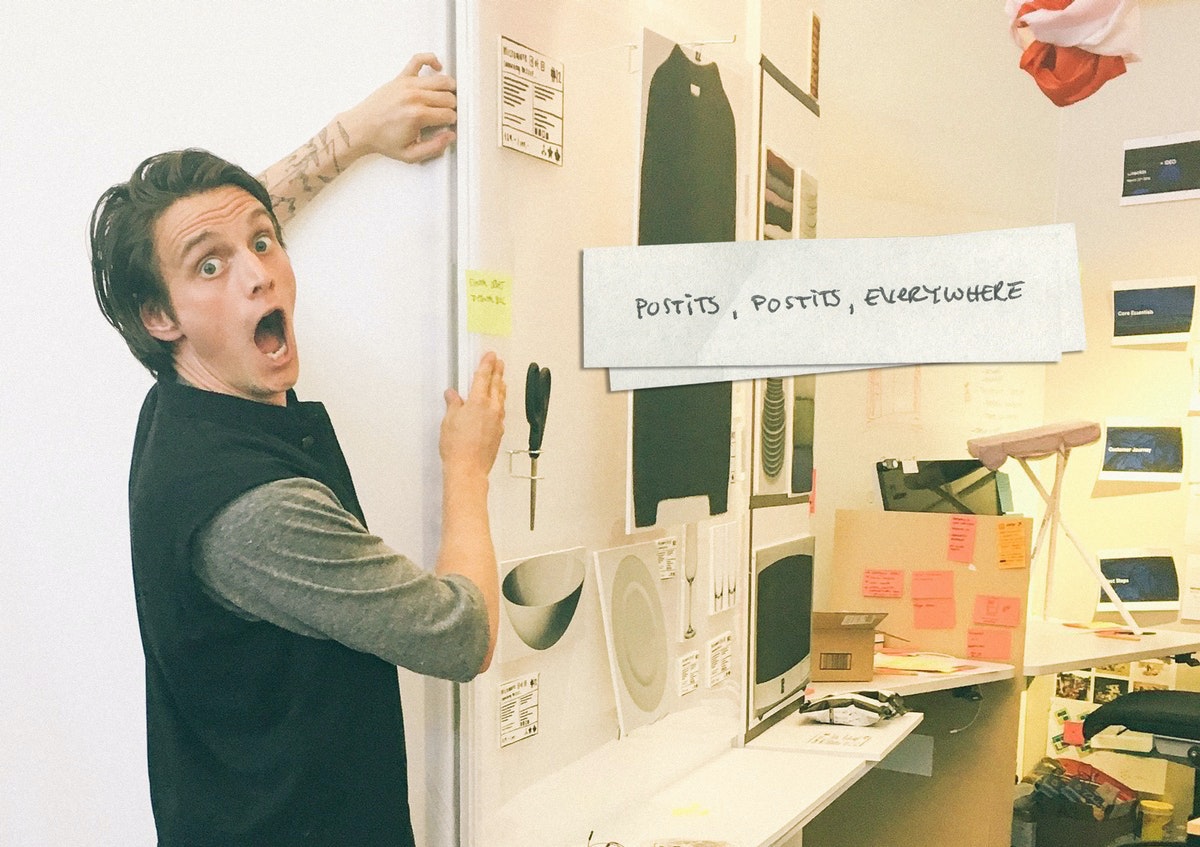
My team’s current project is to reimagine the shopping experience for a large retailer. To prepare for a review with the team, I do some sketching and 3D modeling of in-store display concepts. We are a diverse and interdisciplinary bunch, so it helps to bring everyone’s ideas together through visualization.

10:30 AM: Design review with the team
We do team check-ins throughout the day, talking through our ideas to make sure we’re meeting user needs and pushing the integration of digital behaviors and physical environments. Today, we’re critiquing a bunch of sketches of critical shopping moments that we’ll prototype later. We’re considering how digital projection can add ambient information and subtle interaction to a physical display layout.
11:30 AM: Creating a physical study model
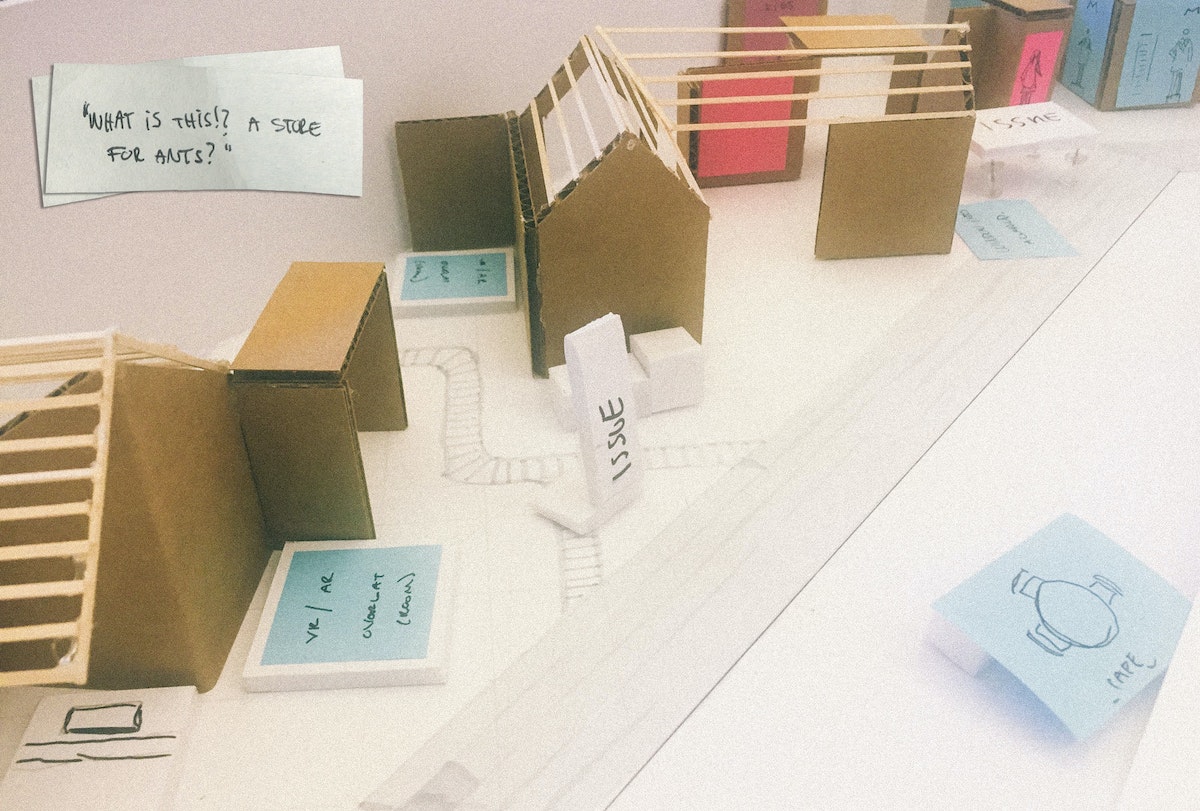
In preparation for our prototyping session in the IDEO Shop, we use a rough physical model to map out the experience of the future retail environment. A small-scale model lets us discuss all the ways shoppers might interact with a brick and mortar store—from browsing to comparison shopping, saving for later or checking out and having things shipped home. It’s helpful to keep our work quick and dirty, so that we have a model that lets the entire team walk through design points together.
12:00 PM: Julian’s birthday lunch
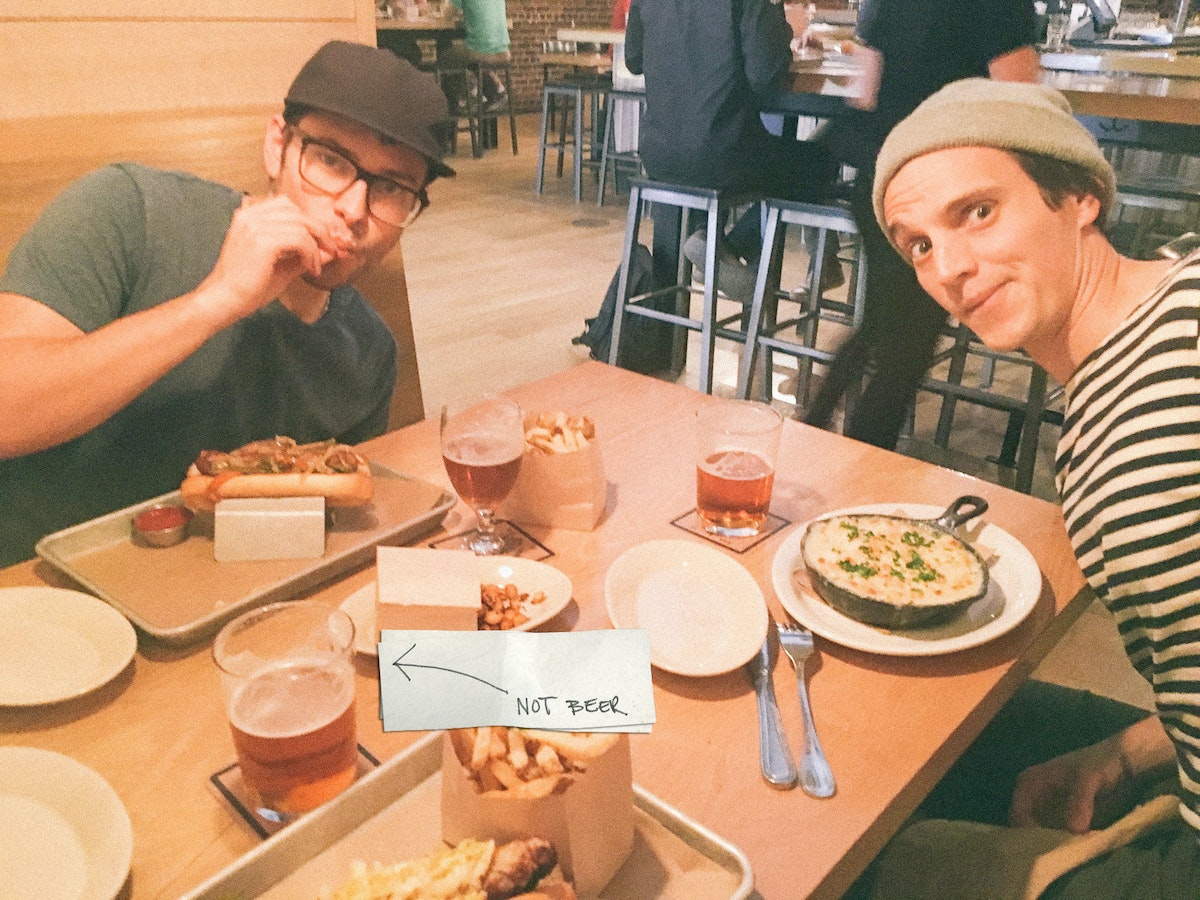
Continuing the festivities, we pop out of the office to get a bite of Scandinavian-inspired eats.
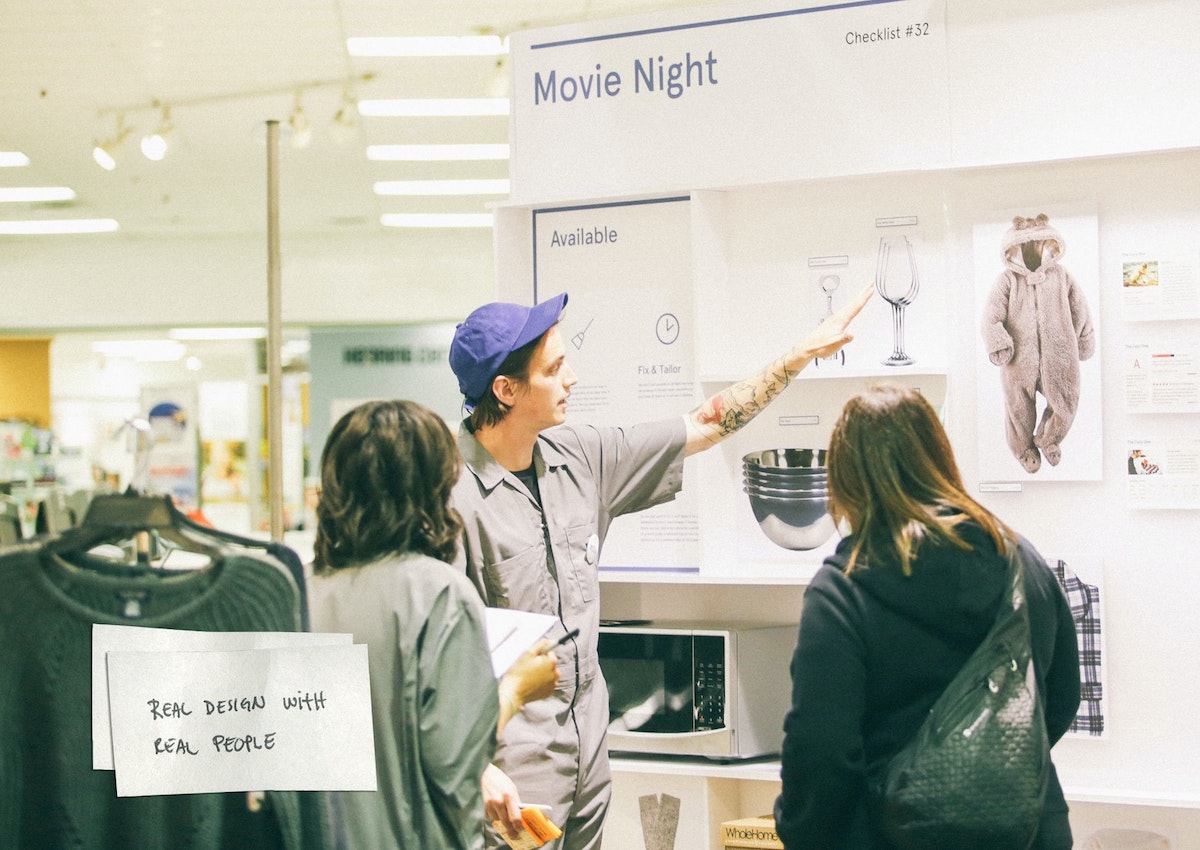
1:30 PM: Field testing and 1:1 prototyping
Time to refine the rough mock-up made in the office and rebuild it in a live retail environment. We wear jumpsuits to suggest how we want the client’s brand to evolve (and because jumpsuits are cool).
The prototype begins outside the store with a simulated mobile shopping experience that ushers shoppers directly to our redesigned displays. The point of the prototype is to test a store layout that could feel like an extension of a mobile shopping experience. Think curated themes, minimal options, and intuitive product comparison interactions. Turns out, some things they hate, some things they love, and a few things don’t make sense to them at all! All of that is great feedback for moving forward, by the rock-and-roll rules of prototyping. Achieving a realistic level of physical interaction while keeping the design at a prototypical level is key to getting honest feedback. We draw our insights from watching how users interact with the space, as well as their answers to directed prompts.
7:30 PM: Teach
My nightcap is heading to California College of the Arts, where I teach a class about physical space and digital interaction titled “Objects & Space.” We work with sensors, hack projectors, control motors, glue, and foamcore, and build our way through code, all in the spirit of figuring out what the environments designers of tomorrow might do.

When people ask me what I do for a living, I say, “I use space to explore design solutions.” It might sound like I work for NASA, but what we environments designers actually do is consider how physical space influences human behavior. Much of my time is spent sketching, making models, building walls out of foamcore, miming, turning off the lights, rendering, and doing my best to break feng shui. Here's a breakdown of a typical day:
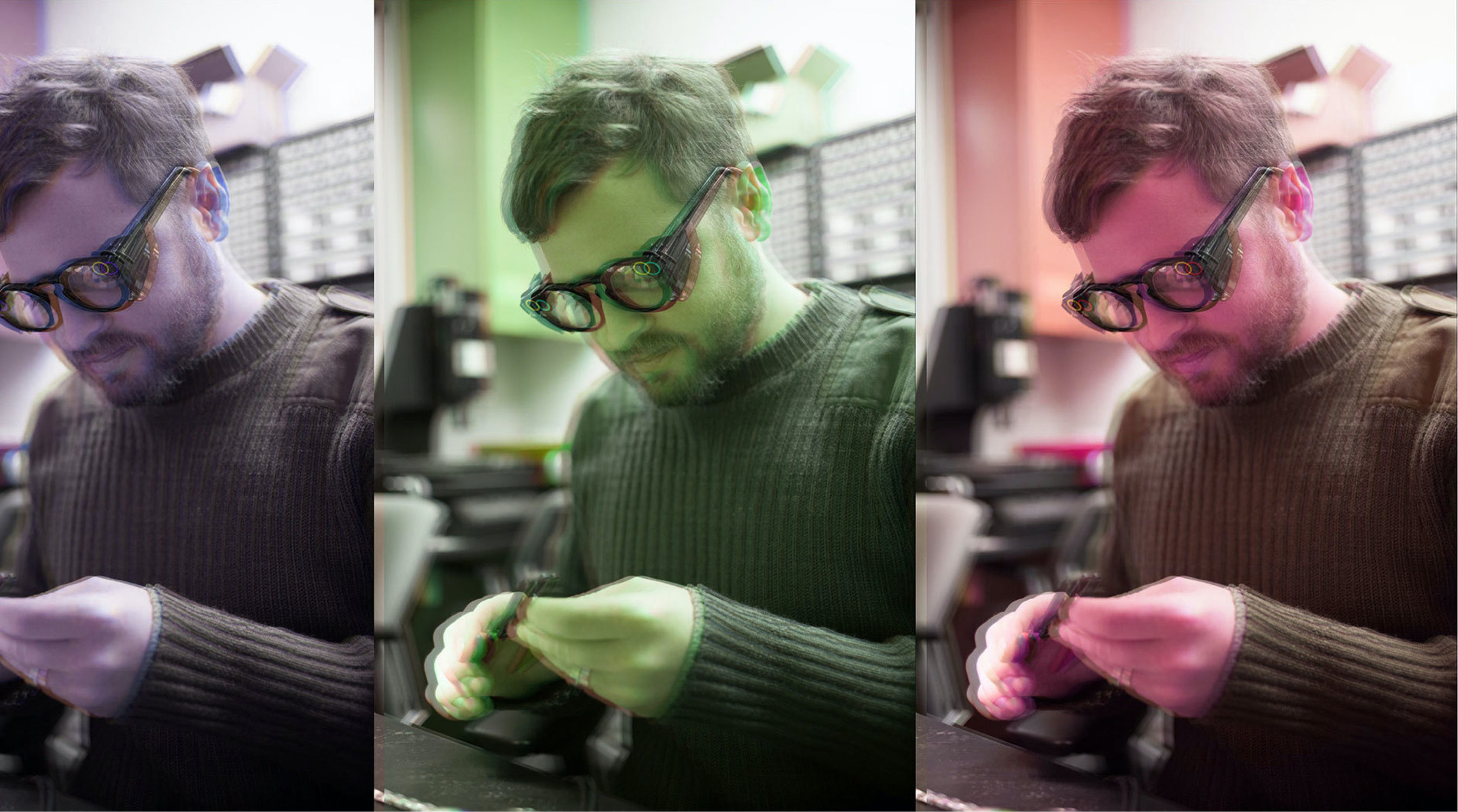
How We Did It: Snapchat-Enabled Safety Goggles
Save your eyes—and your process—in four easy steps
The purpose for these hybrid safety specs is threefold: I can post images of our projects or build steps to my Snapchat account, save the videos for internal documentation, and also create more structured build logs.
I’ve been using them for the past week; they're super fun. Here’s how you can modify your own pair:
- Buy the Snapchat Spectacles directly through their website.
- Get some $29 clear replacement lenses for the tinted ones that come with the Spectacles. I bought mine from GlassesUSA. If you require a prescription, you can have them made with prescription lenses for the same price!
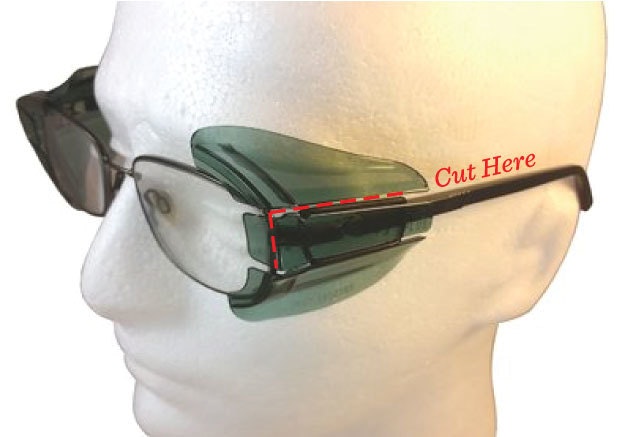
- Get some protective side shields.
- Modify the side shields to fit the glasses. This means you will need to cut the tops and center-front part off of them like so:
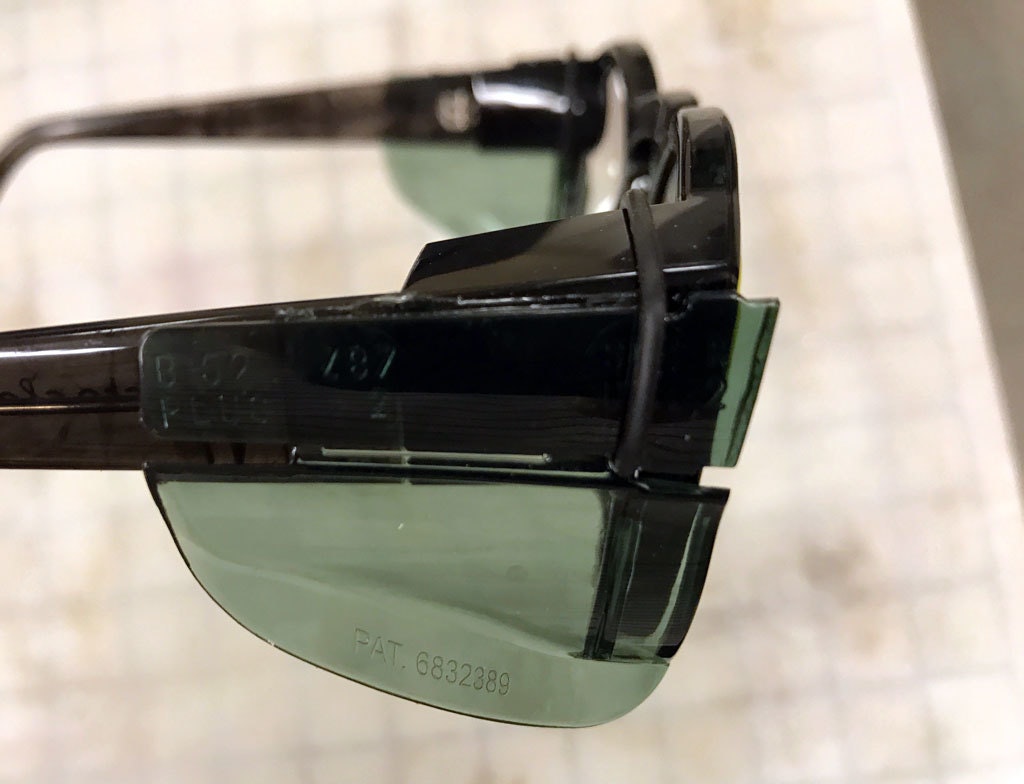
You can now use the supplied O-ring to attach the shields to the Snapchat Spectacles. They should now look like this:
The Snapchat app makes it really easy to edit 10-second Snaps into a build story. I even made this display rack to show them off:
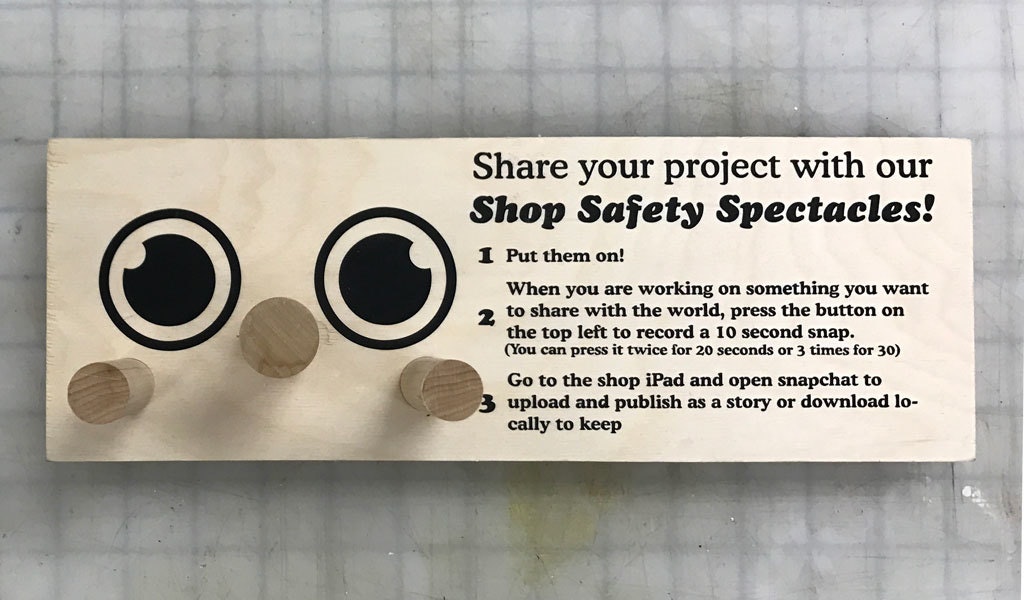
Check out this video (recorded using the Spectacles!) that shows how I made the display rack:
A few weeks ago, while I was in our workshop, I had an idea: If I could modify Snapchat’s Spectacles into a pair of safety goggles, I could document our projects without ever picking up a camera.
Code-Based Eye Candy from a Tokyo Renaissance Man
This artist is on a quest to make Japanese culture more fun for everyone
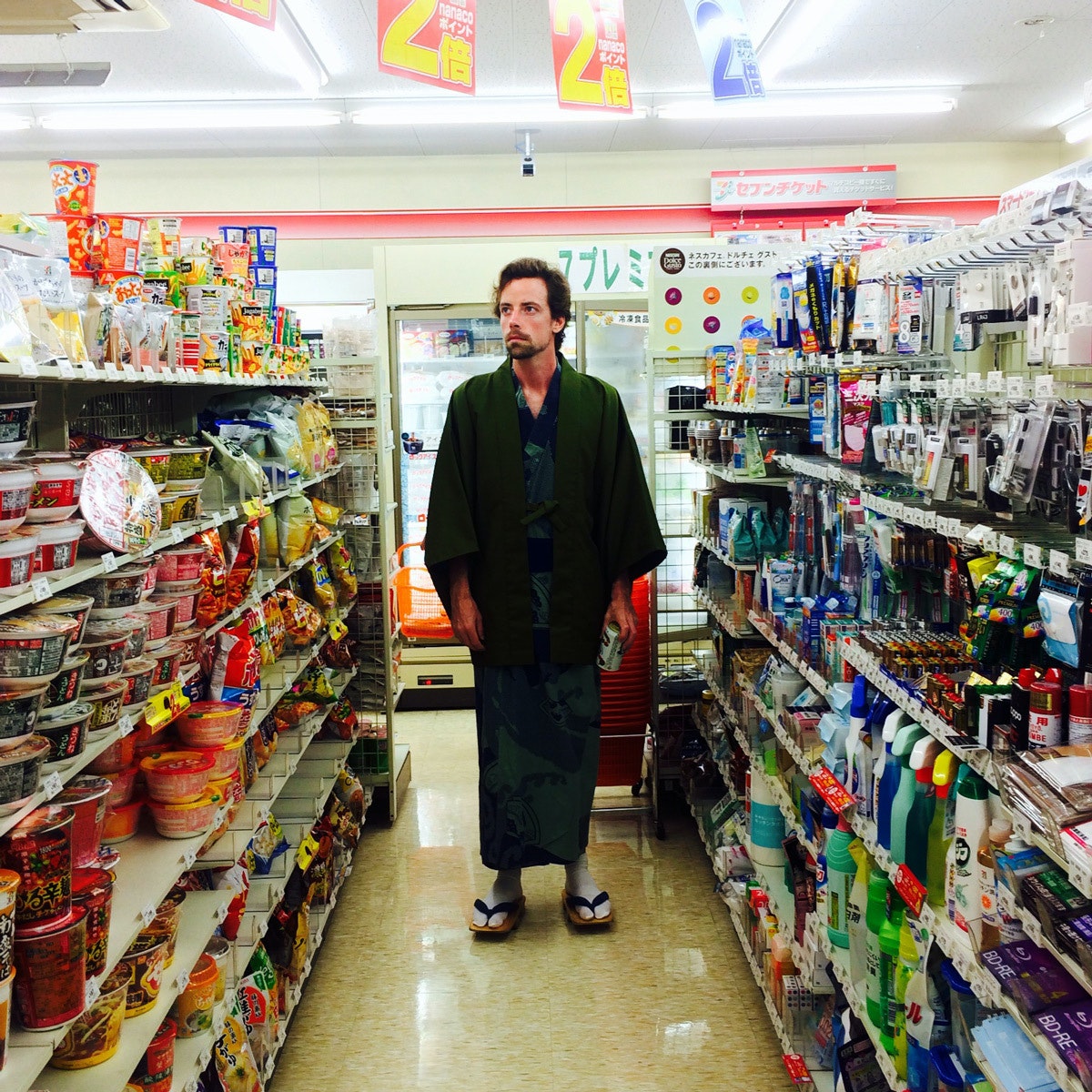
In one sentence, who are you?
I'm a 37-year-old Tokyoite with a mane that's swiftly moving from Pauly Shore to Kenny G.
What do you do? How did you learn to do it?
I do interactive design and Japanese literature. I learned the former at NYU's ITP program, and the latter from my amazing high school Japanese teacher Susan Tanabe.
What are your 3 favorite possessions?
- The Twitter app
- My mint copy of Zik Emmy's "Perfect Change"
- My engraved Tamagoyaki frying pan
What does a typical work session look like?
To me, code is like jazz, man. Improvisation. I've got a synth—a Korg MS-20—and I run the input through Max MSP. Max interprets frequency to the nearest quarter tone, and white keys are mapped to reserve words in my current coding idiom, while black keys spit out numbers. There's not a lot of reserve words in programming, so all I need to do is throw on a fatback beat and just jam.
(J/K—coding is mostly just copy-pasting stuff from Stack Overflow.)
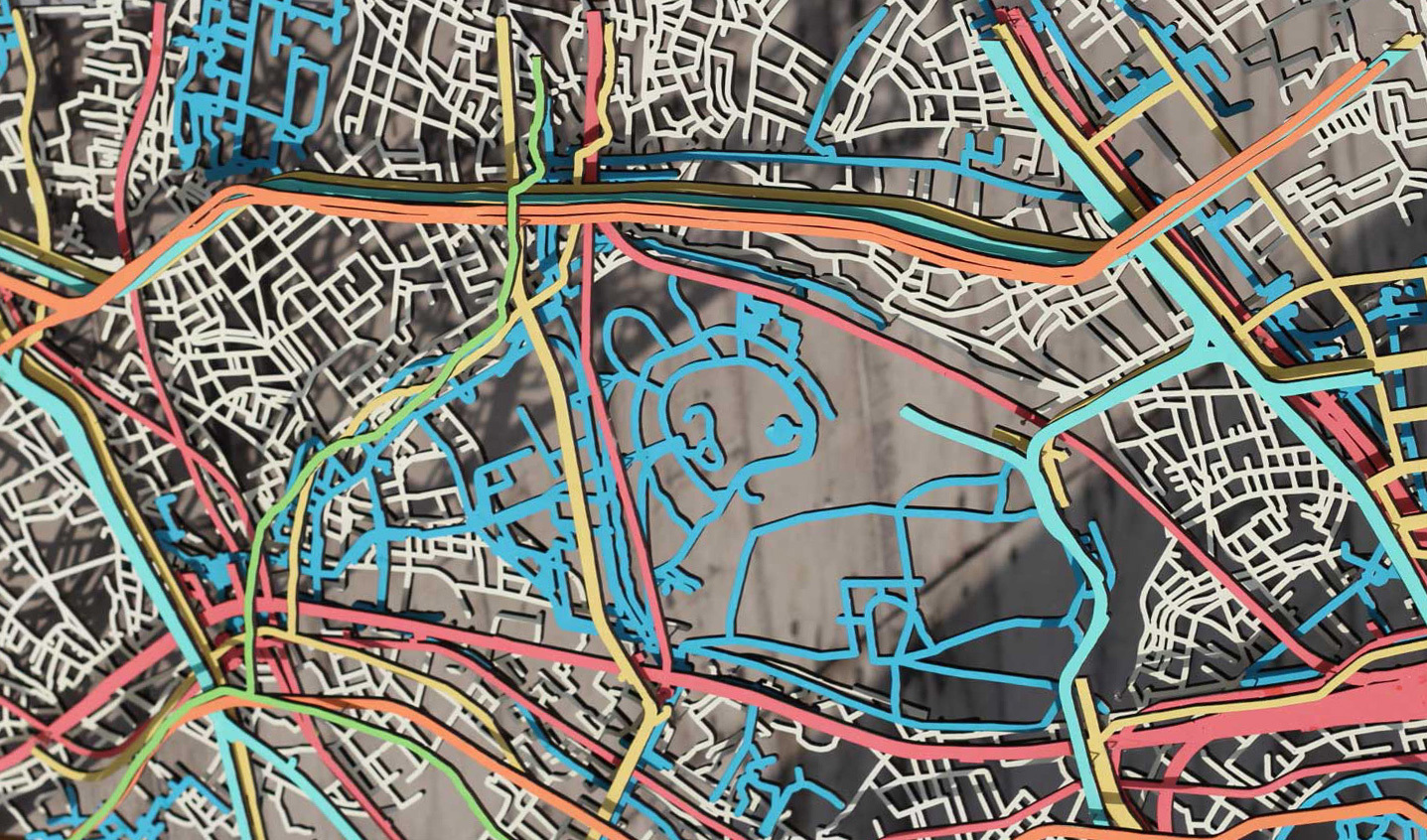
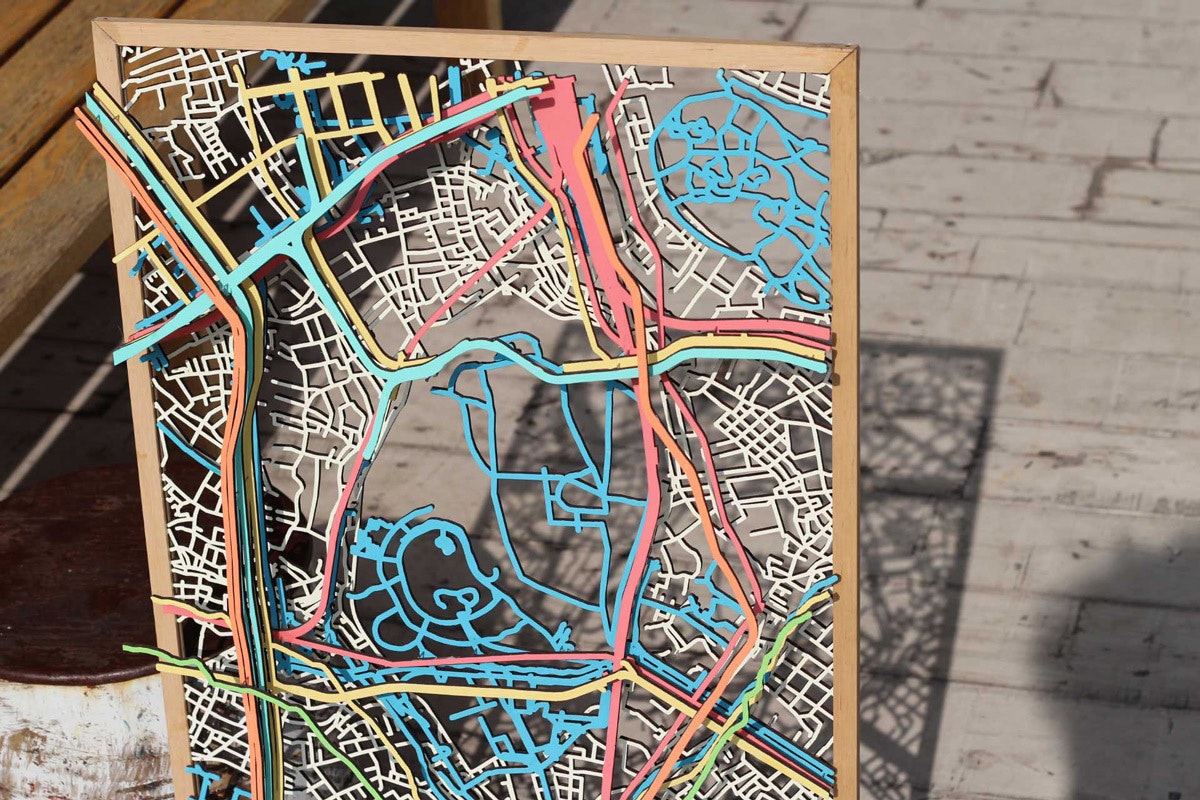
Pierre Menard and the infinite monkeys. Created using openframeworks, a series of openGL shaders, and about 48 hours of processing. The image is drawn using images Googled from the lyrics to the album "Irresistible."
How do you get over creative block?
I'm not "real-time" at all. I'm useless in a brainstorm, and even worse at a Q&A. First dates are a disaster, and job interviews are even worse. Whenever I'm asked something, I wish I could pause the world and go on a nice walk through Shinjuku Gyoen, because I know that right around the fifteen-minute mark, when the blood starts moving, I'll find the right idea, the right reply. Working alone is great because you have this affordance, but sometimes in groups it's hard to say, "Hey y'all, keep brainstorming, you're doing a great job. I'm just going to go take a lil perambulation, if you can just hold that thought until I get back?"
I'm also usually most creative when I'm working with some idiom or technology I've never touched before. Figuring something out for the first time is the best way to have ideas about how to use it. People like to rap about reinventing the wheel, but I feel like reinventing wheels is how we come up with bicycles.
What was the last item on your to-do list?
I have this great translation I did of Aida Makoto's novel, Youth and Perversion. I need to nudge him about rights, because it's really a sterling translation.
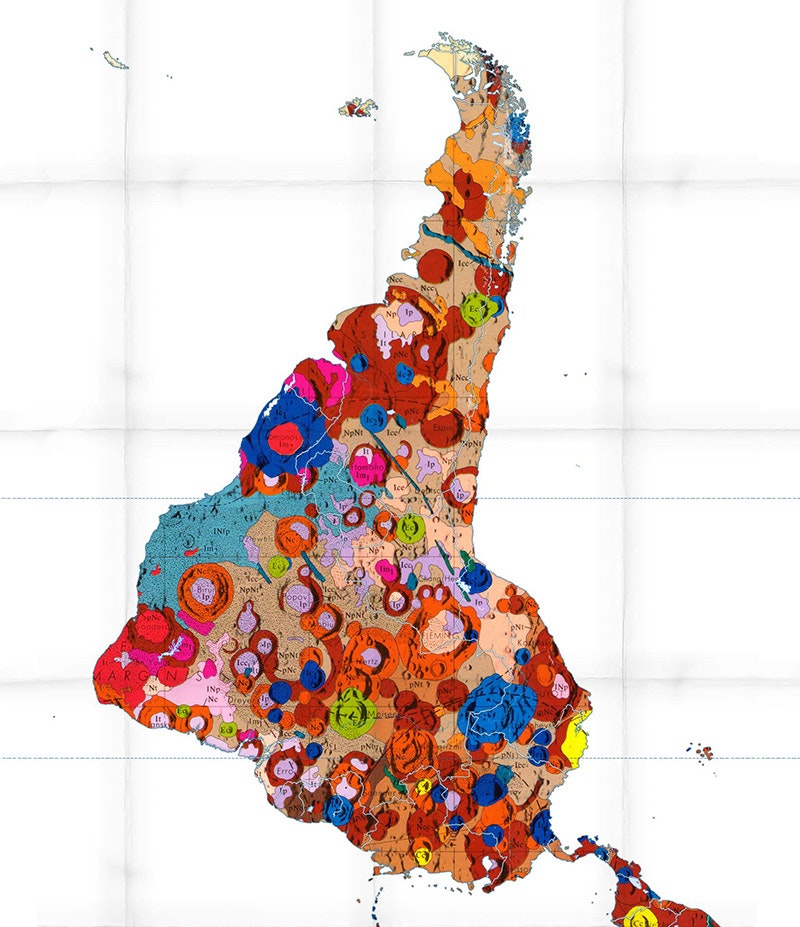
How do you see the world in 2078?
(Assuming a Werner Herzog mien.) I must confess, I'm pessimistic. I think we'll either have a benign socialist matriarchy, or else it will be a hellscape. My expectations have not been appreciably bolstered by the last year of world history.
What’s your number one bucket list item?
I'd like to get into hang-gliding or some other flying sport. I'm banking on somebody from IDEO designing an affordable, eco-friendly personal flight module.
Who are you creative crushin’ on lately?
Mohri Yuko, a great Japanese interactive installation artist.
Kevin Freeny, funniest man alive 16 years running.
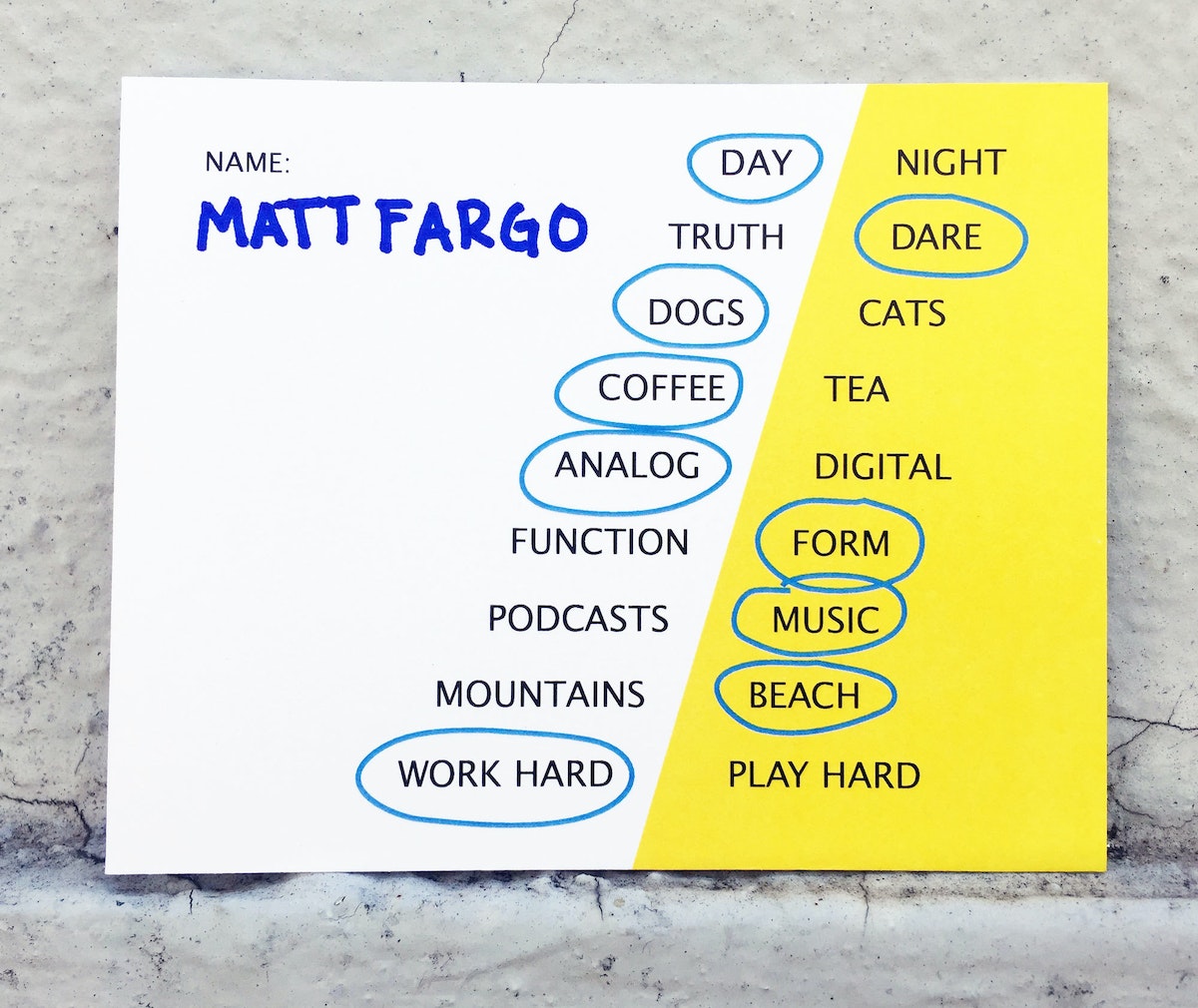
As a longtime resident of Tokyo, Matt Fargo finds ways to make Japanese culture more fun for everyone. He's written books about speaking dirty Japanese, created dynamic audio and visuals for musicals featuring dancing dogs, and built games for Tokyo train riders. He’s one of those restless creative people who just goes forth and makes. Before living in Tokyo, he spent time creating interactive experiences for Second Story in his hometown of Portland, Oregon. He's since continued his quest to build weirdness into technology through his work at Party. Let’s peek into his brain, shall we?
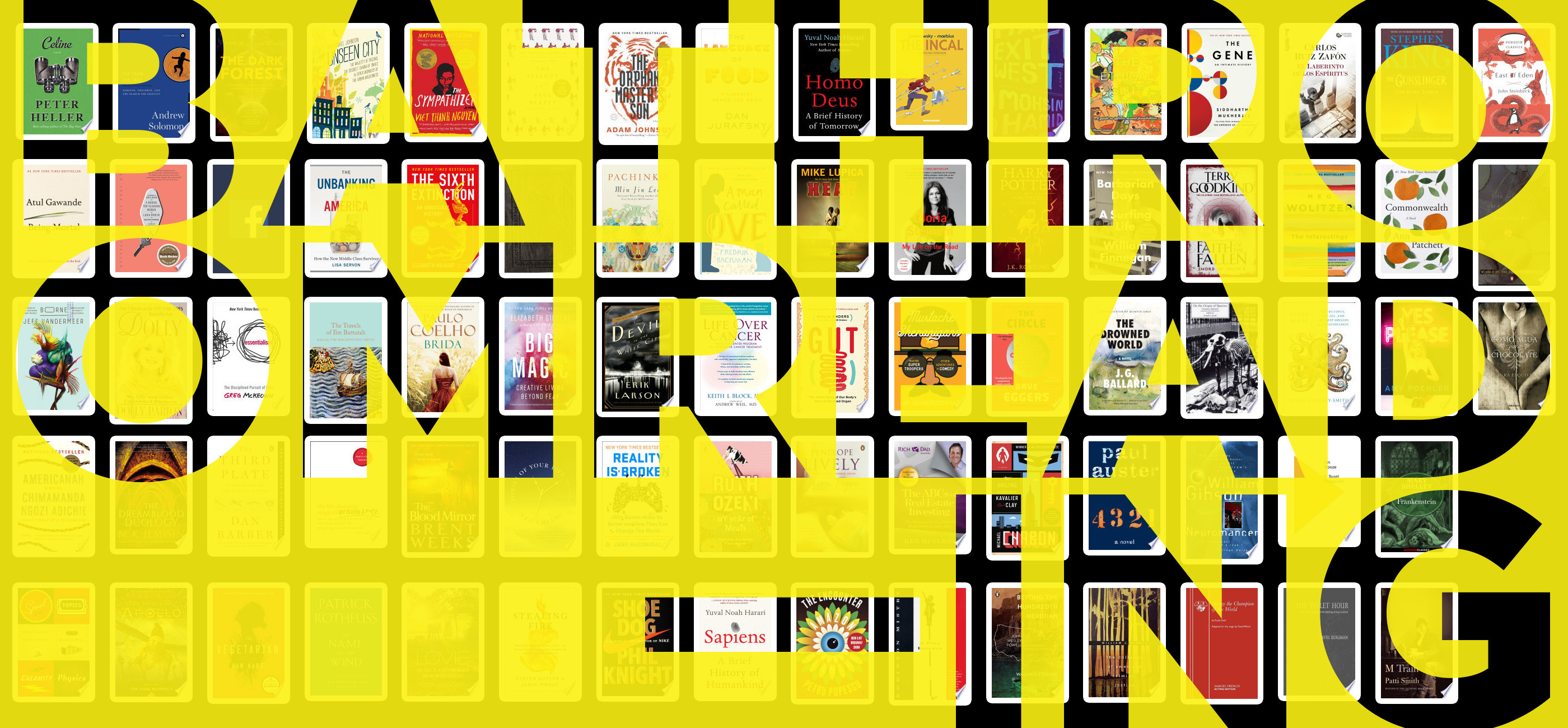
Our Bathroom Reading List
The average human spends 213 days in the bathroom over a lifetime. Might as well bring a good book.
Sometimes the questions are serious (“How might we better design for equity—inclusion, diversity, ageism, access, technology, etc—for all?) and sometimes they’re playful (“What’s your favorite restaurant in the Bay Area?”). But no matter what type of question goes up, the responses are always intriguing.
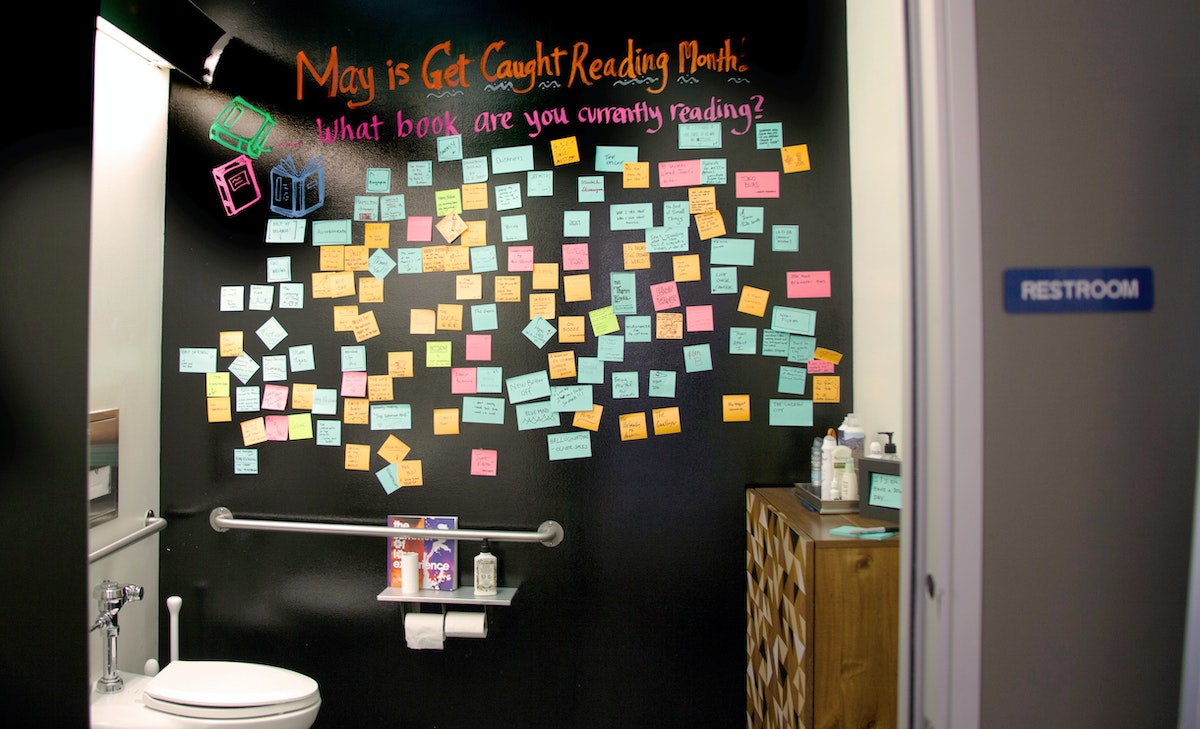
Our latest bathroom installation asked: “What book are you currently reading?” I’m always on the hunt for a good read, so I couldn’t be happier with the bonanza of recommendations. Dig in:
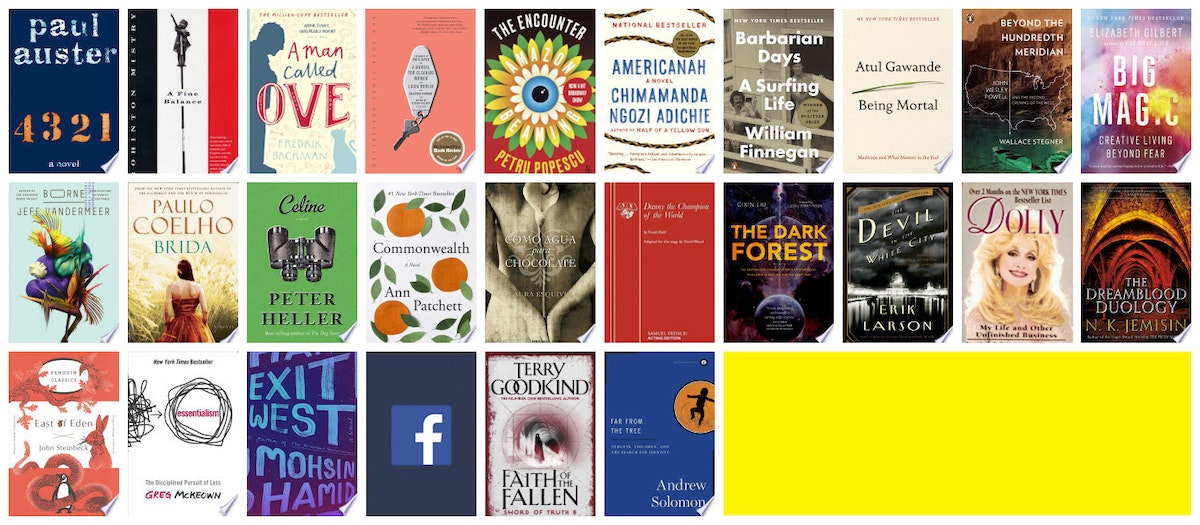
4321 ◆ A Fine Balance ◆ A Man Named Ove ◆ A Manual for Cleaning Women ◆ Amazon Beaming ◆ Americanah ◆ Barbarian Days ◆ Being Mortal ◆ Beyond the 100th Meridian ◆ Big Magic ◆ Borne ◆ Brida ◆ Celine ◆ Commonwealth ◆ Como Agua Para Chocolate ◆ Danny the Champion of the World ◆ Dark Forest ◆ Devil in the White City ◆ Dolly - My Life and Other Unfinished Projects ◆ Dreamblood Duology ◆ East of Eden ◆ Essentialism ◆ Exit West ◆ Facebook ◆ Faith of the Fallen ◆ Far from the Tree
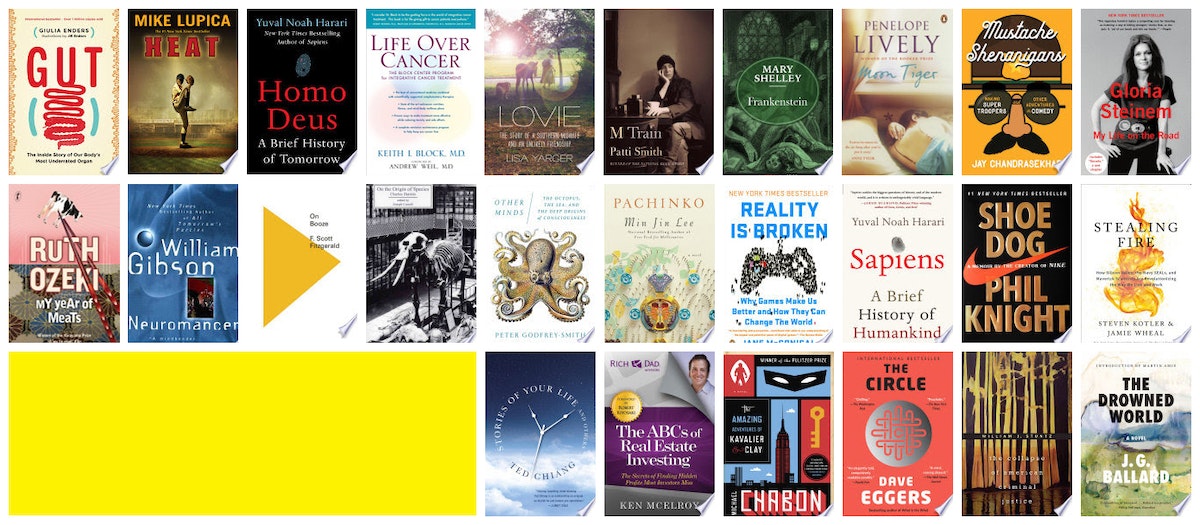
Gut ◆ Heat ◆ Homo Deus ◆ Life Over Cancer ◆ Lovie ◆ M Train ◆ Mary Shelley’s Frankenstein ◆ Moon Tiger ◆ Mustache Shenanigans ◆ My Life on the Road ◆ My Year of Meats ◆ Neuromancer ◆ On Booze ◆ Origin of the Species ◆ Other Minds ◆ Pachinko ◆ Reality is Broken ◆ Sapiens ◆ Shoe Dog ◆ Stealing Fire ◆ Stories of Life and Others ◆ The ABCs of Real Estate Investing ◆ The Amazing Adventures of Kavalier and Clay ◆ The Circle ◆ The Collapse of American Criminal Justice ◆ The Drowned World
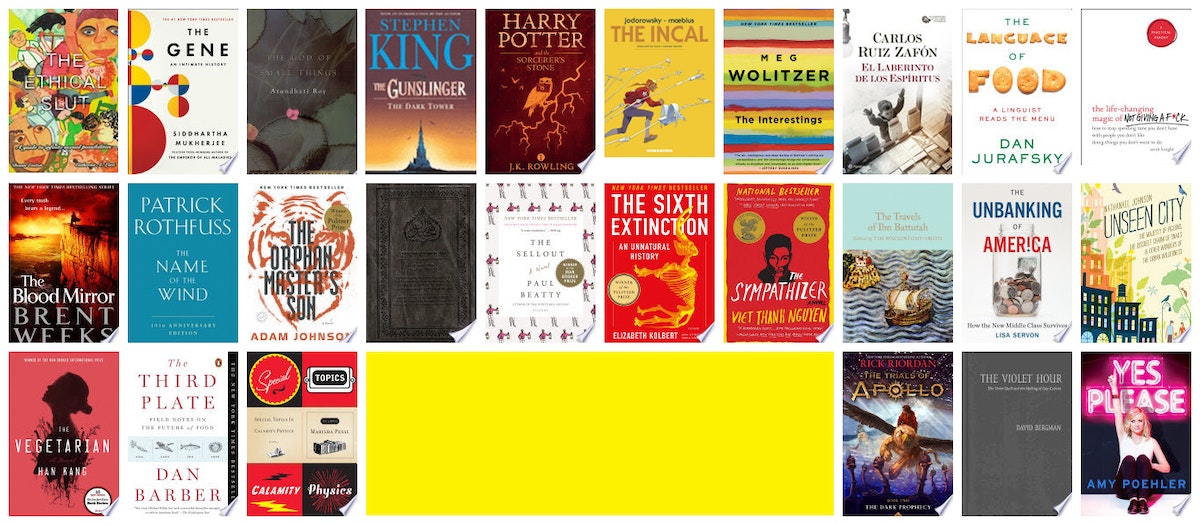
The Ethical Slut ◆ The Gene ◆ The God of Small Things ◆ The Gunslinger ◆ The Harry Potter Series ◆ The Incal ◆ The Interestings ◆ The Labyrinth of Spirits ◆ The Language of Food ◆ The Life-Changing Magic of Not Giving a F*ck ◆ The Lightbringer Series ◆ The Name of the Wind ◆ The Orphan Master’s Son ◆ The Quran ◆ The Sellout ◆ The Sixth Extinction ◆ The Sympathizer ◆ The Travels of Ibn Battutah ◆ The Unbanking of America ◆ The Unseen City ◆ The Vegetarian ◆ The Violet Hour ◆ Third Plate ◆ Topics in Calamity Physics ◆ Trials of Apollo II ◆ Yes, Please
What have you read (or listened to) on the list? And what are you curious to read? Tag your response on Twitter, Instagram, or Facebook with #bathroomread.
Visuals by Jane Ha.
There’s one IDEO tradition you’ll only get to witness if you stop by our San Francisco office with a full bladder. Every few weeks, a new question goes up on the bathroom wall. IDEOers pop into the loo throughout the day, spend a few moments minding their own business, so to speak, and the wall fills up with answers.

Lindsey Turner
I’m passionate about building brands, products, and experiences that help organizations show up with meaning and momentum.
I help organizations cut through complexity by shaping how they show up, through brand strategy, identity, and storytelling.
Working at the intersection of brand and business, I bring an editorial eye and a bias toward making—turning ideas into tangible experiences that people can understand, trust, and believe in.
My work spans government, healthcare, financial services, media, and consumer goods, from launching Gen Z-focused ventures to building innovation labs and reimagining legacy brands. I relish moments of ambiguity and enjoy translating across teams, perspectives, and priorities to move ideas forward.
I started my career in editorial and digital design, shaping cross-platform experiences and identity systems in publishing and agency environments. That foundation still shapes how I work today: I’m detail-oriented, collaborative, and overreliant on the Oxford comma. I hold a BFA in Visual Communication from the School of the Art Institute of Chicago.

Rachel Young
My work helps organizations see who their products aren't working for—and build the will and the tools to do something about it
For 25 years, I've asked the same question: Who does this design exclude—and what are we going to do about it?
My work spans human-centered strategy, inclusive design, and qualitative research, with clients ranging from Microsoft, Google, and Verizon to the National Science Foundation, and San Francisco Unified School District.
Before IDEO, I taught elementary school in East Palo Alto and spent a decade doing design work with social service organizations—where I learned firsthand what it costs people when systems are built without them in mind.
I am currently writing User Error, a nonfiction book about digital access and the design decisions behind it. I live in Oakland, California.

Brian Pelsoh
I lead with craft, ensuring our work is creatively excellent: rooted in deep human insight and imagination, while also grounded in the realities of business and technology.
My expertise spans brand, communication, and product design across tech, education, the arts, and social impact.
I believe great work demands both high-level vision and obsessive attention to detail, and only happens through collaboration.
I bring an inclusive, hands-on approach and a deep understanding of business, which enables me to consistently deliver excellence while always asking why.
Before joining IDEO, I worked at the brand firms Pentagram and VSA Partners. I began my career as a designer, leading teams at the School of the Art Institute of Chicago and the Milwaukee Art Museum. I hold an MFA in graphic design from Maryland Institute College of Art and a BFA in communication design from the Milwaukee Institute of Art & Design, and have taught at some of the best design schools in the US.

Tony Wong
I am responsible for IDEO’s long-term success in China and working with clients to use design as a tool to enable growth.
I am responsible for IDEO’s long-term success in China and working with clients to use design as a tool to enable growth. Specifically, I have helped Chinese companies design holistic brand solutions through the development of their products, communication, services, and innovation teams, and I have helped multinationals expand their presence and influence in China.
I advise global leaders on developing China-led innovation and capabilities.
In over 15 years in IDEO Shanghai, I have worked on projects that use design to elevate the quality of the experience of healthcare products and services, streamline processes that increase productivity, create spaces and programs that promote and enable inclusive communities, and build next generation mobility solutions that are planet-positive.
Before joining IDEO, I worked at Philips Electronics and the Electrolux Group in Italy, the Netherlands, and Singapore on a number of breakthrough commercial products. I am a member of the Young President Organization in Shanghai.

How to use AI as an editor, not a writer
Ed White shares how he uses AI as an editor—not a writer—to sharpen storytelling, rehearse ideas, and preserve the productive friction that makes creative work better.
Ed White has a rule he's tested on his own writing: hold yourself as the writer, and let AI be your editor. Ed is a Senior Design Director at IDEO's London studio, where he co-leads the firm's AI portfolio across Europe. Before IDEO, he spent 12 years as a writer and editor at the Financial Times, Wired, and Contagious. So when he talks about when to use AI for storytelling and when not to, it comes from two decades of crafting his storytelling skills.
In this episode, Mina Seetharaman talks with Ed about two specific tools he uses to keep AI in an editor's seat: a "roasting agent" prompted to critique his drafts without any sugarcoating, and a simulated audience he rehearses pitches on before the real thing. They also get into what Ed is hearing from design leaders at Anthropic, Lovable, Shopify, and Google Creative Lab about how creative work is changing, and why he thinks the friction of writing something yourself is worth protecting rather than automating away.

Building a personal AI for the messiness of life: Sida Li
Becca Carroll talks with Cue co-founder Sida Li about designing a personal AI for the messiness of everyday life—not just work. They explore how Sida stays anchored to human needs while navigating fast-changing technology, product tradeoffs, business-model experimentation, and the realities of building an AI company today.
Most AI products today are built for work—a space with clear problems and established systems. One founder noticed a gap: personal life is messier, harder to systematize, and mostly left behind by the AI boom. So she built Cue, a personal AI that lives inside iMessage and group chats, to go where the other tools haven't.
In this episode, Becca Carroll, IDEO's Chief Strategy Officer, talks with Sida Li, co-founder and CEO of Shared Context Lab, about staying anchored to a human need while the technology around her keeps changing shape, why she treats her business model with the same rigor she'd bring to a product, and what it feels like to build a company at this particular, disorienting moment in AI.
The conversation also gets into how Sida makes design decisions: the language Cue uses to describe itself, the tradeoffs behind building inside iMessage instead of a new app, and a real story about a business idea that didn’t pan out.
This is the second in a two-part series profiling founders from IDEO's Startups-in-Residence program. The first conversation is with Johannes Seemann, founder of Sooner, on designing GenAI for the emotional side of money.

Designing GenAI for the emotional side of money: Johannes Seemann
Designing financial tools around the feelings that shape money decisions.
Most personal financial tools are built to run the numbers and optimize towards a budget. While that works for some, most people experience money as a lived relationship that does not neatly fit into a spreadsheet. Johannes Seemann and Becca Carroll discuss why money is emotional before it is mathematical, and what a human-centered approach to building a generative AI financial product looks like in practice.

The curious leader's edge in uncertainty: Scott Shigeoka
How genuine curiosity helps leaders navigate uncertainty with greater confidence.
Mina Seetharaman talks with Scott Shigeoka, author of Seek and Head of Curiosity Cultivation at the Eames Institute, about what distinguishes genuinely curious leadership from performative curiosity, how power dynamics shape curiosity, and why practicing curiosity can restore energy rather than drain it.
Looks like you might be in search of something very specific?
Or reset the filters above and try another angle.
Here’s some random inspiration

Podcasts about creative leadership

Articles about the power of prototyping










































.webp)