
.svg)



A design partnership that changed electronics
An influential and award-winning long-term collaboration between Samsung and IDEO.
Since the early 1990s, Samsung and IDEO have shared a history of influential and award-winning collaboration. Together, the two companies have worked on more than 50 projects, the offerings created by this partnership spanning a broad spectrum, from a series of conceptual multimedia devices to industry-changing monitors, TVs, laptops, mobile phones and interfaces, computer peripherals, and mobile platform strategies. But beyond the design of products brought to their global market, the Samsung/IDEO partnership used the human-centered design approach to produce the innovation that ended up transforming the electronics giant’s entire business.
After years of being an industry fast-follower, Samsung approached IDEO with the idea of an immersive cultural exchange. Samsung designers, marketers, and strategists came to Palo Alto and set up a studio near IDEO to learn everything they could from the US consumer market and IDEO’s design approach. Together, the teams began to design groundbreaking electronics products, while using design thinking to look at the entire business through a new lens. By putting users at the center of the process, and beginning to understand their needs and emerging behaviors, Samsung found it could not only satisfy existing customers, but also begin to anticipate market shifts. This tipping point led Samsung to evolve into a market leader.
Samsung and IDEO created a design powerhouse, following a journey from designing products to services to experiences, interactions, and innovation that moved Samsung away from consumer electronics toward an even bigger market of back-end services and interactive and systems-based services.
Culturally, the partnership with IDEO has helped Samsung adopt new ways to integrate internal teams, a human-centered design approach and iterative prototyping, and the methodologies to merge technology and design to create a leading-edge consumer line and brand. As evidence of Samsung’s rise to being one of the world’s largest design-driven companies, the company has more than doubled its internal design teams since 2000, according to the article “Samsung Design” in BusinessWeek Online.
Some of the projects include:
LCD Computer monitors
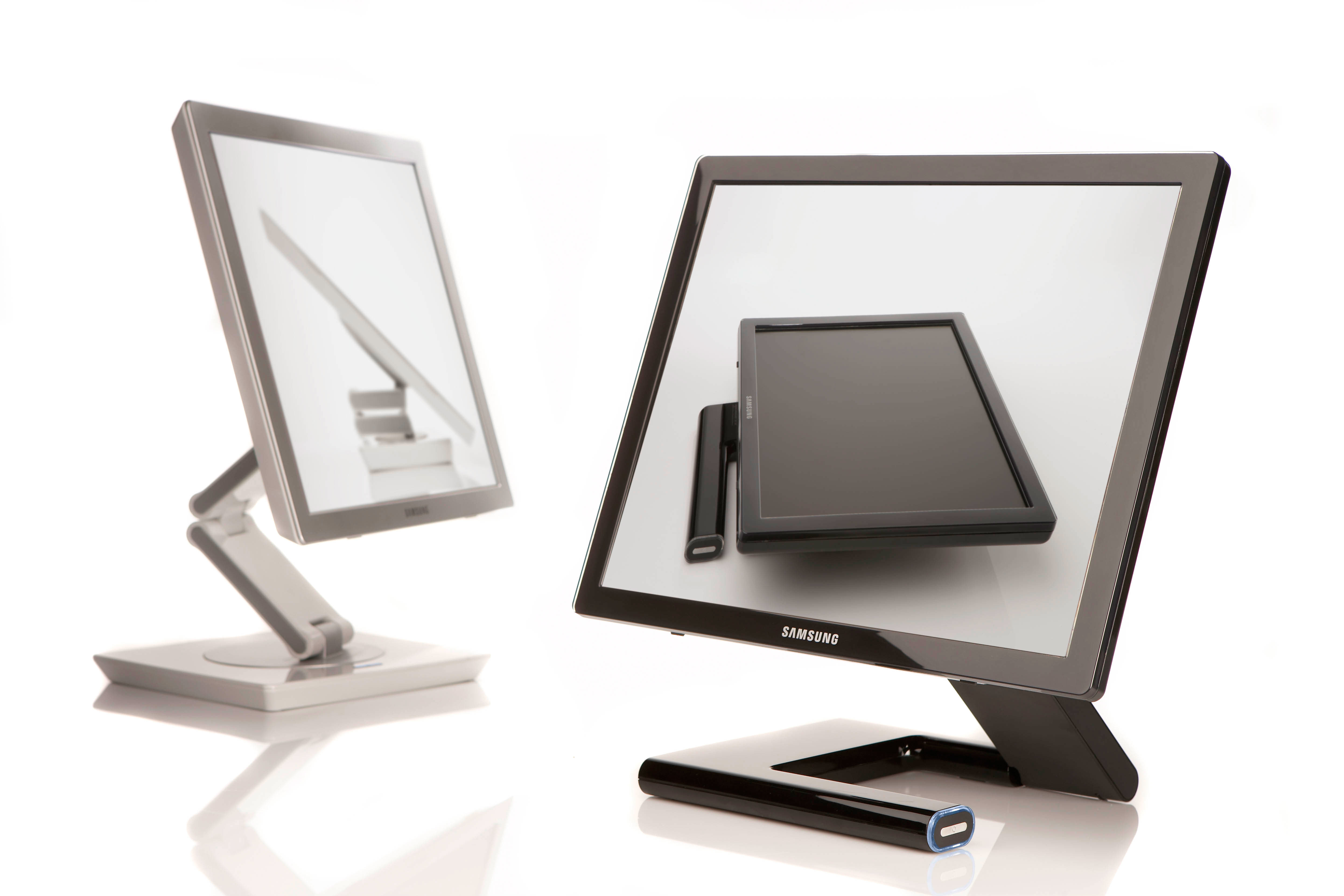
Samsung and IDEO created the industry-standard 970P and 971P monitors, featuring clean surfaces, contrasting textures, and a simple design for a premium look and feel. Designed with IDEO founder Mike Nuttall, they won both the 2009 iF Award and a 2007 IDEA Gold award.
Brand awareness for Samsung Memory
Wanting to raise awareness about Samsung Memory’s products that enhance the performance of electronic devices, IDEO and Samsung designed a humorous campaign that highlighted consumers’ need for Samsung Memory.
SimpleMedia and TotalMedia home entertainment concepts
IDEO and Samsung designed two concepts: SimpleMedia combined a computer, television, DVD, fax, and telephone; TotalMedia featured an adjustable screen and LCD projector combination. Although neither was ever produced, they were honored with design awards from ID Magazine and BusinessWeek, respectively.
SyncMaster 400TFT Flat Panel Display
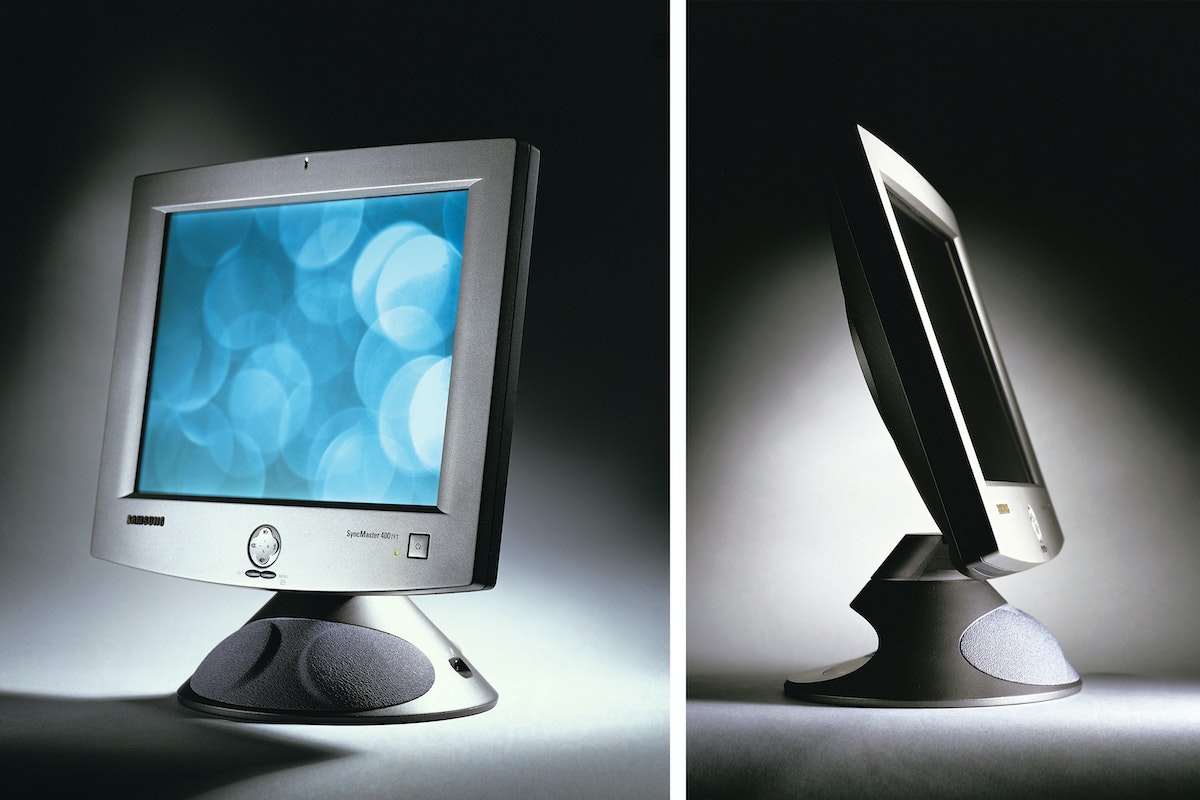
Samsung and IDEO designed the SyncMaster LCD flatscreen multimedia monitor to be thin and elegant, and it garnered several design awards in Korea, Germany, and the U.S. The British magazine T3 called it “the sexiest monitor we’ve ever seen.”

Designing a brand to scale big
A small, handmade line of granola lands on tables across the country.
Nana Joes, a beloved San Francisco granola company, was born from an avid surfer’s desire to bring healthy breakfast back to the kitchen table. Embracing the philosophy that good food is about wholesome ingredients prepared with care, the startup took pride in carefully scraping each vanilla bean by hand and soon gained a devoted following at farmers markets around the Bay Area.
As Nana Joes’ reputation grew beyond the hills of San Francisco, the company asked IDEO to explore how to take a small company and scale the brand for national distribution, while keeping its heart and handcrafted ethos at its core.

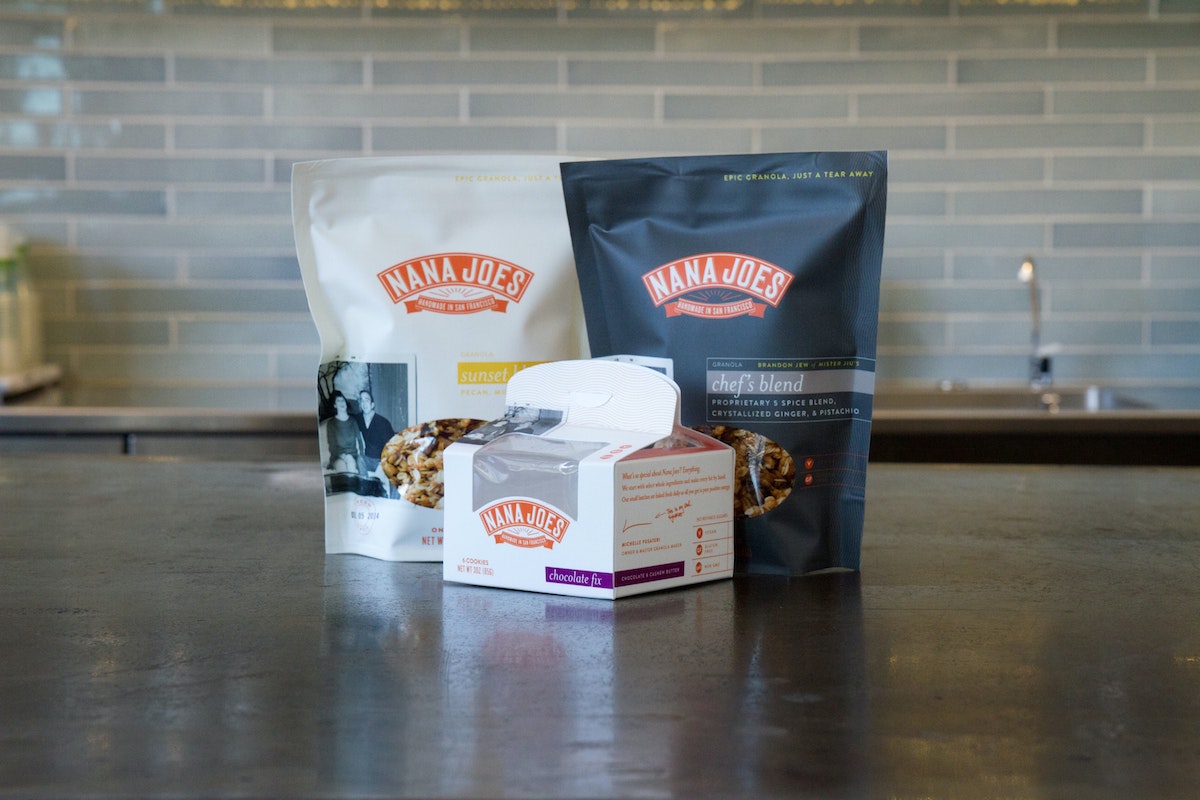
A team of IDEO designers set out to position Nana Joes for growth by developing a brand identity and packaging system that would resonate with customers and reduce operational complexity. The entire team went on factory tours and met with packaging suppliers to identify solutions that would be easily manufactured en masse, but still retain the familiar handcrafted feel. With mock-up packaging in hand, they hit local farmers markets to conduct live in-market prototyping with both loyal and new customers and met with retail buyers to get their real-time reactions to how the brand and packaging stood out on shelves.
The final deliverables included new branding and packaging for the entire line of granola, granola bars, and cookie products, as well as a guide for Nana Joes to operationalize the rollout by 2016.
How a legacy phone book company reinvented itself
An Australian directories company transitioned from makers of the first phone book to digital services and beyond.
The legacy company that produced the first phone book in Australia more than 130 years ago—and the disruptive change it represented—became directories company Sensis. As Sensis made the transition from a print directory to a digital service in recent years, the company came to IDEO to foster a startup mindset.
Together, Sensis and IDEO identified four ways for Sensis to become more agile: Focus on the company’s core skills, revitalize the product development process, develop insights about Sensis’ global competitors, and strengthen connections to current and potential customers.
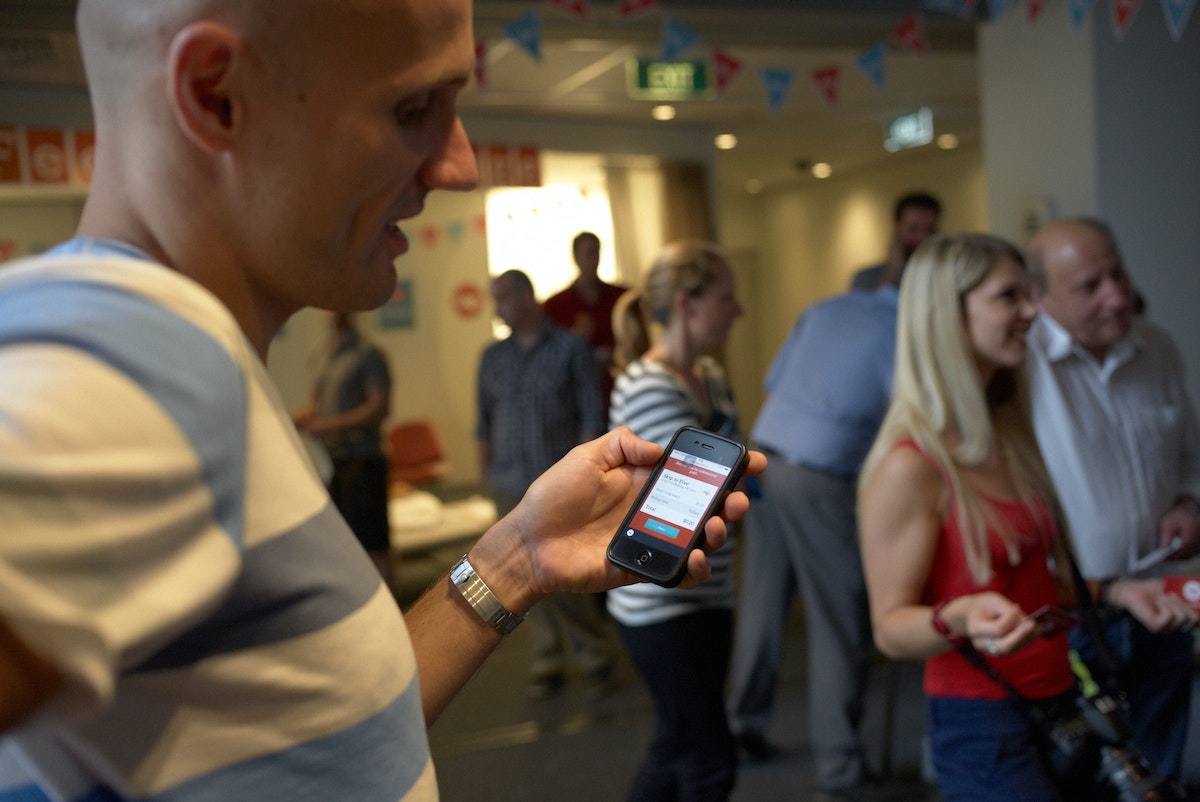
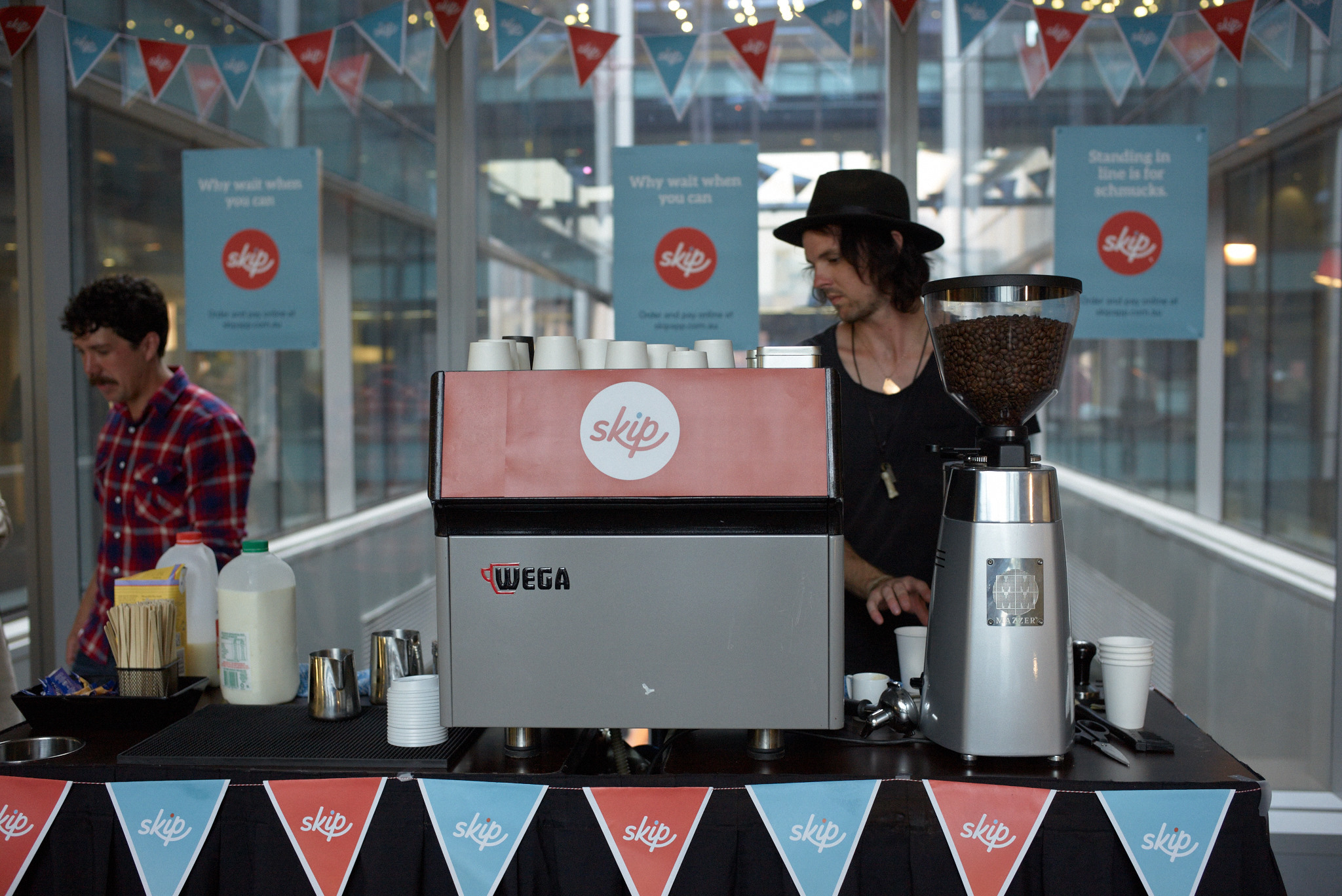
After prototyping more than 65 ideas, the team decided on an app, Skip, with which a customer connects remotely to her favorite café right from her phone, sends her order, and schedules a time to pick it up. Then she breezes past the line when she arrives at the café.
To understand how this app might work in the real world, the team fanned out across Melbourne, talked directly with café owners and their customers, gathering data, and watching behavior, then launched the live app just 10 weeks after developing the first prototype.
Watch: Team members from Sensis and IDEO share their experiences.
A real-time data service for food industry workers
Using design thinking to pivot from food-discovery app to food-data provider.
Fueled by a mission to “help everyone love what they eat,” the Chicago-based food-tech startup Food Genius created a consumer-facing mobile app that used a complex algorithm to track more than 16 million restaurant menu items and classify consumers’ dining-out behaviors.
After the year-old startup became part of IDEO’s Startup in Residence program in Chicago, the company changed its focus from consumers to the food industry.
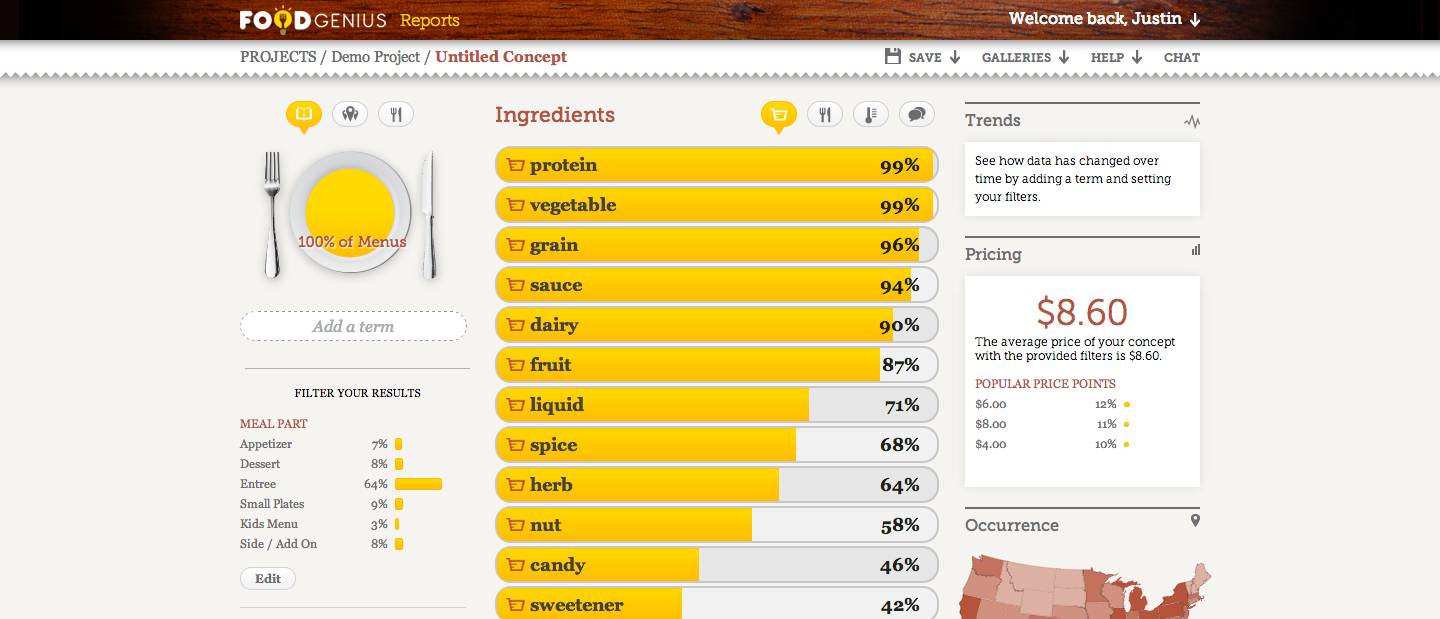
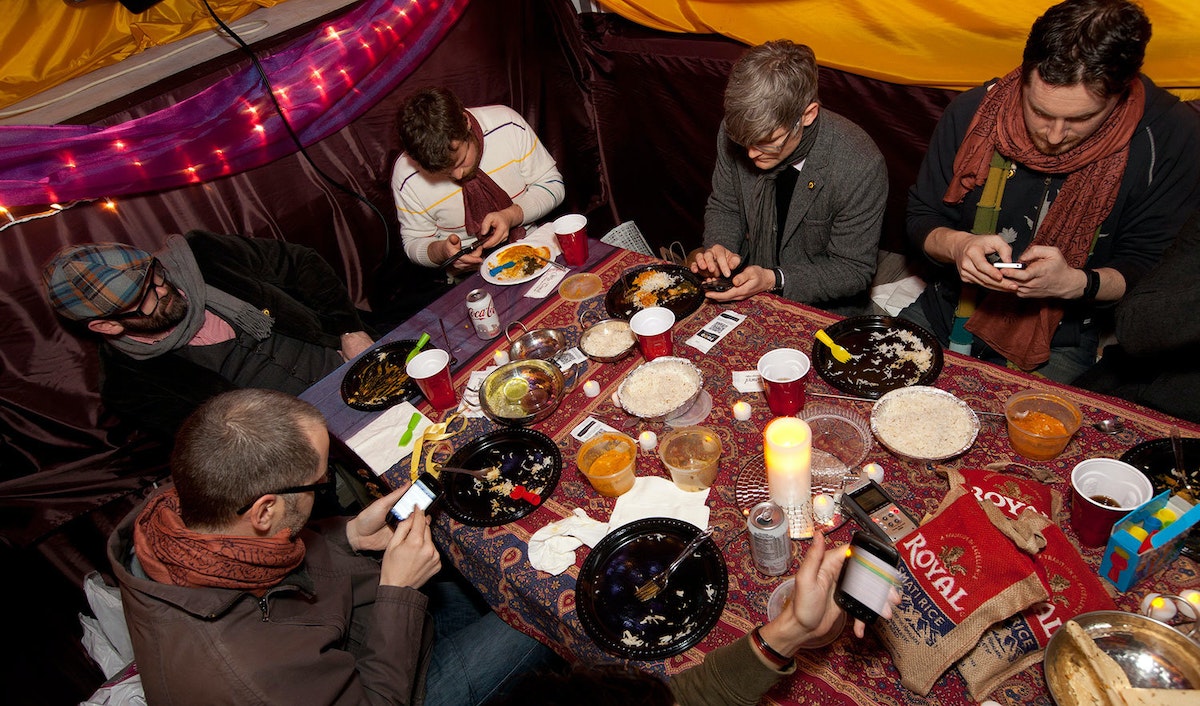
To build their food industry-focused platform, the designers collaborated on a number of business and technological development strategies, product road-mapping, and a prototype viral marketing experience called Curry Crawl to test the usability of the new API.
In April 2016, Food Genius was acquired by US Foods. "What was really striking about US Foods is that they take a very analytics-driven approach to their business," said Justin Massa, founder and former CEO of Food Genius. "They bought the technology knowing it's going to be able to do great stuff."
10 Exercises to Build Your Creative Confidence
Activities to help you approach challenges from a new perspective
In The Octopus's Build Your Creative Confidence series, we’ve shared exercises and activities from the book to help you approach challenges from a new perspective. We’ve compiled all ten exercises here in hopes that you’ll hit the ground running on your creative journey and excel in a future where creativity is currency.
1. Mindmaps: Push yourself to think divergently and creatively
When searching for innovative solutions, mindmaps can be a powerful way to come up with new ideas or gain clarity about a topic of exploration.
2. 15 Seconds of Brilliance: Increase your creative output
Even if you never get to experience Andy Warhol’s fifteen minutes of fame, you’re likely to have your own moments of brilliance once in a while. When that happens, be ready to capture the magic.
3. 30 Circles: Jumpstart an ideation session
This quick, simple exercise is perfect for getting warmed up. Use it with a group as an icebreaker or on your own when you need a jolt of inspiration.
4. Empathy Maps: Lessons from observing human behavior
You’ve gone into the field in search of knowledge, meeting people on their home turf, watching and listening intently. But synthesizing all that data can be a little daunting. Organize your thoughts with this tool.
5. I Like, I Wish: Encourage and accept constructive feedback
We all instinctively know that constructive critique is essential, and yet it can be hard to listen to and absorb feedback without letting our egos and defensiveness distract us from what may be a valuable message. Use this exercise to help introduce feedback into the innovation process.
6. Speed Dating: Warm up a group and break down barriers
Creativity thrives amidst free-flowing social discourse. To get a roomful of strangers to innovate, start by breaking down some of those pesky social barriers. By carefully thinking about your group, you can craft this exercise to prime your participants for the work that comes next.
7. Nickname Warm-Up: Eliminate hierarchy to improve idea flow
While the previous exercise useful in situations where people don’t know each other well, sometimes you’ll encounter the opposite problem: a group meeting where people know each other too well. This warmup allows folks to “try on” a new persona and new behaviors.
8. Customer Journey Map: Empathize with customers, employees, and other end users
A journey map helps you think systematically through the steps your customers—internal or external—have when they interact with your product or service. Use this exercise to drum up new insights about your end users.
9. The Dream/Gripe Session: Define a problem to work on
Dreams and gripes are both a normal part of the innovation process. In this exercise, pair folks up to translate conversations into creative thinking challenges.
10. The Wallet Exercise: Help your group understand innovation thinking
The exercise uses a simple object that most people carry with them as a prop to discover needs, design and prototype solutions, and get user feedback. It gives everyone a chance to cycle quickly through the human-centered design process.
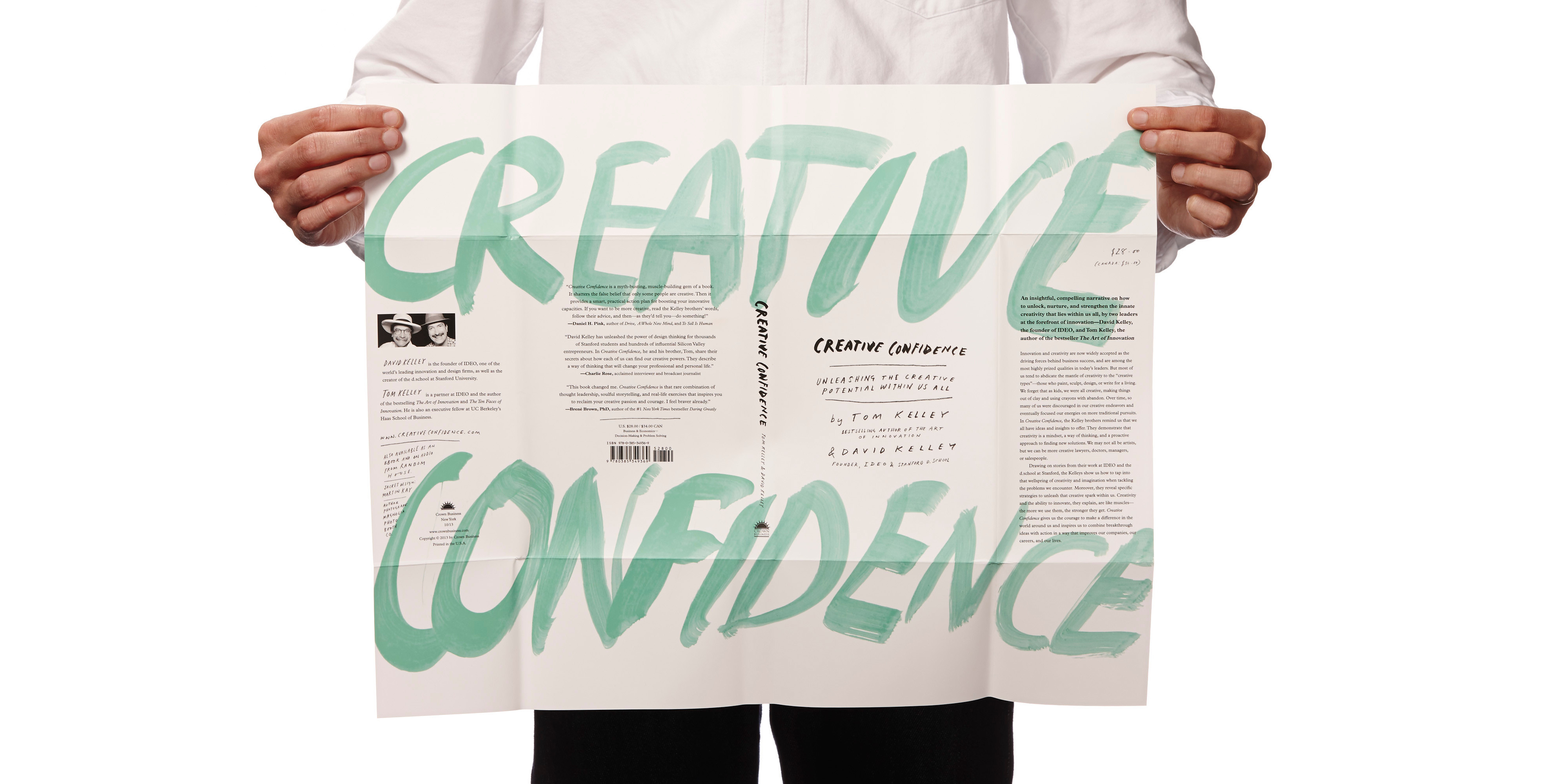
Creativity is on the rise as a top skill leaders will need to face the increasingly complex challenges the future has in store for them. For those who identify as "creative types," this is likely music to your ears. For those who don't, stay with me! As luck would have it, IDEO was founded on the belief that everyone is creative—and that creativity, like any other leadership skill, can be learned and practiced. In 2013, David Kelley and Tom Kelley put that belief down on paper in their best-selling book, Creative Confidence.

When Building a New Venture, Friction Isn’t Just Inevitable—It’s Invaluable
Nine lessons from the front lines of corporate venturing

The 4 “Love Languages” of Design
Techniques to ensure your audience will fall in love with your idea
I must say: Designers have an advantage when it comes to communication. We have the benefit to use not only our words, but also visualizations, from sketches and 3DCAD to infographics and physical objects. Designers are capable of making words real, expressing an idea in form, color, material, and finish. We truly are tangible storytellers. But having the means to make ideas tangible doesn’t necessarily solve all communication issues—we all speak nuanced languages and carry biases toward the things we already love to hear, see, or experience.
You may have heard of the 5 Love Languages, a tool to help characterize the ways we give and receive love. What if a similar tool could be built for designers? What if, before sharing an idea, you could learn the “design love language” of your audience? You learn your romantic partner’s love language to better connect with them; you might learn your colleague’ design love language to better collaborate, or a client’s design love language so you can craft the perfect presentation.
Here are 4 “languages” to help you communicate the value of your design straight into the hearts of your audience:
1. Storyteller’s Circle
For many people, it’s the story behind your idea that will really make it sing. This goes far beyond how the idea solves a problem for people and the business; that should be a given. It’s about the thoughtful descriptions of how the idea came about, why it will make a positive impact in the world, how it was better than other ideas, and why you feel confident about that.
The team we worked with at PillPack did this masterfully. During the research phase of the process to redesign how patients engage with pharmacies, we heard personal, painful stories about dealing with the US healthcare system. Standing in long lines, keeping up with expiration dates, making sure you take this medicine with food and that one on an empty stomach—patients told us it's overwhelming. We could immediately tell there was a huge opportunity to design something to solve for these problems, and the stories we heard inspired the team to create a single vision, strategy, experience, and identity that consumers quickly understand.
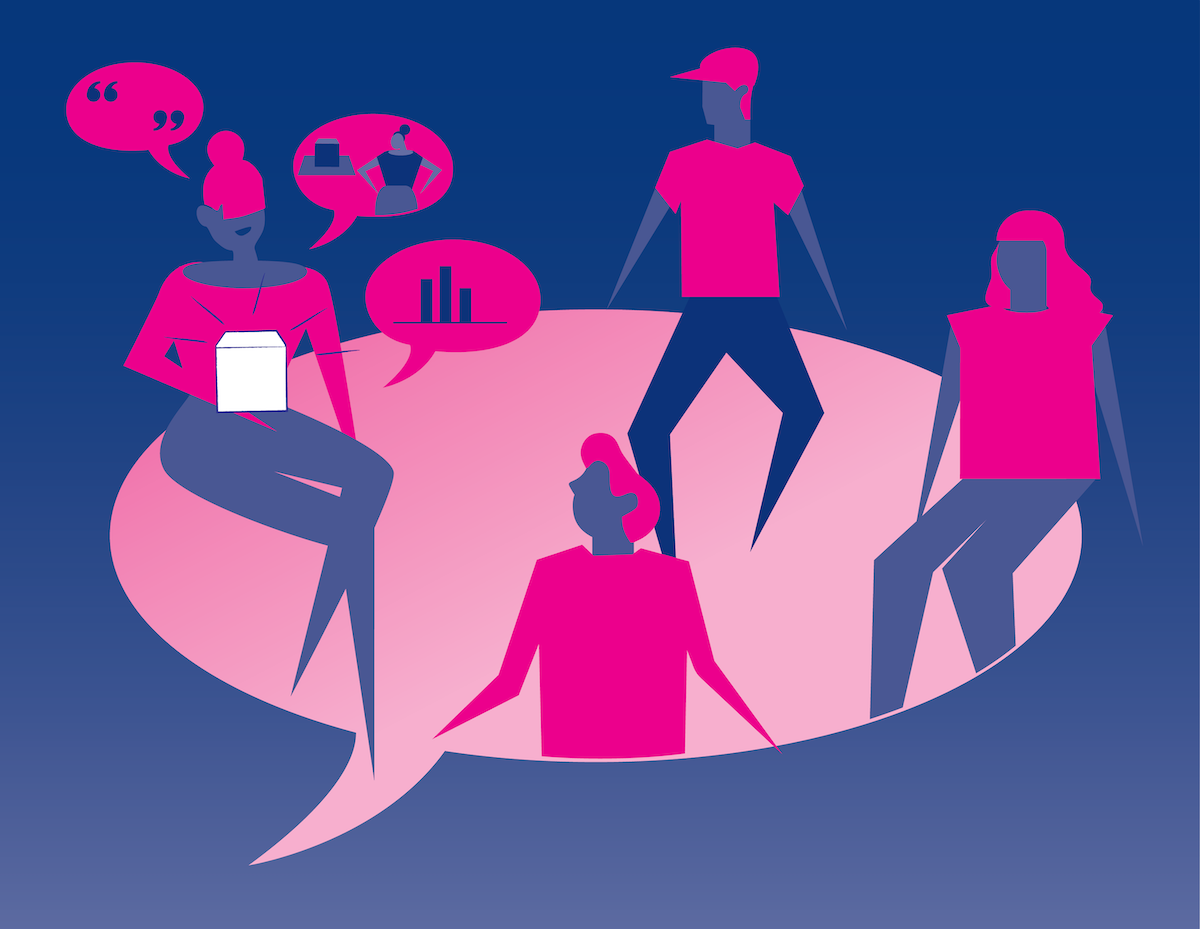
To gauge whether your story will resonate, try rehearsing it as if you were speed dating. If people understand your concept in a single sentence or get excited in the first 30 seconds, you’re on to something.
2. Make it Zing
There are some ideas that make us express feelings that are beyond words—“oooohs” and “aaaahs.” For people who need that ah-ha moment to really make a new idea click, it’s your job to make them say, “Oh, wow.”
When sharing IDEO’s vision for the future of mobility, I’ve heard people remark, “So that’s what our city could look like.” The project explores the many ways that we imagine transportation—of people, places, ideas—evolving over the coming years. Though they’re purely conceptual, the ideas are brought to life through visual renderings and context clues that make them feel tangible—they transport the viewer to The Future. Try not to gasp when you realize that.
To get started, think about which of the senses you want to appeal to, then work to amplify them. Use visual cues or sound to your advantage—the “zing” happens when the idea flirts with us and tickles our senses, gut instinct, and imagination. Lean into the unpredictable, the whimsical. Make someone sigh or shout.

3. Straight to the Heart
What was the last performance you gave a standing ovation? When was the last time you cried at a movie? Which book moved you so much that you bought all your friends copies for the holidays?
This love language is about emotional resonance—tapping into the power of human emotion to impact your audience on a deep, personal level. I’ve found that it works particularly well for helping people build empathy for the human elements of large, complex systems and structures.
Our approach to telling the story of IDEO's work to design the voting system in Los Angeles County was to tug at the heartstrings, which helped make complicated and bureaucratic topic more accessible. The photos, videos, and audio stories were designed to highlight the humans who are casting ballots—the hardships, the triumphs, and everything in between.
Body language and word choice are key to nailing this one. Take cues from your audience—when you see someone lean in, nod, let themselves smile, you know you’ve landed on a moment that made things click. Practice your story with a friendly audience and observe those moments, then design your storytelling experience around them.
4. Lights, Camera, Action
For some, actions speak louder than words, and they can only fall in love with the idea after seeing or trying it. They want to use it over time, test it, live with it, break it, and have others do the same. For these people, ideas need to be on a movie set, including the actors, the scene, and the props.
For this audience, make sure to bring your idea to life as a prototype, and allow them to experience it out in the wild. That’s what we did when we helped Swarovski build a new chandelier. We didn’t just look at renderings—we built a whole living room in our office to test our prototype.
Prototypes don’t have to be perfect. In fact, they shouldn’t be. Showing up with a prototype made of cardboard and Legos is better than arriving empty handed. Do whatever you can to make your thing real and I guarantee you’ll see lightbulbs go off over people’s heads.
As designers, our job is to create things that improve people’s lives. To do so, designers must learn how to speak the languages of the various audiences we design for. It’s important for us all to recognize our own biases towards our favorite language, and have the empathy to listen and adapt to the other ones. Your design love language might be different from the person using your design.
Language matters. That’s an obvious statement for anyone working across cultures, and it especially holds true in design. As a designer, I’ve always used my skills to create tools that enable shared understanding. This mainly came about out of necessity: I was born and raised in the Netherlands, and I’ve also lived in Sweden, the UK, and for the past seven years, the US. In my 14-plus years as an industrial designer, I’ve collaborated with clients from almost every continent, from Saõ Paulo to Seoul. By working closely with people from different countries, I’ve learned first-hand how language connects us to our cultures and to one another.

To Become a Better Designer, Make Time for Make Believe
Silly as it sounds, it’ll make you better at your day job
Every other week, I host a creative playdate for our studio called MakeBelieveTime (MBT). We always come up with something different. Maybe we’ll combine magnets and mirrors to invent our own games. Maybe we’ll use a needle and thread to learn the basics of computer coding, or fold our hopes and fears into paper airplanes. MBT has become one of the tentpoles in our community’s calendar—a ritual that brings our bodies out of project spaces and our minds out of design mode. It’s playtime for adults.
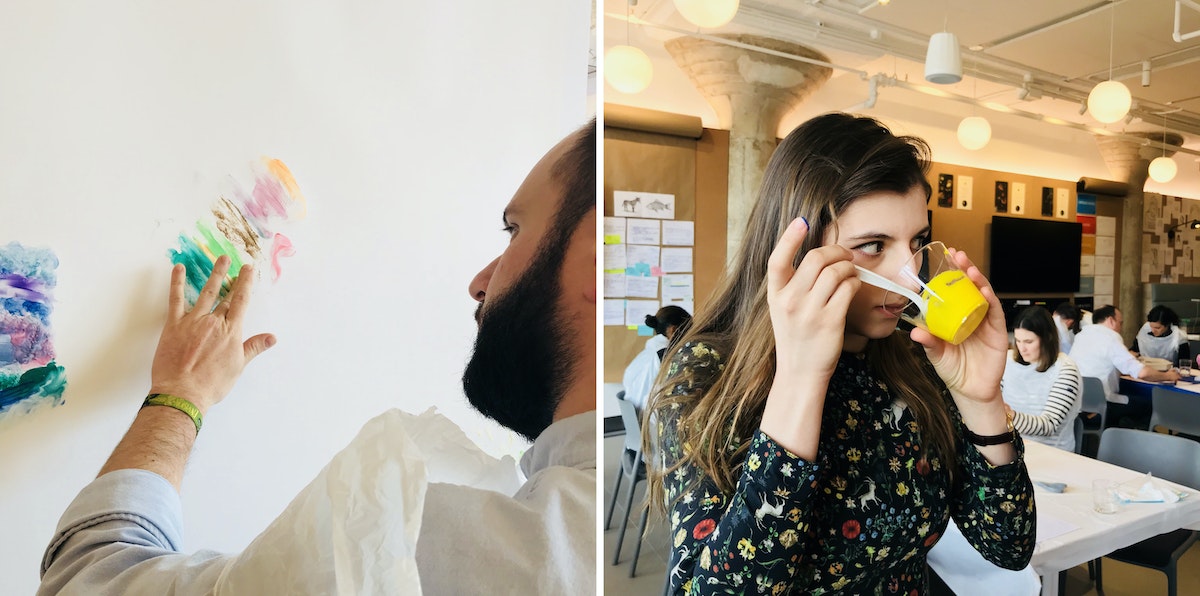
The value of these exercises has become clear to us, but when visitors happen to be around for MBT, all the natural questions bubble up. Sounds fun, but you do this during work hours? (Yes.) Are these exercises used with clients later? (Sometimes, but not always.) How does this apply to paid project work? (It doesn’t.) So what’s the point?
That is the point. MakeBelieveTime is actually most valuable when it does not directly relate to project work in a typical, measurable way. It’s play for the sake of play, and that’s okay—in fact, it’s essential. Here’s why.
It’s about process, not product
I once had an art teacher who would sketch all over my work to show me different techniques. At first, I was frustrated because my brilliant piece was being scribbled on. But then I recognized his assumption—that an artist will do it again and again and again. That learning a new technique meant focusing on the hand, not the paper.
In our design work, we rely on our own experiences and intuition, so it’s essential that we become fluent in exploring our memories and feelings. MakeBelieveTime gives us a chance to practice that with new and unfamiliar tools. That’s why, whether it’s colored sand or temporary tattoos, the real materials of MakeBelieveTime are our personal joys, hopes, and fears.
It preps the mind for design
When I was a kid, my grandfather told me about Louis Pasteur’s belief that “Chance favors the prepared mind.” Show up and do the work, Grampa explained, so that when the magic happens you’ll be sharp enough to recognize it. Making space for “sensorial, analog, hands-on radness”—that’s how one colleague described MakeBelieveTime—gives designers a much needed mental reset.
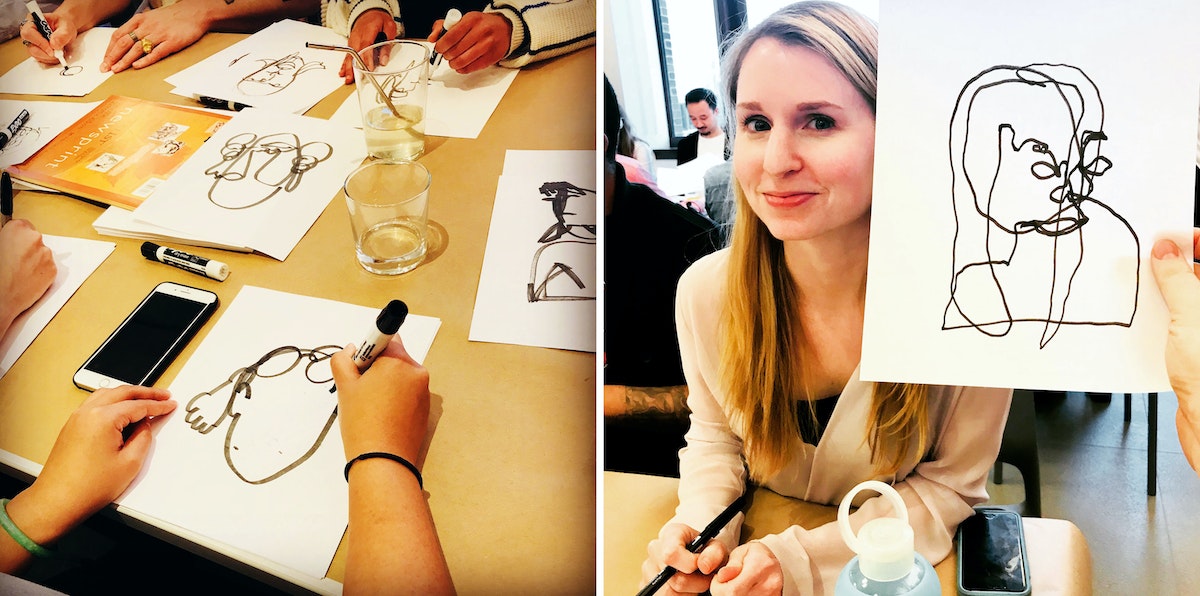
Plus, MBT actually has made an impact on client work. A handful of insights and concepts that originally came out of MakeBelieveTime actually made it into an experience we designed for a major NYC landmark.
But that’s not really the point. It’s about helping our designers spread their nets as wide as possible, and to lighten things up with a moment of pure, playful joy, so that when inspiration comes they’re ready to grab it.
It broadcasts both values and value
Most designers will sing the praises of play. It opens you up and makes you braver, more optimistic, and more creative. We pepper client meetings with pipe-cleaner sculptures or a little improv to get the blood and imagination flowing. We put a lot of thought and energy into those activities, thinking about our clients’ needs and the best way to get them comfortable with being uncomfortable.
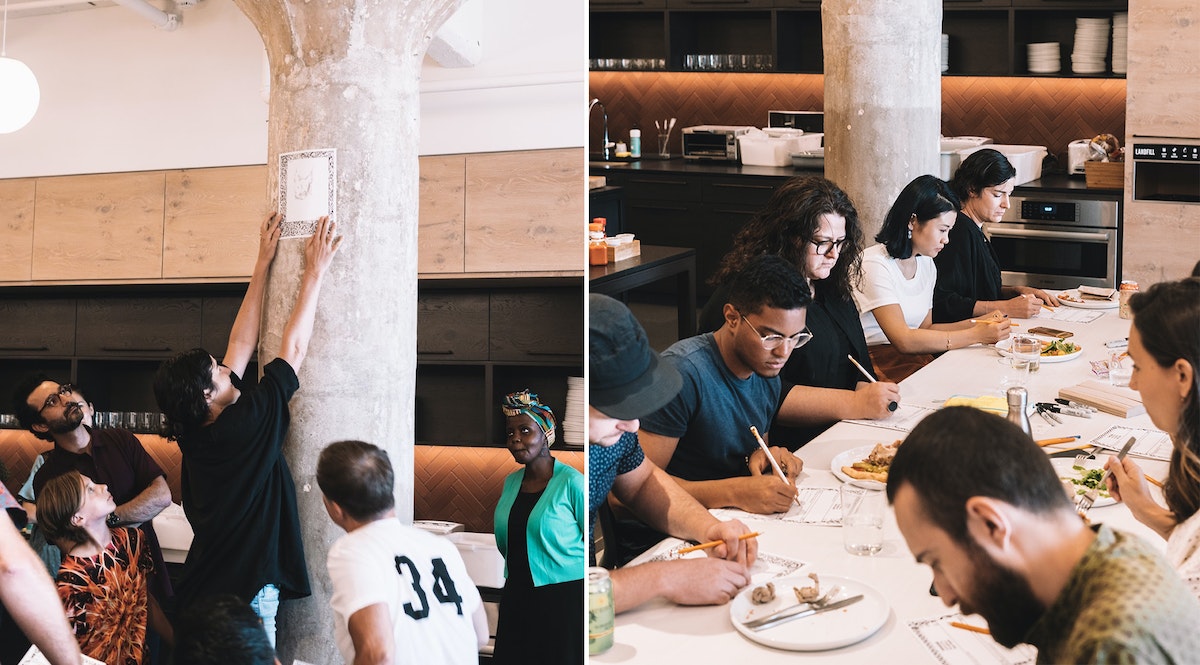
Most designers will also admit that when deadlines loom, proposals beckon, or clients push back, play is not always top-of-mind. That’s a problem. An organization’s beliefs come through in their actions. To show that play is worth the time, you have to make time for it.
How to build your own MakeBelieveTime
We want MBT to be much more than a free-for-all with glue sticks and googly eyes, so we use three key design principles to guide the activities:
- Make the familiar unfamiliar. To think about senses we take for granted, we infused finger paints with essential oils and asked everyone to visually illustrate the experience of smelling that scent.
- Explore safe danger. Blind contour drawing is a great example. We all sit and draw the person across from us—without lifting the pen or looking down at the drawing. It’s always a mess, which guarantees a joyful, public fail, but also allows us to look deeply at each other and practice seeing and being seen.
- Dig deep. We used Halloween as a prompt to create a mask that evokes a moment we were horrified by our own behavior. This allowed us to acknowledge the full spectrum of our feelings, exorcise that shadow, and leave it to the past.
The first, despairing thought that hit one of my colleagues when he first saw MBT in action was, “IDEO’s gone soft.” And, quite frankly, that's not an unfair concern when you see a room full of world-class designers finger painting.
But MBT serves as an opportunity to nourish a perspective rather than achieve an objective. It’s less about the scented fingerpaints, and more about exploring new ways of understanding and sharing an experience. It’s also about laughing together. It’s about exposing our soft side so that we can trust each other more when we take those lessons back to our project spaces and have a hunch about trying something untested but exciting.
That’s why we believe that designing a cocktail that tells the story of your first kiss doesn’t cost you your edge. It’s how you keep it.
Think back to your first kiss. Remember the place, the smells, the nerves, the lips. If you had to create a cocktail to tell the story of that experience, how would you do it? Would you make Jolly Rancher–infused vodka to conjure the candy-loving kid next door? Would a popcorn garnish nod to the movie you barely watched? Answering these questions is how the designers of IDEO New York spent a Valentine’s Day afternoon.

Lindsey Turner
I’m passionate about building brands, products, and experiences that help organizations show up with meaning and momentum.
I help organizations cut through complexity by shaping how they show up, through brand strategy, identity, and storytelling.
Working at the intersection of brand and business, I bring an editorial eye and a bias toward making—turning ideas into tangible experiences that people can understand, trust, and believe in.
My work spans government, healthcare, financial services, media, and consumer goods, from launching Gen Z-focused ventures to building innovation labs and reimagining legacy brands. I relish moments of ambiguity and enjoy translating across teams, perspectives, and priorities to move ideas forward.
I started my career in editorial and digital design, shaping cross-platform experiences and identity systems in publishing and agency environments. That foundation still shapes how I work today: I’m detail-oriented, collaborative, and overreliant on the Oxford comma. I hold a BFA in Visual Communication from the School of the Art Institute of Chicago.

Rachel Young
My work helps organizations see who their products aren't working for—and build the will and the tools to do something about it
For 25 years, I've asked the same question: Who does this design exclude—and what are we going to do about it?
My work spans human-centered strategy, inclusive design, and qualitative research, with clients ranging from Microsoft, Google, and Verizon to the National Science Foundation, and San Francisco Unified School District.
Before IDEO, I taught elementary school in East Palo Alto and spent a decade doing design work with social service organizations—where I learned firsthand what it costs people when systems are built without them in mind.
I am currently writing User Error, a nonfiction book about digital access and the design decisions behind it. I live in Oakland, California.

Brian Pelsoh
I lead with craft, ensuring our work is creatively excellent: rooted in deep human insight and imagination, while also grounded in the realities of business and technology.
My expertise spans brand, communication, and product design across tech, education, the arts, and social impact.
I believe great work demands both high-level vision and obsessive attention to detail, and only happens through collaboration.
I bring an inclusive, hands-on approach and a deep understanding of business, which enables me to consistently deliver excellence while always asking why.
Before joining IDEO, I worked at the brand firms Pentagram and VSA Partners. I began my career as a designer, leading teams at the School of the Art Institute of Chicago and the Milwaukee Art Museum. I hold an MFA in graphic design from Maryland Institute College of Art and a BFA in communication design from the Milwaukee Institute of Art & Design, and have taught at some of the best design schools in the US.

Tony Wong
I am responsible for IDEO’s long-term success in China and working with clients to use design as a tool to enable growth.
I am responsible for IDEO’s long-term success in China and working with clients to use design as a tool to enable growth. Specifically, I have helped Chinese companies design holistic brand solutions through the development of their products, communication, services, and innovation teams, and I have helped multinationals expand their presence and influence in China.
I advise global leaders on developing China-led innovation and capabilities.
In over 15 years in IDEO Shanghai, I have worked on projects that use design to elevate the quality of the experience of healthcare products and services, streamline processes that increase productivity, create spaces and programs that promote and enable inclusive communities, and build next generation mobility solutions that are planet-positive.
Before joining IDEO, I worked at Philips Electronics and the Electrolux Group in Italy, the Netherlands, and Singapore on a number of breakthrough commercial products. I am a member of the Young President Organization in Shanghai.

How to use AI as an editor, not a writer
Ed White shares how he uses AI as an editor—not a writer—to sharpen storytelling, rehearse ideas, and preserve the productive friction that makes creative work better.
Ed White has a rule he's tested on his own writing: hold yourself as the writer, and let AI be your editor. Ed is a Senior Design Director at IDEO's London studio, where he co-leads the firm's AI portfolio across Europe. Before IDEO, he spent 12 years as a writer and editor at the Financial Times, Wired, and Contagious. So when he talks about when to use AI for storytelling and when not to, it comes from two decades of crafting his storytelling skills.
In this episode, Mina Seetharaman talks with Ed about two specific tools he uses to keep AI in an editor's seat: a "roasting agent" prompted to critique his drafts without any sugarcoating, and a simulated audience he rehearses pitches on before the real thing. They also get into what Ed is hearing from design leaders at Anthropic, Lovable, Shopify, and Google Creative Lab about how creative work is changing, and why he thinks the friction of writing something yourself is worth protecting rather than automating away.

Building a personal AI for the messiness of life: Sida Li
Becca Carroll talks with Cue co-founder Sida Li about designing a personal AI for the messiness of everyday life—not just work. They explore how Sida stays anchored to human needs while navigating fast-changing technology, product tradeoffs, business-model experimentation, and the realities of building an AI company today.
Most AI products today are built for work—a space with clear problems and established systems. One founder noticed a gap: personal life is messier, harder to systematize, and mostly left behind by the AI boom. So she built Cue, a personal AI that lives inside iMessage and group chats, to go where the other tools haven't.
In this episode, Becca Carroll, IDEO's Chief Strategy Officer, talks with Sida Li, co-founder and CEO of Shared Context Lab, about staying anchored to a human need while the technology around her keeps changing shape, why she treats her business model with the same rigor she'd bring to a product, and what it feels like to build a company at this particular, disorienting moment in AI.
The conversation also gets into how Sida makes design decisions: the language Cue uses to describe itself, the tradeoffs behind building inside iMessage instead of a new app, and a real story about a business idea that didn’t pan out.
This is the second in a two-part series profiling founders from IDEO's Startups-in-Residence program. The first conversation is with Johannes Seemann, founder of Sooner, on designing GenAI for the emotional side of money.

Designing GenAI for the emotional side of money: Johannes Seemann
Designing financial tools around the feelings that shape money decisions.
Most personal financial tools are built to run the numbers and optimize towards a budget. While that works for some, most people experience money as a lived relationship that does not neatly fit into a spreadsheet. Johannes Seemann and Becca Carroll discuss why money is emotional before it is mathematical, and what a human-centered approach to building a generative AI financial product looks like in practice.

The curious leader's edge in uncertainty: Scott Shigeoka
How genuine curiosity helps leaders navigate uncertainty with greater confidence.
Mina Seetharaman talks with Scott Shigeoka, author of Seek and Head of Curiosity Cultivation at the Eames Institute, about what distinguishes genuinely curious leadership from performative curiosity, how power dynamics shape curiosity, and why practicing curiosity can restore energy rather than drain it.
Looks like you might be in search of something very specific?
Or reset the filters above and try another angle.
Here’s some random inspiration

Podcasts about creative leadership

Articles about the power of prototyping










































.webp)