
Designing the Levi’s Commuter Trucker Jacket with Jacquard by Google
When Google teamed up with Levi’s to craft a jacket with technology woven in, the company turned to IDEO to help make the experience of wearing the garment feel seamless, intuitive, and familiar.
You’re whizzing along on your bike, en route to a new restaurant for a client meeting. You reach an unfamiliar intersection; which way to go now?
Instead of dismounting and digging for a phone, you brush your hand along your jacket sleeve for directions, then double-tap the denim to re-start your music. Without taking your eyes off the road, you’ve taken care of the problem.
This intuitive interface for connected apparel began with Levi's, makers of durable workwear for 140 years, and Google, creators of forward-looking technology, which joined forces to fashion the first item of clothing with touch-sensitive, copper-core threads woven directly into the fabric. Once it was established that the first connected garment from the partnership would be a jacket within Levi’s Commuter line, with interaction on the sleeve, Google worked with IDEO, leaders in designing for human needs, to develop the gesture language of the jacket and industrial design of the technology within.
This is the first connected garment that helps us break free from devices. It seamlessly incorporates Jacquard by Google technology to perform digital tasks, such as navigation, communication, and music playing with a few swipes or taps on the sleeve.
Jacquard by Google—a platform that makes it possible to integrate touch and gesture interactivity into fabrics using conductive yarn and standard, industrial looms—was inspired by a curious twist of history. The Jacquard loom, invented in France in 1804, used punch cards to automate the process of weaving complex patterns into fabric. In the 1940s and ’50s, engineers employed a similar punch-card technique to program the first computers.

IDEO spent time on the project early on, collaborating with Google engineers and Levi’s clothiers on the jacket’s development, helping craft an experience that would make the intelligent threads intuitive to wearers.
Working alongside Google and Levi’s, IDEO’s work included:
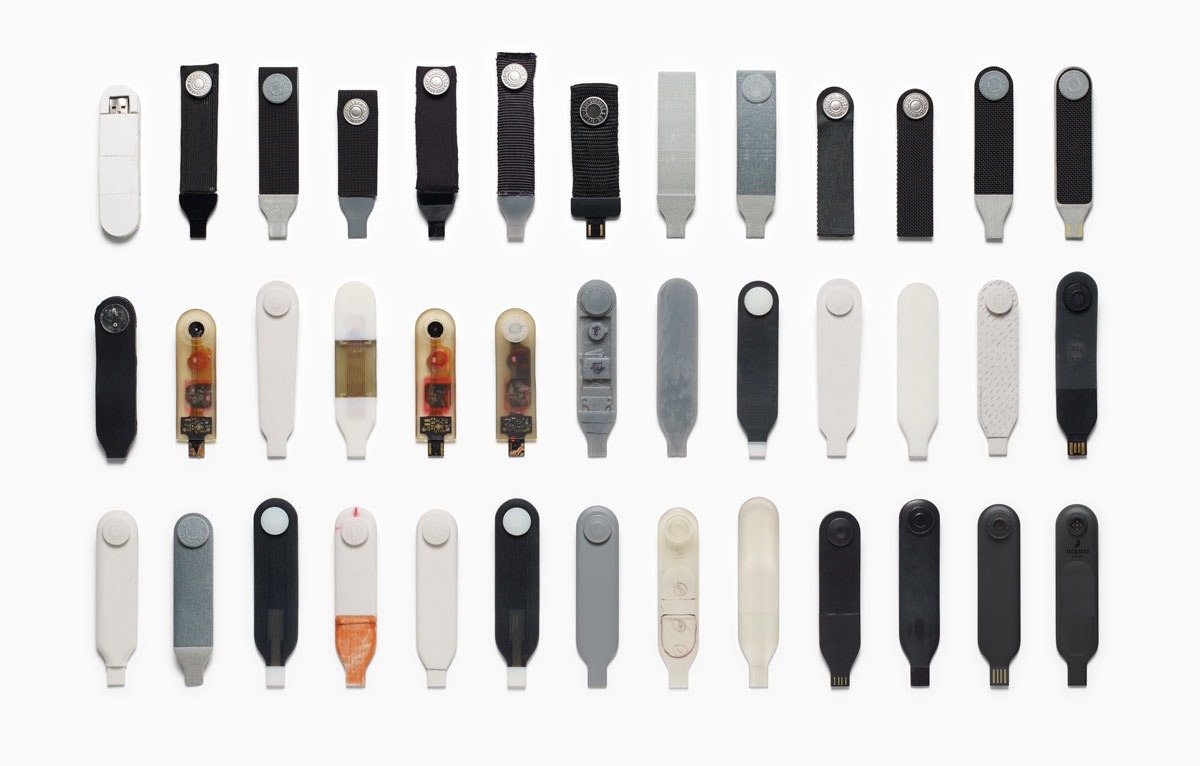
- The industrial design of the electronics integrated into the snap tag and connector (the tag snaps onto the jacket’s cuff and connects to your phone via Bluetooth)
- A vocabulary of gestures on the cuff of the jacket that lets you interact with the jacket’s technology
- Early exploration of the basic design philosophy and conceptual design for the interaction model of a corresponding smartphone app that ties it all together (works with both iOS and Android phones)

The IDEO team’s first task was to validate what commuters of all stripes wanted from the garment, in addition to the work Levi’s did in researching with its consumers. In interviews, group exercises, and wear tests with urban cyclists and other workers on the go, the team learned that cyclists needed a way to stay connected, while still living in the moment. That meant being able to answer calls, hear text messages, get the next direction, and control their music without using a screen.
Levi’s, Google, and IDEO developed a language of movement for Jacquard-enabled fabric that feels familiar and human and builds on the ways people would naturally interact with a garment (a whole-hand brush along the sleeve, as opposed to a one-finger tap on a touch screen, for instance).
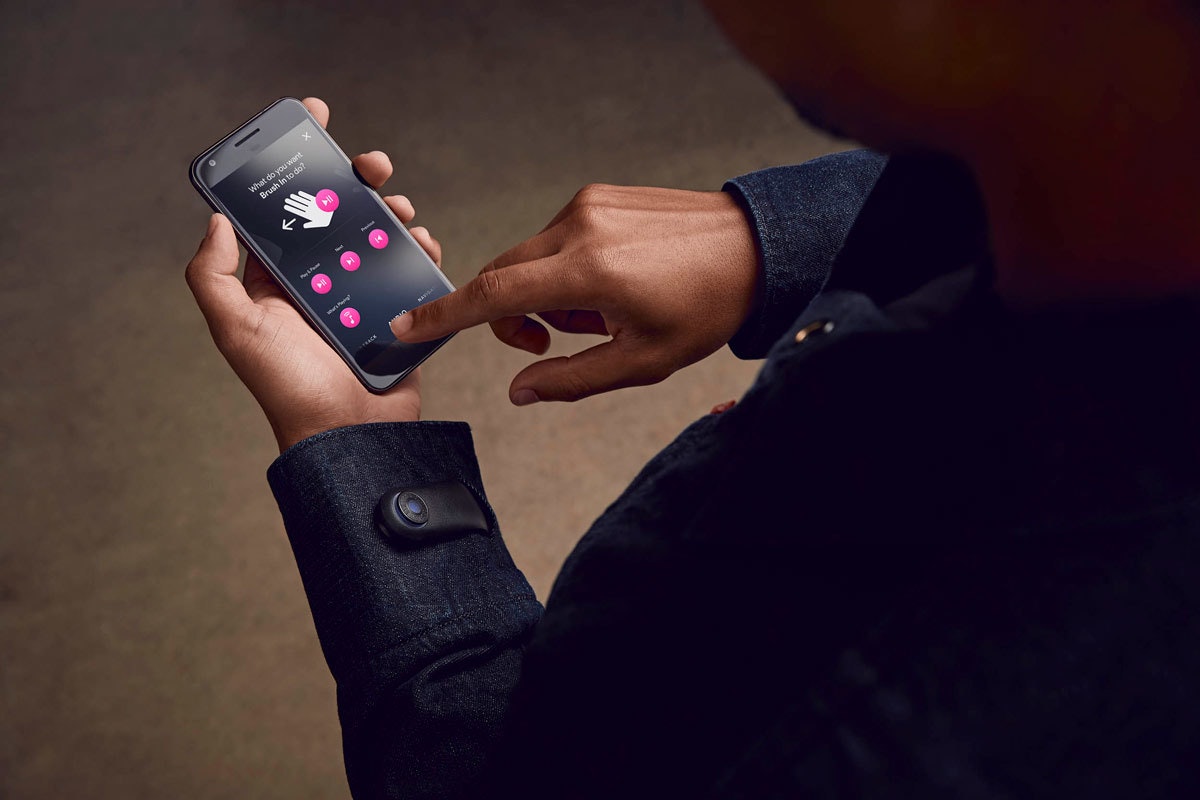
Then came the design and engineering of the snap tag on the jacket’s cuff, which gently notifies you of calls, texts, and other jacket interactions with light and vibration feedback. The flexible, lightweight strap incorporates the look and feel of a Levi’s jean button, while housing advanced electronics that capture touch data. The tag is removable, charges via USB connection, and works in conjunction with a mobile app that lets you configure settings for the garment, set notifications, and customize gestures and interactions.
The Levi’s Commuter Jacket with Jacquard by Google changes the game because it’s simply that—a jacket—with technology that adds new utility and value, allowing us to wear our everyday interactions on our sleeves.
The Levi’s Commuter Trucker Jacket with Jacquard by Google hit stores in October 2017.
IDEO and Google have a long history of collaboration. Learn more about our work on Google Bloks here.

Using data to connect global teams
Helping a multinational company connect staff members across locations and identify new areas for growth.
In 2017, IDEO acquired longtime partner Datascope and integrated the company’s data scientists and engineers. Datascope team members aren’t just passionate data scientists; they’re human-centered designers who happen to work with data, as illustrated by successful collaborations like this one:
If Procter and Gamble (P&G) were a city, it would be the size of Boulder, Colorado. The company employs more than 100,000 people in 70 countries. Its research and development team is made up of more than 20,000 specialists working across locations, languages, and areas of expertise, from cleaning chemicals to paper products to over-the-counter medications.
P&G approached Datascope to help the company connect these researchers to one another and the rest of the organization. In working with P&G leaders, Datascope found that the company needed a better way to access and leverage employee expertise. Managers routinely got requests from researchers looking to work with others in their subject areas, but didn’t know how to identify the right partners or set them up for fruitful collaboration.
Datascope gathered internal data, including unstructured research data on the scientists’ interests and who they partner with most often. The team used that information to develop two new systems that bridge the gap for P&G researchers and managers. The first is an internal search engine that lets managers quickly find and connect the right experts across P&G offices worldwide. The second is a data visualization tool that highlights subject areas ripe for more collaboration among experts and research teams, who may already be asking similar questions. This intelligent tool can surface relevant, timely information managers need to connect their teams.
P&G already had a practice of collecting information for product research, but it wasn’t until Datascope came on the scene that the company took advantage of large, multi-layered data sets and made them more intelligent, so leaders could expand P&G’s expertise through new global partnerships.

Crunching customer data to deliver better smartphones
Helping a big tech firm turn mountains of customer feedback into product improvements in real time.
In 2017, IDEO acquired longtime partner Datascope and integrated the company’s data scientists and engineers. Datascope team members aren’t just passionate data scientists; they’re human-centered designers who happen to work with data, as illustrated by successful collaborations like this one:
The second a smartphone debuts, buyers, bloggers, and journalists begin writing comments and reviews—and users start troubleshooting. Motorola Mobility wanted to tap into this river of data, but didn’t have the right tools to collect and respond to it.
Motorola’s design, engineering, and service teams hoped to identify product problems early, address them quickly through customer support, and ultimately fix them in future releases.
So Datascope built a custom engine that aggregates and analyzes feedback from hundreds of millions of phrases and internet references, drawn from consumer sites, user forums, news coverage, social media feeds, and product reviews. The tool parses key, product-specific information and routes it to the right Motorola teams: hardware, software, connectivity, and interface design, to name a few.
The analytics and visualization engine not only studies product performance in real time, but it also uses algorithms to gauge customers’ emotional reactions: Do they like the phone or hate it? Do they have complaints? Are they recommending it to friends?
Datascope’s tool translates all this data into simplified to-dos that are sent to the correct service and repair staff before user issues can mar a product launch or even the company’s reputation. And as engineers discover more about how a phone performs in the real world, they learn how to avoid making similar mistakes in the future.
The tool proved valuable as soon as it launched in 2012: When Motorola released the RAZR M smartphone, customers had a hard time figuring out how to use wifi and voice features at the same time and lodged complaints online. The engine recognized the pattern of complaints and alerted Motorola's customer support team, which was able to post responses with clear instructions in every relevant forum, turning a potential customer satisfaction problem into a positive interaction.
Motorola continued to use the engine to address issues in later releases of the RAZR M. The advance warning made engineers’ lives easier, while better handsets and software made for a more seamless customer experience. Improvements were also evident in the RAZR M’s well-reviewed next generation, the RAZR MAXX.
Based on the tool’s success, Motorola used it to improve the company’s supply chain and product development process. And beginning in 2014, with the Moto 360 smartwatch, Datascope’s analytics engine has been used to gauge performance and public sentiment not just for new smartphones, but for Motorola Mobility’s entire line of products.

Rethinking baby food packaging
Collaborating with Plum to create a new, wholesome experience for new parents and babies.
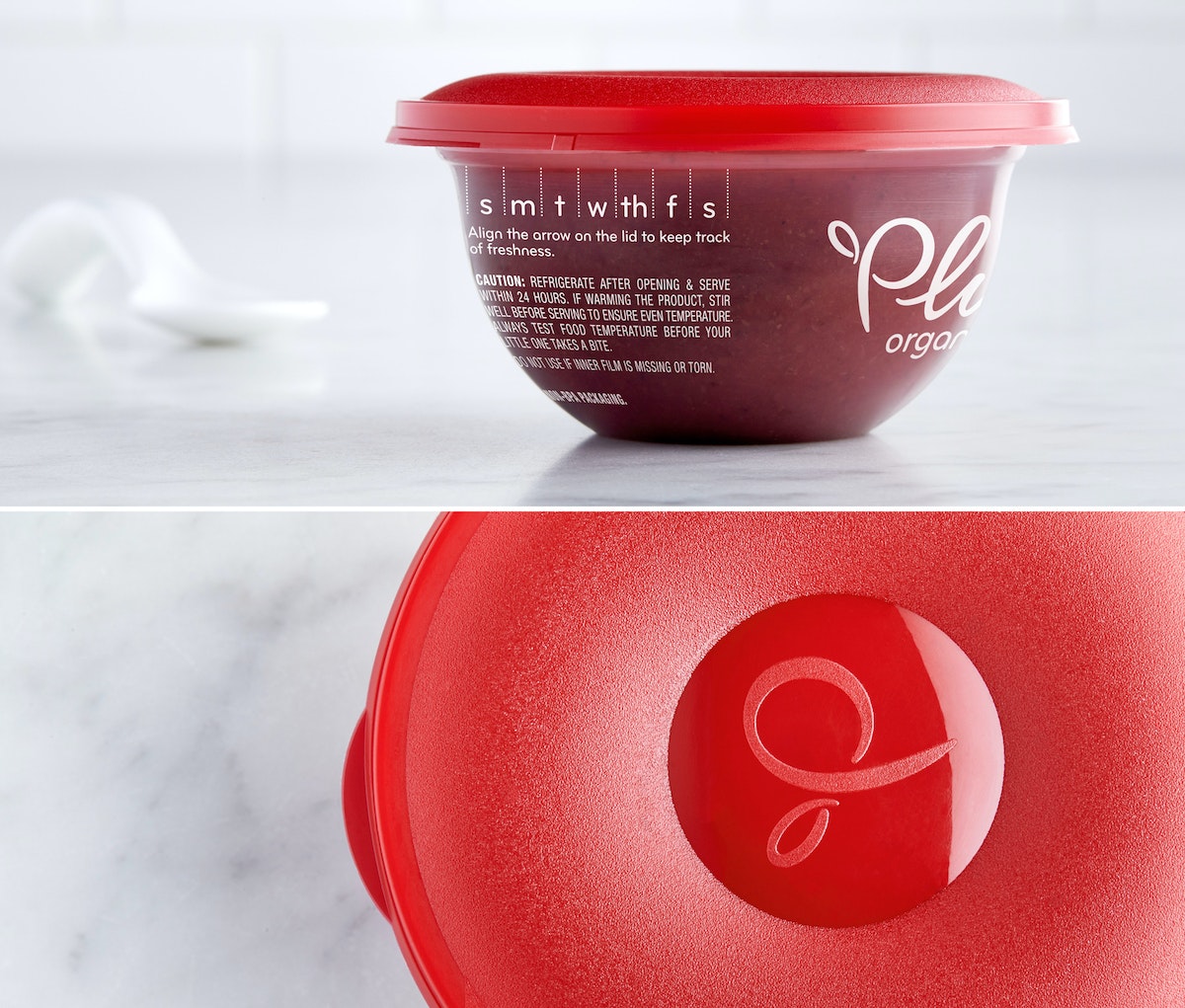
For most parents, ensuring their child’s proper nourishment is a top priority. But that’s not always easy, especially for parents on the go. Plum Organics, an organic baby food company, set out to solve that problem by providing families with pureed fruits and veggies in pouches, making it easy for them to feed their babies. Plum approached IDEO for help designing a non-pouch package that could showcase the vibrancy of the ingredients within.
By conducting research and in-person interviews with families, Plum set out to ensure that the new product was both desirable and functional for parents and their babies. By joining families in their homes, IDEO was able to gather essential insights that helped inform prototypes and the final design, like the fact that nothing can replace the feeling of making an intimate connection with a child through spoon feeding; that baby food is often wasted if a parent can’t remember how long a product has been in the fridge; that families struggle with how to spoon-feed their children on the go without making a mess, and that both parents and retailers were concerned that baby food jars don’t stack securely on shelves.

With those insights in mind, the team designed a transparent bowl that allows consumers to see the natural color of Plum’s vibrant, organic food. A resealable lid makes it easy for parents to store food between feedings, and the container includes a feature that allows them to track the day that they opened the pack to ensure that they don’t end up throwing away perfectly good food. Lastly, the new package is easily and safely stackable and includes a divot in the lid for parents to rest a spoon on, making for a much cleaner and more sanitary feeding experience.
Baby Bowls for Plum are now available at retailers nationwide and are a natural evolution for the brand, helping Plum continue to provide high-quality, organic baby food for consumers and their children, even if they’re eating on the go.
How To Tackle Obesity In Your Spare Time
What one Xbox-loving interaction designer did to lose weight
Alex was a self-described gaming addict in his college days, but hadn’t touched his console in years. He knew his old habit would be the strongest incentive for working out. At the same time, he recognized that a simple post-workout reward wasn't gonna cut it, not to mention the temptation to skip the workout altogether with a perfectly functioning Xbox so close at hand.
Time to wield his ninja hacking skills.
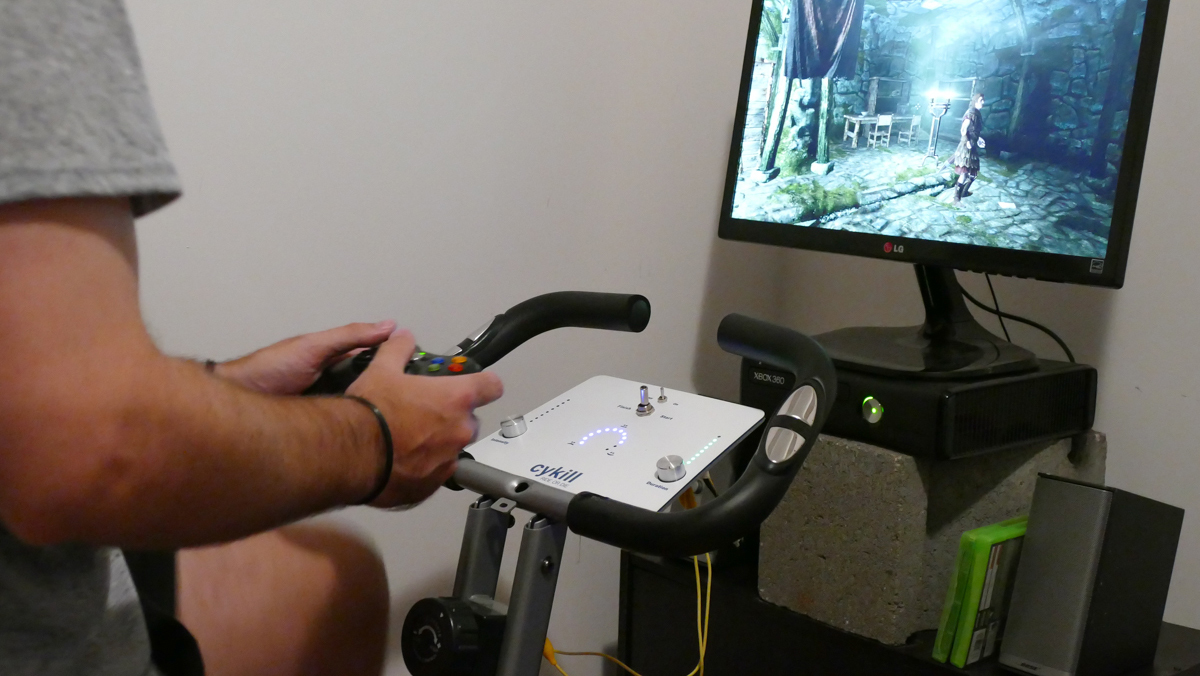
Alex adjusting duration and intensity on his new (addictive) weight-loss machine.
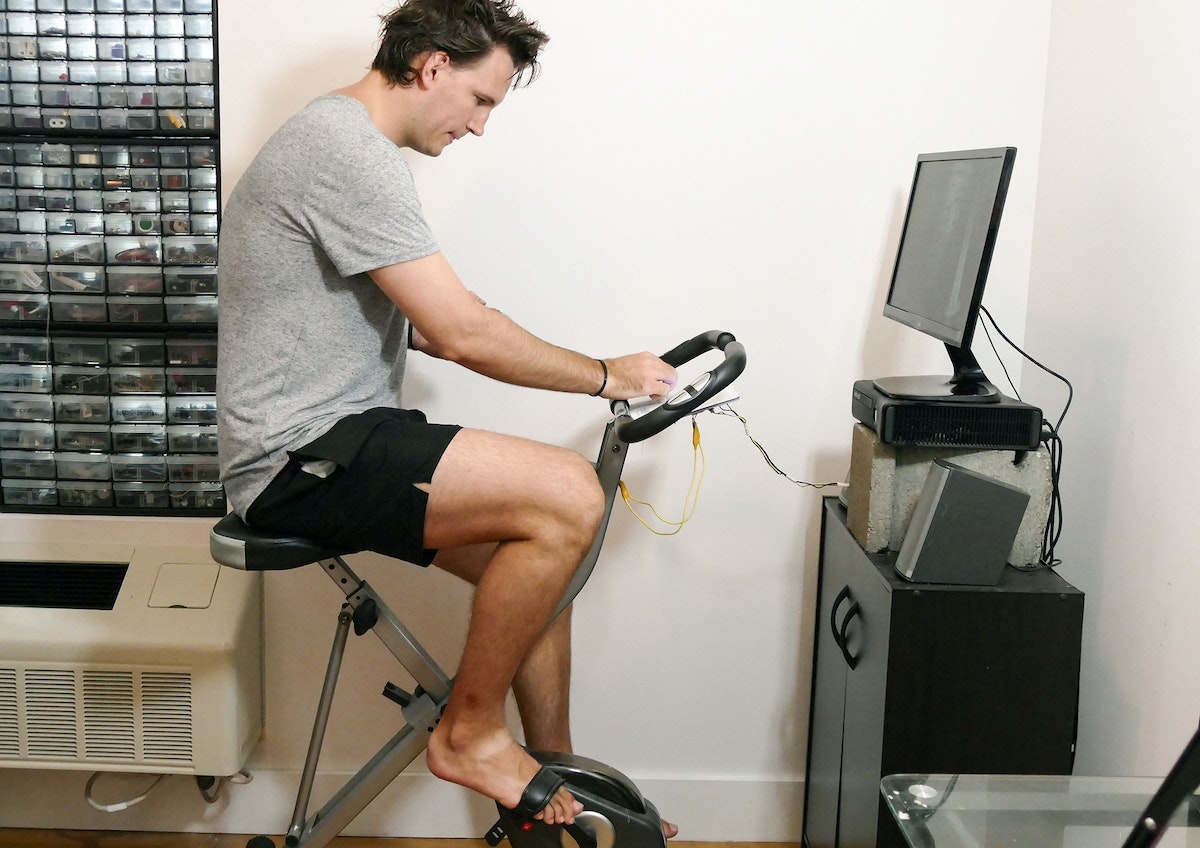
The result is Cykill, a simple tweak that connects your gaming console’s power source to an exercise bike. The only way to start the console is by riding the bike. Fail to pedal fast enough and Cykill will cut the power using a “kill switch”—a disaster for serious gamers—which not only erases game progress, but can also corrupt the console’s hard drive. “After a big scene in the game you will see the Cykill LED meter appear," he said. It gets dangerously close to power-off, which forces you to pedal like mad in order to stabilize it. "What a silly but effective invention this is!”
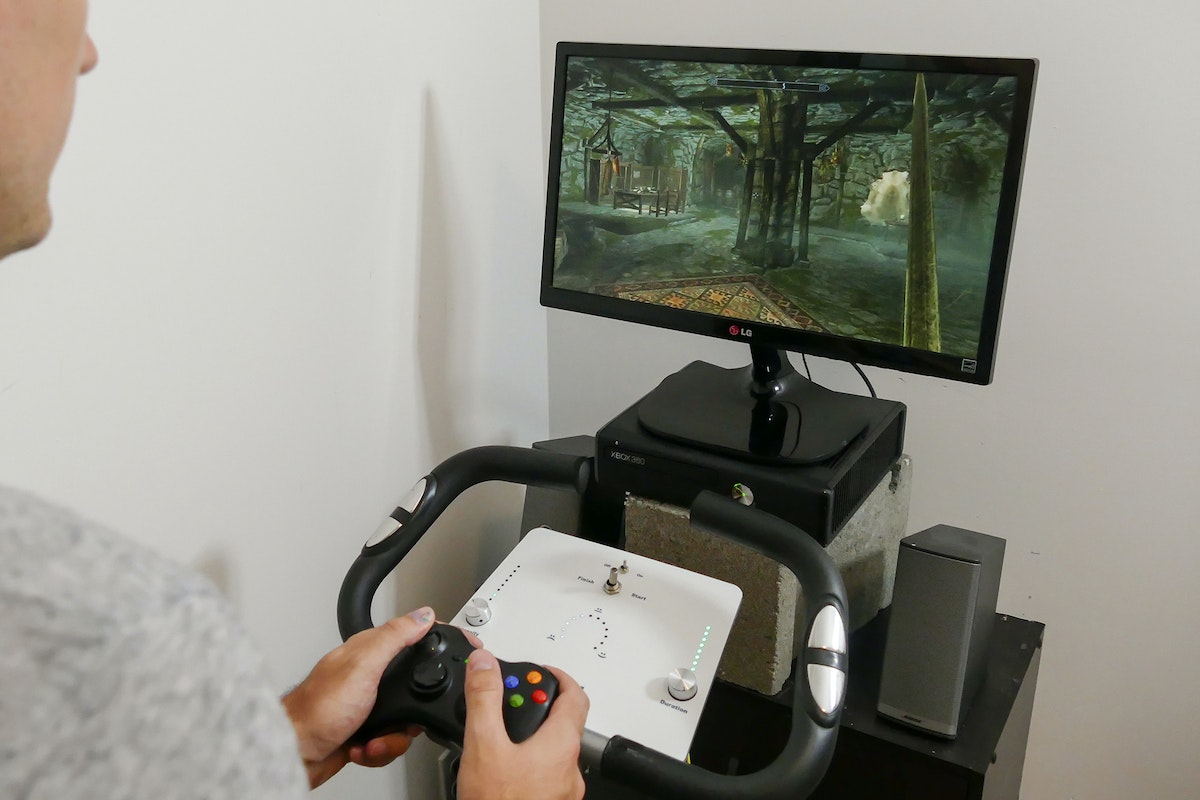
Alex on the Cykill, an exercise-bike-gaming-console that interrupts your game if you stop pedaling.
After using his invention for three months to impressive results, Alex was ready to share it with the world. He made the project open source and submitted it to Hackaday. “I never intended this to be shared online. But then I realized, there are millions of Americans who are challenged with excessive gaming and weight gain—many of them kids and teens." Is Cykill is the answer to obesity for game-obsessed kids of America? "I feel it is definitely worth a shot,” he said.
Learn more about how Alex made Cykill here, at his website Fuzzy Wobble, and on his project page at Hackaday.
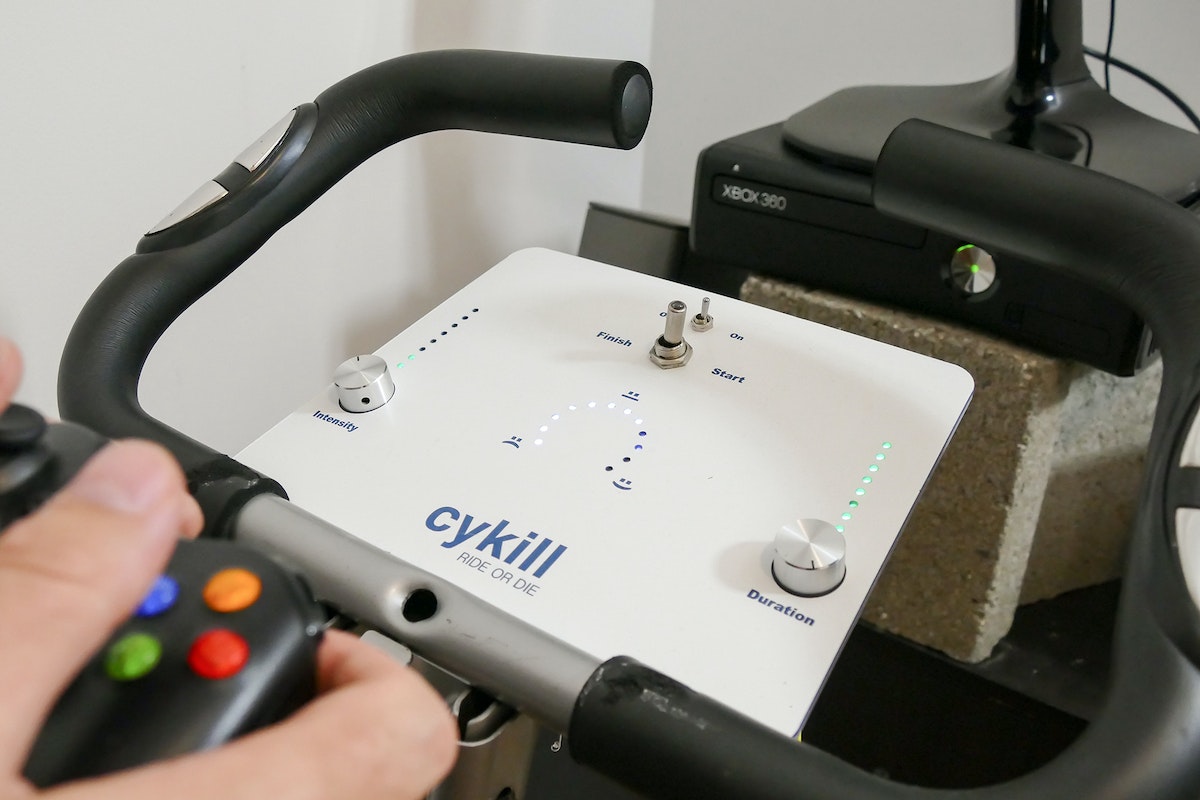
The Cykill dashboard.
When interaction designer Alex S. finally decided to get serious about exercise, he knew exactly what to do. He bought a cheap stationary bike on Amazon and dusted off his old Xbox.

7 Mindblowing Things We Saw at Ars
We went to Ars Electronica, Linz's annual celebration of art and tech, and here’s what we saw

1. Inferno, by Louis-Philippe Demers, Bill Vorn
How does it feel to have an exoskeleton move your arms and make you dance? Pretty weird. Inferno, one of the single most talked-about pieces at Ars, offered visitors the curious sensation of being remote-controlled by a machine.

2. RoBoHoN, by Tomotaka Takahashi with Sharp
Half robot, half smartphone, RoBoHoN runs, dances, talks, takes pictures and projects them. Plus, it’s cute. Like a mini butler. We came away asking: Will future smart devices be gadgety, or sleek and designy a la Apple?
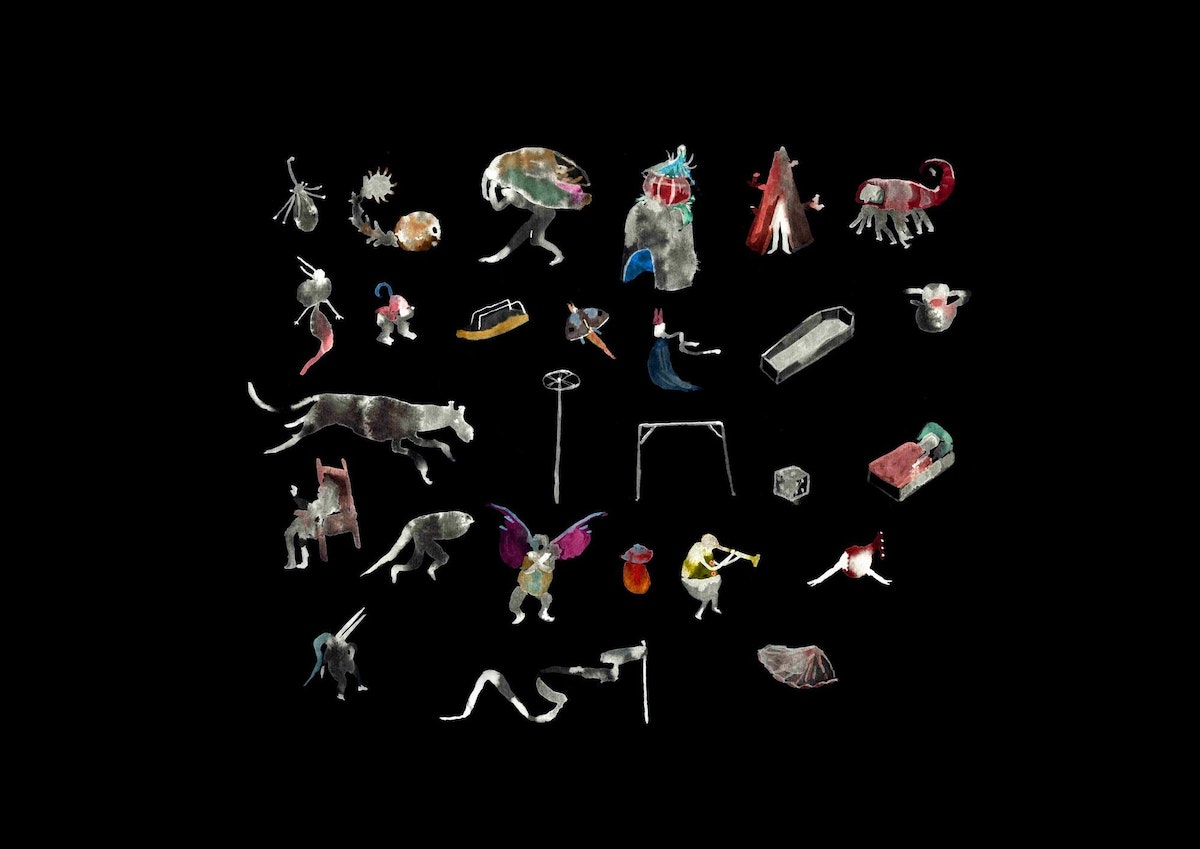
3. Rhizome Animation, by Boris Labbé
A hypnotising story about life on earth, and a good reminder of the power of mixing handdrawn images with computer-generated visuals. Designer Boris Labbé’s short film Rhizome is worth a watch.

4. Radical Atoms Exhibition
If the MIT Media Lab has its way, we’ll control the physical world of atoms in the same way that we control the digital world of pixels. This exhibit hewed closest to the theme of the Ars festival: “Radical Atoms: the alchemists of our time,” including provocations around biology as a responsive, “second skin” interface; a physical shape display that can be manipulated from near or far; and wearable miniature robots that rove around your body. Take a trip down the rabbit hole.

5. ASSISI, by Thomas Schmickl, Professor of Zoology at University of Graz
Tiny robots, placed among a society of fish and of bees, enabled the two to communicate and influence the actions of the other. Begged the question: how might we use robots to design and evolve swarm behavior in natural ecosystems?

6. Artificial Skins and Bones, by Weißensee Kunsthochschule Berlin
We loved the variety of thinking from this group of students, who are exploring the design of artificial bodies. Ideas included everything from regaining physical ability through smart prosthetics; to enhancing an experience through haptic feedback; to the inevitable evolution toward augmentation, like color- and pattern-changing skin (above), inspired by the octopus.

7. Innovation and Creativity on a Very Large Scale, by Ivan Poupyrev, Google ATAP
Poupyrev, head of Google’s Advanced Technology and Projects group, argued that constantly introducing new gadgets does not scale. What does scale is creating technologies enabling industries that manufacture basic goods, like jeans, to transform themselves. For Project Jacquard, ATAP invented a new type of conductive thread that can be woven into clothing (like a Levi’s jean jacket—the project was a collaboration between the two companies) giving it an invisible interface. These kinds of mutations are unpredictable, Poupyrev said, and driven by serendipity, emphasising the role of the artist in technological research.
For more about Ars Electronica, or to watch all the talks and presentations mentioned, check out their website: http://www.aec.at/
Header image by Martin Hieslmair. All images sourced from the official Ars Electronica Flickr.
We went to Ars Electronica, Linz's annual celebration of art and tech, and here’s what we saw: Exoskeletons. Dancing robots. Shape-shifting materials. Swarms of fish and bees. Skin. Just your average day in the surrealverse. Here are seven projects to watch:
Designer’s Playlist #3
A few things IDEO San Francisco's Andrea Oh can't stop thinking about

Name: Andrea Oh
Location: San Francisco
Role at IDEO: Front Desk Concierge, Experience team. Steward of magical work-life experiences. Gatekeeper of the guest Wi-Fi. (She guards it with a Gandalf staff made out of Twix chocolate).
Joined IDEO: August 2015
Instagram: @fermdaza
Titillating Fact: Matcha is my life! For someone who doesn’t drink coffee, a dose of matcha powder mixed in with water in the morning is my saving grace.

1. Isaiah Rashad: "The Sun’s Tirade" (2016)
There are a couple albums I’ve been gravitating towards in the past month, but the one that’s been in constant rotation—and I mean constant—is the debut release of Top Dawg Entertainment-signed rapper Isaiah Rashad, The Sun’s Tirade. His earnest, poetic musings on butter-smooth production make for perfect late-summer listening. Roll the windows down while you’re at it.
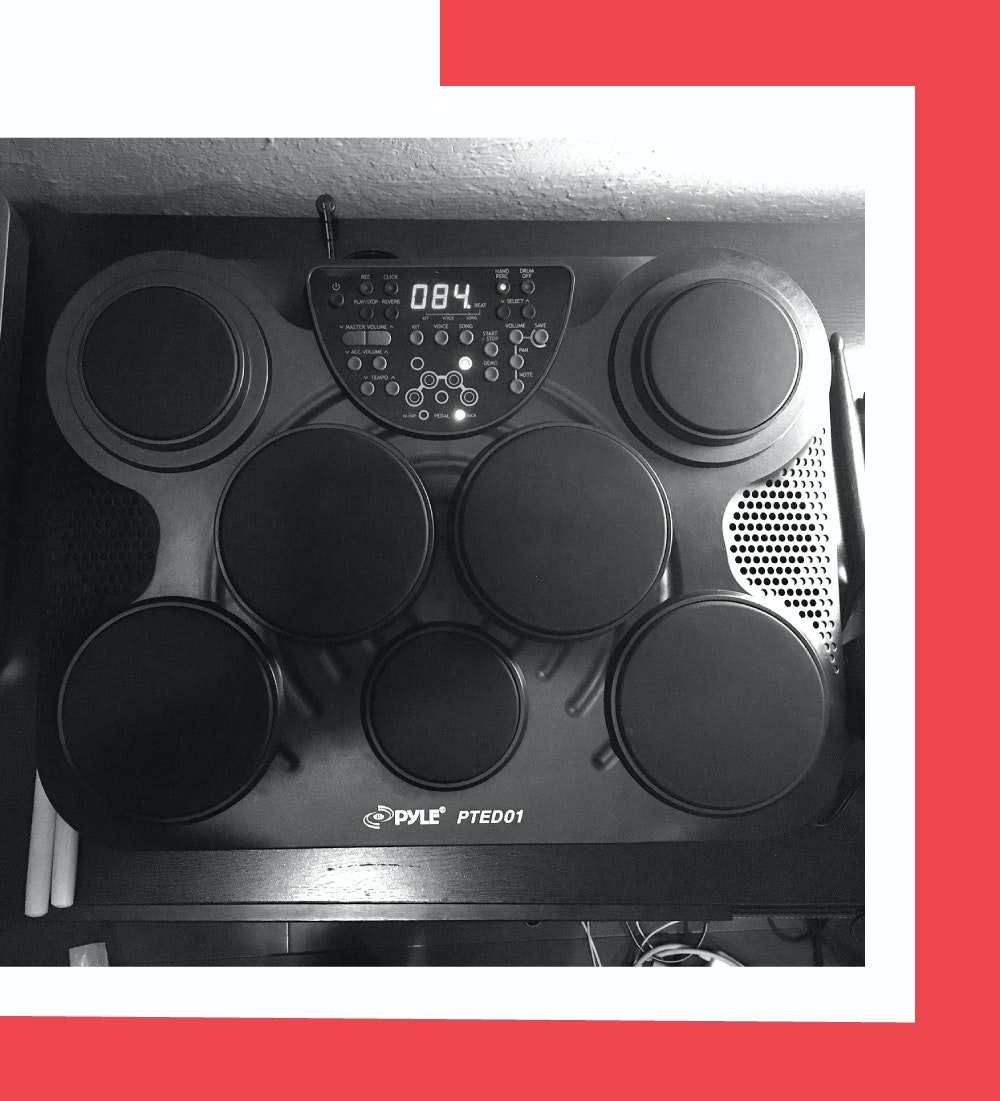
2. Drumming around with Pyle-Pro PTED01
I used to take drum lessons when I was younger and regrettably fell out of the habit of playing as I got older and distracted by high-school-Andrea things. I’ve had an itch to take it up again so I recently just purchased this electronic drum kit to practice exercises and learn new grooves and fills (YouTube tutorials are your friend). I don’t have the space to house a real set and classes in the city are steeper than I can afford, so this is a good alternative to keep that itch scratched.
3. Warsan Shire
I’ve been reaching a lot for Warsan Shire these days. She is a Somali-British writer, activist, educator—and one of my favorite female voices in contemporary poetry. She explores themes ranging from love, sexual violence, religion, war, displacement, and the immigrant experience. Her words are often sharp and unapologetic. I love that her writing is a celebration of womanhood and the female body, as well as a tribute to Somali culture and her ancestry.
Watch: Warsan Shire reads her poem “Conversations About Home (at the Deportation Centre)” from Teaching My Mother How To Give Birth.
Header image by Markus Spiske.
In this series, we ask IDEO designers to share the stuff they're digging right now—tools, books, music, sites, people, places—so you, too, can drink from the fount of inspiration bubbling up here. This week's guest star: Andrea Oh.

5 Ways to Get Creatively Inspired Before Breakfast
Kickstart your day with these creative exercises

1. Free Writing
Creativity manuals like the Artist's Way talk about the power of the "Morning Pages"—a ritual in which you start writing just after waking up, and bang out some prose before your conscious, self-critical self has fully come online. Conveniently, there's an app for that. Flowstate is a word processor with a twist: You set a timer, then write until it dings. If you hesitate for more than a couple of seconds, the app will delete everything that you've put down so far. Although it sounds like torture, the app can actually help you let go of editing and enter a state of uncritical flow.

2. Phone Denial
Before going to bed, move your phone charger to another room. Then, put a pencil and paper in its place on your nightstand. Now, when you wake up, instead of looking at Google News or Facebook, write down some thoughts that are related to how you're feeling, what is important for you, and how you're going to make a creative impact today. If that feels too involved right after waking up, draw a picture of something instead. Either way, don't let yourself get distracted by your phone until you've engaged your creativity.

3. Disposable Poetry
When Kurt Vonnegut was 84, he received a letter from a high school student, asking him to visit his school. The writer refused, claiming that he was now so old that he now "resembled an iguana." Instead of visiting, he sent a letter that contained a creative exercise. "Write a six-line poem, about anything, but rhymed. No fair tennis without a net. Make it as good as you possibly can." Then, Vonnegut said, the poem was to be torn up and discarded. "You will find that you have already been gloriously rewarded for your poem. You have experienced becoming, learned a lot more about what’s inside you, and you have made your soul grow." As a tribute to the great Mr. Vonnegut, try his ritual every morning.

4. Creative Collaging
Collect any old magazines or catalogues lying around your house. Leaf through them and cut out any interesting pictures or headlines. Assemble these into a collage. Take a photo of the collage and post it to Instagram, Facebook, or whatever social media site you use. Doesn't that feel better than posting a picture of yourself playing with your dog, or the avocado toast that you had for breakfast? Of course it does. You just stepped away from the ordinary world for a moment and created something original. For bonus points, download the Boomerang Gmail extension, and you can email your pictures to your future self—in a month or even a year. Think of it as a way to remind future you to stay creative.

5. Walking and Observing
Everyone from Beethoven to Steve Jobs relied on the inspirational powers of a walk. Neuroscience backs up their belief: A walk will remove you from the distractions of conversations and technology, freeing the mind to explore new associations between the ideas already in your head. Why not skip breakfast altogether and walk to work? Look around as you do so, and see if you notice anything unusual or surprising in the environment. Take a gander at other people too. Try to put yourself in their shoes, and imagine what they're thinking or feeling. Remind yourself that everybody sees the world differently, and that this kaleidoscope of human perceptions and viewpoints is a wonderful thing. Remember that inspiration is all around you—you just have to stop occasionally to breathe it in.
Illustrations by Megan Crabtree.
Benjamin Franklin used to spend his mornings naked. Sigmund Freud would trim his beard. Marcel Proust smoked opium. There are many ways to start the day in a creative frame of mind. If you want an alternative to being nude, beardy, or high, here are some of our favorites.

Lindsey Turner
I’m passionate about building brands, products, and experiences that help organizations show up with meaning and momentum.
I help organizations cut through complexity by shaping how they show up, through brand strategy, identity, and storytelling.
Working at the intersection of brand and business, I bring an editorial eye and a bias toward making—turning ideas into tangible experiences that people can understand, trust, and believe in.
My work spans government, healthcare, financial services, media, and consumer goods, from launching Gen Z-focused ventures to building innovation labs and reimagining legacy brands. I relish moments of ambiguity and enjoy translating across teams, perspectives, and priorities to move ideas forward.
I started my career in editorial and digital design, shaping cross-platform experiences and identity systems in publishing and agency environments. That foundation still shapes how I work today: I’m detail-oriented, collaborative, and overreliant on the Oxford comma. I hold a BFA in Visual Communication from the School of the Art Institute of Chicago.

Rachel Young
My work helps organizations see who their products aren't working for—and build the will and the tools to do something about it
For 25 years, I've asked the same question: Who does this design exclude—and what are we going to do about it?
My work spans human-centered strategy, inclusive design, and qualitative research, with clients ranging from Microsoft, Google, and Verizon to the National Science Foundation, and San Francisco Unified School District.
Before IDEO, I taught elementary school in East Palo Alto and spent a decade doing design work with social service organizations—where I learned firsthand what it costs people when systems are built without them in mind.
I am currently writing User Error, a nonfiction book about digital access and the design decisions behind it. I live in Oakland, California.

Brian Pelsoh
I lead with craft, ensuring our work is creatively excellent: rooted in deep human insight and imagination, while also grounded in the realities of business and technology.
My expertise spans brand, communication, and product design across tech, education, the arts, and social impact.
I believe great work demands both high-level vision and obsessive attention to detail, and only happens through collaboration.
I bring an inclusive, hands-on approach and a deep understanding of business, which enables me to consistently deliver excellence while always asking why.
Before joining IDEO, I worked at the brand firms Pentagram and VSA Partners. I began my career as a designer, leading teams at the School of the Art Institute of Chicago and the Milwaukee Art Museum. I hold an MFA in graphic design from Maryland Institute College of Art and a BFA in communication design from the Milwaukee Institute of Art & Design, and have taught at some of the best design schools in the US.

Tony Wong
I am responsible for IDEO’s long-term success in China and working with clients to use design as a tool to enable growth.
I am responsible for IDEO’s long-term success in China and working with clients to use design as a tool to enable growth. Specifically, I have helped Chinese companies design holistic brand solutions through the development of their products, communication, services, and innovation teams, and I have helped multinationals expand their presence and influence in China.
I advise global leaders on developing China-led innovation and capabilities.
In over 15 years in IDEO Shanghai, I have worked on projects that use design to elevate the quality of the experience of healthcare products and services, streamline processes that increase productivity, create spaces and programs that promote and enable inclusive communities, and build next generation mobility solutions that are planet-positive.
Before joining IDEO, I worked at Philips Electronics and the Electrolux Group in Italy, the Netherlands, and Singapore on a number of breakthrough commercial products. I am a member of the Young President Organization in Shanghai.

How to use AI as an editor, not a writer
Ed White shares how he uses AI as an editor—not a writer—to sharpen storytelling, rehearse ideas, and preserve the productive friction that makes creative work better.
Ed White has a rule he's tested on his own writing: hold yourself as the writer, and let AI be your editor. Ed is a Senior Design Director at IDEO's London studio, where he co-leads the firm's AI portfolio across Europe. Before IDEO, he spent 12 years as a writer and editor at the Financial Times, Wired, and Contagious. So when he talks about when to use AI for storytelling and when not to, it comes from two decades of crafting his storytelling skills.
In this episode, Mina Seetharaman talks with Ed about two specific tools he uses to keep AI in an editor's seat: a "roasting agent" prompted to critique his drafts without any sugarcoating, and a simulated audience he rehearses pitches on before the real thing. They also get into what Ed is hearing from design leaders at Anthropic, Lovable, Shopify, and Google Creative Lab about how creative work is changing, and why he thinks the friction of writing something yourself is worth protecting rather than automating away.

Building a personal AI for the messiness of life: Sida Li
Becca Carroll talks with Cue co-founder Sida Li about designing a personal AI for the messiness of everyday life—not just work. They explore how Sida stays anchored to human needs while navigating fast-changing technology, product tradeoffs, business-model experimentation, and the realities of building an AI company today.
Most AI products today are built for work—a space with clear problems and established systems. One founder noticed a gap: personal life is messier, harder to systematize, and mostly left behind by the AI boom. So she built Cue, a personal AI that lives inside iMessage and group chats, to go where the other tools haven't.
In this episode, Becca Carroll, IDEO's Chief Strategy Officer, talks with Sida Li, co-founder and CEO of Shared Context Lab, about staying anchored to a human need while the technology around her keeps changing shape, why she treats her business model with the same rigor she'd bring to a product, and what it feels like to build a company at this particular, disorienting moment in AI.
The conversation also gets into how Sida makes design decisions: the language Cue uses to describe itself, the tradeoffs behind building inside iMessage instead of a new app, and a real story about a business idea that didn’t pan out.
This is the second in a two-part series profiling founders from IDEO's Startups-in-Residence program. The first conversation is with Johannes Seemann, founder of Sooner, on designing GenAI for the emotional side of money.

Designing GenAI for the emotional side of money: Johannes Seemann
Designing financial tools around the feelings that shape money decisions.
Most personal financial tools are built to run the numbers and optimize towards a budget. While that works for some, most people experience money as a lived relationship that does not neatly fit into a spreadsheet. Johannes Seemann and Becca Carroll discuss why money is emotional before it is mathematical, and what a human-centered approach to building a generative AI financial product looks like in practice.

The curious leader's edge in uncertainty: Scott Shigeoka
How genuine curiosity helps leaders navigate uncertainty with greater confidence.
Mina Seetharaman talks with Scott Shigeoka, author of Seek and Head of Curiosity Cultivation at the Eames Institute, about what distinguishes genuinely curious leadership from performative curiosity, how power dynamics shape curiosity, and why practicing curiosity can restore energy rather than drain it.
Looks like you might be in search of something very specific?
Or reset the filters above and try another angle.
Here’s some random inspiration

Podcasts about creative leadership
Articles about the power of prototyping