
.svg)




Helping a startup design video games to build kids’ emotional strength
A one-month sprint to develop new products—and a new way of working.
For 6-year-old Dave Jr., a long line at Disneyland triggered a massive meltdown. His parents were concerned and a little embarrassed, but not surprised; Dave Jr. struggled to keep his emotions in check.
Hoping to help, Dave Jr.'s uncle, entrepreneur Craig Lund, joined forces with researchers at Harvard Medical School and Boston Children’s Hospital, along with a video game designer who had worked on Quick Hit and NBA 2K. Together, they set out to design something that could teach coping skills to kids like Dave Jr. who need to manage “big emotions,” as well as children suffering from anxiety, ADHD, and other behavior issues, which are on the rise.
Their collaboration resulted in a video game called Mightier and a startup called Neuromotion Labs—a 10-person team of psychologists, game designers, and engineers who embedded at IDEO Cambridge for a one-month sprint to improve the game and get ready for launch.
To play Neuromotion's game, kids are first taught simple, calming breathing exercises. During gameplay, kids wear heart-rate monitors on a wrist or arm that detect spikes caused by stress or anger; as their heart rates go up, the game's difficulty increases. Kids have opportunities to pause and try deep breathing to counter the ramped up challenge. As it turns out, "gamifying" restraint builds strong incentives for kids to take charge of their emotions—they have to if they want to win.
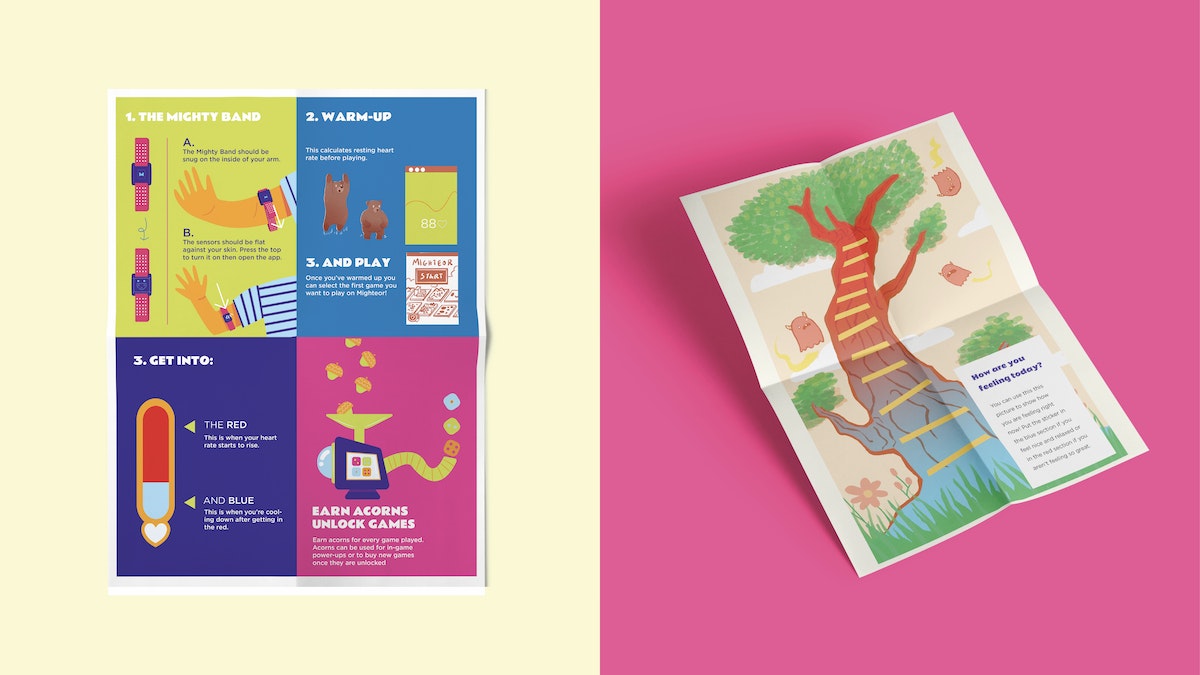
Already activated around boosting mental and emotional health, IDEO's design team worked side-by-side with Neuromotion to study how parents and children experience Mightier. From home visits to group interviews to a summer camp-style design session with kid players, live feedback fueled the next iteration of the gaming platform and better product-market fit.
IDEO helped Neuromotion hone the visual design and mechanics of Mightier and expand it's suite of games. The team observed that the Mightier program was more successful the more involved parents of players became, which revealed a need for additional resources for adults. So they created new supports, including a more detailed orientation and a personalized coaching service for parents staffed by trained therapists.
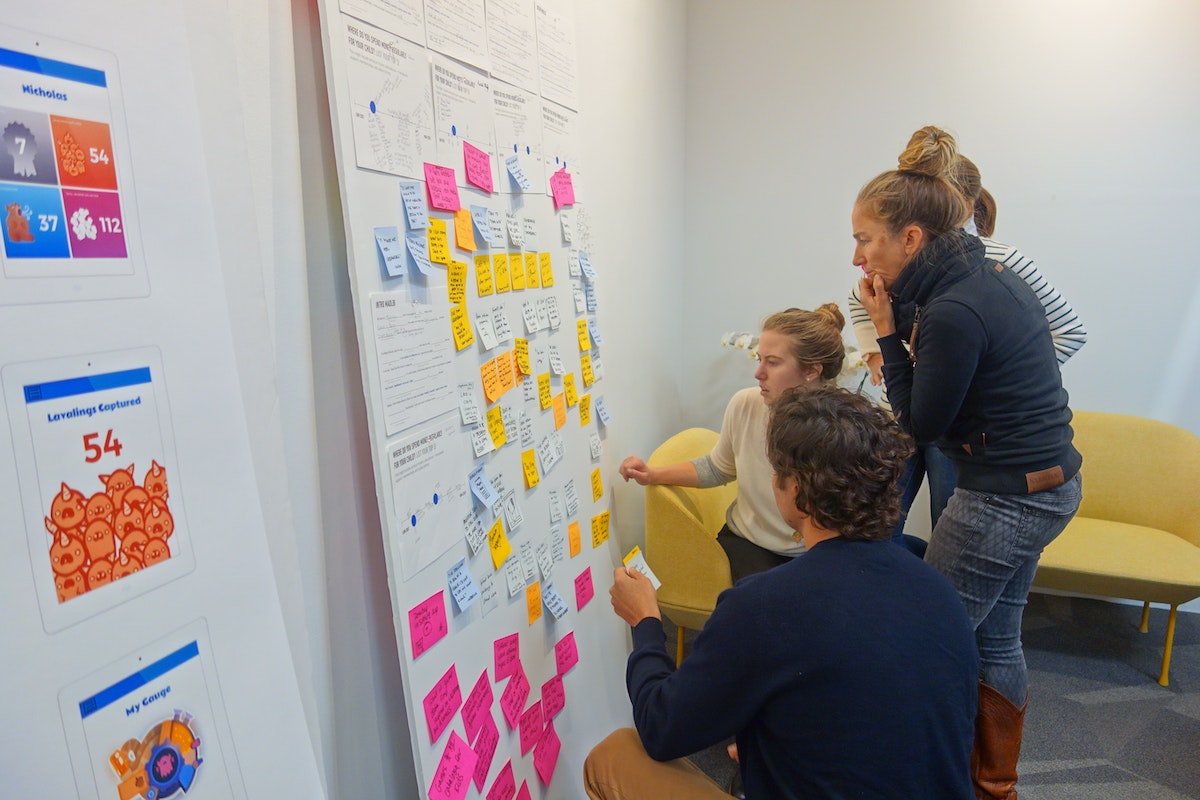
But can a video game actually help kids cope? Early peer-reviewed studies showed that playing Mightier reduced outbursts by 62 percent, oppositional behaviors by 40 percent, and parental stress by 19 percent. After 12 weeks of using Mightier, a survey of kids and parents showed that 96 percent of parents saw positive behavior changes in their children, while 92 percent of kids learned new coping skills.
Shortly after the design sprint, Neuromotion secured its next round of funding and officially launched Mightier’s array of “bioresponsive games.” The games have already been played more than a million times, and Neuromotion has measured more than a 100 million heartbeats. Mightier games are helping kids and families across the country.
What about Dave Jr.? Recently, his sister told Lund she "accidentally" bumped Dave Jr.’s bike off a pier and into the ocean. She was expecting an outburst of anger, but after eight months of playing Mightier, Dave Jr. stayed cool. His uncle couldn’t be prouder.
Designing waste out of the food system
IDEO partnered with hotels, food banks, foundations, and entrepreneurs to combat food waste.
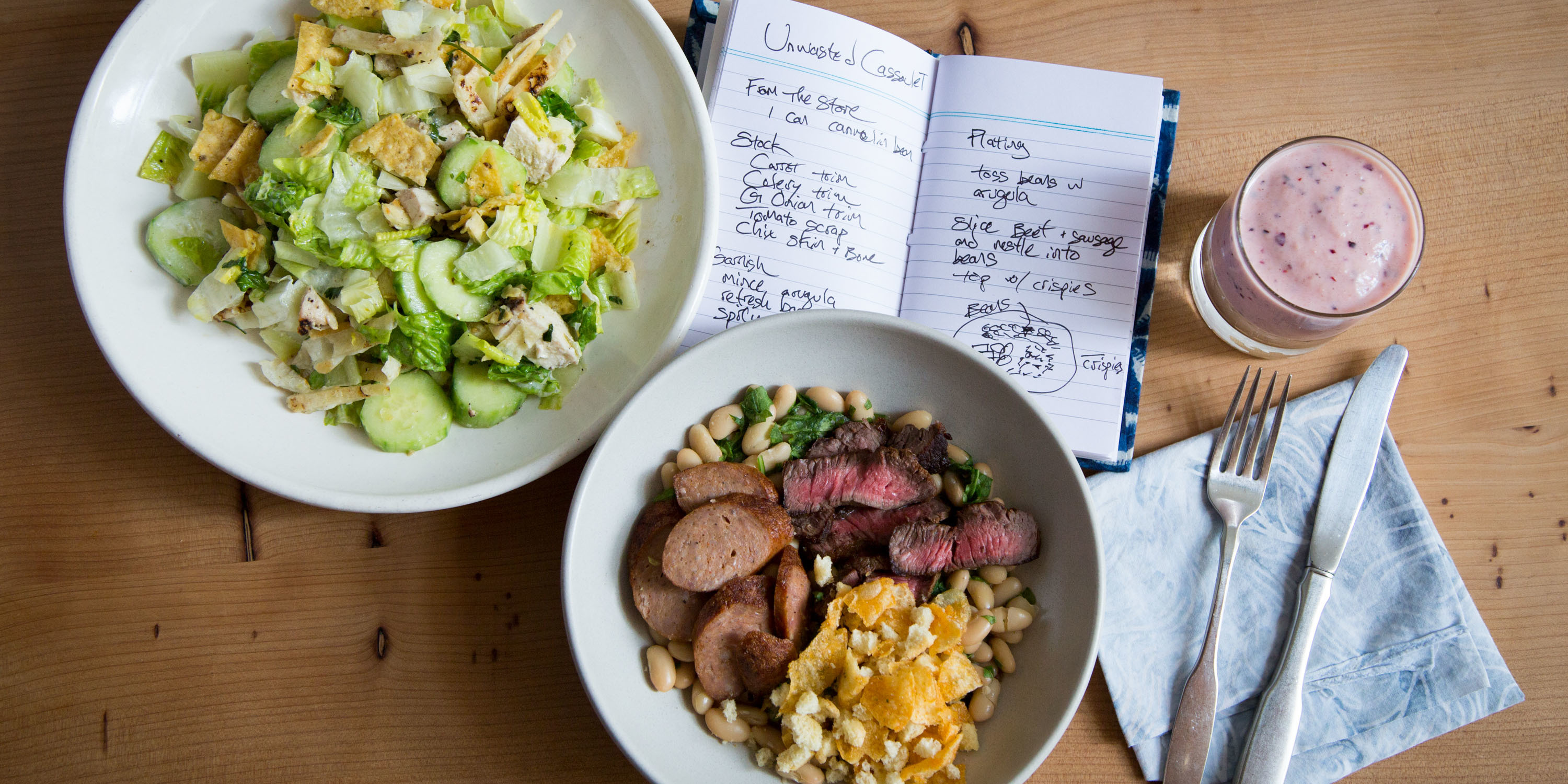
Many of us have let vegetables wither in the crisper drawer, or thrown out a child’s half-eaten restaurant meal, but the sheer scale of food waste around the globe is hard to grasp. According to the United Nations, about a third of the food the world produces every year—1.3 billion tons—is lost during production or tossed by consumers, with North Americans throwing out the most food per capita. The average American wastes enough food each month to feed another person for 19 days.
IDEO received a series of grants from The Rockefeller Foundation to find solutions, given the power of IDEO’s human-centered design approach to address systemic challenges. Through a number of projects with The Rockefeller Foundation and other organizations, IDEO designers from across the U.S. devised novel ways to tackle food waste.
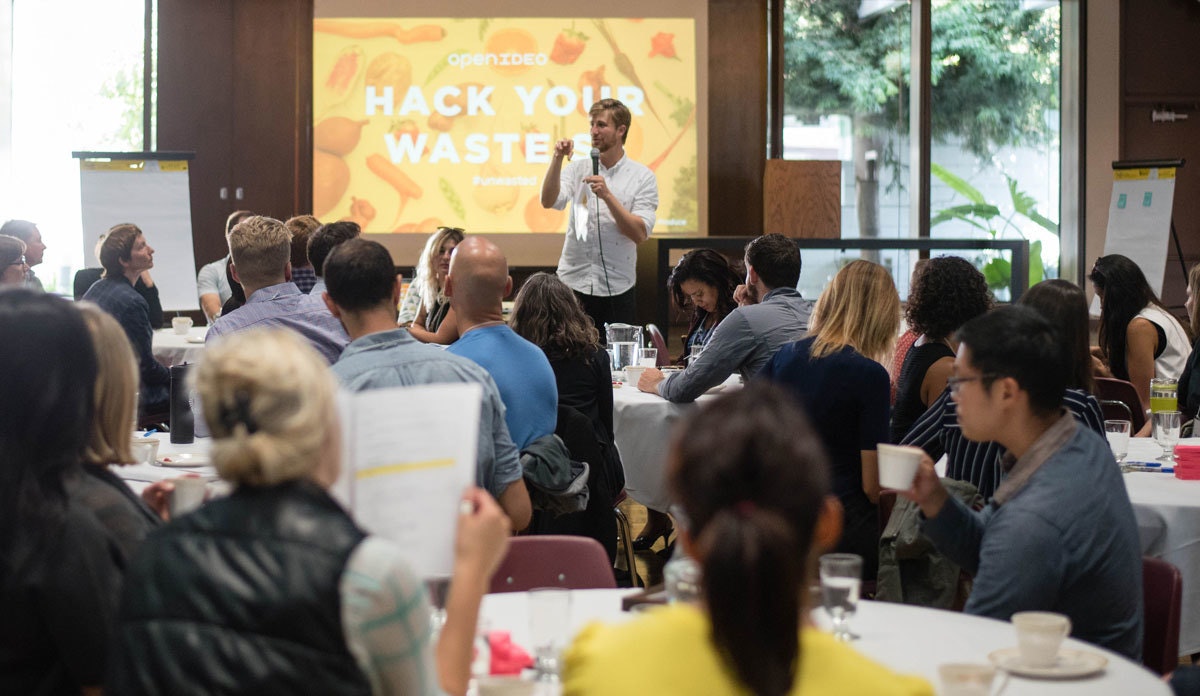
For IDEO’s first initiative, designers tapped into the enthusiasm of the broader creative community, in partnership with The Rockefeller Foundation, the City of San Francisco’s Department of Environment, the Closed Loop Foundation, ReFED, and other groups. In the summer of 2016, OpenIDEO—IDEO’s open innovation practice—launched the Food Waste Challenge, asking how people might curtail waste by rethinking our relationship with food. Between June and October, more than 20,000 people from 113 countries took part in the challenge, tracking their personal waste and brainstorming solutions.
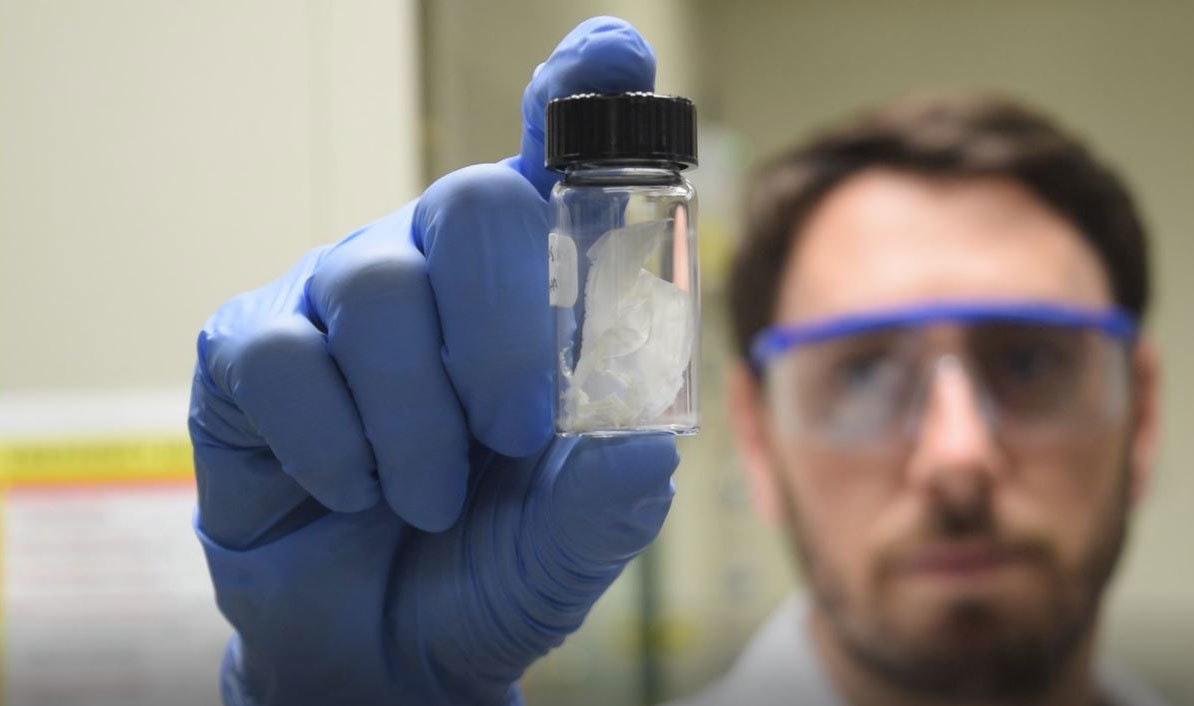
Challenge participants submitted more than 450 ideas. A team of food industry experts helped select the 12 top proposals, which included software to help people buy food collectively from wholesalers and a service that delivers extra meals from corporate events to those in need. Ultimately, the Closed Loop Foundation chose to award Full Cycle Bioplastics a $50,000 grant to scale up its idea to convert inedible food and paper waste into a fully compostable alternative to oil-based plastic.
At the conclusion of the Food Waste Challenge, OpenIDEO launched the Food Waste Alliance, a platform for participants and experts to stay engaged with the most promising ideas and innovators. The alliance helped entrepreneurs share resources, prototype new concepts, secure funding, hire staff, and form partnerships. OpenIDEO invited hundreds to join the alliance, and 92 percent of members told IDEO they made progress in their work as a result. One member company, RISE, received funding from another participant who discovered RISE through the alliance. This investment let RISE prototype its concept for milling spent grain from beer brewing into flour for baked goods and ultimately join the prestigious Food-X accelerator.
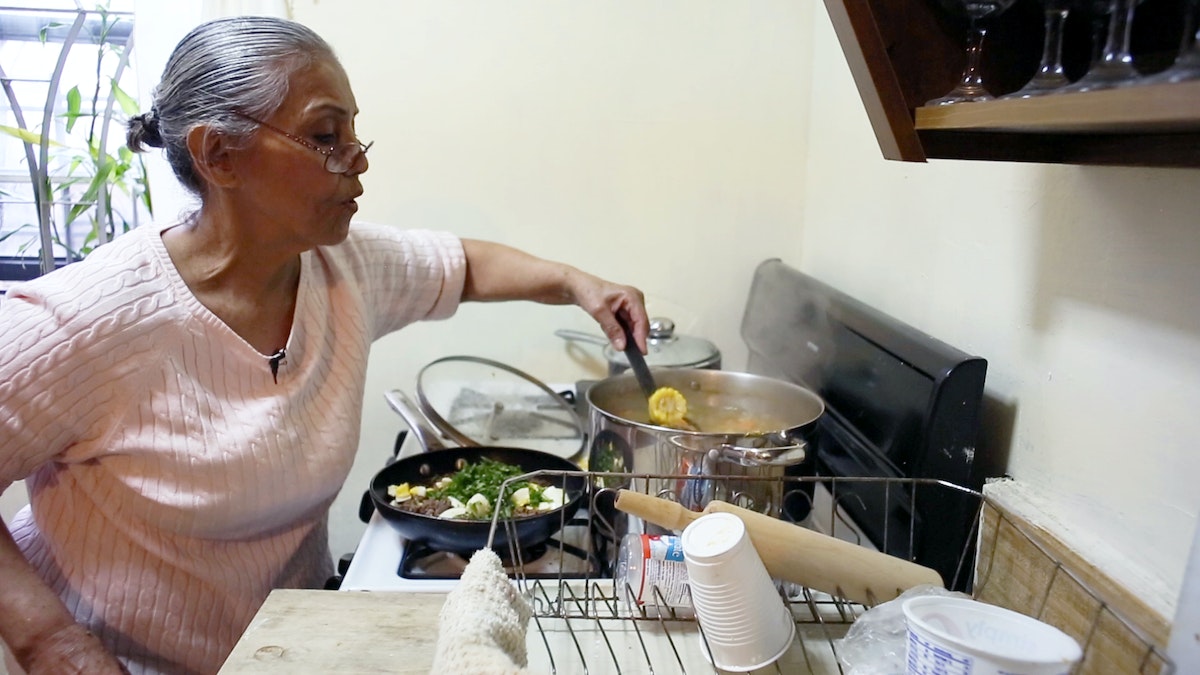
The Rockefeller Foundation also supported IDEO’s work with City Harvest, a New York organization that collects 160,000 pounds of unused food each day and delivers it to soup kitchens and food pantries. City Harvest wanted to understand the habits of local families who visit food banks in an effort to ensure all the food the group distributes gets eaten. To get a peek into these families’ kitchens, in January 2017, IDEO researchers conducted observations and interviews across New York City’s five boroughs. Pantry customers cooked for the researchers, giving them an inside look at how the families engaged with the food they had available and what food meant to each of them: tradition, stability, even adventure. Based on insights from pantry visitors, IDEO made recommendations for City Harvest, including community-run cooking classes and a way for families to request specific foods or reserve pick-up times by text message. IDEO also created three video vignettes to help build even greater empathy between City Harvest and the people it serves.
In spring 2017, capping IDEO’s work with The Rockefeller Foundation, the organizations teamed up with World Wildlife Fund and Hyatt hotels in Florida, New York, and New Jersey to rethink all-you-can-eat buffets. IDEO studied diners and staff at Hyatt buffets and found that employees—from event planners to kitchen staff—each add a cushion of extra food to cover their bases, while guests overfill their plates to avoid missing out. In the end, diners eat just half the food organizers serve, while the rest goes to waste. This and other data-driven insights gleaned about diners’ habits led to subtle substitutions, including smaller plates of meats and cheeses that can be ordered from servers and individual pastries rather than whole cakes. These alternatives have not only built on Hyatt’s existing food waste management strategies, but have also helped reduce buffet costs at Hyatt Regency Orlando and continued to receive support from guests.
The problem of food waste is too enormous to ignore. Wasted food means squandered resources, lost money, and ultimately, hungry people—more than 15 million in the United States alone. Designers and innovators from coast to coast have helped find solutions to the crisis that fulfill a variety of needs, from preserving produce sent to food pantries to keeping plastic packaging out of the oceans. The Rockefeller Foundation and other IDEO partners are leveraging powerful design techniques to pave the way for a waste-free future.
Launching a bootcamp for data scientists
Designing a rigorous program that prepares students for a career in the data-driven economy.
In 2017, IDEO acquired longtime partner Datascope and integrated the company’s data scientists and engineers. Datascope team members aren’t just passionate data scientists; they’re human-centered designers who happen to work with data, as illustrated by successful collaborations like this one:
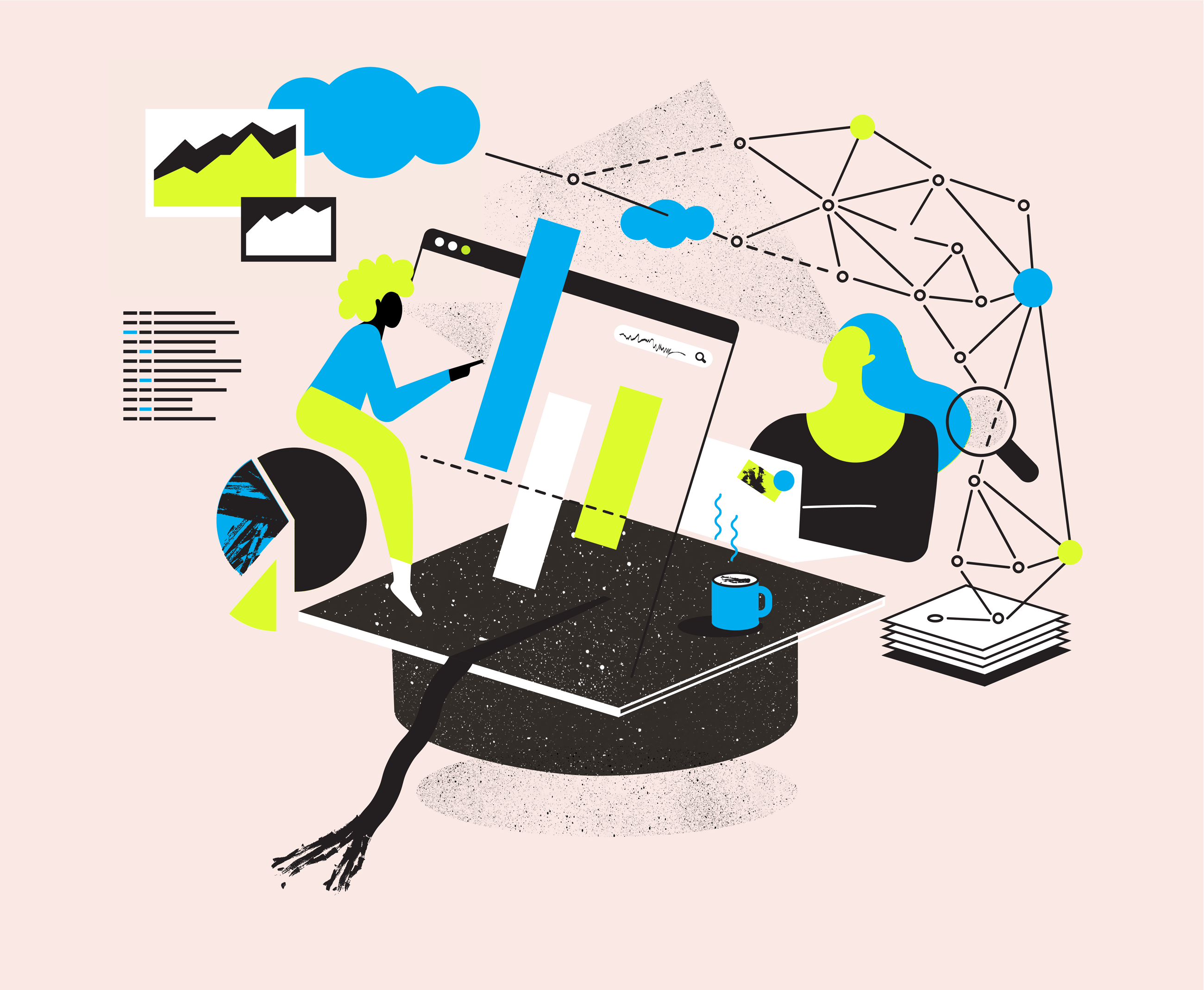
In today’s job market, there’s no such thing as being "done" with your education. This is particularly true in the fields of data science, machine learning, and AI, where significant advances are made on a monthly basis. To meet this need for more in-depth training, Metis—part of Kaplan—wanted to create a comprehensive data science program for students from all backgrounds. Metis asked Datascope to design the curriculum from scratch, drawing on the company’s deep expertise in the field.
Datascope spoke with practitioners across industries to identify the key skill sets that make them successful: a grasp of design; fluency with data management, coding, and algorithms; and effective communication with coworkers and the wider world. The team crafted a 12-week bootcamp that develops these specific abilities.
In order to prepare students for the work world, the bootcamp is structured less like a class and more like a company, where students are “hired” as data scientists—with projects to complete—starting on day one.
Students collaborate on group projects and presentations in a way that mirrors real workflows, and practice pair programming to learn from one another. Using techniques drawn from design, students are invited to refine their project briefs and continually reevaluate their approach.
Instead of a final exam, at the end of the course, students tackle five real-world, open-ended data science projects inspired by Datascope’s client work. One project involves using data from subway turnstiles to detect patterns in the volume of street traffic; another asks students to use data they scrape from the web to predict a movie’s box office profits using regression analysis.
After students complete the bootcamp, they receive an additional three months of career support, from mock interviews to site visits with potential employers. In addition to designing the curriculum, Datascope taught the first three student cohorts and helped Metis build its teaching team as it expanded the program from New York to San Francisco, Chicago, and Seattle. Metis now offers online courses, evening classes, and corporate trainings in data science.
If you’re going to take a data science bootcamp, it’s best to take one designed by data scientists.

Designing the Levi’s Commuter Trucker Jacket with Jacquard by Google
When Google teamed up with Levi’s to craft a jacket with technology woven in, the company turned to IDEO to help make the experience of wearing the garment feel seamless, intuitive, and familiar.
You’re whizzing along on your bike, en route to a new restaurant for a client meeting. You reach an unfamiliar intersection; which way to go now?
Instead of dismounting and digging for a phone, you brush your hand along your jacket sleeve for directions, then double-tap the denim to re-start your music. Without taking your eyes off the road, you’ve taken care of the problem.
This intuitive interface for connected apparel began with Levi's, makers of durable workwear for 140 years, and Google, creators of forward-looking technology, which joined forces to fashion the first item of clothing with touch-sensitive, copper-core threads woven directly into the fabric. Once it was established that the first connected garment from the partnership would be a jacket within Levi’s Commuter line, with interaction on the sleeve, Google worked with IDEO, leaders in designing for human needs, to develop the gesture language of the jacket and industrial design of the technology within.
This is the first connected garment that helps us break free from devices. It seamlessly incorporates Jacquard by Google technology to perform digital tasks, such as navigation, communication, and music playing with a few swipes or taps on the sleeve.
Jacquard by Google—a platform that makes it possible to integrate touch and gesture interactivity into fabrics using conductive yarn and standard, industrial looms—was inspired by a curious twist of history. The Jacquard loom, invented in France in 1804, used punch cards to automate the process of weaving complex patterns into fabric. In the 1940s and ’50s, engineers employed a similar punch-card technique to program the first computers.
IDEO spent time on the project early on, collaborating with Google engineers and Levi’s clothiers on the jacket’s development, helping craft an experience that would make the intelligent threads intuitive to wearers.
Working alongside Google and Levi’s, IDEO’s work included:
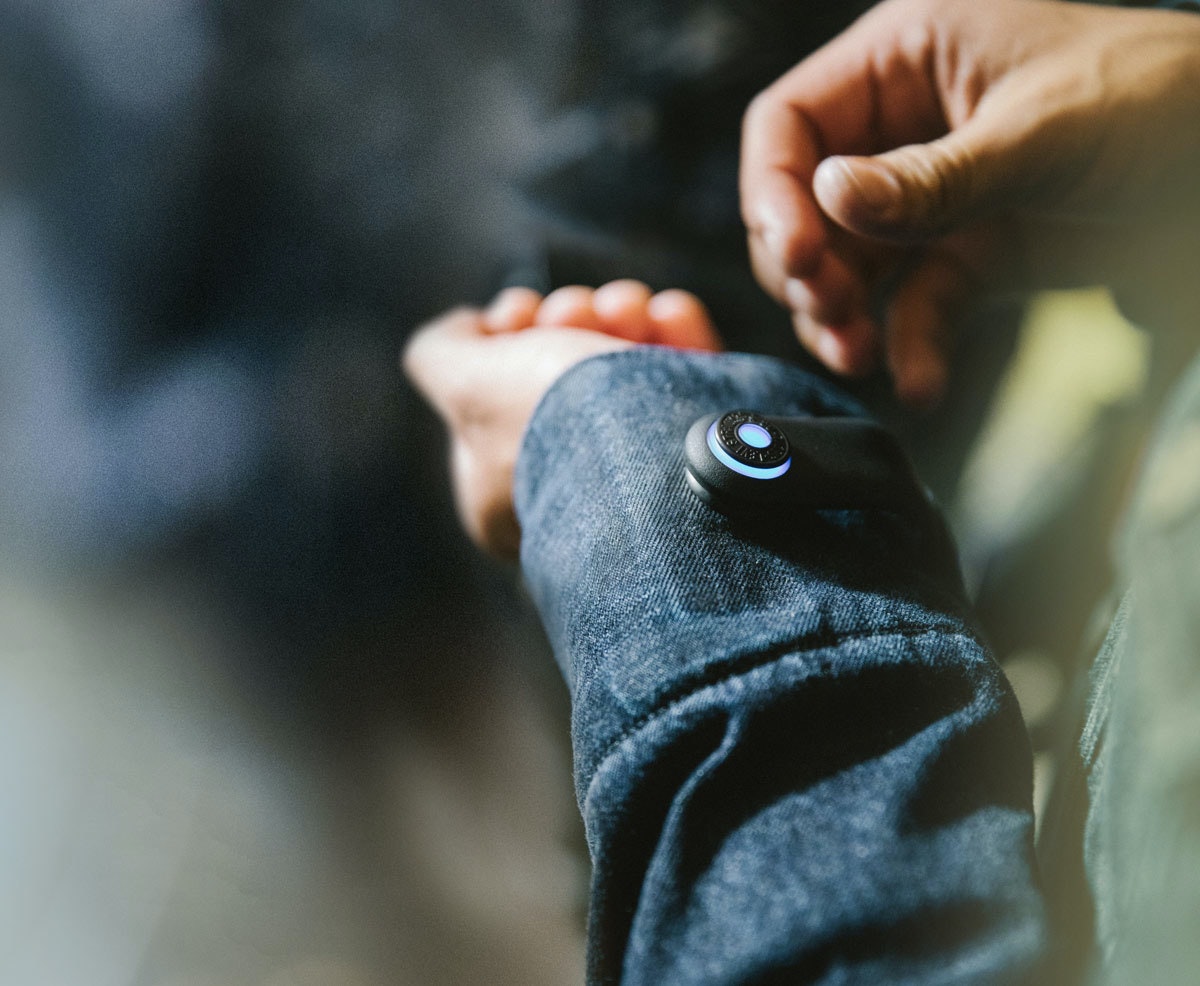
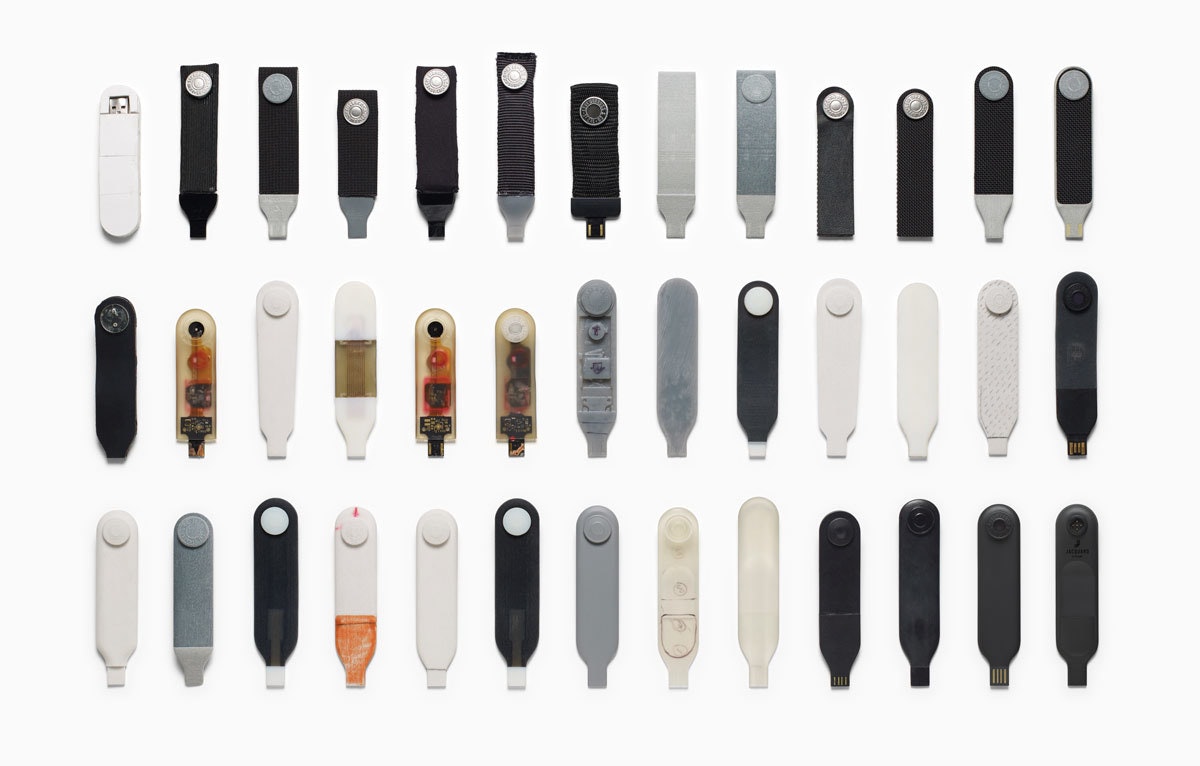
- The industrial design of the electronics integrated into the snap tag and connector (the tag snaps onto the jacket’s cuff and connects to your phone via Bluetooth)
- A vocabulary of gestures on the cuff of the jacket that lets you interact with the jacket’s technology
- Early exploration of the basic design philosophy and conceptual design for the interaction model of a corresponding smartphone app that ties it all together (works with both iOS and Android phones)

The IDEO team’s first task was to validate what commuters of all stripes wanted from the garment, in addition to the work Levi’s did in researching with its consumers. In interviews, group exercises, and wear tests with urban cyclists and other workers on the go, the team learned that cyclists needed a way to stay connected, while still living in the moment. That meant being able to answer calls, hear text messages, get the next direction, and control their music without using a screen.
Levi’s, Google, and IDEO developed a language of movement for Jacquard-enabled fabric that feels familiar and human and builds on the ways people would naturally interact with a garment (a whole-hand brush along the sleeve, as opposed to a one-finger tap on a touch screen, for instance).
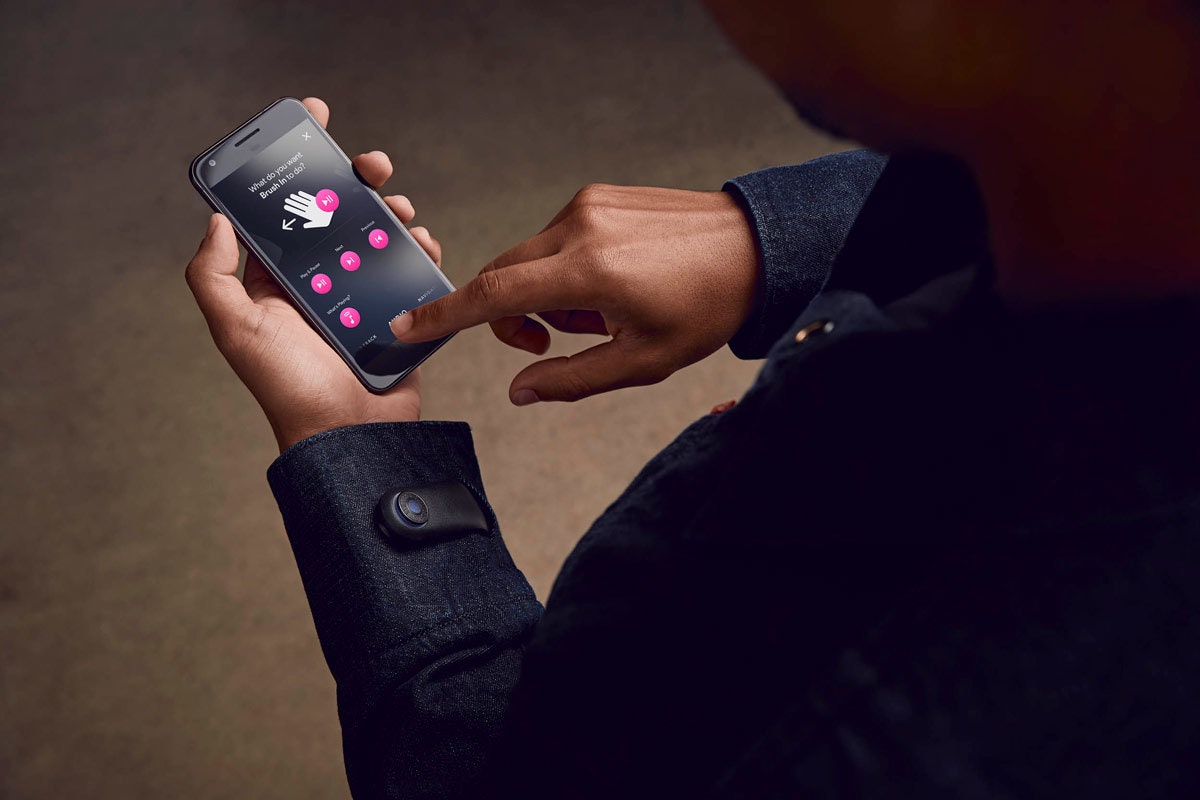
Then came the design and engineering of the snap tag on the jacket’s cuff, which gently notifies you of calls, texts, and other jacket interactions with light and vibration feedback. The flexible, lightweight strap incorporates the look and feel of a Levi’s jean button, while housing advanced electronics that capture touch data. The tag is removable, charges via USB connection, and works in conjunction with a mobile app that lets you configure settings for the garment, set notifications, and customize gestures and interactions.
The Levi’s Commuter Jacket with Jacquard by Google changes the game because it’s simply that—a jacket—with technology that adds new utility and value, allowing us to wear our everyday interactions on our sleeves.
The Levi’s Commuter Trucker Jacket with Jacquard by Google hit stores in October 2017.
IDEO and Google have a long history of collaboration. Learn more about our work on Google Bloks here.

How the climate crisis can catalyze change in healthcare
Ideas for improving outcomes for people and the planet.
Healthcare is responsible for 10 percent of global material extractions and 4.4 percent of emissions, contributing significantly to the very environmental issues that are increasingly impacting human health. Paradoxically, 80 percent of health outcomes globally are driven by non-clinical factors—the environmental conditions in which people are born, grow, work, live, and age. These compounding factors present a unique opportunity for leaders within and beyond the health industry to rethink their approach, moving beyond traditional care models to embrace more holistic, preventative, and sustainable strategies.
At IDEO, we believe that the climate crisis can be more than a threat—it can also be a catalyst for innovation. By shifting our healthcare focus upstream—from last-mile care to first-mile health, ie, creating the conditions that make everyday life healthy by design—we can create solutions that not only improve individual and community wellbeing, but also contribute to a healthier planet. This approach doesn't just mitigate risks and improve health outcomes; it opens new avenues for growth and value creation.
So, what might this future of climate-conscious healthcare look like? During Climate Action Week in London, we asked a group of leaders and creatives to combine future inspiration, nature strategies, and building blocks of first-mile health to come up with ideas that could lead to better results for people and planet. Here are some of our favorites:

Converge urban planning and healthcare
Imagine a world where public green spaces are not just amenities, but prescribed interventions for both physical and mental health. Already, these spaces serve as natural air purifiers, reducing urban heat islands while providing accessible areas for exercise and community connection. Health insurers might offer incentives for time spent in these green spaces, recognizing their role in preventing chronic diseases and improving overall community wellbeing.

Bridge empathy and health with wearable technology
Picture a wearable device that allows users to experience the physical sensations of others—perhaps those with disabilities or health conditions different from their own. This technology could revolutionize patient care, medical education, and public health campaigns by fostering deeper empathy and understanding. It might also encourage more sustainable behaviors by allowing people to viscerally experience the health impacts of climate change on vulnerable populations.

Make community rituals a cornerstone of preventative healthcare
Consider creating re-localization rituals, which would bring communities together to build shared culture, empathy, and social cohesion. These events could incorporate nutrition education, physical activities, and community health moments, all while fostering the kind of strong social bonds that are crucial for mental health, quality of life, and community resilience in the face of climate challenges.

Bring the fashion and health industries together around sustainability
Envision a partnership where health tech companies and fashion brands co-create wearables that monitor health while promoting sustainable consumption. These products could adapt to users' changing health needs over time, reducing waste in both the fashion and medical device industries. They might even incorporate materials that actively purify the air or neutralize pollutants, turning personal style into a form of environmental stewardship.

Give children a voice in health and environmental policy
Picture a Ministry of Children (or, in the U.S., a Department of Children) with real executive decision-making power on issues of health and climate, working for and with children to understand and serve the needs of some of our most vulnerable citizens. This radical approach to inclusivity could lead to policies that prioritize long-term health outcomes and environmental sustainability, breaking free from short-term thinking that often dominates current governance models.
These scenarios may seem far-fetched, but they illustrate the kind of bold, systemic thinking required to address the intertwined challenges of health and climate. They also highlight the immense opportunities for growth and innovation in this space, and the importance of bringing diverse groups together in service of solving these problems.
For health industry leaders, embracing this climate-conscious approach to healthcare isn't just about corporate social responsibility—it's a strategic imperative. Companies that lead in this space will be better positioned to:
- Tap into new markets: As consumers become increasingly aware of the health impacts of climate change, there's growing demand for products and services that address both personal and planetary health.
- Attract and retain talent: Purpose-driven initiatives that tackle major global challenges can be a powerful draw for top talent, particularly among younger generations.
- Mitigate future risks: By investing in preventative, sustainable healthcare models now, companies can better prepare for the health challenges that climate change will inevitably bring.
- Drive innovation: The constraints imposed by climate considerations can spark creativity, leading to breakthrough technologies and business models.
- Enhance brand value: Companies that demonstrate leadership in addressing climate and health issues can build strong, positive brand associations that resonate with consumers and partners alike.
- Cut costs: Not only will sustainable strategies lead to better health outcomes that save money, they may also lower regulatory costs.
As we navigate the Climate Era, the health industry has a unique opportunity—and responsibility—to lead the way in creating a more sustainable, resilient future. By focusing on upstream, preventative solutions that address both human and planetary health, we can unlock new sources of value while making a profound positive impact on the world.
The future of health is not just about treating illness—it's about nurturing wellbeing in its broadest sense. We look forward to joining health industry leaders in stepping up and embracing this challenge. The health of our businesses, our communities, and our planet depends on it.
Looking to catalyze change in business or healthcare? We’d love to connect.
In the rapidly-evolving landscape of global health, we find ourselves at a critical juncture where the health of individuals, communities, and our planet are inextricably linked.
Make fashion more sustainable with emerging tech
And add value to the brand, too.
Digital technologies will be a huge piece of that puzzle, helping us find solutions to everything from reusable packaging to textiles that stay out of landfills, the electrification of everything, and retailers that embrace circularity.
The opportunity is enormous: Leaders who adopt new technologies to meet sustainability goals will not only lighten their impact on climate—they will gain new value for their brands and their customers because of all the benefits that new tech brings. Those who evolve now will be positioned to lead the market.
So, how do you adapt a fashion or luxury brand to be more sustainable, more inclusive, and more connected to the consumer, while increasing value to brands, manufacturers, and consumers alike?
The challenge is complex, but it’s nowhere near impossible. Take H&M’s work to streamline its supply chain, cutting unnecessary inventory, and producing less waste. Together, IDEO and H&M mapped out the complex network of people that make up its supply chain across the globe, then created an algorithm for more precise ordering, and a tool that provides a shared view of information. Now, a new automated flow called “Cruise Control” creates a demand forecast that makes it possible for employees to place much more accurate bets on what consumers will want, when. It’s a project that not only led to less waste—but better sales, too. After all, it's a lot easier to buy the thing you want when it's in stock. Already, Cruise Control has led to an eight percent average reduction in inventory, saving the company €500 million (more than $630 million) per year.
Human-centered technological strategies like this one also create opportunities to change—and deepen—the relationship between brand and consumer. A climate-conscious future isn’t just responsible and increasingly required (see Corporate Social Responsibility Directive, Waste Framework Directive, and the Ecodesign Criteria for Consumer Textiles in the EU), it’s full of opportunity for growth.
Here are four ways fashion brands can leverage digital technologies to increase value in the climate era.

Measure a garment's value across multiple life-cycles
Provocation: By shifting how you measure the profitability of garments from linear sales to circular value creation, you can redesign the business from the core. Today, shoppers buy garments from celebrity closets on the second hand luxury platform The RealReal, and collectors are happy to buy a pre-owned Eames chair, like one Redditor who said "I ain't got time to age a 670—I'll buy someone else's history.” Brands can expand on these trends to show off the value embedded in goods that are already out there in the market, while deepening their long-term relationships with customers and communities. Digital twins—virtual data tied to a physical object, like data tied to your passport—can streamline tracking and enable new business models that compliment physical experiences with digital.
Impact: New KPIs connected to digital twins in a circular product lifecycle allow the reconfiguration and measuring of new value chains.

Use the shift to on-demand manufacturing to co-create with customers
Provocation: On-demand production and direct-to-fabric printing mean your customers can create their own bespoke prints, directly collaborating with your brand, while making sure you don’t produce too much inventory. Some brands are already taking advantage of this strategy. Reebok, for example, has a service where you can supply images to a chatbot to create custom sneakers, and then can buy digital versions of the sneakers for eight dollars. Projects like this one are becoming increasingly common, as brands come into proximity with user-generated worlds and designs. There's a great opportunity here to expand on the creative drive of potential customers through co-design tools.
Impact: Co-design drives brand engagement and loyalty, taking your customer relationships to new heights.
Create new experiences that add more bonding between the customer, your brand and their new purchase
Provocation: Manufacturing on demand can lead to a longer window between a customer’s order and the delivery of their goods—but that doesn’t have to add friction. Instead, brands can reframe delays with a bespoke, insider experience, where the customer connects with the designers, people, and processes that make their garment possible—and unique to them. It’s also a way to make visible the labor and resources it takes to produce their garments, which can drive real behavior change. This concept even has a name, Shinkansen Theater, after the shift in perspectives that riders on Japan’s bullet trains had on turnaround time after watching cleaning staff work.
Impact: Luxury purchases are often the pinnacle of many months or years of decision-making and brand engagement. Involving the consumer in the production process enhances and elongates the thrill of the purchase moment. Customers who are willing to spend a lot to get a coveted item will go to great lengths to acquire as much information about it as possible (see this discussion of a bespoke order tracker for Ford).

Design for the impact of the design idea, rather than the identity or size of the buyer
Provocation: Experimenting with different styles, fabrics, and customizations in a virtual environment can create a sense of ownership and excitement akin to bespoke tailoring. Picture a hybrid experience, where high-quality simulations allow shoppers to start the design process online, then see the final touches at delivery. It’s a strategy that makes brands more accessible to more sizes, body types, and genders. Already, brands like Unspun are using body scanning to create custom jeans, and Universal Standard has committed to carrying sizes 00 through 40, with the same attention to cut and quality, regardless of size. Returns in fashion are not purely about technical fit, but about a complex set of emotions, context, and expectations. How are you feeling about your body? What’s the lighting in your space? How does the garment make you feel? High-quality and accurate simulations of a garment’s shape, texture, and movement could also help close the gap between digital and physical shopping experiences, reducing the emotional mismatch between online vision and product reality.
Impact: Sizing and gender categories become irrelevant, allowing your brand ethos and styles to reach—and be reinterpreted by—the largest possible portion of the market.
These provocations are just four ways fashion and luxury brand leaders can leverage emerging tech and trends to cut impact on climate, while increasing value to their customers—there are many, many more. And the leaders that implement them first will not only be doing better by the planet—they’ll also reap the rewards.
Looking to implement emerging tech to add value to your brand? We’d love to connect.
The climate era is ushering in changes so big, everything will need to be redesigned—including fashion and luxury brands.
IDEO’s secret to designing the future?
Hint: It’s always prototyping.
And unlike things that have been around just as long—Pepsi Clear, the Delorean, the Discman—it’s just as relevant today, for making everything from medical devices to emerging technology products.
By making things tangible early, we can explore the edges of what a product could be, prove something that hasn’t been done before is possible, or reduce risk by strengthening an idea before investing in it.
Our maker-first approach applies to everything we do—even when we’re designing for a future we haven’t seen yet. Because if you can’t click it, touch it, taste it, smell it, or hear it—how can you believe in it? It’s how we designed the first mouse for Apple back in 1980, helped create the all-electric Ford-150 Lighting, and the method that guided our research into what Gen Z really wants from AI products.
Here are five reasons we get tangible early and often.
To solve a problem
When we approach a new problem, our minds are swirling with possibilities. Immersing ourselves in tools, materials, and mindsets can inspire us—often unexpectedly—turning our nascent thoughts into cohesive ideas. Working with our hands is often faster and more rewarding than turning straight to spreadsheets, computer models, simulations or CAD, and can add a little confidence, too.
When IDEO started a program with Pluto Pillow to reimagine the travel pillow, jumping right into 3D CAD modeling didn’t make any sense.
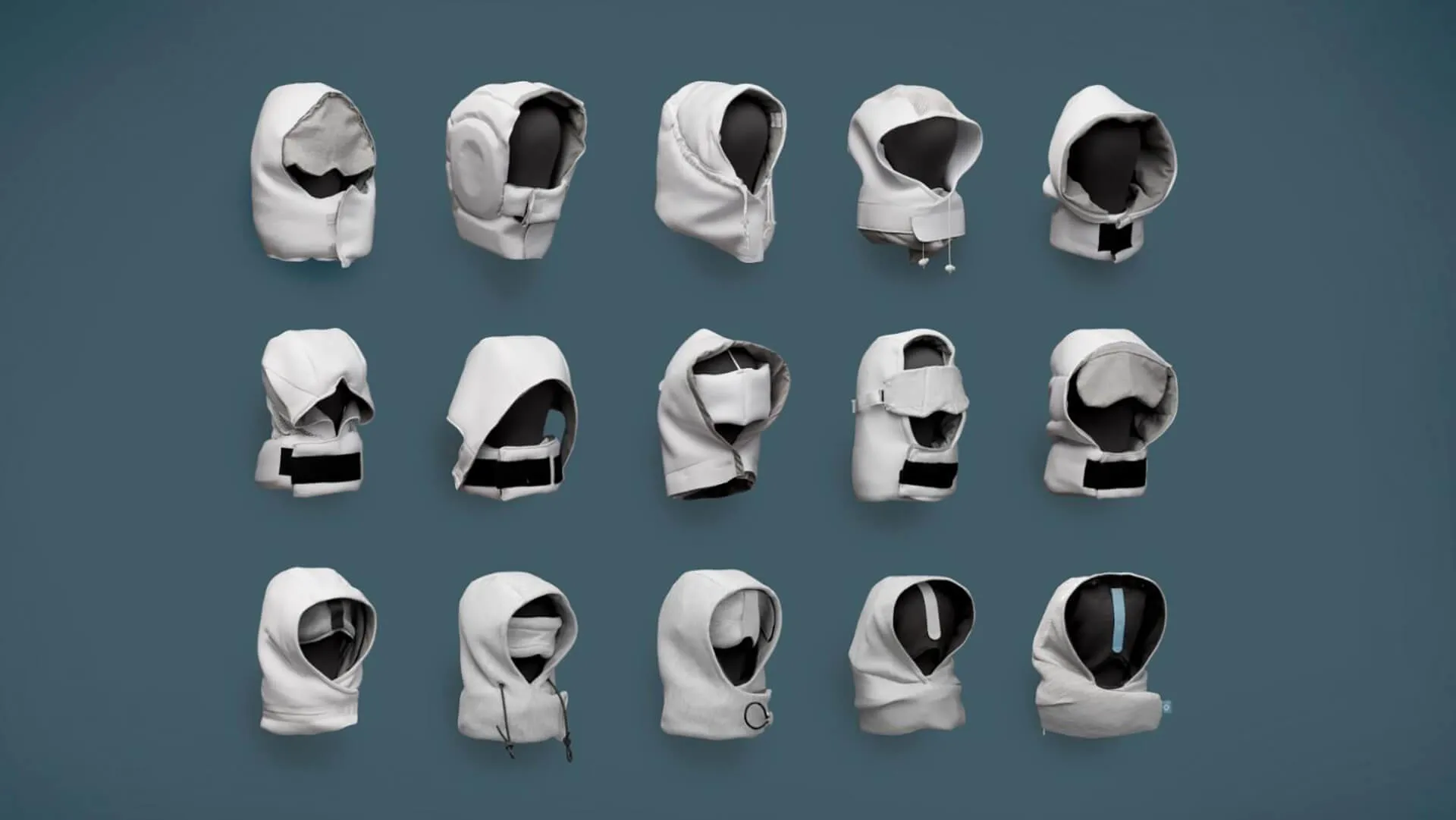
It’s hard to define what makes someone comfortable enough to fall asleep on an airplane. So many factors play a role in finding that perfect position. So we gathered tons of relevant materials—from different density foams to variations of fabric softness—and kicked things off by using this array as inspiration. The result was dozens of simple prototypes that helped us identify and explore key themes we knew this new travel pillow would need to address to resonate with consumers; things like packability, cleanliness, re-positioning, and privacy.
To learn and test
How could this work? How might we interact with this? How do these parts fit together? The act of making lets us learn by doing, kick off conversations, and answer tough questions. Whether we’re making a wireframe, a mechanism, or formulas in a spreadsheet, tangibility accelerates our learning.
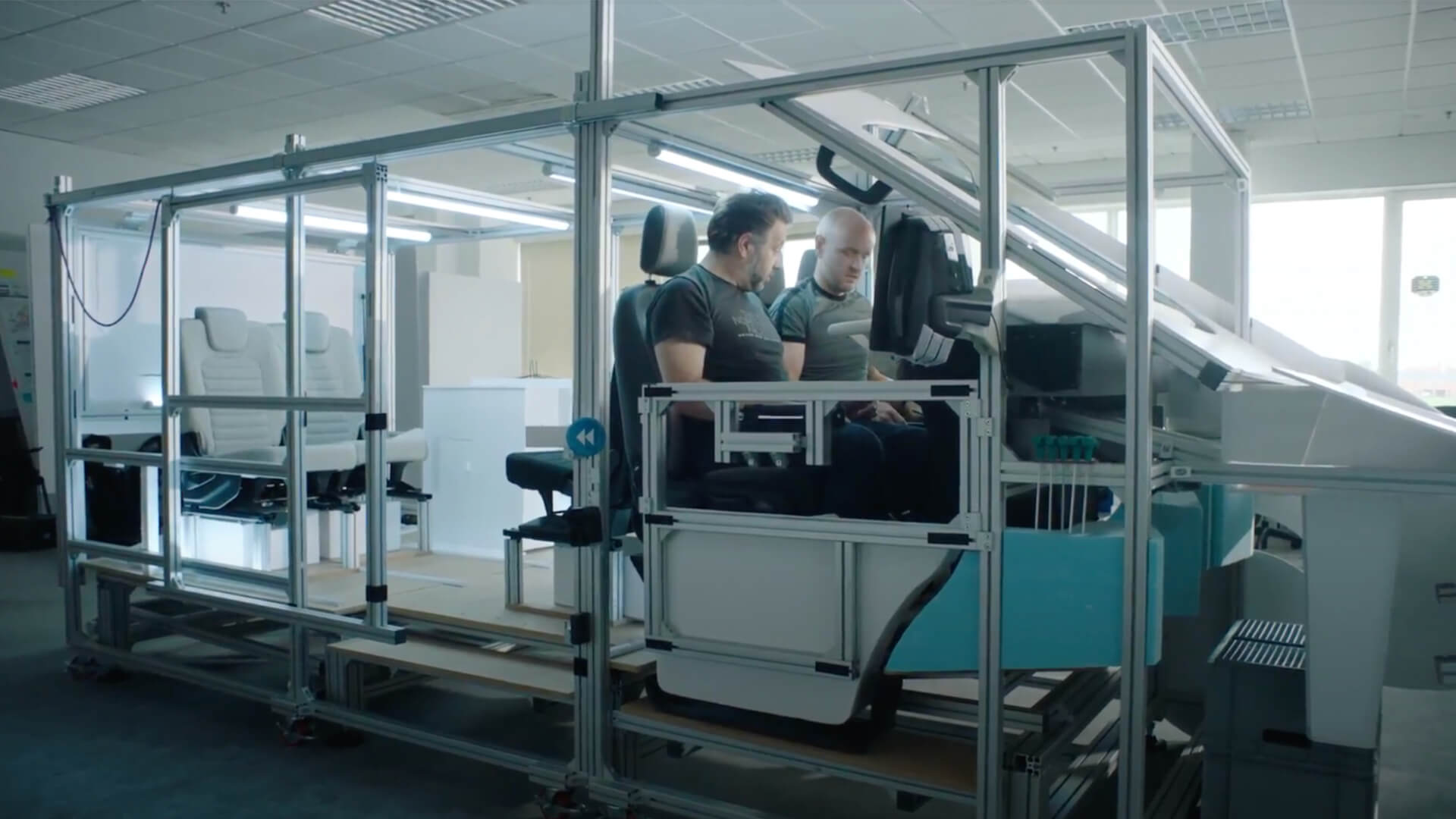
In our decade-long relationship with the Ford Motor Company, we built numerous vehicles ranging from rough truck-shaped 80/20 frames to fully-custom commuter vans. These test beds of varying fidelity let us explore LOTS of new ideas—from maximizing storage space, laying out reconfigurable seating, or providing real-time progress communication along a route. Whether it was a big screen digitally tied to a seat and steering wheel to test a new driving experience, or stadium seating and a live progress map in a ride-share commuter van, getting tangible allowed us to test our ideas at the right level of fidelity, and learn what was working and resonating with our audience quickly and efficiently.
To prove something is possible
When we’re solving really hard and complex problems, viable solutions often feel too daunting to even consider. But by making something, we can break these problems down into more manageable parts—be it a node in a complex network, a critical screen in a workflow, or a complicated part of an interaction. Thus we can explore things we might have dismissed as impossible—and prove a potential solution is worth continued exploration.
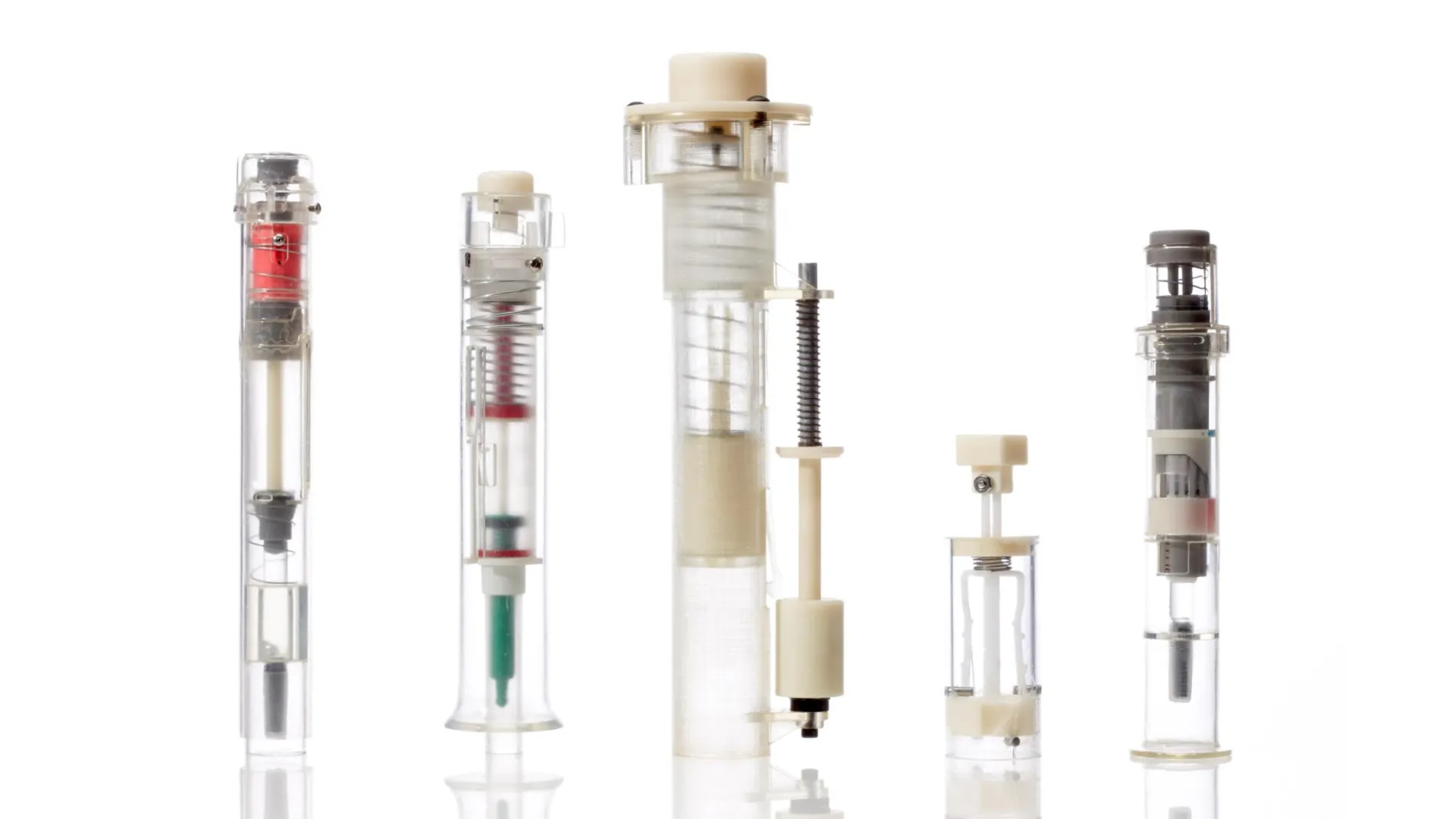
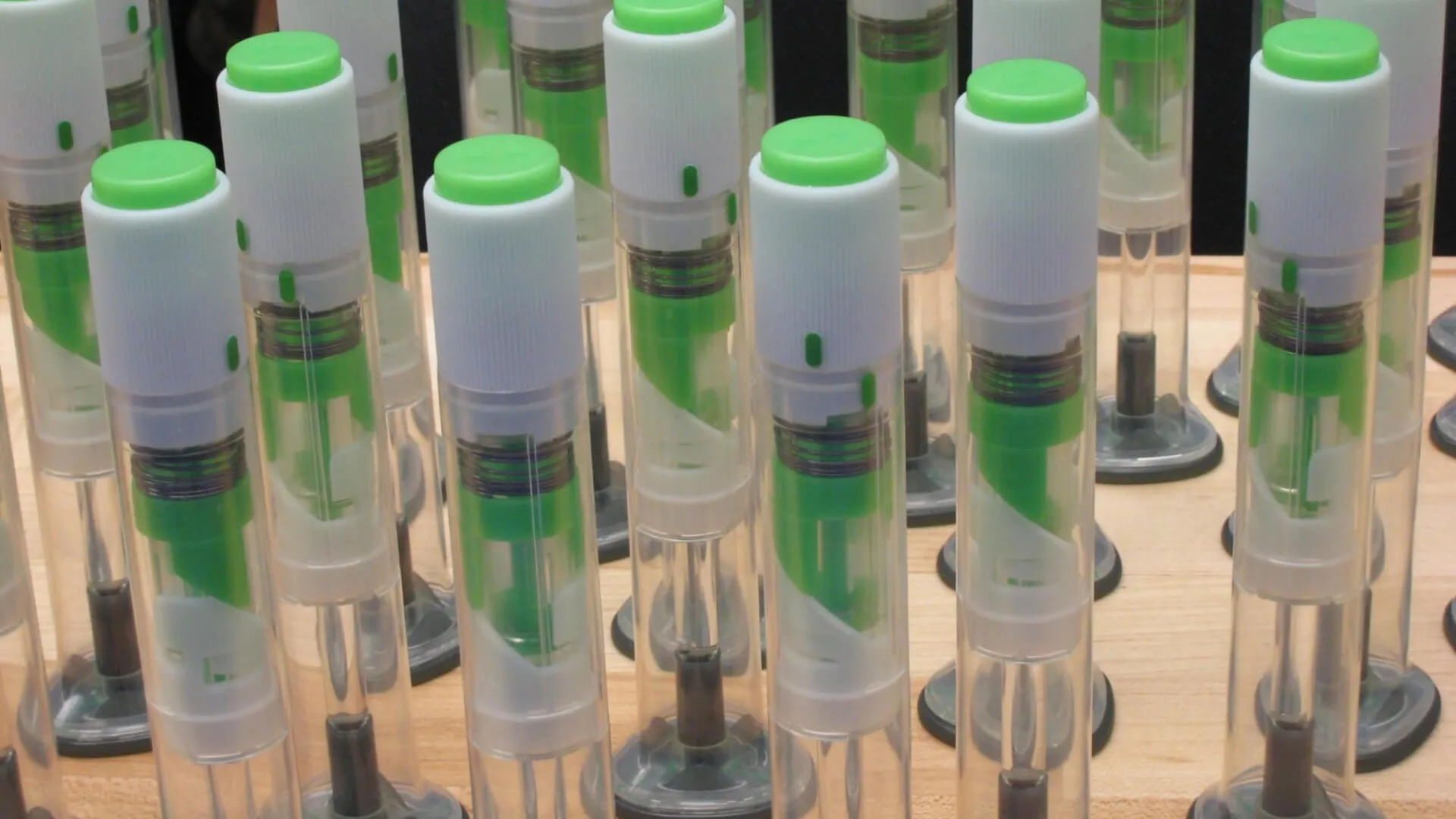
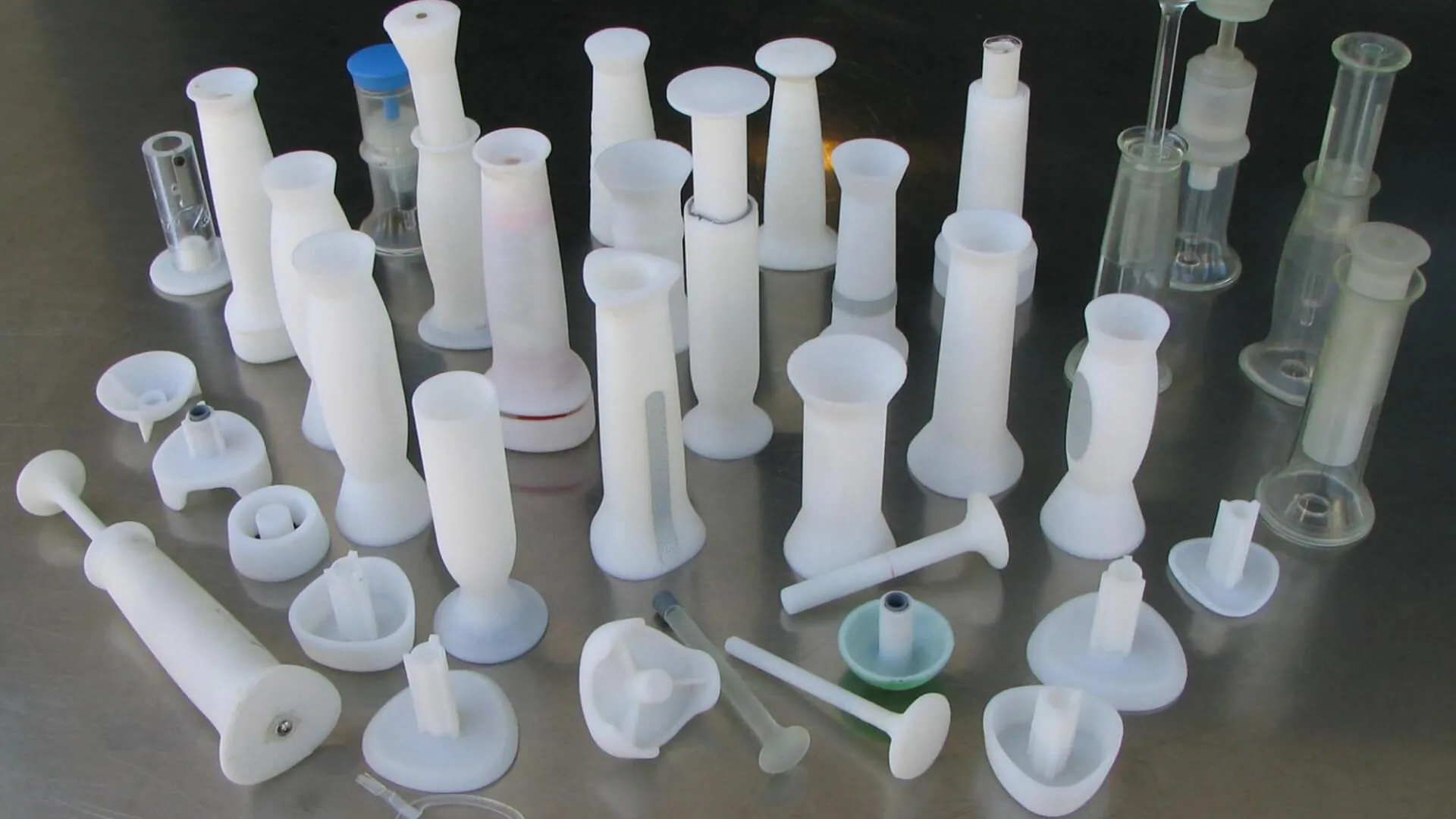
IDEO worked closely with a pharmaceutical company to develop a first-of-its-kind autoinjector, an easy-to-use system that delivers a variety of drug products to people suffering from autoimmune diseases and other ailments. These complex mechanical devices rely on springs to do a lot of work: inserting the needle, pushing the drug into the body subcutaneously, and safely retracting the needle for disposal. IDEO built hundreds of prototypes to prove we could use two springs to accomplish these tasks, starting by repurposing simple found objects, then developing custom 3D printed parts to prove out specific functionality, and finally creating thousands of injection-molded prototype devices to convince ourselves and our partner that our design was robust and reliable. The result is a product our partner not only uses to deliver multiple drugs to a wide array of patients, it is the delivery device for three out of four of their best-selling drugs, which account for nearly $15 billion in annual revenue.
To try specifics and reduce risk
We often ask our clients to place big bets on our designs—both financial and strategic. Making something early on can help everyone test the risky or complex parts of a design, building consensus and confidence that it’s the right answer before investing too much time, energy, or money. Picture a new retail interaction, click-through prototypes of a workflow, or a functional mechanism that demonstrates a core functionality of a complex product.
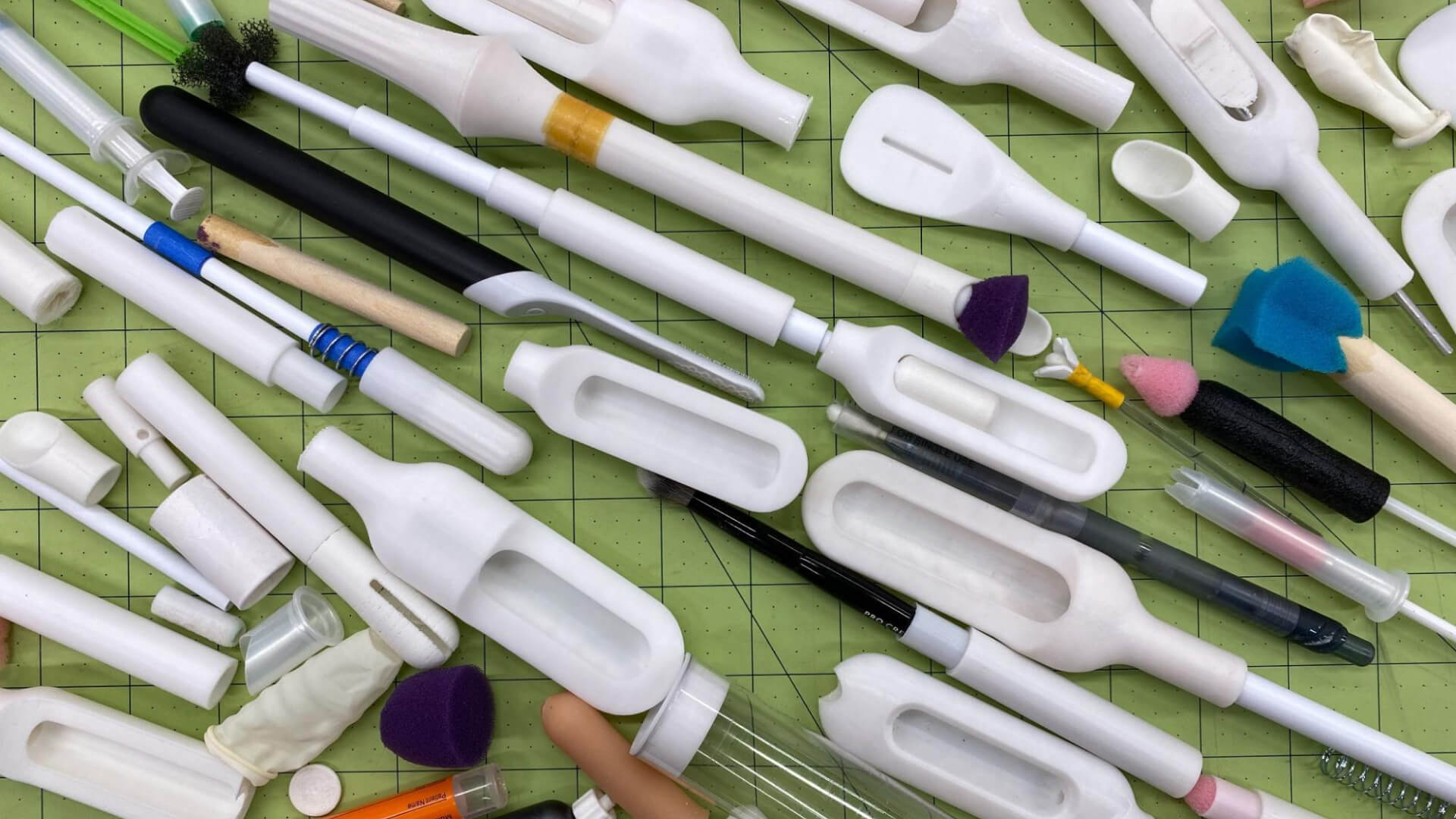
This was particularly helpful on a project we did with Teal Health. Cervical cancer screening saves lives. But the tests are uncomfortable at best and inaccessible at most, and screening rates have been on the decline, Teal came to IDEO for help designing a device and testing experience that would allow users of all body types to safely and accurately collect a sample at home—and be inclusive for anyone with a cervix. The wand was incredibly challenging to design, as the user has to find their cervix, collect the sample, and remove the wand without contaminating it on other parts of the body—all without looking and probably while standing. Considering the complexity of the task, we knew it would be critical for Teal to test the design in real people. In an initial study with 220 participants varying in age, race, socioeconomic status, and geography, Teal found that not only were participants able to successfully self-collect samples, they also preferred our design over the speculum, the device doctors typically use during a screening. Now, Teal has launched a nationwide clinical trial and is on the path to FDA approval, not to mention its ultimate goal, catching cervical cancer earlier and saving lives.
To tell stories
When we are designing the future, we have to find ways to help people experience something that doesn’t exist yet. Sometimes that means renting a warehouse to build out a full retail space and actually go shopping in the future; sometimes it’s a life-size game of chutes and ladders that helps admissions officers understand how complex the college application process can actually be. Making allows us to tell the story of a better future state, and inspires our clients to design that future alongside us.
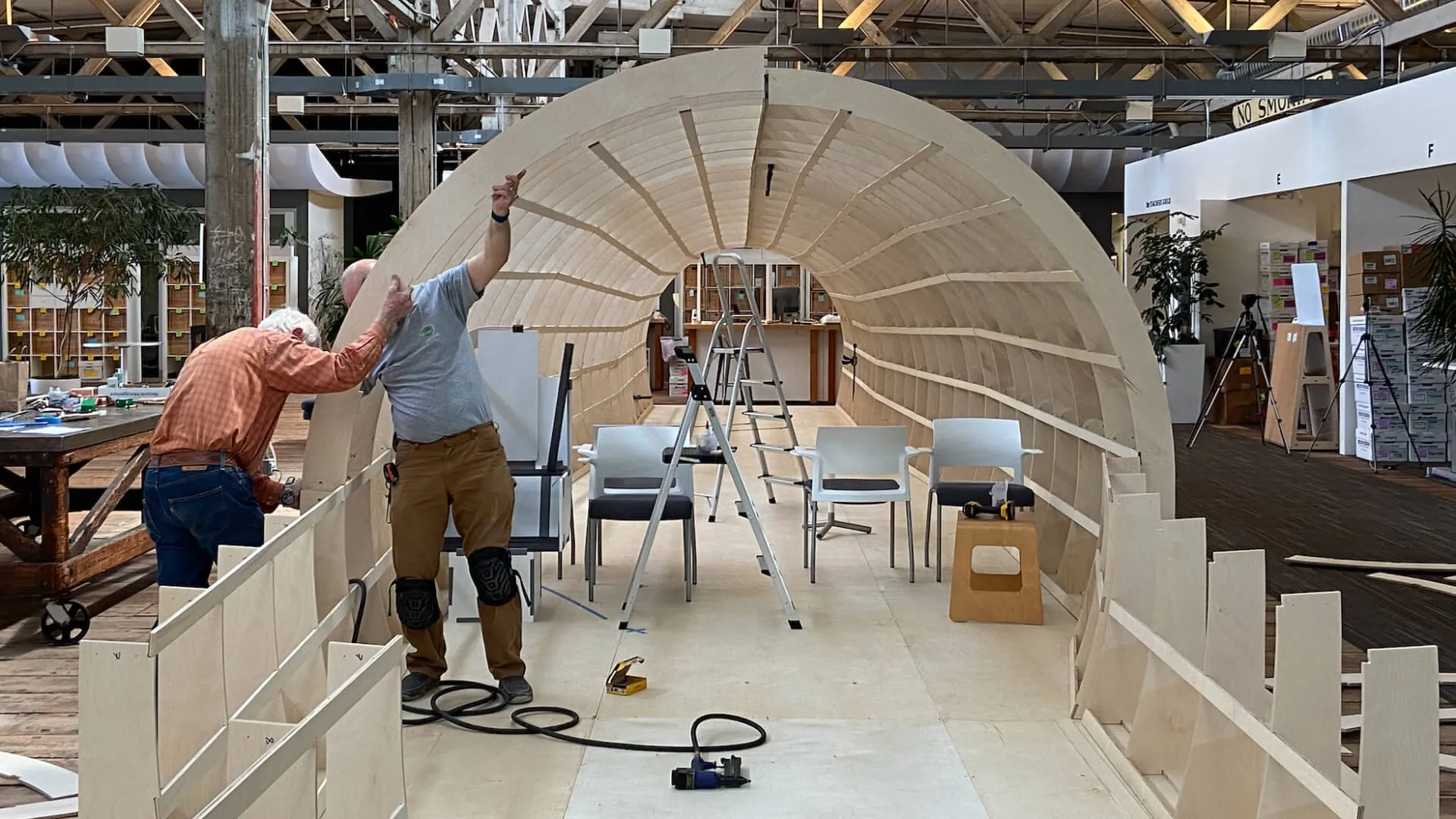
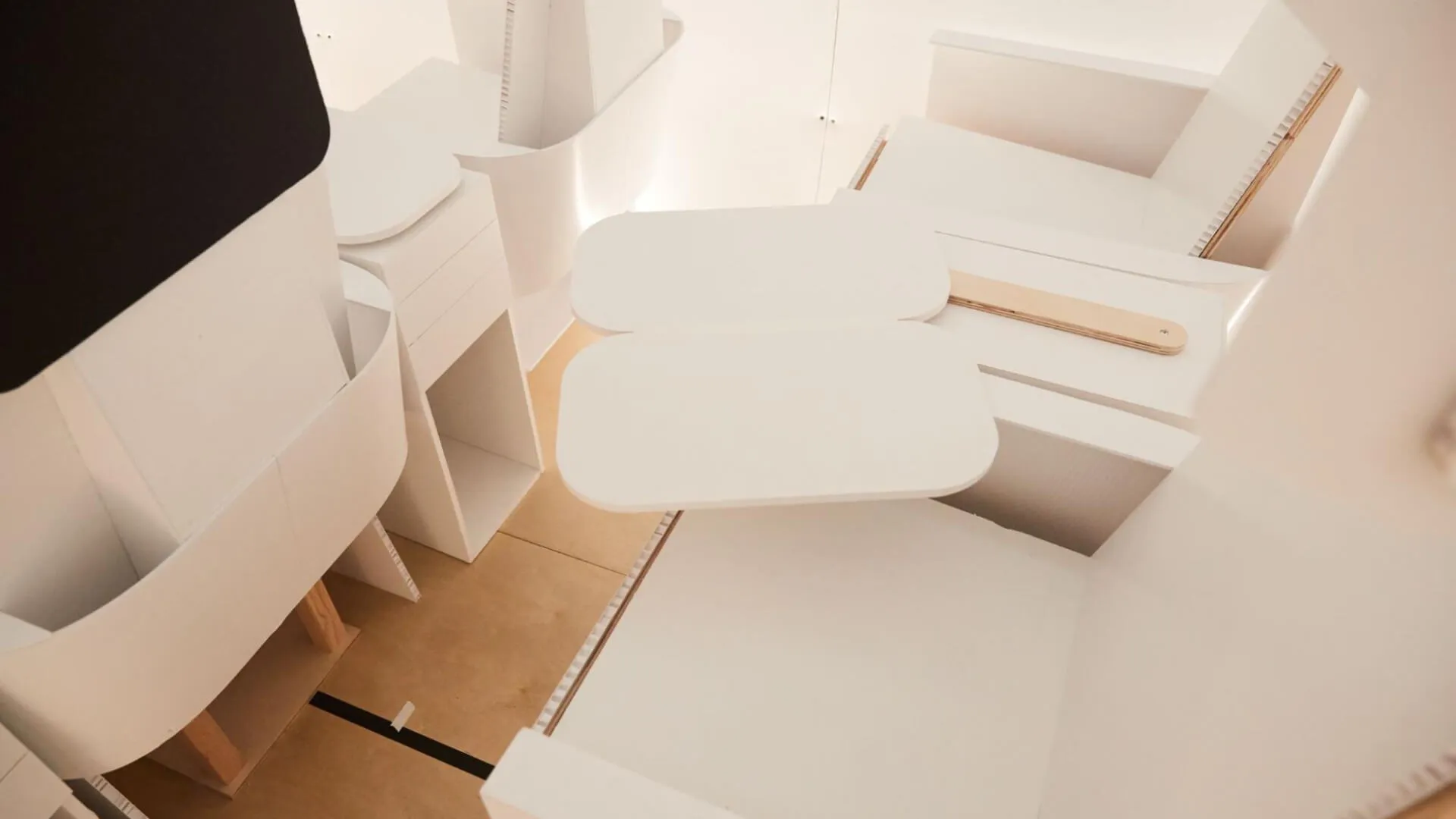
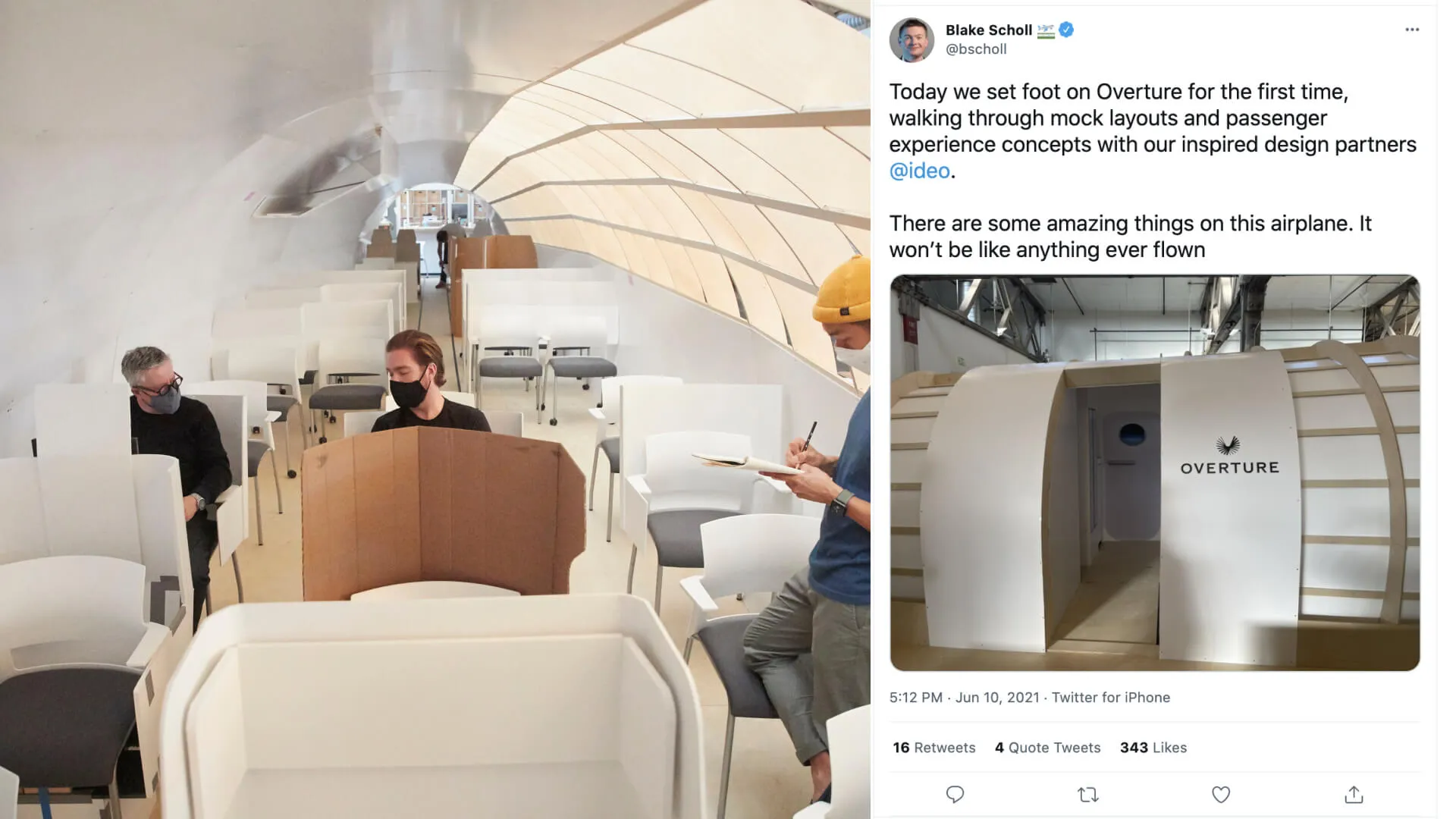
It’s hard to use schematics and spreadsheets to show the executives of a supersonic flight company what the customer experience of sitting in the cabin will actually feel like. So we built our clients at Boom Supersonic a full-scale prototype out of two by fours and plywood, adorned with foam core walls and custom-machined foam seats. When those executives can actually sit in the seats, walk around, and even feel what it would be like to visit the plane bathroom, the future aircraft experience comes to life in a whole new way. When you layer on actual flight moments like boarding, beverage service, and in-flight entertainment by leveraging VR headsets, the future becomes so tangible and real that everyone can get behind making this new aircraft a reality.
Stuck working to solve a problem of your own? Prototyping can start with something as small as a sketch or a folded piece of paper—even if what you’re making is the size of a jet. All you have to do is start making.
At IDEO, we have a classic saying: Never show up to a meeting without a prototype. And unlike things that have been around just as long—Pepsi Clear, the Delorean, the Discman—it’s just as relevant today, for making everything from medical devices to emerging technology products.

Making AI assistants people will be excited about
A human-centered approach to the next generation of AI.
Some of these aren't words we hear a lot about AI, particularly not in online conversations. Instead, when we conducted an experiment to synthesize general sentiment about AI, trends, and emerging AI case studies, we found a mixed review.
Posts about the rabbit r1, HumaneAi pin, and other AI assistants offer enthusiasm, but also skepticism and concern. Popular technology Youtuber Marques Brownlee titled his review of the Humane Ai pin “The Worst Product I've Ever Reviewed... For Now.” But some commenters were really positive. One wrote, “If someone can make an AI OS that works like this rabbit r1 demo, there’s another empire waiting to be built.” On Character.ai’s TikTok account, people most frequently commented about feeling an obsessive love for the app, or even an addiction.
Different people have different needs and expectations, and the future of AI is not one-size-fits-all—or even custom in the way we understand it today. Instead, it will be defined by the proliferation of personalized, adaptive, and specialized solutions to a broad range of needs defined for each individual user. Today, users turn to AI assistants to explore, with an understanding that the outputs need to be reviewed with a critical eye. Widespread adoption of AI assistants in everyday life will require that users can have confidence in their output and actions.
To succeed, we believe these products will need to be five things—intuitive, social, trusted, multimodal, and nurturing.
With some inspiration from products we admire on the market, and signals about what’s coming, let's explore some early concept provocations for how each of these principles could make AI feel great to use and deliver on its promise—in the near-term and farther down the line.
Intuitive entry points
Technologies that rely on AI promise to streamline our lives, but the current AI landscape is overwhelming. From choosing the right tool for a task to learning how to properly prompt it, the barrier to entry can be daunting for casual consumers. AI is ripe for an evolution into truly intuitive modes of interaction that make it easy to use and accessible for everyone.
Near vision: An AI platform that bridges multiple AI providers and tools with an added layer of automation that picks the optimal toolset and flow for a user.
Products like Perplexity AI show early visions of this style of simplified entrypoint, by offering several large language models (LLM) as options in their search tools. Their focus on mapping sources of data allows users to further explore information, pointing to a future where the AI can take further steps within that data for the user.
Far vision: A product that serves as the conductor of an orchestra of specialized AI agents that work together to accomplish complex tasks on behalf of the user—with minimal prompting and no need for detailed instructions. It would have holistic platform integration through a dedicated app, Siri, Hey Google, text, phone, or email, and be able to do things like schedule vaccine appointments for the whole family.
Inspiration: Forethought, AI-first customer support service; Simplified, a specialized AI suite of marketing and collaboration tools; and Arc Max, an AI-powered web browser that seamlessly integrates LLMs and AI tools with the website browsing experience.
Social goals
Across our work, we are seeing that people are more connected to technology, but less connected to ourselves and to others. AI technologies are a unique addition that can help people engage with technology in healthier ways. Instead of adding to the digital noise, new AI tools should help people engage with technology in ways that align with their values and lead us to healthy human connections.
Near vision: Opt-in AI assistants that use the data already on our phones to offer nudges and assistance on actions that support their social goals. They can do things like check users’ step count and the weather, to nudge them to get outside with friends on a sunny day.
Far vision: An AI-powered journal that acts as a digital mirror. It gently nudges users toward their goals and helps them reflect on their day. They decide what data to share with it and which areas of their lives they want it to help with. It can provide support by, say, telling users it’s proud of them for chatting with their mom today when that was a hard thing to do six months ago, and offering to send her flowers as a follow-up.
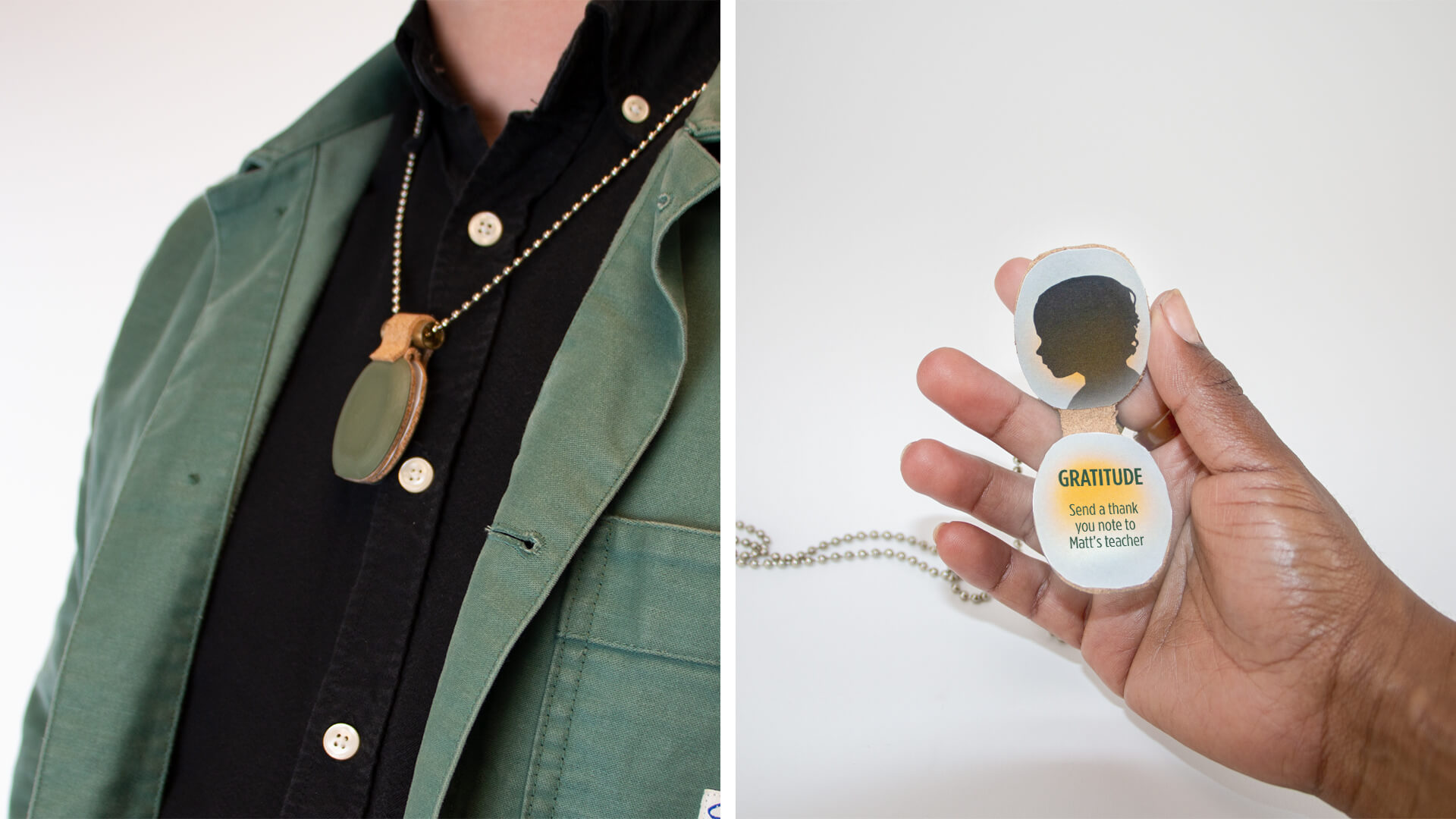
Inspiration: Character.ai, which is attracting a younger demographic with its offer of human-sounding virtual characters that offer social enrichment and companionship; Journal, Apple’s new iPhone app, which helps users reflect and practice gratitude; Hume AI’s Empathic Voice Interface (EVI), which interprets emotional expressions and generates empathic responses; and ETHIQLY, which is a startup IDEO helped create that aids teachers as they scale (and deepen) connections with their students with the help of generative AI.
Trust and safety
We are living in a data-driven world, where fear and skepticism of AI and fair data use prevails. For users to truly embrace AI, it needs to move toward building trust in the safety, accuracy, and intentions of these applications. Only then can all people use them with confidence.
Near vision: Governance projects that scale safety and compliance solutions for business and consumers. When users interact with a new AI tool, they can see the safety rating and a detailed report, as well as flags about AI-generated content.
Far vision: AI models are subject to a robust AI safety pipeline before being used by people. Once approved, consumers can feel confident that their data and accounts are secure and information provided is true.
Inspiration: Credo AI, which provides an intelligence layer that tracks, assesses, reports, and manages AI systems to ensure they are effective, compliant, and safe; IBM’s investment into R&D on human-centered AI (HCAI) solutions that amplify and augment human capabilities; and Anthropic, which provides visibility into its models and oversight into AI governance.
Multimodal interactions
We are already seeing significant advancements toward multimodal AI, with OpenAI’s GPT-4o and Gemini, but most AI technologies still rely on voice and text AI interactions, which limit the richness and convenience of inputs. We believe the ideal future AI technologies will offer a variety of less disruptive ways to interact with and seamlessly integrate into humans’ daily lives, through visual, tactile, and even emotional inputs that create an intuitive synergy between humans and AI.
Near vision: For work, build on existing AI Assistant services of call summary and call interpretation by providing live call outputs that include a mix of audio, visual, and text summaries.
Far vision: Wearable and ambient tech powered by AI assistants that are made aware of the user and their surroundings through sensory and multimodal input, allowing for short and seamless prompts that enrich their life on-the-go. Imagine being at a networking event and getting a reminder of a name or face you might have forgotten.
Inspiration: The AX Visio AI-powered binoculars, which blend analog viewing with AI for bird and wildlife identification; Fireflies, which joins your meetings to automatically take notes, capture, and transcribe voice conversations across various platforms; rabbit r1 and the Humane Ai pin, which aim for a more intuitive and app-free online experience; and MIT-developed technology that translates subvocalization signals to words.
Nurturing and wellbeing
Content generation and execution of simple tasks are just the beginning of what AI can help us with. Future AI solutions will need to be able to keep track of the never-ending list of to-dos involved in managing our current busy lifestyles—so we can have time to care for ourselves and each other.
Near vision: A sleep device company creates wake up and sleep routines customized to personal calendars, health needs, and family routines. Picture a smart speaker and light that calibrates to your bodily needs, supporting your sleep and wake up routines, to help you get a great night’s rest before and after any day.
Far vision: An AI assistant integrated in your household that supports smart devices and communication channels for the entire family. It can order groceries and craft recipes based on everyone’s preferences, schedule maintenance, book catering for birthdays—anything a busy household needs. When you need some off-AI time, all you have to do is unplug it.
Inspiration: Aura, a specialized machine-learning platform that can be paired with ordinary microphones and understand more than human voices—like dogs barking, babies crying, and doorbells; the “mui Board Gen 2,” a Kickstarter project for a smart home hub; and Assistant with Bard, which combines Assistant’s capabilities with generative AI to help you stay on top of what’s most important, right from your phone.
These provocations are driven by our research and signals we’re seeing in the world. For us, the next step to creating human-centered AI products is testing the value of lo-fi prototypes with real users, to find out which products or features are worth our development resources and which map to true needs. After all, we’ve seen companies in the space rush to build a product and get it out the door, before they even test it with potential users. You can make something that seems super futuristic only to find out that no one wants it, or that it can’t really do what you promised. Forty years in, we’re big believers in the power of human-centered design to help us craft audacious futures with technology that people actually want.
Intuitive. Social. Trusted. Nurturing. Multimodal.

Lindsey Turner
I’m passionate about building brands, products, and experiences that help organizations show up with meaning and momentum.
I help organizations cut through complexity by shaping how they show up, through brand strategy, identity, and storytelling.
Working at the intersection of brand and business, I bring an editorial eye and a bias toward making—turning ideas into tangible experiences that people can understand, trust, and believe in.
My work spans government, healthcare, financial services, media, and consumer goods, from launching Gen Z-focused ventures to building innovation labs and reimagining legacy brands. I relish moments of ambiguity and enjoy translating across teams, perspectives, and priorities to move ideas forward.
I started my career in editorial and digital design, shaping cross-platform experiences and identity systems in publishing and agency environments. That foundation still shapes how I work today: I’m detail-oriented, collaborative, and overreliant on the Oxford comma. I hold a BFA in Visual Communication from the School of the Art Institute of Chicago.

Rachel Young
My work helps organizations see who their products aren't working for—and build the will and the tools to do something about it
For 25 years, I've asked the same question: Who does this design exclude—and what are we going to do about it?
My work spans human-centered strategy, inclusive design, and qualitative research, with clients ranging from Microsoft, Google, and Verizon to the National Science Foundation, and San Francisco Unified School District.
Before IDEO, I taught elementary school in East Palo Alto and spent a decade doing design work with social service organizations—where I learned firsthand what it costs people when systems are built without them in mind.
I am currently writing User Error, a nonfiction book about digital access and the design decisions behind it. I live in Oakland, California.

Brian Pelsoh
I lead with craft, ensuring our work is creatively excellent: rooted in deep human insight and imagination, while also grounded in the realities of business and technology.
My expertise spans brand, communication, and product design across tech, education, the arts, and social impact.
I believe great work demands both high-level vision and obsessive attention to detail, and only happens through collaboration.
I bring an inclusive, hands-on approach and a deep understanding of business, which enables me to consistently deliver excellence while always asking why.
Before joining IDEO, I worked at the brand firms Pentagram and VSA Partners. I began my career as a designer, leading teams at the School of the Art Institute of Chicago and the Milwaukee Art Museum. I hold an MFA in graphic design from Maryland Institute College of Art and a BFA in communication design from the Milwaukee Institute of Art & Design, and have taught at some of the best design schools in the US.

Tony Wong
I am responsible for IDEO’s long-term success in China and working with clients to use design as a tool to enable growth.
I am responsible for IDEO’s long-term success in China and working with clients to use design as a tool to enable growth. Specifically, I have helped Chinese companies design holistic brand solutions through the development of their products, communication, services, and innovation teams, and I have helped multinationals expand their presence and influence in China.
I advise global leaders on developing China-led innovation and capabilities.
In over 15 years in IDEO Shanghai, I have worked on projects that use design to elevate the quality of the experience of healthcare products and services, streamline processes that increase productivity, create spaces and programs that promote and enable inclusive communities, and build next generation mobility solutions that are planet-positive.
Before joining IDEO, I worked at Philips Electronics and the Electrolux Group in Italy, the Netherlands, and Singapore on a number of breakthrough commercial products. I am a member of the Young President Organization in Shanghai.

How to use AI as an editor, not a writer
Ed White shares how he uses AI as an editor—not a writer—to sharpen storytelling, rehearse ideas, and preserve the productive friction that makes creative work better.
Ed White has a rule he's tested on his own writing: hold yourself as the writer, and let AI be your editor. Ed is a Senior Design Director at IDEO's London studio, where he co-leads the firm's AI portfolio across Europe. Before IDEO, he spent 12 years as a writer and editor at the Financial Times, Wired, and Contagious. So when he talks about when to use AI for storytelling and when not to, it comes from two decades of crafting his storytelling skills.
In this episode, Mina Seetharaman talks with Ed about two specific tools he uses to keep AI in an editor's seat: a "roasting agent" prompted to critique his drafts without any sugarcoating, and a simulated audience he rehearses pitches on before the real thing. They also get into what Ed is hearing from design leaders at Anthropic, Lovable, Shopify, and Google Creative Lab about how creative work is changing, and why he thinks the friction of writing something yourself is worth protecting rather than automating away.

Building a personal AI for the messiness of life: Sida Li
Becca Carroll talks with Cue co-founder Sida Li about designing a personal AI for the messiness of everyday life—not just work. They explore how Sida stays anchored to human needs while navigating fast-changing technology, product tradeoffs, business-model experimentation, and the realities of building an AI company today.
Most AI products today are built for work—a space with clear problems and established systems. One founder noticed a gap: personal life is messier, harder to systematize, and mostly left behind by the AI boom. So she built Cue, a personal AI that lives inside iMessage and group chats, to go where the other tools haven't.
In this episode, Becca Carroll, IDEO's Chief Strategy Officer, talks with Sida Li, co-founder and CEO of Shared Context Lab, about staying anchored to a human need while the technology around her keeps changing shape, why she treats her business model with the same rigor she'd bring to a product, and what it feels like to build a company at this particular, disorienting moment in AI.
The conversation also gets into how Sida makes design decisions: the language Cue uses to describe itself, the tradeoffs behind building inside iMessage instead of a new app, and a real story about a business idea that didn’t pan out.
This is the second in a two-part series profiling founders from IDEO's Startups-in-Residence program. The first conversation is with Johannes Seemann, founder of Sooner, on designing GenAI for the emotional side of money.

Designing GenAI for the emotional side of money: Johannes Seemann
Designing financial tools around the feelings that shape money decisions.
Most personal financial tools are built to run the numbers and optimize towards a budget. While that works for some, most people experience money as a lived relationship that does not neatly fit into a spreadsheet. Johannes Seemann and Becca Carroll discuss why money is emotional before it is mathematical, and what a human-centered approach to building a generative AI financial product looks like in practice.

The curious leader's edge in uncertainty: Scott Shigeoka
How genuine curiosity helps leaders navigate uncertainty with greater confidence.
Mina Seetharaman talks with Scott Shigeoka, author of Seek and Head of Curiosity Cultivation at the Eames Institute, about what distinguishes genuinely curious leadership from performative curiosity, how power dynamics shape curiosity, and why practicing curiosity can restore energy rather than drain it.
Looks like you might be in search of something very specific?
Or reset the filters above and try another angle.
Here’s some random inspiration

Podcasts about creative leadership

Articles about the power of prototyping









































.webp)