
.svg)


Peripheral vision
A consumer electronics giant becomes a climate-era leader.
IDEO’s partnership with Logitech is a case study in bringing together the power of imagination and the rigor of business.
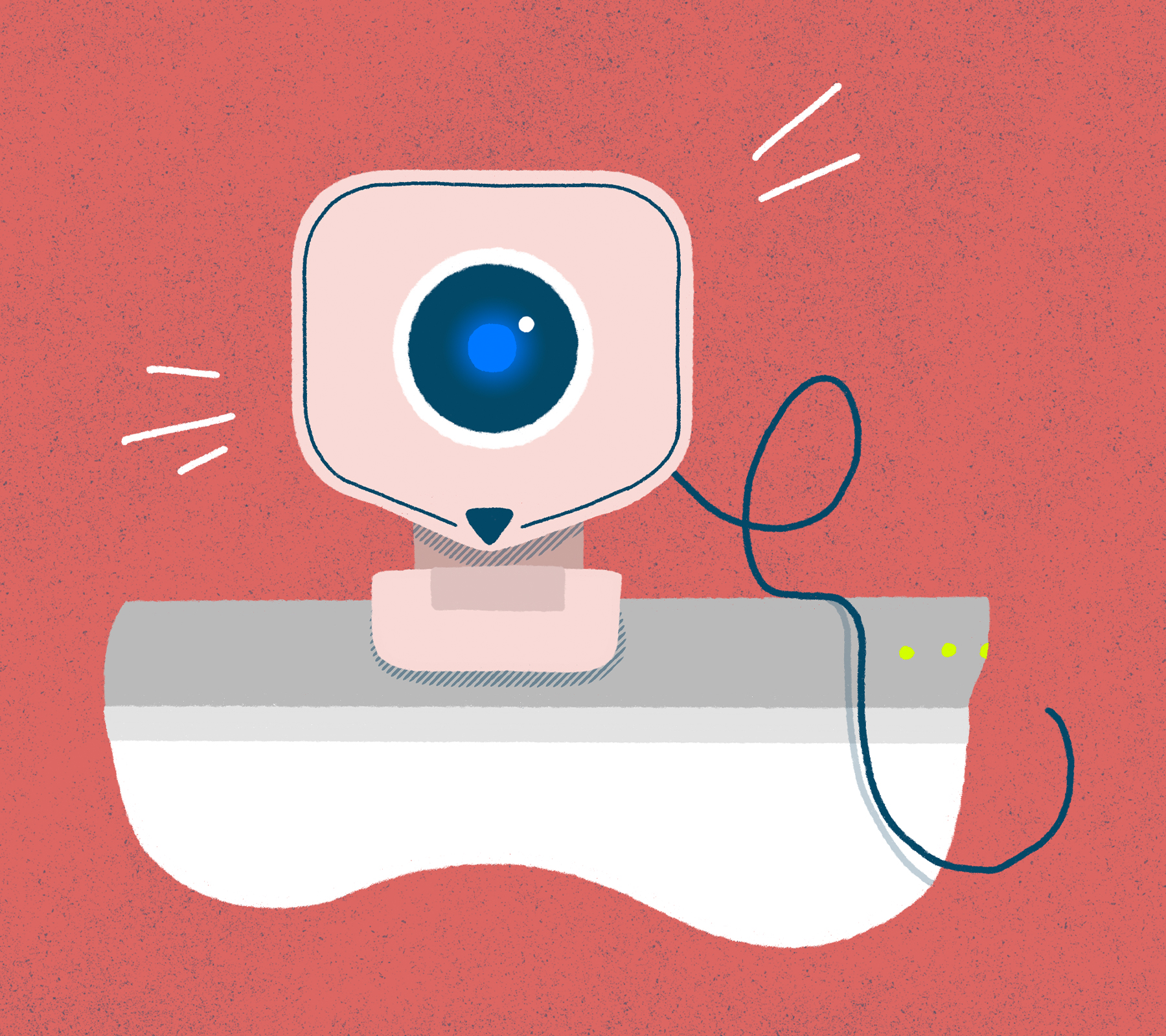
As much as we love to lead with creativity, it’s difficult to develop a business plan off ideas alone. So when Logitech asked the IDEO team to investigate a broad array of possible futures and report back, we brought our findings to life by inventing a board game. Instead of a dry presentation on circular solutions, our designers created a story about a mouse that turned into a webcam.
That imagination mattered. It fueled an exploration into expertise we collected from researching with people already living in futures destined to expand. And our rigor helped us hold more possibilities, and identify intersectionalities. Combined, they redefined what it means for ideas to be viable in business; they focused us on long-term sustainability; and they pushed us past immediate technical feasibility to ask if new ideas would be feasible for entire systems.
Our partnership with Logitech revealed that imaginative dreaming and business rigor aren’t opposing forces, but rather complementary tools in opening up new directions into a future demanding bold decisions.
As of 2019, e-waste was the fastest-growing waste stream globally, and only 20% of the 48.5+ million tonnes is disposed of properly.
Global emissions must be cut in half by 2030 to avert the worst impacts of climate change.
By 2030
Logitech has committed to becoming climate positive and removing more carbon than they create
The whole package
A global fashion brand pairs sustainability and growth.
Fast fashion keeps getting faster. But if the industry is to meet its climate commitments, its use of plastics has to slow down.
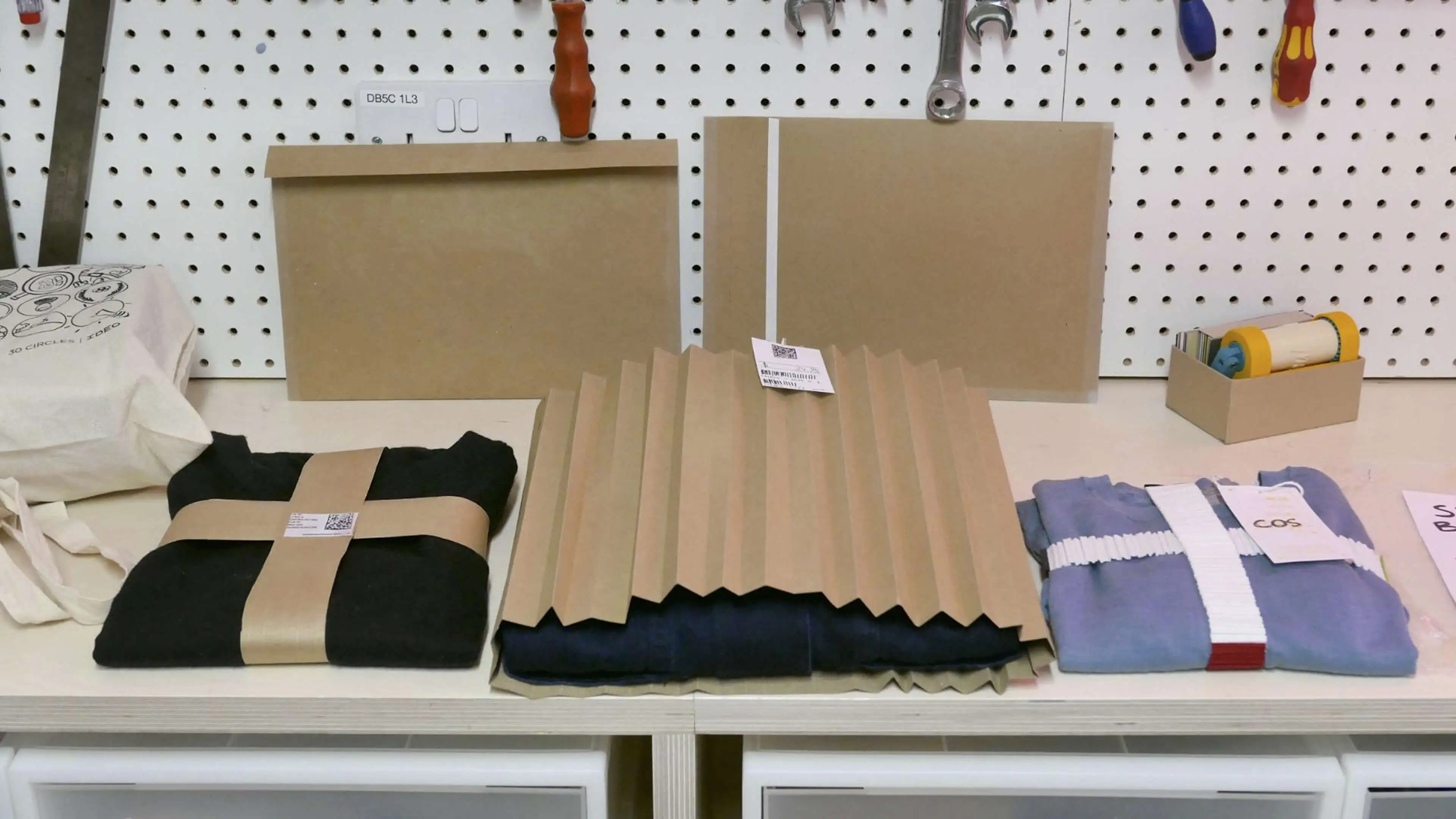
H&M chief executive Helena Helmersson set ambitious sustainability goals when she stepped into her role. She wanted to reduce the fashion giant’s impact on the environment and enable meaningful growth. But change is tough for any company, let alone one with eight brands operating across 74 markets. Together IDEO and the H&M Group created new plastic-free packaging, rallying around a more sustainable packaging solution that’s easily customizable.
By applying a design-led approach that went far beyond hiring a sustainability consultant, the H&M Group managed to reduce its use of plastic. But it didn’t stop there. A small team called Design Studio took what it learned and grew into an established strategic capability that pioneers new ways of working in the organization, tackling complex challenges in circularity, inclusion, supply chain, and customer experience. Sustainability isn’t a passing trend for H&M. It’s moving fashion forward.
Packaging accounts for 26% of plastics produced globally every year.
Fashion e-commerce is estimated to grow by 10% annually through 2024, requiring even more packaging.
100M
plastic-free packages shipped in 2022
2,000 tons
of plastic eliminated from H&M operations
The everywhere chair
In Japan, a mother works to build an inclusive child seat that closes the gap between children with and without disabilities.
For children with physical disabilities and their families, mobility is freedom. But in Japan, there are barriers to that freedom of movement.
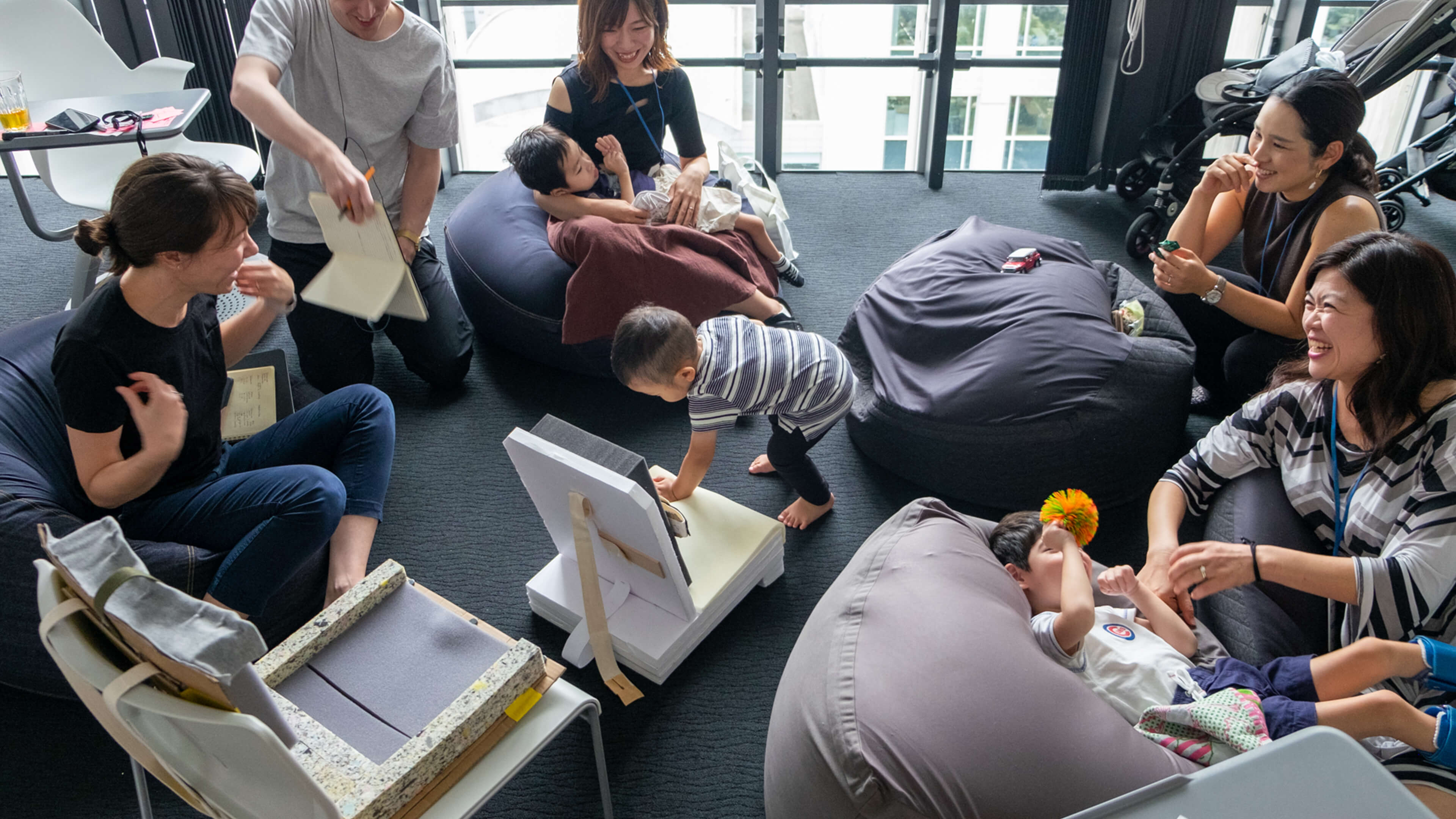
In raising a child with cerebral palsy, Yuri Matsumoto found that her son was separated from other kids during everyday activities. In Japan, children’s products are divided into two categories: those for children with disabilities and those for children without. Matsumoto aspired to close this gap with a product that would allow children of all abilities to use the same chair and be included in the same activities. To realize her idea, Matsumoto needed a strategic design company to refine the chair design, create a compelling visual identity, and arrive at a product road map to help set the business up for long-term success.
The result: a breakthrough product and supporting business that provides access for all kids, both for at-home activities like studying and eating, and also for family outings to restaurants, to the park, and to play with friends. Around the world, there are people like Matsumoto who see the need for better products in a very personal way. IDEO’s role is to help them realize their vision for a more inclusive future.
The Japanese health ministry categorizes 9.6 million people as disabled.
In Japan, children with disabilities are largely excluded from mainstream classrooms. Government subsidized support chairs are designed for posture and stability. Their bulk and rigidity make venturing out with them challenging.
Japanese children have fewer opportunities to learn about what it’s like to live with a disability than in the US.
Launched
officially in April 2022
5
restaurants and cafés in Tokyo are currently piloting the chair

Serving families first
One organization transforms health care, education, finance, retail, and itself to meet the expectations of the people it serves.
There can be no growth for business if peoples’ basic needs aren’t met.
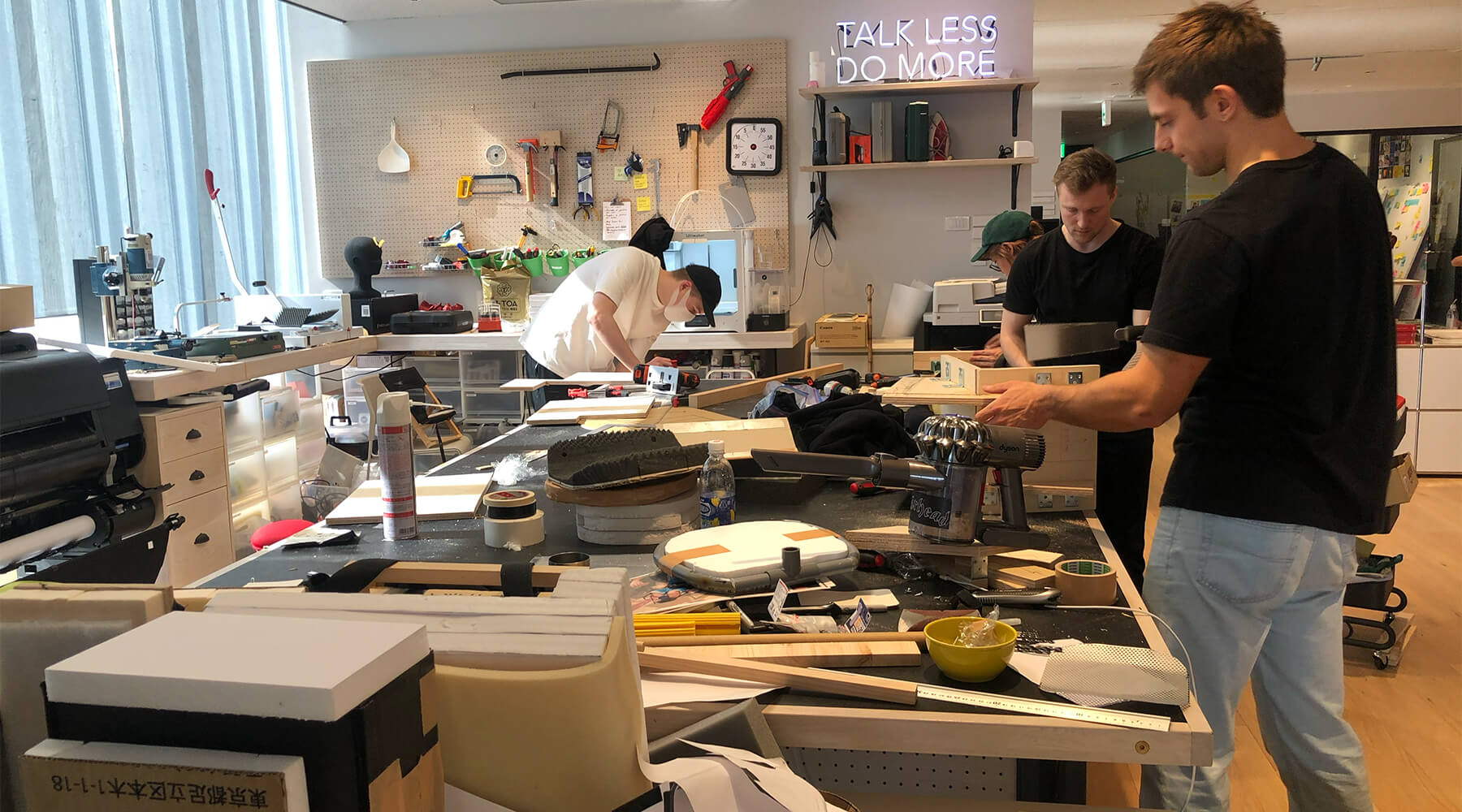
Carlos Rodríguez-Pastor, CEO of Intercorp, came to IDEO with an audacious goal: to address the most fundamental needs of his country’s people and grow his business at the same time. He’d been introduced to IDEO while attending business school in the U.S. and explained that he waited until he had a challenge that felt big enough to knock on our door. Together we built a high-quality school system that would cost just $100 per month—affordable for the middle class. That project convinced Rodríguez-Pastor and his colleagues of the power of human-centered design. Our blended teams launched an innovation hub to introduce new ways of working with the conglomerate’s 90,000 employees. And as we collaborated with Intercorp’s businesses in finance, retail, health care, and education, we learned more about how to serve the everyday needs of Peruvian families. Somewhere along the way, the ultimate design project became the organization itself.
And while Rodríguez-Pastor’s company has grown dramatically, he’s not one to rest on laurels. Instead, the company is becoming more ambitious: upskilling the country’s workforce through an online platform, and fulfilling its climate strategy by investing in Peru’s green economy. (The coastal nation is the world’s third most vulnerable to the effects of climate change.) While the pandemic dealt a blow to Peru’s economy, Intercorp remains steadfast in its commitment to supporting businesses that help the middle class thrive.
Peru’s PISA score of educational quality has grown by 10% in the past decade but still ranks in the bottom 10 worldwide.
In 2020, approximately 68% of the total employed population was in some form of informal employment—jobs that offered no protection and in which workers paid no taxes. Although that percentage decreased over the previous decade, Peru has one of the highest levels of informal employment in Latin America.
55,000
students enrolled across 68 locations in Peru, Mexico, and Colombia
2.5x
increase in revenue from $2.9 billion in 2011 to $8.5 billion in revenue in 2021

Borrow Principles of Theater for Better Design
It starts with suspension of disbelief.
The next time you enter a theater, take special note of the black curtains hanging onstage. I can almost promise they’ll be there. Short ones above the stage (called “trim”) obscure the overhead lights, while long ones on the side (called “legs”) hide the backstage performers. Black curtains are a set designer’s secret weapon.
Theater strives for suspension of disbelief. It’s the reason we cry when Romeo and Juliet kill themselves… even though we know the actors aren’t really dead. (They’re not even Romeo and Juliet, for that matter.) It allows an audience to imagine the world of the play far beyond the elements we see in front of us. In our heads, the vivid and colorful streets of Verona extend well behind the black curtains that frame the stage. And all the set designer had to do to create that illusion was hang some fabric.
Designers need to stop making slide decks and start hanging black curtains. As projects become more complex, it becomes impossible to represent an entire concept through words, images, and prototypes alone. Truly innovative designs can’t exist in our present world—they change it into something new. Taking cues from theater is one way to help people suspend their disbelief and bring them inside these new ideas. Here are three ways in:
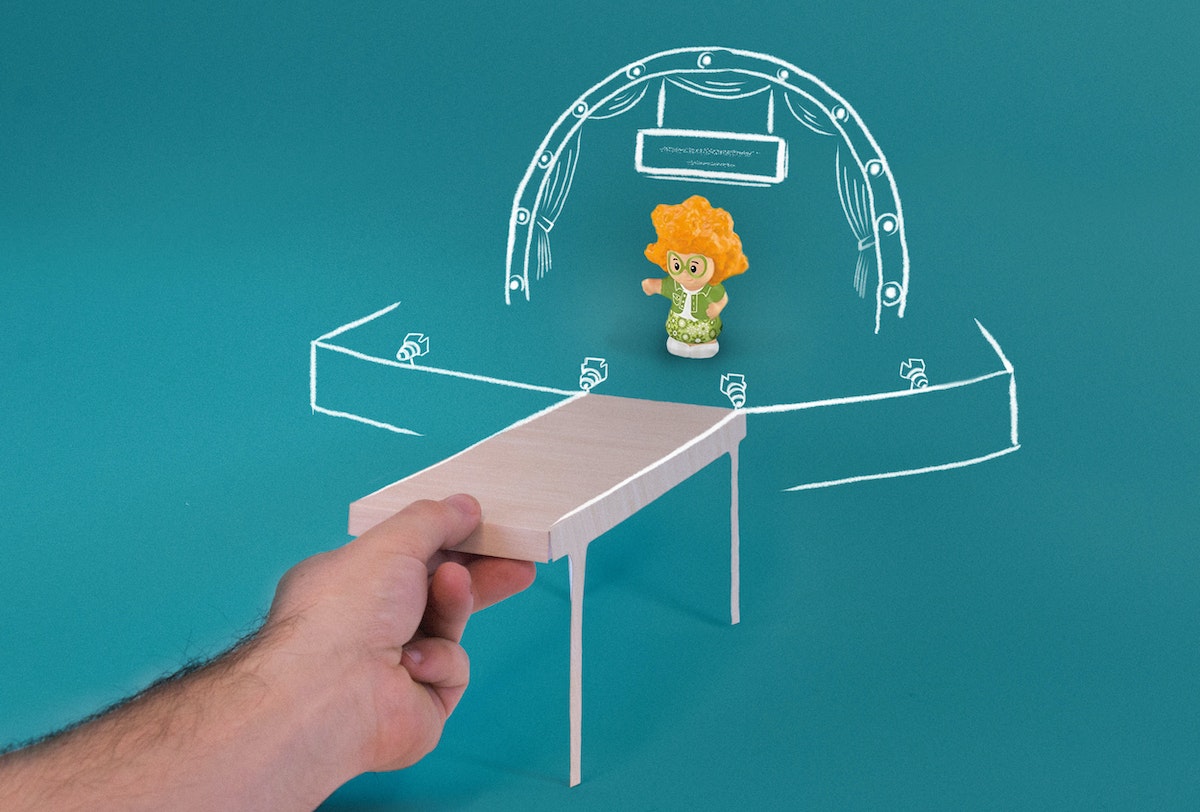
Embrace Set Design
“Space creates behavior” is a mantra used by interior designers. But there’s a step missing in that equation: Space creates new mindsets, and new mindsets create new behaviors.
When we go to the theater, the curtain rises and we get our first glimpse into the world of the play. It’s the moment when an audience is asked to leave the reality of the theater (velvet seats, half-finished wine, smartphones, etc.) and enter an alternative reality crafted by the show.
Boardrooms are not a good place for achieving that effect. If we want people to engage with unprecedented ideas, we need to transport them out of their current reality. It’s absurd to assume that people will think differently when they are sitting in the same chair, at the same table, staring at the same drop-down projection screen they see everyday.
Even simple changes to a physical environment can drastically shift the way an audience (in this case, clients, investors, etc.) will approach a meeting.
Consider:
Lighting—a darkened room creates a sense of possibility and wonder.
The unexpected reveal—bring out a hidden element part-way through the meeting.
Sound—background noise or music helps guide people to an emotional state before, during, and after the show.

Play the Role of Director
Another way to shift a viewer’s mindset is to go at it directly. Direct them, as if they were an actor, and give them a new role to play and a new way to think.
At IDEO, mid-project meetings are often the most crucial point of contact with our clients. In those meetings, they must assess the opportunities we’ve uncovered through research, and decide which ones to pursue. If the audience defaults to their standard decision-making metrics, engineers will choose the most technically-feasible option, while the CFO might choose the most cost-effective path forward. Innovative ideas are difficult to judge in this way, so they can easily be left behind.
But asking these same people to make decisions from a different perspective can open up the room to new possibilities, and create excitement around the more difficult to imagine, yet more innovative ideas.
Here, you accomplish two things. First, by having them embody a new viewpoint, they are forced to drop their default mode of interaction and pick up a new way of thinking. Second, because the exercise feels inherently contrived, it offers participants a mental safety net. It’s not real—it’s make believe. When people let their guard down, that’s often when the real insights emerge.
Think about:
Directed actions—as soon as people are required to do something, they leave the passive audience state.
Physical movement—if people are required to stand up and move around, they automatically engage in a more meaningful way.
Assigning new roles—if people are required to observe and respond as someone other than themselves, they will come at the experience from a position of empathy.
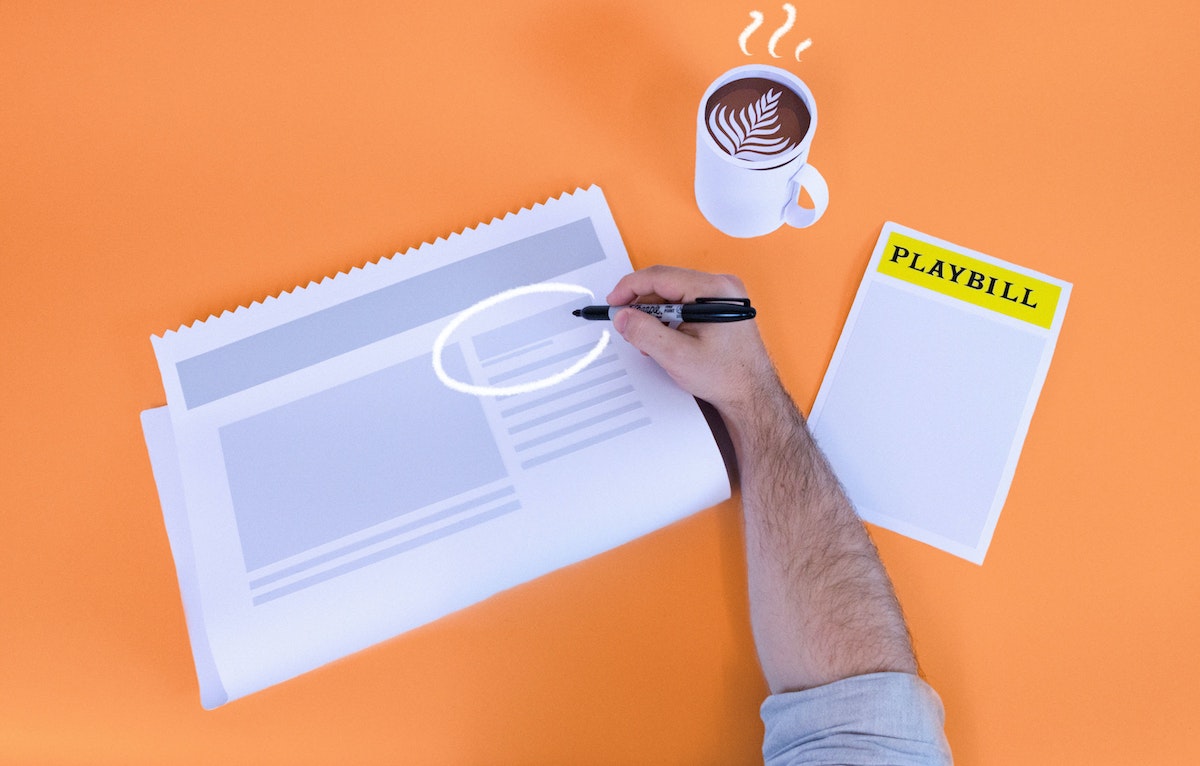
Be a Reviewer
Anytime you engage with an unprecedented experience, the take-aways are not always clear. In the world of theater, new audience members might walk out of a show thinking, “I loved it!” or “I was bored!” or “I was bawling, but I’m not totally sure why.” A good theatrical experience should elicit some type of emotional reaction from the audience, but people may not have the necessary vocabulary to analyze it. Good reviewers can help translate the experience for the rest of the world and direct attention to what is important or meaningful.
In design, crafting the takeaway message becomes a crucial exercise. It’s important to tell people how ideas and concepts can translate back to their real-world experience. If the most brilliant concepts can’t be understood beyond the context of a highly theatricalized presentation, there’s no way it will ever have impact in the world.
Consider:
A summary—what's the essence of what they just experienced?
Analysis—what's the deeper meaning or purpose this connects to?
Drafting a plan—what actions should take place as a result of the experience?
Innovation is a tricky business. As designers, we are tasked with creating unprecedented experiences that help shift the world into the future, yet we are stuck discussing them in the present. Creating innovative work is not enough. We must create innovative ways of sharing that work to help audiences suspend their disbelief and imagine the future that might exist.
Illustrations by Megan Crabtree.
Two things are required for design success: the right idea, and the ability to convince people of its value. In recent years, designers have become more interested in storytelling to make the case for their solutions. I'd like to take that method a step further, by embracing theater.

What’s in my Moleskine: Felicia Chiao
A peek into industrial designer Felicia Chiao's sketchbook
As a little kid, I always loved drawing, but I didn’t actually get serious about art until high school. At first, I was just doodling on my homework and in my notebooks in my spare time, but by my senior year I thought it would be cool to set a deadline, and complete a sketchbook front to back in one year. It was a good outlet for my stressed and angsty teenage self. The first one took a while—definitely more than a year—but after completing it, I was hooked.
In a way, these notebooks act as a diary for me—I remember where I was mentally and emotionally for each drawing. Over time, my work has become a lot less about how angry I was that day, and more about colors, patterns, and shapes.

I like to draw simple lines and shapes, and for each composition, I typically just wing it. I’m sure there’s a meaning to whatever I’m drawing, but when I’m working on it, I’m actually not thinking too hard about it. It’s all stream of consciousness. I draw to de-stress and because it’s fun.
I ended up creating this bald, baby-like thing to represent a person or a feeling I was having. A lot of people have told me they can relate to my work, and I think it’s because of that character. It has no real defining features other than looking vaguely human, so a lot of people can put themselves in its shoes. I often get asked if it’s a boy or a girl or this or that, but it really doesn’t matter what it is.
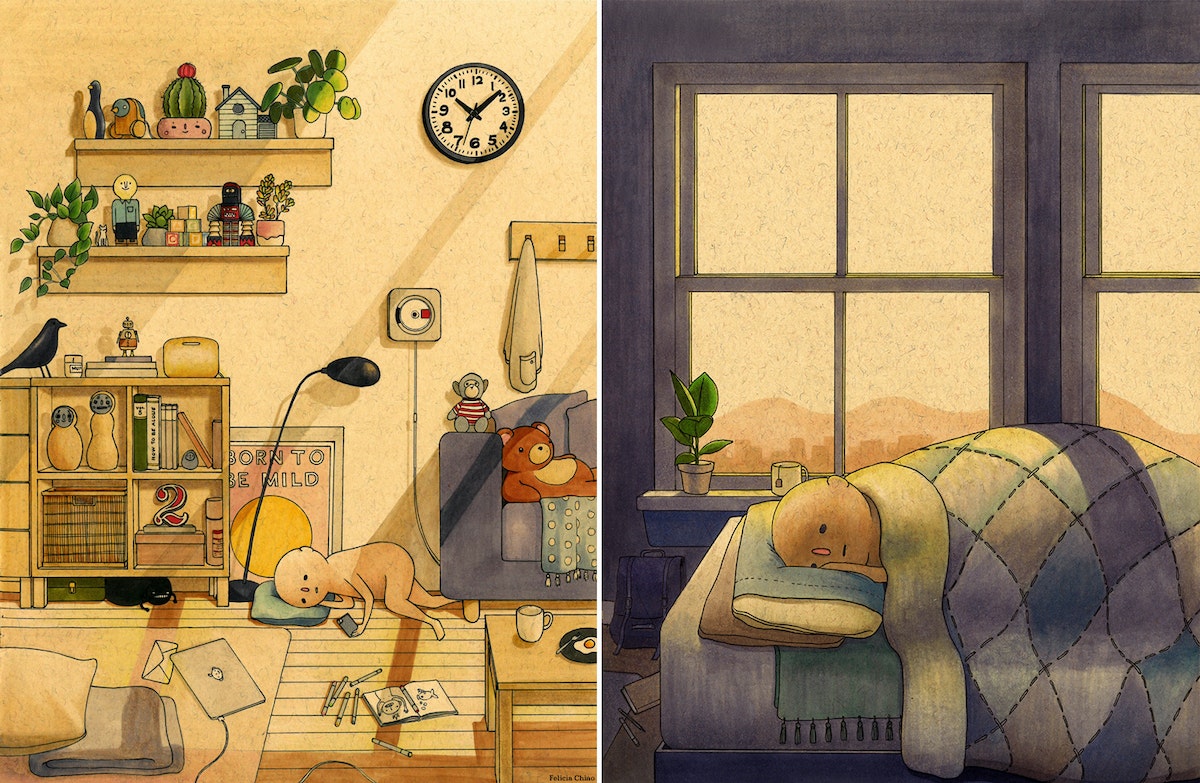
As for the others, the only character that has a specific role is the little angry-looking black blob I draw from time to time. Originally, it showed up inside other character’s bodies as a stomach. I had a lot of stress-related stomach issues, and whenever I was feeling particularly bad, I’d draw it into a piece. I’m not great at telling people I don’t feel well, or that something is wrong, so my sketchbook is a good outlet. Recently I’ve just been hiding it around in parts of drawings for no particular reason.
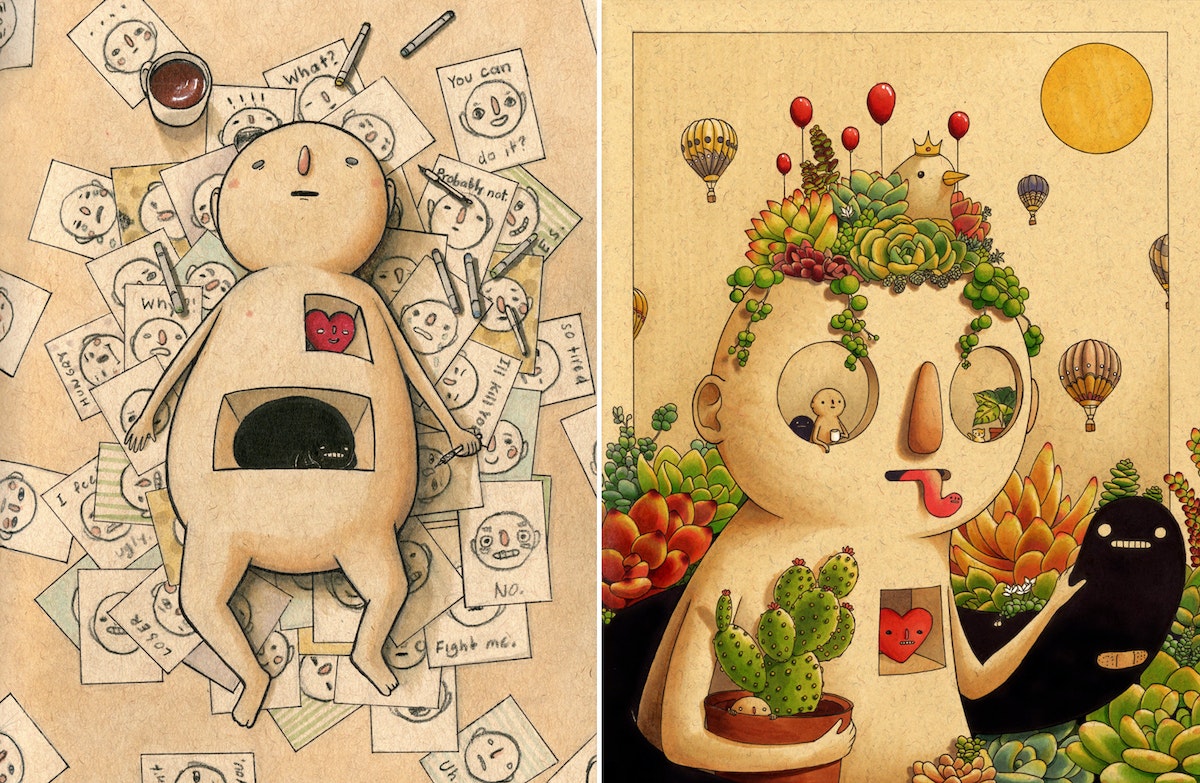
People also ask me about my fish—they seem to be one of my more popular elements. I don’t actually have a particular fondness for fish, I just really love drawing patterns and their scales are the perfect platform.
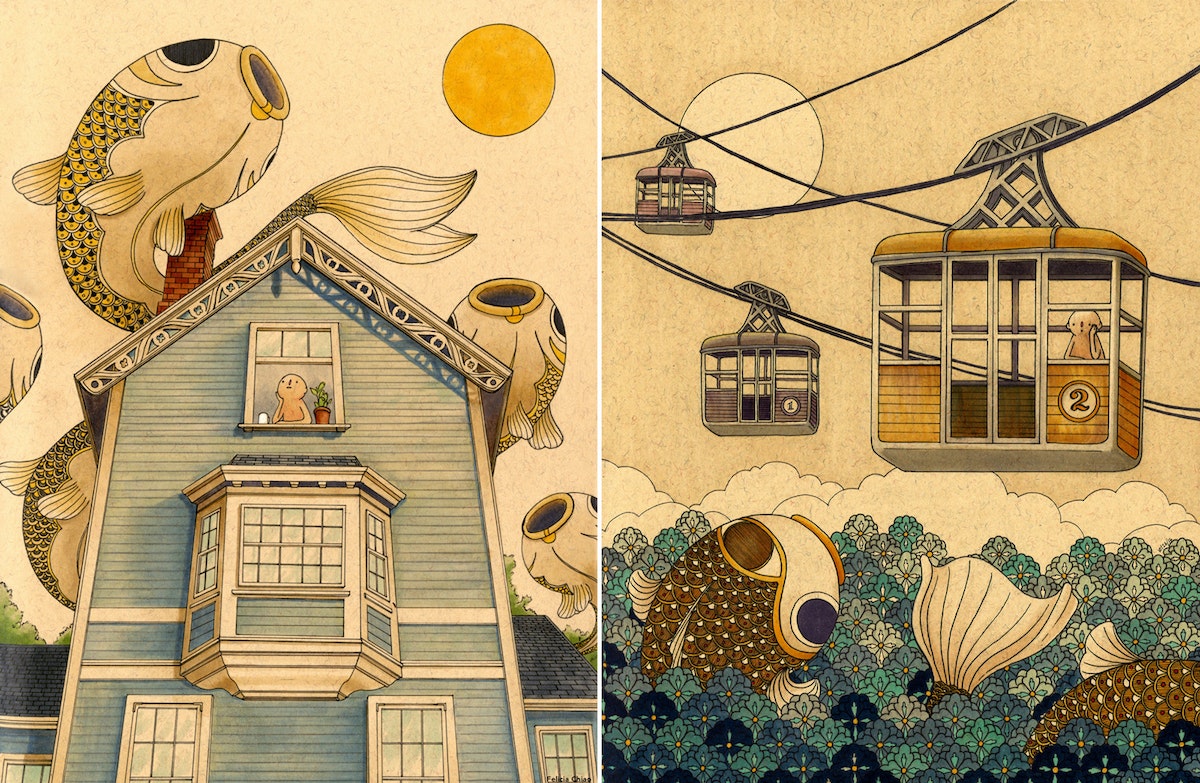
I started posting each drawing to Tumblr just so I could see the development of my style. Now, it has more than 26,000 followers, which is crazy. Even though it’s super flattering to get such a huge response, I still have no interest pursuing illustration professionally. I draw because it’s fun.
Over the years that I’ve been doing this, I’ve learned that sometimes, you just have to stop talking and start doing. Actually forcing myself to set goals and do the work even when I didn’t feel motivated has been intensely rewarding. Not every drawing I make has to be good, and not every sketchbook is going to be finished within a year—I actually missed my 1/1/17 finish deadline. But my current sketchbook is some of the best work I’ve ever made, and I’m very proud of it—even though I’m only halfway finished.
From the moment we noticed industrial designer Felicia Chiao sketching her latest masterpiece between meetings, we (and our Instagram fans) were hypnotized by her bold colors, intricate patterns, and subtle textures. In this installment of What’s in my Moleskine, we invite you to dive into the dreamlike world Felicia has built in her sketchbooks—we guarantee you'll be hypnotized, too.
Designer Pranks
Designers love a good side project, and April Fool's pranks are no exception
1. How hydrated are you?
I pulled this April Fool's prank on the Palo Alto office a few years back. People remarked that it was surprisingly useful and actually led to behavior change. — Albert Leung, IDEO Palo Alto
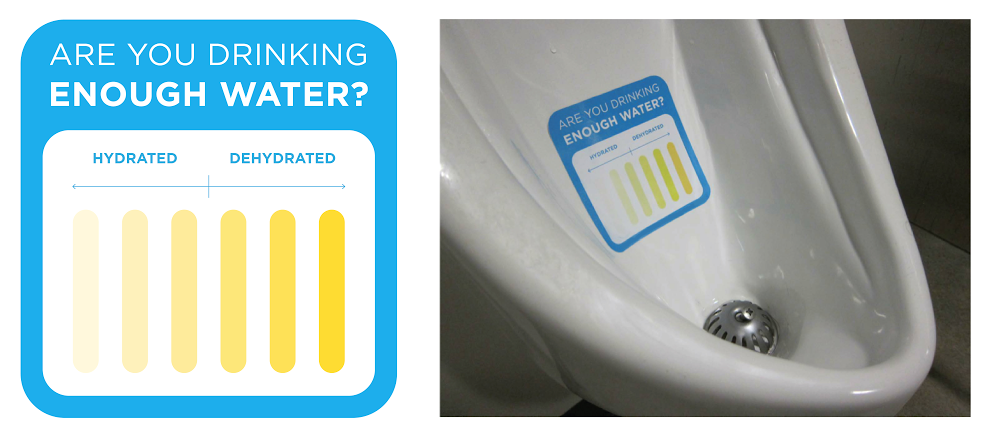
Tech and design firms love pranking and poking fun at themselves—some of our favorites from years past include Google's self-driving bicycle and Mark Zuckerberg's collaboration with H&M, including a "collection pack" of seven gray t-shirts and one pair of jeans.
2. Homecoming surprise
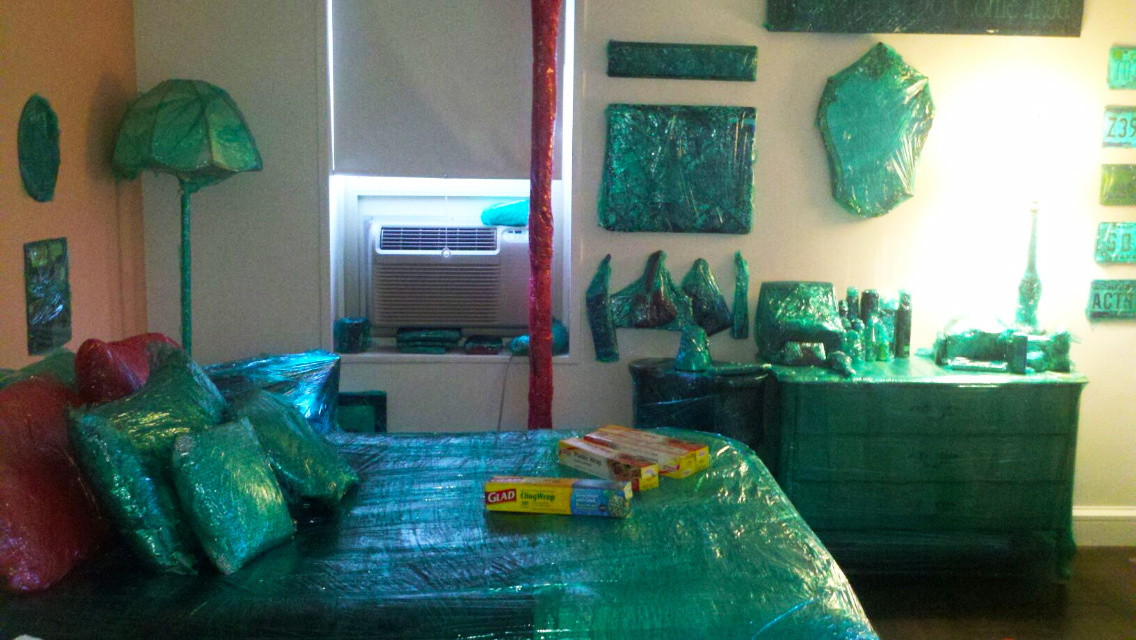
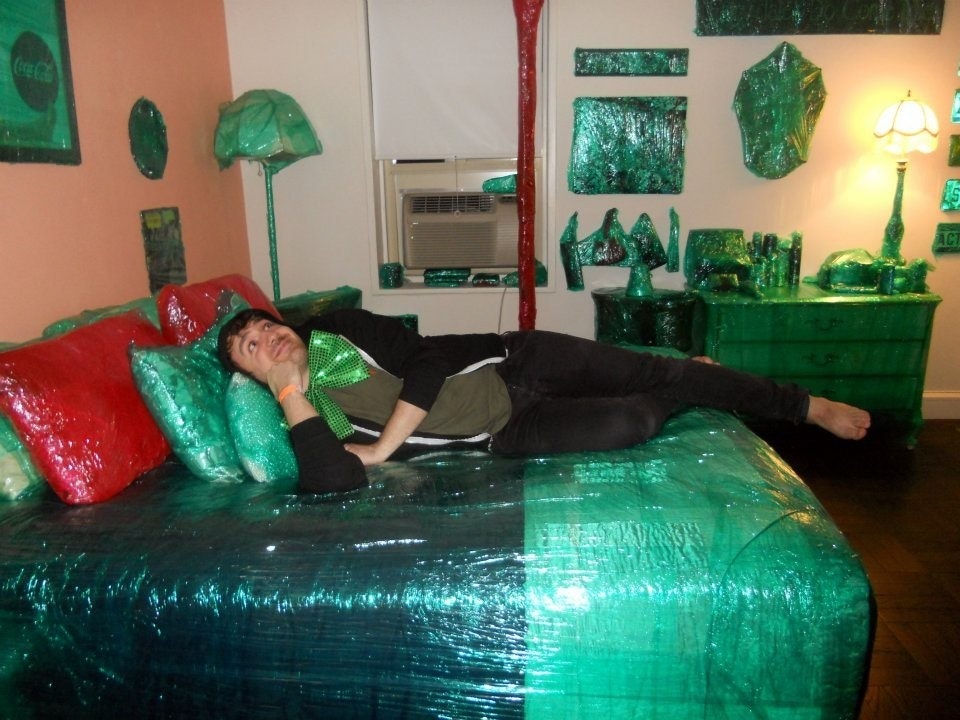
Back in 2012, I decided it would be fun to "redecorate my roommate's bedroom while she was away for work. It took 18 hours and 76 rolls of Saran Wrap to pull off, but every aspect of her life was covered in bright plastic wrap when she returned. I may have gone a bit over board: Each shoe was wrapped individually, then as a pair; I wrapped each piece of makeup, then wrapped them all together in a group; each thing on her wall was wrapped and rehung; every single book and article of clothing in her closet was accounted for. I honestly think—and I say this in a non-sarcastic way—that pulling this off was one of the things I'm most proud of in my life... which may say something about me. —Adam Moulter, IDEO Cambridge
3. Fluffy biscuits
When I was a kid, my parents made homemade buttery biscuits for us on April Fool's Day. The catch was they embedded cotton balls in the center. When we bit in, we got quite a mouthful!
—Sarah Buchanan, IDEO Palo Alto
4. Puppy love
April Fool's Day is a well-observed holiday in my household. Last year, I put this ad up on Craigslist in three different cities with my father's and two brothers' phone numbers. They received upwards of 100 phone calls and texts (each!) within the hour. —Em Havens, IDEO San Francisco

5. Not-so-current events
My mom was a prank legend in our house. April Fool's Day was a standard spectacle. She had a simple guiding principle for her pranks: Prank them early in the morning before they realize what day it is. One year, my dad, who routinely read the morning paper before work, was sitting with his coffee flipping through the day's events. My mom could hardly contain herself, but Dad didn't quite catch on. When he got to the business section, he suddenly said, "That's odd, I thought the markets went down yesterday and this says they went up." Mom burst out laughing—she had saved last year's April 1st paper for an entire year!
—Chris Waugh, IDEO Alum
Designers love a good side project—Halloween costumes, fancy proposals, Rube Goldberg machines—and April Fool's pranks are no exception. Check out some of the over-the-top pranks IDEO designers have pulled on their friends, family, and coworkers—and steal an idea for yourself!
Designer’s Playlist #6
A few things IDEO Palo Alto's Farzad Azimpour can't stop thinking about

Name: Farzad Azimpour, MD
Location: Palo Alto
Role at IDEO: Director of Health (biodesigner and cardiologist). I develop new medical technologies with a specialized team in the Design for Health group. We cover everything from biometrics and robotic surgical devices to future healthcare delivery systems, and anything else that hinges on human interaction and decision-making.
Joined IDEO: 2015
Instagram: @farzad.azimpour
Titillating Fact: I do a lot of “mode-switching,” flipping between totally different roles and mindsets. It's my way of cognitive interval training. One day I’m in the emergency room performing cardiopulmonary resuscitation (CPR) on someone with a drug overdose-induced cardiac arrest, and the next day I’m with an IDEO team interviewing someone struggling with addiction—in their home as the police bang on the door.
1. Hot Thoughts
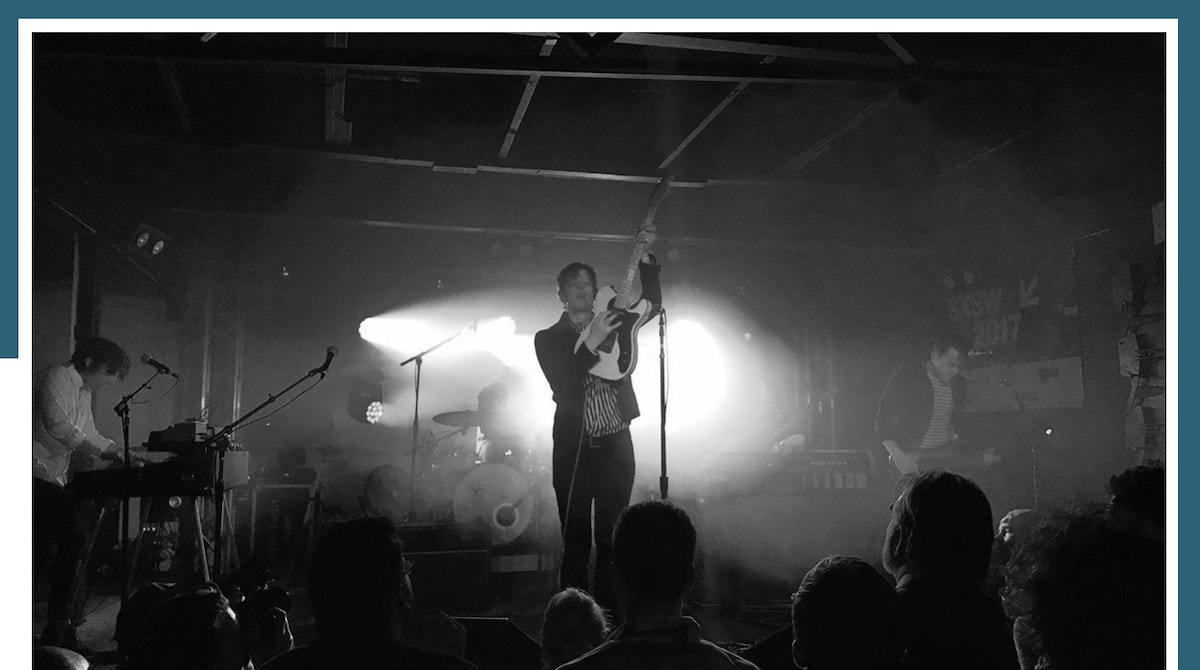
Austin-based indie-rock band Spoon, aka “rock stars for the thinking person,” is releasing a new album called Hot Thoughts, previewed at an intimate set of performances this week at SXSW. I’ve been listening to them since medical school and find some of my best work comes from a late night tapping my pen and feet to their sonic genius.
2. The Current
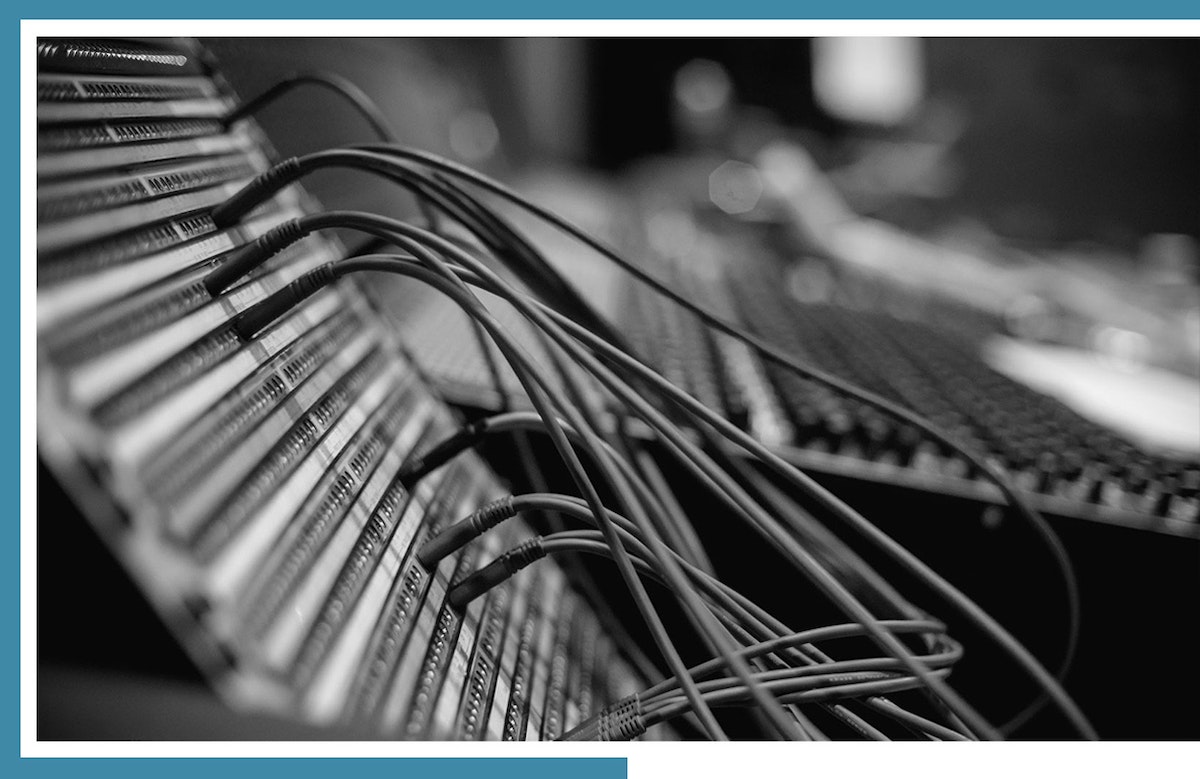
Listener-supported Minnesota Public Radio (MPR) produces one of the coolest, most progressive radio services you’ll find anywhere, and they stream it live. This is where I discover new music to get me through the coldest winter months on the road.

3. The American Association for the Advancement of Science (AAAS)
This is one of my favorite resources for the wide landscape of scientific research. It’s where you’ll learn of new micro mechanisms to explain macro systems. Their peer-reviewed specialty journals span everything from cell-signaling and translational medicine to robotics, environment, and space. Out-nerd anyone at the next party.
In this series, we ask IDEO designers to share the stuff they're digging right now—tools, books, music, sites, people, places—so you, too, can drink from the fount of inspiration bubbling up here. This week's guest star: Farzad Azimpour, MD.

Lindsey Turner
I’m passionate about building brands, products, and experiences that help organizations show up with meaning and momentum.
I help organizations cut through complexity by shaping how they show up, through brand strategy, identity, and storytelling.
Working at the intersection of brand and business, I bring an editorial eye and a bias toward making—turning ideas into tangible experiences that people can understand, trust, and believe in.
My work spans government, healthcare, financial services, media, and consumer goods, from launching Gen Z-focused ventures to building innovation labs and reimagining legacy brands. I relish moments of ambiguity and enjoy translating across teams, perspectives, and priorities to move ideas forward.
I started my career in editorial and digital design, shaping cross-platform experiences and identity systems in publishing and agency environments. That foundation still shapes how I work today: I’m detail-oriented, collaborative, and overreliant on the Oxford comma. I hold a BFA in Visual Communication from the School of the Art Institute of Chicago.

Rachel Young
My work helps organizations see who their products aren't working for—and build the will and the tools to do something about it
For 25 years, I've asked the same question: Who does this design exclude—and what are we going to do about it?
My work spans human-centered strategy, inclusive design, and qualitative research, with clients ranging from Microsoft, Google, and Verizon to the National Science Foundation, and San Francisco Unified School District.
Before IDEO, I taught elementary school in East Palo Alto and spent a decade doing design work with social service organizations—where I learned firsthand what it costs people when systems are built without them in mind.
I am currently writing User Error, a nonfiction book about digital access and the design decisions behind it. I live in Oakland, California.

Brian Pelsoh
I lead with craft, ensuring our work is creatively excellent: rooted in deep human insight and imagination, while also grounded in the realities of business and technology.
My expertise spans brand, communication, and product design across tech, education, the arts, and social impact.
I believe great work demands both high-level vision and obsessive attention to detail, and only happens through collaboration.
I bring an inclusive, hands-on approach and a deep understanding of business, which enables me to consistently deliver excellence while always asking why.
Before joining IDEO, I worked at the brand firms Pentagram and VSA Partners. I began my career as a designer, leading teams at the School of the Art Institute of Chicago and the Milwaukee Art Museum. I hold an MFA in graphic design from Maryland Institute College of Art and a BFA in communication design from the Milwaukee Institute of Art & Design, and have taught at some of the best design schools in the US.

Tony Wong
I am responsible for IDEO’s long-term success in China and working with clients to use design as a tool to enable growth.
I am responsible for IDEO’s long-term success in China and working with clients to use design as a tool to enable growth. Specifically, I have helped Chinese companies design holistic brand solutions through the development of their products, communication, services, and innovation teams, and I have helped multinationals expand their presence and influence in China.
I advise global leaders on developing China-led innovation and capabilities.
In over 15 years in IDEO Shanghai, I have worked on projects that use design to elevate the quality of the experience of healthcare products and services, streamline processes that increase productivity, create spaces and programs that promote and enable inclusive communities, and build next generation mobility solutions that are planet-positive.
Before joining IDEO, I worked at Philips Electronics and the Electrolux Group in Italy, the Netherlands, and Singapore on a number of breakthrough commercial products. I am a member of the Young President Organization in Shanghai.

How to use AI as an editor, not a writer
Ed White shares how he uses AI as an editor—not a writer—to sharpen storytelling, rehearse ideas, and preserve the productive friction that makes creative work better.
Ed White has a rule he's tested on his own writing: hold yourself as the writer, and let AI be your editor. Ed is a Senior Design Director at IDEO's London studio, where he co-leads the firm's AI portfolio across Europe. Before IDEO, he spent 12 years as a writer and editor at the Financial Times, Wired, and Contagious. So when he talks about when to use AI for storytelling and when not to, it comes from two decades of crafting his storytelling skills.
In this episode, Mina Seetharaman talks with Ed about two specific tools he uses to keep AI in an editor's seat: a "roasting agent" prompted to critique his drafts without any sugarcoating, and a simulated audience he rehearses pitches on before the real thing. They also get into what Ed is hearing from design leaders at Anthropic, Lovable, Shopify, and Google Creative Lab about how creative work is changing, and why he thinks the friction of writing something yourself is worth protecting rather than automating away.

Building a personal AI for the messiness of life: Sida Li
Becca Carroll talks with Cue co-founder Sida Li about designing a personal AI for the messiness of everyday life—not just work. They explore how Sida stays anchored to human needs while navigating fast-changing technology, product tradeoffs, business-model experimentation, and the realities of building an AI company today.
Most AI products today are built for work—a space with clear problems and established systems. One founder noticed a gap: personal life is messier, harder to systematize, and mostly left behind by the AI boom. So she built Cue, a personal AI that lives inside iMessage and group chats, to go where the other tools haven't.
In this episode, Becca Carroll, IDEO's Chief Strategy Officer, talks with Sida Li, co-founder and CEO of Shared Context Lab, about staying anchored to a human need while the technology around her keeps changing shape, why she treats her business model with the same rigor she'd bring to a product, and what it feels like to build a company at this particular, disorienting moment in AI.
The conversation also gets into how Sida makes design decisions: the language Cue uses to describe itself, the tradeoffs behind building inside iMessage instead of a new app, and a real story about a business idea that didn’t pan out.
This is the second in a two-part series profiling founders from IDEO's Startups-in-Residence program. The first conversation is with Johannes Seemann, founder of Sooner, on designing GenAI for the emotional side of money.

Designing GenAI for the emotional side of money: Johannes Seemann
Designing financial tools around the feelings that shape money decisions.
Most personal financial tools are built to run the numbers and optimize towards a budget. While that works for some, most people experience money as a lived relationship that does not neatly fit into a spreadsheet. Johannes Seemann and Becca Carroll discuss why money is emotional before it is mathematical, and what a human-centered approach to building a generative AI financial product looks like in practice.

The curious leader's edge in uncertainty: Scott Shigeoka
How genuine curiosity helps leaders navigate uncertainty with greater confidence.
Mina Seetharaman talks with Scott Shigeoka, author of Seek and Head of Curiosity Cultivation at the Eames Institute, about what distinguishes genuinely curious leadership from performative curiosity, how power dynamics shape curiosity, and why practicing curiosity can restore energy rather than drain it.
Looks like you might be in search of something very specific?
Or reset the filters above and try another angle.
Here’s some random inspiration

Podcasts about creative leadership

Articles about the power of prototyping






























.webp)