.svg)



Reintroducing The Lawrence Hall of Science
A lively new brand reenergizes a STEM learning institution.
Named after Ernest O. Lawrence, UC Berkeley’s first Nobel Laureate, The Lawrence Hall of Science’s wide-ranging products, services, and tools developed organically over half a century. To begin to make sense of the breadth and depth of its offerings, IDEO asked leadership and staff to surface the myriad activities, audiences, and relationships with external partners, enabling the group to visualize—and make sense of—the totality of The Lawrence brand.
During in-depth research with parents and kids, educators, and experts, IDEO discovered that each of these audiences had distinct mindsets. Parents and kids engaged with The Lawrence to explore, have fun, and dive deeper into a specific topic. Educators utilized it for professional learning opportunities and to discover new, exciting classroom tools. While experts, including UC Berkeley faculty, STEM educators across the US, and funders, viewed the center as a resource for best-in-class STEM education research. The mindsets highlighted The Lawrence’s unique capabilities, but the complexity also created some opportunity areas, including ways to use storytelling to create emotional resonance around The Lawrence’s core values and how to design a unified narrative to connect the dots across audiences and offers.
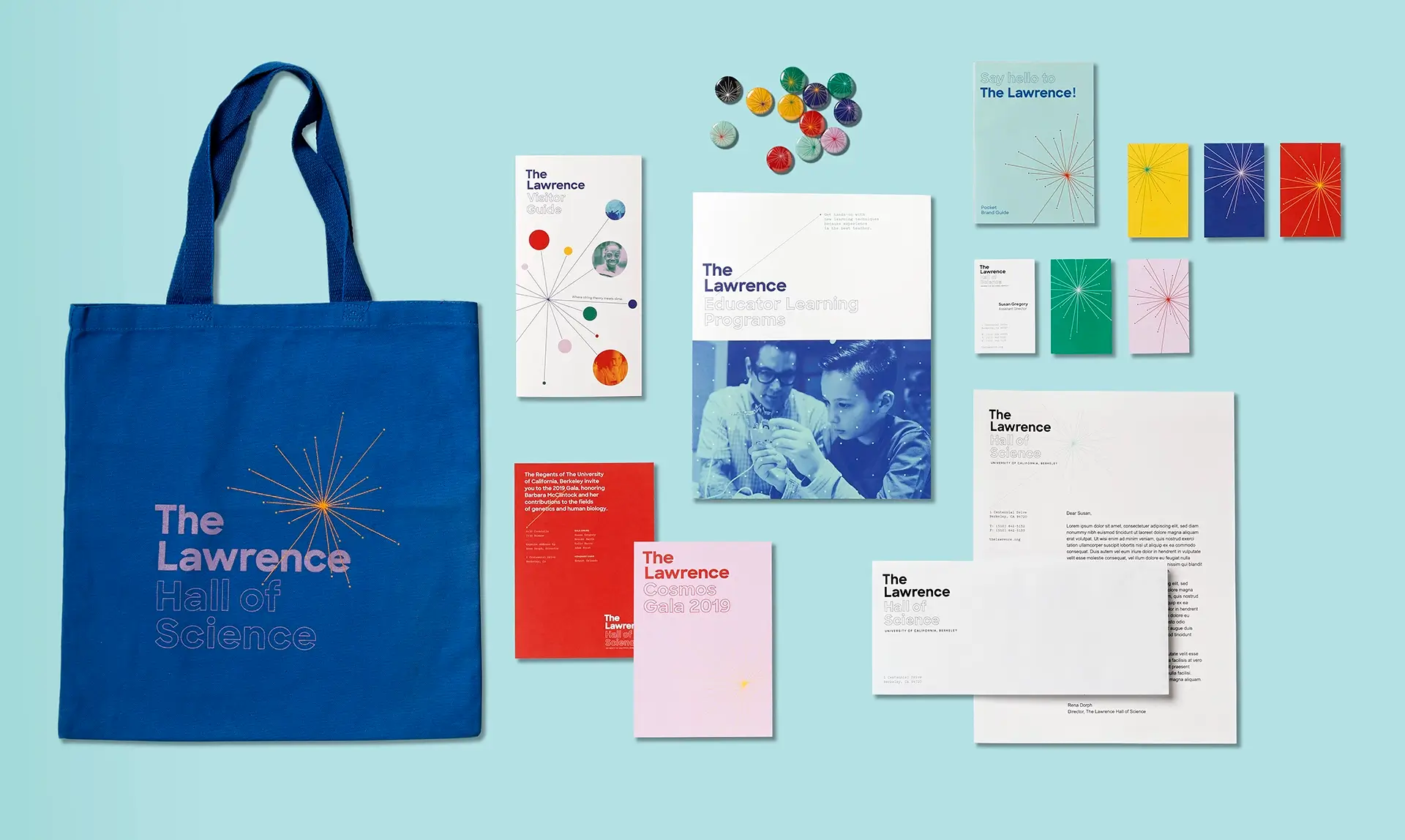
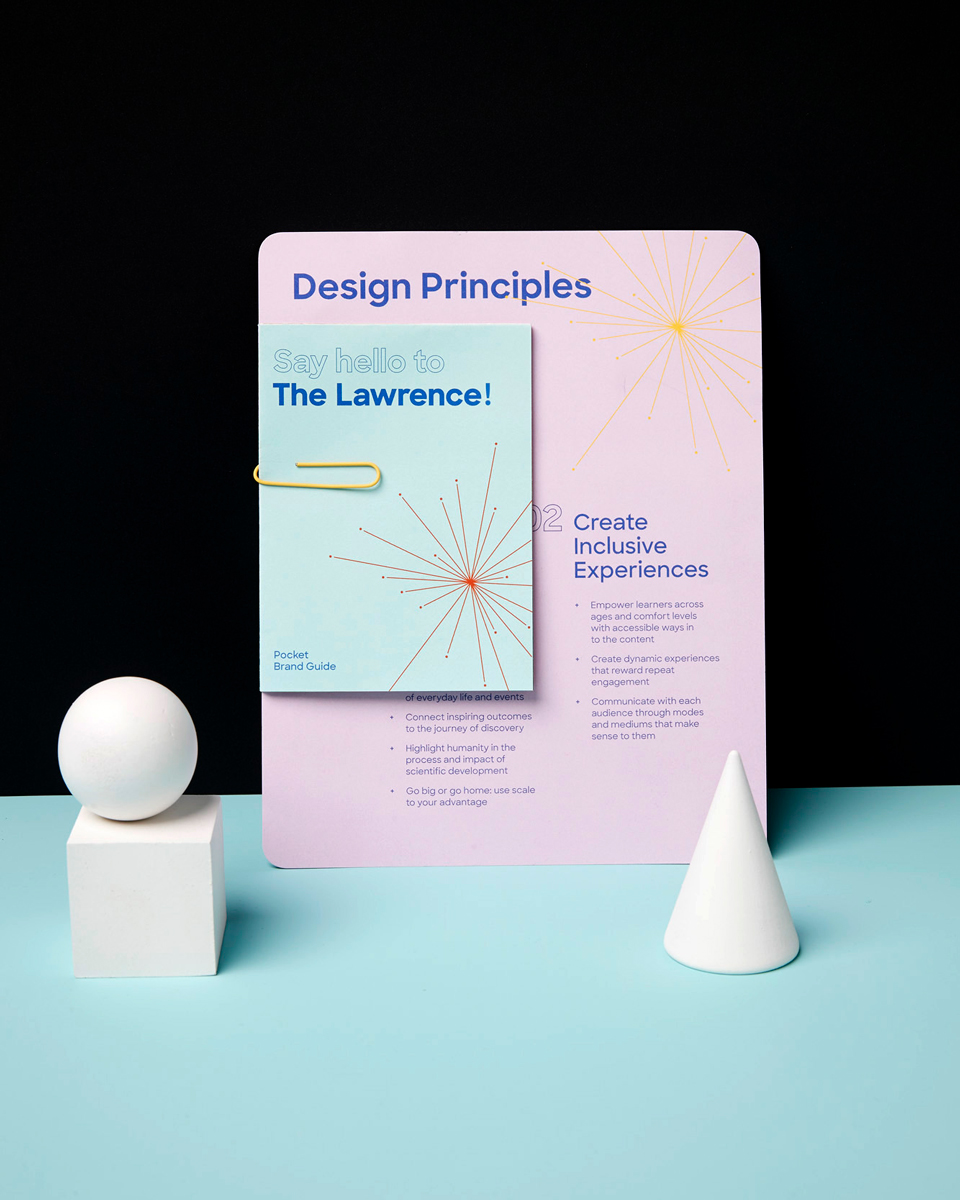
Building on its strengths as an institution and the identified opportunity areas, IDEO created a modern, vibrant, and flexible brand that strategically and visually unites all of The Lawrence’s offerings, working across digital and physical media. Grounded by a grid system, the updated brand identity is simultaneously rigorous and fun, featuring a bright color palette and signature retro-cool super-nova mark. Different offerings are bundled together based on different audience needs, preventing confusion and easing navigation. Even the name of the science museum, The Lawrence Hall of Science, was updated to a more contemporary and approachable, The Lawrence, inspired by The Met.
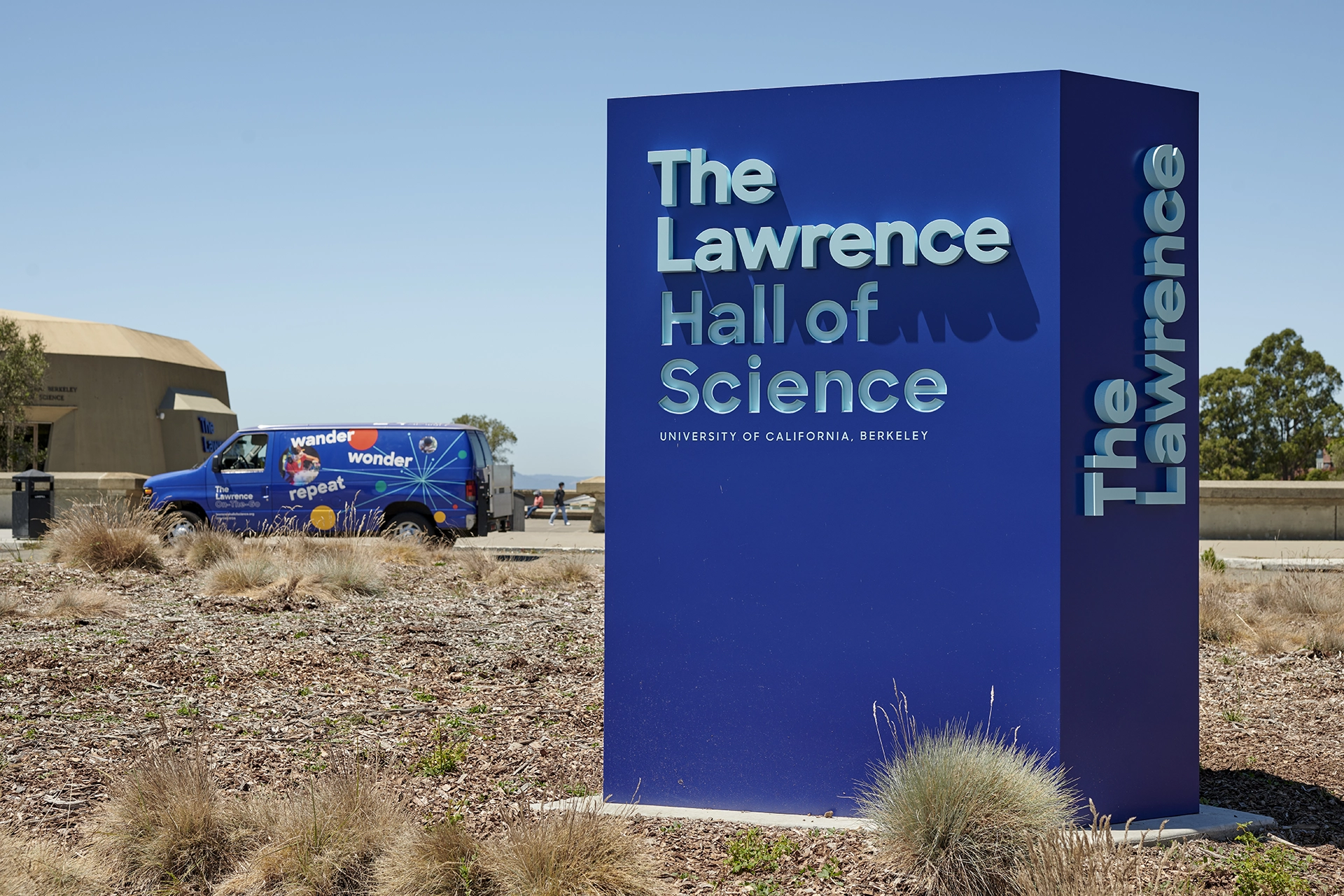
The Lawrence unveiled its new brand with much fanfare in late 2018 as part of its year-long 50th anniversary celebrations. Visitors can see the updated identity across all public-facing elements, including The Lawrence’s website, curriculum and educator materials, letterhead, collateral, and exhibition and wayfinding signage. The redesigned brand has been credited with bolstering the popularity of the science center among families and schools and causing ticket sales to return to—and exceed—pre-pandemic levels. Internally, the rebranding effort has helped generate excitement and energy across departments, helping solidify a collective future strategy and vision for its next 50 years.

The Lawrence Hall of Science’s diverse offerings had grown extensively over the decades, creating a confusing and disjointed experience for its various audiences. On the eve of its 50th anniversary, Lawrence leadership sought a brand refresh to better connect with its target audiences and differentiate itself in the STEM education ecosystem.
Over $6M in new funding
raised to transform and modernize The Lawrence, thanks to IDEO's rebranding effort
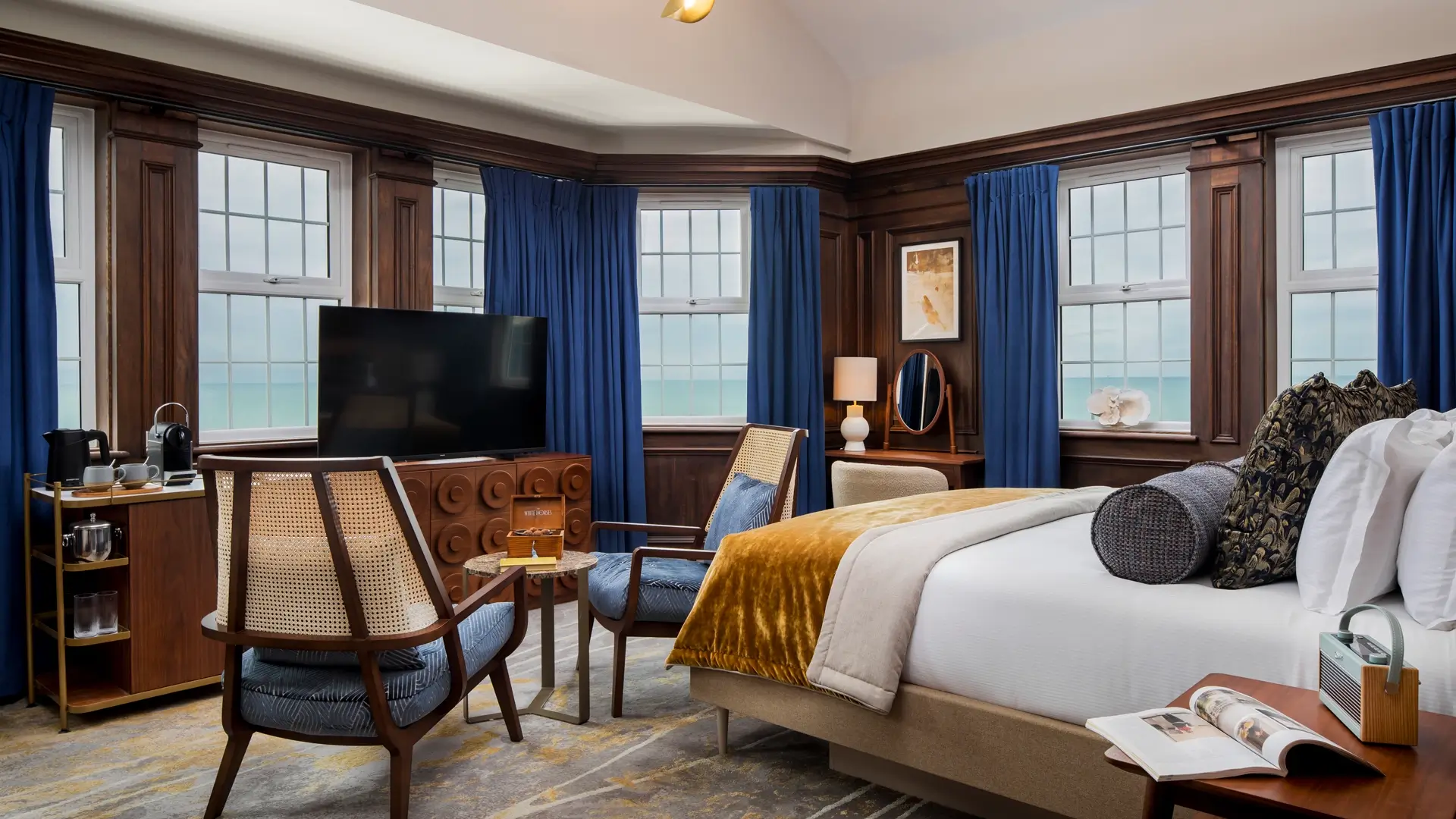
Reinventing classic British pubs and inns
Greene King’s upscale Everly Hotels Collection combines modern comfort with local impact.
When Greene King approached IDEO in early 2022, it was (and still is) one of the UK’s leading hospitality brands, with over 2,600 pubs, restaurants, and hotels. At that time, consumers in the UK and other parts of the world were beginning to rediscover the joys of travel after years of pandemic lockdowns. Greene King’s newly formed Venture Hotels Team wanted to understand how guest expectations had shifted during Covid-19 and how a new customer-centric hotel brand and signature service experience might meet—or exceed—their expectations.
To get inspired, the IDEO team interviewed a range of travelers of different ages and backgrounds, met with hospitality and luxury experts, and conducted immersion visits, including visiting high-end hotels. The research revealed modern travelers want unique hotel experiences that cater to their curiosity, support local communities, and are environmentally sustainable. Luxury, which once meant “exclusive,” was now about enabling one-of-a-kind cultural experiences. Today’s travelers value inclusivity, accessibility, and well-being; they want to feel welcome, do things at their own pace and have thoughtfully curated options to choose from. They also expect hospitality practices to be ethical and sustainable, contributing to the welfare of local communities and the planet.
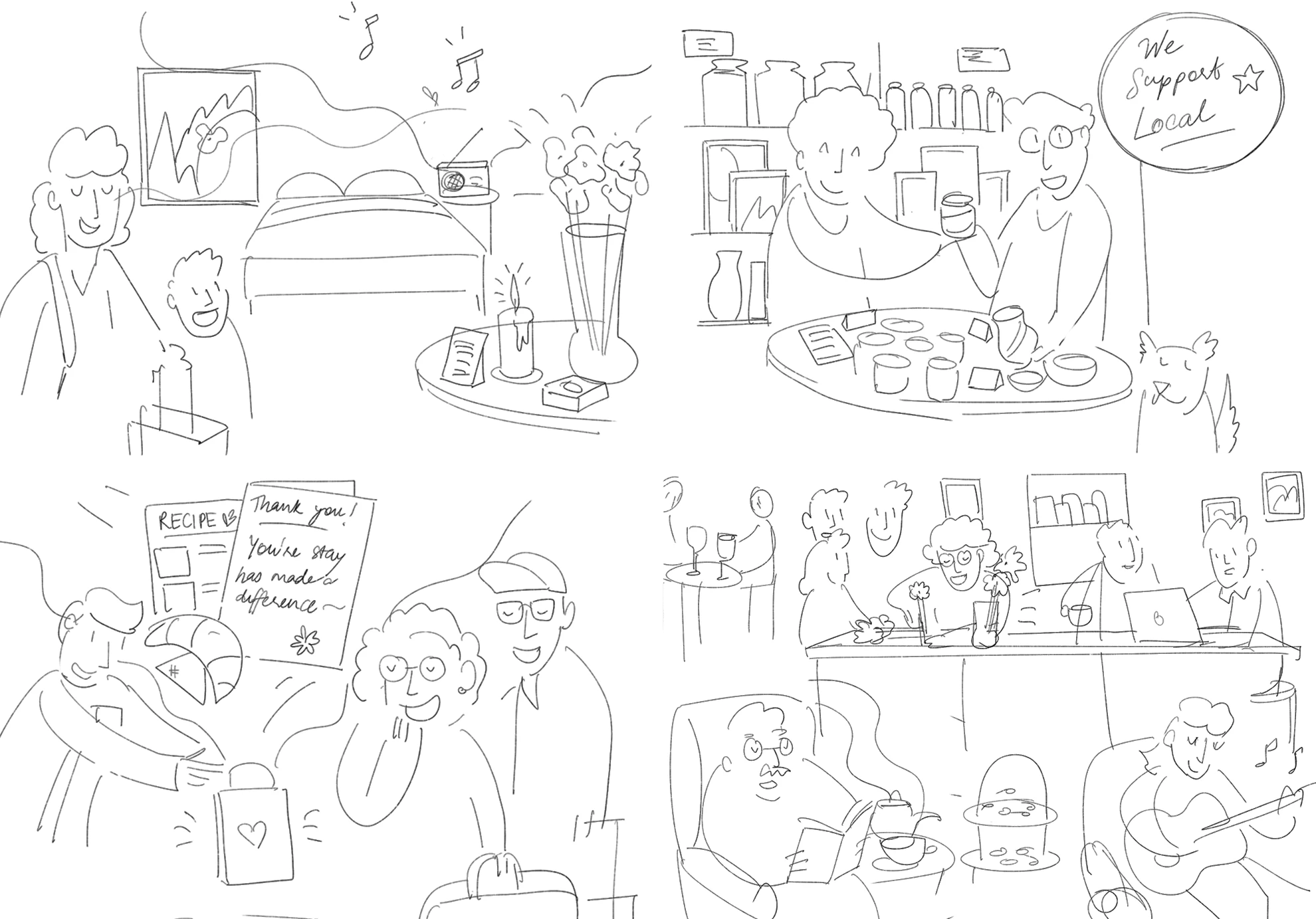
Building off this research, IDEO crafted a new entry proposition for Greene King’s new Everly Hotels Collection called “The Discover Collection,” which leverages the best parts of a classic British pub and inn—bespoke historic locations full of character, culture, and stories—while offering guests a modern experience from pre-arrival to departure, all grounded in supporting the communities they are in.
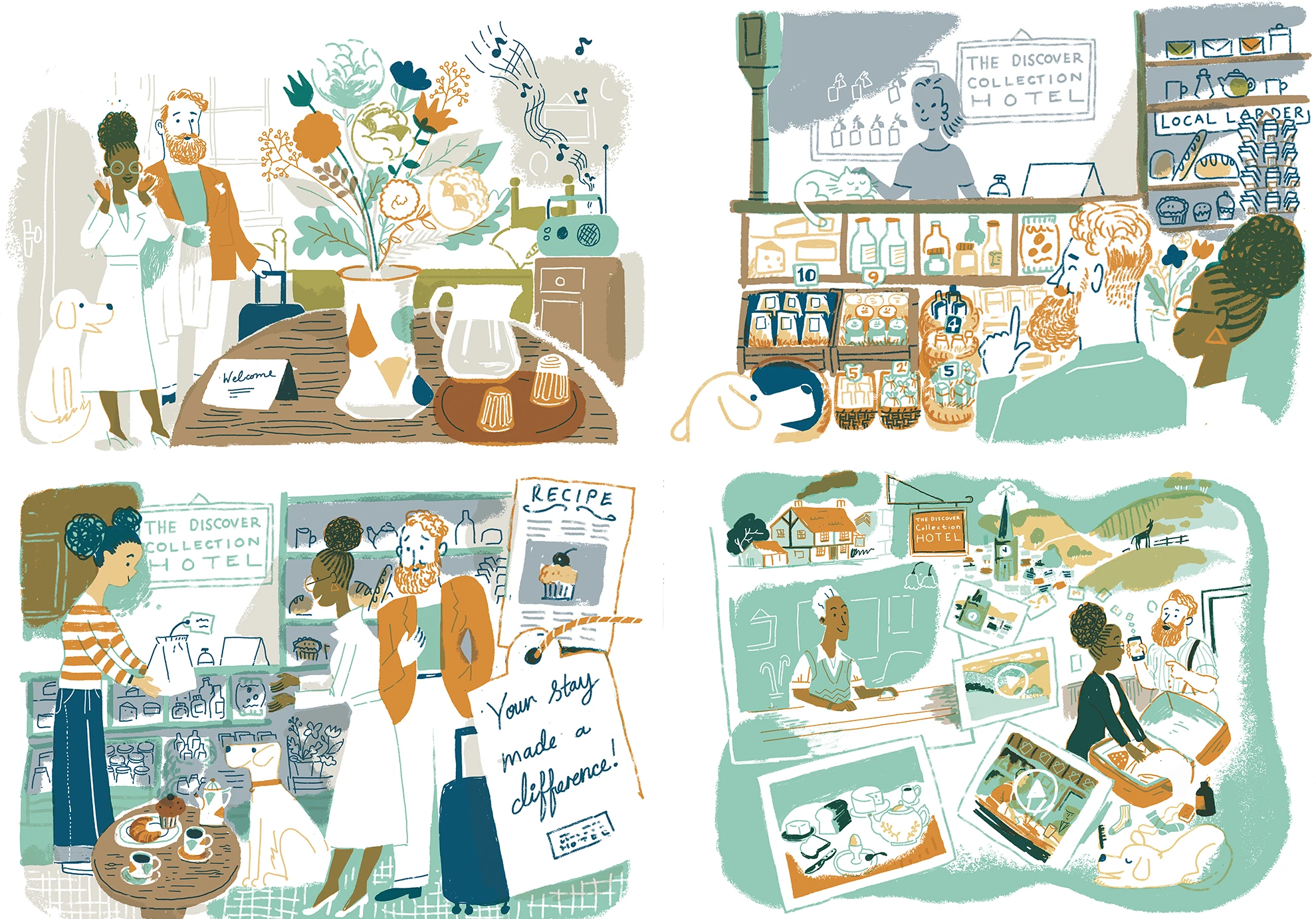
Signature moments include a warm welcome during check-in, as well as staff recommendations and local maps highlighting neighborhood gems. During their stay, guests enjoy expansive seasonal food menus, as well as a beverage menu that includes a wide variety of locally brewed, distilled, and crafted drinks by local suppliers. Rooms feature a smuggler's treasure chest with a surprise treat. Art and books from local talent are on display throughout the hotel, and local experts lead activities and events. Guests tangibly experience Greene King’s commitment to sustainability through its use of local materials, produce, talent, and partnerships, all designed to support the surrounding community. Upon departure, guests receive a personalized postcard.

In addition to the hotel experience moments, IDEO delivered branding recommendations for The Everly Hotels Collection, including visual identity and tone of voice that provide a cohesive look and feel for the collection of hotels while simultaneously showcasing each property's unique character. This was all packaged as an experience playbook, with design principles and briefs to help guide implementation decision-making across Greene King’s marketing, digital, interior design, and food and beverage teams.
A few months after the project ended, Greene King launched The Everly Hotels Collection. Its pilot hotel, The White Horses in Rottingdean, East Sussex, opened within the year. The new brand and guest experience strengthened bonds with Greene King’s loyal customers and first-time guests, ensuring the brand's relevance and appeal in a competitive market. More hotels are planned in the future in other scenic UK locations.
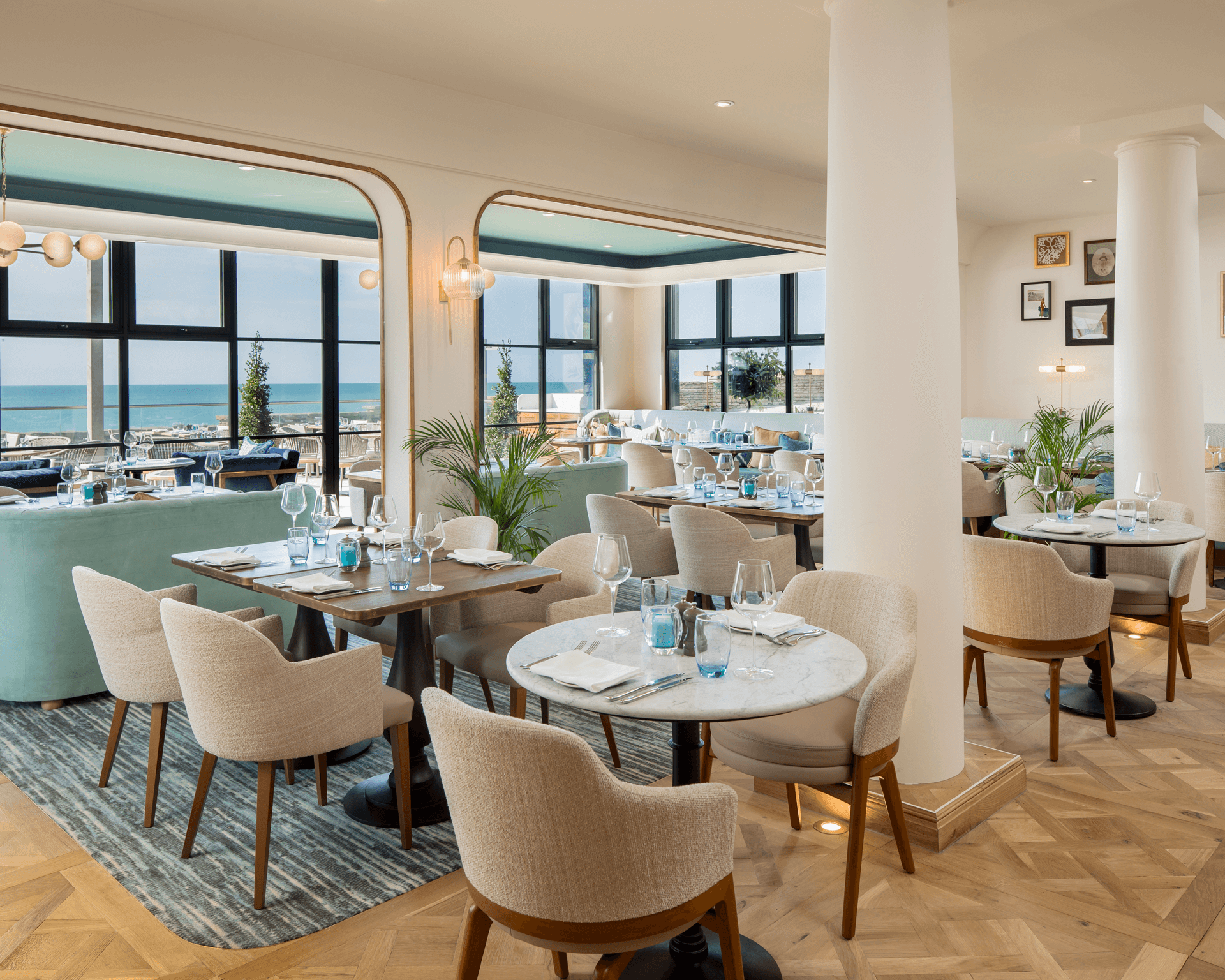
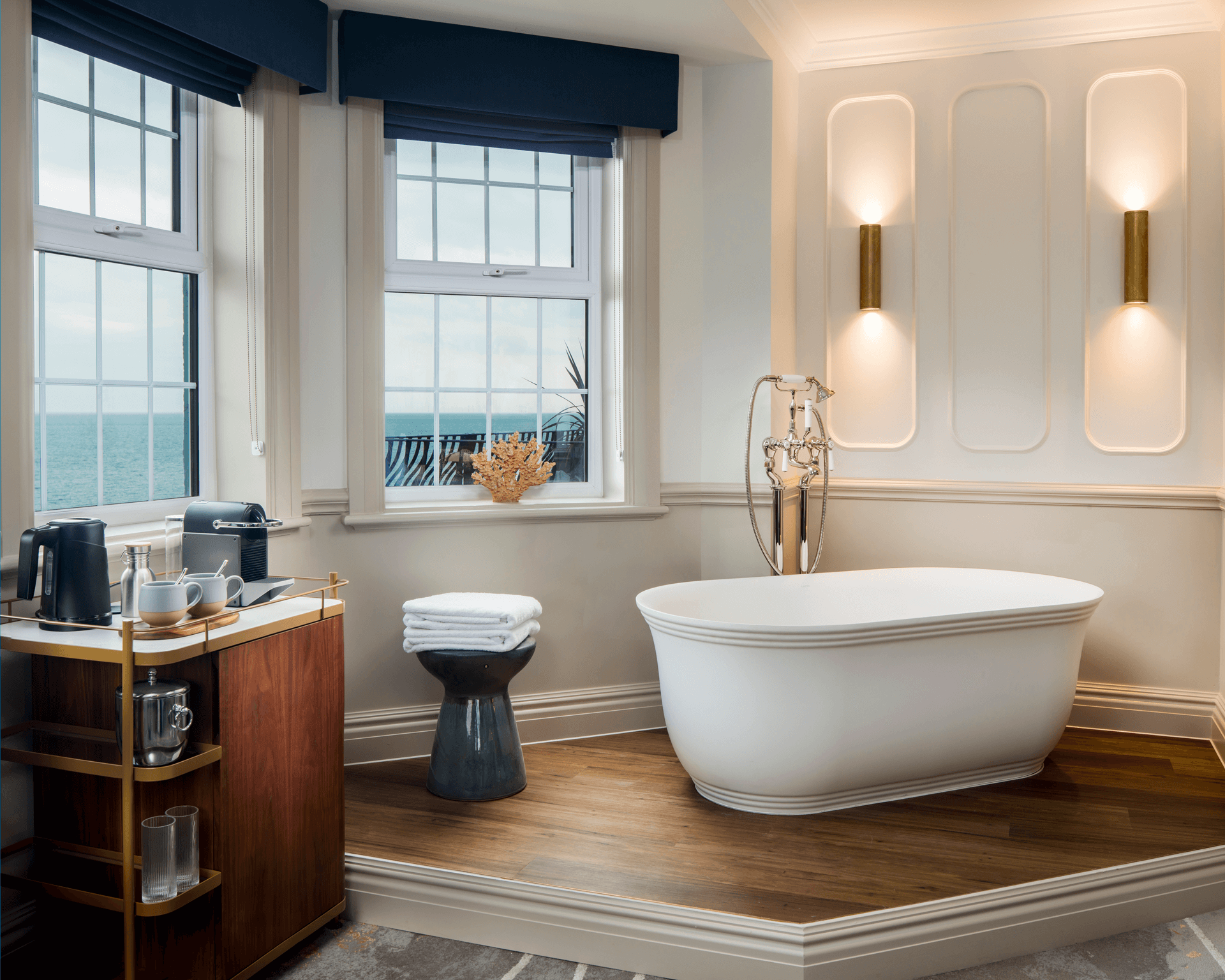
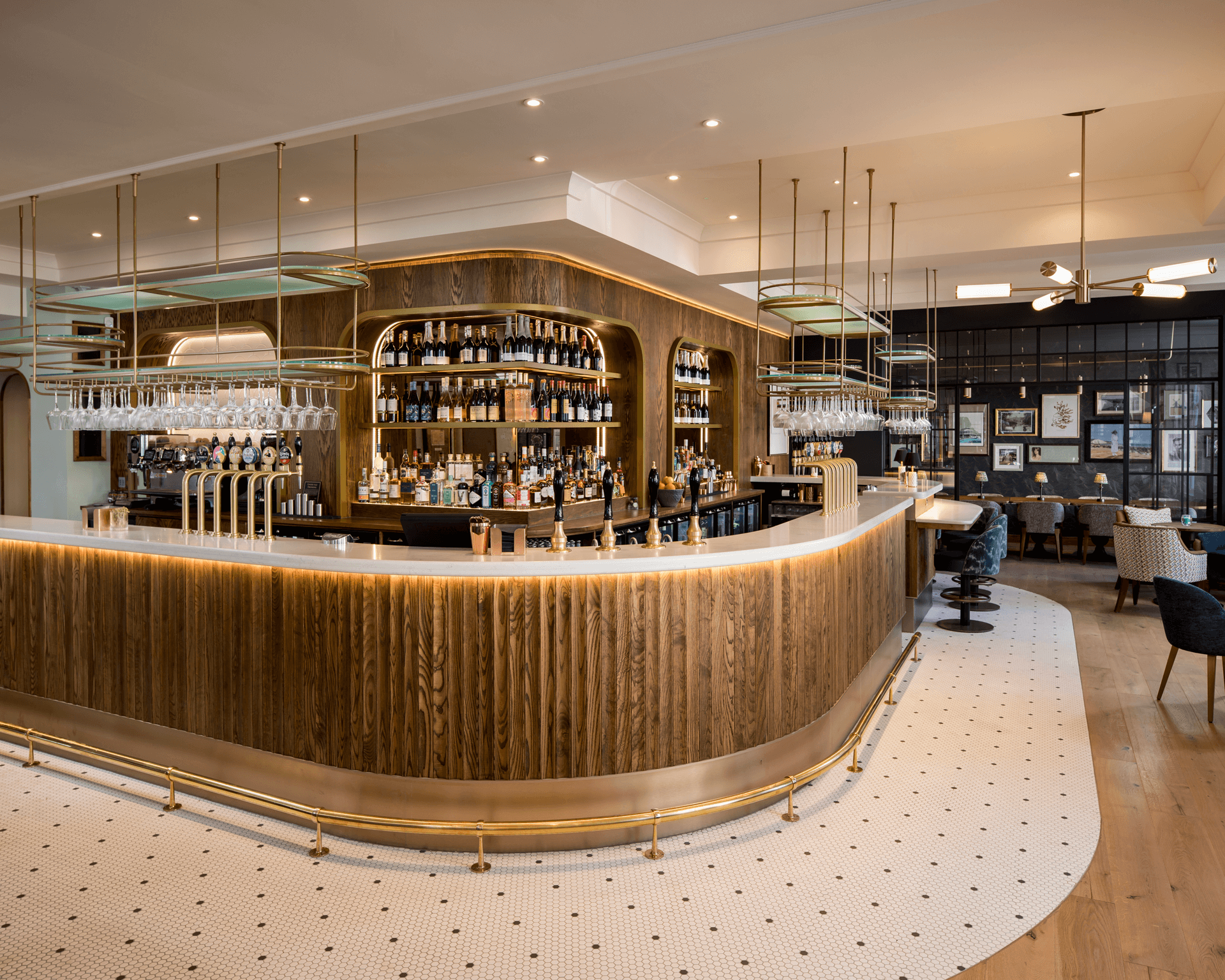
Greene King wanted guests to have a consistent brand experience while maintaining the storied charm that makes each property unique.
2 years
from concept to the launch of Greene King’s boutique Everly Hotels Collection
1 pilot hotel
The White Horses opened in Rottingdean in 2024

A new paradigm in data storage
Designing the iodyne Pro Data and Pro Mini hard drives.
The hard drive space is full of companies competing over technology and performance. But iodyne wanted to add another layer, focusing on user needs and product aesthetics to better position the company to meet the values of a broader audience and create compelling new entrants into this crowded market.
Together, IDEO and iodyne jumped into in-depth discovery research to learn more about the needs of their end users. The team sat down with photographers, videographers, and digital imaging technicians, asking questions about their file management systems, how they used hard drives in the field, and how they stored them for transport and at home. They also headed to the source, visiting studios and home office set-ups to understand the full range of potential use cases.
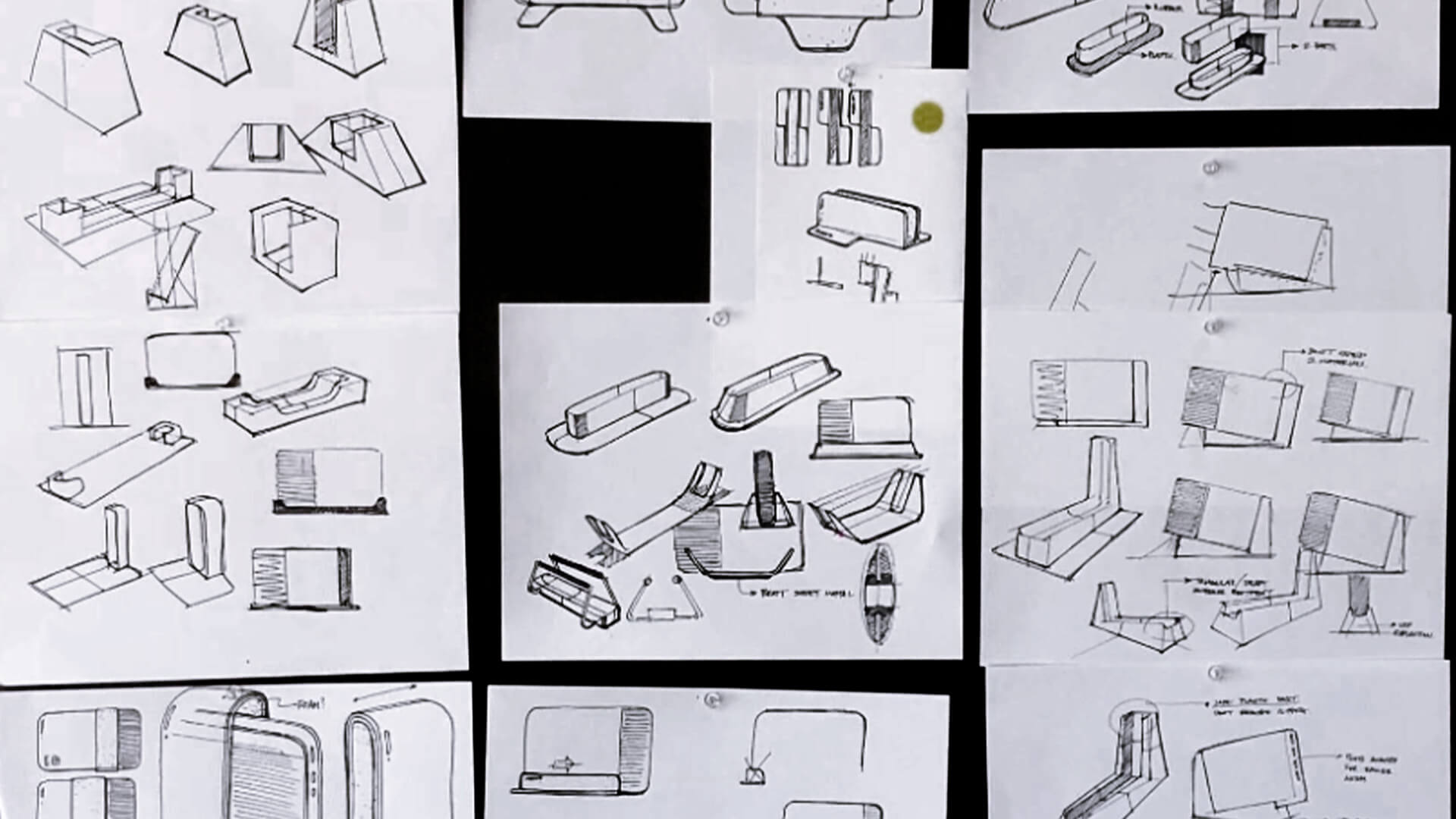
A few big discoveries leaped out. No one had a single storage solution to rely on. Users constantly transferred data from different hard drives designed for different purposes (in the field versus at home), accumulating hundreds of old hard drives over time. Traditional hard drives also don’t allow multiple users to work off them simultaneously or come with software systems that help keep projects and tasks organized, protected, and sharable. Meanwhile, the ever-shrinking size and weight of laptops—and people’s willingness to take them everywhere—set a new benchmark for portability, one that iodyne could lean into.
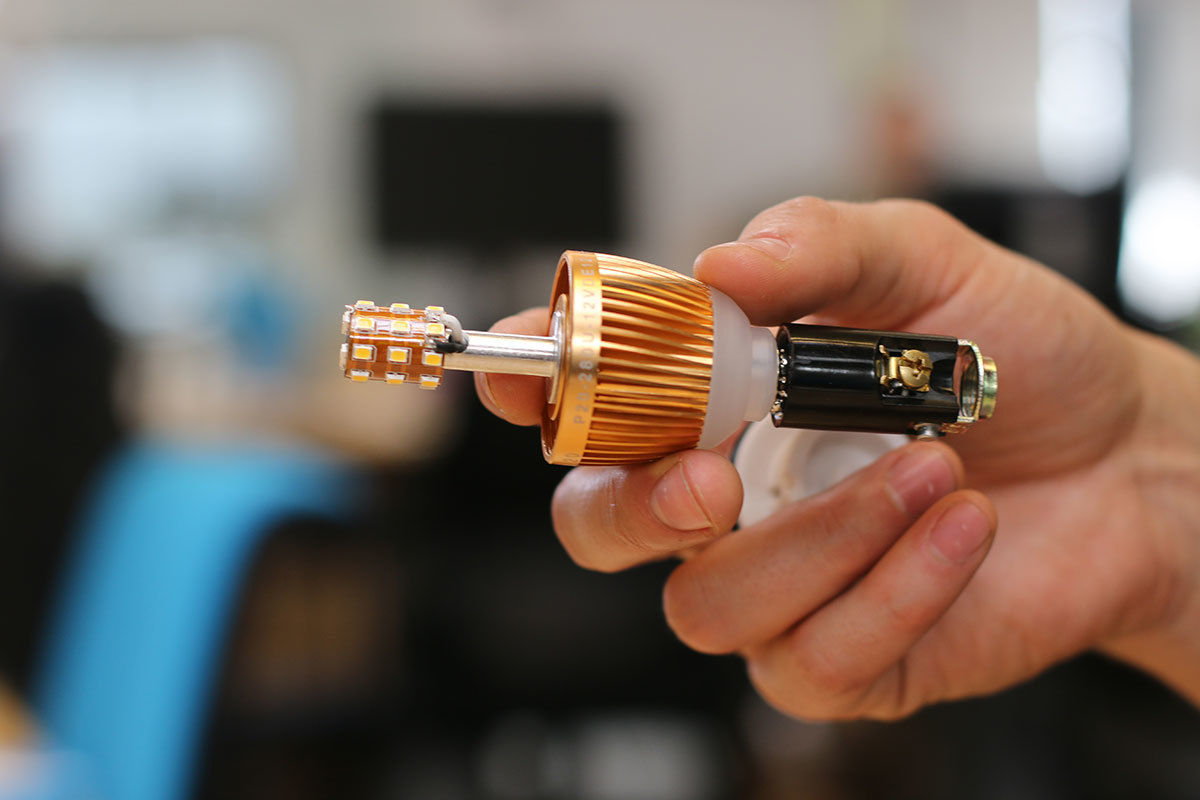
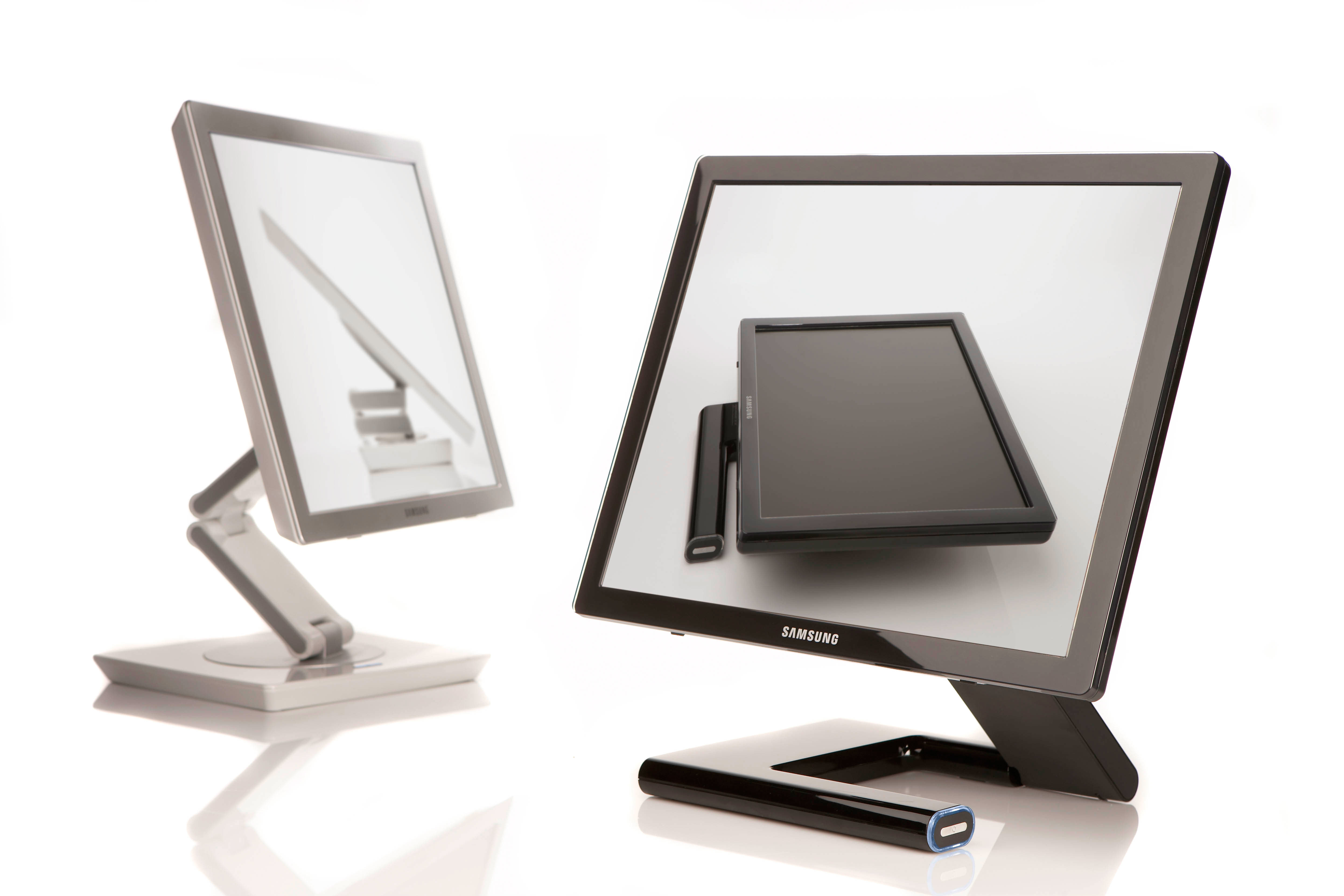
With these and other insights in hand, the team brought unrivaled performance and aesthetics together to create a far superior user experience. IDEO and iodyne developed Pro Data’s engineering architecture, collaborating on thermal performance analysis, material choice, inspection of sample parts, and even packaging design. By combining integrated venting, multiple laptop-quality fans, smart power management, and 20 thermal sensors, the team was able to minimize cooling fan loads and reduce noise and power consumption. A single, centralized, and consolidated storage space makes sharing data among teammates easy, too—up to four computers can connect to the Pro Data at the same time and access the same files. The redesigned Pro Data creates new value for consumers in a highly mobile, secure package that can go from desktop to backpack and back again.
The iodyne Pro Data hard drive launched in 2021 to overwhelmingly positive reviews. Storage Review wrote “Nothing else comes close to this level of performance in a package this size,” while Jemery Boros of StarGate Studios said “I don’t think I could have done the shoot without Pro Data. It was easy to use, fast, and kept all of our data safe on the other side of the world.” The drives have since been used in the making of major motion pictures from F1 to A Complete Unknown.
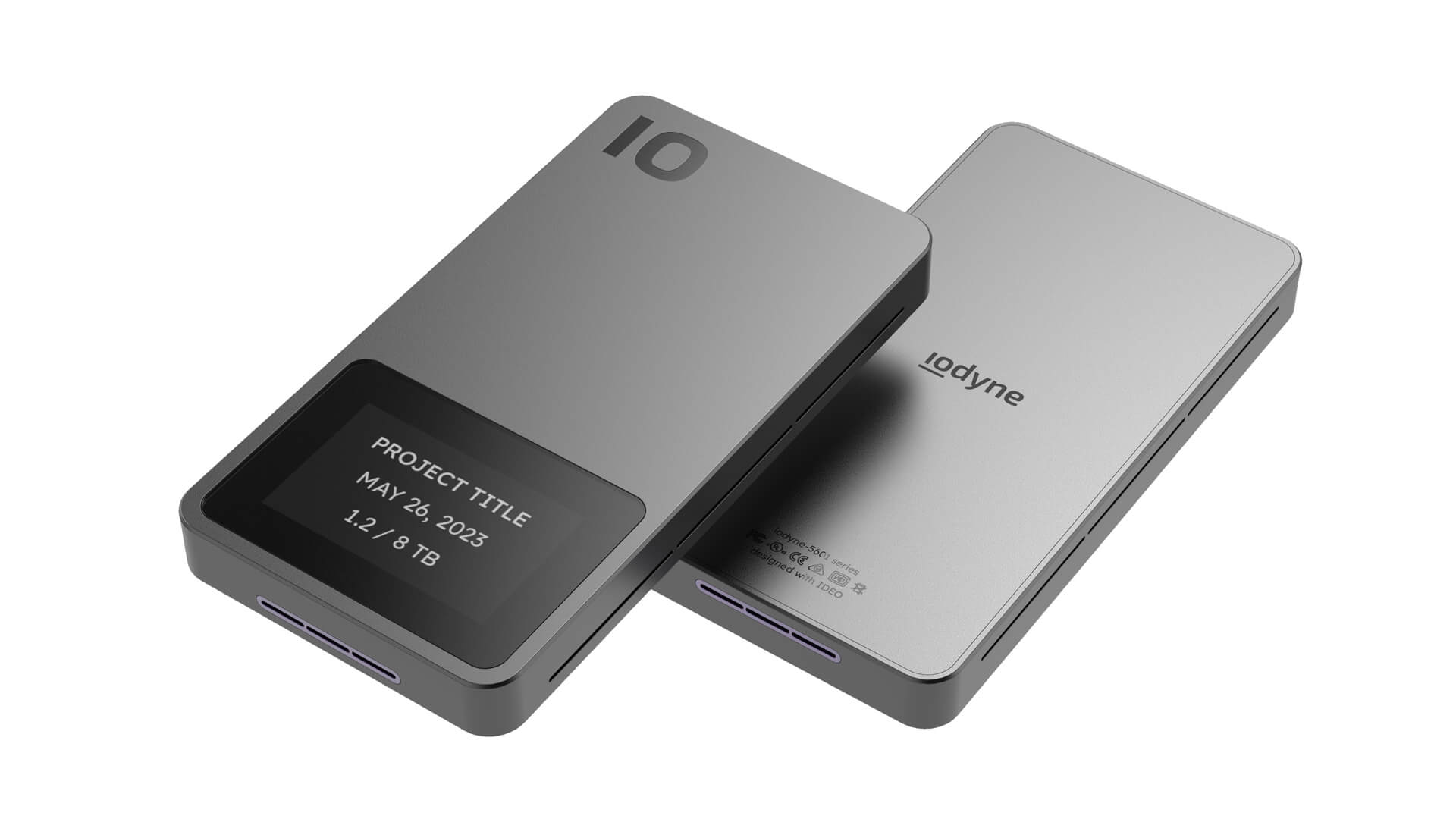
Spurred by Pro Data’s success, iodyne decided to create a second product with IDEO, a Pro Mini that could provide the same cutting-edge performance and sleek design but scaled down to fit the needs of customers who required less storage capacity in an even more portable package. Pairing Pro phone-quality industrial design with a unique internal solid-state cooling architecture that imposed key constraints on airflow was critical.
IDEO worked with iodyne to create the Pro Mini’s internal layout and collaborated with an emerging engineering company to incorporate novel solid-state cooling technology, positioning the vents to maximize airflow and optimizing how users physically interact with the device. The team also addressed users’ durability concerns, advising iodyne on part selection as samples came in from vendors. The new Pro Mini is set to ship in the second half of 2025.
Hard drives are essential tools of the trade for people with large troves of media to store and transfer, like photographers and videographers. But beyond rolls of masking tape and label makers, there isn’t an easy way to see what’s on each drive without literally going through them one by one.
Traditional hard drives generate a lot of heat and need fans to cool them, making them bulky, loud, and slowing transfer speeds.
Many external hard drives are treated like commodities. They’re designed for mass production rather than for durability and aesthetics.
2 cutting-edge hard drives
to market in 3 years
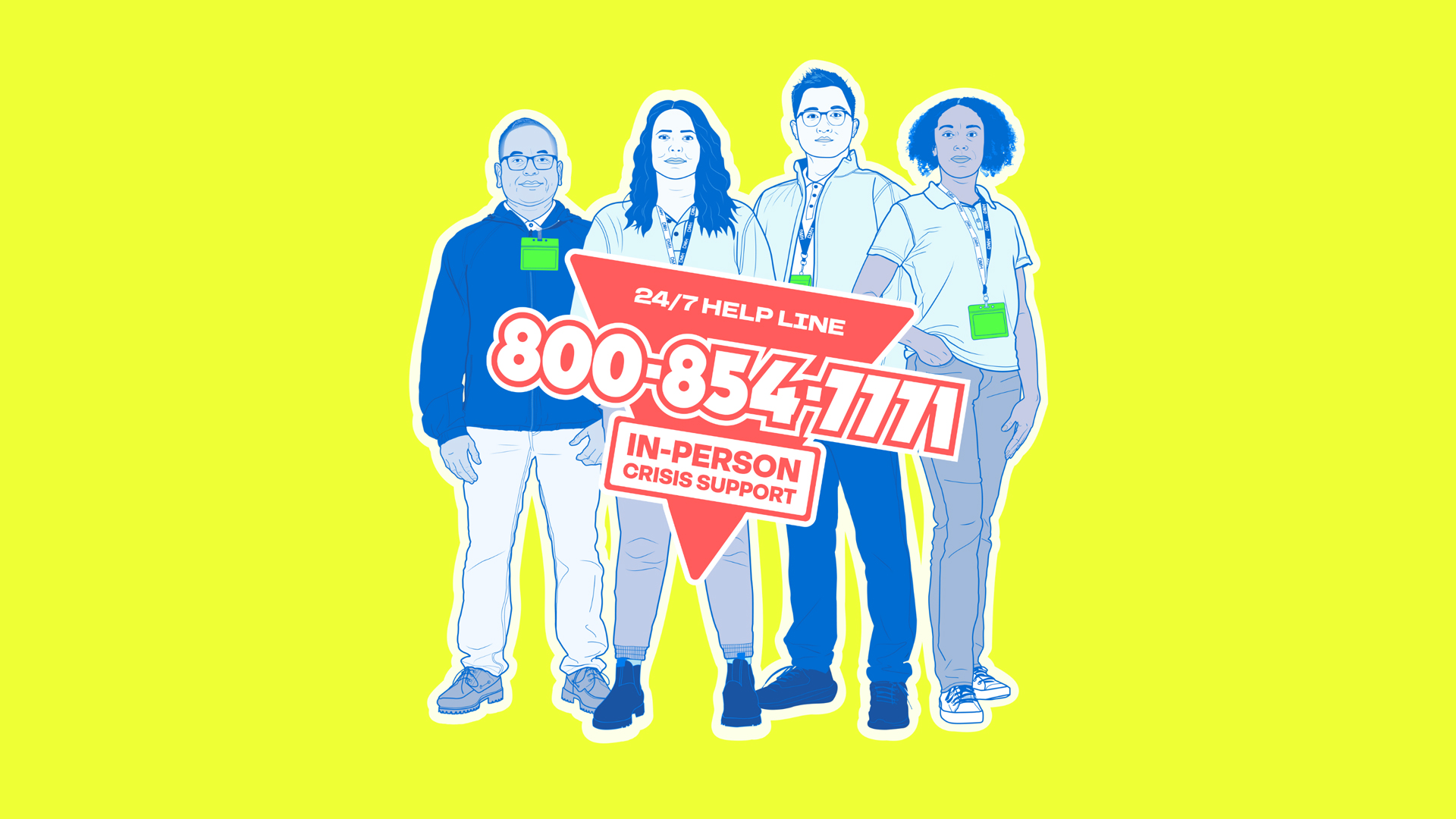
Introducing LA’s mental health crisis first responders
Helping a kinder, safer emergency support arrive first on the scene.
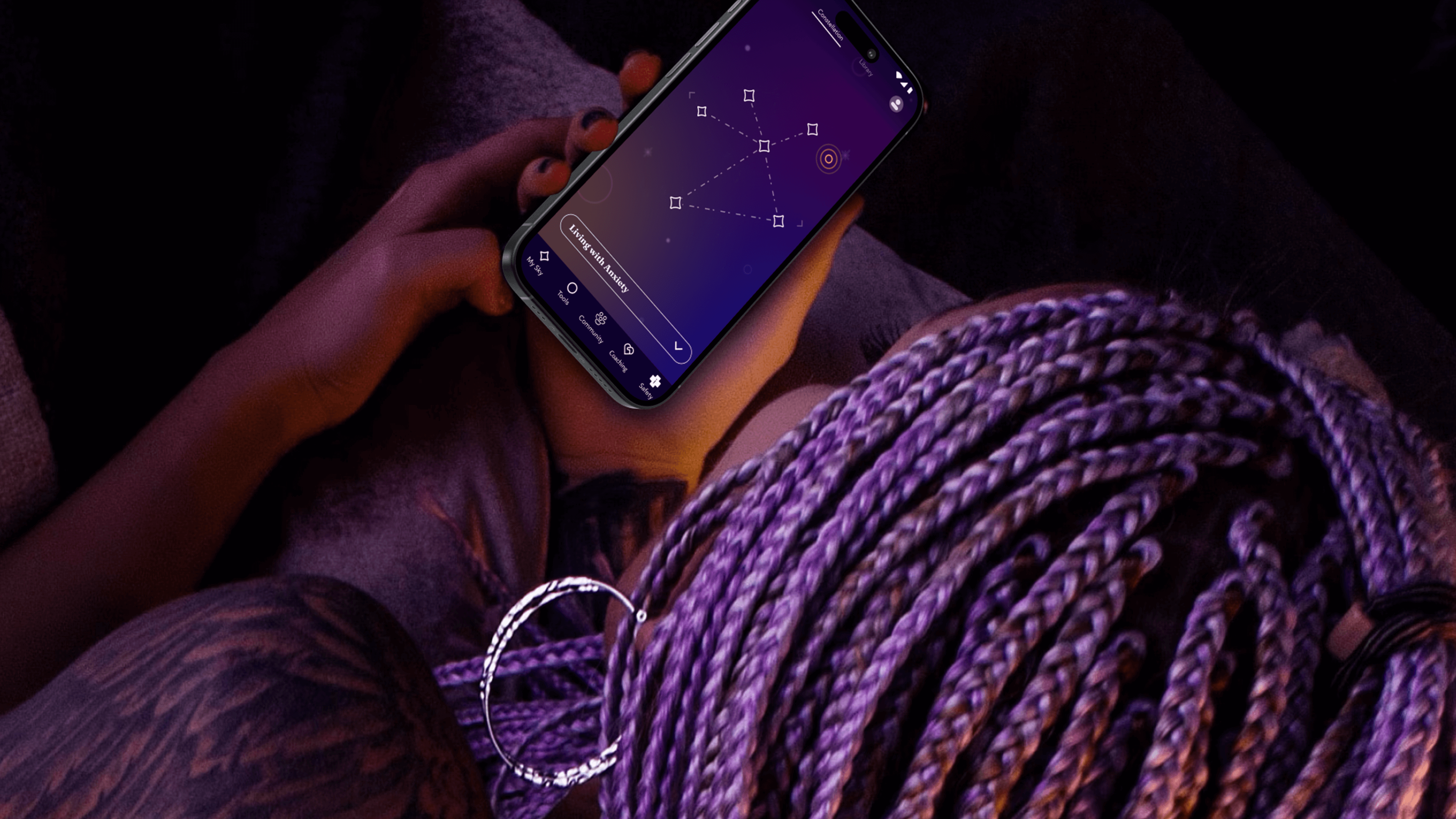
LACDMH is the nation’s largest public mental health department, serving over 10 million people. The agency provides critical support for the most vulnerable, including staffing a toll-free, 24/7 Help Line. Since late 2024, more than 70 Field Intervention Teams—comprised of mental health clinicians (social workers, psychologists, licensed psychiatric technicians, and registered nurses) and community health workers (trained peers or community members with lived experience)—have been dispatched around the county to help de-escalate mental health crises quickly, compassionately, and without force.
Because those experiencing a crisis are often too disoriented, confused, or otherwise unable to seek help for themselves, IDEO’s communication strategy targeted reaching “trusted messengers”—parents, spouses, siblings, and friends of people who have a mood or personality disorder like schizophrenia or bipolar disorder. The campaign aimed to define mental health crises, help people understand what to expect when they call, build trust in FITs, and divert mental health crisis calls away from 911.
To understand what drives these specially trained mental health professionals to do this type of work—and what sparks trusted messengers to call for help—IDEO met and interviewed former clients and loved ones who had reached out to the county for support during a mental health crisis. The team also interviewed multiple FIT staff to learn more about how they approach clients and families.
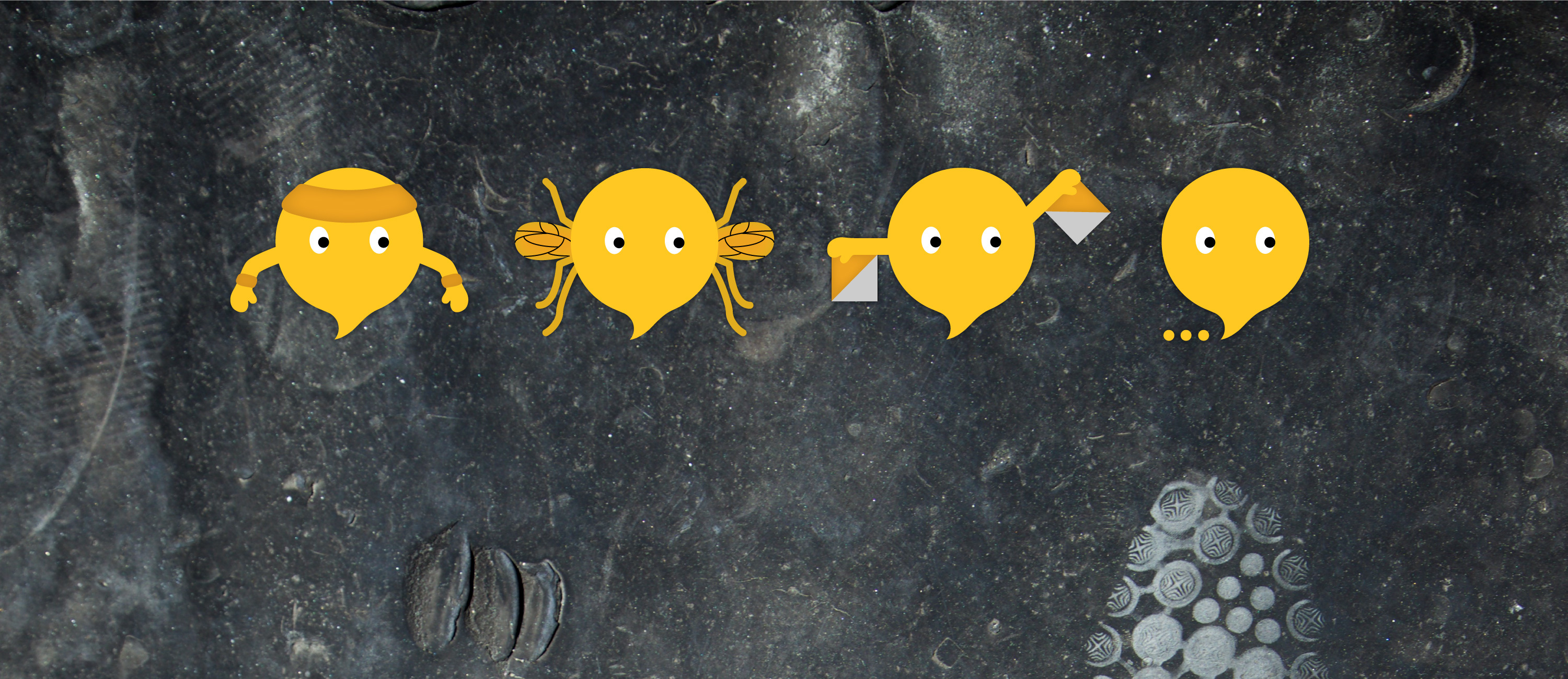
The research inspired the communication strategy’s central idea: position FIT members as real-life superheroes and first responders. By associating FITs with that term, the campaign changes the narrative and communicates their compassion and expertise to those in crisis. Custom illustrated portraits feature actual FIT staff in strong, action-figure-style poses, while a bright, eye-catching color palette and clear, direct language convey confidence and inspire trust.
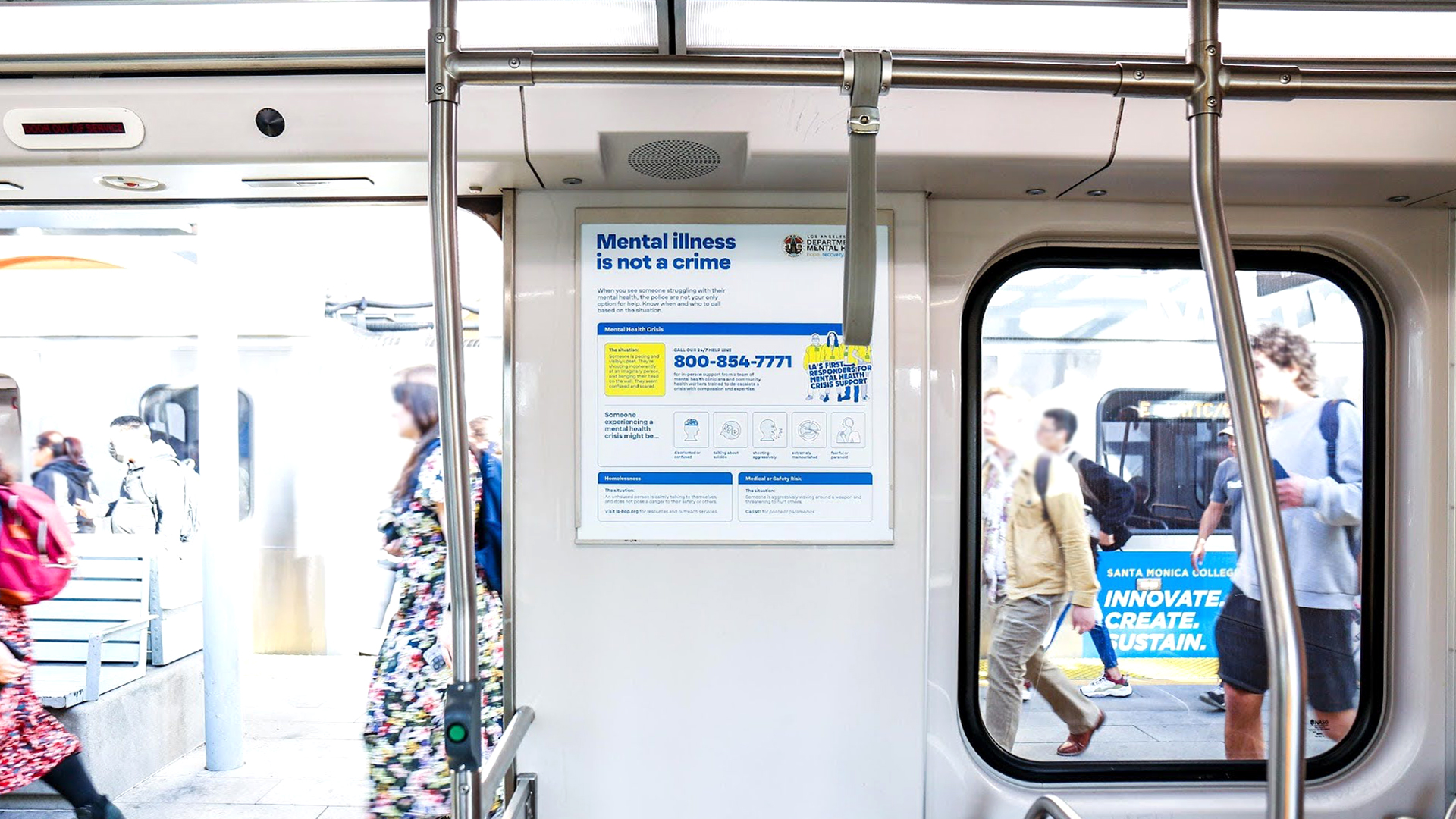
The team explored their initial design directions in a series of focus groups with LA residents, trusted messengers, and county and mental health workers to better understand the impact of the potential messaging and visuals. The research uncovered the importance of clarity, even in an inherently emotional situation. The IDEO team discovered that transparency—and real personal stories—would be the key to building public trust in ACR.
Between March and June of 2025, the robust awareness campaign will run across LA County in a number of languages on city buses, in Metro stations, on social media, streaming TV, radio, and more. An updated landing page on LACDMH’s website includes in-depth information and educational videos about mental health crises, as well as heartfelt testimonials from staff and former clients who have been helped by the service.
LA County Department of Mental Health created an innovative new program to provide urgent, compassionate care to Angelenos experiencing a mental health crisis but needed help driving awareness of its service across the region.
Calling 911 is an entrenched behavior in an emergency. However, dispatching police officers who are not trained in mental health can make a bad situation worse. In 2022, 39 percent of people shot by LA police officers were in the midst of a mental health crisis.
172 million impressions
delivered via digital and physical ads across LA
50% increase
in calls to the ACR helpline, year-over-year, attributed to IDEO’s awareness messaging
24%
of Angelenos now name LACDMH as the first to call in a mental health crisis, leapfrogging 911 or the police, which slipped 14.3 points

Your Competitors Aren’t Who You Think They Are
With tech firms getting into the financial services game, banks need to start thinking differently
By looking to the neighborhood pub down the block, it was easy to see that if they wanted to keep customers around longer, they needed to have a similarly linger-worthy offering. It seemed to be working.
In an age when boundaries between sectors are blurring, traditional businesses need fresh approaches that keep them relevant, even as the tech titans add capabilities that could eclipse the old guard. When leaders are willing to look beyond their own industry for inspiration and ideas, they often gain a competitive advantage.
The financial services industry is a perfect candidate for this kind of approach. Money is changing in radical ways, and along with shifting regulatory environments at home and abroad, we increasingly find new players entering the financial space. It often seems like the future of financial services is being designed outside the domain of the industry giants, which begs the question: Are traditional financial firms equipped, at present, to satisfy customer needs? People want convenience and access, security, privacy, social features, comfort, experiences, and a range of incentives—many of which are more readily supplied by a digital platform than a stately bank. But some traditional players are taking a new tack.
When the first Capital One Café opened in late 2015, the bank was attempting to address these very concerns. Millennials, having come of age around the 2008 financial crisis, harbored a well-documented distrust of traditional banking and felt turned off by the branch experience, so Capital One attempted to reinvent the bank branch in the image of a coffee shop and coworking space—again, looking outside their industry for inspiration. “Customers are over the corporate thing,” a bank representative said. It’s hard to imagine someone would choose to enjoy their coffee inside a bank if other café options are available, yet by most measures Capital One’s experiment has been a success, offering a more welcoming and attractive experience than speaking to a teller through bulletproof glass. By innovating on the experience, Capital One has entered retail banking in a novel way.
The late Harvard academic Clayton Christensen developed the concept of “jobs to be done,” arguing that customers have a need to get a job done, rather than a need to acquire a specific product or service. It’s a slight but important turn of the dial from the traditional way of thinking. Here’s how legendary economist Theodore Levitt described the idea back in 1969: “Last year 1 million quarter-inch drills were sold, not because people wanted quarter-inch drills but because they wanted quarter-inch holes. People don’t buy products; they buy the expectation of benefits.” To advance the argument a step, perhaps what the customer needs isn’t a one-inch hole but the ability to hang a picture. Maybe an adhesive hook would do the job better than a drill.
Innovation is often driven by the urgent need to solve a problem. In 1922, a group of army officers observed that returning soldiers, who hadn’t driven cars while on active duty, had a hard time getting auto insurance. The officers formed the United Services Automobile Association to provide insurance to military members and their close family. Later USAA expanded to offer a wider range of services including banking, investment, and other types of insurance. Since their members were often scattered geographically—sometimes on the other side of the globe—USAA pioneered mobile banking, initially by phone and mail and later online. Even today, with almost 13 million members, USAA has only one full-service bank branch, located in San Antonio.
This company, which was founded to offer auto insurance to service members, is now regarded as a shining example in the banking world of loyalty and customer satisfaction. Several of my clients who work at major retail banks have admitted to me in private that they still do their personal banking at USAA because they so admire the firm’s customer service. From that original need in 1922, USAA created a new service model that has lasted nearly a century.

Many of today’s most inspiring models for innovation are scattered globally. The European Union’s Open Banking efforts have created fertile conditions for EU mobile-first banks such as N26, Starling Bank, and Monzo. These firms score off the charts in customer satisfaction rankings, above even USAA’s benchmark. In the EU, mobile-first banks have grown through a mix of purpose and convenience, the human-centered design of their interactions and offers, and a supportive regulatory environment.
Alipay in China—which has a staggering 900 million users—is a smartphone wallet app that has revolutionized mobile payments, including the development of “Smile and Pay,” facial recognition technology that allows consumers to pay for goods without even carrying their mobile device. Alibaba has aggressive plans for global expansion of Alipay, all but guaranteeing that domestic US firms will come into direct competition with the Chinese juggernaut.
In many African countries, citizens have so little faith in their nations’ financial stability and fiat currency that a new kind of money has emerged: prepaid mobile phone minutes. People pay for a broad range of goods and services—from procuring groceries to settling their electric bills—by transferring mobile phone minutes. Kenya’s most ubiquitous service, with more than 30 million users, is m-pesa, launched by the country’s top mobile phone companies, Vodafone and Safaricom. Who would have thought that mobile phone companies would emerge as the central disruptors in Africa’s financial services sector, disintermediating the banks?
The financial world has been slower to innovate than, say, the technology world, for a few key reasons. First, financial firms haven’t been forced to innovate at the same pace; second, regulation has disincentivized competition; third, most radical thinkers are no longer drawn to the financial services, as the center of action has moved to Silicon Valley.
Millennials comprise the largest population in our workforce, and three-quarters of them say they’d prefer a financial offering from a large technology company over one from a traditional financial services firm. And the tech world is responding. The Apple Card recently launched in an effort to redesign the credit card and disrupt the status quo. PayPal and Venmo, beyond their use as payment services, essentially function as savings accounts for many customers who store money in the app. And millennials aren’t the only focus of this evolution: A handful of new firms, such as EverSafe, have introduced new products that help the elderly population manage their bills and protect against financial exploitation.
Money is always changing—the way it moves, the shape of it, and how we store it. Financial services firms need not only to keep pace, they need to be leaders of innovation. New solutions could come from unexpected places, so it’s critical to take a global perspective, benchmark beyond industry peers, and consider the experience of the people providing and receiving services. Building the next 100-year financial services firm will depend on doing all of these.
Illustration by Emil Wikström
The bike shop in my neighborhood recently started serving beer. They keep a keg on ice in the back room, and customers can sip pints as they browse the bicycles, gear, and hardware. I was curious what was behind the move, so I asked the owners. They told me they’d been trying to figure out how to get customers to spend more time in the store, and hopefully to make a purchase, so they decided to take a page from another industry’s book.
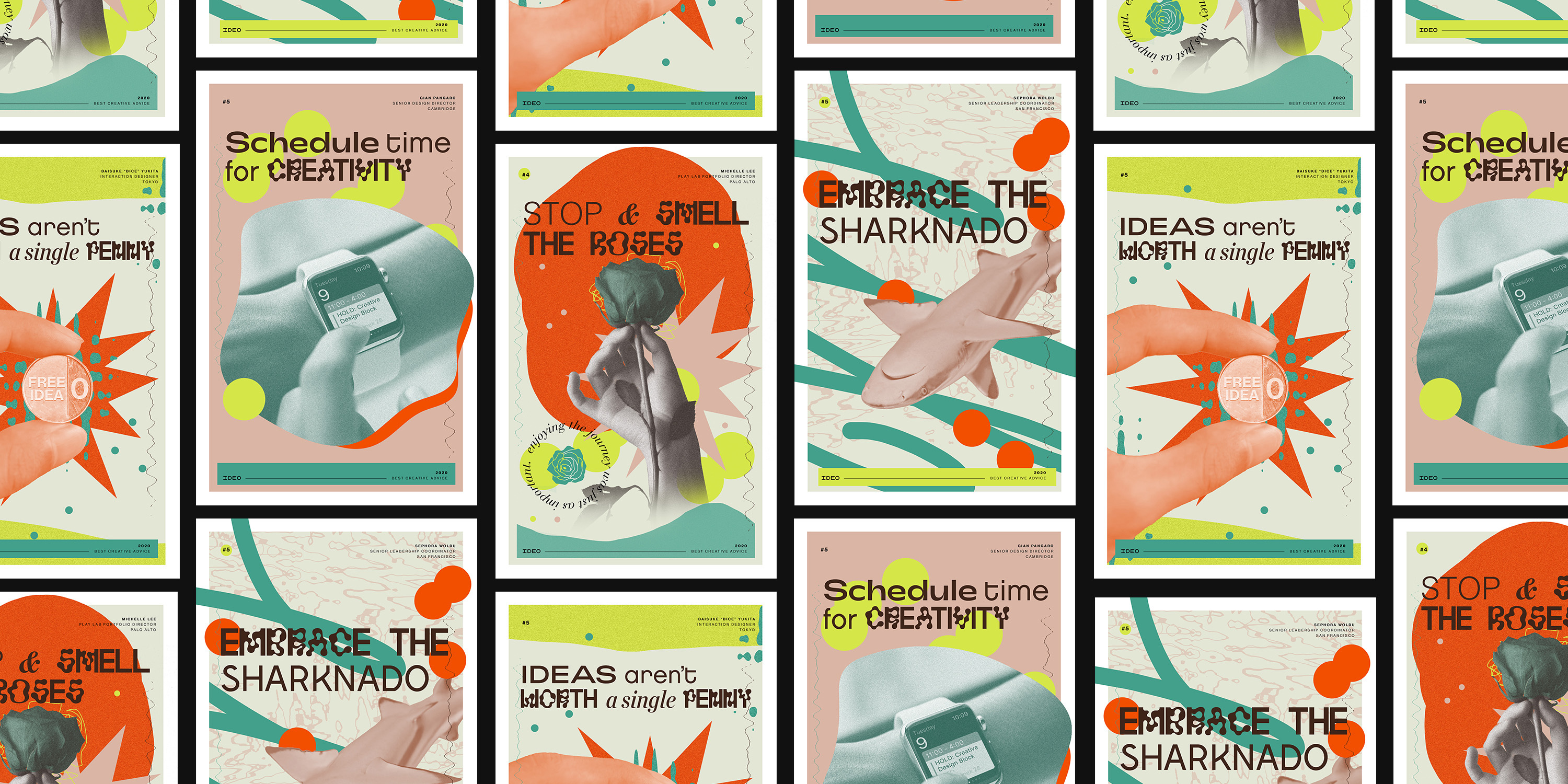
IDEO Designers Share the Best Creative Advice They've Ever Received
Getting advice can be tough, but it can also be transformative
We asked IDEOers across a diverse range of locations, teams, and roles—even ones that aren’t typically thought of as creative—to share the best creative advice they’ve ever received and how it’s impacted their work. We hope you find their responses as inspiring as we do.
Trust your unique perspective
Coming to IDEO as someone who wasn't from a "creative" background (large emphasis on the quotes there), I had a ton of concern about how I would show up on teams with people who were so fluent in the things that seemed to be what IDEO was "really about"—the creative stuff.
Early in my time here, I was on a walk with another organizational designer, mid-existential crisis when she said to me, "Your job is to be thinking about what no one else in the room is thinking about." She helped me see that I didn't have to immediately have every answer or every iota of expertise; I just needed to be using my lens on the world to make our collective design richer.
IDEO touts its cross-functional team structure, and I am a true believer in that element of our work. Unlocking my creative process has been so much about believing in the value of what I bring to the table and understanding its unique contribution to what we are all building together.
– Natalie Osterweil, Senior Organizational Designer, Cambridge
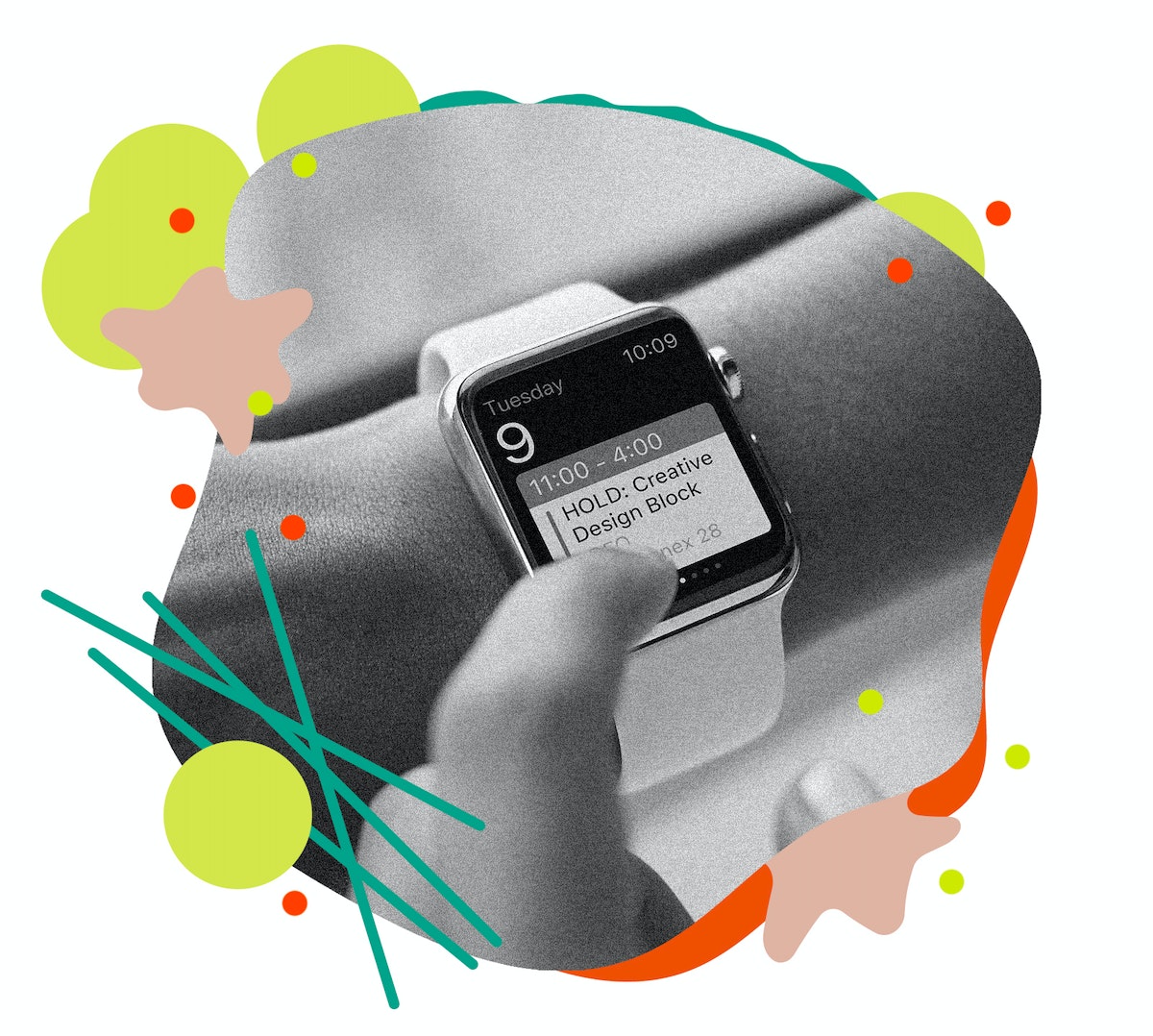
Schedule time for creativity
Martin Bone (an IDEO design director circa 2008) once told me about how he organized his schedule to carve out large blocks of time for doing deep design work of his own. Each week, he would make a long calendar appointment (often an entire day) to be his design time, and would decline any meetings or calls during it. This allowed him to get to a deeper level of work that only a non-distracted state could achieve.
Paul Graham calls this contrast in methods of working maker's schedule vs. manager's schedule. He points out that even a short meeting scheduled in the middle of the day is enough to disrupt or demotivate deep craft or thinking work. In order to maintain my own personal craft alongside other work responsibilities, I've found it effective to put similar calendar blocks on my calendar and to completely disconnect from email, phone, and Slack during these times. This focus also takes discipline beyond a calendar event, but with practice, it can really lead to better work and growth as a craft-oriented designer, even as management responsibilities increase.
– Gian Pangaro, Creative Director, IDEO CoLab, Cambridge
Disconnect from your ego
I’m an executor. I like to get shit done and make an impact. That’s how I think many of my friends, family, and colleagues would categorize me—and I agree! When I came into IDEO, creativity wasn’t a value of mine, nor did I see myself as a creative person. When it came to brainstorming ideas, to me it was all about having the best idea, and having the best idea meant it was feasible, viable, and could have an impact right away.
I learned quickly I was wrong. Virginia Martinez, our Talent Director in San Francisco, helped me when I was having a hard time engaging with IDEO’s brainstorming process. Instead of trying to show my competency through my ideas, she told me, "To get to great ideas, you need to have lots of ideas as a group. And the best idea is not always the most realistic or easy to implement. The fun and crazy ideas can be just as good to drive teams to think more creatively."
Something so simple never occurred to me! I realized that I was attaching my ego to my ideas, that my ideas and my input reflected my competency—but no one else was looking at it with that lens. I realized the diversity of ideas that led to so many possibilities was creativity—something I never saw as an important part of our Learning and Development work, which I'm focused on. That also helped me feel more excited and comfortable in brainstorms because I was walking in with an open mind rather than ready to prove my point.
It has changed my approach to the work, my approach to how I design programs, and my approach to collaboration.
– Jen Casimiro, Talent Lead, San Francisco
Stop and smell the roses
My mom has always told me to take the time to smell the roses. It wasn't until a few years ago that I realized how lucky I was to have a parent who taught me at a young age that it wasn't always about getting to the end of the race first. Enjoying the journey was just as important.
"Smelling the roses" has taught me to pause and take in my surroundings, being inspired by the seemingly mundane artifacts that I might otherwise have missed—curiously shaped gum stuck on the sidewalk, fine wood grain patterns in furniture, and the intriguing strangers I pass on the street. Each elicits ideas for new stories, inventions, or adventures. If I ever feel stuck or need inspiration, I know I just have to pause and take a look around me.
– Michelle Lee, Play Lab Portfolio Director, Palo Alto
Make your work visual
The best creative advice I ever received came from Mike Stringer at the beginning of my first project at IDEO. This was when IDEO's data science discipline was still young; I was navigating the challenge of working with designers of other disciplines.
Mike came to my project space and told me to "put stuff on boards and share." While this might be something natural for any other designer, some data scientists are very attached to their laptop, scripts, and simulations. In more traditional data science positions, I normally wouldn’t put data science on boards (the most I shared in my previous job was a decision tree on a whiteboard).
Mike suggested I make my work visible to the rest of the team to make data science more transparent, spark curiosity in my team, and start new conversations. I created a variety of hand-sketched data visuals and made them a prominent part of the project space to serve as a catalyst for brainstorming and discussion. Sharing my sketches with a variety of designers from a broad spectrum of disciplines (interaction, research, software, business, and more) made my work more transparent and helped establish a common language, allowing data science to grow organically within the team. I now make that approach part of my work style, and I share it with other data scientists whenever I see the opportunity.
– Fra Valsecchi, Data Science Design Lead, Chicago
Pull a card
I regularly seek advice from Brian Eno and Peter Schmidt's Oblique Strategies card deck. They compiled it in the early 1970's to help overcome creative block in the studio. When you feel stuck, you draw a card and do whatever it says. For example, "Ask people to work against their better judgment," or "Look closely at the most embarrassing details and amplify them," or "What would your closest friend do?" Often the advice is a bit unclear, but the vagueness prompts new ideas.
– Michael Hendrix, Global Director of Design, Cambridge
Embrace the Sharknado
A bad movie is better than an unfinished movie. As a filmmaker, there's this temptation to keep working on something or tweak it infinitely. However, there's a power in seeing something fully through, and then starting something else new that you can build and learn from. Also, it's so rare that your finished product is truly "bad." What would that even look like? Worst case scenario, you miss your mark but you learn something. Best case scenario, Sharknado.
– Sephora Woldu, Senior Leadership Coordinator, San Francisco
Accept your failures and iterate, iterate, iterate
The best creative advice I ever received was a good walloping. I was 28 and had landed an assignment from Alex Heard at the New York Times Magazine, an editor known for his unsparing red pen. I was to write a short piece about an alternative film festival. I interviewed the founders, thought up a clever lead, and submitted a draft. This is good, I thought. Funny.
The next day, Alex called and read the article back to me, word for word. "Are you kidding me?" he said. He was indignant. It was like I'd made him drink toilet water. When the call was over, I cursed myself and cried. I’d failed, and he’d dropped a grenade in my lap so I’d suffer no illusions that my work needed anything less than a good and brutal pulverizing. I called an editor friend, enlisting him to give me honest feedback. Then I sat down and rewrote the piece 103 times. When I finally ginned up the courage to send it in again, Alex called me immediately. "You did it,” he said. ”I'm proud of you. I’ll run it this Sunday."
Find someone who’ll give it to you straight, then iterate, iterate, iterate. Keep at it until your hand falls off. That's how I learned to write.
– Shoshana Berger, Senior Editorial Director, San Francisco
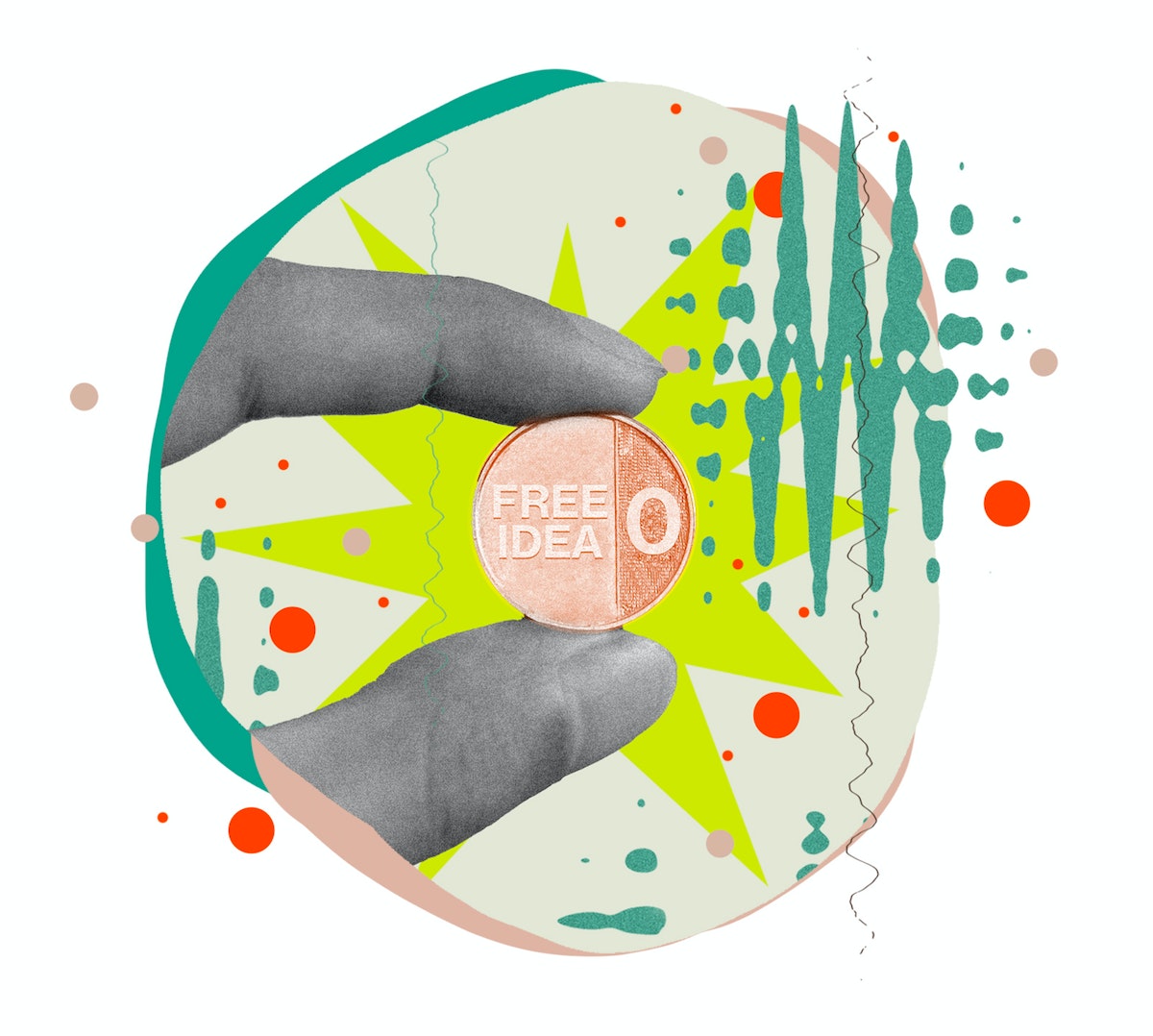
Remember ideas aren’t worth a single penny
"Ideas aren't worth a single penny." These are the words of wisdom that a colleague at my previous job gave me a couple of years back. He was the type of creative director that I only expected to find in fiction: almost always late to work, usually hungover, wore a Dumbledore style beard, and always ready to mutter out the most unexpected and astonishing ideas. When brainstorming, he would always kick-start the session with the most hilarious, intoxicating fantasy concept. He was known in the industry as the ultimate idea man.
That was why his advice struck me as a surprise. He told me that he would willingly give away any of his ideas for free, because that’s not what we’re being paid for as professionals—it’s the execution of the idea.
I look back to this whenever I find myself too attached to an idea, or when the team is stuck in a rabbit hole of conceptual debates, picking ideas apart one by one. Anyone can come up with the same idea sooner or later; our job is to not just come up with the idea, but to bring it to life, and that is what we should be proud of. That is where true impact lies.
– Daisuke “Dice” Yukita, Senior Interaction Designer, Tokyo
Focus on the story
The advice that still rings true to me today and on the path to become a designer is never lose focus of the story you want to tell. Every single experience, physical thing, or digital product you create is based on a sequence of decisions you make during the design process. It’s essential that every decision has a purpose—that’s how you get the most potential out of your design. A memorable, human story is the groundwork to purposeful design.
– Susanne Duswald, Industrial Designer, Munich
Invite others to the party
Several years ago, I ran into film director Frances Ford Coppola. Because we were both speakers at the same event, I managed to spend a few minutes alone with Coppola backstage, and one of the things he said that day has stuck with me ever since: "When you are working with creative people, you don't tell them what to do. You invite them to the party."
I have used his advice many times, including right now at D4V (Design for Ventures), IDEO's Tokyo-based venture capital firm. We invest in promising Japanese start-ups and then invite the design team here to "join the party," using creative tools to help the young companies thrive.
– Tom Kelley, IDEO Partner
Creativity often isn't the work of a single, solitary genius. In fact, it's usually when a set of diverse perspectives come together that we're able to see new possibilities for solving problems. That's why creative collaboration is crucial—and it's also why creative mentorship is so important. Sure, you can (and dare we say should) work through these 10 exercises from Creative Confidence to hone your individual chops, but creative mentorship is what allows us to push ourselves and our work forward. This got us thinking: What else could we learn about creativity from the people we work with every day? What have they learned from their mentors?
Practice Your Prototyping Skills With These 4 Resources
The more you test, the better your solution
That time you built a spreadsheet for collecting data from your team and adjusted it based on their feedback? That was prototyping. When you ran your big presentation with a couple colleagues and swapped out a few slides because someone said it didn’t quite flow? Also prototyping.
At its simplest, we'd argue that prototyping is the intentional testing of ideas. The key is to do it quickly and thoughtfully. Need a little help figuring out where to begin? Here are four resources to get you started.

1. When you're at the very, very beginning
Kicking things off can be the hardest part. If you’re still trying to figure out exactly how prototyping will fit into your or your team’s creative process, try pulling some ideas from this story of one IDEO team’s experiment with early-stage prototyping.
READ: Why You Should Start Prototyping—Right Now
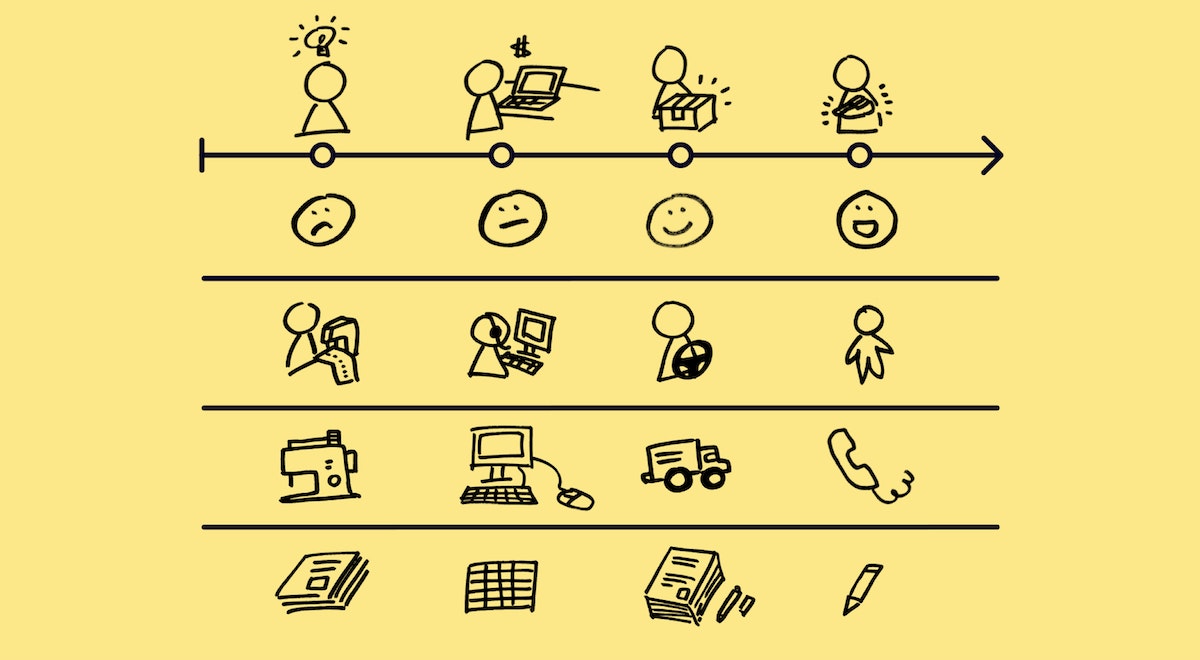
2. When your next project isn’t designing a thing, but designing a service
Many of our everyday transactions—everything from paying for coffee to selecting airline tickets—are highly designed processes. But where do you start when your project is creating a service, not an object? Dive in with these tips.
READ: 3 Tips to Help You Prototype A Service
3. When the constraints of your project feel like they’re testing you
Been there. If (and when) you’re feeling stuck, lean on the how might we questions in this piece about leveraging design constraints to get you moving.
READ: The Bright Side of Design Constraints: 3 Tips for Leveraging Limitations
4. When you need an example
Itching to see prototyping in action? Follow one of IDEO’s designers as he experiments with 360˚ video.
Say you're not necessarily a designer (raises hand), and you're a little intimidated by what you think of as the ultra-technical practice of prototyping (raises hand again). Here's the thing: You may not realize it, but you've prototyped before.

4 Exercises That Prove Listening Matters
Listening is a transformative act. Here's how you can do it better.
Listening effectively requires unlearning how we typically have a conversation. We have to reorient why we converse in the first place—away from the urge to validate ourselves and toward our curiosity about the other person. Krista Tippett, an entrepreneur who studies wisdom and compassion, calls this practice “generous listening.” To practice generous listening with others, Tippett says, is to release your assumptions about them, embrace ambiguity, and be willing to be surprised.
Sound radical? In this day and age, starting any dialogue assumption-free might feel like a challenge, but as designers, we often practice generous listening. Our process is powered by finding inspiration in people’s lived experience. In order to create something new, we have to be listening closely and openly enough to hear the unexpected.
We often see how transformative listening is for the people involved in our design research process. At the start of a project, we sit with people for hours, listening as they share their stories. It’s humbling when, on their doorstep later, they thank us. We know we’re grateful for the wealth of knowledge and ideas they have given us, but our presence as listeners must have been a gift too.
Whether it’s to aid one another’s understanding of ourselves or generate new ideas, these are my favorite exercises to practice, as Tippett calls it, generous listening.
1. "What's holding your attention?"
We all carry the baggage of our messy, human lives to our jobs. Starting your team’s day by answering this check-in question can help alleviate the tension people carry into the workplace, whether it’s lingering anxiety about an argument with a spouse or worry over a child’s first day at school.
Give everyone a minute to reflect on the question. Ask each person to share for two minutes. When someone else is sharing, listen, and if it feels appropriate, think of a follow-up question to ask them later.
Listening is not about silently waiting your turn to speak, but about asking more curious questions. Once each person is done, thank them for sharing.
2. Creative Tensions
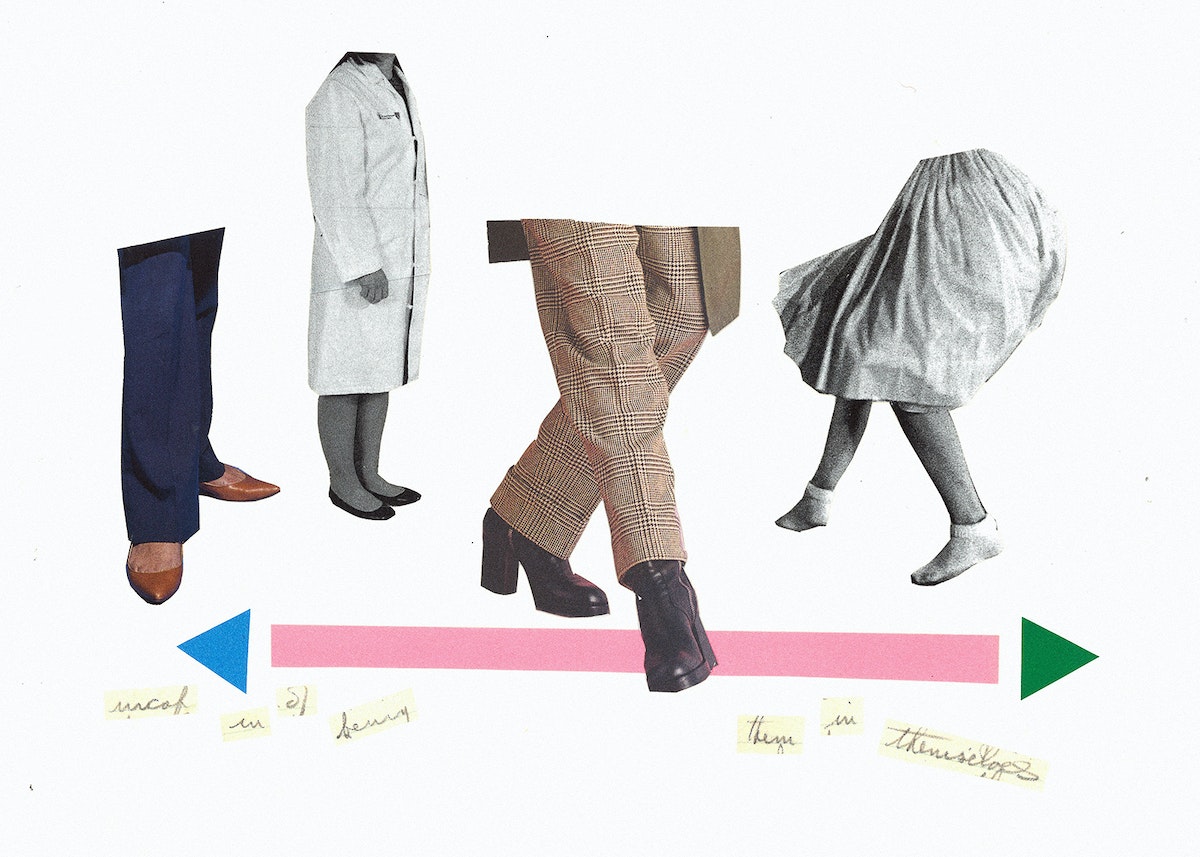
In this exercise, people reveal how they feel about a nuanced issue by where they stand in the room. You can create tension to probe everything from company culture to the value of social connection.
To begin, pose a tension—an open-ended statement with two opposing responses—to the group. A good tension has a spectrum of answers between the two poles. For example: Working on a deadline makes me feel: Energized ↔ stressed. When preparing tensions, ask yourself: Is this a balanced tension? Am I being generous to each side? Writing tensions, just like asking insightful questions, is a skill. Revise yours until it feels balanced.
Now comes the physical part. Ask everyone to distribute themselves from one end of a room to the other based on where they stand on the tension. In this example, those on the far left feel energized by deadlines; those on the far right feel intense stress. Folks in the middle are or a mix of the two.
Once people have arranged themselves, invite those on the far ends to share why they stood there. Invite others to move if something someone else says changes their point of view. Repeat this process for people standing in the middle—why are they toeing the line?
Creative Tensions is a tool developed by IDEO and the Sundance Institute Theatre Program. You can learn more about running Creative Tensions here.

3. Hopes and fears
This activity is an opportunity for a team to share the hopes and fears that underlie certain behaviors, but often go unsaid. It’s a useful exercise for alleviating anxiety and rallying a team around common goals.
In a small group, have everyone write 1 to 3 hopes and 1 to 3 fears about the start of a project, a new initiative, or another discrete topic. A volunteer shares a fear first. People with similar responses share next to surface common themes. Repeat this style of sharing for people’s hopes (to end on an optimistic note).
4. “Tell me more about that.”
This is every curious person’s favorite conversation starter. Did someone just get wide-eyed and describe their weekend as “odd?" Or sigh describing their first job as a server as “wild?"
“Tell me more about that” is an open-ended, fail-proof phrase that gives people permission to talk about what they’re holding behind an unusual word or cryptic statement. It’s a powerful gesture that signals you are ready to follow wherever someone’s inner monologue is taking them.
The fruit of these exercises hinges on your commitment to listen differently. For The Civil Conversations Project, an organization Tippett founded to create compassionate civic discourse, becoming a generous listener is part of the individual “human change that makes meaningful social change possible.” The project begs the question: If listening is at the root of collective progress, what then is the cost of not hearing each other?
“What’s holding your attention?” is an exercise created by Alexis Gonzalez Black. Special thanks to Tracee Worley, Simo Stolzoff, and Jayme Brown for their contributions.
Listening spurs personal transformation. You might’ve guessed that’s true for the listener—hearing new ideas can create sparks of inspiration or revelations about one’s own beliefs. But being listened to can also be transformative. Research has found being heard can shape a speaker’s emotions, help them grapple with complexity, and even temper extreme perspectives.

Lindsey Turner
I’m passionate about building brands, products, and experiences that help organizations show up with meaning and momentum.
I help organizations cut through complexity by shaping how they show up, through brand strategy, identity, and storytelling.
Working at the intersection of brand and business, I bring an editorial eye and a bias toward making—turning ideas into tangible experiences that people can understand, trust, and believe in.
My work spans government, healthcare, financial services, media, and consumer goods, from launching Gen Z-focused ventures to building innovation labs and reimagining legacy brands. I relish moments of ambiguity and enjoy translating across teams, perspectives, and priorities to move ideas forward.
I started my career in editorial and digital design, shaping cross-platform experiences and identity systems in publishing and agency environments. That foundation still shapes how I work today: I’m detail-oriented, collaborative, and overreliant on the Oxford comma. I hold a BFA in Visual Communication from the School of the Art Institute of Chicago.

Rachel Young
My work helps organizations see who their products aren't working for—and build the will and the tools to do something about it
For 25 years, I've asked the same question: Who does this design exclude—and what are we going to do about it?
My work spans human-centered strategy, inclusive design, and qualitative research, with clients ranging from Microsoft, Google, and Verizon to the National Science Foundation, and San Francisco Unified School District.
Before IDEO, I taught elementary school in East Palo Alto and spent a decade doing design work with social service organizations—where I learned firsthand what it costs people when systems are built without them in mind.
I am currently writing User Error, a nonfiction book about digital access and the design decisions behind it. I live in Oakland, California.

Brian Pelsoh
I lead with craft, ensuring our work is creatively excellent: rooted in deep human insight and imagination, while also grounded in the realities of business and technology.
My expertise spans brand, communication, and product design across tech, education, the arts, and social impact.
I believe great work demands both high-level vision and obsessive attention to detail, and only happens through collaboration.
I bring an inclusive, hands-on approach and a deep understanding of business, which enables me to consistently deliver excellence while always asking why.
Before joining IDEO, I worked at the brand firms Pentagram and VSA Partners. I began my career as a designer, leading teams at the School of the Art Institute of Chicago and the Milwaukee Art Museum. I hold an MFA in graphic design from Maryland Institute College of Art and a BFA in communication design from the Milwaukee Institute of Art & Design, and have taught at some of the best design schools in the US.

Tony Wong
I am responsible for IDEO’s long-term success in China and working with clients to use design as a tool to enable growth.
I am responsible for IDEO’s long-term success in China and working with clients to use design as a tool to enable growth. Specifically, I have helped Chinese companies design holistic brand solutions through the development of their products, communication, services, and innovation teams, and I have helped multinationals expand their presence and influence in China.
I advise global leaders on developing China-led innovation and capabilities.
In over 15 years in IDEO Shanghai, I have worked on projects that use design to elevate the quality of the experience of healthcare products and services, streamline processes that increase productivity, create spaces and programs that promote and enable inclusive communities, and build next generation mobility solutions that are planet-positive.
Before joining IDEO, I worked at Philips Electronics and the Electrolux Group in Italy, the Netherlands, and Singapore on a number of breakthrough commercial products. I am a member of the Young President Organization in Shanghai.

How to use AI as an editor, not a writer
Ed White shares how he uses AI as an editor—not a writer—to sharpen storytelling, rehearse ideas, and preserve the productive friction that makes creative work better.
Ed White has a rule he's tested on his own writing: hold yourself as the writer, and let AI be your editor. Ed is a Senior Design Director at IDEO's London studio, where he co-leads the firm's AI portfolio across Europe. Before IDEO, he spent 12 years as a writer and editor at the Financial Times, Wired, and Contagious. So when he talks about when to use AI for storytelling and when not to, it comes from two decades of crafting his storytelling skills.
In this episode, Mina Seetharaman talks with Ed about two specific tools he uses to keep AI in an editor's seat: a "roasting agent" prompted to critique his drafts without any sugarcoating, and a simulated audience he rehearses pitches on before the real thing. They also get into what Ed is hearing from design leaders at Anthropic, Lovable, Shopify, and Google Creative Lab about how creative work is changing, and why he thinks the friction of writing something yourself is worth protecting rather than automating away.

Building a personal AI for the messiness of life: Sida Li
Becca Carroll talks with Cue co-founder Sida Li about designing a personal AI for the messiness of everyday life—not just work. They explore how Sida stays anchored to human needs while navigating fast-changing technology, product tradeoffs, business-model experimentation, and the realities of building an AI company today.
Most AI products today are built for work—a space with clear problems and established systems. One founder noticed a gap: personal life is messier, harder to systematize, and mostly left behind by the AI boom. So she built Cue, a personal AI that lives inside iMessage and group chats, to go where the other tools haven't.
In this episode, Becca Carroll, IDEO's Chief Strategy Officer, talks with Sida Li, co-founder and CEO of Shared Context Lab, about staying anchored to a human need while the technology around her keeps changing shape, why she treats her business model with the same rigor she'd bring to a product, and what it feels like to build a company at this particular, disorienting moment in AI.
The conversation also gets into how Sida makes design decisions: the language Cue uses to describe itself, the tradeoffs behind building inside iMessage instead of a new app, and a real story about a business idea that didn’t pan out.
This is the second in a two-part series profiling founders from IDEO's Startups-in-Residence program. The first conversation is with Johannes Seemann, founder of Sooner, on designing GenAI for the emotional side of money.

Designing GenAI for the emotional side of money: Johannes Seemann
Designing financial tools around the feelings that shape money decisions.
Most personal financial tools are built to run the numbers and optimize towards a budget. While that works for some, most people experience money as a lived relationship that does not neatly fit into a spreadsheet. Johannes Seemann and Becca Carroll discuss why money is emotional before it is mathematical, and what a human-centered approach to building a generative AI financial product looks like in practice.

The curious leader's edge in uncertainty: Scott Shigeoka
How genuine curiosity helps leaders navigate uncertainty with greater confidence.
Mina Seetharaman talks with Scott Shigeoka, author of Seek and Head of Curiosity Cultivation at the Eames Institute, about what distinguishes genuinely curious leadership from performative curiosity, how power dynamics shape curiosity, and why practicing curiosity can restore energy rather than drain it.
Looks like you might be in search of something very specific?
Or reset the filters above and try another angle.
Here’s some random inspiration

Podcasts about creative leadership

Articles about the power of prototyping




















.jpeg)




.webp)