
.svg)


Why design must evolve alongside technology
.webp)
What if we treated our relationship with advanced technologies, such as AI, as we would treat relationships with new life forms? How might we co-exist? What would happen if we chose to evolve together? And how would it change design?
Inspired by biology, this thought experiment underlies a bold new idea that’s also a powerful old one: mutualism, which we began to explore in our talk at SXSW in March of last year.
A firehose of AI news is coming at us every day. Right now, humans are still in charge. However, these systems are increasingly designed with higher levels of agency and independent action, with attendant novel qualities, behaviors, and perhaps even needs. Such systems will likely affect their creators and environments in unpredictable and far-reaching ways, and with the unintended consequences to match.
This is the typical off-ramp to dystopian sci-fi stories of technological regret and human resistance against the robots. It’s not hard to see why: Our current relationship with technology is messy, unhealthy, and fractured. If we stay on this trajectory, we may indeed find ourselves consumed by the other, or dominated, or controlled.
As designers, we look for ways to shape the future that…aren’t awful. And we imagine a different path, one that recognizes our growing interdependence. Mutualism, a type of symbiotic relationship in biology, is a relationship in which two different species benefit from each other and aid in each other’s survival, such as animals and people. This type of interconnection offers a framework for creating a world where humans and advanced technologies can coexist and flourish together. If not, we risk entering winner-takes-all or doomsday scenarios feared by many technologists. And while the idea may sound out there, some progressive companies are already designing AI tools meant to benefit humans at their core, like Claude.
Technology as a living-ish being
The foundation of mutualism is to think of technology not as static, but as something dynamic, something close to a living entity—even if it isn’t, and isn’t likely to become one. This feels important, because even if technology is not technically alive, human beings can’t help but anthropomorphize something you can chat with—or something that looks like a living being. Think Casio’s Moflin, a fuzzy, gerbil-like robot companion powered by emotional AI that exhibits pet-like behaviors and develops a unique personality over time based on interactions with its owner.
When you interact with something like a Moflin, you start to feel that shift viscerally. Whether or not the Moflin is alive, we, as humans perceive it to be. It still shapes what we think of it and how we interact with it; its behaviors pull you into a relationship, one where you’re responding to its cues and it’s responding to yours. That small, almost mundane exchange is a reminder that even artificial beings participate in systems of dependence and care, which brings us to the question of what their needs actually are.
We all have needs—even technology
For example, technology requires nutrients: the minerals, metals, and energy it relies on to thrive and grow. Those things are finite resources. Humans can relate. We need a healthy, sustainable natural environment to do the same. Mutualism prompts us to consider: How might the world change if industries welcomed advanced technologies as our partners in planetary care and protection? Imagine the impact of technologies acting out of mutual interest to help us find ways to derive value from the planet without further despoiling it in the process.
Technologies such as AI require another kind of raw material: data that enriches its ability to compute and predict in new ways. Similarly, humans need data we can trust and that we can ground our actions against. Here, too, mutualism offers a way forward: What if companies approached data as a resource critical to mutual nourishment, one that requires data practices centered in careful cultivation and respect? Imagine the consequences for civic health, news ecosystems, and our ability to navigate the real challenges of an increasingly unreal world.
From tools to colleagues
Mutualism invites us to construct a healthier state of affairs, one that moves beyond exploitation and extraction toward mutual recognition, negotiation, and survival. It’s not about making technology more human; it’s about recognizing that emerging technological systems possess their own kind of aliveness—not biological, but behavioral, relational, and world-shaping. It no longer serves us to think of them simply as tools to be wielded; we must imagine them as colleagues, with needs and trajectories that intersect with our own.
And when we take that stance seriously, the way we design begins to shift. Some companies are already moving in this direction. Microsoft’s positioning of Copilot, for example, frames AI less as a product and more as a companion built around human potential, creativity, and relationships. It's an entity that adapts to your context, learns from your feedback, and orients toward your interests. It offers a glimpse of what it might look like to design technologies not for us or against us, but with us, in a shared system of mutual flourishing.
Symbiosis as an evolutionary imperative
Maybe this shouldn’t be surprising. In Blaise Agüera y Arcas’s Long Now talk, “What is Intelligence?”, the VP Fellow and CTO of Technology & Society at Google reminds us that life has always evolved symbiotically. Humans, in fact, are composites of countless bacterial and microbial partnerships that have made our survival possible. If symbiosis is the engine of evolution, then the question isn’t if we’ll coexist with new forms of intelligence, but how we’ll participate in that long lineage of co-creation. From that perspective, the future isn’t a break from what we are, but an extension of the way life has always unfolded: through mutual transformation.
If we want an AI future that values mutualism, we must start practicing it today. Here are three emerging design principles we’re using in our own work at IDEO.
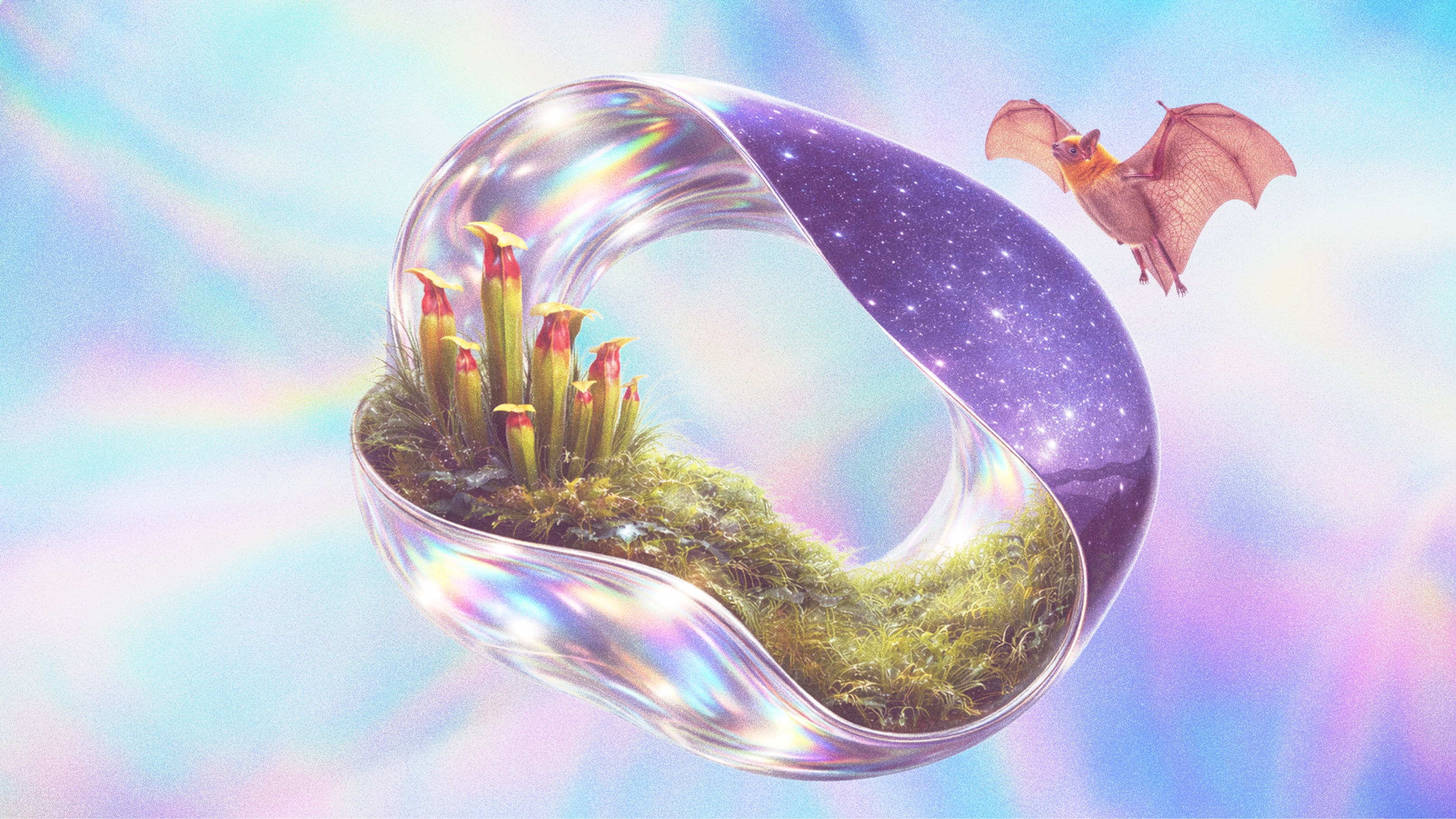
1. Never go alone: Adopt a stance of interdependence over independence
As we continue to develop technologies that can operate with increasing autonomy, it becomes crucial to recognize the interdependence between humans and machines. Mutualism invites us to design systems that not only serve human needs but also evolve in ways that reflect and enhance shared values. This shift from a purely utilitarian, transactional approach to one of relational alliance could foster deeper connections between technology, society, and our shared environments.
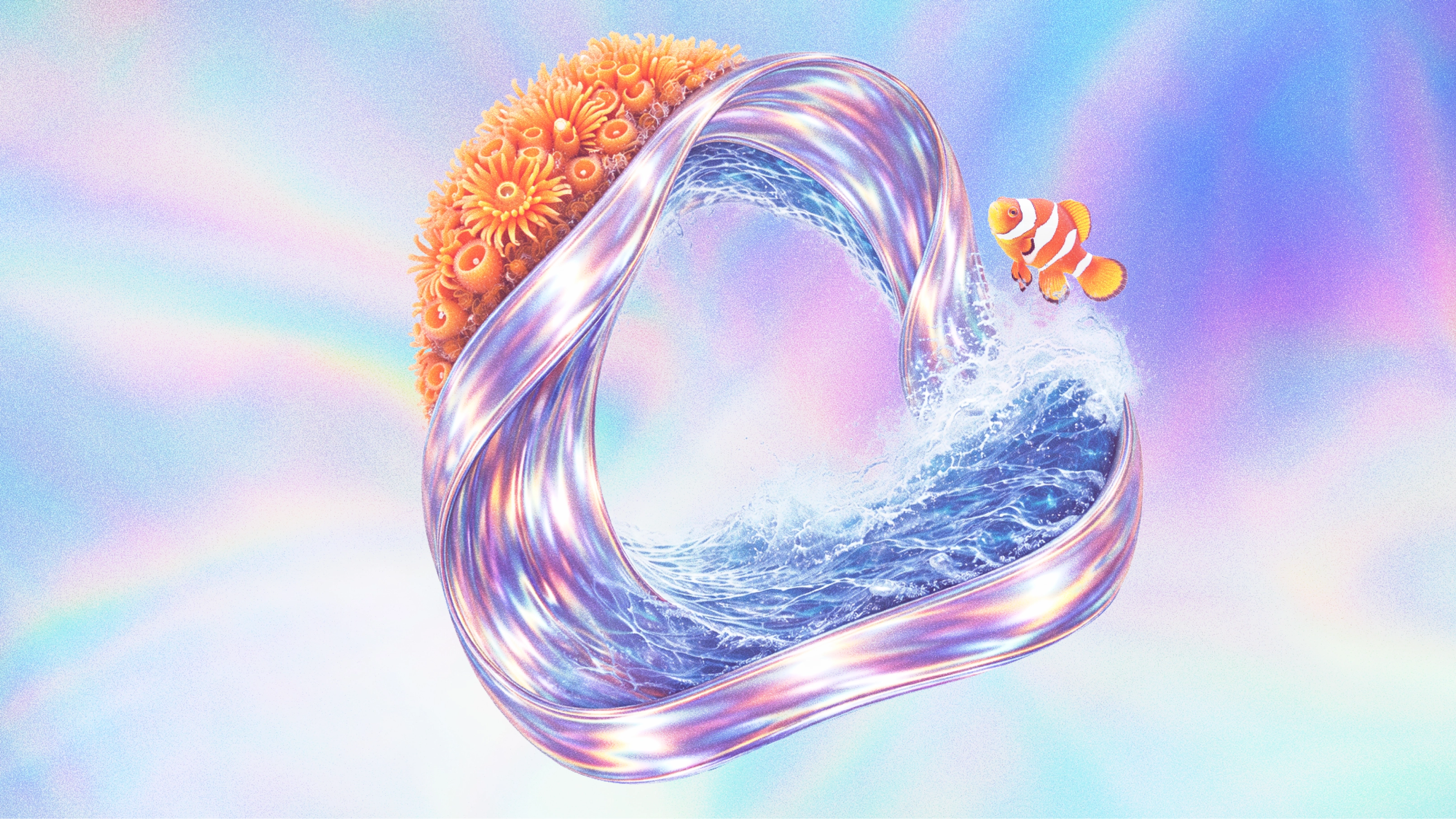
2. Keep evolving: Use dynamic adaptability to meet changing needs
Mutualism encourages the creation of flexible systems that can adapt as new information, contexts, and needs emerge. This adaptability ensures that as technology evolves, it remains aligned with the well-being of all stakeholders, from individuals to entire ecosystems. It’s about designing with the understanding that change is constant, and that technology must be able to respond to such change in meaningful ways.

3. Lift your head: Imagine and consider implications beyond the immediate
By focusing on the holistic impact of technology, mutualism pushes us to consider not just the immediate effects of our designs but their long-term implications for society, the environment, and future generations. This principle challenges us to go beyond short-term gains and to create technologies that contribute positively to the broader fabric of life.
Even as we build this framework, we know that abstraction doesn’t build the future—choices do that. Design does that. We still have an opportunity to help shape this critical emerging relationship between humans and autonomous, agency-rich technologies. And the organizations that figure out how to put mutualism into practice will be the ones most likely to reap its rewards.
Curious to explore these questions in the context of your organization? Reach out: ai@ideo.com.
A special thanks to Ryan Sherman and IDEOers Jenna Fizel, Tim Brown, Chris Hill, and Jason Robinson, alums Kate Schnippering and Natalia Vasquez, and many more for their contributions.
Words and art

.webp)

Subscribe