.svg)



From incremental change to breakthrough innovation
How Master Kong reinvented the instant noodle, from the inside out.
Looking to understand the role of instant noodles in middle-class Chinese life, the IDEO team conducted in-home research with consumers across a range of life stages and levels of attachment to noodle culture and convenience foods. The first finding was reassuring: Everyone kept instant noodles at home. The category still had a place in middle-class kitchens. But beneath that was a more complicated, emotional story—and an unmet need for convenience and quality to coexist in a single product.
The team discovered that instant noodles are more than just a quick, on-the-go meal; they are a nostalgic comfort food that evokes fond memories. But since their heyday, their role in daily life has evolved. Once a complete meal in itself, instant noodles now often function as a versatile flavor base or culinary accent in other dishes. Because they don’t align with the healthier, higher-quality, and more novel food choices that middle-class consumers aspire to, noodle shops, delivery noodles, or fresh-cooked instant options often win out. Yet, even these alternatives come with trade-offs. Delivered noodles lose texture during transport. Sit-down noodle shops preserve quality but offer limited flavors. Cooking from scratch meets the bar for both texture and flavor, but requires a significant time investment. As one young mother said, “If I could get the texture of fresh-cooked noodles without turning on the stove, I’d buy that instant noodle for sure.”
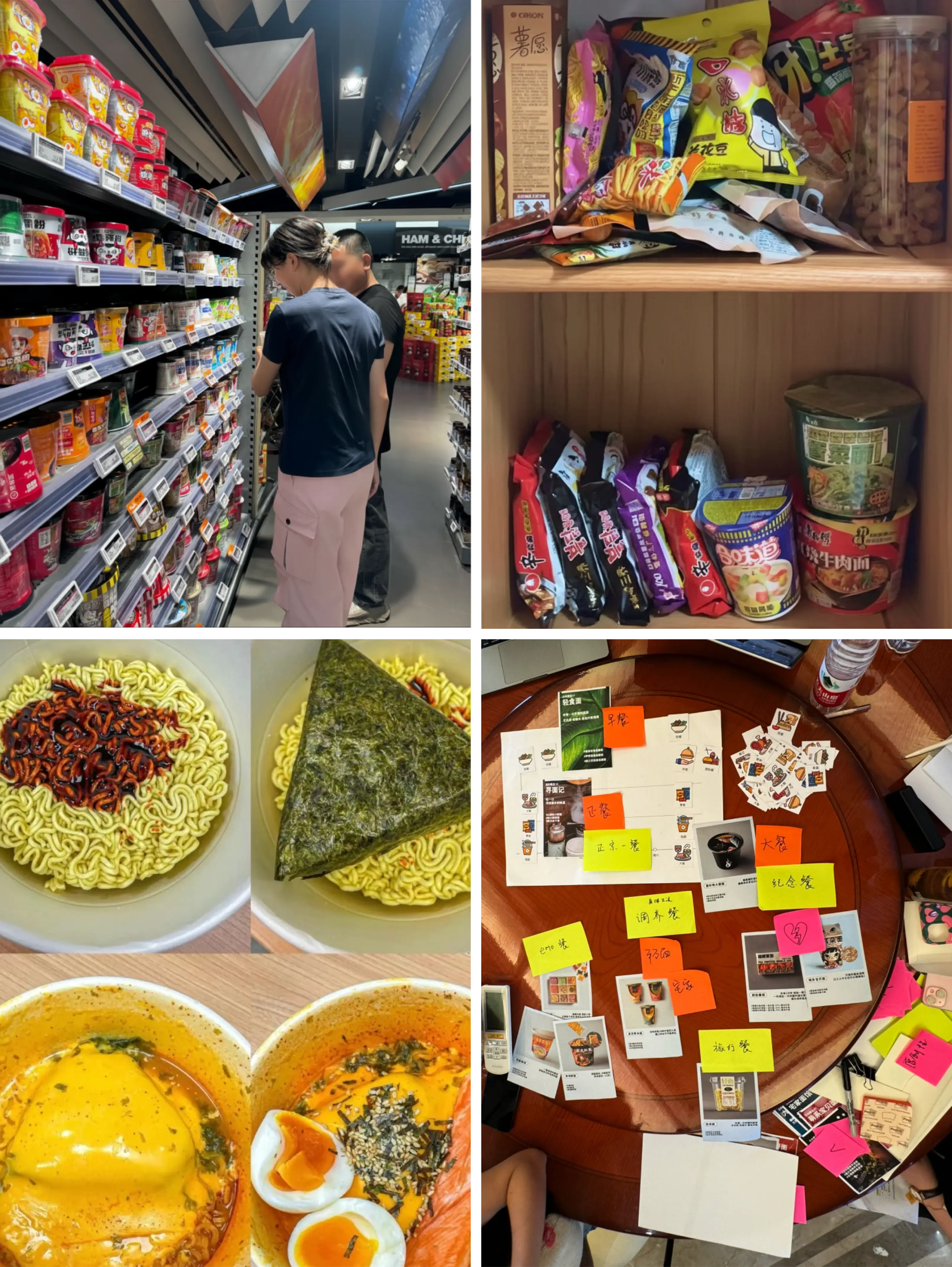
The research inspired the creation of a new category, which the team termed “fresh-brewed noodles.” More than just a noodle or broth upgrade, Master Kong’s fresh-brewed noodles would offer the speed of instant noodles with the quality of freshly cooked options, plus flavors not found in traditional noodle shops. The strategic positioning was clear. Executing it by making fresh-brewed noodles mass-producible, affordable, and eventually profitable presented a category-innovation challenge. To get there, IDEO designed a series of dual-track co-creation workshops with the Master Kong team and consumers.
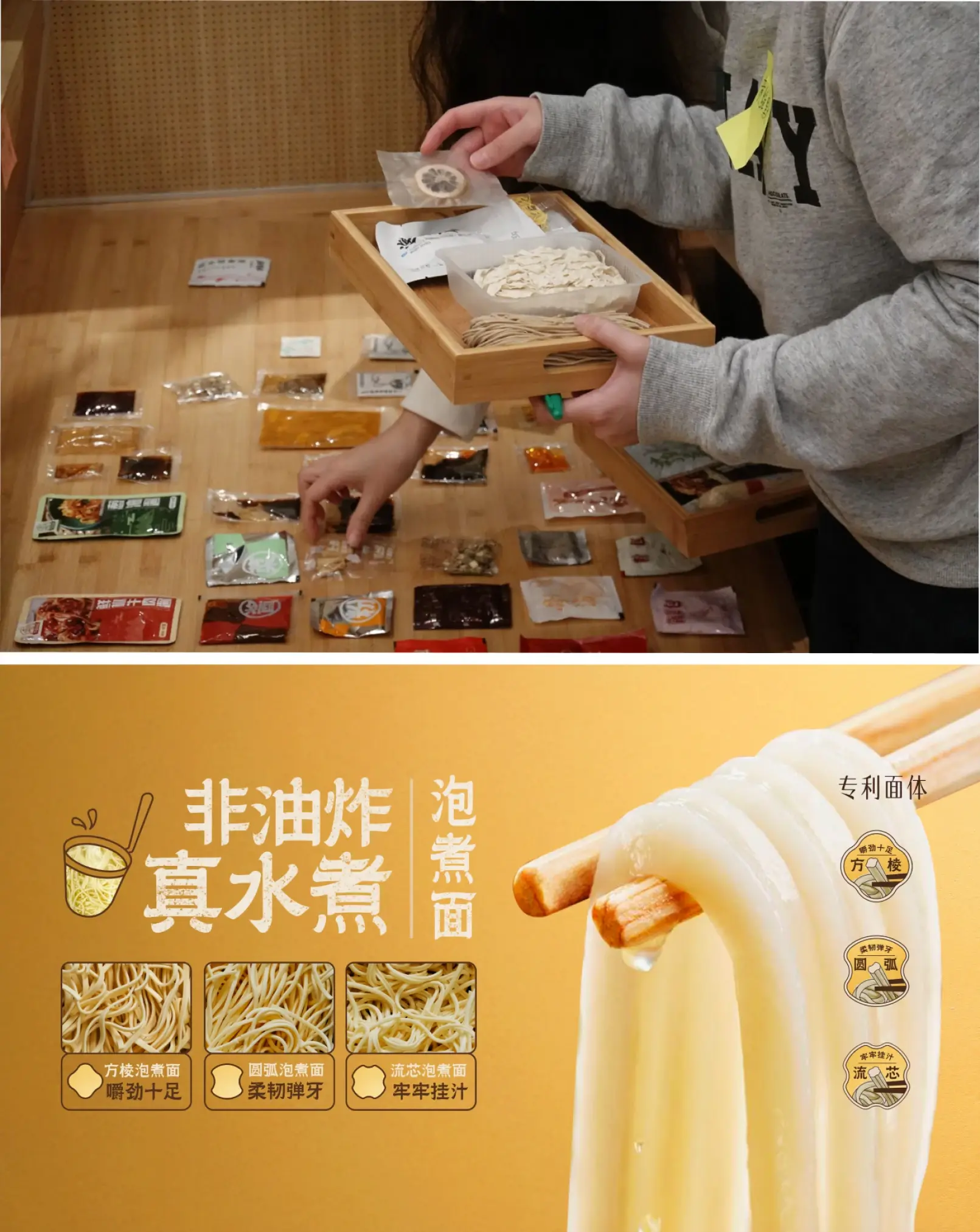
One track focused on prototyping the core product experience: noodles, broth, and toppings. IDEO and Master Kong’s R&D team began by studying the traditional craft of Chinese noodle-making, starting in Shanxi, a region renowned for its noodles. Through successive rounds of prototyping and consumer tasting, the team identified a critical insight: for “fresh-brewed noodles” to be convincing, the innovation had to be centered on the noodles themselves.
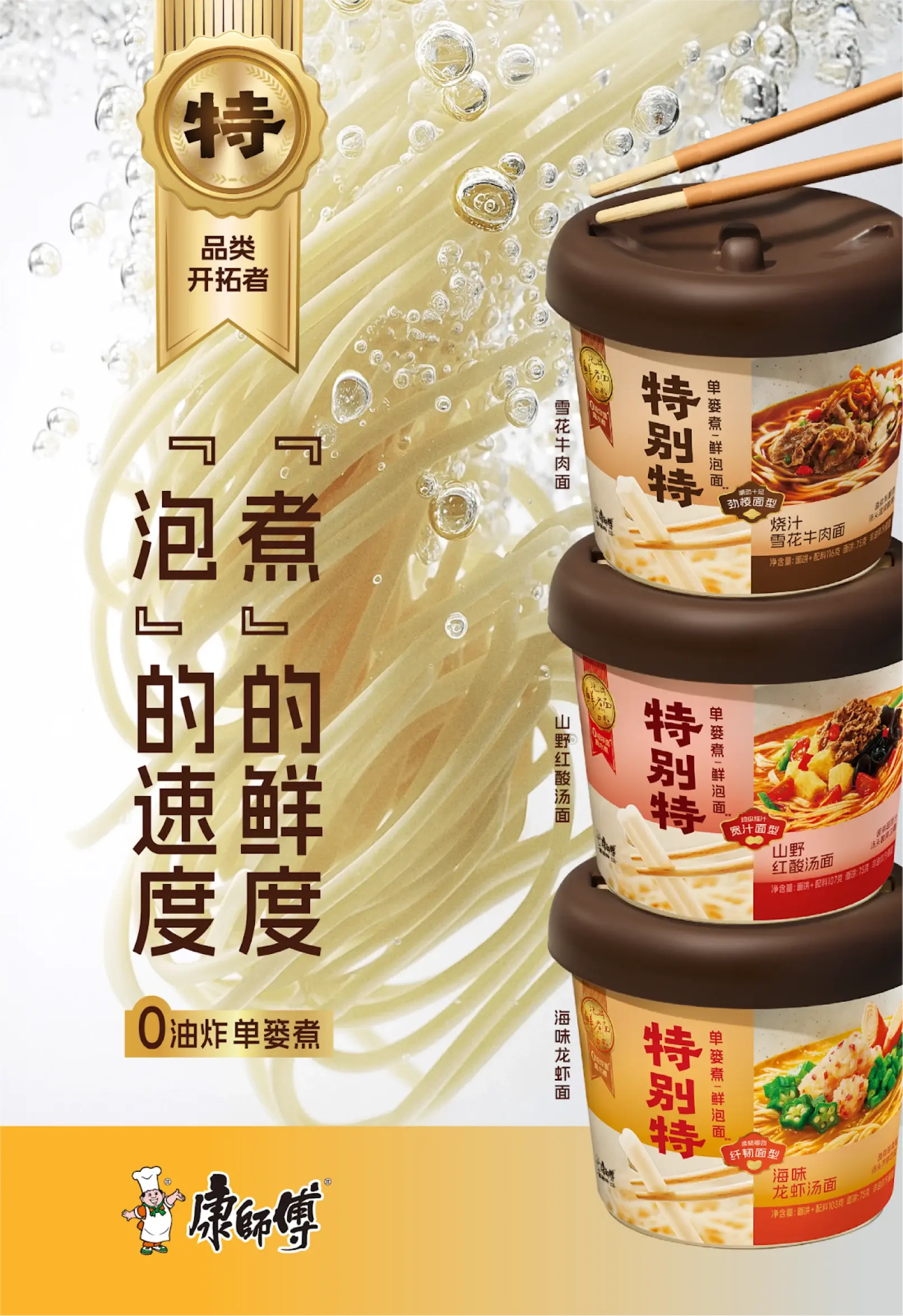
Texture alone was not enough. Consumers needed to see a meaningful difference before they tasted the product. IDEO translated this insight into a distinctive noodle profile: irregular, dimensional shapes designed to remain springy, hold sauce and broth, and mimic the resilience of freshly cooked noodles using only hot water. Because this visible shape represented the product’s core value proposition, it became a hero feature on the packaging. The graphic design made a bold visual statement about the noodle form, turning a technical R&D breakthrough into an immediately legible consumer promise: these are not ordinary instant noodles.
A parallel track explored the broader commercial experience: trend-forward and reimagined classic flavor profiles, light yet deeply satisfying broths, carefully selected toppings, and packaging that signals a new level of quality on store shelves. One key insight was that utensils carry meaning. Conventional instant noodles are often associated with disposable plastic forks, while higher-quality noodles are eaten with chopsticks. IDEO translated this cultural cue into the design of the bowl’s lid.
Instead of treating utensils as an afterthought, the team designed a solid, rounded, heat-retaining lid that embeds a pair of small wooden chopsticks. The gesture creates a small ritual of anticipation and reframes the product—not just a convenient instant meal, but a more considered noodle experience. Once opened, the product fulfills that promise with satisfyingly bouncy noodles, a rich liquid broth pouch that replaces the traditional oil-and-powder packet, and a vegetable packet reformulated with more premium whole ingredients.
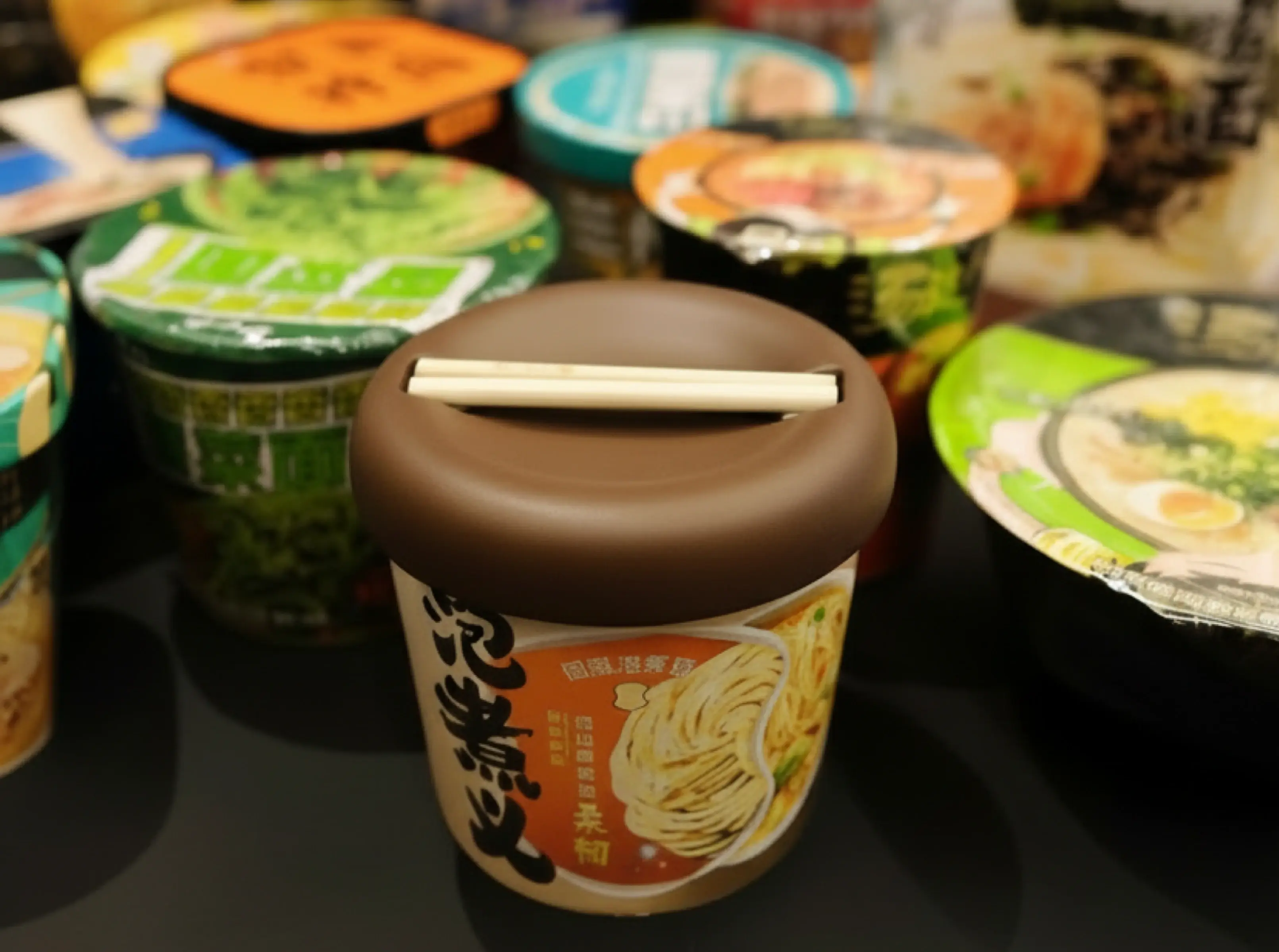
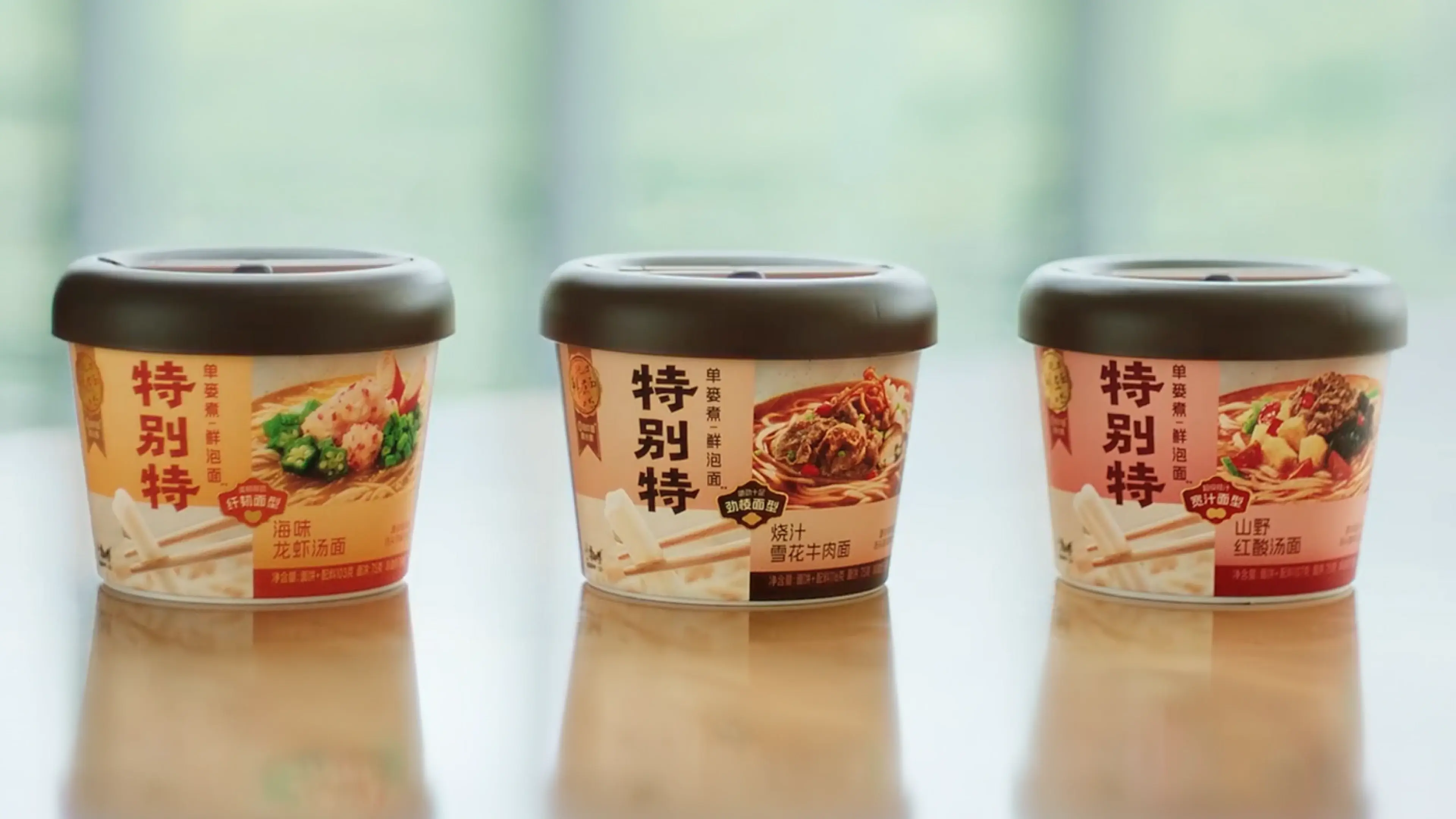
The first batch of “Te Bie Te” Fresh-Brewed Noodles—Chinese wordplay that emphasizes “special”—launched in August 2025 with three trendy and tried-and-true flavors. Within just three days, sales exceeded 100,000 bowls. Within a week, “Te Bie Te” topped the instant noodle category sales ranking on Douyin, China’s domestic counterpart to TikTok. The outcome was bigger than a product launch—it served as proof that a mature, declining category could be fundamentally reinvented to meet consumers’ real needs. For Master Kong, the project became a North Star and a model for internal category innovation in beverages, ready-to-eat foods, and beyond.
Once a popular, affordable staple, the instant noodle category in China has been declining rapidly due to shifting demographics, rising food delivery options, and increasing customer demand for healthier, more nutritious meals.
According to the World Instant Noodles Association, between 2020 and 2023, China’s instant noodle consumption fell by 4 billion packs.
100,000+
“Te Bie Te” bowls sold in the first 3 days on the market
#1
on Douyin’s instant noodle category ranking within one week of launch
Making international education future-fit & affordable
Lexel brings world-class learning to Malaysia’s middle class.
Taylor’s legacy began in 1969 with the founding of Taylor’s College and soon expanded to include Taylor’s University, one of Southeast Asia’s top private universities, as well as many other institutions that serve 35,000 students per year. The family-owned group also operates Taylor’s International Schools, Garden International School, and Nexus International School for students ages 4 to 18. In Kuala Lumpur, Malaysia’s capital city, annual tuition at premium private schools like these ranges from about $10,000 to $25,000 USD. Taylor’s wanted to do something different: provide the same level of academic rigor and immersive learning experiences at one-third the cost.
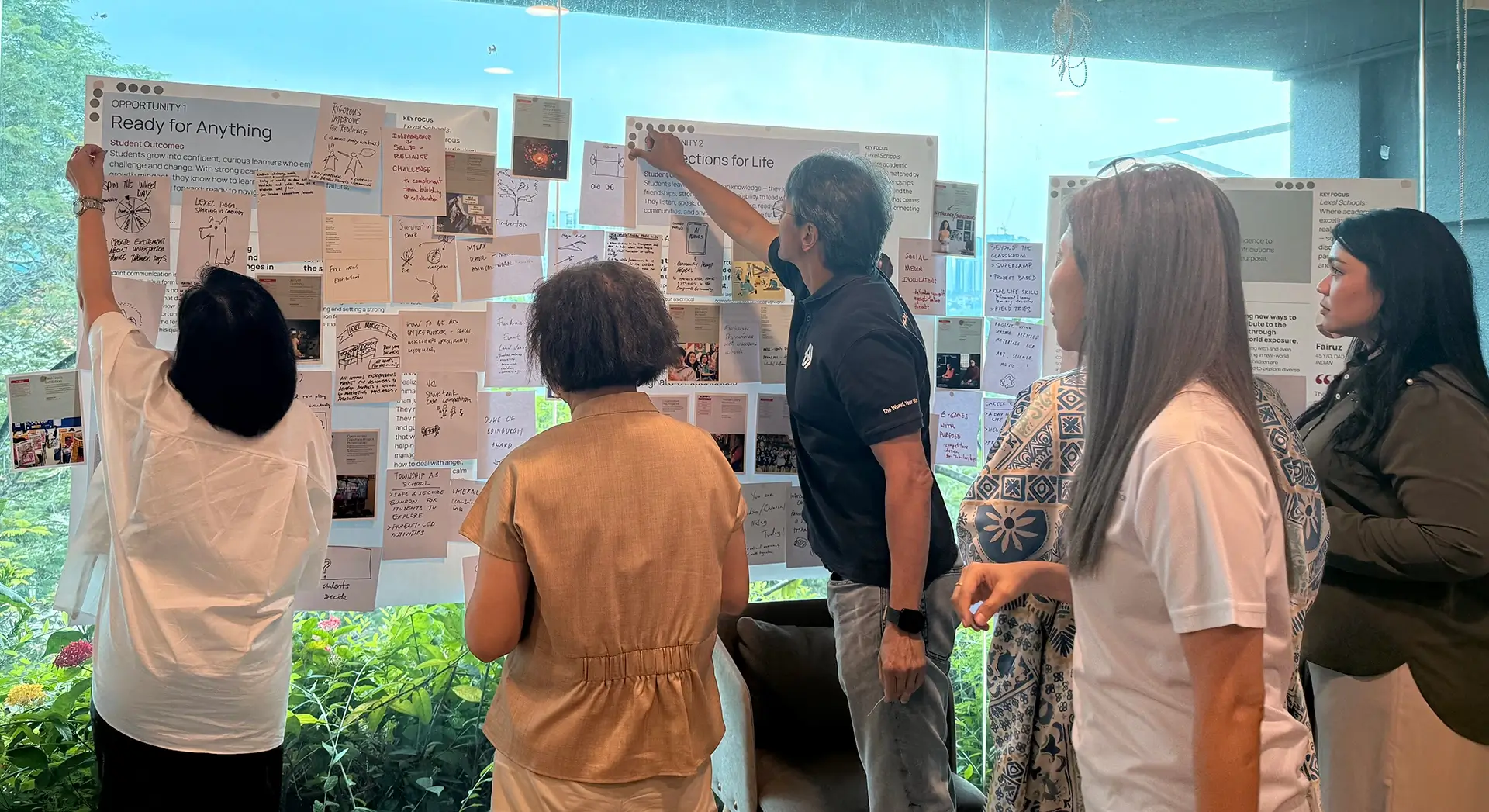
IDEO began by speaking with over three dozen students, parents, teachers, and experts across the capital to understand what was working, what wasn’t, and what was missing from such moderately priced international schools.
A few themes quickly emerged. Families, students, and teachers were worried about the stability of these new private schools, which tended to have higher-than-normal teacher turnover rates and were plagued by financial instability, negatively impacting talent attraction and retention, as well as student learning. Parents appreciated that the schools offered holistic learning experiences, such as field trips to rural areas, including jungles, but wished they were more consistently part of the curriculum. And now, the looming challenge of AI—how to use it, how to teach it, and how to teach with it—was in the background, a persistent cause for concern. The big unmet need? Reassurance that Taylor’s was thinking long-term and systematically about developing the skills, knowledge, and mindsets that would prepare students for an ever-changing world. Parents wanted a school that measured growth in academic, social, and character terms over generations, not just school semesters.
With these insights in hand, IDEO began developing a design Playbook for Taylor’s new brand—Lexel International Schools. A combination of “lexicon” and “excellence,” Lexel’s mission is “building what lasts, learning for life.”

The schools are centered around three key differentiators:
- Always Ahead: Lexel schools commit to staying current with the topics and subject matter they teach, as well as the tools they provide to students, parents, and teachers.s.
- Learning That Builds for Life: The schools ensure programmatic, systemic, and consistent learning experiences from Pre-K to Year 11. Interested students can even continue their post-secondary journey in partnership with Taylor’s University and other higher education institutions within the Taylor’s ecosystem.
- Educators for the Long Run: These schools commit to ongoing investments in professional growth opportunities for teachers and stable learning environments for students.
Four Lexel Literacies—AI, Digital, Financial, and Nutrition—integrated into the Cambridge Curriculum bring the school’s vision and mission to life.
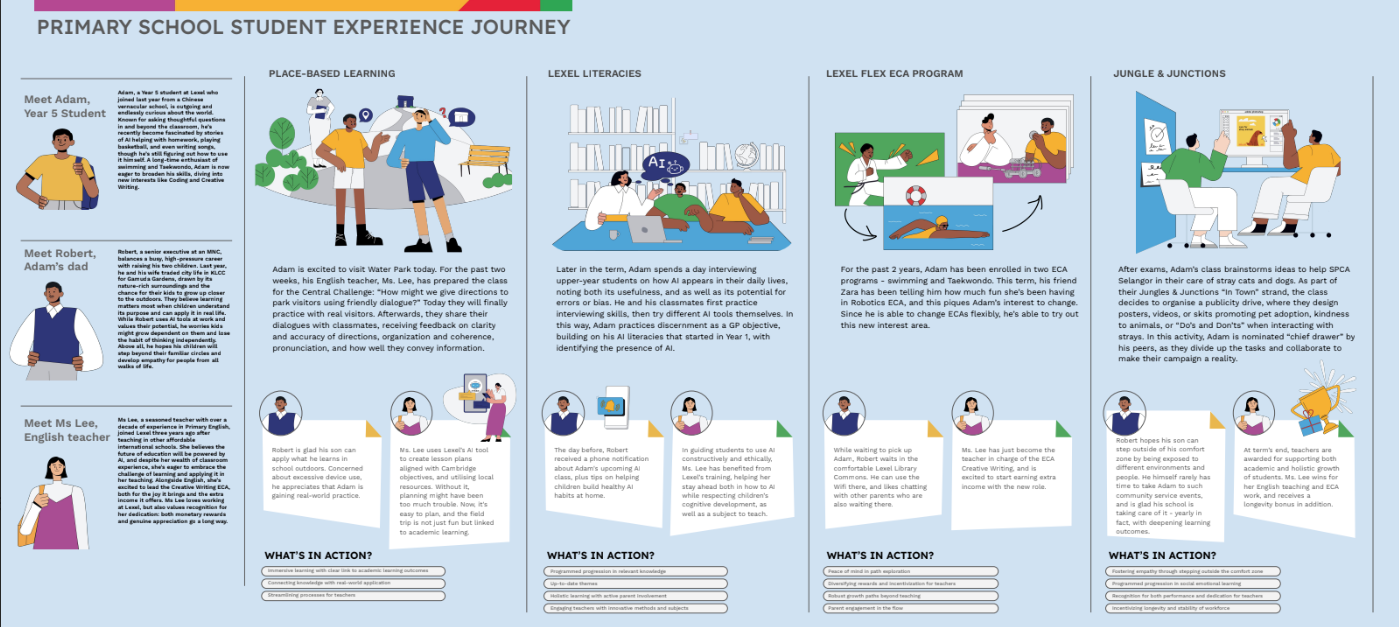
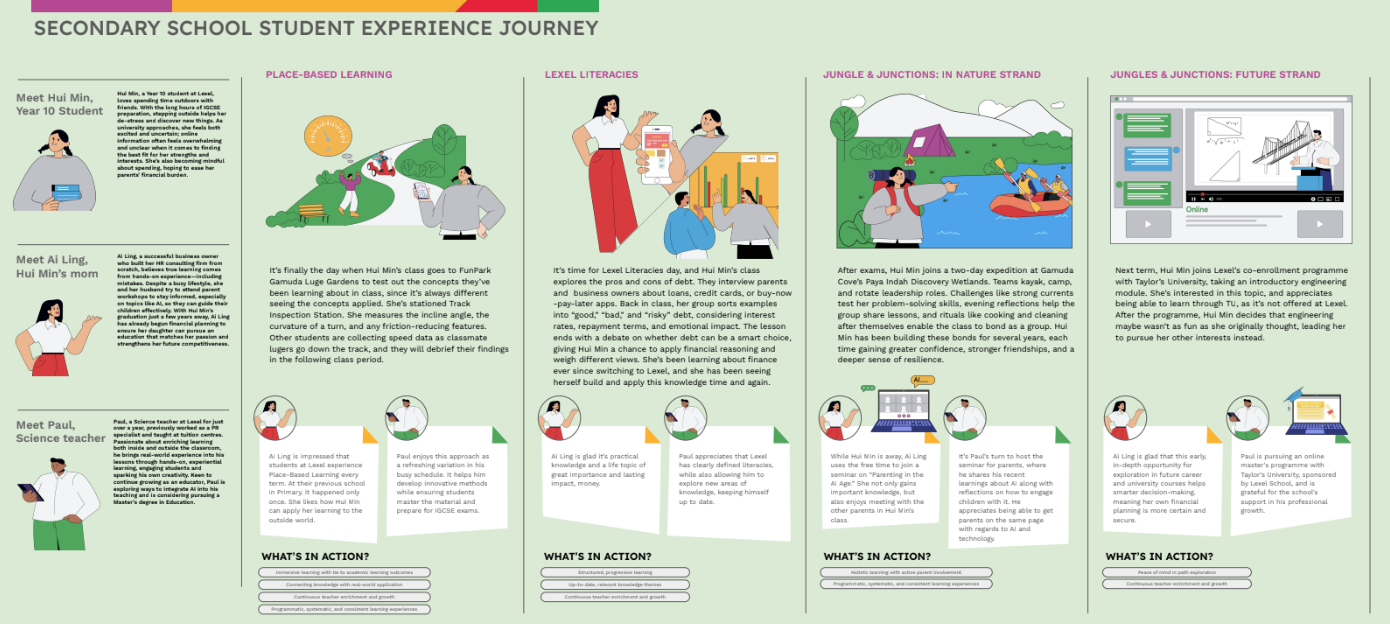
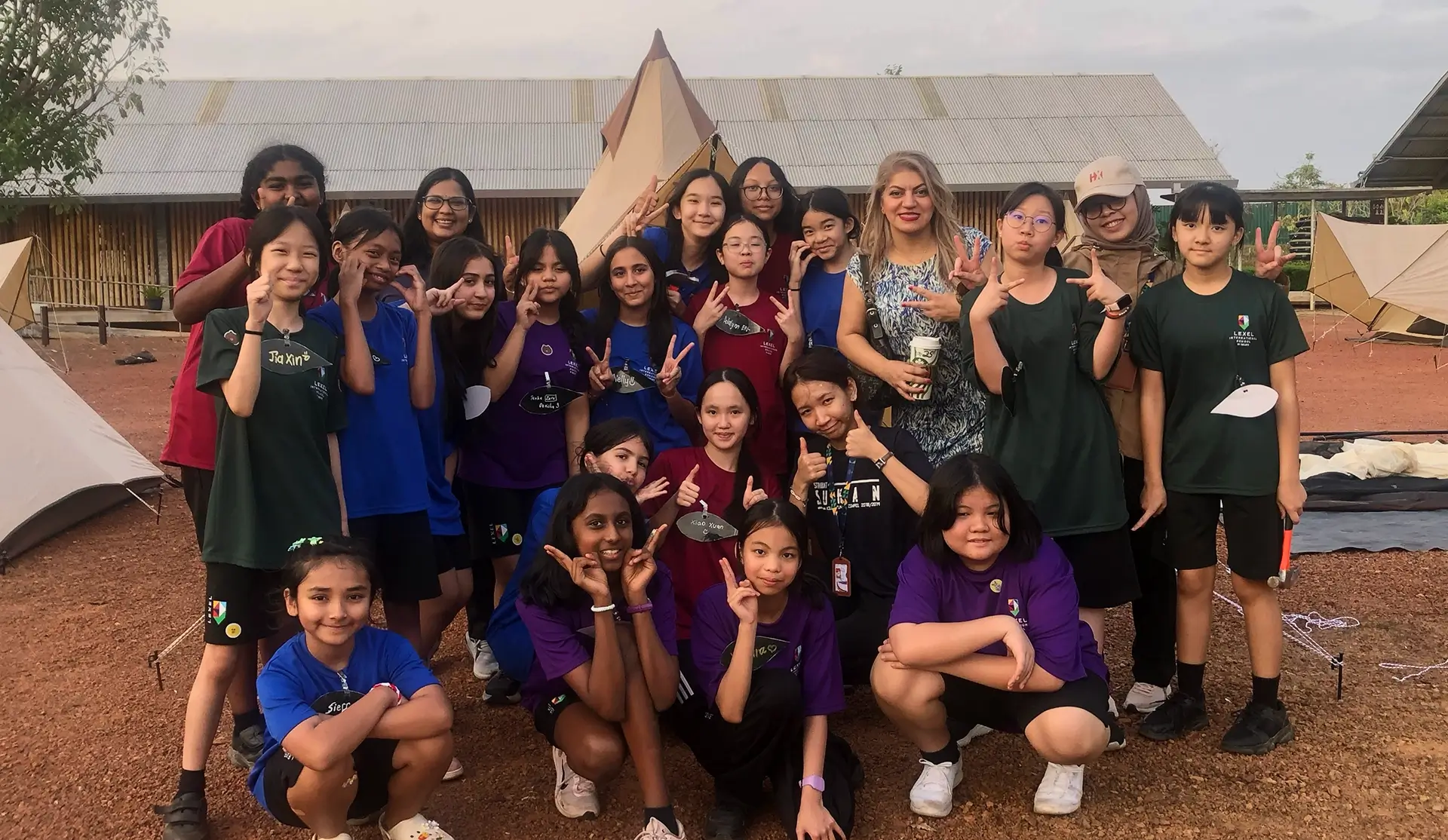
By systematically integrating AI literacy into its spiral education framework, in particular, an approach where major topics are revisited multiple times through a curriculum to build fluency over time, Lexel ensures parents that the school is thinking a decade ahead from Day One, setting the school apart. In addition to enhancing AI fluency, Lexel offers unique end-of-term experiences called Jungles & Junctions.
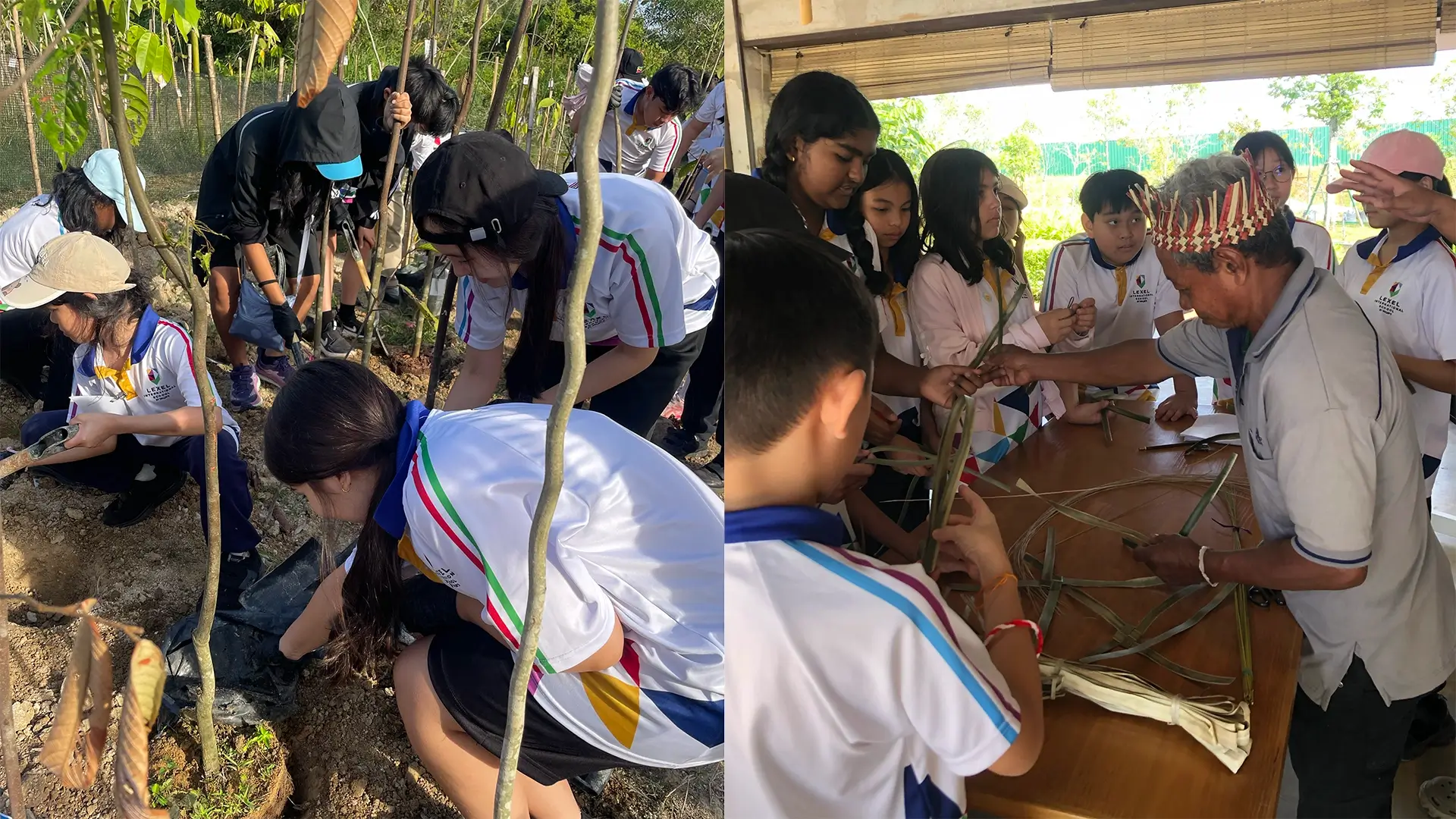
Combining three important strands of learning—community engagement, nature-based personal and interpersonal development, and career and university exploration—Jungles & Junctions leverages Taylor’s extended educational network and Lexel’s strategic founding campus within the Gamuda Gardens development in Selangor. Surrounded by tropical rainforests, the township’s residential neighborhoods, theme park, and various sports facilities, including an Olympic-length swimming pool, are transformed into an extended Lexel campus, with a GenAI-driven planner to help teachers streamline the organization of class outings. “The Township is Your Campus” became the tagline for this approach.
In September 2025, just months after IDEO’s collaboration ended, Taylor’s began classes at its first Lexel International School. By mid-year, the new school had achieved 115% of its year-one student enrollment target, with significant inbound demand for Year 2 already demonstrating the school’s market resonance.
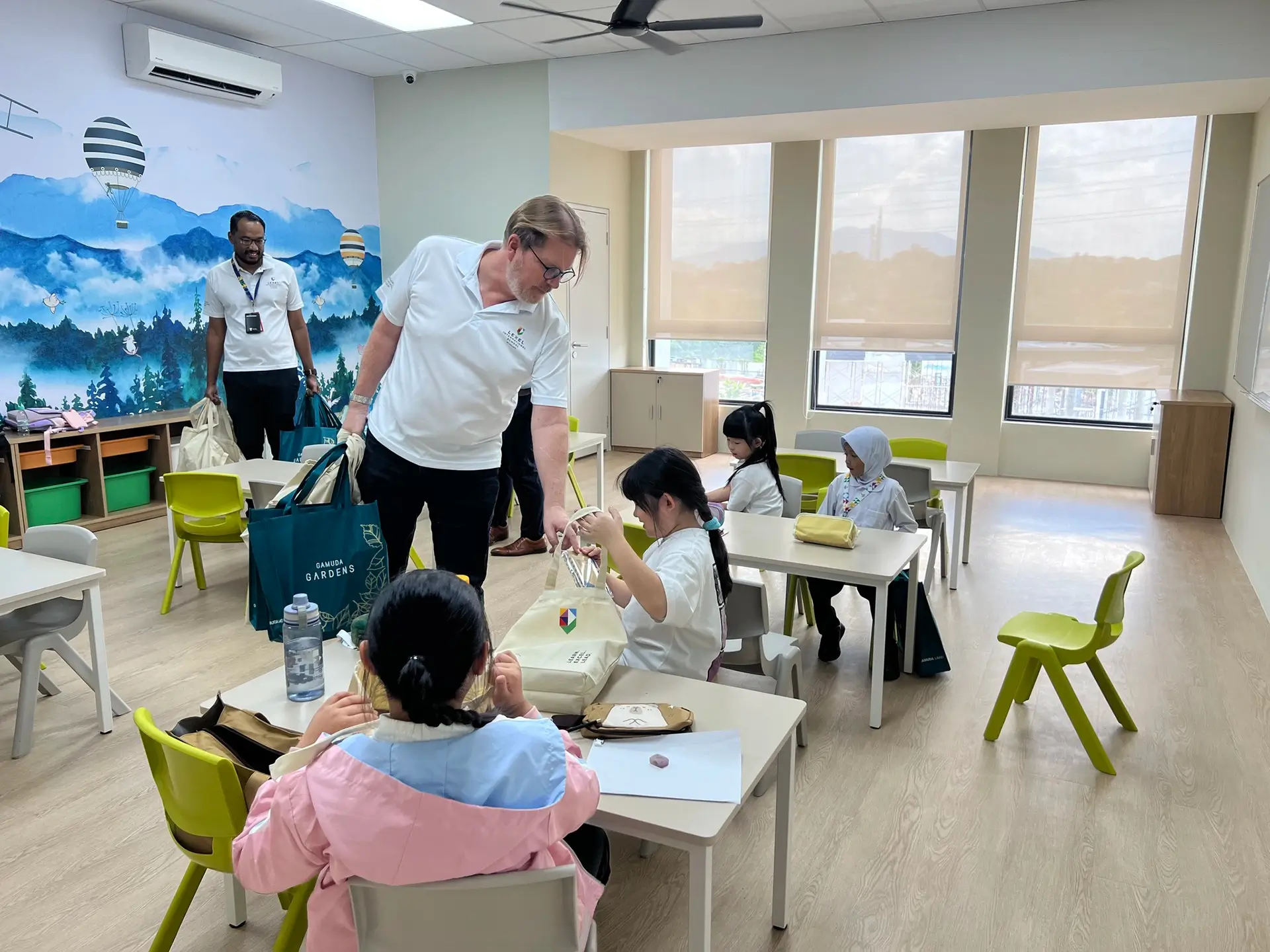
The modern campus features spacious classrooms, science and technology labs, a library, a multipurpose hall, and a canteen. Annual tuition ranges from about $2,800 USD for pre-K students to about $6,100 USD for secondary students.

Most importantly, by combining Taylor’s deep academic expertise, Gamuda Land’s development prowess, and IDEO’s innovative design Playbook, Lexel brings quality, affordable international education closer to home for Malaysian families. According to one parent, “My daughter looks forward to going to school every day … and has a lot of opportunities to express herself. On a scale of 1 to 10, I give [Lexel] an 11.” Based on the IDEO Playbook, a second flagship campus in the Southern Klang Valley, which is scheduled to open in September 2026, has already exceeded its year-one target enrollment expectations, with plans to continue extending the Lexel network to other parts of Malaysia and the wider Southeast Asian region in the near future.
Malaysia’s private international school sector has grown significantly as parents seek quality English-language education. However, high tuition fees and limited access to reputable schools are continual challenges for those in the emerging middle class.
115%
of Lexel’s student enrollment target reached during the launch year of its first campus
Year 1 enrollment target exceeded
at Lexel's second campus several months ahead of classes commencing
Delivering an unbiased news experience
Straight Arrow News transforms fact-based news consumption.
The American news industry has long been a competitive and saturated market. This has only intensified with the emergence of social media outlets and AI-generated news. Even so, SAN’s rigorously unbiased, fact-based reporting style and rich video storytelling had enabled the ambitious startup to rise above the media fray in just three short years.
With a strong foundation to build on, IDEO sought to further differentiate SAN’s cutting-edge news product and build deeper engagement with a wider audience through a new user experience.
.webp)
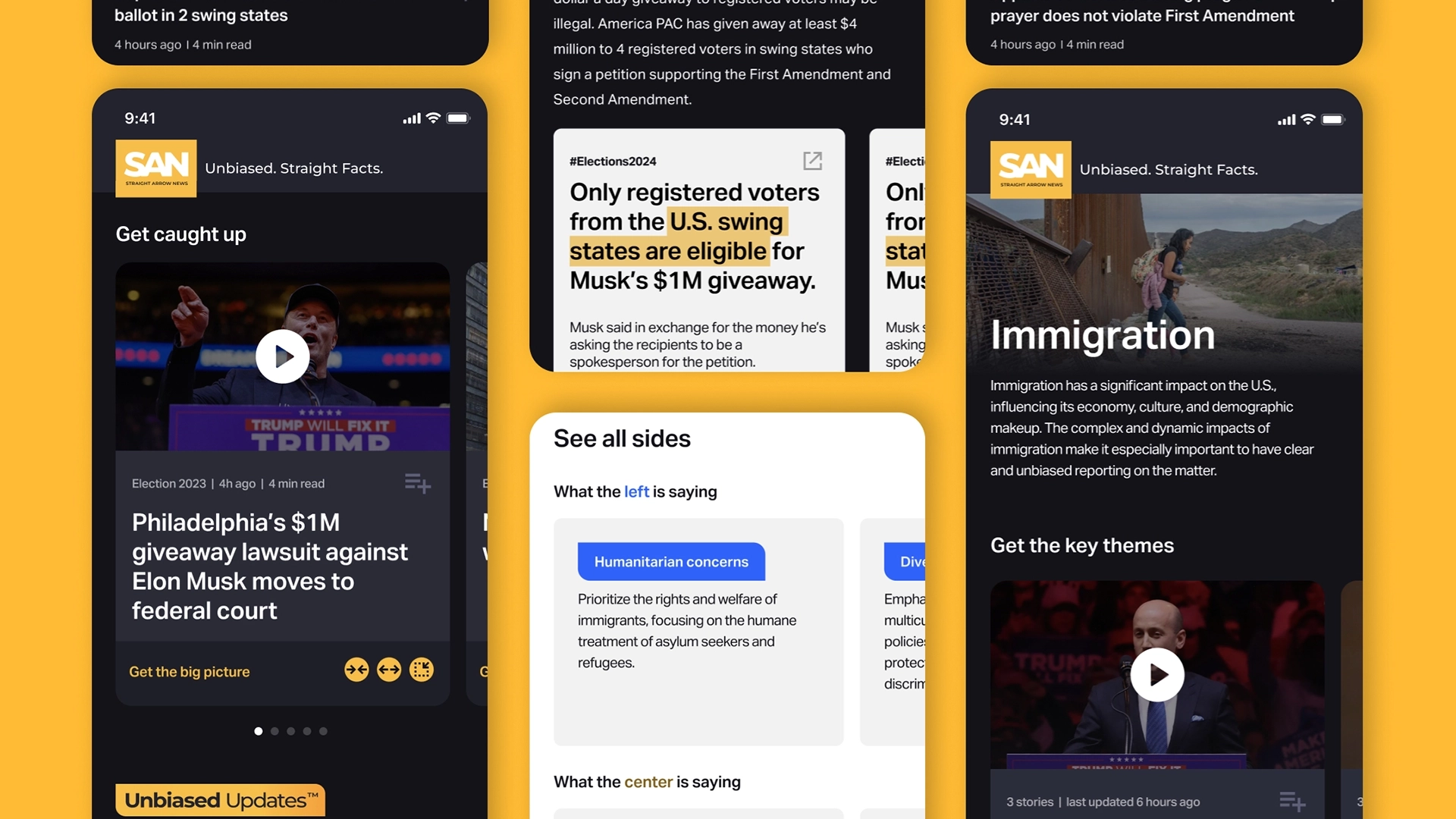
Collaborating closely, IDEO and SAN began by delving deeply into media consumption habits. They met with early SAN superfans, news consumers who spent hours a day absorbing content from traditional outlets like Fox and USA Today, and those who looked to their Ring doorbell app or Reddit for news. The takeaways? People were tired of clickbait and clunky interfaces. They sought clear, factual news that was easily accessible, with additional context to help them interpret events and understand their significance. They craved more than one perspective on important topics, so stories felt balanced rather than polarized. They also valued having control over how they consumed news, so making it easy to switch between text, video, and audio formats was crucial.
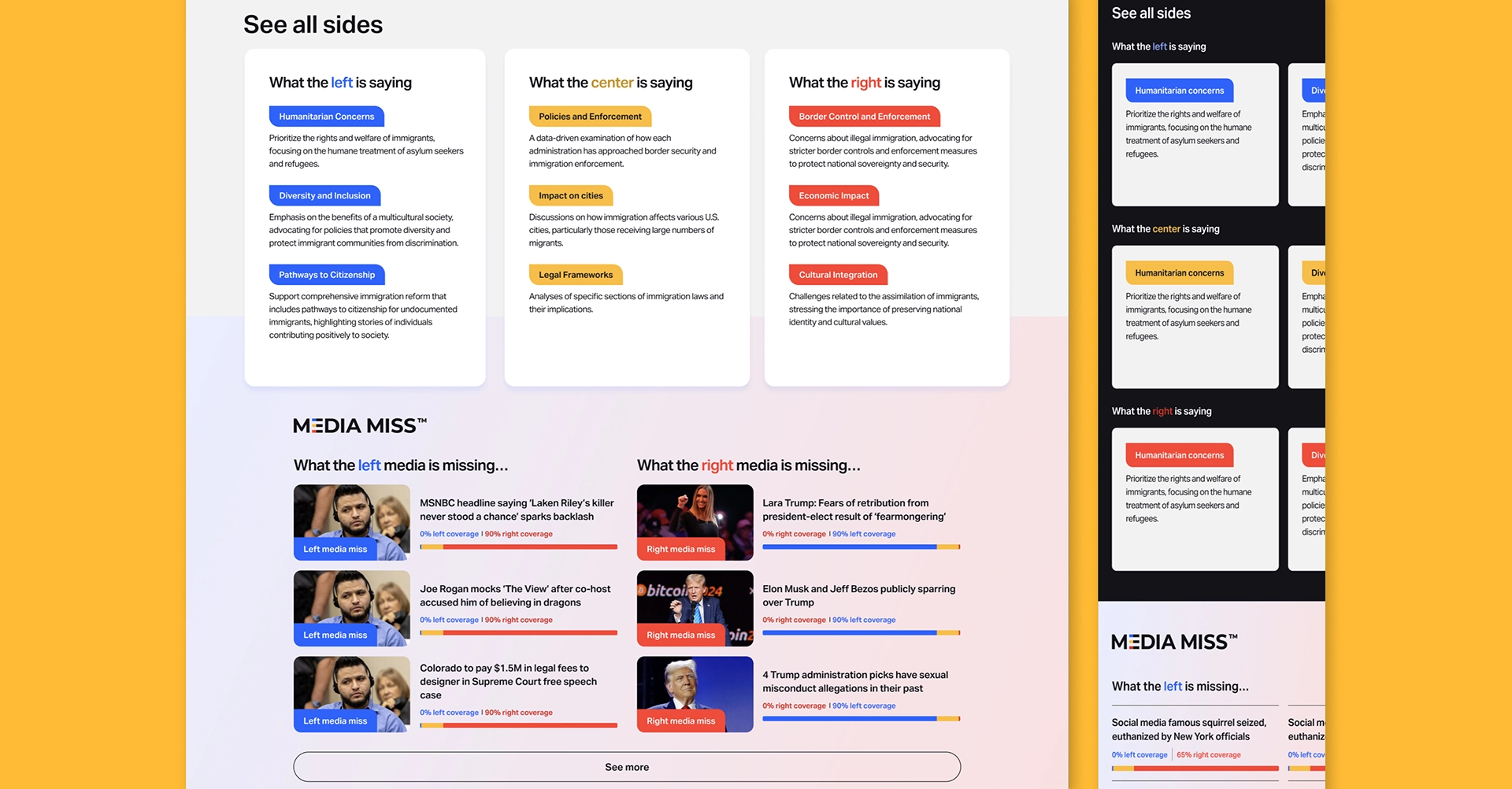
Together, IDEO and SAN created features across SAN’s website and app that put facts, trust, and transparency at the core of the product experience. Fact Cards distill key data points into clear, shareable units, while the Sources feature allows readers to trace information directly back to its original source. To make complex stories easier to grasp, Big Picture insights drill down into why events matter, surfacing underlying themes, historical parallels, differences in reporting, and common ground. The Why This Story Matters section provides readers with clear framing and sets the story within a broader context, while the Timeline illustrates how events unfold over days, months, or even years. An antidote to news polarization, See All Sides presents left, right, and center narratives for key topics side-by-side, and Media Landscape visualizations reveal how coverage varies across outlets. Finally, to ensure SAN fits seamlessly into readers’ daily lives, the redesigned Today Page is organized into three highly scannable sections: Latest News, Top Stories, and SAN Originals. The combined features create a balanced, clear, and non-polarizing news experience, making it easy for readers to delve deeper into the sources of their news.
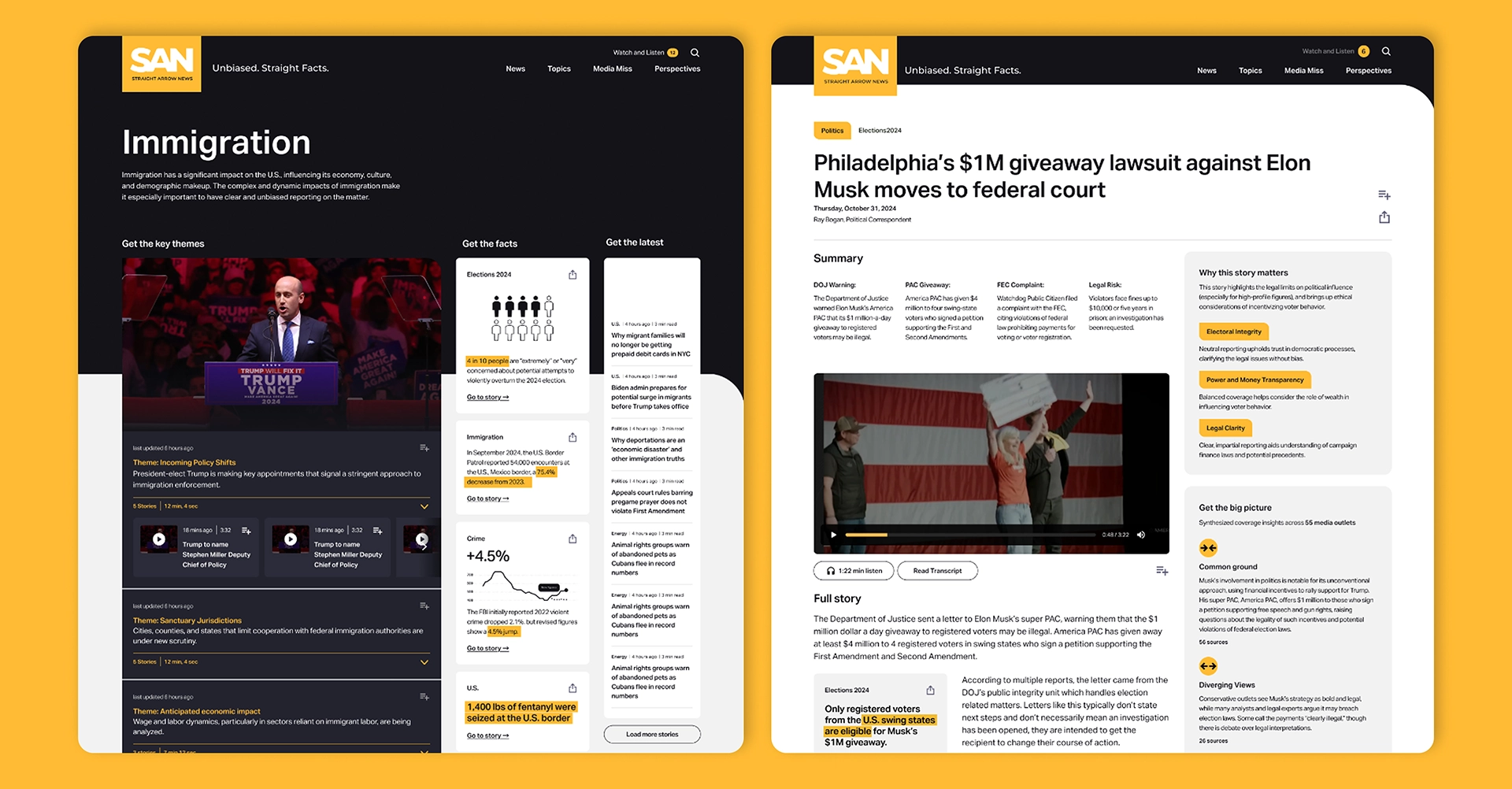
SAN now delivers a news experience as modern, dynamic, and trustworthy as its journalism. A month after its debut, the SAN app’s page views increased 1,170 percent year over year compared to June 2024, while active users rose 700 percent. Readers also give the updated mobile experience a 4.8 rating on the Apple App Store. “Our team is delivering reporting that’s both deeply factual and accessible,” said Derek Mead, SAN’s Chief Content Officer. “This redesign is pivotal to the direction journalism needs to take and the leadership role Straight Arrow News is taking on as we help guide the news industry into a brighter future.”
SAN built a loyal readership and gained recognition for its unbiased reporting. To expand and stand out from legacy media, SAN wanted a redesigned user experience that reflected its commitment to fact-based journalism.
1,170%
increase in app page views YoY
700%
increase in active users
4.8 rating
on the Apple App Store
Preventing newborn RSV
A toolkit to increase global adoption of Beyfortus, the world’s first RSV immunization for babies.
Sanofi was the first company to supply the polio vaccine worldwide. Because of the global fight against the disease, endemic wild poliovirus transmission is now limited to just two countries. However, attitudes toward vaccines and immunizations have shifted significantly. To ensure a smooth launch of Beyfortus in a time of increased vaccine hesitancy, Sanofi asked IDEO to conduct research across four important and very different healthcare markets: Germany, Spain, China, and the US.
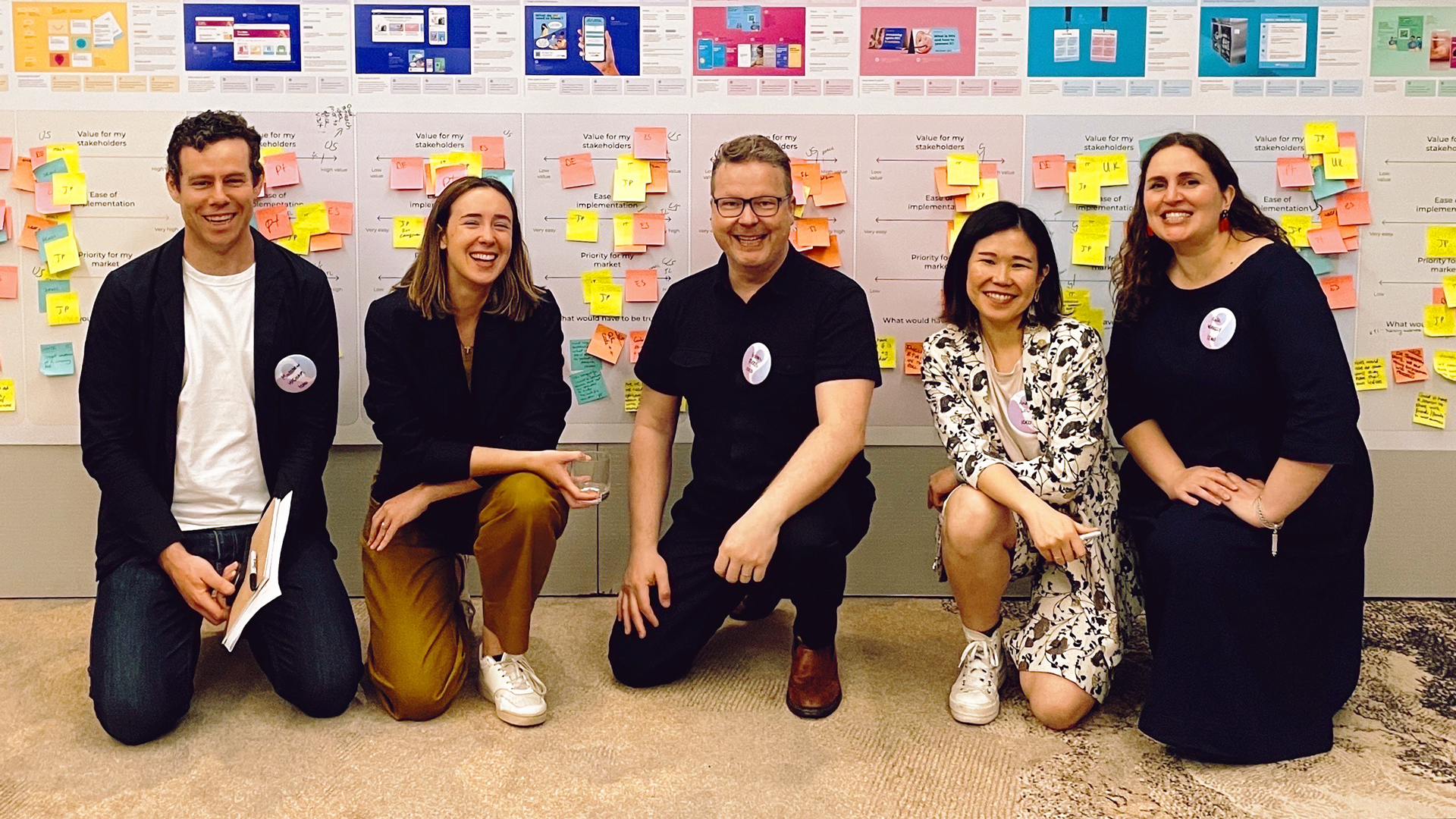
IDEO worked with parents, caregivers, healthcare professionals, and healthcare administrators to identify potential barriers to vaccine adoption and understand the emotional needs of all stakeholders involved in the immunization process. Navigating cultural differences and diverse healthcare environments, the team uncovered a set of insights.
For healthcare professionals, the team discovered there was no one-size-fits-all approach to immunization training across Sanofi’s 20-plus global markets. While consistency of key information was important, trainings needed to be flexible and customizable. This way, regardless of whether the vaccine was administered by midwives, OB-GYNs, nurses, or doctors, they could confidently discuss the pros and cons across cultural contexts and administer the drug correctly.
For new parents, receiving information about a new immunization immediately after giving birth could be too stressful. But simply leaving pamphlets about Beyfortus in waiting rooms didn't address their real concerns, either. Caregivers needed to engage in conversations earlier in their pregnancies and continue them after leaving the hospital, when they might have additional questions.

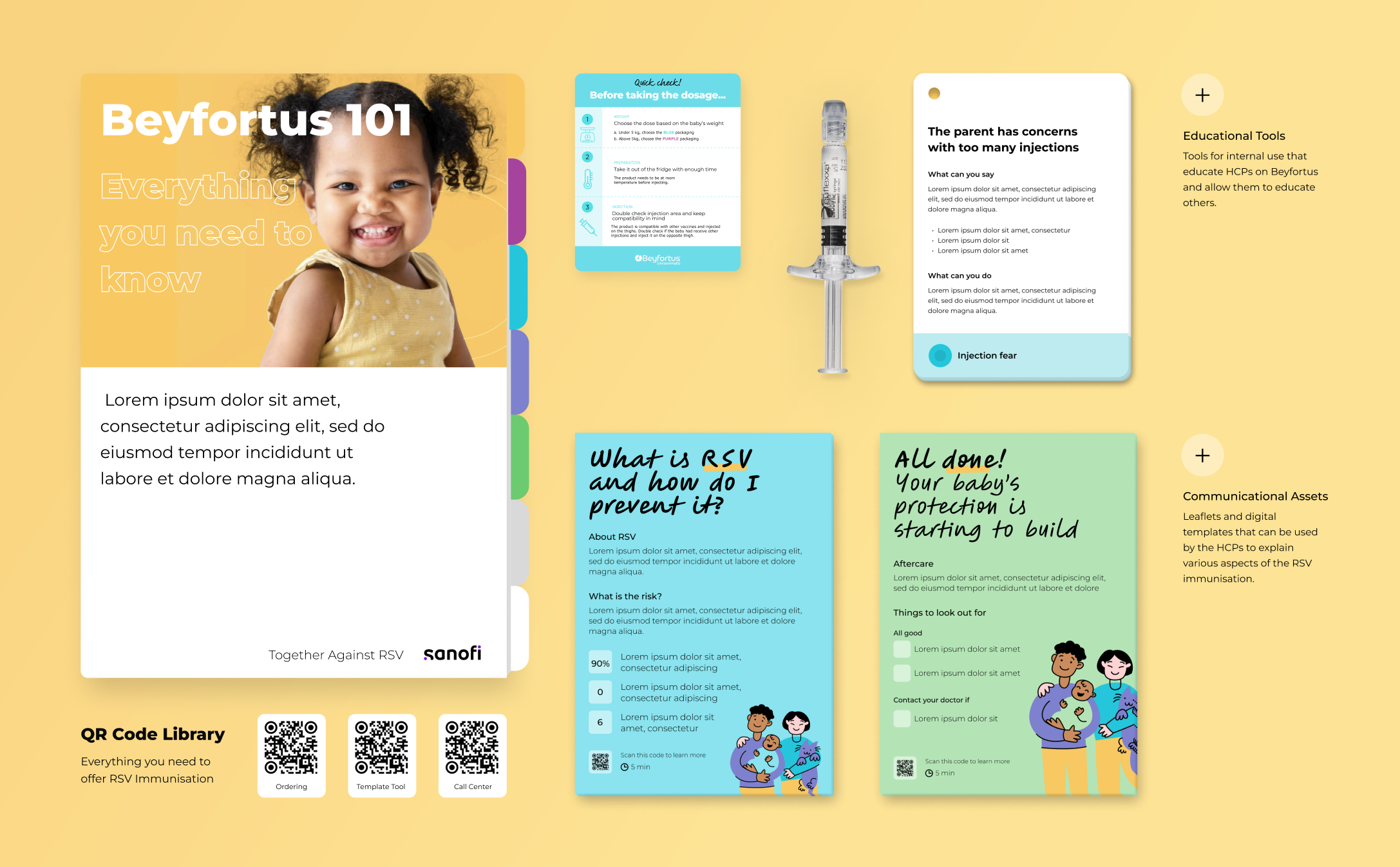
IDEO translated these research insights into a highly accessible global communication toolkit that uses simple, straightforward language, metaphors, and illustrations to support informed conversations between healthcare providers and parents before, during, and after a child is born. IDEO then conducted a series of market-fit co-design workshops with representatives of Sanofi’s global immunization business to iterate on the print and digital tools, make them more resonant with regional customers, and ensure compliance with local regulations. IDEO handed the toolkits over for development to support the launch of Beyfortus in January 2024, just in time for RSV season.
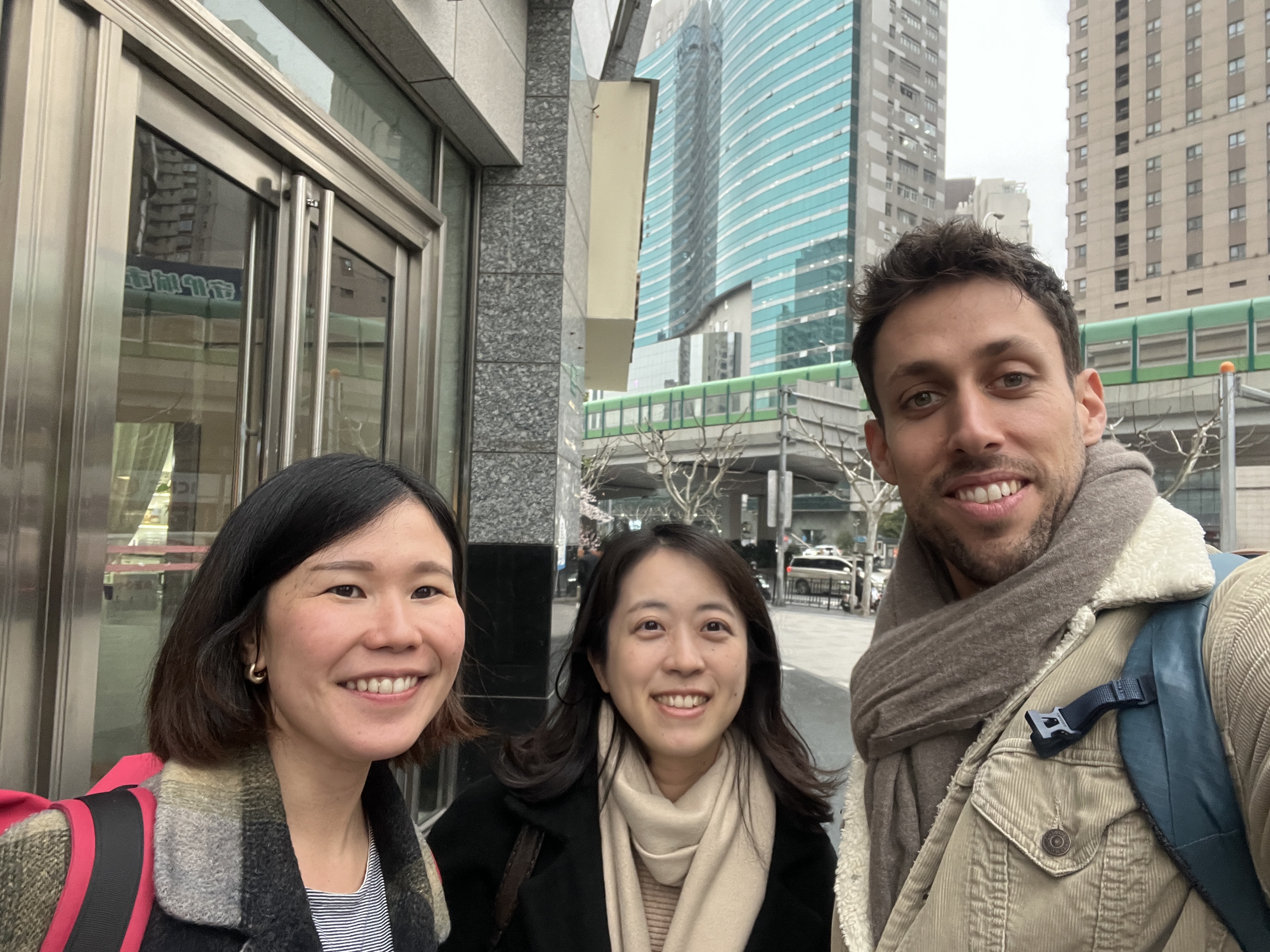
Beyfortus saw enormous demand in its first year, demonstrating strong efficacy in real-world applications and achieving blockbuster status as a $1.8 billion therapy. Sanofi’s global launch team credits the patient-centric toolkit with increased requests for communication materials from its regional markets as well as from healthcare and government organizations that have typically been hard to reach, key goals of its global-local launch strategy.
Since its development, Beyfortus has received swift regulatory approval from the US, EU, China, and Japan, with patient demand causing Sanofi to triple its worldwide manufacturing capacity to meet the needs of the 2024-25 RSV season. Ahead of the larger global distribution of Beyfortus, IDEO and Sanofi partnered with equity expert consultants, Fearless Futures, to conduct a DEI review and worked with doctors and nurses who participated in the initial drug launch to make the materials even more accessible, relevant, and successful for 2025 and beyond. To date, six million babies—and counting—have been immunized with Beyfortus.
Worldwide, childhood vaccination hesitancy among parents fluctuates between 25-45%, according to the World Health Organization (WHO), a trend it considers one of the biggest global threats to public health.
85.9%
reduction in hospitalizations for infants who received Beyfortus compared to those who did not (2023–24 RSV season)
$1.8B
in first-year sales of Beyfortus
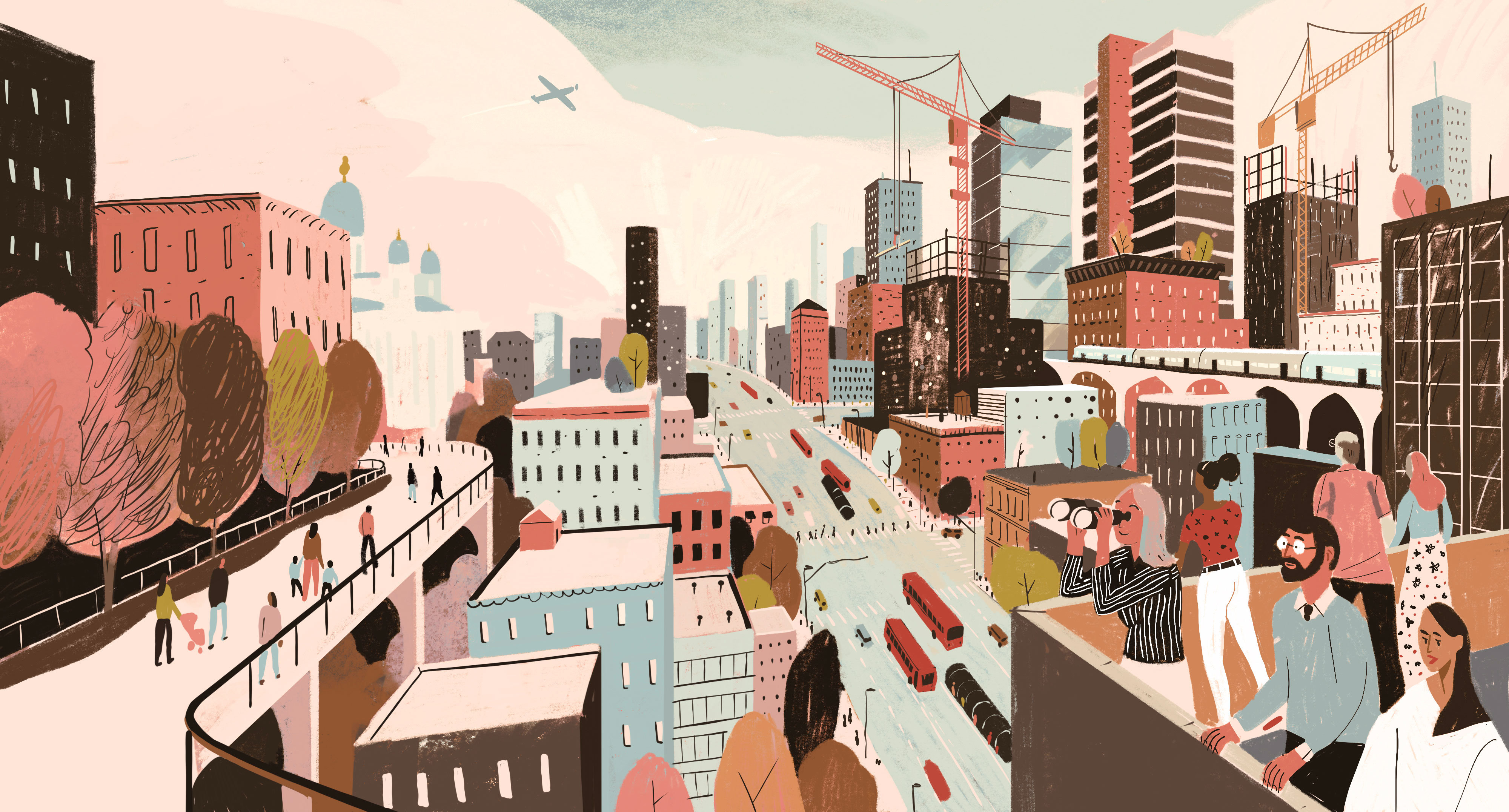
In Turbulent Times, Companies Can Look to Cities For Survival Strategies
3 urban innovations that can inspire businesses to adapt
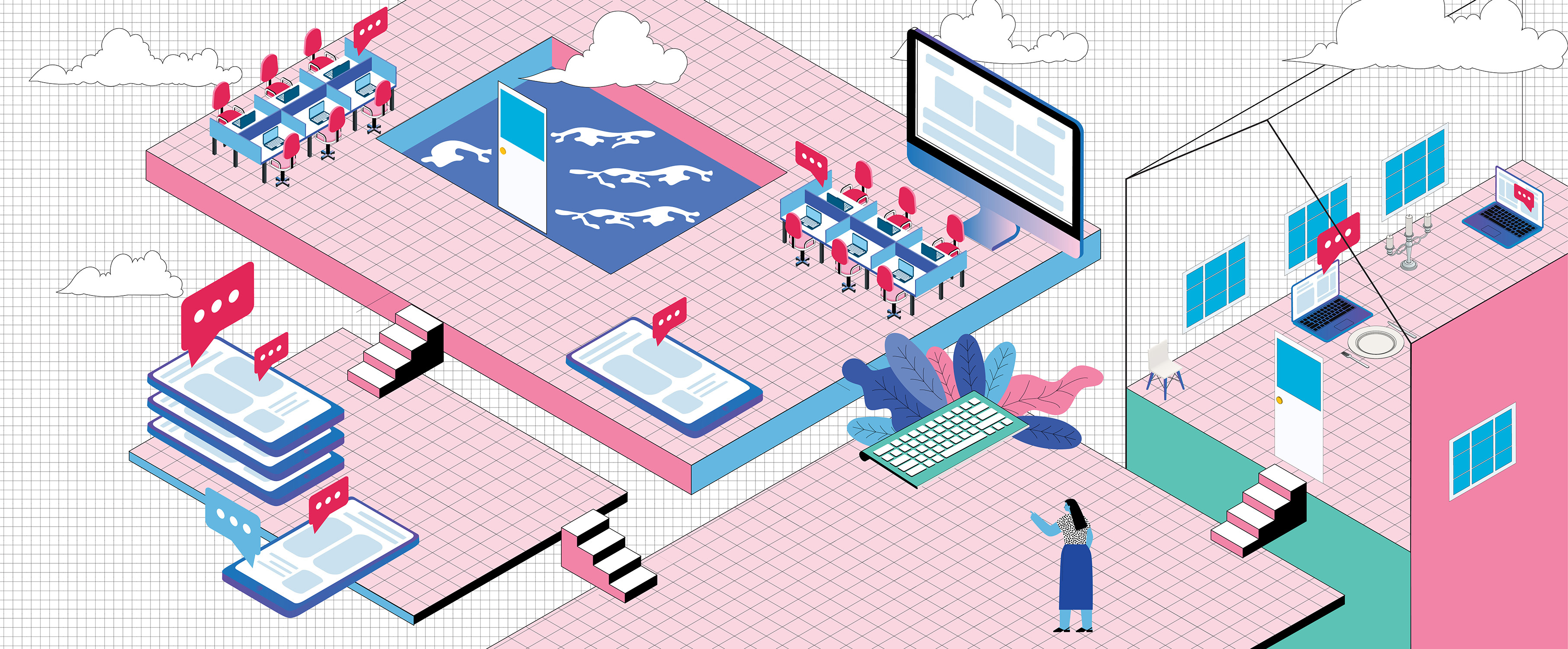
But in organizations wired for efficiency, it can be difficult to quickly adapt—a potentially fatal shortcoming in a world where disruption and technological change are constant. We often see these organizations unravel and reassemble abruptly, resulting in jarring employee experiences and decreased productivity; or change course entirely, building something new that causes more damage than value. As a result, companies are dying more quickly than ever: Today, the average age of an S&P 500 company is less than 20 years old; in the 1950s, it was nearly 60.
Given all the factors threatening the vitality of companies, what factors can instead contribute to their longevity? One source of inspiration comes from cities—and the planning and development that underpin their resilience. While the best cities do seem to function like fine-tuned machines, their systems are in fact much more adaptable, flexible, and resilient—more like a living organism than a machine. In his book Scale, theoretical physicist Geoffrey West asks, “if cities are indeed some sort of superorganism, then why do almost none of them ever die?“
The reason is that they learn to evolve in response to changing conditions—a quality that is equally critical to companies. Every business leader stands to glean some adaptive tools by taking a page from urban leaders who’ve deployed adaptive responses to their local challenges.
The “just enough” strategy
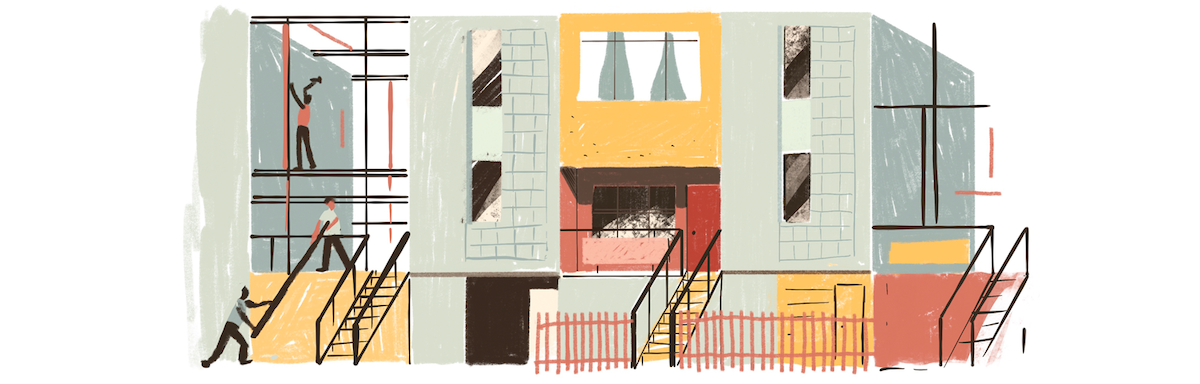
After the massive 2010 earthquake destroyed 80 percent of buildings in Iquique, Chile, architect Alejandro Aravena was tasked with developing a new city plan for Iquique. His solution was unexpected: he designed a replicable house that would be half-complete when handed over to the inhabitants. On one side, the home would be move-in ready, sufficient to meet the legal requirements for low-income housing; on the other side, a vacant frame would give residents agency in determining how their own home would ultimately be. Concrete foundations, plumbing, insulation, and electricity were all provided for inhabitants, who could expand on the basic design by taking workshops and buying building materials through the city. This design gave residents a starting point to design their future, rather than a mandate. In the end, they each owned their homes.
This kind of “just enough” strategy could help businesses adapt, too. In times of change, organizations tend to set new visions in multi-year timeframes — forecasting three, five, or even 10 years ahead. Leaders develop detailed road maps explaining how every part of the organization must change in order to reach these goals. But these macro-level and long-term mandates often don’t feel tangible or attainable to employees, especially when they’re asked to report on progress every three months. This results in a lack of momentum, support, and internal innovation.
Instead, organizations can think about creating a “minimum viable organization” (MVO)—the basic foundation and tools needed in order for talent to step in to help create and shape the company’s future innovation and growth.
Zalando, Europe’s largest fashion retailer, is one of the companies that has successfully employed this approach. To more quickly adapt to industry changes, and carry out their new vision to reimagine fashion for the good of all, IDEO designers and Zalando employees established a dedicated product innovation team and lab. Rather than devoting months to strategizing or establishing an entirely new innovation department, the lab offered the MVO conditions to yield faster, more tangible progress on a long-term vision that the company could internally rally around and take to the market. In the three years since its launch, the lab has built and sent to market multiple new products like Seen At, a mobile app that allows members to upload street-style photos; and Collabary, a digital tool that connects online fashion influencers with brands.
A nimble plan for scaling
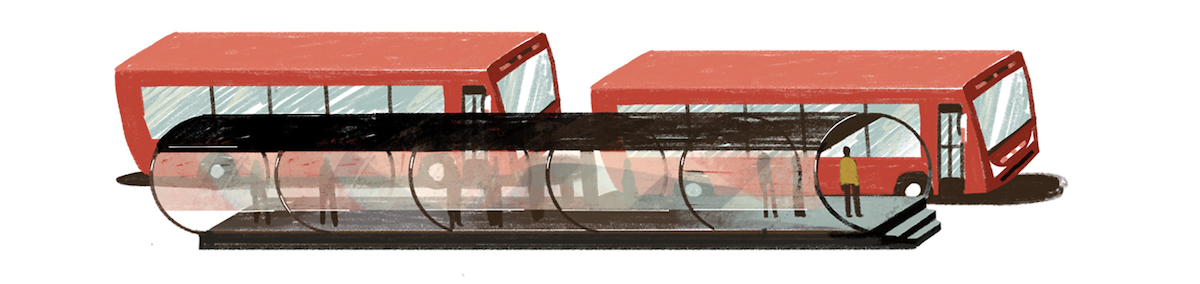
Curitiba, Brazil, is considered one of the best examples of urban planning in the world. When the city’s population exploded in the 1960s, residents worried that overcrowding and traffic congestion would threaten the city’s history and character. To address the issue, architect Jaime Lerner rolled out the Curitiba Master Plan. The plan introduced a public bus system, and required all new development to be concentrated along the bus routes to maximize use. He also introduced the Trinary Road System, which features dedicated bus lanes at the center of the thoroughfare, with parallel streets on either side for private vehicle traffic.
Rather than primarily investing in new infrastructures, Lerner focused on innovating within existing conditions, focusing on roads, public spaces, and downtown areas. As a result, he designed a system that facilitated the city’s scale while still preserving its culture.
What can businesses learn from Lerner’s approach? When organizations scale, many companies rely on structural reorganization to address challenges with stakeholders, process, and other complexities. But while that approach adjusts the high-level org chart and shifts reporting lines, it does not change informal human dynamics, relationships, and emotions, which largely influence workplace culture, engagement, and productivity.
In his TED talk, designer Alastair Parvin tells the story of an architecture firm that was working with a school to help address narrow hallways in light of a growing student population. In between classes, the corridors became congested, resulting in difficulty monitoring student behavior and bullying. But rather than expanding the hallways or building a new space for the school, the firm redesigned the school bell system. “Instead of having one school bell that goes off once, have several smaller school bells that go off in different places at different times, and distribute the traffic through the corridors,” says Parvin. “It solves the same problem.”
Like Curitiba, organizations can shift the way they operate while maintaining existing structures, rather than creating entirely new ones, which often disrupt workplace culture.
Taking a “regional” approach
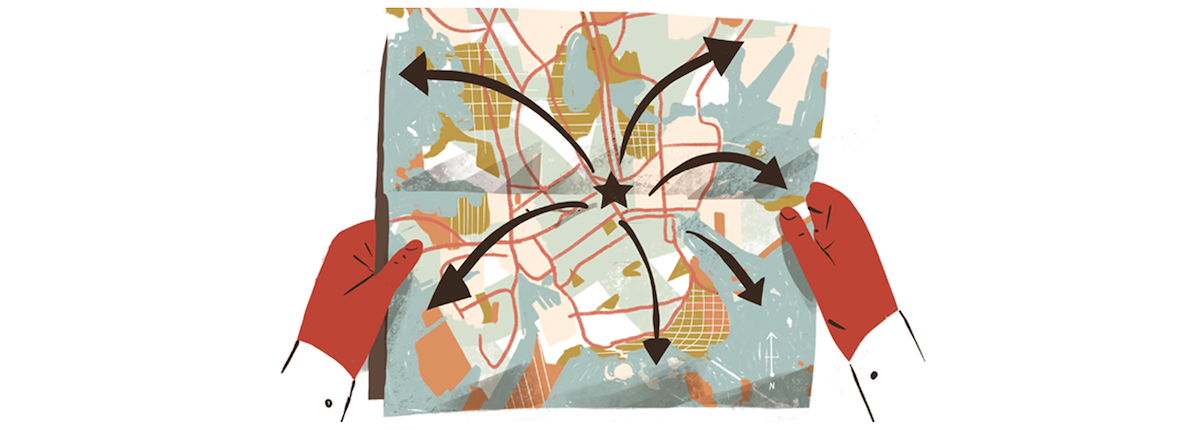
Cities also offer guidance for how to work with partners—and even competitors—to achieve a big, important goal. As a part of the Helsinki City Planning Department’s 2009 Strategic Spatial Plan, the city decided to think about serving the needs of the whole region, rather than those only within the city’s boundaries. This meant that Helsinki had to redefine its existing economic, social, and environmental relationships, changing who it served. The city also formed new principles and policies for key issues like business activities, housing, and the city landscape, enabling development beyond Helsinki’s boundaries.
Most companies intentionally define clear boundaries and relationships between themselves and the outside world. To a certain extent, this is expected: Nearly every business school student is introduced to Porter’s Five Forces, a popular model used to inform corporate strategy. As part of the framework, future managers learn that by reducing the number of competitors in the market, a business can ensure long-term dominance. But as a result of adopting traditional business frameworks like Porter’s Five Forces, organizations naturally view their relationship to other industry players as competitive or transactional. This creates boundaries between a company and those outside its walls.
Like Helsinki, organizations are rethinking the boundaries of their responsibility by working to address big issues like climate change. Despite being considered industry competitors, leaders from Danone, Rabobank, Nature’s Path, McDonald’s, and Starbucks recently joined forces through CoLab, IDEO’s platform for collaborative impact. During a week-long design sprint, they worked side-by-side to develop solutions, emerging with one concept that helped food companies access better ingredients; and another that used a circular model to offer food delivery to apartment dwellers.
These companies recognize that there’s an opportunity to both stay ahead of the market and generate broader impact by looking beyond their organization’s own walls and intellectual property. This requires companies to form new collaborative relationships to push industries forward together.
While companies can still benefit from using Porter’s Five Forces—and even sometimes from structural reorgs—fresh, innovative thinking is required to address the complex challenges businesses face today. To that end, cities can serve as inspiration for organizations navigating change, helping them to rethink the efficiency-driven approaches that once enabled success, and orient instead toward nimble, flexible, human solutions.
Illustrations by Ryan Johnson
Organizations have long been engineered like fine-tuned machines: They allocate processes and resources (sometimes human) into specializations, each churning and passing their output to the next group. This efficiency has allowed companies to scale, prevent competitors from entering the market, and dominate their industries.
How to Design Your Way Through a Hacking Competition
As opposed to hacking your way through a design competition
In the hacking world, capture the flag (CTF) describes a competition that requires participants to complete challenges that vary in topic (hardware, software, social engineering, cryptography, etc.) and complexity to—you guessed it—capture digital flags. Not only does winning these competitions mean bragging rights and great prizes, it’s also a great way to learn and teach new skills while working with others in the community.
To prepare for the competition, we doubled down on the design thinking process we rely on in our work: We built a multidisciplinary team so we had a wealth of resources on our side, and we relied on rapid prototyping to create tools that helped us solve puzzles. Here are our best tips for getting through a challenge like this one, borrowed and modified from the best practices and processes of design thinking.
Assemble a dream team
CTF challenges are usually designed to push the bounds of competitors’ knowledge and abilities, and this one was no different. When we were preparing, we knew we’d need a team that could handle embedded systems and hardware as well as web and networking. Luckily, between the two of us, we have those covered, but we also teamed up with friends at the conference with specialties in cryptography, wireless hacking, and other skills to round out our abilities.
As we thought about the types of challenges we might face, we broke down the kinds of skills we'd need and assigned them among the team. Once the challenge kicked off, we huddled to share ideas and make sure that none of the teammates got stumped on their pieces of the challenge. Even though assigning roles to work efficiently is really important, you can’t get through a challenge without leaning on one another.
Adopt a beginner’s mindset
When you go into a challenge like this, you often face things you’ve never seen before, like long strings of garbled text that make absolutely no sense at first glance; hardware that is completely new to you; antiquated and obscure software that you need to exploit somehow.
It’s daunting, but it’s not so different from taking on a design challenge. When you rely on the methods and processes of design thinking to find an unknown solution to a complex problem, you don’t know what you’re trying to build until you figure it out. CTFs work much the same way. And to succeed at them, we rely on the same methods we use to create a new product or service, or solve an engineering problem: we adopt a beginner’s mindset. When we start a project, we take significant time researching the client, the industry, and of course, the users. When we sign up for a challenge, we start working to learn as much as we can in advance, thinking about the creators and what kind of challenge they might be looking to hand us. Having little to no idea about what we’ll encounter once the challenge starts, we do our best to prepare.
Build, test, fail… repeat!
Seldom do we participate in a CTF without having to develop custom tools on the fly, like software scripts for cracking cryptography or custom hardware for probing and manipulating physical challenges. Given our time constraints, we have to slap these tools together, focusing on scrappy versions that will last just long enough to help us solve the challenge and find the flag. CTFs tend to last only a couple of days, so time is a valuable resource. It usually doesn’t matter how well a tool is designed, as long as it can be made quickly and help get us closer to the flag.
It’s a strategy straight out of the design thinking playbook. When designers are coming up with a new solution to a problem, we don’t always have time to take one idea from concept to completion. We work on many solutions in tandem, figure out which ideas are going to fail fast, then advance the others forward (or come up with totally new concepts). The tools we develop during hacking CTFs are no different. It’s a cycle of quick development, testing, and processing the feedback in order to inch closer to a solution.
Get out of your head
These challenges are called challenges for a reason. At this point, the two of us have been around the CTF block before—and yet we still get stuck and fail spectacularly.
This time, for example, we ran into an issue with listening to an audio clip that played from our ID badges. We couldn’t make out what was coming out of the tiny speaker, so we started thinking about ways to rip the firmware off the badge and download the file it was playing. That was going to take hours (if not longer), but Rob suggested we just needed a better speaker. We were thinking way too technically—we didn’t need to rip the file, we just needed to hear it better.
By articulating the simplest problem and searching for the simplest solution, we were able to move forward much faster than if we had tried to solve the problem in a much more “correct” way. It’s about knowing when to take a step back and allowing yourself to be curious about other possibilities.
Just like with our other work, failure is part of the process. Sometimes your seemingly perfect solution fails in testing, or your prototype isn’t what a client wanted. You get sent back to sketch out new ideas and start again. After our momentary fiasco with the ID badge speaker, we got the message from the audio file, moved forward to the next challenge, on and on, until we won!
Enjoy sweet, sweet victory
By pulling from our IDEO skills, and with support from some new friends, we ended up winning our first hacking CTF at this competition. We’ve since gone on to compete in other hacking competitions around the country, including winning DarkNet at the notorious DEFCON, thanks to our experience in things like breaking out of handcuffs and having a basic proficiency in Vulcan. (Yes, knowing the fictional language from Stark Trek was an actual part of the competition). Part of the challenge even involved cracking codes to gain access to a secret party—super cool.
If you can’t tell, we’re huge fans of the way CTFs push us to think quickly, pivot fast, and challenge our expectations. And Rob is such a fan that he’ll be heading back to Thotcon this year as an organizer. That's handy for the rest of us, because even though he won’t be sharing any hints as to what’s coming, we already know the way he thinks. We're ready to hit step number two, thinking about the kinds of challenges he might be all too excited to throw at us.
You’ve infiltrated the other team’s base, found the hidden flag, and are anxiously navigating back to safety in order to score. For many people, this might bring back adolescent memories of playing capture the flag with their neighbors; for the two of us, this was what it felt like to compete in Thotcon, a two-day hacking conference. Instead of running around in someone's backyard, we were gunning for flags over wireless connections, hacking into devices, and deciphering puzzles.

Meet the Fine Artist Who Works With T-Shirts and Chain-Link Fence
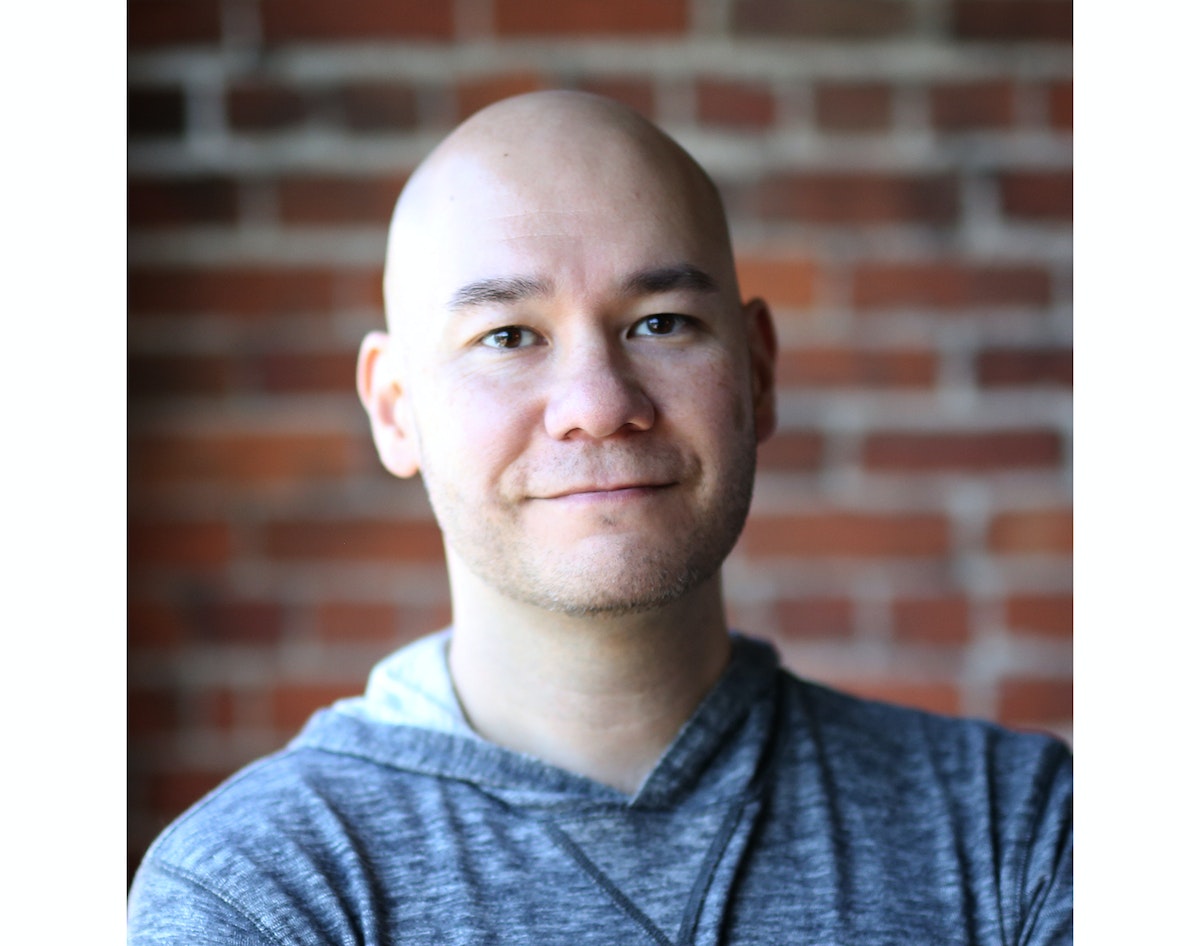
San Francisco's Brian Singer lives and breathes provocation
His winding path evolved from leading teams at Facebook, Pinterest, and serving on the American Institute of Graphic Arts (AIGA)'s board to interrogating the systems that shape our reality through fine art and design. I first connected with Brian while creating a public art installation inspired by his work. Sitting down for a chat with him reminded me why art at the edges is key to activating social change and reimagining our future.
In one sentence, who are you?
I’m the guy you root for in the movie who doesn’t actually win in the end, but also doesn’t get eaten by zombies. I’m also an artist and designer who gravitates towards thought-provoking work.
What do you do? How did you learn it?
At the core of my work is deconstructing and reconstructing words, symbols, and objects in order to shift their meaning. I wish I could say how I learned it. I can trace some of it to my roots in the design and communications profession. And by being curious. Well, that and just trying and failing and trying again.
What are your three favorite possessions?
My guillotine cutter, not just because of how useful it is, but also because I got it off Craigslist for a great deal. My studio (technically not a possession because I rent it), but it allows me not just the physical space, but also the mental space to create. And a giant crocheted crab pillow that my mom made when I was a kid, because it’s a crab pillow.

What does a typical work session look like?
It truly depends on what I’m making (or if I’m still in ideation phase). For many of my projects, there’s a significant planning phase where I’m just figuring out what approach to take. Once that’s ready, I start production which can consist of tying thousands of knots, or counting and sorting paper. Sometimes I wish I just did one thing, so my routines were more regular, but the truth is each session is entirely dependent on the project (and lately, the projects have been pretty diverse).
How do you get over creative block?
I shift gears. If I’m struggling with a concept, it doesn’t help to keep focusing on it. Instead, I dig into a different project, take a walk, read a book, get high, anything to get my mind off of the initial project. Once that’s done, the ideas seem to come more easily (though sometimes they come at 4am).

What was the last item on your to do list?
This? My to-do list is never ending in that there’s always too many things to do and never enough time, so items get moved to the next day, and the next. Today, I’ve prepped for and conducted a recording session for one of my projects and followed up on a proposal. After this, I’m sending a list of available pieces to a gallery, setting up tax payments, planning my week, getting groceries, and going to my nephew’s birthday dinner. My life is pretty exciting.
How do you see the world in 2078?
I’m not very optimistic about the future of humanity. Not because I don’t think we’ll survive, we probably will. Us, and cockroaches. I just think that humans have a tendency towards power and wealth at the expense of other humans and the planet. Maybe we’ll have flying cars and nanobots and we’ll live to be 200 years old, but society will still be a pyramid, with the masses supporting the very rich at the top. Sorry, that’s so dismal.
What’s your number one bucket list item?
Right now, number one is to leverage the very tactics that the advertising industry uses, but to help parents raise their children. This isn’t packaging carrots like junk food, but more like Brave New World for good. Yeah, wrap your mind around that.
Who are you creative crushin’ on lately?
So many crushes. Miranda July? Rigo 23? Matt Bonner (creator of the baby Trump balloon)? There are so many, but one who continually inspires me is Ivan Cash. He’s a brilliant creative with the right twist to his ideas around the effects of technology on society. One of his recent projects was to create sunglasses that block out digital displays.
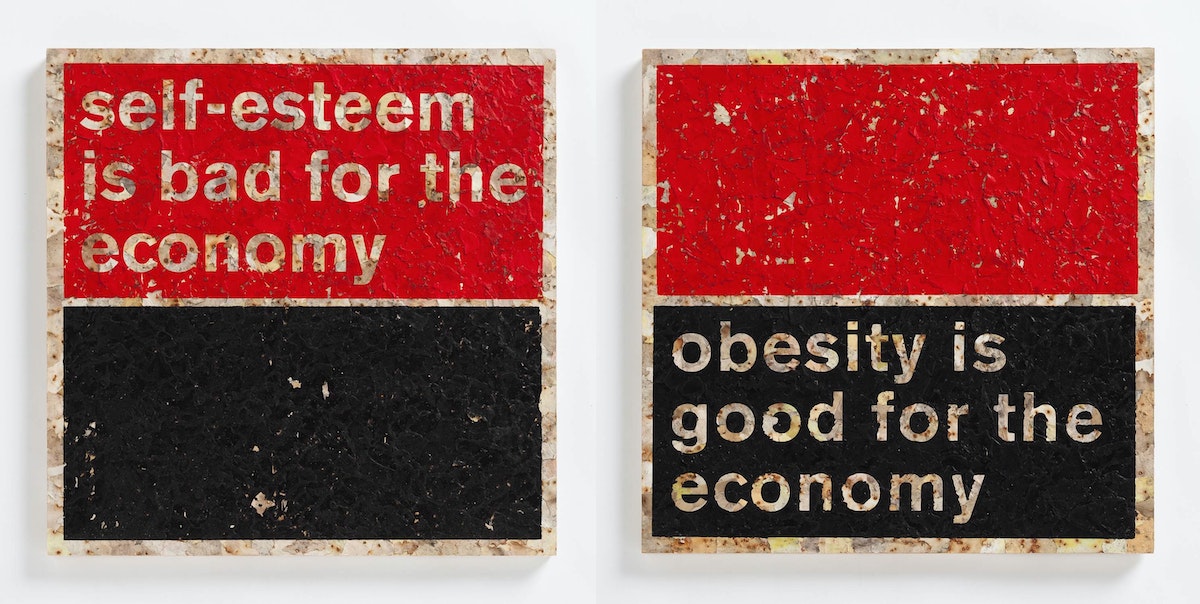
From putting photos of texting drivers on billboards to calling out mass surveillance with tech company t-shirts to sending 1000 journals around the world to connect strangers, Brian Singer (also known as Someguy) lives and breathes provocation.

How Quitting Plastic Got One Designer Thrown in Mall Jail
There a lot of pros to quitting plastic—less waste, a fatter bank account—and some cons
As a designer at IDEO’s CoLab, I’m always working on the kinds of systemic challenges that no single company—or even industry—can solve alone. And every time we start exploring a new problem, I get really excited. So excited that I’ve challenged myself to do things like go 100 days without sugar, 100 days without meat, and 100 days in heels (to varying degrees of success). So when we decided to explore and prototype goods for the circular economy—which focuses on manufacturing goods with a use beyond their lifecycle—I decided to dive straight in, and cut plastic out of my life for 100 days.
I kicked off my new journey with a shopping spree at T.J. Maxx, picking up all of the cute little glass jars that I could find to replace Tupperware, drug store cosmetic packaging, and other hygiene-related items. But when I hit the checkout counter, I realized that I was snaring myself in an expensive catch-22. The second all of my existing plastics hit the trash, I would be creating more waste. Instead, I enacted a grandfather clause: I used everything in my life that I already had—plastic or not—and barred myself from consuming or buying anything that brought additional plastic into my life.
The first of January 2019 was day one. Everyone was super accommodating about New Year’s resolutions. But the rest of the 99 days put me in some situations that were downright weird. Around March, I started to run out of toiletries and hit a low point where I used a Sharpie as eyeliner for a good week (do NOT recommend). I once had to drink bubble tea out of a bowl, and ransacked my bag until I found a random piece of pipe to use as a straw. It wasn’t all bad, though. Here are six surprising advantages to going without plastic.
1. I went on an accidental diet
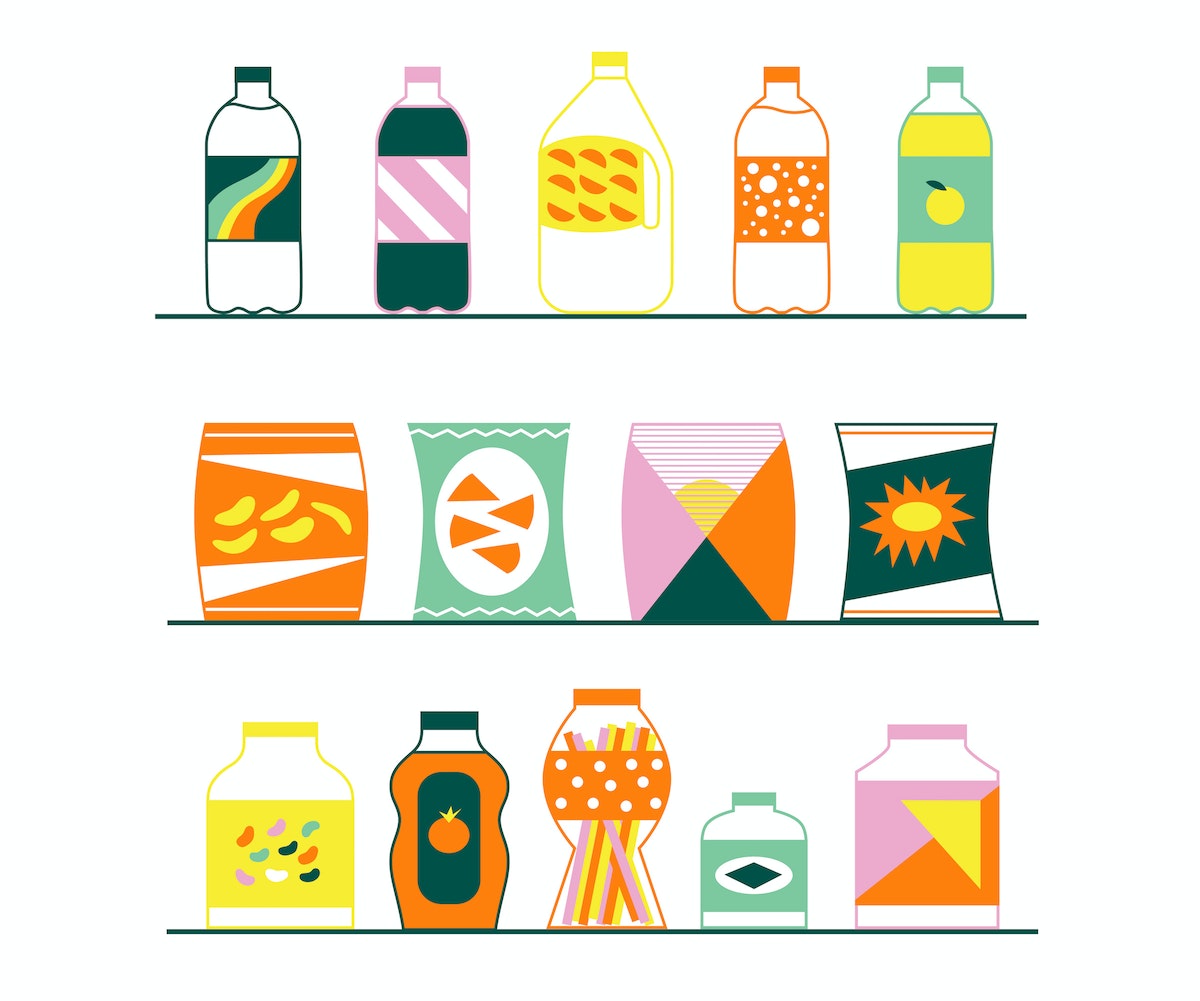
Cutting out plastic meant no more junk food, snacks, sugar, to-go drinks, or sodas. I ended up eating more things that come in their own packaging, like avocados, yams, and eggs, and buying whole fish instead of pre-prepped fillets that came in shrink-wrapped plastic.
About five weeks after I started this challenge, I noticed that my skin was clearer, my joints were less inflamed, and the number on the scale had dropped—I felt great. But more importantly, it made me realize how much of the real estate in the modern American supermarket is dedicated to things packaged in plastic, from bagged snacks to most of the cold refrigeration aisles.
2. I needed way fewer products than I thought
After rinsing out my shampoo and soap bottles for their final suds, I turned to the beauty gurus and slapped some coconut oil and baking soda together and called it shampoo. It was totally... just okay. But after a rough couple of weeks, my body adapted and my hair and skin were doing great because all the chemicals had worked their way out of my system. It was surprisingly effective.
3. I saved money
My life was a lot more inconvenient, but also much improved. You know when you justify retail therapy as self care, and you go into Target just to grab some toilet paper only to come out with everything you need to redecorate your living room? Most retail was off limits for me, either because of packaging or material choice. Instead, that money and time went toward things I could experience. Shopping used to be entertainment; buying brought the rush of reward. Even now, post-challenge, it feels strange walking into stores.
4. My trash was compostable
With my new rules, I didn’t make that much garbage—mostly just compost that I stored in the freezer, and my experiment brought me closer to the way that I lived when I was at home. My parents grew up in rural China, growing all their own vegetables, so when Mama and Papa Gong bought a house in the middle of urban Chicago, they put a farm in the backyard. When I go home, I’m reminded just how differently they think about waste. Any organic trash goes right back to the chickens and the soil, and they don’t have any food- or shipping-related packaging to deal with. After a season, all their waste has decayed back into the soil, while plastic in our landfills will sit around for 1,000 years.

5. My social life improved
Small talk makes me uncomfortable, but I had to start talking to strangers to ask them to, say, leave the straw out of my drink (flashback to day two of this challenge when I asked for no straw, and somehow ended up with two). These small interactions always turned into real conversations about plastic and climate change. As a bonus, people also started giving me free stuff, like the brewer who was handing out samples of Bohemian Raspberry in plastic cups, but gave me a half-pint of beer in a commemorative pint glass instead. Conversations get a lot more interesting when your opener is, “Have you considered that you consume a credit card’s worth of microplastics a week?”
6. Every day was a challenge
This experiment threw constant small design challenges my way. Getting groceries and forgetting a tote bag meant cradling too many vegetables while chasing a bell pepper that rolled away in the parking lot, until I stopped and made a quick a sack out of a hoodie. It was a fun daily design exercise, finding little hacks to my plastic puzzle.
Though there were a lot of upsides to this challenge, over the course of the 100 days one thing began to frustrate me. A lot of sustainability design aims to shift consumer behavior. But cutting down on plastic isn’t just an individual responsibility. We may have the choice to buy a glass bottle over a plastic one, but by the time we exercise our buying power, it’s too late. We need smart options for what to do with the products we buy after we’re done with them. That starts with design. And until the corporations that provide us with our purchasing choices and set the tone for how we live our lives get onboard with the circular economy, it’s tough to take it on ourselves. Still, I recommend you try. Unsubscribing from plastic is a pretty big wake up call, and it’s changed the way I live.
If you've already blown your original 2020 New Year's resolution, maybe give this challenge a shot? At the very least it might help you lose weight, clear up your skin, and strengthen your social relationships. Let me know what adventures it takes you on and where creativity strikes because of it. Let your favorite brands know, too, so at the very best, they’re motivated to start making changes upstream and join the circular economy. We’ve definitely left our mark with this material—it’s time to figure out what to do about it.
Illustrations by Jenice Kim
When you go plastic-free for 100 days, you can expect small life improvements, like more aesthetically-pleasing toiletries, and minor inconveniences, like remembering to carry reusable water bottles everywhere. But there were other things that went way beyond my expectations. For example, an incident in Panama in February where I almost landed in “mall jail” after I tried to refuse a plastic bag with my purchase. (The store used bags to determine who had paid for their goods, and they thought I was trying to steal a pair of shoes.) The challenge took me on weird and wonderful tangents like this one, and really made me consider how ingrained plastic is in our purchasing decisions and daily systems.
Vivian Barad
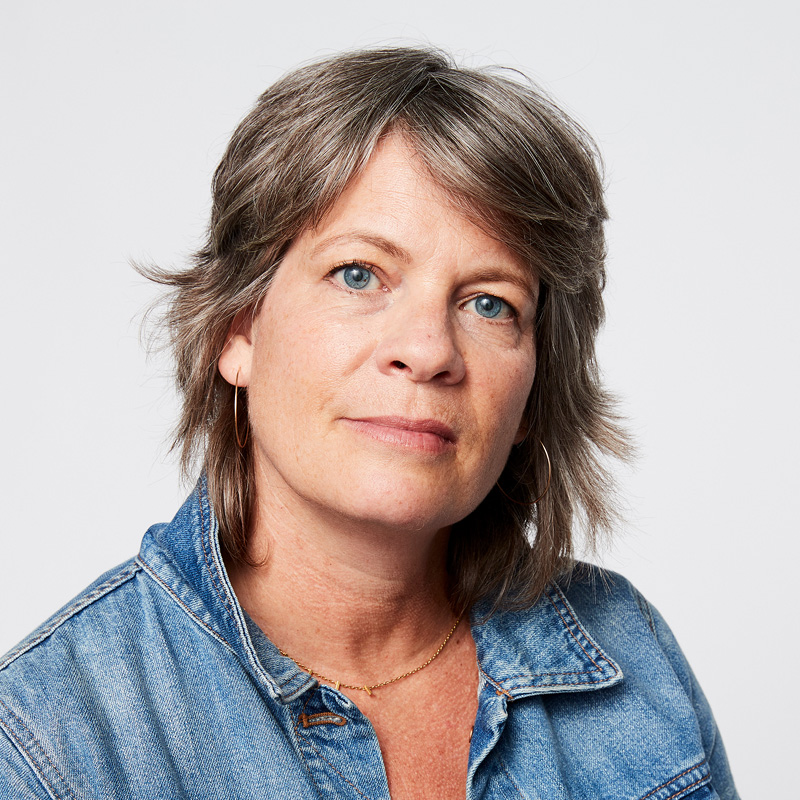
I work with the food & beverage and CPG industry to find growth opportunities that create climate-positive impact in the world.
As an IDEO Partner and Executive Director, I work with the food & beverage and CPG industry to find growth opportunities that create climate-positive impact in the world. My work includes launching new offers, creating strategic visions, and building innovation capabilities. I leverage my industrial design training and creativity to find growth opportunities for clients like Suntory, Alicorp, San Francisco Unified School District, Northern Illinois Food Bank, and Plum Organics.
I am an expert in understanding people’s deeply-rooted food behaviors and food systems challenges like food insecurity and food waste.
I have spoken on these topics and more at TedX, SXSW, and Feeding America.
I am a graduate of California College of the Arts, with a BFA in Industrial Design. I received a BA in English from the University of Michigan, Ann Arbor, and worked as a New York-based print and online journalist. In my free time, I enjoy canning tomatoes and family hikes.
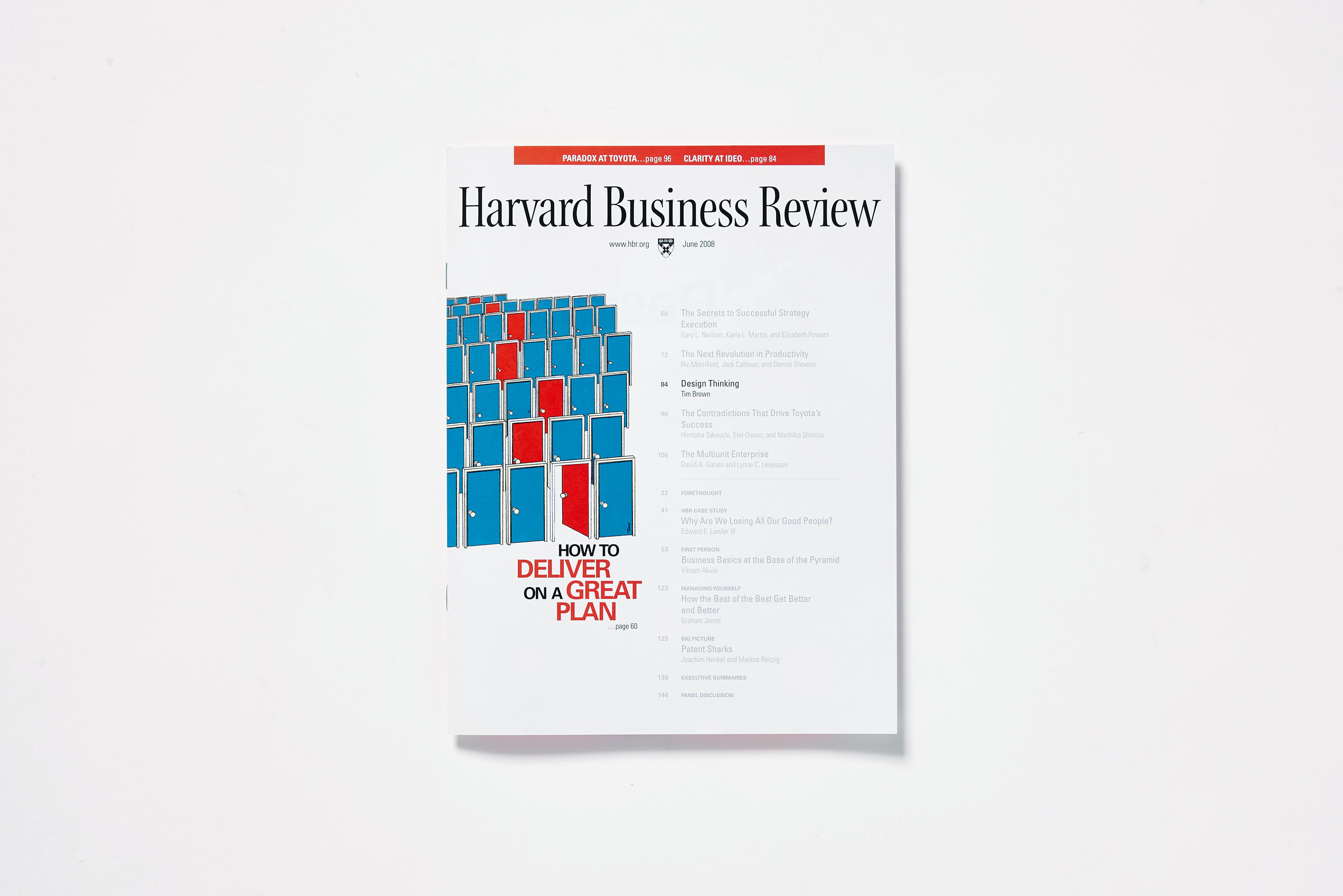
Tim Brown
Through writing, speaking and advising I try to champion the interdisciplinary, multi-faceted nature of design.
This is the question I have consistently asked throughout my design career. Today, that takes me to some edges of IDEO’s design practice that include Climate Era design, open and collective systems, designing strategy, and creative leadership.
Through writing, speaking, and advising, I try to champion the interdisciplinary, multi-faceted nature of design.
I am proud of our progress in applying design thinking to topics such as service design, system design and strategy, and across sectors such as education, health, government, technology, the social sector, and business. I frequently speak about the value of design thinking, creative leadership, and innovation to business leaders and designers around the world, and have participated in the World Economic Forum in Davos, Switzerland.
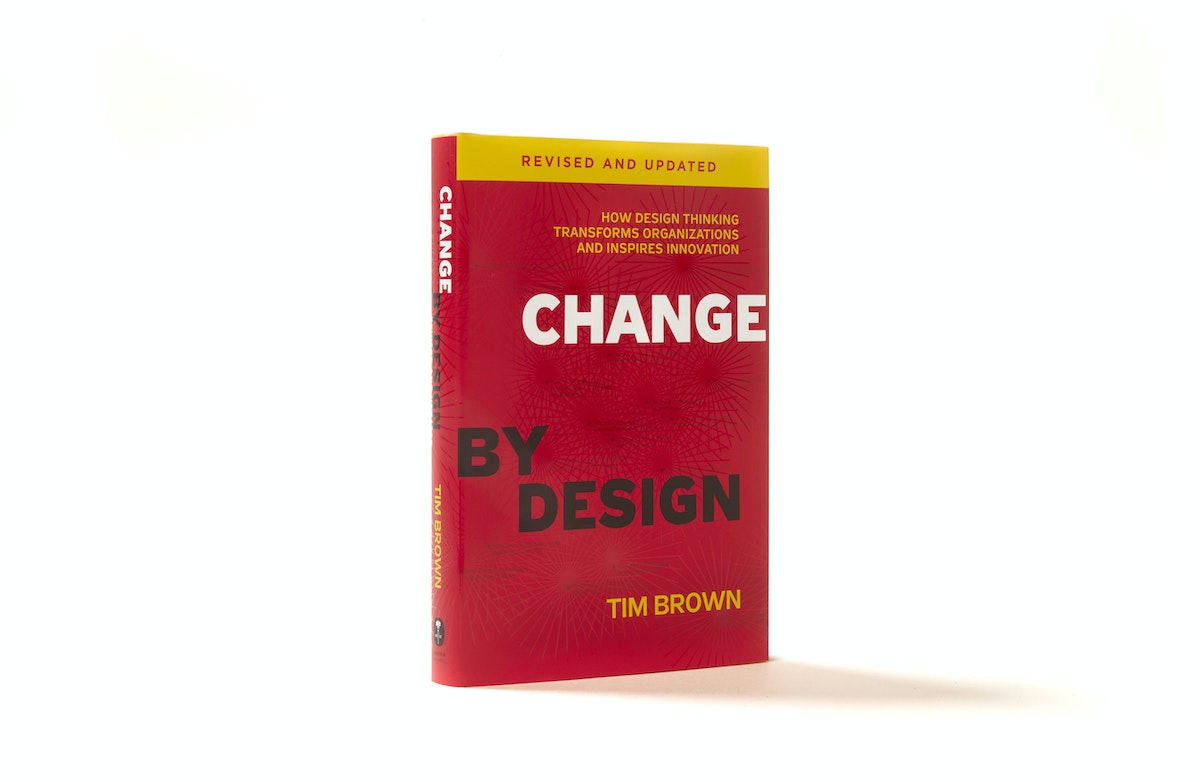
My talks "Serious Play" and "Change by Design" appear on TED.com. My book on how design thinking transforms organizations, Change by Design, was released by Harper Business in September 2009, and revised and updated in 2019.

Steve Schwall
I work with creative leaders and executives to design new offerings, drive business growth, and transform their culture through the power of design.
I work with creative leaders and executives to design new offerings, drive business growth, and transform their culture through the power of design. After almost two decades of working with clients like Ford, Samsung, and Walgreens, I believe that successful change doesn't come from a “big idea,” but rather teams looking at problems from new perspectives, challenging deeply held assumptions, and working together in new ways.
An engineer and designer at heart, I am passionate about designing tangible solutions that address critical challenges and change how people work, but my happiest times at IDEO are when I’m building a prototype in our shop.
Prior to joining IDEO, I played with little red wagons as a product design engineer at Radio Flyer. I hold a B.S. in Mechanical Engineering and a B.A. in Industrial Design from the University of Notre Dame.
Mina Seetharaman
I’m focused on finding new, customer-focused, tech-supported ways to deliver IDEO’s long-standing value proposition.
I lead strategy for IDEO’s learning and media and partnership initiatives, including IDEO U, the learning arm of IDEO where people can learn the skills of design thinking and mindsets of creative leadership. In my role, I’m focused on finding new, customer-focused, tech-supported ways to deliver IDEO’s long-standing value proposition to more people around the world.
My specialty is helping iconic brands undergo major transformations and become competitive market leaders.
Throughout my career, I’ve led strategy and operations at respected media and content companies, including The New York Times, The Economist, and OgilvyOne. I also have an extensive background in product management and innovation from my time at Gartner, Inc, where I served as Group Vice President in Global Product Management. I am experienced in launching new product offers, developing and leading teams, and driving cultural and operational change. I hold a master’s degree in Journalism from New York University and I speak six languages.

How to use AI as an editor, not a writer
Ed White shares how he uses AI as an editor—not a writer—to sharpen storytelling, rehearse ideas, and preserve the productive friction that makes creative work better.
Ed White has a rule he's tested on his own writing: hold yourself as the writer, and let AI be your editor. Ed is a Senior Design Director at IDEO's London studio, where he co-leads the firm's AI portfolio across Europe. Before IDEO, he spent 12 years as a writer and editor at the Financial Times, Wired, and Contagious. So when he talks about when to use AI for storytelling and when not to, it comes from two decades of crafting his storytelling skills.
In this episode, Mina Seetharaman talks with Ed about two specific tools he uses to keep AI in an editor's seat: a "roasting agent" prompted to critique his drafts without any sugarcoating, and a simulated audience he rehearses pitches on before the real thing. They also get into what Ed is hearing from design leaders at Anthropic, Lovable, Shopify, and Google Creative Lab about how creative work is changing, and why he thinks the friction of writing something yourself is worth protecting rather than automating away.

Building a personal AI for the messiness of life: Sida Li
Becca Carroll talks with Cue co-founder Sida Li about designing a personal AI for the messiness of everyday life—not just work. They explore how Sida stays anchored to human needs while navigating fast-changing technology, product tradeoffs, business-model experimentation, and the realities of building an AI company today.
Most AI products today are built for work—a space with clear problems and established systems. One founder noticed a gap: personal life is messier, harder to systematize, and mostly left behind by the AI boom. So she built Cue, a personal AI that lives inside iMessage and group chats, to go where the other tools haven't.
In this episode, Becca Carroll, IDEO's Chief Strategy Officer, talks with Sida Li, co-founder and CEO of Shared Context Lab, about staying anchored to a human need while the technology around her keeps changing shape, why she treats her business model with the same rigor she'd bring to a product, and what it feels like to build a company at this particular, disorienting moment in AI.
The conversation also gets into how Sida makes design decisions: the language Cue uses to describe itself, the tradeoffs behind building inside iMessage instead of a new app, and a real story about a business idea that didn’t pan out.
This is the second in a two-part series profiling founders from IDEO's Startups-in-Residence program. The first conversation is with Johannes Seemann, founder of Sooner, on designing GenAI for the emotional side of money.

Designing GenAI for the emotional side of money: Johannes Seemann
Designing financial tools around the feelings that shape money decisions.
Most personal financial tools are built to run the numbers and optimize towards a budget. While that works for some, most people experience money as a lived relationship that does not neatly fit into a spreadsheet. Johannes Seemann and Becca Carroll discuss why money is emotional before it is mathematical, and what a human-centered approach to building a generative AI financial product looks like in practice.

The curious leader's edge in uncertainty: Scott Shigeoka
How genuine curiosity helps leaders navigate uncertainty with greater confidence.
Mina Seetharaman talks with Scott Shigeoka, author of Seek and Head of Curiosity Cultivation at the Eames Institute, about what distinguishes genuinely curious leadership from performative curiosity, how power dynamics shape curiosity, and why practicing curiosity can restore energy rather than drain it.
Looks like you might be in search of something very specific?
Or reset the filters above and try another angle.
Here’s some random inspiration

Podcasts about creative leadership

Articles about the power of prototyping














.jpeg)




.webp)