.svg)


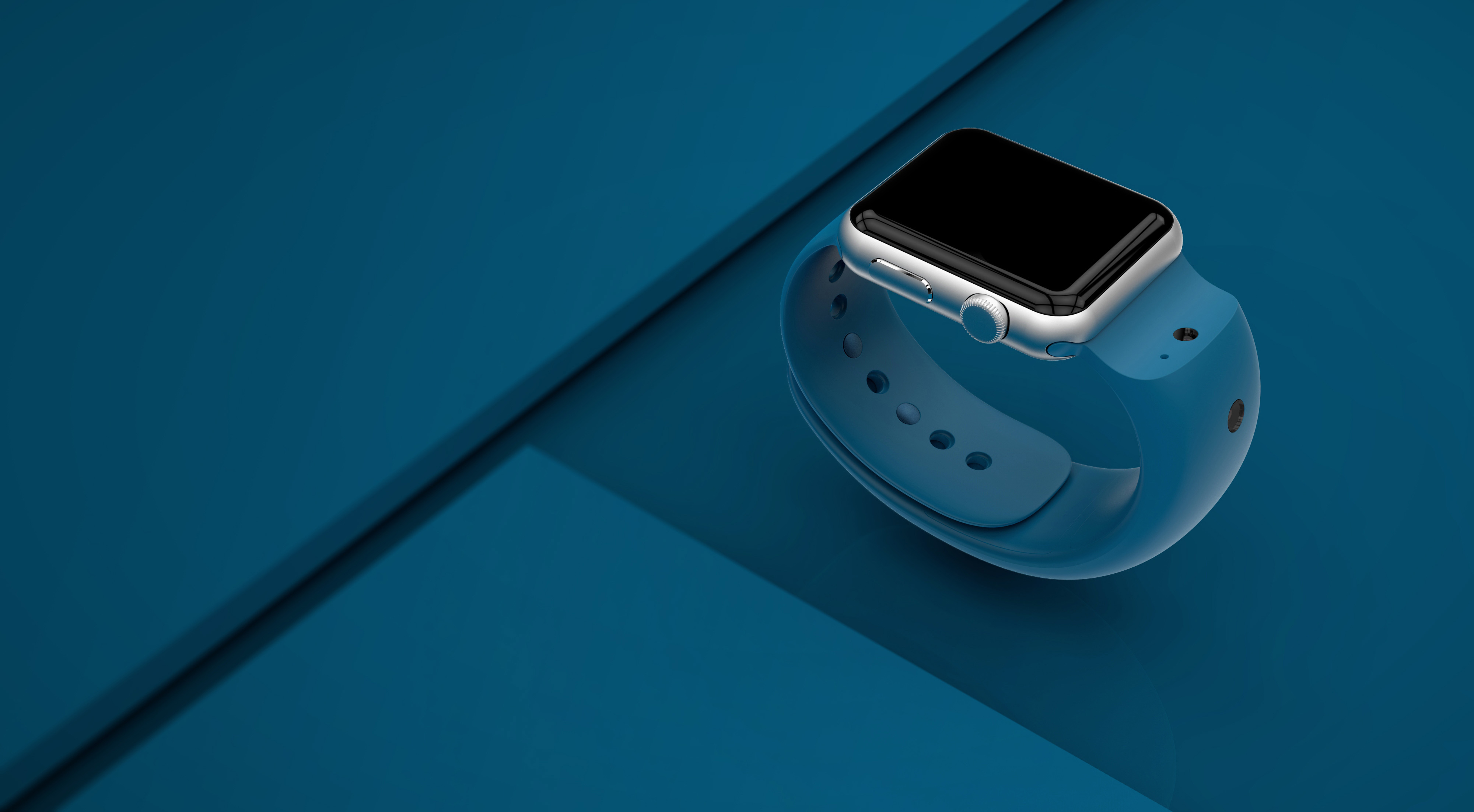

A sleek, seamless Apple Watch camera band
A six-week design sprint for a startup results in a market-ready wearable.
Glide, a video communication software startup, came to IDEO to collaborate on the design of its first hardware product. With current Apple Watch models not including cameras, Glide sought to design a compatible band that would empower users to capture and share photos and videos directly from their wrist.
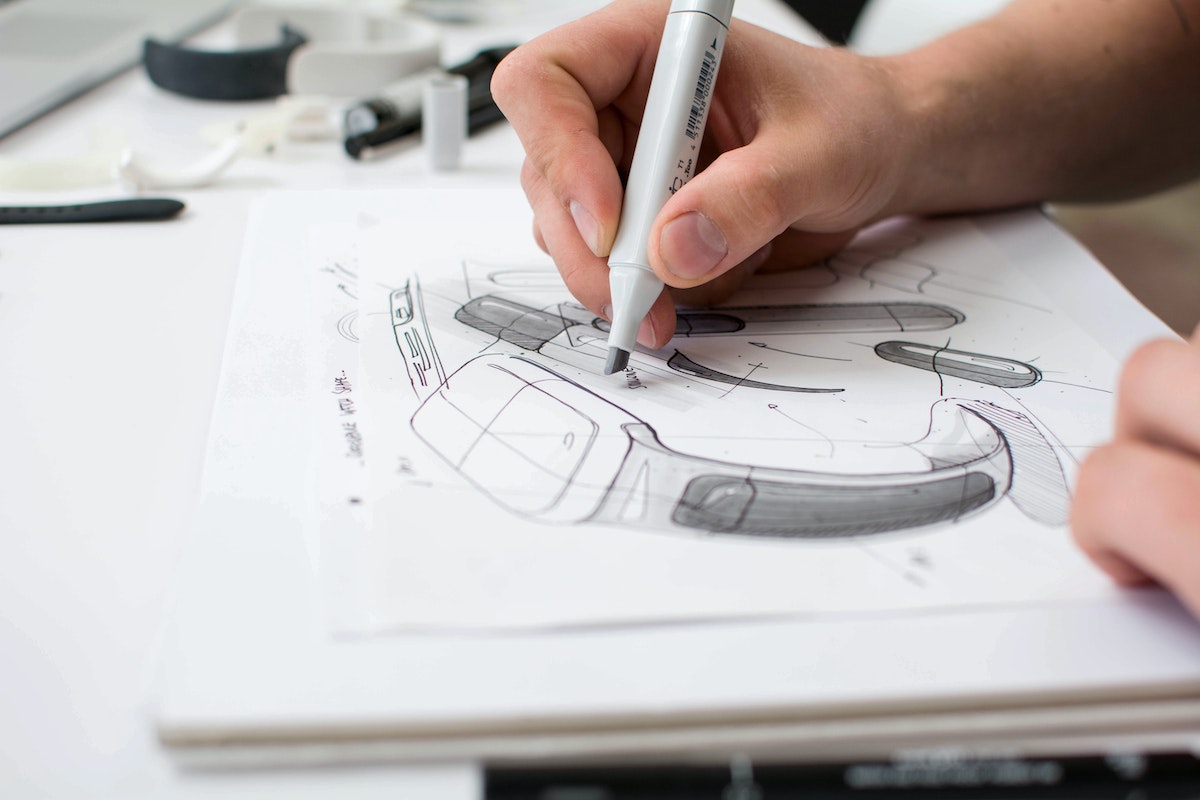
Faced with this challenge, IDEO designers embarked on a six week-long design sprint, involving users in the research to understand how they might use the band for interactions such as taking reminder snapshots and intuitively sharing photo and video messages with friends. The team then brought these ideas to life through a comprehensive industrial design and engineering process, working to meet a range of technical and performance requirements along the way.
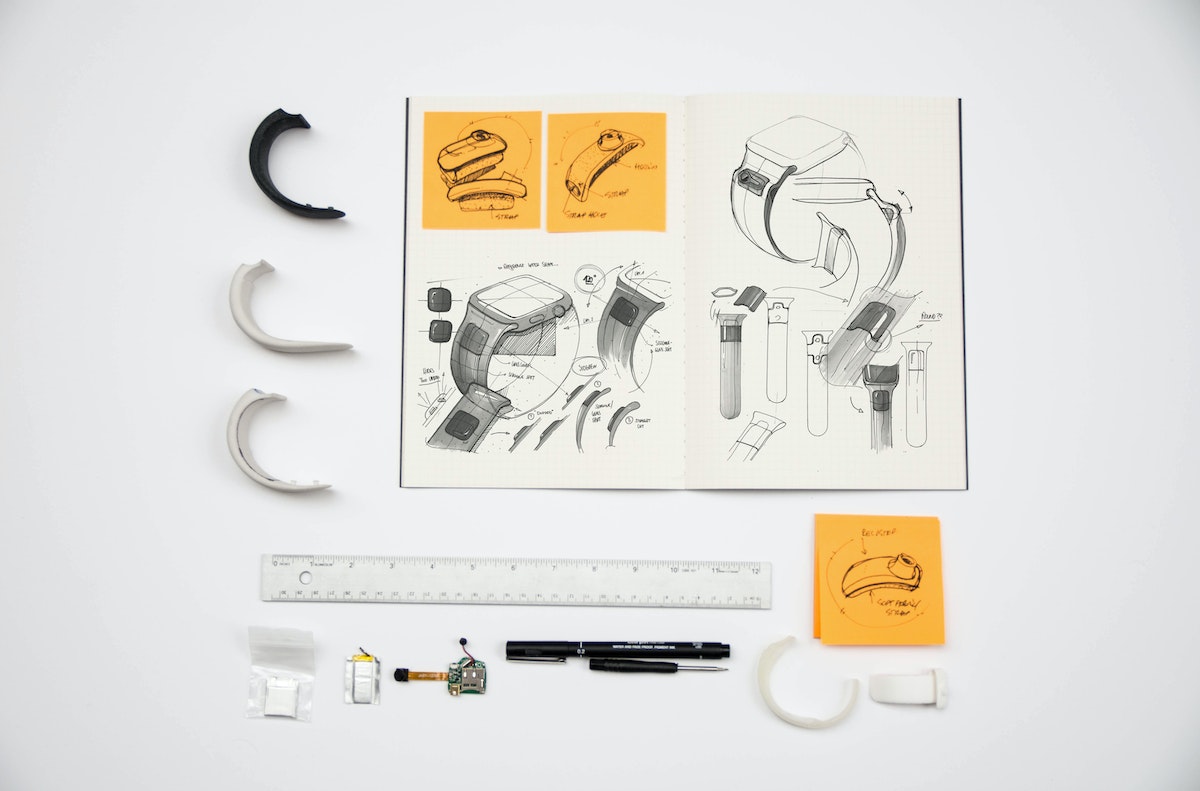
IDEO’s final band design elegantly integrates two cameras—one nestled in a wave-shaped notch above the watch face, and the other on the band’s outward-facing surface. Together, the cameras ensure that, between recording themselves and the vibrant world around them, users never miss capturing a moment worth sharing.
IDEO also designed a compatible, on-the-go charging dock that conveniently refuels both the watch and band with a single plug-in, completing an effortless user experience.

Designing a modern work experience for business travelers
Helping a top hotel brand better support its guests' productivity needs.
Today’s younger workers are more comfortable dressed casually. They prefer an impromptu meeting over coffee, than at the conference table. They’re used to working flexibly, collaboratively and creatively. And, via smartphones, tablets and laptops, they’re accustomed to having everything from hailing a cab, to doing work, to getting groceries, at their fingertips.
Tech-savvy, independent, entrepreneurial, demanding: this new generation of business people and the lingering impact of the financial crisis, are reshaping hospitality.
To that end, Crowne Plaza approached IDEO to understand the needs of this audience, the macro trends impacting them, and to develop a new meeting and work offer that expressed the brand’s values.
Research, sensor data, surveys, interviews with potential customers revealed what modern travelers wanted, but lacked: informal, flexible experiences; energizing and uplifting spaces; peer-style service; curated choices; and integrated technology to control it all.
IDEO translated those customer insights, and Crowne Plaza’s promise—Making Business Travel Work—into an integrated, designed and built-out branded offer. Launched with two pilot schemes in Atlanta, Ignition is a free-to-use, innovative new meeting and working experience, housed in the lobby of Crowne Plaza hotels.
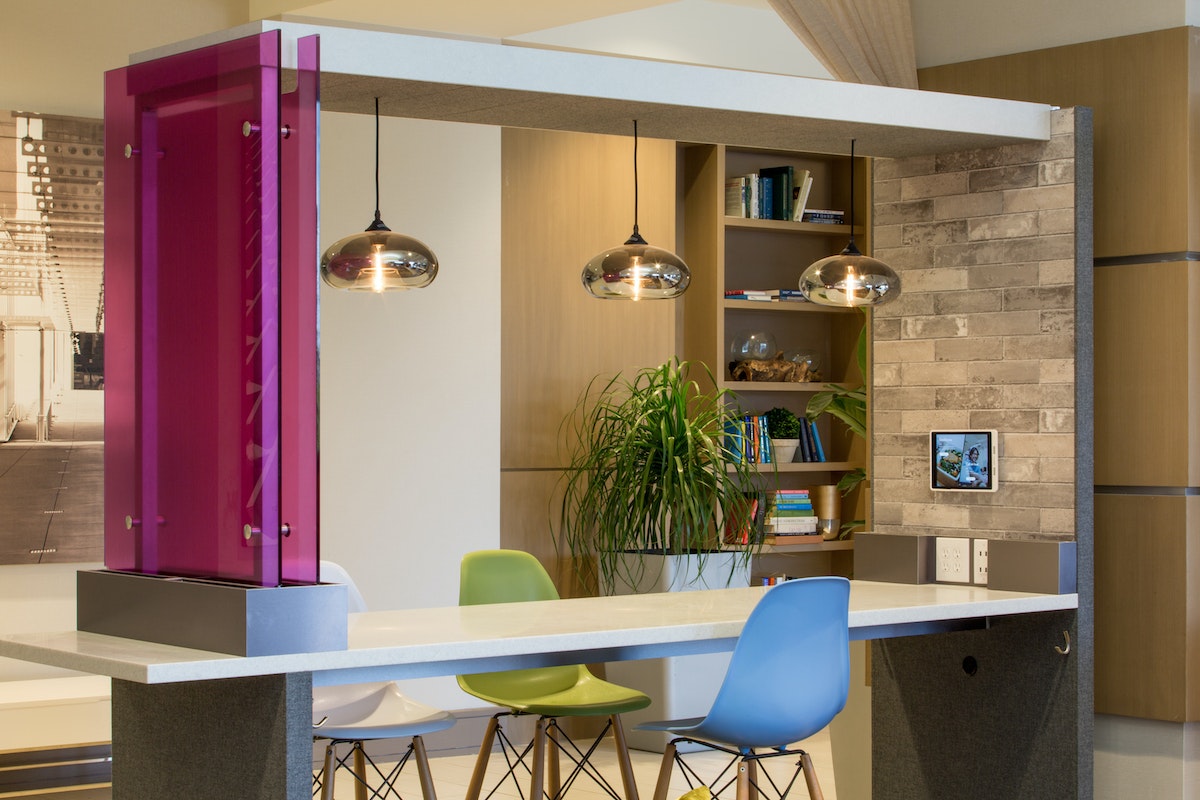
Spanning space, food and beverage, service, and digital, every touchpoint is designed to keep travelers in a state of flow, and heightened productivity. From single-person Pods, to the Nooks and Huddles for four-person impromptu meetings, to the 10-person Apartment (bookable by the hour), Ignition’s spaces cater to every professional’s needs, whether they’re on the road or in their home city.
Food and beverage offerings have been redesigned specifically for work meetings. Delivered to where you’re working, it’s non-drippy, made to be eaten one-handed, and served on square plates to sit neatly alongside laptops. Out of hours, a new self-service marketplace offers 24-hour premium sustenance.
A new role, the Host, provides peer-style support, whether greeting guests’ guests, helping with meetings, or sourcing local restaurants for a client dinner.
Underpinning Ignition is a new tablet-based ordering system (Food To You), and Host chat platform, to easily get everything from photocopies to coffees.
But ultimately, IHG’s ambition for Ignition goes beyond its existing guests. It’s designed to become a local business fixture in its own right, attracting people to meet, and work, irrespective of whether they’re staying. As one guest summed it up: “There is nothing any hotel brand in this range is doing to stand out. This concept, however, could completely change that. It could even live on its own. It’s what you would seek out.”


An acoustic amp that steals the show
Balancing high-tech performance with the warm, natural sound of acoustic for an iconic brand.
Fender, a brand that’s been synonymous with rock ’n’ roll since 1946, is best known for its iconic electric guitars—think Stratocaster—played by everyone from Eric Clapton to The Edge, the lead guitarist of U2. Less well known is the imprint Fender has made on the acoustic space. IDEO worked with the company to design a new family of acoustic amplifiers: one professional and one with stereo effects.
After gathering insights from amateurs, professionals, music magazine editors, and producers, the team explored portability, storage, materiality, and form through a series of early prototypes that they tested with users.
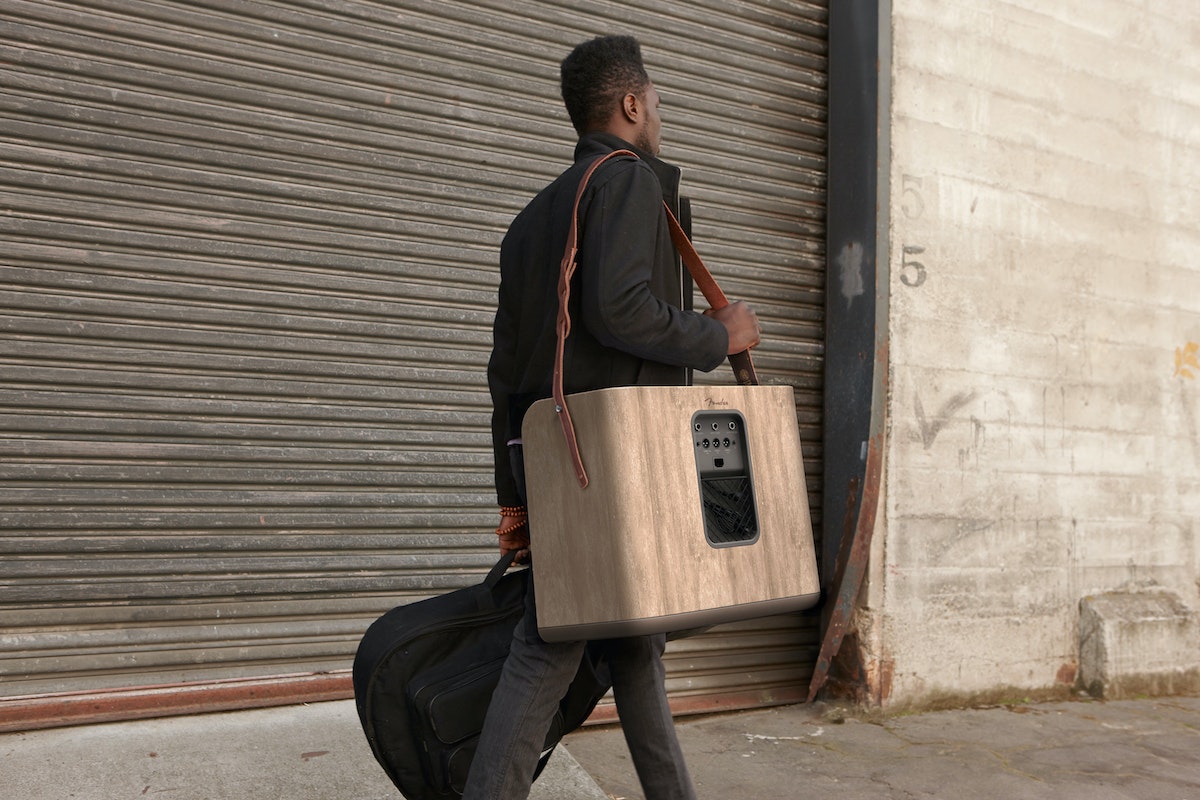
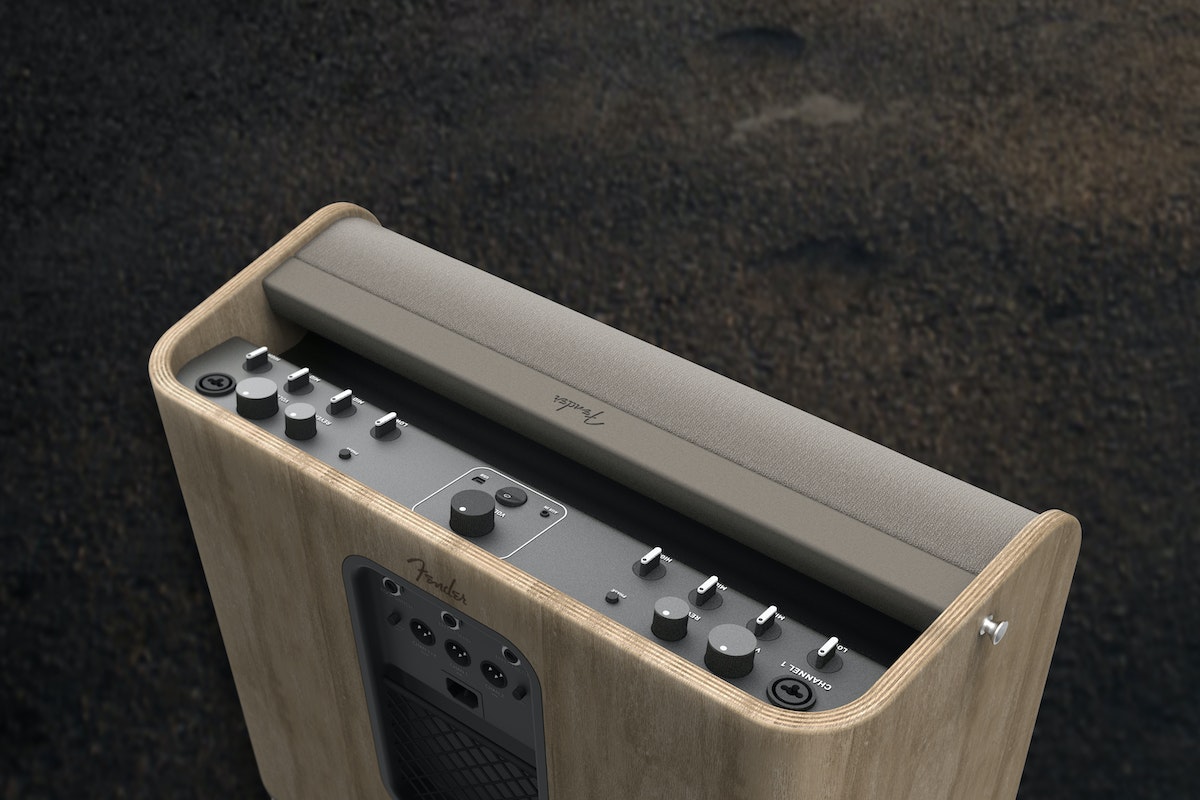
While most acoustic amps in the market don’t look all that different from their electric cousins, the new Fender product line reflects the pure, natural sound at the core of acoustic. This new line of amps uses a unique manufacturing technique with bent plywood that’s new to acoustic amp design. Not just a design statement, the innovation also improves sound quality.
The acoustic amps were also designed with simple, intuitive controls, and with illuminated features that balance high-tech performance with a satisfyingly analog experience. The design emphasizes portability and maneuverability, targeting the acoustic artist who often may have to make a tough choice between traveling light and using the often unreliable house PA.
Pi Jacobs, a singer-songwriter who participated in the design research process, said acoustic sound requires its own unique medium. "Acoustic is raw, pure, no bells and whistles. You see someone playing and singing, it’s like looking through a window into someone’s soul," he said.
For Fender, the work proved to be transformative. "Working with IDEO was an eye-opening and refreshing experience," said James Gifford, vice president of design for Fender. "The result of the work that was done with IDEO on the acoustic amp project was a game-changer that challenged the traditional definition of the design and experience received from using acoustic guitar amplifiers."

A better box of tea
Updating Bigelow Tea’s packaging to convey family-owned quality.
To better articulate the Bigelow family values—obsessive about ingredients, environmentally conscious, community-oriented—the company asked IDEO to help convey its story to a younger demographic, for whom tea was popular but the Bigelow brand was not. Any changes to the product or its packaging would have to improve the offering without alienating Bigelow Tea’s loyal customers.
IDEO worked with the company to update its positioning statement, brand identity, and packaging. After many interviews with tea drinkers, IDEO and Bigelow executives learned that the brand could differentiate itself by crafting a strong point of view—one that cultivates and celebrates tea enthusiasts with a superior yet accessible product. With a refined positioning statement in hand, a refreshed identity system followed.
The new packaging ties together all of Bigelow’s lines of tea. Each box features bold graphic elements like a larger, easier-to-read logo, instructions for brewing a perfect cup of tea, a caffeine “caff-o-meter,” and the name of the team member who packed the box. Bigelow boxes now stand out when stacked on store shelves, winning over tea drinkers and retailers alike.
The 3 Unexpected Secrets for Finding Common Ground Between Strangers
Looking to make a new friend? Try not telling them your name.
Well, not complete strangers. They had shared an unusual experience, designed by IDEO, over the previous five weeks: The Department of Super Secrets.
When COVID-19 shut down elementary school buildings, it shut down opportunities for young students to build soft skills like empathy. It also severed personal contact between seniors and other human beings, leaving many confined and lonely.
Alongside teachers and students at Mineola Union Free School District in Mineola, New York, IDEO took on a project to design a program that would help 4th graders build empathy by connecting idle students with isolated seniors. We thought it would be a simple, playful opportunity, but in the end, we found a powerful tool for connection that might be scaled to bridge any number of social divides.
What’s the key? Well, that’s a secret.
Connections grown in isolation
The IDEO team decided that instead of trying to compensate for the limitations of quarantine, we would embrace those constraints and make them the centerpiece of the experience.
People can’t meet face-to-face? Perfect. We’ll beat quarantine at its own game. Neither partner will know anything about the other. No names, no ages. They’d have no clue about the other’s most basic biographical information, like age, race, gender; instead, this would simply be two human beings building a connection by sharing stories of their hopes and fears. A relationship built on meaning rather than appearance.

Thus, the Department of Super Secrets was born—an IDEO twist on the pen-pal relationship. Our heroes picked secret super aliases and we paired them up: one student with one senior citizen. Over five weeks, the partners were prompted to share five specific secrets designed to be low stakes, but highly personal, carefully crafted to spotlight character, values, and feelings. This was a delicate tightrope walk, asking them to offer up something meaningful without being invasive or uncomfortable. We designed the prompts to build on each other, gently establishing a bond through vulnerability and reflection.
Every secret was shared in two ways, with words and images. We wanted the partners to spend energy reflecting on their own lives so they could benefit as much from the telling as the receiving.
You know what was so wonderful about it—I had been cheated all these years not remembering that image of my brother and I playing under the table. I wouldn’t have [remembered it] if we didn’t do this.
MARVELOUS MUSEUM MAVEN, SUPER SECRET SENIOR
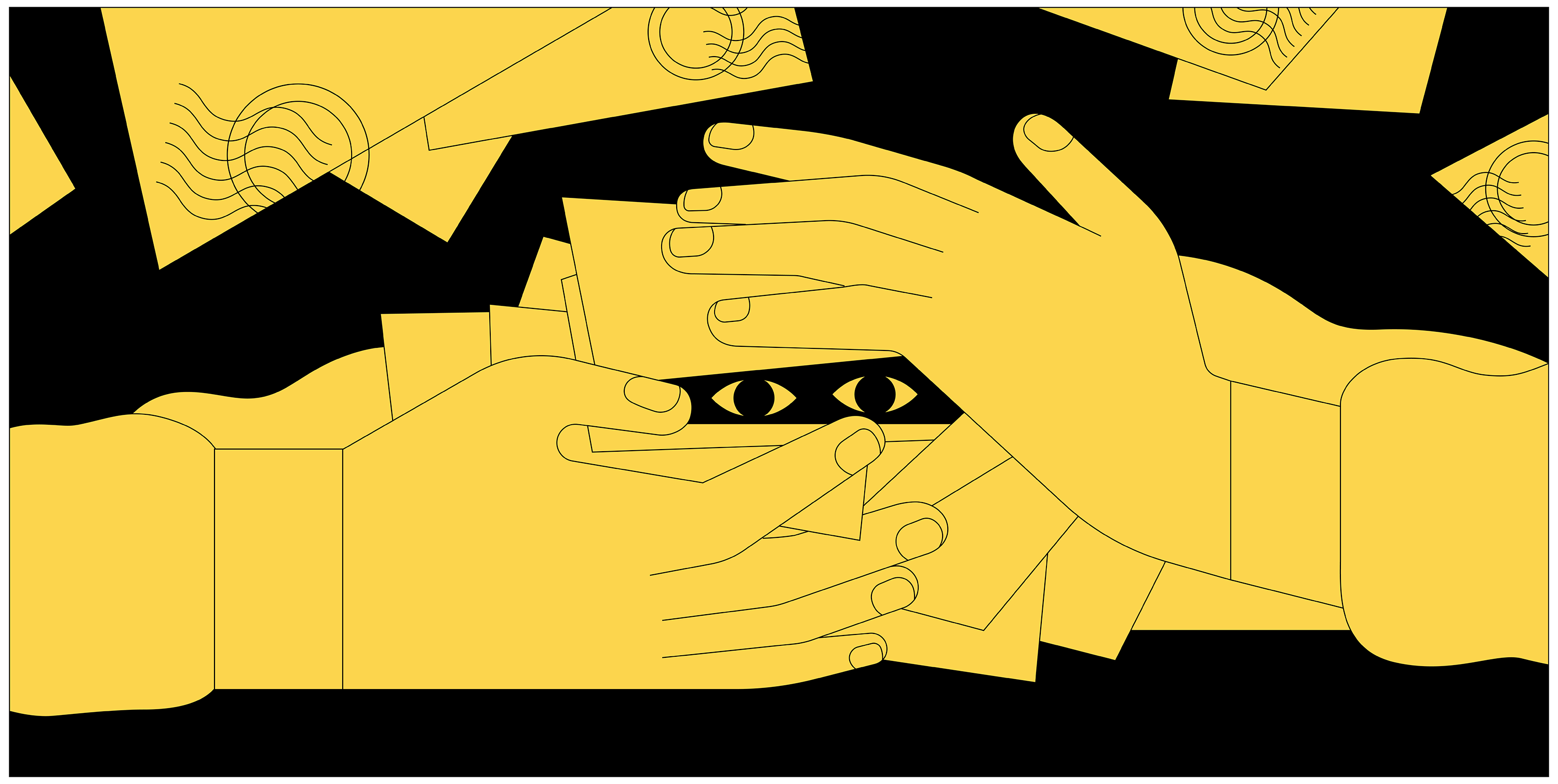
The secrets were exchanged through actual mail, not email. This slower method gave the partners time to explore their memories, express themselves deliberately, and—in a situation where days begin to blend—gave them something to look forward to. The tactility of cards filled with handwritten words and pictures turned them into a gift; it made the receiver a caretaker, safeguarding moments of someone else’s life.
Friendship across distance and decades
We wanted our participants to build a connection, not just exchange information. This was not about grown-ups humoring kids, or kids humoring grown-ups—this was about two experiences at either end of a spectrum, sharing a window into their point of view.

As part of the final exchange, each partner used what they’d learned about the other to create and send a gift to their anonymous pal: a superhero mask based on the shared secrets. And then the Department of Super Secrets hosted a reveal party. Partners came together on a video call, each wearing their newly gifted masks. Although they had been exchanging stories for weeks, this was the first time they saw the face behind the feelings. This was the first time Super Potato met Fantastic Fixer, and it was lovely.
Visit the Department of Super Secrets to meet the 4th graders and senior citizens behind the masks
Before and after their experience, we asked the partners to answer a few questions meant to gauge their empathy. Turns out the numbers support the anecdotes: Their time with the Department of Super Secrets seems to have genuinely increased their empathy scores, especially their ability to put themselves in someone else’s shoes.
So what went right? We built the Department of Super Secrets by combining three key elements:
1. Anonymity: character vs. characteristics
No one in the world is more perfect for you than the mysterious stranger sitting alone in the coffee shop. The less we know about someone, the easier it is to dress them up and see them exactly as we wish. That’s why we sidestepped the introductions, the descriptions of hair color, and the family history. We wanted each side to begin by speaking across the mysterious absence created by anonymity to someone they assumed was a kindred spirit, ready and excited to connect.
We’ve all seen enough awkward hugs and pinched cheeks between kids and elderly relatives to know these two groups don’t always dance to the same beat. If the relationship began with the mental shorthand of “old” and “young,” there would be silent assumptions on both sides. Confirmation bias would run wild.
We used the freedom of anonymity to create rapport so partners would speak their truth honestly without tailoring it to their audience.
2. Story: introductions from the inside out
My name Is Ben. I once had my heart broken.
Which of those two offerings is more likely to create a bond between us? Ironically, the things that shape us most distinctly—our stories—are also the things most of us have in common. At the very core, we all share the same stories, but told in our own unique ways. Your parents may not have named you Ben, but you probably know what it is to cry into your pillow.
We used story as a sneaky back door to help Super Secret partners appreciate each other's identities once we dropped the anonymity. By the reveal party, they had connected enough through the shared stories that when they discovered each other’s identity, it enriched their idea of who a young or old person could be.
3. Play: lighten the mood, deepen the conversation
As I’ve written elsewhere, play is powerful. It lowers the bar for self-judgment; it can function like oven mitts for handling sensitive subjects; it can encourage us to stretch our everyday thinking and see possibilities we might have otherwise missed. Fun is a fuel.
We could have said, Hey, this is a school project to build empathy. Bo-ring. Instead, we led with the language of secrets, superheroes, and surprise to elevate it to something memorable, meaningful, magical.

Play allowed the partners to share vulnerable stories in a safe way. One prompt—"Share the secret of your most embarrassing moment"—became a funny way of sharing values, fears, and anxieties. Because underneath the slipped bathing suits or milk-spewing nose is the nature of what you find embarrassing, and that tells a lot about a person. Is it failure? Public or individual? Loss of control? Misunderstanding? Fear itself?
Sharing a moment you wish had never happened is an act of trust and bravery. Receiving someone else’s story is a way to remember you are not alone in the world as a flawed human being.
Play allows you to do both with a smile.
The next adventure…?
While this began as a way to enrich the lives of kids and seniors, it turned out to be a powerful way of sneaking behind the unrecognized biases, the mental shortcuts that are the unacknowledged guardrails of our day-to-day thinking. What if we expanded the experience to bridge other divergent points of view related to politics, race, economics, gender, geography, or religion?
We’d love to find situations to use the Department of Super Secrets to help people hear each other in a new way. Our hope is that this combination of anonymity, story, and play can help any two strangers find common ground whether they be superdelegates or super potatoes.
*Names and details have been changed to protect secret identities
When Super Potato* met Fantastic Fixer* for the first time, she asked if Fantastic Fixer’s puppy was feeling better. Fantastic Fixer wanted to know about Super Potato’s recent birthday. There were no awkward silences, despite the fact that Super Potato was nine and Fantastic Fixer was closer to 79 and they were, until this very moment, strangers.
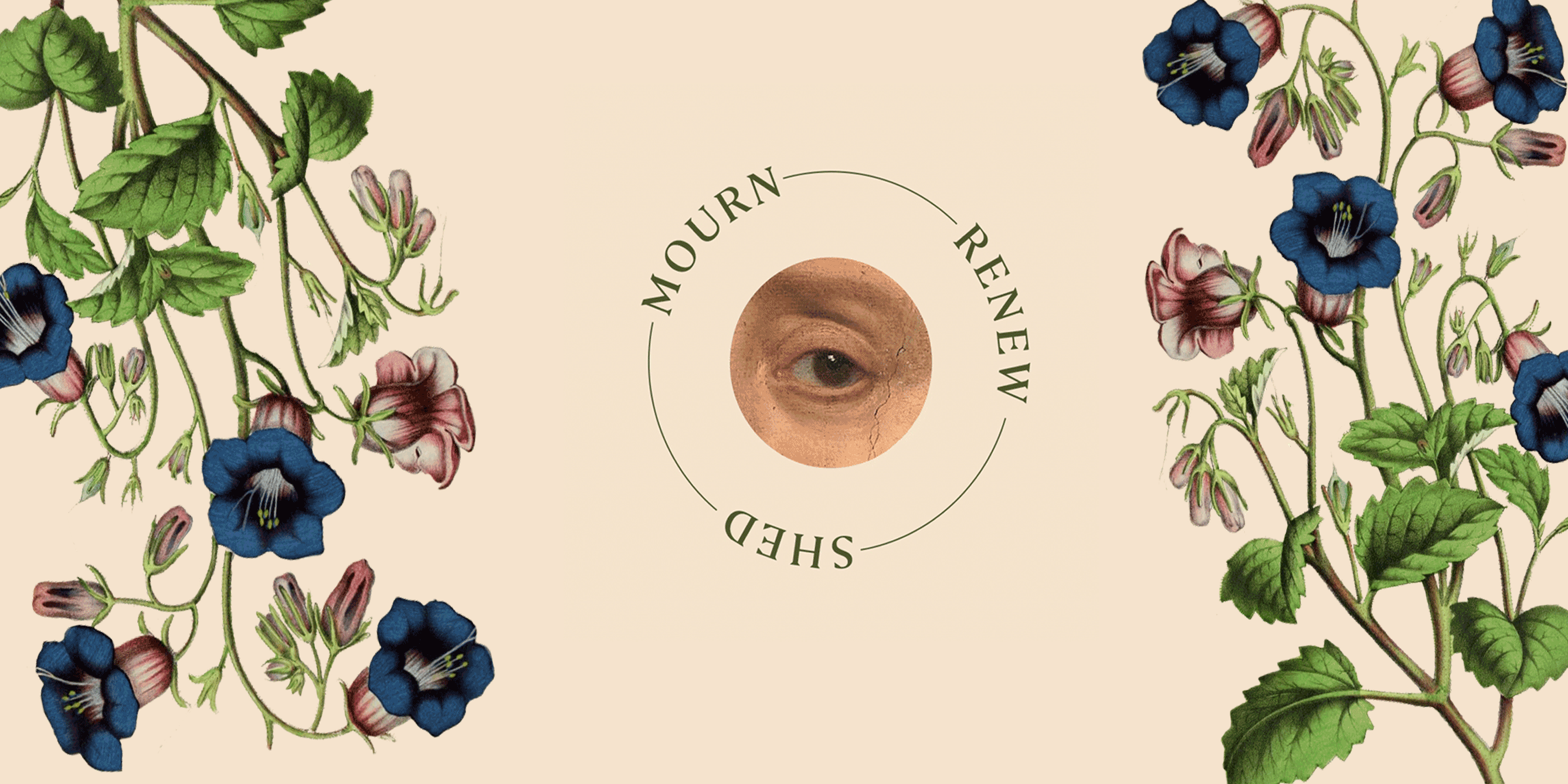
A Rabbi and a Designer Walk Into a Zoom…
We teamed up with the Union for Reform Judaism to design holiday activities you can do at home
This year, in light of our collective Zoom fatigue, services have been shortened to just a few hours, which is already pushing the shredded edge of our online attention span. After seven months of pandemic, mass unemployment, racial justice reckonings, and school closures, it’s hard to abstain and reflect on your own transgressions when all you want is comfort food and a hug. Knowing that, the Union for Reform Judaism, leading the largest, most diverse Jewish movement with nearly 850 congregations across the U.S. and Canada, asked IDEO to help design a few offscreen moments as supplements to the synagogues' videotaped services.
To think beyond the Zoom and understand what people are craving this year, we joined Mobius for a workshop with community builders like the founder of The Dinner Party, interviewed rabbis who have responded to modern yens with yoga and dance parties, talked to a “ritualist” about how to design a memorial, and met with the creator of This Human Moment, an immersive online experience. Our collaborators at the URJ, Amy Asin, Rabbi Leora Kaye, and Rabbi Esther Lederman, along with staff from the Righteous Person’s Foundation, which provided funding for the project, helped us ground modern exercises in a 3,000 year-old tradition—pouring old wine into new bottles.

We learned that what people need right now is to feel supported and comforted by some semblance of normalcy—a holiday that feels more like getting into a warm bath (or a mikvah, where you immerse yourself in water, as we learned from the URJ’s Rabbi Leora Kaye) than like a wake-up call. We learned from speaking to congregants that they don’t just come to temple for services, but for the casual synagogue interactions. It's a chance to see Mr. and Mrs. Riley, that lovely old couple who are somehow still alive, or family friends you haven’t had the chance to call, or that old school crush who still causes your stomach to flutter once a year.
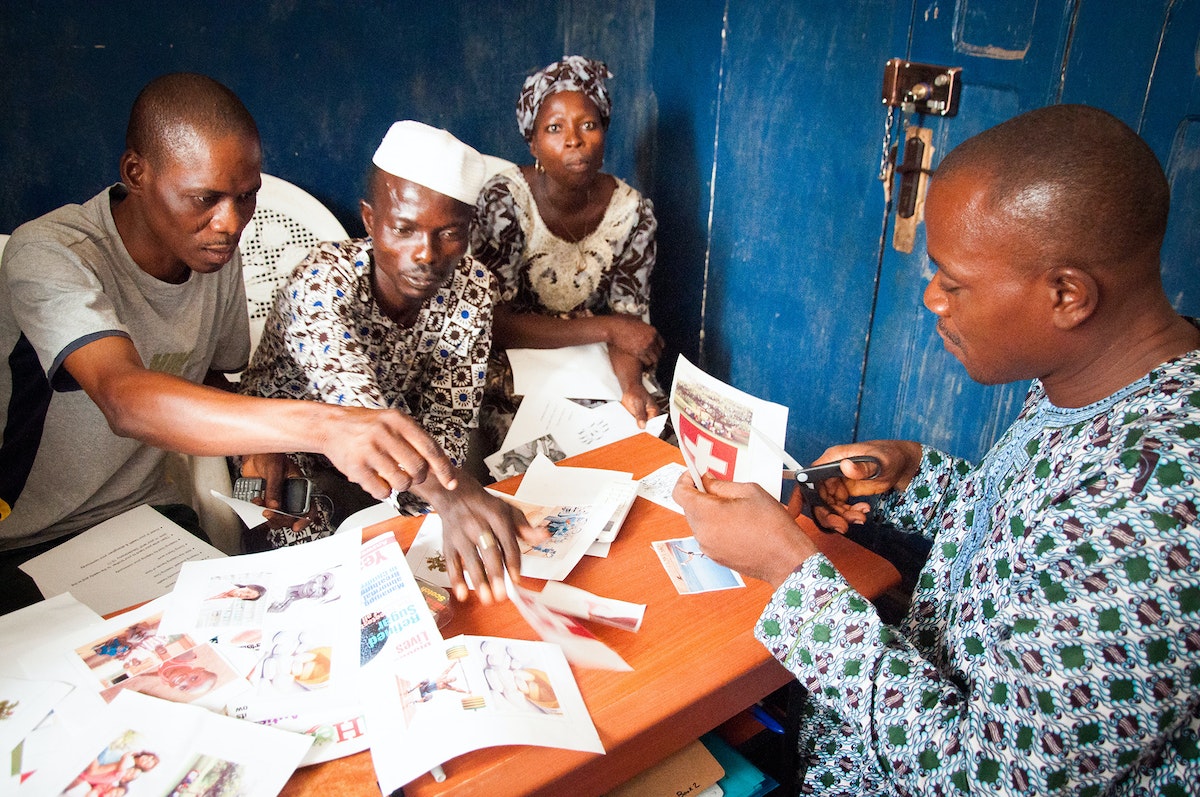
The ideas that emerged can be found at reflect.reformjudaism.org, and they don’t look much like your aunt Sheila’s seder table. They include ways to do a check-in on your spiritual health (as you might at an annual physical); ways to memorialize a person who died or an event the pandemic shut down or how to let go of a burdensome feeling; and a collage exercise that has you scrapbook the community you’re missing by congregating in digital space. And for those looking to know more about how the activities relate to Jewish wisdom and custom, the bottom of each page invites visitors to “Explore more and go deeper” with links to essays on ReformJudaism.org.

Each activity was designed to be radically inclusive—as welcoming to those who don’t know a single Hebrew word and don’t believe in God as it is to believers with scholarly knowledge. The experience is a la carte, customizable, and while housed on a screen, designed to be non-screen-based. As identity changes in America—where one-in-five Jews describe themselves as having no religion—it’s become increasingly important for Jewish organizations to offer those still seeking community and spiritual life a radically new way to engage. That’s what this is.
It’s been said that religion was the answer to a cry for help. Right now, everyone could use a little help. And awe. And beauty. And routine. Religious rituals were built to keep us in line, to keep us connected, and to keep time. Much of that has been broken by COVID. So the question for designers becomes, how might we, within the constraints of the day, mine a bit of gold that can fill in the cracks?
Each fall, the Jewish High Holidays draw communities together for some of the year's most important rituals. Even Jews who don't attend their temple's regularly scheduled programming tend to make a point of spending a few days celebrating the new year and reflecting on the one that's passed. Now that we're socially distanced, how do we make sure the rituals are still observed? The experience of gathering and connecting still felt?

Today’s Leaders Must Learn to Address a New Epidemic: Loneliness
Organizational health depends on human connection
What they found through their conversations took them a bit by surprise. There was a deeper malaise afflicting everyone they spoke to—something under the surface, under the symptoms.
Loneliness.
Months into a pandemic, the isolation that’s always been below the surface is even more extreme. It was in this context that I had the pleasure of talking with Dr. Murthy. We spoke about what leaders can do to facilitate connection, and why it is mission-critical for organizations to address loneliness and support relationship-building, even when we’re physically distant. Especially when we are physically distant.
I'm sharing some excerpts from our conversation here. I hope they inspire you and prompt useful explorations into the health of your communities.
Three types of loneliness
The feeling of being isolated from each other, Dr. Murthy discovered, is at the root of so many of our deepest ailments. He reminds us that we are social creatures, and that community heals us. Especially in these divided times, the way to a more happy and healthy society is both obvious and profound: human connection.
Connection in the workplace
Our professional lives—the experience of working and the quality of what we do—is heavily influenced by what’s going on in their rest of our lives. Yet there’s a hesitance to be vulnerable, share challenges, and ask for help. As a result, colleagues sometimes miss opportunities to help one another. It’s a loss, because through helping each other, we deepen our bonds. Empowering employees to help each other can be one of the most powerful ways for organizations to strengthen their teams.
The potential for something better
While our present moment lays bare how technology can isolate us and ideologies can divide us, it also shows us that new ways are possible now and in the future. My conversation with Dr. Murthy explored the role design can play in creating human-centered systems that make us all feel more connected—from the scale of individuals and teams, all the way up to systems, institutions and governments. We all have the power to design conditions that prevent loneliness, cultivate community, and foster good health.
The strain on our systems caused by COVID-19 reveals an opportunity to take new approaches to our work and our infrastructure— from how the government sets policies to how businesses empower employees. In rebuilding the world post-pandemic, we need to keep in mind the tangible benefits that human connection can support: mental health, physical wellbeing, academic and professional success. We can design policy to optimize human connection, ensuring our government recognizes these principles when thinking about housing, public health, or education, for instance. The question for leaders is, what changes are required to create connection and maintain cohesion, even as our structures and processes shift? The opportunity for leaders now is not to go back to how things were, but to imagine something better…and make a new “normal” built upon what supports us as, as Dr. Murthy points out, social creatures who need care and connection.
Original photograph by Meredith Nierman
There’s a story in Dr. Vivek Murthy’s book, Together: The Healing Power of Human Connection in a Sometimes Lonely World, about the tour he made across America in 2015, while he was U.S. Surgeon General. One of my colleagues at IDEO, Ann Kim, served as his Chief Design Officer and joined Dr. Murthy’s team as they set out to learn about the health crises gripping the nation—opioid addiction, chronic disease, violence—from the people who were suffering the most.
Designing a video game on a very, very small scale
How one designer built a pixel-sized video game controlled by a jeweler’s loupe.
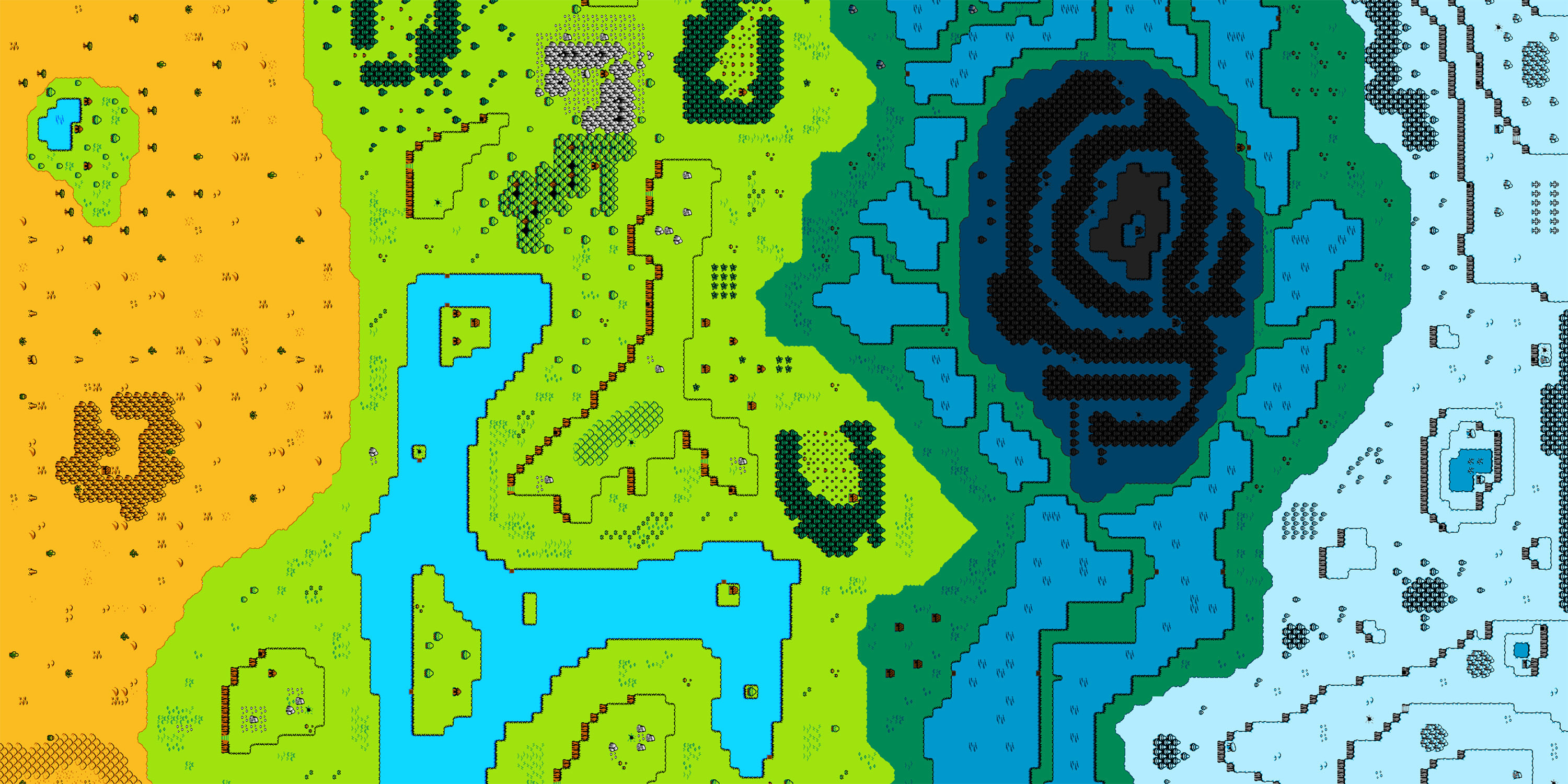
As pixels become a hidden quality, what would it be like to expose and celebrate this tiny landscape? Maybe it’s some sort of nostalgia for the pixel, but I thought it would be fun to prototype a game where part of the gameplay is uncovering this “hidden world” of pixels inside these new displays—and so the world’s smallest pixel art game was born.
Looking through the loupe
To start the project, I needed to see these tiny pixels up close. I bought a cheap jeweler’s loupe—basically a magnifying glass—and pressed it up against an iPad. Things looked promising with a 10x loupe. The level of magnification allows you to see the individual pixels, but still see a decent amount of the play area around the character. However, if your eye is pressed against the eyepiece of the loupe, it would make touch controls a challenge because you can’t see anything but the small area in the magnifying glass. To work with this constraint, I wondered if I could make the loupe itself the controller for the game.
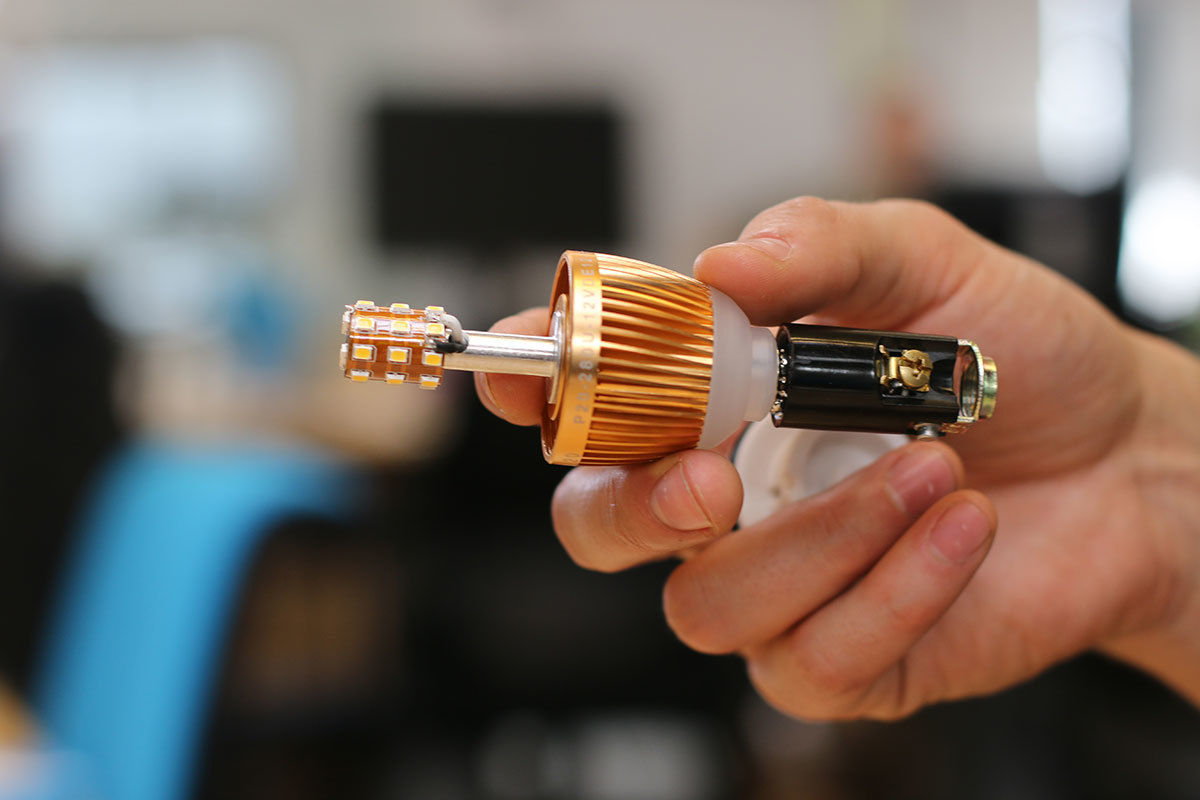
The way iPads and most tablets sense touch is using a “capacitive touchscreen.” This type of display creates a grid of areas that hold electrical charge. When a fingertip touches the screen, the charge at and around the point of contact decreases, communicating where the finger is to the tablet. Electrically conductive gloves and styluses are able to work on these screens because they allow the properties of your finger to extend through the conductive material. So using the same idea as a conductive stylus, I put some aluminum tape on the loupe to transmit the capacitance from your fingers to the display. This allowed a player to move the loupe around the screen, and through doing so, interact with the game.
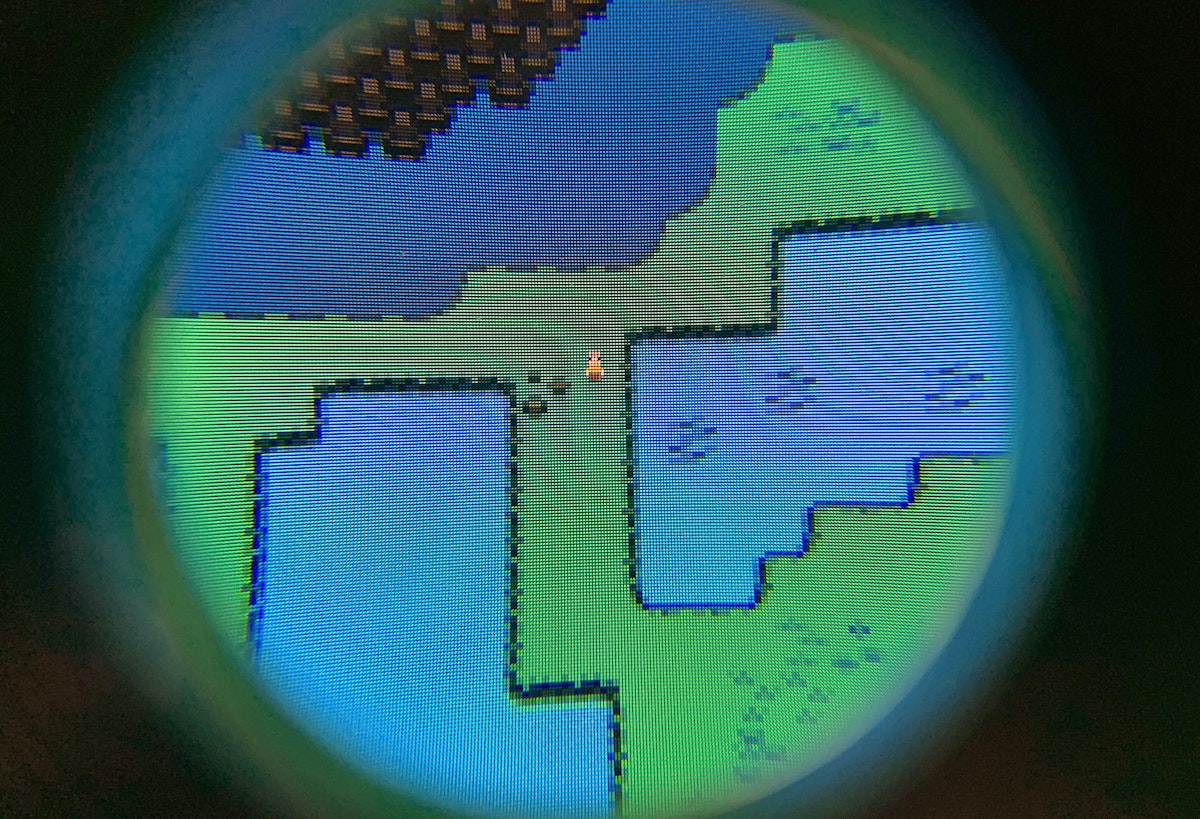
Exploring a tiny world
Next, I needed to develop the game. I borrowed from some of the classic role-playing-game tropes from games I played as a kid, building out a landscape that included many different climates—a desert, a lake, a forest, a deep forest, an ice tundra, and more. I created a tiny character that the player guided around the landscape by moving the loupe.
The idea is that the whole game is played on a single static overworld screen that never moves—you can explore an entire tiny world without ever moving more than a few inches. There are even a couple of fun ways the character interacts with the environment. For example, the player can force the character to fall into the lake, where he splashes around and quickly jumps out. I also created a hidden cave that shows how a game might work with inside and outside spaces that can be explored.
Overall, I’m pretty satisfied with the way the experiment turned out. There’s something about looking through the magnifying glass and into this new world that brings back some of the awe and wonder that came with exploring new worlds on my Nintendo when I was growing up—it just goes to show that screen technology doesn’t need to be pixel perfect to transport us.
Chart your own pixel territory
Want to try it for yourself? Here’s how to get your own version of this experiment up and running:
1. Build the loupe controller
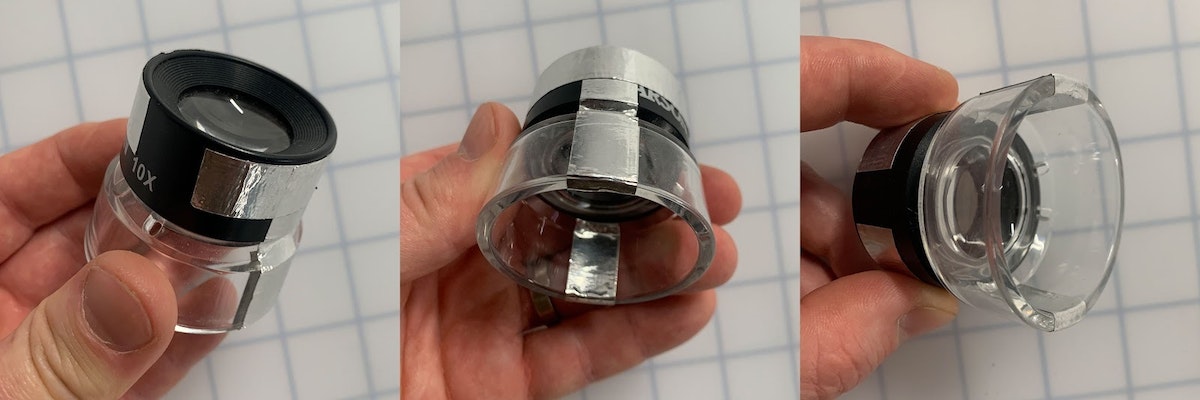
Get a loupe, and some aluminum tape. I made two separate “T” shaped pieces of tape, and wrapped them around the edge of the bottom of the loupe. This metal transmits the capacitance of your body down to the edges of the loupe, simulating two-finger touch.
2. Load the game
There are two ways to do this. First, make sure you have Unity, then download the project from Github. You’ll also want to install the Unity Remote app on your tablet.
To quickly test the project, you can plug the tablet into a USB port on your computer and open the Unity Remote app on the tablet. In Unity on the computer go to Edit > Project Settings > Editor and select the tablet. Then press the play button at the top of the main Unity window and the game will appear on your device. This will let you try things out but it will be very slow to react and move the character because it’s running on the computer and sending each screen as an image over the USB connection. More detailed instructions can be found on the Github project page.
Alternatively, if you want to run the application natively on a device at a reasonable speed, you will need to follow the directions on building for mobile to set up your device with Unity.
Either way, once you’ve gotten the game up and running, you’ll have a good sense of the game mechanics and can go into the project to edit it to create your own tiny world—changing things like the landscape and character actions, creating new characters and interactive objects, and even extending it into an actual game. Happy exploring!
A quick shoutout to some of the great resources I used to create this demo:
- Tiled: A fantastic tool for creating tiled backgrounds for 2D games. This was extremely helpful for putting together the overworld.
- Tiled2Unity: This tool helps bring the tiled data into Unity seamlessly.
- opengameart.org: A great repository for free to use game art assets. My main tiles were modified from surt’s Blowhard Chronicles.
- rm2kdev’s 2D Unity RPG Development series: A super helpful video series on developing 2D games in Unity.
When’s the last time you had to design for something as small as a pixel? In recent years, with the advance of retina displays on computers, tablets and phones, it’s easy to forget that pixels are still the building blocks for everything you see on the screen. (These new displays still use pixels; they’re just so small they can’t really be seen.) In the past, user interface designers had to build to pixel-perfect precision to avoid blurry aliasing effects and issues with displaying fonts on lower-resolution screens; today, this is all but a thing of the past.

Lindsey Turner
I’m passionate about building brands, products, and experiences that help organizations show up with meaning and momentum.
I help organizations cut through complexity by shaping how they show up, through brand strategy, identity, and storytelling.
Working at the intersection of brand and business, I bring an editorial eye and a bias toward making—turning ideas into tangible experiences that people can understand, trust, and believe in.
My work spans government, healthcare, financial services, media, and consumer goods, from launching Gen Z-focused ventures to building innovation labs and reimagining legacy brands. I relish moments of ambiguity and enjoy translating across teams, perspectives, and priorities to move ideas forward.
I started my career in editorial and digital design, shaping cross-platform experiences and identity systems in publishing and agency environments. That foundation still shapes how I work today: I’m detail-oriented, collaborative, and overreliant on the Oxford comma. I hold a BFA in Visual Communication from the School of the Art Institute of Chicago.

Rachel Young
My work helps organizations see who their products aren't working for—and build the will and the tools to do something about it
For 25 years, I've asked the same question: Who does this design exclude—and what are we going to do about it?
My work spans human-centered strategy, inclusive design, and qualitative research, with clients ranging from Microsoft, Google, and Verizon to the National Science Foundation, and San Francisco Unified School District.
Before IDEO, I taught elementary school in East Palo Alto and spent a decade doing design work with social service organizations—where I learned firsthand what it costs people when systems are built without them in mind.
I am currently writing User Error, a nonfiction book about digital access and the design decisions behind it. I live in Oakland, California.

Brian Pelsoh
I lead with craft, ensuring our work is creatively excellent: rooted in deep human insight and imagination, while also grounded in the realities of business and technology.
My expertise spans brand, communication, and product design across tech, education, the arts, and social impact.
I believe great work demands both high-level vision and obsessive attention to detail, and only happens through collaboration.
I bring an inclusive, hands-on approach and a deep understanding of business, which enables me to consistently deliver excellence while always asking why.
Before joining IDEO, I worked at the brand firms Pentagram and VSA Partners. I began my career as a designer, leading teams at the School of the Art Institute of Chicago and the Milwaukee Art Museum. I hold an MFA in graphic design from Maryland Institute College of Art and a BFA in communication design from the Milwaukee Institute of Art & Design, and have taught at some of the best design schools in the US.

Tony Wong
I am responsible for IDEO’s long-term success in China and working with clients to use design as a tool to enable growth.
I am responsible for IDEO’s long-term success in China and working with clients to use design as a tool to enable growth. Specifically, I have helped Chinese companies design holistic brand solutions through the development of their products, communication, services, and innovation teams, and I have helped multinationals expand their presence and influence in China.
I advise global leaders on developing China-led innovation and capabilities.
In over 15 years in IDEO Shanghai, I have worked on projects that use design to elevate the quality of the experience of healthcare products and services, streamline processes that increase productivity, create spaces and programs that promote and enable inclusive communities, and build next generation mobility solutions that are planet-positive.
Before joining IDEO, I worked at Philips Electronics and the Electrolux Group in Italy, the Netherlands, and Singapore on a number of breakthrough commercial products. I am a member of the Young President Organization in Shanghai.

How to use AI as an editor, not a writer
Ed White shares how he uses AI as an editor—not a writer—to sharpen storytelling, rehearse ideas, and preserve the productive friction that makes creative work better.
Ed White has a rule he's tested on his own writing: hold yourself as the writer, and let AI be your editor. Ed is a Senior Design Director at IDEO's London studio, where he co-leads the firm's AI portfolio across Europe. Before IDEO, he spent 12 years as a writer and editor at the Financial Times, Wired, and Contagious. So when he talks about when to use AI for storytelling and when not to, it comes from two decades of crafting his storytelling skills.
In this episode, Mina Seetharaman talks with Ed about two specific tools he uses to keep AI in an editor's seat: a "roasting agent" prompted to critique his drafts without any sugarcoating, and a simulated audience he rehearses pitches on before the real thing. They also get into what Ed is hearing from design leaders at Anthropic, Lovable, Shopify, and Google Creative Lab about how creative work is changing, and why he thinks the friction of writing something yourself is worth protecting rather than automating away.

Building a personal AI for the messiness of life: Sida Li
Becca Carroll talks with Cue co-founder Sida Li about designing a personal AI for the messiness of everyday life—not just work. They explore how Sida stays anchored to human needs while navigating fast-changing technology, product tradeoffs, business-model experimentation, and the realities of building an AI company today.
Most AI products today are built for work—a space with clear problems and established systems. One founder noticed a gap: personal life is messier, harder to systematize, and mostly left behind by the AI boom. So she built Cue, a personal AI that lives inside iMessage and group chats, to go where the other tools haven't.
In this episode, Becca Carroll, IDEO's Chief Strategy Officer, talks with Sida Li, co-founder and CEO of Shared Context Lab, about staying anchored to a human need while the technology around her keeps changing shape, why she treats her business model with the same rigor she'd bring to a product, and what it feels like to build a company at this particular, disorienting moment in AI.
The conversation also gets into how Sida makes design decisions: the language Cue uses to describe itself, the tradeoffs behind building inside iMessage instead of a new app, and a real story about a business idea that didn’t pan out.
This is the second in a two-part series profiling founders from IDEO's Startups-in-Residence program. The first conversation is with Johannes Seemann, founder of Sooner, on designing GenAI for the emotional side of money.

Designing GenAI for the emotional side of money: Johannes Seemann
Designing financial tools around the feelings that shape money decisions.
Most personal financial tools are built to run the numbers and optimize towards a budget. While that works for some, most people experience money as a lived relationship that does not neatly fit into a spreadsheet. Johannes Seemann and Becca Carroll discuss why money is emotional before it is mathematical, and what a human-centered approach to building a generative AI financial product looks like in practice.

The curious leader's edge in uncertainty: Scott Shigeoka
How genuine curiosity helps leaders navigate uncertainty with greater confidence.
Mina Seetharaman talks with Scott Shigeoka, author of Seek and Head of Curiosity Cultivation at the Eames Institute, about what distinguishes genuinely curious leadership from performative curiosity, how power dynamics shape curiosity, and why practicing curiosity can restore energy rather than drain it.
Looks like you might be in search of something very specific?
Or reset the filters above and try another angle.
Here’s some random inspiration

Podcasts about creative leadership

Articles about the power of prototyping








.jpeg)



.webp)