
Charting a bold educational future
Ascend Public Charter Schools designs a “grown-up” vision for its young educational network.
Founded in 2008, Ascend Public Charter Network prides itself on providing “rich, joyful learning experiences that unlock lives of boundless choice” for its students, 93 percent of whom identify as Black or Latinx. The organization is also proud of being Black-led: 78 percent of staff and 80 percent of the executive team are people of color. Using co-design and joy, IDEO held a mirror up to Ascend’s core optimistic spirit during a moment of anxiety and change, helping its new CEO, staff, students, and parents reflect a dynamic, collectively imagined vision.
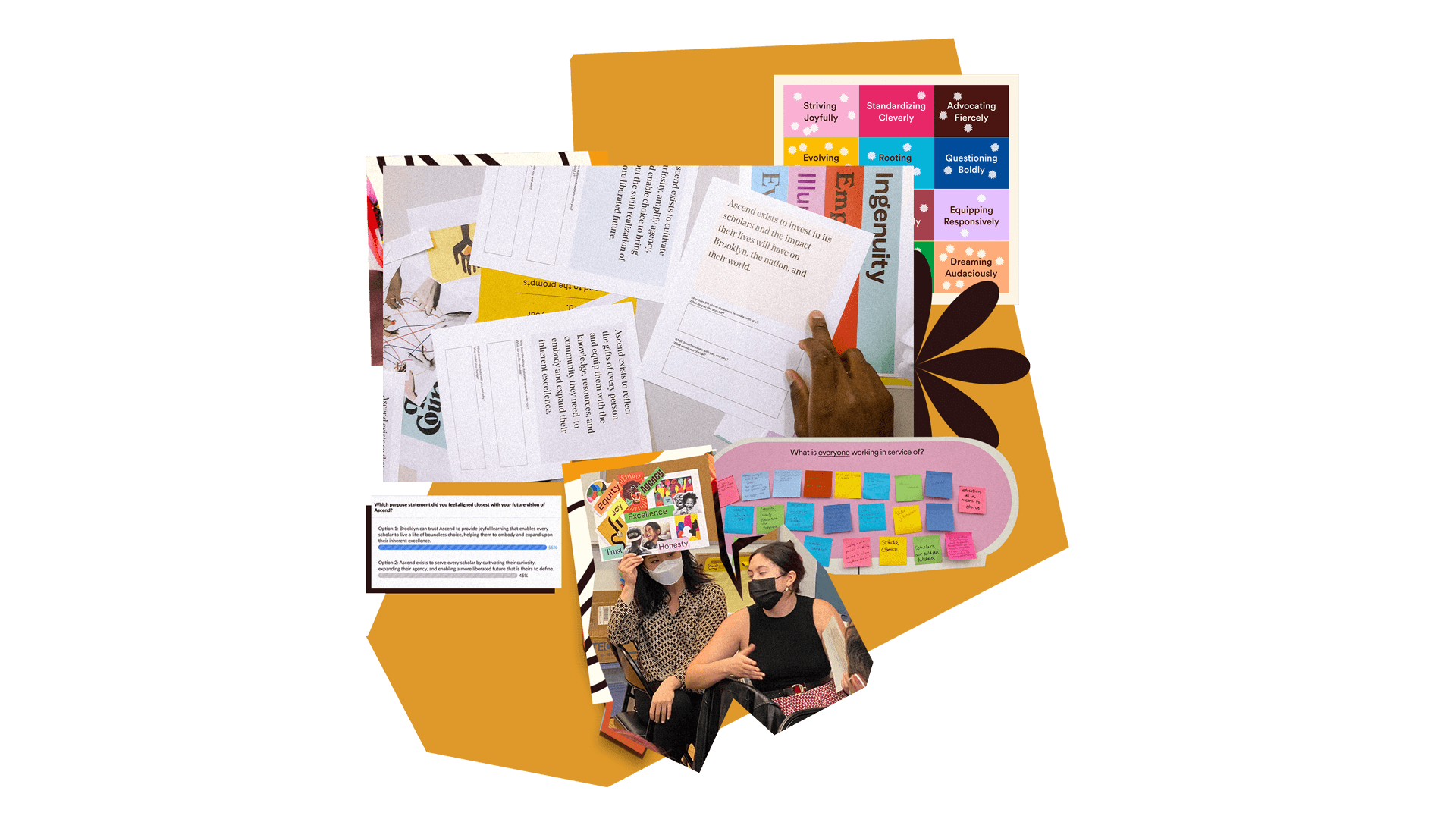
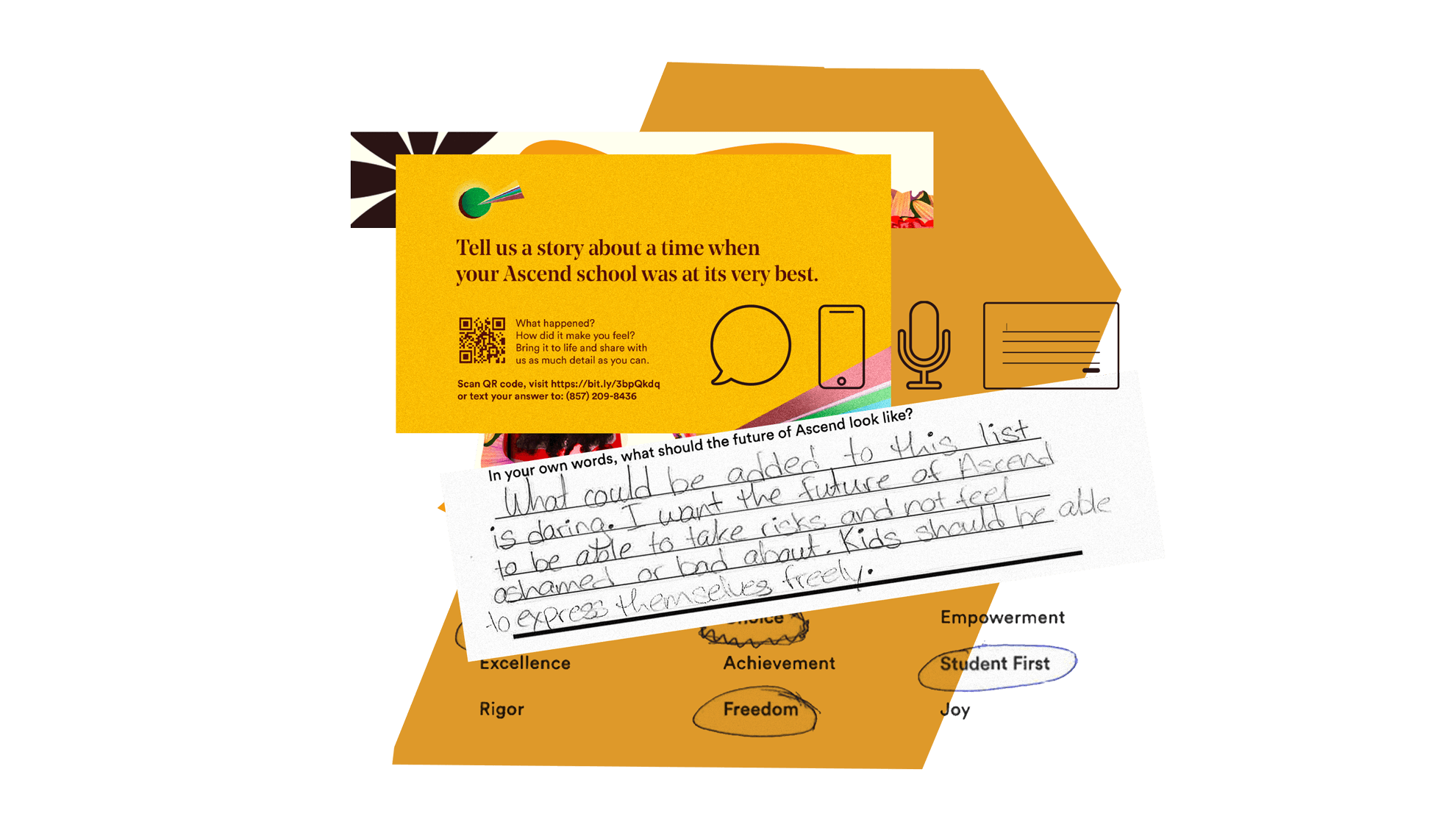
While the project’s goal was serious, the combined team centered the collaboration on bringing back fun, beauty, and imagination to those who could use it most: educators. Through engaging interactive activities, the IDEO team invited principals, PTA members, student council representatives, and board members to join “organizationally sanctioned play” moments like creating collaged vision boards and writing poems about Ascend’s impact. These interventions helped burned-out educators escape the day-to-day tasks of running schools and dream expansively about Ascend’s future. The team also solicited written, visual, and audio stories, asking community members to describe Ascend at its very best.

Stitching together submissions from 551 students, 75 parents, and 16 staff members, the co-design sessions resulted in a powerful new purpose, mission, and values, as well as a vibrant visual language and activation tools to bring Ascend’s vision of a “dope,” “unapologetically Brooklyn” charter network to life. The joyful, eye-catching visuals are embedded throughout its 17 Brooklyn schools, staff recruiting and training materials, and digital presence.
Shortly after the collaboration with IDEO, Ascend received an unsolicited $11 million donation from MacKenzie Scott's foundation, Yield Giving, the most significant gift the then-14-year-old institution had ever received. The pivotal funding will allow the organization, with its bold new “grown-up” vision, to focus on becoming the school of choice in Brooklyn by 2027.
In the summer of 2021, one in four K-12 teachers was ready to quit. Pandemic stressors and increased curriculum scrutiny were to blame, according to a 2021 Rand Survey.
In 2022, 44% of K-12 workers reported burnout, the most of any US professions the time, according to a Gallup Poll.
Pandemic exhaustion and leadership turnover left Ascend’s new CEO eager to align staff around an exciting new vision.
$11M grant
Ascend received an $11M grant from the MacKenzie Scott Foundation a few months after the collaboration
1 collective vision
to guide a network of 17 schools

A blueprint for transforming pediatric obesity care
Charting a healthy path for children and families on Medicaid.
Obesity exists at the complex intersection of a clinical condition and a cultural force. Clinically, it comes with a diagnosis and treatment plan. Culturally, it is influenced by beliefs, identity, and self-worth, making it deeply personal and often taboo. Families, healthcare providers, and experts tend to avoid the fraught “o-word,” opting for euphemisms instead. For families on Medicaid, these challenges are even more pronounced. Award-winning health-tech startup Clarity Pediatrics, together with designers from IDEO, IDEO.org, and with support from Rise Together Ventures, sought to uncover the obstacles to healthier lifestyles and create a free report for US pediatricians who want to bend the curve on the childhood obesity epidemic.
Research with kids and parents on Medicaid in Dallas, Texas, and California’s Bay Area, along with interviews with healthcare providers and experts across the country, uncovered stories of stigma and frustration. Parents spoke of the daily challenges of balancing multiple jobs, sourcing affordable healthy food, and finding time to make necessary lifestyle changes. They described rushed pediatric visits that left them with unclear next steps and feelings of blame. Provider conversations echoed these struggles, noting time constraints and limited follow-up options.
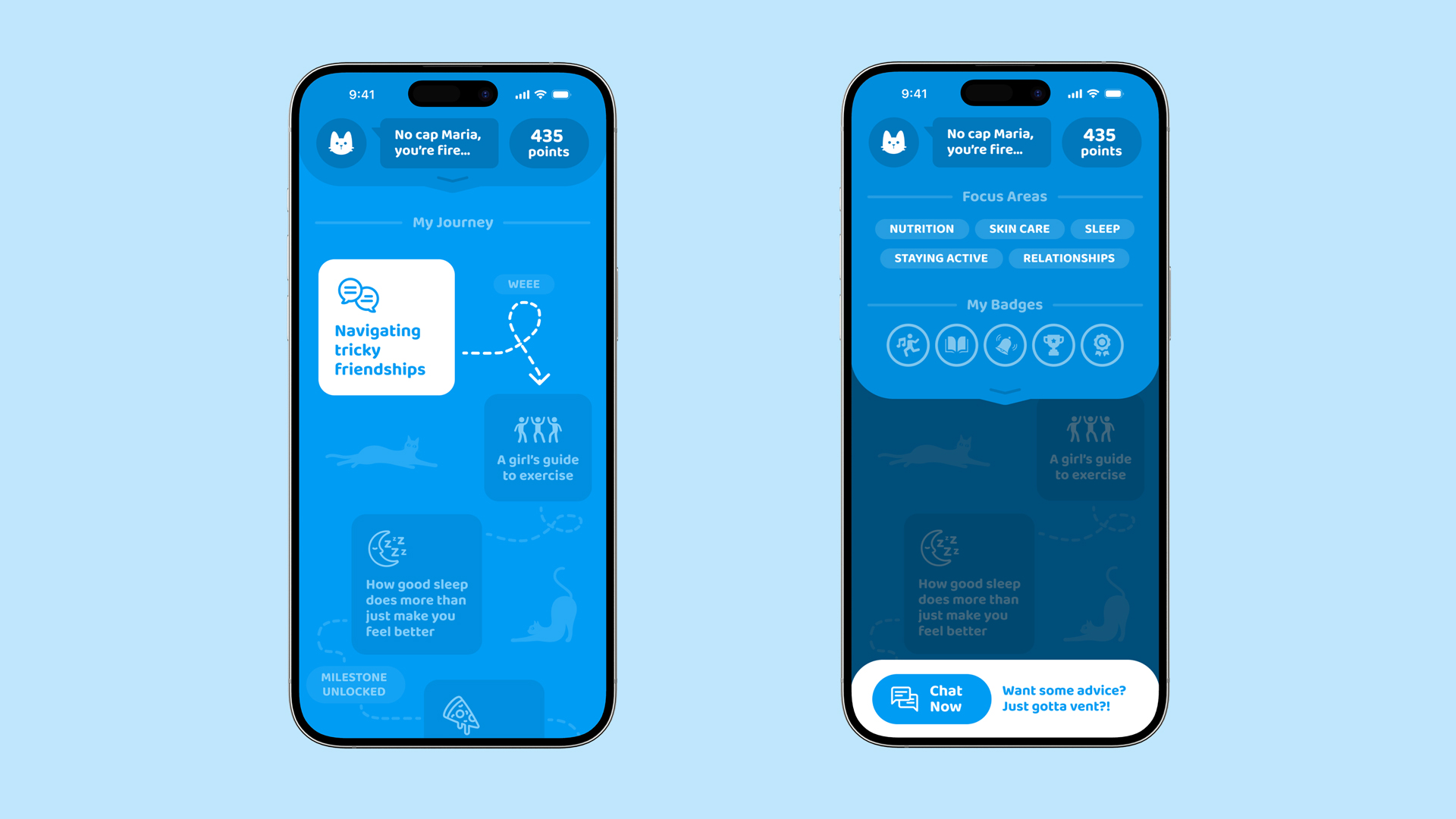
Ultimately, food had become a daily torment for these families. Eating was unavoidable and also one of the few affordable indulgences low-income parents were able to provide. Once kids left their own homes, they were surrounded by unhealthy temptations, making it feel impossible for parents to maintain control. The popularity of costly new weight-loss medications and surgical procedures added another layer of complexity for families who had been underserved by—and therefore distrustful of—America’s healthcare system. With so much of the responsibility placed on parents to self-direct care, inequities deepened, adding to the burden of families already at a breaking point.
To design a path forward, IDEO and IDEO.org mapped a family’s needs before, during, and after pediatric visits. This work revealed critical parts of the journey where families needed more support: recognizing early signs of obesity, navigating provider conversations, and sustaining healthier habits at home.
These insights informed a theory of change framework that provides actionable guidance for stakeholders involved in obesity care. Grounded in three opportunity areas along the patient journey—building awareness, confidence, and capacity—the framework highlights how trust, dignity, and systemic support can lead to lasting outcomes.
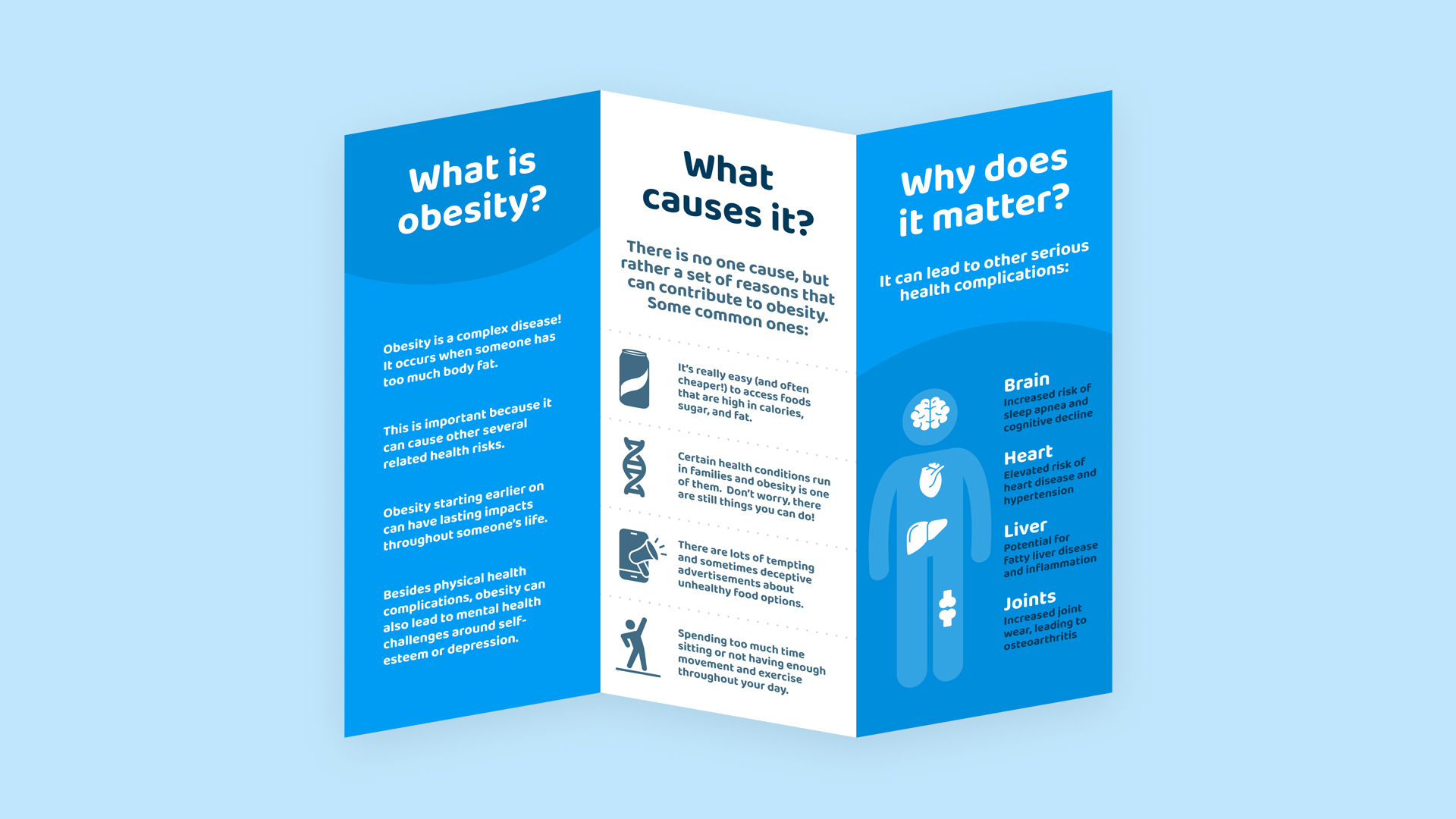
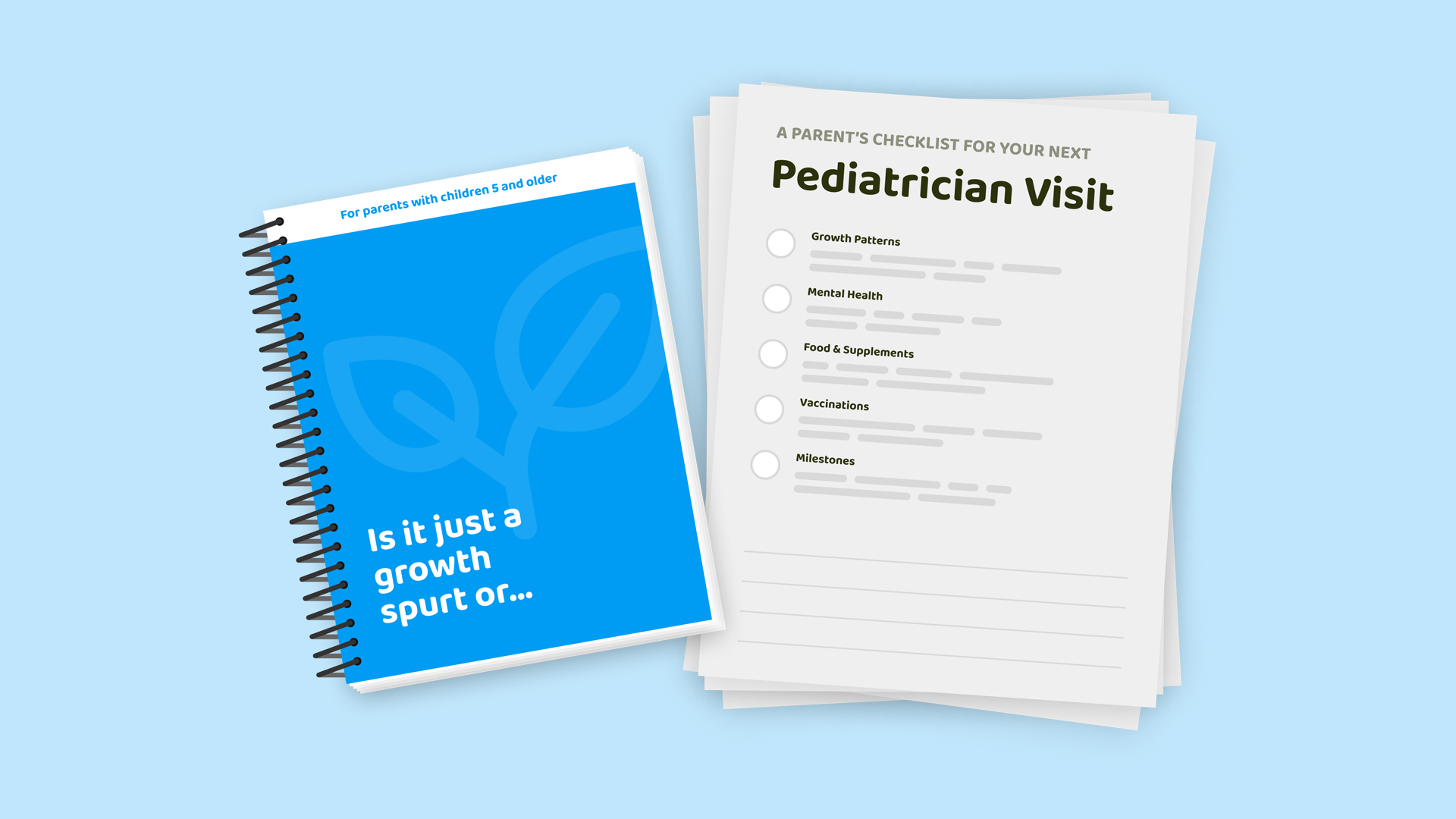
IDEO and IDEO.org also developed 10 user-centered concepts spanning digital, physical, and service offerings to reduce stigma and empower families to sustain healthier lives. These ideas address dignified diagnoses and structural inequities, among other pressing issues. Complementing these concepts, IDEO created a short documentary of a mother discussing her family’s experience navigating childhood obesity to help pediatric providers—many of whom have had very different lived experiences from the families and patients they serve—better understand the realities of the daily struggles of many families on Medicaid.
Designed for the public good, the interactive website and free downloadable report, Reimagining Childhood Obesity, contain research findings, design recommendations, and a theory of change framework. The goal: provide practical, actionable guidelines for pediatricians, educators, healthcare organizations, and innovators to meet families and kids where they are and support them as they move toward a healthier future.
21% of US children are obese. 40% of Latino youth are either overweight or obese.
26% of kids on Medicaid experience childhood obesity, compared with 11% on private insurance.
525,600 minutes: Total time per year parents spend caring for their children. 17 minutes: Average time a pediatrician spends with a child during their annual exam, a small window to address a complex chronic condition such as obesity.
10
user-centered ideas to help pediatricians reduce the stigma of childhood obesity in an accessible report
3
opportunity areas for building trust with young patients and providing family support
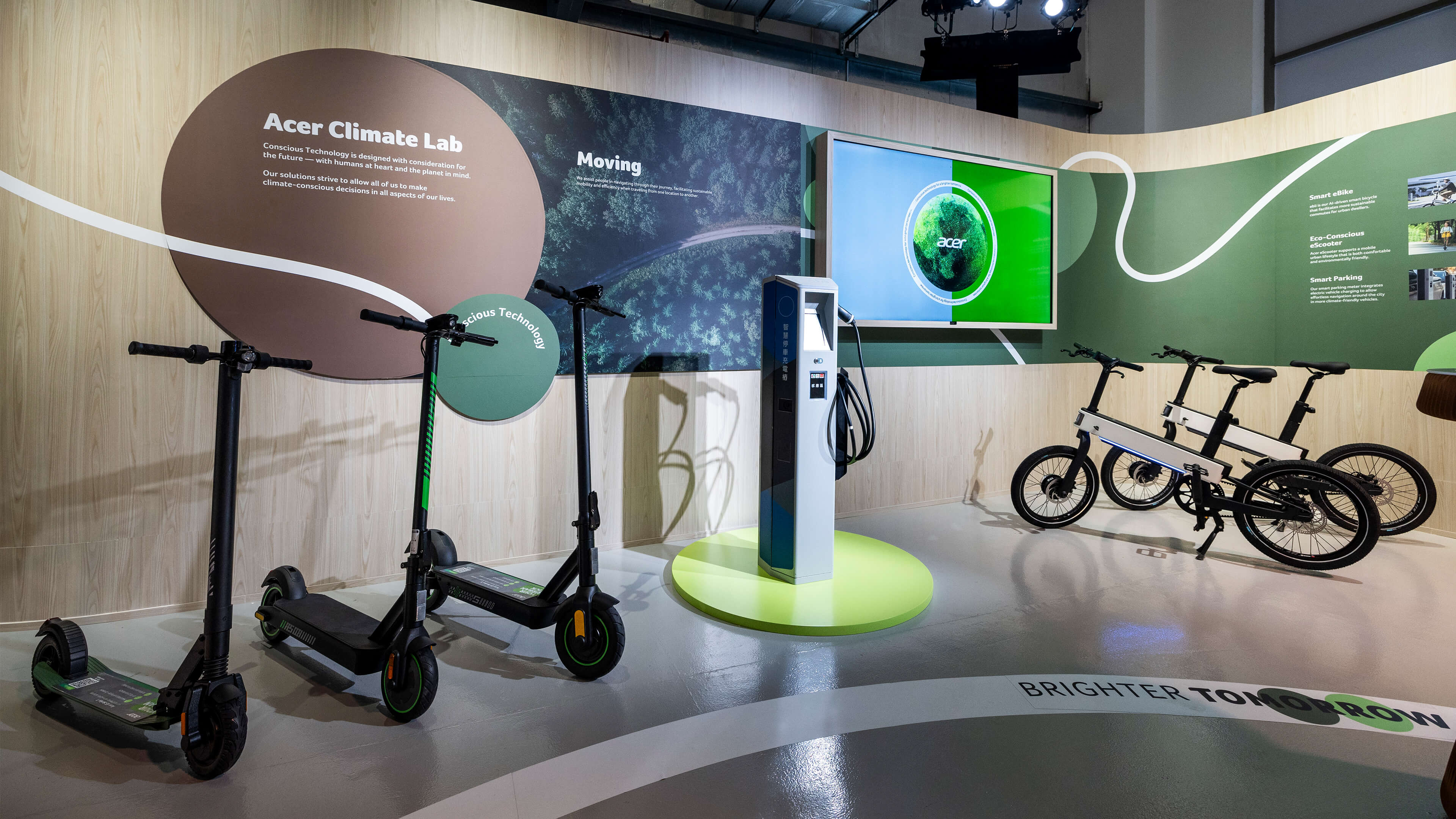
Building Acer’s Climate Lab
How a consumer electronics giant is turning sustainability into an engine for growth.
With its reach, Acer saw an opportunity to power positive choices in the billions.
But new products and services won’t succeed if consumers don’t want them, no matter how sustainable they are. A few years go, the Harvard Business Review’s report, "The Elusive Green Consumer," found that about two-thirds of those surveyed said they wanted to buy brands that advocated sustainability. But only a quarter actually did.
Meanwhile, the market for climate era products is only growing: In 2022, Forbes found that nearly 90 percent of the Gen X consumers they surveyed said they’d be willing to spend more on sustainable products, compared to just over a third two years before. The desire was only higher among Millennials and Gen Z; they just didn’t like what was on offer.
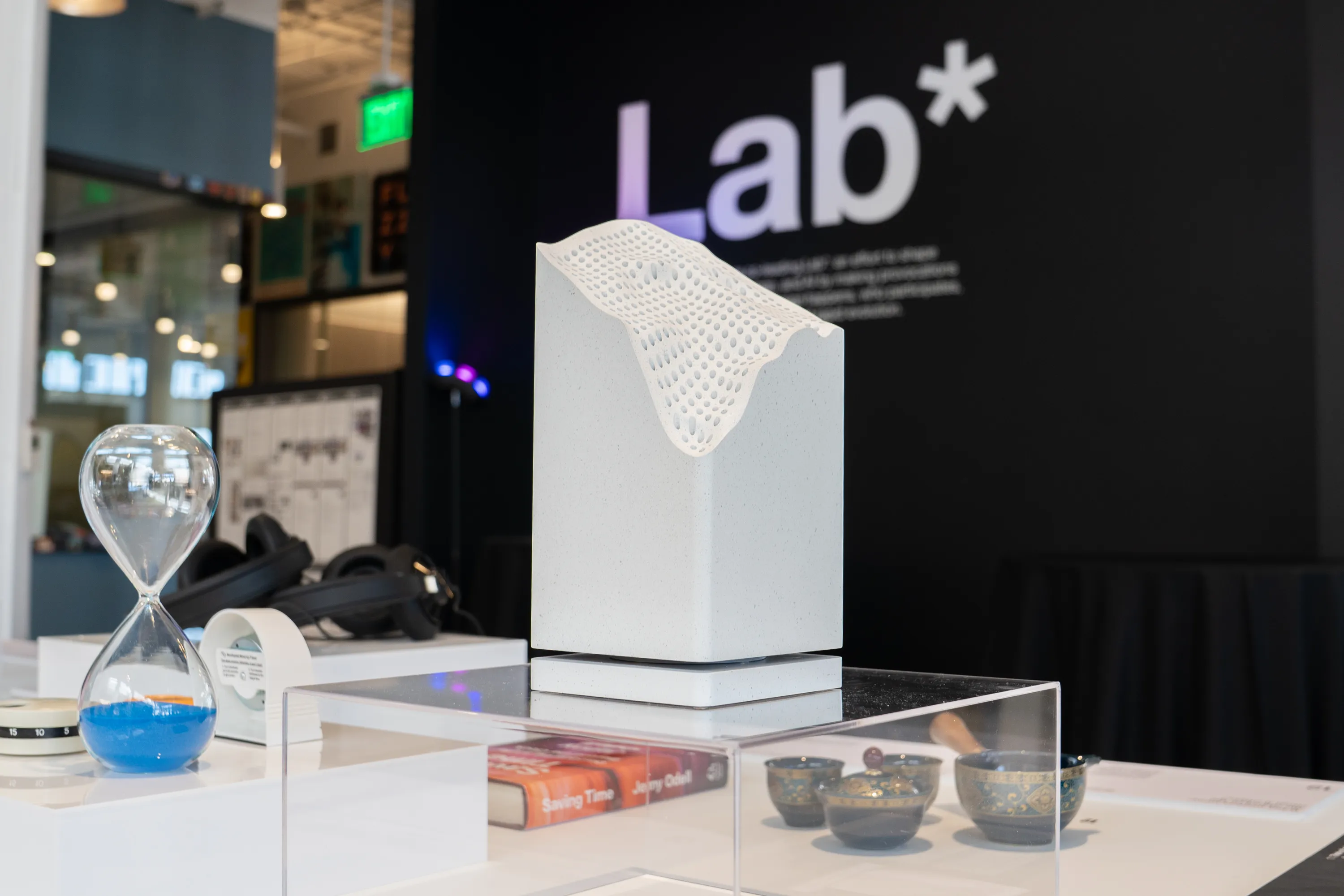
To drive sales and growth, and meet its sustainability commitments, Acer needed to capitalize on desirability, deepening the connection between Acer’s sustainable options and consumer needs, lowering the barrier to purchase. To that end, Acer and IDEO created the Acer Climate Lab, a cross-organizational team and initiative, to launch the company on a transformative journey to deepen the connection between Acer's conscious technology and the realities of people's lives and needs across four strategic areas.
Together, the combined team conducted extensive research to better understand consumer attitudes and behaviors toward sustainable products, and identified everyday areas where Acer’s conscious technology might be able to have the most significant impact: living, working, moving, and learning.
- Living: Envisions homes as hubs of energy efficiency and climate resilience, leveraging technology to optimize energy use, enhance air quality, and enable proactive climate management. These concepts include technologies like smart energy systems, adaptive air solutions, and integrated home management platforms explore how technology can support sustainable daily living.
- Working: Reimagines the workplace with flexible, sustainable technology solutions that prioritize resource optimization and circular practices. Concepts such as Acer Loop could provide a subscription-based model that ensures access to the latest technology, supports remote work, and reduces electronic waste through effective recycling and rehoming practices.
- Moving: Focuses on the transformation of urban mobility by integrating technology into systems that promote sustainable transportation. Concepts could include e-mobility hubs that highlight how urban spaces could offer seamless access to shared, low-emission travel options, reducing reliance on traditional carbon-heavy methods.
- Learning: Explores pathways to sustainable education by imagining environments where technology supports circularity and accessibility. This includes ideas like refurbished devices for students, repair and reuse programs, and educational spaces designed with climate-positive principles, nurturing eco-conscious habits in future generations.
Together with Red Peak and Sid Lee, the team launched the culmination of the work at COP28, the United Nations Climate Change Conference in Dubai, positioning Acer as a pioneer in climate positive technology. The exhibit included immersive experiences and interactive displays demonstrating how Acer's sustainable solutions seamlessly integrate into everyday life. Visitors could engage with scenarios depicting sustainable living, working, moving, and learning, emphasizing the practical benefits of Acer’s innovations.
Acer's journey through the Climate Lab project underscores a commitment to sustainability that goes beyond mere compliance. With this new cross-business team tackling the real-world barriers faced by consumers, Acer is paving the way for a more inclusive, sustainable future. This initiative not only aligns with global climate goals, but also sets a precedent for the tech industry, demonstrating that with the right approach, sustainability and innovation can go hand in hand.
In a survey, 65% of respondents said they want to buy brands that advocate sustainability, yet only about 26% actually do.
Nearly one in two consumers say they either don’t know what information to trust, or that nothing can influence how much they trust a business’s commitment to sustainability.
1 cohesive strategy
for climate era products across 6 different fields

A better way to teach writing, with AI
Ethiqly empowers time-strapped teachers to provide feedback at scale.
With the introduction of generative AI, Ethiqly and IDEO saw a unique opportunity to help teachers, by cutting down the time it takes to provide each student with feedback on their writing assignments. But to get there, they had to learn from the experts themselves. To kick off the project, the team headed into the classroom to co-design with students and teachers.
One of the first problems they discovered? Traditional methods of grading essays are laborious and inefficient for high school teachers, who are already notoriously busy and overworked. What teachers really wanted was to spend time giving each student the personalized feedback that helps them grow. Meanwhile, students really struggled to get started on their writing assignments, overwhelmed by looking at a blank page.
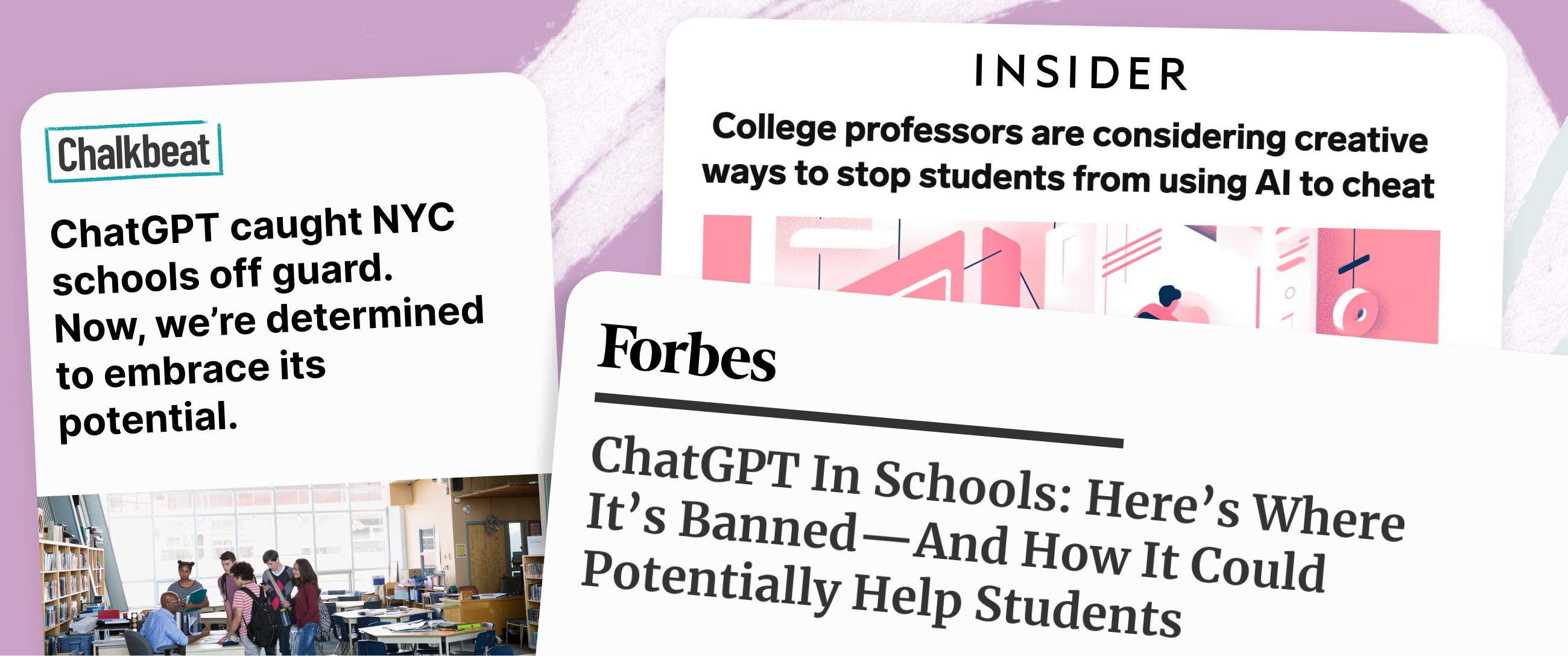
Together, the team started to think about how it could harness AI to make personalized instruction more accessible for all students, helping teachers provide better feedback at scale, and giving students the support they need to not only get started on their writing assignments, but improve their work.
With insights directly from students and teachers, the IDEO team built working prototypes, allowing them to beta test the product in schools, and demonstrate value to investors. They also developed a brand identity and style guide for launch, which came to life in a pitch deck, landing page, and other brand expressions.
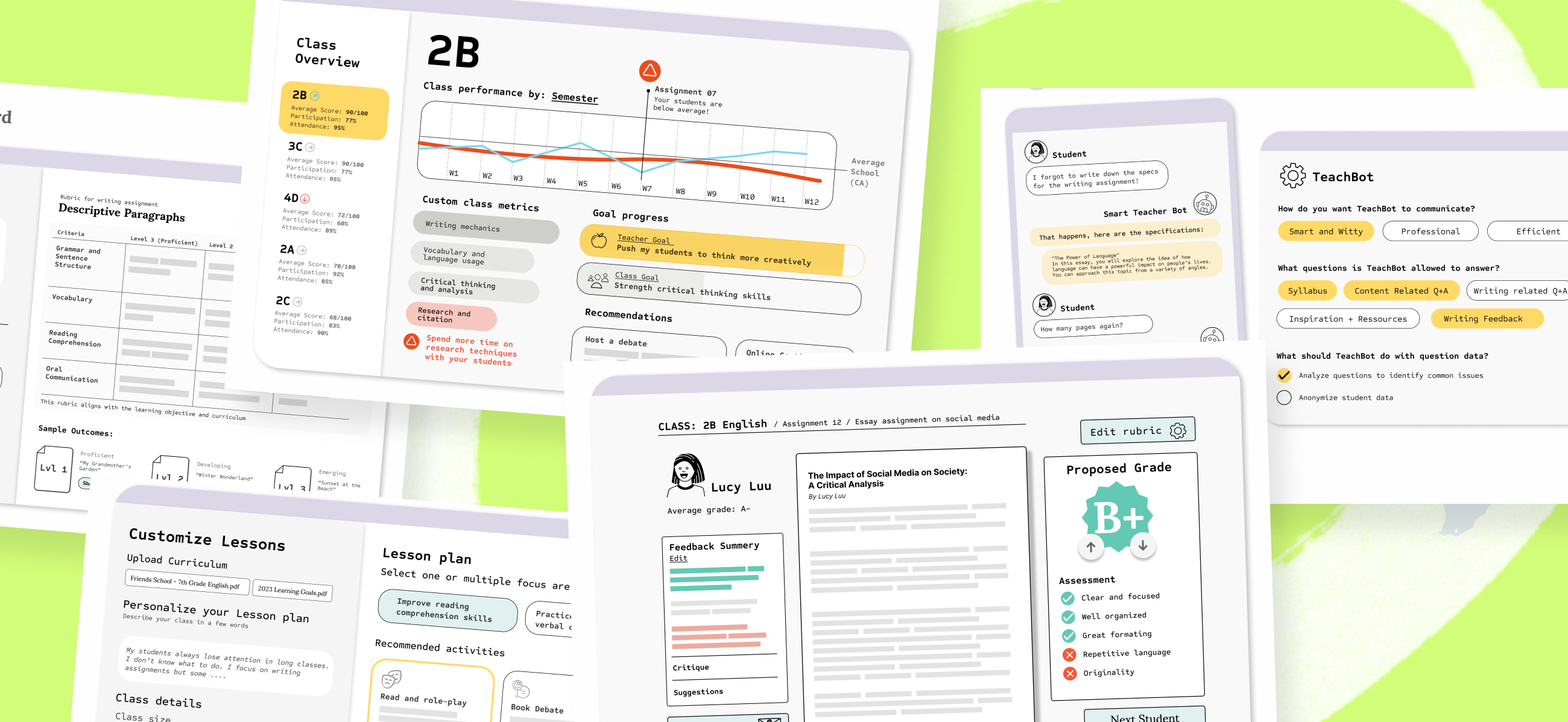
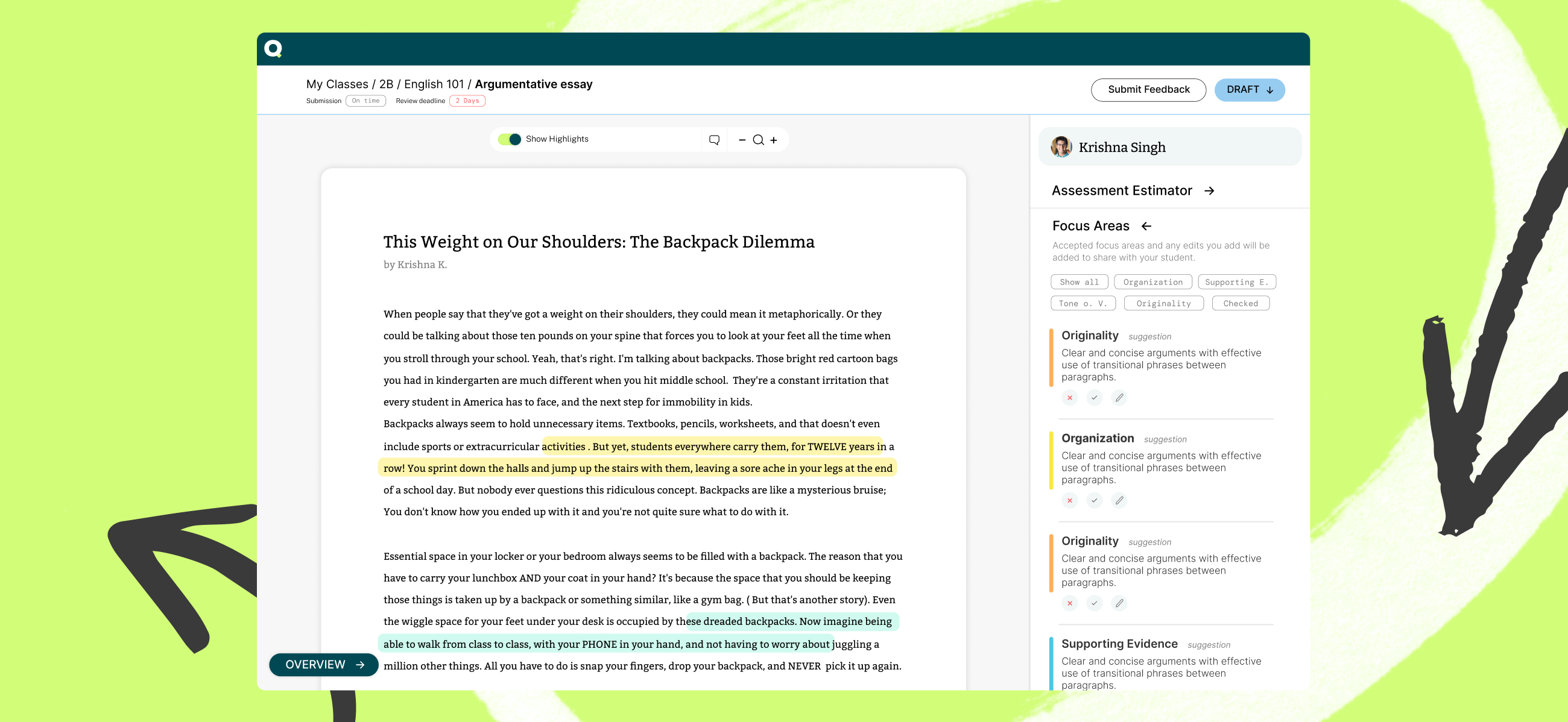
The resulting product is a sophisticated blend of AI technology and user-friendly interfaces that empower teachers and inspire students. The goal isn’t just to get to a finished essay, but to assist students in developing critical thinking skills. Ethiqly's tools help students organize their thoughts and get writing by providing contextual prompts and suggestions—without doing the work for them. And the AI assistant supports teachers by suggesting comments based on evaluation criteria they have set, and teachers choose which feedback is relevant for their individual students. Students never see it without teacher approval.
As one teacher told the team, “With leveraging AI more in education, there’s this fear that it’s deprofessionalizing the field or it’s a direct replacement of a teacher in a classroom. I think it gives us meaningful data, so that we can actually teach the way that we want to in order to support our students.” Now, Ethiqly is in use in classrooms in 25 countries, positively impacting students across the globe. In 2026, Carnegie Learning, a K-12 education company dedicated to helping teachers teach and students learn, acquired Ethiqly.
Teachers know 1:1 interaction is key to student success, but an EdWeek survey found only 46% of teachers’ time is spent teaching, while 25 hours/week goes to other tasks like grading and making lesson plans.
25 countries…and growing
Ethiqly’s reach in classrooms around the world
4 years
from launch to acquisition
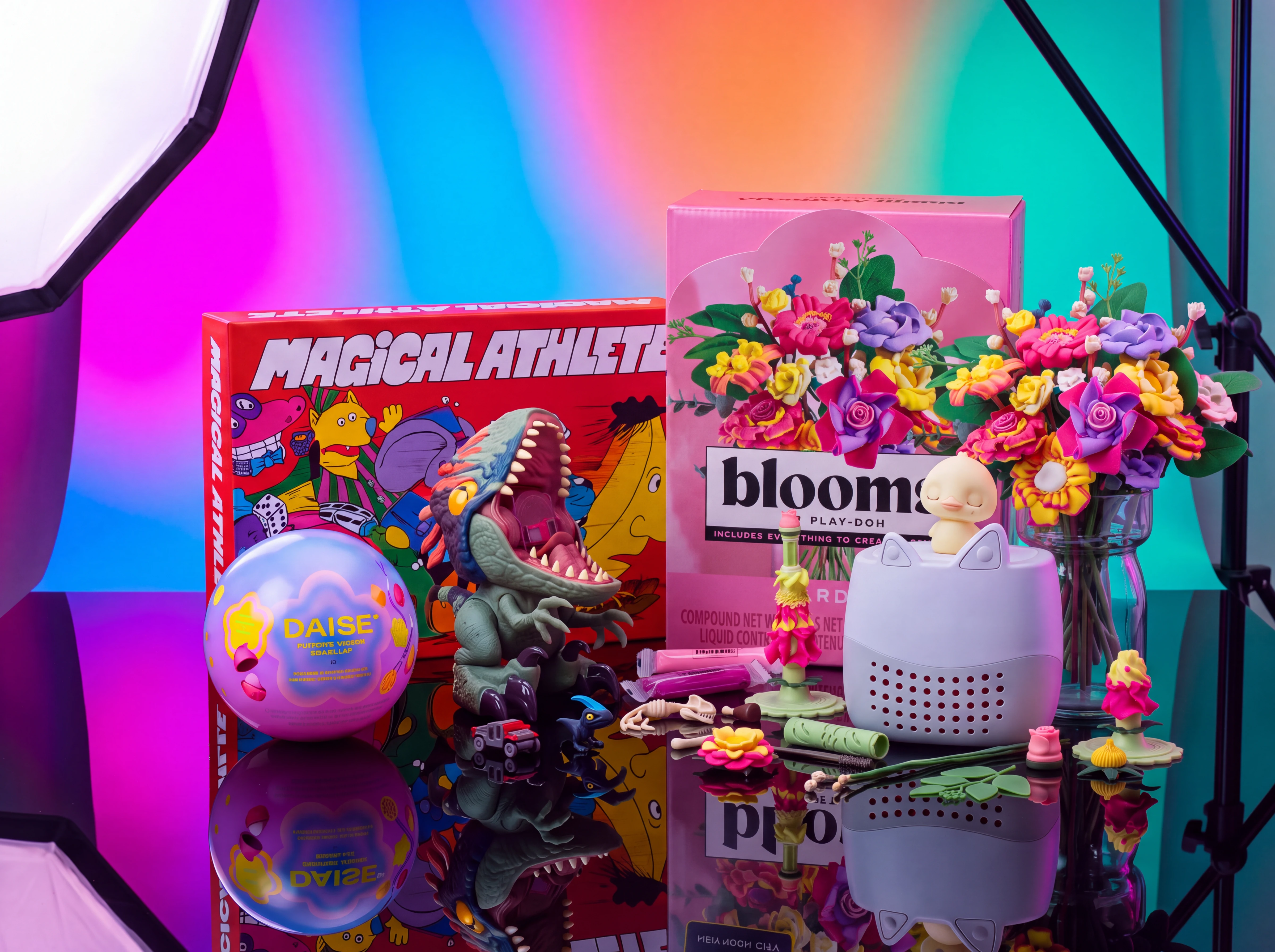
Our toy inventors’ top 18 toy picks for 2026
From hatching dinos to game-night favorites, there’s something for everyone on your list.
Our team of toy inventors and play experts has rounded up their favorite finds for the 2026 holiday season. From imaginative playthings for the littlest gift recipients to clever games and delightful surprises for the young at heart, there’s something here for everyone on your list. Some we helped bring to life, while others come from toy and game makers we admire.
We’re also firm believers that toys aren’t just for kids! The booming “kidult” market continues to reshape the toy industry, with more adults than ever embracing the joy of play. (The toy inventors at IDEO Play Lab have seen this trend firsthand with the launch of Blooms by Play-Doh, a collaboration with Hasbro that’s bringing a little creative magic to kids and grown-ups alike.)
Take a spin through the list, and best of luck delighting the toy lovers in your life.
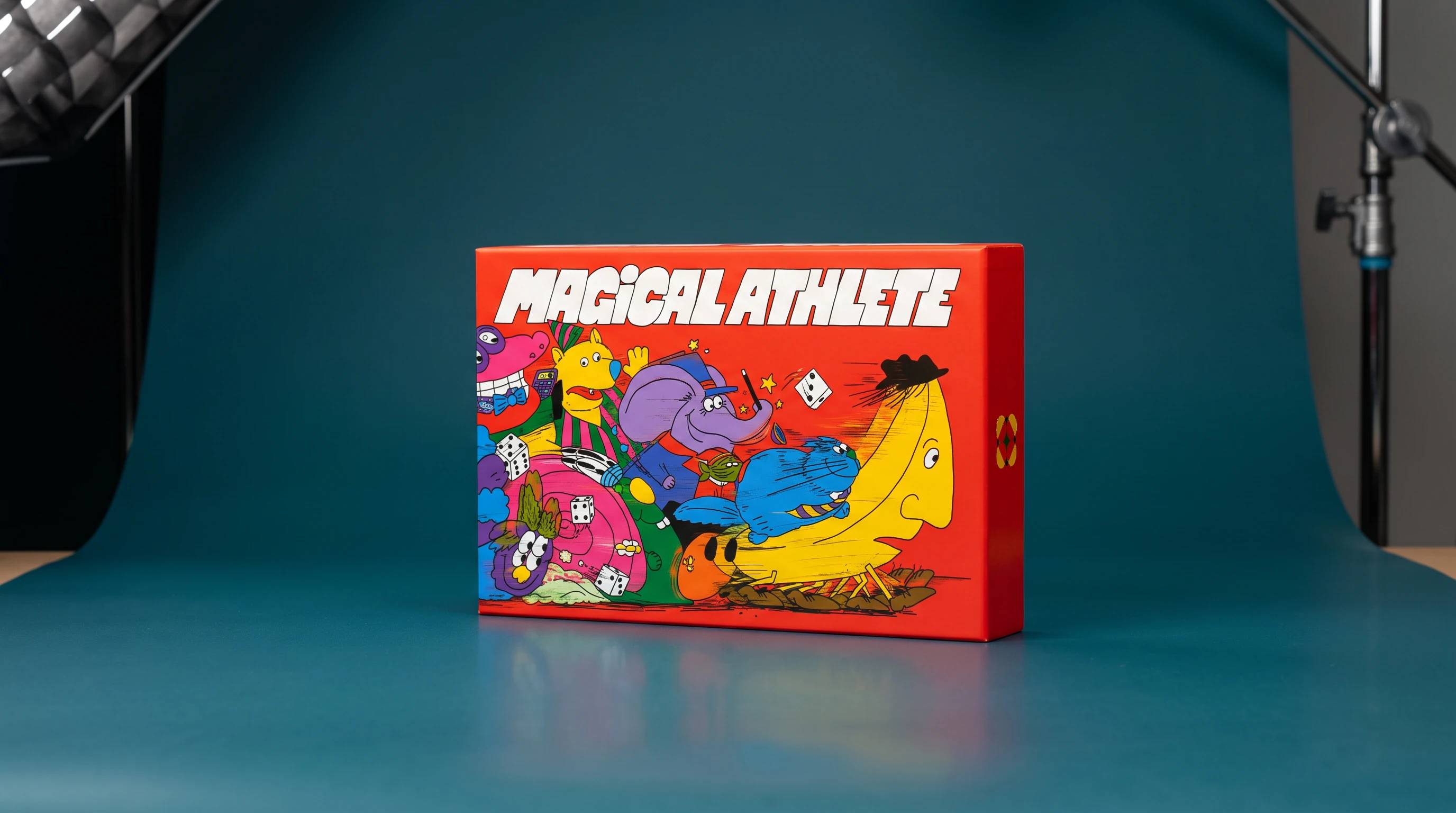
1. Magical Athlete by CMYK
Who will love it: Families with kids ages 6+.
What’s great about it: The fast-paced, easy-to-learn dice-rolling gameplay features humorous, chaotic characters with unique abilities, creating tons of surprising, unexpected, and hilarious moments. This game is perfect for anyone who loves to laugh.
—Matt Callahan
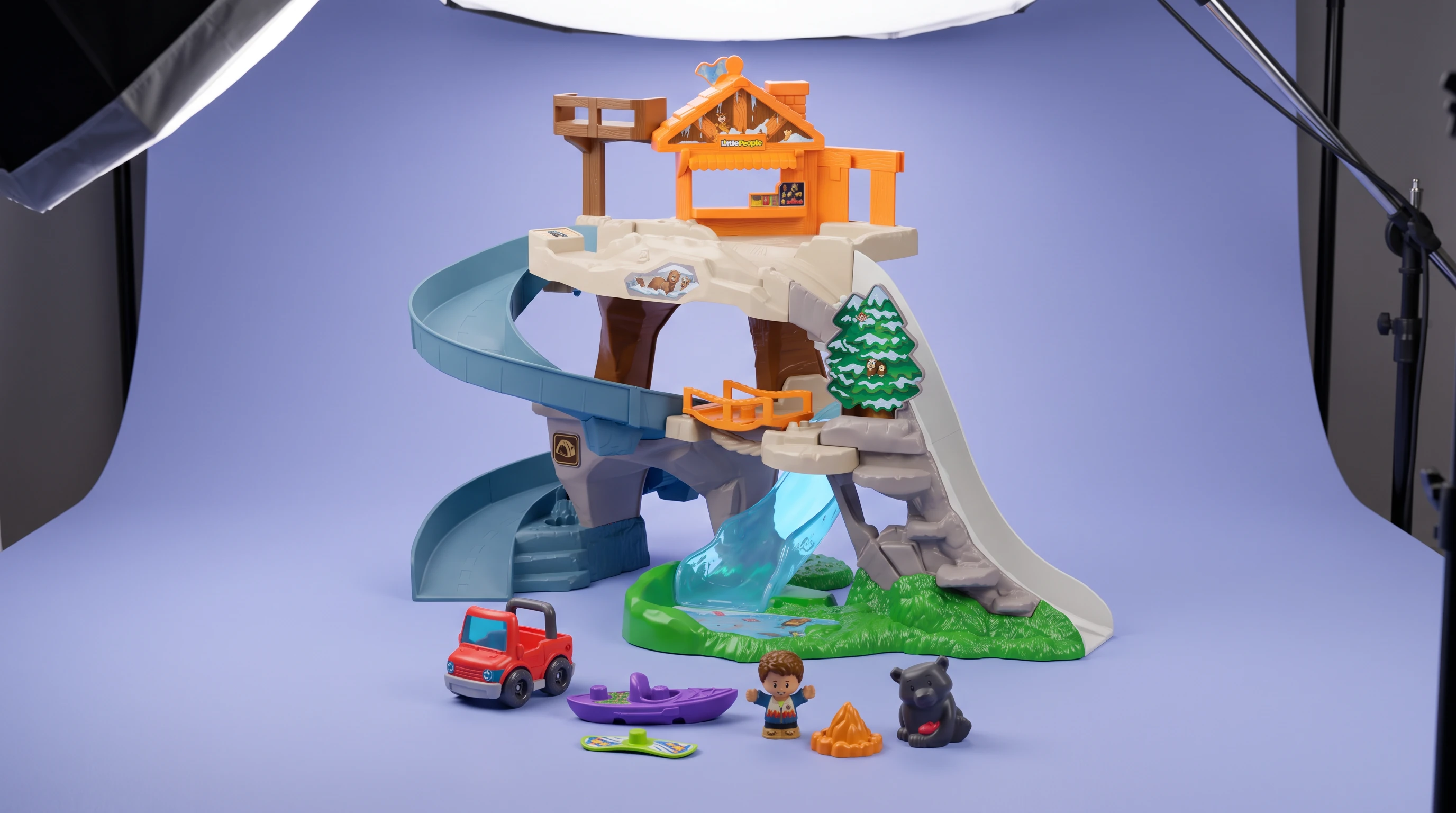
2. Little People Ultimate Mountain Playset by Fisher-Price
Who will love it: Little ones between ages 1–4 who love storytelling with vehicles and ramps.
What’s great about it: This playset gives kids three exciting routes to drive, slide, and explore with their vehicles and characters. With so many play areas, two kids can easily team up for an adventure or explore their own corners of the mountain. But what really makes the toy stand out is its ability to grow with them: younger kids love the thrill of the downhill action, while older kids turn the mountain into a backdrop for elaborate adventures. It’s the kind of toy they’ll return to again and again.
—Sam Hobish
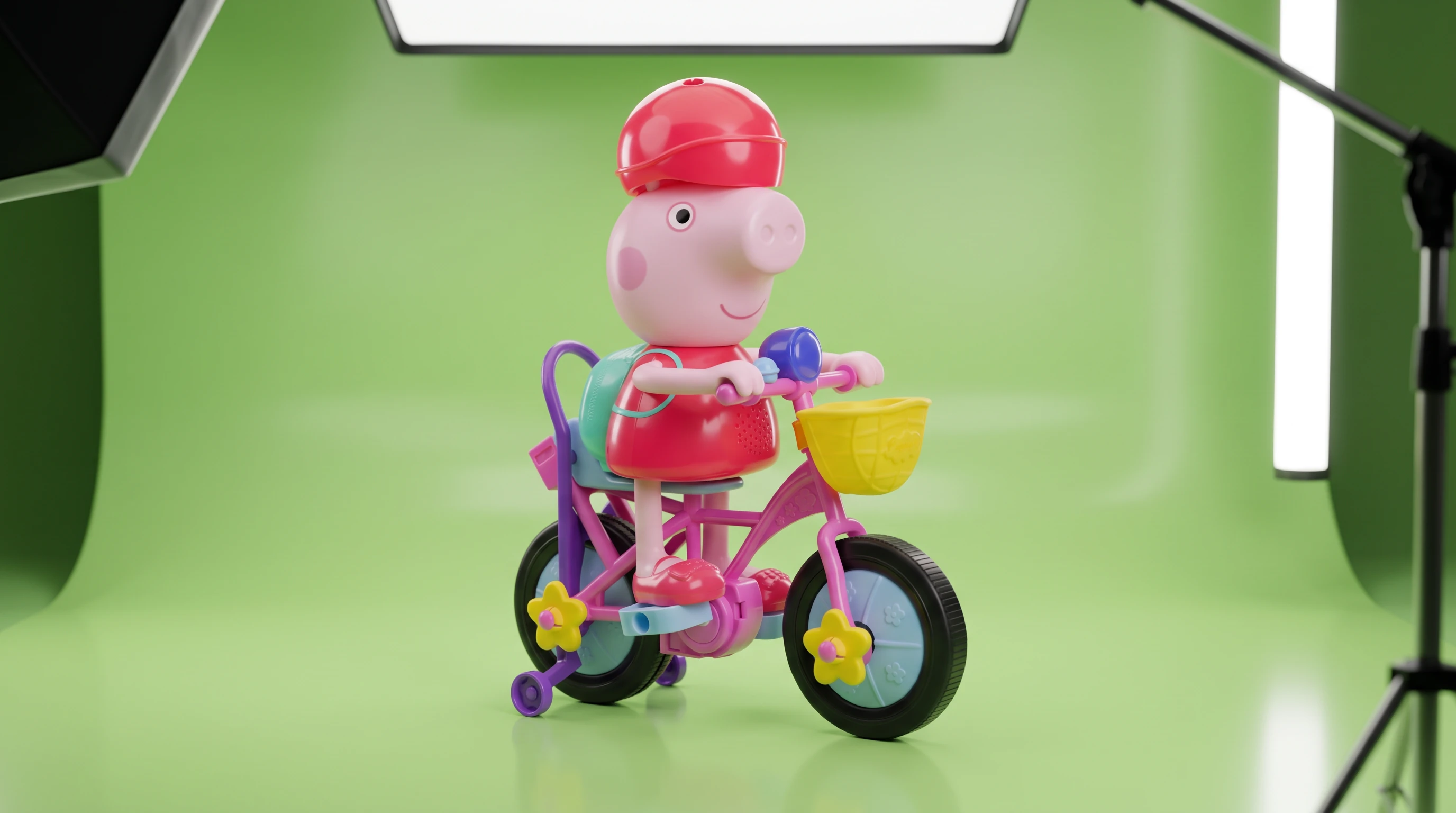
3. Peppa Pig Ready, Pedal, Go Peppa by Hasbro (IDEO invention)
Who will love it: Peppa Pig fans, budding bike riders, and preschoolers ages 3+ who love bringing their favorite characters to life.
What’s great about it: Peppa Pig is learning to ride her bike, and she needs a little help from her friends. Kids can steady Peppa with her push stick and then remove it to watch her pedal on her own. Featuring more than 75 sounds and phrases, a removable helmet, and cute stickers to customize her ride, this interactive toy celebrates the joy of learning something new.
—Shaylyn Berntson
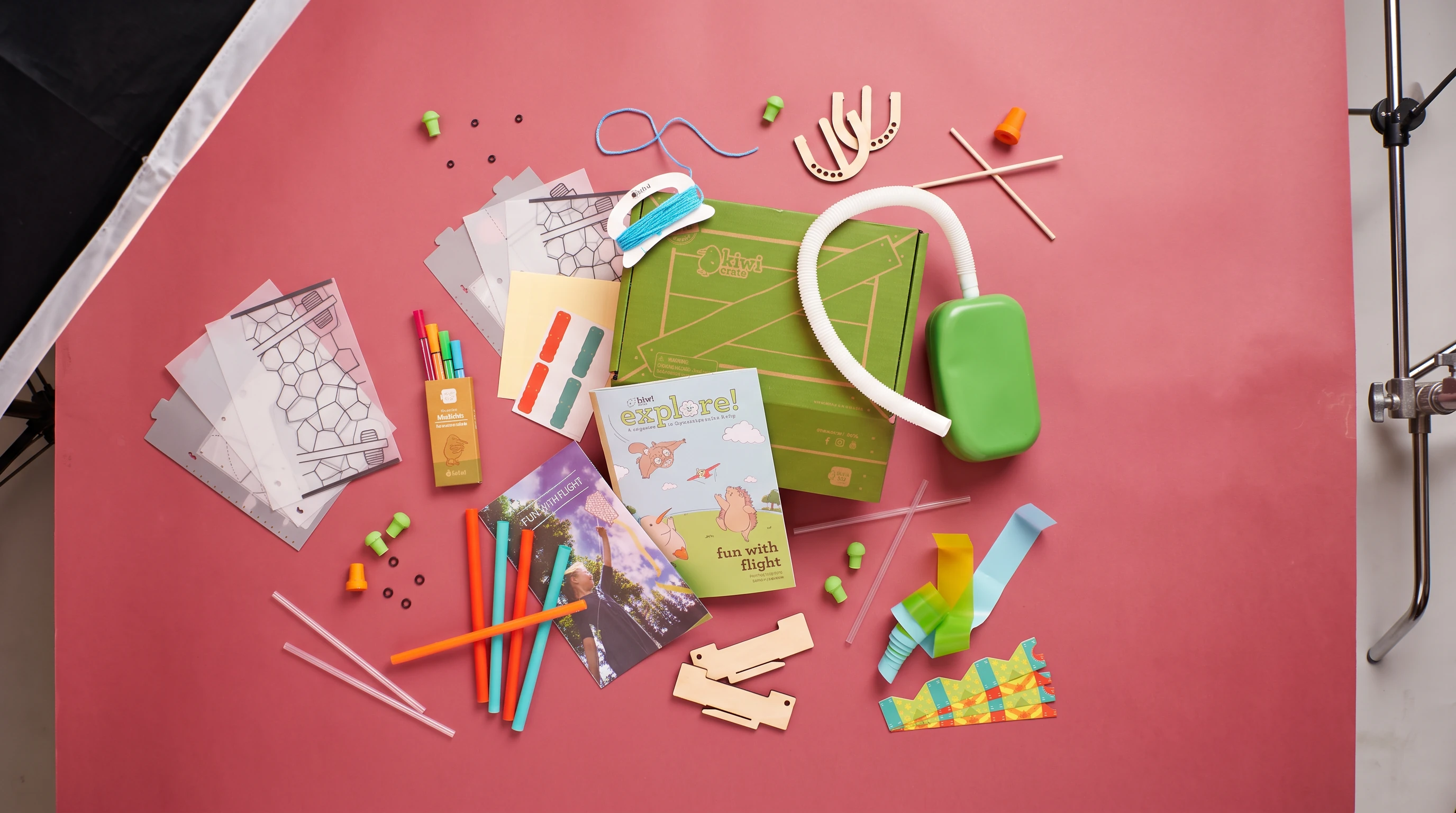
4. Kiwi Crate by KiwiCo
Who will love it: Kiwi Crate is designed for builders and makers ages 6–9, but the company offers other crates for ages 0–100.
What’s great about it: Every month, Kiwi Crate sends kids a building kit that spurs hands-on STEAM learning. Projects range from exploring aerodynamics via an archery set to creating motorized spin art, all designed to unleash creativity. My littlest lets out a literal scream when the Crate arrives in the mail each month, a recurring gift from grandma. She disappears for an hour, then comes back with a completed invention, beaming with pride, usually built entirely on her own.
—Rachel Young
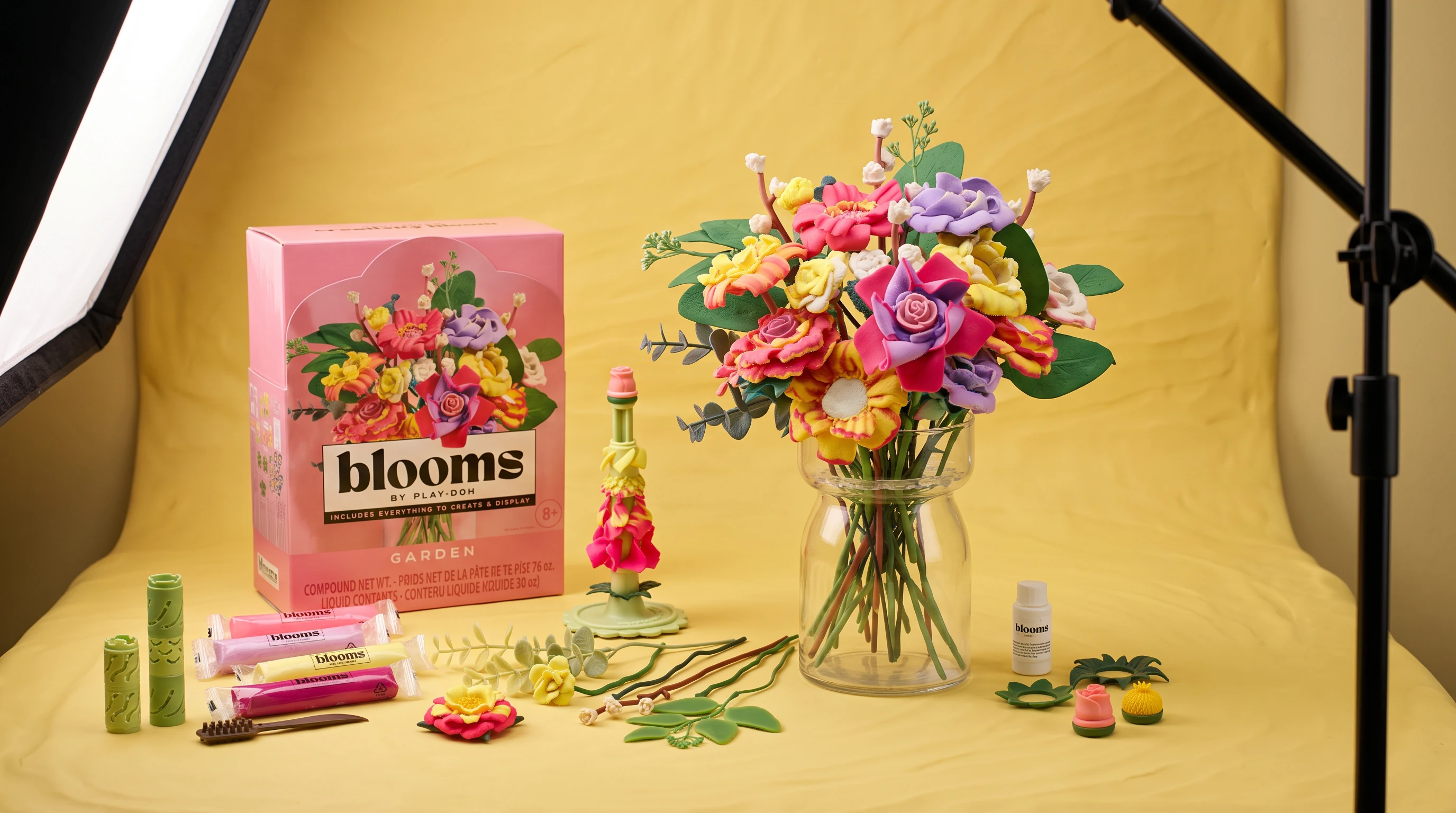
5. Blooms by Play-Doh (IDEO invention)
Who will love it: Craft lovers, flower enthusiasts, nostalgic grown-ups, and anyone looking for a little screen-free creative escape.
What’s great about it: Blooms by Play-Doh puts a grown-up twist on the childhood classic, transforming its colorful, squishy compounds into beautiful, realistic floral arrangements that last forever. With easy-to-use tools, step-by-step instructions, and a special finishing spray to preserve your creations, the kit is equal parts relaxing creative outlet and DIY home décor. And for fans of A Court of Thorns and Roses who can wait until after the holidays, the Blooms ACOTAR kit comes out in January, just in time for the release of Book 7.
—Shaylyn Berntson
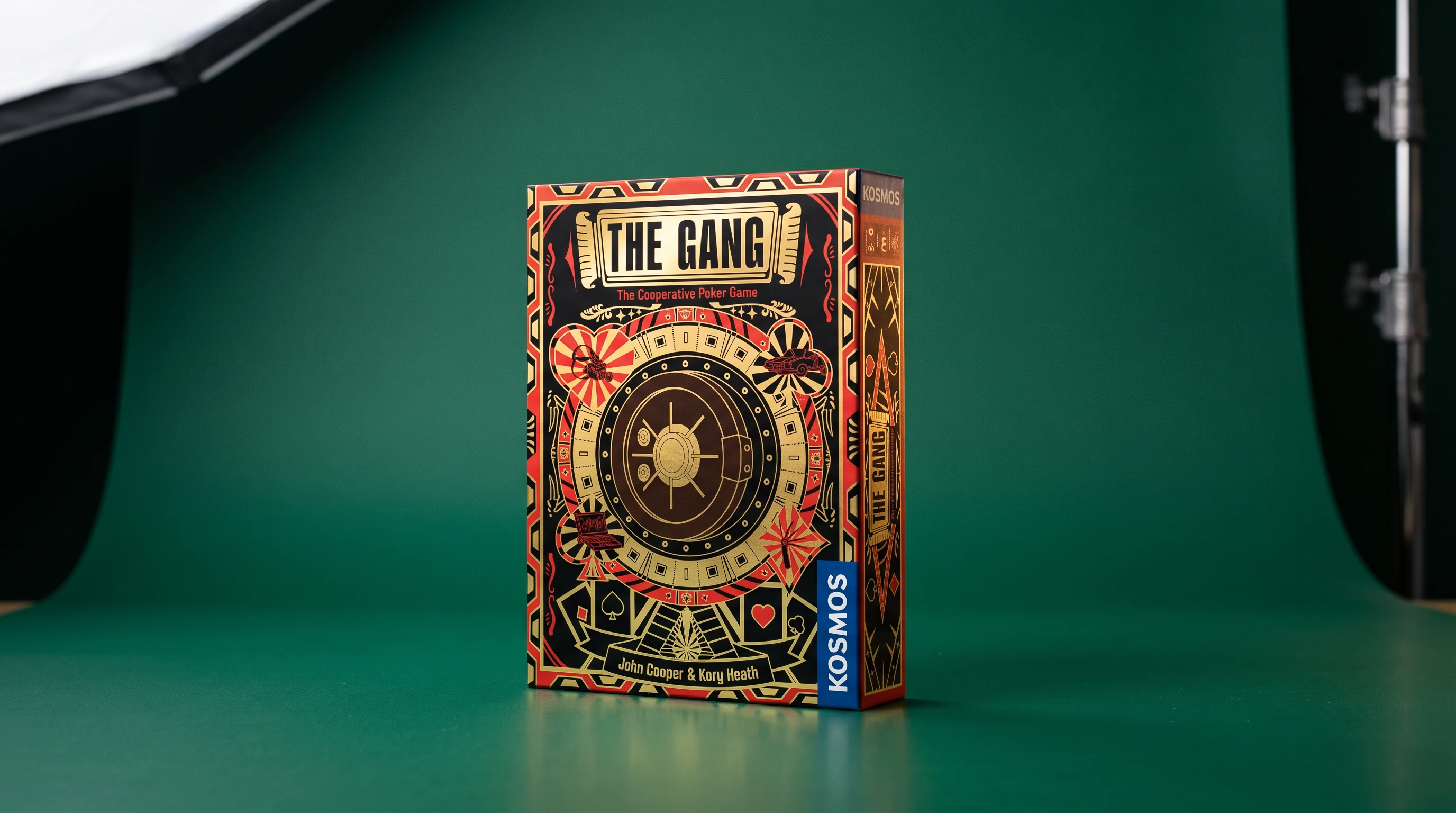
6. The Gang by Thames & Kosmos
Who will love it: Adults who want to have a fun, casual game to play while hanging out. Plus kids ages 10+ interested in card games.
What’s great about it: The Gang is a cooperative twist on poker where all players either win or lose together. In each round, you guess how your hand ranks compared to the other players'. If everyone correctly ranks their final hands, everyone wins. It’s an easy game to learn, even for poker novices, and there are tons of ways to make it harder and more exciting once you’ve mastered the base game. You can play it with up to six players, or more if you buy the expansion.
—Weishan Liao
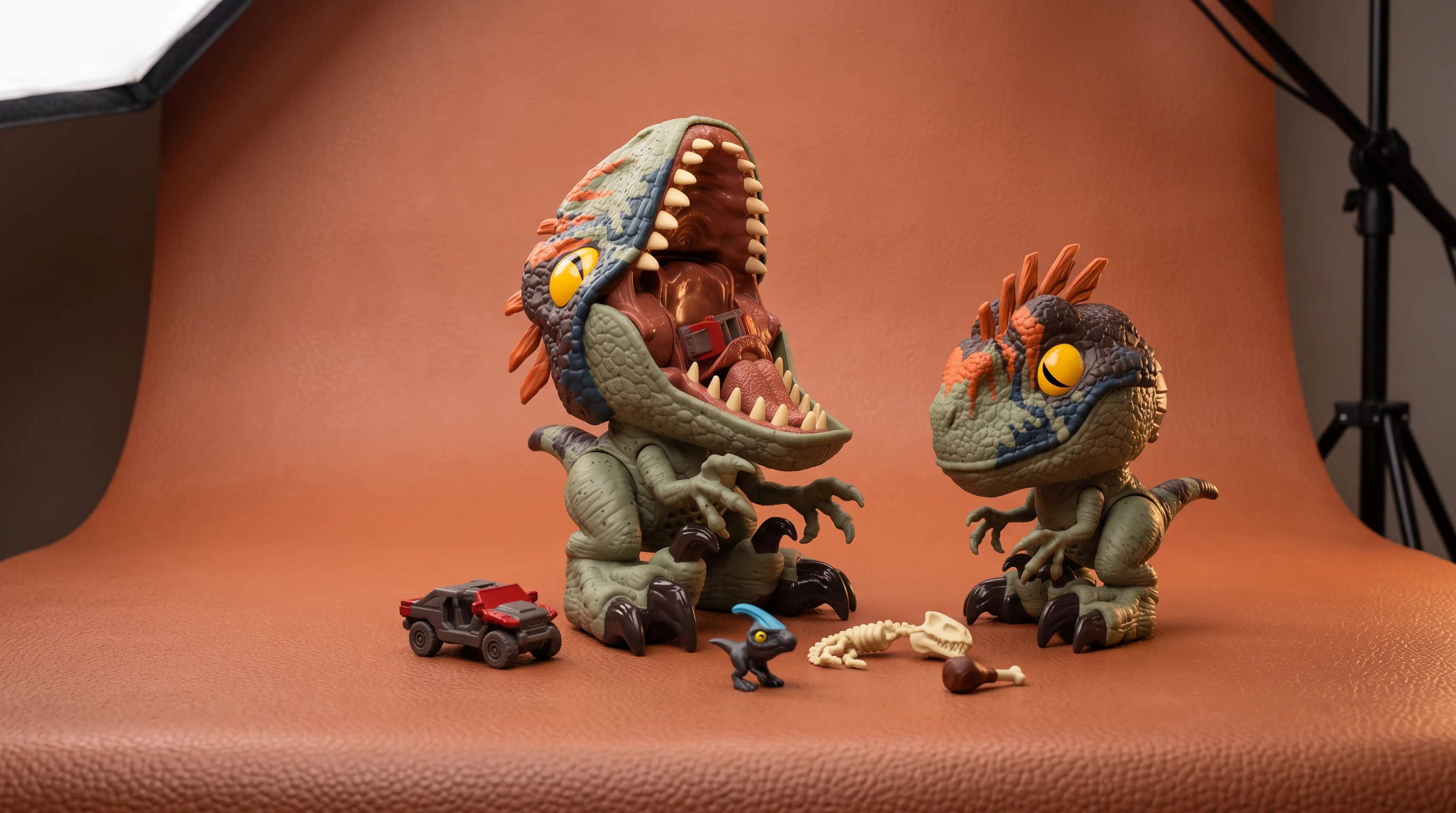
7. Jurassic World Rebirth Fierce Feeder Velociraptor Dinosaur by Mattel (IDEO invention)
Who will love it: Dino-loving kids ages 4+.
What’s great about it: The velociraptor has a super satisfying, fidgety play pattern. You feed the included tiny toys to the dinosaur—and it really eats them! Then close and open the mouth again to watch it burp out what you’ve fed it. It’s the perfect toy for some silly fun.
—Matt Callahan
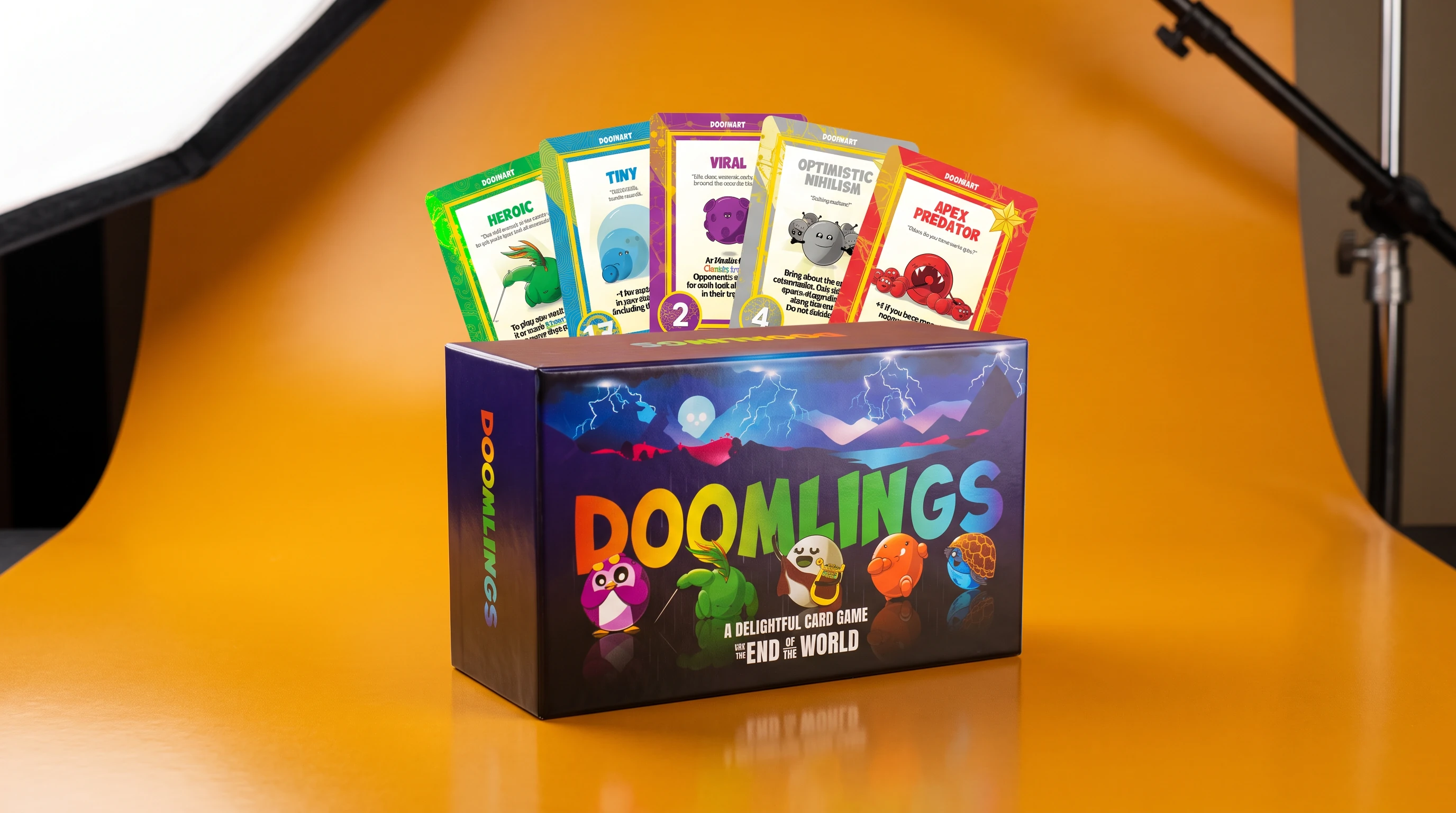
8. Doomlings: A Delightful Card Game for the End of the World by Doomlings
Who will love it: Strategy-loving kids, families, and game-night enthusiasts ages 8+.
What’s great about it: Try to survive the end of the world in this adorably illustrated strategy game. There are 167 unique cards featuring hilarious creatures, bizarre traits, and unexpected abilities, ensuring each game plays out differently. Steal cards from opponents, sabotage their strategies, and adapt as unpredictable catastrophes change the rules along the way. It’s easy to learn, full of surprises, and is highly replayable. Plus, it looks great on the coffee table.
—Shaylyn Berntson
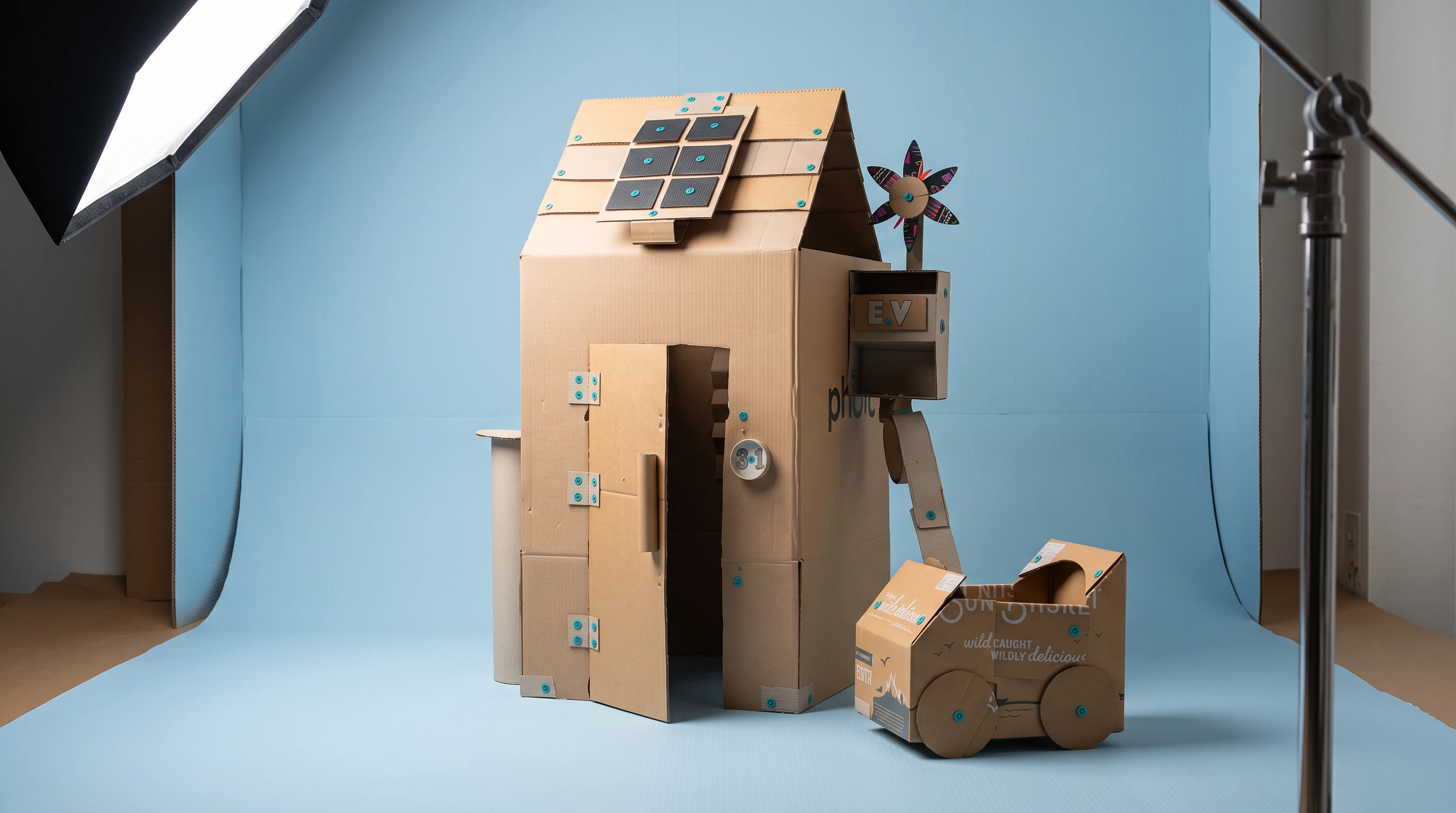
9. Cardboard construction Discover Kit by Makedo
Who will love it: It’s made for kids ages 5+, but younger ones can use it with supervision.
What’s great about it: My kids already love playing with cardboard boxes, but this kit lets them build pretty much anything they can think of. Instead of a plastic play fort that takes up a lot of space and serves only one purpose, grab some empty boxes—let’s be honest, we all have a pile of delivery boxes lying around—and transform them into a homemade one. Or a racecar, a spaceship, a control panel—the sky’s the limit. I love that there’s no “right” way to use this kit, my kids are unlikely to hurt themselves while building, and Makedo provides tons of inspiring ideas on their website and in the box. Best of all, when they tire of their creations, they can recycle them and start over.
—Rachel Youngblade
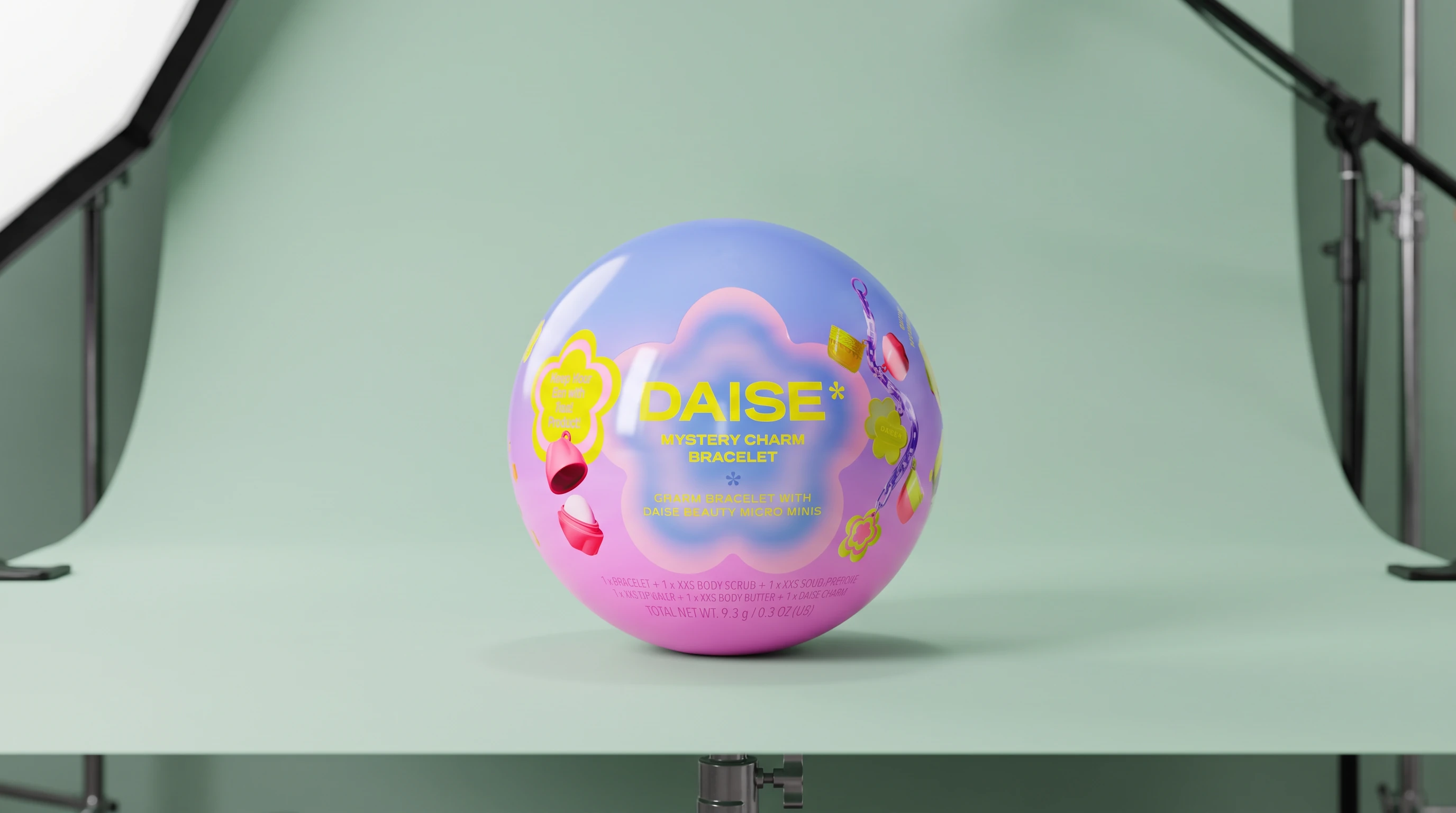
10. Mystery Charm Bracelet with Beauty Micro Minis by DAISE
Who will love it: Tweens, teens, and adults who love expressing themselves and can’t resist anything mini.
What’s great about it: Tiny things are instantly more fun, and these actually work! DAISE Micro Minis combine the surprise of a blind unboxing with a charm bracelet and teeny beauty products, including lip balm, body butter, scrub, and solid fragrance. I love that there’s something to discover, something to wear, and something to use. They make such a cute stocking stuffer for someone who loves beauty and all things mini.
—Rikki Devlin
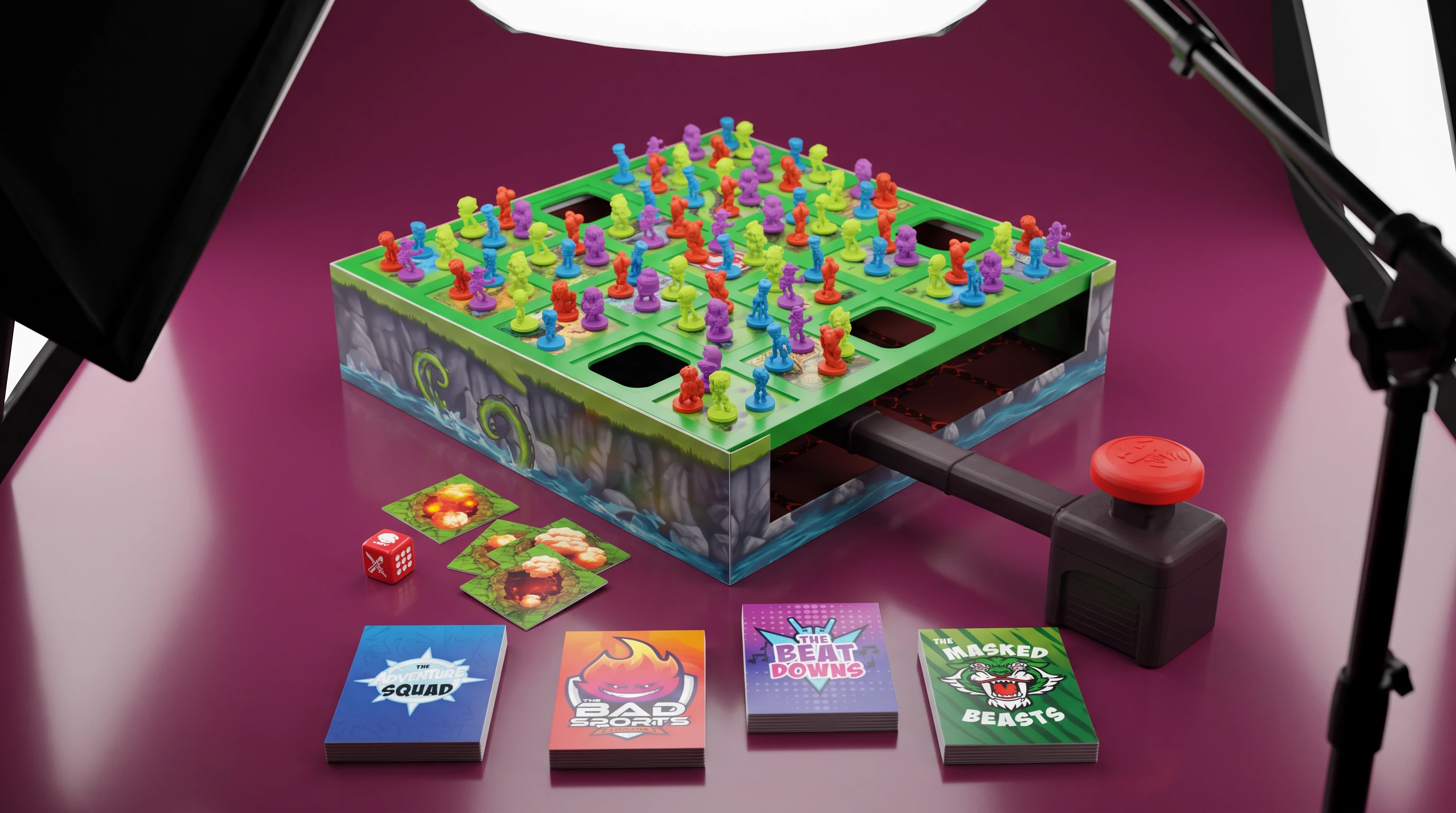
11. Hold Your Ground by Buffalo Games
Who will love it: Kids ages 8+—and the rest of the fam!
What’s great about it: This battling game has a fun mechanism that sends your tokens flying off the board. My 11-year-old loves it, and even though I’m not typically a fan of battling games, I have a blast playing it too. The game strikes a perfect balance of strategy, chance, and unexpected surprises that keep everyone engaged. It could even excite die-hard video game fans enough to put down their controllers and play together in the real world.
—Vlasta Komorous-King
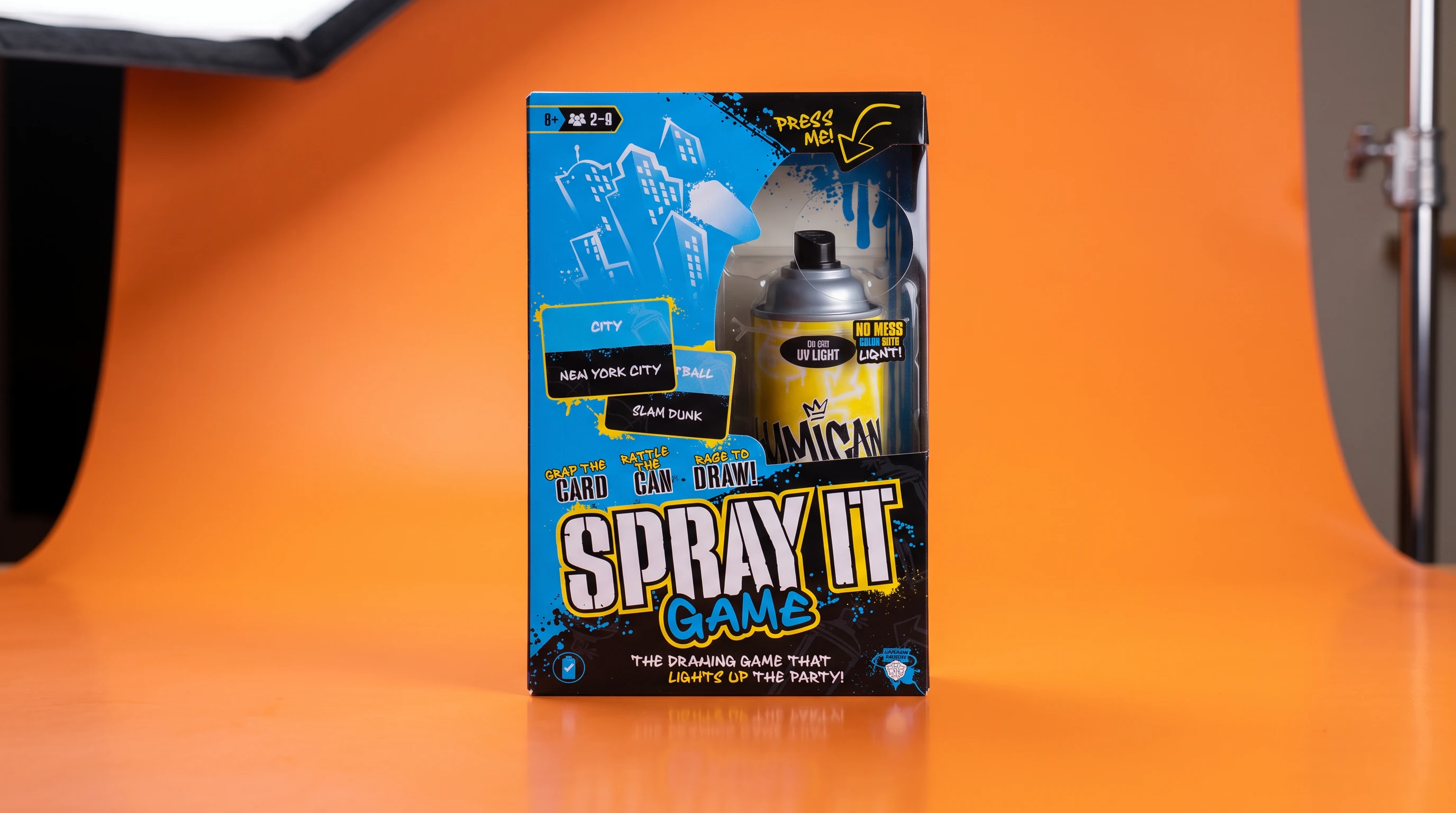
12. Spray It! by Moose Games (IDEO invention)
Who will love it: Party game lovers, drawing game enthusiasts, artists, kids, and adults.
What’s great about it: Spray It! is a new take on drawing party games that is completely mess-free and easy to learn and play. Instead of using a traditional pencil or marker, players use an innovative UV light spray can to draw. But watch out! Take too long, and your drawing will start to fade. It’s a ton of fun to draw and guess—no drawing skills required!
—Weishan Liao
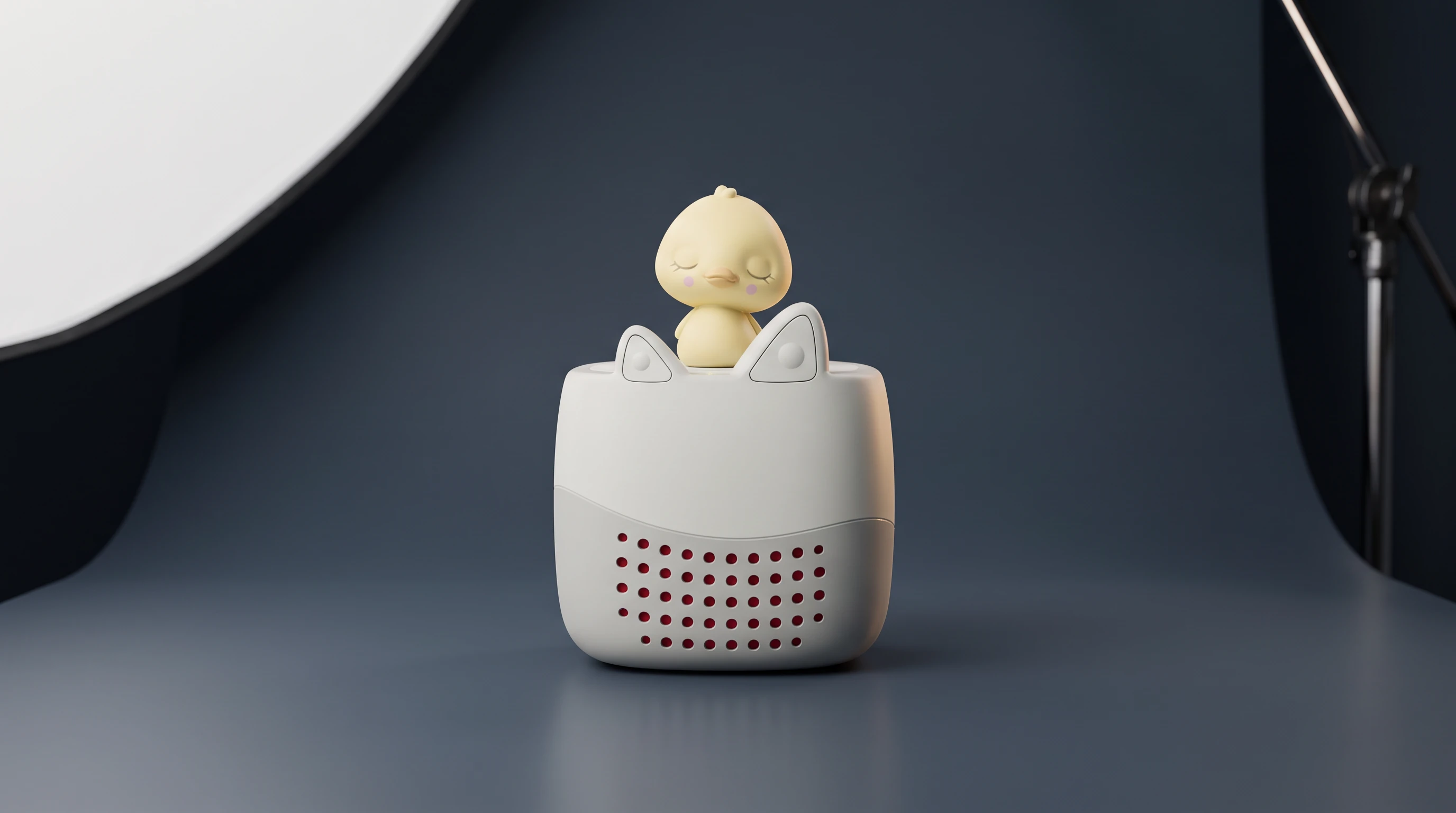
13. Toniebox Lite Audio Player by Tonies
Who will love it: Kids ages 1+ who want their favorite stories and songs on the go.
What’s great about it: The Toniebox Lite has everything kids love about the original Toniebox, in a smaller, lighter, palm-sized version. Kids simply place a Tonie figurine on top of the box to start listening to a story, tilt or tap it to skip tracks, and squeeze the ears to adjust the volume. It’s compatible with every Tonie figurine, and its durable hard shell can take a few knocks. Lightweight and portable, it’s easy to toss into a diaper bag or suitcase. And it’s screen-free! For long car rides and flights, parents can plug in headphones or pair it with Bluetooth ones. Toniebox Lite is the compact, portable solution parents have been asking for.
—Diana Tobey
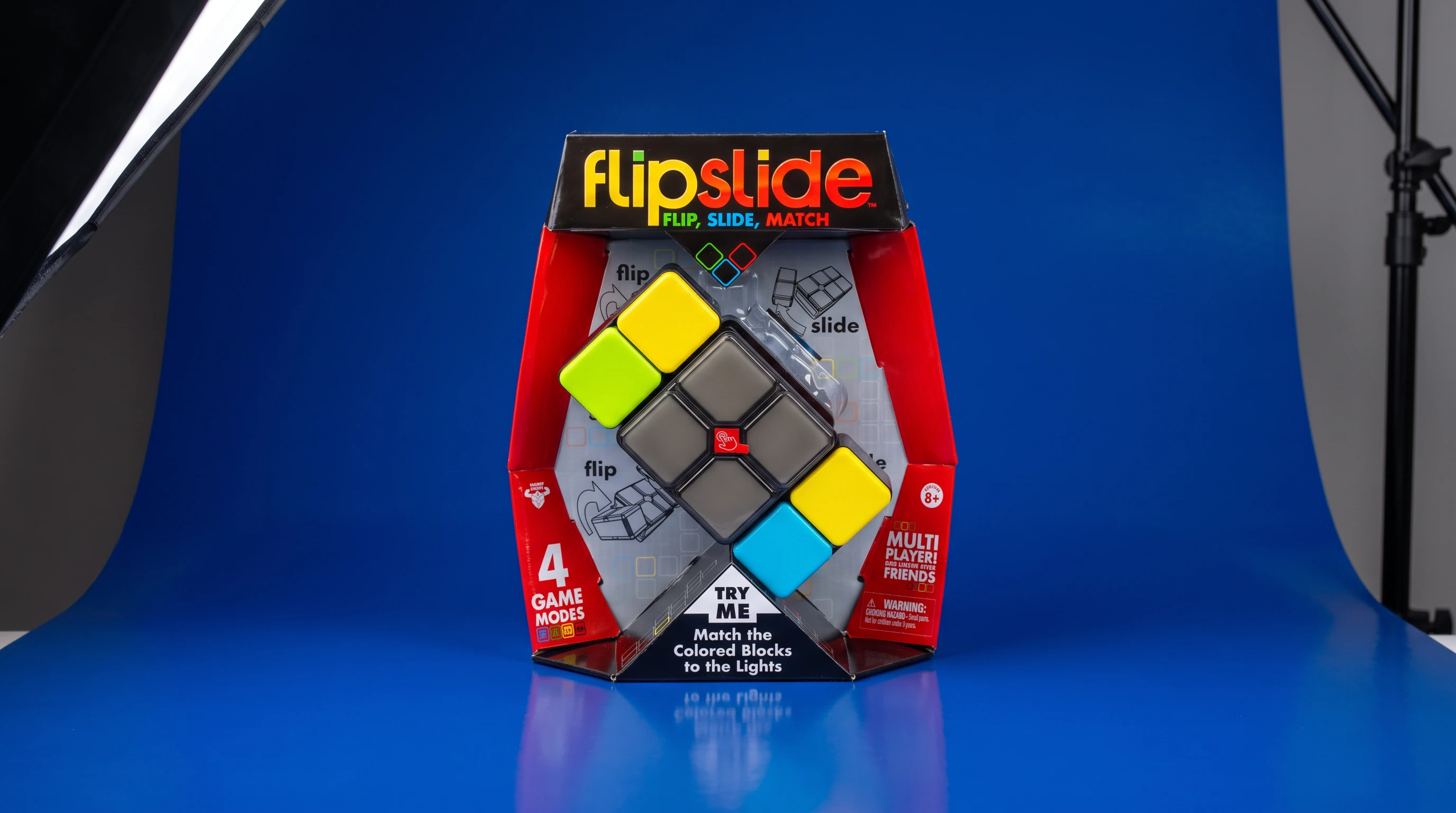
14. Flipslide by Moose Games (IDEO invention)
Who will love it: Fidget puzzlers, reaction gamers, and fast-paced fun lovers ages 8+
What’s great about it: This game is a thrilling combination of fidget toy, reaction game, and handheld puzzle that will keep you beating your high score over and over. Flip and slide the outer pieces to match whatever lights show up in the center squares. With Speed, Memory, and Levels modes, you can flex all your skills in this fidgety, fun electronic game. Flipslide is also a great size to throw in a backpack and take on the go.
—Lucas Iezzi
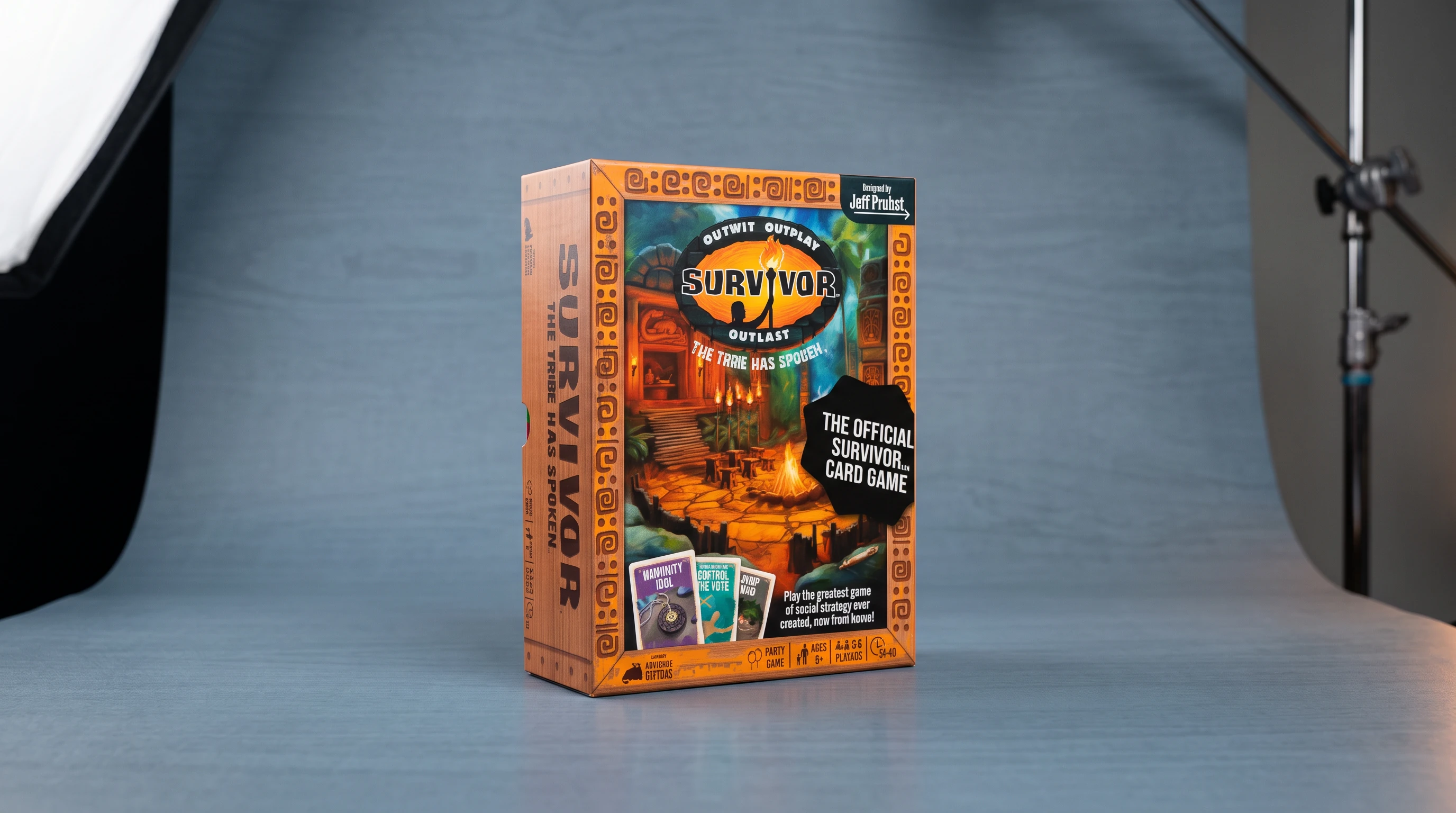
15. Survivor: The Tribe Has Spoken by Exploding Kittens
Who will love it: Survivor fans, families, and strategy-loving kids ages 8+.
What’s great about it: Bring all the drama, alliances, blindsides, and backstabbing of Survivor right to your living room. Players collect advantages, steal cards, hunt for hidden Immunity Idols, and form secret alliances before facing the ultimate Tribal Council vote. Everyone secretly casts their votes into a physical voting box, so you get the suspense of finding out who’s been voted out in true Survivor fashion. And when it comes down to the final two, you’ll have to convince the eliminated players why YOU deserve to be crowned the Sole Survivor.
—Shaylyn Berntson
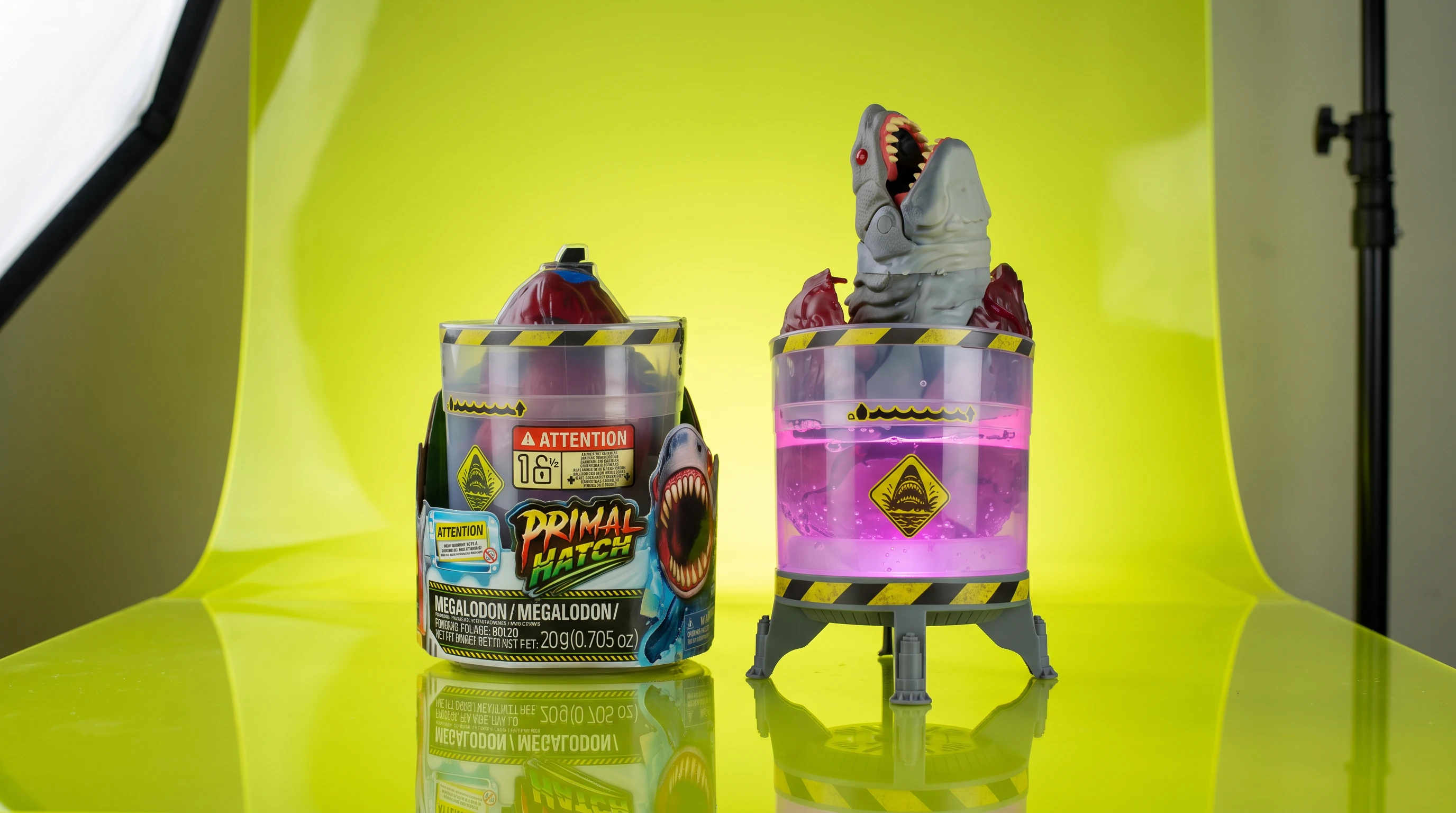
16. Primal Hatch Megalodon by Spin Master
Who will love it: This toy is perfect for kids ages 5+ who love sharks and big surprises!
What’s great about it: Kids get to play scientist, awakening a prehistoric predator that feels alive before it even breaks out of its egg. I love a gift that gets the whole family gathered around, waiting to see what happens next, and this one delivers. After the big reveal, kids have a cool tactile toy to chomp around with, and you can reset the hatch and enjoy the suspense all over again!
—Rikki Devlin
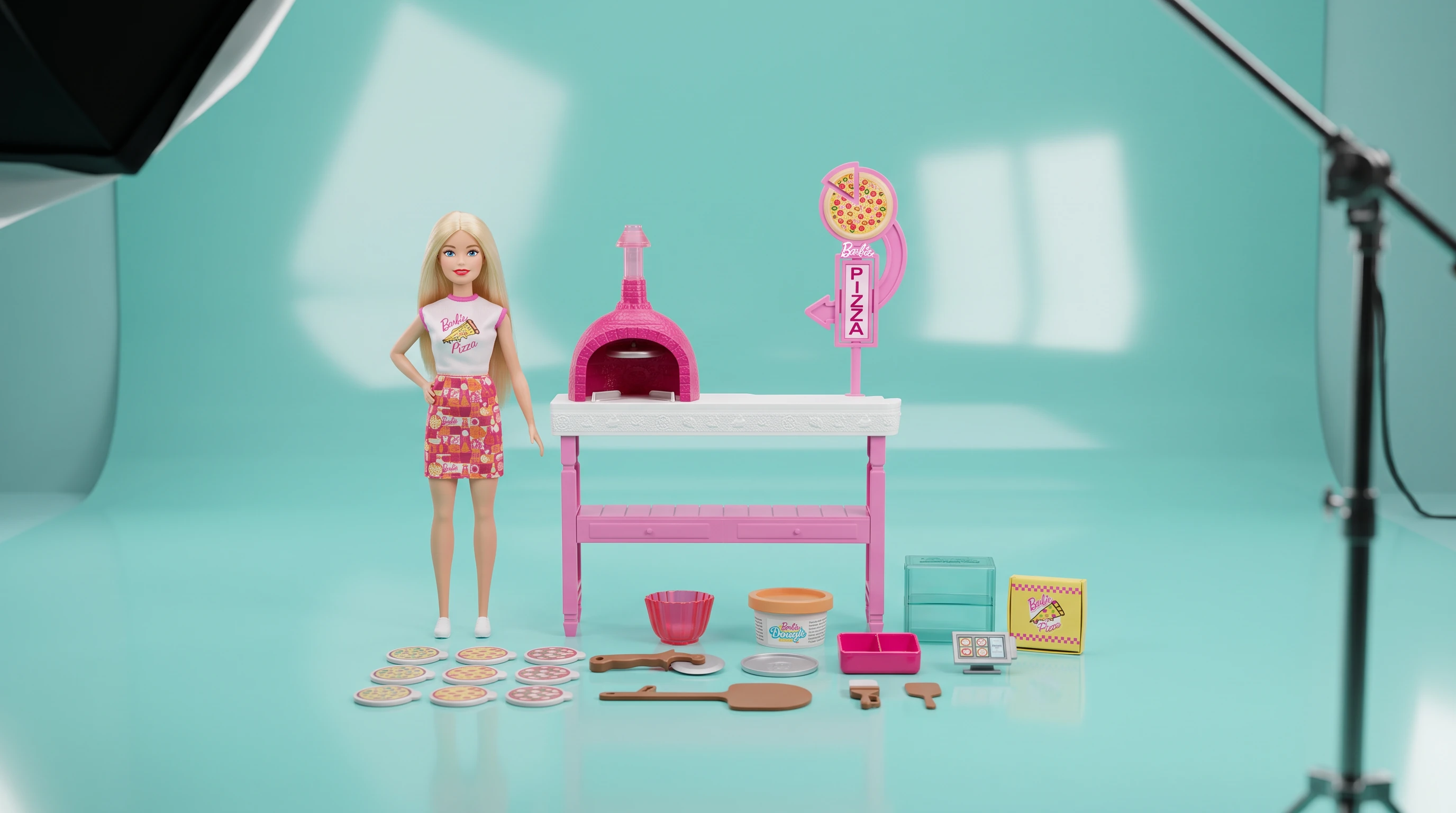
17. Barbie Pizza Shop Playset by Mattel (IDEO invention)
Who will love it: Barbie fans, lovers of cute miniatures, and kids ages 3+ who enjoy detailed, imaginative storytelling.
What’s great about it: This Barbie playset is packed with play value, featuring a charming pizza shop theme that inspires kids to reenact familiar stories. The highlight of the toy is using dough to create realistic-looking mini pizzas. By pressing tiny prints into the dough, kids can craft incredibly realistic pies that they can even slice, just like real pizza. When they squish the dough, the printed design disappears, allowing kids to start the pizza-making process all over again.
—Inna Yankelovich
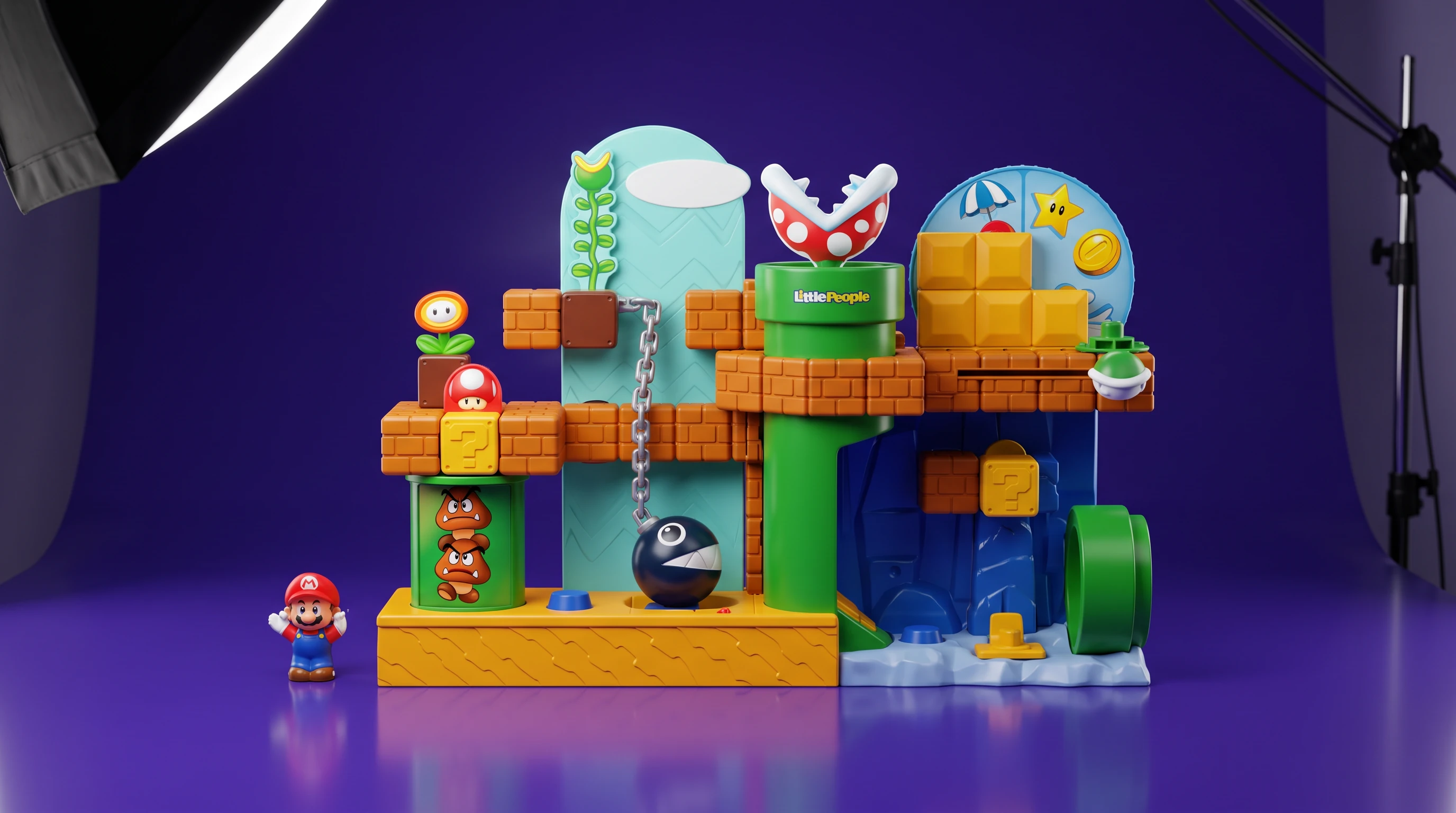
18. Little People My Mario Adventure Playset by Fisher-Price
Who will love it: Super Mario fans and, quite frankly, anyone 18 months and up.
What’s great about it: Bring the Mushroom Kingdom to life with this toddler-friendly Super Mario playset! Little ones can explore Mario’s world, play with the included character figures, and discover fun interactive features, sounds, and music. It’s packed with hands-on activities that spark imagination, build fine motor skills, and encourage pretend play. It’s a great way to introduce the iconic world of Mario to a whole new generation!
—Shaylyn Berntson
(Please note that IDEO makes a commission off of affiliate links.)
Who better to help you navigate this year’s hottest toys and games than the people who dream them up for a living?

AI is changing women’s health
Let’s work together to make sure it’s for the better.
For decades, women’s health has been underfunded, overlooked, and too often reduced to reproductive care. Medical research has been built around male bodies, while the complexity of women’s biology and lived experiences has been treated as a problem to simplify rather than an opportunity to understand.
Now, AI could change that. Designed intentionally, AI could unlock new kinds of evidence that close historical data gaps and inform better care. But if we aren’t careful, we could be scaling systems that were never designed for women and build the next generation of healthcare on the same broken foundations as the past.
The stakes are high. The opportunity is massive. This is where design matters most.

Introducing the Women’s Health × AI Exchange
We believe design can help us embrace AI’s healthcare possibilities while recognizing and mitigating its risks. And we believe the most promising futures are shaped collaboratively, by bringing different perspectives into conversation and making those possibilities tangible.
That’s why we’ve launched the Women’s Health * AI Exchange, an open, design-led exploration of one important question: How might AI meaningfully transform women’s health, and what would it take to ensure that it does?
To frame this exploration, we crafted six provocations about possible futures at the intersection of women’s health and AI. Futures where AI could:
- Reframe women’s biological complexity from a healthcare liability to a scientific asset and create new pathways for better care.
- Transform the relationship between healthcare professionals and patients, translating qualitative data into clinically actionable evidence.
- Connect the dots across a woman’s health journey to enable more proactive, preventive, and life-stage-specific care.
- Drive innovation in women’s longevity, helping researchers understand what most influences how women age.
- Flip the economics of clinical research, incentivizing exploration at the deprioritized edges and intersections.
- Put data back in women’s hands to help them find their own insights around issues where institutional research has not been prioritized.
Imagining what AI could do is only half the work. We also need to consider the shifts required to make these futures possible. And so, each of these provocations ends with the same challenge: What would it take to make them real?
We’re inviting you into this conversation to help us collectively sharpen a point of view and co-design a landscape of opportunities. Here’s how to join.
Go to the Women’s Health x AI Exchange and choose a provocation that resonates with you. An AI facilitator will ask thoughtful follow-up questions to help you frame your point of view and articulate what you believe needs to change. Your thoughts will be posted anonymously. As more people participate, their contributions will help reveal where perspectives align, where tensions remain, and what new opportunities are emerging.

Turning tension into possibility
This conversation is just the beginning. We’ll synthesize themes and share emergent opportunities. We’ll bring together people across healthcare, research, technology, investment, and design to help us prioritize opportunities for further exploration. And we’ll translate the most compelling ideas into tangible prototypes that help people see, experience, and shape what desirable, viable, feasible, and responsible AI-enabled healthcare could look like.
We’re approaching this as an investigation in motion, not a finished thesis. Our intention is to work openly so the perspectives, provocations, and possibilities we generate can inspire and inform the people already working to move women’s health forward.
And while women’s health is at the center of this exploration, the conversation we want to have is even bigger. It is a conversation about the future of healthcare data and power. A conversation about how AI might help close the gaps that decades of underfunding have left behind, and what we can all do to ensure it does.
Whether you’re a clinician, researcher, technologist, entrepreneur, investor, designer, or simply someone who cares about the future of healthcare, we invite you to help us reimagine what healthcare could be, for everyone.
Explore the Women’s Health * AI Exchange and add your perspective.
AI is transforming healthcare at a remarkable pace. But our understanding of women’s health has a lot of catching up to do.
Patient expectations are evolving faster than ever
Four ways pharma companies can adapt as GLP-1s reshape experiences.
During a recent meeting with a pharma client, we played a YouTube video of GLP-1 users that left the team slack-jawed. Sitting around a conference table, they watched people crack open an auto-injector and pour the contents into a vial so they could titrate out a more precise dose of the drug themselves. They heard several patients admit to using a family member’s prescription because they didn’t have their own. Others lamented that they weren’t in range for their preferred direct-to-consumer delivery platform. The realization was stark: patients knew what they wanted from their GLP-1s, and if the manufacturer didn’t provide it, they would find a way to make it themselves. In that moment, this particular pharma company understood it was not at all prepared for a future where patient expectations would remake the drug market.
The introduction of Ozempic and new access models for GLP-1s like Lilly Direct and Hims & Hers have fundamentally shifted the pharmaceutical industry in the last five years, unleashing more self-directed therapy journeys and a new kind of healthcare consumer. Patient expectations about what pharma companies can do—and the experiences available to them in a healthcare setting—have been completely rewritten. This revolution is making traditional pharma commercialization processes that push patients and providers through a few preferred channels a thing of the past. Especially as consumer-facing startups come for their market share—and create an even larger pie.
If pharma companies are going to meet this new wave of consumer expectations for everything from GLP-1s to hair loss and erectile dysfunction medicines, supplements to fertility drugs, they need to prioritize designing exceptional experiences that come along with their therapies. That requires building an entirely new set of skills and behaviors that can support product pipelines. Here are four crucial steps to get there.
1. Uncover the needs patients want pharmaceuticals to meet
Pharma companies need to do research with real patients to get a clear view of the full therapy journey—from diagnosis to long-term use. In that process, they can identify the highest-risk moments, like confusion over instructions, frustration over delivery methods, and potential misuse, and prioritize opportunities to improve real-world adoption and adherence.
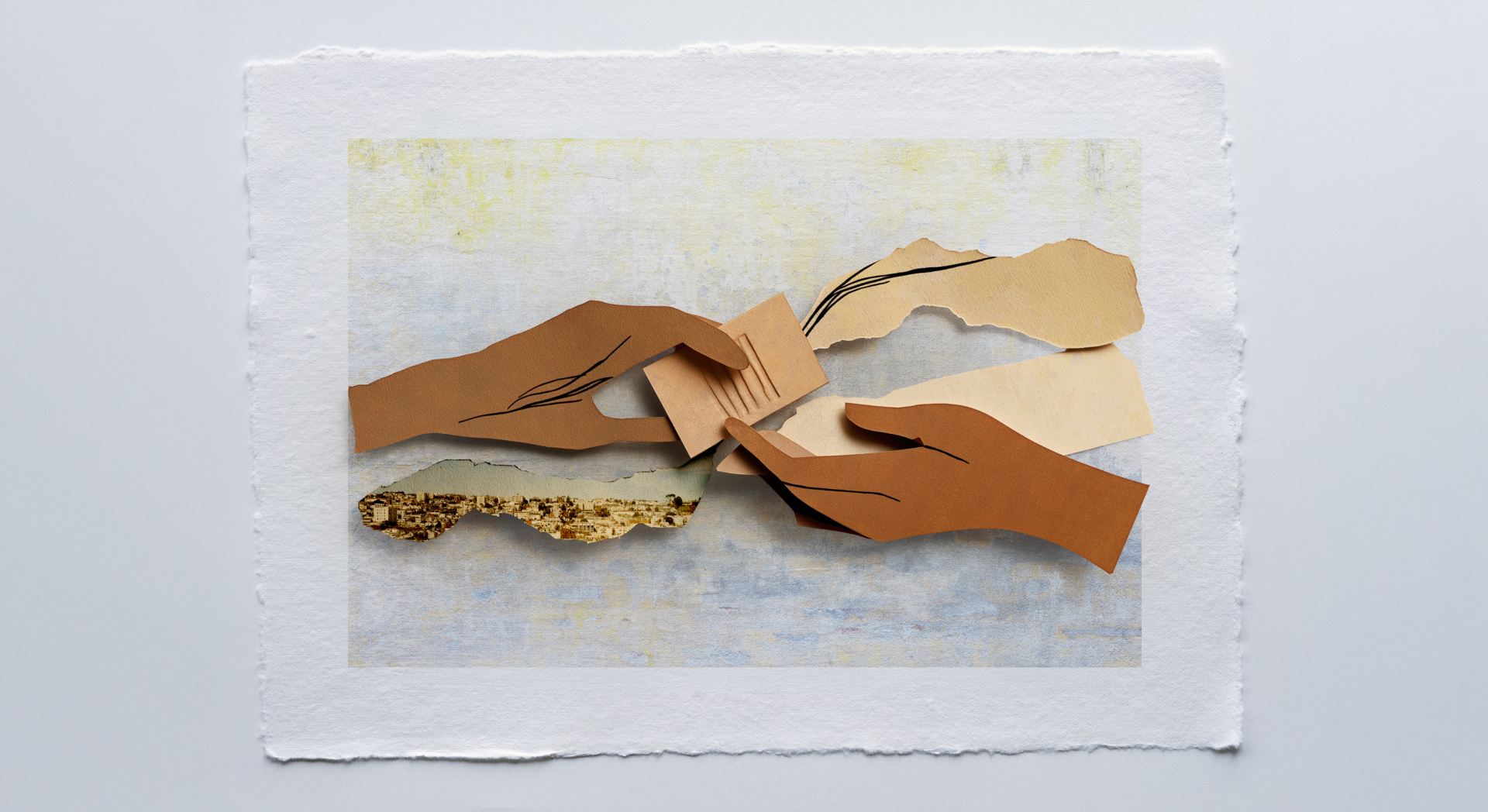
Lilly understood this early on. In the 1990s and early 2000s, the pharma company had several new, life-changing medications and two big challenges: Its primary drug—insulin—had to be self-injected, which patients were hesitant to do. And its drug-delivery device platform lagged behind the needs of insulin users.
Lilly approached us to design the next-generation auto-injector platform. Early in the partnership, a team of IDEO designers and Lilly leaders met with diabetes patients around the globe to better understand how they lived with the disease. They quickly realized there was a need for a device that met the needs of a broad range of dexterity-challenged and injection site-specific patient populations (including rheumatoid arthritis and psoriasis patients). As the development of multiple candidate molecules was still underway, the team focused on creating an injection experience that would work for these more challenging patient populations, knowing that a design that worked for them would also deliver a better experience for a broader swath of future users.
While we carefully considered every feature of the autoinjector itself (from grippy labels and a stable, twist-off base to large, clear unlock tabs and injection buttons), we also designed packaging that fit in a standard-sized refrigerator, created a set of highly visual instructions, and took into account the involvement and support of family members and caregivers.
Fast forward to 2026, and Lilly is still leveraging the design we made together to not only support pre-diabetes treatments like Trulicity, but also psoriasis therapies like Taltz, migraine therapies like Emgaility, and GLP-1 molecules like Mounjaro and Zepbound. The latter accounted for the majority of the company’s annual revenue in 2025. Taking the time to create a comprehensive drug delivery experience has yielded an invaluable delivery toolkit that Lilly and the patients they serve still benefit from today.
2. Design the experience around the therapy
As more and more pharma companies create consumer-style experiences, it’s crucial they build services and tools that support onboarding, adherence, and ongoing use. Standing out is no longer just about drug efficacy. It’s about how well patients with all kinds of needs and circumstances can access and adhere to the therapy—and how well pharma companies can deliver against their competitors.
When Sanofi launched Beyfortus, the first-ever RSV immunization for newborns, in 2024, it was a milestone in the fight against the virus, which had resulted in the death of 445,000 babies worldwide in 2019 alone. But the company knew that growing anti-vaccine sentiment might prevent parents from giving their children the potentially life-saving immunization.
Together, we conducted research with parents, caregivers, healthcare professionals, and healthcare administrators in Germany, Spain, China, and the US to identify barriers to adoption across cultures. The team quickly discovered that no single approach would work across Sanofi’s 20-plus international markets. Training for medical professionals needed to be flexible and customizable. They also discovered that discussing immunizations right after a baby was born was too stressful for new parents.
Ultimately, the team created an accessible global communication toolkit with straightforward language, metaphors, and illustrations to support informed conversations between providers and parents before and after a child is born. Then they held a series of market-fit co-design workshops to make the tools more resonant with regional customers and ensure compliance with local regulations.
In its first year on the market, Beyfortus became a $1.8 billion therapy, and more than six million babies have been immunized.
With a growing funnel of information about drugs, therapies, and even supplements, pharma companies must cut through the noise to support patient understanding and adherence.
3. Define how you show up beyond the drug
To have an even greater impact on patient outcomes, pharmaceutical companies should explore new roles, partnerships, and models. That could mean creating new offerings that combine a given therapy with support and services, building partnerships with payers, employers, or platforms to extend reach, or creating models that tie therapies to long-term outcomes and value.
Japanese pharmaceutical company Otsuka is perhaps one of the most diversified pharma organizations in the industry, focusing on above-molecule interventions including companion diagnostics, digital technologies, and other tools that enhance the effectiveness of chemical or biological treatments. With a business that spans traditional drug development and manufacturing, digital solutions, and even consumer products such as Pocari Sweat, an electrolyte drink, Otsuka has bet that diversity and go-to-market pathways will lead to better experiences for patients. Not to mention these touchpoints also provide deep insights into the needs of the people Otsuka serves.
In 2018, Otsuka joined forces with Click Therapeutics to develop digital health services to accompany one of its leading medications, aripiprazole. The antipsychotic is used to treat schizophrenia, bipolar disorder, and major depressive disorder (MDD). By 2024, the company had developed an app featuring activities aimed at treating MDD. The partners chose a challenging but potentially impactful area for their pilot program: four primary care sites within the National Health Service (NHS) in the UK with a high caseload of MDD patients, where a digital solution combined with antidepressants could significantly reduce the burden on these sites.
Depression is widespread across the UK, and the treatment demands on the NHS are considerable. However, the system lacks the resources to provide every patient with the necessary services to treat their conditions. This digital companion to antidepressant medication aims to improve treatment effectiveness, and if the pilot is successful, it could significantly ease strain on the NHS while helping patients achieve better outcomes.
4. Create a human-centered R&D pipeline
Creating more human-centered packaging or instructions to help people better understand a drug is an effective step forward, but exploring new internal capabilities that make your innovation pipeline more future-fit and human-centered can be transformative.
That work can take many forms: building a beacon project that upskills product and team leadership on methods to better understand the decisions consumers are making today and in the future, introducing futures-thinking to help your team look beyond the next five years, or reinforcing purpose and culture to empower employees to make patient-centered decisions.
In 2020, as Moderna raced to deliver a COVID-19 vaccine during the pandemic, the company needed to grow exponentially—and rapidly. However, by hiring employees from traditional pharma giants, it risked losing the unique entrepreneurial culture that made it successful in the first place—one that embraced speed and accepted risk. This shift could have limited its future ambitions of developing breakthrough products to combat other viruses and diseases, and even cancer.
Together, we worked to codify the company’s culture and values into a set of Mindsets that would empower employees to move quickly, evaluate risk, and make the right decisions. The team met with Moderna veterans to gather stories about key cultural moments, like when a crucial piece of equipment didn’t fit in the door, and employees knocked down the wall to keep vaccine production moving. Insights from these stories became Mindsets, like “Act with urgency: Action today compounds the lives saved tomorrow” and “We behave like owners: The solutions we’re building go beyond any job description,” that were then tested with new hires, employee resource groups, and others across the company.
The Mindsets were more than a tagline: they set the stage for continued progress and future breakthroughs. Today, Moderna is working with Merck on a cancer vaccine that just completed a successful Phase 3 clinical trial.
This sea change in consumer expectations for medicines and therapies can feel disorienting for traditional pharma companies—but it also offers enormous opportunities for those that think outside tried-and-true drug delivery channels and embrace human-centered design. By truly understanding patient needs, finding new and inventive ways to support them, and building the capabilities to empower your people to create a human-centered R&D pipeline, organizations can distinguish themselves in the market. These behaviors can not only drive the market, but more importantly, radically improve patient outcomes.
“This sea change in consumer expectations for medicines and therapies can feel disorienting for traditional pharma companies—but it also offers enormous opportunities for those that think outside tried-and-true drug delivery channels and embrace human-centered design."
What real insights feel like, and other notes from a design legend
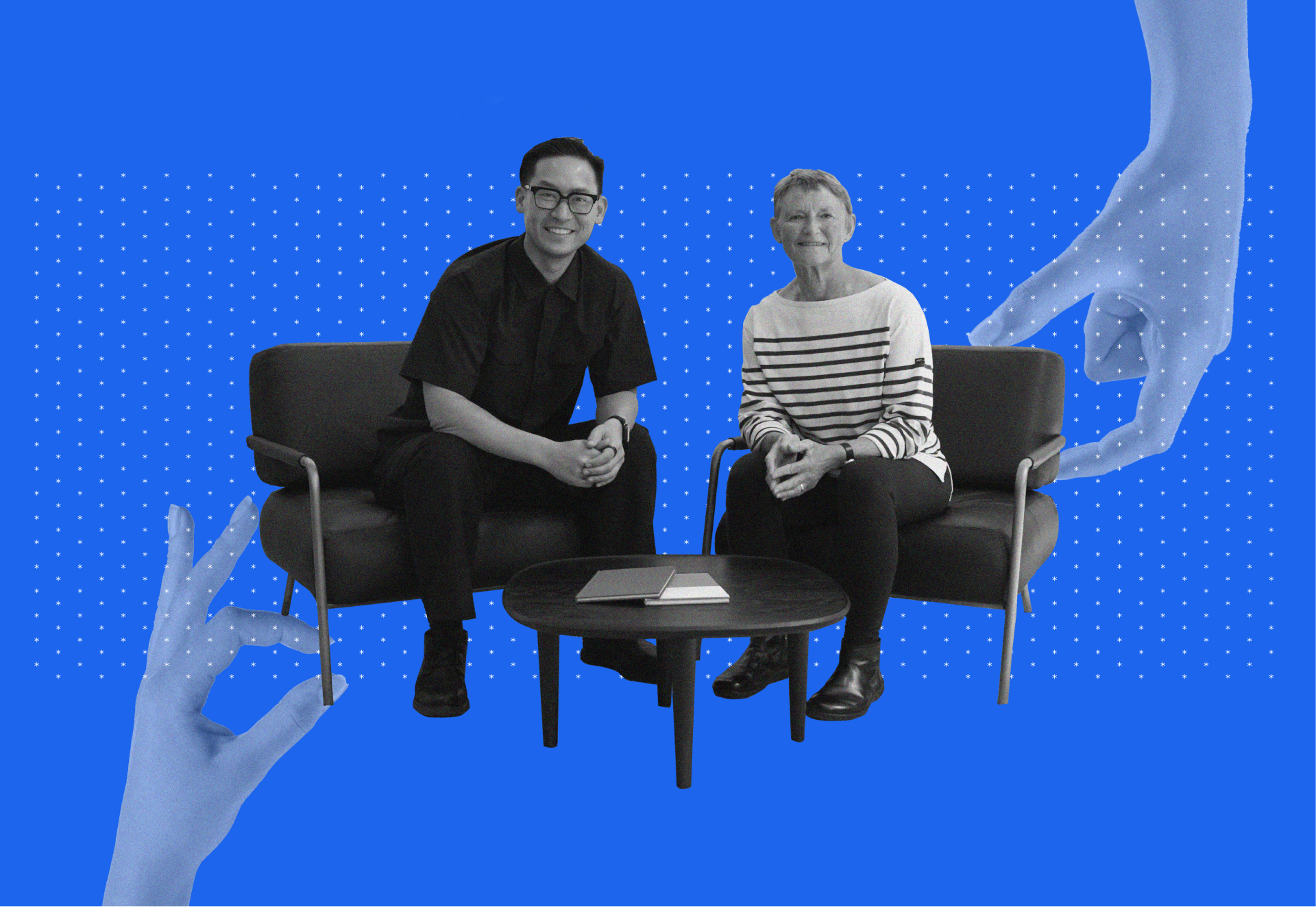
A Q&A between CEO Mike Peng and Jane Fulton Suri, former CCO.
A pioneer of human-centered design at IDEO, Jane Fulton Suri joined one of IDEO's predecessor firms, ID Two, in 1987. With a background in psychology and architecture, she gained early experience as a researcher at the renowned former Institute for Consumer Ergonomics at Loughborough University of Technology. At ID Two, and later at IDEO, Suri introduced social science principles to the design industry, which had not yet fully embraced them. Her contributions would go on to reshape the field.
Suri’s influential 2005 book, Thoughtless Acts?: Observations on Intuitive Design, features a collection of snapshots that highlight the subtle, instinctual ways people interact with the everyday world. It’s a love letter to observation as a design discipline with real-world impact. Her work in human factors at IDEO has influenced products people use every day, from rubber grips on Oral-B toothbrushes to redesigned Evenflo strollers. In recent years, she’s expanded her focus beyond human-centered design to explore how patterns found in nature and living systems can inspire more sustainable solutions—what she calls life-centered design.
Now a Partner Emerita, we were so glad to welcome Jane back to IDEO earlier this year for a conversation with our design community.
Mike Peng (MP): If you don’t mind, Jane, tell us about your origin story and how you came to IDEO.
Jane Fulton Suri (JFS): I started out in psychology because I was really interested in people. And then I got really interested in people in the everyday world. I brought that mindset into design: Let’s get out there and see what people really do.
I found myself working with manufacturers to help them understand why people didn’t do what they expected them to with power tools, motorcycles, and other dangerous things. A lot of my work was mitigating disaster. And I thought, this is crazy. Why aren’t these conversations happening while things are being designed? Problems are easier to remedy at the design stage than when they’re on the market.
Then I met Bill Moggridge, one of IDEO’s three cofounders, because a friend of mine was his client. He was a myth and a legend. After our conversation, he asked me, “What do you want to do now?” And I said, “I’d like you to offer me a job!”—which was very, very uncharacteristic of me. I had no clue what I was getting into.
I quickly realized I needed to understand what my teammates were doing and value that, then add ideas about going out, meeting people, and watching what they do.
So instead of having the answer, I realized the point was about discovering together how to make the design brief better. That became the practice—getting away from the desk. And now that means teams getting away from their screens and going into the world together.
MP: Now user research and ethnography are common practice in design. What were the early days like?
JFS: When we started out, we had no budget for anything I wanted to do. I had to convince my colleagues it would be exciting and interesting, and that we’d have good stories to tell our clients. Then it became a bit of a sales story about why it might take an extra week or two, or even a month, to do the project.
What we were doing was more like exploration; we didn’t know what we'd find, and afterward, we would probably want to do something different from what we’d promised when we wrote our proposal.
MP: If you had to sum up a few of your most memorable projects while you were at IDEO, what are some of the ones that really stood out to you?
JFS: Early on, Supercuts invited us to bid on an innovation-focused job. At the time, we were essentially a product design company. David Kelley, Tom Kelley, and others weren’t sure what we might do for a company like Supercuts.
So with one of the other early human factors researchers, we went out and got haircuts. Then we went around the city just looking at different hair stylists’ establishments. We started putting together a story of how customers make decisions from the moment they think about wanting a haircut to deciding where to go, making their first appointment, then all the behaviors that follow, like primping a bit before you leave the shop.
We had a lot of fun engineering this great crazy clipper. But I always believed our best ideas were these little moments throughout the experience, like getting a cape that made you look good, or a mirror that said “Supercuts” so you’d remember where you were. That was our first customer journey map.
MP: Are there other memorable moments that really stick out to you?
JFS: One of the most moving ones for me was at IDEO Chicago, years and years and years ago, when colleagues of mine were working on the LifePort Kidney Transporter. The project was all about how precious a kidney is. The team described their experience in the operating theater, seeing the surgeon take this living element and cup it so gently, like a baby bird, as he transferred it to where he needed to place it. That recalibrated the team’s thinking about designing the carrying system, because we’d just been thinking about it functionally and mechanically. But it also let them tap into what it really means to design for a living passenger.
MP: Let’s dive into the craft of design research. How do you know when a research insight is truly great?
JFS: Insight, for me, is a change of state in our understanding. There's an epiphany of sorts, a new recognition. You get an insight by being a sensory human being, observant and absorbent through all your senses…and then discovering you are excited about something new. Design and innovation take a lot of personal energy. That human emotion has to come from you.
And that’s what happens when clients get really drawn into ideas, too—they feel you’re changing the way they see things.
MP: What fundamentals do we need to continue to embrace to do research well?
JFS: Nothing beats being an aware, sensory human being who is curious about other people, places, and things. Research doesn’t have to be expensive. Even a conversation with one interesting person, or exposure to an unfamiliar place, will do.
Sometimes we're reluctant to put something in front of the client that we think is a really cool idea, but nobody has said they wanted it. Perhaps the research didn’t show that it was a really good idea yet. But sometimes we have to have conviction about our own perspectives and the confidence to share innovative ideas, even without hard evidence. I’ve always felt that.
MP: One of the most important phases of IDEO’s design-thinking process is synthesis—taking the messy materials we’ve gathered during research and making sense of them. How do you approach synthesis?
JFS: I once wrote a piece about how what happens in the design process isn't the same as how we formally describe it. One story stands out. I call it “the black shoes.”
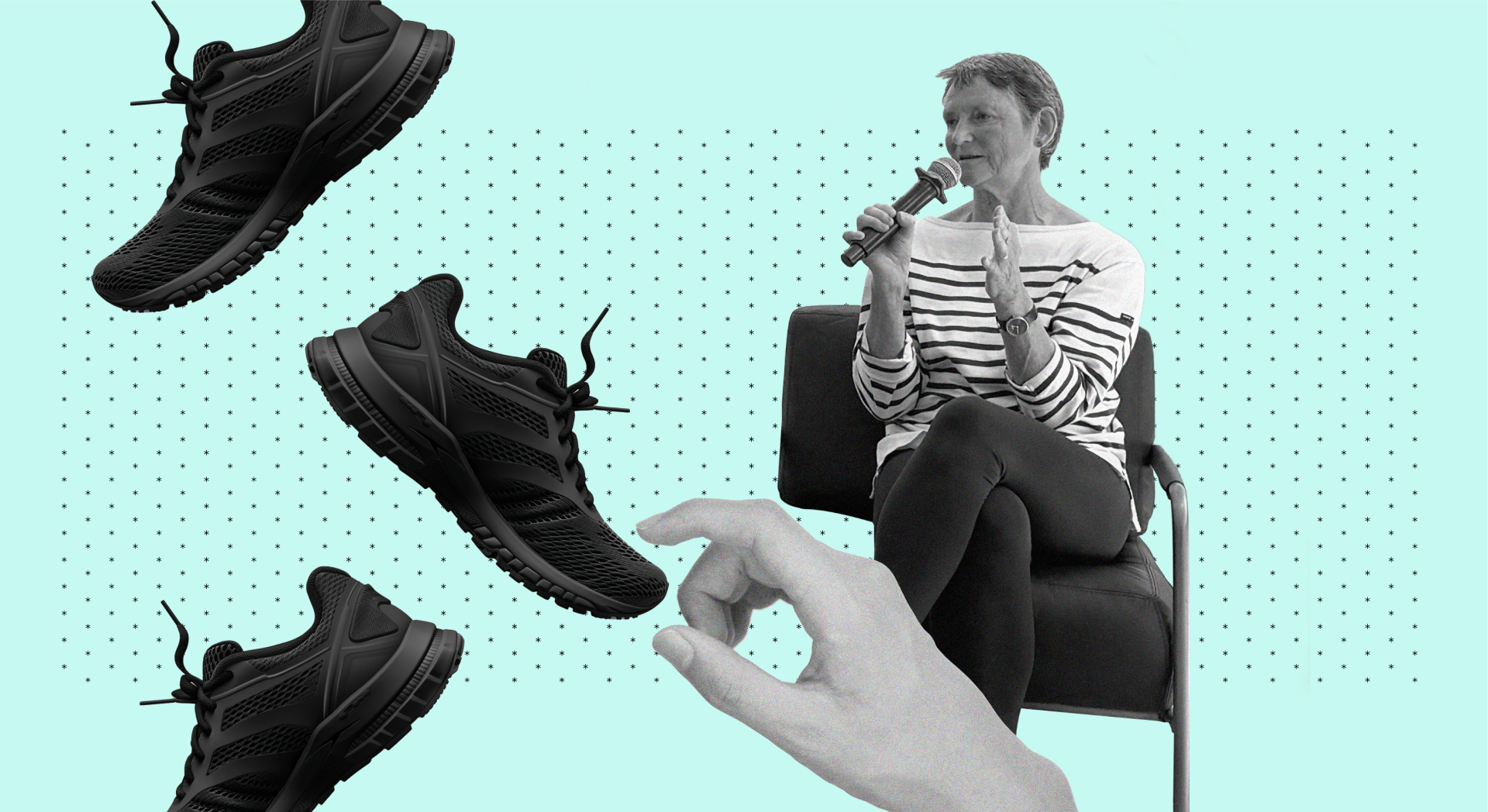
Annette Diefenthaler, now Professor and Executive Director of the Munich Design Institute, was an IDEO researcher working with a global bank trying to set up a presence in Russia. The team had done loads and loads of interviews with people about banks. Late one night, on the way back to their hotel, Annette saw a big shopping center. She asked the driver to stop, because she realized they'd had no time, other than doing their interviews, to absorb much about the culture.
So she went into this big mall, and Annette was stunned by how simply the department store had arranged its products. One wall was just black shoes all lined up, all the different kinds of black shoes you could have. It was all really obvious and not very exciting because there were only black shoes—no glitz at all.
What she took from that was: this is a culture where trust is built by showing what there is. It was so honest and direct. And here we were, talking to all these people about banks and trying to understand how to build trust in an alien brand. She had a flash of insight that suddenly made sense of what the team had been hearing. The bank needed to be so much more straightforward and transparent about its services. “Black shoes” became a mantra for that project and shaped how they designed the bank’s interior and described its offer.
This insight came from a moment that was completely off script. I love that. You can’t always get to an insight by staring at your interview notes. You get it because it’s somehow gotten into your viscera.
MP: Are there any moments where you found creative ways to present research to clients to help them make decisions?
JFS: Instead of personas and customer descriptions, a team once created a series of packed suitcases that represented the different types of travelers they interviewed. The client loved that one.
MP: How do you find the courage to decide to deliver an installation of suitcases instead of a more traditional research deliverable, like a presentation?
JFS: You need to tune in to what your client needs to absorb and what you want to communicate, and be ready to experiment with how you do that. You need to get good at failing. You try things, fail, and learn how to gauge what might work better the next time.

MP: You’re an incredible artist—I’ve seen your woodblock prints. You’re also an amazing rock climber and swimmer. I’m curious how these activities helped you develop your craft as a researcher and a designer.
JFS: There’s something very elemental about all of them—they’re direct experiences of the world. You give your weight over to the rock. You trust the water. Even with woodblock printing, what I love is how material it is. I use sharp knives and gouges to carve the wood, then I learn how much water and ink to use and how the brushes work.
That’s the thing I find really exciting. The fact that human beings have evolved to make beautiful things, that connection of making and place is a crucial motivator.
MP: You are one of the authors of the first edition of The Little Book of Design Research Ethics. I’d love to hear your perspective on the ethics of the discipline, and what we should keep in mind as we increasingly rely on technology.
JFS: I have a problem with the term research, partly because I think it connotes things like clipboards and taking notes—that we’re documenting other people’s lives. I’m happier when it all feels more like co-discovery, exploring together. We are together, engaged in this space, noticing things about your behavior as well as what I’m thinking about your behavior. And it's more collaborative.
Co-discovering with other humans is a much nicer place to be.
MP: Looking back, knowing what you know, what advice would you give young Jane?
JFS: I think I had imposter syndrome for about five years or so. I could have moved along a lot faster if I’d had a little bit more confidence and maybe a few more people telling me that it was okay.
MP: Are there any insights from your human factors work that you apply to the broader scope of life-centered design, and how we can learn from that?
JFS: A human being is a living thing in a living system of other living things. Observation and curiosity are key—we should keep asking the same kinds of questions about the inherent behavior of those systems, as we would ask about people: what they really do, what motivates them, and how we can gain insights from them. This goes back to your question about how rock climbing, swimming, and art come into it, in the sense that we can think more broadly about the elements that matter to people. There’s a whole living world out there with great examples of elegant systems we can learn from.
This Q&A has been edited for length and clarity.
“Insight, for me, is a change of state in our understanding. There's an epiphany of sorts, a new recognition. You get an insight by being a sensory human being, observant and absorbent through all your senses."

Lindsey Turner
I’m passionate about building brands, products, and experiences that help organizations show up with meaning and momentum.
I help organizations cut through complexity by shaping how they show up, through brand strategy, identity, and storytelling.
Working at the intersection of brand and business, I bring an editorial eye and a bias toward making—turning ideas into tangible experiences that people can understand, trust, and believe in.
My work spans government, healthcare, financial services, media, and consumer goods, from launching Gen Z-focused ventures to building innovation labs and reimagining legacy brands. I relish moments of ambiguity and enjoy translating across teams, perspectives, and priorities to move ideas forward.
I started my career in editorial and digital design, shaping cross-platform experiences and identity systems in publishing and agency environments. That foundation still shapes how I work today: I’m detail-oriented, collaborative, and overreliant on the Oxford comma. I hold a BFA in Visual Communication from the School of the Art Institute of Chicago.

Rachel Young
My work helps organizations see who their products aren't working for—and build the will and the tools to do something about it
For 25 years, I've asked the same question: Who does this design exclude—and what are we going to do about it?
My work spans human-centered strategy, inclusive design, and qualitative research, with clients ranging from Microsoft, Google, and Verizon to the National Science Foundation, and San Francisco Unified School District.
Before IDEO, I taught elementary school in East Palo Alto and spent a decade doing design work with social service organizations—where I learned firsthand what it costs people when systems are built without them in mind.
I am currently writing User Error, a nonfiction book about digital access and the design decisions behind it. I live in Oakland, California.

Brian Pelsoh
I lead with craft, ensuring our work is creatively excellent: rooted in deep human insight and imagination, while also grounded in the realities of business and technology.
My expertise spans brand, communication, and product design across tech, education, the arts, and social impact.
I believe great work demands both high-level vision and obsessive attention to detail, and only happens through collaboration.
I bring an inclusive, hands-on approach and a deep understanding of business, which enables me to consistently deliver excellence while always asking why.
Before joining IDEO, I worked at the brand firms Pentagram and VSA Partners. I began my career as a designer, leading teams at the School of the Art Institute of Chicago and the Milwaukee Art Museum. I hold an MFA in graphic design from Maryland Institute College of Art and a BFA in communication design from the Milwaukee Institute of Art & Design, and have taught at some of the best design schools in the US.

Tony Wong
I am responsible for IDEO’s long-term success in China and working with clients to use design as a tool to enable growth.
I am responsible for IDEO’s long-term success in China and working with clients to use design as a tool to enable growth. Specifically, I have helped Chinese companies design holistic brand solutions through the development of their products, communication, services, and innovation teams, and I have helped multinationals expand their presence and influence in China.
I advise global leaders on developing China-led innovation and capabilities.
In over 15 years in IDEO Shanghai, I have worked on projects that use design to elevate the quality of the experience of healthcare products and services, streamline processes that increase productivity, create spaces and programs that promote and enable inclusive communities, and build next generation mobility solutions that are planet-positive.
Before joining IDEO, I worked at Philips Electronics and the Electrolux Group in Italy, the Netherlands, and Singapore on a number of breakthrough commercial products. I am a member of the Young President Organization in Shanghai.

Tips for how to prototype a service
Simple ways to make intangible service ideas visible and testable.
How do you prototype designing something that isn’t tangible, like a service? In this Creative Confidence Series webcast, IDEO Partner and Managing Director Ilya Prokopoff and IDEO U Managing Director Suzanne Gibbs Howard will guide us through their process for service design prototyping, share examples of successful past service design prototypes, and discuss how these prototypes can often lead to increased clarity and confidence behind ideas.

Advice from IDEO’s chief creative officer on inspiring creative work
How leaders can inspire ambitious creative work without controlling it.
We spoke with Paul about what he sees as cornerstones of creative leadership, how to catalyze people toward action, and his no fear attitude toward delving into the void—aka darker more challenging topics like death and aging.

This is the way Google & IDEO foster creativity
Shared practices that help creative cultures thrive at scale.
Curious about what makes a successful, innovative team, Google led a two-year research project with 280 teams. They found only one distinction between innovative and non-innovative teams—psychological safety.
How to create change in your organization
Practical ways to build alignment, momentum, and lasting organizational change.
Designing for change is about helping leaders transform their organizations’ cultures and businesses in pursuit of innovation, adaptability, and impact. Join IDEO Partner and Managing Director Bryan Walker and IDEO U Managing Director Suzanne Gibbs Howard as they discuss a human-centered approach to change and give a sneak peek into IDEO U's newest course.
Looks like you might be in search of something very specific?
Or reset the filters above and try another angle.
Here’s some random inspiration

Podcasts about creative leadership

Articles about the power of prototyping