
.svg)


“Hey AI, buy my vitamins”
.webp)
"Loyalty has to evolve into something AI can’t replace: emotional connection, belonging, and identity."
Over the past few years, technology has redefined what a “great” customer experience looks like, raising the bar for convenience and personalization. Discovery, consideration, and purchase no longer follow a neat, linear path, and it’s painfully obvious when legacy systems and operating practices fail to align with consumer expectations. Particularly when it comes to loyalty programs that feel deeply transactional. Ever head to a new-to-you brand site only to get served a spin-the-wheel pop-up that demands your email and phone number in exchange for 10 percent off? Or have a cashier push a store-branded credit card on you when you already have one?
It doesn’t feel like loyalty when a brand doesn’t even know who you are.
And yet, loyalty is growing more important than ever, as commerce becomes increasingly mediated by AI—flattening the internet into a shortlist of what to buy. When platforms are incentivized to optimize for efficiency and sameness, brand and experience must become the primary levers for differentiation. A brand’s best bet is to go after the source data: the communities that form around your brand and your products, and ensure they have genuinely great things to say. Because increasingly, that may be how your next generation of customers learns you even exist.
Which is why I was excited to chat with Sarah Ganzenmuller and Regan Jayne, cofounders of rediem, a community-driven loyalty platform that has helped brands like Sun Bum and Olipop nurture and grow a community of passionate fans through both direct-to-consumer and traditional retail channels. Here’s our conversation about redesigning the future of loyalty from the inside out.
Diana Tobey: What was the original “aha” moment that made you say, “We have to reimagine loyalty differently”?
Sarah Ganzenmuller: The initial inspiration was a desire to understand how an emotional connection between a brand and a customer is formed. I was interested in how brands wield power and how you could harness that power as a force for good while also driving deeper brand affinity.
Originally, rediem was a consumer app. Customers participated in challenges with positive environmental or social impact and received rewards from brands like Allbirds. When these brands began asking us to white-label our software so they could host challenges on their own sites, we realized there was a significant opportunity to disrupt an overly transactional and stale loyalty industry.
.webp)
Regan Jayne: My background is in behavioral economics. I was at Harvard Law School working on policy mechanisms to change consumer behavior when I met Sarah. The law tells consumers, “You have to recycle, or you’ll be fined.” But when a brand people love, like Olipop, says, “We’ll give you exclusive access to some really cool thing if you recycle,” that’s gold.
Diana Tobey: I love that example, and that we’ve both been pushing against the limitations of traditional, transaction-driven loyalty. In your view, how has consumer expectation of loyalty evolved over the past five years—and where do you see it heading in the next five?
Sarah Ganzenmuller: Five years ago, loyalty meant points, tiers, and discounts. Points are a primitive marketing tool. They assume loyalty is making a purchase. The real loyalty currency is participation, productized through contributions, rituals, and culture-shaping moments.
People want three things: to identify with the brand they buy from, to feel a sense of community by joining other like-minded people, and to have the ability to co-create with brands.
In general, people want three things: to identify with the brand they buy from, to feel a sense of community by joining other like-minded people, and to have access, inclusivity, and the ability to co-create with brands. This is particularly true for Gen Z, but in general, consumers are starting to expect brands to act differently.
Over the next five years, this trend will accelerate as AI handles transactions. People won’t go to brand websites; they’ll say, “Hey AI, buy my vitamins,” and the AI will choose where to buy. So loyalty has to evolve into something AI can’t replace: emotional connection, belonging, and identity.
Regan Jayne: Today, loyalty is a multiplayer game. We’ve created this ecosystem where people feel like valued members of the community. They’re citizens of the brand, not just customers, who feel their voices are heard, valued, and reflected in what the brand does, how it communicates, how it develops new products, and its impact on the world.
Diana Tobey: I love the term “citizens of the brand.” It’s an interesting reframe that makes the customer’s role more active and engaged.
At IDEO, we think a lot about the difference between behavioral loyalty (what people do) and attitudinal loyalty (how they feel). I know you’re hearing similar things from the brands you work with. Where are you seeing promising approaches that address the emotional and psychological side of loyalty?
Regan Jayne: Most brands optimize for behavioral loyalty: “Did they buy again?” But real brand love is emotional.
.webp)
The brands we love are already part of our everyday routines, but they don’t always do a great job of creating magical post-purchase moments. For example, Oh Clem fans showing off their earring stacks, Sun Bum fans sharing beach day photos, or Olipop fans hunting for limited-edition cans. Once someone sees themselves inside a brand, they build an emotional connection. This is one of the most powerful levers for Lifetime Value (LTV) and repeat purchase, but the purchase is a symptom of emotional connection, which is far more powerful.
Sarah Ganzenmuller: Authentic engagement is becoming increasingly important as AI increasingly commoditizes products and distribution. To go to market, we believe that a company’s only true competitive moat is brand belonging, community, and creating an authentic place for people to show up and be creative.
Diana Tobey: Many loyalty programs are hyper-focused on promotions and creating value through pricing. How do you encourage brands to broaden their lens and move toward genuine loyalty?
Regan Jayne: The problem with previous iterations of loyalty programs was that they were pay-to-play. The only way you could build status or agency with a brand was to spend. In a transactional version of loyalty, if you’re obsessed with a certain beauty brand, you have to keep buying lip gloss to gain status in hopes that the celebrity founder notices you.
It’s a give-and-get experience, not just, “Hey, tell us your birthday and we’ll give you five points.”
But now, brands are rewarding customers for snapping a selfie of a makeup look of the day or for doing a random act of kindness. And they treat rewards points they earn as real currency, allowing shoppers to donate them to charity or an impact fund, or use them to unlock a VIP in-person experience. The value the brand gets back from these customers is priceless. Brands get valuable user-generated content, co-creation feedback, zero-party data, and grassroots advocacy in return. It’s a give-and-get experience, not just, “Hey, tell us your birthday and we’ll give you five points.”
Diana Tobey: Co-creation and building a brand community seem especially important for Gen Z. I’m curious to hear your thoughts on why that is and how that might develop in the near future.
Sarah Ganzenmuller: Social media really shifted how brands engage with customers. Older generations had very professional, polished advertisements. It was a one-way relationship in which brands tried to sell you something. Today, we see co-creation as one of the most powerful levers a brand can use. Bringing customers into the process gets them emotionally invested and gives them a real sense of ownership. The future of loyalty is about identity architecture—who I am in relation to the brand, the community, and the culture around it.
Regan Jayne: Previous generations weren’t seeking education or validation from brands the way that teens do now. Gen Z looks to brands to educate them about their products, not just to advertise them. It’s more about a bidirectional dialogue.
We’re moving toward loyalty systems where your value in the community is determined by how much you contribute, not just how much you spend.
Diana Tobey: What is the next frontier in how brands should reward or co-create with their customers? Do we need better metrics to track that as well?
Sarah Ganzenmuller: We’re moving toward loyalty systems where your value in the community is determined by how much you contribute, not just how much you spend. And yes, we absolutely need new metrics for this. Traditional loyalty key performance indicators capture only a small slice of what actually drives brand love.
One of our clients, Tru Earth, is a sustainable laundry detergent company. They wanted to encourage people to wash their clothes in cold water, which is more sustainable, so now we have people submitting images of themselves washing their clothes on the cold cycle week after week. We’ve also been sending customers surveys to measure brand affinity and brand mindshare, which are hard to quantify and don’t necessarily show up in a customer’s LTV.
Regan Jayne: Because our software can also track purchases at the SKU level, many of our brands, like Tru Earth, Reel, and Harmless Harvest, are creating communications that highlight each individual’s personal impact, which is extremely powerful psychologically.
Other new metrics we’re looking at include contribution scores (which track how much someone participates in a community and the value they add), sentiment lift (measured using machine learning algorithms), participation velocity, and community influence. And, obviously, we’re still going to be looking at the bottom line, because ultimately that’s what drives business decision-making. Although we have had a few brands say, “We don’t really care if this moves the needle in the business. We want to mobilize our community for good.”
Diana Tobey: As you think about brands stepping into these communities and building more gamified experiences, what are the right things to do, and what are some guardrails to prevent loyalty experiences that feel like very lame applications of game design?
Regan Jayne: That’s the billion-dollar question! I think what’s interesting and compelling, and rather nascent in the loyalty space, is brand collaboration. Interoperability is something we are designing and testing right now because there’s a strong opportunity for complementary, non-competitive brands to play together. We’re seeing this happen naturally, in an ad hoc way, and I think we can do it more scalably.
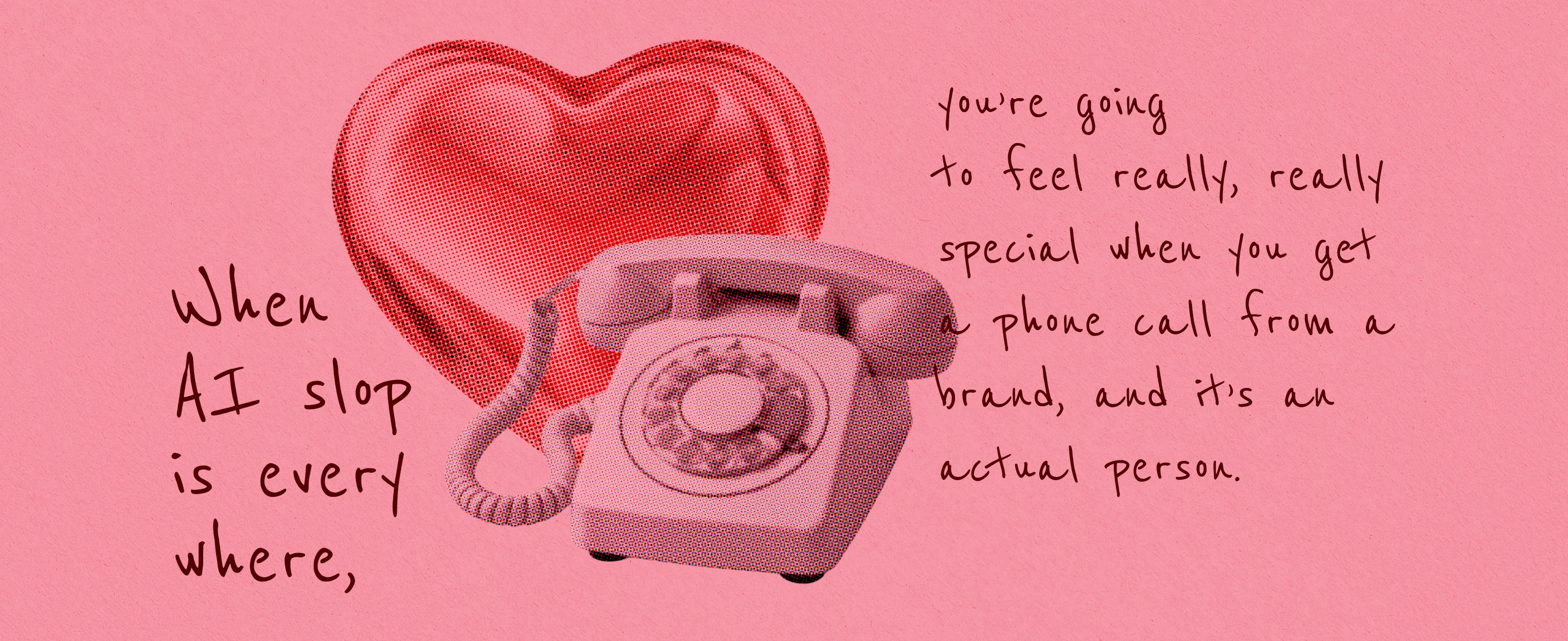
The other trend we’re seeing is an increase in omnichannel and IRL experiences. When AI slop is everywhere, you’re going to feel really, really special when you get a phone call from a brand, and it’s an actual person. Or when you get an invitation to a cocktail party with the founder and a few VIPs because you’re a loyal customer and live in New York. These truly human, community-coded omnichannel experiences will be pivotal.
Sarah Ganzenmuller: I think where companies go wrong is when they build out a challenge or an engagement method based on the success of another brand. Every brand is different. Their ideal customer profiles are different. Ensuring you stay true to who you are as a brand and to your mission is probably the most critical.
Diana Tobey: As retail becomes increasingly agentic and customers buy products through ChatGPT, I’m curious what loyalty should look like when the storefront is an AI interface. What should remain human for that emotional connection, that relationship with a brand, to really play out?
Sarah Ganzenmuller: We think a lot about what the future of brand loyalty looks like when there aren’t brand websites, or at least they don’t exist as we think of them today. In this world, discoverability is incredibly important.
Regan Jayne: YouTube and Reddit crush it on AI discoverability right now. That changes weekly, if not daily, so we’re monitoring closely what’s moving the needle. With rediem, for instance, we can identify a trending subreddit asking, “What’s the best sunscreen for people who love to surf?”
We see an opportunity for brands to mobilize and incentivize their customers to join the conversation and boost discoverability when there’s a trending subreddit or a get-ready-with-me video on YouTube.
If you were to ask ChatGPT for the best sunscreen, three brands would probably pop up: Vacation Sunscreen, Sun Bum, and Supergoop. We see an opportunity for brands to mobilize and incentivize their customers to join the conversation and boost discoverability when there’s a trending subreddit or a get-ready-with-me video on YouTube.
Human preference becomes much more pronounced when everything else is stripped away. Right now, there are a million and one reasons I’m choosing one brand over the other. It might be that I’m at Target, and the other brand is sold out, or I’m at a convenience store, and it’s a last-minute emergency, so I just grab something, or I get triggered by an ad on TikTok. It’s very situational. But when you’re in an agent-to-agent commerce world, many of those factors are gone. Now I have three sunscreen options, all with the same formulation and priced the same. Why am I choosing one over another? Personal taste? A sense of belonging or one brand over another? A mission I’m connected to? In that moment, human preference is so potent.
Diana Tobey: Recently, IDEO has been working with a Fortune 10 company to redesign its next-gen loyalty program, and we know there are many cultural, operational, and structural challenges that can hinder the adoption of more innovative approaches to loyalty. What do you think is most critical for setting businesses up for success?
Sarah Ganzenmuller: One of the biggest challenges is a legacy mindset oriented around a discount or a discount channel. There needs to be a shift toward a more relationship-oriented engine. Loyalty is a cross-functional effort. Often, internal teams are siloed. For this new concept of loyalty to succeed, it can’t be the responsibility of the head of retention or e-commerce alone; customer experience, product, retail, and social media teams need to be involved.
Regan Jayne: The landscape of loyalty is moving in this new direction—all you have to do is look at LinkedIn to see the types of positions brands are hiring for, like head of community, social commerce, community activations, events, and community partnerships. Brands are seeing these trends, evolving, and meeting customers where they are—especially the next generation.
Words and art


.webp)
.webp)
Subscribe