Creating an out-of-this-world STEM learning experience
Aboard the Verizon Explorer Lab, students can travel to Mars and learn engineering basics along the way.
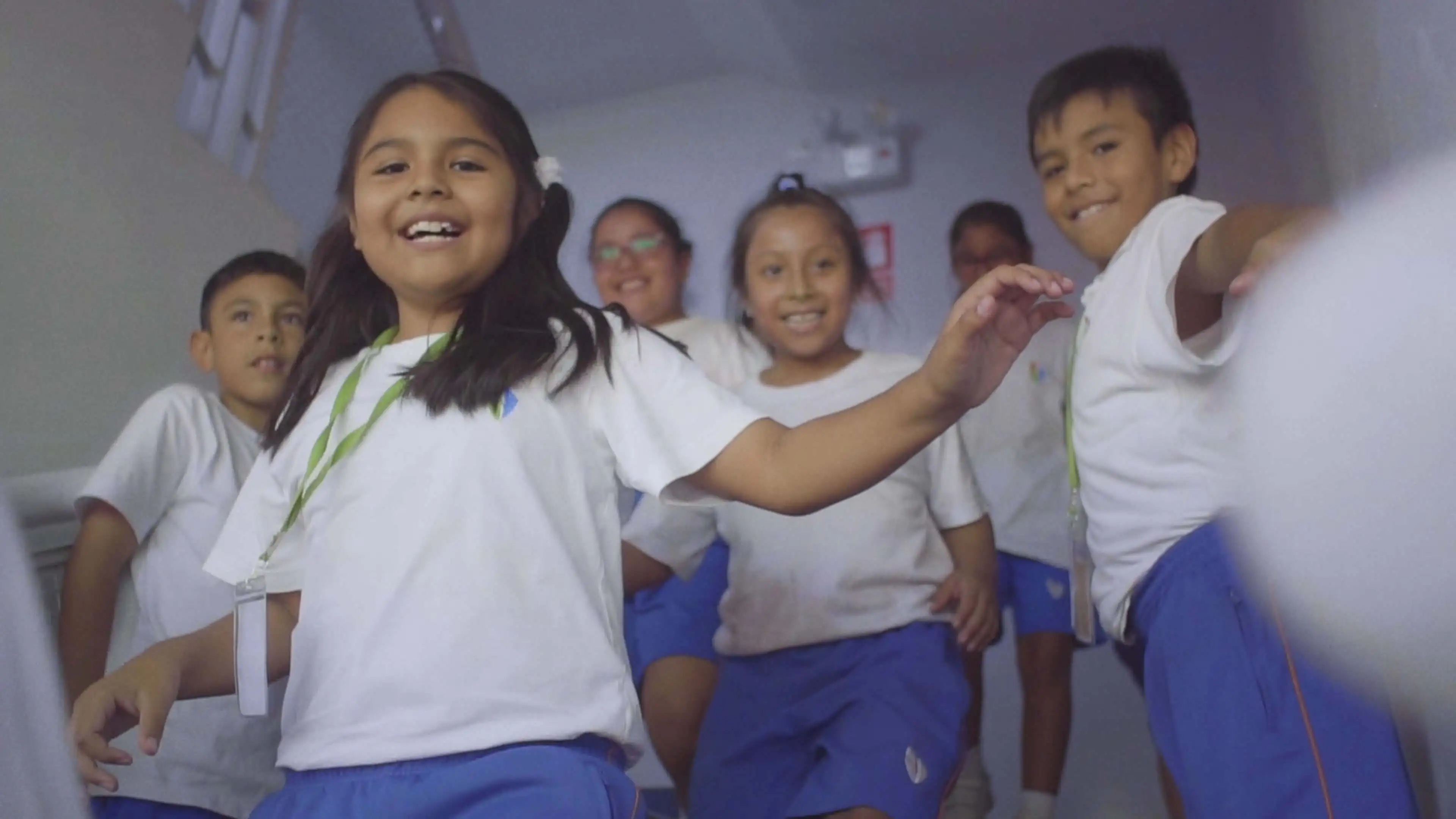
When Mr. Gordon told his fifth grade students they were taking a field trip on a bus, many of them envisioned the city bus that they ride each day to school. But when they saw the Verizon Explorer Lab pull into the school parking lot, they realized a unique experience awaited them. Painted in bright colors, this bus promised something very different from their daily commute.
“Climb aboard, explorers!” says the Lead Explorer. The students walk through the bus’ sliding doors and inside, where instead of rows of seats, they find a sleek research lab. Suddenly, the lights dim. The bus makes a rumbling noise as though it’s about to lift off. And on a large screen, a vision of Earth from space appears. The students listen and point as the video narrator briefs them on NASA’s ongoing search for life in space.
Science education isn’t always this fun. Some kids have a chance to learn through interactive games, immersive experiences, or engaging field trips; but many lack access to rich educational experiences in science, technology, engineering, and math (STEM). As a result, they can be less likely to pursue careers in STEM, though many future jobs will demand mastery of these subjects. This not only impacts a student’s potential and future, but reduces the diversity and number of qualified STEM job applicants.
In under-resourced schools, students are often limited to the scarce tools available for STEM learning in their classrooms. Many kids rarely have a chance to leave their neighborhoods. For these kids, mobile learning experiences that come to their school offer unparalleled exposure to cutting-edge, technologically advanced, and—most importantly—inspiring gateways into these critical academic subjects.
As part of its focus on digital inclusion, Verizon partnered with IDEO to share the excitement of STEM learning with middle schoolers. To facilitate access and discovery of STEM, the team designed a learning experience that takes place on a coach bus and can be scaled to reach kids across the nation.
The team set out to transform the bus into the Verizon Explorer Lab: a futuristic research lab that transports kids to new environments, from outer space to under the sea. As part of the larger Verizon Innovative Learning program, the Verizon Explorer Lab offers delightful and rigorous content that meets national science standards.
A multidisciplinary team comprised of designers across interaction, communication, environments, games, and software partnered with Verizon to bring the Verizon Explorer Lab to life.
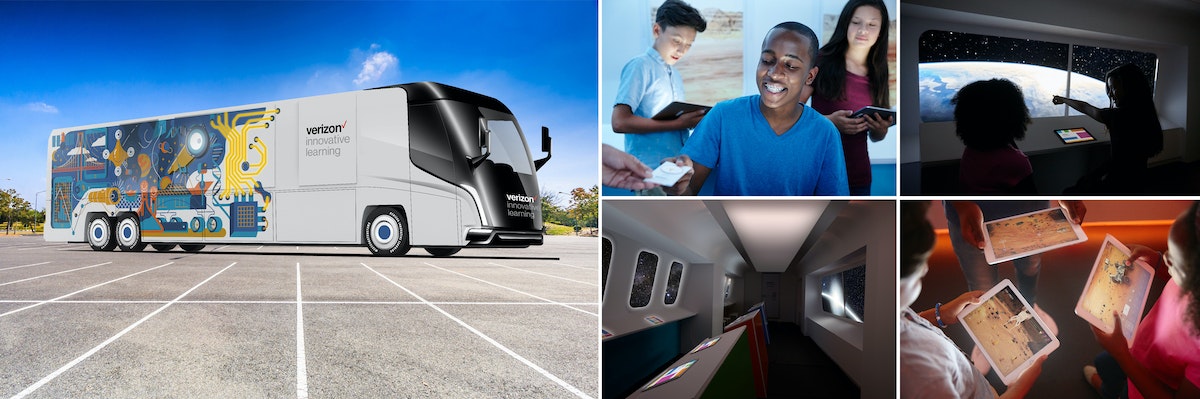
To keep the student at the center of the experience, the team designed alongside kids. Their gravitation toward play, interaction, and technology inspired the digital game that students play onboard the bus. When developing the game’s narrative, the designers turned to popular kids’ books and movies. What began as a card game prototype eventually became a 360-degree video and virtual reality expedition to Mars—complete with a custom musical score—that introduces middle schoolers to engineering basics.
After stepping through the bus doors and taking a tour of the solar system, Mr. Gordon’s students receive an emergency call from NASA: They must rescue the missing Curiosity rover, which is dedicated to collecting evidence of life on Mars. Eager to save Curiosity, the students become immersed in the adventure at hand. And through the adventure, they become immersed in science.
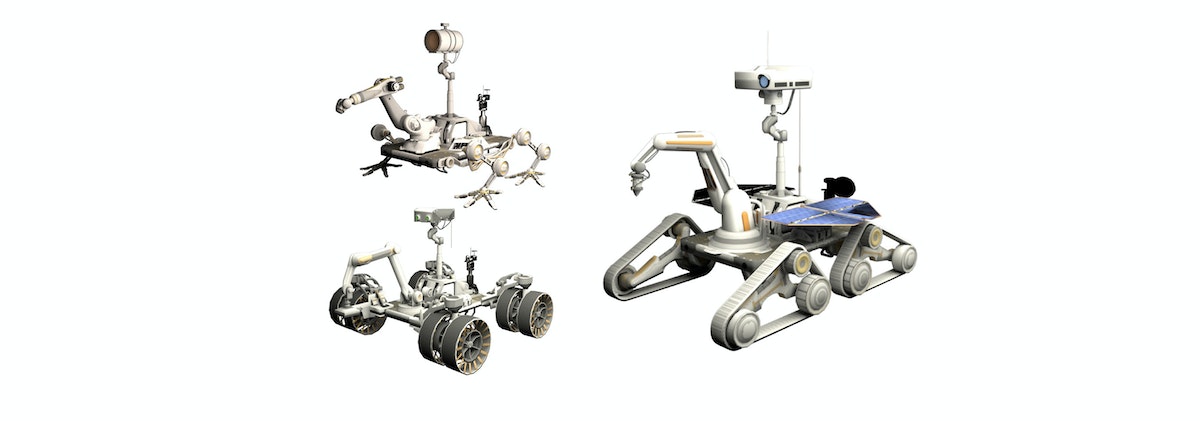
Students use tablets to design their own Mars rover. Each rover appears on a large screen and traverses the planet’s extreme terrain. The goal is to collect data that suggests life on Mars, including ice deposits, photos, and more. Students iterate on their rover’s design—wheels, power sources, and sensors—to test if it can stand up against dust storms and craters. The team consulted a NASA planetary scientist to ensure accuracy, as well as educators to establish cohesion with classroom curricula.
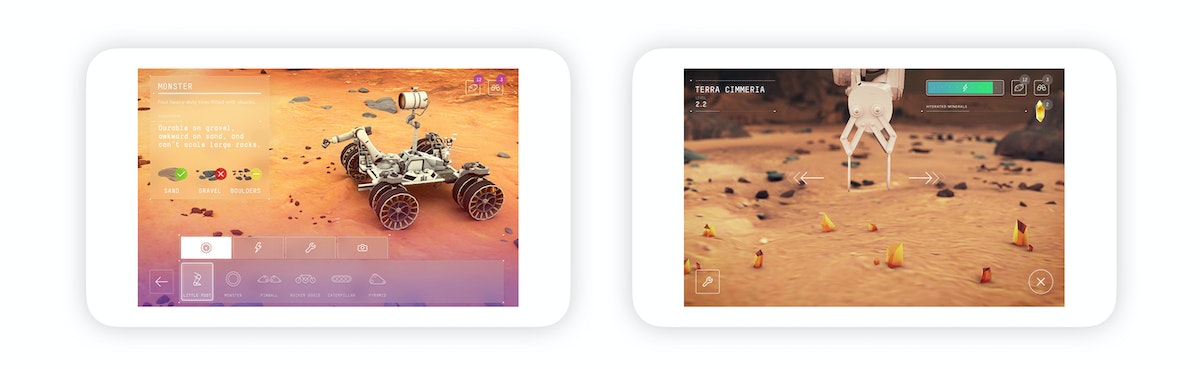
During the game, students are encouraged to compare designs and learn from each other: One rover may be able to travel long distances and take various photos, while another can carry large quantities of ice and sediment samples but can’t go far because of its size. At the end of the mission, the group finds Curiosity and sends all of the evidence they’ve collectively gathered back to NASA to aid the search for life beyond Earth. Before departing the bus, students watch an animated video that explains various jobs in STEM and encourages kids to pursue one of these careers.
The Verizon Explorer Lab teaches students the engineering design loop, the value of collaboration and teamwork, and what a career in STEM might look like. The mission to Mars game is just one of many potential STEM learning opportunities for students and integrated, customizable learning modules for teachers.
Since launch, the Verizon Explorer Lab has traveled to various parts of the United States and reached thousands of kids. It continues to be managed by Learning Undefeated, Verizon’s nonprofit partner. By designing for and with students, it’s possible to create educational experiences that facilitate meaningful learning and genuine fun. The Verizon Explorer Lab represents progress towards a more inclusive future for employers and the STEM field.
A leading food company’s human-centered transformation spurs rapid growth
How The J.M. Smucker Company embraced customer centricity to build a culture of innovation.
Over more than a century of leadership in the food and beverage industry, The J.M Smucker Company has expanded its range of products to maintain its relevance and address market demand. Today, the company leads numerous categories, with beloved products like Jif, Milk-Bone, and Folgers, which are the top choices of millions of Americans. By growing and diversifying their brands over the decades, Smucker has successfully weathered major shifts in consumer habits and technology. Today, though, CPG companies are experiencing unprecedented disruption, and leaders at Smucker understand that the escalating pace of change will require more than just new products.
Geoff Tanner, Senior Vice President, Growth & Consumer Engagement at The J.M. Smucker Company recognized the need to identify new market opportunities and establish practices that put innovation and growth at the heart of their business. And he saw the potential to bring those goals to life through his relationship with IDEO.
WATCH: Balancing innovation and efficiency through design has helped Geoff Tanner, Senior Vice President, Growth & Consumer Engagement at The J.M. Smucker Company, brave the unfamiliar, transform organizations, and ultimately bring game-changing ideas to market faster.
Geoff has stewarded a close partnership with IDEO for over a decade and throughout roles at numerous organizations. Together, Geoff and IDEO have worked on 25 projects, beginning while Geoff was VP of Marketing at Big Heart Pet Brands, and continuing on throughout his career at The J.M. Smucker Company. By working with IDEO to adopt a design thinking approach, Geoff has enabled collaboration across teams and empowered his organizations to find new ways of working that result in measurable business impact. For The J.M. Smucker Company, the partnership has brought creativity and human-centered design to the forefront of its operations, strengthening its ability to bring new products and brands to market and create a pipeline of growth.
WATCH: The J.M. Smucker Company has shifted to embrace growth and innovation as a mindset throughout the organization to bring more consistency to the innovation process.
Looking to the past to creatively connect with the future
As an example of this, Geoff and The J.M. Smucker Company suggested to IDEO that they explore how Folgers, America’s leading at-home coffee brand, might resonate more deeply with a millennial audience. Design research revealed that the mindset of today’s millennial coffee drinkers aligned with Folgers entrepreneurial brand roots. The teams collaborated to create a new concept: a brand called 1850 and an end-to-end, go-to-market product experience, including packaging, retail, and merchandise. 1850 hit shelves in 2018 and has since been reported by IRI Advantage as the top launch in the Coffee Category for 2019.
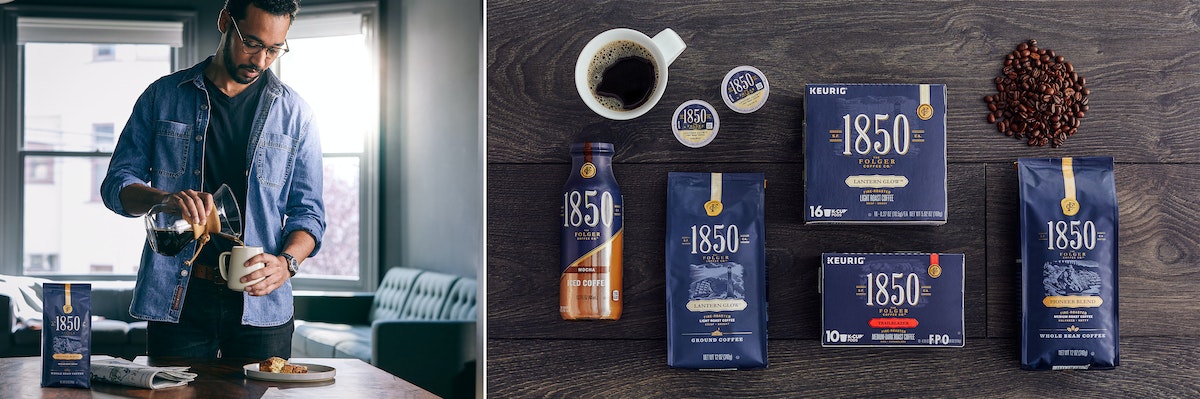
Frankly, I don’t think innovation gets any easier. You just get a little more comfortable with the discomfort, and that’s when the work starts to get consistently better.
Geoff Tanner, Senior Vice President, Growth & Consumer Engagement, The J.M. Smucker Company
Creating an innovation pipeline that’s inspired by consumers’ needs
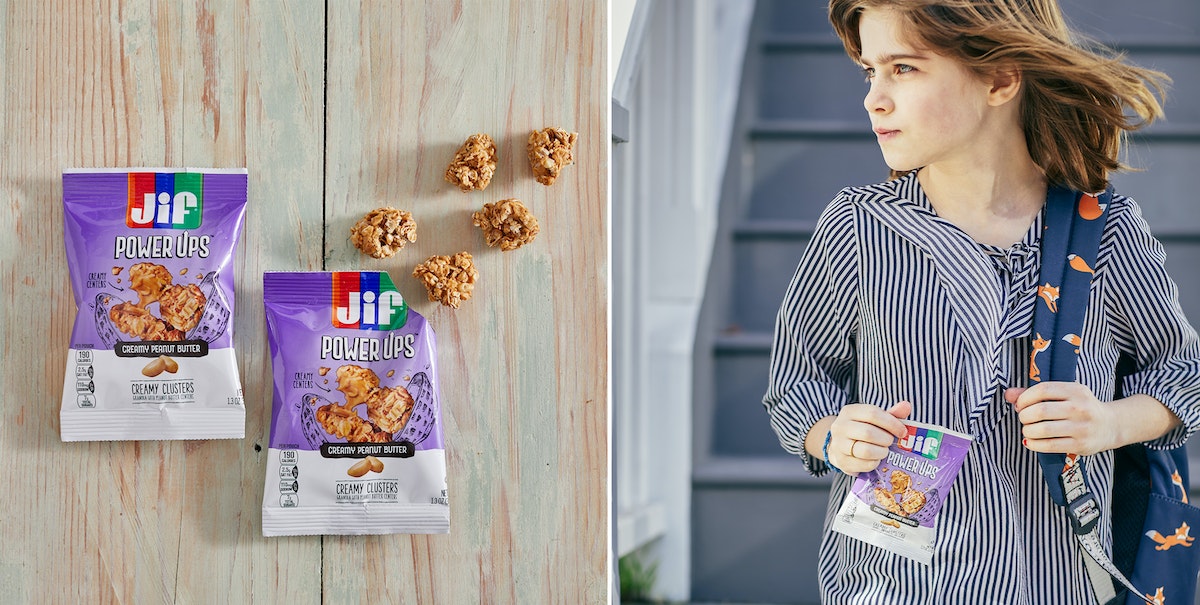
With 1850 underway, Geoff and The J.M. Smucker Company continued to invest in human-centered design to drive new offerings. The next collaboration with IDEO explored how Jif, the iconic peanut butter brand, could extend beyond the jar and become more readily accessible and appealing to busy parents who want to feel confident about the snacks they give their kids.
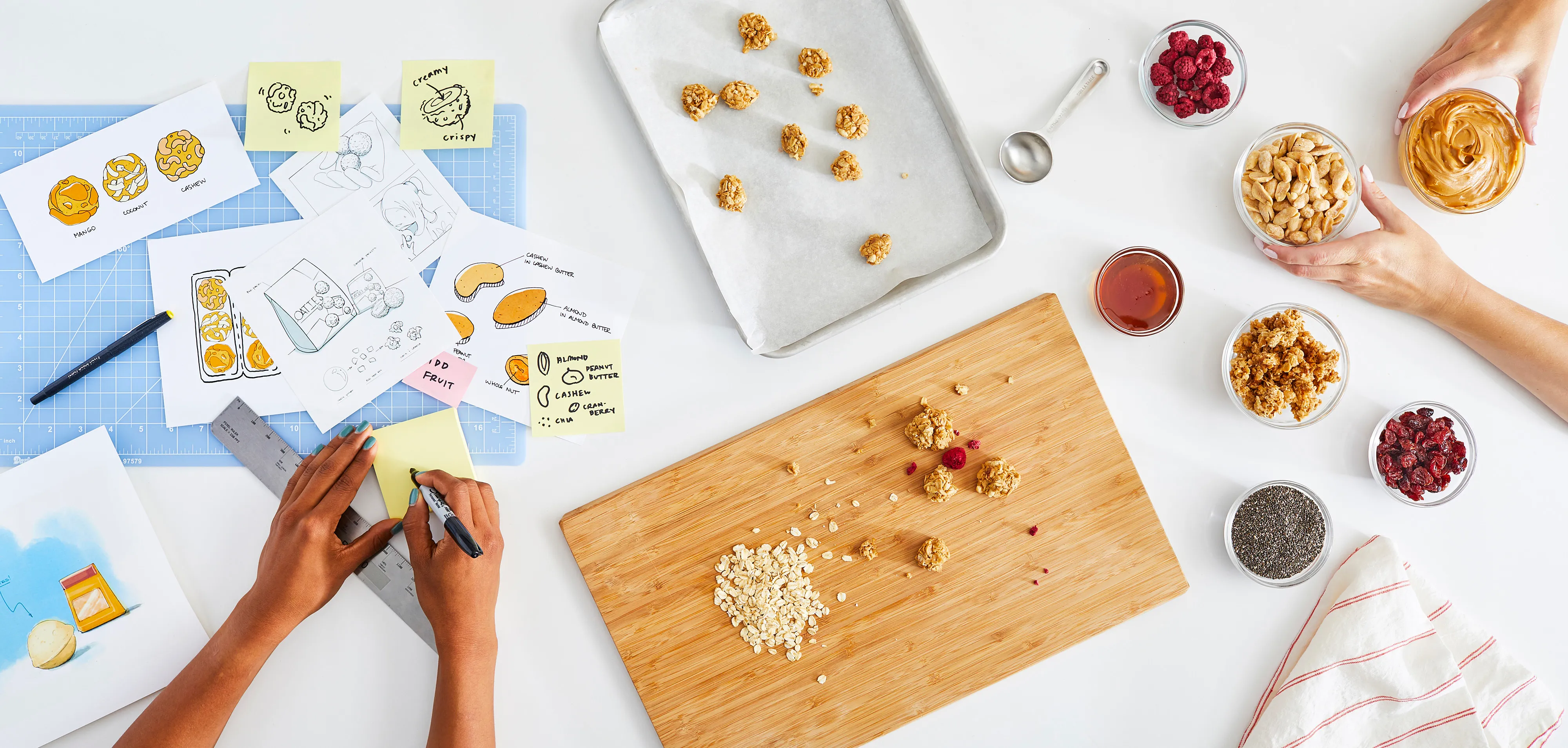
The design team was moved by the challenges that parents face: They want the best for their kids, but struggle to choose between what’s wholesome and what’s convenient on a daily basis. The ideal foods are filling, nutritious, and energizing, but often take more time to prepare and aren’t backpack or carpool-friendly. On the other hand, more convenient options tend to be full of empty carbs. Based on this insight, IDEO and Jif decided to tackle the snack-time parenting struggle. The IDEO and Jif teams worked side-by-side to prototype multiple product ideas and formats and tested them with on-the-go families to ultimately create Power Ups.
Available at over 200 retailers worldwide and online at Amazon, Jif Power Ups make wholesome, delicious grab-and-go snacking possible for kids and parents alike, across products ranging from Soft Baked Bars to Creamy Clusters, which are filled with peanut butter and rolled in whole grain oats. All are made with peanuts as the first ingredient and contain no high fructose corn syrup. Since going to market in 2018, Jif Power Ups has been named the top innovation launch in the Snack Bars category by IRI Market Advantage.
Design thinking underpins everything we do.
Geoff Tanner, Senior Vice President & Corporate Officer, Growth & Consumer Engagement, The J.M. Smucker Company
WATCH: The J.M. Smucker Company is on a transformational journey, committed to three pillars of growth: Lead in the best categories, build brands consumers love, and be everywhere.
The J.M. Smucker Company has experienced accelerated growth and speed to market by testing bold new ideas and evolving the role of innovation at the company. Design thinking and consumer empathy have permeated the organization’s new product development process, making it easier to uncover sharp, human-centered insights that lead to thoughtful and uniquely differentiated brands in a competitive, ever-shifting, and overcrowded industry. The work has fueled Geoff’s vision to inspire a culture of innovation at the company so that it can move at the speed of consumers and remain a best-in-class family of brands for future generations.
Creating a fresh, modern take on the Indian culinary experience
Designing a scalable restaurant, retail, and packaging experience that highlights the diversity of regional Indian foods.
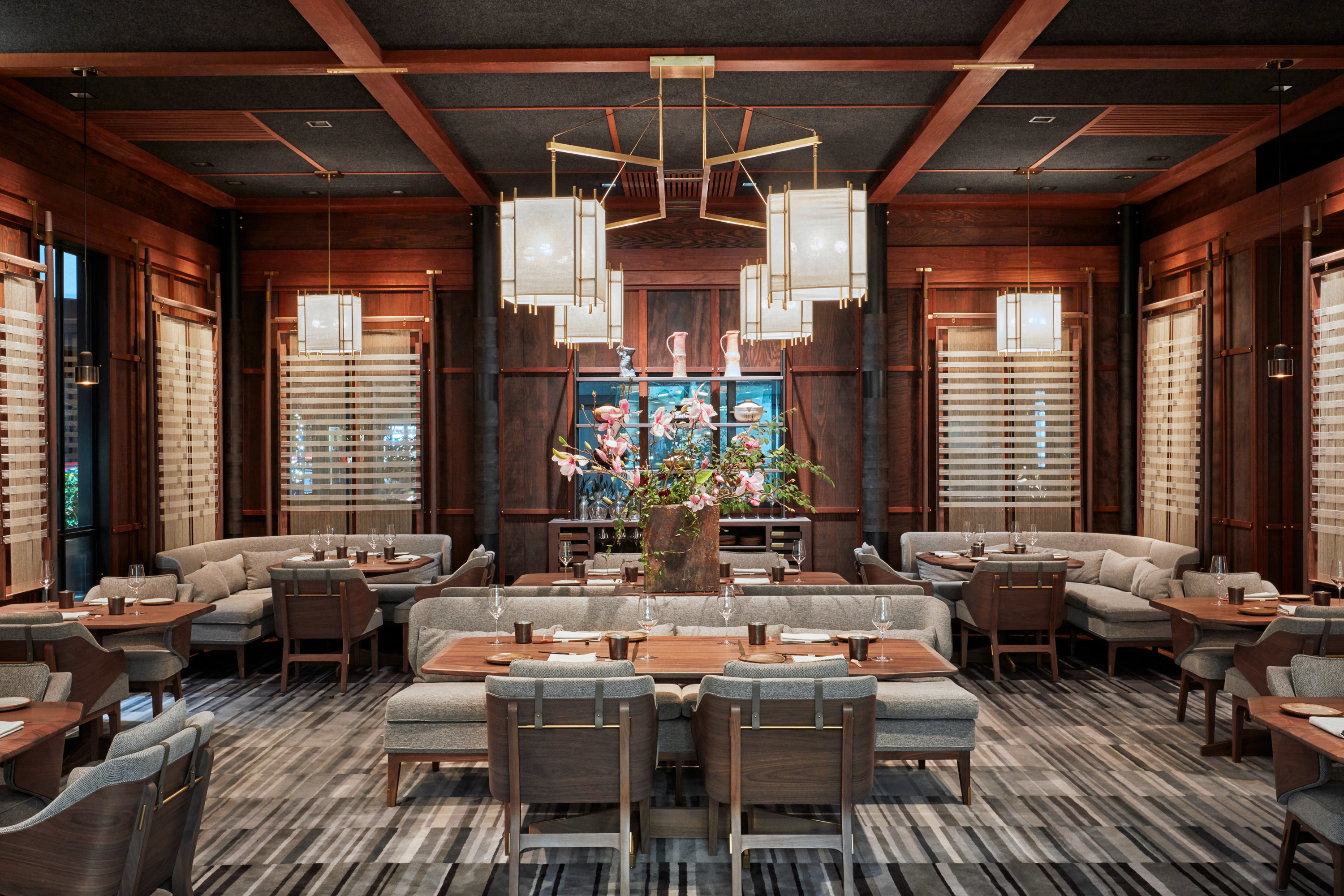
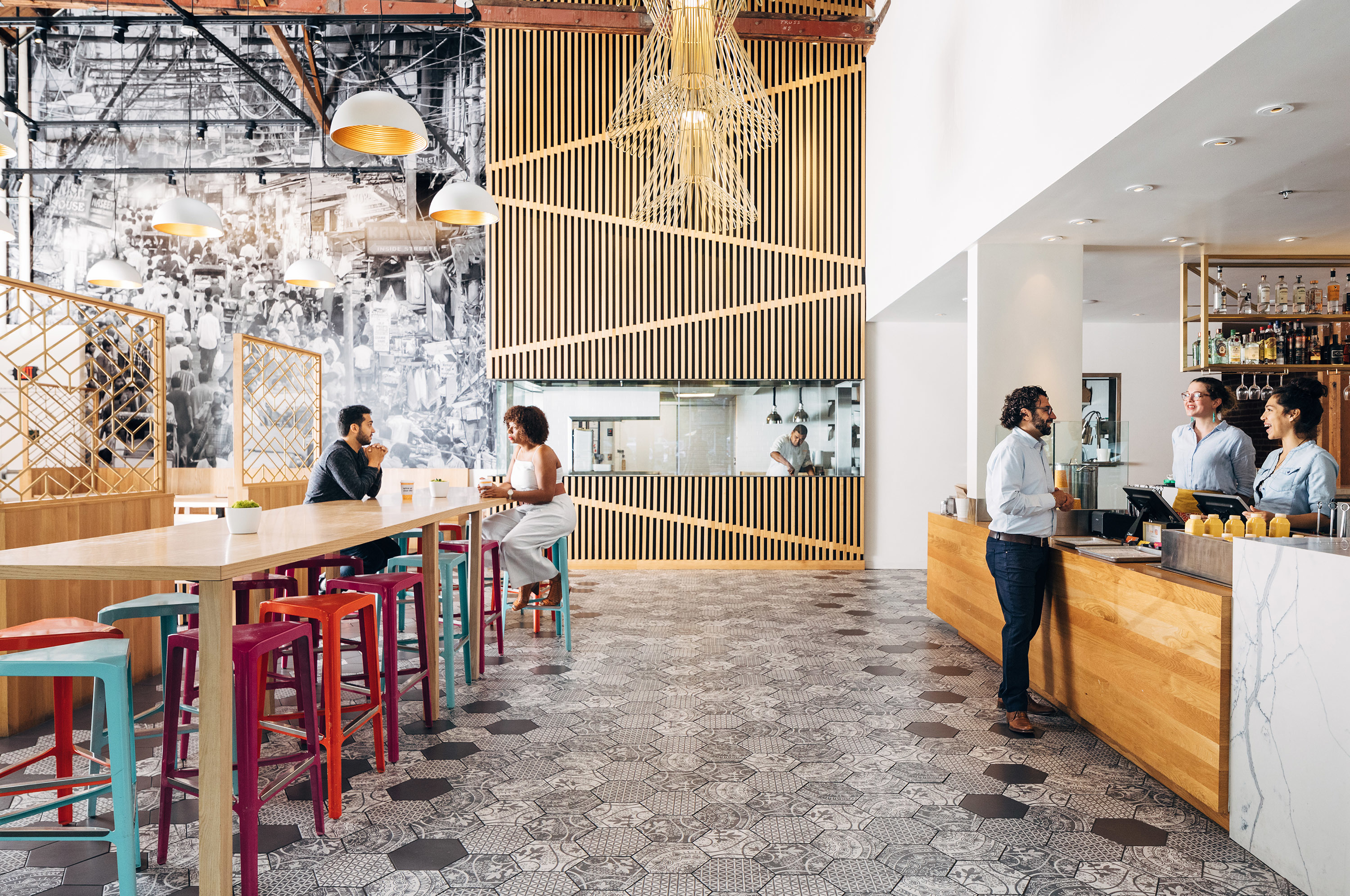
It’s a Thursday afternoon in Oakland, California. A line of lunchtime diners snakes out the door of dosa by DOSA. Upon entering, eaters are greeted by the smell of tangy dosa—a large paper-thin crepe made from a fermented batter of rice and lentils—and sweet, spicy chai. Turquoise chairs pop against a floor-to-ceiling mural by Oakland artist Namita Kapoor that transports diners to Chandni Chowk, one of the busiest markets in Old Delhi, as if enjoying their food at a local vendor.
In 2003, Emily and Anjan Mitra spent their honeymoon in India, savoring the street food of Anjan’s childhood in Mumbai (often still called Bombay). After returning to San Francisco, they found themselves longing for those distinctive flavors and dishes. Realizing that most Bay Area diners had never seen nor tasted these foods, Emily and Anjan founded DOSA, an upscale, full-service restaurant that introduced the Bay Area to Southern Indian cuisine. Locals came to try the unique, plant-forward dishes, and left with satisfied bellies and a broader understanding of Indian culture.
The entrepreneurs envisioned a brand extension of DOSA: a counter-service restaurant that could scale nationally. The hospitality venture, called dosa by DOSA, would offer healthful Indian street food made from local and seasonal ingredients. Emily and Anjan also set out to expand their existing product line-up—including cold lassi beverages, simmering sauces, and grab-and-go-meals—to national grocers and retailers and needed launch-ready packaging that was convenient, eye-catching, and environmentally-friendly. The new expression would enable consumers to experience dosa by DOSA and Southern India in a variety of forms and places. Emily and Anjan partnered with IDEO to establish a cohesive and consistent brand experience, from the restaurant and to-go meals to retail stores and mobile delivery.
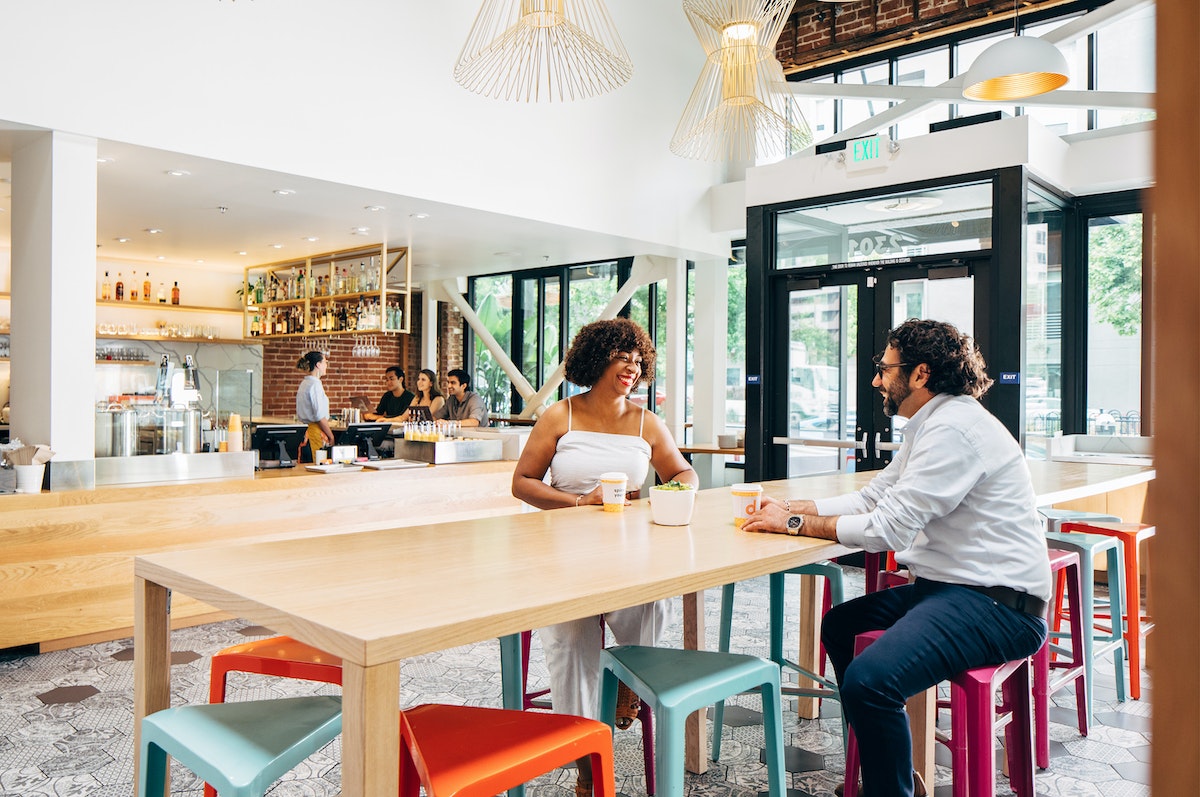
In close partnership with the founders, their staff, Feldman Architecture and MPADA, IDEO set out to bring dosa by DOSA to life and help it scale through brand, environment, and experience design. This included creating everything from the logo and packaging to the menu and operations strategy, with each element tying back to the founders’ vision of sharing Indian heritage and traditions through cuisine.
The group began by seeking cultural inspiration for dosa by DOSA’s brand identity system—the logo, colors, values, fonts, and messaging—to guide future designs. They were inspired by Indian truck drivers who decorate their trucks with garlands, signs, or flags that engage other drivers or bring luck. The dosa by DOSA logo design and its wood-cut typeface are inspired by the dimensionality of this homespun art form, while the vibrant, eclectic colors reflect the streets and textures of urban Mumbai.
The goal of opening people’s minds to Indian cooking and culture extends to the packaging, which meets customers’ needs and playfully educates them. The food containers—made from recycled and compostable material—feature brightly patterned labels reminiscent of the trucks. Some have built-in compartments suited to multiple dipping chutneys, making it convenient to sample a variety of Indian flavors. Paper tray covers resembling Mumbai newspapers offer eating tips like “Be civilized. Eat with your hands,” encouraging diners to experience an Indian custom.
The vibrant brand comes to life across an array of packaging, including cold cups printed with the phrase “thanda thanda pani”—meaning “cold cold water”—which comes from a popular Indian parody of the Vanilla Ice song "Ice Ice Baby."
To design the diner experience and restaurant environment in a way that invites curiosity about the culture and cuisine, the team started with diners: They identified key moments in their experience like entering, waiting in line, and paying. The floor plan, furniture, lighting, signage, and menu were designed around these touchpoints. For example, while customers wait in line, they can watch dosa being prepared, as if they’re eager and hungry travelers awaiting street food.
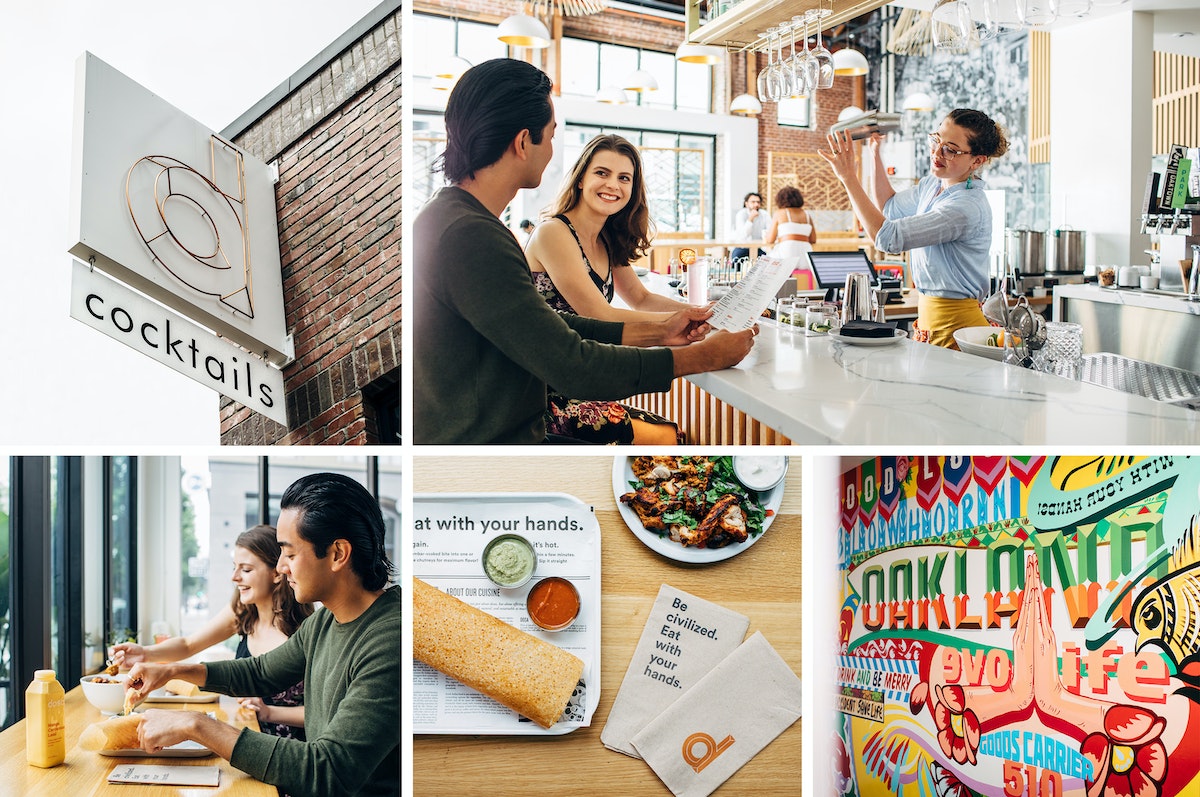
The dosa by DOSA menu includes distinctive items like coconut kale mung bean salad and hot masala chai made with caramelized milk—the way Anjan’s mother prepared it. To help the restaurant scale, the team created a preliminary furniture, fixtures, and equipment (FF&E) budget, 3D renderings of the space, and an operations strategy for the founders and their employees.
The dosa by DOSA flagship launched in January 2018 in Oakland, California. The IDEO brand guidelines have enabled the dosa by DOSA team to independently and easily shepherd new product lines to market, including salads, wraps, curry bowls, samosas, and simmer sauces. The brand’s packaged food launched in over 200 natural food stores in 24 months—including over 100 Whole Foods locations—as well as online retailers and delivery services like Good Eggs and Caviar. These items and the restaurant have helped Emily and Anjan realize their vision of bringing the flavor and spirit of Southern Indian cuisine to new communities around the world.
Revitalizing Japan’s food industry through design and software
Redefining the “middleman” role of produce wholesalers in Japan.
In recent years, due to shifts in Japan’s demographics, the food industry has faced challenges such as a decrease in market size and a shrinking number of producers. As a result, social impact opportunities abound in this field.
When Japanese software company NJC (Nippon Jimuki Co. Ltd.) approached IDEO seeking to identify new business opportunities that would build on the company’s core strengths, the food and agriculture industry rose up as a promising area of focus.
NJC is a well-established software company that has spent over 50 years helping to build backend business systems for small to medium enterprises. NJC works across healthcare, retail, and food and beverage, computerizing core processes to support and improve operations.
In partnership with IDEO, NJC explored its strengths and potential as an organization, as well as the ideas and visions of the employees, and emerged with the goal of using their capabilities to address large-scale issues facing regional farmers.
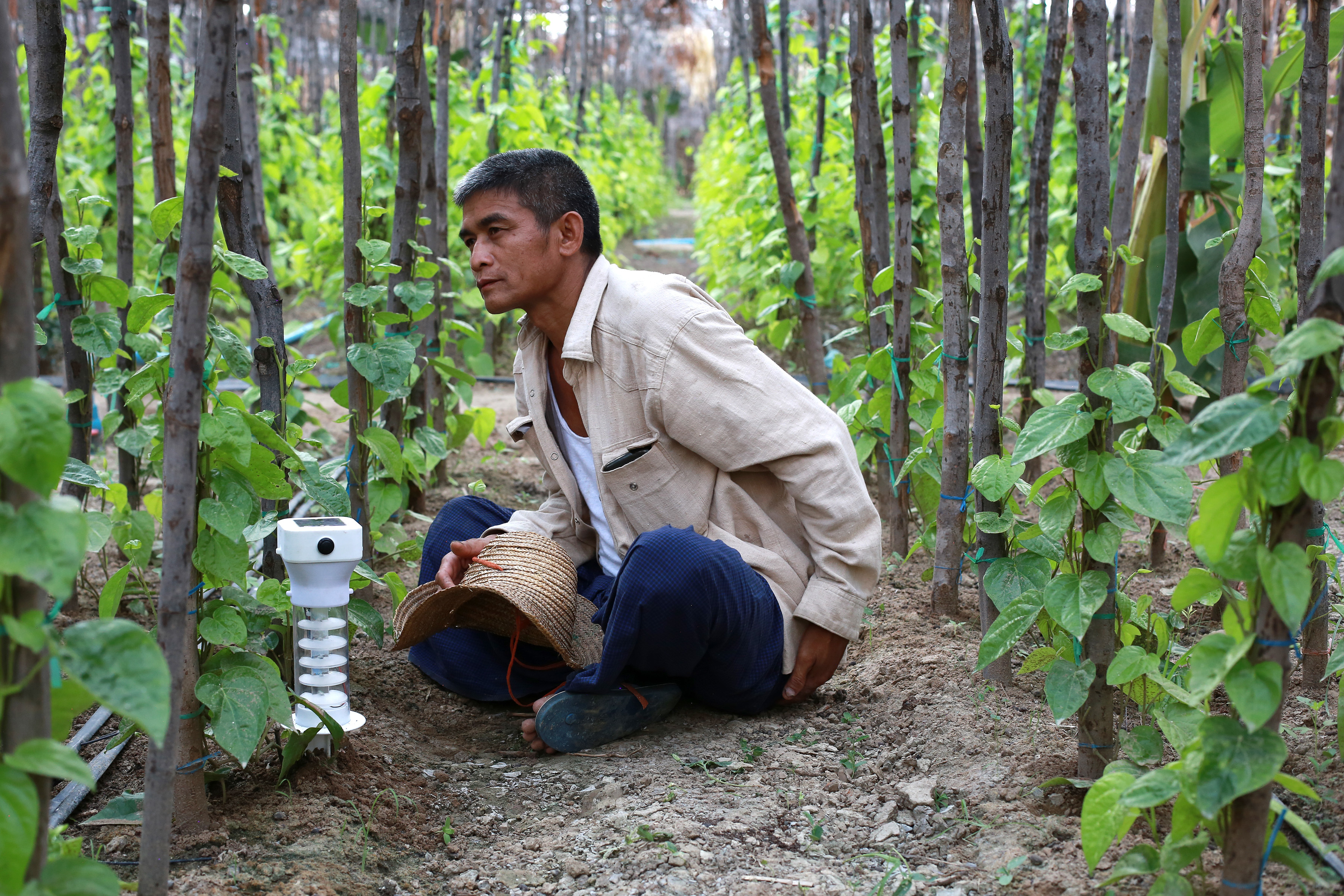
During research across Japan, local growers described challenges with multi-layered supply chains and analog systems, which led to “overwork for minimal profit,” as well as a gap between supply and demand. Because agricultural wholesalers lacked clear information in advance on the status of crops or the volume to be harvested, they struggled to negotiate with buyers, which led to wasted food On the other hand, the farmers who grow the crops are engaged in manual labor, and do not always have the energy to focus on business aspects such as efficiency or the pursuit of increased profitability, which leads to a diminished interest in farming among young people.
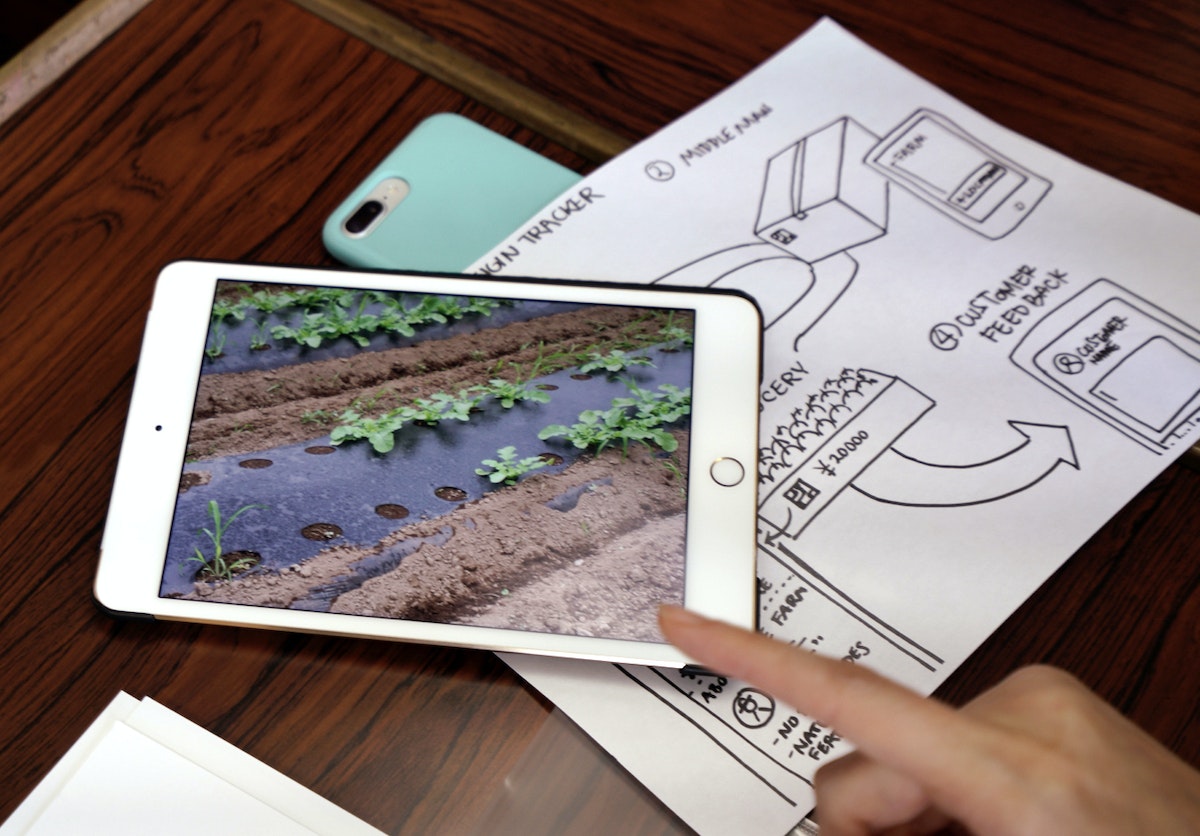
One question that emerged through research was why agricultural producers weren’t utilizing IT. This evolved into “How can profitability be improved for all stakeholders?” and, “How might we create a system that will provide useful data without creating a burden for either farmers or agricultural wholesalers?”
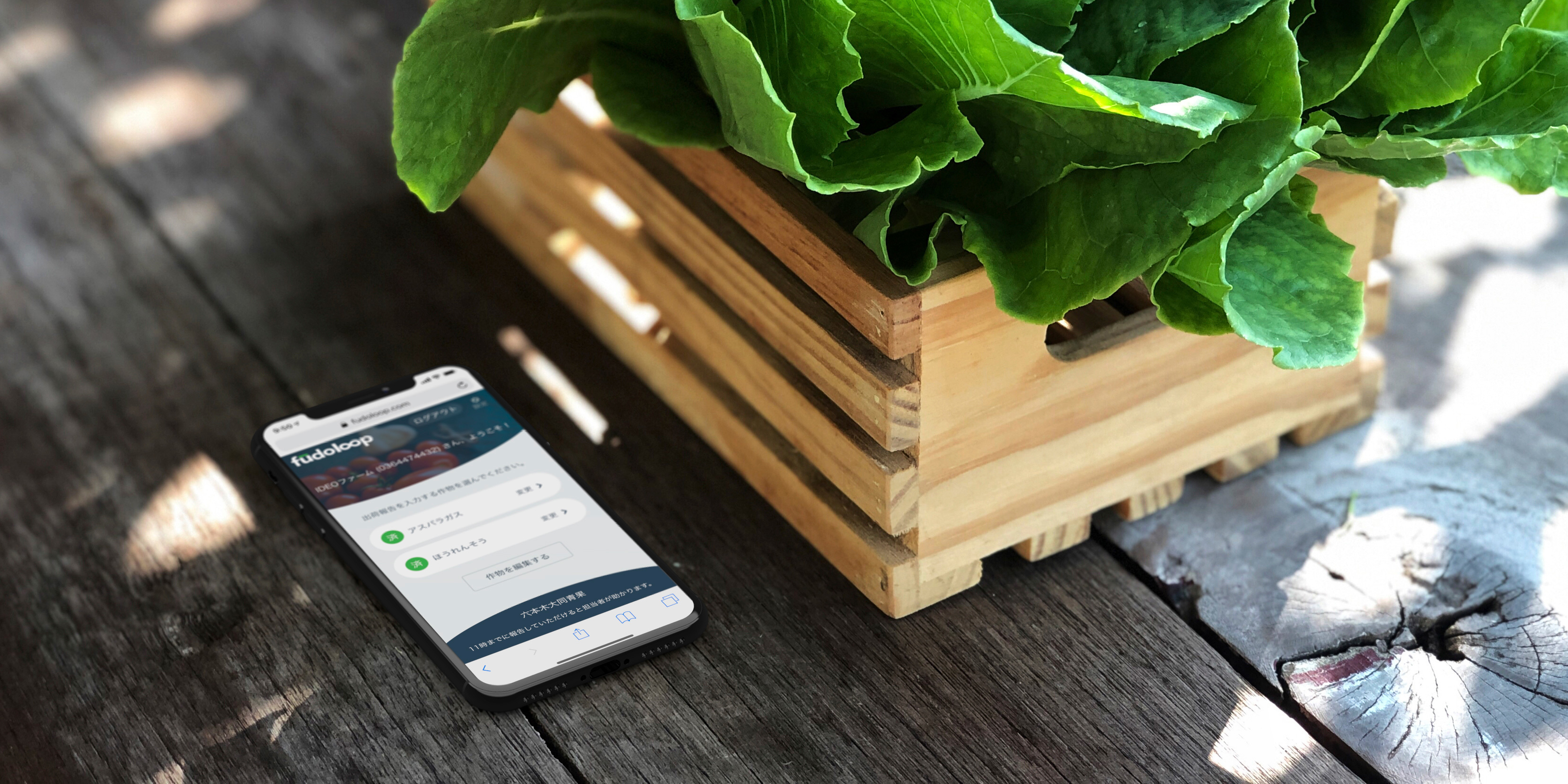
The result was fudoloop.
fudoloop is an app that enables farmers and wholesalers to conduct business more profitably by bringing transparency to the fluctuating produce market. Through fudoloop, wholesalers receive information from farmers a day in advance, and can coordinate the various requests of buyers, such as order size, production location and other special requests. As a result, wholesalers can function as “community managers,” doing business with both producers and buyers at a more appropriate price point.
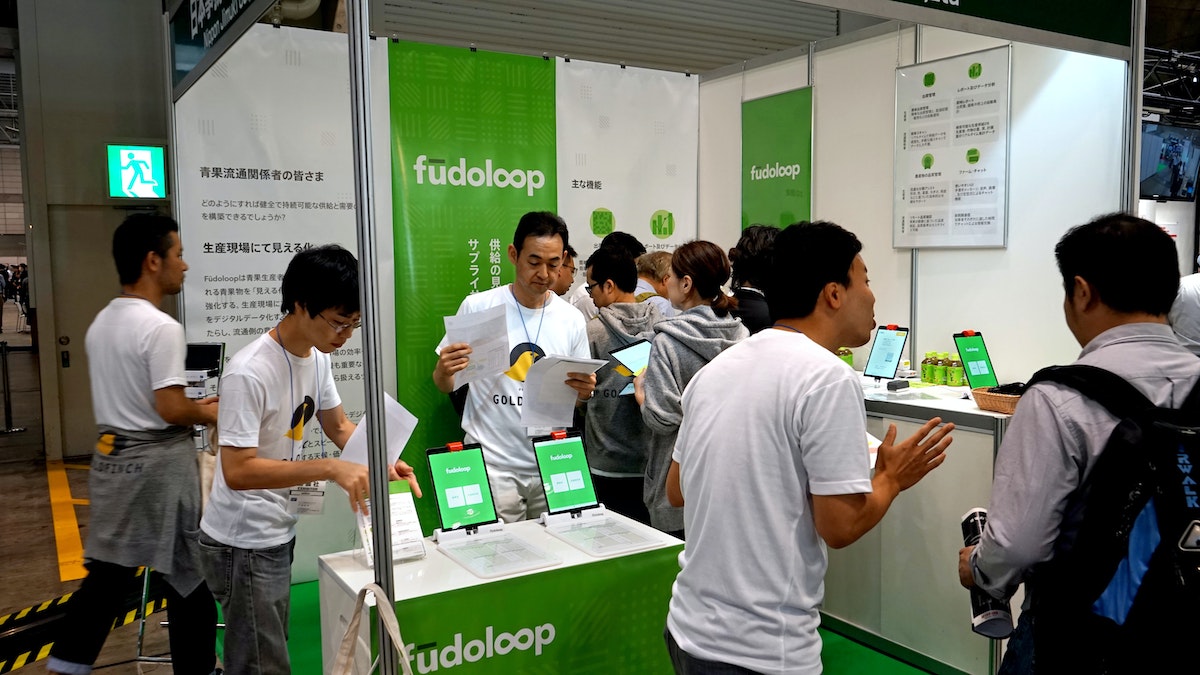
NJC aims for fudoloop to be the first step in a cycle that brings value to all stakeholders, from farmers to wholesalers, retailers and even customers, by redefining the “middleman” role of produce wholesalers.
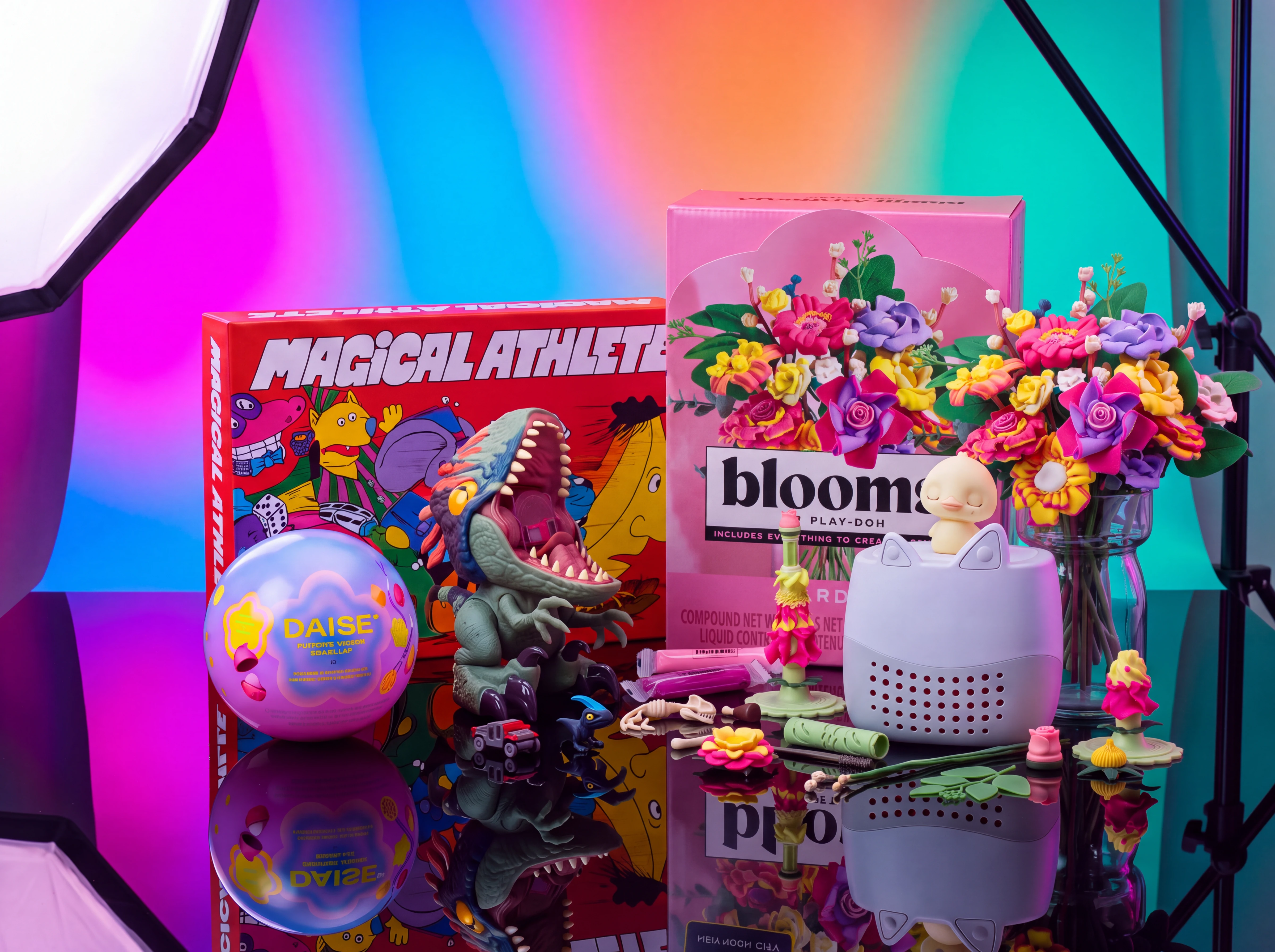
Our toy inventors’ top 18 toy picks for 2026
From hatching dinos to game-night favorites, there’s something for everyone on your list.
Our team of toy inventors and play experts has rounded up their favorite finds for the 2026 holiday season. From imaginative playthings for the littlest gift recipients to clever games and delightful surprises for the young at heart, there’s something here for everyone on your list. Some we helped bring to life, while others come from toy and game makers we admire.
We’re also firm believers that toys aren’t just for kids! The booming “kidult” market continues to reshape the toy industry, with more adults than ever embracing the joy of play. (The toy inventors at IDEO Play Lab have seen this trend firsthand with the launch of Blooms by Play-Doh, a collaboration with Hasbro that’s bringing a little creative magic to kids and grown-ups alike.)
Take a spin through the list, and best of luck delighting the toy lovers in your life.
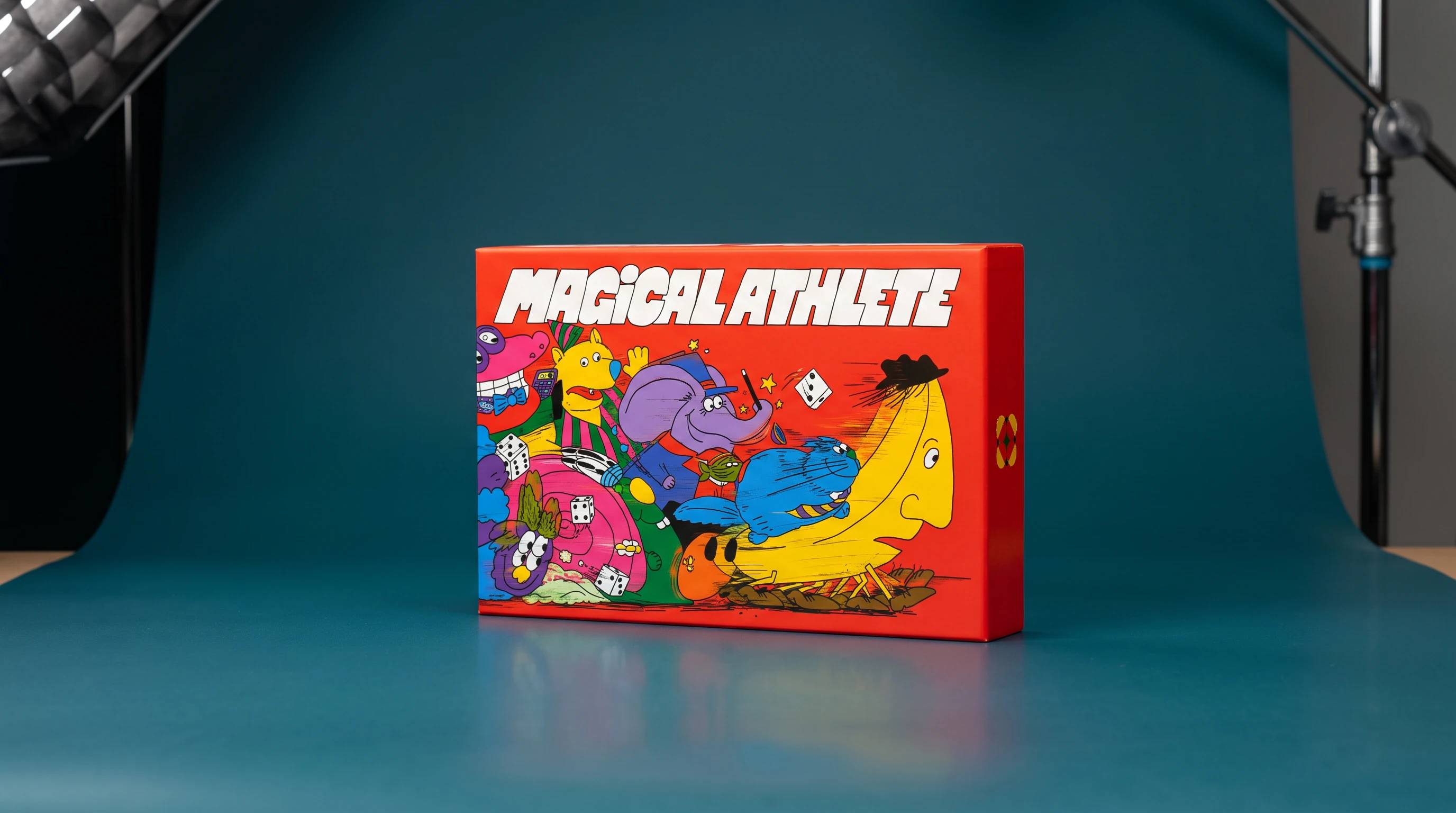
1. Magical Athlete by CMYK
Who will love it: Families with kids ages 6+.
What’s great about it: The fast-paced, easy-to-learn dice-rolling gameplay features humorous, chaotic characters with unique abilities, creating tons of surprising, unexpected, and hilarious moments. This game is perfect for anyone who loves to laugh.
—Matt Callahan
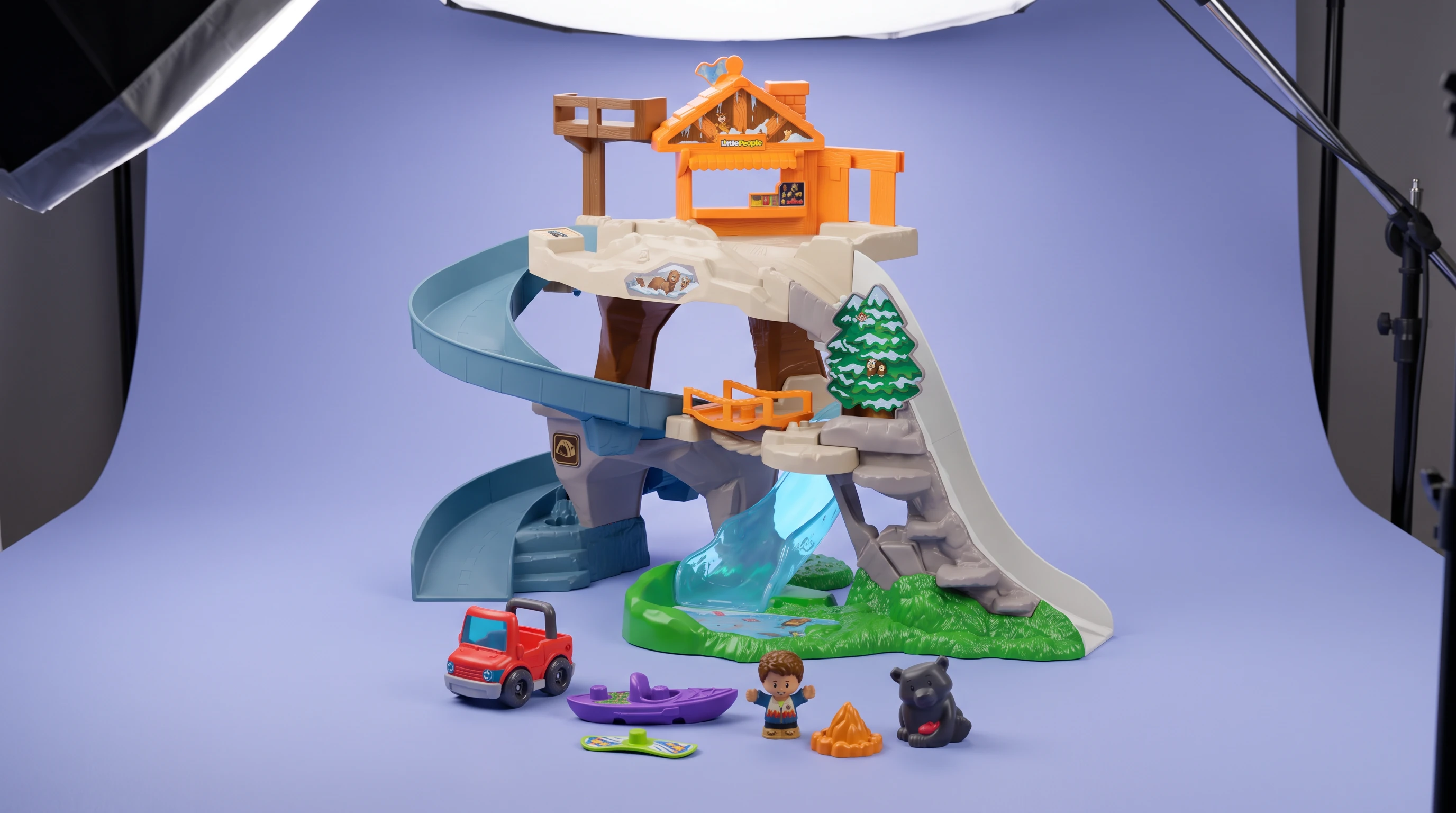
2. Little People Ultimate Mountain Playset by Fisher-Price
Who will love it: Little ones between ages 1–4 who love storytelling with vehicles and ramps.
What’s great about it: This playset gives kids three exciting routes to drive, slide, and explore with their vehicles and characters. With so many play areas, two kids can easily team up for an adventure or explore their own corners of the mountain. But what really makes the toy stand out is its ability to grow with them: younger kids love the thrill of the downhill action, while older kids turn the mountain into a backdrop for elaborate adventures. It’s the kind of toy they’ll return to again and again.
—Sam Hobish
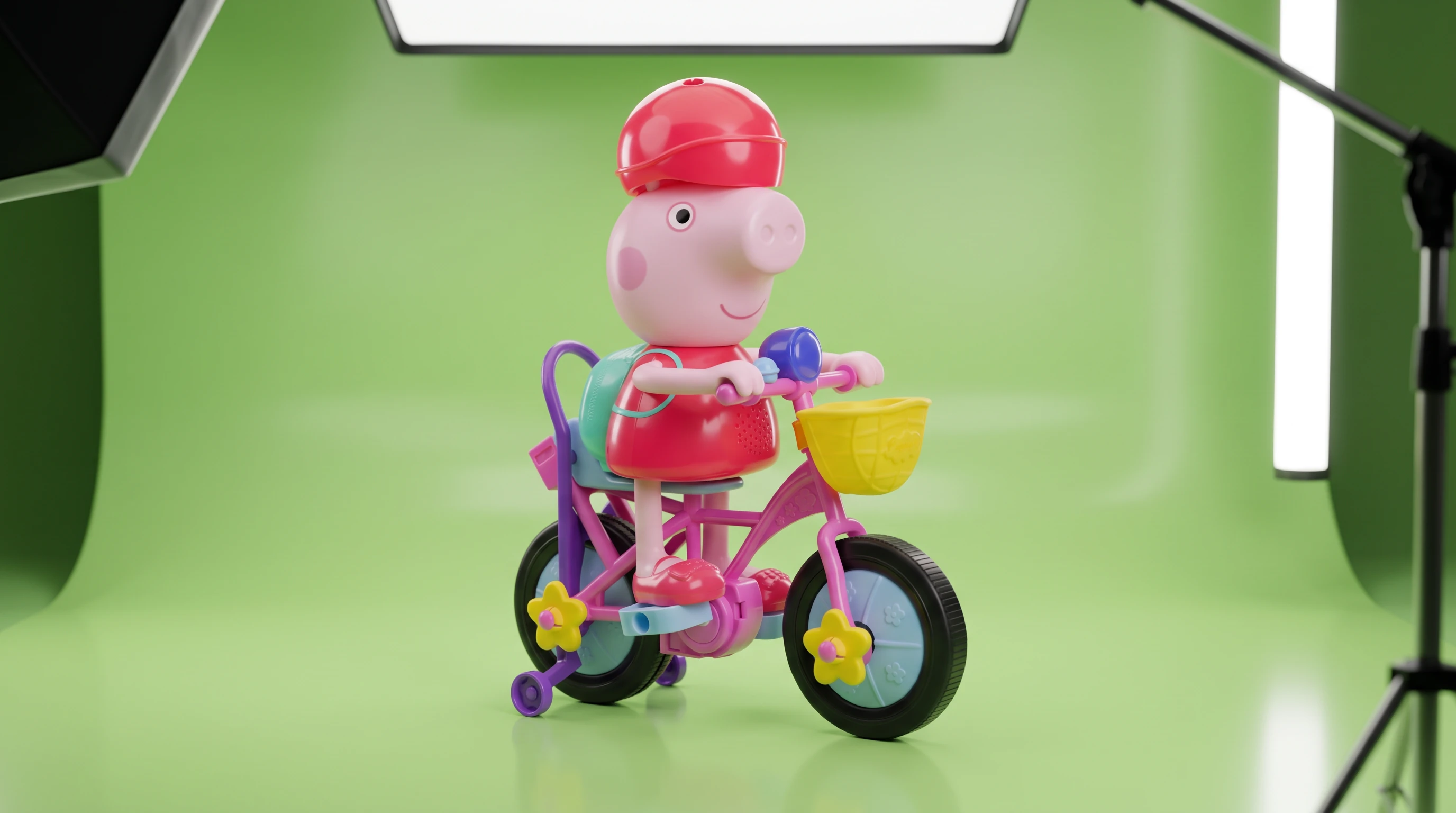
3. Peppa Pig Ready, Pedal, Go Peppa by Hasbro (IDEO invention)
Who will love it: Peppa Pig fans, budding bike riders, and preschoolers ages 3+ who love bringing their favorite characters to life.
What’s great about it: Peppa Pig is learning to ride her bike, and she needs a little help from her friends. Kids can steady Peppa with her push stick and then remove it to watch her pedal on her own. Featuring more than 75 sounds and phrases, a removable helmet, and cute stickers to customize her ride, this interactive toy celebrates the joy of learning something new.
—Shaylyn Berntson
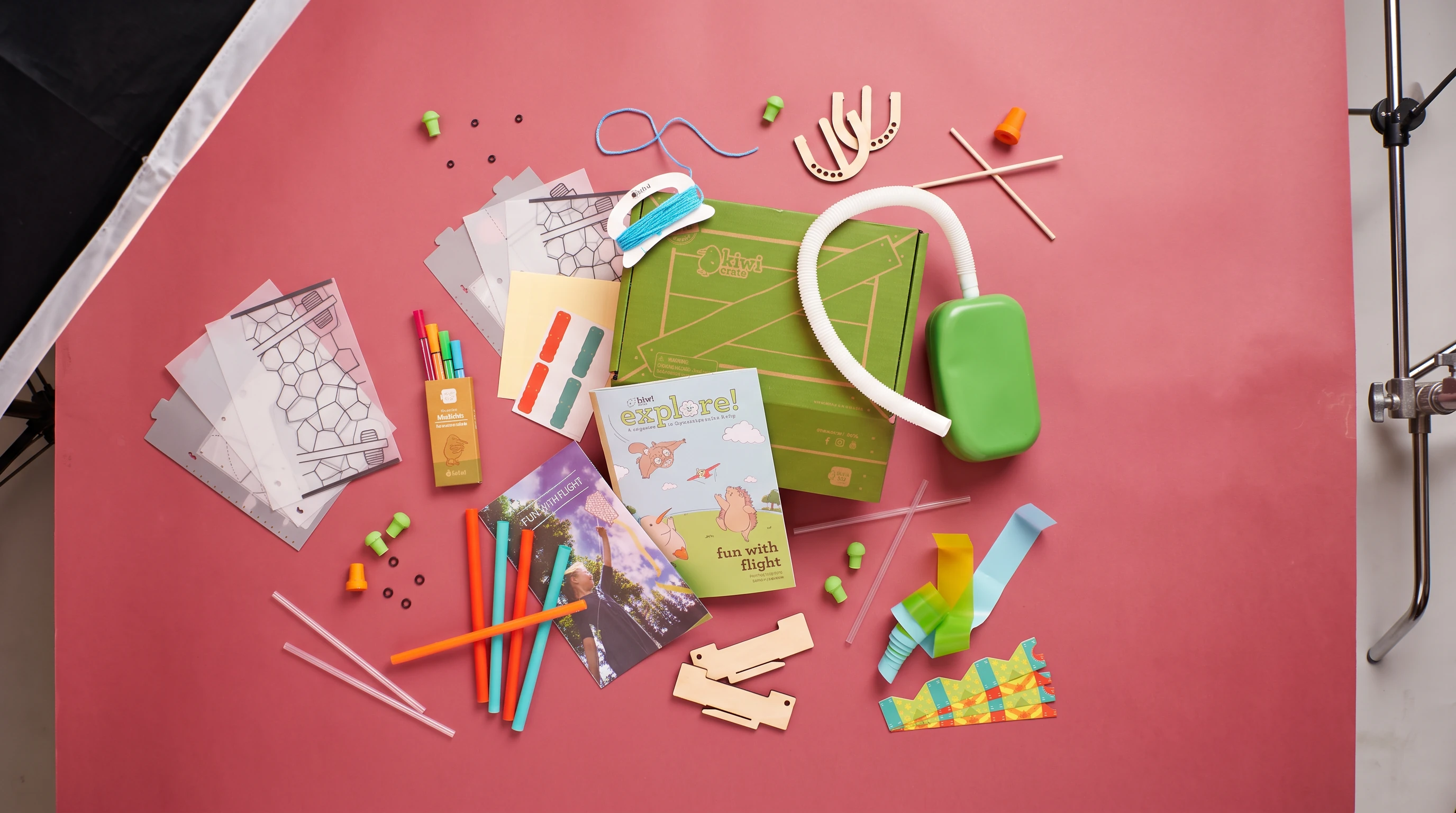
4. Kiwi Crate by KiwiCo
Who will love it: Kiwi Crate is designed for builders and makers ages 6–9, but the company offers other crates for ages 0–100.
What’s great about it: Every month, Kiwi Crate sends kids a building kit that spurs hands-on STEAM learning. Projects range from exploring aerodynamics via an archery set to creating motorized spin art, all designed to unleash creativity. My littlest lets out a literal scream when the Crate arrives in the mail each month, a recurring gift from grandma. She disappears for an hour, then comes back with a completed invention, beaming with pride, usually built entirely on her own.
—Rachel Young
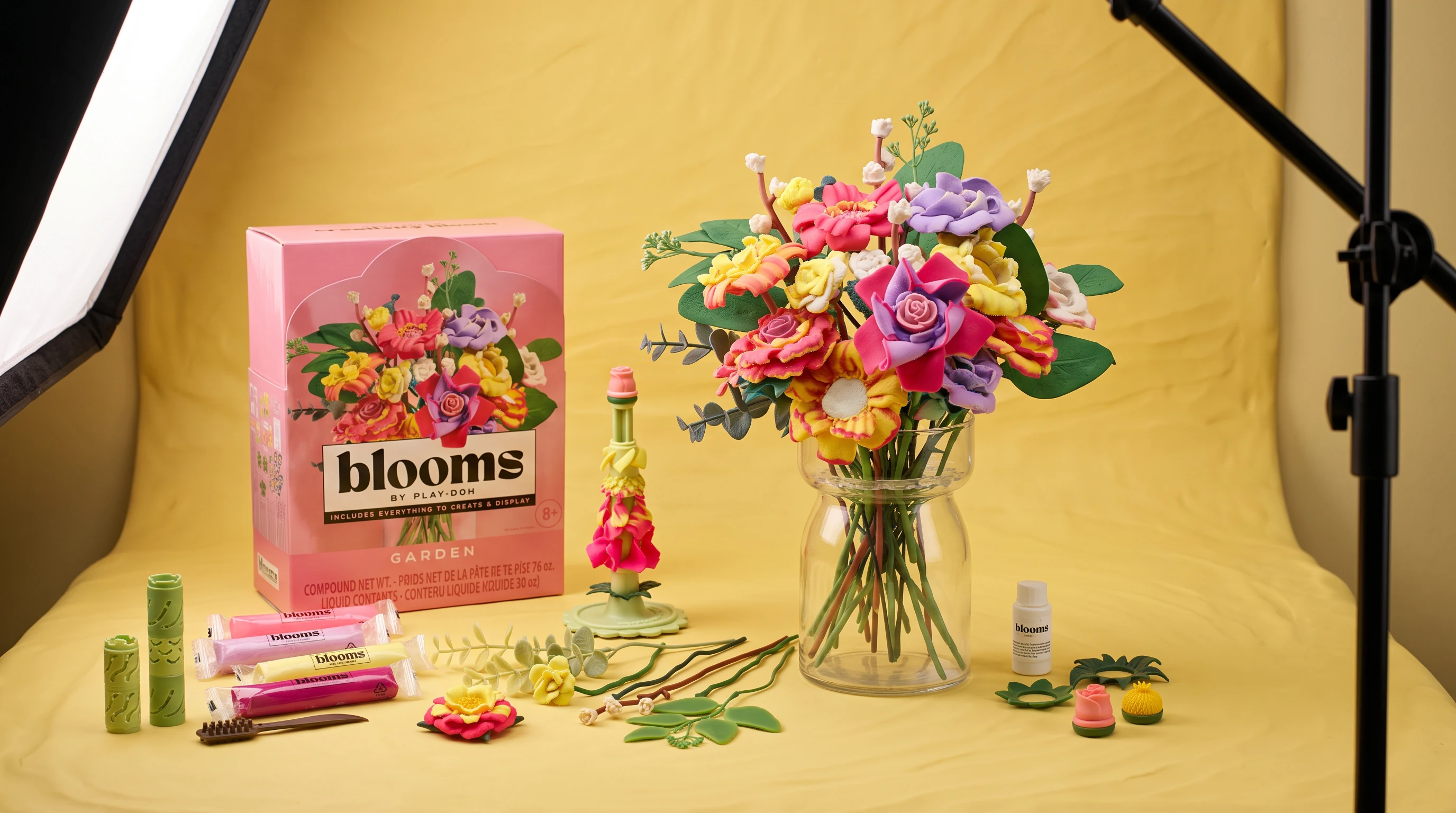
5. Blooms by Play-Doh (IDEO invention)
Who will love it: Craft lovers, flower enthusiasts, nostalgic grown-ups, and anyone looking for a little screen-free creative escape.
What’s great about it: Blooms by Play-Doh puts a grown-up twist on the childhood classic, transforming its colorful, squishy compounds into beautiful, realistic floral arrangements that last forever. With easy-to-use tools, step-by-step instructions, and a special finishing spray to preserve your creations, the kit is equal parts relaxing creative outlet and DIY home décor. And for fans of A Court of Thorns and Roses who can wait until after the holidays, the Blooms ACOTAR kit comes out in January, just in time for the release of Book 7.
—Shaylyn Berntson
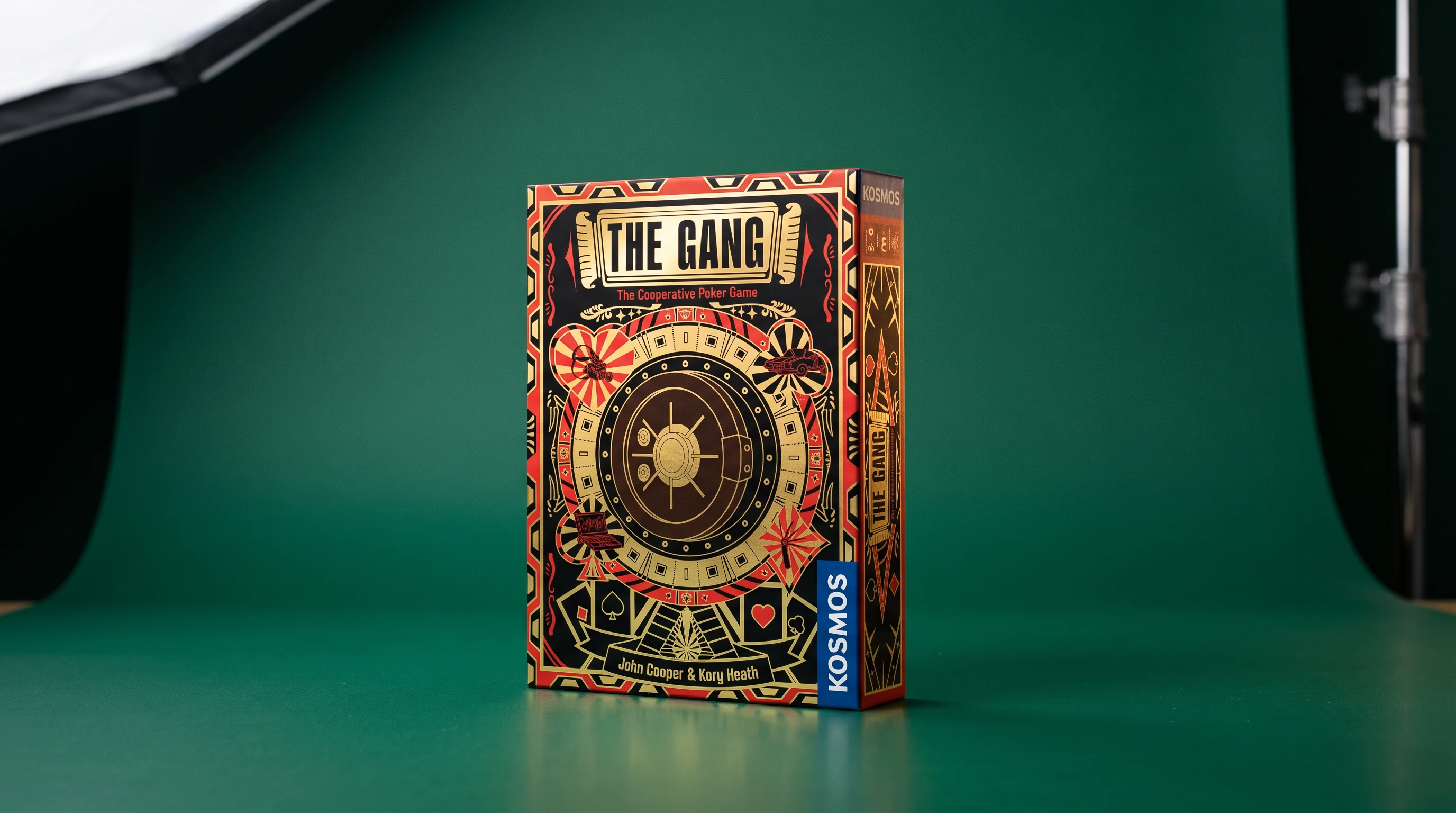
6. The Gang by Thames & Kosmos
Who will love it: Adults who want to have a fun, casual game to play while hanging out. Plus kids ages 10+ interested in card games.
What’s great about it: The Gang is a cooperative twist on poker where all players either win or lose together. In each round, you guess how your hand ranks compared to the other players'. If everyone correctly ranks their final hands, everyone wins. It’s an easy game to learn, even for poker novices, and there are tons of ways to make it harder and more exciting once you’ve mastered the base game. You can play it with up to six players, or more if you buy the expansion.
—Weishan Liao
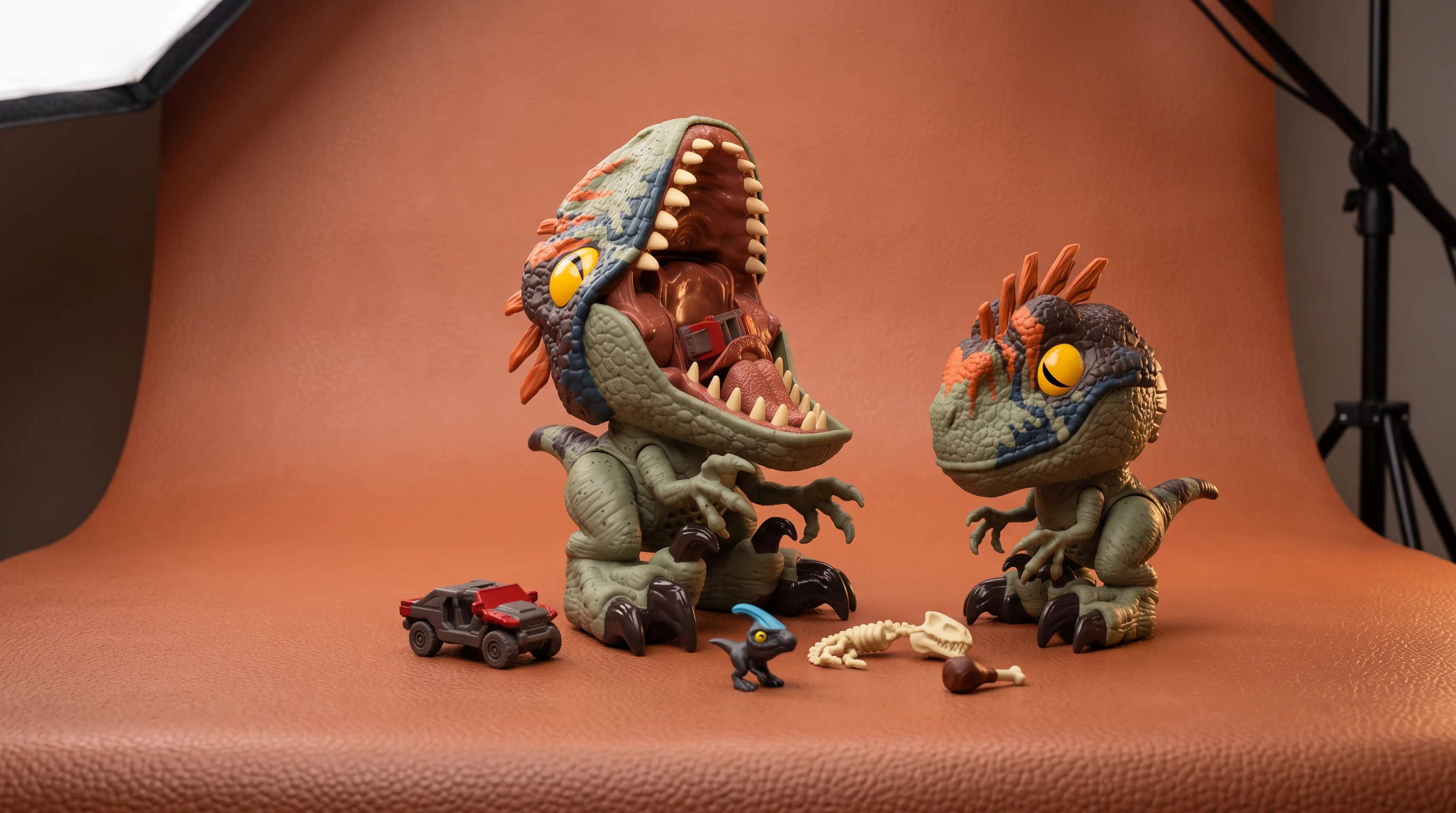
7. Jurassic World Rebirth Fierce Feeder Velociraptor Dinosaur by Mattel (IDEO invention)
Who will love it: Dino-loving kids ages 4+.
What’s great about it: The velociraptor has a super satisfying, fidgety play pattern. You feed the included tiny toys to the dinosaur—and it really eats them! Then close and open the mouth again to watch it burp out what you’ve fed it. It’s the perfect toy for some silly fun.
—Matt Callahan
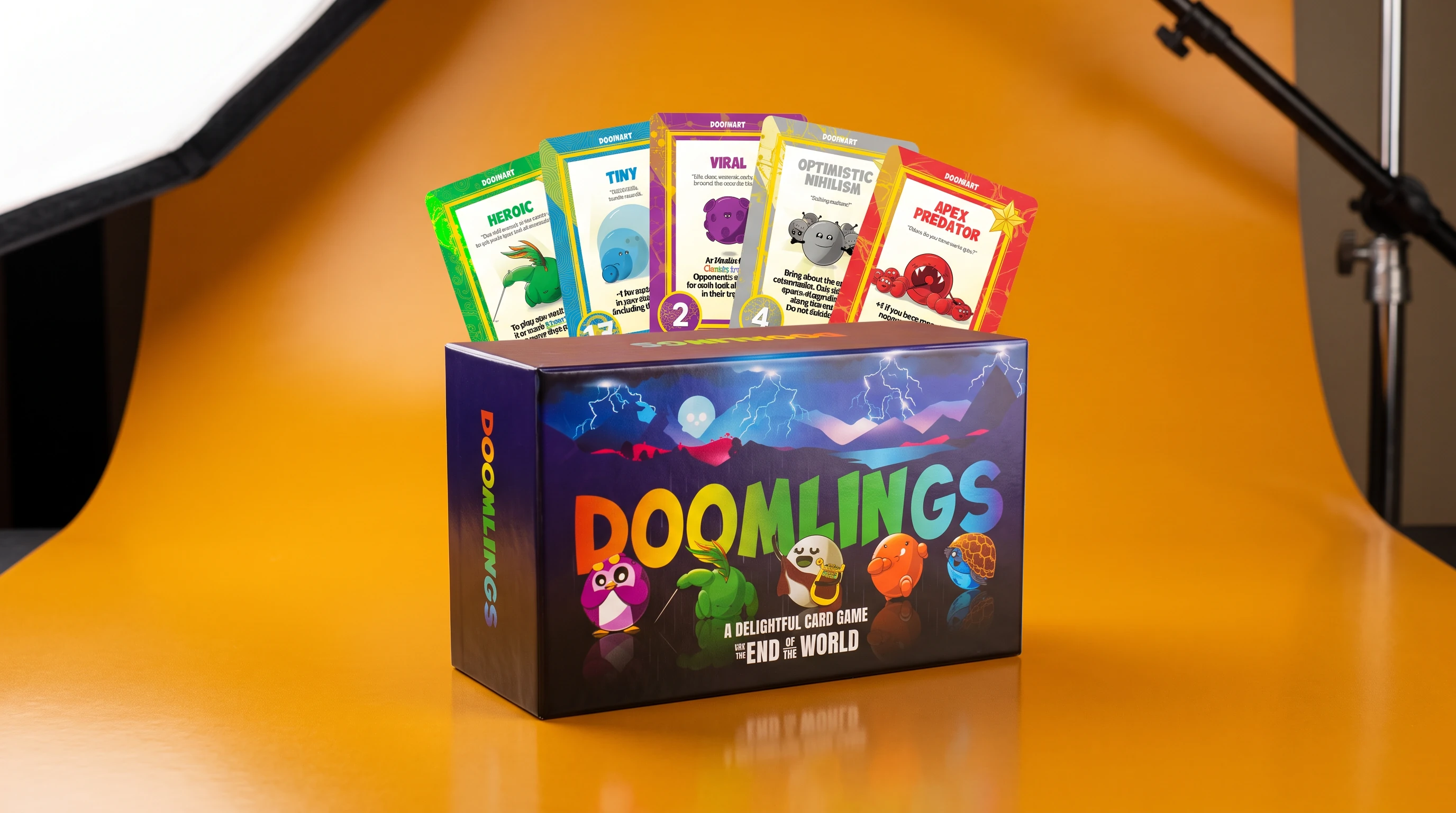
8. Doomlings: A Delightful Card Game for the End of the World by Doomlings
Who will love it: Strategy-loving kids, families, and game-night enthusiasts ages 8+.
What’s great about it: Try to survive the end of the world in this adorably illustrated strategy game. There are 167 unique cards featuring hilarious creatures, bizarre traits, and unexpected abilities, ensuring each game plays out differently. Steal cards from opponents, sabotage their strategies, and adapt as unpredictable catastrophes change the rules along the way. It’s easy to learn, full of surprises, and is highly replayable. Plus, it looks great on the coffee table.
—Shaylyn Berntson
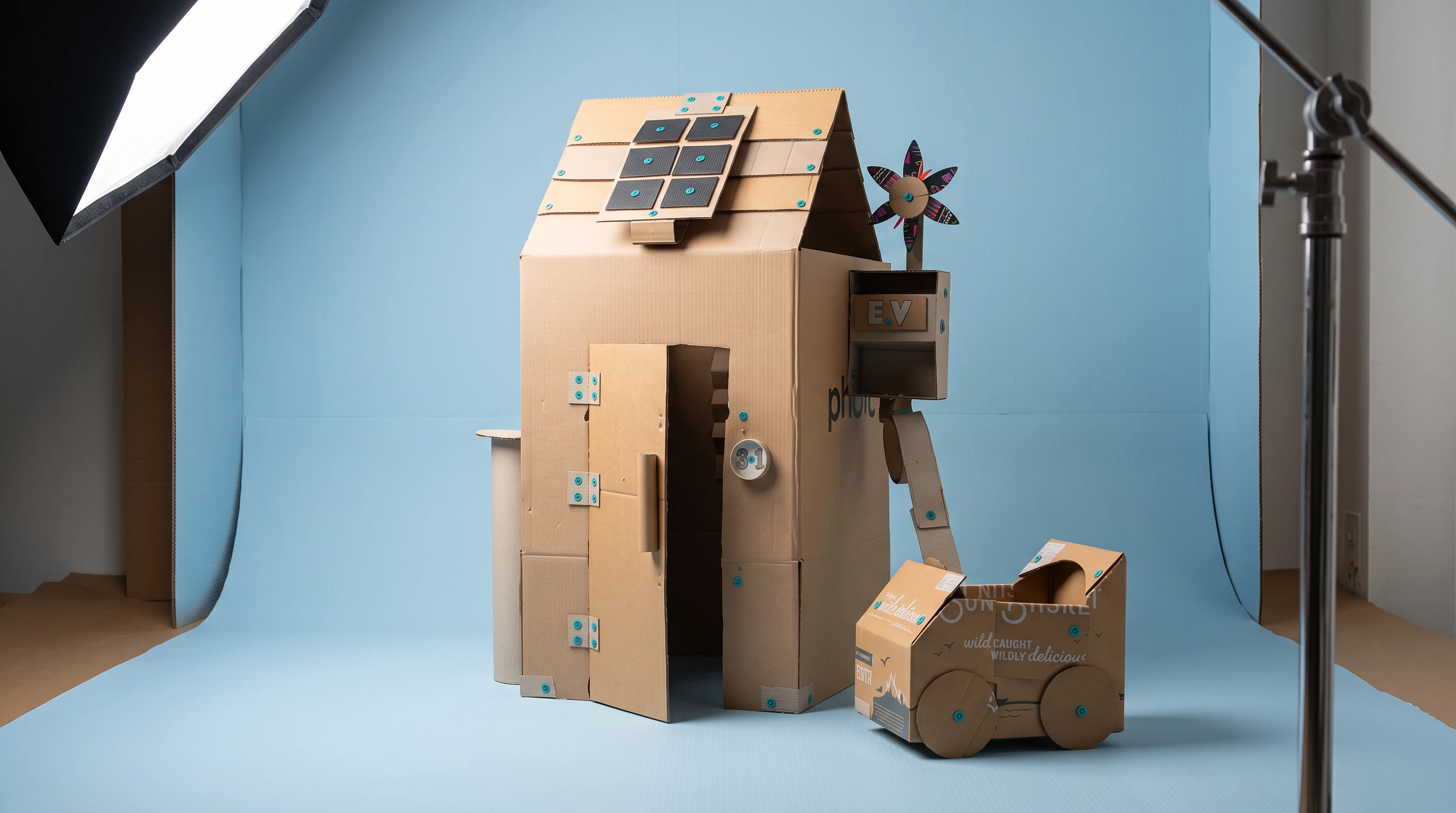
9. Cardboard construction Discover Kit by Makedo
Who will love it: It’s made for kids ages 5+, but younger ones can use it with supervision.
What’s great about it: My kids already love playing with cardboard boxes, but this kit lets them build pretty much anything they can think of. Instead of a plastic play fort that takes up a lot of space and serves only one purpose, grab some empty boxes—let’s be honest, we all have a pile of delivery boxes lying around—and transform them into a homemade one. Or a racecar, a spaceship, a control panel—the sky’s the limit. I love that there’s no “right” way to use this kit, my kids are unlikely to hurt themselves while building, and Makedo provides tons of inspiring ideas on their website and in the box. Best of all, when they tire of their creations, they can recycle them and start over.
—Rachel Youngblade
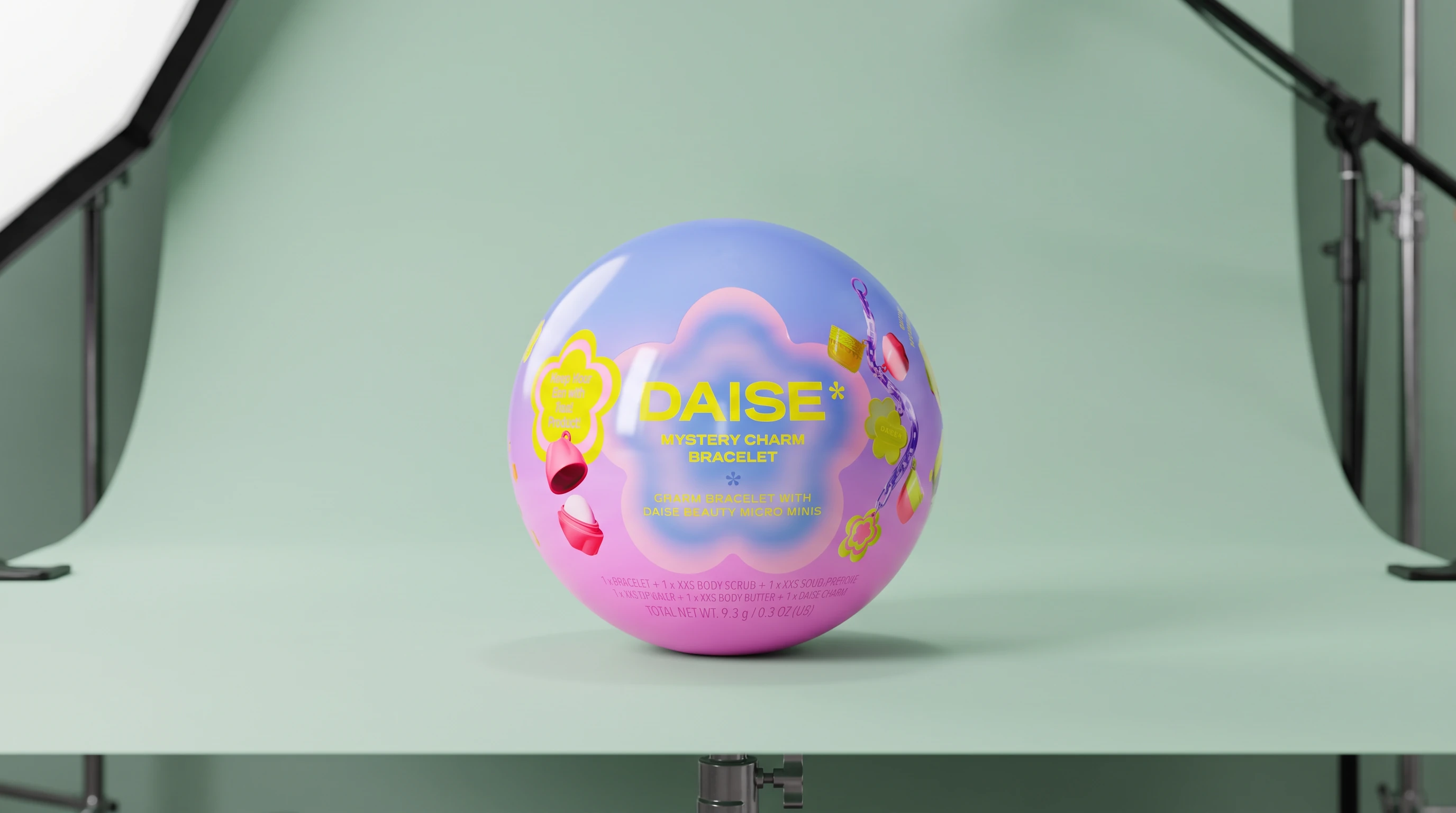
10. Mystery Charm Bracelet with Beauty Micro Minis by DAISE
Who will love it: Tweens, teens, and adults who love expressing themselves and can’t resist anything mini.
What’s great about it: Tiny things are instantly more fun, and these actually work! DAISE Micro Minis combine the surprise of a blind unboxing with a charm bracelet and teeny beauty products, including lip balm, body butter, scrub, and solid fragrance. I love that there’s something to discover, something to wear, and something to use. They make such a cute stocking stuffer for someone who loves beauty and all things mini.
—Rikki Devlin
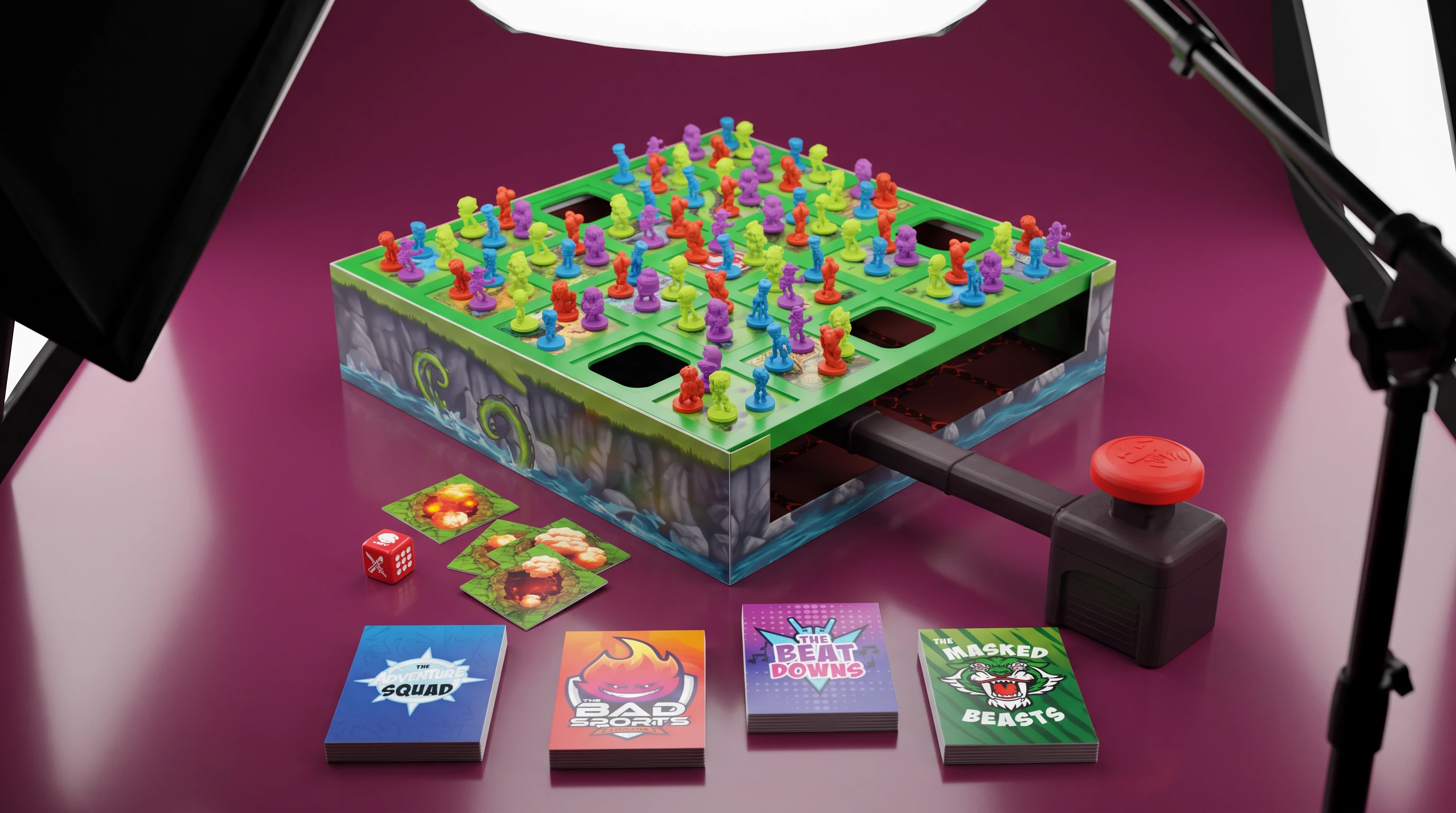
11. Hold Your Ground by Buffalo Games
Who will love it: Kids ages 8+—and the rest of the fam!
What’s great about it: This battling game has a fun mechanism that sends your tokens flying off the board. My 11-year-old loves it, and even though I’m not typically a fan of battling games, I have a blast playing it too. The game strikes a perfect balance of strategy, chance, and unexpected surprises that keep everyone engaged. It could even excite die-hard video game fans enough to put down their controllers and play together in the real world.
—Vlasta Komorous-King

12. Spray It! by Moose Games (IDEO invention)
Who will love it: Party game lovers, drawing game enthusiasts, artists, kids, and adults.
What’s great about it: Spray It! is a new take on drawing party games that is completely mess-free and easy to learn and play. Instead of using a traditional pencil or marker, players use an innovative UV light spray can to draw. But watch out! Take too long, and your drawing will start to fade. It’s a ton of fun to draw and guess—no drawing skills required!
—Weishan Liao
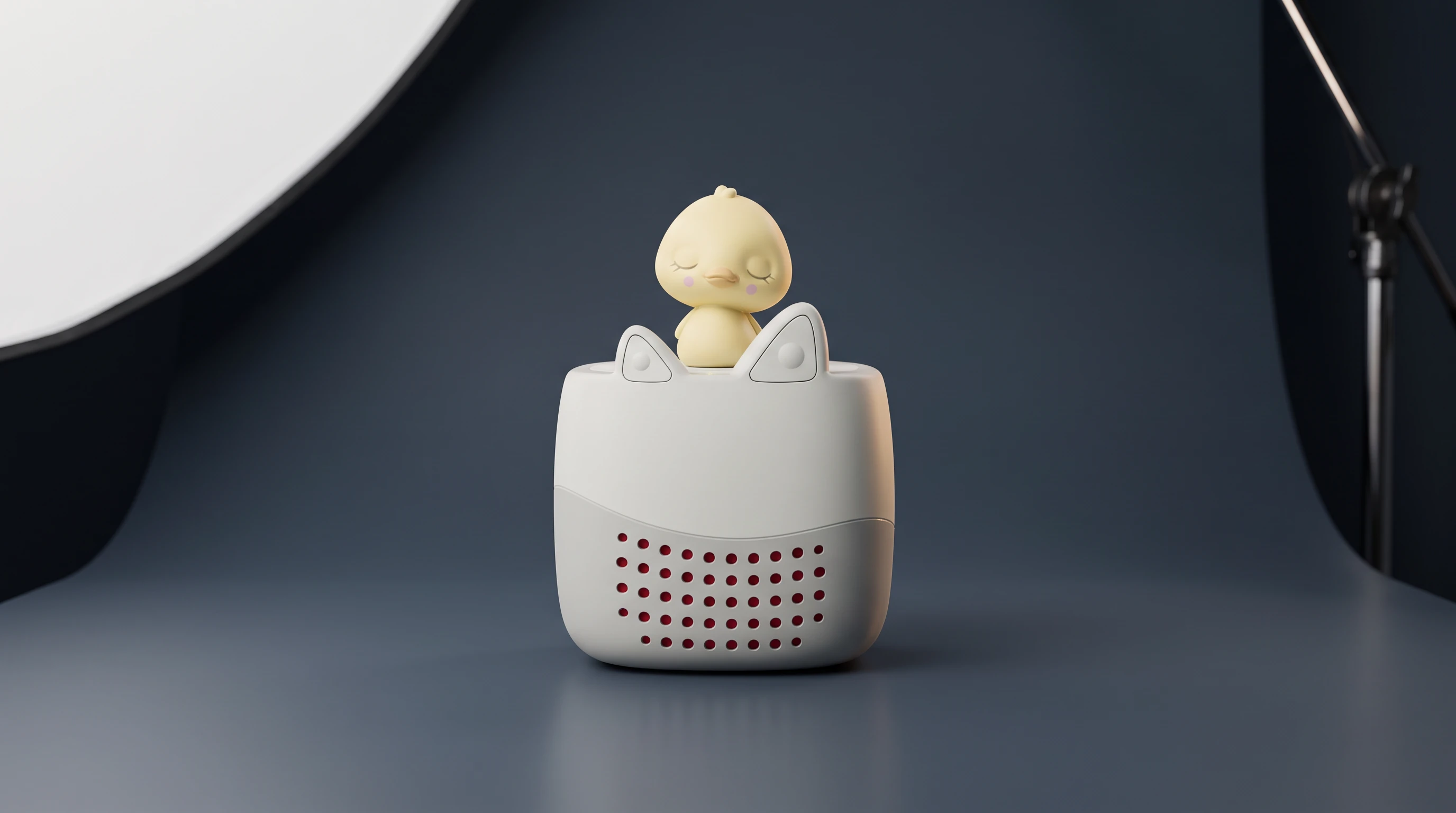
13. Toniebox Lite Audio Player by Tonies
Who will love it: Kids ages 1+ who want their favorite stories and songs on the go.
What’s great about it: The Toniebox Lite has everything kids love about the original Toniebox, in a smaller, lighter, palm-sized version. Kids simply place a Tonie figurine on top of the box to start listening to a story, tilt or tap it to skip tracks, and squeeze the ears to adjust the volume. It’s compatible with every Tonie figurine, and its durable hard shell can take a few knocks. Lightweight and portable, it’s easy to toss into a diaper bag or suitcase. And it’s screen-free! For long car rides and flights, parents can plug in headphones or pair it with Bluetooth ones. Toniebox Lite is the compact, portable solution parents have been asking for.
—Diana Tobey
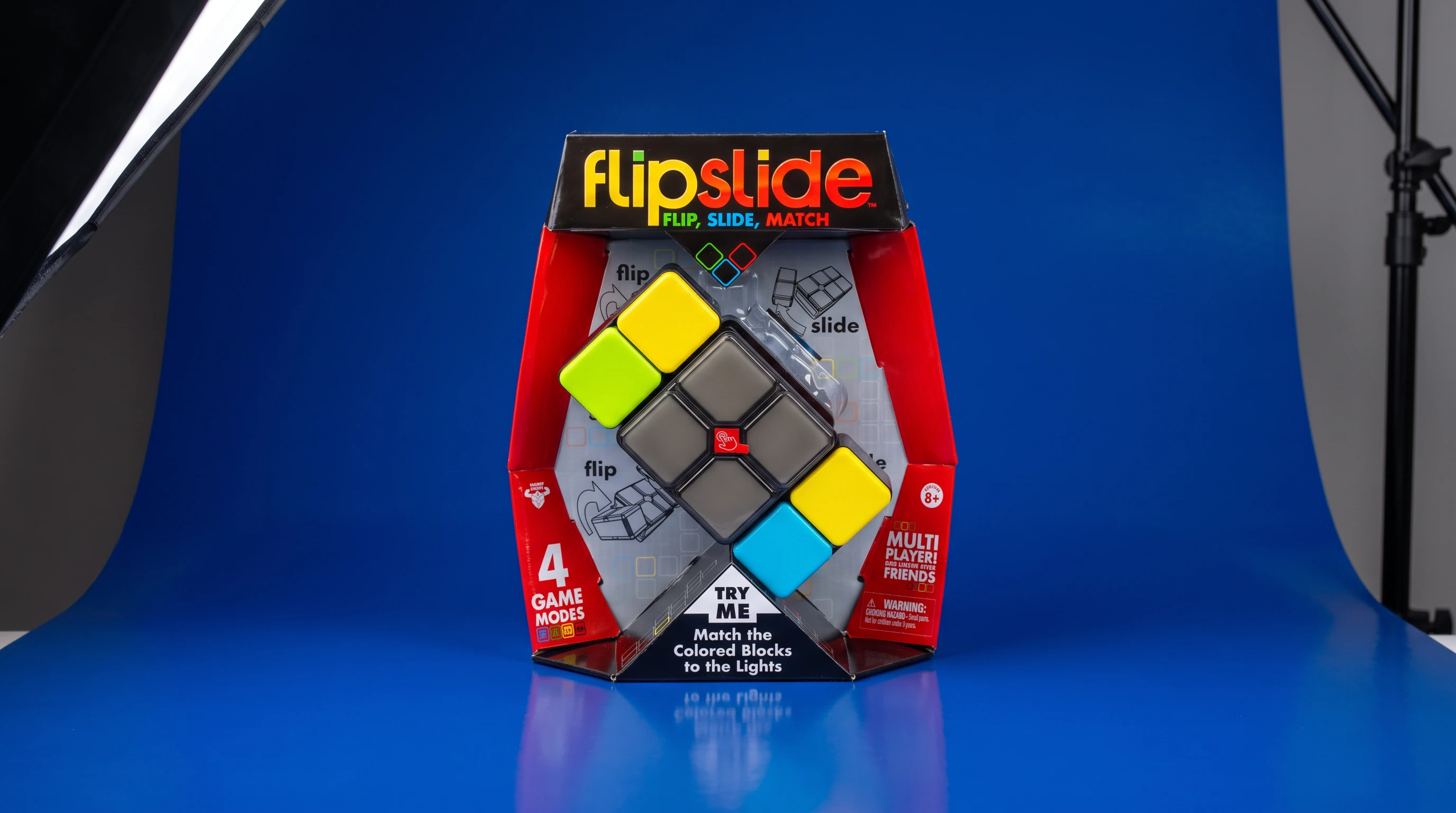
14. Flipslide by Moose Games (IDEO invention)
Who will love it: Fidget puzzlers, reaction gamers, and fast-paced fun lovers ages 8+
What’s great about it: This game is a thrilling combination of fidget toy, reaction game, and handheld puzzle that will keep you beating your high score over and over. Flip and slide the outer pieces to match whatever lights show up in the center squares. With Speed, Memory, and Levels modes, you can flex all your skills in this fidgety, fun electronic game. Flipslide is also a great size to throw in a backpack and take on the go.
—Lucas Iezzi
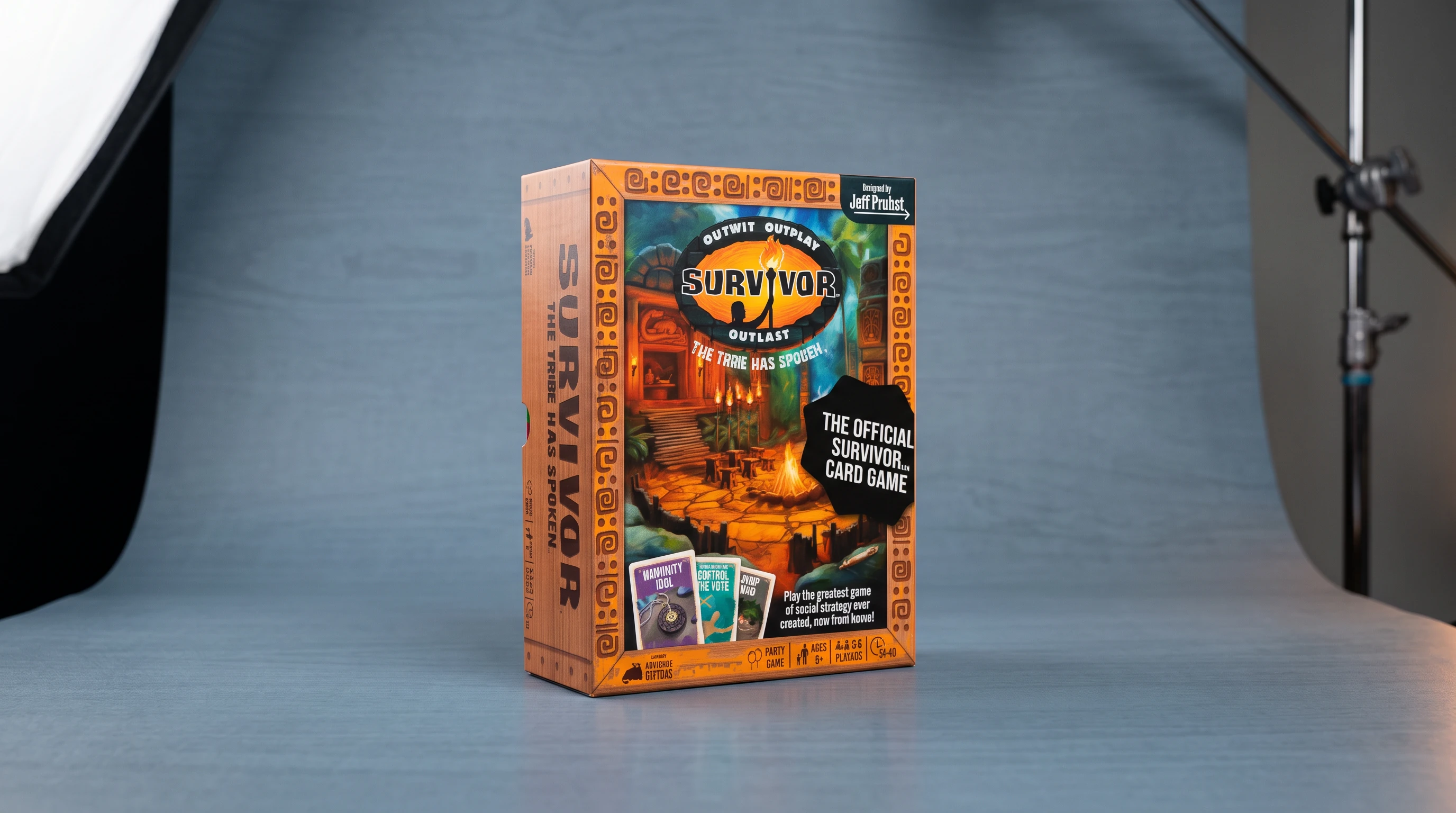
15. Survivor: The Tribe Has Spoken by Exploding Kittens
Who will love it: Survivor fans, families, and strategy-loving kids ages 8+.
What’s great about it: Bring all the drama, alliances, blindsides, and backstabbing of Survivor right to your living room. Players collect advantages, steal cards, hunt for hidden Immunity Idols, and form secret alliances before facing the ultimate Tribal Council vote. Everyone secretly casts their votes into a physical voting box, so you get the suspense of finding out who’s been voted out in true Survivor fashion. And when it comes down to the final two, you’ll have to convince the eliminated players why YOU deserve to be crowned the Sole Survivor.
—Shaylyn Berntson
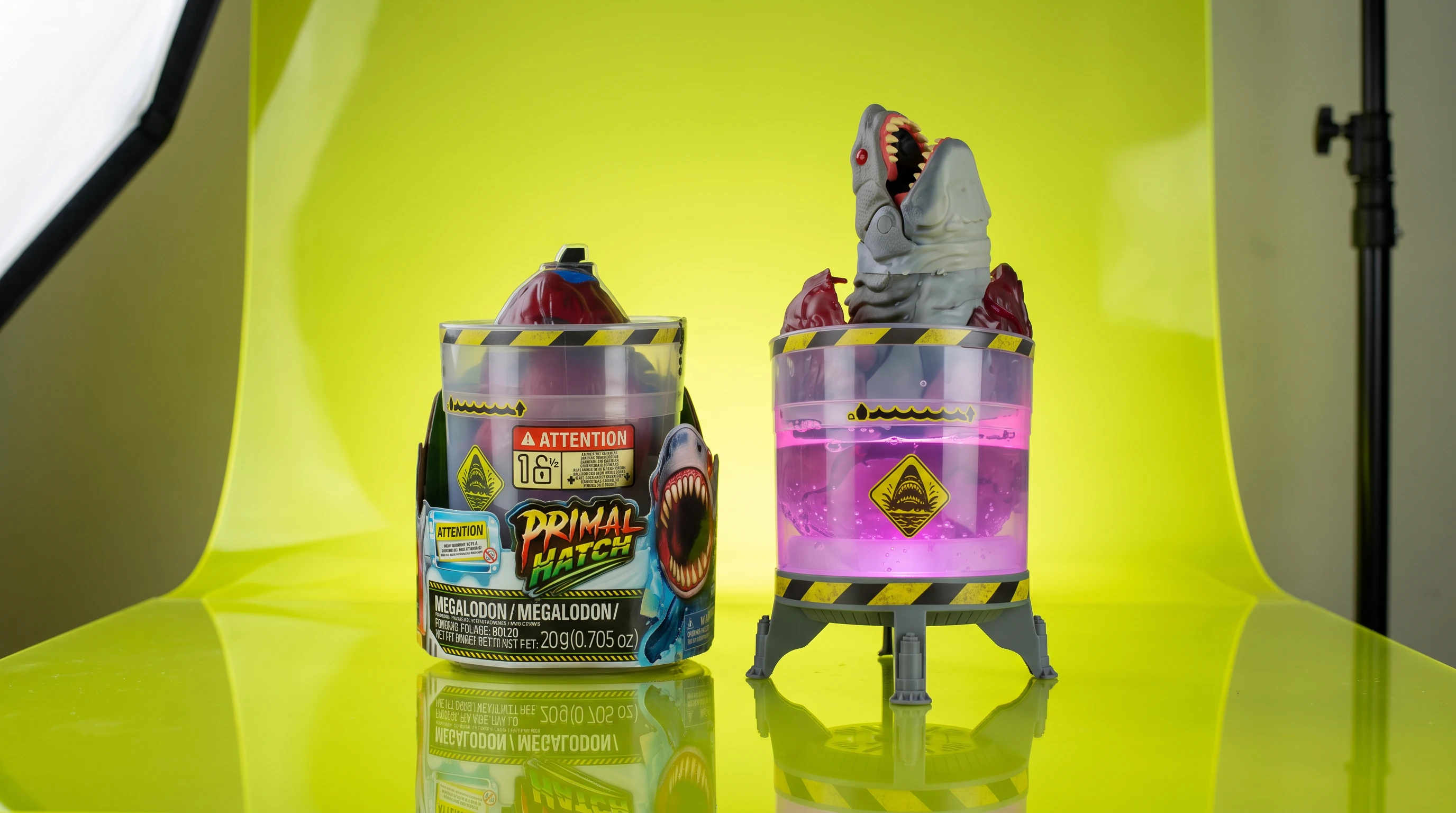
16. Primal Hatch Megalodon by Spin Master
Who will love it: This toy is perfect for kids ages 5+ who love sharks and big surprises!
What’s great about it: Kids get to play scientist, awakening a prehistoric predator that feels alive before it even breaks out of its egg. I love a gift that gets the whole family gathered around, waiting to see what happens next, and this one delivers. After the big reveal, kids have a cool tactile toy to chomp around with, and you can reset the hatch and enjoy the suspense all over again!
—Rikki Devlin
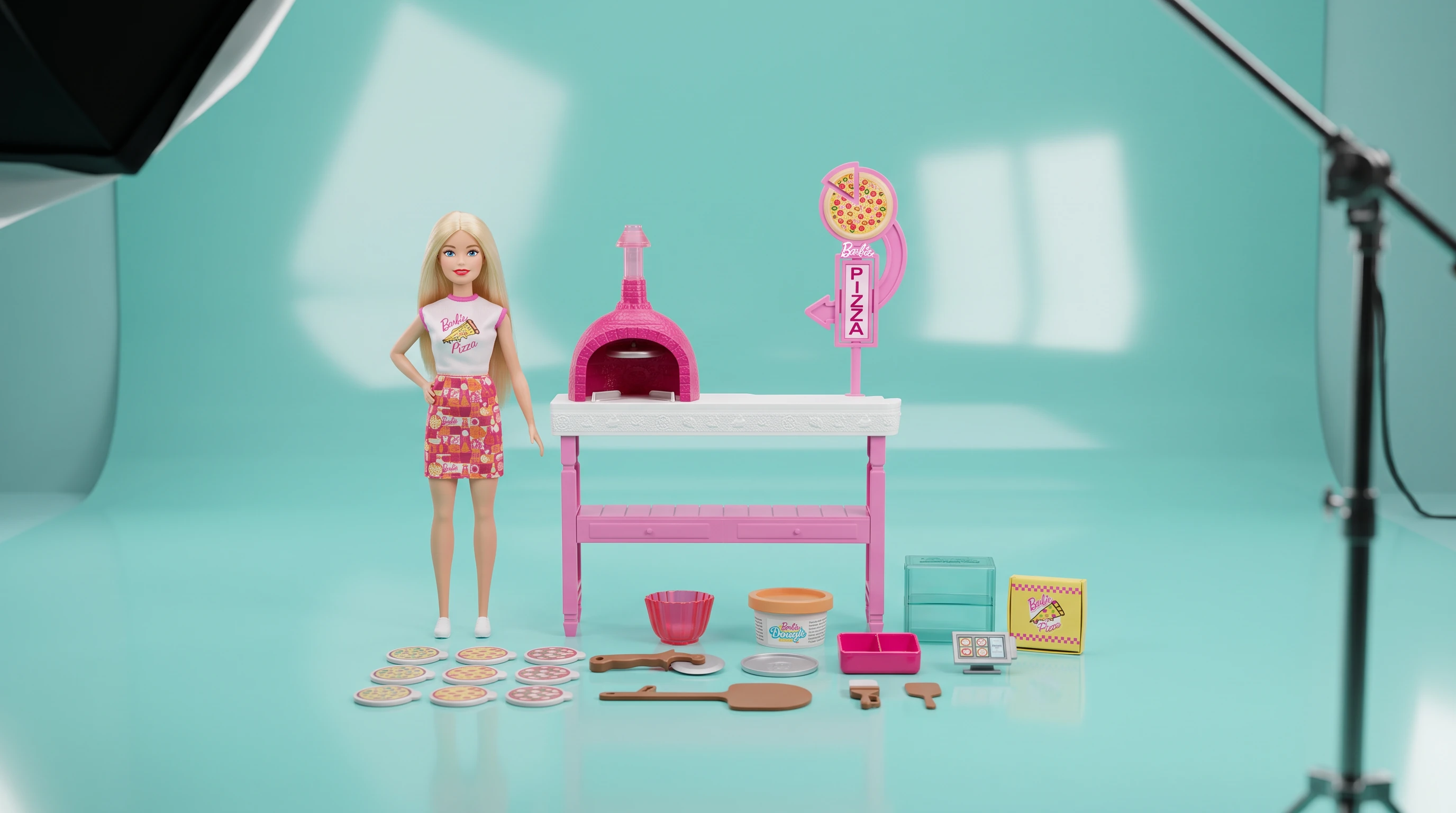
17. Barbie Pizza Shop Playset by Mattel (IDEO invention)
Who will love it: Barbie fans, lovers of cute miniatures, and kids ages 3+ who enjoy detailed, imaginative storytelling.
What’s great about it: This Barbie playset is packed with play value, featuring a charming pizza shop theme that inspires kids to reenact familiar stories. The highlight of the toy is using dough to create realistic-looking mini pizzas. By pressing tiny prints into the dough, kids can craft incredibly realistic pies that they can even slice, just like real pizza. When they squish the dough, the printed design disappears, allowing kids to start the pizza-making process all over again.
—Inna Yankelovich
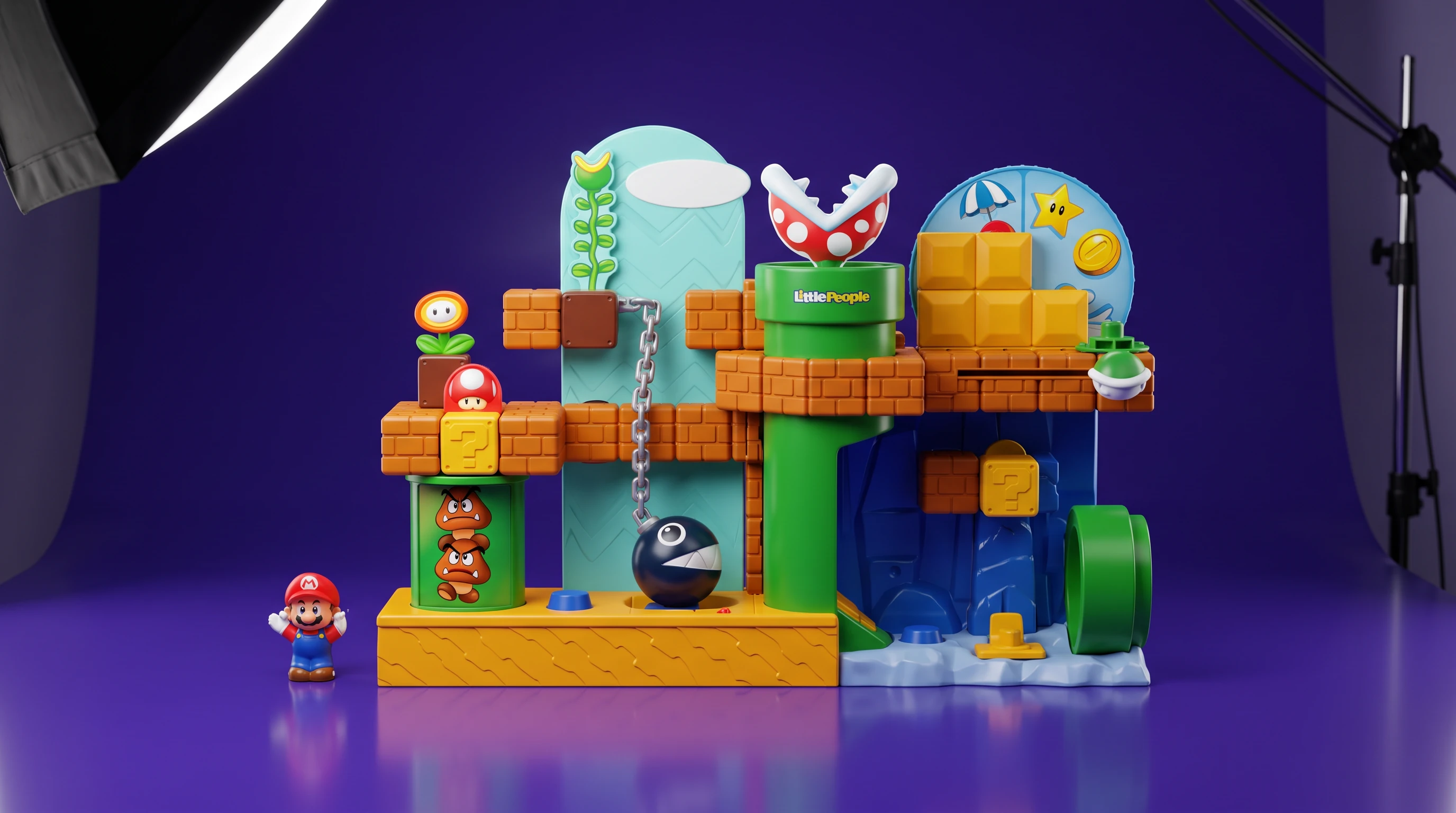
18. Little People My Mario Adventure Playset by Fisher-Price
Who will love it: Super Mario fans and, quite frankly, anyone 18 months and up.
What’s great about it: Bring the Mushroom Kingdom to life with this toddler-friendly Super Mario playset! Little ones can explore Mario’s world, play with the included character figures, and discover fun interactive features, sounds, and music. It’s packed with hands-on activities that spark imagination, build fine motor skills, and encourage pretend play. It’s a great way to introduce the iconic world of Mario to a whole new generation!
—Shaylyn Berntson
(Please note that IDEO makes a commission off of affiliate links.)
Who better to help you navigate this year’s hottest toys and games than the people who dream them up for a living?

AI is changing women’s health
Let’s work together to make sure it’s for the better.
For decades, women’s health has been underfunded, overlooked, and too often reduced to reproductive care. Medical research has been built around male bodies, while the complexity of women’s biology and lived experiences has been treated as a problem to simplify rather than an opportunity to understand.
Now, AI could change that. Designed intentionally, AI could unlock new kinds of evidence that close historical data gaps and inform better care. But if we aren’t careful, we could be scaling systems that were never designed for women and build the next generation of healthcare on the same broken foundations as the past.
The stakes are high. The opportunity is massive. This is where design matters most.

Introducing the Women’s Health × AI Exchange
We believe design can help us embrace AI’s healthcare possibilities while recognizing and mitigating its risks. And we believe the most promising futures are shaped collaboratively, by bringing different perspectives into conversation and making those possibilities tangible.
That’s why we’ve launched the Women’s Health * AI Exchange, an open, design-led exploration of one important question: How might AI meaningfully transform women’s health, and what would it take to ensure that it does?
To frame this exploration, we crafted six provocations about possible futures at the intersection of women’s health and AI. Futures where AI could:
- Reframe women’s biological complexity from a healthcare liability to a scientific asset and create new pathways for better care.
- Transform the relationship between healthcare professionals and patients, translating qualitative data into clinically actionable evidence.
- Connect the dots across a woman’s health journey to enable more proactive, preventive, and life-stage-specific care.
- Drive innovation in women’s longevity, helping researchers understand what most influences how women age.
- Flip the economics of clinical research, incentivizing exploration at the deprioritized edges and intersections.
- Put data back in women’s hands to help them find their own insights around issues where institutional research has not been prioritized.
Imagining what AI could do is only half the work. We also need to consider the shifts required to make these futures possible. And so, each of these provocations ends with the same challenge: What would it take to make them real?
We’re inviting you into this conversation to help us collectively sharpen a point of view and co-design a landscape of opportunities. Here’s how to join.
Go to the Women’s Health x AI Exchange and choose a provocation that resonates with you. An AI facilitator will ask thoughtful follow-up questions to help you frame your point of view and articulate what you believe needs to change. Your thoughts will be posted anonymously. As more people participate, their contributions will help reveal where perspectives align, where tensions remain, and what new opportunities are emerging.

Turning tension into possibility
This conversation is just the beginning. We’ll synthesize themes and share emergent opportunities. We’ll bring together people across healthcare, research, technology, investment, and design to help us prioritize opportunities for further exploration. And we’ll translate the most compelling ideas into tangible prototypes that help people see, experience, and shape what desirable, viable, feasible, and responsible AI-enabled healthcare could look like.
We’re approaching this as an investigation in motion, not a finished thesis. Our intention is to work openly so the perspectives, provocations, and possibilities we generate can inspire and inform the people already working to move women’s health forward.
And while women’s health is at the center of this exploration, the conversation we want to have is even bigger. It is a conversation about the future of healthcare data and power. A conversation about how AI might help close the gaps that decades of underfunding have left behind, and what we can all do to ensure it does.
Whether you’re a clinician, researcher, technologist, entrepreneur, investor, designer, or simply someone who cares about the future of healthcare, we invite you to help us reimagine what healthcare could be, for everyone.
Explore the Women’s Health * AI Exchange and add your perspective.
AI is transforming healthcare at a remarkable pace. But our understanding of women’s health has a lot of catching up to do.
Patient expectations are evolving faster than ever
Four ways pharma companies can adapt as GLP-1s reshape experiences.
During a recent meeting with a pharma client, we played a YouTube video of GLP-1 users that left the team slack-jawed. Sitting around a conference table, they watched people crack open an auto-injector and pour the contents into a vial so they could titrate out a more precise dose of the drug themselves. They heard several patients admit to using a family member’s prescription because they didn’t have their own. Others lamented that they weren’t in range for their preferred direct-to-consumer delivery platform. The realization was stark: patients knew what they wanted from their GLP-1s, and if the manufacturer didn’t provide it, they would find a way to make it themselves. In that moment, this particular pharma company understood it was not at all prepared for a future where patient expectations would remake the drug market.
The introduction of Ozempic and new access models for GLP-1s like Lilly Direct and Hims & Hers have fundamentally shifted the pharmaceutical industry in the last five years, unleashing more self-directed therapy journeys and a new kind of healthcare consumer. Patient expectations about what pharma companies can do—and the experiences available to them in a healthcare setting—have been completely rewritten. This revolution is making traditional pharma commercialization processes that push patients and providers through a few preferred channels a thing of the past. Especially as consumer-facing startups come for their market share—and create an even larger pie.
If pharma companies are going to meet this new wave of consumer expectations for everything from GLP-1s to hair loss and erectile dysfunction medicines, supplements to fertility drugs, they need to prioritize designing exceptional experiences that come along with their therapies. That requires building an entirely new set of skills and behaviors that can support product pipelines. Here are four crucial steps to get there.
1. Uncover the needs patients want pharmaceuticals to meet
Pharma companies need to do research with real patients to get a clear view of the full therapy journey—from diagnosis to long-term use. In that process, they can identify the highest-risk moments, like confusion over instructions, frustration over delivery methods, and potential misuse, and prioritize opportunities to improve real-world adoption and adherence.
Lilly understood this early on. In the 1990s and early 2000s, the pharma company had several new, life-changing medications and two big challenges: Its primary drug—insulin—had to be self-injected, which patients were hesitant to do. And its drug-delivery device platform lagged behind the needs of insulin users.
Lilly approached us to design the next-generation auto-injector platform. Early in the partnership, a team of IDEO designers and Lilly leaders met with diabetes patients around the globe to better understand how they lived with the disease. They quickly realized there was a need for a device that met the needs of a broad range of dexterity-challenged and injection site-specific patient populations (including rheumatoid arthritis and psoriasis patients). As the development of multiple candidate molecules was still underway, the team focused on creating an injection experience that would work for these more challenging patient populations, knowing that a design that worked for them would also deliver a better experience for a broader swath of future users.
While we carefully considered every feature of the autoinjector itself (from grippy labels and a stable, twist-off base to large, clear unlock tabs and injection buttons), we also designed packaging that fit in a standard-sized refrigerator, created a set of highly visual instructions, and took into account the involvement and support of family members and caregivers.
Fast forward to 2026, and Lilly is still leveraging the design we made together to not only support pre-diabetes treatments like Trulicity, but also psoriasis therapies like Taltz, migraine therapies like Emgaility, and GLP-1 molecules like Mounjaro and Zepbound. The latter accounted for the majority of the company’s annual revenue in 2025. Taking the time to create a comprehensive drug delivery experience has yielded an invaluable delivery toolkit that Lilly and the patients they serve still benefit from today.
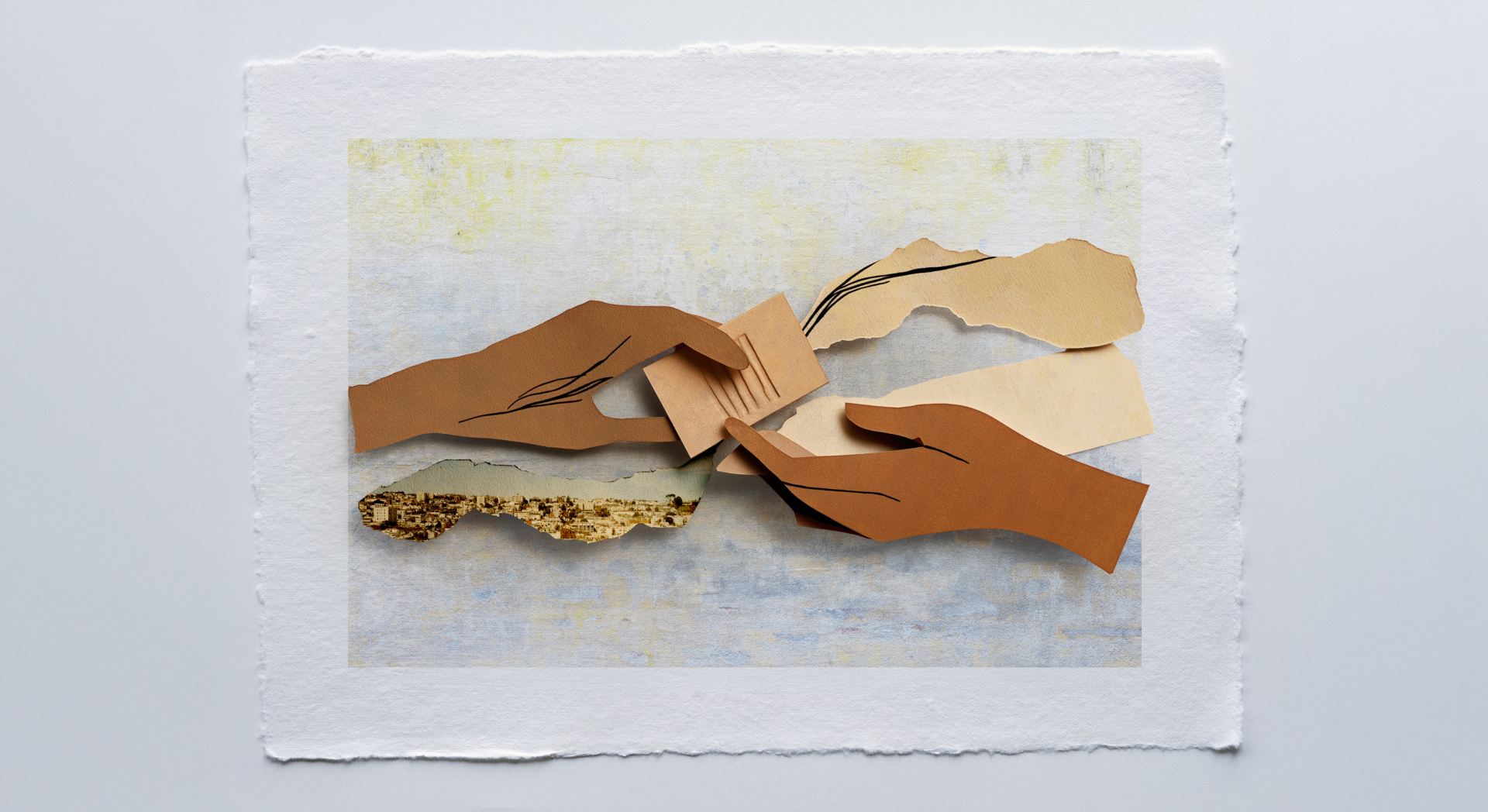
2. Design the experience around the therapy
As more and more pharma companies create consumer-style experiences, it’s crucial they build services and tools that support onboarding, adherence, and ongoing use. Standing out is no longer just about drug efficacy. It’s about how well patients with all kinds of needs and circumstances can access and adhere to the therapy—and how well pharma companies can deliver against their competitors.
When Sanofi launched Beyfortus, the first-ever RSV immunization for newborns, in 2024, it was a milestone in the fight against the virus, which had resulted in the death of 445,000 babies worldwide in 2019 alone. But the company knew that growing anti-vaccine sentiment might prevent parents from giving their children the potentially life-saving immunization.
Together, we conducted research with parents, caregivers, healthcare professionals, and healthcare administrators in Germany, Spain, China, and the US to identify barriers to adoption across cultures. The team quickly discovered that no single approach would work across Sanofi’s 20-plus international markets. Training for medical professionals needed to be flexible and customizable. They also discovered that discussing immunizations right after a baby was born was too stressful for new parents.
Ultimately, the team created an accessible global communication toolkit with straightforward language, metaphors, and illustrations to support informed conversations between providers and parents before and after a child is born. Then they held a series of market-fit co-design workshops to make the tools more resonant with regional customers and ensure compliance with local regulations.
In its first year on the market, Beyfortus became a $1.8 billion therapy, and more than six million babies have been immunized.
With a growing funnel of information about drugs, therapies, and even supplements, pharma companies must cut through the noise to support patient understanding and adherence.
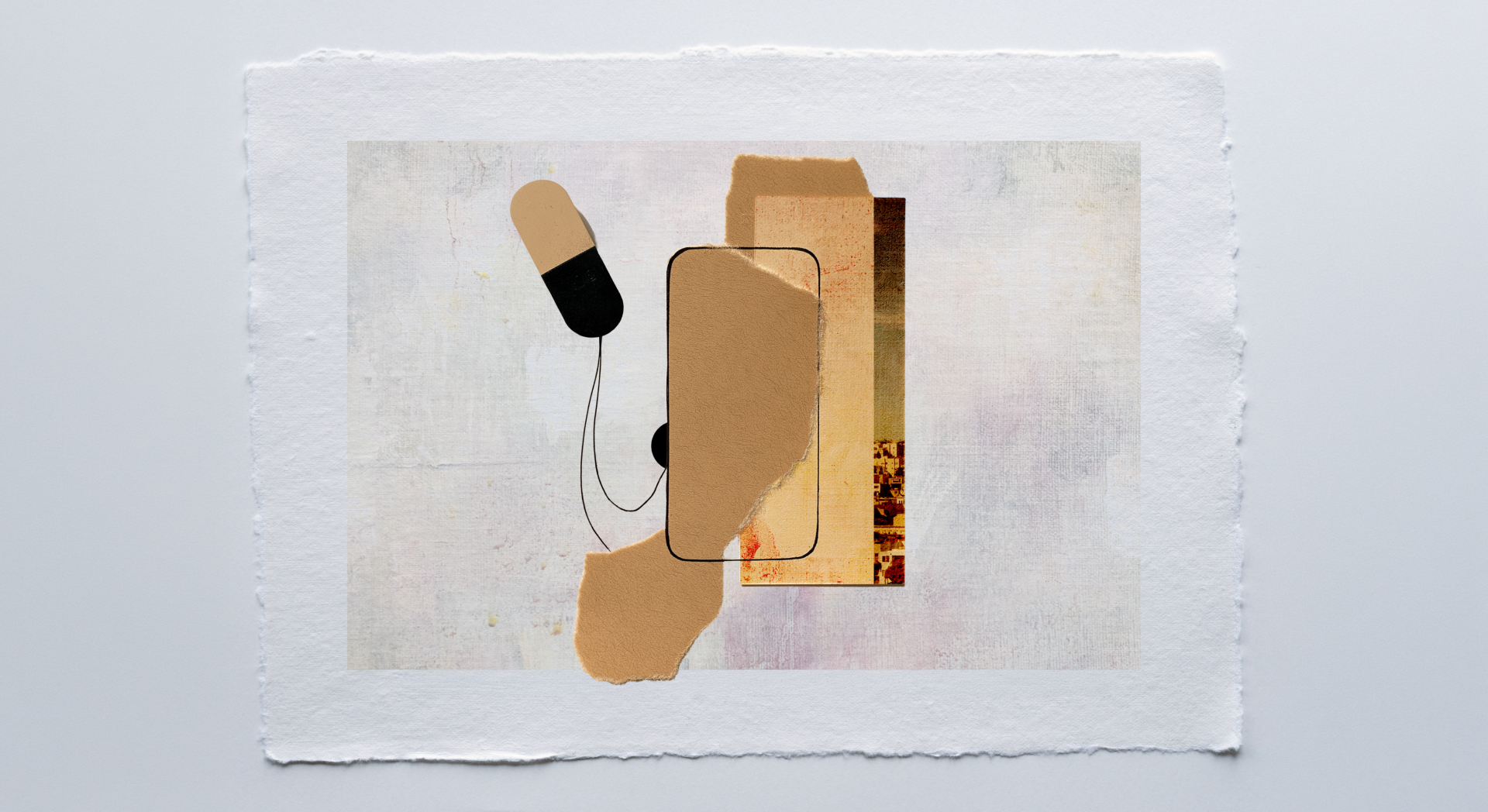
3. Define how you show up beyond the drug
To have an even greater impact on patient outcomes, pharmaceutical companies should explore new roles, partnerships, and models. That could mean creating new offerings that combine a given therapy with support and services, building partnerships with payers, employers, or platforms to extend reach, or creating models that tie therapies to long-term outcomes and value.
Japanese pharmaceutical company Otsuka is perhaps one of the most diversified pharma organizations in the industry, focusing on above-molecule interventions including companion diagnostics, digital technologies, and other tools that enhance the effectiveness of chemical or biological treatments. With a business that spans traditional drug development and manufacturing, digital solutions, and even consumer products such as Pocari Sweat, an electrolyte drink, Otsuka has bet that diversity and go-to-market pathways will lead to better experiences for patients. Not to mention these touchpoints also provide deep insights into the needs of the people Otsuka serves.
In 2018, Otsuka joined forces with Click Therapeutics to develop digital health services to accompany one of its leading medications, aripiprazole. The antipsychotic is used to treat schizophrenia, bipolar disorder, and major depressive disorder (MDD). By 2024, the company had developed an app featuring activities aimed at treating MDD. The partners chose a challenging but potentially impactful area for their pilot program: four primary care sites within the National Health Service (NHS) in the UK with a high caseload of MDD patients, where a digital solution combined with antidepressants could significantly reduce the burden on these sites.
Depression is widespread across the UK, and the treatment demands on the NHS are considerable. However, the system lacks the resources to provide every patient with the necessary services to treat their conditions. This digital companion to antidepressant medication aims to improve treatment effectiveness, and if the pilot is successful, it could significantly ease strain on the NHS while helping patients achieve better outcomes.
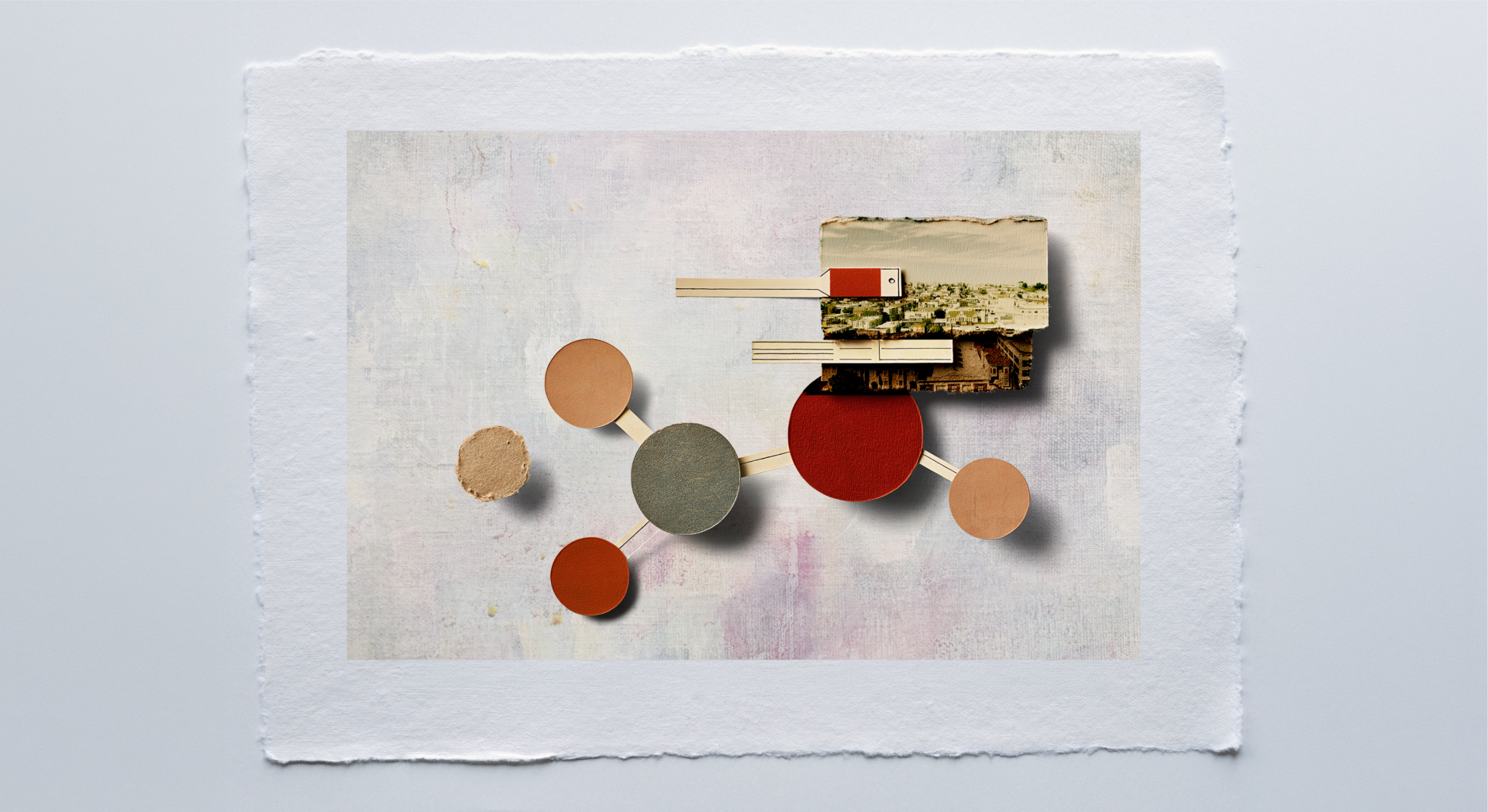
4. Create a human-centered R&D pipeline
Creating more human-centered packaging or instructions to help people better understand a drug is an effective step forward, but exploring new internal capabilities that make your innovation pipeline more future-fit and human-centered can be transformative.
That work can take many forms: building a beacon project that upskills product and team leadership on methods to better understand the decisions consumers are making today and in the future, introducing futures-thinking to help your team look beyond the next five years, or reinforcing purpose and culture to empower employees to make patient-centered decisions.
In 2020, as Moderna raced to deliver a COVID-19 vaccine during the pandemic, the company needed to grow exponentially—and rapidly. However, by hiring employees from traditional pharma giants, it risked losing the unique entrepreneurial culture that made it successful in the first place—one that embraced speed and accepted risk. This shift could have limited its future ambitions of developing breakthrough products to combat other viruses and diseases, and even cancer.
Together, we worked to codify the company’s culture and values into a set of Mindsets that would empower employees to move quickly, evaluate risk, and make the right decisions. The team met with Moderna veterans to gather stories about key cultural moments, like when a crucial piece of equipment didn’t fit in the door, and employees knocked down the wall to keep vaccine production moving. Insights from these stories became Mindsets, like “Act with urgency: Action today compounds the lives saved tomorrow” and “We behave like owners: The solutions we’re building go beyond any job description,” that were then tested with new hires, employee resource groups, and others across the company.
The Mindsets were more than a tagline: they set the stage for continued progress and future breakthroughs. Today, Moderna is working with Merck on a cancer vaccine that just completed a successful Phase 3 clinical trial.
This sea change in consumer expectations for medicines and therapies can feel disorienting for traditional pharma companies—but it also offers enormous opportunities for those that think outside tried-and-true drug delivery channels and embrace human-centered design. By truly understanding patient needs, finding new and inventive ways to support them, and building the capabilities to empower your people to create a human-centered R&D pipeline, organizations can distinguish themselves in the market. These behaviors can not only drive the market, but more importantly, radically improve patient outcomes.
“This sea change in consumer expectations for medicines and therapies can feel disorienting for traditional pharma companies—but it also offers enormous opportunities for those that think outside tried-and-true drug delivery channels and embrace human-centered design."
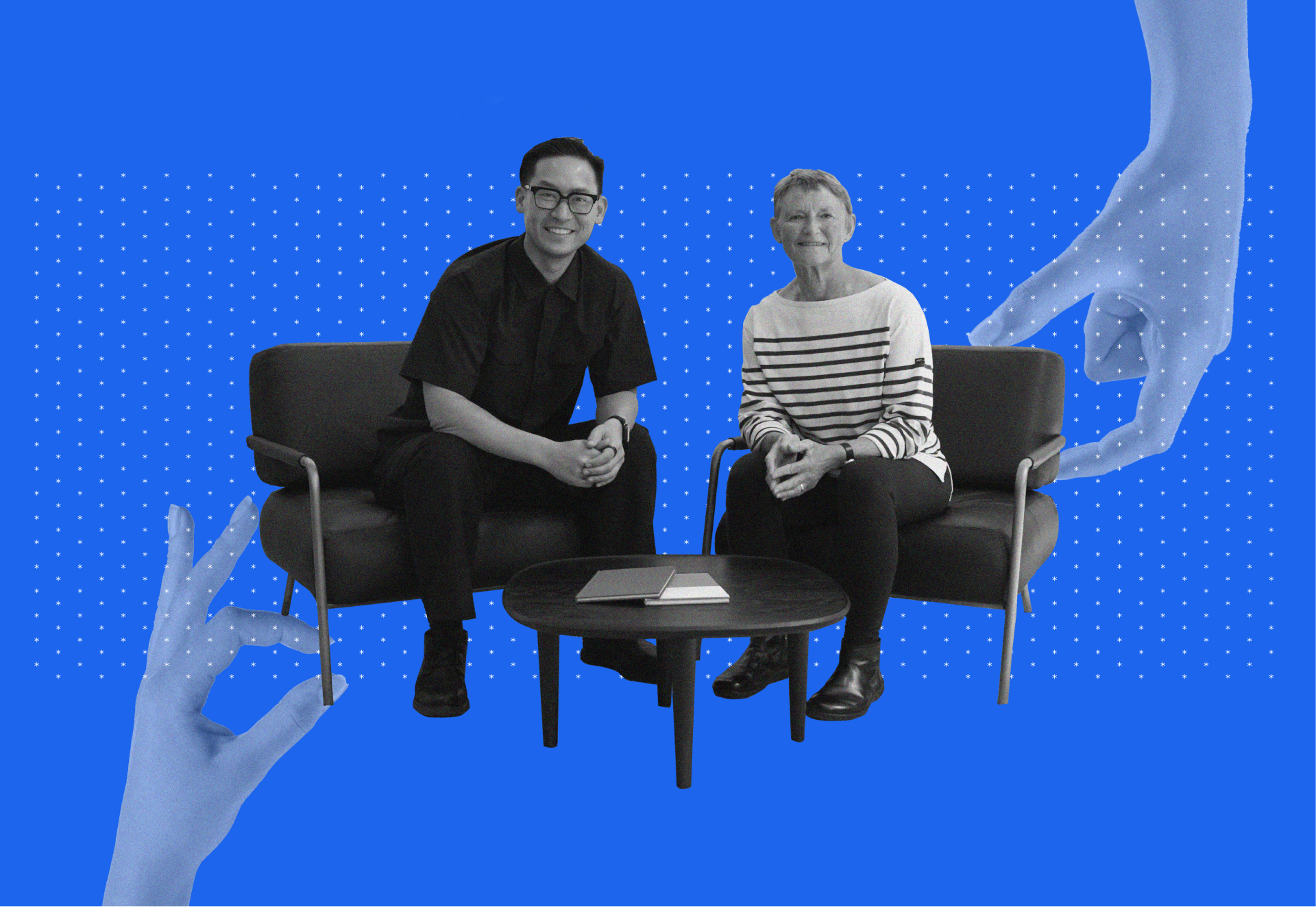
What real insights feel like, and other notes from a design legend
A Q&A between CEO Mike Peng and Jane Fulton Suri, former CCO.
A pioneer of human-centered design at IDEO, Jane Fulton Suri joined one of IDEO's predecessor firms, ID Two, in 1987. With a background in psychology and architecture, she gained early experience as a researcher at the renowned former Institute for Consumer Ergonomics at Loughborough University of Technology. At ID Two, and later at IDEO, Suri introduced social science principles to the design industry, which had not yet fully embraced them. Her contributions would go on to reshape the field.
Suri’s influential 2005 book, Thoughtless Acts?: Observations on Intuitive Design, features a collection of snapshots that highlight the subtle, instinctual ways people interact with the everyday world. It’s a love letter to observation as a design discipline with real-world impact. Her work in human factors at IDEO has influenced products people use every day, from rubber grips on Oral-B toothbrushes to redesigned Evenflo strollers. In recent years, she’s expanded her focus beyond human-centered design to explore how patterns found in nature and living systems can inspire more sustainable solutions—what she calls life-centered design.
Now a Partner Emerita, we were so glad to welcome Jane back to IDEO earlier this year for a conversation with our design community.
Mike Peng (MP): If you don’t mind, Jane, tell us about your origin story and how you came to IDEO.
Jane Fulton Suri (JFS): I started out in psychology because I was really interested in people. And then I got really interested in people in the everyday world. I brought that mindset into design: Let’s get out there and see what people really do.
I found myself working with manufacturers to help them understand why people didn’t do what they expected them to with power tools, motorcycles, and other dangerous things. A lot of my work was mitigating disaster. And I thought, this is crazy. Why aren’t these conversations happening while things are being designed? Problems are easier to remedy at the design stage than when they’re on the market.
Then I met Bill Moggridge, one of IDEO’s three cofounders, because a friend of mine was his client. He was a myth and a legend. After our conversation, he asked me, “What do you want to do now?” And I said, “I’d like you to offer me a job!”—which was very, very uncharacteristic of me. I had no clue what I was getting into.
I quickly realized I needed to understand what my teammates were doing and value that, then add ideas about going out, meeting people, and watching what they do.
So instead of having the answer, I realized the point was about discovering together how to make the design brief better. That became the practice—getting away from the desk. And now that means teams getting away from their screens and going into the world together.
MP: Now user research and ethnography are common practice in design. What were the early days like?
JFS: When we started out, we had no budget for anything I wanted to do. I had to convince my colleagues it would be exciting and interesting, and that we’d have good stories to tell our clients. Then it became a bit of a sales story about why it might take an extra week or two, or even a month, to do the project.
What we were doing was more like exploration; we didn’t know what we'd find, and afterward, we would probably want to do something different from what we’d promised when we wrote our proposal.
MP: If you had to sum up a few of your most memorable projects while you were at IDEO, what are some of the ones that really stood out to you?
JFS: Early on, Supercuts invited us to bid on an innovation-focused job. At the time, we were essentially a product design company. David Kelley, Tom Kelley, and others weren’t sure what we might do for a company like Supercuts.
So with one of the other early human factors researchers, we went out and got haircuts. Then we went around the city just looking at different hair stylists’ establishments. We started putting together a story of how customers make decisions from the moment they think about wanting a haircut to deciding where to go, making their first appointment, then all the behaviors that follow, like primping a bit before you leave the shop.
We had a lot of fun engineering this great crazy clipper. But I always believed our best ideas were these little moments throughout the experience, like getting a cape that made you look good, or a mirror that said “Supercuts” so you’d remember where you were. That was our first customer journey map.
MP: Are there other memorable moments that really stick out to you?
JFS: One of the most moving ones for me was at IDEO Chicago, years and years and years ago, when colleagues of mine were working on the LifePort Kidney Transporter. The project was all about how precious a kidney is. The team described their experience in the operating theater, seeing the surgeon take this living element and cup it so gently, like a baby bird, as he transferred it to where he needed to place it. That recalibrated the team’s thinking about designing the carrying system, because we’d just been thinking about it functionally and mechanically. But it also let them tap into what it really means to design for a living passenger.

MP: Let’s dive into the craft of design research. How do you know when a research insight is truly great?
JFS: Insight, for me, is a change of state in our understanding. There's an epiphany of sorts, a new recognition. You get an insight by being a sensory human being, observant and absorbent through all your senses…and then discovering you are excited about something new. Design and innovation take a lot of personal energy. That human emotion has to come from you.
And that’s what happens when clients get really drawn into ideas, too—they feel you’re changing the way they see things.
MP: What fundamentals do we need to continue to embrace to do research well?
JFS: Nothing beats being an aware, sensory human being who is curious about other people, places, and things. Research doesn’t have to be expensive. Even a conversation with one interesting person, or exposure to an unfamiliar place, will do.
Sometimes we're reluctant to put something in front of the client that we think is a really cool idea, but nobody has said they wanted it. Perhaps the research didn’t show that it was a really good idea yet. But sometimes we have to have conviction about our own perspectives and the confidence to share innovative ideas, even without hard evidence. I’ve always felt that.
MP: One of the most important phases of IDEO’s design-thinking process is synthesis—taking the messy materials we’ve gathered during research and making sense of them. How do you approach synthesis?
JFS: I once wrote a piece about how what happens in the design process isn't the same as how we formally describe it. One story stands out. I call it “the black shoes.”
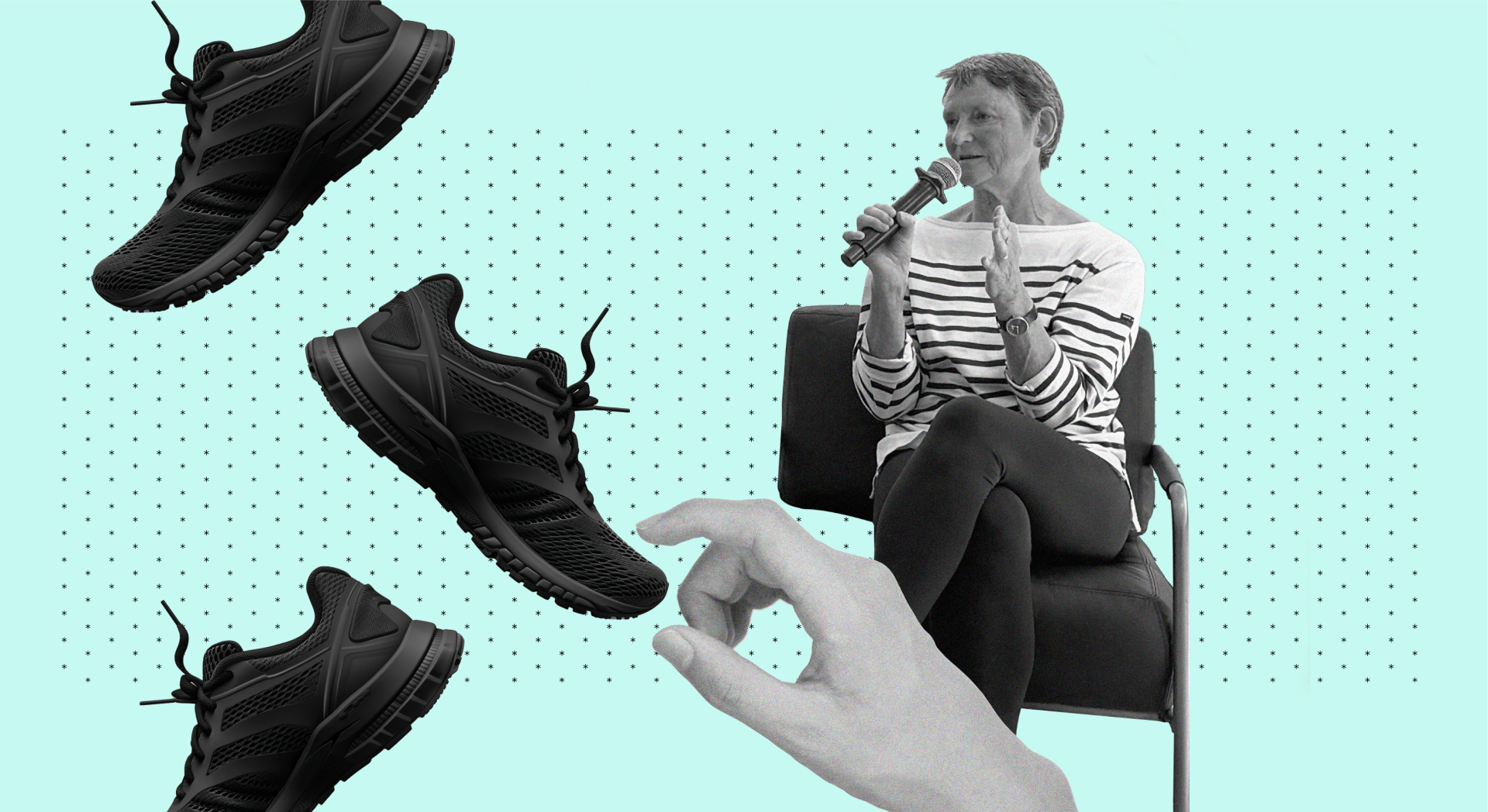
Annette Diefenthaler, now Professor and Executive Director of the Munich Design Institute, was an IDEO researcher working with a global bank trying to set up a presence in Russia. The team had done loads and loads of interviews with people about banks. Late one night, on the way back to their hotel, Annette saw a big shopping center. She asked the driver to stop, because she realized they'd had no time, other than doing their interviews, to absorb much about the culture.
So she went into this big mall, and Annette was stunned by how simply the department store had arranged its products. One wall was just black shoes all lined up, all the different kinds of black shoes you could have. It was all really obvious and not very exciting because there were only black shoes—no glitz at all.
What she took from that was: this is a culture where trust is built by showing what there is. It was so honest and direct. And here we were, talking to all these people about banks and trying to understand how to build trust in an alien brand. She had a flash of insight that suddenly made sense of what the team had been hearing. The bank needed to be so much more straightforward and transparent about its services. “Black shoes” became a mantra for that project and shaped how they designed the bank’s interior and described its offer.
This insight came from a moment that was completely off script. I love that. You can’t always get to an insight by staring at your interview notes. You get it because it’s somehow gotten into your viscera.
MP: Are there any moments where you found creative ways to present research to clients to help them make decisions?
JFS: Instead of personas and customer descriptions, a team once created a series of packed suitcases that represented the different types of travelers they interviewed. The client loved that one.
MP: How do you find the courage to decide to deliver an installation of suitcases instead of a more traditional research deliverable, like a presentation?
JFS: You need to tune in to what your client needs to absorb and what you want to communicate, and be ready to experiment with how you do that. You need to get good at failing. You try things, fail, and learn how to gauge what might work better the next time.
MP: You’re an incredible artist—I’ve seen your woodblock prints. You’re also an amazing rock climber and swimmer. I’m curious how these activities helped you develop your craft as a researcher and a designer.
JFS: There’s something very elemental about all of them—they’re direct experiences of the world. You give your weight over to the rock. You trust the water. Even with woodblock printing, what I love is how material it is. I use sharp knives and gouges to carve the wood, then I learn how much water and ink to use and how the brushes work.
That’s the thing I find really exciting. The fact that human beings have evolved to make beautiful things, that connection of making and place is a crucial motivator.
MP: You are one of the authors of the first edition of The Little Book of Design Research Ethics. I’d love to hear your perspective on the ethics of the discipline, and what we should keep in mind as we increasingly rely on technology.
JFS: I have a problem with the term research, partly because I think it connotes things like clipboards and taking notes—that we’re documenting other people’s lives. I’m happier when it all feels more like co-discovery, exploring together. We are together, engaged in this space, noticing things about your behavior as well as what I’m thinking about your behavior. And it's more collaborative.
Co-discovering with other humans is a much nicer place to be.
MP: Looking back, knowing what you know, what advice would you give young Jane?
JFS: I think I had imposter syndrome for about five years or so. I could have moved along a lot faster if I’d had a little bit more confidence and maybe a few more people telling me that it was okay.
MP: Are there any insights from your human factors work that you apply to the broader scope of life-centered design, and how we can learn from that?
JFS: A human being is a living thing in a living system of other living things. Observation and curiosity are key—we should keep asking the same kinds of questions about the inherent behavior of those systems, as we would ask about people: what they really do, what motivates them, and how we can gain insights from them. This goes back to your question about how rock climbing, swimming, and art come into it, in the sense that we can think more broadly about the elements that matter to people. There’s a whole living world out there with great examples of elegant systems we can learn from.
This Q&A has been edited for length and clarity.
“Insight, for me, is a change of state in our understanding. There's an epiphany of sorts, a new recognition. You get an insight by being a sensory human being, observant and absorbent through all your senses."

Lindsey Turner
I’m passionate about building brands, products, and experiences that help organizations show up with meaning and momentum.
I help organizations cut through complexity by shaping how they show up, through brand strategy, identity, and storytelling.
Working at the intersection of brand and business, I bring an editorial eye and a bias toward making—turning ideas into tangible experiences that people can understand, trust, and believe in.
My work spans government, healthcare, financial services, media, and consumer goods, from launching Gen Z-focused ventures to building innovation labs and reimagining legacy brands. I relish moments of ambiguity and enjoy translating across teams, perspectives, and priorities to move ideas forward.
I started my career in editorial and digital design, shaping cross-platform experiences and identity systems in publishing and agency environments. That foundation still shapes how I work today: I’m detail-oriented, collaborative, and overreliant on the Oxford comma. I hold a BFA in Visual Communication from the School of the Art Institute of Chicago.

Rachel Young
My work helps organizations see who their products aren't working for—and build the will and the tools to do something about it
For 25 years, I've asked the same question: Who does this design exclude—and what are we going to do about it?
My work spans human-centered strategy, inclusive design, and qualitative research, with clients ranging from Microsoft, Google, and Verizon to the National Science Foundation, and San Francisco Unified School District.
Before IDEO, I taught elementary school in East Palo Alto and spent a decade doing design work with social service organizations—where I learned firsthand what it costs people when systems are built without them in mind.
I am currently writing User Error, a nonfiction book about digital access and the design decisions behind it. I live in Oakland, California.

Brian Pelsoh
I lead with craft, ensuring our work is creatively excellent: rooted in deep human insight and imagination, while also grounded in the realities of business and technology.
My expertise spans brand, communication, and product design across tech, education, the arts, and social impact.
I believe great work demands both high-level vision and obsessive attention to detail, and only happens through collaboration.
I bring an inclusive, hands-on approach and a deep understanding of business, which enables me to consistently deliver excellence while always asking why.
Before joining IDEO, I worked at the brand firms Pentagram and VSA Partners. I began my career as a designer, leading teams at the School of the Art Institute of Chicago and the Milwaukee Art Museum. I hold an MFA in graphic design from Maryland Institute College of Art and a BFA in communication design from the Milwaukee Institute of Art & Design, and have taught at some of the best design schools in the US.

Tony Wong
I am responsible for IDEO’s long-term success in China and working with clients to use design as a tool to enable growth.
I am responsible for IDEO’s long-term success in China and working with clients to use design as a tool to enable growth. Specifically, I have helped Chinese companies design holistic brand solutions through the development of their products, communication, services, and innovation teams, and I have helped multinationals expand their presence and influence in China.
I advise global leaders on developing China-led innovation and capabilities.
In over 15 years in IDEO Shanghai, I have worked on projects that use design to elevate the quality of the experience of healthcare products and services, streamline processes that increase productivity, create spaces and programs that promote and enable inclusive communities, and build next generation mobility solutions that are planet-positive.
Before joining IDEO, I worked at Philips Electronics and the Electrolux Group in Italy, the Netherlands, and Singapore on a number of breakthrough commercial products. I am a member of the Young President Organization in Shanghai.

How to prototype with AI: Takashi Wickes
A practical approach to learning with AI through rapid experimentation.
Learn how interaction designer Takashi Wickes uses AI to prototype ideas with more creativity, intention, and humanity. In this conversation with host Mina Seetharaman, Takashi shares mindsets, stories, and practical methods from IDEO U’s Prototyping with AI course to help you stay curious, embrace friction, and keep humans at the center of AI-powered design.

Asked & Answered: Justin Massa on adopting AI with purpose and confidence
How leaders can adopt AI thoughtfully, strategically, and with confidence.
How can leaders bring AI into their organizations thoughtfully, without losing what makes them human? In this Asked & Answered episode, AI strategist and IDEO alum Justin Massa joins host Mina Seetharaman to answer listener questions and share a grounded, practical view of AI adoption. Justin explains why so many companies struggle to move from experimentation to impact, how to foster a culture of safe exploration, and why empathy and trust remain at the heart of leadership in the age of AI.

How to invest in AI for your business: Justin Massa
Making smarter AI investments by starting with real business value.
AI strategist and former IDEO partner Justin Massa joins host Mina Seetharaman to help leaders cut through the hype and focus on where artificial intelligence can create the most value. He shares practical frameworks for identifying strategic opportunities, balancing automation with augmentation, and bringing AI into your organization in a way that’s both human-centered and high-impact. Learn how to use Justin’s AI Opportunity Matrix, discover four universal entry points for AI innovation in businesses, and hear why reframing ROI beyond efficiency is key to sustainable growth.

Asked & Answered: Jennifer Lo on bringing futuring into your organization
Making future thinking a practical part of everyday organizational decisions.
In this Asked & Answered episode, Jennifer Lo, IDEO's Senior Director of Design Futures, responds to community questions about how leaders can bring futuring into their organizations. From making the case for ROI, to balancing visionary leadership with grounded operators, to practical ways to get started, Jennifer shares insights on how to use futuring to build resilience and readiness.
Looks like you might be in search of something very specific?
Or reset the filters above and try another angle.
Here’s some random inspiration

Podcasts about creative leadership

Articles about the power of prototyping