
She knows best
A major athleisure brand passes the mic so women can define community for themselves.
Diversity alone isn’t enough—in marketing or any other facet of business. Today’s brands must authentically engage with and create the conditions for co-design with existing communities.
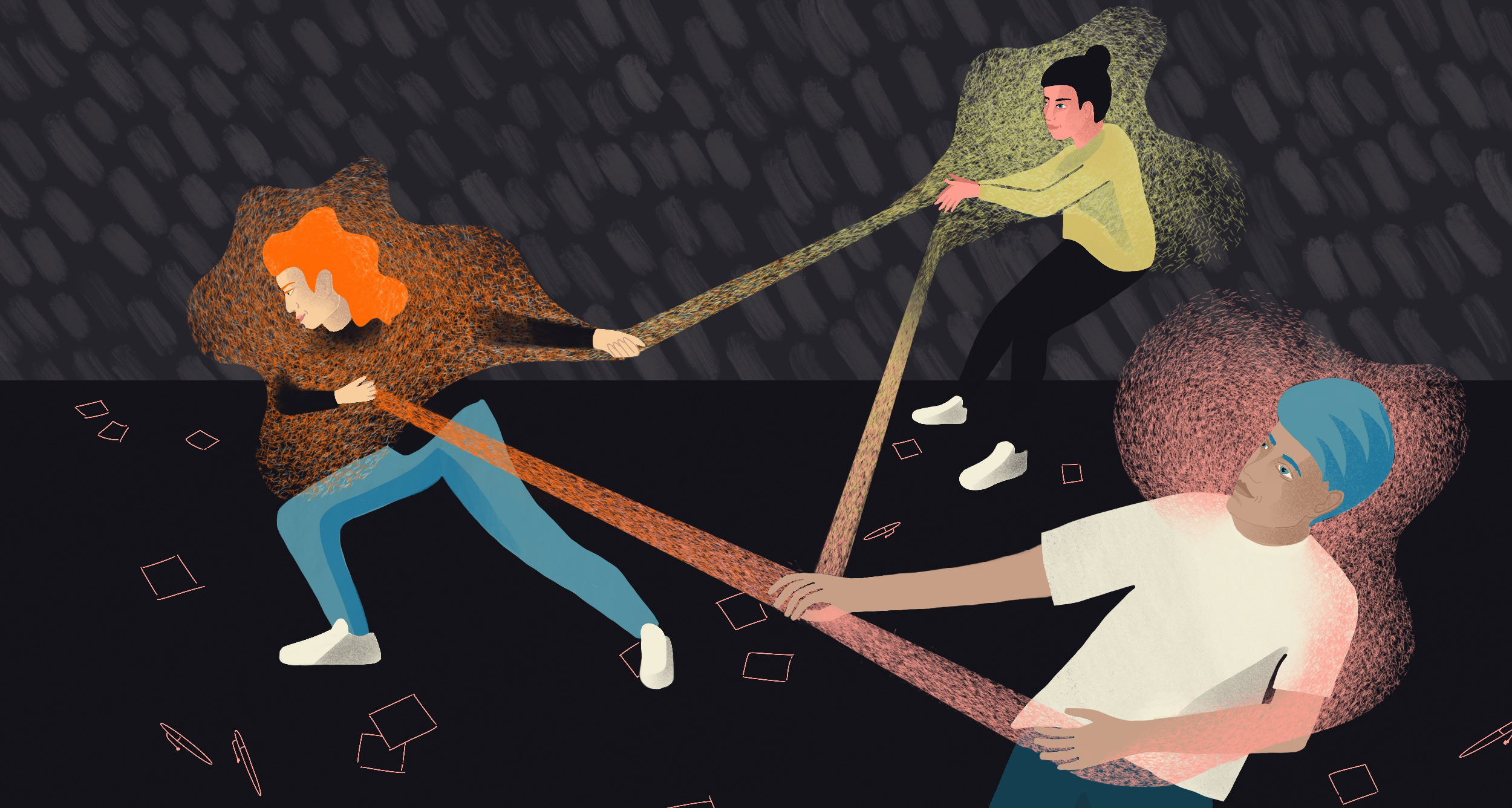
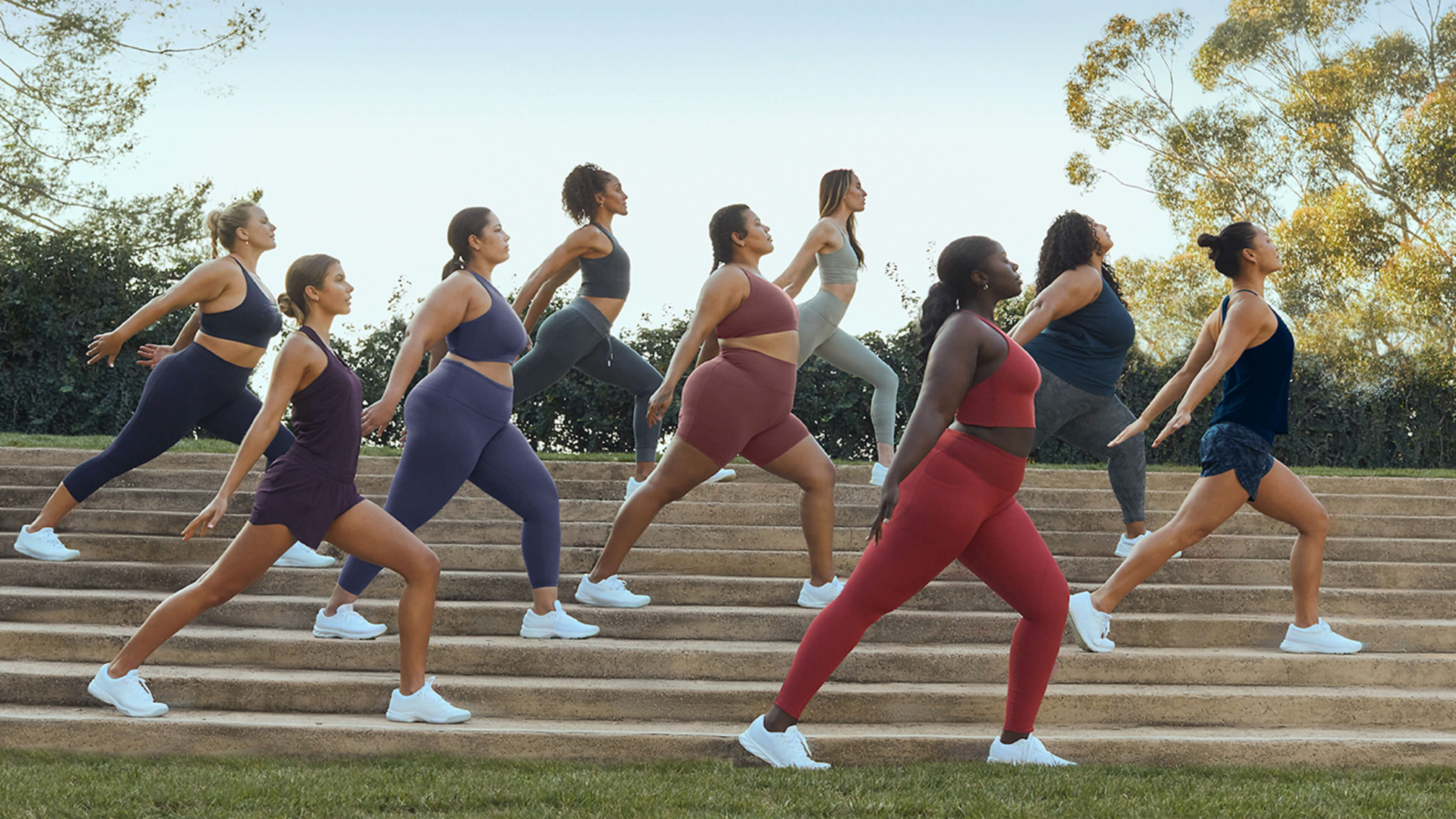
That sort of deep, meaningful engagement with customers doesn’t happen over Instagram. It requires a playbook, a prototype, and a healthy amount of trust. So, IDEO worked with Athleta and Gap to tap into the wisdom of a council of women who represent intersectional identities and lived experiences. The council surfaced powerful insights for the brand, like the fact that active women don’t need a brand to empower them—they already feel powerful.

After only a few weeks, Athleta experienced the difference between research and a truly reciprocal relationship. The way their brand engages with communities is adding depth, understanding, and authenticity to Athleta’s content, products, and experiences. And women can feel the difference.
76% of US adults say that the media promotes an unattainable body image for women.
Fewer than 1 in 10 businesses review for inclusion as part of product design and marketing campaigns.
>2X
user growth in 2022
13,000+
Athleta WellPro well-being providers active on the platform

Climate action for SMBs
Leveraging data to help SMBs reach net zero.
For more than 40 years, Sage has helped businesses of all sizes navigate complex business environments. While many of its larger customers have the means and the structure to support climate initiatives, many of its smaller customers do not.
Sage wanted to help its SMB customers get ahead of future climate regulations and meet consumer expectations. And building carbon-footprint evaluation and mitigation tools would also dovetail nicely with Sage’s own climate aspirations: cutting its own emissions in half by 2030. Together, Sage and IDEO investigated how the company could leverage the data in its platform to calculate its customers’ emissions, both direct and indirect, and how that information could spur action as they aim to hit net zero.
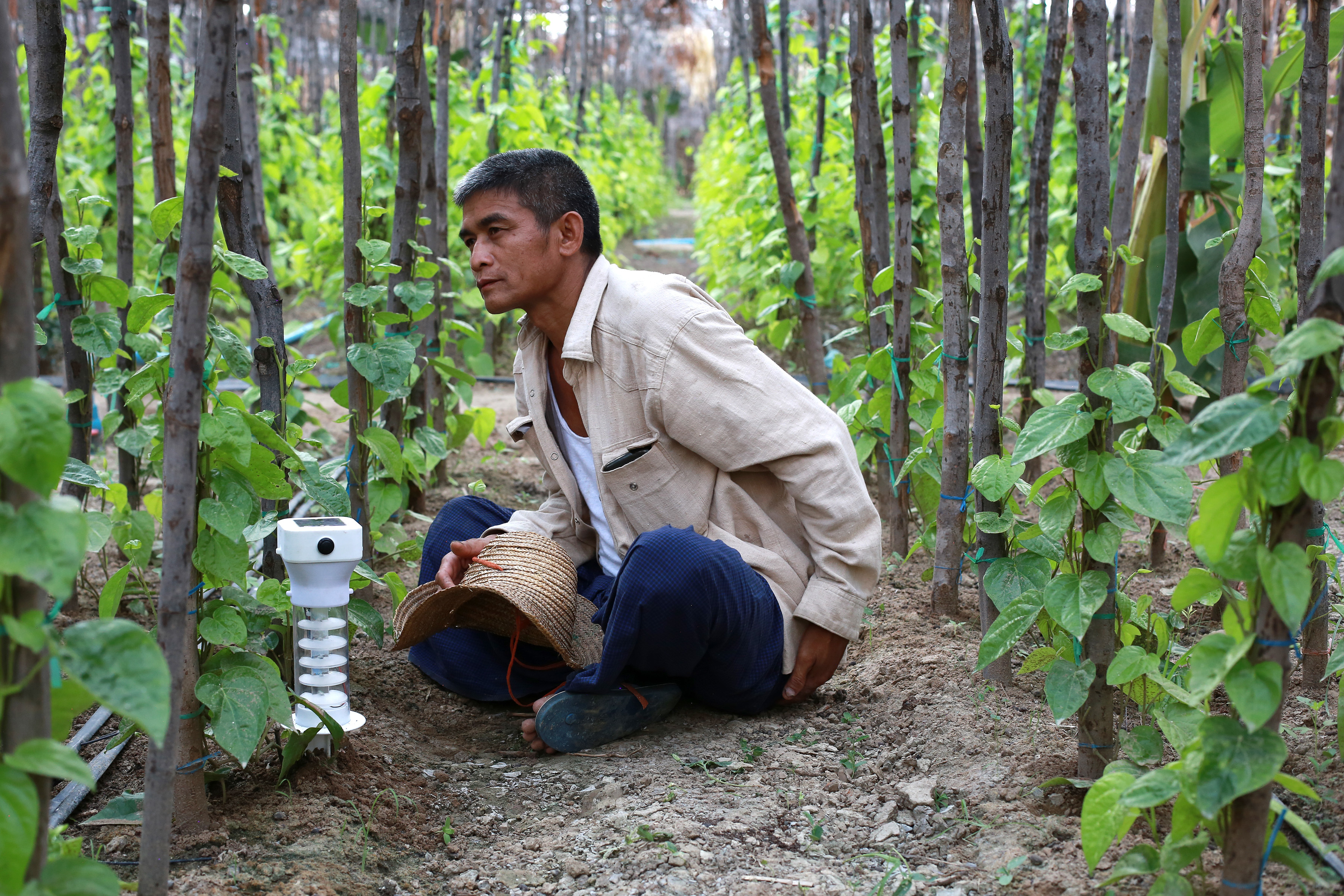
To get started, the design team went deep with customers running all kinds of businesses—from a taxi company to a champagne bar to a falconry center. Business owners shared that their focus often has to be on the day-to-day, a series of small decisions that, when added together, lead to business success. For many, tackling a problem as complex as climate change felt overwhelming. IDEO and Sage synthesized those insights and began working across verticals and products, bringing together experts from marketing, technology, sustainability, and operations to build out new concepts. With the help of two carbon accountants, the team worked to figure out how existing data could inform customers about both their direct and indirect emissions, which can be harder to track. Given how tight SMBs’ margins are, they focused on how that knowledge could fuel emissions-cutting changes that also save money, giving businesses extra incentive to take action. Together, the team created a roadmap of customer outcomes and experience guidelines to help shape future products.
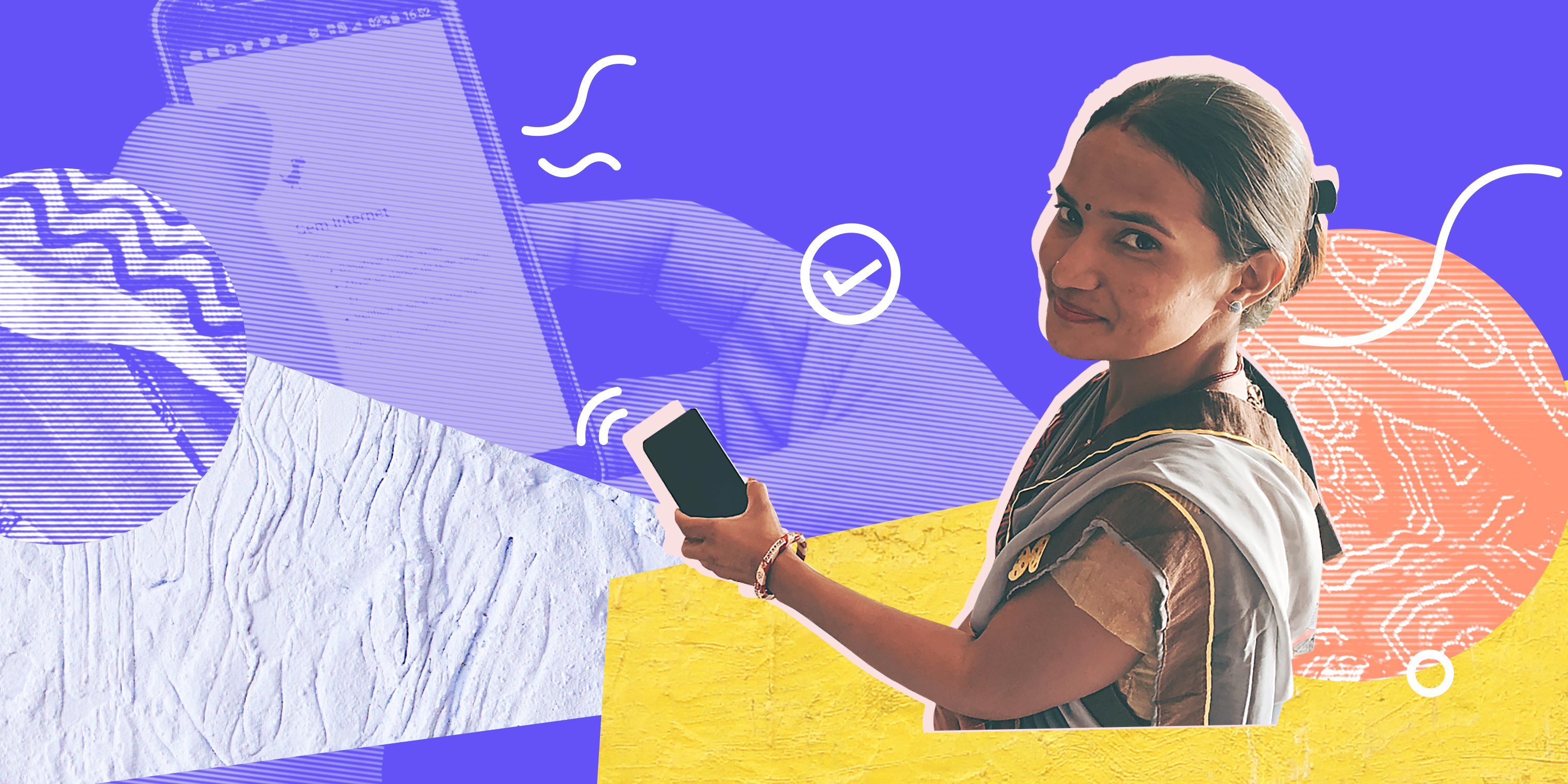
Sage has taken that work forward, launching Sage Earth, a platform that aims to help businesses measure, manage, and mitigate emissions—even across supply chains. With carbon accounting now built directly into all Sage Accounting and Sage for Accountants products in the UK, Sage has made climate action practical and accessible for millions of SMBs. By automating emissions measurement and reporting, Sage Earth removes barriers of cost and complexity, empowering business owners and their accountants to stay competitive in supply chains where up to 95 percent of emissions occur.
From co-developing the UK Voluntary SME Carbon Reporting Standard to launching a Carbon Accounting API, which gives banks, fintechs, and other platforms access to Sage’s Carbon Engine, Sage is embedding sustainability into the systems people already trust—helping hundreds of thousands (and rapidly increasing) small businesses turn climate ambition into everyday action.
Small- and medium-sized businesses—companies with fewer than 500 employees—make up about 90% of the world’s businesses, according to U.N.-backed SME Climate Hub.
Two thirds of small businesses don’t know how they’re going to reach net zero, and lack the resources to do so, according to a recent survey by SME Climate Hub. Still, the majority reported they want to act on climate, recognizing it can help them become a more resilient business.
Large companies may be the biggest emitters of greenhouse gasses, but an estimated 80% of those emissions come from supply chains—often made up of smaller enterprises.
Scaling rapidly
in the three years since the launch of Sage Earth, which is now being used by hundreds of thousands of businesses
World's 1st
open-source hybrid emissions factors dataset, Carbon Commons, led by Sage, helps SMBs calculate carbon footprints using existing data

Reframing menopause
QVC works to change the narrative, while meeting customer needs.
Menopause is much more than a biological transition—it is a profound shift that often arrives just when people experiencing it start to feel invisible. Because it has long been shrouded in darkness as an unmentionable female affliction, those going through menopause often feel unprepared and alone.
Recognizing that its customer demographic makes QVC uniquely positioned to surface conversations and provide support to those dealing with menopause, the video commerce retailer partnered with IDEO to figure out how it could not only meet customer needs, but also flip the conversation on midlife. To learn more, a team of female design researchers held in-depth interviews with folks experiencing it firsthand. The people they spoke to had limited information about what was going on with their bodies, and in some cases, it took years before they understood that symptoms they were experiencing were related to menopause. Respondents also reported that midlife brought a change in social status and the feeling of being boxed in by stereotypes.
QVC and IDEO worked together to design an integrated suite of offerings that could give customers a safe space to discover and share more about menopause. That included an on-air programming series called “Menopause Your Way,” where QVC could support those going through menopause in the privacy of their own homes, a digital landing page with useful solutions, and social media campaigns to help women share and learn more about each others’ experiences. Because people experience menopause and choose to manage it in many different ways, the team wanted to create an integrated ecosystem of content that women could access according to their unique journeys. The new offering helped QVC reach its core audience with solutions and relevant products, and created a space where menopause is out in the open and part of an ongoing conversation. And in the process, QVC evolved to become a more customer-centric company, putting its audience and their needs at the heart of its offerings.
9/10 of British menopausal women say society and brands overlook them.
1 in 2 women in the UK admitted they didn’t know what was happening to them during perimenopause.
Nearly 40% of menopausal women are being prescribed antidepressants to help manage their symptoms, despite 4 out of 5 describing the treatment as “inappropriate.”
Season 2
a series focused on menopause is now in its second season

Healthy youth
Improving digital tools to help practitioners deliver critical mental health support to children and young people.
Healthcare is a complex web of institutions, interaction, relationships, and services. In England, the National Health Service consists of thousands of separate organizations spread across the country. This fragmented structure means that rolling out digital tools and using them to their full potential can be difficult.
NHSX approached IDEO and Public Digital, IDEO’s sister company, for help designing user-centered resources that would empower Children and Young People’s Mental Health (CYPMH) practitioners to use digital tools more effectively, shifting service design from a reactive to a proactive process, and allowing each regional organization to create the best digital services for their children and young people.

The team took a human-centered approach, tapping into the perspectives, challenges and needs of NHS practitioners and leaders across the system over months of research. They then designed a set of accessible, straightforward online resources, courses, and templates that would enable a practitioner to start their own local service transformations. These included everything from practical advice on improving users’ experiences of CYPMH, to teaching methods for service design, to content focused on achieving digital transformation at scale.
The resources were easy to implement and replicate, allowing mental health practitioners across the country to seamlessly integrate physical and digital, create firebreaks in the system, and better bridge the gap between seeking care and receiving it. They were designed to evolve over time, and the work is replicable across the NHS, with the potential to touch millions of lives.
By empowering practitioners to utilize these digital tools to ease the burden of care, NHSX plans to create a positive ripple effect across the entire NHS, its partner organizations, and the country at large.
In a study undertaken in July 2020, the first summer of the COVID pandemic, the NHS found that clinically significant mental health conditions amongst children had risen by 50% compared to three years earlier.
More options, more access
digital resources are helping children and young people access more options for their mental health care
3 Ways Boredom Can Unlock Your Creativity
Ideas come to the prepared mind
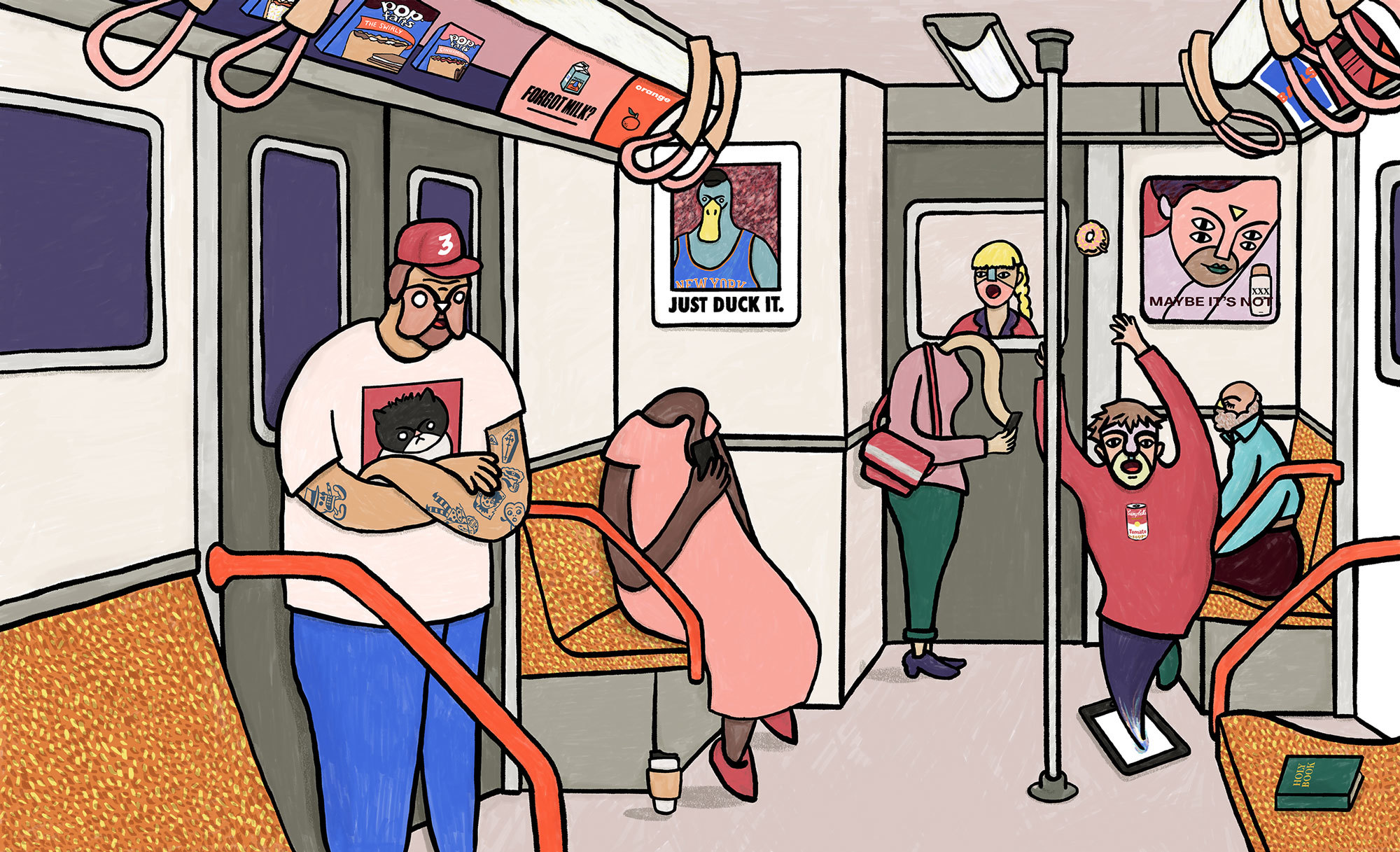
I recently tested myself and found I was averaging four hours per day on my phone, with most of that time lost to Instagram and Facebook. This mindless scrolling was primarily happening in the day’s in-between moments—while waiting in line for a coffee, sitting on the train, and even in the bathroom.
A recent talk by Manoush Zomorodi got me thinking: When was the last time I put away my devices and chose to do nothing instead? When was the last time we all let ourselves experience pure, unadulterated boredom? And is it possible that replacing time sitting around checking email with time just sitting could help us be more creative in both the short- and long-term?
I dug into some research and found that moments of boredom often allow us to take our biggest imaginative leaps. Here are three ways to get yourself there:
1. Schedule time to let your mind wander
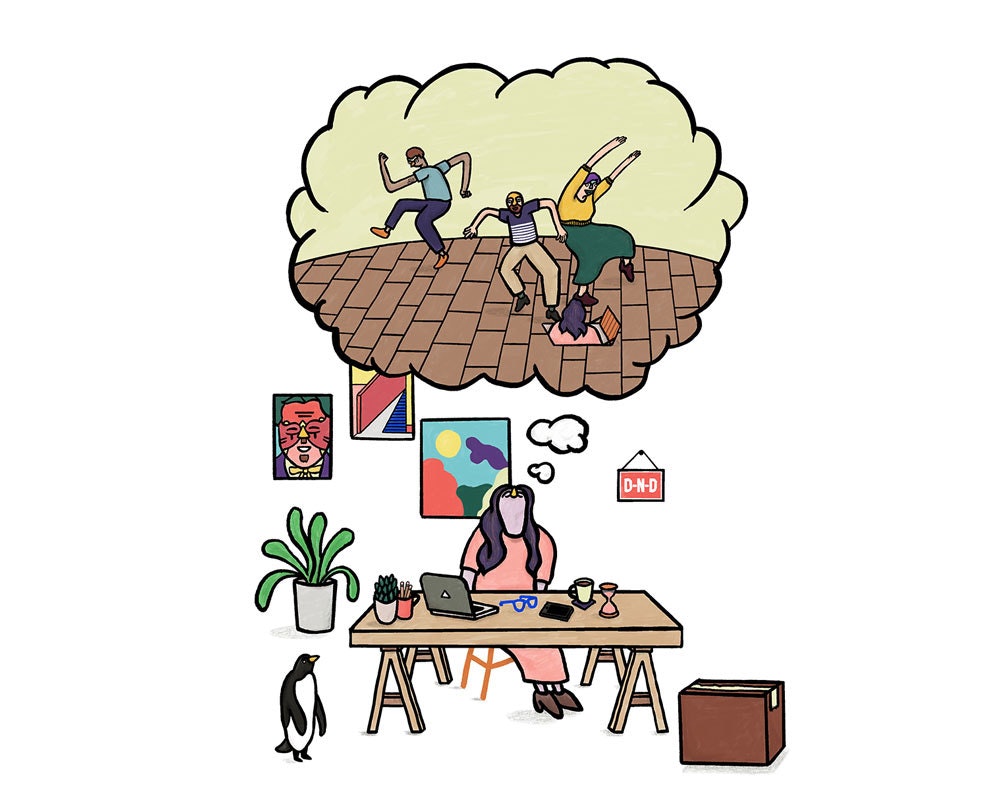
Research shows that daydreaming ignites a collection of brain regions known as the default mode network. According to psychologist Dr. Sandi Mann, as our minds wander, our thinking stretches beyond the conscious and dips into the subconscious. It’s in this zone that we’re often able to connect disparate ideas, solve some of our most nagging problems, and do autobiographical planning—reflecting on our lives and setting goals. It’s no wonder that so many of us come up with our best ideas in the shower.
Where and when do you daydream? Allow time in your calendar to stretch those moments out. Skip the express for a slower train. Try designing new routines into your day, like walking around the block during lunch, to help spark new thoughts.
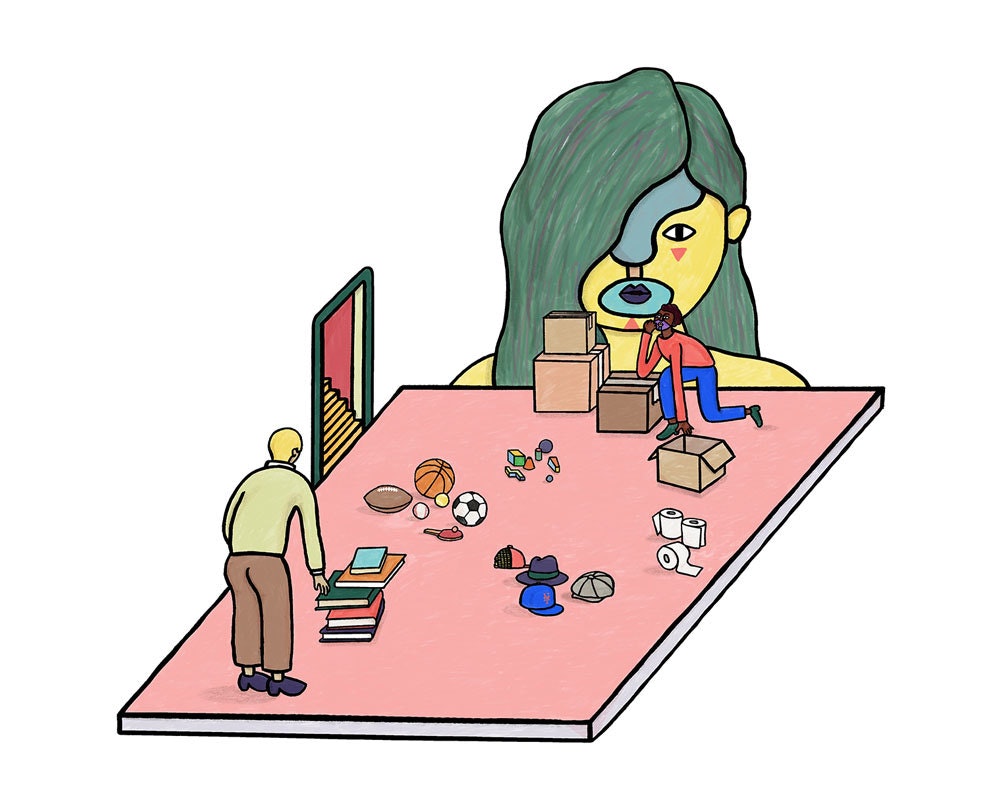
2. Do something mind-numbing before your next brainstorm
To test the creative-boosting powers of boredom, a group of researchers from the University of Central Lancashire conducted a study where half of the 80 participants were instructed to copy numbers from a phone book (experimental group), and the other half were not (control group). They were then asked to brainstorm as many uses as they could for a pair of plastic cups. The phone book group came up with significantly more ideas.
The researchers ran the same test again, but added a third group tasked with something even duller—reading the phone book. These participants came up with even more ideas.
Before your next creative meeting, try tackling those boring-but-necessary tasks that clog up your to-do list. You just might unlock your next big idea.
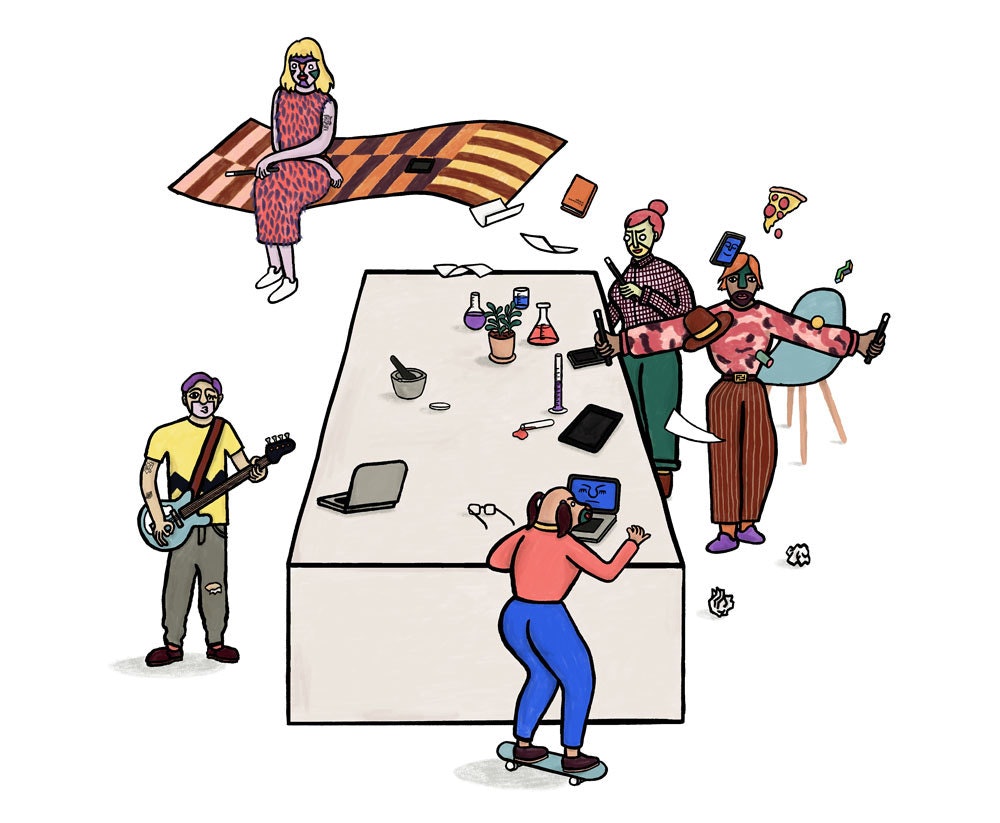
3. Tap into your childhood self
According to psychoanalyst Adam Phillips, the capacity to be bored can actually be a developmental achievement for children. Unstructured time motivates kids to invent their own entertainment from scratch, and gives them the freedom to explore what truly interests them.
When I was younger, I would pretend to teach a Harry Potter-style “Intro to Spells,” complete with paper wands. Today, teaching design classes at Stanford and leadership workshops for girls brings me the same joy and inspiration. And when I get bored, my mind still races around new design curriculum.
Need a reminder of the things that used to inspire you? Call your parents, siblings, or old friends to help playback stories from times past.
There will always be another something to check, update, or scroll through on our devices, but if we let our minds run free instead, who knows what brilliance our boredom might lead to?
In our always-connected world, it’s easy to fill every spare moment with another feed to scroll through, notification to check, or calendar to update. Each activity may feel productive in the moment, but at the end of the day we have nothing to show for it.
Why This Illustrator Makes Her Own Tools
An interview with picture book author and illustrator Cindy Derby
In one sentence, who are you?
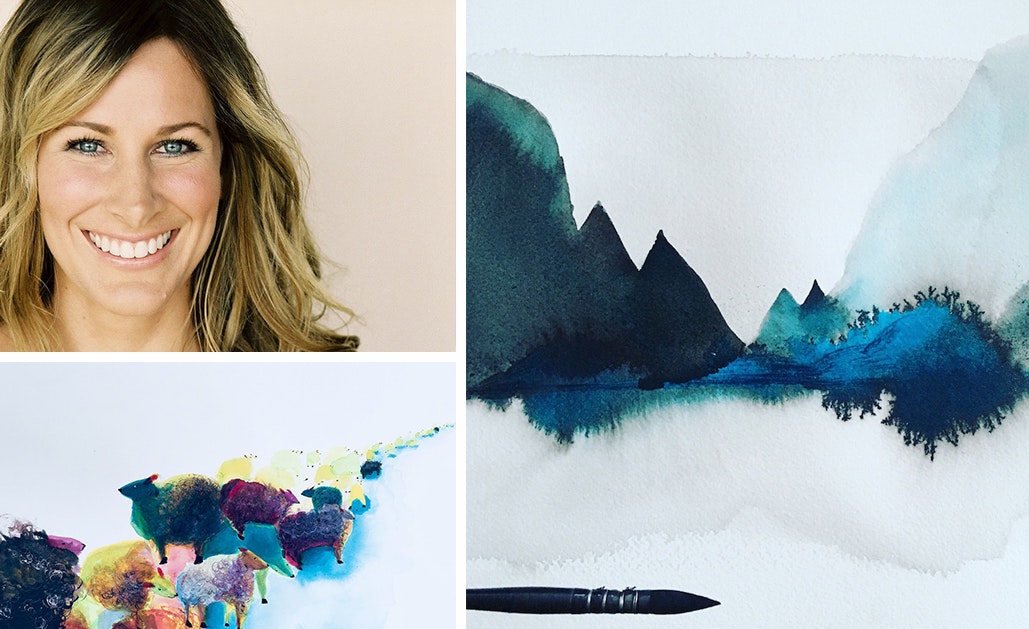
Cindy [sin-dee]: a quirky, creatively neurotic, unapologetic creature who has paintbrushes for fingers and toes—with a laugh that rumbles the ground.
What do you do? How did you get into it?
I am a picture book author and illustrator. Ever since I was a little, I had narratives running through my head for just about anything. My path as a teenager led me to theater and The Royal Conservatoire of Scotland, where I got involved in puppetry—building puppets and touring my own one-woman shows. In the back of my mind was a dream I couldn’t let go of: I wanted to write and illustrate children’s picture books.
After I moved back to California, I began painting with acrylic on gigantic canvases, but eventually transitioned to working a bit smaller. That’s when I discovered the unpredictable beauty of using watercolor and ink. From there, I spent years diligently working on my illustration skills and developing characters, and I have been working on my craft of storytelling ever since.
As an adult, picture books are a way to collaborate with my little self. And together, we create weird books for weird kids. My debut book as an author and illustrator is How to Walk an Ant (Roaring Brook Press, 2019).
What are your three most beloved possessions?
1) A tiny armadillo sculpture with a broken tail
2) A collection of letters from my grandmother
3) An embarrassing diary from my middle school years—with creepy drawings of all my crushes
What are your favorite tools of the trade?
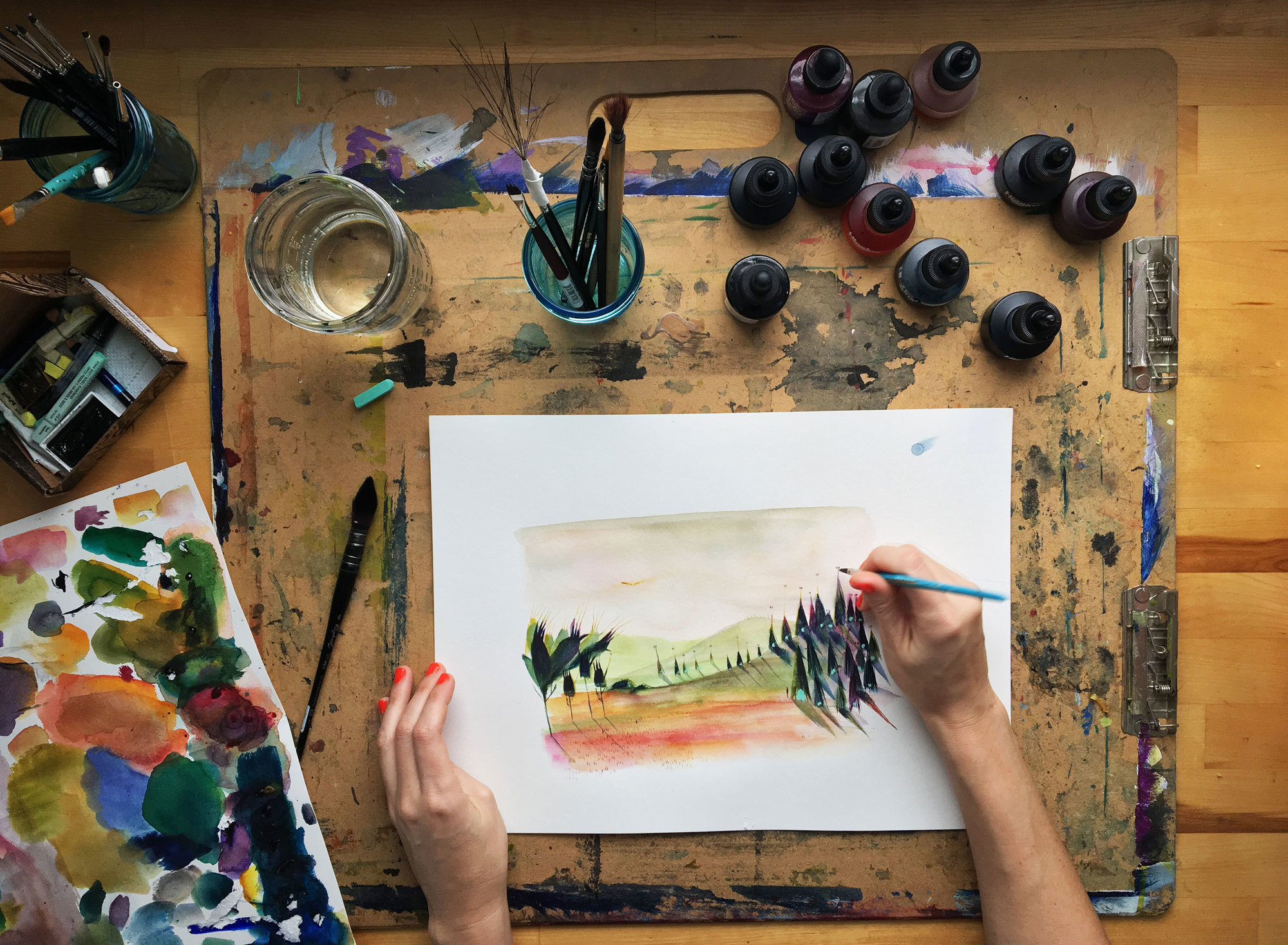
I make my own paint brushes. I pluck the hairs out of old, scraggly brushes and bind them together to create new brushes. I also use sticks, wires, and clay shapers when I paint. They make imperfect, expressive lines. And I like that.
What does a typical work session look like?
Before I begin any work, I obsessively wipe down all surfaces, organize my materials, and even make my bed. This helps my mind become a blank canvas. This also helps me rediscover things in my studio I may have forgotten about—like that piece of Styrofoam pool noodle I cut out into shapes to make stamps, or that tiny drawing of a bug with a coy expression.
When I finally sit down at my art table, I start by making some spots on paper. The result is not supposed to be good, nor do I want it to look like anything. This is just a way to warm up my hand. It also helps to whisper: “Good morning, hand...Good morning, brush...Good morning, inkblot!”
After a healthy session of experimenting, I transition into working on one of my current picture book projects, which involves a happy balance of planning and spontaneity.

How do you get over creative block?
I intentionally make very ugly art for a few days. That means putting wrong colors together until they are muddied, ripping up paper to make monsters, and pouring a whole bottle of black ink on top of a pretty landscape. Afterwards, I eat too much chocolate and melt into the floor. If I can make myself laugh—really, truly have a good ol’ laugh at myself—that block will get smaller.
How do you see the world in 2078?
If a drone can deliver a rainbow sprinkled donut to me while I’m lying on my death bed...I’m happy.
What’s your number one bucket list item?
I would like to retrace the steps that my late grandmother Marian Mountain took on her journey while creating her book The Zen Environment: The Impact of Zen Meditation. She had a fascinating life. She was a student of Shunryū Suzuki for many years, and helped record and transcribe all his lectures.
She traveled around in a RV with her typewriter most of her life. And she used to be a puppeteer! Before she died, she was working on a follow-up book titled Snail Zen. I’d like to help complete that book.

Who are you creative crushin’ on lately?
Leonard Baskin. I recently discovered his work while doing research at The Letterform Archive in San Francisco. His lines are haunting, expressive, and honest.
I have been stalking illustrator Cindy Derby’s work on Instagram for longer than I care to admit. She creates worlds for children’s books, but her unique characters and experimental style capture the imagination of adults just as easily. For this installment of our Creative Crush series, I set out to learn more about Derby and her process.

Thoughtless Acts: Urban Surfing
Human-centered design requires us to observe human behavior with beginner's eyes, so that we can spot the innate ways people interact with the world around them. We call these intuitive and unconscious reactions Thoughtless Acts, and IDEO designers collect photos of them to inspire their work.

If you think about my hometown of Munich, surfing is probably not the first thing that comes to mind. So what do you do if you love surfing but live deep down in Bavaria? You just have to make it happen. Take a bunch of crazy surf dudes, add the freezing cold "Eisbach"—a small man-made river located at the English Garden in downtown Munich that provides the perfect "standing wave"—and there you go. There is always someone taking a ride—early in the morning, when the city is still asleep and you are on your way to the office, at noon during a quick lunch break, in the afternoon for a sunset session, or even at night or in the snow. (The Eisbach has even lured professional surfers like Kelly Slater, Gabriel Medina, and Mick Fanning.) Hang loose can be found everywhere around the world—you just have be creative.
Human-centered design requires us to observe human behavior with beginner's eyes, so that we can spot the innate ways people interact with the world around them. We call these intuitive and unconscious reactions Thoughtless Acts, and IDEO designers collect photos of them to inspire their work.
Love Notes to Our Design Heroes
In which we give our hearts away to Maira, Bucky, Syd, Marcel, and more
Dear Maira Kalman,
I have to admit, it was Tibor who brought us together. Him and his flair, and boldness, passion and humor. But you—YOU! You were the words and the drawings and the insights. A creative mess of things I found in contrast to my young orderly graphic design mind, yet loved and admired and wanted every bit of.
In 1999, I saw you at the SFMoMA talking about your beloved husband when Tiborcity was on exhibit. I was sitting next to the person I didn't know would become my own beloved husband. You became part of our lives together—extending to our children. When our 3-year-old daughter recited the full story of Sayonara, Mrs. Kackleman from memory as we flipped through each page, we knew we had done something right.
Yours in missing our beloveds,
Jen Panasik
Portraits in Creativity: Maira Kalman
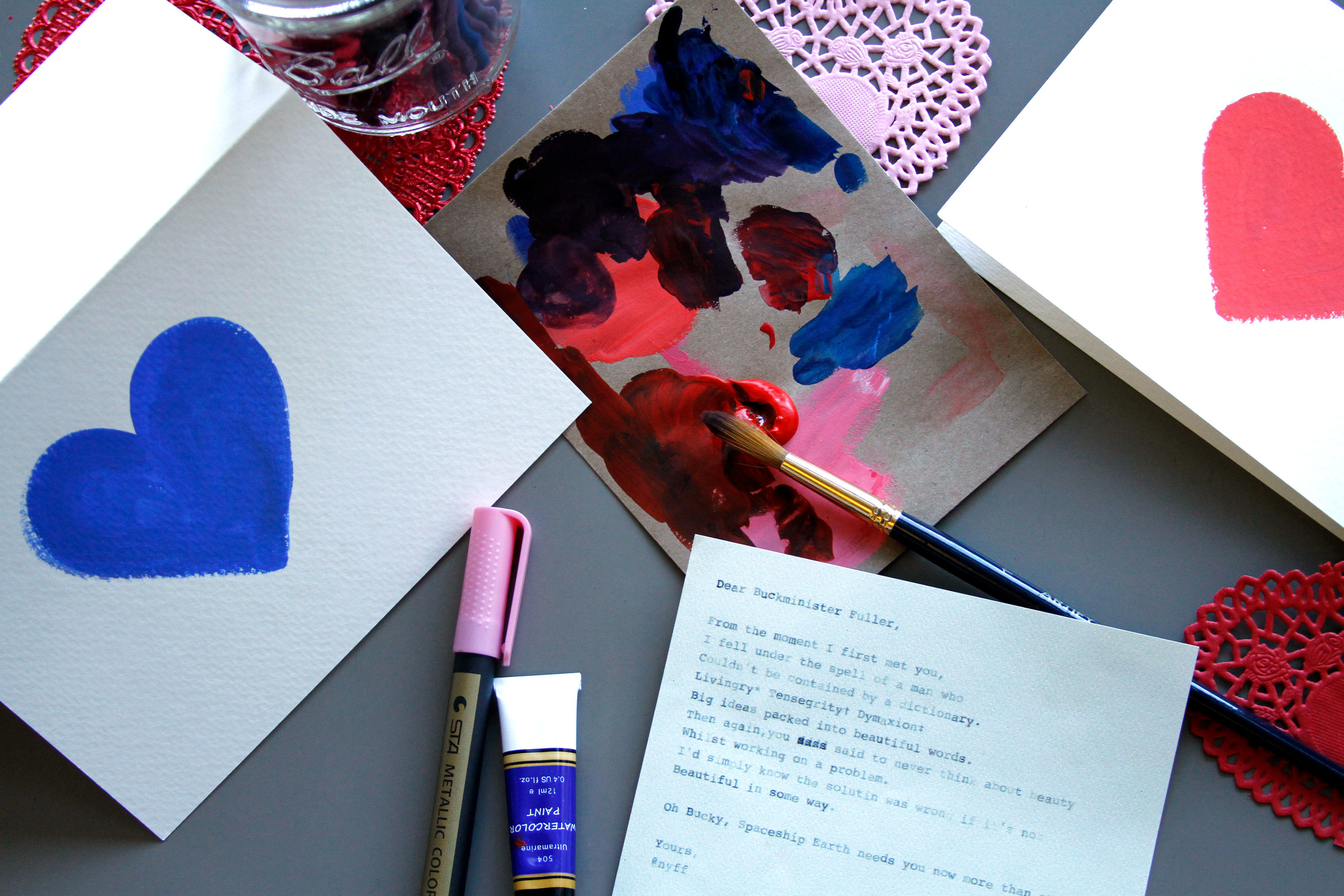
Dear Buckminster Fuller,
From the moment I first read you, I fell under the spell of a man who couldn’t be contained by a dictionary. Livingry. Tensegrity. Dymaxion. Big ideas packed into beautiful words. Then again, you said to never think about beauty whilst working on a problem. I'd simply know the solution is wrong if its not beautiful in some way.
Oh Bucky, Spaceship Earth needs you now more than ever.
P.S. Can I leave my toothbrush at your geodesic dome?
—Chris Nyffeler
Dear Janet Champ,
I was just a few years out of college when your "If You Let Me Play" Nike campaign came out, and it rocked my world. Here was this gorgeous feminist rallying cry: It wasn't on a flyer at the natural foods store, and it wasn't on a poster at a protest march. It was on national TV, with a big ol' Nike swoosh at the end. I remember thinking, "Whoa. You can have a paying job AND change the world. That's badass." And I promptly became a writer.
With great affection and respect,
Jenn Maer
Dear Syd Mead,
I'm writing to thank your for the countless hours I spent in my youth immersed in the details and possibilities of your future visions. Your inspirational and sometimes cautionary depiction of future artifacts, cities, and cultures inspired me to design optimistically towards a better tomorrow. Thank you for helping enrich and enlarge our dreams of what lies beyond the horizon and for pulling humanity forward.
Best,
Danny Stillion
Visual Futurist: Syd Mead
Dear David Kelley,
You taught me that even the most simple acts can communicate thought, intention, and creativity. Who knew gift wrapping could be an act of self-expression and creativity, or that you could say "no" to someone and still leave them feeling good about the exchange?
You taught me it's all about the nuance, and the details. That with as much care and thought applied to the moments in between, that you can have a lasting impact on someone's day.
In an world of design full of black and grey, you encouraged me to bring the color.
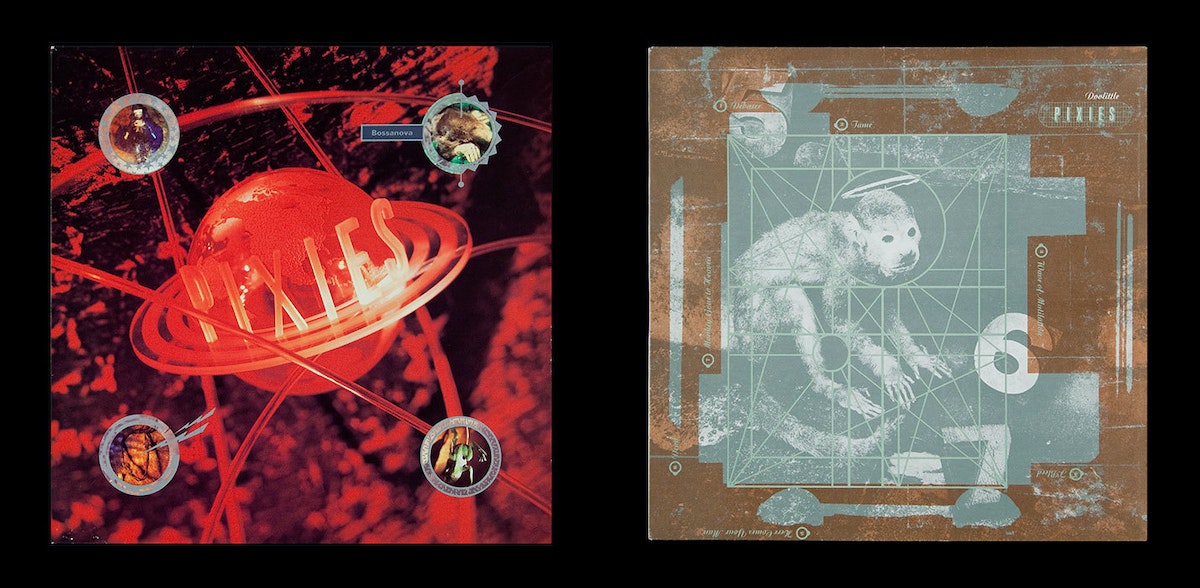
Dear Vaughan Oliver,
I first met you through the Pixies. I don’t know if it was the big hairy back, geometrically augmented monkey, or the bowl of sheep eyes, but you had me hooked. And who uses script type like that!?!! When I first met you, I expected a severe, dark personality in an equally severe, dark dress. But who I met was a clever, happy, normal guy with an incredible eye for the unusual and a penchant for good stories. Because of you, I still own an unusual number of 4AD CDs, whether I like the music or not. And I usually do.
—Michael Hendrix
Dear Aleksandr Rodchenko,
Thank you for teaching me that typography matters. That, with the right size and placement, words on a page can punch you in the face. That might be the most powerful design lesson I ever learned, and something I’ll never be done learning.
Still stunned,
Joe Brown
Dear Jackie and Lloyd,
It was summer of 2007, London Design Week, and my feet were pounding from covering miles and miles of "best of the best design."
Everything is starting to look the same. My eyes glazed over. "Get me out of here!"
On my way to exiting this hell I stumble across a sanctuary. "Take a deep breath..."
Actually, it took my breath away.
Organic sinuous lines, the color so elegant, I still remember that egg-shell blue on the Malvern sofa. But what made the most lasting impression was the two women designers standing before me—as if I was looking at a future self.
Flash forward 11 years, you two continue to inspire me by pushing the craft in furniture design, to bridge the gap between design cultures at We Present, and to help others be successful.
Thank you for showing me the way.
I still dream of an internship, maybe one day...
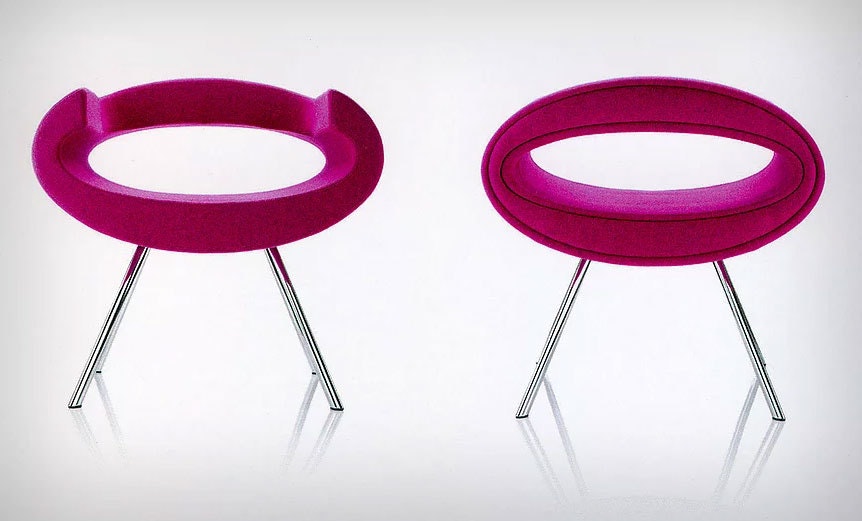
Dear Marcel Wanders,
You were the designer that I literally wanted to be when I was in school. From your early work with Droog to your radical experiments with materials, to the fantastic stories you create through spaces and objects today. Your work couldn't be more different from what I do as a designer—and I relish that you live way out there on the edge of art and design to remind me of the limits of sound strategy and argued rationales, and to remind us all of the importance of beauty and love and intuition. More recently, we've had the chance to meet, work together, and become friends. I am better at what I do by being challenged by what you do.

Do you remember when you first fell for design? The moment you discovered someone whose work sang to you, moved you, sent you skipping down a creative path? In these love notes, the bleeding-hearts of IDEO declare their love for the artists, writers, and designers who showed them the way.

Lindsey Turner
I’m passionate about building brands, products, and experiences that help organizations show up with meaning and momentum.
I help organizations cut through complexity by shaping how they show up, through brand strategy, identity, and storytelling.
Working at the intersection of brand and business, I bring an editorial eye and a bias toward making—turning ideas into tangible experiences that people can understand, trust, and believe in.
My work spans government, healthcare, financial services, media, and consumer goods, from launching Gen Z-focused ventures to building innovation labs and reimagining legacy brands. I relish moments of ambiguity and enjoy translating across teams, perspectives, and priorities to move ideas forward.
I started my career in editorial and digital design, shaping cross-platform experiences and identity systems in publishing and agency environments. That foundation still shapes how I work today: I’m detail-oriented, collaborative, and overreliant on the Oxford comma. I hold a BFA in Visual Communication from the School of the Art Institute of Chicago.

Rachel Young
My work helps organizations see who their products aren't working for—and build the will and the tools to do something about it
For 25 years, I've asked the same question: Who does this design exclude—and what are we going to do about it?
My work spans human-centered strategy, inclusive design, and qualitative research, with clients ranging from Microsoft, Google, and Verizon to the National Science Foundation, and San Francisco Unified School District.
Before IDEO, I taught elementary school in East Palo Alto and spent a decade doing design work with social service organizations—where I learned firsthand what it costs people when systems are built without them in mind.
I am currently writing User Error, a nonfiction book about digital access and the design decisions behind it. I live in Oakland, California.

Brian Pelsoh
I lead with craft, ensuring our work is creatively excellent: rooted in deep human insight and imagination, while also grounded in the realities of business and technology.
My expertise spans brand, communication, and product design across tech, education, the arts, and social impact.
I believe great work demands both high-level vision and obsessive attention to detail, and only happens through collaboration.
I bring an inclusive, hands-on approach and a deep understanding of business, which enables me to consistently deliver excellence while always asking why.
Before joining IDEO, I worked at the brand firms Pentagram and VSA Partners. I began my career as a designer, leading teams at the School of the Art Institute of Chicago and the Milwaukee Art Museum. I hold an MFA in graphic design from Maryland Institute College of Art and a BFA in communication design from the Milwaukee Institute of Art & Design, and have taught at some of the best design schools in the US.

Tony Wong
I am responsible for IDEO’s long-term success in China and working with clients to use design as a tool to enable growth.
I am responsible for IDEO’s long-term success in China and working with clients to use design as a tool to enable growth. Specifically, I have helped Chinese companies design holistic brand solutions through the development of their products, communication, services, and innovation teams, and I have helped multinationals expand their presence and influence in China.
I advise global leaders on developing China-led innovation and capabilities.
In over 15 years in IDEO Shanghai, I have worked on projects that use design to elevate the quality of the experience of healthcare products and services, streamline processes that increase productivity, create spaces and programs that promote and enable inclusive communities, and build next generation mobility solutions that are planet-positive.
Before joining IDEO, I worked at Philips Electronics and the Electrolux Group in Italy, the Netherlands, and Singapore on a number of breakthrough commercial products. I am a member of the Young President Organization in Shanghai.

How to use AI as an editor, not a writer
Ed White shares how he uses AI as an editor—not a writer—to sharpen storytelling, rehearse ideas, and preserve the productive friction that makes creative work better.
Ed White has a rule he's tested on his own writing: hold yourself as the writer, and let AI be your editor. Ed is a Senior Design Director at IDEO's London studio, where he co-leads the firm's AI portfolio across Europe. Before IDEO, he spent 12 years as a writer and editor at the Financial Times, Wired, and Contagious. So when he talks about when to use AI for storytelling and when not to, it comes from two decades of crafting his storytelling skills.
In this episode, Mina Seetharaman talks with Ed about two specific tools he uses to keep AI in an editor's seat: a "roasting agent" prompted to critique his drafts without any sugarcoating, and a simulated audience he rehearses pitches on before the real thing. They also get into what Ed is hearing from design leaders at Anthropic, Lovable, Shopify, and Google Creative Lab about how creative work is changing, and why he thinks the friction of writing something yourself is worth protecting rather than automating away.

Building a personal AI for the messiness of life: Sida Li
Becca Carroll talks with Cue co-founder Sida Li about designing a personal AI for the messiness of everyday life—not just work. They explore how Sida stays anchored to human needs while navigating fast-changing technology, product tradeoffs, business-model experimentation, and the realities of building an AI company today.
Most AI products today are built for work—a space with clear problems and established systems. One founder noticed a gap: personal life is messier, harder to systematize, and mostly left behind by the AI boom. So she built Cue, a personal AI that lives inside iMessage and group chats, to go where the other tools haven't.
In this episode, Becca Carroll, IDEO's Chief Strategy Officer, talks with Sida Li, co-founder and CEO of Shared Context Lab, about staying anchored to a human need while the technology around her keeps changing shape, why she treats her business model with the same rigor she'd bring to a product, and what it feels like to build a company at this particular, disorienting moment in AI.
The conversation also gets into how Sida makes design decisions: the language Cue uses to describe itself, the tradeoffs behind building inside iMessage instead of a new app, and a real story about a business idea that didn’t pan out.
This is the second in a two-part series profiling founders from IDEO's Startups-in-Residence program. The first conversation is with Johannes Seemann, founder of Sooner, on designing GenAI for the emotional side of money.

Designing GenAI for the emotional side of money: Johannes Seemann
Designing financial tools around the feelings that shape money decisions.
Most personal financial tools are built to run the numbers and optimize towards a budget. While that works for some, most people experience money as a lived relationship that does not neatly fit into a spreadsheet. Johannes Seemann and Becca Carroll discuss why money is emotional before it is mathematical, and what a human-centered approach to building a generative AI financial product looks like in practice.

The curious leader's edge in uncertainty: Scott Shigeoka
How genuine curiosity helps leaders navigate uncertainty with greater confidence.
Mina Seetharaman talks with Scott Shigeoka, author of Seek and Head of Curiosity Cultivation at the Eames Institute, about what distinguishes genuinely curious leadership from performative curiosity, how power dynamics shape curiosity, and why practicing curiosity can restore energy rather than drain it.
Looks like you might be in search of something very specific?
Or reset the filters above and try another angle.
Here’s some random inspiration

Podcasts about creative leadership

Articles about the power of prototyping