
Building a new venture to restore trust in China’s food system
Launching a new restaurant and retail venture that connects food from seed to table.
Food is the heart of most cultures. In China, one of the oldest cultures in the world, food is central to family gatherings and celebrations. It’s what binds people, a tangible way of showing love and respect. But in recent years, the Chinese food industry has suffered from concerns around safety.
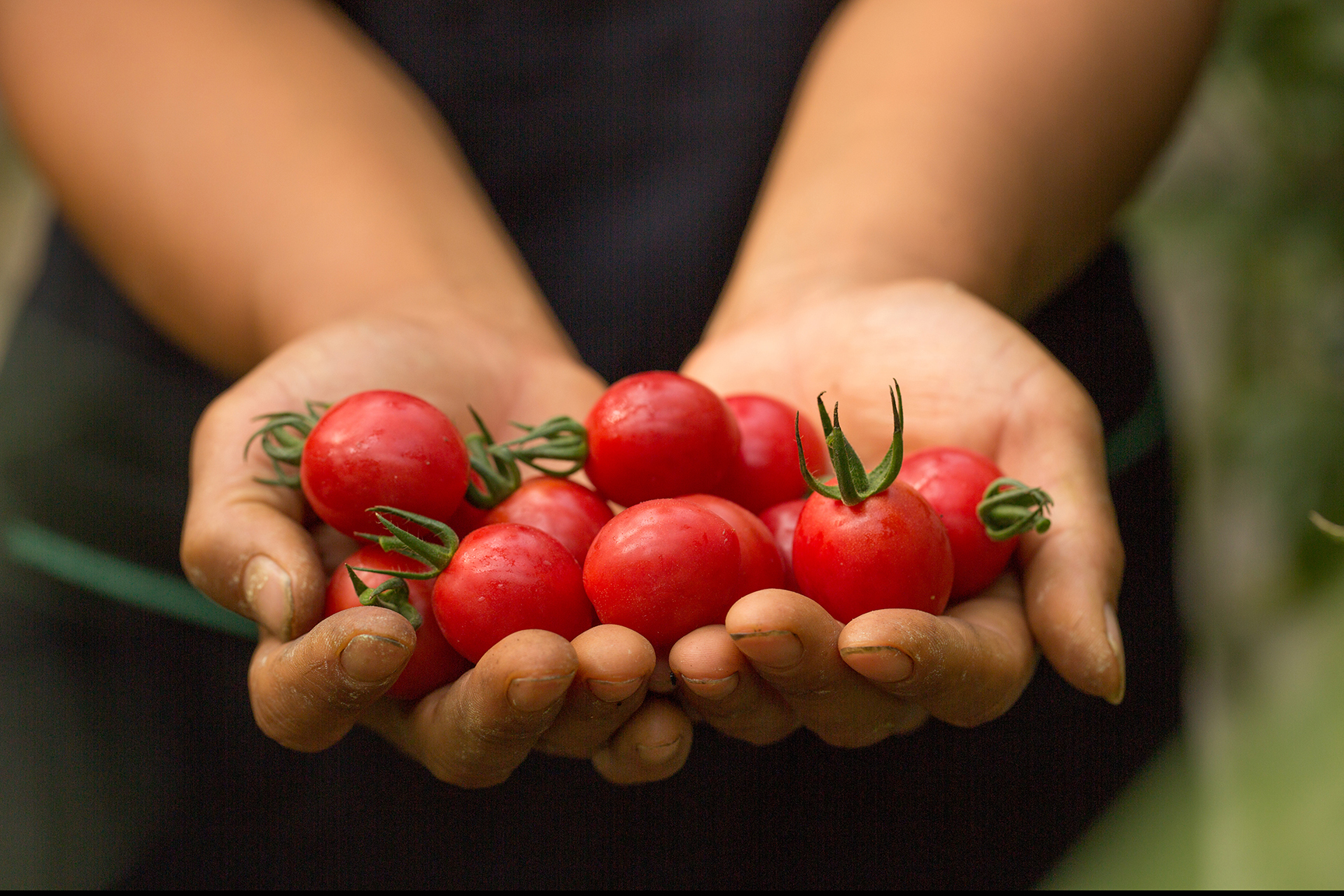
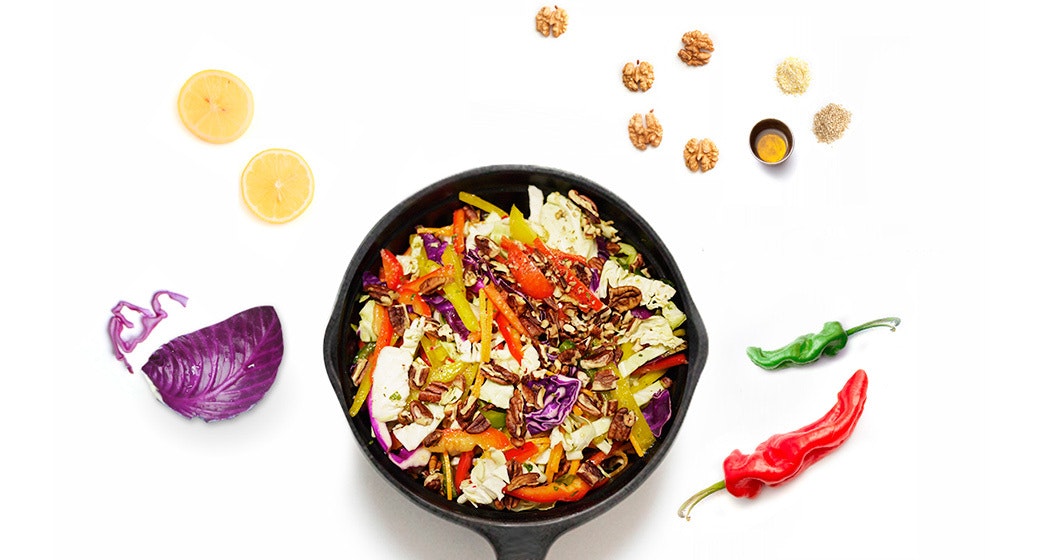
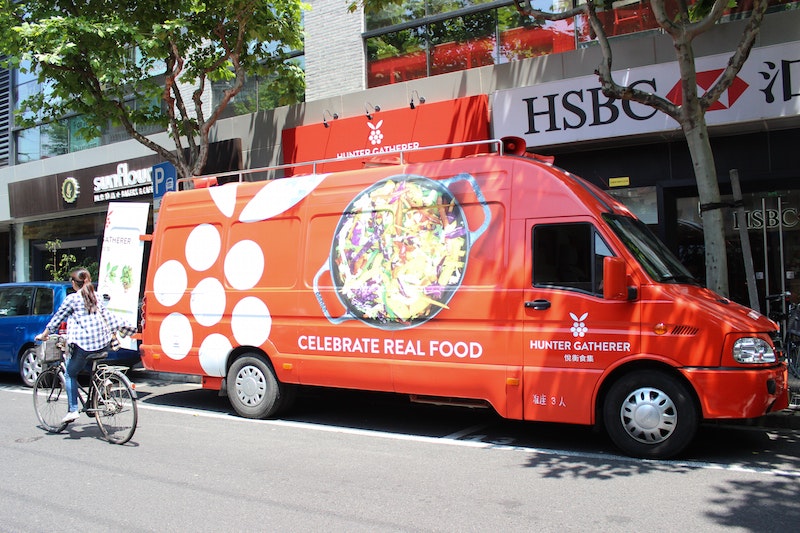
Two siblings, Harn and Anmao Sun, set out on an ambitious venture: to create a trusted source of food in China and, by setting an example, to instigate a movement around conscious farming practices. The American-born entrepreneurs launched Hunter Gatherer, a restaurant and retail food space built around a transparent supply chain, from farm to table to grocery shelves. The venture is based on growing and serving what they call real food: The ingredients are chemical-free and come from known and trusted sources—food they’d eat themselves. The purpose of the venture is simple: to serve people real food that is their right.
Having studied and worked in the US, Harn and Anmao grew accustomed to browsing farmers markets on Saturday mornings or picking up a burrito at Chipotle. But when they returned to China, they were unsure about the safety of the food they were eating.
“In China, you wouldn’t go to a food stand, because you’d be concerned about the ingredients,” Anmao said. “You can’t take the safety for granted.”
Hunter Gatherer’s very existence challenges bedrock assumptions about how food is produced in China. A long and depressing list of scandals—milk contaminated with melamine, pork produced from diseased pigs, used cooking oil repackaged and sold as new—has rocked the public trust.
“In China, agriculture is going through a huge change,” Anmao said. “In the US, agriculture operations are regulated. Farmers’ practices are regulated. If they use pesticides, there are limits because these farmers understand that once a certain threshold is hit, additional pesticides will not yield more crops. But in China, pesticide use came about 30 years after the US and Europe, and because of a lack of full understanding, farmers in China incorrectly operate under the assumption that more pesticides means more crop yields. Also, with over 250 million farmers in China, it becomes immensely difficult to properly regulate everyone.”
New Ventures
Harn and Anmao wanted to restore trust in the simple act of eating in China, and they came to IDEO to build a scalable business based on that vision. This was essentially a startup, a shared commitment between IDEO and Hunter Gatherer.
“I’ve lived in Shanghai for the past seven years, and as a relatively active and health-conscious person, I’ve had to invest quite a bit of time in finding food that I trust,” said Charles Hayes, managing director of IDEO Shanghai. “That investment has been both in the time it takes to research the sources of ingredients but also a literal investment in paying a high price for imported food just for that extra peace of mind.”
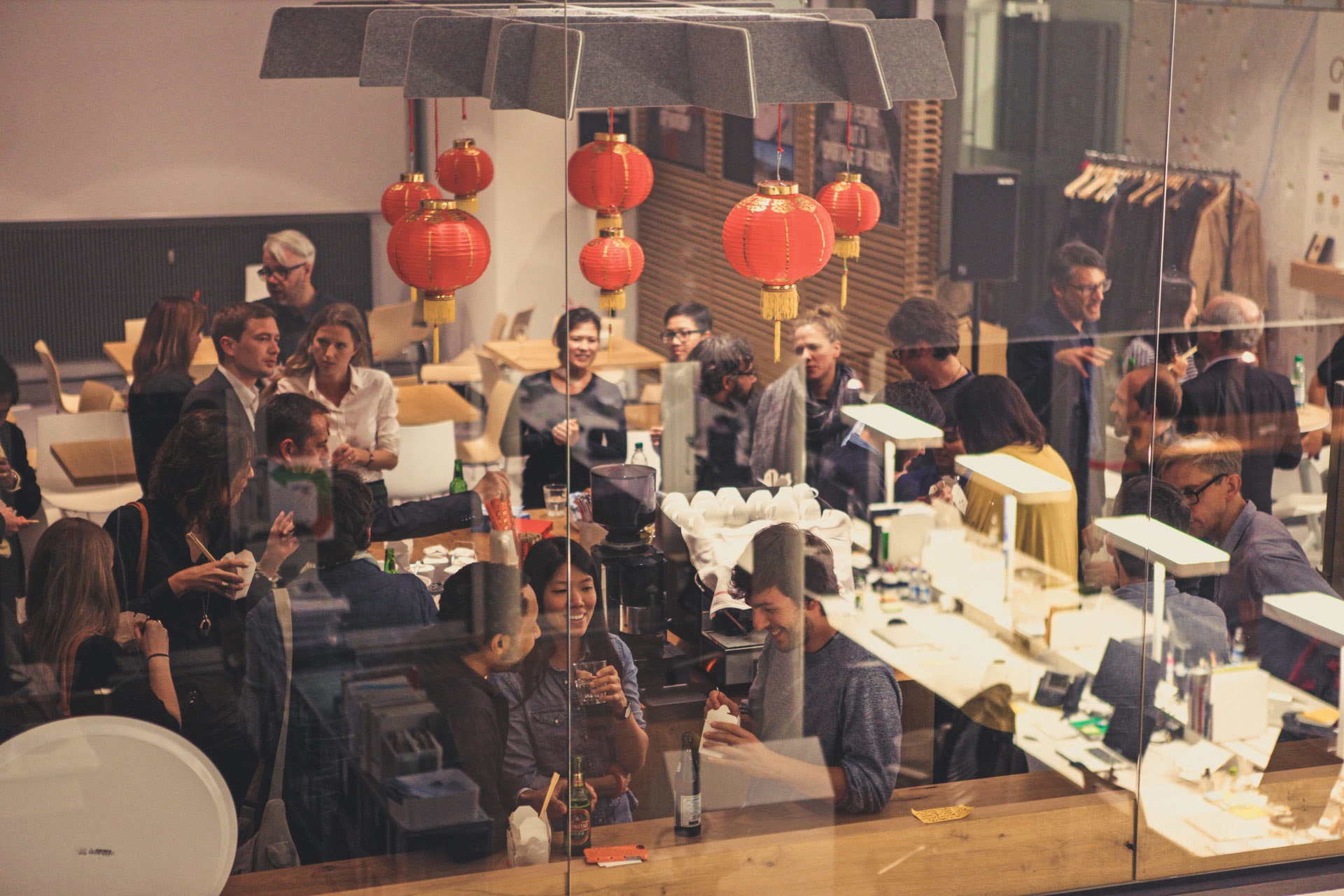
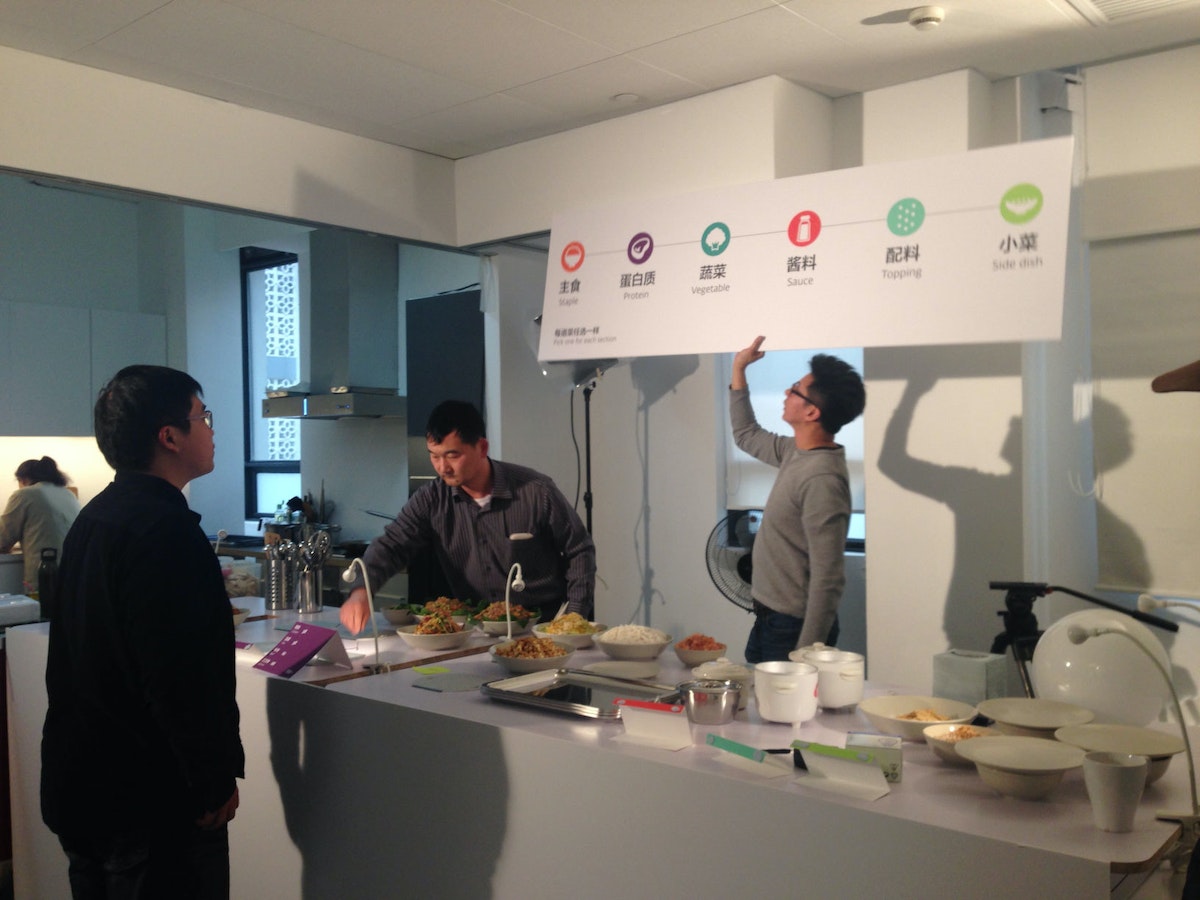
Anmao and Harn took up residence in the IDEO Shanghai offices to incubate their business. Together with IDEO designers, they tested packaging, cooked countless meals, and found ways to introduce unfamiliar ingredients to Chinese consumers. They discussed different concepts of lunch and dinner, and how notions of freshness in Chinese culture might affect cold-storage systems. In IDEO’s prototyping kitchen, the teams tested all manner of different foods, flavors, colors, mixes, and price points, and they brought consumers in to try them out. IDEO designers, along with the founding team, also worked on the brand and positioning of what would eventually become the Hunter Gatherer enterprise—its location, human resources, and marketing strategies.
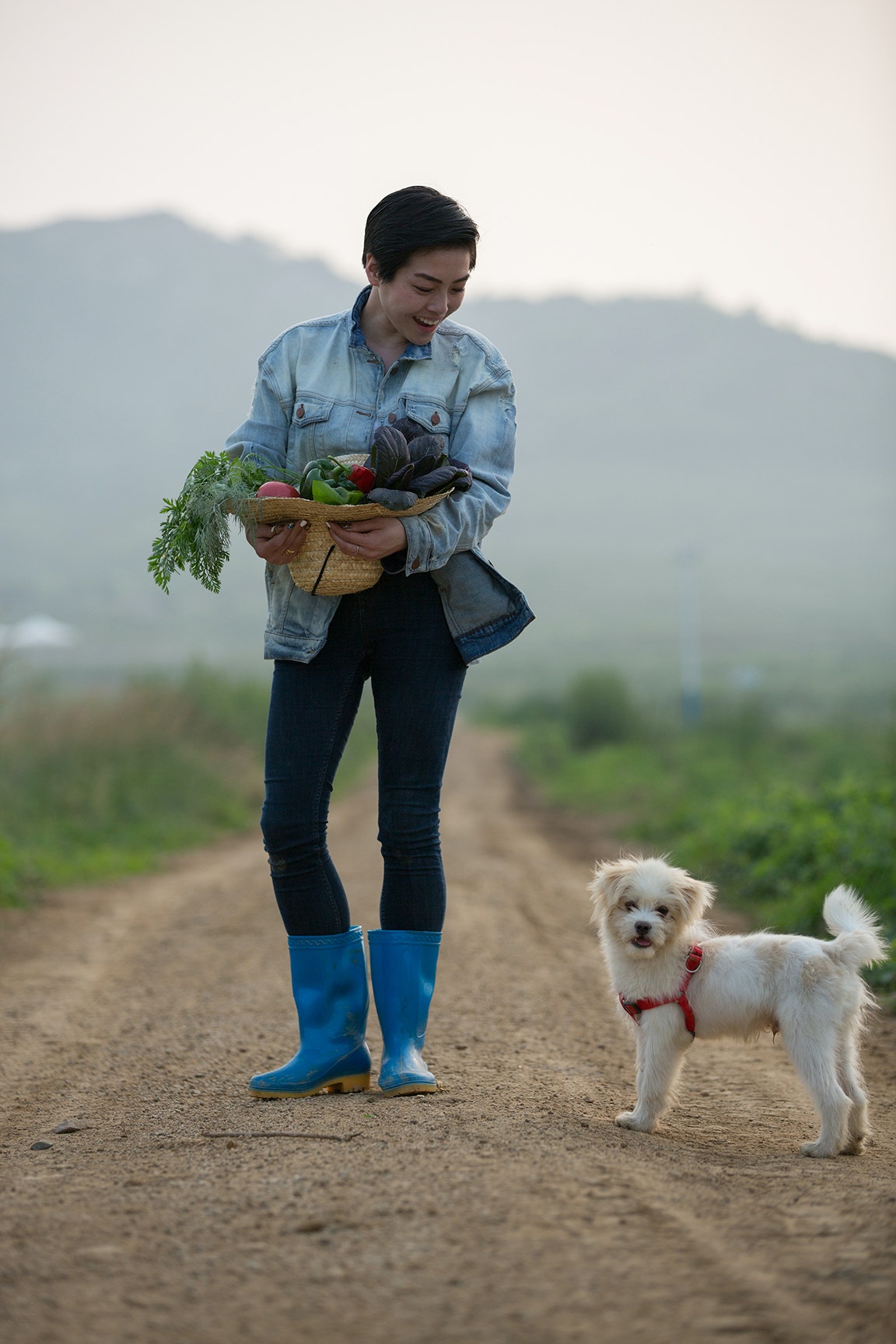
As the restaurant concept came together, finding the right food sources had to be addressed. Traditional agriculture couldn’t be trusted; organic certifications were available on the black market, and safety protocols around chemical use were nonexistent. Anmao and Harn decided to invest in their own farms. They met with farmers, asked questions about their methods, and walked in the fields to see for themselves. Eventually they settled on two plots of land outside Shanghai and began developing more than 80 different crops to be used in the restaurant.
From Seed to Table
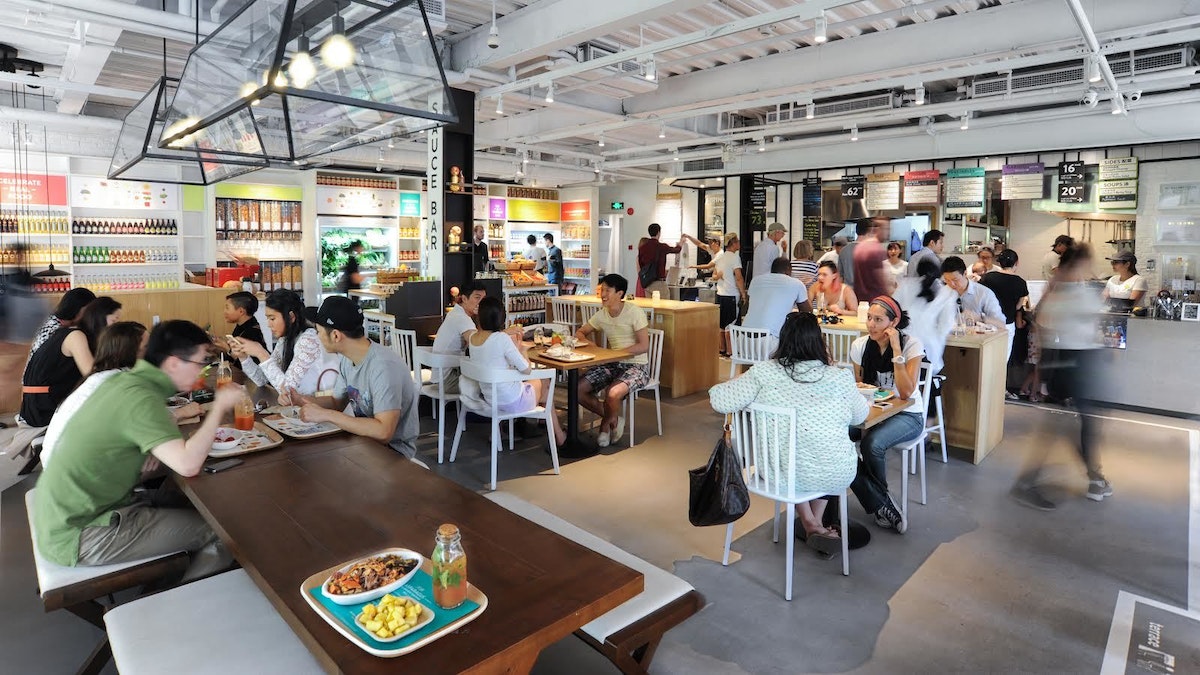
When it came time to find the right space for the first location, Anmao and Harn discovered an open, airy storefront on Anfu Road in Shanghai’s tree-lined former French Concession area. They designed and built a retail space and kitchen, and along with IDEO designers, they trained the staff and organized workflows. The staff set the tables with Mason jars filled with flowers, hung photographs of the farmers who grew the food, and put up a sign that showcases the percentage of vegetables coming directly from the Hunter Gatherer farms, already more than 70 percent in less than a year after opening.
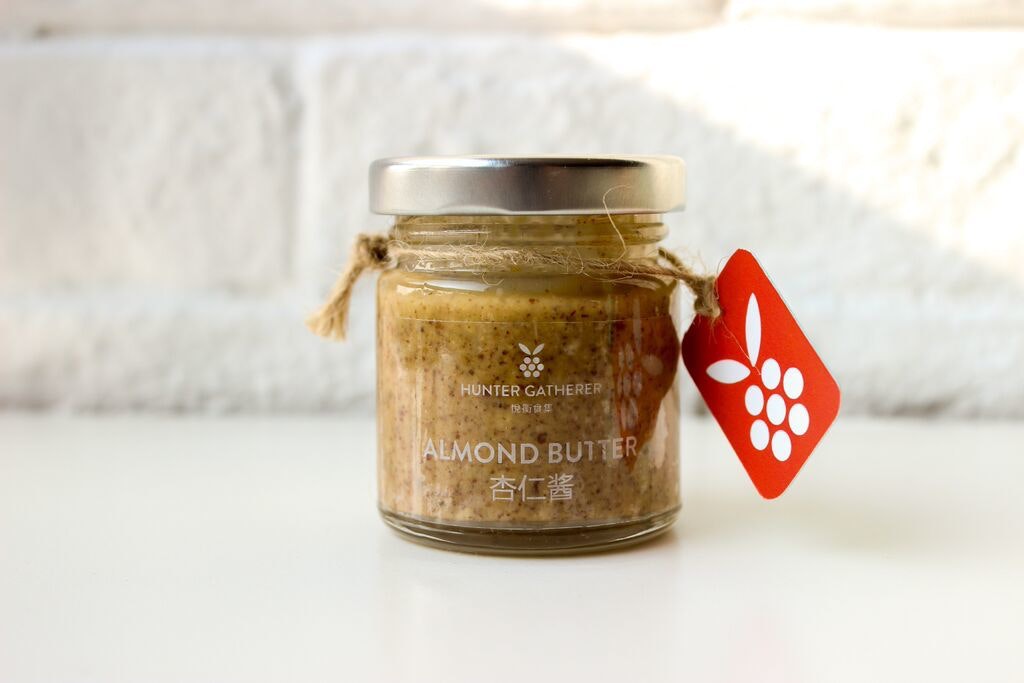
Customers can shop for fresh vegetables, locally sourced and imported canned and jarred goods, bins of cereal, freshly made smoothies, artisan sauces, and exotic chocolates. Upstairs, they can feast on delicious dishes in the homey restaurant.
Reviews have been glowing. One customer raved about the machine that grinds fresh nuts. Another loved the open space, the “good vibes,” and the refreshing cucumber water. Young people go there on dates, and families return for the delicious menu variety.
The convivial space has blossomed into more than just a restaurant and grocery store. It’s become a gathering place of sorts, both for the community and for partners who share the same vision. Farmers and food purveyors are invited to showcase their products at seasonal events and to mingle with customers and share recipes and stories.
“Hunter Gatherer has come to symbolize a kind of lifestyle the Chinese people have been looking for,” said Eugene Lin, an IDEO business designer. “A place they can enjoy hanging out with friends, as well as a movement and mission they can stand behind.”
A Digital Future
This is just the beginning of the venture. The plan is to open 40 more locations throughout China. But the vision for Hunter Gatherer’s growth is bigger than brick-and-mortar restaurants—where the business will truly scale is in the digital space. Eventually, the plan is to launch a Hunter Gatherer online grocery store from which anyone can buy food grown from trusted sources.
“We have to create trust with the consumer. It’s the most difficult and most valuable thing to do in China, especially with food,” Anmao said. “Our brick-and-mortar locations will establish that increased trust. Then we can go online and grow the idea to the rest of the country.”
Will Hunter Gatherer have a hand in changing the way that the world’s most populous nation thinks about food? Its principles are already spreading, from neighboring farmers adopting more sustainable planting methods, to a growing market for products like wine.
But the true sign of success will be almost invisible—the moment when an increase in demand will result in safe food for everyone and when real food becomes commonplace.
Changing the way biotech innovates
Building a culture of user-centered innovation in the name of science.
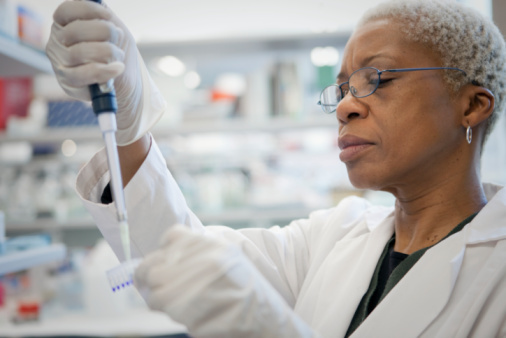
Life Technologies, a global biotech company that supplies scientists with products and services, needed to grow big, from a $4 billion to a $10 billion enterprise. So it hired IDEO to help seed innovation across the company.
"When we started out, it was an R&D thing for driving innovation in new products. Now it’s not just R&D; user-centered innovation is a central part of our culture. It’s what we do throughout the organization," said Amy Cuneo, Associate Director, Customer Insights.
Over a three-year engagement, IDEO helped transform Life Technologies’ corporate culture through the introduction of User-Centered Innovation (UCI), an optimistic, experiential approach to problem-solving. Far outperforming its ambitious goal, Life Technologies is now a $13.6 billion company and uses UCI to inspire innovation throughout the 10,000-person organization.
After working with Life Technologies, IDEO designers came up with three products that have gone to market, including, a new bottle that showcases superior handling and storage, easier identification, and additional room for supplements. And Life Technologies has transformed from a company that aspires to focus on customers to one that truly does.

Building a birth control support network for women
A multimedia public service campaign as a vehicle to encourage smart choices.
Unplanned pregnancies are a big problem in the US, especially among unmarried 18- to 29-year-olds. Seven in 10 pregnancies in this demographic are unplanned, a statistic that applies to women of all ethnicities and socioeconomic levels. Complicating matters are the social tension between abstinence-only and contraception-inclusive education, and the difficulty and expense associated with obtaining prescription birth control.
Since 2009, IDEO has worked closely with the National Campaign to Prevent Teen and Unplanned Pregnancy, a nonprofit NGO, to address this pressing social challenge. One of the first insights on the project was identifying the need for comprehensive birth control support. Designers looked at ways to transform birth control from a prescription (a piece of paper that is handed to you by a doctor) into a subscription (a program that ensures you start using birth control, use it correctly, and migrate to more effective methods).
Given the complex and potentially overwhelming subject matter, the IDEO team interviewed women in the target demographic; talked with doctors, counselors, and other experts with varying opinions about birth control; and hosted roundtable discussions. They developed several concepts and scenarios that allowed members of the National Campaign to see sex and pregnancy through the eyes of the young women they’re working to reach.
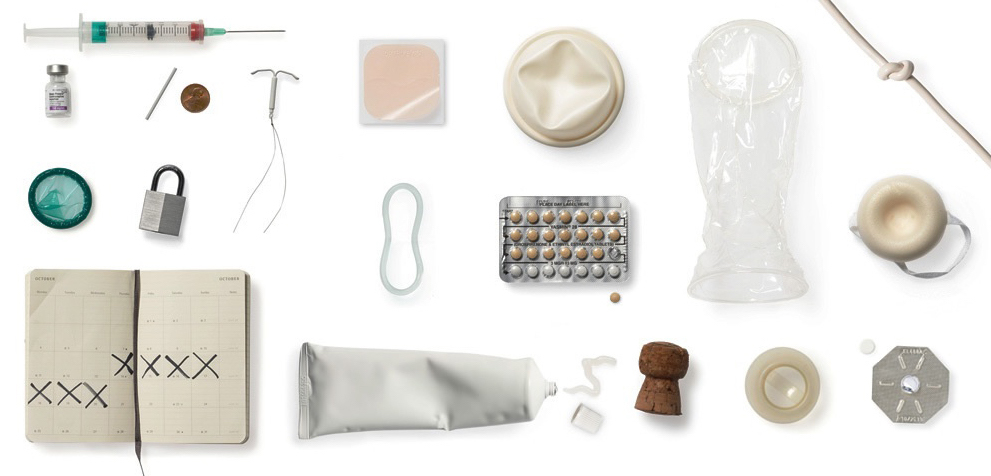
Research and prototyping efforts led to the design of Bedsider, a multi-touchpoint birth control support system with a carefully crafted sex-positive brand, which is uncommon for the healthcare industry. Bedsider focuses on five key areas (awareness, motivational drivers, digital offerings, services, and loyalty) and acts as a vehicle for behavioral change that’s flexible, with room to grow into a much larger movement.
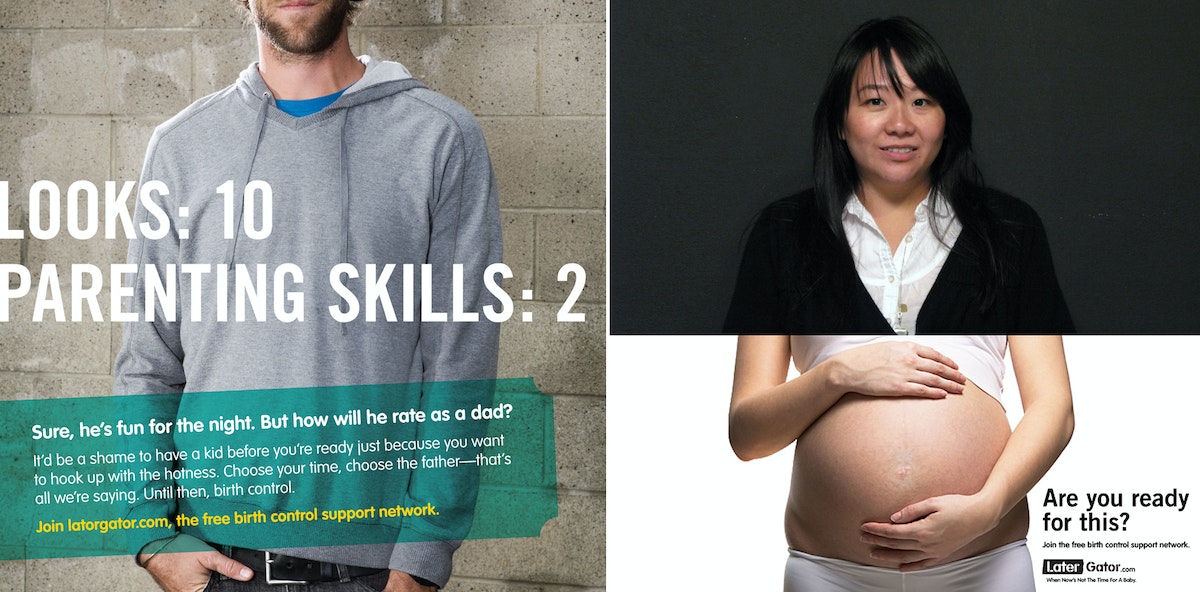
The Ad Council and the National Campaign debuted a multiyear, multimedia public service campaign in November 2011. The Bedsider website offers comprehensive education about existing birth control methods. This includes opt-in reminder services, personal stories from women across the country on why they chose a particular method, a phone service that provides information in both English and Spanish, features such as “Fact or Fiction” (hilarious animated clips debunking popular myths), a “Frisky Friday” newsletter, and more.
Bedsider has launched nationally with the help of an Ad Council campaign that drives sexually active women ages 18–24 to Bedsider.org. The multimedia Public Service Announcement effort includes television, radio, print, web, and nontraditional advertising, as well as an integrated social media program.
“We hope that Bedsider will be a useful tool for women to learn about their birth control options, better manage their birth control, and in the process avoid getting pregnant until they’re ready,” said Planned Parenthood of South Florida and the Treasure Coast in its monthly newsletter. Planned Parenthood and Philliber Research Associates joined forces with the National Campaign to Prevent Teen and Unplanned Pregnancy to help test and evaluate Bedsider.
Through a social media campaign called #ThxBirthControl, people are voicing their thoughts about what birth control has made possible for women, men, families, and society. It’s all part of Thanks, Birth Control Day, launched in November 2013 as part of a continuing initiative to encourage positive conversations and more consistent use of birth control by the National Campaign to Prevent Teen and Unplanned Pregnancy. To celebrate the movement, IDEO wrote, scored, and performed an animated musical featuring condoms and pill packs dancing the cancan.
According to an independent evaluation of the program, Bedsider is the first digital intervention in reproductive health in the U.S.—with adults as an audience—that has shown to prevent unplanned pregnancy. Turns out that when women and men have the ability to plan, prevent, or space pregnancies, they’re more likely to finish school, achieve their goals, and ultimately have healthier families, according to the nonprofit organization.
Bringing bikes to the streets of Chicago
Using the joy and freedom of cycling to brand Chicago’s bike-sharing initiative.
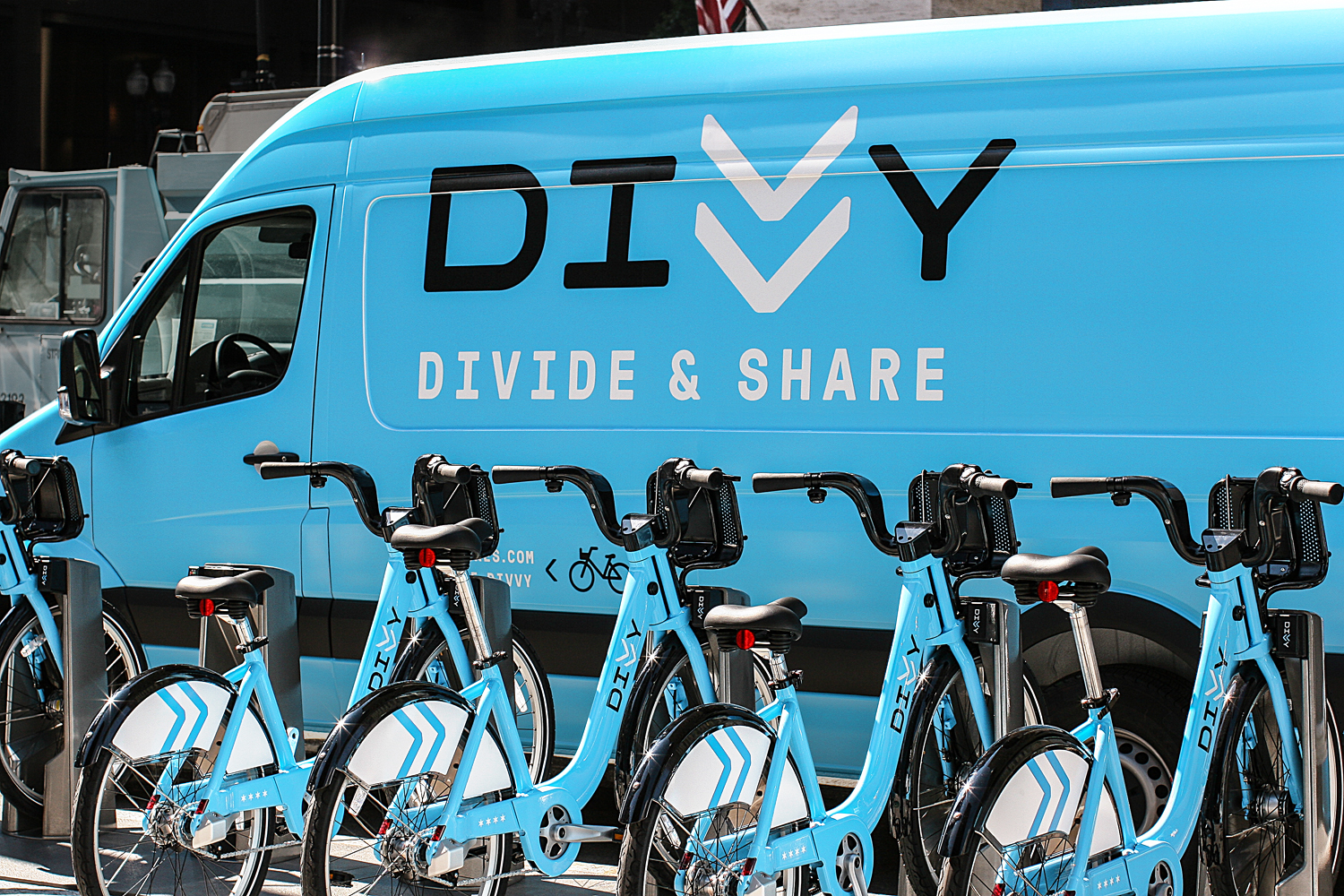
Chicago’s federally funded, citywide bike-sharing service, called Divvy, makes a fleet of bicycles available to commuters and tourists 24 hours a day. Alta Bicycle Share (which runs bike-sharing systems in Boston, the Bay Area, DC, and New York City) collaborated with IDEO to spread Divvy’s message, “Divide and Share!” to the cyclists and would-be cyclists of Chicago through the brand.
The new brand would appear on its bikes, stations, company vans, member fobs, and website—and it needed to be ready to hit the streets in just six months. IDEO partnered with local brand strategy studio Firebelly Design to collaborate on a solution. IDEO led the early research, conceptual brand development, and naming phase of the project; the Firebelly team led the visual design and developed the brand guidelines.
The brand has become a functional and fun part of Chicago’s transportation landscape and has been embraced by Chicago commuters. Just three weeks after it launched, the City of Chicago called the Divvy Bikes program the busiest bike-sharing system in the world. Six months into the service, enthusiastic cyclists have racked up over 780,000 trips and 1.7 million-plus miles, and over 12,000 Chicagoans have become members.
How workplace rituals can strengthen connection in a virtual community
Embracing constraints and designing for serendipity can create the conditions for innovation, trust, and collaboration.
At their core, rituals are intentional actions that follow a particular repeatable pattern. Certain words or phrases, symbolic props, and patterned movements are used to elevate everyday moments into meaningful and memorable experiences. Rituals have a unique ability to make intangible values and beliefs concrete because they bridge the mind and the body, the two ways humans process and make sense of the world. We use them all the time in religion, politics, and sports to help groups navigate change, form a shared sense of identity and purpose, and enhance performance—but we forget they can also be incredibly powerful at work.
In the past year, we’ve had a lot of time to learn about rituals for the virtual world. Some of IDEO Chicago’s favorites are featured in a new book by Stanford’s Ritual Design Lab called “Rituals for Virtual Meetings: Creative Ways to Engage People and Strengthen Relationships.” The book highlights remote rituals from companies around the world that help with focus, connection, flow, and more. Here are some of our favorites.
Embrace the cacophony
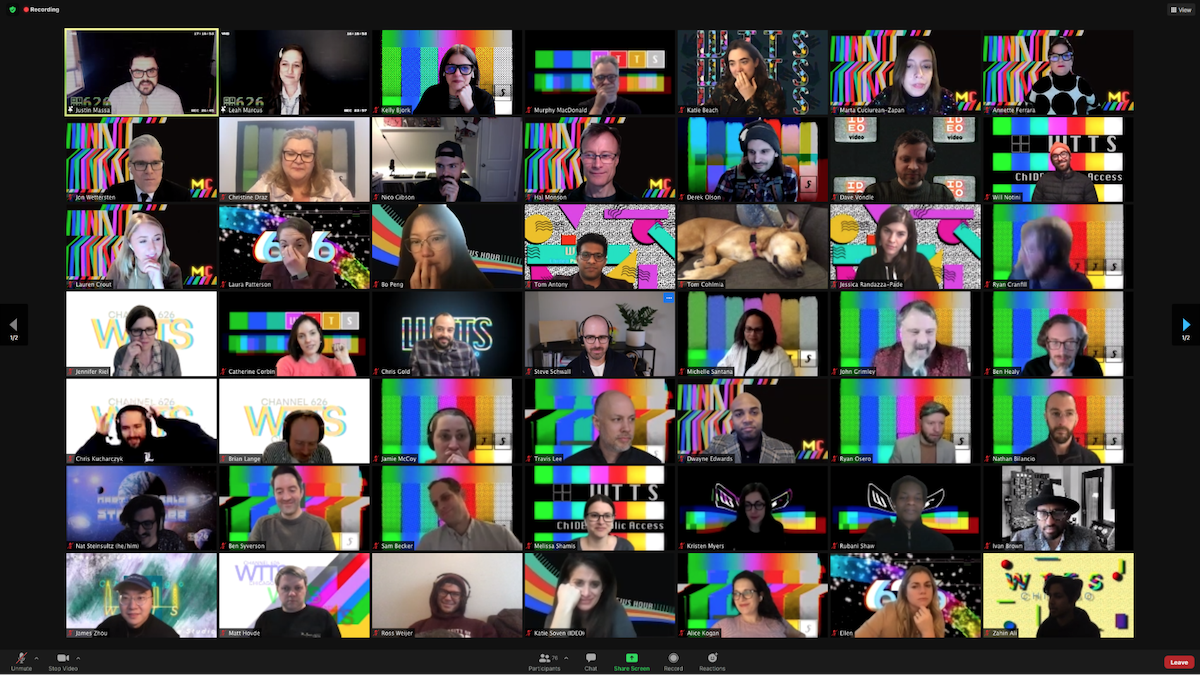
For years, all-hands Monday Lunch Meetings (MLMs) have been an important weekly ritual for sharing inspiration, information, and project work over a meal at IDEO studios across the globe. When we first entered round-the-clock remote life, presenters were faced with an intimidating, feedback-free void. It felt cold and awkward, and nothing at all like the MLMs we knew and loved.
To fix that, we identified that the MLM routine itself wasn’t enough—we needed to design moments of consistent virtual connection to revive the feeling of the shared experience. So we sped up the pace of shares, encouraged side conversations in chat, added sound effects like air horns through a creative hack using DJ software, and fully leaned into the awkward audio latency tendencies of video calls with our monthly singing of “Happy Birthday.” By embracing the cacophony, we subverted the silence and saved each other from being isolated in the void, retaining some semblance of consistency and communal spirit during an otherwise unpredictable and lonely time.
Find serendipity through structure
When we were together in our studio, we could rely on the walls and furniture to create safe boundaries and immersive experiences. But in a video room, space can feel infinite and spontaneous conversation challenging. We realized we needed to design specifically for serendipitous encounters.
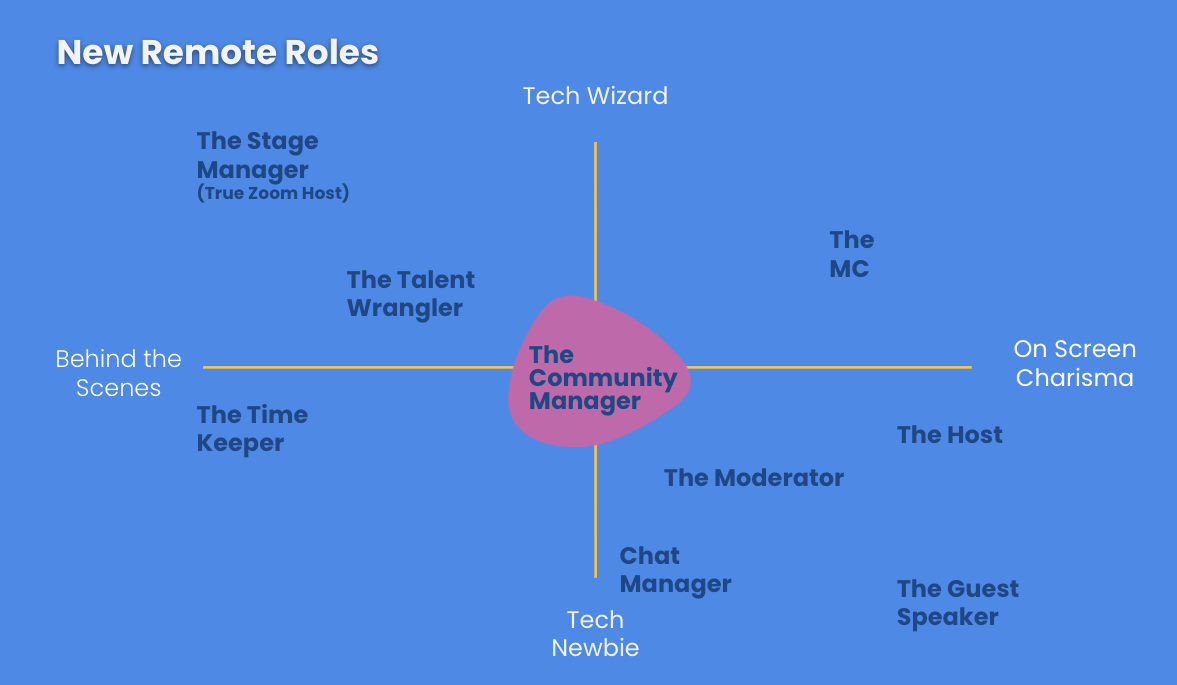
One of the first events we created was the ChIDEO Variety Hour. An event inspired by improvisational, slapstick variety shows (think The Muppet Show and old telethons), it’s meant to showcase the range of talent and work being done in the studio. It feels spontaneous and whimsical thanks to two constraining factors: First, presenters sign up in advance for “on-screen time”—from as little as one minute to as long as 30. Second, two hosts write a script for the show and get robust “back of house” support from a team that monitors live technical aspects like time keeping or moderating chat.
At the first Variety Hour we had a research share from recent project work, an intermission dance party, and one minute of screaming, to name a few examples. It was the most participatory virtual event we had ever had, and Variety Hour has since become a beloved monthly ritual in our digital studio.
Make the most of digital tools
When everyone works remotely, the physical distance becomes compounded with digital invisibility. The right ritual can manufacture proximity, rebuild trust and connection, and mimic the ebb and flow of a good house party. This is where digital tools can shine.
The Breakout Room function is meant for subdividing large webinar audiences, but we asked, what if it was used for something like speed dating? Breakout Rooms can be randomized, sized in different ways, and attendees can even move between them on their own. We harness these features for an icebreaker game called “Chance Encounters of the Zoom Kind.” By randomly placing participants in different breakout rooms together, keeping the duration a surprise, and providing thought-provoking conversation prompts to break the ice, we recreated casual collisions for the digital office. In some cases, it was the first time people had seen each other since the lockdown began, and it provided much needed reconnection, randomness, and joy.
Developing your own rituals
If you’re looking to decrease the stress that accompanies change, create conditions that kickstart innovation, inspire greater trust and collaboration among coworkers, or turn the mundane into the memorable, consider creating your own workplace rituals from scratch—or turn to the dozens outlined in Rituals from Virtual Meetings for inspiration.
When COVID first sent office workers remote, many companies struggled with the decentralization and loneliness of virtual work. Thankfully, at the IDEO Chicago studio we had a secret weapon we knew would help us bring serendipity, joy, and creativity into the uncharted landscape of perpetual videoland: rituals.
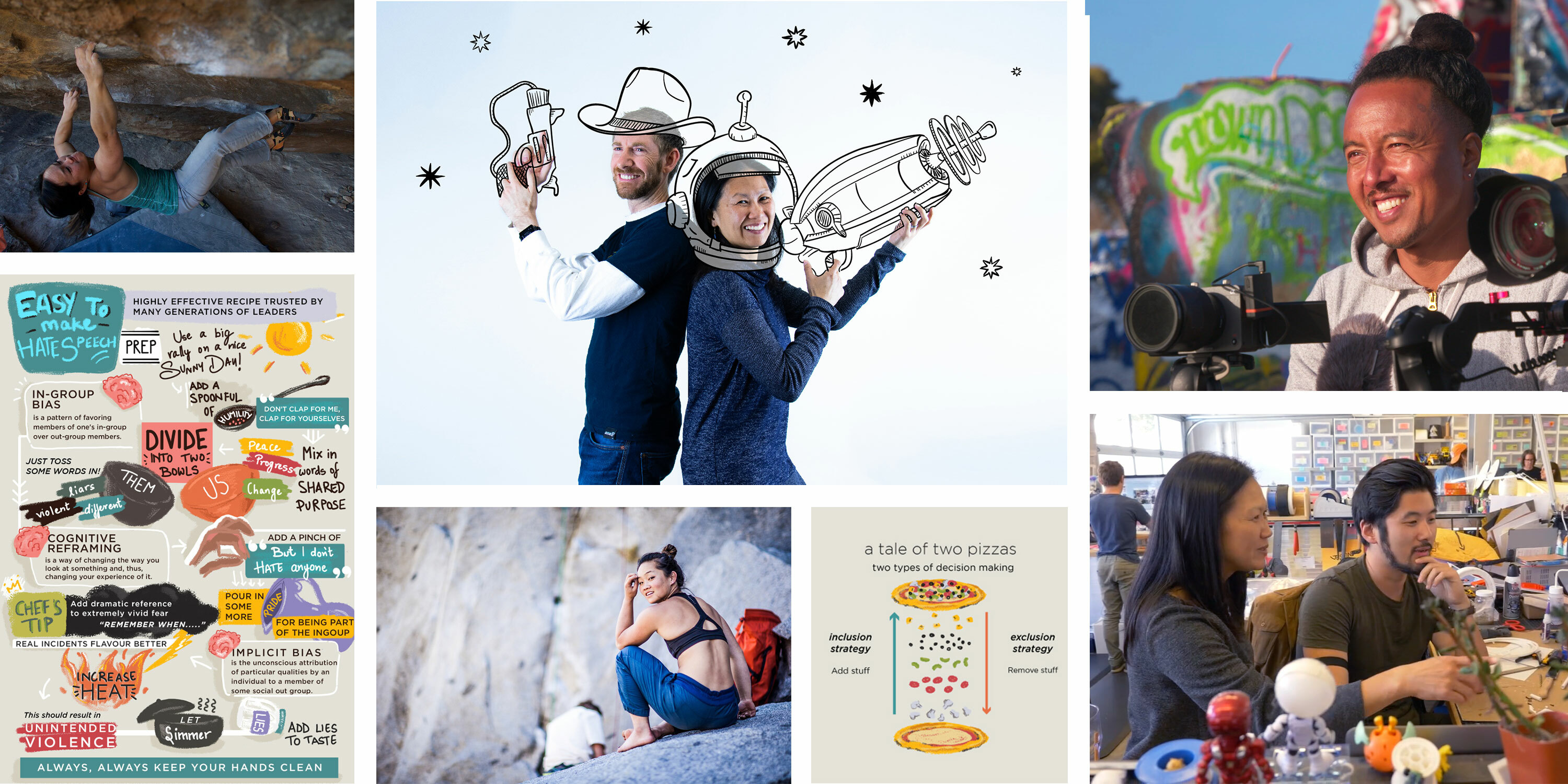
Creative visions from Asian and Pacific Islander Americans we admire
In celebration of Asian Pacific American Heritage Month in the U.S., we're sharing reflections from some of the incredible creatives who continue to inspire us.
Our personalities and outlooks, where we grew up, and all of the experiences we’ve ever gone through in life get filtered and expressed through the things we create. And—perhaps even more importantly—our identities impact why we create, helping us find meaning and purpose in our creative work.
In celebration of Asian Pacific American Heritage Month (APAHM), we're sharing reflections from some of the incredible creatives who continue to inspire us. Here, they share insight on what drives them and their goals for the future—bound to, centered in, and empowered by their unique identities.
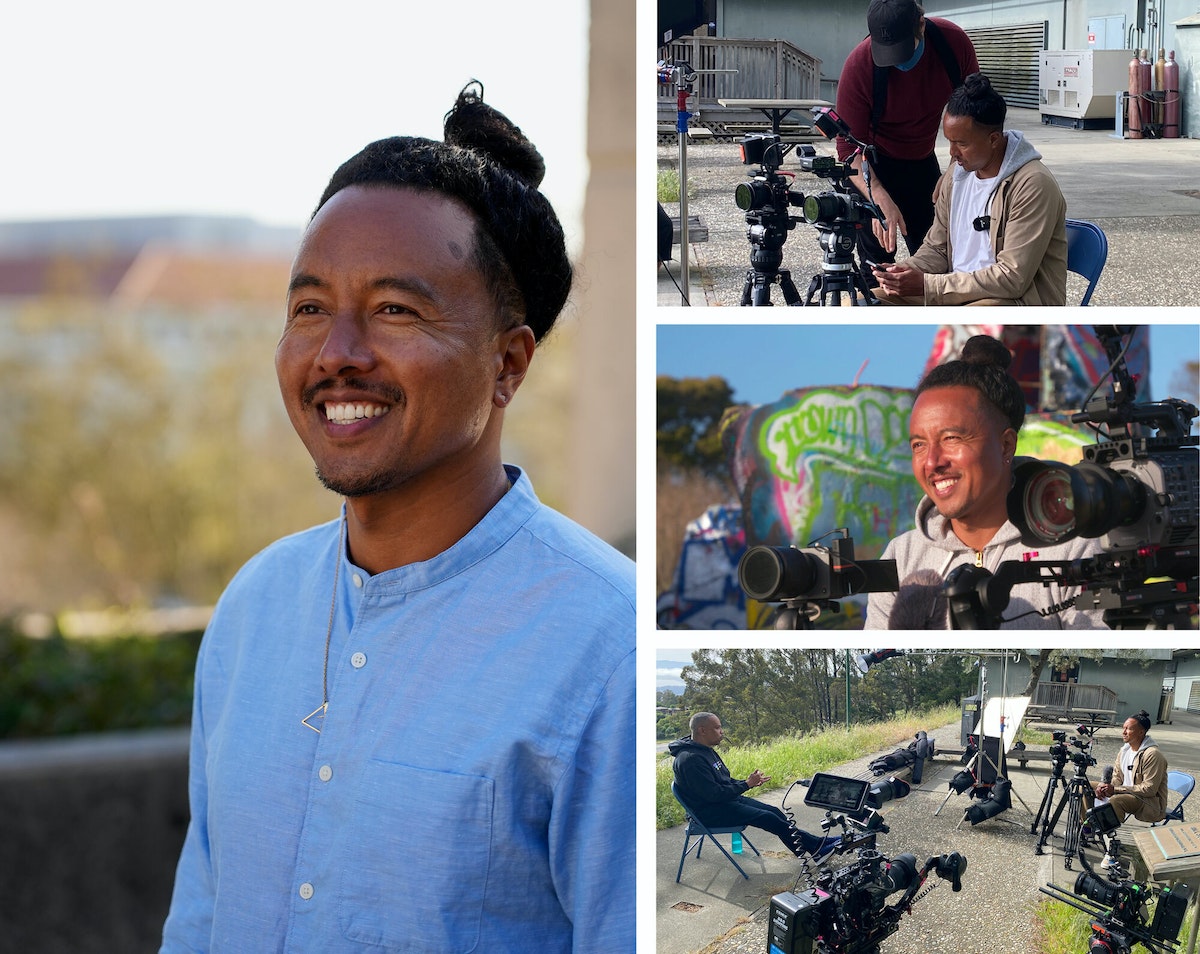
Adamu Chan, Writer, Filmmaker, and Community Organizer
Adamu Chan is a formerly incarcerated writer and filmmaker whose work is shaped by his connections to community. He’s written for Slate about the impact of COVID-19 on prisons, and has published a short film from within San Quentin. He sees his role as a catalyst to drive change in society.
“Culture and history are our collective memory, and history is usually shaped by dominant groups. Art has historically been one of the only avenues for marginalized peoples to participate in dominant discourses, and so I believe it is the job of artists to produce cultural projects that propel political and social transformation. I would like to be remembered as someone who helped move our world towards being more equitable, just, and inclusive.
If we are committed to transforming ourselves and our society, it is important to hear the stories of those who have always lived at the margins, because they hold the answers to what is broken, and in their stories of survival are the solutions we are seeking.”
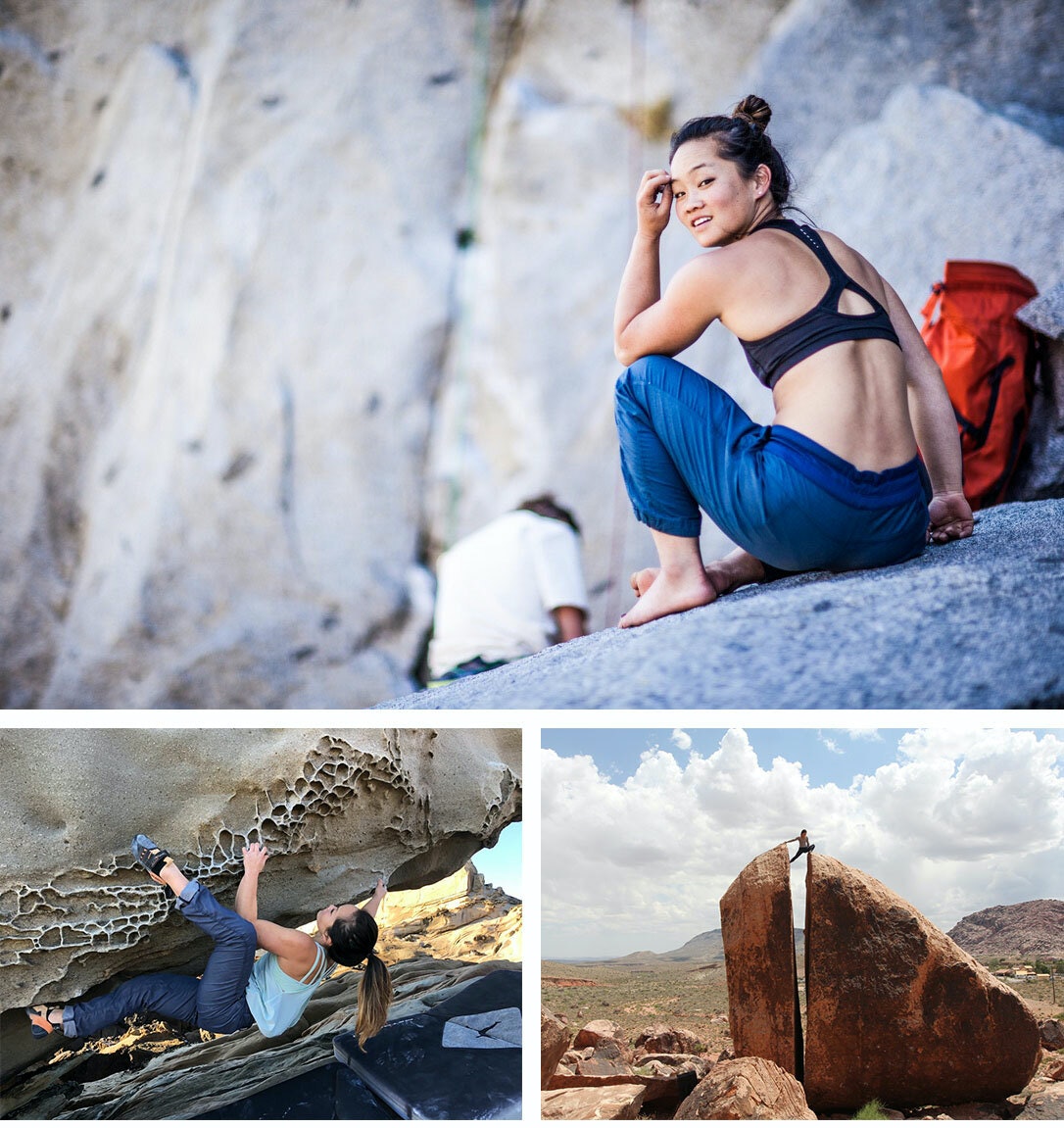
Kimberly Ang, CEO and founder of of KAYA
Kimberly Ang is the founder and CEO of KAYA, an app that connects climbers and helps them track and get insights from their workouts. Prior to that, she led IDEO’s Design for Health portfolio. Today, Kimberly is focused on forging a path so that others like her feel welcome within the climbing community.
“Looking ahead, there are three changes we’re focused on: 1) Democratize access to the insights and coaching people need to learn how to climb and climb well 2) Celebrate a much more diverse range of climbers to show everyone they can be included in this community and 3) Take care of our public lands and ensure we grow sustainably.
I hope to be remembered as leading with heart and being myself, and creating space for others to do the same.”
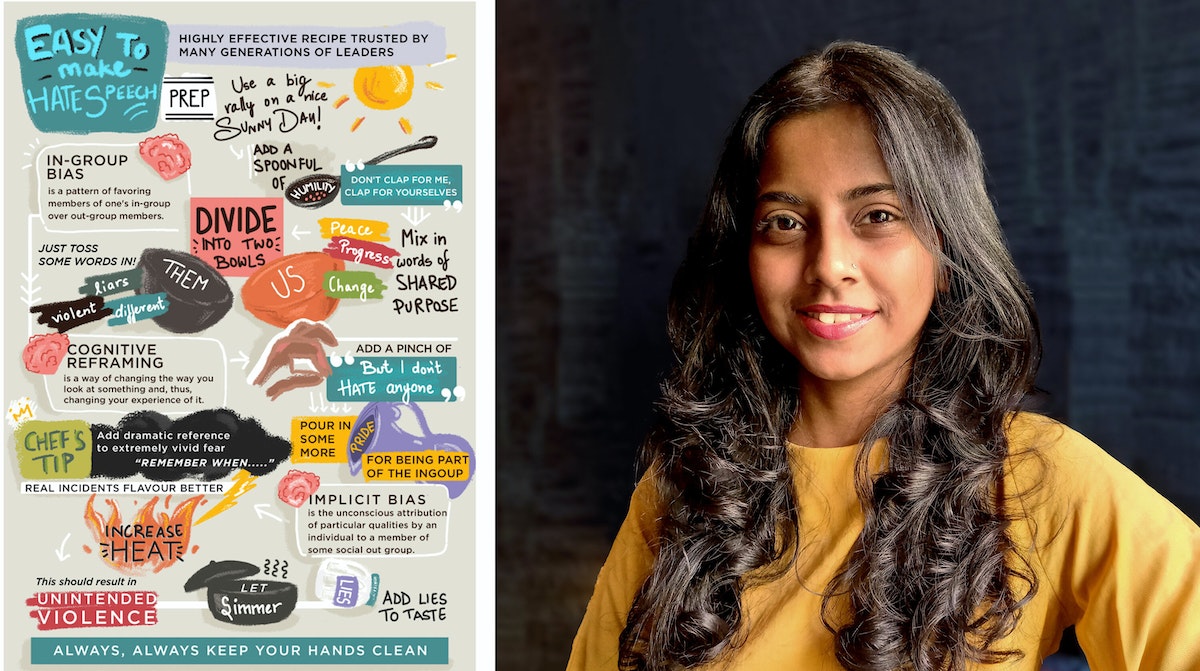
Anupama Rao, Communications Designer and Behavioral Science Practitioner
Anupama Rao is the creator behind BrainGoo, a library of visual storytelling sequences (often in the form of Instagram posts and stories) that explain complex words and make observations about the world. In her day job, she’s a Design Researcher at Qure.ai. Her work is fueled by a desire to make healthcare access more equitable and compassionate.
“I work in the intersection between the future of design and behavioral science so that I get the chance to tackle wicked problems, especially those focused on women’s rights and healthcare, via small incremental changes. I’m fueled by my experience as my mother’s primary caregiver from a young age. The idea is to work towards inclusive design by consciously accounting for representation, systemic inequalities, social biases, and lack of access.
Currently, as a designer at Qure.ai, I work with experts to create AI products that make healthcare affordable and accessible, which is equal parts challenging, overwhelming, and rewarding. I love seeing how design can play a role. For example, can designing this report differently save a healthcare professional 10 seconds? What factors influence a crowded ER when a patient is having a stroke? How can I make this relevant to a low-resource, sparsely populated village?
I want the legacy of my work to be its empathy for the context it lives in, and its ability to create sustainable and positive behavior change.”
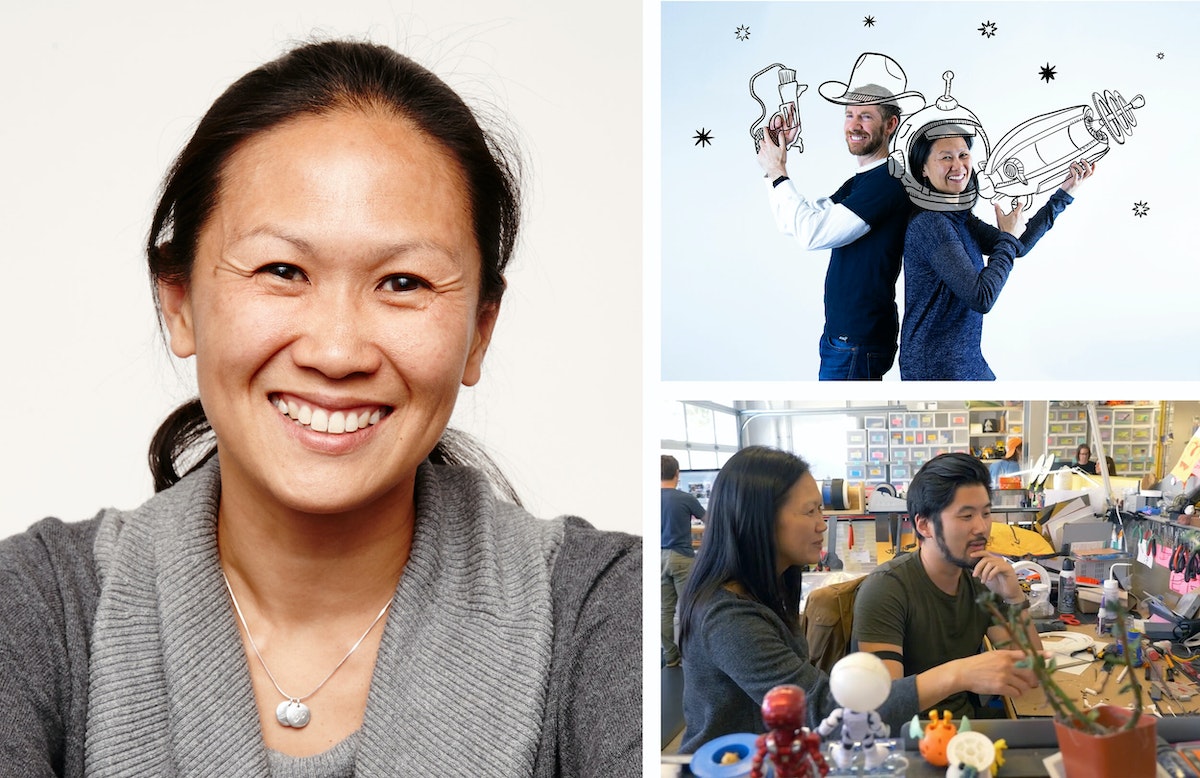
Michelle Lee, Managing Director, Design For Play at IDEO
Michelle Lee leads the Design for Play studio at IDEO, where she designs actual toys—but also finds ways to bring games and play into other unexpected industries, like education and health.
“My initial career in toy design taught me that play has potential far beyond the world of kids and toys. Through play, we stretch our imaginations, conquer our fears, realize new possibilities and take on challenges with optimism and confidence. It enables us to find meaning and happiness in the world. At IDEO, I lead a team that harnesses this power of play to ensure that aging is joyful, education is engaging and environmental action is inspiring.
I see the future in bringing play to tackle some of society’s biggest challenges—helping people thrive mentally and physically, building inclusive communities and helping to elevate voices that are often unheard. Driving lasting change by aligning these important issues with what brings people joy.”
Want to learn more, and get inspired by other Asian and Pacific Islander creatives? Follow the #AsianCreativeNetwork tag on social media, and check out our Asian Pacific American Heritage Month series on Instagram.
What you make is who you are. For many designers, creativity is rooted in identity.
The future is already here
Is your organization prepared for it?
From flexible working conditions to the coexistence of both physical and digital experiences, COVID-19 has accelerated the trends and behaviors that have been rearing their heads for some time, and pushed them to the forefront of our everyday lives.
Indeed, the future is already here. How might we fully step into it with creativity and resilience?
Recently, a group of IDEO designers in Tokyo convened a creative project to brainstorm and design for the implications of the pandemic on the future of Japan. Called “Emergent Futures,” the goal of the work—accessible below—was not to predict the future, but to prepare for the possibilities it may bring.
To envision these “emergent futures,” we started where we always do: with people, and by observing ourselves, our families, and communities. For each future, we describe what it looks like and what behaviors prevail, the evidence we see for this future already emerging, and what design opportunities exist for Japan-focused businesses.
For example, the first emergent future we explore is Leftover Spaces—the idea that physical spaces will become more dynamic due to public health concerns around occupancy. With this, business opportunities related to rent, consumer preferences, space design, and co-ownership emerge. We explore and ground this emergent future through Kei, an IDEO designer and blossoming curry chef, whose needs inspired us to prototype a pop-up system concept—the Kei Truck. Our research reveals how some businesses are already prototyping this future, including restaurants operating as corner stores and Hoshino Resorts, who is leveraging data tracking to keep guests safe. These examples provoke key takeaways for leaders, from the need to develop a more entrepreneurial, adaptable workforce to using data in a human-centered way.
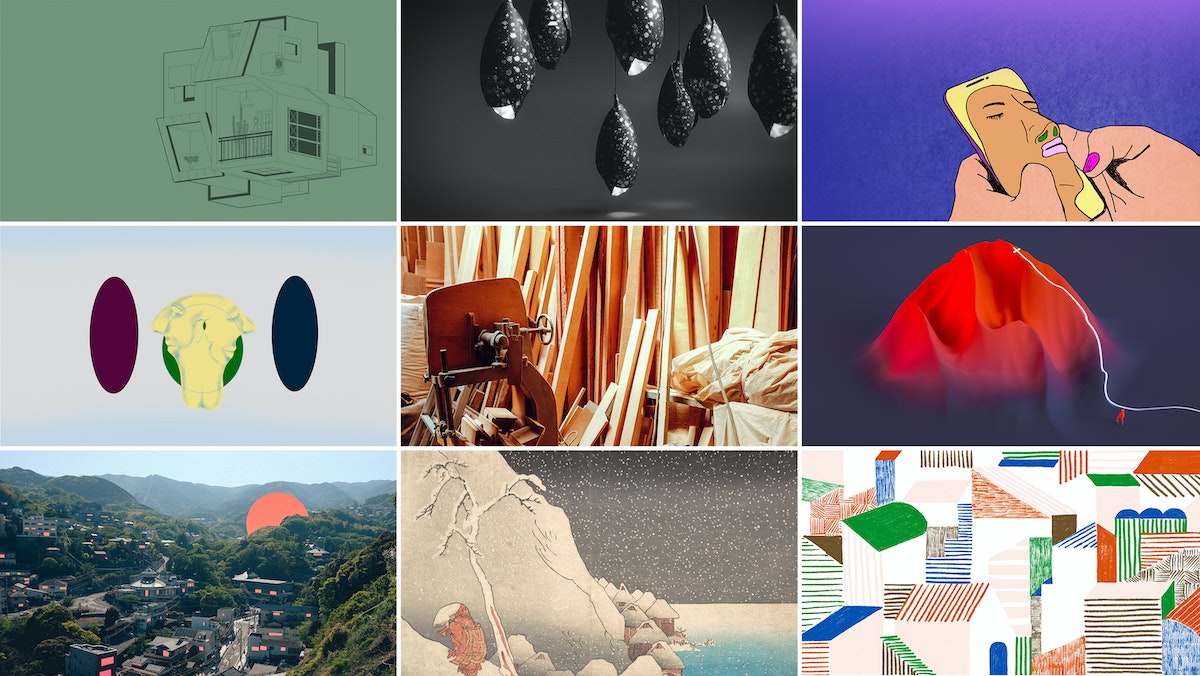
Though Emergent Futures is a collection of provocations about the state of Japan post-pandemic, the value of this futuring exercise and framework is universal, especially now. For Japan and other parts of the world to meet the challenges and opportunities we face post-COVID—from how to safely utilize physical spaces to how to remain competitive in a changing job market—our response must be human-centered, innovative, and imaginative.
Please share the work far and wide. We hope to spark the global collaboration required to ensure the future is evenly distributed, so we can step into it with confidence and creativity, together.
Download and share Emergent Futures here.
“The future is already here—it’s just not very evenly distributed.” Though attributed to essayist William Gibson nearly 20 years ago, the quote could not be more relevant today.

Widening the pathway to a career in design
A new fellowship program for underrepresented young designers.
It was a result of her own tenaciousness, her creativity, and the support of RepresentED, a small organization with a big mission to prepare students for careers in industries where they are underrepresented. The organization uses a human-centered approach to diversify the next generation of leaders through training, mentorship, and internships. RepresentED’s founder, Rashida Hanif, met Cisneros when she was a transfer student at UC Berkeley. Hanif notes that transfer students—particularly Black, Indigenous and People of Color (BIPOC) young adults—are missing out on what she calls the “hidden curriculum of life.”
Cisneros immediately saw the opportunity to help other Black and Brown transfer students like herself attain university education and gain visibility into concealed opportunities for their futures. Cisneros first learned about RepresentED in 2017, when she applied to join the first cohort of fellows. As part of the fellowship, she participated in a design thinking workshop led by former IDEO designer Scott Shigeoka. Later, she and her team competed in OpenIDEO's Future of Higher Education Challenge and designed an app that connected transfer students with much-needed community and resources. The experience and process introduced Cisneros to an industry she had never considered before. “Learning about design was absolutely pivotal for me,” she says.
Making change from within
After the competition, Cisneros was encouraged to apply to IDEO, and was hired as a recruiting coordinator before being promoted to her current role. Today, she leads Color by Design (CxD), which she helped launch in the wake of the rise in activism for social justice last year. She also helps facilitate internal programs at IDEO like business and inclusive leadership trainings, which seek to support IDEO’s senior leaders (and eventually all employees) to better understand how to create a culture of belonging. “In these trainings, we’re going to provide tangible leadership skills which help build awareness of where people are in their own personal journey,” she explains.
Shifting the power dynamic
This month RepresentED and IDEO are opening application submissions for the fall session of CxD. The program is open to all BIPOC students from backgrounds that have been historically underrepresented in design.
“It was important to shift away from the typical ‘company-intern’ power dynamic,” said Hanif. “It’s about an equal exchange of value that shifts the long-held power dynamics between the company and the fellow.” Following a bootcamp in design thinking, the cohort will receive placement on a six-month full-time IDEO project and have the opportunity to pursue a career at IDEO. Whether they decide to continue a design career or not, fellows will leave the program with a deeper understanding of design that they can apply to nearly any line of work.
Fellows will also be trained holistically for entry into culturally white-dominated industries, preparing them for challenges that are likely to come up, like imposter syndrome. “Having the ability to name things like imposter syndrome enabled me to step into my own authenticity,” explains Cisneros, “while understanding that institutions need to do their own work in order truly create a culture of belonging.”
A signal to the industry
Looking forward, there’s a lot of potential for programs like CxD to drive lasting change within other companies and industries. “This isn’t just a pipeline program, it’s a signal to the industry,” Hanif notes. Companies that have more diversity in their staff will have a greater competitive edge, and the design skills fellows bring to the table can be applied to more than just traditional design work—they can be used anywhere.
“It's not about checking DE&I boxes,” she adds, “When you build products and services, you want the people who buy those products to be represented in the design process—there’s a real business case for that.”
The first cohort has been invited into IDEO in January 2022 for a 6-month period, and an iteration of the program will launch by the end of 2023. We will share more updates as we get closer to the recruitment season. If you have any questions, please contact cxdinfo@ideo.com.
For Jordan Cisneros, a Senior Specialist on IDEO’s Global Learning and Development Team, access to a career in design was not a given.

Lindsey Turner
I’m passionate about building brands, products, and experiences that help organizations show up with meaning and momentum.
I help organizations cut through complexity by shaping how they show up, through brand strategy, identity, and storytelling.
Working at the intersection of brand and business, I bring an editorial eye and a bias toward making—turning ideas into tangible experiences that people can understand, trust, and believe in.
My work spans government, healthcare, financial services, media, and consumer goods, from launching Gen Z-focused ventures to building innovation labs and reimagining legacy brands. I relish moments of ambiguity and enjoy translating across teams, perspectives, and priorities to move ideas forward.
I started my career in editorial and digital design, shaping cross-platform experiences and identity systems in publishing and agency environments. That foundation still shapes how I work today: I’m detail-oriented, collaborative, and overreliant on the Oxford comma. I hold a BFA in Visual Communication from the School of the Art Institute of Chicago.

Rachel Young
My work helps organizations see who their products aren't working for—and build the will and the tools to do something about it
For 25 years, I've asked the same question: Who does this design exclude—and what are we going to do about it?
My work spans human-centered strategy, inclusive design, and qualitative research, with clients ranging from Microsoft, Google, and Verizon to the National Science Foundation, and San Francisco Unified School District.
Before IDEO, I taught elementary school in East Palo Alto and spent a decade doing design work with social service organizations—where I learned firsthand what it costs people when systems are built without them in mind.
I am currently writing User Error, a nonfiction book about digital access and the design decisions behind it. I live in Oakland, California.

Brian Pelsoh
I lead with craft, ensuring our work is creatively excellent: rooted in deep human insight and imagination, while also grounded in the realities of business and technology.
My expertise spans brand, communication, and product design across tech, education, the arts, and social impact.
I believe great work demands both high-level vision and obsessive attention to detail, and only happens through collaboration.
I bring an inclusive, hands-on approach and a deep understanding of business, which enables me to consistently deliver excellence while always asking why.
Before joining IDEO, I worked at the brand firms Pentagram and VSA Partners. I began my career as a designer, leading teams at the School of the Art Institute of Chicago and the Milwaukee Art Museum. I hold an MFA in graphic design from Maryland Institute College of Art and a BFA in communication design from the Milwaukee Institute of Art & Design, and have taught at some of the best design schools in the US.

Tony Wong
I am responsible for IDEO’s long-term success in China and working with clients to use design as a tool to enable growth.
I am responsible for IDEO’s long-term success in China and working with clients to use design as a tool to enable growth. Specifically, I have helped Chinese companies design holistic brand solutions through the development of their products, communication, services, and innovation teams, and I have helped multinationals expand their presence and influence in China.
I advise global leaders on developing China-led innovation and capabilities.
In over 15 years in IDEO Shanghai, I have worked on projects that use design to elevate the quality of the experience of healthcare products and services, streamline processes that increase productivity, create spaces and programs that promote and enable inclusive communities, and build next generation mobility solutions that are planet-positive.
Before joining IDEO, I worked at Philips Electronics and the Electrolux Group in Italy, the Netherlands, and Singapore on a number of breakthrough commercial products. I am a member of the Young President Organization in Shanghai.

How to use AI as an editor, not a writer
Ed White shares how he uses AI as an editor—not a writer—to sharpen storytelling, rehearse ideas, and preserve the productive friction that makes creative work better.
Ed White has a rule he's tested on his own writing: hold yourself as the writer, and let AI be your editor. Ed is a Senior Design Director at IDEO's London studio, where he co-leads the firm's AI portfolio across Europe. Before IDEO, he spent 12 years as a writer and editor at the Financial Times, Wired, and Contagious. So when he talks about when to use AI for storytelling and when not to, it comes from two decades of crafting his storytelling skills.
In this episode, Mina Seetharaman talks with Ed about two specific tools he uses to keep AI in an editor's seat: a "roasting agent" prompted to critique his drafts without any sugarcoating, and a simulated audience he rehearses pitches on before the real thing. They also get into what Ed is hearing from design leaders at Anthropic, Lovable, Shopify, and Google Creative Lab about how creative work is changing, and why he thinks the friction of writing something yourself is worth protecting rather than automating away.

Building a personal AI for the messiness of life: Sida Li
Becca Carroll talks with Cue co-founder Sida Li about designing a personal AI for the messiness of everyday life—not just work. They explore how Sida stays anchored to human needs while navigating fast-changing technology, product tradeoffs, business-model experimentation, and the realities of building an AI company today.
Most AI products today are built for work—a space with clear problems and established systems. One founder noticed a gap: personal life is messier, harder to systematize, and mostly left behind by the AI boom. So she built Cue, a personal AI that lives inside iMessage and group chats, to go where the other tools haven't.
In this episode, Becca Carroll, IDEO's Chief Strategy Officer, talks with Sida Li, co-founder and CEO of Shared Context Lab, about staying anchored to a human need while the technology around her keeps changing shape, why she treats her business model with the same rigor she'd bring to a product, and what it feels like to build a company at this particular, disorienting moment in AI.
The conversation also gets into how Sida makes design decisions: the language Cue uses to describe itself, the tradeoffs behind building inside iMessage instead of a new app, and a real story about a business idea that didn’t pan out.
This is the second in a two-part series profiling founders from IDEO's Startups-in-Residence program. The first conversation is with Johannes Seemann, founder of Sooner, on designing GenAI for the emotional side of money.

Designing GenAI for the emotional side of money: Johannes Seemann
Designing financial tools around the feelings that shape money decisions.
Most personal financial tools are built to run the numbers and optimize towards a budget. While that works for some, most people experience money as a lived relationship that does not neatly fit into a spreadsheet. Johannes Seemann and Becca Carroll discuss why money is emotional before it is mathematical, and what a human-centered approach to building a generative AI financial product looks like in practice.

The curious leader's edge in uncertainty: Scott Shigeoka
How genuine curiosity helps leaders navigate uncertainty with greater confidence.
Mina Seetharaman talks with Scott Shigeoka, author of Seek and Head of Curiosity Cultivation at the Eames Institute, about what distinguishes genuinely curious leadership from performative curiosity, how power dynamics shape curiosity, and why practicing curiosity can restore energy rather than drain it.
Looks like you might be in search of something very specific?
Or reset the filters above and try another angle.
Here’s some random inspiration

Podcasts about creative leadership

Articles about the power of prototyping