
Building a new venture to restore trust in China’s food system
Launching a new restaurant and retail venture that connects food from seed to table.
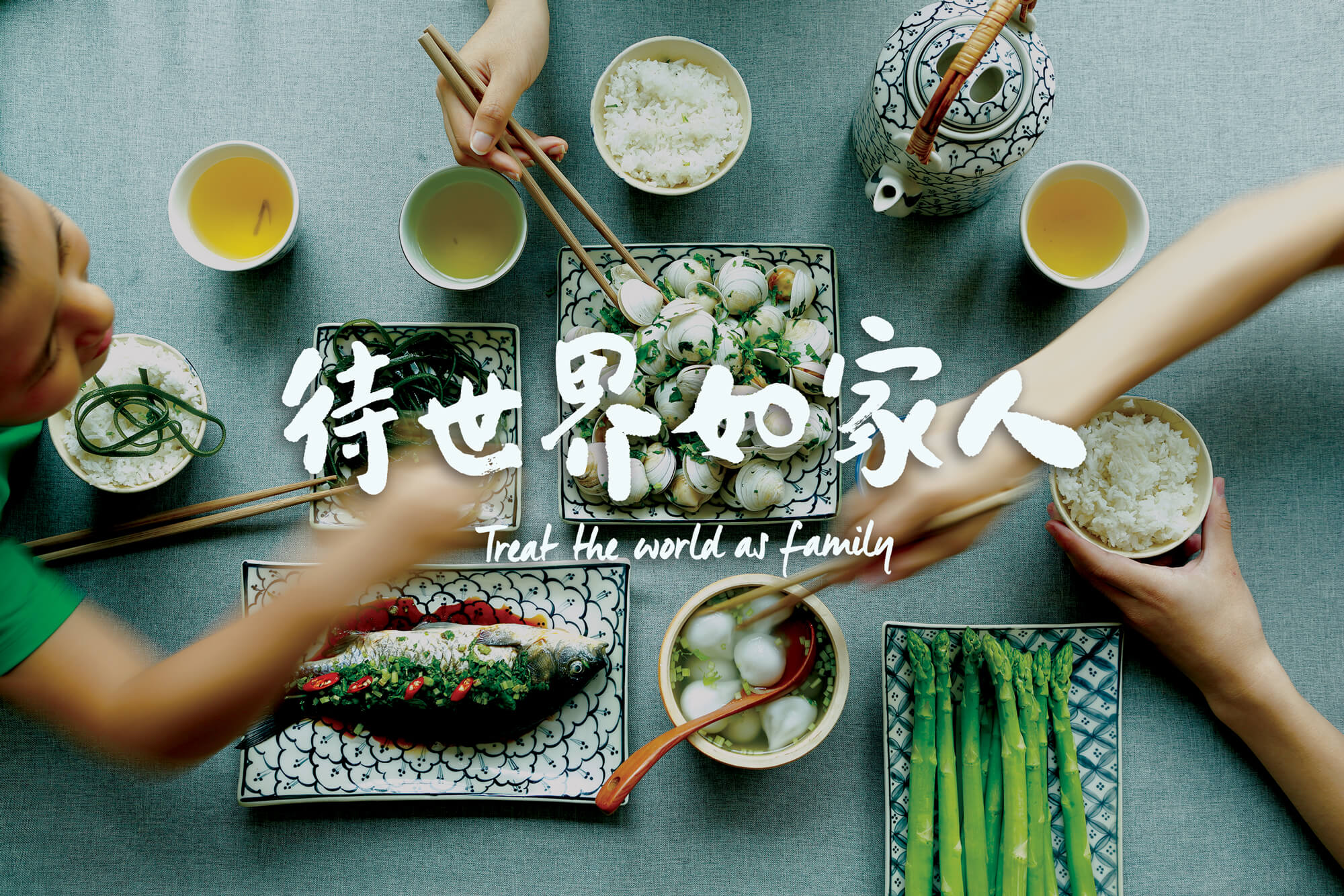
Food is the heart of most cultures. In China, one of the oldest cultures in the world, food is central to family gatherings and celebrations. It’s what binds people, a tangible way of showing love and respect. But in recent years, the Chinese food industry has suffered from concerns around safety.
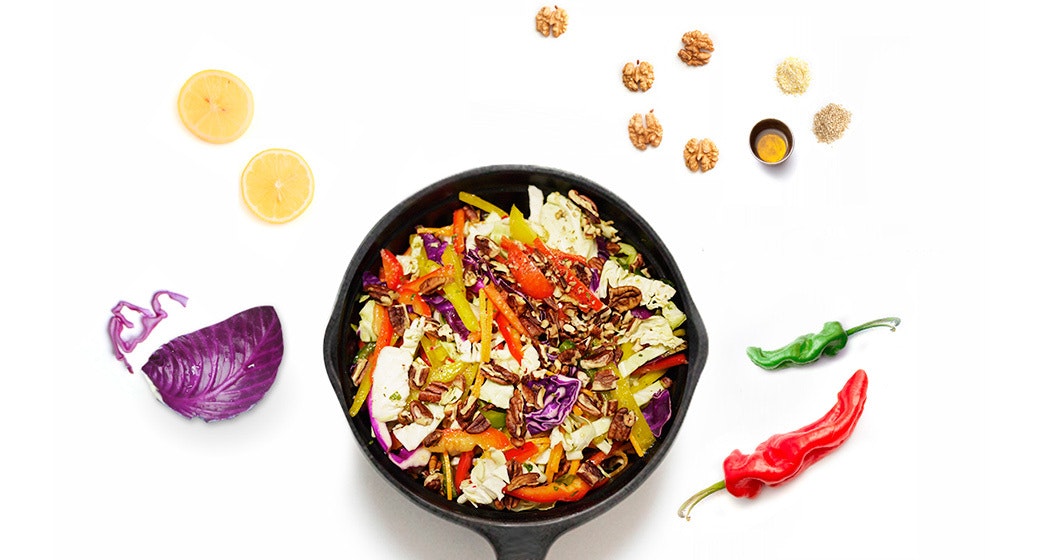
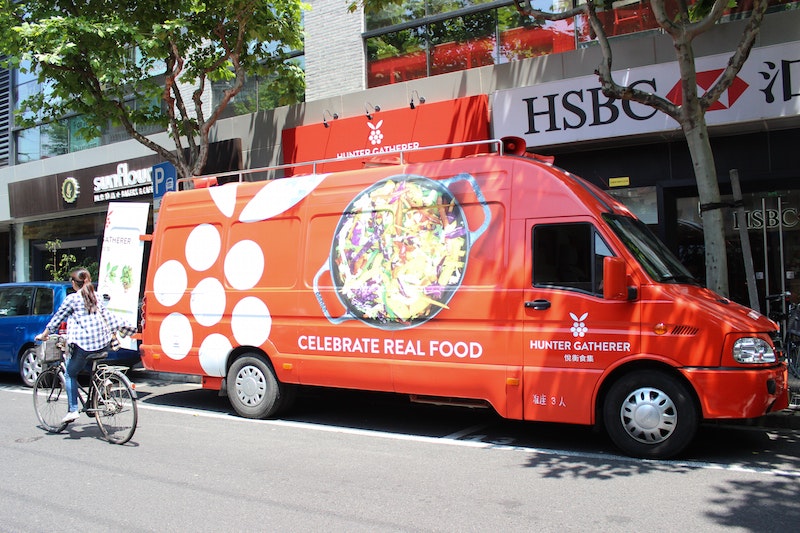
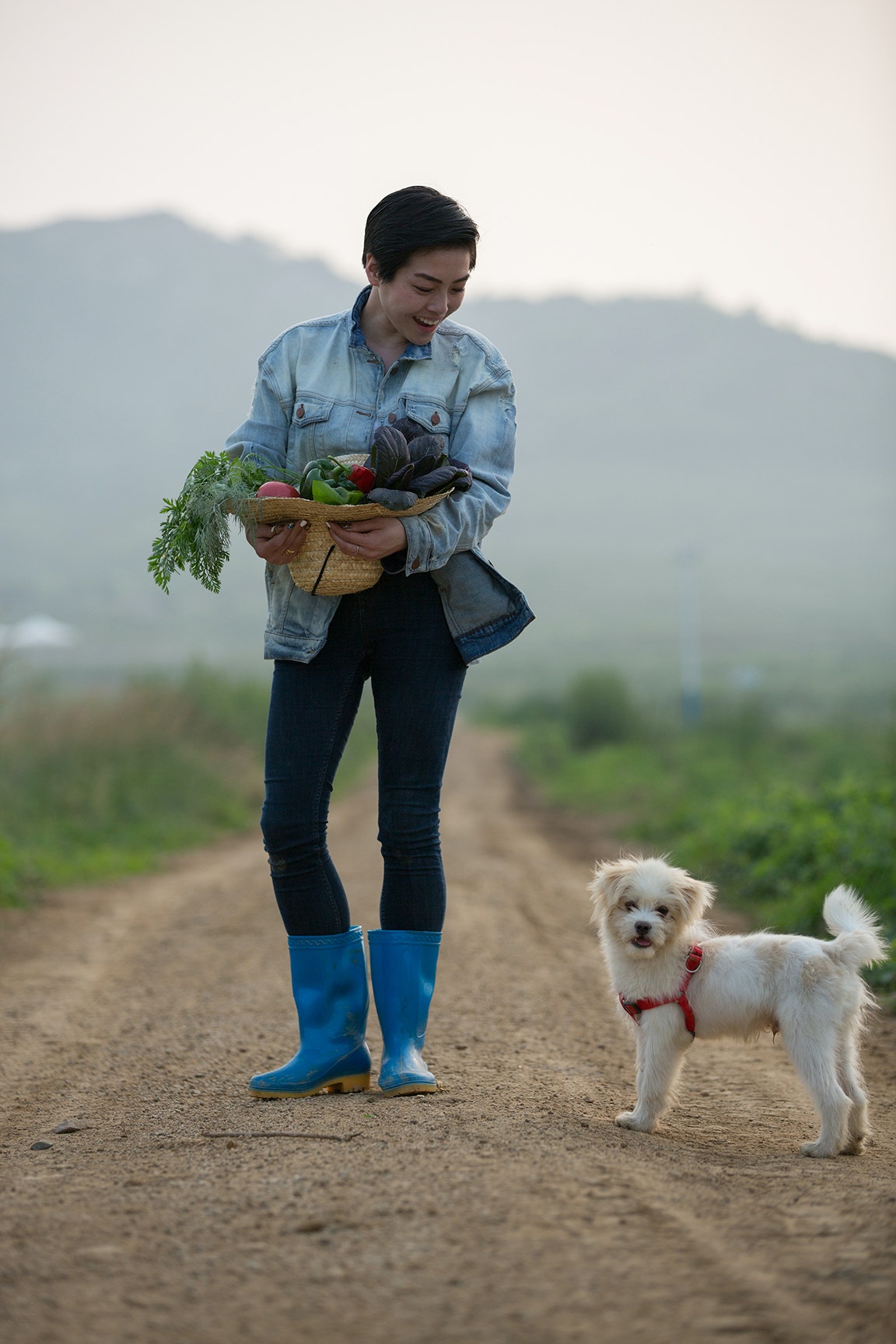
Two siblings, Harn and Anmao Sun, set out on an ambitious venture: to create a trusted source of food in China and, by setting an example, to instigate a movement around conscious farming practices. The American-born entrepreneurs launched Hunter Gatherer, a restaurant and retail food space built around a transparent supply chain, from farm to table to grocery shelves. The venture is based on growing and serving what they call real food: The ingredients are chemical-free and come from known and trusted sources—food they’d eat themselves. The purpose of the venture is simple: to serve people real food that is their right.
Having studied and worked in the US, Harn and Anmao grew accustomed to browsing farmers markets on Saturday mornings or picking up a burrito at Chipotle. But when they returned to China, they were unsure about the safety of the food they were eating.
“In China, you wouldn’t go to a food stand, because you’d be concerned about the ingredients,” Anmao said. “You can’t take the safety for granted.”
Hunter Gatherer’s very existence challenges bedrock assumptions about how food is produced in China. A long and depressing list of scandals—milk contaminated with melamine, pork produced from diseased pigs, used cooking oil repackaged and sold as new—has rocked the public trust.
“In China, agriculture is going through a huge change,” Anmao said. “In the US, agriculture operations are regulated. Farmers’ practices are regulated. If they use pesticides, there are limits because these farmers understand that once a certain threshold is hit, additional pesticides will not yield more crops. But in China, pesticide use came about 30 years after the US and Europe, and because of a lack of full understanding, farmers in China incorrectly operate under the assumption that more pesticides means more crop yields. Also, with over 250 million farmers in China, it becomes immensely difficult to properly regulate everyone.”
New Ventures
Harn and Anmao wanted to restore trust in the simple act of eating in China, and they came to IDEO to build a scalable business based on that vision. This was essentially a startup, a shared commitment between IDEO and Hunter Gatherer.
“I’ve lived in Shanghai for the past seven years, and as a relatively active and health-conscious person, I’ve had to invest quite a bit of time in finding food that I trust,” said Charles Hayes, managing director of IDEO Shanghai. “That investment has been both in the time it takes to research the sources of ingredients but also a literal investment in paying a high price for imported food just for that extra peace of mind.”
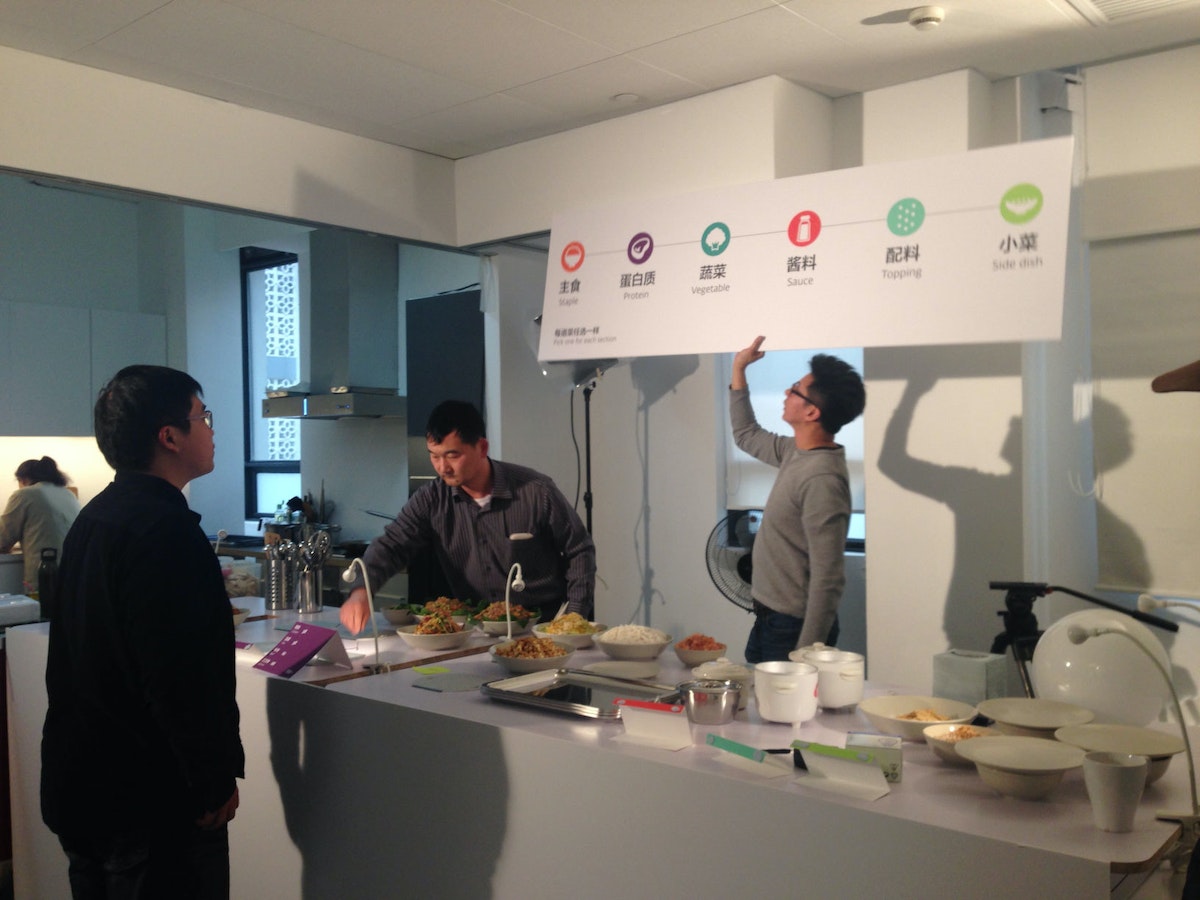
Anmao and Harn took up residence in the IDEO Shanghai offices to incubate their business. Together with IDEO designers, they tested packaging, cooked countless meals, and found ways to introduce unfamiliar ingredients to Chinese consumers. They discussed different concepts of lunch and dinner, and how notions of freshness in Chinese culture might affect cold-storage systems. In IDEO’s prototyping kitchen, the teams tested all manner of different foods, flavors, colors, mixes, and price points, and they brought consumers in to try them out. IDEO designers, along with the founding team, also worked on the brand and positioning of what would eventually become the Hunter Gatherer enterprise—its location, human resources, and marketing strategies.
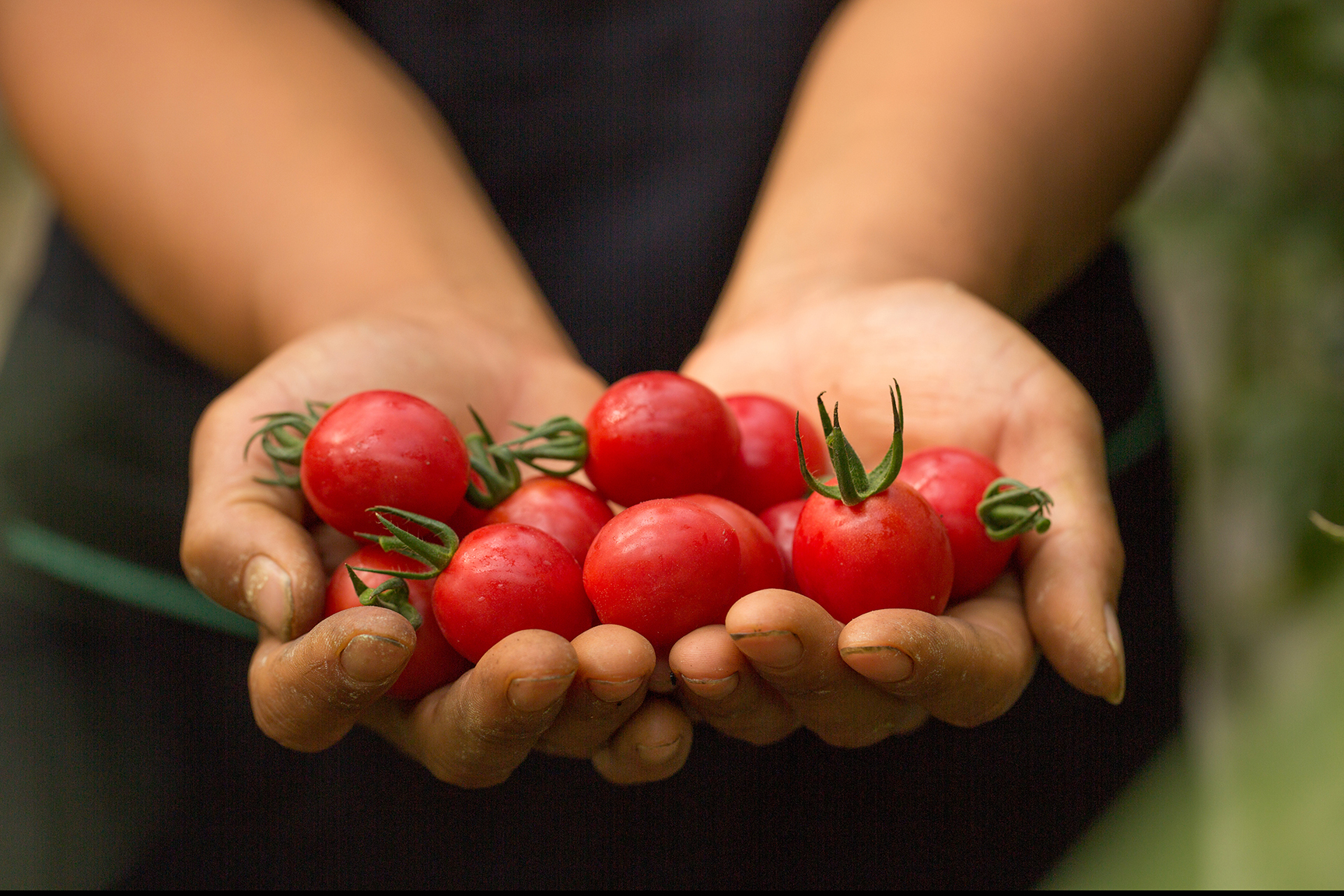
As the restaurant concept came together, finding the right food sources had to be addressed. Traditional agriculture couldn’t be trusted; organic certifications were available on the black market, and safety protocols around chemical use were nonexistent. Anmao and Harn decided to invest in their own farms. They met with farmers, asked questions about their methods, and walked in the fields to see for themselves. Eventually they settled on two plots of land outside Shanghai and began developing more than 80 different crops to be used in the restaurant.
From Seed to Table
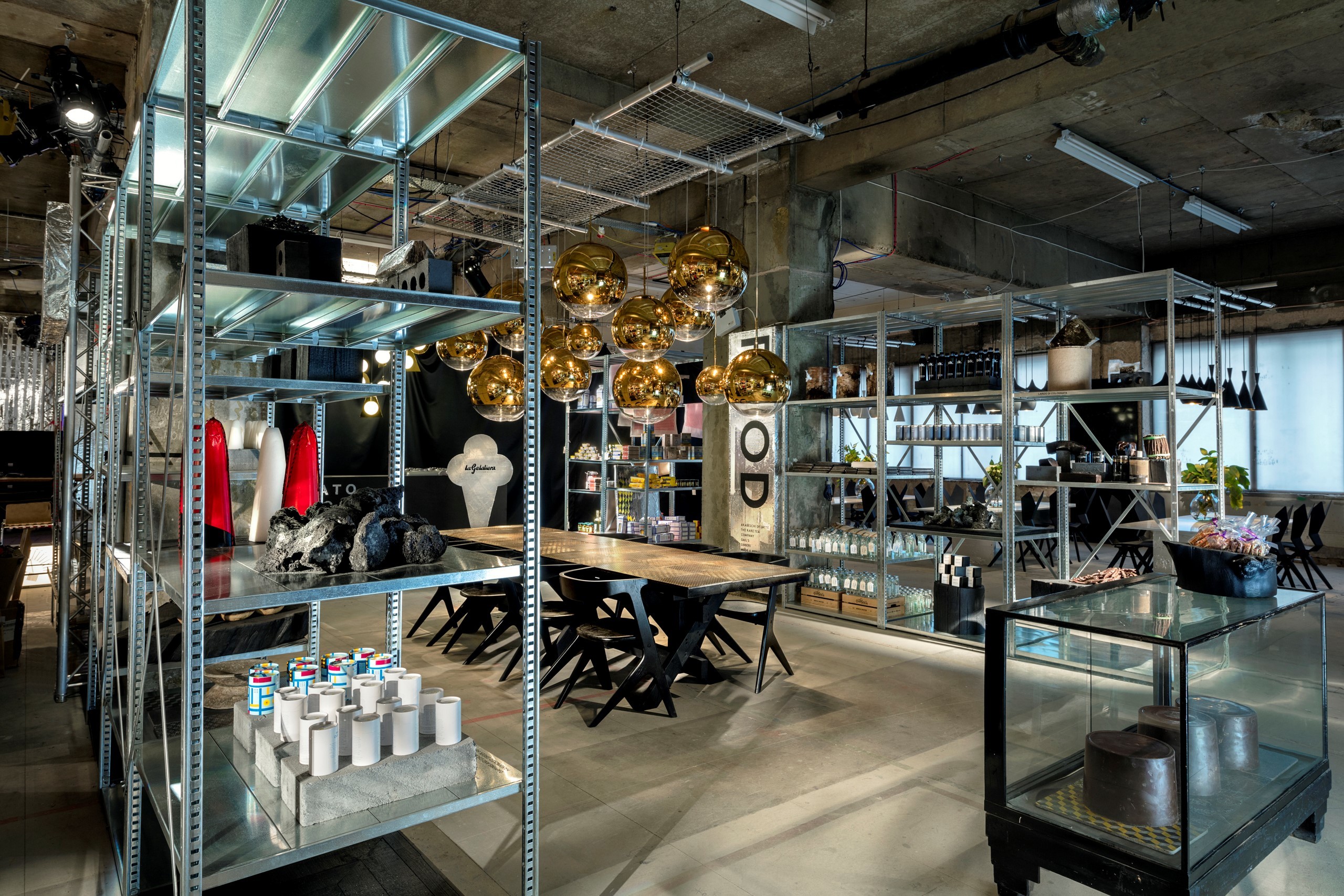
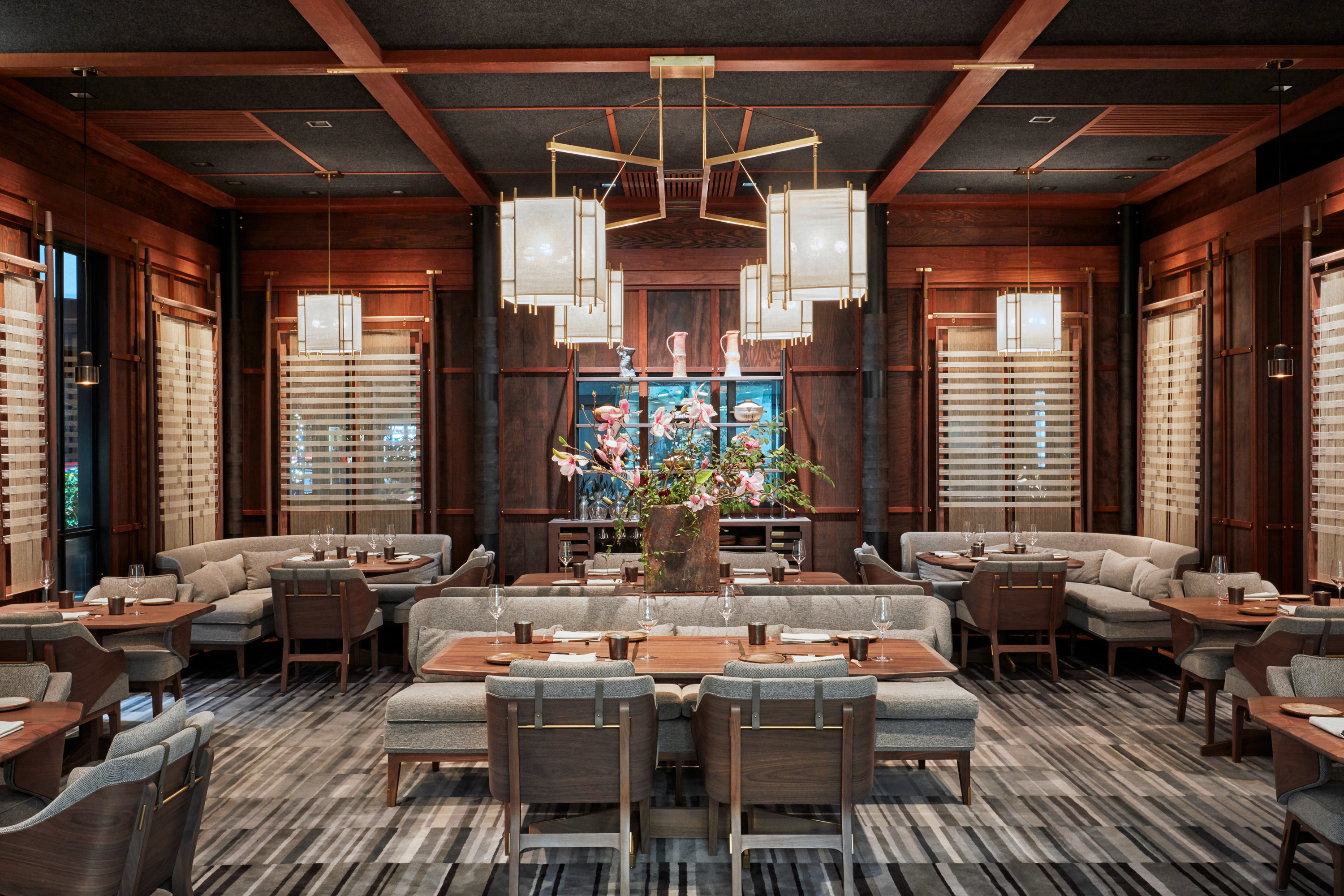
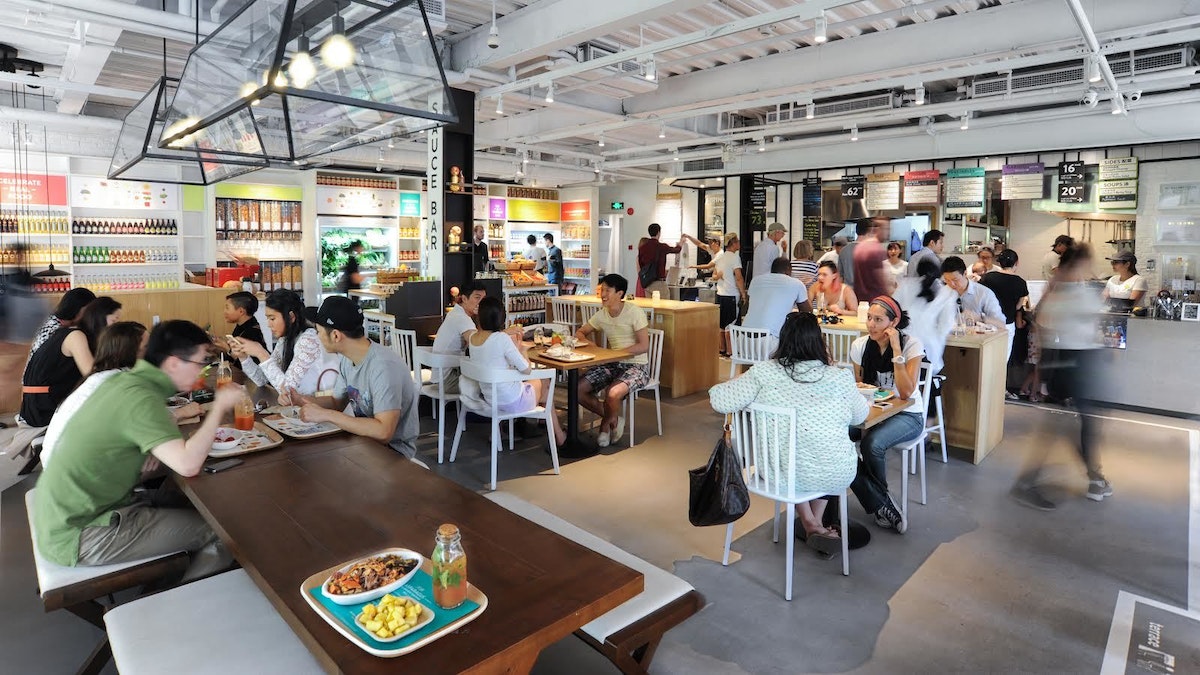
When it came time to find the right space for the first location, Anmao and Harn discovered an open, airy storefront on Anfu Road in Shanghai’s tree-lined former French Concession area. They designed and built a retail space and kitchen, and along with IDEO designers, they trained the staff and organized workflows. The staff set the tables with Mason jars filled with flowers, hung photographs of the farmers who grew the food, and put up a sign that showcases the percentage of vegetables coming directly from the Hunter Gatherer farms, already more than 70 percent in less than a year after opening.
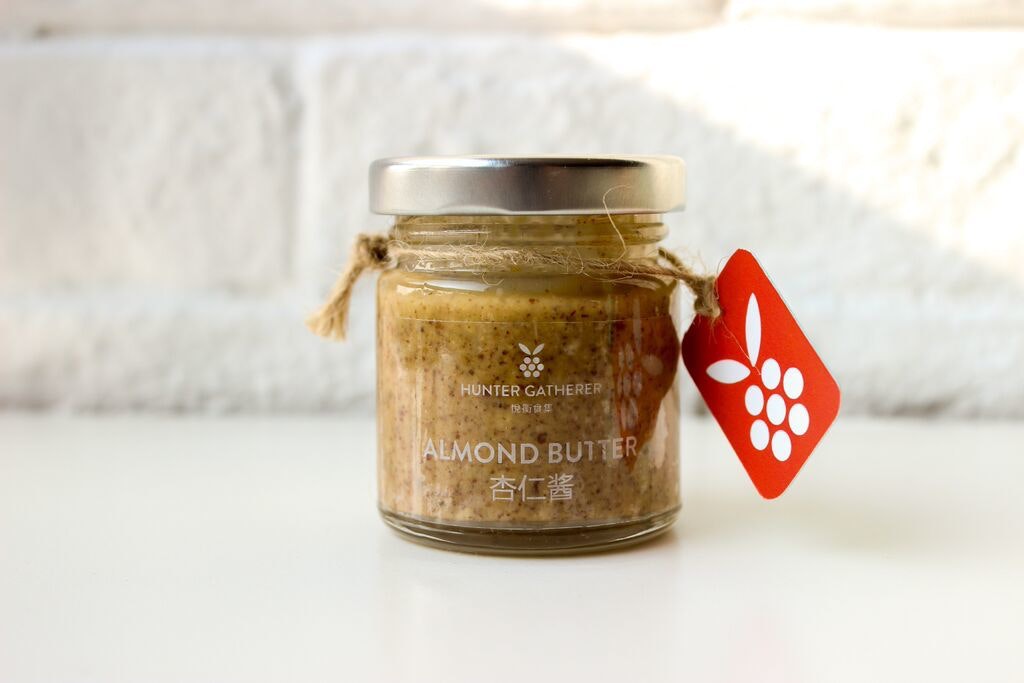
Customers can shop for fresh vegetables, locally sourced and imported canned and jarred goods, bins of cereal, freshly made smoothies, artisan sauces, and exotic chocolates. Upstairs, they can feast on delicious dishes in the homey restaurant.
Reviews have been glowing. One customer raved about the machine that grinds fresh nuts. Another loved the open space, the “good vibes,” and the refreshing cucumber water. Young people go there on dates, and families return for the delicious menu variety.
The convivial space has blossomed into more than just a restaurant and grocery store. It’s become a gathering place of sorts, both for the community and for partners who share the same vision. Farmers and food purveyors are invited to showcase their products at seasonal events and to mingle with customers and share recipes and stories.
“Hunter Gatherer has come to symbolize a kind of lifestyle the Chinese people have been looking for,” said Eugene Lin, an IDEO business designer. “A place they can enjoy hanging out with friends, as well as a movement and mission they can stand behind.”
A Digital Future
This is just the beginning of the venture. The plan is to open 40 more locations throughout China. But the vision for Hunter Gatherer’s growth is bigger than brick-and-mortar restaurants—where the business will truly scale is in the digital space. Eventually, the plan is to launch a Hunter Gatherer online grocery store from which anyone can buy food grown from trusted sources.
“We have to create trust with the consumer. It’s the most difficult and most valuable thing to do in China, especially with food,” Anmao said. “Our brick-and-mortar locations will establish that increased trust. Then we can go online and grow the idea to the rest of the country.”
Will Hunter Gatherer have a hand in changing the way that the world’s most populous nation thinks about food? Its principles are already spreading, from neighboring farmers adopting more sustainable planting methods, to a growing market for products like wine.
But the true sign of success will be almost invisible—the moment when an increase in demand will result in safe food for everyone and when real food becomes commonplace.
Changing the way biotech innovates
Building a culture of user-centered innovation in the name of science.
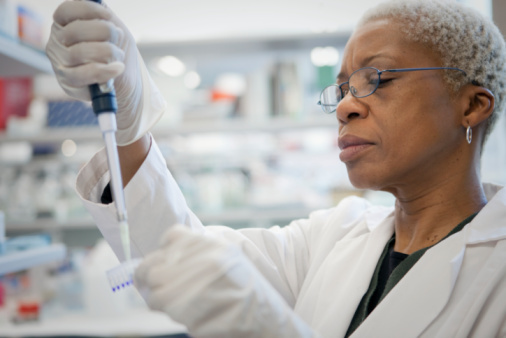
Life Technologies, a global biotech company that supplies scientists with products and services, needed to grow big, from a $4 billion to a $10 billion enterprise. So it hired IDEO to help seed innovation across the company.
"When we started out, it was an R&D thing for driving innovation in new products. Now it’s not just R&D; user-centered innovation is a central part of our culture. It’s what we do throughout the organization," said Amy Cuneo, Associate Director, Customer Insights.
Over a three-year engagement, IDEO helped transform Life Technologies’ corporate culture through the introduction of User-Centered Innovation (UCI), an optimistic, experiential approach to problem-solving. Far outperforming its ambitious goal, Life Technologies is now a $13.6 billion company and uses UCI to inspire innovation throughout the 10,000-person organization.
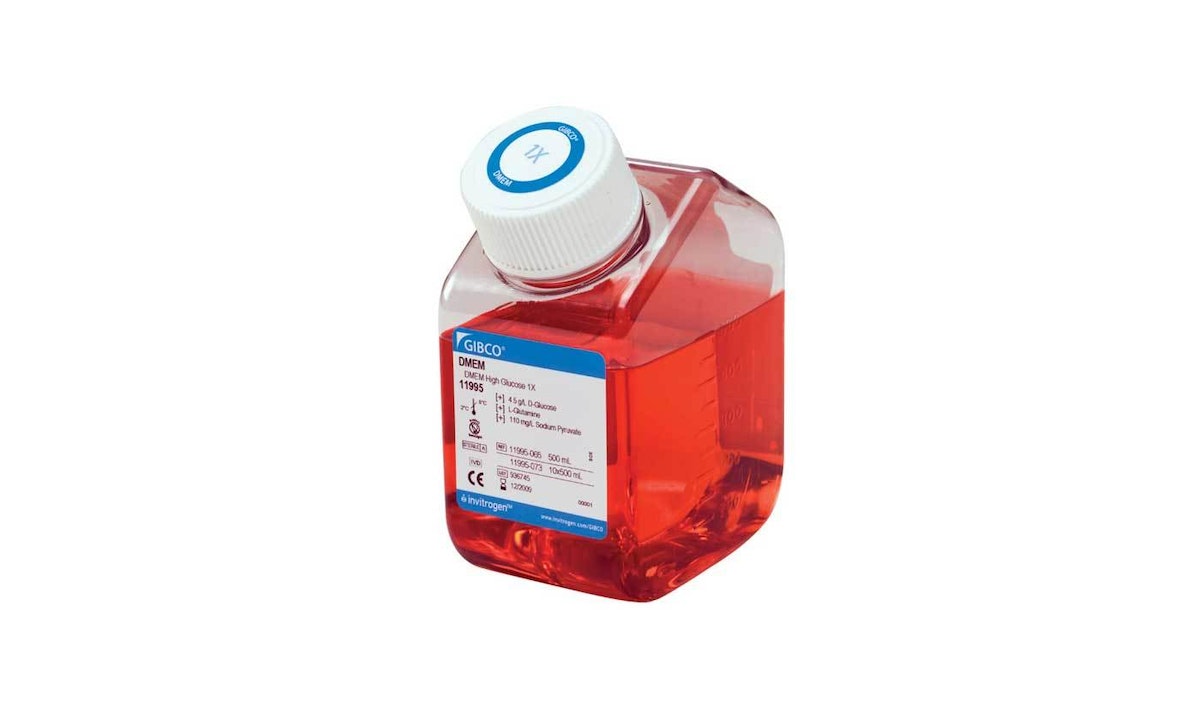
After working with Life Technologies, IDEO designers came up with three products that have gone to market, including, a new bottle that showcases superior handling and storage, easier identification, and additional room for supplements. And Life Technologies has transformed from a company that aspires to focus on customers to one that truly does.
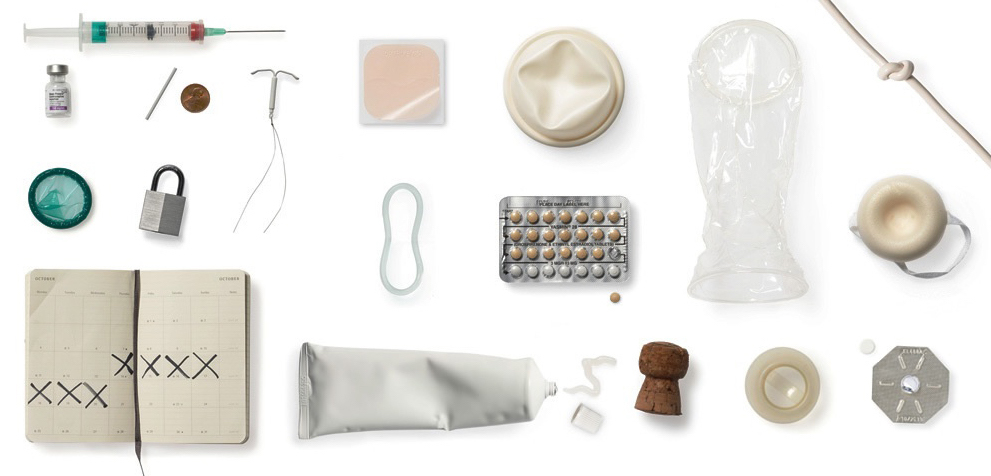
Building a birth control support network for women
A multimedia public service campaign as a vehicle to encourage smart choices.
Unplanned pregnancies are a big problem in the US, especially among unmarried 18- to 29-year-olds. Seven in 10 pregnancies in this demographic are unplanned, a statistic that applies to women of all ethnicities and socioeconomic levels. Complicating matters are the social tension between abstinence-only and contraception-inclusive education, and the difficulty and expense associated with obtaining prescription birth control.
Since 2009, IDEO has worked closely with the National Campaign to Prevent Teen and Unplanned Pregnancy, a nonprofit NGO, to address this pressing social challenge. One of the first insights on the project was identifying the need for comprehensive birth control support. Designers looked at ways to transform birth control from a prescription (a piece of paper that is handed to you by a doctor) into a subscription (a program that ensures you start using birth control, use it correctly, and migrate to more effective methods).
Given the complex and potentially overwhelming subject matter, the IDEO team interviewed women in the target demographic; talked with doctors, counselors, and other experts with varying opinions about birth control; and hosted roundtable discussions. They developed several concepts and scenarios that allowed members of the National Campaign to see sex and pregnancy through the eyes of the young women they’re working to reach.
Research and prototyping efforts led to the design of Bedsider, a multi-touchpoint birth control support system with a carefully crafted sex-positive brand, which is uncommon for the healthcare industry. Bedsider focuses on five key areas (awareness, motivational drivers, digital offerings, services, and loyalty) and acts as a vehicle for behavioral change that’s flexible, with room to grow into a much larger movement.
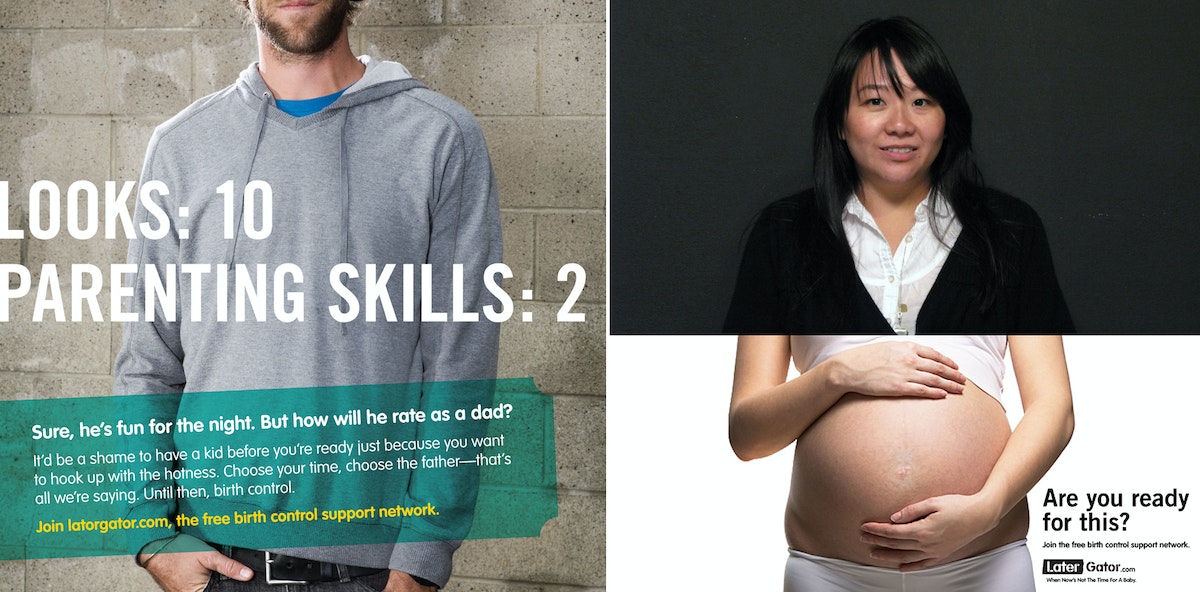
The Ad Council and the National Campaign debuted a multiyear, multimedia public service campaign in November 2011. The Bedsider website offers comprehensive education about existing birth control methods. This includes opt-in reminder services, personal stories from women across the country on why they chose a particular method, a phone service that provides information in both English and Spanish, features such as “Fact or Fiction” (hilarious animated clips debunking popular myths), a “Frisky Friday” newsletter, and more.
Bedsider has launched nationally with the help of an Ad Council campaign that drives sexually active women ages 18–24 to Bedsider.org. The multimedia Public Service Announcement effort includes television, radio, print, web, and nontraditional advertising, as well as an integrated social media program.
“We hope that Bedsider will be a useful tool for women to learn about their birth control options, better manage their birth control, and in the process avoid getting pregnant until they’re ready,” said Planned Parenthood of South Florida and the Treasure Coast in its monthly newsletter. Planned Parenthood and Philliber Research Associates joined forces with the National Campaign to Prevent Teen and Unplanned Pregnancy to help test and evaluate Bedsider.
Through a social media campaign called #ThxBirthControl, people are voicing their thoughts about what birth control has made possible for women, men, families, and society. It’s all part of Thanks, Birth Control Day, launched in November 2013 as part of a continuing initiative to encourage positive conversations and more consistent use of birth control by the National Campaign to Prevent Teen and Unplanned Pregnancy. To celebrate the movement, IDEO wrote, scored, and performed an animated musical featuring condoms and pill packs dancing the cancan.
According to an independent evaluation of the program, Bedsider is the first digital intervention in reproductive health in the U.S.—with adults as an audience—that has shown to prevent unplanned pregnancy. Turns out that when women and men have the ability to plan, prevent, or space pregnancies, they’re more likely to finish school, achieve their goals, and ultimately have healthier families, according to the nonprofit organization.
Bringing bikes to the streets of Chicago
Using the joy and freedom of cycling to brand Chicago’s bike-sharing initiative.
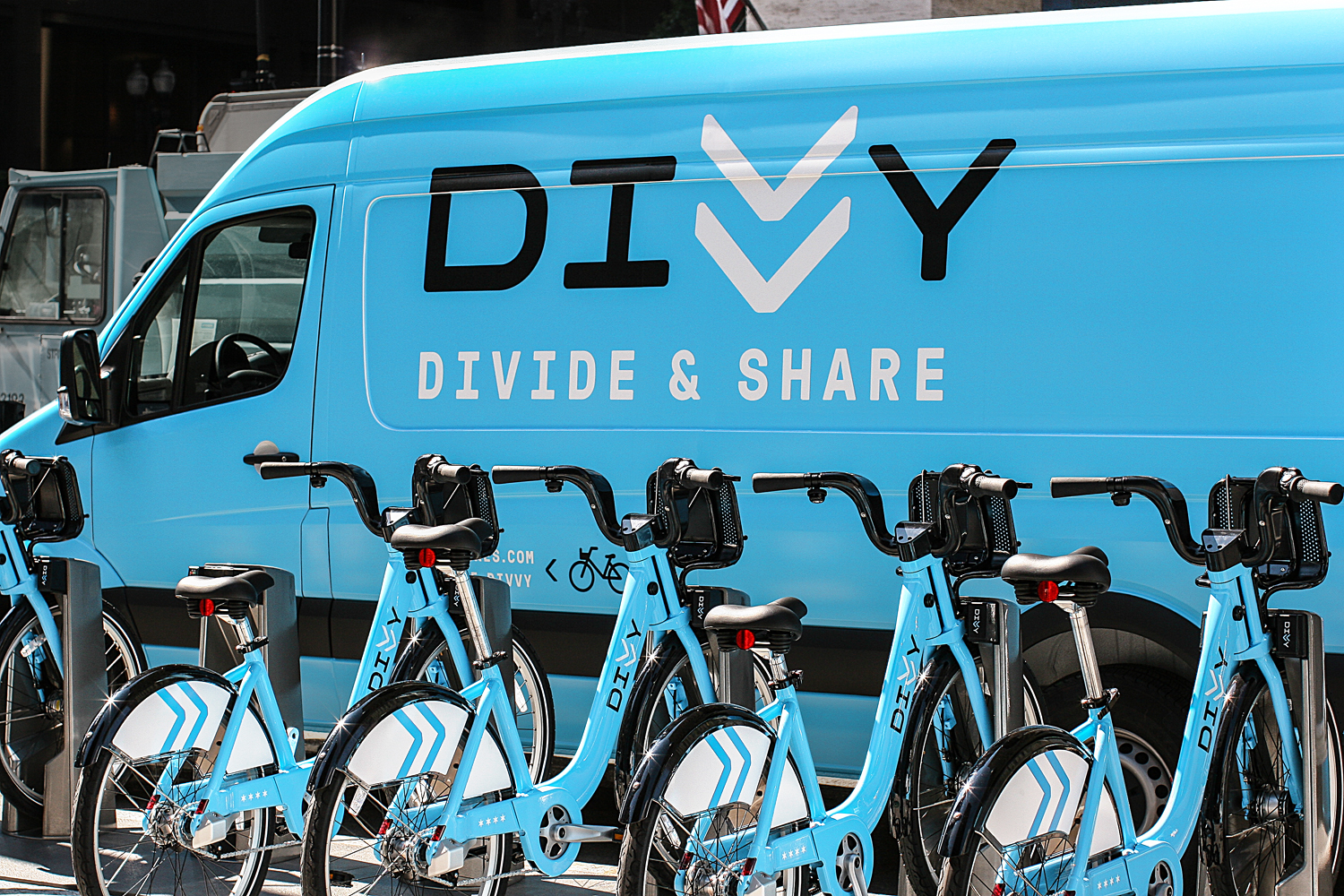
Chicago’s federally funded, citywide bike-sharing service, called Divvy, makes a fleet of bicycles available to commuters and tourists 24 hours a day. Alta Bicycle Share (which runs bike-sharing systems in Boston, the Bay Area, DC, and New York City) collaborated with IDEO to spread Divvy’s message, “Divide and Share!” to the cyclists and would-be cyclists of Chicago through the brand.
The new brand would appear on its bikes, stations, company vans, member fobs, and website—and it needed to be ready to hit the streets in just six months. IDEO partnered with local brand strategy studio Firebelly Design to collaborate on a solution. IDEO led the early research, conceptual brand development, and naming phase of the project; the Firebelly team led the visual design and developed the brand guidelines.
The brand has become a functional and fun part of Chicago’s transportation landscape and has been embraced by Chicago commuters. Just three weeks after it launched, the City of Chicago called the Divvy Bikes program the busiest bike-sharing system in the world. Six months into the service, enthusiastic cyclists have racked up over 780,000 trips and 1.7 million-plus miles, and over 12,000 Chicagoans have become members.

3 Ways to Make Your OOO More Human
The art of Out-of-Office messages

When we get an auto-responder, the feeling is generally one of mild disappointment, indifference, or doom, depending on how urgent your request was.
If I took the time to compose something better, I wondered, would anyone take the time to read it? Was there a way—an opportunity, even—to shift the entire auto-responder interaction from one of scarcity (nobody’s home) to abundance (well that just made my day)?
The question became:
"How might we take one of the most automated voices we still offer to the world and make it more human?"
I started to experiment:
"I will be in a workshop this week rendering response time erratic and unpredictable. I apologize for any inconvenience this may cause and invite you to celebrate this moment by testing the varied edges and new limits of patience this may evoke. Who knows where it may lead? I will be back to you as soon as possible. I promise. Thank you!"
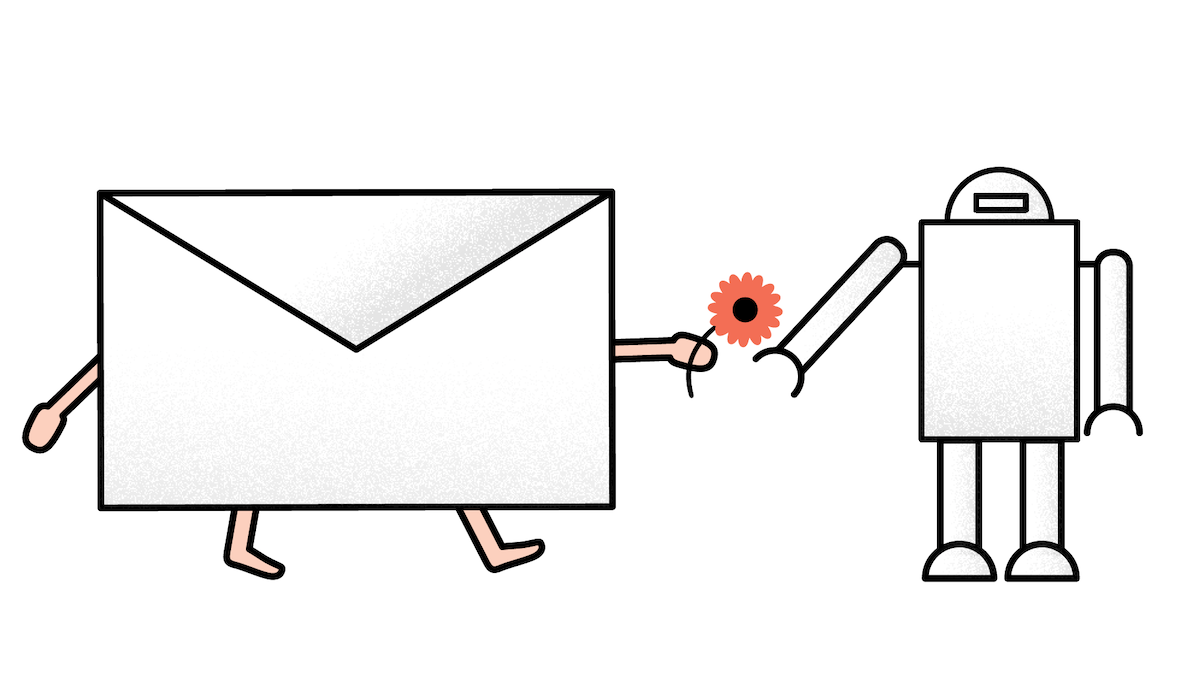
Then got a little bolder:
"I will be impossibly slow to respond today as I am currently seated deep within the bowels of our criminal justice system doing my bit as potential juror #xxxxx for Kings County. I urge patience and self management, and that's just for myself.... I apologize for any inconvenience this may cause."
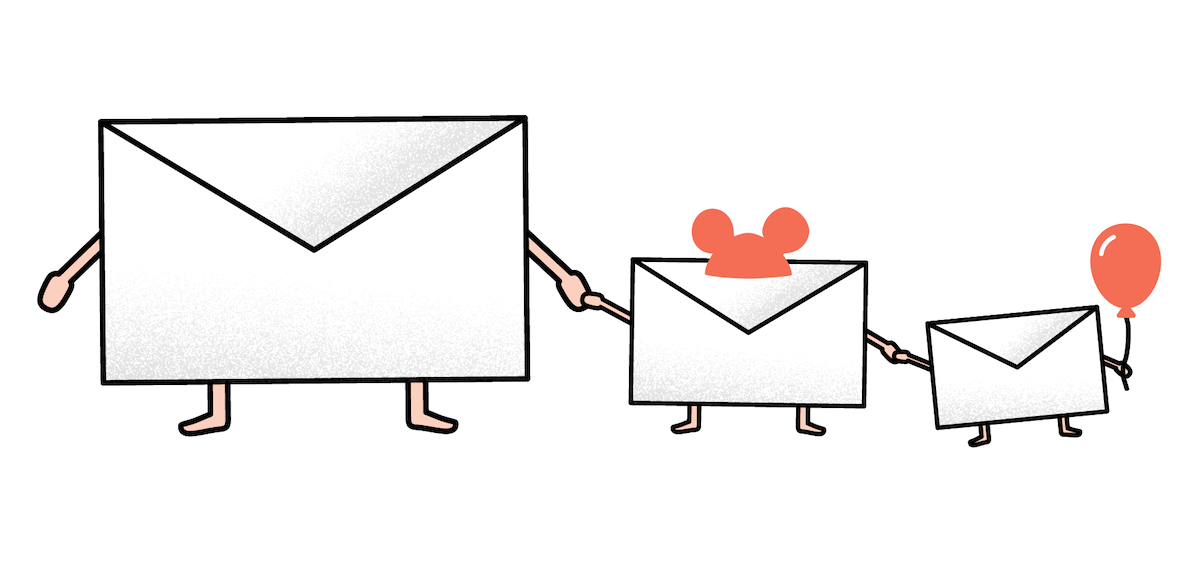
Today you will most likely receive:
"I am abroad with the most inconsistent wifi I have ever experienced. It's the substantiation of mindfulness, the invitation to a million moments paused in the belligerent now. I will pick up with you again on July 10th when I am back in New York where the data flows like a subterranean stream and the hours are neither here nor there. Thank you for your patience in the meantime."

People responded. They read them. They liked them! And the fact that they got a momentary zing out of these absurdist missives did much to relieve my guilt over dodging people's requests. I also learned a few things along the way.

3 design principles for how to write a better OOO:
- Insert an element of surprise
Moments of surprise in the mundane matter exponentially. I have received many many bemused responses. From close colleagues to clients to absolute strangers. It instantaneously bonds us and shifts the exchange from “I have a request or need” to “I see and hear you.” When I eventually return and execute on that request, there are new connections, filamenty kinship has grown between us through humor and surprise. From that foundation we accomplish more, usually with speed, which is ironic when you think that the communication started with a stunting. Not particularly auspicious. This creates space for possibility. - Do not concede to the bot!
Bots are helpful, available, and dare I say it, adorable at times. But to compete with them we must use our all too human, weird, silly, grammatically inconsistent voices. Besides, if they are learning from us anyway we may as well give them some good material to work with. - Upend expectations by being yourself
I work in leading talent for IDEO. I'm proud of that craft. But I’m also an MFA, a poet, and you may be able to tell, a bit of a weirdo. The moment I gave myself permission to be myself in all of my communications with people—even the dryest most official ones—people started responding in kind. Free yourself and the rest will follow.

We all operate in a world where we bump up against other’s expectations or assumptions of who we are on a daily basis. Those assumptions don't change on their own—that's your job! And it's as easy as writing a good OOO email! I am not HR, I’m HCH. Hello.
The dreaded OOO. You've probably already gotten one today. The tone is usually perfunctory, most likely generated by a bot, or a bot-like impulse on behalf of the sender, who is hastily trying to sign off before that vacation, workshop, excuse to get away for five minutes of uninterrupted peace.

Thoughtless Acts: DIY Rain Gutter
Thoughtless Acts: DIY Rain Gutter. The intuitive ways we adapt and react to things in our environments
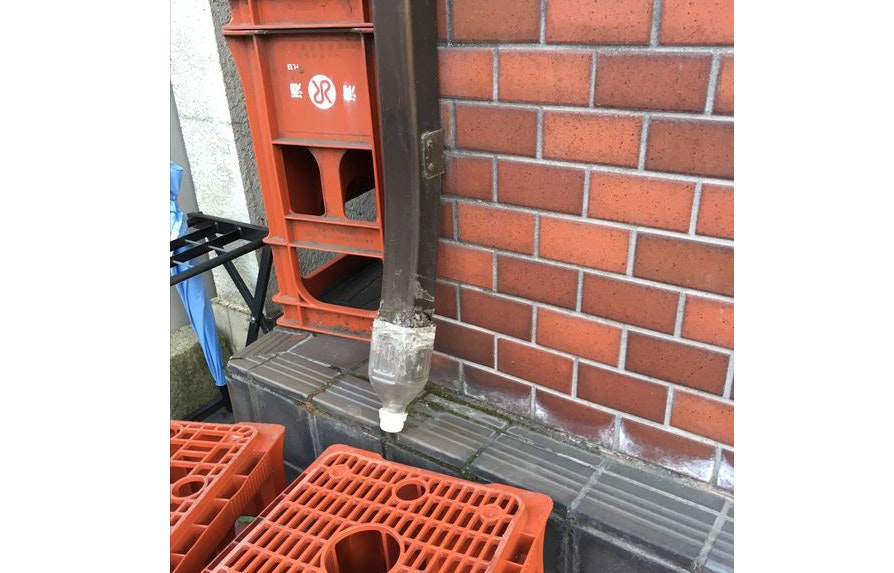
I found this outside of a grocery shop in Tokyo. Someone used the plastic bottle to replace the broken rain gutter. You can tell from the scratches on the plastic that the water bottle has been there a while, outlasting countless rainstorms. Who knew a water bottle could be so strong!
Human-centered design requires us to observe human behavior with beginner's eyes, so that we can spot the innate ways people interact with the world around them. We call these intuitive and unconscious reactions Thoughtless Acts, and IDEO designers collect photos of them to inspire their work.
Being Indiana Jones (for Three Weeks a Year)
Being a part-time archaeologist makes me a better full-time editor
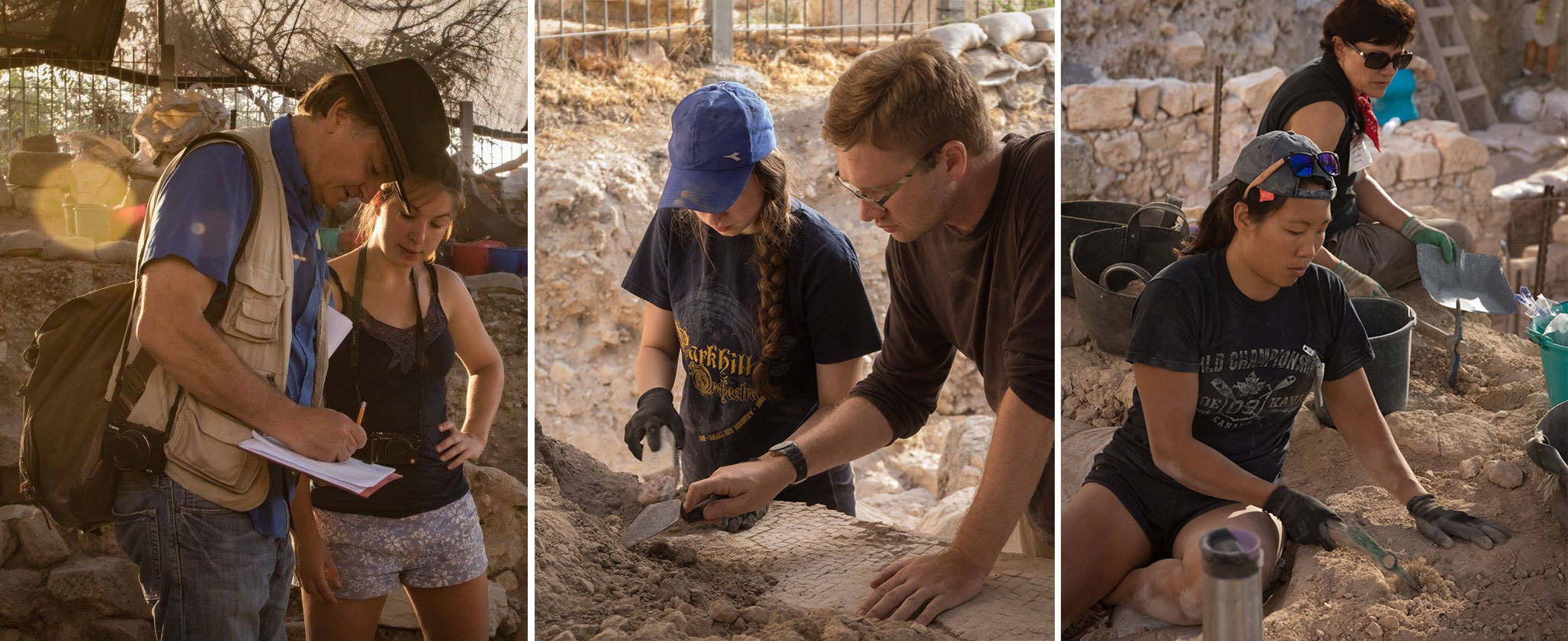
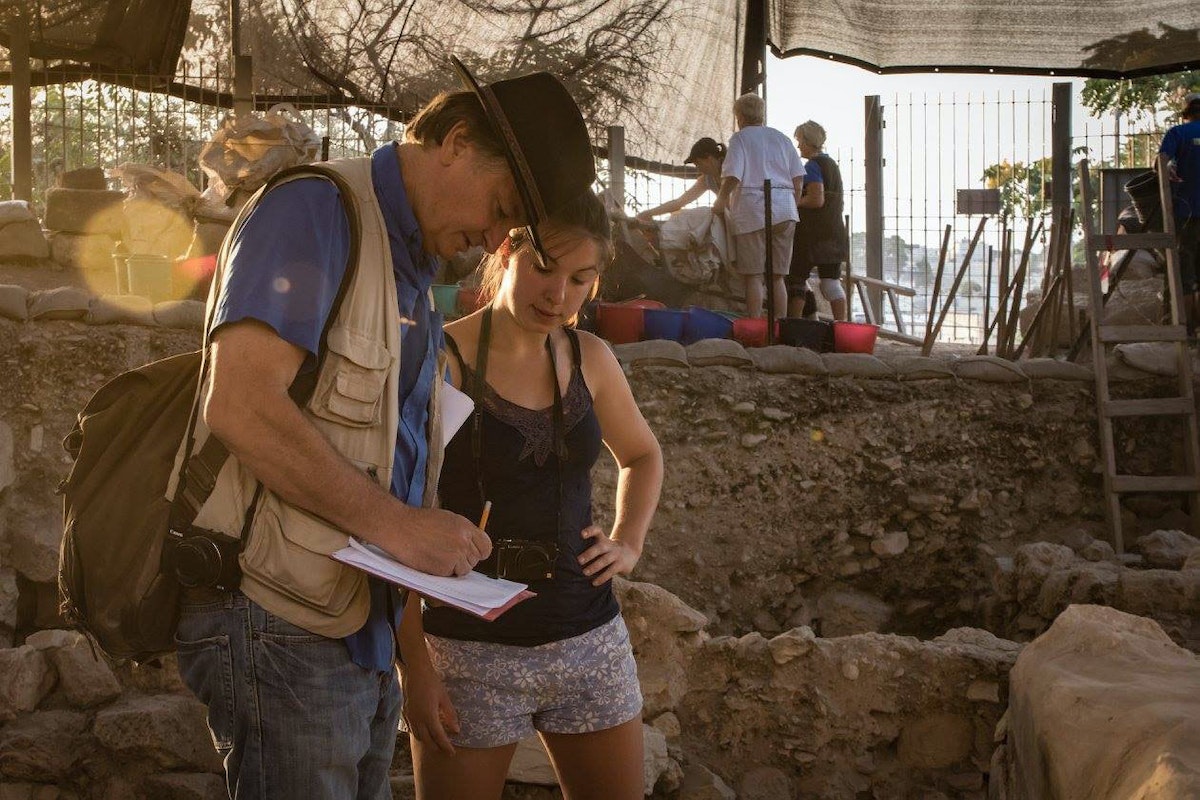
In 2016, with only a college internship in archaeology under my belt, I stumbled on a social media post calling for volunteers to dig in Jerusalem. Before I knew it, I was winging my way to Israel with knee pads, sweat bands, and plenty of SPF 50. I spent two to three weeks of each of the following summers in Jerusalem with Dig Mount Zion, helping excavate priestly homes from the time of Jesus, Roman mosaics and frescos, and hints of bloody Crusader battles.
I returned from my latest session in a dusty Jerusalem pit in July to start my new gig as an editor at IDEO. Believe it or not, being a part-time Dirt Hound has really helped my work. How?

1. Archaeology sparks curiosity
I knew nothing about design when I started at IDEO. Likewise, before college I knew zilch about archaeology beyond what I’d seen on TV. The aggressive learning curve kicked me out of my comfort zone and forced me to ask questions of everyone, all the time. What’s a sherd, or for that matter a fill, a balk, or a locus? How did people live in the time of King David or King Herod, and how do we know?
Constantly asking questions can make you feel a bit naive, but I’ve found this sort of curiosity is a great way to learn fast, shake up stagnant systems, and radically expand my view of what’s possible.
Designers know this well. They start with questions: How might we incorporate VR into online experiences? Why are schools bound by four walls? Could play help prisoners? This inquisitive, unbiased approach is what allows them to identify fundamental needs and find creative solutions.
In the same way, I try to broach new concepts I come across, such as designing for social change, with no preconceived ideas, and keep poking and prodding until I unearth the story.

2. Hard labor can be good for you
In pop culture, archaeologists find perfectly preserved, fully excavated structures (I’m looking at you, Indy). But in reality, someone has to remove tons of dirt and rock; sweep the area with a metal detector; sketch and photograph the features of the site; wash, sort, and catalogue finds—and then begin again the next day, on the next layer of earth. Slowly, a complete picture is revealed. It’s meticulous, backbreaking work.
At the Jerusalem dig site, the physical challenges and my lack of formal training helped me understand my limits and accept guidance from the seasoned archaeologists in charge. At the same time, the digs showed me that I’m capable of withstanding heat, stress, language barriers, and lots of pickaxing. These experiences have given me confidence that I can master a new language—design—and tackle stories about IDEO’s most complex, cross-cultural projects.
3. Digs build trust & teamwork
In a given year, Dig Mount Zion includes about 15 staff, 20 students, and 60 wide-eyed volunteers. Participants range from 18 to 86 and hail from Germany, Russia, the Philippines, Canada, New Zealand, and beyond. Being tossed into a pit in 95-degree heat and told to move a mountain of dirt has bonded complete strangers into fast friends.
Working in a place so steeped in history, alongside people from all walks of life—from an Ohio school bus driver to a Messianic Jewish missionary to a particle physicist—helped me build trust and tolerance and let me glean wisdom from people with radically different points of view.
Likewise, diversity of experience and perspective on a single project is IDEO's secret sauce. Our designers have created everything from apps to amps to appliances and I'm charged with capturing those inventions in a way that's easy to understand. Archaeology has prepared me well to incorporate new modes of thinking and work with colleagues from Silicon Valley to Shanghai.
Hopefully, they won’t mind all the dirt under my fingernails.
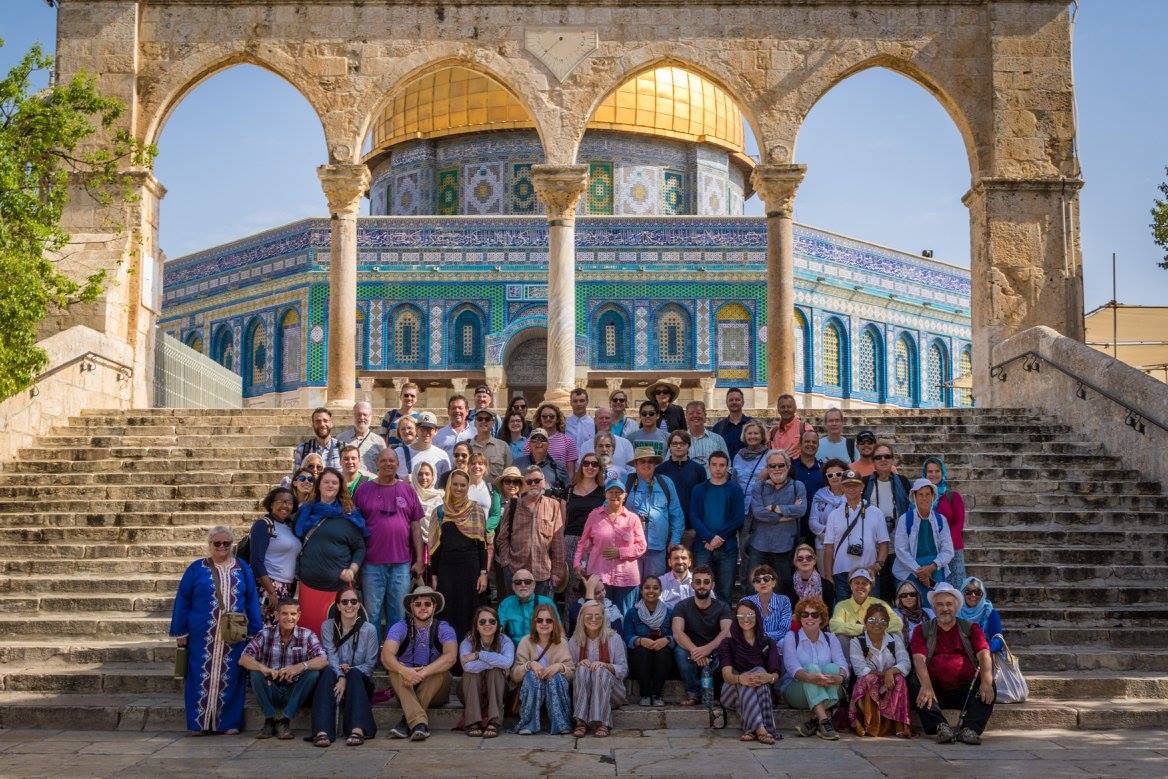
Photos courtesy of Rachel Ward. For more, please contact rwardphotoclt@gmail.com.
When I was eight, I defected from a high-stakes game of summer camp capture-the-flag to hunt for fossils in a nearby creekbed. Twenty years later, I still obsess about all things ancient—the first civilizations, the evolution of religious thought, and the latest dinosaur find. If this is a phase, I never grew out of it. In fact, I’ve become something of an amateur archaeologist, with surprising benefits for my work life.

5 Ways to Think Like a Designer, from an IDEO Partner
What I've learned from teaching design
Here are the top 5 things I tell my students about nourishing creativity and thinking like a designer:

Be curious
Without curiosity we do not learn and we won't grow. The same holds true for organizations. An organization that is not curious and not willing to learn will not be able to grow in today's business environment.

Challenge assumptions
In 2015, a group of students at Lund university challenged the IKEA purpose “design for many” and added a new perspective to it. What if IKEA was not the provider of solutions (the assumption) but the provider of a framework to foster people's creativity (the challenge)? The IKEA Hacka modular kitchen design is a beautiful example of how new ideas can spring from challenging assumptions.

Get lost in dreams
I don't want to accept that we have lost a whole generation to screens and devices. Creativity happens when we stop and let go. When we don’t know where to go, when we daydream and let our thoughts flow.
And research limited to what you can find online won't cut it. Insight comes from observing real people in real life. Students should have that luxury, and we should provide permission and space for that in organizations.

Get into a question-framing mindset
Design students often start their creative process by translating insights into problem statements. But you can't identify a problem without asking a bigger question first. So how do we get there? When we find the right opportunity space for a team to tackle, creativity flows.

Collaborate
I believe that all of us are better together. We've reached a time when collaboration is not just about individual work patterns, but also about what happens across systems, organizations, and governments.
Unfortunately, too many leaders seem to fall back on trying to solve things themselves, then ask those around them to do their bidding—often with rather unfortunate results.
But today's students—the next generation of leaders—have grown up in a sharing economy where not just goods, but also values are exchanged. And that keeps me optimistic about the future.
Taking this approach, my students and I have produced hundreds of design concepts, many of which have been published and exhibited. Spectrum, a project I co-led with designer Stefan Diez, was recently shown at the Salone di Mobili in Milan. And a workshop at the University of Lund produced the IKEA concept kitchen. As the school year approaches, I look forward to watching young designers come up with more bright ideas.
For more than 10 years, I've taught design in places like the University of Lund in Sweden, the HfG Offenbach in Germany, and Parsons School of Design. Teaching inspires me, challenges me, helps me question my point of view on design, and keeps me connected to the next generation. My students often start out with a problem-solver mindset and want to rely on technology. I encourage them, instead, to start with a question, large or small, that puts humans at the center.

Lindsey Turner
I’m passionate about building brands, products, and experiences that help organizations show up with meaning and momentum.
I help organizations cut through complexity by shaping how they show up, through brand strategy, identity, and storytelling.
Working at the intersection of brand and business, I bring an editorial eye and a bias toward making—turning ideas into tangible experiences that people can understand, trust, and believe in.
My work spans government, healthcare, financial services, media, and consumer goods, from launching Gen Z-focused ventures to building innovation labs and reimagining legacy brands. I relish moments of ambiguity and enjoy translating across teams, perspectives, and priorities to move ideas forward.
I started my career in editorial and digital design, shaping cross-platform experiences and identity systems in publishing and agency environments. That foundation still shapes how I work today: I’m detail-oriented, collaborative, and overreliant on the Oxford comma. I hold a BFA in Visual Communication from the School of the Art Institute of Chicago.

Rachel Young
My work helps organizations see who their products aren't working for—and build the will and the tools to do something about it
For 25 years, I've asked the same question: Who does this design exclude—and what are we going to do about it?
My work spans human-centered strategy, inclusive design, and qualitative research, with clients ranging from Microsoft, Google, and Verizon to the National Science Foundation, and San Francisco Unified School District.
Before IDEO, I taught elementary school in East Palo Alto and spent a decade doing design work with social service organizations—where I learned firsthand what it costs people when systems are built without them in mind.
I am currently writing User Error, a nonfiction book about digital access and the design decisions behind it. I live in Oakland, California.

Brian Pelsoh
I lead with craft, ensuring our work is creatively excellent: rooted in deep human insight and imagination, while also grounded in the realities of business and technology.
My expertise spans brand, communication, and product design across tech, education, the arts, and social impact.
I believe great work demands both high-level vision and obsessive attention to detail, and only happens through collaboration.
I bring an inclusive, hands-on approach and a deep understanding of business, which enables me to consistently deliver excellence while always asking why.
Before joining IDEO, I worked at the brand firms Pentagram and VSA Partners. I began my career as a designer, leading teams at the School of the Art Institute of Chicago and the Milwaukee Art Museum. I hold an MFA in graphic design from Maryland Institute College of Art and a BFA in communication design from the Milwaukee Institute of Art & Design, and have taught at some of the best design schools in the US.

Tony Wong
I am responsible for IDEO’s long-term success in China and working with clients to use design as a tool to enable growth.
I am responsible for IDEO’s long-term success in China and working with clients to use design as a tool to enable growth. Specifically, I have helped Chinese companies design holistic brand solutions through the development of their products, communication, services, and innovation teams, and I have helped multinationals expand their presence and influence in China.
I advise global leaders on developing China-led innovation and capabilities.
In over 15 years in IDEO Shanghai, I have worked on projects that use design to elevate the quality of the experience of healthcare products and services, streamline processes that increase productivity, create spaces and programs that promote and enable inclusive communities, and build next generation mobility solutions that are planet-positive.
Before joining IDEO, I worked at Philips Electronics and the Electrolux Group in Italy, the Netherlands, and Singapore on a number of breakthrough commercial products. I am a member of the Young President Organization in Shanghai.

How to use AI as an editor, not a writer
Ed White shares how he uses AI as an editor—not a writer—to sharpen storytelling, rehearse ideas, and preserve the productive friction that makes creative work better.
Ed White has a rule he's tested on his own writing: hold yourself as the writer, and let AI be your editor. Ed is a Senior Design Director at IDEO's London studio, where he co-leads the firm's AI portfolio across Europe. Before IDEO, he spent 12 years as a writer and editor at the Financial Times, Wired, and Contagious. So when he talks about when to use AI for storytelling and when not to, it comes from two decades of crafting his storytelling skills.
In this episode, Mina Seetharaman talks with Ed about two specific tools he uses to keep AI in an editor's seat: a "roasting agent" prompted to critique his drafts without any sugarcoating, and a simulated audience he rehearses pitches on before the real thing. They also get into what Ed is hearing from design leaders at Anthropic, Lovable, Shopify, and Google Creative Lab about how creative work is changing, and why he thinks the friction of writing something yourself is worth protecting rather than automating away.

Building a personal AI for the messiness of life: Sida Li
Becca Carroll talks with Cue co-founder Sida Li about designing a personal AI for the messiness of everyday life—not just work. They explore how Sida stays anchored to human needs while navigating fast-changing technology, product tradeoffs, business-model experimentation, and the realities of building an AI company today.
Most AI products today are built for work—a space with clear problems and established systems. One founder noticed a gap: personal life is messier, harder to systematize, and mostly left behind by the AI boom. So she built Cue, a personal AI that lives inside iMessage and group chats, to go where the other tools haven't.
In this episode, Becca Carroll, IDEO's Chief Strategy Officer, talks with Sida Li, co-founder and CEO of Shared Context Lab, about staying anchored to a human need while the technology around her keeps changing shape, why she treats her business model with the same rigor she'd bring to a product, and what it feels like to build a company at this particular, disorienting moment in AI.
The conversation also gets into how Sida makes design decisions: the language Cue uses to describe itself, the tradeoffs behind building inside iMessage instead of a new app, and a real story about a business idea that didn’t pan out.
This is the second in a two-part series profiling founders from IDEO's Startups-in-Residence program. The first conversation is with Johannes Seemann, founder of Sooner, on designing GenAI for the emotional side of money.

Designing GenAI for the emotional side of money: Johannes Seemann
Designing financial tools around the feelings that shape money decisions.
Most personal financial tools are built to run the numbers and optimize towards a budget. While that works for some, most people experience money as a lived relationship that does not neatly fit into a spreadsheet. Johannes Seemann and Becca Carroll discuss why money is emotional before it is mathematical, and what a human-centered approach to building a generative AI financial product looks like in practice.

The curious leader's edge in uncertainty: Scott Shigeoka
How genuine curiosity helps leaders navigate uncertainty with greater confidence.
Mina Seetharaman talks with Scott Shigeoka, author of Seek and Head of Curiosity Cultivation at the Eames Institute, about what distinguishes genuinely curious leadership from performative curiosity, how power dynamics shape curiosity, and why practicing curiosity can restore energy rather than drain it.
Looks like you might be in search of something very specific?
Or reset the filters above and try another angle.
Here’s some random inspiration

Podcasts about creative leadership

Articles about the power of prototyping