.svg)



Designing a better onboarding experience for an AI symptom checker at clinics
Enabling doctors to spend less time on paperwork and more on patient care.
D4V is a Tokyo-based early stage Venture Capital in partnership with IDEO. Two years ago, D4V invested in healthcare startup Ubie, which develops a service called AI Monshin Ubie. The digital service was created with the goal of reducing the burden on healthcare professionals working long hours, under harsh conditions. AI Monshin Ubie automates a number of patient registration and documentation processes through digital tools, enabling doctors to spend less of their time on manual paperwork, and to dedicate their valuable skills and attention to the patients themselves. Currently, the service is installed in 200 medical institutions in 41 prefectures across Japan.
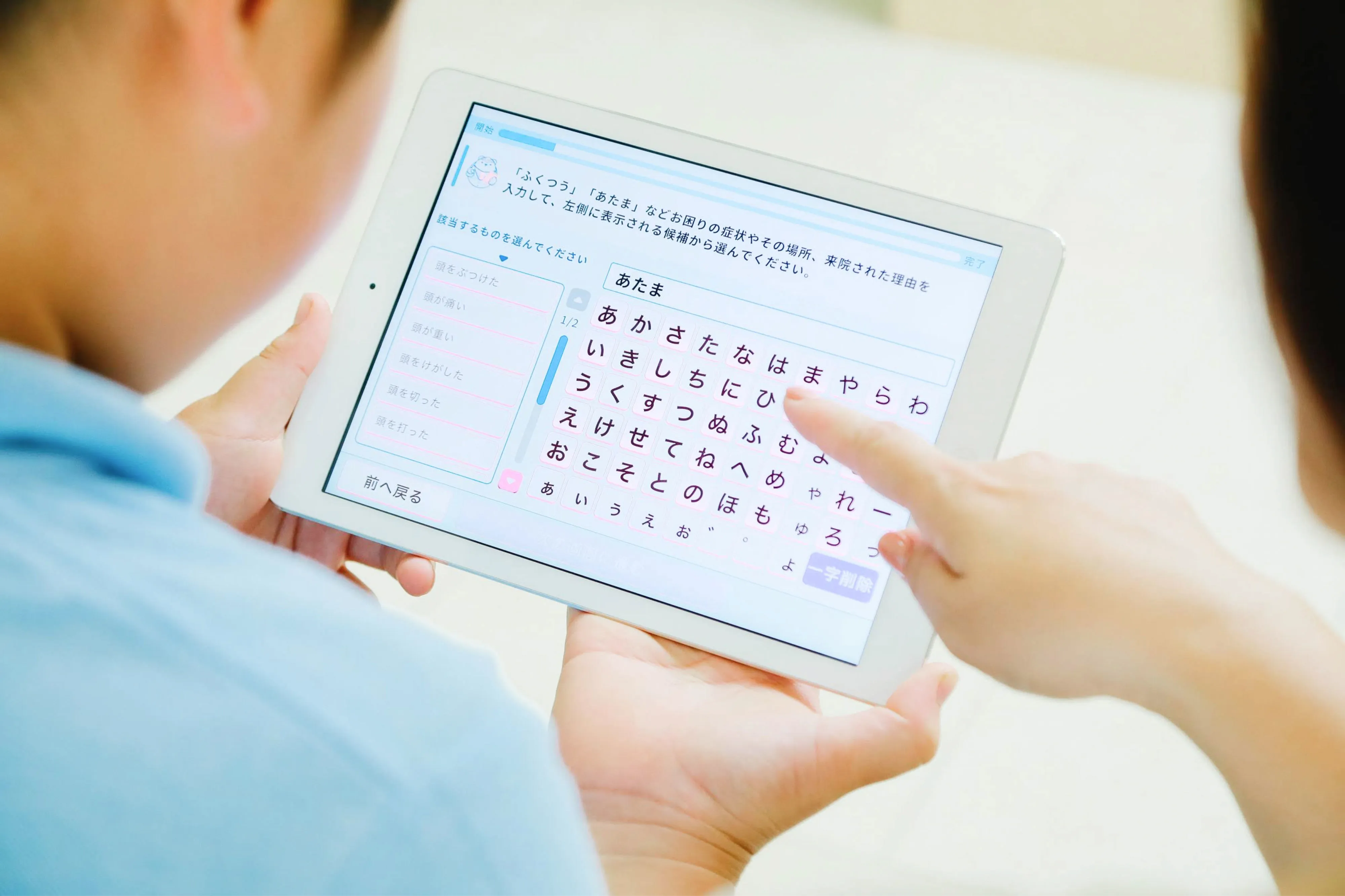
With AI Monshin Ubie, patients fill out preliminary forms on a tablet, rather than paper, entering information about their health history and current symptoms directly into their digital medical record. As patients fill out the questionnaire, the Ubie AI generates questions in real-time according to patients’ responses, which results in more appropriate and accurate data. The patient’s responses are automatically formatted for the doctor to review prior to and during the consultation. As a result, doctor consultation times and facility operation times are drastically reduced.
With the Coronavirus raising fears of a possible health system breakdown, Ubie has made improvements to anticipate and possibly prevent in-hospital infections. Until recently, Ubie’s services have been primarily used by large hospitals; but in light of the global health crisis, Ubie approached D4V—who partners with IDEO—to help rethink the onboarding experience and quickly facilitate the introduction of AI Monshin Ubie in regional clinics across Japan. D4V and IDEO have been working with Ubie for many years to collaborate in various areas, including UX, rebranding, international research, and more. Therefore, they had a foundation of knowledge from which to build these new features.
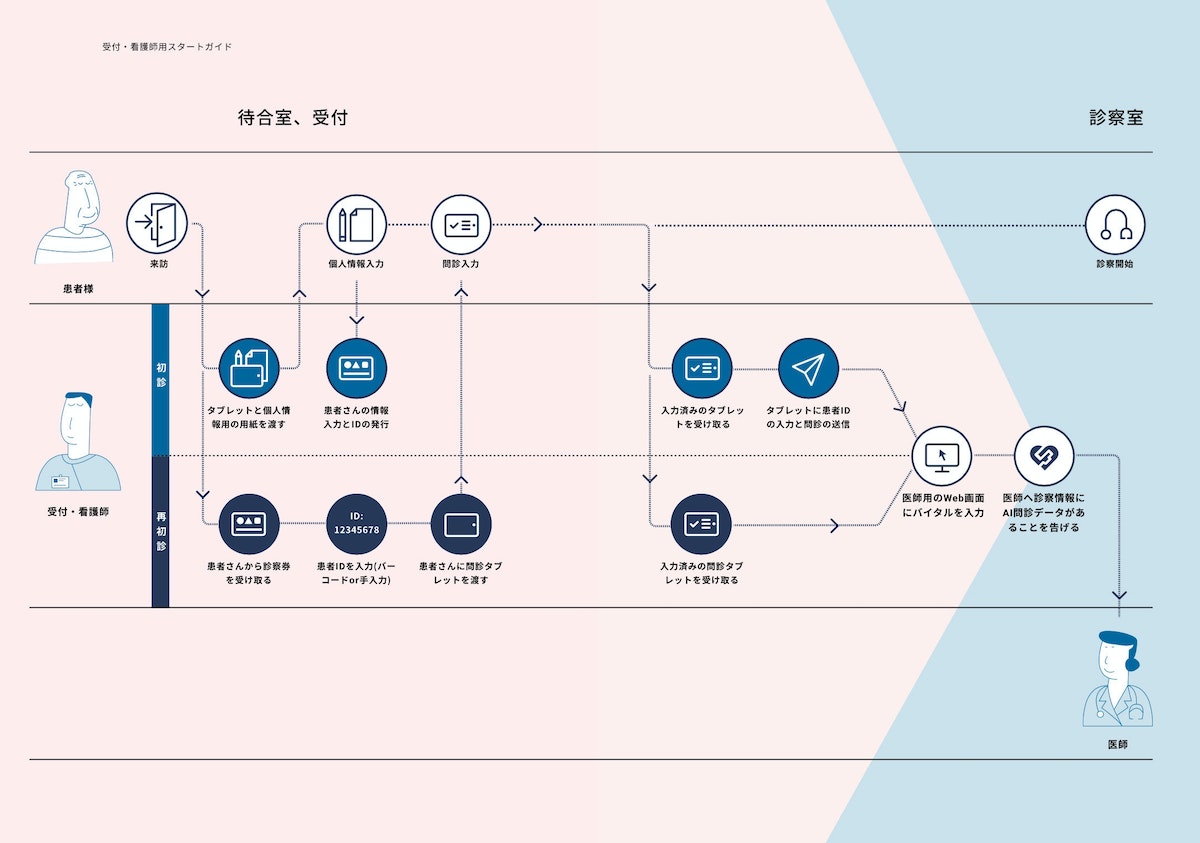
Typically, AI Monshin Ubie has been introduced to new hospital clients through direct, in-depth instructional visits from Ubie sales staff. This approach has worked well for rolling out the product to Japan’s 8,000 large hospitals; but for the 100,000 smaller clinics, Ubie needed a more efficient onboarding method to enable staff to get set up smoothly and independently.
During research, D4V and IDEO team members engaged with many different clinic staff members, including full-time doctors, part-time doctors, nurses and receptionists. The researchers found that staff tend to react skeptically to new tools and services, with a common preconception that they will add to their workload. One clinic director’s first impression of AI Monshin Ubie was, “It looks complicated.” But once he actually used the service, he realized that it was very user-friendly.
The team quickly understood that it was important to remove preconceptions by clearly communicating Ubie’s benefits and ease of use. They created a two-minute animation and designed three separate guidebooks. The animation adopted a friendly tone and expressed empathy for doctors, staff members and patients, highlighting how Ubie can bring benefits to each of them. The animation showed how Ubie fits into the existing workflow and explained complex systems in a straightforward and accessible way.
WATCH: A short video clip explains the benefit of their product and service to avoid the users’ concerns in advance.
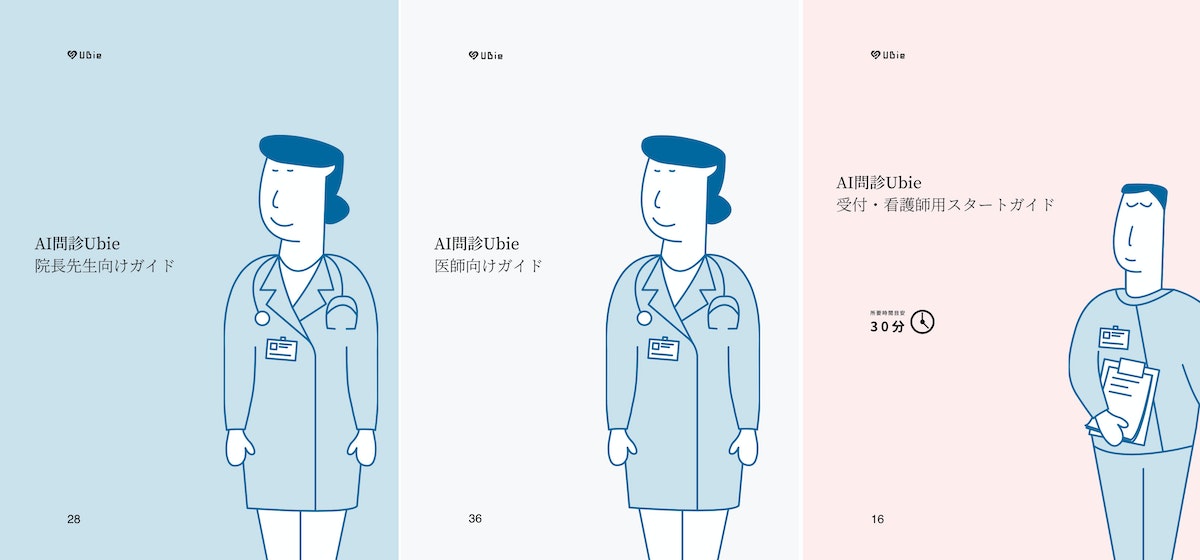
The guidebook for doctors and directors explains how Ubie’s AI smooths the patient consultation experience and greatly improves the quality of medical care. It also introduces concrete how-tos around set-up, implementation, and ideal workflow. FAQs were also included, addressing concerns about whether or not elderly people would be able to use it.
Ubie business development leader Kenji Yamada says, “D4V and IDEO have a deep understanding not only of design, but of our entire business. They provide inspiration by bringing experience and knowledge that comes from working with other industries and clients outside of healthcare. We appreciate that they can share the knowledge that they’ve obtained with our business.”
Read the Japanese-language version of the Ubie case study here.
When You Feel Unwell, Ask Ubie: Check your symptoms for free
Learn more about Ubie: Global Company Website
An improved airway intubation system that helps physicians save more lives
The GlideScope Core offers elevated visibility and a seamless workflow for intubation, allowing doctors to better conduct routine procedures and respond to health crises.
In the emergency room, an intervention that’s administered too slowly could cost a patient their life. With COVID-19 fueling a surge in acute respiratory conditions, intubation—a procedure that involves inserting a tube through the mouth or nose and into the airway—is more common than ever. For patients struggling to breathe, the tube can be connected to a ventilator that pumps oxygen to the lungs, keeping them alive.
While a laser-focus on the present is critical for successful patient outcomes, hospitals and physicians often don’t have time to look ahead and anticipate the future of the operating room experience. As technology rapidly improves, there is a ripe opportunity and pressing need to evolve medical equipment to be more innovative and intuitive. Verathon Medical, a global medical device manufacturer, is supporting health care providers at the cutting-edge of care.
Verathon approached IDEO to redesign the existing product system for laryngoscopies and bronchoscopies—procedures that examine parts of the throat through intubation. During these examinations, a tube with a camera embedded in the tip is inserted through the patient’s nose or mouth. The doctor can then see inside the throat on a video monitor, and therefore more easily and quickly intubate and perform the exam.
To create a groundbreaking device, the team observed over a dozen laryngoscopies, bronchoscopies, and intubations. They noticed that many anesthesiologists relied on fixed equipment during the procedures. For example, some had grown accustomed to looking over their shoulder—away from the patient—to view the monitor.
During interviews, physicians and residents expressed difficulties with the current technology, sharing that the small screens aren’t conducive to team viewing or student instruction, and they must often use a separate computer to record patient notes. Others reported frustrating workflows, needing to constantly divert their attention and move their hands between the patient, prep tray, monitor, sterile bin, and disposal bin. These inconveniences and inefficiencies are not only cumbersome, but can increase the risk of infection and fatality.
The team relied on these insights to start designing a next-generation product. Through sketching, storyboarding, and building in real-time alongside doctors and clinic staff, designers quickly teased out additional findings and validated concepts.
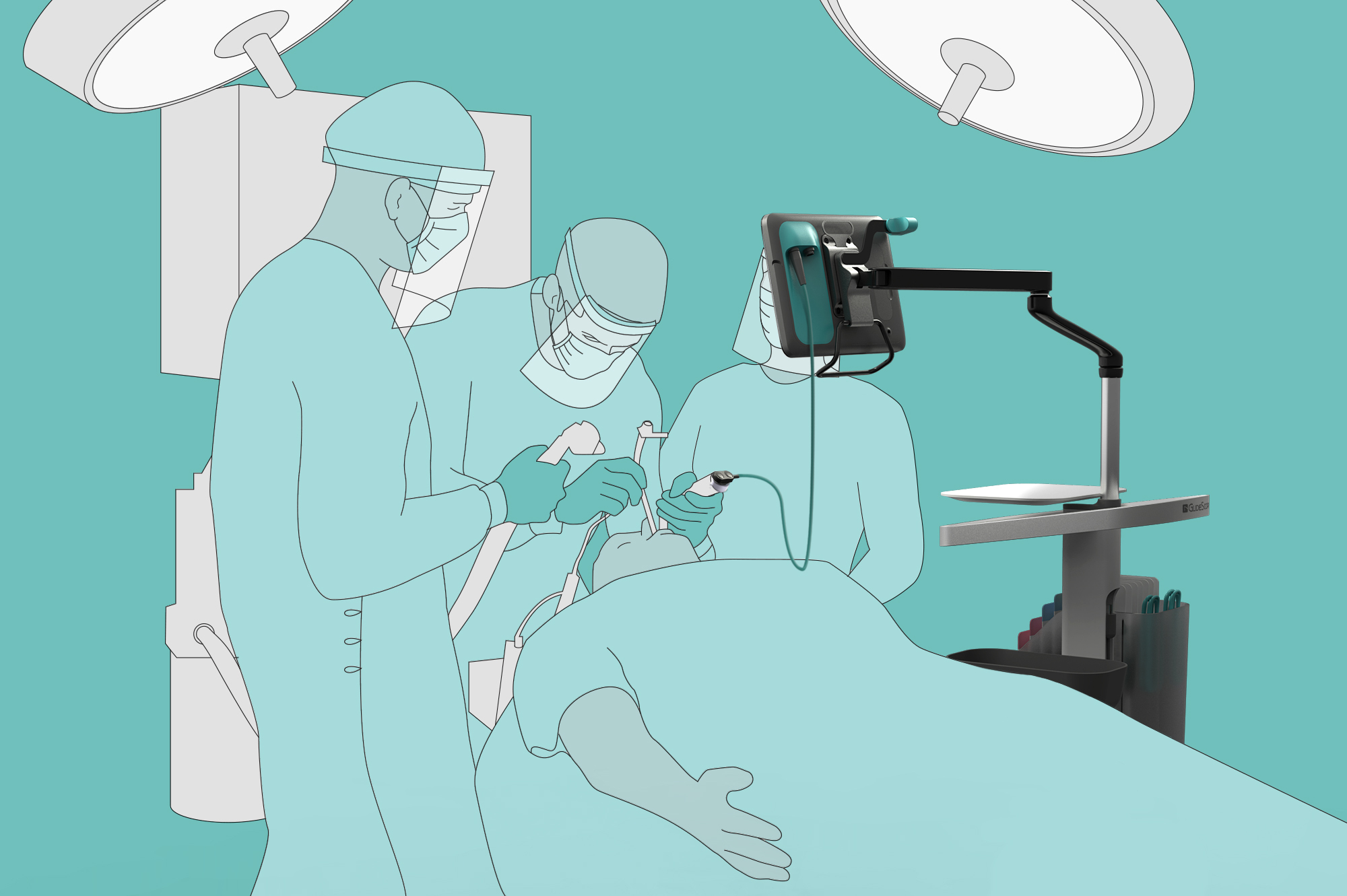
This work led to the creation of the GlideScope Core: an all-in-one, portable product system that supports both video laryngoscopies and bronchoscopies. The base of the device—a wheeled cart—has built-in storage units for tools and a disposal bin, offering more mobility and accessibility for medical professionals.
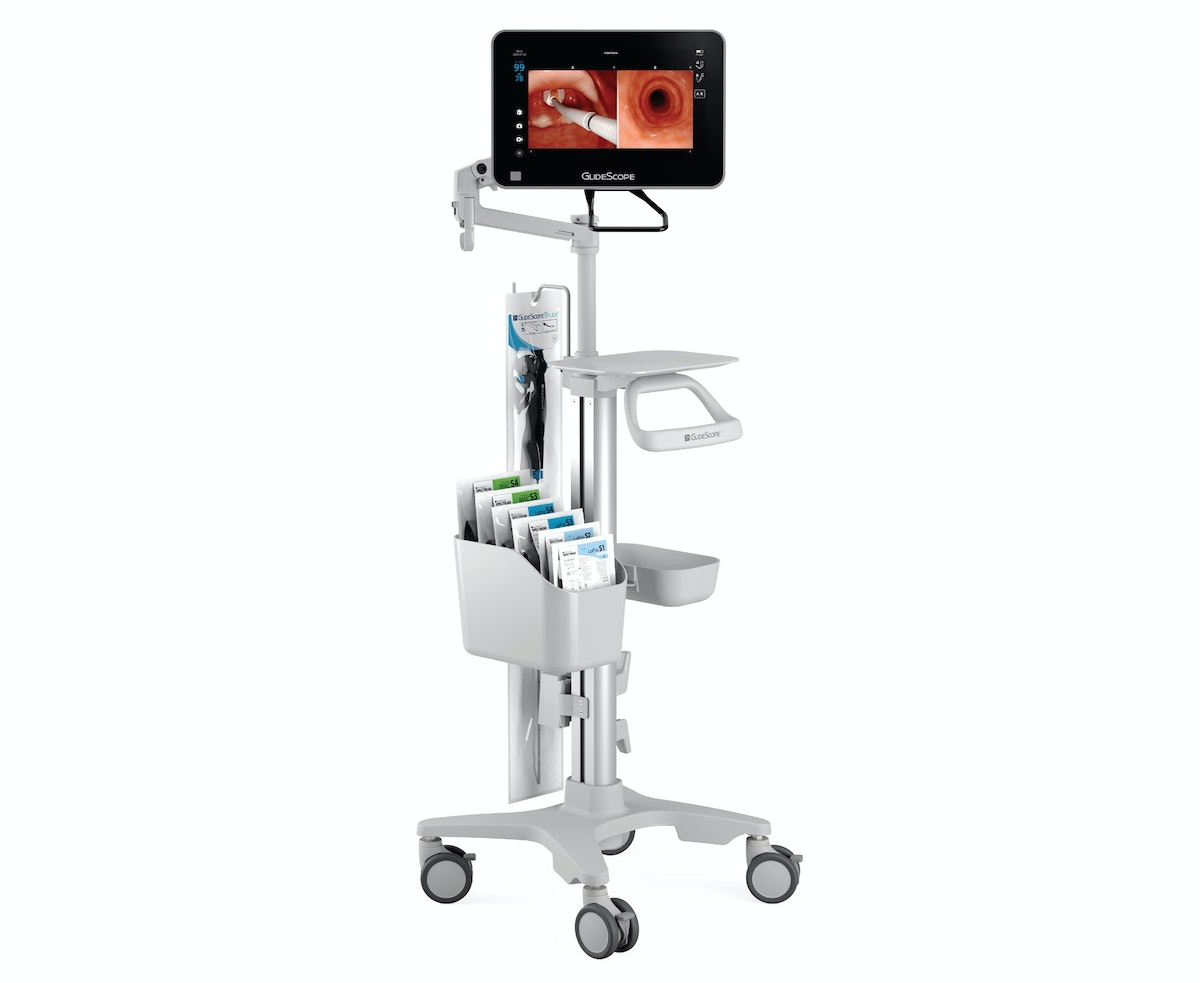
The product’s tagline, “see more, do more,” points to the improvements made to the video system, including a large 10- or 15-inch high-definition touch screen monitor. Displayed images can be enlarged and rotated 180 degrees for improved visualization, team viewing, resident training, and classroom demonstration. To help doctors keep both the patient and monitor in their line of sight, the detachable screen can be secured to an adjustable arm that can be positioned directly over the patient. Additionally, the monitor’s patient annotation feature gives staff access to more of what they need in one device.
The product has been especially valuable for providers and patients during the coronavirus pandemic, when it’s imperative for doctors to keep their distance from patients’ mouths and noses. The GlideScope Core’s movable, detachable, and large, high-definition monitor makes it easier to take this precaution and intubate more quickly. This usefulness is reflected in the 5-fold increase in cart-based device orders for Verathon. While most providers typically order anywhere from 1 to 20 devices for airway procedures, one hospital system requested 600 GlideScope Core systems to meet current intubation demands.
Through modern technology and a focus on human needs, the GlideScope Core supports improved patient outcomes and creates a more seamless operating experience for medical professionals. The product underlines the key but often overlooked fact that often, in order to ensure the healthcare industry is patient-centered, medical device manufacturers and hospitals must also focus on improving the experience of providers.

Transforming a community hospital from the inside out
Designing for caregivers to create world-class care for patients.
Healthcare is notoriously difficult to change. Rules and regulations present complex barriers; health practitioners and organizations often have entrenched ways of working; and lives are literally on the line. Despite these significant barriers, the leaders at Newton-Wellesley Hospital (NWH) boldly committed to improving patient care through a new approach.
NWH is a community teaching medical center in Newton, Massachusetts. Because of its proximity to Boston—a city known for world-class healthcare institutions—NWH needed to differentiate itself. The hospital's new president, Dr. Michael R. Jaff, reached out to IDEO for help: "I knew that providing an unparalleled patient experience would set us apart from our competitors." But, Dr. Jaff’s particular approach was unique. He and Dr. Jodi Larson, Chief Quality and Experience Offer (CQXO), saw an opportunity to drive better patient outcomes through cultural and organizational change.
"You cannot learn any more than when you get to listen to your potential patients say why they would never walk into your place." —Dr. Michael R. Jaff
IDEO partnered with NWH for a year of work together, kicked off by defining the vision for NWH and ramping up to in-hospital prototyping and the launch of several new initiatives. A pilot project with the Women's Imaging Center (WIC) focused on solving departmental and employee challenges to provide a better experience for women getting mammograms.
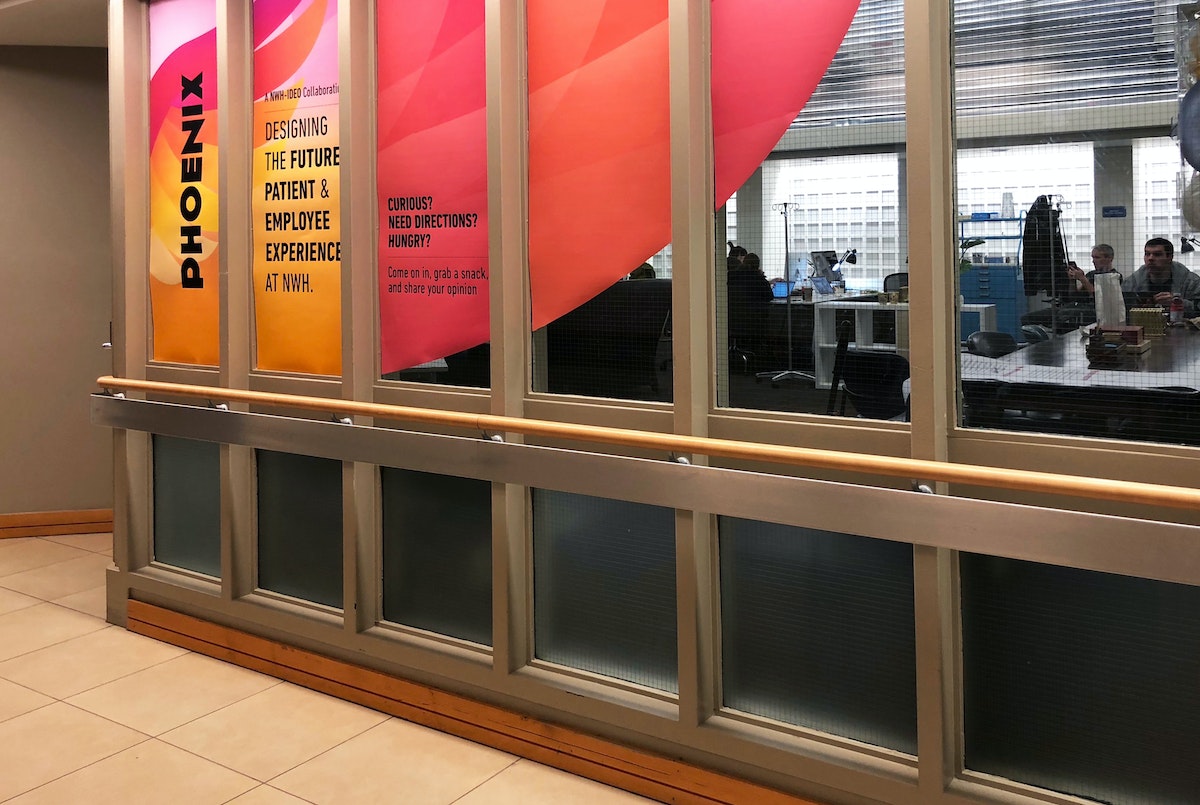
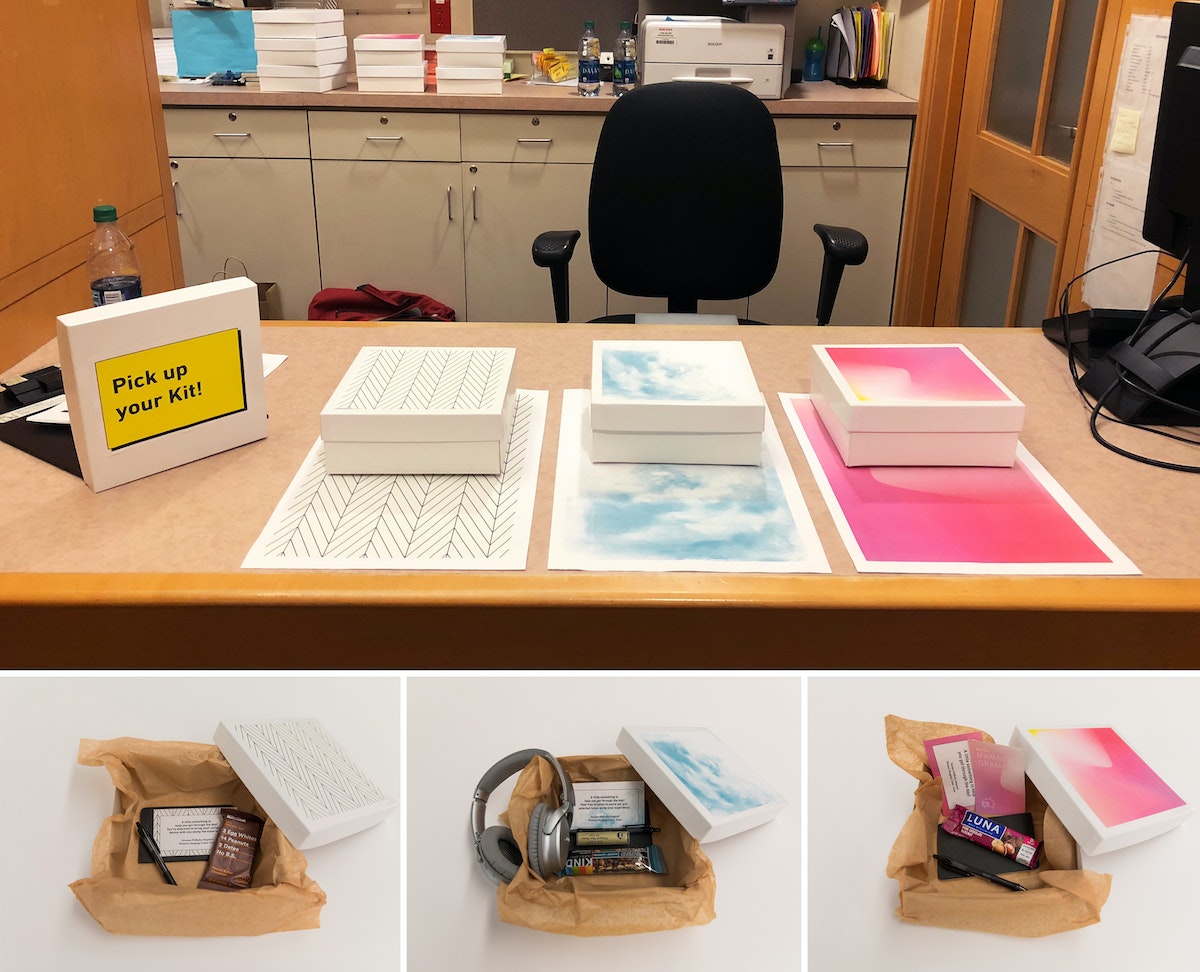
Fueled by this potential, the WIC team redesigned key work processes and created a set of experience principles that inspired new service prototypes. Guided by principles like "Express mutual gratitude" and "Honor every voice," the WIC team tested ways for patients to acknowledge outstanding caregivers and created tools to gather better feedback from patients and adjust quickly. The experience of designing better services inspired the WIC staff to become ambassadors for the power of design thinking across other departments inside NWH and they continue to build on the work through new prototypes and experiments.
Next, IDEO partnered with NWH’s ambulatory surgery group. They took an analogous research trip to Boston’s Logan airport to see with fresh eyes how other high-touch customer service organizations provide customer value in a complex setting. Insights from the trip were applied through live prototyping of several new experiences inside the hospital, including a pre-surgery visit summary and pre-operation care carts.
Analogous research helped us realize that we can learn from other industries and incorporate some (cool) best practices if we allow ourselves to get over the ‘that would never work in the hospital’ mentality. - Dr. Jodi Larson

One of the most impactful prototypes was Care Modes, a tool to empower the NWH care teams to tailor their approach and interaction with patients based on the patients’ unique needs, beyond simply their clinical requirements. Four distinct approaches were identified for engaging a patient before surgery—Explain, Partner, Embrace, and Encourage. The Care Mode is determined based on the provider's understanding of a patient's degree of self-advocacy and their confidence that surgery is the best solution to their issue.
Historically, care providers have been trained to deliver consistent care above all else. However, Care Modes powerfully acknowledge that patients respond differently to different types of care. The Care Modes empower the team—from surgeon to nurse to anesthesiologist—with a clear framework for how to interact with and provide care for patients so they feel most comfortable. Based on the prototype's success with patients and impact on the staff culture, NWH has incorporated Care Modes into EPIC, the hospital's electronic medical record.
The importance of being patient-centered has been central to the healthcare conversation over the past thirty years; but new explorations reveal that there’s far more potential for innovation and improvement when the provider experience is considered in tandem with the patient’s. Each enables the other, and design for both together yields stronger solutions and better outcomes. IDEO's work with NWH demonstrates this vital shift in user-centered healthcare—one can't design services and experiences for patients without designing for their providers’ culture as well. When these go hand-in-hand, meaningful institutional change in healthcare is more than possible.

Helping a historic museum prepare for the future
Using design thinking to improve access, experience, and culture.
The mission of Chicago's Museum of Science and Industry (MSI) is to inspire children to achieve their full potential in the fields of science, technology, medicine, and engineering. Leaders at MSI realized they needed to drive day-to-day operations and maintain historic exhibits while focusing on where to go next. To prepare for its next decade, MSI worked with IDEO to create a new business focus to support the museum’s aspirations for the future. The plan would allow MSI to respond to the demands of the marketplace and raise the funds to get there.
At the beginning of the project, MSI laid out its priorities: improve equity of access, enhance the museum experience, and create a more innovative culture. To dive into each of these areas, IDEO conducted immersive research with families, teachers, donors, and staff.

IDEO brought together 60-plus donors, board members, and staff members to engage in a design thinking exercise to unpack and address the tensions that come with choosing a new strategic trajectory. Instead of having a standard ballot vote, the IDEO team encouraged participants to get up and vote with their feet, helping the group of stakeholders physically align on the museum’s new direction.
At the end of the research and prototyping phases, MSI and IDEO developed a vision called Provoking Minds, Inspiring Futures, creating six detailed design briefs to equip MSI teams to bring initiatives forward. The briefs laid out everything from recommending a new Department of Next, dedicated to ensuring that the future is at the heart of everything the MSI does, to MSI Runway, a place for experimental, small-scale, and limited-run exhibits. The ideas were brought to life with an interactive exhibit, built quickly with everyday materials like plywood and circuit boards, to demonstrate that creating an inspiring vision of the future doesn’t have to be an expensive endeavor.
The team also focused on insights that highlighted accessibility issues some families brought up early in the design process—travel across the city via public transportation can be lengthy, and the cost of admission to special exhibits could be prohibitive. To address these concerns, IDEO came up with the Mission Accessible brief: Inspired by casino buses, MSI bus stop signs would be posted in various low-income neighborhoods, signaling a way to take kids and families to the museum for free.

During the project, the IDEO team identified some low-hanging fruit, like rethinking ticketing and improving the student field trip experience, and helped the museum create cross-functional innovation teams to apply design thinking skills towards solving those challenges. They researched, brainstormed, and pushed forward new concepts, meeting weekly to share and build on ideas. At the end of the four week period, each team prototyped their ideas—new outdoor programming, software tools for visiting tour groups—and pitched them to each other.
In 2019, two years after the conclusion of the project, the collaboration paid off. With its new strategic plan and additional resources, the museum has renewed its commitment to serving youth, and MSI’s team, including donors, are aligned on a collective vision of the future. MSI raised more funds than in any previous year, including the single largest gift in its history—$125 million, nearly half of its $380 million fundraising goal—that will help ensure the years ahead.
Rebuilding trust with AI
How personalization can change the game for financial services and health insurers.
If you ask consumers whether they trust their bank or health insurer, the answer is often lukewarm at best. Traditional financial institutions are seen as opaque, distant, and—in the worst cases—extractive. In a recent survey, barely a third of people thought their bank was being honest and transparent about costs and fees. But this narrative misses a subtler, more hopeful trend: The very technologies customers once feared as “creepy” are now opening a path toward rebuilding trust—not by hiding behind compliance and branding, but by providing real, personal value that people experience every day.
At the heart of that opportunity is AI. But not the generic, algorithm-as-black-box that so often gets headlines in the press. I’m talking about AI designed to help people, surfaced in ways that feel insightful rather than intrusive, and that elevates the relationship between individual and institution. It has the potential to rewrite our skepticism of digital products.
The myth of the “creepy algorithm”
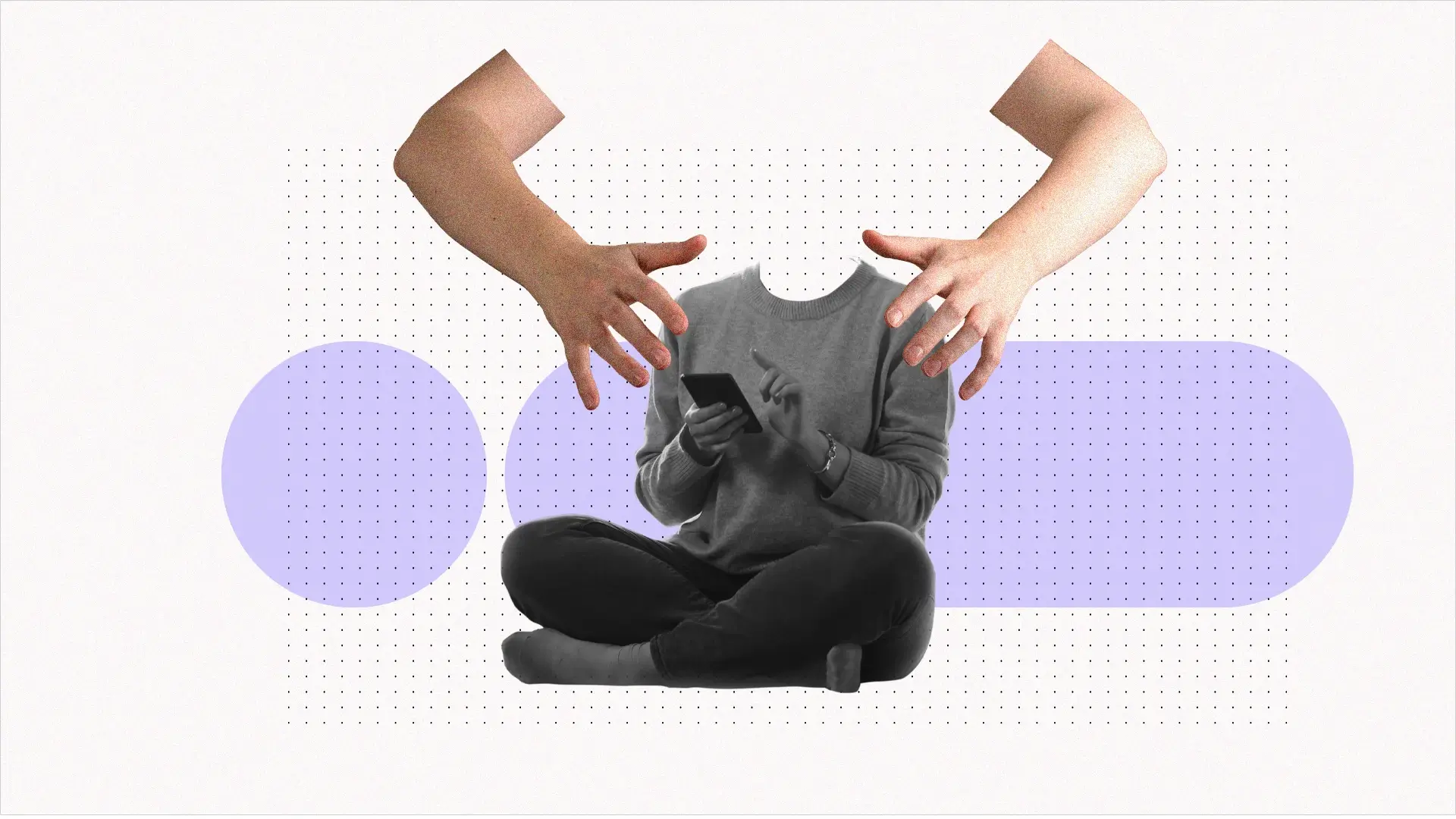
We’ve long assumed that consumers recoil at AI and the use of personal data. But emerging evidence and our own work at IDEO suggest a more nuanced truth: People don’t mind institutions using their data if the outcome is genuinely helpful.
What consumers resist is not personalization per se, but value extraction masquerading as personalization. They reject opaque upsells, hidden fees, and pricing strategies that leverage data solely to maximize profit. Anyone who has filed their taxes with the most popular online filing software can attest to the repeated (and difficult to decline) requests to use their tax data and share it with third parties, or to pay for add-on features of dubious value. But consumers welcome insights that feel like guidance—a personalized budget forecast that suggests paying down a mortgage faster, or a care recommendation that anticipates a chronic condition based on patterns in medical claims.
Financial institutions need to know their customers to help them meet their goals, not just the company’s bottom line.
When AI becomes a bridge, not a barrier
This distinction reframes the role of AI from a technical feature to a trust-building mechanism across two dimensions:
Predictive empathy: AI can surface insights that anticipate people’s needs before they articulate them. Imagine a health insurer that detects early patterns of risk in claims data and nudges members toward preventive care—with clear explanations and options—rather than waiting for a crisis.
Clarifying complexity: Financial and health decisions are inherently complicated. Consumers often feel alone with high-stakes choices—choosing a plan, managing costs, planning a life event. AI can simplify decision pathways, outline “what good looks like,” and benchmark personal choices against broader patterns of positive outcomes.
This is not theoretical. Customers are more open to institution-driven AI guidance than third-party general-purpose AI tools, precisely because of contextual relevance. While 79 percent of US consumers are uncomfortable with AI providing medical advice, a majority are open to AI supporting tasks like after-visit summaries and follow-ups.
In recent work we completed for a network of financial advisors, for example, we found that a customer’s trust in their financial advisor alone was not enough. They needed to believe that the plan presented to them met their needs and was likely to succeed, given the current market and their own financial situation. Unfortunately, too many financial institutions are seeing an opportunity to replace people with machines. When, in fact, there’s now an entirely new opportunity space of using generative AI to show, rather than tell, customers why they should have confidence in the path forward. People build trust. Digital tools can build confidence through what-if scenario planning, natural-language explanations, and the ability to have back-and-forth conversations whenever people want, without fear of asking “stupid” questions.
The unleveraged assets: contextual data and human intent

Banks service millions of accounts across life stages. Health insurers care for diverse populations across care journeys. These institutions are regulated to protect consumers, and in theory, succeed when their customers succeed. Yet traditionally, the relationship has been transactional: accounts, premiums, claims, and products.
AI changes that calculus. With careful design, institutions can translate the data they already hold into guidance that feels humane and useful. What might that look like?
- A bank dashboard that explains how spending patterns today impact long-term financial goals tomorrow in plain language, with actionable suggestions.
- A health insurance experience that models likely care pathways based on clinical evidence, population outcomes, and expected out-of-pocket costs, helping members choose care confidently.
- Alerts that not only flag risk—say, missed medication adherence—but also provide contextual support options, such as care coaches or financial assistance resources.
We don’t have to imagine far into the future to see what this looks like—we can actually see it in the not-too-distant past. When IDEO worked with PNC to develop their online banking platform, Virtual Wallet, one of the most compelling features for customers was a calendar that visualized “Danger Days”—days when their balances would be low, and they were most likely to overdraft. During a time when banks were making big profits by optimizing their technology to increase overdraft fees, PNC went in the opposite direction, helping customers avoid fees they despised and improve their financial lives. The result was an award-winning product that led to millions of new accounts.
This reframes data use from an internal optimization tool to a shared resource that benefits the member first. As banks bring generative and agentic AI to the masses, that could start to look like suggesting specific actions customers can take to reduce spending when cash flow is tight, or automatically splitting bills that fluctuate in cost, such as groceries and utilities.
Why incumbents have a strategic advantage

New fintech and health tech startups often don’t have to contend with years of technology debt and legacy systems, but they do suffer from a cold-start problem: They lack deep context. They may ask users to upload data, recreate history, or deduce preferences from limited interactions. Meanwhile, incumbent banks and insurers already have longitudinal data spanning life events, regulatory frameworks ensuring baseline protections, and direct experience managing risk at scale.
These are more than just advantages—they are assets waiting to be mobilized to build trust.
A new contract between people and financial institutions
Rebuilding trust in financial services and health insurance isn’t just a matter of better algorithms. It’s about redesigning relationships and using AI to make institutions advocates for individual success.
It’s easy to imagine continuing with the status quo: adding a chat interface to a mobile banking app that relies on existing functionality, for example, or offloading the most commonly-requested customer support tasks to an agent to reduce call center volume.
That’s not to say that there isn’t merit in some of those approaches. But, in a world where AI can feel impersonal and inscrutable, there is an opportunity for these institutions to shine by making AI personal. That’s not only good design. It’s good business, and it’s good for society. The question isn’t whether AI can help. It’s whether we will use AI to help people—boldly, compassionately, and with trust at the center.
Working to build trust with your customers? We’d love to help. Get in touch.
“People don’t mind institutions using their data if the outcome is genuinely helpful."
Make the invisible honest
And 6 other principles for designing AI hardware.
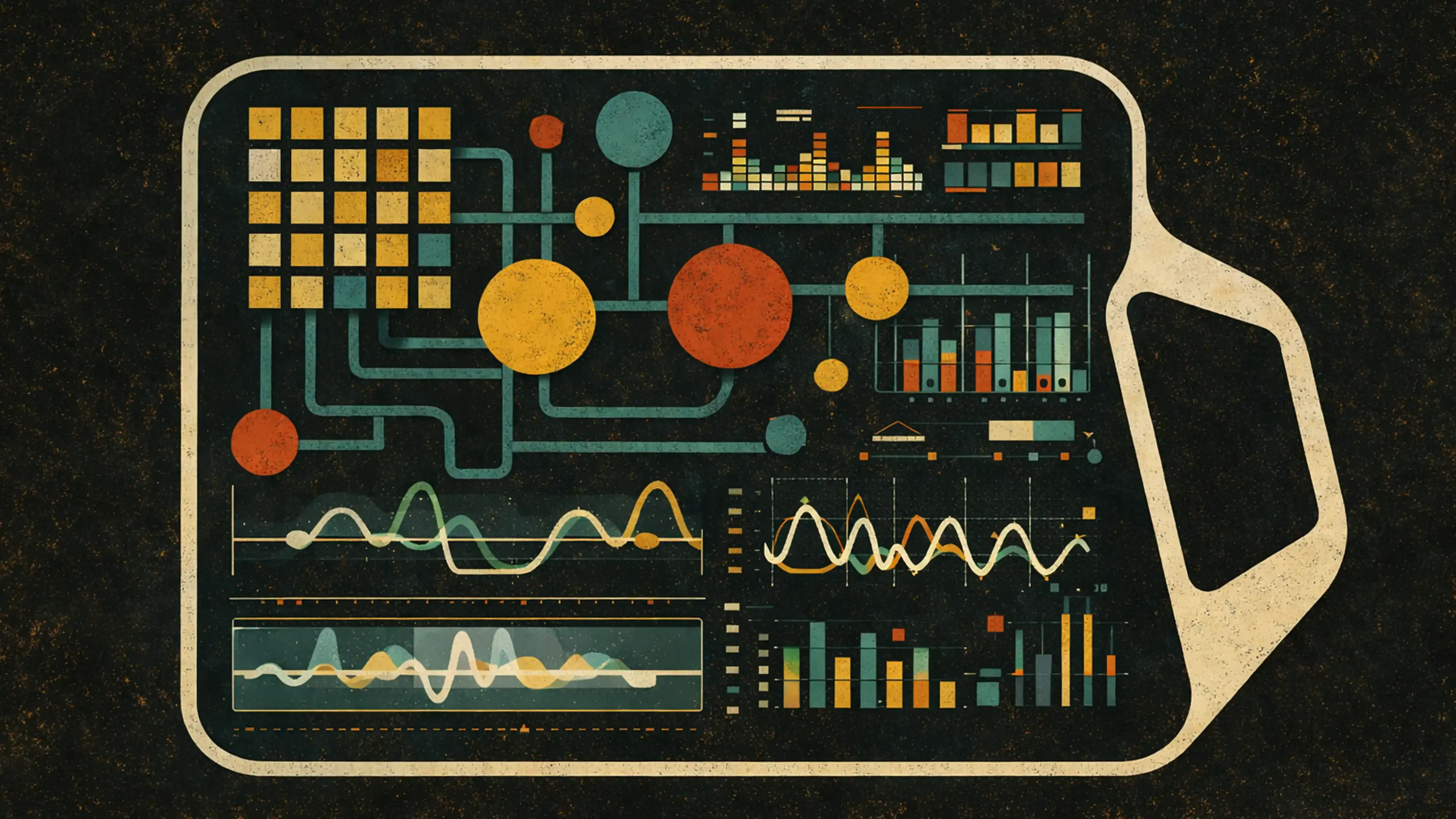
For decades, the typical relationship between humans and hardware was a straightforward one of command and control. We pushed buttons; machines performed tasks. But as AI migrates from our screens into our physical environments, the nature of that relationship is shifting: Computation is becoming a nondeterministic presence.
So far, the industry seems to be caught between what users actually want and the sci-fi fantasies currently captivating the tech community. Rather than marrying what’s technologically feasible with what people need, companies are bolting AI onto everything, shipping tech demos as finished products. The result is half-baked experiences traded for focus, and speed traded for agency and privacy. A better path means establishing a new standard in which trusted, useful intelligence serves the physical world.
For us, it means designing under these seven principles for good AI hardware, inspired by the timeless rigor of Dieter Rams, and setting the conditions to put them into practice.
1. Good AI hardware is mutualistic
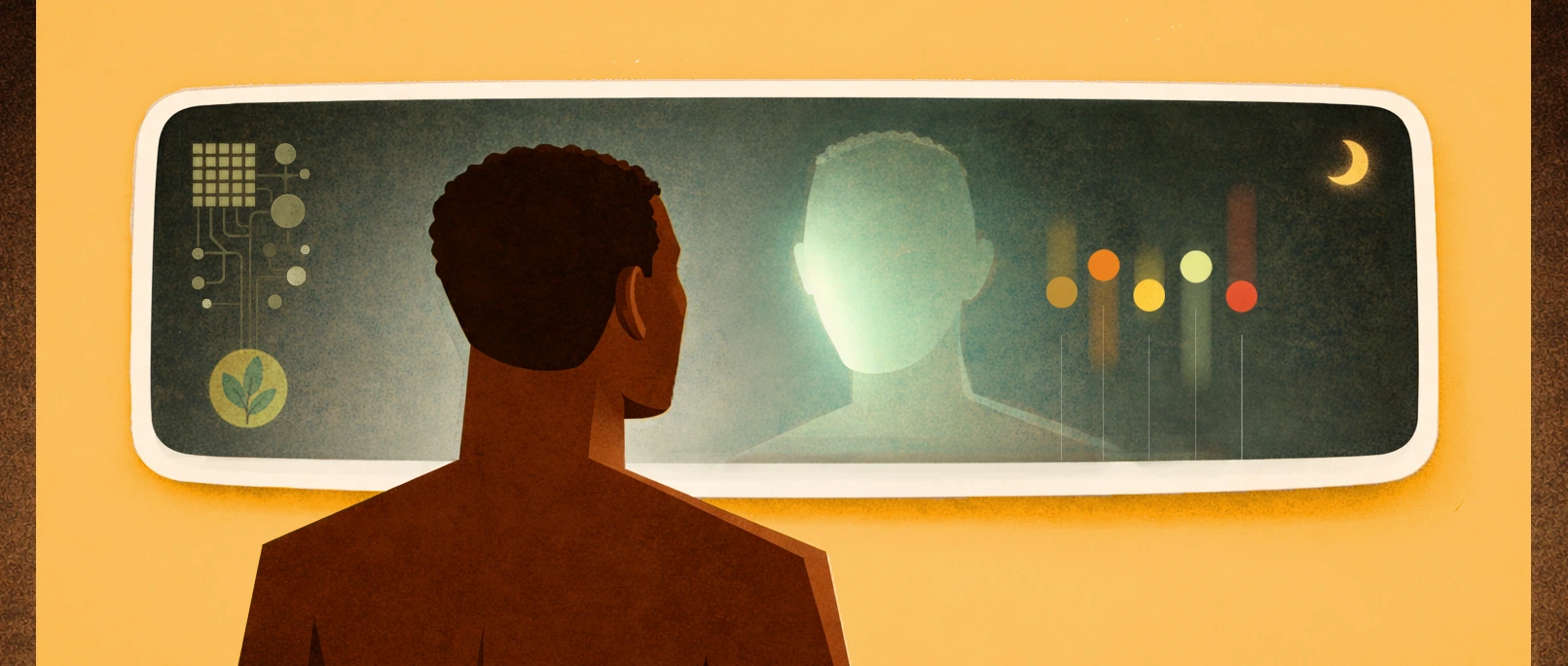
AI is not a deterministic layer of software trapped in plastic. Designed well, it is a partner in human flourishing. We build hardware rooted in mutualism: the device learns from the perpetually shifting nuances of human intention, and the human grows through what the device makes possible. More than optimization, it is a shared evolution between person and machine.
What might that look like?
The Household Reflection Mirror
A bathroom mirror is designed without predetermined health goals. It comes equipped with sensors, models, and processing power, but without a built-in definition of what “better” means for you. That definition emerges through use.
In the first few weeks, the mirror observes your behaviors without interpreting them. Over time, patterns surface that you implicitly confirm or contradict through your actions. You linger on certain readouts. You ignore others. Slowly, the device constructs a model of what matters to you, not what a wellness framework says you should care about.
After three months, the mirror notices your sleep quality degrades during a particular recurring time of the week. On Monday morning it surfaces a single line beneath your reflection: “Sleep is typically shorter on Mondays.” The next Sunday, you go to bed an hour earlier. The mirror notices. Over time it learns what kind of attention you actually respond to, because you taught it through the way you live and react. The device you have at the end of the year is not the one you started with—and neither are you.
Without your input, it is a capable system with no inherent sense of purpose. Without it, you miss a form of self-knowledge you didn’t know you needed. Closing that gap together is the essence of mutualism.
2. Good AI hardware is off by default

Truly human-centered hardware requires intentional consent to engage. Privacy isn’t an afterthought; it is a foundational design requirement. Until there is consent and utility, we reject the always-on model of technology. We design to respect the privacy of our homes and lives, so that technology enters our cognitive space or observes our physical space only when we consent. Good AI hardware is something you want around, that makes you feel safe.
What might that look like?
The Consent Door
A front door knob has a small illuminated ring at its base. When you arrive home, the ring pulses once, dimly and unhurried. It is asking for your attention.
Twist the knob the way you normally would to unlock the door, and the ring goes dark. The house stays quiet. No sensors wake. No systems are activated. You are home, yet the home does not know it.
Twist the knob the opposite way before you enter, and the ring glows brightly. The AI features of the home come online. The thermostat starts learning. The mirror observes. The kitchen listens. You’ve made a conscious choice with your body before you crossed the threshold.
Guests see the same dim, illuminated ring when they arrive. They face the same choice. The house never assumes.
3. Good AI hardware is aesthetic

A piece of hardware should improve the aesthetic or emotional vibe of a space or interaction. With all the focus on the AI, it’s easy to lose sight of how intentional and sensorial the hardware has to be to provide value. We lean into creativity by using ergonomic forms, tactile textures, and haptics to create objects that feel like art or furniture while having capabilities suited to their use. The best AI hardware is crafted with intention for its role in our environments.
What might that look like?
Climate-Aware Window Glass
A sheet of AI-embedded glass replaces a traditional living room window. The glass learns sunlight patterns, outside temperatures, and occupants’ daily rhythms. When the afternoon sun becomes harsh, the glass subtly softens and diffuses the light, giving the room a warm, painterly glow. On cold winter mornings, it lets in full sunlight to warm the space. There are no visible controls and no notifications. The window functions as an intelligent material, shaping light and heat in ways that feel natural, healthy, and beautiful.
4. Good AI hardware makes the invisible honest

AI hardware should communicate its state, data usage, and limitations through intuitive physical cues. Sensors now extend far beyond cameras and microphones into biosignals, radar, emotion recognition, and neural intent. Technology can understand us in unprecedented ways, which creates unprecedented room for distrust. It’s crucial that we replace vague terms and conditions and labyrinth privacy settings with transparent, real-time feedback, and make the invisible visible. Honesty is the only foundation for a lasting relationship with intelligent technology.
What might that look like?
Visible Cognition Display
A small home security camera sits near the front door. Inside the door is a narrow strip that displays what the AI believes it sees in plain language. When someone approaches at night, it writes: “Face scan attempted. Low light. Result unreliable. Door stayed locked.”
The system reaches the edge of what it can confidently do and stops there, telling you exactly why—and that restraint is the point. A device that surfaces its own limitations in real time is making a fundamentally different promise than one that acts with false confidence and hides its reasoning. That promise, repeated across thousands of small moments, is how trust is genuinely built.
5. Good AI hardware is minimally intrusive

The ultimate goal is to improve our lives in the physical world, not to keep us tethered to a digital one. We need to design for the disappearing act by ruthlessly stripping away unnecessary screens and notifications, and removing friction between humans and their environments. We need to design to follow user intent, using the superpowers of AI to understand user needs and respond in simple, clear ways. Whenever possible, we embed AI into existing rhythms and daily flows, rather than requiring people to pick up new habits.
What might that look like?
The Context-Aware Notification Pebble
A small, smooth stone is connected to your devices. When something truly important comes in—a call from family, a hard-to-get dinner reservation, a flight deal on a trip you’ve been planning—the pebble gently glows. There are no sounds. No vibrations. No screens. Just light.
If you pick it up, the message is faintly projected onto the desk. For matters that require a decision, the system has already done the legwork. It held the reservation. It queued the flight deal. The pebble presents you with a choice, not a task. A single tap confirms your decision. The pebble stops glowing, and life continues as normal.
If you choose to ignore it, the pebble turns off on its own. The system respects your attention instead of competing for it.
6. Good AI hardware is honest about its capabilities
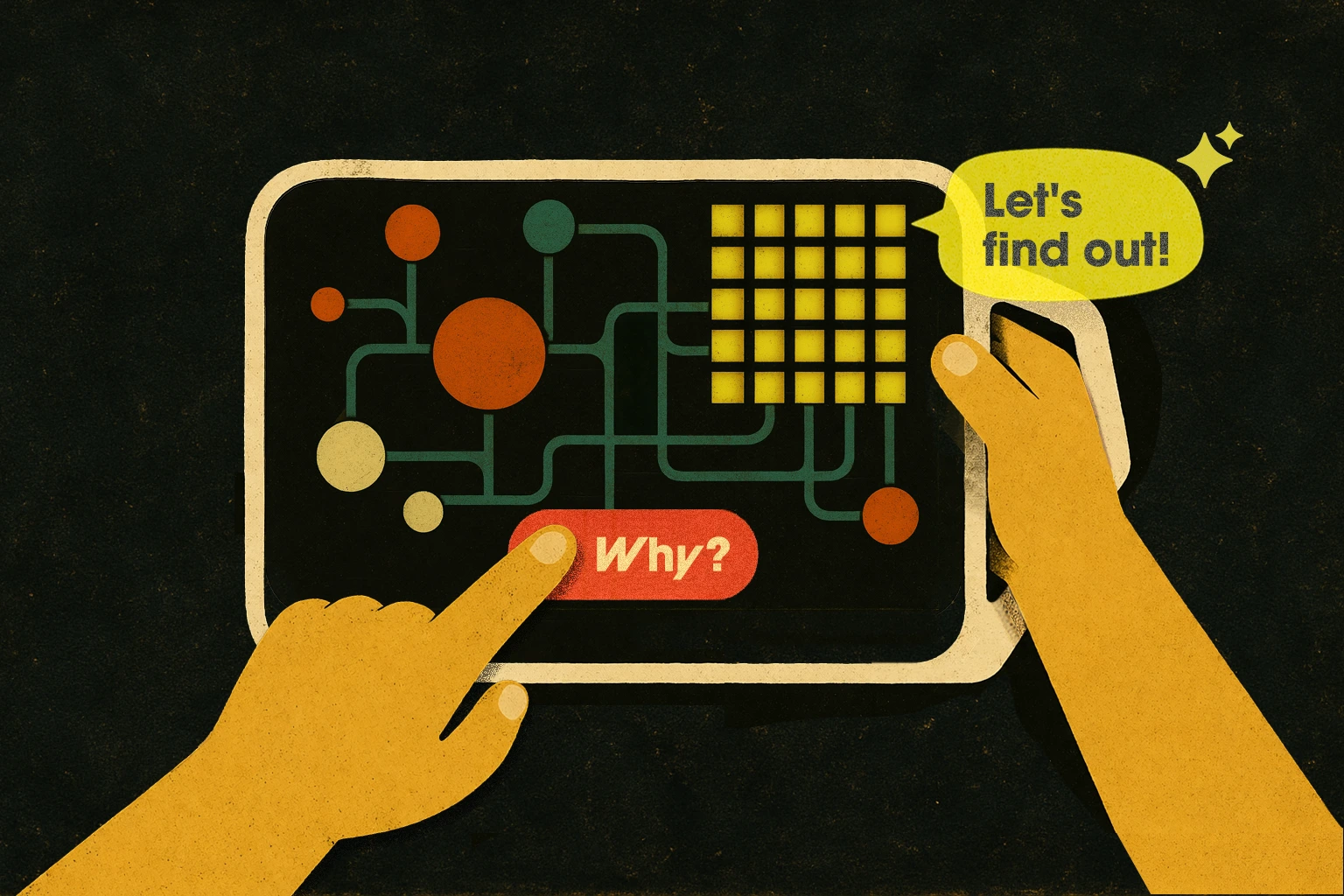
We design hardware that delivers on what technology can actually do, while meeting real user needs. Good design speculates and continues to evolve as technology improves, but it does not hinge on speculative promises it can’t meet (and which inevitably let users down). We focus on the high-fidelity reality of what a device can do now, making the hardware a reliable anchor as technology improves rather than a vessel of far-reaching hype.
What might that look like?
The Tutor Tablet for Children
A child asks the intelligent tablet a complicated science question. The device pauses and displays the message: “I am not certain about this answer… Would you like me to look it up with you?” When the model is unsure, it offers sources or invites the child to explore the topic together. Sometimes it even says: “I might be wrong. Let’s test it…”
In this way, the child learns two important lessons: the scientific method and the understanding that intelligence, whether human or artificial, involves humility.
7. Good AI hardware respects the Earth

We reject creating unnecessary devices that contribute to the global e-waste crisis by staying attuned to real user needs. When we build, we design for longevity through repairability, modularity, and circularity. From the selection of materials to the ease of recycling at the end of a product’s life, good AI hardware takes responsibility for its physical footprint. We build tools that are meant to last, not to be discarded when the next software update arrives.
What might that look like?
The Modular Home Intelligence Hub
A small wood and aluminum hub sits on a shelf, running local AI models for the home. Each component slides out like a drawer: Compute, Storage, Radio, Battery, and Sensor Array. While these modules are functionally co-dependent, each one is discrete. For instance, whenever new AI chips are released, the owner can simply replace only the Compute drawer.
The device also maintains a lifetime material dashboard:
Operational life: 8 years
Upgraded components: 2
Material saved vs. replaced: 4.3 kg
Energy used this month: 2.1 kWh
The hub processes most workloads locally to minimize unnecessary cloud energy consumption. Instead of being replaced every few years, it ages alongside the household.
Putting the principles into practice
It’s one thing to create a list of principles. It’s another to make them part of our work. To uncover real human needs, we do research with people in their homes, learning where they want machines to help and where they want to stay in control. Leveraging emerging tools like 3D printing, AI-accelerated prototyping, and generative design, we move from insight to artifact quickly. Rather than just rendering a sensor, we build it. Rather than speculating about how friction feels, we test a physical interface in someone’s home and let their reaction tell us what to do next. We hold creativity accountable to what’s technically viable and commercially scalable, so the visions we make are ones businesses can actually act on.
We are moving past the era of experimental AI and into the era of specialized, high-performance hardware that permeates our everyday lives. The only way to succeed in the market is to earn a permanent place in people’s lives through trust and utility. By anchoring what we build in these principles, we move beyond the hype and into producing hardware that people actually want around. That is the standard we are building toward.
(Looking for a partner to build AI products with? Get in touch.)
"A better path means establishing a new standard in which trusted, useful intelligence serves the physical world."
.webp)
The luxury brand reimagining the future of e-commerce
Callimacus's CEO on human AI and designing an AI-first web experience.
Founded in 2021, Callimacus is a small collective of mathematicians, engineers, artists, and philosophers exploring how new technologies can rewrite the web experience. Their guiding principle, “human artificial intelligence,” emphasizes designing systems that complement human values, highlight emotional nuance, and enhance human presence.
So far, so San-Francisco-based-start-up, you might say. But, in fact, Callimacus swaps the hills of the Bay for the slopes of Solomeo, a medieval village in Perugia, Italy. Instead of a tech billionaire, its patron is a titan of luxury fashion: Brunello Cucinelli.
As unexpected as that might sound, Cucinelli himself has been a passionate advocate of what he’s called the “humanistic enterprise,” born of his deep interest in philosophy. So while Callimacus might be pioneering a radical rethinking of e-commerce by challenging traditional established web and user experience norms, that’s firmly grounded in the brand’s human-centered DNA.
.webp)
Callimacus's first product is an AI-native software development kit aptly called Callimacus, which powers Brunello Cucinelli’s new digital experience. Named after the ancient Greek poet and curator of the Great Library of Alexandria, Callimacus uses custom AI agents to dynamically generate the user experience based on user intent. For instance, the site’s agents can determine that a visitor is looking to learn about the story behind the brand (and serve them content, accordingly) or that they’re here to see the latest collection. It’s a custom experience very different from a traditional page-and-container website structure.
I spoke with Francesco Bottigliero, Brunello Cucinelli’s Chief of Humanistic Technology and the CEO of Callimacus, to understand why the brand created the start-up, the importance of keeping humans at the heart of innovation, and reimagining UX and engineering for the AI era.
Ed White (EW): What was the inspiration behind Callimacus?
Francesco Bottigliero (FB): The French philosopher Voltaire once said, “Doubt is not an agreeable condition, but certainty is an absurd one.” This led us to think, “Our friends from Silicon Valley believe AI will be a game-changer, so let’s take the time to understand it.”
At Brunello Cucinelli, we’re focused on learning and staying current in our industry, rather than simply following trends. We choose technologies that align with our values, ensuring we don’t compromise the craftsmanship and brand positioning we’ve built over more than 40 years. In our boutiques, we aim to make technology invisible so there’s no barrier between sales associates and customers.
We’re investing heavily in our brick-and-mortar distribution to stand out and nurture our brand identity, while also enhancing and developing our online identity.

EW: Callimacus emphasizes “human artificial intelligence.” Can you explain what you mean by that?
FB: We view technology as a companion of humanity. We want human beings at the helm, steering the boat. However, if there are tools that can help people steering the boat make better decisions, we are ready to embrace them.
EW: You recently launched an AI-driven web experience for Brunello Cucinelli using the Callimacus software development kit, which enables brands to create AI-native web experiences. Where did the idea for that come from?
FB: When we looked at traditional e-commerce, we analyzed the navigation of six sites from six brands. We masked the brand names and placed the sites side by side. They all looked the same.
We decided to experiment with new ways to communicate our story more effectively. Today, when people talk about applying AI to e-commerce websites, they typically mean adding a chatbot. However, the underlying infrastructure remains the same, relying on page formats—whether product, listing, or article pages.
EW: Why are traditional web pages such a problem?
FB: Websites continue to be designed and developed using a typographic approach that has been in use for more than 30 years, dating back to the beginnings of the internet at CERN in Geneva. Users shared research papers online, and they were read as if they were physical books. The interaction mimicked print media by incorporating pages and menus people were already familiar with. Likewise, when I visit Corriere della Sera, Italy’s leading online newspaper, all its content is locked within a traditional page-and-container structure, making it difficult for me to search for something using natural language. The same issues apply to e-commerce sites.
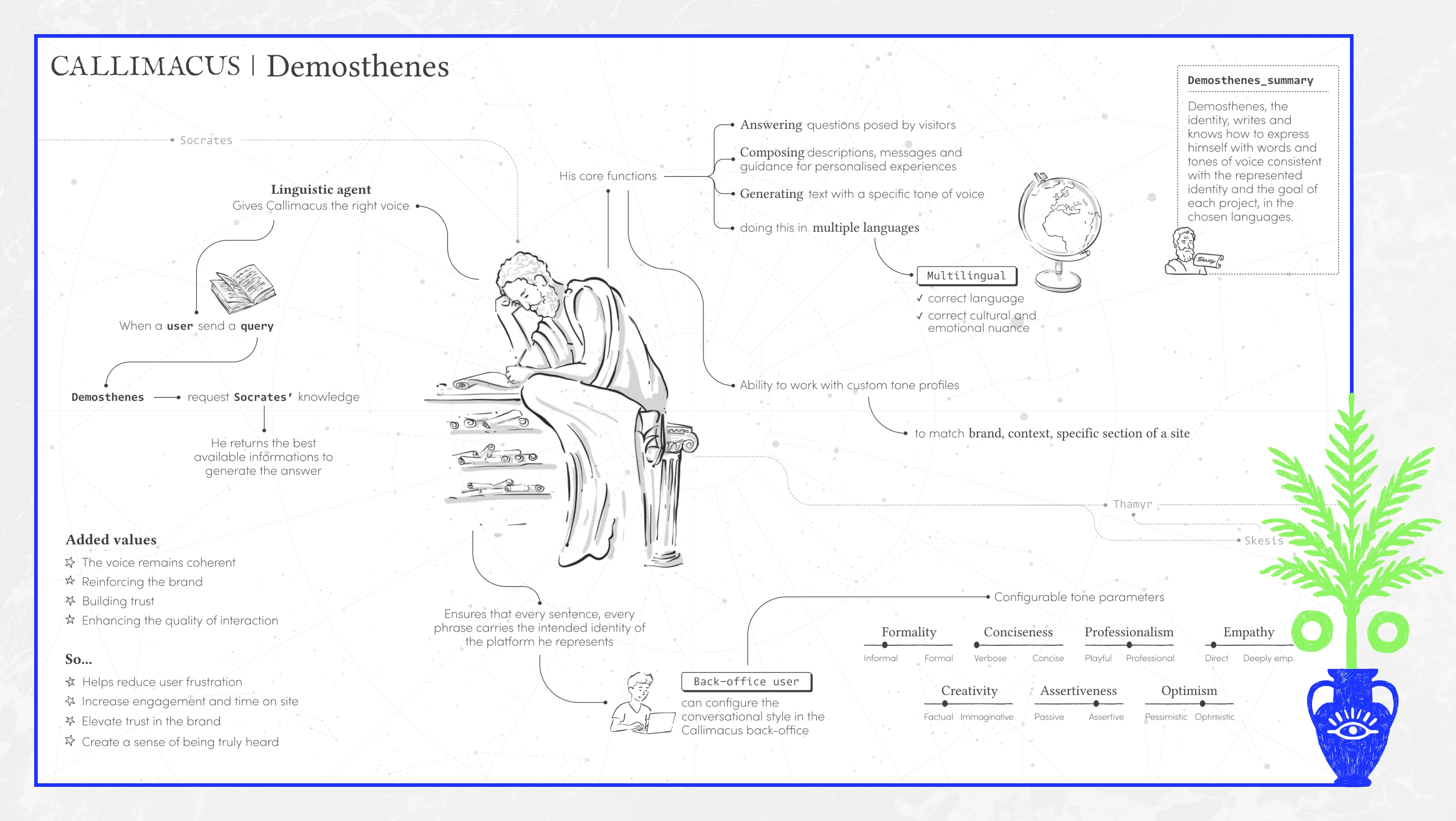
Callimacus offers a completely different approach to website design. It functions like an orchestra, integrating multiple agents running on different large language models.
Callimacus is based on three fundamental ideas: First, we eliminated content containers, allowing content to flow and be recombined. We call it “page-less design.” Second, instead of starting with user interfaces or framework templates filled with placeholder text, we began by spotting signals of the customer’s intent and the experience and journey we wanted to offer. Third, enabled by the first two ideas, we created a personalization engine that delivers a tailored experience for each user.
EW: How does that work?
FB: One of our agents, Thamyr, named after the ancient Greek painter, continuously analyzes the user’s intent—for example, getting inspired or product search—and updates the website in real time. Each interaction the user has with the website refines this intent. Thamyr might say, “It seems like this user is more interested in product search or is seeking inspiration.” She then goes to our agent, Socrates, and says, “Hey, please provide me with products the customer might be interested in.” However, it turns out the user is not really into the product but rather wants to explore the brand. So Thamyr decides to feature fewer products, but more editorial content. She then references the design system, selects the appropriate components, and builds the interface accordingly.
.webp)
EW: How does all this “intelligence” impact the back end?
FB: One of the advantages of the platform is that editing websites can become a conversational experience. For example, you can say to Callimacus, “Hey, we just received the new capsule tennis collection.” Callimacus replies, “Okay, do you have pictures?” You say, “Yes, they’re here in this Dropbox folder.” Callimacus then asks, “Okay, do you have the prices?” “Yes,” you reply, “this is the spreadsheet with prices.” Once the files are uploaded, Callimacus says, “I’m ready to publish.” Then you confirm, tell it to publish, and it’s done. Since Callimacus generates the interface, it decides which content is displayed to the user.
You can also interact with Callimacus by asking it how the collection campaign is performing in Japan, for example. Callimacus might reply, “It seems we are performing worse than last week.” In which case, you could ask it for suggestions on how to improve. It might respond, “Perhaps we could increase the frequency of displaying these collection banners in specific customer journeys?” If you agree, you simply tell it to execute that plan.
EW: What’s been the response to the new Brunello Cucinelli experience?
FB: The initial reactions are very positive, and the metrics reflect this. We’re seeing increases in engagement rate, time spent on the website, and items added to the cart.
EW: Given your successes so far, what are you hoping to see next?
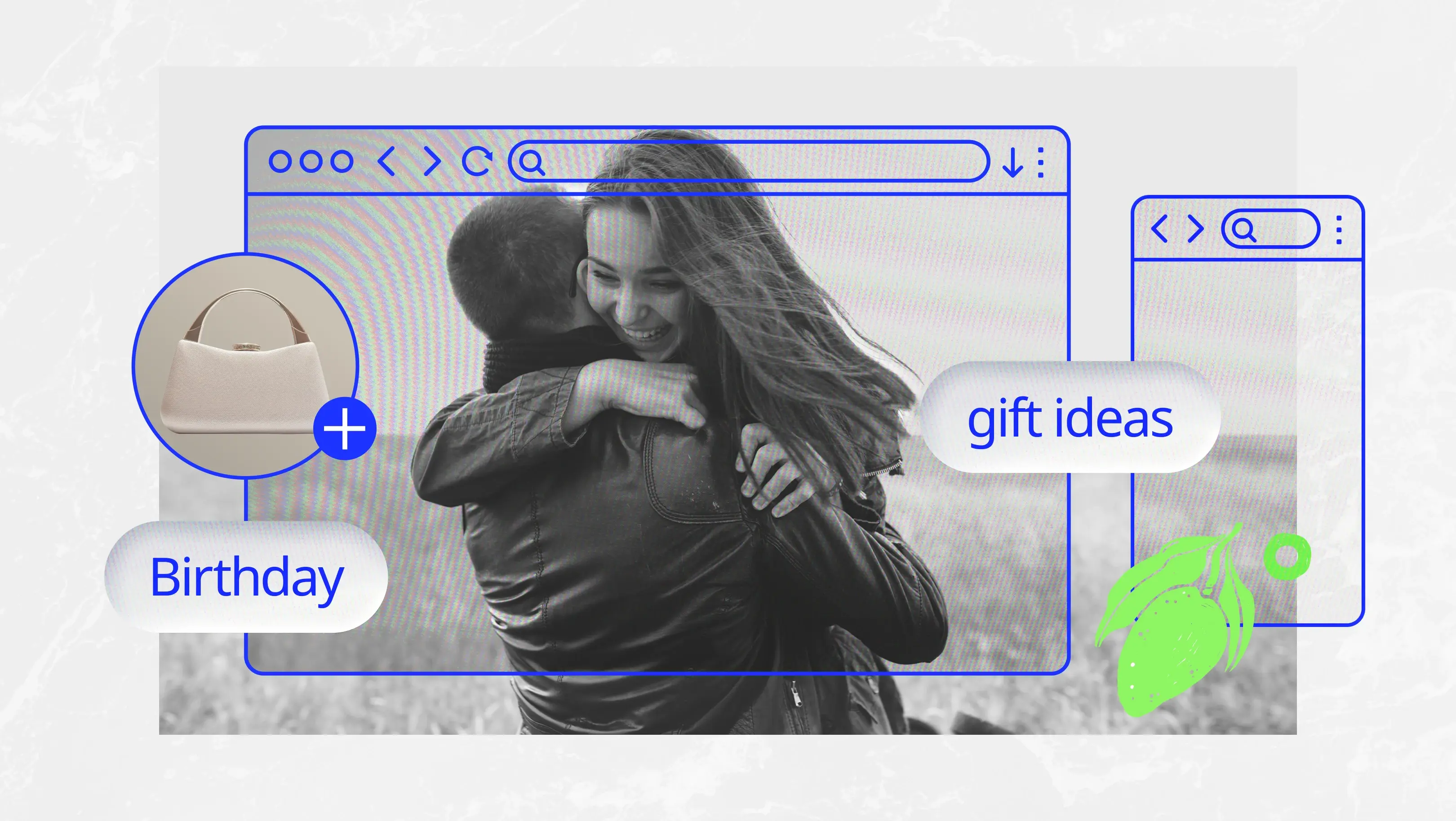
FB: In five years, I envision an experience that feels more like shopping in a physical boutique. I want to be able to interact with the system using voice commands and have it understand what I’m looking for, rather than forcing me to search endlessly for the right item. It should respect my privacy, personalizing the experience without relying on third-party data. The process should be quick and intelligent, recognizing that I’m either on my phone and in a hurry, needing to buy a last-minute birthday gift for my wife, or that I’m relaxing in an airport lounge and would like to learn more about the new collection, or about the hamlet of Solomeo, or do a deep dive into craftsmanship.
We finally have the chance to go beyond decision trees and pre-defined rule-based logic, to make digital applications more intelligent and genuinely respectful of people. It’s a great chance to rethink, from the foundation up, how digital technology works and the business models we have adopted to run it.
“Design in the Age of AI” is a series of conversations with designers and makers from across industries and disciplines, building the future with AI, today.
“We want human beings at the helm, steering the boat. However, if there are tools that can help people steering the boat make better decisions, we are ready to embrace them."
.webp)
5 principles for easing the burden on caregivers
From designers who know the role too well.
Becoming a caregiver can happen overnight. A change in condition, an unexpected accident, a life-changing diagnosis. For many of us, it’s a job with no prep time: Someone who was once just a partner, child, sibling, son, daughter, or friend is suddenly a caregiver. It’s already happened to 63 million informal caregivers in the US. It’s also happened to both of us.
Caregiving is incredibly complex. We know what it’s like to constantly navigate tools that fail to meet our needs, as well as the systemic issues in our healthcare system that overlook and undervalue us, while expecting us to live up to an identity we stepped into by circumstance. Our needs shift based on the conditions of those we care for, the quality of the systems we engage with, and the gaps in experience and confidence that we continue to discover.
As designers, we’ve partnered with companies to better serve the needs of this growing population. And out in the world, we’re seeing the emergence of many new services, from AI companions with emotional intelligence (like ElliQ) to robots that assist with manual tasks (like E-BAR). As the number of caregivers continues to increase, it’s essential that we get these products, services, and experiences right. Here are five principles for designing solutions that truly meet caregivers’ needs.
.webp)
1. Design for people who did not choose this role—and were not trained for it
During our research for a recent project, a caregiver told us, “Like most people, I didn’t even think about caregiving until my father was diagnosed with cancer.” Informal caregivers are unpaid and without professional training. They have to learn as they go, performing medical tasks, navigating complex systems, and advocating for their loved ones, all without the preparation or recognition that this role deserves.
We need to prioritize designing tools and systems that make stepping into caregiving feel less like being thrown into the deep end, and more like having a calm guide by your side. (Particularly when 40 percent of caregivers provide high-intensity care, like administering injections and managing equipment, yet only 22 percent receive any kind of training.) That includes speaking in plain language and avoiding medical jargon, designing inclusive digital tools for people who may not be tech-savvy, and using simple visuals to summarize health data and make it actionable. Ultimately, it’s about designing for reassurance, not just task completion.
What might that look like? Something like Abbott's FreeStyle Libre continuous glucose monitors. They quickly condense a constant stream of data into just a few colors that are easy to understand at a glance: green indicates that glucose levels are within the normal range, while orange or red signals that levels are dangerously low or high.
Another good example of designing for reassurance is The Sandwich Club, a community support network for parents and caregivers where anyone can find answers to caregiving questions, big or small. Designed by The Holding Co. to be as accessible as possible, it costs only $1 a month (free for regular contributors). The club fosters an active community of peers who share their knowledge, and it includes a helpful AI that provides immediate responses and highlights insights from the community. It’s an incredible resource for questions like, “Am I doing enough for my aging parent?” to “How can I encourage a disabled person to exercise regularly?”
2. Healthcare tools need to be accessible to patients—and everyone involved in their care
Healthcare systems are designed to be patient-centered. That’s a good thing, but it can have unintended consequences. When caregivers need to talk with a provider or insurer on behalf of the patient, those systems often don’t recognize the caregiver and may even restrict their access. Many caregivers have spent countless hours on the phone with a call center simply to reset a patient’s password, only to use the patient’s login instead of their own to manage care. Caregivers should be authorized partners in care by default—not mere visitors who must repeatedly prove their legitimacy. Imagine how much more seamless the experience could be if every patient portal had a “care circle” view—where designated caregivers could see what patients need, message providers, manage tasks, and coordinate—without navigating permission mazes.
These tools could draw inspiration from location sharing. When we can’t find a friend in a crowded place, we flip on our live location feature in a messaging app, Google Maps, or a service like Life360. While it shares highly precise GPS data, you can control how long you share that data—just an hour, or forever—and with whom. The New York Times also offers a simple model for shared accounts: each user receives a personalized experience, while collaboration is encouraged.
.webp)
3. Assume caregiving is a secondary role with primary consequences
Sixty-one percent of family caregivers also work, according to AARP and the National Alliance for Caregiving. This means caregivers often have to make important decisions while managing complex schedules, fitting care in between meetings, late at night, or early in the morning.
Designers need to create tools for users with other roles, limited time and attention, and irregular usage patterns. Caregiving tools should allow users to pause, resume, and re-enter tasks without penalty. We need to facilitate decision-making in short time frames from anywhere—on a lunch break, in a parking lot, or at the grocery store.
We can draw inspiration from TurboTax’s save-and-return feature, which allows users to pause their tax prep and pick up where they left off. This feature respects people’s busy lives, lets them move at their own pace, and reduces anxiety about making mistakes or losing their progress while tackling complex tasks.
4. The true cost of care transcends medical bills
Being a caregiver can be expensive. In addition to the physical and emotional toll, caregivers spend an average of more than $7,000 per year on out-of-pocket expenses, according to the Caregiver Action Network and AARP. These costs can include home modifications, medications, and transportation. Then there are the opportunity costs for careers, and income potential: nearly a third of workers, including senior executives, report their careers have been adversely affected by their caregiving responsibilities, according to a Harvard Business School study.
Instead of assuming cost is incidental to care, health systems need to treat it as a primary factor in the patient experience. Caregivers need tools that clearly explain potential costs—from medical expenses to time tradeoffs—as well as help navigate them more easily.
Rocket Money’s Subscription Finder is a strikingly simple tool that makes the invisible visible. Once you link your accounts, it surfaces auto-renewing expenses that you might have forgotten about, from subscriptions to streaming services, and then helps you cancel them (sometimes a multi-step rigamarole). No more missing yet another auto-renewal deadline.
.webp)
5. Caregivers are emotionally exhausted long before they are visibly overwhelmed
More than 60 percent of caregivers report symptoms of burnout, yet much of that strain remains hidden. Support should not only reduce friction but also create moments of reassurance and self-efficacy. Improving the experience of being a caregiver is a necessary part of sustaining care over time.
We need to build systems that not only track patients’ health, but also caregiver strain. Shared portals between patients and caregivers could offer tools for mental health care—meditation, counseling options, and help managing big sources of stress, like paying bills or understanding medical care. They could also include message boards where patients and caregivers could ask questions and share their experiences.
We’re inspired by Soluna, a digital mental health platform for California youth, co-designed by IDEO and Kooth with 150 young people. Soluna integrates supportive conversations, self-reflection tools, and community connections to support users in moments when they feel vulnerable, uncertain, or overwhelmed. This approach serves as a model for caregiving tools, emphasizing the importance of treating emotional labor as essential infrastructure.
We know from personal experience how important interventions that reduce caregiver burdens are. We also know from our work in the health sector that this need will only continue to grow. By 2030, 73 million Americans will be over 65, and 70 percent of them will require care. Meanwhile, there is already a shortage of paid caregivers. More and more of us will need support to fulfill this role. And more and more of us will need designers to get it right.
Looking back, early in our journeys, we didn’t think of ourselves as caregivers. Then things shifted. Our family members needed more support, and somewhere along the way, we realized we needed more, too. Now, with hindsight and the lens of human-centered design, we have a better sense of how health systems and care services need to improve, especially for informal caregivers. If we can do this, we believe we can improve care for everyone. Because more likely than not, we’ll all serve as caregivers one day.
Looking to redesign your own products and services to benefit caregivers? Get in touch.
Healthcare systems are designed to be patient-centered. That’s a good thing, but it can have unintended consequences.

Lindsey Turner
I’m passionate about building brands, products, and experiences that help organizations show up with meaning and momentum.
I help organizations cut through complexity by shaping how they show up, through brand strategy, identity, and storytelling.
Working at the intersection of brand and business, I bring an editorial eye and a bias toward making—turning ideas into tangible experiences that people can understand, trust, and believe in.
My work spans government, healthcare, financial services, media, and consumer goods, from launching Gen Z-focused ventures to building innovation labs and reimagining legacy brands. I relish moments of ambiguity and enjoy translating across teams, perspectives, and priorities to move ideas forward.
I started my career in editorial and digital design, shaping cross-platform experiences and identity systems in publishing and agency environments. That foundation still shapes how I work today: I’m detail-oriented, collaborative, and overreliant on the Oxford comma. I hold a BFA in Visual Communication from the School of the Art Institute of Chicago.

Rachel Young
My work helps organizations see who their products aren't working for—and build the will and the tools to do something about it
For 25 years, I've asked the same question: Who does this design exclude—and what are we going to do about it?
My work spans human-centered strategy, inclusive design, and qualitative research, with clients ranging from Microsoft, Google, and Verizon to the National Science Foundation, and San Francisco Unified School District.
Before IDEO, I taught elementary school in East Palo Alto and spent a decade doing design work with social service organizations—where I learned firsthand what it costs people when systems are built without them in mind.
I am currently writing User Error, a nonfiction book about digital access and the design decisions behind it. I live in Oakland, California.

Brian Pelsoh
I lead with craft, ensuring our work is creatively excellent: rooted in deep human insight and imagination, while also grounded in the realities of business and technology.
My expertise spans brand, communication, and product design across tech, education, the arts, and social impact.
I believe great work demands both high-level vision and obsessive attention to detail, and only happens through collaboration.
I bring an inclusive, hands-on approach and a deep understanding of business, which enables me to consistently deliver excellence while always asking why.
Before joining IDEO, I worked at the brand firms Pentagram and VSA Partners. I began my career as a designer, leading teams at the School of the Art Institute of Chicago and the Milwaukee Art Museum. I hold an MFA in graphic design from Maryland Institute College of Art and a BFA in communication design from the Milwaukee Institute of Art & Design, and have taught at some of the best design schools in the US.

Tony Wong
I am responsible for IDEO’s long-term success in China and working with clients to use design as a tool to enable growth.
I am responsible for IDEO’s long-term success in China and working with clients to use design as a tool to enable growth. Specifically, I have helped Chinese companies design holistic brand solutions through the development of their products, communication, services, and innovation teams, and I have helped multinationals expand their presence and influence in China.
I advise global leaders on developing China-led innovation and capabilities.
In over 15 years in IDEO Shanghai, I have worked on projects that use design to elevate the quality of the experience of healthcare products and services, streamline processes that increase productivity, create spaces and programs that promote and enable inclusive communities, and build next generation mobility solutions that are planet-positive.
Before joining IDEO, I worked at Philips Electronics and the Electrolux Group in Italy, the Netherlands, and Singapore on a number of breakthrough commercial products. I am a member of the Young President Organization in Shanghai.

How to use AI as an editor, not a writer
Ed White shares how he uses AI as an editor—not a writer—to sharpen storytelling, rehearse ideas, and preserve the productive friction that makes creative work better.
Ed White has a rule he's tested on his own writing: hold yourself as the writer, and let AI be your editor. Ed is a Senior Design Director at IDEO's London studio, where he co-leads the firm's AI portfolio across Europe. Before IDEO, he spent 12 years as a writer and editor at the Financial Times, Wired, and Contagious. So when he talks about when to use AI for storytelling and when not to, it comes from two decades of crafting his storytelling skills.
In this episode, Mina Seetharaman talks with Ed about two specific tools he uses to keep AI in an editor's seat: a "roasting agent" prompted to critique his drafts without any sugarcoating, and a simulated audience he rehearses pitches on before the real thing. They also get into what Ed is hearing from design leaders at Anthropic, Lovable, Shopify, and Google Creative Lab about how creative work is changing, and why he thinks the friction of writing something yourself is worth protecting rather than automating away.

Building a personal AI for the messiness of life: Sida Li
Becca Carroll talks with Cue co-founder Sida Li about designing a personal AI for the messiness of everyday life—not just work. They explore how Sida stays anchored to human needs while navigating fast-changing technology, product tradeoffs, business-model experimentation, and the realities of building an AI company today.
Most AI products today are built for work—a space with clear problems and established systems. One founder noticed a gap: personal life is messier, harder to systematize, and mostly left behind by the AI boom. So she built Cue, a personal AI that lives inside iMessage and group chats, to go where the other tools haven't.
In this episode, Becca Carroll, IDEO's Chief Strategy Officer, talks with Sida Li, co-founder and CEO of Shared Context Lab, about staying anchored to a human need while the technology around her keeps changing shape, why she treats her business model with the same rigor she'd bring to a product, and what it feels like to build a company at this particular, disorienting moment in AI.
The conversation also gets into how Sida makes design decisions: the language Cue uses to describe itself, the tradeoffs behind building inside iMessage instead of a new app, and a real story about a business idea that didn’t pan out.
This is the second in a two-part series profiling founders from IDEO's Startups-in-Residence program. The first conversation is with Johannes Seemann, founder of Sooner, on designing GenAI for the emotional side of money.

Designing GenAI for the emotional side of money: Johannes Seemann
Designing financial tools around the feelings that shape money decisions.
Most personal financial tools are built to run the numbers and optimize towards a budget. While that works for some, most people experience money as a lived relationship that does not neatly fit into a spreadsheet. Johannes Seemann and Becca Carroll discuss why money is emotional before it is mathematical, and what a human-centered approach to building a generative AI financial product looks like in practice.

The curious leader's edge in uncertainty: Scott Shigeoka
How genuine curiosity helps leaders navigate uncertainty with greater confidence.
Mina Seetharaman talks with Scott Shigeoka, author of Seek and Head of Curiosity Cultivation at the Eames Institute, about what distinguishes genuinely curious leadership from performative curiosity, how power dynamics shape curiosity, and why practicing curiosity can restore energy rather than drain it.
Looks like you might be in search of something very specific?
Or reset the filters above and try another angle.
Here’s some random inspiration

Podcasts about creative leadership

Articles about the power of prototyping

.webp)




.webp)






.webp)





.webp)




.webp)
.webp)