Designing a new vision for women’s healthcare
Introducing Cottage Women’s Health
Systemic transformation is not new to Cottage Health. Founded in 1888 by 50 forward-thinking women in Santa Barbara who wanted a hospital for their growing community, Cottage Health has since expanded to 3 hospitals and is quickly growing its outpatient services as well.
To understand the current Cottage Health experience, IDEO conducted dozens of in-depth interviews with patients, providers, caregivers, and staff. They also ran multi-week diary studies, engaged in inspirational research activities, and held events to hear from local women.
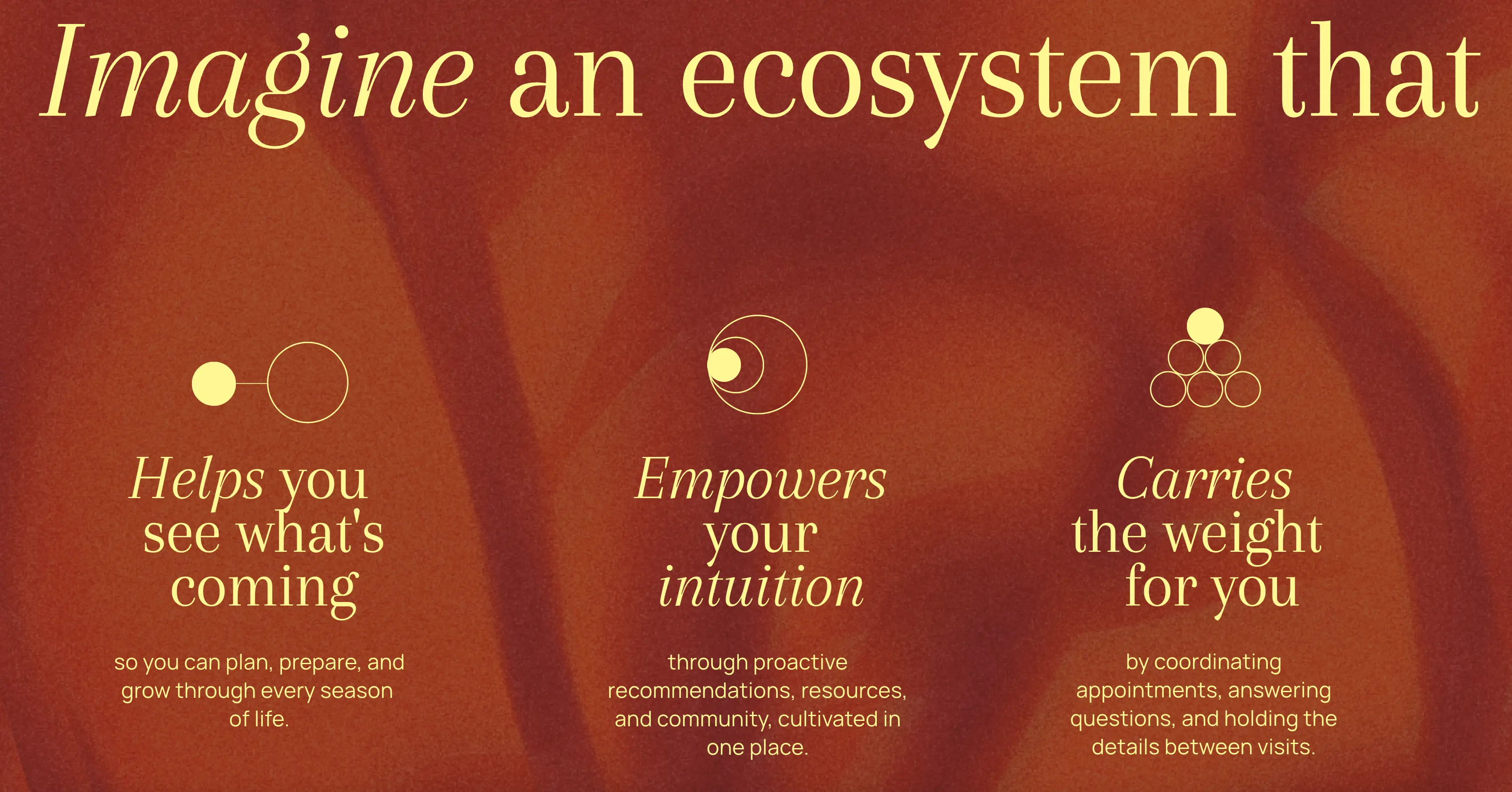
The qualitative research surfaced that women often carry the mental burden of repeatedly remembering, explaining, and advocating for themselves. Women’s pain is often minimized, which causes new providers to inherit mistrust from previous experiences, without having the tools to rebuild it. During significant life transitions, such as pregnancy or menopause, women may receive conflicting advice from health providers and seek additional outside support from informal networks. Access to quality care can sometimes depend on insider knowledge, private resources, or providers willing to go far beyond their job descriptions. And while providers make referrals, women must handle the time-consuming coordination required to make everything work, instead of focusing on healing. The bottom line: what women wanted most was to be seen, heard, believed, and supported in knowing what to do next.
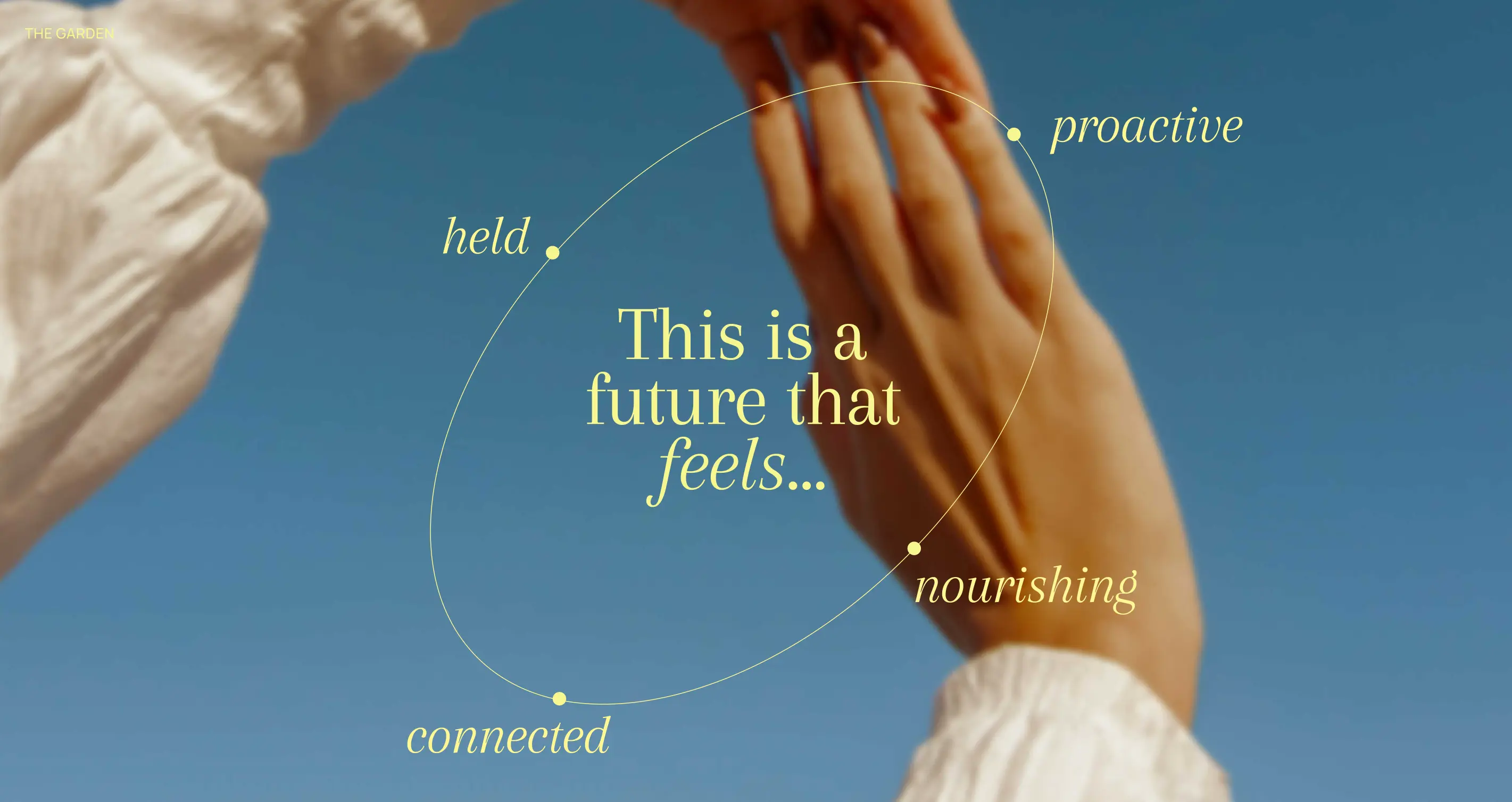
In order to address these challenges, IDEO proposed a new vision for women’s health, alongside design principles and concrete service shifts to guide future decision-making. Every interaction with Cottage Health should build on the information patients have already shared, demonstrating the system is listening. They should also guide women through life transitions by anticipating needs in future life phases, not just what’s happening now. Much like a community gathering, the Cottage Health experience should feel like a village, fostering belonging and shared care through warm, connected, human touchpoints.
Building on these design principles, IDEO developed three exploratory service concepts that represented potential pathways for future development, rather than finalized offerings: True North, Wellness Commons, and Care Circle.
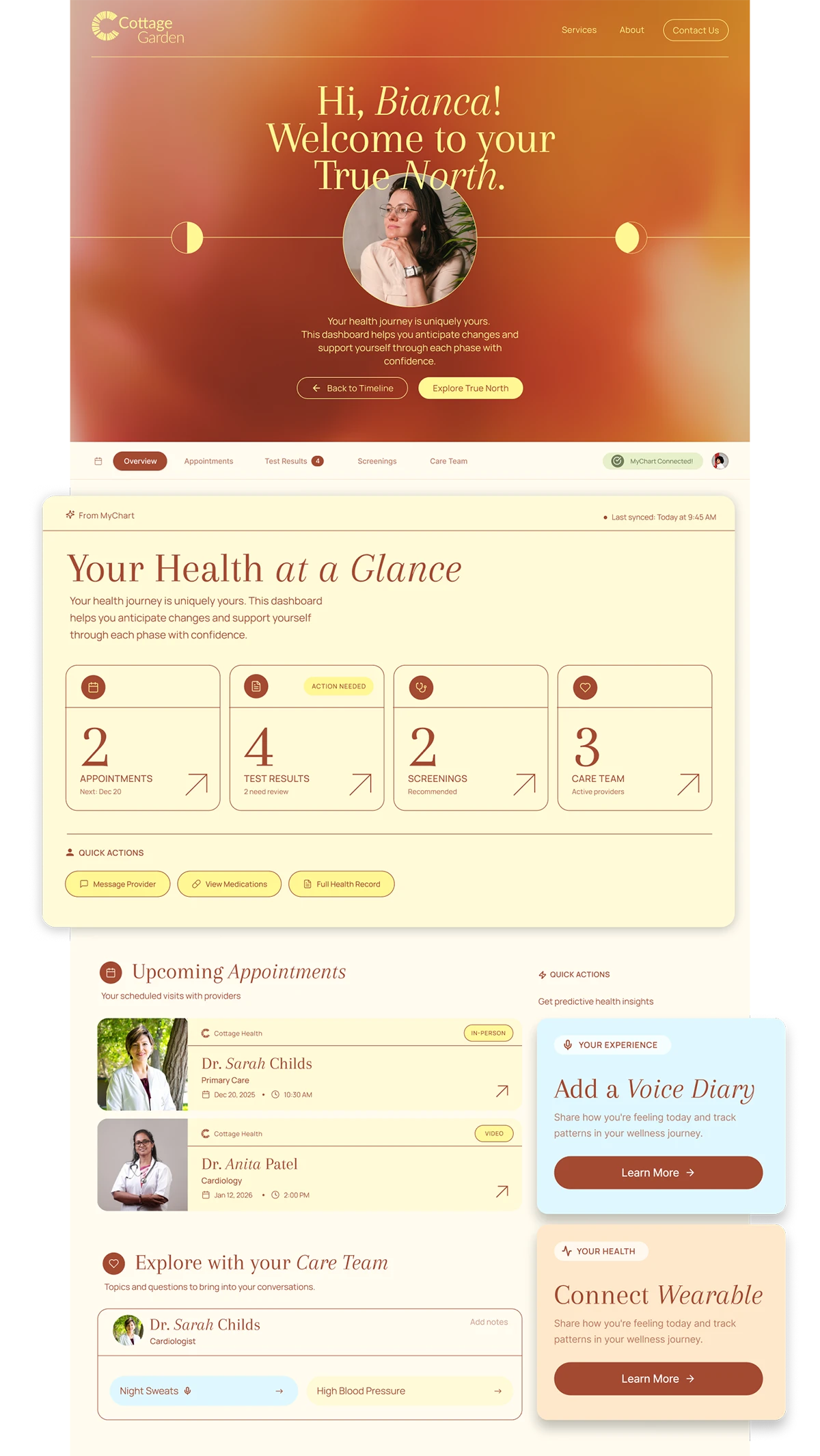
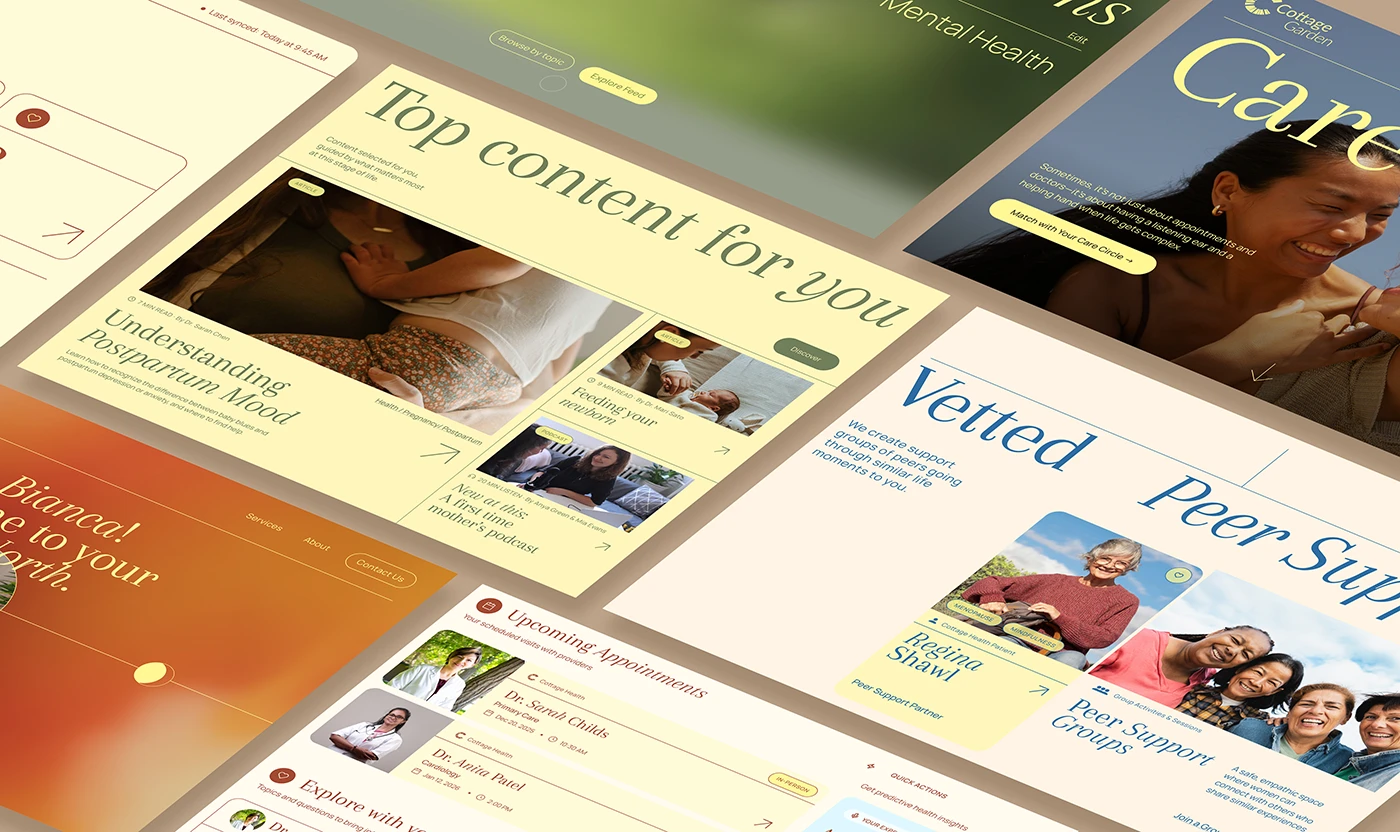
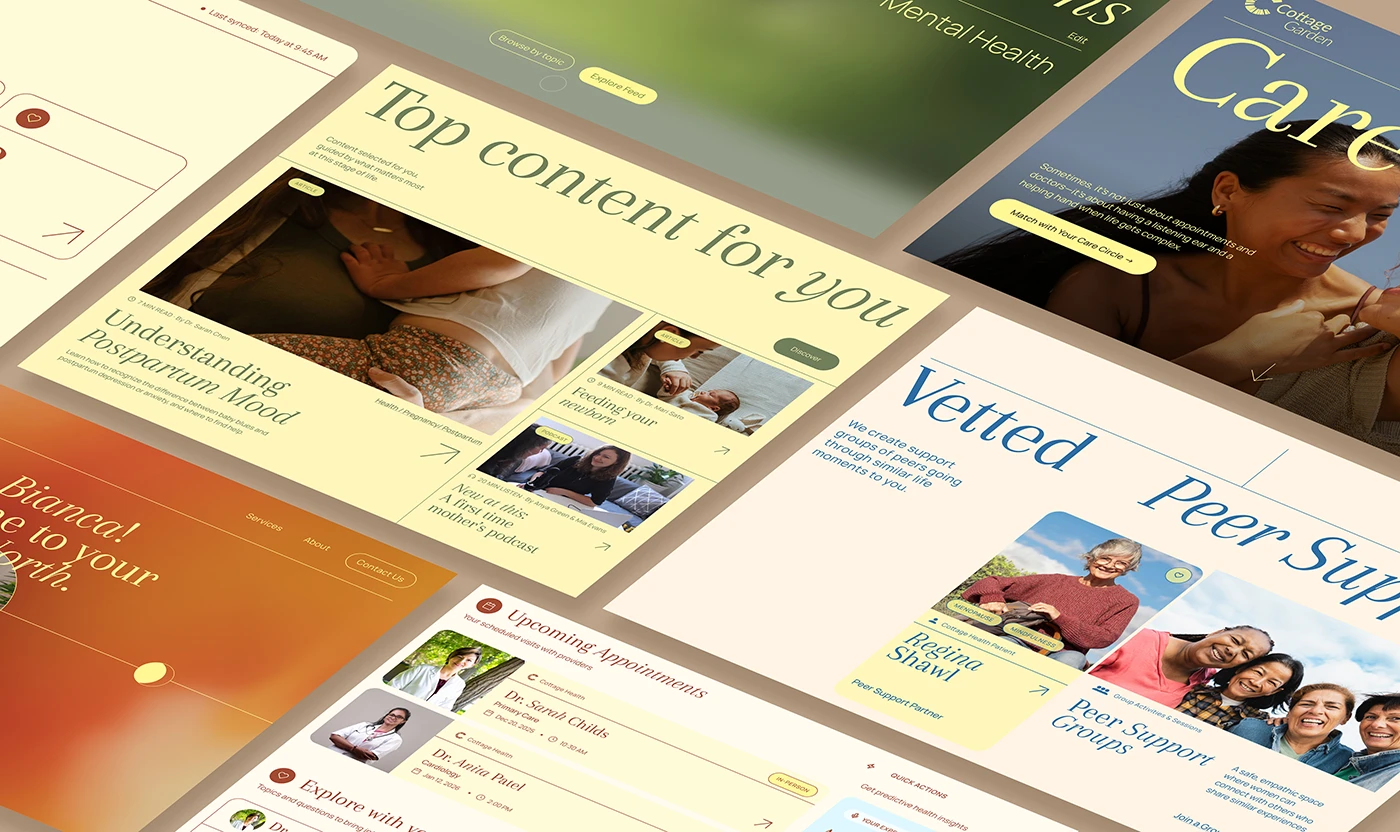
True North is a patient-facing tool that helps women see the long view of their health journey by integrating personal data, health goals, and reflections into a dynamic timeline they can share with their healthcare providers.
Wellness Commons serves as a digital front door, offering curated resources, including community events, discounted wellness programs, fitness classes, and trusted referrals, that help women navigate their well-being with clarity and agency.
Care Circle connects women to an extended support network inside and outside Cottage’s walls, including a hotline, health coaches, peer group support, and nurse navigators who can help patients manage complex care needs.
IDEO also provided Cottage Health with a multi-year roadmap building out the women’s health experience alongside continued pilot and implementation advisory. The roadmap included a comprehensive series of launch-to-learn pilots designed to test assumptions, reduce risks, and learn quickly, with IDEO stewarding the process. These pilots ranged from digital mockups and a curated community referral directory to a support line, a new nurse navigator role, and peer coaching services, among other experiments.
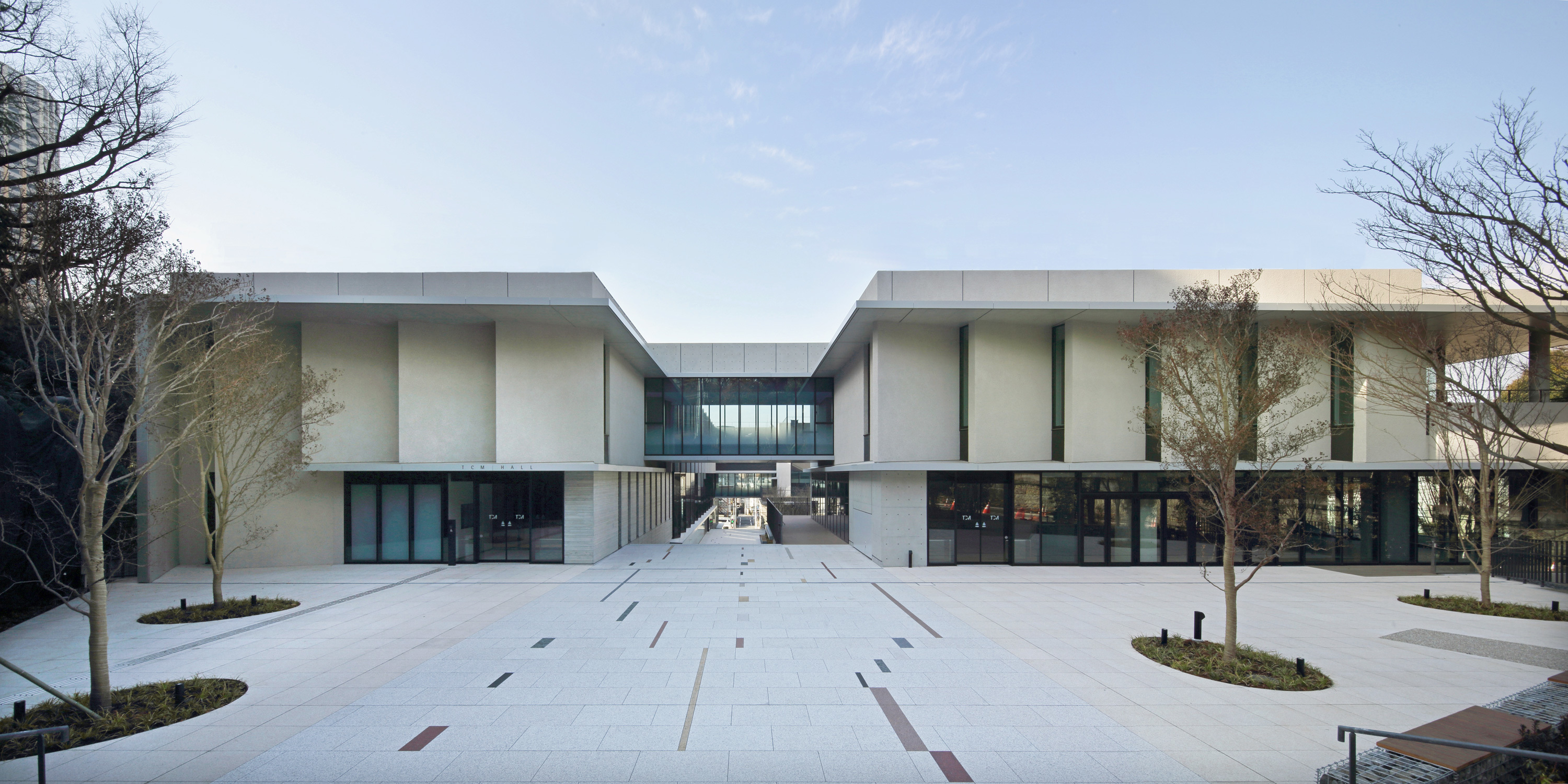
In July 2026, Cottage Health announced it was expanding its focus through a new Cottage Women’s Health Campus in Santa Barbara. Led by Dr. Jane Varner, Cottage Women's Health is projected to open in early 2028. It will encompass women’s health services across the lifespan, from puberty to menopause and beyond, including OB-GYN, pelvic floor health, women’s heart health, a menopause clinic, and a breast care center of excellence. It will also include supportive services, including trained nurse navigators to coordinate patients’ care journeys, giving women a single, trusted entry point for integrated care at every life stage. Cottage Women's Health is also exploring a new digital support system inspired by IDEO’s Wellness Commons concept.
Cottage Health had ambitious goals to expand its women’s health services and needed a partner to help it understand what women truly wanted from their healthcare and bring it to life.
7 months
from end of project to the announced launch of Cottage Women’s Health

From incremental change to breakthrough innovation
How Master Kong reinvented the instant noodle, from the inside out.
Looking to understand the role of instant noodles in middle-class Chinese life, the IDEO team conducted in-home research with consumers across a range of life stages and levels of attachment to noodle culture and convenience foods. The first finding was reassuring: Everyone kept instant noodles at home. The category still had a place in middle-class kitchens. But beneath that was a more complicated, emotional story—and an unmet need for convenience and quality to coexist in a single product.
The team discovered that instant noodles are more than just a quick, on-the-go meal; they are a nostalgic comfort food that evokes fond memories. But since their heyday, their role in daily life has evolved. Once a complete meal in itself, instant noodles now often function as a versatile flavor base or culinary accent in other dishes. Because they don’t align with the healthier, higher-quality, and more novel food choices that middle-class consumers aspire to, noodle shops, delivery noodles, or fresh-cooked instant options often win out. Yet, even these alternatives come with trade-offs. Delivered noodles lose texture during transport. Sit-down noodle shops preserve quality but offer limited flavors. Cooking from scratch meets the bar for both texture and flavor, but requires a significant time investment. As one young mother said, “If I could get the texture of fresh-cooked noodles without turning on the stove, I’d buy that instant noodle for sure.”
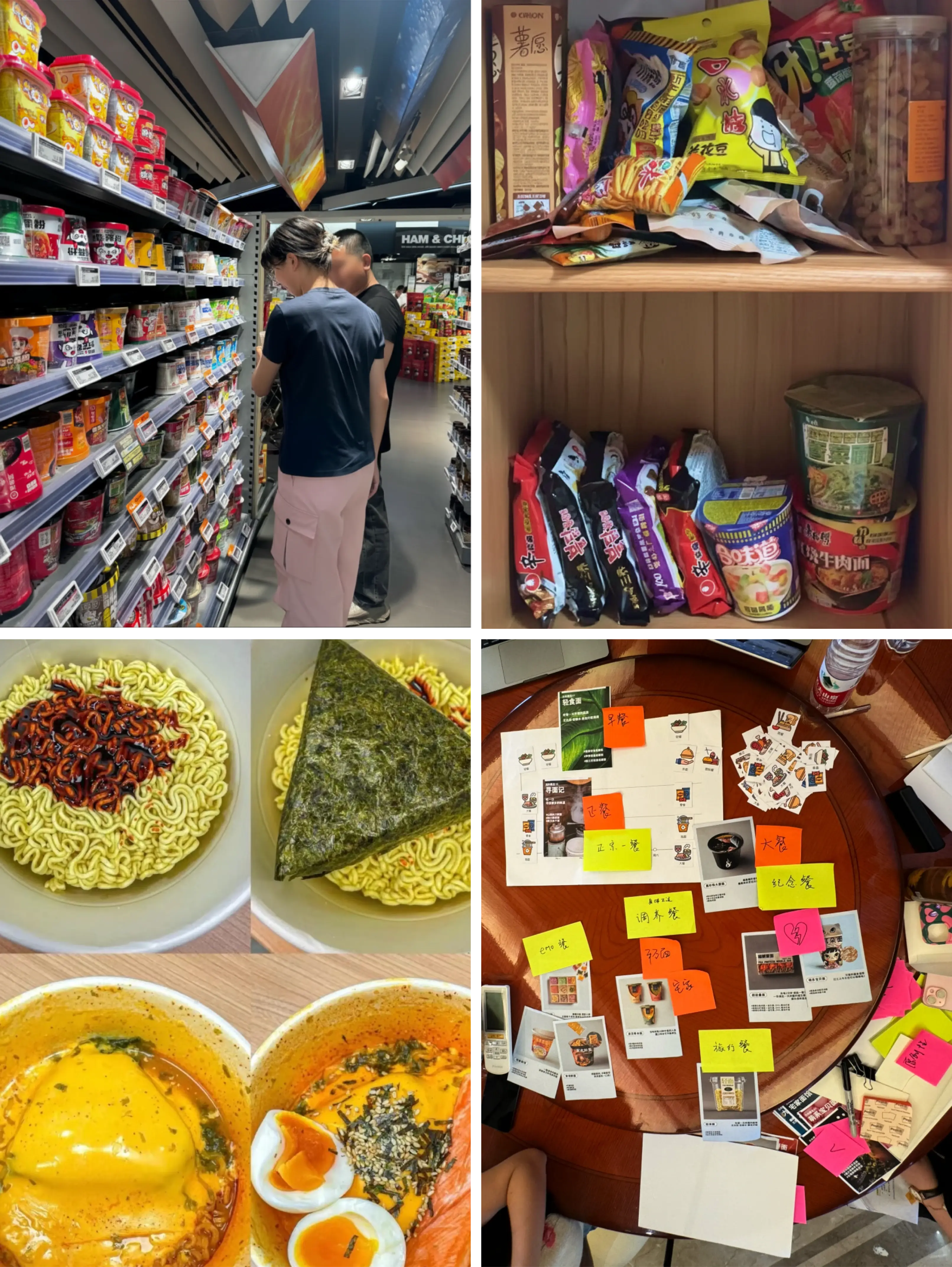
The research inspired the creation of a new category, which the team termed “fresh-brewed noodles.” More than just a noodle or broth upgrade, Master Kong’s fresh-brewed noodles would offer the speed of instant noodles with the quality of freshly cooked options, plus flavors not found in traditional noodle shops. The strategic positioning was clear. Executing it by making fresh-brewed noodles mass-producible, affordable, and eventually profitable presented a category-innovation challenge. To get there, IDEO designed a series of dual-track co-creation workshops with the Master Kong team and consumers.
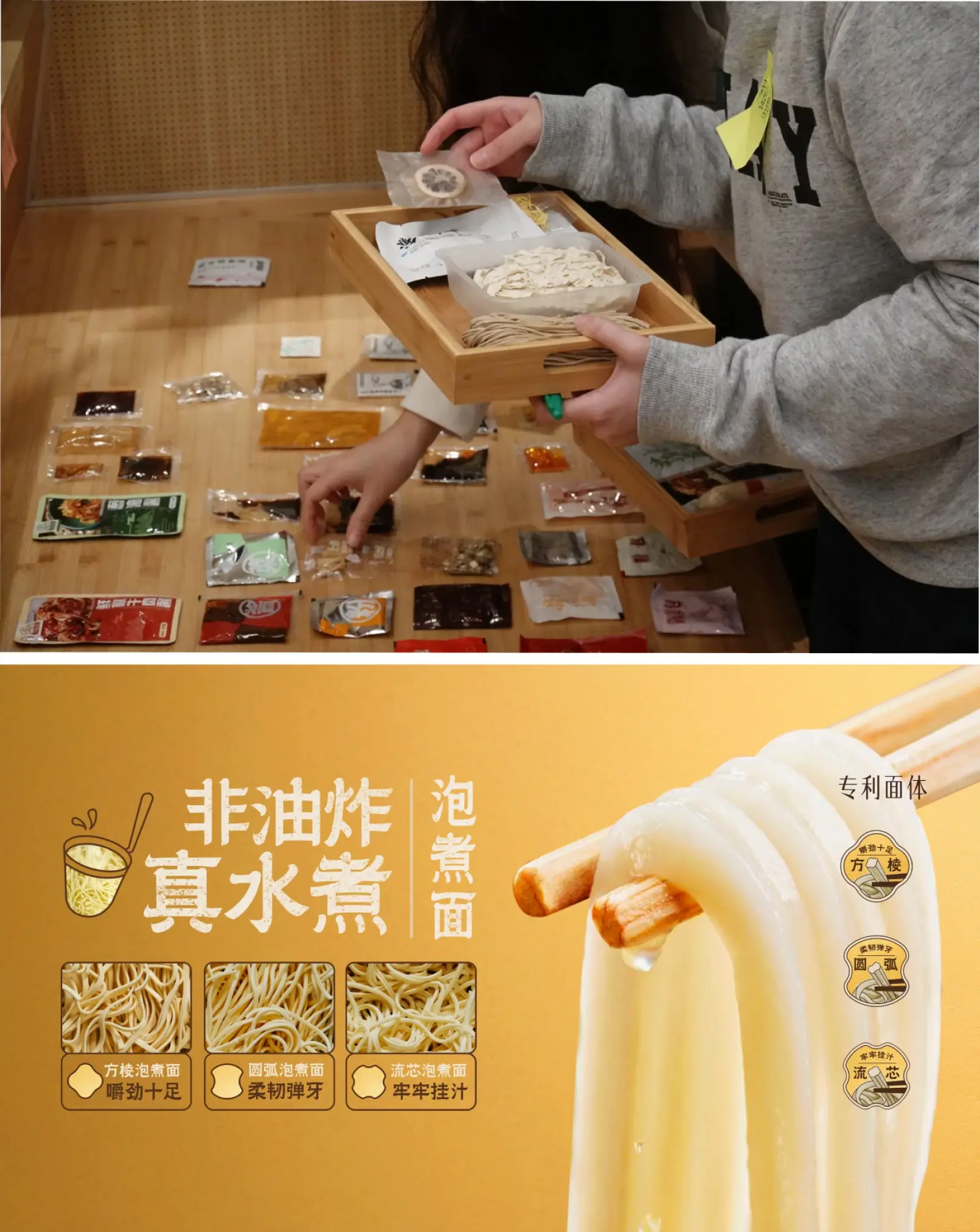
One track focused on prototyping the core product experience: noodles, broth, and toppings. IDEO and Master Kong’s R&D team began by studying the traditional craft of Chinese noodle-making, starting in Shanxi, a region renowned for its noodles. Through successive rounds of prototyping and consumer tasting, the team identified a critical insight: for “fresh-brewed noodles” to be convincing, the innovation had to be centered on the noodles themselves.
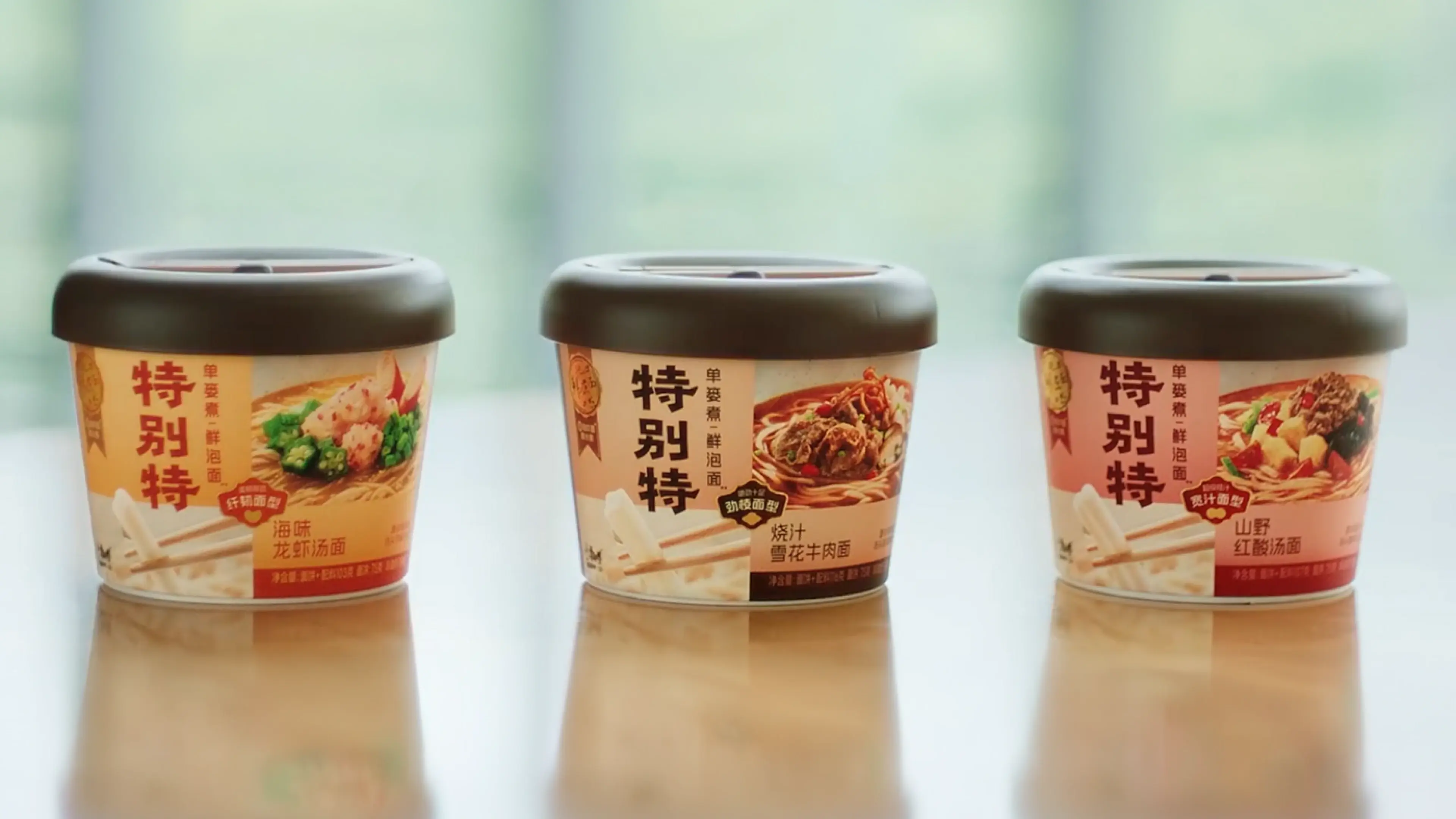
Texture alone was not enough. Consumers needed to see a meaningful difference before they tasted the product. IDEO translated this insight into a distinctive noodle profile: irregular, dimensional shapes designed to remain springy, hold sauce and broth, and mimic the resilience of freshly cooked noodles using only hot water. Because this visible shape represented the product’s core value proposition, it became a hero feature on the packaging. The graphic design made a bold visual statement about the noodle form, turning a technical R&D breakthrough into an immediately legible consumer promise: these are not ordinary instant noodles.
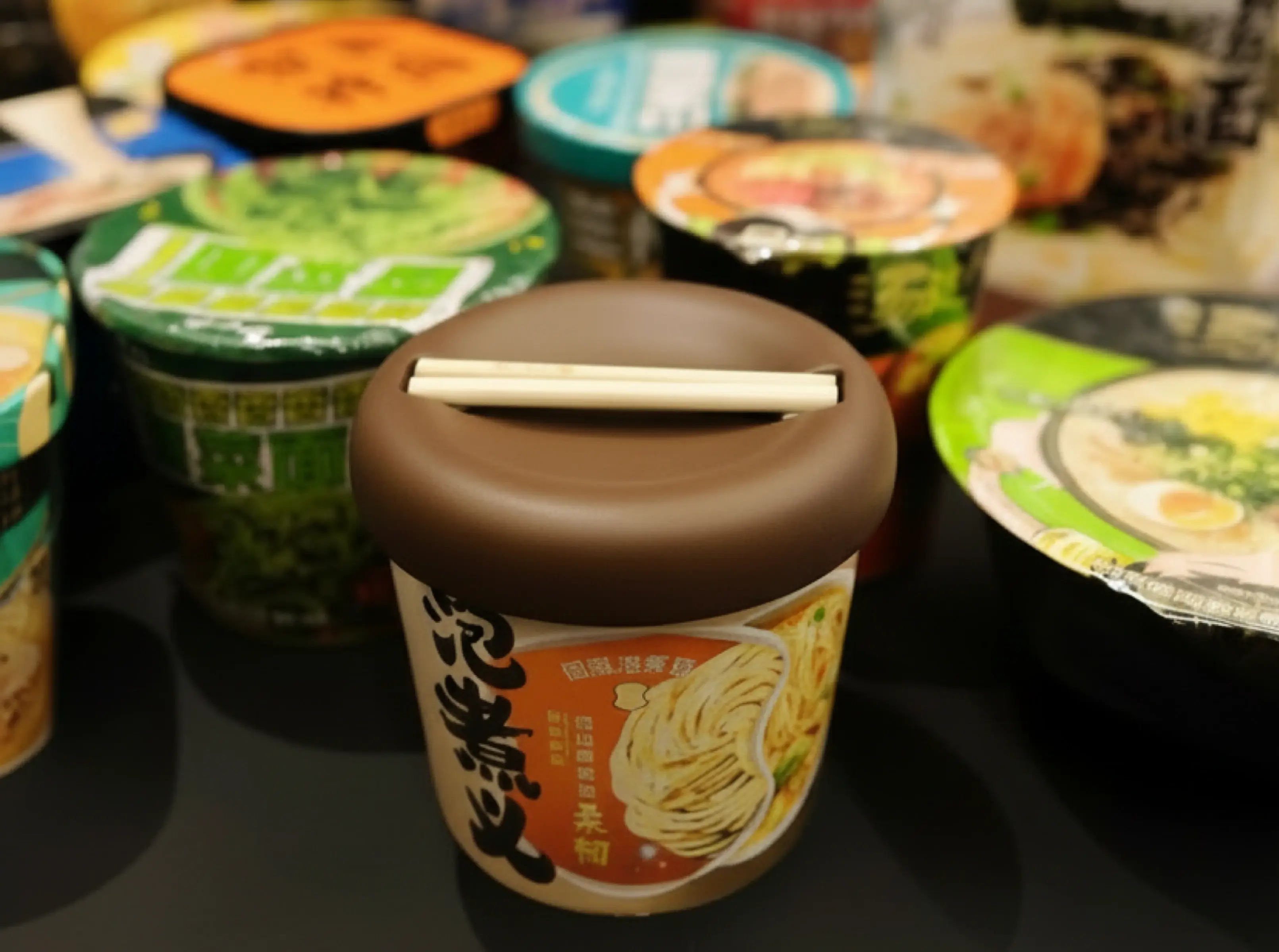
A parallel track explored the broader commercial experience: trend-forward and reimagined classic flavor profiles, light yet deeply satisfying broths, carefully selected toppings, and packaging that signals a new level of quality on store shelves. One key insight was that utensils carry meaning. Conventional instant noodles are often associated with disposable plastic forks, while higher-quality noodles are eaten with chopsticks. IDEO translated this cultural cue into the design of the bowl’s lid.
Instead of treating utensils as an afterthought, the team designed a solid, rounded, heat-retaining lid that embeds a pair of small wooden chopsticks. The gesture creates a small ritual of anticipation and reframes the product—not just a convenient instant meal, but a more considered noodle experience. Once opened, the product fulfills that promise with satisfyingly bouncy noodles, a rich liquid broth pouch that replaces the traditional oil-and-powder packet, and a vegetable packet reformulated with more premium whole ingredients.
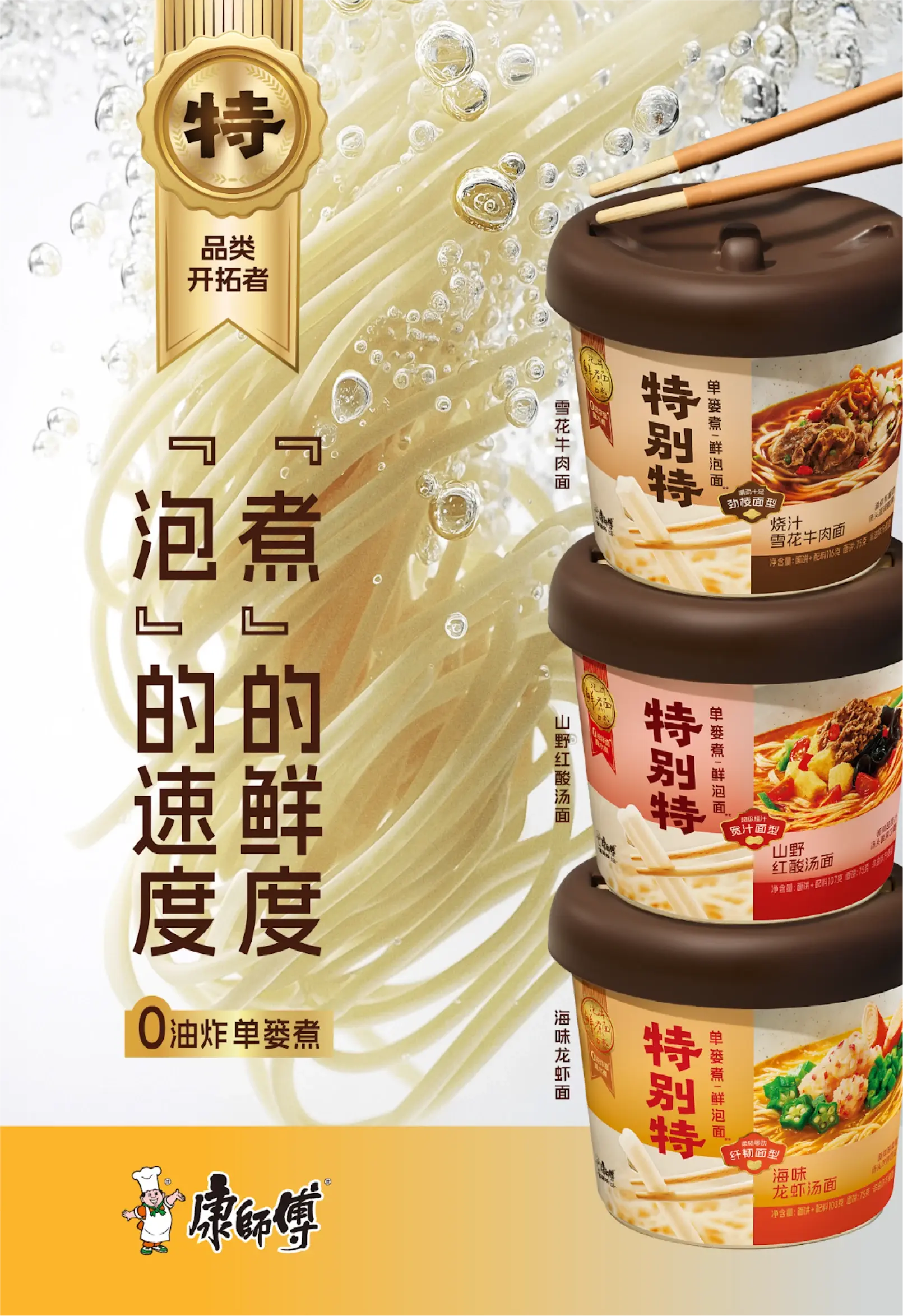
The first batch of “Te Bie Te” Fresh-Brewed Noodles—Chinese wordplay that emphasizes “special”—launched in August 2025 with three trendy and tried-and-true flavors. Within just three days, sales exceeded 100,000 bowls. Within a week, “Te Bie Te” topped the instant noodle category sales ranking on Douyin, China’s domestic counterpart to TikTok. The outcome was bigger than a product launch—it served as proof that a mature, declining category could be fundamentally reinvented to meet consumers’ real needs. For Master Kong, the project became a North Star and a model for internal category innovation in beverages, ready-to-eat foods, and beyond.
Once a popular, affordable staple, the instant noodle category in China has been declining rapidly due to shifting demographics, rising food delivery options, and increasing customer demand for healthier, more nutritious meals.
According to the World Instant Noodles Association, between 2020 and 2023, China’s instant noodle consumption fell by 4 billion packs.
100,000+
“Te Bie Te” bowls sold in the first 3 days on the market
#1
on Douyin’s instant noodle category ranking within one week of launch

Making international education future-fit & affordable
Lexel brings world-class learning to Malaysia’s middle class.
Taylor’s legacy began in 1969 with the founding of Taylor’s College and soon expanded to include Taylor’s University, one of Southeast Asia’s top private universities, as well as many other institutions that serve 35,000 students per year. The family-owned group also operates Taylor’s International Schools, Garden International School, and Nexus International School for students ages 4 to 18. In Kuala Lumpur, Malaysia’s capital city, annual tuition at premium private schools like these ranges from about $10,000 to $25,000 USD. Taylor’s wanted to do something different: provide the same level of academic rigor and immersive learning experiences at one-third the cost.
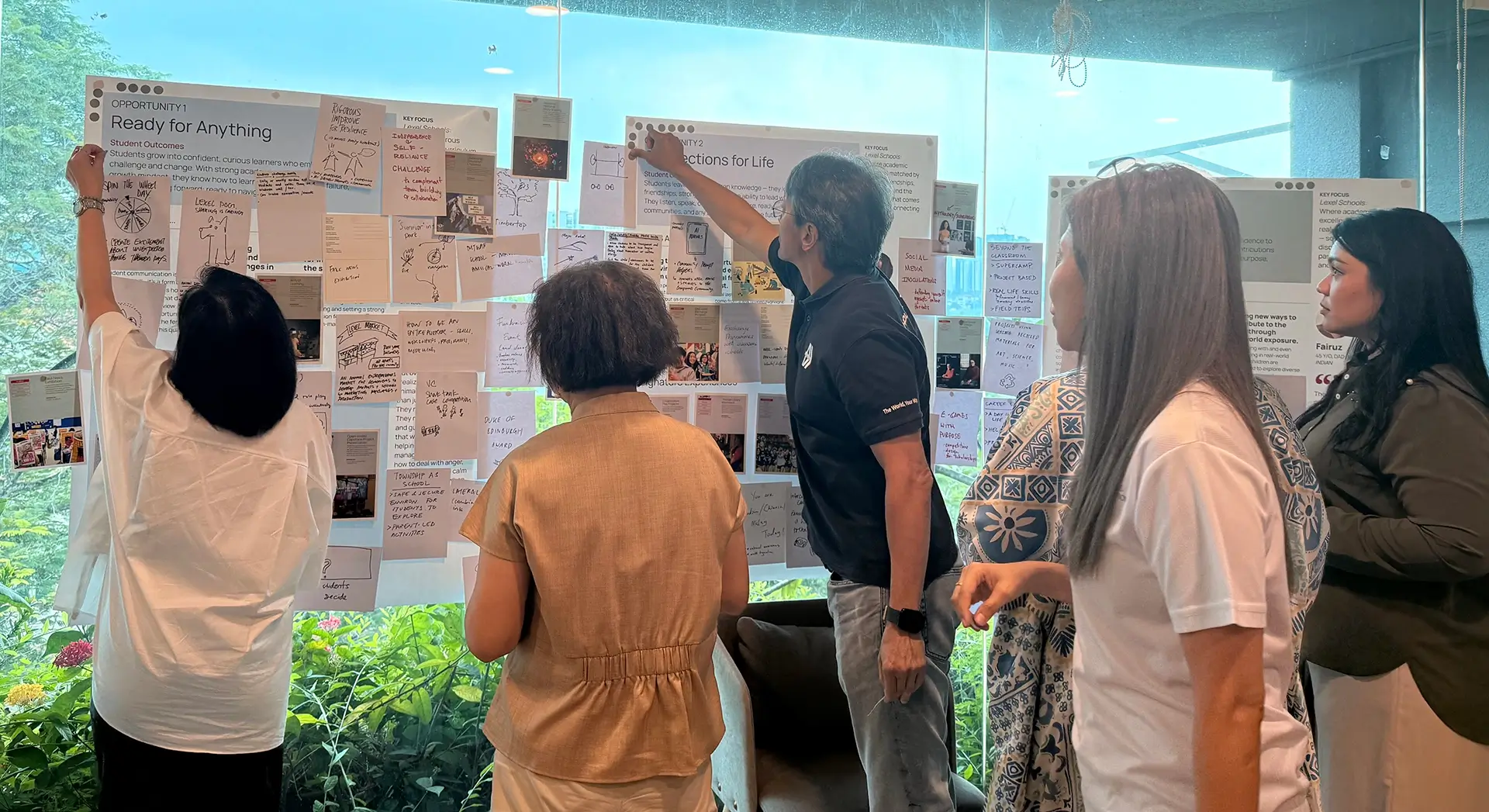
IDEO began by speaking with over three dozen students, parents, teachers, and experts across the capital to understand what was working, what wasn’t, and what was missing from such moderately priced international schools.
A few themes quickly emerged. Families, students, and teachers were worried about the stability of these new private schools, which tended to have higher-than-normal teacher turnover rates and were plagued by financial instability, negatively impacting talent attraction and retention, as well as student learning. Parents appreciated that the schools offered holistic learning experiences, such as field trips to rural areas, including jungles, but wished they were more consistently part of the curriculum. And now, the looming challenge of AI—how to use it, how to teach it, and how to teach with it—was in the background, a persistent cause for concern. The big unmet need? Reassurance that Taylor’s was thinking long-term and systematically about developing the skills, knowledge, and mindsets that would prepare students for an ever-changing world. Parents wanted a school that measured growth in academic, social, and character terms over generations, not just school semesters.
With these insights in hand, IDEO began developing a design Playbook for Taylor’s new brand—Lexel International Schools. A combination of “lexicon” and “excellence,” Lexel’s mission is “building what lasts, learning for life.”

The schools are centered around three key differentiators:
- Always Ahead: Lexel schools commit to staying current with the topics and subject matter they teach, as well as the tools they provide to students, parents, and teachers.s.
- Learning That Builds for Life: The schools ensure programmatic, systemic, and consistent learning experiences from Pre-K to Year 11. Interested students can even continue their post-secondary journey in partnership with Taylor’s University and other higher education institutions within the Taylor’s ecosystem.
- Educators for the Long Run: These schools commit to ongoing investments in professional growth opportunities for teachers and stable learning environments for students.
Four Lexel Literacies—AI, Digital, Financial, and Nutrition—integrated into the Cambridge Curriculum bring the school’s vision and mission to life.
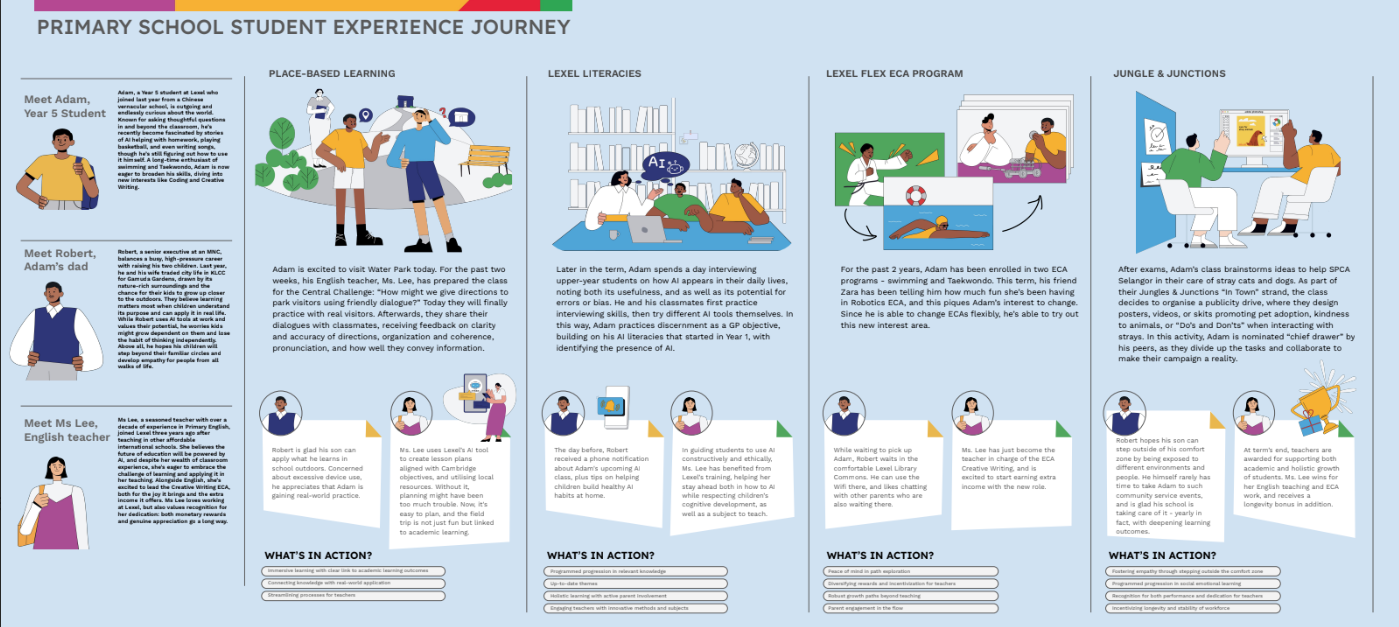
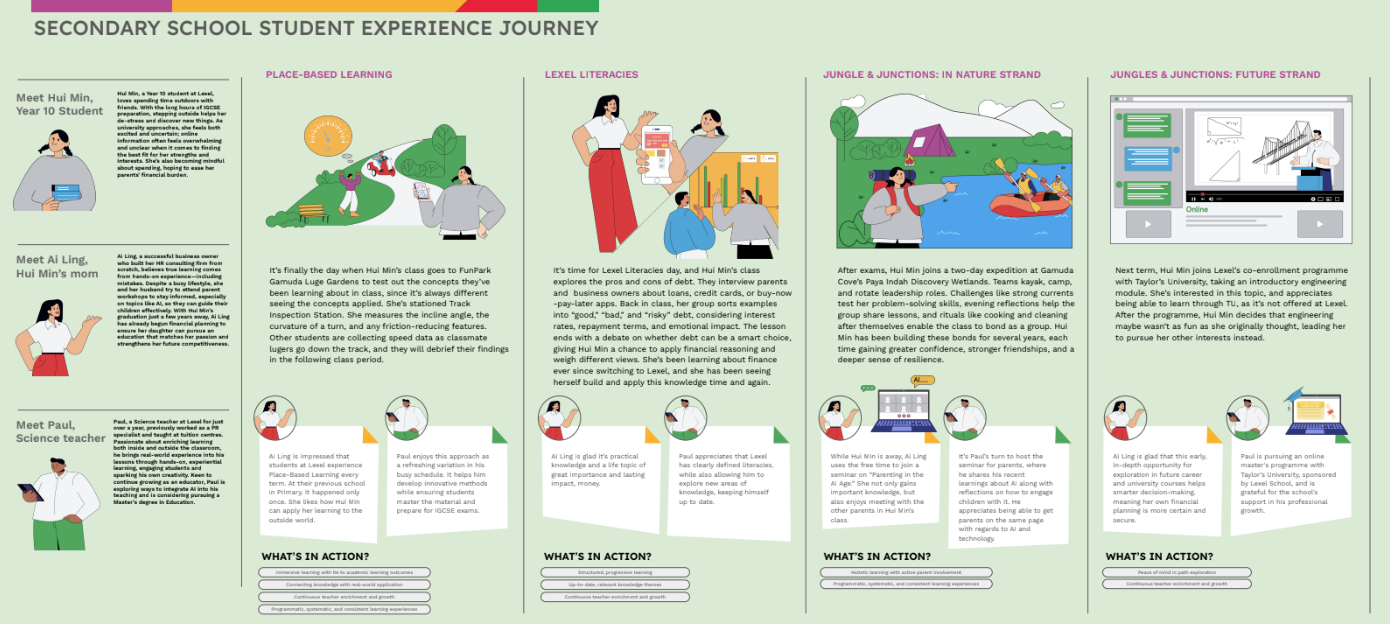
By systematically integrating AI literacy into its spiral education framework, in particular, an approach where major topics are revisited multiple times through a curriculum to build fluency over time, Lexel ensures parents that the school is thinking a decade ahead from Day One, setting the school apart. In addition to enhancing AI fluency, Lexel offers unique end-of-term experiences called Jungles & Junctions.
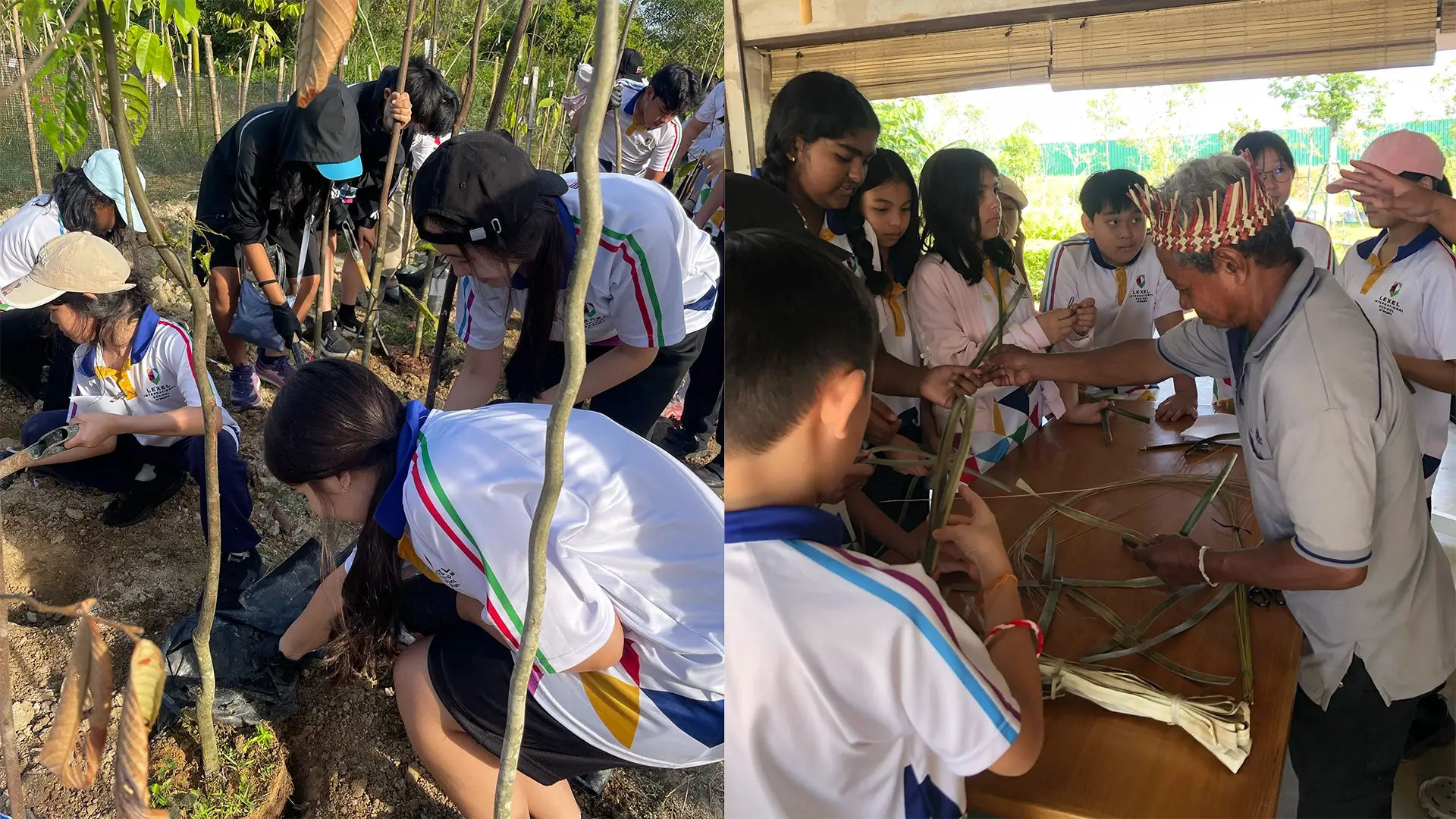
Combining three important strands of learning—community engagement, nature-based personal and interpersonal development, and career and university exploration—Jungles & Junctions leverages Taylor’s extended educational network and Lexel’s strategic founding campus within the Gamuda Gardens development in Selangor. Surrounded by tropical rainforests, the township’s residential neighborhoods, theme park, and various sports facilities, including an Olympic-length swimming pool, are transformed into an extended Lexel campus, with a GenAI-driven planner to help teachers streamline the organization of class outings. “The Township is Your Campus” became the tagline for this approach.
In September 2025, just months after IDEO’s collaboration ended, Taylor’s began classes at its first Lexel International School. By mid-year, the new school had achieved 115% of its year-one student enrollment target, with significant inbound demand for Year 2 already demonstrating the school’s market resonance.
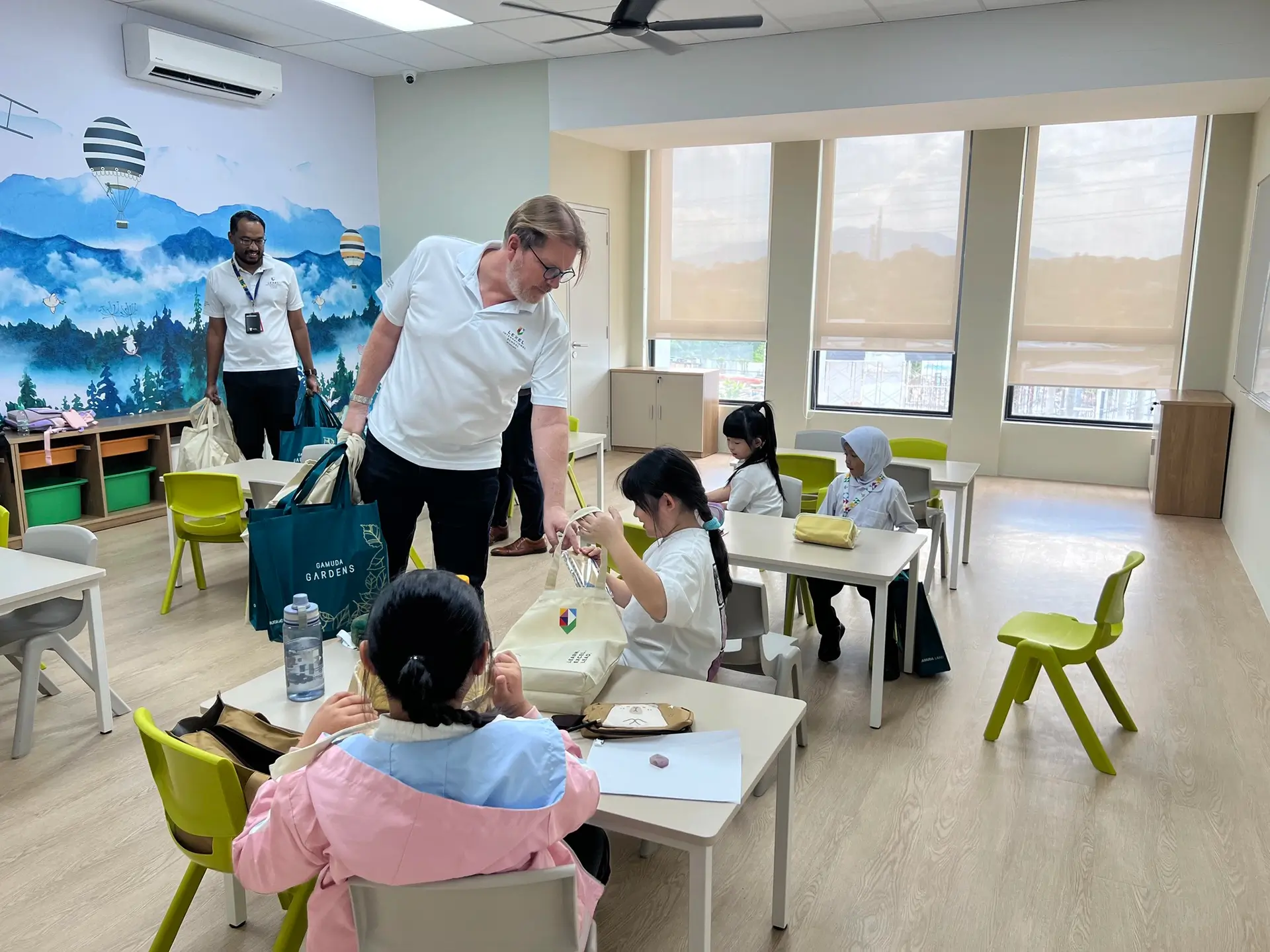
The modern campus features spacious classrooms, science and technology labs, a library, a multipurpose hall, and a canteen. Annual tuition ranges from about $2,800 USD for pre-K students to about $6,100 USD for secondary students.

Most importantly, by combining Taylor’s deep academic expertise, Gamuda Land’s development prowess, and IDEO’s innovative design Playbook, Lexel brings quality, affordable international education closer to home for Malaysian families. According to one parent, “My daughter looks forward to going to school every day … and has a lot of opportunities to express herself. On a scale of 1 to 10, I give [Lexel] an 11.” Based on the IDEO Playbook, a second flagship campus in the Southern Klang Valley, which is scheduled to open in September 2026, has already exceeded its year-one target enrollment expectations, with plans to continue extending the Lexel network to other parts of Malaysia and the wider Southeast Asian region in the near future.
Malaysia’s private international school sector has grown significantly as parents seek quality English-language education. However, high tuition fees and limited access to reputable schools are continual challenges for those in the emerging middle class.
115%
of Lexel’s student enrollment target reached during the launch year of its first campus
Year 1 enrollment target exceeded
at Lexel's second campus several months ahead of classes commencing
Delivering an unbiased news experience
Straight Arrow News transforms fact-based news consumption.
The American news industry has long been a competitive and saturated market. This has only intensified with the emergence of social media outlets and AI-generated news. Even so, SAN’s rigorously unbiased, fact-based reporting style and rich video storytelling had enabled the ambitious startup to rise above the media fray in just three short years.
With a strong foundation to build on, IDEO sought to further differentiate SAN’s cutting-edge news product and build deeper engagement with a wider audience through a new user experience.

Collaborating closely, IDEO and SAN began by delving deeply into media consumption habits. They met with early SAN superfans, news consumers who spent hours a day absorbing content from traditional outlets like Fox and USA Today, and those who looked to their Ring doorbell app or Reddit for news. The takeaways? People were tired of clickbait and clunky interfaces. They sought clear, factual news that was easily accessible, with additional context to help them interpret events and understand their significance. They craved more than one perspective on important topics, so stories felt balanced rather than polarized. They also valued having control over how they consumed news, so making it easy to switch between text, video, and audio formats was crucial.
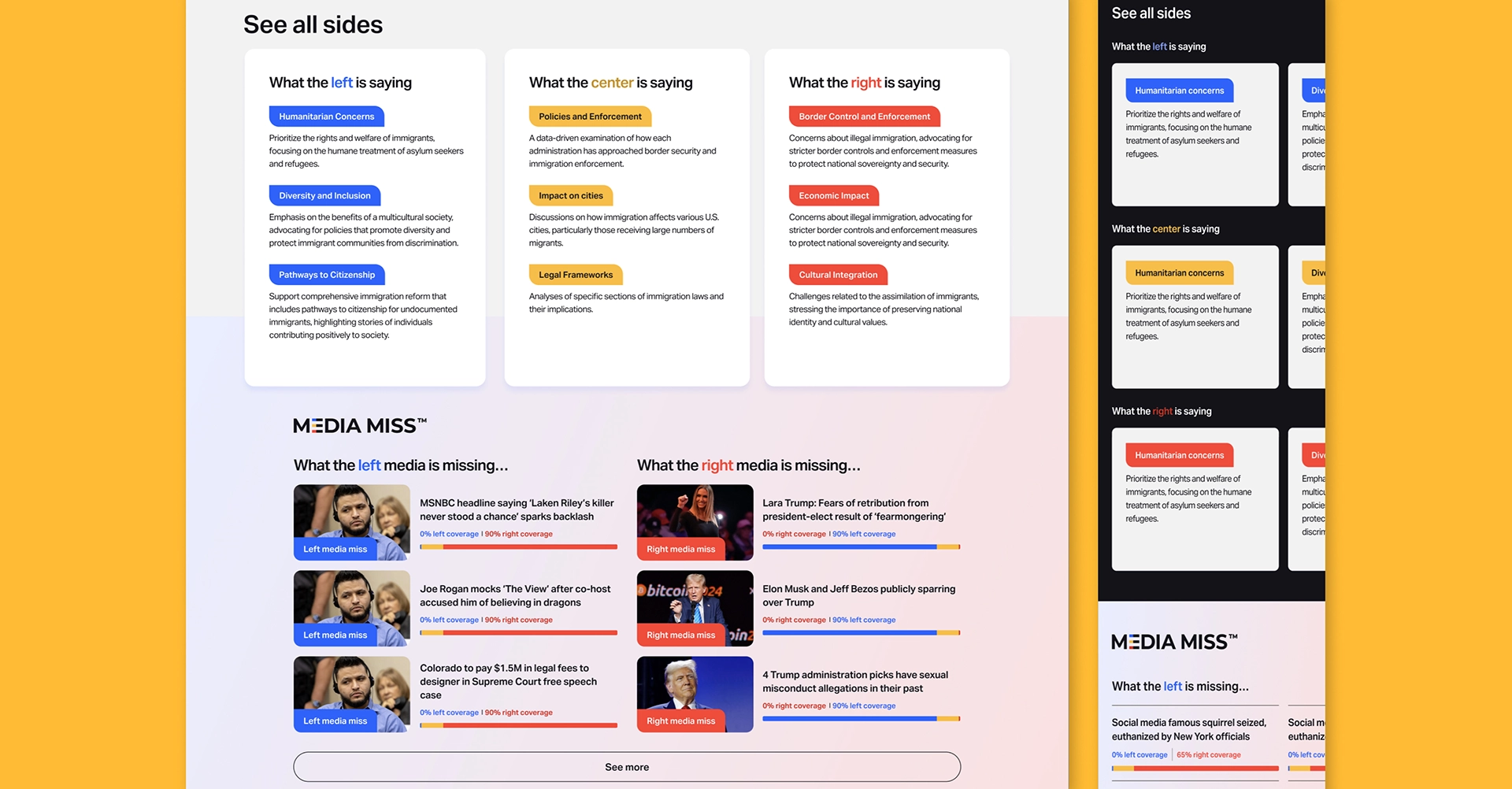
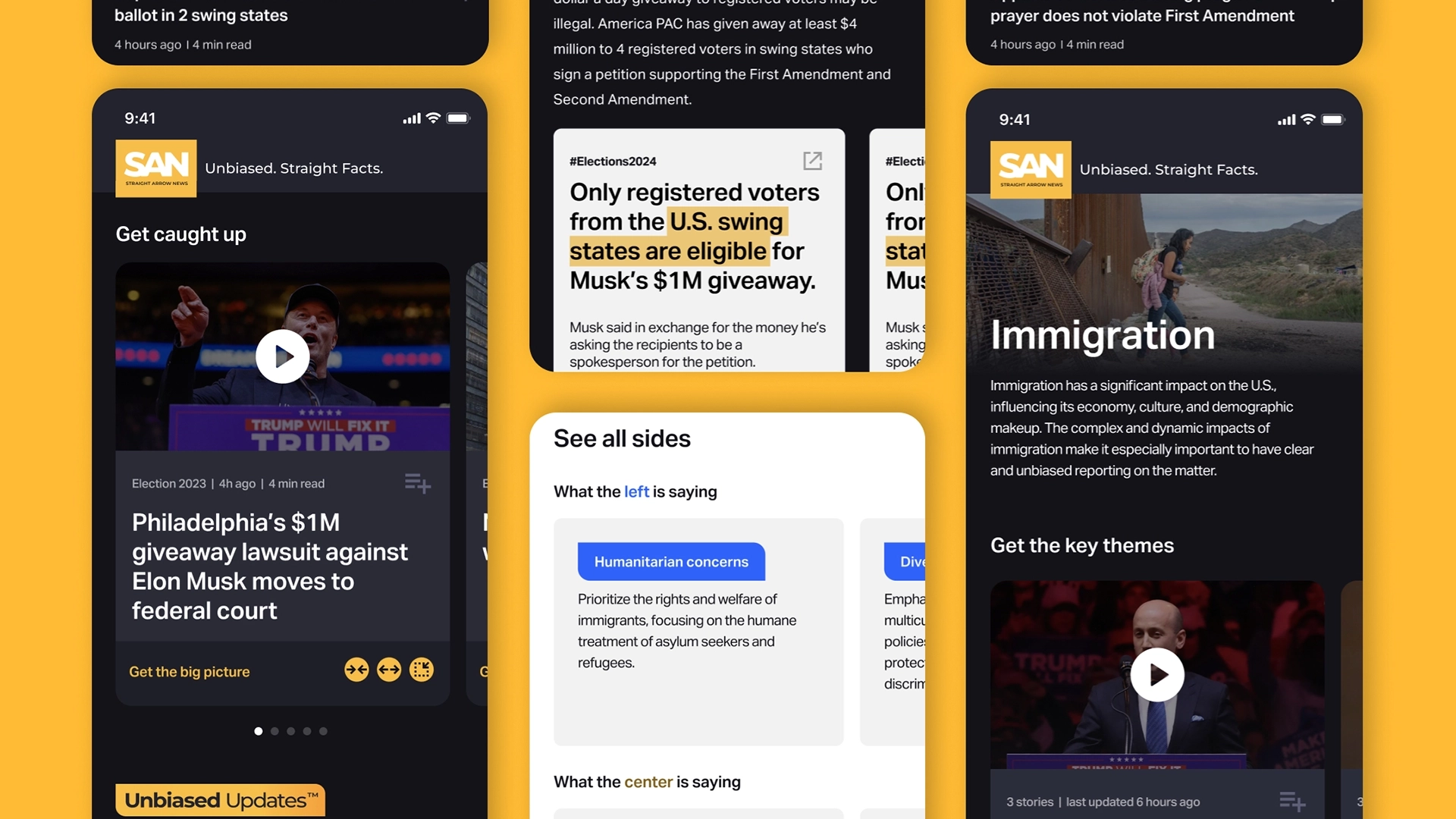
Together, IDEO and SAN created features across SAN’s website and app that put facts, trust, and transparency at the core of the product experience. Fact Cards distill key data points into clear, shareable units, while the Sources feature allows readers to trace information directly back to its original source. To make complex stories easier to grasp, Big Picture insights drill down into why events matter, surfacing underlying themes, historical parallels, differences in reporting, and common ground. The Why This Story Matters section provides readers with clear framing and sets the story within a broader context, while the Timeline illustrates how events unfold over days, months, or even years. An antidote to news polarization, See All Sides presents left, right, and center narratives for key topics side-by-side, and Media Landscape visualizations reveal how coverage varies across outlets. Finally, to ensure SAN fits seamlessly into readers’ daily lives, the redesigned Today Page is organized into three highly scannable sections: Latest News, Top Stories, and SAN Originals. The combined features create a balanced, clear, and non-polarizing news experience, making it easy for readers to delve deeper into the sources of their news.
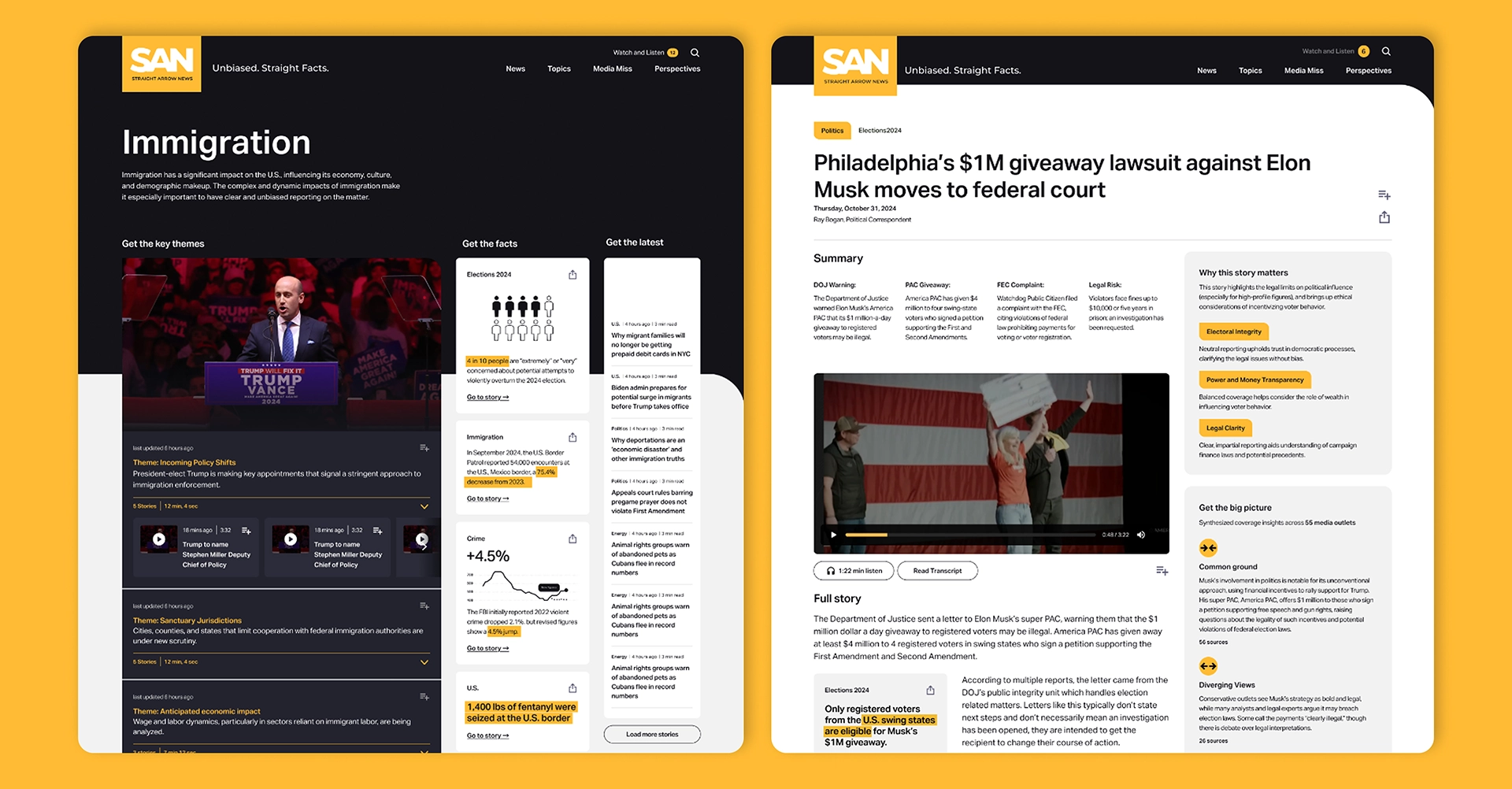
SAN now delivers a news experience as modern, dynamic, and trustworthy as its journalism. A month after its debut, the SAN app’s page views increased 1,170 percent year over year compared to June 2024, while active users rose 700 percent. Readers also give the updated mobile experience a 4.8 rating on the Apple App Store. “Our team is delivering reporting that’s both deeply factual and accessible,” said Derek Mead, SAN’s Chief Content Officer. “This redesign is pivotal to the direction journalism needs to take and the leadership role Straight Arrow News is taking on as we help guide the news industry into a brighter future.”
SAN built a loyal readership and gained recognition for its unbiased reporting. To expand and stand out from legacy media, SAN wanted a redesigned user experience that reflected its commitment to fact-based journalism.
1,170%
increase in app page views YoY
700%
increase in active users
4.8 rating
on the Apple App Store
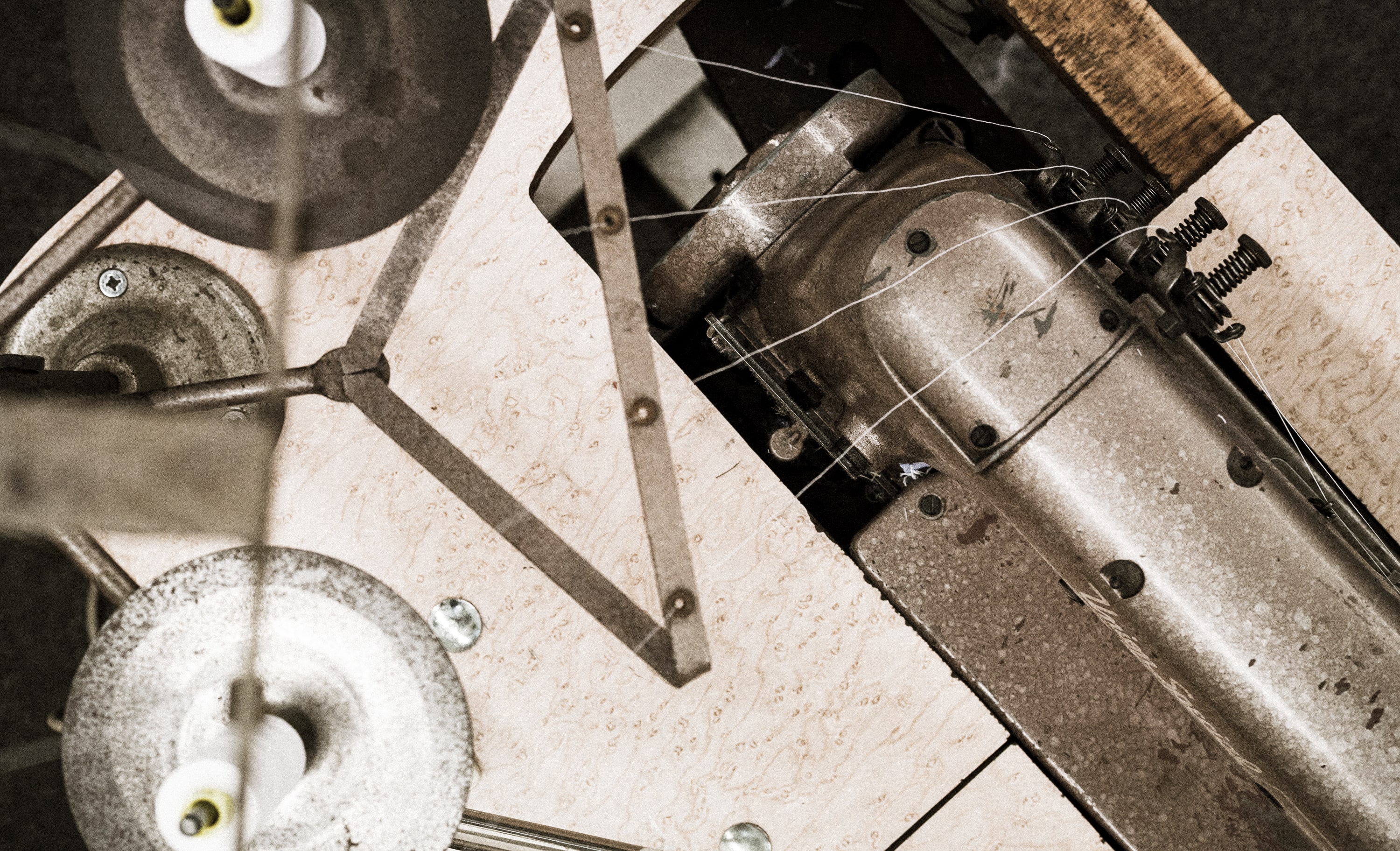
This Menswear Maker Works out of a 19th-Century London Workshop
A hidden, rain-damp shop houses S.E.H Kelly’s obsessively detailed clothing line
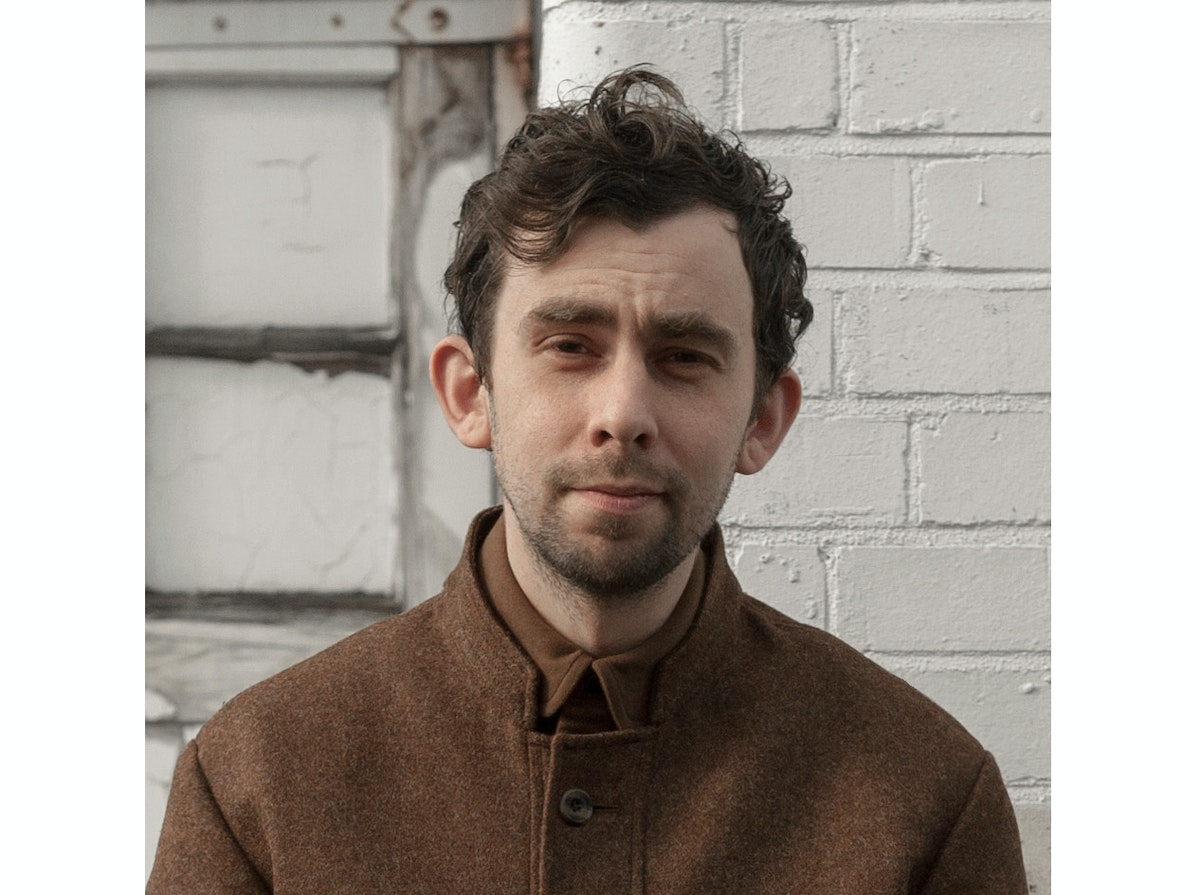
In one sentence, who are you?
I am Paul, and I run S.E.H Kelly, which is a menswear company based in London.
What do you do? How did you learn it?
We make clothes for men, every aspect of which—the cloth, the buttons, the buckles—is made by suppliers from around the British Isles. There are two of us at the company, and the other one, Sara, learned the trade in a tailoring house on London's Savile Row. I have a background in retail and design and other things, and together we cover most bases.
3 favorite possessions?
I don't really cherish possessions. I like my watch, which was a Christmas present, and—well, my bag is very much appreciated, being as it carries half my life without much complaint. My third favourite possession eludes me, sorry.

What does a typical work session look like?
Wake up, reply to emails, get train to workshop, pick up things, get train to a factory, drop off things, reply to emails, run around chasing up problems with cloth or patterns or making, eat, reply to emails, wrap and pack orders, print order documentation, walk to post office to send orders, walk back to factory, tie up loose ends, tidy up, get train home, eat, update or fix website, reply to emails, bed. Oh—and fit in some design if chance permits.
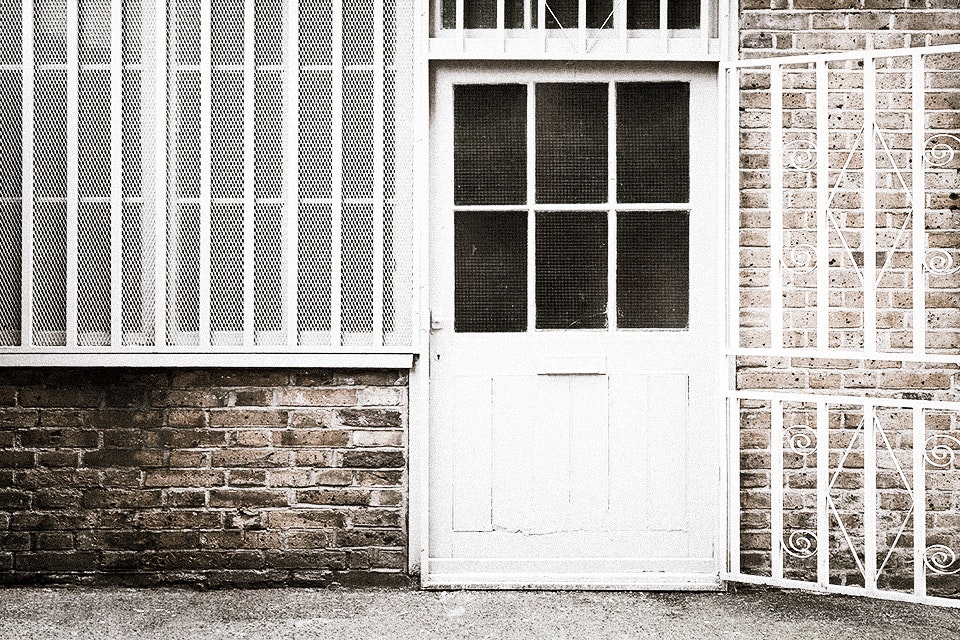
The workshop is our headquarters, and is first in a row of very small workers' units built at the end of the 1800s. It has a downstairs where we hang a selection of our garments and store various components such as buckles and horn buttons; and an upstairs, where we use a makeshift office and undertake the various more moribund duties of running a business.
It is a good little space—although rather dark—and is difficult to locate even when you're standing nearby. Visitors often remark, "Not easy to find, are you?" which I take as a compliment, since I've always enjoyed visiting places which are off the beaten track, or require some effort to discover. Always more fun, I think, and exciting, and hopefully brings a tinge more interest and character than a typical shopfront.
How do you get over creative block?
I don't force anything. If I struggle for a solution—be it a design solution or some written words—I leave it alone and do something else. I find the best ideas are those that at least appear to come naturally, even if they're the result of days or weeks of subconscious thinking.
What was the last item on your to do list?
"Remove collar from shirt for man in Norway."

How do you see the world in 2078?
Much more convergence of culture facilitated with cheaper travel, cheaper and more widely available communication technology, and hopefully much more mutual appreciation of one another rather than squabbling.
What’s your number one bucket list item?
Be absolutely, fully, and entirely satisfied, without caveat or "to-do," with every piece of our collection.

Who are you creative crushin’ on lately?
The game developer Ojiro Fumoto.
Shopping online often feels like work. To find one shirt, you have to slog through dozens of pages of boring photos of boring people wearing boring clothes. This isn't true of S.E.H Kelly. A visit online feels like a tour through their hidden, rain-damp workshop—from photos of button jars and bolts of cloth to the quirky ways that they describe their proper attire. I absolutely adore it. For this installment of Creative Crushes, S.E.H Kelly founder Paul Vincent shared some details about his label and design process.

5 Ways Mindfulness Can Make You a Better Designer
Incorporating mindfulness into the design process can help you feel more grounded and be more creative
I’m not alone in turning to mindfulness during the design process. Here’s how my colleagues and I use mindfulness to move from overwhelmed to optimistic, even during the toughest projects.
1. Adopt a beginner's mindset
When you're approaching a new design challenge, it’s easy to bring your biases and baggage to the table. But this is the moment to stay open: The root of creativity is embracing the millions of possibilities at your fingertips.
The “beginner's mindset” is a Buddhist principle we practice at IDEO. It means starting fresh, assuming nothing, and living the question. We see a lack of deep expertise in a new topic as an opportunity to get creative. Anyone can adopt a beginner’s mindset—all that’s required is openness and receptivity.

2. Practice radical acceptance
When I first learned about acceptance, it seemed to me it was just another word for complacency. As if to say, “That’s the way things are! Why bother trying to change them?” But on closer reflection, I realized that accepting the world as it is today requires a willingness to sit with uncomfortable truths and to see problems from all angles before jumping in to solve them.
By accepting a situation, you’re able to design a better approach from a place of non-resistance. At IDEO, we have a bias toward action: We make lots of tangible designs as a way of imagining the future. But action can be so much more impactful when it’s grounded in reality and driven by clear intentions.
3. Drop your ego
Mindfulness teaches us that the ego—the part of us that demands to be “right”—is not our true self. Our true self is found in the in-between moments when we’re able to just be—the times when we take in what’s around us, quiet our minds, and open ourselves up to feedback from the people we’re designing for.
One way we try to drop our egos at IDEO is by creating “sacrificial concepts”— prototypes that we design but ultimately cast aside in service of learning. Critiquing a sacrificial concept is an invitation for people to share their reactions without hurting anyone else’s feelings.
I sometimes suffer from the “disease to please,” wanting people to like everything I’ve made. But as I’ve leaned into mindfulness, I’ve realized that my ego can slow me down, and I've learned how to set it aside.
4. Listen deeply
Have you ever noticed during a conversation that the person you’re talking to is mimicking your posture? If you put your hands on the table, so do they; if you sit up straight, they follow suit. In conversation, people are often looking for an opening to make their next point, rather than paying attention to what’s being said. But if you focus on your own replies, you miss out on the words, tone, and body language of the people around you.
In The Power of Now, Eckhart Tolle says that when you practice judgement-free listening, you’re giving another person the power of your presence. At IDEO, every project starts with listening. Our human-centered, interdisciplinary design approach means that the whole team learns empathy skills and joins in the design research process. Listening elevates the voices of the people we’re designing for and ensures that their dreams and worries are our starting point.

5. Meditate in order to create
One of the biggest misconceptions about creativity is that creative people always wake up feeling compelled to create. The truth is that this compulsion is often blocked by insecurities or external pressures. In The Untethered Soul, Michael Singer describes these as “samskaras,” or energy blockages, which can be cleared by acknowledging them and focusing on your breathing. Tolle suggests that when you want to be creative, you should go back and forth between breathing and the task at hand every few minutes. Only when you’re clear-headed can you make.
At IDEO, we have a meditation group that meets every day, and any designer is welcome to be in the presence of others and connect inward. This ritual, and the support of the wider IDEO community, are wonderful reminders that everyone still has room to learn and improve.
By making mindfulness a regular part of my design practice, I’ve not only become a better designer, but hopefully a kinder, more patient, and more empathetic person. It’s been a journey well worth taking.
Illustrations by Cassandra Fountaine
When I start to feel overwhelmed at work, with too much information to take in and too little time to process it all, I rely on mindfulness. Dr. Jon Kabat-Zinn, one of the fathers of modern mindfulness, describes the practice as “paying attention on purpose, in the present moment, and non-judgmentally.” It’s all about tuning into your sense of inner calm so you can be a better conduit for new insights and solutions.
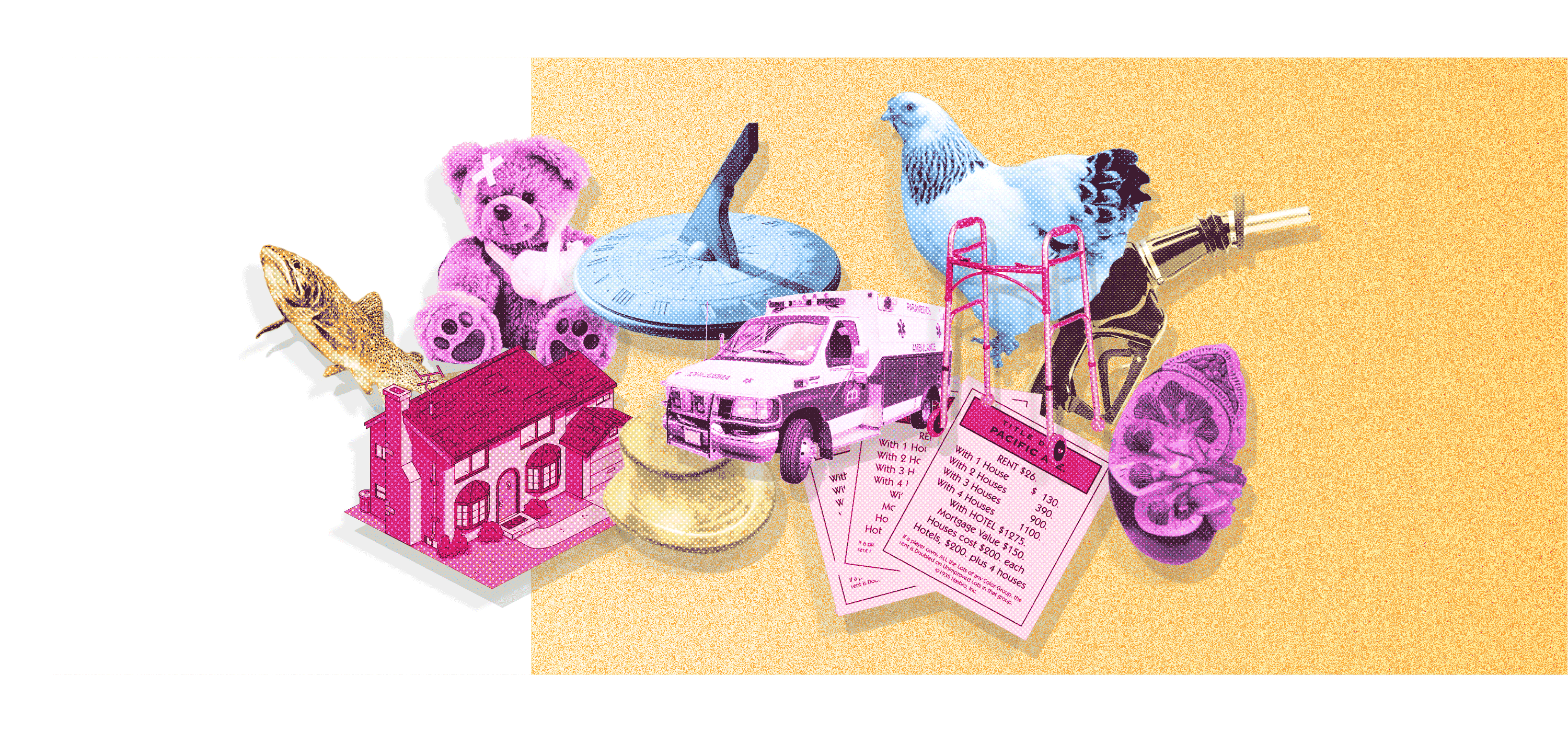
Design your very own non-partisan voting guide
One IDEO alum’s plan to to increase voter engagement
A San Franciscan, Jimmy worried that California’s blue state status might make residents apathetic about voting, even though there were important state and local issues on the ballot that were hardly being covered. “Luckily, there was a proposition requiring porn stars to wear condoms,” he says. “I felt I could help make the local ballot a little more interesting.”
Jimmy created a site called ballot.fyi, an online voter guide dedicated to explaining the issues in a nonpartisan way. To his surprise, it reached 125,000 people in 24 hours, and a million over the course of the election.
For the last year, he and his cofounder Yvonne Leow have been working on the next iteration, By The Bay. Thanks to a grant from the Knight Foundation, they’re helping inform younger voters. “We’re committed to turning residents into citizens by educating them on local issues and elections,” he says.
We chatted with Jimmy about how he and Yvonne designed the guide, what he’s working on for November, and how you can replicate the process.
1. Your guide looks a lot different from the boring, I mean, um, more basic, civic materials we’re used to seeing. What can design bring to a voter guide?
By putting design first, and pairing it with a casual voice, we’re hoping we can make topics like legislation engaging. As consumers, we expect a user experience to have thought behind it, but that’s not something we’re used to seeing in voter guides. We want to make this information digestible, first by making the guide as beautiful and usable as possible, and second by using approachable language.
We assume the reader is smart, but isn’t yet familiar with all the wonky terms in politics, like general obligation bond. Other guides tell you how to vote. We want people to understand what they’re voting on and make their own decision.

Proposition 7: Makes permanent daylight savings, meaning we don't change the clock twice a year.
2. What was your process, and how did you avoid partisanship?
Like any good journalist, we’re first focused on understanding as much as possible, from as many sides as possible. This means reading all relevant materials and talking to people in the orbit of each issue.
Local issues are less polarizing and ideological than national politics, so avoiding bias is easier than you might think. After we’ve done all the research, my cofounder and I are often more conflicted on where we stand on the issues personally.
We design the information to make it easy to process. If it makes sense to visualize something, we’ll create a graphic rather than explaining it with words. After I published ballot.fyi and it blew up, I received many emails suggesting corrections. As stressful as it was, I took it as an opportunity to debate the sender and absorb their knowledge and perspective.
3. What did you want to give voters in your community that wasn't already out there?
In the past, I’ve left a voting booth feeling ashamed that I was sometimes guessing on how to vote. I consider myself well-educated, but I needed to be a better educated citizen. I suspect a lot of people feel that way.
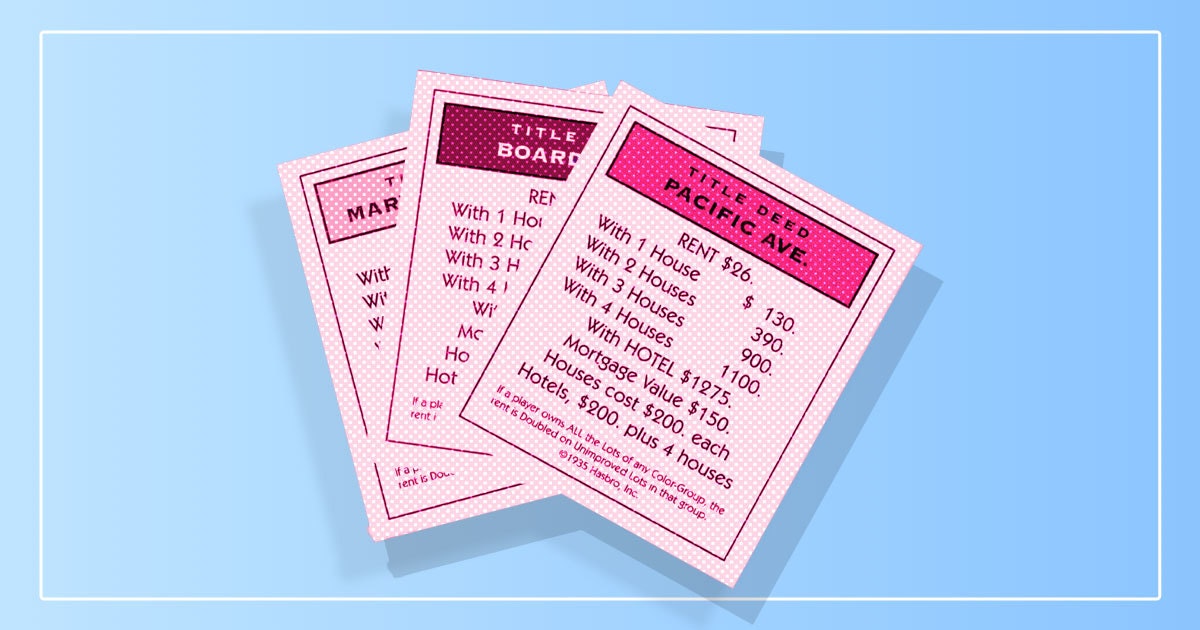
Proposition 10: Perhaps one of the most consequential initiatives, it would allow cities to enact rent control laws again. There's a huge fight from all sides about whether this is a good idea.
4. What design constraints did you need to think about?
Brevity is our primary constraint, but we also do our best to make everything mobile-friendly, because 60 percent of people will visit our site on their phone. Even if they don’t read through an entire explainer, we write our content so that people can understand both sides within a few sentences.
Above all else, we design for the busy professional, who is educated and well-intentioned, but may not have time to fully research everything themselves. We try to get to the point as quickly as possible, make navigation as easy as possible, and have fun with the content.
We picture our users as three personas: One is the diligent voter who spends hours on their absentee ballot well before election day rolls around. Another is the voter who knows they have to vote on Tuesday, so they’re going to spend some time looking into it the weekend before. Then there’s the oh-shit voter who, on election day, doesn’t want to feel stupid and researches as much as they can at work, then runs to the polls right before they close.
We actually see the most traffic the day before the election and the day of the election.
5. What was the hardest part about building it, and how long did it take? (San Francisco is a wacky place with a lot to vote on, so I would imagine a while?)
The hardest part of ballot.fyi was maintaining accurate and up-to-date information. It was just me, and it’s all manual, so I was debating people via email, researching as much as I could, and trying to wordsmith it all to be as succinct and understandable as possible.
Ballot.fyi took about three months, from concept to election day—roughly a month of design, a month of coding and design, and a month of maintenance and advertising. Knowing 20,000-30,000 people were seeing my site every day made October 2016 the most stressful and exhilarating month of my life.

Proposition 12: Mandates a minimum square footage for animals sold for meat, but there's a clause in there that makes all eggs in California cage-free (like literally, not just in minimum size) by 2022.
6. What advice would you give people in other communities about creating their own voter guide?
I’d recommend using whatever tool/medium you’re most comfortable using. You don’t have to build a whole website.
We've seen people create voter guides with Google Slides or Sheets, or simply put together a blog on Squarespace. I've also seen long FB posts, or PDFs shared around social media. The week before the election, people will be looking for the information, and different formats find different audiences. I have yet to see someone make a comprehensive and compelling YouTube series—I’d love to see that.
My best advice: Focus on a specific part of the ballot, and do it well. Don’t worry about reaching a wide audience. Write it for the people you know: your close friends, coworkers, or club soccer team. Research your way to nonpartisanship. In terms of resources, Ballotpedia is dense but can be a good starting place. When in doubt, you can also call your city hall or state government and request information. Having friends that can translate legalese is also useful.
7. What kind of feedback have you received, and what are you planning for the general election in November?
Most of our feedback is positive. I think most people want to get more involved in local politics and understand more, but people are busy and other things take priority.
For November, we’re interviewing the Supervisor candidates in San Francisco and posting the videos. We’re hoping it’s an easy way for residents to quickly get a sense of who’s running and what they stand for. We’re also beefing up a feature we released in June—the ability to take notes on our webpages and then share that with your friends via a private link. We’ve noticed that people rely on their friends to vote, and friends typically have one or two people who are their go-to political person. We want to empower those individuals and compile the research and summarize for them, so they can simply add their commentary and recommendations. By The Bay does not give recommendations, but we encourage individuals to—it helps get the vote out.
As the 2016 election approached, and the vitriol around the presidential race grew, IDEO alum and engineer Jimmy Chion wanted to do something to keep voters engaged.
3 tips to help you prototype a service
Prototyping is an integral part of design, but what does the process look like for experiences and human interactions?
A prototype of a physical product is easy to imagine, but the process of leaving the hospital after giving birth, or having a new kind of conversation between a traveler and a flight attendant, is not easily built out of cardboard and foam core.
In my years at IDEO—and at companies like LeapFrog and Virgin Entertainment Group—I’ve seen service prototypes come in many shapes and sizes, but I’ve found the most successful ones are based on real customer needs and co-created with the people responsible for delivering the service. Whether you’re building storyboards and sketches, simulated interactions, or mocked-up physical spaces, these three tips should give you a little inspiration to help you create your own.
1. Design only the details that matter
Keep in mind that with any prototype—service design included—you’re looking to spend a little (effort and money) to learn a lot. This is especially relevant in service prototypes, which can change over time, and often involve components like people, space, and physical and digital objects. Figure out what elements of your service are necessary to show potential users what their experience would actually feel like, and eliminate the rest. For instance, if you want people to feel welcomed to an experience, you might spend more time designing the human-to-human interactions, and less time figuring out the design of the space where the interactions take place. If you want people to feel efficiently handled during a check-in moment, you might spend more time designing the digital interface for the process, and less time designing the artifacts and documents that are sprinkled throughout.
In a project with Kaiser, we created a visual checklist that nurses could use to help parents understand all the steps that needed to happen before they could take their babies home. To make sure that the new tool wouldn’t add to parents’ confusion, we hung paper prototypes in some rooms, and had nurses mark the number of calls they got from each patient. It turned out, parents who had a prototype had 60 percent fewer questions than parents who didn’t. And we were able to pick up all those insights without even worrying about what the space looked like—just a simple prototype.
2. Factor in the before and after
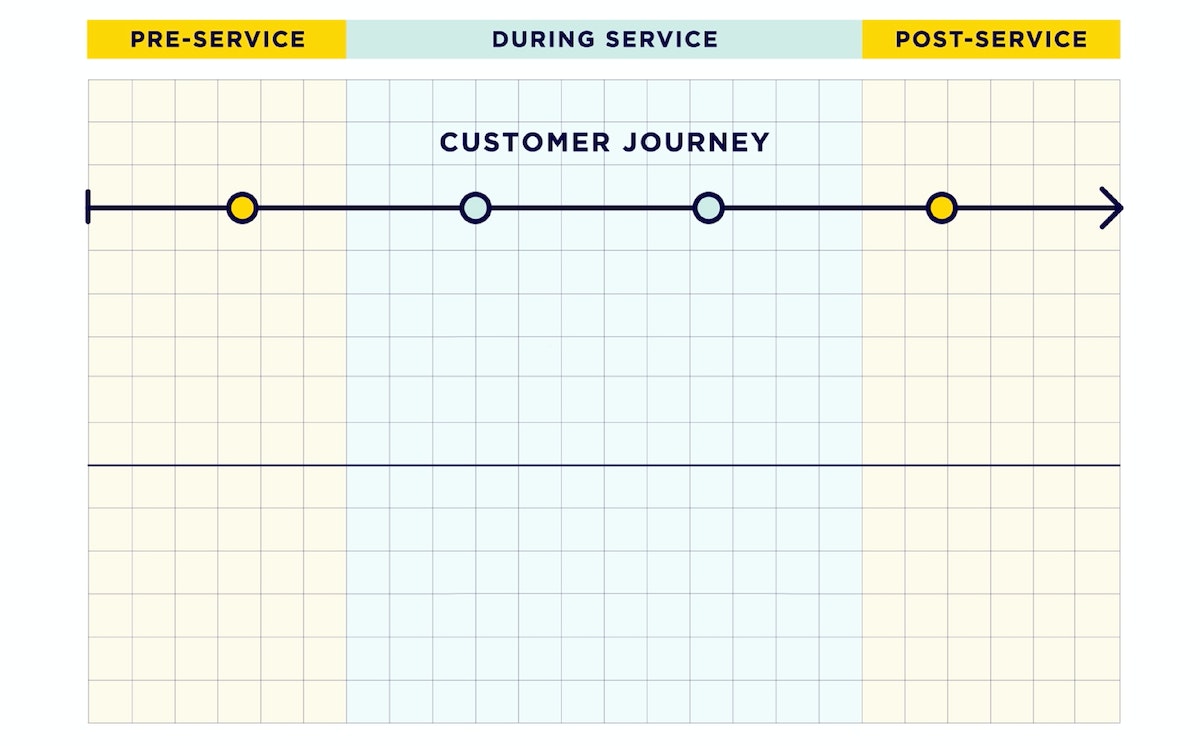
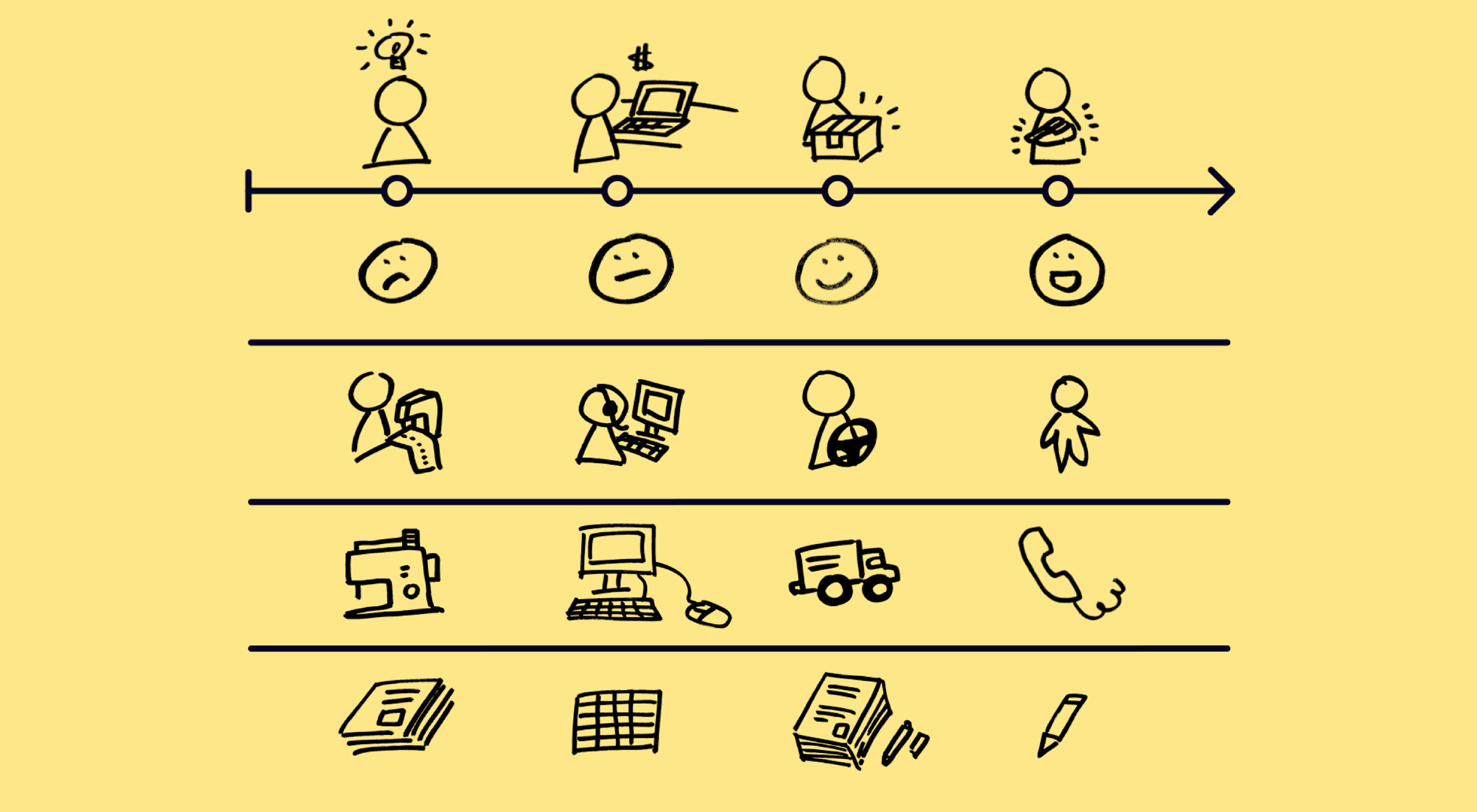
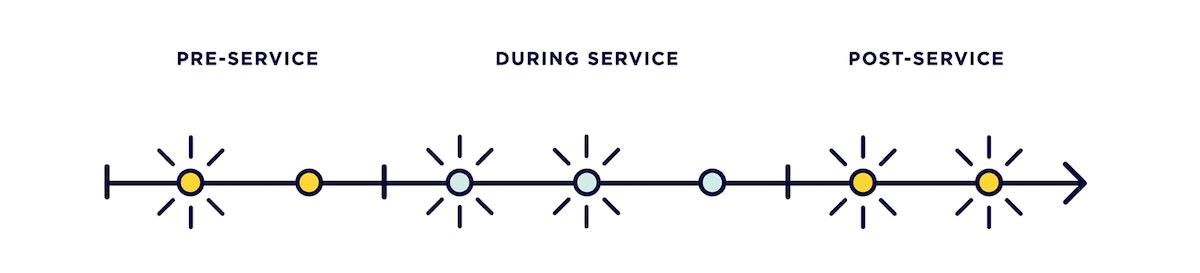
When designing a service moment, consider the user experience not just during the moment, but also before and after. Think about a simple moment, for example checking into a hotel. What happens before? Are guests arriving travel weary and jetlagged? Are they coming to celebrate their honeymoon? As a service provider, it’s important to remember that you’re not the only thing on the user’s mind, they’re processing this moment along with everything else going on in their day. After check in, could they easily find their room and was it clean? Were they able to quickly transition into desired activities whether to celebrate, get pampered, and relax, or get to an event like a conference?
In a project with the hotel chain Crowne Plaza, our goal was to design a lobby space that would work for all business travelers. We created a concept that would include spaces for heads-down time, places for group work, a grab-and-go menu of healthy items, and a staff member who could help with business needs. To test it, we set up a network of sensors and cameras to track traffic flow through the different spaces, and which were used most, and when. With these metrics, and interview answers from guests before and after seeing the prototypes, we were able to gauge how well we were meeting traveler needs at every stage of their journey.
3. Involve users and employees
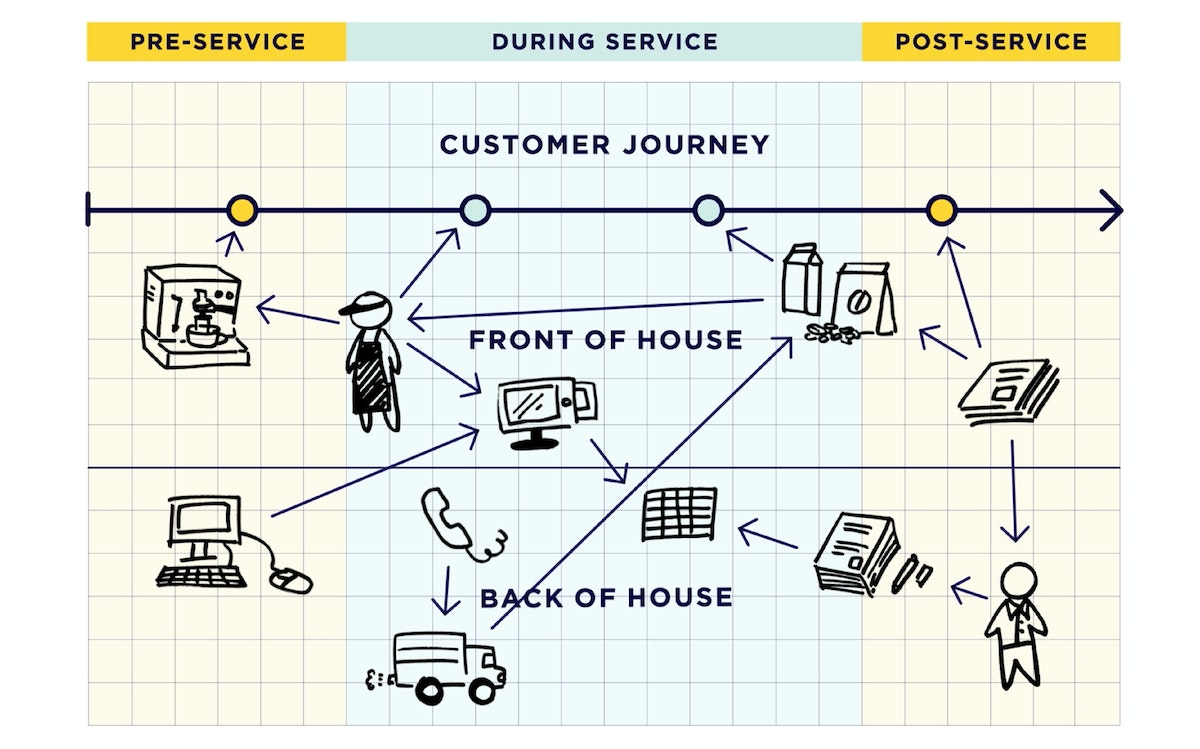
Prototyping helps us pick apart our assumptions, see where we’ve made progress, and where we’ve failed. Designing services is a process that must be done collaboratively, particularly with those who are ultimately responsible for delivering the service to customers. That ensures that you have the right experience and depth to inform new ideas. And it helps you get crucial buy-in when you’re promoting the future vision of your service.
So who should you invite to create and test your prototypes? Think about employees, end users, even people moving around behind the scenes, and figure out how they should show up in your prototypes. Do you need a real nurse chatting with a real patient? An actual bellman who can try out a new check in process with a million-miler business traveler? What about the executive who is ultimately in charge of the project?
In a project with Lufthansa, we were looking to redesign business class to keep up with modern travelers. Once we homed in on the experience we wanted to create, we built a 1:1 scale mockup of a plane with some foam core and business class seats, then invited real travelers and crew to test it out. Not only could they report on the experience from both sides, execs could check out the experience, too, and sign off on our new ideas.
The best advice for service design prototyping, though, is the same as any other kind of design work: Do it early, do it often, and keep iterating toward the right solution.
Prototyping is an integral part of design, but when it comes to experiences and human interaction, it can be hard to figure out exactly how to do it.
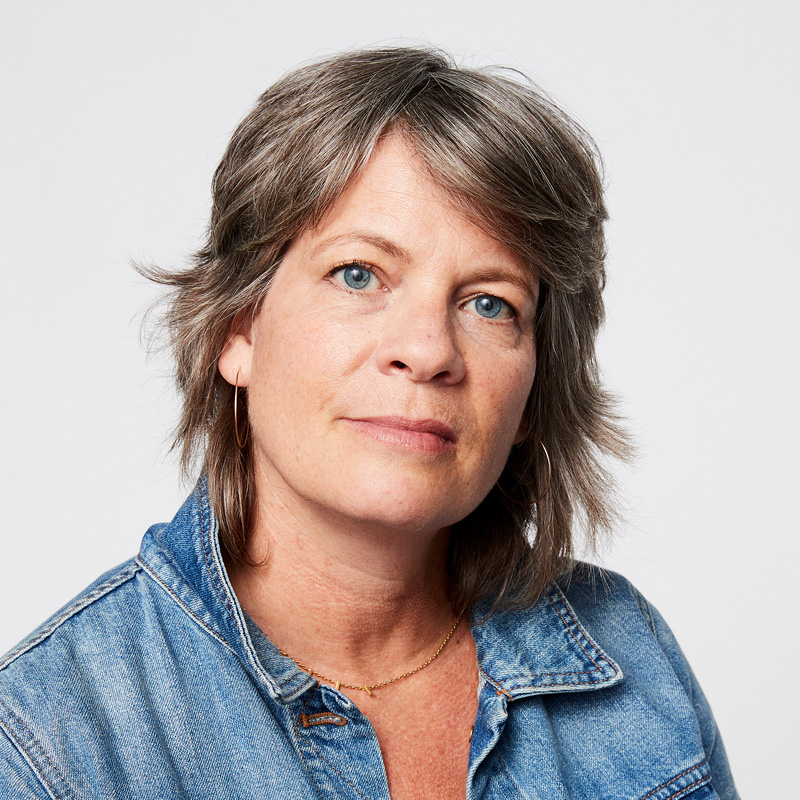
Vivian Barad
I work with the food & beverage and CPG industry to find growth opportunities that create climate-positive impact in the world.
As an IDEO Partner and Executive Director, I work with the food & beverage and CPG industry to find growth opportunities that create climate-positive impact in the world. My work includes launching new offers, creating strategic visions, and building innovation capabilities. I leverage my industrial design training and creativity to find growth opportunities for clients like Suntory, Alicorp, San Francisco Unified School District, Northern Illinois Food Bank, and Plum Organics.
I am an expert in understanding people’s deeply-rooted food behaviors and food systems challenges like food insecurity and food waste.
I have spoken on these topics and more at TedX, SXSW, and Feeding America.
I am a graduate of California College of the Arts, with a BFA in Industrial Design. I received a BA in English from the University of Michigan, Ann Arbor, and worked as a New York-based print and online journalist. In my free time, I enjoy canning tomatoes and family hikes.
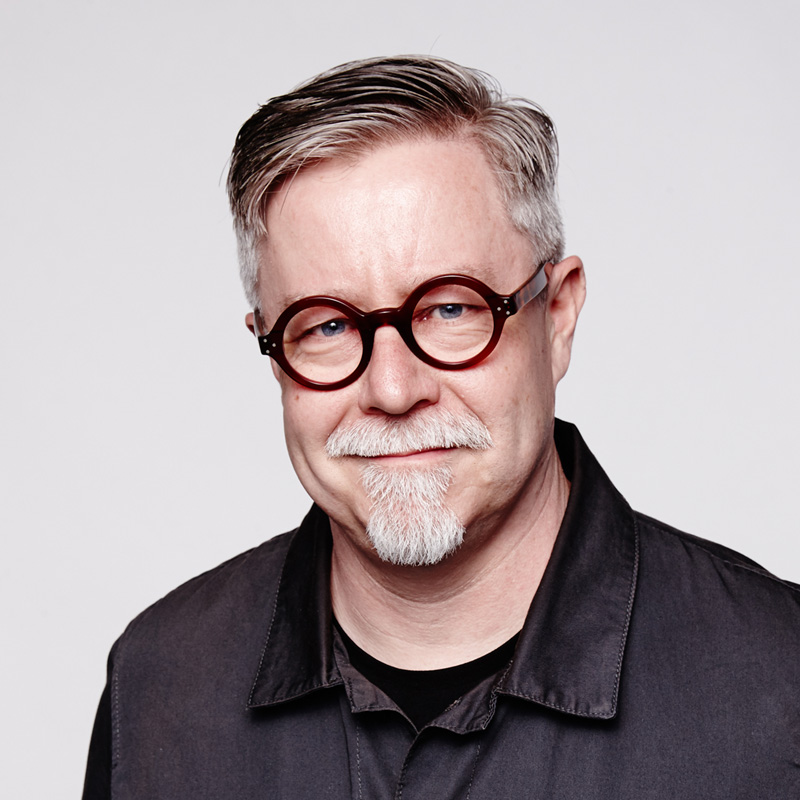
Tim Brown
Through writing, speaking and advising I try to champion the interdisciplinary, multi-faceted nature of design.
This is the question I have consistently asked throughout my design career. Today, that takes me to some edges of IDEO’s design practice that include Climate Era design, open and collective systems, designing strategy, and creative leadership.
Through writing, speaking, and advising, I try to champion the interdisciplinary, multi-faceted nature of design.
I am proud of our progress in applying design thinking to topics such as service design, system design and strategy, and across sectors such as education, health, government, technology, the social sector, and business. I frequently speak about the value of design thinking, creative leadership, and innovation to business leaders and designers around the world, and have participated in the World Economic Forum in Davos, Switzerland.
My talks "Serious Play" and "Change by Design" appear on TED.com. My book on how design thinking transforms organizations, Change by Design, was released by Harper Business in September 2009, and revised and updated in 2019.

Steve Schwall
I work with creative leaders and executives to design new offerings, drive business growth, and transform their culture through the power of design.
I work with creative leaders and executives to design new offerings, drive business growth, and transform their culture through the power of design. After almost two decades of working with clients like Ford, Samsung, and Walgreens, I believe that successful change doesn't come from a “big idea,” but rather teams looking at problems from new perspectives, challenging deeply held assumptions, and working together in new ways.
An engineer and designer at heart, I am passionate about designing tangible solutions that address critical challenges and change how people work, but my happiest times at IDEO are when I’m building a prototype in our shop.
Prior to joining IDEO, I played with little red wagons as a product design engineer at Radio Flyer. I hold a B.S. in Mechanical Engineering and a B.A. in Industrial Design from the University of Notre Dame.
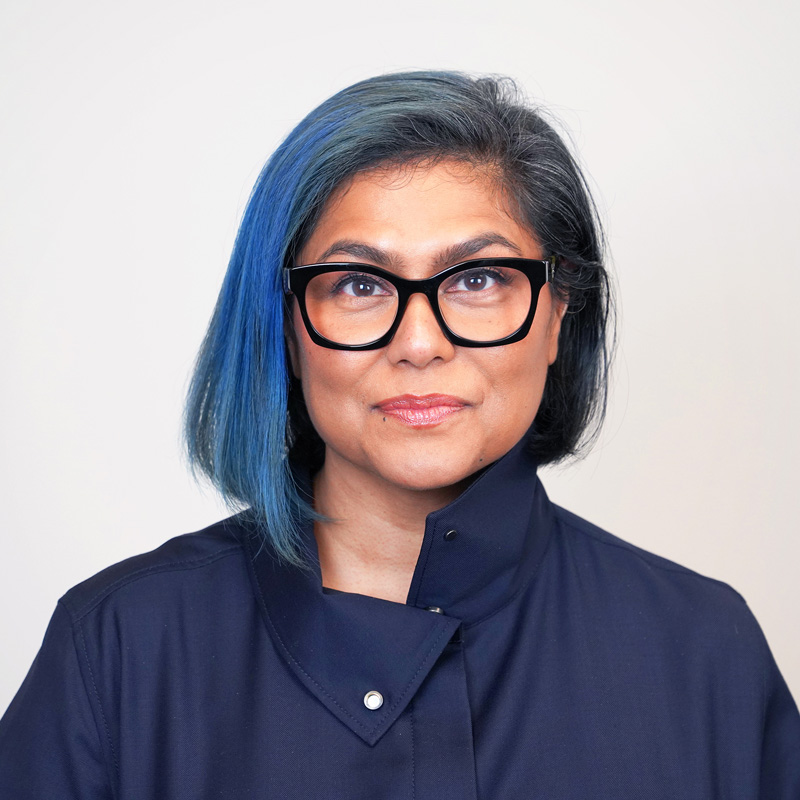
Mina Seetharaman
I’m focused on finding new, customer-focused, tech-supported ways to deliver IDEO’s long-standing value proposition.
I lead strategy for IDEO’s learning and media and partnership initiatives, including IDEO U, the learning arm of IDEO where people can learn the skills of design thinking and mindsets of creative leadership. In my role, I’m focused on finding new, customer-focused, tech-supported ways to deliver IDEO’s long-standing value proposition to more people around the world.
My specialty is helping iconic brands undergo major transformations and become competitive market leaders.
Throughout my career, I’ve led strategy and operations at respected media and content companies, including The New York Times, The Economist, and OgilvyOne. I also have an extensive background in product management and innovation from my time at Gartner, Inc, where I served as Group Vice President in Global Product Management. I am experienced in launching new product offers, developing and leading teams, and driving cultural and operational change. I hold a master’s degree in Journalism from New York University and I speak six languages.

How to use AI as an editor, not a writer
Ed White shares how he uses AI as an editor—not a writer—to sharpen storytelling, rehearse ideas, and preserve the productive friction that makes creative work better.
Ed White has a rule he's tested on his own writing: hold yourself as the writer, and let AI be your editor. Ed is a Senior Design Director at IDEO's London studio, where he co-leads the firm's AI portfolio across Europe. Before IDEO, he spent 12 years as a writer and editor at the Financial Times, Wired, and Contagious. So when he talks about when to use AI for storytelling and when not to, it comes from two decades of crafting his storytelling skills.
In this episode, Mina Seetharaman talks with Ed about two specific tools he uses to keep AI in an editor's seat: a "roasting agent" prompted to critique his drafts without any sugarcoating, and a simulated audience he rehearses pitches on before the real thing. They also get into what Ed is hearing from design leaders at Anthropic, Lovable, Shopify, and Google Creative Lab about how creative work is changing, and why he thinks the friction of writing something yourself is worth protecting rather than automating away.

Building a personal AI for the messiness of life: Sida Li
Becca Carroll talks with Cue co-founder Sida Li about designing a personal AI for the messiness of everyday life—not just work. They explore how Sida stays anchored to human needs while navigating fast-changing technology, product tradeoffs, business-model experimentation, and the realities of building an AI company today.
Most AI products today are built for work—a space with clear problems and established systems. One founder noticed a gap: personal life is messier, harder to systematize, and mostly left behind by the AI boom. So she built Cue, a personal AI that lives inside iMessage and group chats, to go where the other tools haven't.
In this episode, Becca Carroll, IDEO's Chief Strategy Officer, talks with Sida Li, co-founder and CEO of Shared Context Lab, about staying anchored to a human need while the technology around her keeps changing shape, why she treats her business model with the same rigor she'd bring to a product, and what it feels like to build a company at this particular, disorienting moment in AI.
The conversation also gets into how Sida makes design decisions: the language Cue uses to describe itself, the tradeoffs behind building inside iMessage instead of a new app, and a real story about a business idea that didn’t pan out.
This is the second in a two-part series profiling founders from IDEO's Startups-in-Residence program. The first conversation is with Johannes Seemann, founder of Sooner, on designing GenAI for the emotional side of money.

Designing GenAI for the emotional side of money: Johannes Seemann
Designing financial tools around the feelings that shape money decisions.
Most personal financial tools are built to run the numbers and optimize towards a budget. While that works for some, most people experience money as a lived relationship that does not neatly fit into a spreadsheet. Johannes Seemann and Becca Carroll discuss why money is emotional before it is mathematical, and what a human-centered approach to building a generative AI financial product looks like in practice.

The curious leader's edge in uncertainty: Scott Shigeoka
How genuine curiosity helps leaders navigate uncertainty with greater confidence.
Mina Seetharaman talks with Scott Shigeoka, author of Seek and Head of Curiosity Cultivation at the Eames Institute, about what distinguishes genuinely curious leadership from performative curiosity, how power dynamics shape curiosity, and why practicing curiosity can restore energy rather than drain it.
Looks like you might be in search of something very specific?
Or reset the filters above and try another angle.
Here’s some random inspiration

Podcasts about creative leadership

Articles about the power of prototyping