
A new employment venture to increase customer engagement and financial security
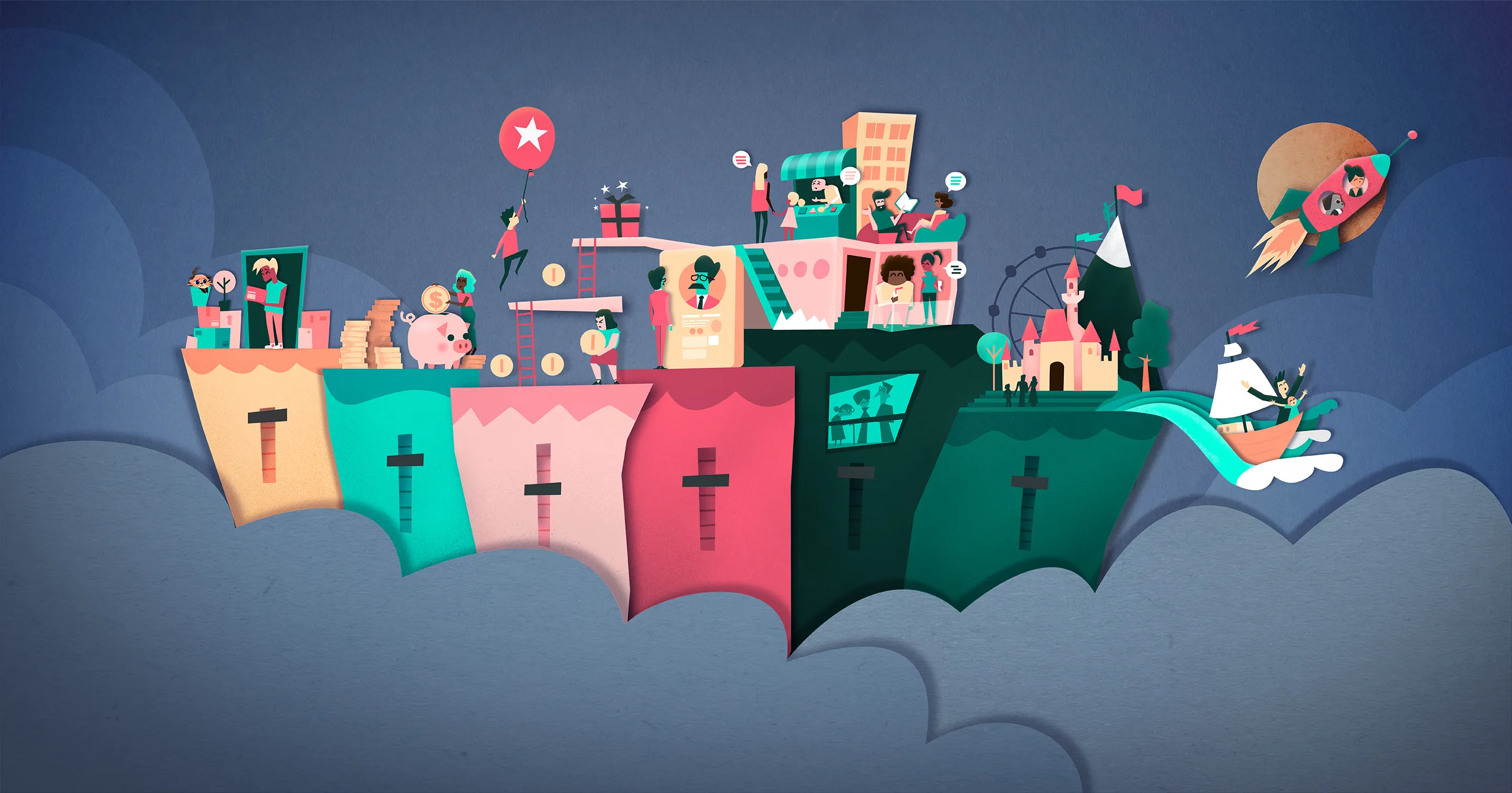
Introducing Moonrise, a digital platform that helps companies hire untapped talent and workers make ends meet.
More than half of Americans don’t have the cash to cover a $400 emergency expense like a car repair or trip to the hospital. Taking that reality to heart, American Family Insurance, a Fortune 500 company that offers auto, home, business, and life insurance, was seeking a way to make an impact by helping people earn and protect—not just insure—the things they value.
American Family approached IDEO with an ambitious goal: to innovate in a way that would help working families—many of them existing American Family customers—who need a financial cushion in case of the unexpected. This new mission fell in line with American Family’s overall orientation toward increased social responsibility, including committing to a liveable wage for all employees, helping with student loans, and providing college scholarships and tuition reimbursement for employees’ children.
In early discussions, American Family thought people might need budgeting tools, but from the very first research interview, a different urgent need emerged: people needed a way to shore up their savings enough to protect against unforeseen needs. This same story came from numerous places. In Tennessee, the IDEO design team sat in the kitchen of a working single mom of four, who explained how her lifestyle was built around her extremely constrained budget. She couldn’t afford childcare, so she’d organized her home to allow her 11-year-old to watch the younger kids: partitioned snacks, timers on the TV, chore charts on the fridge. She managed her budget meticulously, it was clear, and she didn’t need new financial tools. What she really needed, she said, was extra income cushions so a surprise expense like a doctor’s visit or stretch investment like a kid’s basketball uniform wouldn't derail her plans. Like many of the people the team visited across the country, she didn't want to take on debt; she wanted extra work and the dignity and peace of mind that comes with it.
Could we, the team wondered, offer people who already have jobs the extra hours and income they need in a way that reduces, rather than exacerbates, the stress they already face? Would employers get on board?
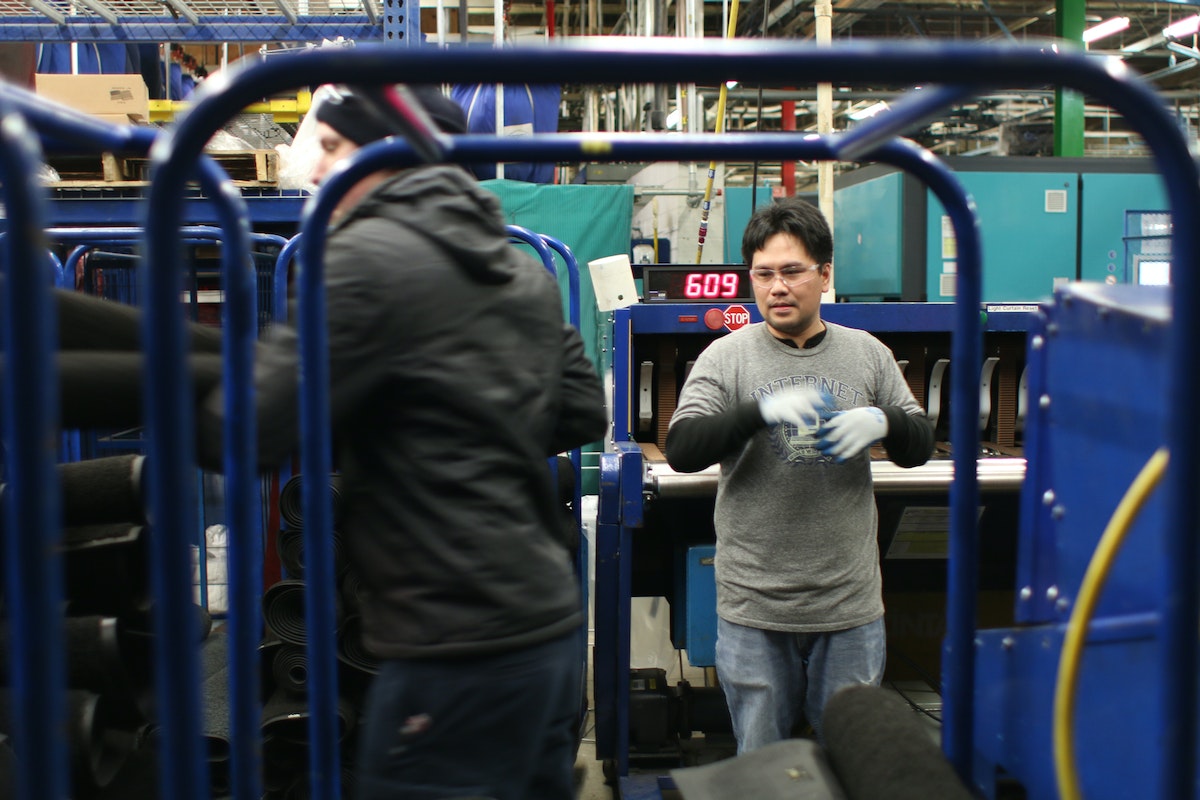
The short answer was yes. Today’s businesses depend on on-demand work, including seasonal warehouse and retail shifts. Typically, companies look to temp agencies whose model is built on staffing with the goal of permanent placement. Moonrise enables companies to tap into a workforce that's already employed, allowing them the benefits of passive recruiting (reliability, consistency), but for short term work.
Knowing innovation was the path to growth, American Family took a chance by embracing a radically new brief: Create a service to help families living on the edge bridge the gap between the size of their paychecks and the size of their dreams. The result was a new business venture called Moonrise.
When customers told us that having an easy way to earn extra money could improve their lives, we were compelled to pursue a solution. Moonrise is a business with a human-centered mission. We’re proud it’s part of our American Family.
Jack Salzwedel, Chairman & CEO, American Family Insurance
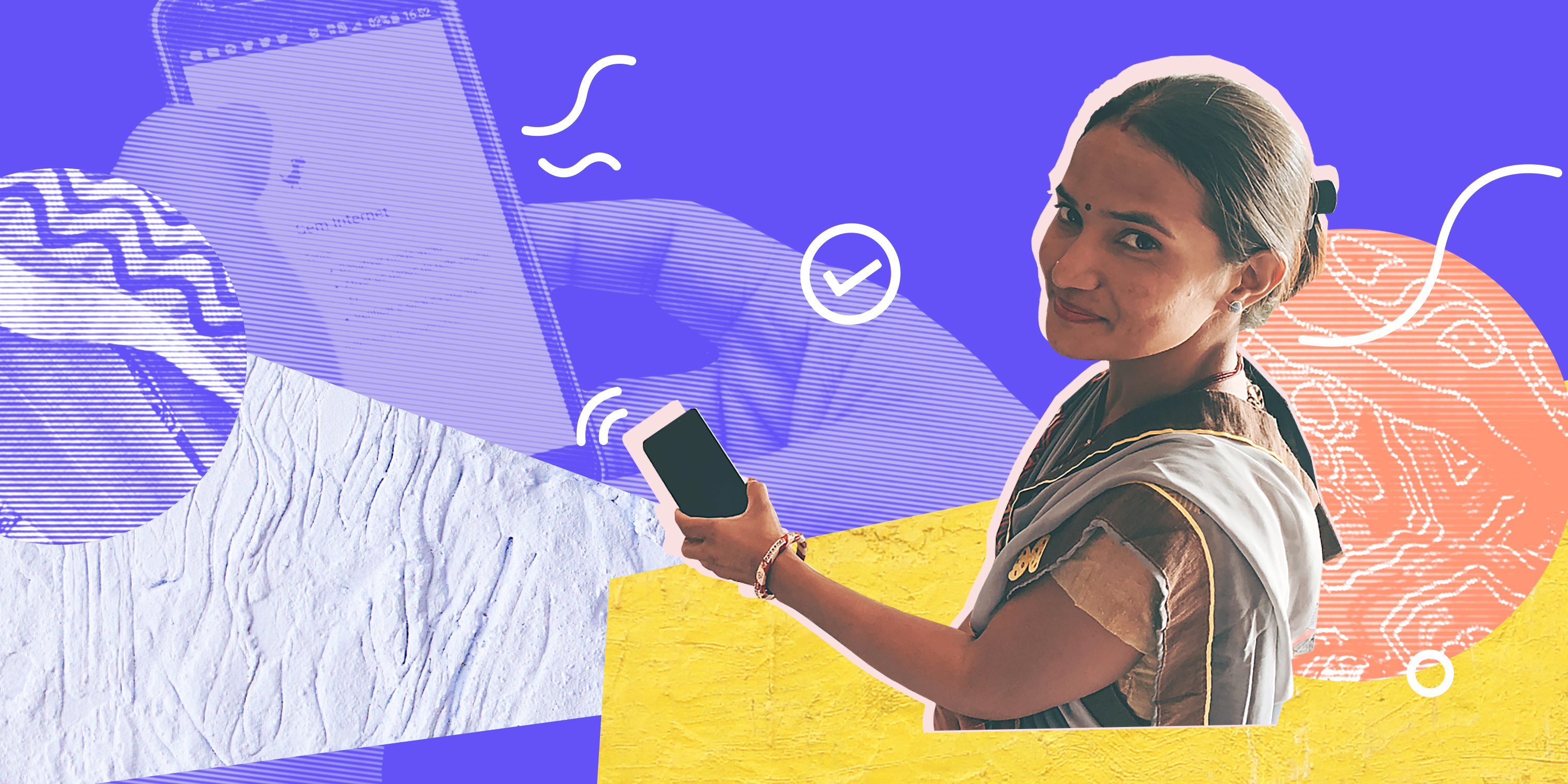
The Moonrise platform lets workers sign up for shifts with partner organizations through a simple text message interface, and get paid as soon as their shifts are done. Employers who sign up to partner with Moonrise can list open shifts on the platform.
“Moonrisers” are W-2 employees of Moonrise, not contractors, so they don’t have to pay self-employment taxes. They also get personalized business and comment cards to take to job sites, making their interactions with employers feel more professional. In this way, Moonrise helps workers not only build a buffer against unexpected bills, but also explore new positions and fields—and perhaps even land new full-time work with Moonrise partners.
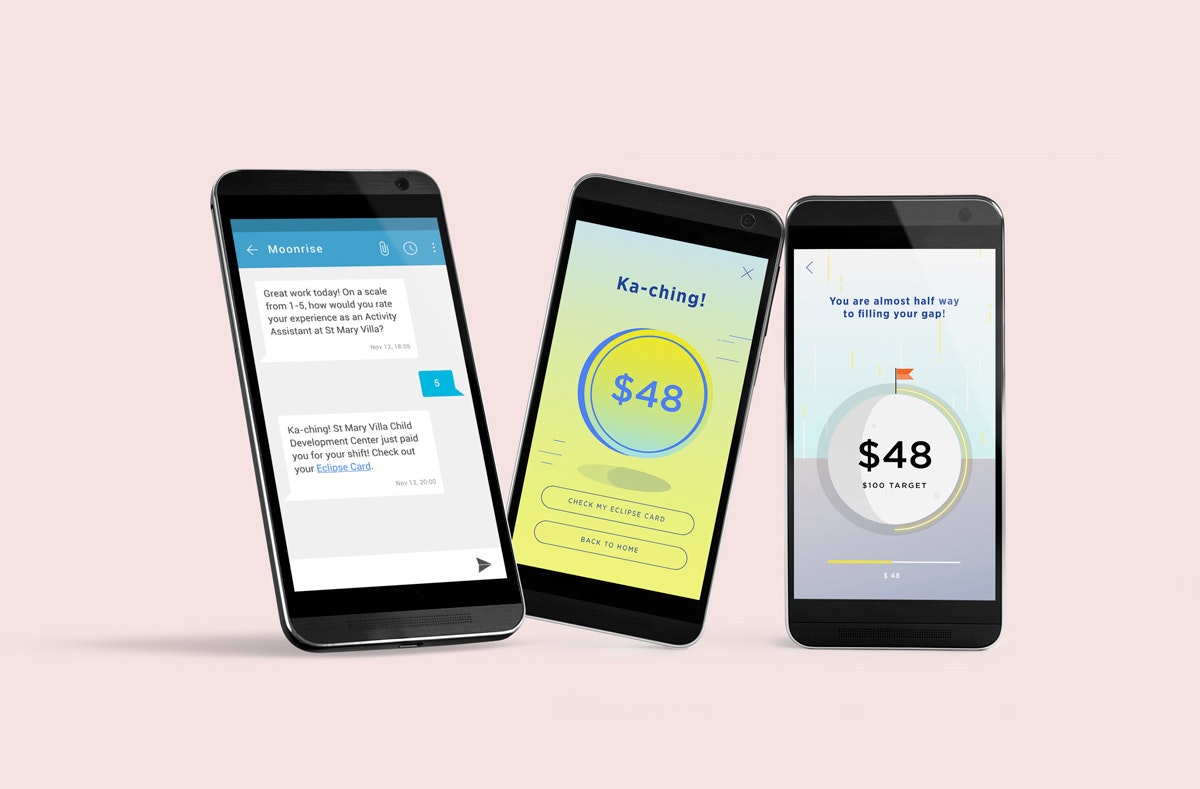
To test the program in real time, IDEO and American Family assembled 11 Moonrisers, six employers, and a team of designers and programmers to work out kinks in the platform. During a one-week live pilot in Wisconsin, Moonrisers finished a combined 28 work shifts, earning an average of $121 each, while IDEO designers worked behind the scenes to keep the process running smoothly.
Based on the success of the pilot, American Family created a new startup company called Moonrise, which became a wholly owned subsidiary of American Family. Moonrise launched to the public in the Chicago area in 2018, with plans for an eventual nationwide rollout. Moonrise signed Enterprise Rent-A-Car as its first employer and actively matches workers in Chicago with shifts, while continuing to build more corporate partnerships.
Since launching in 2018, over 7,000 people have applied to become Moonrisers, more than 7,000 shifts have been fulfilled, and over $500,000 has been put into the pockets of hardworking Moonrisers. Additionally, Moonrise will be expanding into 3 additional states in 2019.
IDEO and American Family Insurance interviewed customers of The General—a division of American Family—about how they budget to make ends meet. In this conversation, customer Chandra told designers how $62 could be the difference between breaking down and breaking even for her family.
It’s not always easy for established companies to innovate, especially outside their core business. But innovation is a high priority for American Family. Creating an employee -centered startup like Moonrise solves an urgent problem and distinguishes them from their competition. Together, American Family and IDEO identified a pressing human need and built a program from the ground up to meet it.

Helping a startup design video games to build kids’ emotional strength
A one-month sprint to develop new products—and a new way of working.
For 6-year-old Dave Jr., a long line at Disneyland triggered a massive meltdown. His parents were concerned and a little embarrassed, but not surprised; Dave Jr. struggled to keep his emotions in check.
Hoping to help, Dave Jr.'s uncle, entrepreneur Craig Lund, joined forces with researchers at Harvard Medical School and Boston Children’s Hospital, along with a video game designer who had worked on Quick Hit and NBA 2K. Together, they set out to design something that could teach coping skills to kids like Dave Jr. who need to manage “big emotions,” as well as children suffering from anxiety, ADHD, and other behavior issues, which are on the rise.
Their collaboration resulted in a video game called Mightier and a startup called Neuromotion Labs—a 10-person team of psychologists, game designers, and engineers who embedded at IDEO Cambridge for a one-month sprint to improve the game and get ready for launch.
To play Neuromotion's game, kids are first taught simple, calming breathing exercises. During gameplay, kids wear heart-rate monitors on a wrist or arm that detect spikes caused by stress or anger; as their heart rates go up, the game's difficulty increases. Kids have opportunities to pause and try deep breathing to counter the ramped up challenge. As it turns out, "gamifying" restraint builds strong incentives for kids to take charge of their emotions—they have to if they want to win.
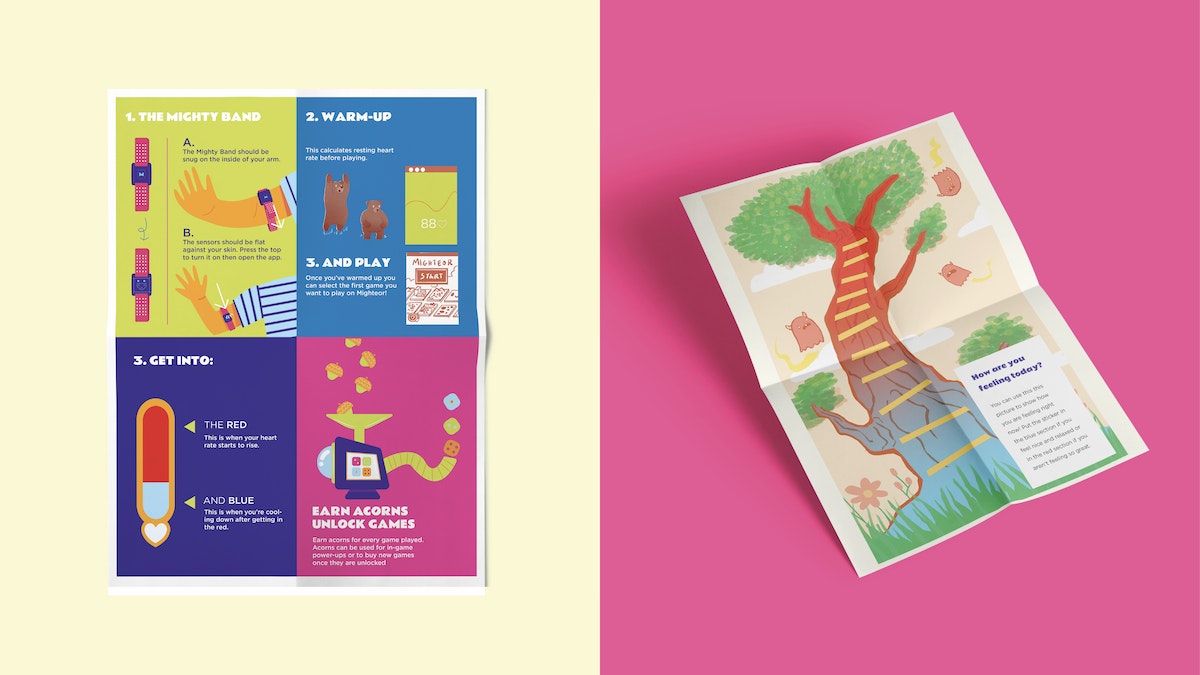
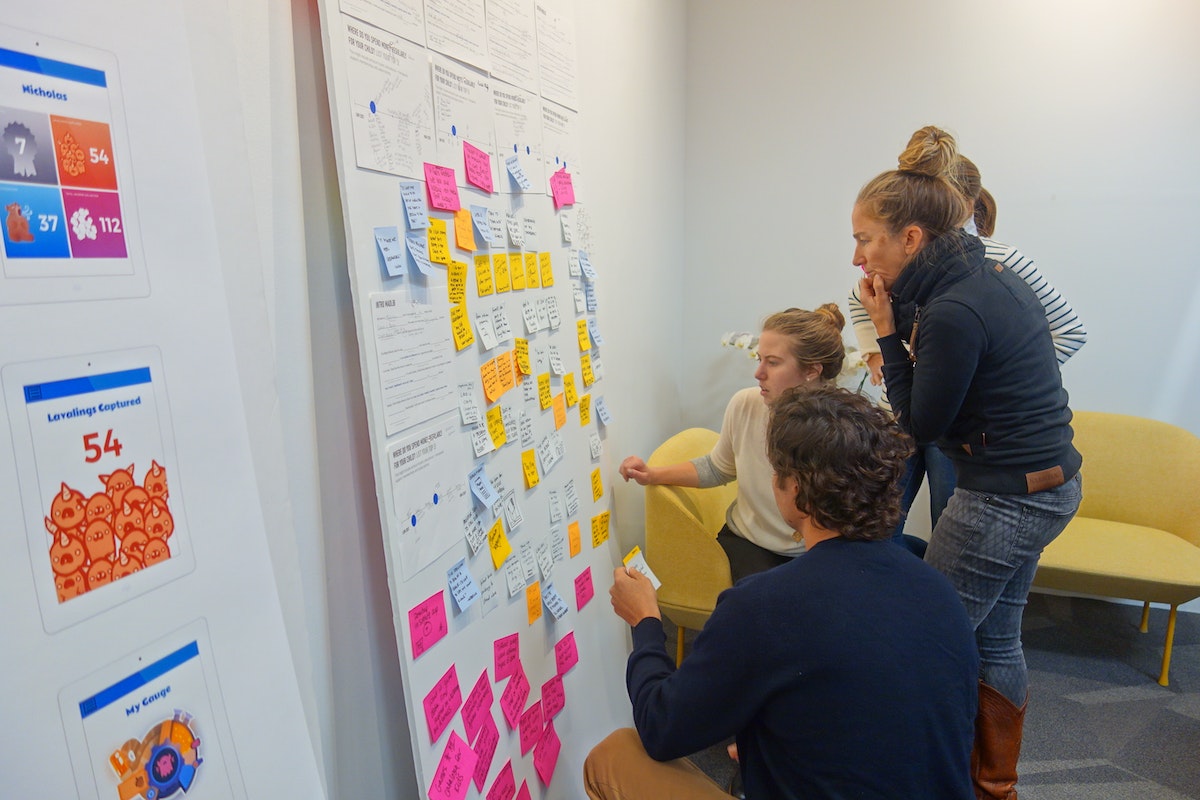
Already activated around boosting mental and emotional health, IDEO's design team worked side-by-side with Neuromotion to study how parents and children experience Mightier. From home visits to group interviews to a summer camp-style design session with kid players, live feedback fueled the next iteration of the gaming platform and better product-market fit.
IDEO helped Neuromotion hone the visual design and mechanics of Mightier and expand it's suite of games. The team observed that the Mightier program was more successful the more involved parents of players became, which revealed a need for additional resources for adults. So they created new supports, including a more detailed orientation and a personalized coaching service for parents staffed by trained therapists.
But can a video game actually help kids cope? Early peer-reviewed studies showed that playing Mightier reduced outbursts by 62 percent, oppositional behaviors by 40 percent, and parental stress by 19 percent. After 12 weeks of using Mightier, a survey of kids and parents showed that 96 percent of parents saw positive behavior changes in their children, while 92 percent of kids learned new coping skills.
Shortly after the design sprint, Neuromotion secured its next round of funding and officially launched Mightier’s array of “bioresponsive games.” The games have already been played more than a million times, and Neuromotion has measured more than a 100 million heartbeats. Mightier games are helping kids and families across the country.
What about Dave Jr.? Recently, his sister told Lund she "accidentally" bumped Dave Jr.’s bike off a pier and into the ocean. She was expecting an outburst of anger, but after eight months of playing Mightier, Dave Jr. stayed cool. His uncle couldn’t be prouder.

Designing waste out of the food system
IDEO partnered with hotels, food banks, foundations, and entrepreneurs to combat food waste.
Many of us have let vegetables wither in the crisper drawer, or thrown out a child’s half-eaten restaurant meal, but the sheer scale of food waste around the globe is hard to grasp. According to the United Nations, about a third of the food the world produces every year—1.3 billion tons—is lost during production or tossed by consumers, with North Americans throwing out the most food per capita. The average American wastes enough food each month to feed another person for 19 days.
IDEO received a series of grants from The Rockefeller Foundation to find solutions, given the power of IDEO’s human-centered design approach to address systemic challenges. Through a number of projects with The Rockefeller Foundation and other organizations, IDEO designers from across the U.S. devised novel ways to tackle food waste.
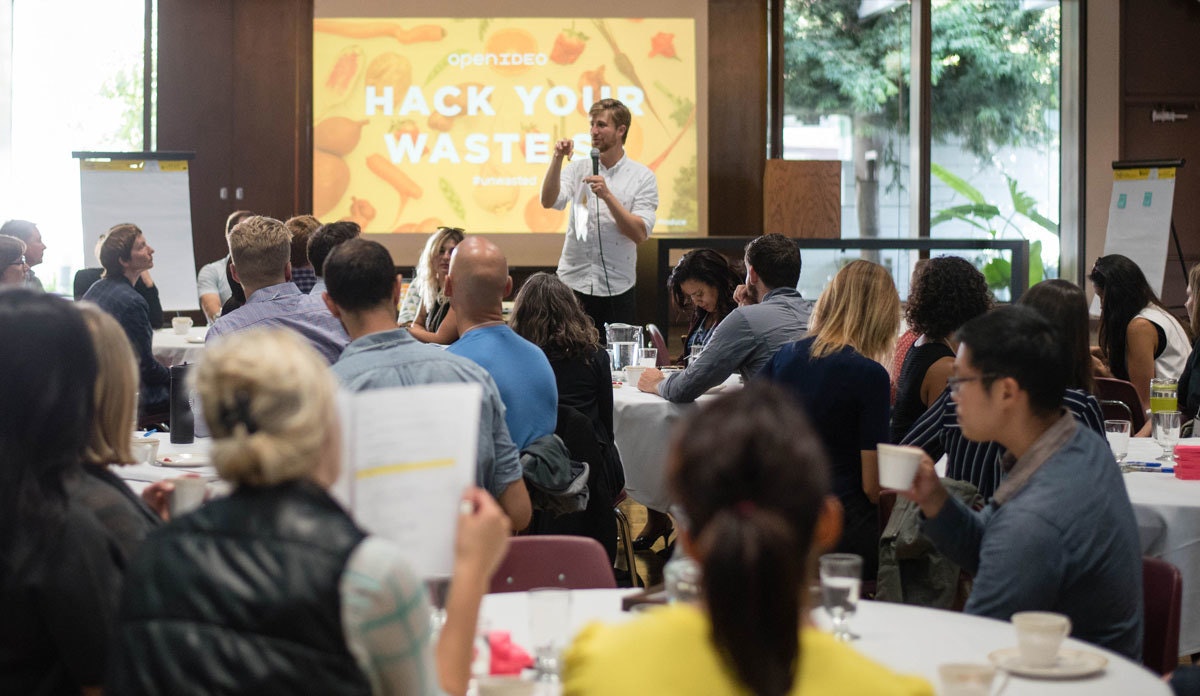
For IDEO’s first initiative, designers tapped into the enthusiasm of the broader creative community, in partnership with The Rockefeller Foundation, the City of San Francisco’s Department of Environment, the Closed Loop Foundation, ReFED, and other groups. In the summer of 2016, OpenIDEO—IDEO’s open innovation practice—launched the Food Waste Challenge, asking how people might curtail waste by rethinking our relationship with food. Between June and October, more than 20,000 people from 113 countries took part in the challenge, tracking their personal waste and brainstorming solutions.

Challenge participants submitted more than 450 ideas. A team of food industry experts helped select the 12 top proposals, which included software to help people buy food collectively from wholesalers and a service that delivers extra meals from corporate events to those in need. Ultimately, the Closed Loop Foundation chose to award Full Cycle Bioplastics a $50,000 grant to scale up its idea to convert inedible food and paper waste into a fully compostable alternative to oil-based plastic.
At the conclusion of the Food Waste Challenge, OpenIDEO launched the Food Waste Alliance, a platform for participants and experts to stay engaged with the most promising ideas and innovators. The alliance helped entrepreneurs share resources, prototype new concepts, secure funding, hire staff, and form partnerships. OpenIDEO invited hundreds to join the alliance, and 92 percent of members told IDEO they made progress in their work as a result. One member company, RISE, received funding from another participant who discovered RISE through the alliance. This investment let RISE prototype its concept for milling spent grain from beer brewing into flour for baked goods and ultimately join the prestigious Food-X accelerator.
The Rockefeller Foundation also supported IDEO’s work with City Harvest, a New York organization that collects 160,000 pounds of unused food each day and delivers it to soup kitchens and food pantries. City Harvest wanted to understand the habits of local families who visit food banks in an effort to ensure all the food the group distributes gets eaten. To get a peek into these families’ kitchens, in January 2017, IDEO researchers conducted observations and interviews across New York City’s five boroughs. Pantry customers cooked for the researchers, giving them an inside look at how the families engaged with the food they had available and what food meant to each of them: tradition, stability, even adventure. Based on insights from pantry visitors, IDEO made recommendations for City Harvest, including community-run cooking classes and a way for families to request specific foods or reserve pick-up times by text message. IDEO also created three video vignettes to help build even greater empathy between City Harvest and the people it serves.
In spring 2017, capping IDEO’s work with The Rockefeller Foundation, the organizations teamed up with World Wildlife Fund and Hyatt hotels in Florida, New York, and New Jersey to rethink all-you-can-eat buffets. IDEO studied diners and staff at Hyatt buffets and found that employees—from event planners to kitchen staff—each add a cushion of extra food to cover their bases, while guests overfill their plates to avoid missing out. In the end, diners eat just half the food organizers serve, while the rest goes to waste. This and other data-driven insights gleaned about diners’ habits led to subtle substitutions, including smaller plates of meats and cheeses that can be ordered from servers and individual pastries rather than whole cakes. These alternatives have not only built on Hyatt’s existing food waste management strategies, but have also helped reduce buffet costs at Hyatt Regency Orlando and continued to receive support from guests.
The problem of food waste is too enormous to ignore. Wasted food means squandered resources, lost money, and ultimately, hungry people—more than 15 million in the United States alone. Designers and innovators from coast to coast have helped find solutions to the crisis that fulfill a variety of needs, from preserving produce sent to food pantries to keeping plastic packaging out of the oceans. The Rockefeller Foundation and other IDEO partners are leveraging powerful design techniques to pave the way for a waste-free future.
Launching a bootcamp for data scientists
Designing a rigorous program that prepares students for a career in the data-driven economy.
In 2017, IDEO acquired longtime partner Datascope and integrated the company’s data scientists and engineers. Datascope team members aren’t just passionate data scientists; they’re human-centered designers who happen to work with data, as illustrated by successful collaborations like this one:
In today’s job market, there’s no such thing as being "done" with your education. This is particularly true in the fields of data science, machine learning, and AI, where significant advances are made on a monthly basis. To meet this need for more in-depth training, Metis—part of Kaplan—wanted to create a comprehensive data science program for students from all backgrounds. Metis asked Datascope to design the curriculum from scratch, drawing on the company’s deep expertise in the field.
Datascope spoke with practitioners across industries to identify the key skill sets that make them successful: a grasp of design; fluency with data management, coding, and algorithms; and effective communication with coworkers and the wider world. The team crafted a 12-week bootcamp that develops these specific abilities.
In order to prepare students for the work world, the bootcamp is structured less like a class and more like a company, where students are “hired” as data scientists—with projects to complete—starting on day one.
Students collaborate on group projects and presentations in a way that mirrors real workflows, and practice pair programming to learn from one another. Using techniques drawn from design, students are invited to refine their project briefs and continually reevaluate their approach.
Instead of a final exam, at the end of the course, students tackle five real-world, open-ended data science projects inspired by Datascope’s client work. One project involves using data from subway turnstiles to detect patterns in the volume of street traffic; another asks students to use data they scrape from the web to predict a movie’s box office profits using regression analysis.
After students complete the bootcamp, they receive an additional three months of career support, from mock interviews to site visits with potential employers. In addition to designing the curriculum, Datascope taught the first three student cohorts and helped Metis build its teaching team as it expanded the program from New York to San Francisco, Chicago, and Seattle. Metis now offers online courses, evening classes, and corporate trainings in data science.
If you’re going to take a data science bootcamp, it’s best to take one designed by data scientists.

The Freelancer's Guide to Hustling
3 ways to fuel your freelancing
Between the allure of the WFH lifestyle, more flexible working hours, and be-your-own-boss independence, it’s no wonder more people are staying home. But the other side of that coin is that everyone and their mother is freelancing, so it's harder than ever to stand out. We asked our freelance IDEOers and those who hire them to tell us the best ways to make it work.
Here are the top three ways to rethink and refuel your freelancing:
1. Turn ‘networking’ into ‘helpworking.’
Before you audibly groan at the word “networking,” hear us out. Let’s try an exercise: Write down a favor you might ask of someone in your field. Pause. How do you feel? A little anxious? Maybe kinda bummed?
Now, imagine how you might offer to help one of your clients. Jot down three provocative ideas you have for them. Pause. How do you feel? Energized?
We thought so. And that’s the thing. It turns out that while asking for help is hard and can make us feel bad, giving help is actually invigorating and makes us happy. Huh.
So what does this mean for your freelancing? It means looking for opportunities to come together with other collaborators or companies in a way that generates good vibes all around. You can make this happen by bringing together other freelancers for your own hackathon-style event. (Maybe even get a company to sponsor it in exchange for your combined thinking). Or you can join a community-based network. There are tons of places to find like-minded creative people, like co-working spaces or meet-ups.
Whether one-on-one or one-on-many, flip networking from the downer of asking for help, to the booster of giving help—and upgrade the kinds of projects and people you work with as a result.
2. Show all your angles. #nofilter
Help companies hire you by showing them all the kinds of work that you do. Are you a medical illustrator with expertise drawing physiological diagrams? That's exactly what we need for one of our health-related projects. When you say “interaction designer,” explain the very specific range of interactions you design. And if you worked on a group project, add a sentence to call out the parts of the project you did.
There’s a fear that by being very specific in what you do and don’t do, you’ll pigeonhole yourself. But the truth is that when a company needs to hire a freelancer, it’s almost certainly because of a very specific task that requires a skill or resource that the company doesn’t already have. If you happen to do that very niche craft… you’re hired!
So don’t leave the range or specificity of what you can do to the imaginations of your prospective clients. Lay it all out (preferably on your website, in emails, on LinkedIn—the Skills section is great for this), and you’ll be increasing the likelihood of a “swipe right” when it comes to new collaborations and projects.
3. Repetition does not spoil the prayer.
So you met a prospective client or collaborator at an event (perhaps the recent Break the News brainstorm we hosted in our Cambridge office), you clicked, you exchanged information, and then… crickets.
It’s tempting to think that the prospective partner will keep you top-of-mind for future projects. The reality is that, while they probably felt the spark too, life happens. And in the chaos they might not remember important details—like how to contact you! So make it easy for them by reminding them regularly of your work, what you’re up to, when you’re available, and how to get in touch.
There’s a reason advertisers commonly reference the number seven as the sweet-spot in terms of “effective frequency”—the number of times a customer needs to see an ad’s message before they buy. Think creatively about how you stay in touch and top-of-mind for potential partners. Send them a monthly email showcasing your latest work. Mail them a beautiful poster you made. Send a note praising their most recent project. Continue to show up to more events. Aim for more. To you, it might seem repetitive, but to a prospective client, it’s a reminder that you’re there, ready to co-create.
In the end, more is more. That’s the key to navigating today’s ambiguous (and exciting) un-9-to-5.
With the rise of the gig economy, the workplace has changed dramatically—and for the better, we think. The definition of a “long and successful career” has been flipped on its head. (Hint: It’s no longer about walking into the same office building for 30 years). And who’s leading the charge? Freelancers.
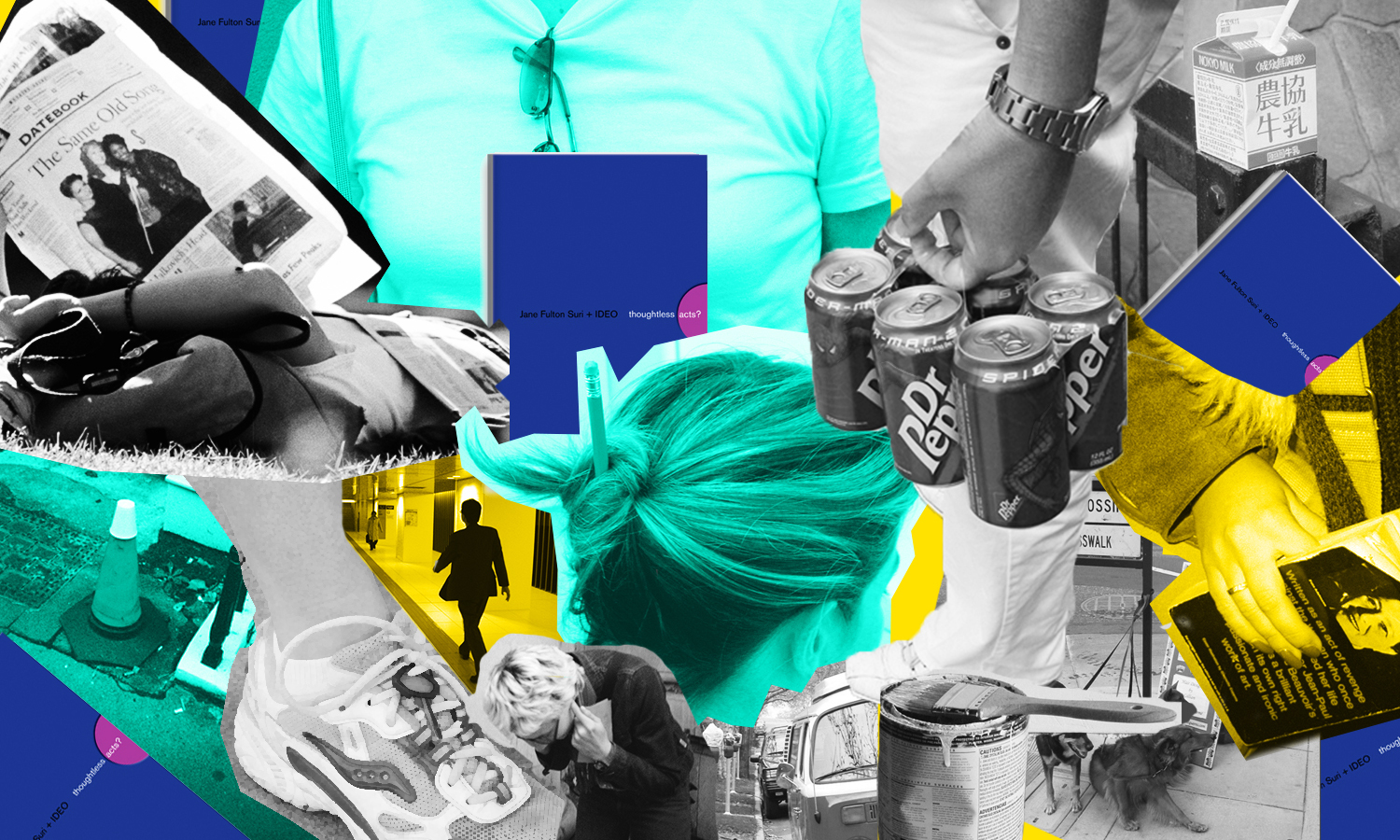
Thoughtless Acts: A Seat on the Street
Thoughtless Acts: A Seat on the Street. The intuitive ways we adapt and react to things in our environments
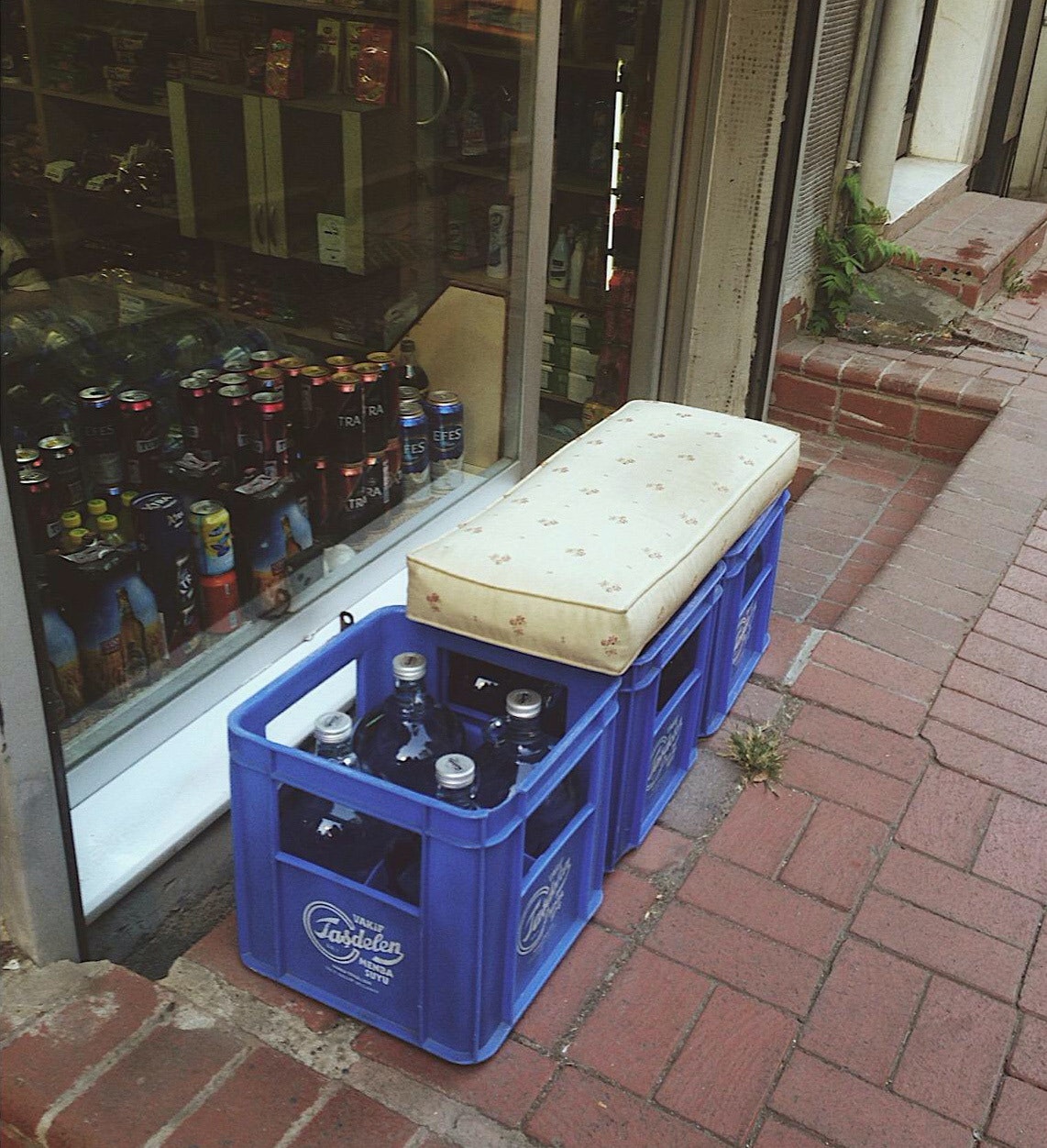
I took this picture last summer while I was back home in Istanbul. Istanbul is a city that people mold to fit their needs. Market owners, residents, even kids always find ways to reimagine the streets. Sometimes it’s a group of kids turning a cul-de-sac into a football field. Sometimes it’s the residents of the neighborhood having tea on the stairs of a building, treating the street as a café.
Growing up in there made me look at sidewalks in a completely different way. Last summer, while I was wandering around my neighborhood, I noticed this amazing piece of furniture that our neighborhood market owner made. He put a pillow on top of the water containers and turned them into a bench. It’s a perfect temporary seating arrangement.
Human-centered design requires us to observe human behavior with beginner's eyes, so that we can spot the innate ways people interact with the world around them. We call these intuitive and unconscious reactions Thoughtless Acts, and IDEO designers collect photos of them to inspire their work.

Writing a Novel? Harness the Power of Design Thinking
Your novel is a prototype. Treat it that way.v
But that’s the thing. Finding readers who have the time to slog through an unpublished manuscript is hard. Like, really hard. Many people said they would read it, but never got further than the first few chapters. Was it because they hated the book? Or just because they got busy watching season four of Orange is the New Black? And the wonderful friends who did read it—were they actually honest with me? Or pulling punches because, who wants to make a friend cry?
That’s when a friend who actually finished my book had an idea: What if we could take some of the best aspects of the design thinking process (such as collaboration, multidisciplinary perspectives, prototyping) and adapt them for the writing and publishing space by connecting authors with a diverse pool of readers who could provide thoughtful, honest feedback? Meet The Spun Yarn.
We hypothesized that there was a whole universe of potential readers out there—moms and dads and students and grandparents who might be interested in earning a bit of extra cash by providing thoughtful feedback on an unpublished novel. So we placed a Craigslist ad in four cities to see what would happen. Within 24 hours, we had to pull the posting because we were flooded with wonderful applicants. A traveling musician from Wisconsin. A cookbook author from Georgia. A retiree and jewelry maker from San Jose. We hired these folks and others and created the framework and the process to provide honest and actionable feedback on people’s novels—including mine.
Here's how it works:
Every novel that we receive is matched with three readers, each of whom reads the entire book and provides feedback using the same evaluation matrix (a mix of qualitative and quantitative input).
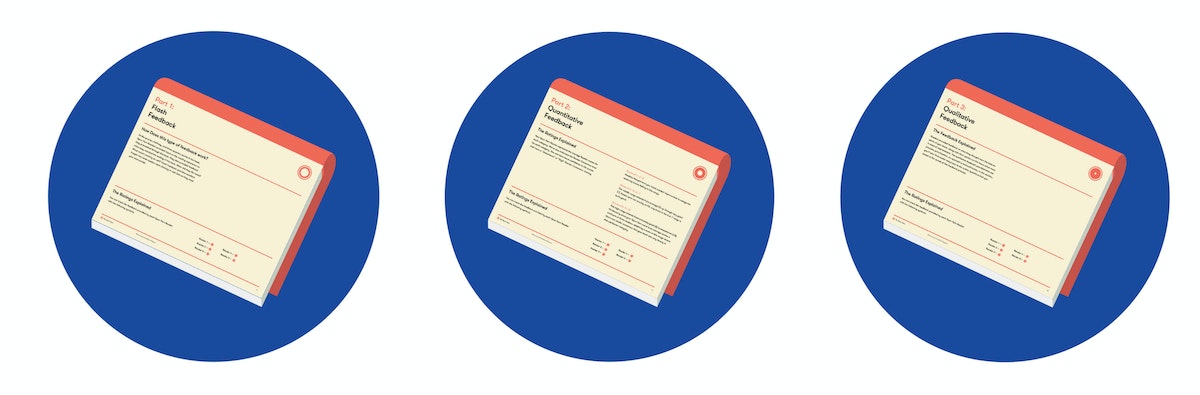
Once this stage is complete, our Spun Yarn team crunches the reader input and identifies the themes and patterns that have emerged about the manuscript. We deliver this synthesized feedback report to the writer. In a sense, what we’re doing is helping writers understand that a draft of their book is just like a design prototype. Most of the time, what we’re finding is pretty straightforward stuff. A main character needs to be fleshed out. An author’s ending ties things up way too neatly. Readers absolutely loved the glimpse into the world of surgery that a certain novel provides. Double down on that in a future prototype (I mean, draft) of the novel.
There’s a saying attributed to IDEO founder David Kelley that there’s no such thing as one magic idea. What I’ve learned from the Spun Yarn is that the same goes for novel writing. It turns out (based upon input from three very thoughtful and very honest Spun Yarn readers), that I haven’t written a masterpiece. There is a ton of work that still needs to be done. But thanks to help from my own multi-disciplinary design team (based in Minnesota, Rhode Island, and Berkeley, respectively), the next draft of my novel will be just a little bit closer.
Have you written a novel? Want some honest feedback? Visit thespunyarn.com.
About a year ago, I finished a novel. After much editing in the early morning hours, I arrived at that place where I could no longer see any flaws in the book. What I needed next was feedback (on what I hoped was a masterpiece, but couldn’t be quite sure).

Time to Burst Your Research Bubble
Why you should make this one simple change to your research plan
From a business perspective, I can appreciate why this demographic is appealing. It makes economic sense to consider a customer segment primed to understand the company's proposed product or service.
But limiting research to the East and West Coasts is exclusionary, and can even be discriminatory. Following recent events in our national story, there’s been a lot of chatter about ignorance—about a hidden America. And this isn’t just our problem: Events like Brexit, the Catalonian referendum, and the rise of populism at large all point to the need to address different perspectives. The context has shifted, and it’s our responsibility to respond.
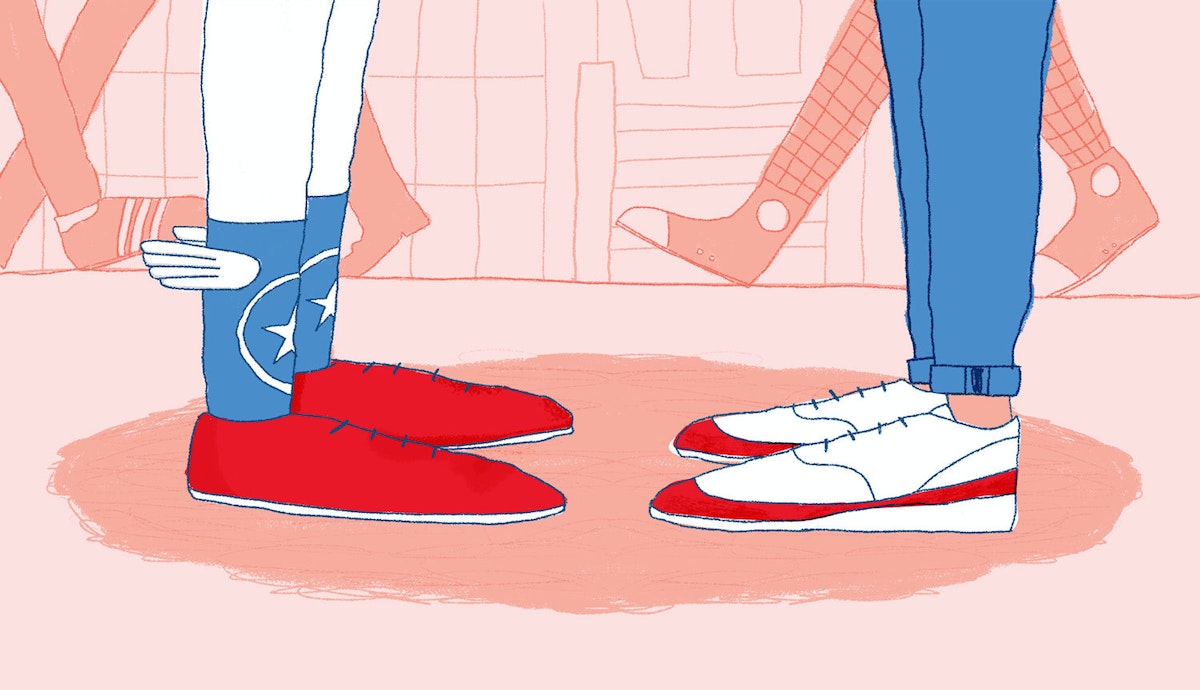
So, a Cambridge-based team of designers decided to do something about it. We know that addressing geographic bias begins by identifying your blind spots, so to kick things off, my colleague Graham Gardner helped us prototype a simple yet elegant solution: a data-rich Google Map.
For every engagement, we document where the team conducts research and upload this information to the map. It’s the first step in visualizing hotspots, as well as potential design research deserts. Just seeing the spread of icons across the country helps teams realize if their sample population is skewed or appropriately representative.
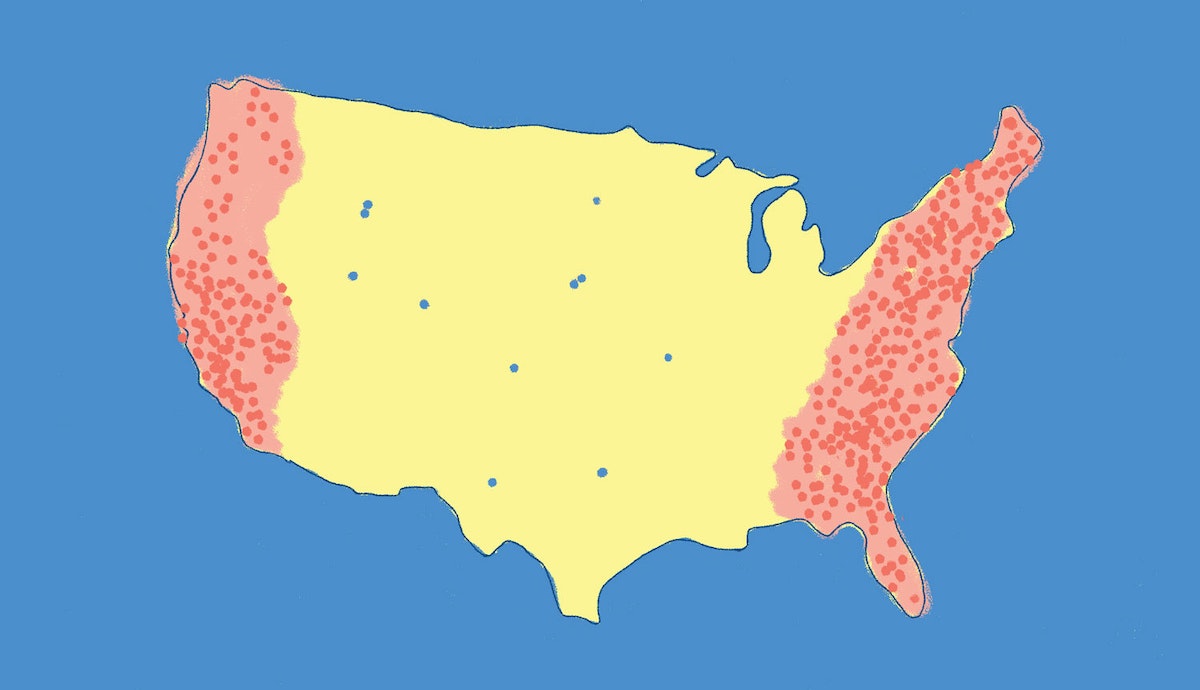
Mapping is a simple hack that keeps teams accountable, and it’s easy to do yourself. Here's how:
- While signed into your Google account, open the “My Maps” page on Google Maps.
- Click on Create a new map in the upper-left corner.
- Click on Untitled map and give your new map a name, for example, “Design Research Phase 1".
- Search for the addresses of locations you’ve selected for your research.
- Click + Add to map to create a marker at that location.
- Zoom out to see a birds-eye view of your research plan.
It’s that easy. And it’s incredibly effective.
Maps motivate action. This isn’t a revolutionary perspective. Organizations across the globe use maps to identify blind spots in their work. Consider the USDA’s Food Access Research Atlas (designed to prompt policymakers to close the gap to healthy foods) or the New York Times’ powerful piece on "Mapping Segregation," which was intended to spark dialogue about systemic segregation.

Now, we're designing ways to burst our own design research bubble, and I’ve already begun to notice some changes. On a recent client engagement, we revised our plan and suggested a few days of research in Kansas and Missouri, instead of just Boston.
To our delight, the client loved the idea. Two weeks later, we were on a flight to Kansas City. While there, we noticed the importance of community relationships in a much stronger way than we did at home base. This pushed us to reconsider how we incorporated community advice into our final product design.
Inclusive, forward-thinking design doesn’t mean replicating what works well or feels right in our backyard. It means getting out there, dialing up your inner listener, and sitting down with someone completely unlike you. Your perspective will never be the same.
At IDEO, we take listening pretty seriously. That means talking to people who are outside of our comfort zone. That said, in my years conducting design research interviews, I’ve found that our targets fit a certain profile: Coastal. Millennial. Liberal. Globally-minded.

Lindsey Turner
I’m passionate about building brands, products, and experiences that help organizations show up with meaning and momentum.
I help organizations cut through complexity by shaping how they show up, through brand strategy, identity, and storytelling.
Working at the intersection of brand and business, I bring an editorial eye and a bias toward making—turning ideas into tangible experiences that people can understand, trust, and believe in.
My work spans government, healthcare, financial services, media, and consumer goods, from launching Gen Z-focused ventures to building innovation labs and reimagining legacy brands. I relish moments of ambiguity and enjoy translating across teams, perspectives, and priorities to move ideas forward.
I started my career in editorial and digital design, shaping cross-platform experiences and identity systems in publishing and agency environments. That foundation still shapes how I work today: I’m detail-oriented, collaborative, and overreliant on the Oxford comma. I hold a BFA in Visual Communication from the School of the Art Institute of Chicago.

Rachel Young
My work helps organizations see who their products aren't working for—and build the will and the tools to do something about it
For 25 years, I've asked the same question: Who does this design exclude—and what are we going to do about it?
My work spans human-centered strategy, inclusive design, and qualitative research, with clients ranging from Microsoft, Google, and Verizon to the National Science Foundation, and San Francisco Unified School District.
Before IDEO, I taught elementary school in East Palo Alto and spent a decade doing design work with social service organizations—where I learned firsthand what it costs people when systems are built without them in mind.
I am currently writing User Error, a nonfiction book about digital access and the design decisions behind it. I live in Oakland, California.

Brian Pelsoh
I lead with craft, ensuring our work is creatively excellent: rooted in deep human insight and imagination, while also grounded in the realities of business and technology.
My expertise spans brand, communication, and product design across tech, education, the arts, and social impact.
I believe great work demands both high-level vision and obsessive attention to detail, and only happens through collaboration.
I bring an inclusive, hands-on approach and a deep understanding of business, which enables me to consistently deliver excellence while always asking why.
Before joining IDEO, I worked at the brand firms Pentagram and VSA Partners. I began my career as a designer, leading teams at the School of the Art Institute of Chicago and the Milwaukee Art Museum. I hold an MFA in graphic design from Maryland Institute College of Art and a BFA in communication design from the Milwaukee Institute of Art & Design, and have taught at some of the best design schools in the US.

Tony Wong
I am responsible for IDEO’s long-term success in China and working with clients to use design as a tool to enable growth.
I am responsible for IDEO’s long-term success in China and working with clients to use design as a tool to enable growth. Specifically, I have helped Chinese companies design holistic brand solutions through the development of their products, communication, services, and innovation teams, and I have helped multinationals expand their presence and influence in China.
I advise global leaders on developing China-led innovation and capabilities.
In over 15 years in IDEO Shanghai, I have worked on projects that use design to elevate the quality of the experience of healthcare products and services, streamline processes that increase productivity, create spaces and programs that promote and enable inclusive communities, and build next generation mobility solutions that are planet-positive.
Before joining IDEO, I worked at Philips Electronics and the Electrolux Group in Italy, the Netherlands, and Singapore on a number of breakthrough commercial products. I am a member of the Young President Organization in Shanghai.

How to use AI as an editor, not a writer
Ed White shares how he uses AI as an editor—not a writer—to sharpen storytelling, rehearse ideas, and preserve the productive friction that makes creative work better.
Ed White has a rule he's tested on his own writing: hold yourself as the writer, and let AI be your editor. Ed is a Senior Design Director at IDEO's London studio, where he co-leads the firm's AI portfolio across Europe. Before IDEO, he spent 12 years as a writer and editor at the Financial Times, Wired, and Contagious. So when he talks about when to use AI for storytelling and when not to, it comes from two decades of crafting his storytelling skills.
In this episode, Mina Seetharaman talks with Ed about two specific tools he uses to keep AI in an editor's seat: a "roasting agent" prompted to critique his drafts without any sugarcoating, and a simulated audience he rehearses pitches on before the real thing. They also get into what Ed is hearing from design leaders at Anthropic, Lovable, Shopify, and Google Creative Lab about how creative work is changing, and why he thinks the friction of writing something yourself is worth protecting rather than automating away.

Building a personal AI for the messiness of life: Sida Li
Becca Carroll talks with Cue co-founder Sida Li about designing a personal AI for the messiness of everyday life—not just work. They explore how Sida stays anchored to human needs while navigating fast-changing technology, product tradeoffs, business-model experimentation, and the realities of building an AI company today.
Most AI products today are built for work—a space with clear problems and established systems. One founder noticed a gap: personal life is messier, harder to systematize, and mostly left behind by the AI boom. So she built Cue, a personal AI that lives inside iMessage and group chats, to go where the other tools haven't.
In this episode, Becca Carroll, IDEO's Chief Strategy Officer, talks with Sida Li, co-founder and CEO of Shared Context Lab, about staying anchored to a human need while the technology around her keeps changing shape, why she treats her business model with the same rigor she'd bring to a product, and what it feels like to build a company at this particular, disorienting moment in AI.
The conversation also gets into how Sida makes design decisions: the language Cue uses to describe itself, the tradeoffs behind building inside iMessage instead of a new app, and a real story about a business idea that didn’t pan out.
This is the second in a two-part series profiling founders from IDEO's Startups-in-Residence program. The first conversation is with Johannes Seemann, founder of Sooner, on designing GenAI for the emotional side of money.

Designing GenAI for the emotional side of money: Johannes Seemann
Designing financial tools around the feelings that shape money decisions.
Most personal financial tools are built to run the numbers and optimize towards a budget. While that works for some, most people experience money as a lived relationship that does not neatly fit into a spreadsheet. Johannes Seemann and Becca Carroll discuss why money is emotional before it is mathematical, and what a human-centered approach to building a generative AI financial product looks like in practice.

The curious leader's edge in uncertainty: Scott Shigeoka
How genuine curiosity helps leaders navigate uncertainty with greater confidence.
Mina Seetharaman talks with Scott Shigeoka, author of Seek and Head of Curiosity Cultivation at the Eames Institute, about what distinguishes genuinely curious leadership from performative curiosity, how power dynamics shape curiosity, and why practicing curiosity can restore energy rather than drain it.
Looks like you might be in search of something very specific?
Or reset the filters above and try another angle.
Here’s some random inspiration

Podcasts about creative leadership

Articles about the power of prototyping