
Human-centered hospitality via a tech-forward app
Huazhu Hotels Group translates its renowned hospitality brand into a seamless digital ecosystem for guests.
China’s digital landscape is dominated by highly integrated mobile apps like WeChat and Alipay that seamlessly combine messaging, shopping, bill payment, and finance management. This shift toward digital-first interactions that are hyper-convenient, personalized, and intuitive has significantly shaped consumer expectations for experiences like finding, booking, and staying in a hotel. To stay competitive and meet—or exceed—young guests’ expectations, Huazhu needed to redesign its Membership App 3.0 to prioritize guest needs across all touchpoints of the hotel journey.
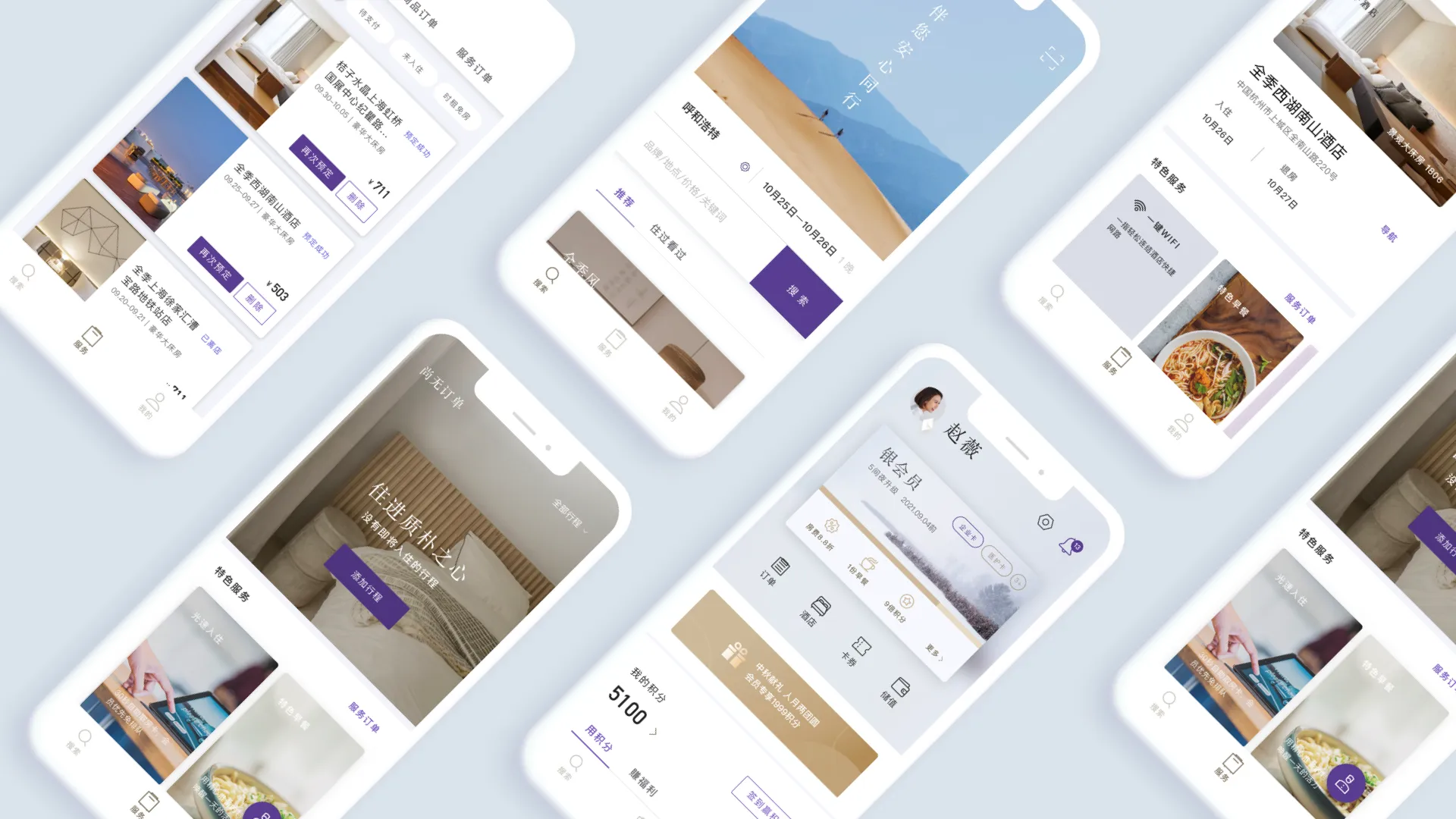
Through in-depth research and member feedback, IDEO discovered the true pain point the Huazhu membership app needed to address: seamlessly integrating the hotel brand’s online and offline experiences. The Huazhu Membership App 3.0 adopted “simple, stable, and real” design principles, simplifying user operations, optimizing the interface, fixing lingering experience issues, maximizing page load speed, and reducing crash rates.

The IDEO team discovered users have different functional needs. Sometimes, users want to search for hotel information quickly. Other times, they prefer to explore and browse content slowly. To meet both needs, the app needed to be optimized for efficiency and exploration. So, the IDEO team upgraded the interface of the Huazhu Membership App, adding quick operation modules and information blocks on the main page, as well as a downward scrolling interface that gradually slows the experience, offering channels for detailed exploration.
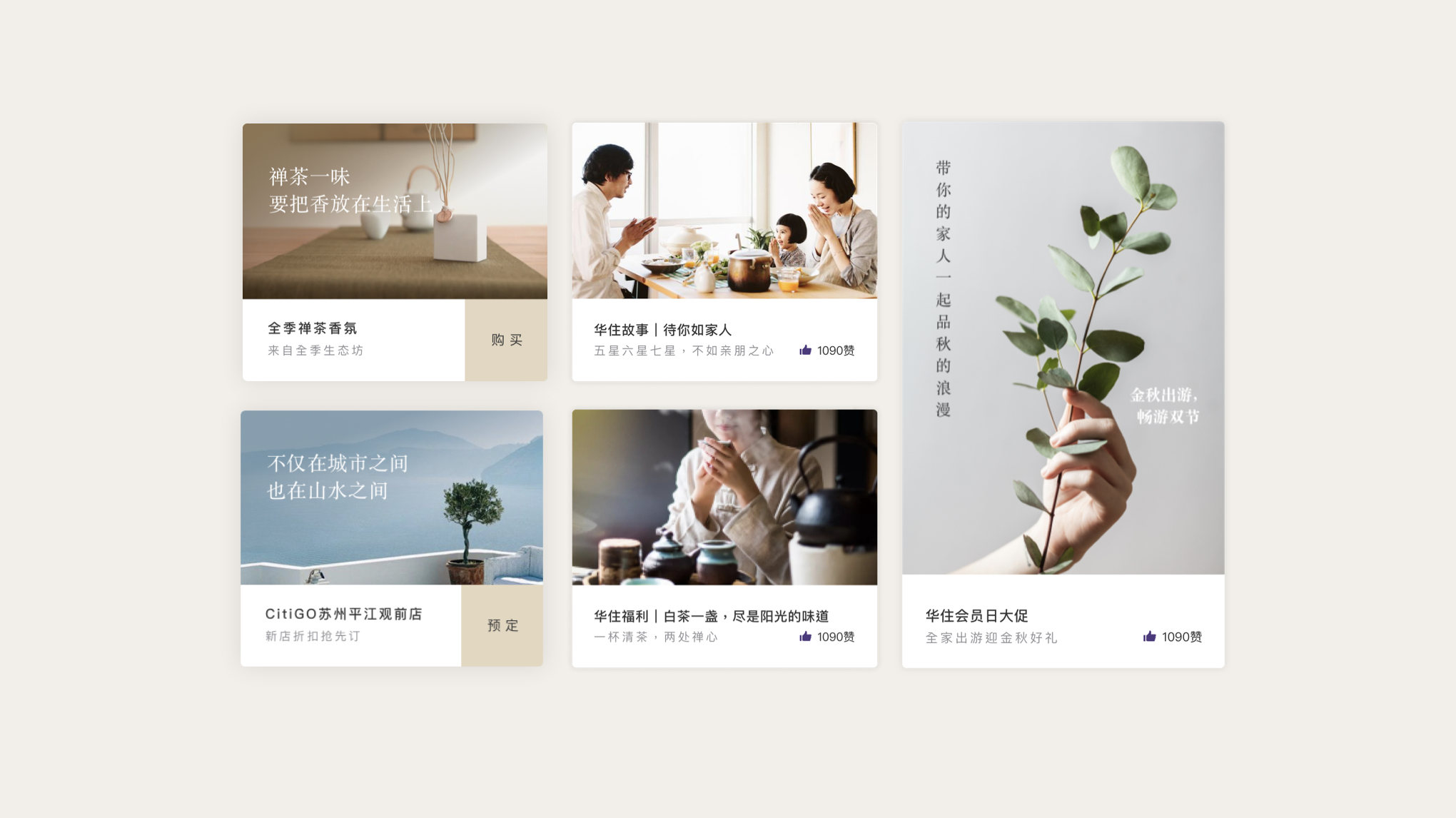
Customers also had different needs at different points in their travel journey: before, during, and after their stays. IDEO designed the language and user interface to provide personalized service information for each stage, from booking to post-stay. The app’s content adapts to the user’s travel phase, showing the most relevant service experiences at each point. The content displayed on the app also changes based on user habits, helping the app flex to meet their needs. The design aligns with the Huazhu Hotels Group’s mission to provide personalized service to a diverse clientele.

The team also worked to inject Huazhu’s brand characteristics by offering an upgraded experience in booking, stay, dining, and member benefits and adding features like a 30-second, automatic check-in experience. These thoughtful, personalized updates integrate Huazhu Hotels Group’s meticulous service philosophy, providing customers with a welcoming, human-centered hospitality experience. The updated Huazhu Membership App 3.0 is now available in major app stores, shaping a new generation of user experiences for Huazhu Hotels Group.
Young travelers in China expect the first touchpoint with a hotel brand to be digital.
5% increase
in monthly active users after the launch of the App's 2.0 version in 2021
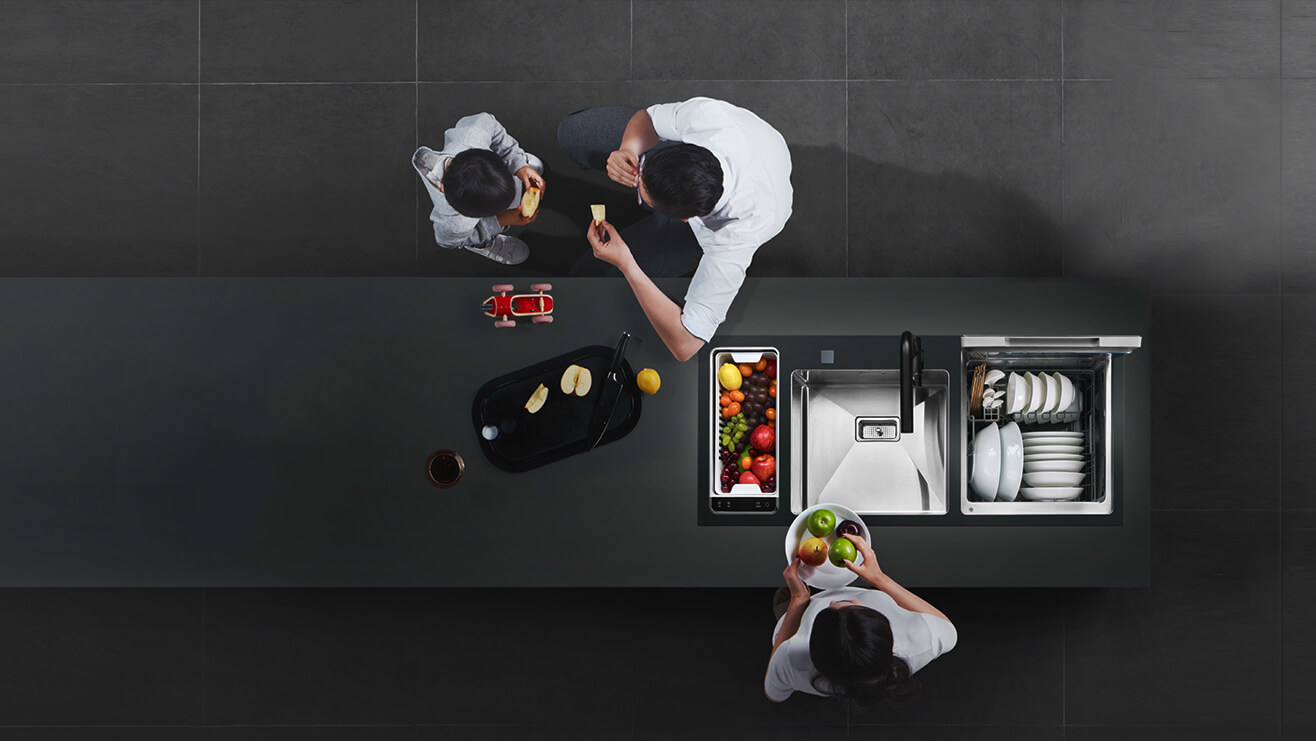
Introducing China’s first sink dishwasher
Fotile, the country’s top kitchen brand, unlocks a new category.
IDEO and Fotile have had a relationship since 2009, working together on projects including a unified design language for product offerings, retail environments, and IoT strategy. For the dishwasher, IDEO and the Fotile research team came together for design research, shadowing Chinese families in different cities as they prepared meals from start to finish. Together they discovered that unlike in Western cooking, where several kinds of cookware are used for different dishes, Chinese cooks tend to use the same cookware to prepare all of their dishes.
That meant that the cookware needed to be cleaned several times during a single meal preparation, rather than once at the end. In this context, the sink serves different purposes over the course of cooking—it’s a place to wash and store prepped ingredients, rinse the cookware, and deep clean the dishes used in food prep and during the meal.
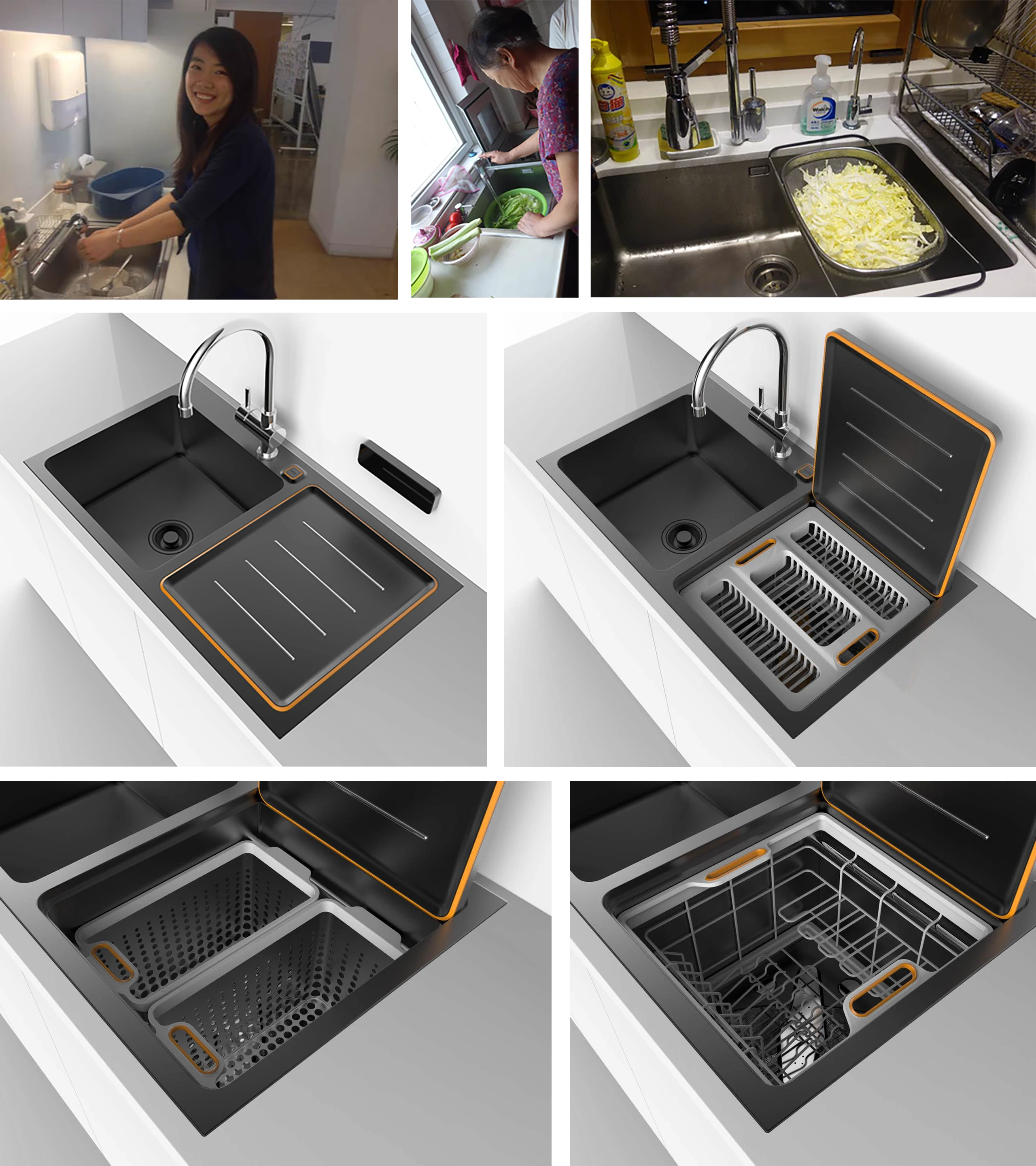
Based on this insight, IDEO made a list of product design recommendations that became Fotile’s Sink Dishwasher—a counter-level, multi-purpose appliance that specifically suits Chinese cooking habits. IDEO’s design guidance gave Fotile the confidence it needed to launch its product into the market, and served as a blueprint for the future iteration of Fotile’s Sink Dishwasher.
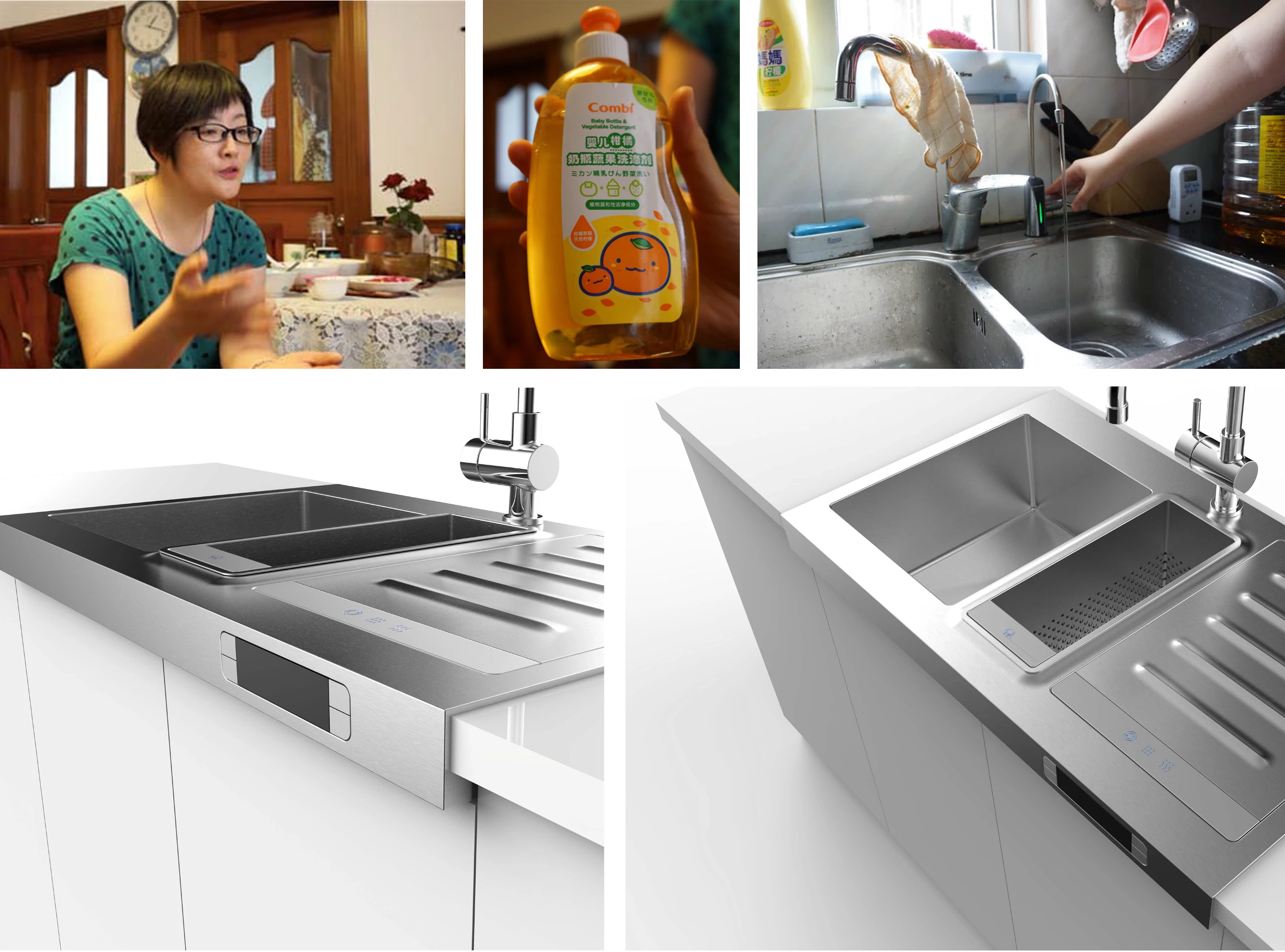
On March 25, 2015, six months after the project ended, Fotile launched the world's first sink dishwasher designed for Chinese families. Eight months later, its market share exceeded 30 percent, setting off a wave of innovation in the Chinese dishwasher category.
In 2016, Fotile introduced a three-slot dishwasher with an added compartment for cleaning fruit and vegetables—a direct response to a research finding that Chinese families are concerned about food safety. When this new model hit the market, Fotile’s dishwasher market share jumped to 41.1%. In China, Fotile is now synonymous with “sink dishwasher,” and the company has a widespread reputation among consumers as a symbol of a safe and healthy Chinese family kitchen.

Since its founding in 1994, Fotile’s Chairman, Mao Zhongqun, has made it his goal to “do nothing but build a high-end Chinese family brand.”
30%
Fotile Sink Dishwasher’s share of the market in China, just eight months after launch
41%
Fotile’s dishwasher market share after it launched a three-slot version in 2016
#1 selling brand
in the mainstream price segment of the Chinese dishwasher market as of August 2023

Growing a brand for modern Chinese parents
China’s BoAo Group expands from an auto industry manufacturer to a lifestyle brand for modern families.
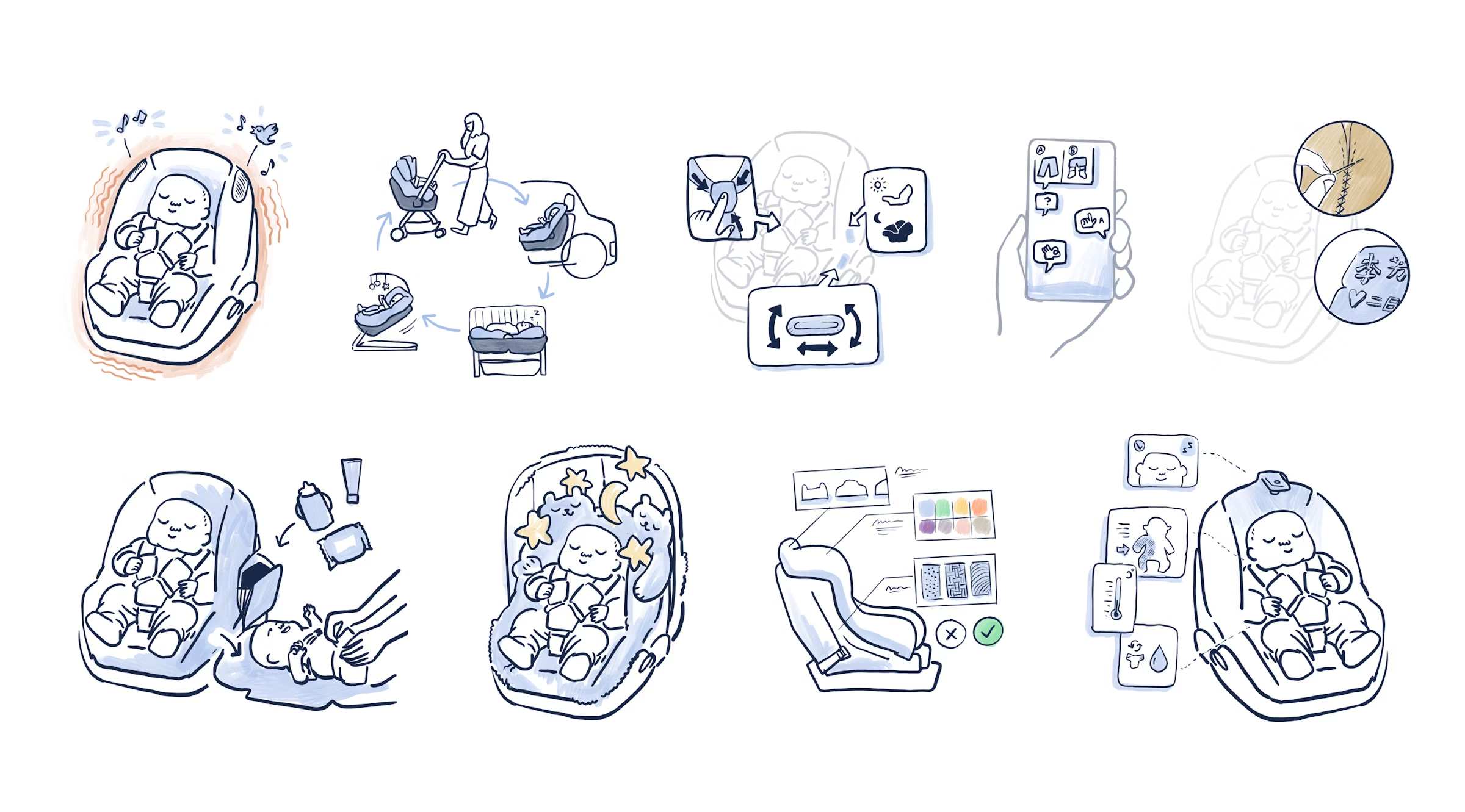
BoAo Group’s idea to design a new baby car seat was fueled by a newly revised minor protection law, which made using child safety seats mandatory beginning June 1st, 2021. As ZUOWE and IDEO looked around China’s emerging car seat market, the team noticed a singular focus on safety and safety features across most international and domestic brands. There was a clear opportunity for a new product that could meaningfully differentiate itself by not only providing safety features but also meeting the needs of modern Chinese parents.
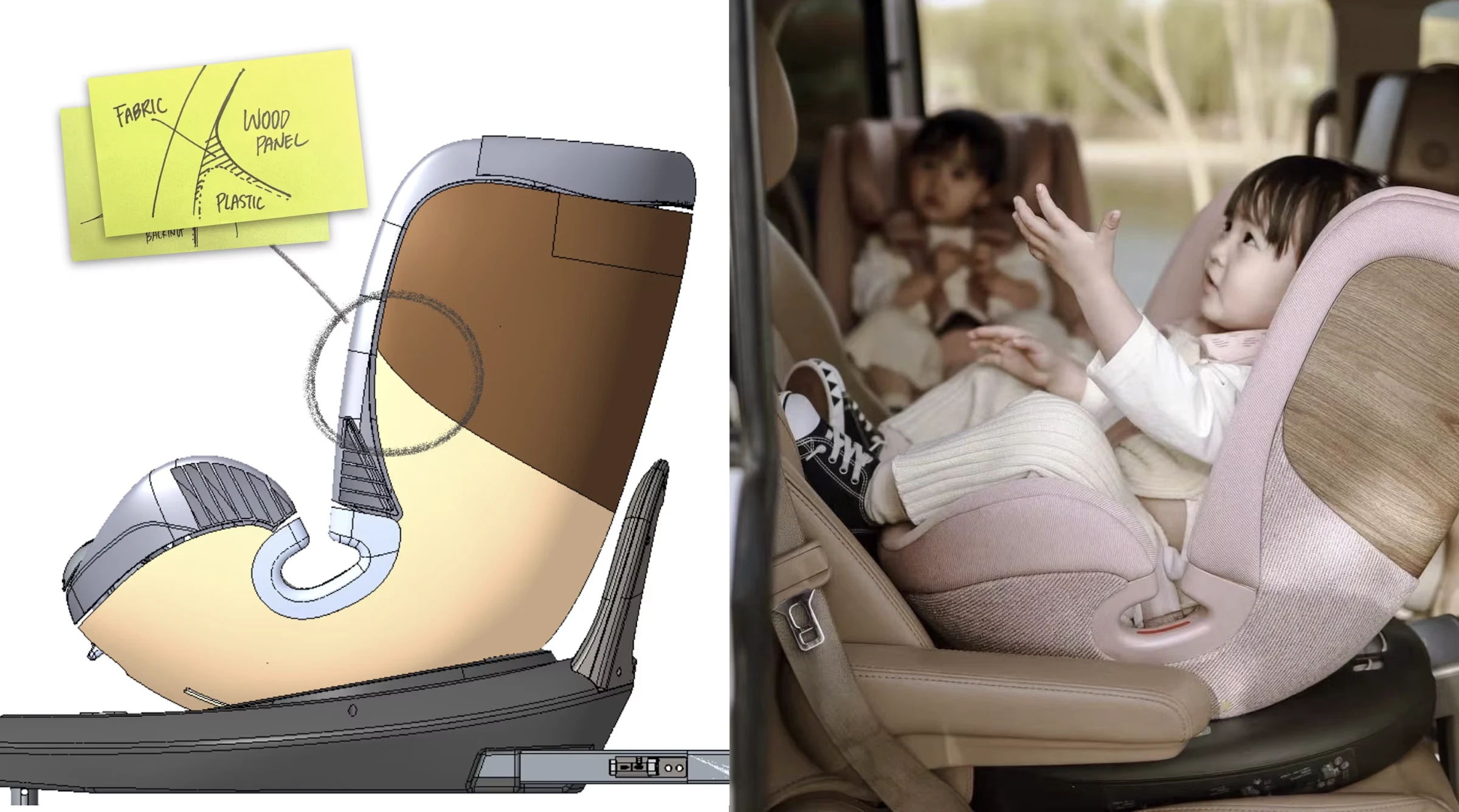
To kick off the project, the IDEO team needed to answer two questions: What matters to the new generation of parents in China? And how will their style and approach to parenting affect their expectations for baby car seats? Taking into account the potentially different consumer needs in different geographies, the IDEO team headed to Shanghai, a city with more than 25 million people, and the city of Taizhou in Zhejiang province, which has a population of 2 million. They conducted in-depth home visits to local families, visited many brick-and-mortar mom-and-baby shops, and interviewed people like specialized nurses, parenting experts, and child psychologists.
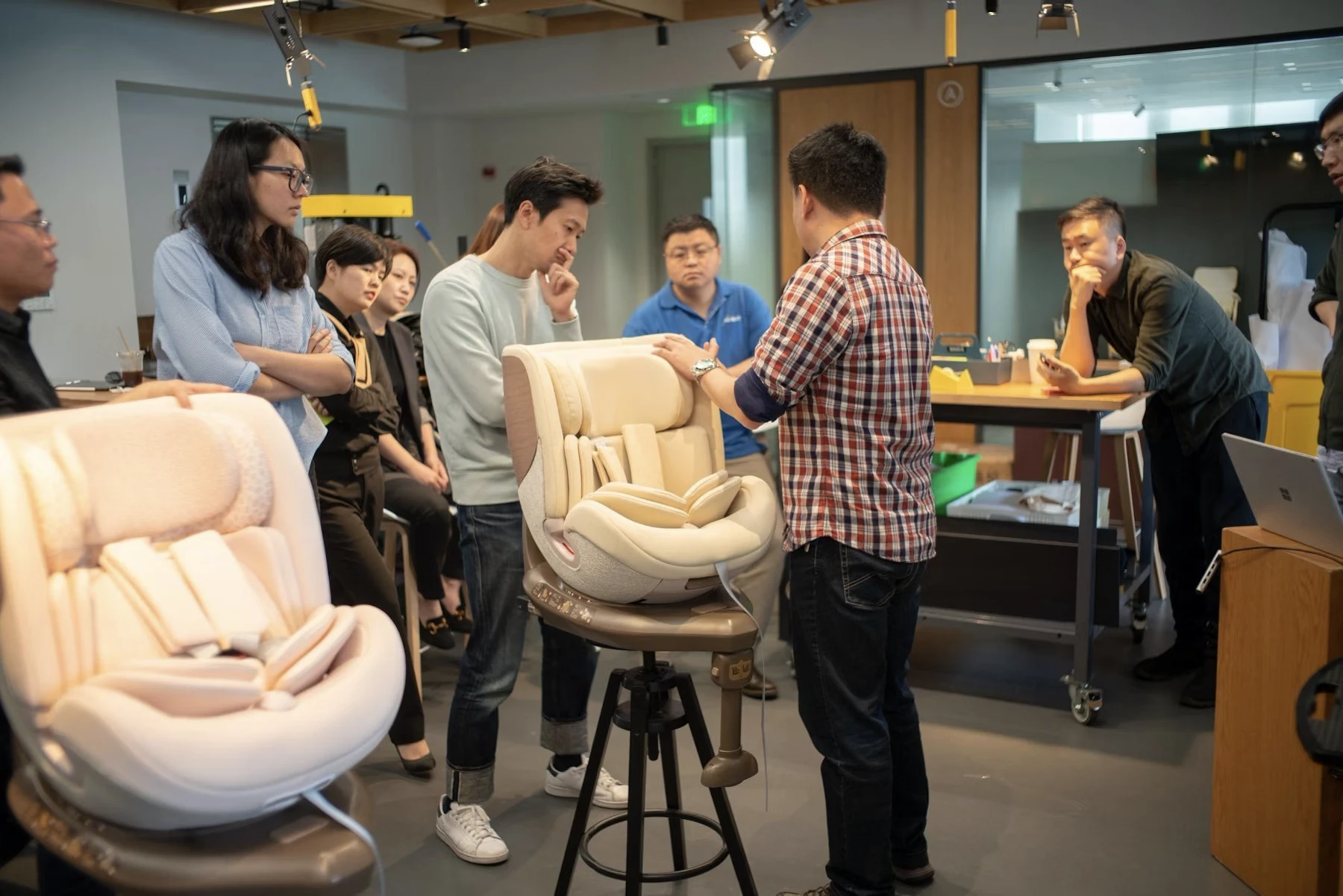
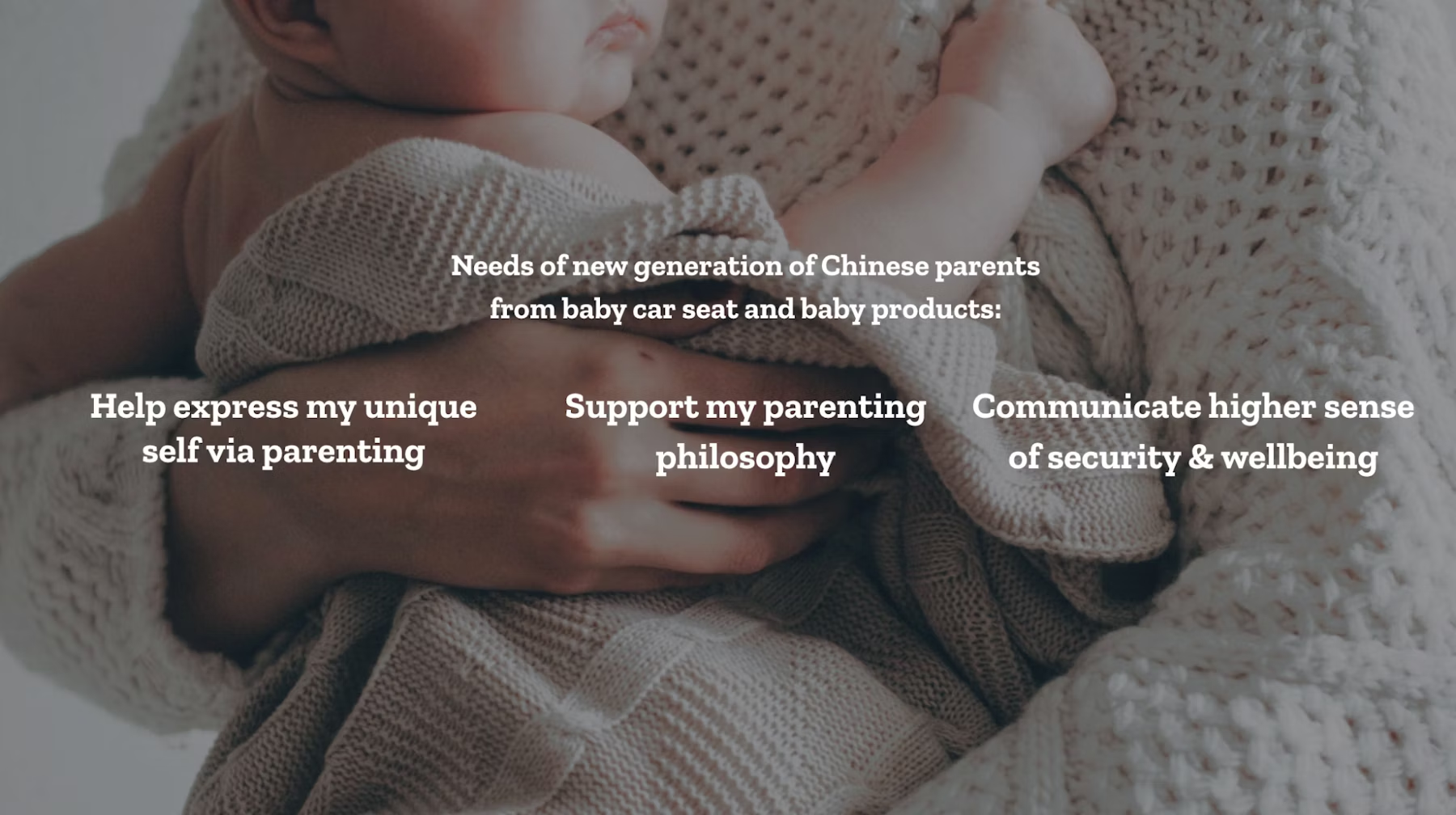
Despite the differences between the two cities, IDEO discovered commonalities during consumer conversations. Young Chinese parents were experiencing a perceived identity gap. As individuals, they felt they had distinct personalities and a clear sense of self. They actively expressed themselves through their clothes and belongings. But when they became parents, this sense of self weakened or disappeared completely. Their identities shifted to being someone’s mom or dad overnight. This new generation was eager to show their unique approach to parenthood as they used to express their sense of self. But many products were designed for children, with little regard for parents.
This core finding helped set the direction for the new baby car seat design and brand Maple&Co. However, there were still two significant challenges to overcome. One, IDEO needed to design a product with stringent technical regulations and standards on a tight timeline—ZUOWE wanted to launch the new car seat at an important industry trade show within the year. And two, the team had to help the organization transform its thinking and ways of working to be more consumer-centric.
BoAo’s strength lies in its 20 years of experience developing and manufacturing car seats for major domestic and international automotive brands. This gave the company an edge in overcoming technical barriers and driving mass production. But its engineering and manufacturing mindset had become a barrier to transforming into a D2C brand. With such ingrained ways of working, pivoting to a more creative process can be hard.
To address this hurdle, IDEO set up co-creation workshops, bringing together ZUOWE’s newly formed baby car seat team and manufacturing experts from their factories to discuss design direction and details early on. The benefits of the collaboration were clear: It was easy to share feedback in a timely manner and make product design decisions very quickly. When IDEO presented a design that emphasized natural textures during a workshop on brand positioning, a member from Bo Ao’s manufacturing team said, “This feels very different. This could become a major selling point,” and that they had “never seen” anything like it done by other baby car seat brands.
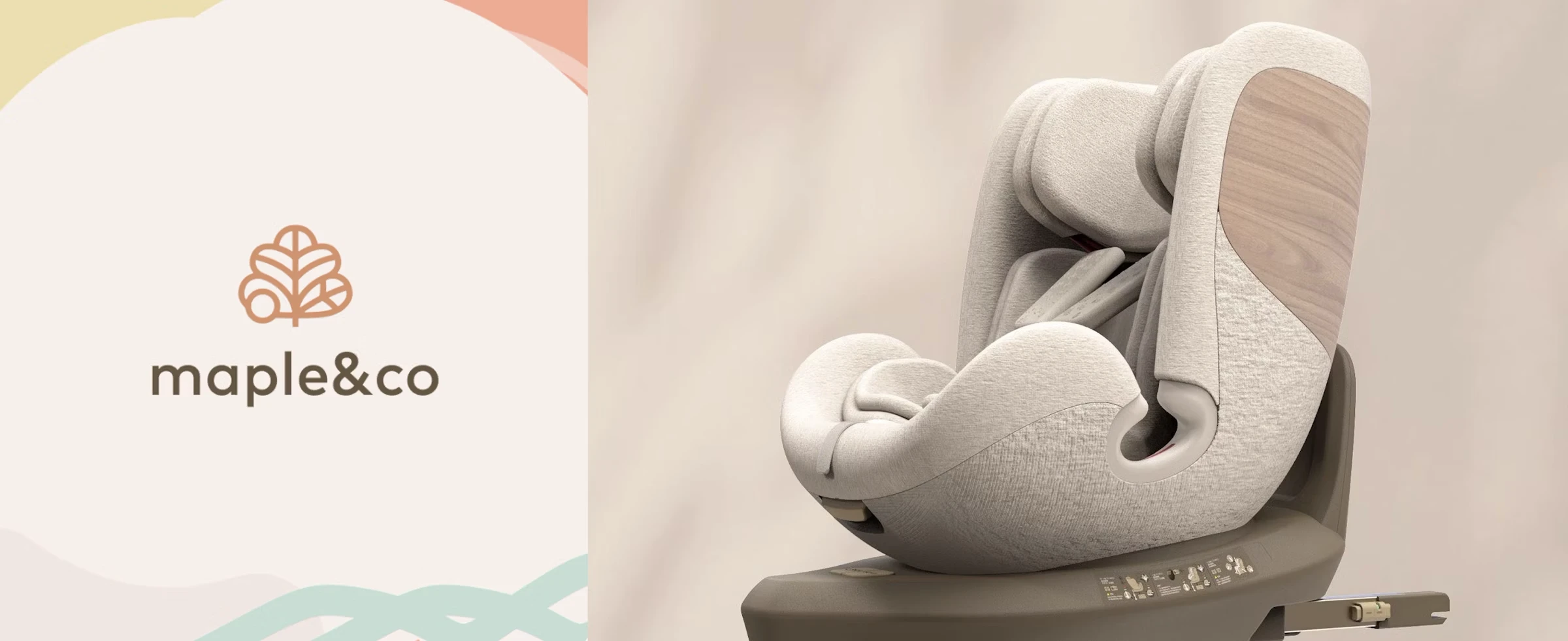
A year after working together, ZUOWE Technology launched Maple&Co and the new Maple baby car seat across its main e-commerce channels. Modern and minimalist in soft natural colors and wooden veneers, Maple appeals to the aesthetics of young parents in China. Despite a series of micro COVID outbreaks in China, within three months, Maple had already achieved better-than-predicted sales and received favorable comments about the look and quality of the car seat from parents. Fast forward two years, additional collaborations with IDEO have enabled the young startup to grow its child travel portfolio from a signature car seat into a more holistic offering that includes highly functional, fashionable, and adaptable car booster seats and strollers that thoughtfully address the needs of modern Chinese families across various life stages at home—and on the go.

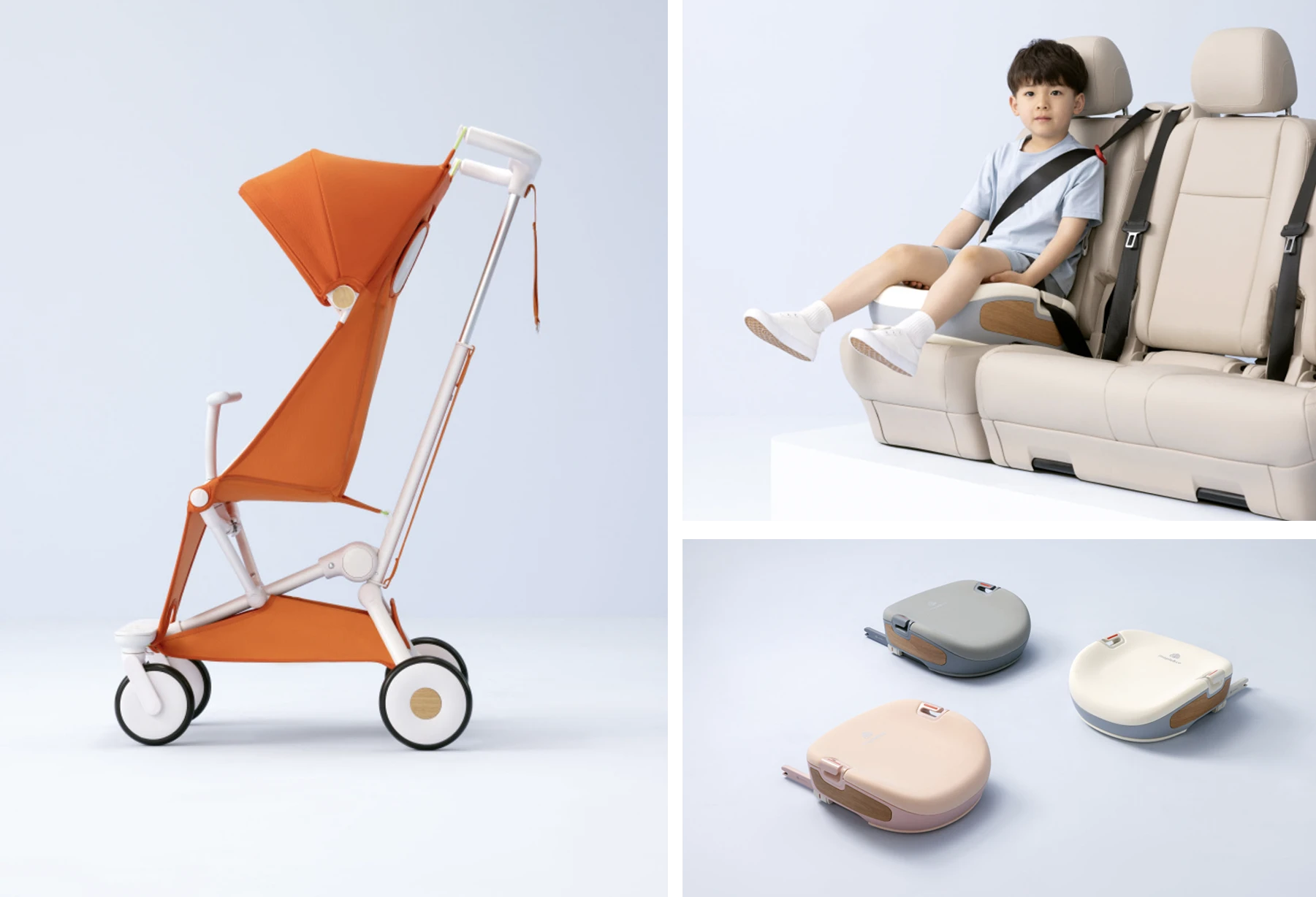
China's minor protection law mandated the use of child safety seats beginning June 1, 2021.
Despite incoming regulations fueling a surge in purchases, car seats on the market rightly prioritized safety but did not consider the emotional needs and lifestyle preferences of a new generation of Chinese parents.
1 year
after the project ended, a new, differentiated baby seat product and brand, Maple&Co, launched
Top 6
during the 2023 “Double 11” shopping festival, Maple&CO secured the 6th spot on Tmall's new brand pre-sale list
How a $4000 vet bill sparked innovation at American Express
American Express and IDEO teamed up to design features that offer Card Members more payment control and flexibility.
“Over a year ago, I had to take my cat to the vet for an unexpected and expensive surgery,” says one Card Member. “To be honest, I still don’t know if I’ve paid the bill off.”
Many crave the flexibility to pay for large purchases over time, but also want to avoid the pitfalls of debt. Others rely on debit or cash for small items—no one wants to accumulate interest on a cup of coffee, lunch with a friend, or box of Kleenex—but then miss out on valuable rewards.
American Express worked with IDEO to help them attract new customers by understanding what financially stable young adults wanted in a credit card. The team began by interviewing more than 120 millennials to understand their payment behaviors around debit and credit, and how they think about borrowing and spending.
One person described the monthly panic of receiving his bill—described as “statement shock”—and his habit of making multiple payments before his billing cycle closed to ease this anxiety. Others were wary of credit because of a large veterinarian bill or financial mistakes made in their 20s, and relied on debit because it felt safer than accruing a balance to pay off. Overall, the team learned that many consumers experience anxiety about paying their bills. And while financial products that offer more flexibility and control have been needed for years, they are especially valuable in times of economic uncertainty like today.
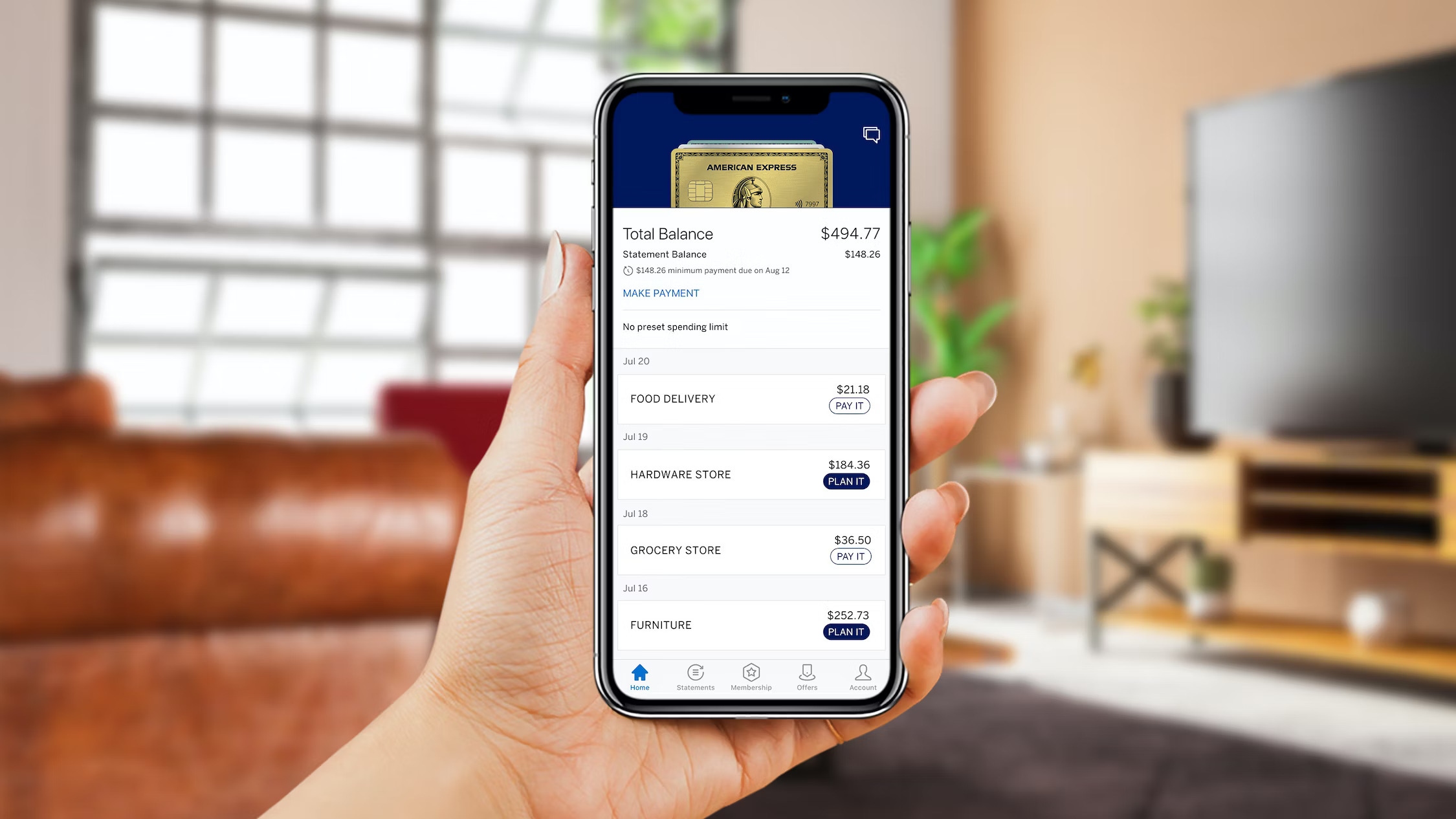
Based on this research, IDEO prototyped, iterated, and refined two concepts, with frequent feedback from users and the client. Called Pay It Plan It, this feature offers financially responsible consumers more transparency, confidence, and control.
Pay It allows Card Members to quickly pay for small purchase amounts under $100 with a few taps in the American Express mobile app. When that purchase shows up on their account, they can choose “Pay It” and still earn rewards on the purchase. This ensures Card Members can take advantage of rewards while lowering their monthly bill by paying for smaller items throughout the month.
With Plan It, Card Members can split up larger purchases of $100 or more—like an emergency trip to the vet or a new sofa—into equal monthly payments, with a fixed fee and no interest. When the purchase appears in their account, they can select “Plan It,” and will be offered up to three monthly payment plans, ranging from three to 24 months. Each plan comes with a fixed monthly fee and no interest. Card Members know exactly how much they have to pay each month, so there are no surprises. And if they pay the purchase off early, they no longer have to pay any future plan fees.
The design of Pay It Plan It did not come without challenges: Bill pay is critical, complex, and highly regulated. Pay It Plan It required a significant internal financial and technical investment, which was achieved after IDEO shared many of the emotional, compelling stories from credit card users with leaders at American Express.
The team worked closely with the American Express regulatory and digital teams to ensure compliance and seamless integration into the mobile app and website’s user experiences and interfaces. To heighten the sense of competence, control, and transparency for users, the designers focused on small interactions like status animations, proactive suggestions, and straightforward language. These interactions help Card Members anticipate upcoming payments and clearly understand Pay It Plan It.
Plan It was designed with transparency, control, and accessibility in mind: The payment plan fee is displayed in dollars to give the customer certainty over their total costs.
Initially, the team set out to create a new credit card with the needs of young adults in mind. But IDEO and American Express realized that Pay It Plan It could be scaled across existing credit card products to ultimately benefit and attract more Card Members. Now, almost all U.S. American Express Consumer Card Members have access to Pay It Plan It through credit cards, co-branded cards, and the well-known Green, Gold, and Platinum Cards. Since launching in 2017, Card Members have created nearly 5 million Plans, totaling nearly $4 billion in purchases, with an average Plan size of $789. Millennial and Generation Z Card Members have created approximately 44 percent of these Plans.
The flexibility and control offered through Pay It Plan have earned American Express positive press, including a call-out in The New York Times for being among solutions that “make it easier for their customers to borrow money, and to manage their monthly cash flow.”
At first glance, design-led innovation may seem difficult to achieve in large, established organizations like American Express, operating in a highly regulated and deeply rational industry. But the IDEO and American Express team successfully found ways to introduce new behaviors like rapid prototyping, cross-discipline collaboration, and leading with emotional customer stories within the existing organizational culture and structure. American Express has since established a permanent Pay It Plan It team dedicated to evolving the feature. Made up of employees across departments, this points to a new and collaborative team structure for the company.
By seeking to understand the human behind the Card Member, American Express has transformed credit and financial services for the better, helping both to be defined by empathy, utility, and transparency.

How to Use Your iPhone to Create Frameable Art
How a design constraint helped me make art
Fast forward to fall of last year. Adobe announces an update to its Lightroom iOS app that allows users to capture RAW photos using their smartphone camera. Slowly, I began experimenting with on-the-go editing techniques similar to those I’ve developed over time using Lightroom on desktop. Could the iPhone, with its tiny image sensor, actually be the magic gadget I craved?

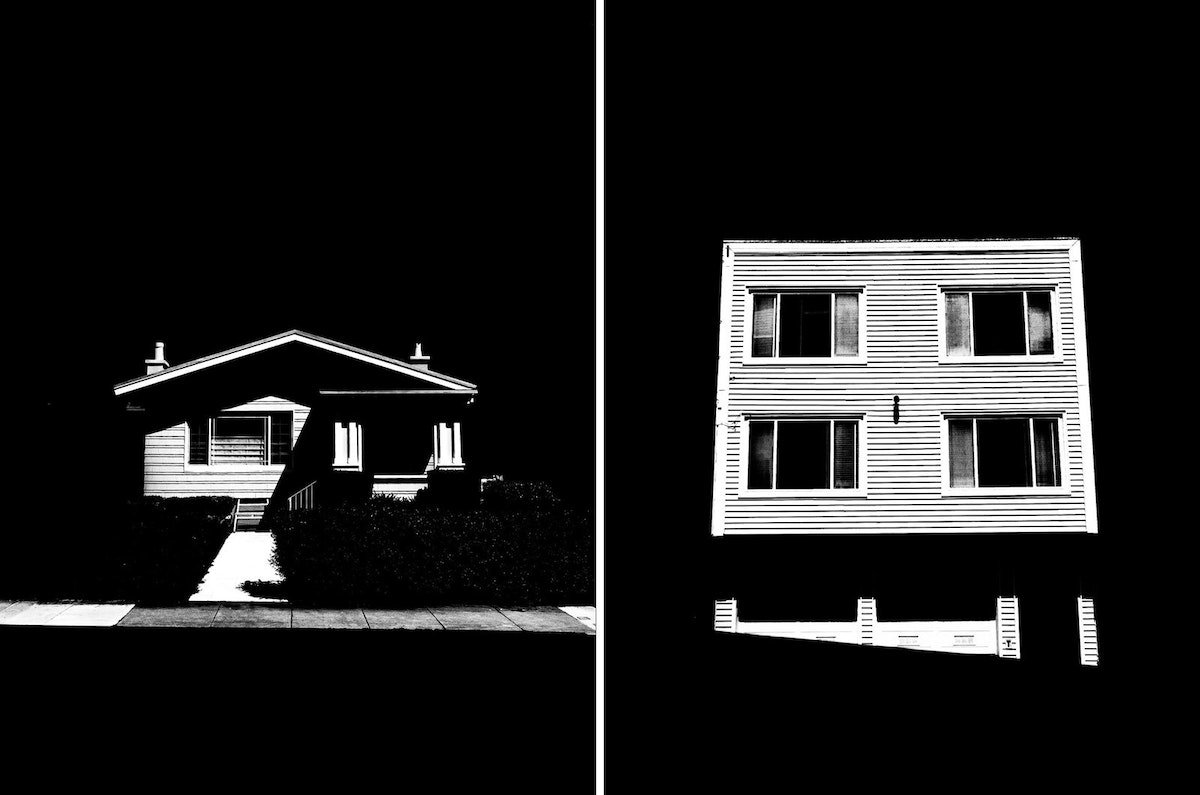
I’ve long wanted to do a project that celebrates the diverse architecture of my adoptive city, and my newly augmented smartphone camera provided just the opportunity. So, I set out to answer my own question with a specific aesthetic in mind and a simple design constraint in place: I would use my iPhone, alone, for both photos and edits.

I have now captured and shared more than 40 photos—one each day since April 1st—and will continue to do so until the series tops out at 100 images. The constraints I held myself to and the consistency of daily publishing have allowed me to quickly refine and iterate the technique—an accidental outcome as happy as it was unforeseen.
As designers, we often yearn for carte blanche freedom to explore and create as we see fit. What we forget is that our best solutions often come from imposing limits on that freedom, and seeing what comes of it.
How I did it: all photos in the series are captured using an iPhone 6S, and all edits were performed in roughly 60 seconds using some black and white alchemy in the Color tab of Adobe’s Lightroom Mobile app for iOS.

Want to see more of Burton’s work? Check out this, a NATO & G8 protest he attended in Chicago in May of 2012. And this, the stations of the Moscow Metro he captured during a visit in the fall of 2015.
When I first moved to San Francisco, I spent every free moment exploring my new locale, camera in hand, with a backpack full of lenses and a tripod. With time, however, the weight of my DSLR and pack felt more like an albatross than an accessory, and I adopted the usual photographer’s lament, yearning for a magical gadget that could output images of a quality inversely proportional to its bulk.
What’s in my Moleskine: Adam Cristobal
Take a peek into an interaction designer's sketchbook
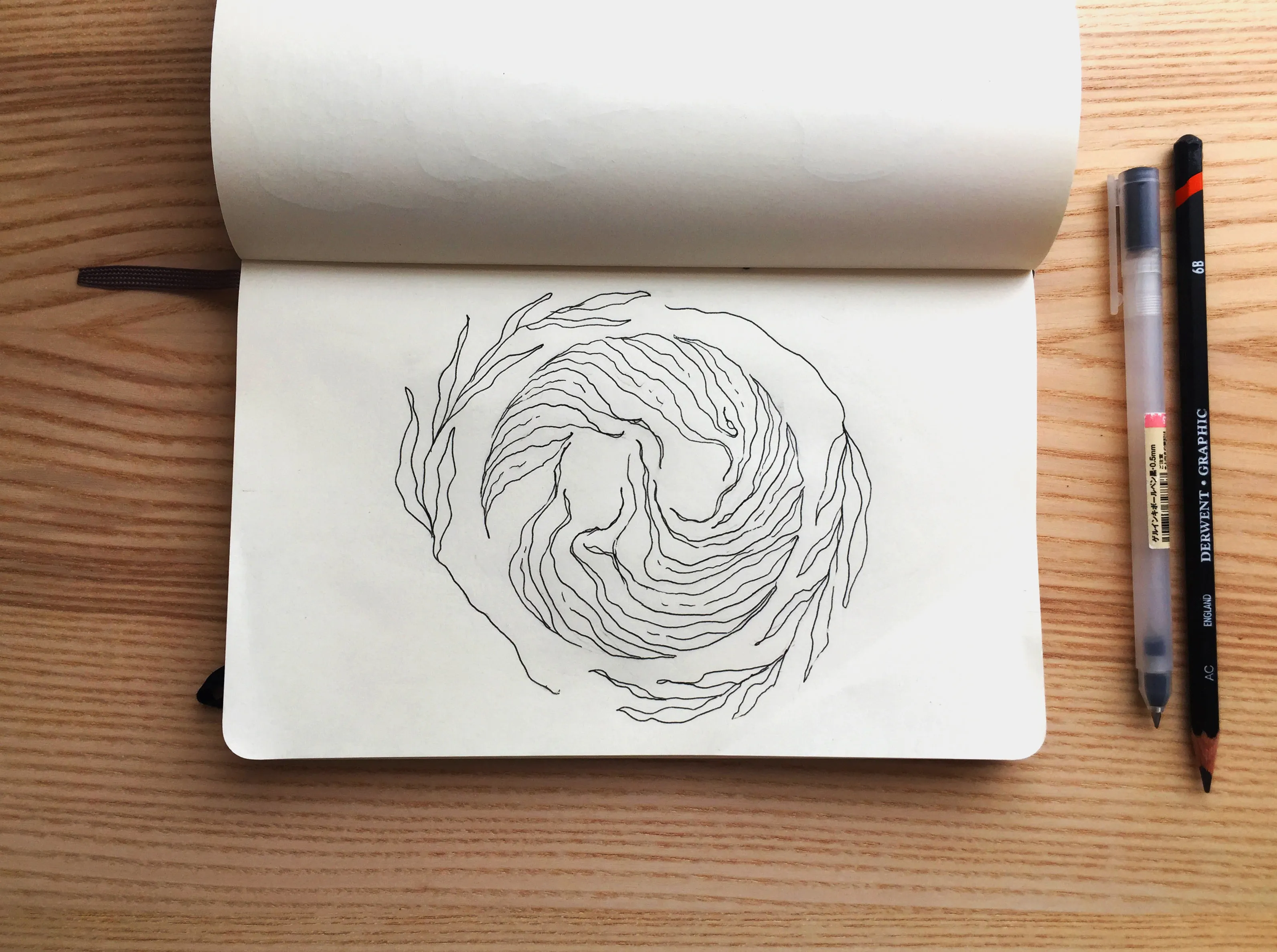
These days, I frame my life less as a sensible narrative with a rise and fall, and more as a series of small, densely packed moments that leave sweet and sour aftertastes. These moments are the ones I choose to draw in my sketchbooks, usually several months after they’ve actually occurred. The unimportant things, I forget. What’s left for me to draw is what matters: moments of wisdom, aged by feelings that have grown more complex and multi-dimensional over time.
Here are a few moments that have stuck with me:
Blame it on the Boba
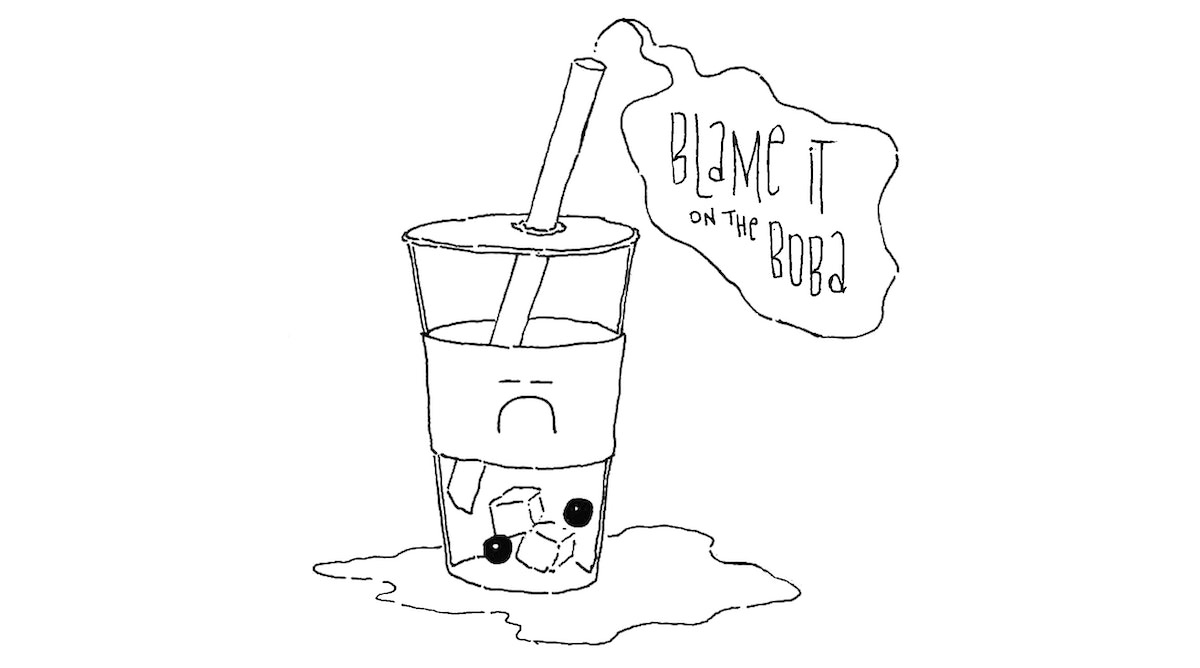
When I first moved to San Francisco, I started dating someone—less because it made sense to date him in particular, and more because I was enamored with the idea of christening my new city with a new relationship: new city, new boy, new me! Predictably, things didn’t work out, because that’s what happens when you rush into things for the wrong reasons.
Over a year after dumping me, however, he asked me out to boba. Somehow, we ended up seeing each other again. And again, predictably, things didn’t work out. Apparently, I saw things differently the second time around. I rarely drink alcohol, but that doesn’t stop me from attributing my poor life decisions to boys touting sweet beverages.
Most People are Terrible
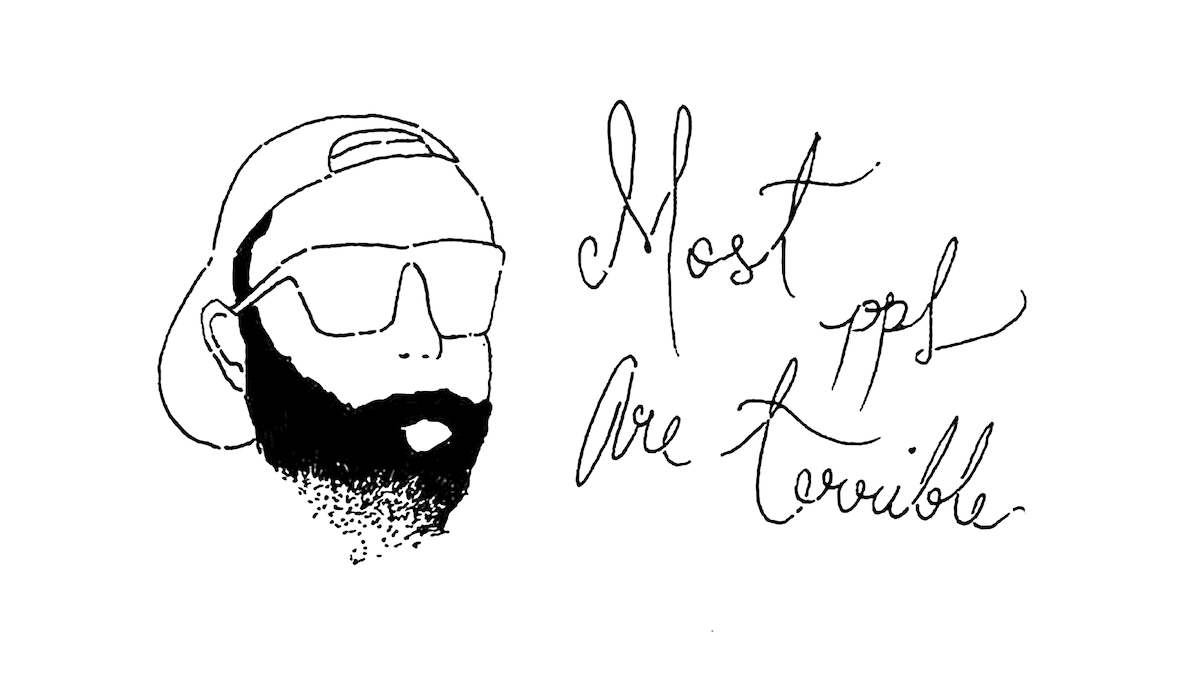
I met one of my best friends, Cory, over two years ago. Since meeting him, I’ve probably drawn him about ten times. A savvy reporter with a sharp tongue but a heart of gold, Cory has provided me with many invaluable nuggets of wisdom. One of the most memorable nuggets was a sobering reminder that I tend to assume the best in people too quickly.
In some cases, this just means that someone who I thought had excellent taste in clothes, music, books, or food actually doesn’t. In more serious cases, this means that I have a difficult time distinguishing charm from crazy. In any case, and particularly the latter, I keep this axiom close to my heart.
Not Assholes, Just Shibas
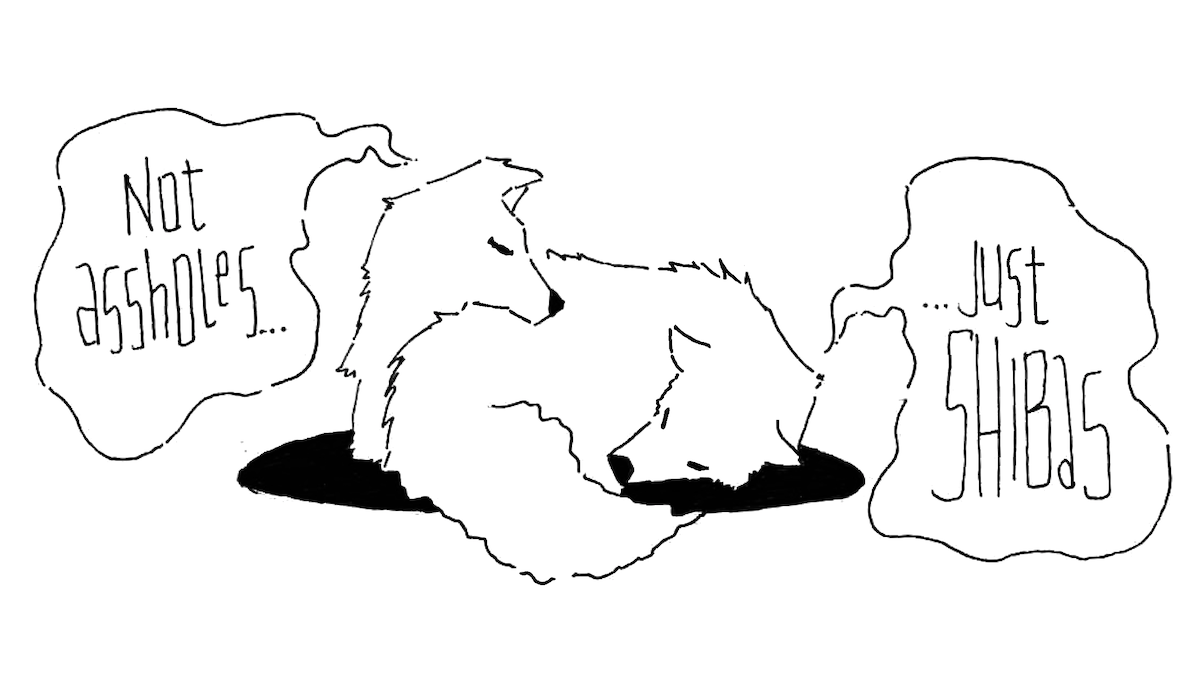
In 8th grade, I met a girl named Mira who is now one of my oldest and closest friends. Mira is much more charismatic and social than I am. During our younger years, I always thought were two sides of one coin: she was the outgoing and social one; I was the quiet and taciturn one.
However, a few years ago, she told me that she’s actually a total introvert. I realized two things: First, that our introversion was probably what brought us together in the first place. Second, that I had completely misunderstood one of my best friends. But that’s water under the bridge at this point. Lately, we’ve started characterizing ourselves as shiba inus, who aren’t exactly the cuddliest of dogs. But they’re not jerks, they’re just independent. Just like me and Mira.
At the end of the day, I use these moments to remind myself that I can always adapt when life doesn’t work out exactly as I expect. And if all else fails, finding humor in turbulent moments is the quickest solution for a bad day.
I’m a huge nerd. I grew up watching a lot of fantastical and post-apocalyptic anime, and I’m a former literary history student with a fondness for medieval poetry. Having spent enough time with Chaucer, Boccaccio, Satoshi Kon, and Hideaki Anno—most of whom tend to leave their audiences hanging or uncomfortable—I learned to appreciate stories with ambiguous endings. I’ve carried this same sentiment into my sketchbooks.
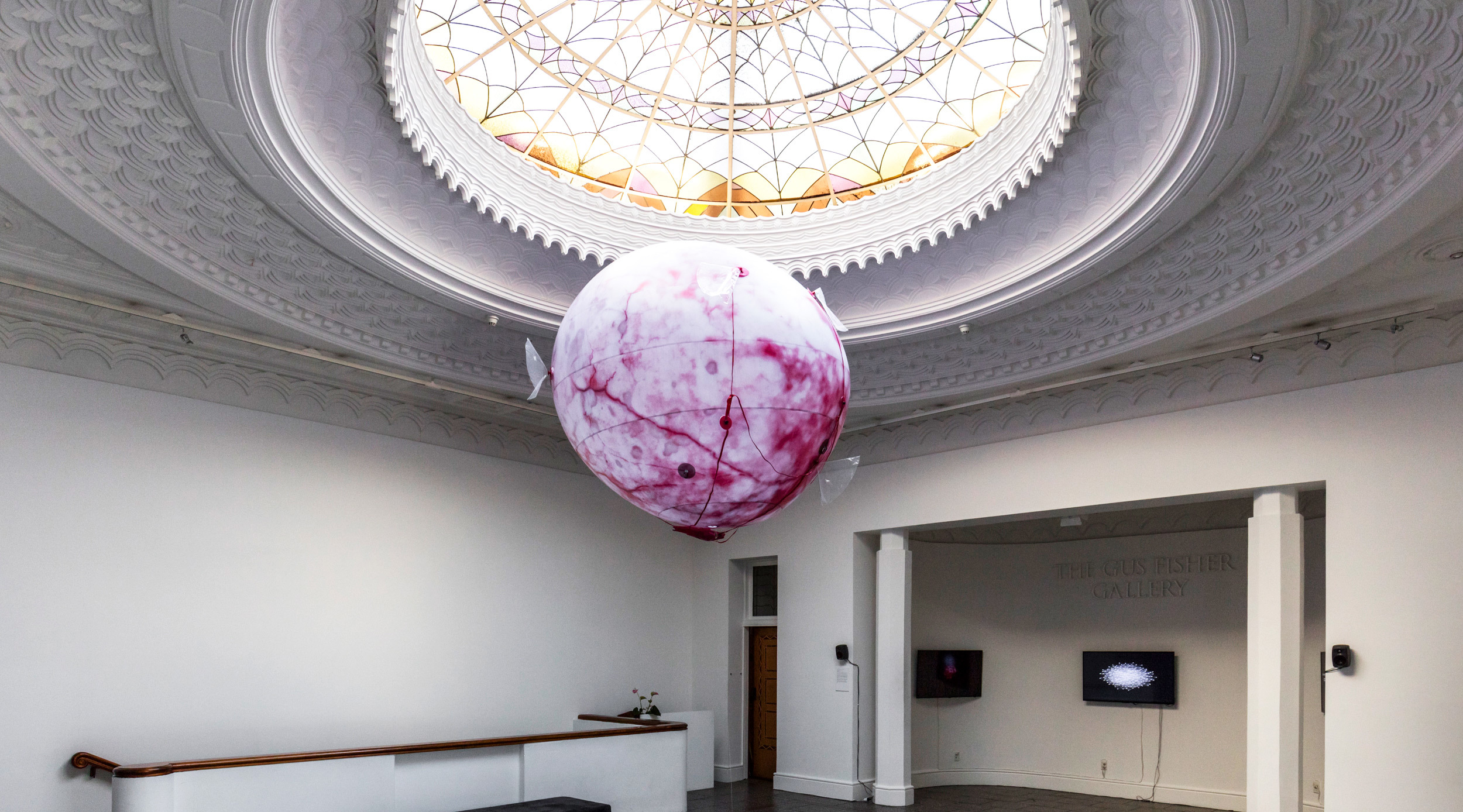
Your Body as An Art Project
How one young British artist is pushing the boundaries of bodily design
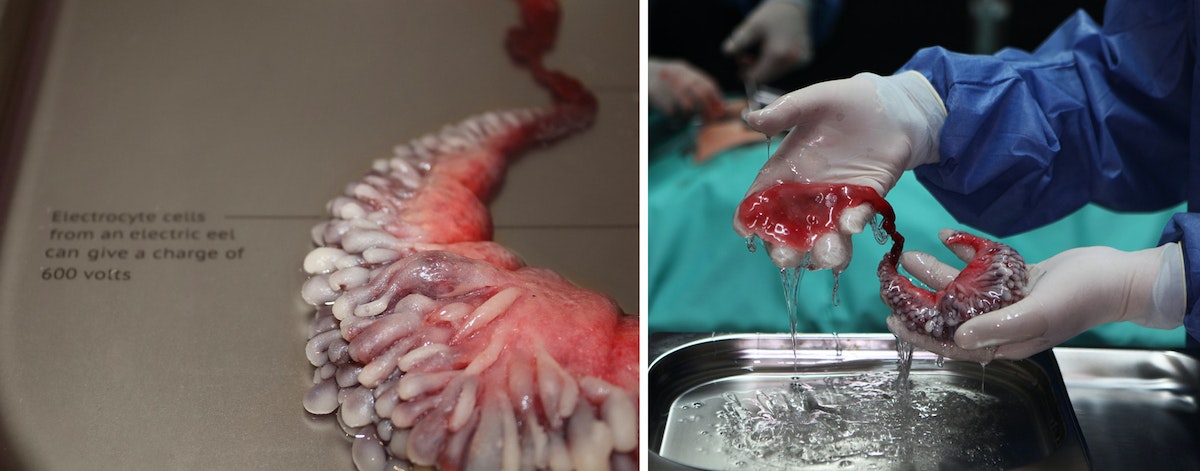
Imagine, for example, using parts from an eel to shock the human heart with current when it’s having a heart attack? In an exhibit called Domestic Futures at Nationalmuseum of design, Stockholm Haines showed exactly such a “product”. Goodbye defibrillating paddles, hello electric eel!
More recently, IDEO’s London studio collaborated with Haines for New Old, an exhibit at the Design Museum London. The result was “Spirit,” an AI assistant for the elderly. After working alongside Haines, we found ourselves intrigued, so we caught up with her to ask a few questions about what it means to be a budding biodesigner.
When did you first think about getting into design, and why?
When I was younger, I had many misconceptions about design that I think are still problematic today. You rarely get to see the messy, exhausting, and all-consuming guts of design work, but I think it is an incredibly engaging discipline. I got my masters in the Design Interactions department at the Royal College of Art, and am now undertaking PhD research at Transtechnology Research at Plymouth University.
Who are the designers, artists, writers, and thinkers that have influenced your work?
Noam Toran, my tutor on my MA course, offered many fascinating and unnerving threads of research, along with Tony Dunne and Fiona Raby, who promoted alternative ways of thinking. I also like Floris Kaayk (a bit of enjoyable grossness there!), who always seems to have something fascinating in progress; my close friend designer Soomi Park, who is highlighting sensitivity to emotion in artificially intelligent objects; and recently, I saw a great talk by Hyphen-labs, which probes some really important questions about design.
Tell us what you produced for the “New Old” Design Museum exhibit
For “Spirit,” I made some sculptures of potential body modifications—visualizing how a fictional company might improve sociability in the elderly. The IDEO team, including Ed White, Daniel Tauber, and Javier Soto Morras, had researched alterations that could be made to the body to send biological notifications. The work made me aware of the pressures and expectations on the elderly.
Tell us about three of your favorite projects
In 2013, I produced “Transfigurations”, which depicted babies with structural modifications. The work encouraged people to consider whether surgical procedures might offer solutions to future social and environmental problems. I think the cuteness of these sculptures made the work both disturbing and delightful. Another project, involved dissecting sculptures of anatomical parts, suggesting potential future procedures such as the removal of a cyst from a bionic eye implant. The tactile element helped this work to become a lightning rod for discussion regarding scientific research. Currently, I am developing “if you prick us do we not bleed?” about how we interact with humanoid robots by including bodily fluids. I was, of course, inspired by the famous Shylock monologue in the Merchant of Venice. “If you prick us, do we not bleed? If you tickle us, do we not laugh? If you poison us, do we not die? And if you wrong us, shall we not revenge?” .It's still a very powerful message about the mistreatment of those perceived as different.
What does it mean to use the body as a design medium?
All of my work is, of course, speculative. I don’t spend much time actually moving human material around, although I did once spend a very interesting day at a cadaver research laboratory! Instead I research the tools and materials that may have an impact on the body, or how we perceive the body. There are already disciplines that have to view the body as editable, and moving this way of thinking from a surgical or dental domain to a design or engineering one is where there is space for interesting interventions. There seems to be lots of interest in nanotechnology, and like many biotechnologies, this means there will be interactions with designs we can not see, but can perhaps feel, and maybe also artificial intelligence that may make design decisions for us.
Want to see more of Haines’ work? Find her current exhibits and talks here.
Agi Haines’ artwork isn’t easy on the eyes. But to her, it looks just like home. As the daughter of two South East London artists who met while working at Madame Tussauds wax museum, her childhood home was populated with wax heads, antique surgical tools, and sculpture scaffolds. Viewing the human body as raw material for design interventions wasn’t the stuff of some sci-fi future—it started as a family affair (her sister, Beatrice Haines caught the bug, too) and Haines has been working and speaking about it ever since.
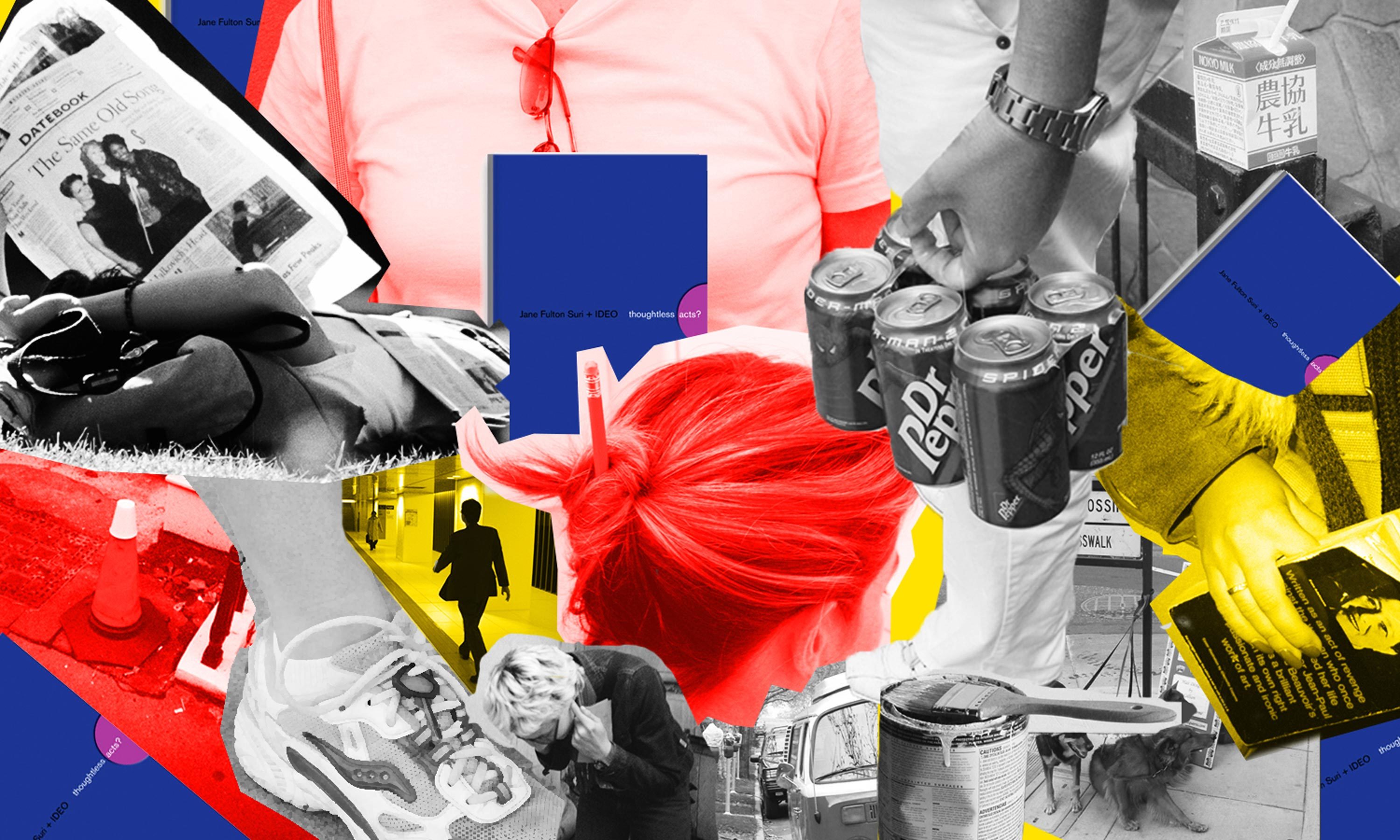
Thoughtless Acts: Bespoke Belt Loop
Thoughtless Acts: Bespoke Belt Loop. The intuitive ways we adapt and react to things in our environments
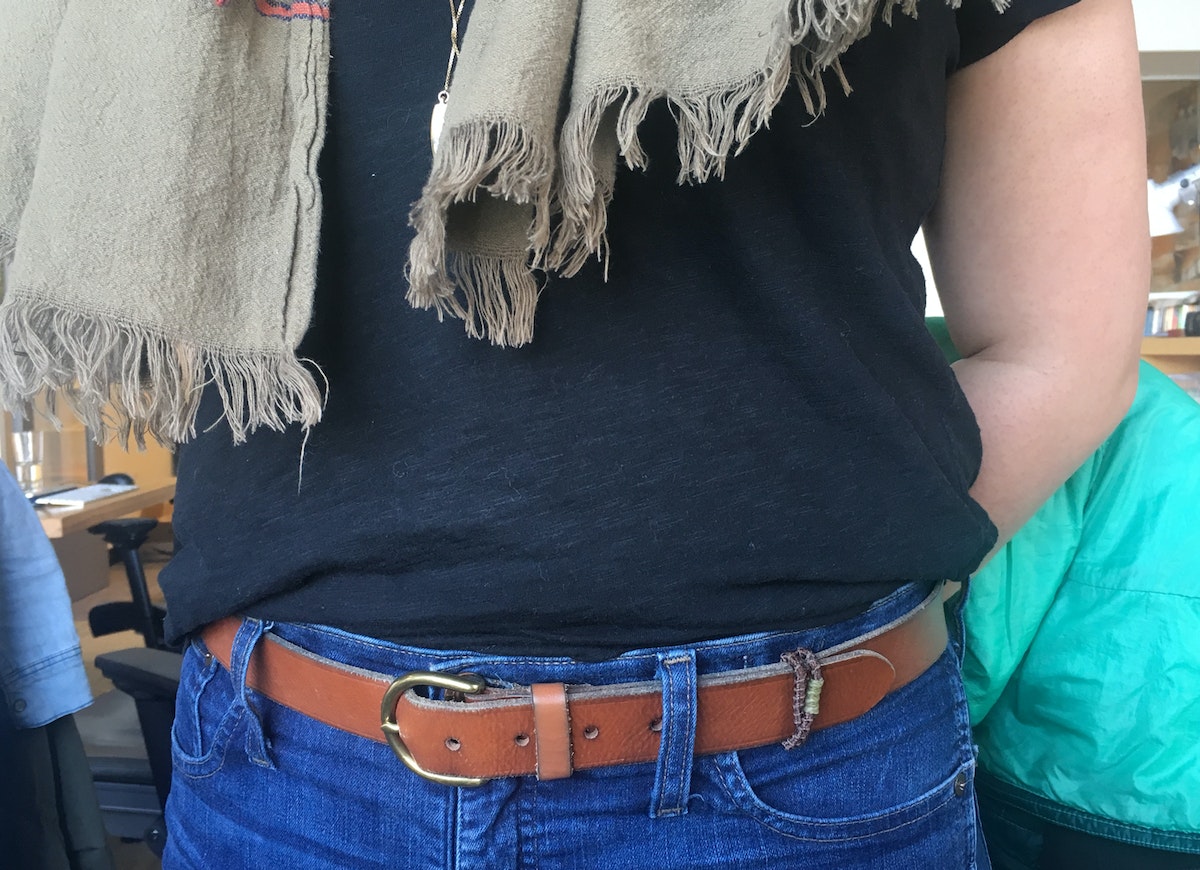
A few days ago, in the middle of an impromptu content brainstorm, I noticed that my colleague had her hair tie cleverly wrapped around her belt to keep the excess tail neatly in place.
Hair ties are something many of us wear on our wrists all the time. They’re inexpensive and, while essential for those of us with long hair, they're often under valued and under utilized. My colleague's back-up belt loop is by far the smartest and most delightful use of a hair tie I’ve ever seen.
I’m particularly inspired by this because I like to repurpose unloved objects in ways that exercise creativity and expand appreciation for junk. Recently, I took an old wine-stained summer dress and coiled it around my neck as a scarf. It now lives in the scarf section of my wardrobe.
Now, I'm thinking about ways I can repurpose all the brightly colored hair ties that I don’t like to wear against my black hair. Besides belt loop reinforcement, they might just be a new way to introduce a pop of color into an outfit.
Human-centered design requires us to observe human behavior with beginner's eyes, so that we can spot the innate ways people interact with the world around them. We call these intuitive and unconscious reactions thoughtless acts, and IDEO designers collect photos of them to inspire their work.

Lindsey Turner
I’m passionate about building brands, products, and experiences that help organizations show up with meaning and momentum.
I help organizations cut through complexity by shaping how they show up, through brand strategy, identity, and storytelling.
Working at the intersection of brand and business, I bring an editorial eye and a bias toward making—turning ideas into tangible experiences that people can understand, trust, and believe in.
My work spans government, healthcare, financial services, media, and consumer goods, from launching Gen Z-focused ventures to building innovation labs and reimagining legacy brands. I relish moments of ambiguity and enjoy translating across teams, perspectives, and priorities to move ideas forward.
I started my career in editorial and digital design, shaping cross-platform experiences and identity systems in publishing and agency environments. That foundation still shapes how I work today: I’m detail-oriented, collaborative, and overreliant on the Oxford comma. I hold a BFA in Visual Communication from the School of the Art Institute of Chicago.

Rachel Young
My work helps organizations see who their products aren't working for—and build the will and the tools to do something about it
For 25 years, I've asked the same question: Who does this design exclude—and what are we going to do about it?
My work spans human-centered strategy, inclusive design, and qualitative research, with clients ranging from Microsoft, Google, and Verizon to the National Science Foundation, and San Francisco Unified School District.
Before IDEO, I taught elementary school in East Palo Alto and spent a decade doing design work with social service organizations—where I learned firsthand what it costs people when systems are built without them in mind.
I am currently writing User Error, a nonfiction book about digital access and the design decisions behind it. I live in Oakland, California.

Brian Pelsoh
I lead with craft, ensuring our work is creatively excellent: rooted in deep human insight and imagination, while also grounded in the realities of business and technology.
My expertise spans brand, communication, and product design across tech, education, the arts, and social impact.
I believe great work demands both high-level vision and obsessive attention to detail, and only happens through collaboration.
I bring an inclusive, hands-on approach and a deep understanding of business, which enables me to consistently deliver excellence while always asking why.
Before joining IDEO, I worked at the brand firms Pentagram and VSA Partners. I began my career as a designer, leading teams at the School of the Art Institute of Chicago and the Milwaukee Art Museum. I hold an MFA in graphic design from Maryland Institute College of Art and a BFA in communication design from the Milwaukee Institute of Art & Design, and have taught at some of the best design schools in the US.

Tony Wong
I am responsible for IDEO’s long-term success in China and working with clients to use design as a tool to enable growth.
I am responsible for IDEO’s long-term success in China and working with clients to use design as a tool to enable growth. Specifically, I have helped Chinese companies design holistic brand solutions through the development of their products, communication, services, and innovation teams, and I have helped multinationals expand their presence and influence in China.
I advise global leaders on developing China-led innovation and capabilities.
In over 15 years in IDEO Shanghai, I have worked on projects that use design to elevate the quality of the experience of healthcare products and services, streamline processes that increase productivity, create spaces and programs that promote and enable inclusive communities, and build next generation mobility solutions that are planet-positive.
Before joining IDEO, I worked at Philips Electronics and the Electrolux Group in Italy, the Netherlands, and Singapore on a number of breakthrough commercial products. I am a member of the Young President Organization in Shanghai.

How to use AI as an editor, not a writer
Ed White shares how he uses AI as an editor—not a writer—to sharpen storytelling, rehearse ideas, and preserve the productive friction that makes creative work better.
Ed White has a rule he's tested on his own writing: hold yourself as the writer, and let AI be your editor. Ed is a Senior Design Director at IDEO's London studio, where he co-leads the firm's AI portfolio across Europe. Before IDEO, he spent 12 years as a writer and editor at the Financial Times, Wired, and Contagious. So when he talks about when to use AI for storytelling and when not to, it comes from two decades of crafting his storytelling skills.
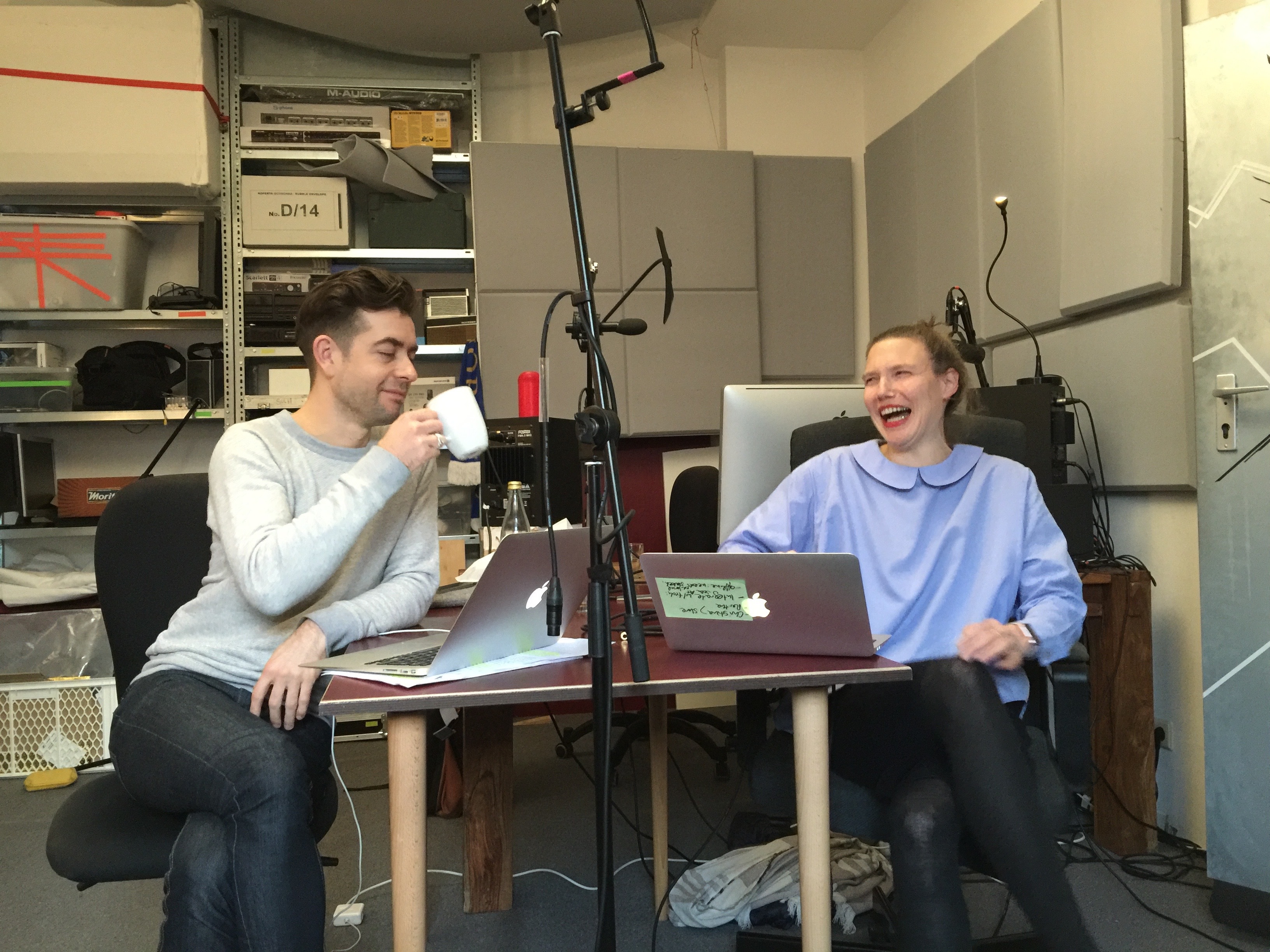
In this episode, Mina Seetharaman talks with Ed about two specific tools he uses to keep AI in an editor's seat: a "roasting agent" prompted to critique his drafts without any sugarcoating, and a simulated audience he rehearses pitches on before the real thing. They also get into what Ed is hearing from design leaders at Anthropic, Lovable, Shopify, and Google Creative Lab about how creative work is changing, and why he thinks the friction of writing something yourself is worth protecting rather than automating away.

Building a personal AI for the messiness of life: Sida Li
Becca Carroll talks with Cue co-founder Sida Li about designing a personal AI for the messiness of everyday life—not just work. They explore how Sida stays anchored to human needs while navigating fast-changing technology, product tradeoffs, business-model experimentation, and the realities of building an AI company today.
Most AI products today are built for work—a space with clear problems and established systems. One founder noticed a gap: personal life is messier, harder to systematize, and mostly left behind by the AI boom. So she built Cue, a personal AI that lives inside iMessage and group chats, to go where the other tools haven't.
In this episode, Becca Carroll, IDEO's Chief Strategy Officer, talks with Sida Li, co-founder and CEO of Shared Context Lab, about staying anchored to a human need while the technology around her keeps changing shape, why she treats her business model with the same rigor she'd bring to a product, and what it feels like to build a company at this particular, disorienting moment in AI.
The conversation also gets into how Sida makes design decisions: the language Cue uses to describe itself, the tradeoffs behind building inside iMessage instead of a new app, and a real story about a business idea that didn’t pan out.
This is the second in a two-part series profiling founders from IDEO's Startups-in-Residence program. The first conversation is with Johannes Seemann, founder of Sooner, on designing GenAI for the emotional side of money.

Designing GenAI for the emotional side of money: Johannes Seemann
Designing financial tools around the feelings that shape money decisions.
Most personal financial tools are built to run the numbers and optimize towards a budget. While that works for some, most people experience money as a lived relationship that does not neatly fit into a spreadsheet. Johannes Seemann and Becca Carroll discuss why money is emotional before it is mathematical, and what a human-centered approach to building a generative AI financial product looks like in practice.

The curious leader's edge in uncertainty: Scott Shigeoka
How genuine curiosity helps leaders navigate uncertainty with greater confidence.
Mina Seetharaman talks with Scott Shigeoka, author of Seek and Head of Curiosity Cultivation at the Eames Institute, about what distinguishes genuinely curious leadership from performative curiosity, how power dynamics shape curiosity, and why practicing curiosity can restore energy rather than drain it.
Looks like you might be in search of something very specific?
Or reset the filters above and try another angle.
Here’s some random inspiration

Podcasts about creative leadership

Articles about the power of prototyping