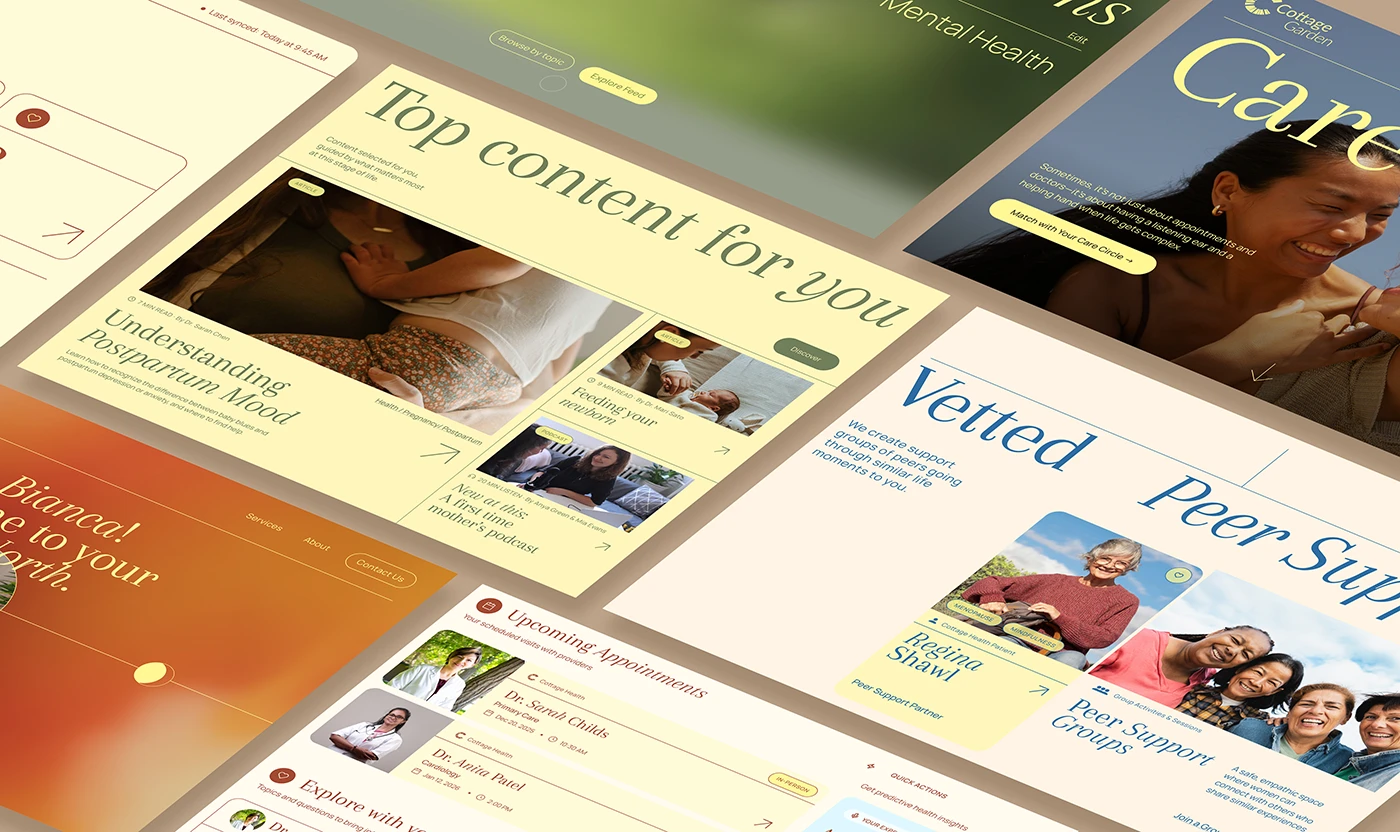
Designing a new vision for women’s healthcare
Introducing Cottage Women’s Health
Systemic transformation is not new to Cottage Health. Founded in 1888 by 50 forward-thinking women in Santa Barbara who wanted a hospital for their growing community, Cottage Health has since expanded to 3 hospitals and is quickly growing its outpatient services as well.
To understand the current Cottage Health experience, IDEO conducted dozens of in-depth interviews with patients, providers, caregivers, and staff. They also ran multi-week diary studies, engaged in inspirational research activities, and held events to hear from local women.
The qualitative research surfaced that women often carry the mental burden of repeatedly remembering, explaining, and advocating for themselves. Women’s pain is often minimized, which causes new providers to inherit mistrust from previous experiences, without having the tools to rebuild it. During significant life transitions, such as pregnancy or menopause, women may receive conflicting advice from health providers and seek additional outside support from informal networks. Access to quality care can sometimes depend on insider knowledge, private resources, or providers willing to go far beyond their job descriptions. And while providers make referrals, women must handle the time-consuming coordination required to make everything work, instead of focusing on healing. The bottom line: what women wanted most was to be seen, heard, believed, and supported in knowing what to do next.
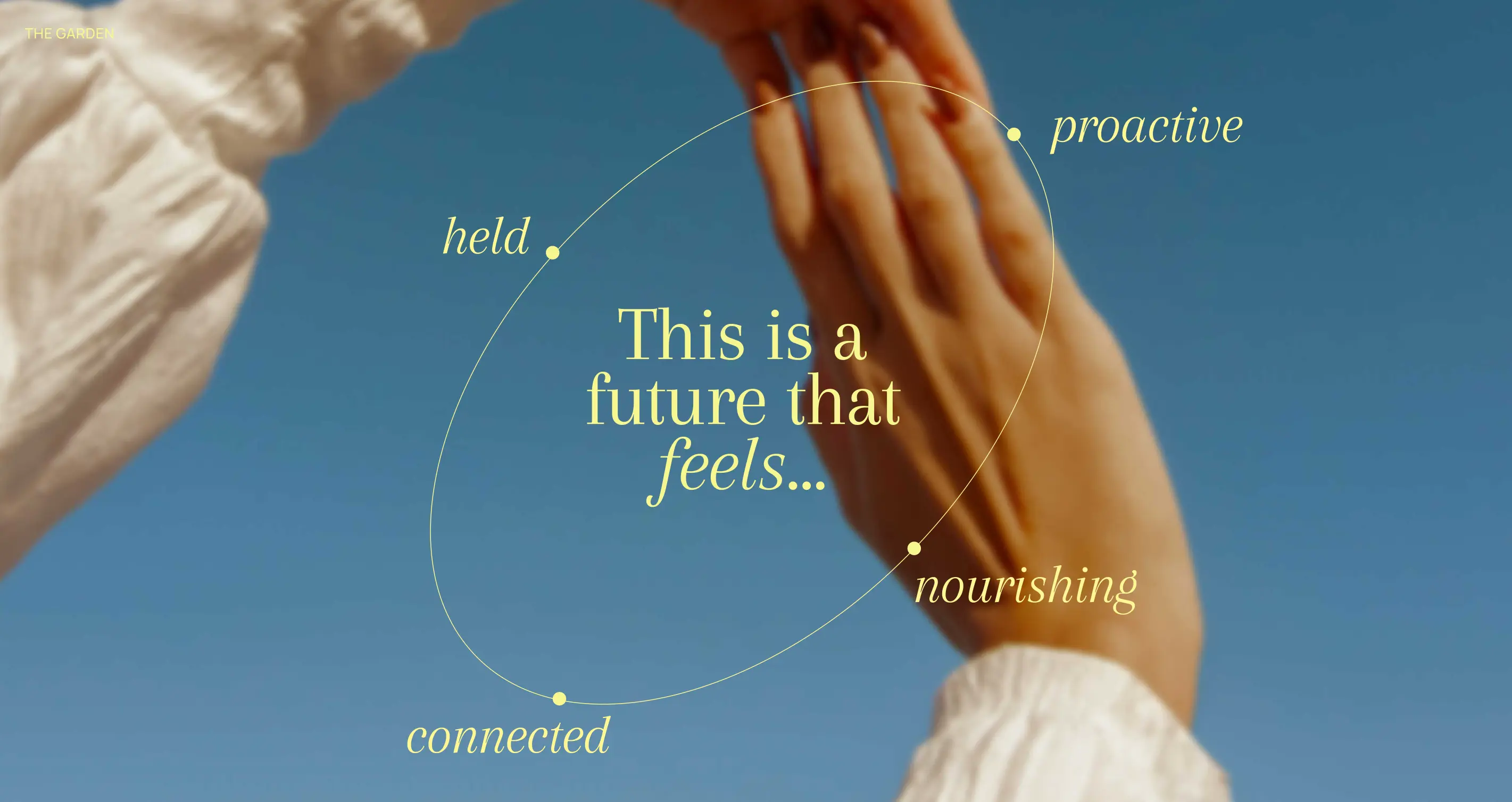
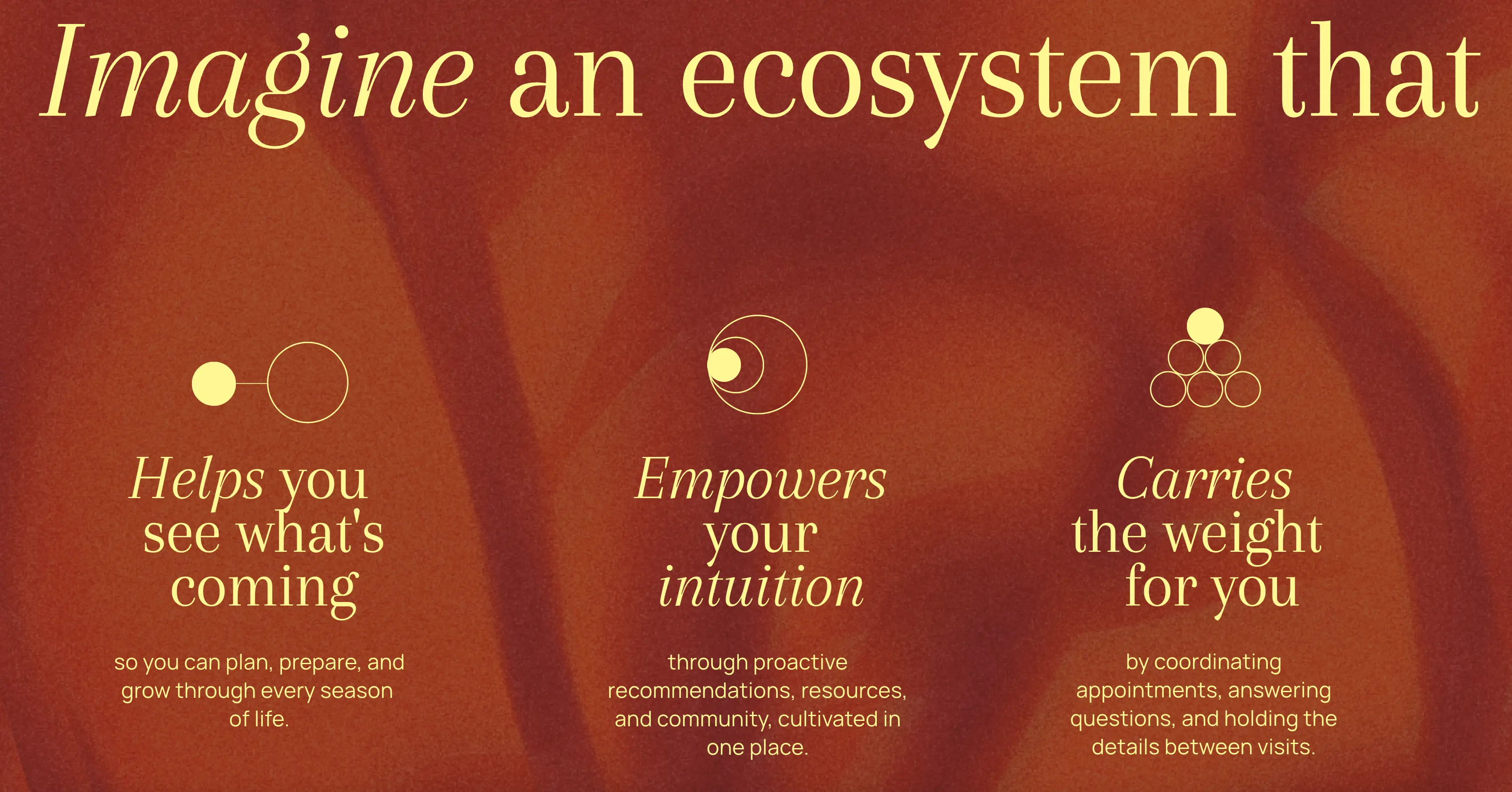
In order to address these challenges, IDEO proposed a new vision for women’s health, alongside design principles and concrete service shifts to guide future decision-making. Every interaction with Cottage Health should build on the information patients have already shared, demonstrating the system is listening. They should also guide women through life transitions by anticipating needs in future life phases, not just what’s happening now. Much like a community gathering, the Cottage Health experience should feel like a village, fostering belonging and shared care through warm, connected, human touchpoints.
Building on these design principles, IDEO developed three exploratory service concepts that represented potential pathways for future development, rather than finalized offerings: True North, Wellness Commons, and Care Circle.
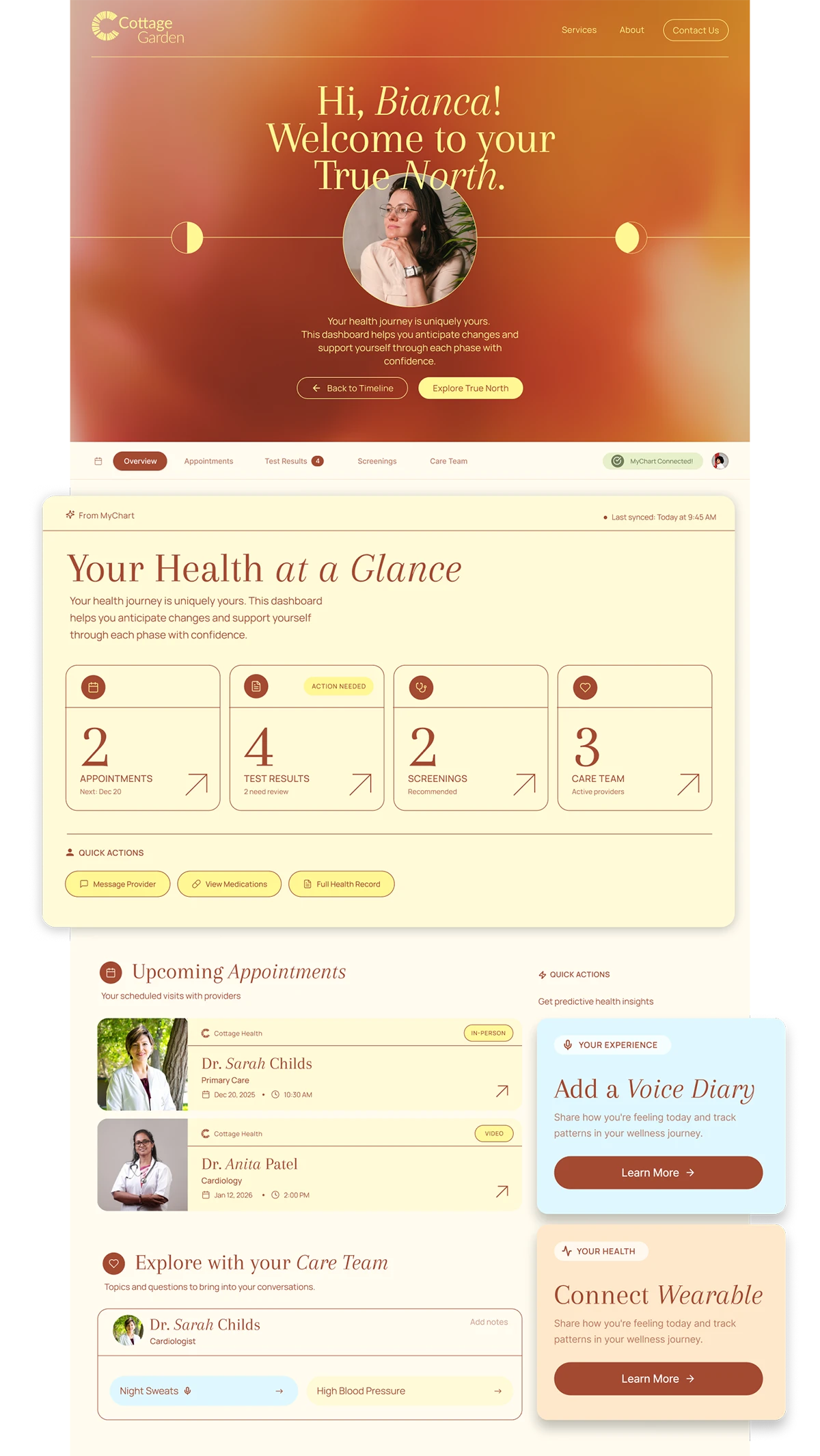
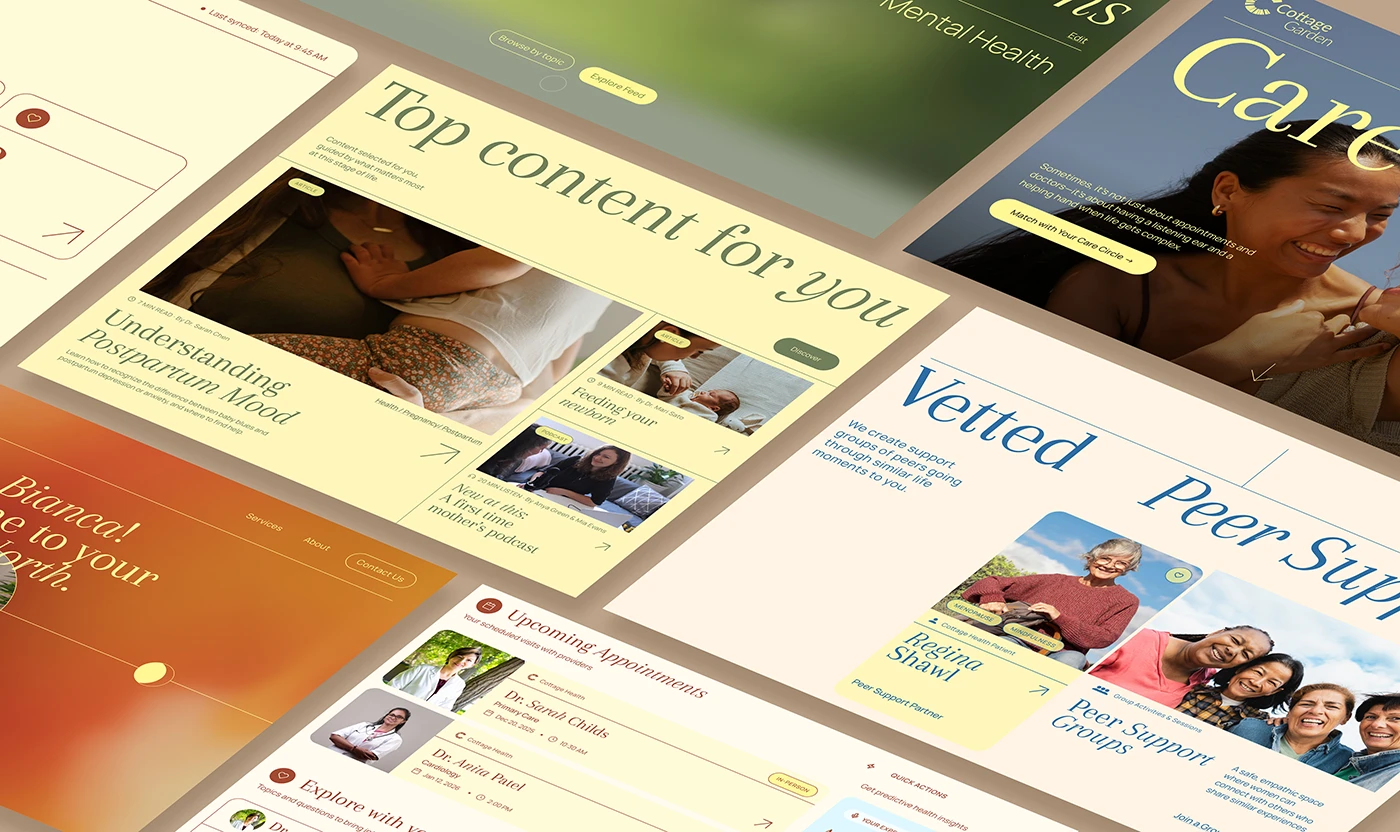
True North is a patient-facing tool that helps women see the long view of their health journey by integrating personal data, health goals, and reflections into a dynamic timeline they can share with their healthcare providers.
Wellness Commons serves as a digital front door, offering curated resources, including community events, discounted wellness programs, fitness classes, and trusted referrals, that help women navigate their well-being with clarity and agency.
Care Circle connects women to an extended support network inside and outside Cottage’s walls, including a hotline, health coaches, peer group support, and nurse navigators who can help patients manage complex care needs.
IDEO also provided Cottage Health with a multi-year roadmap building out the women’s health experience alongside continued pilot and implementation advisory. The roadmap included a comprehensive series of launch-to-learn pilots designed to test assumptions, reduce risks, and learn quickly, with IDEO stewarding the process. These pilots ranged from digital mockups and a curated community referral directory to a support line, a new nurse navigator role, and peer coaching services, among other experiments.
In July 2026, Cottage Health announced it was expanding its focus through a new Cottage Women’s Health Campus in Santa Barbara. Led by Dr. Jane Varner, Cottage Women's Health is projected to open in early 2028. It will encompass women’s health services across the lifespan, from puberty to menopause and beyond, including OB-GYN, pelvic floor health, women’s heart health, a menopause clinic, and a breast care center of excellence. It will also include supportive services, including trained nurse navigators to coordinate patients’ care journeys, giving women a single, trusted entry point for integrated care at every life stage. Cottage Women's Health is also exploring a new digital support system inspired by IDEO’s Wellness Commons concept.
Cottage Health had ambitious goals to expand its women’s health services and needed a partner to help it understand what women truly wanted from their healthcare and bring it to life.
7 months
from end of project to the announced launch of Cottage Women’s Health

From incremental change to breakthrough innovation
How Master Kong reinvented the instant noodle, from the inside out.
Looking to understand the role of instant noodles in middle-class Chinese life, the IDEO team conducted in-home research with consumers across a range of life stages and levels of attachment to noodle culture and convenience foods. The first finding was reassuring: Everyone kept instant noodles at home. The category still had a place in middle-class kitchens. But beneath that was a more complicated, emotional story—and an unmet need for convenience and quality to coexist in a single product.
The team discovered that instant noodles are more than just a quick, on-the-go meal; they are a nostalgic comfort food that evokes fond memories. But since their heyday, their role in daily life has evolved. Once a complete meal in itself, instant noodles now often function as a versatile flavor base or culinary accent in other dishes. Because they don’t align with the healthier, higher-quality, and more novel food choices that middle-class consumers aspire to, noodle shops, delivery noodles, or fresh-cooked instant options often win out. Yet, even these alternatives come with trade-offs. Delivered noodles lose texture during transport. Sit-down noodle shops preserve quality but offer limited flavors. Cooking from scratch meets the bar for both texture and flavor, but requires a significant time investment. As one young mother said, “If I could get the texture of fresh-cooked noodles without turning on the stove, I’d buy that instant noodle for sure.”
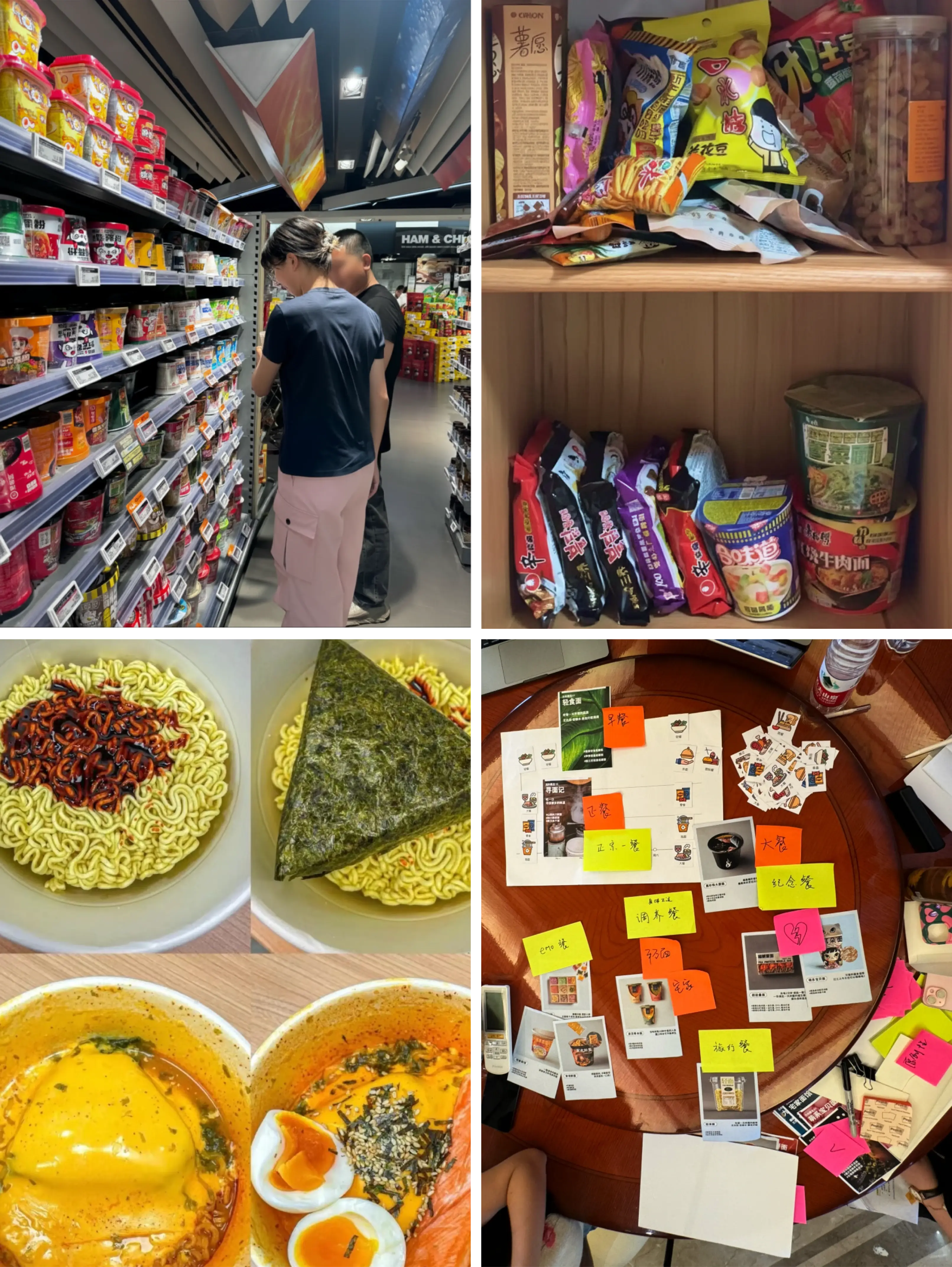
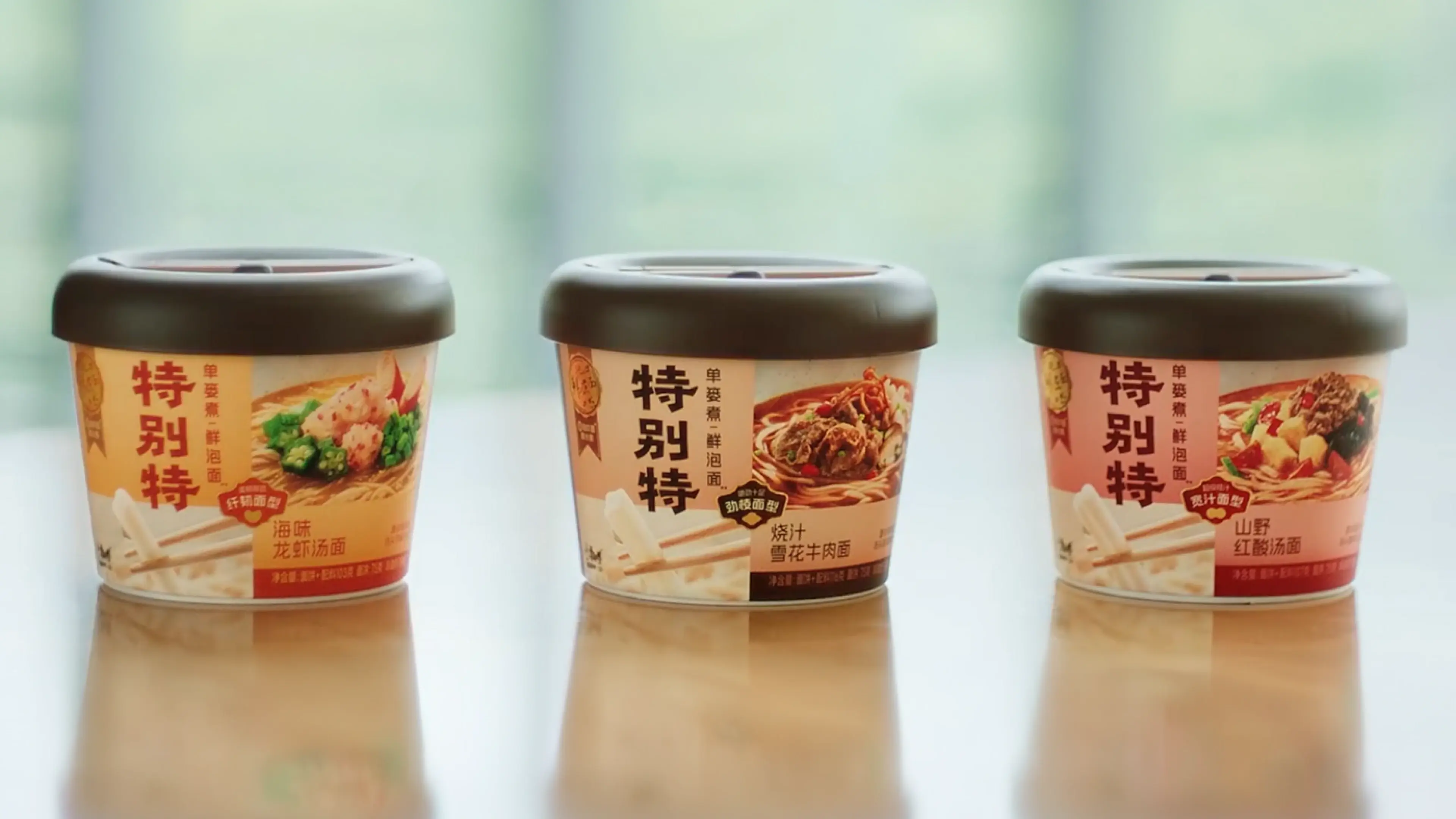
The research inspired the creation of a new category, which the team termed “fresh-brewed noodles.” More than just a noodle or broth upgrade, Master Kong’s fresh-brewed noodles would offer the speed of instant noodles with the quality of freshly cooked options, plus flavors not found in traditional noodle shops. The strategic positioning was clear. Executing it by making fresh-brewed noodles mass-producible, affordable, and eventually profitable presented a category-innovation challenge. To get there, IDEO designed a series of dual-track co-creation workshops with the Master Kong team and consumers.
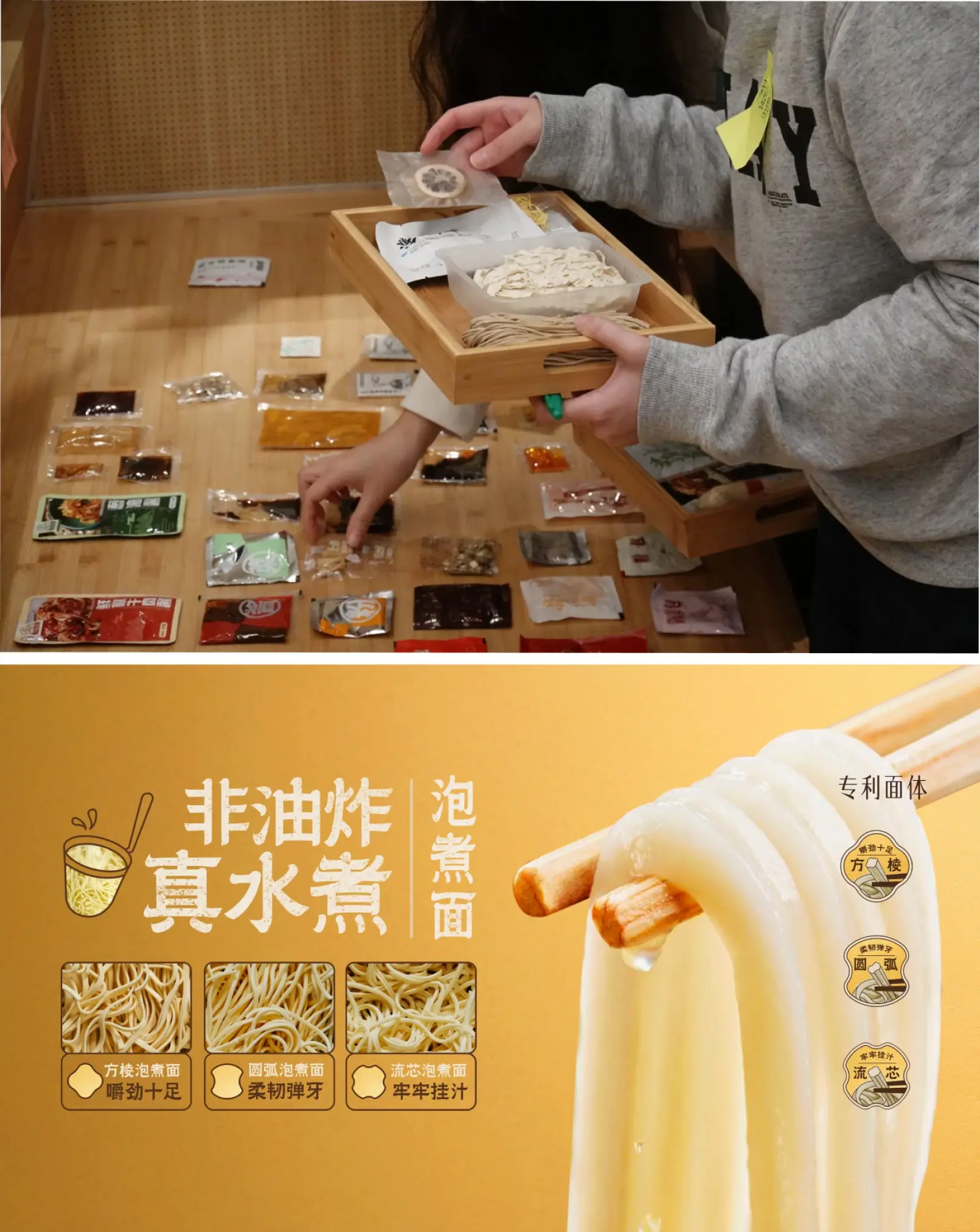
One track focused on prototyping the core product experience: noodles, broth, and toppings. IDEO and Master Kong’s R&D team began by studying the traditional craft of Chinese noodle-making, starting in Shanxi, a region renowned for its noodles. Through successive rounds of prototyping and consumer tasting, the team identified a critical insight: for “fresh-brewed noodles” to be convincing, the innovation had to be centered on the noodles themselves.
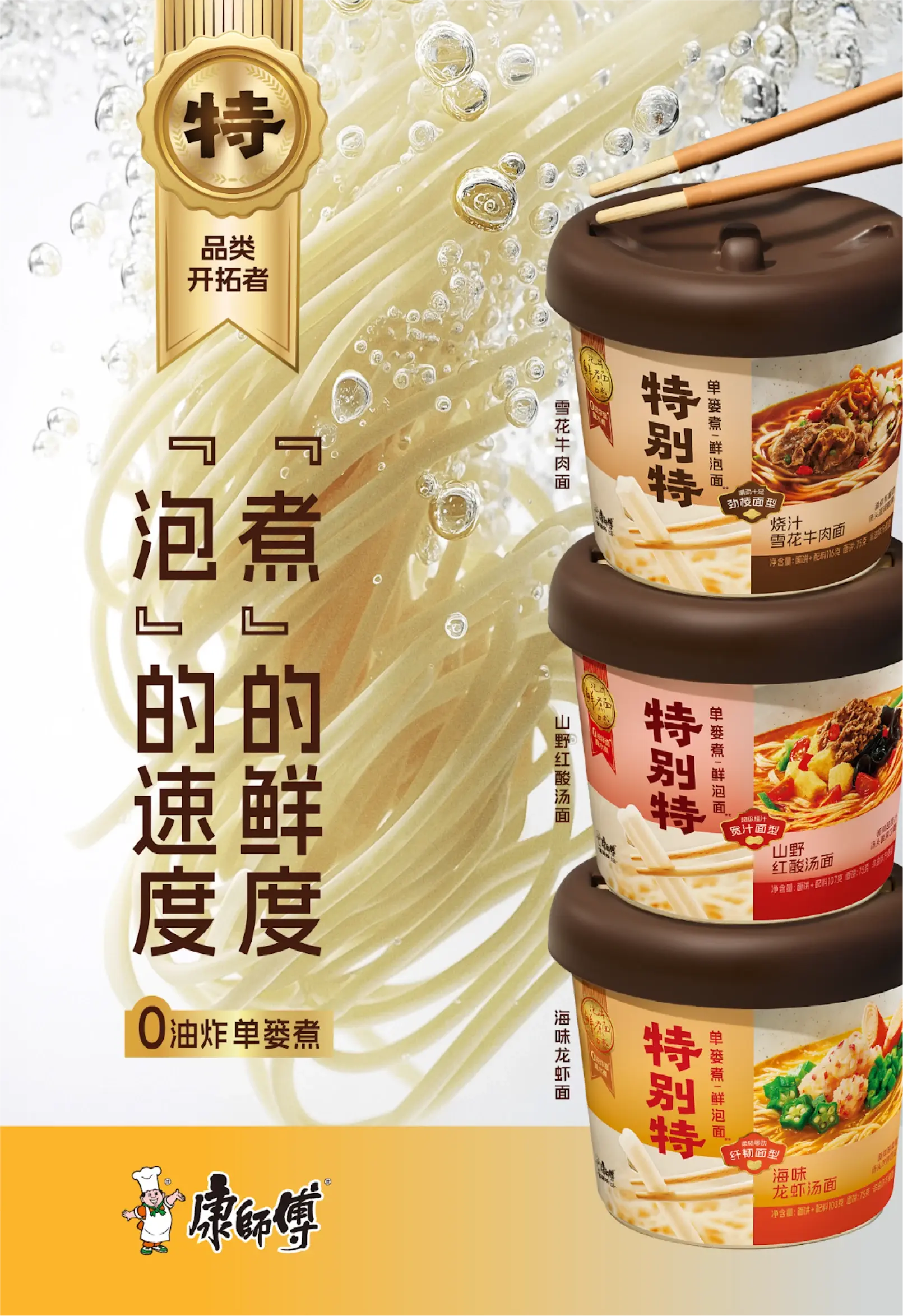
Texture alone was not enough. Consumers needed to see a meaningful difference before they tasted the product. IDEO translated this insight into a distinctive noodle profile: irregular, dimensional shapes designed to remain springy, hold sauce and broth, and mimic the resilience of freshly cooked noodles using only hot water. Because this visible shape represented the product’s core value proposition, it became a hero feature on the packaging. The graphic design made a bold visual statement about the noodle form, turning a technical R&D breakthrough into an immediately legible consumer promise: these are not ordinary instant noodles.
A parallel track explored the broader commercial experience: trend-forward and reimagined classic flavor profiles, light yet deeply satisfying broths, carefully selected toppings, and packaging that signals a new level of quality on store shelves. One key insight was that utensils carry meaning. Conventional instant noodles are often associated with disposable plastic forks, while higher-quality noodles are eaten with chopsticks. IDEO translated this cultural cue into the design of the bowl’s lid.
Instead of treating utensils as an afterthought, the team designed a solid, rounded, heat-retaining lid that embeds a pair of small wooden chopsticks. The gesture creates a small ritual of anticipation and reframes the product—not just a convenient instant meal, but a more considered noodle experience. Once opened, the product fulfills that promise with satisfyingly bouncy noodles, a rich liquid broth pouch that replaces the traditional oil-and-powder packet, and a vegetable packet reformulated with more premium whole ingredients.
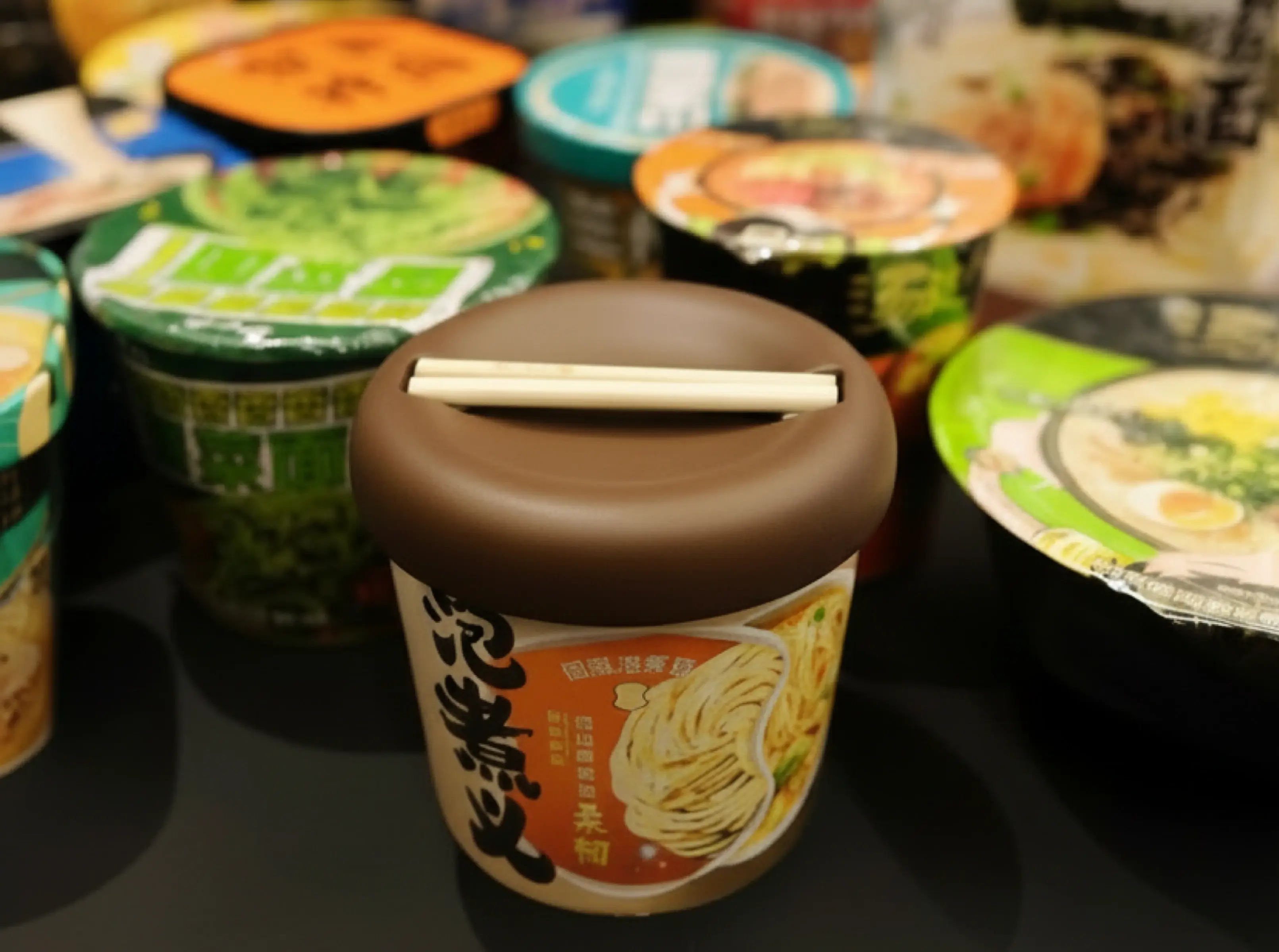
The first batch of “Te Bie Te” Fresh-Brewed Noodles—Chinese wordplay that emphasizes “special”—launched in August 2025 with three trendy and tried-and-true flavors. Within just three days, sales exceeded 100,000 bowls. Within a week, “Te Bie Te” topped the instant noodle category sales ranking on Douyin, China’s domestic counterpart to TikTok. The outcome was bigger than a product launch—it served as proof that a mature, declining category could be fundamentally reinvented to meet consumers’ real needs. For Master Kong, the project became a North Star and a model for internal category innovation in beverages, ready-to-eat foods, and beyond.
Once a popular, affordable staple, the instant noodle category in China has been declining rapidly due to shifting demographics, rising food delivery options, and increasing customer demand for healthier, more nutritious meals.
According to the World Instant Noodles Association, between 2020 and 2023, China’s instant noodle consumption fell by 4 billion packs.
100,000+
“Te Bie Te” bowls sold in the first 3 days on the market
#1
on Douyin’s instant noodle category ranking within one week of launch

Making international education future-fit & affordable
Lexel brings world-class learning to Malaysia’s middle class.
Taylor’s legacy began in 1969 with the founding of Taylor’s College and soon expanded to include Taylor’s University, one of Southeast Asia’s top private universities, as well as many other institutions that serve 35,000 students per year. The family-owned group also operates Taylor’s International Schools, Garden International School, and Nexus International School for students ages 4 to 18. In Kuala Lumpur, Malaysia’s capital city, annual tuition at premium private schools like these ranges from about $10,000 to $25,000 USD. Taylor’s wanted to do something different: provide the same level of academic rigor and immersive learning experiences at one-third the cost.
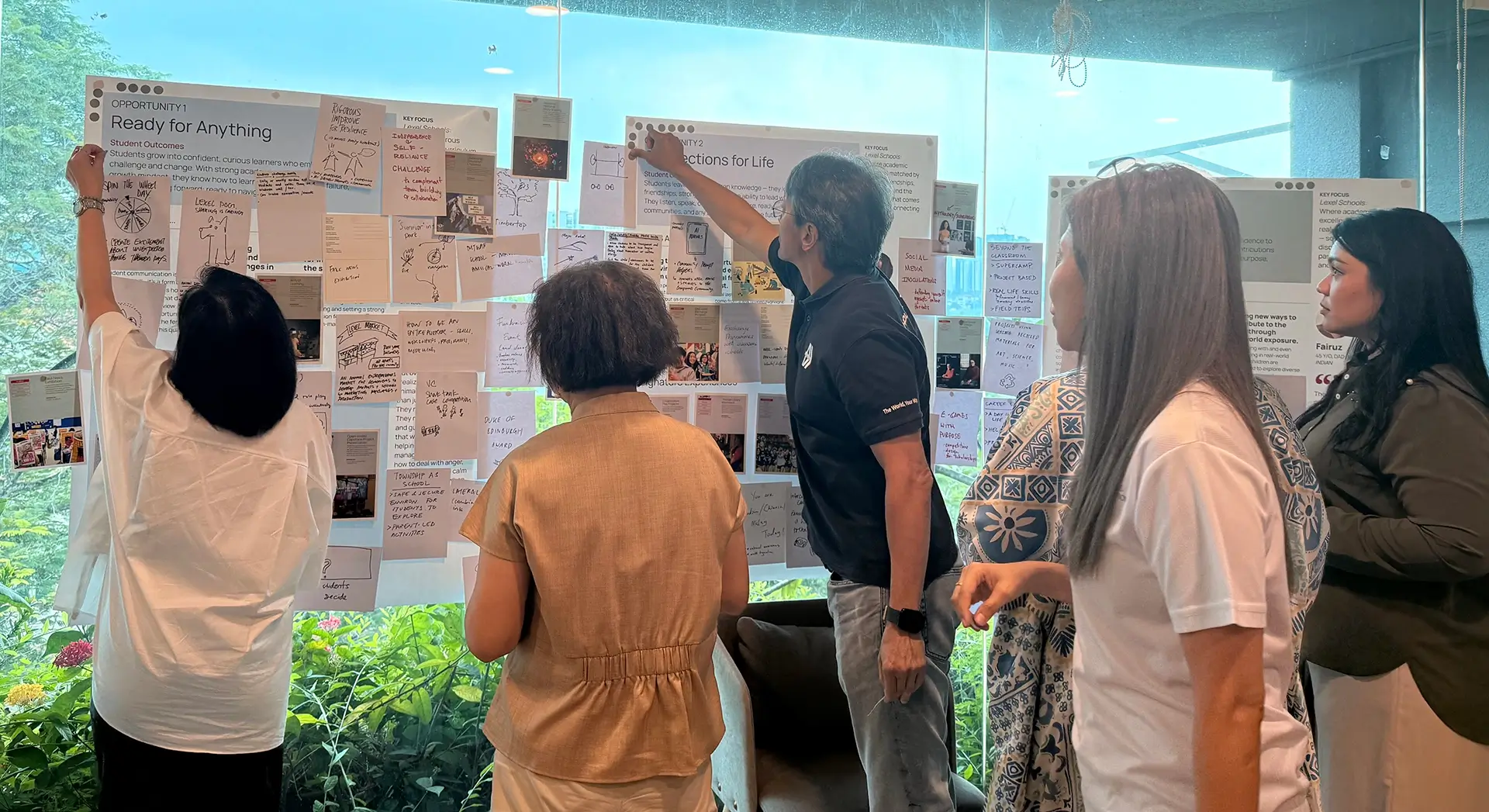
IDEO began by speaking with over three dozen students, parents, teachers, and experts across the capital to understand what was working, what wasn’t, and what was missing from such moderately priced international schools.
A few themes quickly emerged. Families, students, and teachers were worried about the stability of these new private schools, which tended to have higher-than-normal teacher turnover rates and were plagued by financial instability, negatively impacting talent attraction and retention, as well as student learning. Parents appreciated that the schools offered holistic learning experiences, such as field trips to rural areas, including jungles, but wished they were more consistently part of the curriculum. And now, the looming challenge of AI—how to use it, how to teach it, and how to teach with it—was in the background, a persistent cause for concern. The big unmet need? Reassurance that Taylor’s was thinking long-term and systematically about developing the skills, knowledge, and mindsets that would prepare students for an ever-changing world. Parents wanted a school that measured growth in academic, social, and character terms over generations, not just school semesters.
With these insights in hand, IDEO began developing a design Playbook for Taylor’s new brand—Lexel International Schools. A combination of “lexicon” and “excellence,” Lexel’s mission is “building what lasts, learning for life.”

The schools are centered around three key differentiators:
- Always Ahead: Lexel schools commit to staying current with the topics and subject matter they teach, as well as the tools they provide to students, parents, and teachers.s.
- Learning That Builds for Life: The schools ensure programmatic, systemic, and consistent learning experiences from Pre-K to Year 11. Interested students can even continue their post-secondary journey in partnership with Taylor’s University and other higher education institutions within the Taylor’s ecosystem.
- Educators for the Long Run: These schools commit to ongoing investments in professional growth opportunities for teachers and stable learning environments for students.
Four Lexel Literacies—AI, Digital, Financial, and Nutrition—integrated into the Cambridge Curriculum bring the school’s vision and mission to life.
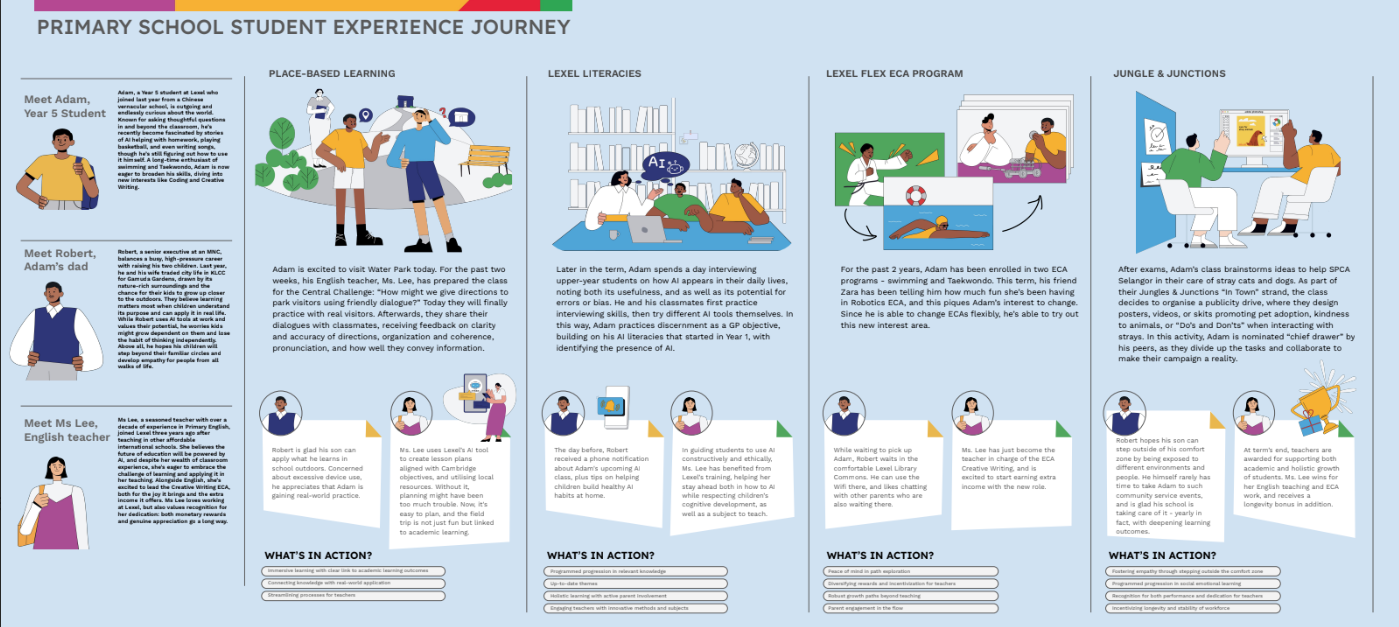
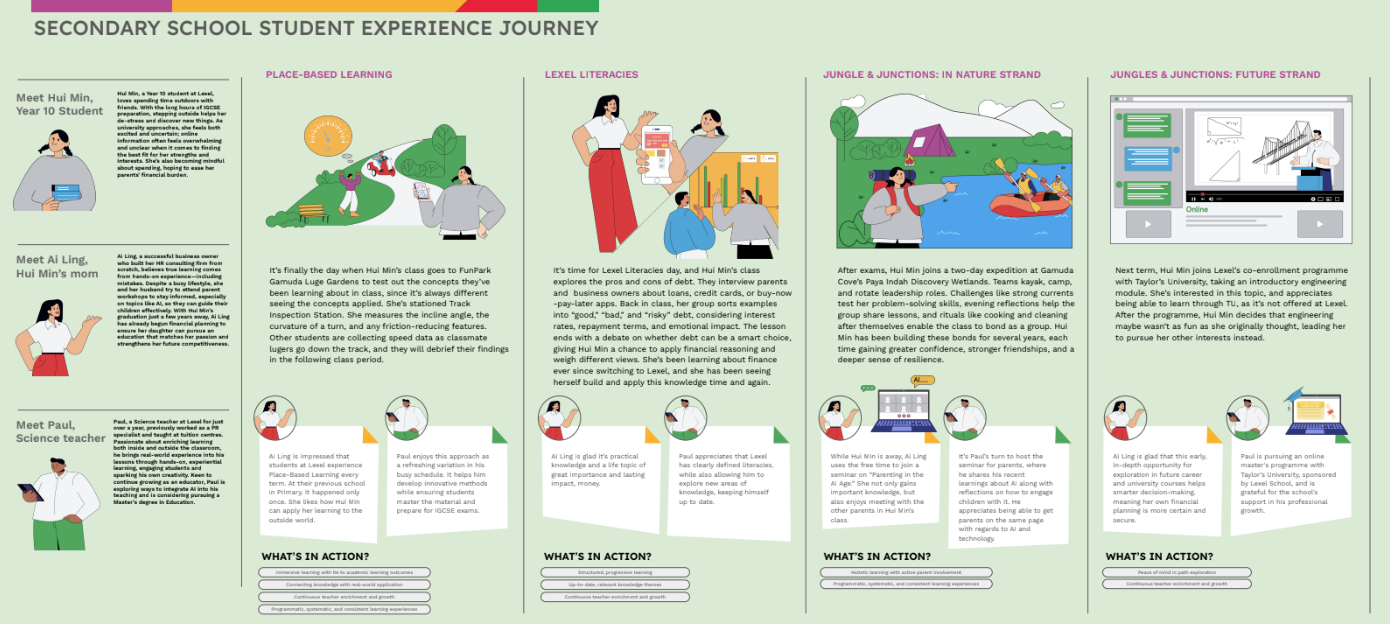
By systematically integrating AI literacy into its spiral education framework, in particular, an approach where major topics are revisited multiple times through a curriculum to build fluency over time, Lexel ensures parents that the school is thinking a decade ahead from Day One, setting the school apart. In addition to enhancing AI fluency, Lexel offers unique end-of-term experiences called Jungles & Junctions.
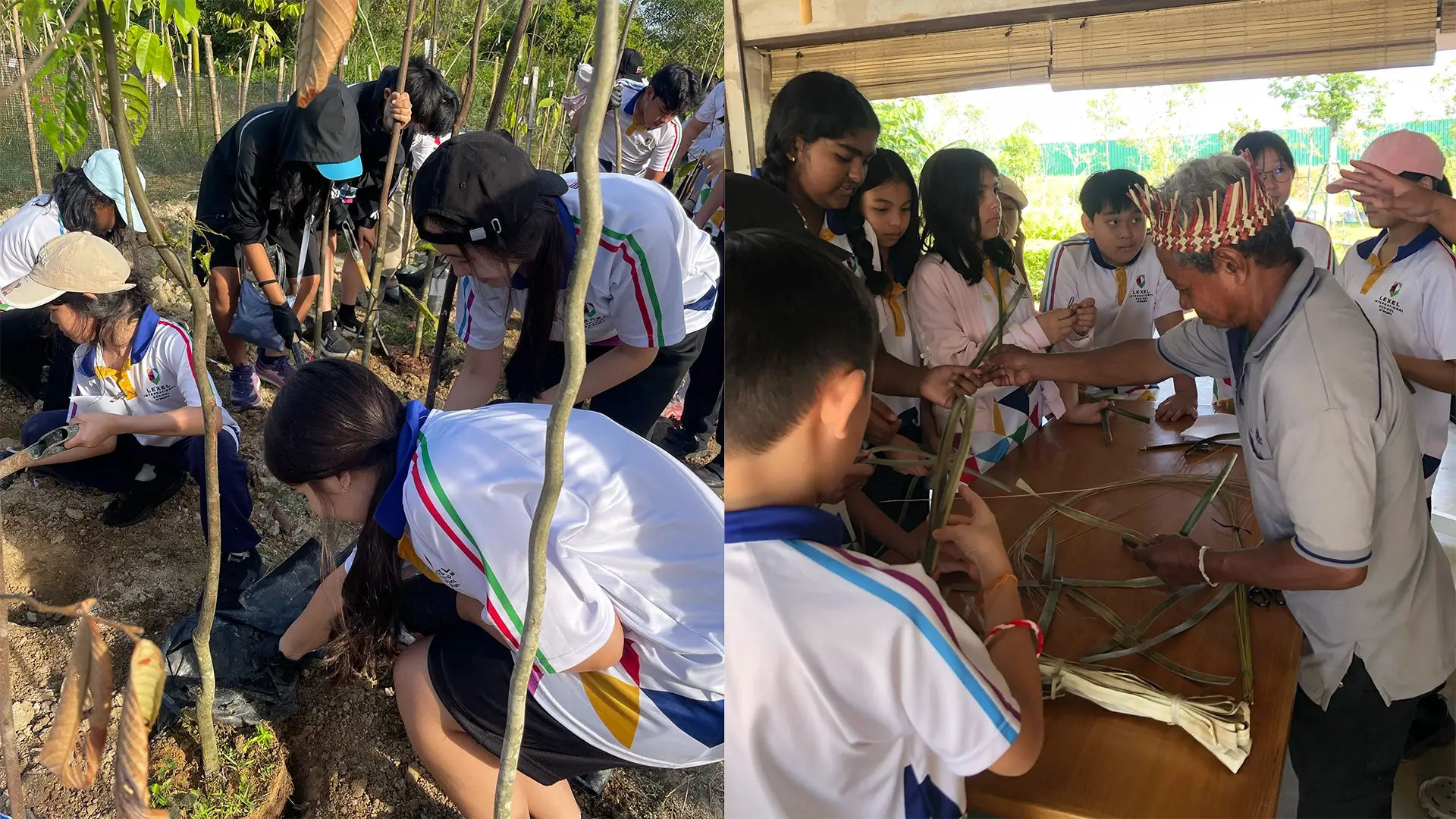
Combining three important strands of learning—community engagement, nature-based personal and interpersonal development, and career and university exploration—Jungles & Junctions leverages Taylor’s extended educational network and Lexel’s strategic founding campus within the Gamuda Gardens development in Selangor. Surrounded by tropical rainforests, the township’s residential neighborhoods, theme park, and various sports facilities, including an Olympic-length swimming pool, are transformed into an extended Lexel campus, with a GenAI-driven planner to help teachers streamline the organization of class outings. “The Township is Your Campus” became the tagline for this approach.
In September 2025, just months after IDEO’s collaboration ended, Taylor’s began classes at its first Lexel International School. By mid-year, the new school had achieved 115% of its year-one student enrollment target, with significant inbound demand for Year 2 already demonstrating the school’s market resonance.
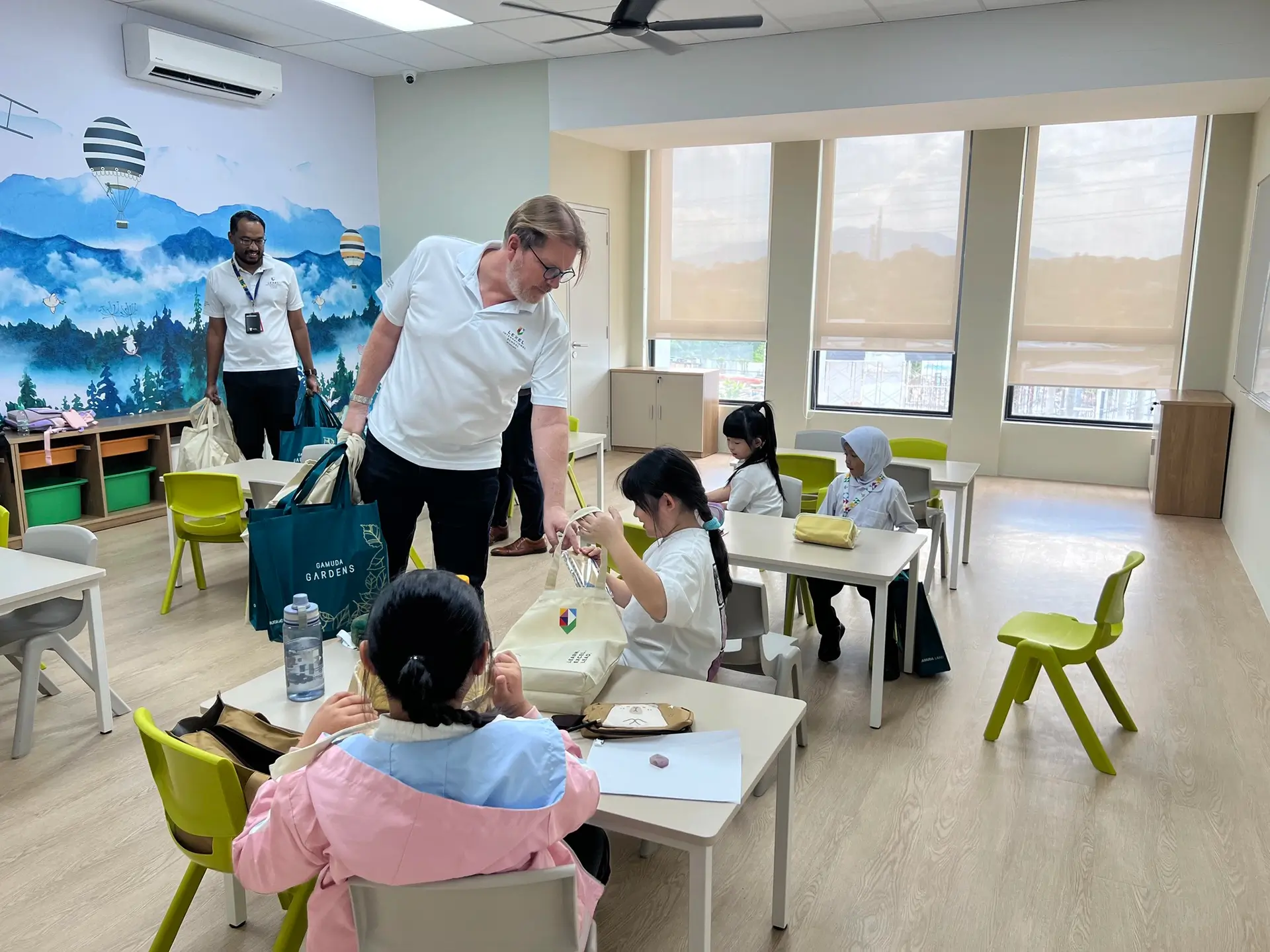
The modern campus features spacious classrooms, science and technology labs, a library, a multipurpose hall, and a canteen. Annual tuition ranges from about $2,800 USD for pre-K students to about $6,100 USD for secondary students.

Most importantly, by combining Taylor’s deep academic expertise, Gamuda Land’s development prowess, and IDEO’s innovative design Playbook, Lexel brings quality, affordable international education closer to home for Malaysian families. According to one parent, “My daughter looks forward to going to school every day … and has a lot of opportunities to express herself. On a scale of 1 to 10, I give [Lexel] an 11.” Based on the IDEO Playbook, a second flagship campus in the Southern Klang Valley, which is scheduled to open in September 2026, has already exceeded its year-one target enrollment expectations, with plans to continue extending the Lexel network to other parts of Malaysia and the wider Southeast Asian region in the near future.
Malaysia’s private international school sector has grown significantly as parents seek quality English-language education. However, high tuition fees and limited access to reputable schools are continual challenges for those in the emerging middle class.
115%
of Lexel’s student enrollment target reached during the launch year of its first campus
Year 1 enrollment target exceeded
at Lexel's second campus several months ahead of classes commencing
Delivering an unbiased news experience
Straight Arrow News transforms fact-based news consumption.
The American news industry has long been a competitive and saturated market. This has only intensified with the emergence of social media outlets and AI-generated news. Even so, SAN’s rigorously unbiased, fact-based reporting style and rich video storytelling had enabled the ambitious startup to rise above the media fray in just three short years.
With a strong foundation to build on, IDEO sought to further differentiate SAN’s cutting-edge news product and build deeper engagement with a wider audience through a new user experience.

Collaborating closely, IDEO and SAN began by delving deeply into media consumption habits. They met with early SAN superfans, news consumers who spent hours a day absorbing content from traditional outlets like Fox and USA Today, and those who looked to their Ring doorbell app or Reddit for news. The takeaways? People were tired of clickbait and clunky interfaces. They sought clear, factual news that was easily accessible, with additional context to help them interpret events and understand their significance. They craved more than one perspective on important topics, so stories felt balanced rather than polarized. They also valued having control over how they consumed news, so making it easy to switch between text, video, and audio formats was crucial.
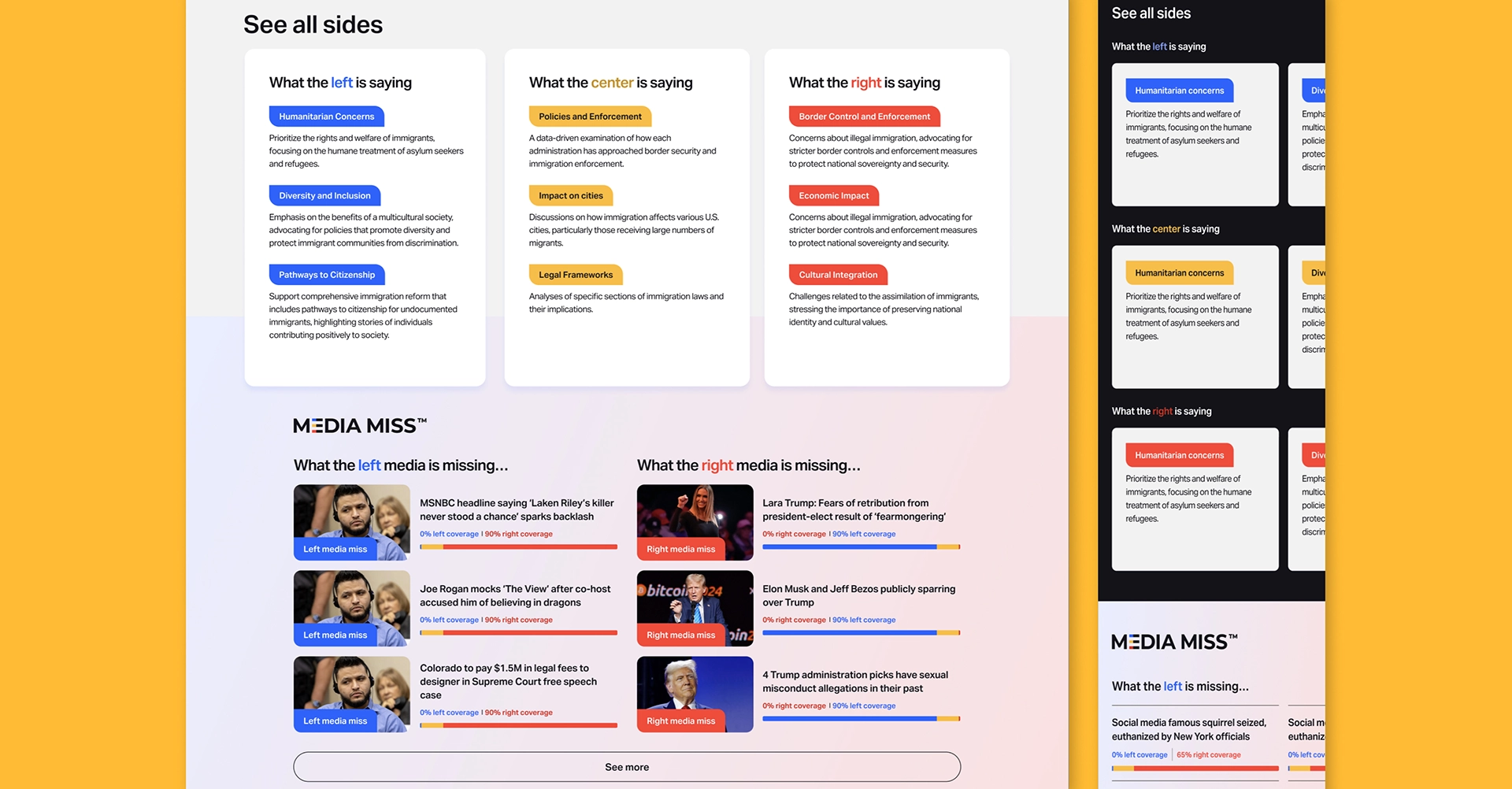
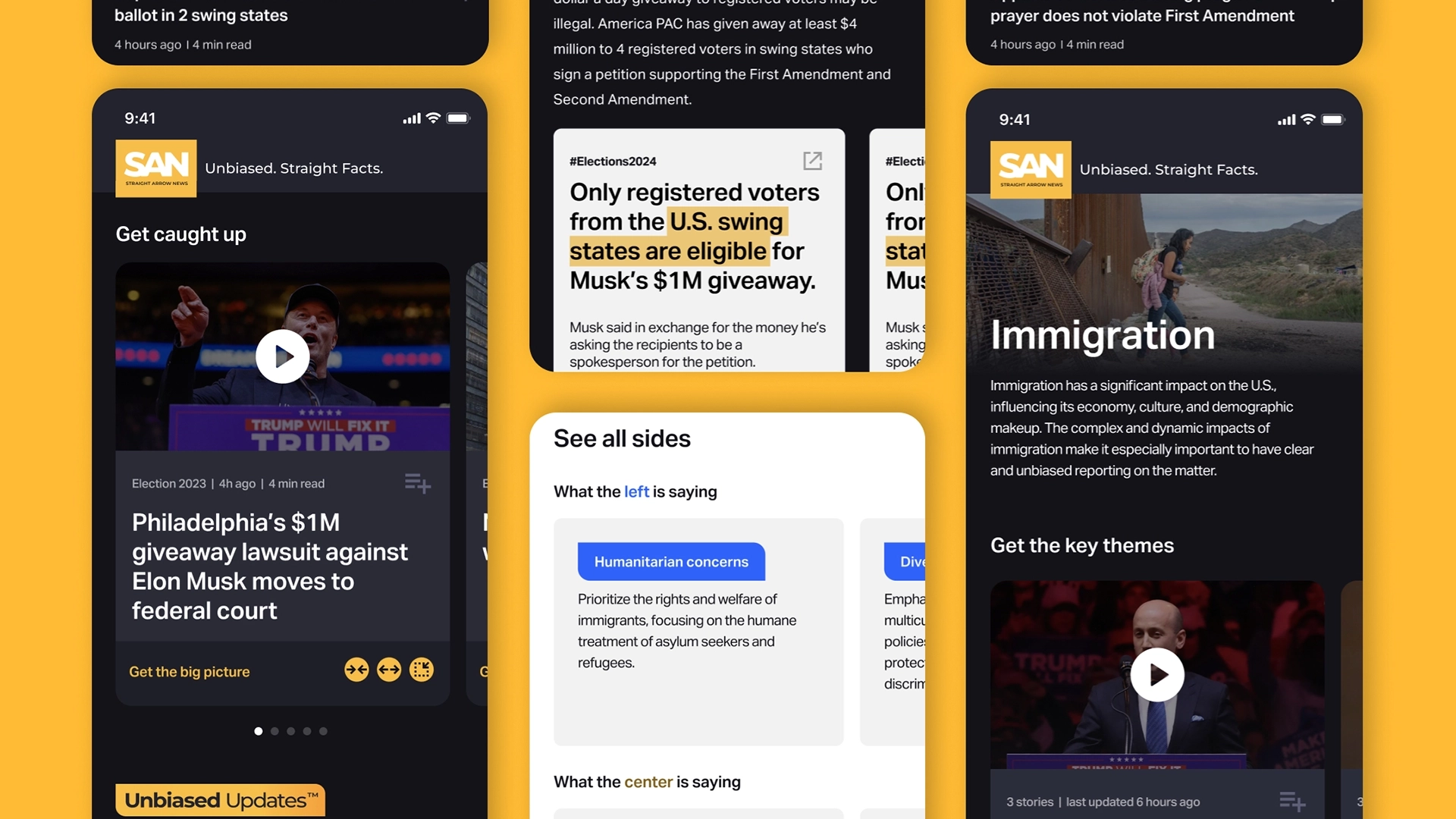
Together, IDEO and SAN created features across SAN’s website and app that put facts, trust, and transparency at the core of the product experience. Fact Cards distill key data points into clear, shareable units, while the Sources feature allows readers to trace information directly back to its original source. To make complex stories easier to grasp, Big Picture insights drill down into why events matter, surfacing underlying themes, historical parallels, differences in reporting, and common ground. The Why This Story Matters section provides readers with clear framing and sets the story within a broader context, while the Timeline illustrates how events unfold over days, months, or even years. An antidote to news polarization, See All Sides presents left, right, and center narratives for key topics side-by-side, and Media Landscape visualizations reveal how coverage varies across outlets. Finally, to ensure SAN fits seamlessly into readers’ daily lives, the redesigned Today Page is organized into three highly scannable sections: Latest News, Top Stories, and SAN Originals. The combined features create a balanced, clear, and non-polarizing news experience, making it easy for readers to delve deeper into the sources of their news.
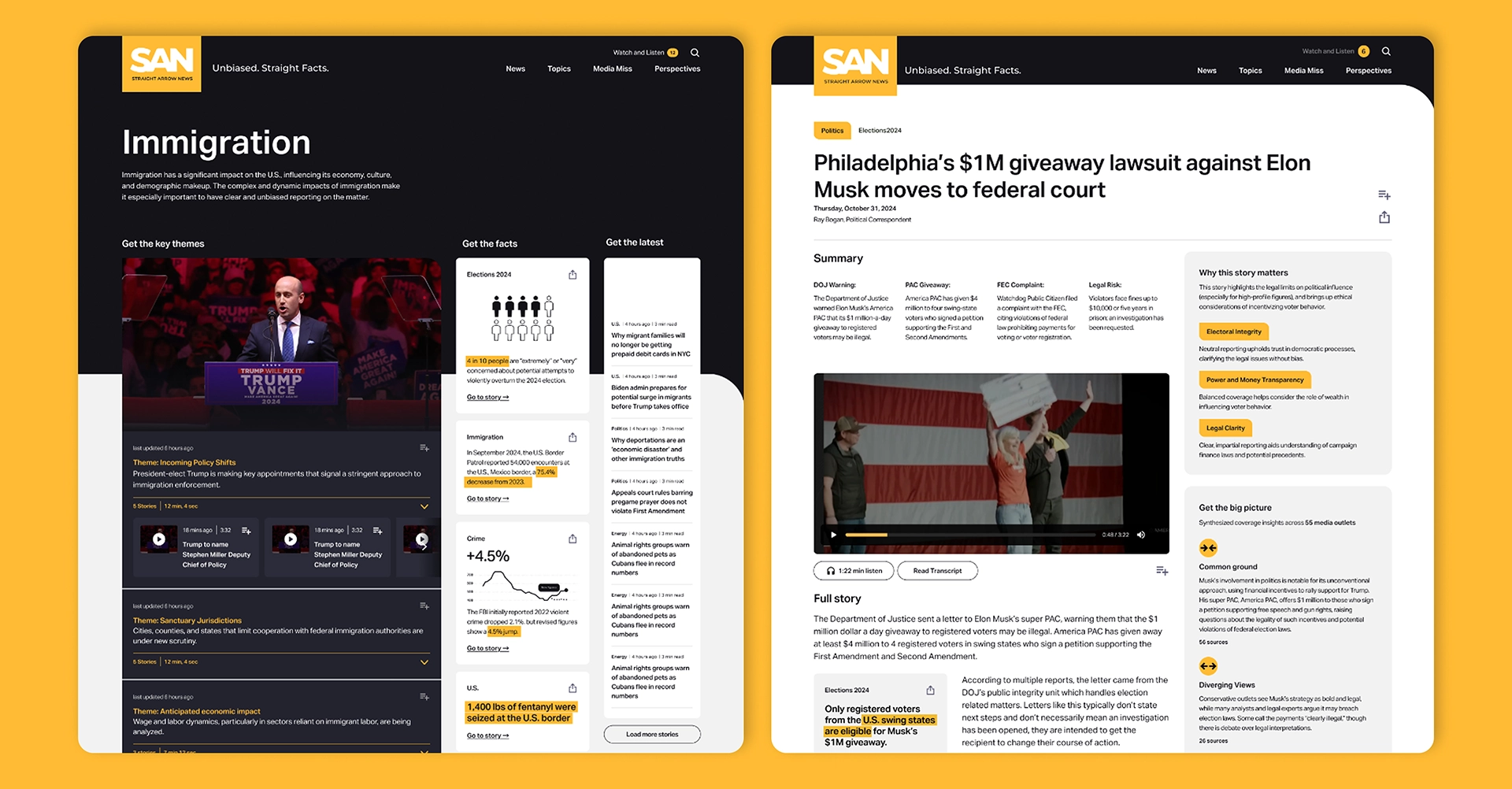
SAN now delivers a news experience as modern, dynamic, and trustworthy as its journalism. A month after its debut, the SAN app’s page views increased 1,170 percent year over year compared to June 2024, while active users rose 700 percent. Readers also give the updated mobile experience a 4.8 rating on the Apple App Store. “Our team is delivering reporting that’s both deeply factual and accessible,” said Derek Mead, SAN’s Chief Content Officer. “This redesign is pivotal to the direction journalism needs to take and the leadership role Straight Arrow News is taking on as we help guide the news industry into a brighter future.”
SAN built a loyal readership and gained recognition for its unbiased reporting. To expand and stand out from legacy media, SAN wanted a redesigned user experience that reflected its commitment to fact-based journalism.
1,170%
increase in app page views YoY
700%
increase in active users
4.8 rating
on the Apple App Store

How to get free and feel inspired when workshops are remote
Four ways to make your virtual workshops more effective.
While those can be useful tools, the true beauty and power of workshops is in being pushed out of your comfort zone: a group of adults struggling to share opinions openly, dive into group activities, and ultimately enjoy the mindset change that comes through participation.
Since the pandemic began, we’ve been forced to bring workshops online—and fundamentally rethink the way we conduct them. Hosting online workshops is not about bringing what we used to do in the physical space to the online world: it’s something new, and we should create completely new tools to adapt to the online world.
Over the past several months I’ve started to prototype new tools for remote workshops. They’re still experiments rather than tools, but that’s okay: designing workshop tools is the same as designing anything else—it’s about prototyping quickly, and iterating for improvement over and over again. Here are four insights we’ve gained in the process.
1. Let the unexpected overflow from the screen
Creating an atmosphere that is strange, weird, and slightly unusual is key to achieving impact through workshops: it gets people out of their comfort zones and opens their minds to new ways of doing business. In the digital realm, most participants will be calling in from home (i.e., their #1 comfort zone), and you need to intentionally haul them out of their day-to-day.
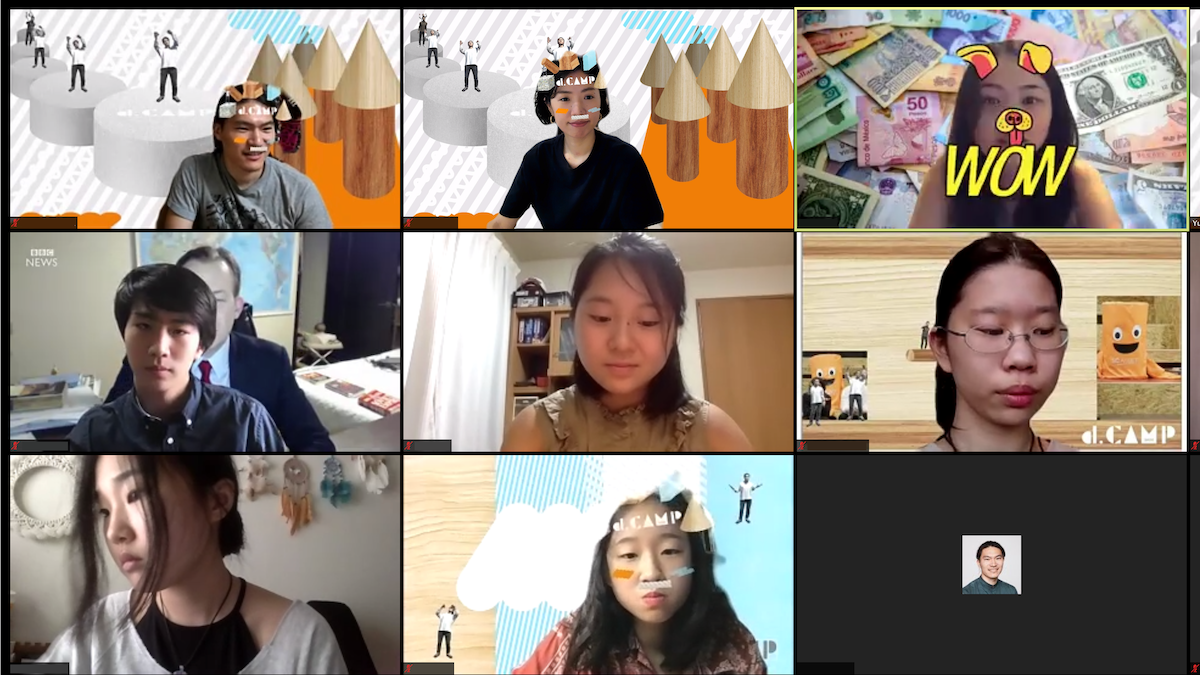
Virtual backgrounds are an easy win: they can create visual interest and curiosity while also functioning as a tool for individual expression. One great ice breaker is to start by asking participants to create their own virtual backgrounds in teams, using Google Slides.
Throwing in a custom-made Snap Camera filter is also a great idea, because it offers participants a chance to hide a part of their face if they feel uncomfortable with experimentation. Instead, they can addd something new like donkey heads or puppy ears. As a facilitator, these tools allow you to get in on the fun with participants. It allows the group to feel that you are on the same team as you explore new territory together, rather than a facilitator insisting they do something uncomfortable.
2. Pick up non-verbal cues from participants
In a physical workshop, one of the key roles of the facilitator is to “read the room.” This is one of the hardest things to do online—all you can see is a participant’s torso with facial expressions, which may not be truly reflecting their emotions. Another way of looking at this, though, is that the online environment can create psychological safety, allowing for more open and honest communication.
To capitalize on this, I created a tool called the Mood Checker, which allows participants to rate their mood on a scale of 1-5, anonymously and in real time. Their responses are constantly aggregated on the facilitator view, allowing the facilitator to always keep track of how the participants are feeling. Initially I wanted the participants to use the slider throughout the day at any time, but after a few trials, we quickly learned that we should designate a few moments in the workshop where we ask the participants to reflect their thoughts on the Mood Checker.
A tool like Mood Checkers lets the facilitator read the digital room. Think about other ways you can utilize the anonymity of the online space to get honest, real-time feedback from your participants and to make your workshop the best it can be.
3. Incorporate physicality
One of the things that I watch out for most during online workshops is making time for everyone to move their bodies. Getting up and moving away from the computer makes everyone feel much more connected and has a positive effect on their wellbeing. Since I tend to do a design-themed workshop, it also helps us remember that good design can not be achieved without the notion of physicality.
An easy way to achieve this is to have the participants go for a walk, either by themselves or by staying in the call through their phones. We can leverage the fact that they are dialing in from different locations: with the phone’s camera, we can have the participants hunt for creative inspiration in their neighborhood. For example: “Take 3 pictures of new behaviors you see in the neighborhood,” or “Find and share your favorite typography that you can see from where you are.”
I also created a Remote High Five system, which, as you may have guessed, tracks the participants’ hand positions through the computer’s camera and plays clap sounds when your onscreen hand “high fives” someone else’s. While this was initially made as a fun experiment, it became an end-of-workshop ritual thanks to its physicality and joyfulness. It quickly became one of the iconic moments of the workshop.
4. There are always ways to realize ideas. Just start small.
Some of these examples may seem too wild or unfeasible depending on your technical know-how. But the important point here is to start small, prototyping ideas quickly and with the least risk. It doesn't have to be perfect on the first go; in fact, it will never be perfect on the first go. Just remember that there are always ways to make an idea happen: give it a shot, and iterate with small tests to improve your idea. It’s actually much easier to try out new ideas online because there’s really nothing to shy away from when, at the end of the day, all you’re facing is a computer screen.
Ultimately, the goal of a good workshop is to get participants to step out of their comfort zones and adopt a new mindset. It’s a shame that many people underestimate the creative potential of workshops and often opt for a generic format: when you tackle a workshop just like you would tackle any other design challenge, the outcomes can be quite transformative and magical.
Workshops are everywhere, from training programs at big corporations to urban planning sessions at local town halls. Given how formulaic many workshops have become, you’d be forgiven for thinking they’re all about colorful Post-its and saying “yes, and...”

How one human-centered insight led to $4 billion in growth for American Express
The straight story of organizational transformation, from leaders on the inside.
They were in search of a feature that would excite Card Members, especially millennials coming of age financially. Everything was in place, but their project whiteboard had one last empty box.
The IDEO and American Express teams paired up for a design sprint, and in the first few weeks of research, after extensive qualitative interviews, an idea emerged: a new, transparent and easy-to-use way to split large purchases into equal monthly payments, with a fixed fee and no interest. The feature, called Pay It Plan It, launched in the market in 2017. Since then, it has been used to create five million payment plans, totaling nearly $4 billion in lending. It represents a notable, widespread behavior change. Card Members are spending differently, by design.
But getting here took more than just a bright idea. At a large organization like American Express, in a complicated and highly regulated industry, and in a smartphone-first environment, transforming an insight about consumer behavior into a beloved tool for Card Members required a particular flavor of corporate agility. At the time, there was nothing like Pay It Plan It—at American Express, or elsewhere. Bringing it to Card Members would require a substantial technical and financial investment, affecting everything from payment terms to the way the smartphone app handled swipes. All of that was doable, but leaders still had to do it—they had to make the heavy lift to usher a concept sketch into becoming a meaningful part of customers’ lives. The success of Pay It Plan It as a feature driven by emotional insights—while driving the bottom line—has made it a beacon inside American Express. For many, it marked a new way of working within the company, a transformational shift in the way ideas are conceived and implemented.
The following story recounts the development of Pay It Plan It, told through the voices of the IDEO and American Express team members who worked on it.

1. Plus, and...
In 2015, Amex was looking for something new to engage consumers—particularly younger professionals who wanted to avoid the pitfalls of credit card debt. Innovation within the consumer lending space had traditionally been all about rewards and cash back perks, but Amex was committed to finding something different that empowered their Card Members. Was there something else? And if so, what?
Kyoko King is currently VP, Global Commercial Services at American Express; at the time of Pay It Plan It, she worked on consumer products, focused on new product innovation.
“It felt like a race to the bottom. We kept throwing more rewards at the customer, so they win out, but there's no actual edge. That was the challenge we set out to solve.”
Leigh Cohen is a Design Lead at IDEO, and a team member on the original design sprint.
“I remember we wrote on the white board, plus, and, next to an empty box. The reward structure of this new card was already defined—but then what? What goes in the box? What is this thing? It can be very daunting to come up with something that not only makes sense to Card Members, but also makes sense to American Express, and is also a smart way to help people spend appropriately and confidently.”
Jenny Shum is currently VP, Head of US Small & Mid Market B2B Marketing at American Express; at the time of Pay It Plan It, she was VP of Consumer Lending Products.
“We had aspirations to reinvent what a credit card could be, and the role it plays in a consumer’s life. But this is a very regulated industry, and we were afraid that we would come up with a brilliant idea we couldn’t deliver. And yet we didn’t want to be constrained by that.”

2. An emotional insight
Over a series of consumer interviews conducted across the country, the team honed in on a key set of desires: credit card users wanted more flexibility and transparency in how they paid for big purchases, and they wanted to feel like they had autonomy in how they pay for the things they buy.
Kyoko King, Amex: “We had done the side-by-side comparison of Amex versus other cards, we had done task forces looking at debit versus credit. We always had the knowledge that customers don't like our credit cards, but I don't think we ever went so far as to say, ‘They just emotionally don't like it.’ I remember IDEO saying to us, ‘It makes them feel bad. You guys make them feel bad. Customers have no control, no transparency.’ But here IDEO just said, ‘It's an emotional problem, therefore, the solution has to be emotional.’”
Travis Lee is Managing Director and Partner at IDEO, and guided the initial sprint.
“American Express is a service company. They think of themselves as trying to serve their customers as human beings—and the card is a means through which they provide service. It’s not their product. And that’s very different from a lot of companies. So what if we can think of lending as a service?”
Kyoko King, Amex: “Our team at Amex was all about growing lending—lending, lending, lending. That was even what it said on my business card. And then IDEO came in and said, ‘Well, it's all about paying. No one is thinking that Amex is lending them money. It's all about when they can pay.’”

3. We could really break things!
As clear as it was that credit card users wanted more flexibility and control—not just more rewards and perks—so too was the realization that the Amex/IDEO team had let the genie out of the bottle: implementing this wouldn’t be easy. This wasn’t just another lending feature, but would require a fundamental rethinking of how Card Members paid their bills.
Dory Butler is VP, Digital Product Management; she led the digital team that implemented Pay It Plan It.
“People were nervous. We could really break things! It involved significant changes to our payment hierarchy, our accounts receivable systems, how we calculated what customers owed to us, and so on.”
Jenny Shum, Amex: “We were certainly aware of the potential this product could have—and we’d sized the financial benefits—but what was different here was the process of understanding true customer needs.”
Kyoko King, Amex: “You know when you sign a car lease or a mortgage, and there’s a stack of papers that you have to sign with ten different signatures, every couple pages? That's what we were trying to put onto our credit card. I remember our compliance person sitting me down and saying, ‘You're trying to put a closed loan into an open credit product.’ That was the first time I realized we were creating something so complicated—even if to a consumer it made complete sense and felt so simple.”
Dory Butler, Amex: “As a company, we've identified opportunities and gone after them in the past. But many times those opportunities are highly driven by business outcomes, and not as highly driven by customer outcomes. Pay It Plan It was all because of a customer need, but we could see that the business benefit of that would flow and follow.”
Kyoko King, Amex: “After that initial sprint it was kind of a no-brainer. If we could do this, we should do this. But it was very clear that we should do it only if the experience stays as simple as what we’re proposing. If it becomes a series of terms and conditions and things you have to click and fill out, then we’ll lose the essence of what it is we're delivering.”

4. Buy-in for the buy-in
Given the complexity of the implementation—and the simplicity of the desired result—the Amex/IDEO team planned an unusual internal communications strategy, rooted in the emotional insight at the heart of Pay It Plan It.
Leigh Cohen, IDEO: “Executives across American Express had to understand the value this product was going to bring—the emotional value to Card Members, and the financial value to its business. We wanted them to see the overlap between the financial confidence Pay It Plan It could bring, and their brand values of trust and security. And they had to see how it was delivering upon their internal objective as an organization to be thinking about smart lending, and what lending looks like for their current members.”
Kyoko King, Amex: “We couldn't pitch this in a PowerPoint deck. We had to translate that consumer insight to the pricing team, the technology team; we had to change minimum due, payment hierarchy, grace—three different components that are extremely difficult to touch. It was like a house of cards: everything could fall down. Usually if you touch any one of them, all those teams are like, ‘No, no, no, it's not worth it!’ It just wasn't something you could understand in a really rational format; there was so much emotion to it, there was a customer need we were solving for. Usually we had bullet points and boxes with words, and a P&L or business case that’s about the numbers. But here we began with sketches and drawings of what this could look like. That was very different than how we operated before. It was new. And it incited interest.”
Kelly Bjork is a Senior Design Director at IDEO; she helped lead the team that designed and implemented Pay It Plan It.
“These are rational people! You were talking to C-suite level folks who have their bill on AutoPay. They don't think about these things. So our work was putting them in the shoes, if you will, of the Card Member who this was targeted for. It's kind of that simple.”
Jenny Shum, Amex: “The magic of Pay It Plan It is that it gives consumers the confidence that they have a lending solution if they need it. I don’t think we necessarily went in with this intention, but that directly aligned to Amex’s brand heritage, of giving consumers control. The brand team saw how exciting this was, even before the business unit decided to invest in making it real.”
Dory Butler, Amex: “You have to continuously sell-in these ideas internally to have the level of investment that you need to do them right.”
Travis Lee, IDEO: “Innovation at this scale can't happen purely grassroots. You can't just get a single team leader excited about it, and expect it to happen. You have to get everyone’s buy-in, you have to get everyone’s excitement, you have to make sure they understand why it matters to do it, even if it's gonna be hard. And you also have to get the CMO pumped. All of these people have to greenlight it in their own way.”

5. How it spurred organizational change
In 2017, Pay It Plan It launched under a strategy nicknamed “Big Bang,” rolling out to 21 million customers in 30 days. As of August 2020, it is available to almost all US consumer Card Members, who have collectively created nearly five million Plans, totaling nearly $4 billion in purchases, with an average Plan size of $789. But as much as they have embraced Pay It Plan It, so too did Amex executives. The unique story of its implementation became company lore: here was an emotional insight that unlocked significant business outcomes.
Kyoko King, Amex: “The internal teams could see it: this was reflective of all the data and information we have seen and heard for years and years. But this is a new way to approach the problem! I often talk about it in terms of learning a new language. Amex internally thinks of itself as a rational company based on CBAs and models. The breakthrough—and the thing I'm most proud of—was bringing that customer emotion into internal decision-making, seeing Amex become emotional rather than purely rational.”
Jenny Shum, Amex: “Kyoko and I joke that we feel like we walked through a doorway to an alternate universe that we can’t turn back from. This is a long-term strategic investment that would have been hard to write the business case for—but that was also the exciting part, because it is transforming a business, versus delivering an incremental product. The challenge now is whether we will be able to galvanize the organization in a similar way, towards solutions for our customers.”
Leigh Cohen, IDEO: “The pieces came together in this perfect storm: the Amex leadership focusing our IDEO team on the opportunities that were strategic within their organization; our team's ability to unpack and uncover an emotional resonance with the Card Member, that really spoke to them wanting to be a more confident spender on credit; and then the internal buy-in and belief that this not only resonated internally, but also could convert externally.“
Kyoko King, Amex: “To be honest, this began as an eight-week engagement of just asking, ‘Okay, let's see what you guys can think of: a slap-on feature to our credit card.’ So for it to then result in something that was implemented across all of our cards—that is a big, big deal.”
Kelly Bjork, IDEO: “Getting something like this to market feels like sort of a small miracle to me.”
Jenny Shum, Amex: What has followed me from this project is really understanding the emotion of the customer—not just the words they tell us, but what worries them and why.
Illustrations by FagoStudio.
In 2015, American Express (Amex) came to IDEO for help putting the finishing touches on a new consumer credit card. Its reward structure was fixed—but what else might it be?
Eliminating hunger isn’t just about food, it’s about people
Food security means changing how we think about wages, quality, and access.
They worried about how they’d feed themselves or their families. Or felt the physical and emotional stresses of want and hunger. Of that number, 11 million were children.
Today, the picture has worsened. This year, a year in which American lives have been ravaged by disease or economic crisis or both, more than 50 million people will have faced the reality of food insecurity; almost half of them will have sought help from food banks and other sources of support.
This pandemic of hunger continues to unfold, year-on-year, across the United States—one of the richest nations on earth.
It is a crisis that moves inexorably forward, but also one that’s rooted in inequities stretching back into our collective history. Our food system, like many of our society’s most foundational systems, is racist by design. The labor of Black and Indigenous workers and people of color (BIPOC) forms the backbone of the industry’s essential workforce—specifically women of color. They serve or cook in restaurants; they perform dangerous, exhausting work in food plants; they labor on farms; and they bring deliveries to others’ homes and apartments. And they have been disproportionately impacted by the knock-on effects of the pandemic, including decreased food security. Additionally, racism—in the form of food systems that are effectively separate from and unequal to those afforded to white communities—has historically denied BIPOC access to preventative nutrition. The result? Disproportionate incidence of chronic health conditions and weakened immune systems, both of which are now further intensifying the devastating impact of COVID.
It is a story of injustice and inaction. And it demands we step up and help create change.
How might food leaders work to dismantle the systemic inequity in our industry and in the communities we operate? And how might we improve the lives of those most unjustly affected? We see three paths where design can drive efforts towards solutions.
Prioritize food workers’ livelihoods
The most straightforward way to reduce food insecurity among food workers? Pay them more money.
The food industry employs roughly 14 percent of the U.S. workforce, with the lowest median wage of any industry. In many states, it’s legal to offer restaurant workers a sub-minimum wage of less than $5 an hour—sometimes as low as $2.13. Black servers are typically not tipped as well as their white coworkers: A recent study revealed that for tipped restaurant workers in New York, white men made almost an $8 an hour more than black women.
Food manufacturers, quick-service restaurants (QSRs), and retailers are largely responsible for producing, serving, and distributing food; but the cruel irony is that their own employees—along with those growing and harvesting the food that they sell—are often food insecure and hungry. One out of six restaurant workers live below the poverty line.
Following the example of brands like Shake Shack and In-n-Out Burger, others must rethink their business models to offer their workers more than the minimum wage. Similarly, they can design competitive benefits, as Starbucks does, offering healthcare and tuition reimbursement to full- and part-time employees.
Improve the quality of mass-produced food
Many low-cost foods are intentionally designed to be sold in mass quantities to people who can’t afford higher quality items. This perpetuates a supply chain that values long shelf-life and cost-efficiency over nutrition. A complete overhaul of existing product formulations is required to maintain the convenience and comfort that people seek, but eliminate ingredients proven to contribute to higher rates of heart disease and diabetes, such as high-fructose corn syrup or processed or refined carbohydrates.
A June 2020 study revealed that as households stock up on shelf-stable foods, they appear to purchase products with less nutrient-dense ingredients—often ultra-processed, calorie-dense comfort foods. This is setting the stage for an increase in childhood obesity, particularly for economically vulnerable families.
Convenient and nourishing comfort foods are rare. Designing them and putting them on shelves across the nation is an excellent challenge for the food industry’s formidable R&D capabilities.
There are examples to be inspired by, however. Pierre Thiam, a celebrated Senegalese chef and leading authority on African foods, founded Yolélé Foods to bring fonio, a West African grain, to a global audience. Fonio is a versatile ingredient with a nutty flavor; it’s included in the Future 50 Foods List, an effort from the World Wildlife Fund (WWF) and Knorr to highlight foods that support human and environmental health. One of Thiam’s vehicles for fonio is pilaf, and Yolélé Foods’ affordable, microwavable bags of seasoned pilaf are sold online and at brick-and-mortar stores nationally. This product innovation unites what is not only feasible, viable, and desirable; but also more sustainable and nutritious.
If it works for fonio, why not for brown rice? It’s one of the most familiar, nutritious, and affordable food staples in the United States, yet few have attempted to make it desirable and easy to cook. It’s an enormous opportunity. And design is a way to reconceive brown rice into products that are as simple and convenient as the more ubiquitous ramen and macaroni and cheese filling pantries nationwide.
Give more people access to nutritious food
That separate and unequal food system? Karen Washington, a food justice activist, calls it food apartheid. And the evidence to support that frame is all around us. Poorer neighborhoods have fewer grocery stores with nutritious food options; fast food chains dominate instead. There is a need for quick service restaurants (QSRs), retailers, food banks, and federal food assistance programs (SNAP)—all players that influence food access—to design new ways for healthy food to be available to everyone.
Free food is a critical support for hungry people. But there is a stigma attached to accepting it, and it can be a deeply demoralizing experience to stand in long lines and receive a bag of food you don’t like or can’t eat. During COVID-19, we’ve witnessed heroic efforts by food banks and pantries to increase their services. Food banks originally created drive-thrus to overcome the stigma of free food, but now, even more have added this feature to facilitate contactless service.
Northern Illinois Food Bank (NIFB) partnered with IDEO to improve their My Pantry Express program, a digital food pantry service that refers to their customers as “neighbors.” The program offers their neighbors a choice of what food they receive. Typically, food banks determine their success based on pounds of food or “meals” distributed, but NIFB wanted to use more human-centered metrics to determine if their service offers food that people actually want and will eat. The team discovered that offering choice in food selection, even in a limited way, created higher neighbor satisfaction and more referrals—94 percent said they would recommend the program to a friend. We can use design to identify what people value most, then use these findings to improve services, meet more people’s needs, and in this instance, get more nutritious food into more hands and homes.
Learn more about IDEO's partnership with NIFB.
Looking ahead
Given the number of cracks the pandemic has revealed in many of our national and global systems, it can be hard to know where to begin reimagining better solutions. But food is fundamental—and improving the food system is achievable. As we look to the coming year and the post-pandemic recovery period, let’s ask ourselves:
- How might we ensure that the people producing and serving our food have equal access to food for themselves and their families?
- How might we rethink our success metrics to be more human-centered?
- How might we create products and services that are not only profitable, but nutritious and sustainable?
- How might we put our R&D efforts towards creating beloved food products that are convenient and nourishing?
- As a leader in the food industry, how might we look first to the ways we can support our own employees before directing community support efforts beyond our organization?
By prioritizing people’s needs and developing human-centered innovations for business, nutrition, and food access, we can move leaps and bounds toward more food security and access and health for all.
Photos by Rizki Prayugo and Aniketh Kanukurthi
In 2018, according to the United States Department of Agriculture, 37 million Americans didn’t have enough to eat. At one point or another that year, in other words, they struggled to put food on the table.

This designer created a digital zine to explore culture through cooking
How an IDEOer is exploring gastrodiplomacy through zine-making.
But if you were to ask someone in China, they’d laugh amiably and follow up with another question: “What part of China are we talking about?” And it’s a good question—whether the food you crave is sweet or spicy, hearty or healing, you can find it in the Chinese kitchen.
Even growing up in a Chinese family, the diversity of Chinese food came as a surprise. I thought there were two types: Panda Express and the Cantonese food that my parents cooked. It wasn’t until I traveled through China, tasting everything from spice-laden cumin lamb to tropical coconut soup, that I realized how much I was missing. With thousands of years of history, 55 racial minorities, and 9.6 million square kilometers of land, China’s food culture is incredibly diverse. I learned to embrace my heritage by learning how to stir-fry, braise, and steam.
And yet the dominant view of Chinese food in the West is not only narrow, but tinged with prejudice. Growing up in a homogenous community in suburban New York, I was no stranger to words like “oily,” “cheap,” and “gross” being applied to the food of my heritage. On the surface, this might not seem like a big deal, but it reflects a deeper judgement about which cultures hold inherent value.
I always saw this as normal—just the way things were. But as COVID-19 has spread across the globe, so has anti-Chinese xenophobia. Across the world, businesses have banned customers of Chinese descent. Racial slurs fly freely. In March, an acquaintance of mine woke up in the hospital after being attacked by strangers for no reason other than his East Asian features.
I wanted to do something to help. But what?
I’m no politician. I’m not an Instagram influencer. But I do have a few skills that turn out to be surprisingly relevant. The first, which I practice on a day-to-day basis here at IDEO, is storytelling. The second is cooking, eating, and writing about food. It turns out, the combination of the two is a powerful thing.

I’m talking about gastrodiplomacy, the promotion of cultural awareness through food. As ingredients like kimchi, harissa, and turmeric have made their way into the mainstream, they’ve become a starting point for people to take an interest in other cultures. But while I’m encouraged to see signs of that trend with Chinese food, it’s nascent at best. And I want to help it grow.
And thus Journey East, a digital zine about Chinese food culture, was born. The name is an play on the classical Chinese novel Journey to the West (西遊記), which tells the story of a Buddhist monk venturing west from China along the Silk Road. It serves both as a nod to my personal journey from America to Asia, and a reminder of my core goal of shedding light on the beauty and diversity of Chinese cuisine.

I have so much to say on the topic of Chinese food that I could easily ramble on forever. To stay focused on my core goal, I wrote a set of design principles for Journey East:
- Tell a human story. Food tastes better when you know the story behind it (I’ve always believed this, and researchers seem to think so, too). That’s why I start each issue with a history of the region and the reason I find it personally meaningful.
- Make it a conversation. There are plenty of places that will hand you a list of ingredients and tell you how to cook them. There are fewer that invite you to ask “how” and “why”. Though I don’t claim to be an expert, I always encourage readers to reach out to me personally about the recipes I publish. The resulting conversations have been my favorite part about Journey East. (In particular, one of the highlights has been seeing a friend’s vegetarian takes on the recipes.)
- Accessibility over authenticity. When it comes to food, it’s easy to get hung up on what's "authentic" or not. But much like design, some of the most innovative home cooking comes from constraints, which are visible in the incredible variety of food from the Chinese diaspora (did you know that you can stir-fry watermelon peel as a substitute for winter melon?) By starting each issue with an illustration rather than a photo, I encourage readers to think of my recipes as inspiration rather than instructions.
Launching Journey East has been rewarding in many ways. I’ve learned to pivot quickly, grown as an illustrator and writer, and expanded my culinary repertoire. After falling in love with the sambal-laden Malaysian oyster omelette and ketchup-infused Hong Kong pork chop rice, I’ve thrown out all my preconceptions about what ingredients “belong” in Chinese food. But the best part has been hearing from readers who learned something new. Opening hearts and minds won’t happen overnight, but if I can do even a little bit to help people see Chinese food and culture in a fresh light, I’ll consider it time well spent.
You can read previous issues of Journey East (and subscribe, if you’d like!) here.
Lo mein. Orange chicken. Honey walnut shrimp. If you ask the average American to name some Chinese food, they might go with some of these. Where I live now, in Japan, the answer could be ramen or gyoza.

Lindsey Turner
I’m passionate about building brands, products, and experiences that help organizations show up with meaning and momentum.
I help organizations cut through complexity by shaping how they show up, through brand strategy, identity, and storytelling.
Working at the intersection of brand and business, I bring an editorial eye and a bias toward making—turning ideas into tangible experiences that people can understand, trust, and believe in.
My work spans government, healthcare, financial services, media, and consumer goods, from launching Gen Z-focused ventures to building innovation labs and reimagining legacy brands. I relish moments of ambiguity and enjoy translating across teams, perspectives, and priorities to move ideas forward.
I started my career in editorial and digital design, shaping cross-platform experiences and identity systems in publishing and agency environments. That foundation still shapes how I work today: I’m detail-oriented, collaborative, and overreliant on the Oxford comma. I hold a BFA in Visual Communication from the School of the Art Institute of Chicago.

Rachel Young
My work helps organizations see who their products aren't working for—and build the will and the tools to do something about it
For 25 years, I've asked the same question: Who does this design exclude—and what are we going to do about it?
My work spans human-centered strategy, inclusive design, and qualitative research, with clients ranging from Microsoft, Google, and Verizon to the National Science Foundation, and San Francisco Unified School District.
Before IDEO, I taught elementary school in East Palo Alto and spent a decade doing design work with social service organizations—where I learned firsthand what it costs people when systems are built without them in mind.
I am currently writing User Error, a nonfiction book about digital access and the design decisions behind it. I live in Oakland, California.

Brian Pelsoh
I lead with craft, ensuring our work is creatively excellent: rooted in deep human insight and imagination, while also grounded in the realities of business and technology.
My expertise spans brand, communication, and product design across tech, education, the arts, and social impact.
I believe great work demands both high-level vision and obsessive attention to detail, and only happens through collaboration.
I bring an inclusive, hands-on approach and a deep understanding of business, which enables me to consistently deliver excellence while always asking why.
Before joining IDEO, I worked at the brand firms Pentagram and VSA Partners. I began my career as a designer, leading teams at the School of the Art Institute of Chicago and the Milwaukee Art Museum. I hold an MFA in graphic design from Maryland Institute College of Art and a BFA in communication design from the Milwaukee Institute of Art & Design, and have taught at some of the best design schools in the US.

Tony Wong
I am responsible for IDEO’s long-term success in China and working with clients to use design as a tool to enable growth.
I am responsible for IDEO’s long-term success in China and working with clients to use design as a tool to enable growth. Specifically, I have helped Chinese companies design holistic brand solutions through the development of their products, communication, services, and innovation teams, and I have helped multinationals expand their presence and influence in China.
I advise global leaders on developing China-led innovation and capabilities.
In over 15 years in IDEO Shanghai, I have worked on projects that use design to elevate the quality of the experience of healthcare products and services, streamline processes that increase productivity, create spaces and programs that promote and enable inclusive communities, and build next generation mobility solutions that are planet-positive.
Before joining IDEO, I worked at Philips Electronics and the Electrolux Group in Italy, the Netherlands, and Singapore on a number of breakthrough commercial products. I am a member of the Young President Organization in Shanghai.
Office Hours: IDEO U co-founders share tips for getting creative at work
Practical habits for building more confidence and creativity into everyday work.
In a special episode of our Creative Confidence Series podcast, IDEO U co-managing directors Suzanne Gibbs Howard and Coe Leta Stafford answered questions from our community of learners on how to overcome barriers to creativity at work with tactical examples, stories, and tips. For more tips on activating creativity within yourself and others, check out our on-demand class, Unlocking Creativity:

How design can make healthcare more human
Using design to create healthcare experiences that feel more compassionate and personal.
Chris Waugh, Chief Innovation Officer at Sutter Health, and Suz sat down to discuss how service design can radically and rapidly change the ways healthcare is delivered, making it more personalized and a better experience for patients.

How to design for social impact
Designing with communities to create change that is useful, equitable, and lasting.
Jocelyn Wyatt, Chief Executive Officer of IDEO.org, and Dean of IDEO U Suzanne Gibbs Howard as discussed the unique challenges of designing for the social sector and how to apply advanced design thinking principles to manage multiple stakeholders and solve for complex issues.

6 Qualities that build an environment of creativity
Six conditions that help creative confidence and collaboration flourish.
In our latest Creative Confidence Series chat, David Aycan, IDEO Products Managing Director, and IDEO U Dean Suzanne Gibbs Howard sat down to discuss how to effectively design for and implement change and ways to measure the impact of creativity in an organization.
Looks like you might be in search of something very specific?
Or reset the filters above and try another angle.
Here’s some random inspiration

Podcasts about creative leadership

Articles about the power of prototyping