
Balancing work and sleep
Somni’s personalized sleep program helps workers maintain their health.
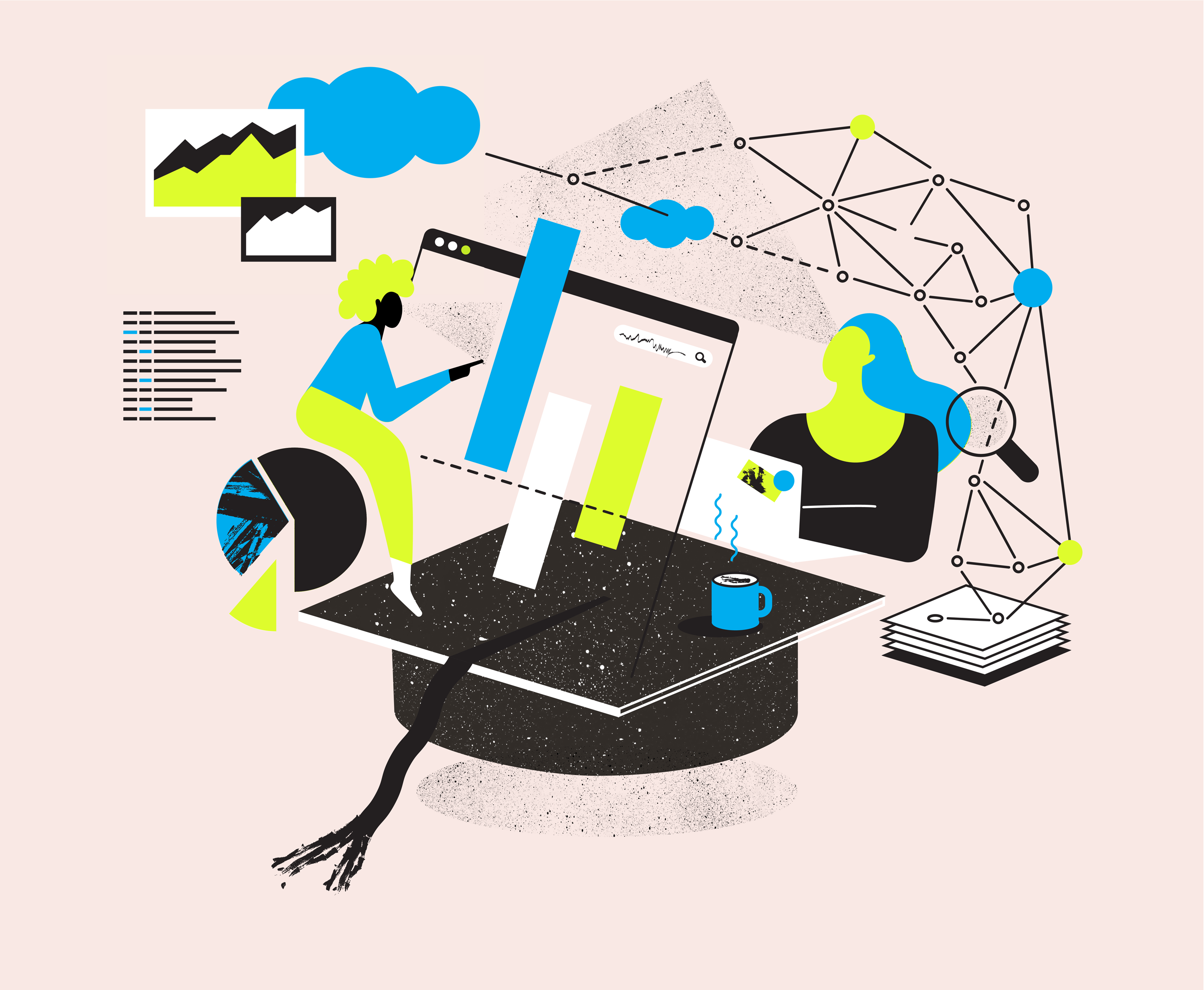
Sleep is a critical resource for shift workers—and their employers, too. Together, IDEO and Somni worked directly with people with acute and chronic sleep challenges to create concepts that could support their sleep goals, and provide employers with the means to improve employee health.
When IDEO and Somni first partnered, the startup was an early-stage company, so the team started small, with focused sprints and workshops to redesign the core aspects of the company and product offerings. The team interviewed shift workers about their sleep patterns, which can vary quite a bit. Even when people keep to a specific schedule on work days, they often have to change their patterns on days off to spend time with family and friends, leading to a very disruptive sleep cycle. Research revealed that many third shift workers were dealing with sleep and health issues, but also a pervasive “machismo” culture, pressure to “tough it out,” and a reliance on energy drinks to deal with lack of sleep.
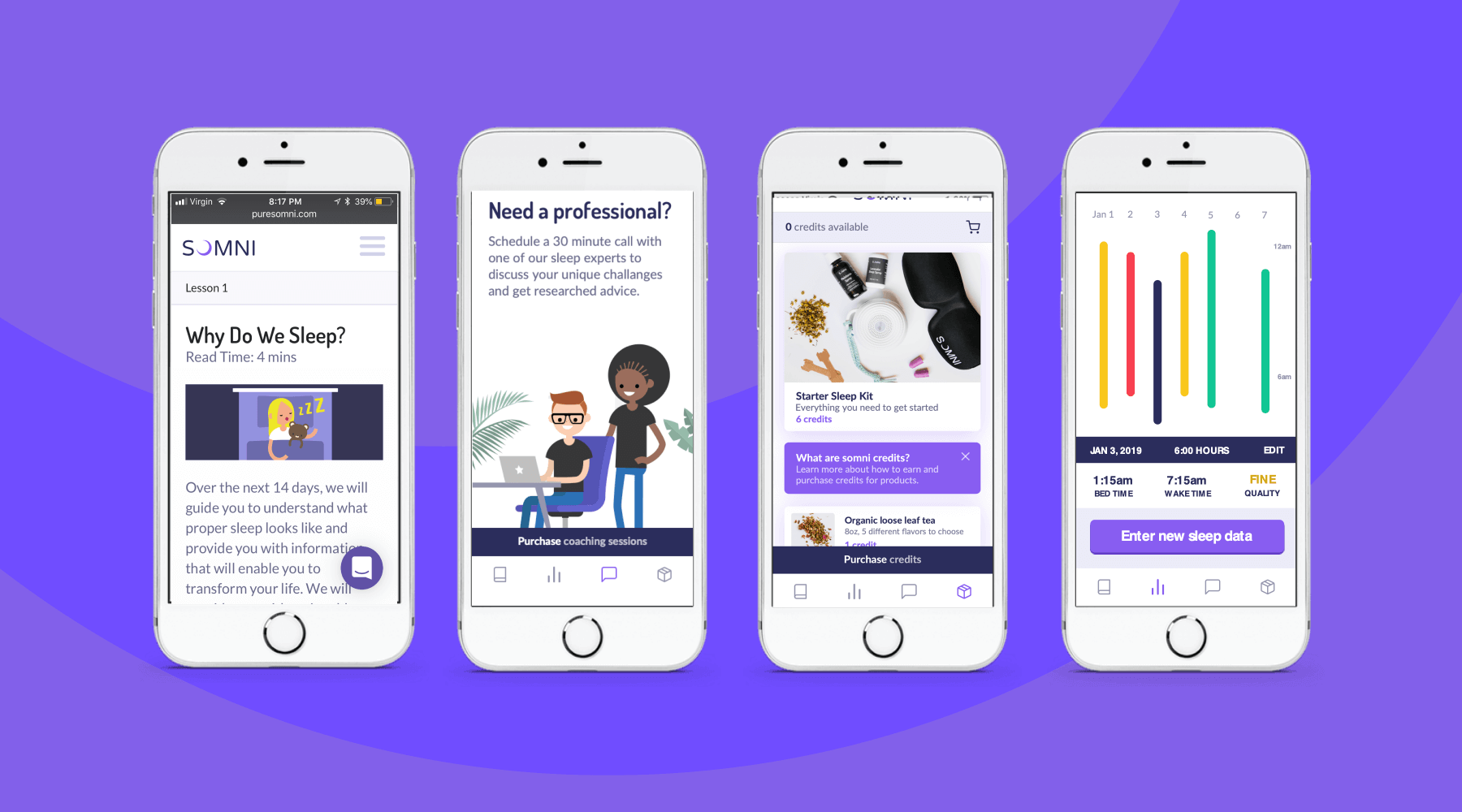
To address those issues, the team designed a digital experience for sleep cohorts, support groups where members could share their experiences and sleep strategies, and work with a coach and sponsor who already had been through the program. The platform analyzed workers’ data, and provided AI-enabled recommendations for improving their sleep. The big takeaway? Data by itself wasn’t necessarily helpful, and could be confusing for folks who were less digitally-fluent. Providing context, like a calendar that displayed sleep experiments at a glance, was crucial.
The IDEO team also created a new user experience for a genetic testing program that could uncover factors associated with sleep issues. Somni aims to use a saliva-based genetic test to monitor for DNA damage caused by circadian disruption, then leverage its sleep improvement program to prevent further damage. Because biomarker testing is a differentiating offer for Somni, it was extremely important that the team get it right, both to make sure that users could understand its utility, and for Somni to provide real value. The design challenge was unique—and not just because of data privacy concerns. Presenting data about DNA damage in a non-human-centered way could increase the anxiety workers had around their sleep.
At the end of the project, Somni leveraged the insights the IDEO team surfaced to improve products like its sleep coaching service, and to refine its biomarker testing offering. Based on this work, Somni has also created a pilot with a Fortune 100 company, which is currently in progress, as it works to mitigate the ill effects of disrupted sleep for employees and the companies they work for.
In the short-term, circadian rhythm disruption leads to an array of jet-lag-like symptoms, and in the long-run, it may contribute to weight gain, obesity, metabolic syndrome, type 2 diabetes, and cardiovascular disease.
It also impairs people’s ability to work, affecting productivity, creativity, and the overall work environment. Productivity loss can lead to employer baseline healthcare costs that are 26% higher, and over time, insomnia can result in an average cost of $4,267 more per employee per year.
In June 2019, the International Agency for Research on Cancer classified shift work as a probable carcinogen.
75%
user retention in Somni's sleep program
$2,450
savings per year per employee for users who complete the program
33%
improvement in sleep quality, and 41 more minutes per night

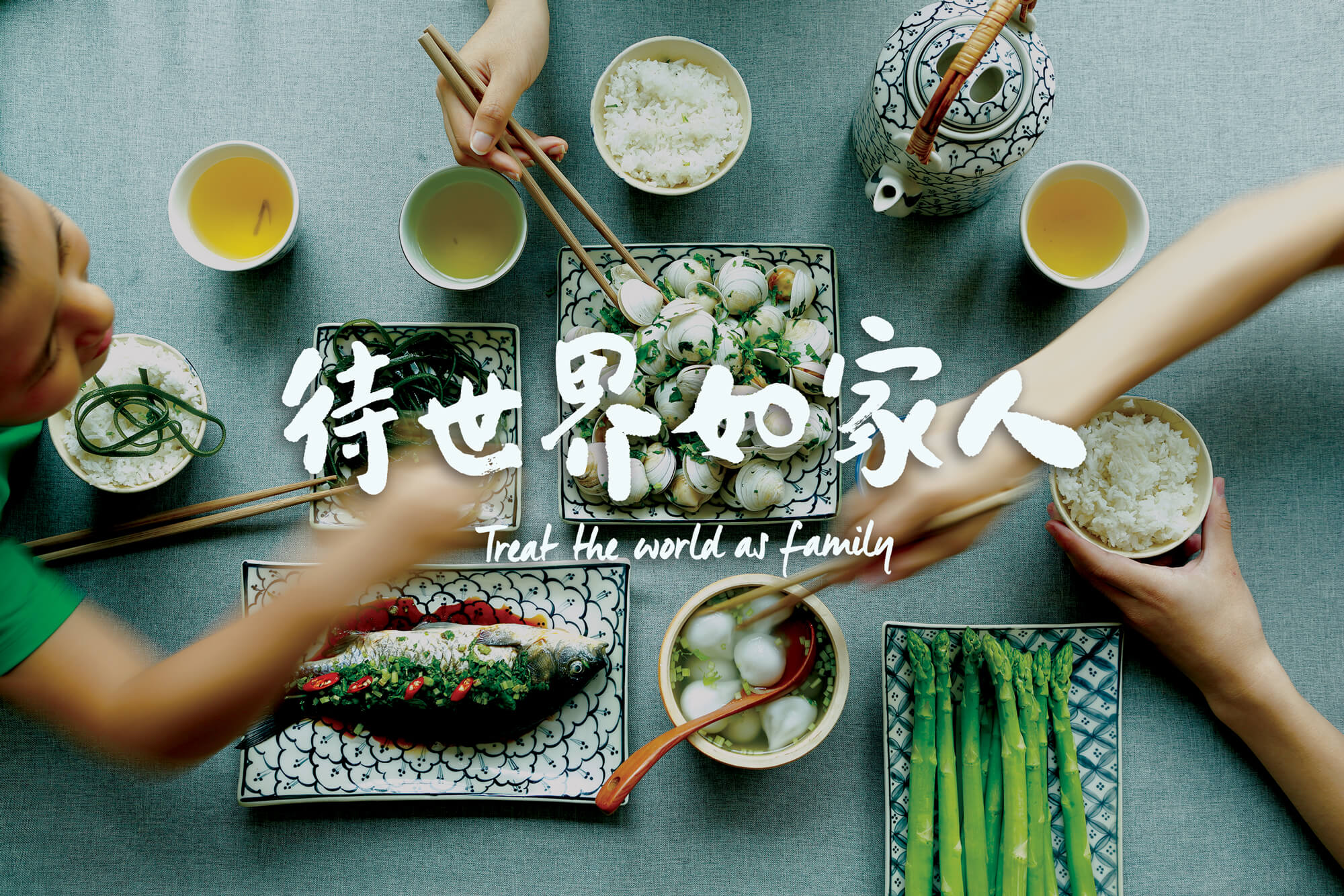
Nourishing the future
Eat Real helps redefine school lunch by advocating for nutritious, sustainable foods.
Before Eat Real can advocate for better school meals, it has to connect with school leaders—and donors. As the organization expanded its work beyond school certification, it needed an updated soup-to-nuts branding redesign that represents its purpose.
To get started on the five-week sprint, the IDEO team conducted a brand audit and interviews with Eat Real staff, board members, and donors. The team learned that Eat Real’s brand messaging and voice showed up inconsistently, and that board members wanted greater clarity around communication to prospective donors. Several people expressed a desire to change the original logo centered on a fork to a more culturally-inclusive symbol, and for the logo to be separated from the Eat Real Certified stamp, since the organization had evolved to do much more than just certification.
The IDEO team worked in close collaboration with Eat Real to deliver comprehensive brand guidelines, including Eat Real’s brand purpose and core values, positioning and personality, logo and wordmark, visual expression, verbal expression, and brand showcase. The brand’s new tagline, Nourish the Future, speaks directly to how real food access unleashes the possibility for a healthier society and a healthier planet. A new mark combines three elements that signify much more: a welcoming bowl (joy and ritual), the serving spoon (generosity and nourishment), and a sprouting leaf (a future where children and the planet flourish). The team also landed on an unapologetically vibrant color palette, to bring surprise and energy to the brand. From this foundation, Eat Real created a new website, completed a photo shoot with IDEO's art direction, and launched the brand with new messaging and collateral within a year. Now, Eat Real has the tools it needs to scale its operations and affect real change.
To scale its program and be at the center of sustainable food systems change, Eat Real needed branding and messaging to reach a new set of philanthropists.
Almost 30 million US kids depend on public school lunches for more than 50% of their daily calories. These meals are frequently made up of ultra-processed, unsustainable foods that contribute to type 2 diabetes and obesity.
2023 funding goals reached
with its new branding, beating its end-of-year fundraising goals, and putting the nonprofit on track to serve more schools in 2024
129M
meals served to 360,000 students every year at schools that have gone through the certification program

Preparing students to innovate
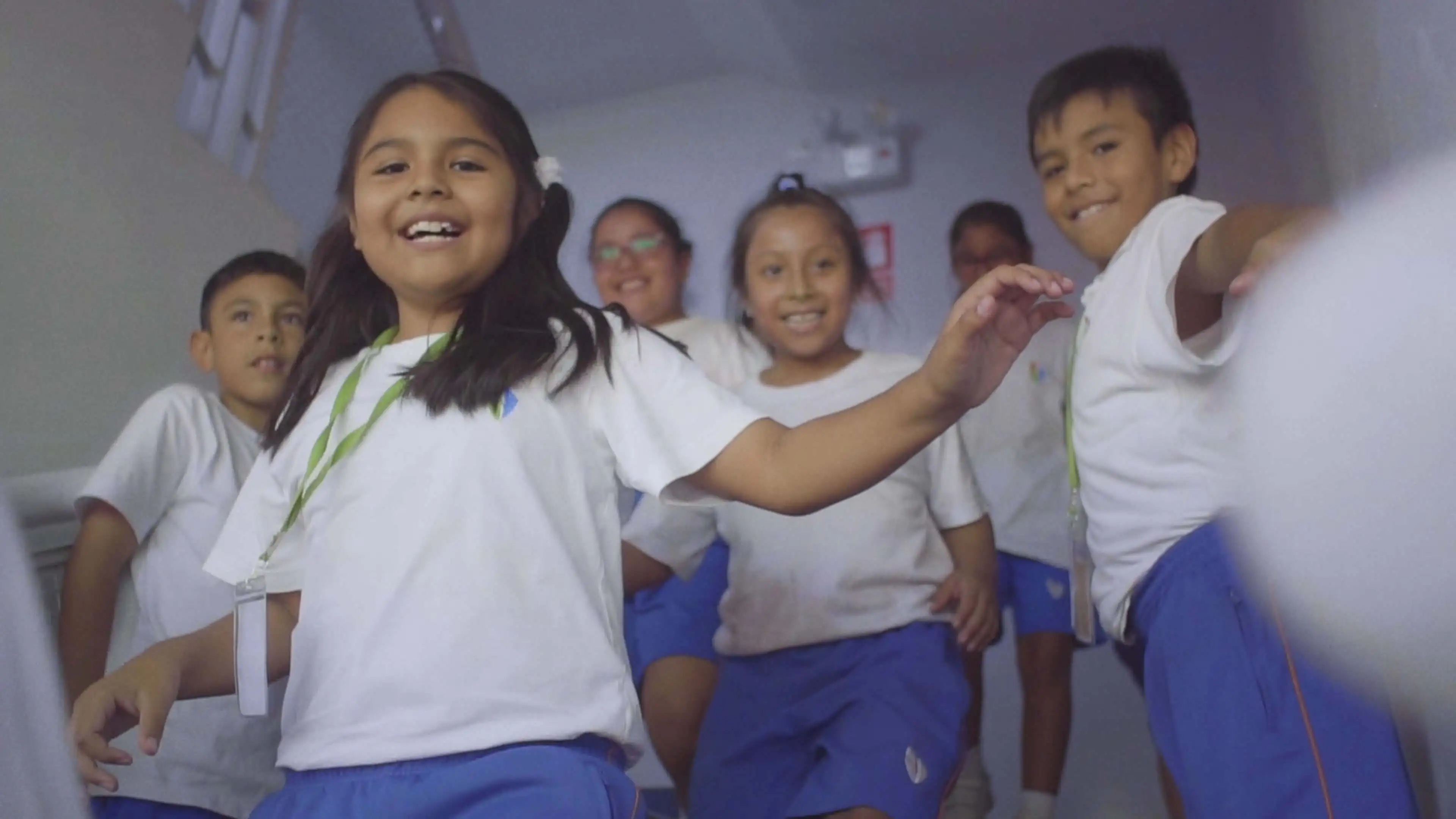
How Yungu School is building the next generation of changemakers.
Most end-of-high-school experiences, like the Chinese gaokao exam, the global IB Extended Essay, or the US-based AP Capstone program, are focused on testing and academic, classroom-based activities. Yungu School, a private K–12 school in Hangzhou, China, founded in 2017 by Jack Ma of Alibaba and funded by Alibaba partners, wanted to take a different approach. Yungu’s vision: combine the renowned Chinese National Curriculum with an international, competency-based learning mindset.
Designing a new capstone course that brought together the perspectives of Yungu School’s many stakeholders was a complex challenge. The solution? IDEO formed a “co-creation council” composed of eight Yungu School middle- and high-school educators who held different positions within the school, spanned tenures, and came from diverse educational and cultural backgrounds, including Chinese, European, and American. Bringing together educators from a range of backgrounds and points of view fostered alignment and sparked new ideas. In addition to the council, IDEO and Yungu educators gathered additional input from students and parents and crafted the objectives, design principles, and blueprint for the change-making 18-month capstone program.
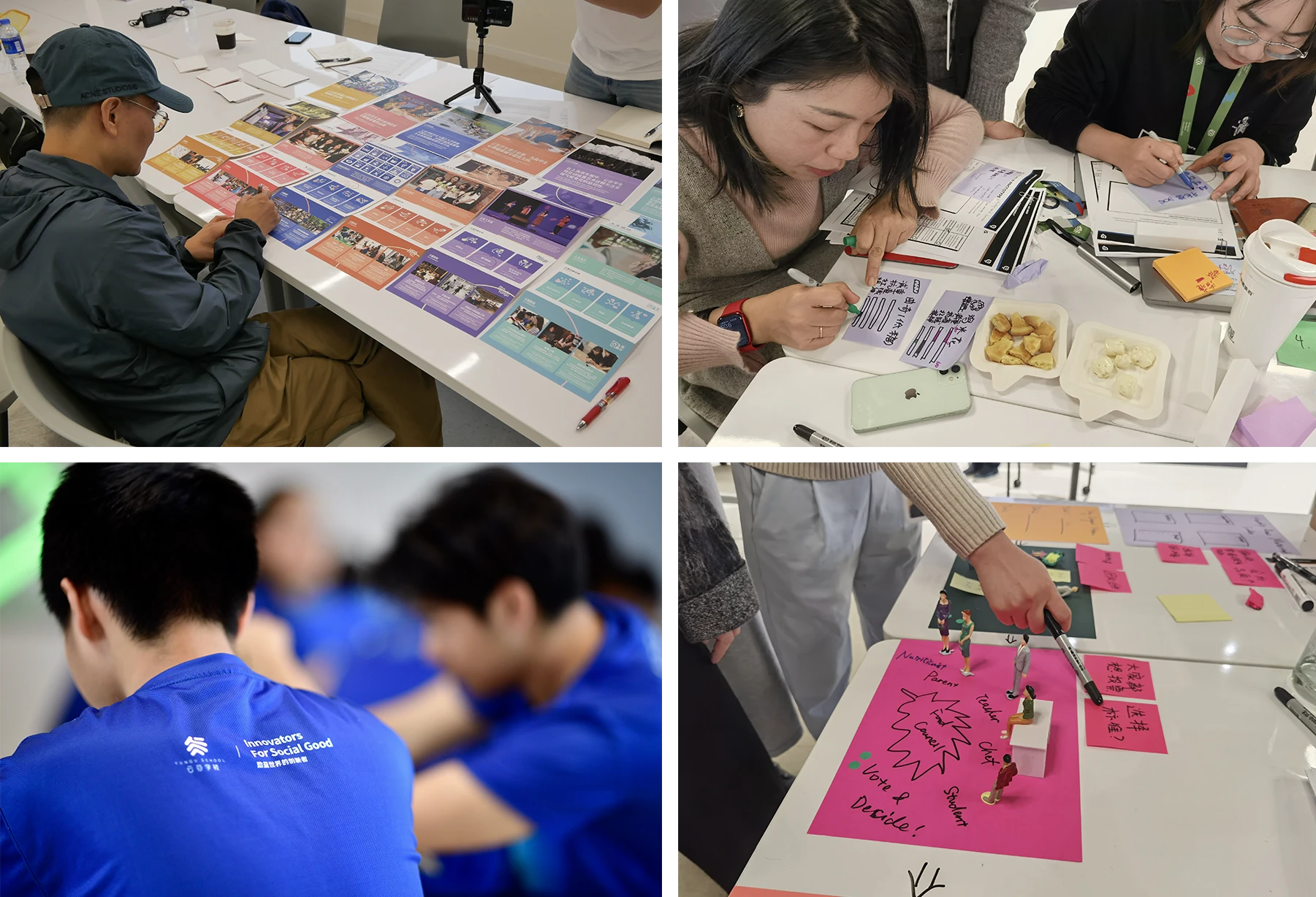
The collaboration resulted in a tailored, insight-driven capstone course that progressively builds learners’ confidence and agency via five modules: “Get Inspired,” “Find Yourself,” “Dive Deep,” “Go Big,” and “Give Back.” The learning cycles, which range from one week to half a year in length, teach students how to move from ideas to impact in topic areas they are passionate about and which have a bearing on pressing issues like climate change, digital privacy, and reducing food waste, among other global challenges. The goal of this iterative approach is twofold. Equip students for “global citizenship” by identifying personal ways to make a positive impact. And foster “entrepreneurship” by learning to be critical, creative, and optimistic systems thinkers who embrace a growth mindset.
To ensure a solid foundation for the new course, IDEO also created a week-long design-thinking training program for Yungu’s teachers. The professional development experience boosted their creative problem-solving and taught them how to move from being “expert instructors of curricula” to “encouraging guides” of capstone students who would need to demonstrate their proficiency through a final product, presentation, or performance rather than a final exam. The collaboration concluded with an immersive exhibition that allowed all stakeholders—educators, students, and parents—to experience the content modules and transformative course for themselves. Since launching its capstone program in 2022, Yungu High School has added lectures from social entrepreneurs and workshops that teach communication skills to the innovative course, garnering awards from media outlets like Fast Company. Most importantly, the signature program has enabled The Yungu School to embody its noble and audacious mission—empowering students to become future innovators for social good.

Today’s high-school seniors learn how to memorize academic content and pass tests but aren’t prepared to make a real-world impact after graduation.
196 college offers
and $1.442 million in scholarships received by over 40 graduates from Yungu High School’s class of 2023
2023 Finalist
Fast Company Innovation by Design Awards, Learning category

Lifelong health by design
Omada Health grows from an IDEO research project to a $1 billion company fighting chronic disease.
Design thinking was embedded in the creation of Omada Health from the earliest phases, and Omada has taken that forward as a strategy for success.
Over the past decade, the digital health company has grown from a couple of early career IDEOers testing concepts at the very frontier of digital health, to a company with nearly 2000 employers on its customer roster and more than one million users of its healthcare products.
Omada’s origin story began at IDEO in 2011, when its now CEO, Sean Duffy, an MD/MBA student at Harvard, joined IDEO as an intern, after a partner found his resume on the copy room floor. What was supposed to be a summer internship led to an exploration of the potential impact of digital tools on chronic health problems. IDEO partner Dennis Boyle gave Duffy and his co-founder and fellow IDEOer, Adrian James, the time and funding to do human factors research, meeting with people with prediabetes and metabolic disease in their homes to learn more about the care they were getting. What they heard was that no product or service was meeting the realities of their daily lives.

Five months after he landed his internship, and with the company’s blessing, Duffy and James spun Omada Health out of IDEO. Together, they raised a seed round, and continued to lean on design thinking methods, prototyping early versions of their product, then testing it with real patients. Duffy himself even served as the company’s first health coach. By sticking with the mindsets they had learned at IDEO, they avoided the pitfall of falling in love with the popular approaches to digital health of the era—like detailed food tracking or bluetooth enabled pill bottle tops. Instead, they stayed focused on creating what patients were asking for: a digital product that provided support, accountability, and evidence-based solutions.
Today, Omada Health is a virtual-first, integrated care solution that provides patients with clinical care plans using digital tools and one-on-one, personalized coaching. It helps users manage chronic conditions including pre-diabetes, diabetes, hypertension, joint and muscle health, and behavioral health. More than a decade after its founding, it counts nearly 2000 employers as customers, has more than one million users of its products, and has published 24 peer-reviewed studies on its outcomes. Not to mention a $1.3 billion IPO in June of 2025. But it’s still going after its North Star: to bend the curve on preventable chronic diseases nationwide.
About 60% of adults in the US live with a chronic disease. According to the CDC, 90% of the nation’s $4.1 trillion annual healthcare expenditures are for people with chronic and mental health conditions.
Diabetes is the country’s seventh leading cause of death—and the most expensive. Diabetes accounts for $1 out of every $4 in US healthcare costs. In addition to the cost of care, diabetes costs employers $90 billion annually in lost productivity.
Nearly 2,000
employers now partner with Omada
1 in 10
commercially-insured Americans have access to Omada through their health plan or employer coverage
$1.3 billion
valuation at Omada's IPO
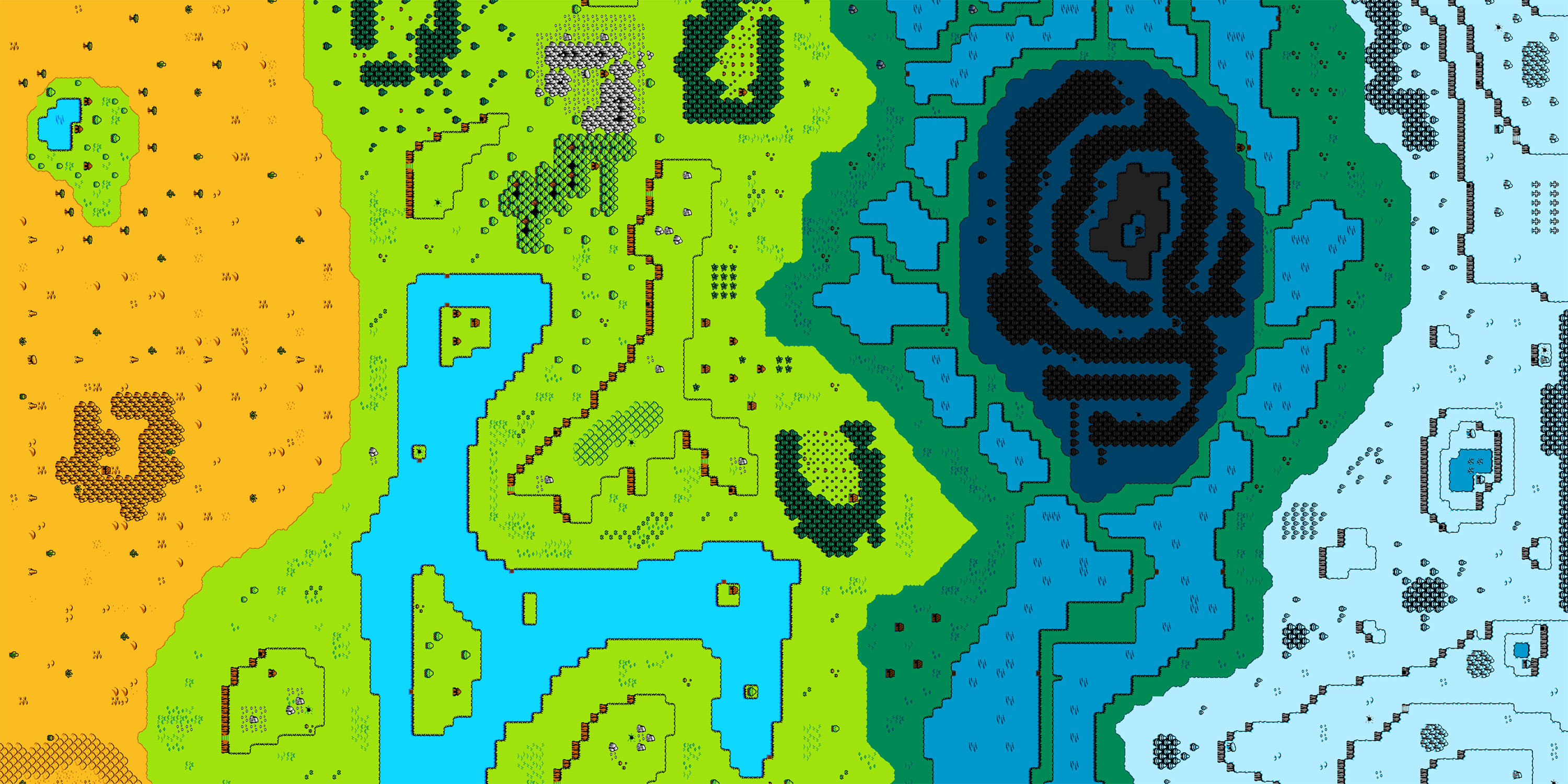
Designing a video game on a very, very small scale
How one designer built a pixel-sized video game controlled by a jeweler’s loupe.
As pixels become a hidden quality, what would it be like to expose and celebrate this tiny landscape? Maybe it’s some sort of nostalgia for the pixel, but I thought it would be fun to prototype a game where part of the gameplay is uncovering this “hidden world” of pixels inside these new displays—and so the world’s smallest pixel art game was born.
Looking through the loupe
To start the project, I needed to see these tiny pixels up close. I bought a cheap jeweler’s loupe—basically a magnifying glass—and pressed it up against an iPad. Things looked promising with a 10x loupe. The level of magnification allows you to see the individual pixels, but still see a decent amount of the play area around the character. However, if your eye is pressed against the eyepiece of the loupe, it would make touch controls a challenge because you can’t see anything but the small area in the magnifying glass. To work with this constraint, I wondered if I could make the loupe itself the controller for the game.
The way iPads and most tablets sense touch is using a “capacitive touchscreen.” This type of display creates a grid of areas that hold electrical charge. When a fingertip touches the screen, the charge at and around the point of contact decreases, communicating where the finger is to the tablet. Electrically conductive gloves and styluses are able to work on these screens because they allow the properties of your finger to extend through the conductive material. So using the same idea as a conductive stylus, I put some aluminum tape on the loupe to transmit the capacitance from your fingers to the display. This allowed a player to move the loupe around the screen, and through doing so, interact with the game.
Exploring a tiny world
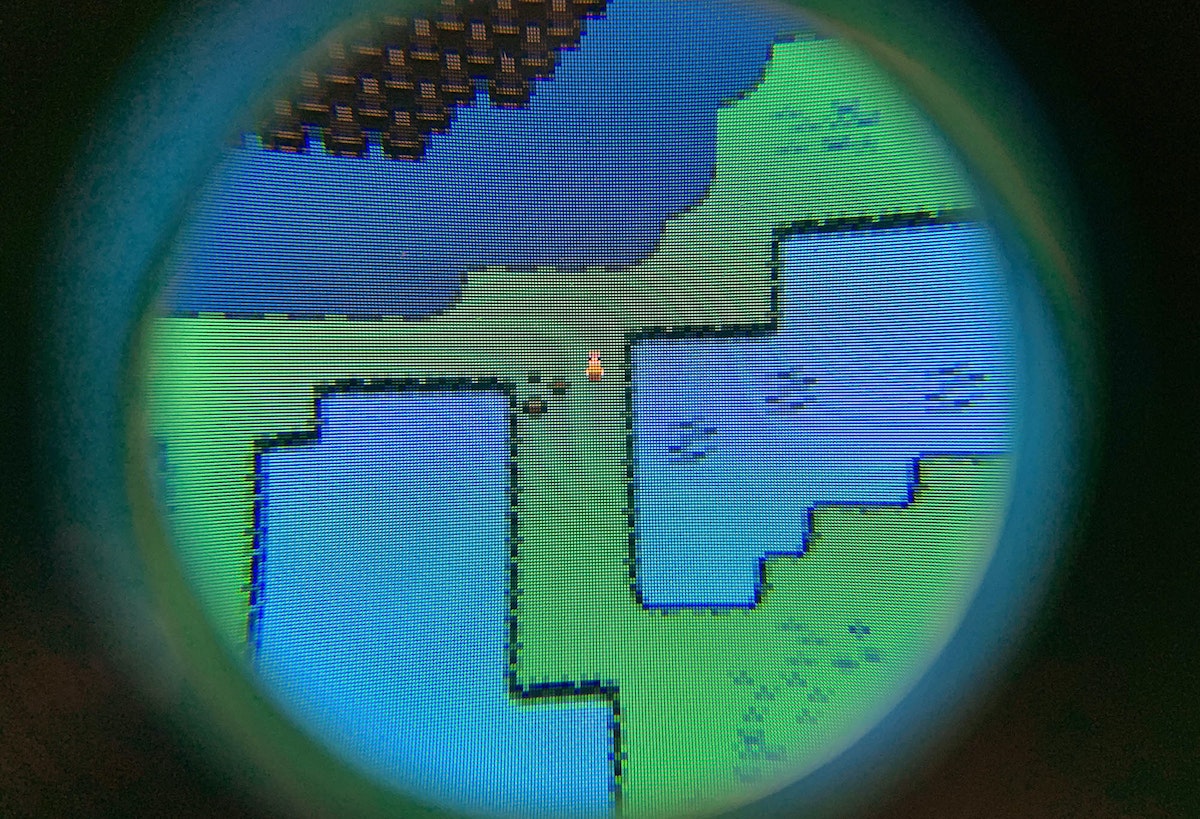
Next, I needed to develop the game. I borrowed from some of the classic role-playing-game tropes from games I played as a kid, building out a landscape that included many different climates—a desert, a lake, a forest, a deep forest, an ice tundra, and more. I created a tiny character that the player guided around the landscape by moving the loupe.
The idea is that the whole game is played on a single static overworld screen that never moves—you can explore an entire tiny world without ever moving more than a few inches. There are even a couple of fun ways the character interacts with the environment. For example, the player can force the character to fall into the lake, where he splashes around and quickly jumps out. I also created a hidden cave that shows how a game might work with inside and outside spaces that can be explored.
Overall, I’m pretty satisfied with the way the experiment turned out. There’s something about looking through the magnifying glass and into this new world that brings back some of the awe and wonder that came with exploring new worlds on my Nintendo when I was growing up—it just goes to show that screen technology doesn’t need to be pixel perfect to transport us.
Chart your own pixel territory
Want to try it for yourself? Here’s how to get your own version of this experiment up and running:
1. Build the loupe controller
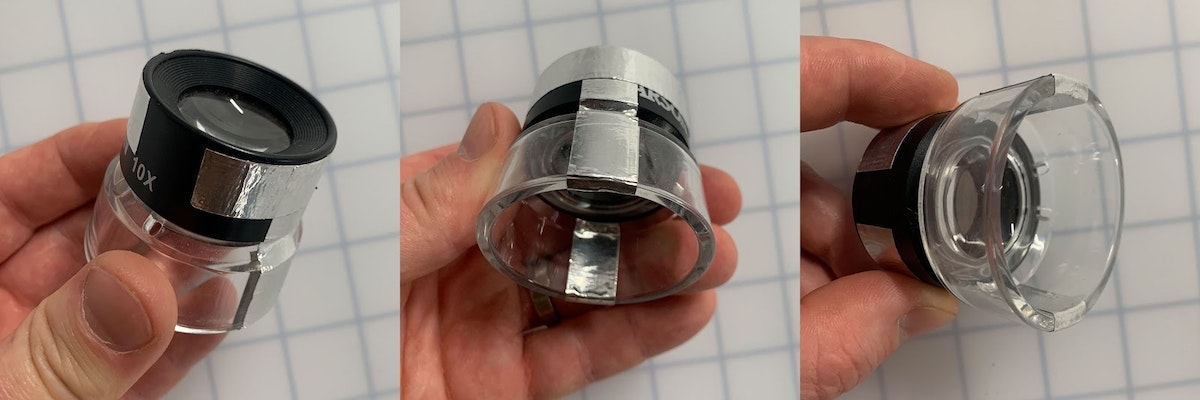
Get a loupe, and some aluminum tape. I made two separate “T” shaped pieces of tape, and wrapped them around the edge of the bottom of the loupe. This metal transmits the capacitance of your body down to the edges of the loupe, simulating two-finger touch.
2. Load the game
There are two ways to do this. First, make sure you have Unity, then download the project from Github. You’ll also want to install the Unity Remote app on your tablet.
To quickly test the project, you can plug the tablet into a USB port on your computer and open the Unity Remote app on the tablet. In Unity on the computer go to Edit > Project Settings > Editor and select the tablet. Then press the play button at the top of the main Unity window and the game will appear on your device. This will let you try things out but it will be very slow to react and move the character because it’s running on the computer and sending each screen as an image over the USB connection. More detailed instructions can be found on the Github project page.
Alternatively, if you want to run the application natively on a device at a reasonable speed, you will need to follow the directions on building for mobile to set up your device with Unity.
Either way, once you’ve gotten the game up and running, you’ll have a good sense of the game mechanics and can go into the project to edit it to create your own tiny world—changing things like the landscape and character actions, creating new characters and interactive objects, and even extending it into an actual game. Happy exploring!
A quick shoutout to some of the great resources I used to create this demo:
- Tiled: A fantastic tool for creating tiled backgrounds for 2D games. This was extremely helpful for putting together the overworld.
- Tiled2Unity: This tool helps bring the tiled data into Unity seamlessly.
- opengameart.org: A great repository for free to use game art assets. My main tiles were modified from surt’s Blowhard Chronicles.
- rm2kdev’s 2D Unity RPG Development series: A super helpful video series on developing 2D games in Unity.
When’s the last time you had to design for something as small as a pixel? In recent years, with the advance of retina displays on computers, tablets and phones, it’s easy to forget that pixels are still the building blocks for everything you see on the screen. (These new displays still use pixels; they’re just so small they can’t really be seen.) In the past, user interface designers had to build to pixel-perfect precision to avoid blurry aliasing effects and issues with displaying fonts on lower-resolution screens; today, this is all but a thing of the past.
What Cooking Dinner for Friends Taught Me About Prototyping
How a kitchen experiment took one designer down a prototyping rabbit hole
Designers prototype everyday. It’s an essential part of the design and development process that involves translating early ideas into tangible prototypes that we can test in real life with real users. Prototyping is about being able to understand a challenge or an opportunity and find creative ways to move toward a solution, step by step. Essentially homing in on “building the right thing,” before “building that thing right.”
But the prototyping process doesn’t have to be limited to what you do for work. In fact, bringing this approach to your everyday life has the magical effect of turning common challenges into moments of playful exploration. It’s not necessarily about finding the ultimate answer, but enjoying the opportunity to experiment, improve, and learn along the way. You can prototype anything as long as you have the right mindset and get creative with your tools.
Here’s what it looked like when a sous-vide experiment took me down a prototyping rabbit hole (and how it could take you down one too).
Step 1: Get inspired
Inspiration can come from many places, like frustration with tools or objects that are not easy to use or the simple joy of creative exploration. For me, the latter happened when I stumbled across a recipe that used sous-vide, the technique of slowly heating meat or fish to its perfect core temperature so it doesn’t become dry or overcooked.
I thought it would be fun to try out for a dinner party, but didn't want to invest in a professional sous-vide machine. A typical moment where my prototyping obsession kicks in…

Step 2: Start out low-fidelity
An essential step while prototyping is identifying the simplest way to obtain the intended result—to achieve more with less. Isn’t the sous-vide technology just slowly heating up ingredients and stabilizing the temperature over a long period of time? That seemed pretty simple. So I gathered my materials: heat-proof bags, an electric thermostat, and of course, a couple of beautiful steaks.
I sealed the steaks in the heat-resistant bags, put them into a pot of water and used my oven to heat them up to 53°C/127 °F (the perfect core temperature for a medium rare steak). Unfortunately, the thermostat of a regular kitchen oven is relatively inaccurate, with the actual temperature being ±10°C/18°F compared to what it shows! That can make the difference between your meat being bloody as hell and completely overcooked.
That meant I had to place myself in front of my oven for over two hours, staring at the tiny LCD display of my electric thermostat and manually balancing the inaccuracy of the oven by turning the temperature up and down.
Step 3: Analyze your results
The good news: the meal was perfect—the meat medium rare—and my friends were impressed. But sitting in front of my oven, watching a thermostat for multiple hours, was less than ideal. This was the perfect starting point for the next iteration—looking into ways to automate and refine the temperature stabilization and improve my personal user experience.
Step 4: Iterate on key features
That’s how I found myself on a Saturday afternoon hooking up a simple heating rod, my electronic thermostat, and a milk stirrer with an Arduino board.
I mounted my thermostat to the top of the pot and coded my Arduino board to activate the heating rod as long as the temperature of the water bath stayed below 53°C/127 °F. Triggering the milk stirrer every once in a while ensured that the temperature stayed consistent throughout the pot. My prototype ran this process every 10 seconds and freed me up to focus on other parts of the dinner preparation while delivering another round of perfectly cooked meat and fish.

Step 5: Repeat until satisfied—or pivot
Each iteration of a prototype will reveal more detailed feedback and help you get closer to an actual solution. That’s why prototyping is the best way to learn while moving forward, and to de-risk decisions on product innovation or bigger investments.
Using my sous-vide prototype several times helped me identify multiple opportunities to improve it, like how to make it as compact as possible for easy storage (a great design and prototyping task in itself!). But most importantly, by using the prototype, I realized that I missed the sensorial experience of cooking. Simply waiting for ingredients to reach their core temperature in the water bath felt like an artificial, chemical experiment and was not the rich sensory experience I was looking for when spending time in the kitchen on weekends.
So I decided to pivot. After not using the prototype for months, I disassembled it and freed up the components for my next prototyping rabbit hole. Even if the sous-vide prototype actually never made it into a final solution, it helped me better understand what I enjoy most about cooking, and taught me something that I’m sure will be applicable to a future experiment—because the prototyping obsessive’s job is never done. Now, on to the next project!
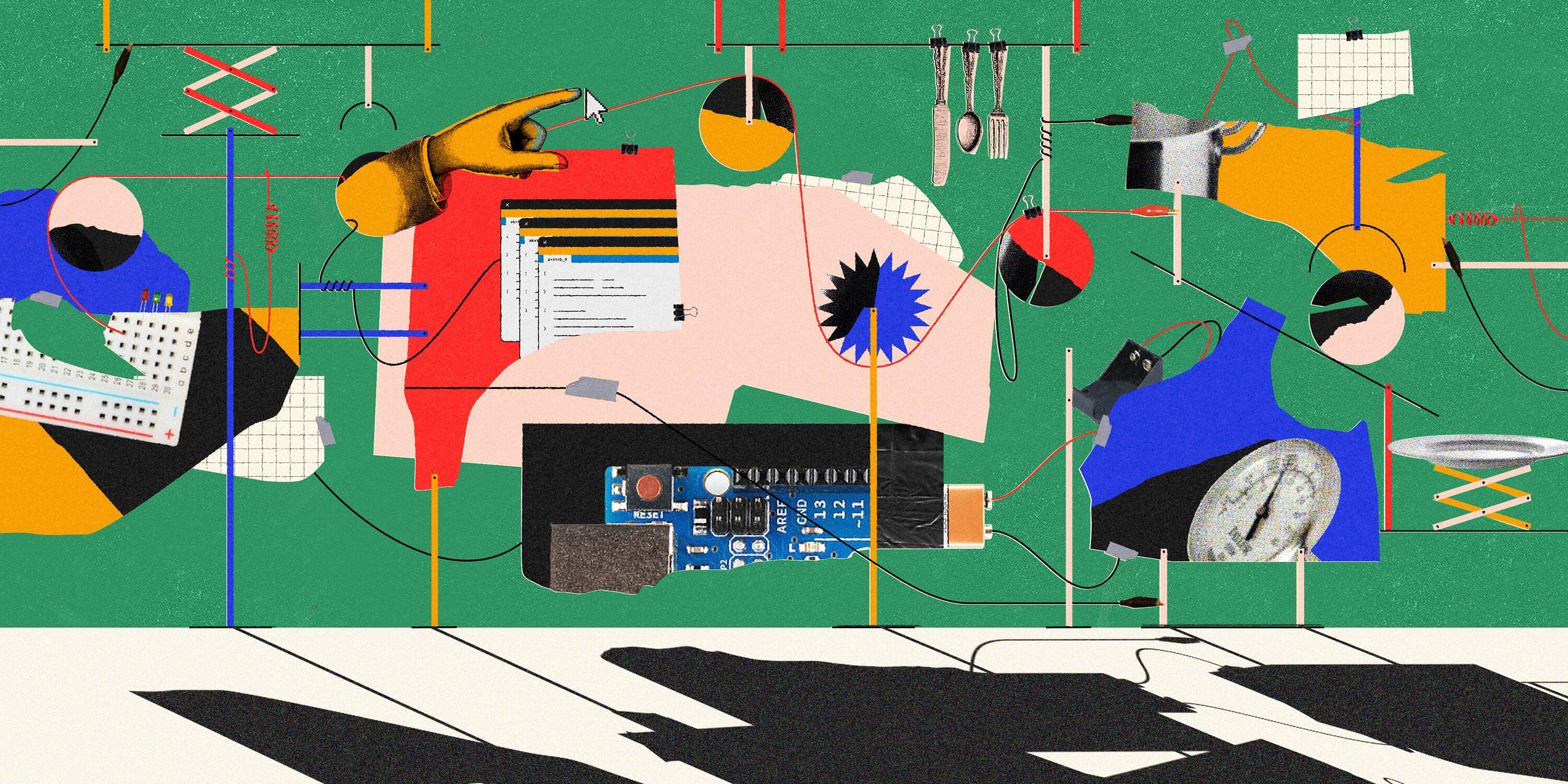
On a Saturday afternoon (pre-COVID), I found myself in my kitchen, hooking up an Arduino board to a heating rod with one hand, and handling an electronic thermometer and a milk-stirrer with the other. How did I end up here? A hunt for the perfectly-cooked steak—and a typical result of my obsession with prototyping.

Your Data Could Do More for You If You Learn How to Use It
3 strategies for unlocking business growth opportunities with AI
For years, I’ve watched smart companies buy into big data. Yet despite huge investments, some of them fail to reap the rewards. A 2017 MIT study revealed that 63% of executives expected to see a large impact on their offerings from AI in the next few years. But of the 14% of executives who reported already seeing a large impact, most cited examples in automation, decision-making support, and operational diagnostics for internal capabilities. Those kinds of advances can contribute to higher profits and short-term differentiation, but operational efficiencies do not generally help organizations grow beyond their peers. They also aren’t the deciding factor that will carry you through a yo-yoing economy. So how, exactly, do successful organizations unlock sustained and differentiated value in an AI-enabled world, at a time when immediate change may seem necessary just to survive?
It starts with experimenting and iterating with data—in a responsible way— to find your organization’s unique value proposition. Intentional experimentation mitigates the risks of failure by ensuring that you learn which data skillsets are critical to your organization, while at the same time identifying product-market fit. It’s a process that can happen before, during, or after a broader digital transformation, and there are three different ways to approach these intentional experiments: scaling internal offers, piloting to stretch, and purposeful venturing.

Scaling internal offers
In 2004, a web design company called 37signals needed a project management tool to keep all of its work streams on track. Initially, its solution—Basecamp—was meant to be a tool that would help the company be more efficient, and serve as a single source of truth for all its projects. But the more valuable it became internally, the more the company realized that it could be valuable externally. Eventually, Basecamp became 37signals’ core business; it adopted Basecamp as its name, and folded other offerings under the new brand.
Scaling internal offers is a smart way to create new revenue streams that can also help drive an organizational purpose. It’s a particularly good approach for companies that value creating internal capabilities and investing in their employees.
Another example comes from a liability insurance company that had recently gone through quarterly reviews. The company took a deep dive into large lawsuits, setting case direction and identifying where liability existed and standards had been breached. These observations were used to set financial reserves and, after months of manual curation, create risk-management training materials. While this company had already developed a technique for improving best practices, leveraging data to create a digital tool would give them an opportunity to scale up dramatically. The resulting in-house product allows the company’s claims and risk management representatives to rapidly identify new and emerging trends, as well as strategize case management on the portfolio level, saving thousands of human hours and much more in lawsuit expenses over the course of a year. With a bit more refinement, the firm could offer a version of its tool directly to policy owners, which could allow them to adopt best practices in real-time.

Piloting to stretch
A classic example of this approach comes from Netflix, which started offering streaming video services in 2007, alongside their penalty-free mail order DVD rentals. When the streaming service was born, it was a digital replica of the video store experience, browsing and selecting movies from a wall. But as Netflix accumulated ever more data about what people watched and their preferences, the streaming service became a data-driven way to personalize and recommend content, better fulfilling its purpose of “entertaining the world.” In fact, developing this data-driven capability in-house has given them sufficient insights into viewers’ preferences, which they are now using to create their own content, dramatically shifting the entire media landscape because of the data they own.
Piloting to stretch is a method of launching a new venture that brings in cash and stretches the organization to more intentionally fulfill its purpose. Often, that can require an entirely new business unit, with a new culture and team, so that it can grow without absorbing existing constraints. This approach is particularly appropriate for organizations that are seeking a new lever for growth, or are looking to disrupt their industry.
For Ascensia Diabetes Care, it was about recognizing a service gap for patients newly diagnosed with type 2 diabetes. Most people, shortly after receiving their diagnosis, are scheduled for a brief consultation with a certified diabetes educator (CDE) who helps them learn the basics of managing the disease. But the short time a CDE spends with a client isn't nearly enough to establish new habits and enable sustained lifestyle changes. Ascensia saw an opportunity to create a new remote care service that would allow people with diabetes to interact with CDEs over a prolonged period of time through a telehealth platform, helping them better acclimate to their condition. To design the right program and path for each patient, Ascensia created data-driven tools that would help CDEs know how and when to interact with users. Initially, the company piloted the app with 60 people, and early results showed that users were willing to adopt and adhere to the program. Only two participants failed to complete the study—a stunning success rate when adherence to therapy for chronic illnesses in developed countries averages around 50%.

Purposeful venturing
Google may have started as a search engine, but in 2015 Alphabet emerged as an umbrella organization that made space for Google to pursue other ventures, some that might seem far beyond the scope of the core business. Alphabet’s interests— everything from life science (Calico) to transportation (Waymo)—are all in service of doing the right thing, and separating Alphabet’s other ventures from Google kept them from getting mired in particulars of the Google organization. This nimbleness has allowed Alphabet to fulfill its broader purpose, even during the extreme uncertainty of a global pandemic; the company quickly launched one venture, Verily’s Project Baseline, to research COVID-19, while Google and Apple have partnered to develop an exposure notification system.
Purposeful venturing is a way for an organization to create new business lines that drive growth. These ventures operate independently, with their own teams and cultures, and may require dramatically different ways of working that would be distracting for the core business’ operations. It’s a good fit for companies that might have many different ways of achieving their purpose, or for firms that can create symbiotic effects with auxiliary offerings.
In practice, it can also look like this: A nimble venture firm called 1848 Ventures (a subsidiary of Westfield Insurance) recognized that staffing is one of the biggest uncertainties business owners grapple with. Over-staffing eats into their already razor-thin margins; under-staffing means long lines and lost revenue. By rooting their innovation efforts in their purpose—to help their customers mitigate risk and uncertainty—the firm saw an opportunity to create a service that would help small businesses better manage their expenses through a tool that combines large data sets and an intuitive interface to optimize operational decisions. This new product was piloted with restaurants to help them offset the thin margins they need to survive.
Regardless of whether you experiment by scaling internal offers, piloting to stretch, or purposeful venturing, there are ample opportunities to simultaneously unlock product-market fit while getting a better grasp of the capabilities your organization needs to grow. Design offers a way to mitigate the risk of missing product-market fit and improve your odds of success in a way that dovetails with your existing capabilities and long-term vision. So after you pick your path, get out there and start prototyping early and often with data products, just like you would with anything else. It’s the best way to make sure that your data investment will push you past operational efficiencies, to sustained and real growth.
Illustrations by Nate Kitch
Over the past six months, the pandemic and the economic uncertainty it ushered in have sent companies in every industry flailing; to survive, many have leapt to major digital transformations. Scrambling CEOs have bought into the hype around data and AI that has been swirling for the last decade, all in hopes of making it to the other side. It’s a smart move. Even in a moment as stark as this one, with no sure path to a return to normalcy, data has the potential to ethically deliver unprecedented value to consumers, organizations, and shareholders. But just because the potential is there doesn’t mean the full value of these investments is being realized.

4 Warm-Ups to Prime Your Team for Decision-Making
Exercises to help your team creatively (and remotely) converge
But we recognize that convergence, too, is an opportunity for creativity. These moments can contain sensemaking—the finding of patterns or shifting of perspectives that brings your team to a new, shared understanding of what you have and what lies ahead. In making choices, you are collectively committing to a common vision of what the future could be. It can feel optimistic, unifying, and clarifying. And we know it can be extra challenging to converge when you’re not all in the same room.
I started writing this piece a few months ago, before COVID-19 forced a lot of folks to shift from working in offices to working at their kitchen tables. I’m of the mind that every meeting deserves a warm-up, and I believe it’s even more true today. If your team is working remotely, they’ll be (virtually) walking in from a greater diversity of physical and mental places (for example, perhaps they’ve only taken 72 steps today and their brains and bodies have turned to video-call-induced oatmeal), so creating the conditions for focused, convergent work is even more important.
Here are 4 warm-ups to help your team creatively and remotely converge:
1. Rank this
Instructions: Before your meeting, using a live collaboration tool, set up a spectrum (a simple horizontal line will do) in the virtual space. On the left, write “least”; on the right, write “most.” Pre-create 3-4 Post-its or colored squares per person. Place them off to the side.

To begin, have everyone type a noun in each of their stickies. Then have one person propose an adjective and add it to the top of the spectrum. (If your adjective is crunchy, your spectrum would be least crunchy on the left to most crunchy on the right.)
As a group, as fast as you can, collectively sort all the noun stickies along the spectrum of that adjective. (For example, sort all nouns according to where they fall on the scale of least to most hairy, grumpy, or miraculous). Attempting to do it all at once should feel like joyful chaos.
Pick out a new adjective and re-sort, reminding folks that anyone can move any Post-it, not just their own. Go through a few rounds until laughs abound.
Why it works: Prioritizing is a critical and challenging part of convergence. And it is made even harder when the options you are deciding between feel like they exist on diametrically different axes. This warm-up will help you get comfortable in the ambiguity that is comparing apples and oranges (or perhaps even apples and orange shoes).
2. Goodbye, hello
Instructions: Ask everyone to come prepared to the meeting with a pen and something to write on.
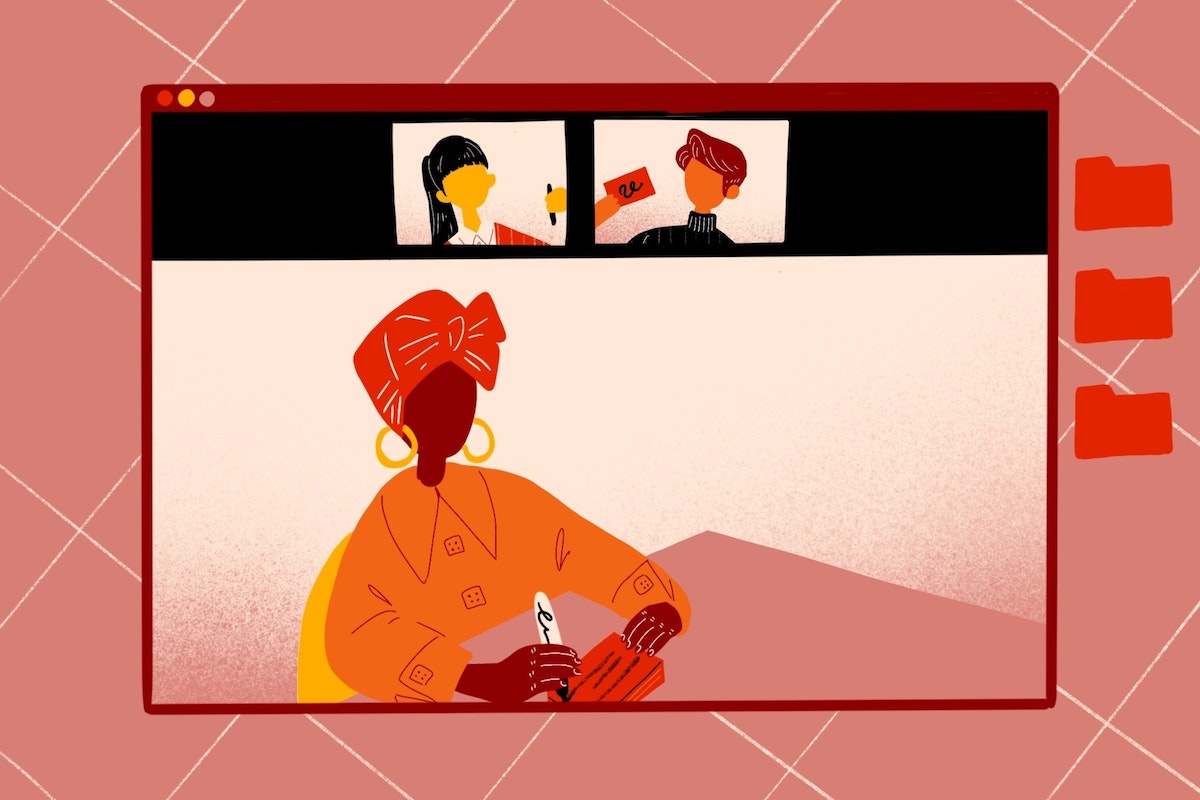
Before you dive into the content of your meeting, have everyone reflect on something they let go of last year and capture a quick sketch of it. Then, separately, have them draw something that was able to fill that newly open space. Have everyone go around and share their drawings by holding them up to the camera.
Why it works: Saying no can feel like the hardest part of convergence, especially when people feel ownership over or connection to the ideas on the table. This reflection exercise will help folks remember there’s power and opportunity in choosing what not to do—because it allows us to focus more energy on the things we do choose to do.
3. Object convergence
Instructions: Ask everyone to come prepared to the meeting with a pen and something to write on.
Have everyone sketch a noun—things like a stapler, a mother-in-law, a glass of water—then go around and share. Pair people up and give them 30 seconds to brainstorm and find a new noun that connects what each individual drew (for example, stapler + glass of water = anchor). Have them do this using the chat function on your video call platform. Multiple conversations will be happening in the chat. But don’t worry, that adds a laughable challenge. Once each pair finds their linking noun, have one person sketch it, then go around and share.

Pairs pairs into quads and have them repeat the process, finding what connects those new things (anchor + lemon = scurvy). Repeat until the collective group has arrived at a single object that has united them entirely. (Hint: like in a game of telephone, this will likely look nothing like any idea anyone started with.)
Why this works: The way forward may not look like choosing person A’s idea or person B’s. It may require finding a third way that draws from the best of both. This warm-up will help you avoid the Frankenstein compromise, where, rather than making decisions, the team mashes all of the ideas together, and dilutes them all to uselessness in the process. In this exercise, teams practice the skill of looking beyond individual ideas to a higher connecting goal or purpose, and collectively aligning on this new vision.
Convergence can feel heavy. This will bring a bit of levity to the process, allowing your team to find the optimism and energy to build on one another’s ideas moving forward.
4. Shake it out
Instructions: Have everyone stand up and close their eyes. Then give these directions, while doing it with them: Reaching out all around you with your hands, shake them vigorously to manifest into the space the multitude of what if’s, what could be’s, and fears of the future. Now, use a pushing motion, clear a bubble of safe, fresh air around you. All together, let’s take a deep breath in and ground ourselves in this space.

Having everyone close their eyes creates an important sense of safety. No one can look like an idiot if they can’t be looked at. Worried that people have stopped wearing pants to video calls, and won’t want to stand up in front of their camera? Have everyone turn off video first, then give the instructions.
Why this works: Our physical state is intricately connected to our mental state. So often at work we ignore our physical bodies, thinking them a distraction, nuisance, or simply irrelevant. In the world of working remotely many of us spend our working hours glued to a screen, ceasing to exist in the three-dimensional plane. Getting your body in the right place (and remembering it exists at all) will help get your mind right too.
It is not infrequent that a team gets to a point of convergence and all feels like a swirling mess of hypotheticals. This warm-up will help create the mental clarity and space to step back and find the broader picture.
Go forth and prototype
Decision-making can be hard and stressful. You’ll probably have to kill some darlings. But you don’t want your team to walk away feeling unheard because the phrase most commonly used in your meeting was “we can’t.”
If instead you can galvanize them—catalyze their creative, collaborative brains in finding and forging the path forward—you will leave with teammates bought into a future they want to build together.
Take these warm-ups and hack them, make them your own, and iterate on them. How can you prime your collaborators to optimistically say “no” to make way for “yes,” find a third way forward, and see past the chaos to clarity?
When I say “creative meeting,” what comes to mind? What’s the energy like? What are you and your colleagues doing? My bet is that you’re imagining a brainstorming session. Generating ideas. If you’re lucky, it’s joyful, full of potential, and exhilarating. What I’m guessing you’re not thinking of? Those moments where you have to make decisions. Prioritize, say no, and shut some doors. At IDEO, we call this part of the process convergence: the refining and focusing of options to move forward with a strategic set of choices.

Lindsey Turner
I’m passionate about building brands, products, and experiences that help organizations show up with meaning and momentum.
I help organizations cut through complexity by shaping how they show up, through brand strategy, identity, and storytelling.
Working at the intersection of brand and business, I bring an editorial eye and a bias toward making—turning ideas into tangible experiences that people can understand, trust, and believe in.
My work spans government, healthcare, financial services, media, and consumer goods, from launching Gen Z-focused ventures to building innovation labs and reimagining legacy brands. I relish moments of ambiguity and enjoy translating across teams, perspectives, and priorities to move ideas forward.
I started my career in editorial and digital design, shaping cross-platform experiences and identity systems in publishing and agency environments. That foundation still shapes how I work today: I’m detail-oriented, collaborative, and overreliant on the Oxford comma. I hold a BFA in Visual Communication from the School of the Art Institute of Chicago.

Rachel Young
My work helps organizations see who their products aren't working for—and build the will and the tools to do something about it
For 25 years, I've asked the same question: Who does this design exclude—and what are we going to do about it?
My work spans human-centered strategy, inclusive design, and qualitative research, with clients ranging from Microsoft, Google, and Verizon to the National Science Foundation, and San Francisco Unified School District.
Before IDEO, I taught elementary school in East Palo Alto and spent a decade doing design work with social service organizations—where I learned firsthand what it costs people when systems are built without them in mind.
I am currently writing User Error, a nonfiction book about digital access and the design decisions behind it. I live in Oakland, California.

Brian Pelsoh
I lead with craft, ensuring our work is creatively excellent: rooted in deep human insight and imagination, while also grounded in the realities of business and technology.
My expertise spans brand, communication, and product design across tech, education, the arts, and social impact.
I believe great work demands both high-level vision and obsessive attention to detail, and only happens through collaboration.
I bring an inclusive, hands-on approach and a deep understanding of business, which enables me to consistently deliver excellence while always asking why.
Before joining IDEO, I worked at the brand firms Pentagram and VSA Partners. I began my career as a designer, leading teams at the School of the Art Institute of Chicago and the Milwaukee Art Museum. I hold an MFA in graphic design from Maryland Institute College of Art and a BFA in communication design from the Milwaukee Institute of Art & Design, and have taught at some of the best design schools in the US.

Tony Wong
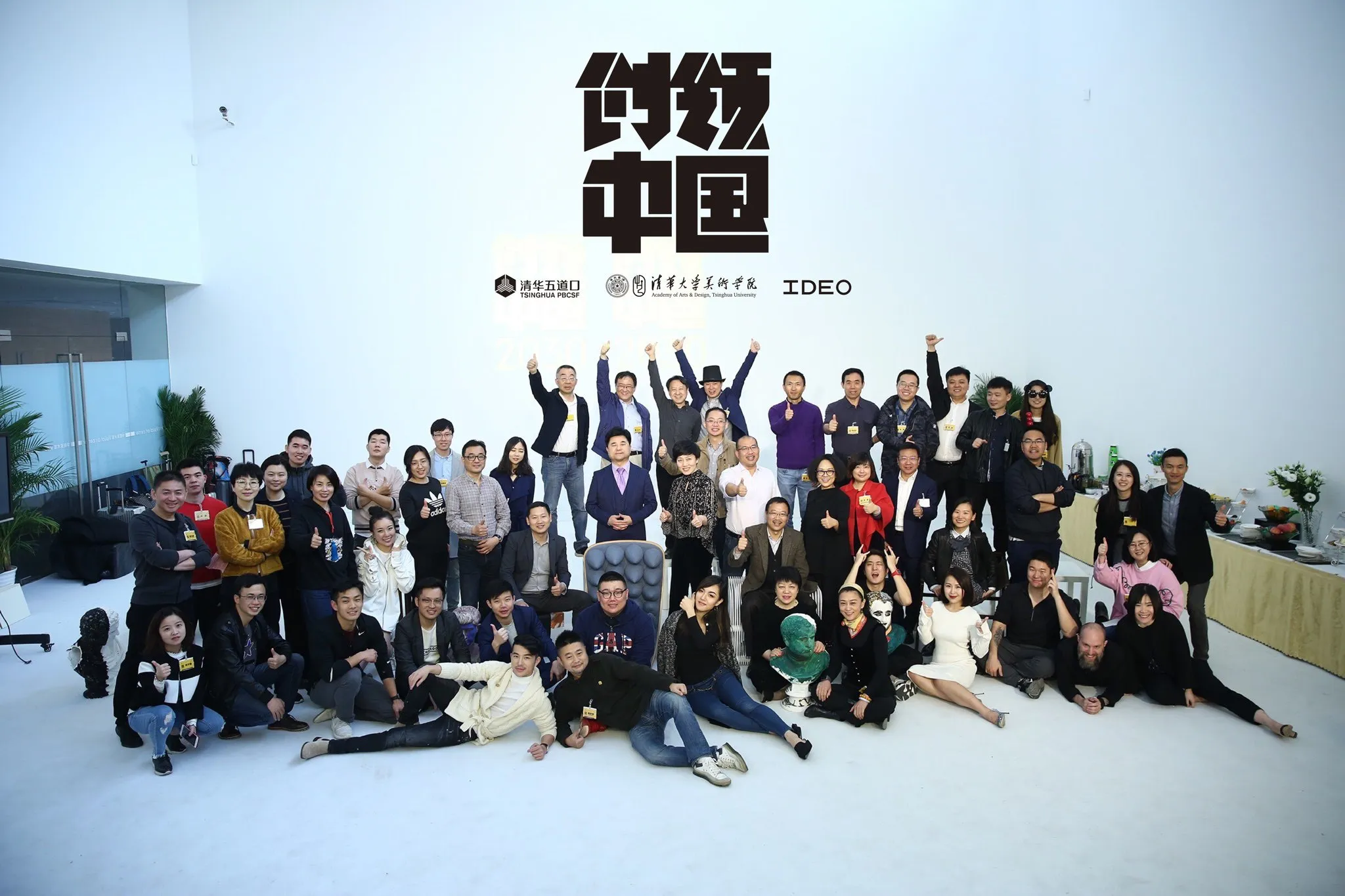
I am responsible for IDEO’s long-term success in China and working with clients to use design as a tool to enable growth.
I am responsible for IDEO’s long-term success in China and working with clients to use design as a tool to enable growth. Specifically, I have helped Chinese companies design holistic brand solutions through the development of their products, communication, services, and innovation teams, and I have helped multinationals expand their presence and influence in China.
I advise global leaders on developing China-led innovation and capabilities.
In over 15 years in IDEO Shanghai, I have worked on projects that use design to elevate the quality of the experience of healthcare products and services, streamline processes that increase productivity, create spaces and programs that promote and enable inclusive communities, and build next generation mobility solutions that are planet-positive.
Before joining IDEO, I worked at Philips Electronics and the Electrolux Group in Italy, the Netherlands, and Singapore on a number of breakthrough commercial products. I am a member of the Young President Organization in Shanghai.

How to use AI as an editor, not a writer
Ed White shares how he uses AI as an editor—not a writer—to sharpen storytelling, rehearse ideas, and preserve the productive friction that makes creative work better.
Ed White has a rule he's tested on his own writing: hold yourself as the writer, and let AI be your editor. Ed is a Senior Design Director at IDEO's London studio, where he co-leads the firm's AI portfolio across Europe. Before IDEO, he spent 12 years as a writer and editor at the Financial Times, Wired, and Contagious. So when he talks about when to use AI for storytelling and when not to, it comes from two decades of crafting his storytelling skills.
In this episode, Mina Seetharaman talks with Ed about two specific tools he uses to keep AI in an editor's seat: a "roasting agent" prompted to critique his drafts without any sugarcoating, and a simulated audience he rehearses pitches on before the real thing. They also get into what Ed is hearing from design leaders at Anthropic, Lovable, Shopify, and Google Creative Lab about how creative work is changing, and why he thinks the friction of writing something yourself is worth protecting rather than automating away.

Building a personal AI for the messiness of life: Sida Li
Becca Carroll talks with Cue co-founder Sida Li about designing a personal AI for the messiness of everyday life—not just work. They explore how Sida stays anchored to human needs while navigating fast-changing technology, product tradeoffs, business-model experimentation, and the realities of building an AI company today.
Most AI products today are built for work—a space with clear problems and established systems. One founder noticed a gap: personal life is messier, harder to systematize, and mostly left behind by the AI boom. So she built Cue, a personal AI that lives inside iMessage and group chats, to go where the other tools haven't.
In this episode, Becca Carroll, IDEO's Chief Strategy Officer, talks with Sida Li, co-founder and CEO of Shared Context Lab, about staying anchored to a human need while the technology around her keeps changing shape, why she treats her business model with the same rigor she'd bring to a product, and what it feels like to build a company at this particular, disorienting moment in AI.
The conversation also gets into how Sida makes design decisions: the language Cue uses to describe itself, the tradeoffs behind building inside iMessage instead of a new app, and a real story about a business idea that didn’t pan out.
This is the second in a two-part series profiling founders from IDEO's Startups-in-Residence program. The first conversation is with Johannes Seemann, founder of Sooner, on designing GenAI for the emotional side of money.

Designing GenAI for the emotional side of money: Johannes Seemann
Designing financial tools around the feelings that shape money decisions.
Most personal financial tools are built to run the numbers and optimize towards a budget. While that works for some, most people experience money as a lived relationship that does not neatly fit into a spreadsheet. Johannes Seemann and Becca Carroll discuss why money is emotional before it is mathematical, and what a human-centered approach to building a generative AI financial product looks like in practice.

The curious leader's edge in uncertainty: Scott Shigeoka
How genuine curiosity helps leaders navigate uncertainty with greater confidence.
Mina Seetharaman talks with Scott Shigeoka, author of Seek and Head of Curiosity Cultivation at the Eames Institute, about what distinguishes genuinely curious leadership from performative curiosity, how power dynamics shape curiosity, and why practicing curiosity can restore energy rather than drain it.
Looks like you might be in search of something very specific?
Or reset the filters above and try another angle.
Here’s some random inspiration

Podcasts about creative leadership

Articles about the power of prototyping