.svg)



In Mexico, redefining retail
FEMSA creates a digital ecosystem to increase customer value at its network of OXXO stores.
The IDEO team quickly discovered that the challenge of designing a Digital@FEMSA super app for tens of millions of customers was matched only by the operational complexity of bringing together different teams that had already created various apps with separate value propositions. Not to mention the 22,000 stores specifically tailored to local communities.
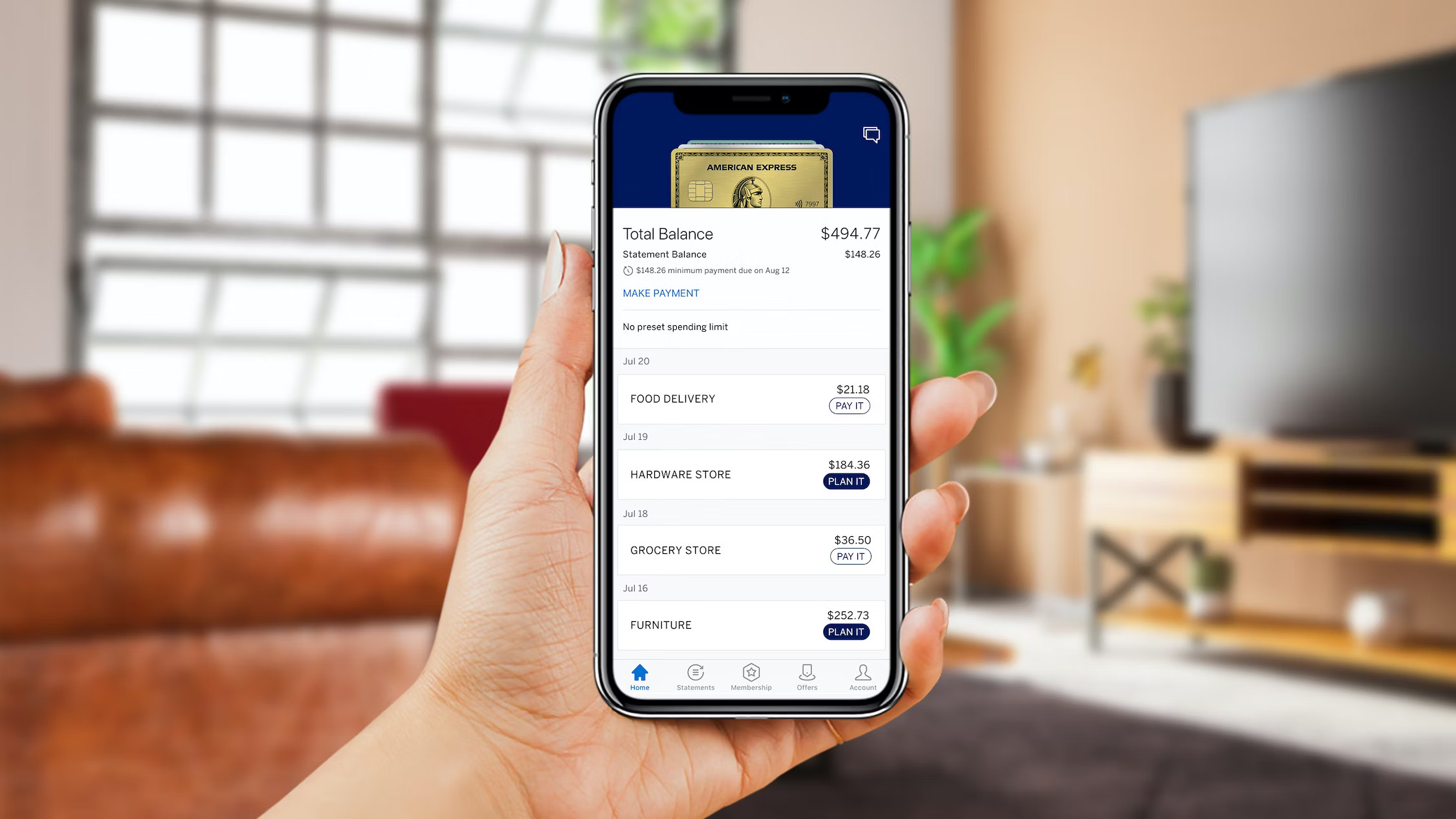
To kick off the project, the IDEO team built on FEMSA’s already deep understanding of its customers by meeting them in their homes and communities. The team discovered that users didn't care about long-term rewards; instead, they wanted everyday help to thrive long-term. Connecting omnichannel rewards to regular spending would allow them to save time and money—something they said was particularly important. Along with market research, insights like these directly informed the app's design, ensuring that it was compatible with users' everyday habits and preferences.
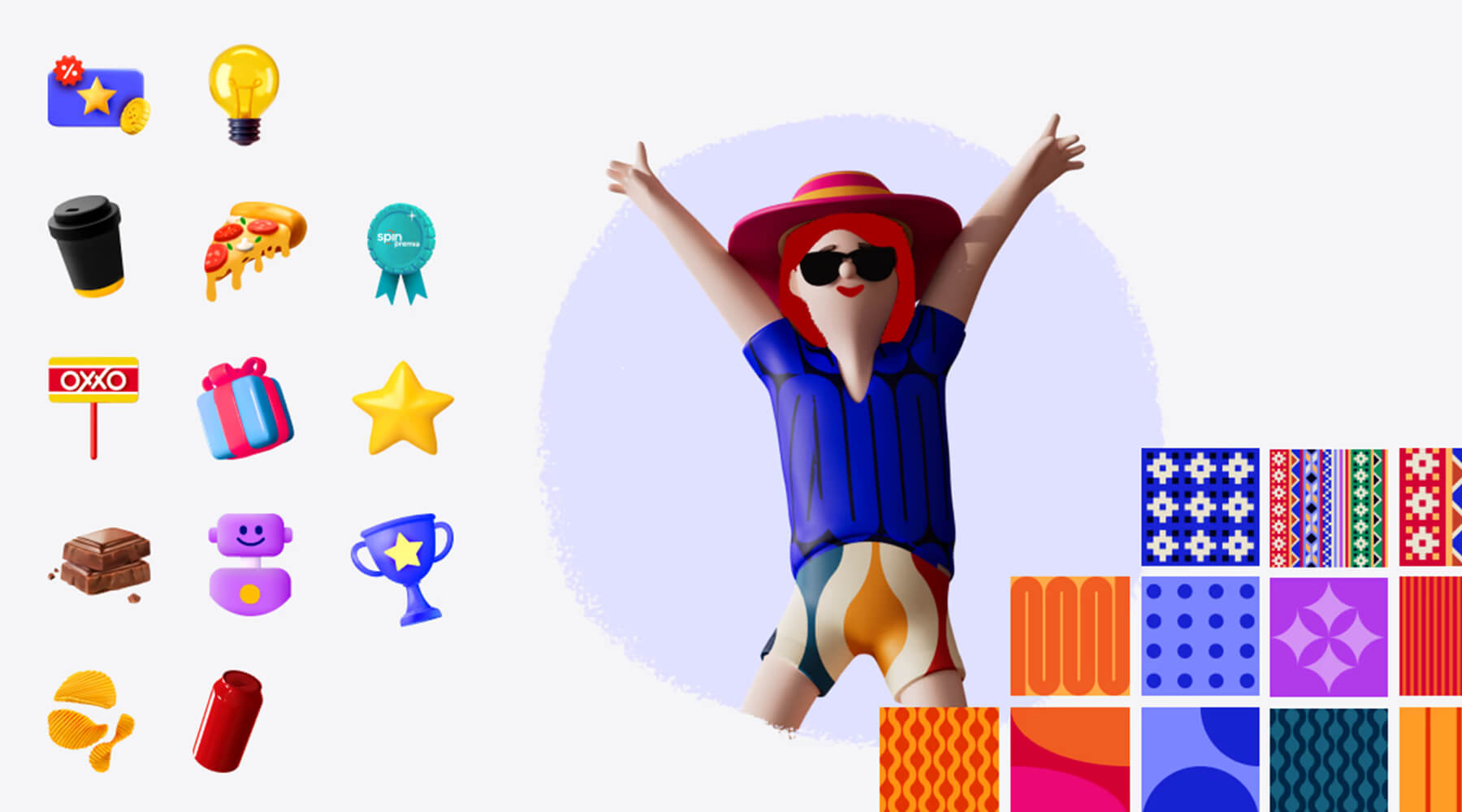
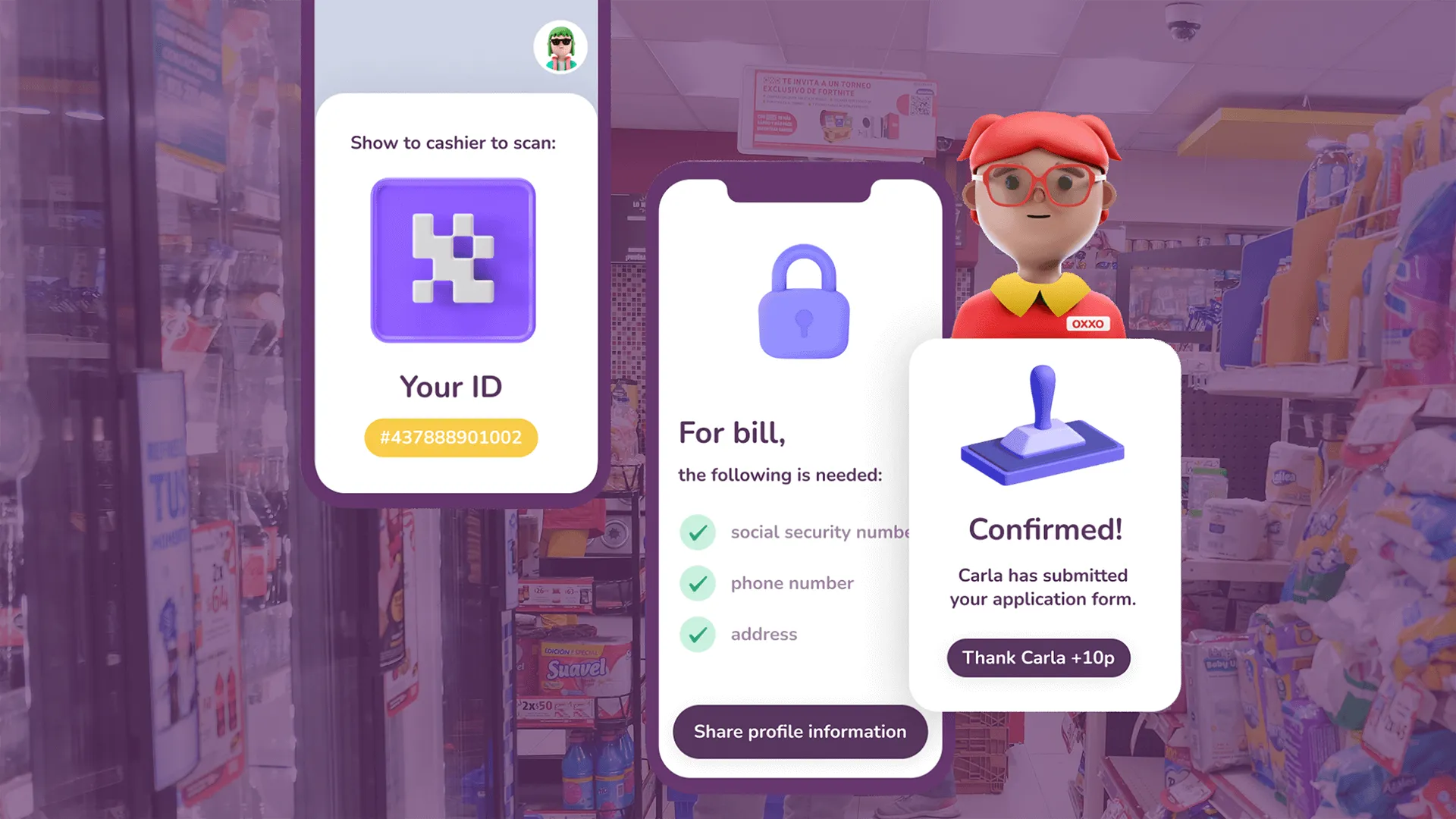
Meanwhile, the project team also worked to ensure the app fit the priorities of the various teams inside Digital@FEMSA, designing a comprehensive process for testing joint value propositions. Together, the team created a new design system, iconography, and set of unifying principles. IDEO also worked closely with the Digital@FEMSA teams to ensure that the app's design was in line with their strategic goals and technical capabilities, and built the app's initial information architecture. They incorporated secure transactions, effortless coupon redemption, personalized offers, and a cohesive loyalty program.
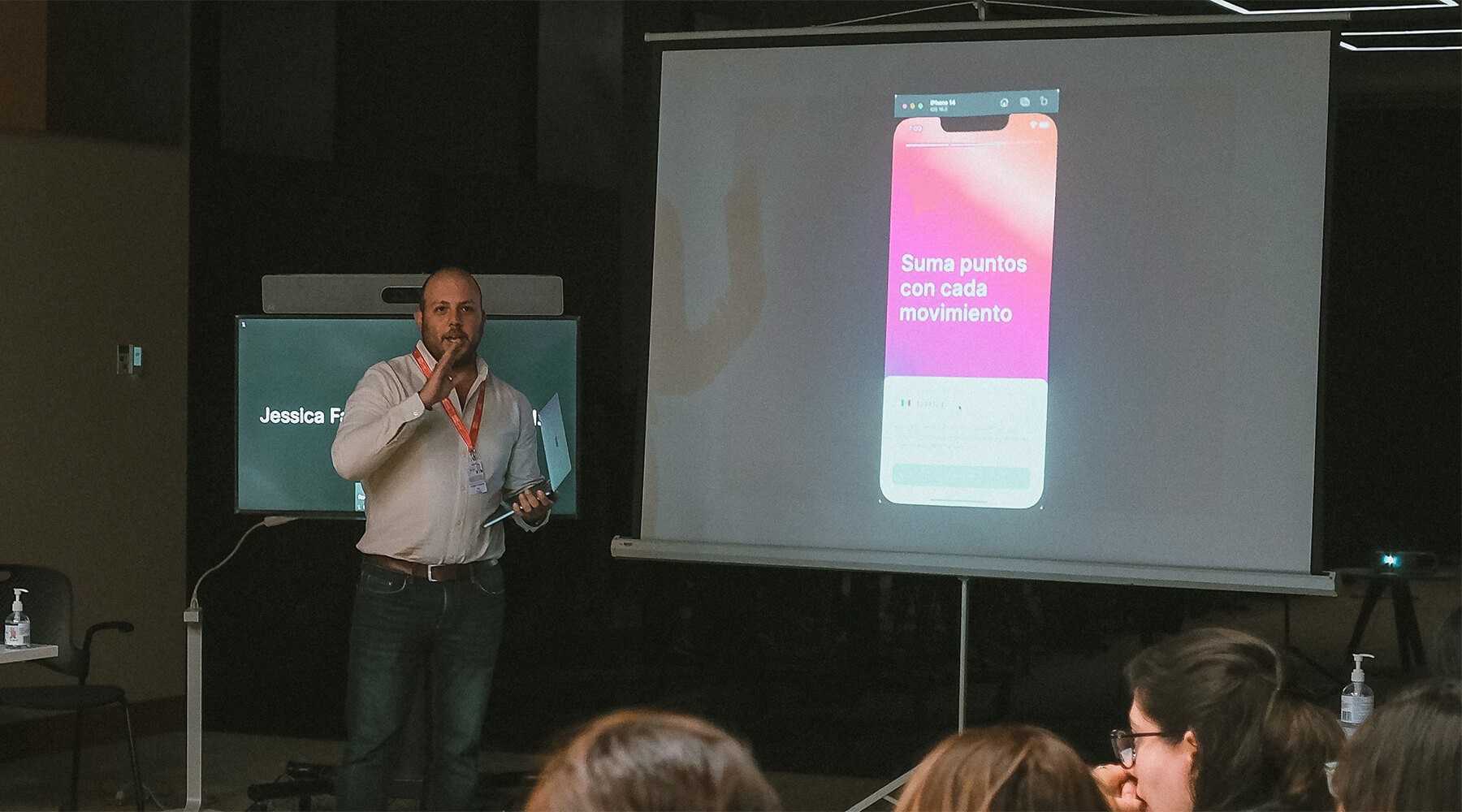
From there, the IDEO and Digital@FEMSA teams quickly transitioned into the design and development phase, producing prototypes of the new app, dubbed Spin Premia. With the help of user testing, they were able to continuously iterate to improve the app's features and functionalities, creating a user experience that was both seamless and intuitive. In just 10 months, they went from a small digital team with an ambitious idea, to a 150+ people product organization and an MVP launched in one region. And thanks to a tight partnership, the teams were able to seamlessly integrate Spin Premia into Digital@FEMSA's existing systems, resulting in a scalable implementation nationwide just a few months later.
The introduction of Spin Premia was a milestone in FEMSA's digital transformation path. Following a true ship and iterate model, just a few months into the project, the company released a smaller, focused version of the app in just one city in Mexico to quickly learn from customer experience before expanding to new regions. Since then, the Spin Premia app has quickly gained popularity, offering a safe and user-friendly platform that millions of Mexican consumers have embraced. It has also allowed FEMSA to broaden its digital portfolio and extend its customer base throughout Mexico, elevating customer satisfaction and fueling business expansion.
13 million Mexicans visit FEMSA’s OXXO convenience stores every day. But the company had ambitions to leverage digital experiences to increase customer engagement.
To get there, Digital@FEMSA needed to deliver exceptional digital products with the agility to serve an entire population.
4.7 stars
Spin Premia’s app store rating
22.8 million
active Spin Premia program users
A hotel brand for new travel paradigms
IHG introduces Garner, a midsize brand elevated by thoughtful design.
Midscale hotel brands are the fastest-growing hotel segment in the US, attractive to both travelers and hotel owners. But often, their messaging feels repetitive, and travelers have a tough time differentiating between them. With a warm, thoughtfully designed midscale brand, IHG had an enormous opportunity to distinguish itself in a crowded market.
IHG’s goal was to deliver a guest experience that felt genuinely unique and resonant—and quickly. With costs on the rise, many owners were motivated to turn toward conversion brands, which allow them to refurbish hotels under a new brand rather than invest in construction, a way to grow their portfolio in a tight financing market. Meanwhile, IHG’s competitors were set to introduce new conversion brands of their own. The company was looking for a partner that could work swiftly and iteratively to deliver a distinct brand.
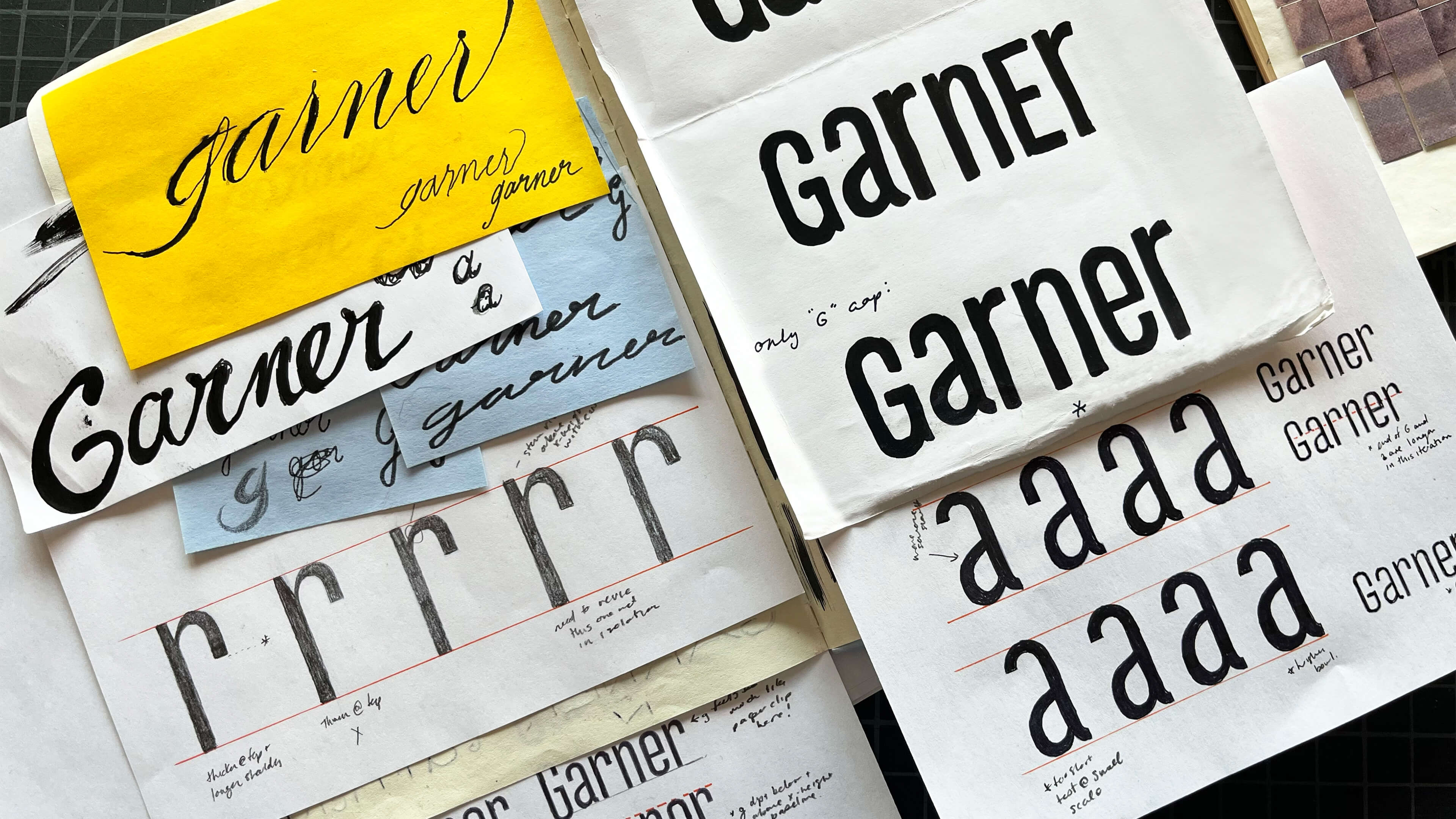
For the IDEO team, the answer lay in communicating the brand’s value, starting with a custom logo rendered by hand. Inspired by vintage sign painting and modernist typography, the team sketched different versions of the letterforms, reviewing them with IHG until they had a set that brought to life the generosity and sense of invitation associated with the hotel’s spaces. They also worked to ensure the wordmark was visually balanced and would translate well across a variety range of scales. From there, they built an expansive brand world, including bespoke navigation icons, a full interior and exterior signage system, and a video to support the Garner launch.
The result is a hotel brand that stands apart in its category for both travelers and owners: thoughtful and well-designed yet affordable. As competition in the midscale segment continues to increase, Garner has been central to IHG’s growth strategy. Launched in the fall of 2023, Garner opened 100 hotels worldwide in just 16 months, making it the fastest-ever IHG brand to scale globally. The brand’s increasing popularity among owners and developers is driven by the growing demand for conversion properties, which accounted for 52% of IHG’s room openings in 2025. Garner plans to continue its rapid expansion with nearly 80 additional hotels in 12 key markets, including the US, Mexico, Italy, and Japan.
Conversions account for 12% of the global hotel pipeline, enabling hotels to switch brands and refurbish, boosting revenue without expensive construction.
The US midscale hotel segment, valued at $14B, is expected to reach $18B by 2030.
100 new Garner Hotels
in less than 3 years—the fastest-scaling brand in IHG's history
500 Garner Hotels
planned in the next 10 years; 1,000 over the next 20

Moving dementia care forward
Together Senior Health provides digital solutions to combat cognitive decline.
Alzheimer’s and dementia are notoriously difficult to treat—and scientists estimate that some 50 percent of people who have dementia are undiagnosed. Recognition of symptoms and early intervention are key. Together and IDEO set out to conduct user research to inspire new products that would help patients with cognitive decline take charge of their brain health.
The first priority was to expand the reach of the Moving Together program, which combines group movement exercises with mindfulness techniques, led by a trained group instructor. The IDEO team conducted remote and in-person interviews in Florida, where one in five residents is age 65 and older, and rates of Alzheimer’s and dementia are among the highest in the country. One of the key insights the team discovered was that many older adults didn’t understand how behaviors like smoking, exercise, and diet can be risk factors for cognitive decline. Their input inspired a new design principle for the program: “No naked feedback.” Any time participants received health coaching advice about modifying their lifestyle, they would also be given resources on why and how to do it, so they would have a pathway to boosting their brain health.
The IDEO team folded insights like this one into the design for four new product offerings, including personalized brain health education, new online community engagement tools, partnership programs, and health coaching services, as well as a new user interface to illustrate them. Along with Together they also developed an implementation roadmap of next steps to bring the new digital product offerings to market, such as hiring a brain health coach and creating a new course curriculum. Now, Together has enrolled 165 people in the Boost Your Brain Health Clinical Trial, which is looking at outcomes such as reduced risk of Alzheimer's and maintenance of cognitive function for the Brain Health Together program. With trial completion in Q3 2024 and product launch in early 2025, growing numbers of people with MCI will have access to this exciting program. Together incorporated almost all of the elements from the IDEO roadmap into the final curriculum, and the team often refers back to insights the team gathered as guiding design principles.

Fighting barriers to diagnosis
With its online program growing, Together wanted to take on an even bigger problem: dementia underdiagnosis. Co-founder Dr. Deborah Barnes had recently developed an algorithm that uses patients’ health records to calculate their risk of undiagnosed dementia, called the electronic health record Risk of Alzheimer's and Dementia Assessment Rule (eRADAR). Together was looking to find creative ways to equip and empower providers to use risk scores like eRADAR in primary care settings.
One piece of the puzzle? Many primary care doctors are unaware that better management of Alzheimer’s disease and dementia can have a positive impact on other chronic health issues—like diabetes, hypertension, and depression. So by encouraging providers to prioritize dementia care, they can help support the overall health of older adults with cognitive decline. The IDEO team recommended a curriculum for continuing education courses for doctors that make that link clear—another step toward increasing dementia diagnosis and improving overall health.
Better help, sooner
To understand the patient experience, Together and IDEO decided to work directly with patients and caregivers to uncover what was stopping them from asking for dementia screening. The IDEO team quickly learned many patients were afraid of facing a diagnosis that signified a loss of agency and control, especially when they didn’t believe there were good treatment options. Often, they were unaware that there were things they could do to improve their brain health. They needed to know what steps to take after a diagnosis, and who could provide actionable advice. In response, the IDEO team designed a digital activity toolkit and physical booklet to guide patient families through the early stages of a dementia diagnosis, including recognizing the signs and symptoms, having better conversations with their doctor, and getting connected to support groups and programs like Moving Together.
Solving the problem of dementia underdiagnosis involves complex systems-level thinking and designing for the entire health ecosystem of patients, providers, and insurance payers, and solutions for Alzheimer’s and dementia care are still in their infancy. But already, this work is empowering patients and doctors to prioritize brain health and get screened sooner, and Together, which has since been acquired by Linus Health, is still working to move dementia care forward.
Approximately 12-18% of people aged 60 or older live with mild cognitive impairment, while memory loss, Alzheimer's and dementia affect more than 50 million people around the world.
An estimated 50% of people living with dementia are undiagnosed.
165 enrolled
in the Boost Your Brain Health Clinical Trial
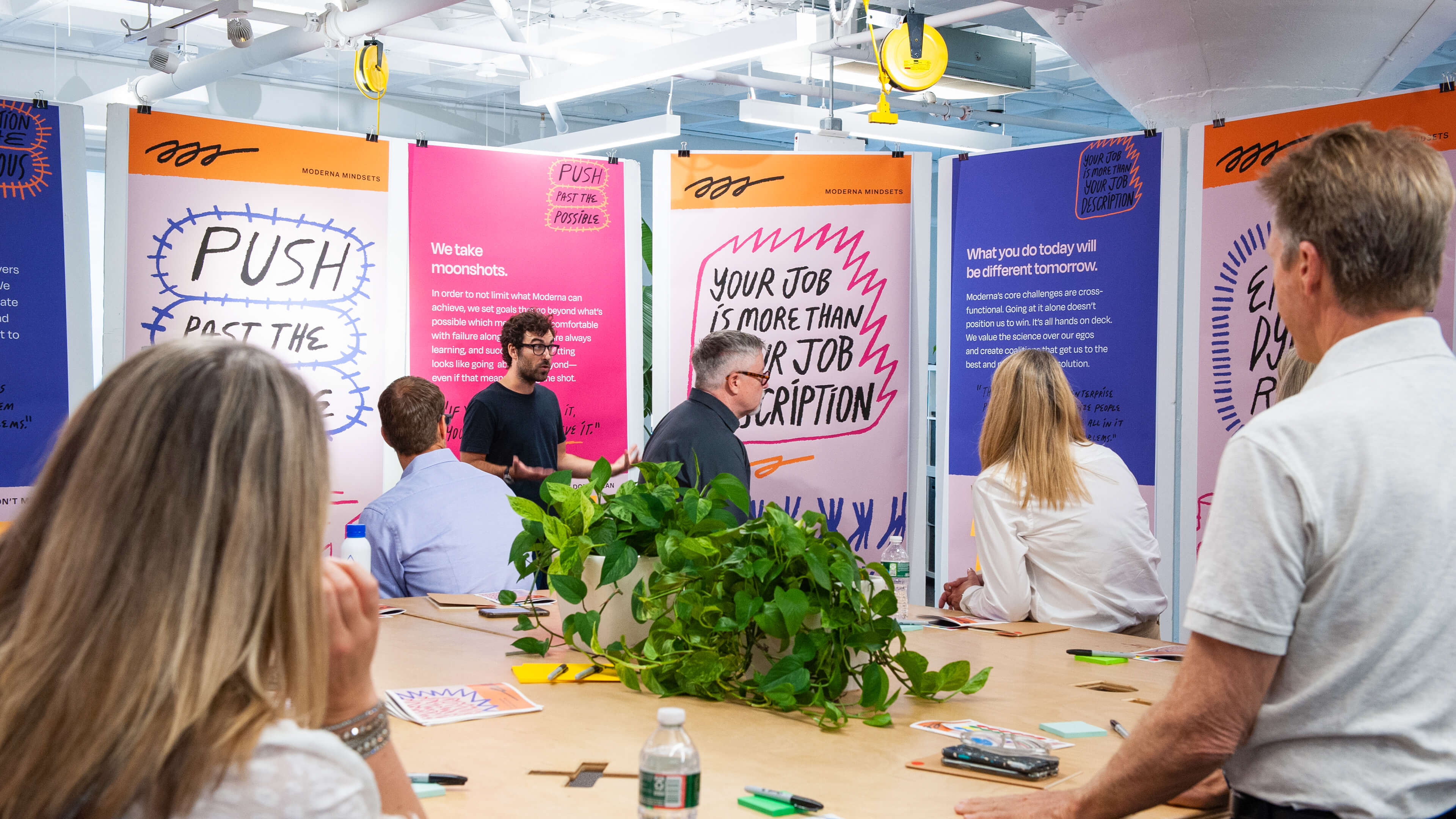
Culture as catalyst
Moderna defines its Mindsets to preserve its future.
Many companies view culture-building initiatives as nice-to-haves. At Moderna, Mindsets are a business imperative, crucial to its plans to develop breakthrough products quickly.
For companies working on solutions as vital as a COVID-19 vaccine, delays and mistakes don’t just mean missing a product launch date—they’re life-or-death, and on a large scale. Moderna had to ensure that its employees knew how to make the right decisions, evaluate risk, and move quickly—even if they came from organizations with more bureaucracy and less risk tolerance. In 2021, IDEO sat down with longtime Moderna veterans to hear stories about moments that exemplify the company's culture, like the day a critical piece of equipment arrived but was too big to fit through the door. Taking it apart would have added days to their timeline. So employees took sledgehammers to a wall instead. Stories like this one fed into the crafting of the list of Mindsets, such as “Act with urgency: Action today compounds the lives saved tomorrow” and “We behave like owners: The solutions we’re building go beyond any job description.”

To gather feedback, the team shared the draft Mindsets with a diverse set of employees—new hires, veterans, folks already closely aligned with the culture, folks for whom it wasn’t the most natural fit, and a plethora of employee resource groups. CEO Stéphane Bancel and the leadership team took crafting and iterating on the Mindsets very seriously, wordsmithing and tweaking them with the team until they were ready to share them officially. Now, new hires learn about the company’s Mindsets in Moderna ONE, an onboarding process that IDEO helped revamp, while existing employees attend a workshop to ensure everyone at the company knows not only what to do but also how to do it effectively. In a matter of weeks, IDEO helped Moderna codify its culture for employees and set the company up for continued success. Moderna continues to embed these Mindsets across the entire employee lifecycle to systematically scale its culture.
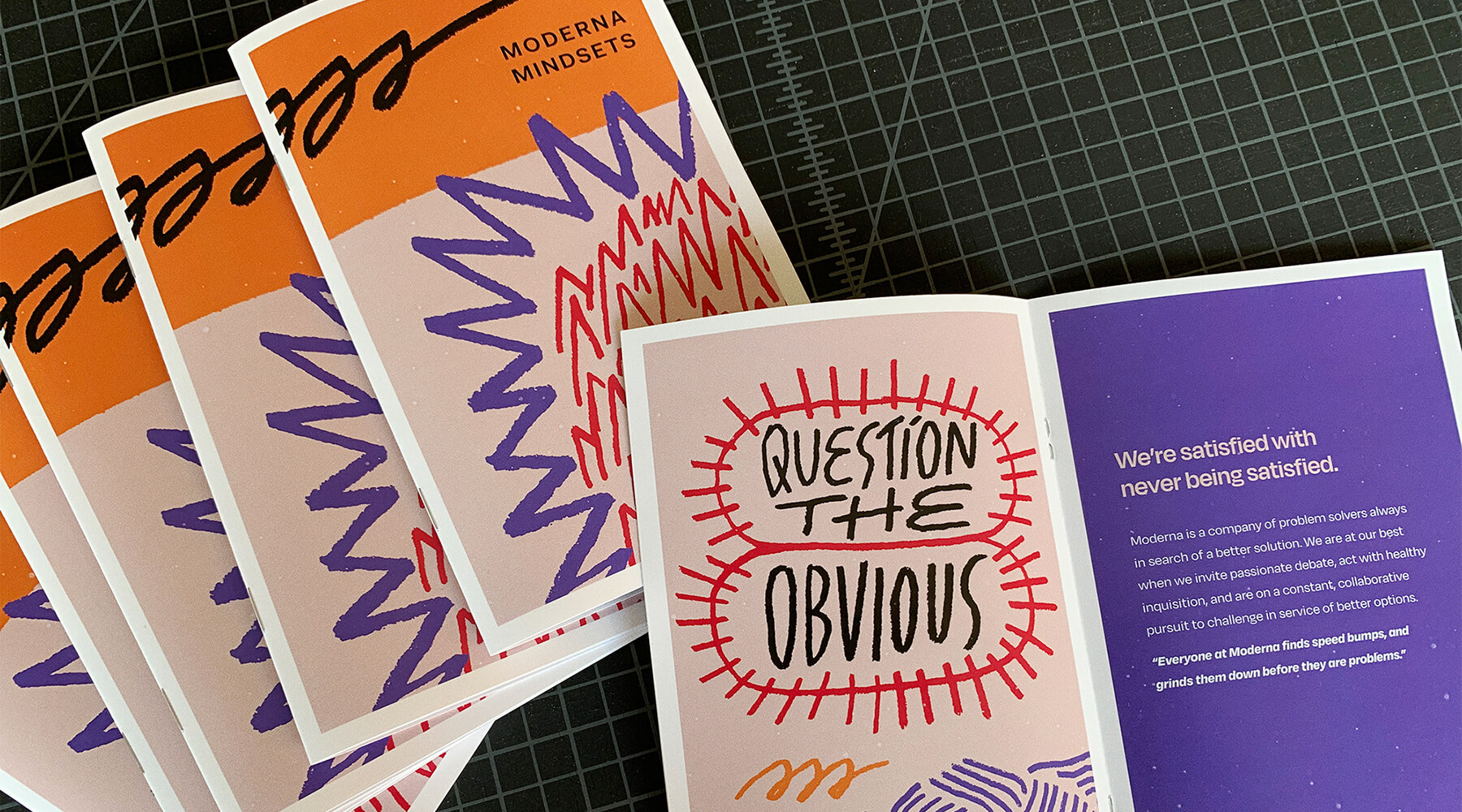
For employees new and old, the clarity of the Mindsets has made it easier to understand expectations and to understand the company itself. Long-term veterans responded with comments like, "These really help explain why we're working this way,” while one newbie said, "It feels like a homecoming to hear the culture that we’re trying to bring through.” But more than just solving a cultural issue, the new Mindsets have fulfilled a business imperative: Holding on to the secret sauce that made Moderna successful to begin with, setting the stage for its next five years of breakthroughs.
When the World Health Organization (WHO) declared the COVID-19 health crisis a pandemic in March of 2020, Moderna had fewer than 1,000 employees. Four years later, it’s more than five times the size.
Ranked #1
BioSpace Best Place to Work, large company in 2024
Ranked #6
Boston Consulting Group’s 50 Most Innovative Report in 2023
Ranked #4
Deloitte’s Technology Fast 500 List in 2023

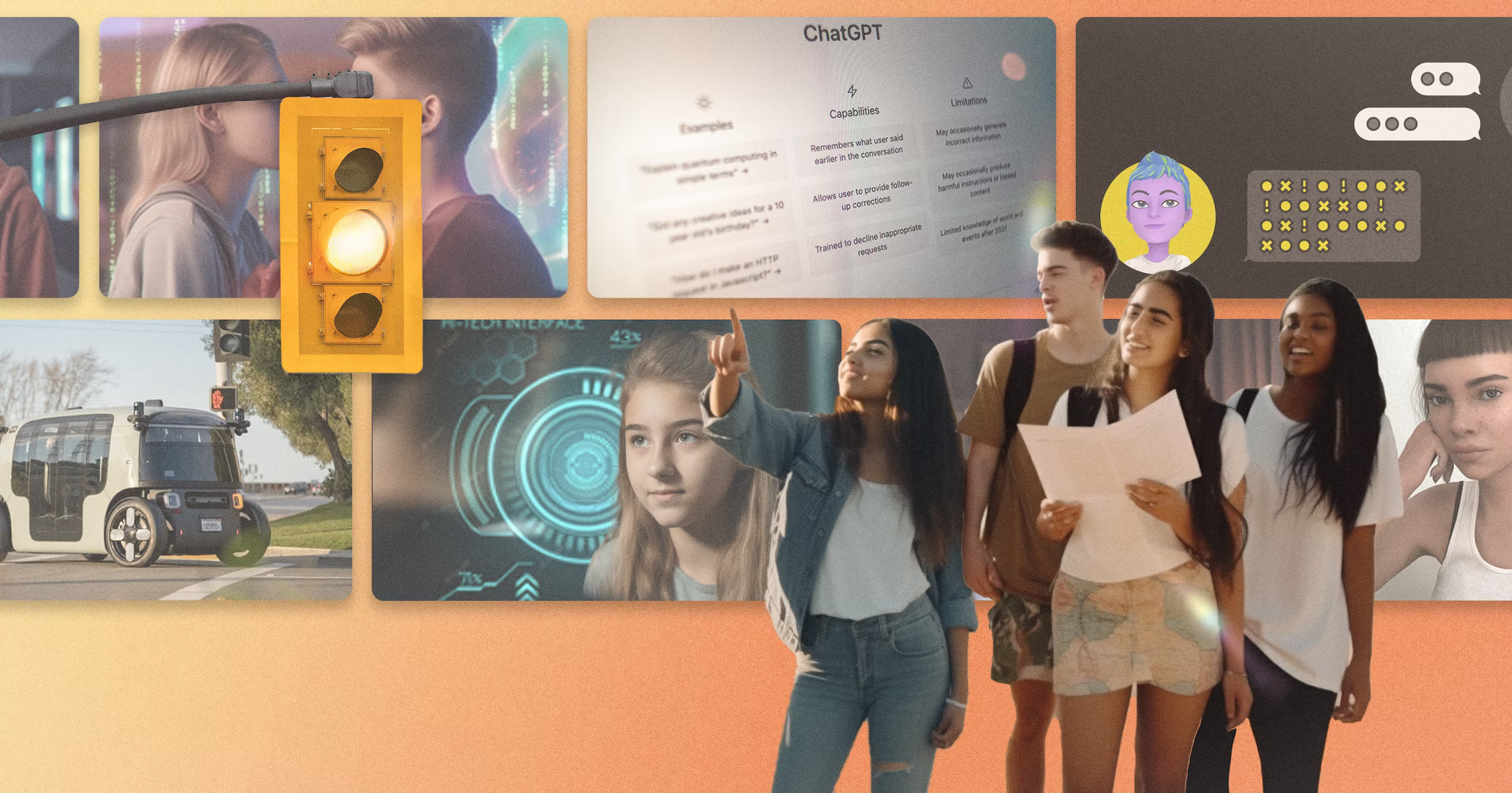
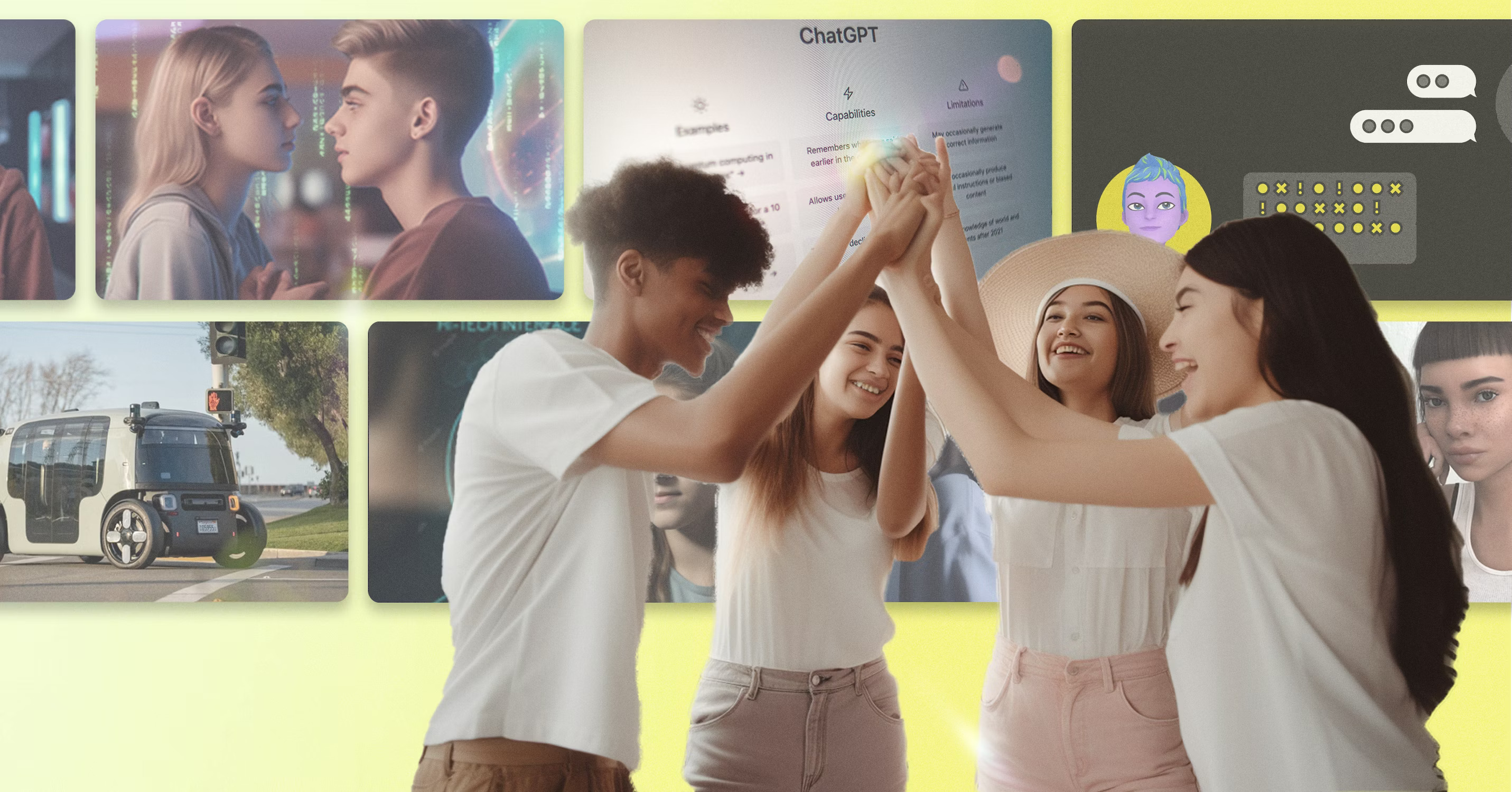
Making AI assistants people will be excited about
A human-centered approach to the next generation of AI.
Some of these aren't words we hear a lot about AI, particularly not in online conversations. Instead, when we conducted an experiment to synthesize general sentiment about AI, trends, and emerging AI case studies, we found a mixed review.
Posts about the rabbit r1, HumaneAi pin, and other AI assistants offer enthusiasm, but also skepticism and concern. Popular technology Youtuber Marques Brownlee titled his review of the Humane Ai pin “The Worst Product I've Ever Reviewed... For Now.” But some commenters were really positive. One wrote, “If someone can make an AI OS that works like this rabbit r1 demo, there’s another empire waiting to be built.” On Character.ai’s TikTok account, people most frequently commented about feeling an obsessive love for the app, or even an addiction.
Different people have different needs and expectations, and the future of AI is not one-size-fits-all—or even custom in the way we understand it today. Instead, it will be defined by the proliferation of personalized, adaptive, and specialized solutions to a broad range of needs defined for each individual user. Today, users turn to AI assistants to explore, with an understanding that the outputs need to be reviewed with a critical eye. Widespread adoption of AI assistants in everyday life will require that users can have confidence in their output and actions.
To succeed, we believe these products will need to be five things—intuitive, social, trusted, multimodal, and nurturing.
With some inspiration from products we admire on the market, and signals about what’s coming, let's explore some early concept provocations for how each of these principles could make AI feel great to use and deliver on its promise—in the near-term and farther down the line.
Intuitive entry points
Technologies that rely on AI promise to streamline our lives, but the current AI landscape is overwhelming. From choosing the right tool for a task to learning how to properly prompt it, the barrier to entry can be daunting for casual consumers. AI is ripe for an evolution into truly intuitive modes of interaction that make it easy to use and accessible for everyone.
Near vision: An AI platform that bridges multiple AI providers and tools with an added layer of automation that picks the optimal toolset and flow for a user.
Products like Perplexity AI show early visions of this style of simplified entrypoint, by offering several large language models (LLM) as options in their search tools. Their focus on mapping sources of data allows users to further explore information, pointing to a future where the AI can take further steps within that data for the user.
Far vision: A product that serves as the conductor of an orchestra of specialized AI agents that work together to accomplish complex tasks on behalf of the user—with minimal prompting and no need for detailed instructions. It would have holistic platform integration through a dedicated app, Siri, Hey Google, text, phone, or email, and be able to do things like schedule vaccine appointments for the whole family.
Inspiration: Forethought, AI-first customer support service; Simplified, a specialized AI suite of marketing and collaboration tools; and Arc Max, an AI-powered web browser that seamlessly integrates LLMs and AI tools with the website browsing experience.
Social goals
Across our work, we are seeing that people are more connected to technology, but less connected to ourselves and to others. AI technologies are a unique addition that can help people engage with technology in healthier ways. Instead of adding to the digital noise, new AI tools should help people engage with technology in ways that align with their values and lead us to healthy human connections.
Near vision: Opt-in AI assistants that use the data already on our phones to offer nudges and assistance on actions that support their social goals. They can do things like check users’ step count and the weather, to nudge them to get outside with friends on a sunny day.
Far vision: An AI-powered journal that acts as a digital mirror. It gently nudges users toward their goals and helps them reflect on their day. They decide what data to share with it and which areas of their lives they want it to help with. It can provide support by, say, telling users it’s proud of them for chatting with their mom today when that was a hard thing to do six months ago, and offering to send her flowers as a follow-up.
Inspiration: Character.ai, which is attracting a younger demographic with its offer of human-sounding virtual characters that offer social enrichment and companionship; Journal, Apple’s new iPhone app, which helps users reflect and practice gratitude; Hume AI’s Empathic Voice Interface (EVI), which interprets emotional expressions and generates empathic responses; and ETHIQLY, which is a startup IDEO helped create that aids teachers as they scale (and deepen) connections with their students with the help of generative AI.
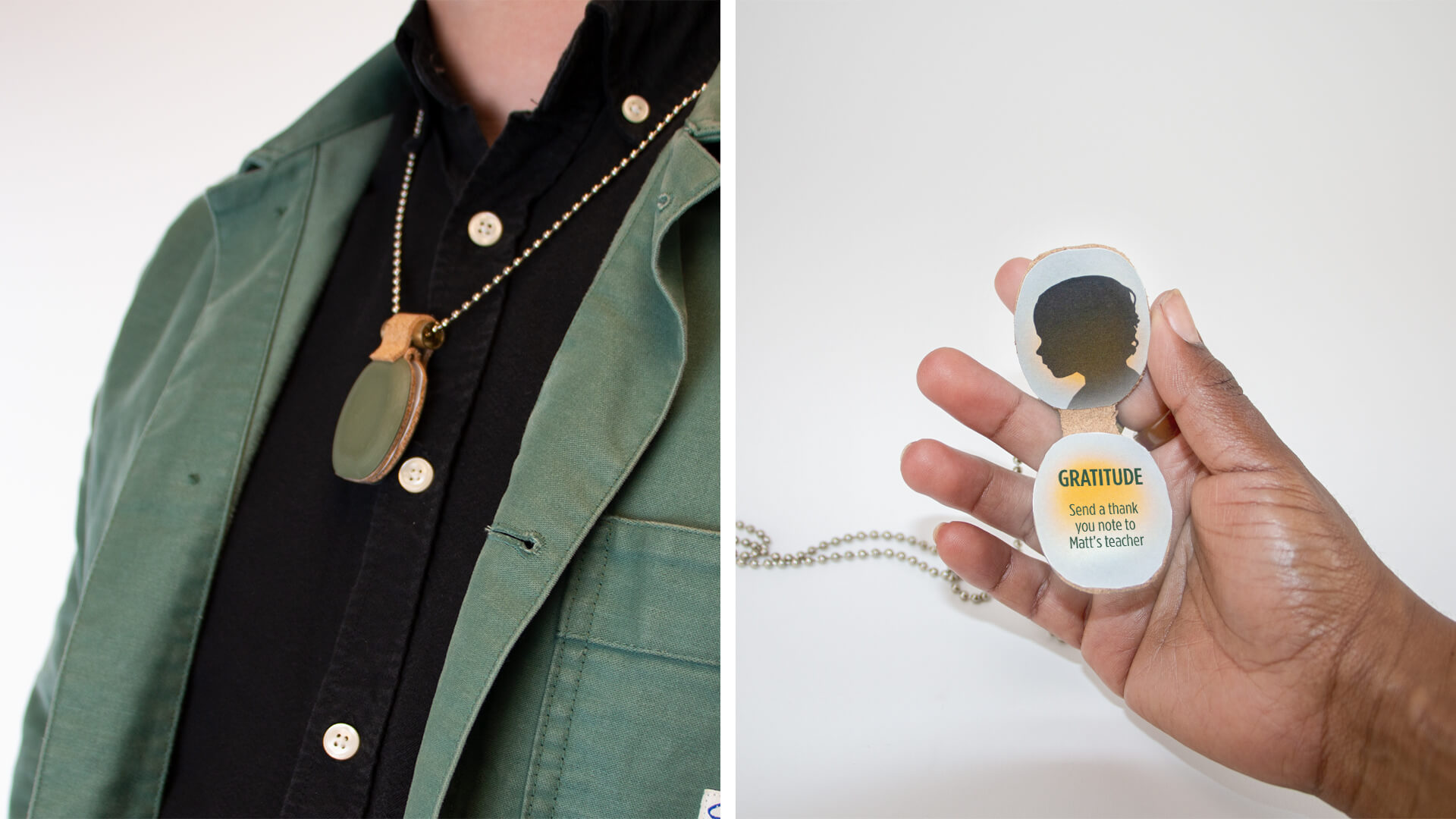
Trust and safety
We are living in a data-driven world, where fear and skepticism of AI and fair data use prevails. For users to truly embrace AI, it needs to move toward building trust in the safety, accuracy, and intentions of these applications. Only then can all people use them with confidence.
Near vision: Governance projects that scale safety and compliance solutions for business and consumers. When users interact with a new AI tool, they can see the safety rating and a detailed report, as well as flags about AI-generated content.
Far vision: AI models are subject to a robust AI safety pipeline before being used by people. Once approved, consumers can feel confident that their data and accounts are secure and information provided is true.
Inspiration: Credo AI, which provides an intelligence layer that tracks, assesses, reports, and manages AI systems to ensure they are effective, compliant, and safe; IBM’s investment into R&D on human-centered AI (HCAI) solutions that amplify and augment human capabilities; and Anthropic, which provides visibility into its models and oversight into AI governance.
Multimodal interactions
We are already seeing significant advancements toward multimodal AI, with OpenAI’s GPT-4o and Gemini, but most AI technologies still rely on voice and text AI interactions, which limit the richness and convenience of inputs. We believe the ideal future AI technologies will offer a variety of less disruptive ways to interact with and seamlessly integrate into humans’ daily lives, through visual, tactile, and even emotional inputs that create an intuitive synergy between humans and AI.
Near vision: For work, build on existing AI Assistant services of call summary and call interpretation by providing live call outputs that include a mix of audio, visual, and text summaries.
Far vision: Wearable and ambient tech powered by AI assistants that are made aware of the user and their surroundings through sensory and multimodal input, allowing for short and seamless prompts that enrich their life on-the-go. Imagine being at a networking event and getting a reminder of a name or face you might have forgotten.
Inspiration: The AX Visio AI-powered binoculars, which blend analog viewing with AI for bird and wildlife identification; Fireflies, which joins your meetings to automatically take notes, capture, and transcribe voice conversations across various platforms; rabbit r1 and the Humane Ai pin, which aim for a more intuitive and app-free online experience; and MIT-developed technology that translates subvocalization signals to words.
Nurturing and wellbeing
Content generation and execution of simple tasks are just the beginning of what AI can help us with. Future AI solutions will need to be able to keep track of the never-ending list of to-dos involved in managing our current busy lifestyles—so we can have time to care for ourselves and each other.
Near vision: A sleep device company creates wake up and sleep routines customized to personal calendars, health needs, and family routines. Picture a smart speaker and light that calibrates to your bodily needs, supporting your sleep and wake up routines, to help you get a great night’s rest before and after any day.
Far vision: An AI assistant integrated in your household that supports smart devices and communication channels for the entire family. It can order groceries and craft recipes based on everyone’s preferences, schedule maintenance, book catering for birthdays—anything a busy household needs. When you need some off-AI time, all you have to do is unplug it.
Inspiration: Aura, a specialized machine-learning platform that can be paired with ordinary microphones and understand more than human voices—like dogs barking, babies crying, and doorbells; the “mui Board Gen 2,” a Kickstarter project for a smart home hub; and Assistant with Bard, which combines Assistant’s capabilities with generative AI to help you stay on top of what’s most important, right from your phone.
These provocations are driven by our research and signals we’re seeing in the world. For us, the next step to creating human-centered AI products is testing the value of lo-fi prototypes with real users, to find out which products or features are worth our development resources and which map to true needs. After all, we’ve seen companies in the space rush to build a product and get it out the door, before they even test it with potential users. You can make something that seems super futuristic only to find out that no one wants it, or that it can’t really do what you promised. Forty years in, we’re big believers in the power of human-centered design to help us craft audacious futures with technology that people actually want.
Intuitive. Social. Trusted. Nurturing. Multimodal.

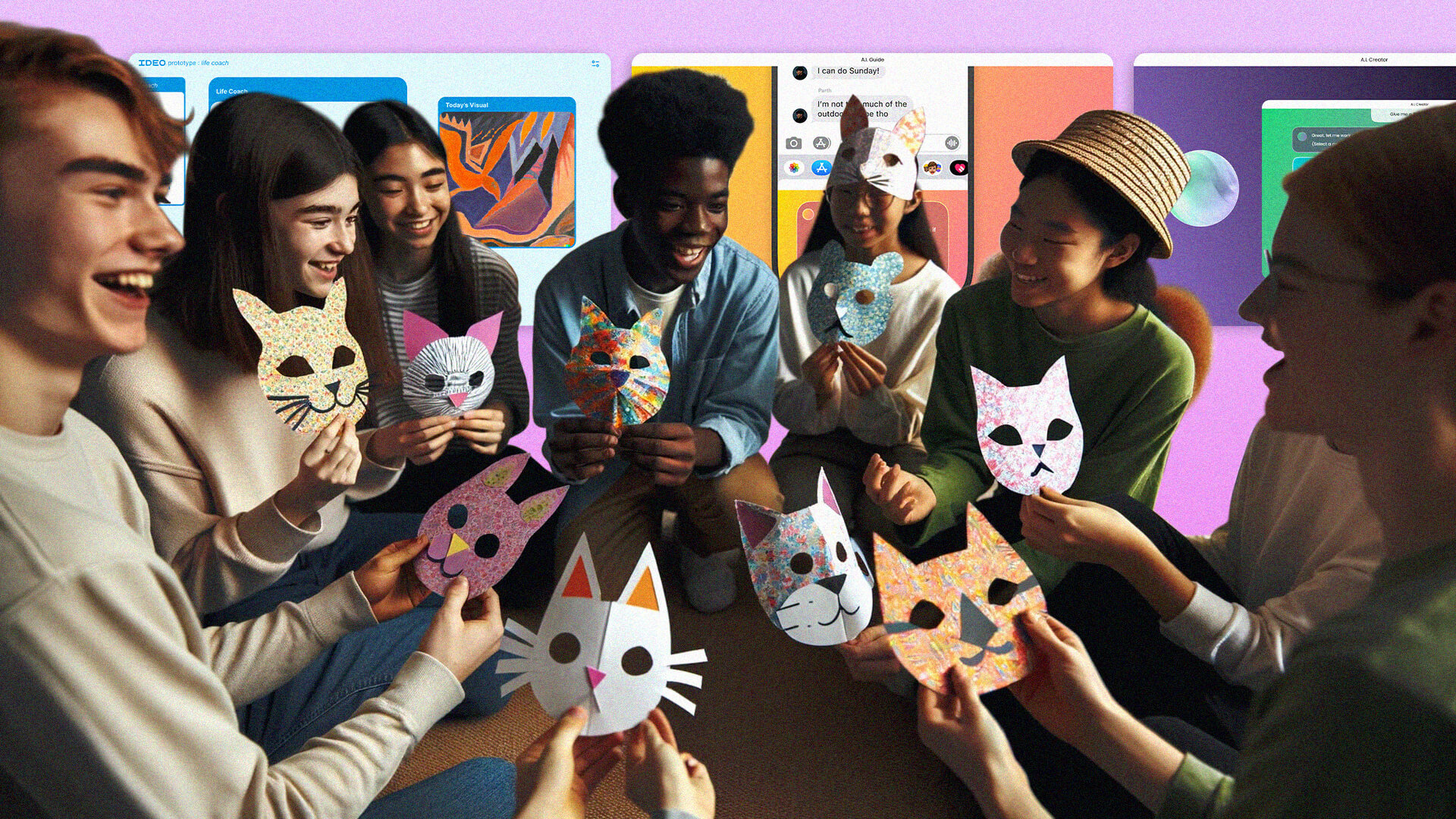
Co-designing with youth is crucial for digital thriving
And other lessons from a youth advocate for informed social media use.
I was there as part of the IDEO Play Lab’s ongoing work to leverage design to create digital spaces that help people thrive. We believe that thoughtful digital design is critical, especially as advocates argue there is a correlation between unregulated social media platforms and an ongoing mental health crisis. (In 2021, the CDC found that 42 percent of high school student respondents “experienced persistent feelings of sadness or hopelessness,” a rise from 28 percent in 2011.)
At the event, I was really struck by what Khoa-Nathan Ngo, a psychology major at UCLA and a member of #GoodforMEdia, a youth-led group at the Stanford Center for Youth Mental Health & Wellbeing, had to contribute to the conversation. “You really can’t talk about youth, mental health, and well-being in this day and age without also talking about our relationship to social media,” he says. Ngo and his peers advocate for informed social media use and regulation; They’ve created tool kits for parents, led workshops at schools, and testified to support the Age-Appropriate Design Code Act in California. And they also regularly advise private companies and industry leaders, bringing student voice into the design process. After the event, Khoa-Nathan and I reconnected to talk about the importance of co-designing with youth to create a healthier future that includes digital tools and social media.
Michelle Lee: Nathan, you’re incredibly passionate about your work around social media and mental health. What drew you to this space?
Khoa-Nathan Ngo: During the Covid-19 pandemic, I realized that online, pushback against misinformation mostly happens within English-speaking spaces. In my Vietnamese community, and in Spanish- and Chinese-speaking communities, misinformation around where Covid-19 came from and the safety of the vaccine was rampant. That obviously has huge implications for health outcomes. I realized that what I was seeing on social media affected the health of my community and the nation. I couldn’t ignore that.
ML: We met at an event on digital thriving at the Stanford Internet Observatory, where you were part of the youth panel. Why is it important for companies in the private sector and advocacy groups to involve the youth voice in co-design?
KNN: The best argument for the importance of youth participation in co-design is when you look at what happened when they weren’t part of the process. Youth weren't considered in the social media design process at all, and that led to the situation we’re in now. Youth were only considered consumers, a demographic to engage and profit from. Technology could have been created to promote our well-being and interconnectedness, but what we value wasn’t centered in the design process, which has created a major crisis in terms of our mental health.
ML: You mentioned that the legislative work is very rewarding for you. Tell us more about that.
KNN: In our conversations around social media and mental health, there’s a lot of condemning individuals: Kids are addicted to their phones and they don’t know how to hold a conversation, or parents should control privacy settings. But at the legislative level, we’re able to have bigger conversations: How are these tech companies collecting data? How do they design these products to be addictive? How do they radicalize kids by exposing them to echo chambers? How should children’s data be stored? You can really only have those conversations at the policy level.
ML: What are your thoughts about policymakers? What advice do you have for people in positions of governmental power?
Khoa-Nathan Ngo: My advice is to bring in experts who so badly want to be a part of this conversation. The Age-Appropriate Design Code Act in California did that — part of the policy involved bringing together people from fields including computer science, mental health, and children’s rights to figure out a shared vision. This is a complex problem, and it deserves comprehensive solutions that involve going after companies and their practices directly, not just empowering parents and protecting kids.
ML: I’ve heard you talk about the difference between privileges and rights in the digital space. Can you explain that distinction?
KNN: Of course. Because we all have these apps on our phones, social media platforms can feel like a public and shared space. But at the end of the day, these are private companies, and they can choose what they want to show us. If they privilege popularity-driven content over factual content, that’s their right. The opposite is also true: If their algorithm doesn’t privilege your post, you were not denied your First Amendment right. If you want to post something on your personal account, you have that right, but you don’t have the right to my attention. You have the right to speak, but it’s a privilege to be listened to.
ML: One word that came up repeatedly at the Stanford event was “nuance.” While many focus on the harms of digital media, there are also good things that come out of social media and digital presences, and I’d love for you to touch on that. If I were to say, we’re going to take away all social media, what would your response be?
KNN: If you remove social media because of the harm it has caused, then you’re indicting the people who use social media rather than the people who created these platforms to be addictive. No one said that the most popular content needs to be Photoshopped images or Breitbart. That comes from the platforms’ design, and shutting down social media puts the blame on individuals when it should be on companies. Don’t compromise our ability to politically mobilize, or for marginalized youth to find community. There are so many young people who find joy and love on social media—I don’t think that removing it is better than reforming it.
ML: Given how deep you are in this space, what are your thoughts on flipping social media from a tool that can cause harm to one that can lead to self-acceptance and more authenticity? What are some ways that we could approach that?
KNN: I really like this question, because I like to talk about concrete solutions. I think the biggest way we can make social media a place for self-acceptance rather than self-harm is to give autonomy to the users. Let people determine if they want their feed to only consist of people they actually follow, or only show their close friends. Let people determine what healthy social media looks like for them, and give them the ability to design social media for themselves. We know better than anyone else what’s good for us. We should have the ability and tools to act on that knowledge.
ML: But there’s a certain level of education that goes along with that, to help people be more informed as they make these decisions for themselves, right?
KNN: Definitely. We need to regulate social media, but we also need to teach media literacy. It starts with making sure that mental health education is available in all schools, where children learn about how to protect their emotional health, including on social media. There are ways that we can make social media a better place, but at the end of the day, we also have to communicate to kids that having social media is a massive responsibility.
ML: What might tools to help youth understand that responsibility look like?
KNN: I think it’d be great if there was an online resource that helped parents and kids determine what level of vulnerability they have to online harm. Do I feel connected to my community? Do I feel understood by my peers? Have I developed interests and hobbies of my own? Maybe that can give a measurement that helps kids understand whether they should be online, based on how vulnerable they are to online addiction and harm.
There also need to be conversations that happen at school. When students learn to navigate research online, we need to teach more than, “Don’t use Wikipedia, kids.” I’m really a fan of assigning an essay and asking students to cite five sources—one of those sources has to be from Twitter, Instagram, or TikTok, and you have to verify it as a credible source. What are the credentials of this TikToker? Are they an MD, are they trying to sell you something? Did they cite anyone in their video? We need to train media analysis and literacy to include social media platforms.
ML: If you were a parent, what would you do to set rules or guidelines for your kids?
KNN: If I were a parent in this day and age, I would be a bit more humble about how social media is affecting kids’ brains, because it’s rewiring adult brains as well. Our parents say don’t believe everything you read online, but then they believe Facebook conspiracies. Social media addiction is very different from other types of addiction. Gen X and Boomers have seen alcoholism, drug abuse, and the opioid epidemic. My parents can talk to me about that and draw on a rich body of experience. But all of us are experiencing social media at the same time. They don’t have a wealth of experience to draw from. How do you warn kids about sexual predators, if you don't know that is happening online? Or warn them about becoming radicalized? My job is not to inform my child, but to be informed with my child. We’re in this messy digital world together. Can we work together? Can we share tips and tricks about how to have a healthier relationship with social media?
It definitely has to be a much more egalitarian partnership than it used to be before. It has to be an equal partnership. We’re all going through it together at the same time.
ML: What advice would you give to designers in this space?
KNN: If you’re designing a product that will be used by or affect youth, then you should engage youth. That requires a special skill set, because for a young person, it can be really intimidating when an adult asks for your thoughts on an issue. You need to engage them, ask the proper questions, and make them feel comfortable being vulnerable. That’s a different skill set than being a good UX designer or engineer, so if that ability isn’t on your team, think about bringing in people who have experience with youth participation.
Are you asking the right questions about digital thriving? How are you working to understand Gen Z? Tell us how we can help.
A few weeks ago, I attended an event at Stanford University held in collaboration with the Biden-Harris Administration’s Kids Online Health and Safety Task Force.
Ditching male defaults
A guide to making finance work better for women, particularly the most underserved.
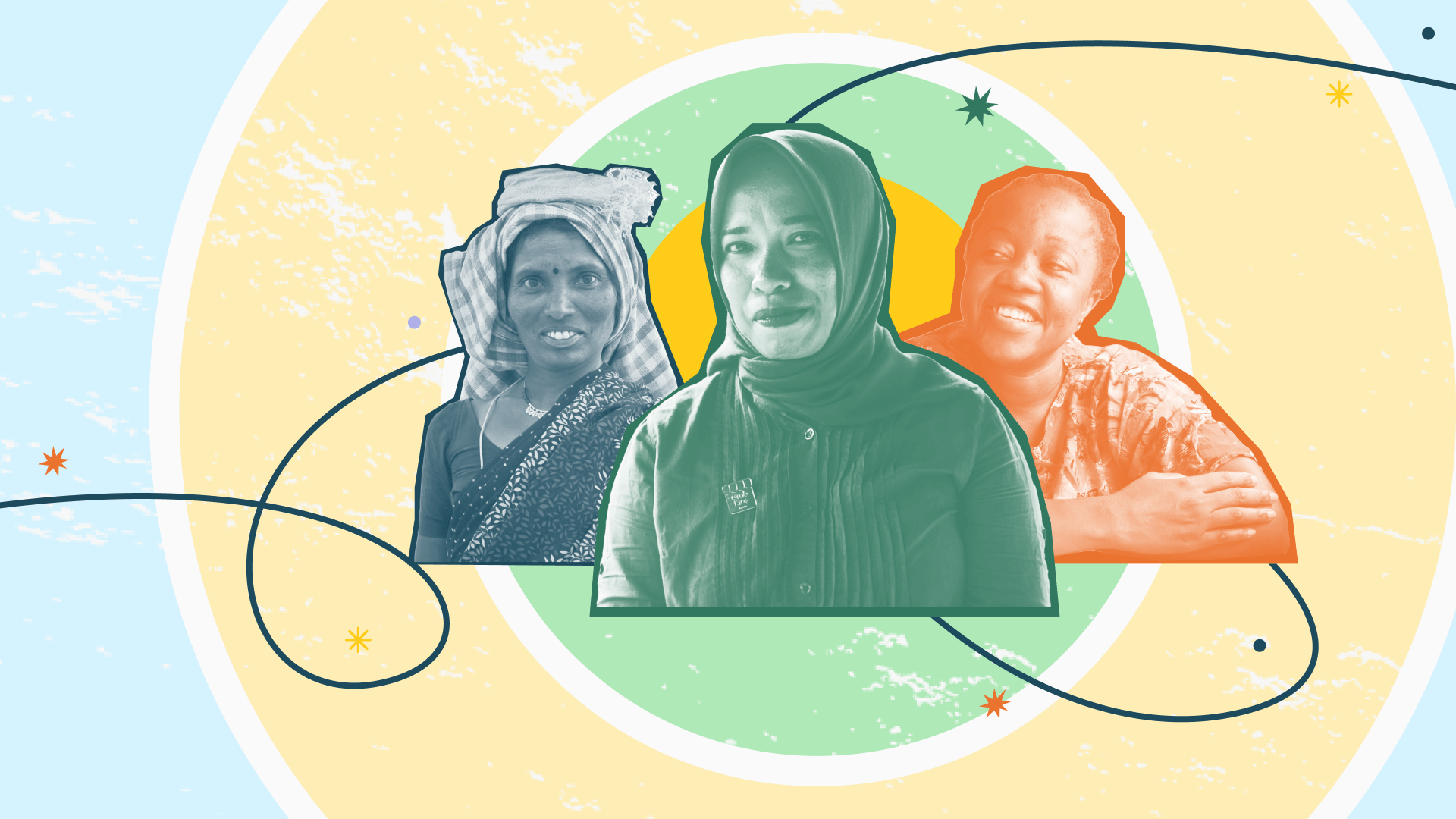
Only 13 percent of women in Pakistan have a bank account, so they designed their product to be easier to use than traditional banks. Still, many women struggled to use the service, especially low-income women and first-time internet users.
What was happening? Why was it so hard to connect with customers?
The answer was always in front of them: male defaults.
The invisible made visible
Even though Oraan was built by women, for women, the startup struggled with the pervasive problem of male-centered norms.
Male defaults reflect biases deeply ingrained in our society. They allow institutions to build products to fit the way men inhabit the world: the kinds of jobs they have; how they use phones; their available free time; and even their ability to move around in public. At best, this hinders women's access to financial systems, forcing them to jump over extra hurdles. Often, it means low-income women must rely on men as proxies, having to ask a husband to save money in his bank account, and then needing his permission to access that money. At worst, it excludes women from the financial system, robbing them of opportunities entirely.
Male defaults aren't just bad for women, they're bad for business. Globally, women are 31 percent more likely to have an inactive financial account than men, and banks and fintechs wonder why. Are women just not interested in saving money? Are they not educated enough to understand new products? Are they stuck in the past? Attempts to adapt existing bank products to appeal to women have often fizzled, and many new women-centered products have tried and failed to reach product-market fit.
Why is this problem so hard to solve? It’s difficult to fix what you don’t see—and male defaults are so prevalent that they’re nearly invisible unless you know how to look for them. Anyone who has set up a bank account or used digital financial services has probably encountered them:
- Account sign-up processes that require customers to fill in their occupation in the first few questions (something mothers, caregivers, and the unemployed may not have, and can lead to dishonest answers)
- Marital status (which can can disadvantage or raise stigma for women who are single, separated, divorced, or widowed)
- Property ownership (which can disadvantage low-income women who rent, live with family, and women who do not have deeds or documents in their own names)
- Mobile number, especially for account verification (which can immediately cut off women who don't own a mobile phone or share one with family members)
- Annual income (which can make it very difficult for informal workers with multiple income sources to open a financial account or qualify for a loan)
With gender-intentional design, IDEO is pushing back against these practices, and challenging the reign of male defaults. Already, we’re starting to see how even small shifts can create outsized impact for women.
An addressable opportunity
Today, more than half of the world’s 1.4 billion unbanked adults are women. At IDEO Last Mile Money, we believe the solution to filling this enormous gap in financial agency and social equity lies in better design, with products and systems made for and with women, not just adapted after the fact.
Over the last five years, we’ve brought together gender experts, banks, institutions, and fintechs to co-design what women-centric financial products should look like.
Together, we’ve uncovered male-default design patterns and developed design principles to disrupt them. We’ve updated our Financial Confidence Playbook with a new section dedicated to women and finance, with examples of products, features, and best practices for designing for underserved women. It’s all in service of helping teams question and ditch male defaults.
Here are three key shifts that can help companies build products designed for women:
1. From invasive to inclusive
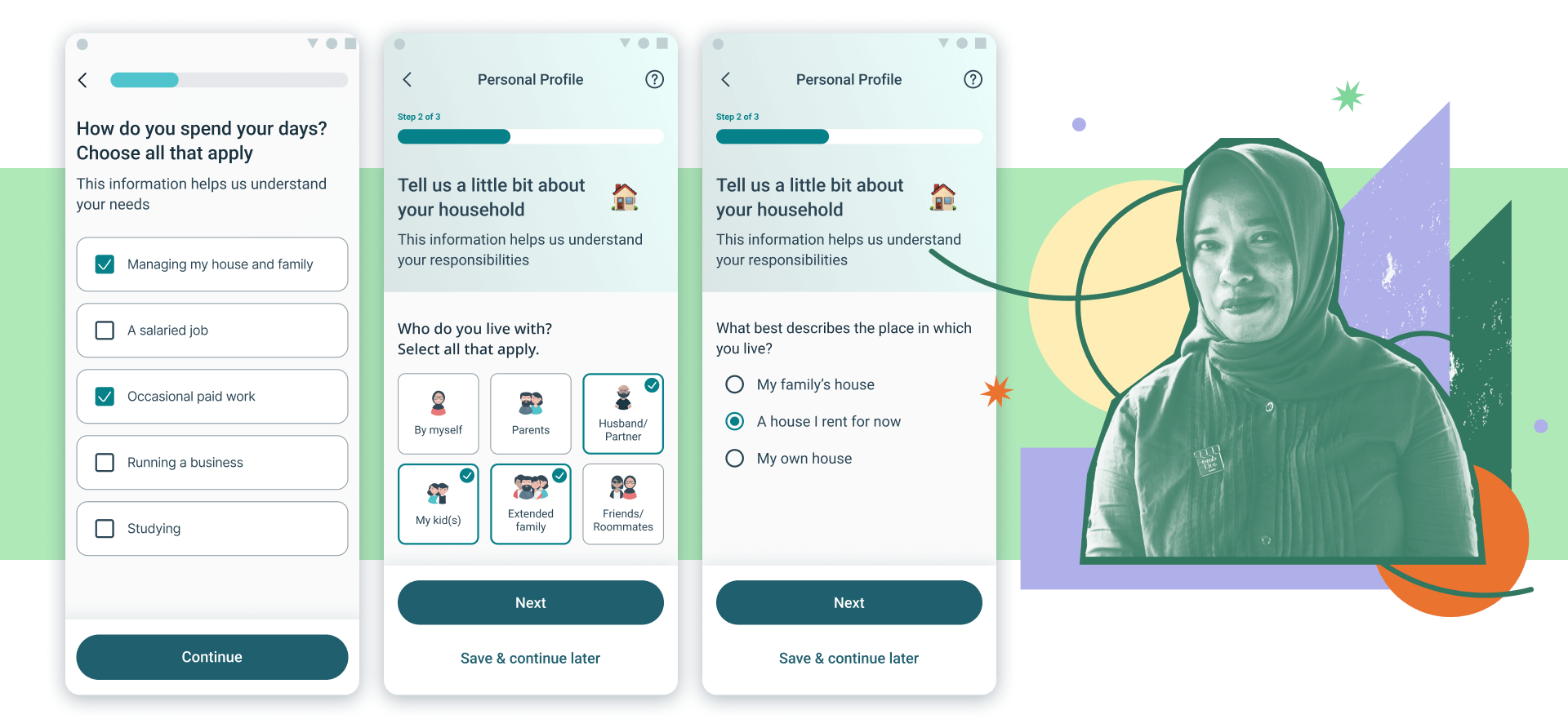
If you sign up for any financial service, you’ll often see the same standard questions. While they are meant to build a user profile and increase security features, diving straight into these questions about occupation, income level, or home ownership can quickly make underserved women feel unwelcome, and push them to abandon the process altogether.
Luckily, small design changes can transform the experience. In Pakistan, we explored how to make a rigorous financial account sign-up process more inclusive. We asked Oraan: What is the information you actually need? How might we reframe data requests in ways that feel empowering for underserved women? This helped Oraan rewrite those standard questions, from “What’s your occupation?” to “How do you spend your days?” Simple, but effective: 50 percent more women signed up for Oraan’s service. And the changes also reduced the load on Oraan’s back-end systems. Because Oraan articulated its requests more clearly, women submitted higher-quality documents, which meant Oraan’s team spent less time on follow-up calls. Win-win.
2. Let’s get ‘phygital’
For women at the last mile, the journey to adopt digital finance begins long before they pick up a phone. Yet, many new products default to engaging customers via digital-only channels. So, we propose going “phygital,” connecting physical and digital experiences to meet women where they are.
Why? Many underserved women live in a world that’s mostly person-to-person and not very digital. They’re more likely to share a smartphone, and they juggle so many responsibilities as mothers, caregivers, and informal workers, they have limited time and bandwidth to try and learn new digital services.
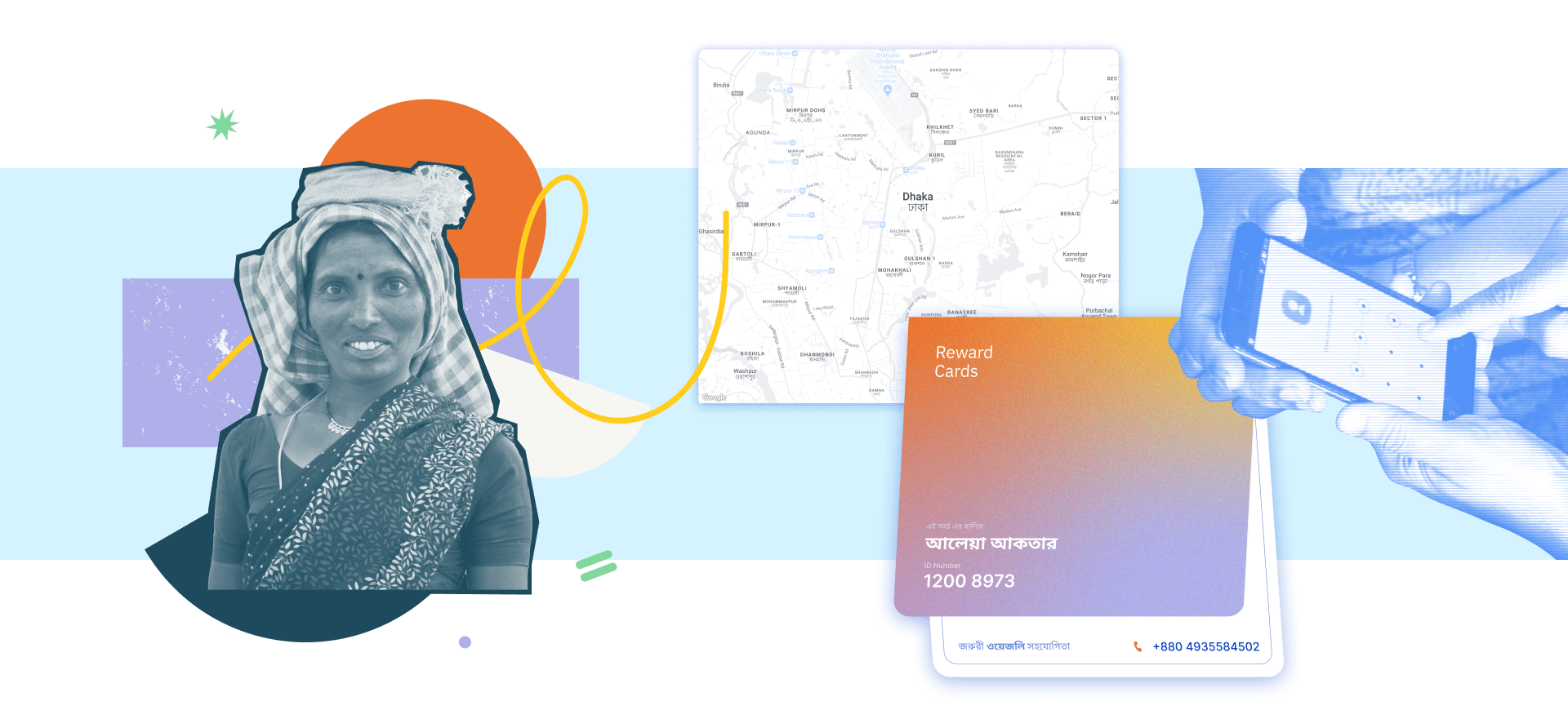
These factors affected product use at Wagely, a startup that digitizes wages for women factory workers in Asia. Many women in Bangladesh had signed up for the service, but their accounts became dormant quickly. In a country where just 21 percent of women own smartphones, Wagely needed a phygital approach.
Together we expanded its service blueprint to include a few key physical touchpoints. Our goal was to increase trust in Wagely’s service by showing up at familiar spots like community centers, building tangibility with physical collateral like membership cards, and creating a reward system that’s tailored to women’s everyday purchases like groceries and health items.
Designing for phygital might seem less cost-effective than going digital only, but it opens doors for female customers, can supercharge usage, and improves long-term retention.
3. No pink products
We believe that to truly include women in finance, their needs have to be prioritized from initial research all the way through to the future roadmap.
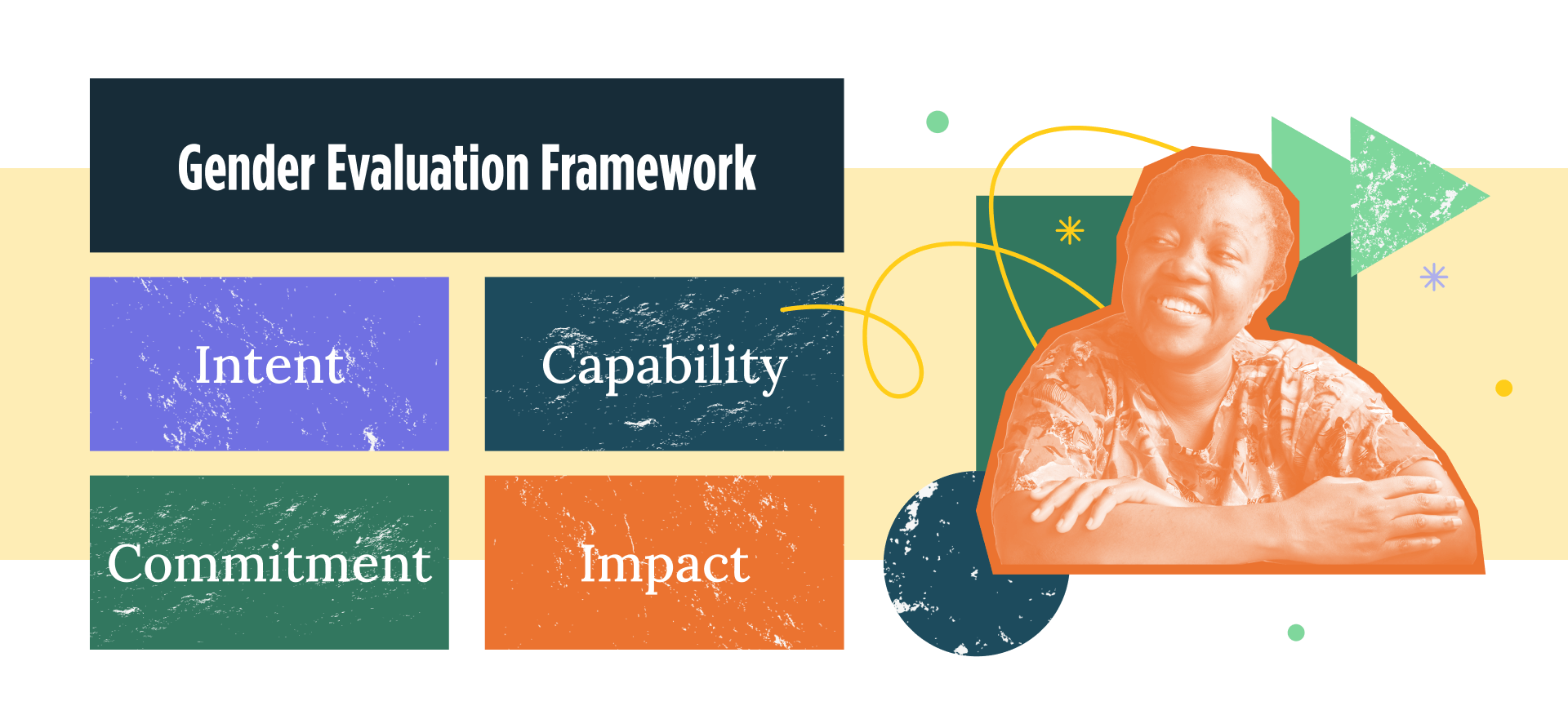
In partnership with Mansi Gupta at UnConform, a women-centric design consultancy, we created a Gender Evaluation Framework to help companies build a more gender intentional strategy that guides teams from discovery all the way to outcome measurement. With four pillars—Intent, Capability, Commitment, and Impact—teams can use our prompts to reflect on their own gender practices throughout the product cycle.
Last year, we also used the framework to choose which of the more than 300 startups that applied to Last Mile Money's 2023 gender and finance accelerator to accept. Our portfolio startups took the Framework a step further to generate insights and ideas to improve everything from product features to strategy for the future, as well as how to measure their impact on women's lives.
We’re sharing these design principles in hopes that financial institutions around the world will reconsider how they are designing their products, and include women’s needs in the process from the start—whether they’re unbanked women at the Last Mile in emerging markets, or women who have been kept out of financial systems in the U.S. Not only is it the right thing to do, it’s a way to reach the next billion women coming online.
Already, Oraan is seeing the benefits of the shift it has made to center the needs of women in Pakistan. With 50 percent more women accessing digital financial services through their platform, IDEO and Oraan are demonstrating that gender-intentional design benefits both financial providers and underserved women themselves.
Dive deeper into the Women x Finance section of the Financial Confidence Playbook.
In 2023 the team at Oraan, a women-led fintech startup in Pakistan, was facing lower signup rates than they expected.

The power of rigorous futures
How envisioning tomorrow creates opportunities for today.
Now let’s say some massive global event comes along and disrupts everything, everywhere, all at once. (Not hard to imagine, is it?)
That’s what leaders at Imaginable Futures faced in 2020. The actions it took in that moment put it ahead of the curve as a new world emerged. The impact was concrete and meaningful, with Imaginable Future’s work inspiring others to fund more than a million dollars’ worth of related initiatives and educational moonshots.
For 40 years, IDEO has helped the world’s leading organizations make the future, sometimes with startling prescience. Our work in strategic futuring has been informed and inspired by our client partnerships, but also by generations of futuring practitioners, to whom we’re indebted.
Now imagine that you're the CEO of a company navigating an uncertain future. Perhaps you already are. You might know your customers today, but you can’t see who they'll be in a decade, or what they’ll need by then. Current industry norms might no longer apply. Today’s buzzy trends will be long forgotten.
How do you make your future?
1. Your vision should be an inspiring anchor, not an empty gesture
Strategy is action: it’s not about what you say; it’s entirely about what you choose and then do. The future presents seemingly limitless choices for a leader—more the further out you look. Possible futures must be narrowed to probable futures, and from there to preferred futures. And that’s what effective visions of the future bring to life.
A great vision is inspiring and suffused with imagination. But it also enables leaders to focus on the right choices, in service of where they want to go, and to make such choices with confidence.
Not long ago, the CEO of one of the world’s leading consumer electronics companies asked, “If we could do anything in the next five years, what would it be?” Partnering closely with their team, IDEO developed seven visions of the future they could touch today, each of them optimistic, and each of them grounded in rigorous research.
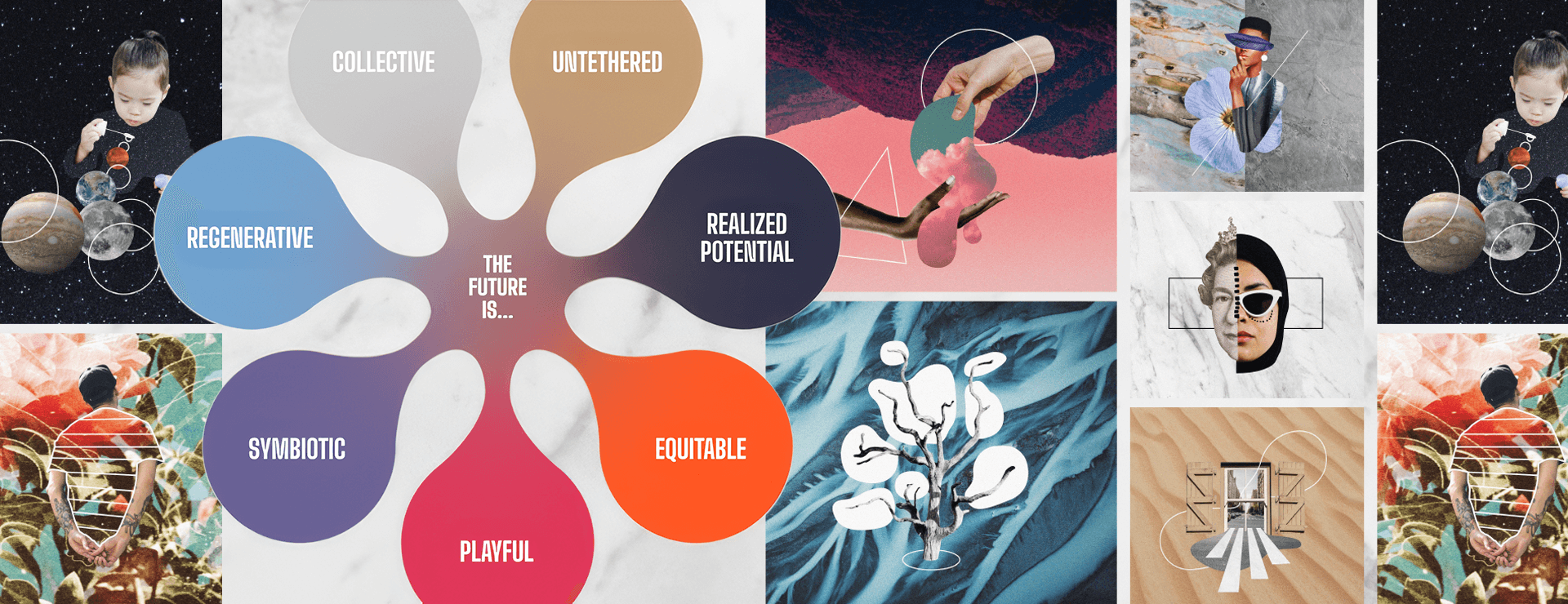
Each of these future worlds provoked ways the company might respond to it: hundreds of ideas and concepts it could potentially bring to its future customers. The CEO chose three to take forward, and you might have even seen a Superbowl ad about one of them.
In another project, we also helped a global athletics brand take a jog in the future by creating a series of immersive "day in the life” stories, complete with billboards for fictional versions of major sporting events.

Creating tangible objects, stories, and experiences that invite you directly into the future is one of the ways we blend imagination and rigor in our work: It makes real the effect of intangible forces, and helps people grasp and distill what's most critical for their own work.
All of that helps move organizations to action.
2. Leap beyond the distraction of today's disputes
Infinite futures are possible, but not all are likely. Even fewer are desirable. And more often than not, the best futures—the ways we want things to turn out—can only happen as a result of deep collaboration: People need to agree on what matters, and then work toward it.
But getting aligned is hard work. In many organizations, team members are distributed across the world or engaged in work that defies simple distillation or storytelling, so getting on the same page can feel like an insurmountable obstacle. People have different goals and are accountable for different things. Over time, conversations can surface stark differences of opinion. Before long, you’re stuck.
Strategic futuring is helpful here, too. Creating future visions together before deeper strategy work begins is a way to discover what’s desirable and magnetic for everyone.
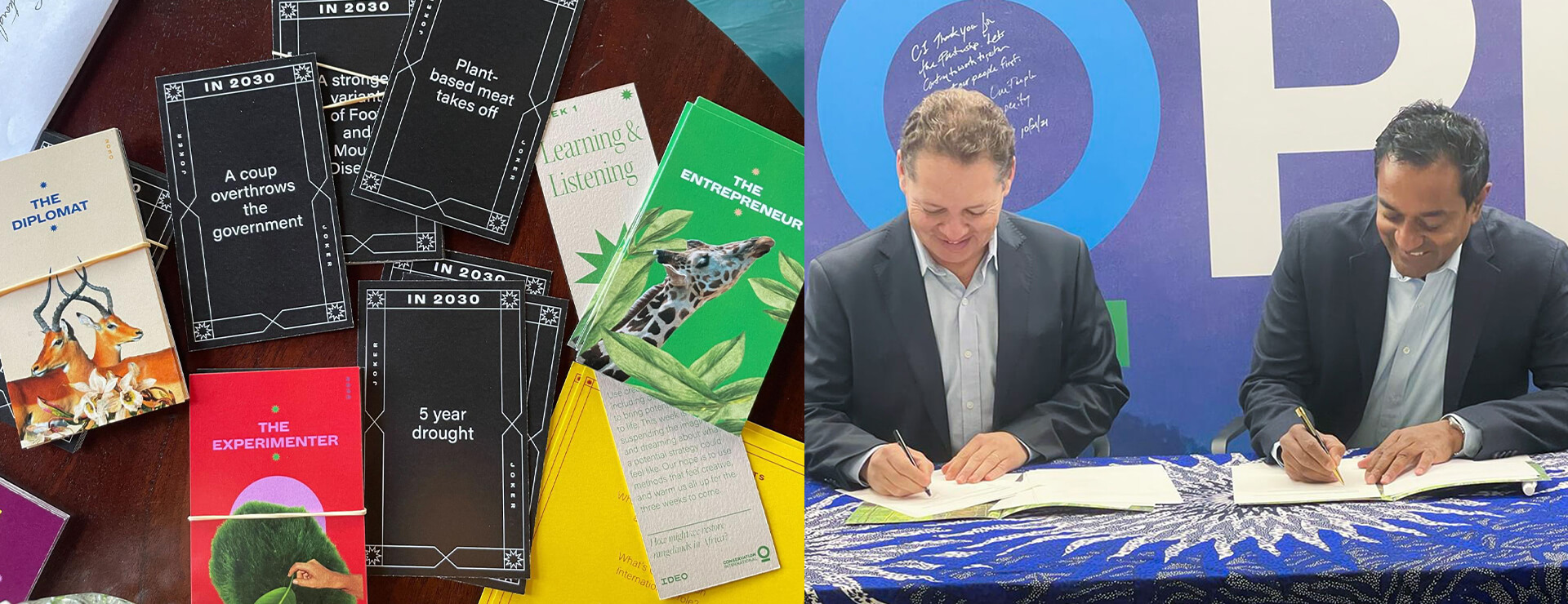
For example, to unlock a new scale of impact, the global environmental non-profit Conservation International (CI) needed a strategy that could unite its country offices on the African continent. Each had its own priorities, norms, goals, and personalities—a huge source of strength for the organization, but a barrier to scale. To create space for a new approach, CI jumped decades years into the future. Partnering with IDEO, CI experts and teams developed a set of short stories set in the year 2050, exploring future possibilities in sequestration research, satellite monitoring technologies, and more.
That futuring work created a shared language, goal, and frame of reference for the country offices. And the work accelerated the subsequent strategic decision-making and investment. The resulting goal? To expand the protection of grasslands, savannah, and scrublands in a transboundary area across six African countries. It's an effort that's now scaling Conservation International's successful Herding for Health model as a mechanism for partner-driven community climate resilience, targeting the protection of at least 10 million hectares by 2030 in partnership with a continent-wide NGO.
3. Remember: No business or organization is an island
To thrive in the future, organizations must also think about all the forces beyond their control—from climate events or cultural changes (both seen and unseen) to the deployment of emerging technologies. And they must even consider the potential effects of forces seemingly unrelated to their line of business. Because they might just matter.
That’s a lot to take in; making sense of it all can feel impossible. And a giant research document might just make it feel worse. Here again, strategic futuring offers a way forward. Rigorous speculation, informed by signals and data, picks out what’s most relevant from the noise—even if it’s unexpected. Distilling that informed speculation into imagined scenarios, and then into concrete experiences, can move leaders to reflect with urgency and clarity, and make choices with confidence.
At IDEO, we sustain an ongoing signal scanning practice, taking notice of what’s shifting across industries and cultures. We blend that informed sense of what’s coming with our client partners’ insights and data to build a rich tapestry of foresight. And then we employ all the crafts of design—from engineering and environments to software development and storytelling—to give life to the visions of the future that result.
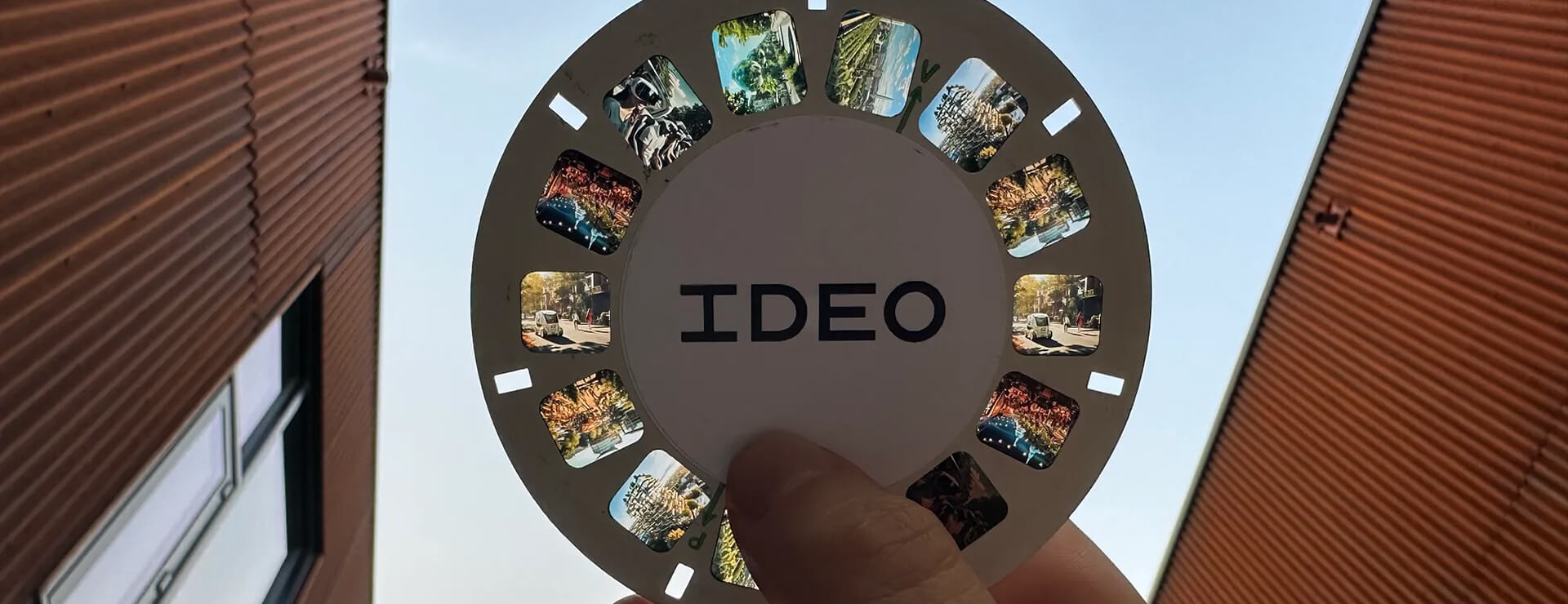
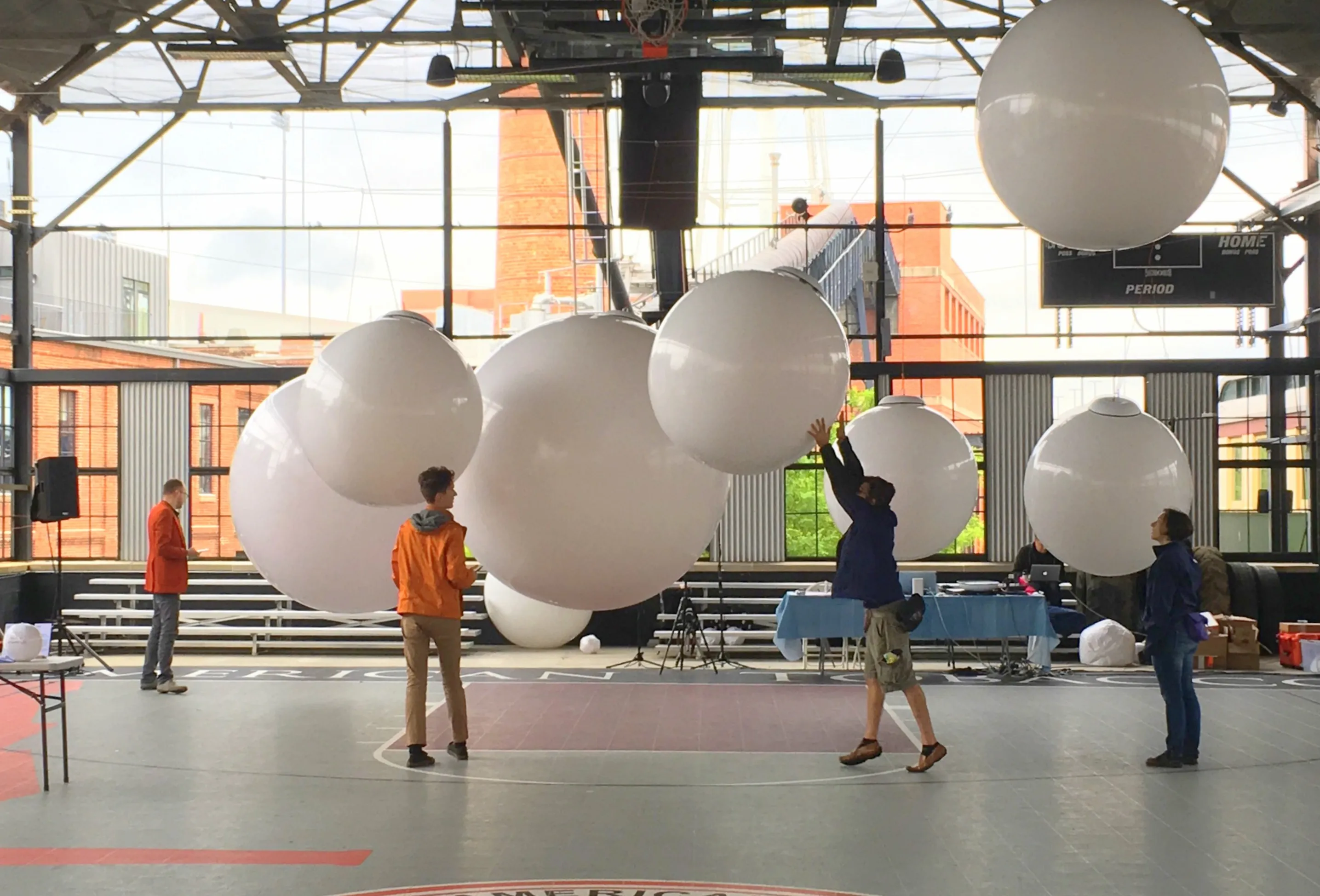
When people step into a wide-angle view of what might be coming, they see what’s possible and discover new motivations to act. We used an AI-enabled process we developed to create a pocket viewfinder for D.C. residents to help them visualize the future of their city while standing in their own neighborhood.
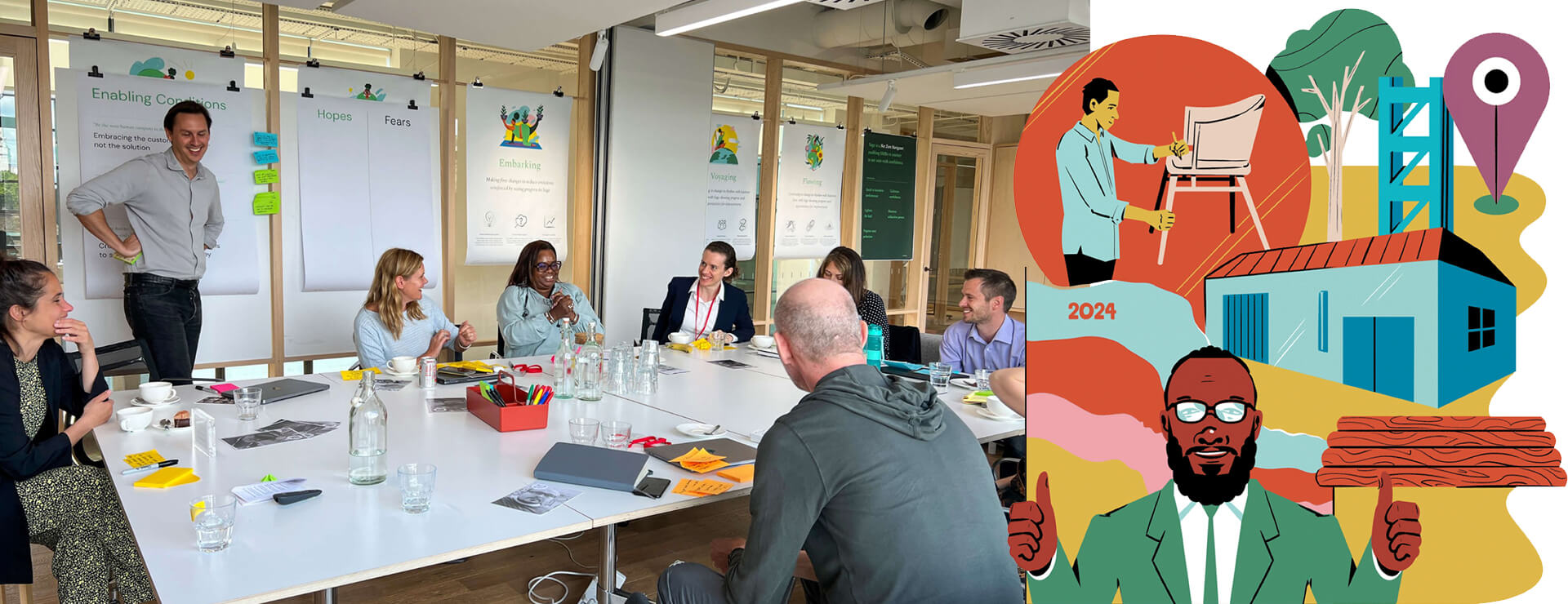
Games can take that kind of immersion a level deeper. Recently IDEO helped global enterprise software company Sage investigate how the company might support businesses working to achieve net zero emissions. We designed a choose-your-own adventure story that asked people to play characters navigating business demands in a climate-impacted 2030; it generated empathy for future users, which led to support for the launch of the pioneering Sage Earth platform.
Sometimes, the outputs of strategic futuring work are entirely physical and can take over whole spaces. At the Ellen MacArthur Foundation’s 2023 circular economy summit, we staged a home from the year 2050 populated with the personal items and detritus that might shape our daily lives if access to natural resources were to change, and if environmental regulations were to evolve as a result.
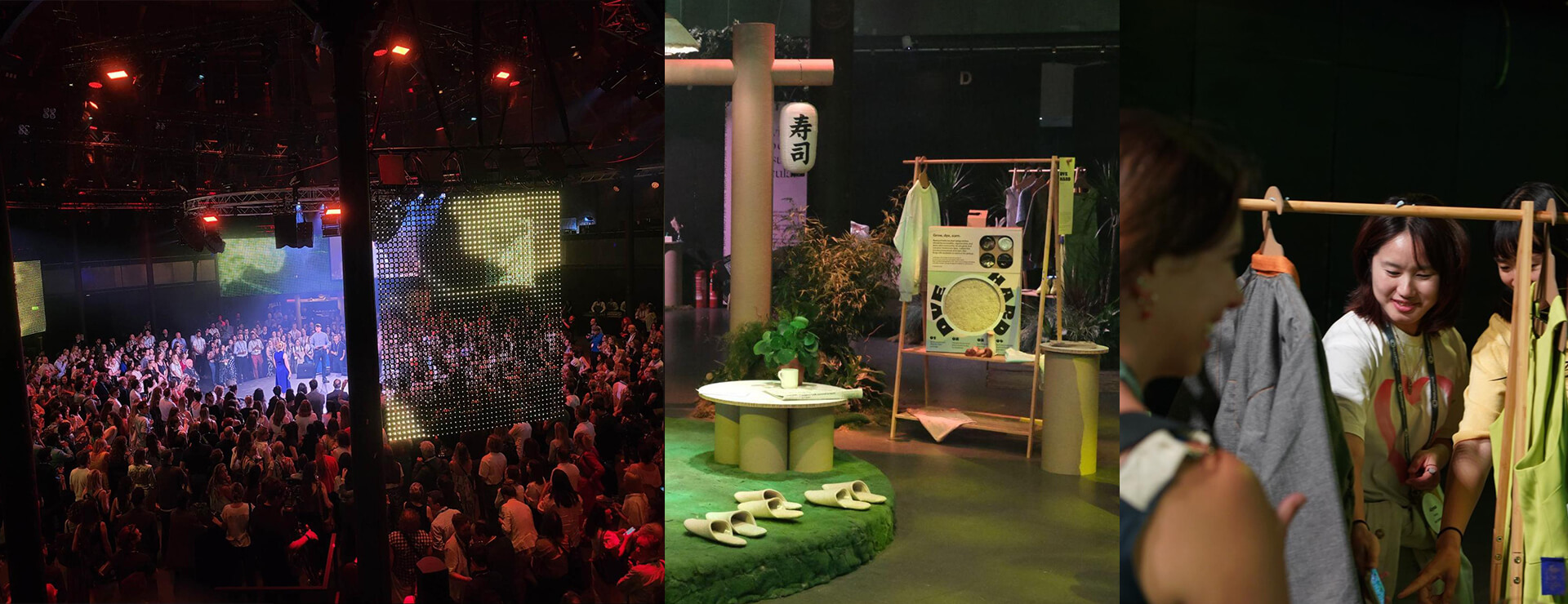
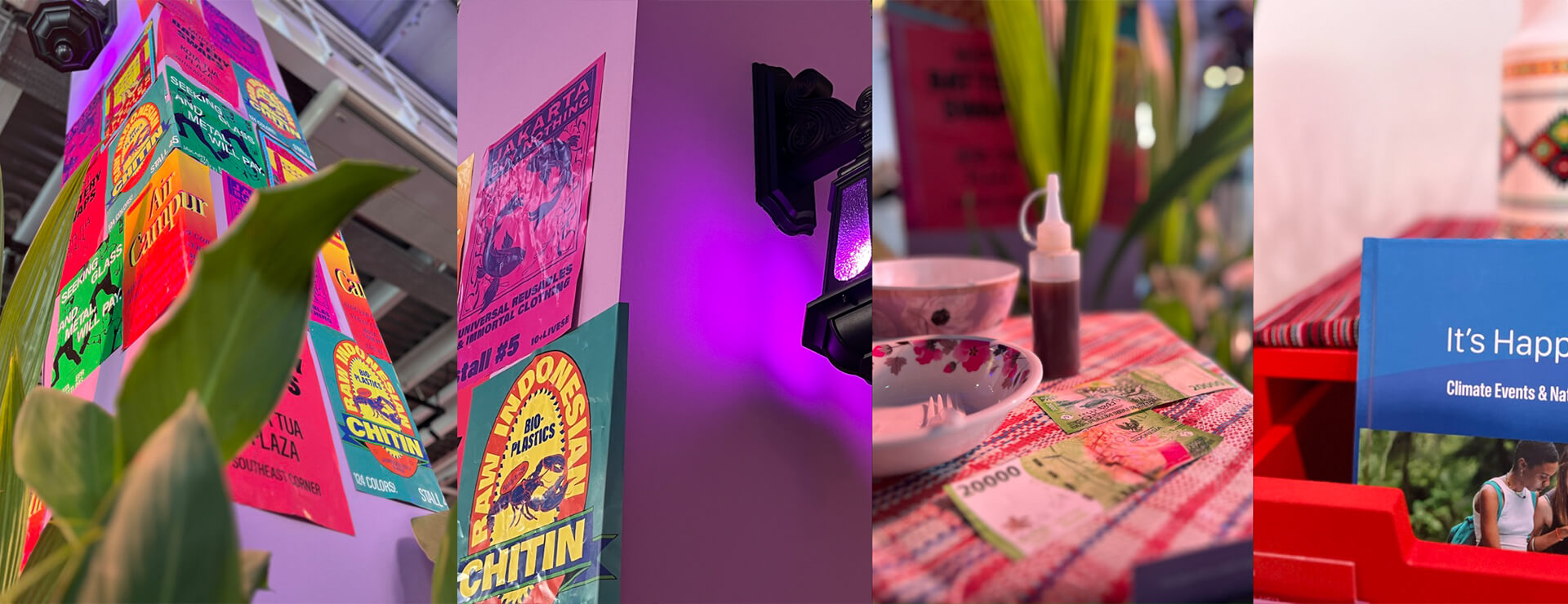
And at COP28 in Dubai, we built three distinct worlds from our collective climate future, traversing continents and culture, economic realities, and societal roles. We invited people to step directly into these futures—into spaces suspended deliberately between reality and possibility.
Do you want to make your future?
Strategic futuring is a powerful tool for solving significant, far-reaching business challenges.
You may be a leader striving to distill many levers of change affecting your organization. You may be part of a team that needs to find positive, energized alignment around what to do to set up your next era of growth.
Or you might be a leader determined to understand how your business may be transformed by forces far beyond your influence.
Wherever you are today, strategic futuring can help you make your own tomorrow.
Let’s say your job is to transform the entire landscape of learning and education. For the world.

Lindsey Turner
I’m passionate about building brands, products, and experiences that help organizations show up with meaning and momentum.
I help organizations cut through complexity by shaping how they show up, through brand strategy, identity, and storytelling.
Working at the intersection of brand and business, I bring an editorial eye and a bias toward making—turning ideas into tangible experiences that people can understand, trust, and believe in.
My work spans government, healthcare, financial services, media, and consumer goods, from launching Gen Z-focused ventures to building innovation labs and reimagining legacy brands. I relish moments of ambiguity and enjoy translating across teams, perspectives, and priorities to move ideas forward.
I started my career in editorial and digital design, shaping cross-platform experiences and identity systems in publishing and agency environments. That foundation still shapes how I work today: I’m detail-oriented, collaborative, and overreliant on the Oxford comma. I hold a BFA in Visual Communication from the School of the Art Institute of Chicago.

Rachel Young
My work helps organizations see who their products aren't working for—and build the will and the tools to do something about it
For 25 years, I've asked the same question: Who does this design exclude—and what are we going to do about it?
My work spans human-centered strategy, inclusive design, and qualitative research, with clients ranging from Microsoft, Google, and Verizon to the National Science Foundation, and San Francisco Unified School District.
Before IDEO, I taught elementary school in East Palo Alto and spent a decade doing design work with social service organizations—where I learned firsthand what it costs people when systems are built without them in mind.
I am currently writing User Error, a nonfiction book about digital access and the design decisions behind it. I live in Oakland, California.

Brian Pelsoh
I lead with craft, ensuring our work is creatively excellent: rooted in deep human insight and imagination, while also grounded in the realities of business and technology.
My expertise spans brand, communication, and product design across tech, education, the arts, and social impact.
I believe great work demands both high-level vision and obsessive attention to detail, and only happens through collaboration.
I bring an inclusive, hands-on approach and a deep understanding of business, which enables me to consistently deliver excellence while always asking why.
Before joining IDEO, I worked at the brand firms Pentagram and VSA Partners. I began my career as a designer, leading teams at the School of the Art Institute of Chicago and the Milwaukee Art Museum. I hold an MFA in graphic design from Maryland Institute College of Art and a BFA in communication design from the Milwaukee Institute of Art & Design, and have taught at some of the best design schools in the US.

Tony Wong
I am responsible for IDEO’s long-term success in China and working with clients to use design as a tool to enable growth.
I am responsible for IDEO’s long-term success in China and working with clients to use design as a tool to enable growth. Specifically, I have helped Chinese companies design holistic brand solutions through the development of their products, communication, services, and innovation teams, and I have helped multinationals expand their presence and influence in China.
I advise global leaders on developing China-led innovation and capabilities.
In over 15 years in IDEO Shanghai, I have worked on projects that use design to elevate the quality of the experience of healthcare products and services, streamline processes that increase productivity, create spaces and programs that promote and enable inclusive communities, and build next generation mobility solutions that are planet-positive.
Before joining IDEO, I worked at Philips Electronics and the Electrolux Group in Italy, the Netherlands, and Singapore on a number of breakthrough commercial products. I am a member of the Young President Organization in Shanghai.

How to use AI as an editor, not a writer
Ed White shares how he uses AI as an editor—not a writer—to sharpen storytelling, rehearse ideas, and preserve the productive friction that makes creative work better.
Ed White has a rule he's tested on his own writing: hold yourself as the writer, and let AI be your editor. Ed is a Senior Design Director at IDEO's London studio, where he co-leads the firm's AI portfolio across Europe. Before IDEO, he spent 12 years as a writer and editor at the Financial Times, Wired, and Contagious. So when he talks about when to use AI for storytelling and when not to, it comes from two decades of crafting his storytelling skills.
In this episode, Mina Seetharaman talks with Ed about two specific tools he uses to keep AI in an editor's seat: a "roasting agent" prompted to critique his drafts without any sugarcoating, and a simulated audience he rehearses pitches on before the real thing. They also get into what Ed is hearing from design leaders at Anthropic, Lovable, Shopify, and Google Creative Lab about how creative work is changing, and why he thinks the friction of writing something yourself is worth protecting rather than automating away.

Building a personal AI for the messiness of life: Sida Li
Becca Carroll talks with Cue co-founder Sida Li about designing a personal AI for the messiness of everyday life—not just work. They explore how Sida stays anchored to human needs while navigating fast-changing technology, product tradeoffs, business-model experimentation, and the realities of building an AI company today.
Most AI products today are built for work—a space with clear problems and established systems. One founder noticed a gap: personal life is messier, harder to systematize, and mostly left behind by the AI boom. So she built Cue, a personal AI that lives inside iMessage and group chats, to go where the other tools haven't.
In this episode, Becca Carroll, IDEO's Chief Strategy Officer, talks with Sida Li, co-founder and CEO of Shared Context Lab, about staying anchored to a human need while the technology around her keeps changing shape, why she treats her business model with the same rigor she'd bring to a product, and what it feels like to build a company at this particular, disorienting moment in AI.
The conversation also gets into how Sida makes design decisions: the language Cue uses to describe itself, the tradeoffs behind building inside iMessage instead of a new app, and a real story about a business idea that didn’t pan out.
This is the second in a two-part series profiling founders from IDEO's Startups-in-Residence program. The first conversation is with Johannes Seemann, founder of Sooner, on designing GenAI for the emotional side of money.

Designing GenAI for the emotional side of money: Johannes Seemann
Designing financial tools around the feelings that shape money decisions.
Most personal financial tools are built to run the numbers and optimize towards a budget. While that works for some, most people experience money as a lived relationship that does not neatly fit into a spreadsheet. Johannes Seemann and Becca Carroll discuss why money is emotional before it is mathematical, and what a human-centered approach to building a generative AI financial product looks like in practice.

The curious leader's edge in uncertainty: Scott Shigeoka
How genuine curiosity helps leaders navigate uncertainty with greater confidence.
Mina Seetharaman talks with Scott Shigeoka, author of Seek and Head of Curiosity Cultivation at the Eames Institute, about what distinguishes genuinely curious leadership from performative curiosity, how power dynamics shape curiosity, and why practicing curiosity can restore energy rather than drain it.
Looks like you might be in search of something very specific?
Or reset the filters above and try another angle.
Here’s some random inspiration

Podcasts about creative leadership

Articles about the power of prototyping

.webp)



.webp)







.webp)





.webp)





.webp)
.webp)