
Nurturing a creative culture
How writing a book about our shared values helped articulate what it means to be successful at IDEO.
How do you know when you’re successful in your work? You can check off a list of technical skills and expertise you bring to the table. You can use a career development rubric to make sure you’re hitting the right goals. But often, it’s your behaviors—the intangibles that are the most difficult to articulate—that make the most impact. Things like your ability to stay optimistic or your willingness to adapt when there’s no roadmap.
Because of the nature of our work at IDEO, these intangibles are a big part of what defines the experience of working at the company. So in 2012, a global team of designers from our U.S., Europe, and Asia offices came together to codify these values and behaviors as part of a larger effort to evolve IDEO’s career development platform. More often than not, when IDEOers hit road bumps in their career, it was not about what they were doing, but how they were doing it.
The team agreed that, in addition to identifying the technical requirements needed to progress through one’s career, it was just as crucial to give IDEOers the tools they need to navigate the complex culture. So they captured the values they believed were foundational to the culture and most strongly shared across the IDEO community, and put them to paper in The Little Book of IDEO. The title is meant to reflect its purpose for readers—a handbook that’s compact, useful, and free of any corporate jargon.

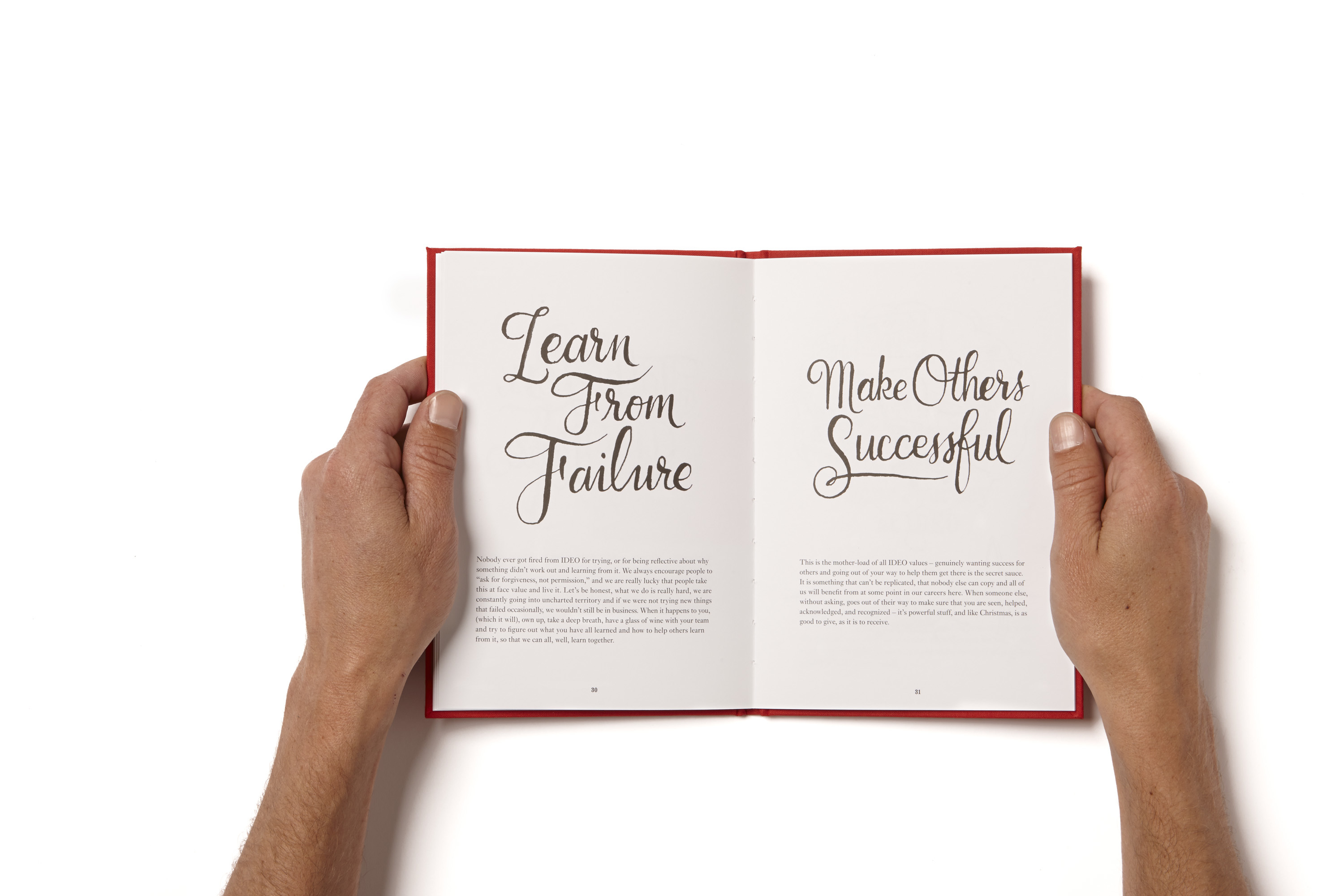
For IDEO-ers, this red cloth-bound guide provides a shared lexicon around both the hard and soft skills we need to succeed. It describes things like why IDEO is so loosely structured, where it comes from, and where it’s headed.
Most importantly, the book identifies the organization’s seven core values. These are by design specific, actionable, and integral to the kind of work we do and the environment in which we do it, going beyond common sense and general ethical practice. The intention: to foster meaningful conversations within the community about life at IDEO, and how to achieve success along the way. With each succinct expression comes a deeper explanation of why it matters, and how it shapes our experience at IDEO.
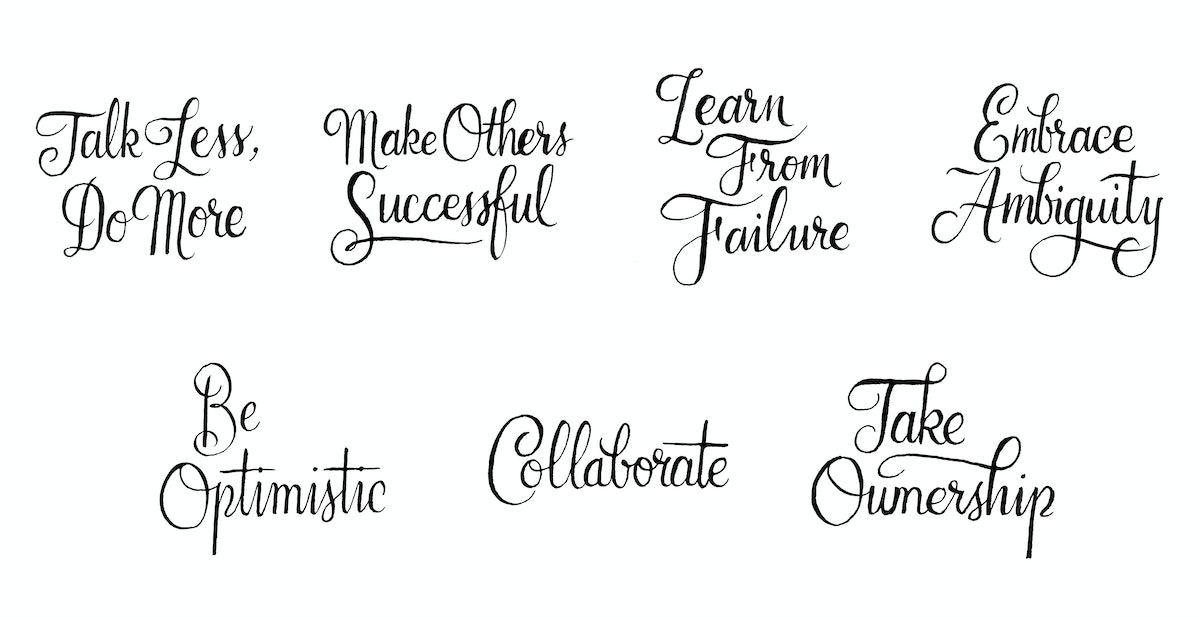
Over the years, the book has been roundly embraced by the IDEO community as an honest articulation of who we are, as opposed to what we aspire to be, and what we appreciate most about working together. When IDEOers first got their hands on it, a movement took shape to create videos that bring each of the core values to life. To depict the value of "Embracing Ambiguity," for example, New York-based designers built a makeshift cardboard rowboat, and while simulating a storm, navigated their way through uncharted territory with teamwork and optimism. San Francisco produced a Jacques Cousteau inspired look at the lifestyle and behaviors of designers in their natural collaborative habitat.
Through the process of making the videos, IDEOers came together to reflect on each of the values, talking through what resonated and what didn’t. It gave them a sense of ownership, and a platform through which to share their interpretations.
A Global Conversation
IDEO has a global presence—offices in two countries in Europe, two countries in Asia, and multiple locations across the U.S. As an organization that embraces a human-centered culture, it felt important to learn if the values resonated with the IDEO community in all of these locations, especially in a country like China, whose working culture is so different from the west. We saw the authenticity and resonance of the values as essential for attracting, motivating, and retaining local talent.
So how did The Little Book of IDEO land in Shanghai? Exploring this question would illuminate insights into how our own clients are often challenged to keep their company culture resonant within the global landscape.
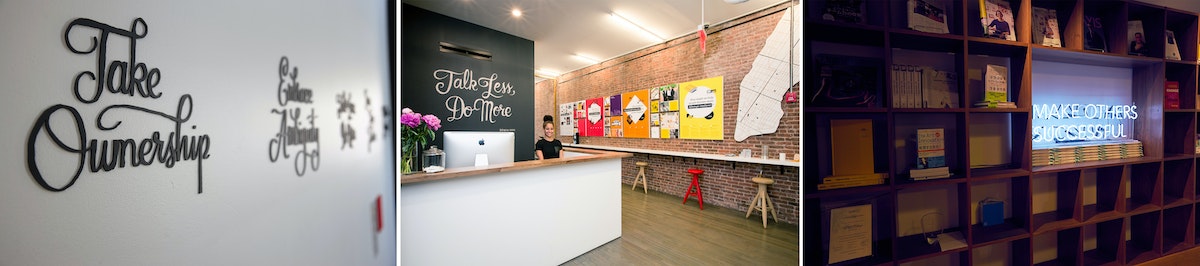
A team of IDEOers in our Shanghai office took on the challenge of exploring the meaning behind each of the values. They were surprised with what they discovered—that despite the firm’s Western origins, locals felt largely connected to the values. It even helped to further solidify their identity as a community, even if it may have been in tension with local working culture, because it was rooted in a set of shared beliefs.
In some instances, the Shanghai team built on the existing values in order to refine the meaning for the local context. For example, the core value "Be Optimistic" rings true, but could sound naive when translated directly to Chinese, implying "rose-tinted glasses.” So in the Mandarin edition, an extra phrase was added to convey the measuredness we mean when we talk about optimism at IDEO. The lesson here: The treatment of something as fundamental and nuanced as our values requires authenticity and emotional connection, and therefore more of a transcreation process than straight translation.
Lasting Power
As an organization, we are designed to be flexible. This means we’re always changing—even when it comes to how we are structured—so that we can respond to the kinds of challenges that clients come to us for. In the midst of our constant evolution, The Little Book of IDEO is as resonant today as it was when it was published.

The future guest experience
Designing new guest and employee journeys that deliver on the promise of an iconic brand.
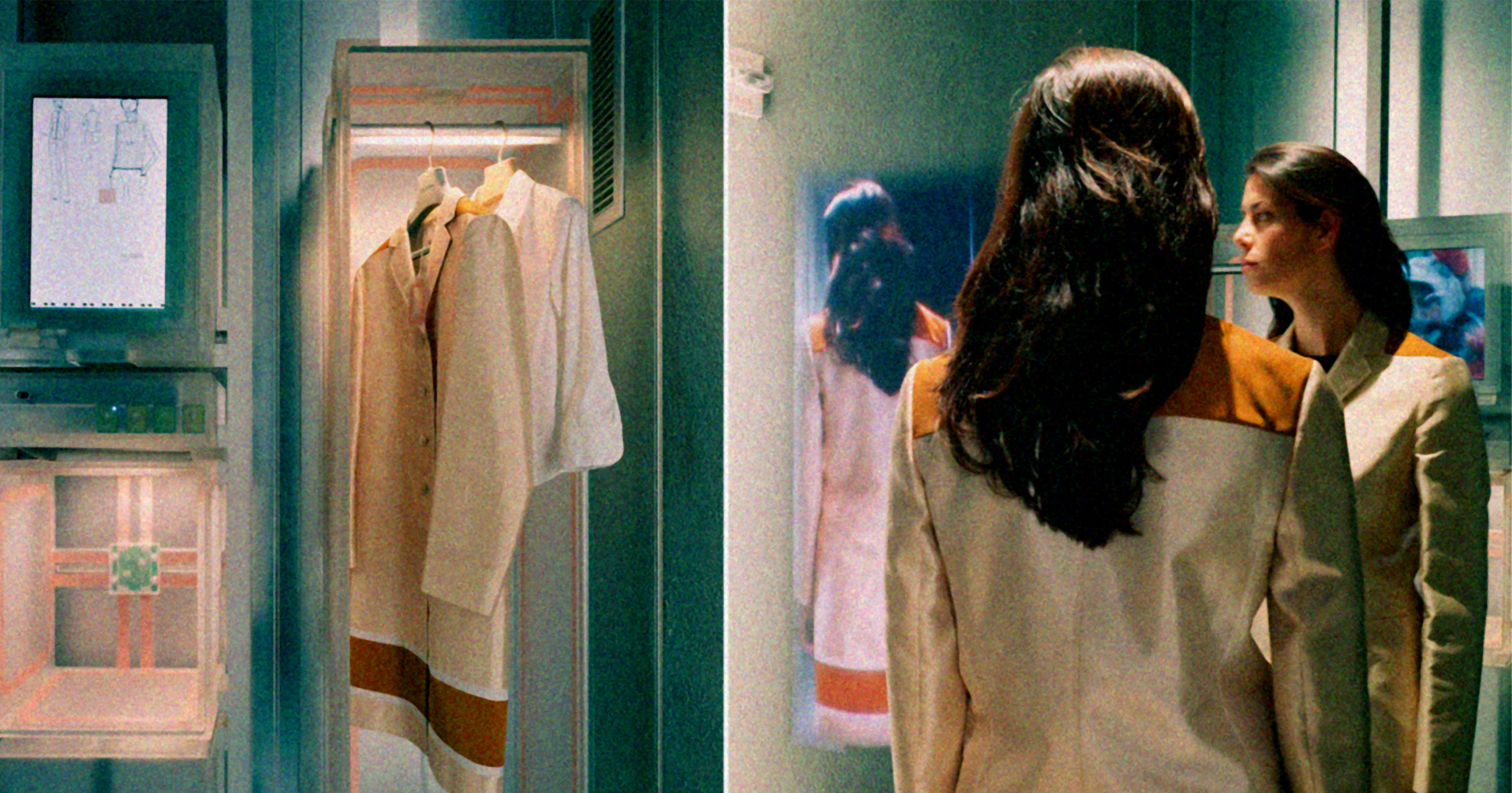
kate spade new york has been an iconic fashion brand since the early 90s, when its handbags first stormed the Manhattan fashion scene. Since then, the company has expanded and evolved into a global lifestyle brand.
With e-commerce reshaping the retail landscape and redefining the role of brick and mortar stores in recent years, kate spade new york leadership asked: How can we make the kate spade new york specialty store experience, well, more special?
kate spade new york already held the key to a new way of thinking about a multichannel customer experience: a brand promise “to inspire her to lead an interesting life.” Hoping to bring that promise to life in store, they engaged IDEO to help make it happen. The solution was for kate spade new york to take the brand message from words to action in the form of a customized guest journey. The team created more than 100 design concepts and strategies for building a retail experience that rewards curiosity and sparks artistic and literary exploration.
“In partnership with IDEO, we spoke extensively with our customers and associates to better understand how we can provide the most engaging and fulfilling in-store experience,” said Mary Beech, Executive Vice President and Chief Marketing Officer at Kate Spade & Company. “The new store elements that we introduced speak to our customer’s personality and appetite for adventure while aiming to enhance engagement with new and existing customers.”
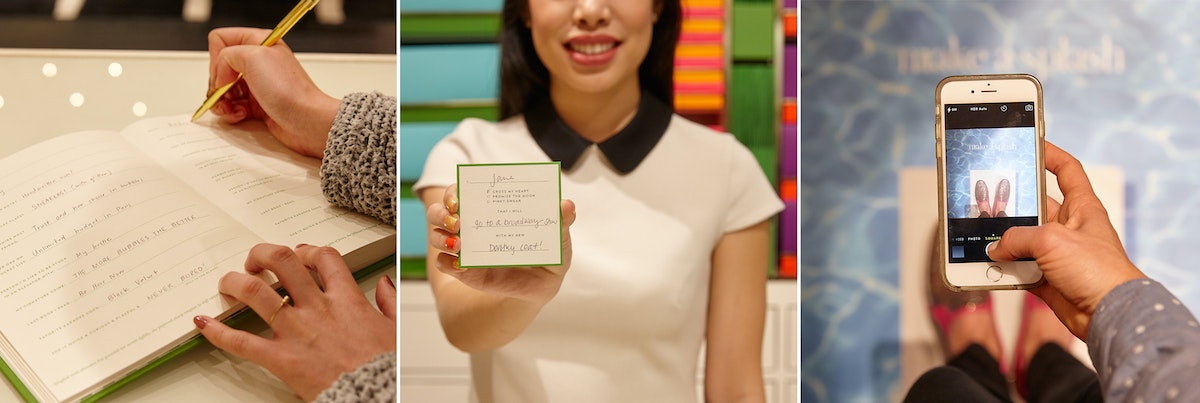
The team knew that striking the right balance of digital tools in in-store interactions was pivotal in allowing two people to have a more rich and collaborative face-to-face connection. The concepts include things like “pack a purse” to test drive how many everyday items can fit in different style handbags, cheeky “dare cards” that challenge customers to go on an exciting adventure with their new purchase, and digital moments like the “shoe selfie” platform that would allow a guest to share “I’m thinking about them” heels or just-purchased flats with her social network. IDEO live-prototyped a selection of concepts in stores around the country and saw a high correlation between customers’ positive reactions and their subsequent purchasing decisions.
“At kate spade new york, our brand promise is to inspire women to live a more interesting life,” said Jenica Myszkowski, Vice President of Stores at Kate Spade & Company. “Our new and improved guest journey experience puts our customers at the center, allowing us to more fully deliver on our brand promise in our retail stores with a stronger vision and purpose for our stores and our store teams.”
To deliver the newly envisioned guest service experience, the role of the sales associates needed to be redesigned, as well. The kate spade new york and IDEO team created a new role: the Muse, whose job is to live the brand promise of an interesting life and to inspire customers to do the same. The reimagined role ultimately shifted the focus in specialty stores from selling to inspiring and building long-lasting relationships with guests.

Two kinds of athletes, one strong brand
Designing a brand that served both elite athletes and everyday fitness enthusiasts.
Athletes’ Performance and its subsidiary, Core Performance, were both founded on a single mission: to enhance human performance through a holistic approach to mindset, nutrition, movement, and recovery. Athletes’ Performance focused on elite professional athletes, and Core Performance provided corporate fitness programs and workouts for employees hoping to lead more healthful lives, and both found a footing in the competitive health and fitness market.
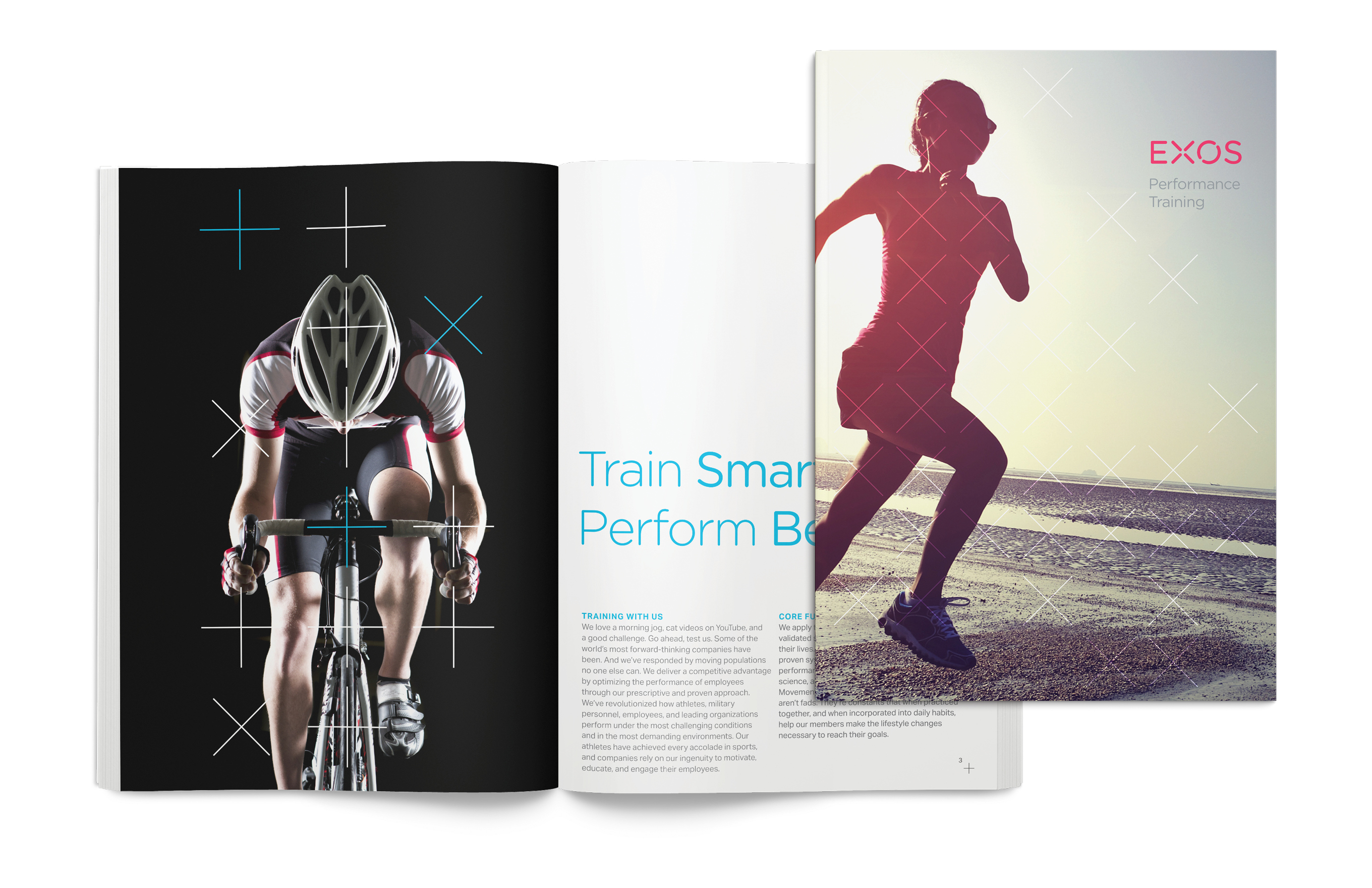
Faced with a challenge to redefine the brands, IDEO designers collaborated with the founder and integrated marketing team to unite Athletes’ Performance and Core Performance under one name that would cut across the health, fitness, and wellness markets to reach a full breadth of audiences and partners. Under a new name, EXOS, the teams created a brand identity system unified by its founding mission and focus on human performance.
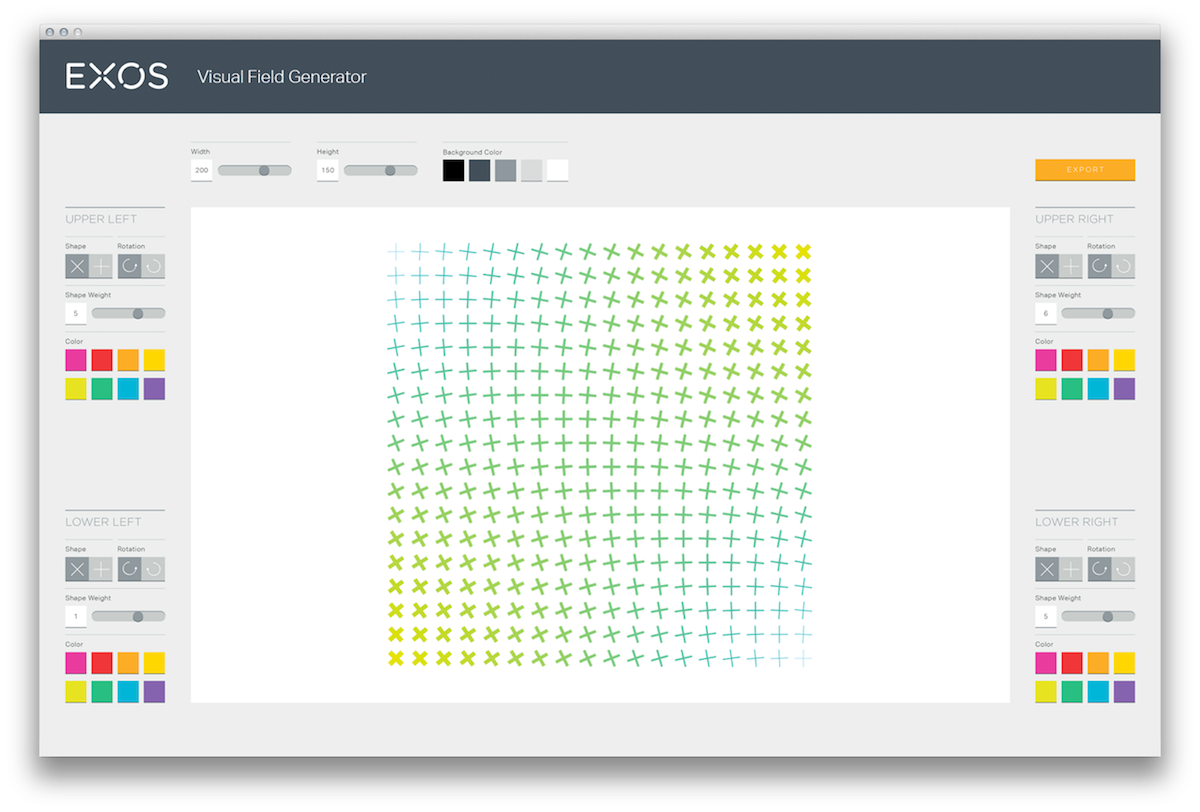
For the new EXOS brand, IDEO designers created a visual language using “x” and “+” to highlight the progress from goals to achievement, as well as a system of interaction for athletes of all performance levels. The team also created a bespoke digital tool, outfitted with custom software, which gave designers both guidance within the brand guidelines and creativity to explore new products and contexts.
Making sure a bank stays great as it grows
Designing digital tools and brand concepts for Umpqua Bank.
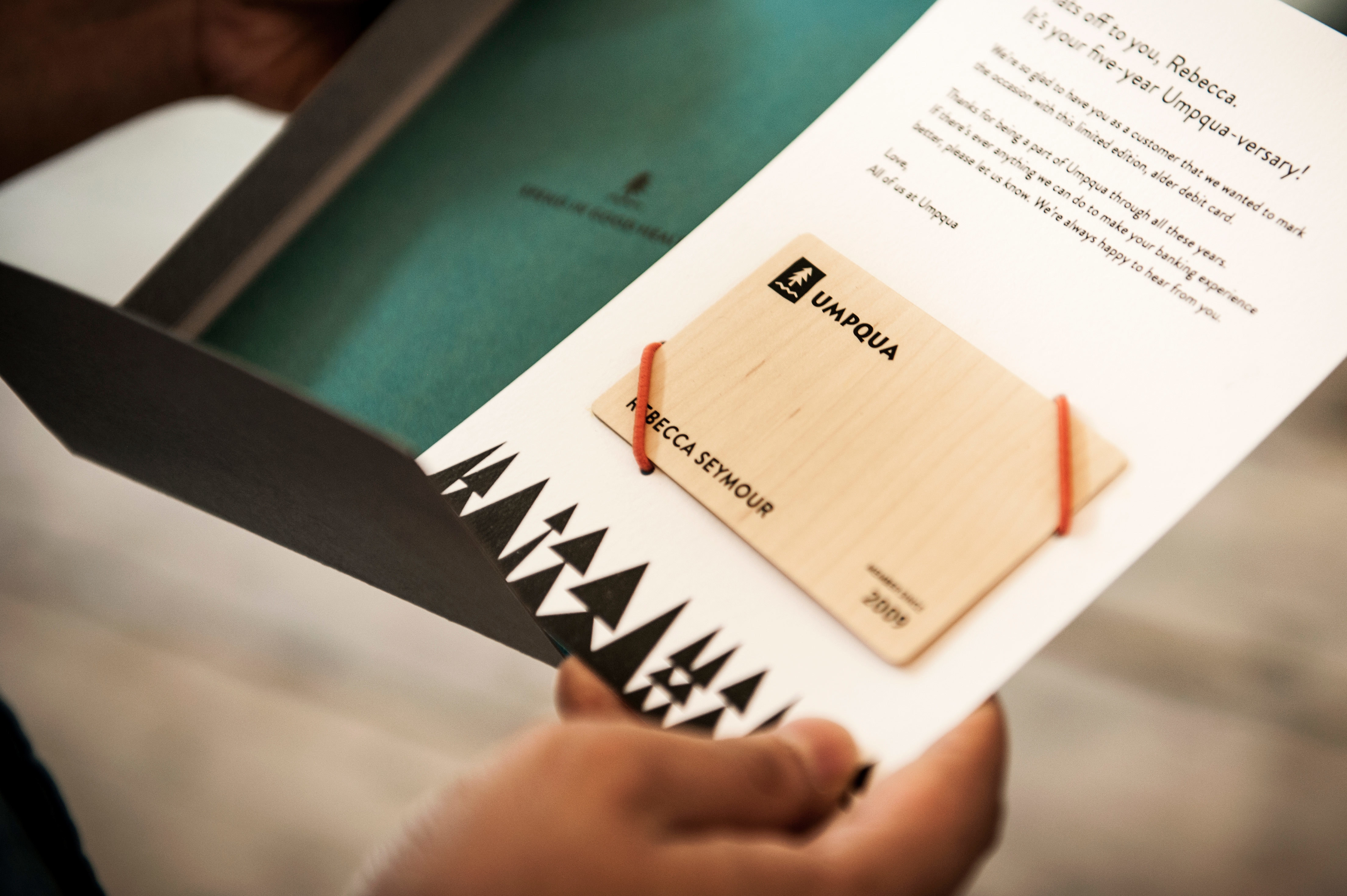
Imagine this: Your company has just gone through a $2 billion merger. You show up at work to find an invitation from the CEO asking you to help shape the bank’s future. This is what happened when Umpqua acquired Sterling Financial Corporation in 2014, doubling its size and resulting in the creation of the West Coast’s largest community bank overnight. With a mission to be “the world’s greatest bank,” CEO Ray Davis seized the moment to reinvest in design across the organization.
Umpqua asked IDEO to help examine the brand they had and take it to a new level. They wanted to find out: how can we leverage our strength and reputation by activating the brand in new ways to deepen employee and customer engagement and foster continued growth?
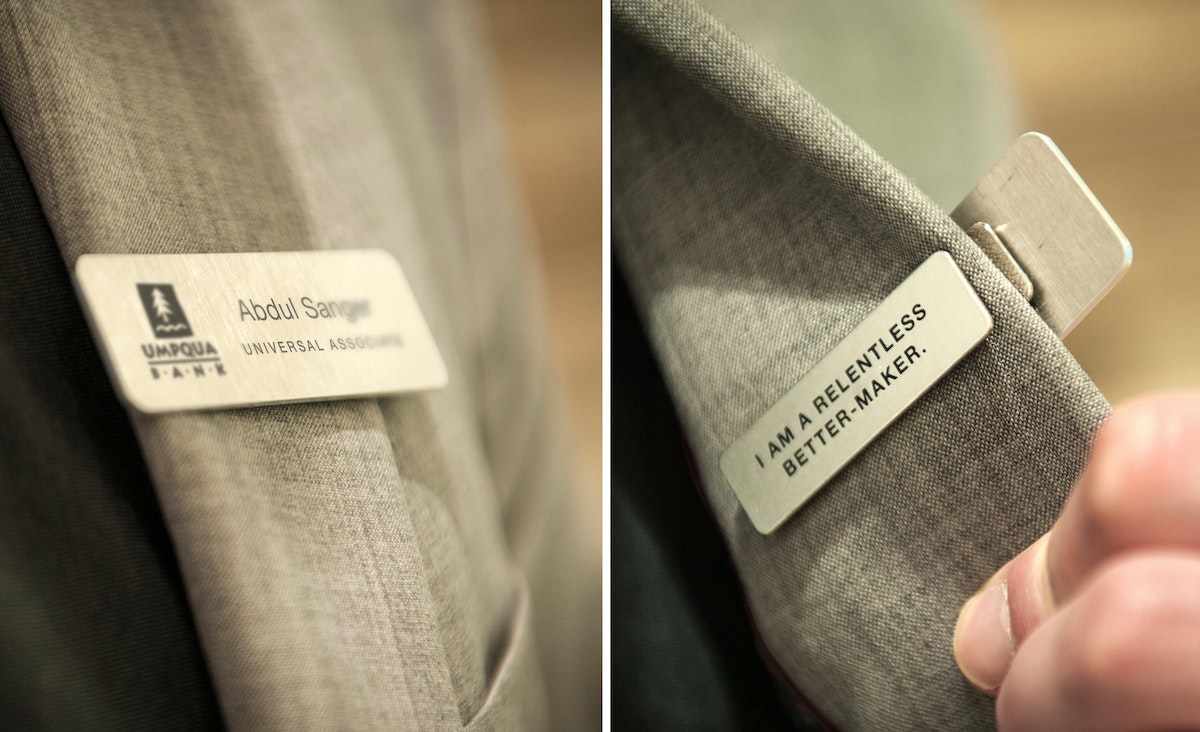
IDEO identified three core brand opportunities and a newly articulated purpose statement that became a launch pad for more than 15 different concepts to express the brand internally and externally.
Inside Umpqua, company evangelists handed out notebooks with tips on “how to be better-makers,” and associates now participate in collaborative design challenges through an internal tool built on IDEO’s OI Engine, software that fosters open innovation. The design challenges are drawing unprecedented participation of 84 percent among employees and are having a real impact on the organization. Of the five they’ve run in two years, the company has implemented three winning ideas including a buddy program for new hires or transferees that upwards of 1,000 associates could experience over the next year.
WATCH: Umpqua Bank on using the OI Engine platform
IDEO also worked with Umpqua’s team to conceive digital products including a new digital app called Raindrop that lets people bank in the way that they think about saving and spending, not the way a bank does. It’s due for release in 2016.
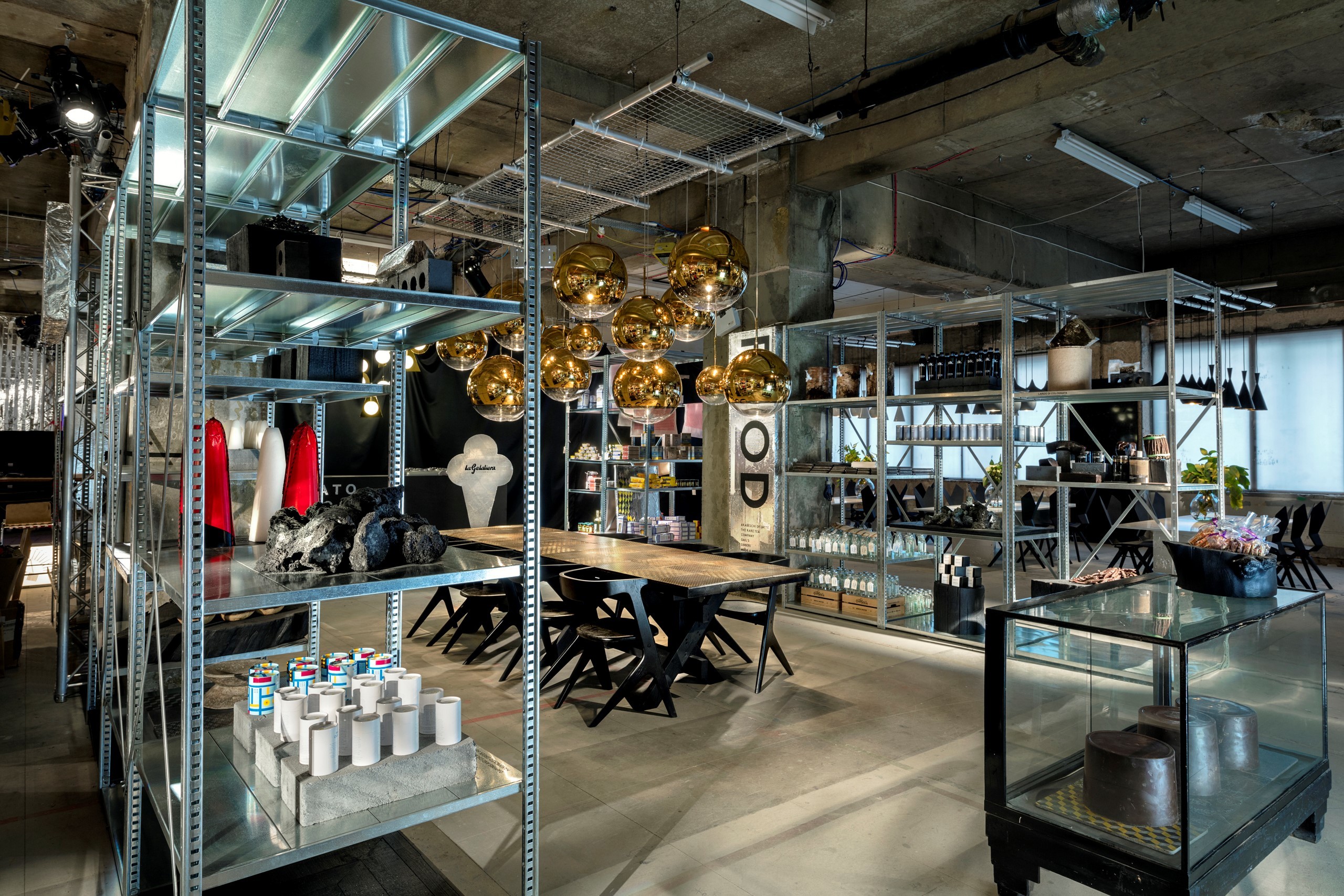
To introduce all of this work, IDEO set up an immersive exhibition at Umpqua’s headquarters in Portland. Teams large and small, including the executive and associates from across the company, walked through the exhibit and witnessed how the brand impacts every aspect of their business, from employee engagement to product development. It was signed on the spot by Davis, who invited employees to sign their names, too.
What Does a Data Scientist Do at a Design Company?
At IDEO, data scientists don't just code up solutions—they design them
For my latest project I worked with a healthcare company to improve doctor decision-making during a medical procedure. In addition to usual data scientist tasks, I spent a lot of time with the team trying to understand the way physicians currently work. Here’s a peek behind the scenes:
7:30 AM: Podcast time
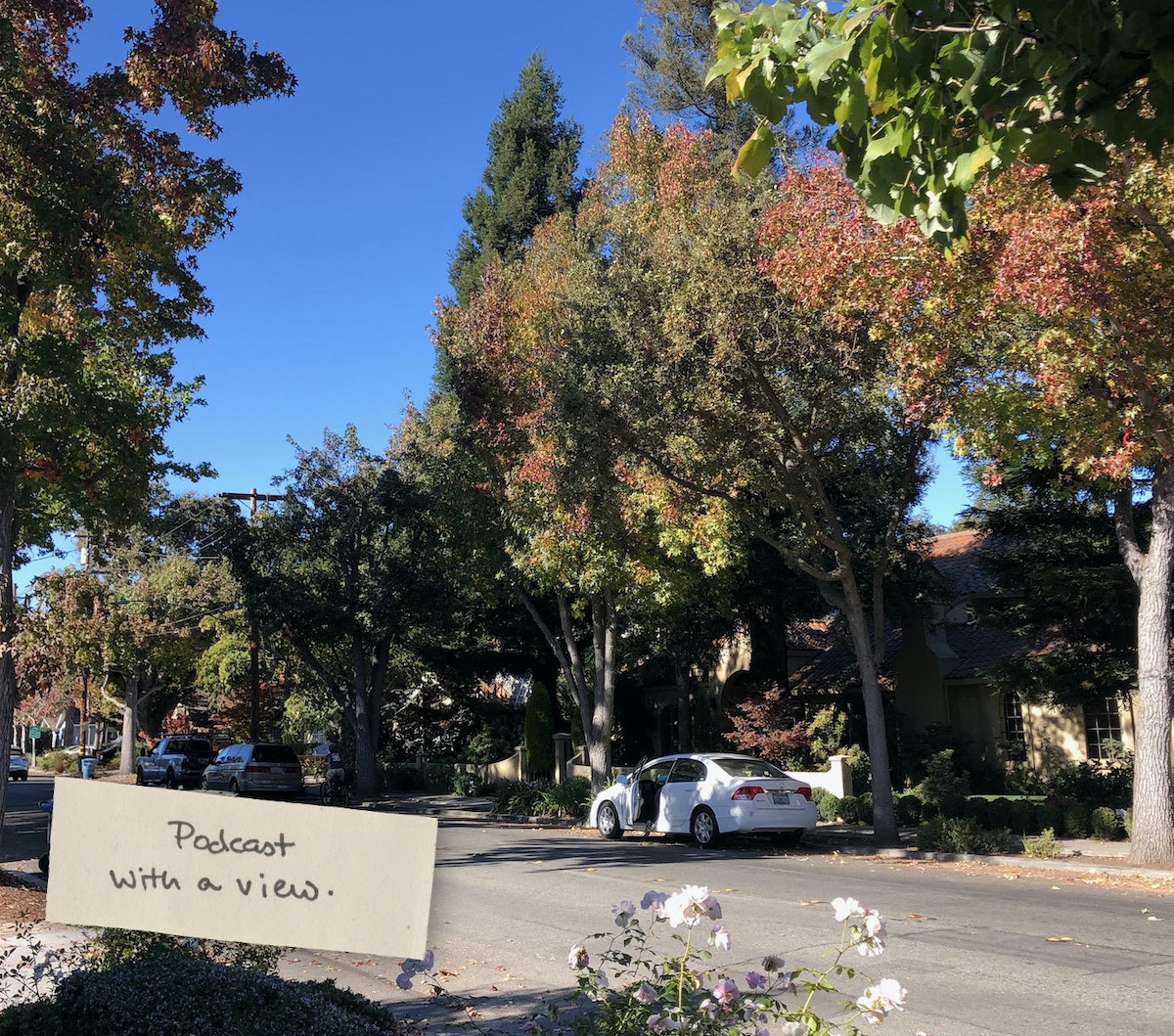
This morning I’m off to meet my team at a hospital for field research. On my way, I’m listening to a podcast called “The Impact” that explains the consequences that laws and regulations have on people’s lives. There are a few episodes that relate to data and medical outcomes, so it’s serving as inspiration for my current project.
8:00 AM: Field research
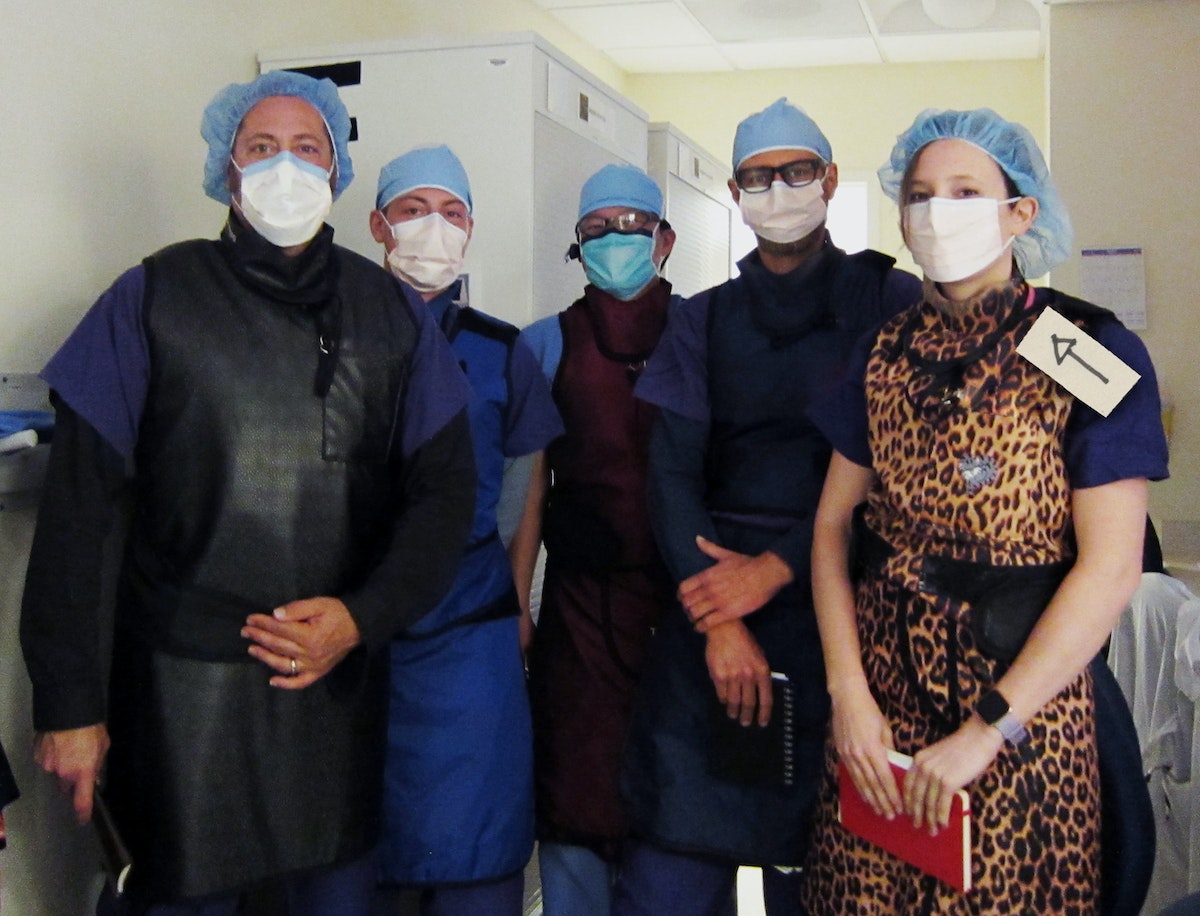
At the hospital, we talk to doctors, nurses, and medical techs and observe them in action. Listening and observing helps us understand the needs of the people we’re designing for. We’re thinking about optimizing decision-making for doctors, which could involve a lot of things, ranging from information and data display to AI assistance. I watch for clues about how this works, and how potential data sources might get recorded.
11:00 AM: Data science group meeting
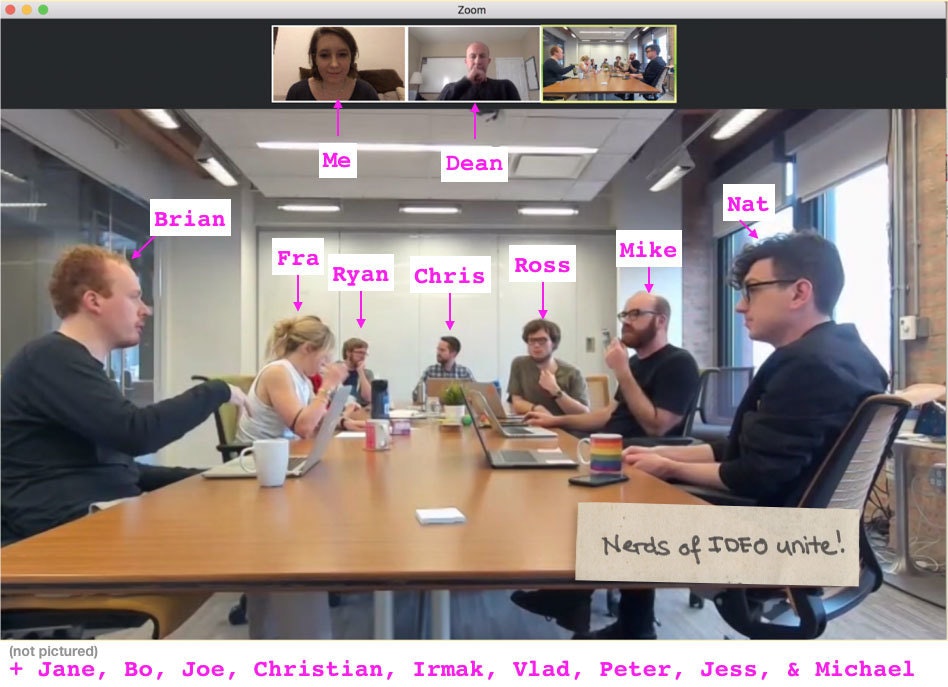
My home base is Chicago, but I’m stationed in Palo Alto for my current project. Luckily, I can still keep up with what the rest of the data scientists at IDEO are doing through a weekly video call that we can all dial into. We help each other troubleshoot problems we’ve encountered in our projects, share new methods we’ve learned, and talk about personal projects we’re pursuing. This week, one of the other data scientists is telling us about a website he’s making that allows his parents to see where he is (but not his exact location). We have a separate meeting on Friday mornings for those of us in Palo Alto specifically. I like both meetings because they help me keep up to date with how our data science practice is evolving, since it’s the newest design discipline at IDEO
12:00 PM: Lunch break
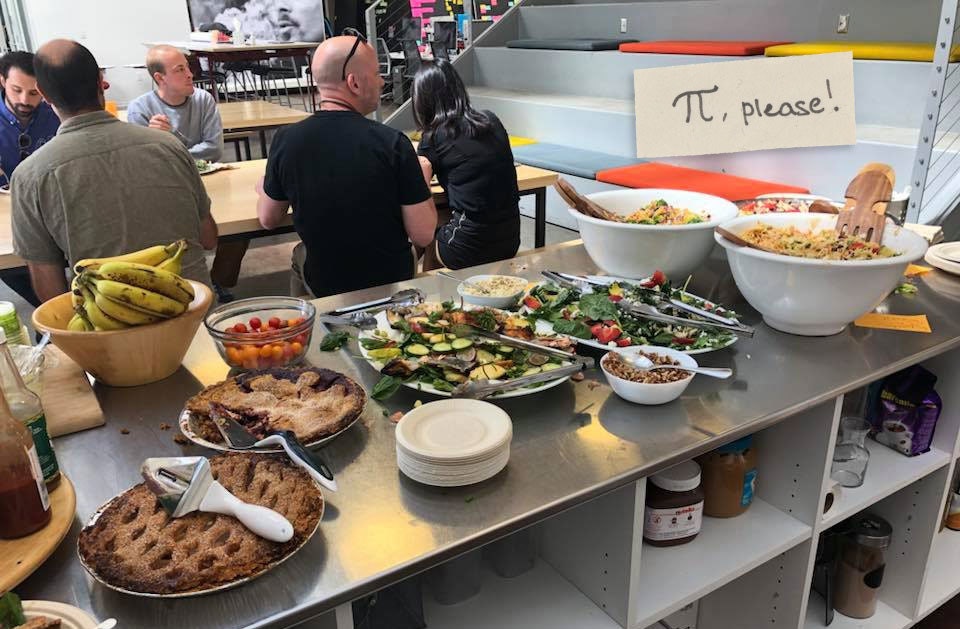
After a morning of research, I grab lunch at the studio. Today is a special treat—lunch has been provided for us. Everyone sits in the kitchen or our outside patio to eat, so it’s a great opportunity to meet other coworkers and hear about the interesting design challenges they’re working on. I like to sit with designers from IDEO’s PlayLab. They’re usually working on designing cool new toys, and have lots of interesting side projects. Many of them (and others in the PA studio) worked on this Burning Man installation, for example.
1:30 PM: Synthesis with the team
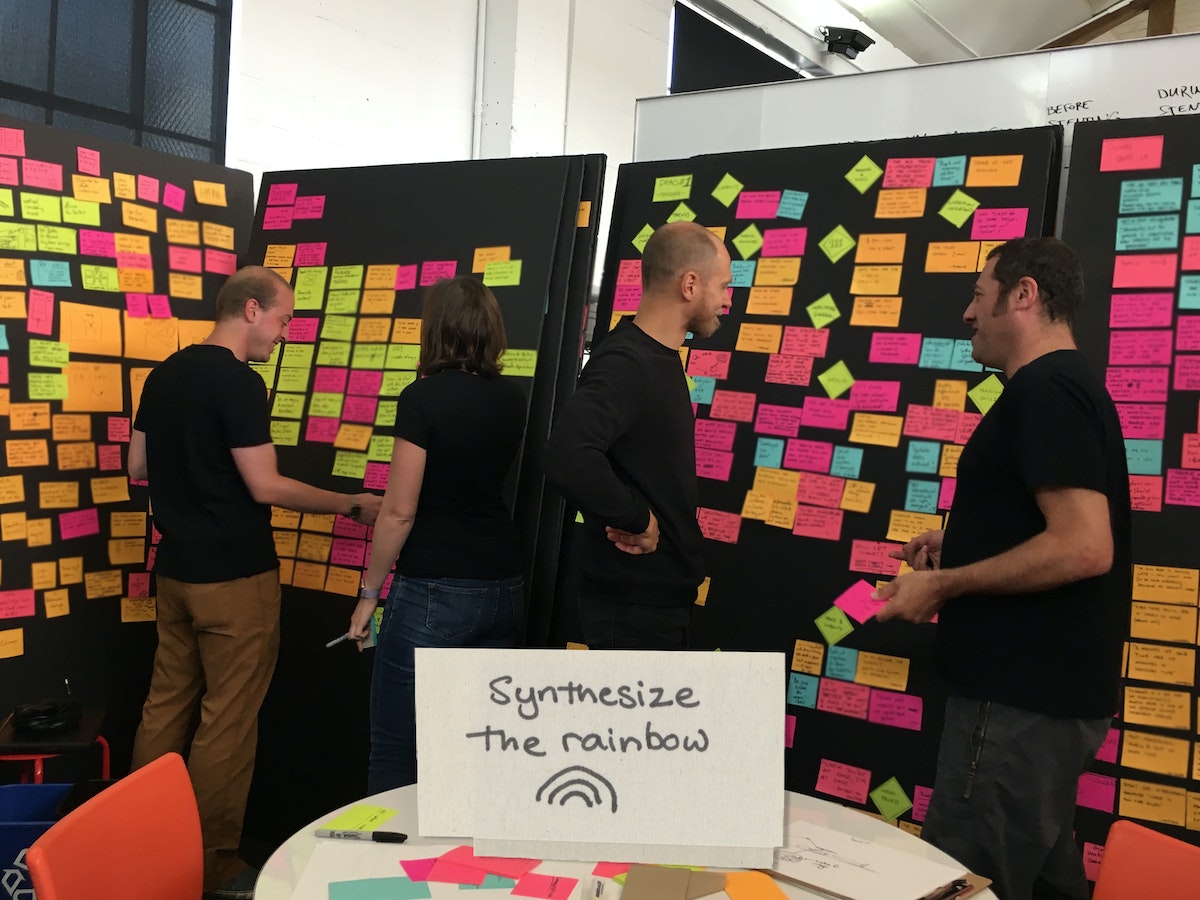
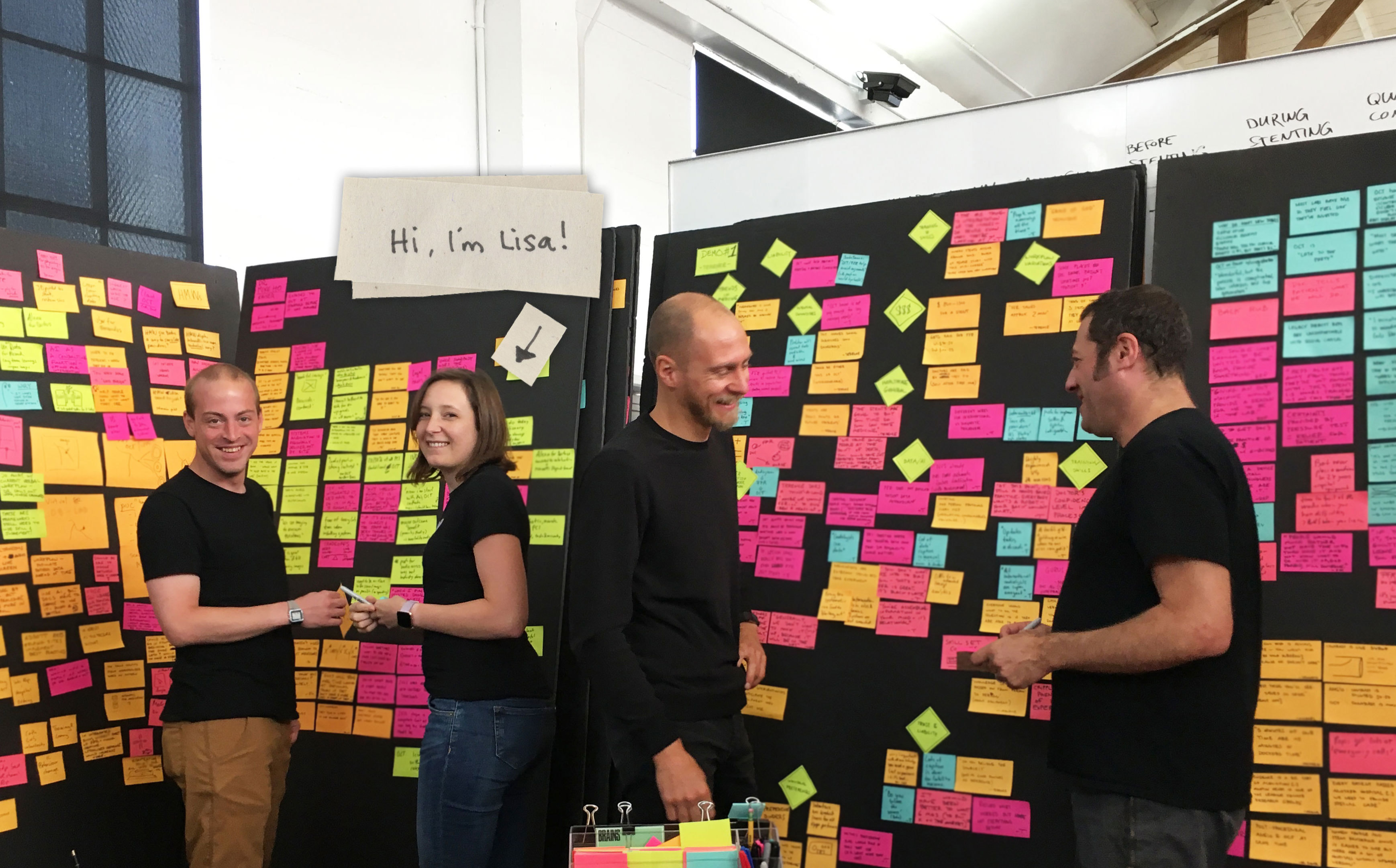
The team comes together to download and synthesize what we learned through our research observations. We transcribe things we saw and heard on Post-it notes, and cluster them so we can spot patterns. We’re seeing themes about the consequences of delays in decision-making during the procedure, and the effects of training on team efficiency. As we start to develop concepts based on the pain points we’ve discovered, I suggest that something like a personalized training program could increase team efficiency by helping people skill up faster.
3:30 PM: Digging into some data
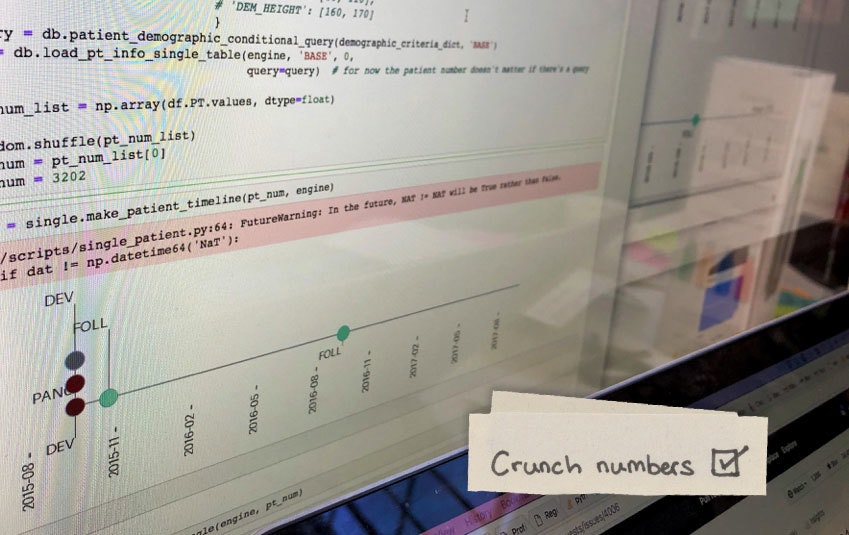
Our client has provided us with some data from a clinical trial related to the medical procedure we’re studying. Today I’m combing through the dataset to find insights that will inform our design process. I use the knowledge I’ve gained from interviews and field research to inform what would be useful or desirable from a human point of view. Later in the project, I’ll use this data to create a prototype that demonstrates how we can help doctors assess risk during the procedure.
6:00 PM: Hosting a women in Machine Learning and Data Science meetup
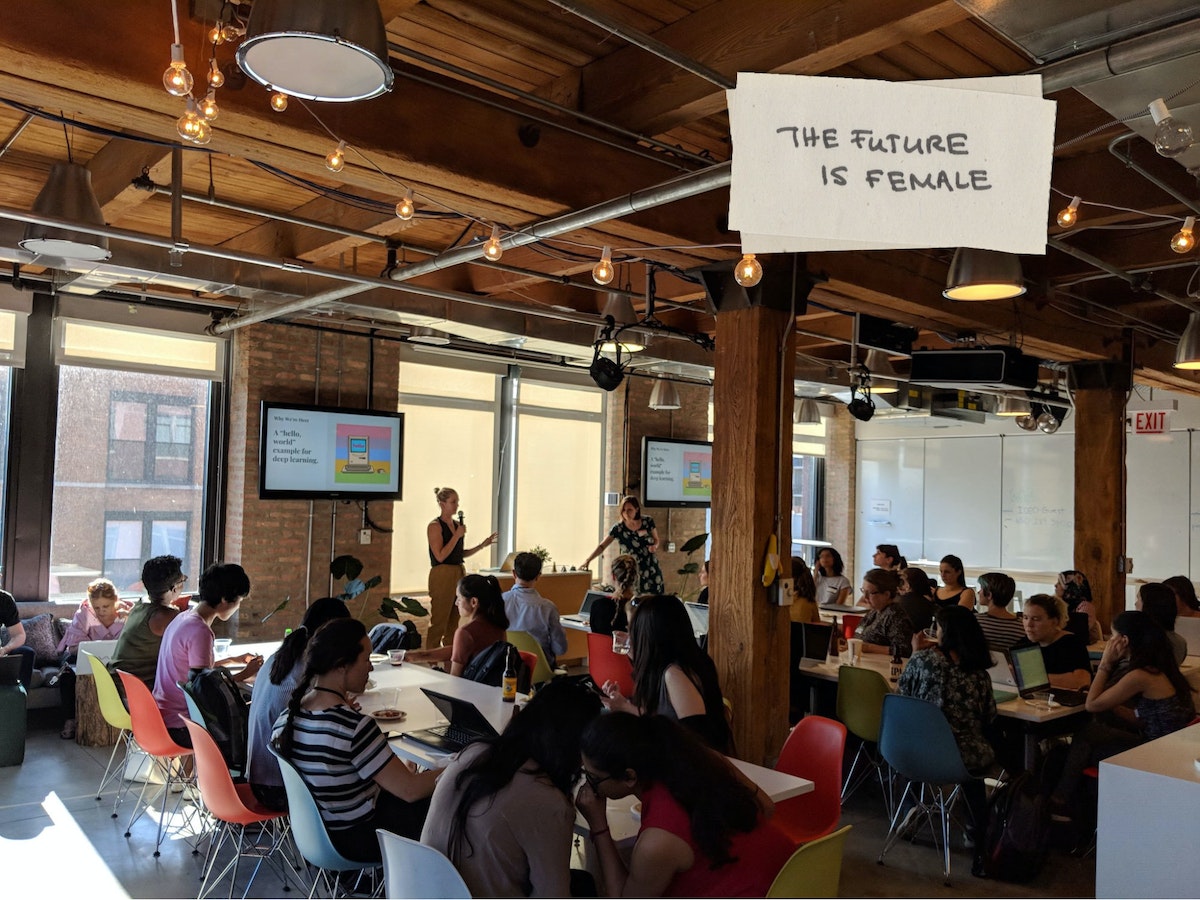
Tonight I’m hosting a meetup for the Women in Machine Learning and Data Science group about the basics of deep learning with my coworker and fellow data scientist Jane Zanzig. More than 40 women have come to learn and do a hands-on demo. I love working at a company that supports building the women in data science community because one of my personal passions is working to increase the number of women and other underrepresented groups in STEM and design.
9:00 PM: Good night, Jackie
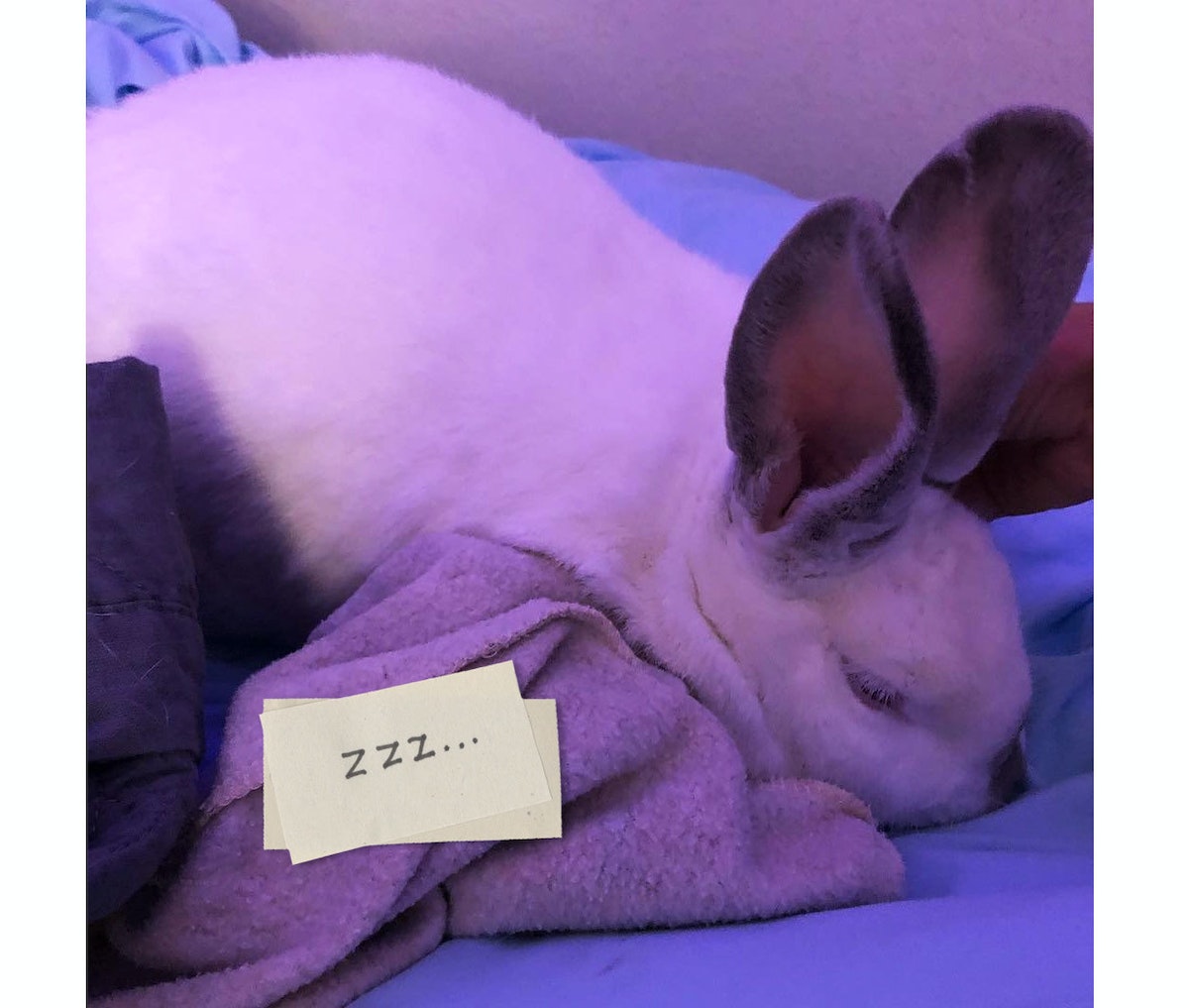
Every night before I go to bed, I make sure I hang out with my pet rabbit Jackie. I brought her from Chicago to Palo Alto with me, so we wouldn’t be apart while I worked on this project. I think she’s been enjoying living in California, and I’ve even taken her to visit the IDEO Palo Alto studio.
When people ask me what I do for a living, I say, “I use data to design products and services to improve people’s lives.” Working as a designer and data scientist involves not only coding up solutions, but understanding what people need in the first place.
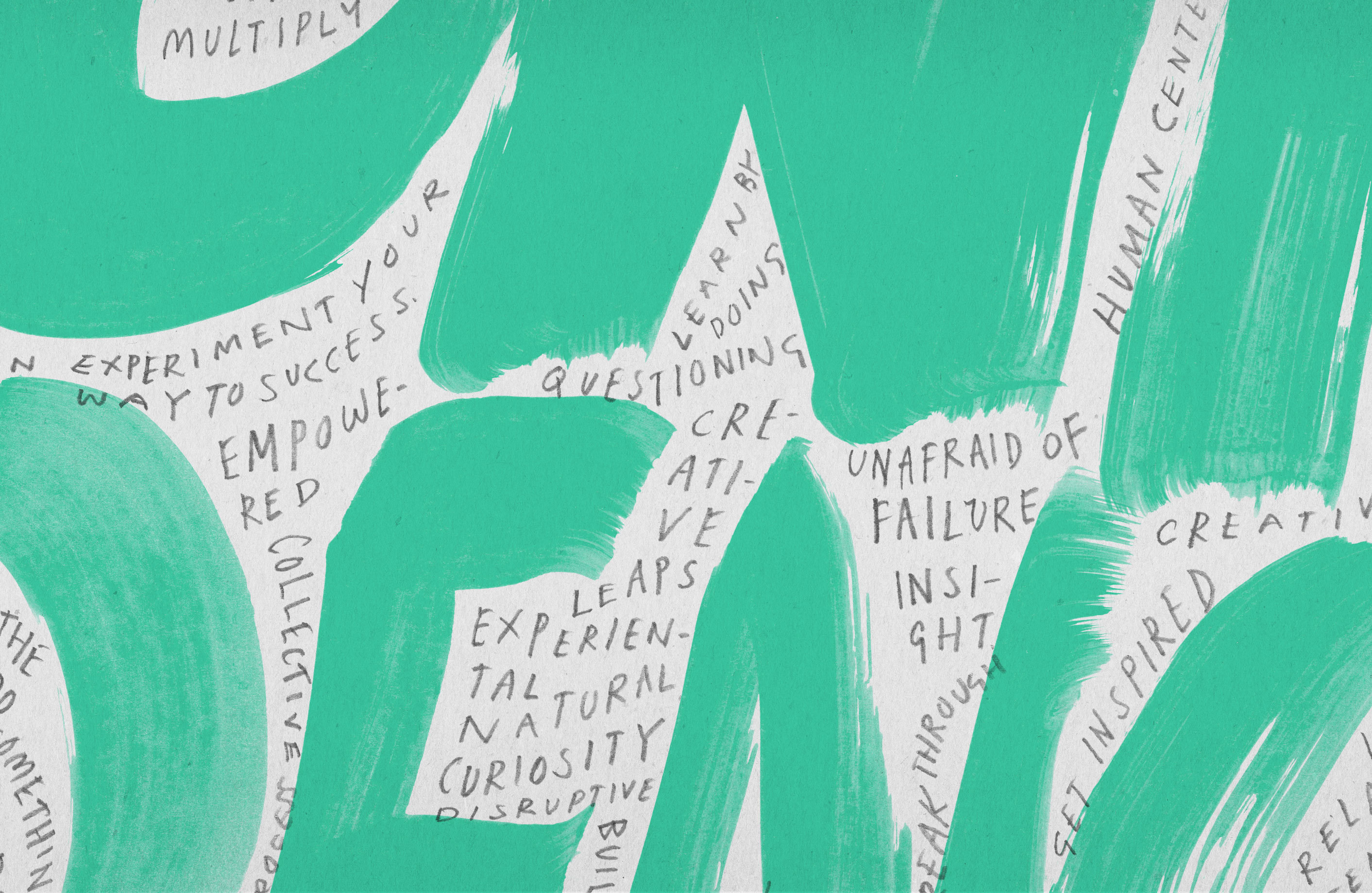
Build Your Creative Confidence: I Like, I Wish
To practice creative confidence on a team, members need to feel free to experiment, even during early efforts when results will be far from perfect. For that experimentation to translate into learning, however, at some point you need feedback in order to identify weaknesses and make adjustments the next time.
Creativity Challenge #5: Encourage and accept constructive feedback
To practice creative confidence on a team, members need to feel free to experiment, even during early efforts when results will be far from perfect. For that experimentation to translate into learning, however, at some point you need feedback in order to identify weaknesses and make adjustments the next time. We all instinctively know that constructive critique is essential. And yet it can be hard to listen to and absorb feedback without letting our egos and defensiveness distract us from what may be a valuable message.
We have found the tool “I like, I wish” immensely useful in introducing constructive critique into the innovation process. This framework can be used in a small group to review concepts or in a large group to receive feedback about a class or workshop experience. Feedback starts with honest praise, in the form of positive sentences that begin with the phrase, “I like...” Suggestions for improvement then begin with “I wish...”
Tool: I Like, I Wish
Participants: Groups of any size
Time: 10 to 30 minutes
Supplies: A means of recording feedback. For example, in a large group we frequently keep an open Word document and type up notes in real time. In a smaller setting, Post-its or index cards will work.
Instructions
Step 1: Set the tone for a constructive conversation and explain the I like, I wish method. For example, “I am interested in hearing about how this workshop experience has been for you. Please express feedback in the form of I like, I wish. You might say, ‘I like that we have started on time every morning. I wish we had 30 minutes to every afternoon to stretch our legs.’” We have found it helpful to model good feedback by demonstrating “I like, I wish” in action.
Step 2: The participants take turns expressing I like/I wish statements, while the facilitator records their statements. For example, if you are reviewing a work-in-progress for a new personal finance software tool, you might offer support such as “I like that you have incorporated five different ways for customers to view their current financial status.” After describing other pluses, you might then say something like “I wish we could make the website easier for first-time users to navigate” or “I wish we could help people examine their financial situation from the long-term perspective of years, not the short-term perspective of months.”
Make sure people receiving feedback just listen. This is not a time to defend decisions or challenge the critique. Ask everyone to listen and accept it as a well-meaning offer of help. You can ask for clarification and engage in further discussion at a later time.
Step 3: Stop when participants run out of things to say in both the “I like” and “I wish” categories.
Tips from the field
You may want to gather just the “I like” comments first, and then ask for the “I wish” statements. In other groups, it may make sense to let the give-and-take of statements flow organically. Feel free to play with the format.
“I like, I wish” signals that what you are stating is your opinion—it’s not an absolute. Instead of pointing fingers, you are offering your view or perspective. The goal is to move the listener away from a defensive posture so that they can more objectively consider alternative ideas and take them to heart, when appropriate. We all naturally tend to become invested in our own ideas, and seek to defend them. But in a creative culture, candid feedback that is sensitively conveyed is a sign that colleagues care enough to speak up. The message can be delivered quite clearly, without resorting to the negative language of “That will never work” or “We tried that before and it failed.”
This post was taken from Chapter 7 of Creative Confidence. Purchase the book for more on how to use creativity to solve problems.
Everyone is creative. This belief runs through everything we do at IDEO, and in 2013, it led my brother David and me to write a book that would help others—even those who don’t think of themselves as “creative types”—to unleash their creative potential. Creative Confidence has inspired thousands of people to adopt a creative mindset and apply it to the diverse real-world challenges they face. In this series, we’ll share some exercises from the book that can help you approach your challenges from a new perspective.
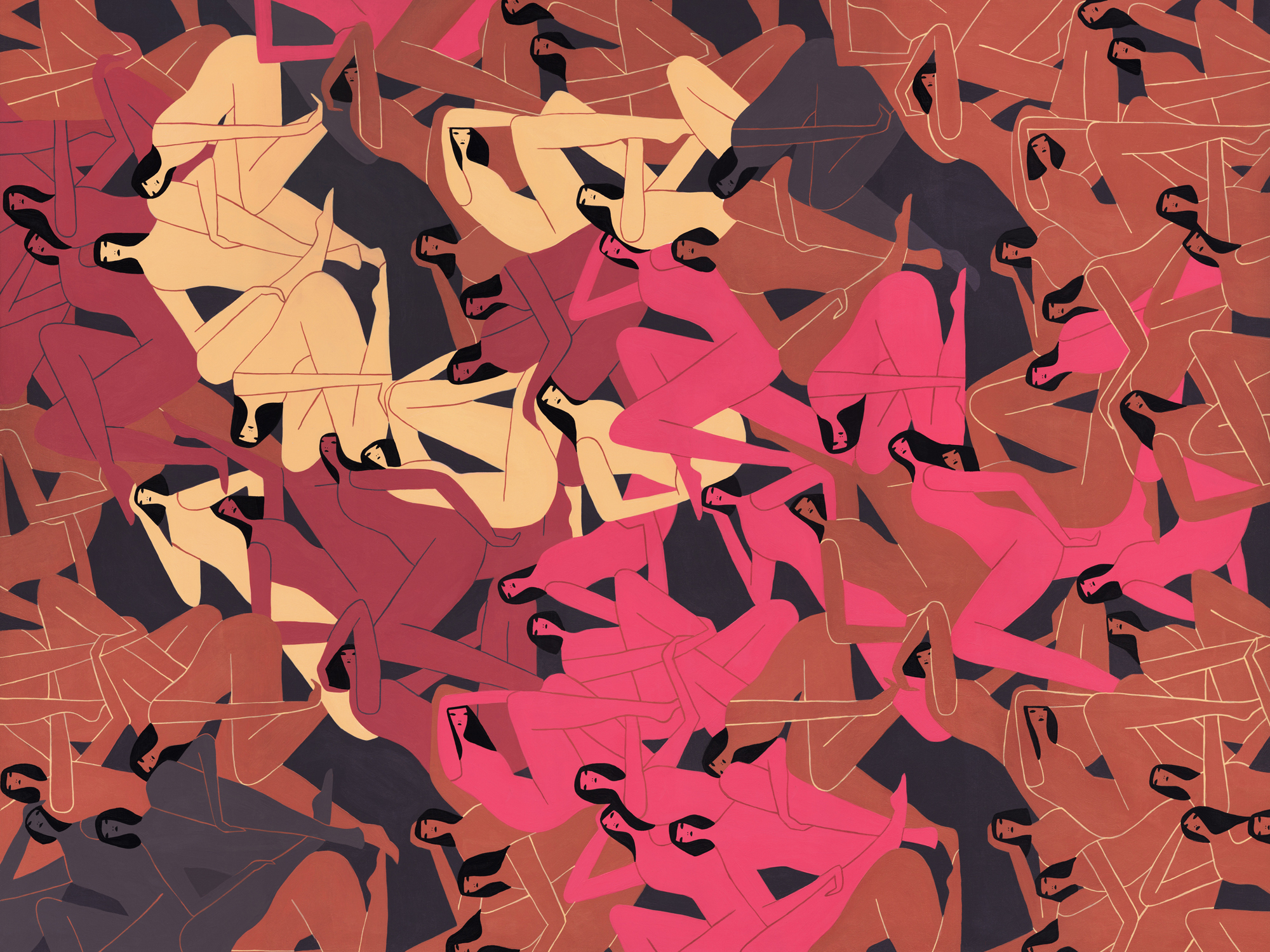
This Artist Paints Women Supporting Women—Literally and Figuratively
Laura Berger's dreamy, ethereal work shows women of all colors, shapes, and sizes
In one sentence, who are you?
I'm living in Chicago, trying to be a good person, trying to keep growing, currently working as an artist.

What do you do? How did you learn it?
I'm a visual artist. I mostly paint right now, but I do some freelance design work as well. I did some scene painting in college, but other than that I'm self-taught. I've been learning about painting through trying things and making a lot of work and also a lot of mistakes.

3 favorite possessions?
Art from my travels, a sculpture that was my dad's, and my bathtub.
What does a typical work session look like?
Honestly, most days it looks like sitting in a chair in a room by myself and painting for 12-plus hours while listening to various things—too much NPR, podcasts, music, silence. I usually take a couple of breaks. Lunch, maybe a beverage run or a walk. One yoga break around 8pm—that's become essential for me. Sometimes I draw, or I have to package things in boxes or order boxes or answer emails—stuff like that.
How do you get over creative block?
If I can, I walk away from life and travel. If I can't, a break from all creative work is a good step. Time in nature helps, or I often get new ideas that pop up during times when I'm able to turn off my thinking brain—like driving long distances, meditating, walking, taking a shower, dreaming, etc.
What was the last item on your to do list?
Answer interviews! And before that: vote. And before that: Finish design for laser cut wall hanging.
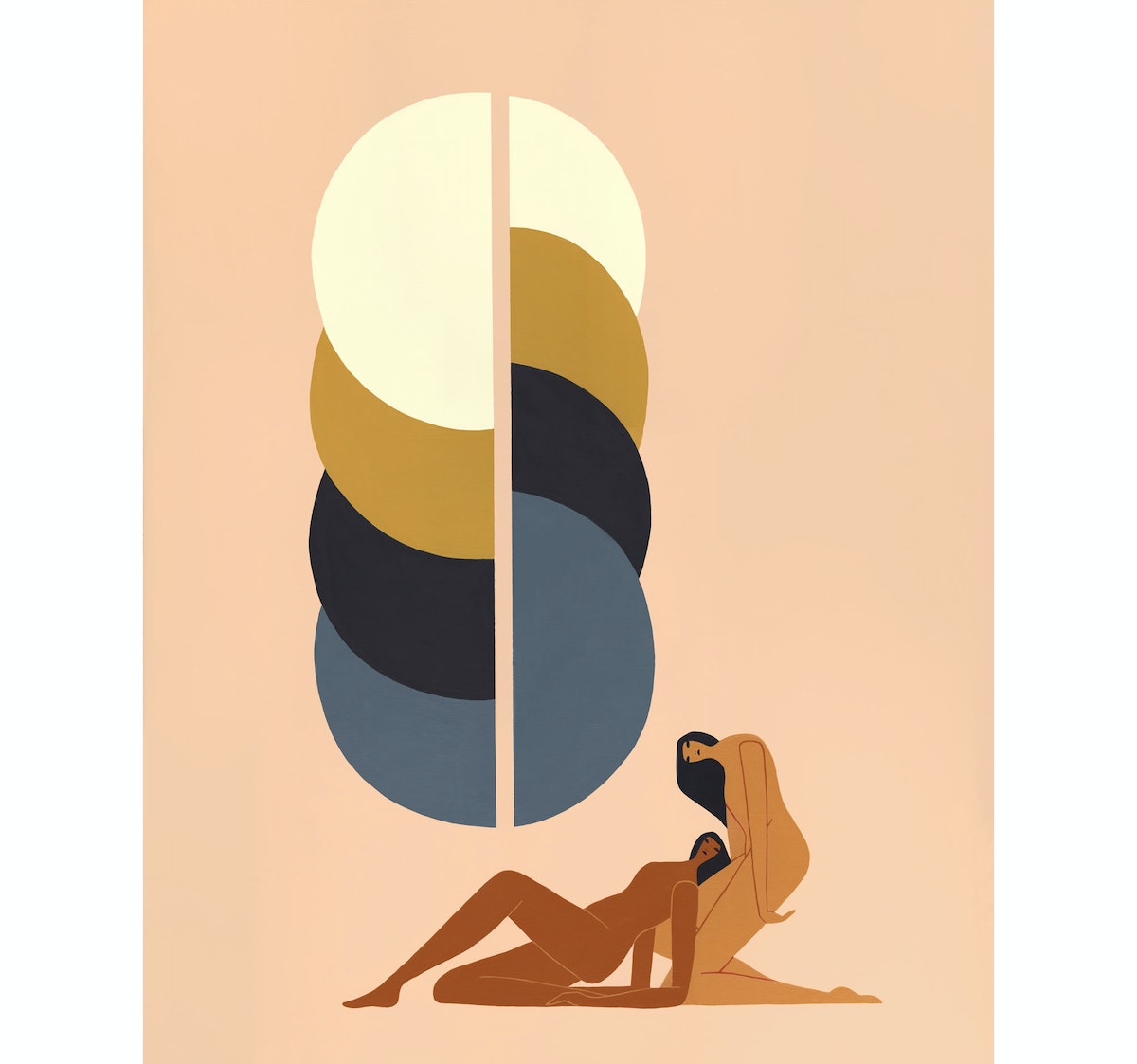
How do you see the world in 2078?
We are all so many beautiful colors and we have free healthcare and college and the old white men running the show are gone so all of the guns are also gone, and we've collectively gotten over being addicted to the internet and our devices and working way too much, plus marijuana is legal everywhere and we're all smoking it so we're all way more laid back and calm and hugging each other a lot. We have four-day work weeks and use land-line phones and record players, but we also can fly to Japan in 2 hours. It's going to be great.
What’s your number one bucket list item?
Own a tiny beach hut somewhere warm and abroad where I can escape the winters, be in nature, and paint and volunteer and meet people.
No matter where you run into her work—whether it's a larger-than-life painting on the side of the Ace Hotel or an animated GIF popping up in your Instagram feed—Laura Berger's art immediately transports you to another world. A world of soft curves, clean lines, and warm colors. A world where women of all shapes, sizes, colors, and hairstyles, literally and figuratively lift each other up. This world of abstract dreamscapes and female camaraderie has been like a salve for me in recent years. Laura shared a peek into her life as a self-taught artist, and reminded me (as she always does) that we are all so many beautiful colors.
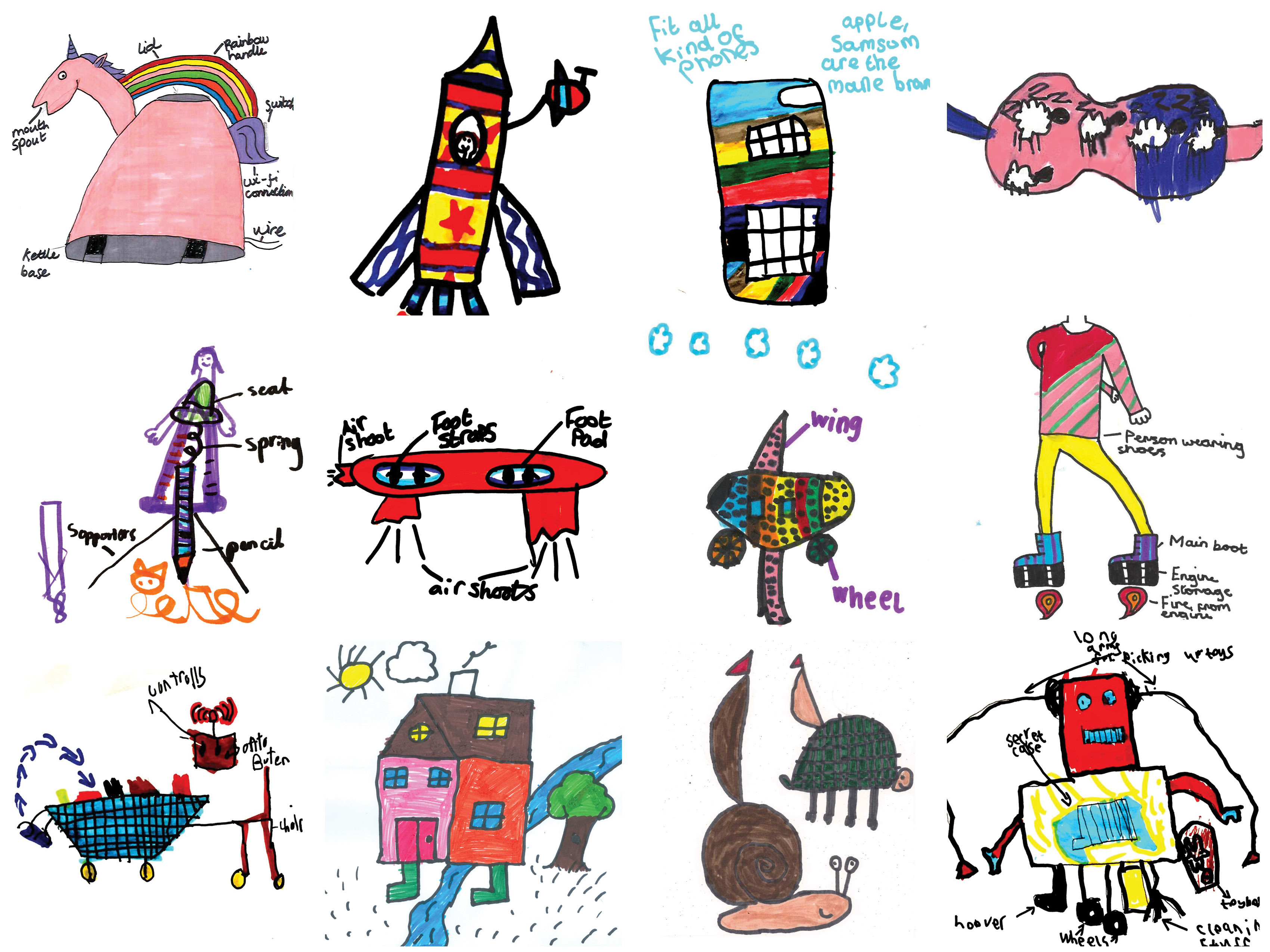
Meet the Inventor Who Helps Bring Kids’ Wildest Ideas to Life
Ladybug umbrella? Sure! A hat that shoots bubbles? Check!
Then one day, a tutor showed us Dominic’s piggyback seat. After class I jumped onto his blog and found his sick bag beard. Amongst my fits of laughter, I knew that everything would be okay. Here was someone using the full extent of their imagination and in doing so giving the rest of us permission to do the same.
Since then, Dominic has used his unique perspective to create a whole bunch of wonderful things—from a gallery made for dogs to Little Inventors, a global program designed to encourage creative thinking in children. It’s reached more than 15,000 kids in China alone.
And this is what I love most about Dominic’s work: It’s accessible to anyone. Thinkers like Dominic remind us how important it is to use our imaginations, to be weird, to take ourselves less seriously—and that everyone is capable of having ingenious ideas. You can imagine how excited I was to actually get to talk to the guy.
In one sentence, who are you?
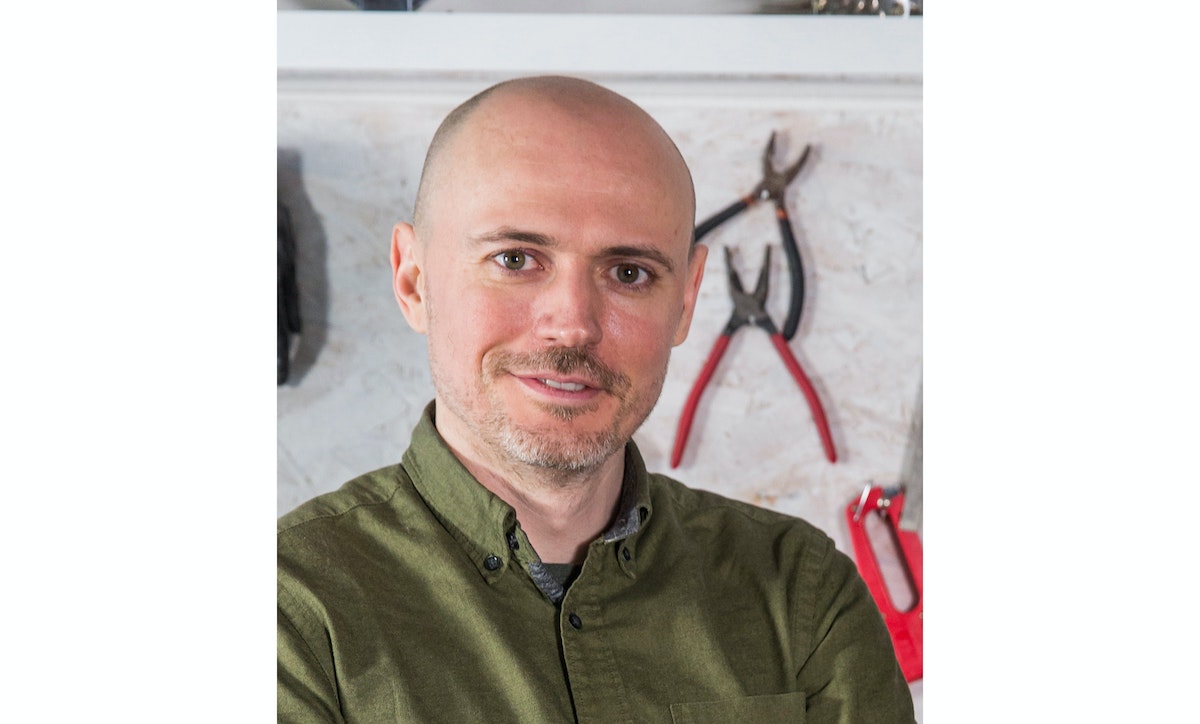
I’m Dominic, born in Sunderland, living in London.
What do you do? How did you learn it?
I think up ideas I find interesting, then make them real—or just draw them and show them to people. I did lots of education in design BA, Pgrad, MA then when I ran out I just kept doing the same thing but by myself.
What have you poured your heart and soul into lately?
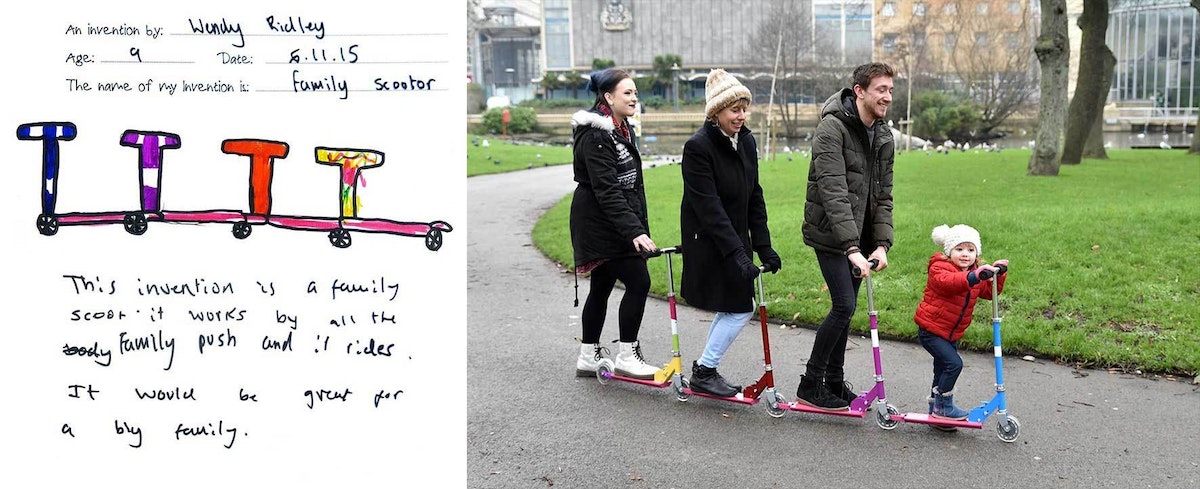
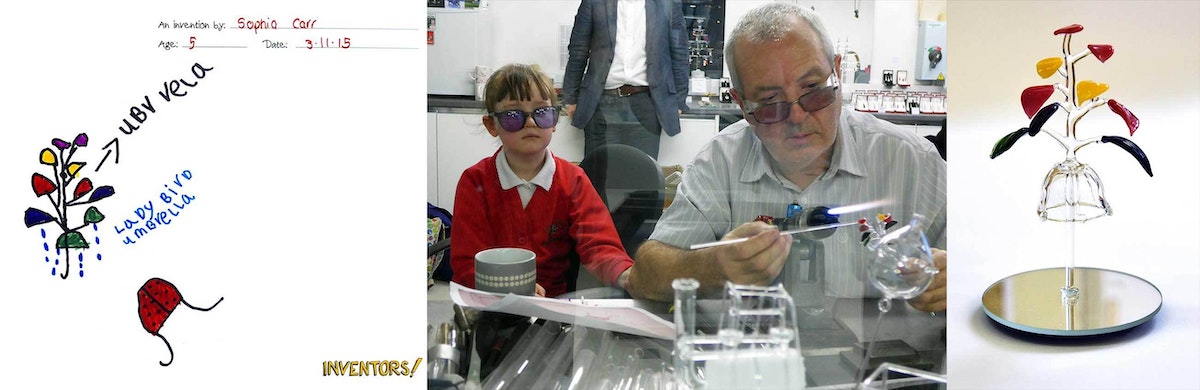
I made something called Little Inventors, which encourages children to gain a lifelong passion for creative and inventive thinking. It's also is a project that inspires adults to think more creatively. We ask children to think up and draw their invention ideas, bonkers or practical, then ask local makers and manufacturers to make them into a real thing for exhibition.
I won a commission in Sunderland to do a project that used creativity that engaged the local community. I proposed this idea and the results went viral. I started receiving emails from around the world asking me to do the same project in their country, so I decided to start it as an ongoing project called Little Inventors. The V&A Museum in London took 5 objects from the first project into their permanent collection—and next year, the best invention idea for life in space will be shown on the International Space Station.
What does a typical work session look like?
In general, I have no set day. My day looks like my desk, a bit messy and random. We do design the idea generating sessions for Little Inventors, though, and for those, we aim to create an atmosphere where creative thoughts come easier. Usually we will create a fun atmosphere and show surprising and inventive examples of creativity to start the thinking process.
We then present some knowledge and understanding on the particular subject the challenge is focussing on. We have different methods of focussing the children's minds on the task at hand and getting the children to discuss their thoughts and ideas as a group. Then we ask the children to draw their own ideas and answer questions onto a sheet we have designed to create a sketched design of their idea. We now have over 7000 children's ideas on the website from around the world. It is interesting to see how creative children in different countries are. The makers tell us that they feel more inspired and are pushed into areas that stretch their skills.
How do you get over a creative block?
I try to get my head out of the track it is stuck on. Change the music, change the mood, do something else. Then I push myself to keep writing or doodling thoughts on the subject. It can be hard mental work sometimes. Eventually I break through to the other side where the nice ideas have been hiding.
What was the last item on your to do list?
I don't have an order of doing things. I should make more lists, as they can help you get a bit of satisfaction at the end of the day rather than thinking, What did I actually do today? I'm jealous of bricklayers: At the end of each day, they can look back and see what they have achieved.
What are your 3 favorite possessions?
A pen, paper, and a Branston pickle.
How do you see the world in 2078?
China and India will be a lot more influential on world culture, technology, and politics. We still won't have hoverboards. People will still want to be happier, make more friends, be more attractive. Some will do that in a computer-generated virtual world. The more technology becomes part of our lives, the more we will desire real world experiences.
What's your number one bucket list item?
Contribute something positive to the pile.
Who are you creative crushin' on lately?
I'm thinking musicians are the one's I admire most. Write your song, play the instrument and sing it. I'm jealous of them. Currently, it’s Neil Young
I still remember the first time I saw Dominic Wilcox’s work, the collection of really weird and clever creations on his blog, Variations on Normal. I was a few years into university, so my body was still 95% hope and ambition. At the same time, I was slowly realizing that I wasn’t, in fact, the center of the universe. It was a confusing time.

Lindsey Turner
I’m passionate about building brands, products, and experiences that help organizations show up with meaning and momentum.
I help organizations cut through complexity by shaping how they show up, through brand strategy, identity, and storytelling.
Working at the intersection of brand and business, I bring an editorial eye and a bias toward making—turning ideas into tangible experiences that people can understand, trust, and believe in.
My work spans government, healthcare, financial services, media, and consumer goods, from launching Gen Z-focused ventures to building innovation labs and reimagining legacy brands. I relish moments of ambiguity and enjoy translating across teams, perspectives, and priorities to move ideas forward.
I started my career in editorial and digital design, shaping cross-platform experiences and identity systems in publishing and agency environments. That foundation still shapes how I work today: I’m detail-oriented, collaborative, and overreliant on the Oxford comma. I hold a BFA in Visual Communication from the School of the Art Institute of Chicago.

Rachel Young
My work helps organizations see who their products aren't working for—and build the will and the tools to do something about it
For 25 years, I've asked the same question: Who does this design exclude—and what are we going to do about it?
My work spans human-centered strategy, inclusive design, and qualitative research, with clients ranging from Microsoft, Google, and Verizon to the National Science Foundation, and San Francisco Unified School District.
Before IDEO, I taught elementary school in East Palo Alto and spent a decade doing design work with social service organizations—where I learned firsthand what it costs people when systems are built without them in mind.
I am currently writing User Error, a nonfiction book about digital access and the design decisions behind it. I live in Oakland, California.

Brian Pelsoh
I lead with craft, ensuring our work is creatively excellent: rooted in deep human insight and imagination, while also grounded in the realities of business and technology.
My expertise spans brand, communication, and product design across tech, education, the arts, and social impact.
I believe great work demands both high-level vision and obsessive attention to detail, and only happens through collaboration.
I bring an inclusive, hands-on approach and a deep understanding of business, which enables me to consistently deliver excellence while always asking why.
Before joining IDEO, I worked at the brand firms Pentagram and VSA Partners. I began my career as a designer, leading teams at the School of the Art Institute of Chicago and the Milwaukee Art Museum. I hold an MFA in graphic design from Maryland Institute College of Art and a BFA in communication design from the Milwaukee Institute of Art & Design, and have taught at some of the best design schools in the US.

Tony Wong
I am responsible for IDEO’s long-term success in China and working with clients to use design as a tool to enable growth.
I am responsible for IDEO’s long-term success in China and working with clients to use design as a tool to enable growth. Specifically, I have helped Chinese companies design holistic brand solutions through the development of their products, communication, services, and innovation teams, and I have helped multinationals expand their presence and influence in China.
I advise global leaders on developing China-led innovation and capabilities.
In over 15 years in IDEO Shanghai, I have worked on projects that use design to elevate the quality of the experience of healthcare products and services, streamline processes that increase productivity, create spaces and programs that promote and enable inclusive communities, and build next generation mobility solutions that are planet-positive.
Before joining IDEO, I worked at Philips Electronics and the Electrolux Group in Italy, the Netherlands, and Singapore on a number of breakthrough commercial products. I am a member of the Young President Organization in Shanghai.

How to use AI as an editor, not a writer
Ed White shares how he uses AI as an editor—not a writer—to sharpen storytelling, rehearse ideas, and preserve the productive friction that makes creative work better.
Ed White has a rule he's tested on his own writing: hold yourself as the writer, and let AI be your editor. Ed is a Senior Design Director at IDEO's London studio, where he co-leads the firm's AI portfolio across Europe. Before IDEO, he spent 12 years as a writer and editor at the Financial Times, Wired, and Contagious. So when he talks about when to use AI for storytelling and when not to, it comes from two decades of crafting his storytelling skills.
In this episode, Mina Seetharaman talks with Ed about two specific tools he uses to keep AI in an editor's seat: a "roasting agent" prompted to critique his drafts without any sugarcoating, and a simulated audience he rehearses pitches on before the real thing. They also get into what Ed is hearing from design leaders at Anthropic, Lovable, Shopify, and Google Creative Lab about how creative work is changing, and why he thinks the friction of writing something yourself is worth protecting rather than automating away.

Building a personal AI for the messiness of life: Sida Li
Becca Carroll talks with Cue co-founder Sida Li about designing a personal AI for the messiness of everyday life—not just work. They explore how Sida stays anchored to human needs while navigating fast-changing technology, product tradeoffs, business-model experimentation, and the realities of building an AI company today.
Most AI products today are built for work—a space with clear problems and established systems. One founder noticed a gap: personal life is messier, harder to systematize, and mostly left behind by the AI boom. So she built Cue, a personal AI that lives inside iMessage and group chats, to go where the other tools haven't.
In this episode, Becca Carroll, IDEO's Chief Strategy Officer, talks with Sida Li, co-founder and CEO of Shared Context Lab, about staying anchored to a human need while the technology around her keeps changing shape, why she treats her business model with the same rigor she'd bring to a product, and what it feels like to build a company at this particular, disorienting moment in AI.
The conversation also gets into how Sida makes design decisions: the language Cue uses to describe itself, the tradeoffs behind building inside iMessage instead of a new app, and a real story about a business idea that didn’t pan out.
This is the second in a two-part series profiling founders from IDEO's Startups-in-Residence program. The first conversation is with Johannes Seemann, founder of Sooner, on designing GenAI for the emotional side of money.

Designing GenAI for the emotional side of money: Johannes Seemann
Designing financial tools around the feelings that shape money decisions.
Most personal financial tools are built to run the numbers and optimize towards a budget. While that works for some, most people experience money as a lived relationship that does not neatly fit into a spreadsheet. Johannes Seemann and Becca Carroll discuss why money is emotional before it is mathematical, and what a human-centered approach to building a generative AI financial product looks like in practice.

The curious leader's edge in uncertainty: Scott Shigeoka
How genuine curiosity helps leaders navigate uncertainty with greater confidence.
Mina Seetharaman talks with Scott Shigeoka, author of Seek and Head of Curiosity Cultivation at the Eames Institute, about what distinguishes genuinely curious leadership from performative curiosity, how power dynamics shape curiosity, and why practicing curiosity can restore energy rather than drain it.
Looks like you might be in search of something very specific?
Or reset the filters above and try another angle.
Here’s some random inspiration

Podcasts about creative leadership

Articles about the power of prototyping