
A new employment venture to increase customer engagement and financial security
Introducing Moonrise, a digital platform that helps companies hire untapped talent and workers make ends meet.
More than half of Americans don’t have the cash to cover a $400 emergency expense like a car repair or trip to the hospital. Taking that reality to heart, American Family Insurance, a Fortune 500 company that offers auto, home, business, and life insurance, was seeking a way to make an impact by helping people earn and protect—not just insure—the things they value.
American Family approached IDEO with an ambitious goal: to innovate in a way that would help working families—many of them existing American Family customers—who need a financial cushion in case of the unexpected. This new mission fell in line with American Family’s overall orientation toward increased social responsibility, including committing to a liveable wage for all employees, helping with student loans, and providing college scholarships and tuition reimbursement for employees’ children.
In early discussions, American Family thought people might need budgeting tools, but from the very first research interview, a different urgent need emerged: people needed a way to shore up their savings enough to protect against unforeseen needs. This same story came from numerous places. In Tennessee, the IDEO design team sat in the kitchen of a working single mom of four, who explained how her lifestyle was built around her extremely constrained budget. She couldn’t afford childcare, so she’d organized her home to allow her 11-year-old to watch the younger kids: partitioned snacks, timers on the TV, chore charts on the fridge. She managed her budget meticulously, it was clear, and she didn’t need new financial tools. What she really needed, she said, was extra income cushions so a surprise expense like a doctor’s visit or stretch investment like a kid’s basketball uniform wouldn't derail her plans. Like many of the people the team visited across the country, she didn't want to take on debt; she wanted extra work and the dignity and peace of mind that comes with it.
Could we, the team wondered, offer people who already have jobs the extra hours and income they need in a way that reduces, rather than exacerbates, the stress they already face? Would employers get on board?
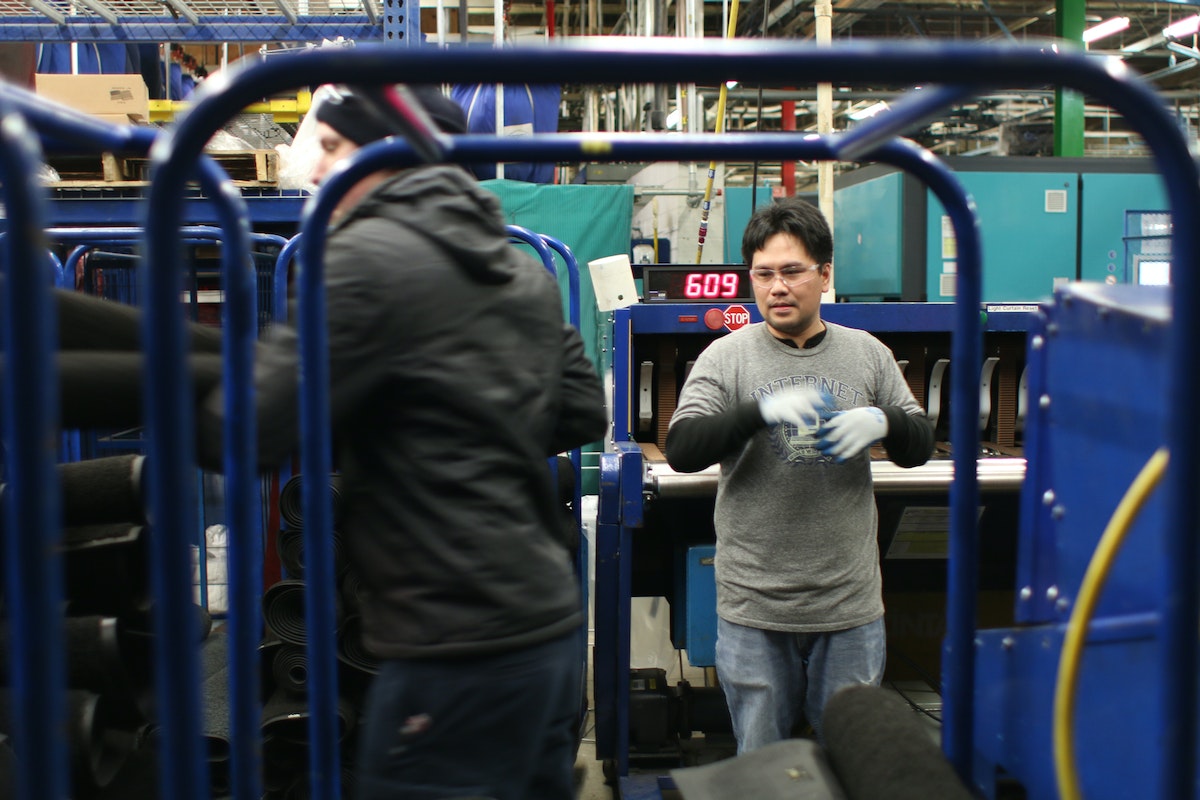
The short answer was yes. Today’s businesses depend on on-demand work, including seasonal warehouse and retail shifts. Typically, companies look to temp agencies whose model is built on staffing with the goal of permanent placement. Moonrise enables companies to tap into a workforce that's already employed, allowing them the benefits of passive recruiting (reliability, consistency), but for short term work.
Knowing innovation was the path to growth, American Family took a chance by embracing a radically new brief: Create a service to help families living on the edge bridge the gap between the size of their paychecks and the size of their dreams. The result was a new business venture called Moonrise.
When customers told us that having an easy way to earn extra money could improve their lives, we were compelled to pursue a solution. Moonrise is a business with a human-centered mission. We’re proud it’s part of our American Family.
Jack Salzwedel, Chairman & CEO, American Family Insurance
The Moonrise platform lets workers sign up for shifts with partner organizations through a simple text message interface, and get paid as soon as their shifts are done. Employers who sign up to partner with Moonrise can list open shifts on the platform.
“Moonrisers” are W-2 employees of Moonrise, not contractors, so they don’t have to pay self-employment taxes. They also get personalized business and comment cards to take to job sites, making their interactions with employers feel more professional. In this way, Moonrise helps workers not only build a buffer against unexpected bills, but also explore new positions and fields—and perhaps even land new full-time work with Moonrise partners.
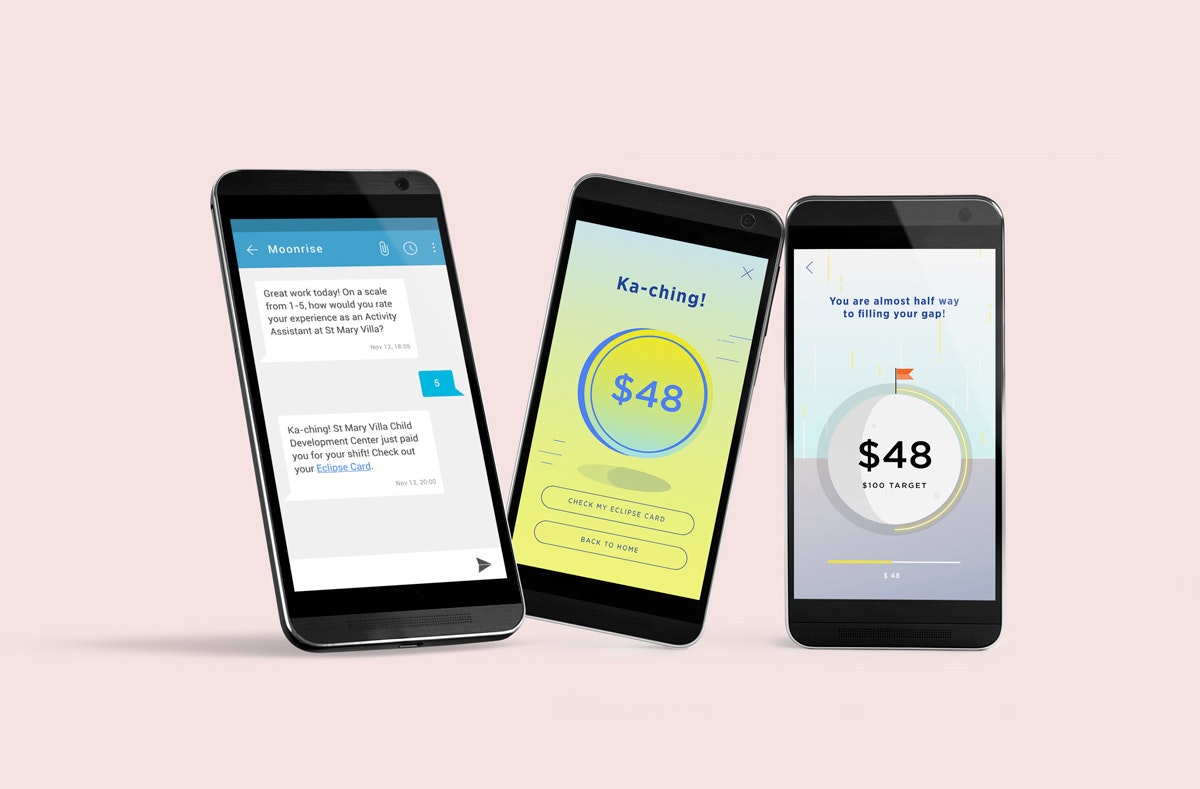
To test the program in real time, IDEO and American Family assembled 11 Moonrisers, six employers, and a team of designers and programmers to work out kinks in the platform. During a one-week live pilot in Wisconsin, Moonrisers finished a combined 28 work shifts, earning an average of $121 each, while IDEO designers worked behind the scenes to keep the process running smoothly.
Based on the success of the pilot, American Family created a new startup company called Moonrise, which became a wholly owned subsidiary of American Family. Moonrise launched to the public in the Chicago area in 2018, with plans for an eventual nationwide rollout. Moonrise signed Enterprise Rent-A-Car as its first employer and actively matches workers in Chicago with shifts, while continuing to build more corporate partnerships.
Since launching in 2018, over 7,000 people have applied to become Moonrisers, more than 7,000 shifts have been fulfilled, and over $500,000 has been put into the pockets of hardworking Moonrisers. Additionally, Moonrise will be expanding into 3 additional states in 2019.
IDEO and American Family Insurance interviewed customers of The General—a division of American Family—about how they budget to make ends meet. In this conversation, customer Chandra told designers how $62 could be the difference between breaking down and breaking even for her family.
It’s not always easy for established companies to innovate, especially outside their core business. But innovation is a high priority for American Family. Creating an employee -centered startup like Moonrise solves an urgent problem and distinguishes them from their competition. Together, American Family and IDEO identified a pressing human need and built a program from the ground up to meet it.

Helping a startup design video games to build kids’ emotional strength
A one-month sprint to develop new products—and a new way of working.
For 6-year-old Dave Jr., a long line at Disneyland triggered a massive meltdown. His parents were concerned and a little embarrassed, but not surprised; Dave Jr. struggled to keep his emotions in check.
Hoping to help, Dave Jr.'s uncle, entrepreneur Craig Lund, joined forces with researchers at Harvard Medical School and Boston Children’s Hospital, along with a video game designer who had worked on Quick Hit and NBA 2K. Together, they set out to design something that could teach coping skills to kids like Dave Jr. who need to manage “big emotions,” as well as children suffering from anxiety, ADHD, and other behavior issues, which are on the rise.
Their collaboration resulted in a video game called Mightier and a startup called Neuromotion Labs—a 10-person team of psychologists, game designers, and engineers who embedded at IDEO Cambridge for a one-month sprint to improve the game and get ready for launch.
To play Neuromotion's game, kids are first taught simple, calming breathing exercises. During gameplay, kids wear heart-rate monitors on a wrist or arm that detect spikes caused by stress or anger; as their heart rates go up, the game's difficulty increases. Kids have opportunities to pause and try deep breathing to counter the ramped up challenge. As it turns out, "gamifying" restraint builds strong incentives for kids to take charge of their emotions—they have to if they want to win.
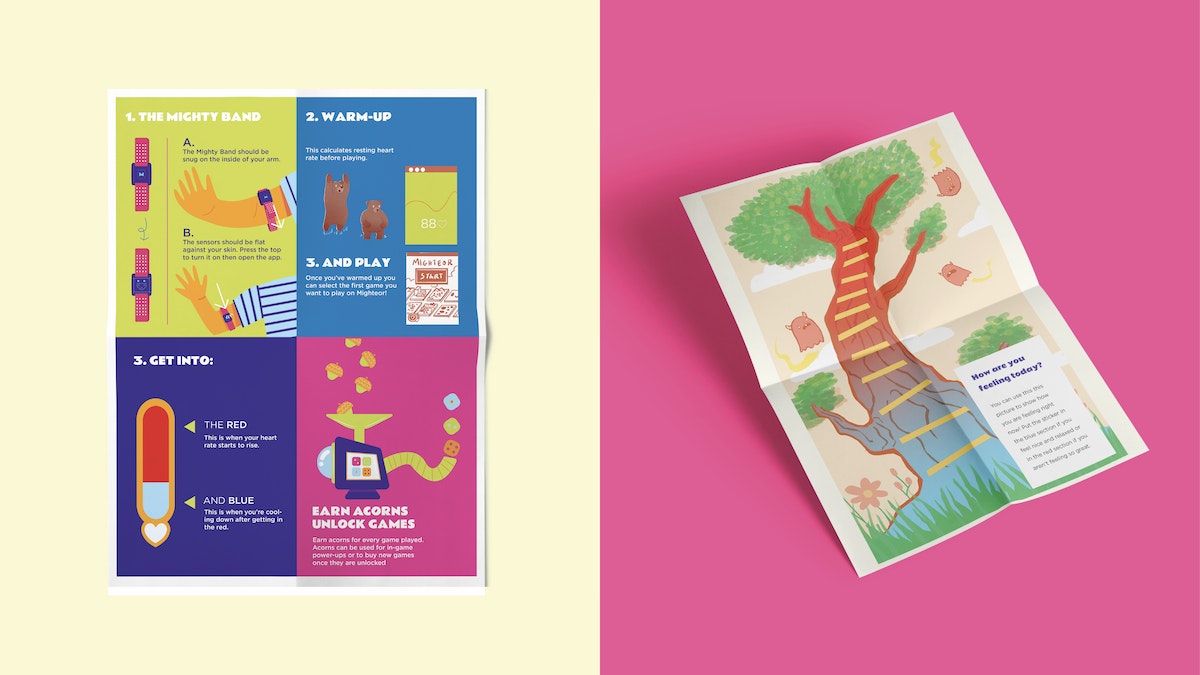
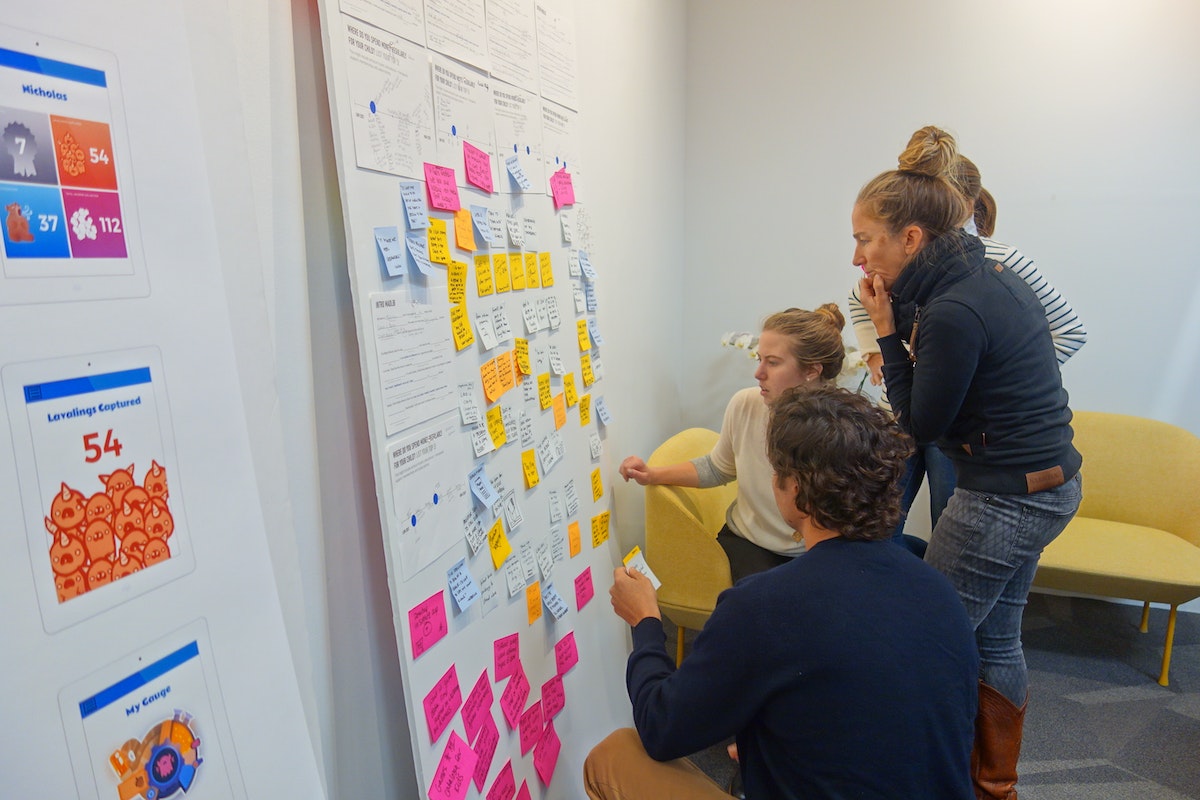
Already activated around boosting mental and emotional health, IDEO's design team worked side-by-side with Neuromotion to study how parents and children experience Mightier. From home visits to group interviews to a summer camp-style design session with kid players, live feedback fueled the next iteration of the gaming platform and better product-market fit.
IDEO helped Neuromotion hone the visual design and mechanics of Mightier and expand it's suite of games. The team observed that the Mightier program was more successful the more involved parents of players became, which revealed a need for additional resources for adults. So they created new supports, including a more detailed orientation and a personalized coaching service for parents staffed by trained therapists.
But can a video game actually help kids cope? Early peer-reviewed studies showed that playing Mightier reduced outbursts by 62 percent, oppositional behaviors by 40 percent, and parental stress by 19 percent. After 12 weeks of using Mightier, a survey of kids and parents showed that 96 percent of parents saw positive behavior changes in their children, while 92 percent of kids learned new coping skills.
Shortly after the design sprint, Neuromotion secured its next round of funding and officially launched Mightier’s array of “bioresponsive games.” The games have already been played more than a million times, and Neuromotion has measured more than a 100 million heartbeats. Mightier games are helping kids and families across the country.
What about Dave Jr.? Recently, his sister told Lund she "accidentally" bumped Dave Jr.’s bike off a pier and into the ocean. She was expecting an outburst of anger, but after eight months of playing Mightier, Dave Jr. stayed cool. His uncle couldn’t be prouder.
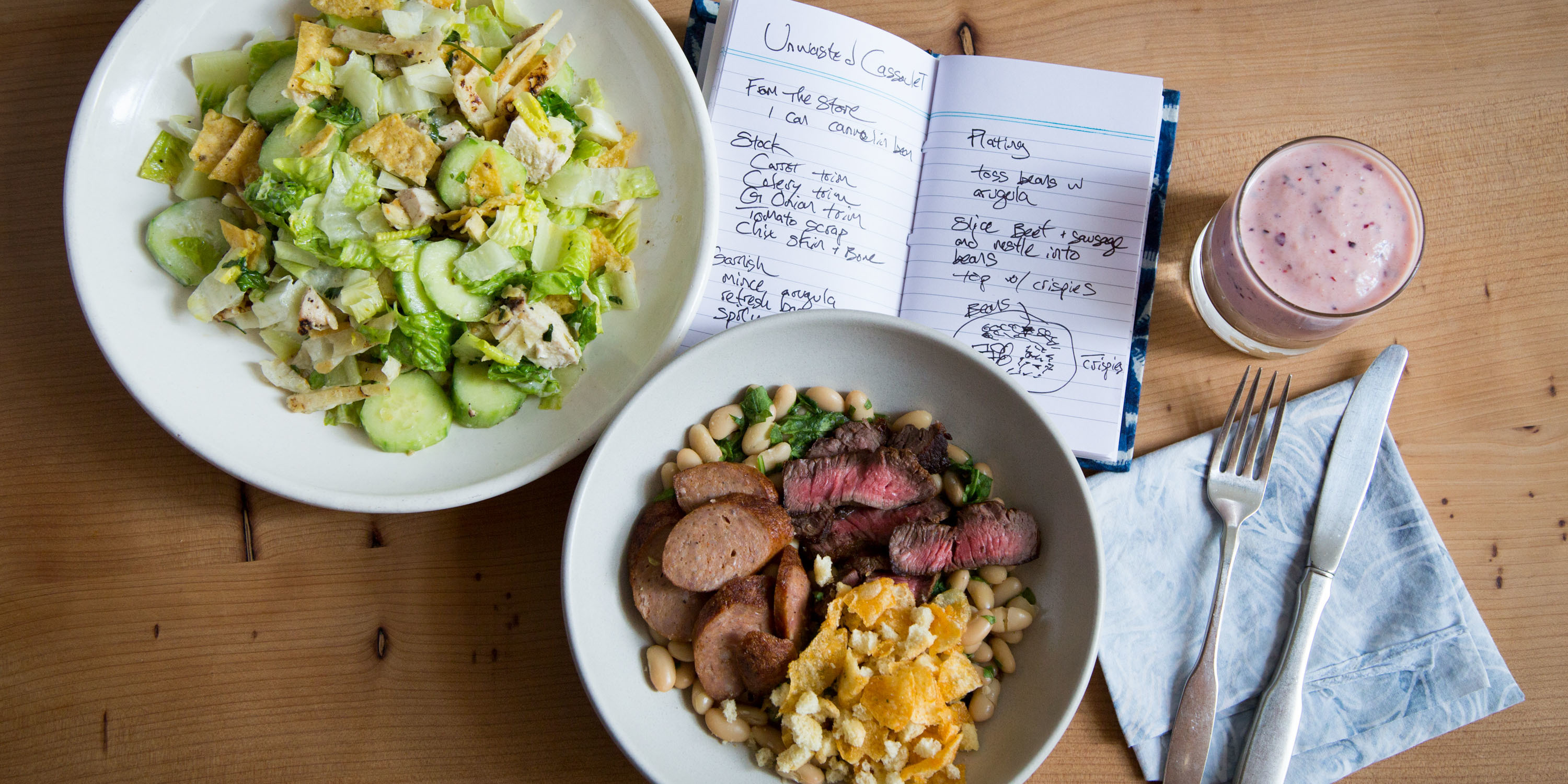
Designing waste out of the food system
IDEO partnered with hotels, food banks, foundations, and entrepreneurs to combat food waste.
Many of us have let vegetables wither in the crisper drawer, or thrown out a child’s half-eaten restaurant meal, but the sheer scale of food waste around the globe is hard to grasp. According to the United Nations, about a third of the food the world produces every year—1.3 billion tons—is lost during production or tossed by consumers, with North Americans throwing out the most food per capita. The average American wastes enough food each month to feed another person for 19 days.
IDEO received a series of grants from The Rockefeller Foundation to find solutions, given the power of IDEO’s human-centered design approach to address systemic challenges. Through a number of projects with The Rockefeller Foundation and other organizations, IDEO designers from across the U.S. devised novel ways to tackle food waste.
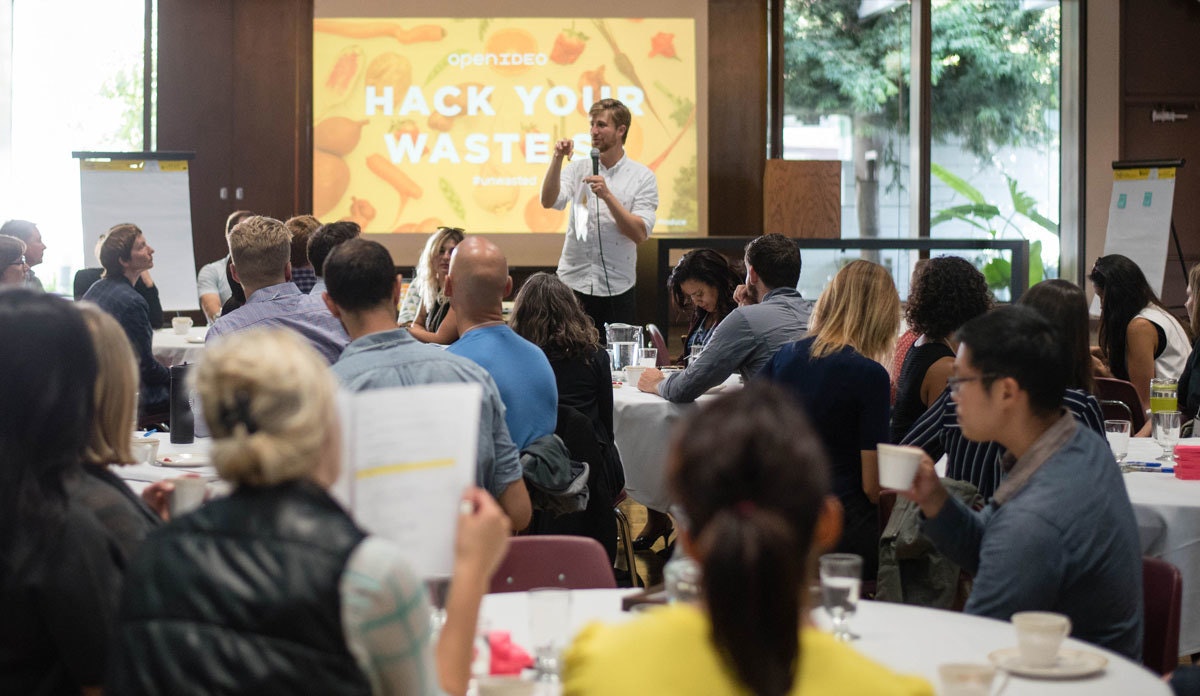
For IDEO’s first initiative, designers tapped into the enthusiasm of the broader creative community, in partnership with The Rockefeller Foundation, the City of San Francisco’s Department of Environment, the Closed Loop Foundation, ReFED, and other groups. In the summer of 2016, OpenIDEO—IDEO’s open innovation practice—launched the Food Waste Challenge, asking how people might curtail waste by rethinking our relationship with food. Between June and October, more than 20,000 people from 113 countries took part in the challenge, tracking their personal waste and brainstorming solutions.
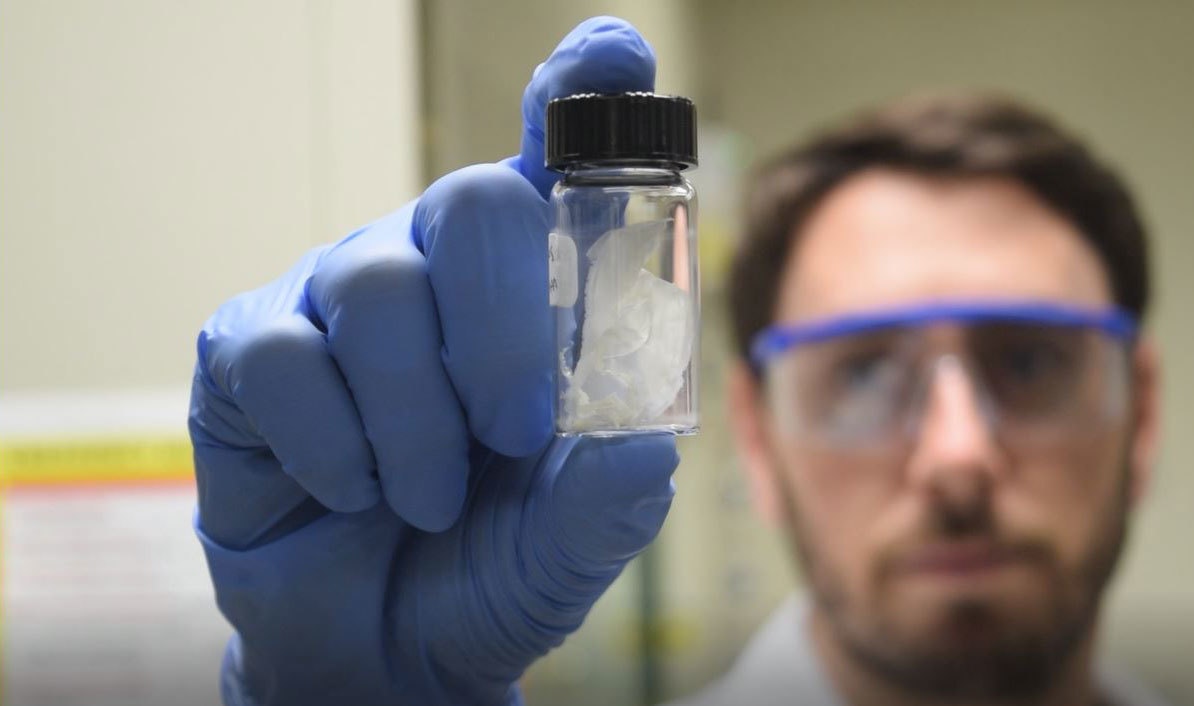
Challenge participants submitted more than 450 ideas. A team of food industry experts helped select the 12 top proposals, which included software to help people buy food collectively from wholesalers and a service that delivers extra meals from corporate events to those in need. Ultimately, the Closed Loop Foundation chose to award Full Cycle Bioplastics a $50,000 grant to scale up its idea to convert inedible food and paper waste into a fully compostable alternative to oil-based plastic.
At the conclusion of the Food Waste Challenge, OpenIDEO launched the Food Waste Alliance, a platform for participants and experts to stay engaged with the most promising ideas and innovators. The alliance helped entrepreneurs share resources, prototype new concepts, secure funding, hire staff, and form partnerships. OpenIDEO invited hundreds to join the alliance, and 92 percent of members told IDEO they made progress in their work as a result. One member company, RISE, received funding from another participant who discovered RISE through the alliance. This investment let RISE prototype its concept for milling spent grain from beer brewing into flour for baked goods and ultimately join the prestigious Food-X accelerator.
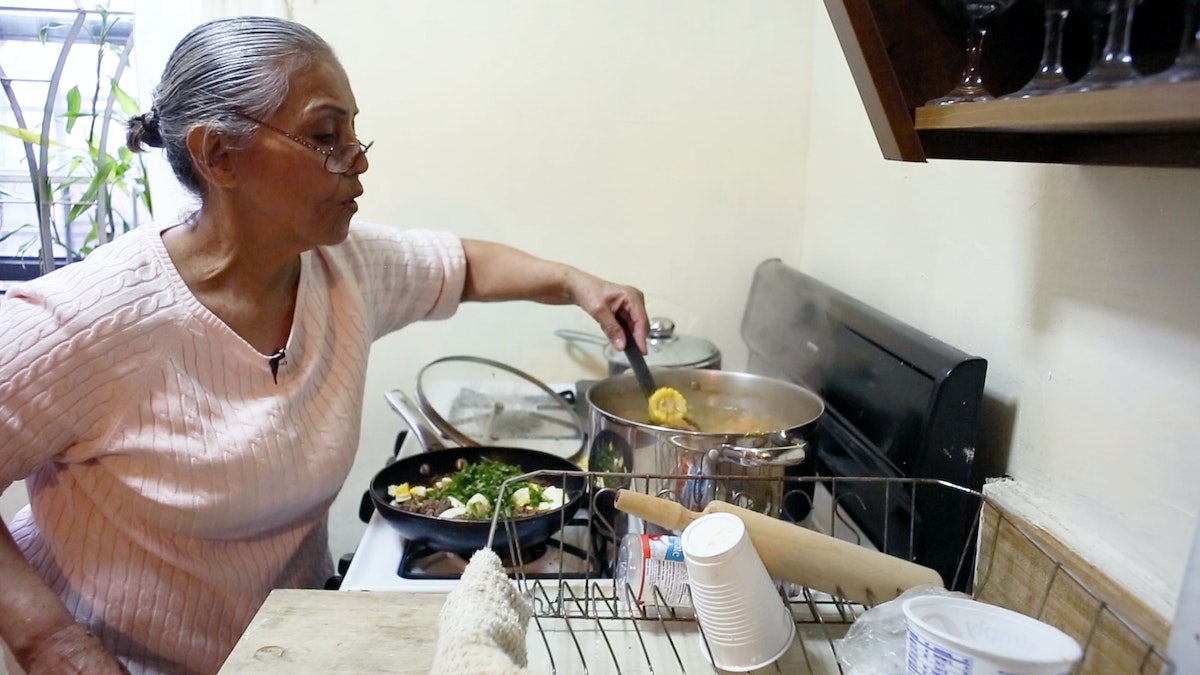
The Rockefeller Foundation also supported IDEO’s work with City Harvest, a New York organization that collects 160,000 pounds of unused food each day and delivers it to soup kitchens and food pantries. City Harvest wanted to understand the habits of local families who visit food banks in an effort to ensure all the food the group distributes gets eaten. To get a peek into these families’ kitchens, in January 2017, IDEO researchers conducted observations and interviews across New York City’s five boroughs. Pantry customers cooked for the researchers, giving them an inside look at how the families engaged with the food they had available and what food meant to each of them: tradition, stability, even adventure. Based on insights from pantry visitors, IDEO made recommendations for City Harvest, including community-run cooking classes and a way for families to request specific foods or reserve pick-up times by text message. IDEO also created three video vignettes to help build even greater empathy between City Harvest and the people it serves.
In spring 2017, capping IDEO’s work with The Rockefeller Foundation, the organizations teamed up with World Wildlife Fund and Hyatt hotels in Florida, New York, and New Jersey to rethink all-you-can-eat buffets. IDEO studied diners and staff at Hyatt buffets and found that employees—from event planners to kitchen staff—each add a cushion of extra food to cover their bases, while guests overfill their plates to avoid missing out. In the end, diners eat just half the food organizers serve, while the rest goes to waste. This and other data-driven insights gleaned about diners’ habits led to subtle substitutions, including smaller plates of meats and cheeses that can be ordered from servers and individual pastries rather than whole cakes. These alternatives have not only built on Hyatt’s existing food waste management strategies, but have also helped reduce buffet costs at Hyatt Regency Orlando and continued to receive support from guests.
The problem of food waste is too enormous to ignore. Wasted food means squandered resources, lost money, and ultimately, hungry people—more than 15 million in the United States alone. Designers and innovators from coast to coast have helped find solutions to the crisis that fulfill a variety of needs, from preserving produce sent to food pantries to keeping plastic packaging out of the oceans. The Rockefeller Foundation and other IDEO partners are leveraging powerful design techniques to pave the way for a waste-free future.
Launching a bootcamp for data scientists
Designing a rigorous program that prepares students for a career in the data-driven economy.
In 2017, IDEO acquired longtime partner Datascope and integrated the company’s data scientists and engineers. Datascope team members aren’t just passionate data scientists; they’re human-centered designers who happen to work with data, as illustrated by successful collaborations like this one:
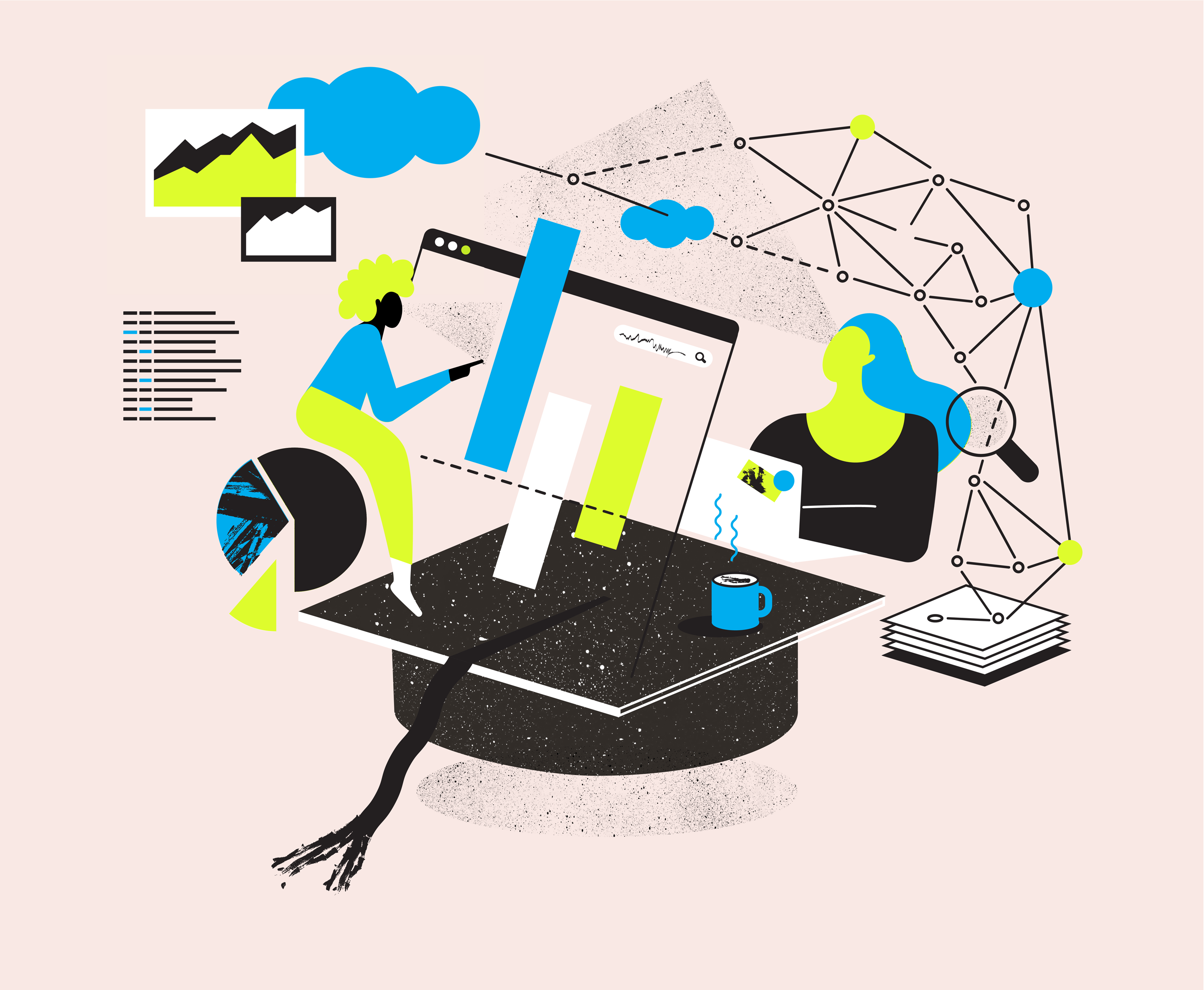
In today’s job market, there’s no such thing as being "done" with your education. This is particularly true in the fields of data science, machine learning, and AI, where significant advances are made on a monthly basis. To meet this need for more in-depth training, Metis—part of Kaplan—wanted to create a comprehensive data science program for students from all backgrounds. Metis asked Datascope to design the curriculum from scratch, drawing on the company’s deep expertise in the field.
Datascope spoke with practitioners across industries to identify the key skill sets that make them successful: a grasp of design; fluency with data management, coding, and algorithms; and effective communication with coworkers and the wider world. The team crafted a 12-week bootcamp that develops these specific abilities.
In order to prepare students for the work world, the bootcamp is structured less like a class and more like a company, where students are “hired” as data scientists—with projects to complete—starting on day one.
Students collaborate on group projects and presentations in a way that mirrors real workflows, and practice pair programming to learn from one another. Using techniques drawn from design, students are invited to refine their project briefs and continually reevaluate their approach.
Instead of a final exam, at the end of the course, students tackle five real-world, open-ended data science projects inspired by Datascope’s client work. One project involves using data from subway turnstiles to detect patterns in the volume of street traffic; another asks students to use data they scrape from the web to predict a movie’s box office profits using regression analysis.
After students complete the bootcamp, they receive an additional three months of career support, from mock interviews to site visits with potential employers. In addition to designing the curriculum, Datascope taught the first three student cohorts and helped Metis build its teaching team as it expanded the program from New York to San Francisco, Chicago, and Seattle. Metis now offers online courses, evening classes, and corporate trainings in data science.
If you’re going to take a data science bootcamp, it’s best to take one designed by data scientists.
“Sprint” Author Jake Knapp Built You a New To-Do List
Jake Knapp's simple, paper-based system for focused to-dos
But to-do lists aren’t all bad. To-do lists let me capture things so I don’t stress out over having to hold it all in my brain. To-do lists let me see everything in one place. They’re a necessary evil.
So as much as I dislike to-do lists, I need to have one. There are a billion to-do list apps and methods out there, and I think I’ve tried 900 million of them. My favorite was David Allen’s paper-based Getting Things Done. But I constantly fell off the wagon. When I organized my tasks with GTD, I was damn organized—but every time the system fell apart, I not only lost sight of the big picture, I felt guilty, too.
So after a lot of ups and downs, I started doing my own simplified, imperfect thing. I’ve been using my system for a while now, and figured I might share it in case it’s useful to others. Yes, I know, another to-do list system! But you clicked on this story, so maybe you need one.
I call my system the “Burner List”
I’ll explain the name in a sec, but FYI, it has nothing to do with Burning Man. Basically it’s a simple-as-hell to-do list designed to force me to prioritize.
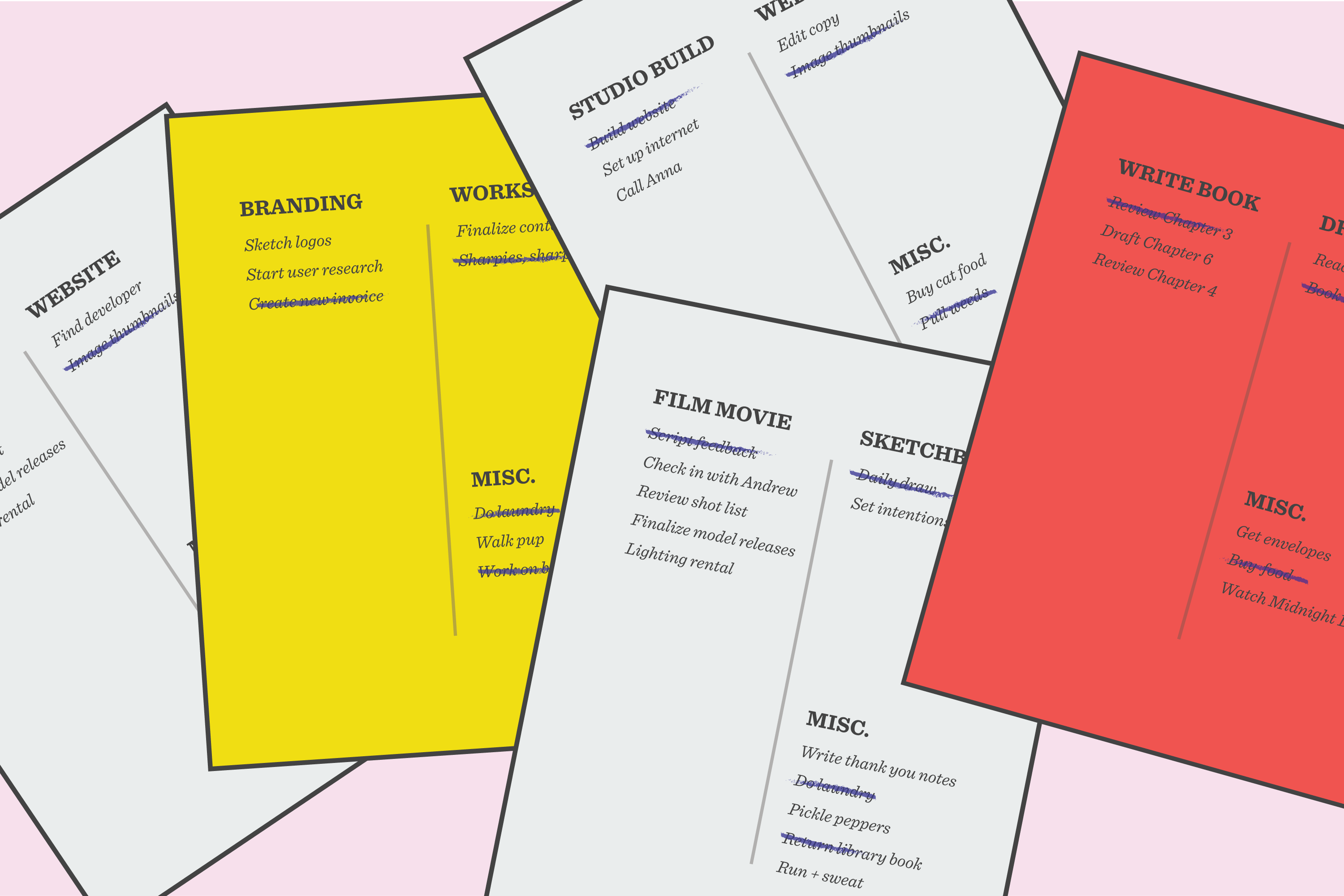
The Burner List is not perfect. It won’t keep track of every detail, or help you juggle a million projects. But that’s exactly the point. The Burner List is intentionally limited—and therefore focused. Here’s how to make one:

1. MAKE TWO TALL COLUMNS
You can fold the paper, draw a line down the middle, or just eyeball it. Precision is unimportant. What is important is the metaphor you’ve just created: Left = front burner. Right = back burner.
2. PUT YOUR MOST IMPORTANT PROJECT ON THE FRONT BURNER
You are allowed to have one and only one project on the front burner. Not two, not three — just one. In the top left-hand corner, write the name of your most important project and underline it. Then list the to-dos for your top project — any task you can do in the next few days to move it forward.
3. LEAVE SOME COUNTER SPACE
Leave the rest of the first column empty. The Burner List is not intended to make an efficient use of the damned paper surface area — it’s intended to make good use of your time and energy! The blank space gives you room to add more tasks for the top project, but, just as important, extra visual space makes it easier to focus on the important stuff.
4. PUT YOUR SECOND MOST IMPORTANT PROJECT ON THE BACK BURNER
In the top of the right-hand column, write the name of your second most important project and underline it, then write related to-dos underneath.
5. MAKE A KITCHEN SINK
Finally, about halfway down the right-hand column, list any miscellaneous tasks that you need to do but don’t fit with project 1 or project 2. It doesn’t matter if they’re part of project 3 or 4, they just get chucked into the kitchen sink with everything else. Yes, this goes counter to all organizational and productivity advice — but by constraining the space and attention you give to other stuff, you'll help yourself spend your time well.
Now get cooking
Imagine there was a chef standing to the left of your page. He’ll naturally focus most of his attention on the front burner. He’s aware of the back burner, and sometimes he stirs a pot or flips a pancake back there, but the front burner is where the action is.
The Burner List is intentionally limited. It won’t have room for everything. You’ll have to let go of things that aren’t as important.
The Burner List is also disposable. It gets stale fast as you cross off finished to-dos. I “burn” through my list every few days and then recreate it, over and over. This act of recreation is important, because I always discard some unfinished tasks that no longer matter, and I reconsider what belongs on the front burner right now. Sometimes it’ll be a work project, sometimes it’ll be a personal project—over time, I’ve realized that it’s okay and natural for the spotlight to shift. What’s important is there can only be one most important project a time.
To learn more about Jake's methods, subscribe to his newsletter here.
Man, I hate to-do lists. Checking off finished tasks feels good, but the glow of accomplishment masks an ugly truth: Most to-dos are just reactions to other people’s priorities, not mine. And no matter how many tasks I finish, I’m never done — more to-dos are always waiting to take their place. To-do lists just perpetuate the feeling of “unfinishedness” that dogs modern life.
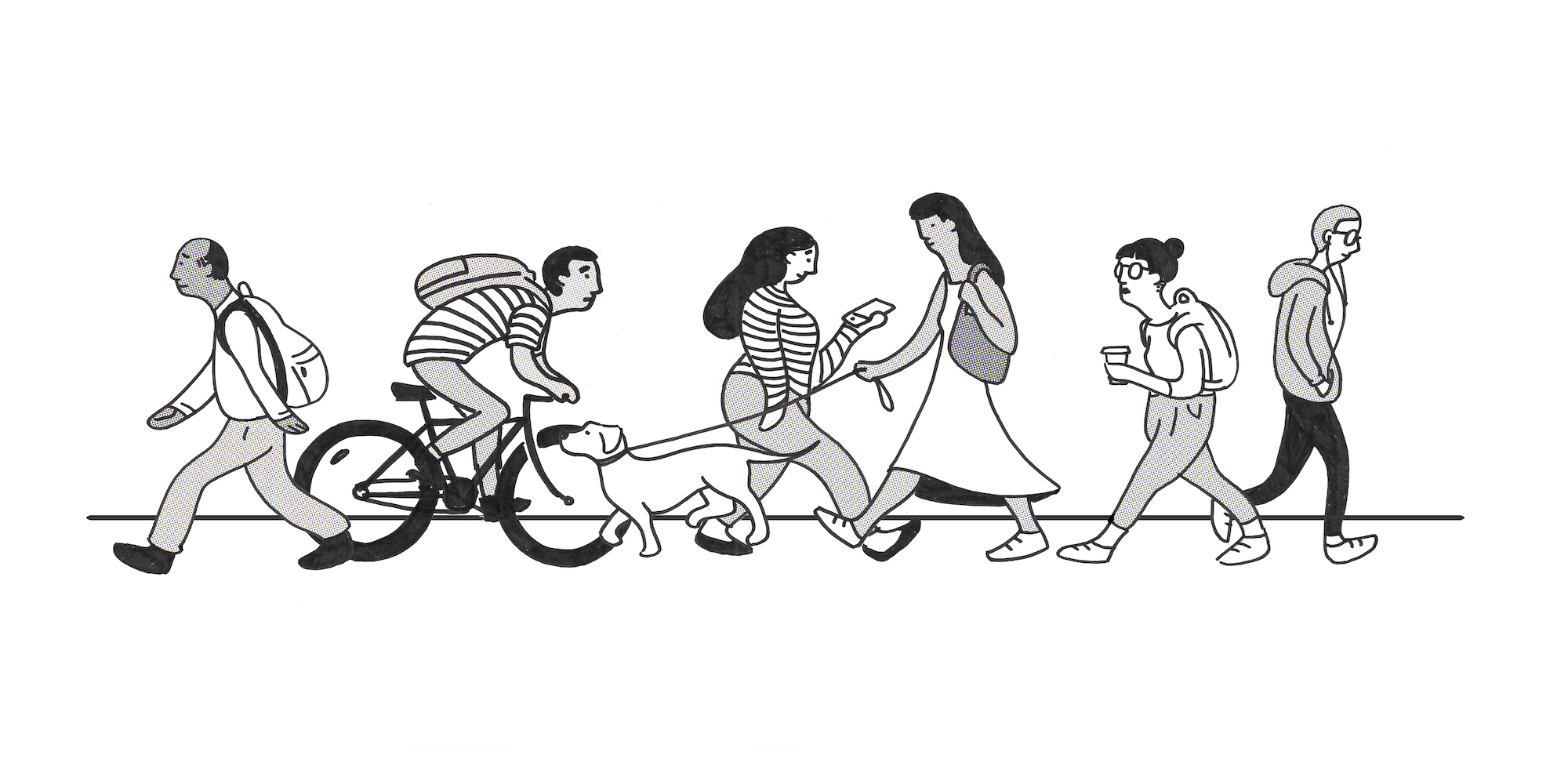
6 Ways to Get Inspired on Your Commute
How to turn your commute from a time sink into a springboard
1. Embrace Randomness
On my 20-minute walk to work, I'll use chance to determine my route. "Don't walk" sign? Cross the other way. See a dog? Walk on that side of the street. Does the time of day end with an odd number? Make a right. I won't walk the wrong way, of course, but I'll use random cues to make myself choose different paths so I'm forced to notice new things along the way.
I also use my commute to connect with strangers in small but meaningful ways. I make sure to give a warm, real "hello" to bus drivers—no earbuds, please! Compliment well-dressed people on their style choices. Flirt with outgoing dogs to get their owners to smile. Thank people cleaning the streets for keeping things tidy for the rest of us. Little things like this make a city feel more like a small town. —Annette Ferrara, IDEO Chicago
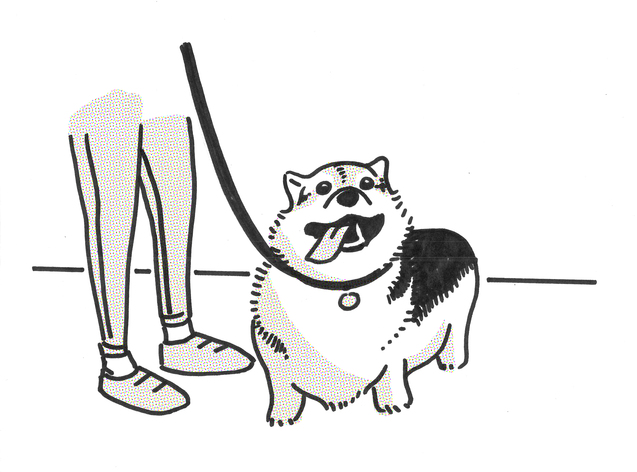
2. Ride with Strangers
I'm new to the San Francisco Bay Area and I'm finding the "casual carpool" here a total novelty. It's essentially organized hitchhiking. You arrive at the designated carpool stop and wait your turn as two to three people at a time hop into strangers’ cars. The incentive for drivers is being able to use the HOV lane, which requires a minimum of three passengers and can shave 30 minutes off your commute.
There are very strict, unwritten rules for casual carpool: You don't make conversation unless the driver initiates, you don't eat or wear too much perfume, and you absolutely don’t take phone calls. The default radio station is NPR. You offer the driver a dollar at the end of the ride for gas.
At first, I thought it was so weird that people don’t talk, but now I like the quiet ride. Every now and then, I'll jump into a car and we’ll have conversation for 20 minutes as we cross the Bay Bridge. I like this too; connecting with strangers on my way to work is a great way to start the day.
If there isn’t a casual carpooling option in your city, look into organizing one for yourself. —Maria Scileppi, IDEO San Francisco
3. Spin with Your Inner DJ
One era of music that’s splendid fun is early ’90s—rave, jungle, techno, happy hardcore, etc. Much of this music was written using software called a "tracker." With trackers, you can enter notes using a standard computer keyboard.
Fast forward to modern times, and I find that a new tracker has been developed—RENOISE—that works the same way as trackers of old, but with modern-day functionality. Well, I had to have a go on that.
I installed it on my work laptop and now spend my journey home lost in the sounds of chopped Amen breaks, 808 and 909 hits, and rude-boy vocals. There's a lot to learn in terms of production techniques, sound design, and arrangements.
I start a new track each trip; these are my "train tracks." I find a great deal of enjoyment in seeing where they end up after the hour-long ride, but then I'm happy to abandon them. There's always tomorrow. —Iain Smyth, IDEO London
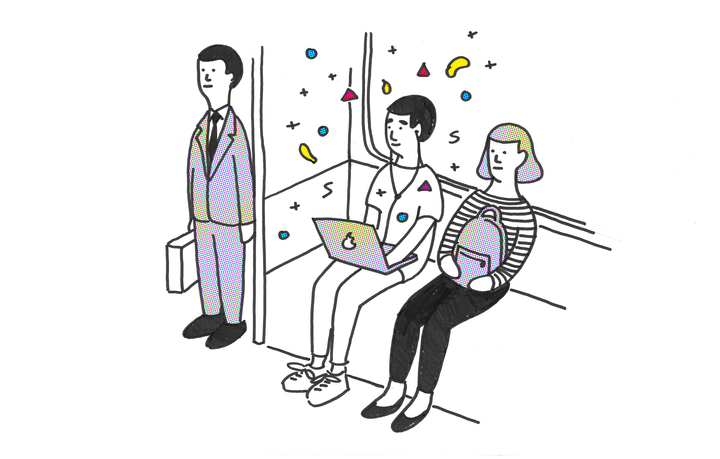
4. Unplug and Observe
I walk 10 minutes to the ferry building, take a 15-minute ferry ride across the river, and then walk 25 minutes to the office. I used to fill all that time listening to podcasts, checking email, surfing Facebook, or otherwise trying to get a head start on my day—which meant I'd developed a bad habit of looking at my phone while walking.
One day, I decided to end the habit for safety's sake. With my phone now tucked away during my commute, that time is spent letting my mind wander, observing my surroundings, and pondering the day ahead. The result is that I feel more prepared for my day mentally and energetically. I’m less frazzled and magically seem to have more down time. —Anna Silverstein, IDEO New York
5. Work Your Muscles, Free Your Mind
I bike to work because it's an easy way to build in regular exercise without having to carve out special time. It's a 30-minute ride each way.
I often have lightbulb moments and am able to connect the dots around things happening at work or in my personal life. There's something about the intense focus of weaving through traffic while letting thoughts percolate in the background that works for me.
For example, earlier this year, a large education company in India reached out to IDEO to talk about collaborating. On our call, it didn’t seem like a great opportunity for partnership, but then on my evening commute home, the dots connected.
I called the company back the next day to propose a program that would bring together the strengths of both our organizations (IDEO U's curriculum expertise and the partner company’s established marketing and distribution channels) to provide a great executive education experience for the Indian market. —Danoosh Kapadia, IDEO San Francisco
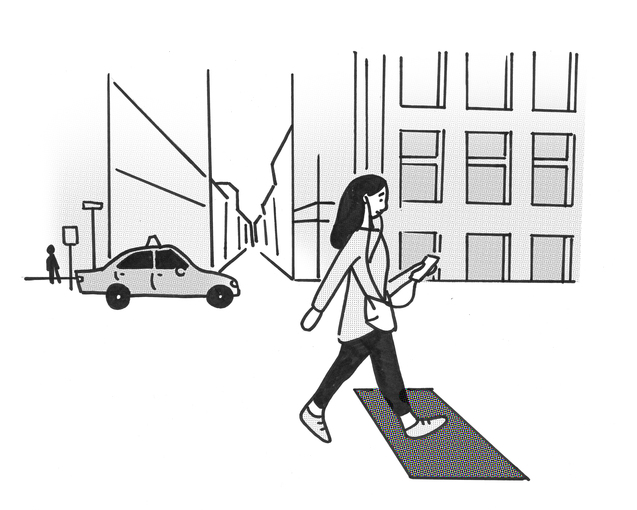
6. Get in the Right Headspace
I walk eight minutes to the 2nd Avenue subway and then take a 16-minute ride to Canal Street. I've been meditating every day for a few years, and this year I decided to listen to guided meditations on my commute.
I typically choose from a selection of meditations by Sarah Blondin on the Insight Timer app. Most are about 10 minutes long. She has a wonderful voice, and I select based on my mood. Usually, I choose something to pick up, reaffirm, or inspire me. Sometimes she nearly brings me to tears, but usually she just helps me be more present.
Listening to guided meditations while commuting has made me more mindful of my surroundings, more compassionate toward my fellow commuters, and generally calmer. —Caitlin Fitzmaurice, IDEO.org, New York
Next time you find yourself staring into space on the way to work, try one of these techniques to reboot your commute.
What were you doing at 8:30 this morning? If you’re like me, you were slogging through the least fun part of your day. The average employee spends nearly 53 minutes a day getting to and from work, but you don’t have to sit there feeling miserable. There are all sorts of creative ways to wring positivity out of your daily grind.
I asked IDEO designers and other creatives for their commuting best practices. Here are the top six:
Why You Should Start Prototyping—Right Now
How early prototypes can kickstart your project
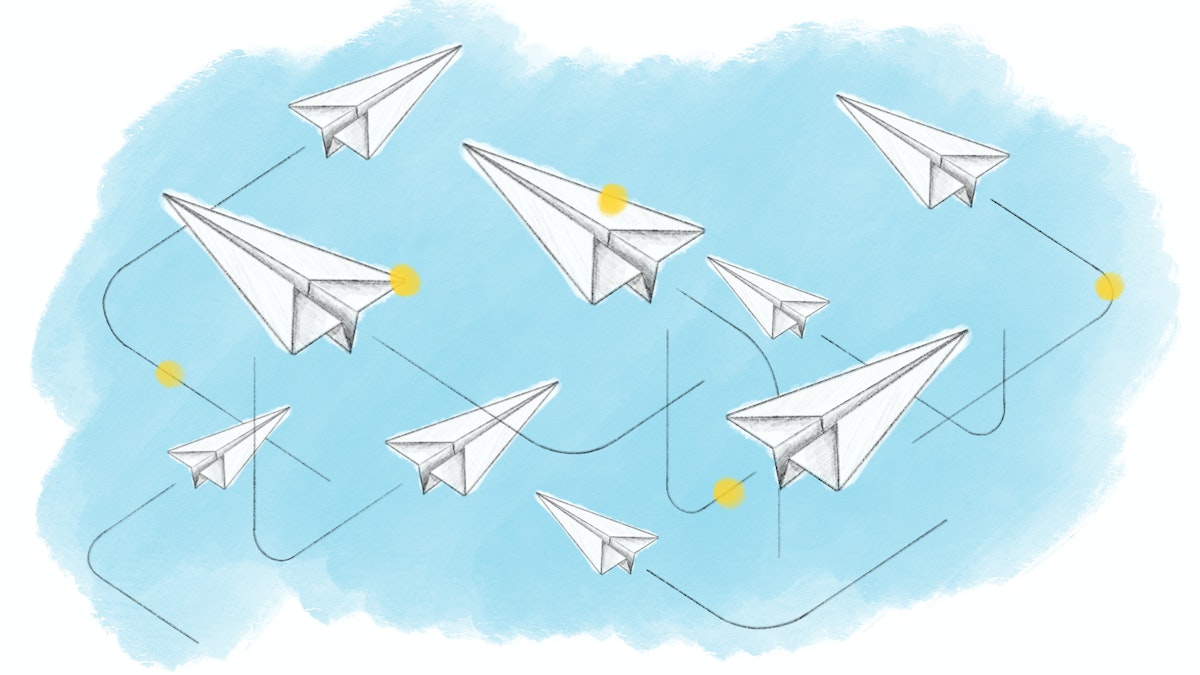
With this in mind, we selected key interaction moments from our client's current product. Then we prototyped three distinct new directions—usability experiences we were excited to bring to their industry. These experiments, we hoped, would spark an early conversation that was less about “we need to do this” and more about “what if we do that?”
Kickoff day arrived and we shared the prototypes with the client.
Cue uncomfortable silence.
Then, finally, one of the executives exclaimed, “This is mind blowing! This could be the future of our product.” He was not applauding the user interface or visual style we used to illustrate our idea, but the essence of what the experience did for him. An excited conversation followed and he wanted to share his own design ideas.
It doesn't always go this way. Early prototyping entails plenty of risk, too. What if you've been blind to user needs? What if the client just doesn't see the magic?
Here are 4 steps you should consider when creating early prototypes:
1. Take advantage of your fresh perspective
Before diving into industry or product constraints, take a step back and imagine if there were no limits to what you could design. What would that look like?
2. Identify what excites you and the team
What personally inspires you to be on this project and how can that be translated into the experience? Don't over think it. Take one key interaction from the current experience and add something unexpected to it. This is an opportunity to test initial assumptions with a beginner’s mind and generate radically new ideas.
3. Translate your excitement into prototypes (with content your client understands)
Use your client's current product content as a starting point. Having something they can easily recognize and understand is a great way to bring them into a design conversation. Don't think about creating long flows at this early stage. Imagine your prototype as a teaser to a product that is about to come to life and focus on key interaction moments.
4. Highlight where your client sees design opportunities
Quick prototypes are a great way to tackle hopes and fears and learn, from a usability point of view, where your client sees design opportunities at a very early stage of the project—so you don't head off in the wrong direction.
And above all, remember: A sense of excitement and momentum shared by you and the client on the very first day gives your team an important confidence boost. It helps set expectations, and gets everyone inspired to push to a new level.
For a recent design project, we decided to try something new. We were tasked with rebuilding a product experience, but instead of starting with our usual process where we gather inspiration, we thought: What if we share a prototype we are really excited about with the client right away? Just jump in.
Meet the Sisters Behind Block Shop
There are creative crushes, and then there are girl crushes. This qualifies as both.
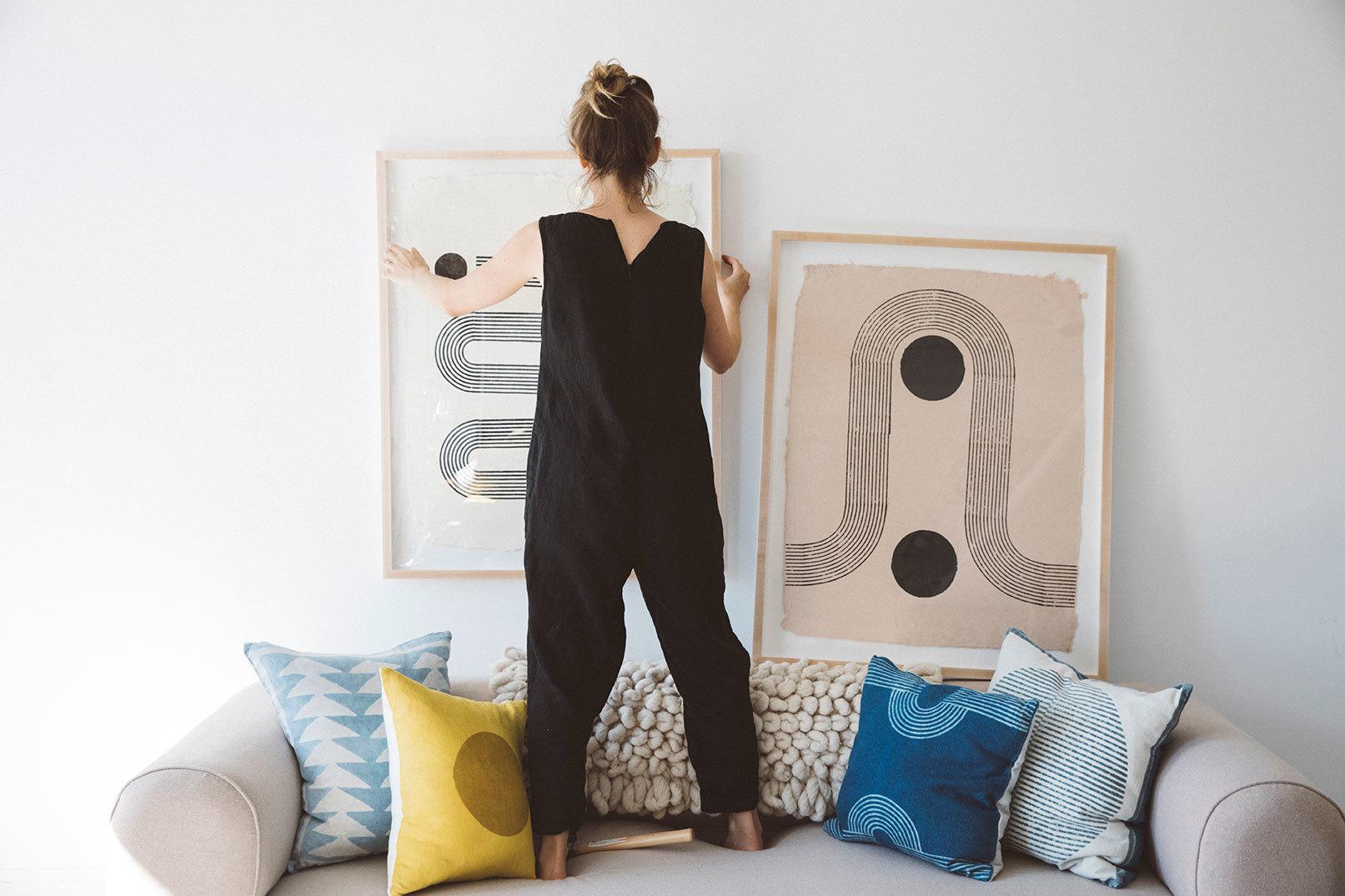
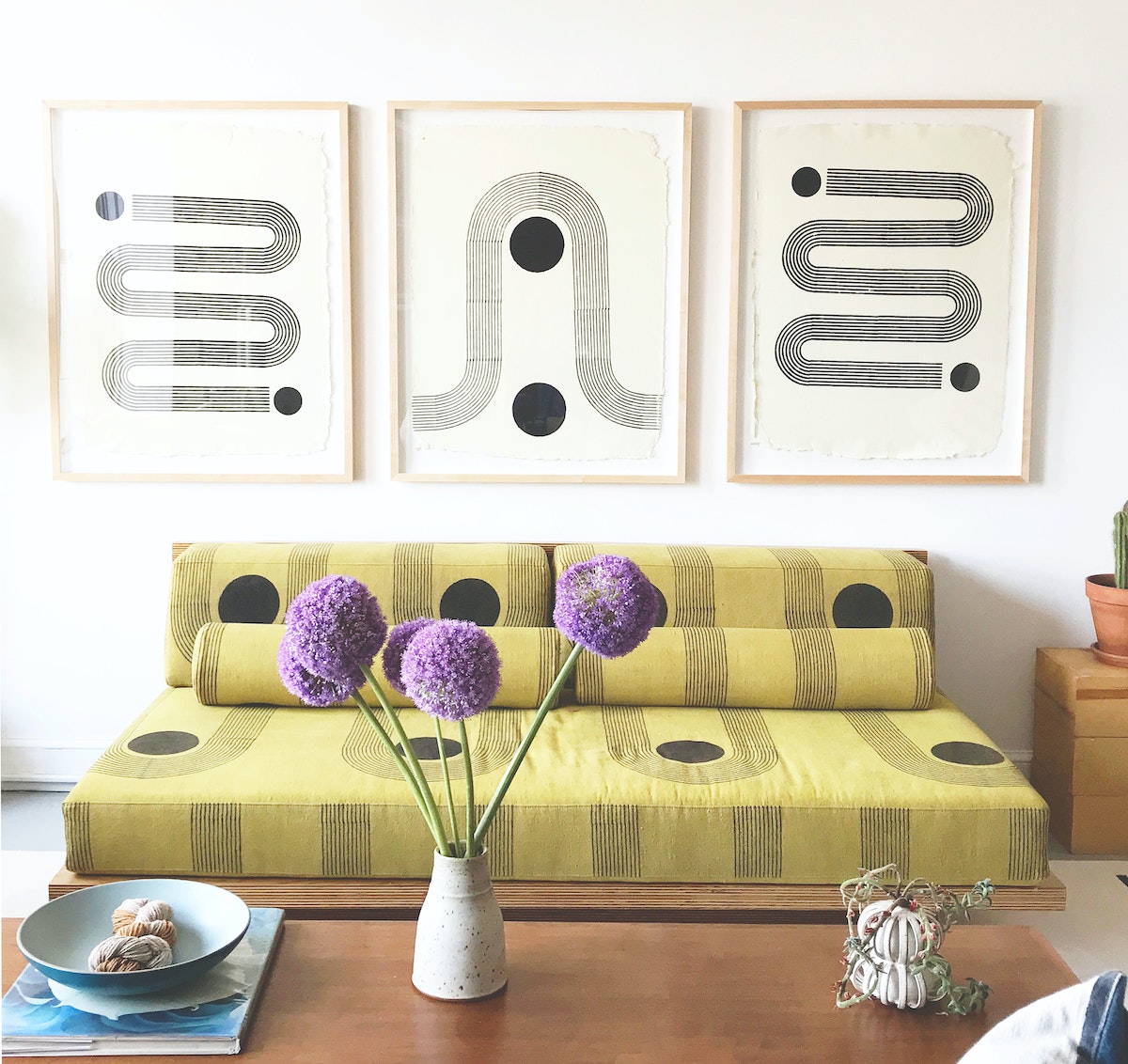
While beautiful textiles (and now prints!) are Block Shop’s most recognizable output, there’s a good deal more going on behind the scenes. The duo created Block Shop in partnership with a family of printers and dyers in Bagru, Rajasthan to keep the artistry and craft of Indian block printing alive. (They donate five percent of their profits each year to building and implementing community healthcare programs.) If their reverence for craft and respect for humanity isn’t enough to make you weak in the knees, this interview should do it.
In one sentence, who are you?
Hopie Stockman: Josephine March with an MBA.
Lily Stockman: Gertrude Bell on a camel after too much coffee.
What do you do? How did you learn it?
HS: I run Block Shop—a textile and design studio—with my sister, Lily. In reality, I work seven days a week, but five of them take place in our 11th floor downtown Los Angeles studio. I design everything from rugs to public murals to business strategy and Grand Central Market lunch orders for Block Shop.
We both went to grad school; I went for for business and Lily for painting. Rather than dividing our work rigidly between business and creative, we’ve found that it works best when we share responsibilities.
A lot of our education happens in Jaipur, India. In 2010, Lily was living in there and apprenticing under master Indian miniature painter Ajay Sharma when she first met our printers. Since then, we've gone back to Jaipur twice to year to work with them on new designs and products. Everything we know about wood block printing we've learned on the ground while prototyping with our team, lending a hand in all aspects of the process, from dye-mixing to block registration on the fabric.
On the business side, the most valuable advice has all come from the (mostly) women running their own small and successful businesses here in LA. For example, our friend who runs a candle company helped us build our wholesale strategy. When we started out, we thought we wanted just a few huge department store-style accounts to streamline our operations and provide reliable cash flow. She helped us to understand the marketing power of wholesale: that smaller, well-aligned shops could be better storytellers and champions of our brand, and likely wouldn't discount as aggressively.
Another friend who has an independent furniture line shared invaluable advice on how to collaborate with large companies, emphasizing the importance of control over the design and fabrication process. Megaretailers actually need the cool factor of small, independent brands in order to be relevant. The question for small brands is whether the paycheck and promise of exposure is worth the potential chargebacks, brand dilution, and even customer alienation. For us, we've learned that it doesn't work unless we're making the products ourselves and have control over the storytelling.
What are your 3 favorite possessions?
HS:
- Otto, our bearded mutt.
- A painting of a rabbit that my great grandfather painted 60 years ago.
- The Kishore Kumar Bollywood poster that my now-husband and I bought together at the Chor Bazaar in Mumbai, when we had only been dating a few months. It sort of signified that leap into a shared life—jointly owning things.
LS:
- My baby Olympia.
- My dog, who I bought from the pound for $85.
- My gold bangle bracelets given to me by our surrogate grandmother, collected from her travels around the world.
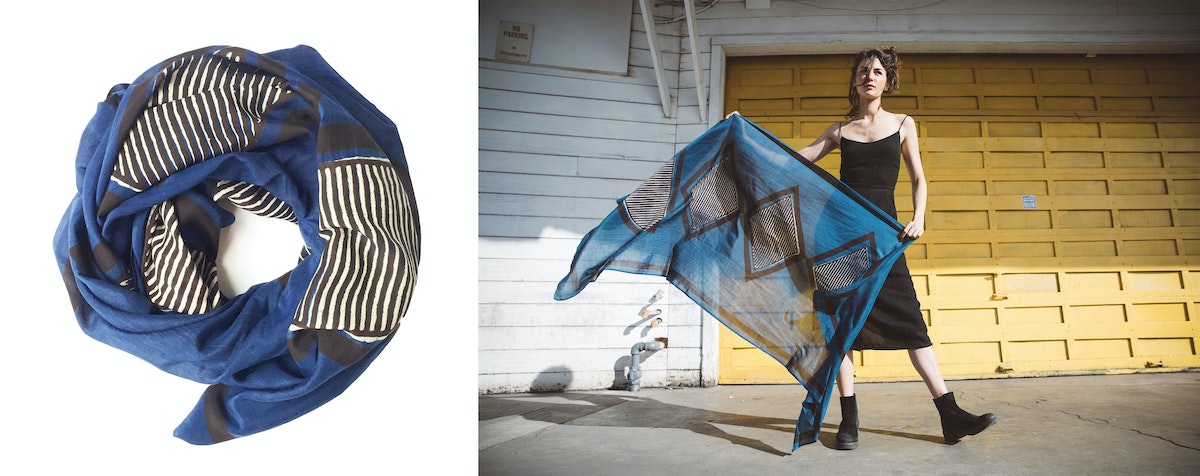
What does a typical work session look like?
LS: On design days, we hide our laptops and put the screens away. No phones, no nothing! Out come the old art books on Anni Albers, Arp, Matisse, and Sheila Hicks. We put some Grateful Dead on, get the watercolors out, and swap sketches back and forth across the table. The result is so much better when we do it together. We’re always improving each other’s work. We try to design like this for two-to-three hours once a week, which is pitiful, but that’s the reality of running a small company; the actual drawing sessions take up only a small percentage of our time.
When it comes to our work, we have a simple design rule: Everything Block Shop touches must hold up as a holistic composition. That means it needs to have balance and a sense of quiet. My favorite painting teacher said, "You know a painting is done when it's quiet. Nothing on the canvas is yelling at you." And if it doesn’t look good hanging on the wall, then it doesn’t go into production.
How do you get over creative block?
HS: Take Otto for a walk past the old movie palaces in downtown L.A. to remember that inspiring design lives everywhere in architecture. On a recent prototyping trip to India, I started panicking that we’d exhausted all geometric patterns—THAT’S IT, WE’RE FINISHED! WE’VE USED EVERY ITERATION OF CIRCLES AND TRIANGLES! Then we went for a walk to get chai with our sketchbooks in hand, and boom! All sorts of ideas emerged from the marble latticework and archways in the old city. We simply needed to look.

What was the last item on your to-do list?
LS: Plan a Texas road trip starting in Marfa, where our friends run the El Cosmico.
How do you see the world in 2078?
HS: A degree or two warmer. Governed by data and manufactured by robots, with no boundaries between advertising, entertainment, and politics. Hopefully, I’ll be with the people who’ve returned to hands-on, empathy-based, slow living….off with my grandkids somewhere outside making pinch pots.
What's your number one bucket list item?
HS & LS: Design a boutique hotel.
Who are you creative crushin’ on lately?
HS: Katja Blichfeld, co-creator of High Maintenance. (If you’re out there, hey.)
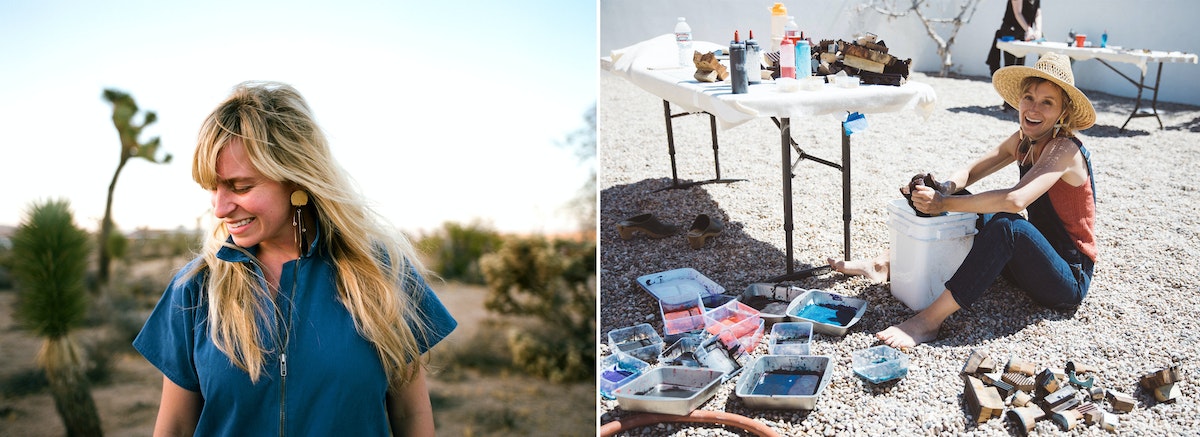
There are creative crushes and then there are girl crushes. This qualifies as both—squared. Sisters Lily and Hopie Stockman are the founders of Block Shop, a textile company based in Los Angeles and Joshua Tree. I discovered Lily and Hopie a few years ago through an online web of women makers, and have been feverishly following their work ever since.

Lindsey Turner
I’m passionate about building brands, products, and experiences that help organizations show up with meaning and momentum.
I help organizations cut through complexity by shaping how they show up, through brand strategy, identity, and storytelling.
Working at the intersection of brand and business, I bring an editorial eye and a bias toward making—turning ideas into tangible experiences that people can understand, trust, and believe in.
My work spans government, healthcare, financial services, media, and consumer goods, from launching Gen Z-focused ventures to building innovation labs and reimagining legacy brands. I relish moments of ambiguity and enjoy translating across teams, perspectives, and priorities to move ideas forward.
I started my career in editorial and digital design, shaping cross-platform experiences and identity systems in publishing and agency environments. That foundation still shapes how I work today: I’m detail-oriented, collaborative, and overreliant on the Oxford comma. I hold a BFA in Visual Communication from the School of the Art Institute of Chicago.

Rachel Young
My work helps organizations see who their products aren't working for—and build the will and the tools to do something about it
For 25 years, I've asked the same question: Who does this design exclude—and what are we going to do about it?
My work spans human-centered strategy, inclusive design, and qualitative research, with clients ranging from Microsoft, Google, and Verizon to the National Science Foundation, and San Francisco Unified School District.
Before IDEO, I taught elementary school in East Palo Alto and spent a decade doing design work with social service organizations—where I learned firsthand what it costs people when systems are built without them in mind.
I am currently writing User Error, a nonfiction book about digital access and the design decisions behind it. I live in Oakland, California.

Brian Pelsoh
I lead with craft, ensuring our work is creatively excellent: rooted in deep human insight and imagination, while also grounded in the realities of business and technology.
My expertise spans brand, communication, and product design across tech, education, the arts, and social impact.
I believe great work demands both high-level vision and obsessive attention to detail, and only happens through collaboration.
I bring an inclusive, hands-on approach and a deep understanding of business, which enables me to consistently deliver excellence while always asking why.
Before joining IDEO, I worked at the brand firms Pentagram and VSA Partners. I began my career as a designer, leading teams at the School of the Art Institute of Chicago and the Milwaukee Art Museum. I hold an MFA in graphic design from Maryland Institute College of Art and a BFA in communication design from the Milwaukee Institute of Art & Design, and have taught at some of the best design schools in the US.

Tony Wong
I am responsible for IDEO’s long-term success in China and working with clients to use design as a tool to enable growth.
I am responsible for IDEO’s long-term success in China and working with clients to use design as a tool to enable growth. Specifically, I have helped Chinese companies design holistic brand solutions through the development of their products, communication, services, and innovation teams, and I have helped multinationals expand their presence and influence in China.
I advise global leaders on developing China-led innovation and capabilities.
In over 15 years in IDEO Shanghai, I have worked on projects that use design to elevate the quality of the experience of healthcare products and services, streamline processes that increase productivity, create spaces and programs that promote and enable inclusive communities, and build next generation mobility solutions that are planet-positive.
Before joining IDEO, I worked at Philips Electronics and the Electrolux Group in Italy, the Netherlands, and Singapore on a number of breakthrough commercial products. I am a member of the Young President Organization in Shanghai.

How to use AI as an editor, not a writer
Ed White shares how he uses AI as an editor—not a writer—to sharpen storytelling, rehearse ideas, and preserve the productive friction that makes creative work better.
Ed White has a rule he's tested on his own writing: hold yourself as the writer, and let AI be your editor. Ed is a Senior Design Director at IDEO's London studio, where he co-leads the firm's AI portfolio across Europe. Before IDEO, he spent 12 years as a writer and editor at the Financial Times, Wired, and Contagious. So when he talks about when to use AI for storytelling and when not to, it comes from two decades of crafting his storytelling skills.
In this episode, Mina Seetharaman talks with Ed about two specific tools he uses to keep AI in an editor's seat: a "roasting agent" prompted to critique his drafts without any sugarcoating, and a simulated audience he rehearses pitches on before the real thing. They also get into what Ed is hearing from design leaders at Anthropic, Lovable, Shopify, and Google Creative Lab about how creative work is changing, and why he thinks the friction of writing something yourself is worth protecting rather than automating away.

Building a personal AI for the messiness of life: Sida Li
Becca Carroll talks with Cue co-founder Sida Li about designing a personal AI for the messiness of everyday life—not just work. They explore how Sida stays anchored to human needs while navigating fast-changing technology, product tradeoffs, business-model experimentation, and the realities of building an AI company today.
Most AI products today are built for work—a space with clear problems and established systems. One founder noticed a gap: personal life is messier, harder to systematize, and mostly left behind by the AI boom. So she built Cue, a personal AI that lives inside iMessage and group chats, to go where the other tools haven't.
In this episode, Becca Carroll, IDEO's Chief Strategy Officer, talks with Sida Li, co-founder and CEO of Shared Context Lab, about staying anchored to a human need while the technology around her keeps changing shape, why she treats her business model with the same rigor she'd bring to a product, and what it feels like to build a company at this particular, disorienting moment in AI.
The conversation also gets into how Sida makes design decisions: the language Cue uses to describe itself, the tradeoffs behind building inside iMessage instead of a new app, and a real story about a business idea that didn’t pan out.
This is the second in a two-part series profiling founders from IDEO's Startups-in-Residence program. The first conversation is with Johannes Seemann, founder of Sooner, on designing GenAI for the emotional side of money.

Designing GenAI for the emotional side of money: Johannes Seemann
Designing financial tools around the feelings that shape money decisions.
Most personal financial tools are built to run the numbers and optimize towards a budget. While that works for some, most people experience money as a lived relationship that does not neatly fit into a spreadsheet. Johannes Seemann and Becca Carroll discuss why money is emotional before it is mathematical, and what a human-centered approach to building a generative AI financial product looks like in practice.

The curious leader's edge in uncertainty: Scott Shigeoka
How genuine curiosity helps leaders navigate uncertainty with greater confidence.
Mina Seetharaman talks with Scott Shigeoka, author of Seek and Head of Curiosity Cultivation at the Eames Institute, about what distinguishes genuinely curious leadership from performative curiosity, how power dynamics shape curiosity, and why practicing curiosity can restore energy rather than drain it.
Looks like you might be in search of something very specific?
Or reset the filters above and try another angle.
Here’s some random inspiration

Podcasts about creative leadership

Articles about the power of prototyping