
Preventing newborn RSV
A toolkit to increase global adoption of Beyfortus, the world’s first RSV immunization for babies.
Sanofi was the first company to supply the polio vaccine worldwide. Because of the global fight against the disease, endemic wild poliovirus transmission is now limited to just two countries. However, attitudes toward vaccines and immunizations have shifted significantly. To ensure a smooth launch of Beyfortus in a time of increased vaccine hesitancy, Sanofi asked IDEO to conduct research across four important and very different healthcare markets: Germany, Spain, China, and the US.
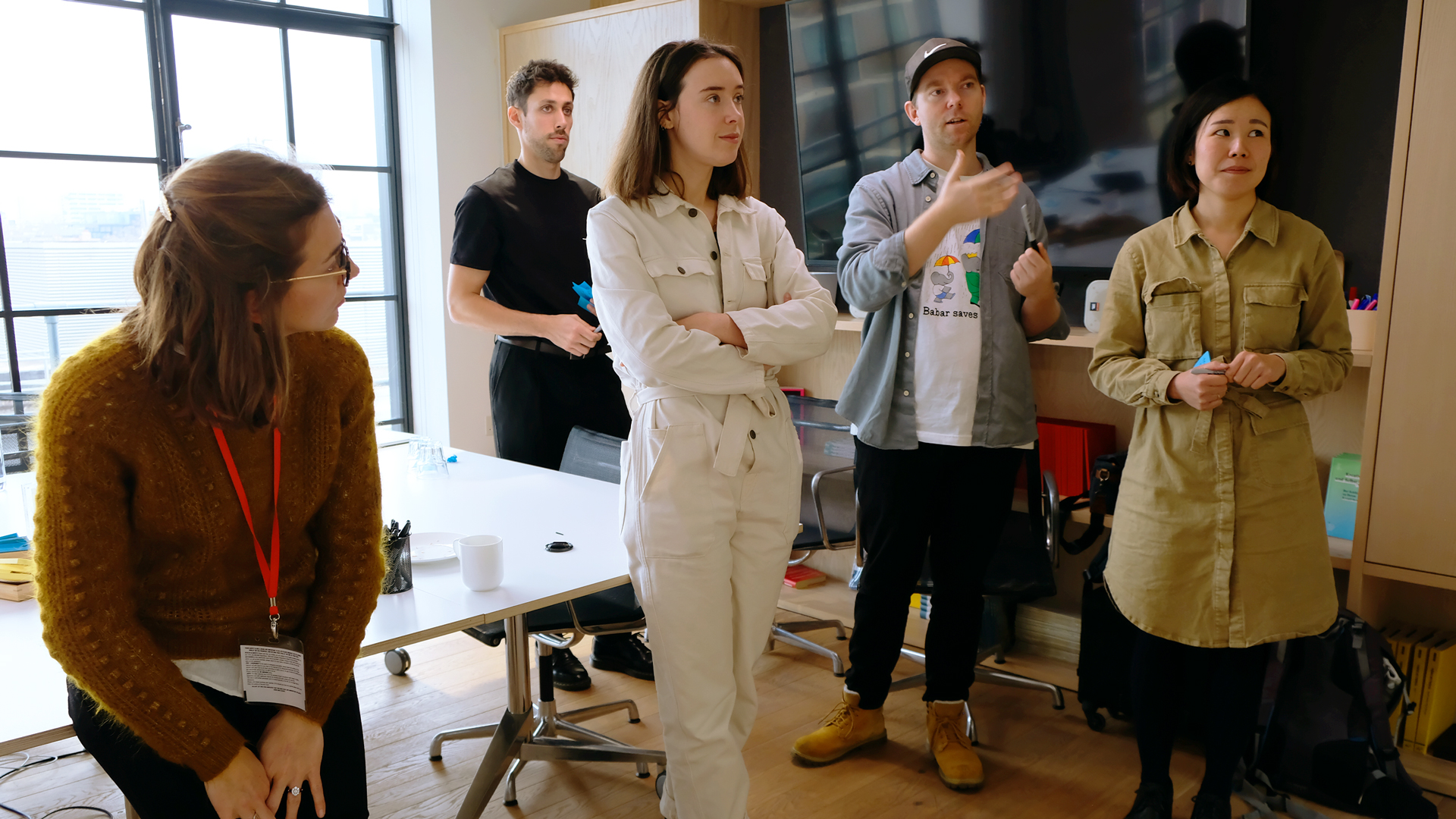
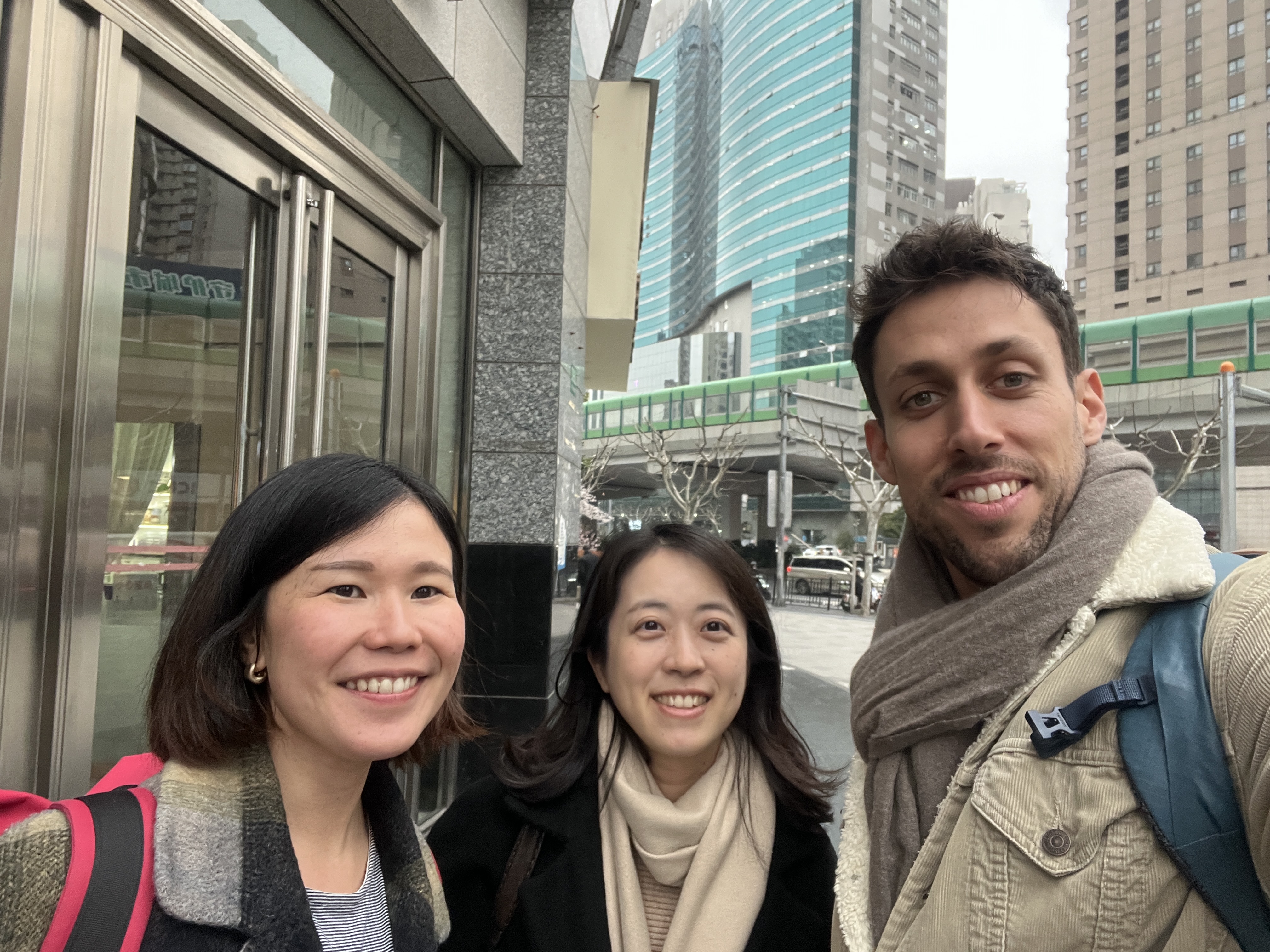
IDEO worked with parents, caregivers, healthcare professionals, and healthcare administrators to identify potential barriers to vaccine adoption and understand the emotional needs of all stakeholders involved in the immunization process. Navigating cultural differences and diverse healthcare environments, the team uncovered a set of insights.
For healthcare professionals, the team discovered there was no one-size-fits-all approach to immunization training across Sanofi’s 20-plus global markets. While consistency of key information was important, trainings needed to be flexible and customizable. This way, regardless of whether the vaccine was administered by midwives, OB-GYNs, nurses, or doctors, they could confidently discuss the pros and cons across cultural contexts and administer the drug correctly.
For new parents, receiving information about a new immunization immediately after giving birth could be too stressful. But simply leaving pamphlets about Beyfortus in waiting rooms didn't address their real concerns, either. Caregivers needed to engage in conversations earlier in their pregnancies and continue them after leaving the hospital, when they might have additional questions.

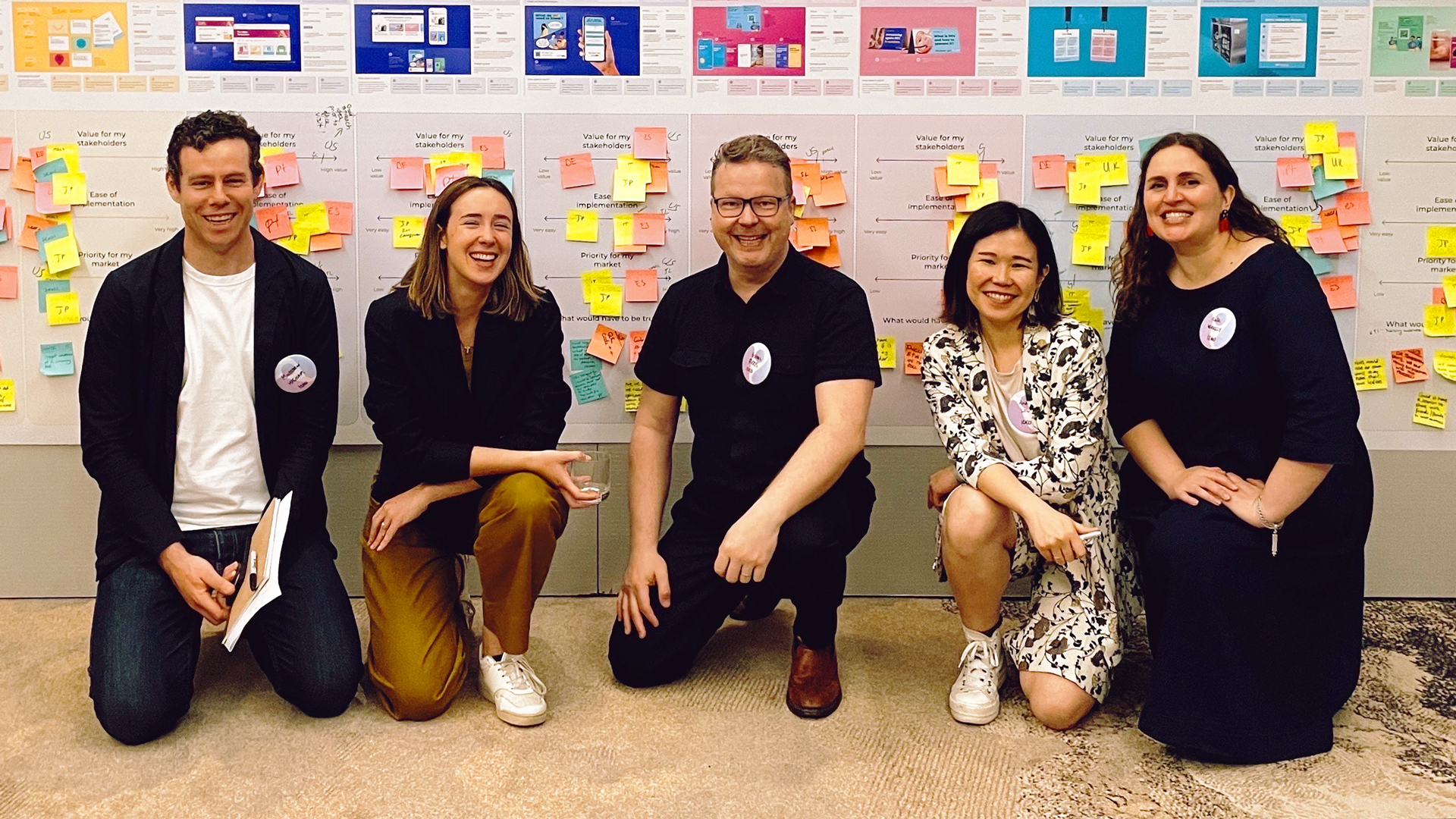
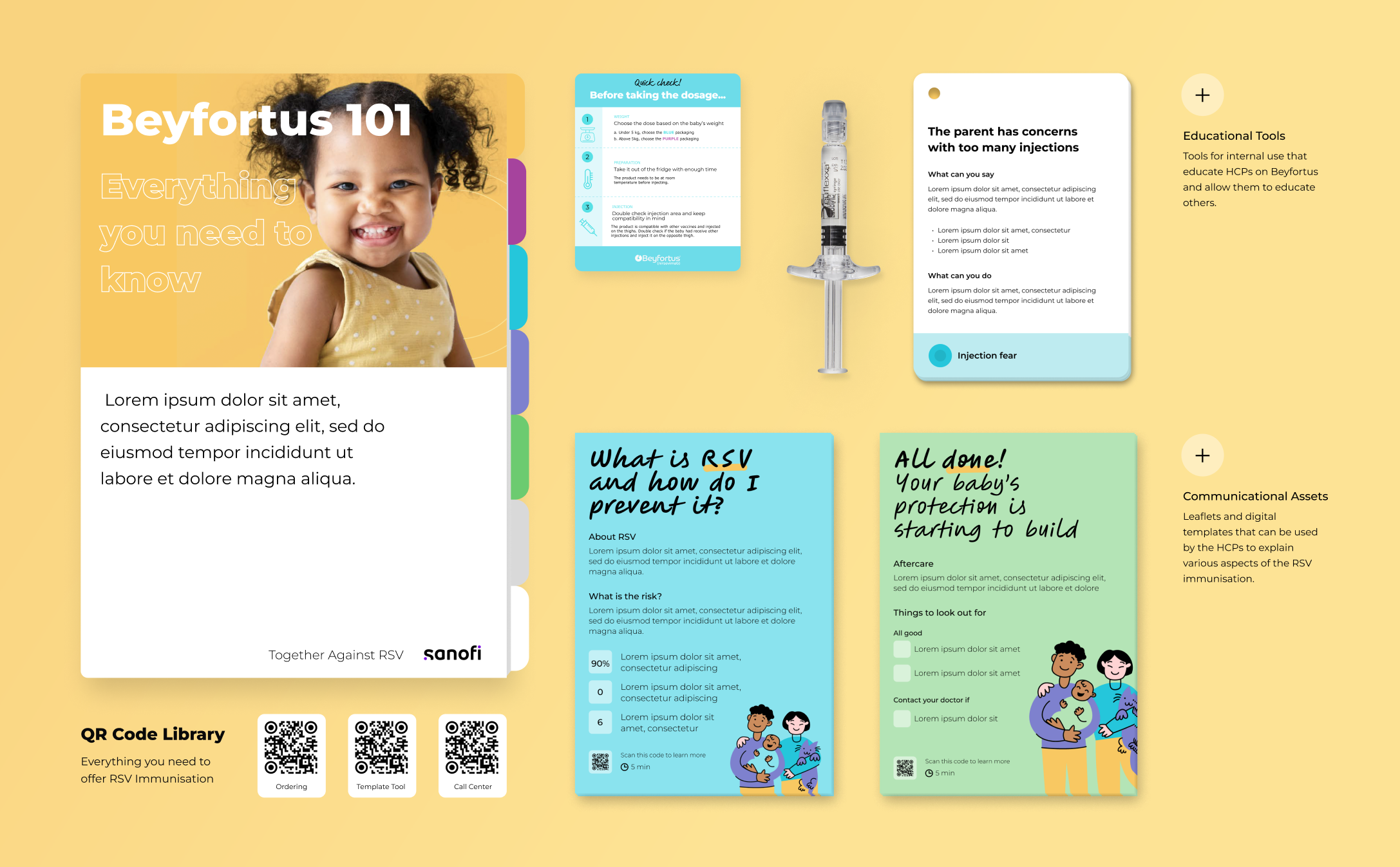
IDEO translated these research insights into a highly accessible global communication toolkit that uses simple, straightforward language, metaphors, and illustrations to support informed conversations between healthcare providers and parents before, during, and after a child is born. IDEO then conducted a series of market-fit co-design workshops with representatives of Sanofi’s global immunization business to iterate on the print and digital tools, make them more resonant with regional customers, and ensure compliance with local regulations. IDEO handed the toolkits over for development to support the launch of Beyfortus in January 2024, just in time for RSV season.
Beyfortus saw enormous demand in its first year, demonstrating strong efficacy in real-world applications and achieving blockbuster status as a $1.8 billion therapy. Sanofi’s global launch team credits the patient-centric toolkit with increased requests for communication materials from its regional markets as well as from healthcare and government organizations that have typically been hard to reach, key goals of its global-local launch strategy.
Since its development, Beyfortus has received swift regulatory approval from the US, EU, China, and Japan, with patient demand causing Sanofi to triple its worldwide manufacturing capacity to meet the needs of the 2024-25 RSV season. Ahead of the larger global distribution of Beyfortus, IDEO and Sanofi partnered with equity expert consultants, Fearless Futures, to conduct a DEI review and worked with doctors and nurses who participated in the initial drug launch to make the materials even more accessible, relevant, and successful for 2025 and beyond. To date, six million babies—and counting—have been immunized with Beyfortus.
Worldwide, childhood vaccination hesitancy among parents fluctuates between 25-45%, according to the World Health Organization (WHO), a trend it considers one of the biggest global threats to public health.
85.9%
reduction in hospitalizations for infants who received Beyfortus compared to those who did not (2023–24 RSV season)
$1.8B
in first-year sales of Beyfortus

Connecting the underserved to the digital economy
Designing inclusive digital financial services for the last mile.
Money works differently in communities traditionally excluded from formal banking, which makes designing products that really serve their needs a very different kind of challenge. People who live in the last mile often prefer cash because it’s physical. They can see it, touch it, and access it at any time.
While digital money offers many benefits, such as securely sending money over long distances and accessing new forms of credit, many don’t trust it because the places where they can access digital currency have often been too far away.
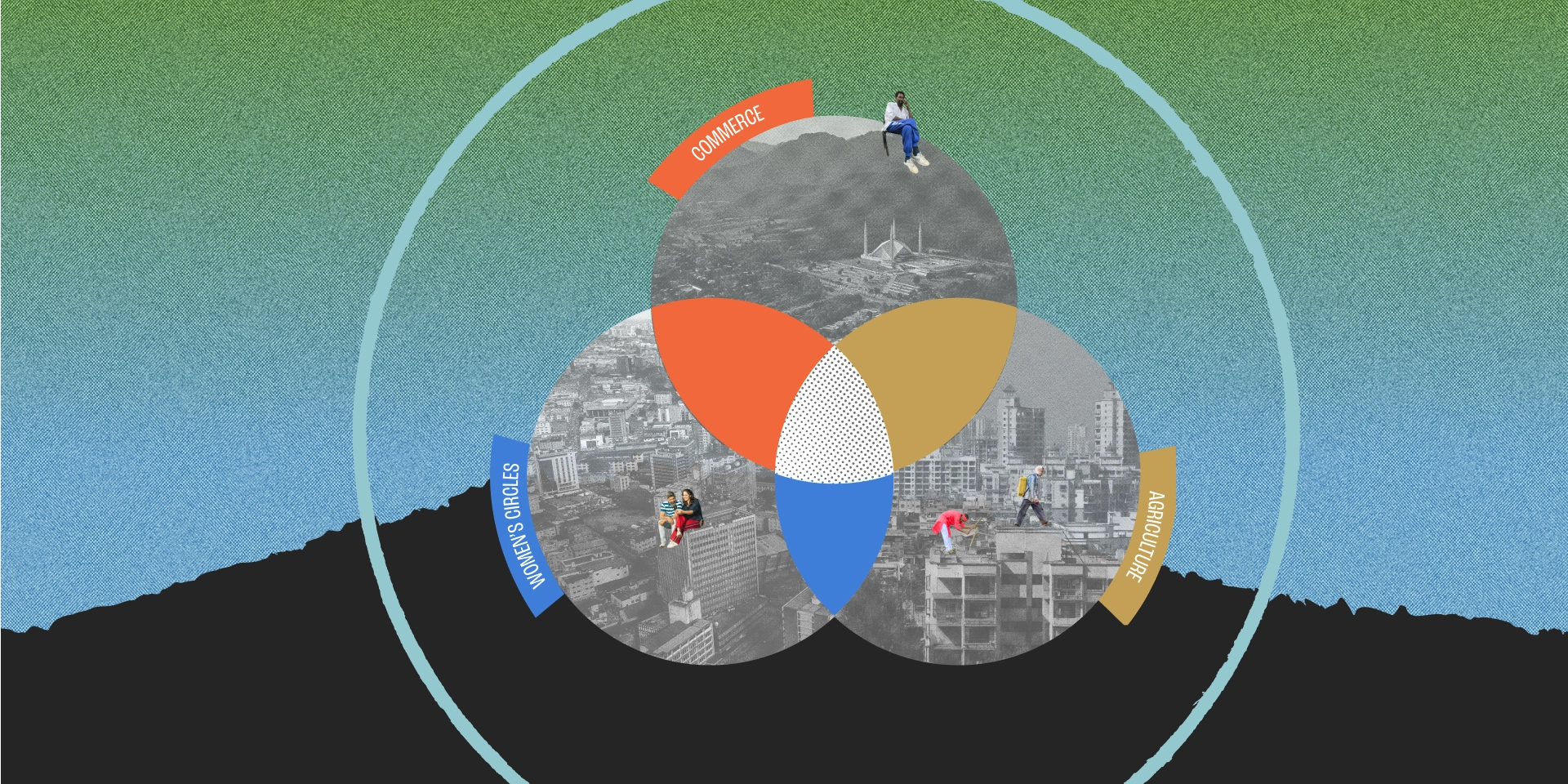
In 2017, over 500 million adults lived more than three miles from a financial access point in eight emerging markets studied by the Gates Foundation. This may not sound like much of a barrier, but for those living in the last mile, it means having to close their shops, lose a day of earnings, arrange family care, and pay for travel, which can be time-consuming and difficult, especially during rainy seasons. For low-income people, the inaccessibility of financial services has been a deal-breaker for adopting digital money. On the flip side, banks, telecoms, and other companies struggled to reach these customers because their products were not inclusively designed for them, and their distribution models failed to scale in rural areas.

Amid these myriad challenges, IDEO and the Gates Foundation saw an opportunity to introduce innovative ways to provide access to digital financial services even in the most remote areas of the world. And to make bold new bets: Could we design new digital experiences centered around the financial needs of people in the last mile? What would happen if we mobilized hundreds of actors to develop new ways to address financial access at the last mile? What if we took the most exciting financial innovations that worked in East Africa and piloted them in South Asia—and vice versa?
Working with more than 70 partners, including local startups, corporations, including Google, Unilever, Telenor, Standard Chartered, and BNI, as well as IDEO.org’s Women & Money program, LMM adopted a collaborative, ecosystem approach to drive and scale new digital financial products and systems.
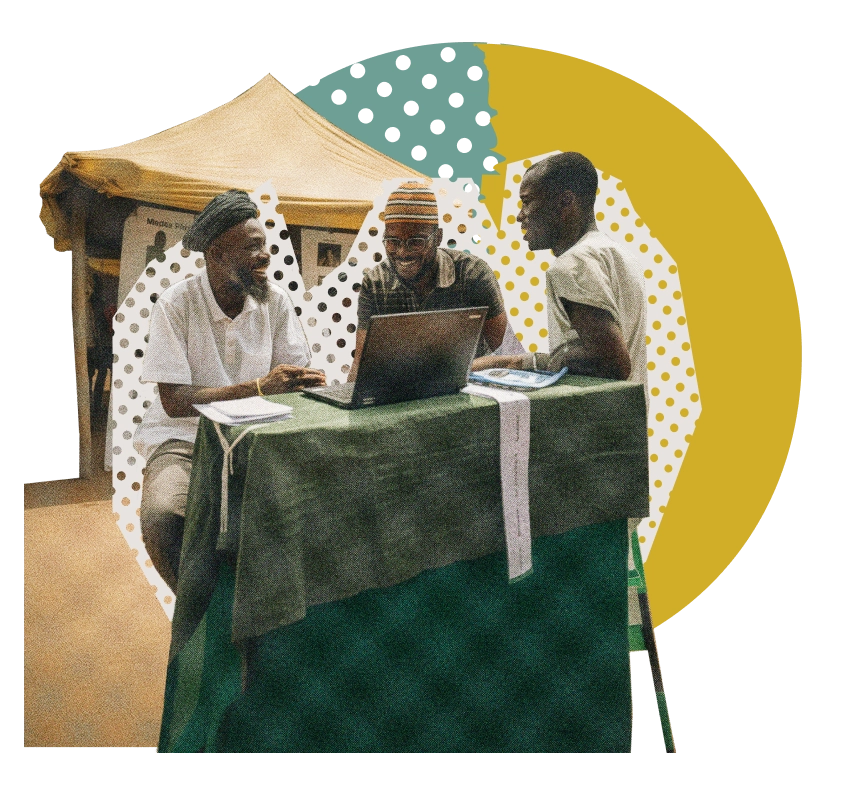
A few of the life-changing innovations launched by LMM and its partners include:
- Finja’s intuitive small-business app that helps micro-merchants in Pakistan access flexible, interest-avoiding Islamic credit to order products from fast-moving consumer goods companies like Unilever. Finja now serves 45,000 merchants and reaches 10.2 million customers.
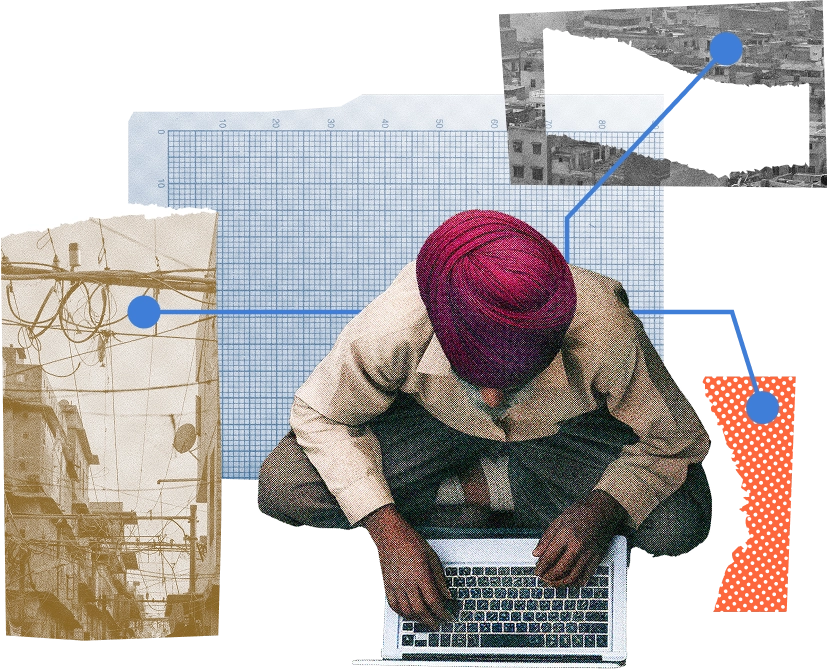
- Accessing government benefits can be a challenge, especially when it’s through a mobile phone, so IDEO helped Indian startup Haqdarshak develop a robust digital experience for its 52,000 community agents to facilitate access for low-income people. The agent network—70 percent of whom are women—now serves more than 7.6 million families and has unlocked $2.2 billion in social benefits for those who need it most.
- Making micro-credit nearly instantaneous was a solution that startup Kuunda offered to financial agents in Tanzania. IDEO helped adapt the product to deliver working capital for merchants in Pakistan. Today, Kuunda continues to grow across markets in Africa, totaling 6.1 million active users and distributing $1.1 billion in loans globally.
While the LMM program officially concluded in 2024, lessons, tools, and case studies from the program are accessible on IDEO’s Financial Futures website. Those looking to catalyze equity and inclusion in digital financial services for the last mile can consult LMM’s Financial Confidence Playbook, the open-source Digital Confidence Toolkit (created in collaboration with Google), or the Gender Evaluation Framework, among other helpful resources.
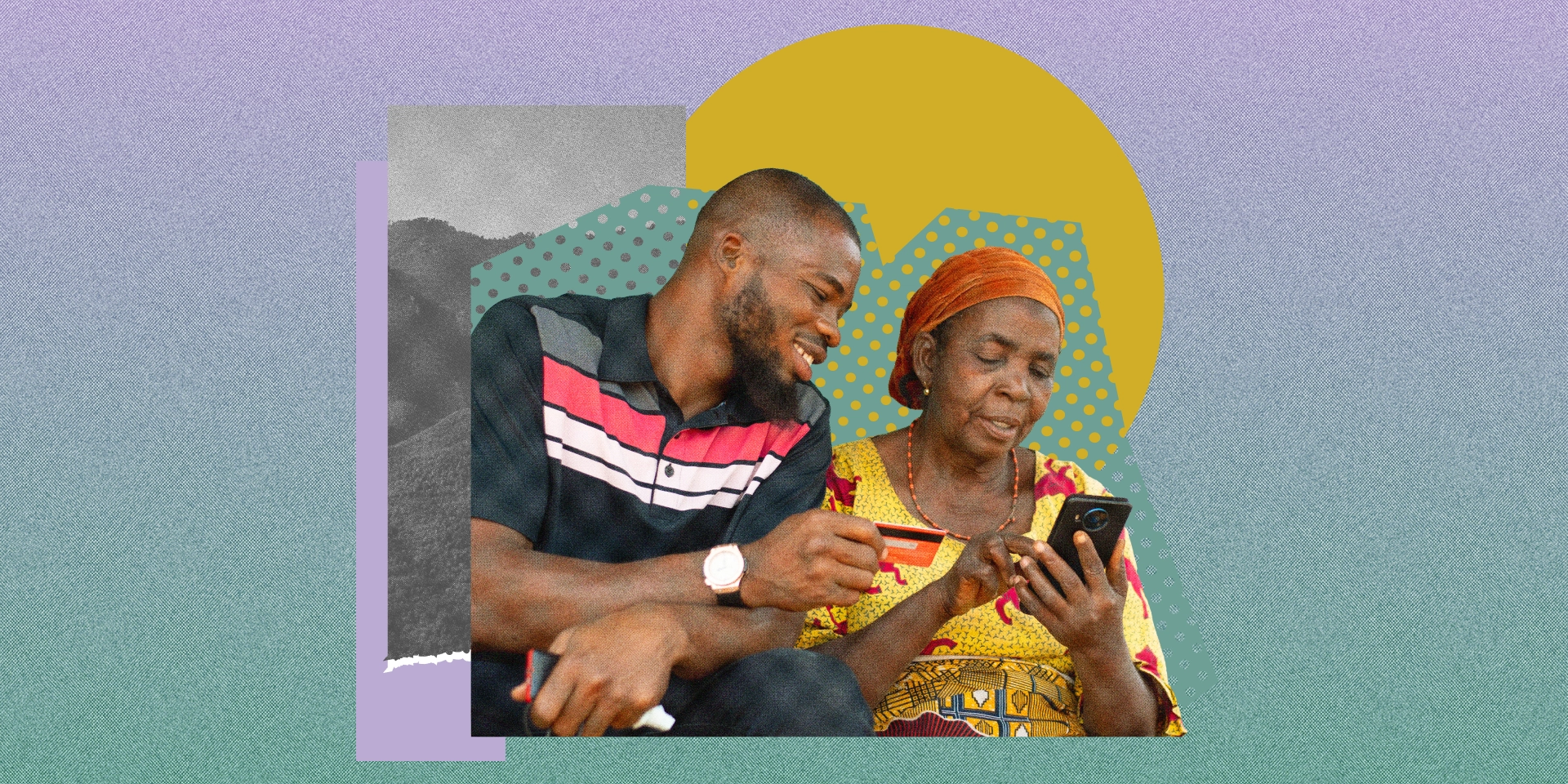
Over 1.3 billion people worldwide in poor and rural areas are excluded from formal financial services, including savings accounts, credit lines, and insurance, making it harder for them to move out of poverty.
34M
underserved users reached by 100+ new financial products, pilots, and prototypes
70+ LMM partners
including Google, Unilever, Grab, Standard Chartered, Cargill, Airtel, Celo Foundation, and BNI

Disrupting the beauty goliaths
How a new Peruvian brand overcame the odds—by design.
Multinational CPGs excel at creating popular, mass-market products for large countries. When they enter smaller countries like Peru, they often parachute their brands onto store shelves and skip consumer product testing altogether, largely relying on brand recognition to drive sales. This oversight presented Alicorp and IDEO with an opportunity: flip the script and invite young Peruvian women to work together with them to create a new hair care brand from scratch. Over the course of a four-year transformational journey, IDEO worked closely with Alicorp, adopting a “learn by doing” approach to foster a culture of innovation, launch a new brand, and drive growth for the company through consumer-centric design.
The collaboration began with an inspirational trip 10,000 miles away to Seoul, South Korea, the epicenter of global beauty trends. To expand their thinking, the Alicorp/IDEO team received K-Pop glow-ups and explored other cutting-edge beauty experiences. They were inspired by the Korean market’s unwavering focus on meeting the particular hair care and skin needs of Korean women.
Back in Peru, the team conducted multiple rounds of in-depth interviews with young women, teenagers, beauty influencers, and experts across the country. They learned about their beauty goals, personal care routines, and “mixto” hair texture. They heard about women’s struggles with regional weather—the Andean region’s extreme dryness versus Lima’s humidity and the city’s hard water. The research revealed that Peruvian women wanted natural products that worked hard, wouldn’t harm their hair, and celebrated what made them unique. They wanted a brand that spoke to them honestly and authentically. That represented and empowered them. That didn’t overpromise, underdeliver, or hold up European and American beauty ideals that didn't resonate with Latin American women like the multinationals did.
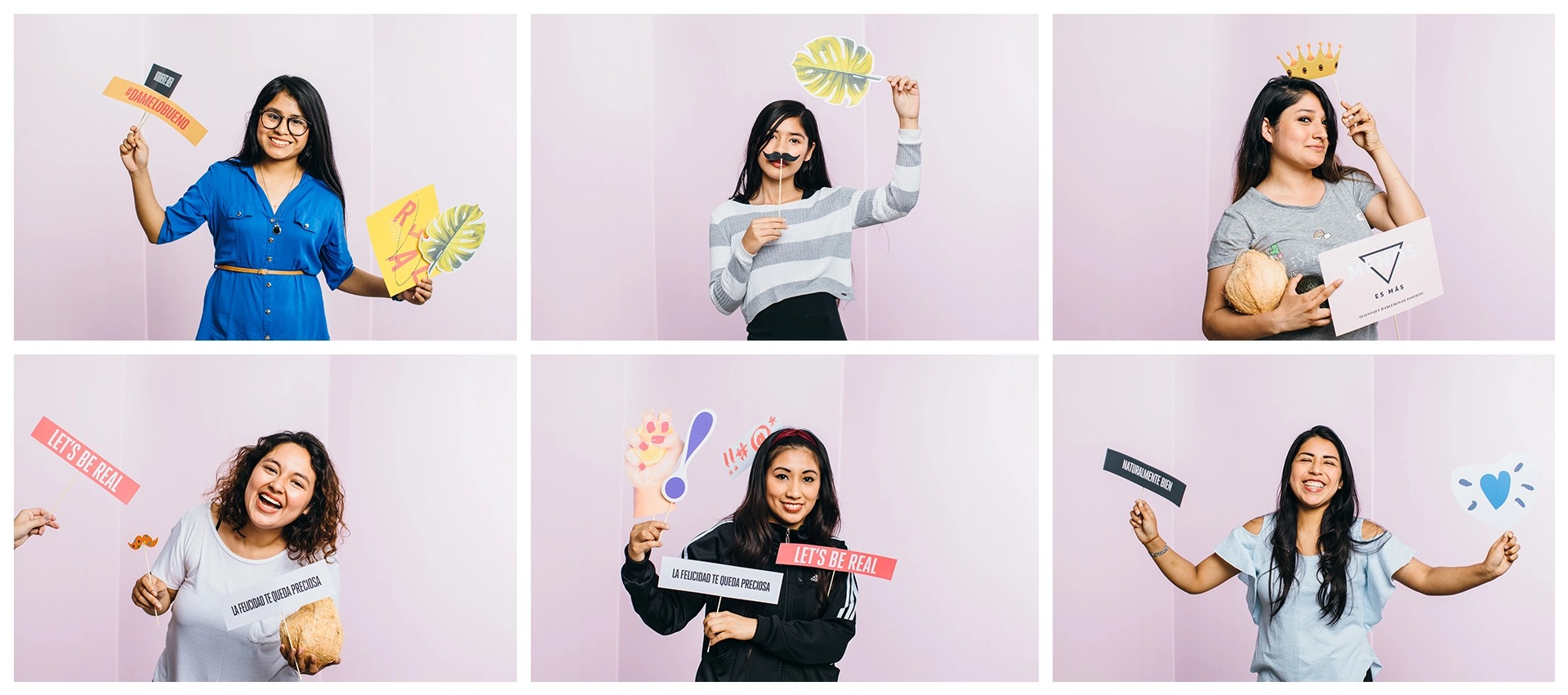
Armed with these insights, the Alicorp/IDEO team developed tangible brand prototypes for women to respond to during successive rounds of user research, including in a beauty pop-up store in Lima. The team shared various bottle types, ingredient mixtures, and brand positioning options. Should the new brand’s personality be an outspoken feminist or a gal pal? Au naturel or sophisticated? The iterative feedback cycles informed everything from brand strategy and ingredient recommendations to product line-up, brand and product naming, launch strategy, and digital activations.
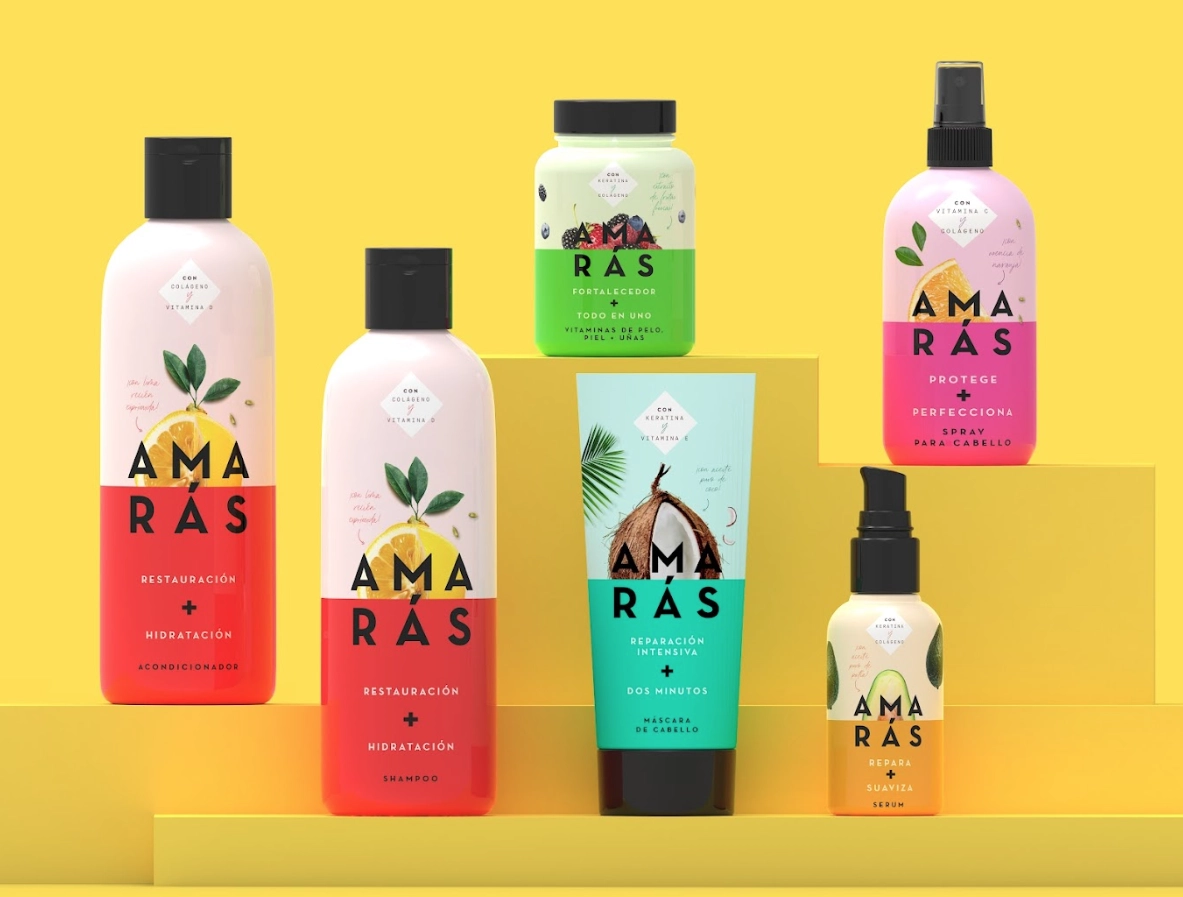
The final design, Amarás (“you will love”), is a personal care line that centers the needs and aspirations of Peruvian women. Hitting shelves in 2022, its shampoos and conditioners feature local, bio-diverse ingredients, including mangoes, macadamia nuts, and goldenberries, that help address the specific hair texture needs of women in LATAM and the climate realities of the Andean region. The brand’s launch campaign included TV and print ads featuring Peruvian models from every region as well as commissioned murals celebrating local beauty by artists across Peru. Most notably, the unapologetically authentic Peruvian hair care brand became a TikTok sensation, garnering over seven million organic views and more than 300 viral videos from enthusiastic new fans.
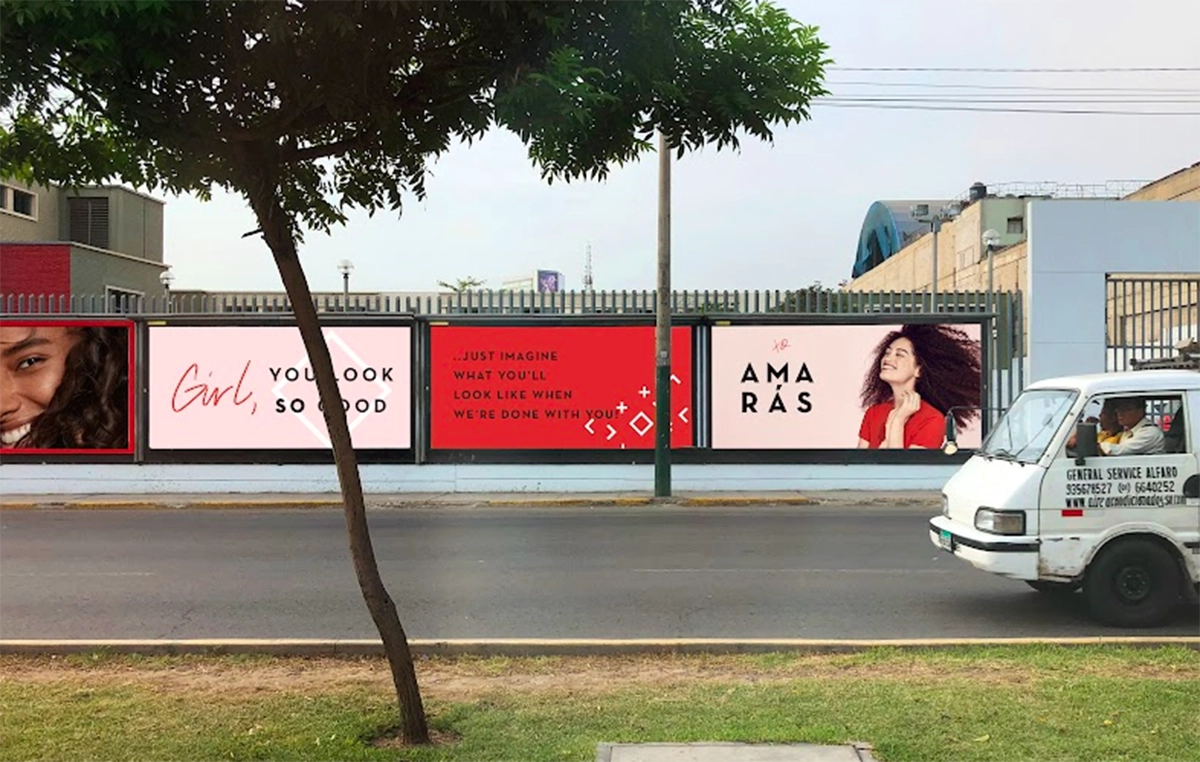
Three months after its launch, Amarás seized a 7.5 percent share of the personal care aisle—a remarkable goal it had set for year three.Since then, Alicorp has continued to expand its creative capabilities, designing personal care products tailored to the cultural and beauty needs of Latin American consumers.

Alicorp launched numerous successful brand extensions across its food and home care categories, but was unable to crack the $340M USD hair care product market in its home country of Peru.
7.5%
Amarás’ share of the Peruvian hair care market 3 months after launch—a goal Alicorp had set for year 3
7M+ organic views and 300+ organic fan videos
created on TikTok during Amarás’ launch campaign
Enhancing garment worker well-being with AI
Introducing Aitu, “Smart Machines, Uplifting People.”
Thirty years ago, China-based Jack Technology started as a home sewing machine manufacturer. During the late ‘90s Asian financial crisis, the company made a pivotal shift to industrial sewing and soon developed the world’s first machine for small-batch, quick-response clothing production. A decade ago, the innovative global leader began investing in robotics and exploring AI, positioning it well to address today’s urgent need for smarter manufacturing solutions.
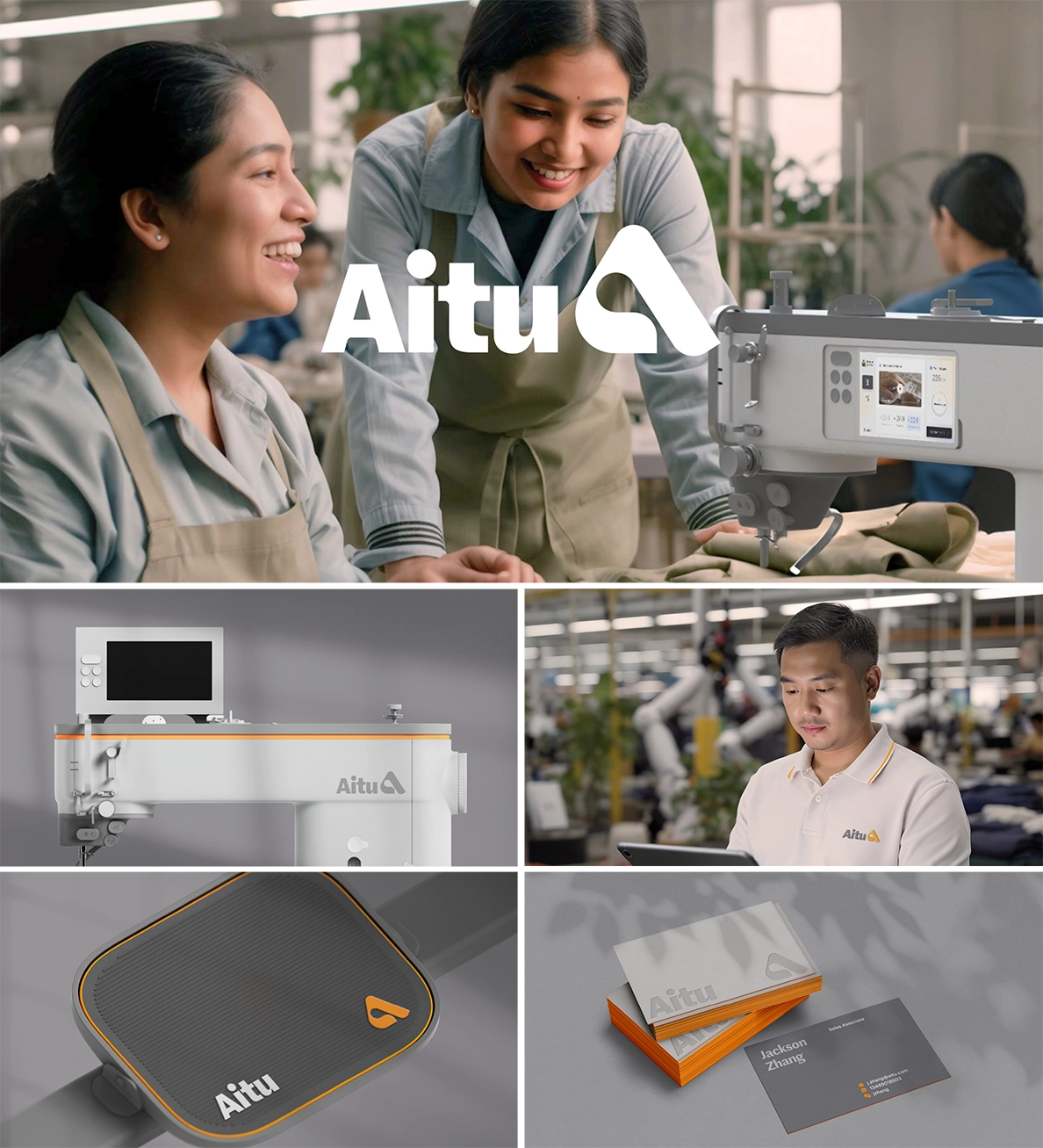
Believing a new, strategically positioned sub-brand could attract larger, more premium global manufacturing customers, Jack Technology and IDEO set out to understand their needs. DEO began by visiting more than a dozen garment factories across China, Vietnam, and Bangladesh, conducting in-depth interviews with factory managers, industrial engineers, pattern-making leaders, and frontline workers. It soon became clear: the apparel manufacturing industry is at a critical juncture. The way apparel manufacturers navigate the promises of intelligent technology—while addressing deep-rooted structural issues like labor shortages and working conditions—will shape the industry's development for years to come.
For premium clothing brands, garment factory compliance and worker well-being are priorities when selecting production partners, so many owners proudly showcased their improvement efforts. They discussed investing in quieter machines and air conditioning, enhancing lighting, adding greenery, and implementing no-overtime policies. Amid rows of identical sewing stations, the IDEO team noticed small human gestures, such as a small vase of flowers. As one operator said, “I just want to uplift myself during work.”
The research helped IDEO identify a core opportunity for differentiation. Create human-centered products and services that further enhance working conditions in large apparel factories, strengthen their ability to attract and retain talent, and drive the industry toward a more sustainable future. Through multiple rounds of co-creation with the Jack Technology team and key apparel-sector stakeholders, a clear brand direction for Aitu began to take shape: “Smart Machines, Uplifting People.”
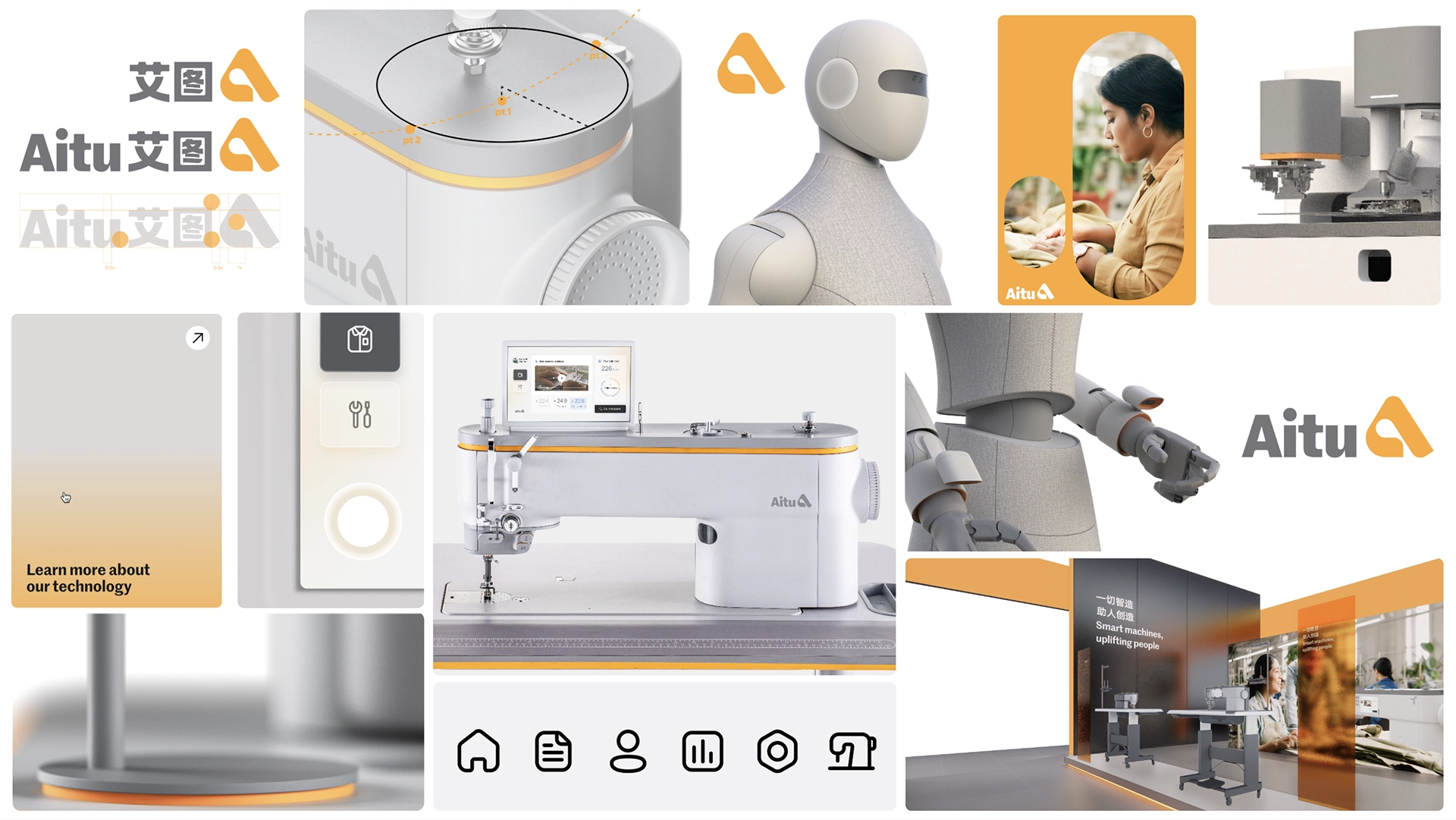
Guided by this human-centered ethos, IDEO helped build a comprehensive brand system for Aitu. The idea of “uplifting people” and showcasing garment workers’ professionalism and skill is expressed throughout all brand communications, the industrial design of its smart sewing machines, and the interaction and industrial design of a humanoid sewing robot.
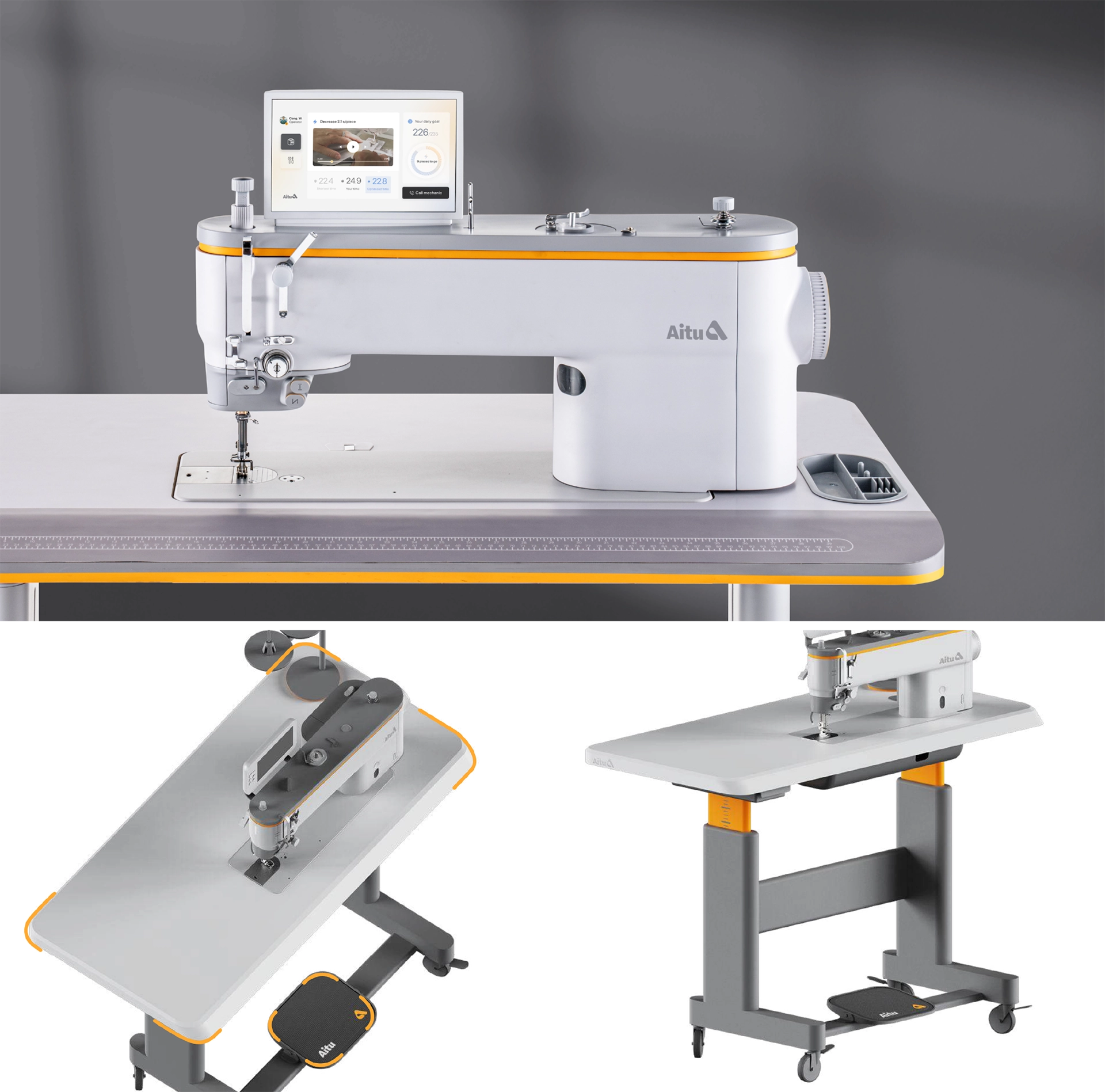
In the eyes of factory workers, this is the new work experience Aitu brings to life. Compared with traditional bulky industrial machinery, the clean lines and soft edges of Aitu’s new AI-powered sewing machines feel more like the professional office tools found in bright, organized workplaces. Concave surfaces and soft materials diffuse glare from overhead lighting to reduce eye strain, while clear interaction logic and icon-based visuals support operators with varying skill and education levels. AI technology, seamlessly embedded in the machine’s core functions, automatically adjusts parameters for different fabrics and tasks, allowing operators to achieve high-precision results with less effort. A soft halo-like light glows whenever the AI-assisted function is active, fostering users’ trust in both the technology and the AI-powered sewing machine as a whole. When hundreds or thousands of Aitu machines are arranged together in a factory, the overall effect is a modern, professional, and high-end office environment.
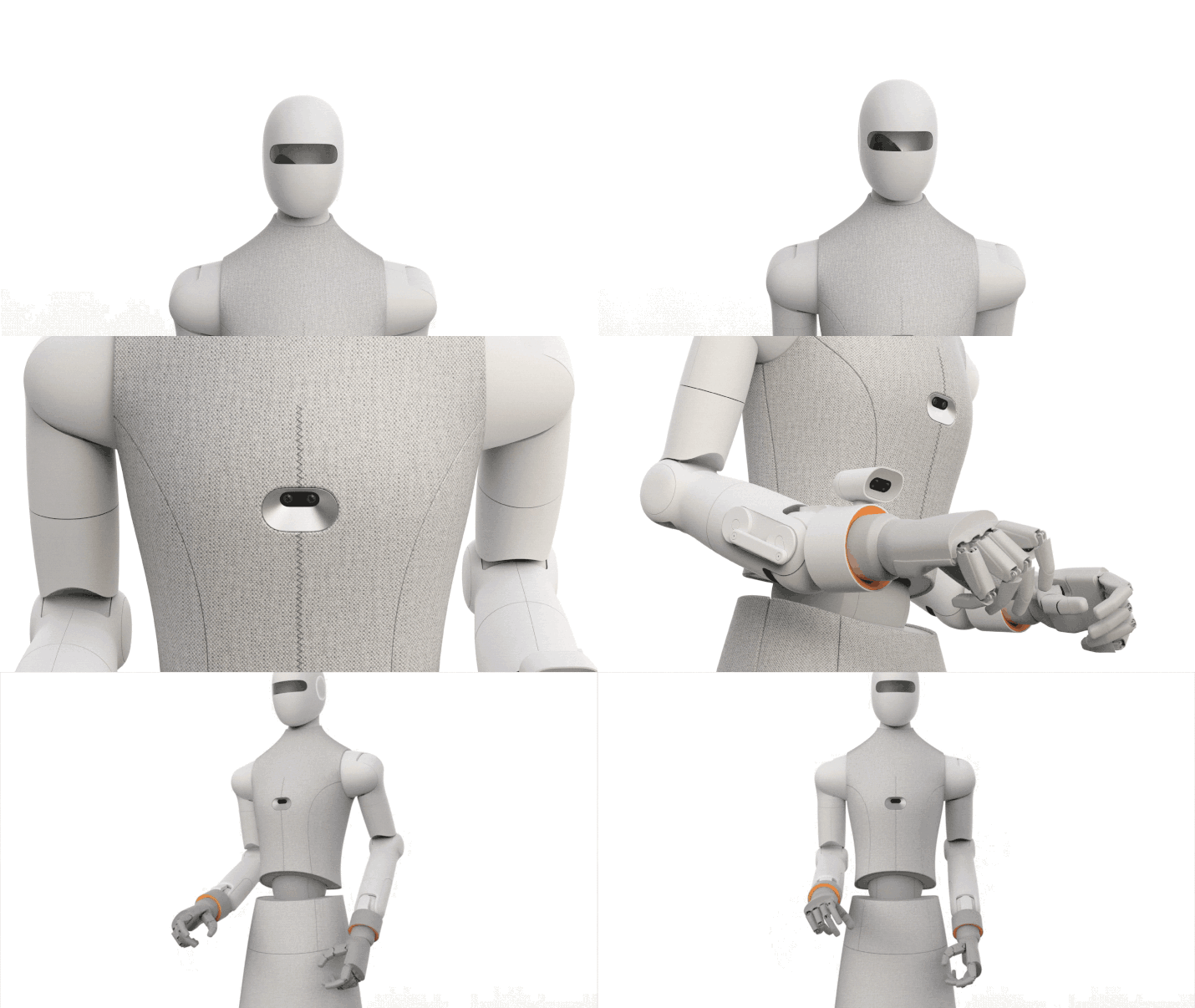
Working closely with Aitu’s robotics team, IDEO’s final design challenge was to bring a human-machine collaboration to life through a full-scale AI robot, later named Ainy. The robot has an elegant, biomimetic silhouette. Its fabric-like outer finish features design elements commonly found in garment making, such as cutting and stitching lines, giving the robot the approachable look and feel of a skilled tailor companion who can assist with simple, repetitive tasks. When Ainy is operating, a circular light ring gently pulses at the sides of the robot’s ears and on the paired sewing machine’s display screen, clearly signaling the robot’s activity to its human co-workers.

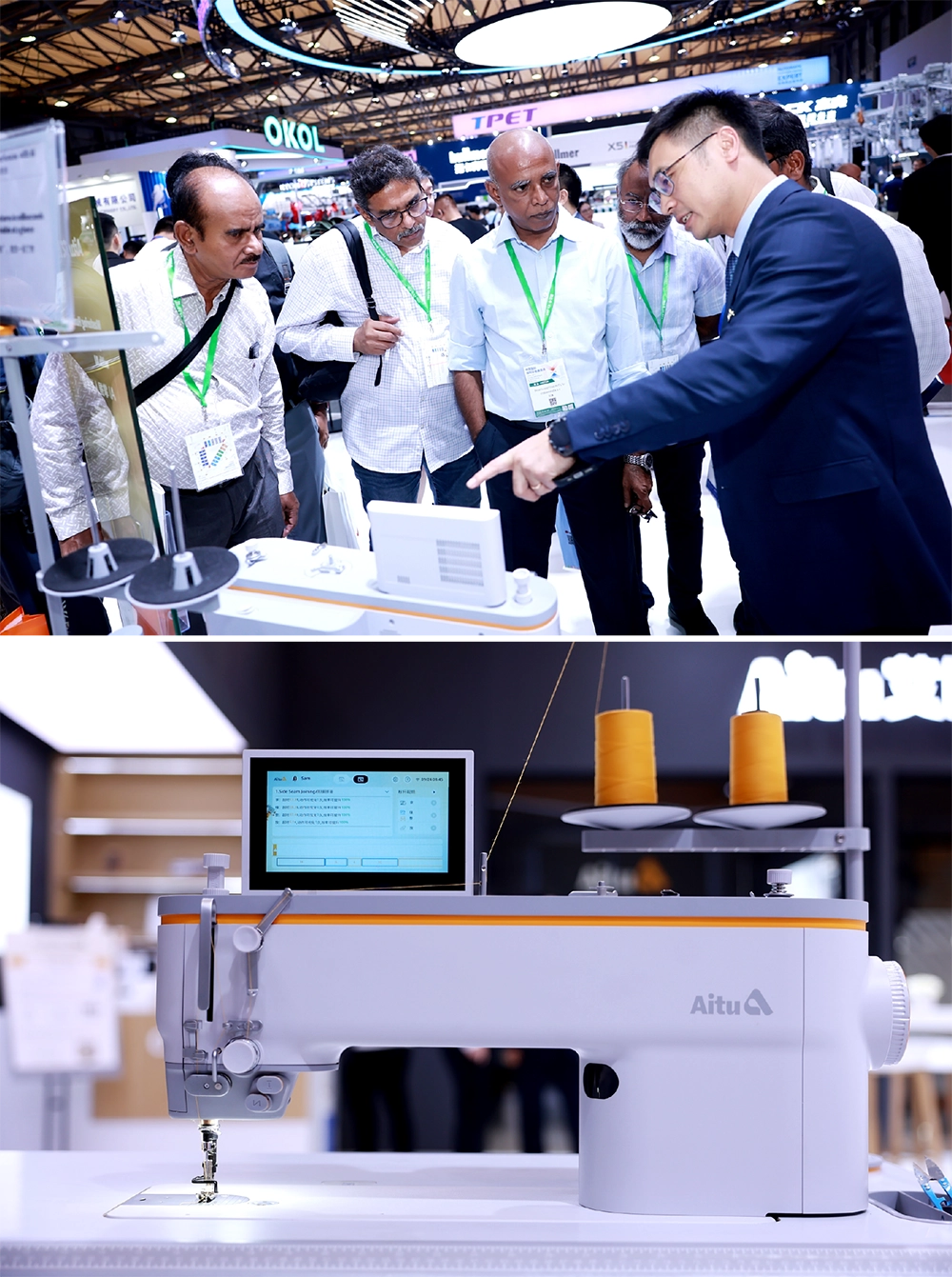
In September 2025, Jack Technology debuted its new Aitu brand, along with its first AI sewing machine and a prototype of its humanoid robot, Ainy, at a launch event at Shanghai Tower and at the China International Sewing Machine & Accessories Show. Shortly thereafter, Aitu received a Gold Award for AI Product Innovation from IFA Berlin, Europe’s largest trade show for consumer electronics, as well as a Merit Award in Product & Industrial Design from the DFA Design for Asia Awards.
In October 2026, following extensive testing and iterations of Ainy on real production lines with customers worldwide, Jack Technologies announced the opening of the world’s first factory dedicated to sewing robots in Taizhou, Zhejiang, China. The company plans to manufacture around 10,000 robots each year.
Before AI, the apparel manufacturing industry had experienced little fundamental change since the invention of the lockstitch sewing machine nearly two centuries ago.
10,000
planned annual capacity of AI sewing robots to be manufactured by Jack Technology
2025 Gold Award for AI Product Innovation
from IFA, the world’s largest home and consumer tech event
Our Top 10 Stories of 2018
Take a look back at the IDEO blog's greatest hits
The list is chock full of tips and tools to help you bring a creative mindset to your life and work. We hear you loud and clear: Look out for more how-tos and to-dos in 2019!
PS: Sign up for our weekly email newsletter to stay up to date with The Octopus in the new year.
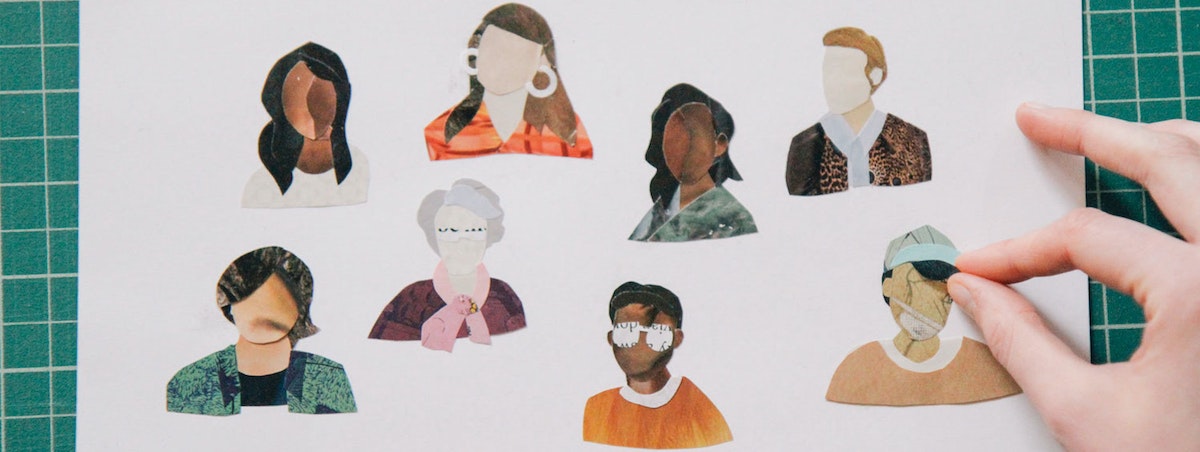
1. 5 Brainstorming Exercises for Introverts
Shy people of the world, unite! Try these five creative brainstorming exercises to help the introverts among us feel more comfortable contributing their ideas.

2. An IDEO Recruiter’s 5 Tips for Writing a Better Cover Letter
Prepping for a job interview? Use these five tips from a seasoned IDEO recruiter to help you write a compelling, well-crafted cover letter.
3. This Deck of Cards Will Change the Way You Work
It can be a challenge finding the right language for critiquing creative work. That’s why a team of IDEO designers created this deck of cards to establish a shared vocabulary for cross-disciplinary teams.

4. Why Gesture is the Next Big Thing in Design
Soon, communicating with our AI assistants by talking into thin air may no longer be our only—or best—option. Here’s why gesture interfaces could be the future of interaction.
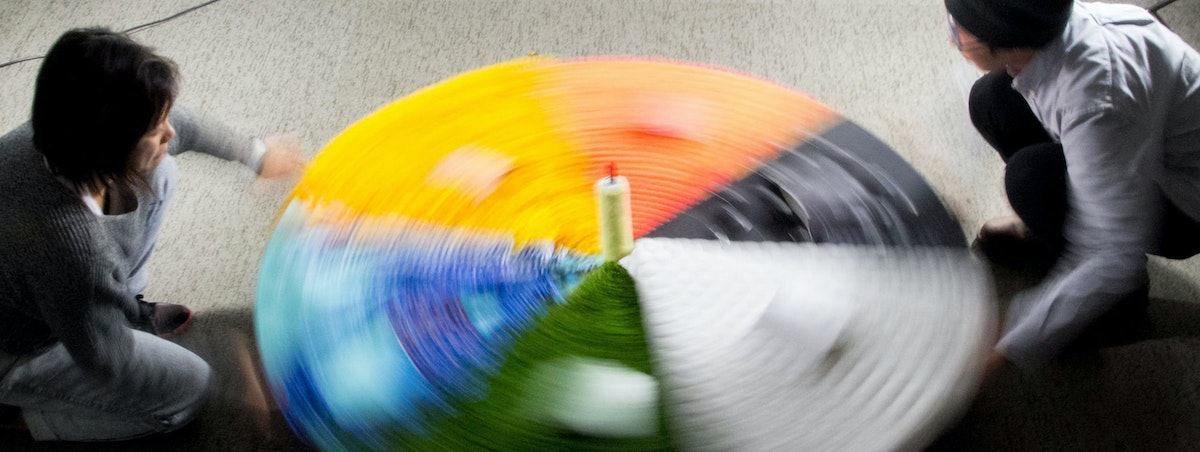
5. Why Workplace Culture Matters (And How to Build a Good One)
You might think workplace culture is about ping pong tables and sparkling water, but really, it’s about creating the conditions for employees to do the best work of their lives. Here’s how to level up your company’s culture.
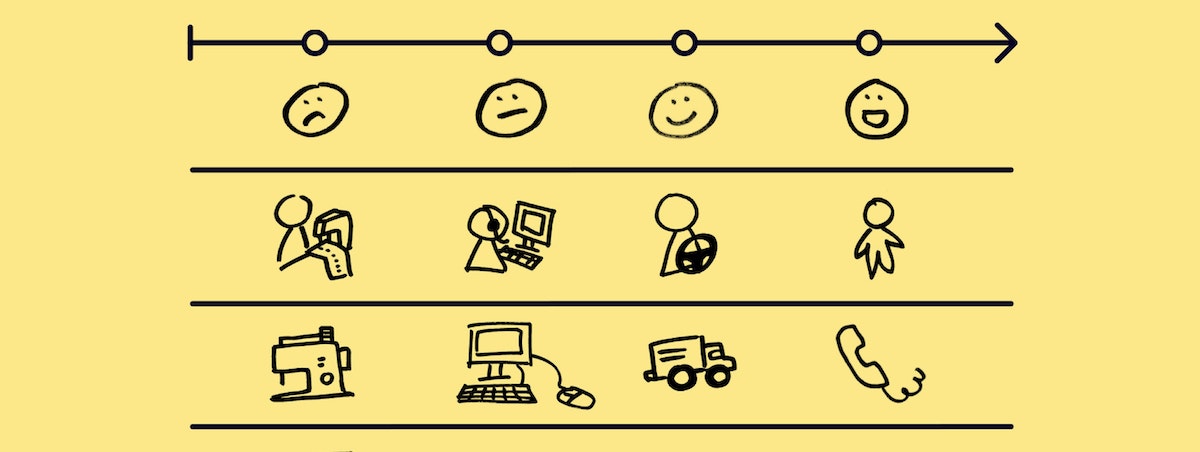
6. 3 Tips to Help You Prototype a Service
Prototyping is a powerful tool in the design process, but not every prototype can be built out of cardboard and foam core. IDEO U shares tips from their newest course to help you prototype intangible service experiences.
7. 15 Podcasts Playing in IDEO Ears Right Now
Looking for some fresh audio inspiration? Feast your ears on these 15 podcasts hand-selected by IDEO designers.
8. 3 Ways to Get Comfortable with Ambiguity
As designers, it’s our job to help build the future we want to see. While that freedom can be liberating, the ambiguity can also be tough to navigate. Try these mindset shifts to help you embrace uncertainty like it’s no big thing.
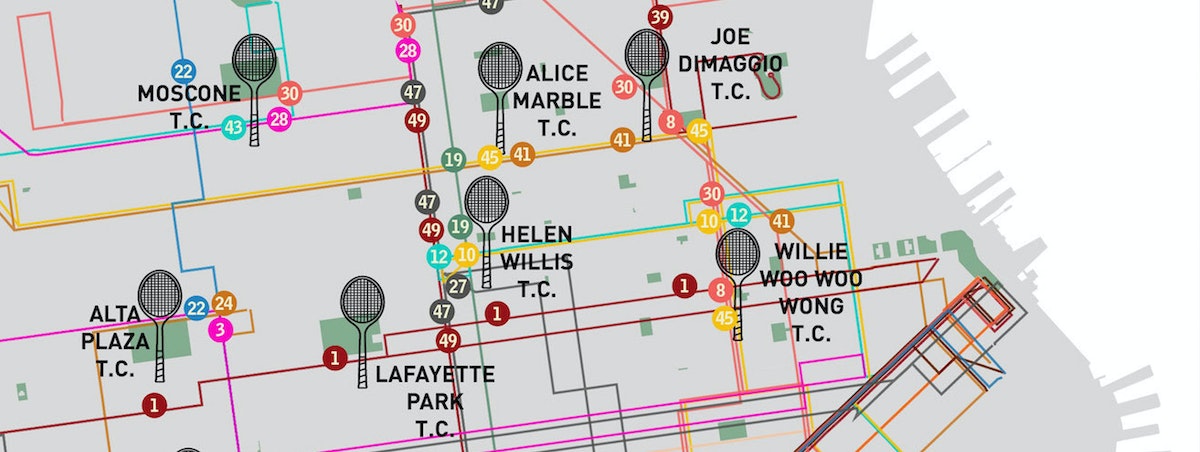
9. A Cartography Nerd’s Guide to Custom Map-Making
IDEO’s resident cartography nerd shares his step-by-step guide to designing a custom interactive map.

10. 6 Ways to Hack Your Workspace and Find More Joy at Work
Research shows that feeling joy at work not only increases our wellbeing, but also our job performance. Get started with these colorful ideas from guest contributor Ingrid Fetell Lee, a designer who studies joy.
From workplace culture to best practices for brainstorming to the future of interaction—2018 has been a year of creative growth for The Octopus. To celebrate, we’ve rounded up our greatest hits—the top ten stories that you, dear readers, have read and shared most this year.
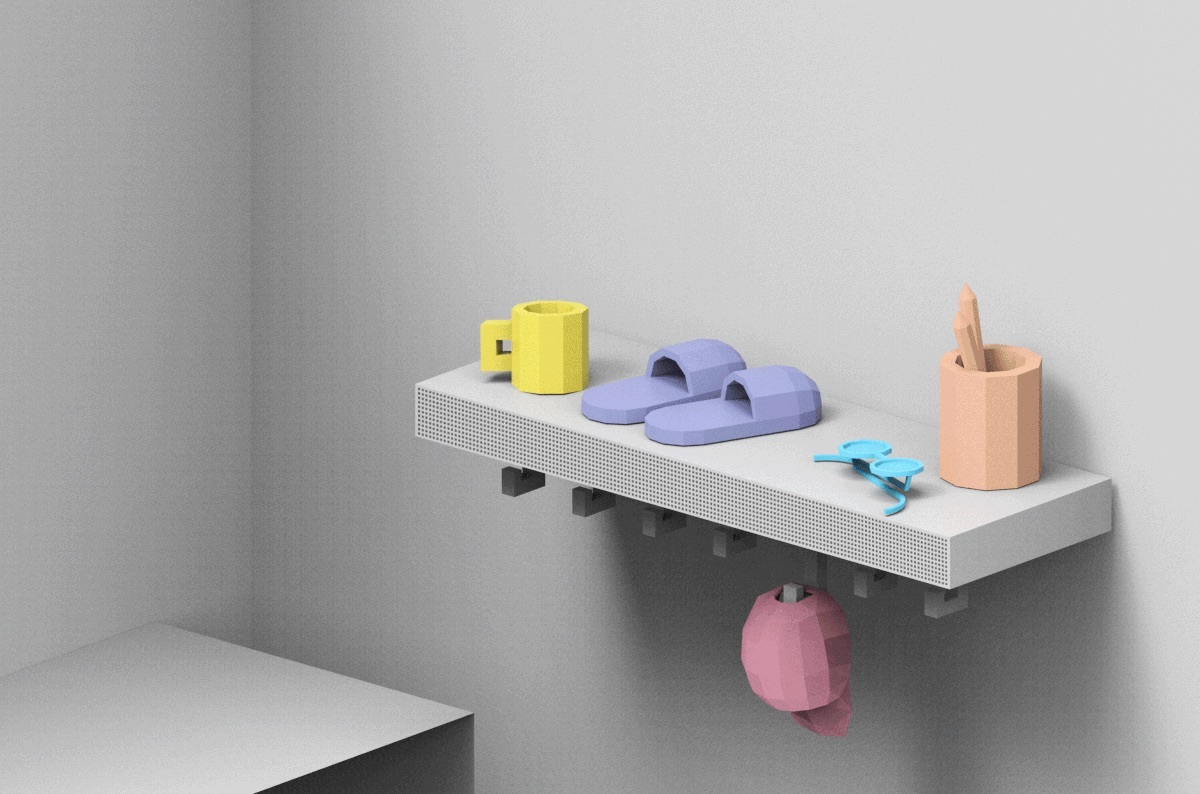
Visit the Workplace of Tomorrow With These 4 Futuristic Designs
In the future, we don't think our 9-to-5s will be 9-to-5s at all
People are talking about what the world will look like once machines take over jobs. But before (and if) we ever get there, the way humans experience the workplace will change in other ways, too. Recently, while a group of us were in between client projects, we spent a week asking questions about just that—the future of work.
We dug into topics like technology, flexible hours, global teams, connection, and community. Once we had our ideas, we prototyped quickly. Building these physical models made the intangible more tangible, which was helpful when talking about something as abstract as the future of work.
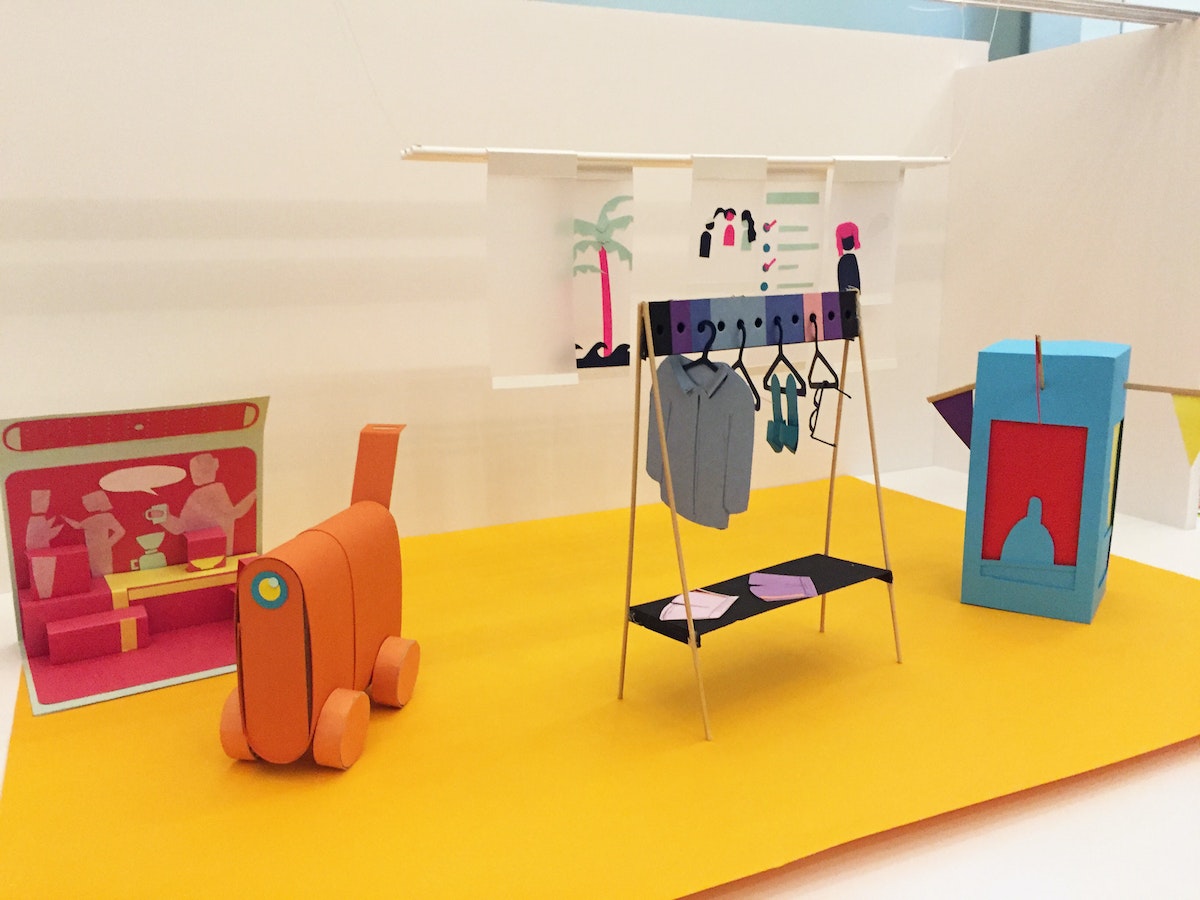
In addition to these physical prototypes, we created the following visuals to illustrate what we think might be the future of our nine-to-fives (which we don’t expect to be nine-to-five at all). Here are the four questions we asked and the playful ideas we came up with to help people navigate the ever-changing professional world.
1. How might we foster belonging, connection, and accountability?
Technology lets you work from almost anywhere. But the unforeseen cost of this is often a loss of community, both inside the office space and for those working remotely.
Imagine a small, portable “wormhole” that connects you to a place and those inside. The portal projects the visuals and sounds of your office and coworkers into your space, so you’re no longer alone. Based on your need, the signal strength can be adjusted to convey atmospheric office noise or actual hallway conversations. By turning the device on, you also notify others that you’re available and working.
2. How might we enable our environment to change to support different modes?
With our lives becoming more flexible and connected, the same needs to be true for our spaces. A certain room might need to host an interactive meeting, but also allow heads-down time.
Imagine a digital and physical piece of furniture that transforms your environment. Spatially, the window hides certain areas. Digitally, it displays dynamic images. You can move the window to the wall to showcase a relaxing video of ocean waves, or on top of your kitchen counter to display recipes. Merge multiple windows into a large canvas to turn virtual face-to-face conversations into room-to-room conversations.
3. How might virtual spaces gain a physical presence?
Lawyers, therapists, and teachers are now having more virtual meetings with clients and students. What if this virtual connection came to life in the physical world through new types of digital brick-and-mortar service stations?
What if there was an array of large, screen-based portals throughout your city? The screens create virtual shop windows that integrate into existing shopping streets, letting pedestrians peek inside retail stores and virtually interact with owners. Buildings constructed with the screens can host private conversations with dietitians or job counselors. The screens can create small-scale versions of existing services, too: Banking booths made of screens let tellers offer financial advice to customers.
4. How might we manage changing rhythms, rituals, and transitions?
For many of us, our minds primarily switch between home and work mode. Our environment, attire, and tasks reflect the current mode. The big advantage of this mental separation? Focus.
We envisioned a wearable assistant that autonomously creates your optimal daily schedule based on your relationships and connections using set units of time. The notion of nine-to-five is replaced by alternating, colorful blocks representing work and life activities. The bracelet reminds you of work meetings and the best time to call your parents who live across the globe. If you’re not feeling like exercising, remove the block or push it back in time. The device rearranges your schedule while you focus on the present task.
Asking questions, brainstorming, and quickly prototyping can help bring even the most abstract ideas to life. And even if the prototypes are a little more whimsical than serious, they help us imagine the future in a creative and human-centered way.
The team that worked on these ideas included Julian Kraan, Dogan Sekercioglu, Chloe Lee, Kim Cullen, Matty Martin, Geemay Chia, Andy Deakin, Jayne Jeffries, and Matt Marchand.
As designers, our work begins by asking good questions. They range from the straightforward—how might we make ice cream more portable?—to the wild—how might we design the workplace of the future?
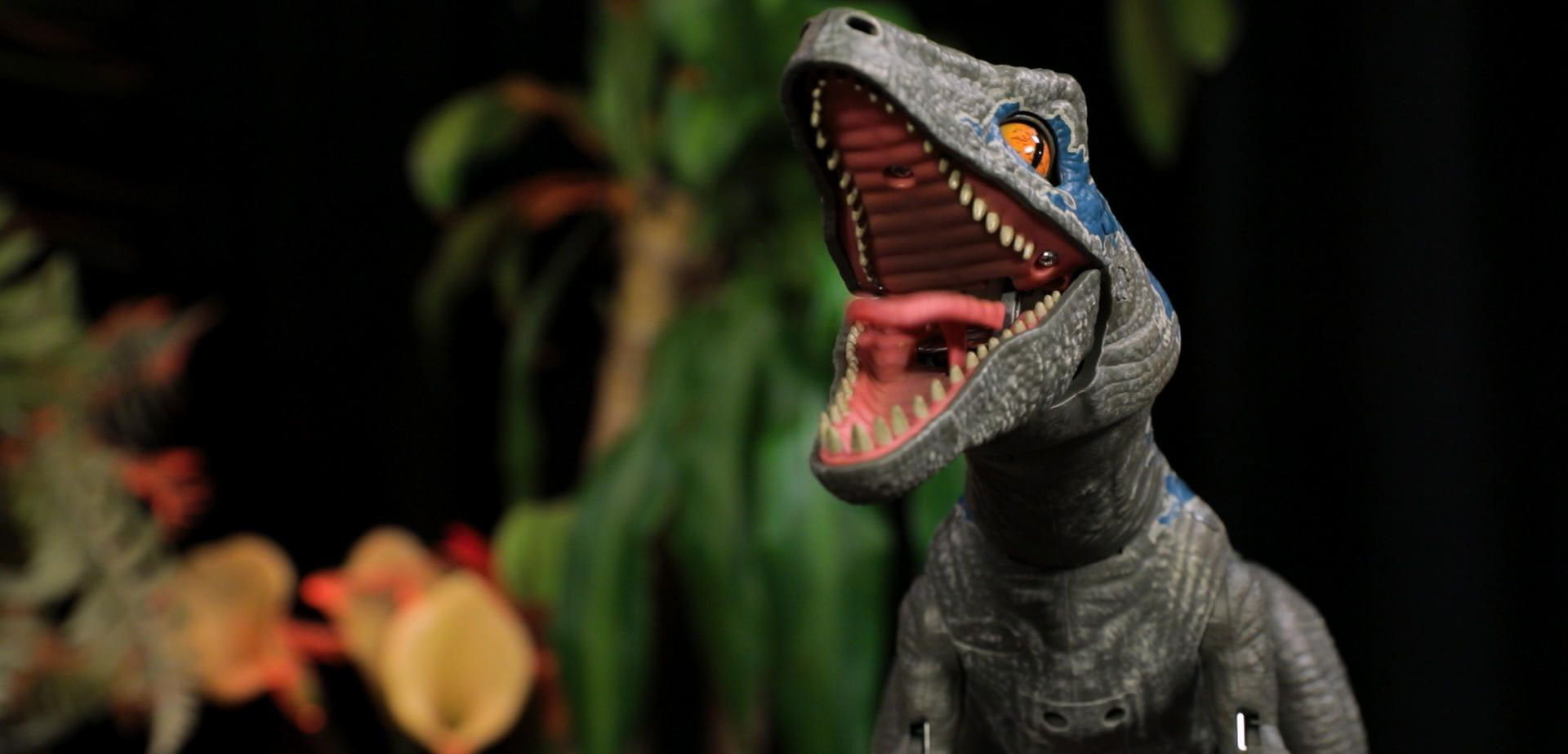
Your New Pet Velociraptor, Plus 7 Other Toys From the IDEO Play Lab
Your inner child is going to love this
On our team, our currency is joy. In a not-too-far-off and awesome future, I hope parents begin to tell their kids, “You can’t do your homework until you go outside and play for an hour.”
Even though we love those everyday objects that turn into toys, we have some favorites on store shelves too. 2018 was another year of fun in our Palo Alto office—we got to work with toy companies on everything from transformative, nostalgia-based toys to new electronic games. Here are some of those favorites, invented by the IDEO Play Lab.
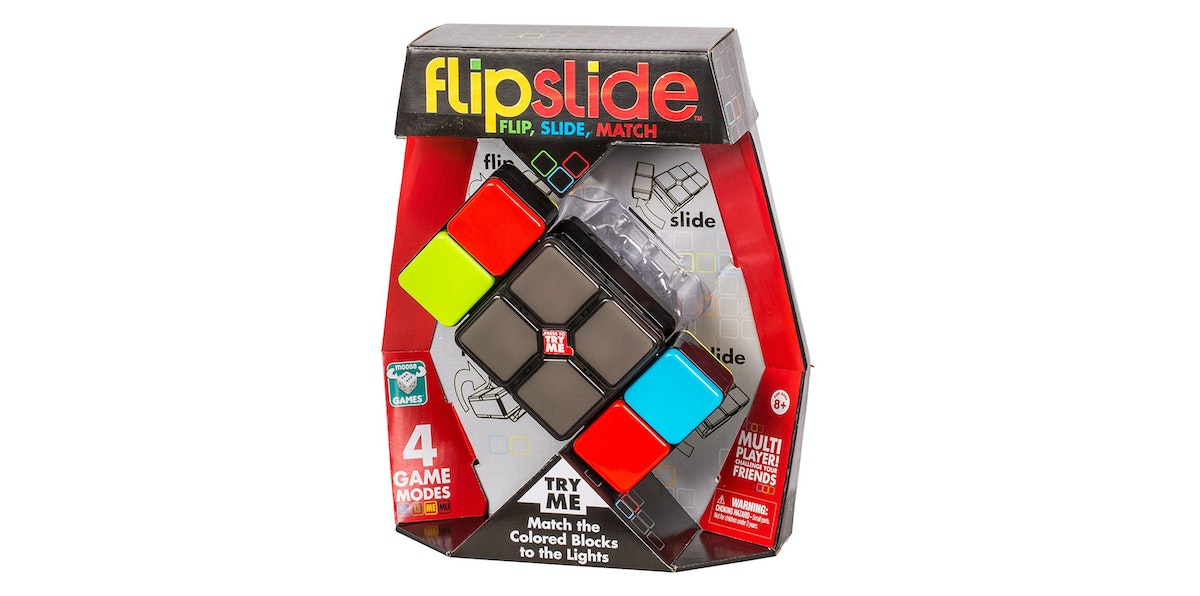
1. Flipslide
If a Rubik’s Cube and Simon had a baby, it would be Flipside. This fast-paced puzzle game can be played by yourself, against a friend, or with the whole family.
2. Hungry Bunnies
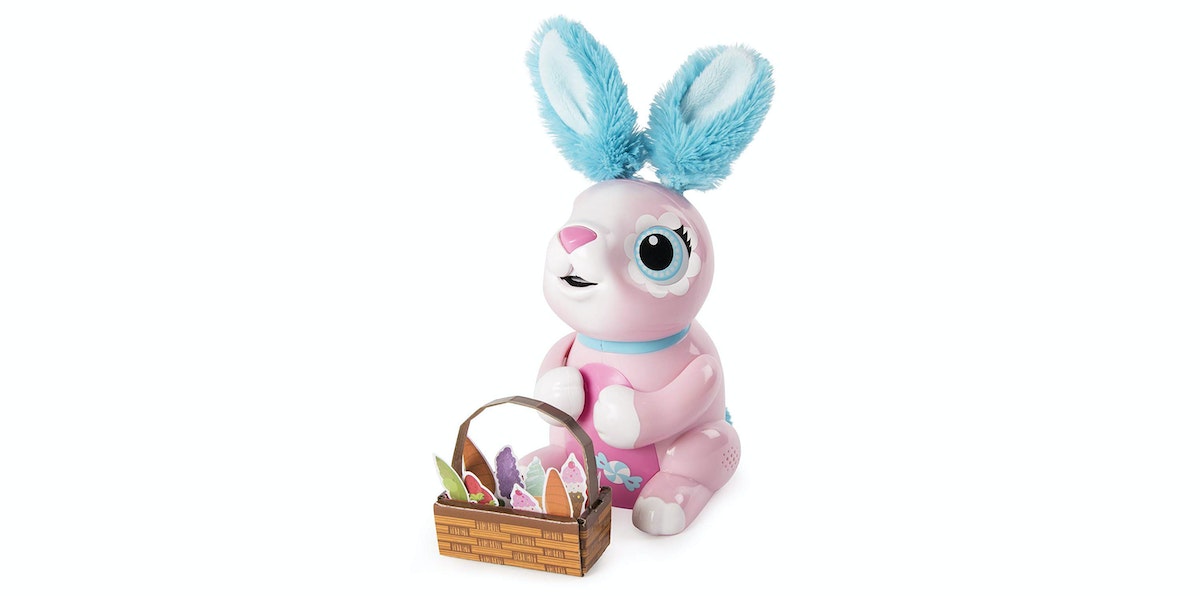
Adopt a (robotic) pet for the holidays. This adorable bunny really eats, but you won’t have to blow your budget on carrots—its favorite food is paper. It also laughs, sings, and comes complete with cuddly, fluffy ears.
3. Scooby Doo Transforming Mystery Machine
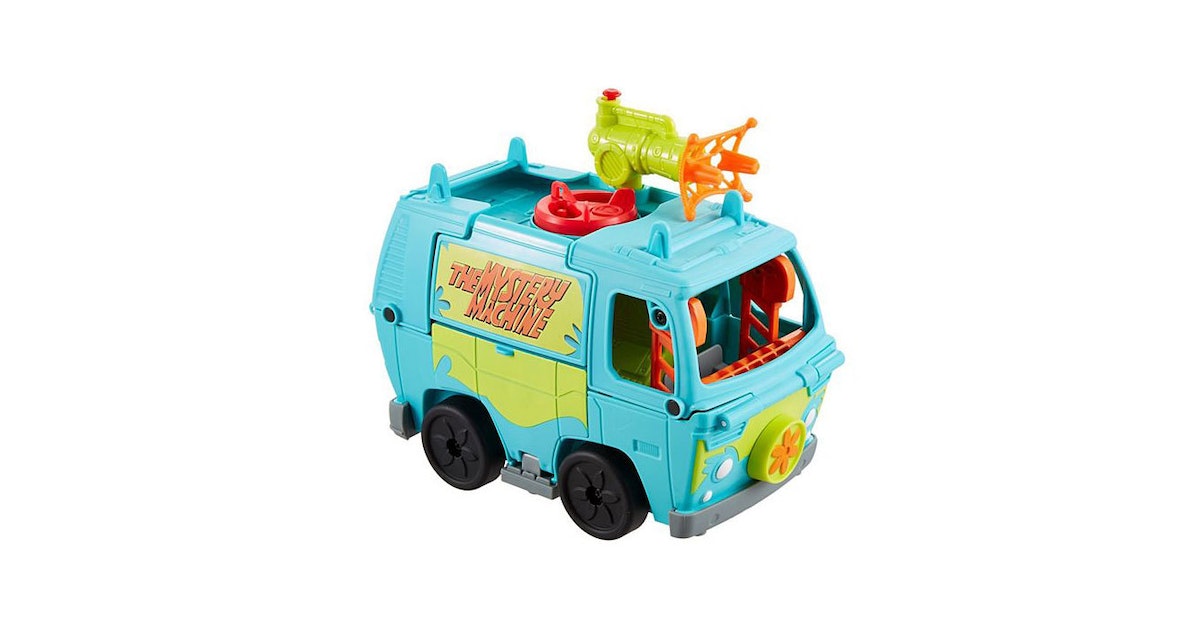
Look out, meddling kids! This toy transforms from the classic Mystery Machine into Scooby and the gang’s crime fighting HQ. Perfect for the preschooler who you want to introduce to your favorite nostalgic cartoon.
4. RC Mobile Command Center
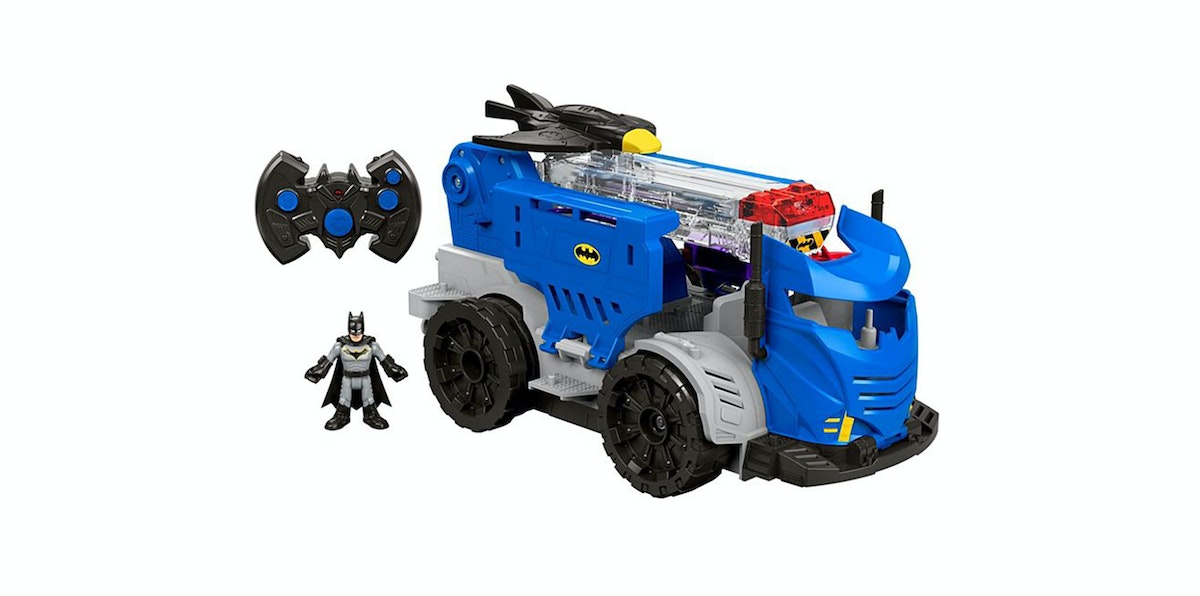
More preschool fun, but with Batman this time! Also, a missile launcher. What kid doesn’t want a toy with a missile launcher? And on second thought, what adult doesn’t want a toy with a missile launcher?
5. Creative Cafe Barista Bar
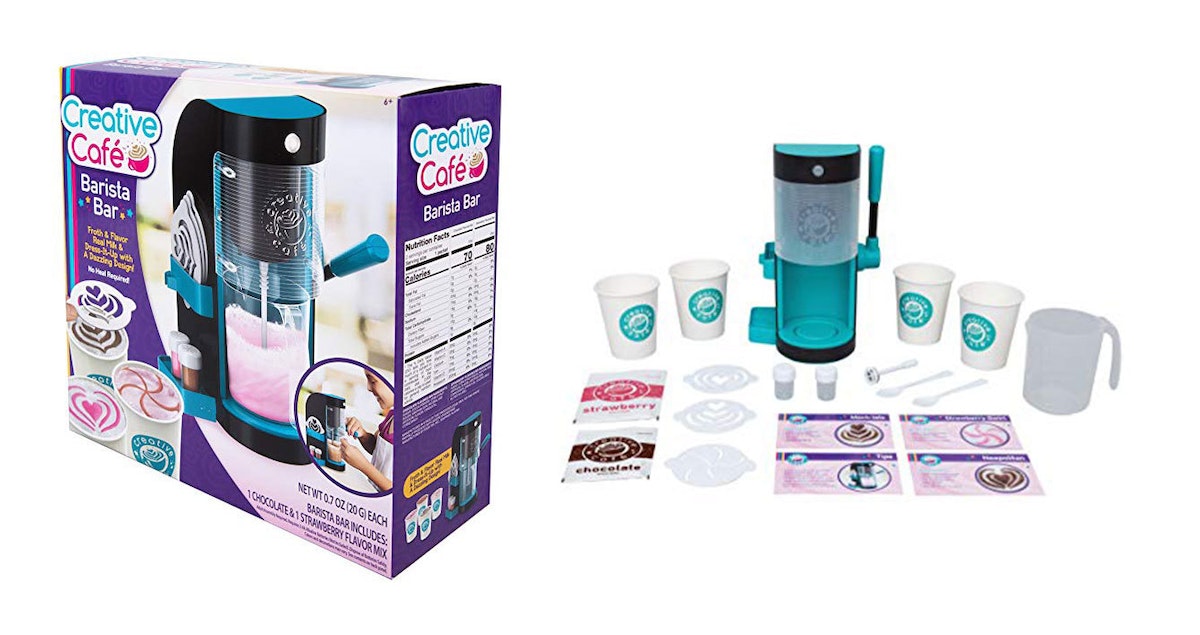
Think Starbucks, but with brighter colors and a kid-safe milk frother. Latte art stencils are included so little ones can create their own designs.
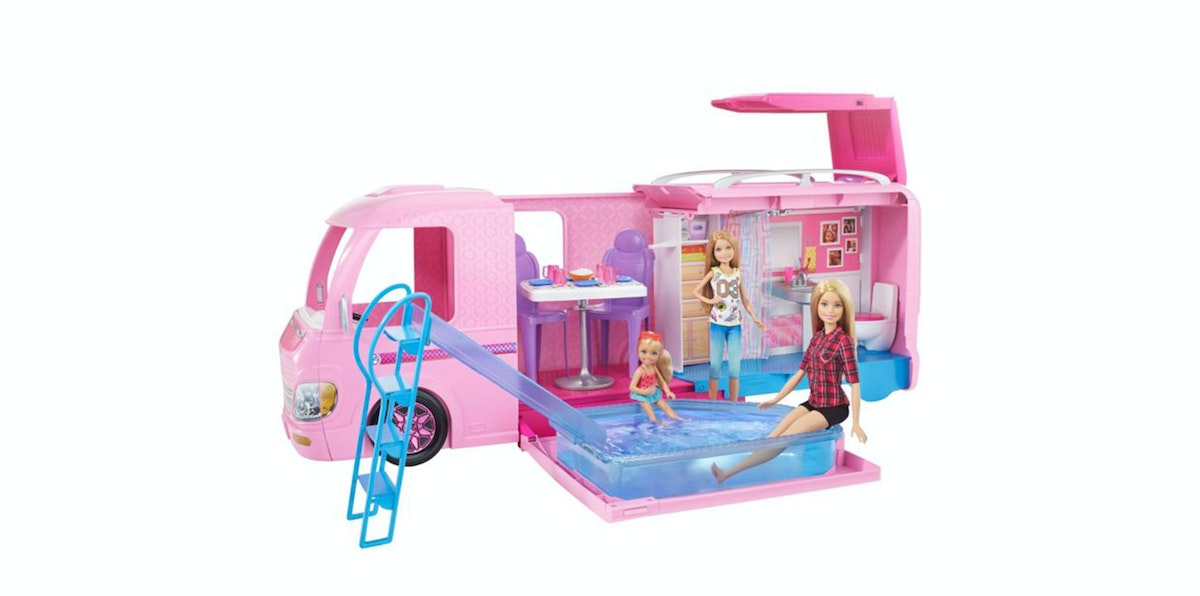
6. Barbie Dream Camper
Barbie’s had a lot of sweet rides over the years, but this one makes road trips a breeze. The camper folds out to a full two feet and includes a play pool that holds real water. After going down the slide, Barbie can dry off roast marshmallows around the campfire. Kids will spend hours discovering all the features of this toy, so a vacation for Barbie means a vacation for parents too.
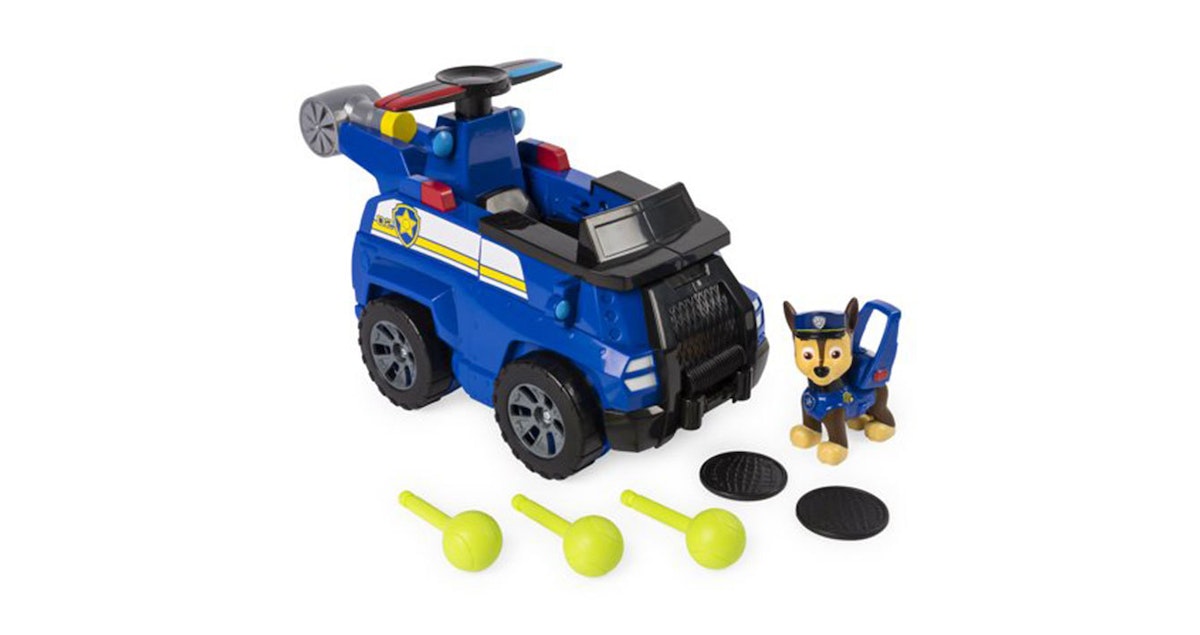
7. Paw Patrol Flip & Fly Chase
Paw Patrol is one of the most popular (not to mention cutest) shows for kids. Chase the German Shepherd’s vehicle is a dual truck and rescue jet—just lift to transform your truck into an airplane!
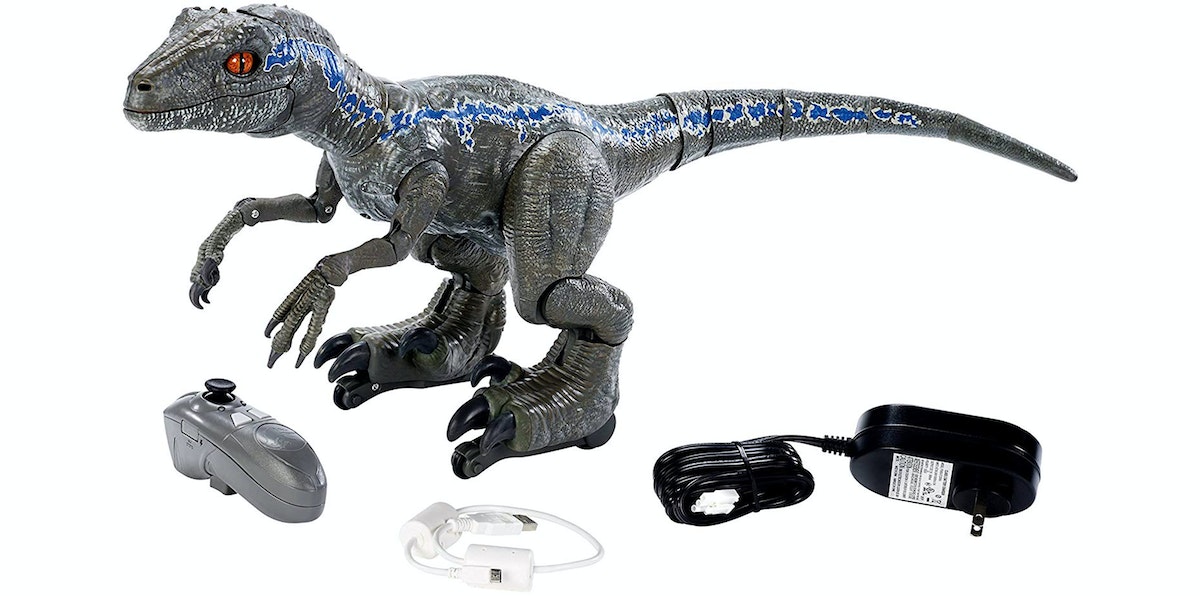
8. Jurassic World Alpha Training Blue Raptor
You've always wanted a pet velociraptor, right? Right. Now’s your chance—this interactive toy allows you to train your own pet dinosaur. You can even use it as a guard animal, set to alert you when anyone gets too close to your office—or, uh, your kid’s bedroom.
Header image via CNET.
At the IDEO Play Lab, we believe that a good toy is one that promotes play. Of course, all sorts of things can promote play—it’s hard to top pots, pans, and a wooden spoon for a one-year old, or a giant cardboard box for toddlers. (Tip: Never recycle those giant boxes too quickly!)
What Does a Data Scientist Do at a Design Company?
At IDEO, data scientists don't just code up solutions—they design them
For my latest project I worked with a healthcare company to improve doctor decision-making during a medical procedure. In addition to usual data scientist tasks, I spent a lot of time with the team trying to understand the way physicians currently work. Here’s a peek behind the scenes:
7:30 AM: Podcast time
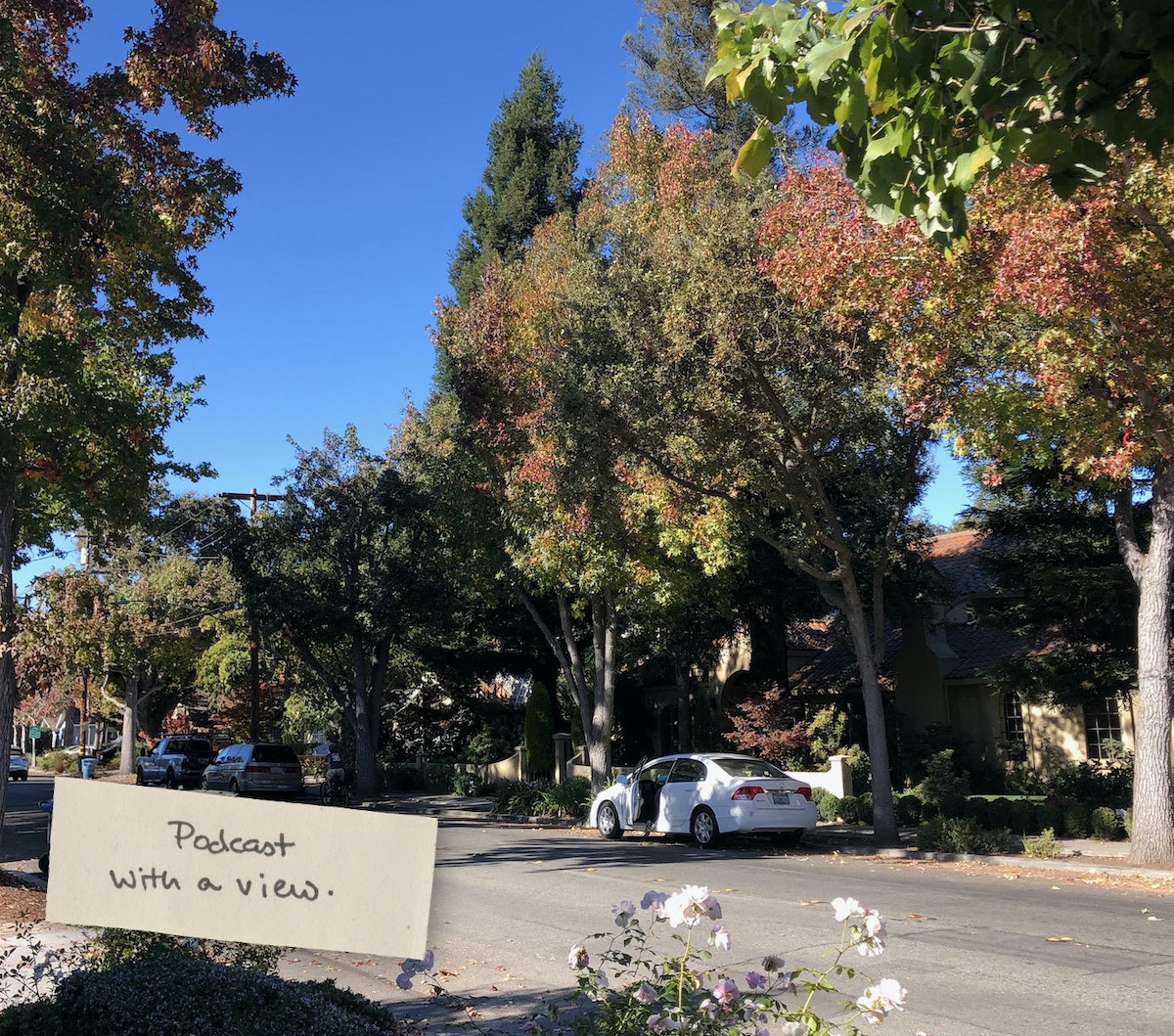
This morning I’m off to meet my team at a hospital for field research. On my way, I’m listening to a podcast called “The Impact” that explains the consequences that laws and regulations have on people’s lives. There are a few episodes that relate to data and medical outcomes, so it’s serving as inspiration for my current project.
8:00 AM: Field research
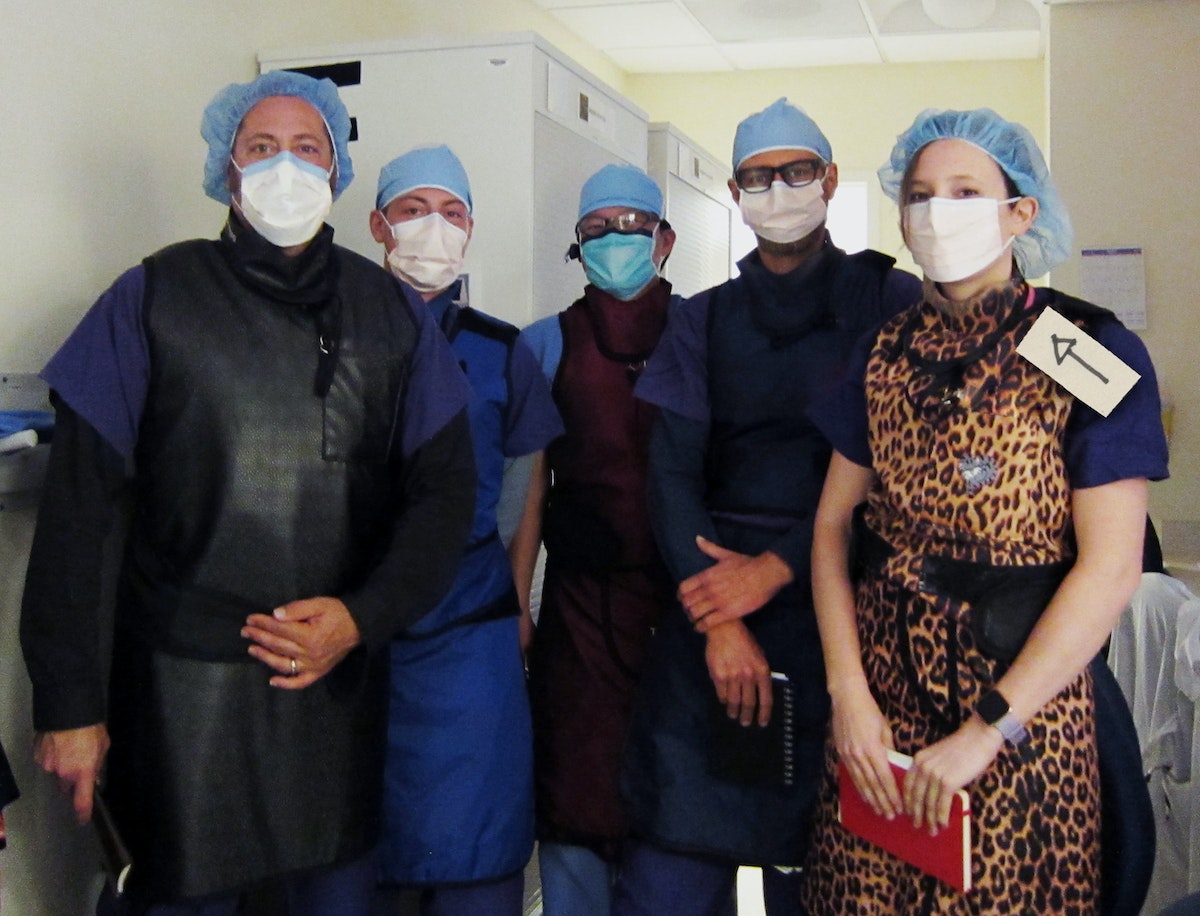
At the hospital, we talk to doctors, nurses, and medical techs and observe them in action. Listening and observing helps us understand the needs of the people we’re designing for. We’re thinking about optimizing decision-making for doctors, which could involve a lot of things, ranging from information and data display to AI assistance. I watch for clues about how this works, and how potential data sources might get recorded.
11:00 AM: Data science group meeting
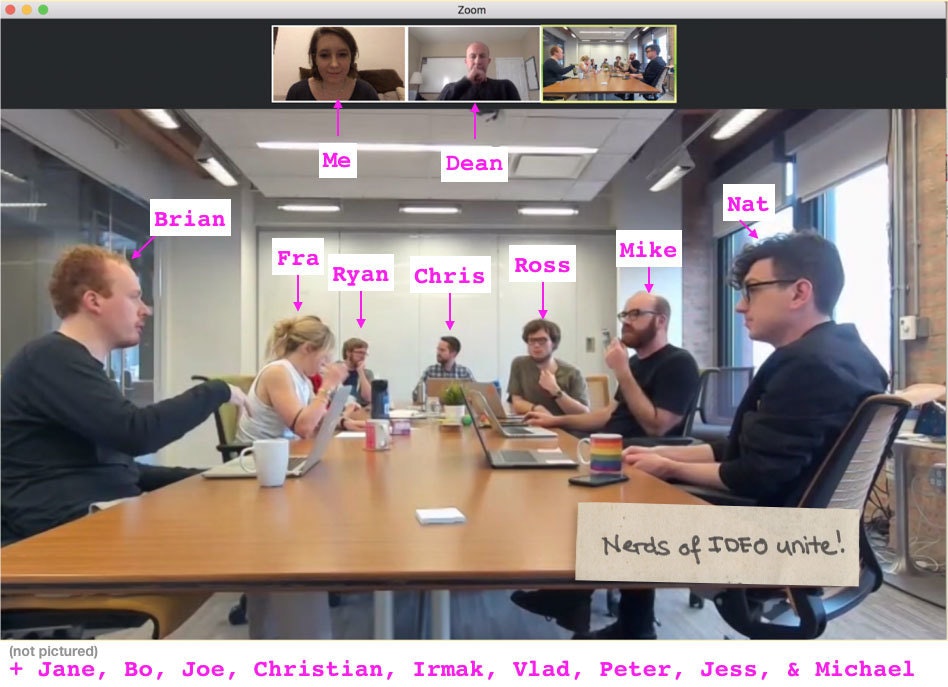
My home base is Chicago, but I’m stationed in Palo Alto for my current project. Luckily, I can still keep up with what the rest of the data scientists at IDEO are doing through a weekly video call that we can all dial into. We help each other troubleshoot problems we’ve encountered in our projects, share new methods we’ve learned, and talk about personal projects we’re pursuing. This week, one of the other data scientists is telling us about a website he’s making that allows his parents to see where he is (but not his exact location). We have a separate meeting on Friday mornings for those of us in Palo Alto specifically. I like both meetings because they help me keep up to date with how our data science practice is evolving, since it’s the newest design discipline at IDEO
12:00 PM: Lunch break
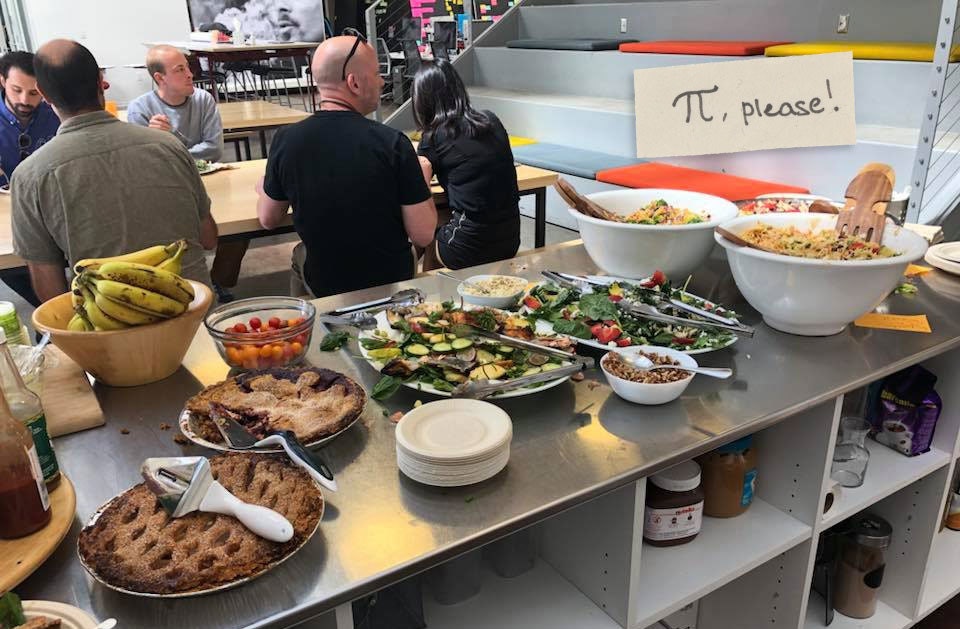
After a morning of research, I grab lunch at the studio. Today is a special treat—lunch has been provided for us. Everyone sits in the kitchen or our outside patio to eat, so it’s a great opportunity to meet other coworkers and hear about the interesting design challenges they’re working on. I like to sit with designers from IDEO’s PlayLab. They’re usually working on designing cool new toys, and have lots of interesting side projects. Many of them (and others in the PA studio) worked on this Burning Man installation, for example.
1:30 PM: Synthesis with the team
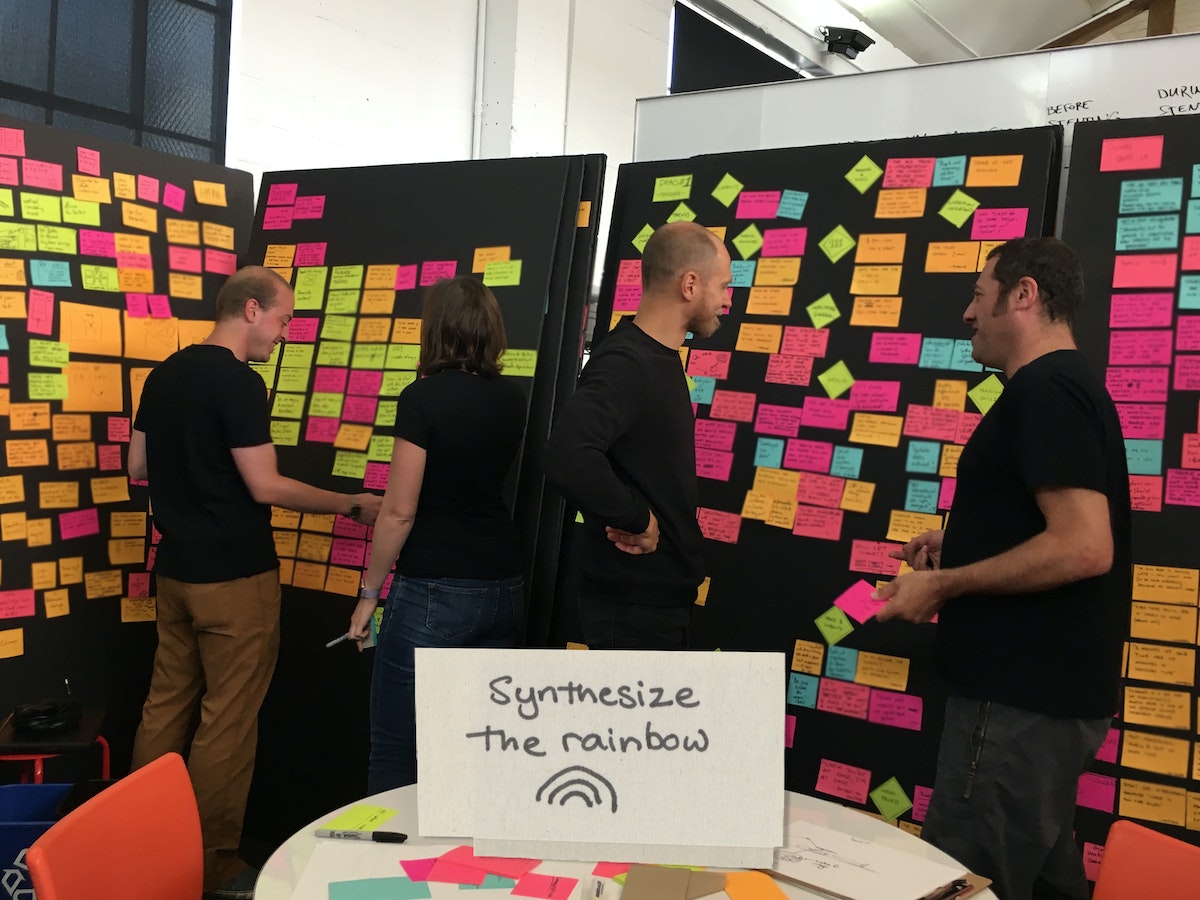
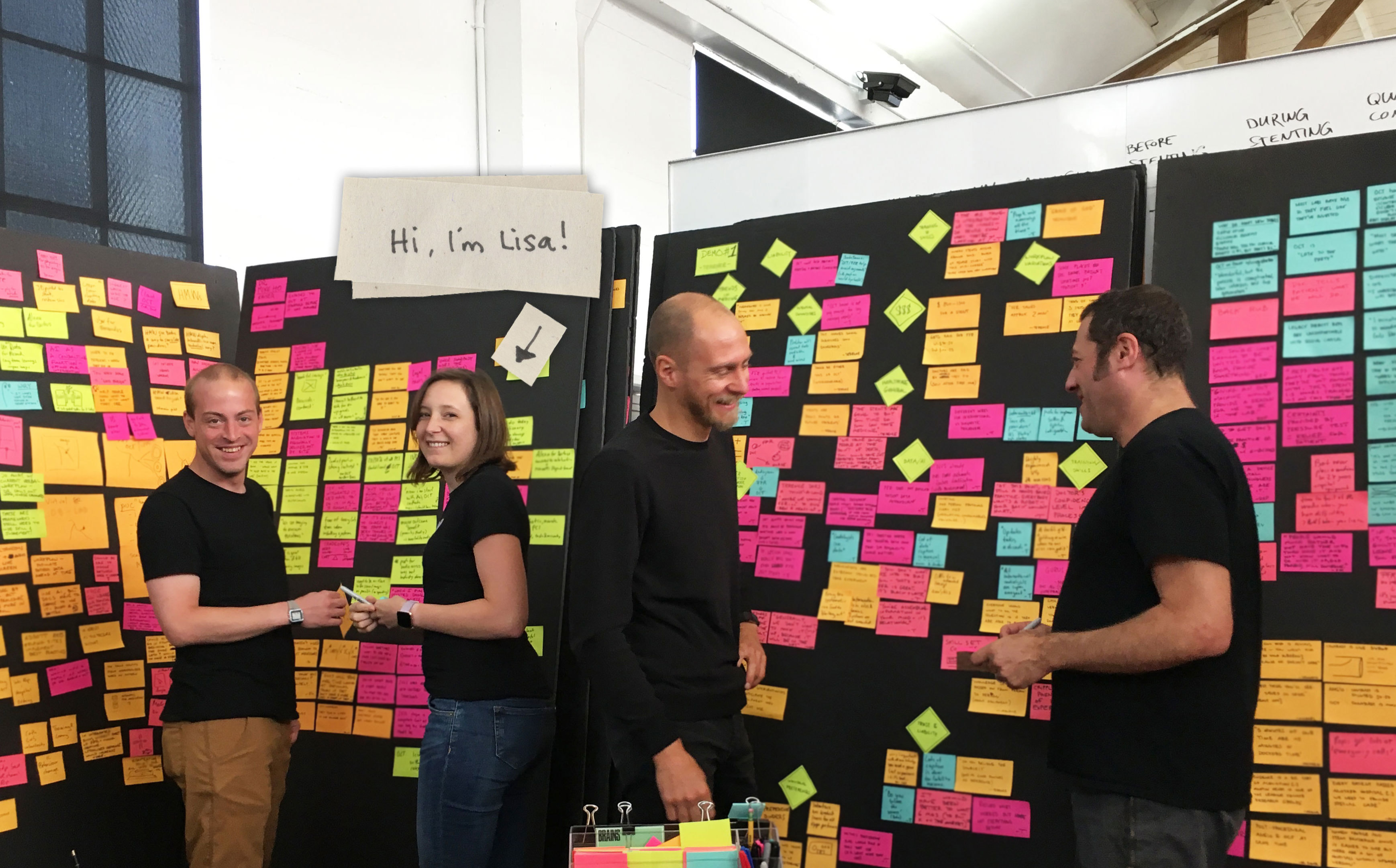
The team comes together to download and synthesize what we learned through our research observations. We transcribe things we saw and heard on Post-it notes, and cluster them so we can spot patterns. We’re seeing themes about the consequences of delays in decision-making during the procedure, and the effects of training on team efficiency. As we start to develop concepts based on the pain points we’ve discovered, I suggest that something like a personalized training program could increase team efficiency by helping people skill up faster.
3:30 PM: Digging into some data
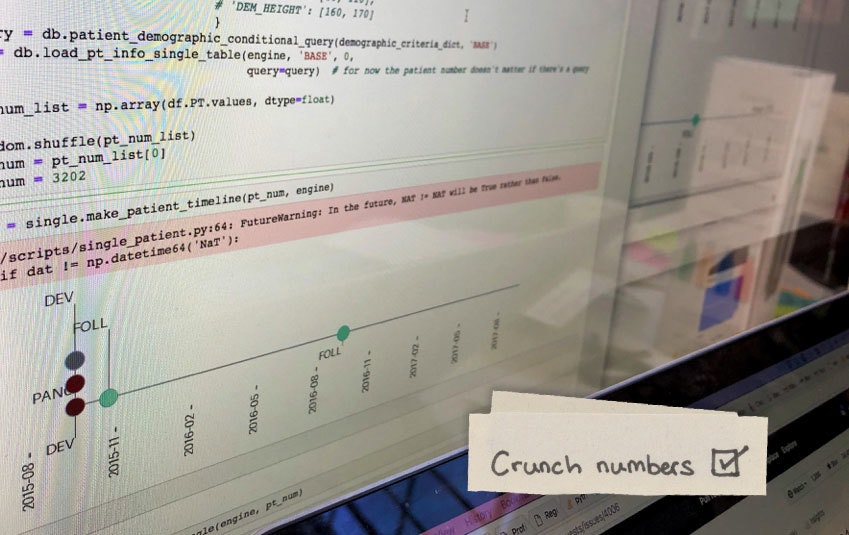
Our client has provided us with some data from a clinical trial related to the medical procedure we’re studying. Today I’m combing through the dataset to find insights that will inform our design process. I use the knowledge I’ve gained from interviews and field research to inform what would be useful or desirable from a human point of view. Later in the project, I’ll use this data to create a prototype that demonstrates how we can help doctors assess risk during the procedure.
6:00 PM: Hosting a women in Machine Learning and Data Science meetup
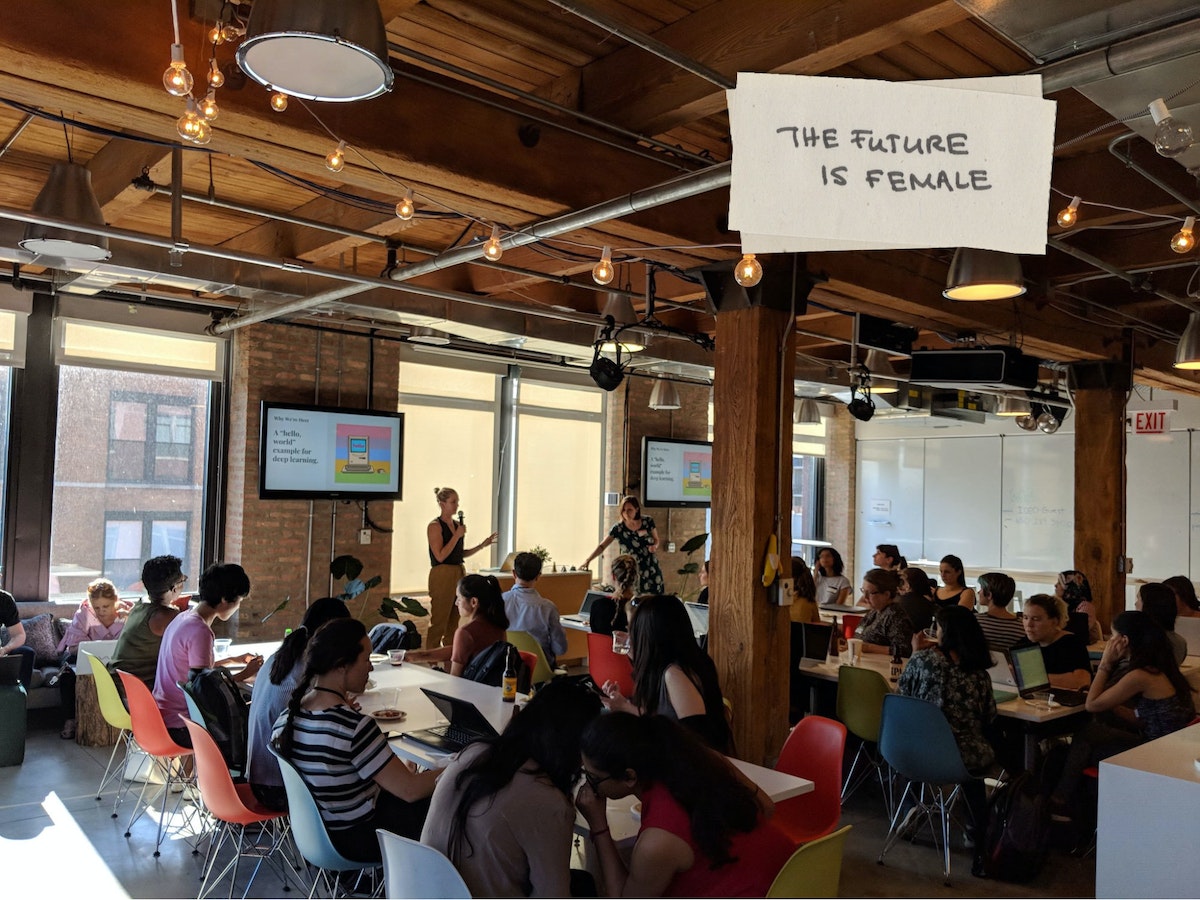
Tonight I’m hosting a meetup for the Women in Machine Learning and Data Science group about the basics of deep learning with my coworker and fellow data scientist Jane Zanzig. More than 40 women have come to learn and do a hands-on demo. I love working at a company that supports building the women in data science community because one of my personal passions is working to increase the number of women and other underrepresented groups in STEM and design.
9:00 PM: Good night, Jackie
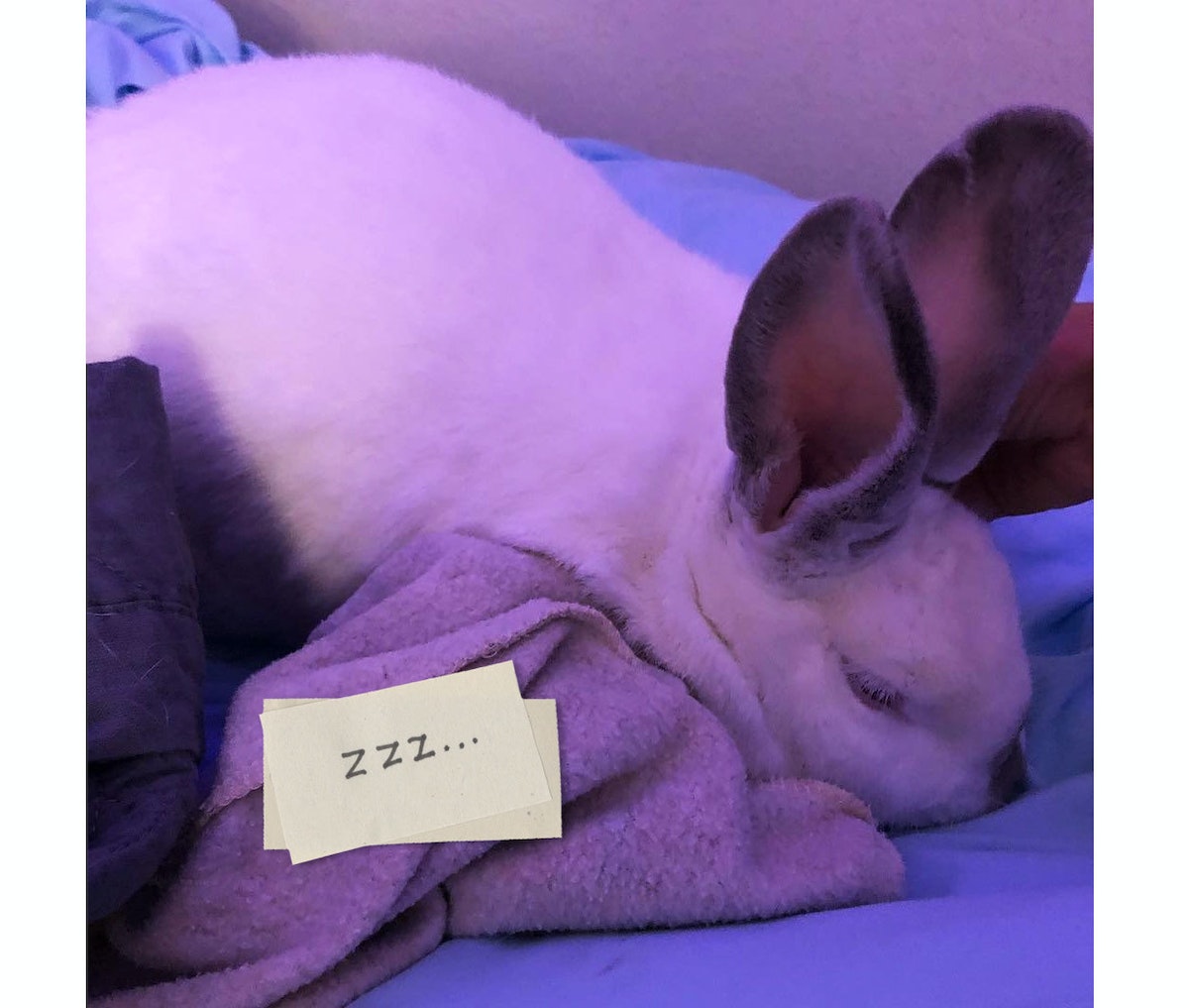
Every night before I go to bed, I make sure I hang out with my pet rabbit Jackie. I brought her from Chicago to Palo Alto with me, so we wouldn’t be apart while I worked on this project. I think she’s been enjoying living in California, and I’ve even taken her to visit the IDEO Palo Alto studio.
When people ask me what I do for a living, I say, “I use data to design products and services to improve people’s lives.” Working as a designer and data scientist involves not only coding up solutions, but understanding what people need in the first place.

Lindsey Turner
I’m passionate about building brands, products, and experiences that help organizations show up with meaning and momentum.
I help organizations cut through complexity by shaping how they show up, through brand strategy, identity, and storytelling.
Working at the intersection of brand and business, I bring an editorial eye and a bias toward making—turning ideas into tangible experiences that people can understand, trust, and believe in.
My work spans government, healthcare, financial services, media, and consumer goods, from launching Gen Z-focused ventures to building innovation labs and reimagining legacy brands. I relish moments of ambiguity and enjoy translating across teams, perspectives, and priorities to move ideas forward.
I started my career in editorial and digital design, shaping cross-platform experiences and identity systems in publishing and agency environments. That foundation still shapes how I work today: I’m detail-oriented, collaborative, and overreliant on the Oxford comma. I hold a BFA in Visual Communication from the School of the Art Institute of Chicago.

Rachel Young
My work helps organizations see who their products aren't working for—and build the will and the tools to do something about it
For 25 years, I've asked the same question: Who does this design exclude—and what are we going to do about it?
My work spans human-centered strategy, inclusive design, and qualitative research, with clients ranging from Microsoft, Google, and Verizon to the National Science Foundation, and San Francisco Unified School District.
Before IDEO, I taught elementary school in East Palo Alto and spent a decade doing design work with social service organizations—where I learned firsthand what it costs people when systems are built without them in mind.
I am currently writing User Error, a nonfiction book about digital access and the design decisions behind it. I live in Oakland, California.

Brian Pelsoh
I lead with craft, ensuring our work is creatively excellent: rooted in deep human insight and imagination, while also grounded in the realities of business and technology.
My expertise spans brand, communication, and product design across tech, education, the arts, and social impact.
I believe great work demands both high-level vision and obsessive attention to detail, and only happens through collaboration.
I bring an inclusive, hands-on approach and a deep understanding of business, which enables me to consistently deliver excellence while always asking why.
Before joining IDEO, I worked at the brand firms Pentagram and VSA Partners. I began my career as a designer, leading teams at the School of the Art Institute of Chicago and the Milwaukee Art Museum. I hold an MFA in graphic design from Maryland Institute College of Art and a BFA in communication design from the Milwaukee Institute of Art & Design, and have taught at some of the best design schools in the US.

Tony Wong
I am responsible for IDEO’s long-term success in China and working with clients to use design as a tool to enable growth.
I am responsible for IDEO’s long-term success in China and working with clients to use design as a tool to enable growth. Specifically, I have helped Chinese companies design holistic brand solutions through the development of their products, communication, services, and innovation teams, and I have helped multinationals expand their presence and influence in China.
I advise global leaders on developing China-led innovation and capabilities.
In over 15 years in IDEO Shanghai, I have worked on projects that use design to elevate the quality of the experience of healthcare products and services, streamline processes that increase productivity, create spaces and programs that promote and enable inclusive communities, and build next generation mobility solutions that are planet-positive.
Before joining IDEO, I worked at Philips Electronics and the Electrolux Group in Italy, the Netherlands, and Singapore on a number of breakthrough commercial products. I am a member of the Young President Organization in Shanghai.

How to use AI as an editor, not a writer
Ed White shares how he uses AI as an editor—not a writer—to sharpen storytelling, rehearse ideas, and preserve the productive friction that makes creative work better.
Ed White has a rule he's tested on his own writing: hold yourself as the writer, and let AI be your editor. Ed is a Senior Design Director at IDEO's London studio, where he co-leads the firm's AI portfolio across Europe. Before IDEO, he spent 12 years as a writer and editor at the Financial Times, Wired, and Contagious. So when he talks about when to use AI for storytelling and when not to, it comes from two decades of crafting his storytelling skills.
In this episode, Mina Seetharaman talks with Ed about two specific tools he uses to keep AI in an editor's seat: a "roasting agent" prompted to critique his drafts without any sugarcoating, and a simulated audience he rehearses pitches on before the real thing. They also get into what Ed is hearing from design leaders at Anthropic, Lovable, Shopify, and Google Creative Lab about how creative work is changing, and why he thinks the friction of writing something yourself is worth protecting rather than automating away.

Building a personal AI for the messiness of life: Sida Li
Becca Carroll talks with Cue co-founder Sida Li about designing a personal AI for the messiness of everyday life—not just work. They explore how Sida stays anchored to human needs while navigating fast-changing technology, product tradeoffs, business-model experimentation, and the realities of building an AI company today.
Most AI products today are built for work—a space with clear problems and established systems. One founder noticed a gap: personal life is messier, harder to systematize, and mostly left behind by the AI boom. So she built Cue, a personal AI that lives inside iMessage and group chats, to go where the other tools haven't.
In this episode, Becca Carroll, IDEO's Chief Strategy Officer, talks with Sida Li, co-founder and CEO of Shared Context Lab, about staying anchored to a human need while the technology around her keeps changing shape, why she treats her business model with the same rigor she'd bring to a product, and what it feels like to build a company at this particular, disorienting moment in AI.
The conversation also gets into how Sida makes design decisions: the language Cue uses to describe itself, the tradeoffs behind building inside iMessage instead of a new app, and a real story about a business idea that didn’t pan out.
This is the second in a two-part series profiling founders from IDEO's Startups-in-Residence program. The first conversation is with Johannes Seemann, founder of Sooner, on designing GenAI for the emotional side of money.

Designing GenAI for the emotional side of money: Johannes Seemann
Designing financial tools around the feelings that shape money decisions.
Most personal financial tools are built to run the numbers and optimize towards a budget. While that works for some, most people experience money as a lived relationship that does not neatly fit into a spreadsheet. Johannes Seemann and Becca Carroll discuss why money is emotional before it is mathematical, and what a human-centered approach to building a generative AI financial product looks like in practice.

The curious leader's edge in uncertainty: Scott Shigeoka
How genuine curiosity helps leaders navigate uncertainty with greater confidence.
Mina Seetharaman talks with Scott Shigeoka, author of Seek and Head of Curiosity Cultivation at the Eames Institute, about what distinguishes genuinely curious leadership from performative curiosity, how power dynamics shape curiosity, and why practicing curiosity can restore energy rather than drain it.
Looks like you might be in search of something very specific?
Or reset the filters above and try another angle.
Here’s some random inspiration

Podcasts about creative leadership

Articles about the power of prototyping