
She knows best
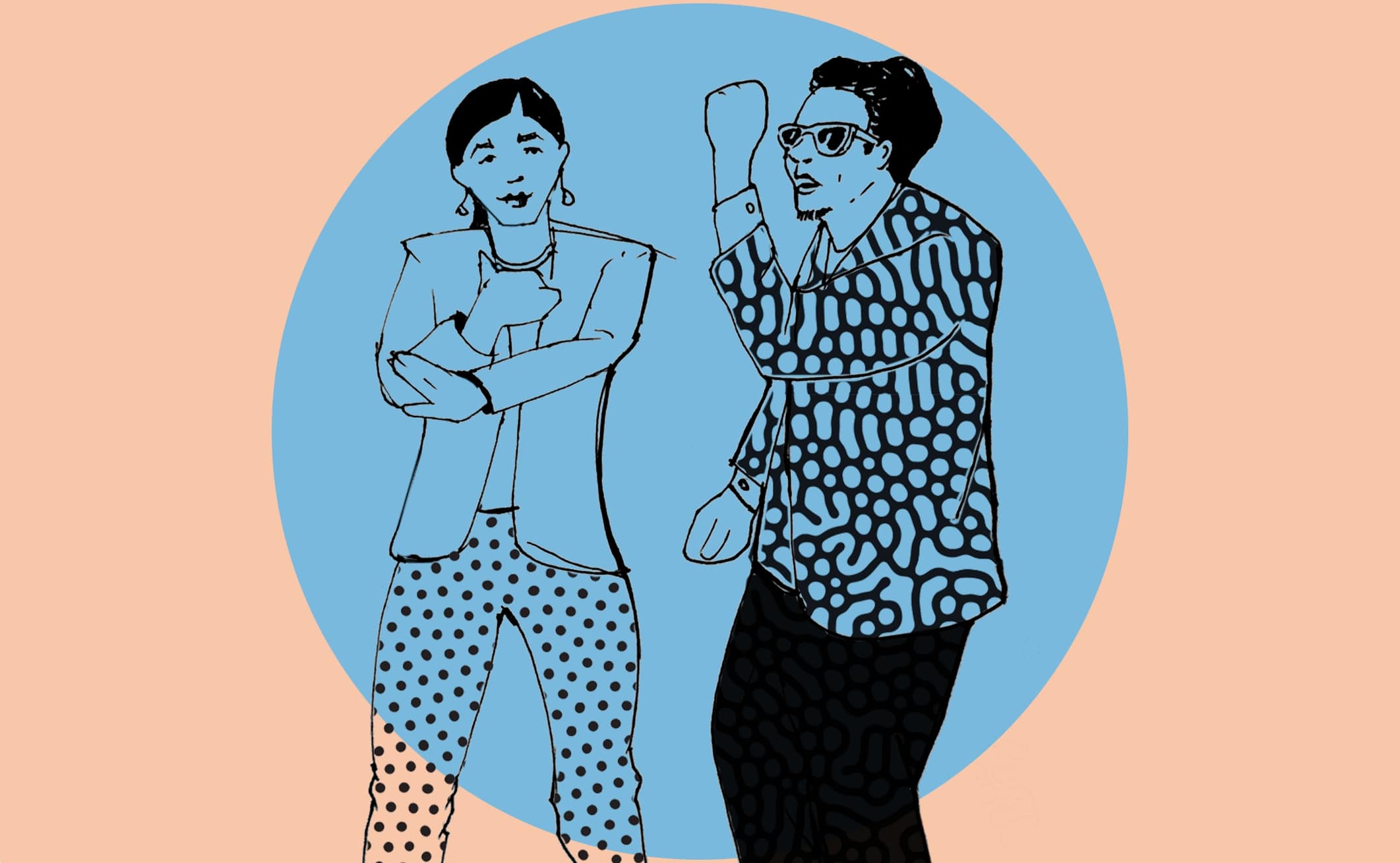
A major athleisure brand passes the mic so women can define community for themselves.
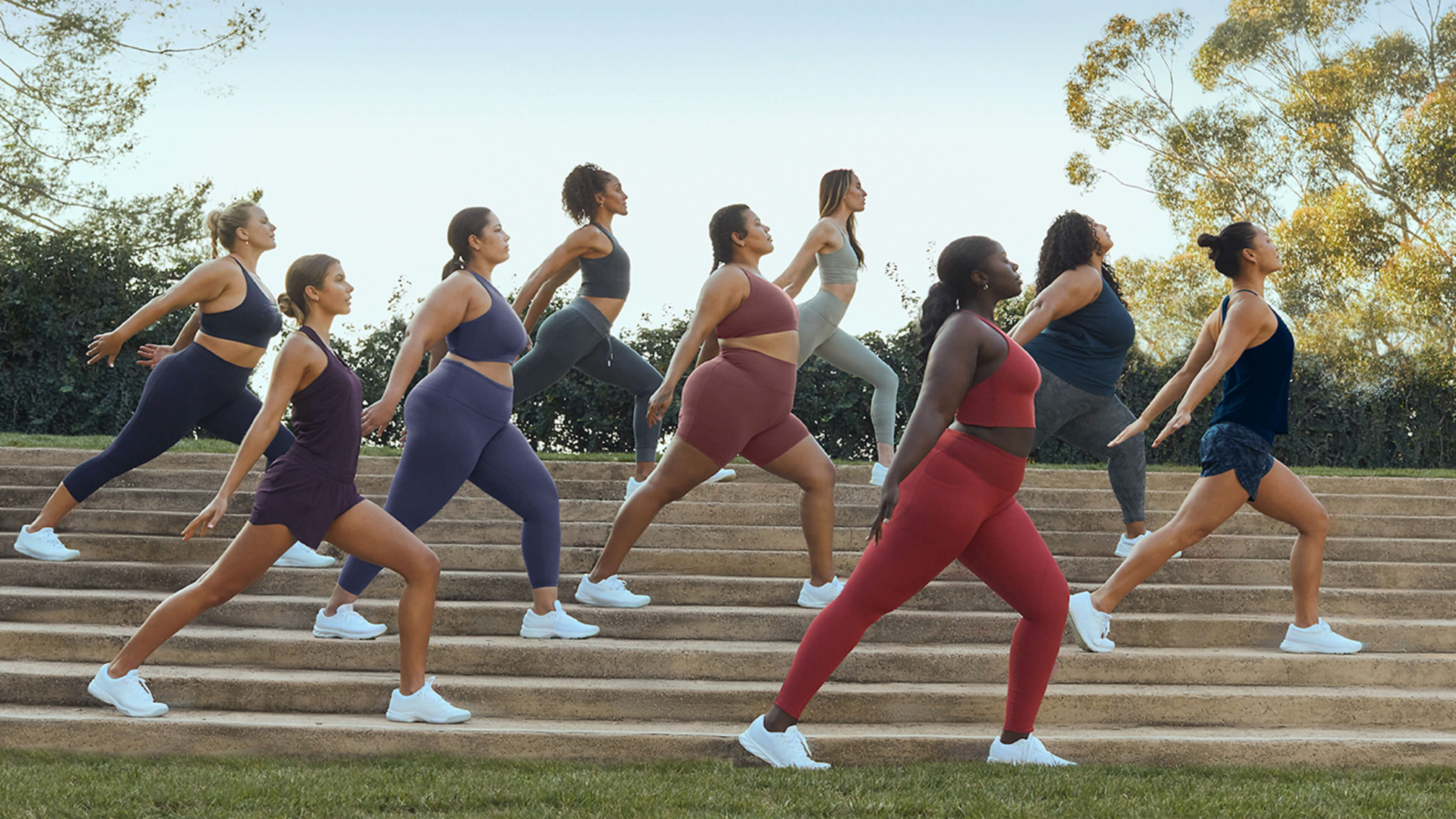
Diversity alone isn’t enough—in marketing or any other facet of business. Today’s brands must authentically engage with and create the conditions for co-design with existing communities.
That sort of deep, meaningful engagement with customers doesn’t happen over Instagram. It requires a playbook, a prototype, and a healthy amount of trust. So, IDEO worked with Athleta and Gap to tap into the wisdom of a council of women who represent intersectional identities and lived experiences. The council surfaced powerful insights for the brand, like the fact that active women don’t need a brand to empower them—they already feel powerful.

After only a few weeks, Athleta experienced the difference between research and a truly reciprocal relationship. The way their brand engages with communities is adding depth, understanding, and authenticity to Athleta’s content, products, and experiences. And women can feel the difference.
76% of US adults say that the media promotes an unattainable body image for women.
Fewer than 1 in 10 businesses review for inclusion as part of product design and marketing campaigns.
>2X
user growth in 2022
13,000+
Athleta WellPro well-being providers active on the platform

Climate action for SMBs
Leveraging data to help SMBs reach net zero.
For more than 40 years, Sage has helped businesses of all sizes navigate complex business environments. While many of its larger customers have the means and the structure to support climate initiatives, many of its smaller customers do not.
Sage wanted to help its SMB customers get ahead of future climate regulations and meet consumer expectations. And building carbon-footprint evaluation and mitigation tools would also dovetail nicely with Sage’s own climate aspirations: cutting its own emissions in half by 2030. Together, Sage and IDEO investigated how the company could leverage the data in its platform to calculate its customers’ emissions, both direct and indirect, and how that information could spur action as they aim to hit net zero.
To get started, the design team went deep with customers running all kinds of businesses—from a taxi company to a champagne bar to a falconry center. Business owners shared that their focus often has to be on the day-to-day, a series of small decisions that, when added together, lead to business success. For many, tackling a problem as complex as climate change felt overwhelming. IDEO and Sage synthesized those insights and began working across verticals and products, bringing together experts from marketing, technology, sustainability, and operations to build out new concepts. With the help of two carbon accountants, the team worked to figure out how existing data could inform customers about both their direct and indirect emissions, which can be harder to track. Given how tight SMBs’ margins are, they focused on how that knowledge could fuel emissions-cutting changes that also save money, giving businesses extra incentive to take action. Together, the team created a roadmap of customer outcomes and experience guidelines to help shape future products.
Sage has taken that work forward, launching Sage Earth, a platform that aims to help businesses measure, manage, and mitigate emissions—even across supply chains. With carbon accounting now built directly into all Sage Accounting and Sage for Accountants products in the UK, Sage has made climate action practical and accessible for millions of SMBs. By automating emissions measurement and reporting, Sage Earth removes barriers of cost and complexity, empowering business owners and their accountants to stay competitive in supply chains where up to 95 percent of emissions occur.
From co-developing the UK Voluntary SME Carbon Reporting Standard to launching a Carbon Accounting API, which gives banks, fintechs, and other platforms access to Sage’s Carbon Engine, Sage is embedding sustainability into the systems people already trust—helping hundreds of thousands (and rapidly increasing) small businesses turn climate ambition into everyday action.
Small- and medium-sized businesses—companies with fewer than 500 employees—make up about 90% of the world’s businesses, according to U.N.-backed SME Climate Hub.
Two thirds of small businesses don’t know how they’re going to reach net zero, and lack the resources to do so, according to a recent survey by SME Climate Hub. Still, the majority reported they want to act on climate, recognizing it can help them become a more resilient business.
Large companies may be the biggest emitters of greenhouse gasses, but an estimated 80% of those emissions come from supply chains—often made up of smaller enterprises.
Scaling rapidly
in the three years since the launch of Sage Earth, which is now being used by hundreds of thousands of businesses
World's 1st
open-source hybrid emissions factors dataset, Carbon Commons, led by Sage, helps SMBs calculate carbon footprints using existing data

Reframing menopause
QVC works to change the narrative, while meeting customer needs.
Menopause is much more than a biological transition—it is a profound shift that often arrives just when people experiencing it start to feel invisible. Because it has long been shrouded in darkness as an unmentionable female affliction, those going through menopause often feel unprepared and alone.
Recognizing that its customer demographic makes QVC uniquely positioned to surface conversations and provide support to those dealing with menopause, the video commerce retailer partnered with IDEO to figure out how it could not only meet customer needs, but also flip the conversation on midlife. To learn more, a team of female design researchers held in-depth interviews with folks experiencing it firsthand. The people they spoke to had limited information about what was going on with their bodies, and in some cases, it took years before they understood that symptoms they were experiencing were related to menopause. Respondents also reported that midlife brought a change in social status and the feeling of being boxed in by stereotypes.
QVC and IDEO worked together to design an integrated suite of offerings that could give customers a safe space to discover and share more about menopause. That included an on-air programming series called “Menopause Your Way,” where QVC could support those going through menopause in the privacy of their own homes, a digital landing page with useful solutions, and social media campaigns to help women share and learn more about each others’ experiences. Because people experience menopause and choose to manage it in many different ways, the team wanted to create an integrated ecosystem of content that women could access according to their unique journeys. The new offering helped QVC reach its core audience with solutions and relevant products, and created a space where menopause is out in the open and part of an ongoing conversation. And in the process, QVC evolved to become a more customer-centric company, putting its audience and their needs at the heart of its offerings.
9/10 of British menopausal women say society and brands overlook them.
1 in 2 women in the UK admitted they didn’t know what was happening to them during perimenopause.
Nearly 40% of menopausal women are being prescribed antidepressants to help manage their symptoms, despite 4 out of 5 describing the treatment as “inappropriate.”
Season 2
a series focused on menopause is now in its second season
Healthy youth
Improving digital tools to help practitioners deliver critical mental health support to children and young people.
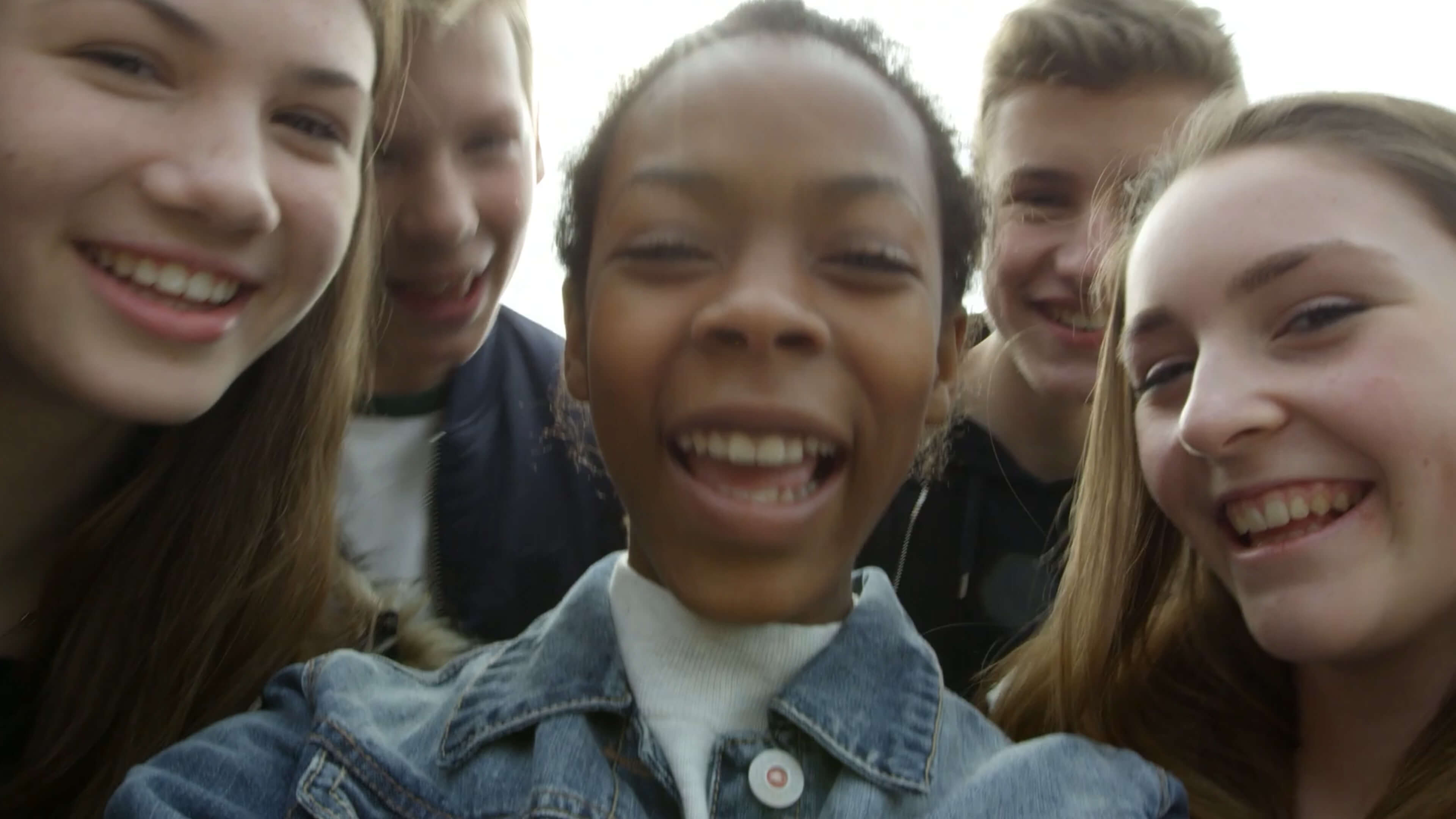
Healthcare is a complex web of institutions, interaction, relationships, and services. In England, the National Health Service consists of thousands of separate organizations spread across the country. This fragmented structure means that rolling out digital tools and using them to their full potential can be difficult.
NHSX approached IDEO and Public Digital, IDEO’s sister company, for help designing user-centered resources that would empower Children and Young People’s Mental Health (CYPMH) practitioners to use digital tools more effectively, shifting service design from a reactive to a proactive process, and allowing each regional organization to create the best digital services for their children and young people.

The team took a human-centered approach, tapping into the perspectives, challenges and needs of NHS practitioners and leaders across the system over months of research. They then designed a set of accessible, straightforward online resources, courses, and templates that would enable a practitioner to start their own local service transformations. These included everything from practical advice on improving users’ experiences of CYPMH, to teaching methods for service design, to content focused on achieving digital transformation at scale.
The resources were easy to implement and replicate, allowing mental health practitioners across the country to seamlessly integrate physical and digital, create firebreaks in the system, and better bridge the gap between seeking care and receiving it. They were designed to evolve over time, and the work is replicable across the NHS, with the potential to touch millions of lives.
By empowering practitioners to utilize these digital tools to ease the burden of care, NHSX plans to create a positive ripple effect across the entire NHS, its partner organizations, and the country at large.
In a study undertaken in July 2020, the first summer of the COVID pandemic, the NHS found that clinically significant mental health conditions amongst children had risen by 50% compared to three years earlier.
More options, more access
digital resources are helping children and young people access more options for their mental health care
A Kiss from the Future and Other Biodesign That Will Blow Your Mind
A Q&A with Ani Liu, the MIT-trained artist whose boundary-pushing projects look more like science fiction
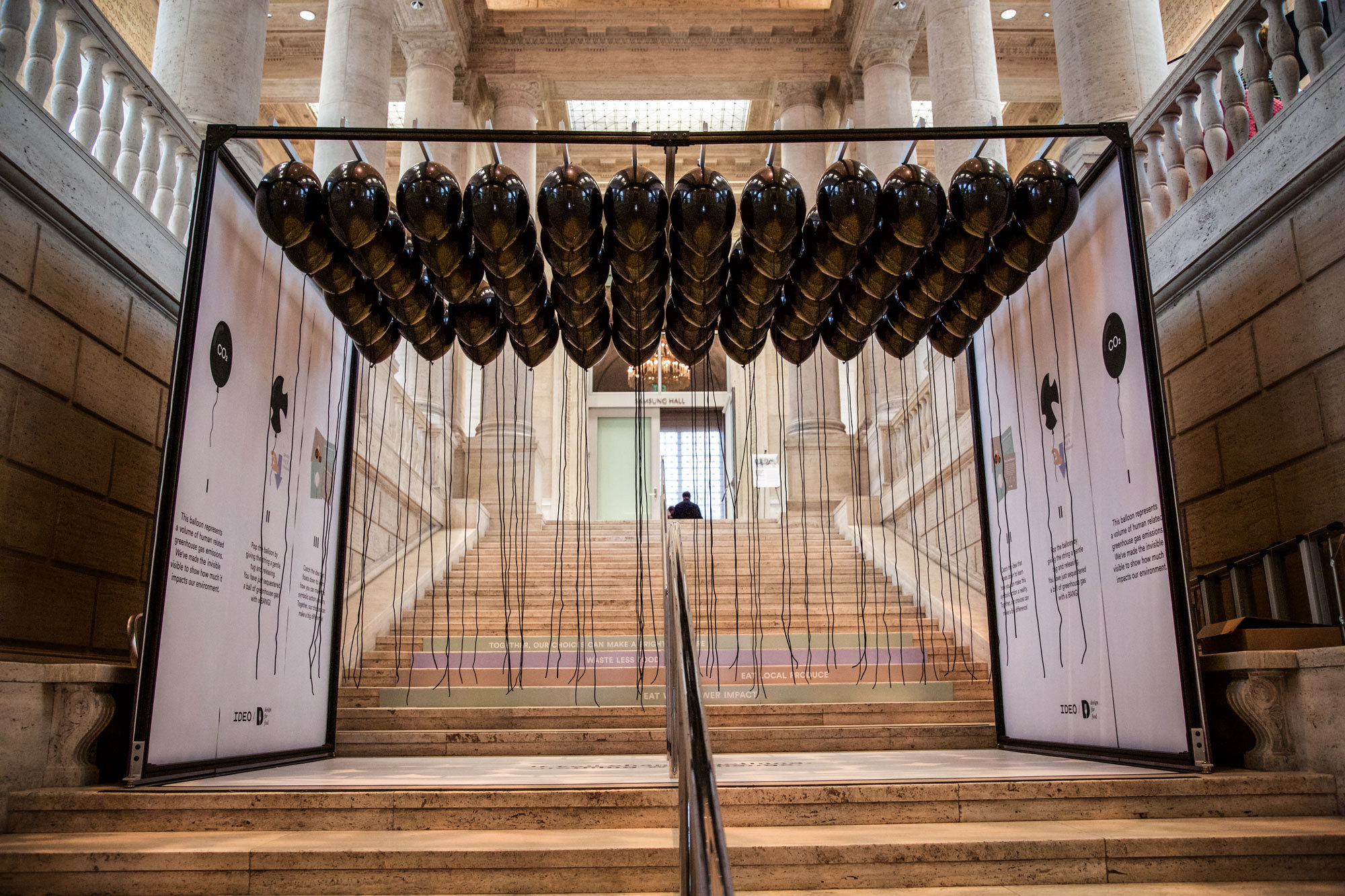
I was fortunate enough to work closely with Liu on an art installation about food's carbon footprint when she was a Researcher in Residence at IDEO's Design for Food Studio. The piece was exhibited at the Asian Art Museum in San Francisco in collaboration with the Perennial, a sustainability-focused restaurant. Thanks to that project, I became an expert in engineering ways to pop balloons, and also a major Liu fan. I caught up with her to hear more about what inspires her work.
In one sentence, who are you?
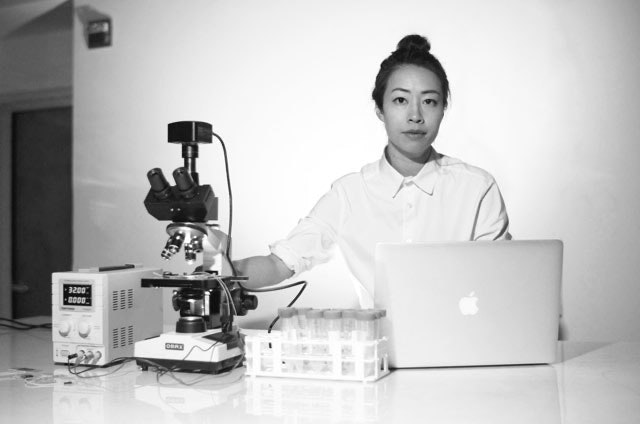
I am an artist, long-distance runner, sci-fi dreamer, and corgi-lover.
What do you do? How did you learn it?
I am incredibly lucky to have my dream job: thinking deeply about technology, and making the art to express it. I followed a meandering path. First, I learned how to express ideas visually and spatially by studying architecture at Harvard, and from there, I became a VR geek. Eventually, I ended up at MIT Media Lab, where I started making bioart.
The female body has long been a source of contention, where opposing ideologies in religion, politics, and cultural differences often play out. In this video, Ani explores what would happen if women could control something inherently male: Spermatozoa.
3 favorite possessions?
- My best friend's wisdom tooth
- My mother's family album
- A collection of smells I've bottled from those I love
What does a typical work session look like?
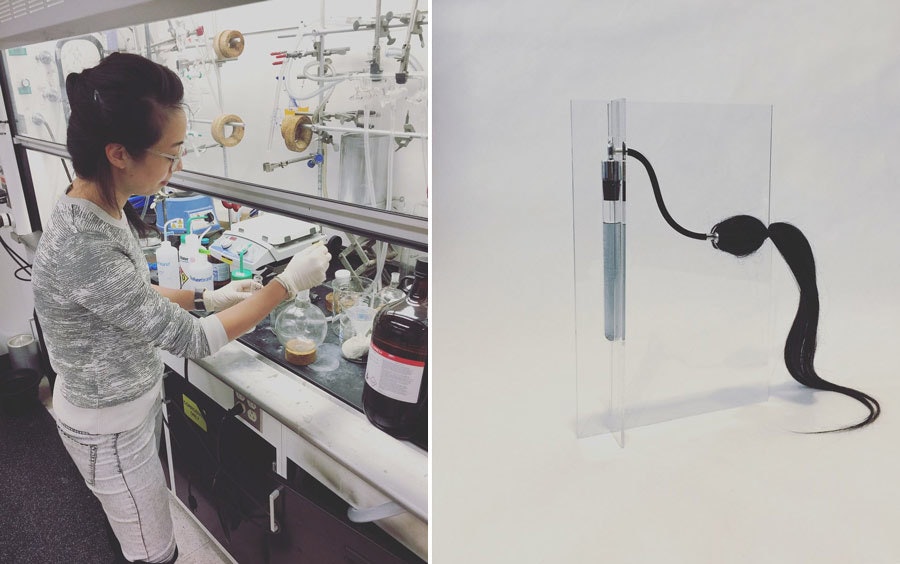
The beginning of my projects involve a lot of research. The process often starts with a large cup of coffee, a stack of papers, and my sketchbook in hand. In the next phase, I am often found visiting other scientists' labs to ask questions. I've sought advice on everything from how to use an EEG headset to read brainwaves properly to trying to score the right plant hormones to make flowers blossom on command.
The next phase is an enormous amount of exploring, prototyping, and failing. In the last phase, I hunker down and crank towards an impending deadline. It is often the most stressful part, but it's full of adrenaline, and my favorite.
How do you get over creative block?
I have the benefit of working across many disciplines, and I find that my love of one thing often inspires the next. If I am stuck debugging code, I'll draw, and the meditative act often untangles a logic block. When I am stuck on expressing an idea visually, I like to read physics textbooks (I know, this is unbearably geeky) to find inspiration in the way physicists express radically abstract concepts.
I also love looking for synaesthetic inspirations. I have a large collection of perfumes and scents, and sometimes breathing one in will trigger an unexpected thought or emotion, and my mind will spiral into new territories.
What was the last item on your to do list?
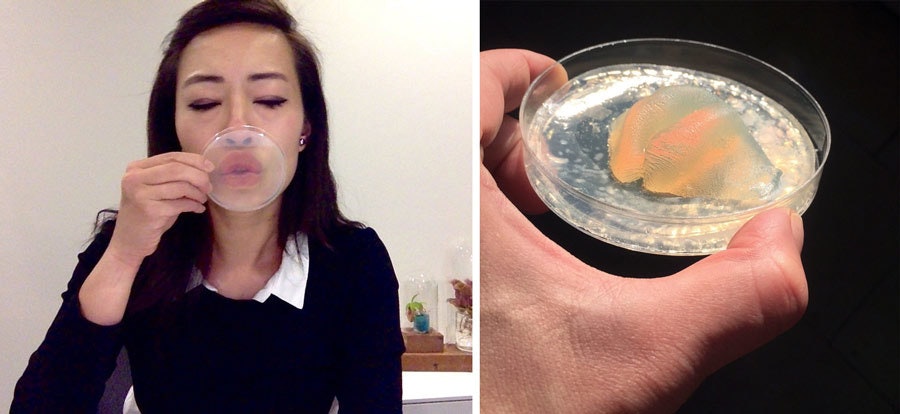
To plate and incubate fresh bacteria for a new art piece. I have been invited to participate in a group show on self portraits, and I am prototyping a living work of art based on my microbial signature.
How do you see the world in 2078?
I can't claim to predict the future, but I hope the approaching inevitability of continued automation and augmented intelligence will cause us to deeply question what it means to be human, and what is worth pursuing in our lifetimes.
What’s your number one bucket list item?
To finally share my life with a corgi! The top contending names are Stardust and MOSFET. I would also love to write a science fiction novel in my lifetime.
Who are you creative crushin’ on lately?
Tania Bruguera is an amazing Cuban artist and political artist whose strength and solid dedication to expressing the truth and the narrative of marginalized populations inspires me every day. In every studio I stay in, I pin up a small image of her work because the images hit me at my emotional core, but also remind me that art and design can have a profound impact on the world.
"Art is how you can see and feel the future," says Ani Liu in her TED Talk, "Smelfies" (if you haven't seen it, go watch that now). Drawing on synthetic biology, AI, and the microbiome, Liu crafts multi-sensory art and experiences that are at once beautiful, poetic, and a total mind-bender.
5 Brainstorming Exercises for Introverts
How to adapt group activities to make sure all voices are heard
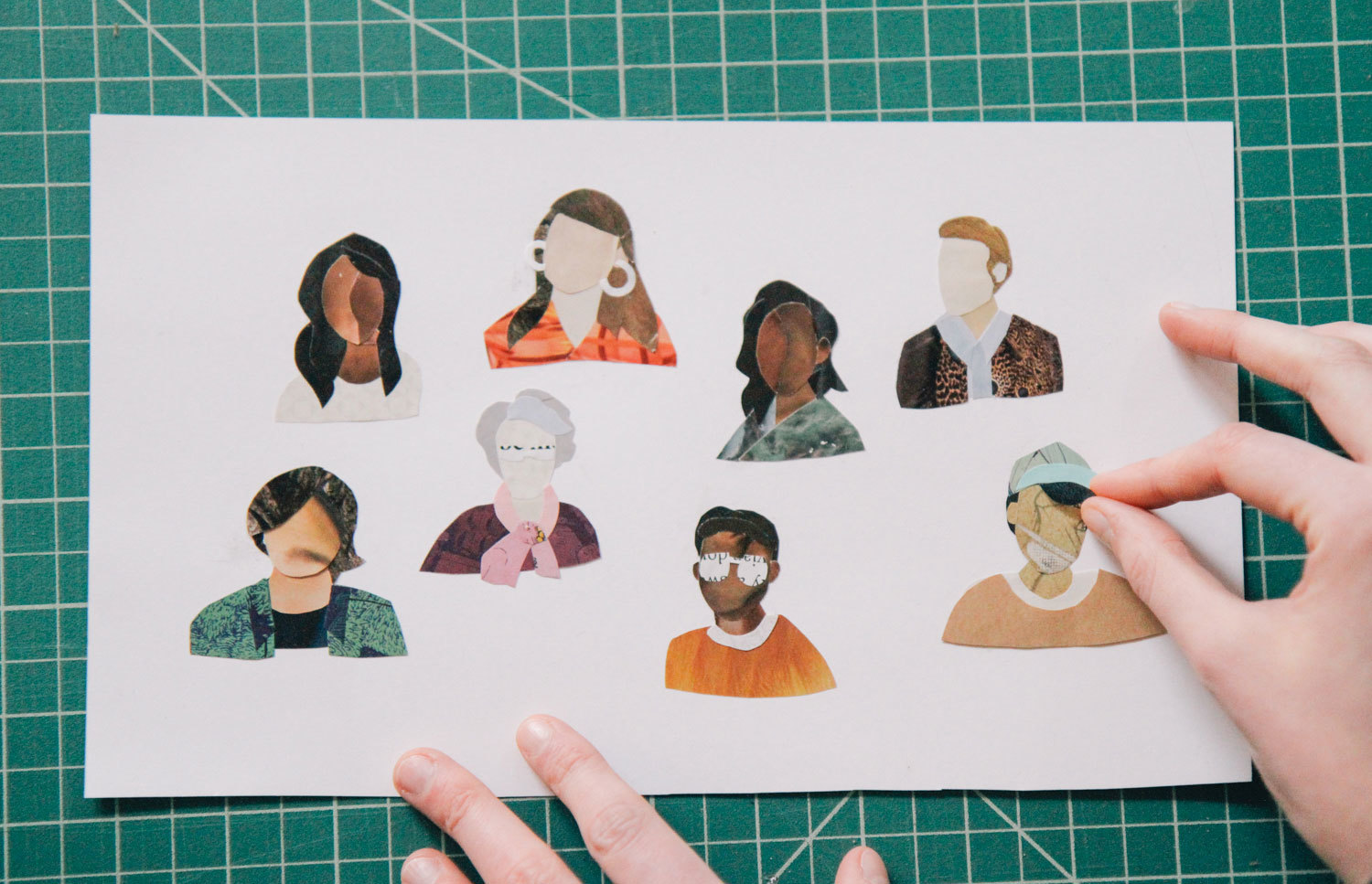
After outing myself as the lone office introvert, I expected a look of horror to pass over my coworker’s face. Instead she gave a knowing nod and smile, and said she’s heard this sentiment so often here that she calls IDEO an “extroverted office full of introverts.”
I was stunned. The majority of my colleagues are introverts too? How did they manage our everyday activities, like brainstorms? The goal of a brainstorm is to uncover new opportunities by bringing in fresh perspectives, but as a group activity it can make introverts clam up.
Inspired by Susan Cain’s research on the power of introverts and how solitude, like collaboration, is a crucial ingredient to creativity, I asked my fellow designers what strategies they use to incorporate solitude into the most extroverted of activities.
Here are five ways they've adapted the brainstorm for introverts:
1. The Silent Circuit
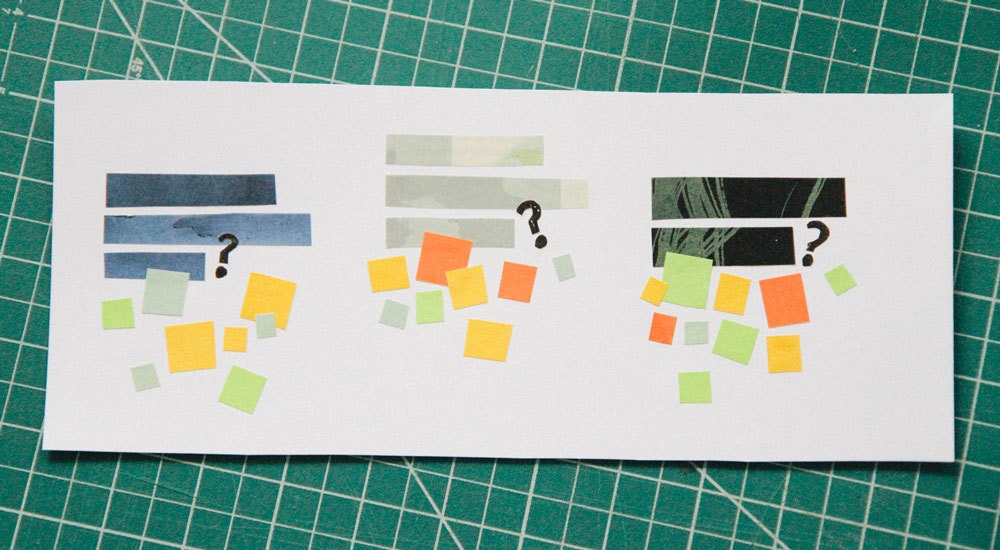
Ask each person to write a “how might we” question on a sticky note (IDEO’s standard brainstorm kickoff question) and post it around the room. For about 15 minutes, everyone walks around, silently adding as many ideas as they can to each prompt. When time’s up, everyone returns to their question and discovers a bounty of new ideas that their colleagues have given them. This approach works well for keeping large groups engaged, while providing quiet, focused time to those who want it.
2. Musical Chairs
Breaking up a big group helps encourage quieter voices. To limit the number of people in a brainstorm, split into groups of three or four and play musical chairs. Post a handful of "how might we" questions around the room, assign a group to each one, and start the music. When it stops, rotate to the next station with your team. That way, there are never too many voices to contend with, but a lot of ideas are shared. Leave time at the end for people to wander around the room and add any remaining ideas.
3. Get to the Bottom of the Stack
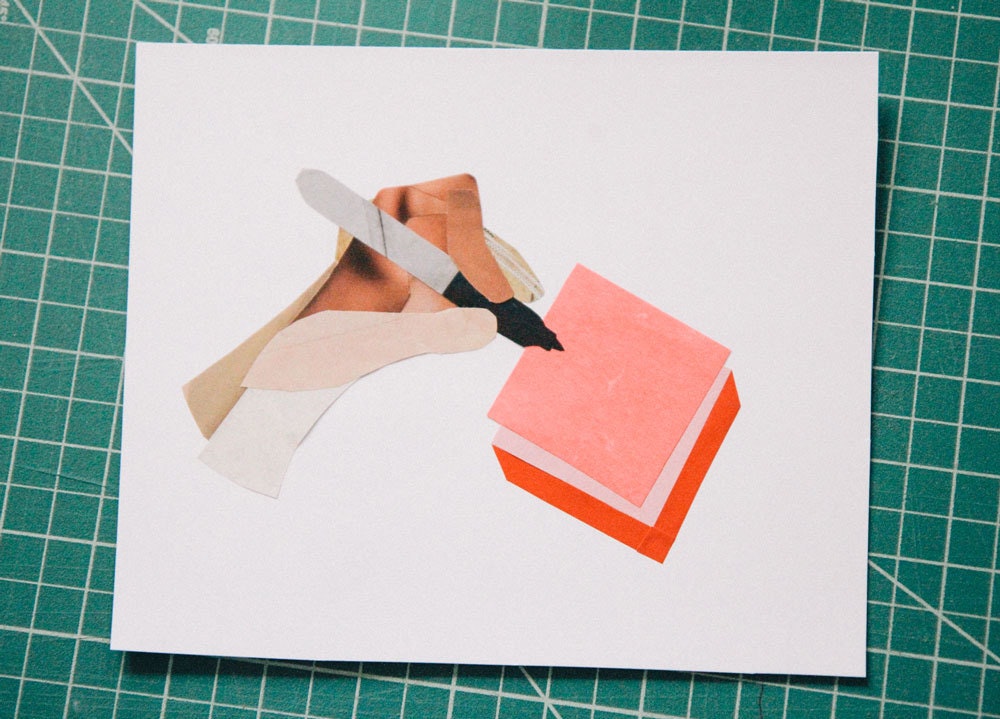
This is the most exhaustive brainstorming activity on this list—it can take up to two hours—but can also generate the most ideas. The goal: Each person fills an entire stack of Post-its with new ideas. (A “stack” can be a full Post-it stack divided into halves or thirds, depending on how much time you have.)
After the questions are introduced, everyone goes heads-down and captures ideas. It's a lot of silence, but it allows those who prefer to think and brainstorm silently the time and space to do it. When everyone has reached the bottom of their stack, one person volunteers to share first. As she presents, others add similar ideas or build on top of them to draw out themes.
The exercise can be a great empathy builder. For a project about helping high school students build purpose in their life, a team used the prompt, “What are your most awkward memories from high school?”
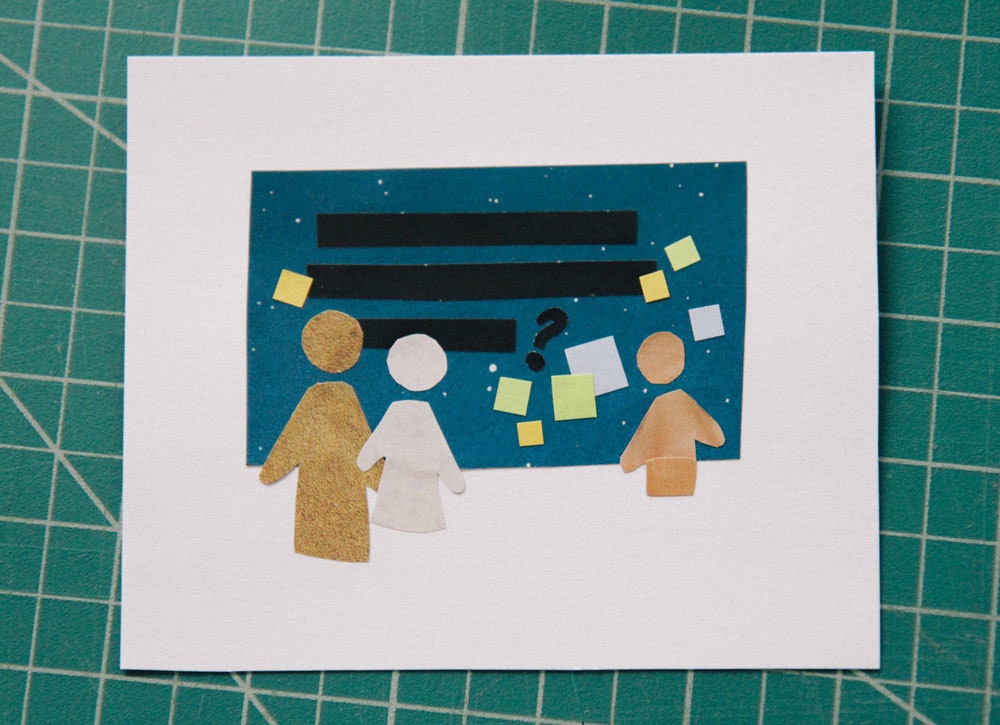
4. Office Hours
This one came from Fast Company: Instead of asking people to commit to a crowded, hour-long session, reserve a space and ask folks to stop by for 5-10 minutes to contribute ideas—in between meetings, on the way to lunch, etc. This gives people permission to come and go as they please, and limits the number of voices in the room at one time. To make participation even easier, introduce the questions a day in advance—over email or in a calendar invite—to give people time to think.
5. The Slow Build
Post a question in a shared space in the office—the kitchen, in the bathroom, by the bike rack—and allow people to add ideas over several days. At our San Francisco studio, we post monthly questions and prompts in one of the private, unisex bathrooms in our office. The questions often ask people to reflect: “I feel loved when…” and “I show my love by…” Or, “What’s something new you want to try this year?” As an introvert, it’s my porcelain palace.
How do you create the conditions that can help everyone feel welcome and heard at work? I’d love to hear your ideas.
Thanks to Charla Bear, Minnie Bredouw, Deirdre Cerminaro, Eileen Farrell, Peter Macdonald, and Heather Ross for their contributions and inspiration.
One day, I confided in a coworker: “I feel like an impostor in such an extroverted office.” The culture here is built on constant interaction—every question is an opportunity for collaboration, we work exclusively in teams, and our brainstorms encourage everyone to think out loud. It exhausts me.
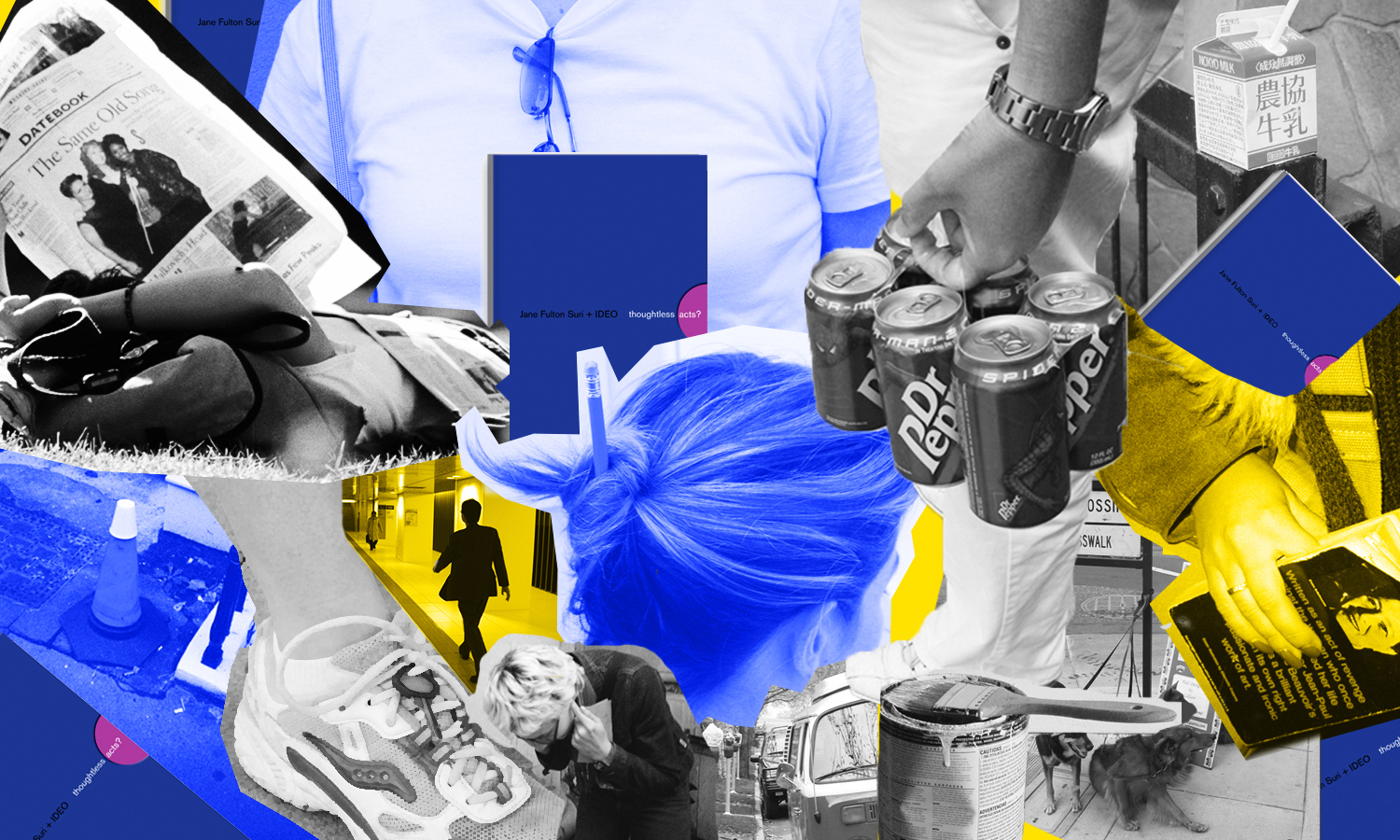
Thoughtless Acts: Design Your Breakfast
Thoughtless Acts: Design Your Breakfast. The intuitive ways we adapt and react to things in our environments
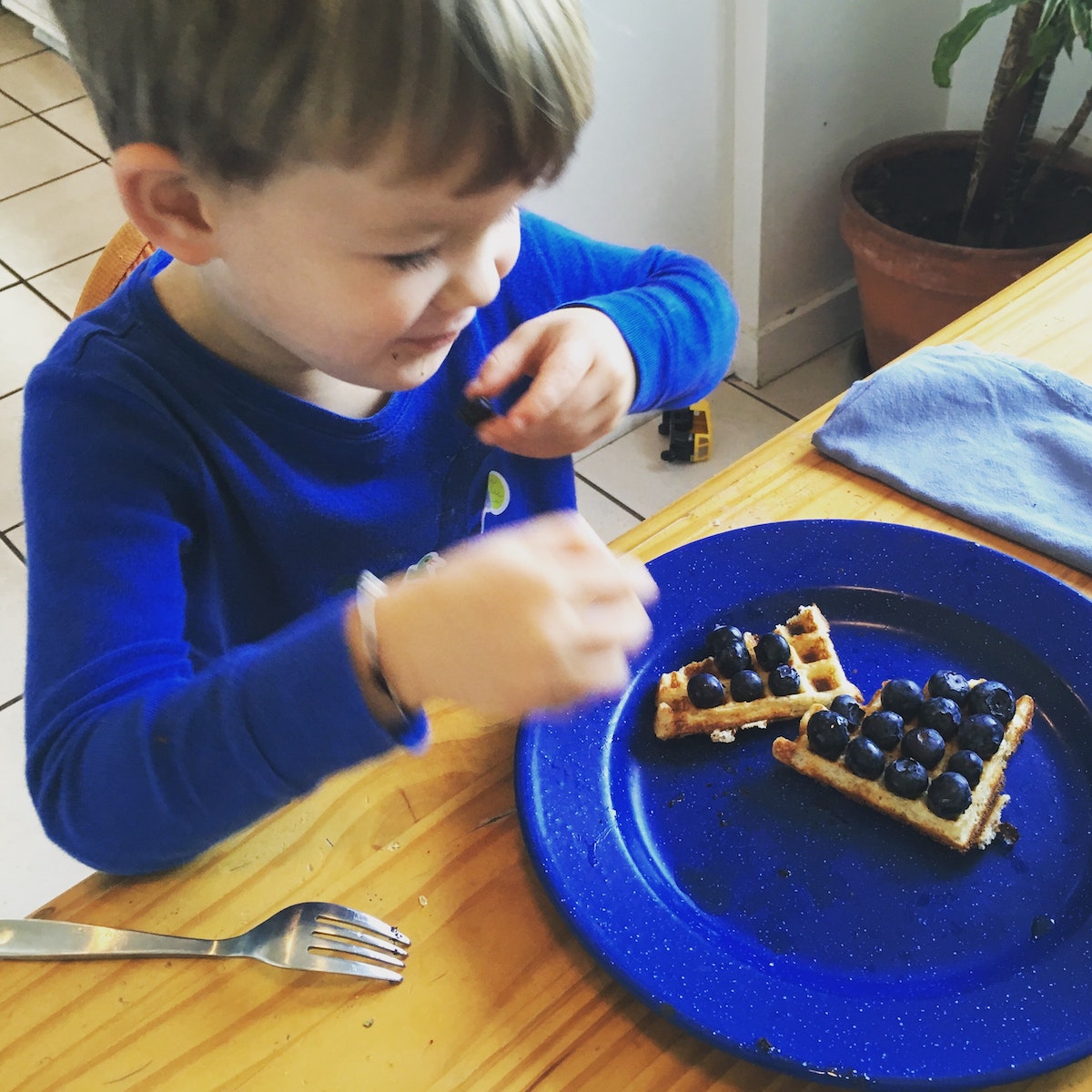
What could be more satisfying than a blueberry in every waffle hole? My son Tom took his time to arrange everything just perfectly before gobbling it down. Even if you are not meticulous enough to do it yourself, I'd be surprised if the same idea didn't cross your mind. It makes me think about all of the times that I've thoughtlessly (or thoughtfully) constructed my own bites—optimizing for flavor, making sure that there are goodies in every bite, until my plate is clean.
Human-centered design requires us to observe human behavior with beginner's eyes, so that we can spot the innate ways people interact with the world around them. We call these intuitive and unconscious reactions Thoughtless Acts, and IDEO designers collect photos of them to inspire their work.
Be the Leader You Wish You Had
Remember that people like to play
As a result, I spent most of my time finding problems, real or imagined, and adding them to a growing list of things I would solve to make my mark. My notebooks from those days suggest that I believed I would be a hero one day, but for now, was resigned to suffer through unrewarding and lonely work. I was an asshole. And you get what you give.
I had started a project with Quiksilver, and with that came a new relationship with a very successful creative director, Erik (now a good friend). Erik invested in inspiration for himself and everyone on his team. He made sure he was creatively nourished—maybe even selfishly so, if that can be said in a positive way—and emulating the kind of creative culture he wanted to instill. It was mutual and reciprocal among his team.
He inspired me, too. I wrote a simple note on a Post-It and stuck it to my computer:
“Be the leader you wish you had.”
I know. It’s all Gandhi and shit (apologies, Gandhi, for any disservice in my comparison). But it shifted my thinking radically. I made a commitment to own my happiness and creative experience.
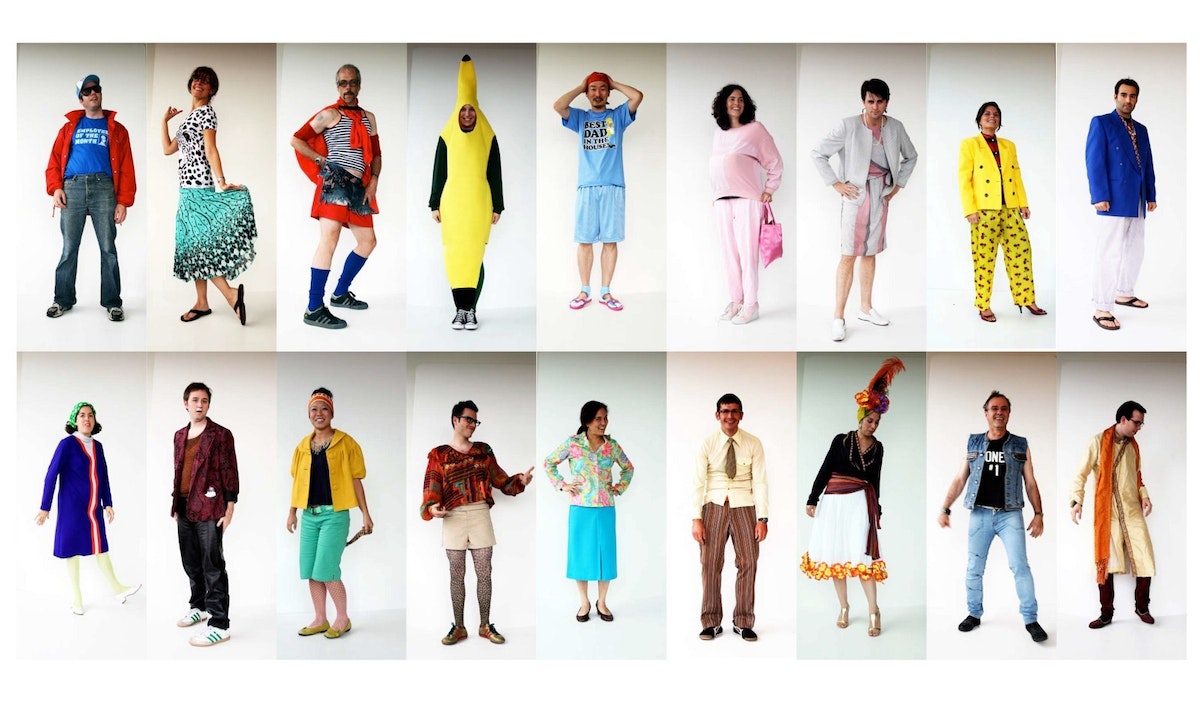
That week, over regular tears-and-beers drinks with a colleague, we were laughing over an article in Vice called “Wear Dare” in which a couple of friends dressed one another for a day and described their embarrassing moments. We wondered what that would be like at work…
“Let’s do it,” I said. Following my new directive.
We goaded each other through nervous fear, laughter, and finally action… what if this goes wrong? Or worse, what if it goes right?
We invited everyone to put his or her name in a hat and drew at random…
Here’s what happened:
It was the
best
day
ever.
It was joyous and unserious. It wasn’t about fixing; it was about sparking something and letting go.
Only four people didn’t participate out of a studio of nearly 60. I am sure they regretted it! And looking back, I believe that day was a key moment in a process of transformation for myself, using my position for fun instead of misery. It was that raw creative act that broke the dam for me.
Around that time, the project leader for the Quiksilver work came to me with the idea of traveling the California coast in an RV—you know, “as research.” I knew he expected me to say no. And it would certainly lose us a bit of money, but I suppressed the leaderly should and followed my new directive and said yes.
My landlubber colleagues got to be surfers for a few weeks. I joined the team on the road and reconnected with my surf-teen years in San Diego. More importantly, surfing every day, sketching in the sunset over beer and pizza in roadside campgrounds with a bunch of other (mostly) dudes, trading ideas until we fell asleep in the RV, and fomenting the growing optimism and joy of building play into our workday led to the design of great concepts for the client—some of which went to market.
Other changes followed.
We hired some amazing people, who we never would have hired prior, as interviews shifted from picking people apart to finding and supporting possibility.
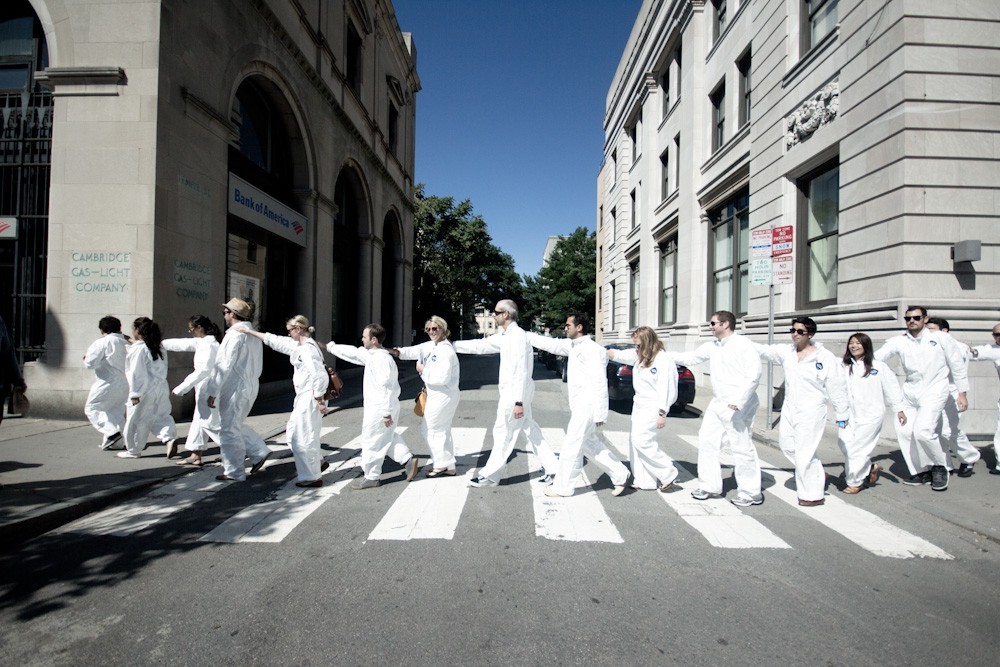
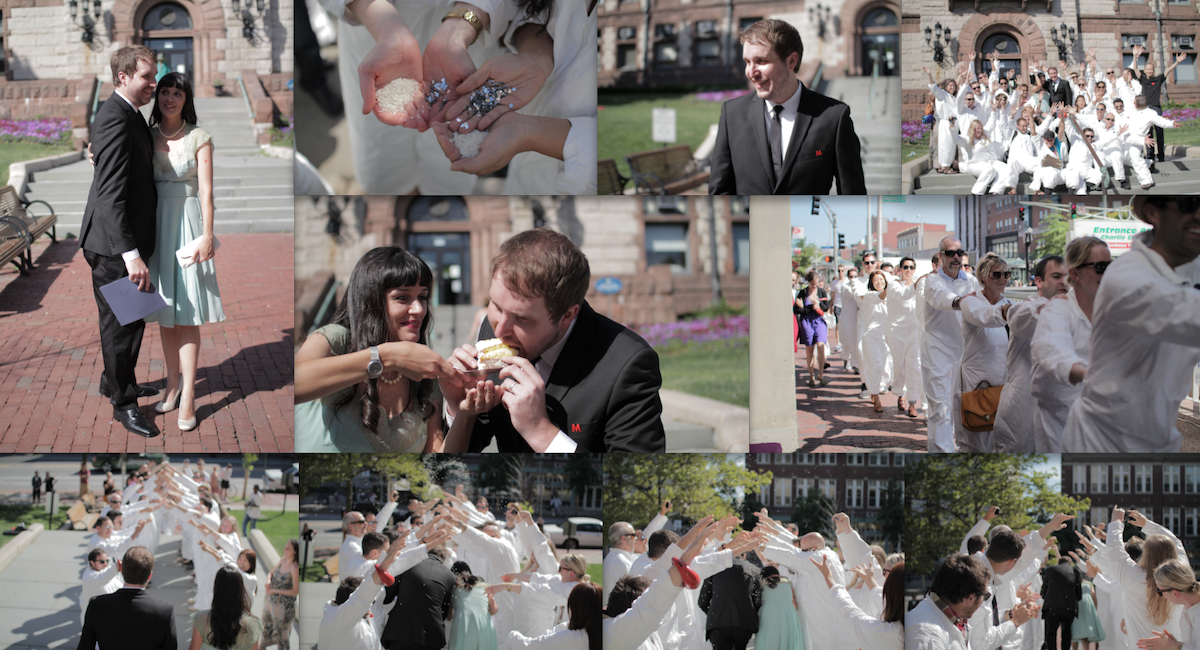
For a colleague’s wedding we dressed up in Tyvek suits and marched, single file, to the courthouse through Cambridge, MA. (That's what you see in the image up top).
We did design fiction exercises over lunch. The culture began to be one that craved creative pokes to encourage the flow of great ideas.
The studio evolved from being a quiet participant in the business to a creatively rowdy collection of designers from Boston producing content that the rest of IDEO references.
How we were began to shape what we did.
So much had changed with that simple note to myself.
I’m not suggesting that dressing your colleagues in thrift store pantsuits will fix everything. Nor that you need to hit your nadir and be ready to quit before you can find the inspiration to lead from your creative self.
In fact, this is not really about you or me at all.
This is about what I learned the hard way: That great creative leadership is about letting go of that nagging mental image you have of what you are supposed to do. It’s about believing in others, and focusing on fanning the flames of creative, weird, exothermic people, rather than on fixing problems.
How you approach your day is how you will live your life.
If you see your role as a list of broken things that need to be fixed, life will deliver you nothing but. But if you actively seek creativity and fun, and enjoy a little embarrassing dress up now and again, you might just find yourself successfully in the middle of the vibrant culture you’d once wished for.
When I was a fresh, newly appointed lead in our Boston studio, I struggled to have much fun. I believed I was a fixer of broken things, thinking, and people. The story I told myself was that I was a martyr for the fun others were having while I dealt with the important leaderly stuff.

Lindsey Turner
I’m passionate about building brands, products, and experiences that help organizations show up with meaning and momentum.
I help organizations cut through complexity by shaping how they show up, through brand strategy, identity, and storytelling.
Working at the intersection of brand and business, I bring an editorial eye and a bias toward making—turning ideas into tangible experiences that people can understand, trust, and believe in.
My work spans government, healthcare, financial services, media, and consumer goods, from launching Gen Z-focused ventures to building innovation labs and reimagining legacy brands. I relish moments of ambiguity and enjoy translating across teams, perspectives, and priorities to move ideas forward.
I started my career in editorial and digital design, shaping cross-platform experiences and identity systems in publishing and agency environments. That foundation still shapes how I work today: I’m detail-oriented, collaborative, and overreliant on the Oxford comma. I hold a BFA in Visual Communication from the School of the Art Institute of Chicago.

Rachel Young
My work helps organizations see who their products aren't working for—and build the will and the tools to do something about it
For 25 years, I've asked the same question: Who does this design exclude—and what are we going to do about it?
My work spans human-centered strategy, inclusive design, and qualitative research, with clients ranging from Microsoft, Google, and Verizon to the National Science Foundation, and San Francisco Unified School District.
Before IDEO, I taught elementary school in East Palo Alto and spent a decade doing design work with social service organizations—where I learned firsthand what it costs people when systems are built without them in mind.
I am currently writing User Error, a nonfiction book about digital access and the design decisions behind it. I live in Oakland, California.

Brian Pelsoh
I lead with craft, ensuring our work is creatively excellent: rooted in deep human insight and imagination, while also grounded in the realities of business and technology.
My expertise spans brand, communication, and product design across tech, education, the arts, and social impact.
I believe great work demands both high-level vision and obsessive attention to detail, and only happens through collaboration.
I bring an inclusive, hands-on approach and a deep understanding of business, which enables me to consistently deliver excellence while always asking why.
Before joining IDEO, I worked at the brand firms Pentagram and VSA Partners. I began my career as a designer, leading teams at the School of the Art Institute of Chicago and the Milwaukee Art Museum. I hold an MFA in graphic design from Maryland Institute College of Art and a BFA in communication design from the Milwaukee Institute of Art & Design, and have taught at some of the best design schools in the US.

Tony Wong
I am responsible for IDEO’s long-term success in China and working with clients to use design as a tool to enable growth.
I am responsible for IDEO’s long-term success in China and working with clients to use design as a tool to enable growth. Specifically, I have helped Chinese companies design holistic brand solutions through the development of their products, communication, services, and innovation teams, and I have helped multinationals expand their presence and influence in China.
I advise global leaders on developing China-led innovation and capabilities.
In over 15 years in IDEO Shanghai, I have worked on projects that use design to elevate the quality of the experience of healthcare products and services, streamline processes that increase productivity, create spaces and programs that promote and enable inclusive communities, and build next generation mobility solutions that are planet-positive.
Before joining IDEO, I worked at Philips Electronics and the Electrolux Group in Italy, the Netherlands, and Singapore on a number of breakthrough commercial products. I am a member of the Young President Organization in Shanghai.

How to use AI as an editor, not a writer
Ed White shares how he uses AI as an editor—not a writer—to sharpen storytelling, rehearse ideas, and preserve the productive friction that makes creative work better.
Ed White has a rule he's tested on his own writing: hold yourself as the writer, and let AI be your editor. Ed is a Senior Design Director at IDEO's London studio, where he co-leads the firm's AI portfolio across Europe. Before IDEO, he spent 12 years as a writer and editor at the Financial Times, Wired, and Contagious. So when he talks about when to use AI for storytelling and when not to, it comes from two decades of crafting his storytelling skills.
In this episode, Mina Seetharaman talks with Ed about two specific tools he uses to keep AI in an editor's seat: a "roasting agent" prompted to critique his drafts without any sugarcoating, and a simulated audience he rehearses pitches on before the real thing. They also get into what Ed is hearing from design leaders at Anthropic, Lovable, Shopify, and Google Creative Lab about how creative work is changing, and why he thinks the friction of writing something yourself is worth protecting rather than automating away.

Building a personal AI for the messiness of life: Sida Li
Becca Carroll talks with Cue co-founder Sida Li about designing a personal AI for the messiness of everyday life—not just work. They explore how Sida stays anchored to human needs while navigating fast-changing technology, product tradeoffs, business-model experimentation, and the realities of building an AI company today.
Most AI products today are built for work—a space with clear problems and established systems. One founder noticed a gap: personal life is messier, harder to systematize, and mostly left behind by the AI boom. So she built Cue, a personal AI that lives inside iMessage and group chats, to go where the other tools haven't.
In this episode, Becca Carroll, IDEO's Chief Strategy Officer, talks with Sida Li, co-founder and CEO of Shared Context Lab, about staying anchored to a human need while the technology around her keeps changing shape, why she treats her business model with the same rigor she'd bring to a product, and what it feels like to build a company at this particular, disorienting moment in AI.
The conversation also gets into how Sida makes design decisions: the language Cue uses to describe itself, the tradeoffs behind building inside iMessage instead of a new app, and a real story about a business idea that didn’t pan out.
This is the second in a two-part series profiling founders from IDEO's Startups-in-Residence program. The first conversation is with Johannes Seemann, founder of Sooner, on designing GenAI for the emotional side of money.

Designing GenAI for the emotional side of money: Johannes Seemann
Designing financial tools around the feelings that shape money decisions.
Most personal financial tools are built to run the numbers and optimize towards a budget. While that works for some, most people experience money as a lived relationship that does not neatly fit into a spreadsheet. Johannes Seemann and Becca Carroll discuss why money is emotional before it is mathematical, and what a human-centered approach to building a generative AI financial product looks like in practice.

The curious leader's edge in uncertainty: Scott Shigeoka
How genuine curiosity helps leaders navigate uncertainty with greater confidence.
Mina Seetharaman talks with Scott Shigeoka, author of Seek and Head of Curiosity Cultivation at the Eames Institute, about what distinguishes genuinely curious leadership from performative curiosity, how power dynamics shape curiosity, and why practicing curiosity can restore energy rather than drain it.
Looks like you might be in search of something very specific?
Or reset the filters above and try another angle.
Here’s some random inspiration

Podcasts about creative leadership

Articles about the power of prototyping