.svg)




Better sales, less waste
H&M transforms its operations to cut excess inventory.
Globally, the European Commission reports, a truckload of textiles heads to landfills or is incinerated every single second.
The fashion industry accounts for some 10 percent of greenhouse gas emissions worldwide.
Less than 1 percent of the materials used to make clothing is recycled, according to a report by the Ellen MacArthur Foundation.
The best way to keep clothes out of a landfill? Don’t make them.
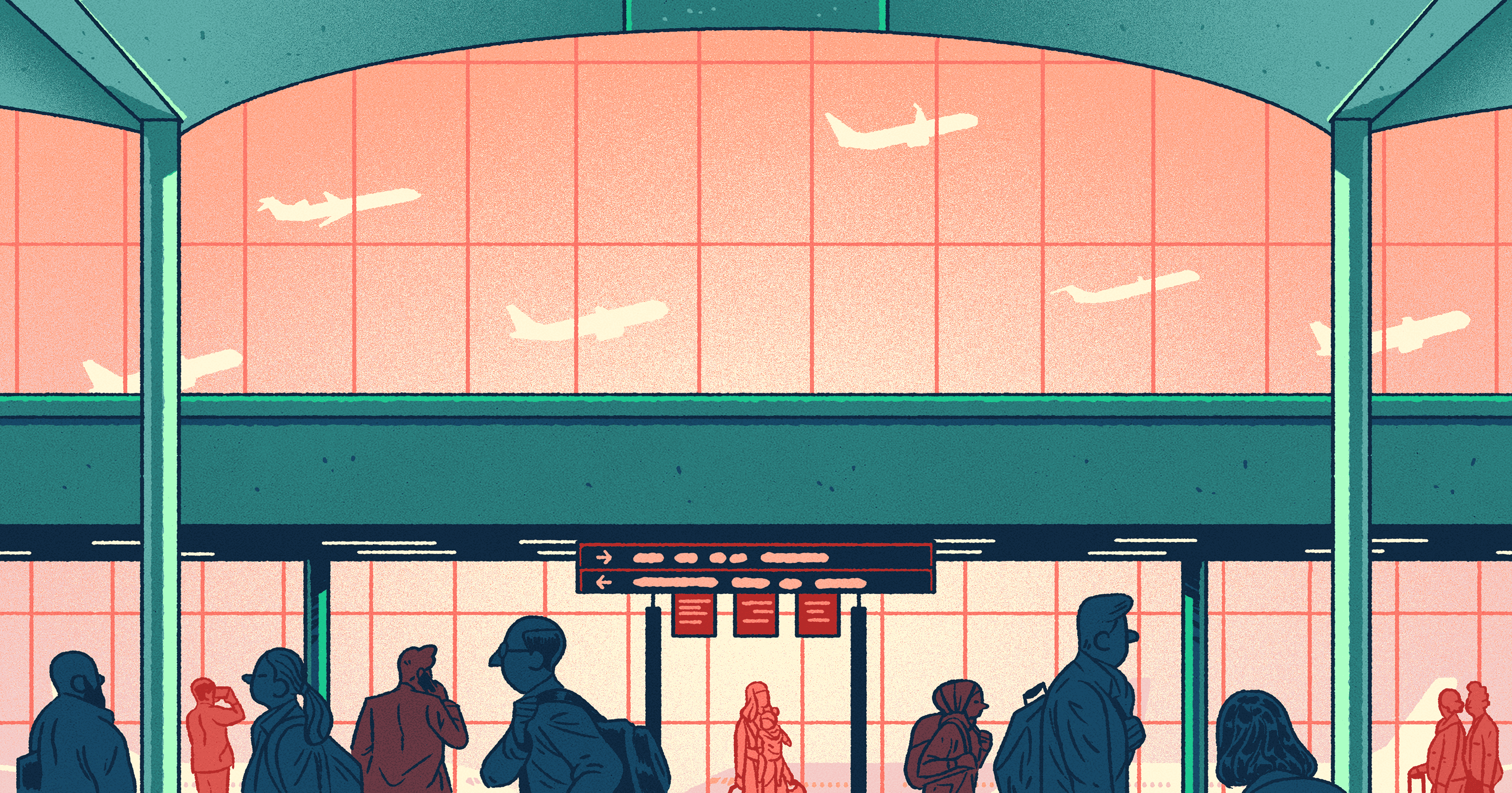
Picture this: Not long ago, it wasn’t unusual for a customer to walk into an H&M store and not be able to find a basic white t-shirt in their size. Why? Like most long-established retail operations, H&M was operating with a push model—placing seasonal bets on what the demand for a given item of clothing might be, locking orders far in advance, and hoping that they were able to sell out. Make a mistake in that kind of model, though, and you can end up with customers unable to find the basics they rely on, or excess inventory you can’t sell. That’s a problem for the business, but for the environment as well—and one that doesn’t fit H&M’s aggressive sustainability goals.
Though H&M had tried to tackle the problem before, the launch of the H&M Group Design Studio, co-created with IDEO, gave the retailer the confidence to go after it again. The team started out by mapping out the complex network of people that make up its supply chain across the globe, meeting with everyone from designers to garment suppliers, logistics managers, and even folks selling the final product in H&M stores.
They then created an algorithm for more precise ordering, as well as a tool that provides a shared view of information. Instead of placing orders, the new automated flow—dubbed “Cruise Control"—allows staff to work with a demand forecast that gives them more time to focus on customer-centric operations, like providing guidance and inspiration. It also makes it easier for H&M to follow the demands of the market, and place much more accurate bets on what consumers will want, when. Already, H&M has significantly increased sales while cutting excess inventory—a result that improves its bottom line, as well as its environmental impact.
Estimates project that by 2030, global apparel consumption will hit 102 million tons.
22%
reduction in stock during a pilot program
34%
increase in sales during a pilot program
Fueling innovation in Boston
How the Boston Society for Architecture is leveraging member expertise to increase its impact.
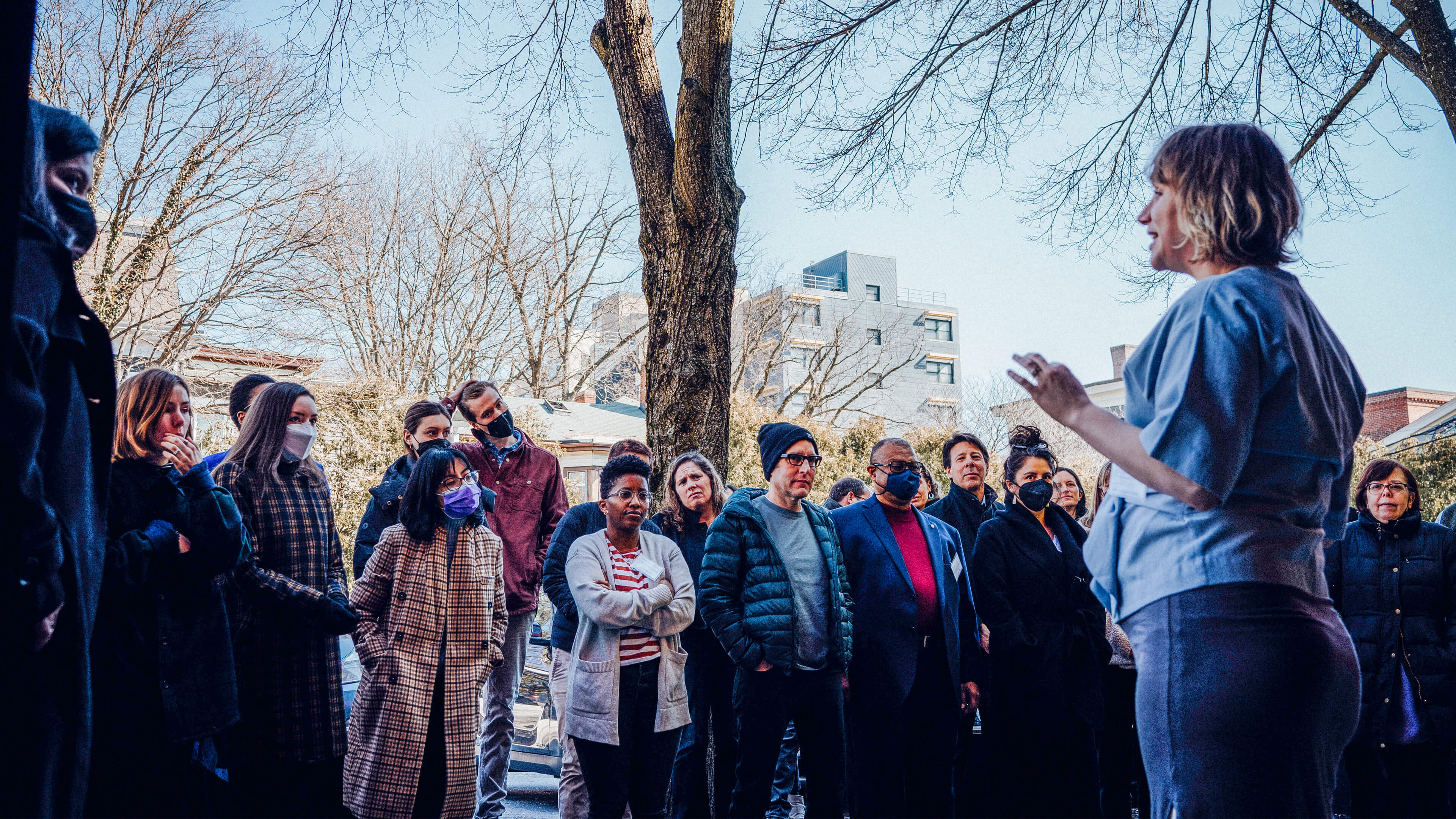
To foster creative projects that spoke to the needs of local communities and environments, the BSA began to engage its members in collaborative, user-led design. The organization launched its first-ever innovation challenge, putting out a call for all members to pitch their ideas for projects in the built environment.
The BSA expected those pitches to have dollar signs attached. To the organizer’s surprise, only one asked for funding. The rest requested less tangible, but equally meaningful support: advice, connections, specific expertise. Those are resources that the BSA has aplenty, but hadn’t learned how to leverage well.
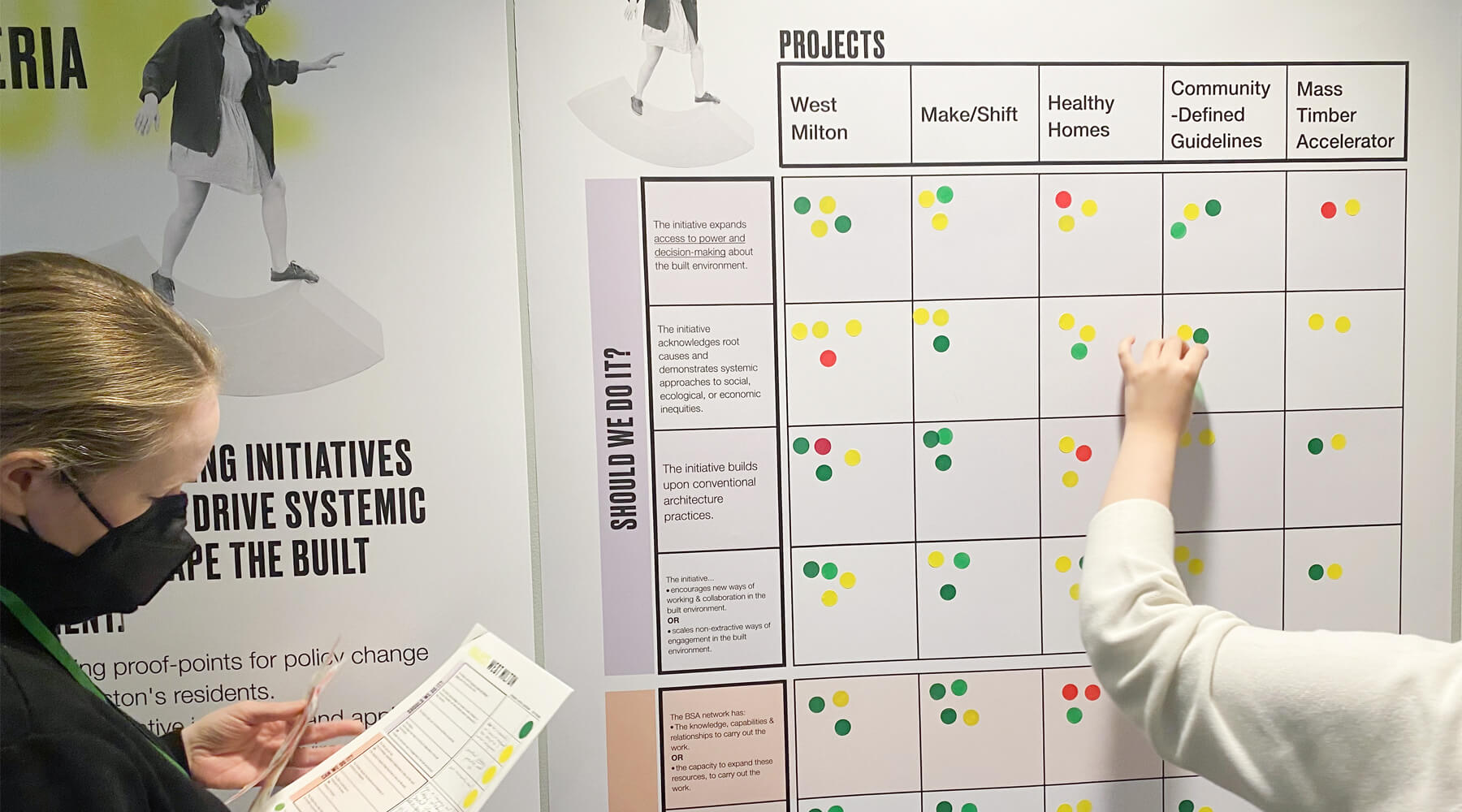
From that first go at an innovation challenge, the BSA learned how to better support its members. It also learned that to lead with purpose and make strategic choices, one must develop the confidence to say no. Instead of spreading itself thin across many projects, the organization decided to take small steps, focusing on one initiative at a time, so that it can deliver focused impact and stay true to its evolving mission.
With 36% of global energy going to buildings and 8% of global emissions caused by cement alone, the architectural community is inextricably intertwined with both the causes and solutions related to climate change.
According to a survey conducted by the AIA, the architecture profession in the US is less diverse than the population as a whole. This lack of diversity can contribute to a disconnect between architects and the communities they serve.
31
submissions received from innovators in the Boston region working on equity and sustainability challenges
5
innovation teams invited to pitch ideas
Student-centered solutions
How an organizational culture change is helping newbies at NYU navigate campus life.
The resources that NYU students needed were organized by administrative department, and buried on disparate websites and calendars. But students don’t think in terms of departments—they just need to know where their classes are.
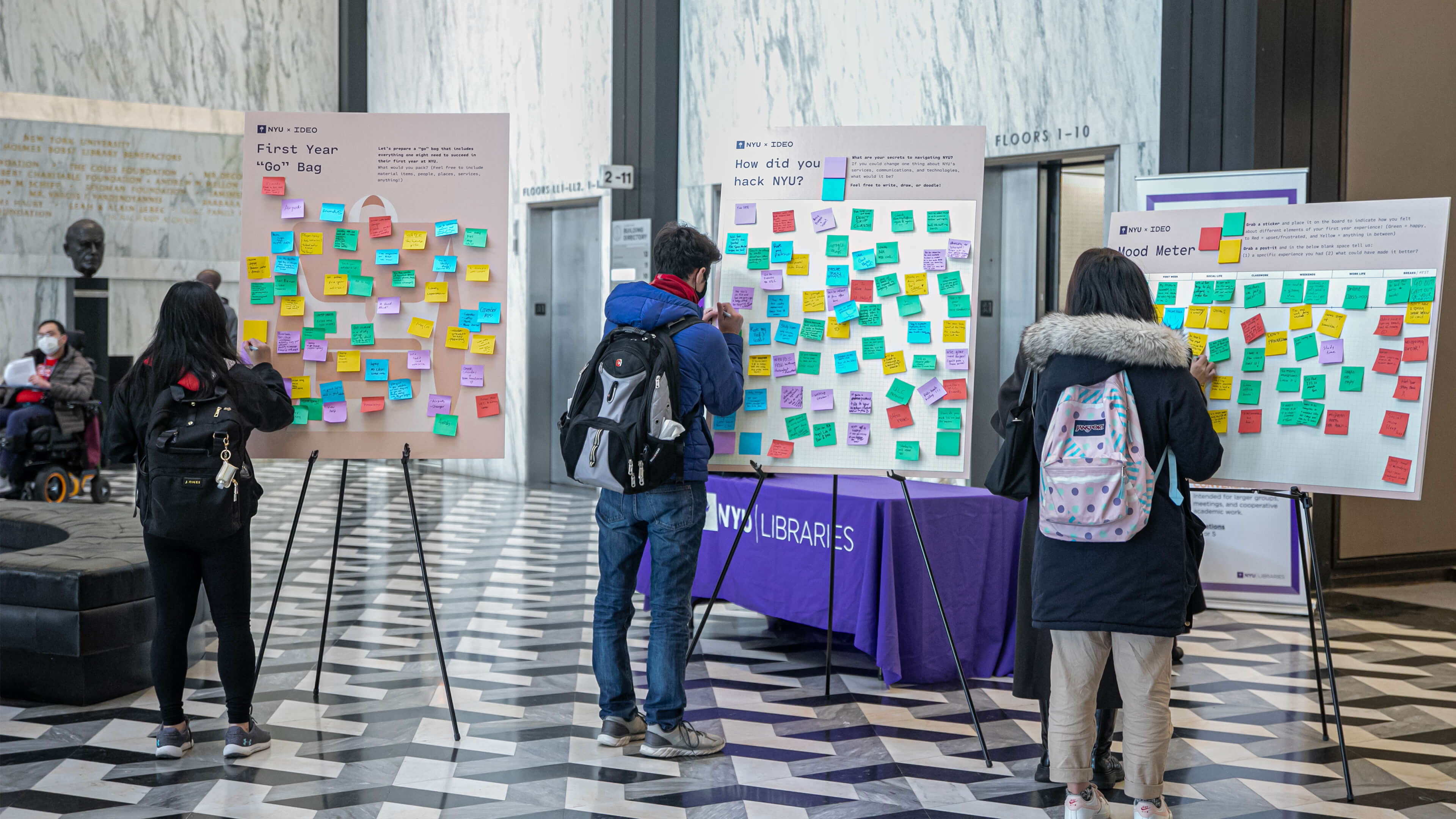
All of this became patently clear as IDEO shadowed students. Team members visited classrooms, walked with them through their days, and hosted pop-ups in highly trafficked areas to get ideas from passersby. That helped the team develop a common understanding of the overall student journey and grounded employees in the key moments that can either make or break a student’s experience. Visualizing their journey helped departments gain a shared understanding of the fractured communications challenge and develop possible solutions.
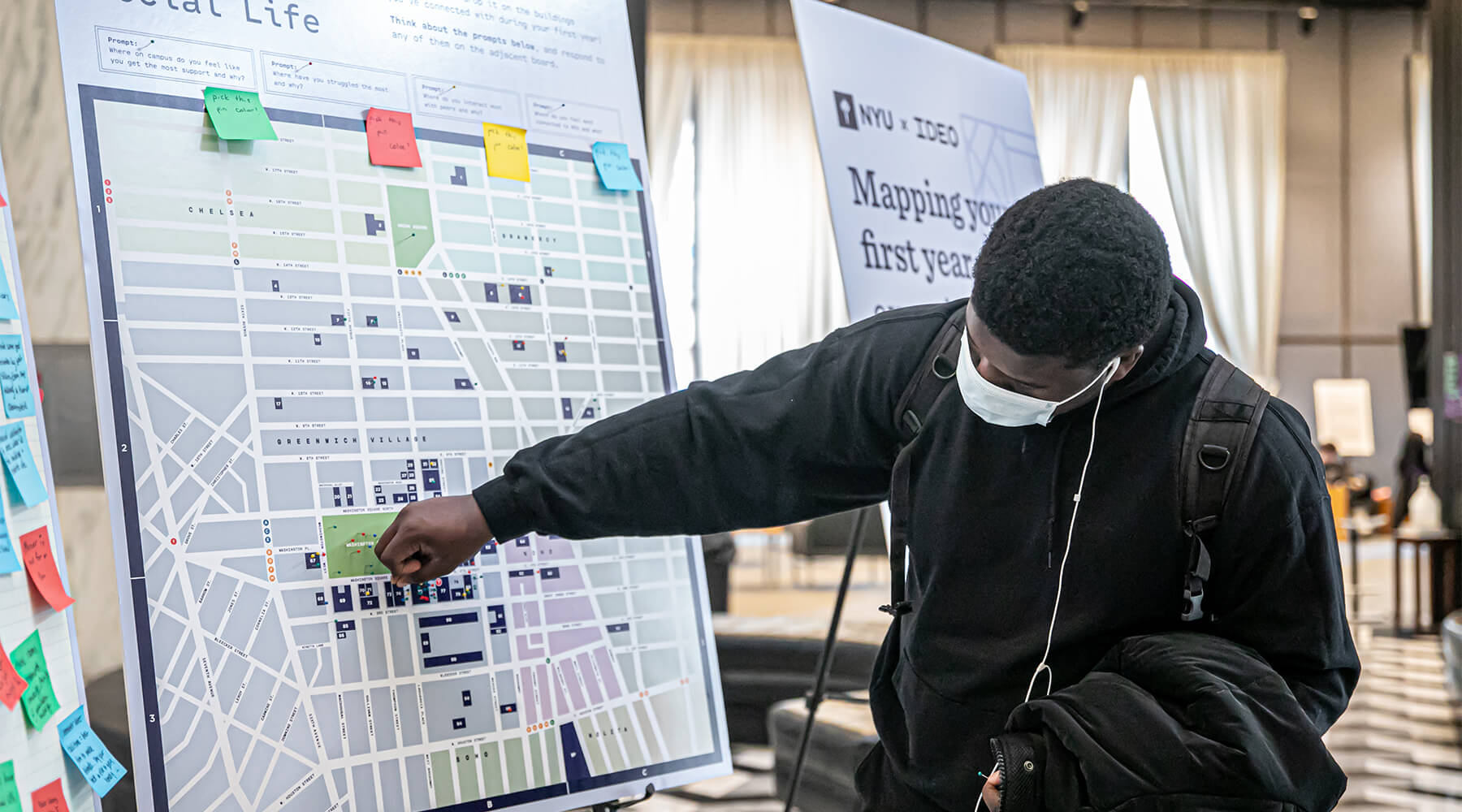
To synthesize those insights, we formed cross-functional action learning groups, challenging existing practices at the university and coming up with new ways of working. Participants came from a diverse set of departments, including enrollment management, student affairs, marketing and communications, IT, global inclusion, student services, the provost’s office, digital communications, and more. The cohorts sketched early hypotheses and got feedback from faculty, administrators, and students from all of NYU's undergraduate schools to refine initial concepts.
Collaborating with students gave staff a first-hand look at what students were struggling with and a way to engage students directly in addressing those challenges. Just as importantly, there was an overall culture shift at NYU: Administrators started with questions instead of agendas, came together around a table, and reached beyond their job descriptions to meet the needs of students.
First-year students reported receiving hundreds of paper forms, and email from more than 70 unique senders.
NYU needed to offer students the right resources at the right time—and collaborate to serve them as a unified administration.
New services
in-production include centralized calendars, dynamic campus mapping, and customized notifications
Design-thinking cohorts
now support the student experience

She knows best
A major athleisure brand passes the mic so women can define community for themselves.
Diversity alone isn’t enough—in marketing or any other facet of business. Today’s brands must authentically engage with and create the conditions for co-design with existing communities.
That sort of deep, meaningful engagement with customers doesn’t happen over Instagram. It requires a playbook, a prototype, and a healthy amount of trust. So, IDEO worked with Athleta and Gap to tap into the wisdom of a council of women who represent intersectional identities and lived experiences. The council surfaced powerful insights for the brand, like the fact that active women don’t need a brand to empower them—they already feel powerful.

After only a few weeks, Athleta experienced the difference between research and a truly reciprocal relationship. The way their brand engages with communities is adding depth, understanding, and authenticity to Athleta’s content, products, and experiences. And women can feel the difference.
76% of US adults say that the media promotes an unattainable body image for women.
Fewer than 1 in 10 businesses review for inclusion as part of product design and marketing campaigns.
>2X
user growth in 2022
13,000+
Athleta WellPro well-being providers active on the platform
Building confidence for 2027
Create a plan for impact in three steps.
When category-defining challenges like disruption, the accelerating pace of change, and the need to rethink how organizations work are on the table, looking back on the current year and fighting for the same budget won't work. That's why many of the leaders we partner with are massively rethinking their priorities and where to best focus their resources.
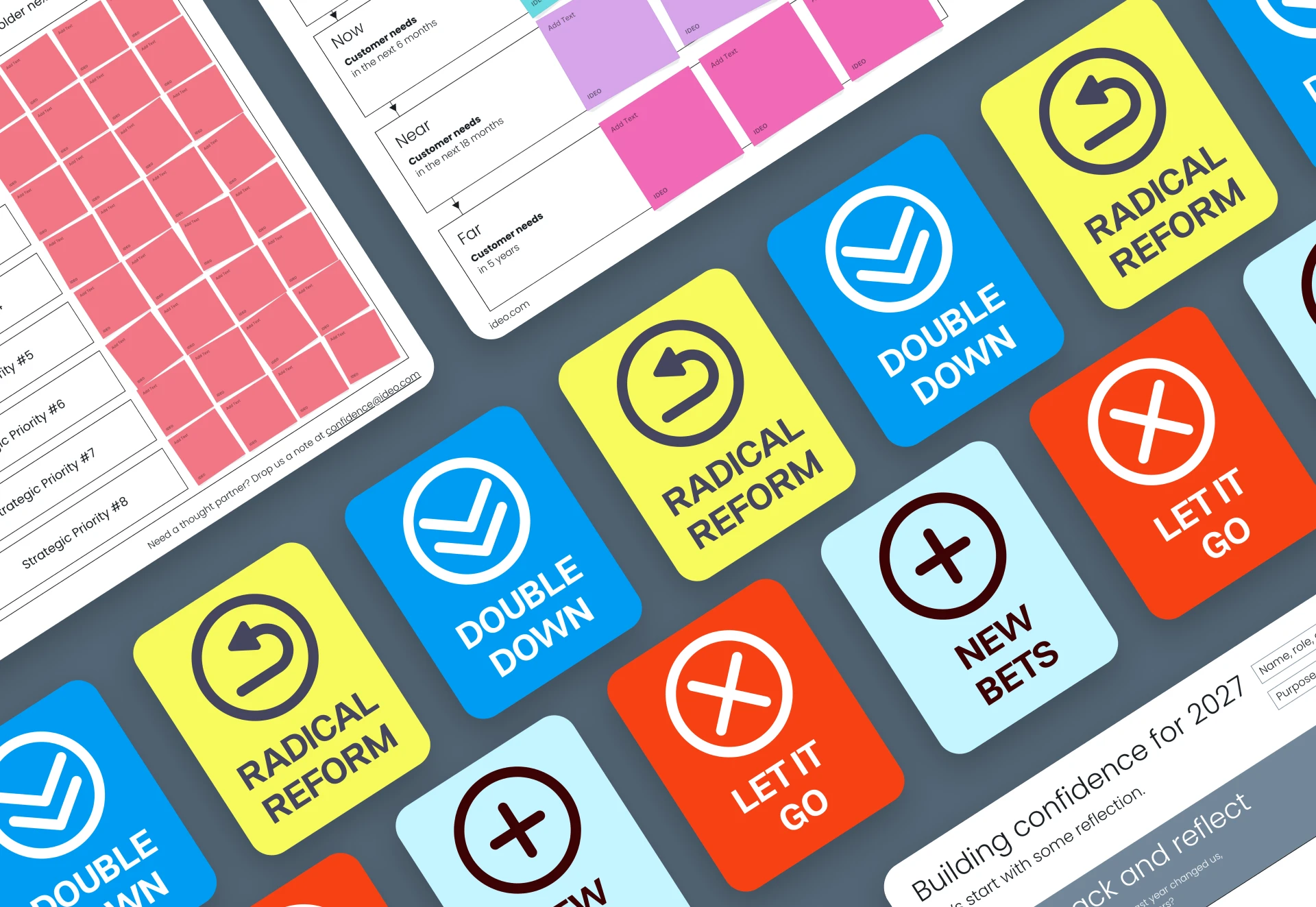
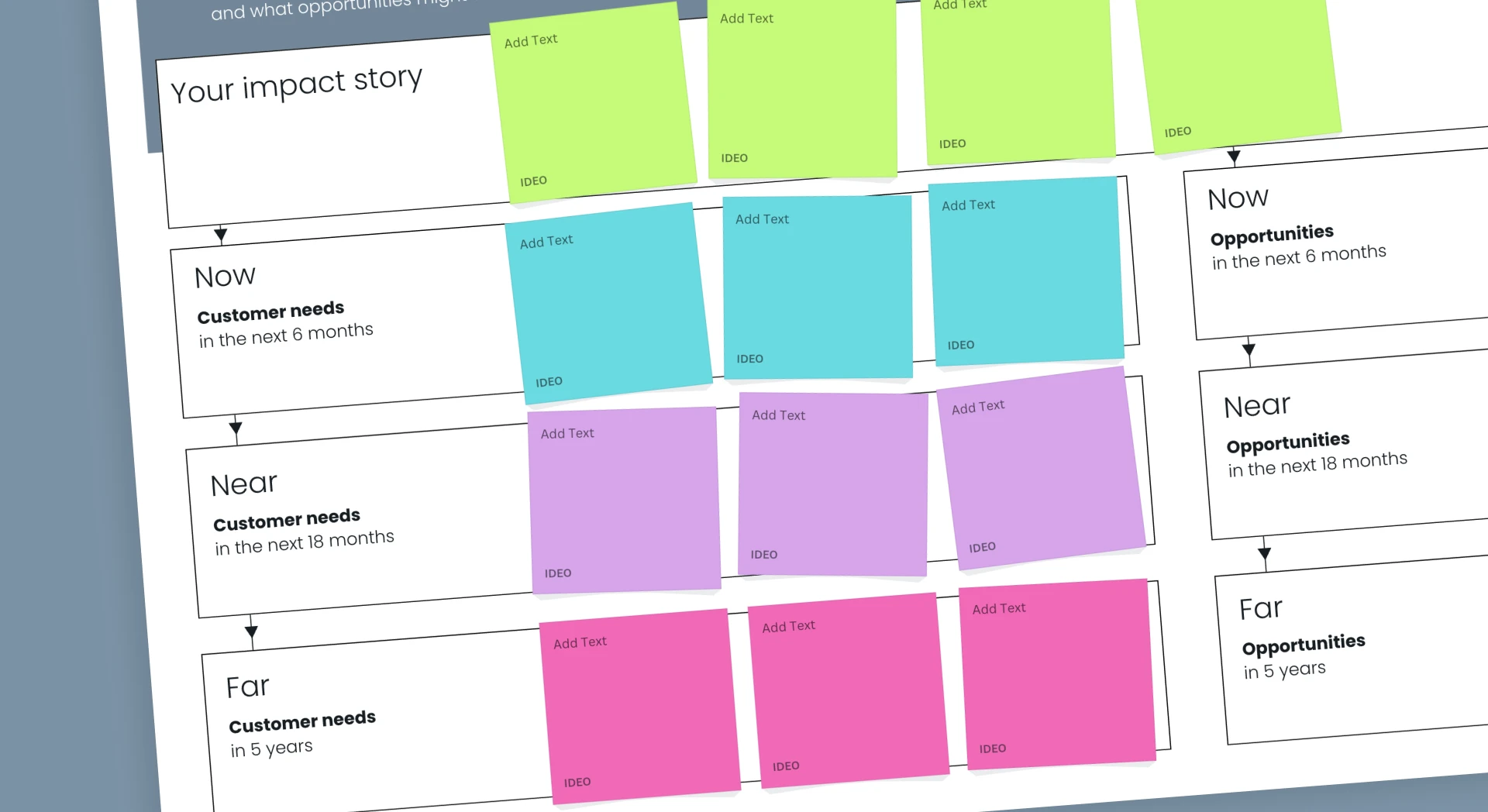
It’s a lot to balance, but the process doesn’t have to feel like guesswork. For several years, we’ve been using a tool we call the Planning Canvas, which provides a clear, strategic, and uncomplicated way to reflect on what has changed, what you’ve learned, and what matters now before planning for the coming year. It’s a simple way to help you evaluate where you are, and what levers you might pull to get your organization where you want it to be.
Download the Canvas
Our 2027 Planning Canvas walks you through three effective steps:
1. Reflect on what’s changed
2. Imagine the impact you want to have in the near future
3. Decide what to double down on, reform, let go of or pursue as a new bet

We recommend using it for individual reflection ahead of annual planning, before team sessions and leadership decision meetings begin. It will help you arrive with a clear point of view on what has changed, what matters now, and the choices worth putting on the table. At the same time, don’t hesitate to adapt it to your needs. If facilitating a collaborative conversation across your team aligns better with your organization's culture, this tool can help with that, too.
The goal isn’t to predict the year ahead perfectly. It’s to enter planning conversations with a sharper point of view and the confidence to make impactful choices together. We hope you find it useful.
Looking for more help with strategic challenges? Get in touch. We’d love to connect.
At a time when uncertainty feels like a constant, leaders across categories can find it tough to make confident planning decisions for the year ahead.
Building an enduring futuring system
How to create the blueprint for a future-fit organization.
Organizations are quite good at optimizing for today. They’re laser-focused on KPIs, governance, budgeting cycles, and incentives that reward delivering on a quarter’s results. But these systems aren’t well-designed for exploring uncertainty 10 to 20 years in the future. Most organizations don’t have the capacity to continuously sense, interpret, and act on future possibilities. This means they can easily lose their edge.
As a futurist, I’ve been helping organizations do this work for years. Sometimes it begins with a foresight project, a unique product design, or the creation of provocative future scenarios. But often the ultimate goal is much more ambitious. Futurists help organizations build systems designed around the habits, capabilities, and leadership practices that make futures thinking part of everyday work, helping an organization develop the confidence to navigate uncertainty now and into the future.
I’ve written about why having a futurist-in-residence (FIR)—and the tools and craft they bring to an organization—is crucial. What most organizations don’t understand is that an FIR is not an organizational Magic 8 Ball. Instead of making predictions, they equip the organization to be more curious and ready for what might happen. Their goal is to broadly build and distribute futures thinking, a role that is focused on both foresight and organizational development.
When organizations hire an FIR, there is a temptation to centralize the foresight practice. Initially, this is actually a great idea. Even though an FIR’s remit is broad distribution of capabilities, it’s important to give them the space to create a clear, consistent strategy and put it into motion. This makes it possible to design necessary systems, teach and spread new mindsets, and build capabilities. But once the approach is clear and the integration of futures thinking is ready to go, foresight needs to be the work of the whole organization. You want product managers spotting signals, HR folks anticipating workforce shifts, finance teams modeling longer-horizon scenarios, and strategy people running future stress tests. Everyone in the organization can participate in making operations future-fit across the board.
To do this successfully, the FIR needs to design and build a future-forward operating model. And that requires them to cycle through a specific set of roles.
Stage 1: Futurist as explorer
In the first stage, the FIR is an explorer, honing and utilizing their craft to see around corners and spot what might be changing. They conduct research, scan for signals in the market and adjacent spaces, craft provocations, and author stories about the future. The goal in this stage is to broaden the organization’s perspective, challenge long-held assumptions, and introduce new questions that leaders haven’t been asking. The FIR might create:
- Dynamic signals repositories that continuously identify and track changes from the edge
- Cross-industry trend scans to identify changes that could reshape the market
- Future storytelling or artifact building to capture the attention and interest of the organization
What that might look like: An FIR at a healthcare organization might track signals across AI, longevity, beauty, consumer behavior, and the workforce, while looking to adjacent industries like hospitality or finance for emerging models that could reshape care. They might also explore broader shifts, such as changing trust in institutions, and use these insights to build an artifact—a news headline, job description, or story of the future—that engages a wider audience, challenges existing assumptions, and sparks new questions about what healthcare could become.
Now the stage is set to bring in the rest of the organization.
Stage 2: Futurist as translator
Once the initial exploration is underway, the FIR can serve as a translator, starting the process of connecting futures to strategy and operations. During this stage, their work begins to reshape leadership practices, strategic planning, portfolio decisions, talent development, innovation governance, and the organization’s approach to risk and investment. That might include:
- Establishing new practices that focus on curiosity and questioning assumptions with leaders
- Designing opportunities to explore multiple plausible futures with teams and business units
- Identifying critical capabilities like AI fluency and systems thinking with HR
What that might look like: An FIR in the financial services industry might take an emerging shift they identified during exploration, such as the growing use of prediction markets, and bring it into an upcoming strategy review. They could use this signal of change to stress-test the strategy, asking whether it is flexible enough to respond across multiple plausible futures. They might then work with innovation teams to reconsider priorities and with leadership to surface assumptions, investments, or strategic choices that may need to change.
Stage 3: Futurist as builder
In the next stage, the FIR serves as a builder. They create and test ways to make futures thinking a part of everyone’s role. They develop learning experiences, write and test out curriculum, facilitate workshops, and coach leaders to build futures literacy. They establish systems for large-scale signal scanning, incorporate future scenarios into strategic planning, and create knowledge-sharing approaches. They find opportunities to embed new rituals and practices into everyday work in ways that are repeatable and clear. That could mean:
- Every leadership meeting begins with a five-minute discussion of an emerging signal
- Every major investment proposal includes testing one future assumption
- Every potential new concept or innovation is stress-tested against future scenarios
What that might look like: An FIR at a global retailer might establish a network of frontline employees across markets who regularly contribute signals of consumer behavior, technology, and culture to a shared platform. Those signals become part of weekly leadership conversations, while future scenarios inform decisions about new store concepts, services, and major investments.
Stage 4: Futurist as catalyst
In the final stage, the FIR is the catalyst for organizational transformation. Their goal is to make futures thinking a repeatable organizational habit—something embedded across business units, integrated into strategy, and reinforced through leadership development, HR, innovation, and planning processes. The systems built in earlier stages are now self-sustaining. Leaders no longer rely on the futurist to introduce new or provocative thinking. Teams are empowered to do it on their own. This could mean:
- Innovation teams build future scenarios as a standard part of concept development
- Leadership teams adopt regular signals reviews alongside operational metrics reviews
- Cross-functional communities of practice emerge, with individuals contributing signals and interpreting change
- Performance reviews reward curiosity, experimentation, systems thinking, and learning
What that might look like: At a global technology company, major investment proposals might routinely identify the future assumptions they depend on be stress-tested against multiple plausible scenarios before funding decisions are made. Innovation teams evaluate new concepts against both current consumer needs and future conditions, while leaders use scenarios-based reviews to make portfolio choices. At this stage, the FIR is no longer directing these activities; the futures infrastructure is in place and working.
Every organization has systems for finance, HR, legal, and operations, but very few have a system for understanding the future. A futures ecosystem isn't a single tool or annual planning exercise. It’s a new way of working that identifies the rituals, language, and decision-making practices to help an organization continuously sense change and adapt. This includes everything from signal scanning and scenario building to leadership routines, governance, knowledge sharing, and strategic decision-making.
The FIR serves as the architect of an enduring futures structure for any transformative organization by developing futures thinking into a strategic, differentiated capability. A great FIR should eventually work themselves out of a job as futures thinking becomes an integral part of how the organization operates—and how it prepares to thrive across multiple, plausible futures.
If you haven't yet read it, please check out the first story in this series,
"Why every company needs a futurist-in-residence.” Need help setting up futures systems at your organization? Get in touch.
“A great futurist-in-residence should eventually work themselves out of a job as futures thinking becomes an integral part of how the organization operates—and how it prepares to thrive across multiple, plausible futures.”
“Crafting the last mile of delight”
Anthropic’s Head of Product Design on designing at the speed of AI.
What will it mean when an algorithm can handle 90 percent of your job? What will working with dozens of agents be like? When anyone can build enterprise tools—instantaneously?
That future has already arrived at the major AI labs—and faster than almost everyone expected, even Anthropic. Founded in 2021 by a group of researchers who set out to build AI that is safe and useful, it’s now used by millions and was valued at $965 billion in its most recent funding round.
The company operates on the assumption that AI capabilities will keep improving quickly—and that its own internal ways of working have to keep pace. That means fomenting and accepting exponential change. Speaking to Joel Lewenstein, Anthropic’s refreshingly honest head of product design, provides a visceral sense of what the future we’re all heading toward feels like—both exhilarating and, occasionally, overwhelming.
I spoke with Lewenstein about why protecting our thinking matters more than ever, why his team members don’t feel AI is atrophying their craft skills, and why enterprise collaboration is the next frontier for research and product.
Ed White (EW): Do you remember a moment when you first realized AI’s true potential?
Joel Lewenstein (JL): My wife is an appellate lawyer. It was around 2023, and she was trying to explain this extremely dense legal case to me. After three tries, I still didn’t understand it. So one night, while she was asleep, I pulled out my phone and asked a gen AI to explain the case. It got two-thirds right, but then it started hallucinating, providing incorrect but insistently confident information. I remember having this conspiracy theorist-like out-of-body experience. I felt so alive because I’m learning this deep thing, and I felt so scared and confused because I’m being lied to, but it was insistent. I remember thinking that there’s so much good here, along with confusion and complexity that would be interesting to work on.
The second moment was hearing Dario [Amodei, CEO of Anthropic] on the Dwarkesh Podcast. This was also in 2023. Dwarkesh asked him: “If we reach AGI [artificial general intelligence] and it cures cancer, should it be governed by a company, the US government, or the international government?” I thought it was a crazy premise. But Dario launched into a deep reflection on governance, ethics, and international order. I realized these people fully believed in the goodness of AI. That made me very excited.
EW: What’s your role at Anthropic?
JL: I lead the product design, user research, and content design teams. There are about 30 folks, and we basically put a product designer, a user researcher, and a content designer on our platform API business (Claude Code, Cowork), our consumer apps, and our enterprise and growth areas. Our designers are deeply embedded and trying to figure out what the hell this role is in 2026.
EW: Having come from more classic product design roles at organizations like Airtable and Quora, how is this experience different?
JL: The most interesting dimension here is speed. You hear this constantly, right? But the weird part is the time compression. There’s a measure-twice-cut-once quality to the work. You do a lot more preparation, thinking, and consideration before you build because the time to build is so short. The question is: How do we keep up in an environment where everyone’s shipping all the time?
We also build a ton of internal tools. Our content design team created a GitHub agent that monitors strings sent to production. It checks for adherence to our content guidelines and opens PRs [pull requests] for any that don’t comply. That’s crazy because this used to be 50 percent of the job. Now it’s just 5 percent, allowing us to focus on other things. All of our designers are writing code.
EW: Where does the design or craft bit fit in, then?
JL: With design, there are three steps to the process. Step one: determining what we should build, why we’re building it, and what problem we’re solving. Step two: creating user flows and ensuring the basic components are in place. Step three: crafting the last mile of delight, those little details that many people may not notice, but subtly make a difference. Step two is now gone. We just prompt Claude, and it just does it. Step one—deciding whether we should build something, why we should do it, and where it leads—is still a very human and messy process. As for the last step of getting all of those little interactions and visual details right, our designers are still better than the models. Maybe that won’t be the case forever, but for now, it is.
EW: Tim Brown, IDEO’s former CEO, co-authored an article about this recently titled “The AI dividend.” Now that AI has reduced a task that used to take 50 percent of your time to 5 percent, what do you feel it’s allowing you to do?
JL: I would love to tell you that all the boring tasks have been automated, allowing the designers to sit at whiteboards thinking bigger, more ambitious thoughts. But our Slack and GitHub are flooded with PRs from dozens of engineers. We’re juggling 17 different Claude Code instances, and each one is pinging, “I’m done! Can you review this?” It’s a cacophony of tiny projects. It’s similar to the attention-economy notification overload we experienced in our personal and social media lives. Now, it feels the same way in our work life. We’re fighting harder than ever for half a day or a day to just think, dream, and explore.
EW: Do you think the pendulum will eventually swing back?
JL: It has to because the human condition will require it. I think two things will happen. First, we haven’t invented an interface for managing hundreds or thousands of Claude instances. There’s still an unsolved UX problem. The best analogy is the American presidency. There are hundreds, thousands, or even millions of staffers running around making big and small decisions, producing piles of status updates. A human chief of staff manages all that. Eventually, we’ll need a digital equivalent who will serve up a concise summary from a few of your SVPs [senior vice presidents] on Monday morning—agents who have dealt with 10,000 individual contributors—so that you don’t have to think about each task.
EW: How else are you seeing designers’ roles change?
JL: Being close to the code and adopting a code-first, prototype-first mindset is really central. We’re not too precious about our work. If something has a decent UX, we put it out there in a beta and collect feedback.
As someone who has always worked in the digital space, I think about how creative professionals in the past, like musicians, operated: once an album was finished and the record was pressed, that was it. I could never have worked that way creatively. Back when I started, in the Ruby on Rails era, we could simply deploy again next week and fix any issues. But for AI native folks, if something goes wrong on a Tuesday night, they just submit a PR on Wednesday morning to fix it. Everything is malleable and adaptable all the time.
This lack of preciousness, the idea that “done and shipped” is better than “perfect,” is crucial. Of course, there are challenges. Sometimes the coded output doesn’t look great, but we accept we’re going to learn from this vibe-coded thing and get on with it. We refer to this approach as “intentional craft,” meaning that if we need to make this outstanding, we still have the chops to do it, but we also need the discipline and the judgment to recognize when it’s appropriate to let a rough version go out.
User expectations are changing fast. During the heart of the mobile app era, people had incredibly high bars for their experience. We’re no longer in that era. When we put out these vibe-coded, early experimental things, we get feedback like, “Guys, this broke three times, and this button is called three different things.” But they also say, “I love it. Please make it better, and I'll keep using it.” We’re in a part of the S-curve where users have a lot of tolerance for jank. Eventually, this field will mature.
EW: How do you maintain your craft in a world where models can perform many design tasks?
JL: Collaboration with these models is not a replacement story. You get better as a writer, editor, and thinker with a creative partner who pushes you, asks questions, and explores alternative theories. There’s a nice sparring partner quality to collaborating with AI that I appreciate.
The models aren’t doing anything better than a thoughtful designer can with enough time. In a head-to-head competition between Claude and an outstanding designer, the designer still wins most of the time. I don’t hear our designers being concerned about skill atrophy. They’re worried about not having the time and mental space to practice the skills they already have and care about.
EW: That’s very heartening to hear, to be honest. With so many options of what to build and many more people who can do many more things, how do you find a sense of direction? Do you and Mike [Krieger, co-lead of Anthropic Labs] share an ethos on product development?
JL: We’re letting the model lead the way. For example, in the pre-AI era, a product like Claude Design would have emerged through a TAM [total addressable market] analysis: evaluating our position as market leaders in coding, identifying adjacent spaces, interviewing stakeholders, spinning up a team, and committing to a 6- to 18-month timeline.
In reality, the complete opposite unfolded. People using Claude Code were organically making UIs [user interfaces]. One of our designers noticed that these URIs [uniform resource identifiers] were pretty good and wrote a skill to coax the models into producing even better front-end designs, specifically using our design system. He realized it was useful and spoke with our researchers, who confirmed it wasn’t a fluke. He then refined the skill into a standalone app. That’s the genesis of Claude Design. We felt comfortable launching it at a research preview because we believe the models will continue to advance.

EW: That’s interesting because organizations don’t generally use what I’m going to call “academic research” as a way of thinking about how products come about.
JL: It’s crazy because at any other place that I worked, nothing changes on a product unless you assign an engineering team to change it. If your product engineers all went on vacation, no features would launch. But at Anthropic, if our product team went on vacation, the models would just keep improving.
EW: What’s it like working alongside agents daily, and how does it impact the organization?
JL: Everyone at Anthropic has dozens of Claude Code agents running in the background. We recently worked on a navigation IA [information architecture] refresh. Anyone who’s done a navigation redesign knows there are a million questions in the kickoff meeting: Are people really using this tab? Are the users of this tab and this tab the same, etc. In my old-school, pre-AI brain, I’m like, “We’ll need a week to explore, a follow-up meeting, and then we’ll come back with all these questions.” But in the meeting, the designers are just tap, tap, tapping on their Claude Code agents, asking, “Will you look at our internal documents, Slack, and our data to figure out how many people click on this tab?” And 45 seconds later, someone chimes in, “Hey, it turns out that tab is still used a lot.” It’s like everybody has a team of research assistants behind them, finding answers for them in real time.
EW: What’s inspiring you right now?
JL: I’m curious what the next three to five years hold for the unit of computing. We learned how to use websites, then apps, and now chatbots. What will be the next unit, and will it be vibe-coded or developed by individuals, corporations, or models that generate it in real time?
EW: Looking ahead, what’s most exciting to you and your team?
JL: We’re thinking a lot about teams and team productivity. Claude is amazing in single-player mode. But while we’ve become more productive individually, the collaborative aspect of work hasn’t changed dramatically. Right now, we have a World Cup collection of individual superstars producing amazing things, but their collective chemistry remains unmediated by AI. But then again, you and I are speaking right now completely unmediated by AI, and that’s also beautiful.
EW: What advice would you give designers? What should they be doing and thinking about?
JL: When users have a problem, our instinct as designers is to create a new feature—design the rectangles and the flows—and let AI build it. We’ve started to invert that approach. If users have a problem, we ask, “Can Claude solve it on its own with prompting?” Then, if it can’t or needs additional structure, we add a feature or product architecture.
“Design in the Age of AI” is a series of conversations with designers and makers from across industries and disciplines, building the future with AI today.
“Being close to the code and adopting a code-first, prototype-first mindset is really central.”
.webp)
Preserving the humanity of travel in the agentic AI era
IDEO and Expedia on loyalty, discovery, and how AI can make travel more human.
Travel is fundamentally a human experience, and personalization has always been the ideal: the concierge who remembers your name, the host who anticipates your needs, the perfect room tailored to your preferences.
But true personalization has traditionally been a luxury, reserved for those with wealth and elite status. Even as technology has enabled mass travel and big data and CRM systems have laid the foundation for personalization, brands have struggled to scale hyperpersonalization to everyone. Loyalty programs have become the industry’s best attempt at bridging this gap: Points and tiers quantify who deserves what, with status serving as a proxy for real relationships and customer understanding.
Until now. With the introduction of AI agents, hyperpersonalization can scale from the segment level to the individual traveler. Done right, it has the potential to democratize what was once a luxury good: the experience of being recognized.
Of course, serendipity and delight remain a huge part of the travel experience: unsolicited dinner recommendations from local shopkeepers, wrong turns that lead to hidden gems, and conversations with strangers that become core memories. Our research shows that, especially for Gen Z customers, agency and spontaneity play a big part in shaping their tastes and identities. The opportunity is for AI to know travelers well enough to make their experience feel personal—but also to know when to get out of their way.
Capturing this opportunity means redesigning loyalty so that rewards are legible to agents, personalization scales to the individual, and the system delivers an ecosystem of value matched to what each traveler actually cares about. In doing so, brands can finally deliver the kind of personalization that has always been the industry’s ideal.

The dual audiences challenge
Every travel brand is now designing for two distinct audiences. The first is the person who is comfortably waking up in their hotel bed, enjoying the aroma of morning coffee from the lobby brunch, or grabbing a beer with their new Scottish best friend by Fenway Park. The other is an AI agent that’s handling the searching, comparing, and booking tasks on that person’s behalf.
These two audiences have different priorities, attention spans, and methods for evaluating information. Hyper-optimize a webpage for one audience, and you may inadvertently block traffic coming from the other.
It’s tempting to treat these dual audiences as a marketing problem—a matter of making pages readable to agents without alienating people. And that is part of it. Stripe has already built a wallet for agents, and AI coworkers are beginning to handle multi-step bookings. But the consumer trust gap is wider than the technology gap. The travel industry has not gathered enough data to determine whether travelers will allow an agent to optimize their preferences about brand, travel occasion, or loyalty points.
As brands strive to cater to both audiences, agents in the funnel are revealing three outdated assumptions baked into the way most travel and hospitality loyalty programs operate. First: transactions are the best measure of loyalty. Second: personalization doesn’t scale. Third: points are the primary reward. Once these assumptions are challenged, a different kind of reward emerges: the reward of travel itself. In the age of AI, loyalty programs should be designed with enough emotional intelligence to preserve the romance of travel while harnessing the superpowers of machine intelligence.
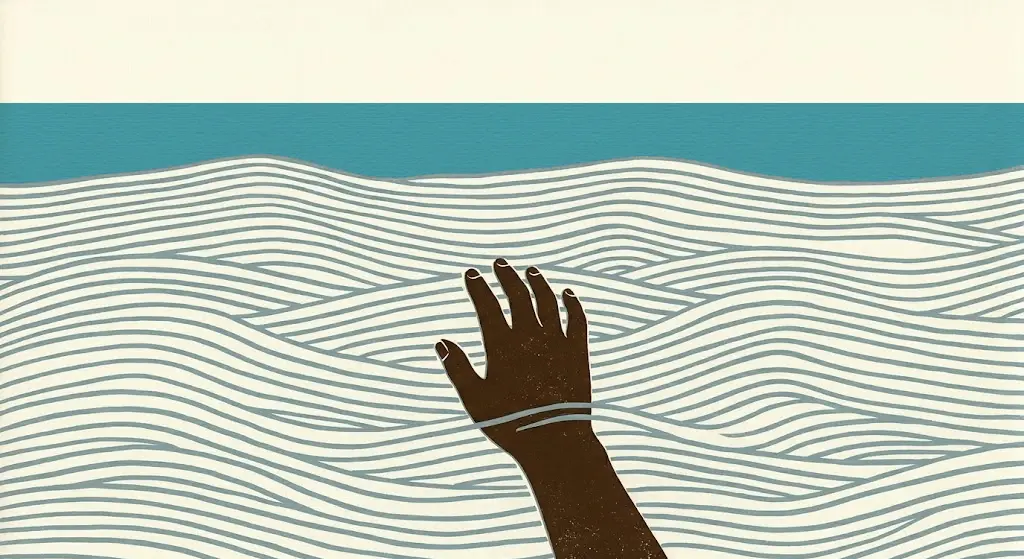
False assumption 1: Transactions are the best measure of loyalty
When American Airlines launched its AAdvantage program in 1981, it introduced the first large-scale frequent-flyer program by mining its reservation system for recurring phone numbers. This marked the first time the airline could identify returning customers and begin building direct relationships with them rather than with their travel agents. The airline built the program on the data it had at the time: transactions. Forty-five years later, most loyalty programs still follow a similar structure—offering points for spending, tiers for hotel nights, and miles for distance traveled.
This transactional dynamic is increasingly ineffective. The average American belongs to 17.4 loyalty programs, but actively engages in fewer than half. Many brands claim loyalty membership sizes that rival the entire adult population of the United States. These transactions may look like loyalty, but are they really?
The next generation of travelers will have an agent doing the work that only the most dedicated points gurus do today: discerning what each traveler finds valuable and surfacing the options that match. Imagine a Gold-tier member with a brutal travel schedule who is looking for a hotel close to tourist attractions. In a regular search, they filter by price, reviews, and location. An agent can do that, plus spot the perks that actually matter at six in the morning after a red-eye: early check-in and a quiet room away from the elevators.
Now, the measure of loyalty broadens beyond the transactional into the experiential and emotional utility of being seen and cared for. Agents simultaneously reveal which programs offer real value and match them to what each traveler values for each and every trip.

False assumption 2: Personalization doesn't scale
Top loyalty programs like Amazon Prime offer around 30 distinct benefits. They range from free next-day shipping to cash-back options and streaming media subscriptions. Brands surface long lists of these perks because they can’t possibly know which one will land with a given member. The list is often a coping mechanism for the brand’s inability to fully personalize and the consumer’s inability to remember everything the brand offers.
Marketers often use robust quantitative surveys, such as conjoint analyses, to gain insight into consumer preferences. Run enough permutations with enough travelers, and you can statistically estimate which combination of benefits they value most. Marketing teams still debate granular tactics, like the order of perks to list in an email. But those debates are entirely unnecessary when agents can just choose based on the traveler’s preferences.
Consider the scale this can reach. Expedia Group alone encompasses more than 3.5 million lodging and vacation rental properties. One can imagine that in the near future, by analyzing a traveler’s bookings and reviews across this vast selection, an agent can ensure that a guest’s preferences are prioritized for every booking, regardless of who operates the property.
Personalization scales when agents do the matching. The new design challenge is enabling agents to interpret hundreds of personal preference variations and reward ecosystems, making offerings sufficiently readable for an agent to match and communicate well on the consumer’s behalf.
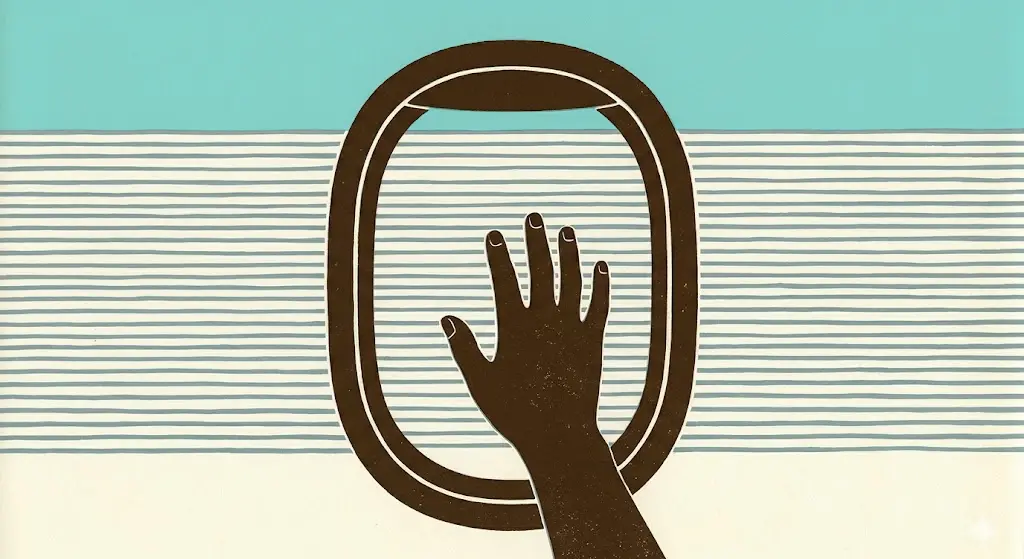
False assumption 3: The points are the reward
Ask anyone who has been a road warrior what real loyalty feels like, and the answer is rarely the points. It’s often Shirley at the front desk, who remembers you like a higher floor, a firm pillow, and a bigger room rather than a view. The recognition itself was the reward, a relationship rather than a transaction. But for too long, it was too expensive to offer to anyone beyond elite travelers.
Now, the behaviors that used to earn that recognition are fading just as technology is emerging to recognize customers without them. Today’s consumers are less loyal and less inclined to align themselves with a specific loyalty program or brand because they value choice, flexibility, simplicity, and convenience. The number of people who used to go on mileage status runs in December just to hit status is decreasing. Instead, they’re seeking something more, and brands are increasingly able to provide it, thanks to advancements in AI.
Expedia’s recent partnership with CLEAR offers a glimpse into the future of travel loyalty: It is evolving from individual brand perks to an integrated ecosystem of complementary benefits that enhance each step of the journey (think: Apple ecosystem logic, but applied to travel). For example, CLEAR offers Expedia members discounted memberships to CLEAR+ lanes and access to its Concierge services, providing VIP treatment as they head to their next destination. What stitches the ecosystem together is the underlying agent layer. It reads each traveler’s preferences across the partner brands and surfaces the right benefit at the right moment, without the traveler having to coordinate it themselves. No longer just a perk for road warriors, recognition becomes an experience any traveler can enjoy at every stage of their journey.
The opportunity to make travel more human
People often talk about compound interest when it comes to money. You invest a small amount, it grows over time—that’s the magic of compound interest. But we believe the memories, stories, and friendships formed through travel compound even harder. Years later, a distinctive smell, a friend, a menu item—whatever—can magically transport you back to that travel moment.
Loyalty has never really been about earning points. It’s about the memories of being cared for while away from home, discovering something new and unexpected, and feeling seen and recognized. It’s about the desire to return because those memories capture the joy of travel.
Nights, miles, and dollars are the receipts for a trip. They are not what the trip leaves behind, which is more sensorial and more personal than anything a tier structure has ever captured. The next era of travel loyalty will be about making travel more human, powered by the combined strengths of machine intelligence and emotional intelligence.
“In the age of AI, loyalty programs should be designed with enough emotional intelligence to preserve the romance of travel while harnessing the superpowers of machine intelligence."

Lindsey Turner
I’m passionate about building brands, products, and experiences that help organizations show up with meaning and momentum.
I help organizations cut through complexity by shaping how they show up, through brand strategy, identity, and storytelling.
Working at the intersection of brand and business, I bring an editorial eye and a bias toward making—turning ideas into tangible experiences that people can understand, trust, and believe in.
My work spans government, healthcare, financial services, media, and consumer goods, from launching Gen Z-focused ventures to building innovation labs and reimagining legacy brands. I relish moments of ambiguity and enjoy translating across teams, perspectives, and priorities to move ideas forward.
I started my career in editorial and digital design, shaping cross-platform experiences and identity systems in publishing and agency environments. That foundation still shapes how I work today: I’m detail-oriented, collaborative, and overreliant on the Oxford comma. I hold a BFA in Visual Communication from the School of the Art Institute of Chicago.

Rachel Young
My work helps organizations see who their products aren't working for—and build the will and the tools to do something about it
For 25 years, I've asked the same question: Who does this design exclude—and what are we going to do about it?
My work spans human-centered strategy, inclusive design, and qualitative research, with clients ranging from Microsoft, Google, and Verizon to the National Science Foundation, and San Francisco Unified School District.
Before IDEO, I taught elementary school in East Palo Alto and spent a decade doing design work with social service organizations—where I learned firsthand what it costs people when systems are built without them in mind.
I am currently writing User Error, a nonfiction book about digital access and the design decisions behind it. I live in Oakland, California.

Brian Pelsoh
I lead with craft, ensuring our work is creatively excellent: rooted in deep human insight and imagination, while also grounded in the realities of business and technology.
My expertise spans brand, communication, and product design across tech, education, the arts, and social impact.
I believe great work demands both high-level vision and obsessive attention to detail, and only happens through collaboration.
I bring an inclusive, hands-on approach and a deep understanding of business, which enables me to consistently deliver excellence while always asking why.
Before joining IDEO, I worked at the brand firms Pentagram and VSA Partners. I began my career as a designer, leading teams at the School of the Art Institute of Chicago and the Milwaukee Art Museum. I hold an MFA in graphic design from Maryland Institute College of Art and a BFA in communication design from the Milwaukee Institute of Art & Design, and have taught at some of the best design schools in the US.

Tony Wong
I am responsible for IDEO’s long-term success in China and working with clients to use design as a tool to enable growth.
I am responsible for IDEO’s long-term success in China and working with clients to use design as a tool to enable growth. Specifically, I have helped Chinese companies design holistic brand solutions through the development of their products, communication, services, and innovation teams, and I have helped multinationals expand their presence and influence in China.
I advise global leaders on developing China-led innovation and capabilities.
In over 15 years in IDEO Shanghai, I have worked on projects that use design to elevate the quality of the experience of healthcare products and services, streamline processes that increase productivity, create spaces and programs that promote and enable inclusive communities, and build next generation mobility solutions that are planet-positive.
Before joining IDEO, I worked at Philips Electronics and the Electrolux Group in Italy, the Netherlands, and Singapore on a number of breakthrough commercial products. I am a member of the Young President Organization in Shanghai.
Well Said: Create space for joy
Designing moments of joy that restore energy and deepen connection.
Ingrid Fetell Lee, author of The Aesthetics of Joy, helps us connect with physical feelings of joy in this 2-minute exercise. This clip revisits one of our favorite moments of 2021 on the Creative Confidence Podcast.
Well Said: It's OK to be on a winding path
Why nonlinear careers can create richer skills and more meaningful work.
Michelle Lee, a managing director in IDEO's Play Lab, embraces how mixed influences led her down a winding, joyful career path. This clip revisits one of our favorite moments of 2021 on the Creative Confidence Podcast.
Lead by empowering others: Lauren Collins & Frances Frei
The strongest leaders create the conditions for other people to succeed.
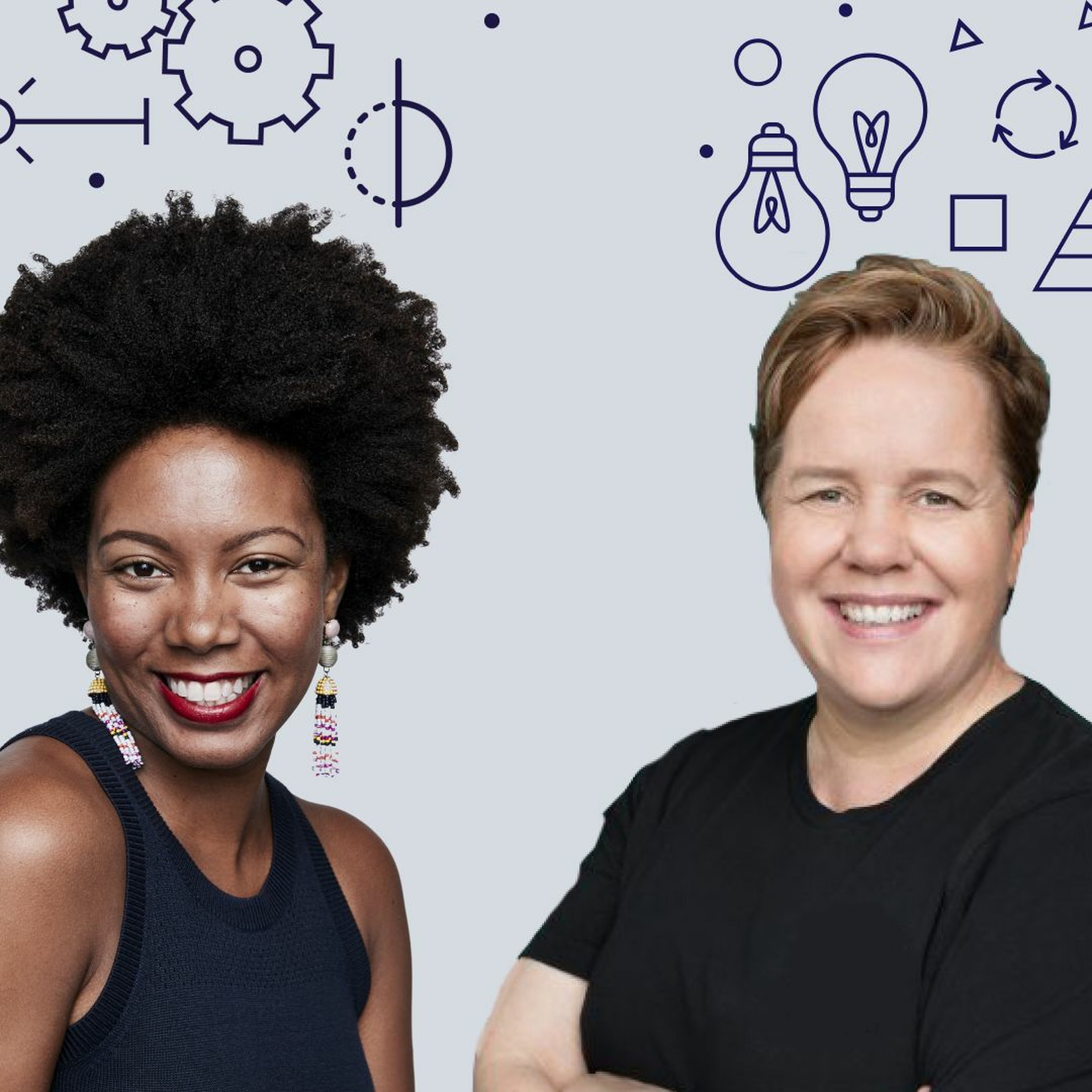
In this episode, IDEO’s Lauren Collins and Harvard Business School Professor Frances Frei discuss how to level up your leadership practice by honing the skills and mindsets needed to empower your team and organization.

Scaling affordable child care: Chris Bennett
Designing a more accessible child-care system that works for families and providers.
How did Wonderschool CEO and Co-founder Chris Bennett go from a spark of an idea to a venture-backed business? In this episode, Chris takes us inside his human-centered process for building a business. Chris shares about building empathy with his customers, prototyping the business model, finding the right sales channels, guiding a team, and staying inspired and connected to the mission.
Looks like you might be in search of something very specific?
Or reset the filters above and try another angle.
Here’s some random inspiration

Podcasts about creative leadership

Articles about the power of prototyping

.webp)


.webp)








.webp)



.webp)
.webp)