
.svg)


Better sales, less waste
22%
reduction in stock during a pilot program
34%
increase in sales during a pilot program
“The more we understand, the more we learn, the better we can deliver business results. And that in turn really helps to create empowerment and excitement in the organization to make initiatives like this happen.”
Estimates project that by 2030, global apparel consumption will hit 102 million tons.
Globally, the European Commission reports, a truckload of textiles heads to landfills or is incinerated every single second.
The fashion industry accounts for some 10 percent of greenhouse gas emissions worldwide.
Less than 1 percent of the materials used to make clothing is recycled, according to a report by the Ellen MacArthur Foundation.
The best way to keep clothes out of a landfill? Don’t make them.
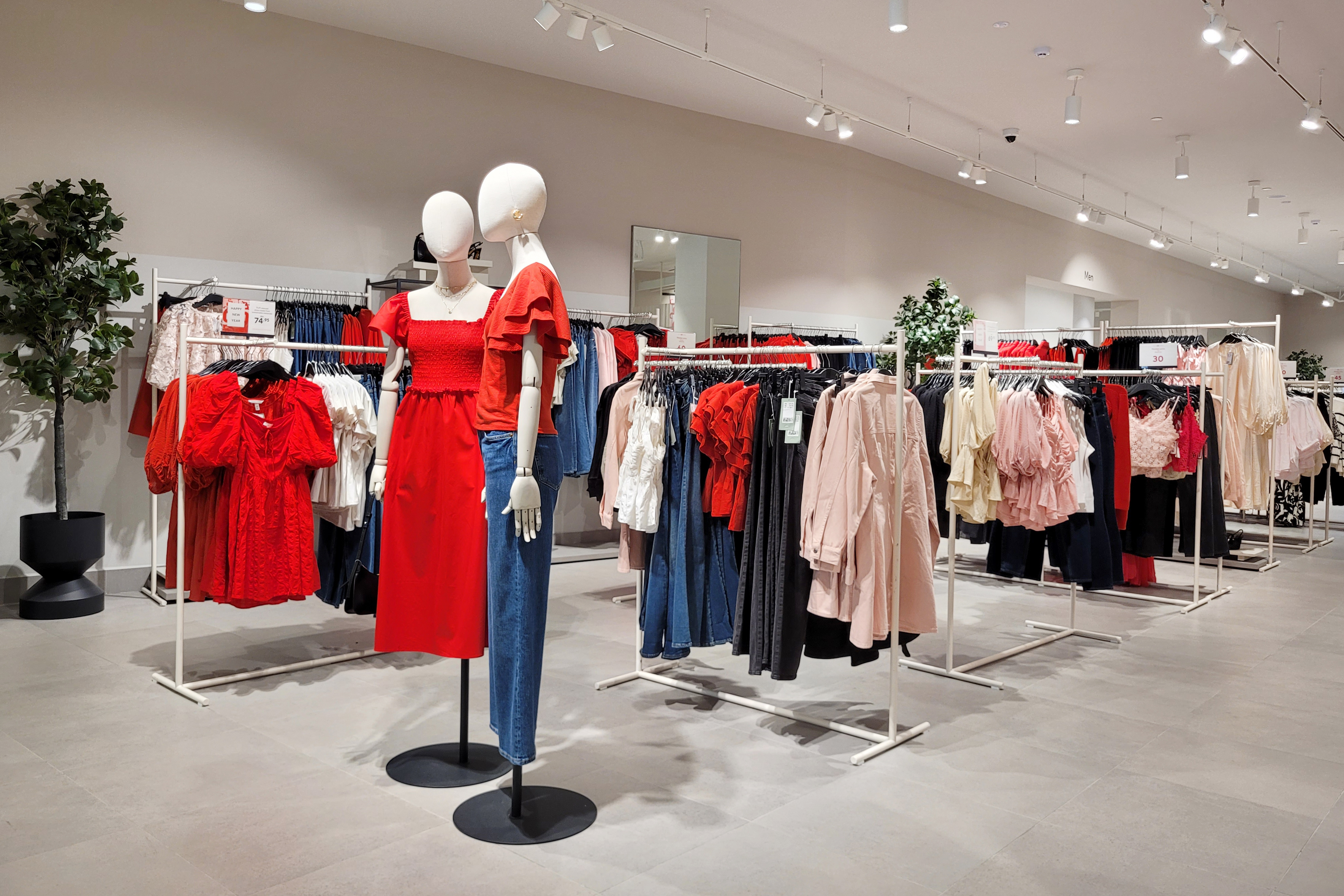
Picture this: Not long ago, it wasn’t unusual for a customer to walk into an H&M store and not be able to find a basic white t-shirt in their size. Why? Like most long-established retail operations, H&M was operating with a push model—placing seasonal bets on what the demand for a given item of clothing might be, locking orders far in advance, and hoping that they were able to sell out. Make a mistake in that kind of model, though, and you can end up with customers unable to find the basics they rely on, or excess inventory you can’t sell. That’s a problem for the business, but for the environment as well—and one that doesn’t fit H&M’s aggressive sustainability goals.
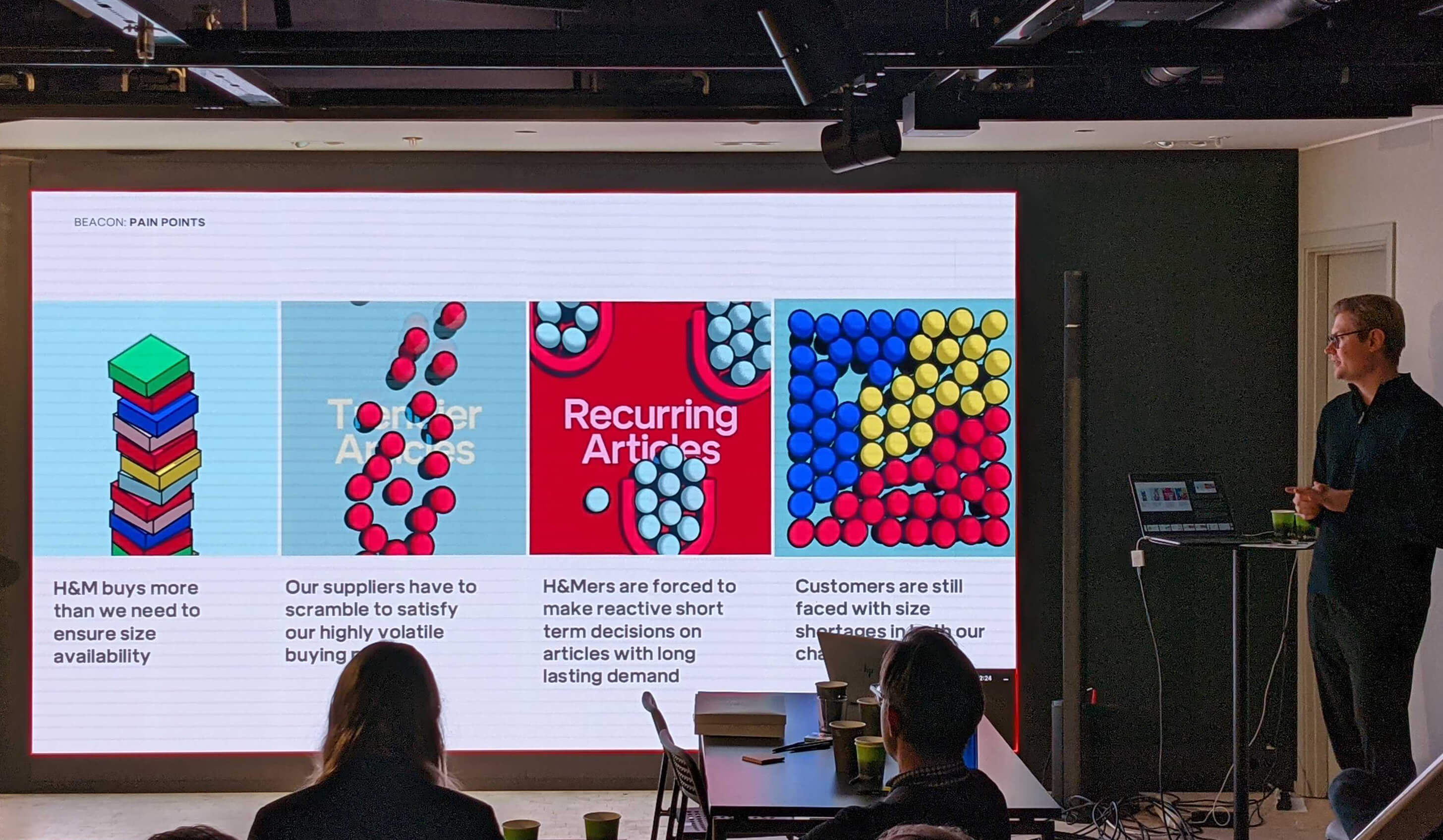
Though H&M had tried to tackle the problem before, the launch of the H&M Group Design Studio, co-created with IDEO, gave the retailer the confidence to go after it again. The team started out by mapping out the complex network of people that make up its supply chain across the globe, meeting with everyone from designers to garment suppliers, logistics managers, and even folks selling the final product in H&M stores.
They then created an algorithm for more precise ordering, as well as a tool that provides a shared view of information. Instead of placing orders, the new automated flow—dubbed “Cruise Control"—allows staff to work with a demand forecast that gives them more time to focus on customer-centric operations, like providing guidance and inspiration. It also makes it easier for H&M to follow the demands of the market, and place much more accurate bets on what consumers will want, when. Already, H&M has significantly increased sales while cutting excess inventory—a result that improves its bottom line, as well as its environmental impact.
Press stories
Curious about how this kind of thinking could benefit your organization? We’d love to hear from you.


Subscribe