
Store of the future
Sephora reinvents the in-store experience for digital-first shoppers.
Finding the right beauty product online isn’t easy, as shoppers are deluged with choices.
On top of information overload, our research unearthed varying emotional and functional needs when exploring beauty products. When looking for makeup, for example, shoppers are interested in self-expression and open to exploration. But when buying skincare products to fix an acne problem, say, people feel a bit more vulnerable. That insight led to rethinking the retail environment as a space that offers both free range exploration and trial spaces along with engagements that address the individualized needs of customers at different life stages.
Acknowledging that entering a new phase of life can make people feel insecure about their looks, we asked research participants, What does “beauty power” mean to you? Responses suggested a lack of trust in unbiased voices online about how to look and feel powerful. Digital shoppers are continuously bombarded by ads and influencers who are incentivized to push brands who hire them. Shoppers love Sephora for being a neutral space that showcases multiple brands, so we leaned into that strength, designing displays that offer product reviews and details that enable consumers to make informed decisions.
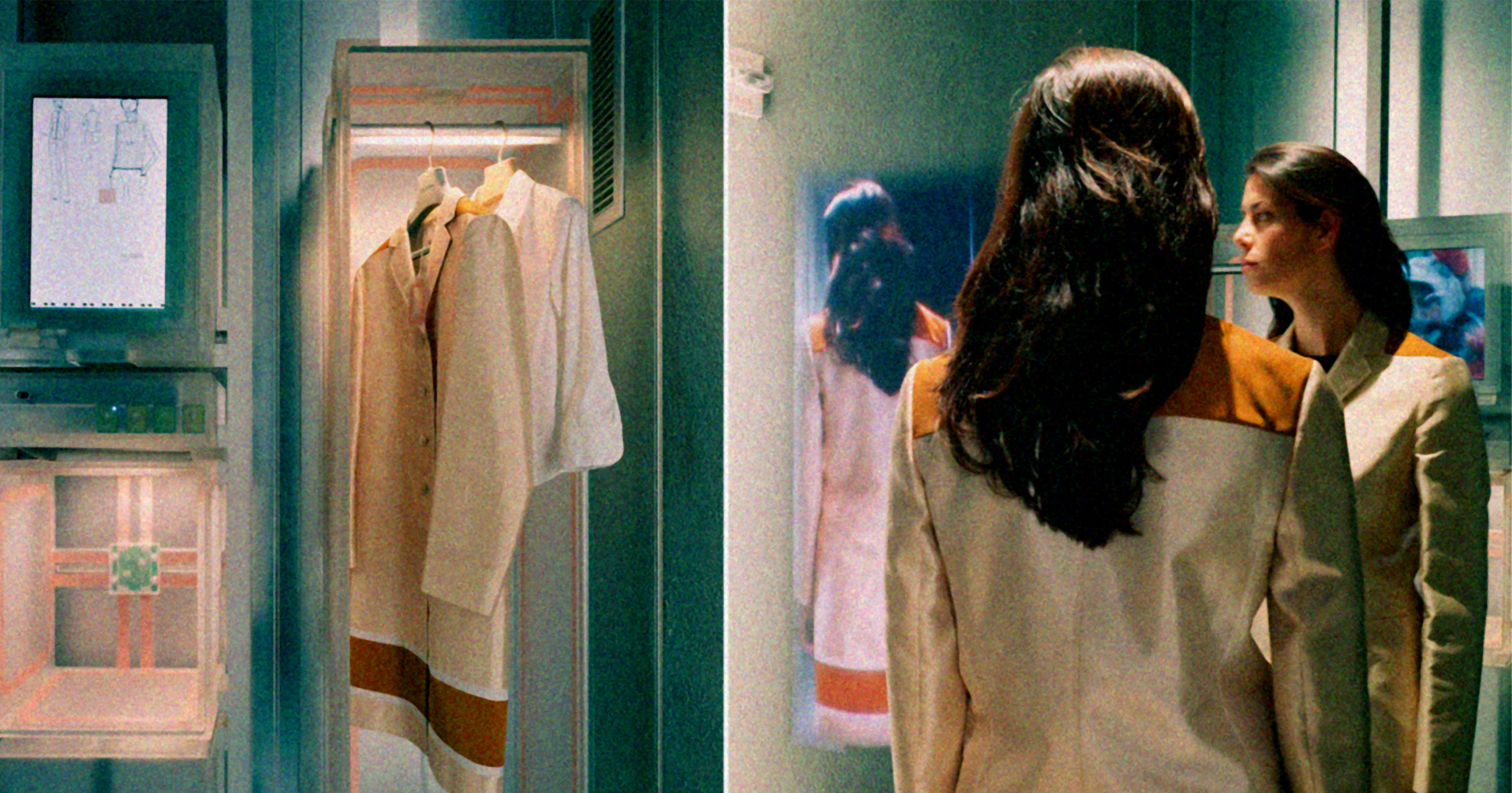
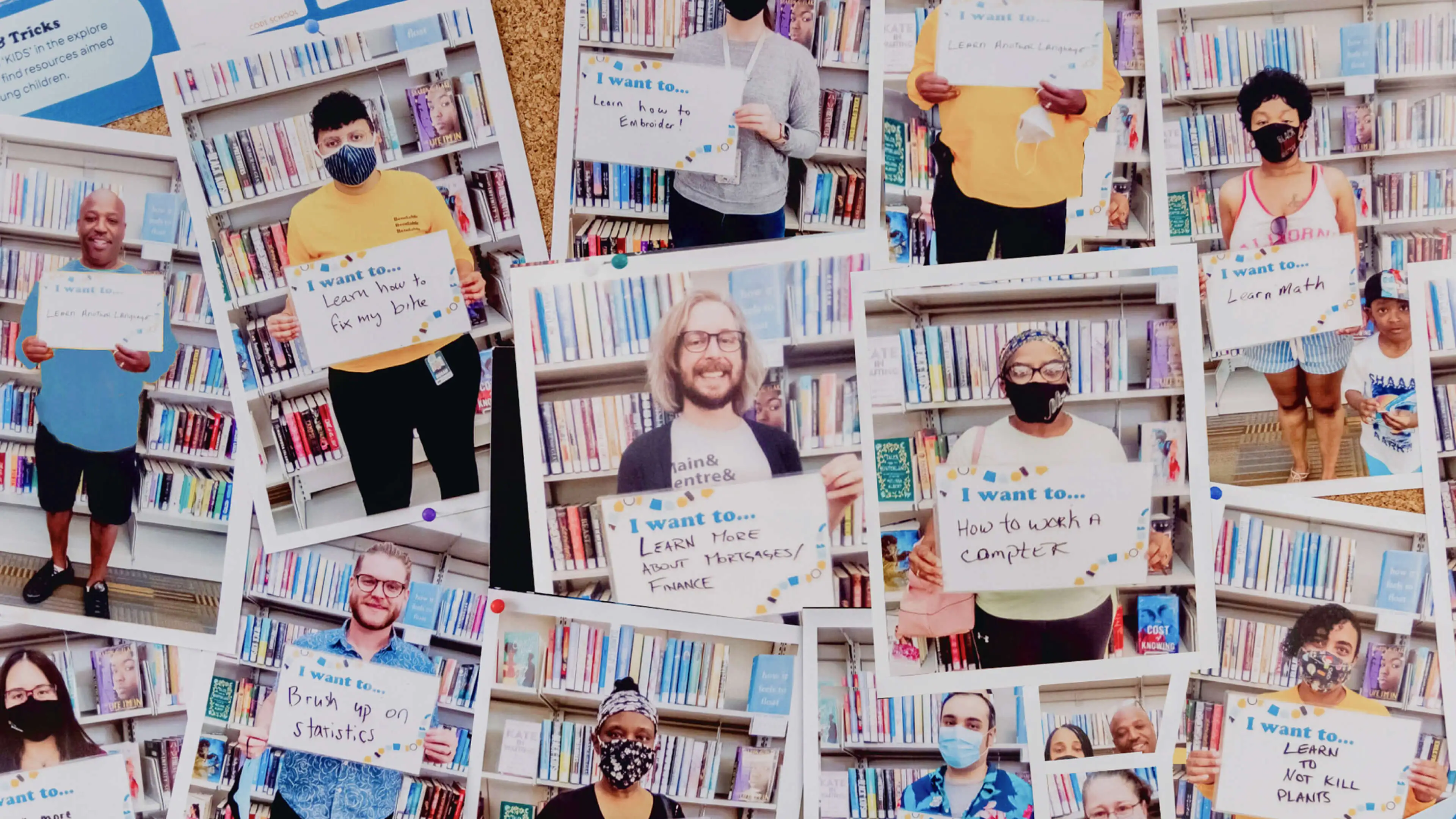
Those displays started as prototypes in a Sephora concept store that filled an entire floor of IDEO’s Shanghai office. In our bright, modern space, consumers of all demographics explored a self-led experience designed to delight. A “Play Table” allowed visitors to freely explore products, using digital platforms to access product details and reviews. Beauty consultants were close at hand to offer assistance. At another pitstop, the “Sephora Beauty School,” offered a spectrum of classes and community activities, providing hands-on guidance and enabling participants to test out beauty bloggers’ techniques. The “Care Table” addressed more personal skincare needs, providing a semi-private setting for individuals to remove makeup, try out products, and consult with experts. Here, digital tools helped consumers understand their skin type, facilitating personalized consultations akin to professional medical care. These innovative features aimed to create a unique, exploratory experience, blending digital convenience with concierge in-store service.
The feedback garnered from that prototype helped the team iterate quickly and gave Sephora the confidence to launch its first “Asia Store of the Future” in Singapore in 2022, followed by a second store in Shanghai in 2023. The Singapore store, situated in Raffles City, offered consumers a free-flowing, interactive beauty playground with a blend of digital and personal services, much like our early prototype.
The success of these two shops validated Sephora’s “Store of the Future” strategy. But experiences must evolve to stay fresh, so the team set up an “engagement indicator” tracking customers’ interaction with digital touchpoints to provide Sephora with valuable insights. Based on those insights, Sephora can continue to iterate its in-store experience and foster loyalty as its customers’ preferences shift.
As hoped, Sephora’s revitalized storefront blends digital and physical experiences in a way that gives every person who enters the store the feeling that they are stepping into their own “beauty power”. By getting close to its customers, building early prototypes, and learning as it goes, Sephora has redefined the in-store experience, ensuring its relevance and appeal in a rapidly transforming retail landscape.
E-commerce has created tremendous challenges to companies whose core business revolves around retail stores.
Online consumers struggle to make informed decisions with the deluge of choices online.
2
“Stores of the Future” launched
107%
traffic increase within four months of Shanghai store launch

Teaching robots to dance
What if technology were designed to make our lives more poetic?
As the curtain parted on moooi’s 2022 exhibit, the audience was treated to a multi-sensory performance unlike any other: four synchronized robot scent diffusers telling a story through dance. As the robots—called Piro—swayed and dipped to the beats of a custom-designed soundscape, it was easy to forget the performers were made by a team of industrial designers and engineers in San Francisco.
The work expressed a future vision for what it means to humanize technology. Rather than design technology to make our lives more efficient, what if instead we designed technology to make life more beautiful?
For twenty years, moooi has seduced the world with bold, imaginative design. The firm, named after the Dutch word for beautiful, made its name by designing furniture and home goods that appeal to an interest in pushing the edges of form as much as function. Moooi came to IDEO looking to create an exhibit for the largest furniture fair in the world that might provoke the audience to imagine a world where design’s primary function was to inspire joy.

“Defy Gravity”: one of several experiential “worlds” moooi created for the 2022 Salone del Mobile. Each room had its own scent, soundscape, color, and digital experience.
Our process started by going wide. We presented 20 potential conceptual designs to the team, one of which moooi founder Marcel Wanders lovingly referred to as the “farting pet,” a robot scent diffuser that could walk around the home.
A scented smoke ring lingers in the air after Piro’s final crescendo.
From there, a team of IDEO designers enlisted the support of Catie Cuan, a choreographer who specializes in human-robot interaction, and Dutch sound design firm KLOAQ, to refine the concept into a four-minute performance piece.
Piro learned to mimic balletic human gestures.
The final result was technically involved: four robots moved independently, controlled by custom electronics and software designed to mimic the movements and grace of ballerinas. But in the performance itself, the complex mechanics disappeared, allowing the audience to experience not just what technology can do, but how it can make us feel.
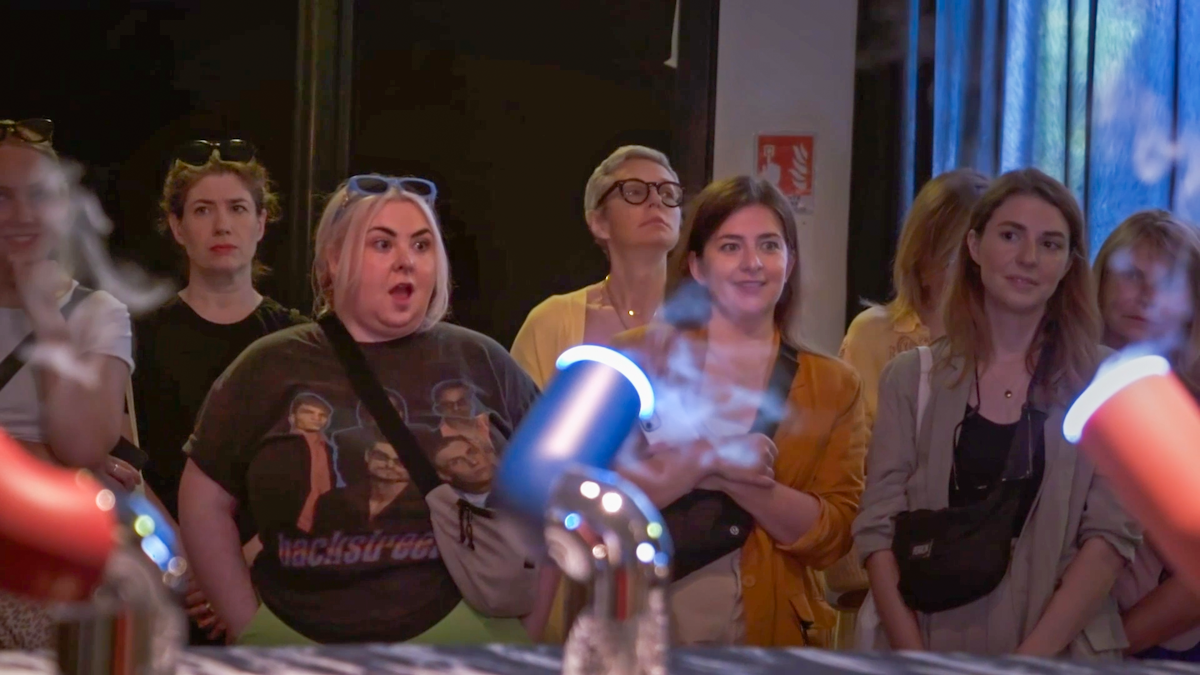
What happens when a designer and a classically-trained choreographer collaborate? Attendees of Salone del Mobile.Milano, the largest furniture fair in the world, got to see for themselves.

Empowering frontline communities
CSAA Insurance Group leads a global call for climate resiliency solutions.
To build a climate-resilient future, we need an all-hands-on-deck approach across industries and organizations, as well as the leadership and collaboration of frontline communities themselves.
To that end, IDEO and CSAA Insurance Group worked together to unite nine partner organizations, including Aon and the Environmental Defense Fund, to launch an open call for solutions to help communities prevent, prepare for, and recover from climate-related disasters. The goal of the Challenge was to surface actionable and scalable ideas that experiment with new technologies, models, and partnerships, then provide innovators with the support and funding they need to get their ideas off the ground and into the hands of frontline communities.
IDEO set these entrepreneurs up for success throughout the submission process, holding one-on-one conversations with participants, sharing constructive feedback on potential solutions, and developing their ideas and skill sets. The team also hosted workshop and panel sessions to grow community bonds and provide expertise on critical topics, including assessing climate risk and storytelling for impact. Hundreds of ideas came in from around the world, ranging from harnessing the power of AI, to building resilient infrastructures, to democratizing access to climate data, and more.
Once all of the ideas were in, a cohort of judges with a wide diversity of work and lived experience screened for concepts that were relevant, impactful, novel, community-informed, and equitable. At the end of the Challenge, the team chose 13 winning concepts with high potential for impact and partnerships, including Reef Rocket, which seeks to fabricate natural biocement reefs that reduce coastal flooding and erosion, and BurnBot, which is working to prevent wildfires by conducting controlled burns at scale.
For these winning entrepreneurs, the end of the Challenge is just the beginning. Now, they are equipped with critical early funding, as well as a cohort of climate entrepreneurs, along with mentorship from IDEO, CSAA, and the other organizations. It’s a big step forward as they introduce new forms of equitable and transparent data, promote the voices of BIPOC communities, and bring to market new technologies that will protect and support frontline communities through this ongoing crisis.
In the US alone, climate-related disasters cause $120 billion in damages annually. That figure is five times greater than 50 years ago, and projections are $2 trillion by the end of the century.
Nearly 90% of counties in the US declared a natural disaster over the last decade.
418
submissions
13
winners
$1M
in prizes
Faster science
How the NSF leveraged design to unite multidisciplinary teams.
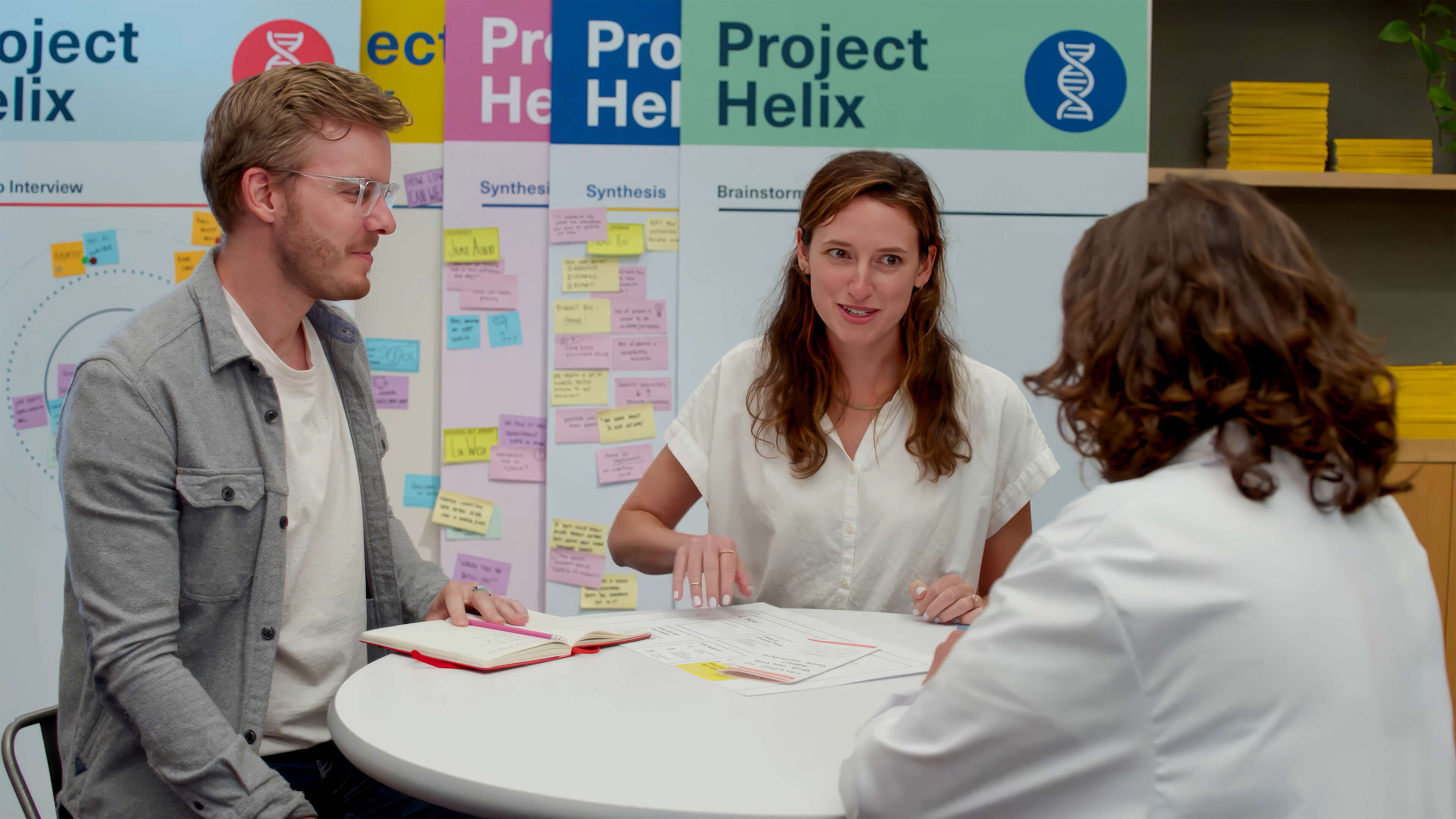
Every year, the NSF provides around 30 teams with up to $750,000 and a year’s worth of coaching, training, and collaboration to develop solutions for research areas like sustainable ocean use or combating fake news. Over the course of nine months, the teams learn how to uncover insights about human needs and design durable solutions for end users. But many of the scientists and experts in the program felt stretched by the idea of putting the needs of end users in the mix with their scientific testing—something few of them have been trained to do in their previous work.
To make that process feel more achievable, the teams built out prototypes and received guidance on refining and pitching their ideas along the way. IDEO joined the project as an innovation partner, facilitating hands-on workshops and creating “Science TV” episodes that could help the program reach a broader audience, deepening its impact now and in the future.

To help grantees get vulnerable, and evolve their ways of working, IDEO sent grantees to improv training so that they could learn to build off each other. The team also took them to magic shows and on ghost tours in downtown San Francisco to learn the value of compelling storytelling in their work. The fun was part of the plan—gelling as a team and building relationships meant participants could make mistakes in front of one another. Being wrong doesn’t come naturally to academics, but it’s a key part of the design process, and a crucial part of solving complex problems .
Each year, a select group of teams move onto the next phase of the “coop-etition,” receiving up to $5 million in additional funding. And all of the participants leave with valuable new skills they can use to break out of their own silos and create human-centered, ground-breaking solutions for the rest of their careers.
When the NSF launched the Convergence Accelerator and made the radical move of bringing together teams from different disciplines, these academics, scientists, and industry partners didn’t have a shared language to move their ideas forward, and needed a structured approach to coming up with new solutions.
164
trained research teams
$200M
in federal support granted to AI-driven innovation, quantum technology, food security, sustainable materials, opportunities for people with disabilities, and more

Why One Artist Challenged Herself to Learn 366 Different Knots
Windy Chien spent a year learning how to turn rope into art
While we tied, she shared the story of leaving her corporate career in design to pursue a year diving deep into the world of knots, teaching herself a new knot every single day. With explorations traversing the historical and functional—from gathering inspiration from sailor’s knots to the future-forward and abstract—her knots have become massive installations, offering an alternative translation for structures like the circuit board and New York City subway system. I left her session deeply inspired by the simple power of dedicating ourselves to daily acts of making and craft—let’s all try it.
In one sentence, who are you?
I make sculpture and installations that elevate the vernacular and inspire awe and understanding; in the context of knots, I work at the intersection of function, design, history, and aesthetics to illuminate what’s most fascinating about knots: the journey of the line.
What do you do? How did you learn it?
I developed fluency in the language of knots—and found my artist voice in the process—by learning one new knot every day of the calendar year in 2016 (which was 366 total knots because of the leap year).

How do you get over creative block?
You know, I never have creative block. I have a list as long as my arm of investigations I’m dying to explore and large installation concepts that are awaiting a home.
What was the last item on your to-do list?
I’m currently hiring, so today I'm posting a listing for a studio manager position, ordering custom-made cordage for a hotel project in the Maldives, and later on, I'm heading to Gensler San Francisco for the opening reception for a show I’m having there.
What’s your dream installation site?
An airport. I’m obsessed with the notion of the journey of the line, which is evident in my work. The rich metaphors that arise from journeying and traveling are particularly well suited to airports.
What’s your number one bucket list item?
I really want to see my work in an airport... and then a TED Talk.

What’s the weirdest or coolest knot you’ve learned? Why?
The five-strand star knot. During my Year of Knots, I tried for over an hour to learn it, only to end up frustrated and in tears. It's complex and the old-timely sailors knotting books were cryptic. But then I mastered it, and now it is my favorite knot to make.
What are you most curious about right now?
People often call me a "fiber artist," but I don’t restrict myself in that way. I’m interested in the journey of the line. So while it’s wonderful to render a line in rope, because rope allows for creating shapes in space without weight, almost anything can be a line. I’m curious about exploring other materials—glass, tubing, metal, and more. I’m still looking for the project that will want me to tie knots out of ethernet cable.

Who are you creative crushin’ on lately?
Always and forever: artist Janet Echelman, who makes sculpture on the scale of city blocks that respond to wind, weather, and light. I met and befriended her last year and we spent a day in Paris looking at art. Janet is lovely and her art absolutely takes my breath away. She has a permanent installation in Terminal 2 at the San Francisco Airport that is so beautiful, when I have a flight to catch, I will go to the airport early just to gaze at it. Endless respect to Janet Echelman.
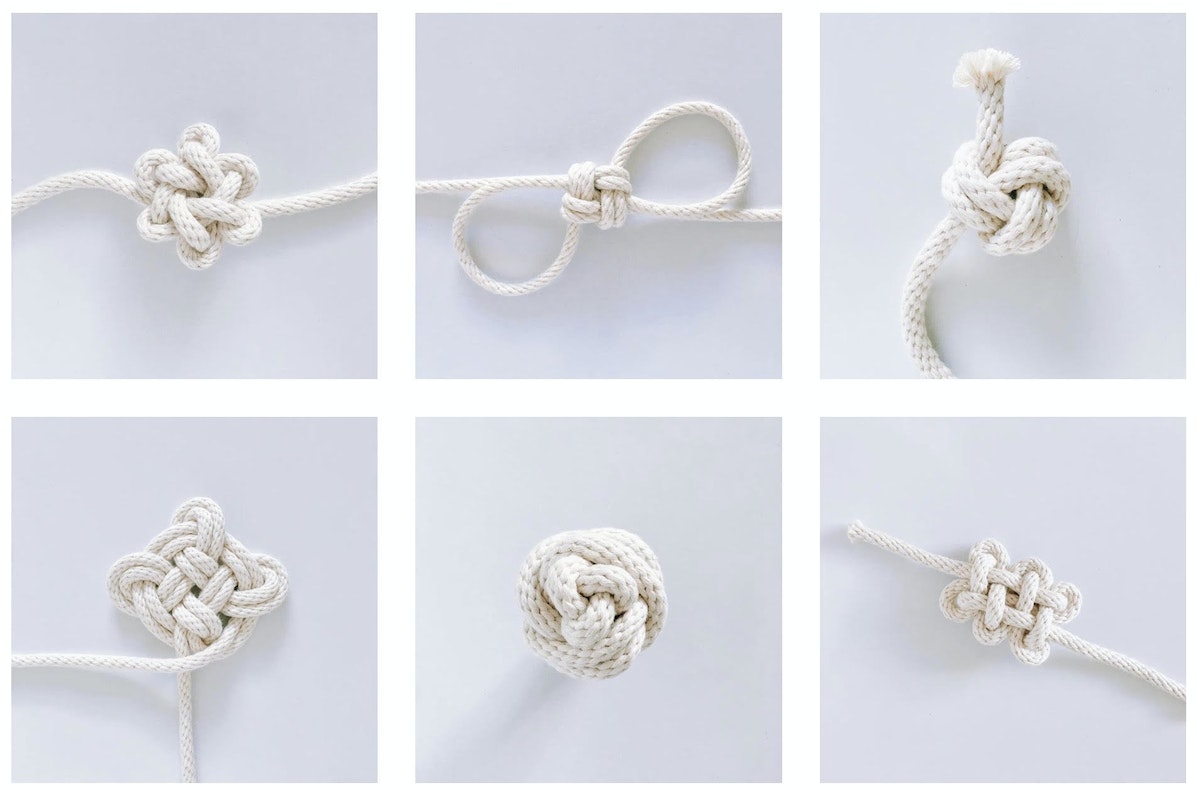
Learn more about Windy's craft in her book, The Year of Knots.
I was feeling a bit sleepy at a design conference this past spring when, upon entering the auditorium for the next talk, I was handed a simple length of rope. My ears perked up with anticipation and curiosity. Enter Windy Chien: ingenious fiber artist who would coach the entire room of conference-goers in learning how to tie a donut knot (it’s adorable and makes for an amazing necklace).

Your Competitors Aren’t Who You Think They Are
With tech firms getting into the financial services game, banks need to start thinking differently
By looking to the neighborhood pub down the block, it was easy to see that if they wanted to keep customers around longer, they needed to have a similarly linger-worthy offering. It seemed to be working.
In an age when boundaries between sectors are blurring, traditional businesses need fresh approaches that keep them relevant, even as the tech titans add capabilities that could eclipse the old guard. When leaders are willing to look beyond their own industry for inspiration and ideas, they often gain a competitive advantage.
The financial services industry is a perfect candidate for this kind of approach. Money is changing in radical ways, and along with shifting regulatory environments at home and abroad, we increasingly find new players entering the financial space. It often seems like the future of financial services is being designed outside the domain of the industry giants, which begs the question: Are traditional financial firms equipped, at present, to satisfy customer needs? People want convenience and access, security, privacy, social features, comfort, experiences, and a range of incentives—many of which are more readily supplied by a digital platform than a stately bank. But some traditional players are taking a new tack.
When the first Capital One Café opened in late 2015, the bank was attempting to address these very concerns. Millennials, having come of age around the 2008 financial crisis, harbored a well-documented distrust of traditional banking and felt turned off by the branch experience, so Capital One attempted to reinvent the bank branch in the image of a coffee shop and coworking space—again, looking outside their industry for inspiration. “Customers are over the corporate thing,” a bank representative said. It’s hard to imagine someone would choose to enjoy their coffee inside a bank if other café options are available, yet by most measures Capital One’s experiment has been a success, offering a more welcoming and attractive experience than speaking to a teller through bulletproof glass. By innovating on the experience, Capital One has entered retail banking in a novel way.
The late Harvard academic Clayton Christensen developed the concept of “jobs to be done,” arguing that customers have a need to get a job done, rather than a need to acquire a specific product or service. It’s a slight but important turn of the dial from the traditional way of thinking. Here’s how legendary economist Theodore Levitt described the idea back in 1969: “Last year 1 million quarter-inch drills were sold, not because people wanted quarter-inch drills but because they wanted quarter-inch holes. People don’t buy products; they buy the expectation of benefits.” To advance the argument a step, perhaps what the customer needs isn’t a one-inch hole but the ability to hang a picture. Maybe an adhesive hook would do the job better than a drill.
Innovation is often driven by the urgent need to solve a problem. In 1922, a group of army officers observed that returning soldiers, who hadn’t driven cars while on active duty, had a hard time getting auto insurance. The officers formed the United Services Automobile Association to provide insurance to military members and their close family. Later USAA expanded to offer a wider range of services including banking, investment, and other types of insurance. Since their members were often scattered geographically—sometimes on the other side of the globe—USAA pioneered mobile banking, initially by phone and mail and later online. Even today, with almost 13 million members, USAA has only one full-service bank branch, located in San Antonio.
This company, which was founded to offer auto insurance to service members, is now regarded as a shining example in the banking world of loyalty and customer satisfaction. Several of my clients who work at major retail banks have admitted to me in private that they still do their personal banking at USAA because they so admire the firm’s customer service. From that original need in 1922, USAA created a new service model that has lasted nearly a century.

Many of today’s most inspiring models for innovation are scattered globally. The European Union’s Open Banking efforts have created fertile conditions for EU mobile-first banks such as N26, Starling Bank, and Monzo. These firms score off the charts in customer satisfaction rankings, above even USAA’s benchmark. In the EU, mobile-first banks have grown through a mix of purpose and convenience, the human-centered design of their interactions and offers, and a supportive regulatory environment.
Alipay in China—which has a staggering 900 million users—is a smartphone wallet app that has revolutionized mobile payments, including the development of “Smile and Pay,” facial recognition technology that allows consumers to pay for goods without even carrying their mobile device. Alibaba has aggressive plans for global expansion of Alipay, all but guaranteeing that domestic US firms will come into direct competition with the Chinese juggernaut.
In many African countries, citizens have so little faith in their nations’ financial stability and fiat currency that a new kind of money has emerged: prepaid mobile phone minutes. People pay for a broad range of goods and services—from procuring groceries to settling their electric bills—by transferring mobile phone minutes. Kenya’s most ubiquitous service, with more than 30 million users, is m-pesa, launched by the country’s top mobile phone companies, Vodafone and Safaricom. Who would have thought that mobile phone companies would emerge as the central disruptors in Africa’s financial services sector, disintermediating the banks?
The financial world has been slower to innovate than, say, the technology world, for a few key reasons. First, financial firms haven’t been forced to innovate at the same pace; second, regulation has disincentivized competition; third, most radical thinkers are no longer drawn to the financial services, as the center of action has moved to Silicon Valley.
Millennials comprise the largest population in our workforce, and three-quarters of them say they’d prefer a financial offering from a large technology company over one from a traditional financial services firm. And the tech world is responding. The Apple Card recently launched in an effort to redesign the credit card and disrupt the status quo. PayPal and Venmo, beyond their use as payment services, essentially function as savings accounts for many customers who store money in the app. And millennials aren’t the only focus of this evolution: A handful of new firms, such as EverSafe, have introduced new products that help the elderly population manage their bills and protect against financial exploitation.
Money is always changing—the way it moves, the shape of it, and how we store it. Financial services firms need not only to keep pace, they need to be leaders of innovation. New solutions could come from unexpected places, so it’s critical to take a global perspective, benchmark beyond industry peers, and consider the experience of the people providing and receiving services. Building the next 100-year financial services firm will depend on doing all of these.
Illustration by Emil Wikström
The bike shop in my neighborhood recently started serving beer. They keep a keg on ice in the back room, and customers can sip pints as they browse the bicycles, gear, and hardware. I was curious what was behind the move, so I asked the owners. They told me they’d been trying to figure out how to get customers to spend more time in the store, and hopefully to make a purchase, so they decided to take a page from another industry’s book.
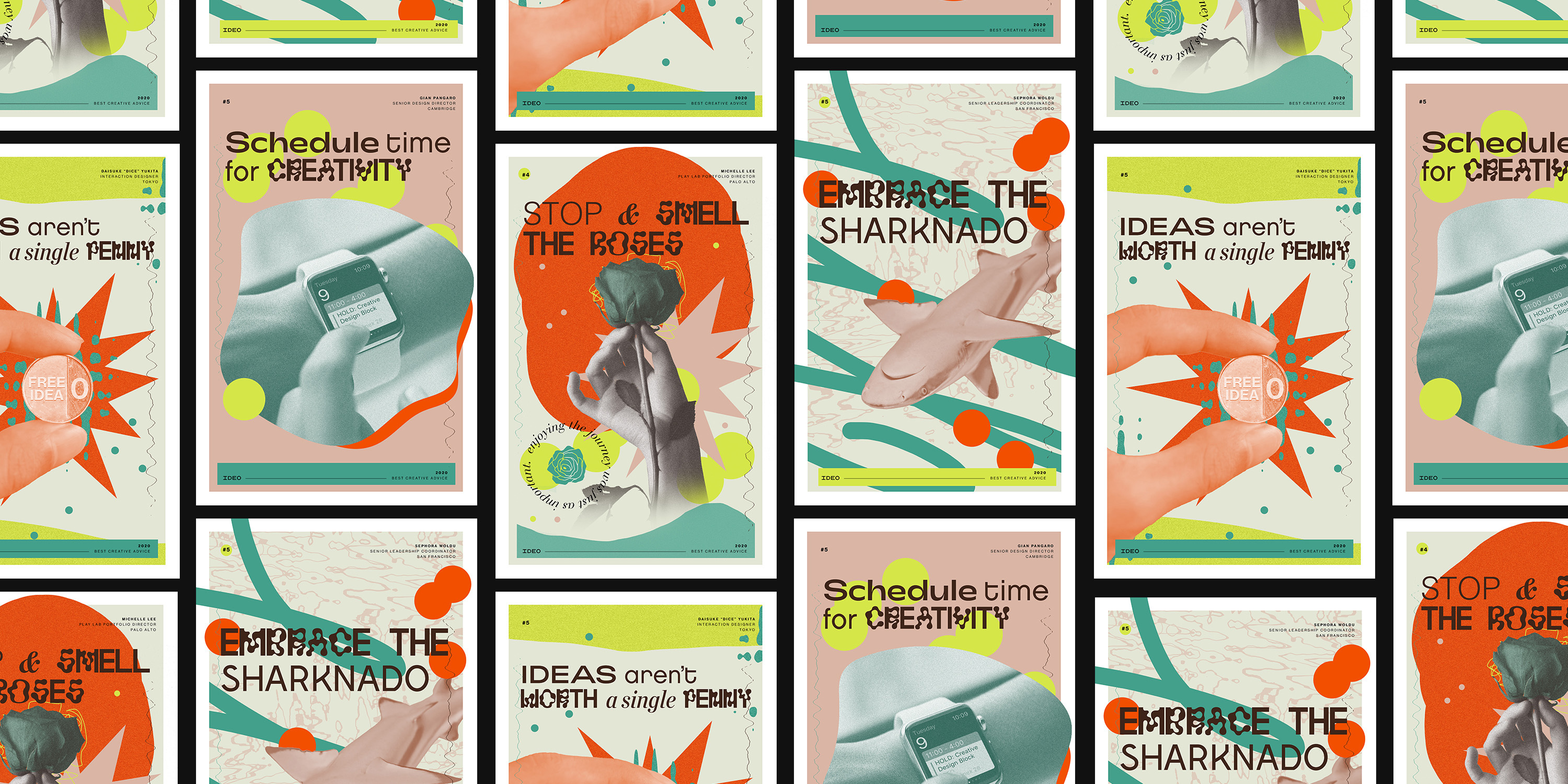
IDEO Designers Share the Best Creative Advice They've Ever Received
Getting advice can be tough, but it can also be transformative
We asked IDEOers across a diverse range of locations, teams, and roles—even ones that aren’t typically thought of as creative—to share the best creative advice they’ve ever received and how it’s impacted their work. We hope you find their responses as inspiring as we do.
Trust your unique perspective
Coming to IDEO as someone who wasn't from a "creative" background (large emphasis on the quotes there), I had a ton of concern about how I would show up on teams with people who were so fluent in the things that seemed to be what IDEO was "really about"—the creative stuff.
Early in my time here, I was on a walk with another organizational designer, mid-existential crisis when she said to me, "Your job is to be thinking about what no one else in the room is thinking about." She helped me see that I didn't have to immediately have every answer or every iota of expertise; I just needed to be using my lens on the world to make our collective design richer.
IDEO touts its cross-functional team structure, and I am a true believer in that element of our work. Unlocking my creative process has been so much about believing in the value of what I bring to the table and understanding its unique contribution to what we are all building together.
– Natalie Osterweil, Senior Organizational Designer, Cambridge

Schedule time for creativity
Martin Bone (an IDEO design director circa 2008) once told me about how he organized his schedule to carve out large blocks of time for doing deep design work of his own. Each week, he would make a long calendar appointment (often an entire day) to be his design time, and would decline any meetings or calls during it. This allowed him to get to a deeper level of work that only a non-distracted state could achieve.
Paul Graham calls this contrast in methods of working maker's schedule vs. manager's schedule. He points out that even a short meeting scheduled in the middle of the day is enough to disrupt or demotivate deep craft or thinking work. In order to maintain my own personal craft alongside other work responsibilities, I've found it effective to put similar calendar blocks on my calendar and to completely disconnect from email, phone, and Slack during these times. This focus also takes discipline beyond a calendar event, but with practice, it can really lead to better work and growth as a craft-oriented designer, even as management responsibilities increase.
– Gian Pangaro, Creative Director, IDEO CoLab, Cambridge
Disconnect from your ego
I’m an executor. I like to get shit done and make an impact. That’s how I think many of my friends, family, and colleagues would categorize me—and I agree! When I came into IDEO, creativity wasn’t a value of mine, nor did I see myself as a creative person. When it came to brainstorming ideas, to me it was all about having the best idea, and having the best idea meant it was feasible, viable, and could have an impact right away.
I learned quickly I was wrong. Virginia Martinez, our Talent Director in San Francisco, helped me when I was having a hard time engaging with IDEO’s brainstorming process. Instead of trying to show my competency through my ideas, she told me, "To get to great ideas, you need to have lots of ideas as a group. And the best idea is not always the most realistic or easy to implement. The fun and crazy ideas can be just as good to drive teams to think more creatively."
Something so simple never occurred to me! I realized that I was attaching my ego to my ideas, that my ideas and my input reflected my competency—but no one else was looking at it with that lens. I realized the diversity of ideas that led to so many possibilities was creativity—something I never saw as an important part of our Learning and Development work, which I'm focused on. That also helped me feel more excited and comfortable in brainstorms because I was walking in with an open mind rather than ready to prove my point.
It has changed my approach to the work, my approach to how I design programs, and my approach to collaboration.
– Jen Casimiro, Talent Lead, San Francisco
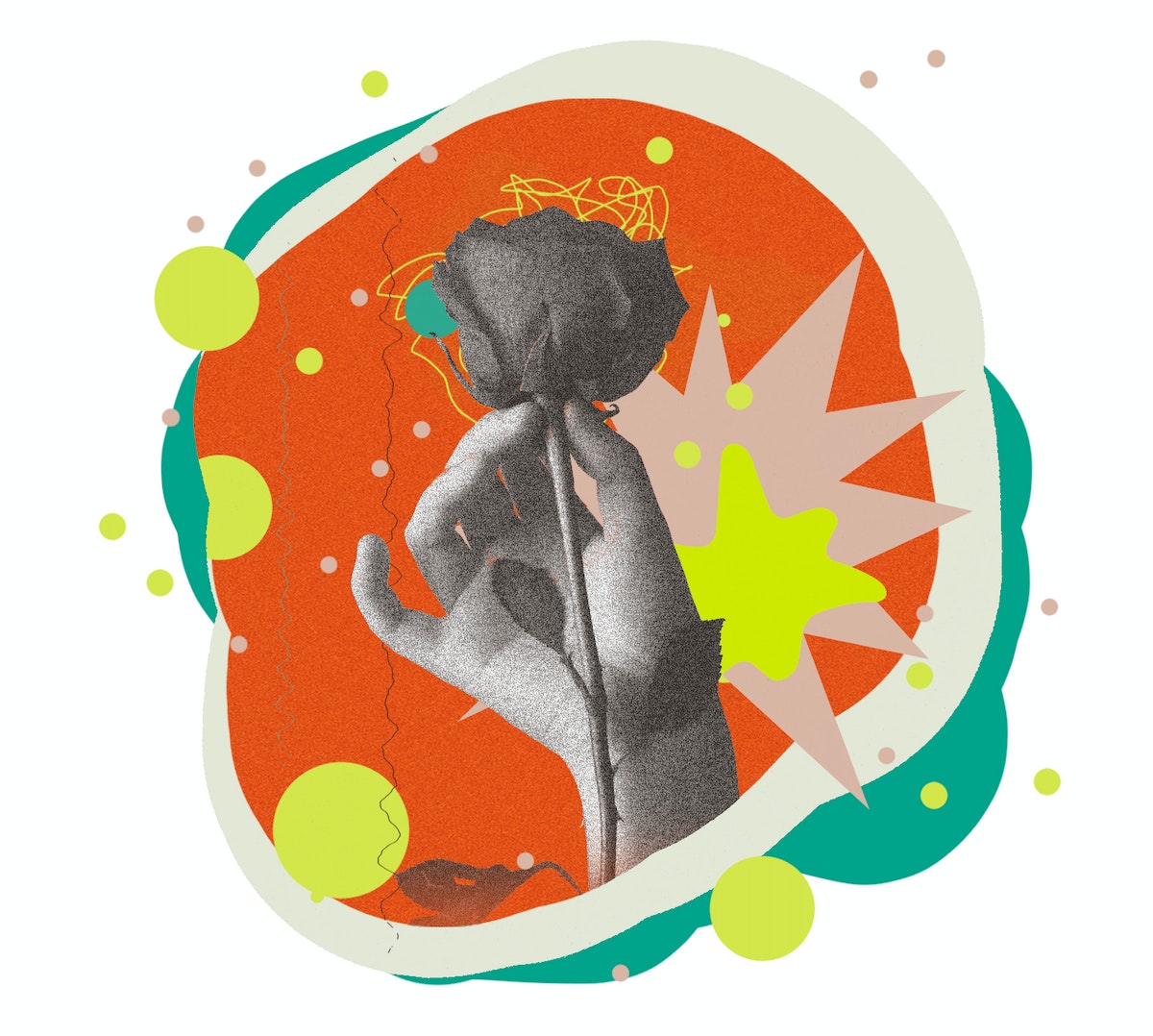
Stop and smell the roses
My mom has always told me to take the time to smell the roses. It wasn't until a few years ago that I realized how lucky I was to have a parent who taught me at a young age that it wasn't always about getting to the end of the race first. Enjoying the journey was just as important.
"Smelling the roses" has taught me to pause and take in my surroundings, being inspired by the seemingly mundane artifacts that I might otherwise have missed—curiously shaped gum stuck on the sidewalk, fine wood grain patterns in furniture, and the intriguing strangers I pass on the street. Each elicits ideas for new stories, inventions, or adventures. If I ever feel stuck or need inspiration, I know I just have to pause and take a look around me.
– Michelle Lee, Play Lab Portfolio Director, Palo Alto
Make your work visual
The best creative advice I ever received came from Mike Stringer at the beginning of my first project at IDEO. This was when IDEO's data science discipline was still young; I was navigating the challenge of working with designers of other disciplines.
Mike came to my project space and told me to "put stuff on boards and share." While this might be something natural for any other designer, some data scientists are very attached to their laptop, scripts, and simulations. In more traditional data science positions, I normally wouldn’t put data science on boards (the most I shared in my previous job was a decision tree on a whiteboard).
Mike suggested I make my work visible to the rest of the team to make data science more transparent, spark curiosity in my team, and start new conversations. I created a variety of hand-sketched data visuals and made them a prominent part of the project space to serve as a catalyst for brainstorming and discussion. Sharing my sketches with a variety of designers from a broad spectrum of disciplines (interaction, research, software, business, and more) made my work more transparent and helped establish a common language, allowing data science to grow organically within the team. I now make that approach part of my work style, and I share it with other data scientists whenever I see the opportunity.
– Fra Valsecchi, Data Science Design Lead, Chicago
Pull a card
I regularly seek advice from Brian Eno and Peter Schmidt's Oblique Strategies card deck. They compiled it in the early 1970's to help overcome creative block in the studio. When you feel stuck, you draw a card and do whatever it says. For example, "Ask people to work against their better judgment," or "Look closely at the most embarrassing details and amplify them," or "What would your closest friend do?" Often the advice is a bit unclear, but the vagueness prompts new ideas.
– Michael Hendrix, Global Director of Design, Cambridge
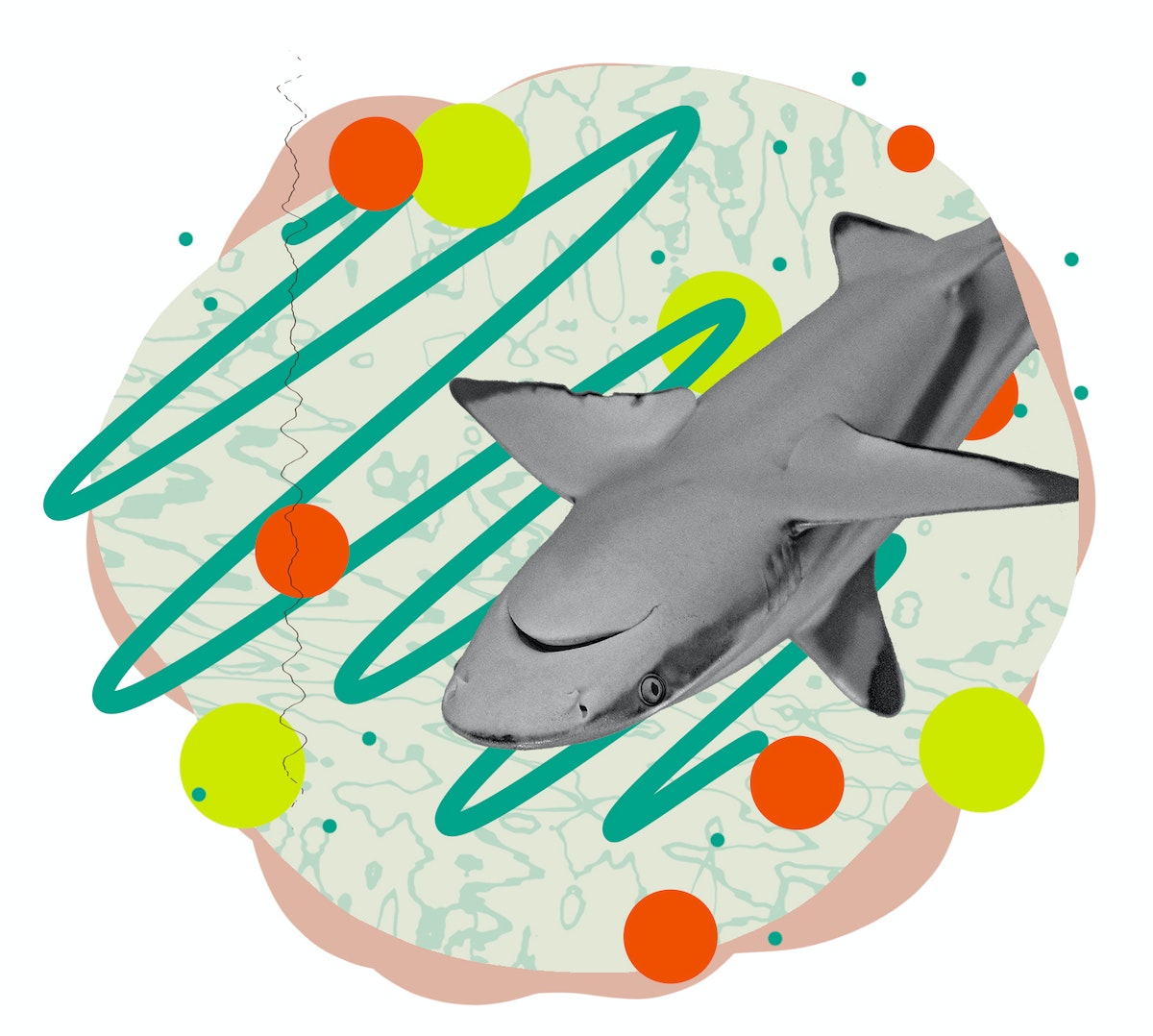
Embrace the Sharknado
A bad movie is better than an unfinished movie. As a filmmaker, there's this temptation to keep working on something or tweak it infinitely. However, there's a power in seeing something fully through, and then starting something else new that you can build and learn from. Also, it's so rare that your finished product is truly "bad." What would that even look like? Worst case scenario, you miss your mark but you learn something. Best case scenario, Sharknado.
– Sephora Woldu, Senior Leadership Coordinator, San Francisco
Accept your failures and iterate, iterate, iterate
The best creative advice I ever received was a good walloping. I was 28 and had landed an assignment from Alex Heard at the New York Times Magazine, an editor known for his unsparing red pen. I was to write a short piece about an alternative film festival. I interviewed the founders, thought up a clever lead, and submitted a draft. This is good, I thought. Funny.
The next day, Alex called and read the article back to me, word for word. "Are you kidding me?" he said. He was indignant. It was like I'd made him drink toilet water. When the call was over, I cursed myself and cried. I’d failed, and he’d dropped a grenade in my lap so I’d suffer no illusions that my work needed anything less than a good and brutal pulverizing. I called an editor friend, enlisting him to give me honest feedback. Then I sat down and rewrote the piece 103 times. When I finally ginned up the courage to send it in again, Alex called me immediately. "You did it,” he said. ”I'm proud of you. I’ll run it this Sunday."
Find someone who’ll give it to you straight, then iterate, iterate, iterate. Keep at it until your hand falls off. That's how I learned to write.
– Shoshana Berger, Senior Editorial Director, San Francisco
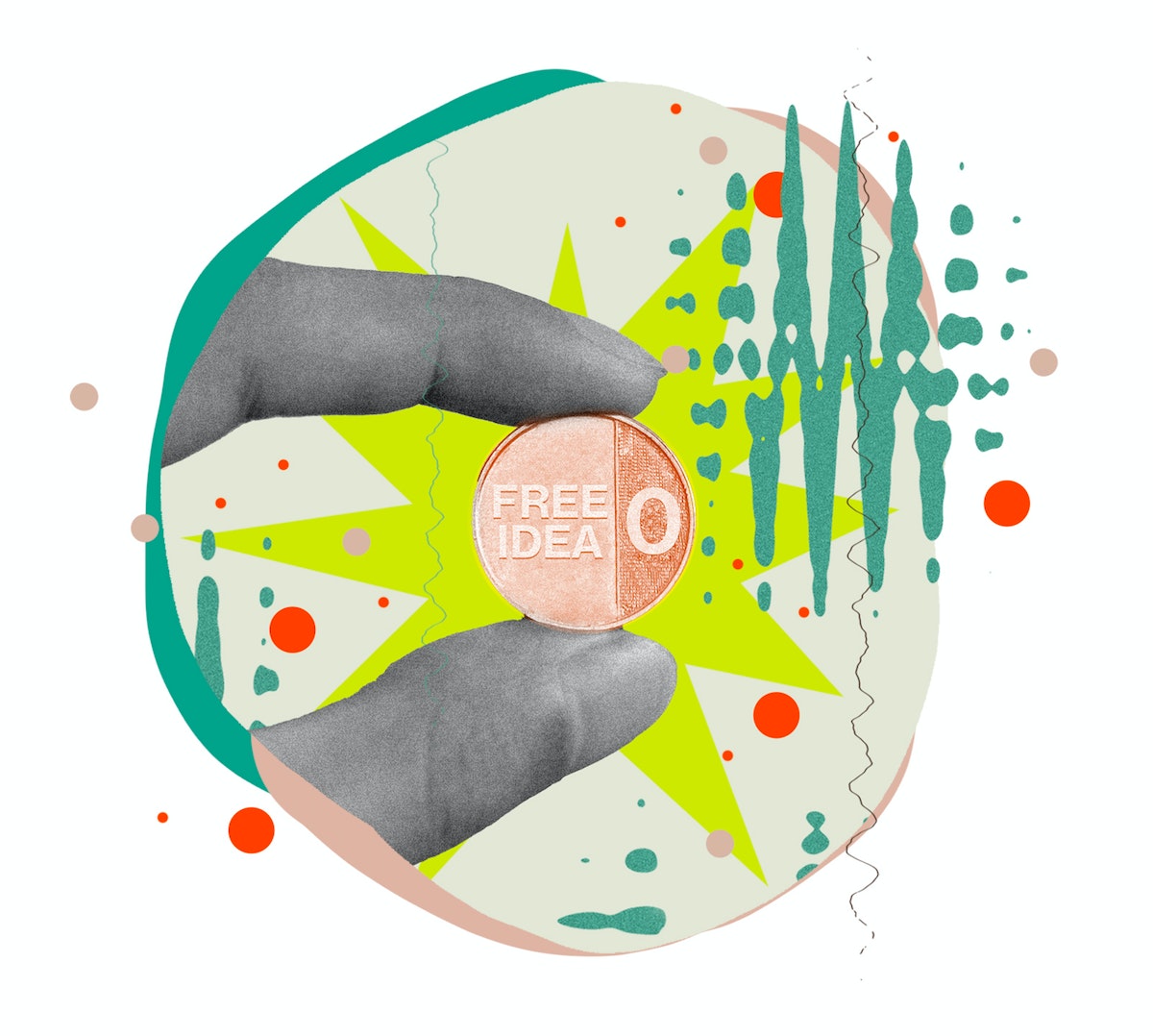
Remember ideas aren’t worth a single penny
"Ideas aren't worth a single penny." These are the words of wisdom that a colleague at my previous job gave me a couple of years back. He was the type of creative director that I only expected to find in fiction: almost always late to work, usually hungover, wore a Dumbledore style beard, and always ready to mutter out the most unexpected and astonishing ideas. When brainstorming, he would always kick-start the session with the most hilarious, intoxicating fantasy concept. He was known in the industry as the ultimate idea man.
That was why his advice struck me as a surprise. He told me that he would willingly give away any of his ideas for free, because that’s not what we’re being paid for as professionals—it’s the execution of the idea.
I look back to this whenever I find myself too attached to an idea, or when the team is stuck in a rabbit hole of conceptual debates, picking ideas apart one by one. Anyone can come up with the same idea sooner or later; our job is to not just come up with the idea, but to bring it to life, and that is what we should be proud of. That is where true impact lies.
– Daisuke “Dice” Yukita, Senior Interaction Designer, Tokyo
Focus on the story
The advice that still rings true to me today and on the path to become a designer is never lose focus of the story you want to tell. Every single experience, physical thing, or digital product you create is based on a sequence of decisions you make during the design process. It’s essential that every decision has a purpose—that’s how you get the most potential out of your design. A memorable, human story is the groundwork to purposeful design.
– Susanne Duswald, Industrial Designer, Munich
Invite others to the party
Several years ago, I ran into film director Frances Ford Coppola. Because we were both speakers at the same event, I managed to spend a few minutes alone with Coppola backstage, and one of the things he said that day has stuck with me ever since: "When you are working with creative people, you don't tell them what to do. You invite them to the party."
I have used his advice many times, including right now at D4V (Design for Ventures), IDEO's Tokyo-based venture capital firm. We invest in promising Japanese start-ups and then invite the design team here to "join the party," using creative tools to help the young companies thrive.
– Tom Kelley, IDEO Partner
Creativity often isn't the work of a single, solitary genius. In fact, it's usually when a set of diverse perspectives come together that we're able to see new possibilities for solving problems. That's why creative collaboration is crucial—and it's also why creative mentorship is so important. Sure, you can (and dare we say should) work through these 10 exercises from Creative Confidence to hone your individual chops, but creative mentorship is what allows us to push ourselves and our work forward. This got us thinking: What else could we learn about creativity from the people we work with every day? What have they learned from their mentors?
Practice Your Prototyping Skills With These 4 Resources
The more you test, the better your solution
That time you built a spreadsheet for collecting data from your team and adjusted it based on their feedback? That was prototyping. When you ran your big presentation with a couple colleagues and swapped out a few slides because someone said it didn’t quite flow? Also prototyping.
At its simplest, we'd argue that prototyping is the intentional testing of ideas. The key is to do it quickly and thoughtfully. Need a little help figuring out where to begin? Here are four resources to get you started.

1. When you're at the very, very beginning
Kicking things off can be the hardest part. If you’re still trying to figure out exactly how prototyping will fit into your or your team’s creative process, try pulling some ideas from this story of one IDEO team’s experiment with early-stage prototyping.
READ: Why You Should Start Prototyping—Right Now
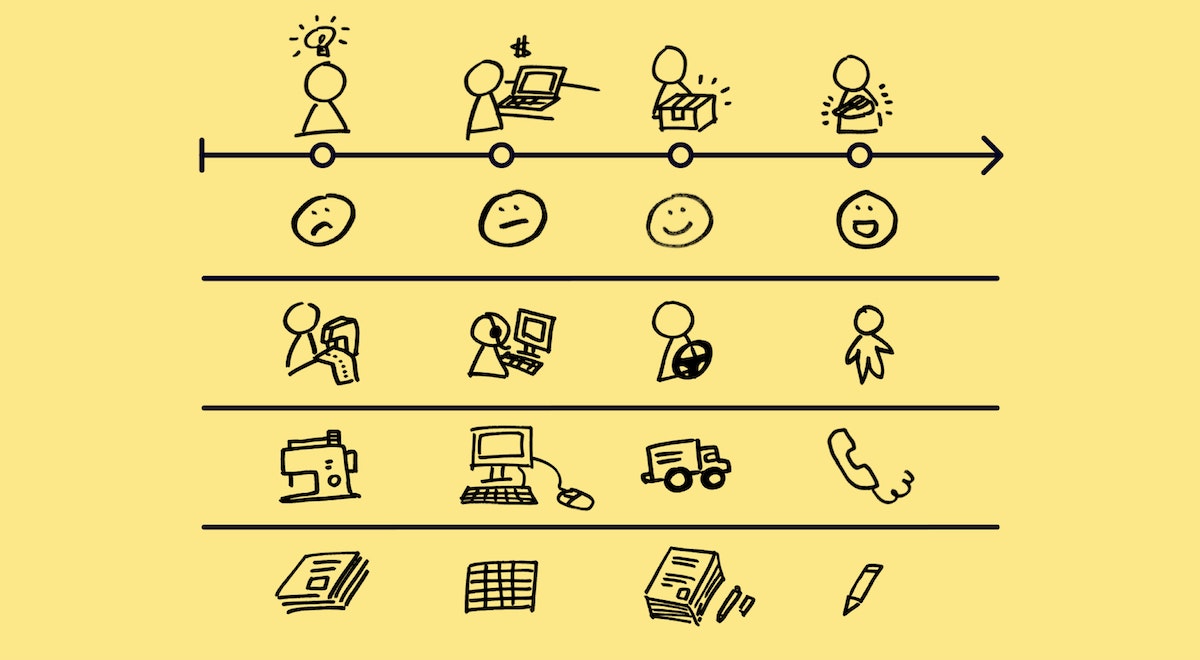
2. When your next project isn’t designing a thing, but designing a service
Many of our everyday transactions—everything from paying for coffee to selecting airline tickets—are highly designed processes. But where do you start when your project is creating a service, not an object? Dive in with these tips.
READ: 3 Tips to Help You Prototype A Service
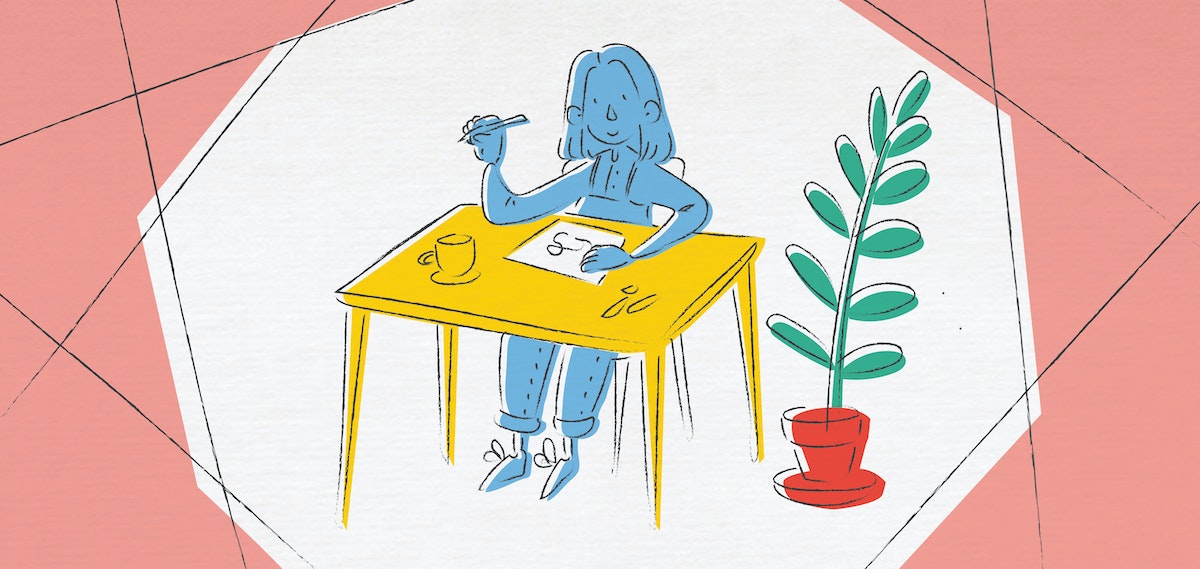
3. When the constraints of your project feel like they’re testing you
Been there. If (and when) you’re feeling stuck, lean on the how might we questions in this piece about leveraging design constraints to get you moving.
READ: The Bright Side of Design Constraints: 3 Tips for Leveraging Limitations
4. When you need an example
Itching to see prototyping in action? Follow one of IDEO’s designers as he experiments with 360˚ video.
Say you're not necessarily a designer (raises hand), and you're a little intimidated by what you think of as the ultra-technical practice of prototyping (raises hand again). Here's the thing: You may not realize it, but you've prototyped before.

Lindsey Turner
I’m passionate about building brands, products, and experiences that help organizations show up with meaning and momentum.
I help organizations cut through complexity by shaping how they show up, through brand strategy, identity, and storytelling.
Working at the intersection of brand and business, I bring an editorial eye and a bias toward making—turning ideas into tangible experiences that people can understand, trust, and believe in.
My work spans government, healthcare, financial services, media, and consumer goods, from launching Gen Z-focused ventures to building innovation labs and reimagining legacy brands. I relish moments of ambiguity and enjoy translating across teams, perspectives, and priorities to move ideas forward.
I started my career in editorial and digital design, shaping cross-platform experiences and identity systems in publishing and agency environments. That foundation still shapes how I work today: I’m detail-oriented, collaborative, and overreliant on the Oxford comma. I hold a BFA in Visual Communication from the School of the Art Institute of Chicago.

Rachel Young
My work helps organizations see who their products aren't working for—and build the will and the tools to do something about it
For 25 years, I've asked the same question: Who does this design exclude—and what are we going to do about it?
My work spans human-centered strategy, inclusive design, and qualitative research, with clients ranging from Microsoft, Google, and Verizon to the National Science Foundation, and San Francisco Unified School District.
Before IDEO, I taught elementary school in East Palo Alto and spent a decade doing design work with social service organizations—where I learned firsthand what it costs people when systems are built without them in mind.
I am currently writing User Error, a nonfiction book about digital access and the design decisions behind it. I live in Oakland, California.

Brian Pelsoh
I lead with craft, ensuring our work is creatively excellent: rooted in deep human insight and imagination, while also grounded in the realities of business and technology.
My expertise spans brand, communication, and product design across tech, education, the arts, and social impact.
I believe great work demands both high-level vision and obsessive attention to detail, and only happens through collaboration.
I bring an inclusive, hands-on approach and a deep understanding of business, which enables me to consistently deliver excellence while always asking why.
Before joining IDEO, I worked at the brand firms Pentagram and VSA Partners. I began my career as a designer, leading teams at the School of the Art Institute of Chicago and the Milwaukee Art Museum. I hold an MFA in graphic design from Maryland Institute College of Art and a BFA in communication design from the Milwaukee Institute of Art & Design, and have taught at some of the best design schools in the US.

Tony Wong
I am responsible for IDEO’s long-term success in China and working with clients to use design as a tool to enable growth.
I am responsible for IDEO’s long-term success in China and working with clients to use design as a tool to enable growth. Specifically, I have helped Chinese companies design holistic brand solutions through the development of their products, communication, services, and innovation teams, and I have helped multinationals expand their presence and influence in China.
I advise global leaders on developing China-led innovation and capabilities.
In over 15 years in IDEO Shanghai, I have worked on projects that use design to elevate the quality of the experience of healthcare products and services, streamline processes that increase productivity, create spaces and programs that promote and enable inclusive communities, and build next generation mobility solutions that are planet-positive.
Before joining IDEO, I worked at Philips Electronics and the Electrolux Group in Italy, the Netherlands, and Singapore on a number of breakthrough commercial products. I am a member of the Young President Organization in Shanghai.

How to use AI as an editor, not a writer
Ed White shares how he uses AI as an editor—not a writer—to sharpen storytelling, rehearse ideas, and preserve the productive friction that makes creative work better.
Ed White has a rule he's tested on his own writing: hold yourself as the writer, and let AI be your editor. Ed is a Senior Design Director at IDEO's London studio, where he co-leads the firm's AI portfolio across Europe. Before IDEO, he spent 12 years as a writer and editor at the Financial Times, Wired, and Contagious. So when he talks about when to use AI for storytelling and when not to, it comes from two decades of crafting his storytelling skills.
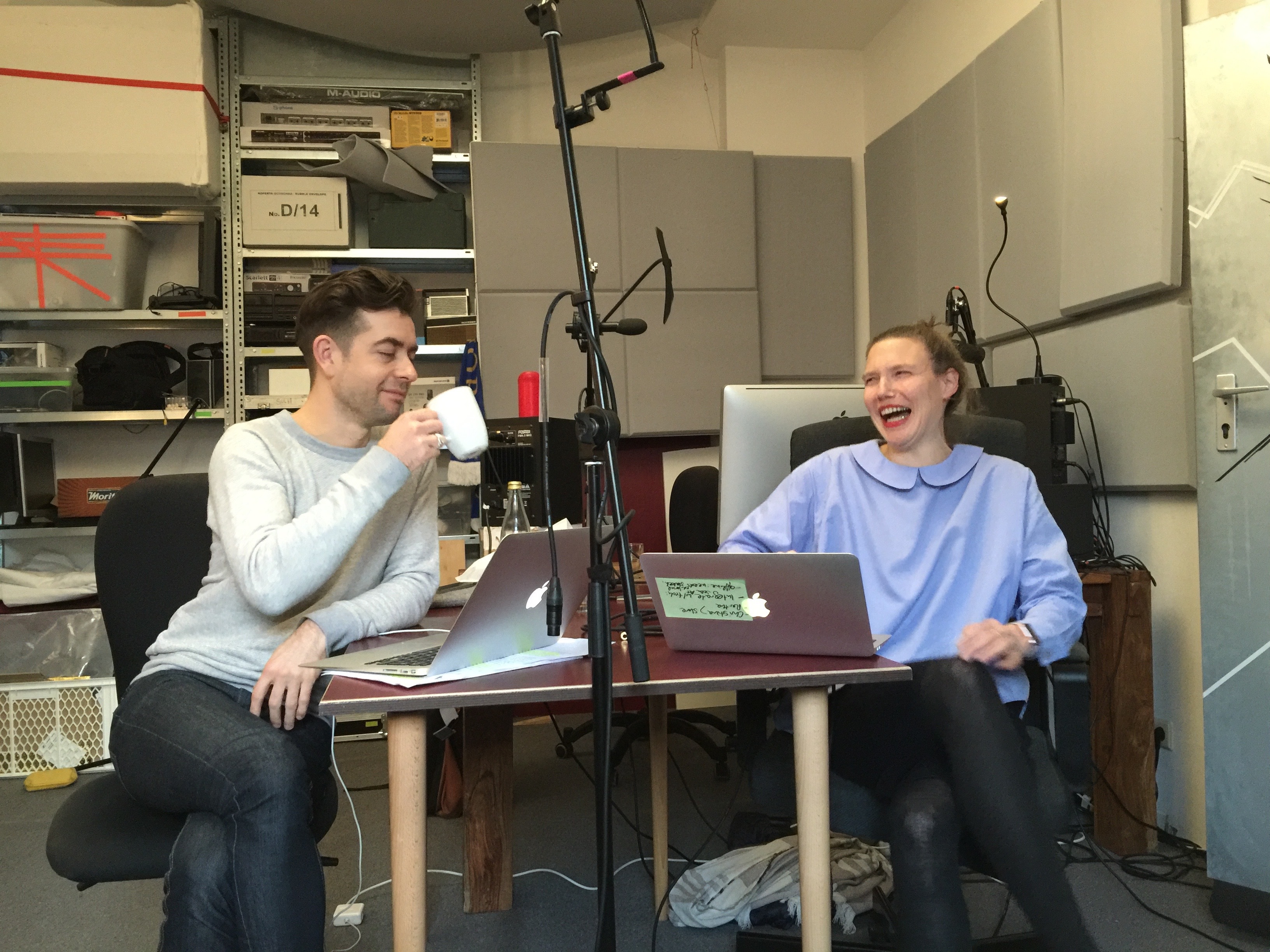
In this episode, Mina Seetharaman talks with Ed about two specific tools he uses to keep AI in an editor's seat: a "roasting agent" prompted to critique his drafts without any sugarcoating, and a simulated audience he rehearses pitches on before the real thing. They also get into what Ed is hearing from design leaders at Anthropic, Lovable, Shopify, and Google Creative Lab about how creative work is changing, and why he thinks the friction of writing something yourself is worth protecting rather than automating away.

Building a personal AI for the messiness of life: Sida Li
Becca Carroll talks with Cue co-founder Sida Li about designing a personal AI for the messiness of everyday life—not just work. They explore how Sida stays anchored to human needs while navigating fast-changing technology, product tradeoffs, business-model experimentation, and the realities of building an AI company today.
Most AI products today are built for work—a space with clear problems and established systems. One founder noticed a gap: personal life is messier, harder to systematize, and mostly left behind by the AI boom. So she built Cue, a personal AI that lives inside iMessage and group chats, to go where the other tools haven't.
In this episode, Becca Carroll, IDEO's Chief Strategy Officer, talks with Sida Li, co-founder and CEO of Shared Context Lab, about staying anchored to a human need while the technology around her keeps changing shape, why she treats her business model with the same rigor she'd bring to a product, and what it feels like to build a company at this particular, disorienting moment in AI.
The conversation also gets into how Sida makes design decisions: the language Cue uses to describe itself, the tradeoffs behind building inside iMessage instead of a new app, and a real story about a business idea that didn’t pan out.
This is the second in a two-part series profiling founders from IDEO's Startups-in-Residence program. The first conversation is with Johannes Seemann, founder of Sooner, on designing GenAI for the emotional side of money.

Designing GenAI for the emotional side of money: Johannes Seemann
Designing financial tools around the feelings that shape money decisions.
Most personal financial tools are built to run the numbers and optimize towards a budget. While that works for some, most people experience money as a lived relationship that does not neatly fit into a spreadsheet. Johannes Seemann and Becca Carroll discuss why money is emotional before it is mathematical, and what a human-centered approach to building a generative AI financial product looks like in practice.

The curious leader's edge in uncertainty: Scott Shigeoka
How genuine curiosity helps leaders navigate uncertainty with greater confidence.
Mina Seetharaman talks with Scott Shigeoka, author of Seek and Head of Curiosity Cultivation at the Eames Institute, about what distinguishes genuinely curious leadership from performative curiosity, how power dynamics shape curiosity, and why practicing curiosity can restore energy rather than drain it.
Looks like you might be in search of something very specific?
Or reset the filters above and try another angle.
Here’s some random inspiration

Podcasts about creative leadership

Articles about the power of prototyping