Designing a new vision for women’s healthcare
Introducing Cottage Women’s Health
Systemic transformation is not new to Cottage Health. Founded in 1888 by 50 forward-thinking women in Santa Barbara who wanted a hospital for their growing community, Cottage Health has since expanded to 3 hospitals and is quickly growing its outpatient services as well.
To understand the current Cottage Health experience, IDEO conducted dozens of in-depth interviews with patients, providers, caregivers, and staff. They also ran multi-week diary studies, engaged in inspirational research activities, and held events to hear from local women.
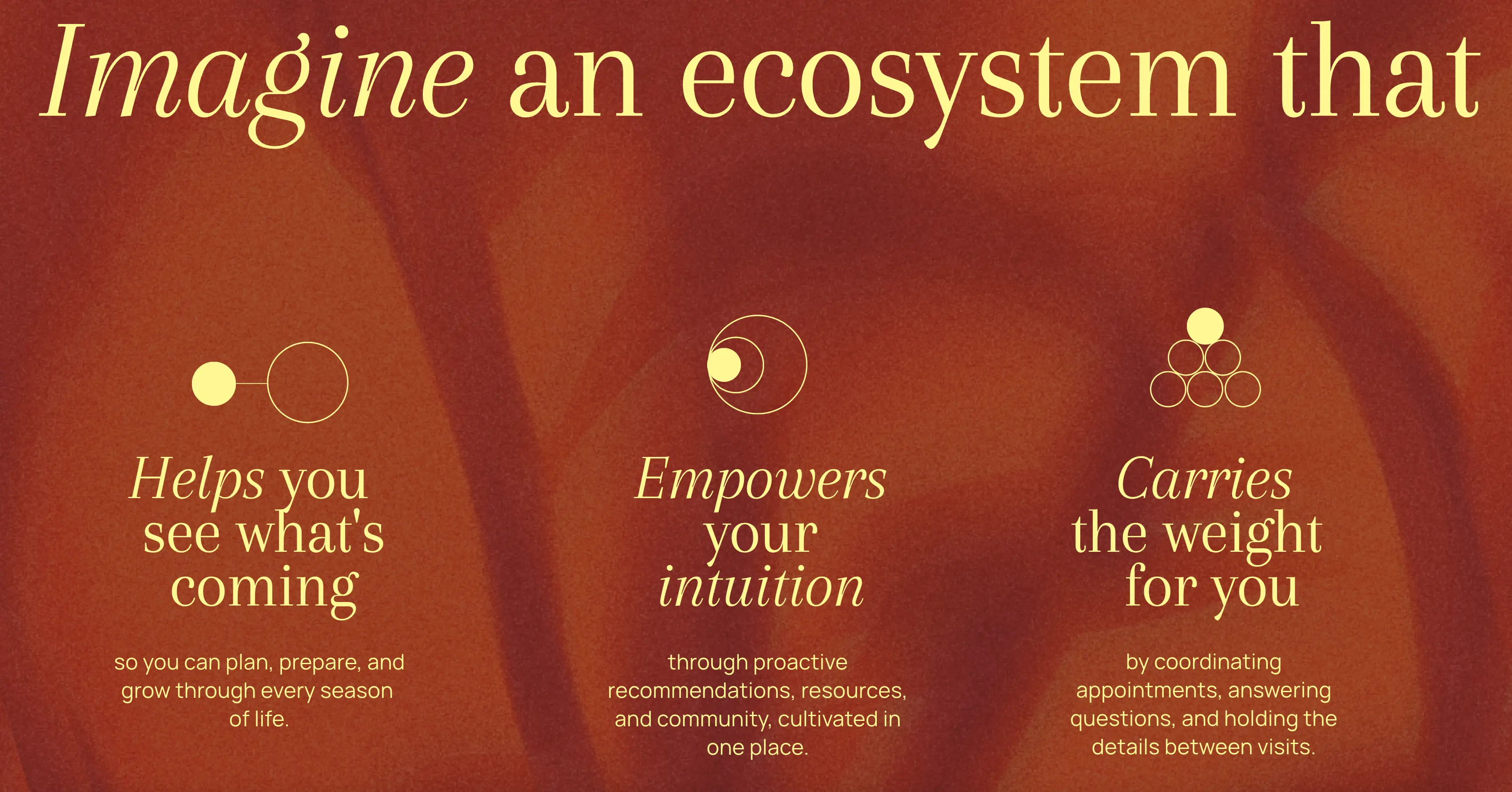
The qualitative research surfaced that women often carry the mental burden of repeatedly remembering, explaining, and advocating for themselves. Women’s pain is often minimized, which causes new providers to inherit mistrust from previous experiences, without having the tools to rebuild it. During significant life transitions, such as pregnancy or menopause, women may receive conflicting advice from health providers and seek additional outside support from informal networks. Access to quality care can sometimes depend on insider knowledge, private resources, or providers willing to go far beyond their job descriptions. And while providers make referrals, women must handle the time-consuming coordination required to make everything work, instead of focusing on healing. The bottom line: what women wanted most was to be seen, heard, believed, and supported in knowing what to do next.
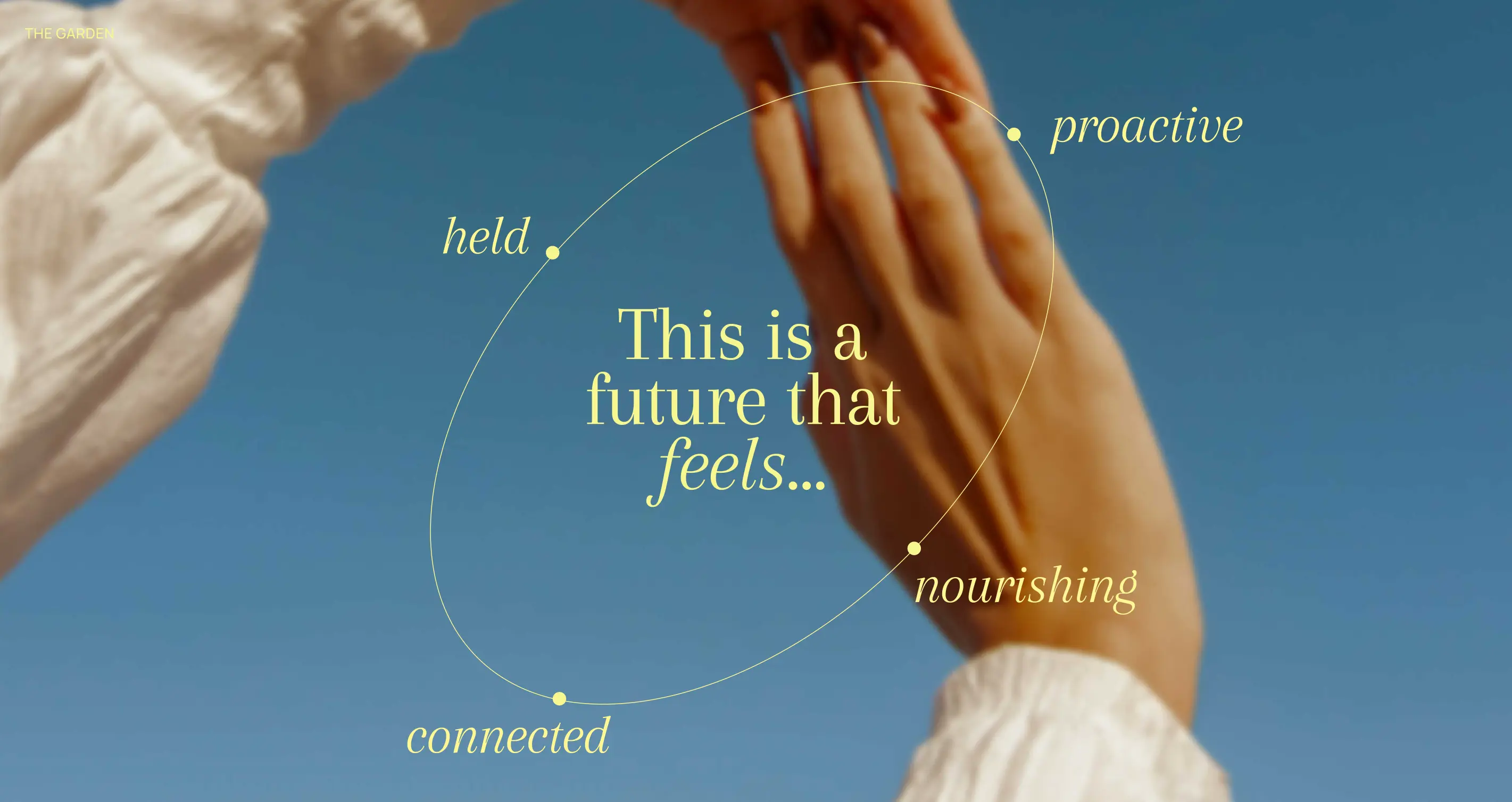
In order to address these challenges, IDEO proposed a new vision for women’s health, alongside design principles and concrete service shifts to guide future decision-making. Every interaction with Cottage Health should build on the information patients have already shared, demonstrating the system is listening. They should also guide women through life transitions by anticipating needs in future life phases, not just what’s happening now. Much like a community gathering, the Cottage Health experience should feel like a village, fostering belonging and shared care through warm, connected, human touchpoints.
Building on these design principles, IDEO developed three exploratory service concepts that represented potential pathways for future development, rather than finalized offerings: True North, Wellness Commons, and Care Circle.
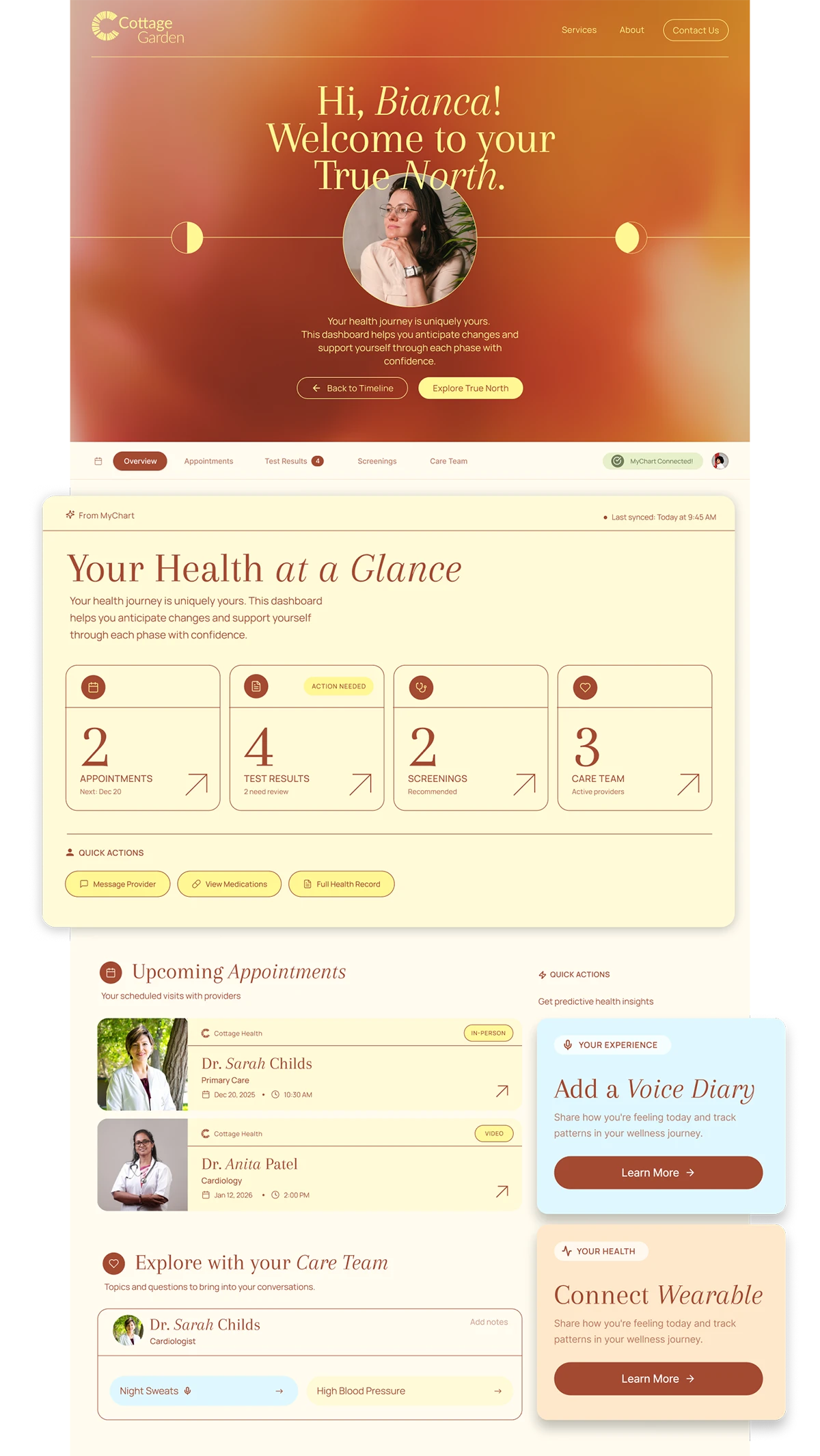
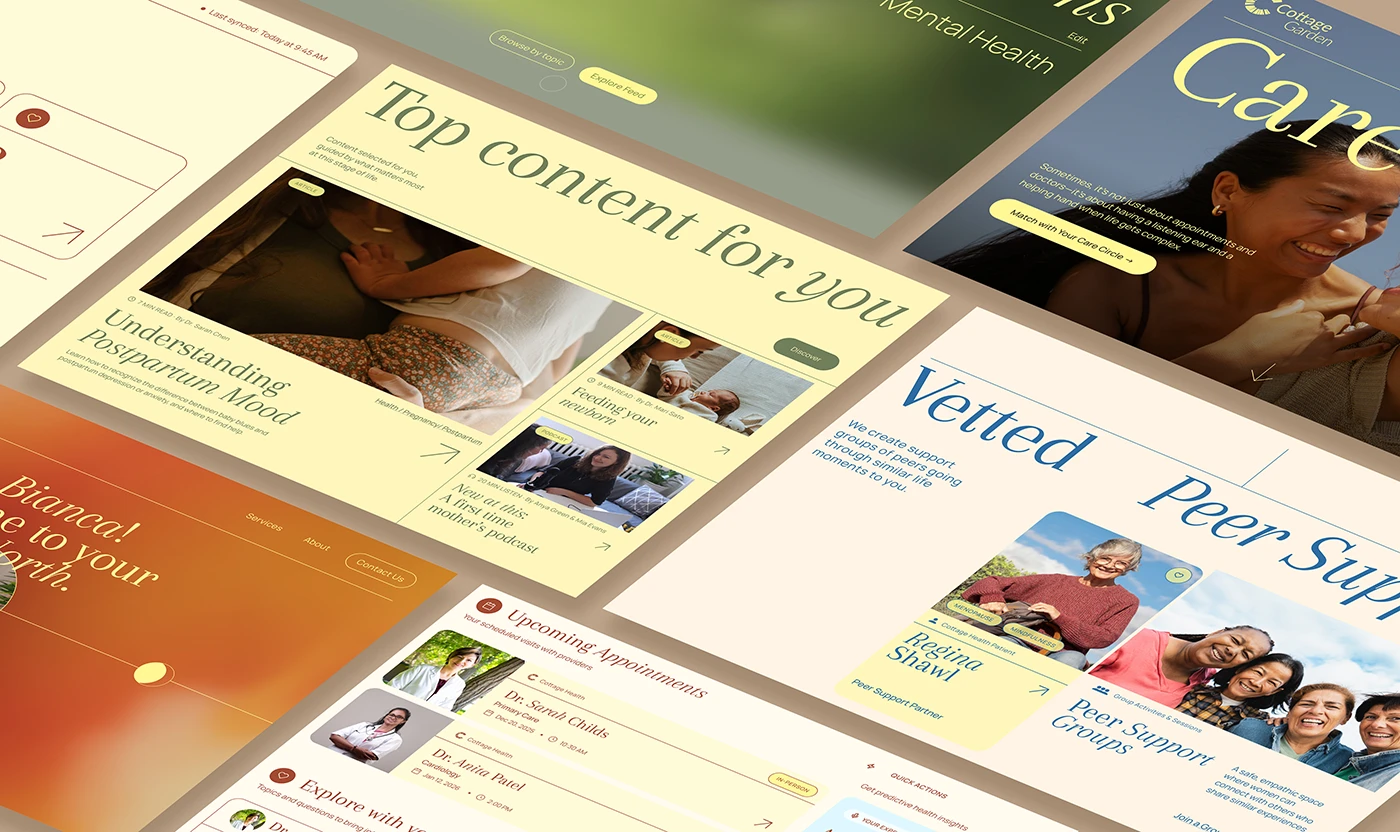
True North is a patient-facing tool that helps women see the long view of their health journey by integrating personal data, health goals, and reflections into a dynamic timeline they can share with their healthcare providers.
Wellness Commons serves as a digital front door, offering curated resources, including community events, discounted wellness programs, fitness classes, and trusted referrals, that help women navigate their well-being with clarity and agency.
Care Circle connects women to an extended support network inside and outside Cottage’s walls, including a hotline, health coaches, peer group support, and nurse navigators who can help patients manage complex care needs.
IDEO also provided Cottage Health with a multi-year roadmap building out the women’s health experience alongside continued pilot and implementation advisory. The roadmap included a comprehensive series of launch-to-learn pilots designed to test assumptions, reduce risks, and learn quickly, with IDEO stewarding the process. These pilots ranged from digital mockups and a curated community referral directory to a support line, a new nurse navigator role, and peer coaching services, among other experiments.
In July 2026, Cottage Health announced it was expanding its focus through a new Cottage Women’s Health Campus in Santa Barbara. Led by Dr. Jane Varner, Cottage Women's Health is projected to open in early 2028. It will encompass women’s health services across the lifespan, from puberty to menopause and beyond, including OB-GYN, pelvic floor health, women’s heart health, a menopause clinic, and a breast care center of excellence. It will also include supportive services, including trained nurse navigators to coordinate patients’ care journeys, giving women a single, trusted entry point for integrated care at every life stage. Cottage Women's Health is also exploring a new digital support system inspired by IDEO’s Wellness Commons concept.
Cottage Health had ambitious goals to expand its women’s health services and needed a partner to help it understand what women truly wanted from their healthcare and bring it to life.
7 months
from end of project to the announced launch of Cottage Women’s Health

From incremental change to breakthrough innovation
How Master Kong reinvented the instant noodle, from the inside out.
Looking to understand the role of instant noodles in middle-class Chinese life, the IDEO team conducted in-home research with consumers across a range of life stages and levels of attachment to noodle culture and convenience foods. The first finding was reassuring: Everyone kept instant noodles at home. The category still had a place in middle-class kitchens. But beneath that was a more complicated, emotional story—and an unmet need for convenience and quality to coexist in a single product.
The team discovered that instant noodles are more than just a quick, on-the-go meal; they are a nostalgic comfort food that evokes fond memories. But since their heyday, their role in daily life has evolved. Once a complete meal in itself, instant noodles now often function as a versatile flavor base or culinary accent in other dishes. Because they don’t align with the healthier, higher-quality, and more novel food choices that middle-class consumers aspire to, noodle shops, delivery noodles, or fresh-cooked instant options often win out. Yet, even these alternatives come with trade-offs. Delivered noodles lose texture during transport. Sit-down noodle shops preserve quality but offer limited flavors. Cooking from scratch meets the bar for both texture and flavor, but requires a significant time investment. As one young mother said, “If I could get the texture of fresh-cooked noodles without turning on the stove, I’d buy that instant noodle for sure.”

The research inspired the creation of a new category, which the team termed “fresh-brewed noodles.” More than just a noodle or broth upgrade, Master Kong’s fresh-brewed noodles would offer the speed of instant noodles with the quality of freshly cooked options, plus flavors not found in traditional noodle shops. The strategic positioning was clear. Executing it by making fresh-brewed noodles mass-producible, affordable, and eventually profitable presented a category-innovation challenge. To get there, IDEO designed a series of dual-track co-creation workshops with the Master Kong team and consumers.
One track focused on prototyping the core product experience: noodles, broth, and toppings. IDEO and Master Kong’s R&D team began by studying the traditional craft of Chinese noodle-making, starting in Shanxi, a region renowned for its noodles. Through successive rounds of prototyping and consumer tasting, the team identified a critical insight: for “fresh-brewed noodles” to be convincing, the innovation had to be centered on the noodles themselves.
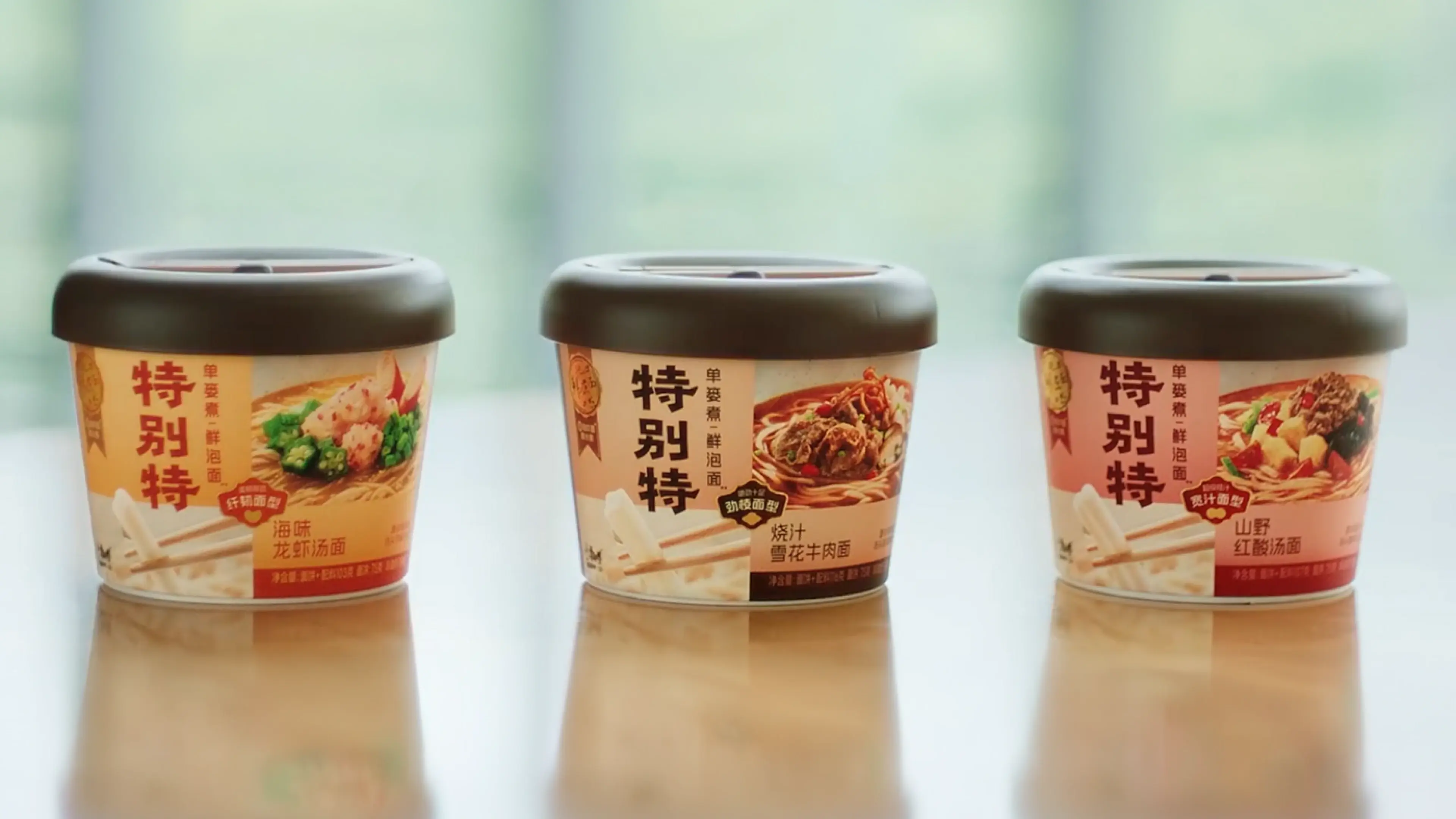
Texture alone was not enough. Consumers needed to see a meaningful difference before they tasted the product. IDEO translated this insight into a distinctive noodle profile: irregular, dimensional shapes designed to remain springy, hold sauce and broth, and mimic the resilience of freshly cooked noodles using only hot water. Because this visible shape represented the product’s core value proposition, it became a hero feature on the packaging. The graphic design made a bold visual statement about the noodle form, turning a technical R&D breakthrough into an immediately legible consumer promise: these are not ordinary instant noodles.
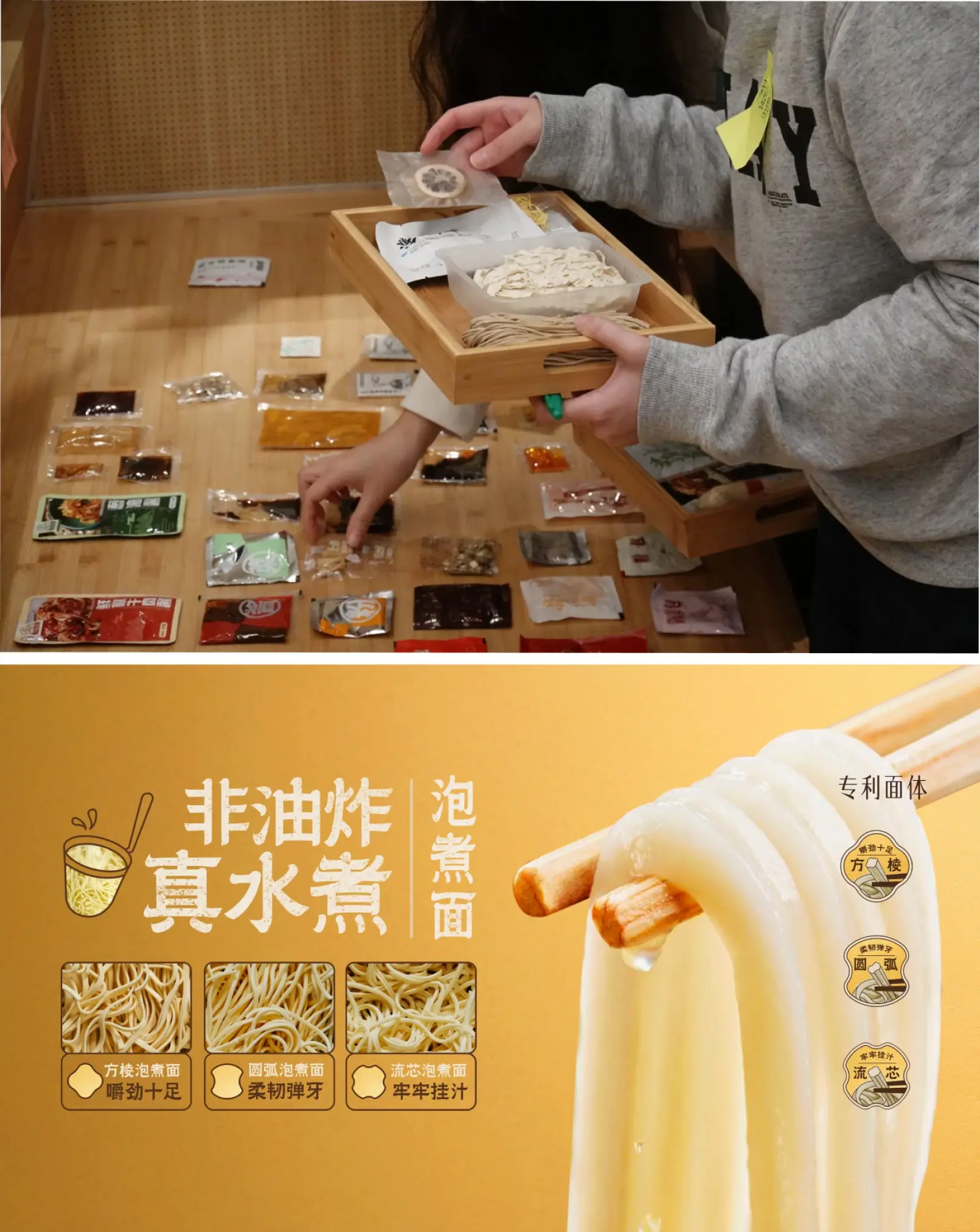
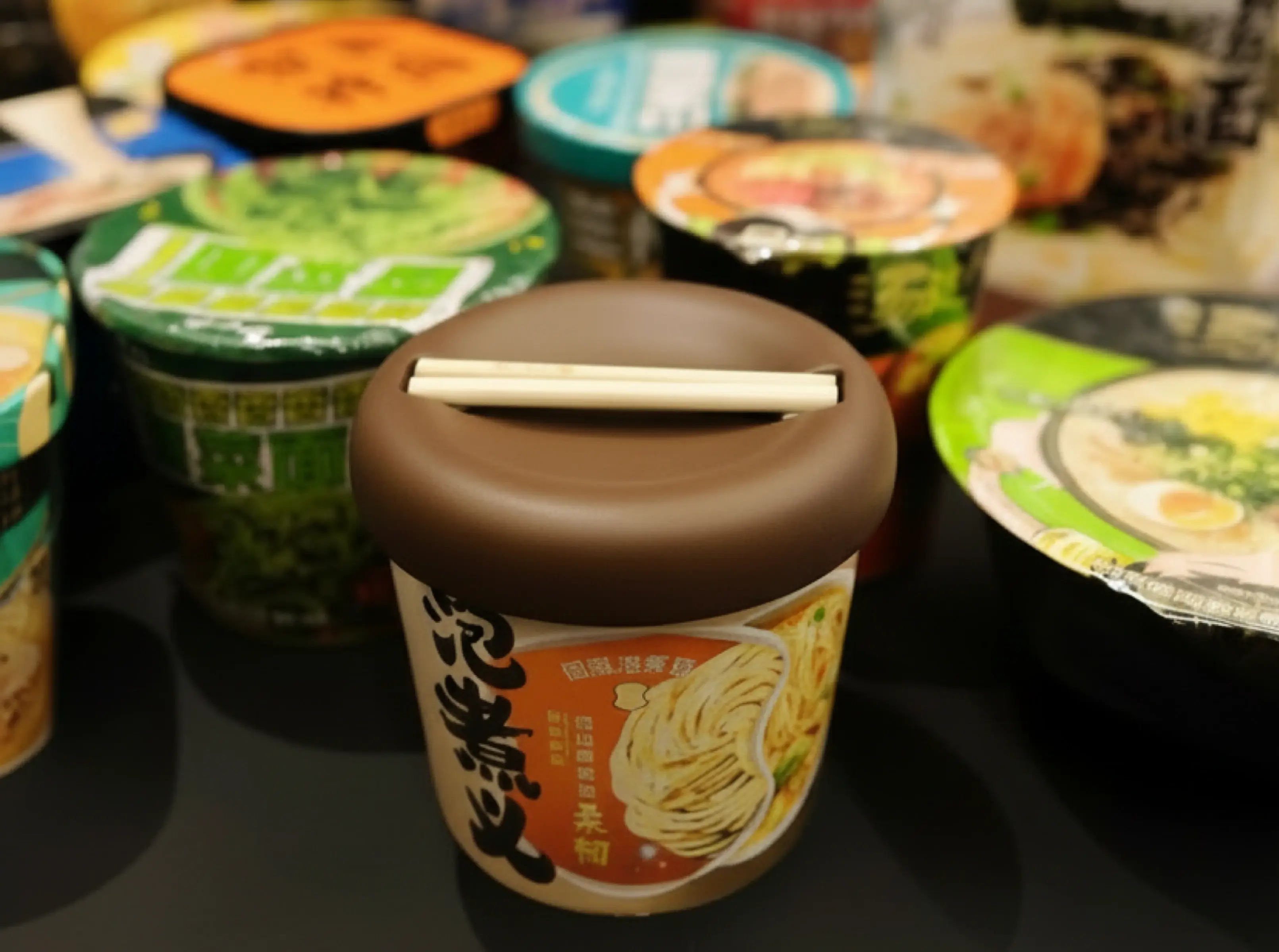
A parallel track explored the broader commercial experience: trend-forward and reimagined classic flavor profiles, light yet deeply satisfying broths, carefully selected toppings, and packaging that signals a new level of quality on store shelves. One key insight was that utensils carry meaning. Conventional instant noodles are often associated with disposable plastic forks, while higher-quality noodles are eaten with chopsticks. IDEO translated this cultural cue into the design of the bowl’s lid.
Instead of treating utensils as an afterthought, the team designed a solid, rounded, heat-retaining lid that embeds a pair of small wooden chopsticks. The gesture creates a small ritual of anticipation and reframes the product—not just a convenient instant meal, but a more considered noodle experience. Once opened, the product fulfills that promise with satisfyingly bouncy noodles, a rich liquid broth pouch that replaces the traditional oil-and-powder packet, and a vegetable packet reformulated with more premium whole ingredients.
The first batch of “Te Bie Te” Fresh-Brewed Noodles—Chinese wordplay that emphasizes “special”—launched in August 2025 with three trendy and tried-and-true flavors. Within just three days, sales exceeded 100,000 bowls. Within a week, “Te Bie Te” topped the instant noodle category sales ranking on Douyin, China’s domestic counterpart to TikTok. The outcome was bigger than a product launch—it served as proof that a mature, declining category could be fundamentally reinvented to meet consumers’ real needs. For Master Kong, the project became a North Star and a model for internal category innovation in beverages, ready-to-eat foods, and beyond.

Once a popular, affordable staple, the instant noodle category in China has been declining rapidly due to shifting demographics, rising food delivery options, and increasing customer demand for healthier, more nutritious meals.
According to the World Instant Noodles Association, between 2020 and 2023, China’s instant noodle consumption fell by 4 billion packs.
100,000+
“Te Bie Te” bowls sold in the first 3 days on the market
#1
on Douyin’s instant noodle category ranking within one week of launch

Making international education future-fit & affordable
Lexel brings world-class learning to Malaysia’s middle class.
Taylor’s legacy began in 1969 with the founding of Taylor’s College and soon expanded to include Taylor’s University, one of Southeast Asia’s top private universities, as well as many other institutions that serve 35,000 students per year. The family-owned group also operates Taylor’s International Schools, Garden International School, and Nexus International School for students ages 4 to 18. In Kuala Lumpur, Malaysia’s capital city, annual tuition at premium private schools like these ranges from about $10,000 to $25,000 USD. Taylor’s wanted to do something different: provide the same level of academic rigor and immersive learning experiences at one-third the cost.
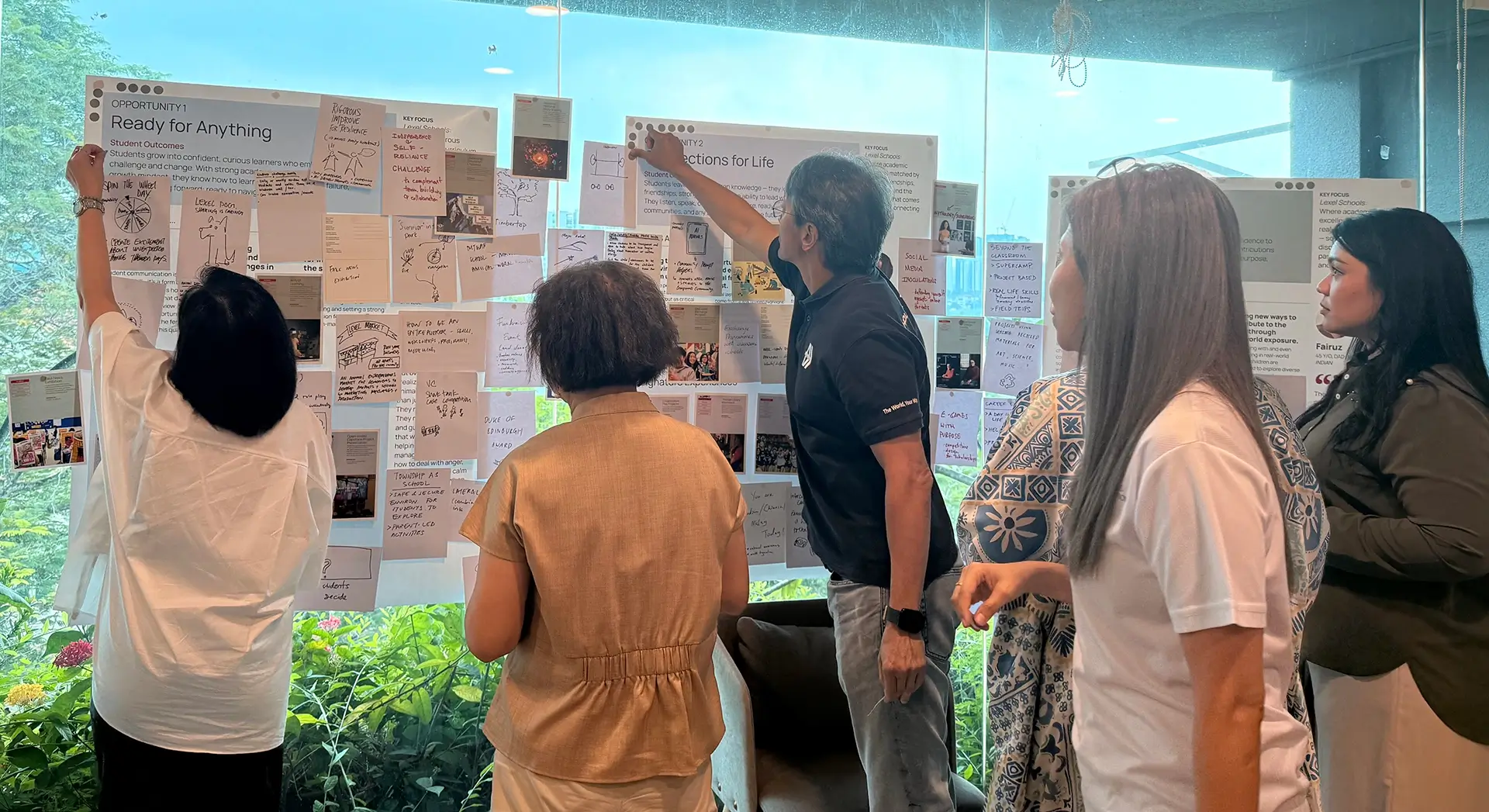
IDEO began by speaking with over three dozen students, parents, teachers, and experts across the capital to understand what was working, what wasn’t, and what was missing from such moderately priced international schools.
A few themes quickly emerged. Families, students, and teachers were worried about the stability of these new private schools, which tended to have higher-than-normal teacher turnover rates and were plagued by financial instability, negatively impacting talent attraction and retention, as well as student learning. Parents appreciated that the schools offered holistic learning experiences, such as field trips to rural areas, including jungles, but wished they were more consistently part of the curriculum. And now, the looming challenge of AI—how to use it, how to teach it, and how to teach with it—was in the background, a persistent cause for concern. The big unmet need? Reassurance that Taylor’s was thinking long-term and systematically about developing the skills, knowledge, and mindsets that would prepare students for an ever-changing world. Parents wanted a school that measured growth in academic, social, and character terms over generations, not just school semesters.
With these insights in hand, IDEO began developing a design Playbook for Taylor’s new brand—Lexel International Schools. A combination of “lexicon” and “excellence,” Lexel’s mission is “building what lasts, learning for life.”

The schools are centered around three key differentiators:
- Always Ahead: Lexel schools commit to staying current with the topics and subject matter they teach, as well as the tools they provide to students, parents, and teachers.s.
- Learning That Builds for Life: The schools ensure programmatic, systemic, and consistent learning experiences from Pre-K to Year 11. Interested students can even continue their post-secondary journey in partnership with Taylor’s University and other higher education institutions within the Taylor’s ecosystem.
- Educators for the Long Run: These schools commit to ongoing investments in professional growth opportunities for teachers and stable learning environments for students.
Four Lexel Literacies—AI, Digital, Financial, and Nutrition—integrated into the Cambridge Curriculum bring the school’s vision and mission to life.
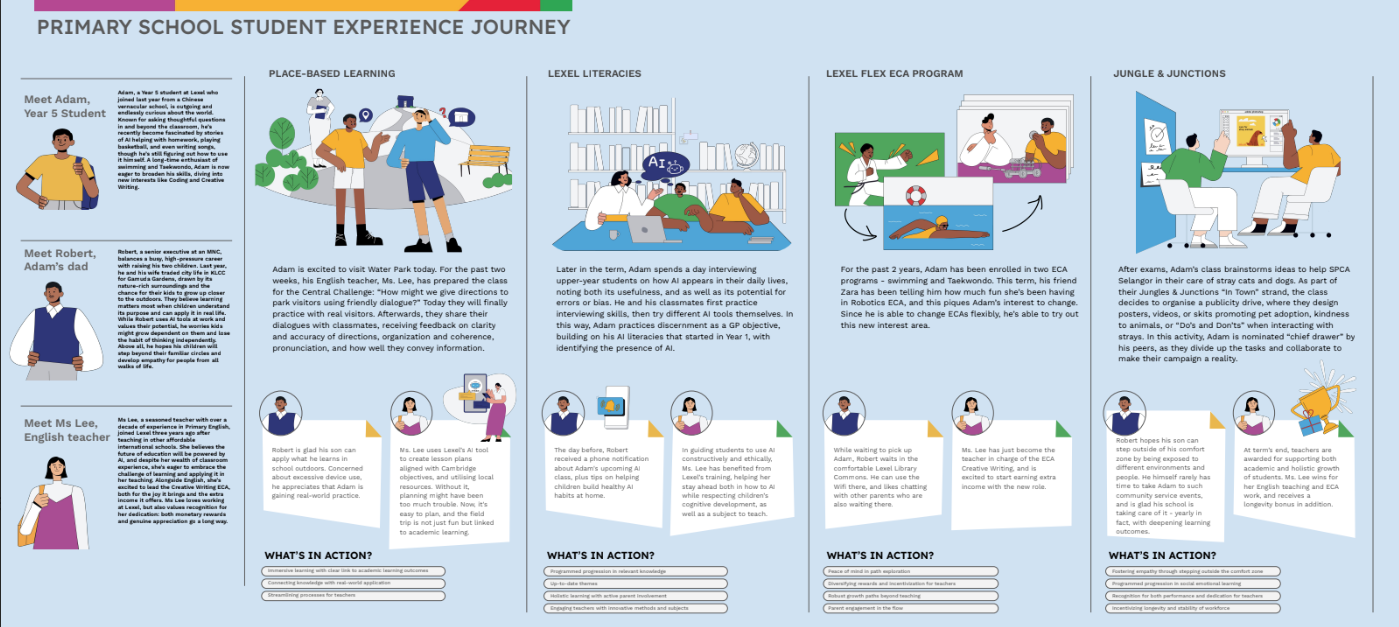
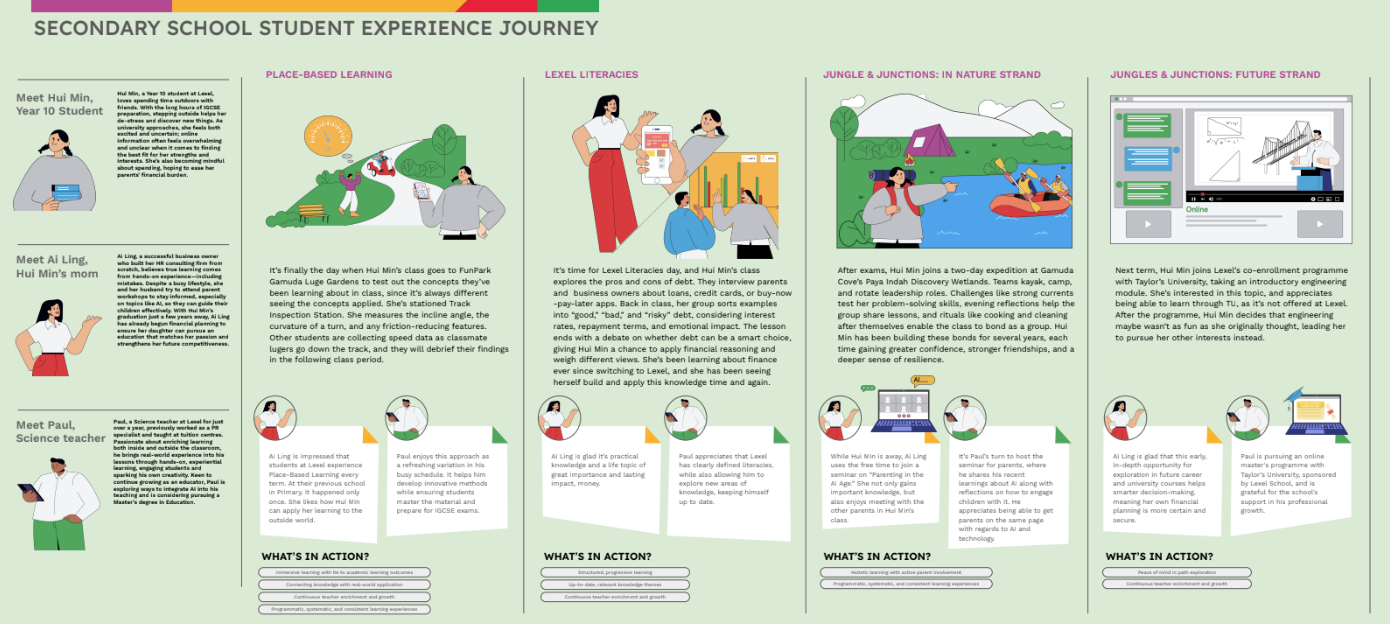
By systematically integrating AI literacy into its spiral education framework, in particular, an approach where major topics are revisited multiple times through a curriculum to build fluency over time, Lexel ensures parents that the school is thinking a decade ahead from Day One, setting the school apart. In addition to enhancing AI fluency, Lexel offers unique end-of-term experiences called Jungles & Junctions.
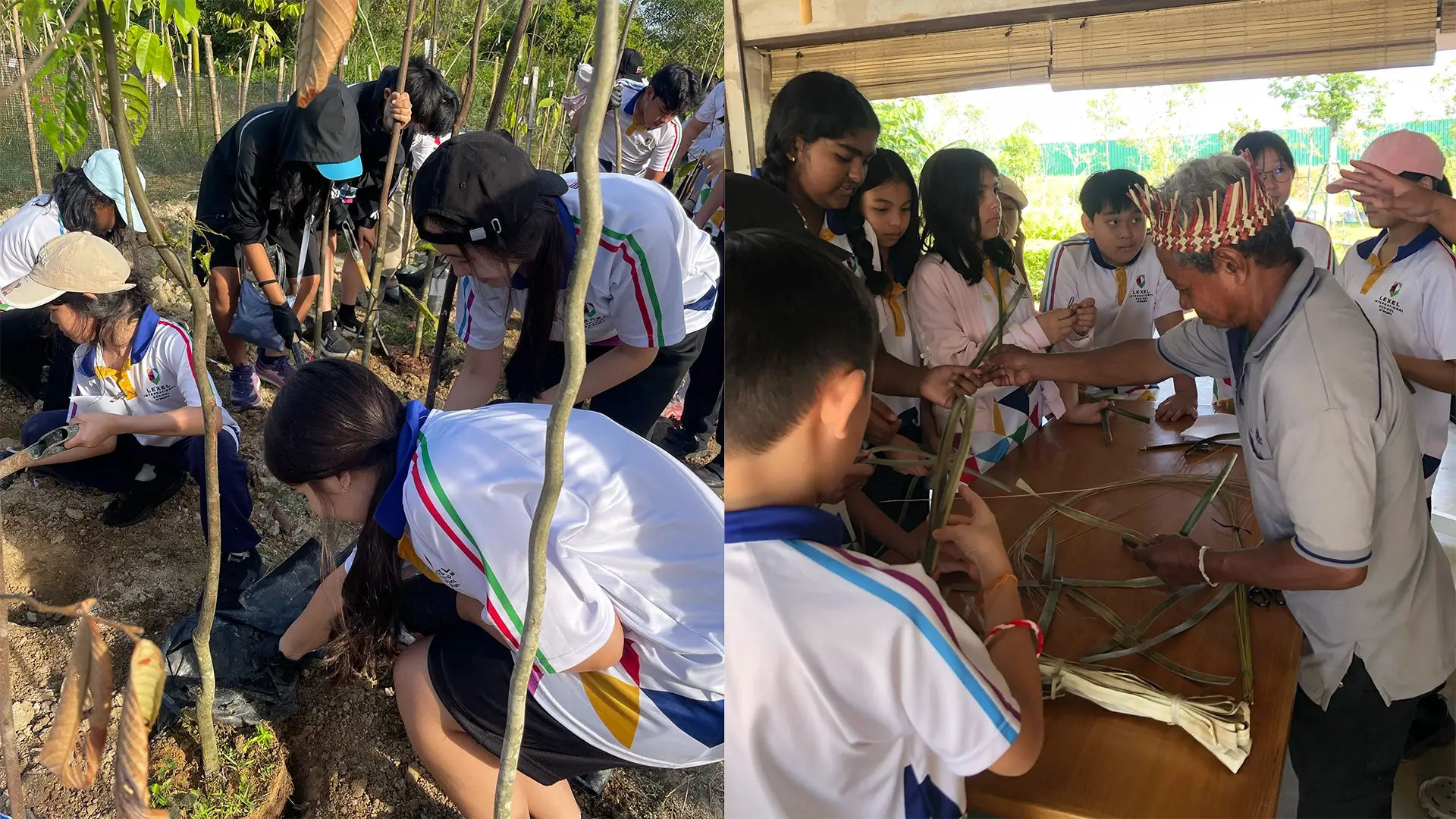
Combining three important strands of learning—community engagement, nature-based personal and interpersonal development, and career and university exploration—Jungles & Junctions leverages Taylor’s extended educational network and Lexel’s strategic founding campus within the Gamuda Gardens development in Selangor. Surrounded by tropical rainforests, the township’s residential neighborhoods, theme park, and various sports facilities, including an Olympic-length swimming pool, are transformed into an extended Lexel campus, with a GenAI-driven planner to help teachers streamline the organization of class outings. “The Township is Your Campus” became the tagline for this approach.
In September 2025, just months after IDEO’s collaboration ended, Taylor’s began classes at its first Lexel International School. By mid-year, the new school had achieved 115% of its year-one student enrollment target, with significant inbound demand for Year 2 already demonstrating the school’s market resonance.
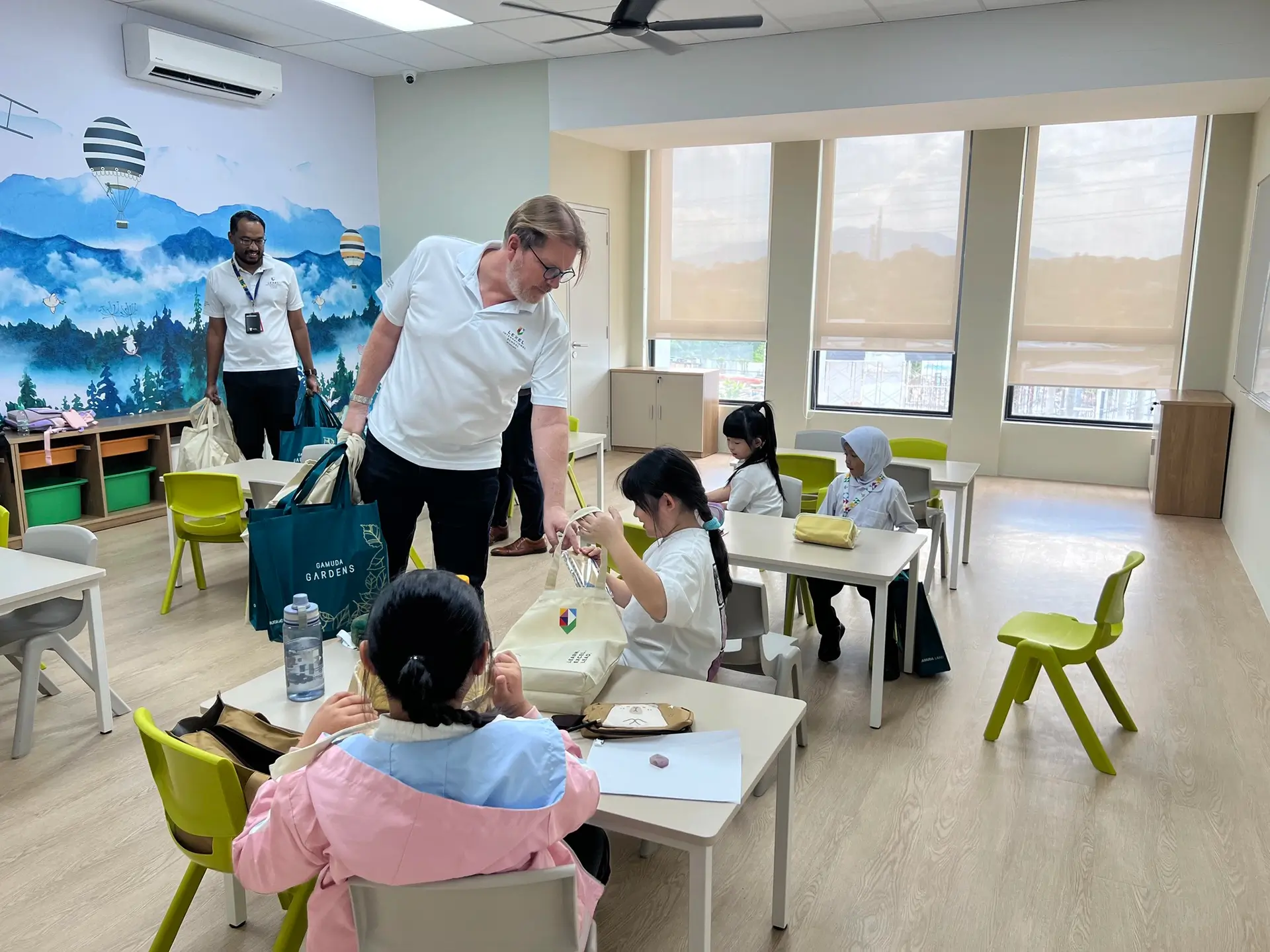
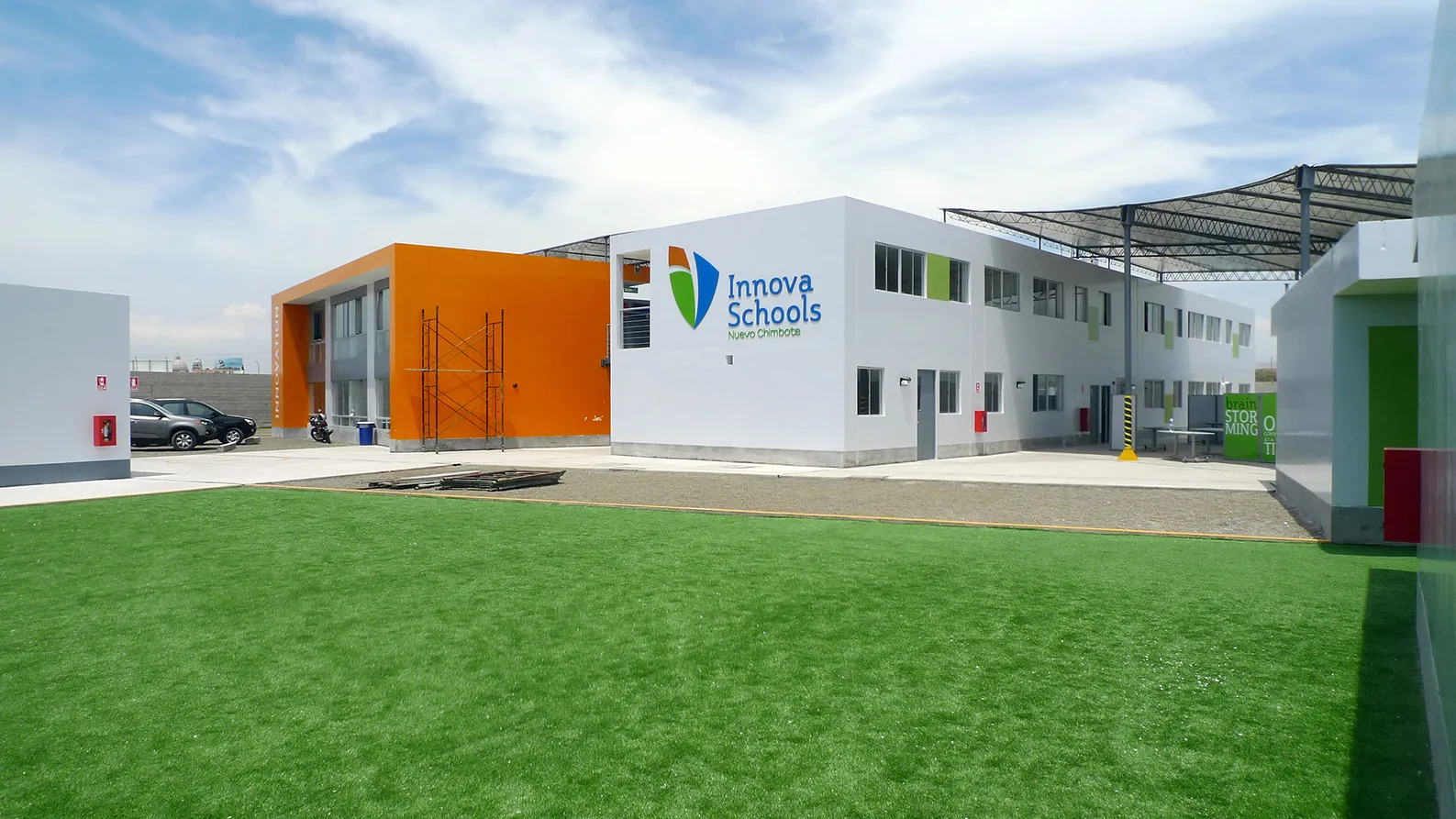
The modern campus features spacious classrooms, science and technology labs, a library, a multipurpose hall, and a canteen. Annual tuition ranges from about $2,800 USD for pre-K students to about $6,100 USD for secondary students.

Most importantly, by combining Taylor’s deep academic expertise, Gamuda Land’s development prowess, and IDEO’s innovative design Playbook, Lexel brings quality, affordable international education closer to home for Malaysian families. According to one parent, “My daughter looks forward to going to school every day … and has a lot of opportunities to express herself. On a scale of 1 to 10, I give [Lexel] an 11.” Based on the IDEO Playbook, a second flagship campus in the Southern Klang Valley, which is scheduled to open in September 2026, has already exceeded its year-one target enrollment expectations, with plans to continue extending the Lexel network to other parts of Malaysia and the wider Southeast Asian region in the near future.
Malaysia’s private international school sector has grown significantly as parents seek quality English-language education. However, high tuition fees and limited access to reputable schools are continual challenges for those in the emerging middle class.
115%
of Lexel’s student enrollment target reached during the launch year of its first campus
Year 1 enrollment target exceeded
at Lexel's second campus several months ahead of classes commencing
Delivering an unbiased news experience
Straight Arrow News transforms fact-based news consumption.
The American news industry has long been a competitive and saturated market. This has only intensified with the emergence of social media outlets and AI-generated news. Even so, SAN’s rigorously unbiased, fact-based reporting style and rich video storytelling had enabled the ambitious startup to rise above the media fray in just three short years.
With a strong foundation to build on, IDEO sought to further differentiate SAN’s cutting-edge news product and build deeper engagement with a wider audience through a new user experience.

Collaborating closely, IDEO and SAN began by delving deeply into media consumption habits. They met with early SAN superfans, news consumers who spent hours a day absorbing content from traditional outlets like Fox and USA Today, and those who looked to their Ring doorbell app or Reddit for news. The takeaways? People were tired of clickbait and clunky interfaces. They sought clear, factual news that was easily accessible, with additional context to help them interpret events and understand their significance. They craved more than one perspective on important topics, so stories felt balanced rather than polarized. They also valued having control over how they consumed news, so making it easy to switch between text, video, and audio formats was crucial.
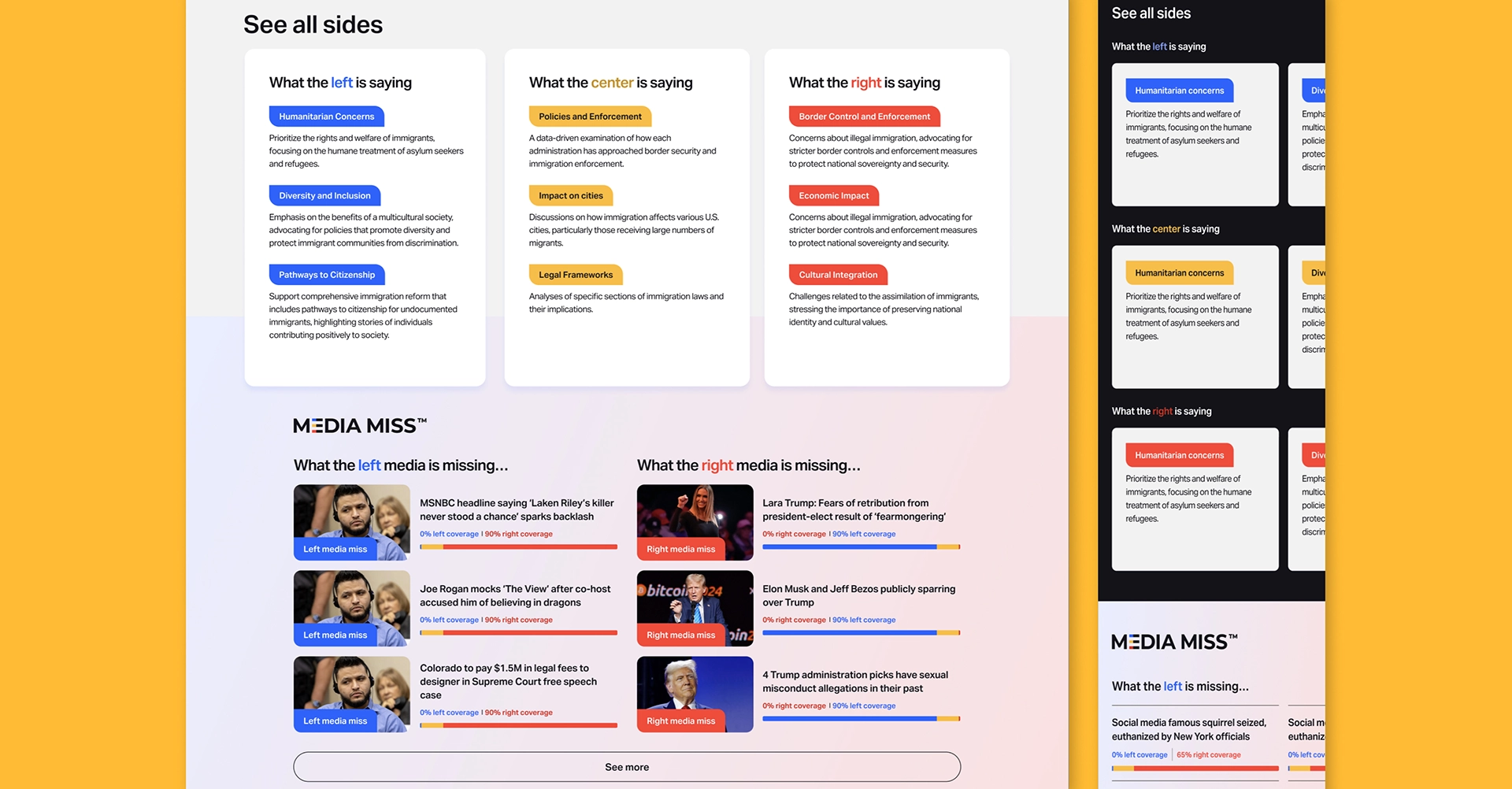
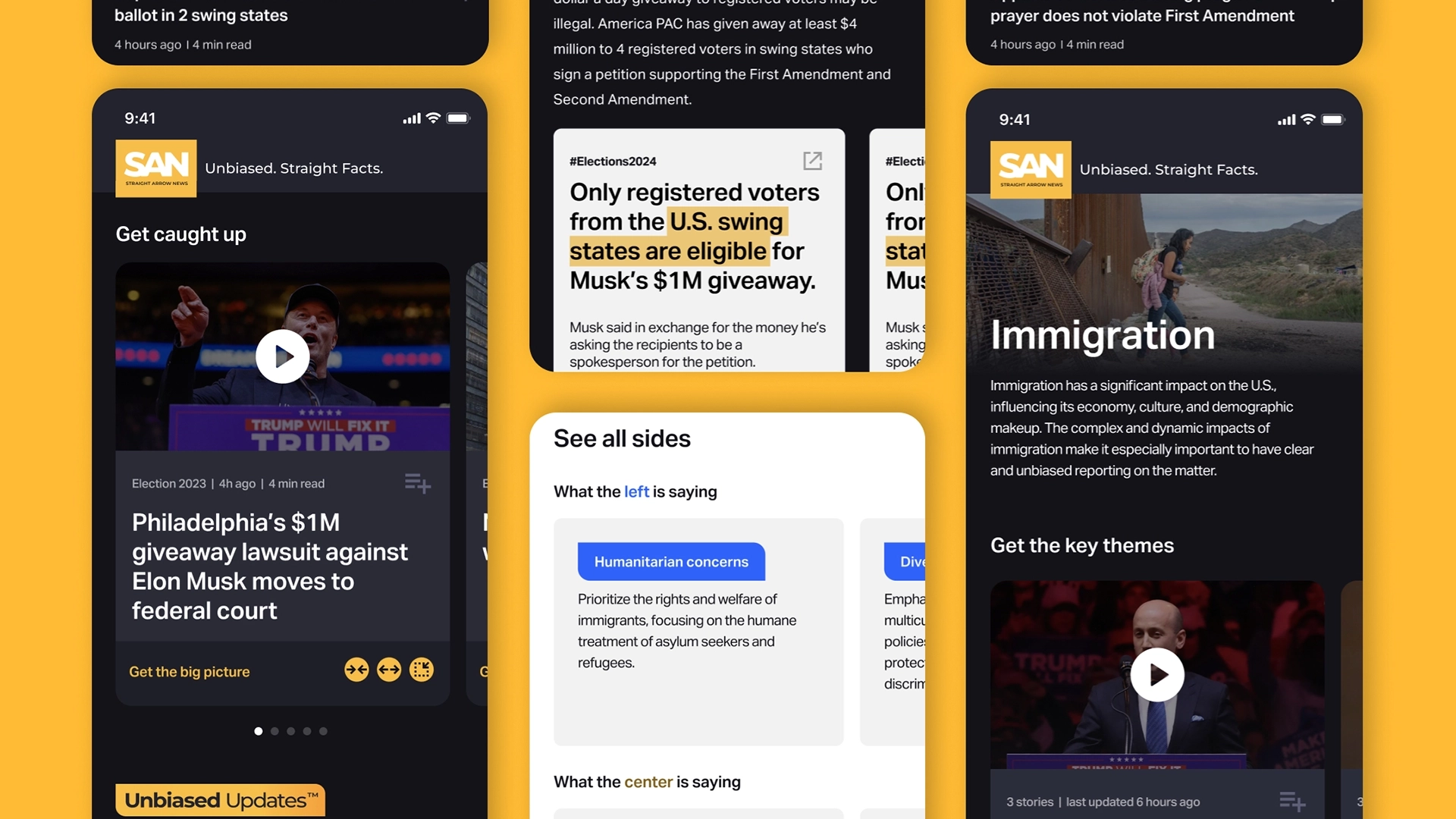
Together, IDEO and SAN created features across SAN’s website and app that put facts, trust, and transparency at the core of the product experience. Fact Cards distill key data points into clear, shareable units, while the Sources feature allows readers to trace information directly back to its original source. To make complex stories easier to grasp, Big Picture insights drill down into why events matter, surfacing underlying themes, historical parallels, differences in reporting, and common ground. The Why This Story Matters section provides readers with clear framing and sets the story within a broader context, while the Timeline illustrates how events unfold over days, months, or even years. An antidote to news polarization, See All Sides presents left, right, and center narratives for key topics side-by-side, and Media Landscape visualizations reveal how coverage varies across outlets. Finally, to ensure SAN fits seamlessly into readers’ daily lives, the redesigned Today Page is organized into three highly scannable sections: Latest News, Top Stories, and SAN Originals. The combined features create a balanced, clear, and non-polarizing news experience, making it easy for readers to delve deeper into the sources of their news.
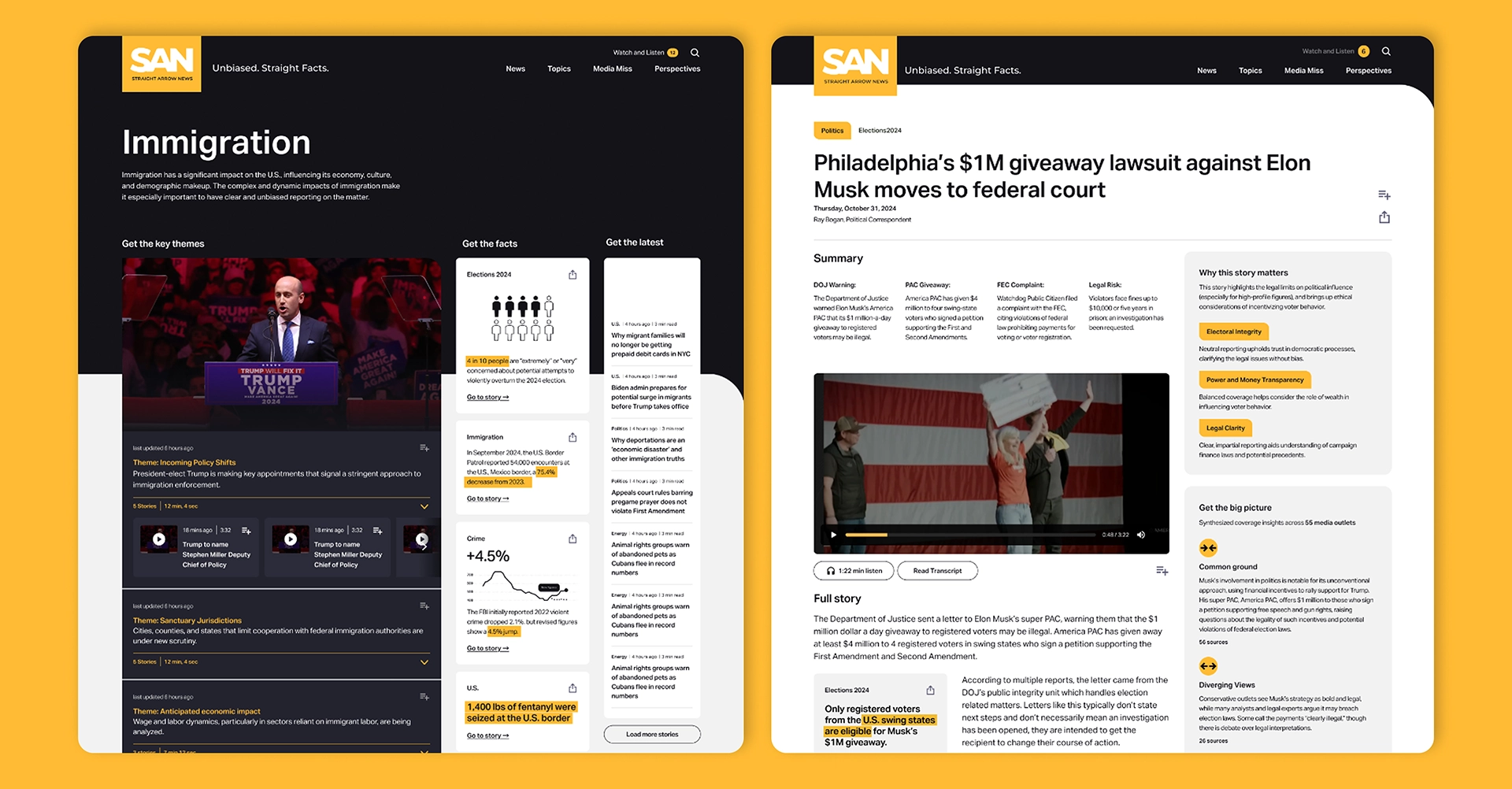
SAN now delivers a news experience as modern, dynamic, and trustworthy as its journalism. A month after its debut, the SAN app’s page views increased 1,170 percent year over year compared to June 2024, while active users rose 700 percent. Readers also give the updated mobile experience a 4.8 rating on the Apple App Store. “Our team is delivering reporting that’s both deeply factual and accessible,” said Derek Mead, SAN’s Chief Content Officer. “This redesign is pivotal to the direction journalism needs to take and the leadership role Straight Arrow News is taking on as we help guide the news industry into a brighter future.”
SAN built a loyal readership and gained recognition for its unbiased reporting. To expand and stand out from legacy media, SAN wanted a redesigned user experience that reflected its commitment to fact-based journalism.
1,170%
increase in app page views YoY
700%
increase in active users
4.8 rating
on the Apple App Store

Why Designers Need to Start Thinking About Blockchain
Bringing human-centeredness to a technology that is going to radically alter how we live, work, and play
Blockchain is a relatively new technology that will soon replace the underlying structure for a lot of the applications and services we use today, including systems for managing our finances, tracking our health, and determining how we connect, transact, and communicate with each other.
So, while it’s tempting to write off blockchains as something to leave to the coders, the potential human impact is too big to ignore. There will be user experiences, communications, and other completely new elements that will need to be carefully designed.
At IDEO CoLab, we explore the potential of emerging technologies like artificial intelligence and the Distributed Web by building prototypes in quarterly sprints. A crucial part of our mission is considering human-centered values in the process of building for the future—creating things the world actually needs, not just more technology.
Here are three reasons why designers need to start thinking about blockchain technology today:

1. It’s bigger than just cryptocurrency
Many people are familiar with cryptocurrencies like Bitcoin and Ethereum. (And for those who aren’t, here’s a quick video that explains the basics.) Blockchain is the technology that forms the underlying structure for these digital currencies, and gives them the unique qualities that make them different from conventional lucre like the US Dollar. That structure includes the ability to exchange funds directly with anybody, anywhere in the world, without the need for an intermediary like PayPal, Visa, or Citibank.
But what most people don’t understand yet is that blockchain technology is about so much more than digital coins. At its essence, a blockchain is a new type of digital ledger which records information in a publicly-verified, traceable way across a decentralized network of devices. What this means is information for, say, an app isn’t just stored on a privately-owned server somewhere—it’s stored across multiple devices that communicate with each other to verify user activity, rather than referencing one central authority, like a Wells Fargo or Google.
Blockchains offer a new way of tracking information, and their applications are broad. Not only are they expected to pervade the financial industry, they’re also being integrated into global shipping, parts tracking, digital identity, healthcare, and other systems. In fact, it’s hard to think of an industry that relies on technology that wouldn’t benefit from using a blockchain.
With a potential to reach millions—even billions!—of people, designers need to start thinking about how they can use their skills to improve the user experience for all of the products and services that will be built on top of this new infrastructure.
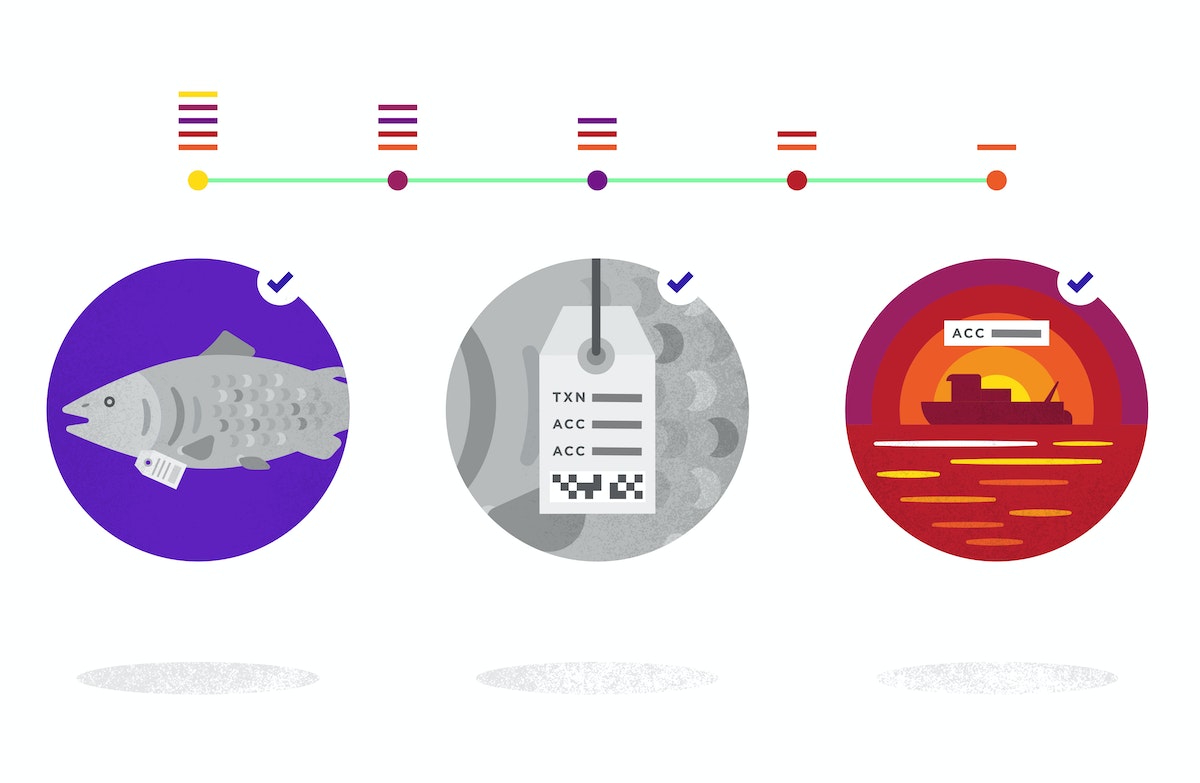
2. It will change how humans interact with one another
Blockchain isn’t just a technology, it’s also a state of mind. Well, okay, that might just be the Californian in me talking, but all exaggeration and hype aside, blockchains are going to have a big impact on our culture too.
We’ll come to expect new things from our relationships with other people and parties, based on how blockchains manage our digital interactions. Mirroring the open, accessible code structure, people will expect the companies they do business with are open and accessible as well.
Consumers will demand more information about the goods and services they purchase. Companies will be held to a higher standard of data security.
Trust will become perhaps the most important design element in any system.
Imagine a world where all interactions are more egalitarian, transparent, and traceable—what would that look like? How might we design for this new world view?
(Check out this talk from CoLab’s Gavin McDermott to learn more about the 10 key landmarks of the decentralized web movement.)

3. Technology needs design more than ever
Our world is changing at lightspeed. As new technologies and tools are released daily, it’s easy to get caught up in the rapid pace without stopping to think about the human impact of what we’re creating.
We have a tendency to think of code and algorithms as neutral tools, but they’re not. Technology is neither good nor bad, it's how we apply it that matters. Everything we create has a human imprint on it—our assumptions, hopes, and fears are built into the systems we design (the bias in algorithms has been getting a lot of ink lately).
That’s why, moving forward, we’re going to need a group of people that advocate for the human experience—and human rights—as we develop these technologies. Especially right now, as emerging technologies like blockchain begin to take form, it’s important for designers to have a voice in that process from the very beginning.
How do you envision the designer's role evolving alongside blockchain developers? Let us know on Twitter or Instagram #blockchaindesign
Looking for ways to get started designing for blockchains? Check out this list of quick prototyping tools for emerging technologies from IDEO CoLab.
Blockchain. You’ve heard the word. Perhaps you’ve invested in a digital currency or two. But do you really know what the technology is and why it matters? It all sounds deeply technical—and it is. But it's important to understand this new tool, as it will have a big impact on our lives—radically altering how we live, work, and play.
How to Hack a Furby
Turns out, with some small modifications, you can do more than teach the creatures English
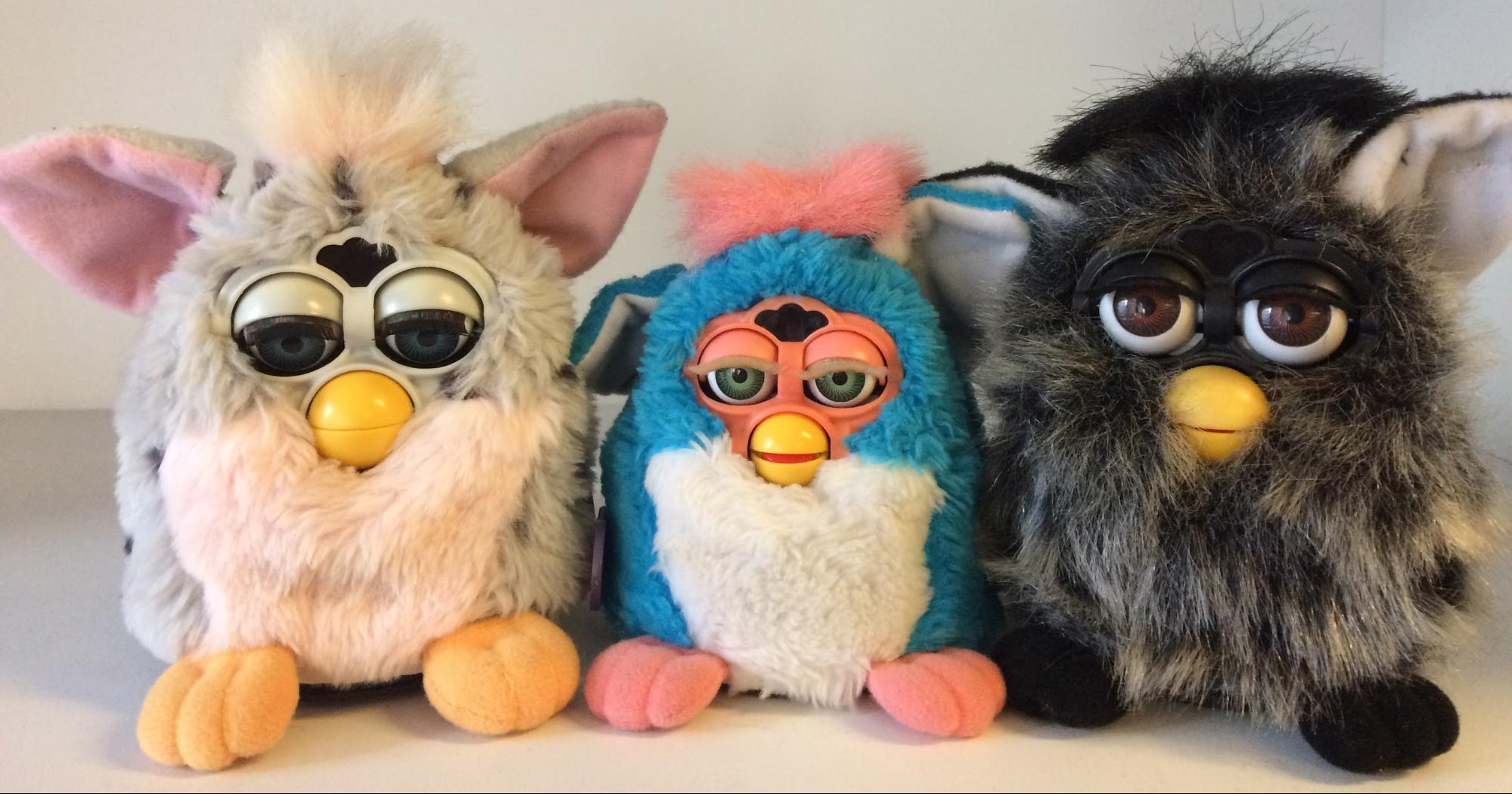
We were joking about how Aaron's last name is pretty similar to Furby, the interactive Gremlin look-a-like toy from the late 90s. Someone suggested it would be funny if we modified a Furby so that instead of speaking Furbish (I think that's what people call the language Furbys speak?), it would repeat phrases in Aaron's voice. At first, it was just a joke, but then I mentioned I had a couple Furbys at home I'd been meaning to hack…
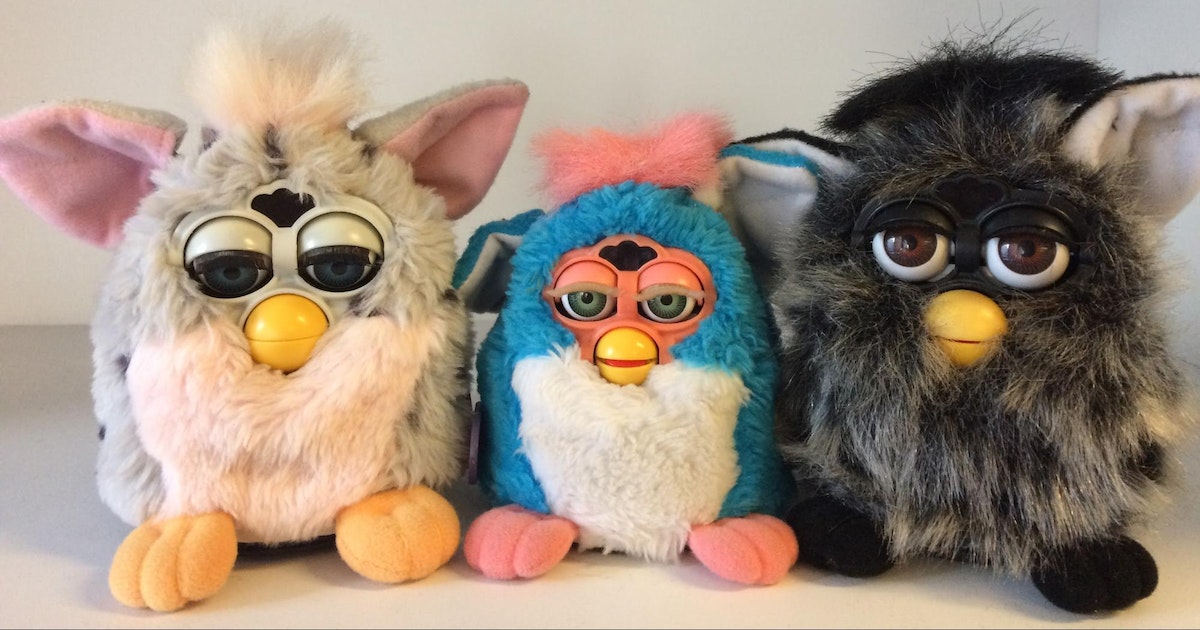
What’s a Furby?
For the unfamiliar, Furby was a coveted toy when it hit the market in 1998. Seriously. More than 40 million of the hamster-esque creature were sold in its first three years of production. Kids fell in love with it because of its child-like nature and the fact that it required feeding, nurturing, and constant attention. It also only spoke Furbish out of the box, developing an English vocabulary over time as kids talked to it.
Because the Furby was one of the first widely-marketed toy robots, it also appealed to the hacking community. In the early years, there were some news stories about whether the microphone inside Furby was listening in on private conversations, but thankfully, Furby does not use the microphone to record audio. Because of the ruckus over the microphone, there is a wealth of information on the internet about how to properly deconstruct a Furby, and how the Furby's insides function.
How I did it
The first step was to take Furby apart. Unfortunately, due to Furby's realistic personality, the process of deconstructing the Furby felt more like field dressing an animal. I had to delicately skin the toy so that I would be able to resurrect it later.
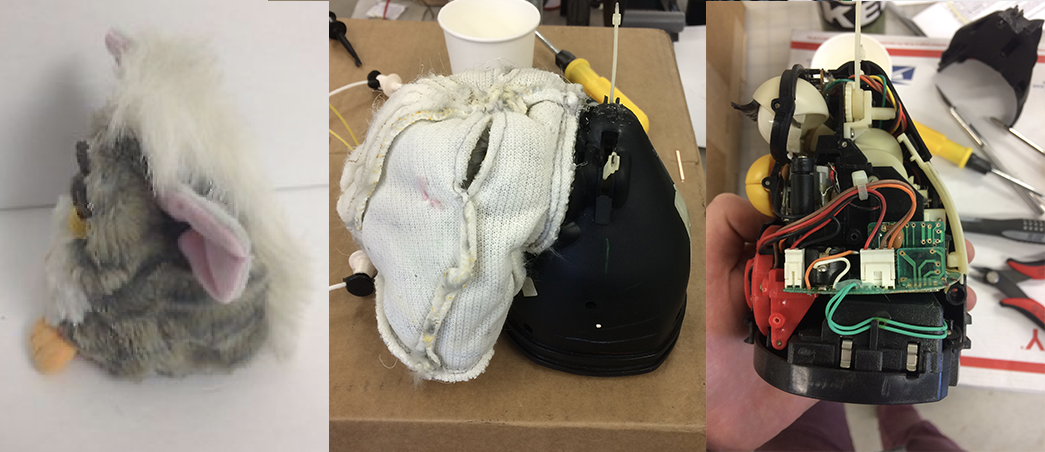
Once the Furby was dissembled I put together a vice to clamp down its skeleton; it almost looked like I was torturing it until it would talk...and in a way, I kind of was. With the Furby in place, I was able to access its inner circuitry and check out its voice box. After some initial probing, I turned back to the internet again and was able to find a full schematic of Furby’s insides, which meant I no longer had to guess and check what each part was used for and how they were connected. I could also disconnect the voice box.
After some reading, I decided that the best option for triggering voice playback would be to use the motors. Furby always moves and talks at the same time, so any time the motors are working, he should be talking. If I used any of its switches (belly, mouth/tongue, gyroscope, etc.) as an audio trigger, I would miss Furby’s unprovoked audio actions, the ones it does without user input. (Sometimes the Furby will start singing or fall asleep on its own.) Those actions are triggered internally, and I didn't have the time or resources to begin understanding how a Furby's brain works.
To build the the audio playback, I used a circuit board I created a few years ago that's a variation of Adafruit's wav/ogg audio fx board. My audio playback board is very similar, but it also includes the necessary circuitry for charging a connected lithium-ion battery. With this addition (and a voltage booster), I was able to power the Furby from a rechargeable source, rather than four AA batteries.
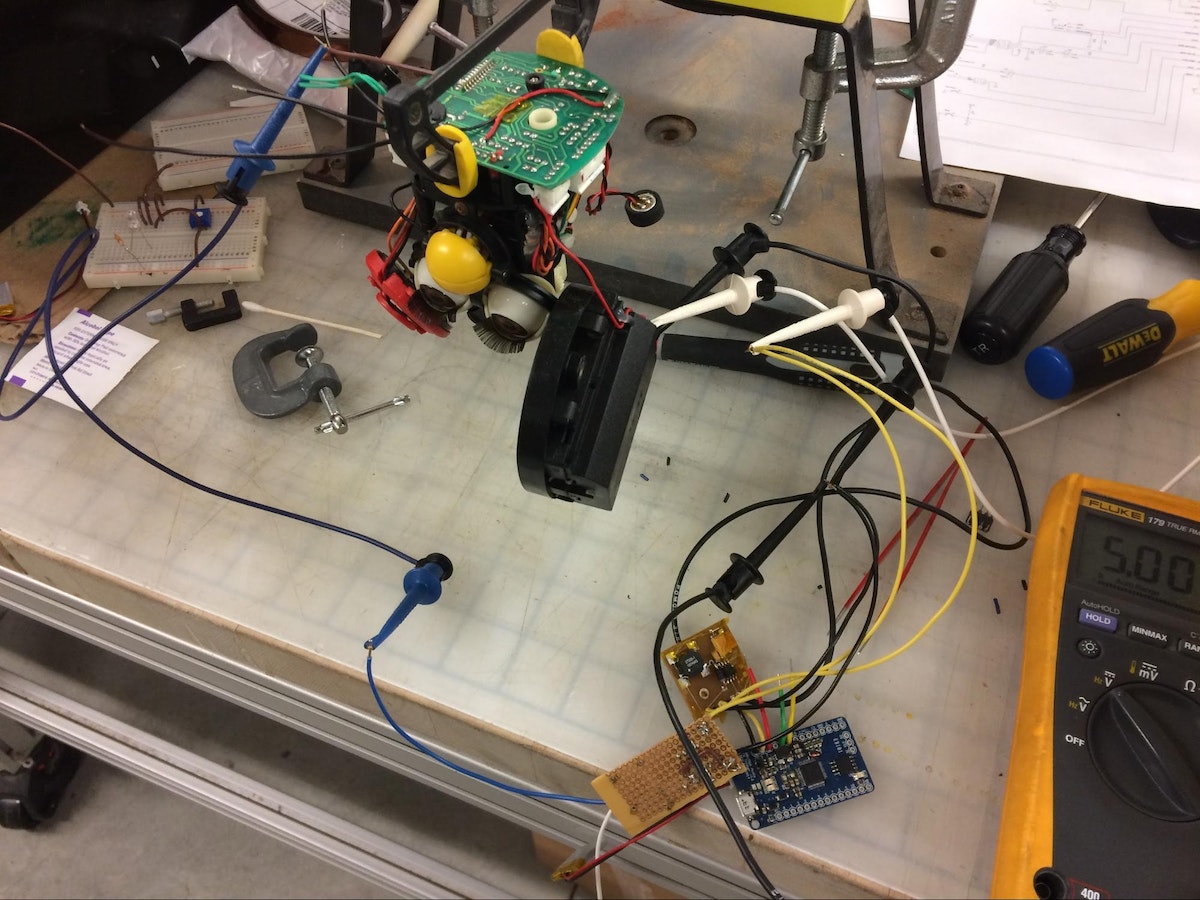
Now that most of the individual pieces were developed, it was time to play Dr. Frankenstein and connect the parts together to give Franken-Furby life.
I used the newly vacant battery holder space to store the Furby’s new guts...err circuitry. This was an ideal location because there were already holes to run new wiring up to the Furby’s body. I added a wire to break out the motor trigger line for monitoring. I was able to monitor the motor with a basic analog comparator (LM311), and use the output to trigger audio playback. I then amplified the audio output with a class D amp, before connecting to the Furby’s speaker with two more wires.
Last, but not least, I added a few clips of Aaron speaking at various events to the audio playback board. We may or may not have have played around with loading some more inappropriate vocals (i.e. creepy laughing and other Halloween-themed sounds) first for kicks, but things got a little too creepy, so that didn’t last long.
The result
We presented the Franken-Furby to Aaron at his goodbye party, and it was a hit! Unfortunately, because it was a goodbye gift, it's no longer possible to work on that Furby anymore. But I’m game to hack more Furbys. My next goal is to create a new version, perhaps integrating all the circuitry onto a single circuit board, and hopefully dig a little deeper into understanding how Furbys operate.
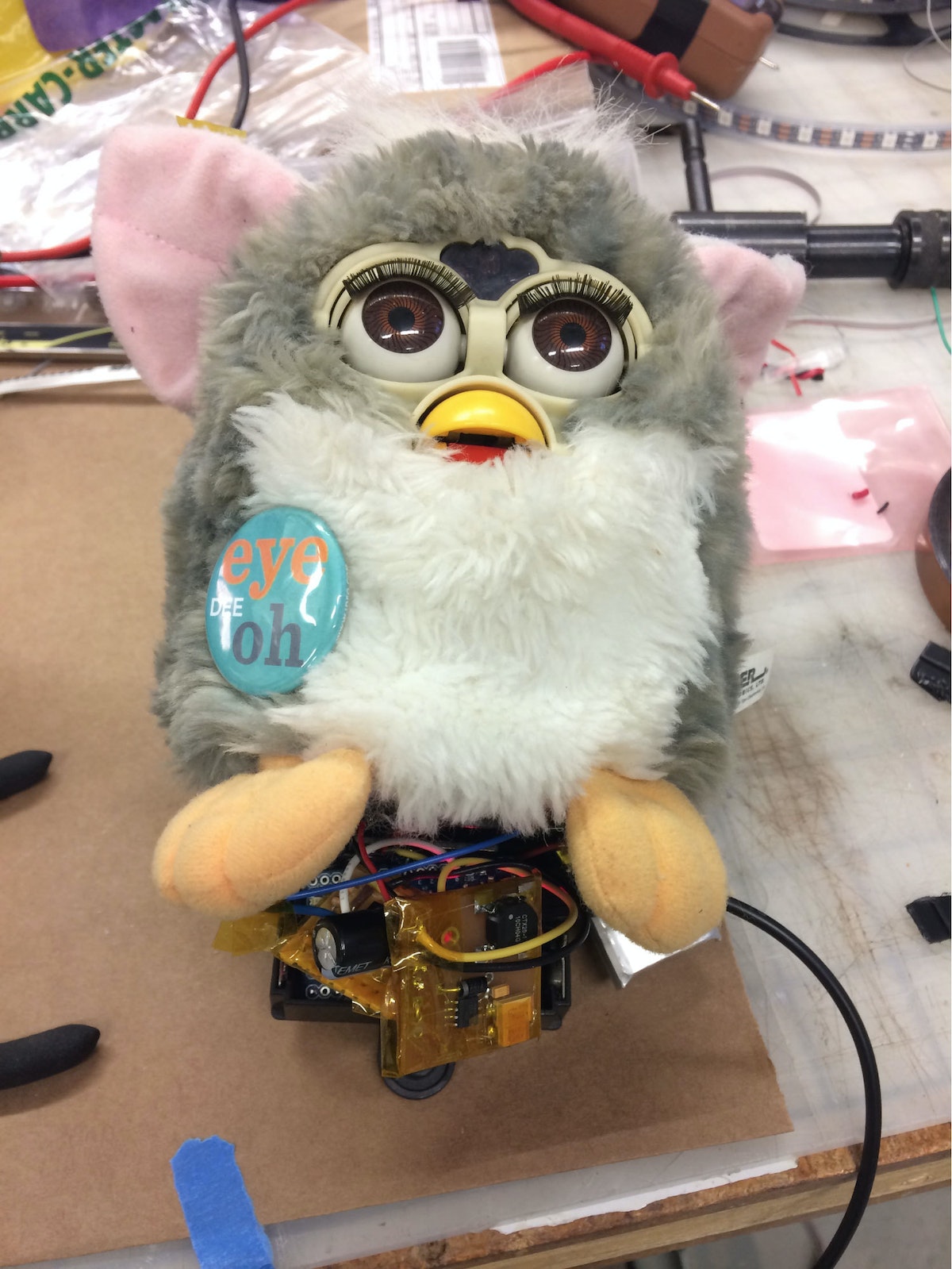
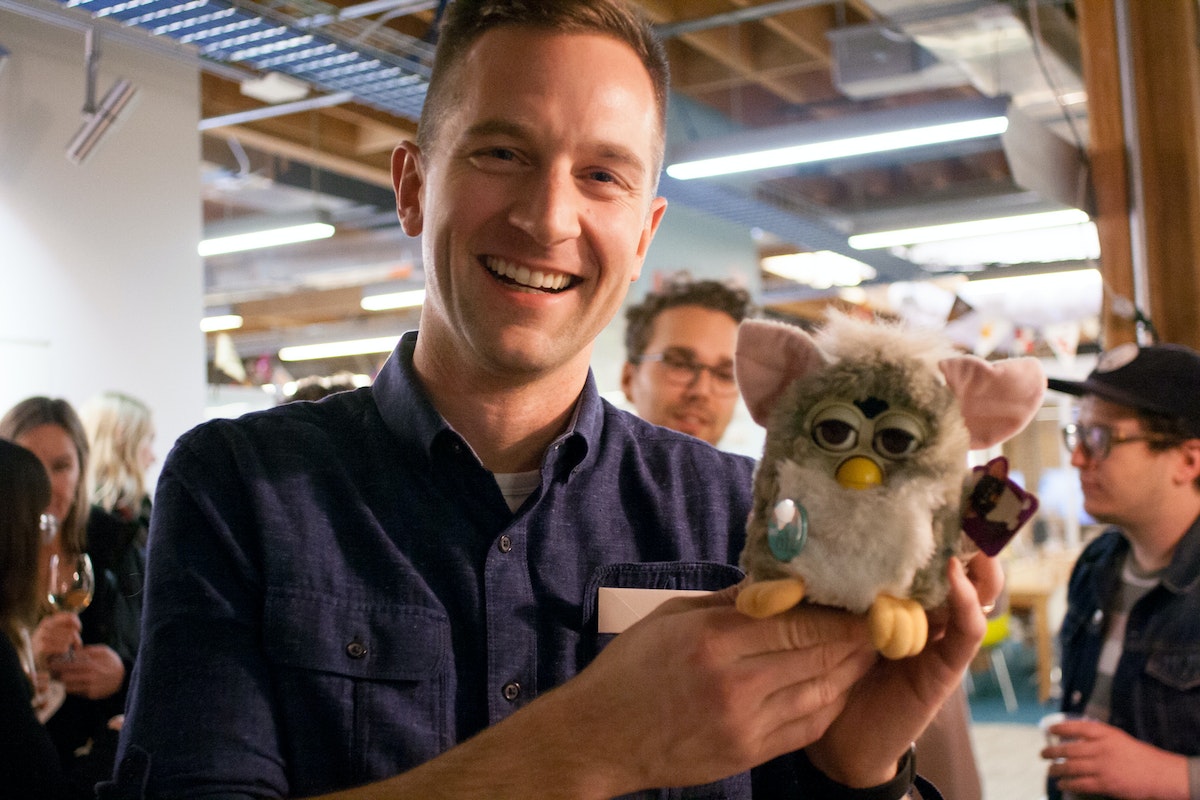
Our Chicago office has a tradition of giving silly but relevant goodbye gifts to departing colleagues. The goal is to make their exit a little more light-hearted for everyone, as well as give our erstwhile colleagues a sort of inside joke to take with them. When a friend and colleague of mine, Aaron Ferber, was leaving to pursue another passion in St. Louis, we started ginning up ideas for his send-off.

8 Exciting Design Research Trends
It's less what you learn, and more how you learn it
Thankfully, we have smarter tech tools than ever to help us spin through these cycles at a sprint. In a recent Quora Session hosted by IDEO U, we reached out to the entire IDEO community to ask what design research technology and other trends they're excited about. Here’s what we heard:
1. Going rogue
Influenced by Jan Chipchase and The Field Study Handbook, the “pop-up studio” model for doing design research in challenging, less-explored environments is finding success. Chipchase describes a pop-up studio as “a live/work space optimized for teams working toward a shared goal ... highly suited to international research, design, and innovation projects that require speedy immersion.” He talks more about the pop-up studio model in this Co.Design piece (and excerpt from The Field Study Handbook), “How To Do Great Design Research Anywhere On Earth.”
2. Smart sensors
Though some smart sensors are still in the early stages, looking at how sensors (from FitBits to smart moodmetric rings) can help inform our understanding of users' experiences. Projects like MIT's Dermal Abyss look into a future of smart, sensing tattoos.
3. Changes in data + privacy
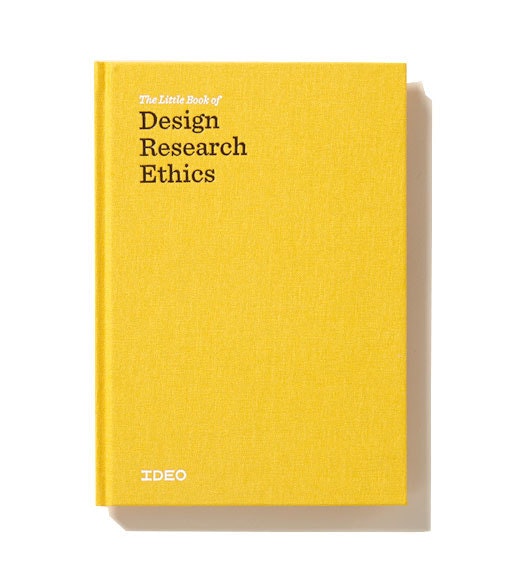
With the General Data Protection Regulation (GDRP) taking effect in May 2018, design researchers in the EU and beyond will have to address changes to data privacy in a human-centered way, both in how we design our research, and in terms of how we explain it to participants. Understanding what that looks like in practice is important, so we published a little yellow book of Design Research Ethics.
4. Testing concepts in virtual + mixed reality
Augmented Reality (AR) and Virtual Reality (VR) are uniquely experiential and portable, allowing you to visualize complex ideas and measure user engagement in new ways. You can fully immerse users in an experience, get their reaction, and help them co-design (or redesign) an environment or experience on the spot using mixed reality prototypes. And now ARkits allow you to fully transplant a VR experiment with optical calibration—which allows you to retain the spatial boundaries and physics of a VR-created space anywhere on your phone. It’s pretty incredible.

5. Working alongside data science + machine learning
Most of us at IDEO predict that data science will complement and enhance a deeper understanding of qualitative research. By expanding our reach into data science, we’ll be able to understand how our designs are being used during live prototyping and piloting. Rather than relying exclusively on self-reported behaviors and stories, we’ll be able to collect actual interaction data.
But perhaps more interestingly, we’ll also be well-positioned to understand, both qualitatively and quantitatively, how a new artifact is causing a ripple in the ecosystem in which it was placed. As we strive to create disproportionate impact in the world, we’ll now have insight into what’s successful, and what’s impeding success. By introducing new areas of expertise into design research—legal design, policy design, infrastructure design, organizational design, behavioral economics, urban planning, macroeconomics, and more—we can begin to shift some of the fundamental underpinnings that can cause negative and adverse outcomes at individual, group, organizational, and societal levels.
6. Neuroscience x design research
One of our design researchers who studied cognitive neuroscience notes that there is a major connection between the brain and design—and a lot that we still don't know about that connection. This Quartz article discusses how neuroscience can help us create more effective human-centered cities. “Technology has now reached the stage where we can translate decades of neuroscience and psychological research from the lab into the city,” says neuroscientist Dr. Hugo Spiers of University College London. Now when we test prototypes, we can measure behavior, cognition, emotional reactions, physiological markers, and brain activity. Here are a couple more articles on the subject, from Forbes and The Leading Strand.
7. Digital forensics x design research
As technology becomes more ingrained in our daily lives, understanding how we live our digital lives—and the digital trail we leave as we go—will help unlock insights into new behavior.

8. Ethics in the age of artificial intelligence
Artificial Intelligence (AI) changes interaction and design in a way that's dynamic and incredibly complex. Because of its scale, adoption speed, and widespread human impact, it's important that someone raise a hand and ask the question, "Even though we can create this, should we?" Not all AI models are transparent and design researchers will increasingly become the voice in the room questioning its development. This isn't any different than what we do now, but it's more important in the age of AI.
This content originally appeared in a Quora Session hosted by IDEO on November 1, 2017. Special thanks to Ovetta Sampson, Dan Perkel, Michael Chapman, Samantha Miller, Rebecca Wint, Alana Murao, Mike Peng, Geoff Schwarten, Erin Bogar, Saige Perry, and Katie Clark for their contributions!
Understanding the human challenge we're designing for is as much about inspiration as it is about information. Design research now happens in quick loops—gathering insights, building rapid prototypes, and getting feedback—rather than in a long and rigorous discovery phase.
Designing the Siris and Alexas of the World
We shape our devices, and thereafter our devices shape us *with apologies Marshall McLuhan
We have become accustomed to relating to these interfaces, and increasingly they are able to relate to us—taking in the world around them, talking to their users, and even inferring our emotions from how our faces change shape. I call this layer an Affective User Interface (AUI), a term borrowed from the field of Affective Computing.
Affective Computing is a field of computer science that develops technology that we might consider intelligent and emotionally aware. These new interfaces present a slew of opportunities and challenges, because as Dr. Cynthia Breazeal of the MIT Media Lab points out in her book Designing Sociable Robots, when a technology “behaves in a socially competent manner” our evolutionary hardwiring causes us to interact with it as if it were human.
And once we enter into that relationship, the personas we design for these bots affect our behavior, too. I’ve heard many people say that unassertive bots often bring out the worst in kids. When there are no social checks on rudeness—bots don’t tattle, after all—children tend to be more blunt, and can even become abusive.
That lack of assertiveness also affects adults. Reporter Leah Fessler researched how female-gendered bots respond to sexual harassment. It turns out that the assistants’ permissive personas can reinforce some disturbing stereotypes about women, and allow the user free reign to degrade them at will.
If bots can have a gender, I started to wonder whether they might also have a cultural or even racial identity. Considering the fact that these products allow us to choose between various accents, it would seem that designers have created nationalities for our bots.
I'm certainly not the first person to surface these issues. This New York Times piece by AI Now's Kate Crawford about "Artificial Intelligence’s White Guy Problem" comes to mind. And there are many people here at IDEO who are thinking through what it means to be inclusive human-centered designers as we work on Augmented Intelligence projects.
To explore this further, I decided to conduct an experiment to surface the personality of these bots by interviewing them.
The key was to ask soft questions: Where are you from? How old are you? Do you have any kids? What do you look like? Even, Tell me a story.
These interactions were not actionable queries, and thus triggered purely conversational responses that revealed the “personality” that the bots’ creators had designed.
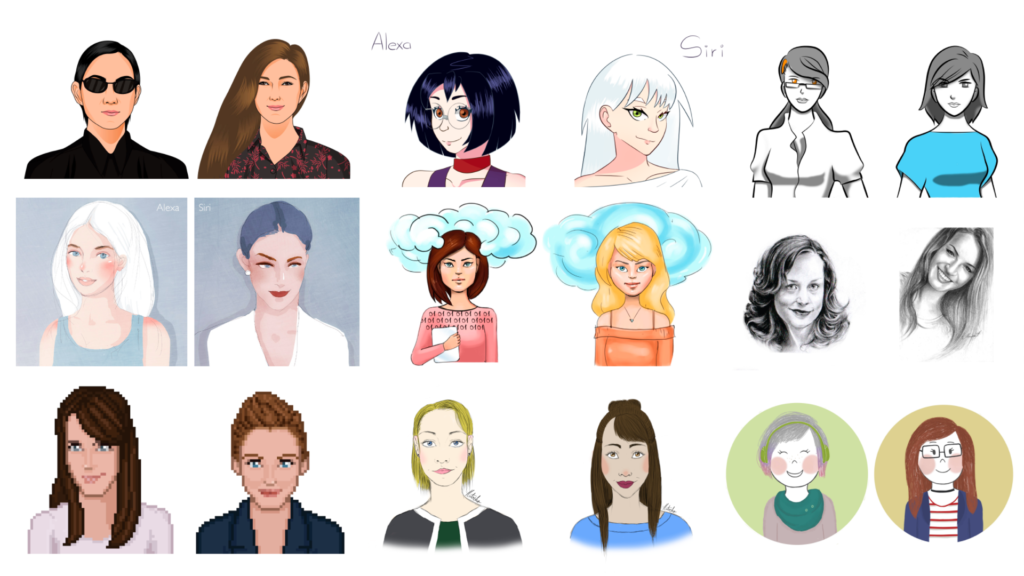
I recorded a video interview with each voice assistant and handed these over to a number of illustrators commissioned via the social gig site Fiverr. While a few of the artists had previous exposure to the bots, I was able to source English-speaking international artists in markets where Alexa and/or Siri were not available. Countries of origin included Indonesia, Pakistan, Ukraine, Venezuela, the Philippines, and the U.S. For many of them, my videos were their first meaningful exposure.
Here are the images that came back:
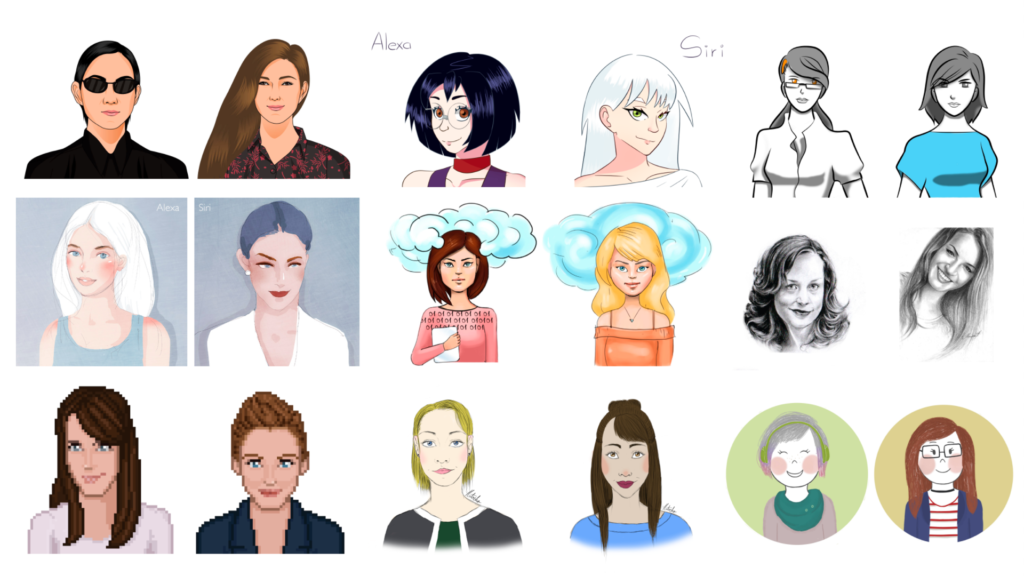
Drawings representing Alexa and Siri based on video interviews I'd done by illustrators who had little to no previous exposure to the assistants.
Gender came through clearly, but I would also argue that none of the illustrations depict a person of color. Whether they were intentionally designed that way is not the issue. If users perceive the bots this way, what kind of cultural pressures are they carrying into the home?
It’s something I think about a lot as a first-generation American who has worked in and around tech throughout my career. On my father’s side, I’m the second U.S.-born family member, and on my mom’s side, I’m the first. I grew up in a diverse community, and the tapestry of cultures I experienced was simply normal, everyday life.
I was aware of code-switching pretty early on; many of my friends and family had their normal voice and their “professional” voice, and they chose which to use in different environments.
Looking back, I first learned about it when my mom gave a wedding speech.
My brother was shocked; he didn’t recognize the voice that he heard. I had to explain to him this was my mother’s work voice. Code switching isn’t inherently bad—we all do it to some degree—but if we’re to design Affective User Interfaces that are truly human-centered, then we must consider that for some, the switch requires more effort.
Inclusivity is not just an issue at the bleeding edge of tech. We’re seeing a growing body of evidence that those who speak outside of mainstream vernaculars have a harder time being properly recognized by affective systems.
This represents an accessibility challenge, but one that is resultant from a cultural rather than physical challenge. In a tech industry that is known to be monocultural, we must take steps to ensure our affective systems are not just designed to be useful to their creators, but inclusive of the full spectrum of people their products will serve.
Because ultimately what’s at stake is trust. Studies have shown that when brands lose trust, they lose customers.
As designers, it’s our job to expand the usability of our affective devices to ensure they serve the rich tapestry of people, cultures, and vernaculars they will encounter.
Beyond being good design, it’s good for business, because in our affective future the products that win will be the ones that users trust.
Behind every interface, there's a designer. More like a team of them. And those designers have a lot to consider: What should Siri sound like? What kinds of things will people ask Alexa to do? How will users expect the Kuri robot to respond when they crack a joke?

Lindsey Turner
I’m passionate about building brands, products, and experiences that help organizations show up with meaning and momentum.
I help organizations cut through complexity by shaping how they show up, through brand strategy, identity, and storytelling.
Working at the intersection of brand and business, I bring an editorial eye and a bias toward making—turning ideas into tangible experiences that people can understand, trust, and believe in.
My work spans government, healthcare, financial services, media, and consumer goods, from launching Gen Z-focused ventures to building innovation labs and reimagining legacy brands. I relish moments of ambiguity and enjoy translating across teams, perspectives, and priorities to move ideas forward.
I started my career in editorial and digital design, shaping cross-platform experiences and identity systems in publishing and agency environments. That foundation still shapes how I work today: I’m detail-oriented, collaborative, and overreliant on the Oxford comma. I hold a BFA in Visual Communication from the School of the Art Institute of Chicago.

Rachel Young
My work helps organizations see who their products aren't working for—and build the will and the tools to do something about it
For 25 years, I've asked the same question: Who does this design exclude—and what are we going to do about it?
My work spans human-centered strategy, inclusive design, and qualitative research, with clients ranging from Microsoft, Google, and Verizon to the National Science Foundation, and San Francisco Unified School District.
Before IDEO, I taught elementary school in East Palo Alto and spent a decade doing design work with social service organizations—where I learned firsthand what it costs people when systems are built without them in mind.
I am currently writing User Error, a nonfiction book about digital access and the design decisions behind it. I live in Oakland, California.

Brian Pelsoh
I lead with craft, ensuring our work is creatively excellent: rooted in deep human insight and imagination, while also grounded in the realities of business and technology.
My expertise spans brand, communication, and product design across tech, education, the arts, and social impact.
I believe great work demands both high-level vision and obsessive attention to detail, and only happens through collaboration.
I bring an inclusive, hands-on approach and a deep understanding of business, which enables me to consistently deliver excellence while always asking why.
Before joining IDEO, I worked at the brand firms Pentagram and VSA Partners. I began my career as a designer, leading teams at the School of the Art Institute of Chicago and the Milwaukee Art Museum. I hold an MFA in graphic design from Maryland Institute College of Art and a BFA in communication design from the Milwaukee Institute of Art & Design, and have taught at some of the best design schools in the US.

Tony Wong
I am responsible for IDEO’s long-term success in China and working with clients to use design as a tool to enable growth.
I am responsible for IDEO’s long-term success in China and working with clients to use design as a tool to enable growth. Specifically, I have helped Chinese companies design holistic brand solutions through the development of their products, communication, services, and innovation teams, and I have helped multinationals expand their presence and influence in China.
I advise global leaders on developing China-led innovation and capabilities.
In over 15 years in IDEO Shanghai, I have worked on projects that use design to elevate the quality of the experience of healthcare products and services, streamline processes that increase productivity, create spaces and programs that promote and enable inclusive communities, and build next generation mobility solutions that are planet-positive.
Before joining IDEO, I worked at Philips Electronics and the Electrolux Group in Italy, the Netherlands, and Singapore on a number of breakthrough commercial products. I am a member of the Young President Organization in Shanghai.

How to think like a futurist: Jennifer Lo
Simple ways to spot change early and imagine more useful futures.
What does it mean to think like a futurist—and why should every leader learn how? In this episode of the Creative Confidence Podcast, Jennifer Lo, Senior Director of Design Futures at IDEO, shares how futuring can help leaders navigate uncertainty, build resilient strategies, and shape the future they want to see. Learn how to spot signals, expand your strategic horizon, and use storytelling and artifacts to make long-term thinking feel actionable today.

Asked & Answered: Catherine Connors on storytelling for leaders, scale, and the future of narrative
How leaders can use story to create clarity, connection, and change.
In this bonus episode of the Creative Confidence Podcast, storyteller and strategist Catherine Connors returns to answer top questions from our IDEO U community. We explore what it really means to lead with story—beyond frameworks and formats—and how storytelling can be used to build culture, scale ideas, and drive meaningful change. Catherine shares her take on how to build storytelling capacity inside teams, how AI is reshaping the narrative landscape, and why co-authorship is the future of leadership storytelling.

Creative collaboration with IDEO CEO Mike Peng (replay)
What it takes to lead creative collaboration across diverse perspectives.
In this conversation, IDEO CEO Mike Peng shares what it really takes to foster creative collaboration on teams. From designing for trust and tension to navigating ambiguity and divergent thinking, Mike offers a clear-eyed look at how leaders can create the conditions for breakthrough ideas. Originally aired on August 8, 2019, this episode is full of timeless guidance for today’s fast-moving, complex world.

Storytelling for change with a former Disney exec: Catherine Connors
Using story to make ambitious change feel meaningful and possible.
What makes a story powerful enough to shift culture? In this episode of the Creative Confidence Podcast, Catherine Connors—former Head of Content at Disney Interactive and founder of storytelling consultancy StoryQuo—shares five key shifts that can help leaders use story as a tool for transformation. From rethinking traditional formats to embracing play and shared authorship, Catherine challenges conventional ideas about storytelling and invites us to create stories that people want to carry forward.
Looks like you might be in search of something very specific?
Or reset the filters above and try another angle.
Here’s some random inspiration

Podcasts about creative leadership

Articles about the power of prototyping