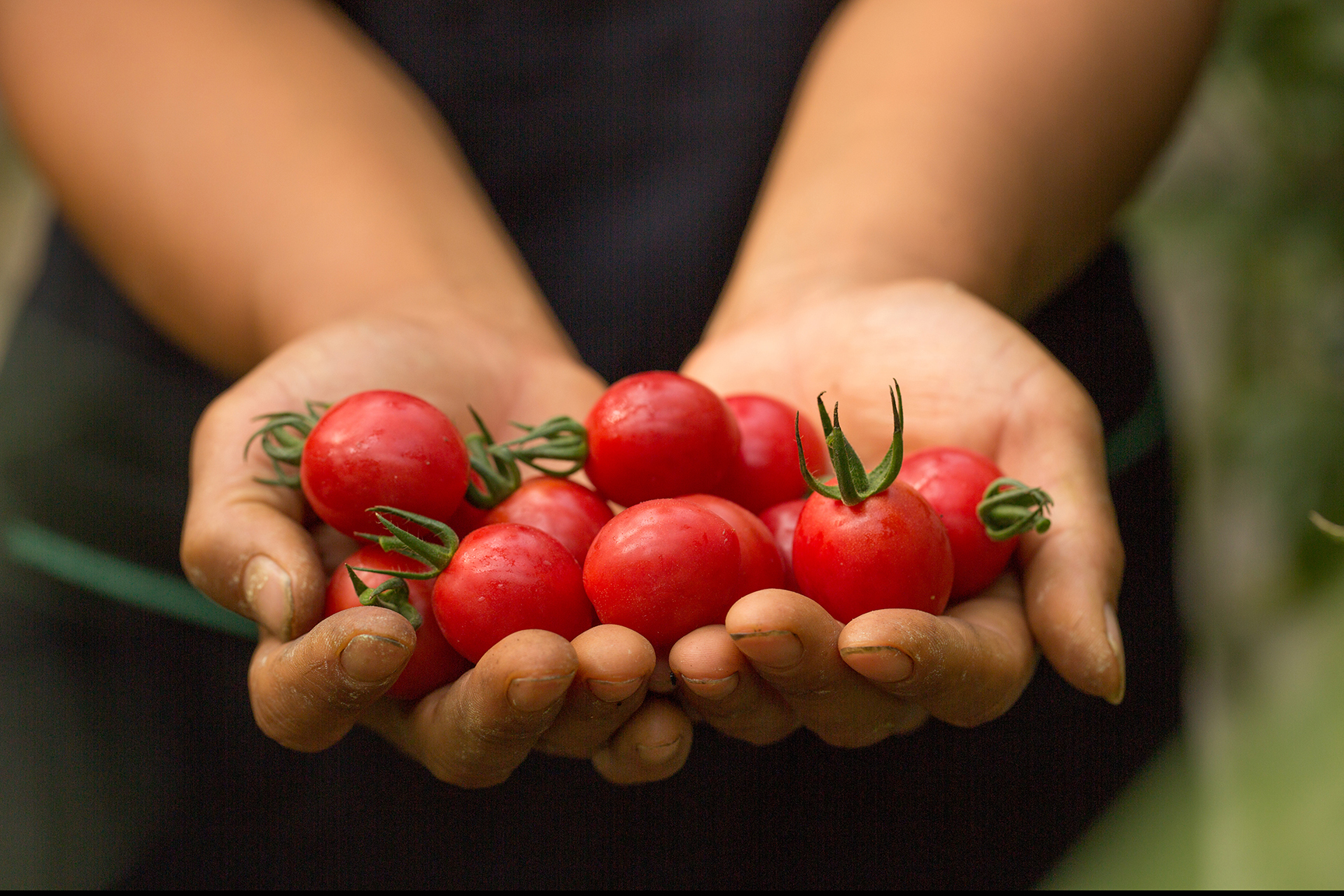

Building a new venture to restore trust in China’s food system
Launching a new restaurant and retail venture that connects food from seed to table.
Food is the heart of most cultures. In China, one of the oldest cultures in the world, food is central to family gatherings and celebrations. It’s what binds people, a tangible way of showing love and respect. But in recent years, the Chinese food industry has suffered from concerns around safety.
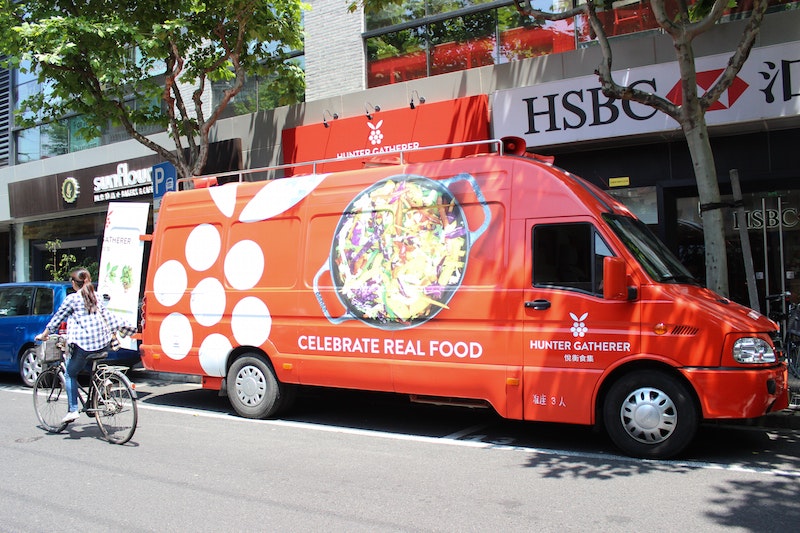
Two siblings, Harn and Anmao Sun, set out on an ambitious venture: to create a trusted source of food in China and, by setting an example, to instigate a movement around conscious farming practices. The American-born entrepreneurs launched Hunter Gatherer, a restaurant and retail food space built around a transparent supply chain, from farm to table to grocery shelves. The venture is based on growing and serving what they call real food: The ingredients are chemical-free and come from known and trusted sources—food they’d eat themselves. The purpose of the venture is simple: to serve people real food that is their right.
Having studied and worked in the US, Harn and Anmao grew accustomed to browsing farmers markets on Saturday mornings or picking up a burrito at Chipotle. But when they returned to China, they were unsure about the safety of the food they were eating.
“In China, you wouldn’t go to a food stand, because you’d be concerned about the ingredients,” Anmao said. “You can’t take the safety for granted.”
Hunter Gatherer’s very existence challenges bedrock assumptions about how food is produced in China. A long and depressing list of scandals—milk contaminated with melamine, pork produced from diseased pigs, used cooking oil repackaged and sold as new—has rocked the public trust.
“In China, agriculture is going through a huge change,” Anmao said. “In the US, agriculture operations are regulated. Farmers’ practices are regulated. If they use pesticides, there are limits because these farmers understand that once a certain threshold is hit, additional pesticides will not yield more crops. But in China, pesticide use came about 30 years after the US and Europe, and because of a lack of full understanding, farmers in China incorrectly operate under the assumption that more pesticides means more crop yields. Also, with over 250 million farmers in China, it becomes immensely difficult to properly regulate everyone.”

New Ventures
Harn and Anmao wanted to restore trust in the simple act of eating in China, and they came to IDEO to build a scalable business based on that vision. This was essentially a startup, a shared commitment between IDEO and Hunter Gatherer.
“I’ve lived in Shanghai for the past seven years, and as a relatively active and health-conscious person, I’ve had to invest quite a bit of time in finding food that I trust,” said Charles Hayes, managing director of IDEO Shanghai. “That investment has been both in the time it takes to research the sources of ingredients but also a literal investment in paying a high price for imported food just for that extra peace of mind.”
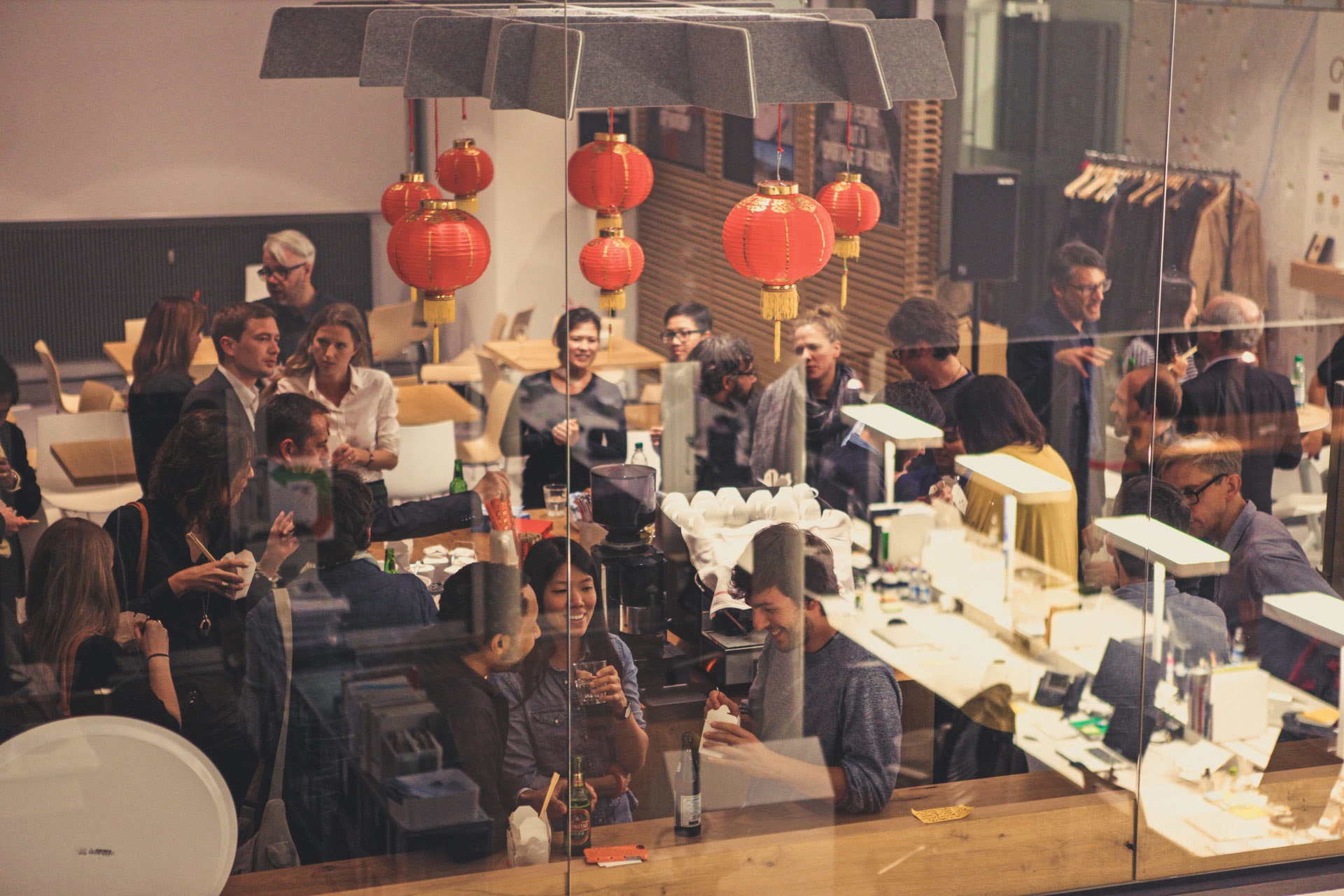
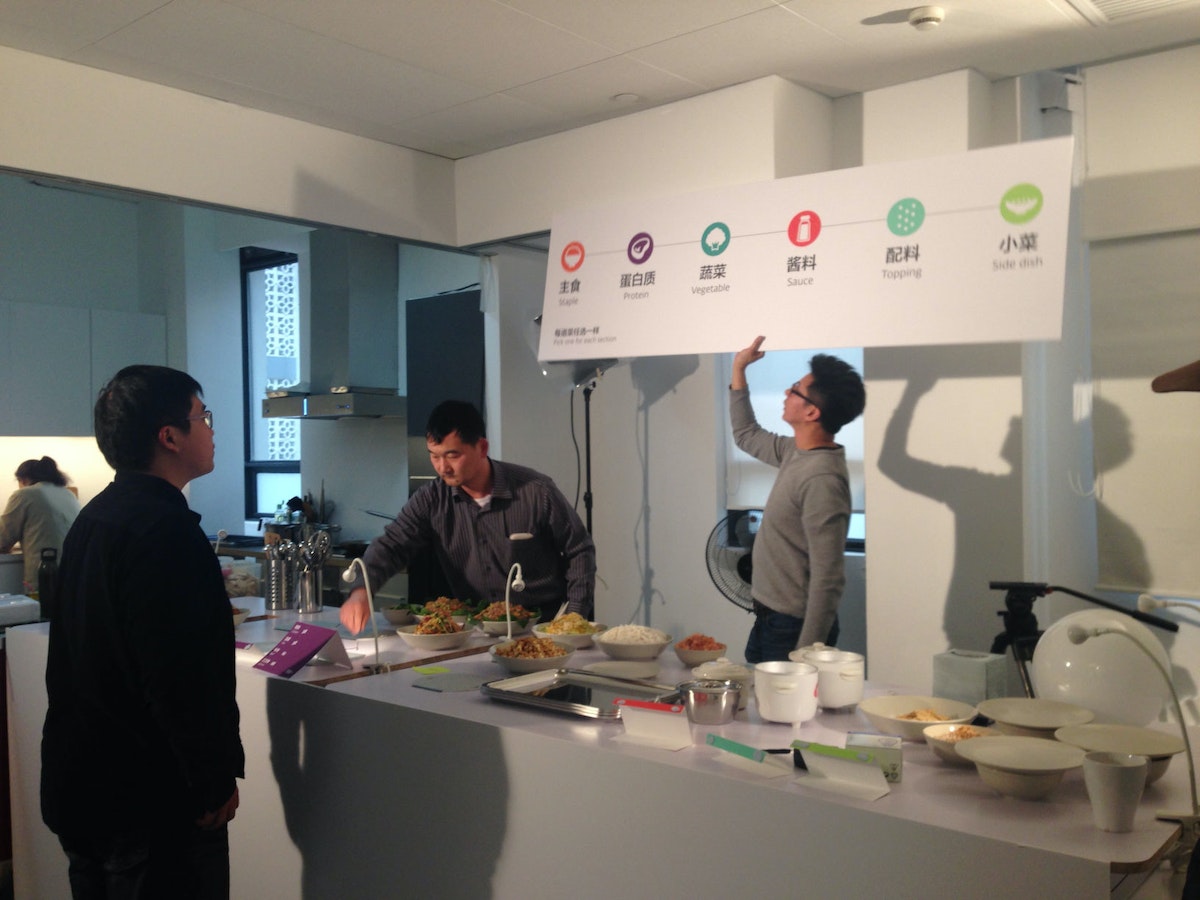
Anmao and Harn took up residence in the IDEO Shanghai offices to incubate their business. Together with IDEO designers, they tested packaging, cooked countless meals, and found ways to introduce unfamiliar ingredients to Chinese consumers. They discussed different concepts of lunch and dinner, and how notions of freshness in Chinese culture might affect cold-storage systems. In IDEO’s prototyping kitchen, the teams tested all manner of different foods, flavors, colors, mixes, and price points, and they brought consumers in to try them out. IDEO designers, along with the founding team, also worked on the brand and positioning of what would eventually become the Hunter Gatherer enterprise—its location, human resources, and marketing strategies.
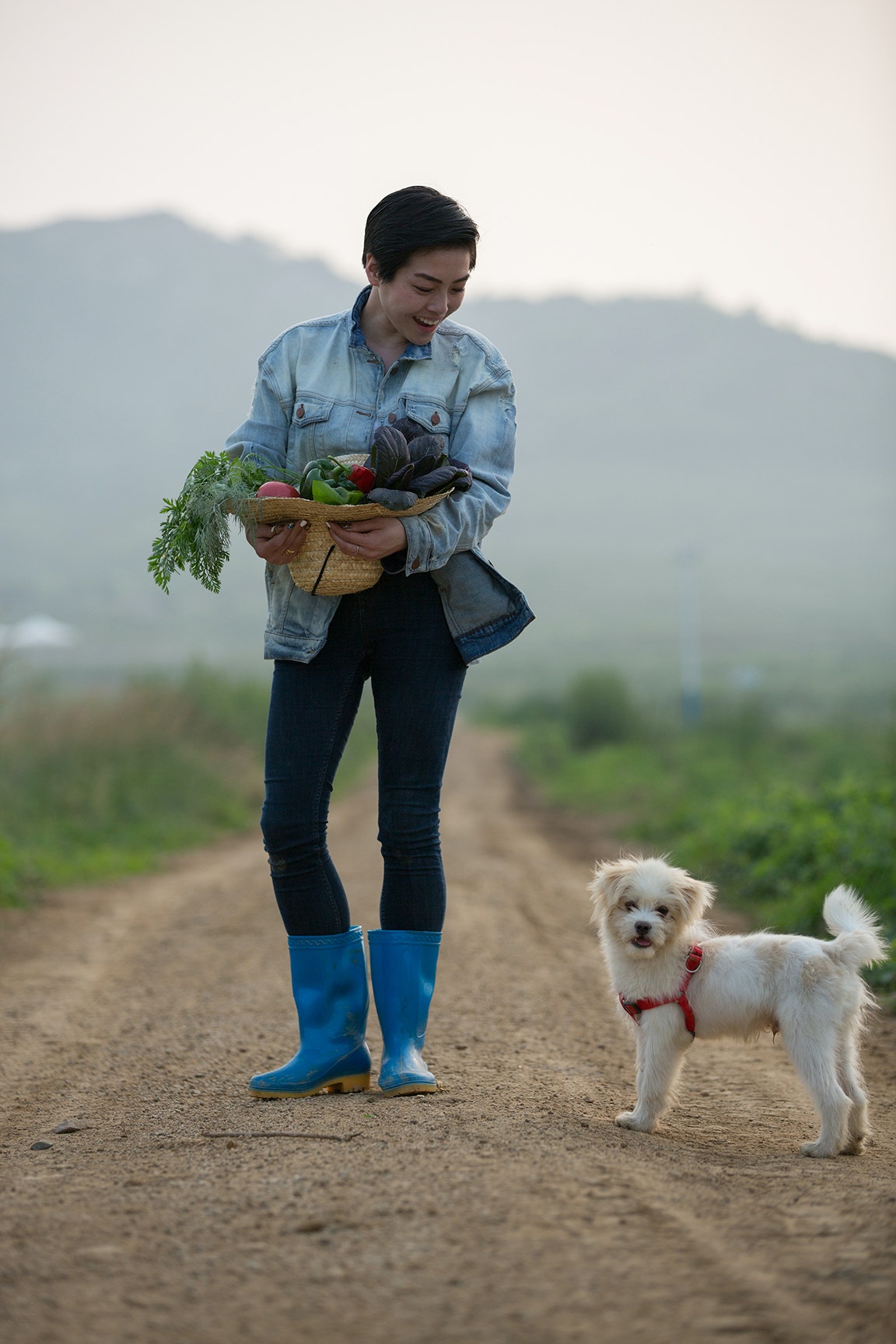
As the restaurant concept came together, finding the right food sources had to be addressed. Traditional agriculture couldn’t be trusted; organic certifications were available on the black market, and safety protocols around chemical use were nonexistent. Anmao and Harn decided to invest in their own farms. They met with farmers, asked questions about their methods, and walked in the fields to see for themselves. Eventually they settled on two plots of land outside Shanghai and began developing more than 80 different crops to be used in the restaurant.
From Seed to Table
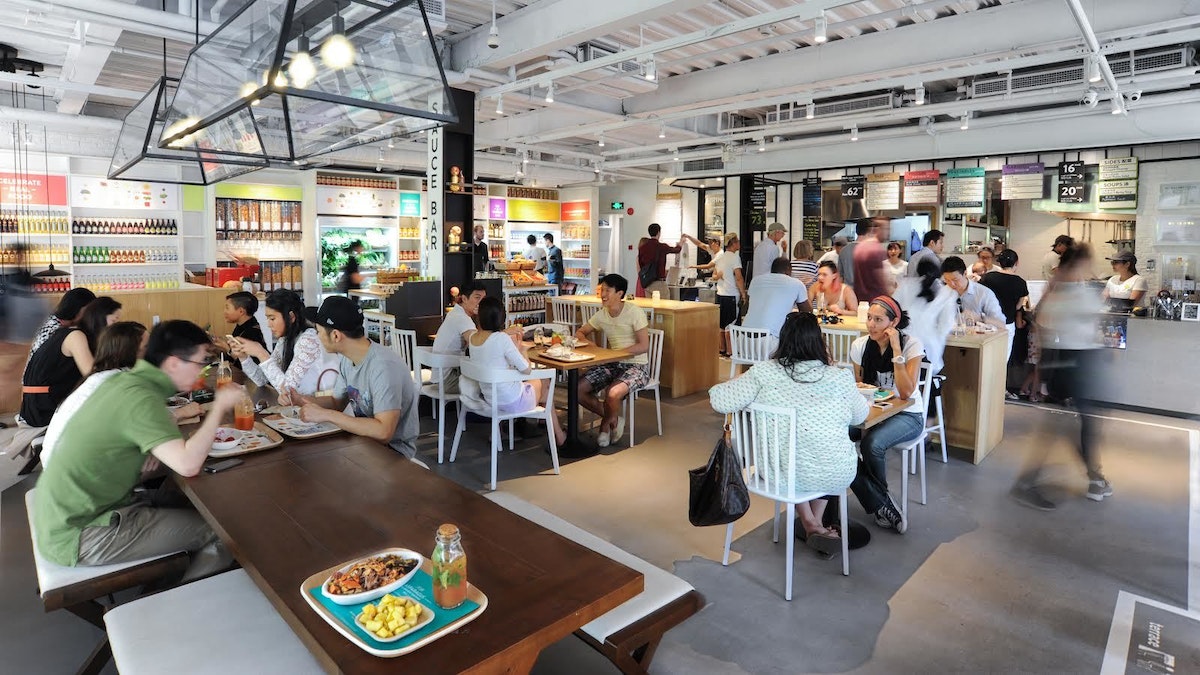
When it came time to find the right space for the first location, Anmao and Harn discovered an open, airy storefront on Anfu Road in Shanghai’s tree-lined former French Concession area. They designed and built a retail space and kitchen, and along with IDEO designers, they trained the staff and organized workflows. The staff set the tables with Mason jars filled with flowers, hung photographs of the farmers who grew the food, and put up a sign that showcases the percentage of vegetables coming directly from the Hunter Gatherer farms, already more than 70 percent in less than a year after opening.
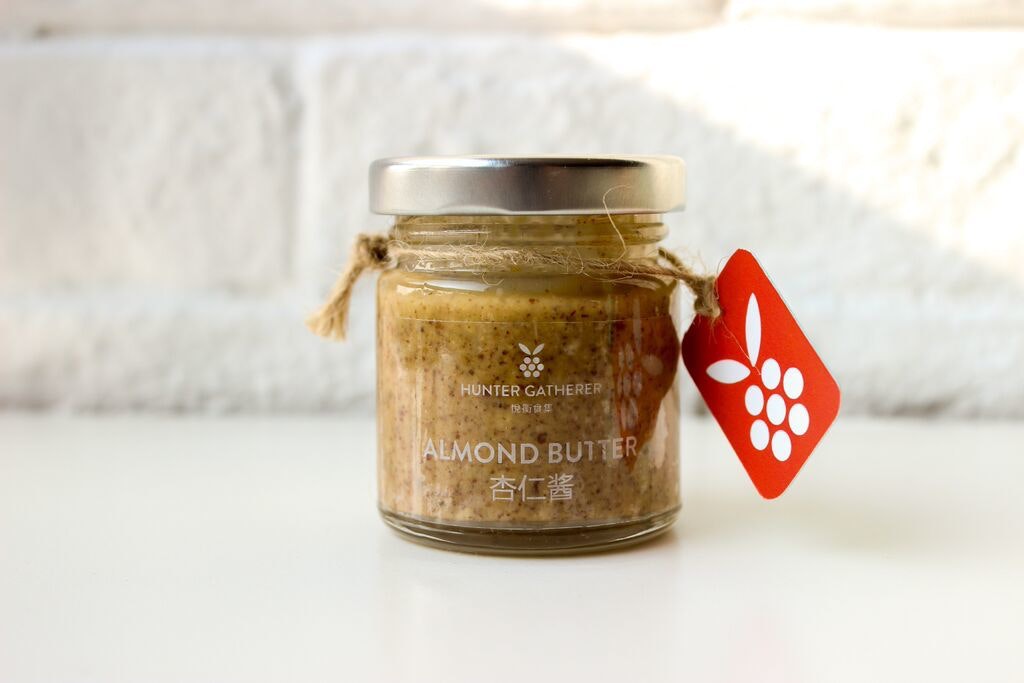
Customers can shop for fresh vegetables, locally sourced and imported canned and jarred goods, bins of cereal, freshly made smoothies, artisan sauces, and exotic chocolates. Upstairs, they can feast on delicious dishes in the homey restaurant.
Reviews have been glowing. One customer raved about the machine that grinds fresh nuts. Another loved the open space, the “good vibes,” and the refreshing cucumber water. Young people go there on dates, and families return for the delicious menu variety.
The convivial space has blossomed into more than just a restaurant and grocery store. It’s become a gathering place of sorts, both for the community and for partners who share the same vision. Farmers and food purveyors are invited to showcase their products at seasonal events and to mingle with customers and share recipes and stories.
“Hunter Gatherer has come to symbolize a kind of lifestyle the Chinese people have been looking for,” said Eugene Lin, an IDEO business designer. “A place they can enjoy hanging out with friends, as well as a movement and mission they can stand behind.”
A Digital Future
This is just the beginning of the venture. The plan is to open 40 more locations throughout China. But the vision for Hunter Gatherer’s growth is bigger than brick-and-mortar restaurants—where the business will truly scale is in the digital space. Eventually, the plan is to launch a Hunter Gatherer online grocery store from which anyone can buy food grown from trusted sources.
“We have to create trust with the consumer. It’s the most difficult and most valuable thing to do in China, especially with food,” Anmao said. “Our brick-and-mortar locations will establish that increased trust. Then we can go online and grow the idea to the rest of the country.”
Will Hunter Gatherer have a hand in changing the way that the world’s most populous nation thinks about food? Its principles are already spreading, from neighboring farmers adopting more sustainable planting methods, to a growing market for products like wine.
But the true sign of success will be almost invisible—the moment when an increase in demand will result in safe food for everyone and when real food becomes commonplace.

Changing the way biotech innovates
Building a culture of user-centered innovation in the name of science.
Life Technologies, a global biotech company that supplies scientists with products and services, needed to grow big, from a $4 billion to a $10 billion enterprise. So it hired IDEO to help seed innovation across the company.
"When we started out, it was an R&D thing for driving innovation in new products. Now it’s not just R&D; user-centered innovation is a central part of our culture. It’s what we do throughout the organization," said Amy Cuneo, Associate Director, Customer Insights.
Over a three-year engagement, IDEO helped transform Life Technologies’ corporate culture through the introduction of User-Centered Innovation (UCI), an optimistic, experiential approach to problem-solving. Far outperforming its ambitious goal, Life Technologies is now a $13.6 billion company and uses UCI to inspire innovation throughout the 10,000-person organization.
After working with Life Technologies, IDEO designers came up with three products that have gone to market, including, a new bottle that showcases superior handling and storage, easier identification, and additional room for supplements. And Life Technologies has transformed from a company that aspires to focus on customers to one that truly does.

Building a birth control support network for women
A multimedia public service campaign as a vehicle to encourage smart choices.
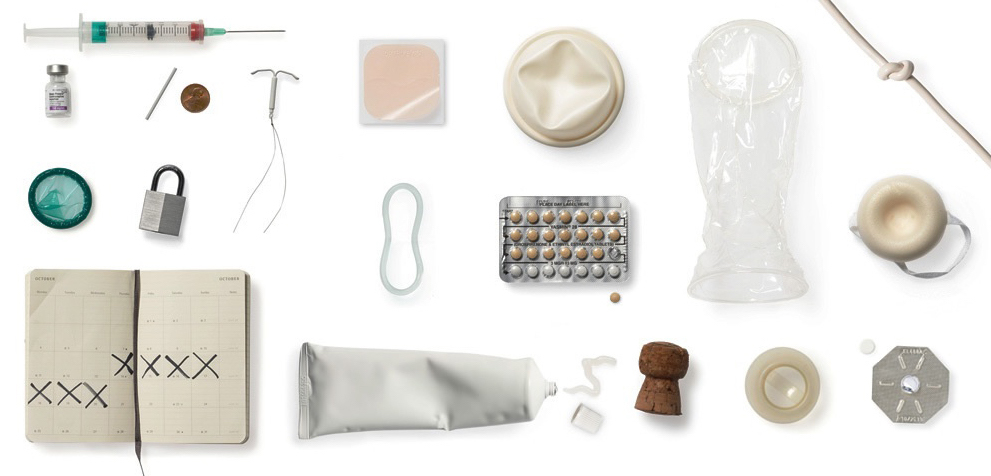
Unplanned pregnancies are a big problem in the US, especially among unmarried 18- to 29-year-olds. Seven in 10 pregnancies in this demographic are unplanned, a statistic that applies to women of all ethnicities and socioeconomic levels. Complicating matters are the social tension between abstinence-only and contraception-inclusive education, and the difficulty and expense associated with obtaining prescription birth control.
Since 2009, IDEO has worked closely with the National Campaign to Prevent Teen and Unplanned Pregnancy, a nonprofit NGO, to address this pressing social challenge. One of the first insights on the project was identifying the need for comprehensive birth control support. Designers looked at ways to transform birth control from a prescription (a piece of paper that is handed to you by a doctor) into a subscription (a program that ensures you start using birth control, use it correctly, and migrate to more effective methods).
Given the complex and potentially overwhelming subject matter, the IDEO team interviewed women in the target demographic; talked with doctors, counselors, and other experts with varying opinions about birth control; and hosted roundtable discussions. They developed several concepts and scenarios that allowed members of the National Campaign to see sex and pregnancy through the eyes of the young women they’re working to reach.
Research and prototyping efforts led to the design of Bedsider, a multi-touchpoint birth control support system with a carefully crafted sex-positive brand, which is uncommon for the healthcare industry. Bedsider focuses on five key areas (awareness, motivational drivers, digital offerings, services, and loyalty) and acts as a vehicle for behavioral change that’s flexible, with room to grow into a much larger movement.
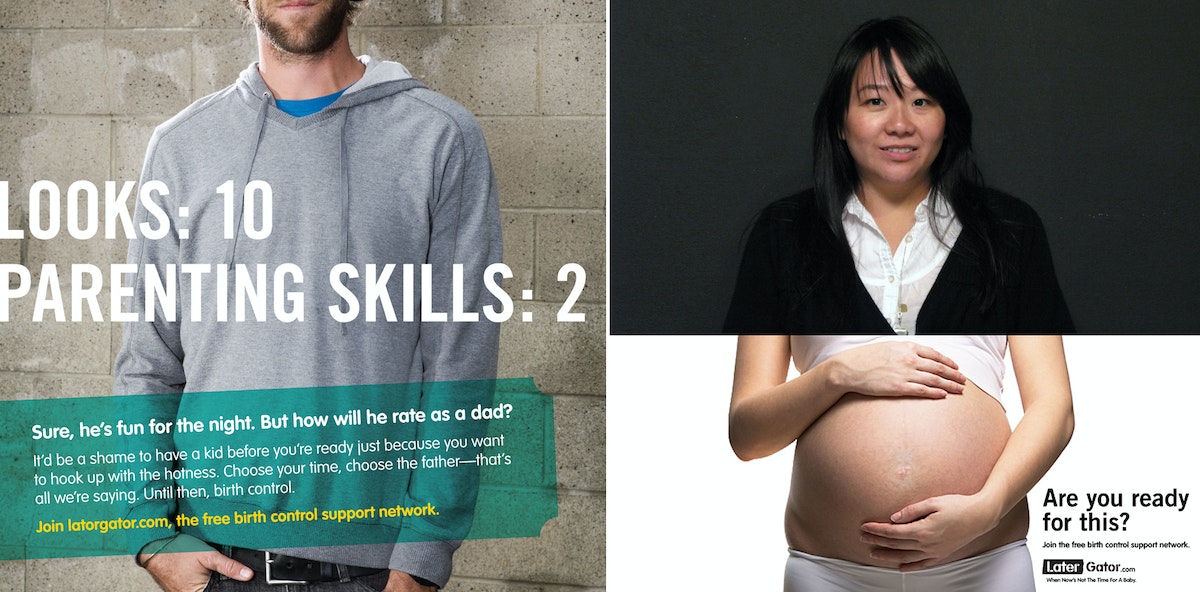
The Ad Council and the National Campaign debuted a multiyear, multimedia public service campaign in November 2011. The Bedsider website offers comprehensive education about existing birth control methods. This includes opt-in reminder services, personal stories from women across the country on why they chose a particular method, a phone service that provides information in both English and Spanish, features such as “Fact or Fiction” (hilarious animated clips debunking popular myths), a “Frisky Friday” newsletter, and more.
Bedsider has launched nationally with the help of an Ad Council campaign that drives sexually active women ages 18–24 to Bedsider.org. The multimedia Public Service Announcement effort includes television, radio, print, web, and nontraditional advertising, as well as an integrated social media program.
“We hope that Bedsider will be a useful tool for women to learn about their birth control options, better manage their birth control, and in the process avoid getting pregnant until they’re ready,” said Planned Parenthood of South Florida and the Treasure Coast in its monthly newsletter. Planned Parenthood and Philliber Research Associates joined forces with the National Campaign to Prevent Teen and Unplanned Pregnancy to help test and evaluate Bedsider.
Through a social media campaign called #ThxBirthControl, people are voicing their thoughts about what birth control has made possible for women, men, families, and society. It’s all part of Thanks, Birth Control Day, launched in November 2013 as part of a continuing initiative to encourage positive conversations and more consistent use of birth control by the National Campaign to Prevent Teen and Unplanned Pregnancy. To celebrate the movement, IDEO wrote, scored, and performed an animated musical featuring condoms and pill packs dancing the cancan.
According to an independent evaluation of the program, Bedsider is the first digital intervention in reproductive health in the U.S.—with adults as an audience—that has shown to prevent unplanned pregnancy. Turns out that when women and men have the ability to plan, prevent, or space pregnancies, they’re more likely to finish school, achieve their goals, and ultimately have healthier families, according to the nonprofit organization.
Bringing bikes to the streets of Chicago
Using the joy and freedom of cycling to brand Chicago’s bike-sharing initiative.
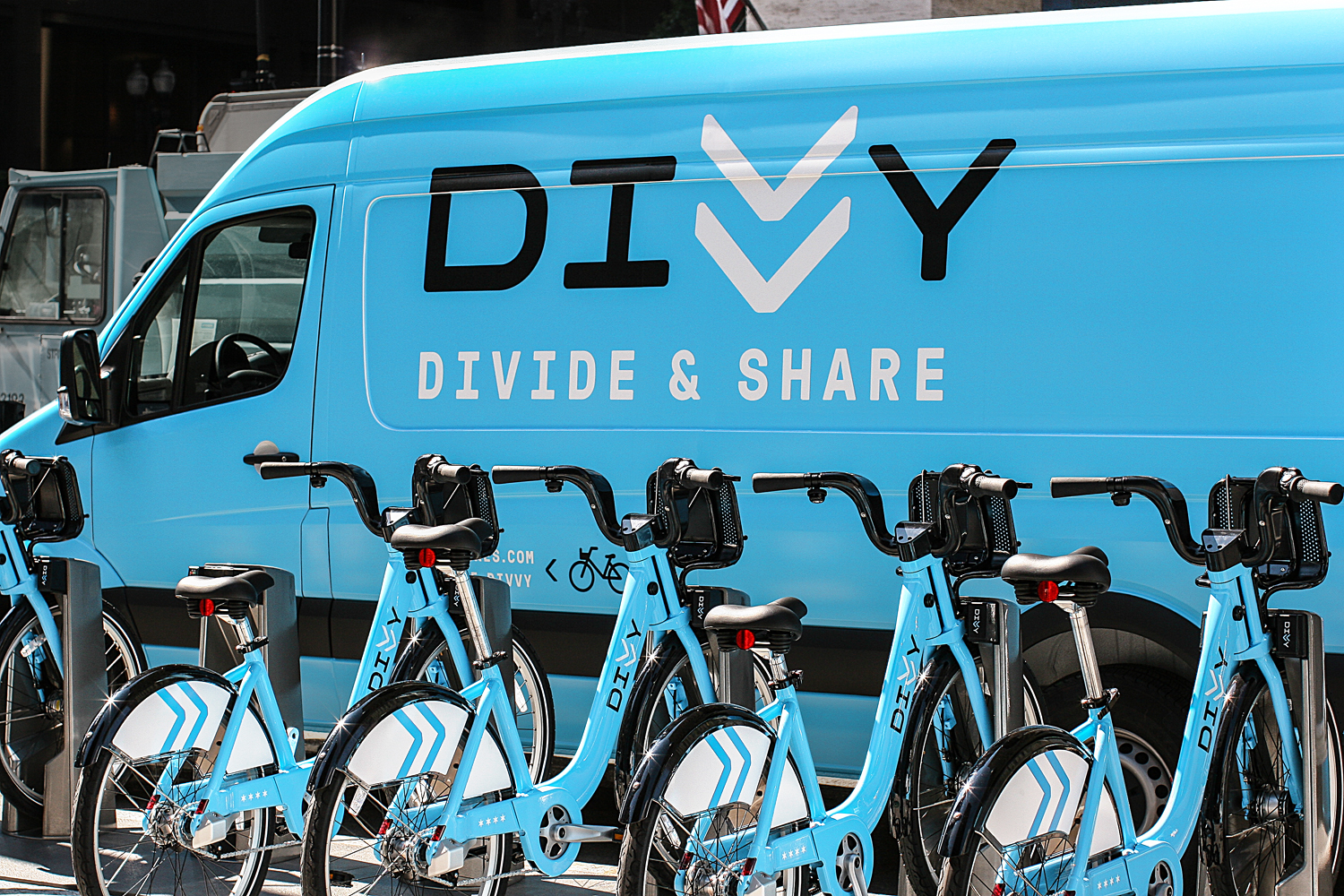
Chicago’s federally funded, citywide bike-sharing service, called Divvy, makes a fleet of bicycles available to commuters and tourists 24 hours a day. Alta Bicycle Share (which runs bike-sharing systems in Boston, the Bay Area, DC, and New York City) collaborated with IDEO to spread Divvy’s message, “Divide and Share!” to the cyclists and would-be cyclists of Chicago through the brand.
The new brand would appear on its bikes, stations, company vans, member fobs, and website—and it needed to be ready to hit the streets in just six months. IDEO partnered with local brand strategy studio Firebelly Design to collaborate on a solution. IDEO led the early research, conceptual brand development, and naming phase of the project; the Firebelly team led the visual design and developed the brand guidelines.
The brand has become a functional and fun part of Chicago’s transportation landscape and has been embraced by Chicago commuters. Just three weeks after it launched, the City of Chicago called the Divvy Bikes program the busiest bike-sharing system in the world. Six months into the service, enthusiastic cyclists have racked up over 780,000 trips and 1.7 million-plus miles, and over 12,000 Chicagoans have become members.
An Artist’s Love Affair with Cute Patterns
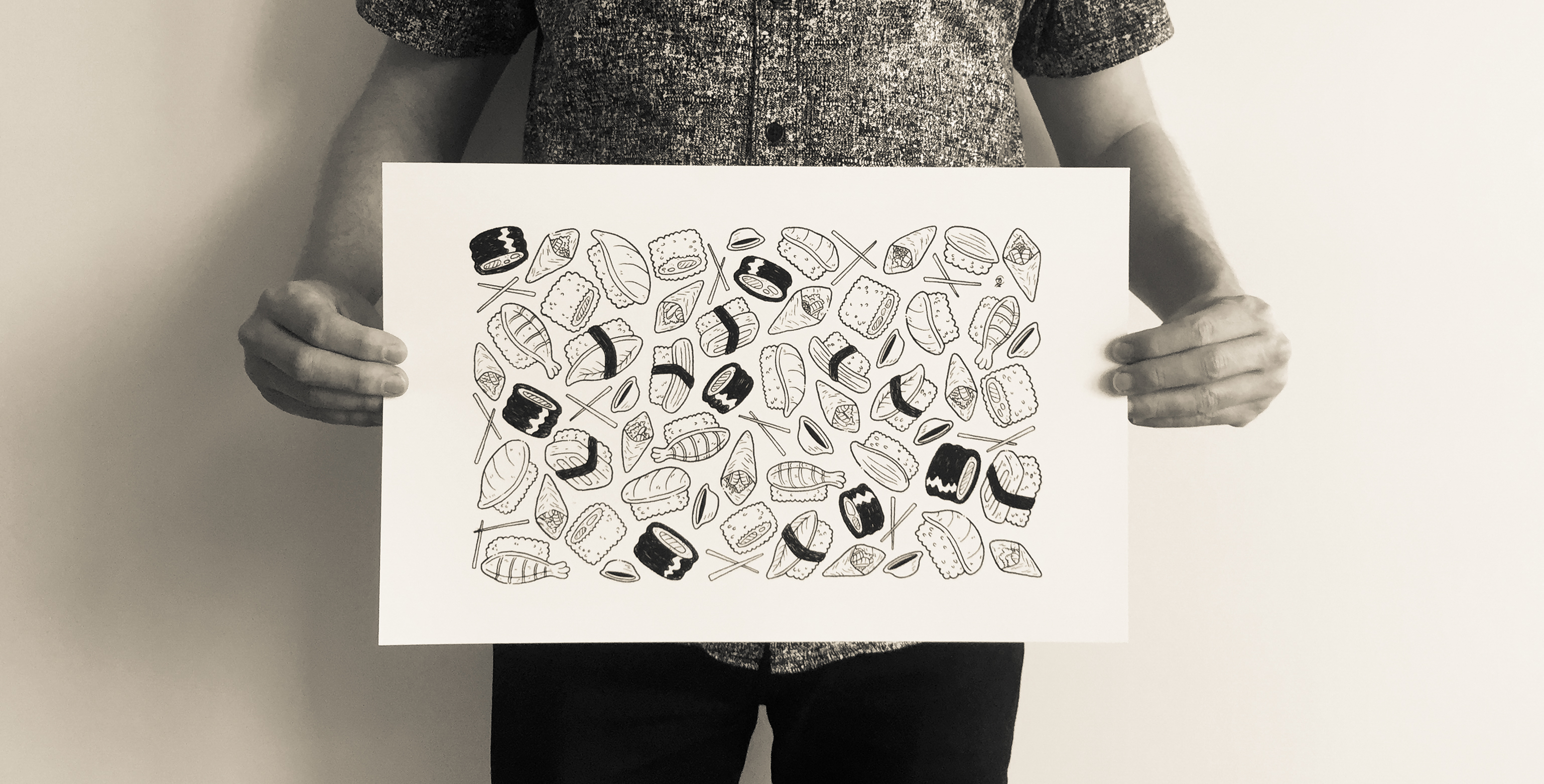
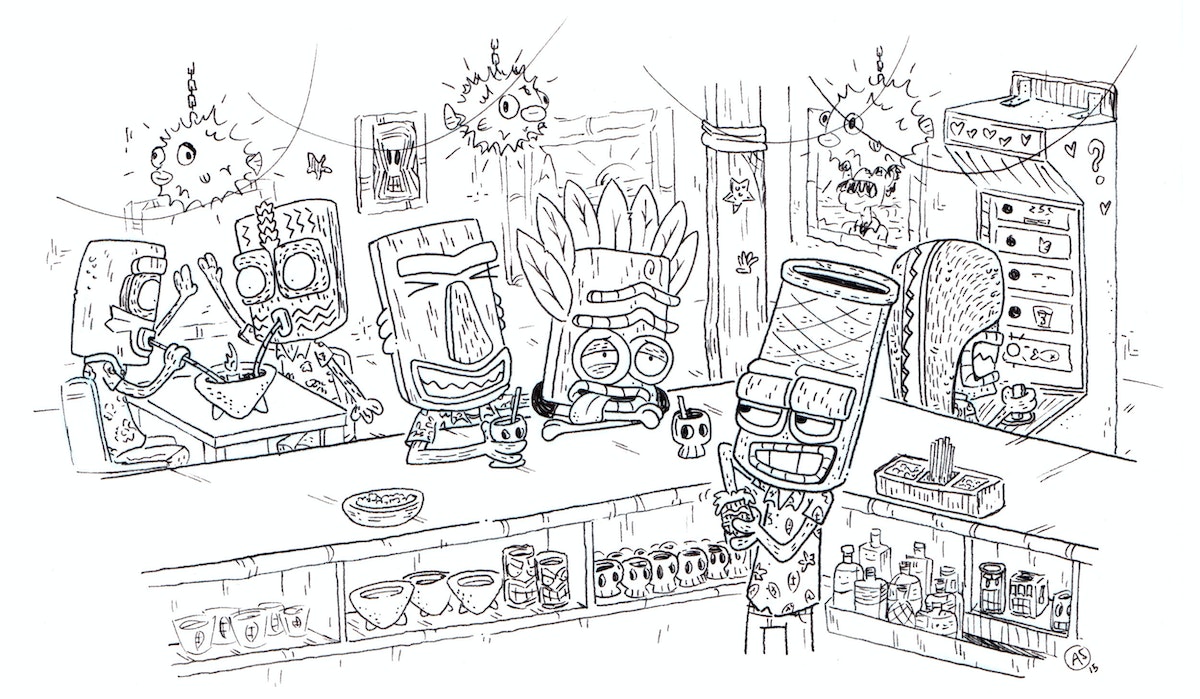
Austin Salmi makes a habit of frequenting tiki bars and drawing clean patterns

In one sentence, who are you?
I am an illustrator who enjoys bringing any amount of joy to people through my creations.
What do you do? How did you learn how to do it?
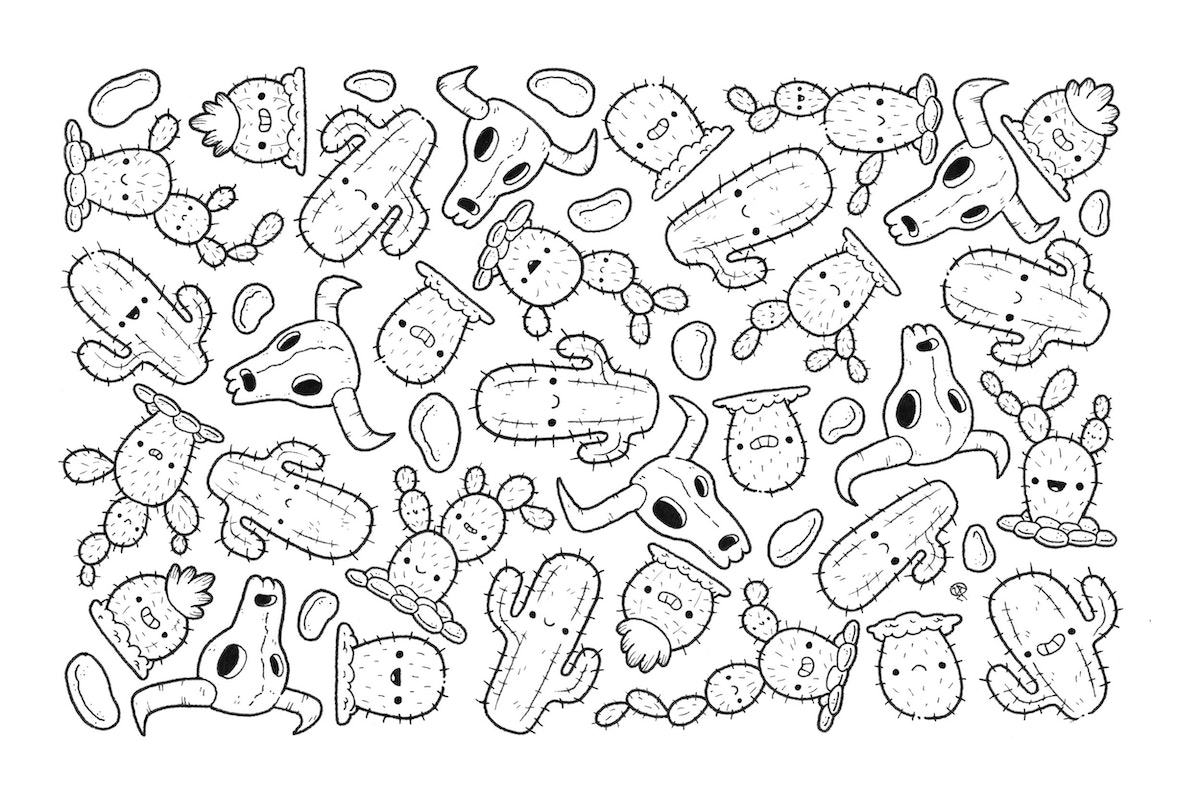
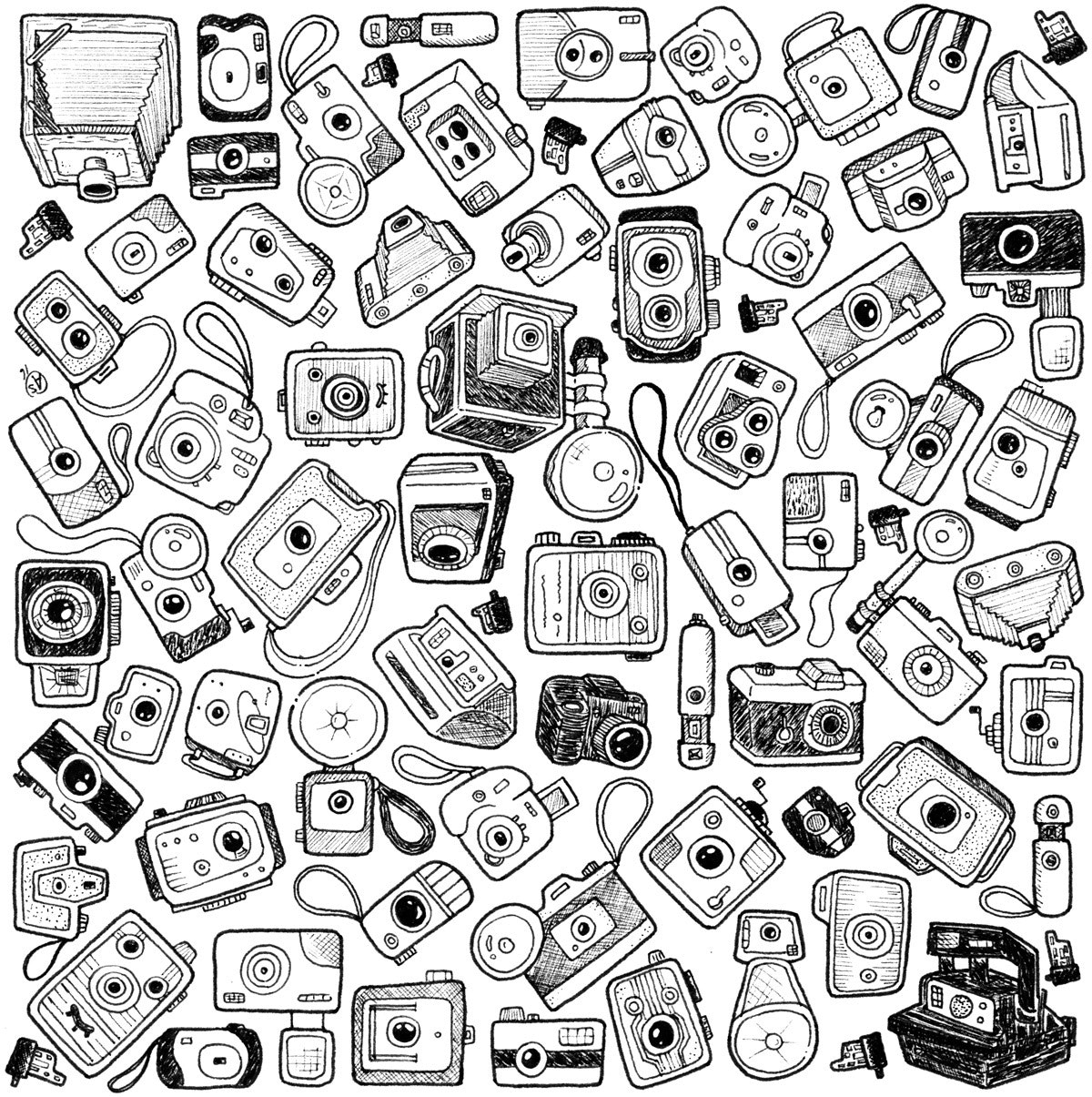
I create different drawings using pencil and ink. The illustrations range from patterns to caricatures, unique creatures, and other one-off ideas. I grew up sketching and doodling and it has continued. When I moved to LA, I was suddenly surrounded by an amazing cadre of artists and creators who constantly inspire me, as well as push me to keep improving myself. That is how I learned my craft and continue to learn, because I believe you never truly finish learning.
What are your 3 favorite possessions?
Miniature Back to the Future 2 hover board; Magnum P.I. Tiki Mug; a drawing of my fiancé and me, which she drew. Not in that order.
What does a typical work session look like?
I have a running list of ideas and sketches that I pull from if I don't have an art show with a specific topic that I am working towards. Usually, I'll do some Google searches on the topic at hand and pull a bunch of reference photos for perusal during the pencil drawing stage. I sketch out the drawing inside a pre-drawn area, such as 4x6 or 5x7. Art that is easy to frame is always a goal of mine, because I love framed art and it drives me mad when I see things tacked onto a wall or cork board. After finalizing the pencil drawing, I'll usually step away for a moment or two to play a video game or watch a show. I like to do something that differentiates the time between stages. Once I come back to the drawing, I pull out all the different micron pens that I think I will use for the piece. I check the nibs, and then I begin inking. I put on dramas in the background to listen to, or things I've seen a ridiculous number of times. West Wing and Parks and Recreation are two such shows.
I don't like to start inking unless I am going to finish a drawing that night. Sometimes, a piece is too large, and I have to break it up over two nights. If that happens, I make sure the pens I've used on the previous night are away from all my other pens. I do this to achieve a consistency within the lines. Once finished, I scan the piece, put it within a predetermined frame, and pack it up for a craft fair or deliver it if it's for an art show. Rinse and repeat as necessary.
How do you get over creative block?
I used to stop drawing and just stew for a bit until it finally passed, which could take a bit of time. As I've gotten older, and ever so slightly more confident in my abilities, I push through it. I just keep drawing. Yes, sometimes the drawings are awful, but as Lauren (my future wife) always says, "sometimes you just have to pass a rat."
How do you see the world in 2078?
A lazy utopia, filled with autonomous everything. Humanity will have moved past Earth and outward into the stars while robots cater to our every whim and we become fat and happy. I could be confusing my vision of the world in 2078 with the timeline in Wall-E—who doesn't yearn for the saccharine dreams of Pixar in 2017. It is tough to image the future right now because at this moment it feels as though we are hanging by a loose wire, and any minute now someone with a spray tan is going to cut the wire and tell us all how huge his ratings are, as we all fall to our collective doom. I hope we make it to 2078, if only so that I can enjoy my hover chair and 128-ounce Slurpee.
What’s number one on your bucket list?
I should say something epic like bungee jumping off of Thomas Jefferson's nose on Mount Rushmore, but honestly, I'd like to have my own artist's studio. Some place I could retreat to and tune out the world and draw silly pictures. That to me is something I want to do before I fade out of this existence.
Who are you creative crushin’ on lately?
I've had a one-sided love affair with Dustin Harbin for a long time. I own two of his original pieces and his diary comics book. The man can use an ink nib like Aaron Sorkin can turn a phrase.
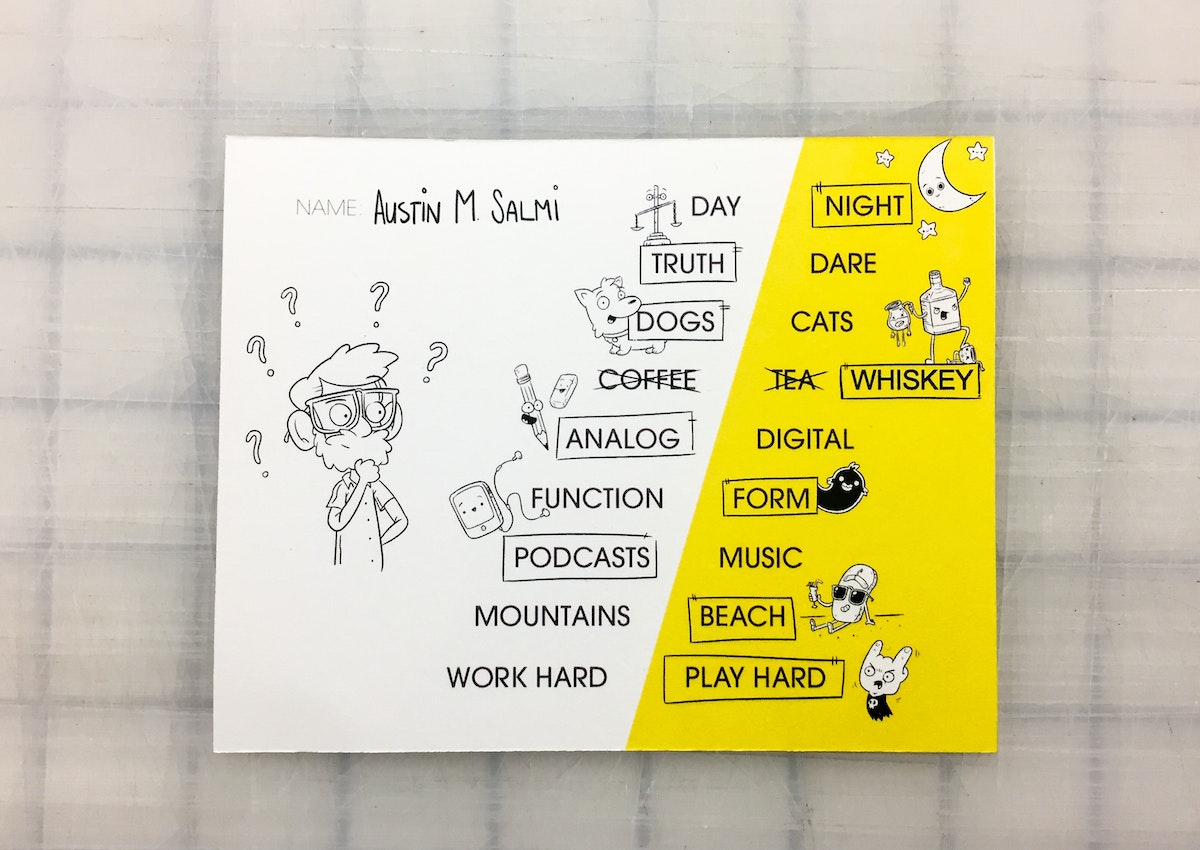
I’ve been creative crushing on Austin Salmi since I saw his doodles, patterns, and adorable characters on Instagram almost two years ago. Austin’s work, learned through practice and osmosis in his job surrounded by artists, has a giggly character about it that fits his intention to hide the ugliness of the world for a moment, and make lovely order out of chaos. I got to learn a bit more about him and his process in this installment of Creative Crushes.
AI Needs an Ethical Compass. This Tool Can Help.
A new, downloadable set of cards for designing with data
We had just begun work on a project exploring how we might help a medical-liability insurance company increase patient safety by learning from past incidents. As we talked, our conversation shifted away from excitedly imagining ideas for data-driven tools toward ways our work might potentially do harm.
What if our designs ended up raising premiums for doctors and, in turn, healthcare costs for patients? What if they kicked doctors off their insurance? What if doctors stopped reporting adverse events to keep their premiums from rising? There was real potential that our work could result in reduced patient safety or increased cost of care. We could inadvertently build a tool that could be used against the very people we were trying to help.
Today, data systems and algorithms can be deployed at unprecedented scale and speed—and unintended consequences will affect people with that same scale and speed. How can we always make sure we’re putting people first when designing large scale systems? Especially when those systems will change over time and evolve without direct human supervision?
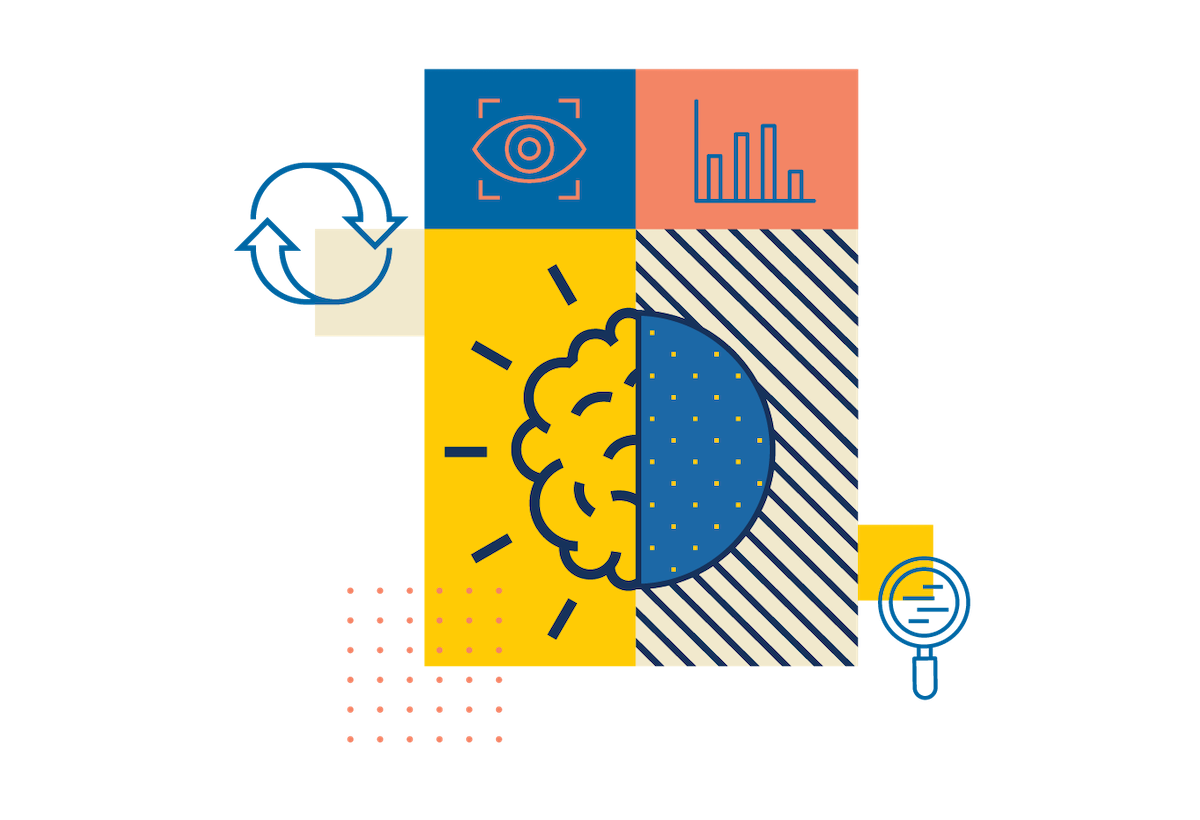
The seed planted during that bar conversation has grown into a set of principles, activities, and now a set of cards that our teams—both data scientists and designers across every other discipline—use to ensure we’re intentionally designing intelligent systems in service of people.
We’re far from the first people to ponder this. We’ve been inspired by organizations like AI Now and Data + Society, books like Weapons of Math Destruction and Technically Wrong, academic communities like FATML and CXI. In particular, we’ve been eagerly following O’Reilly’s series on data ethics (and encourage you to read their free ebook, Ethics and Data Science).
To develop our own set of guiding principles, we started with people. We talked to folks all across the globe: We interviewed IDEO teams about where they found challenges. We spoke to our clients about where they saw intelligent systems go awry. We spoke to the public about where smart designs seemed to cross lines. We observed and read about AI systems that had gone off the rails and worked to understand how this might have been avoided. We learned a lot.
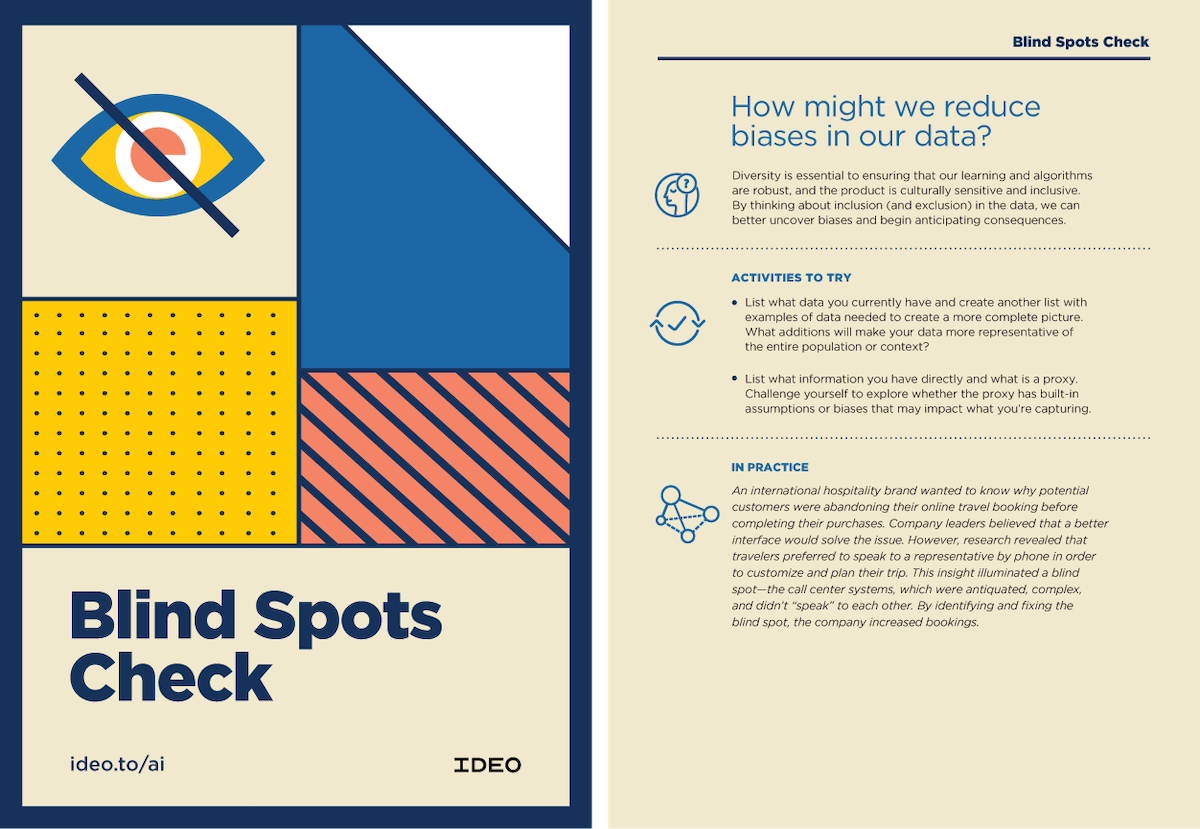
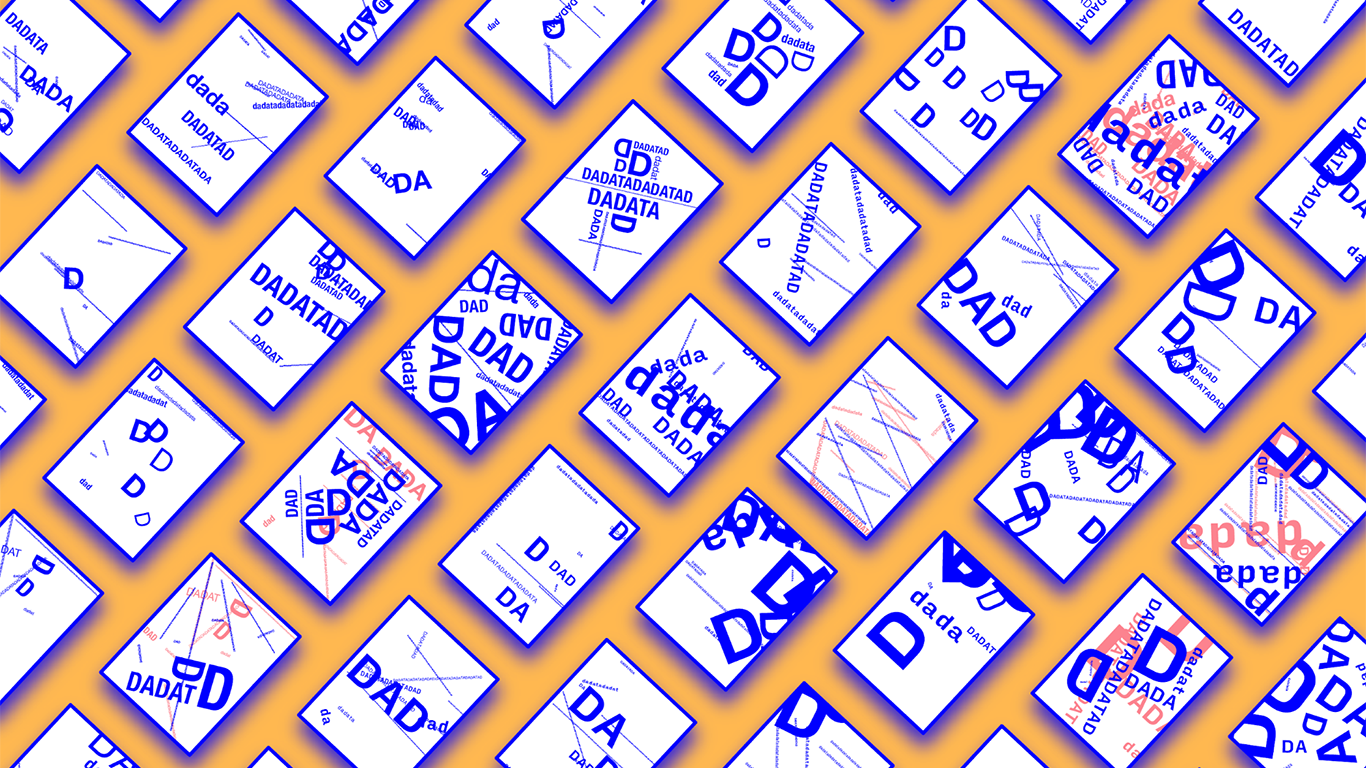
We came up with an original design, iterated on them, and landed on a set of four design principles and ten activities that can help guide an ethically responsible, culturally considerate, and humanistic approach to designing with data. These activities are meant to provoke thought; they’re a vehicle for introducing new ideas and stimulating conversations around ethics throughout the design process.
To start, here are our principles:
1. Data is not truth
Data is human-driven. Humans create, generate, collect, capture, and extend data. The results are often incomplete, and the process of analyzing them can be messy. Data can be biased through what is included or excluded, how it is interpreted, and how it is presented. Unpacking the human influence on data is essential to understanding how it can best serve our needs.
2. Don’t presume the desirability of AI
Just because AI can do something doesn’t mean that it should. When AI is incorporated into a design, designers should continually pay attention to whether people’s needs are changing, or an AI’s behavior is changing.
3. Respect privacy and the collective good
While there are policies and laws that shape the governance, collection, and use of data, we must hold ourselves to a higher standard than “will we get sued?” Consider design, governance of data use for new purposes, and communication of how people’s data will be used.
4. Unintended consequences of AI are opportunities for design
Just as with any design endeavor, we know that we’re not going to get it right the first time. Use unanticipated consequences and new unknowns as starting points for iteration.
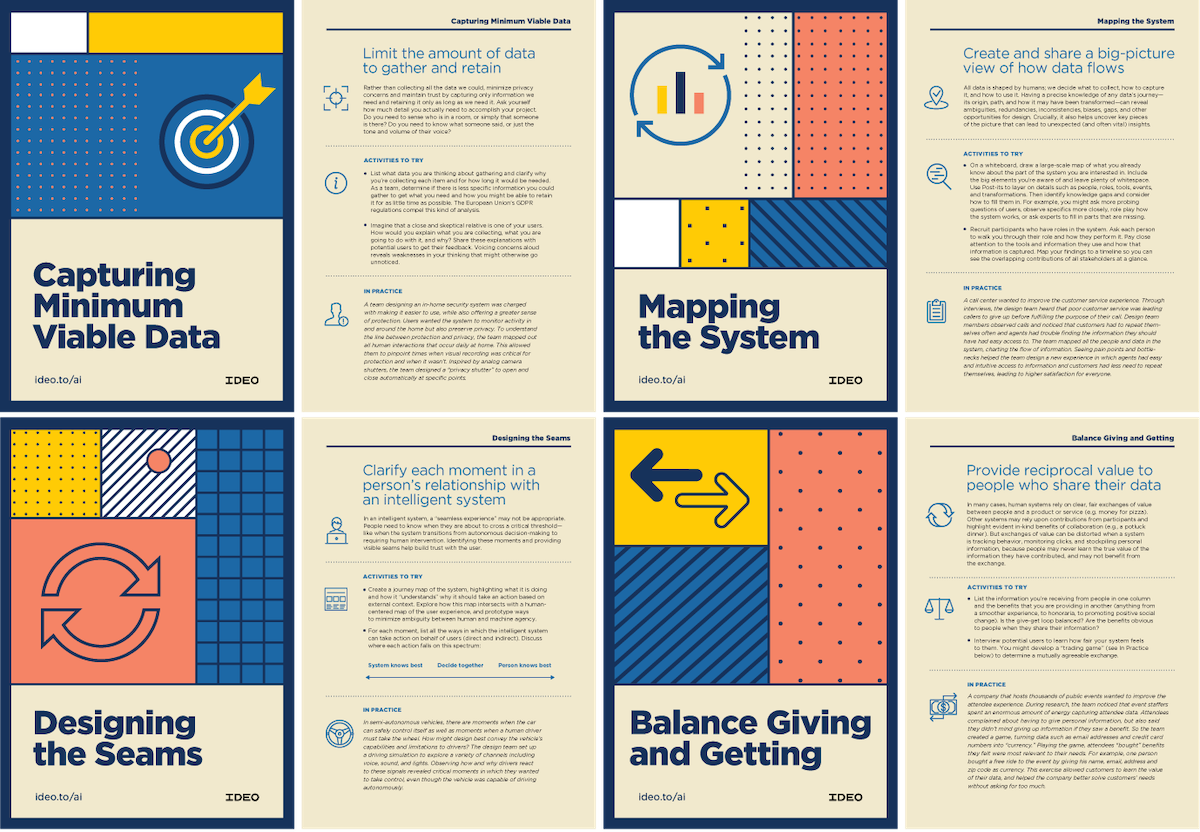
To get started with the activities, you can download the cards here. We hope that these activities provoke dialogue and provide concrete tools to help our community ethically design intelligent systems.
Thank you to the larger team who helped make these cards come to life—Ben Healy, Jane Fulton Suri, Jess Freaner, Mike Stringer, Justin Massa, Connie Oh, and KP Gupta, who designed them.
A design researcher, a business designer, and a data scientist were sitting at a bar. It sounds like the setup of a joke, but the conversation was actually quite serious.
No Beards Allowed: Exploring Bias in Facial Recognition AI
How a creative code experiment helped people understand the pros and cons of artificial intelligence
As a user experience and interaction designer with a hybrid art and tech background, I’ve long been a fan of the concept of using art and design as a Trojan horse to make tricky concepts accessible. Through intrigue, curiosity, and play, these experiences can bypass our biases and open the door to understanding, without requiring deep comprehension. If you’ve ever visited a children’s science museum and watched kids excitedly engaging with subjects that would bore them to tears in book form, then you’ve seen the power of experience and play at work.
Meet ERNEST
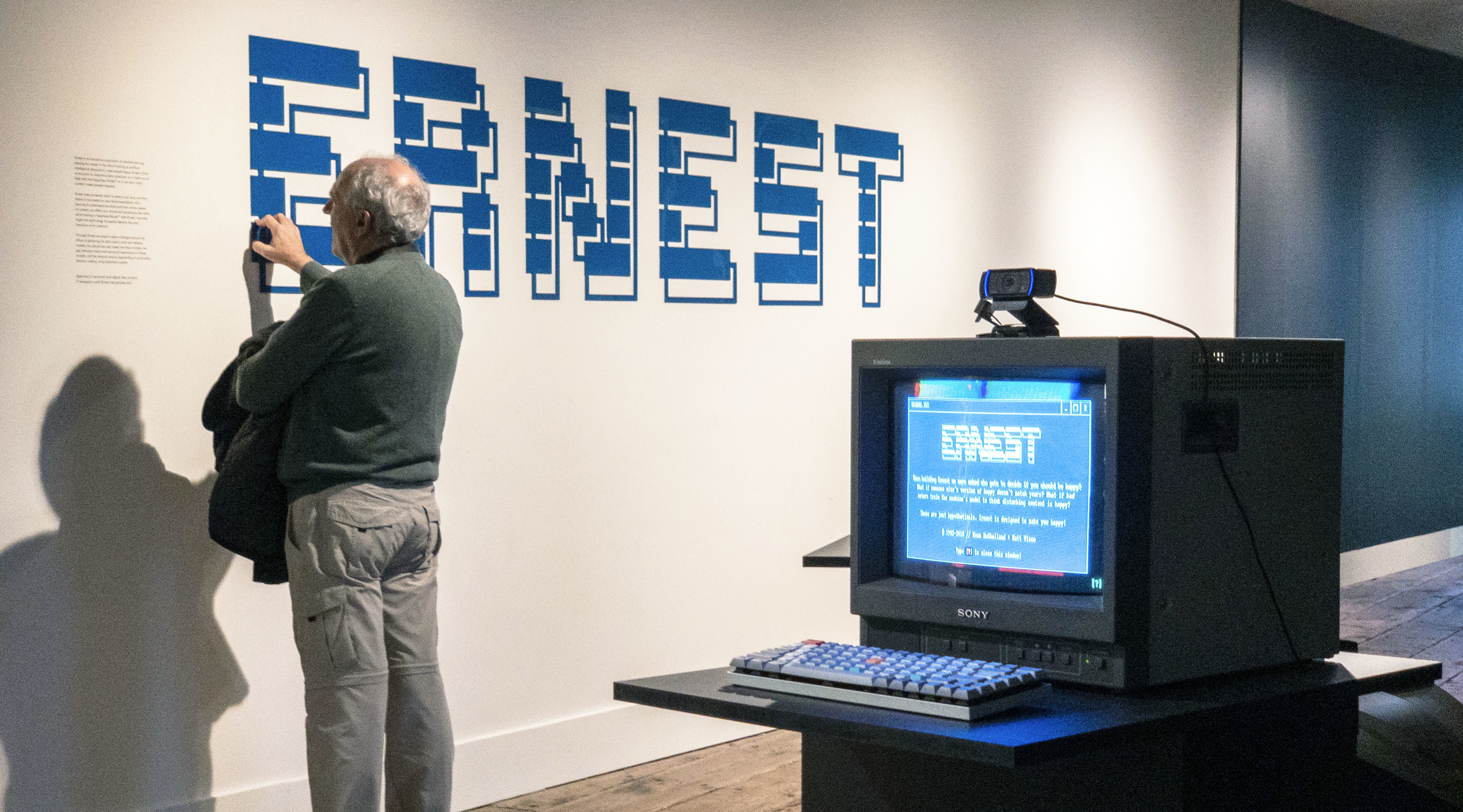
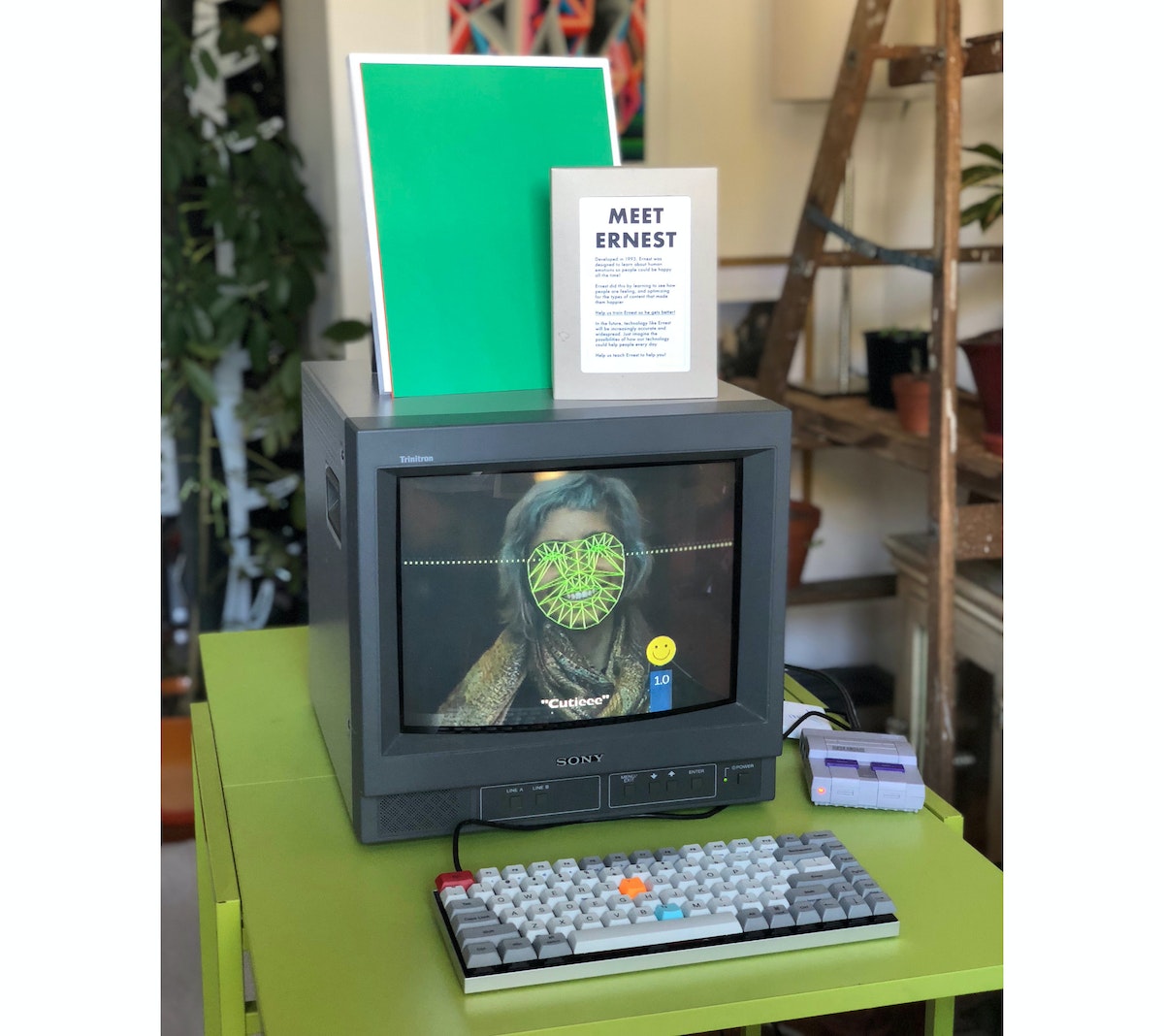
That’s why my colleagues and I created ERNEST, an installation that gives the viewer the job of training a rudimentary artificial intelligence. Using facial and emotional recognition tech, ERNEST shows the user imagery and tries to see how happy it makes them. Our goal for this project was to engage users in a game-like experience to help them understand how machine learning models are trained, and subtly hint at the areas where bias could creep in.
Fellow IDEOer Matt Visco and I wanted to make sure ERNEST didn’t look like a modern computer—we designed it to look vintage. With its old hardware and nostalgic graphics, ERNEST doesn’t feel smart on the surface. Its look is meant to evoke a time when computers carried the promise of a utopian future, prior to mass connectivity and the ubiquitous collection of personal data.
The full installation uses five monitors, two computers, and three Raspberry Pis, which power several video loops that reveal the training data behind ERNEST, and give passersby a sense of the experience even if they don’t engage directly with it.
How it Works
ERNEST uses computer vision to perceive the user ambiently through facial recognition, allowing it to detect when a user is looking at it and how far away they are. When a user gets close enough, ERNEST comes alive and asks the user to help it learn. It then shows the viewer images intended to make the user happy, and gauges their emotional reaction based on their facial expression using a pre-trained model. The facial tracking and emotional data is displayed to the viewer in real time, encouraging users to make faces at ERNEST. Viewers can then validate the accuracy of the model to help ERNEST know if it was correct or not.
(Sound complicated? The video below might make it clearer.)
We installed ERNEST in IDEO San Francisco’s lobby for a couple of months, and also brought it to the San Francisco Art Institute Fort Mason Gallery for the CODAME Intersections exhibition in November 2018.
The Results
Many participants loved to challenge ERNEST, often emoting in varying ways through numerous loops of the game. Once, a group of participants spent nearly 20 minutes playing with ERNEST, takings turns to compare how it perceived each person.
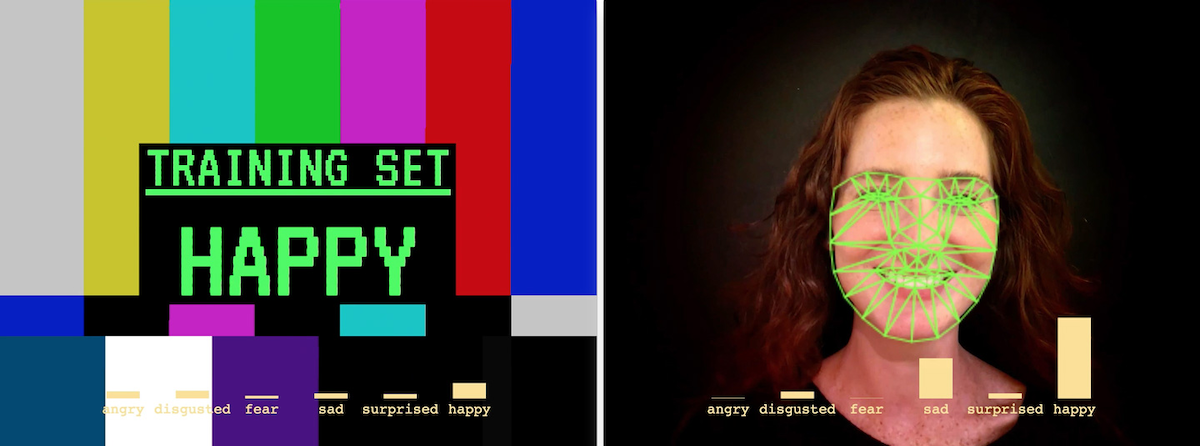
When viewers interact and play with ERNEST, we’re helping them see that machines can have almost human-like perception, reacting differently to different faces, and sometimes being uncannily accurate...or completely wrong. The wrong guesses were in many cases more interesting, and were in fact a very intentional part of the design. We wanted users to see that artificial intelligence is sometimes not as intelligent as we might think.
ERNEST is meant to be a game, but what happens when real-world AI makes the wrong guesses? Or what if those wrong guesses are uneven, indicating an unintentional bias, such as working well for some faces but not others?
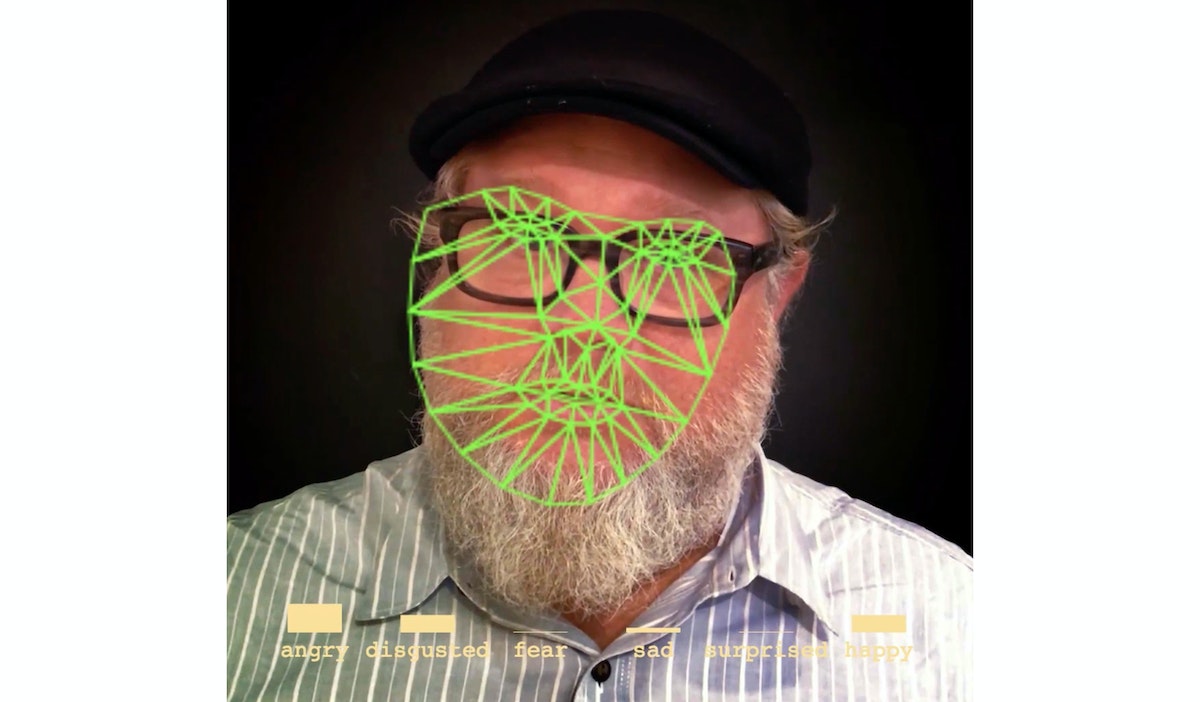
We wanted people to realize that designing systems that can ambiently perceive humans without direct input is rife with ethical concerns. And already, systems like these are being deployed at scale. The Guardian predicts emotionally-aware tech is already a $20B industry. Even something seemingly benign like ERNEST causes us to wonder—if an AI is trying to make the viewer happy, who determines what “happy” is? What if bad actors train Ernest to think that disturbing content is “happy?” What if the technology is repurposed to provoke anxiety or anger? What happens if we deploy technology like ERNEST widely?
Of course, ERNEST only scratches the surface of these big ethical questions, but we hope that it helps give people insight into how artificial intelligence thinks, and the ways its thinking can be flawed. The more that we as a society can start to understand these systems, the better we can judge their quality, and work to design them to be in line with our shared human values.
Artificial intelligence and machine learning are among the hottest topics of the tech world, but some of us at the frontier forget that many people feel intimidated—or even afraid of—these technologies. The pop-culture trope of machine intelligence gone rogue has been a part of our cultural psyche for a good 150 years. Think 2001: A Space Odyssey’s HAL 9000, The Terminator’s Skynet, and The Matrix’s... Matrix. Combine that fear with arcane tech-speak like “recurrent neural network” and “generative adversarial network,” and in addition to feeling emotionally intimidating, AI and ML can also feel incomprehensible.
How to Make Hard Feedback Pay Off
It's not easy to have your work ripped apart, but it's essential to the creative process. Here's how to make it less hard.
Feedback is a tricky thing. There’s always going to be differing opinions of right and wrong, and even if it’s explained to you in a calm, clear voice, it can sting like nothing else. But getting feedback on your work is the only way you'll grow. It forces you to rationalize your thinking and creative decision-making, and teaches you to swallow your pride.
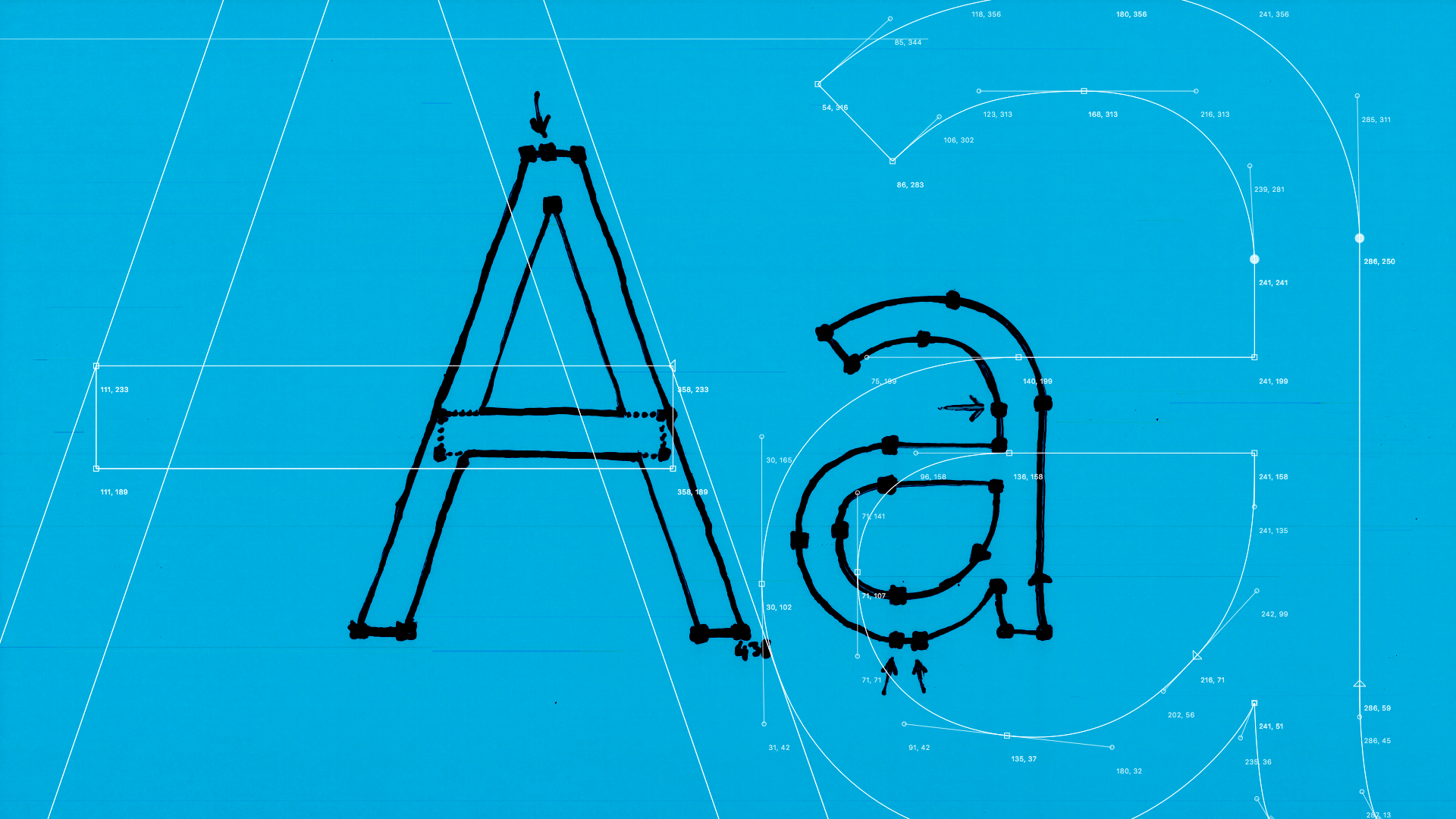
I learned the hard way: A few years ago, I designed my first typeface called Emotiv. It was a concept for a messaging app that would help people express their emotions through language (instead of emojis).
Eager to get my work out there, I decided to send a sample to a very well-respected typographer whose work I greatly admired. Given this individual’s reputation (and my lack of experience) I was reluctant to share at first, but with encouragement from friends, I sent it along with an explanation of how it came to be, not really expecting a response.

A few days passed, and much to my surprise, an incredibly lengthy reply fell into my inbox and hit me like a ton of bricks. It was the toughest feedback I’d ever received. Alignment issues, inconsistencies, readability problems, the email went on and on. It felt like my career was ending before it even had a chance to begin. We designers consider our creations extensions of ourselves—meaning that we take the pain of feedback personally.
While I can't offer up permanent thick skin, I have come up with 4 mindset shifts that will help you get—and give—negative feedback in a constructive way:

1. Introduce constraints
The least helpful feedback goes something like, “Hmmm, I’m not sure I like this.” We all have personal tastes, but there is no build-off point from that—no way to develop and improve. Instead, ask the person giving you feedback to be constructive, give their rationale, and ask as many questions as they’d like, rather than give you a gut reaction.
2. Tag team
Rather than putting yourself on the receiving end, get involved in the process. Imagine that the work being critiqued isn’t yours and offer your own thoughts. That will help you stay focused on the work itself. Plus, by making the feedback process more of a collaborative effort, you can understand the work from new angles to make it better together.

3. Be Spock
Do your best to take your emotions out of the equation. Instead of hanging on every negative word, look for unbiased points that will help you better define and execute the work. Even if the person giving you feedback is using words like “I like...”, or “I don’t like…”, those words aren’t aimed at you—they’re aimed at uncovering the fundamental thinking or execution behind the work.
4. Don’t ask for the answer
When the feedback process unearths a problem with your work, it’s tempting to simply ask for a clear solution to the problem. But that won’t push you to go further and explore other possibilities. Solving the problem yourself gives you another opportunity to learn and grow your skills.
Looking back, I now see now that the typographer who crushed me was actually providing a great service. (Honestly, you could tell someone they are terrible at something in considerably fewer words.)
I’d made the same mistake my fellow design student had made in that first class—I reacted as if it was a personal attack on me as a designer. But that feedback prodded me to become much more critical about my own work, studying details that others might not notice, with an eye toward readability and alignment.
Getting negative feedback can hurt. You pour your time and effort into creating something, and with the swiftest of comments, it gets cut down. But receiving it not only makes your work better, it makes you better... especially at giving feedback.
Nothing prepares you for the reality of receiving negative feedback. In one of my first design classes, I watched in horror as a fellow student had his work ripped in two for the first time in front of all of us. Shortly afterwards, he quit the course.

Lindsey Turner
I’m passionate about building brands, products, and experiences that help organizations show up with meaning and momentum.
I help organizations cut through complexity by shaping how they show up, through brand strategy, identity, and storytelling.
Working at the intersection of brand and business, I bring an editorial eye and a bias toward making—turning ideas into tangible experiences that people can understand, trust, and believe in.
My work spans government, healthcare, financial services, media, and consumer goods, from launching Gen Z-focused ventures to building innovation labs and reimagining legacy brands. I relish moments of ambiguity and enjoy translating across teams, perspectives, and priorities to move ideas forward.
I started my career in editorial and digital design, shaping cross-platform experiences and identity systems in publishing and agency environments. That foundation still shapes how I work today: I’m detail-oriented, collaborative, and overreliant on the Oxford comma. I hold a BFA in Visual Communication from the School of the Art Institute of Chicago.

Rachel Young
My work helps organizations see who their products aren't working for—and build the will and the tools to do something about it
For 25 years, I've asked the same question: Who does this design exclude—and what are we going to do about it?
My work spans human-centered strategy, inclusive design, and qualitative research, with clients ranging from Microsoft, Google, and Verizon to the National Science Foundation, and San Francisco Unified School District.
Before IDEO, I taught elementary school in East Palo Alto and spent a decade doing design work with social service organizations—where I learned firsthand what it costs people when systems are built without them in mind.
I am currently writing User Error, a nonfiction book about digital access and the design decisions behind it. I live in Oakland, California.

Brian Pelsoh
I lead with craft, ensuring our work is creatively excellent: rooted in deep human insight and imagination, while also grounded in the realities of business and technology.
My expertise spans brand, communication, and product design across tech, education, the arts, and social impact.
I believe great work demands both high-level vision and obsessive attention to detail, and only happens through collaboration.
I bring an inclusive, hands-on approach and a deep understanding of business, which enables me to consistently deliver excellence while always asking why.
Before joining IDEO, I worked at the brand firms Pentagram and VSA Partners. I began my career as a designer, leading teams at the School of the Art Institute of Chicago and the Milwaukee Art Museum. I hold an MFA in graphic design from Maryland Institute College of Art and a BFA in communication design from the Milwaukee Institute of Art & Design, and have taught at some of the best design schools in the US.

Tony Wong
I am responsible for IDEO’s long-term success in China and working with clients to use design as a tool to enable growth.
I am responsible for IDEO’s long-term success in China and working with clients to use design as a tool to enable growth. Specifically, I have helped Chinese companies design holistic brand solutions through the development of their products, communication, services, and innovation teams, and I have helped multinationals expand their presence and influence in China.
I advise global leaders on developing China-led innovation and capabilities.
In over 15 years in IDEO Shanghai, I have worked on projects that use design to elevate the quality of the experience of healthcare products and services, streamline processes that increase productivity, create spaces and programs that promote and enable inclusive communities, and build next generation mobility solutions that are planet-positive.
Before joining IDEO, I worked at Philips Electronics and the Electrolux Group in Italy, the Netherlands, and Singapore on a number of breakthrough commercial products. I am a member of the Young President Organization in Shanghai.

How to use AI as an editor, not a writer
Ed White shares how he uses AI as an editor—not a writer—to sharpen storytelling, rehearse ideas, and preserve the productive friction that makes creative work better.
Ed White has a rule he's tested on his own writing: hold yourself as the writer, and let AI be your editor. Ed is a Senior Design Director at IDEO's London studio, where he co-leads the firm's AI portfolio across Europe. Before IDEO, he spent 12 years as a writer and editor at the Financial Times, Wired, and Contagious. So when he talks about when to use AI for storytelling and when not to, it comes from two decades of crafting his storytelling skills.
In this episode, Mina Seetharaman talks with Ed about two specific tools he uses to keep AI in an editor's seat: a "roasting agent" prompted to critique his drafts without any sugarcoating, and a simulated audience he rehearses pitches on before the real thing. They also get into what Ed is hearing from design leaders at Anthropic, Lovable, Shopify, and Google Creative Lab about how creative work is changing, and why he thinks the friction of writing something yourself is worth protecting rather than automating away.

Building a personal AI for the messiness of life: Sida Li
Becca Carroll talks with Cue co-founder Sida Li about designing a personal AI for the messiness of everyday life—not just work. They explore how Sida stays anchored to human needs while navigating fast-changing technology, product tradeoffs, business-model experimentation, and the realities of building an AI company today.
Most AI products today are built for work—a space with clear problems and established systems. One founder noticed a gap: personal life is messier, harder to systematize, and mostly left behind by the AI boom. So she built Cue, a personal AI that lives inside iMessage and group chats, to go where the other tools haven't.
In this episode, Becca Carroll, IDEO's Chief Strategy Officer, talks with Sida Li, co-founder and CEO of Shared Context Lab, about staying anchored to a human need while the technology around her keeps changing shape, why she treats her business model with the same rigor she'd bring to a product, and what it feels like to build a company at this particular, disorienting moment in AI.
The conversation also gets into how Sida makes design decisions: the language Cue uses to describe itself, the tradeoffs behind building inside iMessage instead of a new app, and a real story about a business idea that didn’t pan out.
This is the second in a two-part series profiling founders from IDEO's Startups-in-Residence program. The first conversation is with Johannes Seemann, founder of Sooner, on designing GenAI for the emotional side of money.

Designing GenAI for the emotional side of money: Johannes Seemann
Designing financial tools around the feelings that shape money decisions.
Most personal financial tools are built to run the numbers and optimize towards a budget. While that works for some, most people experience money as a lived relationship that does not neatly fit into a spreadsheet. Johannes Seemann and Becca Carroll discuss why money is emotional before it is mathematical, and what a human-centered approach to building a generative AI financial product looks like in practice.

The curious leader's edge in uncertainty: Scott Shigeoka
How genuine curiosity helps leaders navigate uncertainty with greater confidence.
Mina Seetharaman talks with Scott Shigeoka, author of Seek and Head of Curiosity Cultivation at the Eames Institute, about what distinguishes genuinely curious leadership from performative curiosity, how power dynamics shape curiosity, and why practicing curiosity can restore energy rather than drain it.
Looks like you might be in search of something very specific?
Or reset the filters above and try another angle.
Here’s some random inspiration

Podcasts about creative leadership

Articles about the power of prototyping